
Home Blog Page 94

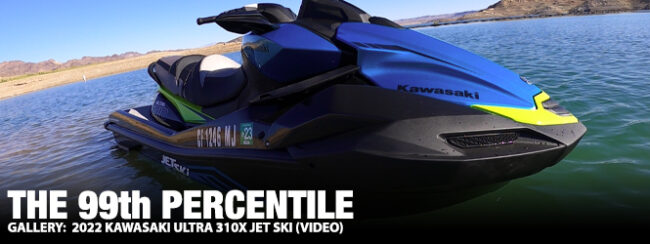
Gallery: 2022 Kawasaki Ultra 310X JetSki (Video)

0

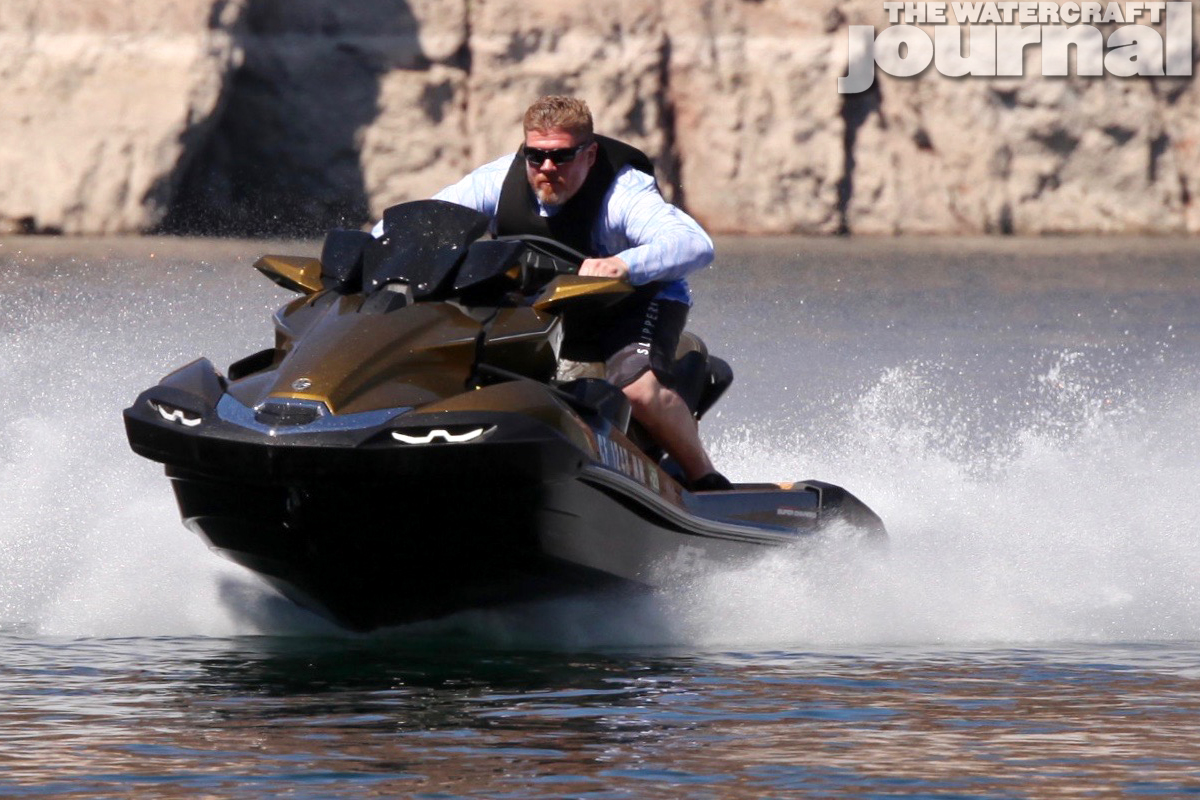
OK, this one’s gonna go a bit differently. Some of you are gonna love this review. Some of you are really not gonna like it. Either way, it’s the truth – at least as far as I can see it through the lens of my three decades in this industry. When it comes to performance jet skis, there are two characteristics that matter waaay more than anything else: First, how does the ski ride through choppy, wind-blown, and just plain ugly water conditions and second, does it have the power to push through it?

Any ski can ride smoothly on glass. It takes zero talent or ability to cruise on flat water in a straight line. Heck, a log on a river with enough current can do it comfortably. But when the wind kicks up or the tide goes out, you’re gonna care waaay more that your new ski can track straight through chop than whether your can call up Siri to access your favorite playlist by voice command. All of the other stuff is just fluff.
There isn’t a jet ski out there that has enough bells, whistles and doodads that can compensate for a crappy, bouncy ride; unpredictable, garbage handling; or being a gutless toad that can’t get out of its own way. That might sound harsh and a few of you pearl clutching, hand-wringing types might get offended and want to complain to my manager but that’s the honest truth. And in this day and age, I think folks are more interested in harsh truths than me pussyfooting around people’s feelings.

So let’s just be straight: when it comes to open ocean riding, Kawasaki’s Ultra platform is unmatched. It’s racked up more offshore and long distance, endurance championships than any other ski not only available on the market today – but EVER. We’re not talking roundy-round closed course stuff – we’re talking big, open ocean man-versus-the-sea racing. Long Beach-to-Catalina; Oceanside-to-Dana Point; Karujet, AquaX – and the 300-mile Mark Hahn enduro.

The scoreboard is bleeding green, guys. It’s all Kawasaki across the board. Numbers don’t lie.

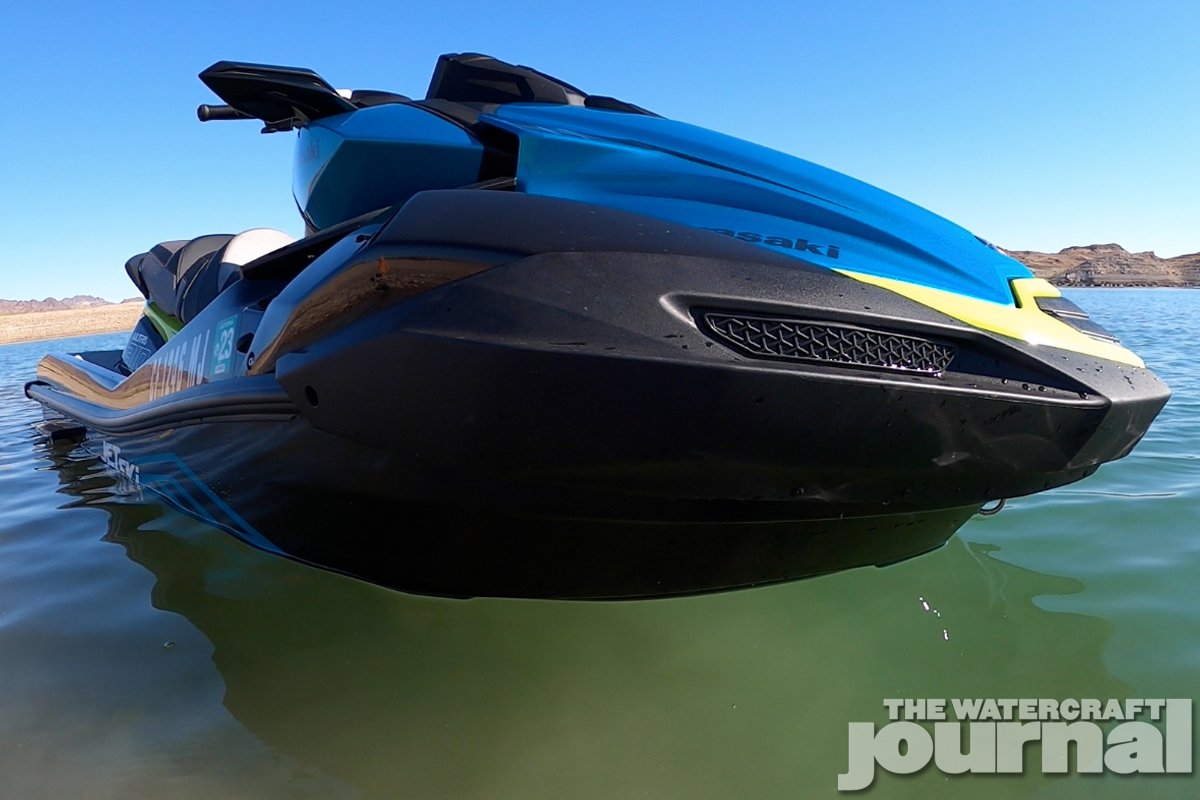
So yeah, that’s why Kawasaki didn’t screw with its hull – that’s because it’s pretty much friggin’ perfect. It’s still made from durable gel-coated FMC fiberglass so it won’t flex or crack like the other guys. But they did go ahead and reinforce the bow’s 22.5-degree deadrise to stiffen it up, but that’s not really the big news here.

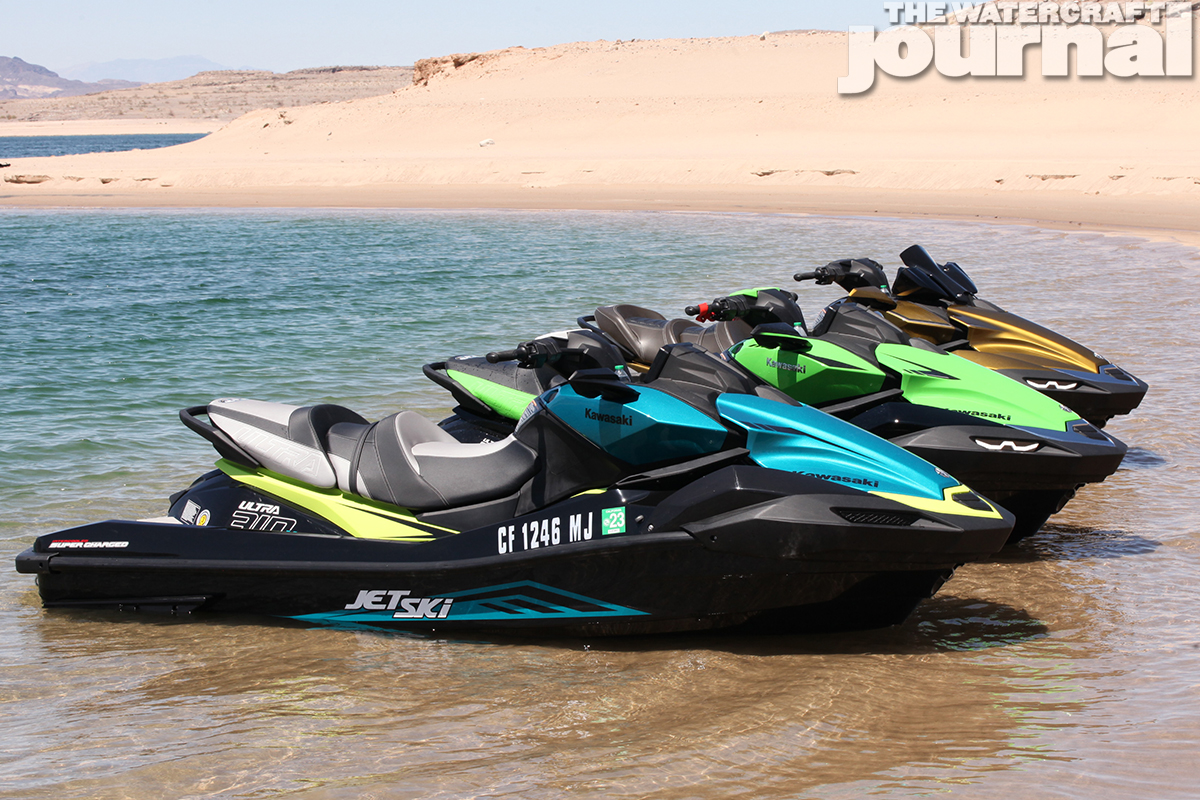
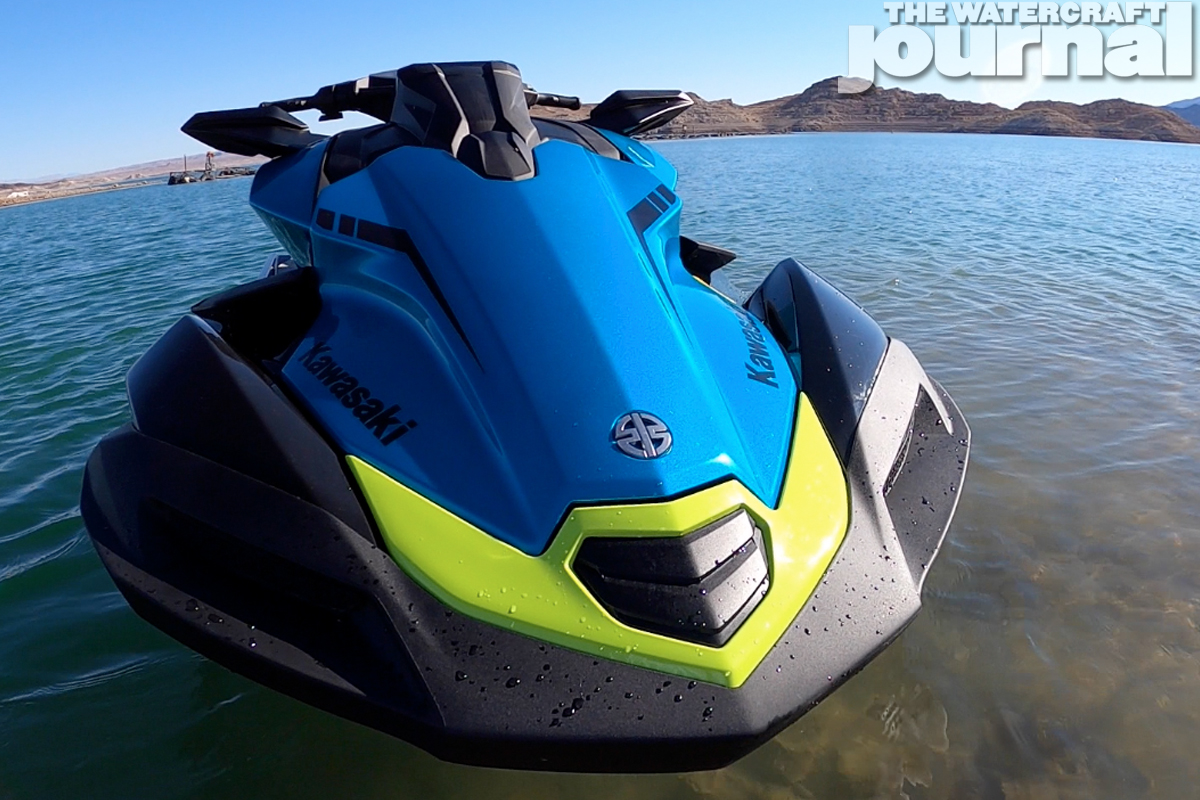
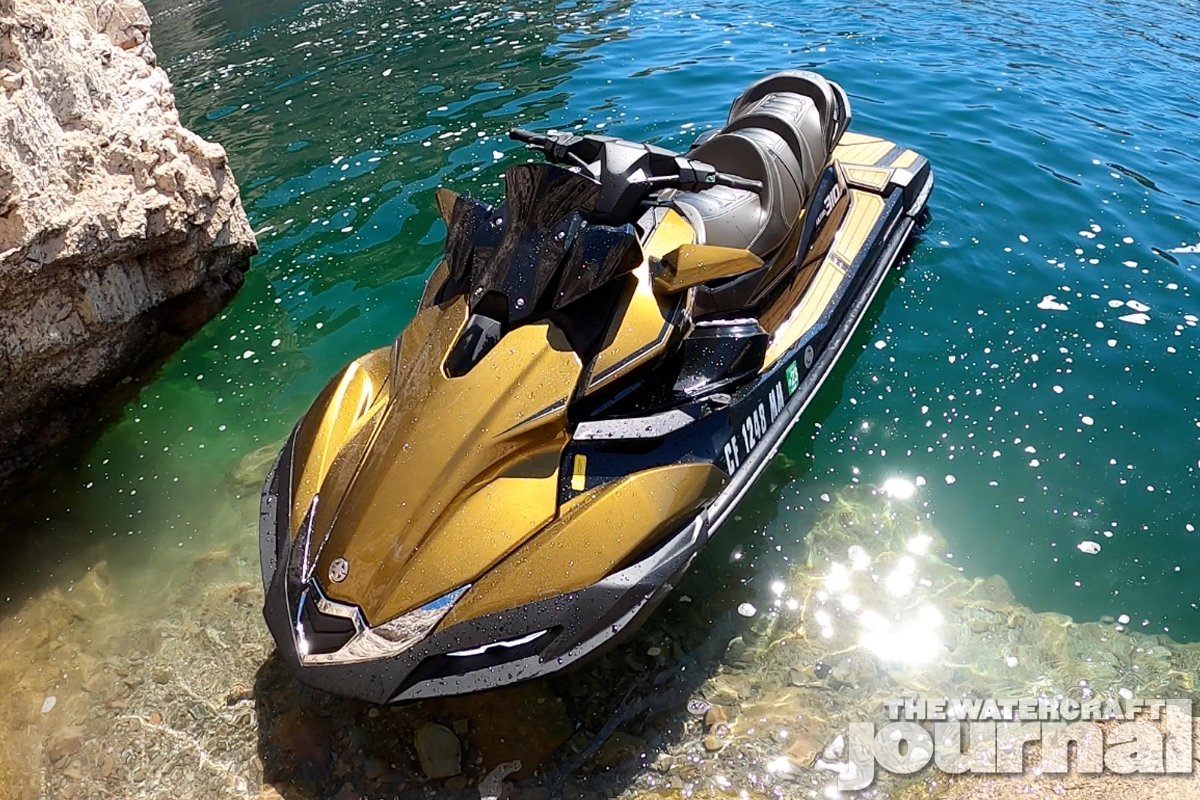
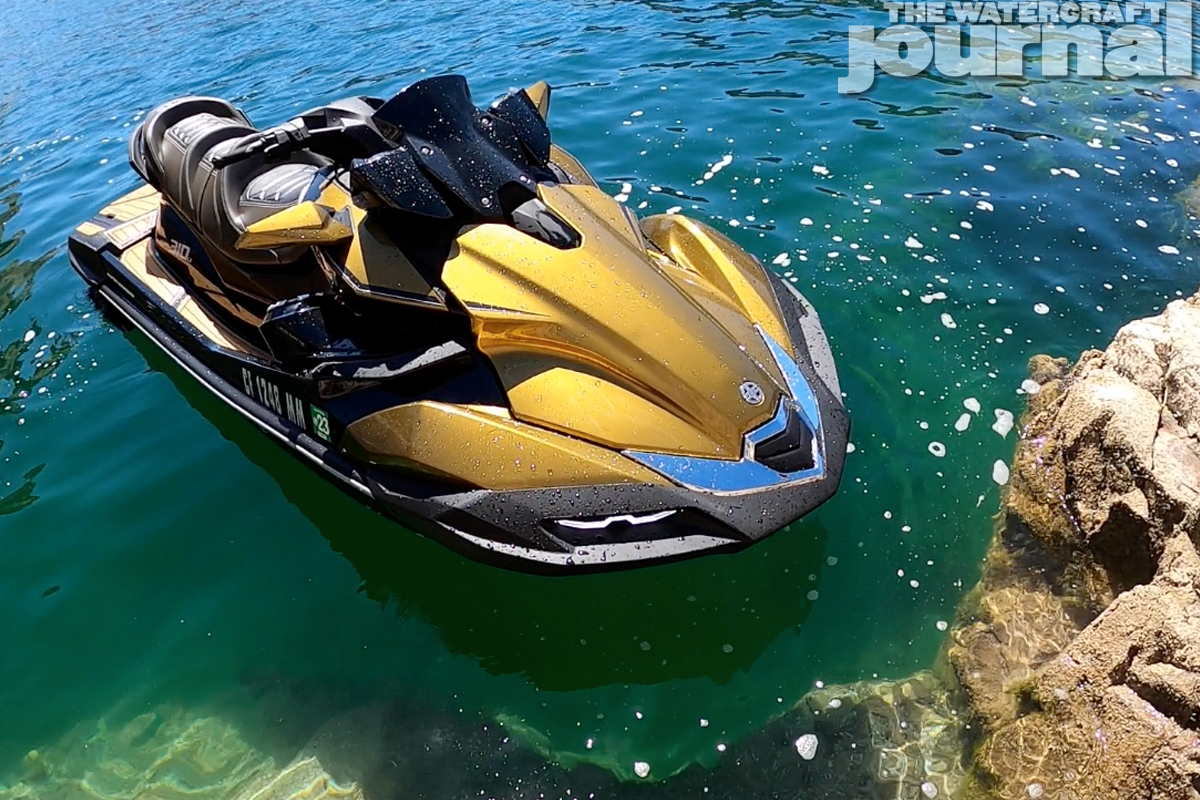
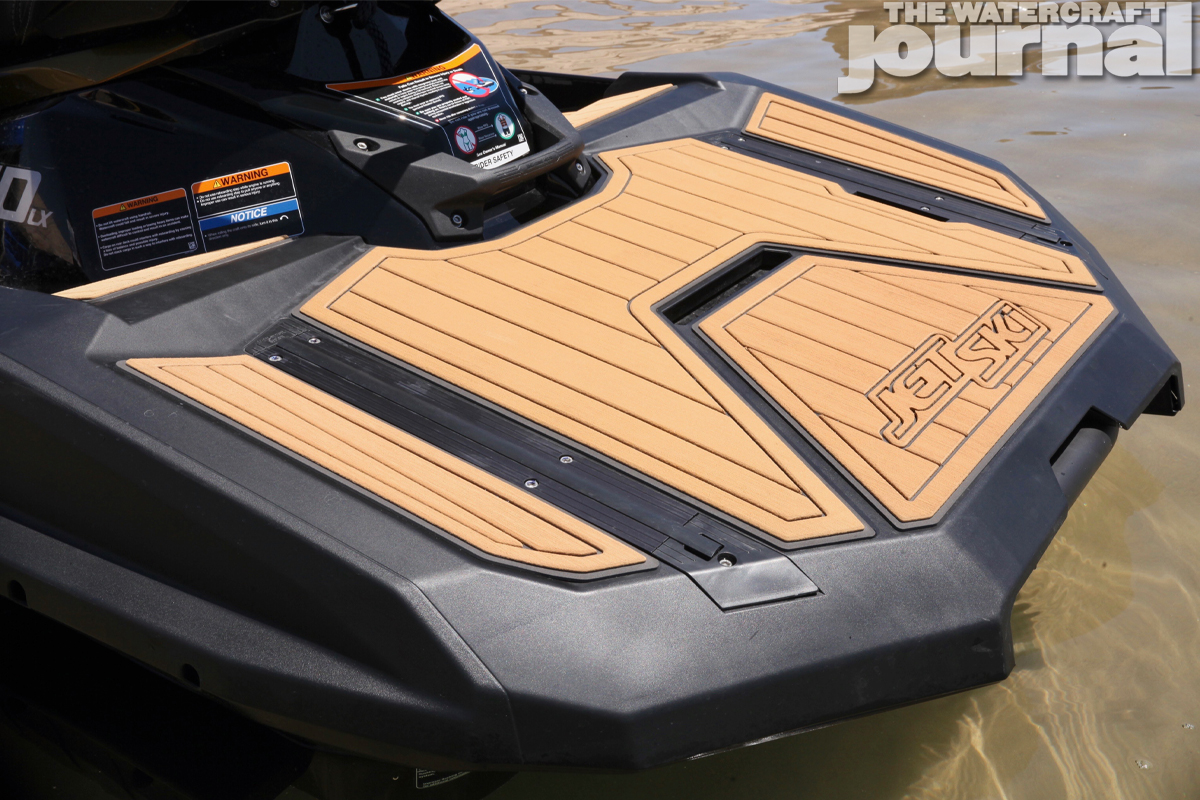
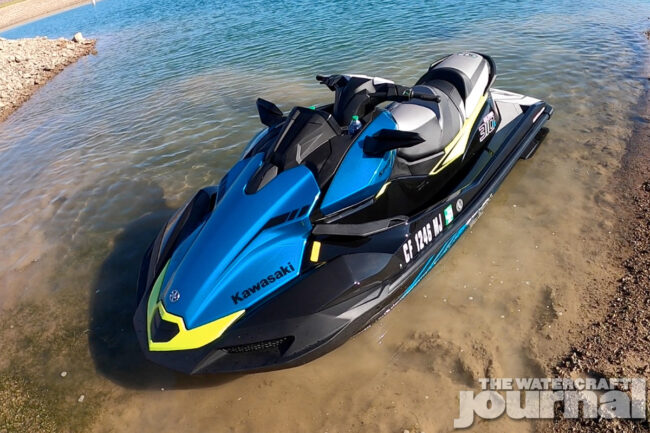
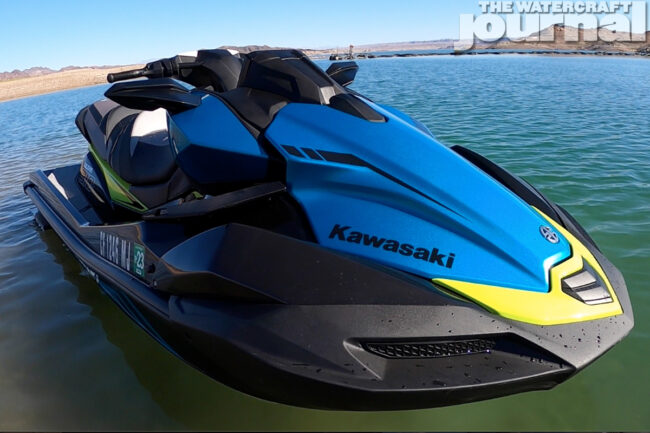
When it came time to update the Ultra 310X JetSki for 2022, Kawasaki kept what worked – like the real-deal Deep-V hull and the powertrain – and went to work on fixing the stuff that needed the most attention. What that resulted in was a totally redesigned deck that lowered the ski’s center of gravity, and radically improved the overall ergonomics.
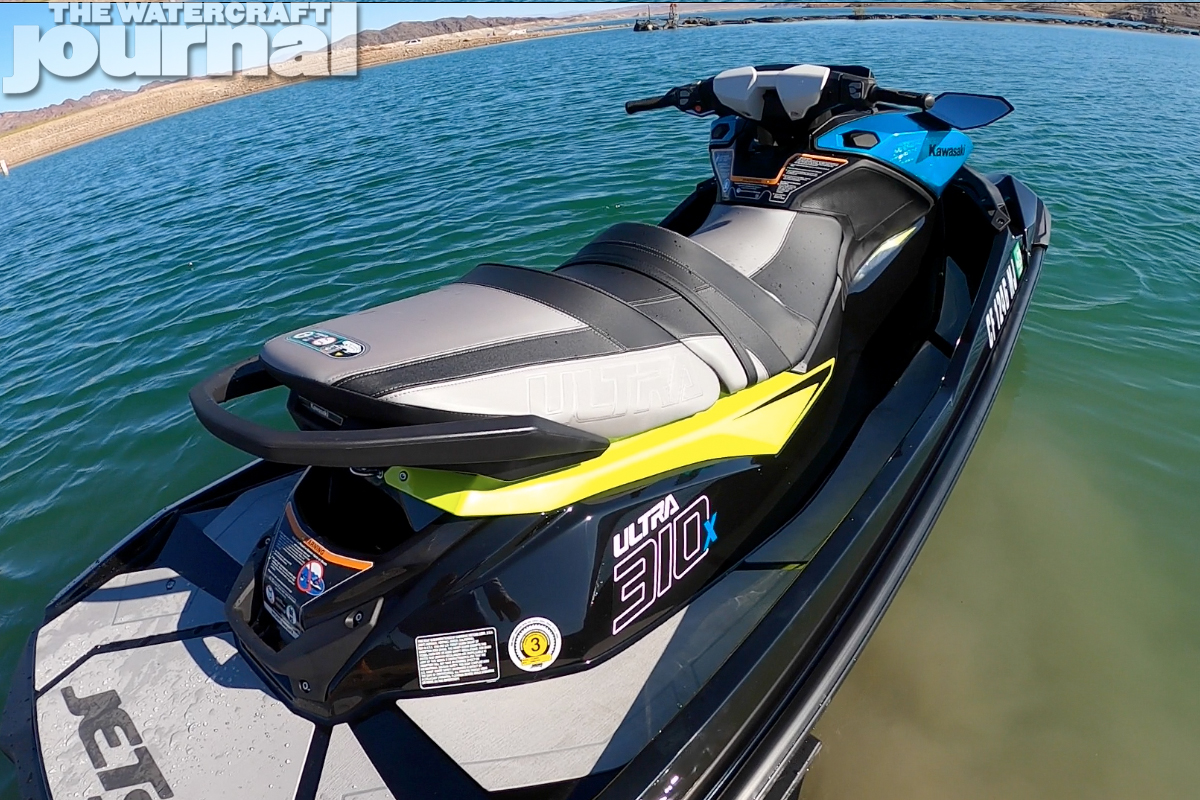
Previously, you used to sit pretty high up in the saddle. The new overall deck height was lowered by 1.38-inches and the new two-piece, three-person seat was narrowed 3.15-inches at the knee. The new Kawi is also using a revised formula of urethane foam that provides deeper hip support and improved jolt and vibration absorption, so if you’re sitting down, you’re not going to get so beaten up.

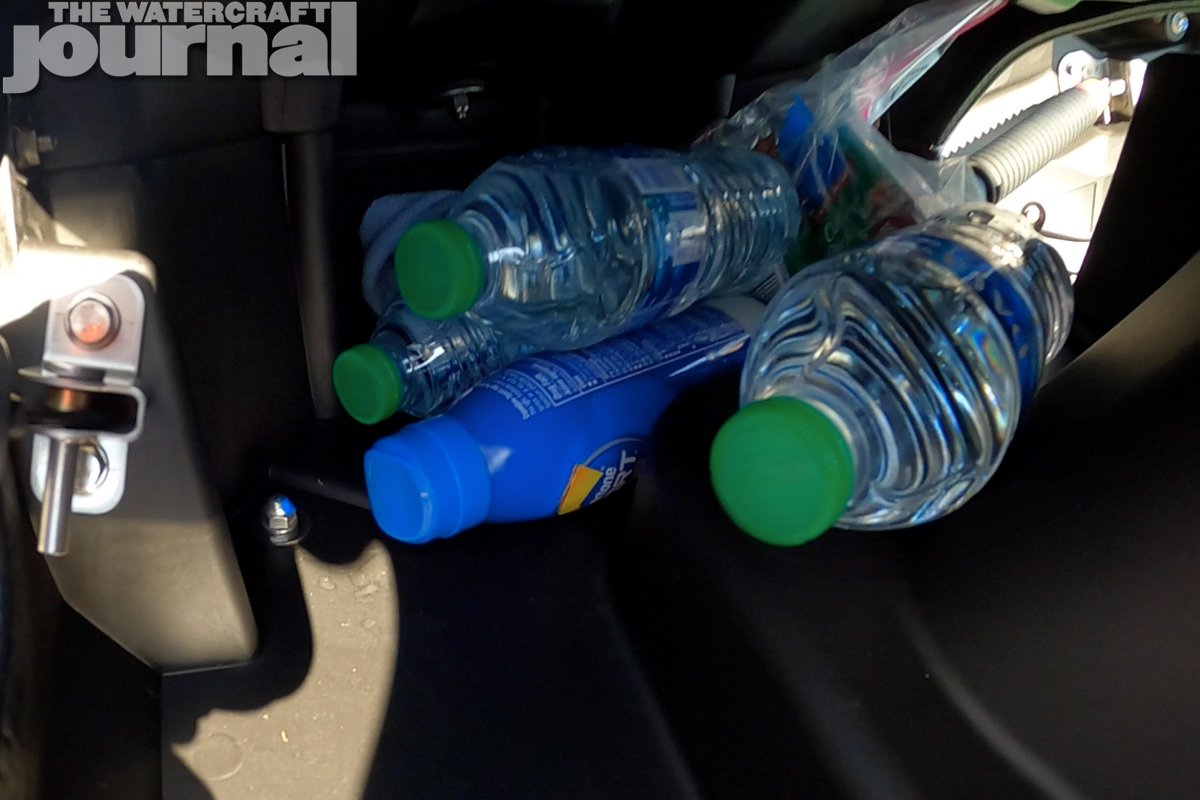
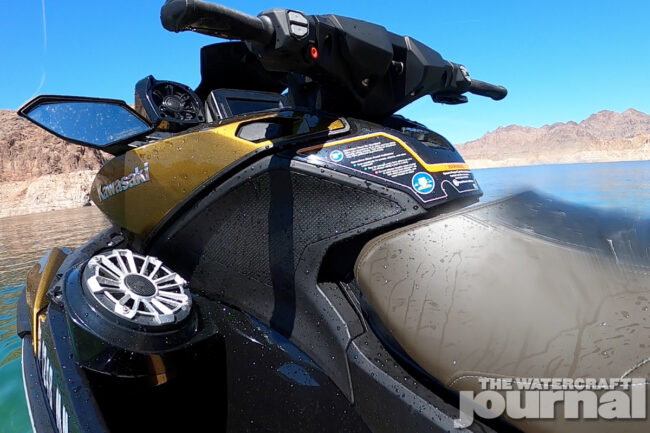
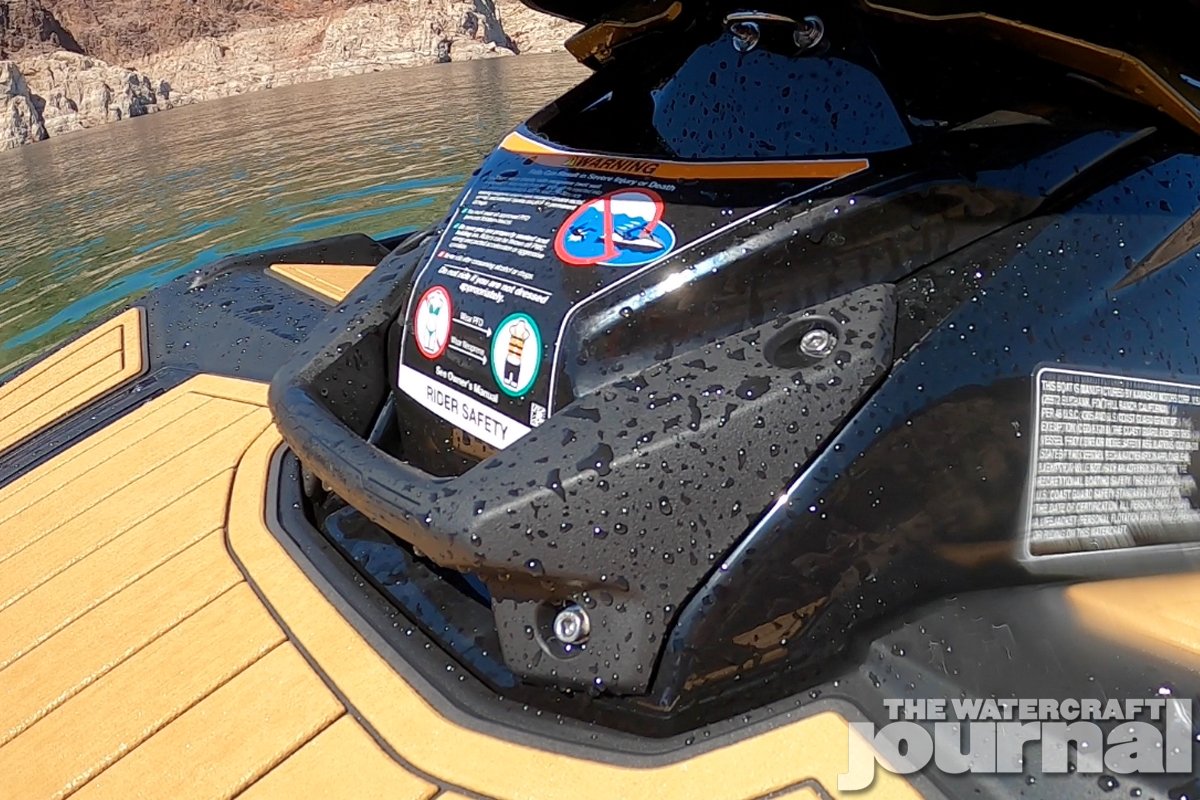
Narrowing the seat at the knee means you’re not riding so spread out, which over time, can really start to wear you out. Above the knees, Kawasaki did something really different, and ditched the traditional glovebox and instead, gave you two of ’em. Each of the fairings open up on gull wing-style hinges giving you a combined 10.6-gallons of storage. The right-side sports a half-gallon-sized watertight box for your phone or wallet (a USB port is an optional accessory).
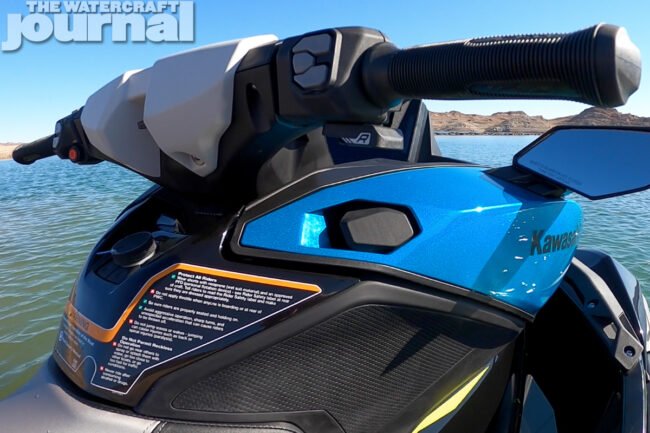
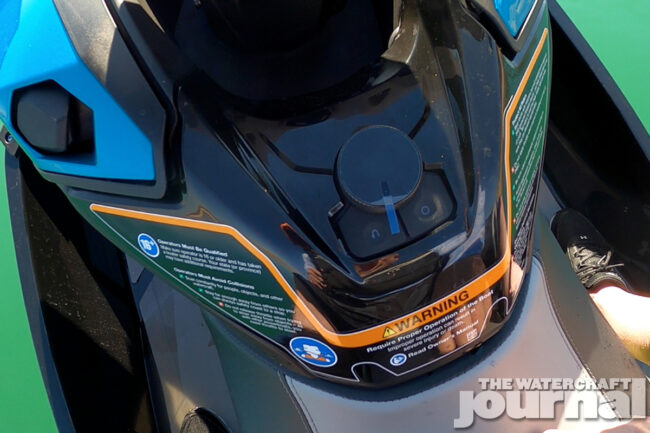
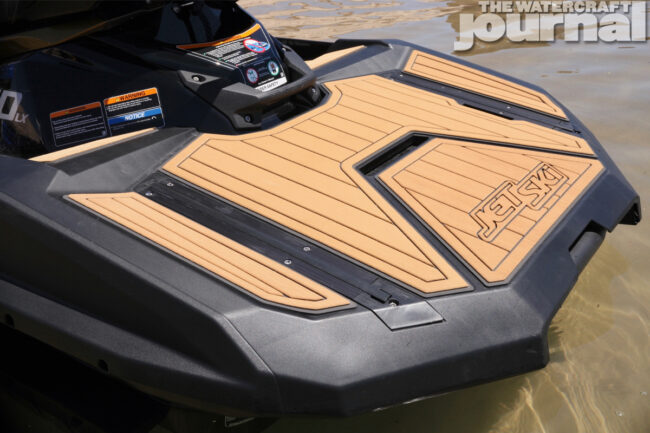
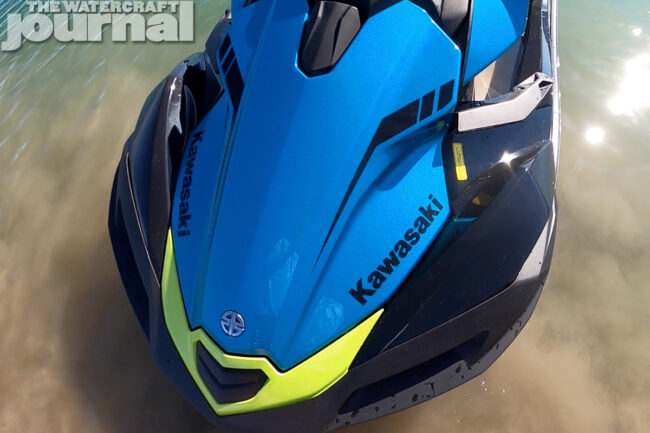
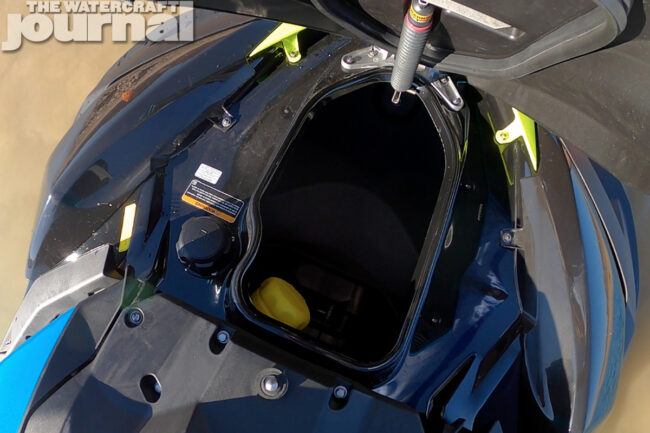
In front, the narrow Formula 1-looking hood covers the 32.8-gallon bow storage. For some reason, Kawi thought shrinking the opening so dang small that you could barely stuff in a backpack was a good idea. Obviously, it wasn’t and I’m pretty bummed about it.

A little .7 gallon open access pocket in back is good for stowing a dock line – and rounds out the Ultra’s 44.5-gallons of total storage, which is a heck of a lot less than the previous model’s industry-leading 60-gallons. Again, it’s just something that’s really disappointing.

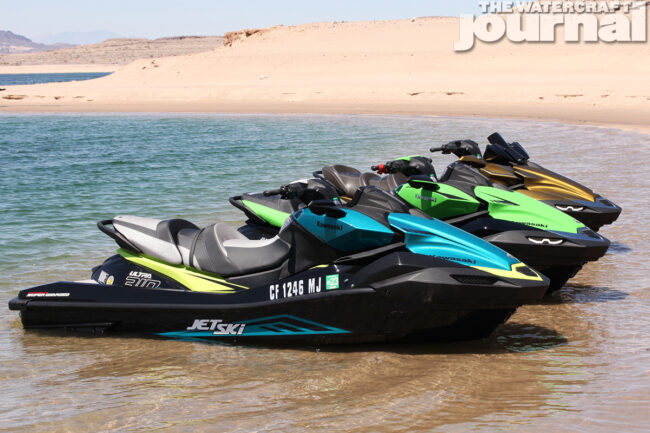
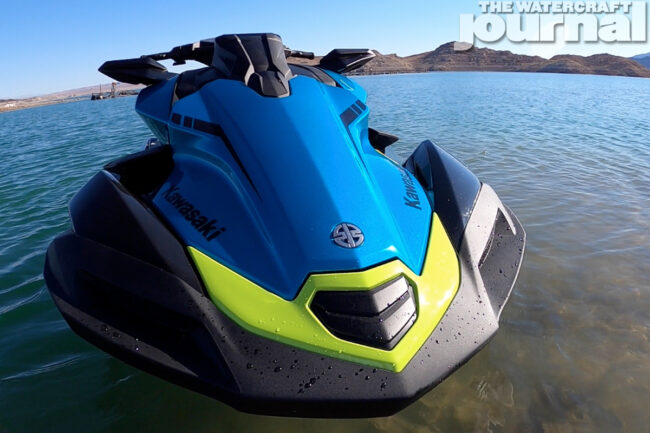
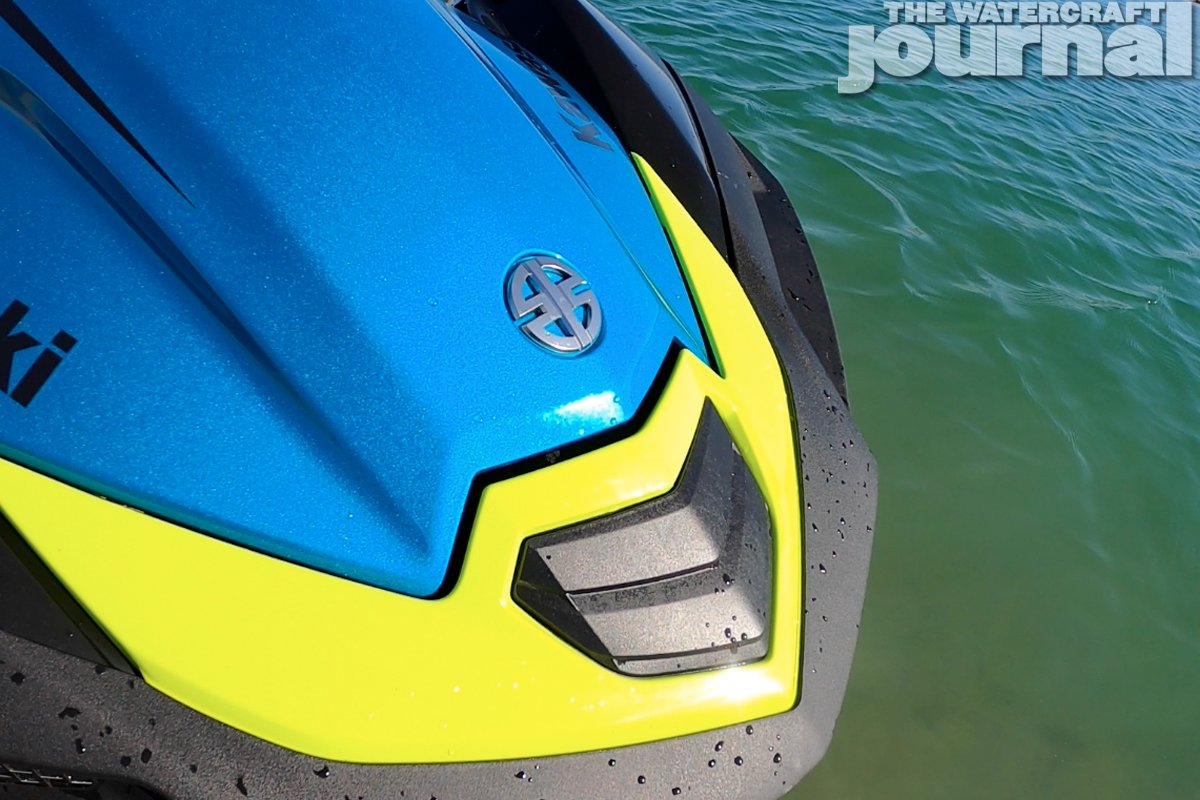
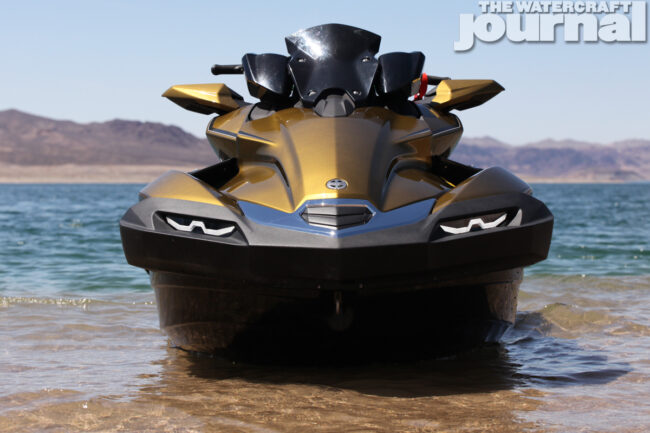
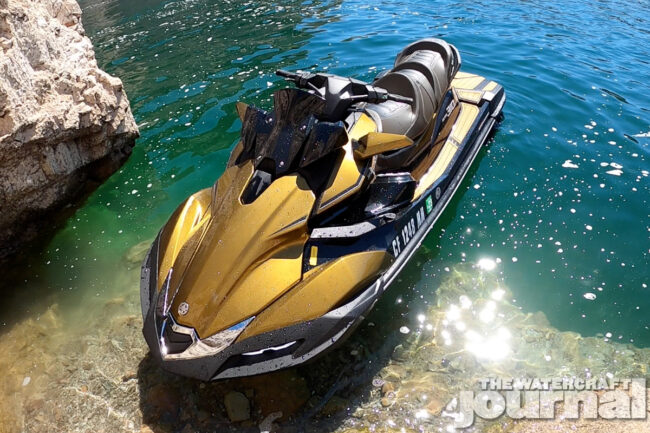
But hold on, I kinda feel like I’m bashing the redesign where there’s a ton to be stoked about: The changes upfront did manage to give the Ultra an extra half gallon of fuel capacity – bringing the ski up to 21.1 gallons – so it’s still the industry leader on that front. It’s also in Ebony and Metallic Electric Turquoise, which is a nice departure from the usual Kawasaki Lime Green.
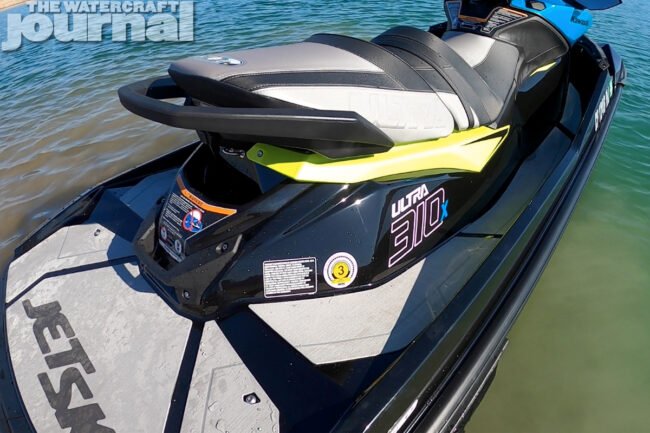
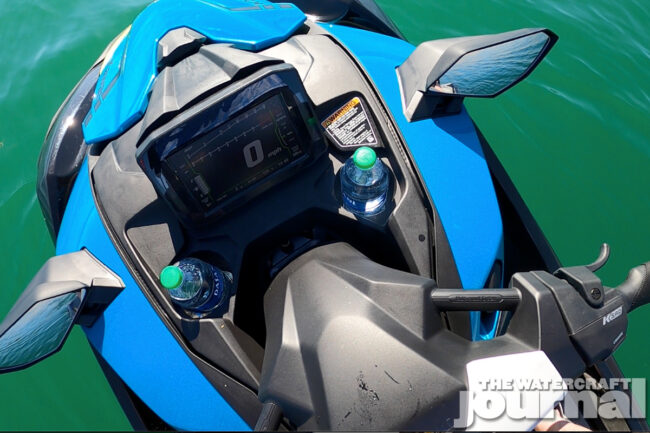
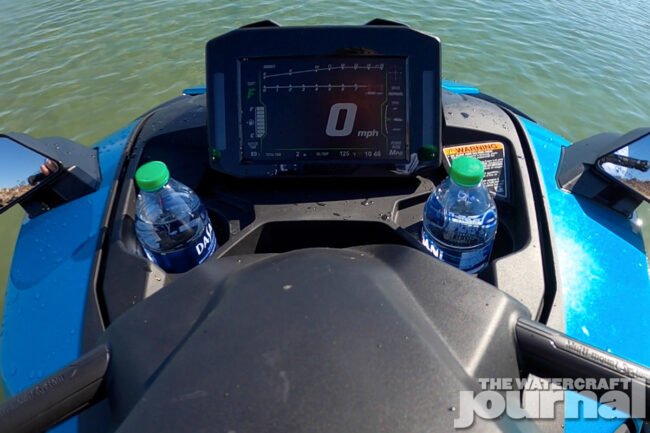
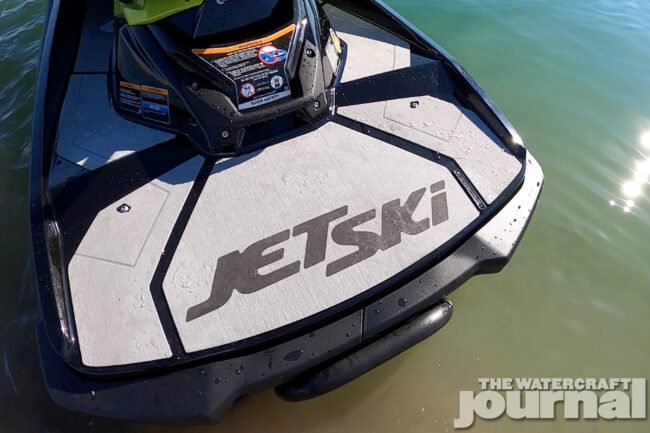
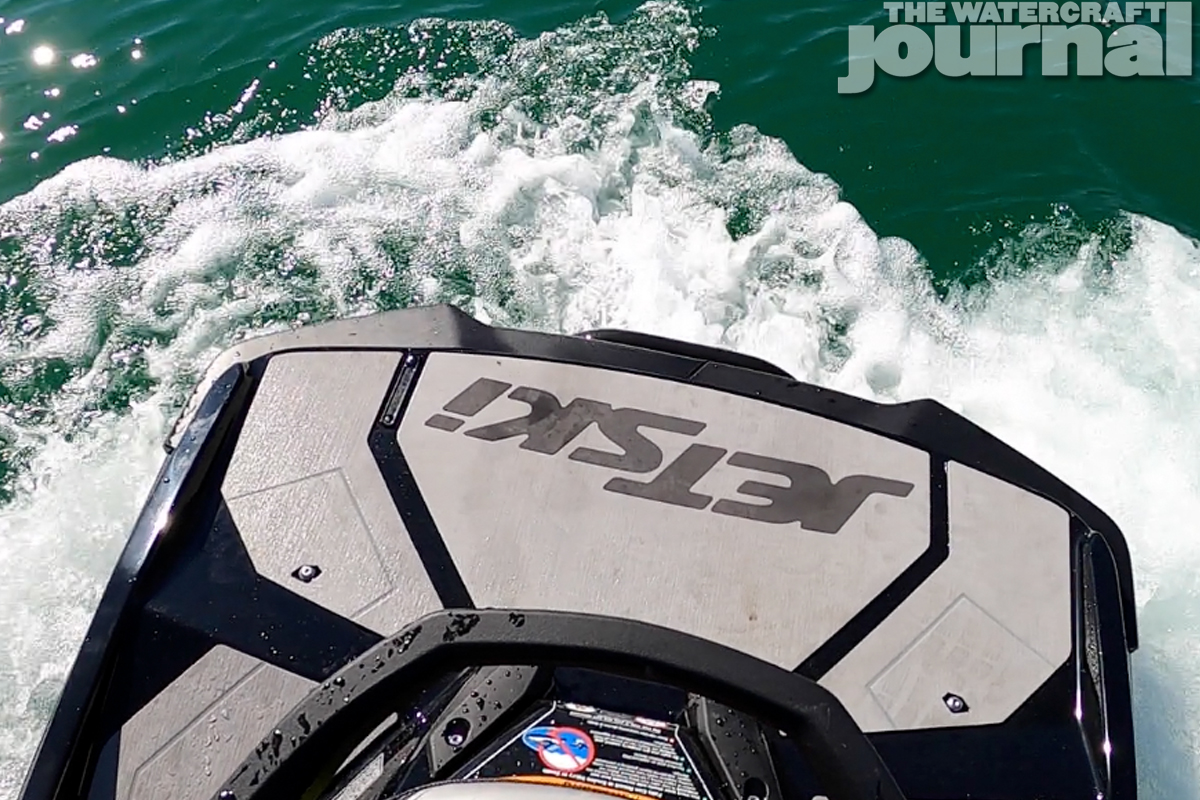
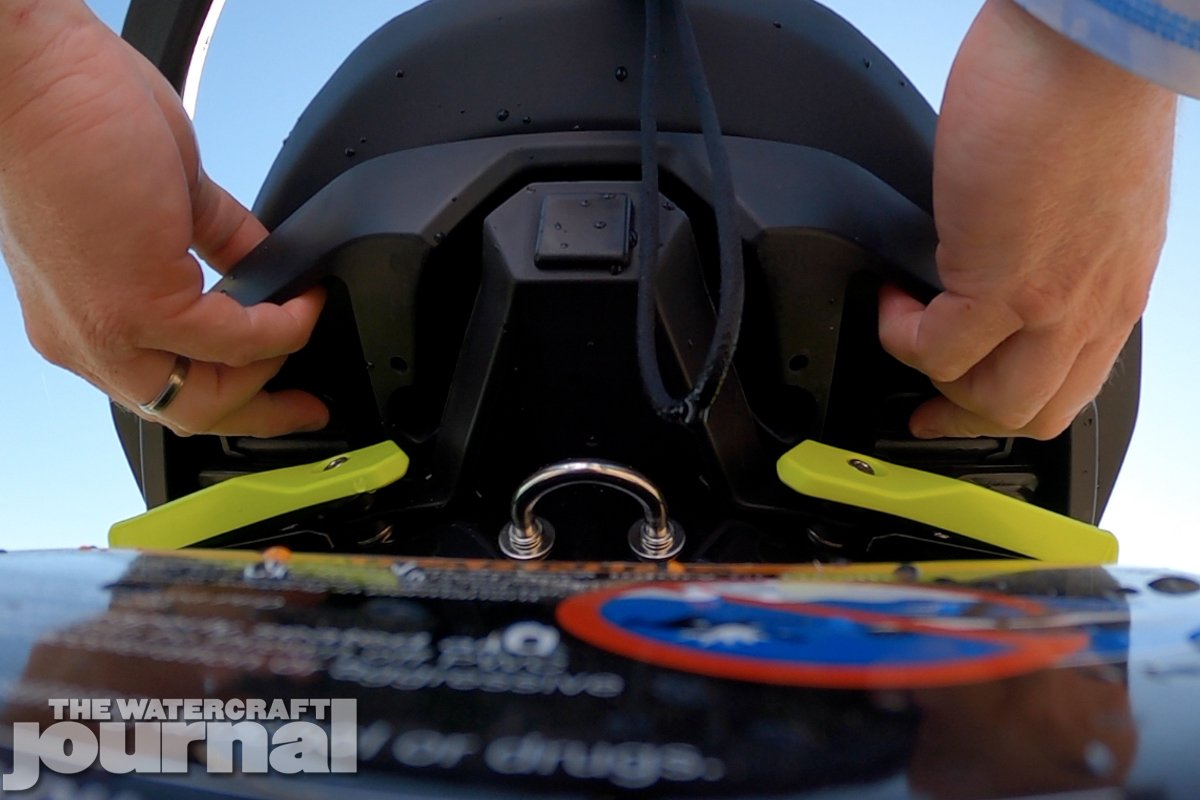
The redesign throws in some built-in cleats for docking; splash deflectors (KSD – Kawasaki Splash Deflectors) and a raised rear bumper for a drier ride; and two big cup holders above the glove boxes. But again, that’s little stuff when considering what went into making the Ultra ride better.

By making the footwells wider and deeper, you’re literally deeper inside of the hull. That means your body weight is lower on the waterline. And what does that mean? It means the Ultra soaks up the bumps, bangs and vibrations far better than before – which was already really good.

Better yet, it also allows the hull to naturally roll into a corner smoother than before – and that’s whether you’re riding on glass or cutting through 2-foot chop. Yeah, that’s right. You can sweep full throttle S-turns in crosswind-blown tidal surf if you want.

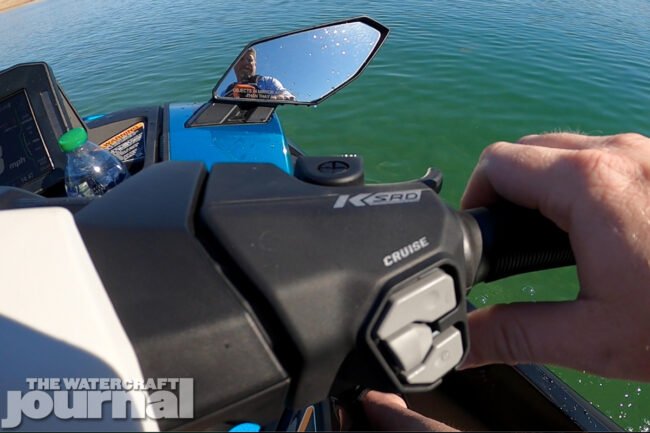
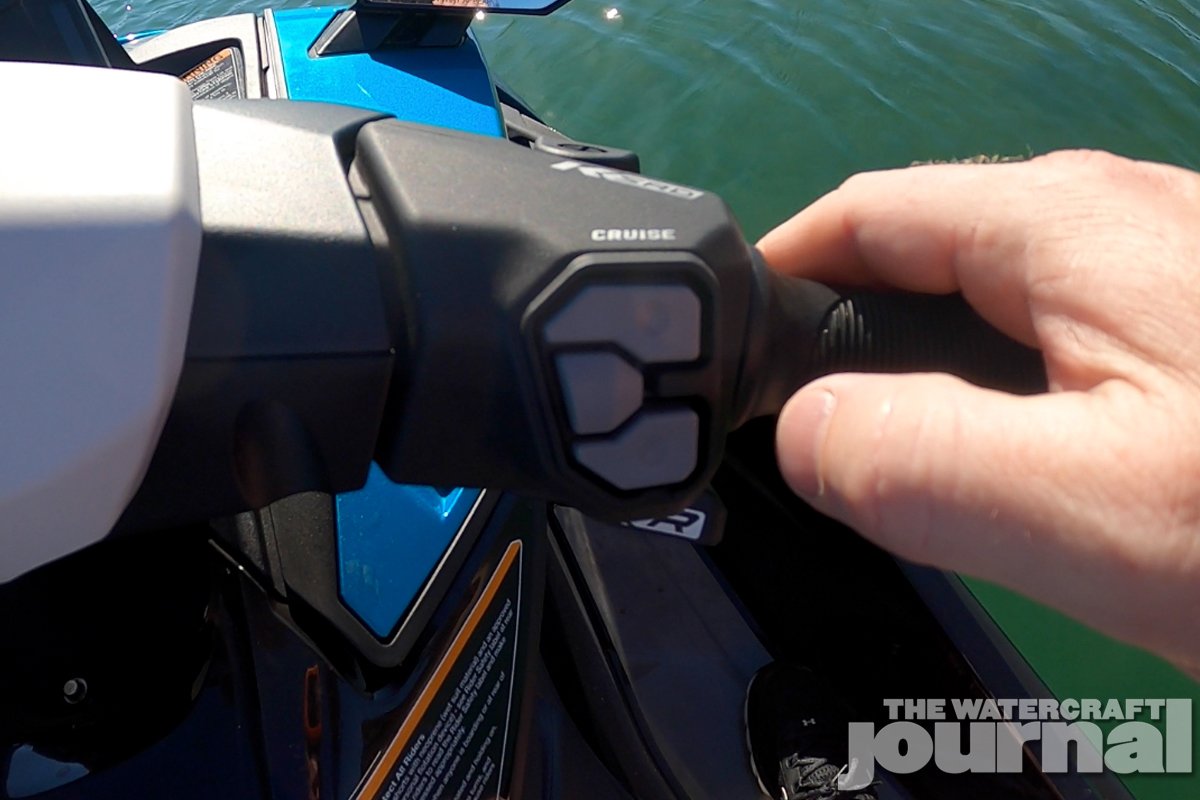
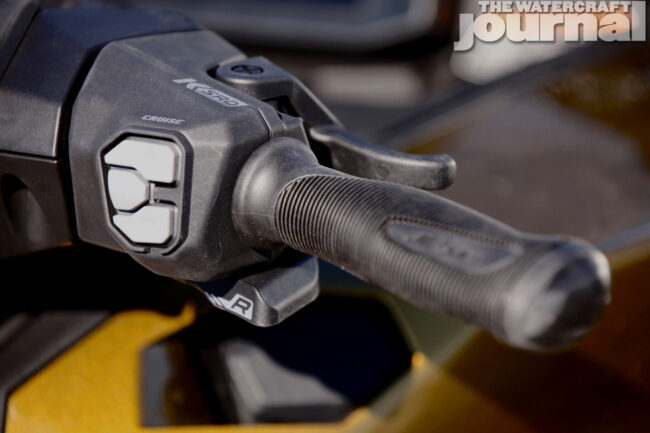
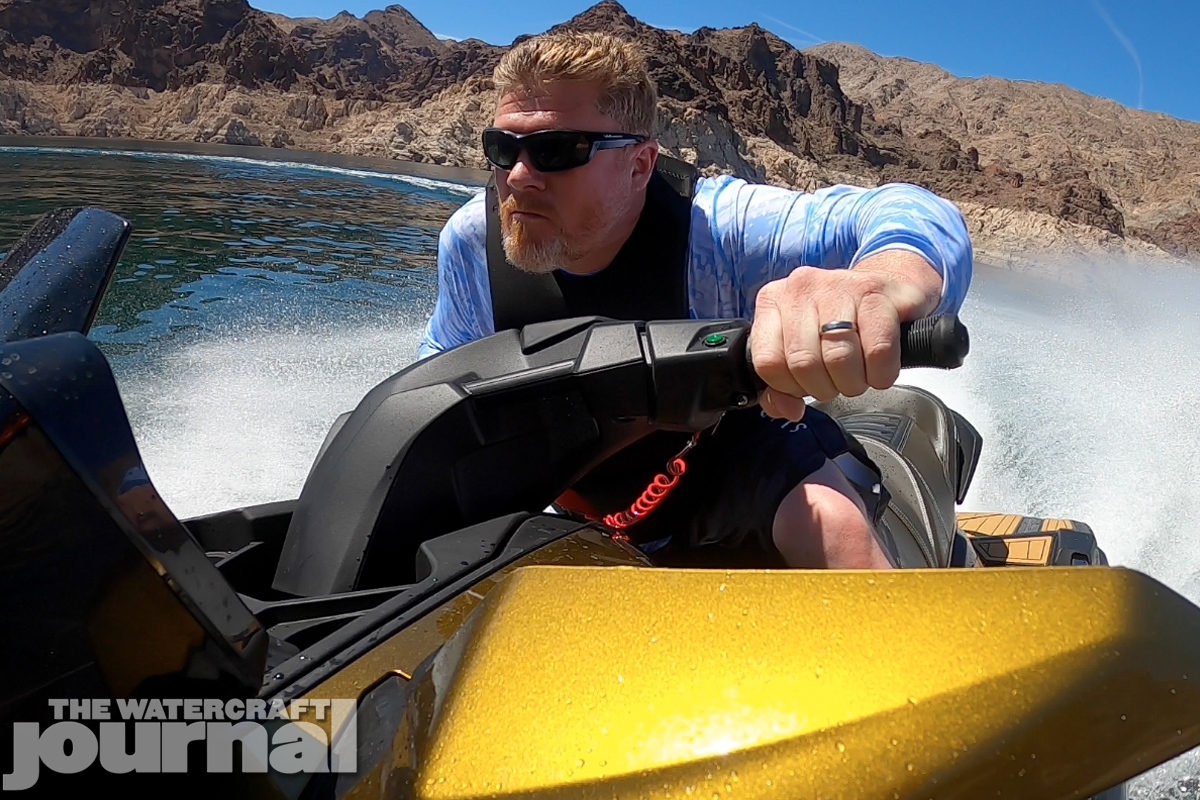
At the helm are the 5-way adjustable tilt handlebars. The neck cranes closer to your lap while sitting, and higher when tilted up when you’re riding on your feet. Each end is capped with pistol grip-style hand grips, and features redesigned control pods with new buttons wrapped with sealed membranes.

That might sound weird, but these have the best response and feel of any controls before. Kawasaki also lightened the pull on the throttle trigger for less finger fatigue. The throttle trigger is connected to the long-overdue brake-and-reverse system (or KSRD, Kawasaki Smart Reverse with Deceleration), new for 2022.
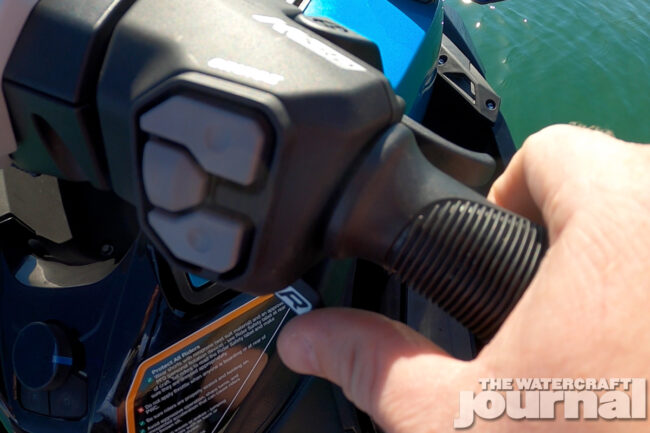
The brake and throttle operate on the same spring, so when you hit the brake button, it manually overrides the throttle, deploying the reverse gate and slowing the Ultra 310 to a halt. When you release the trigger, the bucket returns to a neutral position. If you keep pressing the button, the Ultra will spool up to a maximum of 3,000rpm and begin reversing until released. It’s pretty easy to understand how it works.

Now for those of us familiar with how the other guys’ brake and reverse systems work, it does take a little bit of practice. The brake is more of a drag, so the Ultra isn’t going to throw you forward into the bars like the others will. It’s more progressive and not as halting.

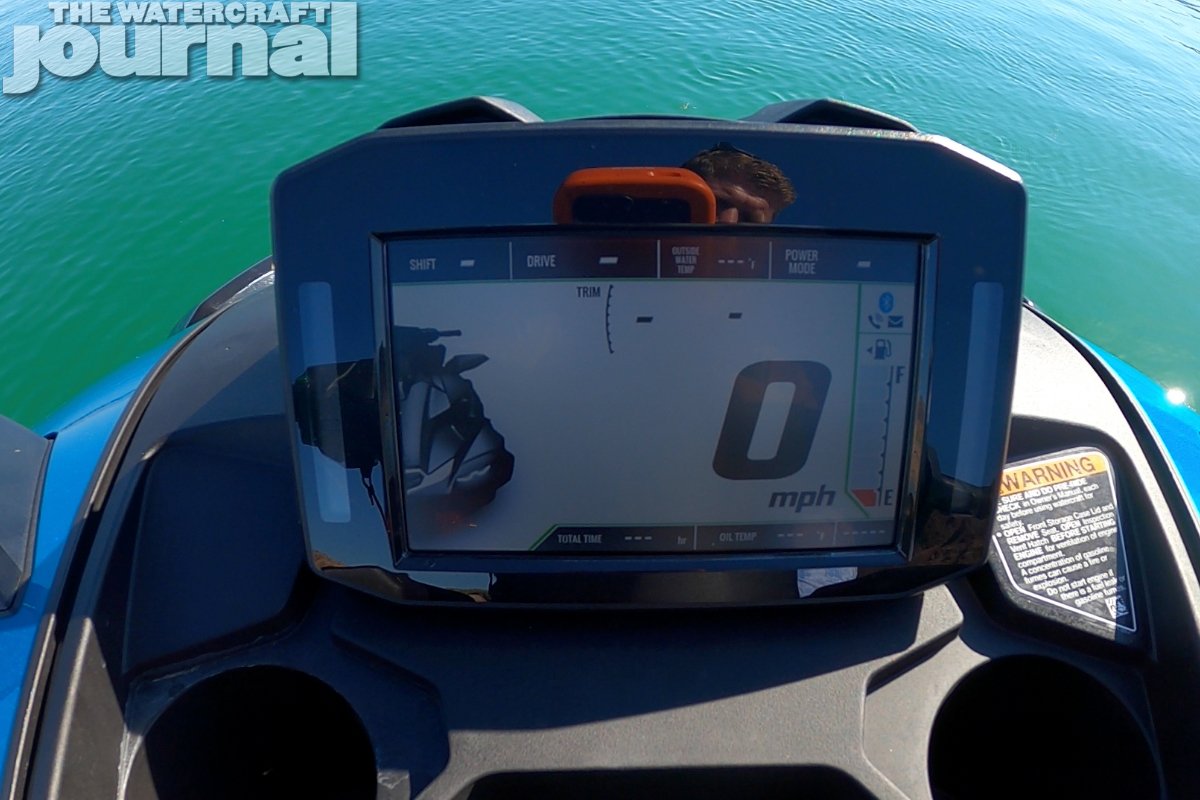
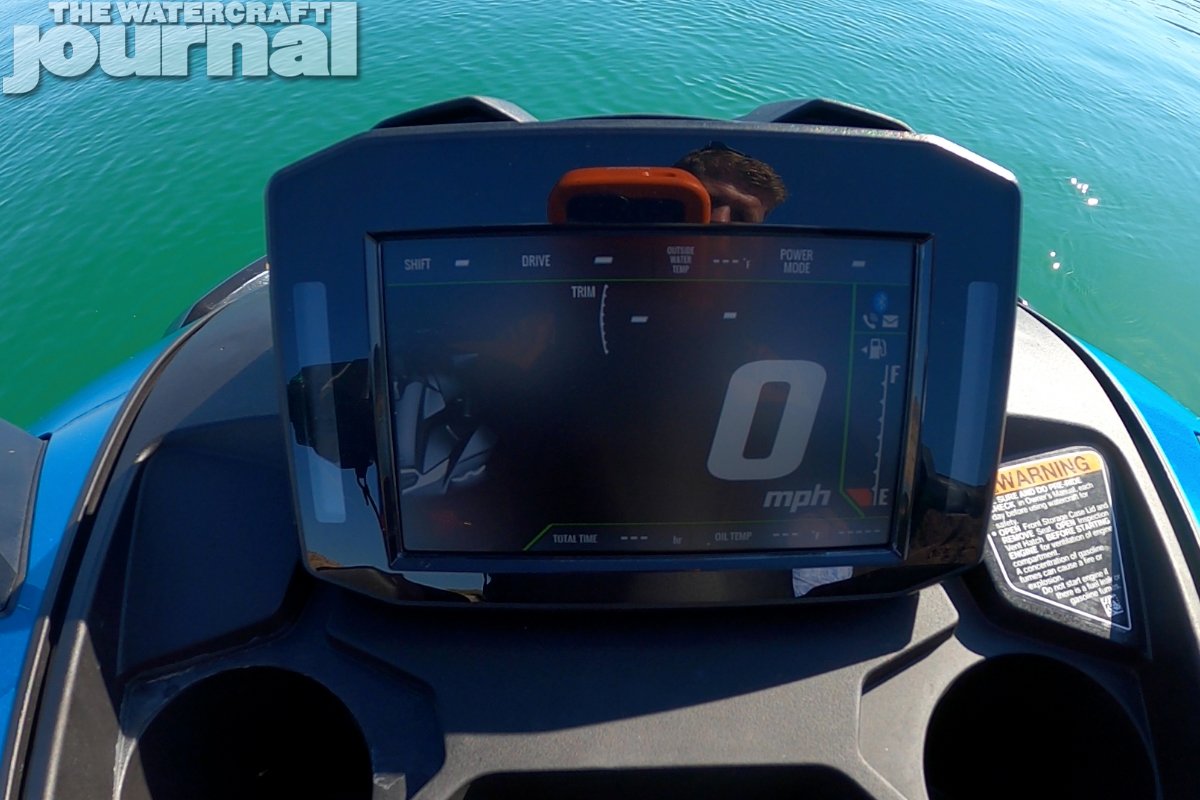
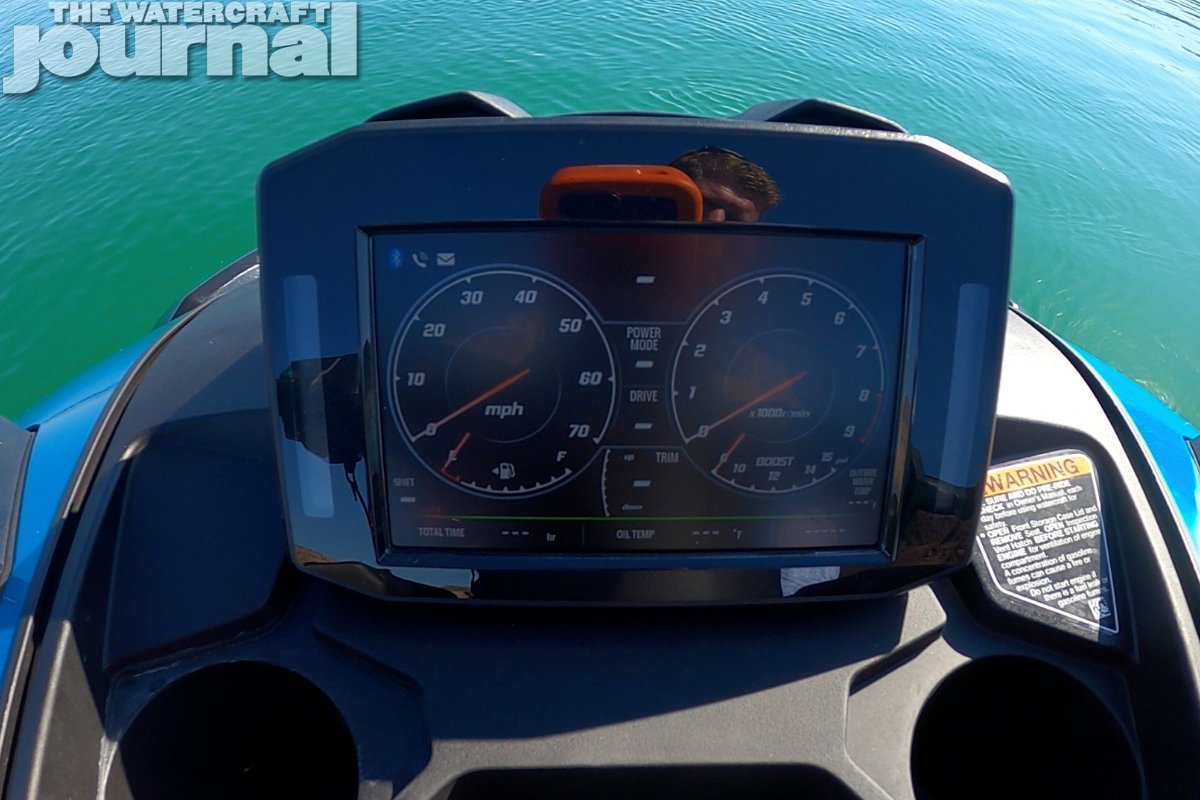
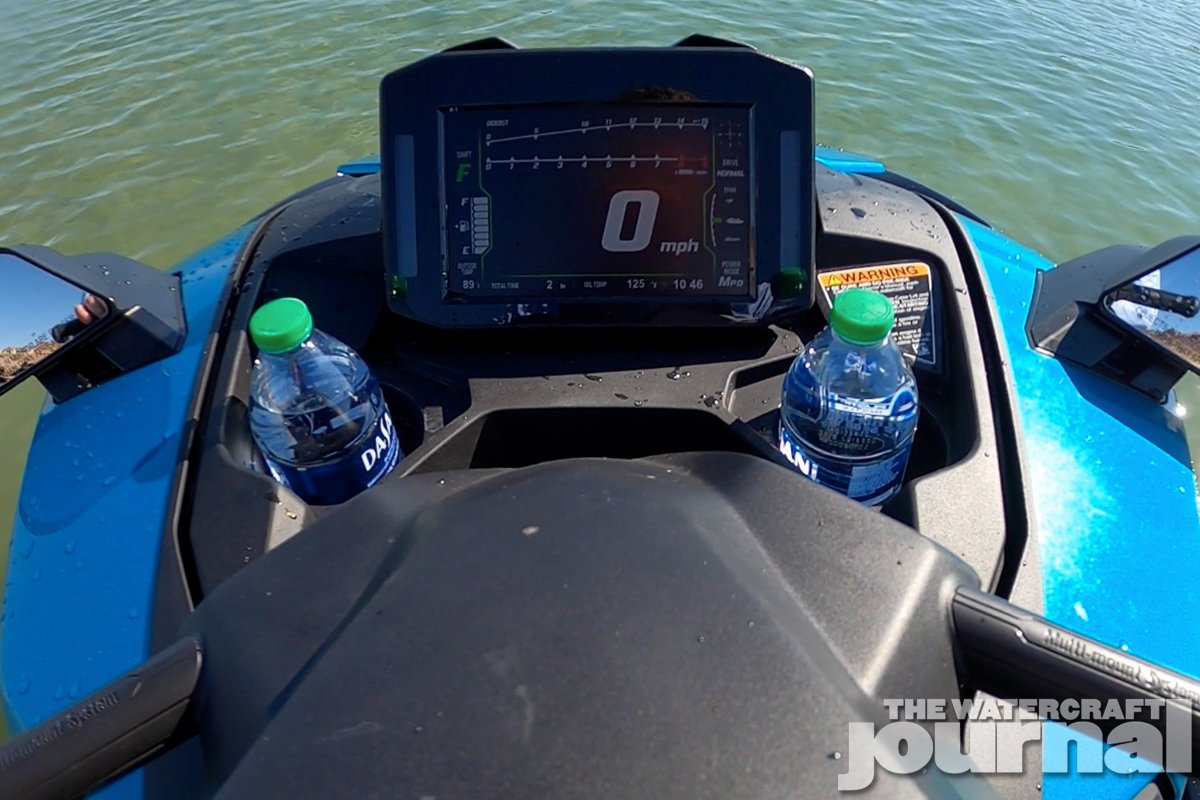
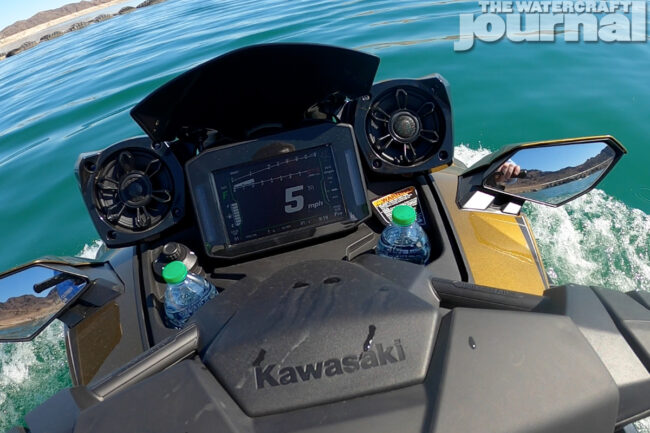
OK now onto the tech stuff: The new Ultra 310X shares the same 7-inch wide, full color TFT display as the LX and LX-S, just without a few of the higher-end features.

It’s still got the three different display modes, black or white backgrounds, self-adjusting screen brightness, and a GPS-controlled speedometer, tachometer, fuel gauge, drive mode, boost pressure, clock, power mode, compass, trim, cruise control; as well as a display bar that can be set to show a trip meter, total & trip time, oil & engine temperature, battery voltage, intake air temperature, diagnostic code, and external air and water temperatures – yadda yadda yadda, you get the point.

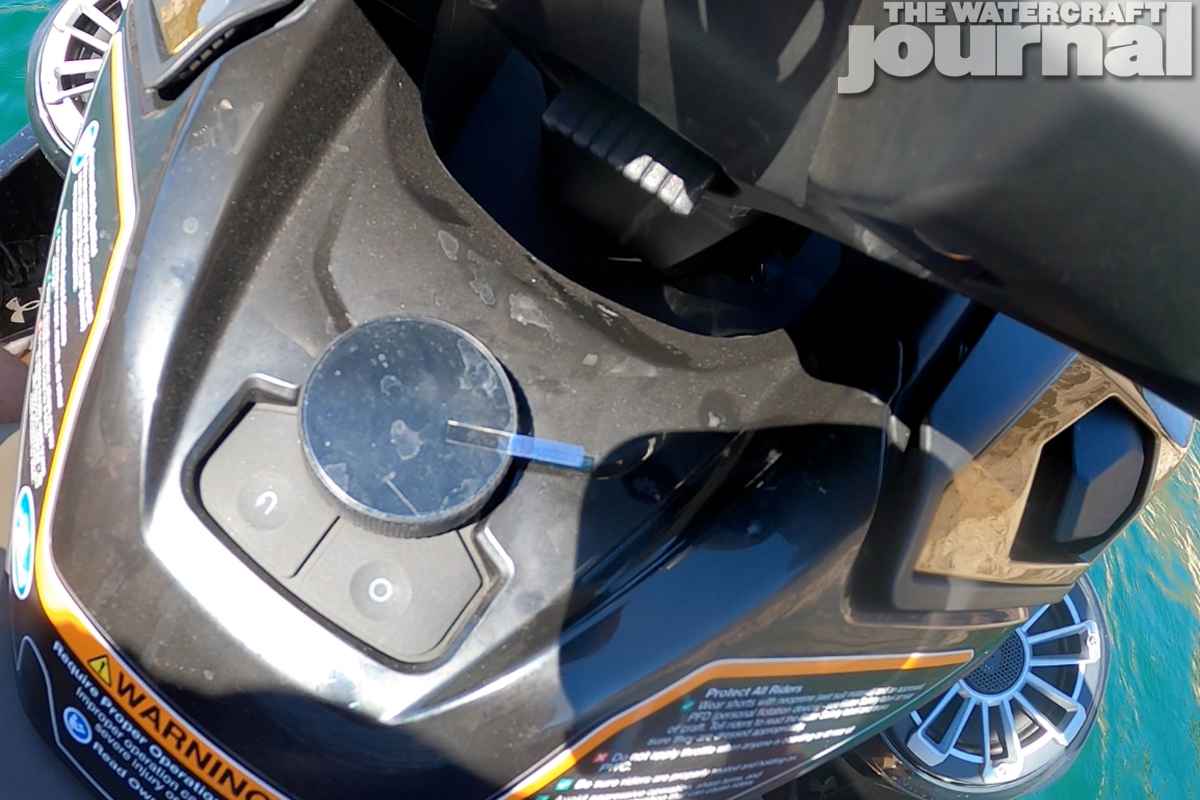
All of this is controlled by a new waterproof jog-dial knob and confirmation buttons. The jog-dial scrolls through the various screens and features on the TFT digital dashboard.
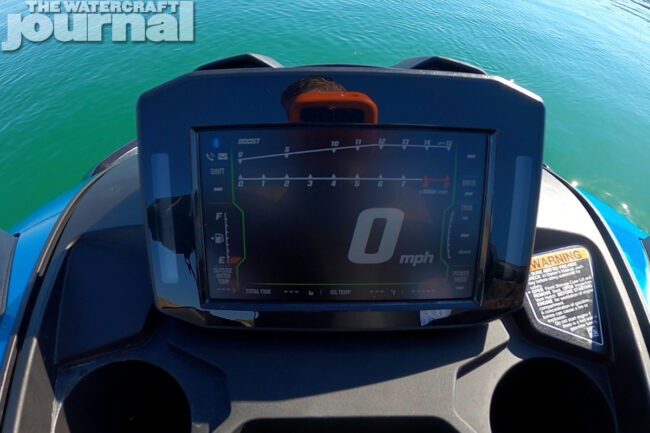
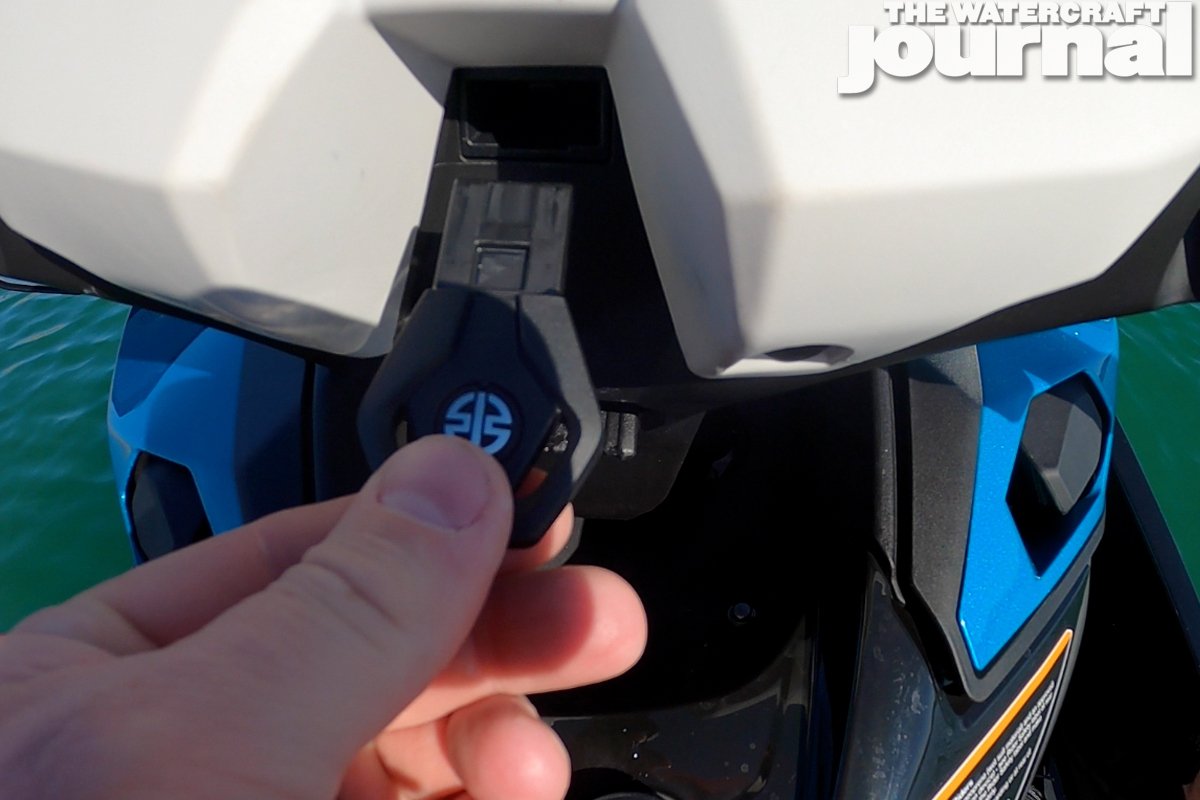
In the bottom left corner of the screen is a big indicator telling you what “gear” you’re in: Forward, Neutral and Reverse. In the right corner tells you what “Mode” you’re in. Just hit the “Mode” button on the left-hand side of the bars and choose from 3 power modes: Full, Middle, and Low (which is pretty much the same thing as the SLO – Smart Learning Operation – key).

Full mode gives you all of the Ultra’s industry-leading 310 horsepower. Middle drops the engine to 80% of the Ultra’s total output – and is also the default setting when you first fire it up; and Low mode is 60% of full power. There’s also a One-Touch 5mph Mode for No Wake Zones, and Cruise Control – as you’d expect.

For you guys looking to best your buddies, Kawi’s threw in it’s new Kawasaki Launch Control Mode (KLCM). Allowing for Single and Repeat launches, KLCM automatically adjusts the trim for optimal acceleration. When set in Single mode, the Launch Control will only activate for the first acceleration shot, whereas in Repeat mode, the KLCM remains active until manually deactivated.

All of this is possible thanks to Kawasaki’s full fly-by-wire throttle control and engine management system. This allows for multiple acceleration maps, smart engine monitoring and throttle response for the same 1,498cc inline four-cylinder DOHC plant Kawasaki has used since 2017.

Back in 2017, Kawasaki revised the pistons to include a V-groove at the second ring for greater oil retention. This added to the overhaul of the engine in 2014 gave the Ultra dual under-piston oiling jets fed by a dry sump oil tank built directly into the baffled and partitioned crankcase, dual cooling circuits feeding fresh ambient water through the enlarged coolant passages, and an external cooler circulating oil between two cooling jackets, mitigating heat soak and excessive internal engine operating temperatures.

This, force-fed by a Eaton Twin Vortices Series (TVS) supercharger cramming an almost excessive 16.7psi at peak RPM down its throat, the Ultra spits out a true 310-horsepower, producing 1,890lbs. of thrust from its 160mm axial-flow, single stage jet pump. All of that might sound like Greek to the uninitiated, but it’s pure engine porn to us gearheads. And trust me when I say, the Ultra 310X uses every bit of that power.

But hold on! To those guys who’re gonna cry “Of course it does! It’s a big ol’ barge!” here’s some easy math for you: The 2022 Ultra 310X is half an inch shorter than the current RXT-X 300. The Sea-Doo’s also two-and-a-half inches wider than the Ultra too – so don’t cry to me about putting two Kawis on a trailer together.

And if you’re gonna whine about weight, get this: Kawasaki lists “curb weight” instead of “dry weight”, which means full of oil and gas. Remember, the Kawi holds 21.1 gallons of gas, and at 6.1 pounds a gallon, that’s 128.7 pounds. Toss in 4-and-a-half quarts of oil, and that’s another 8.8 pounds.

Together that adds up to 137.6 pounds of fluids – putting the Ultra 310X at a hair over 894 pounds – or 65 pounds over the Sea-Doo …aaand if you measured both skis with 18-and-a-half gallons, the difference would be a little over 46 pounds.

But hey, you still might think that’s a lot – and yeah, that’s not nothing – but the Ultra’s also got two waterboxes, a factory-installed catch can, blow-off valve and rear-exit exhaust and a thick-as-steel hull; all the stuff that you other guys wished every night your ski came with. Oh yeah, and both skis are identically priced with an MSRP of $17,499.

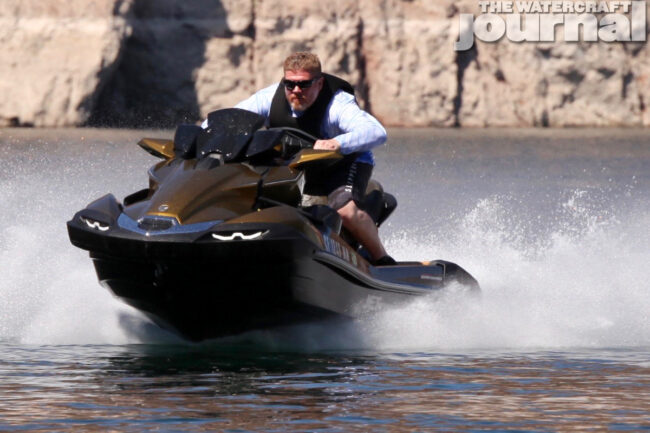
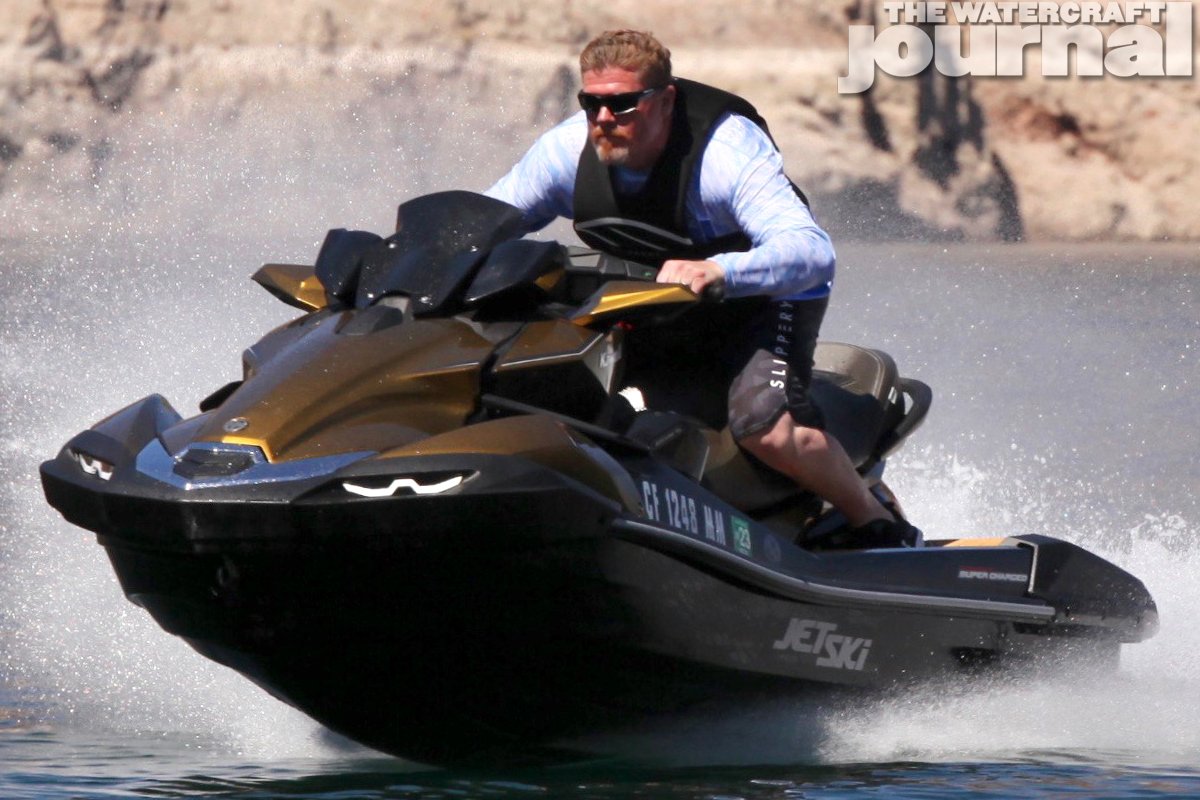
Personally, the 310X has got it all where it counts and doesn’t come weighed down with anything it doesn’t need. Instead, it’s all business, baby. Out of the gate, this dang thing pulls hard; it’s twin-screw blower just screams from under your seat. I managed to click off a 5-to-65mph acceleration time of 4.77-seconds, which bested a Yamaha FX SVHO I tested three years ago with Jerry Gaddis at 5 feet above sea level.

But this time, we were 1,044 feet above sea level and sucking mid-90 degree air in Nevada. This of course, also killed our top speed number – just a blip over 67 miles per hour with a full tank and 240 pound rider. Certainly better conditions, less fuel and a lighter rider would give up a few more miles per hour.

But again, what makes the new Ultra 310X the monster it is not top speed or acceleration numbers. That stuff’s for bench racers to argue over on Facebook. What I’m talking about is ride quality and this thing’s got that in spades. I don’t know how the hell Kawasaki managed to take a 15-year-old hull design and somehow find a way to make it work better than it ever has before, but they did it. They friggin’ did it.

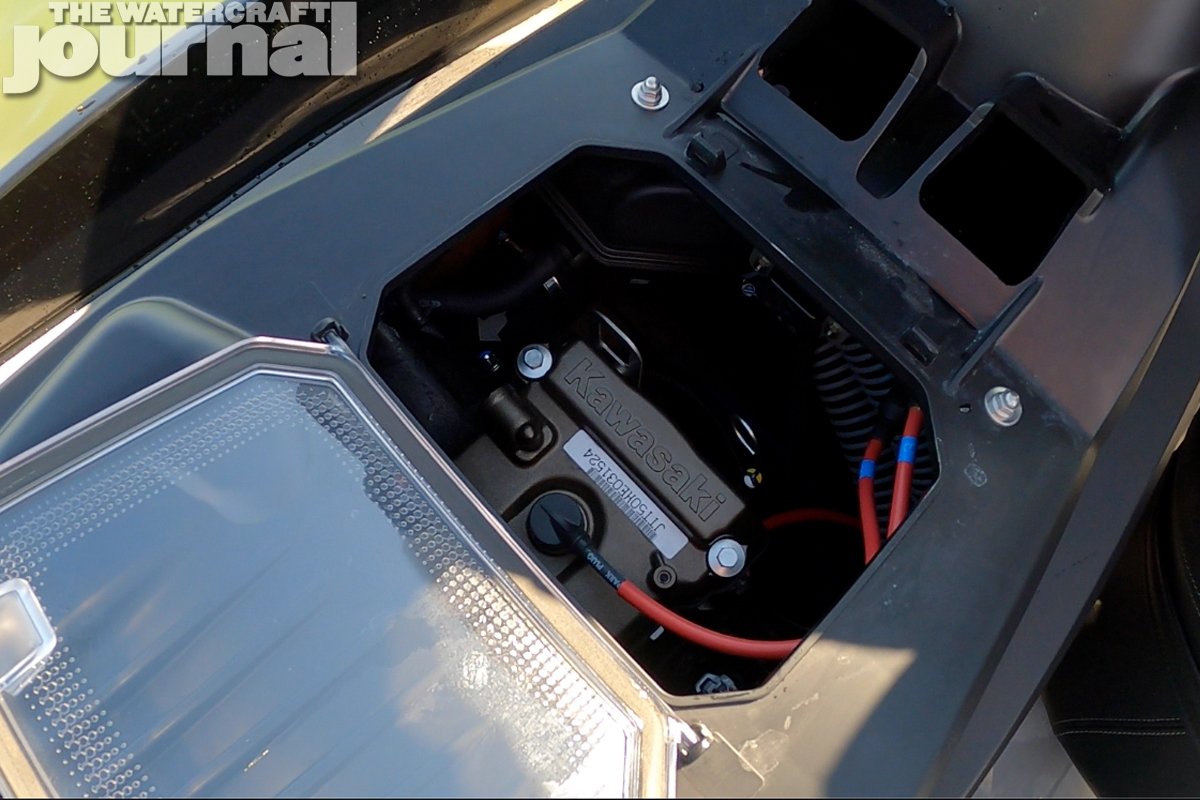
It’s super solid. There’s no dumb rattles or weird chatter from loose panels. It’s well balanced, exhilarating and just a helluva lot fun to ride. Sure, there’s a few things that I’d like see fixed and/or changed – I mean the totally sealed engine cover? C’mon, who thought that was a good idea? – then again, name me something that’s flawless.

But duuude, I’m telling you – when you nail the throttle… there’s just nothing like it. I’ve given a lot of praise to other machines, some less deserving than others. But I’ll you this: When people ask me, “Which of the brand new skis would you yourself buy?” my answer will be, “This one.” It would be the 2022 Kawasaki Ultra 310X JetSki.

Bombora Gear Reveals Life Saving PFD Bundles

0

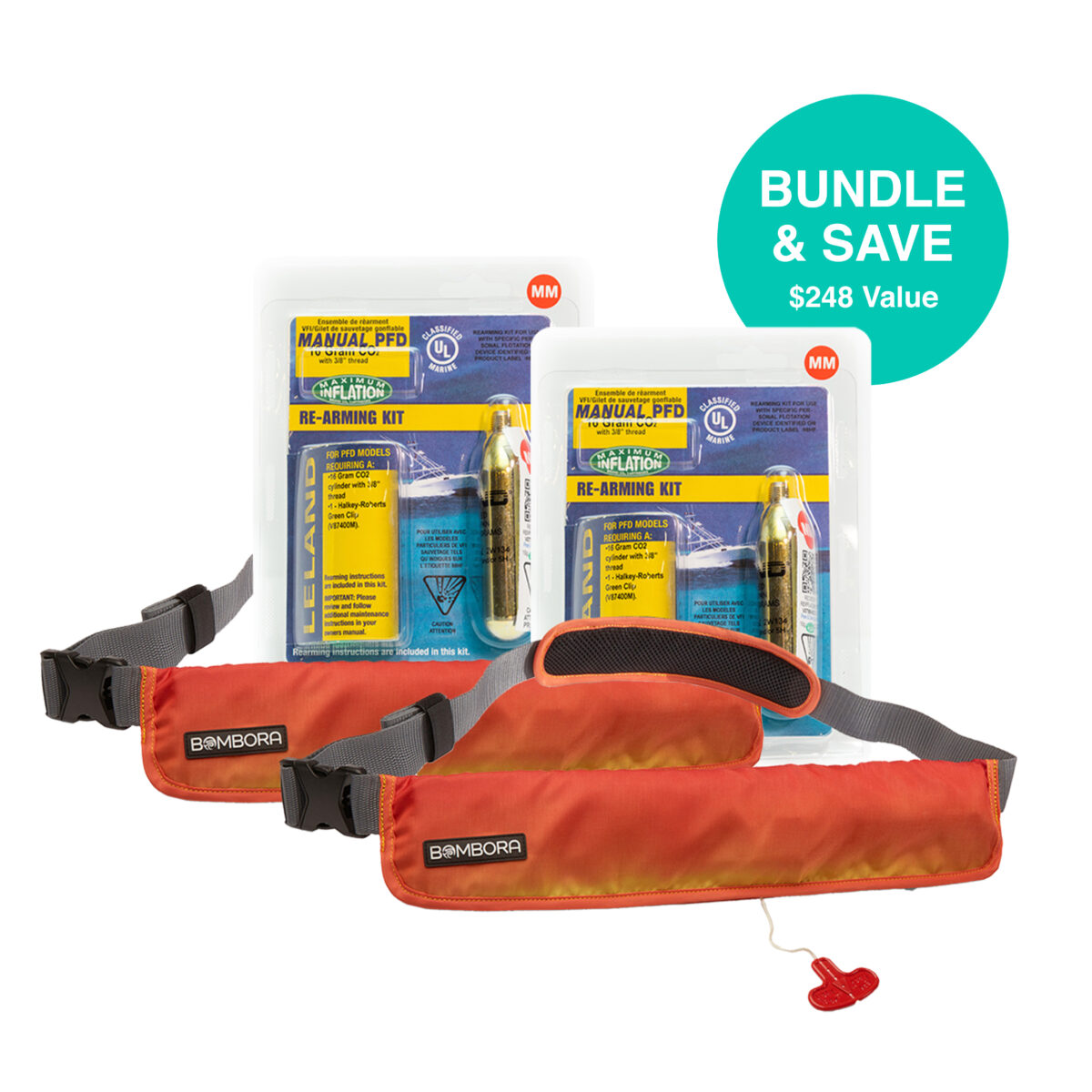
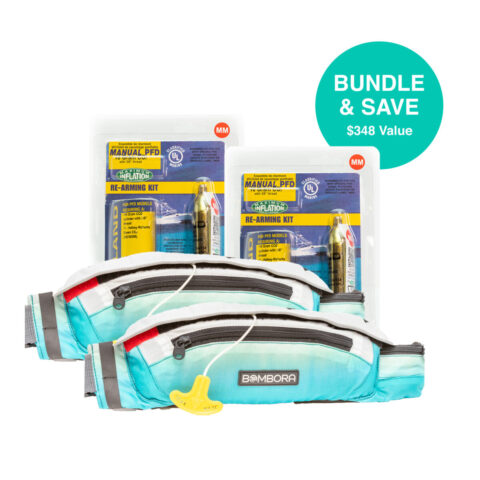
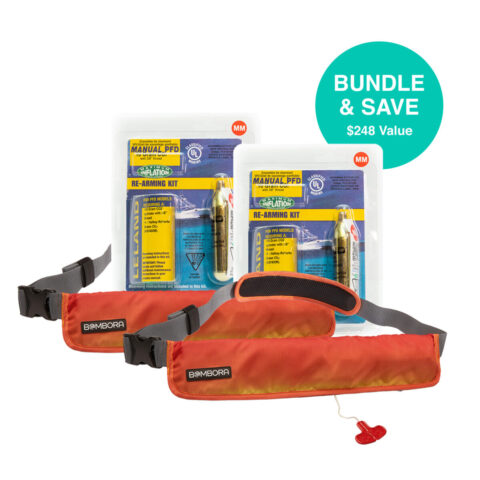
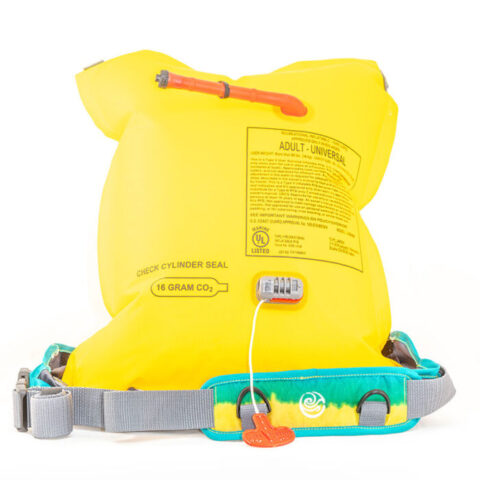
Bombora Gear is now offering Bundle deals on their inflatable PFDs. These are ideal for families and people with dogs who like to go boating and want the convenience of belt style PFDs.The Bombora PFDs are USCG approved and designed to wear around your waist and inflate with the pull of a cord, which activates a CO2 cartridge. The jackets are not only super comfortable, but they also allow for unrestricted freedom of movement. Think fanny pack.

Buying a Bundle will save you 30% over the cost of buying each jacket separately. The life jackets are made for adults 16 and older with a chest size ranging from 30” to 46”. There are three different bundles to choose from. The Adventurer Bundle includes two Type III Adventurer PFDs, which provide 25 lbs. of buoyancy. The Wanderer Bundle has two Type V Wanderer PFDs that deliver 16.5 pounds of flotation. Both kits contain two rearming kits.

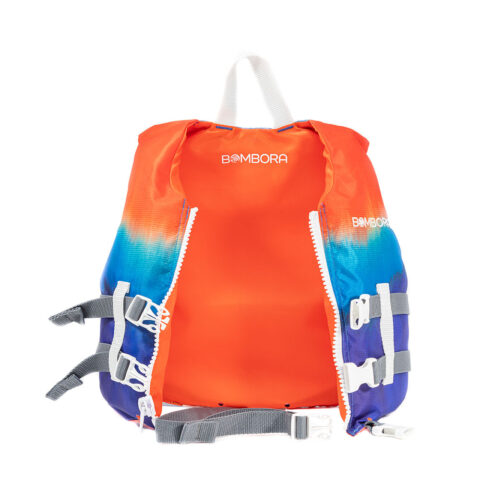
The Bombora Family Bundle comes with two Type V Wanderer jackets and two Type III Kids Vests. There are two sizes of child size life jackets to choose from. One of them is for kids 30-50 lbs. and the other is for 50-90 lbs. The Kids Vests have roomy arm holes and Delrin buckles to keep the kids secure.

For those with doggos who like the water, The Dog Lover Bundle is for you. It contains a Type V Wanderer PFD for the human and a Bombora Life Vest for your furry companion. There are several sizes to choose from for dogs ranging from 12-90 pounds. The vest is designed to let dogs swim freely. Check out the Bombora Gear website for all the details.

Understanding Oil: Production, Policy and What You’re Paying For

0

Nearly 20 years ago, there was a time that whenever my brother and I started working on one of his project cars out on the driveway that his elderly neighbor would wander over to chat. Don had a hobbled walk due to one leg being slightly shorter than the other, a result from a terrible fall while working in the oil refineries of Long Beach, California. Well into his 70’s, Don would happily argue politics, which automaker built the better car, and anything else you could toss his way.

Don joked that he and all his buddies would fill up their cars at the refinery where they worked during the “gas crunch” of the 1970’s. Policies had been put in place to stave off long lines at the pump, requiring those with license plates ending in even numbers to fill up specific days, while those with odd numbers fill up on the opposite days. It was more folksy (ie. idiotic) policy from Governor Jerry “Moonbeam” Brown who gifted Californians with the anti-drought maxim, “if it’s yellow, let it mellow…”

“At the refinery, we could just get straight gas,” Don recalled. “All of that additive stuff was mixed in later. We just produced the gasoline. And we could fill up our tanks whenever we wanted. I’d fill up my truck one day, the wife’s station wagon the next. Heck, I’d drive the camper in later that week.” He snorted, “I remember one buddy towed his boat in and filled up the tank.”

“How was that possible?” I asked, visibly confused. “I thought there was a shortage?” Don roared, slapping his knee. “There was NO shortage! That’s just what they told people. There wasn’t a single day we didn’t hit our daily output. We had all the gas in the world. They just filled up the reserves while hiking up taxes.” This was my first real world insight into politics directly effecting Americans’ wallets, and sadly not much has changed.

As of this writing, the domestic average for a gallon of gas is $4.28 (according to AAA). This is $.11 less than last week and $.80 less than the all-time record high set June 14th, 2022 – just a month ago. This drop is directly attributed to an infusion of 50 million barrels of oil pulled from the United States Strategic Oil Reserve, which was originally designed to supplement areas hit by environmental disasters or times of war, and comes intentionally at the seasonal height of annual oil consumption use.

This influx of oil might’ve artificially tampered the two-year climb in the consumer cost of gasoline, but don’t expect it to last. Crude oil remains the most important commodity in the world, and a barrel of crude is $98.6 – down from $122.2, the second highest price on record set on June 8th, 2022. (The all-time record was set on March 22, 2022, at $123.7 prior to tapping into US reserves shortly thereafter.)

Per Market Insider, emerging Chinese and Indian oil suppliers have curbed skyrocketing prices all while OPEC production remains steady. Yet, the single biggest destabilizing player in global crude market in the past 5 years has been the United States. After a reversal of decades of US executive policy in early 2017 unleashed thousands of private and independent drilling contracts, US crude production expanded to new records:

Not since March of 1971 had US crude production surpassed 300,000 barrels a month – that is, until November of 2017; and that record was shattered two years later in December 2019 when US production broke 400,000 barrels (per the US Energy Information Administration). This 31% increase in domestic oil production replenished depleted oil reserves and earned the US the designation of “net exporter” for the first time in 80 years. But it wouldn’t last long…

As Covid swept the globe, demand collapsed. The deluge of additional oil into a rapidly shrinking market crashed the cost of crude to $3.32 a barrel the week of April 24, 2020. Oil producers quickly “eased” production throughout May and June, with US production beginning to rally to mid-2018 numbers by October. Yet, production plummeted again – this time to sub 300K levels (276K) – in March 2021 after federal drilling renewals and the Keystone XL pipeline were denied by Executive Order 13990.

The impact of Executive Order 13990 wasn’t directly felt by “Big Oil” executives either: 91 percent of the wells in the United States are operated by independent producers who generate 83 percent of America’s oil and 90 percent of America’s natural gas (per the Independent Petroleum Association of America). These companies see less than $5 million in retail sales of oil and gas a year, operate in only 33 out of 50 states and employ an average of just 12 people, reports National Review.

Since January 2021, the United States has reversed from net exporter of crude to net importer. Hundreds of drilling contracts have been denied or terminated, and millions of dollars have been lost on the development of new pipelines and refineries that were expected to replace antiquated plants (which have since closed, costing hundreds of American jobs). Thus far, current domestic production has lingered around 325K, which equals a net loss of roughly 20-percent of the total global supply from just two years earlier.

Consequently, this instability has crashed the oil investment market. ExxonMobil reported losses in four of the past ten quarters, including a massive $20.1 billion loss in December 2020 (Yahoo Finance). Certainly, ExxonMobil earning $11.8 billion during that time frame isn’t chump change, but when compared to Apple’s $211.7 billion over the same time period, it’s hard to claim “Big Oil” is really gouging consumers.


Of course, consumers visit the gas pump more often than their nearest “Genius Bar,” so the pinch feels far more prevalent. Petroleum accounts for almost all cooking heat, over 60% of domestic energy, and fuels the nation’s vast transportation network, directly effecting costs of food and goods. Thankfully, some government bodies have been helpful in providing insight as to what exactly they’re paying for. As an example, the California Energy Commission provided a cost breakdown of a $5.57 gallon of gasoline:

As of July 25th, 2022, the crude itself costs $2.52 accounting for 40% of the gallon – a price which oil companies do not set, but rather is influenced by supply and demand (detailed previously). The refining process and distribution costs add up to $2.19, making up 39% of that same gallon. The remaining costs are entirely state and federal taxes: including a state Underground Storage Tank Fee of $0.02, state and local tax of $0.12, State Excise Tax of $0.54 and a Federal Excise Tax of $0.18, or 21% of the gallon.

For those convinced that “Big Oil” continues to “stick it to the little guy” despite the provided breakdown, what are some ways to reduce the cost of their 39-percentage? Erecting new and more efficient refineries is one, which requires permits from government oversight committees. A second is employing more cost effective means of transportation of the crude to these new refineries – and that is via modern, EPA-approved pipelines, both of which Executive Order 13990 and later policies have thwarted.

Conclusively, domestic policy directly effects American crude production – positively or negatively. How to encourage production in a clean, environmentally-conscious and reliable manner is clearly debatable and should be openly scrutinized; but understanding the path to how we got to where we are is information that everyone should have. The coming years are unlikely to see dramatic improvements in energy production or decreasing costs without radical change of either policy or leadership – and that is up to the people to decide.

Video: Sea-Doo Walks Us Through How to Use the iDF System

0

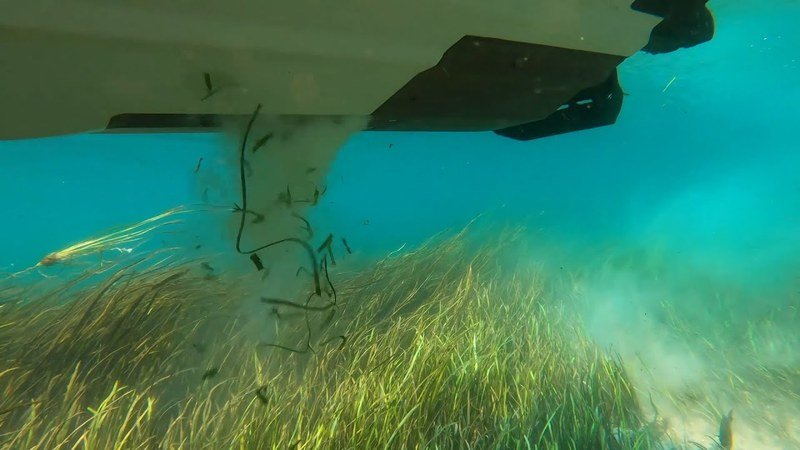
The Sea-Doo Fish Pro removes the worry of clogging your intake when getting after elusive bass hiding in the vegetation. This peace of mind comes from knowing your ski is equipped with Sea-Doo’s Intelligent Debris-Free Pump System (IDF). Spend more time fishing and less time dealing with debris in your intake and having to get in the water to clear trash and other debris out.

The IDF technology comes standard on the FishPro and the GTX Limited. It is available as an option on the 170 and the 230. In the video below, Tim McKercher, Sea-Doo’s Product Specialist and Sea-Doo Ambassador, Bri Andress, walks us through the system. McKercher says the pump is another innovation to make things easier and to live a more adventurous Sea-Doo life. The pump lets you explore stress free when you’re out there in unfamiliar territory or making your way into your fishing hole that’s overgrown with vegetation and other debris.

The Intelligent Debris Free Pump System is simple to use: When trash or weeds get pulled into the intake, shut down the engine and press the handy IDF button located on your handlebar. Lightly rev the engine a couple of times and the stuff gets blown out of your water jet pump. The IDF system reverses the water flow so debris is blown out within seconds. When you turn off the IDF system, the engine returns to normal and you can get back to cruising. Now you don’t have the be the victim of a malfunctioning PWC due to trash getting sucked into your machine.

Save $150 Off on Sea-Doo’s Ready, Set, Summer Promotion

0

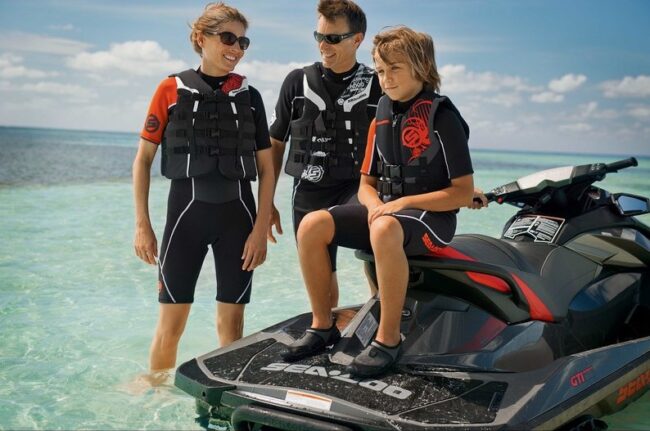
Sea-Doo has their Ready, Set, Summer Promo going on until August 31,2022. You can score a $150 off when purchasing $1,500 of Sea-Doo PWC accessories or apparel at your local dealership. Sea-Doo MOVE trailers are not included in this offer. Sea-Doo Pontoon parts and accessories, PWC parts, and XPS are excluded as well. Only the latest Sea-Doo apparel is included in this offer. The offer applies to in-stock items only and while supplies last.

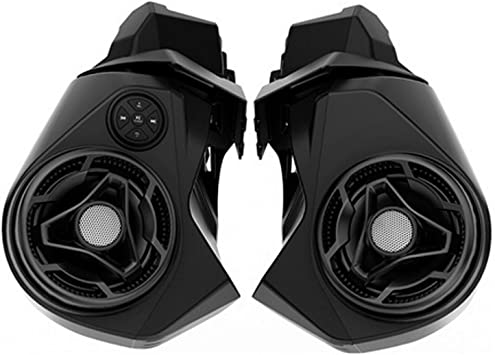
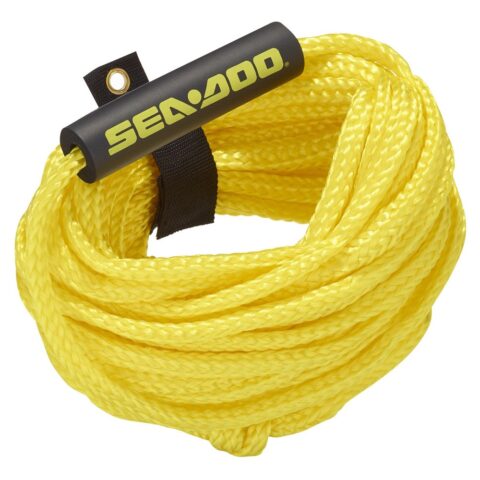
If you’ve been eyeing some of the near gear we’ve covered lately, now is a good time to stock up. Head to your nearest dealer and grab some goods. Maybe you’ve put off that new LinQ Cooler and BRP Audio System. You can upgrade your lifejackets and grab some fun water toys like a big tube and new tow rope. The prices add up quickly, so it won’t take long to reach the $1,500 mark. Also, we’re still dealing with supply chain issues and waiting to buy stuff is risky right now and not really a viable option.

Unfortunately, XPS products aren’t included in the deal so you can’t use the offer to stock up on maintenance products. However, with the money you save on other gear, you can put it toward some oil change kits and cleaners for your ride. You can also brighten up your summer riding apparel with a snazzy new Sea-Doo rashguard while you’re scoping out other new gear. Take a drive to your local dealer now and get in on some good savings while supplies last!

Robb Report’s 12 Insane Water Toys for The Super Rich

0

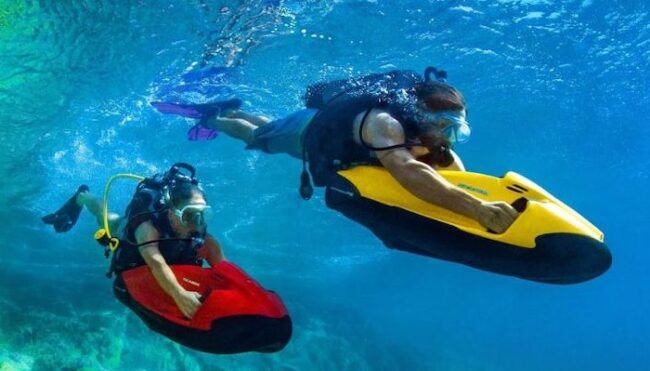
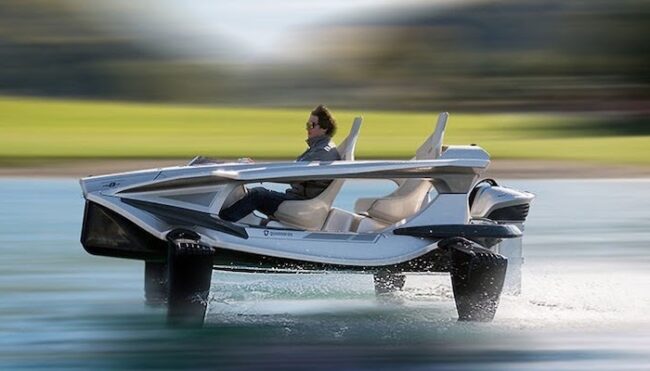
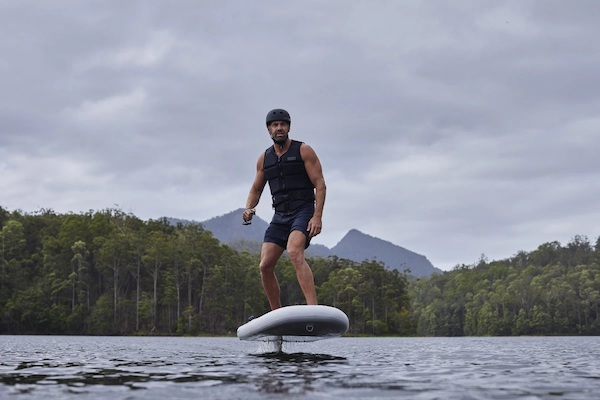
We haven’t done an insane water toy piece in a while so when we saw the Robb Report on wild water toys, we had to check it out. We were not disappointed! Let’s dig into these luxury toys! We noticed that the Seabob was updated to the Seabob F5 with Selfie Camera. You can film yourself while capturing what’s ahead under the water. An electric flying jet-ski was added to the mix. It is the Quadrofoil Q2S out of Slovenia. It has a top speed of 25 mph.

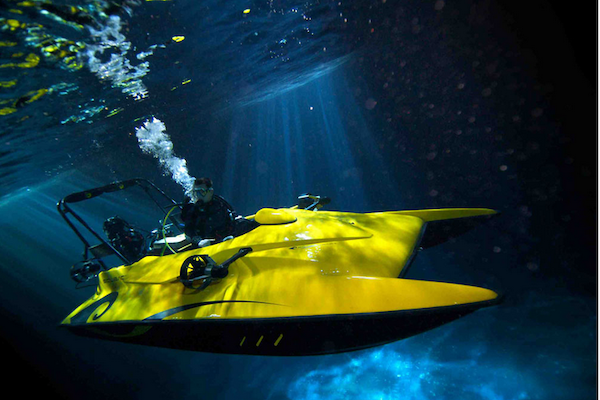
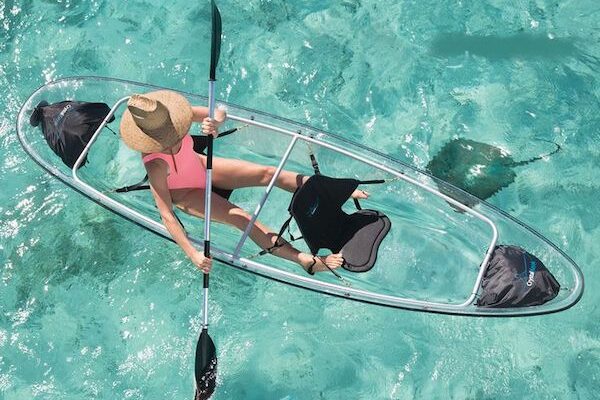
Next on the list is the Hammacher Schlemmer Transparent Kayak. It is an 11-foot-long piece of Lexan with room for two. For fun above and below the water is the Scubacraft SC3. The craft appeared in a couple of James Bond movies and looks super cool. You’re going to need your scuba gear to ride this machine. Another Hammacher watercraft made the list and this one flies. The fiberglass Hammacher Schlemmer Flying Hovercraft is powered by a 130 hp turbo two-cylinder gas engine. It can hit speeds up to 70 mph.

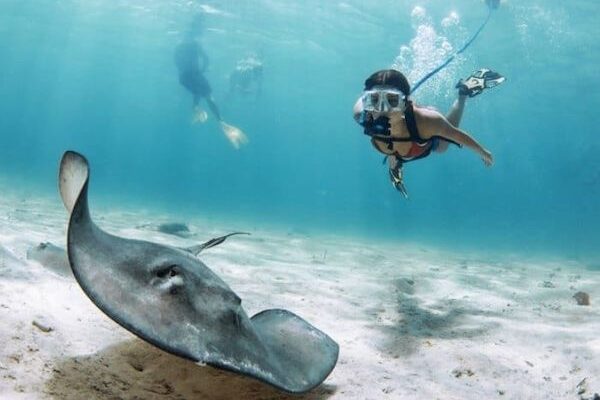
We were surprised to see a Yamaha 255 FSH Sport E boat on the list. What makes it cool is the fact that it doesn’t have dangerous propellers. The engines are hooked up to water jets making the boat safer for families and groups on the water. Next up is Brownie’s BLU3 Portable Tankless Scuba Kit which uses a floating air compressor with a 30-foot hose attached to the diver’s mask.

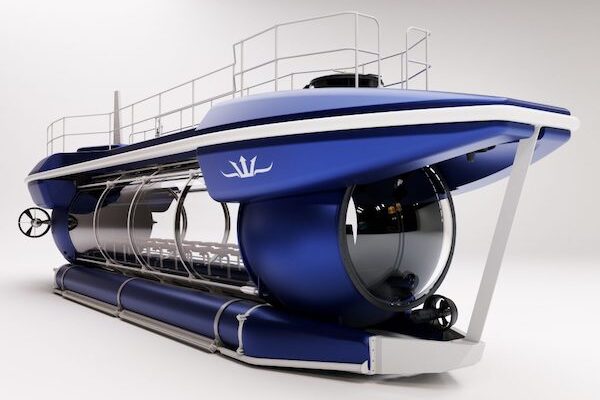
For those who like to travel and foil, the Fliteboard AIR might be for you. The board is wider than most, making it easier to learn on. A rugged camera made the list this year. The Olympus Tough TG-6 is made for adventure. It is waterproof, shockproof, dustproof, crushproof, and frostproof. Back to the wild toys. The Triton DeepView 24 Submarine can be yours from around $8 million and Triton Submarines out of Florida will gladly build one for you.

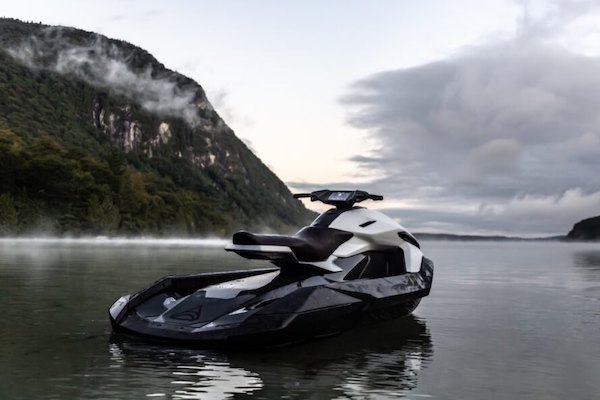
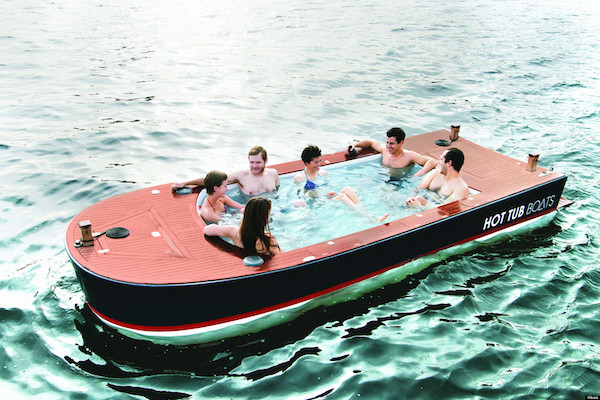
The Taiga Orca Electric PWC made the list. We have written a couple of pieces on these jet skis and we’re happy to see that they’re still in production. The craziest item on the list is the Hot Tub Boat out of Seattle. This thing has diesel fueled boiler to keep the water at 104F. A 24-volt electric motor moves the 16-foot boat at 5 mph. There’s room for six and you can try before you buy for $400 for two hours on Seattle’s Lake Union. We got a kick out of some of these luxury toys and hope you do too.

Gallery: Jason Rivera JetStar’s Vintage 550 Build for Huntington Beach

0

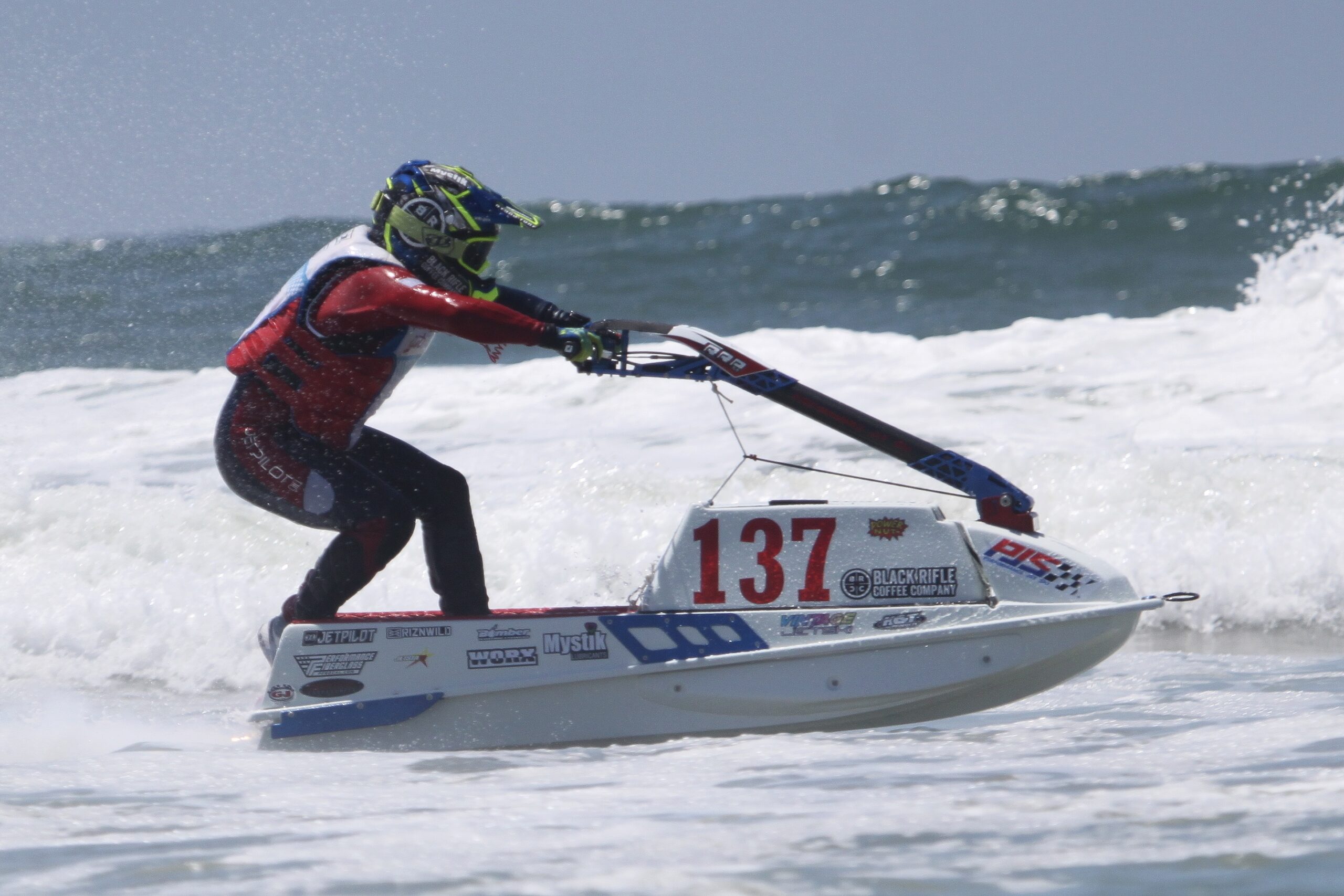
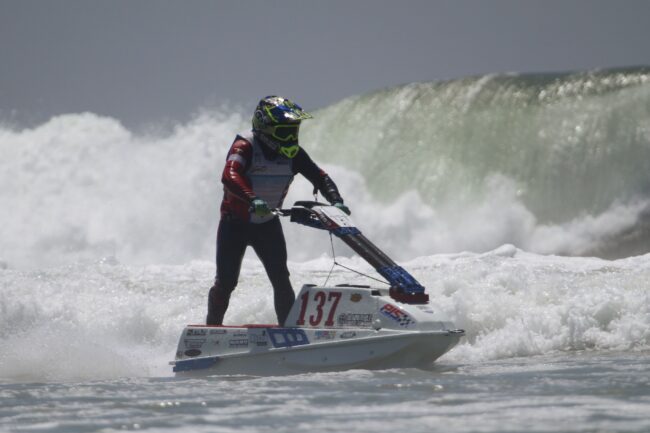
Since the beginning of May 2022, longtime ski enthusiast and builder Jason Rivera had been keeping the vintage community in the dark about a fresh 550 build to premier at the Motosurf and Freeride event in Huntington Beach. After a long weekend of die-hard racing and absolute carnage, the Watercraft Journal team finally had a chance to sit down with Jason to find out the details on the build, and to hear about the long-time legend that assisted him.

The Watercraft Journal: What was your first thought when Gordon Oelkers came to you for help with these builds?
Jason Rivera: Gordon and I go back, and I mean waaay back in the jet ski industry. I became friends with Mr. PJS 15 years ago. He had his service shop in Brea and I would buy all my parts from him. I was a frequent face there. When he closed his shop 6 years ago, he graciously let me have a lot of his tools, including his “holy grail” of a test tank, which I still use frequently. So with all of the support he had given me in the past, I of course jumped at the opportunity and agreed to help in any way I could.

WCJ: Roughly how long does it take you on these types of builds?
JR: Traditionally it would take me a few weeks to a couple of months to fully assemble a build, and that’s from bare hull to finished product. But with the last few years of COVID craziness and other life happenings, it set us back quite a bit.

On Sunday, May 1st, Gordon and I finally got together and there we were, staring at a bare-bones 550 hull, a completely blank slate. That weekend was the Huntington Beach race. We realized we had six days to build it. Claiming complete insanity, we both quickly got to work with full intentions of seeing it raced in the surf that weekend!

WCJ: Wow, that does sound like complete insanity!
JR: Oh it was! But Gordon and I worked extremely well next to each other. We were like a well-oiled machine. One of us would be assembling the motor. The other would be running around with a tube of silicone, gluing in the pump shoe, tubbies, you name it! But we finished in record time. Four days later we lowered the ski into the test tank at 9pm that night to break in the motor (the neighbors love me -HAHA).

Not only was I cranking on the build, but I had other skis to attend to before that weekend. So, while Gordon tidied up the loose ends and finished other small assemblies on the ski, I prepped my own ski (#38) and my long-time friend and fellow racer, Tommy Bonacci’s (#12) ski.

WCJ: Any “bloody-knuckle” moments that you care to mention?
JR: Oh there were plenty. Notably was the night we dropped the ski into the tank. We started it up and a few moments later my girlfriend came out yelling that we woke the baby up! Thought she was gonna beat me into a pulp. Sorry honey! HAHA

I also dislocated my finger during practice on race day, so unfortunately I wasn’t able to race the build. Luckily my friend Mark Gomez stepped up and was willing to race it that weekend!

WCJ: Mark was extremely pleased with how the ski handled the surf too! We reached out to him to see what he had to say about your build:
JR: The PJS build came in hot to Huntington Beach! The ski ran great having only been tank-tested! Saturday’s practice was its first official water test, and after a few fuel adjustments it was race ready. The ski handled incredibly well for the choppy ocean conditions we had that weekend.

I was riding on a previously sprained ankle so I was very cautious about the lines I picked and maneuvers I made, but the faster I rode the ski and trusted it, the more it cut through the chop. And it never did anything unpredictable, it was very honest in the surf! Gordon and Jason built a great vintage mod machine. They knocked it completely out of the park!

Notable sponsors for the build; find them on Instagram: JetStar (@jetstar.inc) PJS USA (@pjs_usa)  Retro Jetski (@retro_jet_ski) Bomber Eyewear (@bomereyewear) Jettrim (@jettrim) Impros (@improsimpellers) Rhaas (@rhaasproducts) G&J Aircraft (@gandjaircraft) Performance Fiberglass (@performance.fiberglass) VJS Originals (@vjsoriginals) Hydro-Turf (@hydroturf) Atlantis Powersports (@atlantispowersports)

Titanium Free Flow Exhaust Kits at Unlimited PWC

0

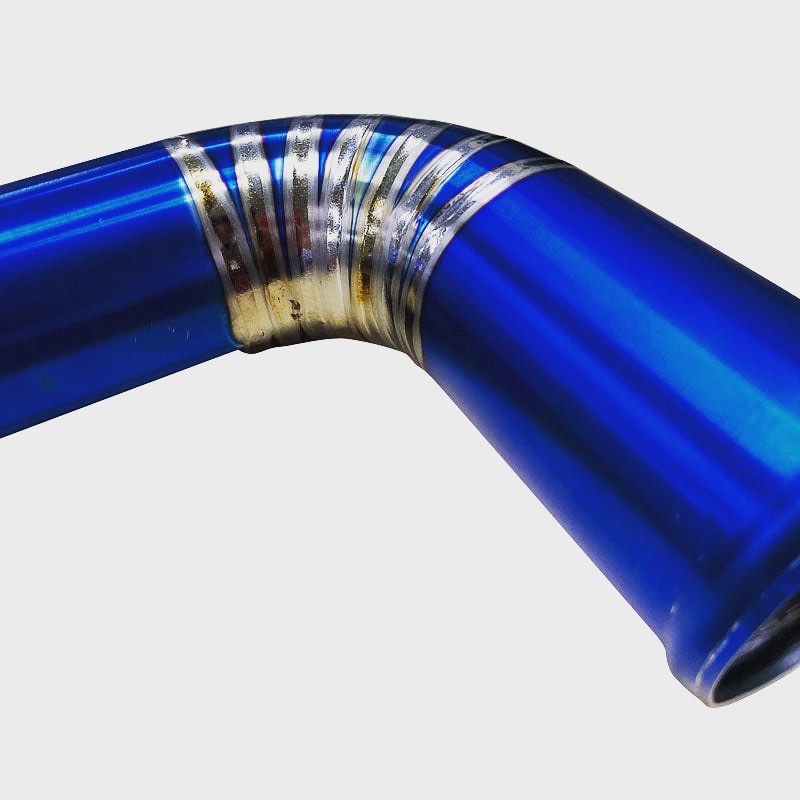
We were looking for new goods on Unlimited PWC’s Instagram account and found some pictures of flashy new titanium Free Flow exhaust kits. They are simply stunning and are available for Sea-Doo watercraft. The Sea-Doo exhaust kits will fit all GTI-based machines from 2020 and up, including the 2021 RXP-X 300.

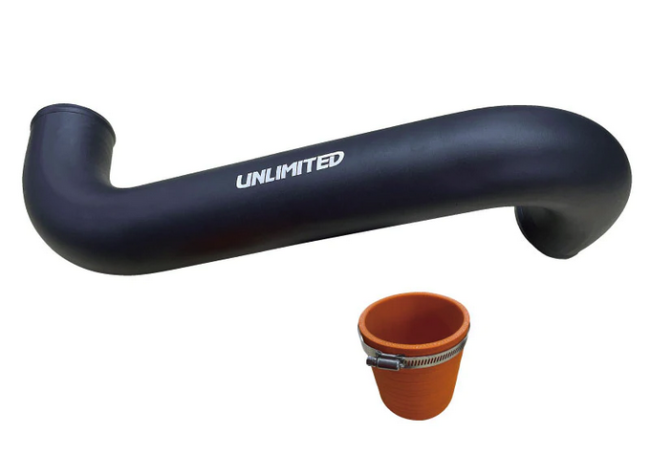
The Free Flow exhaust replaces the restrictive sound suppression system located between the muffler and waterbox. This improves exhaust efficiency. It allows you to bypass the resonator between the muffler and waterbox and improve exhaust efficiency.

The Free Flow exhaust reduces back pressure and harmful detonation, which will greatly improve engine performance. Unlimited gives you a choice between the lightweight full titanium tubes or power-coated mandrel bend aluminum tubes to prevent corrosion. The kits come with a replacement coupler comprised of high temperature silicone.

Free Flow Exhaust kits for the Yamaha WaveRunner FX will fit 2012 models. The other Yamaha kits can be applied to the Yamaha GP1800/VXR/VXS model years of 2011 and newer. All three kits cost $221 and worldwide shipping is available. The free flow exhaust kits are easy to install, and they are in stock! Head over to the Unlimited PWC website and order a kit and spice up your ride!

Gallery: 2022 Kawasaki Ultra 310LX JetSki (Video)

0

Admittedly, we went into testing the new 2022 Kawasaki Ultra 310LX JetSki with quite a bit of trepidation. Although long awaited, the redesign and technological upgrading of one of our personal favorite full-sized personal watercraft was akin to hearing Hollywood had plans to update and revise your favorite movie. This could go either really, really good or well, yeah…OK. Let’s not talk about recent Hollywood remakes. Nevertheless, Kawasaki USA knew that there was a lot riding on this latest crop of top rung performance watercraft and they didn’t want to leave anything to chance.

Unfortunately, getting to this point was a bit of a rocky road. Inside knowledge reveals that the newest Ultra models were intended to be released for 2021’s lineup; but supply chain shortages, rising material costs and some under-staffing at the Lincoln, Nebraska manufacturing facility made pushing the three supercharged models back a year to 2022 a wiser choice. Equally, amid the hubbub of the newly redesigned musclecraft, namely Yamaha’s GP1800R SVHO and Sea-Doo’s RXP-X 300 respectively, Kawasaki was best letting the dust settle a year before unveiling the new Ultras.

In heralding the new lineup, Kawasaki effectively swung for the fences when it came to its crème de la crème JetSki, the 310LX. Priced with an MSRP of $19,499, the Ultra 310LX offers not only an array of firsts for the manufacturer but also for the industry: the first being Jetsound 4S, a standard-equipment 4-speaker integrated audio system featuring a jog-dial control and Bluetooth connectivity; onboard running lights; a rearward-facing camera for observing towables; a 3-way adjustable Ergo-Fit LXury seat; dual glove boxes; and a thumb-controlled brake lever.

Specifically, the Jetsound 4S system raises the bar for onboard audio systems by providing 200 watts via two channel amps, and a quartet of speakers – the lower two rated at 60W x 2 and the upper two flanking the dashboard ranked at 35W x 2. Jetsound 4S is fully compatible with most all smartphone devices, as well as other Bluetooth compatible-players. And all audio data is viewable on the display. The new 7-inch wide TFT display offering three different display modes, black or white backgrounds, self-adjusting screen brightness, and various entertainment features.

The screen’s additional functions include a GPS-based speedometer, tachometer, fuel gauge, drive mode, boost pressure, clock, power mode, compass, trim, Bluetooth indicator, phone call & mail indicator, cruise control; and a display bar that can be set to show a trip meter, total & trip time, oil & engine temperature, battery voltage, intake air temperature, diagnostic code, and external air and water temperatures. Equally, indicators for a GPS signal, low fuel, engine, oil, battery, engine coolant temperature, immobilizer, master warning, trim, and reverse flank the dash’s sides.

All of this is easily navigated and managed using Kawasaki’s new waterproof jog-dial knob and confirmation buttons. Fixed between the twin release tabs for the fairing storage doors (y’know, where you’d expect the glove box to normally be), the jog-dial scrolls through the various screens and features on the TFT digital dashboard. Well within reach and easy to navigate (even while underway) the control knob locks out certain dashboard functions above No Wake speeds to dissuade distracted riders.

Above this are the 5-way adjustable tilt handlebars. Capped with pistol grip-style handgrips, both control modules feature new buttons sealed membranes with the best response and feel of any controls before. Kawasaki also lightened the pull on the throttle trigger for reduced fatigue. Connected to the throttle is the long-anticipated Kawasaki Smart Reverse with Deceleration (KSRD). Yes, the throttle trigger and brake button are one piece, operating on a single sprung shaft. The new reverse overrides the throttle, deploying the reverse gate and slows the Ultra 310 to a standstill.
Upon releasing the trigger, the drive mode returns to neutral. And if continued to be depressed, the drive mode will engage Reverse, and the JetSki will begin reversing until the trigger is released. The fluid motion between the thumb and trigger finger is different (particularly for those accustomed to competitors’ brake & reverse systems) but not unnatural. To that point, 2022 marks the first time Kawasaki has featured drive modes; not only does the JetSki start in Neutral, allowing it to idle in place, but also allows the driver to toggle through three speed settings.

Selected by the Mode button found on the left-hand side, drivers choose from 3 power modes including Full, Middle, and Low (akin to using the SLO – Smart Learning Operation – key). Full mode accesses all of the potency of the Ultra’s industry’s leading 310 horsepower. Middle reduces the engine output to 80% of the Ultra– and is also the default setting when first ignited; and Low mode is 60% of full power. The One-Touch 5mph Mode is activated by a single button on the right-hand side of the bars when idling and is deactivated when the throttle is applied.

The cruise control can adjust up or down three levels for a little more speed (or to slow down) – as does the No Wake mode while operating in a specified zones. Through the TFT dash, the all-new Kawasaki Launch Control Mode (KLCM) allows for Single and Repeat launches. The KLCM automatically adjusts the trim for optimal acceleration. When set in Single mode, the Launch Control will only activate for the first acceleration shot, whereas in Repeat mode, the KLCM remains active until manually deactivated.

The 2022 Ultra 310LX JetSki retains the same 1,498cc inline four-cylinder DOHC squeezing out a true 310-horsepower from its roots-type Eaton Twin Vortices Series (TVS) supercharger generating a staggering 16.7psi at peak RPM. Back in 2017, Kawasaki revised the Ultra’s pistons to include a V-groove at the second ring for greater oil retention. Dual under-piston oiling jets are fed by a dry sump oil tank built directly into the baffled and partitioned crankcase that also includes a closed circuit catch can, and high pressure blow-off valve – the same stuff hot rodders and racers use.

Dual cooling circuits feed fresh ambient water through the enlarged coolant passages in the engine as well as through the intercooler, condensing the compressed intake charge prior to passing through the throttle body. The Ultra’s oil cooler circulates oil between two cooling jackets, mitigating heat soak and excessive internal engine operating temperatures. This allows the 160mm axial-flow, single stage jet pump to spin its 3-blade, stainless steel impeller enough to produce 1,890lbs. of thrust.

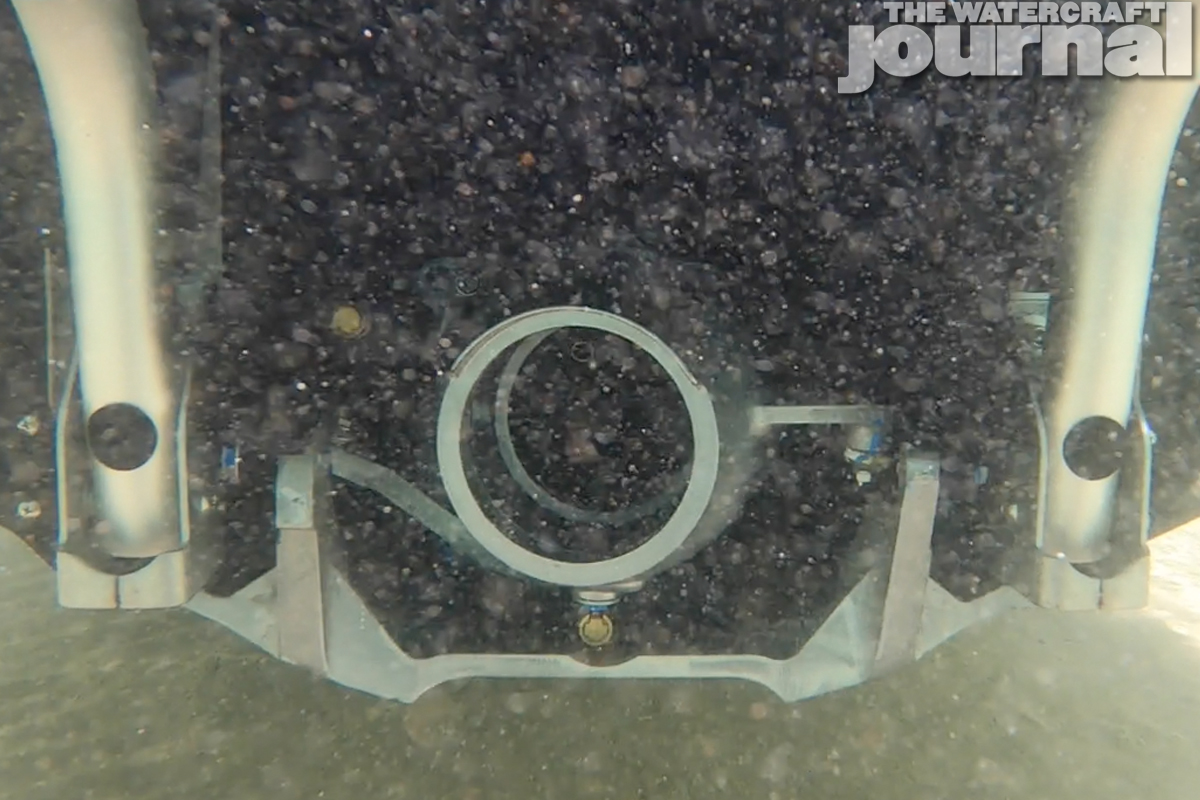
Although carryovers from previous models, 2022 marks the use of Kawasaki full fly-by-wire throttle control and engine management system. This allows for the multiple acceleration maps, smart engine monitoring and throttle response. While the sponsons and intake grate come unchanged from before, the aluminum ride plate has been recast with thicker bosses for the deployable reverse bucket.

Gratefully, the Ultra 310LX leaves Kawasaki’s industry-leading, rough water and open ocean champion hull almost entirely unchanged. Featuring a 22.5-degree deadrise, the true Deep-V hull is molded in durable gel-coated FMC fiberglass with a newly reinforced bow. It’s without a doubt the best design for sluicing through chop that we’ve ever tested and gratefully remains as such. Yet, above the bondline, the Ultra 310LX features an entirely redesigned deck that includes a few more firsts for both Kawasaki and the industry:

First, Kawasaki radically adjusted the Ultra’s center of gravity by lowering the the overall deck height by 1.38-inches and widened and deepened the footwells, setting the riders lower and gifting them more leg room and greater foot placement. The overall ergonomics of the Ultra are lightyears ahead too, as Kawasaki narrowed the new bi-folding two-piece, three-person seat by an impressive 3.15-inches at the knee, allowing riders a more natural seating position as well as more clearance for riding stand-up.

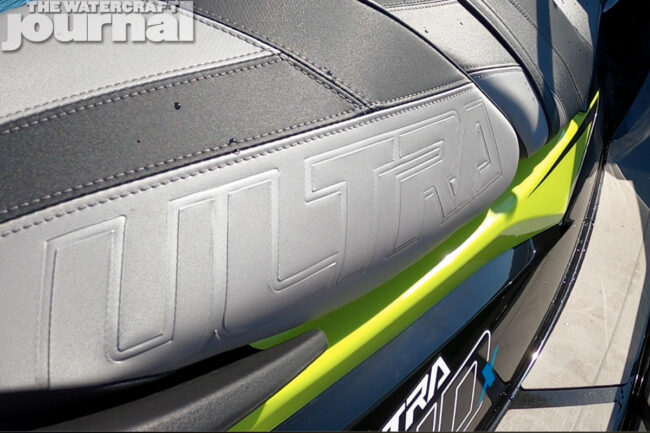
In addition to the redesigned shape, the Ergo-Fit LXury seat is sculpted from a newly revised formula of urethane foam providing deeper hip support and improved jolt and vibration absorption from the advanced padding. Wrapped in black and brown heat- and UV-resistant materials with high-contrast white stitchwork, the three-tiered LXury seat offers three positions of adjustment spanning 2.75 and 1.4-inches apart.

Large inverted coves at the driver’s knees bloom into colored fairings that open up to reveal twin glove boxes. Swinging upwards on gullwing-style hinges, the new fairing compartments hold a combined 10.6-gallons of storage with the right-side including a half-gallon sized watertight box for your phone or wallet, and a pair of USB ports. (Oh don’t worry, the cup holders aren’t gone. They’ve been moved up towards the TFT dash.) Ahead of these compartments is the 32.8-gallon bow storage. A molded-in open access pouch at the rear adds another 2.8-liters (0.7 gallons) of “wet” storage – ideal for a dock line.

All of this adds up to 44.5-gallons of storage, which is admittedly quite a bit less than the previous model’s 60-gallons. Gone is the removable storage tub in front too. In relocating the filler neck, Kawasaki increased the 2022 model’s fuel capacity by half a gallon – up to 21.1 gallons – which is nice. The redesign also includes built-in cleats for easy docking; KSD (Kawasaki Splash Deflectors) water disbursement channels, a raised rear bumper for less splashing; and enlarged rearview mirrors. And speaking of rear views…

The Ultra LX comes equipped with a rearview camera, which can be monitored on the TFT screen when docking or towing. Per Kawasaki, it provides “an impressive view range at 155° horizontally and 115° vertically (± 5°), allowing the operator to feel comfortable about what’s behind them.” And if increased visibility is something you’re looking for, look no further, because the Ultra 310LX includes LED accent running lights built into the front bumper. No, these aren’t headlights as they don’t cast a beam, but are meant for increased visibility like daytime running lights on a motorcycle.

Kawasaki integrated a new Multi-Mount System featuring mounting bars for accessories like a GPS, phone, or action cameras, built into the handlebars and rear of the seat. On the 310LX this sits above a smoothly integrated Ultra Deck, an extended rear platform that increases the swim deck an additional 7.9-inches. An angled folding swim step tucks neatly up under the Ultra Deck, which also includes two Multi-Mount slide mounts providing accessible tie-down points to mount any number of Kawasaki’s new accessories, like a stern bag, soft-sided cooler, dry duffel bag, rear storage rack and universal tie downs.

Sure, the new Ultra 310LX looks dapper in Ebony and Gold, but how does it run? Fully loaded with fuel and storage, we clicked off a respectable 66.9mph on the GPS at 1,044 feet and temperatures in the low 90’s. But top speed was never the Ultra’s bread-and-butter; rough water is. For those with lots of time on previous Ultras, this characteristic alone is the most significant. When it comes to how the new 2022 Ultra handles compared to before, it’s nearly night-and-day.

The lower center of gravity permits the Ultra to progressively roll into an inside lean like never before. It does so naturally, fluidly and with a newfound talent. Dropping a knee and pinning the bars to its stops in an S-turn with the throttle vised is exhilarating. Yes, with a curb weight of 1,089.3 pounds (equaling a calculated dry weight of 958 pounds), she’s a stout vessel – but again, that’s what you want in a hull that soaks up vibrations, chop and chatter, and won’t crack under pressure.

With the throttle clamped to its hilt, the 1.5-liter howls, it’s twin-screw supercharger wailing through its blow-off valve. Nothing, and we repeat, nothing on the market sounds like this. The Ultra’s deep draft and high-volume jet pump bites hard at the launch and pushes to its peak speed just under 5-seconds (4.81 seconds per our Vbox accelerometer). Again, conditions were pretty lousy for this kind of speed testing, but we definitely didn’t want to leave anyone guessing.

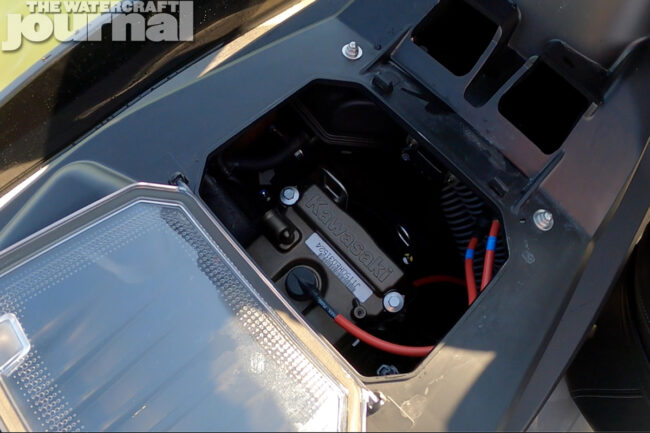
What complaints we had were few: first, reducing the size of the bow storage access hole means larger bags or a helmet are now impossible to bring. Equally bad was covering the entirety of the engine compartment with an access plate with a tiny plastic window. Whoever thought of these ideas should be demoted to “truck stop bathroom attendant” for a year. We also fought to get the TFT to sync with our phone, and aren’t terribly happy with the audio control knob being so far out of reach.

Otherwise, this machine is bordering on flawless. No really, it’s that good. The industry’s most capable rough water personal watercraft is now more stable, tracks more naturally and corners more intuitively regardless of the conditions. And for those who seek the finer things in life, it’s now drier, more comfortable and far, far, far more technologically advanced. The end result is this: the 2022 Kawasaki Ultra 310LX JetSki is the most fully-equipped, high performance personal watercraft we’ve had the pleasure of testing in a long time. It does everything everyone else’s skis do and more. If you’re in the market and can wing the near $20,000 price tag, get one. End of story.

Swedish Electric Flying Passenger Boat Debut’s in Venice

0

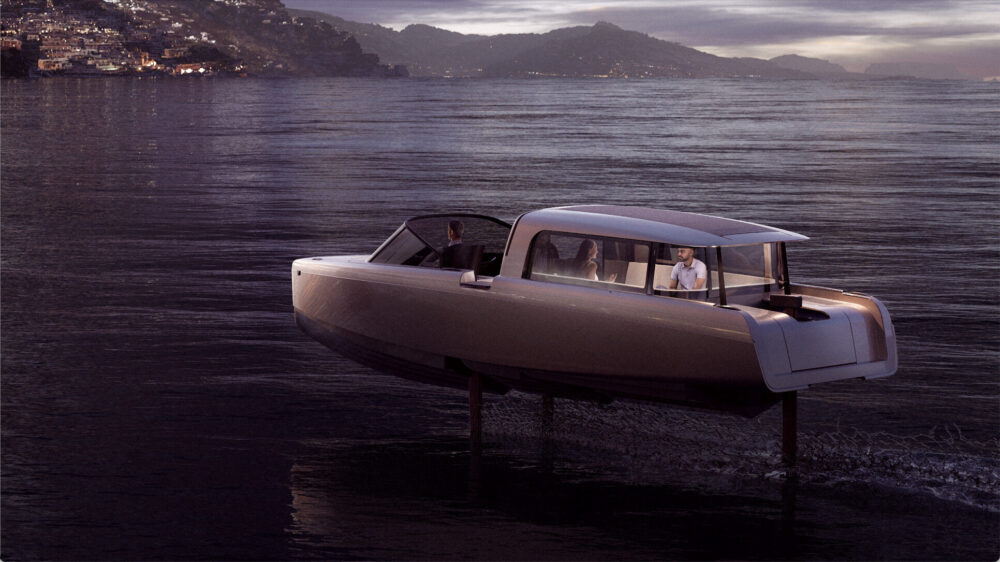
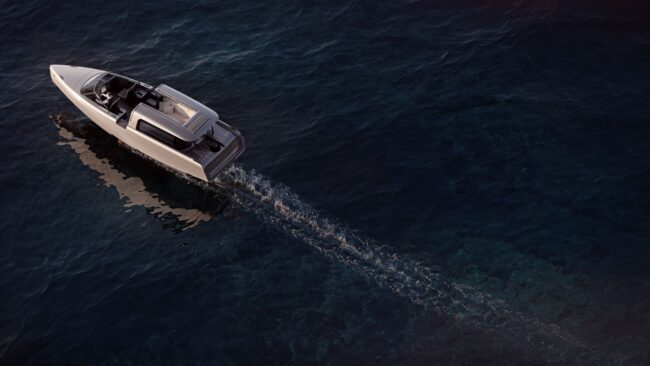
Sweden’s Candela P-8 Voyager made its debut at the Salone Nautico in Venice last week. The Voyager is a boat designed to have zero impact on the environment. It is powered by electricity and glides above the water using computer-guided hydrofoils. The hydrofoils are retractable, making for easy storage and mooring of the vessel. The craft is powered by twin submerged ultra-compact Candela C-POD motors, which drive counter-rotating propellers.

The C-POD can operate for 3,000 hours before any service needed. This makes it a great boat for operators in remote locations where technicians are difficult to find, if at all. The P-8 Voyager is updated OTA and connected to Candela’s 24/7 Service department, which can perform remote troubleshooting. It sounds ideal for a remote research vessel, though its intended use is to carry passengers for commercial operations.

It glides silently over the water, leaving only a 5cm wake, which doesn’t disturb sea dwelling creatures or damage beaches and coral reefs. Four-foot swells won’t slow this boat and passengers can kick back in luxury while enjoying a panoramic view of the scenery. The twenty-eight-foot P-8 Voyager carries six passengers and crew in air-conditioned comfort.

The P-8 Voyager goes faster and further than any other electric boat. It tops out at 30knots and has a range of 50 nautical miles at cruise speed. The P-8 Voyager has been developed to replace smaller combustion driven craft like tenders, taxis, and rigid inflatables. Production of the Candela P-8 Voyager is slated for the fall of 2022. Read more about it on the Candela website.