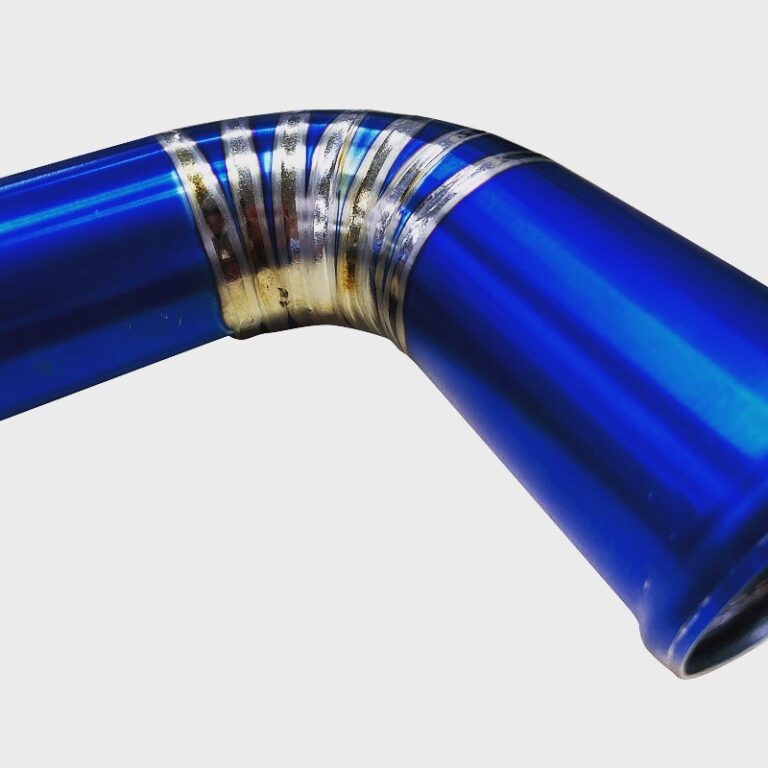
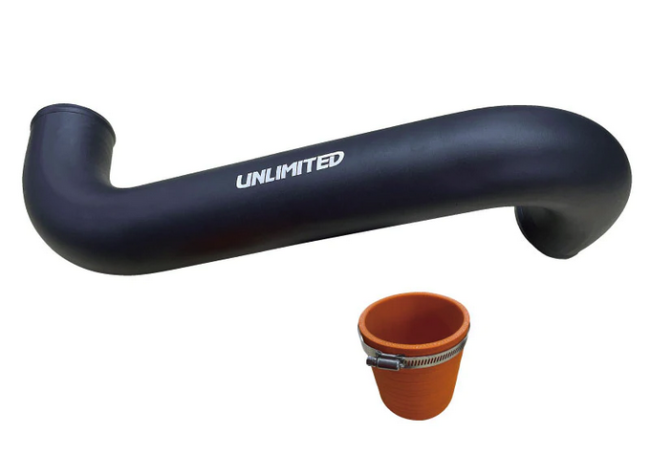
We were looking for new goods on Unlimited PWC’s Instagram account and found some pictures of flashy new titanium Free Flow exhaust kits. They are simply stunning and are available for Sea-Doo watercraft. The Sea-Doo exhaust kits will fit all GTI-based machines from 2020 and up, including the 2021 RXP-X 300.
The Free Flow exhaust replaces the restrictive sound suppression system located between the muffler and waterbox. This improves exhaust efficiency. It allows you to bypass the resonator between the muffler and waterbox and improve exhaust efficiency.
The Free Flow exhaust reduces back pressure and harmful detonation, which will greatly improve engine performance. Unlimited gives you a choice between the lightweight full titanium tubes or power-coated mandrel bend aluminum tubes to prevent corrosion. The kits come with a replacement coupler comprised of high temperature silicone.
Free Flow Exhaust kits for the Yamaha WaveRunner FX will fit 2012 models. The other Yamaha kits can be applied to the Yamaha GP1800/VXR/VXS model years of 2011 and newer. All three kits cost $221 and worldwide shipping is available. The free flow exhaust kits are easy to install, and they are in stock! Head over to the Unlimited PWC website and order a kit and spice up your ride!
Admittedly, we went into testing the new 2022 Kawasaki Ultra 310LX JetSki with quite a bit of trepidation. Although long awaited, the redesign and technological upgrading of one of our personal favorite full-sized personal watercraft was akin to hearing Hollywood had plans to update and revise your favorite movie. This could go either really, really good or well, yeah…OK. Let’s not talk about recent Hollywood remakes. Nevertheless, Kawasaki USA knew that there was a lot riding on this latest crop of top rung performance watercraft and they didn’t want to leave anything to chance.
Unfortunately, getting to this point was a bit of a rocky road. Inside knowledge reveals that the newest Ultra models were intended to be released for 2021’s lineup; but supply chain shortages, rising material costs and some under-staffing at the Lincoln, Nebraska manufacturing facility made pushing the three supercharged models back a year to 2022 a wiser choice. Equally, amid the hubbub of the newly redesigned musclecraft, namely Yamaha’s GP1800R SVHO and Sea-Doo’s RXP-X 300 respectively, Kawasaki was best letting the dust settle a year before unveiling the new Ultras.
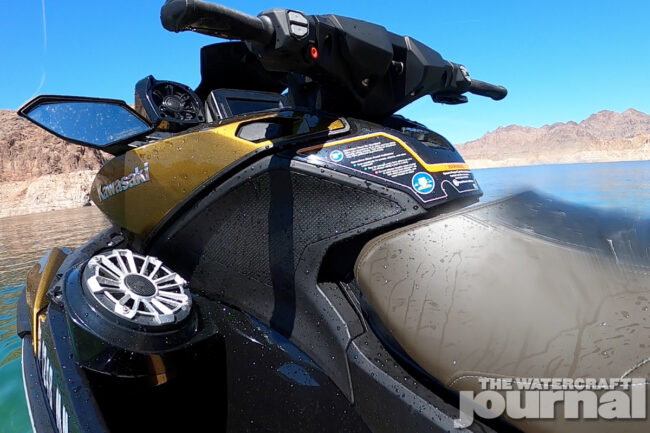
In heralding the new lineup, Kawasaki effectively swung for the fences when it came to its crème de la crème JetSki, the 310LX. Priced with an MSRP of $19,499, the Ultra 310LX offers not only an array of firsts for the manufacturer but also for the industry: the first being Jetsound 4S, a standard-equipment 4-speaker integrated audio system featuring a jog-dial control and Bluetooth connectivity; onboard running lights; a rearward-facing camera for observing towables; a 3-way adjustable Ergo-Fit LXury seat; dual glove boxes; and a thumb-controlled brake lever.
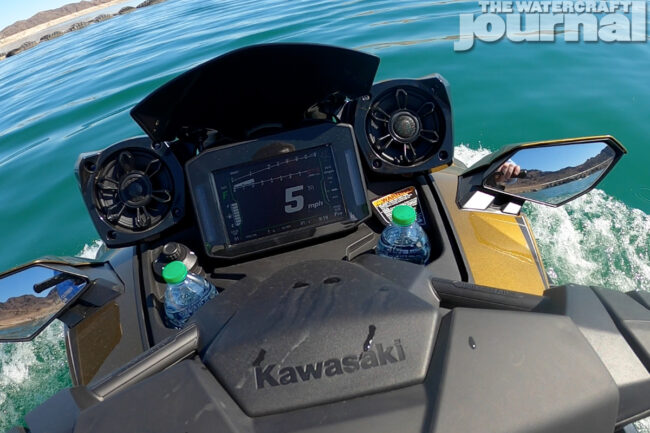
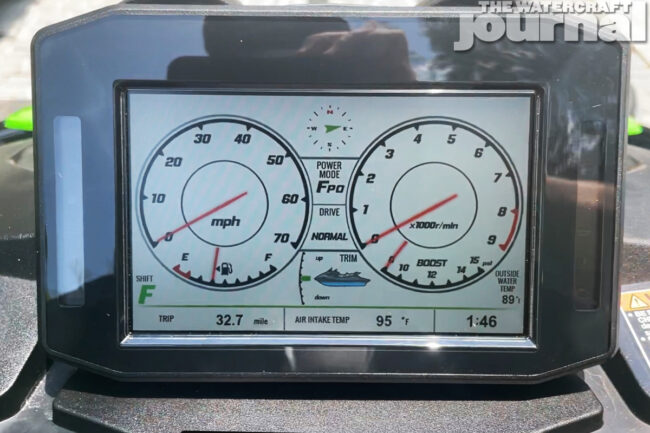
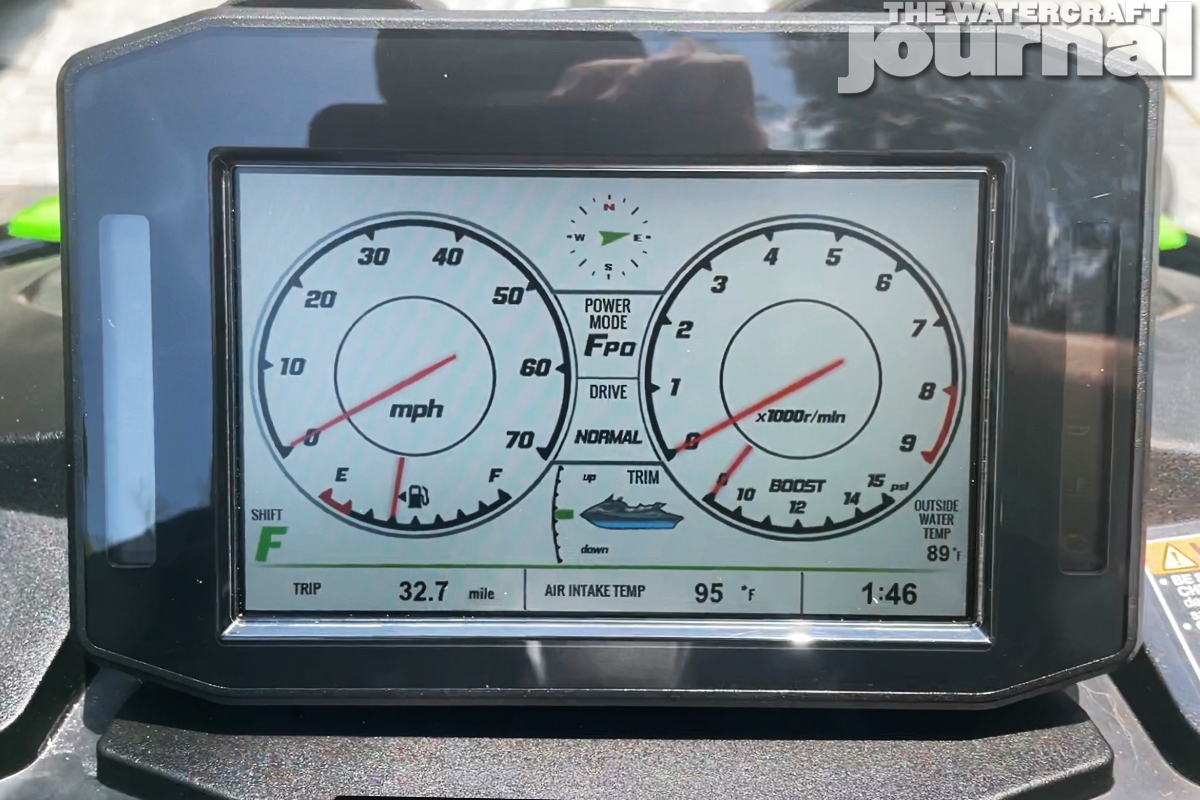
Specifically, the Jetsound 4S system raises the bar for onboard audio systems by providing 200 watts via two channel amps, and a quartet of speakers – the lower two rated at 60W x 2 and the upper two flanking the dashboard ranked at 35W x 2. Jetsound 4S is fully compatible with most all smartphone devices, as well as other Bluetooth compatible-players. And all audio data is viewable on the display. The new 7-inch wide TFT display offering three different display modes, black or white backgrounds, self-adjusting screen brightness, and various entertainment features.
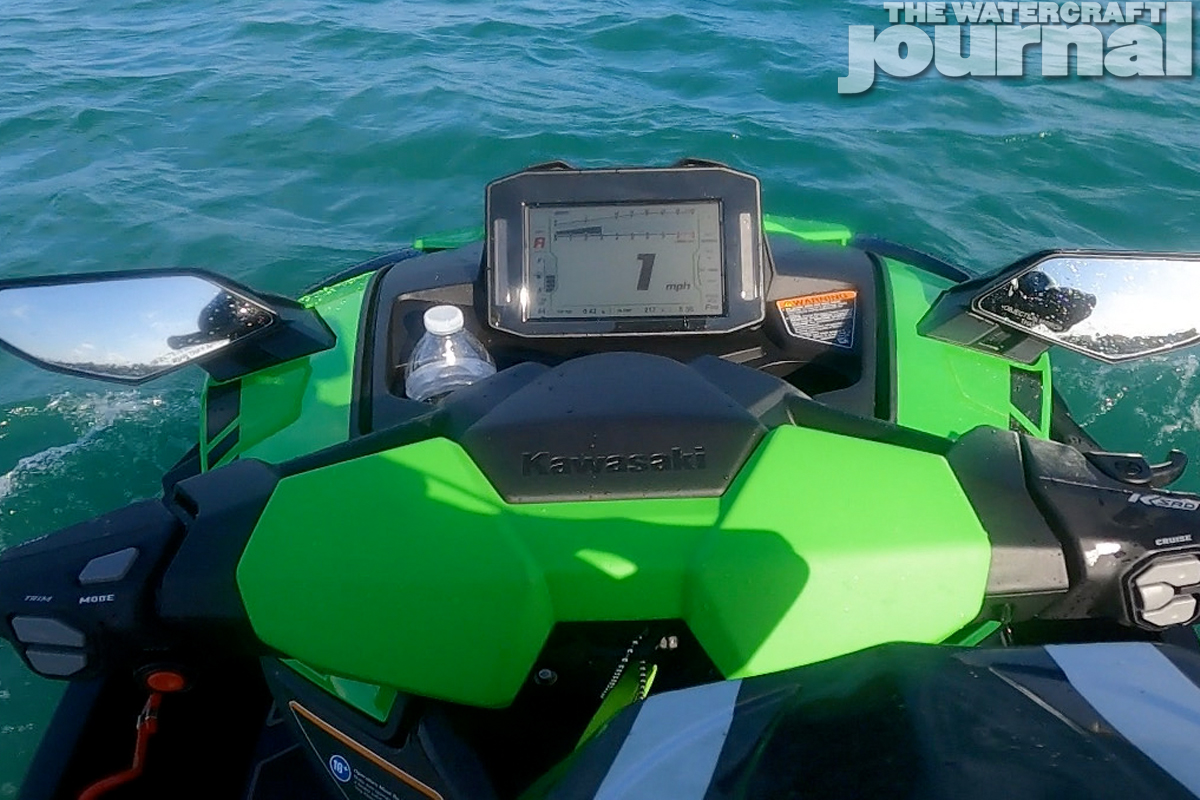
The screen’s additional functions include a GPS-based speedometer, tachometer, fuel gauge, drive mode, boost pressure, clock, power mode, compass, trim, Bluetooth indicator, phone call & mail indicator, cruise control; and a display bar that can be set to show a trip meter, total & trip time, oil & engine temperature, battery voltage, intake air temperature, diagnostic code, and external air and water temperatures. Equally, indicators for a GPS signal, low fuel, engine, oil, battery, engine coolant temperature, immobilizer, master warning, trim, and reverse flank the dash’s sides.
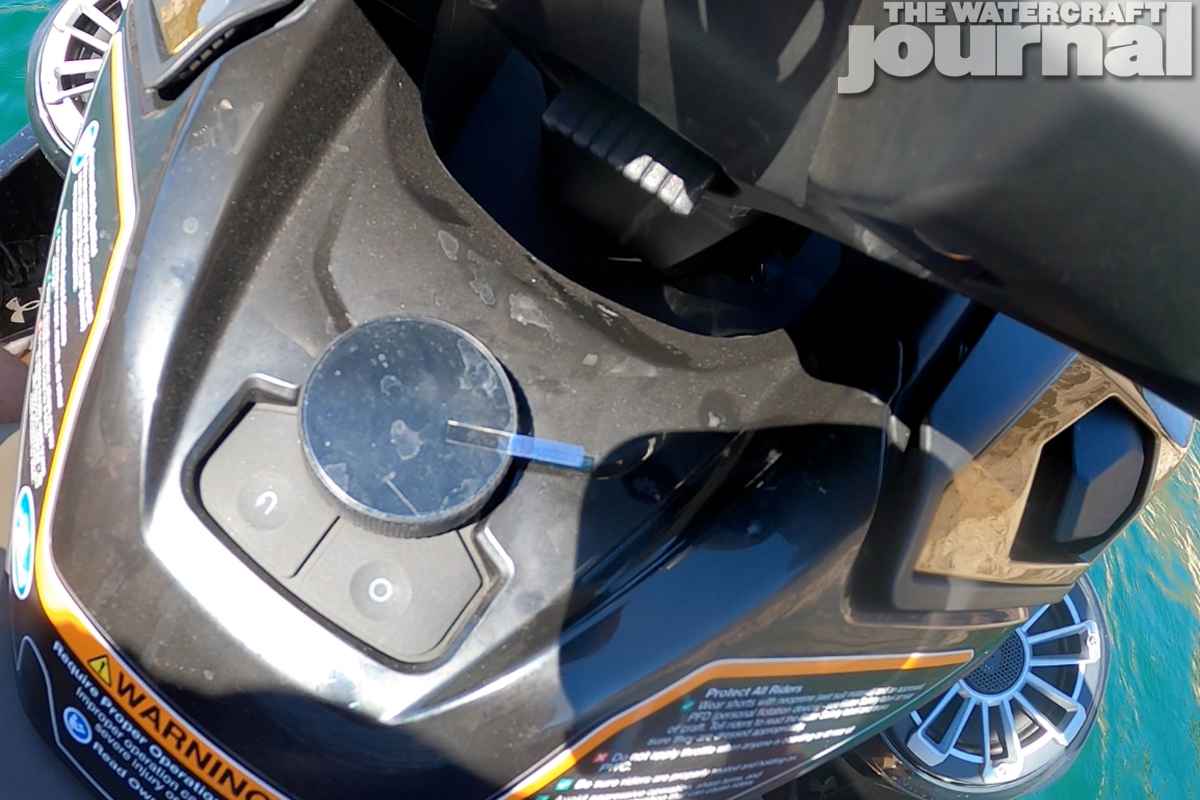
All of this is easily navigated and managed using Kawasaki’s new waterproof jog-dial knob and confirmation buttons. Fixed between the twin release tabs for the fairing storage doors (y’know, where you’d expect the glove box to normally be), the jog-dial scrolls through the various screens and features on the TFT digital dashboard. Well within reach and easy to navigate (even while underway) the control knob locks out certain dashboard functions above No Wake speeds to dissuade distracted riders.
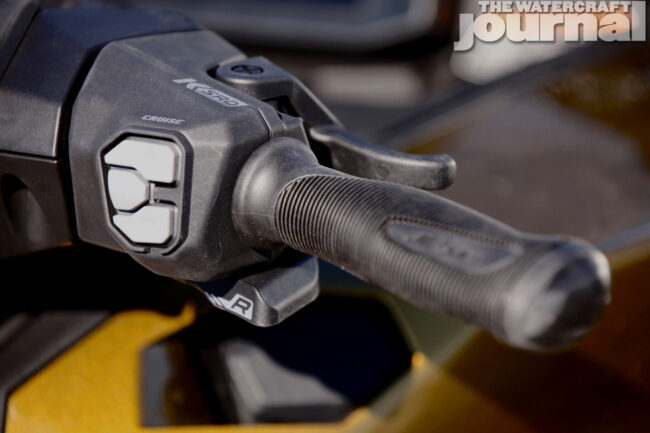
Above this are the 5-way adjustable tilt handlebars. Capped with pistol grip-style handgrips, both control modules feature new buttons sealed membranes with the best response and feel of any controls before. Kawasaki also lightened the pull on the throttle trigger for reduced fatigue. Connected to the throttle is the long-anticipated Kawasaki Smart Reverse with Deceleration (KSRD). Yes, the throttle trigger and brake button are one piece, operating on a single sprung shaft. The new reverse overrides the throttle, deploying the reverse gate and slows the Ultra 310 to a standstill.
Upon releasing the trigger, the drive mode returns to neutral. And if continued to be depressed, the drive mode will engage Reverse, and the JetSki will begin reversing until the trigger is released. The fluid motion between the thumb and trigger finger is different (particularly for those accustomed to competitors’ brake & reverse systems) but not unnatural. To that point, 2022 marks the first time Kawasaki has featured drive modes; not only does the JetSki start in Neutral, allowing it to idle in place, but also allows the driver to toggle through three speed settings.
Selected by the Mode button found on the left-hand side, drivers choose from 3 power modes including Full, Middle, and Low (akin to using the SLO – Smart Learning Operation – key). Full mode accesses all of the potency of the Ultra’s industry’s leading 310 horsepower. Middle reduces the engine output to 80% of the Ultra– and is also the default setting when first ignited; and Low mode is 60% of full power. The One-Touch 5mph Mode is activated by a single button on the right-hand side of the bars when idling and is deactivated when the throttle is applied.
The cruise control can adjust up or down three levels for a little more speed (or to slow down) – as does the No Wake mode while operating in a specified zones. Through the TFT dash, the all-new Kawasaki Launch Control Mode (KLCM) allows for Single and Repeat launches. The KLCM automatically adjusts the trim for optimal acceleration. When set in Single mode, the Launch Control will only activate for the first acceleration shot, whereas in Repeat mode, the KLCM remains active until manually deactivated.
The 2022 Ultra 310LX JetSki retains the same 1,498cc inline four-cylinder DOHC squeezing out a true 310-horsepower from its roots-type Eaton Twin Vortices Series (TVS) supercharger generating a staggering 16.7psi at peak RPM. Back in 2017, Kawasaki revised the Ultra’s pistons to include a V-groove at the second ring for greater oil retention. Dual under-piston oiling jets are fed by a dry sump oil tank built directly into the baffled and partitioned crankcase that also includes a closed circuit catch can, and high pressure blow-off valve – the same stuff hot rodders and racers use.
Dual cooling circuits feed fresh ambient water through the enlarged coolant passages in the engine as well as through the intercooler, condensing the compressed intake charge prior to passing through the throttle body. The Ultra’s oil cooler circulates oil between two cooling jackets, mitigating heat soak and excessive internal engine operating temperatures. This allows the 160mm axial-flow, single stage jet pump to spin its 3-blade, stainless steel impeller enough to produce 1,890lbs. of thrust.
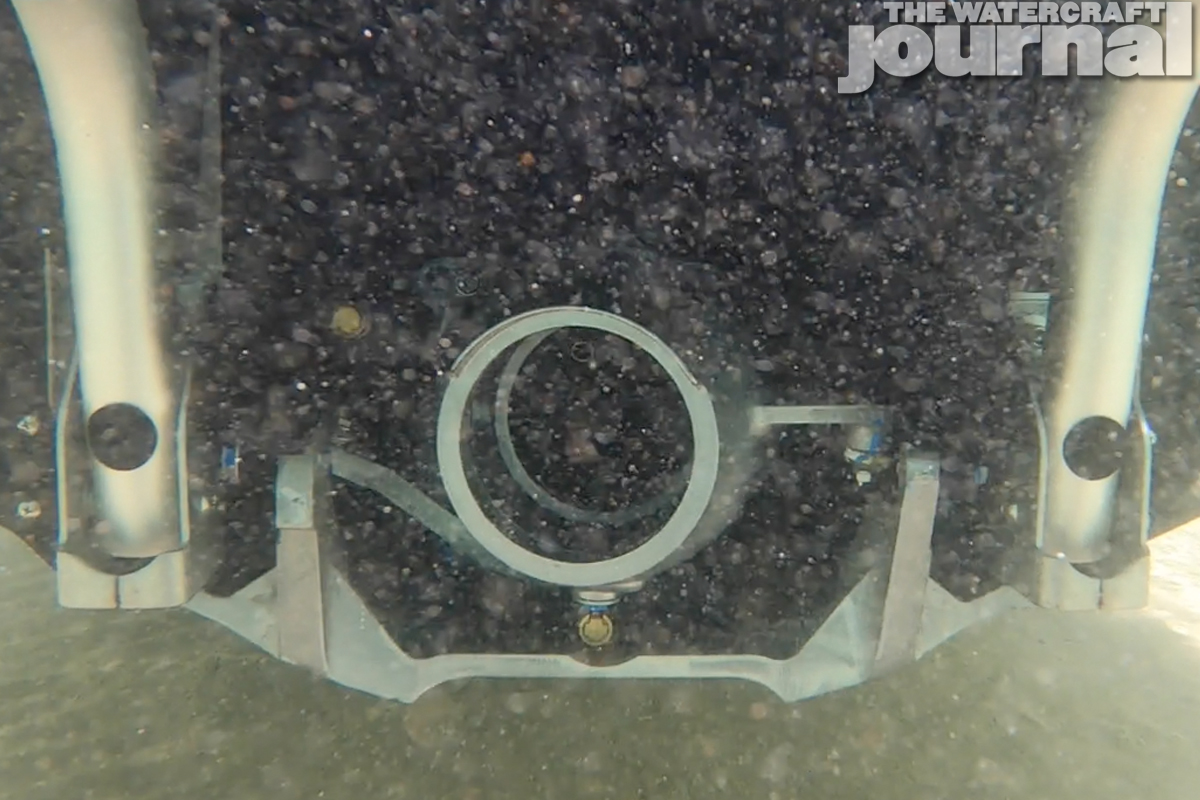
Although carryovers from previous models, 2022 marks the use of Kawasaki full fly-by-wire throttle control and engine management system. This allows for the multiple acceleration maps, smart engine monitoring and throttle response. While the sponsons and intake grate come unchanged from before, the aluminum ride plate has been recast with thicker bosses for the deployable reverse bucket.
Gratefully, the Ultra 310LX leaves Kawasaki’s industry-leading, rough water and open ocean champion hull almost entirely unchanged. Featuring a 22.5-degree deadrise, the true Deep-V hull is molded in durable gel-coated FMC fiberglass with a newly reinforced bow. It’s without a doubt the best design for sluicing through chop that we’ve ever tested and gratefully remains as such. Yet, above the bondline, the Ultra 310LX features an entirely redesigned deck that includes a few more firsts for both Kawasaki and the industry:
First, Kawasaki radically adjusted the Ultra’s center of gravity by lowering the the overall deck height by 1.38-inches and widened and deepened the footwells, setting the riders lower and gifting them more leg room and greater foot placement. The overall ergonomics of the Ultra are lightyears ahead too, as Kawasaki narrowed the new bi-folding two-piece, three-person seat by an impressive 3.15-inches at the knee, allowing riders a more natural seating position as well as more clearance for riding stand-up.
In addition to the redesigned shape, the Ergo-Fit LXury seat is sculpted from a newly revised formula of urethane foam providing deeper hip support and improved jolt and vibration absorption from the advanced padding. Wrapped in black and brown heat- and UV-resistant materials with high-contrast white stitchwork, the three-tiered LXury seat offers three positions of adjustment spanning 2.75 and 1.4-inches apart.
Large inverted coves at the driver’s knees bloom into colored fairings that open up to reveal twin glove boxes. Swinging upwards on gullwing-style hinges, the new fairing compartments hold a combined 10.6-gallons of storage with the right-side including a half-gallon sized watertight box for your phone or wallet, and a pair of USB ports. (Oh don’t worry, the cup holders aren’t gone. They’ve been moved up towards the TFT dash.) Ahead of these compartments is the 32.8-gallon bow storage. A molded-in open access pouch at the rear adds another 2.8-liters (0.7 gallons) of “wet” storage – ideal for a dock line.
All of this adds up to 44.5-gallons of storage, which is admittedly quite a bit less than the previous model’s 60-gallons. Gone is the removable storage tub in front too. In relocating the filler neck, Kawasaki increased the 2022 model’s fuel capacity by half a gallon – up to 21.1 gallons – which is nice. The redesign also includes built-in cleats for easy docking; KSD (Kawasaki Splash Deflectors) water disbursement channels, a raised rear bumper for less splashing; and enlarged rearview mirrors. And speaking of rear views…
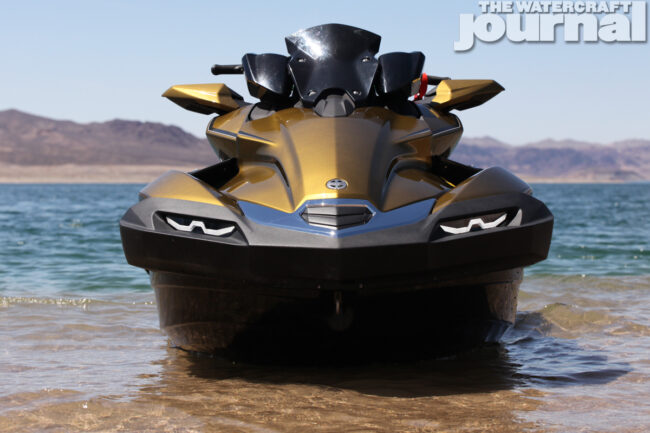
The Ultra LX comes equipped with a rearview camera, which can be monitored on the TFT screen when docking or towing. Per Kawasaki, it provides “an impressive view range at 155° horizontally and 115° vertically (± 5°), allowing the operator to feel comfortable about what’s behind them.” And if increased visibility is something you’re looking for, look no further, because the Ultra 310LX includes LED accent running lights built into the front bumper. No, these aren’t headlights as they don’t cast a beam, but are meant for increased visibility like daytime running lights on a motorcycle.
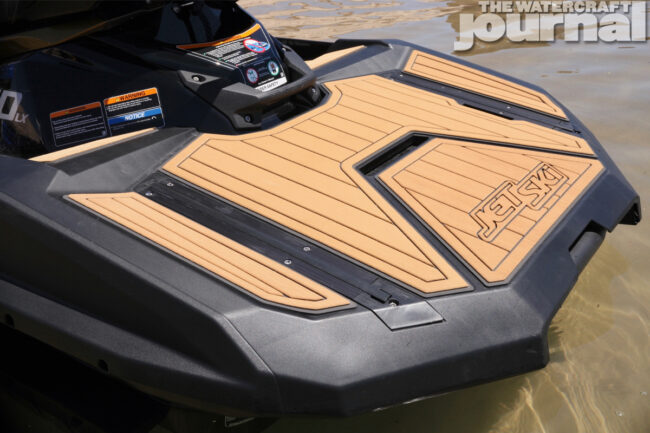
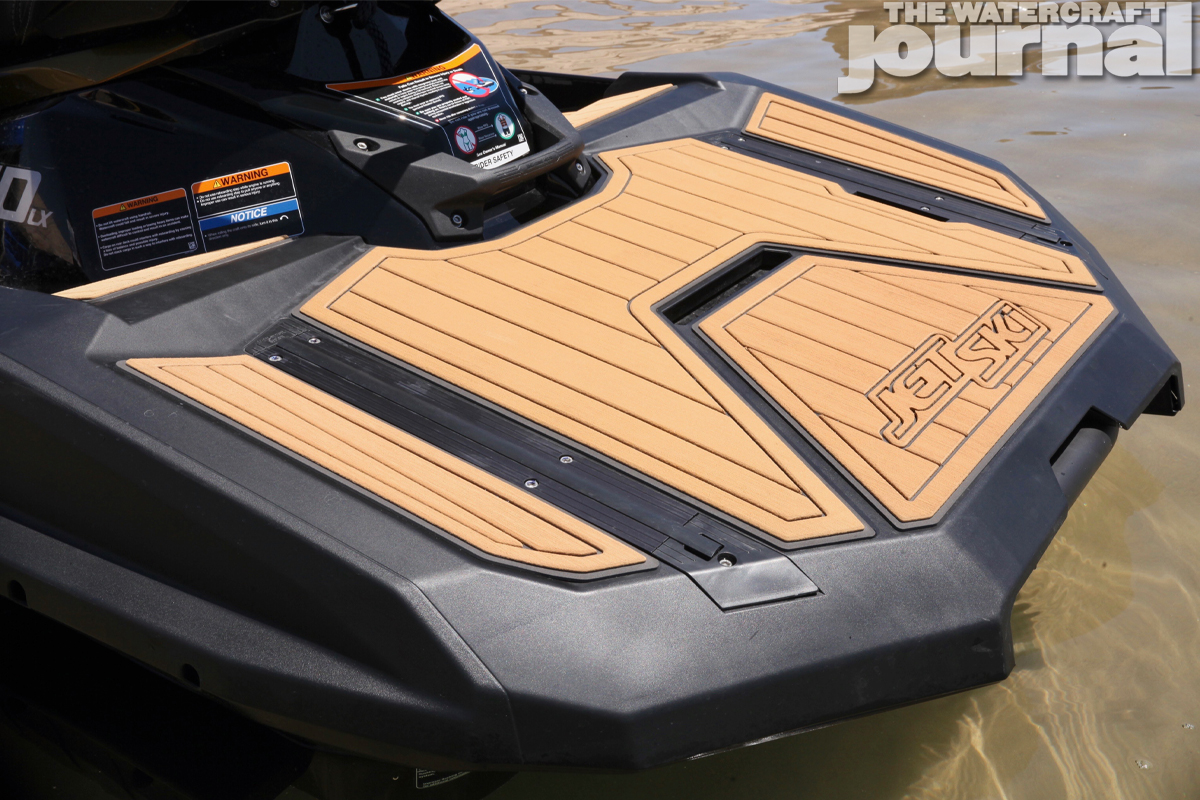
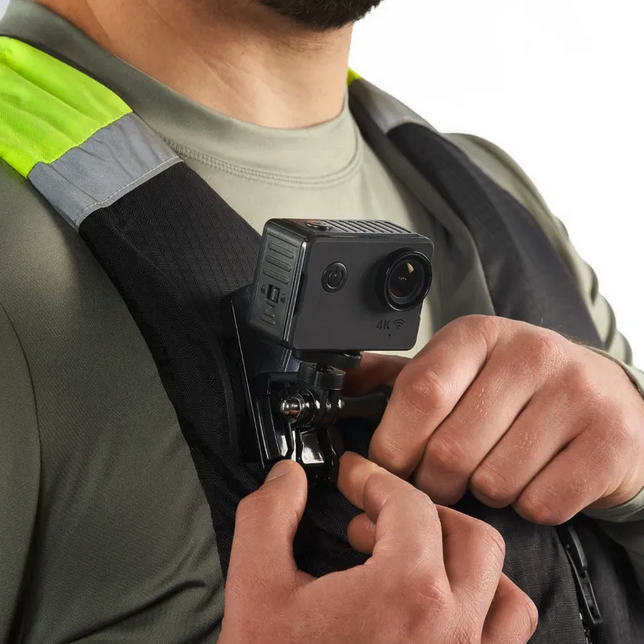
Kawasaki integrated a new Multi-Mount System featuring mounting bars for accessories like a GPS, phone, or action cameras, built into the handlebars and rear of the seat. On the 310LX this sits above a smoothly integrated Ultra Deck, an extended rear platform that increases the swim deck an additional 7.9-inches. An angled folding swim step tucks neatly up under the Ultra Deck, which also includes two Multi-Mount slide mounts providing accessible tie-down points to mount any number of Kawasaki’s new accessories, like a stern bag, soft-sided cooler, dry duffel bag, rear storage rack and universal tie downs.
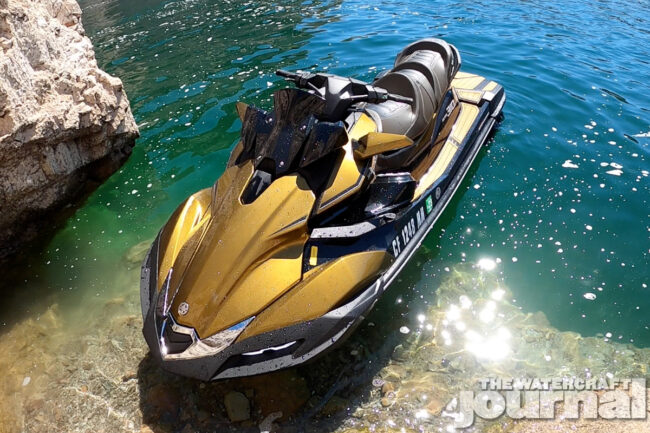
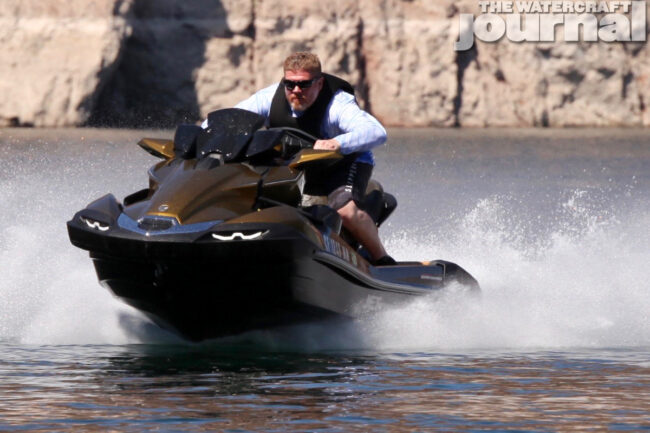
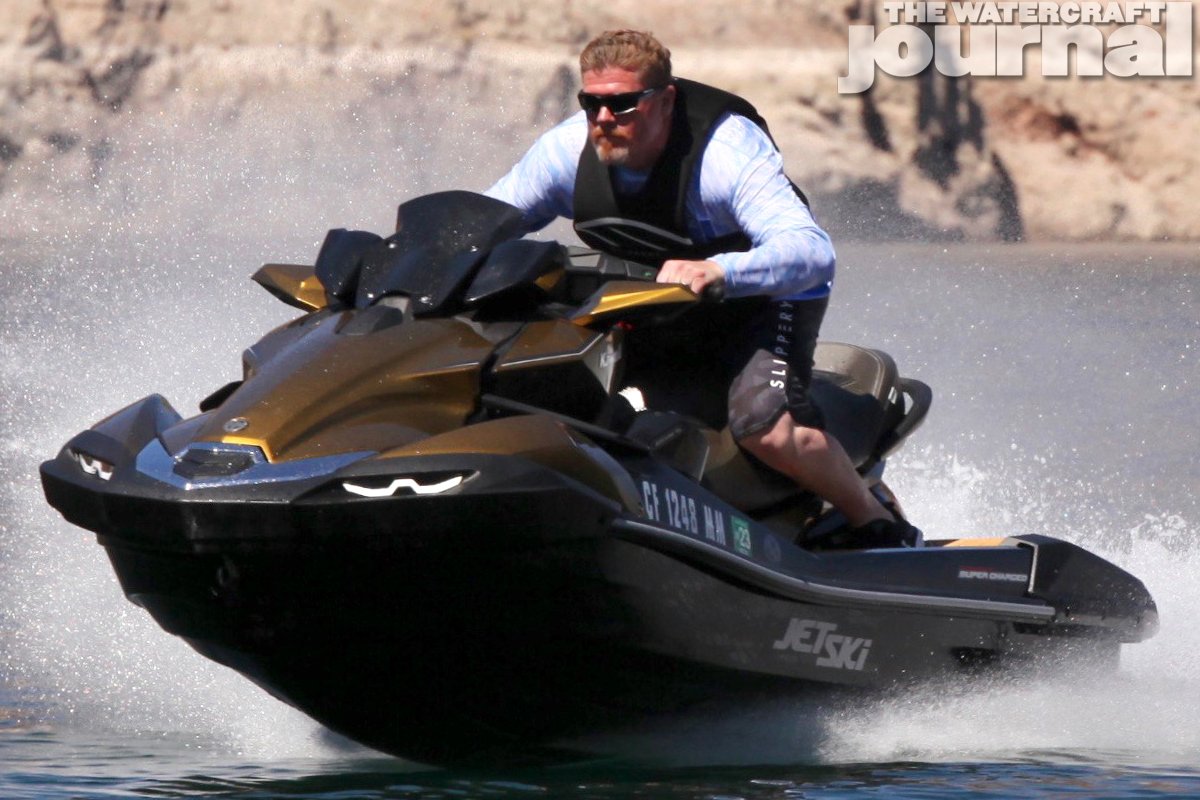
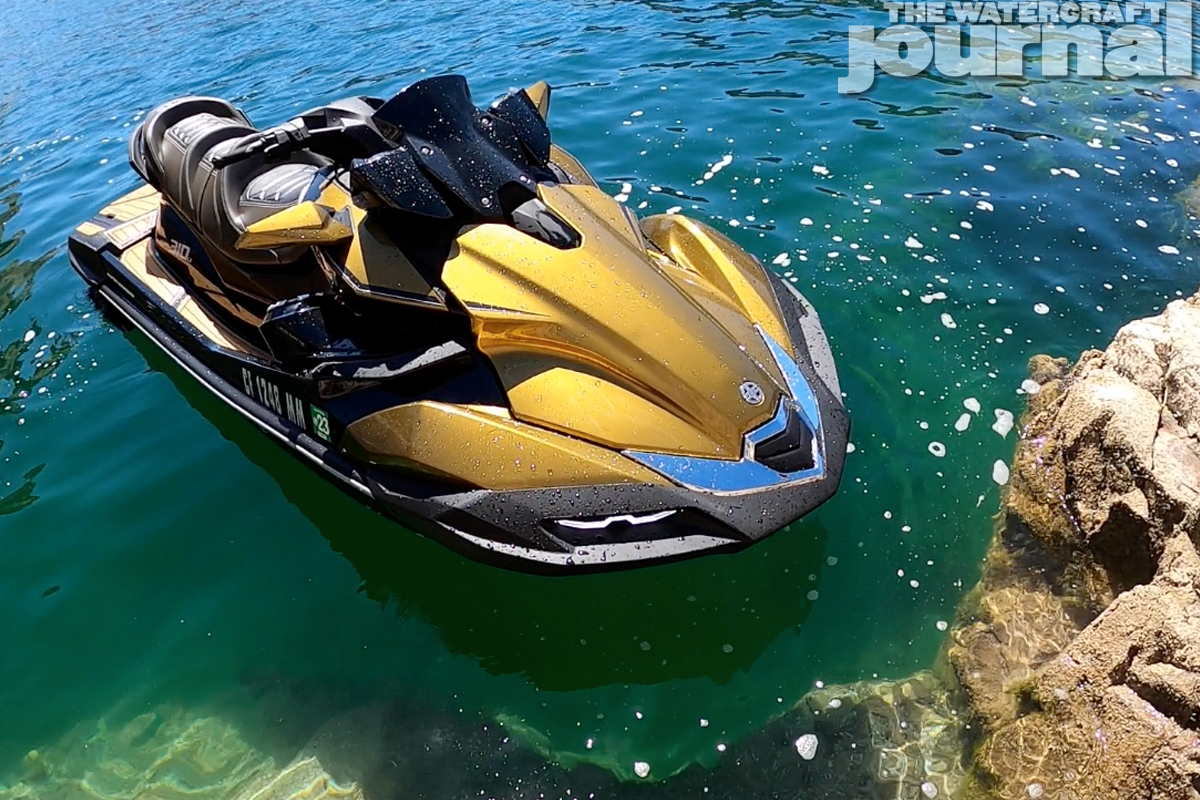
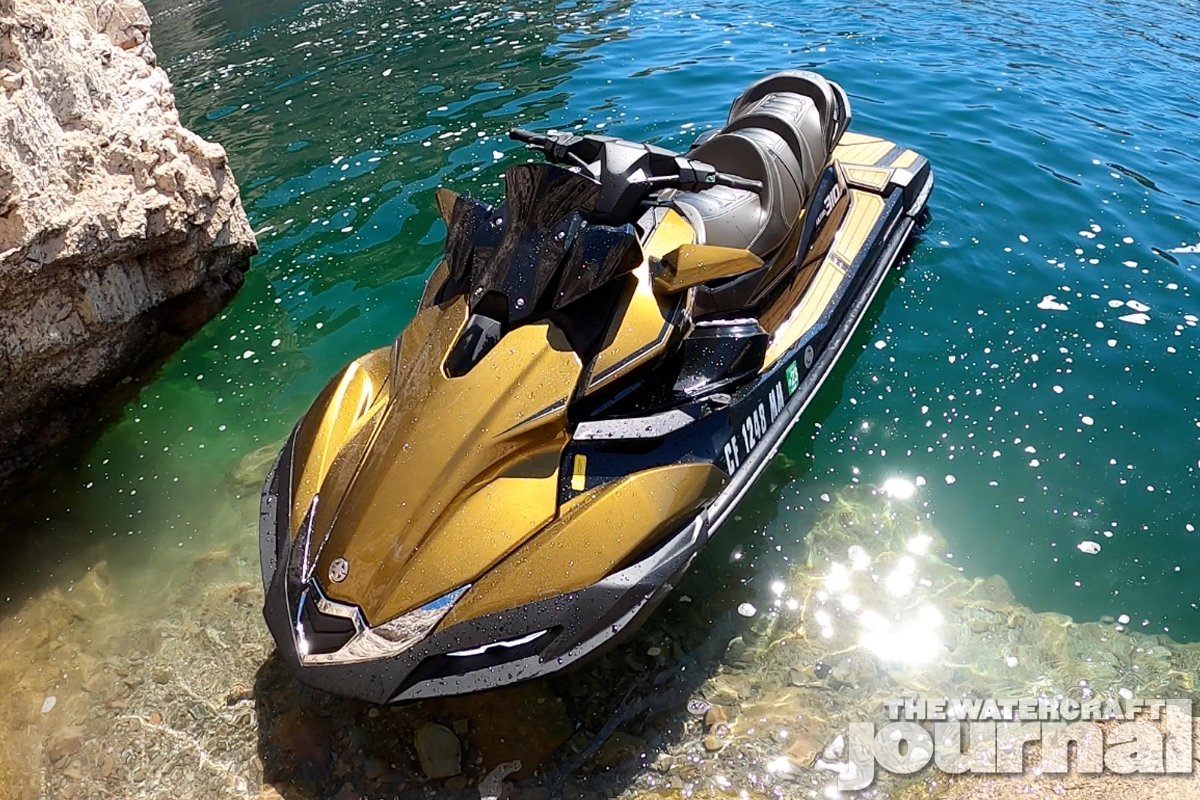
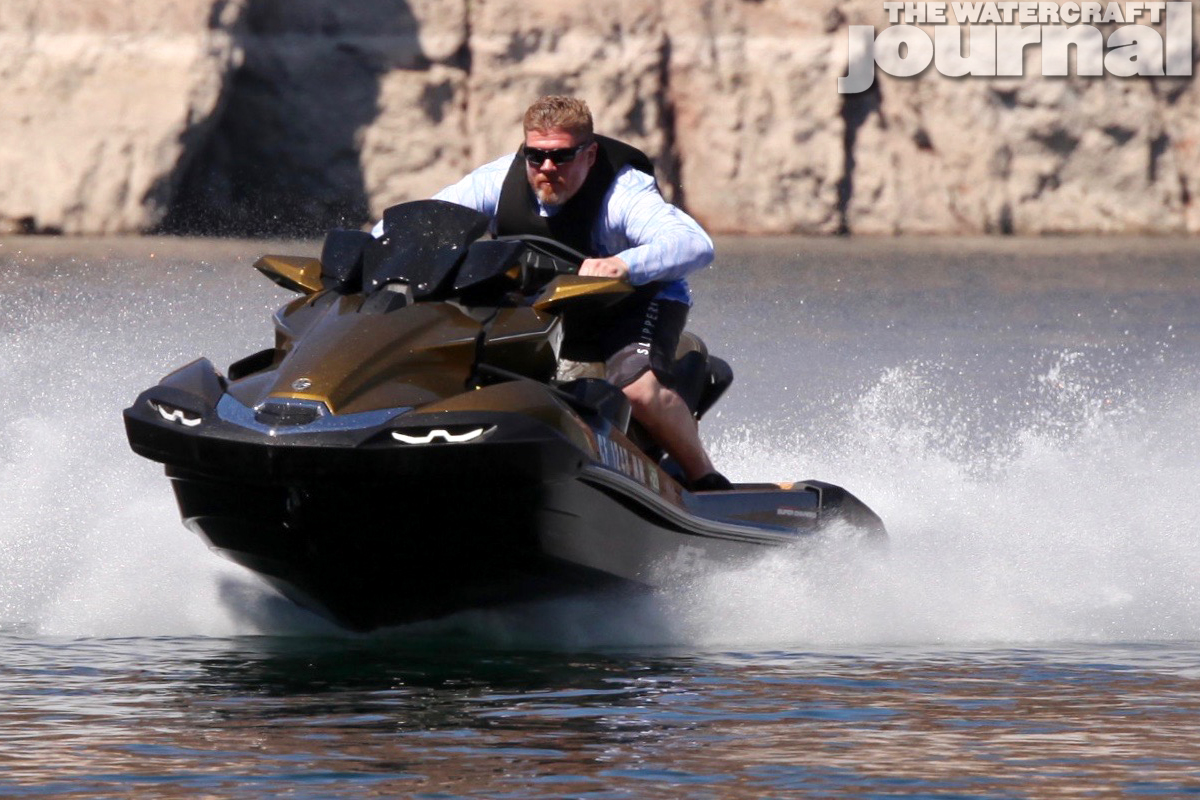
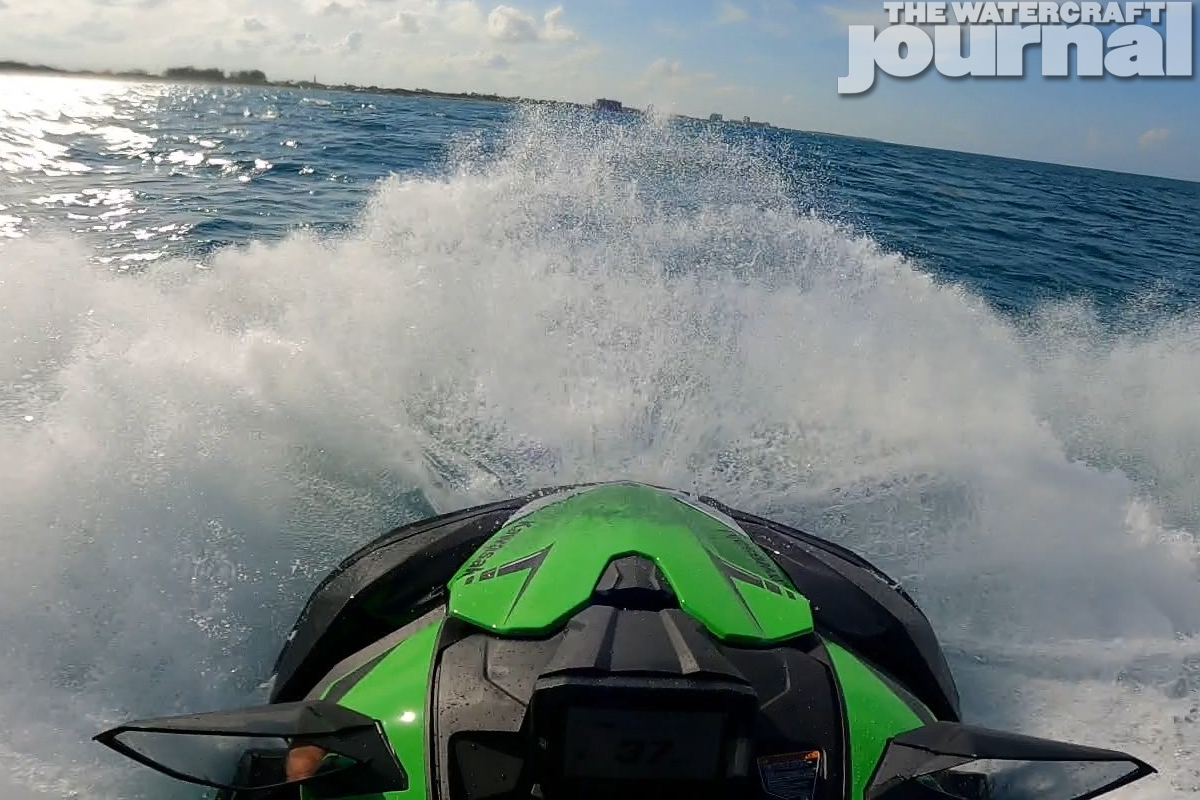
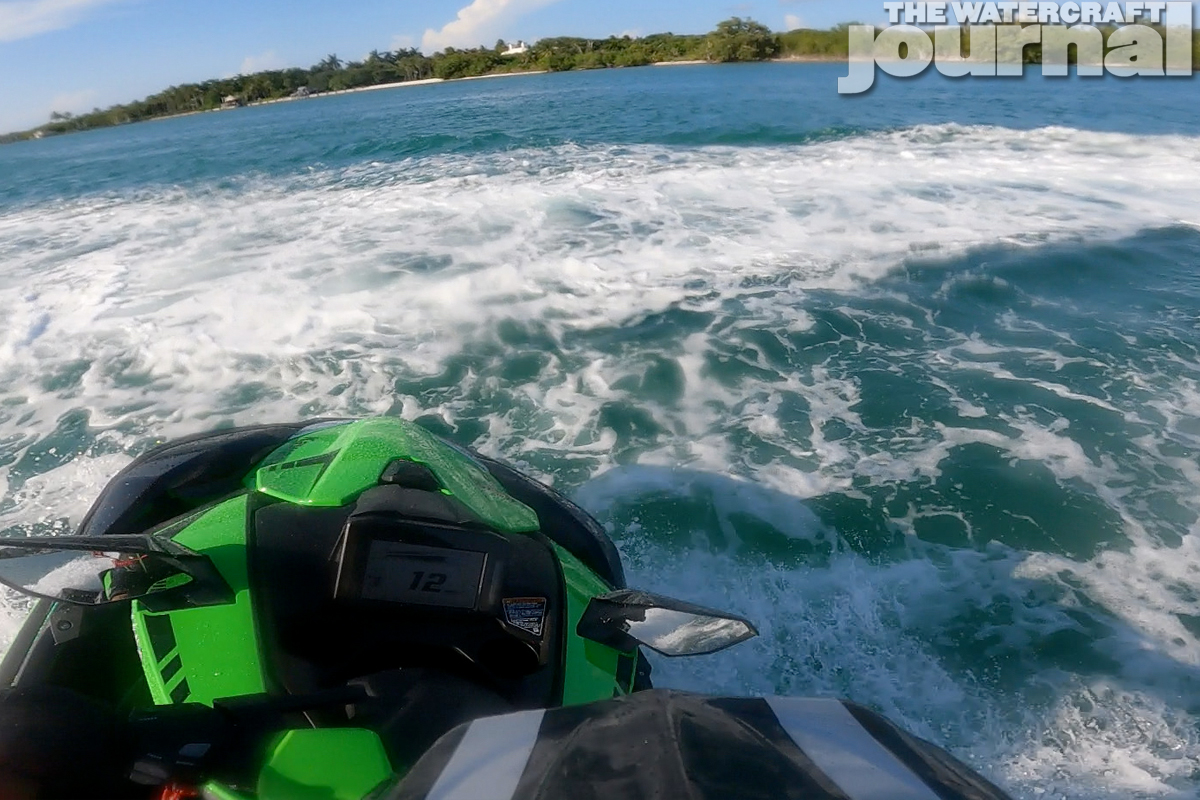
Sure, the new Ultra 310LX looks dapper in Ebony and Gold, but how does it run? Fully loaded with fuel and storage, we clicked off a respectable 66.9mph on the GPS at 1,044 feet and temperatures in the low 90’s. But top speed was never the Ultra’s bread-and-butter; rough water is. For those with lots of time on previous Ultras, this characteristic alone is the most significant. When it comes to how the new 2022 Ultra handles compared to before, it’s nearly night-and-day.
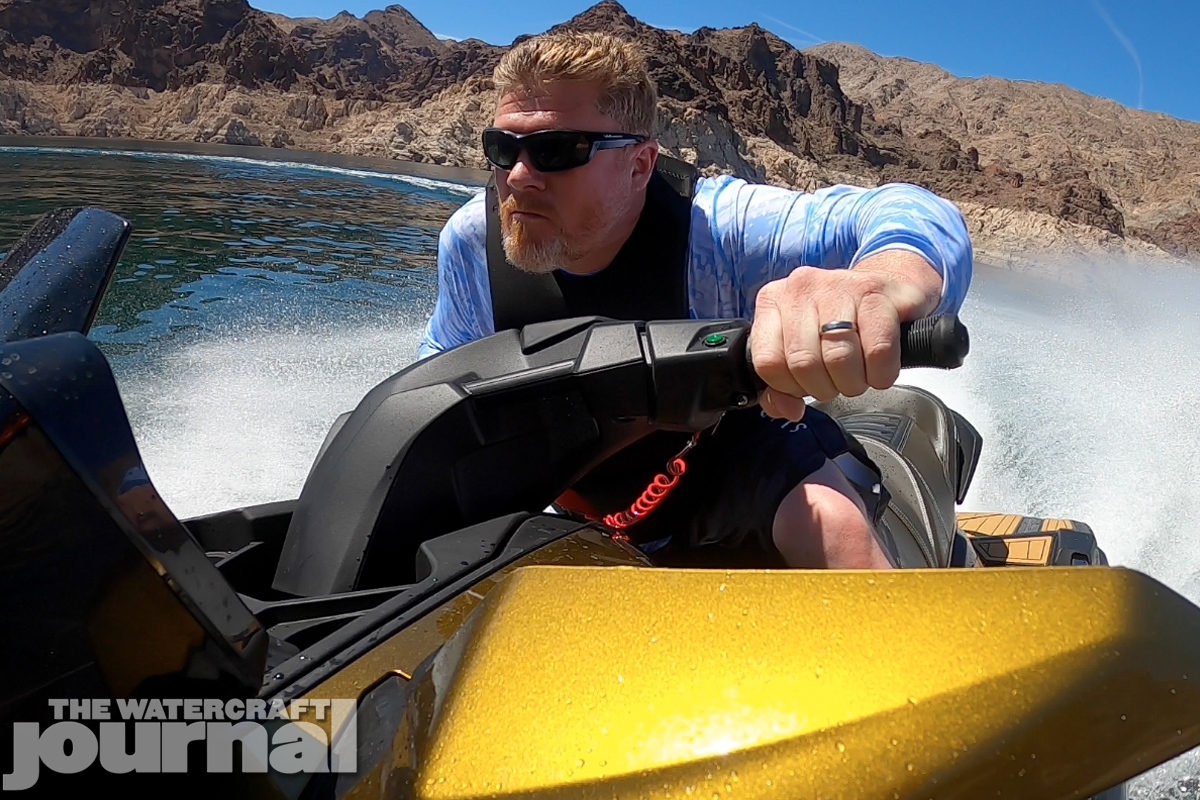
The lower center of gravity permits the Ultra to progressively roll into an inside lean like never before. It does so naturally, fluidly and with a newfound talent. Dropping a knee and pinning the bars to its stops in an S-turn with the throttle vised is exhilarating. Yes, with a curb weight of 1,089.3 pounds (equaling a calculated dry weight of 958 pounds), she’s a stout vessel – but again, that’s what you want in a hull that soaks up vibrations, chop and chatter, and won’t crack under pressure.
With the throttle clamped to its hilt, the 1.5-liter howls, it’s twin-screw supercharger wailing through its blow-off valve. Nothing, and we repeat, nothing on the market sounds like this. The Ultra’s deep draft and high-volume jet pump bites hard at the launch and pushes to its peak speed just under 5-seconds (4.81 seconds per our Vbox accelerometer). Again, conditions were pretty lousy for this kind of speed testing, but we definitely didn’t want to leave anyone guessing.
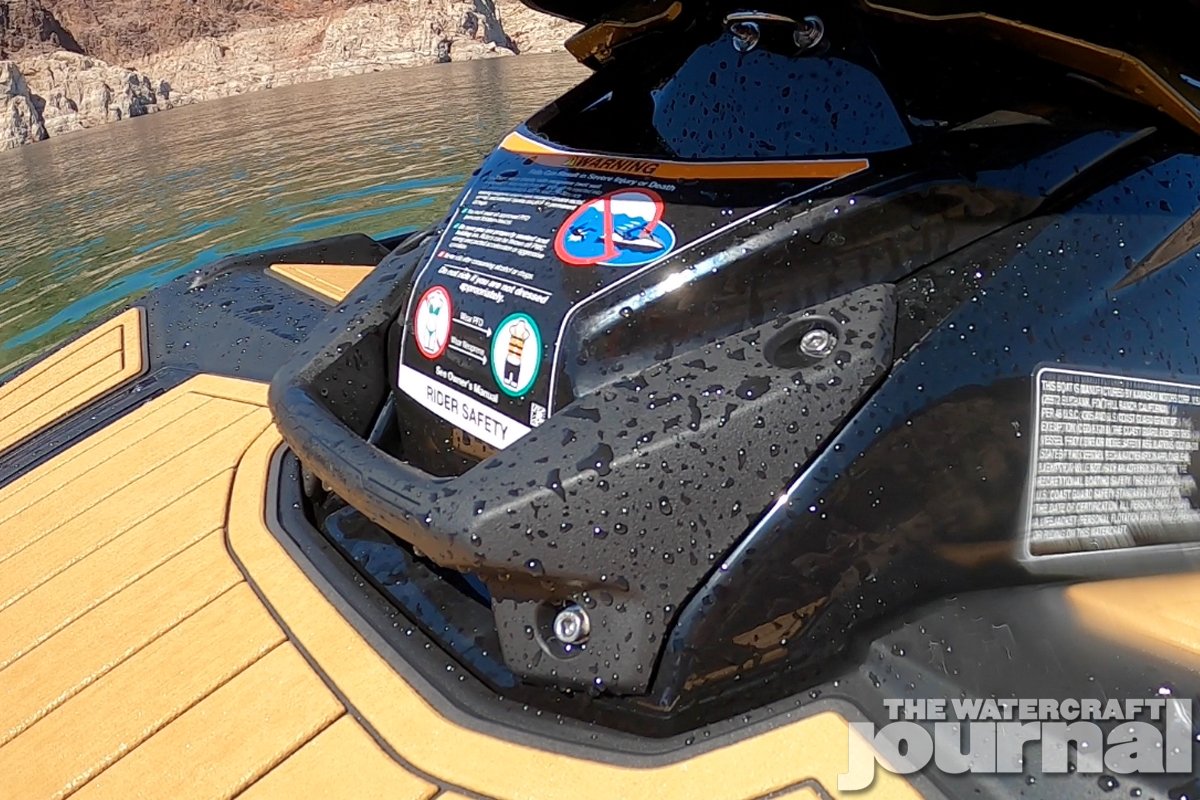
What complaints we had were few: first, reducing the size of the bow storage access hole means larger bags or a helmet are now impossible to bring. Equally bad was covering the entirety of the engine compartment with an access plate with a tiny plastic window. Whoever thought of these ideas should be demoted to “truck stop bathroom attendant” for a year. We also fought to get the TFT to sync with our phone, and aren’t terribly happy with the audio control knob being so far out of reach.
Otherwise, this machine is bordering on flawless. No really, it’s that good. The industry’s most capable rough water personal watercraft is now more stable, tracks more naturally and corners more intuitively regardless of the conditions. And for those who seek the finer things in life, it’s now drier, more comfortable and far, far, far more technologically advanced. The end result is this: the 2022 Kawasaki Ultra 310LX JetSki is the most fully-equipped, high performance personal watercraft we’ve had the pleasure of testing in a long time. It does everything everyone else’s skis do and more. If you’re in the market and can wing the near $20,000 price tag, get one. End of story.
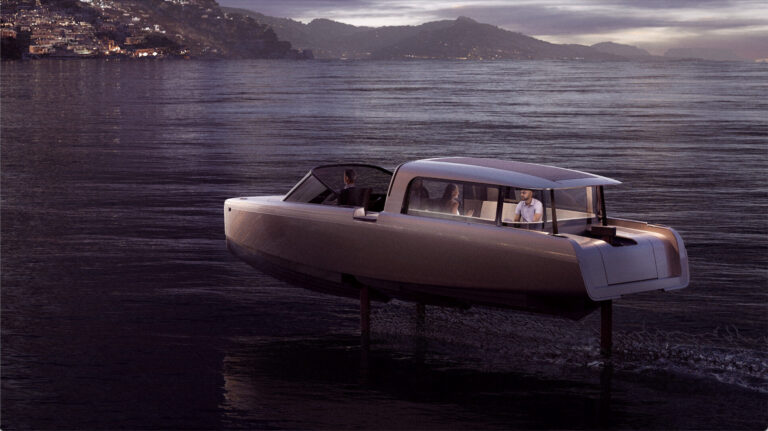
Sweden’s Candela P-8 Voyager made its debut at the Salone Nautico in Venice last week. The Voyager is a boat designed to have zero impact on the environment. It is powered by electricity and glides above the water using computer-guided hydrofoils. The hydrofoils are retractable, making for easy storage and mooring of the vessel. The craft is powered by twin submerged ultra-compact Candela C-POD motors, which drive counter-rotating propellers.
The C-POD can operate for 3,000 hours before any service needed. This makes it a great boat for operators in remote locations where technicians are difficult to find, if at all. The P-8 Voyager is updated OTA and connected to Candela’s 24/7 Service department, which can perform remote troubleshooting. It sounds ideal for a remote research vessel, though its intended use is to carry passengers for commercial operations.
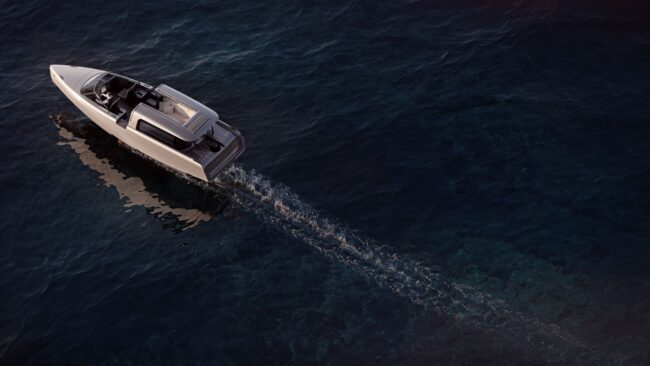
It glides silently over the water, leaving only a 5cm wake, which doesn’t disturb sea dwelling creatures or damage beaches and coral reefs. Four-foot swells won’t slow this boat and passengers can kick back in luxury while enjoying a panoramic view of the scenery. The twenty-eight-foot P-8 Voyager carries six passengers and crew in air-conditioned comfort.
The P-8 Voyager goes faster and further than any other electric boat. It tops out at 30knots and has a range of 50 nautical miles at cruise speed. The P-8 Voyager has been developed to replace smaller combustion driven craft like tenders, taxis, and rigid inflatables. Production of the Candela P-8 Voyager is slated for the fall of 2022. Read more about it on the Candela website.
From WaveRunners to motorcycles, and everything in between, Yamaha is known for inspiring generation after generation of powersports enthusiasts through its innovative vehicles and products. That’s why Yamaha Australia decided to launch the Motor Life Passion blog; featuring “stories of people, places, and lifestyles touched by Yamaha.”
According to Yamaha, “The name Motor Life Passion is a combination of three elements that provide the means for what we do. Yamaha Motor encompasses the wide range of products we manufacture for work, for play, and to make everyday tasks easier and more enjoyable. Lifestyle is what we all choose when purchasing and enjoying Yamaha products, and Passion for the Yamaha brand is something we share with our customers and dealers.”
With this new blog, Yamaha fans in Australia and New Zealand – as well as those across the globe – will have the opportunity to share the ways that Yamaha products have made an impact on their lives. The blog is already populated with some great editorial and video content, featuring stories from Yamaha enthusiasts and articles about some of Yamahas most innovative offerings.
“From motorcycles to marine products, urban mobility, next-gen technology, environment issues, and so much more; every day millions of lives around the world are connected to Yamaha in some way. The driving force behind Motor Life Passion is to share some of these amazing stories.” According to Yamaha’s Corporate Branding Department Communications Manager, Chris Dobie.
Radinn has a killer promo running through summer. Buy a complete jetboard kit and score a Power Bundle. The bundle includes a free Jetpack G3 Pro upgrade, a six-month membership to Unleashed, and a Golden Ticket to sweepstakes entries. A complete jetboard kit consists of one of Radinn’s high quality electric jetboards, jetpack, and a battery.
The modular Jetpack provides the propulsion and speed required to get your board moving. The upgrade to the G3 Pro will give you a top speed of about 35 mph and a high performance ride, which is 10 mph more than the standard jetpack. A subscription to Unleashed gives you access to the best surf spots all over the world with a jetboarding guide put together by Radinn riders.
Check out the interactive map to see where members are riding and how often, then go make your own waves! You will also be among the first to know about new products and have access to member’s only content. You will have Unleashed specific tutorials at your fingertips. With the Unleashed membership, you’ll have automatic eligibility into Radinn’s Golden Ticket Sweepstakes.
Contests are reoccurring and you will in the know as to when they happen in your part of the world. Best of all, an Unleashed membership comes with the Unleashed ride mode, which is a turbocharged setting. It is the fastest ride mode yet and delivers 20 percent more hp than the Pro Mode. Grab the rest of the details from the Radinn website and configure your new board kit and save almost $2,000 with the summer promo!
On April 12th, 2022 Christmas came early. My Kawasaki dealer notified me that a 2022 Kawasaki Ultra 310LX-S was just uncrated and was sitting on the showroom floor. Almost in shock, I rushed to the dealer as fast as legally possible. I chose the LX-S model primarily due to the Kawasaki Green color with sharp black and grey accents. I wanted the new Ultra Deck, but cared little about the stereo and speakers making the mid-range LX-S trim a solid choice for me.
From the moment the ski was loaded onto my trailer I meticulously documented my experiences on my YouTube Channel – JD’s WaterWorld. I quickly learned that words and videos alone do no justice for the 2022 Kawasaki Ultra 310. One must ride this venerable beast to truly understand its command of the water.
Fast forward 10 hours, and just over a month, and even when the ski is sitting in my driveway, the adrenaline rush never seems to fade. Some say it is not the ski itself that draws us to a personal watercraft but rather the experience of riding. For me, the experience of riding has been elevated to heights I never knew possible by the 2022 Ultra 310 JetSki.
It all starts with the hull. They say a house is only as strong as its foundation, and Kawasaki continues to provide the ultimate foundation in the form of their fiberglass and gelcoat deep-V hull. This hull handles a stock 310 horsepower and nearly 2,000 lbs. of thrust with ease, and inspires the confidence to tackle even the most challenging ocean conditions safely.
The hull tracks very straight through rough chop, and corners surprisingly tightly for such a large ski. The Kawasaki is incredibly stable at all speeds, and offers a much drier ride than the previous generation Ultra 310s. Fly-by-wire throttle response is instantaneous, and the throttle trigger is weighted just right, reducing trigger-finger fatigue. The KSRD reversing system is easy to use, allowing single handed operation for docking or pulling up alongside another ski or boat.
I really like that the Kawasaki does not need to be heavily modded with aftermarket parts. You don’t need to improve the supercharger or the intercooler. You don’t need to improve the impeller or the jet pump. You don’t need to add a rear-exit exhaust, catch can, or a blow-off valve; these all are included stock. The current generation powertrain has a very low rate of failure, with a proven 5-plus year track record of real-world reliability. The stock performance is very impressive.
Kawasaki finally adopted much of the technology and ergonomics found standard on other brands’ base-model skis- namely a handlebar operated reverse and braking system and a modern display. I appreciate that Kawasaki publishes all of the engine’s specifications, and that the company is straightforward with their curb weight of the vessel.
Riding is a pleasure due to the vastly improved handlebar controls, large well-placed mirrors, and new dash functions. Wider and deeper footwells comfortably accommodate tall riders like me (6’2”), and the new tapered seat facilitates a more comfortable stand-up riding position.
The water deflection and channeling system on the top of the ski works incredibly well, while the splash deflectors molded into the bow minimize spray when plowing through chop. I am really impressed with the size and width of the new Ultra Deck and the versatility of the multi-mount rails. The size and stability of the new rear deck and drop-down step makes boarding from the water very easy.
I have purchased a few different Kawasaki accessories for this ski including the dry bag and the tie-down kit for the Ultra Deck. The tie-down kit is high quality, with anodized aluminum mounting points and stainless-steel hardware. The dry-bag fits perfectly in the gull-wing storage compartment, and keeps wallets, car keys, and paperwork dry.
When it comes to quirks, the gullwing compartments are not waterproof, and it’s very difficult to reach down into the front compartment while on the JetSki. The Ultra 310 also has a full engine cover with only a small access door to check the oil. The cover is easy to remove while on the shore, but could be troublesome if it has to be removed while out on the water.
If the Ultra 310 is filled with stale, old, or lower octane fuel it will throw a “Code 7B” – indicating that the Knock Sensor has detected detonation and triggered the ECU to retard timing- thereby putting the ski into “Limp Mode.” Add octane booster and fresh fuel as soon as possible if you get a “Code 7B – Knock warning.”
Some riders have reported abnormal or persistent “Code 69 – Knock sensor malfunction” warnings. According to the Kawasaki Service Manual, this code is related exclusively to the functioning of the knock sensor itself, and is not an actual issue with fuel or engine knock. Have your dealer conduct a diagnosis on your ski if you come across this issue.
Otherwise, the power delivery is crisp and instantaneous, and the ride is stable and comfortable. The ski gives me the confidence to tackle rough ocean chop common off the shores of South Florida. Running at an average of about 55 mph, my average fuel burn is about 4.8 gallons an hour. With 10 hours under my belt, I can confidently say that the 2022 Ultra 310LX-S is one of the most commanding and fun skis I have ever ridden.
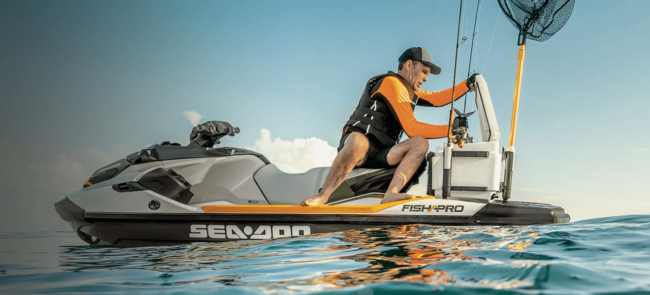
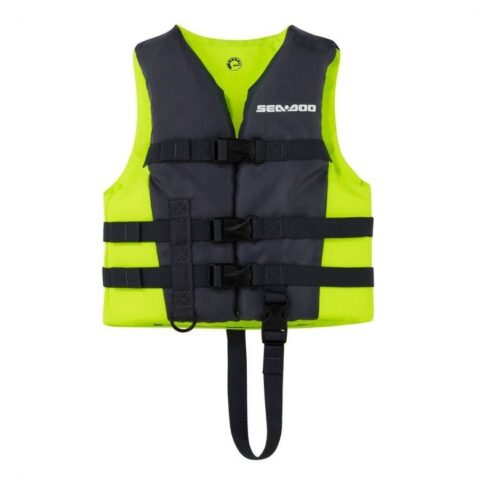
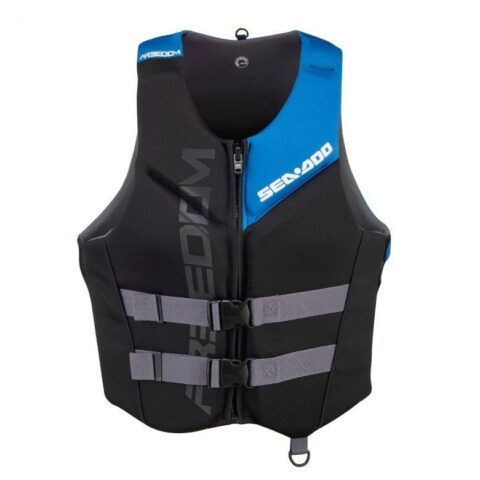
Discover Sea-Doo Life Jackets designed for the living the Sea-Doo Life. These jackets provide comfort, style, and protection. It is important to wear the right jacket when you’re planning to hit the open water. The jacket must provide comfort and safety while allowing you to freely move about in and out of the water.
These jackets are designed for water-sport enthusiasts, you know, those of us who are active out there. If you’re pulling someone on a wakeboard, you both have to be able to move without restriction. Sea-Doo has what you need in 13 different styles for men, women, and children.
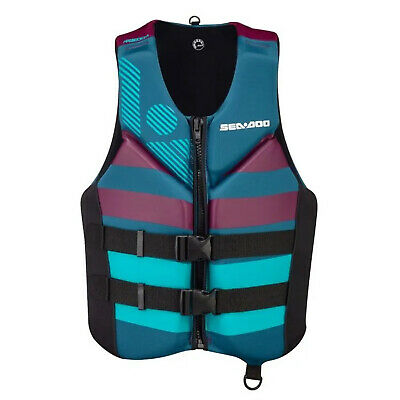
The Women’s Freedom PFD and Men’s Freedom PFD are available in several colors and are the ultimate in comfort. They are made of Ecoprene material, which is rubber free, flexible, lightweight, and quick dry. They have extra padding in the lumbar area to take the pressure off your lower back. The armholes are cut large for riding comfort and the jackets are USCG approved.
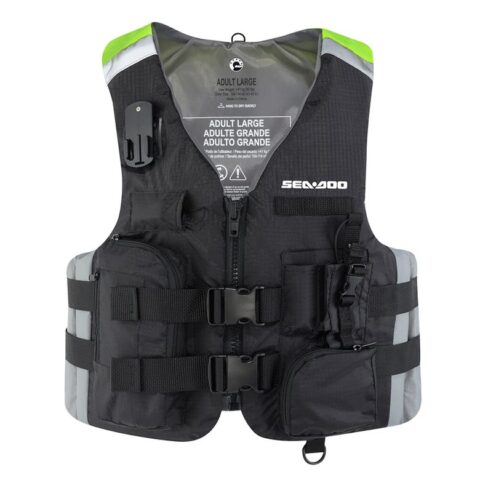
If you want a tactical type jacket to carry a radio and other items, the Men’s Explorer Life Jacket is perfect. It has multiple pockets, a loop to attach your goggles, and D-ring for your key lanyard. The jacket is made of heavy-duty rip stop nylon and is perfect for fishing.
If you’re taking your kids with you, the Kids’ Sandsea Life Jacket is a great choice for all the fun water activities. They won’t feel restrained in this jacket because it has the large armholes so they can move around and have a good time while being safe on the water. Check out the Sea-Doo website for all the life vests designed for comfort, mobility, and safety on the water.
Jet Rider Nation (JRN) is proud to announce the recent appointment of Dr. Lorie A. Tuma to the administrative leadership team. Tuma is the first woman in the nation to serve in this leadership role and will join a team of seven (7) male counterparts that promote safe and responsible jet ski riding, while welcoming diversity among members of high character nationwide.
Under the leadership of Manny Arroyo, (CEO and founder of Jet Rider Nation), Dr. Tuma will serve as the first administrator and leader of Jet Rider Nation Ladies, an online group of approximately 300 women represented by every state in the nation.
The mission of this organization is to bring women together (nationwide) and encourage them to create meaningful relationships, learn more about the PWC industry, and gain confidence in riding personal watersports. Dr. Tuma’s primary responsibilities are to provide guidance, connect with, and assist women as they attempt to enter a watersports market that has been historically male dominated.
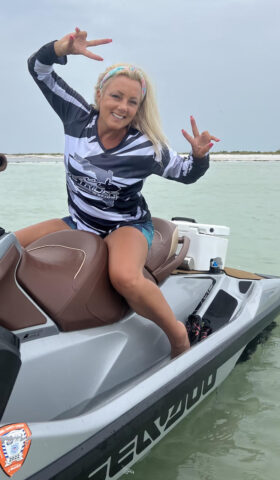
Dr. Tuma’s appointment comes after 24-plus months of teaching online during the COVID19 pandemic. During this time, she independently learned how to jet ski, organized, and led group rides for women and gained skills in sailing and open water navigation. To date, she has logged over 200 hours on the water and organized and led 8 women’s rides in the Gulf of Mexico – making her an advanced rider in this market.
Arroyo is excited about the new appointment and together with members of his administrative team, have been intentional about creating a safe space where women can connect online, ask questions, and obtain information without feeling apprehensive.
“Jet Rider Nation could not be more thrilled with this new initiative. There is no doubt more women are entering the jet ski industry and they need to know they are welcome. We believe Dr. Tuma will serve as a strong ambassador for Grand Valley State University and a role model for her students, while playing an integral part in nurturing this next demographic of riders.” He further added, “We look forward to creating many opportunities for women to learn more, explore more, and feel comfortable on and off the water.”
Jet Rider Nation (JRN) is a for-profit riding organization headquartered in Florida, with active chapters in all 50 states. The organization was created for PWC Enthusiasts to connect, share experiences, ride together, and promote PWC safety. JRN takes pride in promoting safe and responsible riding, as well as following each state’s Boating/PWC Laws and Regulations. Please visit: www.jetridernation.com If you would like more information, please contact Lorie Tuma at (989) 506-3805 at [email protected]
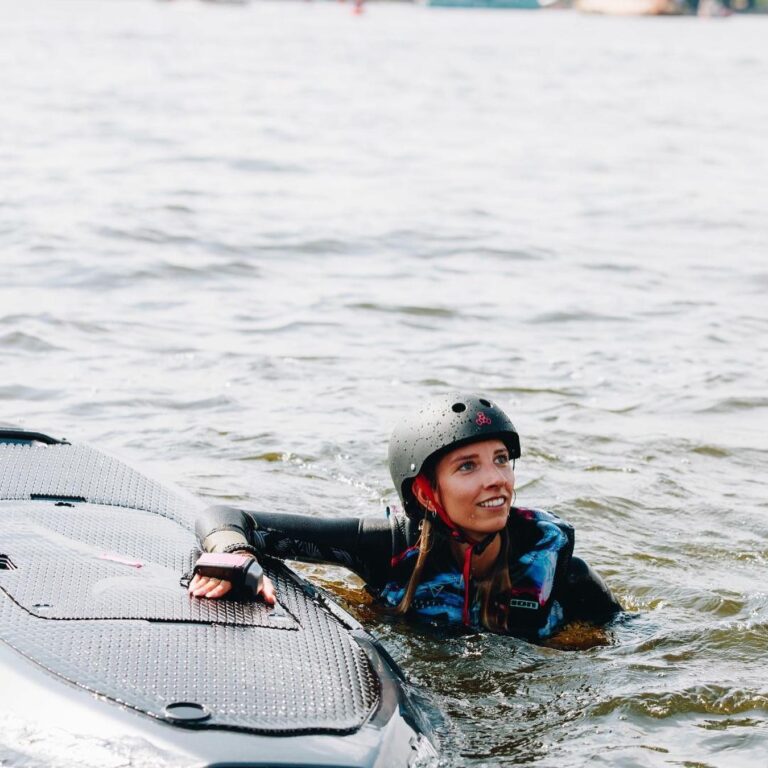
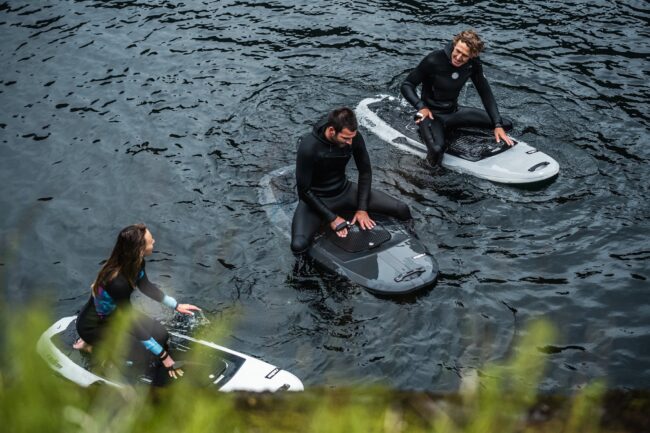
The Radinn Jetboard crew opened a couple of surf clubs in Sweden, as part of a pilot project. This gives everyone an opportunity to rent and try a Radinn Jetboard. Their vision is to bring surfing to everyone, and the Surf Club gets them one step closer to making it happen.
They have two clubs; one is stationary and located in Höllviken and the other is a mobile club out of Stockholm. The clubs are open to all levels of surfing. Beginners get a thorough briefing on how to operate the jetboard and water safety. You can even borrow a wetsuit for the day and your instructors will provide an impact vest and helmet.
Each session is two hours and weather dependent like all surf camps and clubs. They do allow for rescheduling if your session can’t go or is cut short due to bad weather conditions. You’ll get about 3o minutes of ride time, which is usually enough for new riders. It’s tiring out there. For the experienced riders, you’ll get more water time since your safety session won’t be as long. Riders are briefed on the conditions for the day and any rules that may apply on the water.
Intermediate riders also get to ride until the battery dies and can choose to ride in the challenging Pro-mode. When you decide to reserve your day on the water with the Surf Club, head over here to book your slot or here for the mobile club. We hope to see these clubs in the United States, so we can make waves with Radinn!
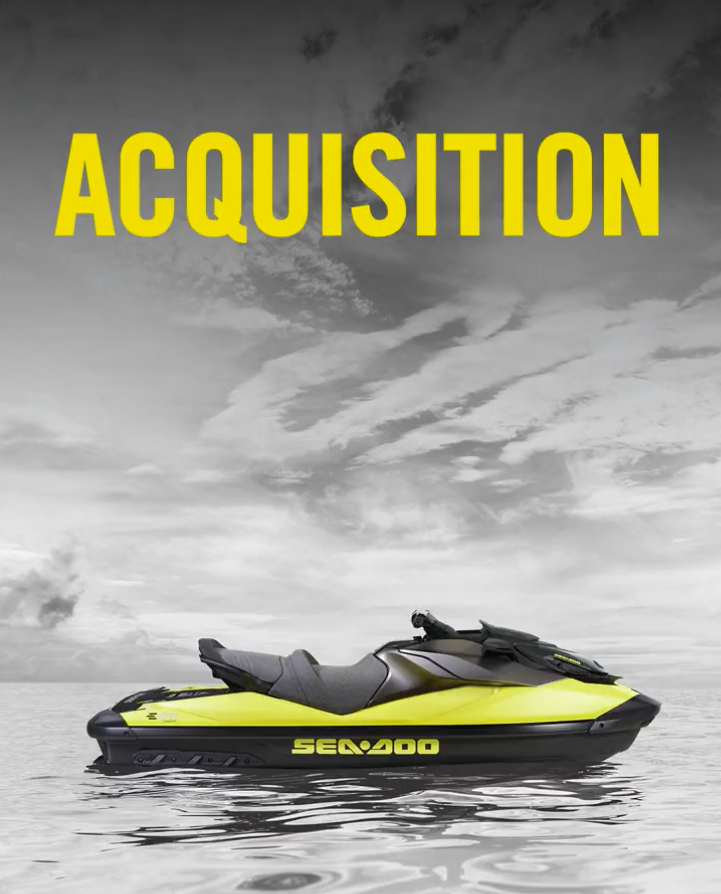
The maker of Sea-Doo announced that they have agreed to acquire Great Wall Motor Austria GmbH- an advanced EV research and development facility controlled by parent company Great Wall Motor of Baoding, China. With a market cap of over 16.6 billion USD, Great Wall Motor controls over 70 subsidies and employs nearly 60,000 people.
Based in Kottingbrunn, Austria, Great Wall Motor’s Austrian R&D division specializes in designing e-propulsion systems and associated controls for deployment across the EV industry. Current employees at the Austrian facility will be offered continued employment with BRP as part of the agreement.
“We look forward to welcoming the 53 very qualified and experienced engineers, technicians and professionals as we continue reinforcing our EV expertise required to deploy our ambitious strategy. This acquisition will further strengthen our know-how in e-motor, inverter hardware and software development,” said Thomas Uhr, chief technology officer at BRP, in a statement originally published by PowerSports Business.
BRP, publicly traded on the Nasdaq (DOOO), was up nearly 7% after the announcement. BRP’s portfolio of products includes Ski-Doo and Lynx snowmobiles, Sea-Doo personal watercraft and pontoons, Can-Am vehicles, Alumacraft, Quintrex, and Manitou boats, as well as Rotax propulsion systems for marine, kart, and recreational aircraft.
The transaction is subject to closing conditions and Austrian regulatory approvals, and is anticipated to close in Q2 2023.
We have entered into a definitive agreement to acquire Great Wall Motor Austria, a leading EV R&D centre based in Kottingbrunn, Austria. Read more : https://t.co/ycycSM6dnLpic.twitter.com/YvTXQts27n

































 Jet Rider Nation (JRN) is proud to announce the recent appointment of Dr. Lorie A. Tuma to the administrative leadership team. Tuma is the first woman in the nation to serve in this leadership role and will join a team of seven (7) male counterparts that promote safe and responsible jet ski riding, while welcoming diversity among members of high character nationwide.