Jet Jam keeps getting better and that’s good for the PWC racing community. The organization has partnered with RPM Racing Enterprises, and together they have put together a 6 round Best of the West Series.
Ross Wallach is on board with the IJSBA as the sanctioning body of the closed course racing. With this experienced team leading the way, the sport of jet ski racing can only grow and attract more racers.
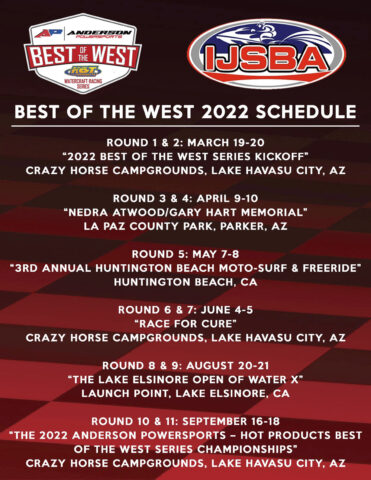
The Best of the West series kicks off in March and you can check out the 2022 series schedule below. We are stoked about this series getting underway.
Things are feeling almost normal, and we are overjoyed at the prospect of moving forward and covering more jet ski racing again.
2022 Schedule of Events
Round 1 & 2 March 19 & 20 – “2022 Best of the West Series Kickoff” – Crazy Horse Campground, Lake Havasu, AZ
Round 3 & 4 April 9 & 10 – “Nedra Atwood/Gary Hart Memorial”- La Paz County Park, Parker, AZ
Round 5 May 7 & 8 – “3rd Annual Huntington Beach Moto-Surf & Freeride”- Huntington Beach, CA
Round 6 & 7 June 4 & 5 – “Race for Cure” – Crazy Horse Campground, Lake Havasu, AZ
Round 8 & 9 August 20 & 21 – “The Lake Elsinore Open of Water X” – Launch Pointe, Lake Elsinore, CA
Round 10 & 11 September 16 & 18 – “The 2022 Anderson Powersports & Hot Products Best of the West Series Championships” presented by Jettrim & Impros – Crazy Horse Campground, Lake Havasu, AZ
For More Information, please visit www.rpmracingent.com or Jet Jam Racing or like us on Facebook and Instagram. Questions, please contact RPM Racing Enterprises (310) 318-4012 or Jet Jam Racing (360) 349 1341
Despite making major efforts to reduce the quantity of externally resourced materials and components after a year of setbacks, delays and reduced production numbers in 2021, Yamaha Motor Corp. USA announced early February 9th, 2022, that the total remaining production run of 2022 model WaveRunners will be reduced by 30-percent.
In a letter addressed to Yamaha WaveRunner dealerships, the industry’s second-largest manufacturer of personal watercraft cited low supplies of raw materials, heightened shipping costs and compounding shipping delays, along with a shortage of external suppliers as causes for the prolonged manufacturing and ultimately, reduced number of total units being produced this year.
This news comes on the heels of a similar letter issued by Kawasaki Motor Corp., stating that its total production of 2022 JetSkis will also be heavily reduced in an effort to shore up supplies for a full production run in 2023. Meanwhile, Sea-Doo production continues at a slowed but steady pace with fewer units arriving at dealers requiring further assembly.
The original email issued to dealers read as follows:
Dear Yamaha WaveRunner Dealer,
Like most manufacturing sectors on the US economy, we continue to be challenged by the Coronavirus pandemic and its effect on our supply of raw materials and parts at our WaveRunner manufacturing facility.
Although there are mitigation plans in place to reduce those production disruptions that we can control, the fact is the supply chain, and overseas shipping, have yet to recover at the speeds necessary to keep up with the our production demands.
Unfortunately, this means that we will be unable to fulfill your remaining orders in total.
We project that this will impact 30 percent of the remaining WaveRunner orders, varied by dealer due to model mix. We expect to have more information soon and order reductions completed in the next 30 days.
Please know that we will do everything possible at our manufacturing facilities to make up these losses; and that we continue to seek alternative suppliers and other means of shipping to minimize production downtime. Our number one priority is to deliver as many WaveRunners to your dealership as quickly as possible.
We will continue to provide you with the most accurate information on what to expect in what remains an unpredictable and dynamic situation. In the meantime, thank you for your patience and ongoing support for the Yamaha brand.
Let the fireworks begin! The Anderson Powersports Hot Products Best of the West Series is back! Dust off your skis and get ready for round one! The racing kicks off in Lake Havasu City, AZ and runs March 19-20 at Crazy Horse Campgrounds. You can pre-register at a discounted rate until March 13th. This is an IJSBA World Finals Qualifier so check the status of your IJSBA membership. You must be a member to race. On site memberships will be available as well so no sweat if you forget.
See the full press release below. It includes everything you need to know about this exciting event:
The Anderson Powersports-Hot Products “Best of the West” Series Presented by Cometic Gaskets, Klotz Lubricants, Jettrim, Impros
March 19 & 20, 2022 Crazy Horse Campgrounds 1534 Beachcomber Blvd Lake Havasu City, AZ 86403
IJSBA World Finals Qualifier Presented by:
Mohave Mortgage, Worx Racing, Kommander Ind, Yamaha, K-river Investments, M&M Powersports, Rb Components, Moto Option, 321 Kawasaki, Sharq Skinz, Vintage Jetski, Bomber Eyewear, Jettribe, Blowsion, Works H20 Designs, Kawasaki, Oakley, Jc Racing, 3D Design Concepts, T.C. Freeride, Pro Watercraft, Ultimate Watercraft, West Coast Watercraft Club, Throttle Junkie Tv, Pro Rider Magazine
There is a multi class discount for the Best of the West Series events.
Note: Pre-Registration discount ends SUNDAY MARCH 13TH!! All entries received thereafter will be charged $25/class late fee. No late fees will be charged if entry form is received prior to Sunday, March 13th.
This is an IJSBA sanctioned event and a World Finals qualifier. IJSBA memberships can be purchased on-site (preferred method to maximize license -12 mos. from date of purchase). Or visit https://ijsba.com/join-ijsba/ to join.
Host Hotel: The Quality Inn, 271 Lake Havasu Ave, Lake Havasu City, AZ 86403 (928) 855-1111. Must use group code – “Jet Jam” to get the racer rate of $85/night + tax when booking to receive a discount. Rooms are on a 1st come; 1st served basis.
Pit parking is on a1st come; 1st served.
CAMPING: There is a limited number of camping for Friday and Saturday night. Contact us to secure a spot.
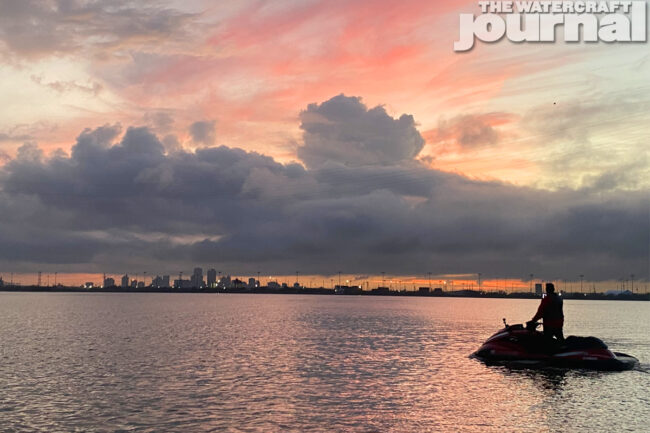
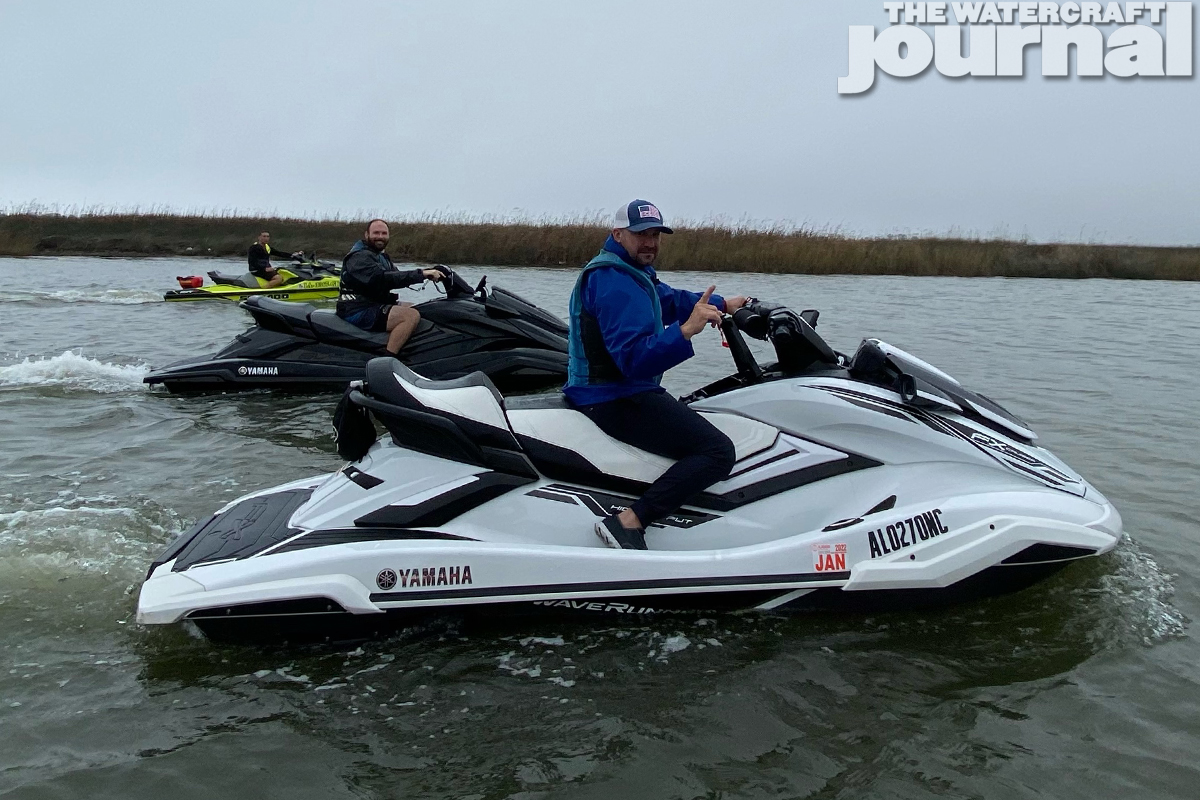
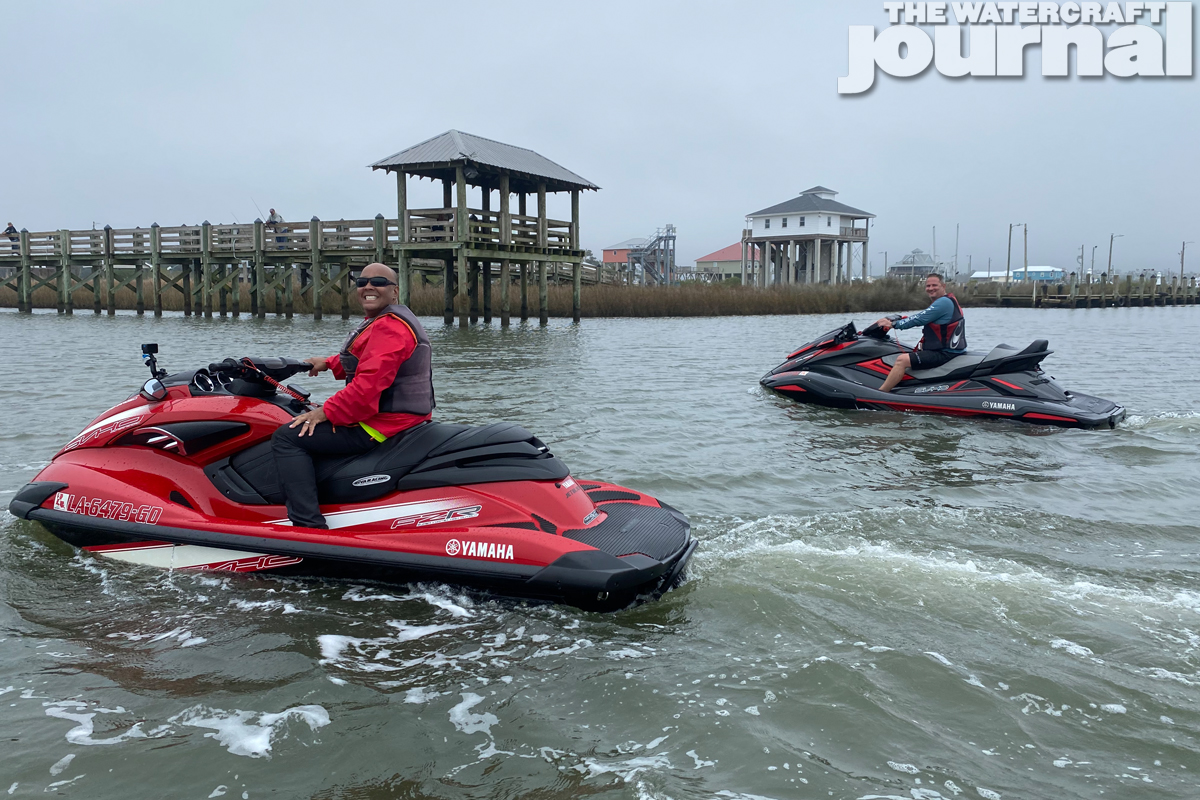
“The best laid plans,” I murmured to myself as I squinted at my phone in the dark. I had been in bed for two days now, laid out with what I thought was the flu. In another day, I would discover that no, influenza was not attacking my body but a severe case of covid pneumonia. Peering through the darkness at my dimmed screen, I was conversing with Billy Duplessis and Ricky Johnson on a group chat relaying the bad news. I wouldn’t be able to attend The Watercraft Journal’s second long-distance endurance ride.
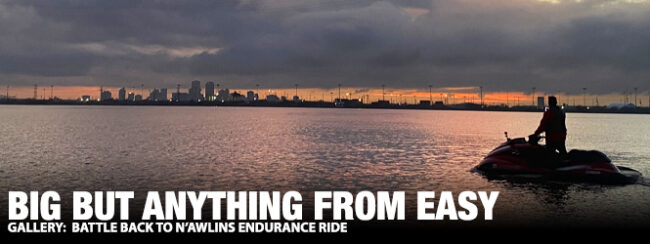
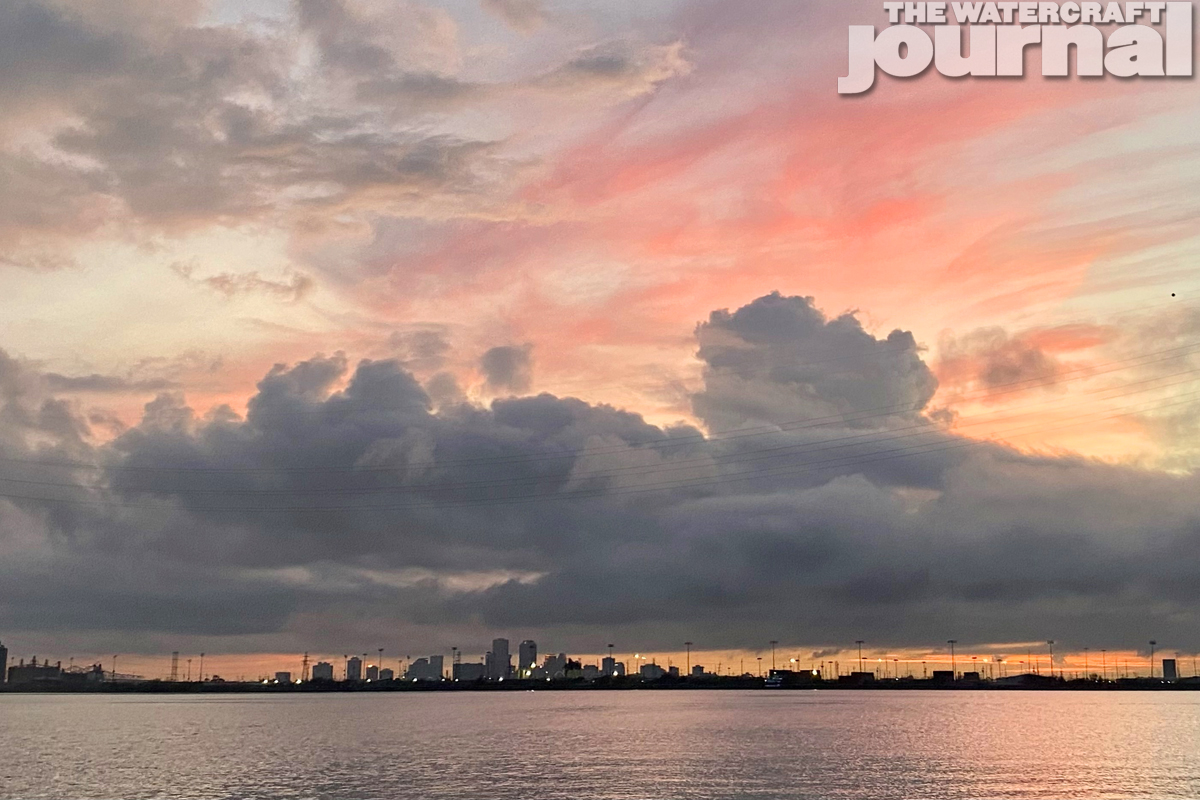
Titled “The Battle Back to N’awlins Ride,” the route Duplessis and Johnson had mapped out was well over 270-miles, leaving from downtown New Orleans, Louisiana, cutting through Lake Ponchartrain (passing two ancient military forts along the way), on to the Barrier Islands off the Mississippi Coast – consisting of Cat island, Ship Island, Horn island, and Petit Bois Island – into Alabama to our final island, Dauphin Island. To say I was disappointed to report the news to them is an understatement.
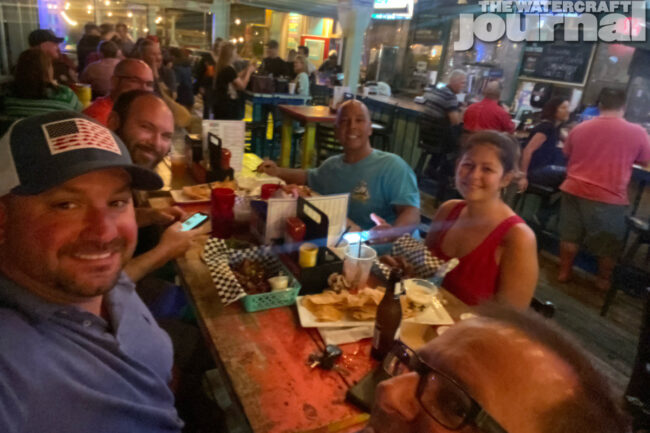
Being the super solid guys that they are, they wished me a speedy recovery and vowed to take whoever arrived out on the ride regardless of my absence. As Friday, December 17th approached and news of my illness spread, the number of attendees began to thin. With the magazine unable to attend, so went the promise of handing out giveaways and the few prizes I had as well. Johnson shared, “[It was] very disappointing that others didn’t even show from surrounding states to take us up on the endurance ride challenge.” Citing the lack of “bait” to bring them in.
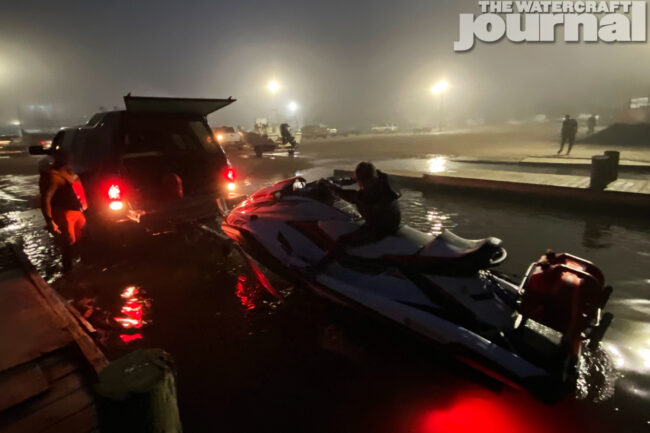
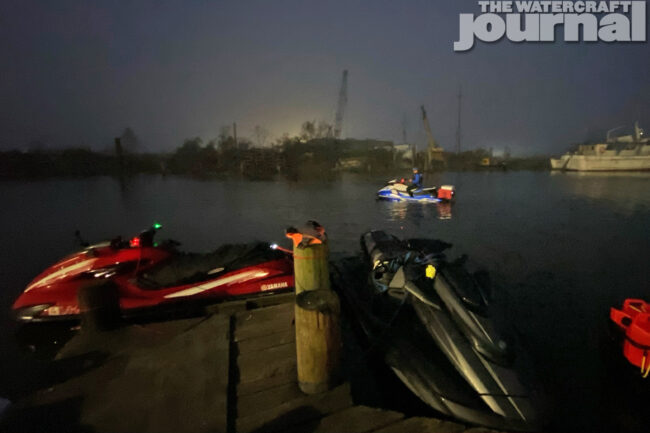
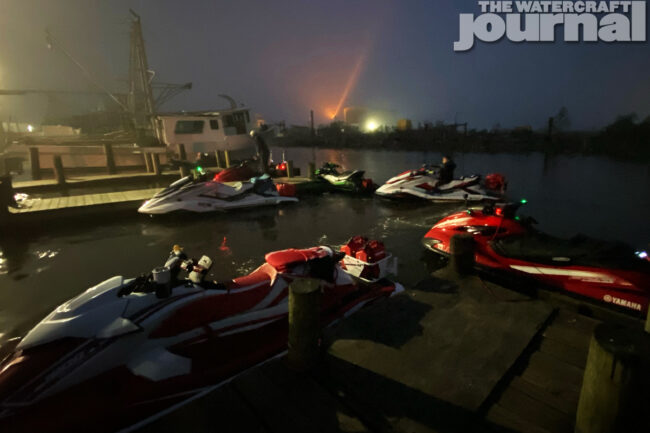
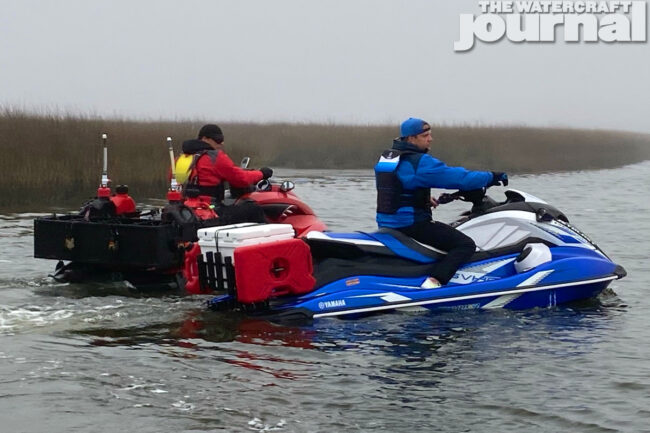
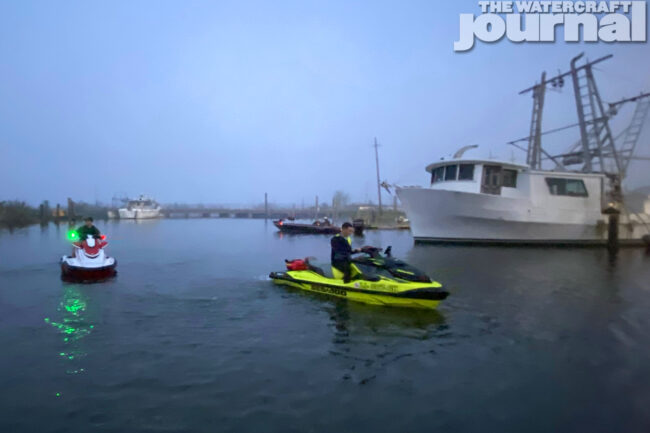
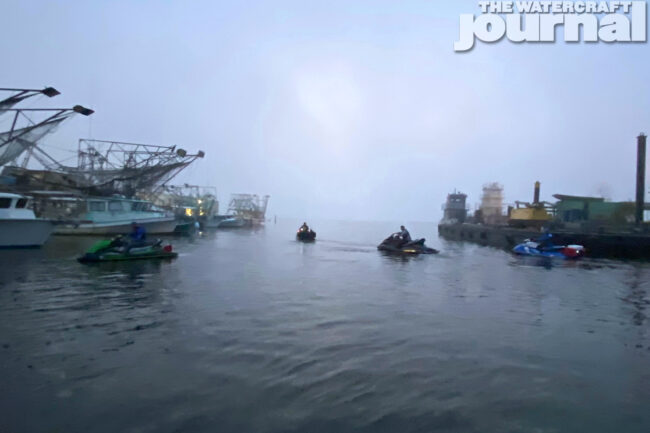
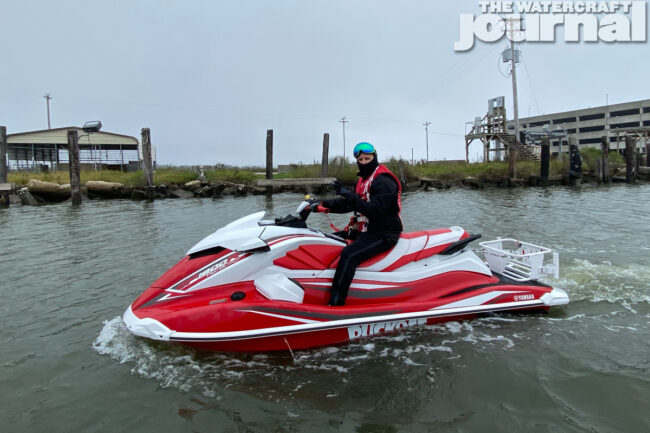
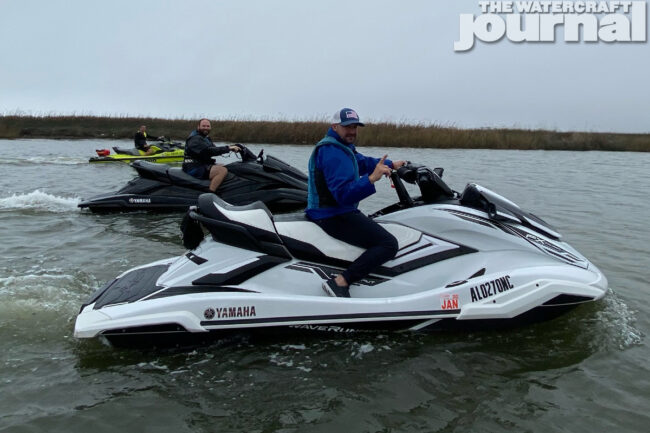
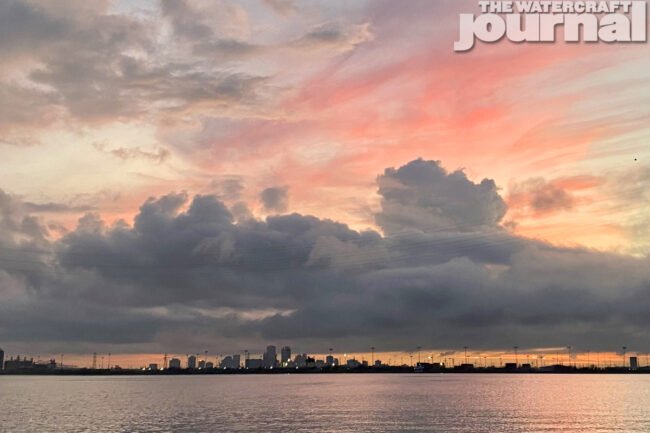
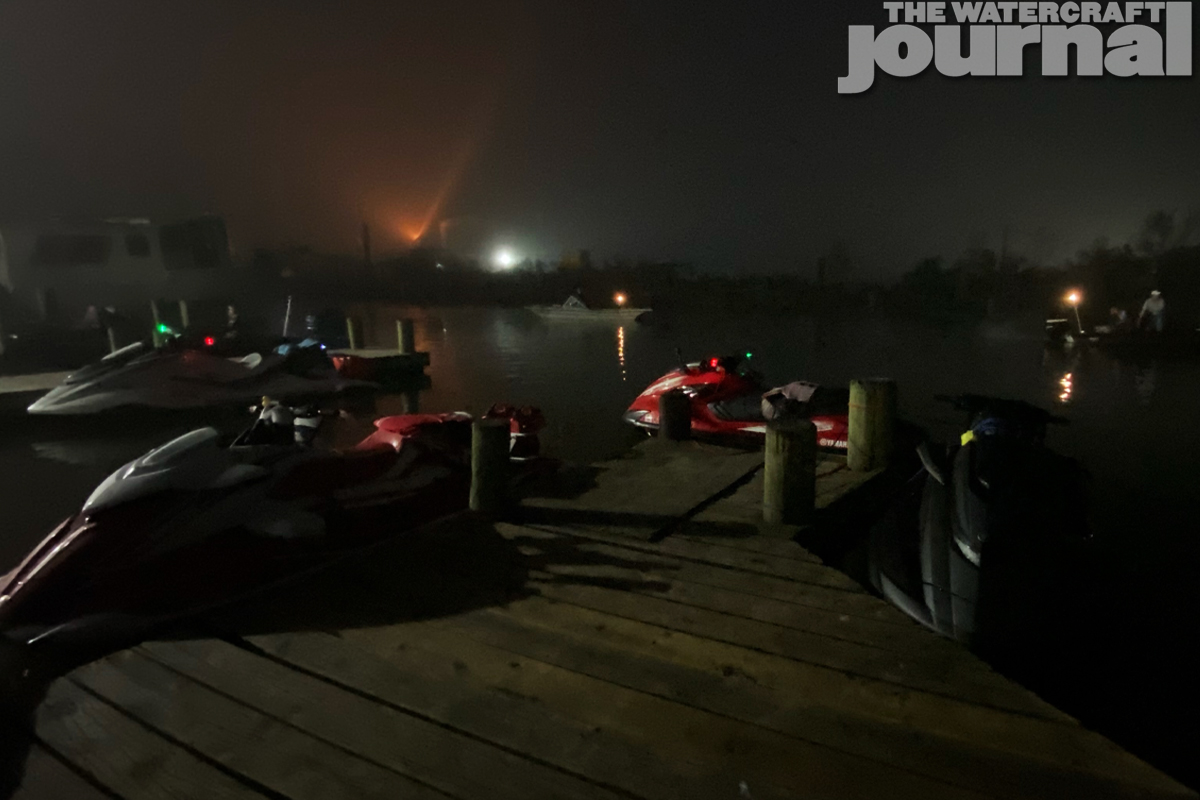
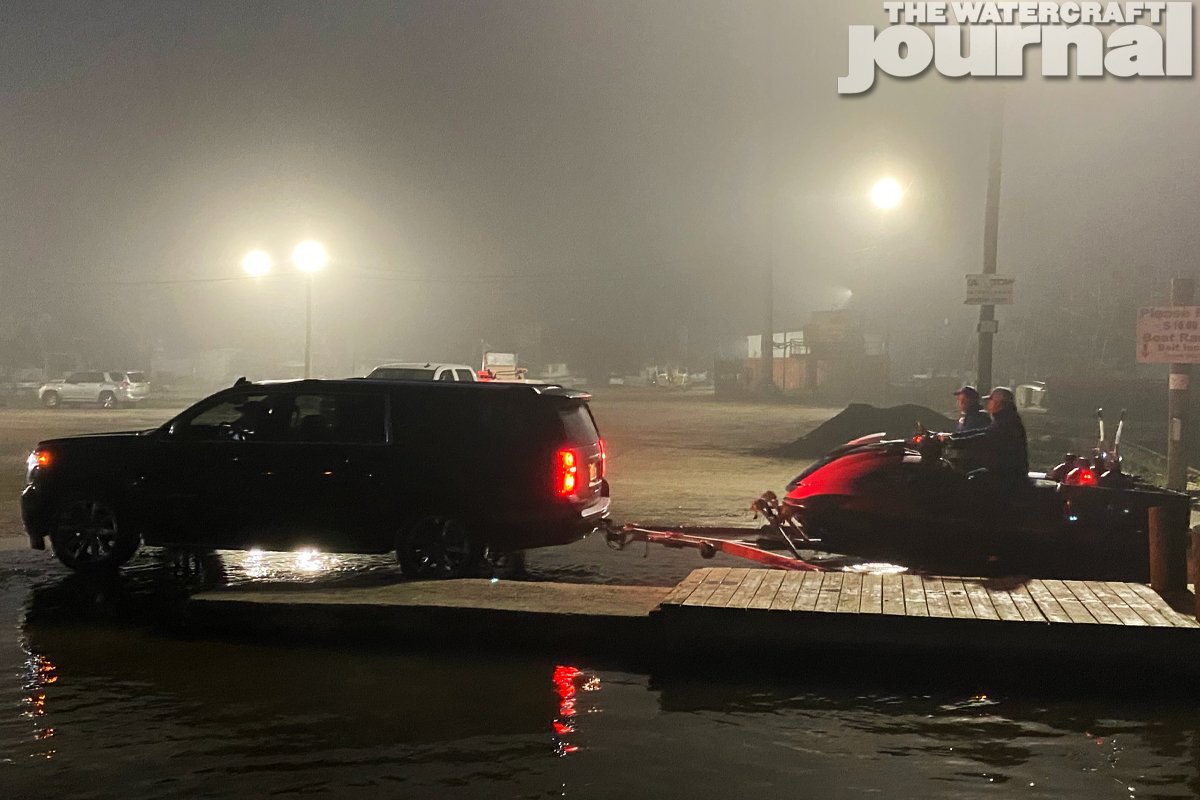
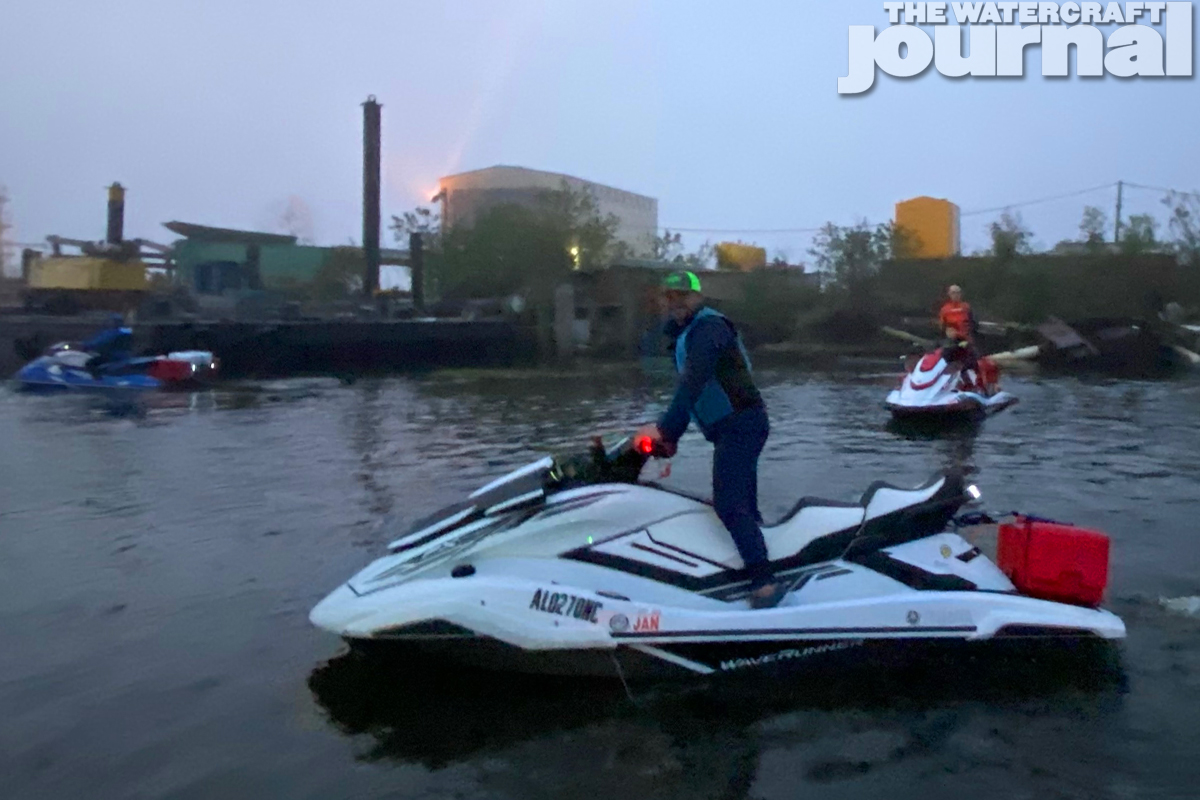
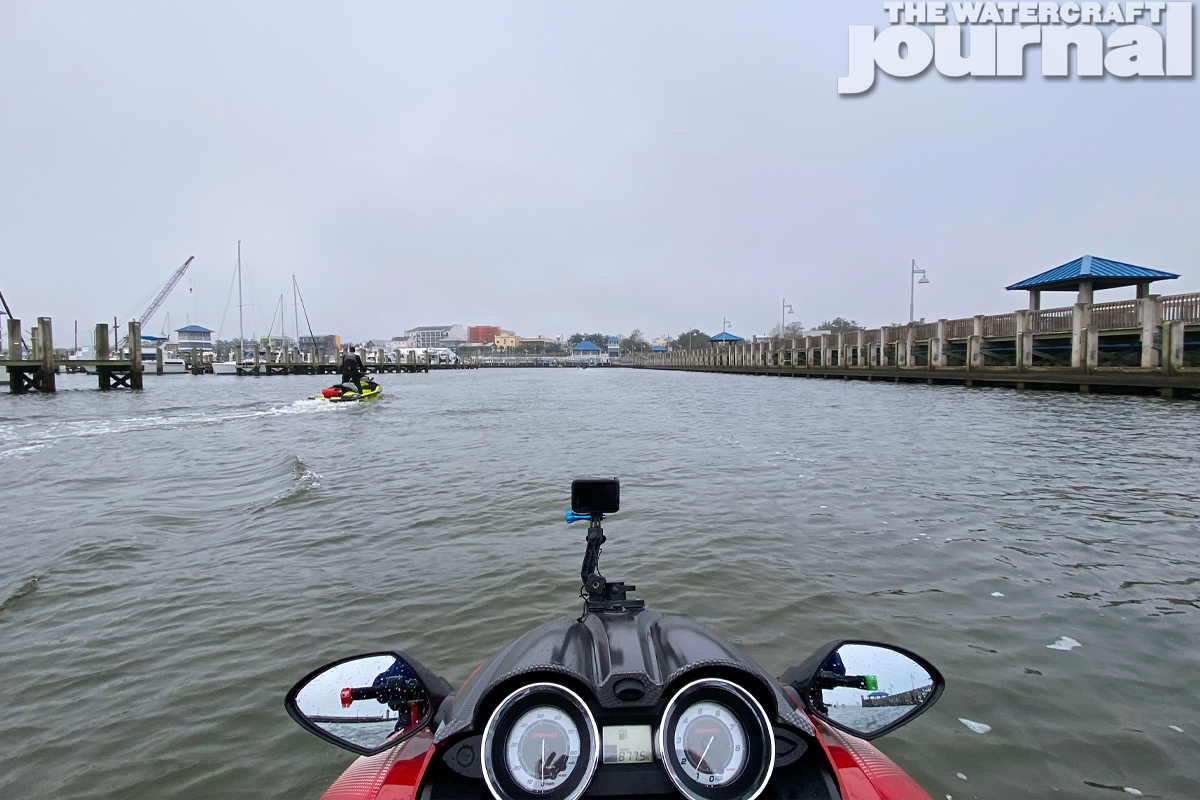
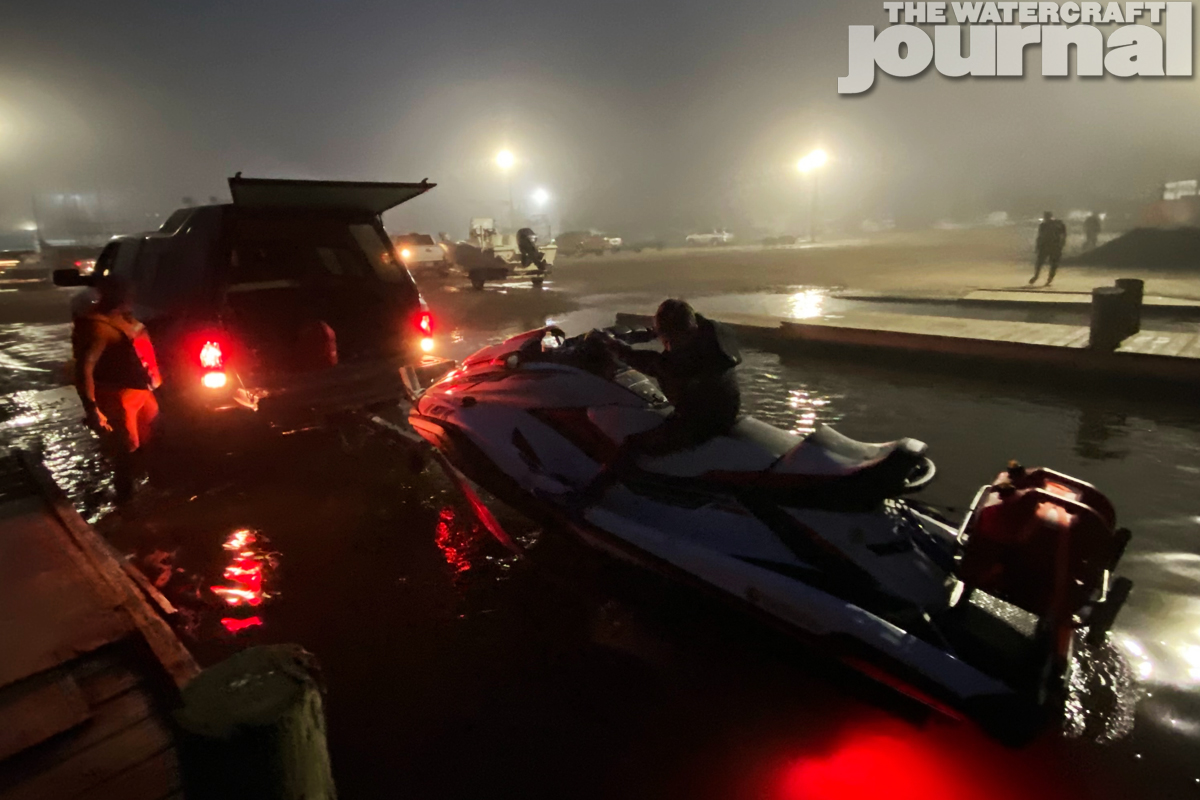
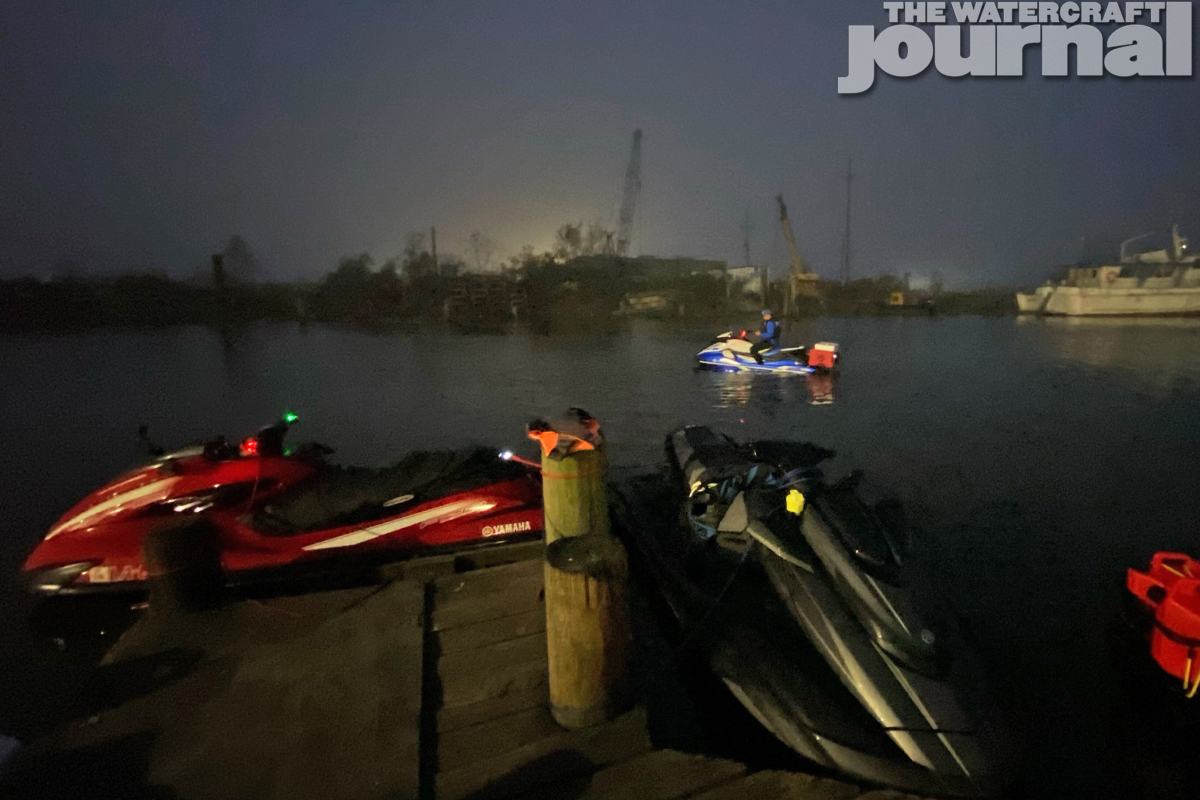
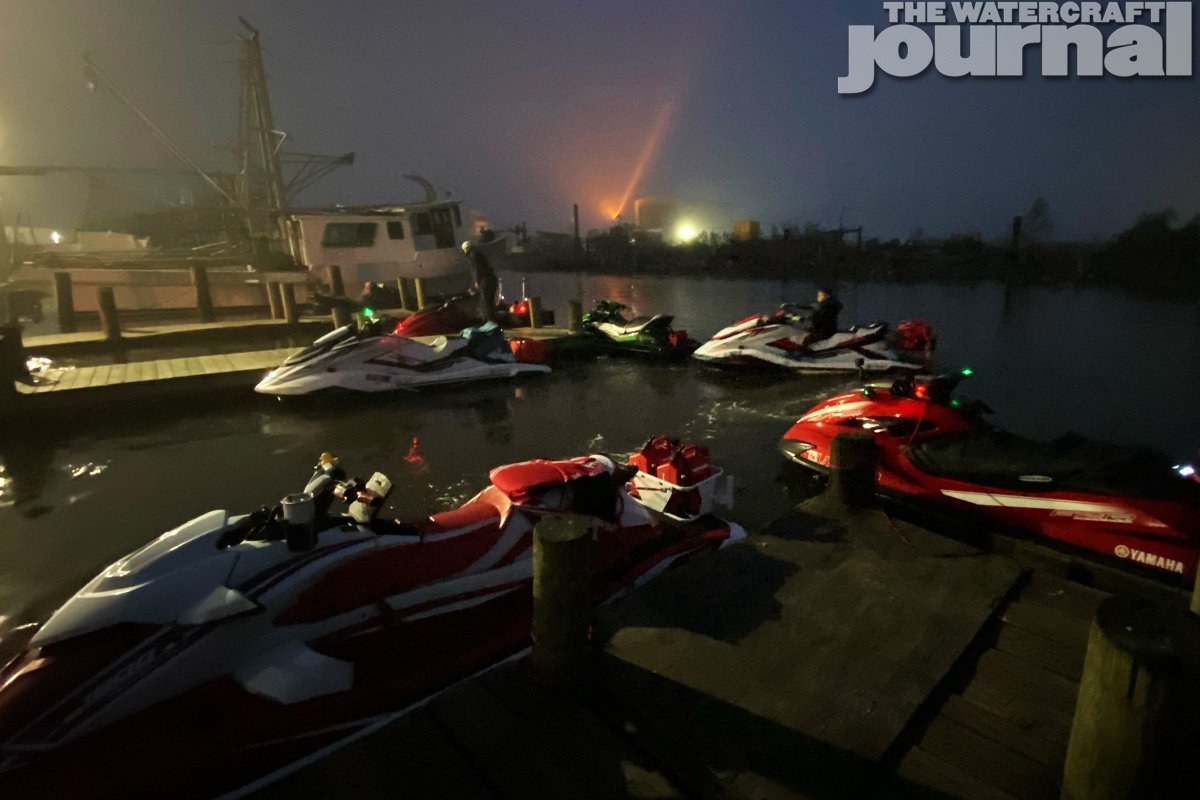
Even so, 11 hardy adventurers filled the launch ramp well before daybreak. With the promise of a full day’s ride, few knew what Mother Nature had in store. Duplessis recalled, “We faced challenges all the way up to the day of the event. Most were out of our control, including you getting sick days before. From foggy conditions until the early evening hours, cooler temps than predicted and rougher open water conditions.”
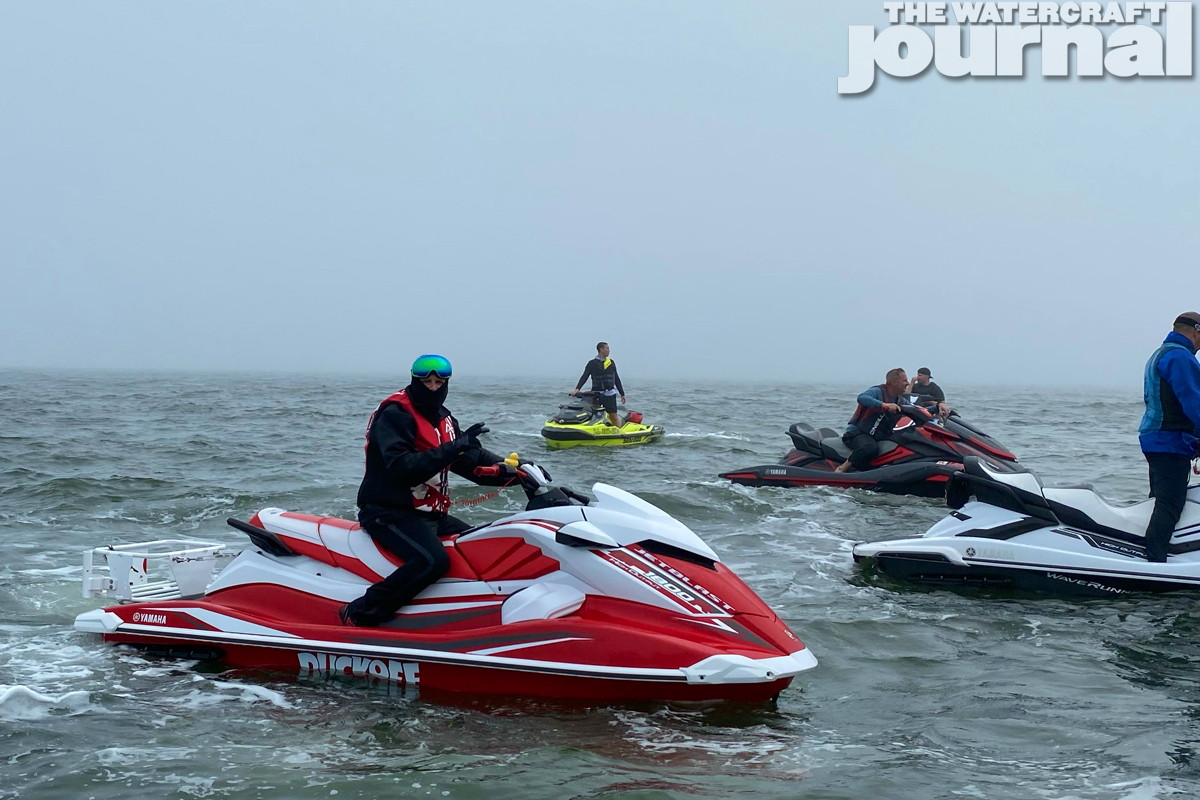
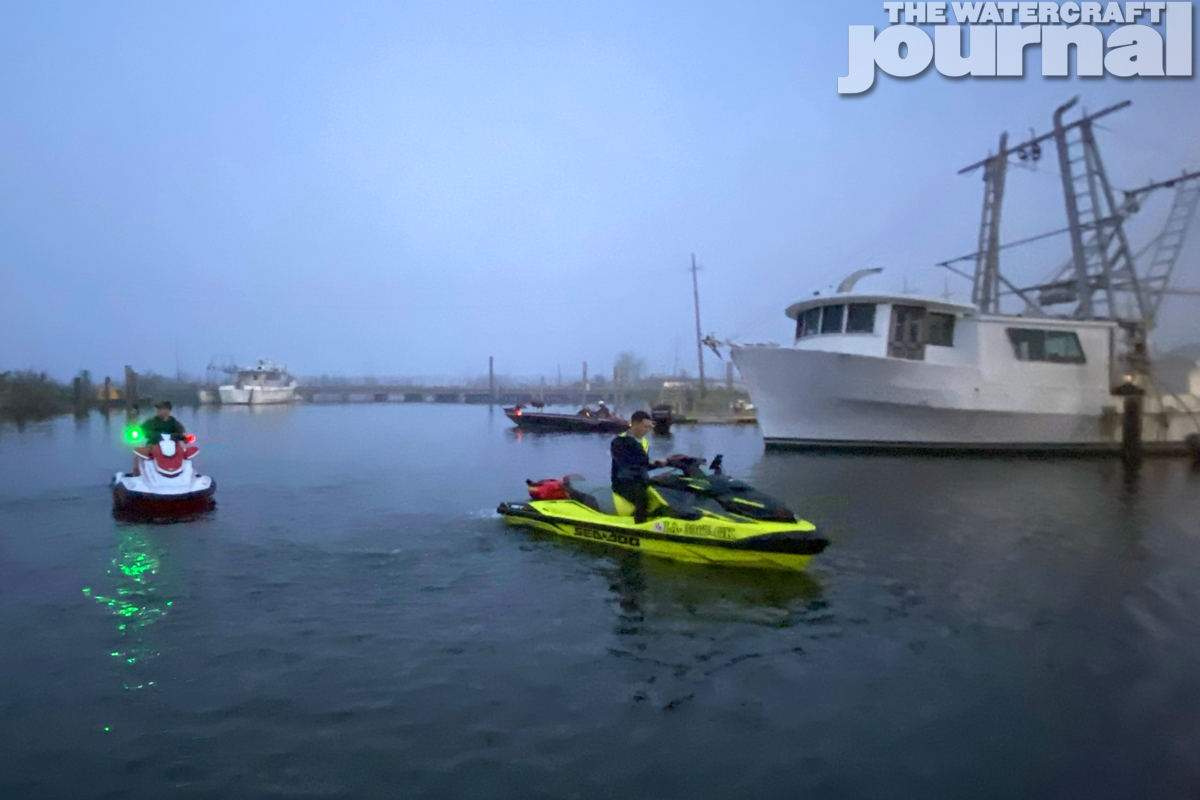
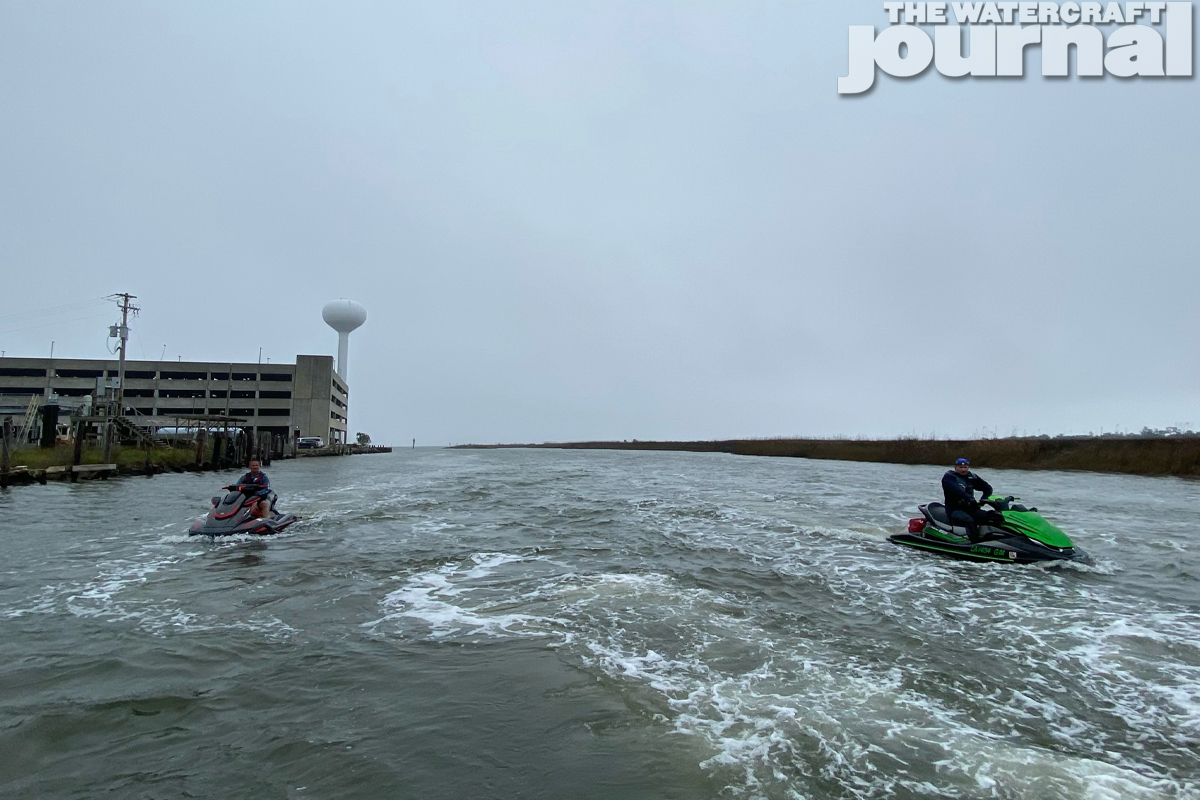
Johnson echoed Duplessis’ report, “What did affect the […] ride was shutout fog lasting well into mid-morning and me having to slow us down to 35mph relying mostly on GPS for direction with marine traffic present. The fog was so thick it was literally soaking us and you had to keep wiping it from your face.” Cutting the pace from 55-60mph to 35 crushed the original plan of 270-plus miles. With zero visibility, safety over speed was the goal.
“With two experienced leaders,” Duplessis added, “we overcame those challenges and made the hard decisions, some of which was best for the current situation and for the group.” Hitting the planned fuel stop prior to exiting out into the Gulf, the group faced seas were the other variable that distanced them from making their goal.
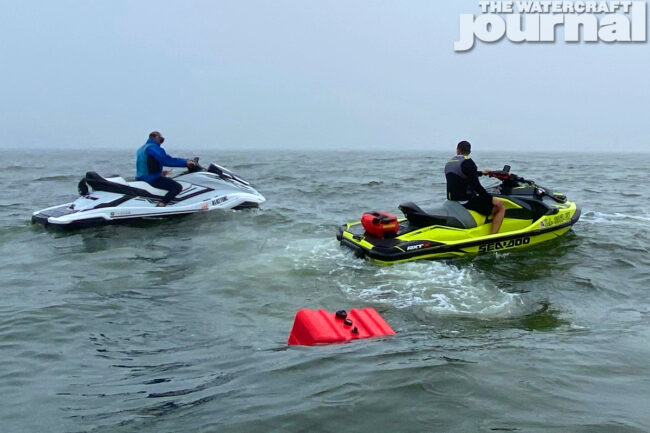
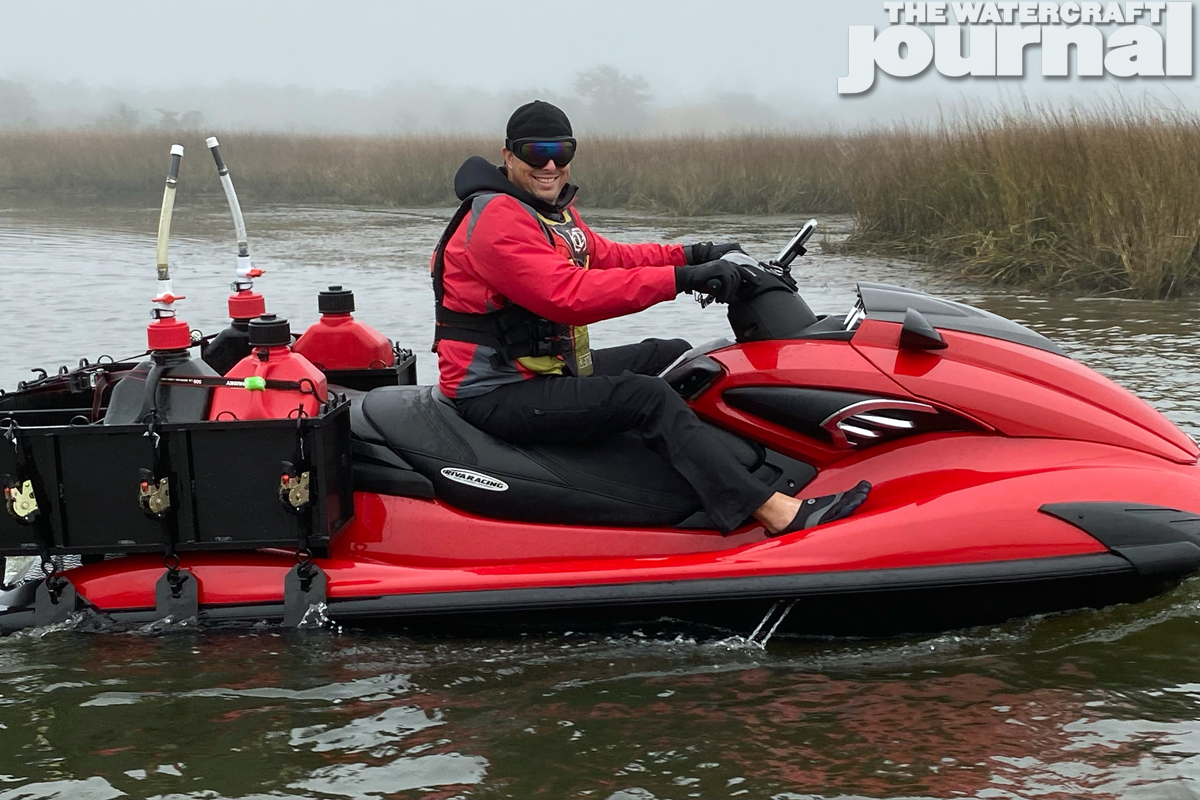
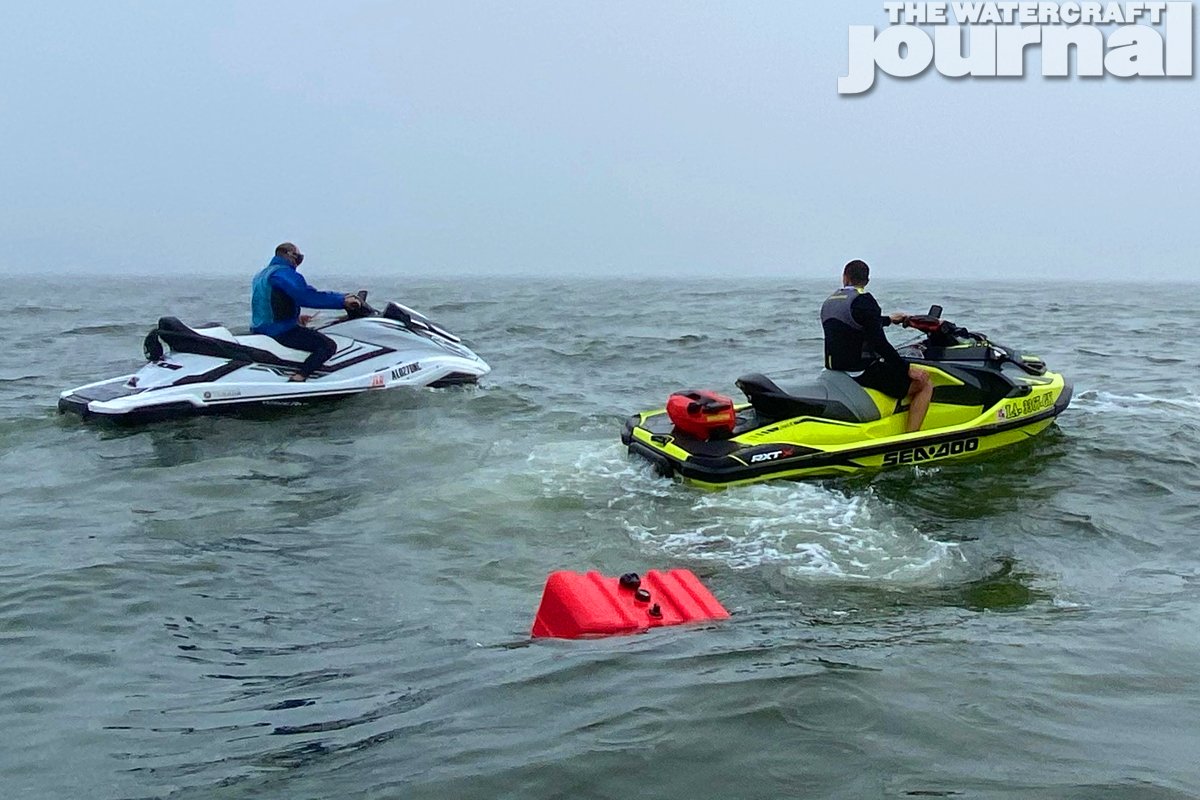
Johnson continued, “We experienced 15-20mph winds, tide going out, causing 2.5–to–3.5 foot seas with a wave period and direction [so] far apart that [it] wouldn’t allow us to stay on top and left us falling in the troughs.” The going was slow and brutal to say the least – then disaster struck. One of Johnson’s stainless steel marine-grade ratchet strap snapped, jettisoning his 18-gallon fuel tank.
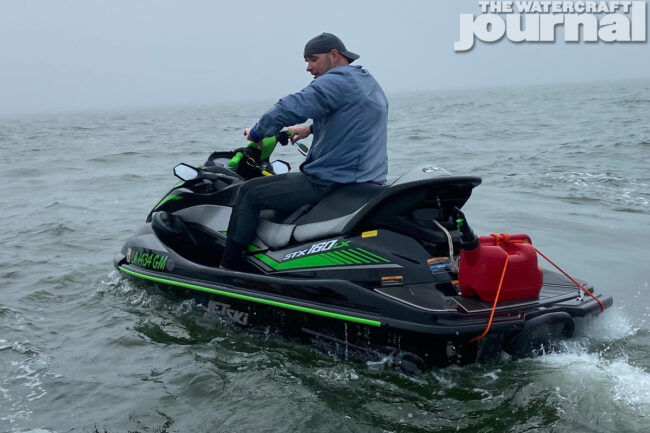
Several lunged for the quickly-sinking tank, but it was gone within seconds. Johnson blocked off his Yamaha’s vent lines allowing for normal operation. Soon after, a second auxiliary tank slipped off of another rider’s transom, but was gratefully saved at the last moment. The turnbuckle was re-tightened and the tank reattached. The seas were simply beating the group apart.
Throughout the trip, whenever Duplessis and Johnson found a strong enough signal, they would pass along updates and images. From my sickbed the distressing reports looked dire, like the dispatches coming in from the RMS Titanic’s radio room. I honestly felt I had setup my friends to fail and there was nothing I could do. In my fevered delirium I was convinced that this was all my fault.
Despite the flogging, the group soldiered on. “We didn’t stop for lunch to regain our strength,” Johnson recounts. “The only stop we made was at Cat Island so Billy and I could talk about conditions before presenting it to the group for a vote, while everyone indulged on wet sandwiches from water bottles busting in their coolers.”
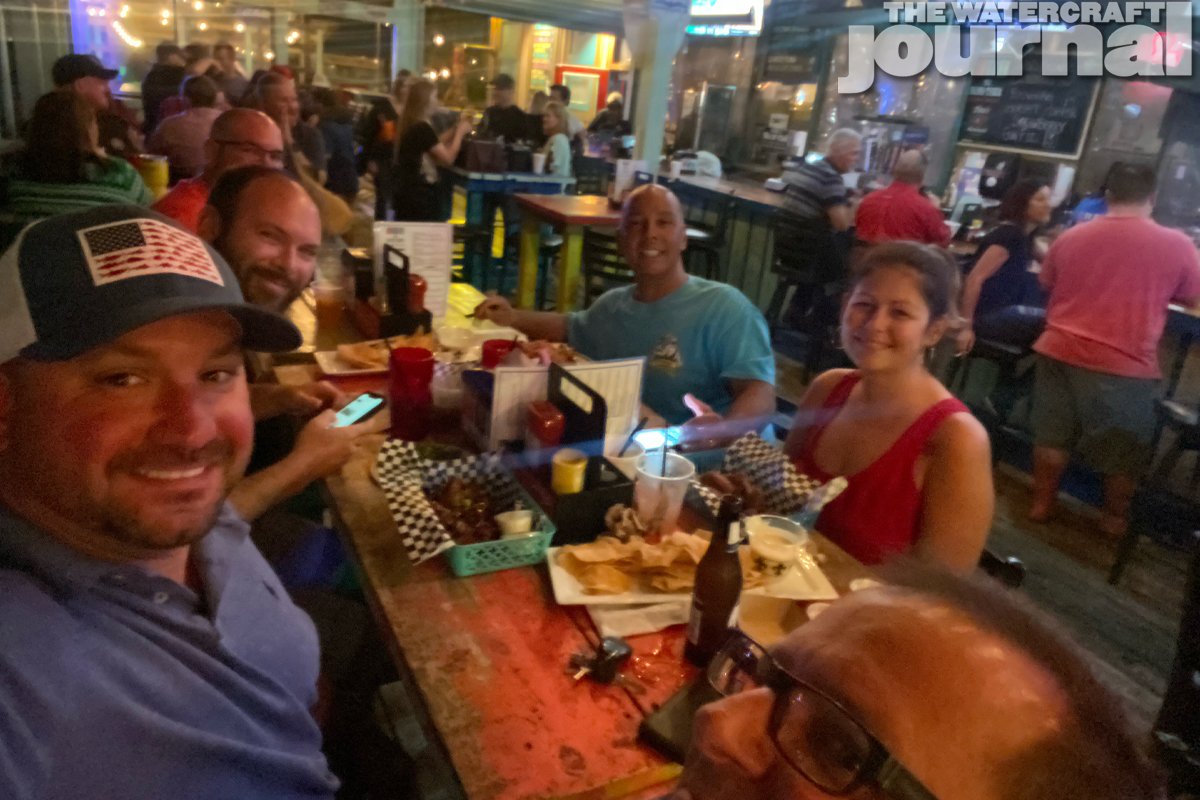
A new abbreviated route was agreed upon, and the caravan continued fulfilling a 10-hour day with 3 fuel stops comprising of 240-miles. In the end, the duo convinced me that the ride was anything but a disaster – and was, in fact, quite successful given the hurdles in their path. Duplessis boasted, “We still managed to pull out an amazing trip. I believe the ones who made the event ride would completely agree.”
Johnson joked, “We compiled over 240 miles with nearly half [of it] being in open water with nine middle-aged men. Given the weather conditions we consider it a success. If anything, that’s a testament to the endurance ride we had planned, most must have been too scared to even show [their] faces. I don’t know many that would even take on a 240-plus-mile ride on a 90-degree, bright and sunshiny day, while riding in calm flat water conditions.”
All photography provided by Billy Duplessis and Ricky Johnson
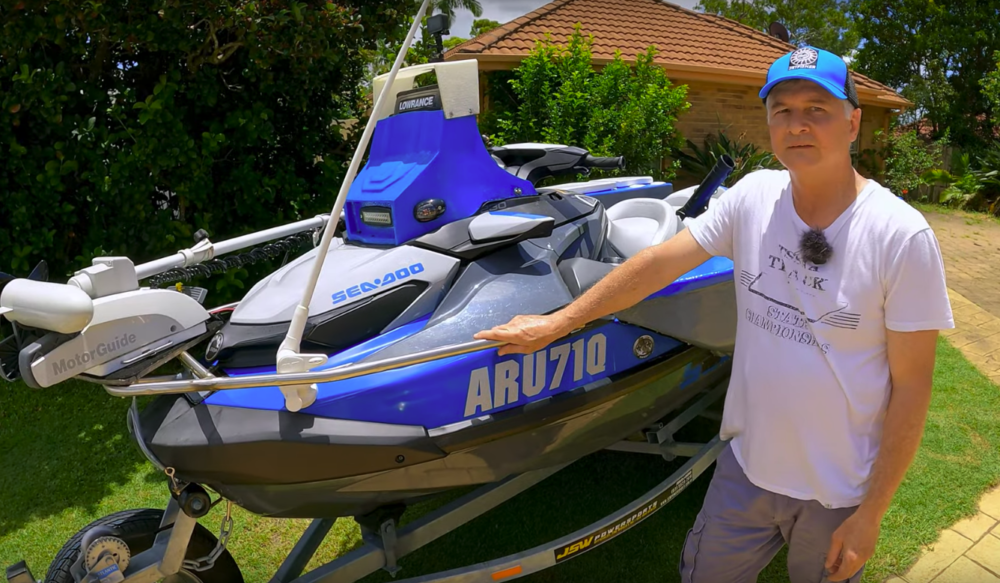
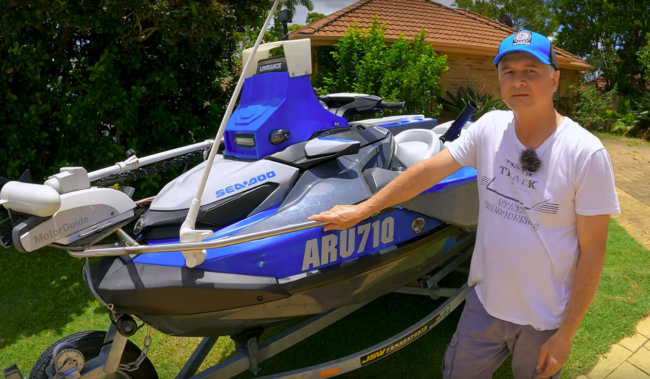
Australian Fisherman Fred Auret’s Sea-Doo GTX 230 is arguably one of the most custom and comprehensive fishing specific PWC builds to date, as revealed in a new video by the Jetfisher YouTube channel. This is the second machine Auret has built, but the first using the GTX platform.
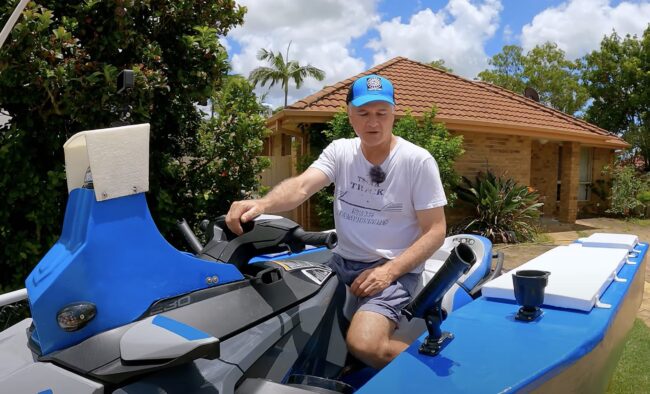
The most striking parts of the setup are the large pods mounted on the side of the PWC. These are constructed using Nitacore, a super strong and lightweight advanced material. Auret demonstrates the strength of the pods by taking a sledgehammer to an earlier prototype, proving they are more than strong enough for open ocean fishing. At only 25 pounds (12 kilograms) each side, the pods have a huge amount of storage, and incorporate a live bait tank as well as provision for batteries and fuel containers.
Mounted on the front of Auret’s GTX is a MotorGlide trolling motor, controlled by a dash mounted Lowrance navigation / fish finder system. In order to deploy and retract the trolling motor directly from the driver’s seat, Auret has set up a simple and effective two rope system. A dash mounted marine radio and master switches are conveniently located under the Lowrance unit. Front hatch functionality is completely unchanged, meaning the forward storage area is still accessible.
Adding to an already impressive build is a new replacement rear seat with integrated 10 gallon (40 litre) fuel tank, extending the range of the PWC considerably. The tank is gravity drained, and the seat can be disconnected and removed in seconds. Fred Auret’s amazing GTX 230 needs to be seen to be believed. Watch the full video here:
When launched at the public in late 2017, the new 2018 Kawasaki SX-R 1500 was polarizing to say the very least. Between that time and now, it’s safe to say that the SX-R 1500 has made its place within the world of professional jet ski racing, and to whit, requires some serious consideration when it comes to fitting the 4-stroke standup within the existing class structure and rule book.
For this very cause, IJSBA Director Scott Frazier the following press release: Where did the time go? Kawasaki released the 1500cc based SX-R in 2017. Now in 2022, IJSBA is receiving a considerable amount of questions on whether there will be an additional sponson allowance for this unit.This bulletin begins formal public discussion on this topic.
Previously, IJSBA allowed a second set of sponsons to be added to a homologated Ski type watercraft when the particular hull reached the age of five years. The intention was that older Ski could be kept competitive with newer Ski that enjoyed a more modern hull. This provision was added to Ski classes, some of which are no longer offered in the mainstream (Limited) and no new units have been homologated where this provision remained (Lites).
The following language can be found in the Ski Lites section of IJSBA Rules: “Models homologated in quantities of 500 shall be allowed an additional set of sponsons for a total of four sponsons. The total sponson length shall be limited to 1,524 mm (60 in) in a single or two sponson configuration. The decision of the Technical Director and/or Race Director regarding modifications will be final. Any question regarding the legality of modifications should be directed to the IJSBA or IJSBA affiliate prior to use in competition.”
The provision above does not appear in the Ski Stock nor Ski Superstock. These competition categories were created exclusively for the Kawasaki SX-R watercraft and since the creation of these classes there have been no new homologations for watercraft in these categories. However, IJSBA notes that the 1500cc based SX-R is required to maintain an OEM hull when utilizing OEM dimensions in Ski GP categories.
For this reason, it may be appropriate to allow a second set of sponsons based on the five year age of the SX-R competing against more modern hulls. If this provision is extended to the SX-R, IJSBA believes it would best serve the community if the allowance was extended to the unit in all categories to provide for the uniformed use of the product throughout competition.
Please send all questions or comments regarding this discussion to [email protected]. IJSBA will provide an update on this matter on February 15 announcing some sort of notice of direction.
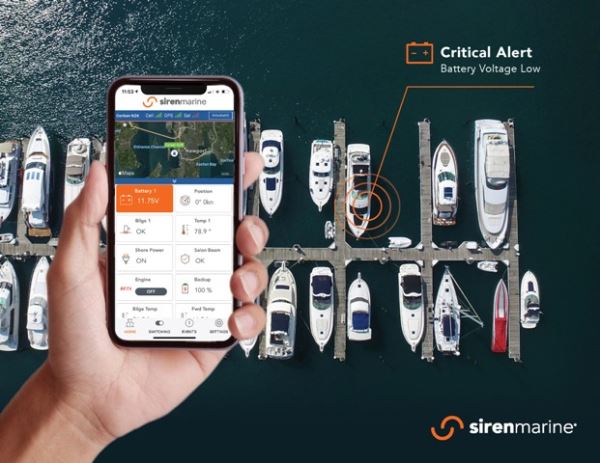
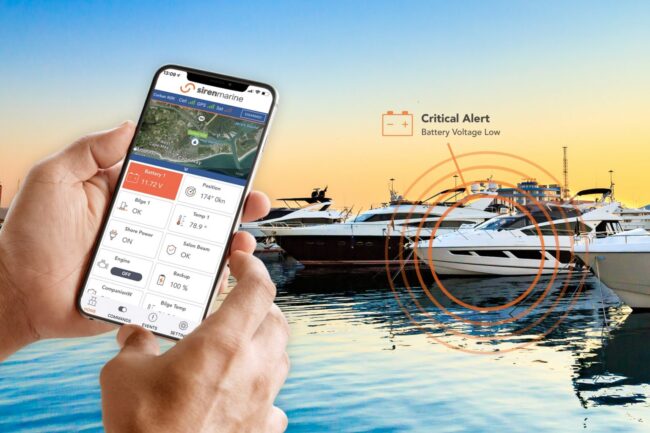
Yamaha Motor acquired Siren Marine, a company that developed smart boat technology by providing Connected Boat solutions. Think of it as Google Home for your vessel. What this means for Yamaha is that they will be able to provide an even better experience for their customers by integrating the Siren Marine smart technology into Yamaha products. It will not only elevate the user experience; this technology will also give owners peace of mind.
The system allows users to monitor all their boat systems and receive critical alerts through their cell phones. Moreover, Yamaha owners will also be able to keep track of their watercraft by using an app connected to a service provider. This offers an extra layer of security in case someone attempts to steal your boat.
Acquiring Siren Marine will be a game changer for Yamaha as it will ensure that all future products are connected. The purchase of Siren Marine should be finalized before the end of the year and Siren Marine will fall under Yamaha Marine Systems Company. We look forward to what Yamaha will bring to the marine industry with this new technology.
Read the full press below:
Yamaha Motor Acquires US Smart boat tech Company Siren Marine Yamaha Motor Co., Ltd. (Tokyo: 7272) announced its intention to purchase Siren Marine, Inc. (hereinafter, Siren Marine), a US based company that provides Connected Boat solutions to the marine industry by using smart boat technology.
This acquisition aims to further promote technological development for IoT and Connected Boat support in the marine industry by placing Siren Marine under the umbrella of Yamaha Marine Systems Company (California, USA), which was established in 2017. Yamaha Motor expects to complete the purchase before the end of the year.
Siren Marine is a company using smart boat technology in order to provide a greater sense of security to customers who enjoy boating. To date, the company has developed and sold hardware and software that can manage and monitor information essential for boating, such as battery level, bilge water* status, and power supply conditions from land by using the boater’s hand-held device. In addition, they have also provided services that assist in protecting customers from unauthorized intrusion and theft of boats by tracking boat locations.
In Yamaha Motor’s marine business, a system supplier strategy has been set up and is expanding the peripheral system business such as boat maneuvering systems. With this acquisition, the company will promote the marine version of CASE strategy through IoT support in the marine domain and high value-added services and products by accelerating the transformation into digital applications. YMUS U.S. Marine Business Unit, President Ben Speciale
“The full acquisition of Siren will allow us to truly integrate our products and deliver an even more exceptional experience for Yamaha customers. In short, we want to be sure that all future Yamaha products are connected because we know that is what our customers want – an integrated, connected boating experience, whether it is on an outboard-powered boat, a personal watercraft or a sport boat.”
Siren Marine CEO Jeffrey Poole “By joining the Yamaha team, we now have the ability and power to give customers the best Connected Boat experiences on the market. We look forward to our future as part of the Yamaha family. The products we develop together will deliver unmatched reliability coupled with integrated, innovative power systems propelling the marine industry into the future.”
When the Full Throttle WaterX series was first announced, all of us at The Watercraft Journal jumped to help spread the news. In fact, WCJ was first to do so, back in late October of 2021. And true to our commitment, all updates, major announcements and most importantly, event coverage will be published on the world’s most popular personal watercraft magazine before anywhere else.
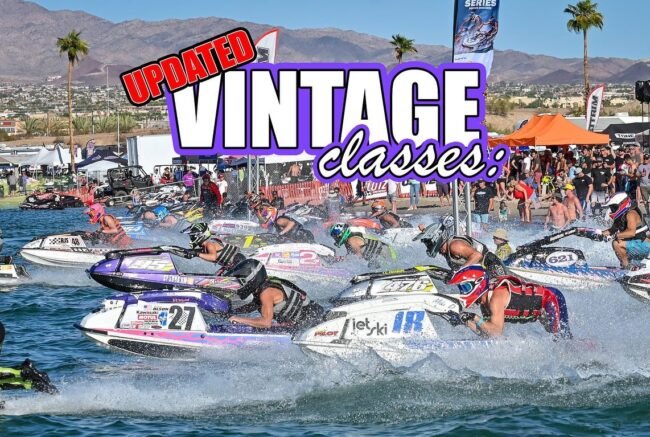
One of the greatest promises made by the Full Throttle WaterX team was its commitment to provide races in venues that racers prefer, and true to form, a recent Facebook post announced a full and comprehensive list of Vintage classes that are sure to excite many as they roll back the clock over 30 years. Below is the announcement but we’ve included a link to the original post HERE.
Vintage Ski Open – 440,550,650,750, & Square Nose SuperJets and Cobra/PJS hulls. Twin engines up to 785cc. Polaris Octanes, and 96-07 Round Nose SuperJets have been moved to the 2-Stroke Ski Limited class. Engines, ignitions, cylinder head, carbs, exhaust, and pump may be swapped or modified, must be an OEM hull and OEM cases. 2 sets of sponsons are allowed. Get creative, have fun!
Vintage 550 Mod – 440,550 hulls only, up to 600cc. Must be an OEM hull, and run OEM Kawasaki 440 or 550 cases. Engines may be modified, ignitions, carbs, cylinder head, exhaust, and pumps may be swapped or modified. 2 sets of sponsons are allowed. The standard 550 mod class rules.
Vintage 550 Limited – 440,550 hulls only. No sponsons, only the OEM rear sponsons are allowed. No 750 pump swaps allowed. If 440 engine, superstock rules will apply. If 550 engine, no engine or pump porting. Single carb, head, and pipes are allowed. Only OEM handlepole, or OEM style and length handlepoles are allowed (no RRPs etc), and no wide trays modifications are allowed. 550 engines must be OEM ignition setup (No total loss or MSD). This is a more affordable run whatcha brung limited class.
Vintage X2 Open – Gen 1 X2 hulls only (gen2 hulls will have to run sport class), engines may be swapped and/or modified as long as they are twin cylinders and under the 810cc limit. Pumps may be modified or swapped, and hull modifications may be made as long as they replicate the OEM x2 hull. Porting, aftermarket carbs, head, exhaust, ignition are all allowed, 2 sets of sponsons are allowed.
Vintage X2 Limited – Gen 1 X2 hulls only. OEM 650cc engine must be used, OEM X2 pump must be used. Porting, head, ignition, carbs, and exhaust can be modified or aftermarket. No hull modifications allowed except for structural support. 2 sets of sponsons are allowed.
Superchicken – Run whatcha brung class up to 1100c. We may stagger the starting times if needed. Sponsons may be added. 2 moto format only, show up and have some fun!
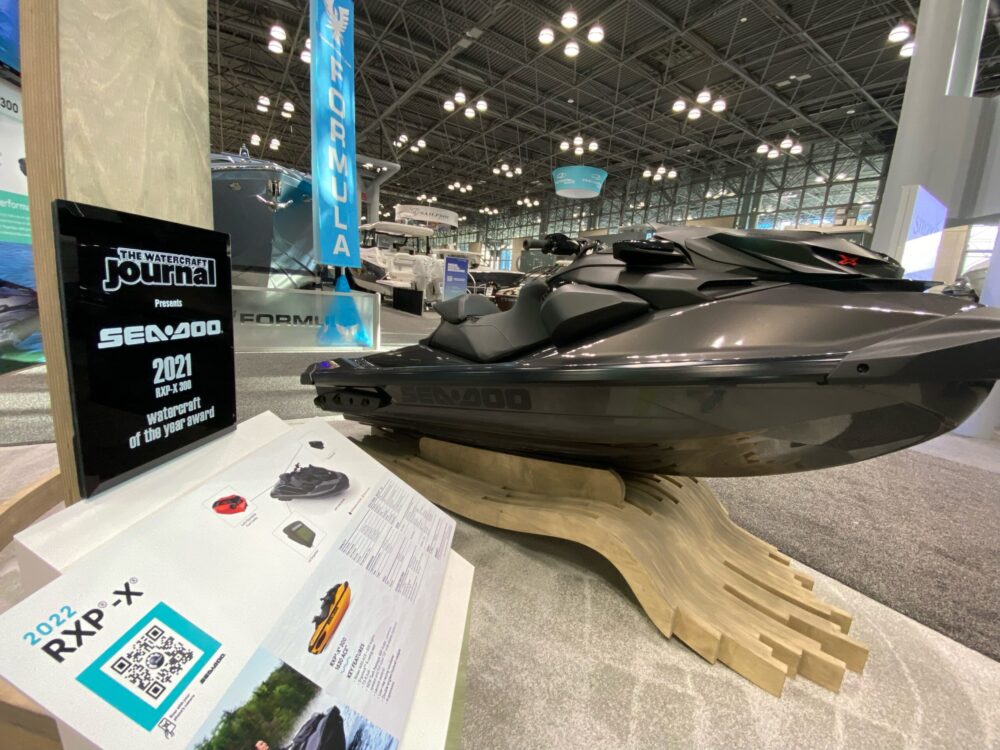
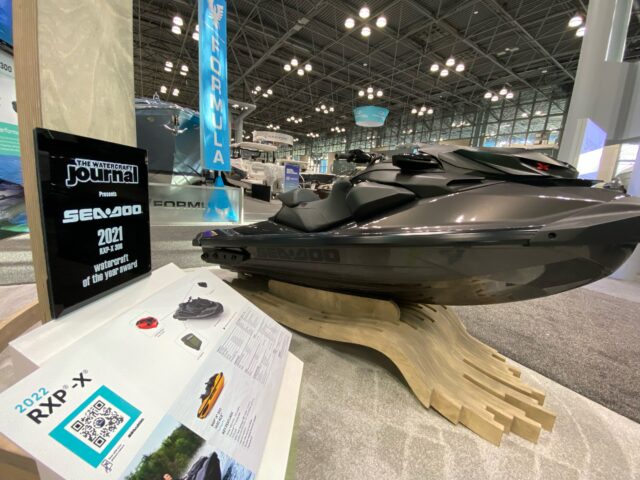
Beating out the likes of the all-new Yamaha SuperJet and it’s own sibling runabout, the Fish Pro 170, the 2021 Sea-Doo RXP-X 300 earned the top spot as The Watercraft Journal’s WATERCRAFT OF THE YEAR award a little over a month ago. Between then and this past weekend, Sea-Doo built a custom display for its corporate display, which debuted at the annual New York Boat Show held in the Javits Center.
Thousands who found themselves in Sea-Doo’s sprawling booth were welcomed by a new 2022 RXP-X in Premium Triple Black and entreated with a massive wall display showing off the official WATERCRAFT OF THE YEAR onyx plaque as well as all of the details of this exciting and versatile personal watercraft. Whether its cutting hairpins on the race course or cruising down a glassy waterway, the RXP-X 300 shines.
All candidates for The Watercraft Journal’s WATERCRAFT OF THE YEAR award were personally tested by the WCJ staff. No models that we didn’t physically review were entered in the running. For 2021, the RXP-X excelled in its execution and overall design, proving to be a solid-build, attractive and innovative runabout that delivers big for being such a succinct package.
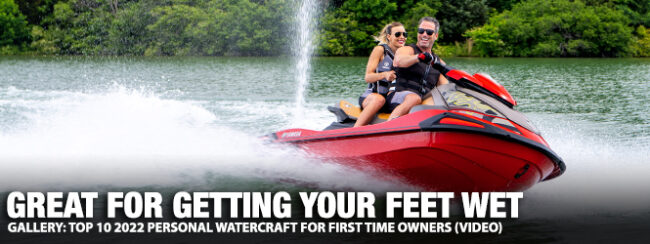
International travel restrictions have seen a spike in the number of people wanting to holiday at home, get into boating, or buy a personal watercraft. With that in mind, The Watercraft Journal has understandably had a lot of interest in new models for people who are new to the world of personal watercraft.
A warning for all the bros out there wanting to flex on the boat ramp and on the water. We have deliberately not selected supercharged skis for this list. People who want the fast stuff know what’s up. This list is to help new arrivals navigate their way through a lot of options.
There are more than 50 models across all three brands of Sea-Doo, Yamaha and Kawasaki. And if you don’t see one you like here in this list, that’s cool. There are no wrong answers. This list is designed to help de-clutter what can seem like an over-crowded market.
Sea-Doo Spark & Spark Trixx
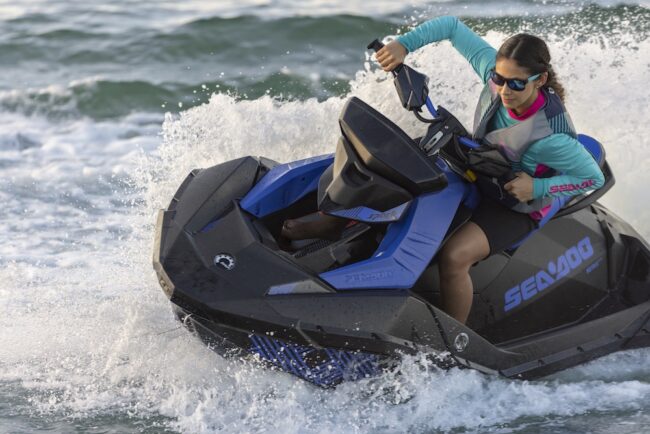
The Sea-Doo Spark and Spark Trixx are among the cheapest personal watercraft on the market today (check your country’s website for local pricing). Depending on the model they are powered by a 900cc three-cylinder engine, available with 60hp or 90hp.
Although all new versions of the Sea-Doo Spark and Spark Trixx are around the corner, they are still a lot of fun and a great way into the sport. They’re easy to handle, easy to ride, and will help you develop basic skills on the water. The Spark Trixx is the one that can ride on its tail, which is surprisingly easy to do after a few attempts.
Downsides? This is a wet ride, and although it’s fuel efficient, the fuel tank is small and there is next to no storage space for a phone, wallet or tube of sunscreen. Although they’re available as a two or three-seater, they really are best suited to riding solo.
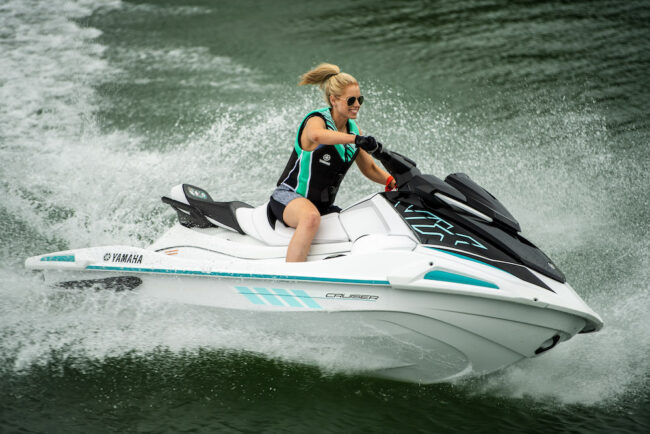
Yamaha EX and EX Deluxe
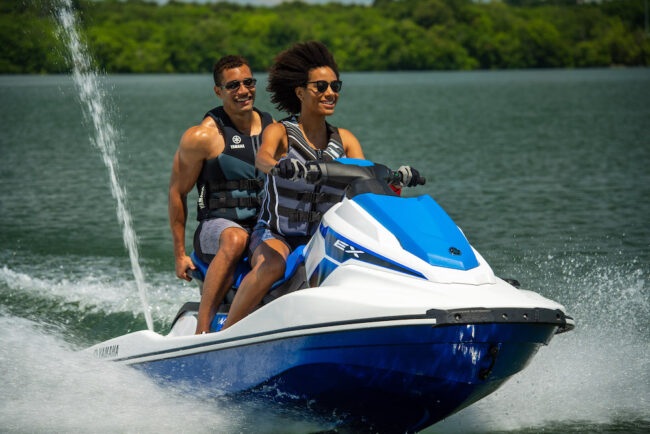
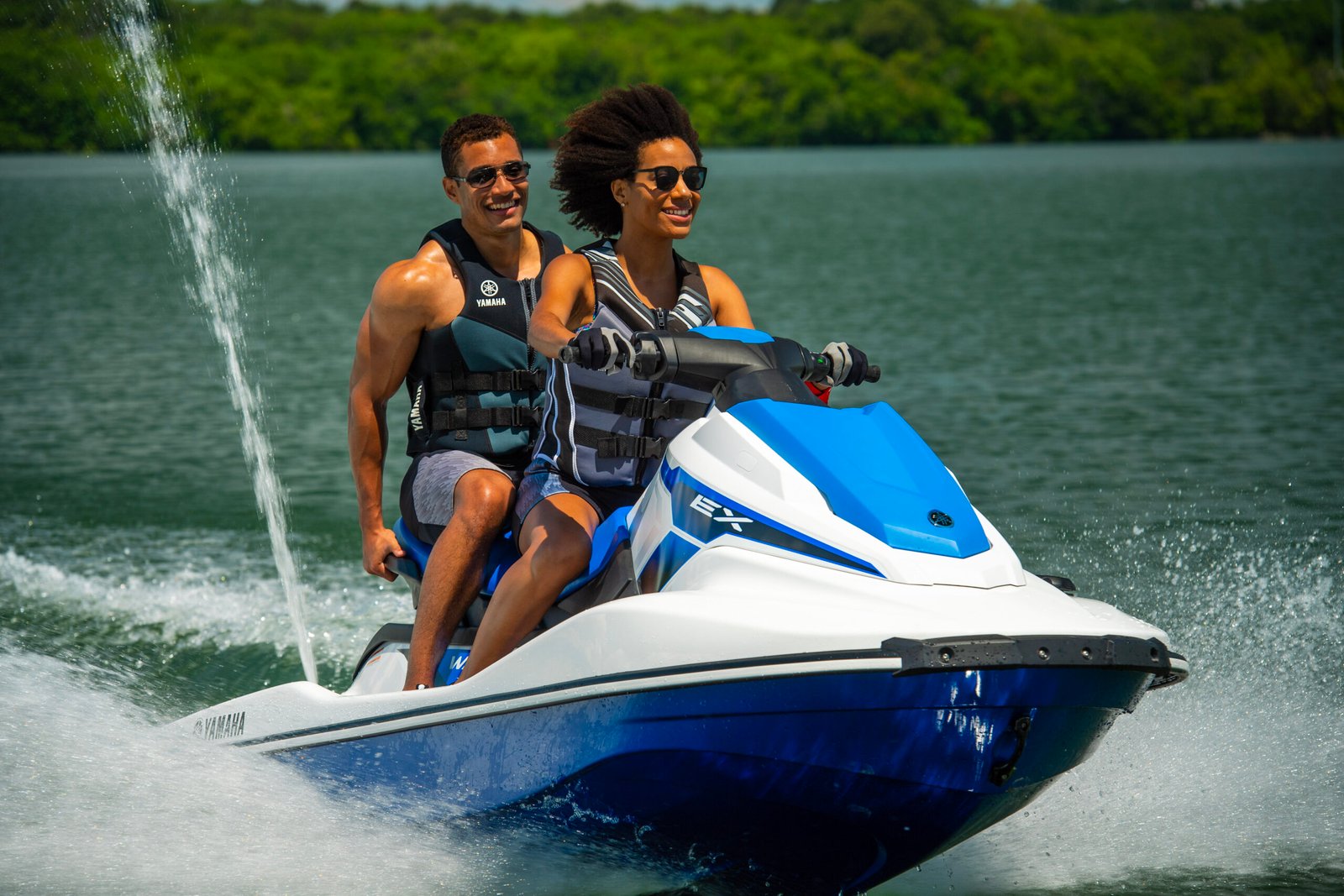
The Yamaha EX series is powered by a 1050cc three-cylinder engine. Yamaha doesn’t quote power figures, but the EX is estimated to have a 90hp output. The EX is a more precise ski than the Sea-Doo Spark and is plenty of fun, although it can’t ride on its tail like the Sea-Doo Spark Trixx.
The Yamaha EX has a more durable SMC fiberglass hull, a larger rear deck for easier re-boarding, a larger seat, and more standard storage space than a Sea-Doo Spark.The economical engine and 13-gallon (50-litre) fuel tank deliver endless fun. If you can afford the step up to the EX Deluxe, it adds the convenience and safety of a reverse trigger, side mirrors, and rear boarding step.
Kawasaki STX 160
This is the cheapest ticket into the Kawasaki range.As a medium-size Jet Ski the Kawasaki STX 160 is bigger than the Sea-Doo Spark and Yamaha EX. All models in the STX 160 range are powered by the same 160hp 1.5-litre four-cylinder engine.
The top model comes with speakers. Both models have a massive 20-gallon (78-litre) fuel tank, the equal biggest in the business, so you’ll have enough juice to run all day. The durable SMC fiberglass hull is strong and easy to handle.
One setback: while Sea-Doo and Yamaha have intuitive reverse triggers, the Kawasaki STX 160 makes do with an old-school reverse lever that is awkward to use.
Sea-Doo GTI SE 170
This is one of the most under-rated personal watercraft in the industry. It’s powered by a perky 1630cc three-cylinder engine, has good storage, and features that are often optional extras at this price point.
Standard equipment includes trim adjustment, to bring the nose up or down according to conditions on the water, and fuel load. The other skis we’ve mentioned so far don’t have this feature. There’s also a fold-away rear boarding step and the option of a speaker system.
With a 15.8-gallon (60-litre) fuel tank, an economical 1630cc three-cylinder engine, and a lightweight plastic hull, you’re likely to be able to send a day on the water without needing to refuel.For 2022, the Sea-Doo GTI SE 170 is available with Sea-Doo’s proprietary debris removal technology.
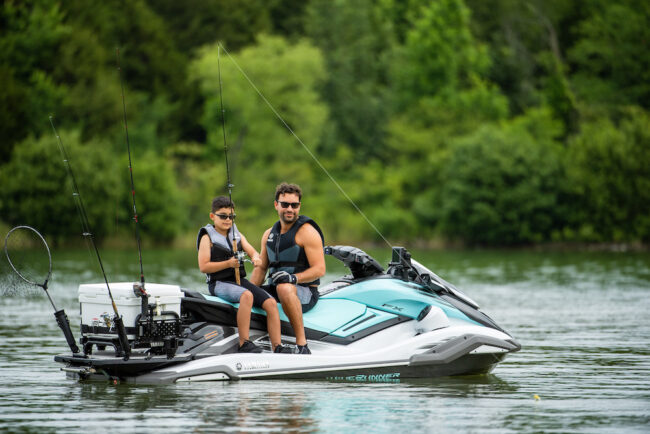
Sea-Doo Fish Pro Scout 130
This is a new model for 2022. If it looks familiar that’s because it shares its deck and hull with the GTI SE 170 and is powered by the same 1630cc three-cylinder engine – but it has been detuned to 130hp for better fuel economy and riding range.
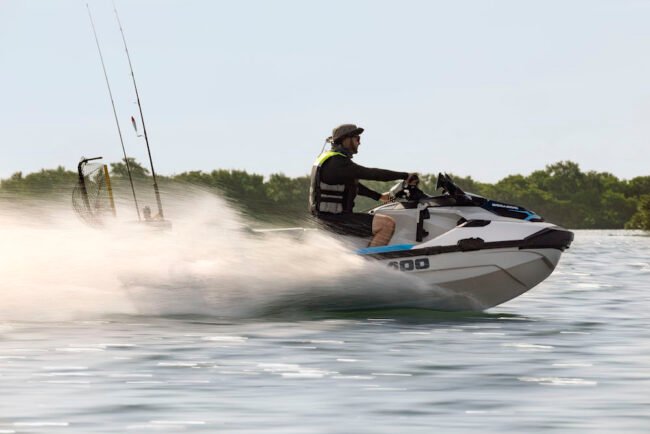
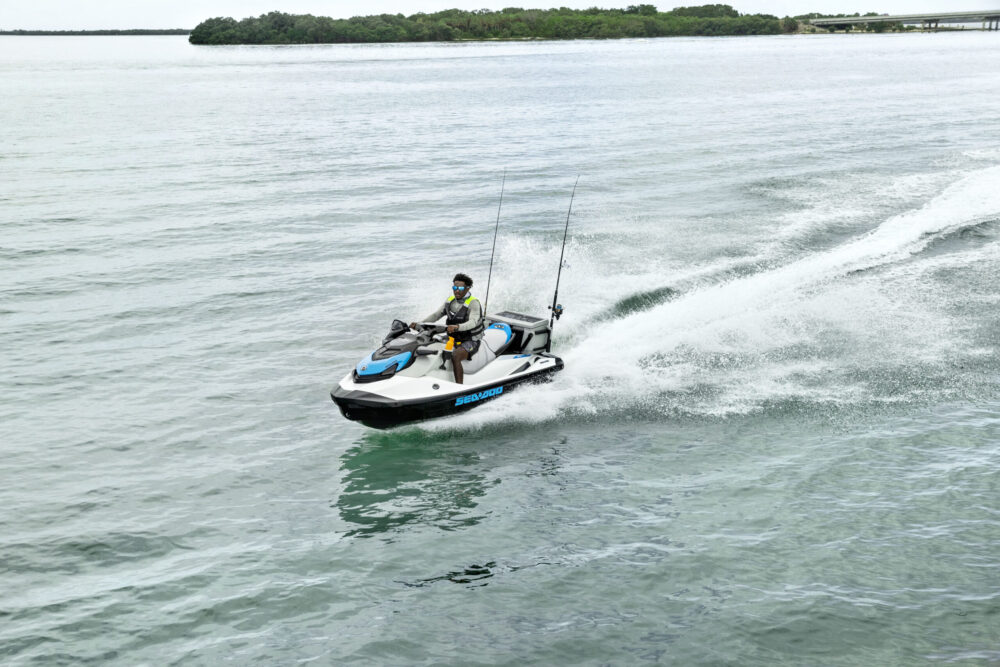
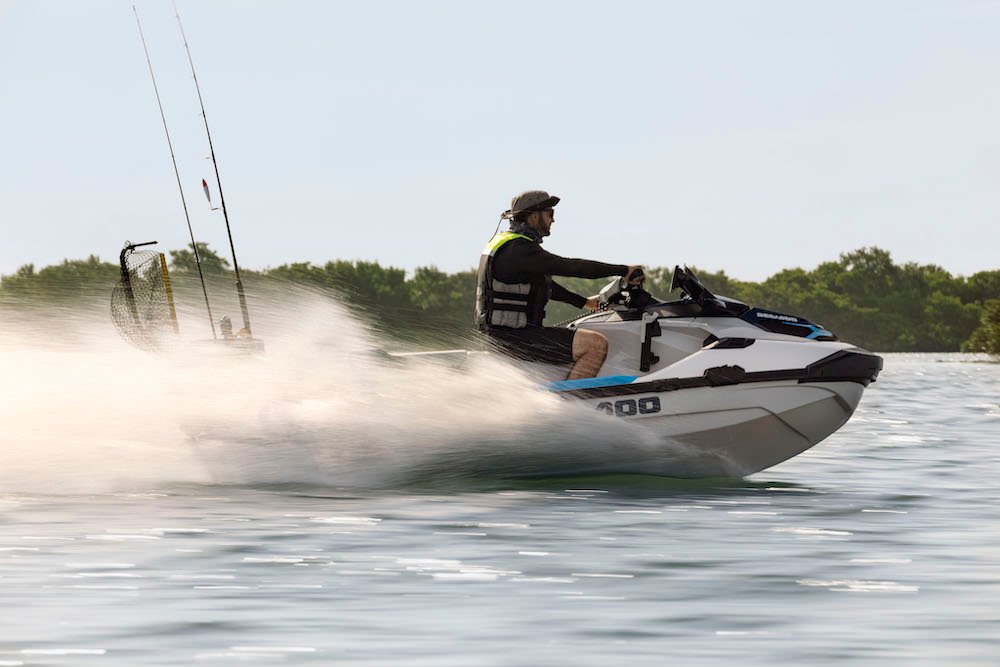
It’s the cheapest ticket into a fishing jet ski and comes ex-factory with a Garmin 6-inch fish finder and GPS unit (which replaces the right side-mirror), three fishing rod holders, a 13.4-gallon (51-litre) cooler box, trolling mode, and Sea-Doo’s IDF debris removal system. It’s a capable craft, but as with the rest of the GTI series, better suited to calm waters rather than ocean or choppy conditions.
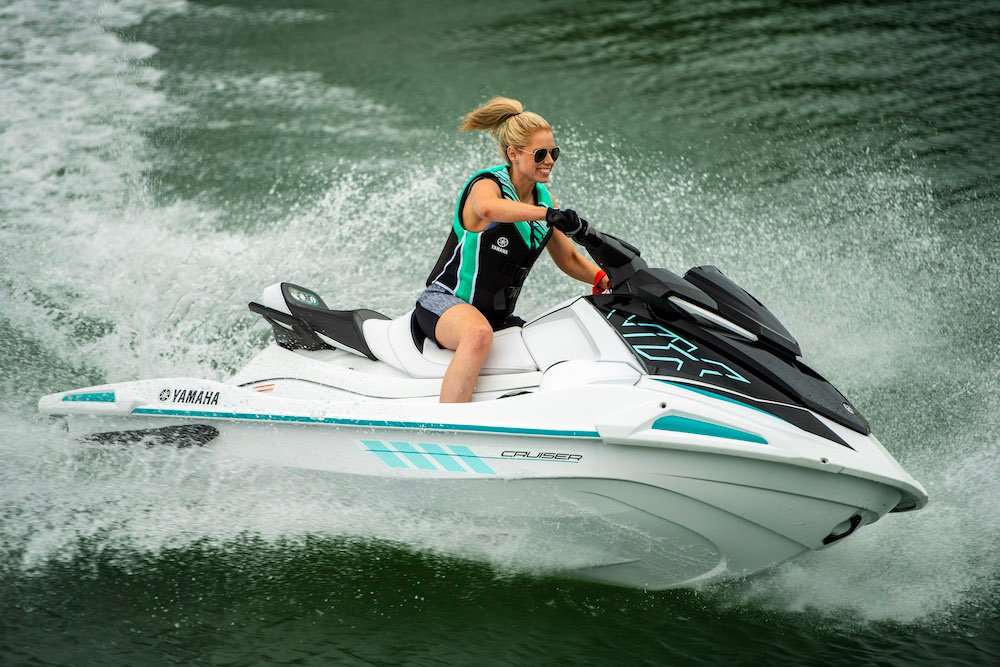
Yamaha VX Cruiser 1050
This mid-size Yamaha model is powered by a 1050cc three-cylinder engine. It is also one of the most under-rated models in the market. For 2022, Yamaha has equipped this model just right, available with factory-fitted speakers, tiered seating, and docking cleats.
Storage in the center console and the nose are fair for this size craft. The hull is made from durable SMC fiberglass yet mounded to the same shape as Yamaha’s race-winning GP1800 hull. It’s a comfortable and very easy craft to operate, with precise handling.Downsides: there’s no adjustable trim on this model, otherwise it’s close to perfect. With an 18-gallon (70-litre) tank and a small engine, it too will run all day.
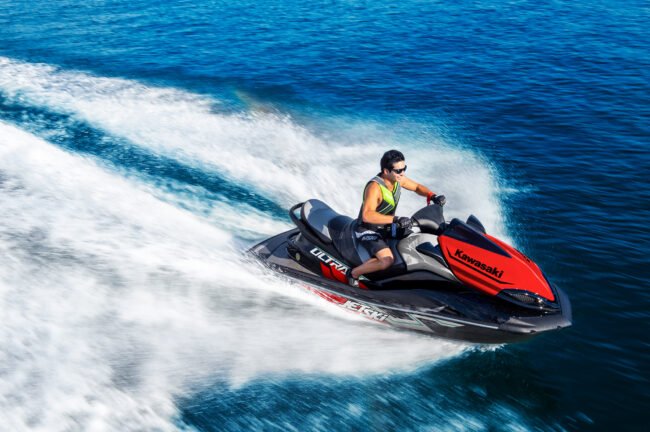
Kawasaki Ultra LX
This is Kawasaki’s entry point into the large Jet Ski class. It’s powered by a 160hp 1.5-litre four-cylinder engine. The Kawasaki Ultra platform has been around in this guise for 14 years. But, as the saying goes, if it aint broke don’t fix it.
It has a durable SMC fiberglass hull, and it’s a heavy beast. This makes it thirstier than many rivals but it also means it cuts through rough water better than most. It has a massive two-tier storage area in the nose.
The riding position is low, which is good for tight turns, but you do get wet. Unfortunately, there is no trim adjustment on this model. And although Kawasaki has added a reverse trigger to its supercharged Ultra range for 2022, the non-supercharged LX sticks with the awkward reverse lever.
Bombardier Recreational Products Inc.
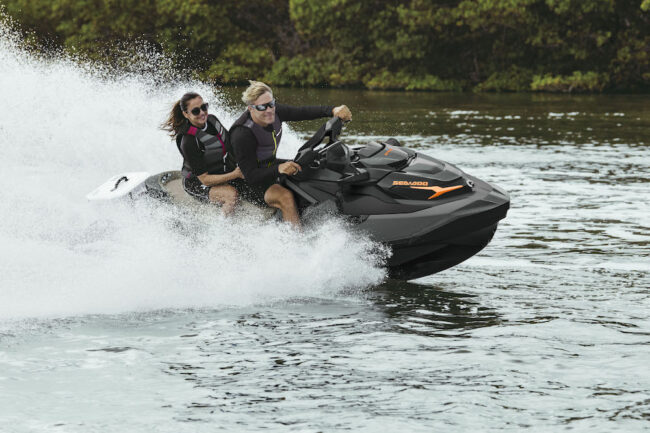
Sea-Doo GTX 170
Sea-Doo’s entry point into the large watercraft class is powered by a 170hp version of its 1630cc three-cylinder engine. It’s the same platform that is the basis of the Sea-Doo Fish Pro Sport and Fish Pro Trophy editions – but without the fishing accessories (which can be added later). IDF debris-removal tech is also available on the GTX 170.
A triumph of industrial design, the ergonomics of the top deck make the Sea-Doo ST3 series the most user-friendly ski on the market today. But the shape of the hull is better suited to flat water or medium chop. In rough conditions the Sea-Doo tends to bow hunt and is not as predictable or as comfortable as the Yamaha FX when the going gets really tough.
Yamaha FX HO
Meet Yamaha’s entry point into the large watercraft class. It’s powered by a 1.8-litre four-cylinder engine. The main differences between the two FX HO models: the Cruiser gains tiered seating. Both models are available with factory-fitted speakers and come with new five-inch digital displays with high-resolution glass screens.
The infotainment system can be configured with maps or to make or take calls and text messages. Welcome news for Yamaha fans, the 2022 FX now has a digital clock (which has long been missing on previous models). For 2022, the hull has been upgraded to heavy duty SMC fiberglass rather than lightweight NanoXcel.
The Yamaha FX has good storage in the nose, and there’s now a dedicated space and charging capability for smartphones in the centre console. The large rear deck can attach Yamaha’s optional range of RecDeck accessories. There is trim adjustment to better handle rough chop, a reverse trigger, and plenty of power from the 1.8.The 18.4-gallon (70-litre tank) usually leaves plenty of fuel in reserve, unless you’re towing kids in a tube all day.
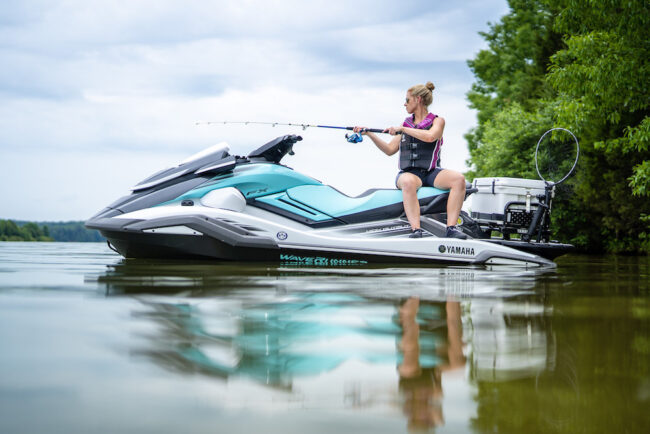
Sea-Doo Fish Pro Sport 170
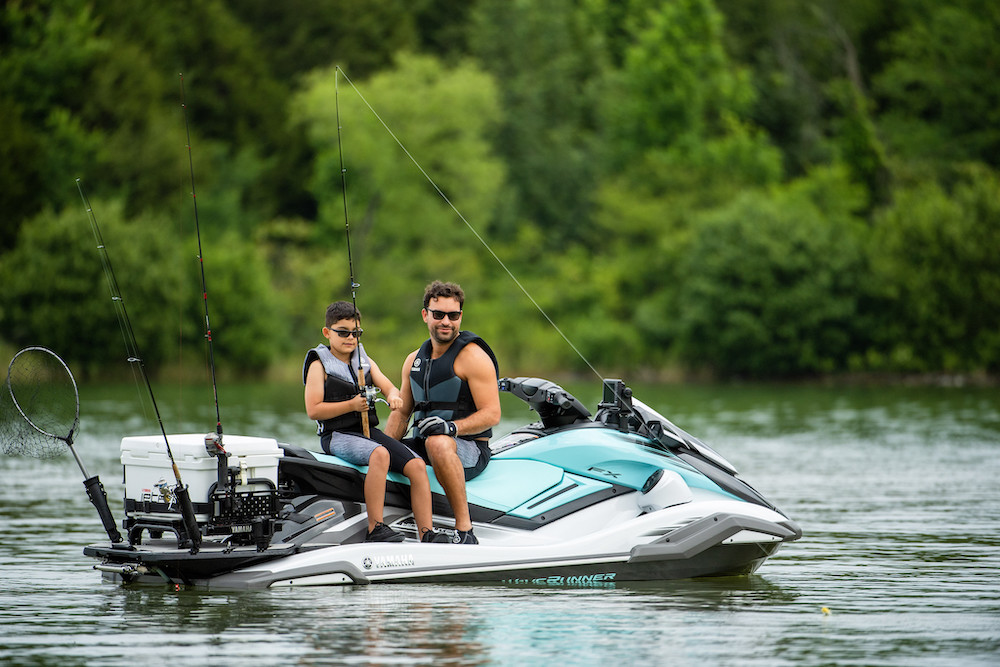
This is one of the most popular skis on the market today, thanks to its genius practicality and turn-key approach to fishing off a personal watercraft. It comes with a 13.4-gallon (51-litre) cooler box, fishing rod holders, a navigation unit, an extended rear deck to attach extra fuel bladders, and side steps to avoid scuffing the top deck.
The blue and white color scheme carries over for 2022 but now wears the name ‘Sport’. There is also a new orange and silver luxury model called the ‘Trophy’. Both models are powered by the same 1630cc three-cylinder 170-hp engine.
Downsides, as with other ST3 models, the Fish Pro Sport and Trophy editions are better suited to flat water or medium chip rather than rough ocean. And the large footwells can fill up with water. But a quick blast of the throttle empties them pretty quickly.


 Jet Jam keeps getting better and that’s good for the PWC racing community. The organization has partnered with RPM Racing Enterprises, and together they have put together a 6 round Best of the West Series.