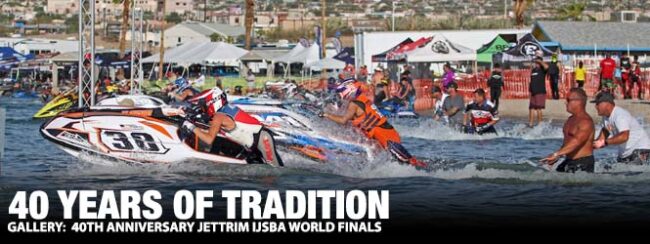
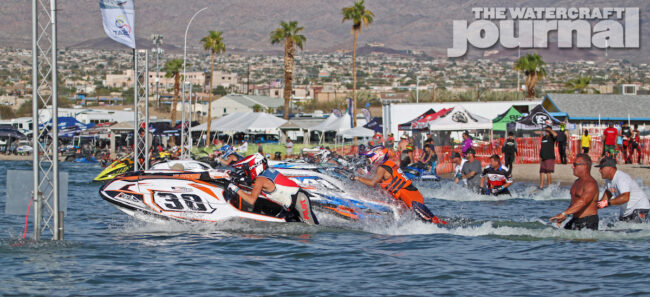
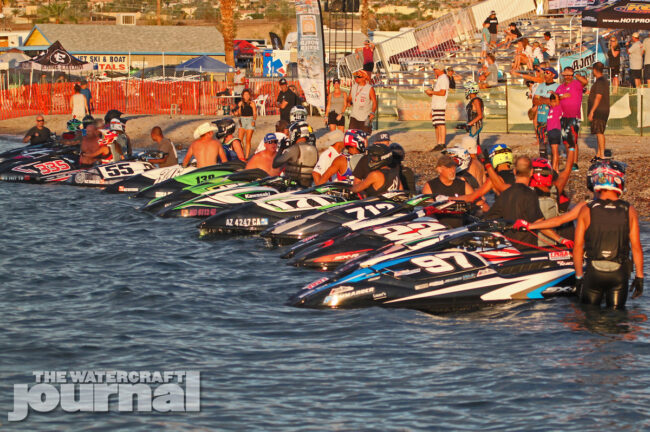
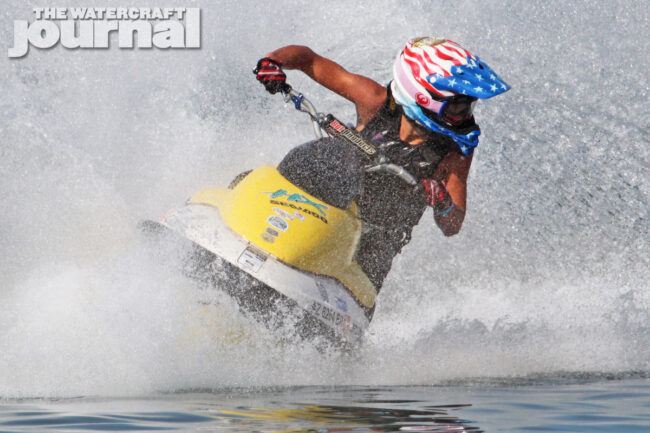
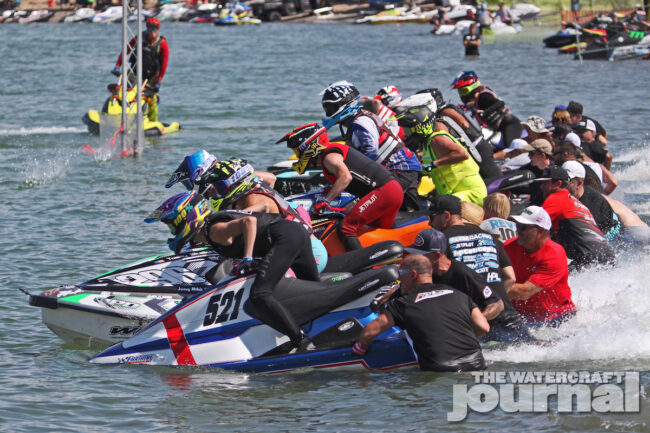
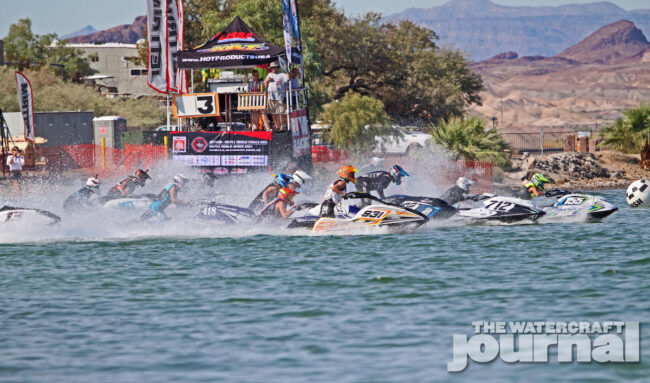
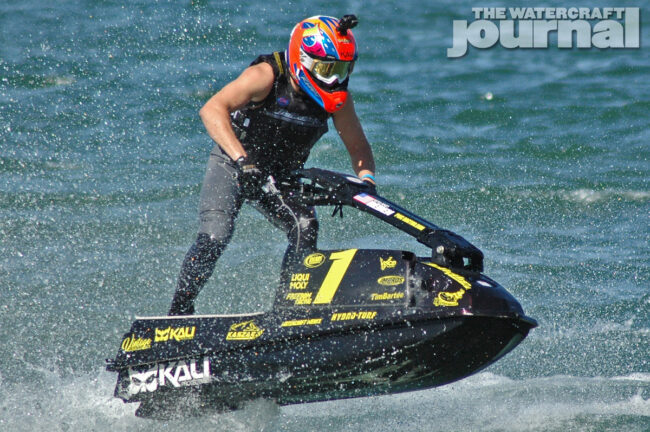
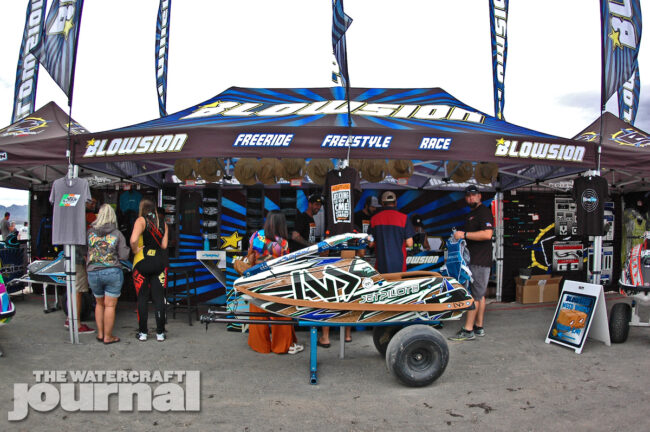
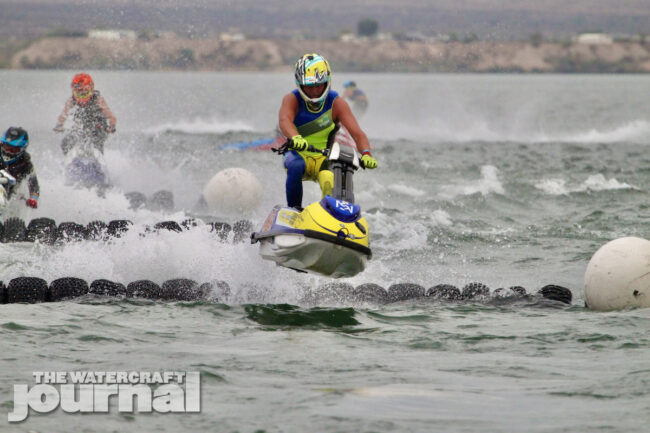
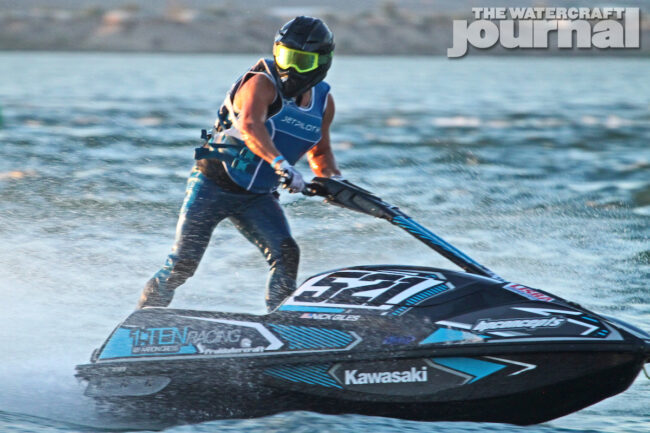
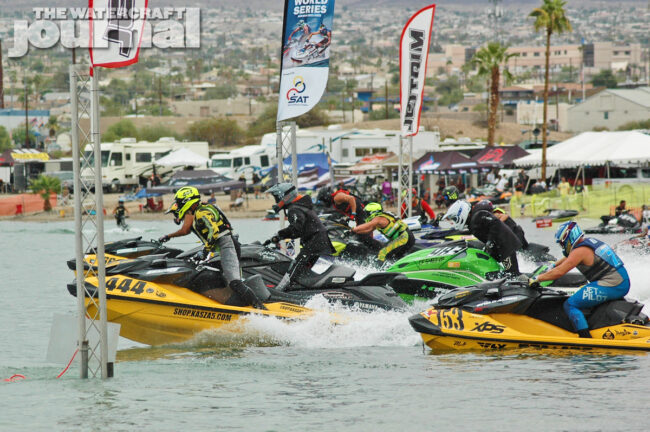
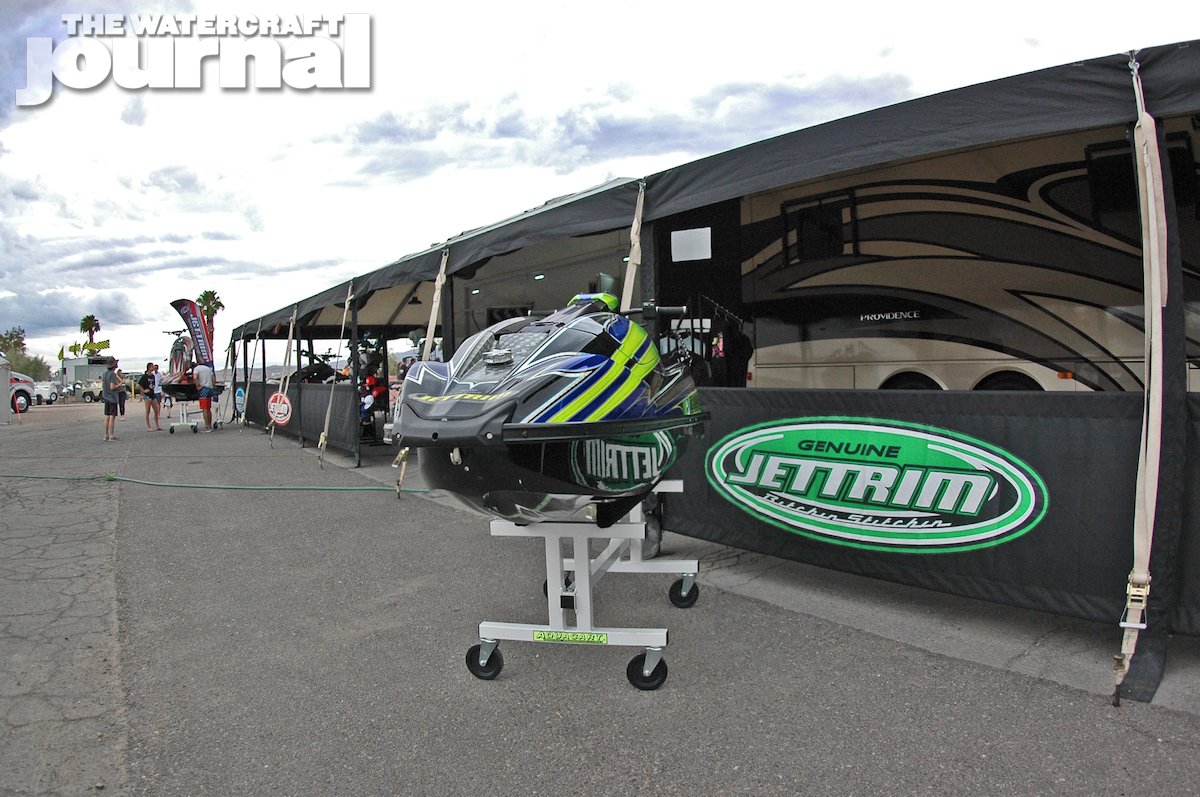
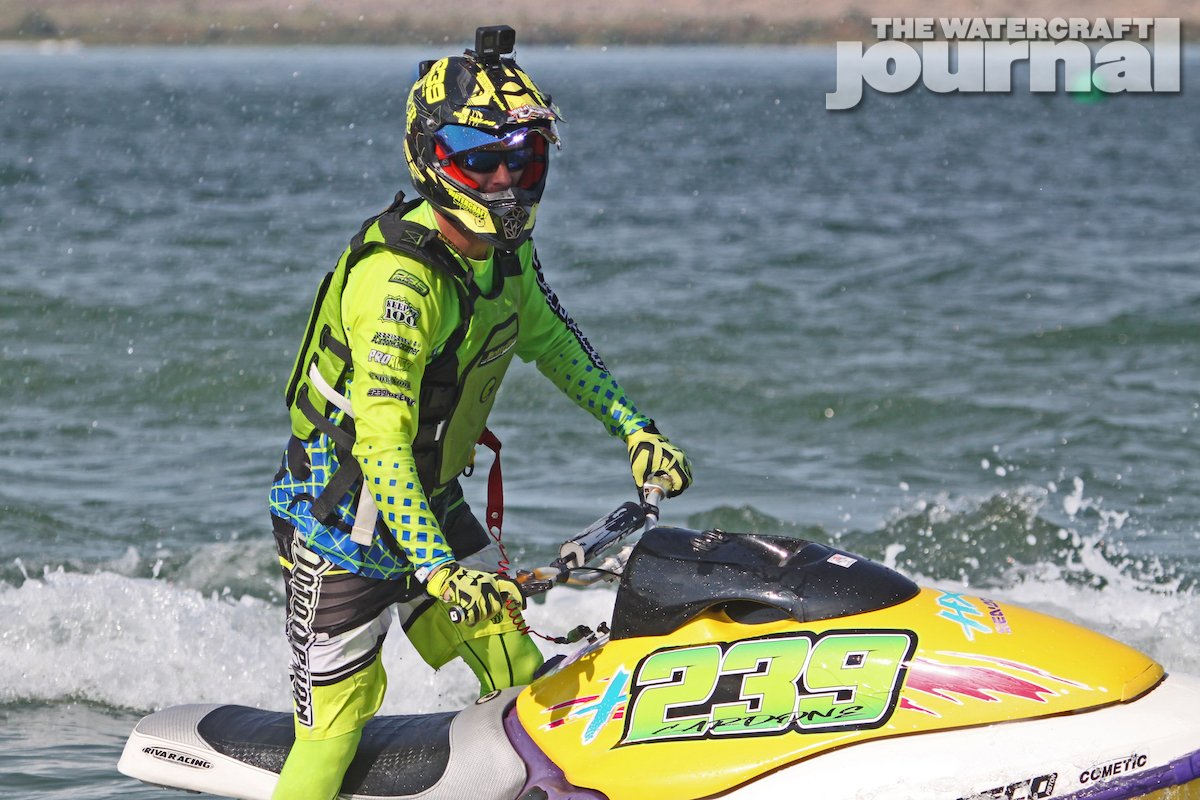
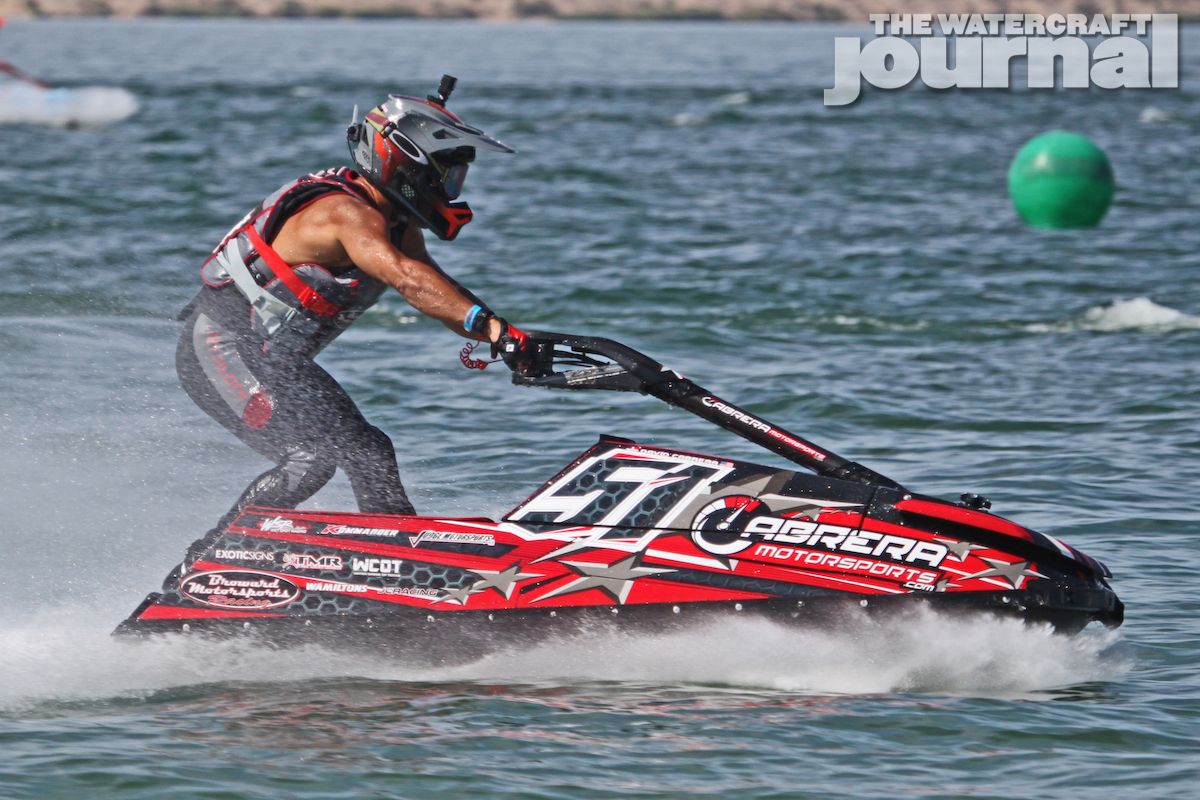
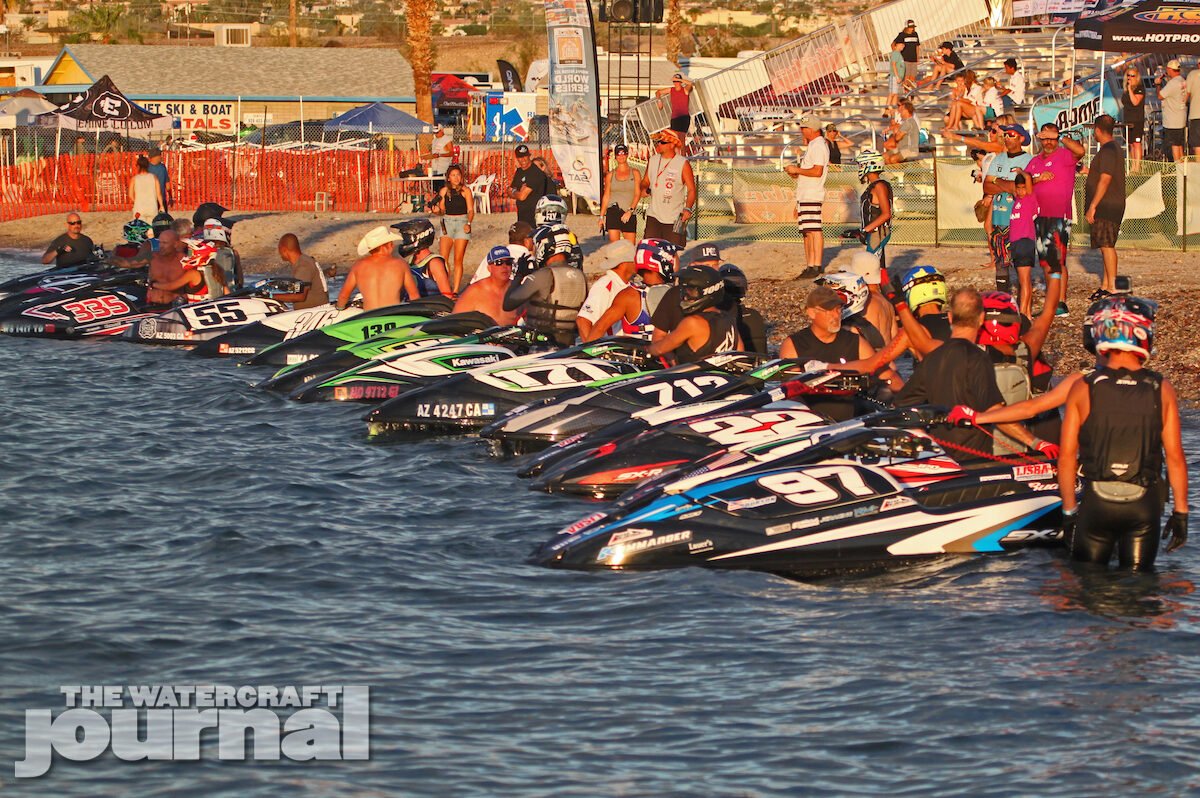
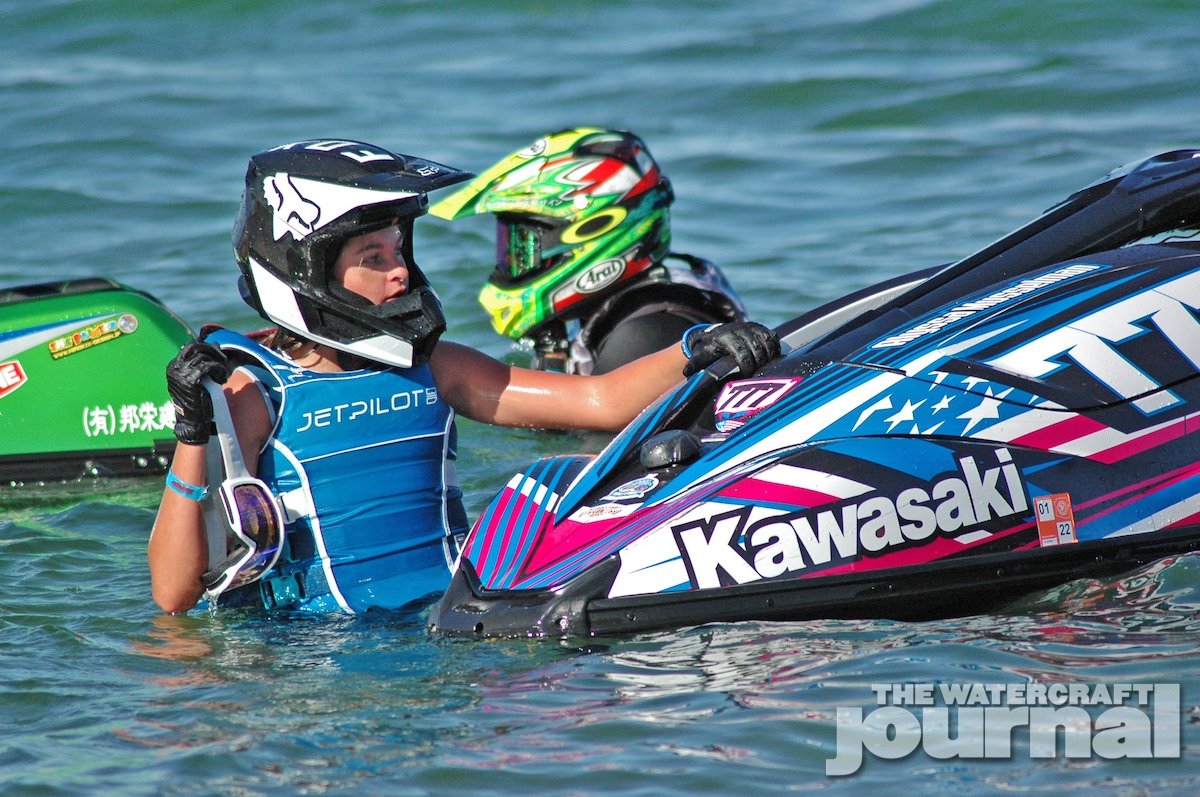
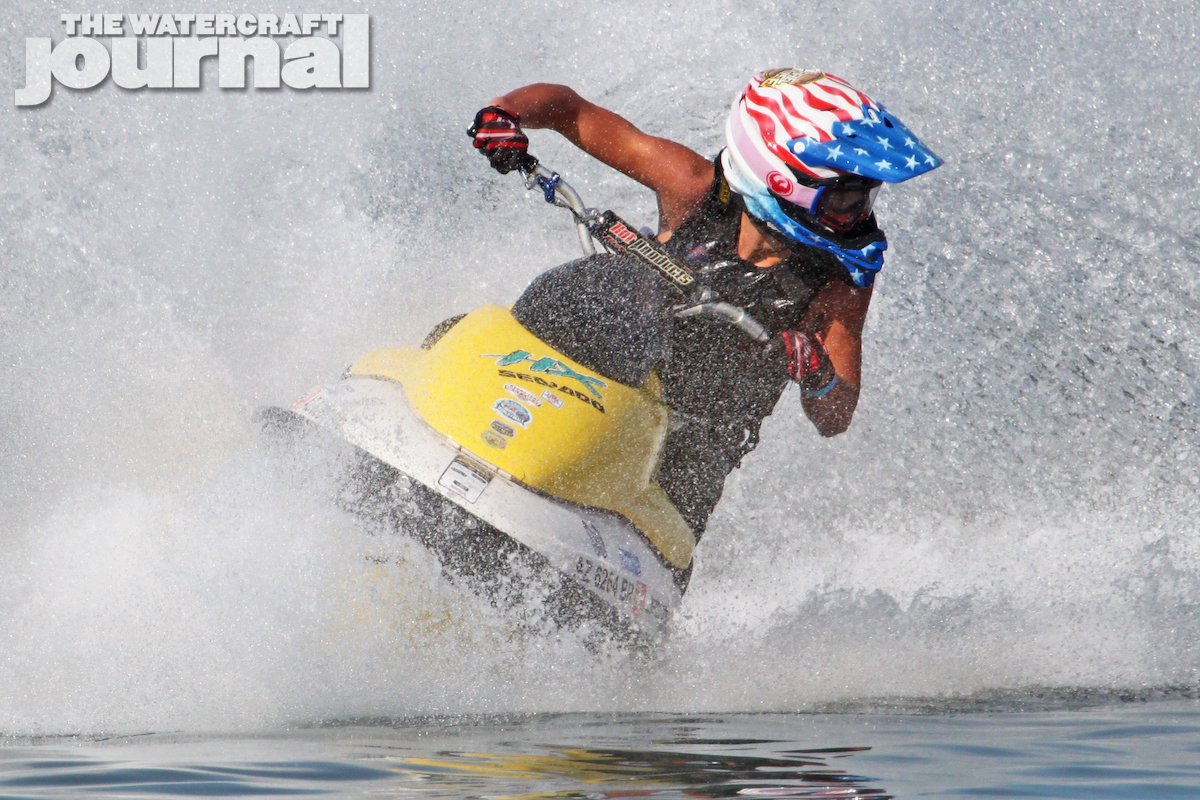
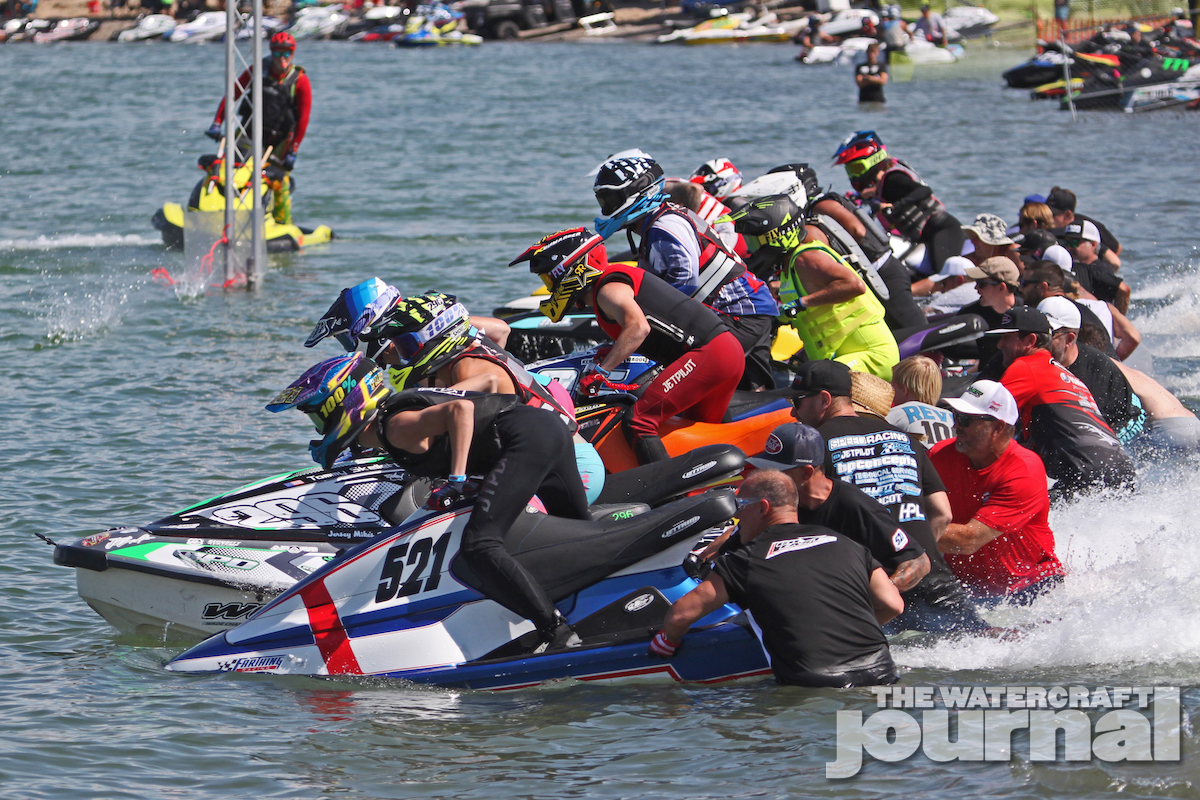
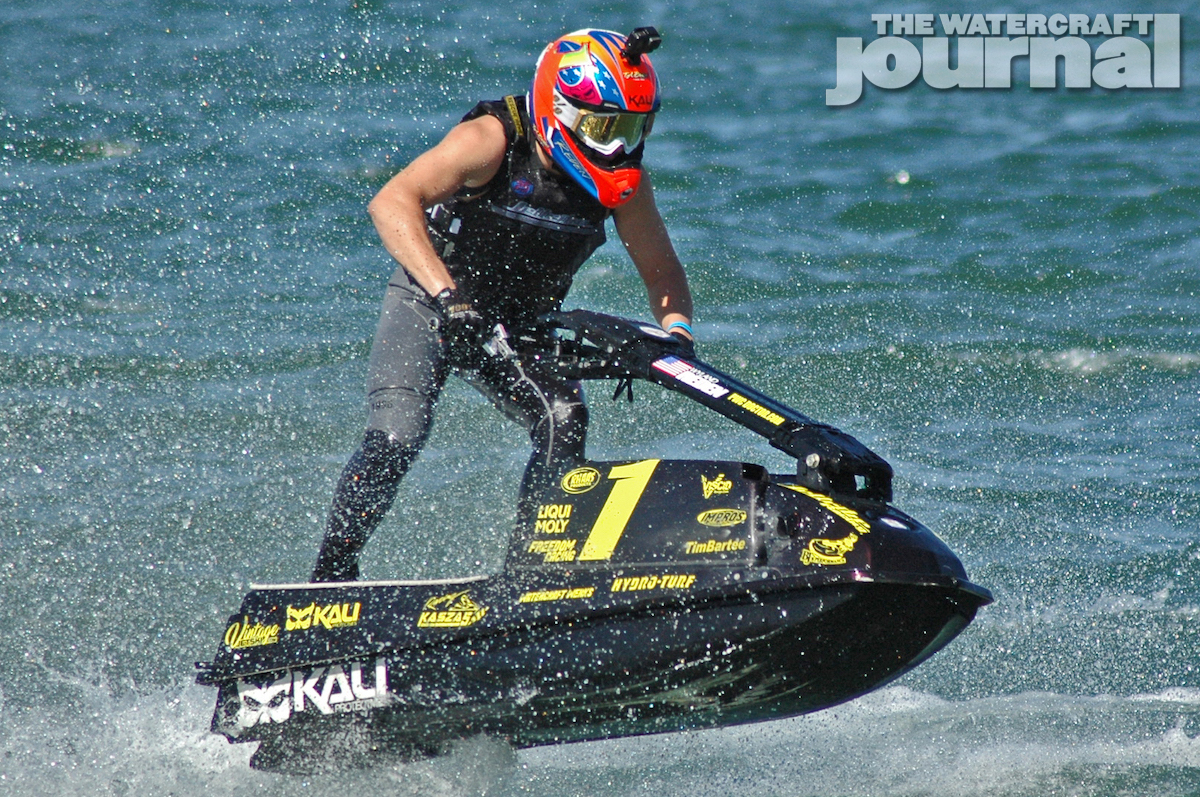
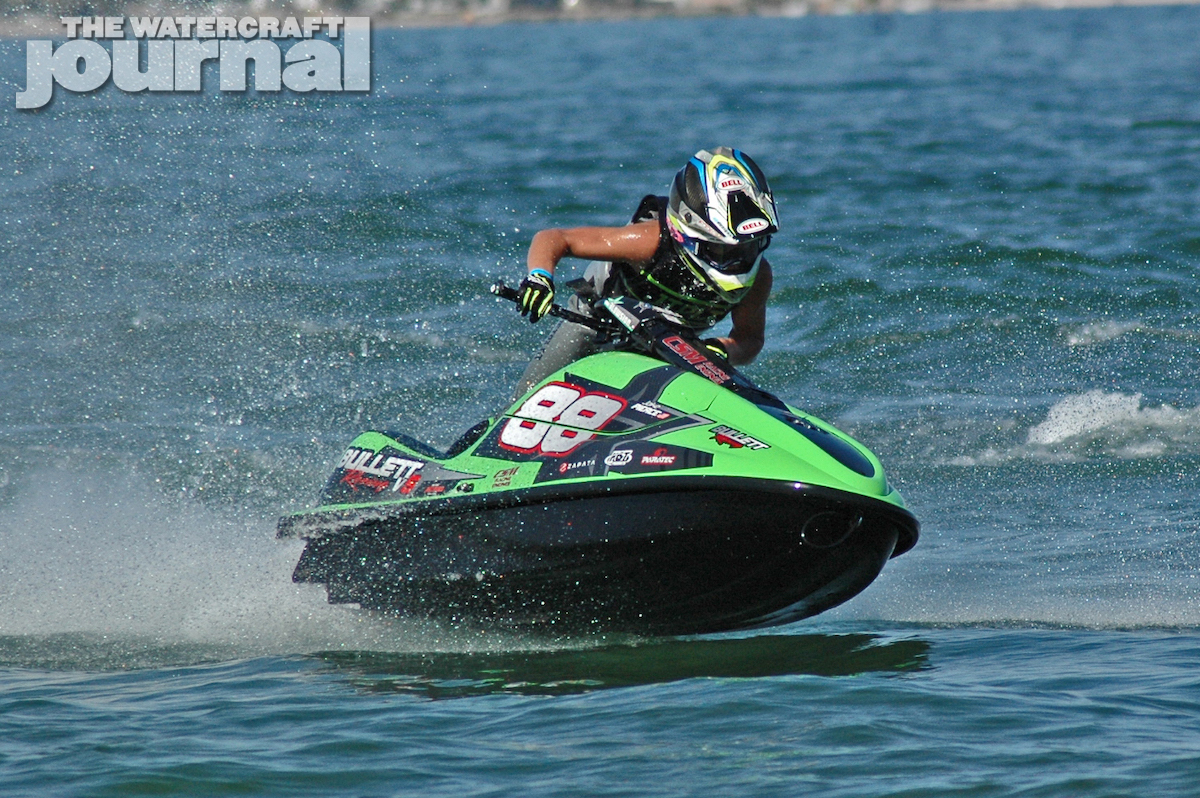
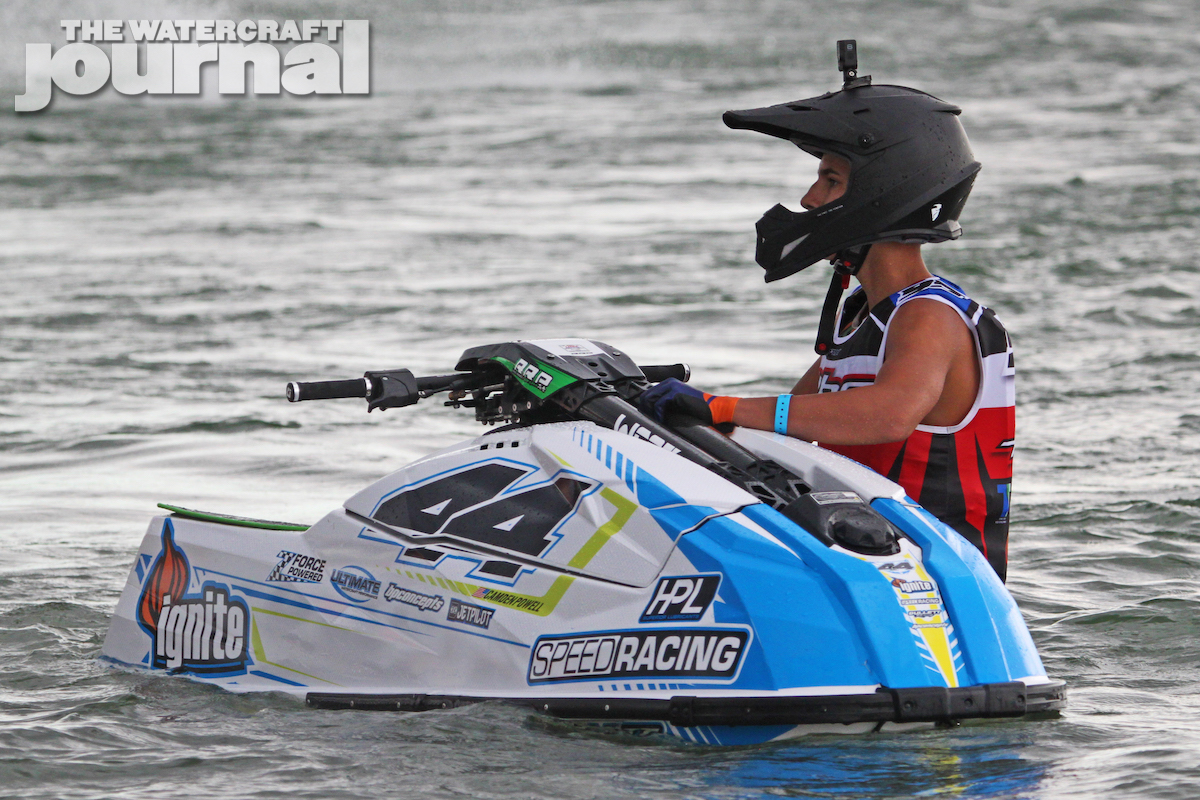
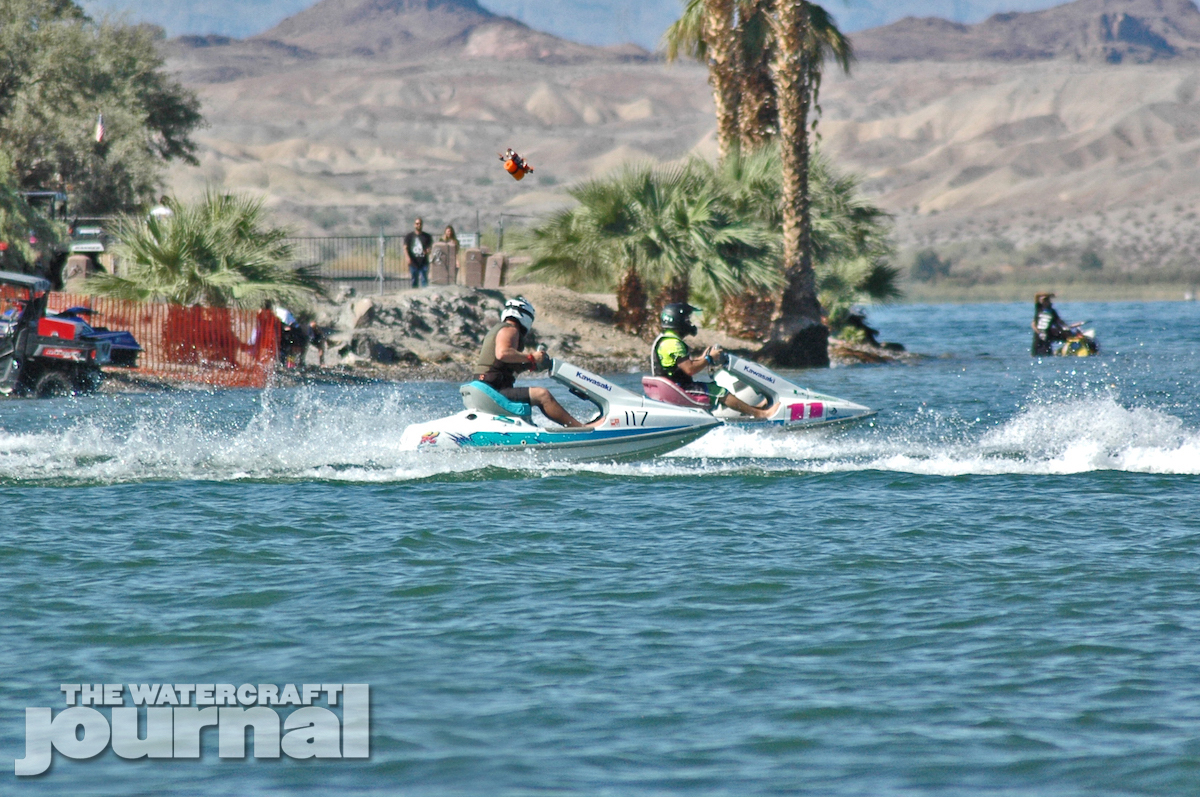
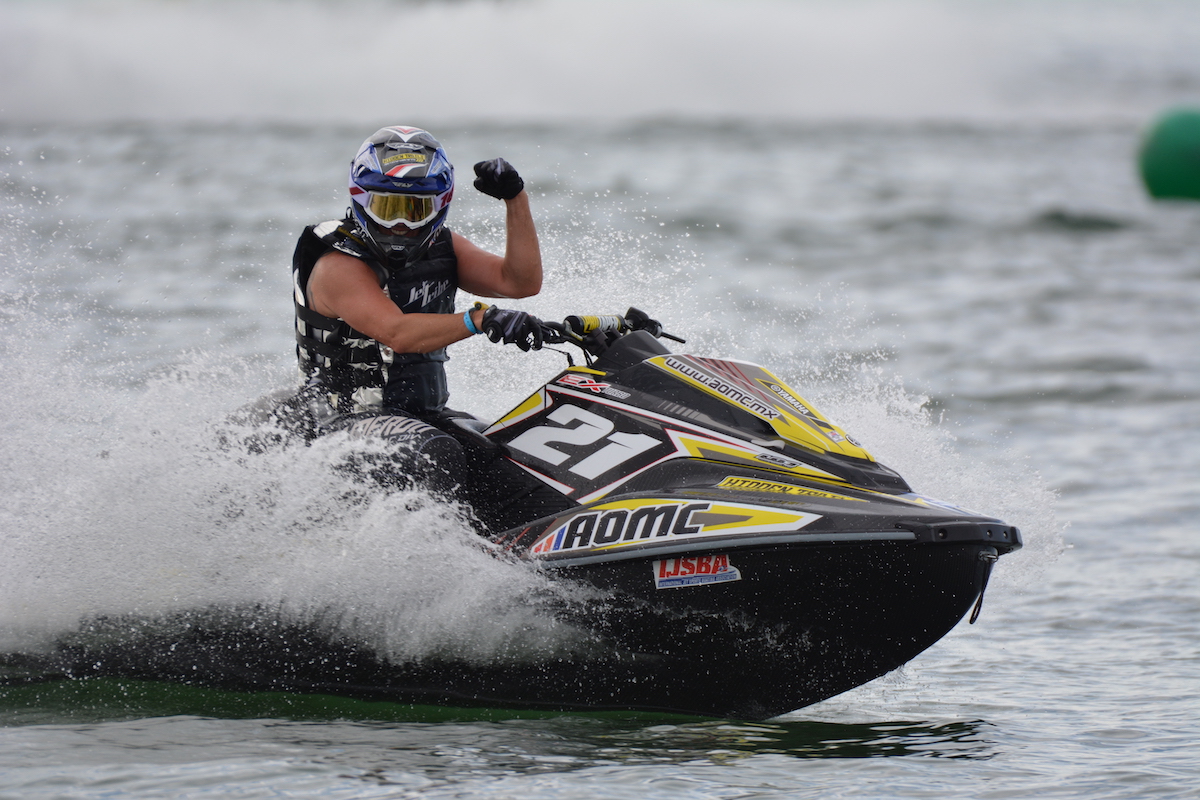
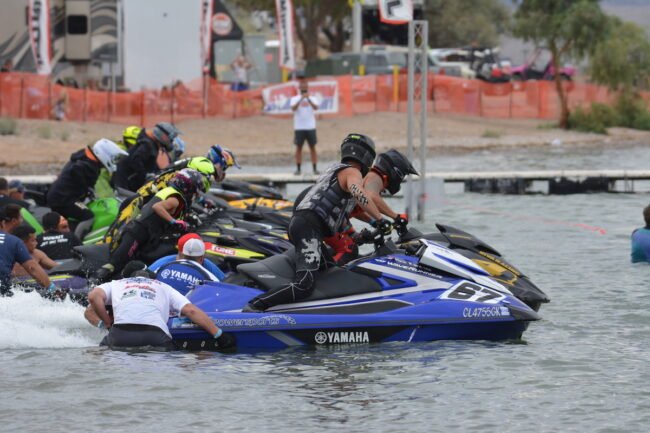
The IJSBA celebrated its 40th anniversary last week in Lake Havasu City, AZ with the World Finals. Despite current issues with travel due to Covid restrictions, attendance was fairly strong, with claims of over 500 total skis being teched at the race site inspection and nearly 300 individual racers paying to participate.
The sun rose over Body Beach on Sunday morning, revealing a brand new tribute to the late Nedra Atwood, PWC Racing’s #1 fan. Constructed out of steel to withstand the blistering Lake Havasu heat and occasional desert monsoon, her presence will always remain with the racers both on and off the course, reminding us forever that “World Champions [are] Made Here.”
A celebration of life was held on the beach in front of hundreds, and her ashes were spread into the waters that she held so dear to her heart. A second memorial of her stands on the corner of Beachcomber Blvd. and McCulloch Blvd. near the entrance of Crazy Horse Campground, the popular venue for World Finals. With her silhouette facing the newly erected PWC monument and a fully-functioning cowbell fashioned into her hands, the statue makes for a fun way to honor all she did for the racing community.
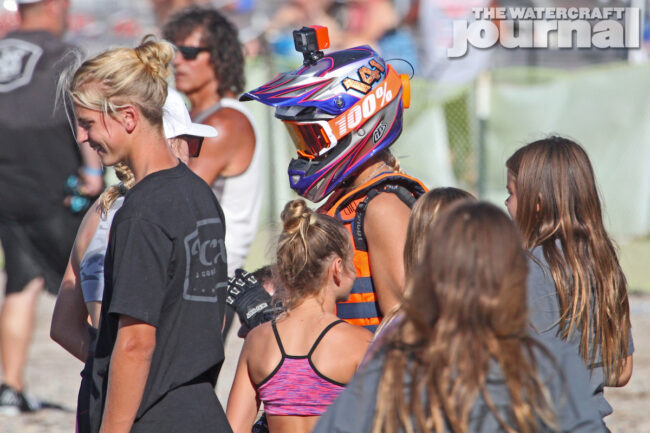
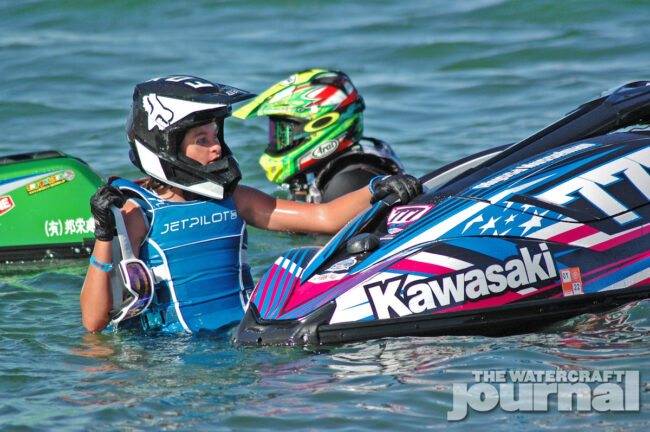
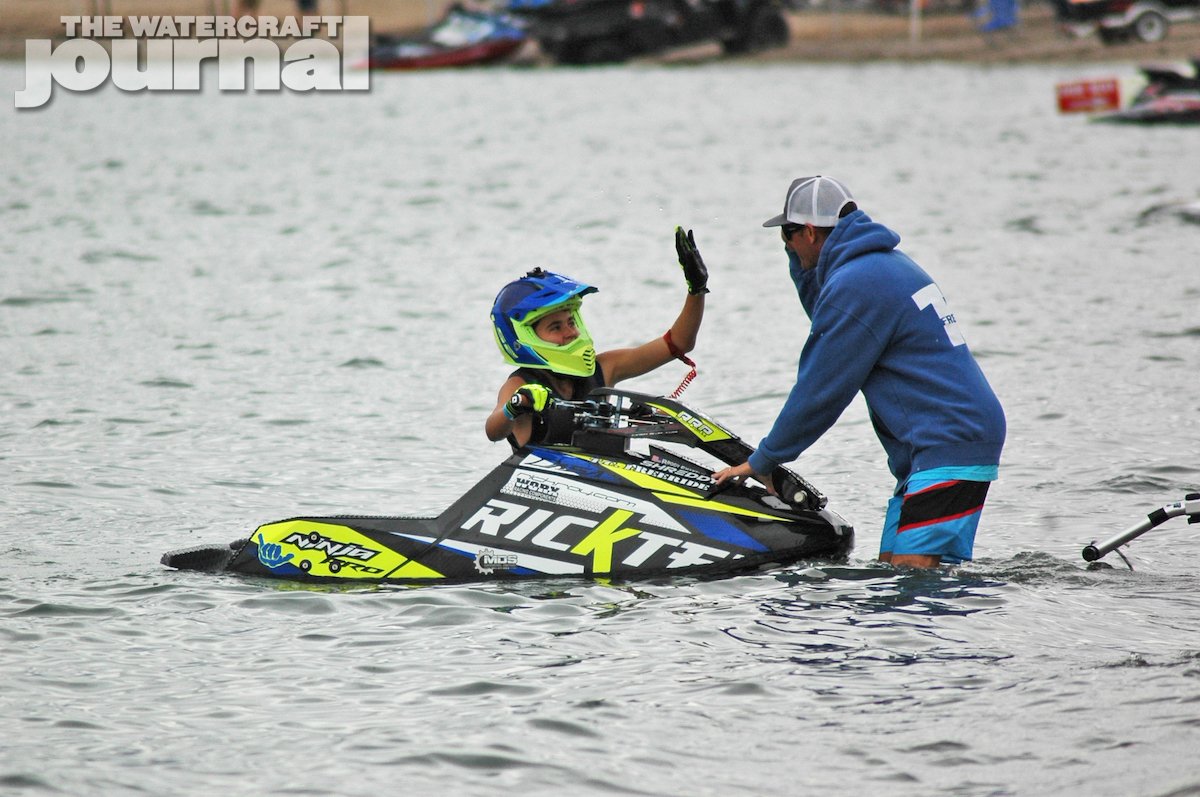
The sun also greeted the future faces of our sport that is Jr. Stars “A Day with the Pros.” This year the team at ProWatercraft organized the entire event with the help of numerous sponsors to bring a day of learning and riding to the younger generation. “Every year at the World Finals there is a day set aside to treat the kids to a special experience,” explained the marketing manager for ProWatercraft. “We worked in conjunction with the IJSBA and Terri Gasperone and Canyon Coolers, and a slate of incredible sponsors to make sure that the kids had a great time.”
As racers began to arrive on Monday and check-in to the race site, ProWatercraft was preparing for a night of jet ski shenanigans with their showroom and museum reveal. Guests enjoyed catered tacos and drinks while browsing the unlimited collection of vintage jet ski memorabilia. Did we forget to mention the live camera footage of Body Beach playing in their showroom? Yea, they had that too.
But the ProWatercraft team didn’t stop there. Owner Chris Hagest also revealed the newly-crafted ProForce 3.0, a hull that offers enthusiasts a cost-effective yet high-performance handling package, but without the high-dollar price tag. Although demo rides were cancelled due to unforeseen circumstances, this new concept will definitely be one to keep your eye on next year.
Tuesday morning proved to be a challenge for some racers and their teams as last-minute schedule changes and monsoons wreaked havoc through the pits. Staff worked overtime to work around the stormy weather and accommodate racers despite the delays. One class, Novice Ski Stock, was not only mistakenly left off the schedule, but almost faced a complete race-day cancellation due to the interruptions.
Racers got to the line-up only to hear that their heat was cancelled, but then moments later was announced that their heat “was back on,” and to “come back” after all of them abandoned the starting line. Despite the time-crunch, the ever-resilient scoring tower and starting gate coordinator pushed for the heat to happen, and let them complete it just moments before the sun went down.
While there is no shortage of photographers at World Finals, livestream coverage is always a top suggestion from the racing community. With racers leaving families behind for an entire week, many relied on short video clips from Facebook live or texts. But not this year. Bobby Cardone, known for his unscripted and uncensored livestreams that are undoubtedly “in-tune” with the racing world, arrived late Tuesday night and provided livestream and drone footage for the rest of the World Finals week.
“I was honored to attend this year’s World Finals in beautiful Lake Havasu,” Bobby stated. “Once I knew I was in, I brought whatever equipment I had on hand, and with the help of many, streamed the event the best we could on extremely short notice.” Although a few technical issues set him back, viewers hardly noticed them, and were ecstatic and grateful to have livestream available at World Finals for the first time. “We plan on coming back in 2022 with bigger and better ideas,” Bobby mentioned. “The race week was a blast with some of the best race action you could ask for!”
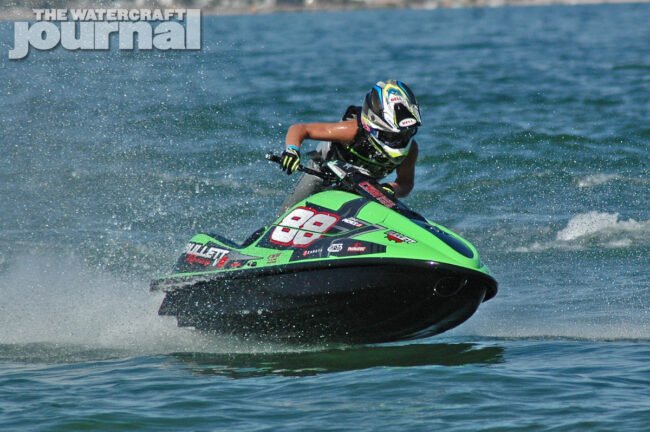
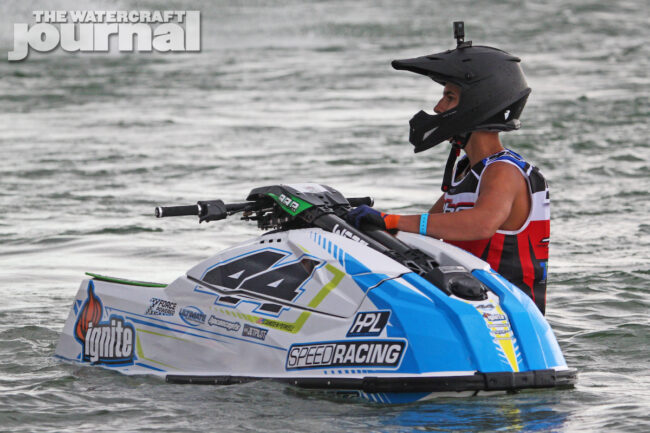
Saturday was all about the pros with Pro Freestyle and Pro Ski GP being the highlights of the day. Pro Ski GP contenders battled it out in a four-moto format in rough and windy conditions. Kommander Industries continued to dominate the racing circuit, with many riders piloting the ever-popular Kommander GP1 to victory, and this weekend to the podium. Belgium native Quinten Bossche (#98), despite a leg injury two years ago, swept the field and was crowned champion, followed by Raphael Maurin (#44) and Dustin Motzouris (#50).
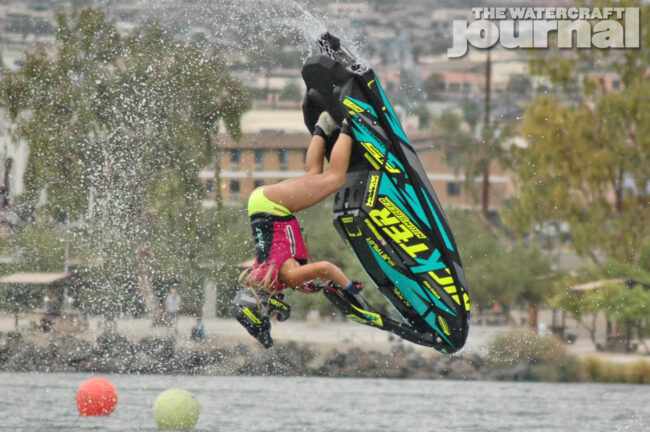
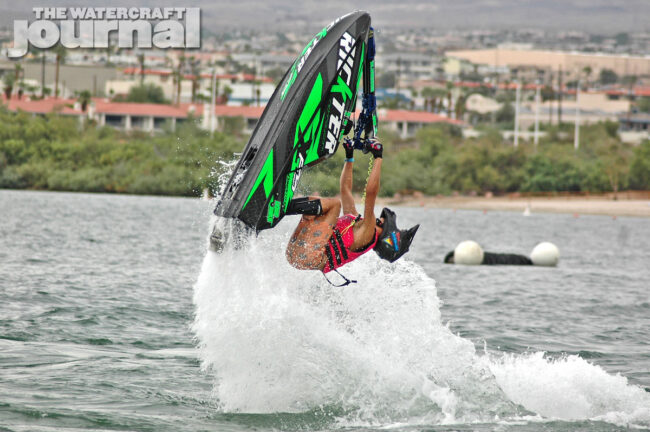
Freestylers from all over the world also congregated at the race site Saturday morning and under the London Bridge that night, wowing the crowds with stunning aerial acrobatics and technical combinations. Lee Stone took home the title for the weekend with his epic run which included a double back-flip and 720 spin, with Taiji Yamamoto in second and Gabe Jukish in third.
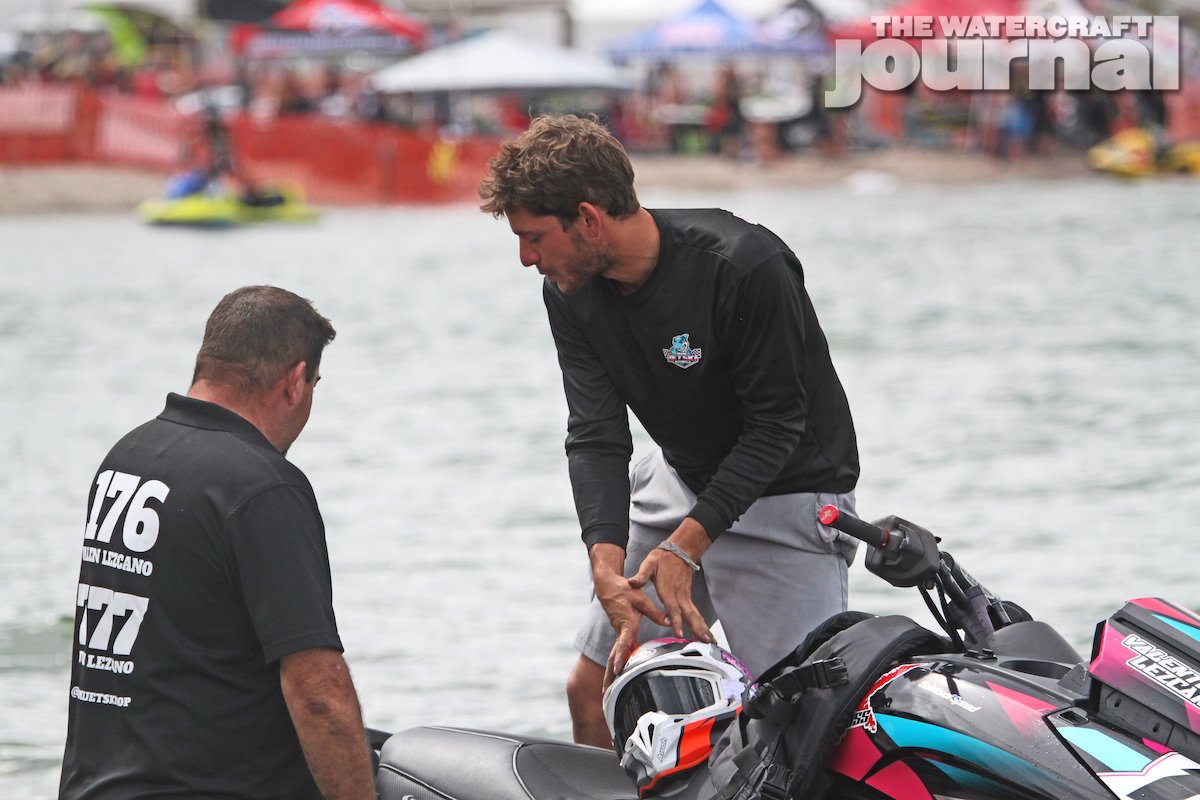
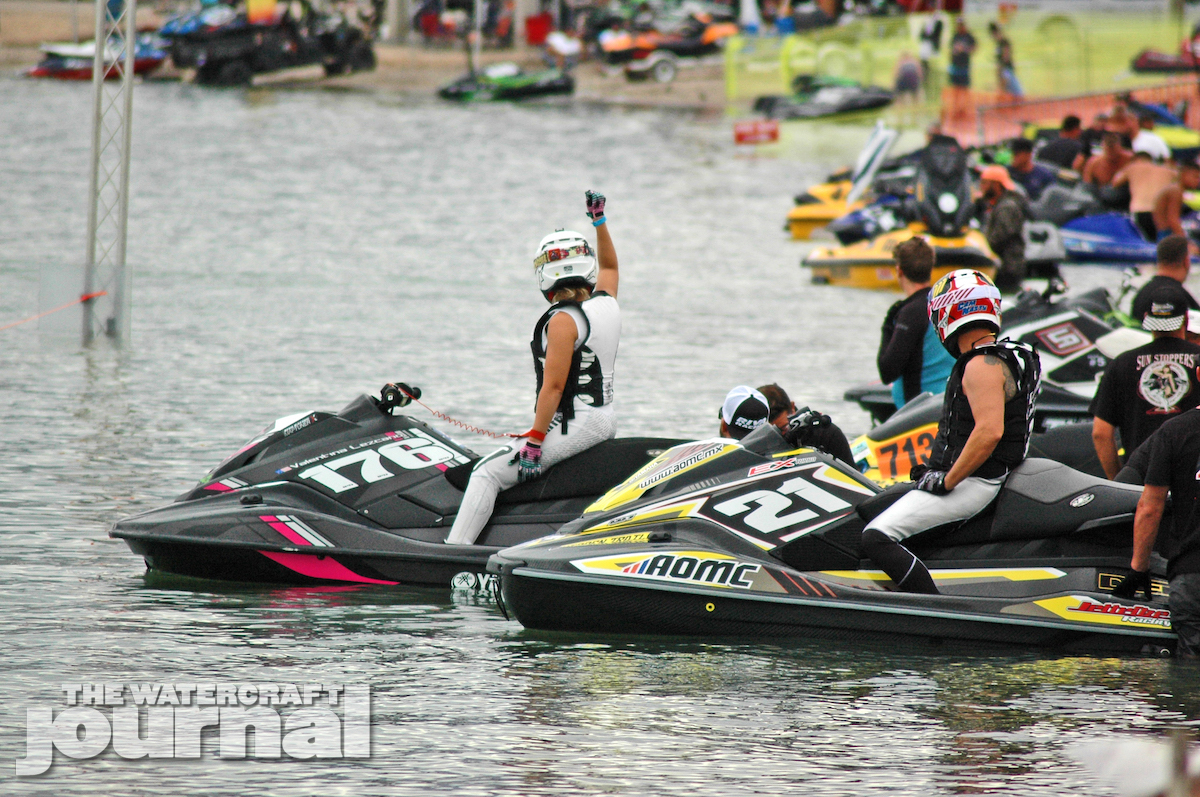
One notable team made the trip to World Finals and with the goal of holding their ground in the standings of the Triple Crown tour. Based out of Florida, the Miami JetSki team arrived with a fleet of highly-built machines and a determination like no other. “We came into World Finals with one goal of remaining in the standings of the Triple Crown tour,” said Valentina Lezcano. “I’m first overall right now in the Pro 1100 Open class, so I just need one round in Thailand and I can possibly take the overall win for the tour!”
Teammate and brother, Juan Lezcano currently held 5th overall in Pro Runabout GP. Juan suffered a horrific accident Sunday which landed him in Havasu Regional Medical Center with a broken femur. “I am immensely grateful for all who dropped by to keep my spirits up,” he states. “I underwent emergency surgery where they reconnected my femur with a rod and bolts in three places down my leg. […] My doctors are expecting a full recovery, and I have already been able to start moving my knee and foot.”
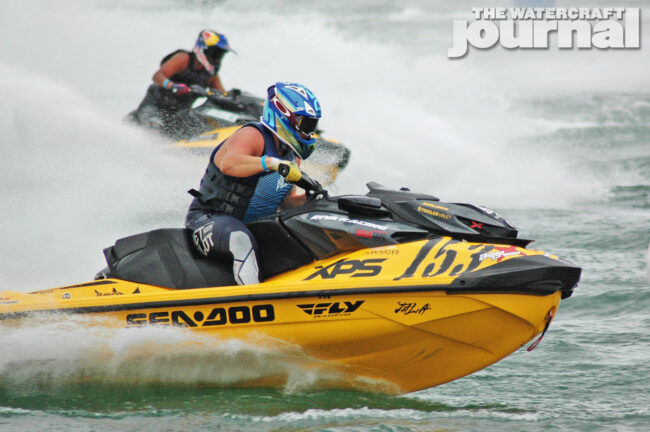
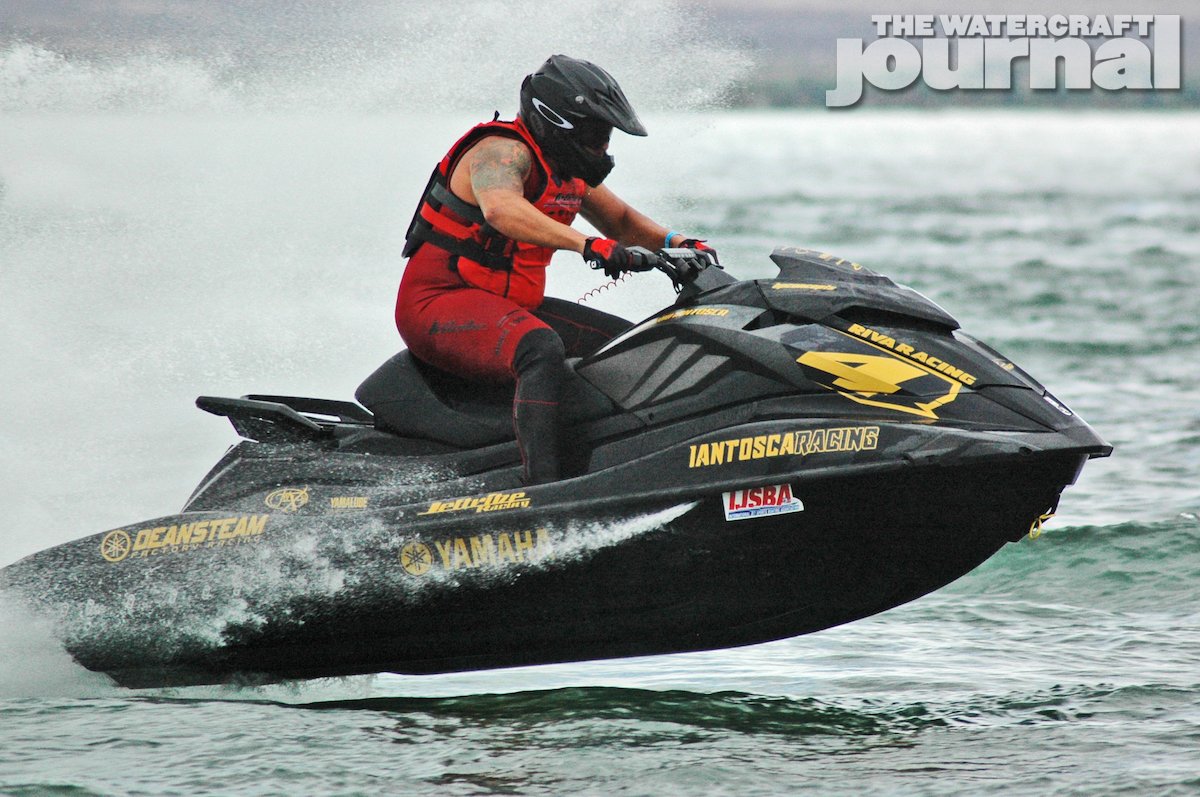
When it came to runabout racing, Sea-Doo had a tremendous turnout, grabbing first place wins in all except for one of the premier pro-level categories, including Pro Endurance and Runabout Limited, as well as complete podium sweeps in Runabout GP, Runabout Superstock and Runabout Slalom. Yamaha WaveRunners picked up sweeps in Pro/Am Runabout Stock class as well as Pro/Am Runabout 1100 Open and Women’s Runabout 1100 Stock classes.
All results from the 40th anniversary Jettrim IJSBA World Finals can be found HERE.
Last weekend welcomed personal watercraft racers from around the world to Lake Havasu City, Arizona for the 40th annual IJSBA World Finals – and with it a whole slew of championships for Yamaha Motor Corp., continuing its trend of being the preferred runabout by more professional athletes – including several first-time wins for the all-new 4-stroke Yamaha SuperJet!
Big wins came in the Pro/Am Runabout Stock class – known as the Manufacturer’s Class, as it is the closest to box-stock as a runabout class can be – where Yamaha racers swept the podium. A second sweep came in the Pro/Am Runabout 1100 Open and Women’s Runabout 11 Stock classes. Junior racers shined on their 4-stroke SuperJets in the Junior 13-15 and 10-12 Four-Stroke Lites classes as well.
You’ll want to read the complete release attached below for all of the racers’ names, as well as tune into The Watercraft Journal for our complete recap and photo gallery of the IJSBA World Finals coming soon!
Here’s the original release: Yamaha pro watercraft racers riding the Yamaha GP1800R SVHO and FX SVHO dominated the premier Pro/Am Runabout Stock class and more at the 40th IJSBA World Finals held annually at Lake Havasu, Arizona.
Never before in IJSBA World Finals history has one manufacturer dominated Pro/Am Runabout Stock racing in the way Yamaha has the past several years. Also, referred to as the Manufacturer’s Class, these watercraft are the best representation of out-of-the-box performance consumers can expect.
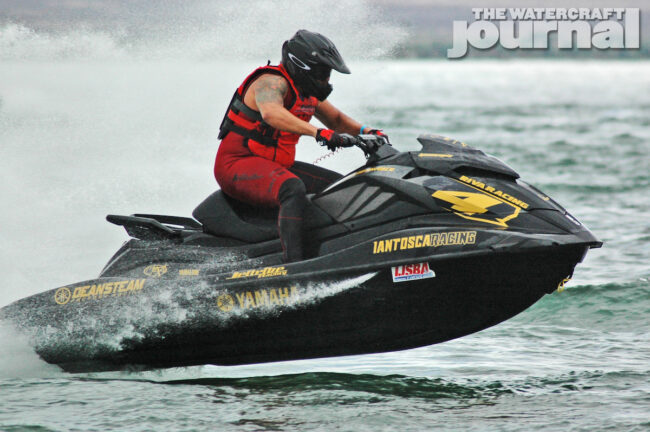
Winning the World title in Pro/Am Runabout Stock is Tory Snyder on his Yamaha FX SVHO. Yamaha GP1800R rider Rasheed Aldawas finished second, and Ermino Iantosca aboard a Yamaha FX SVHO completed the podium sweep.
“For several years now, Yamaha WaveRunners have set the benchmark for true out-of-the-box performance, reliability, and durability on the professional racing circuit,” said Bryce Parker, Yamaha WaterCraft racing manager. “But to do that aboard four completely different platforms as we do is truly exciting and a testament to our engineering and design leadership across our entire lineup.”
In other IJSBA World Finals racing action, Cameron Frame rode his Yamaha EX to a World title in the Pro/Am Runabout 1100 Open class. Fellow Yamaha EX riders Book Sermsuwan and Valentina Lezcano finished 2-3 to complete the podium sweep.
Yamaha swept the Women’s Runabout 11 Stock class with Sophie Francis winning the World title on a Yamaha EX WaveRunners. Also on Yamaha EX’s were Valentina Lezcano and Renee Hill who finished 2-3 respectively.
Fifteen-year-old Reese Giese and 11-year-old Caris Webster made history, winning the first World titles for the four-stroke Yamaha SuperJet in the Junior 13-15 and 10-12 Four-Stroke Lites classes respectively.
And Troy Snyder won his seventh World title aboard a Yamaha FX SVHO in the Vets Runabout class.
Congratulations to the riders, their family members, the racing teams, and the sponsors that make the IJSBA World Finals the focal point on the international personal watercraft racing calendar.
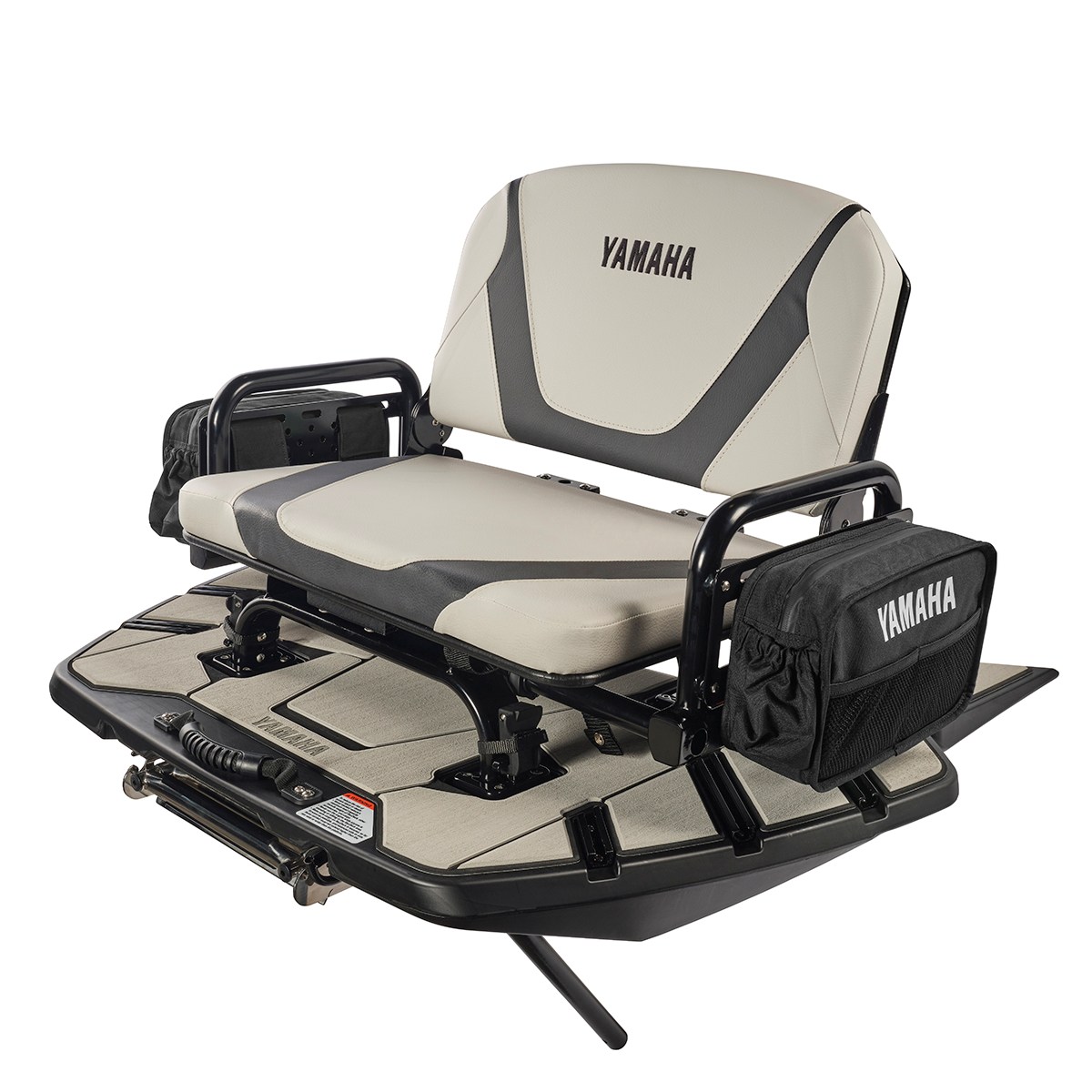
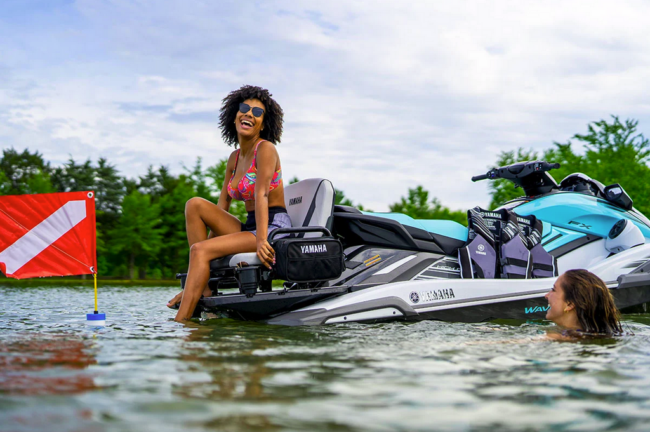
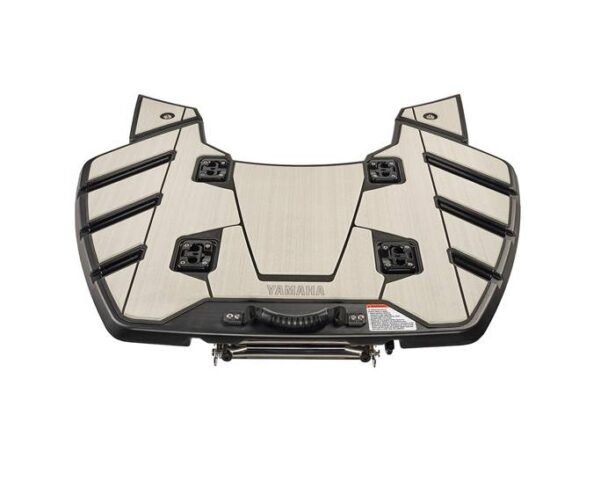
Broward Motorsports Racing is now accepting pre-orders for the Yamaha FX RecDeck and accessories. These are must haves for making your Yamaha WaveRunner FX more versatile and customizing it your way. Broward Motorsports has the complete collection available for pre-order. Get started with the required Yamaha FX RecDeck and build from there.
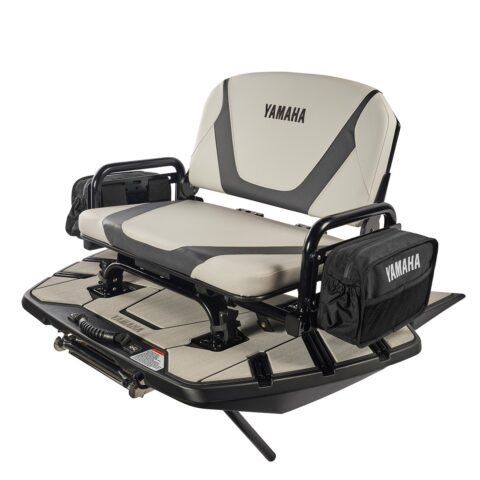
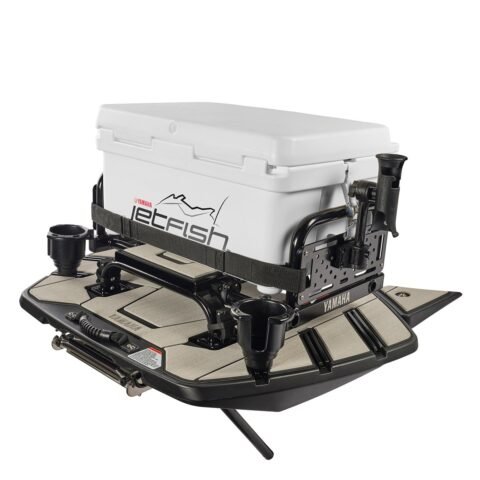
Choose from the Yamaha FX Premium Jetfish Package, which will cost you $1,199.99. It comes with the multi-use rack, Jetfish cooler, mounted rod holders, 2 cup holders, tie-down straps, and mounts. If you don’t want to drop that much cash, grab the more affordable JetFish Package. It has everything but the rack and will set you back $499.99. If you want more comfort when you stop to chill out on your ski, pre-order the Yamaha FX RecDeck Lounge Package. Style in comfort while you’re drinking a cold one on the water. It comes with a pair of saddlebags and a cooler, providing more room for those extra sundries. They’ll be in reach while you’re lounging. The Lounge Package is $499.99.
The RecDeck Multi-Use Rack is a great standalone solution for someone who doesn’t need a complete package. $599.99 gets you this customizable rack. Add a pair of insulated RecDeck Rack saddle bags for $99.99. If you want to drop an occasional line and don’t need a lot of fancy stuff, pre-order a Track Mounted Rod Holder for $29.99 to go with your new Yamaha FX RecDeck. We suggest pre-ordering as soon as possible.
With the current issues with shipping, you’ll want to order now to make sure you get on the list for these great products. Shipping will begin this month. Don’t forget that the Yamaha FX RecDeck accessories require the RecDeck for linking. Head to the Broward MotorSports Racing Website to submit your order now!
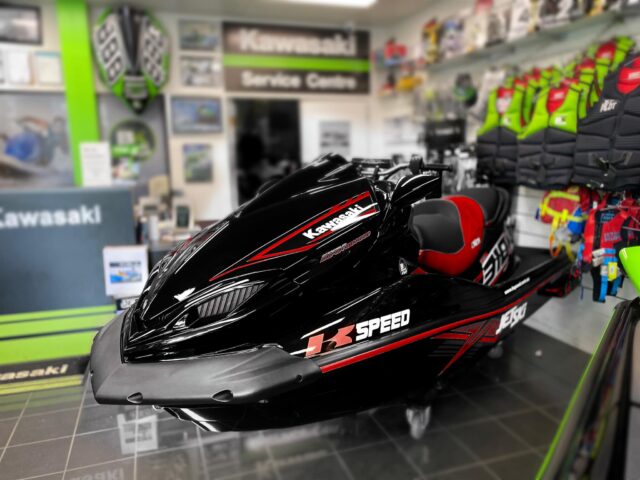
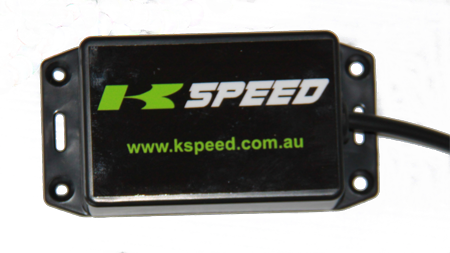
Brisbane Kawasaki has the Kspeed Speed Control Override Module (SCOM) available for the Kawasaki Ultra 310 and 310 models. The Kspeed SCOM is the right product for you if you are looking to easily bump up the top speed of your JetSki. The module removes the restrictive speed control function on all 300 and 310 Ultra models.
The SCOM will provide a noticeably significant increase in top speed. You can even keep your stock ECU and the module does not require any additional modifications. The SCOM does not affect the accuracy of your speedometer, nor will it affect Eco Mode or Cruise functionality. Original dash functions are maintained as well.
Purchase the Kspeed SCOM for $250 AUS (or $188 USD) and soup up your Ultra! You can’t go wrong with the Brisbane Kawasaki team. They do not sell subpar components. If they wouldn’t put it on their skis, they will not sell it. Their SCOM’s are made locally in Brisbane and use genuine Kawasaki pins that won’t damage or stretch your ECU harness. Instructions are included. Check out the Brisbane Kawasaki website to order your Kspeed SCOM or to look at their other products.
If you have any questions, you can email the guys at [email protected]. They will be glad to assist you.
Do you love jet skiing? Do you wake up thinking about jet skiing and go to bed each night thinking about the same thing? If so then The Watercraft Journal is wanting to pay you upwards to $2,000 a month just for writing about your favorite thing in the whole wide world. And if you’ve got a specific affinity for freeride and freestyle, we’ve got a whole other job for you. All you gotta do is put in an extra hour or two a day worth of work, and BAM! It’s that easy.
Because The Watercraft Journal continues its aggressive industry-leading daily (Monday-through-Friday) publishing schedule, and we need as much help as we can get to continue to entertain and inform our ever-growing readership, we’re excited to announce that we’re hiring! We’re looking for self-motivated, dedicated enthusiasts looking to work with the single most popular PWC magazine on the entire friggin’ planet to help provide a focused spotlight on our sport’s best freeride/freestyle riders, manufacturers and events! Here are the details below:
News Editor Shaw Group Media, the publisher of The Watercraft Journal (watercraftjournal.com) is looking a self-motivated, energetic person to hire as News Editor. The News Editor must have a strong interest in the personal watercraft (PWC) industry, be at least somewhat familiar with proper terminology, technology and persons/companies therein, or willing to learn quickly.
The News Editor must be able to turn around news content into fast, legible and informative written content for The Watercraft Journal. Applicants are encouraged to have several social media feeds providing leads for potential news that the rest of the Editorial teams might not have access to. An ongoing Google document is regularly updated with already pre-approved news topics to be written about, as well.
Riding ability, photographic talent or writing experience is appreciated and encouraged, but not necessarily mandatory.
The News Editor position is a 1099 freelance/subcontractor position and will be paid twice a month per a predetermined scale for each written article. There will be a 90-day trial period for every applicant to evaluate work ethic, determination and commitment to providing superior, reliable news-worthy PWC content for The Watercraft Journal audience.
All serious inquires are to email introductory “cover letter” and resume to [email protected].
Freeride/Freestyle Editor Shaw Group Media, the publisher of The Watercraft Journal (watercraftjournal.com) is looking a self-motivated, energetic person to hire as Freestyle/Freeride Editor. The F/F Editor must have strong ties to this segment of the personal watercraft (PWC) industry, be familiar with proper terminology, technology and persons/companies therein. The F/F Editor should be the “expert” in this subject, and be able to field questions as they come in.
The F/F Editor doesn’t necessarily need to attend each and every event, but personal attendance is strongly encouraged. Likewise, the F/F Editor should be personally responsible for providing most F/F-specific news and coverage, but doesn’t need to be the sole contributor to The Watercraft Journal’s F/F coverage. The F/F Editor will work closely with the rest of the Editorial and Sales teams to develop new feature content and welcome in F/F-specific potential advertisers.
Riding ability, photographic talent or writing experience is appreciated and encouraged, but not necessarily mandatory.
The Freeride/Freestyle Editor position is a 1099 subcontractor position and will be paid twice a month per a predetermined scale for each written article. There will be a 90-day trial period for every applicant to evaluate work ethic, determination and commitment to providing superior, reliable freeride/freestyle PWC content for The Watercraft Journal audience.
All serious inquires are to email introductory “cover letter” and resume to [email protected].
Let’s be fair, not everyone can afford to buy a brand new ski every two or three years – nor do others really want to. Even a 10-year-old PWC is a marvel of hull design, ergonomics and fly-by-wire electronic convenience. Yet, as things manage to go, too much time outdoors can make an older ski look pretty haggard.
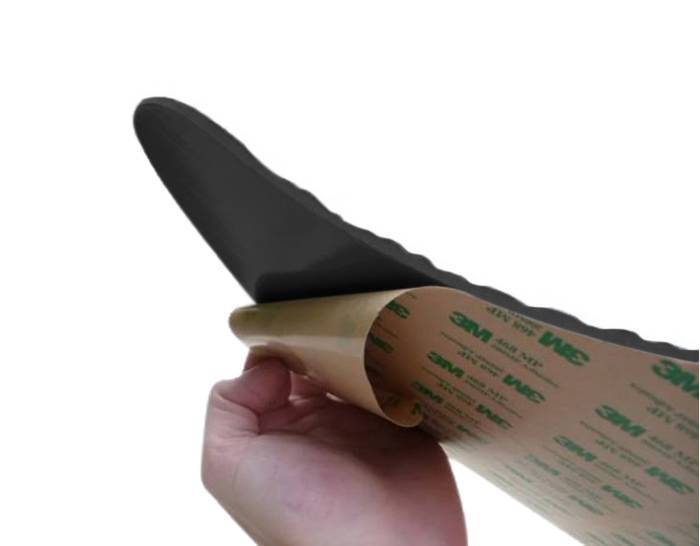
Recently, RIVA Racing announced its got Hydro-Turf peel-and-stick mat kits for all 2009-through-2017 S3-based Sea-Doos on sale. And yes, this includes all suspension-equipped models as well (iS, aS and S) – and all for an incredible $65 a pop! That’s literally half of the previous asking price. Not too shabby, eh?
These Hydro-Turf traction mat kits are a great replacement (and upgrade) from the rather thin foam padding these skis came from the factory with. Made from extremely durable, high-density foam, each kit comes complete and in a UV-resistant color of your choice. (RIVA does note that due to manufacturing delays, kit orders will be shipped approximately 4-6 weeks from date of order.)
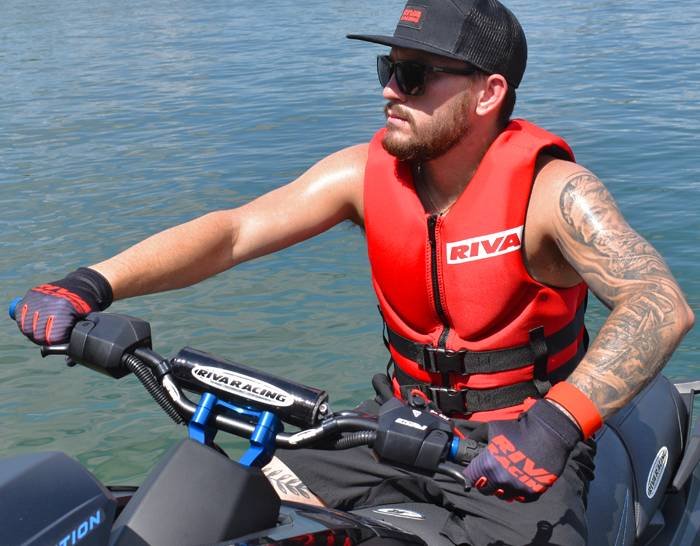
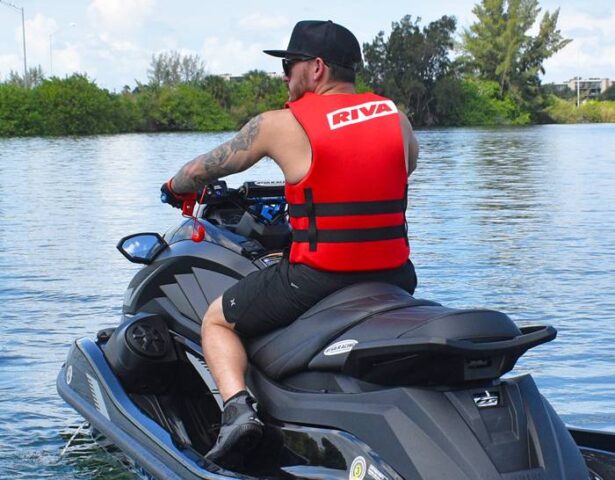
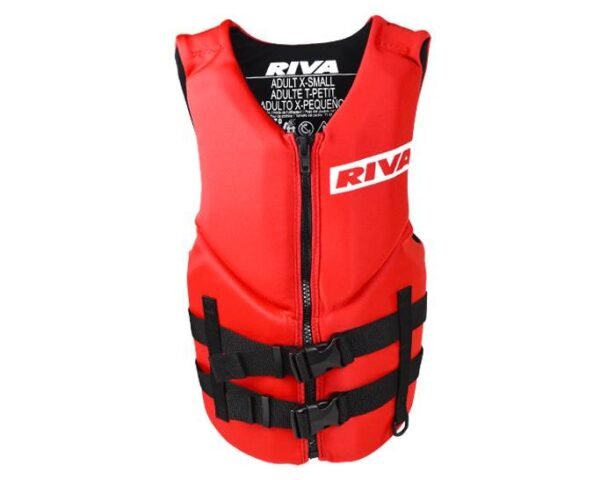
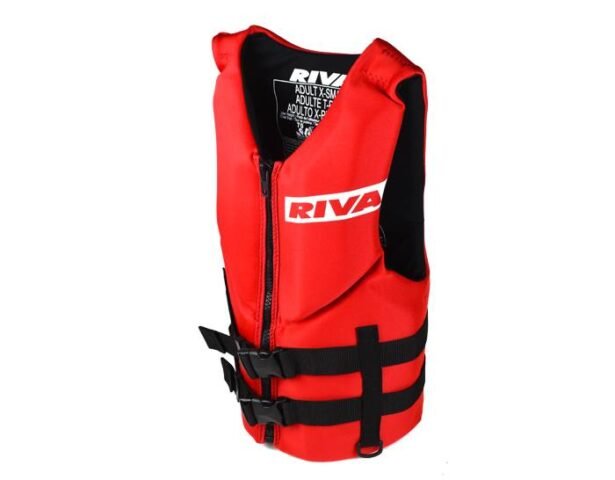
A quality PFD (personal flotation device) is something you’ll enjoy for several times throughout the year, if not longer. And for that, they need to be comfortable as much as they are well-built. RIVA Racing’s BioLite neoprene life vests are exactly that, and unlike other brands struggling to meet demand, these are in stock.
Over the past decade, shoppers have found neoprene vests to be demonstrably more comfortable than nylon, as they breathe easier (allowing them to dry quicker so mold won’t develop) and don’t chafe or scratch the skin. Even better, the RIVA BioLite vests use a proprietary neoprene that dries quicker than most leading brands!
Each BioLite vest ($64.95ea. USD) features wide arm holes and segmented panels for maximized range of motion, come in either red, black or blue, and are exclusively front entry, with a sturdy front zipper and two buckles and adjustable straps. Other features include a PWC lanyard attachment D-ring and being fully approved by the USCG.
What do you do when you’re on the St. Johns River in Florida and you’re hungry for pancakes? Well, if you’re Bob Broeking and friends, you jump on your Yamaha WaveRunners and take the scenic route to The Sugar Mill restaurant in Ponce de Leon Springs State Park. They put in at the Astor Public Boat Ramp and were soon underway, taking a ride along the crystal blue water of the St. Johns River.
The group traversed through beautiful Lake Woodruff and into Spring Garden Creek, which was bordered by lush vegetation. They soon entered the very shallow Spring Garden Lake where they had to slow down. The next stop was Ponce de Leon Springs State Park and The Sugar Mill Restaurant. The skis were docked and soon mounted again due the two and a half hour wait for pancakes. After a quick dive into the crystal-clear waters, it was time to put plan B into action.
This meant taking the scenic route home and searching for food on the way. It was another pretty ride aboard their Yamaha FX and VX Cruiser HO’s. They ended up at Sonny’s BBQ, a favorite among Floridians. Broeking and crew had never been there, so they were in for a treat. All in all, it was a great July day for a trip on the St. Johns River. Check out their video for a full recap of the trip.
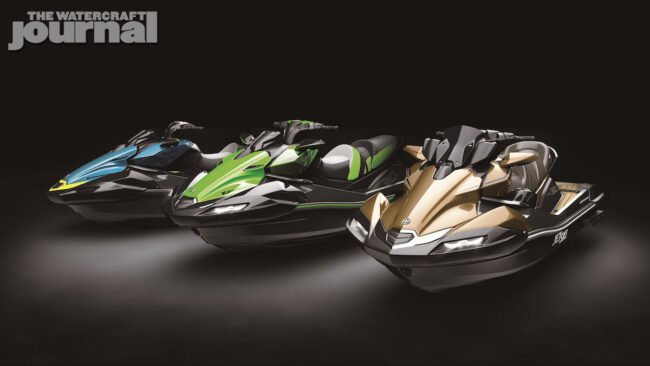
It’s times like these that we at The Watercraft Journal live for. Despite having what many would believe to be all of possible leaked details and inside knowledge prior to the 2022 reveal, Kawasaki Motor Corp. still managed to blow our socks off – and then some – with this new crop of exciting new watercraft. The brand which many online commentors claimed had “gone stale” is charging hard into 2022 with a trio of supercharged JetSkis that rival even the best offerings from Sea-Doo and Yamaha.
…and no, that’s not hyperbole. In an earlier video, we had quoted a competitor’s product development manager as he stated that consumer polling indicated a overwhelming shift in customer demand for “luxury” versus outright “stripped-down performance.” Clearly, this same paradigm shift has been observed by Kawasaki as well, because the 2022 lineup pushes the boundaries of technological incorporation and rider engagement not just for them, but for the whole industry.
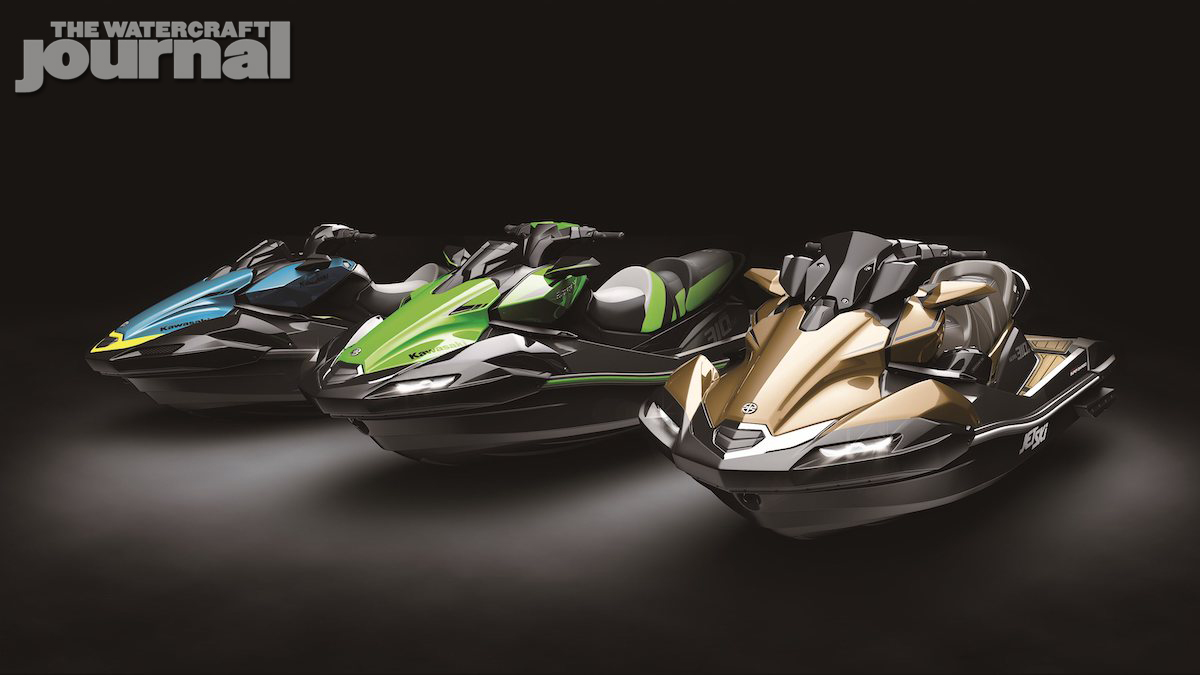
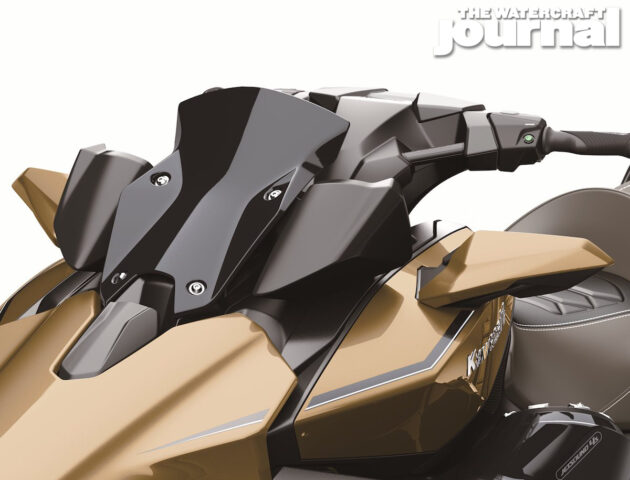
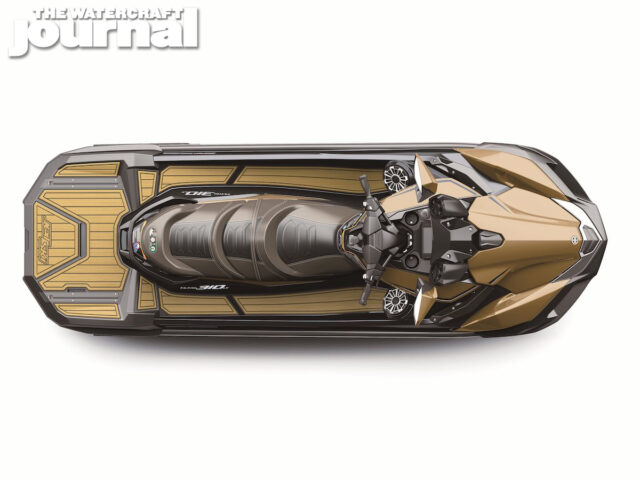
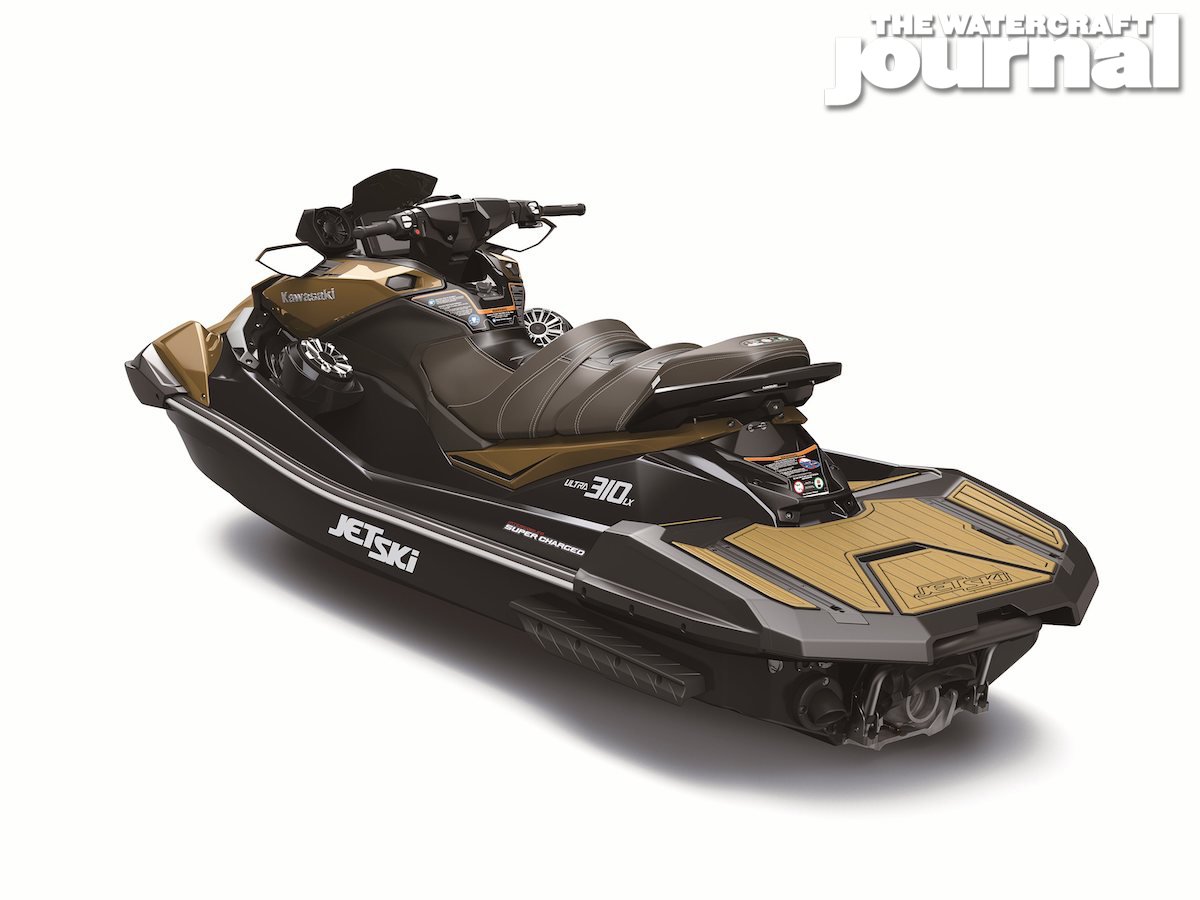
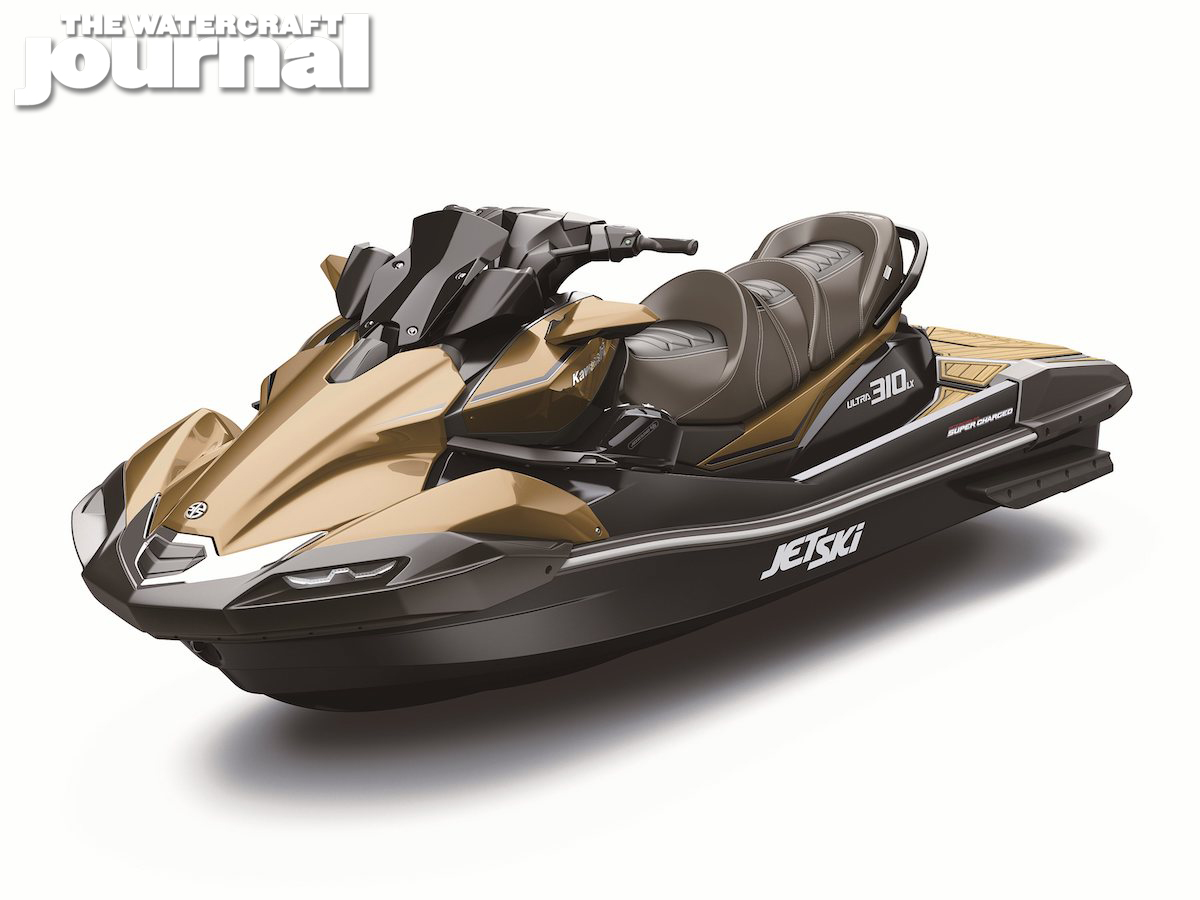
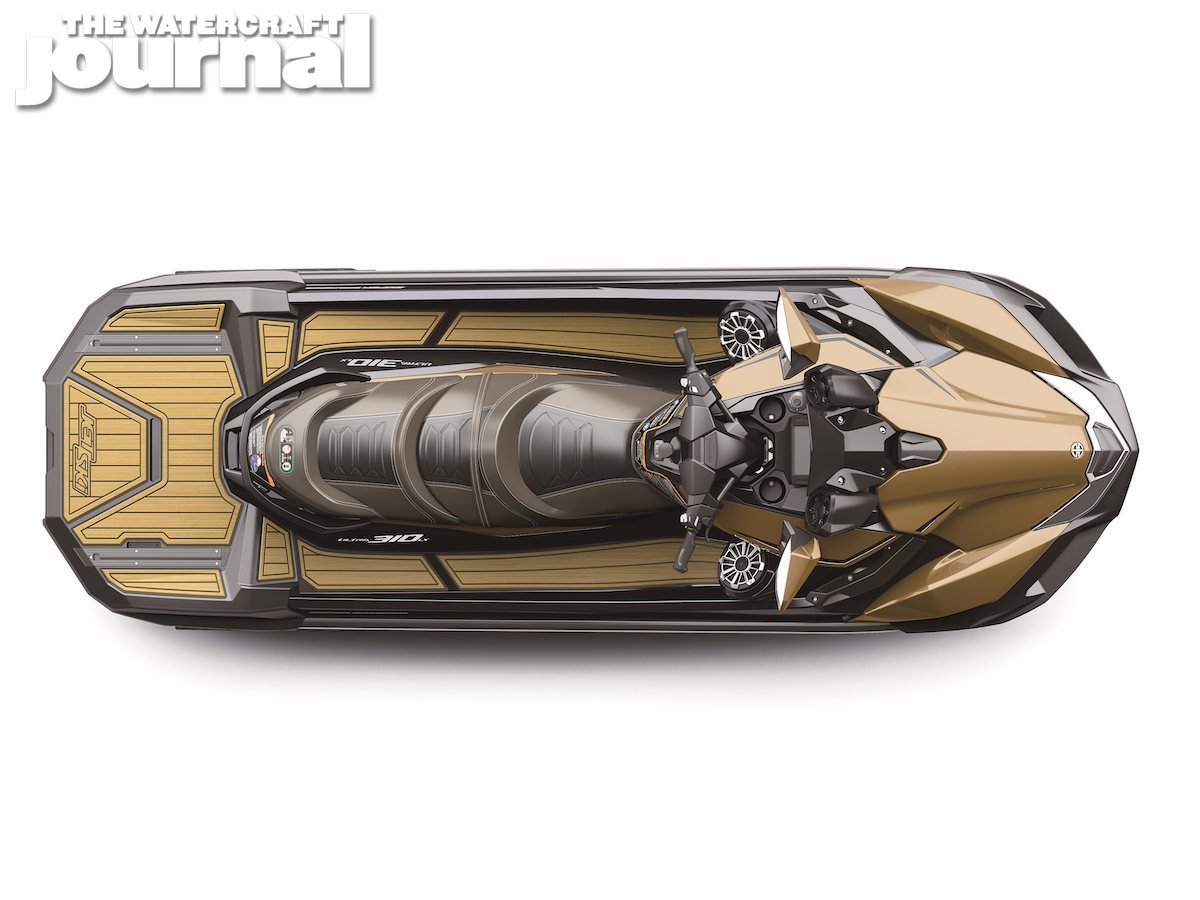
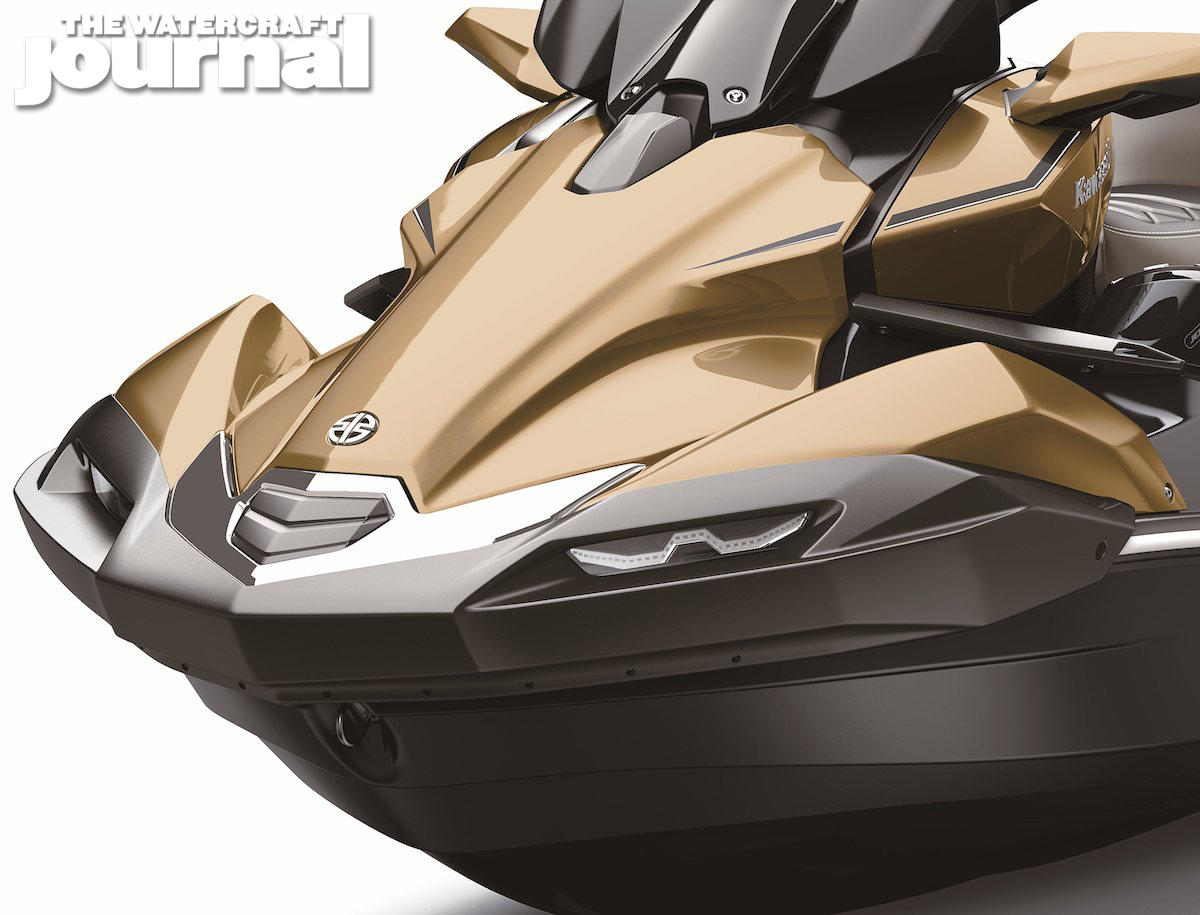
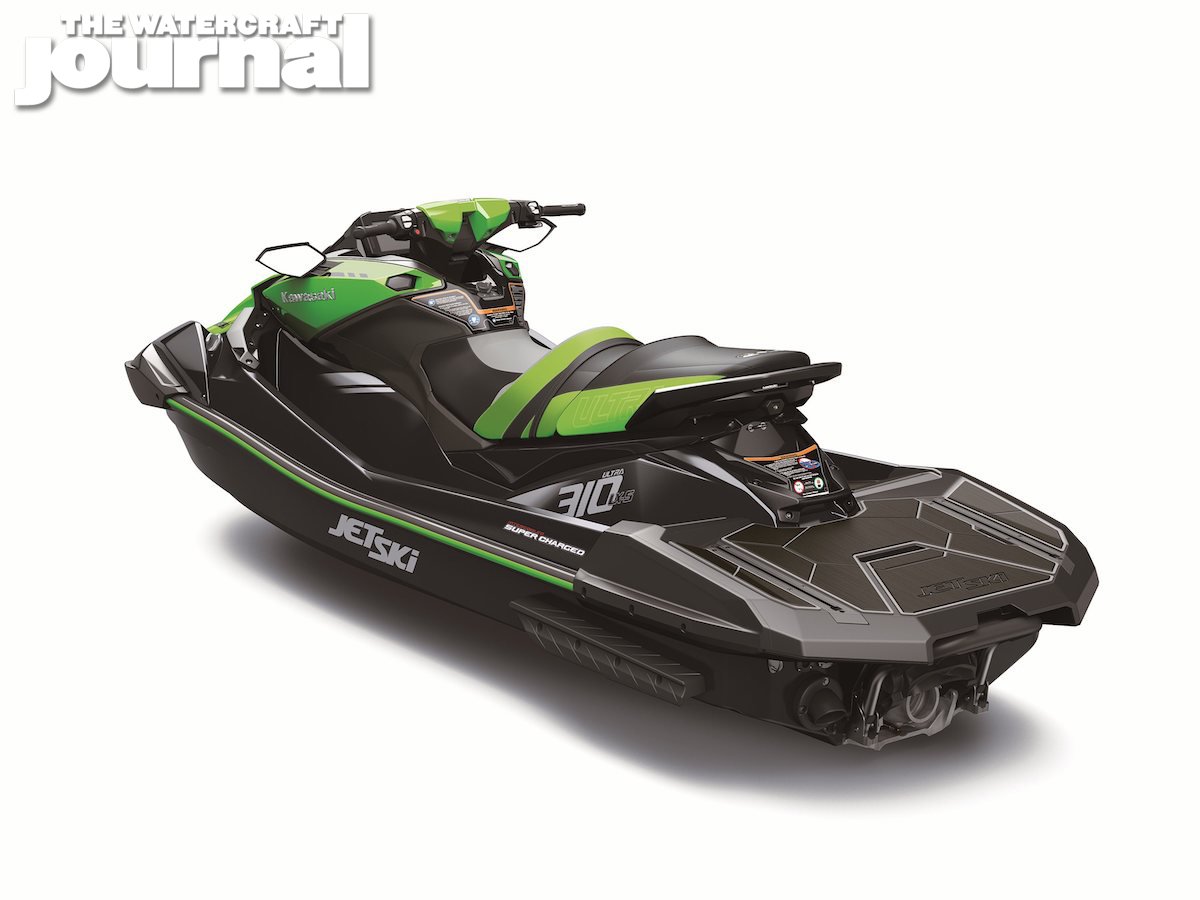
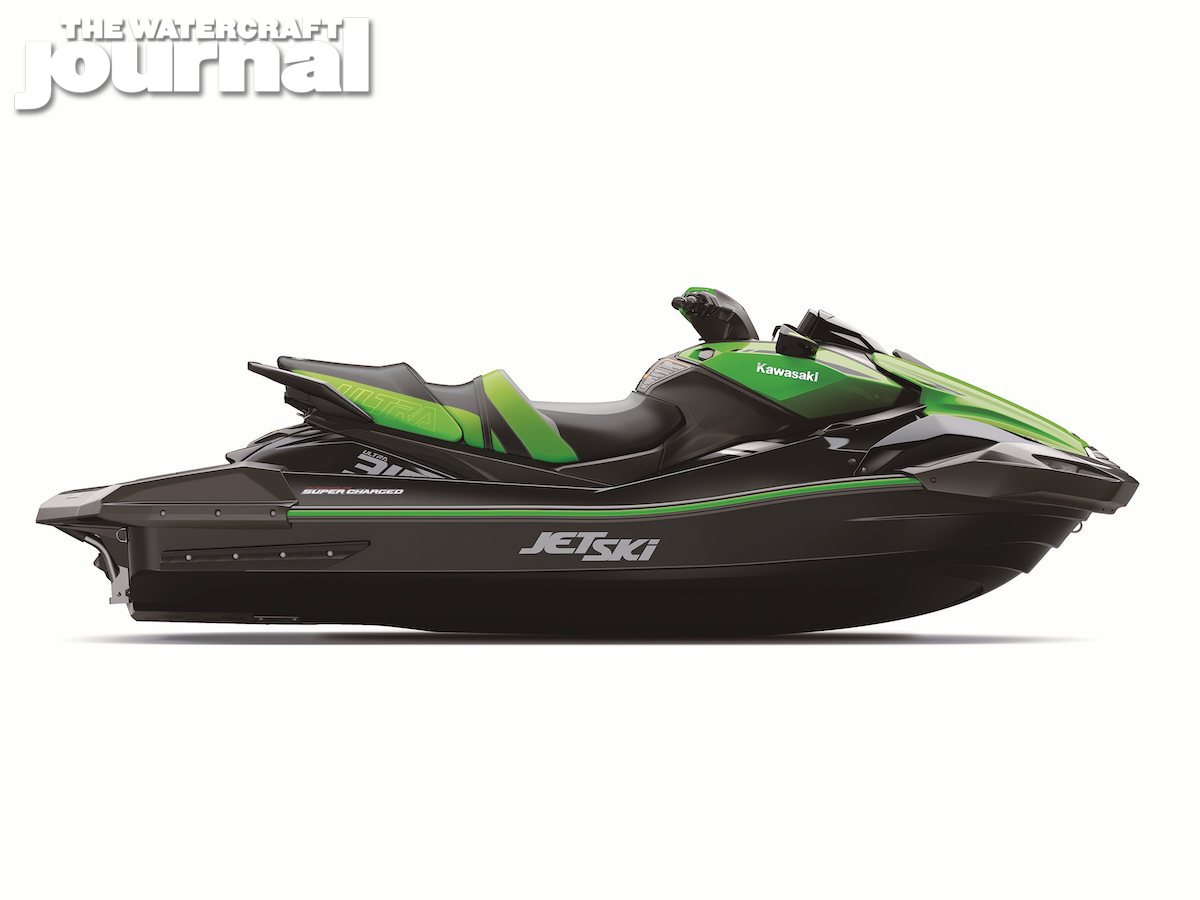
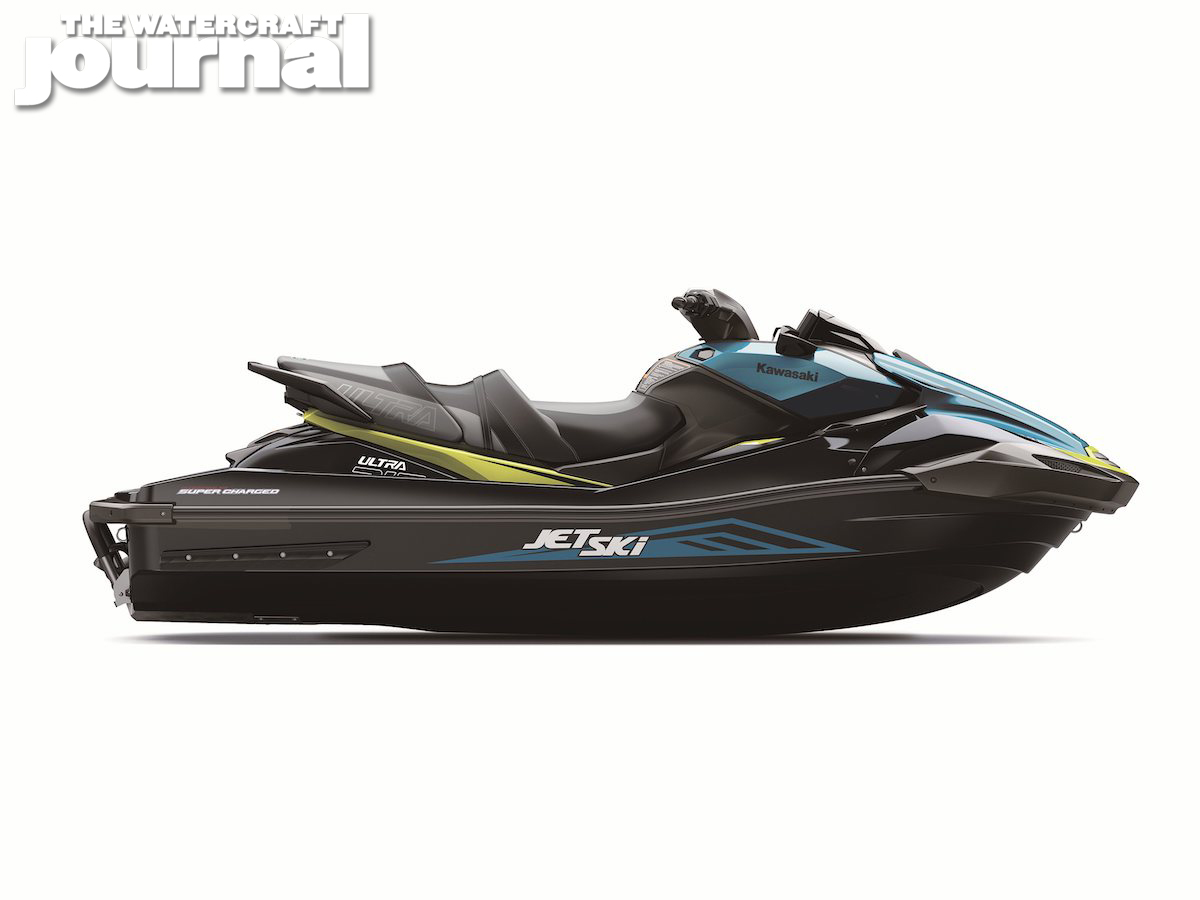
Kawasaki Motor Corp. swings for the fences with its completely redesigned Ultra 310LX JetSki in Ebony/Gold with an MSRP of $19,199.
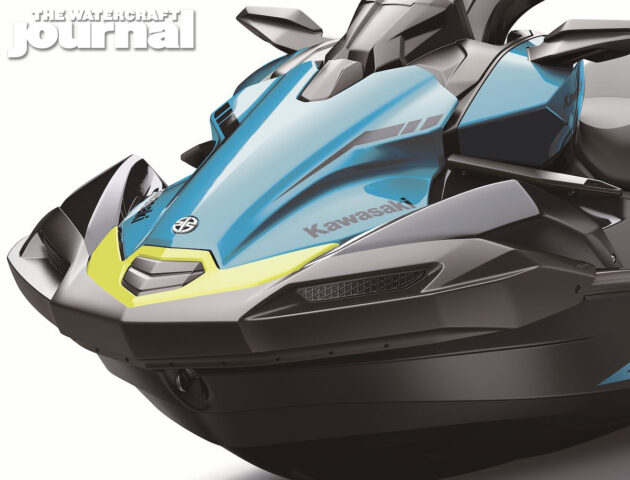
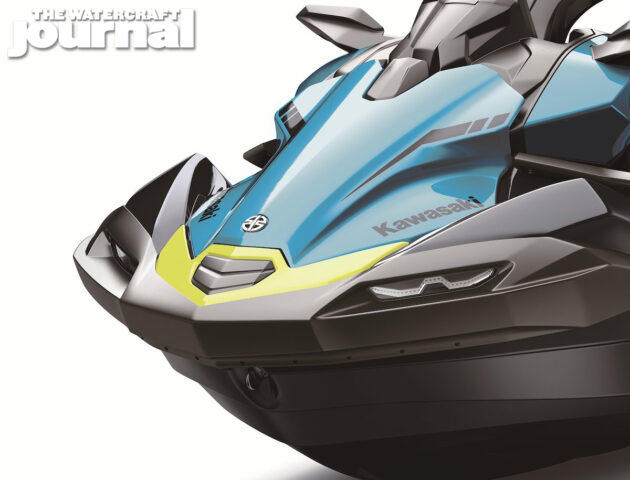
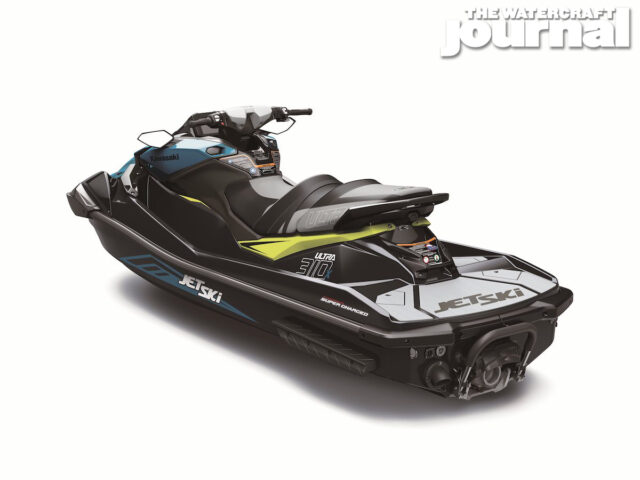
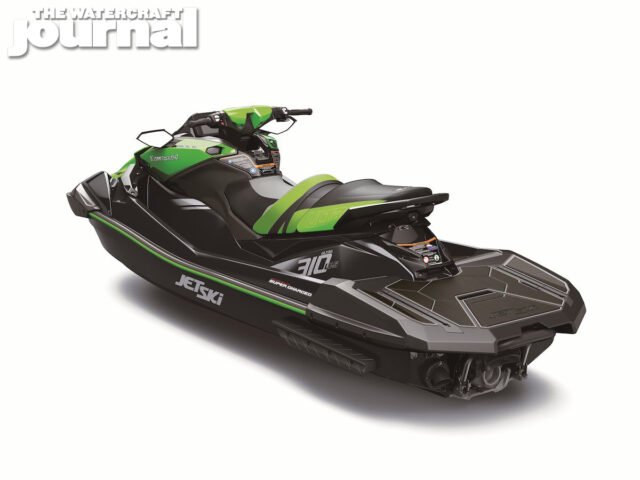
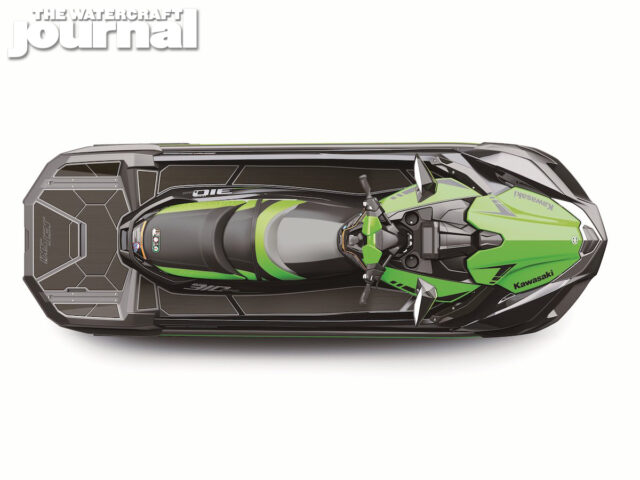
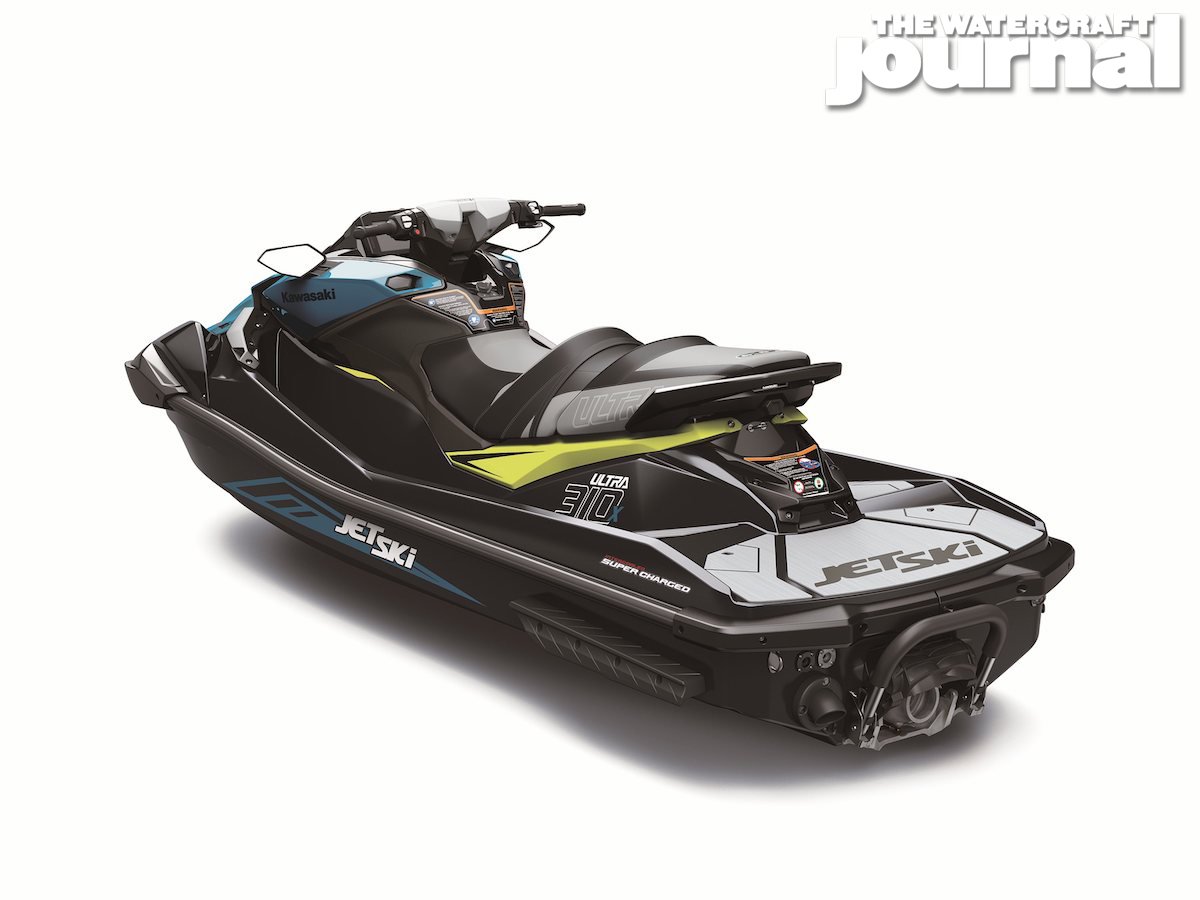
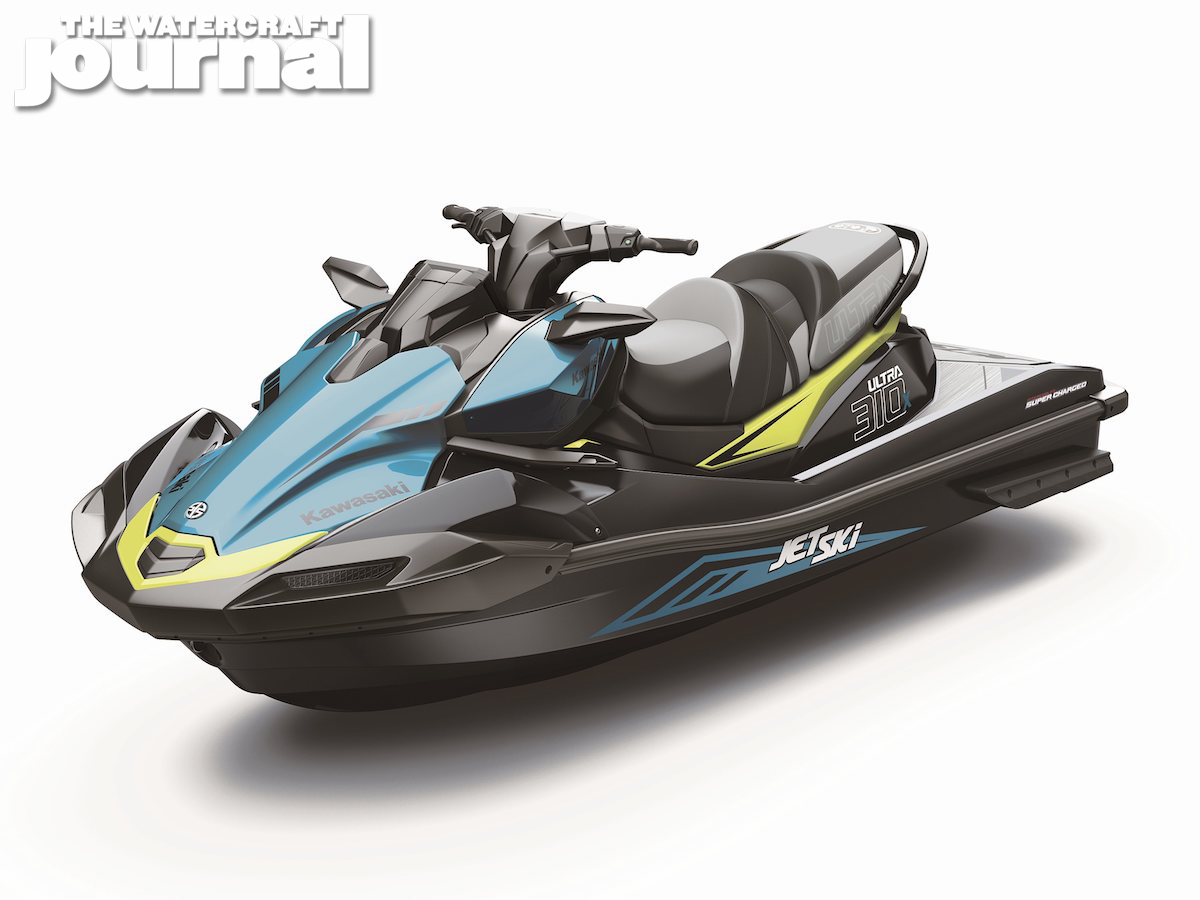
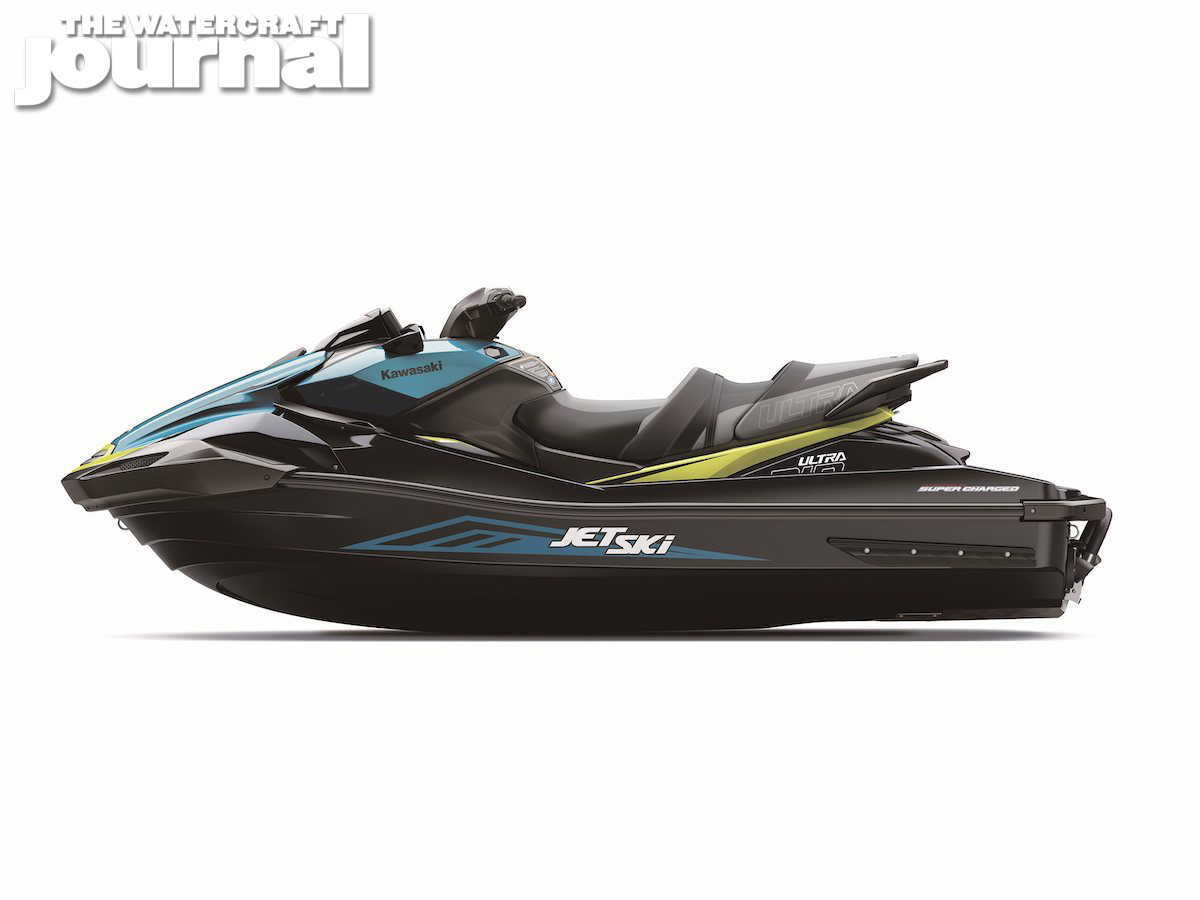
Above left: Wearing the ever-familiar Ebony/Lime Green livery is the 2022 Ultra 310LX-S with an MSRP of $18,199, which rounds out the two luxury tiered JetSkis. Above right: Although nowhere nearly as equipped, the Ultra 310X (sold in Ebony/Turquoise) comes standard with more features and accessories than some higher-tiered competitors, priced with an MSRP of $17,199.
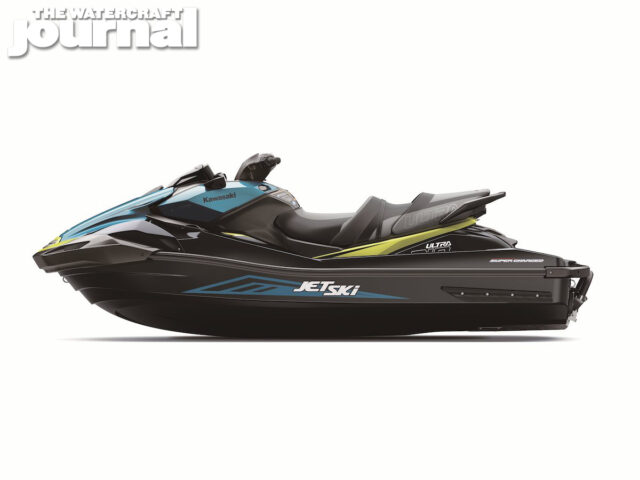
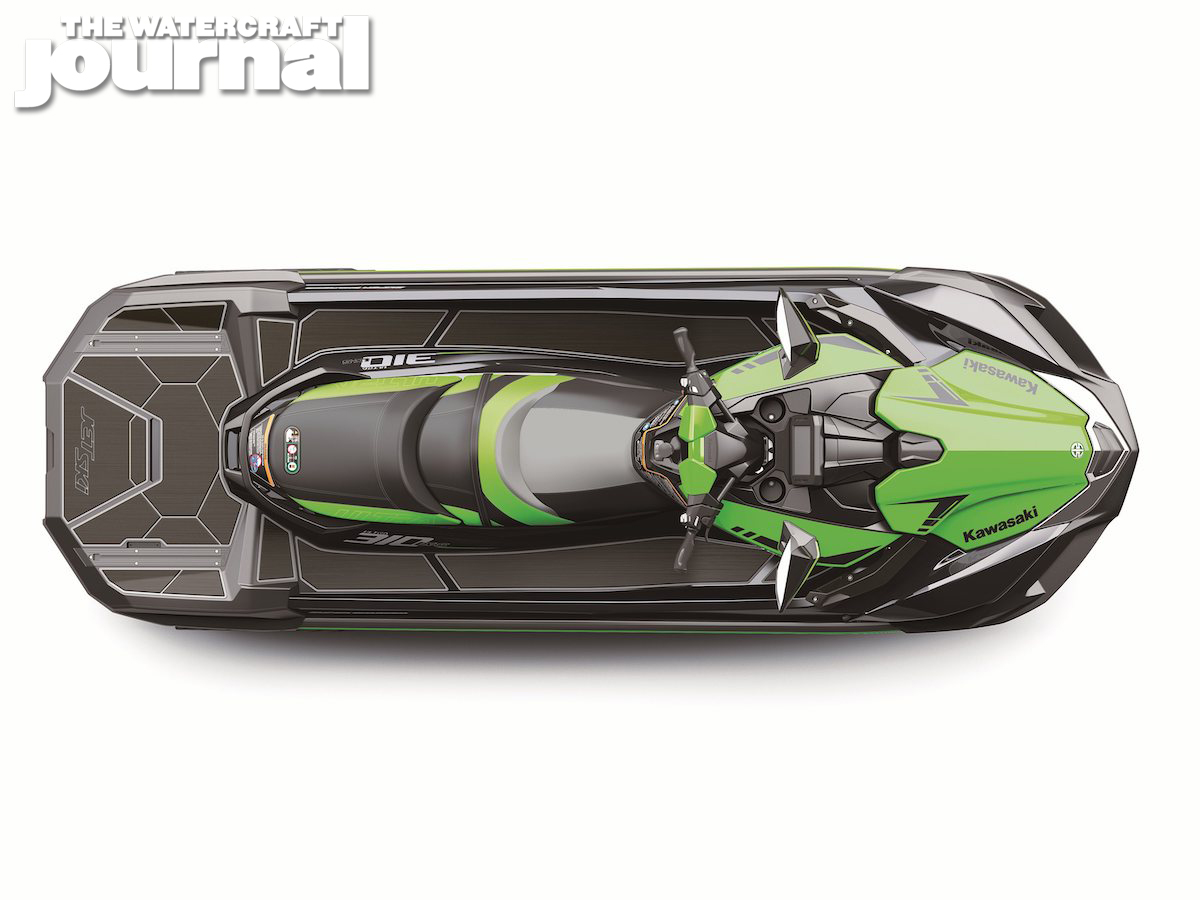
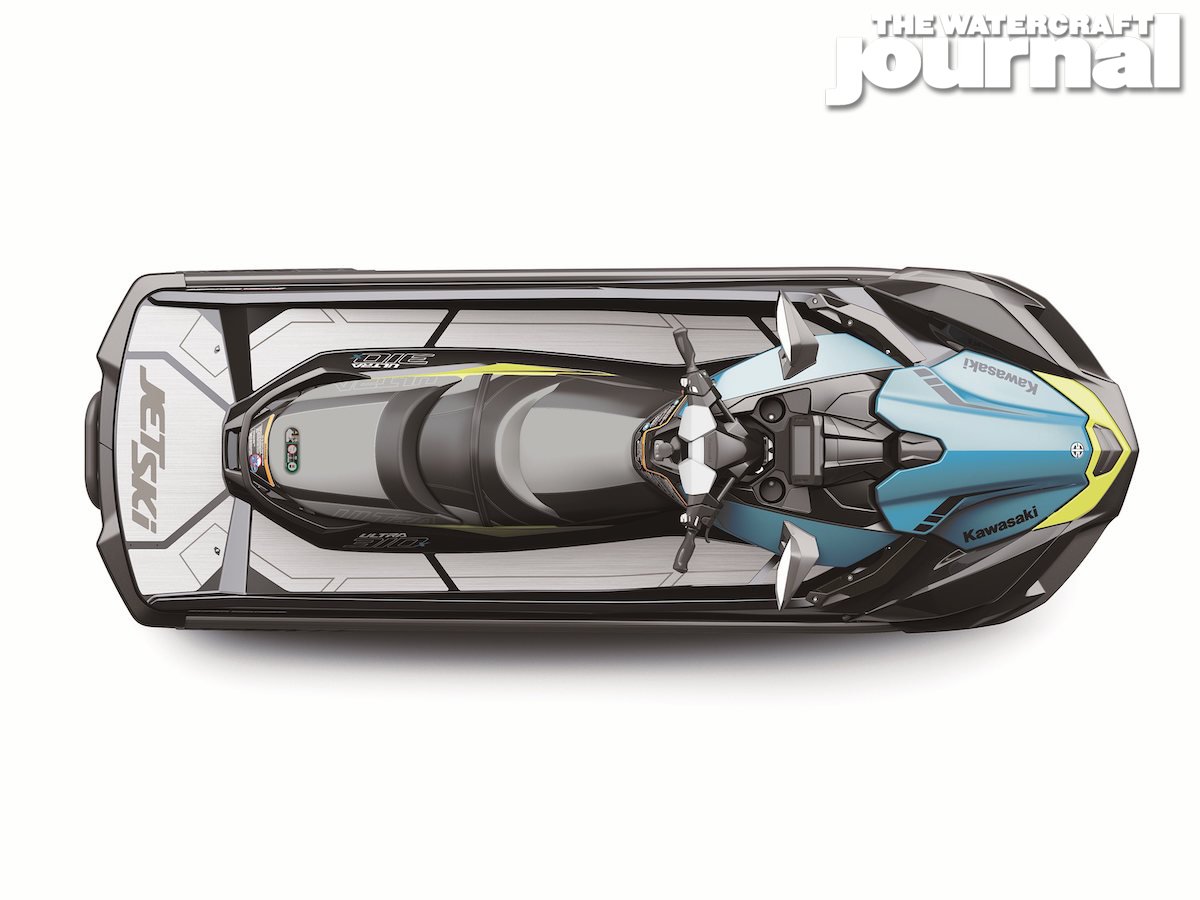
For 2022, the Ultra 310 lineup consists of three models: the Ultra 310X (in Ebony/Turquoise with an MSRP of $17,199), 310LX-S (Ebony/Lime Green at an MSRP of $18,199), and the 310LX (Ebony/Gold with an MSRP of $19,199). Beginning with the features shared by each of these, the Ultra 310s retain its industry-leading 22.5-degree deadrise, rough water/open ocean-mastering true Deep-V hull design hewn from durable FMC fiberglass with a newly reinforced bow. Above the bondline is an entirely redesigned deck:
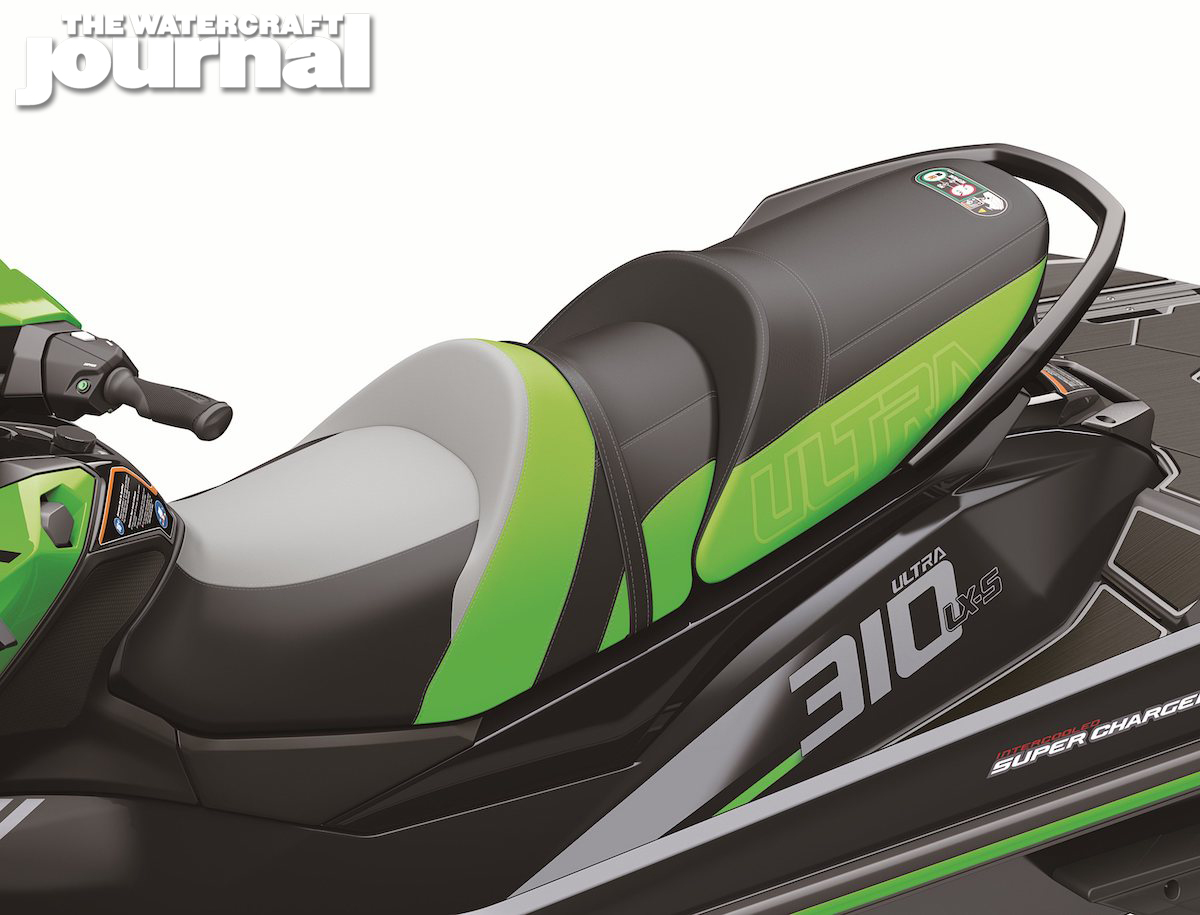
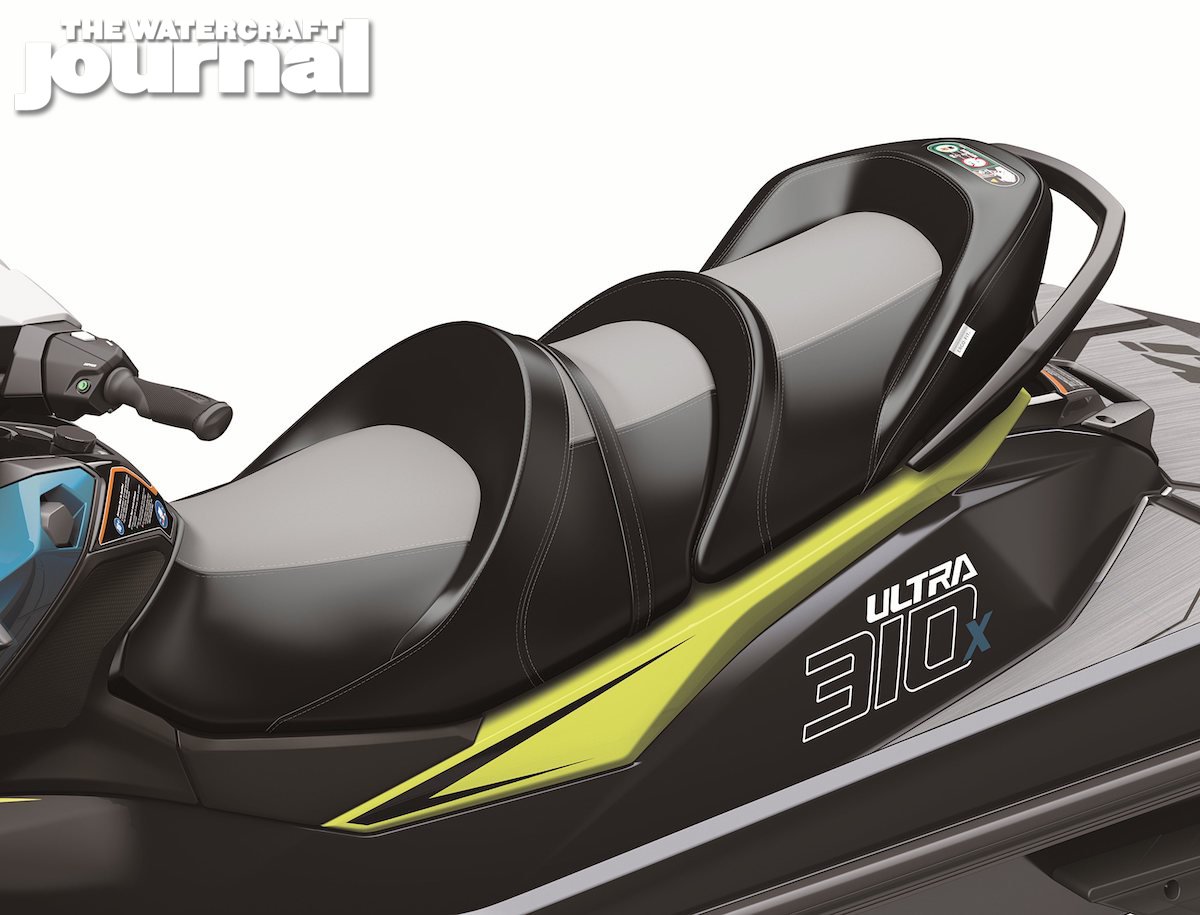
Kawasaki has lowered the overall deck height by 1.38-inches and narrowed the new bi-folding two-piece, three-person seat by an impressive 3.15-inches at the knee, allowing riders a more natural seating position as well as more clearance for stand-up riding. In addition to the redesigned shape, every seat is sculpted from a newly revised formula of urethane foam providing deeper hip support and improved jolt and vibration absorption from the advanced padding.
Above: Seating for the 310LX and 310LX-S is a whole new experience, as every saddle is over 3-inches more narrow (at the knees), sculpted from a new urethane foam formula for better support and comfort, and features the two-piece folding track (for the back seat) first debuted on the 2020 STX models.
Above: Amazingly, Kawasaki engineered all of the luxury features on the LX to be readily and easily added to the Ultra 310X and LX-S through its Genuine Accessories catalog.
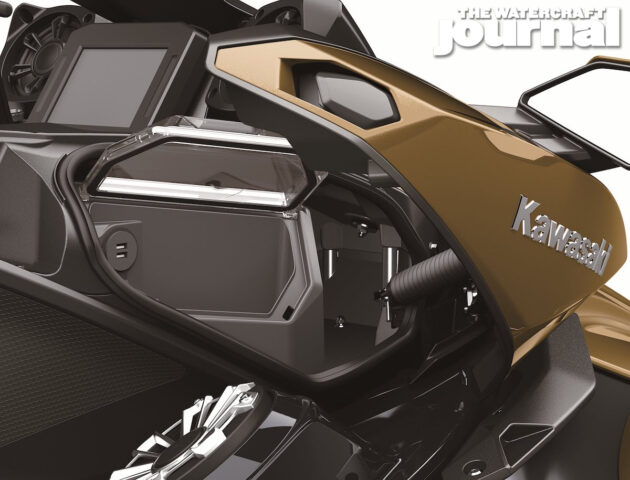
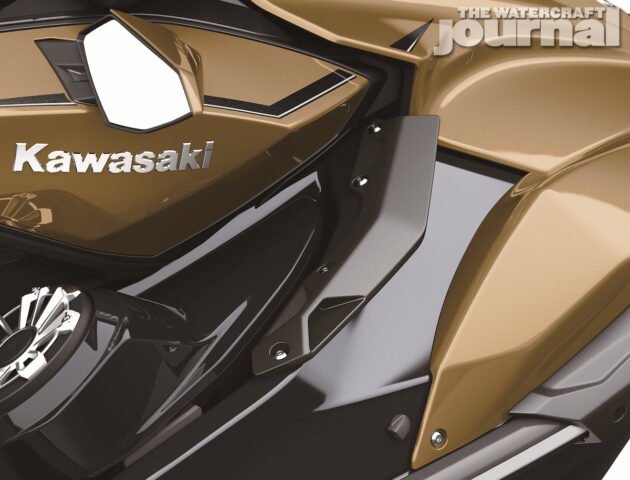
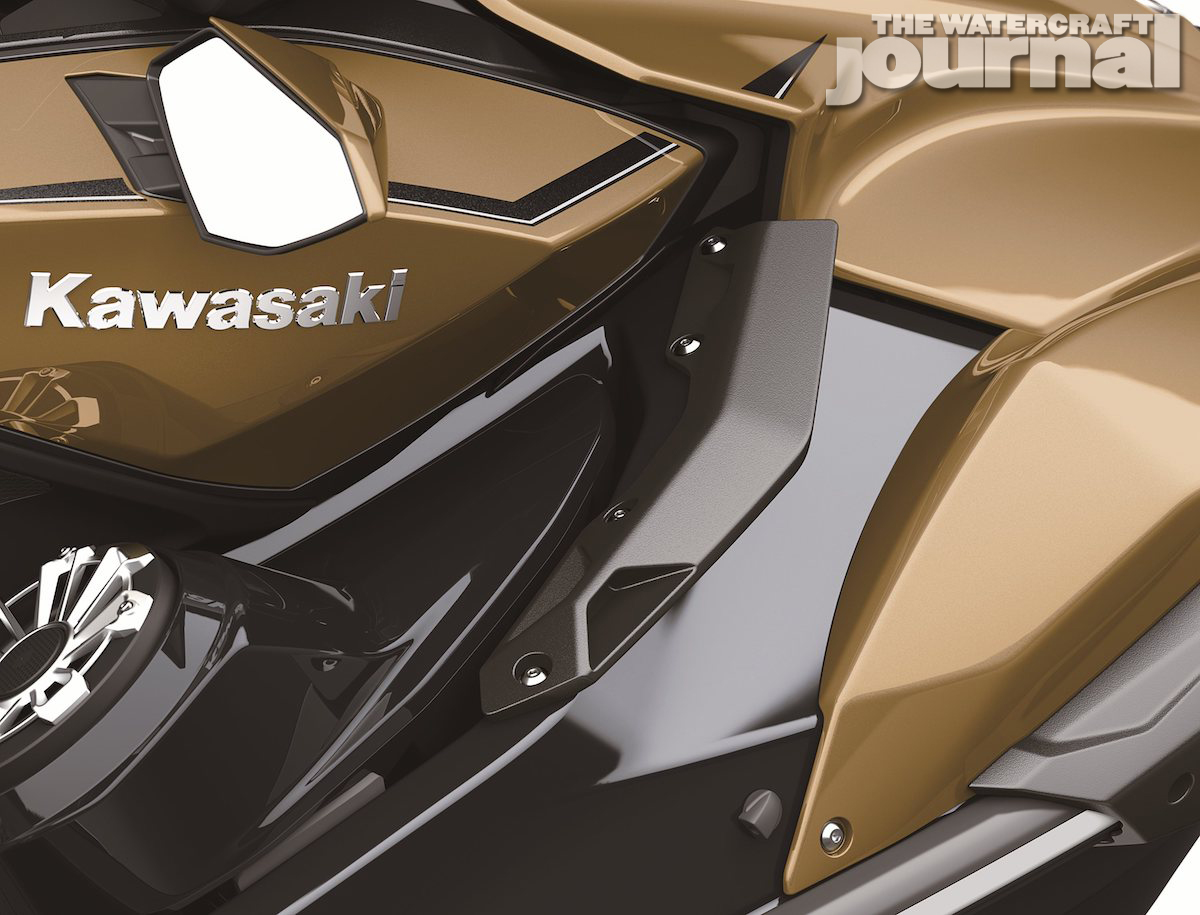
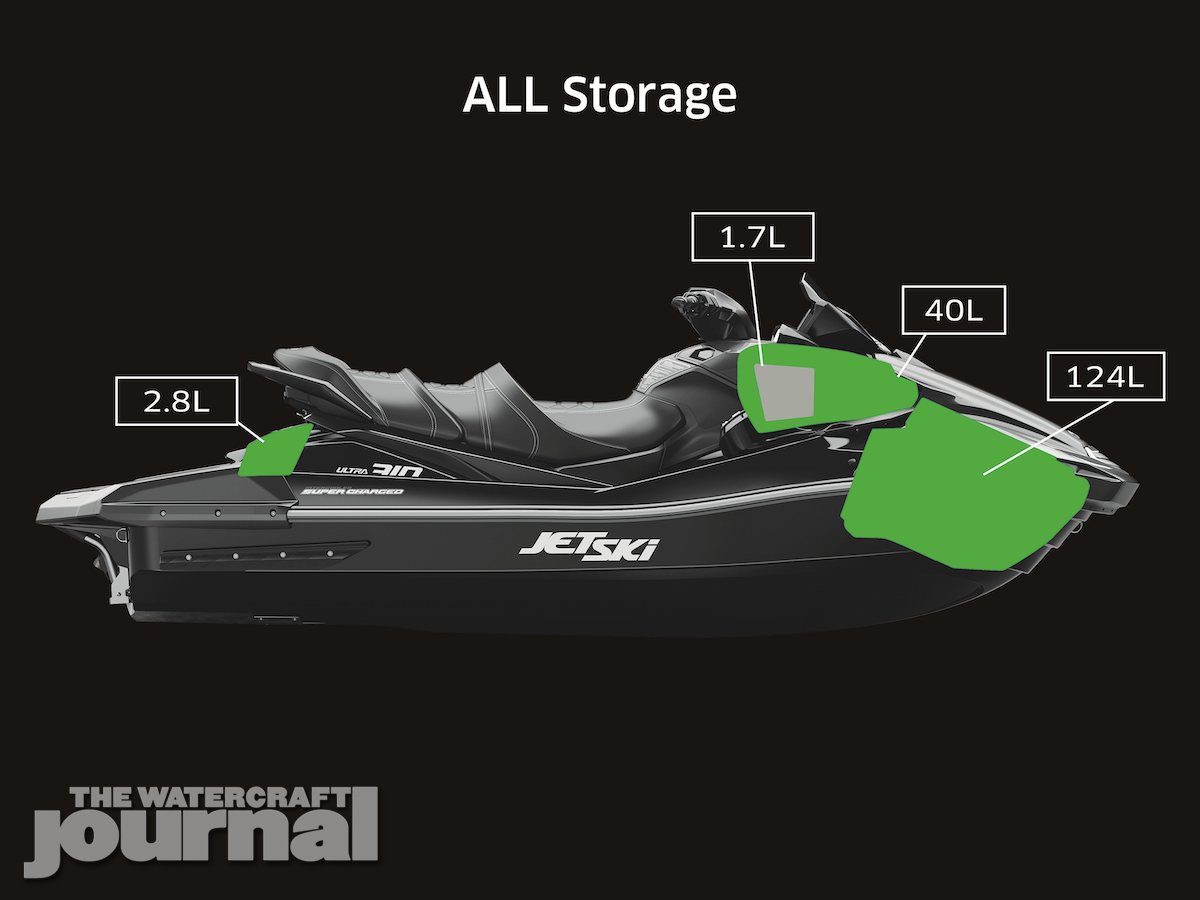
Large inverted coves at the driver’s knees bloom into colored fairings that open. Opening upwards on gullwing-style hinges, the new fairing compartments hold a combined 10.6-gallons of storage, the right-side including a half-gallon sized watertight box for your phone or wallet, and in the case of the LX, a pair of USB ports. Fore of these compartments is the 32.8-gallon bow storage. A molded-in open access pocket adds another 2.8-liters (0.7 gallons) of “wet” storage – ideal for a dock line.
All of this adds up to 44.5-gallons of storage, quite a bit shy of the previous model’s 60-gallons, yet all of which far more accessible. Kawasaki did note that the 2022 models will carry 21.1-gallons of fuel, which is half a gallon more than previous. A larger, more open-access engine compartment eliminates the previous models’ removable tub once found beneath rear passenger seat reducing the overall storage further.
Above left: Glove box 2.0! All of Kawasaki’s Ultra 310 JetSkis now feature dual glove boxes, now accessed through gullwing-style doors beneath the fairings. Providing 10.5-gallons of storage alone, these incredibly easy-to-access compartments do not require doubling over the handlebars or reaching deep inside of a center bucket to reach a bottle of sunscreen. Above right: All Ultras include a water-tight phone/wallet case, which in the case of the Ultra 310LX includes dual USB ports (which can be added on later as an accessory on the 310X and 310LX-S).
A molded-in open access pocket (found just beneath the tow eye – pictured) adds another 2.8-liters (0.7 gallons) of “wet” storage – ideal for a dock line.
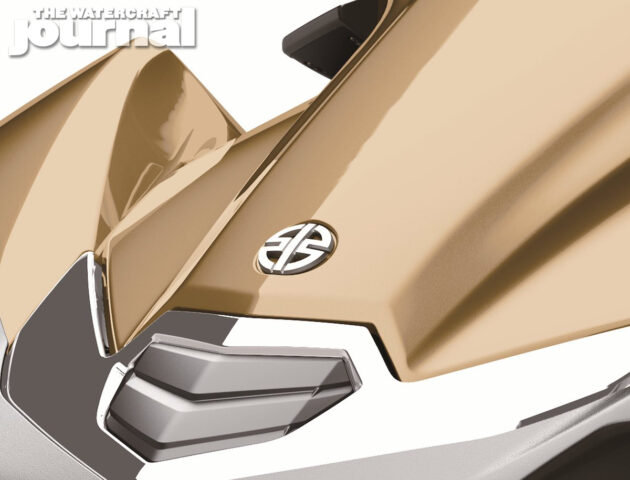
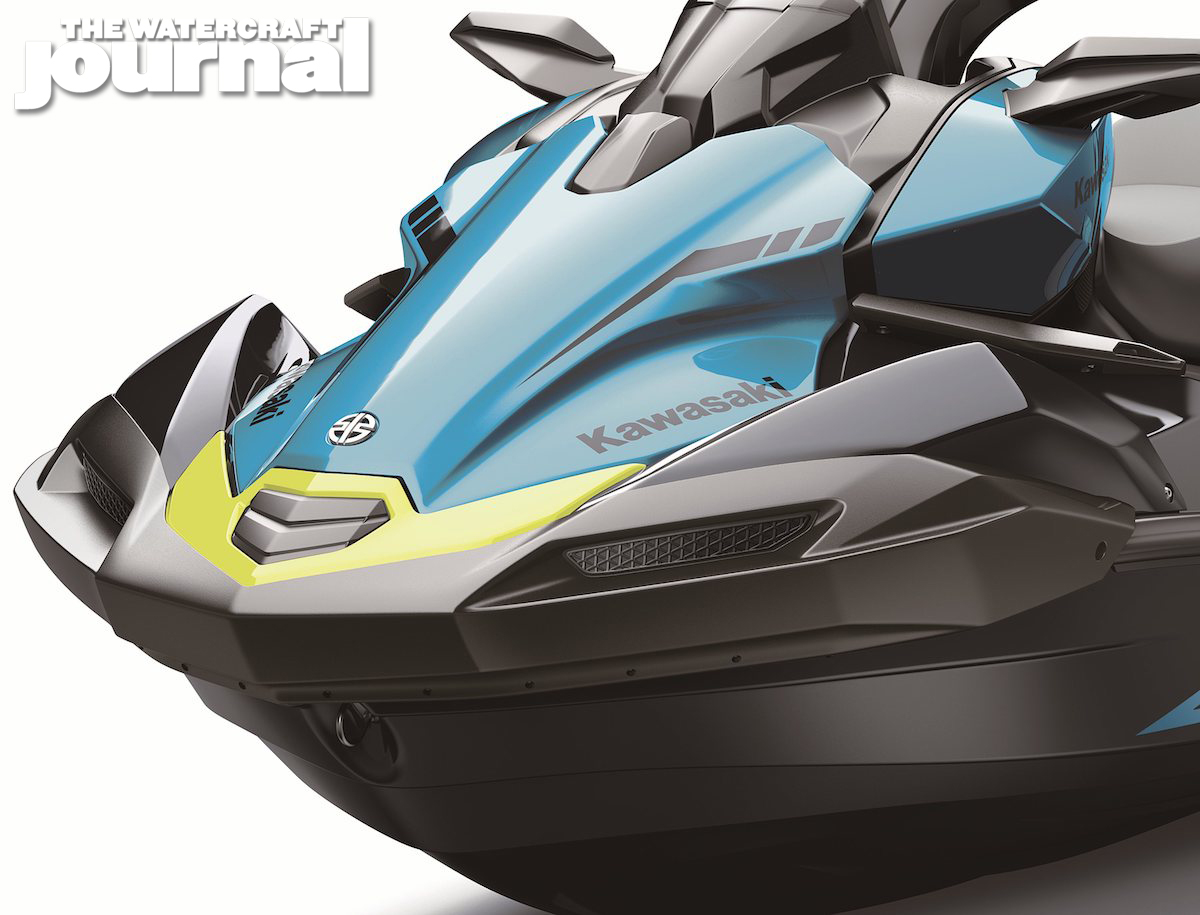
The footwells are wider and deeper, gifting riders more leg room and foot placement. At the toe are built-in cleats for easy docking; and above are enlarged mirrors. The LX receives painted mirror covers and LX-S sports gloss black covers. The aggressive styling of the hood, fairings and flared fenders draw heavily from Kawasaki’s Z line of motorcycles, even brandishing the prestigious Kawasaki River Mark, normally reserved for specific motorcycles and high-end vehicles.
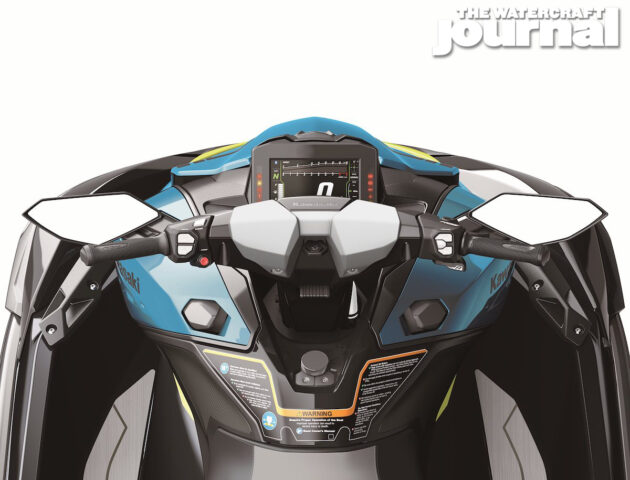
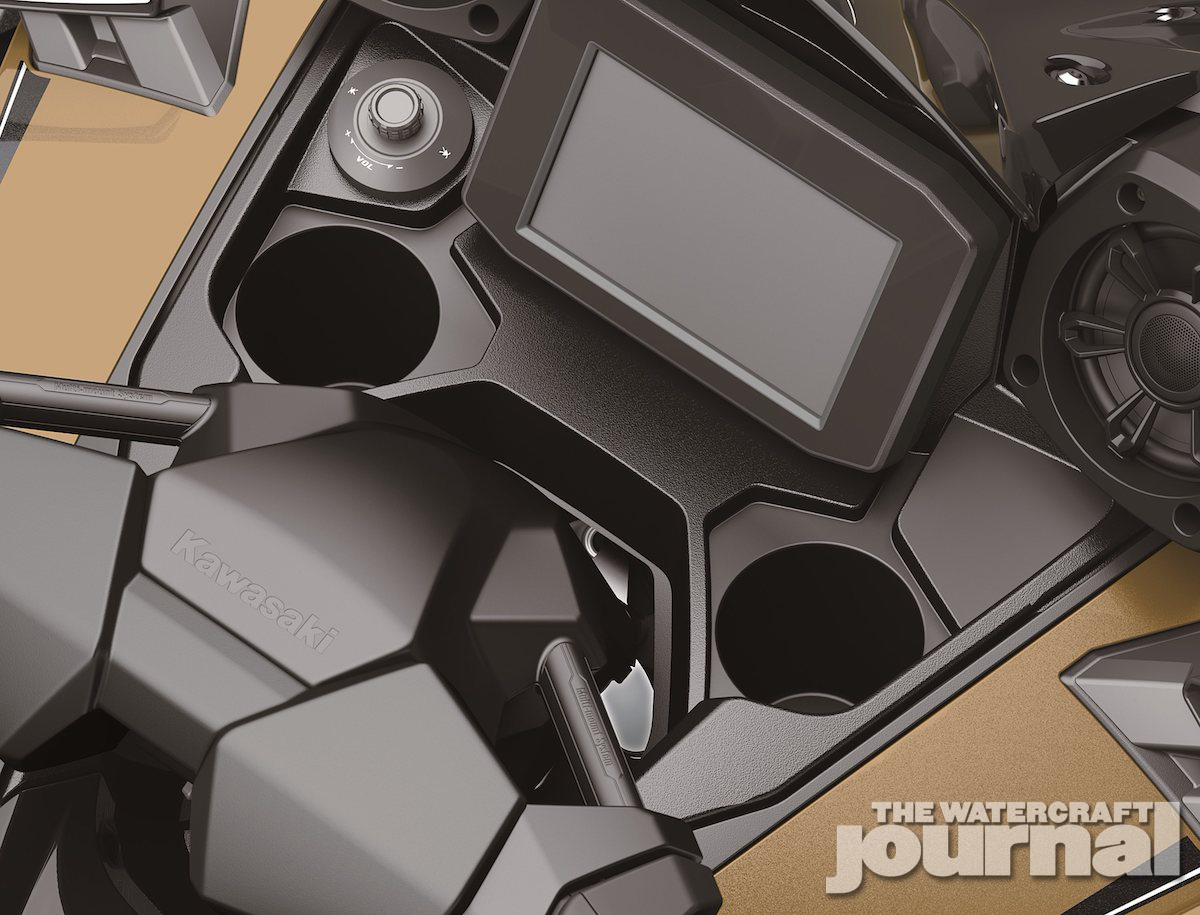
Forward of the River Mark-embossed hood is a redesigned front bumper with built-in Quattro KSD (Kawasaki Splash Deflectors) water disbursement channels. The rear bumper is slightly raised, making it harder for water to wash up on the deck when banking into a turn. At the center console are dual molded-in cupholders located between the new full color, digital TFT dashboard and the redesigned five-way adjustable tilt handlebars.
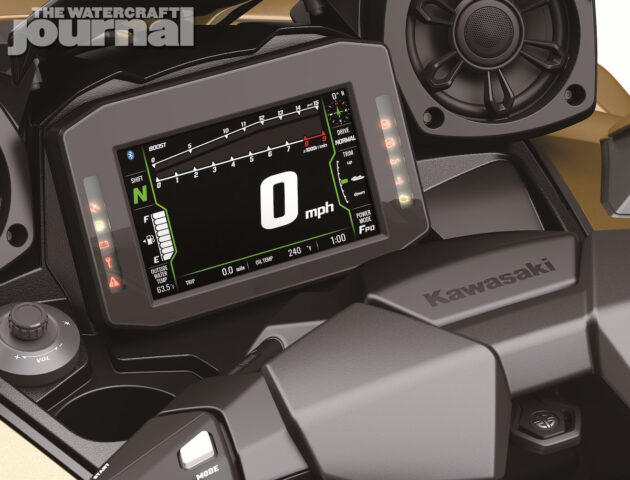
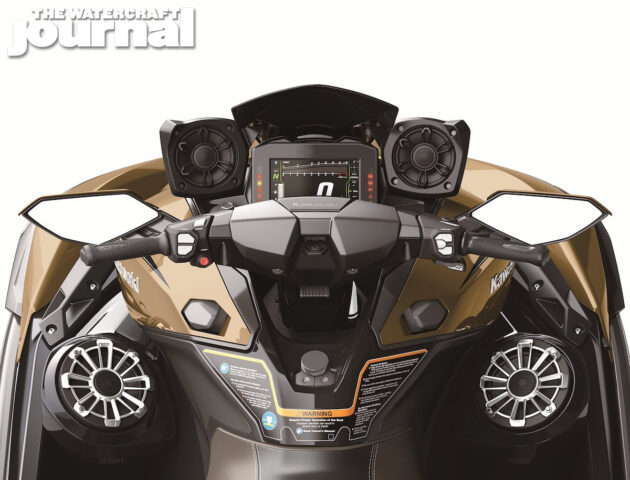
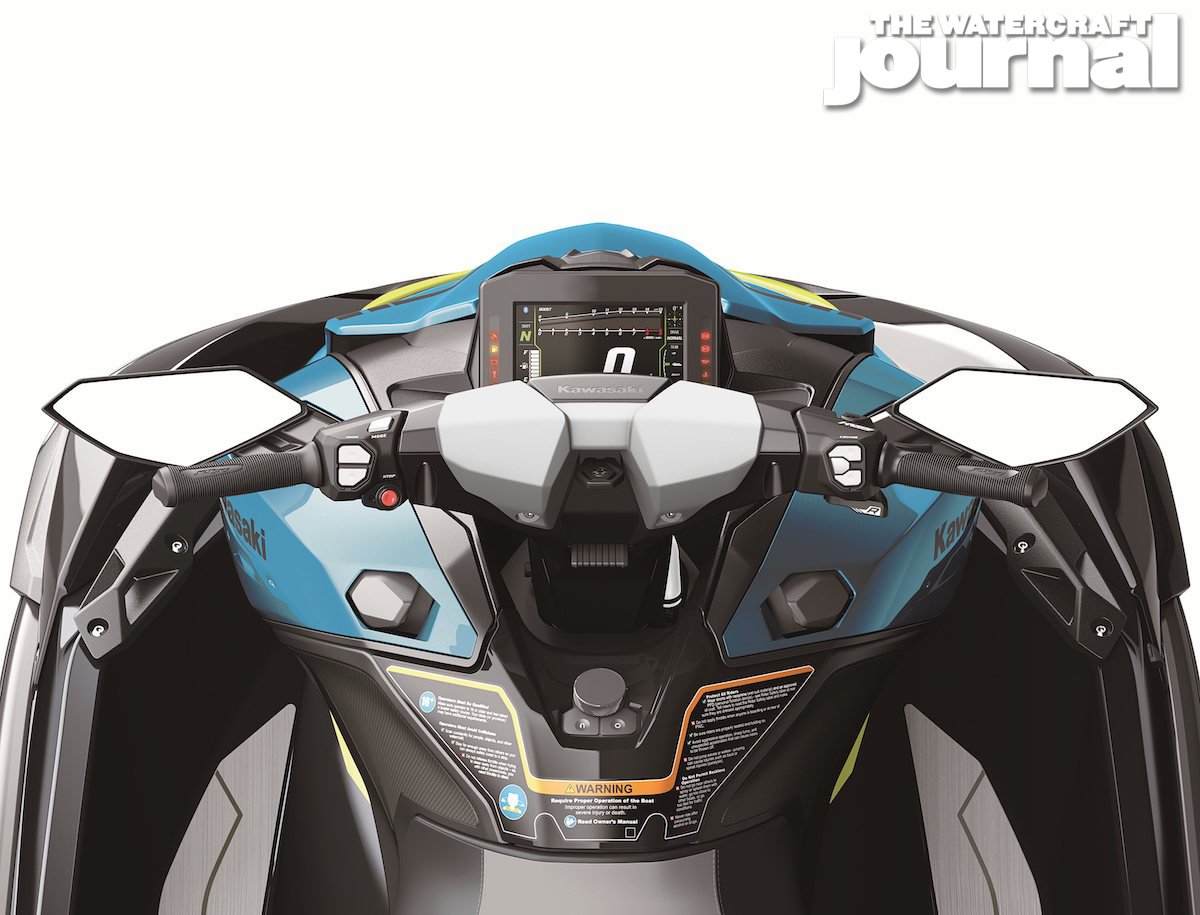
The new TFT 7-inch full color digital dash is the highlight of the redesigned center console, which also includes molded-in cup holders in front of the 5-way tilt steering. For those JetSkis equipped with the new Jetsound 4s system, a new jog-dial controls the volume and track selections.
Above: No, your eyes do NOT deceive you. The Ultra 310 models now can include forward-facing LED running lights embossed into the high-banking splash deflectors. While standard equipment on the Ultra 310LX-S and 310LX, they can be optioned on the 310X as well.
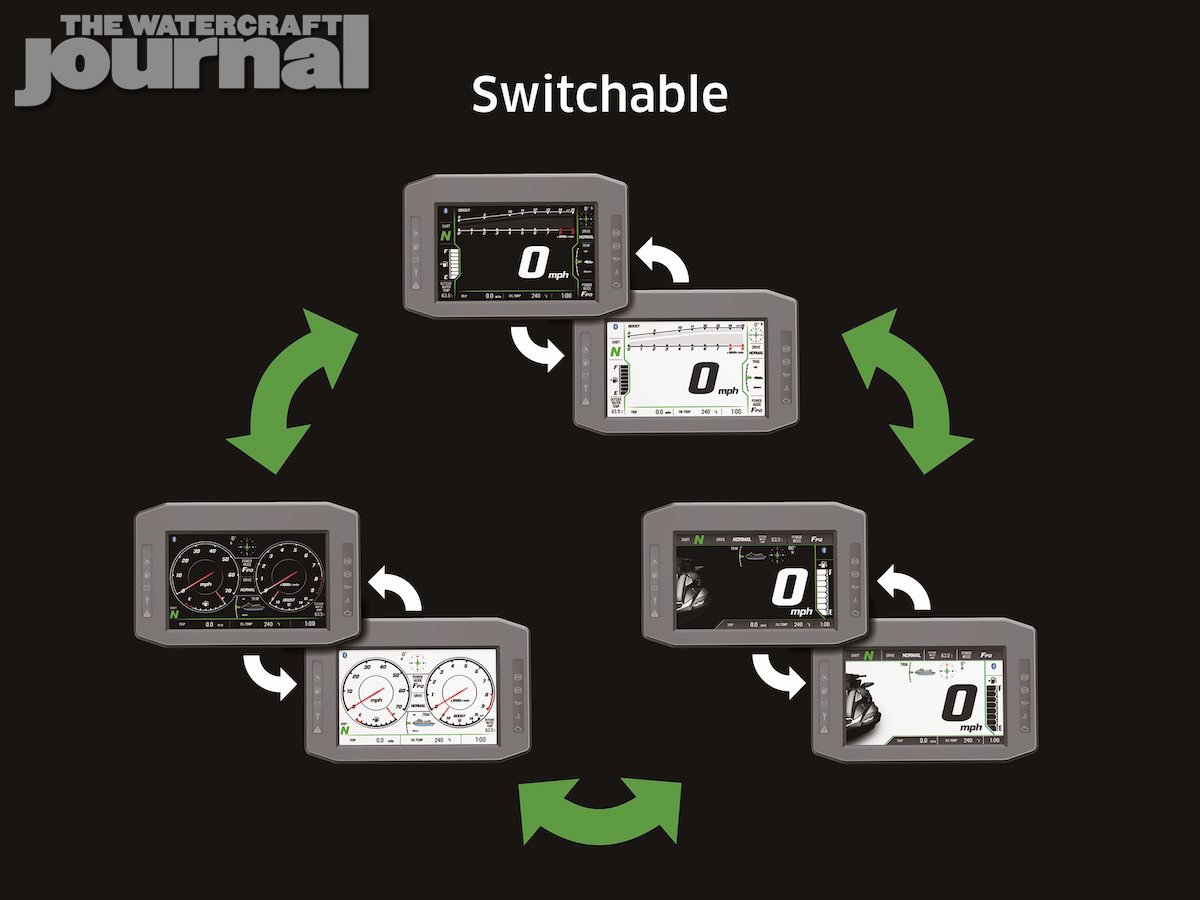
The new 7-inch wide TFT display offers multiple display modes, jog-dial control, Bluetooth connectivity, and various entertainment features. Riders can select from three different display modes and toggle between a black or white screen background. And while the screen brightness will adjust automatically based on outside light, it can also be adjusted manually to your liking.
In addition to displaying on-the-fly information, the screen’s multitude of functions include a GPS-based speedometer, tachometer, fuel gauge, drive mode, boost pressure, clock, power mode, compass, trim, Bluetooth indicator, phone call & mail indicator, cruise control, and a selectable display bar below that can be set to show a trip meter, total & trip time, oil & engine temperature, battery voltage, intake air temperature, diagnostic code, external air temperature and external water temperature.
Above: The glare-resistant 7-inch TFT full-color screen offers a flood of on-the-fly data as well as two banks of “idiot lights” that read off activity and warning lights.
The TFT dash can customized several ways to ready off information either numerically or in an analog format, as well as select from three different display modes and toggle between a black or white screen background.
If that wasn’t enough, what Kawasaki calls an “economical riding indicator” will also appear to indicate ideal fuel consumption to help the rider maximize the 310’s fuel efficiency. Surrounding the screen are a variety of indicator LEDs that provide easy, at-a-glance information to the rider including a GPS signal, low fuel alarm, engine, oil, battery, engine coolant temperature, immobilizer, master warning, trim, and reverse.
Fixed between the twin release tabs for the fairing storage doors (where you’d expect the glove box) is the Kawasaki’s waterproof jog-dial knob and confirmation buttons that toggled through the various screens and features on the TFT digital dashboard. This control knob is well within reach and easy to navigate, even while underway – pushing the boundaries of infotainment on the water to the next level.
Where you’d previously expect to find the glove box latch is the dial control jog-dial for the TFT dashboard. This gives the rider unmatched access to the entirety of the dash’s many functions while underway. Two buttons below the knob select and confirm your choices.
Above left:Standard on the 310LX flagship and sold as an accessory for the others is the Meter Shield to deflect spray and reduce wind resistance. Above right: Standard on all Ultra 310 models are built-in cleats for easy tie-down and docking.
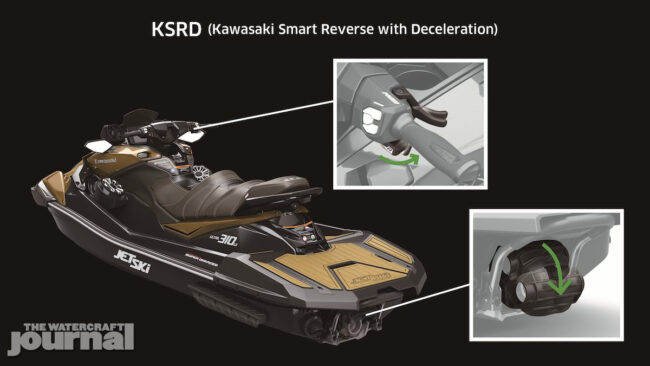
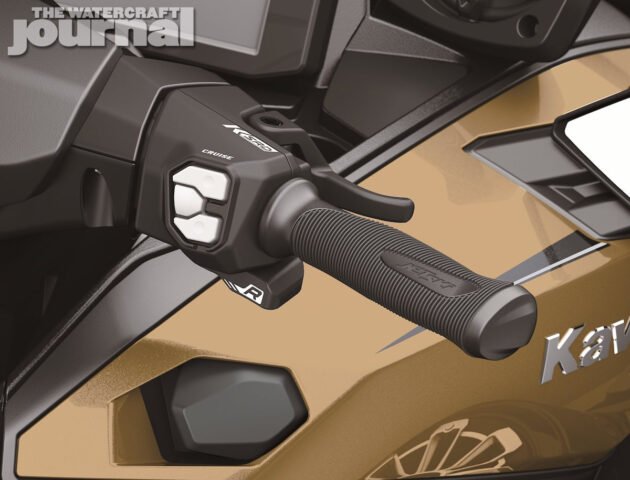
The aforementioned tilt handlebars are capped with pistol grip-style handgrips. Both control pods have been heavily revised with new buttons and layout. A new throttle lever has a lighter pull caused reduced fatigue. Below that is the long-anticipated Kawasaki Smart Reverse with Deceleration (KSRD) thumb trigger. The new reverse assist option is activated “when a thumb switch on the right handlebar is pushed which enables the thrust to be controlled with one hand,” according to Kawasaki.
As one would expect, depressing the thumb trigger overrides the throttle, deploying the reverse gate and slows to the Ultra 310 to a standstill. Upon releasing the trigger, the drive mode returns to neutral. If continued to be depressed, the drive mode will engage reverse, and the JetSki will begin reversing until the trigger is released. The fluid motion between the thumb and trigger finger is different but not unnatural particularly for those accustomed to operating quads and motorcycles.
Kawasaki’s new KSRD braking system keeps the control and functionality all within the right hand of the rider eliminating confusion between operating two triggers.
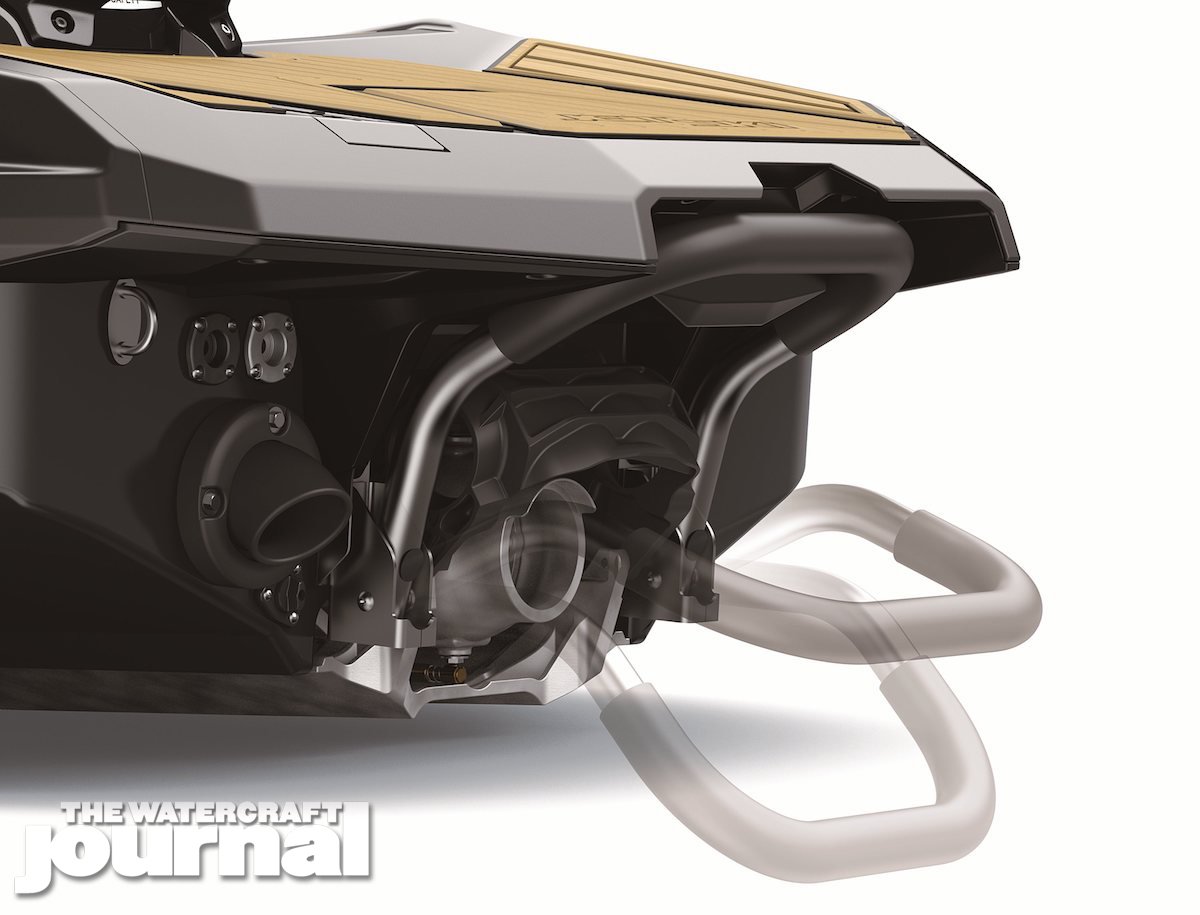
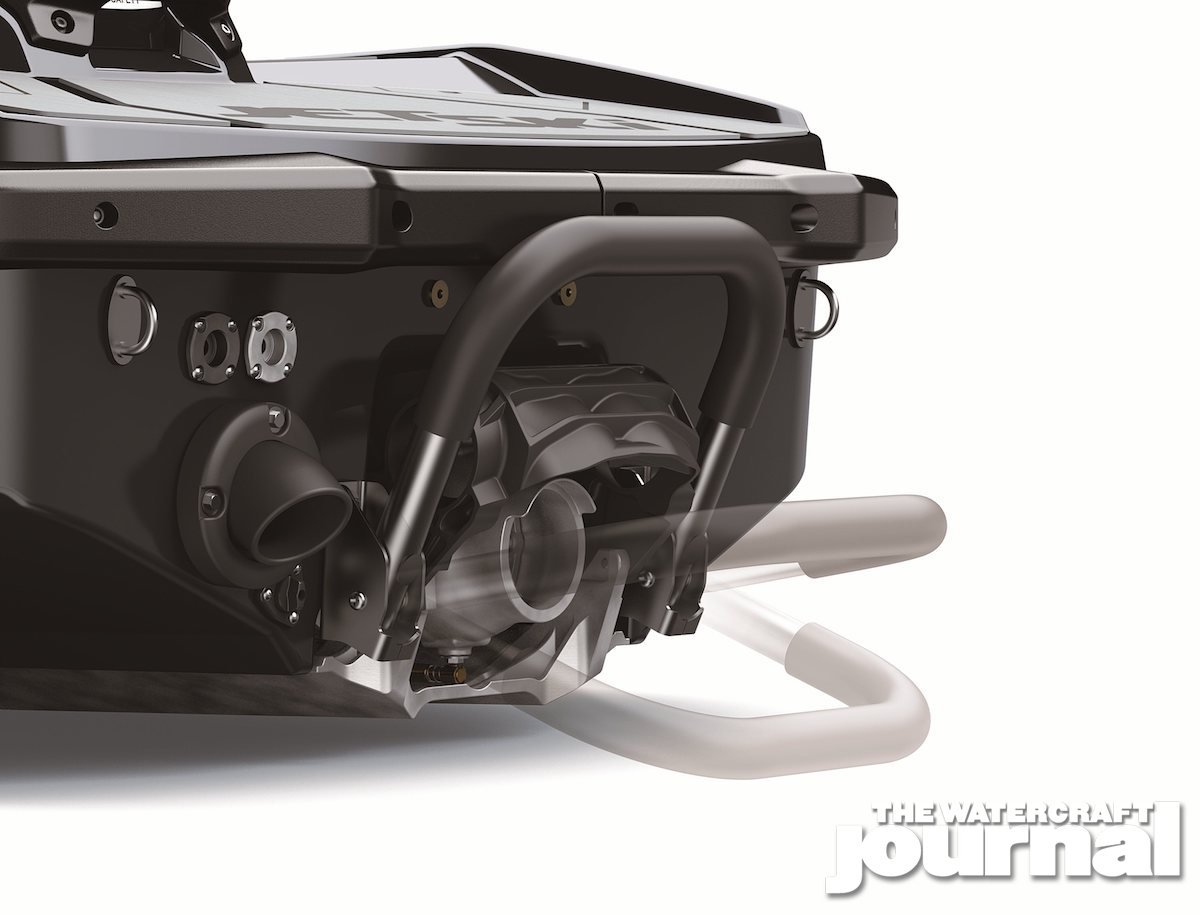
Above left: The long overdue on-water braking system replaces the left-hand lever reverse bucket; now riders can decelerate and easily deploy reverse with the natural pressure of a thumb trigger. Above right: Creating an on-water brake required bolstering up the reverse bucket and the brackets itself. A new bucket with side portals was molded, as well as a redesigned ride plate with a cast-in slope to raise the bow and features two prominent skegs for truer tracking in chop.
Equally, when the thumb switch is fully depressed, the up and down trim buttons “can be used to increase or decrease the engine RPM to adjust thrust, allowing for more precise control when maneuvering the watercraft in tight spots, such as docking.” Once the reverse trigger is released, the drive mode automatically returns to neutral.
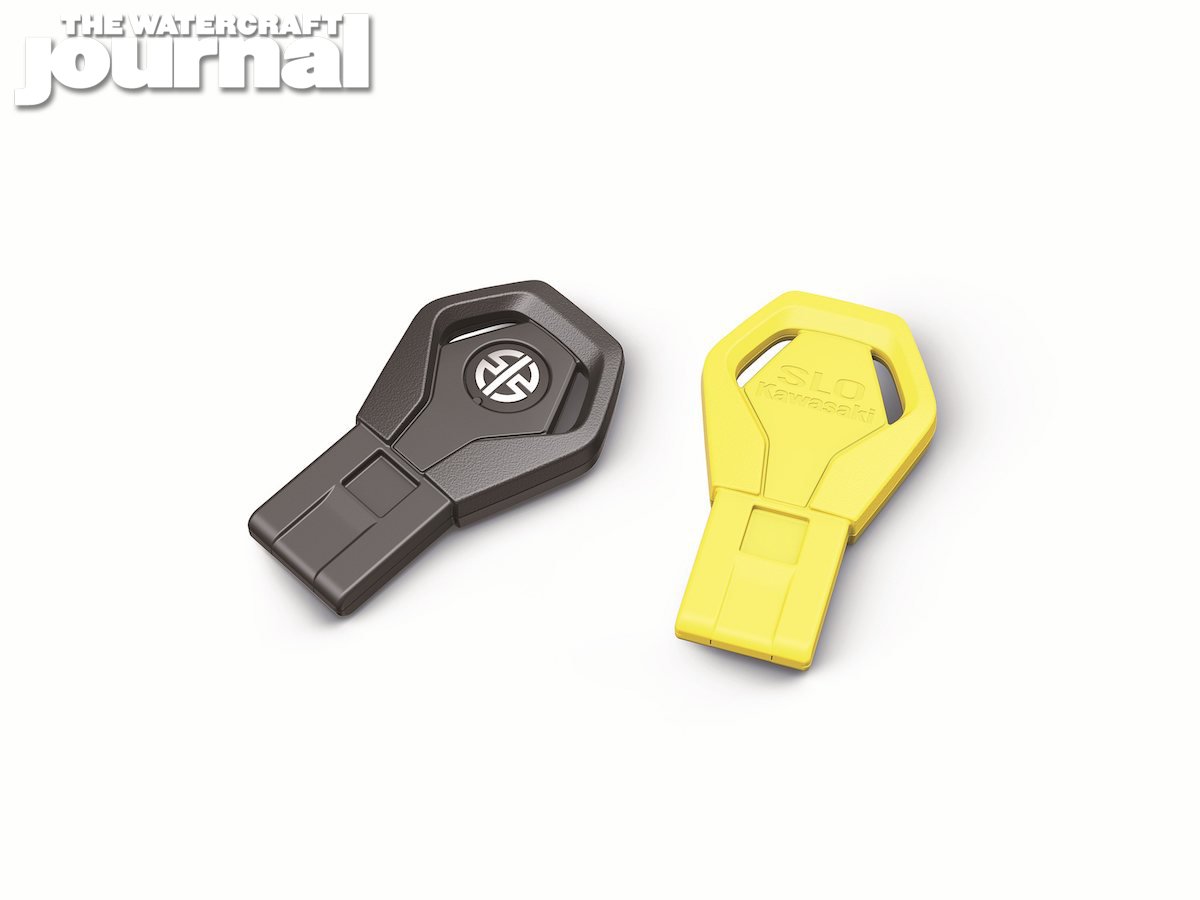
Fixed above the trim toggles is a Mode button, allowing riders to choose from four power modes including Full, Middle, Low and SLO (Smart Learning Operation). Full mode accesses all of the potency of the industry’s leading horsepower output. Middle mode reduces the engine output to 80% of the Ultra full potential as Low mode is merely 60% of full power. As a precaution, the engine starts in Middle mode every time and the SLO mode is only achieved by using the secondary SLO key.
Close attention to the redesigned handlebars and the control pods will show an all-new layout and buttons to toggle through several control functions, including selecting the Ultra’s “drive Mode”.
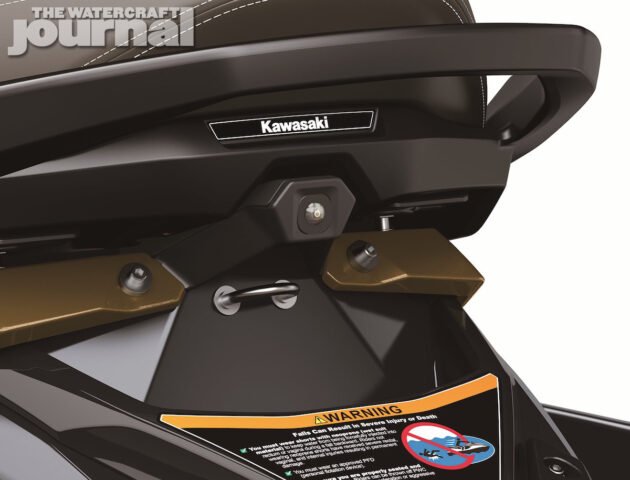
Above: Standard equipment for all 2022 Ultra 310LX-S and LX models is a wide angle backup camera that can be activated while under operation to back off of trailers or out of slips, as well as view behind while towing a raft or wakeboarder – all visible on the TFT screen in full color and high definition.
Two more digital features offer the rider ultimate control of their Ultra 310: the new Kawasaki Launch Control Mode (KLCM), offering two modes for optimal acceleration – Single and Repeat; and Kawasaki’s One-Touch 5mph mode. The first – KLCM – automatically adjusts the trim for optimal acceleration. “In single mode, once set, the KLCM is only active for the first acceleration period, whereas in repeat mode, the KLCM is active each time the rider accelerates from a slow speed.”
The One-Touch 5mph Mode is activated by a single button on the right handlebar when idling and deactivated when the throttle is applied. The cruise control buttons adjust upwards (or down) three levels for a little more speed (or to slow down) while operating in a no-wake zone. Finally, a new Multi-Mount System features multi-mount Bars built into the handlebars that allow for accessories, like GPS, phone, or camera mounts, to be added with ease.
“But wait,” you’re thinking. “Where is the Ultra 310R?” The Watercraft Journal asked the same question, to which Kawasaki candidly replied, “It’s not gone. That’s all [we] can say about it right now.”
Above: Although final dimensions were not ready at the time of this writing, the new splash deflecting front and rear bumpers will definitely add to the Ultra’s overall length. Add the Ultra Deck on, and you’ve got a rather considerably-sized machine. Overall height is dramatically lower, over 3-inches per our estimates! Final weights will also be telling.
All three Ultra 310 models return with the same 1,498cc inline four-cylinder DOHC pressing out a true 310-horsepower from its roots-type Eaton Twin Vortices Series (TVS) supercharger generating a staggering 16.7psi at peak RPM. Revised in 2017, the Ultra’s pistons feature a V-groove at the second ring for greater oil retention. Dual under-piston oiling jets are fed by a dry sump oil tank built directly into the baffled and partitioned crankcase.
Dual cooling circuits feed fresh ambient water through the enlarged coolant passages in the engine as well as pump through the intercooler, condensing the compressed intake charge prior to passing through the throttle body. The Ultra’s oil cooler circulates oil between two cooling jackets, mitigating heat soak and excessive internal engine operating temperatures. This allows the 160mm axial-flow, single stage jet pump to spin its 3-blade, stainless steel impeller enough to produce 1,890lbs. of thrust.
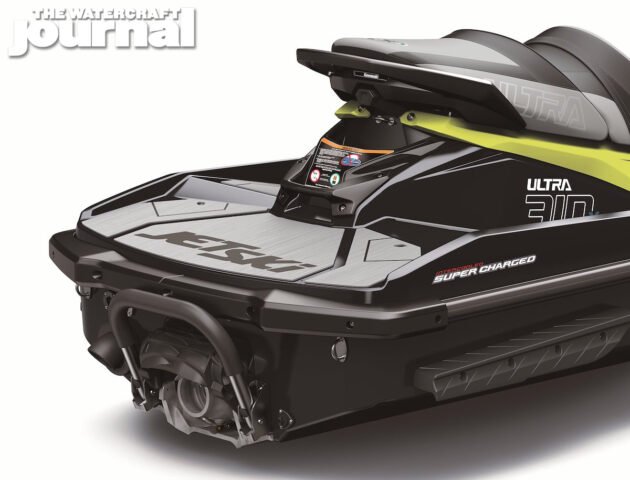
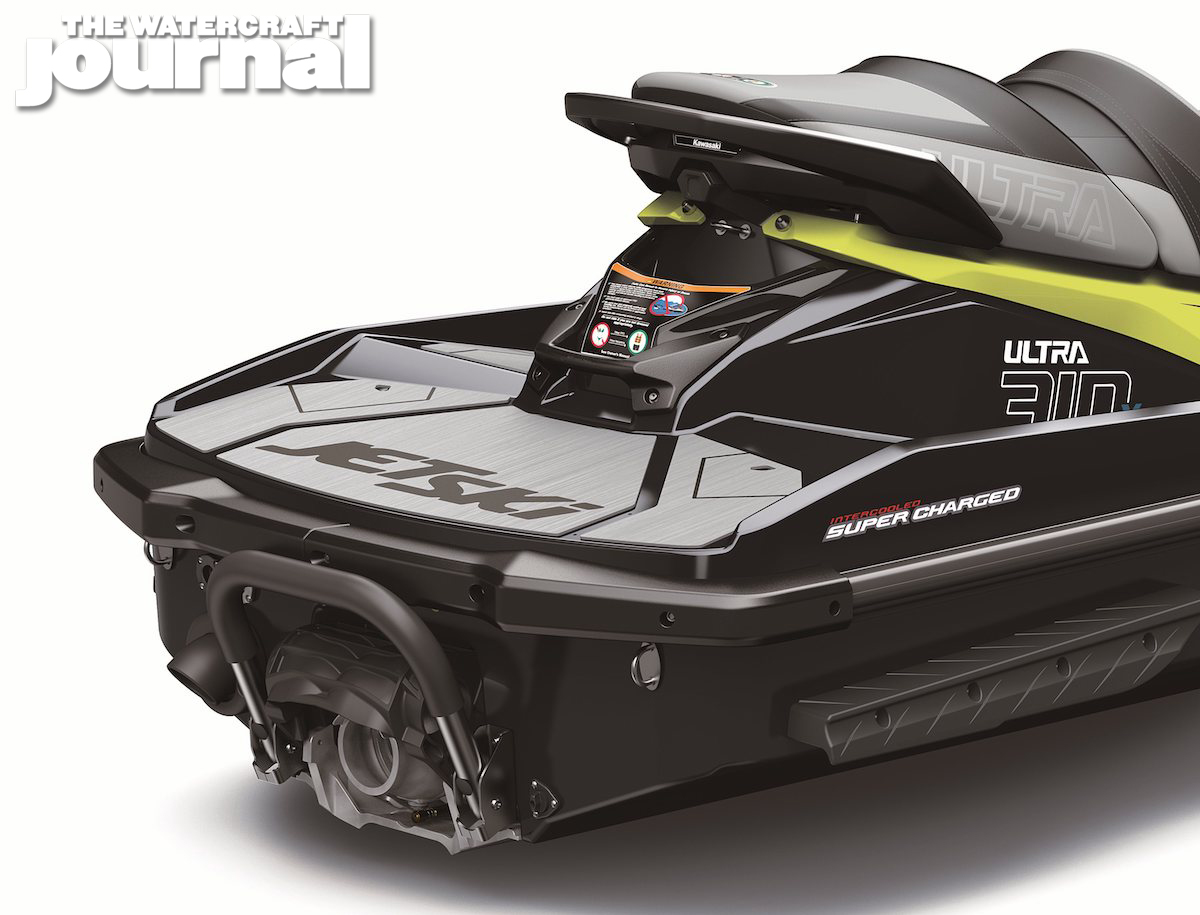
The standard-length Ultra 310X shows a flatter, more accessible rear platform with CNC-cut, two-tone traction mats. Reboarding handles at the base of the rear and above allow for ladder-like reboarding.
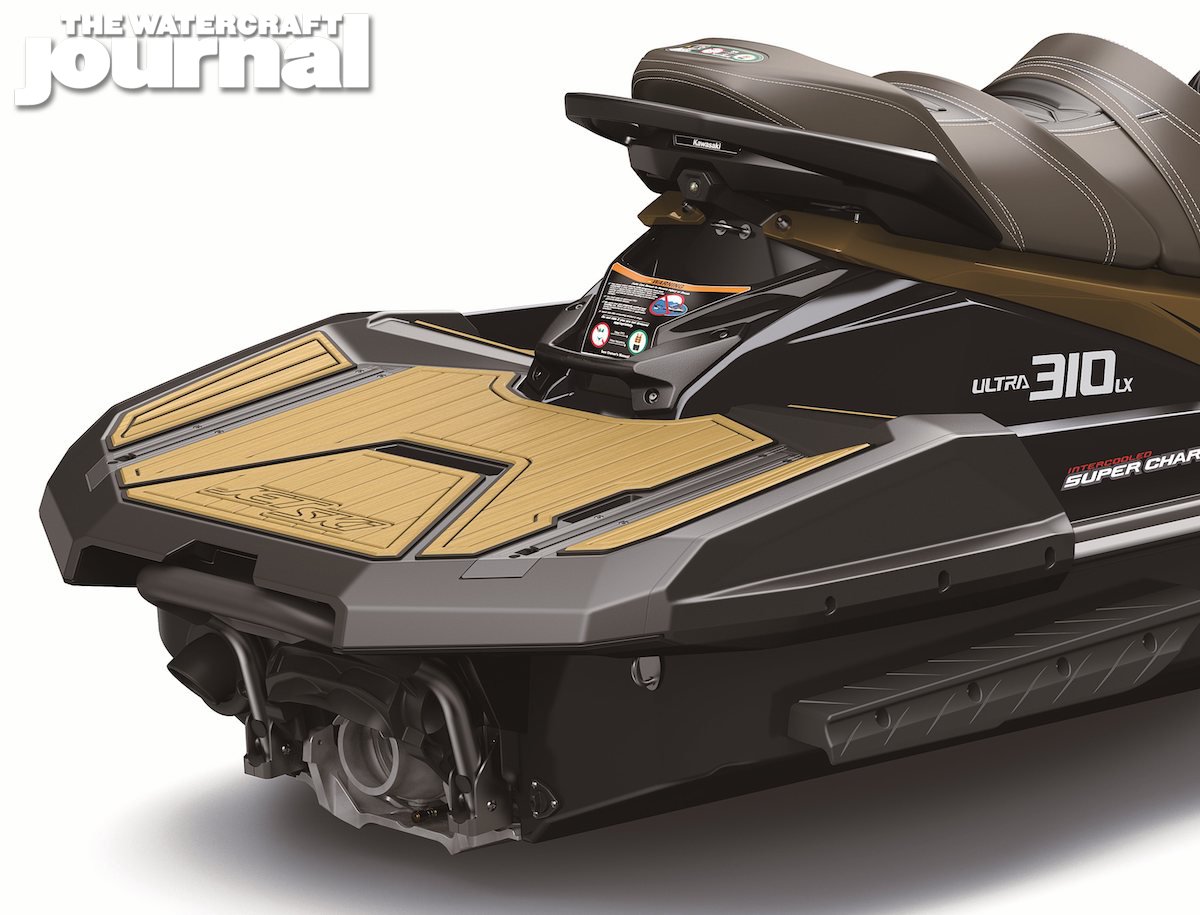
Above left: The 310LX-S and 310LX both include the seamlessly integrated Ultra Deck, a rear platform that extends the transom nearly 8-inches. This deck extension includes molded-in reboarding grips and deep-set tracks allowing for an endless variety of accessory attachments and arrangements without feeling clunky or a tacked-on afterthought. Above right: Rich teak-style traction mats on the 310LX carry from the footwells all the way to the tail of the deck.
Although the sponsons and intake grate carry over unchanged, the eagle-eyed observer will note that the ride plate has been recast in aluminum, featuring thicker bosses for the deployable reverse bucket, no doubt to withstand the dynamic forces that braking from full speed will play upon the plate. Closer inspection reveals an angled relief cut into the plate, raising the bow and reducing spray. Equally, sharp skegs flanking each side will give the Ultra greater straight-line tracking.
While all of the above features and details are found on all of the 2022 Ultra 310 series of JetSkis, the Ultra 310LX-S and 310LX temps the more luxurious-minded rider many more offerings. Both come equipped with a smoothly integrated Ultra Deck, an extended rear platform that increases the swim deck an additional 7.9-inches. An angled folding swim step tucks neatly up under the Ultra Deck, which also includes two Multi-Mount Bars to receive a whole new catalog of accessories.
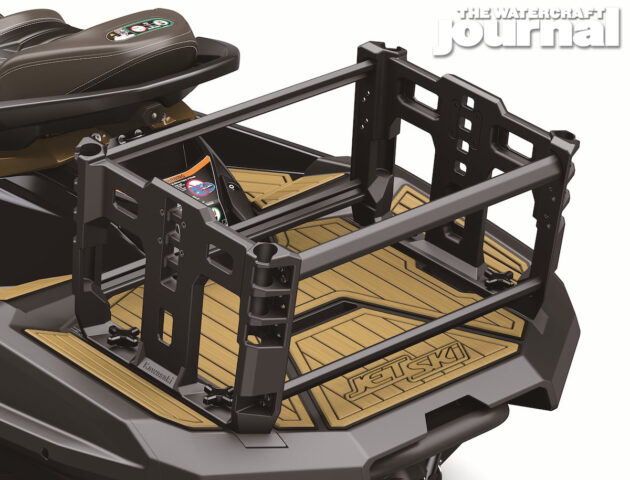
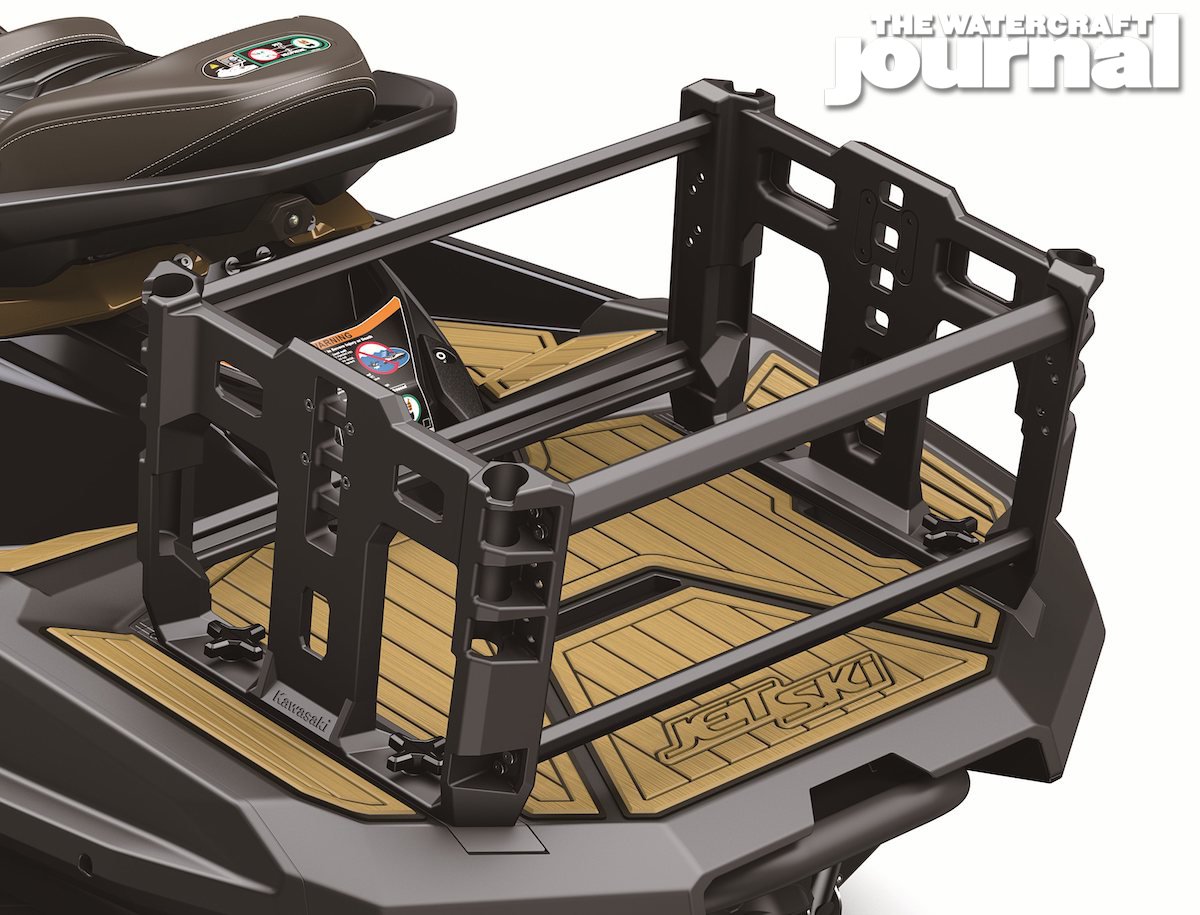
Part of the Ultra Deck’s appeal is how seamless it’s grafting into the JetSki’s transom is. Attaching this Genuine Accessories cargo rack requires the twist of four knobs. No tools or additional mounting brackets.
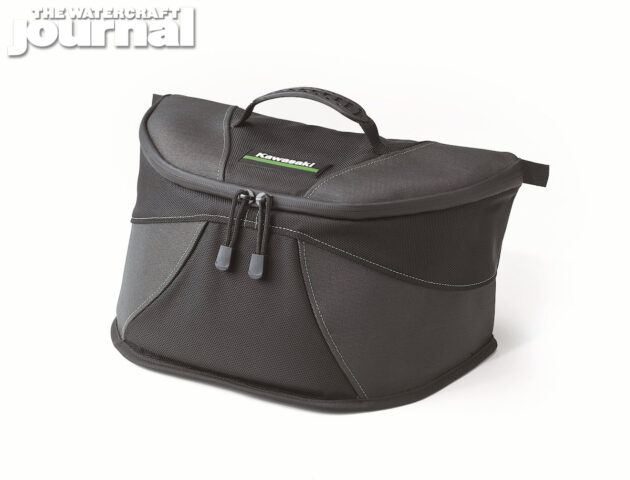
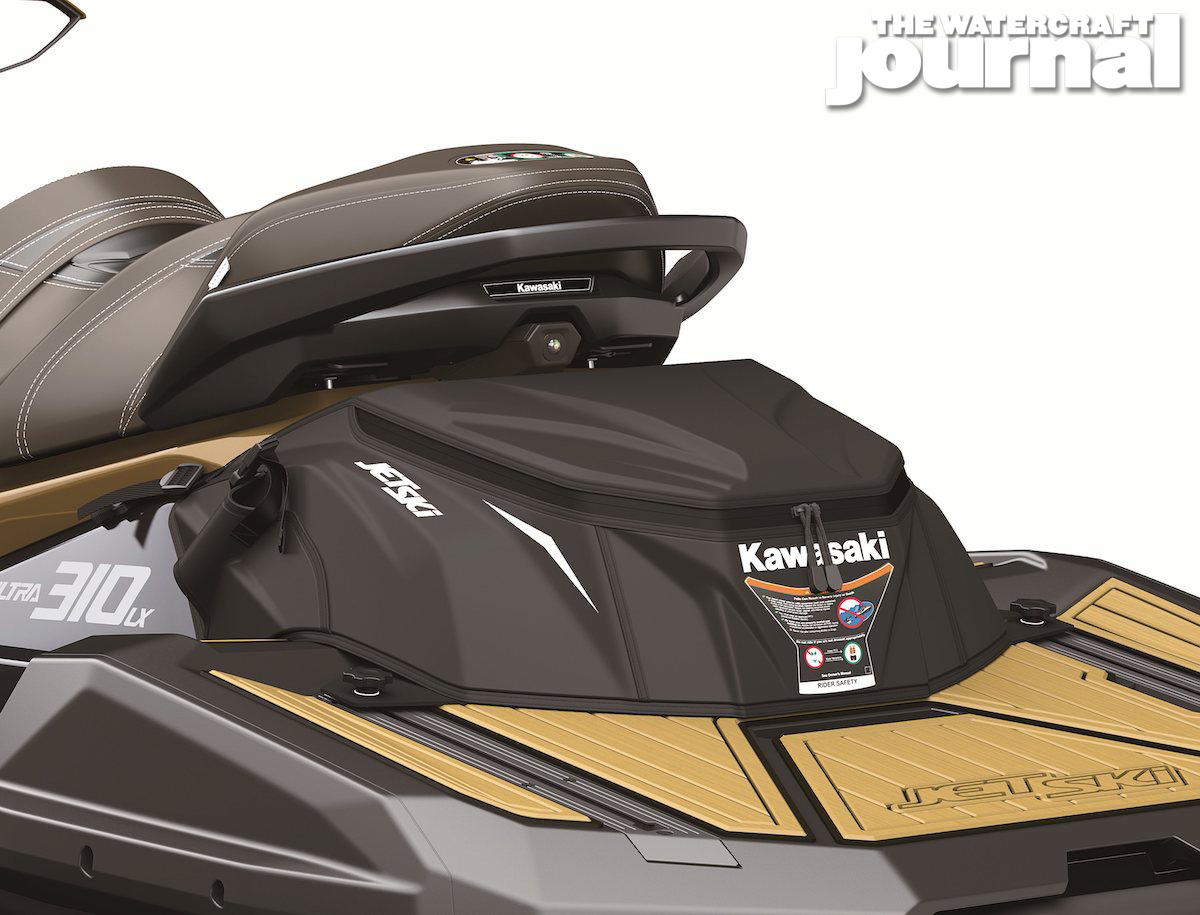
Above left: Among the dozens of other accessories, Kawasaki offers a soft-sided cooler with stitched-in rod holders that mounts flush to the Ultra Deck and rear. Above right: For those wanting to strap down camping gear, extra fuel or anything else, these eyelets allow for full freedom in securing your cargo wherever you go.
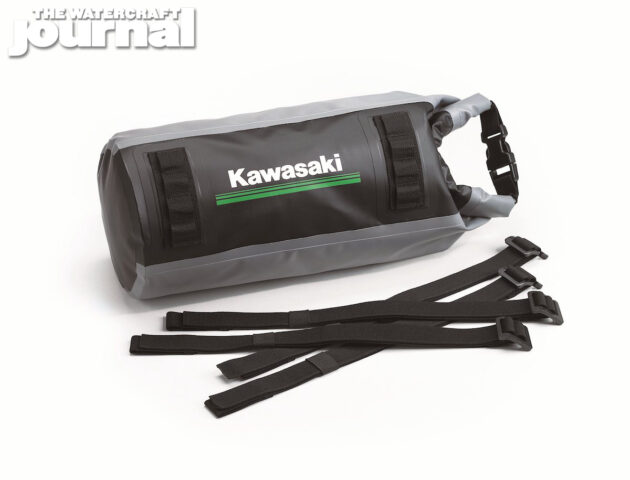
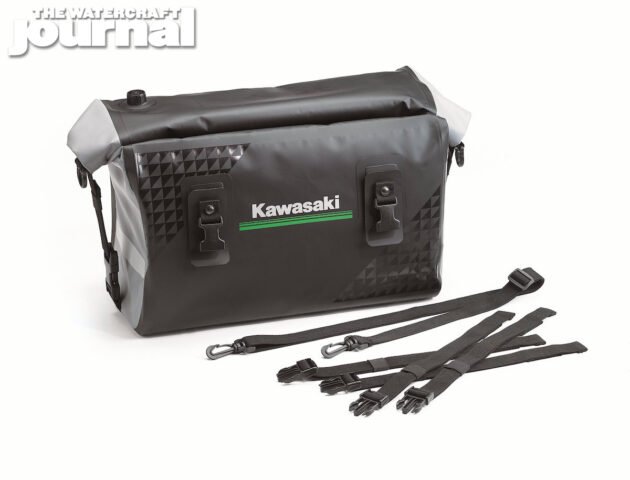
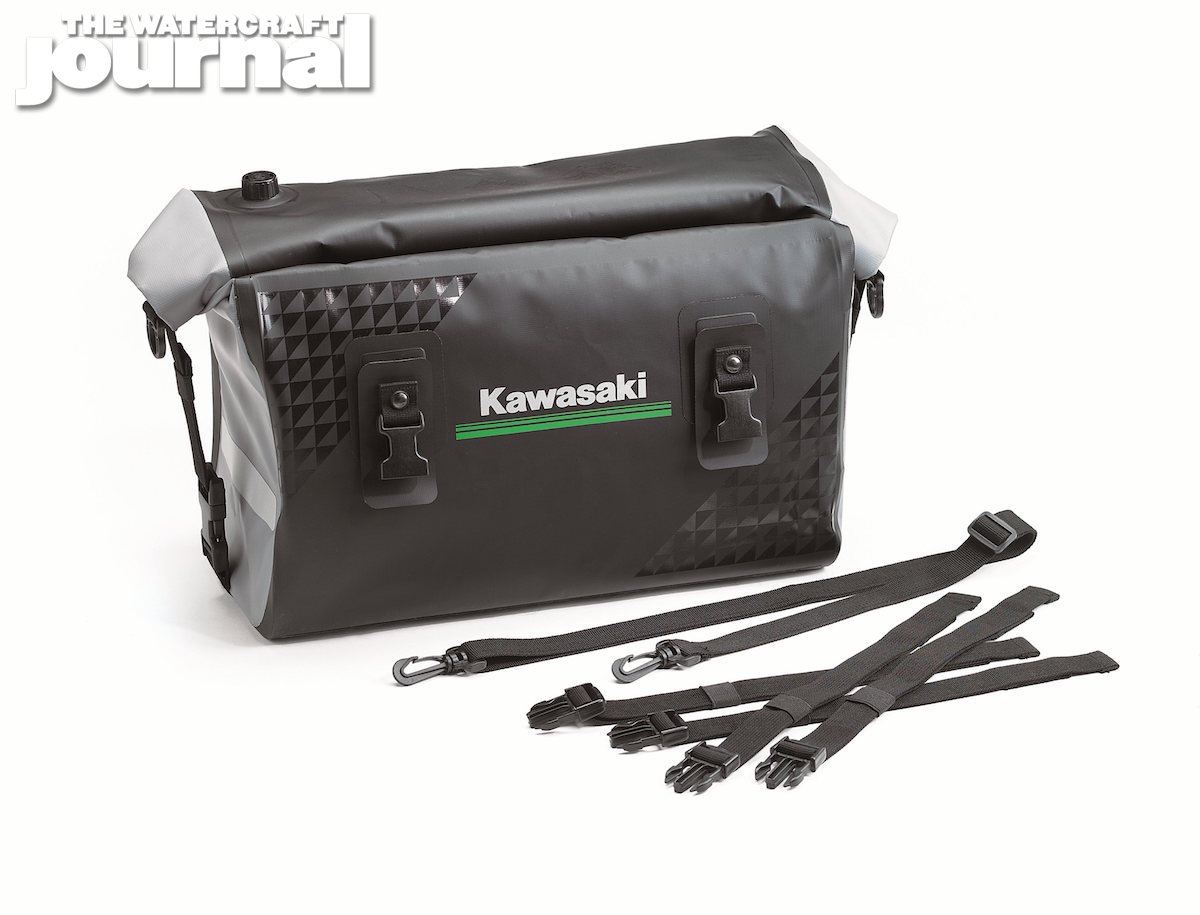
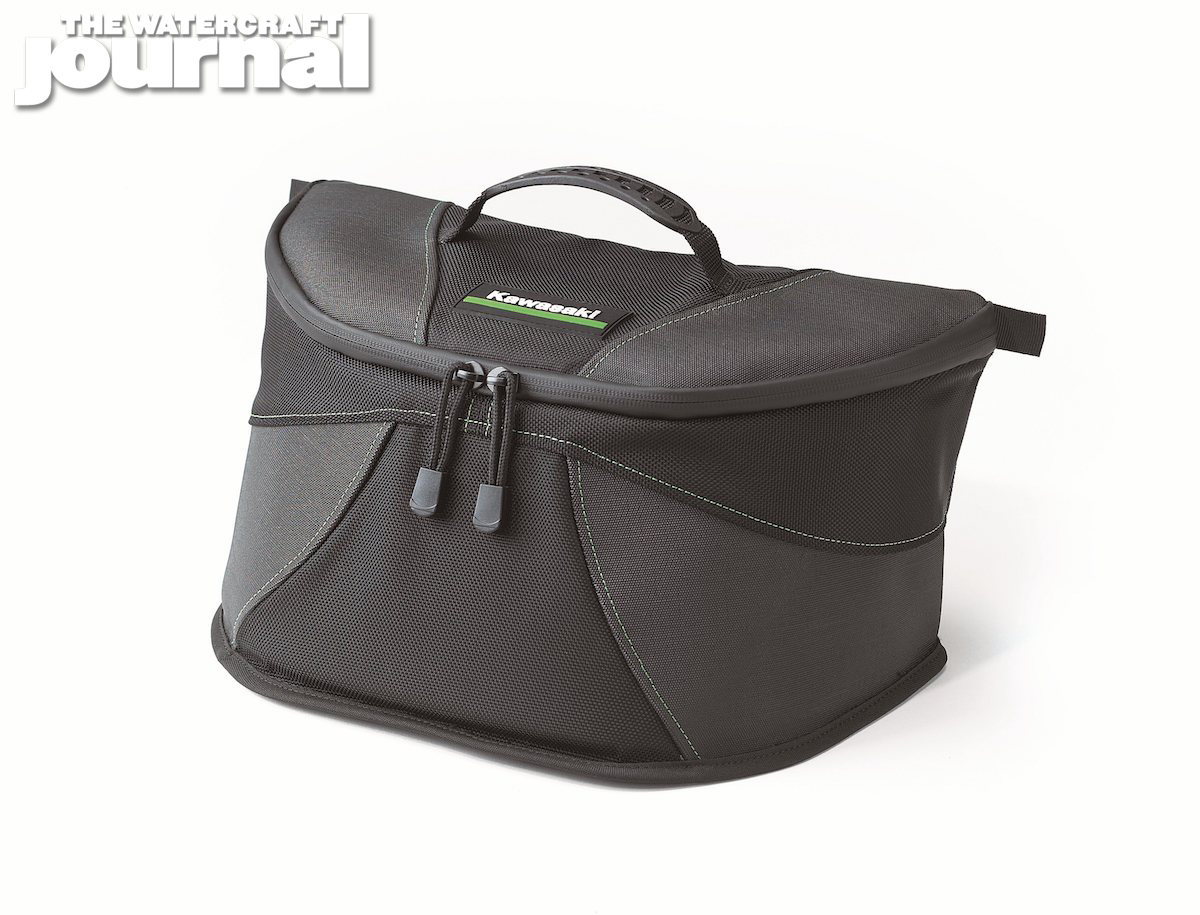
These slide mounts provide accessible tie-down points to mount any number of Kawasaki’s new rear deck Genuine Accessories, including a stern bag, soft cooler, dry duffel bag, easy-access storage bag, dry bag, Vacu-Hold Jet Ski cover, rear rack and tie down. At first blush, the Ultra Deck is easily the best-integrated deck extension offered in today’s market; so much so that many won’t notice that the LX-S and LX even have an extended platform until reading this paragraph.
Additionally, both the Ultra 310LX-S and LX come equipped with a rearview camera. Yes, you read that right, a rearview camera, which can be monitored on the TFT screen when docking or towing. Per Kawasaki, it provides “an impressive view range at 155° horizontally and 115° vertically (± 5°), allowing the operator to feel comfortable about what’s behind them.” Oh yeah, and both the LX-S and LX come with LED accent running lights built into the front bumper. Yeah, headlights.
Above: Kawasaki Genuine Accessories offers a catalog of new cargo options for your Ultra Deck without being cumbersome or unwieldy. These soft-sided bags and coolers offer plenty of options for the day-tripper.
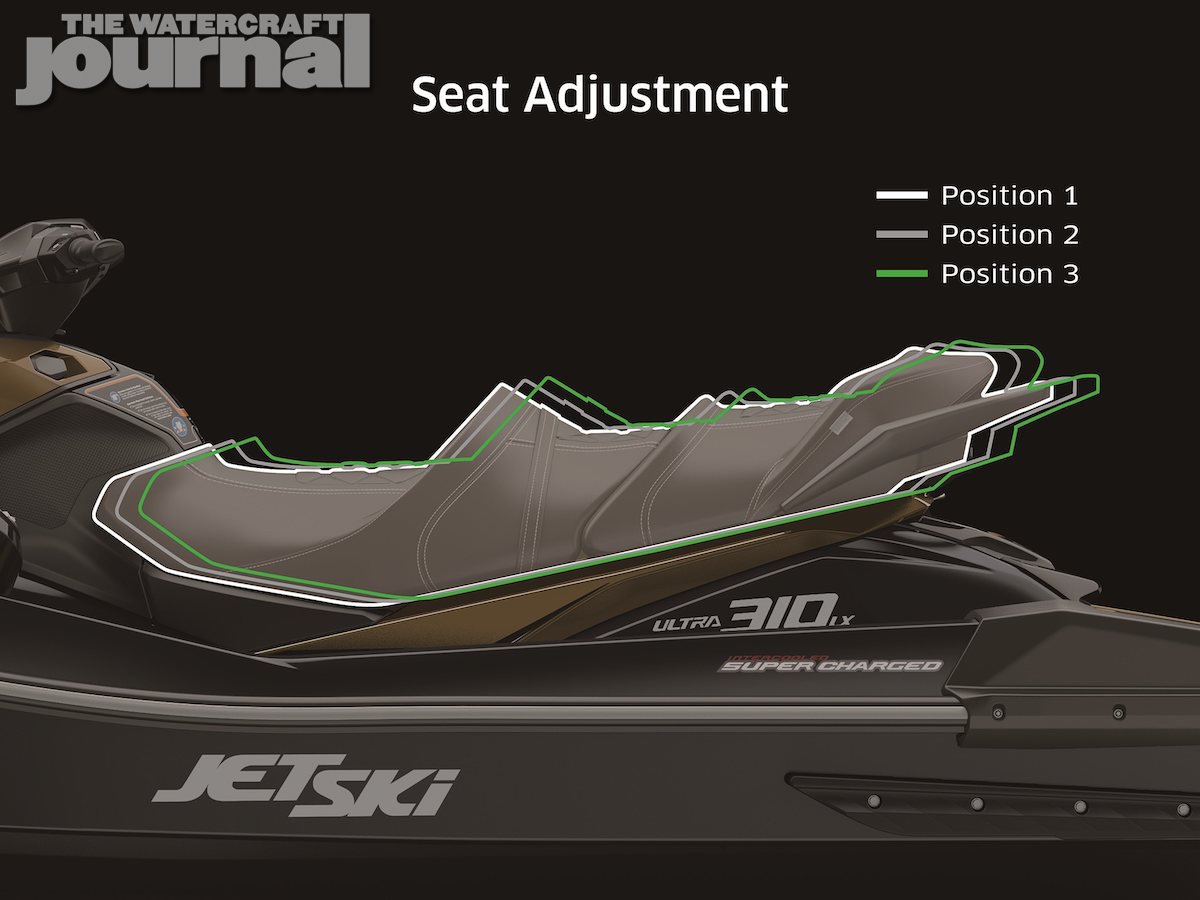
Yes, again you’re looking at an industry first: an adjustable seat allowing for several inches of motion. Like your car seat, the new LXury seat slides on a track, locking into 3 possible positions.
Pushing what Kawasaki (and frankly, the industry) can offer in the way of luxury personal watercraft, the Ultra 310LX takes PWC seating to a whole new level with the industry’s first 3-position ERGO-FIT adjustable seat. The three-tiered seat sits on a sliding track that can be set between three seating positions, spanning 2.75 and 1.4-inches apart.
Wrapped in black and brown UV-resistant materials with high-contrast white stitchwork, the LXury seat absorbs less heat between rides thanks to its special heat-resistant material. A final bit of form-meeting-function is the 310LX’s addition of a wind-deflecting meter visor. Aftermarket testing has shown the benefits of meter visors on drag and even increasing speed so this is a neat addition.
Above left: The Ultra Deck also features an elongated swim step that folds neatly up under the extended platform for easy reboarding. Above right: Kawasaki adorned each of these new Ultras with its revered River Mark emblem, a sign of a new higher level of machine.
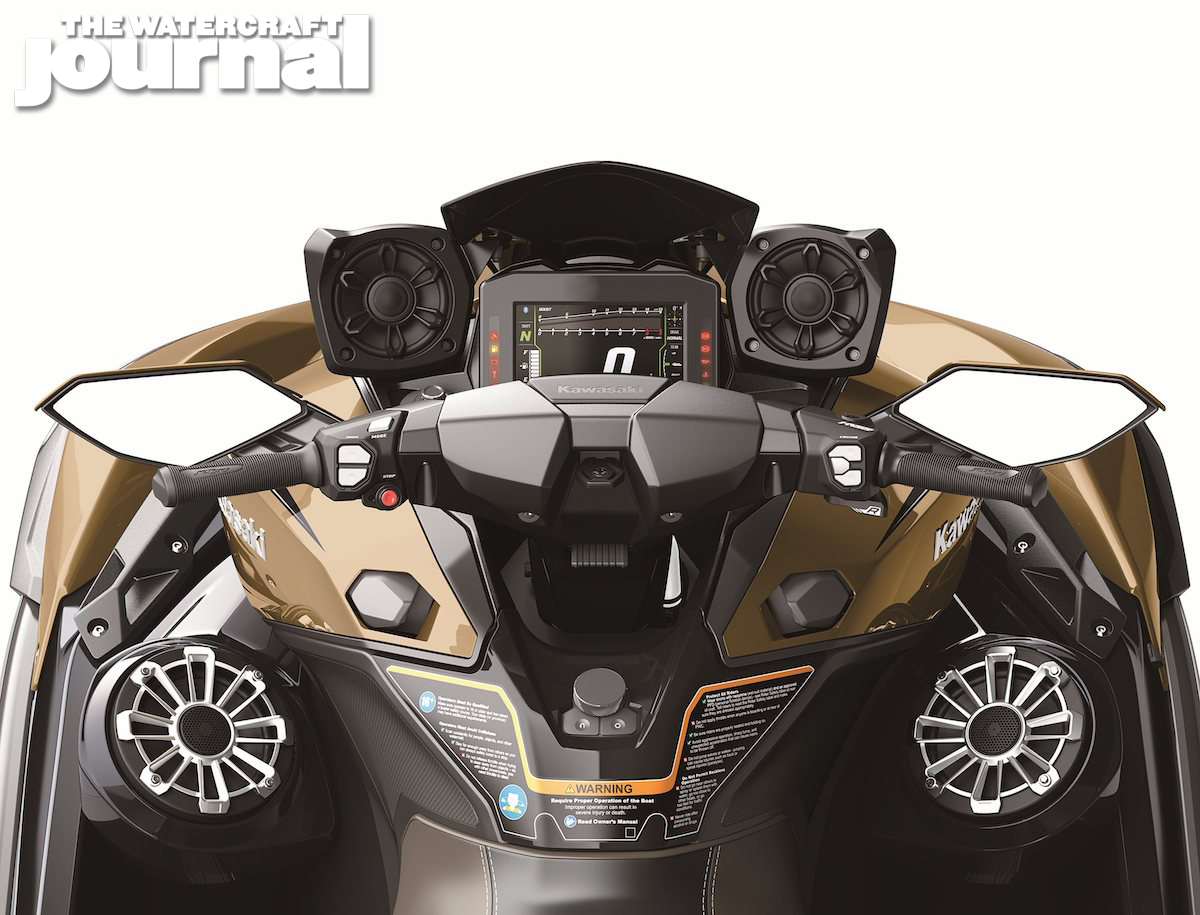
The new Jetsound 4s system features a dual channel amplifier (200 watts), and two 60W and two 35W speakers.
Finally, the Ultra 310LX takes onboard sound systems to a new level with the new Jetsound 4s, becoming the first standard-equipment 4-speaker integrated audio system featuring with jog-dial control and Bluetooth connectivity on a personal watercraft. The jog-dial controller is found on the left of the 7” TFT display and not far to reach.
The Jetsound 4s system raises the audio bar with 200 watts via two channel amps, and a quartet of speakers – the lower two rated at 60W x 2 and the upper two flanking the dashboard ranked at 35W x 2. And the Jetsound 4s system is fully compatible with most all smartphone devices, as well as other Bluetooth compatible-players. And all audio data is viewable on the display.
And for those curious, all of the standard accessories for the Ultra 310LX – including the Ultra Deck, rearview camera, accent lights, Jetsound 4s audio system, Ergo-Fit LXury Seat, and meter visor – can be fitted to the Ultra 310X and Ultra 310 LX-S models, although we presume the cost of individually purchasing and installing each of these items will exceed the MSRP of the 310LX unit itself.
Alas, what Kawasaki has managed to do was wholly elevate the bar when it comes to what the consumer can expect from a personal watercraft – regardless of the brand. Truly we’re looking at a whole new tier of fully-loaded, feature-heavy PWC that will cause some serious consternation among the more indecisive of customers. If top tier audio, safety, storage, fuel capacity, innovation, ergonomics, comfort, rough water handling and knock-you-on-your-back horsepower are on your wish list, we contend that Kawasaki is now the king of the hill once again. And it’s good to be the king.
Sea-Doo ambassador Bri Andrassy and fellow fishing enthusiast Kristin Fisher in Lake Powell
Sea-Doo ambassador Bri Andrassy and fellow fishing enthusiast Kristin Fisher in Lake Powell
Sea-Doo Ambassador, Bri Andrassy jumped at the chance to show her friend and pro kayak bass angler, Kristine Fischer what it’s like to fish from the Sea-Doo Fish Pro. The women decided to meet at Lake Powell to take out a couple of Fish Pro’s. Andrassy grabbed a flight from her home in Jupiter, Florida and Fischer made her way to the Midwest from Utah.
Both women are avid fishermen and willing to go out on the water and fish from near any rig that floats. Paddleboards and kayaks are a couple of their favorite modes of transportation to their favorite fishing holes. When a fish is on and you’re on a human powered watercraft, the adrenaline really kicks in and the fun begins as well as trying not to capsize!
When Andrassy is in a hurry to get to her favorite out of the way fishing hole; the Sea-Doo Fish Pro is her choice of watercraft. The fully outfitted Fish Pro can hold all her gear and go the distance to her secret spot. Now she had the opportunity to show Fischer how cool it is to fish from a Sea-Doo.
The ladies met at Lake Powell where they were soon underway on two Sea-Doo Fish Pros. The short video of their fishing trip is full of stunning scenery as they make along the beautiful waters of Lake Powell. They caught some big stripers, walleye, and largemouth bass. Andrassy and Fischer had a great day of fishing and riding. Both were totally stoked on the day and the Sea-Doo Fish Pro has a new fan.