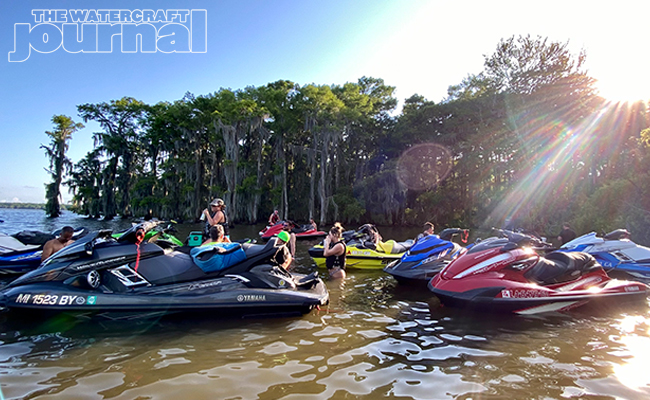
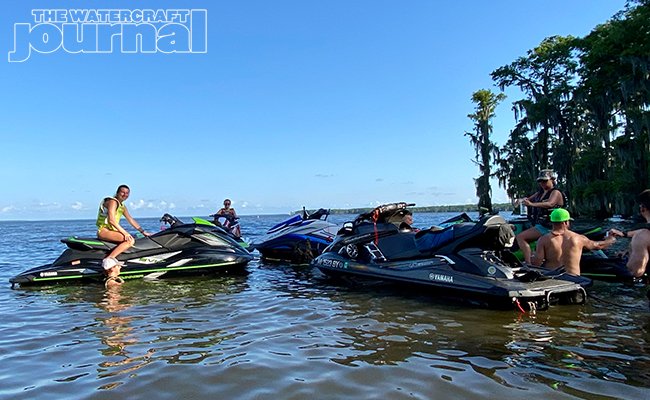
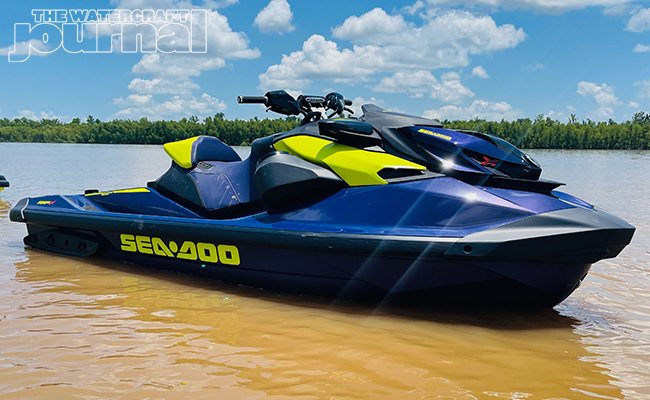
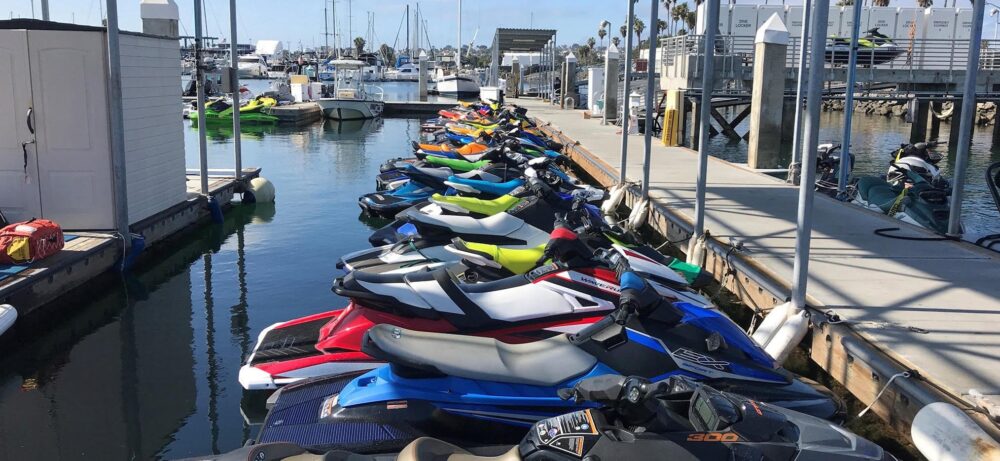
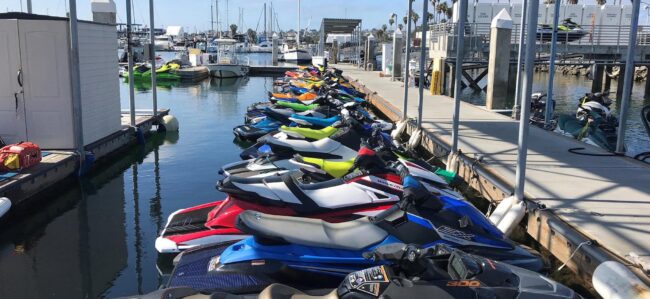
Check this out; on July 4th San Diego Fire Rescue Department’s (SDFR) lifeguards and the San Diego Police Department impounded more than 30 boats. Most of the impounded vessels were PWC.
According to SDFR, most of the taken watercraft were rented illegally within Mission Bay, making them fair game. A business must be licensed and be brick and mortar, according to the San Diego Fire-Rescue Department’s social media pages. They even went as far as saying that an unlicensed rental place doesn’t have insurance.
Andy, the owner of Seaforth Boat Rentals in Mission Bay has a $5 million dollar insurance policy on his rental equipment. He claims that if there are any issues with his equipment, customers can call him. He has people on standby for emergencies and ways to make to make riding safe and enjoyable. He has several brick-and-mortar locations.
Andy also took a dig at jet ski rental operators who don’t have storefronts. He blamed a couple of jet ski related deaths on rentals from illegal operators. One local commented that the business owners with actual storefronts, have it in for the guys who don’t have physical business locations. That seems obvious with the comments that Andy made.
Furthermore, the police department announced that people under 40 operating a boat or PWC, must have a California Boater Card. Once again, statistics prove that PWC aren’t the dangerous and deadly vessels that many claim them to be: According to a U.S. Coast Guard report released on June 29, “there were 767 boating fatalities nationwide in 2020, a 25.1 percent increase from 2019.” Of the boating fatalities in 2020, 66 were attained to personal watercraft.
We at The Watercraft Journal have ventured out on limb more than once, particularly when it comes to predicting the moves within Kawasaki USA. Unlike Yamaha Motor Corp. and Sea-Doo, Kawasaki’s internal corporate culture is a little harder to pin down. Over the years, we’ve received a variety of leaked pictures, memos and legal documents that have ranged the spectrum. The truth is often found somewhere in between, and we’ve had to navigate stormy waters with caution before.
In 2013, we received reliable intelligence that the 2014 model year would unveil “a whole lot of changes” as well as “a model [we’ve] been waiting for.” This – as one might expect – sent us reeling. Soon came articles boasting that a 300-horsepower STX-R was forthcoming; that Kawasaki was going after Yamaha’s FZR SHO and Sea-Doo’s RXP-X 260 musclecraft; that 2014 would ignite a new era of performance PWC. In all, we were preparing for a rekindled horsepower arms race.
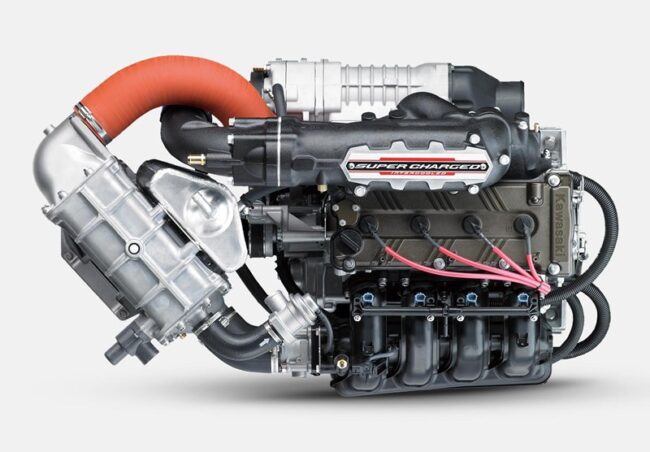
What came was a mixed bag: a series of necessary upgrades and updates to the Eaton TVS supercharged 1,498cc four-cylinder 4-stroke (primarily increased volume of the cooling circuits and oil galley, a second set of under-piston oiling jets, a larger oil cooler, etc.) resulting in a 10-horsepower increase. The mysterious model “we had been waiting for” was not a supercharged STX, but an Ultra 310R with moto-style steering, “sporty” seat and green sponsons.
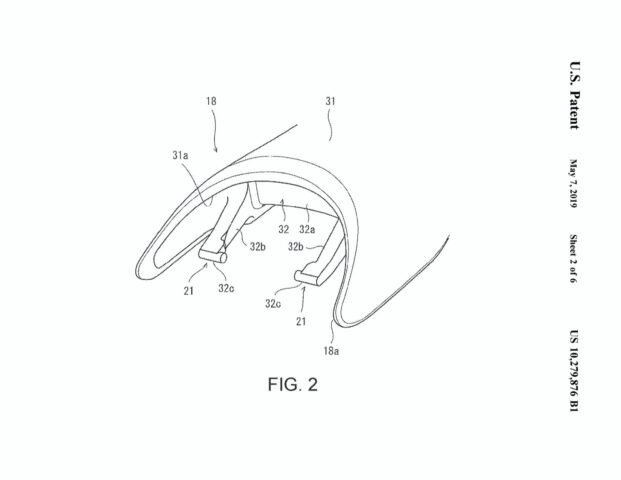
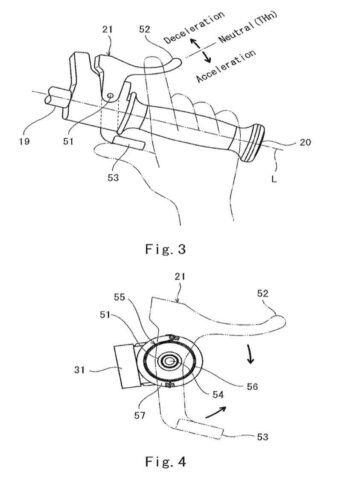
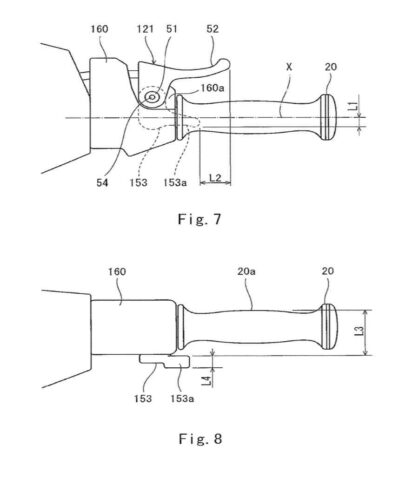
Five years later, a pair of spy shots of Kawasaki’s redesigned 2020 STX 160 spurred a veritable avalanche of leaks and rumors. An application to California’s CARB revealed not one, but three new tiers of STX. Perusing Kawasaki’s existing US patents revealed schematics for a thumb-operated brake/reverse system along with a folding rear seat, which later materialized on the production 2020 STX 160 models. But what about the brake system? Where did that go?
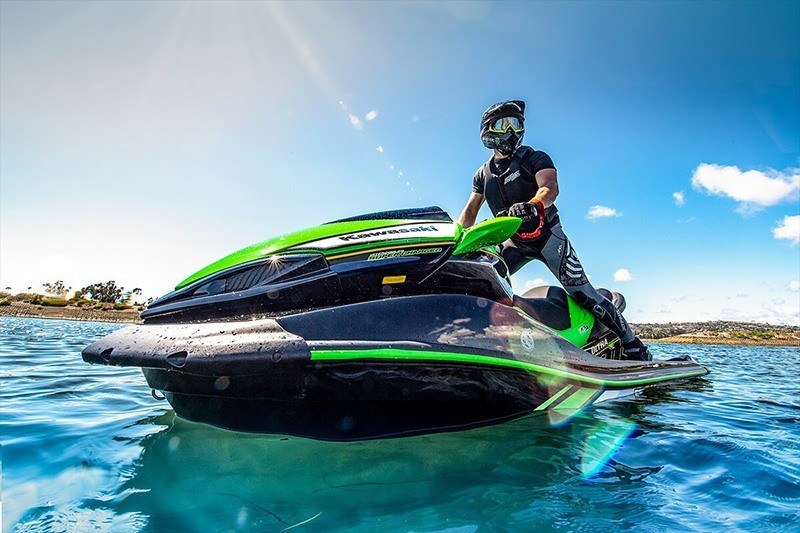
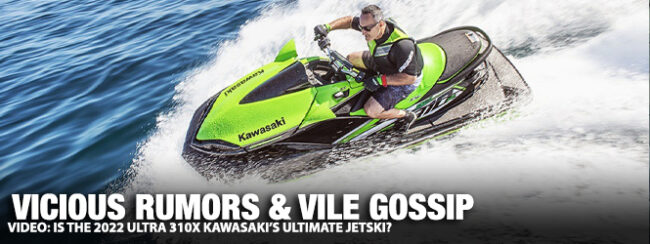
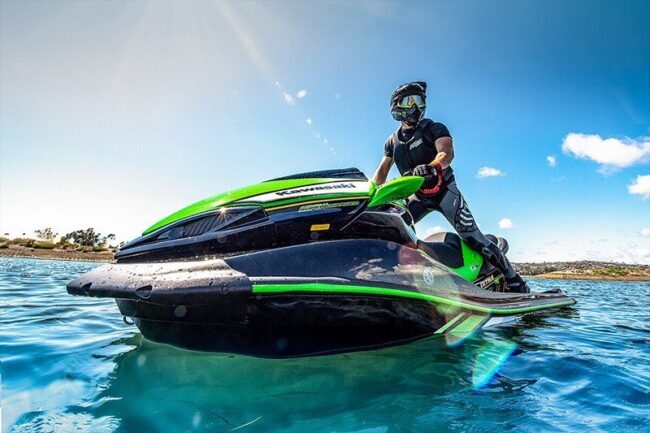
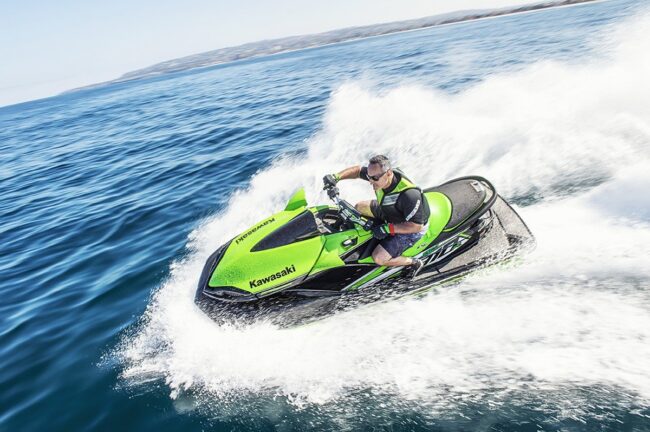
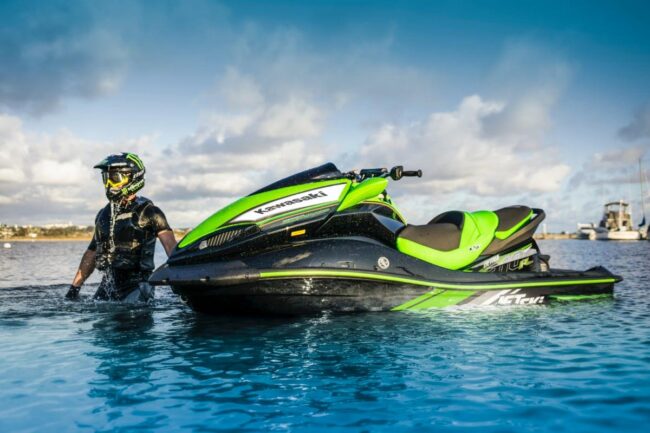
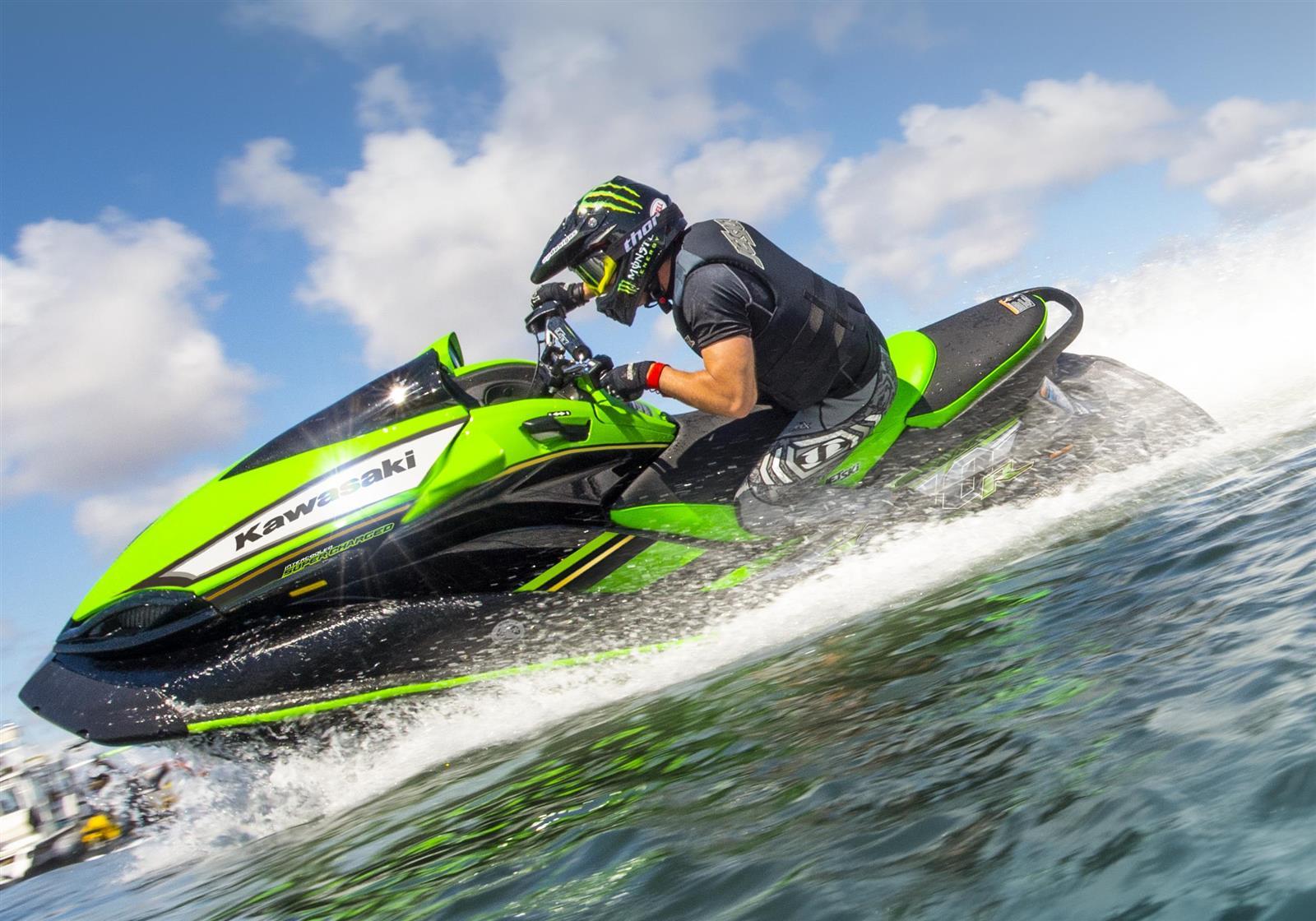
Earlier this year, chatter of a redesigned Ultra for 2022 began to buzz. Inquiries bore fruit in the form of a few questionable images and some rather intriguing – albeit mixed – predictions. The Ultra (like the STX in 2020) would get a new deck, resulting in a recontoured 3-person saddle, hood, fairings and steering neck. Borrowing from the STX, the new Ultra would receive a similar waterproof phone case and its clear plastic lid and the flip up-style rear passenger seat.
Of course, the biggest news was the addition of the long-awaited brake-and-reverse system. Per the patent and similar to those brake-and-reverse systems from Sea-Doo and Yamaha (iBR and RiDE, respectively), Kawasaki’s system will deploy at ignition, placing the JetSki in “neutral.” And likewise, a flick of the throttle will disengage the reverse bucket and “shift” the JetSki into “Forward,” as will quickly depressing the right hand side thumb trigger return the JetSki to neutral.
Deploying the brake will be done via the thumb trigger. Mechanically, the thumb trigger will override the throttle and engage the actuator that deploys the brake/reverse bucket. Closer inspection of the patent implies that depressing the thumb trigger from a standstill will throttle the JetSki in reverse (identical to RiDE); but then again, this action may very well be amended or updated when this feature reaches the public.
Obviously, inclusion of this new braking system will require a slight rearranging of the current control modules on the handlebars. Expect new placements for the Cruise Assist, trim control, and Eco mode buttons. Expected to remain are 310-horsepower supercharged-and-intercooled 1.5L powertrain, 160mm axial-flow pump and world championship-winning hull. Equally, so to will the massive 20.6-gallon fuel cell and 56-gallons of storage continue as-is, as will the 5-place adjustable steering system and “Immobilizer” keyed security system.
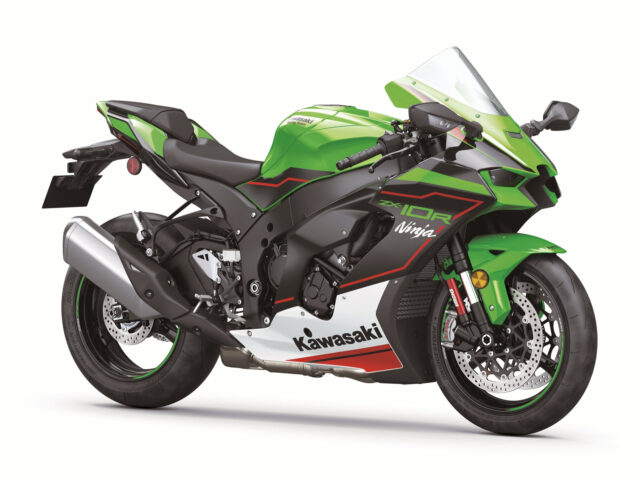
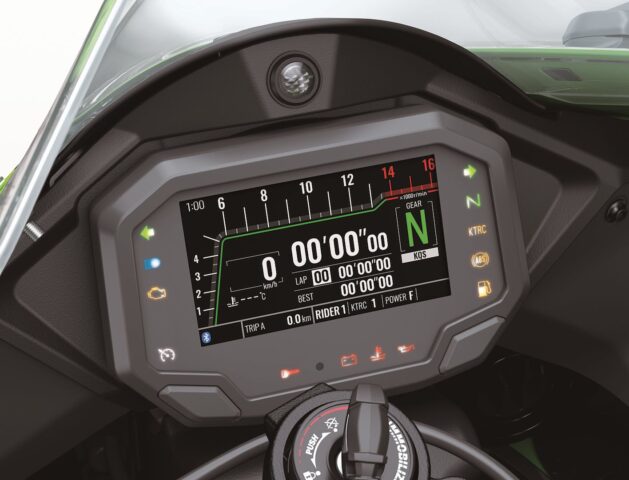
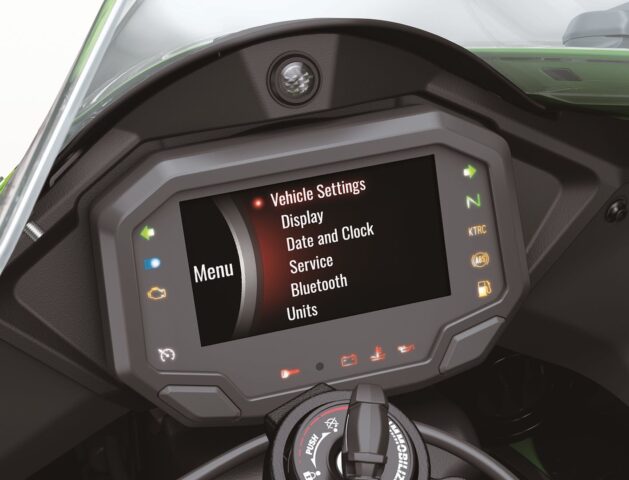
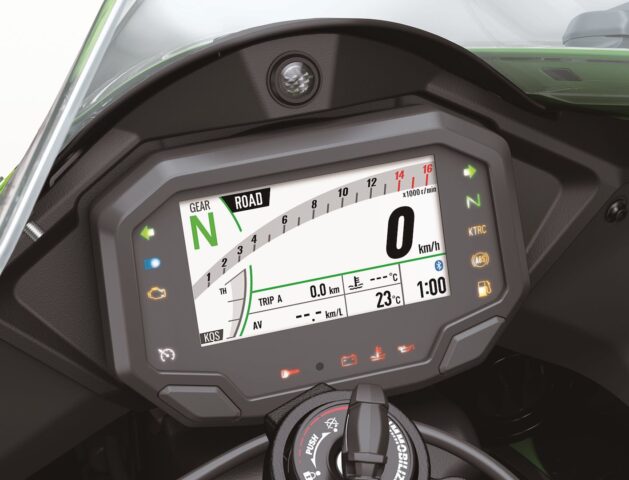
The coup de grâce of our torrent of added information directed us towards the current ZX-10R and ZX-10RR for aesthetic cues. “Take a long hard look at the ZX-10R and RR,” one message hinted. And with the Ninja fresh in our minds, the final hint hit hardest: the new Ultra is expected to receive the Ninja’s TFT color dashboard. The digital dash features a high contrast, easy-to-read layout, various display layouts and coloring options and Bluetooth connectivity.
This final function implies a possible linking of the rider’s phone or Bluetooth device with Kawasaki’s industry-first onboard sound system, Jetsounds (did you forget Kawasaki was first to have a PWC speaker system? We bet you did) via the dash. If this option is available, it will place Kawasaki on par with the dashboard on the Sea-Doo GTX Limited and Fish Pro. Again, this is purely speculative, but a very viable potentiality.
Again, none of this information has been confirmed by Kawasaki to The Watercraft Journal nor do we expect to receive such confirmation until the official press releases are issued sometime in early October. As for The Watercraft Journal, we don’t expect to even lay our hands on the redesigned Ultra until 2022, possibly late January at the earliest – but more likely sometime in mid-to-late February. Until then, keep your fingers crossed that all of this comes to pass, as we’re certain it’ll propel Kawasaki’s curb appeal ten fold.
The marketing team from Sea-Doo sends out a monthly newsletter to subscribers and it always contains some good stuff. The July correspondence included a piece on things to do on your Sea-Doo. It is appropiately titled Sea-Doo “To Doo” List. The list was put together to inspire us to get out more and explore by taking our watercraft on adventures to remote locations.
Sea-Doo Ambassador, Nick Taylor and friends guide us through a fun weekend in Florida on their Sea-Doo’s. The list covers a lot of fun activities and Taylor is a likeable host. Each topic is accompanied by a short clip featuring the group enjoying Sea-Doo Life.
Fishing is at the top and with LinQ accessories, you can easily load up and go fishing. You don’t even need a Fish Pro because with the versatile line of Sea-Doo accessories, any Sea-Doo model can be outfitted for fishing. Your Sea-Doo watercraft will get you into those out of the way fishing holes too.
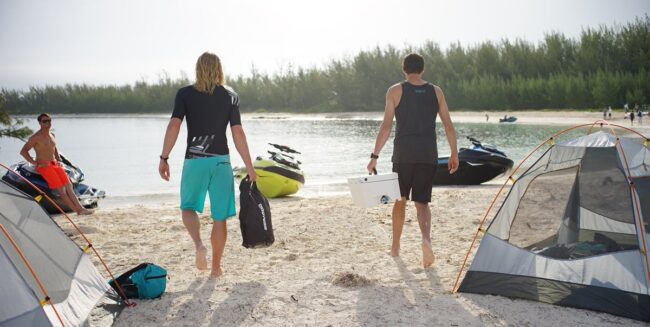
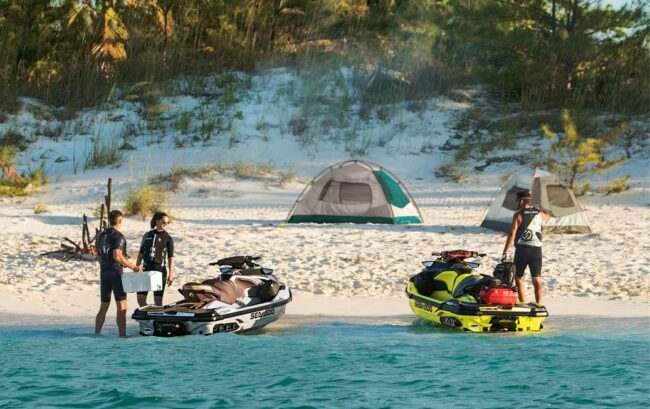
Camping is second on the list. With the deep and sizeable hatches, you can load up all the camping gear you need for a weekend under the stars. The LinQ cooler will hold enough food and drinks to get you through the weekend. Take it easy and unwind next to the campfire.
Watersports with Sea-Doo will get you stoked. Break out the tube and wake skate for a fun day on the water. Sea-Doo makes it fun and easy with the Wake and Wake Pro models and accessories. You’ll have a blast pulling each other through the water and it’s the perfect way to end a weekend of Sea-Doo life!
Brisbane Kawasaki launched a very clean and user-friendly Shopify e-commerce site to showcase their line of Kspeed products. The site is fast and nicely organized. A filter setting was added to allow the user numerous options, like sorting by year and model, and best-selling products to name a few. A dropdown is located on the left side for quick links to products, videos, your account, and home.
The layout is set up to make it super easy to find products with a quick and painless checkout process. We like the way that Brisbane Kawasaki laid out all the products with clear and concise pictures with easy-to-read product descriptions. The video page features quite a few Kawasaki “how to” videos. The layout is straightforward; simply scroll down and click what you want to watch.
The homepage is set up nicely as well. It is organized with a bright slideshow at the top that showcases different Kawasaki JetSkis. Click the “Tell Me More” banner and it takes to you that machine’s page where you can read about it and order one if you like. Below the slide show, are various items and details about Brisbane Kawasaki. We really like the new layout, and we think you will like it too. It’s bright and extremely easy to navigate.
Check it out and buy some Kspeed products or any of their wide range of other accessories, such as tubes for towing, PFDs, and apparel. Everything is easy to find within the new layout and it’s a breeze to order from the United States and around the world. The new dropdown menu for choosing your currency and the simplicity of the Shopify order form makes purchasing a seamless process.
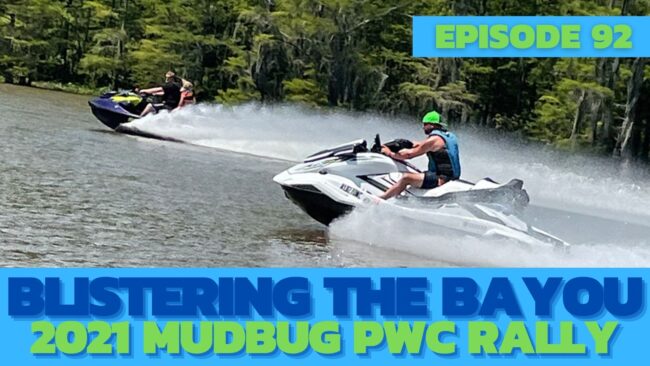
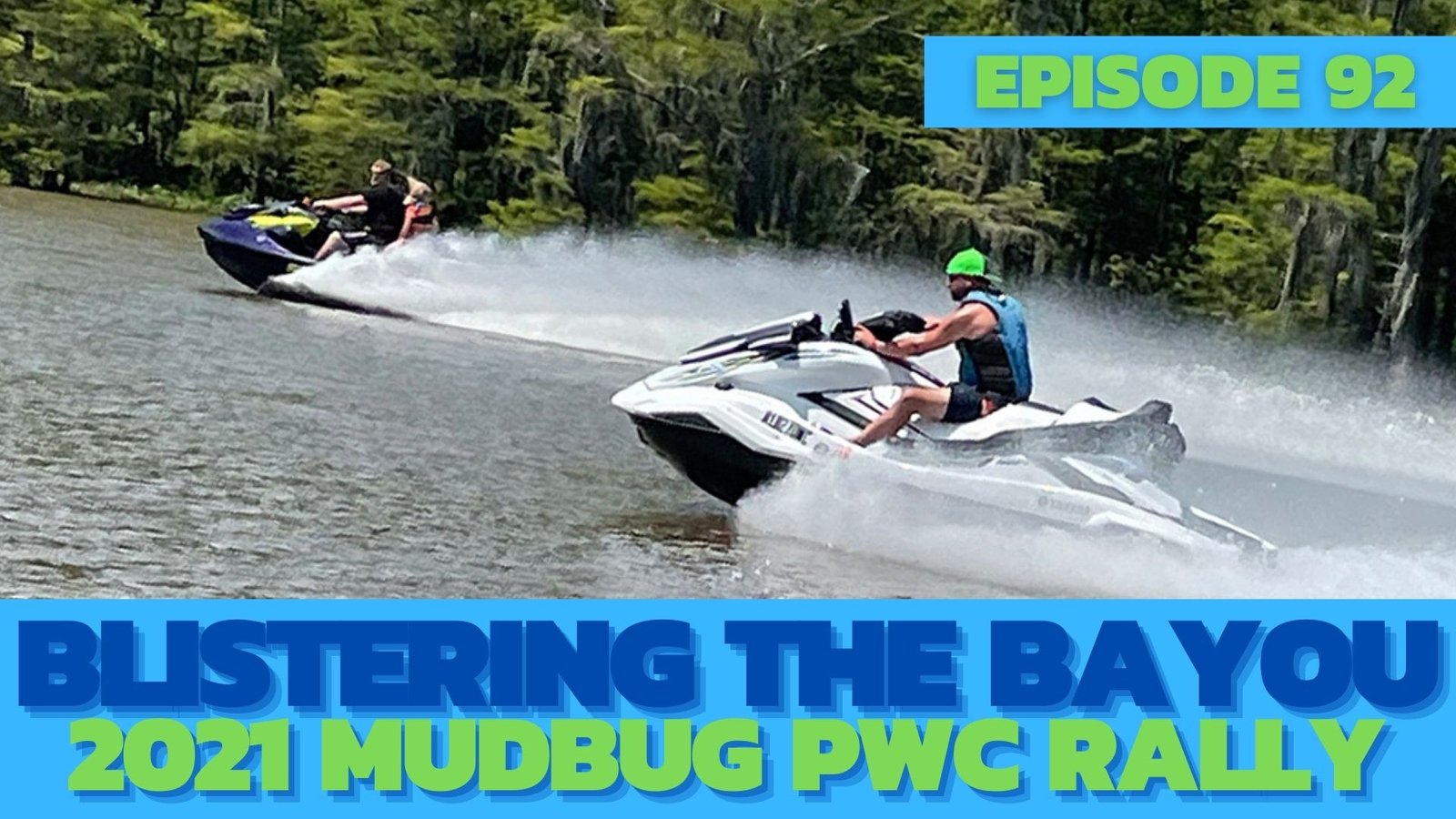
Change may be inevitable, but that doesn’t mean it has to be a bad thing. The annual Greenhulk.net Mudbug PWC Rally didn’t start off the as the open-ended explorative cruise-fest that it is today. Rather, it was more of an outlaw drag race held clandestinely in the shade of the tupelo and cypress trees dripping with Spanish moss.
Spectators used to line the edges as a pair of highly tuned PWC screamed down the bayou in a winner-takes-all, heads-up race. Soon, the liability of a single wayward ski careening into the crowd put an end to this format. Single ski radar runs replaced the drag racing, but even those began to wain in popularity. Again, all things change as it were.
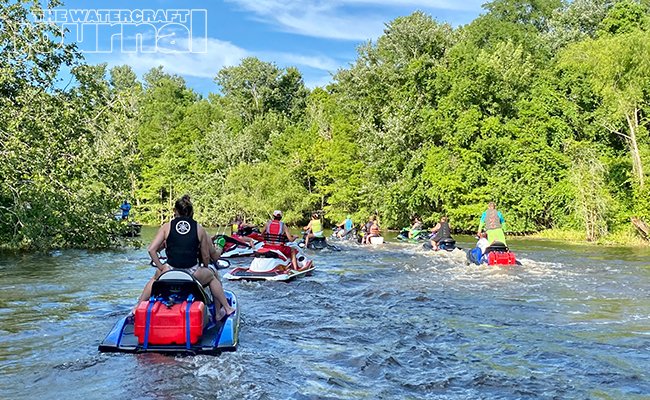
Meanwhile, those looking for a little more tranquility found that the Morgan City, Louisiana location provided a seemingly endless supply of waterways to explore. While the racing was underway, others were blazing trails through narrow passages previously only known to by locals. Soon, digital images and video footage of weaving through the swamps at speed drew more people’s attention than the racing. And so it is today.
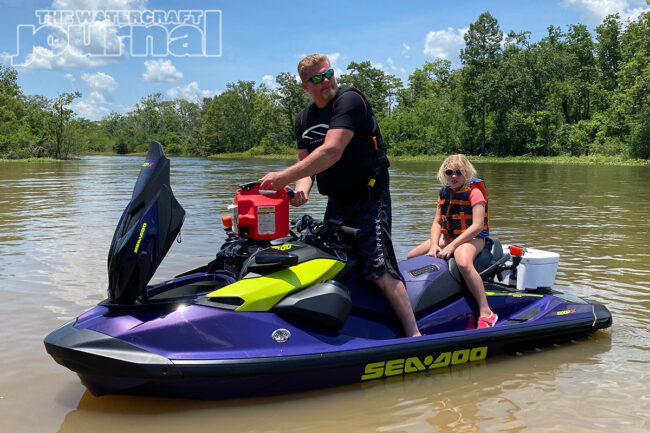
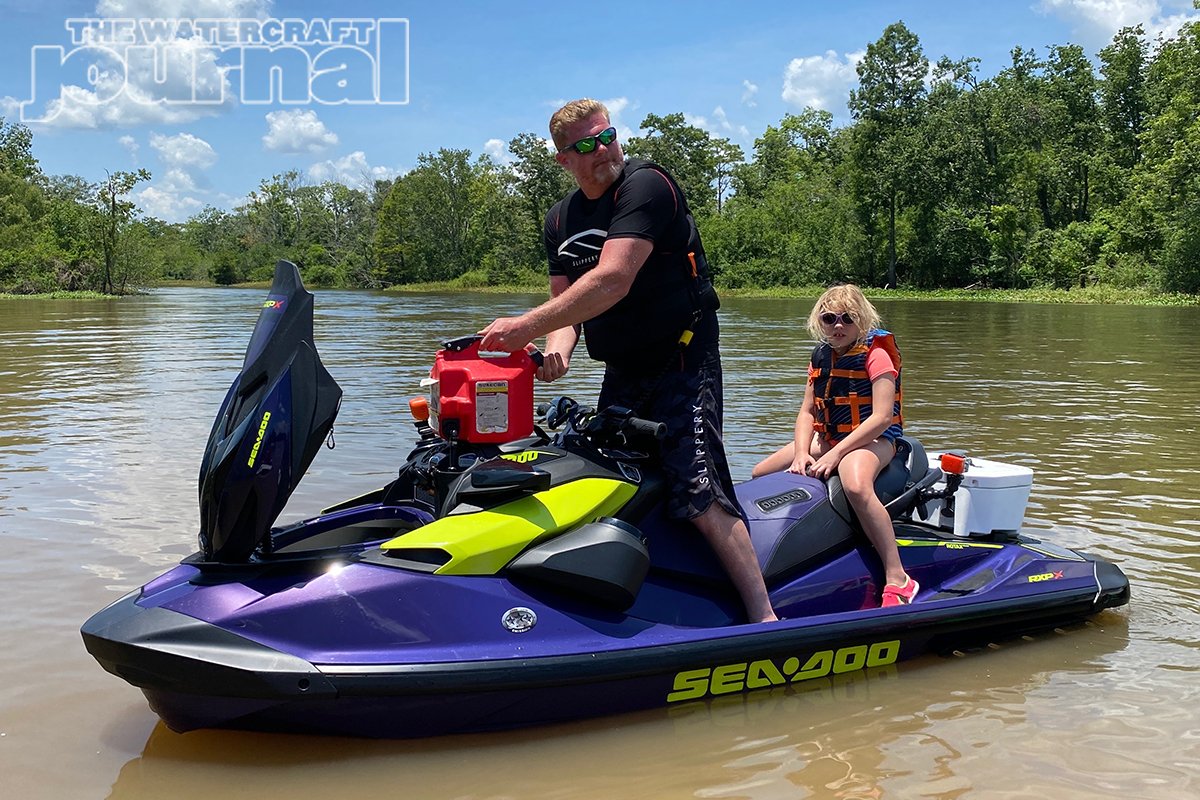
Unable to bring the whole family on this year’s pilgrimage, I brought my 7-year-old, Natalie. Having learned that her older sister would be at summer camp, she launched an aggressive begging campaign to bring her in her sister’s stead (which I was more than happy to oblige). Typically the “girliest” of my three daughters, I was intent on pushing her limits.
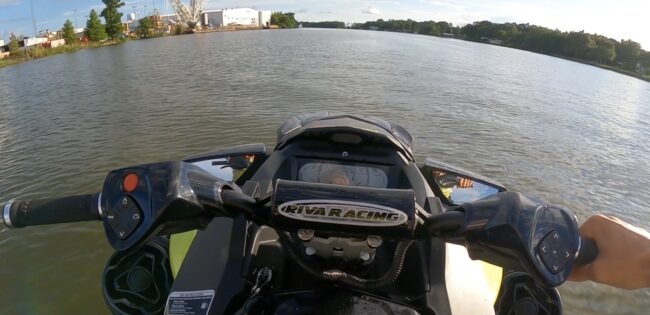
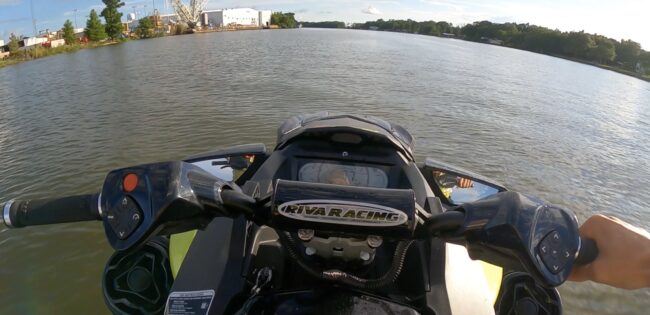
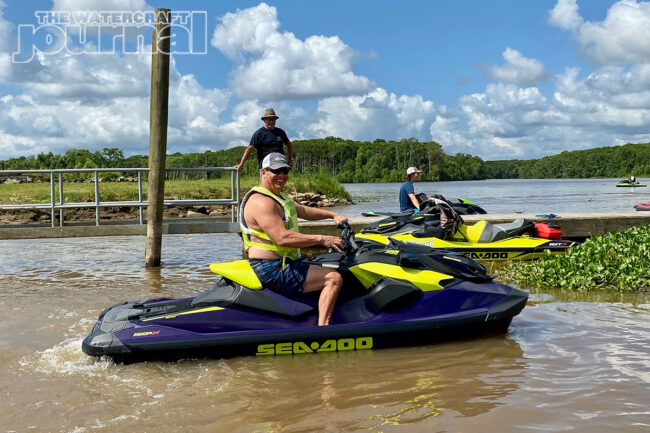
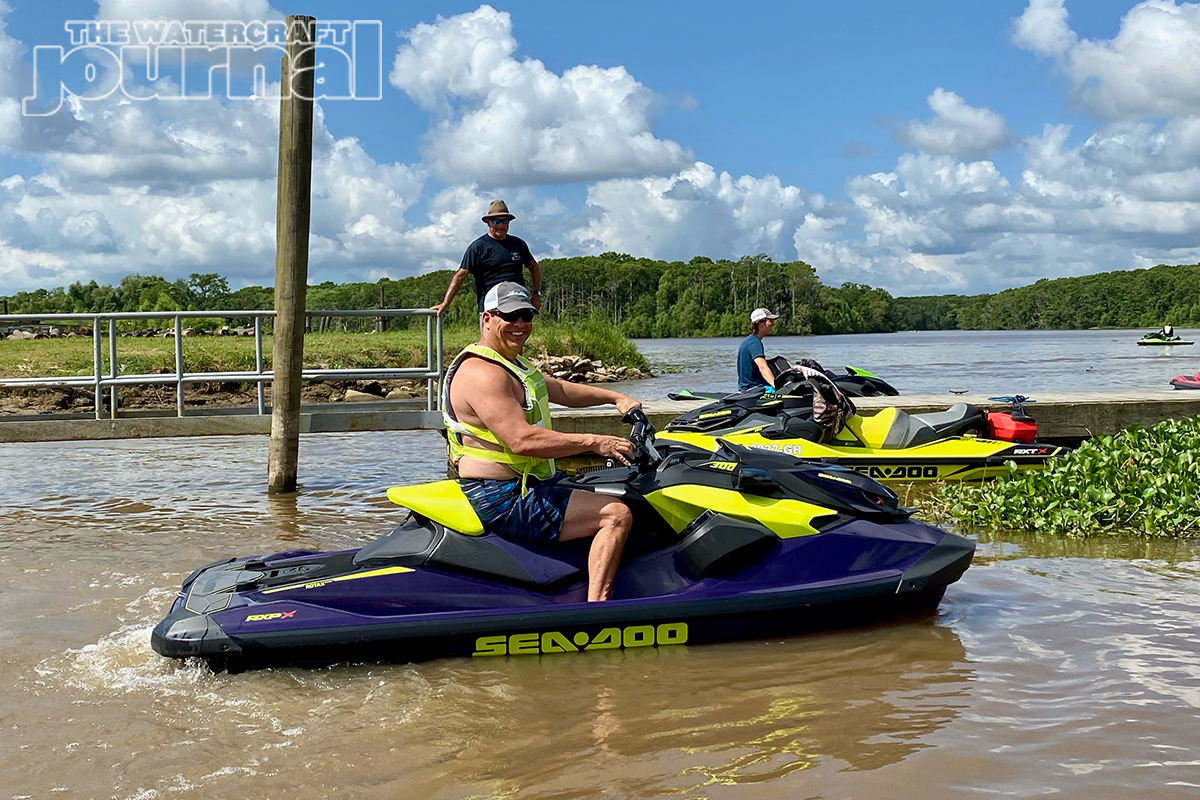
First, we came equipped with The Watercraft Journal’s freshly broken-in 2021 Sea-Doo RXP-X 300. Aaand it came equipped with RIVA’s Pro-Series Sponsons, Oil Catch Can and Speed Control Override Module (SCOM). This would give us a slight advantage both in the twisty natural chicanes as well as in the long straightaways. Second, I had reached out to seasoned long hauler and friend to the magazine, Billy Duplessis to help plan some rather extensive rides for the weekend.
Leaving early Thursday morning, we ventured south, encountering heavy rain in Alabama. Although knowing better, I left the official Sea-Doo cover on the RXP-X knowing full-well that it wouldn’t last long. Sure enough, before reaching Mississippi, the cover had snapped one of its clips and began flapping violently in the wind – scuffing all of our recently detailed surfaces dull.
With the cover removed and stowed away, we reached Louisiana and crossed over the Lake Pontchartrain Bridge into New Orleans. Passing just outside of the Big Easy took some patience, as traffic tends to trod at a less than hurried pace, but of course, we were a little antsy to get out of the truck by this time. Morgan City lay just an hour ahead and we were anxious to begin our extended Mudbug weekend.
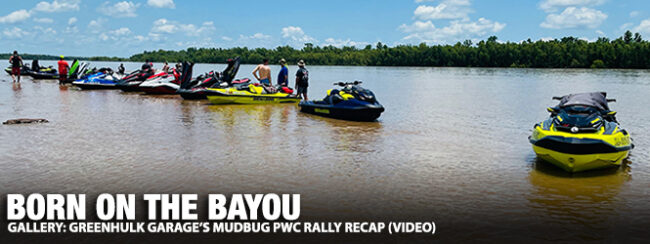
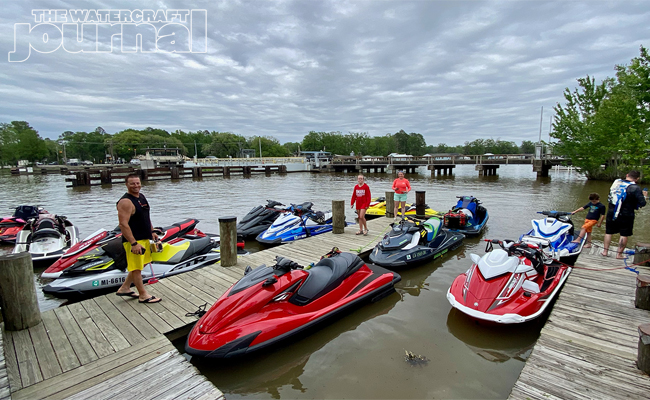
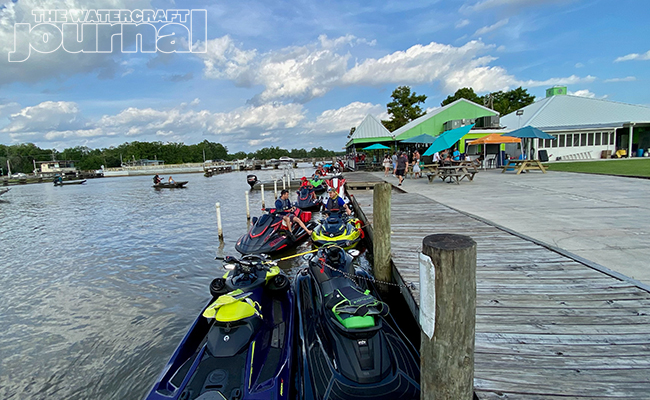
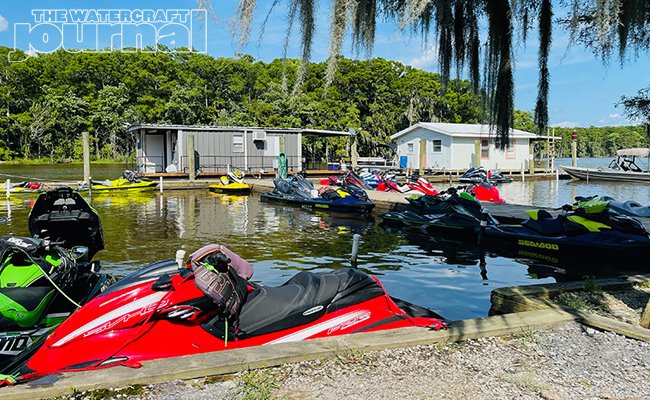
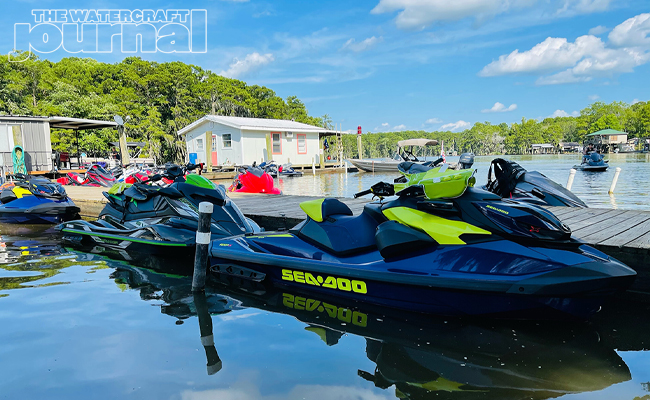
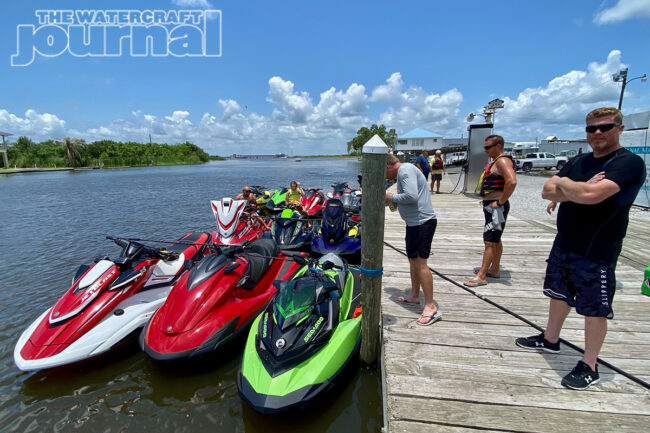
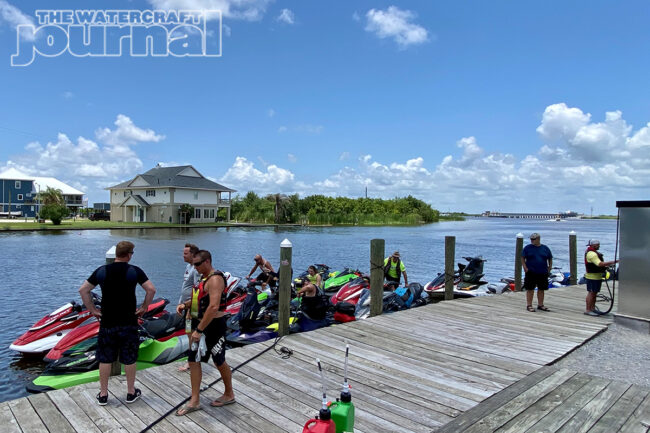
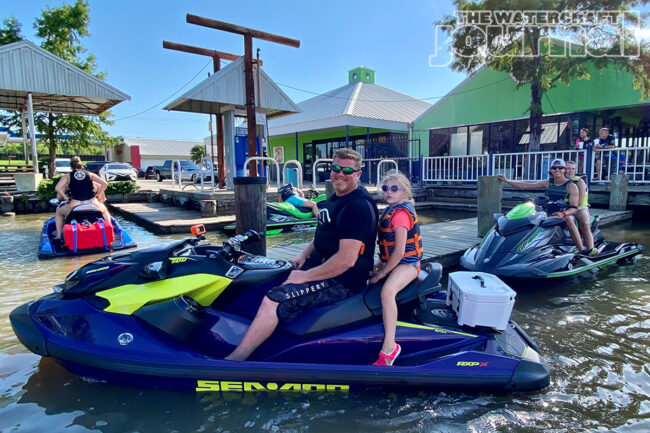
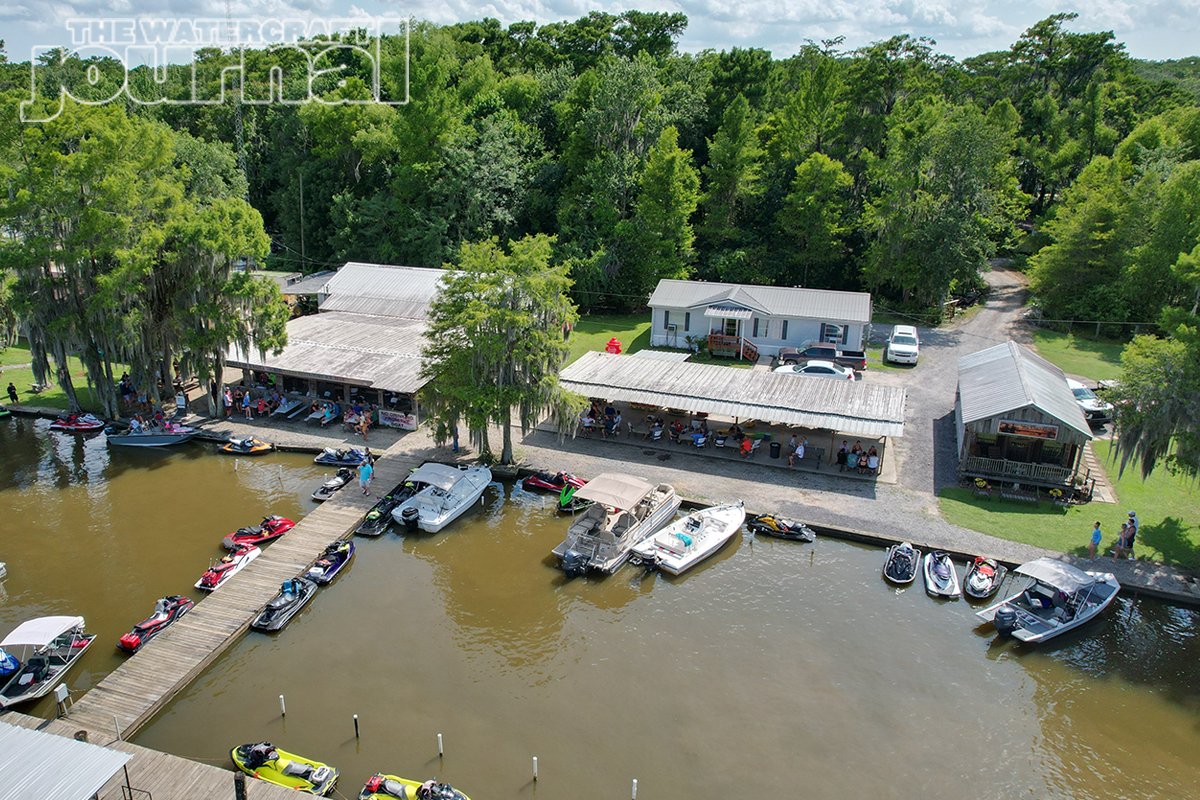
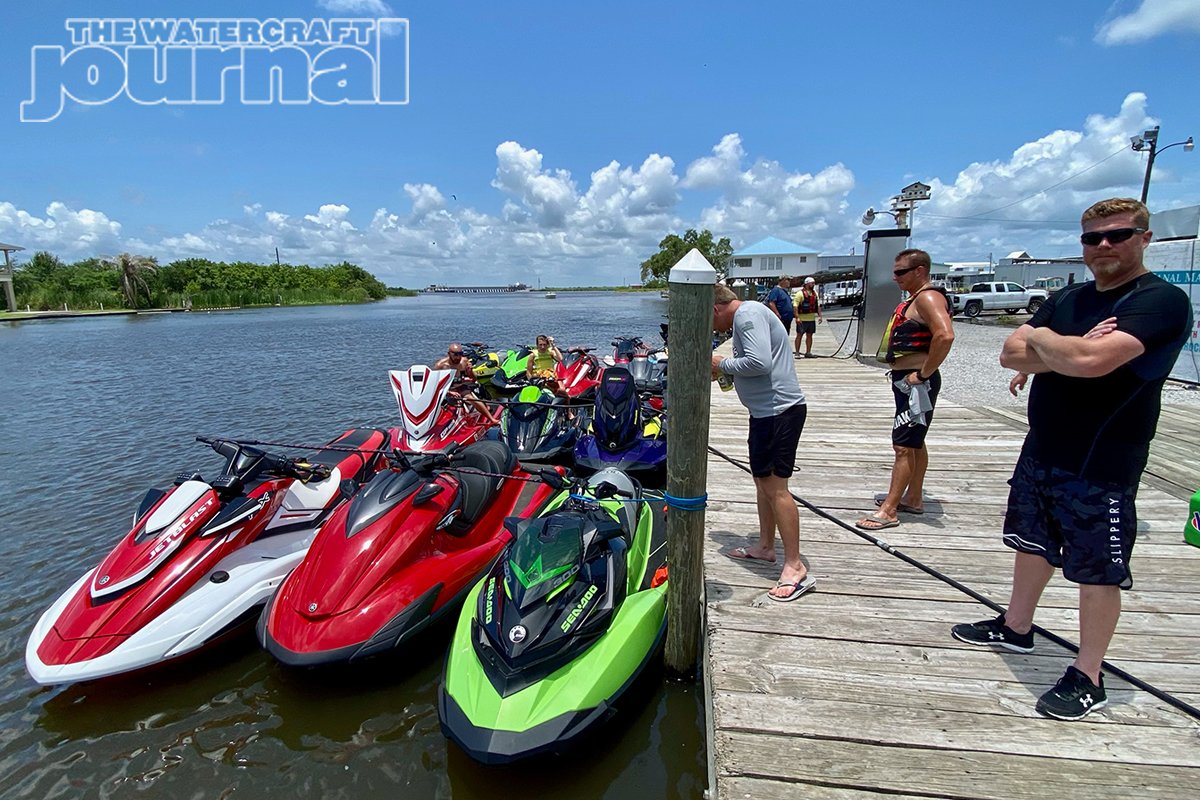
The next morning began at Doiron’s Landing, a local Chevron filling station. Arriving at 9am, the pumps were already lined with skis on trailers ready to ride. With our RXP-X topped off and the day’s parking pass on the dashboard, we drove over the berm to the levee and launched our Sea-Doo. It didn’t take long before 31 other watercraft joined the idling throng.
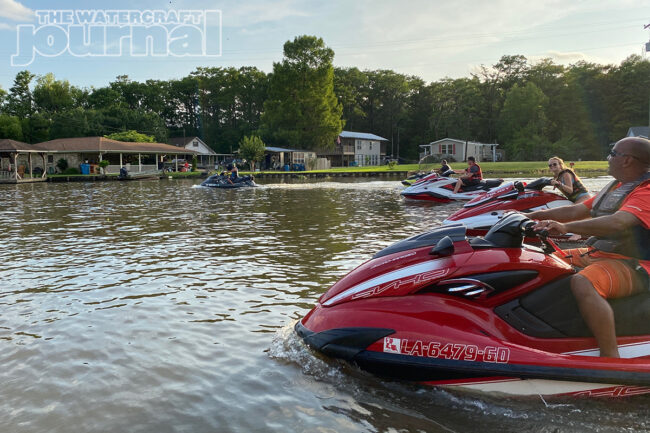
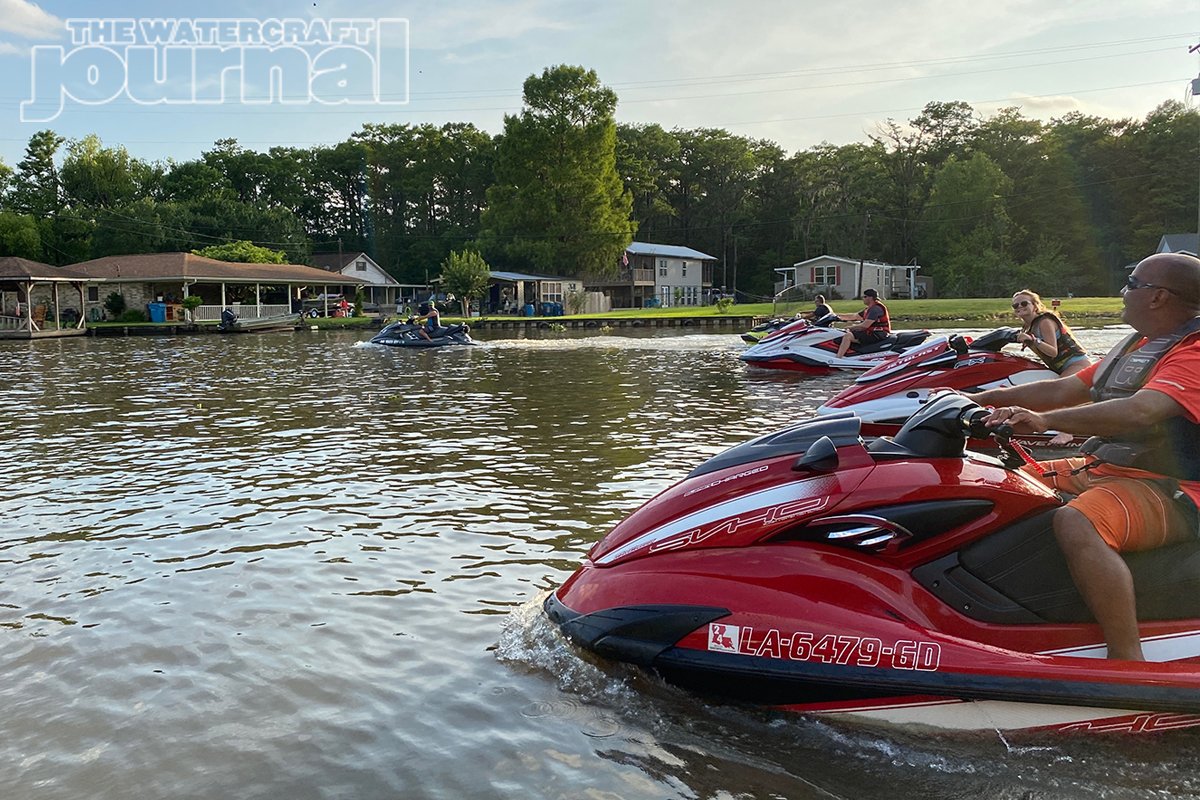
Donning a bright neon yellow hat, “Pretty Ricky” Johnson led our caravan with Billy aboard his red Yamaha FZR taking up the rear. With two Mississippians in command, I knew Natalie and I were in good hands. Prior to commencing, Billy warned, “We’re lookin’ at a long one today. You up for a full day’s ridin’?” I glanced at Natalie who nodded affirmative, but I wasn’t too sure she’d feel the same in a few hours.
Ricky led the pack up the causeway into Little Bayou Sorrel in to Big Fork Bayou. We dipped into Flat Lake before cutting back northward into Dog Island Pass and Duck Lake. We meandered toward Cypress Island, taking the Lower Atchafalaya River into Yellow Bayou before cutting upwards and returning to the main Atchafalaya River, its heavy current pulling us southward.
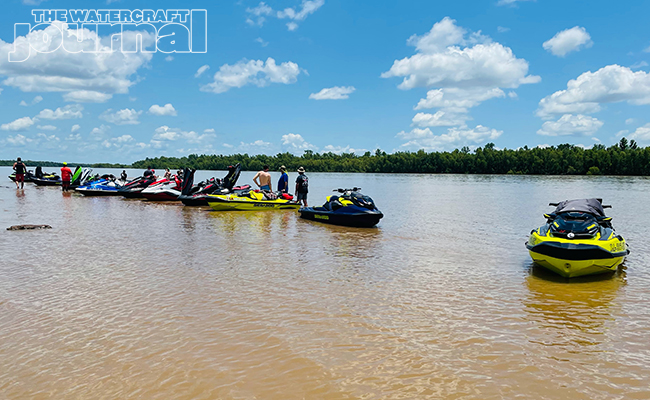
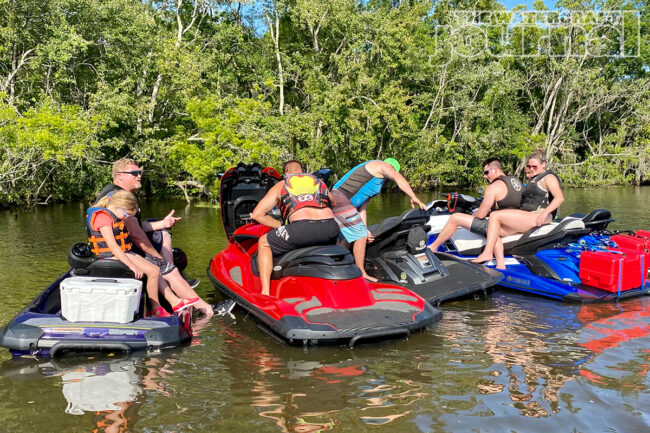
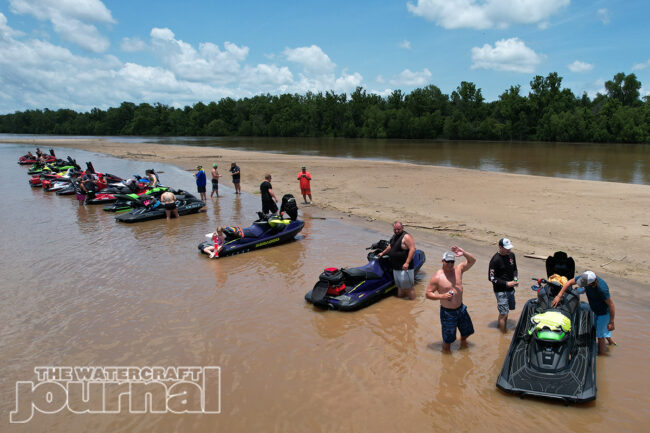
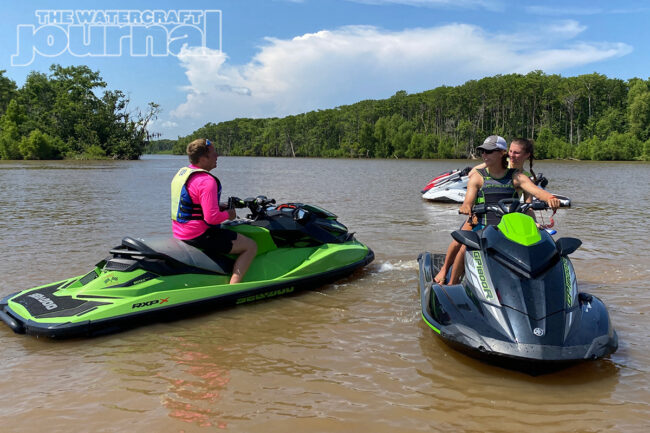
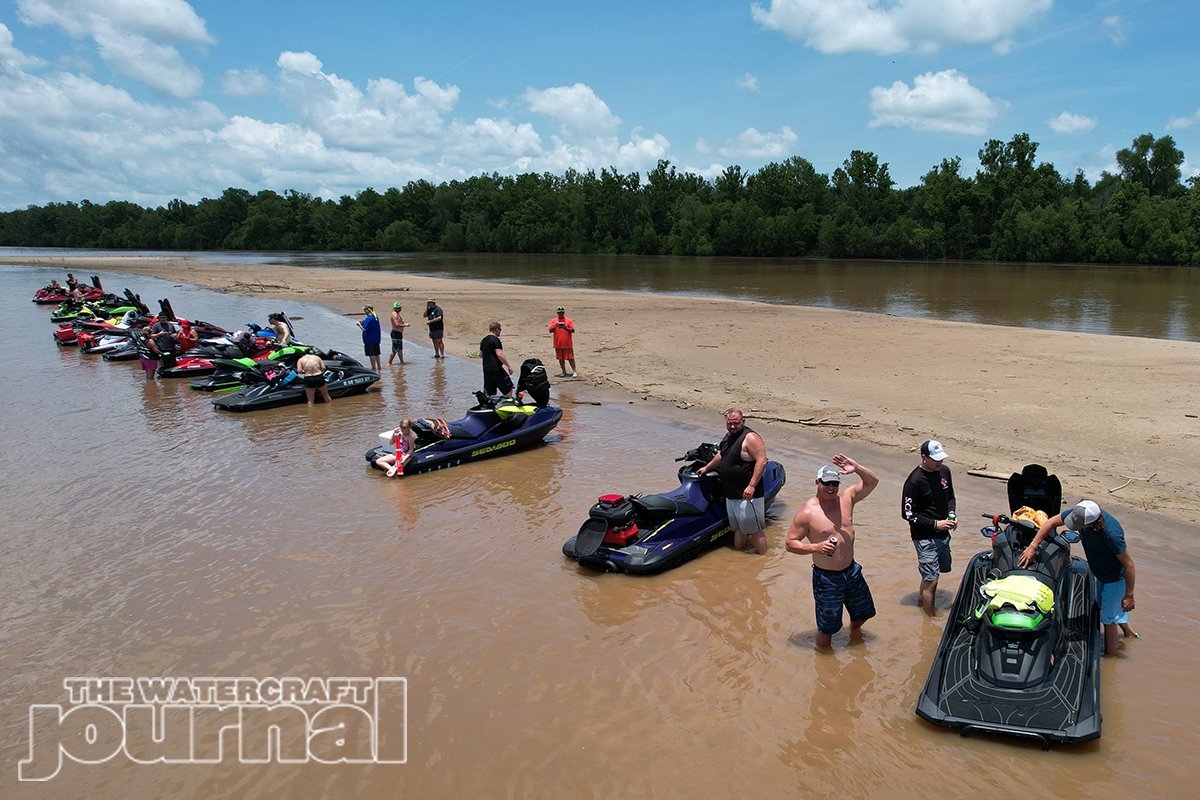
Before pouring into Flat Lake, we peeled left and beached on a sandbar to rest and socialize. Natalie took right to swimming as I mingled with the group. Others poured over each other’s modifications, the few new models and shared tales of other grander adventures.
From the sandbar, we journeyed below Doiron’s (a few choosing to “tap out” early) towards downtown Morgan City, around Bateman Island and beyond Amelia. Skirting Atchafalaya Bay, we ventured east through Lake De Cade towards Falgout Canal Marina for fuel and food. Just a few miles south of Houma, I worried that my passenger had had enough, but after a cheeseburger and cold drink, she was all smiles. (It was a good thing too, because Billy warned that we were only half way done for the day.)
Following a circuitous route back northeast, occasionally intersecting with the Intracoastal Waterway our group meandered towards Amelia, circumventing Lake Palourde. Passing the old stomping grounds where radar runs and drag races were once held was a bit nostalgic, but our group’s pace had increased and a those remaining were beginning to wain. Ricky and Billy opted to poll the group – who wanted to check out and who wanted to keep going?
Several peeled off, returning to the eastside launch at Dorion’s while I and Natalie aboard our trusty RXP-X soldiered on. We ventured north, up the Avoca Island Cutoff, towards everyone’s favorite waterfront watering hole, Spunky Monkey Daiquiris. Opting for a Gatorade instead, we refueled the Sea-Doo (for what seemed like the third time that day) and relaxed in the shade. The afternoon was getting late but Ricky showed no signs of slowing down.
Billy leaned in close and teased Natalie, “You wanna go swimming? We’re goin’ to a great place!” And that was all it took for my 7-year-old to catch her third wind. Loading up again, we veered up and around into Lake Verret, skimming the coastline for a break in the trees. Suddenly, Ricky hooked east and pulled into an open grove. The lake’s floor rose suddenly and we were on a shallow sandbar tucked into a shady grove of cypress.
We swam, played, chatted and joked for nearly an hour as the sun sank low into the western horizon. “Sun don’t go down until after 8,” Billy mused. “That still gives us plenty of time.” It was already after 7pm. After taking a few shots with the drone, we packed up again and idled into deeper water. The skyline began to fade to orange and our shadows stretched far ahead of us as we streaked across the glassy-smooth lake. Natalie was spent and so was I, and from what I could see behind us, so were the rest of our group.
I chased Ricky as he veered south, coming to a stop in the shade beneath Parish Road 906. “Hey man,” Ricky laughed. “Don’t follow me, I’m trying to hit 200. Go ahead and head back to the launch.” And off he went. True enough, Ricky, Billy and his wife, Gina, and a couple others continued riding until their GPS’ registered over 210 miles. As Natalie and I sped back to Doiron’s, we had totaled 186 miles for the day. And absolutely incredible feat – particularly for a 7-year-old girl.
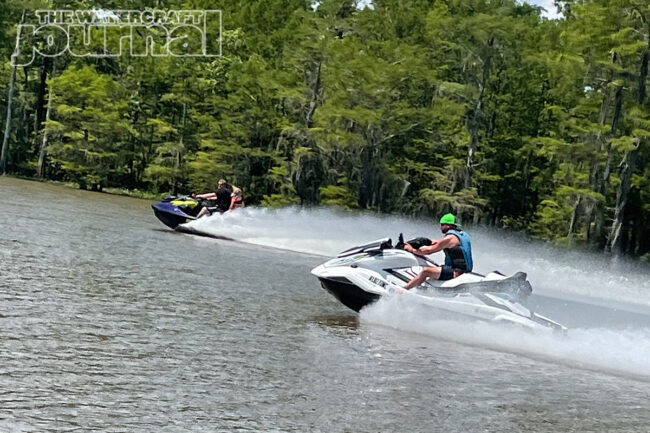
Saturday and Sunday’s rides began eerily similar. Both days we set in on the industrialized waterfront launch at Doiron’s, followed Pretty Ricky aboard his Yamaha FX HO and bright yellow cap, and racked up absolutely bonkers mileage (albeit nowhere near Friday’s 9-hour ride). Saturday had us return to the sandbar on the Atchafalaya River, and shooting plenty of tight, winding routes through the bayous. The added aggressive cornering of the RIVA Pro Series sponsons saved our bacon more than once, even narrowly avoiding a downed tree.
Admittedly, I’m going to have to publicly eat a little crow when it comes to the 2021 Sea-Doo RXP-X 300. In reviewing previous iterations of the musclecraft, I found it sporty and energetic, but not a good candidate for all-around touring and casual riding. The prior T3 hull simply was too aggressive for wide, sweeping turns or traversing wind-blown lake chop. With the 2021 redesign, the modern RXP-X and its slightly resculpted hull resolved both of these behaviors.
Equally, it’s improved Ergolock-R saddle, vertical posture and increased footwells are far more forgiving than before. Lastly, it’s 42-gallons of storage – including a very generous glove box – makes this vehicle surprisingly accommodating. My only caveat is that you got to add the 1.6-gallon, foam-molded Lid Organizer storage bag ($60) and Sea-Doo’s spring-loaded, Boarding Ladder ($215). Seriously, these need to be standard equipment. They’re the best.
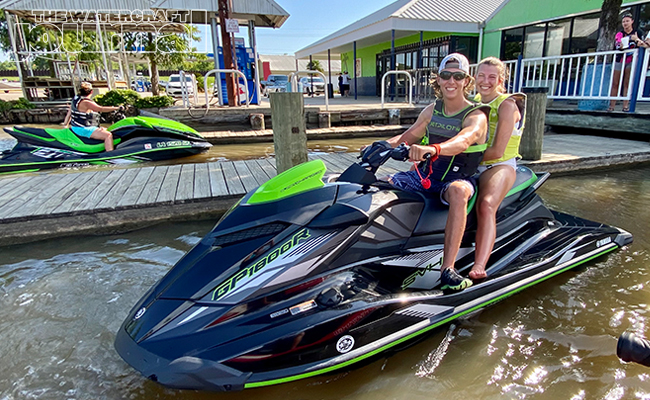
As a bit of a surprise, both Greg and Jerry Gaddis joined the fray on Saturday, which was an added treat. Greg piloted the Greenhulk Garage’s 2021 Yamaha GP1800R SVHO while Jerry rode his stock RXP-X 300. Our path took us under a few low bridges, past some rustic waterfront homes, as well as a pit stop at everybody’s open air gas pump, shrimp broil and live music venue – Gros Marina. If it’s not authentic zydeco music, it’s classic rock blasting over the water, and Gros has plenty of both.
On Sunday’s abbreviated ride (most folks needed to head home to be at work on Monday), we charged the lesser-traveled grid of canals cut into the swamps by the oil refineries. These trails are often perfectly geometrical, ending in 90-degree turns and long straightaways running for miles on end. Ricky discovered an overgrown service canal which made for some fun serpentine action through the branches and trees – all great exercise for the Sea-Doo.
Circling back south through Flat Lake, we took the final hairpin at full speed back to Doiron’s Landing. Concluding three days’ worth of incredible riding was bittersweet, as we knew we probably would never repeat such a feat like this again. In all, we amassed an incredible 14 hours of total engine operation time on the Sea-Doo’s dashboard – all without a single hiccup or issue.
Certainly, anyone with a GPS, a solid sense of direction and plenty of fuel could handily explore the routes we took this weekend any time of the year; but nothing is quite like the camaraderie and memories made at an little homespun get-together in Morgan City, Louisiana by the name of the Mudbug. The fun, friendship and unmolested nature is unlike anywhere else. Simply put, there are no other places on the planet that’s like the Mississippi Delta region.
Photography provided by Billy Duplessis and Ian Nuschk
[Updated 7/21/21 with corrections and quotes from BRP]
Just when we thought the year 2021 could not get any worse, it has. This year has been plagued with manufacturing struggles across the board while demand for products has been higher than it ever has; ranging from original manufacturers to the aftermarket, the industry can not seem to catch a break. Over the course of the weekend, BRP’s Maquiladora facility in Ciudad Juarez, Mexico was engulfed in flames.
On July 17, an explosion from an unknown source ignited the storage warehouse at BRP’s second-of-three plants, taking 6 days’ worth of the inventory with it. Due to the extent of the fire, local authorities evacuated nearby residences and an estimated 200 firefighters fought for nearly four hours to control the blaze; thankfully, all 2,400 employees made it to safety.
According to a report in The Drive, the warehouse is used mainly for Can-Am ATVs and Side-by-Sides (UTVs). José Boisjoli, President & Chief Executive Officer of BRP stated, “I am pleased that all our employees are safe and followed our health and safety protocols. We appreciate the quick assistance of the firefighters, local businesses and authorities. We do not anticipate any material impact to our business.”
It has been confirmed that Sea-Doo is not produced or stored at the facility and there is yet to be a reason for a further delay of Sea-Doo watercraft. There is no need to worry about a Sea-Doo shortage or raising the price of your used Sea-Doo even higher due to the fire; Sea-Doo’s will still be delivered and manufactured this year.
Even though the blaze did not directly affect the PWC industry, BRP is facing millions of dollars in damage and further delay in delivery of their products.
I have been lucky enough to attend the MudBug PWC Rally since the very beginning, roughly 15 years ago. Even though the gathering has faced many changes through the years, MudBug never disappoints.
I don’t think anyone could’ve asked for better conditions this year; the skies were clear, water levels were low, and we had an excellent group of people in attendance. This year’s ride was no stranger to change; gone are the days of radar runs and high speed PWCs. While a large part of me misses the high-speed, action-packed weekend, change should not be unwelcome.
This year’s ride lacked the high performance machines known for terrorizing Louisiana’s bayous; instead we saw a group of PWC enthusiast who all shared the same passion: riding PWC. Over the course of the weekend, the main focus was putting some miles on our rides, nearly 500 miles for some of us. For me, long distance riding is rather new territory.
To kick off the weekend, we rode just under 200 miles on Friday. The ride began at the local meetup spot, Doiron’s Landing and we made our way south, deep into Louisiana’s marsh, before riding to the swamps further north in the afternoon. This was, by far, longer than any ride that I’ve ridden in a single weekend and it was only Day One.
Throughout the weekend we spent many hours riding through some of the most beautiful scenery Louisiana has to offer, stopped at marinas, swam at sandbars, and enjoyed socializing with MudBug veterans as well as newcomers to the ride. As the epic weekend came to an end, the one thing that stood out to me the most was change.
I have attended MudBug for many years and the gathering has played a substantial role as to who I am today. I would attend the rides as quite a young child with my father, Jerry Gaddis. Back then, MudBug brought out the fastest PWC around, quite literally the fastest. Many battles for world records were settled and was once even held by my father at a whopping 98.8 MPH.
It was these battles for top speed, the wrenching in hotel parking lots all hours of the night, and the enormous amounts of riders that shaped me into the high-speed enthusiast I am today. It was this ride that played a role for my father to build fast PWC; I was there at his side to ask a million questions along the way as to how and what he was doing. I can remember apologizing one afternoon for asking so may questions, his response was not to apologize as questions are the only way to learn.
Many years later I found myself with loads of answered questions and a spark within originally ignited by the MudBug rally. I now attend these rides as a grown man, shaped to be who I am from an event started to set records and a father with the need for speed. The days of records being set at MudBug are long gone; the ride has endured many changes through the years and will only continue to change.
For instance, I attended this year’s ride on two PWC solely wrenched on by myself; my father showed up as my sidekick, instead of me as his. There were no radar runs or drag racing, just riding. However, the biggest change for me was getting to share my passion of riding PWC with someone I love; she did not complain once even after the countless hours and miles spent on the water.
This year’s MudBug left a mark on me just as it did many years ago; the friends, good times, and memories made are unforgettable. Mudbug has been and always will be a family friendly weekend for PWC enthusiast; it is a ride that I and many others look forward to year after year. Even after the many changes MudBug has encountered and the many changes to come, it will remain an epic weekend for us all. If you happened to miss out on this years ride, you will want to mark your calendars for the second weekend of June 2022; it will be a weekend to remember.
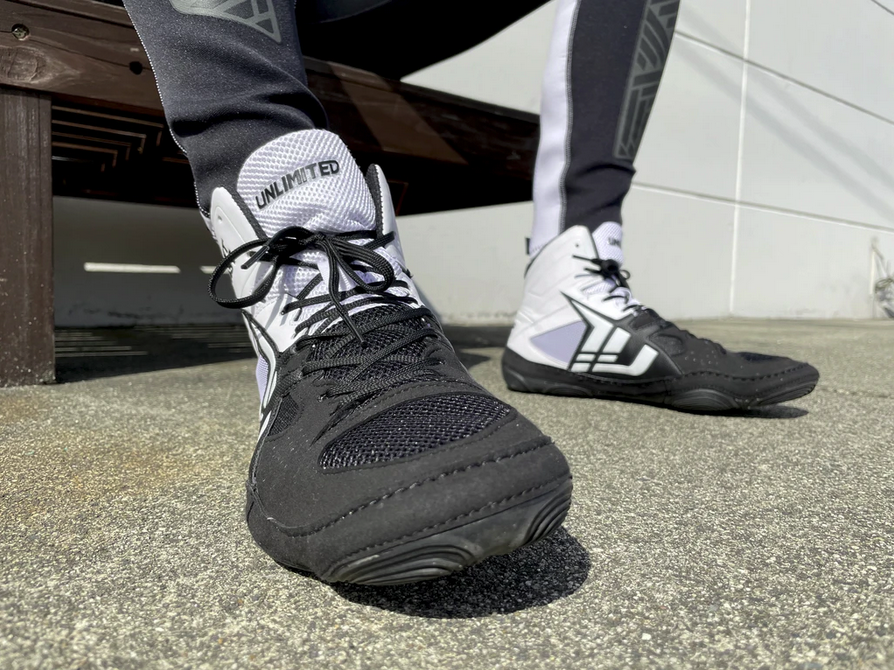
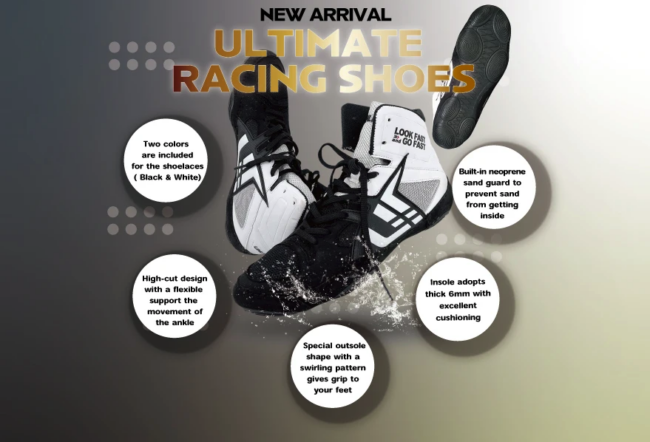
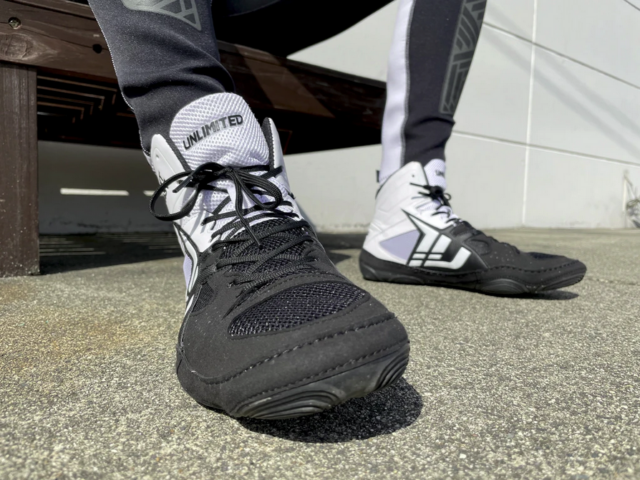
Unlimited PWC has done it again! Japan’s leading outlet for personal watercraft performance parts, accessories and apparel has rolled out one of its most ambitious endeavors – their Ultimate Riding Shoes. Priced at ¥ 11,800 ($107 USD), these new “jet shoes” were specifically designed for PWC riding.
Many riding shoes are big on traction but feel bulky, uncomfortable or get weighted down when wet. Unlimited PWC’s Ultimate Riding Shoes are anything but! Made from ultra-lightweight soft-sided, cushioned material, the Ultimate Riding Shoes were developed for the maximum amount of movement at the foot and ankle for a superlative fit.
Per Unlimited PWC, “The instep and sole have a unique drain hole specification for excellent drainage.” A built-in neoprene sand guard to prevent sand from getting inside as the insole uses thick 6mm padding for excellent cushioning.
The sole itself was specially shaped with a swirling pattern with a high-cut design that increases grip with plenty of flexible support for the ankle. Each pair of Ultimate Riding Shoes come with a draining shoe bag as well as two colors of shoe laces. Check ’em out at Unlimited PWC here!
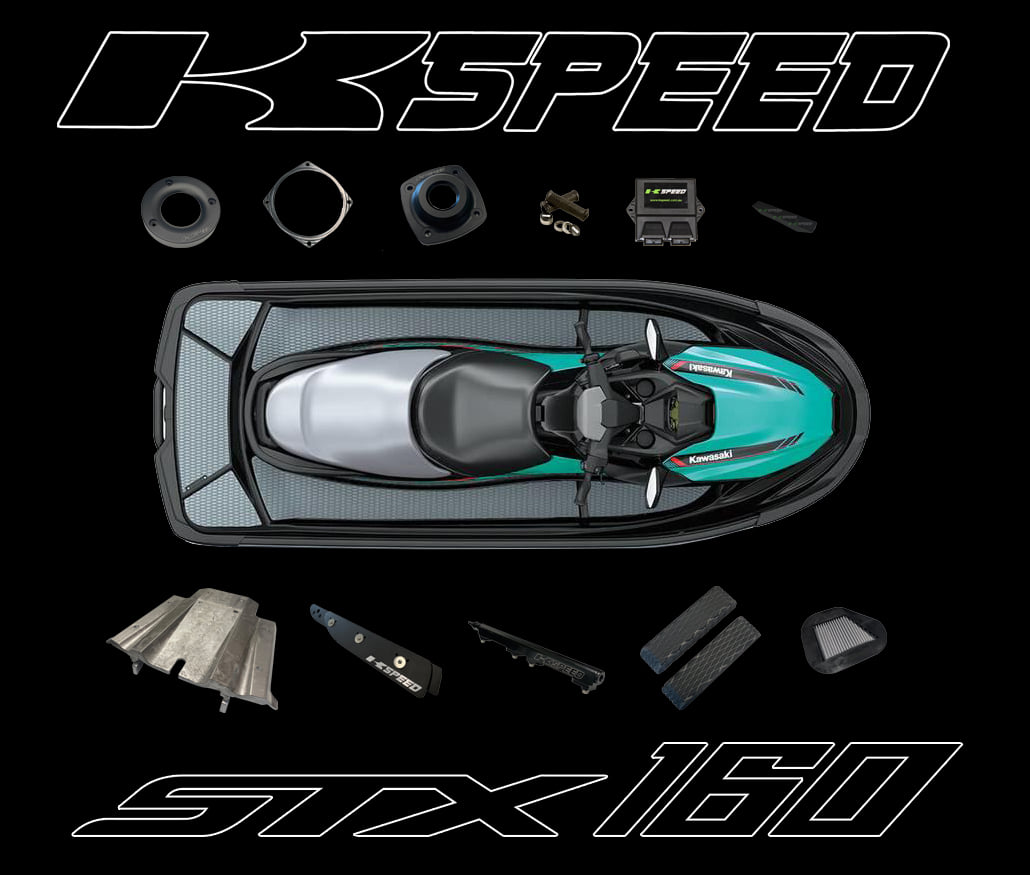
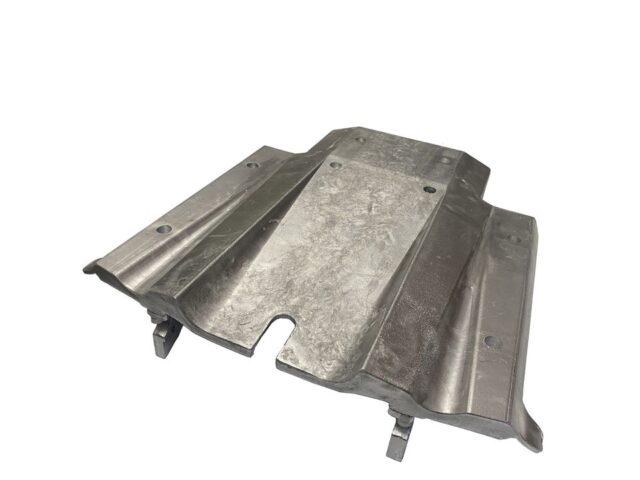
Brisbane Kawasaki has a full lineup of Kspeed parts for the Kawasaki STX-160. They have all the upgrades to make the best Naturally Aspirated ski on the market even better with the Kspeed parts. Check out the array parts for the STX-160 and grab some components to bring your jet ski up to its full potential. Adding some or all these upgrades will add power, speed, and fun to your time on the water.
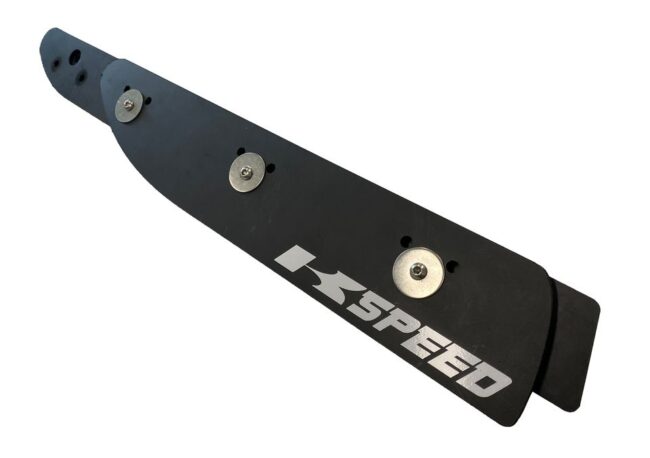
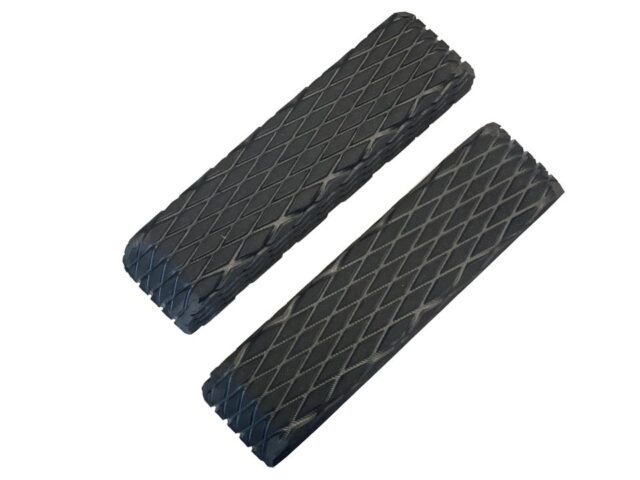
Hydro-Turf Side Lifter Wedges will reduce fatigue when riding in the chop and they will also allow you to lock-in when making high speed turns. While you’re considering lifter wedges, check out the Kspeed STS Sponsons for turning on maximum control and speed. The Kspeed STX Ride Plate will bump up control even more.
If you ride hard and in heavy swell; you definitely want to check out the Kspeed STX-160 Hood Mod. It will make your time on rough water a little more bearable by helping to prevent digging the nose of your ski when riding through big chop.
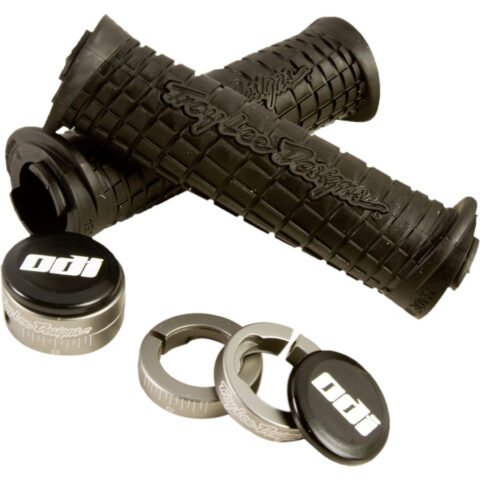
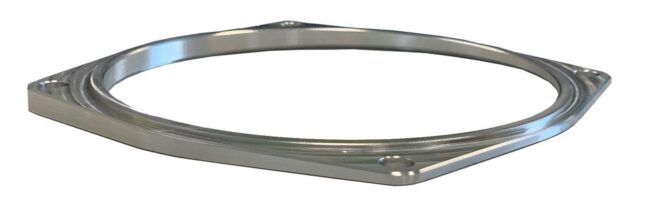
Grab some fresh ODI Troy Lee Lock on grips to go with your upgrades. A Kspeed Though Hull Bearing Support is included this line up of STX-160 upgrades. It will add longevity to your set up by eliminating forward and back movement. Kspeed also has an aesthetically pleasing exhaust tip to replace the standard outlet.
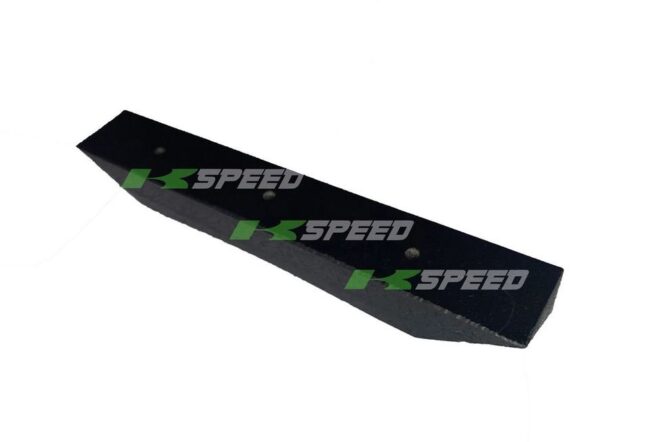
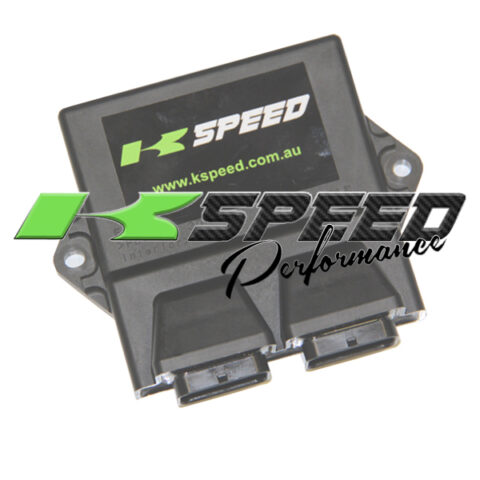
Add a slick new fuel rail for looks and performance. A new Pump Wedge will add a couple of mph on flat water. A reflash is necessary for the pump wedge to claim those speed gains. This is where the Kspeed STX-160 ECU Reflash comes into play. Brisbane Kawasaki will be glad to help you with the reflash and to discuss performance options for your Kawasaki.
Contact the team here for details or any questions you may have about upgrading you Kawasaki.
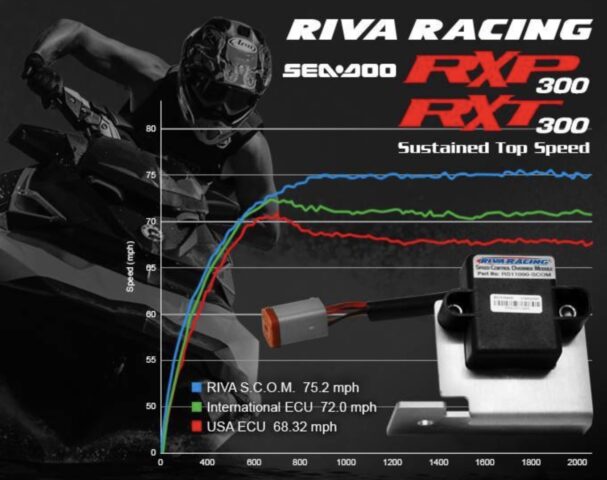
In the past, it has taken thousands of hard-earned dollars to achieve blistering speeds upwards of 80 miles per hour. Performance shops, at home mechanics, and DIY guys have all done whatever possible to gain performance out of their PWCs. In modern times, the feat of reaching 80 miles per hour is surprisingly cheap and easy to accomplish. Recently tested at the GreenHulk Garage, a $180 part in the greenhulkstore.com has pushed a 2021 Sea-Doo RXP-X to an astounding 77 miles per hour while maintaining full factory warranty. This affordable part is none other than RIVA Racing’s Speed Control Override Module (SCOM).
The SCOM is a plug-and-play solution for anyone seeking to gain top speed without breaking the bank! As tested in south Louisiana’s swamp at sea level and a half tank of fuel, the GreenHulk Garage RXP-X gained 8mph over the factory speed limiter with the trim set in the far-most up position. Yes, that is 8mph over the factory speed limiter; even though the digital display on your Sea-Doo may read low 70s, it will only reach those speeds for a split second before the speed limiter is activated and slows the craft down to 69mph.
The SCOM removes this speed limiter that has been mandated by the United States Coast Guard and unlocks the full potential of your Sea-Doo. Not only does this allow for a drastic increase in top speed, but it allows your Sea-Doo to start in sport mode. Many of us find it inconvenient to engage sport mode after every start of the engine. With the SCOM installed, the machine will start back up ready in sport mode. Obviously, the SCOM is unmatched for the amount of performance and features that the module offers for the price point. But the question remains; Is it easy to install?
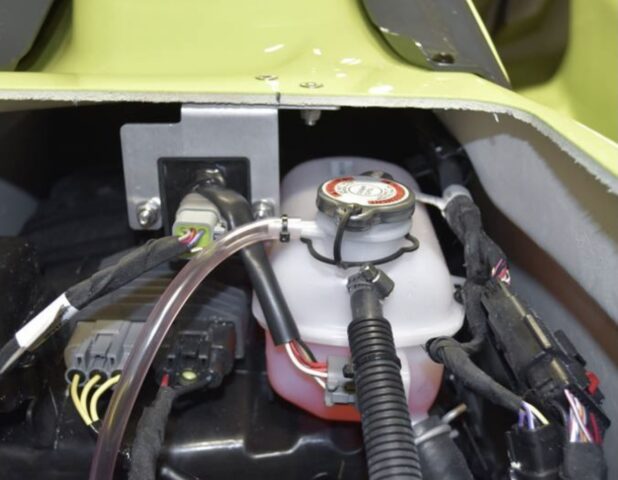
Anyone, and I literally mean anyone, can install a SCOM on their Sea-Doo in less than one minute! The module does include a mounting plate that neatly fastens the SCOM to the watercraft; it does require some drilling but is still rather simple to install. Understandably, not everyone is going to want to drill into their new watercraft. If hard mounting the module is not in your interest, all you have to do is plug the module into the diagnostic cable found on the coolant reservoir and zip-tie the SCOM in a secure location.
Since the only “install” required is plugging in the module, it is 100 percent reversible! For whatever reason you decide to remove the SCOM, you can do so without leaving a trace! To top it all off, the SCOM does not void your warranty! The SCOM is undetectable by service departments and does not increase engine RPM or performance that could possibly void the manufacturer’s engine warranty.
With this in mind, the RIVA Racing SCOM is going to be the best modification one can make to their watercraft when looking to gain a few MPH. Coming in at under $200, warranty friendly, and effortless installation, it is hard to beat the value the SCOM offers. If looking to purchase the SCOM, visit the greenhulkstore.com for the best deal! Use coupon code “GREENHULK” at checkout to receive 10% off! Of course, if 77 mph isn’t quite enough for you, the greenhulkstore.com has plenty of performance parts to meet your needs!











 On July 17, an explosion from an unknown source ignited the storage warehouse at BRP’s second-of-three plants, taking 6 days’ worth of the inventory with it. Due to the extent of the fire, local authorities evacuated nearby residences and an estimated 200 firefighters fought for nearly four hours to control the blaze; thankfully, all 2,400 employees made it to safety.