
Home Blog Page 140

Gallery: Traveling 440-Miles on the Cumberland River in One Day (Video)

4

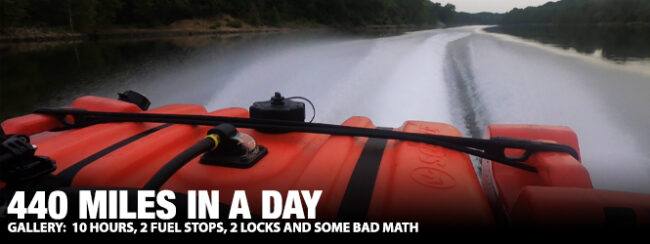
I’ve been intrigued with the idea of going as far as possible on a personal watercraft with the least amount of stops – be it for fuel, food or otherwise – for a good while now. This pet notion had me considering quite a few different routes on which to take. Candidates usually included some variety of water conditions, scenery and other topographical challenges – but clicking off as many miles in a single day was always the core goal.

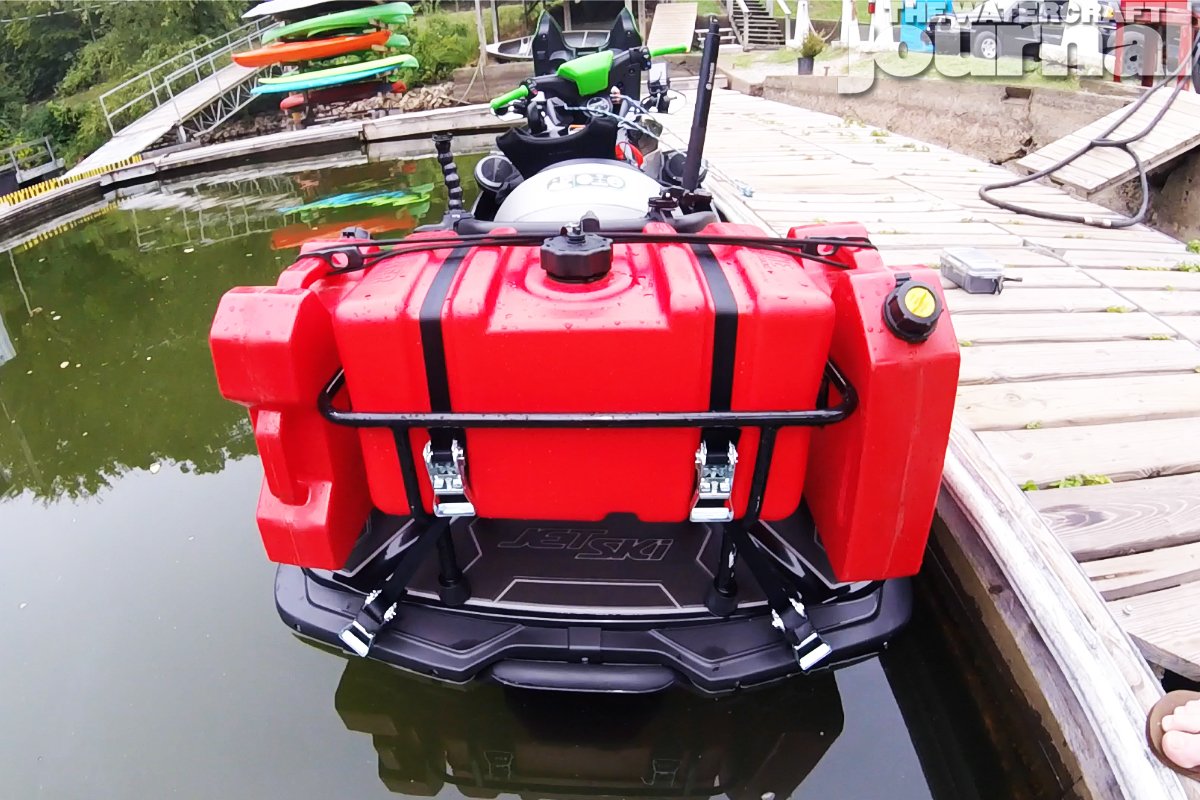
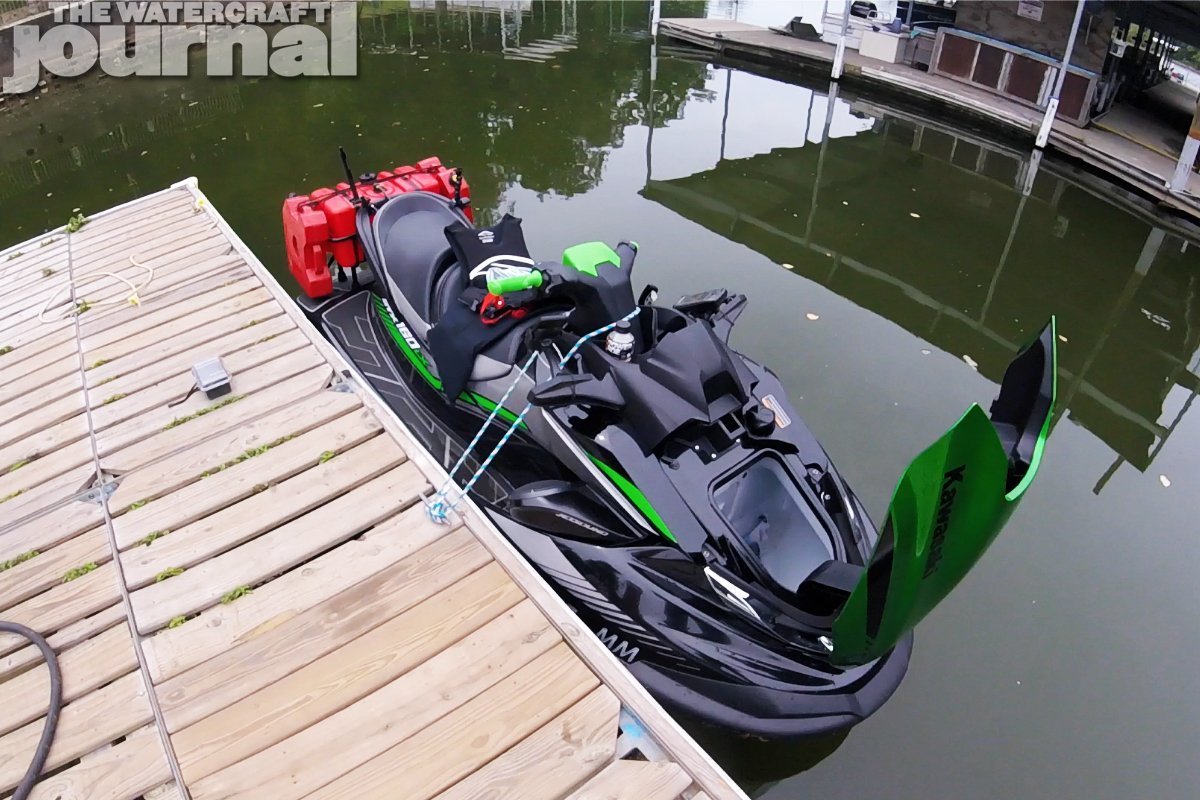
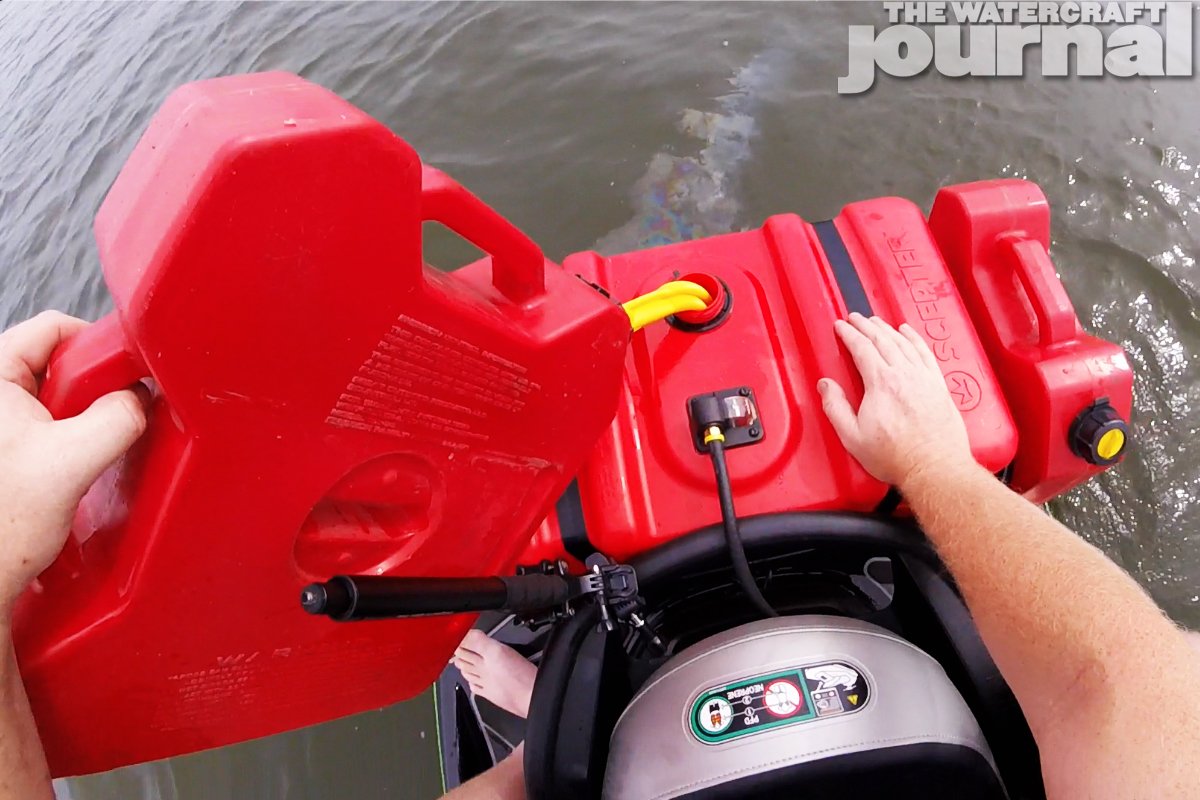
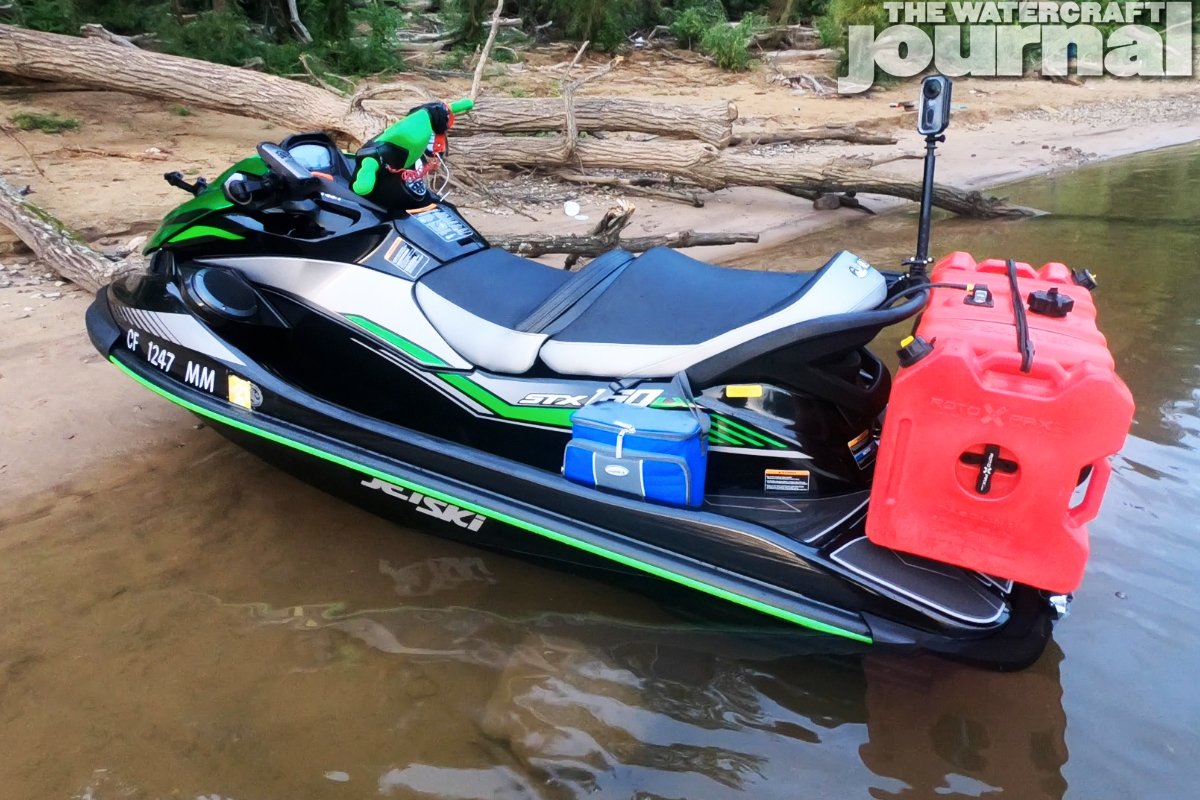
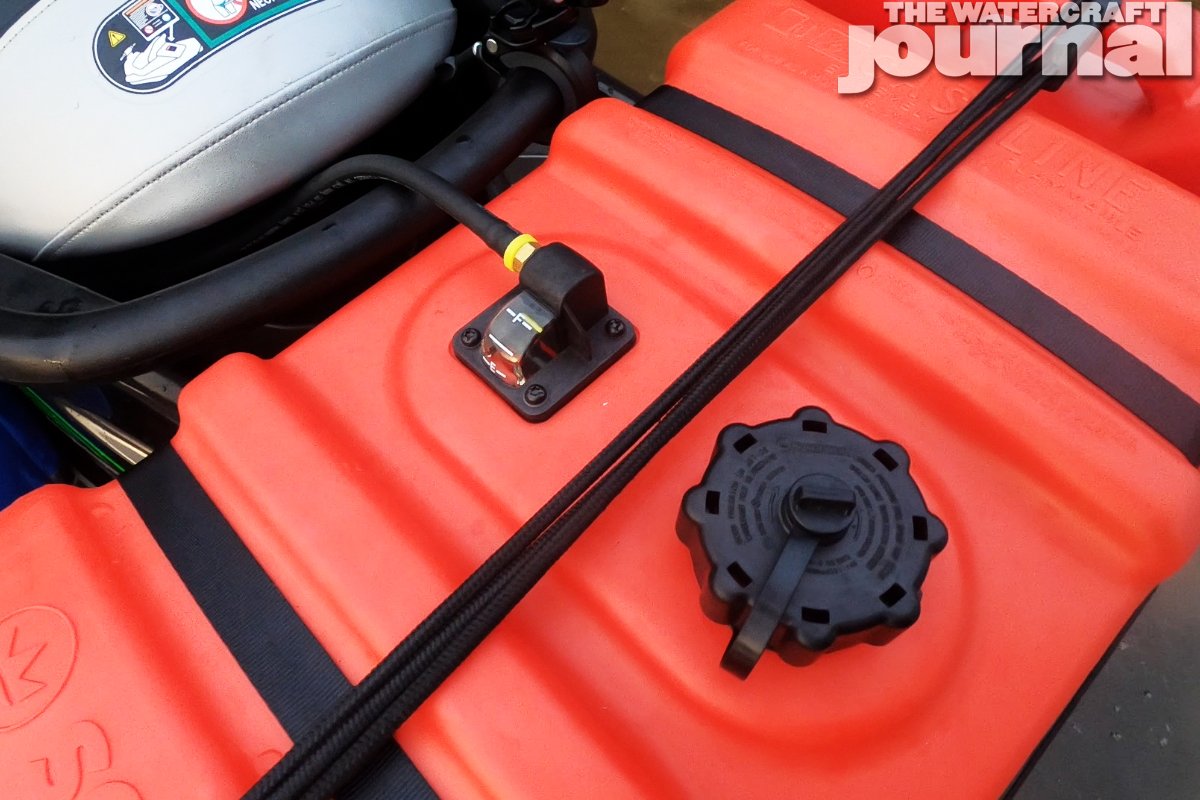
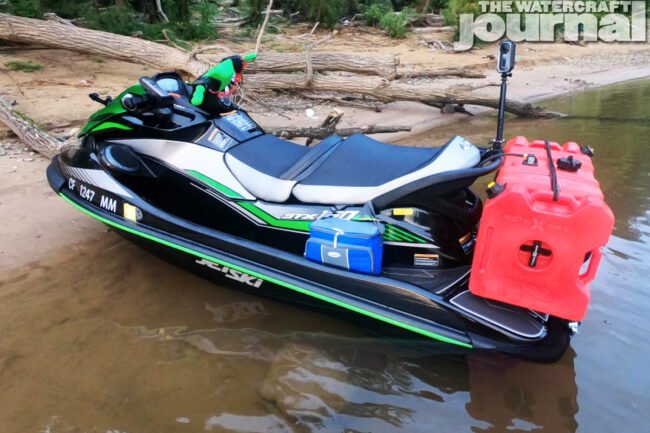
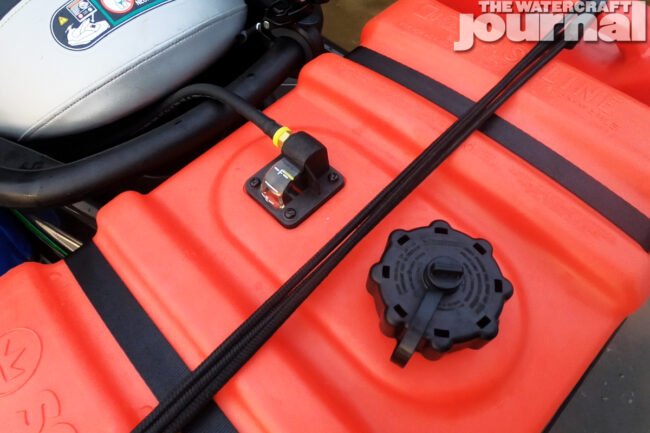
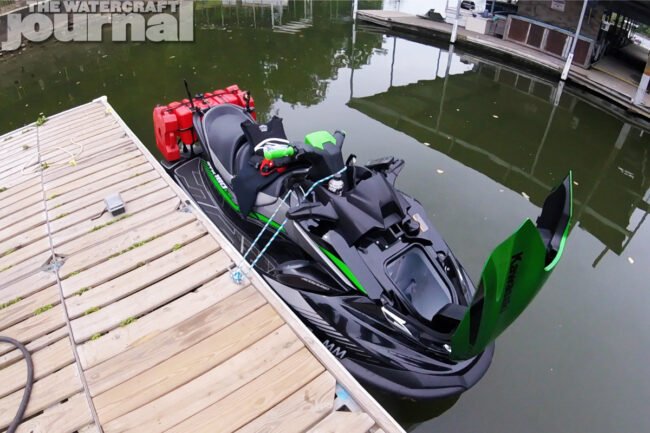
Simultaneously, I’ve been tinkering with different forms of auxiliary fueling systems that would extend my day’s travel. Not since the days of Steve Friebe’s gorgeous hand-fabricated stainless fuel tanks back in the late 2000’s had I seen a self-siphoning kit that piggy-backed on the factory fuel system without any cutting or permanent modification. Unlike Friebe’s system, which occupied the front storage bin, I began developing a one-size-fits-all rack system as well as fool-proofing the plumbing.
As the auxiliary fuel system works off of the factory fuel tank’s ventilation system, it would work with all 4-stroke Kawasaki JetSkis and Yamaha WaveRunners; Sea-Doo was a different animal. Sea-Doo ventilated its fuel tanks via a vent line to an outside breather until 2012, when Sea-Doo switched to a “closed circuit” system, meaning a ventilated gas cap – leaving me no vent line to interrupt.

This means that the auxiliary fuel system would not work on 2012-up Sea-Doos without radically replacing several key components – and I wasn’t going to ask people to do that. Again, this kit was designed for a quick-and-easy installation and removal; I wanted a 60-year-old woman to be able to install this by herself on her trailer – and asking her to remove the factory belly tank to change out the sender/pickup was out of the question.
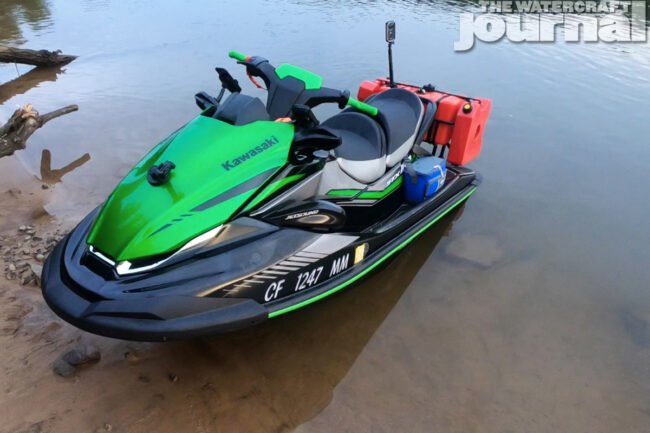
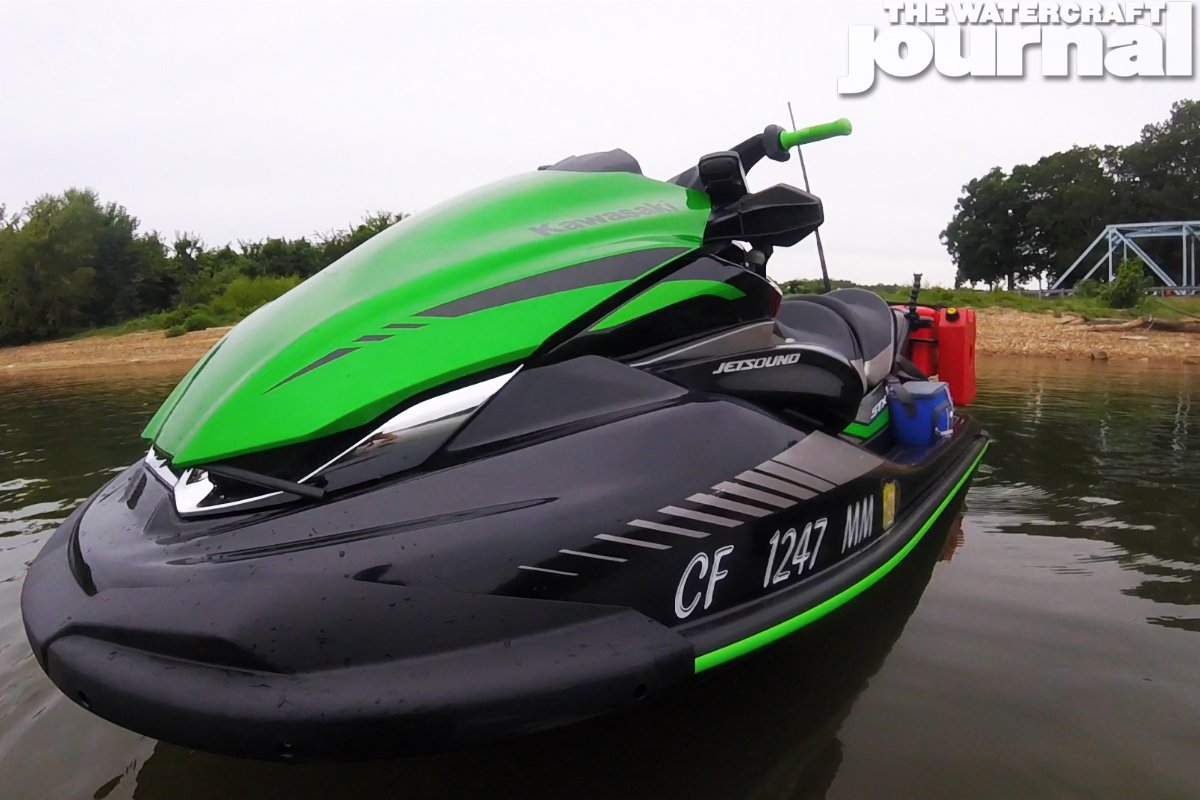
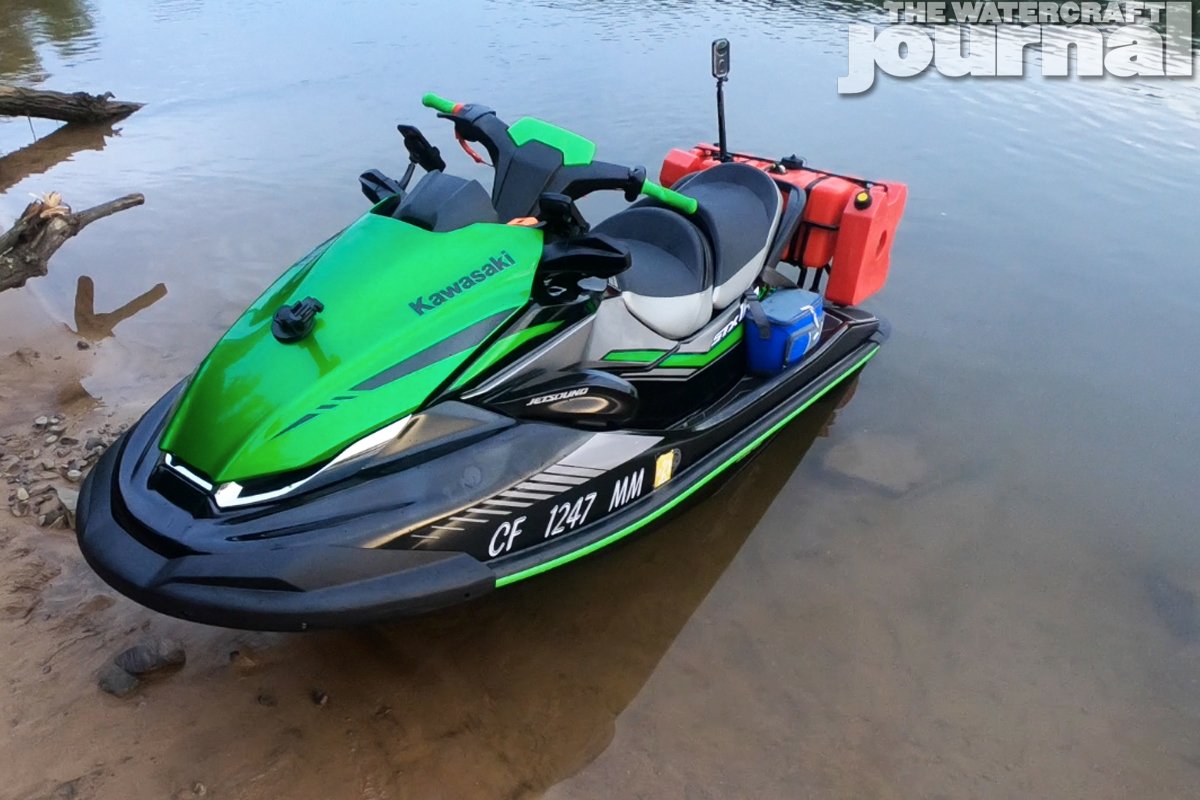
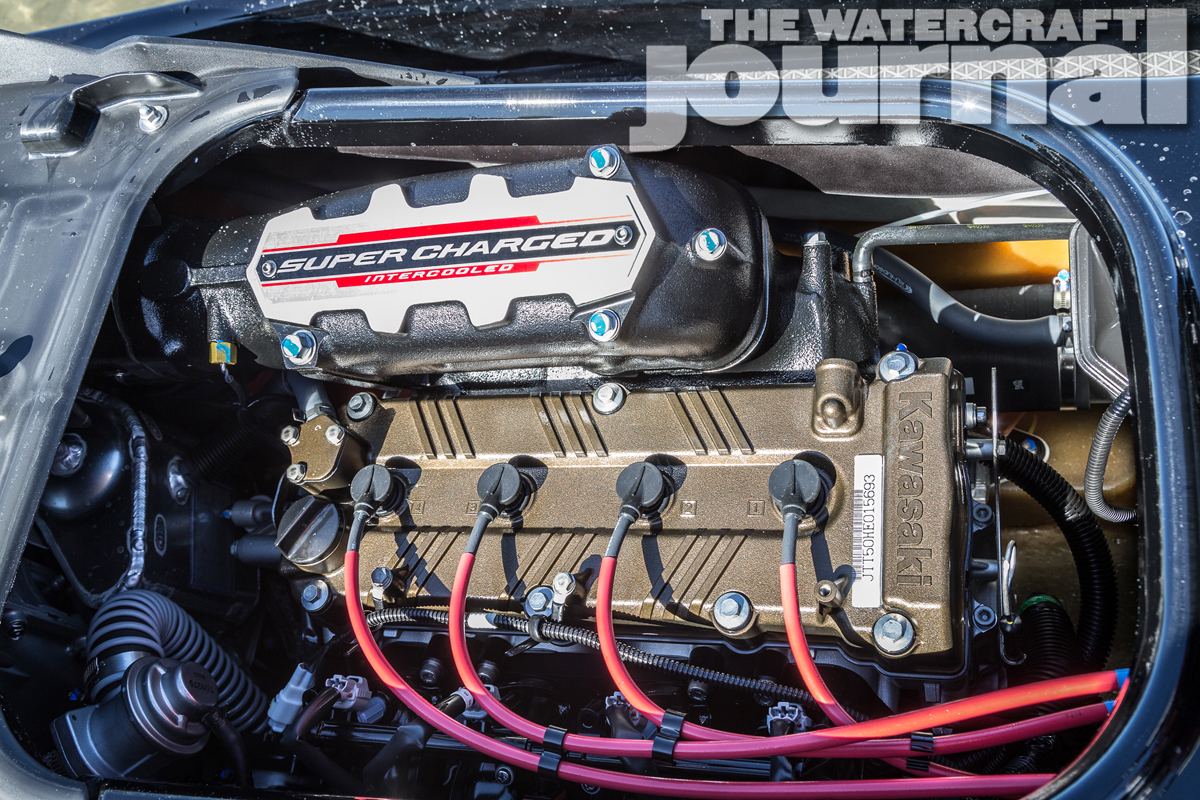
Satisfied with my working prototype, it was time to put it to the test. First, I chose Kawasaki’s 2020 STX 160LX. The Recreation segment runabout has the largest fuel capacity of its competitors. Equally, being naturally-aspirated offered me the greatest potential for distance, a major factor for today’s long distance cruisers. For a test flight, I opted to pin the throttle to its stops one cool July morning and sprint east, up Old Hickory Lake all the way until Cordell Hull Dam and back.

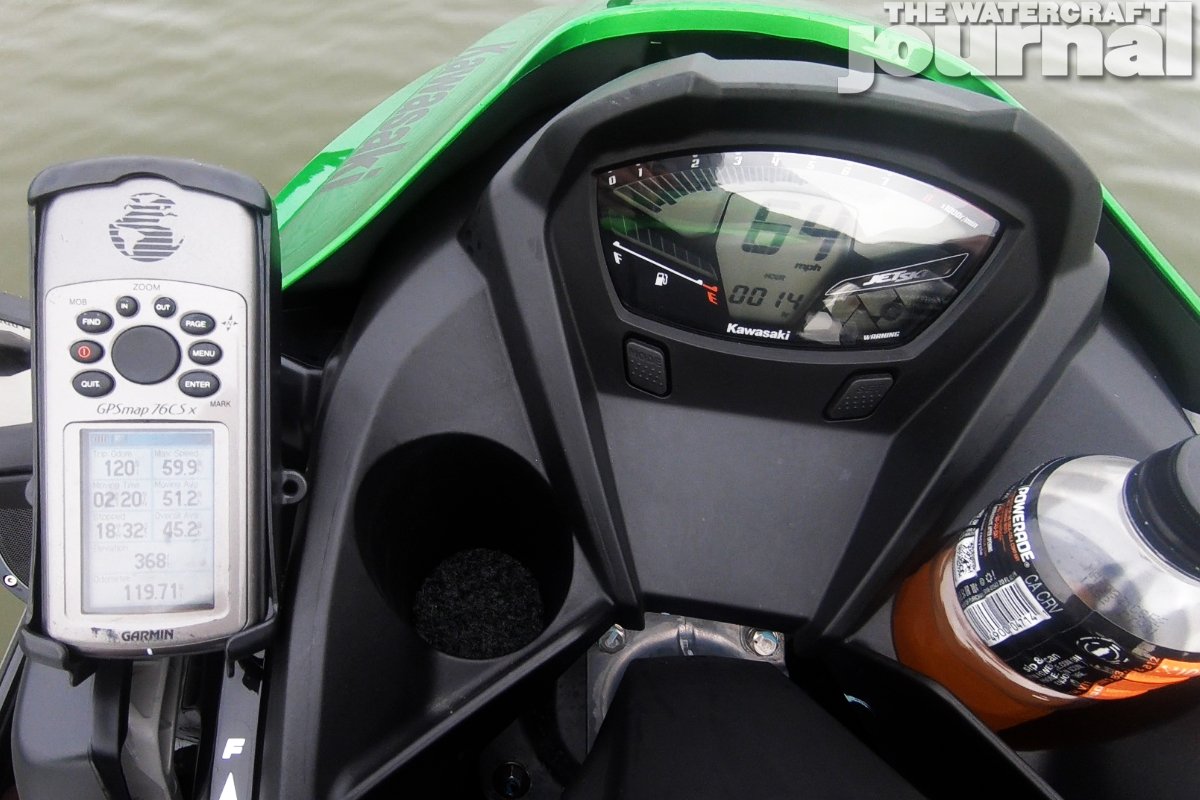
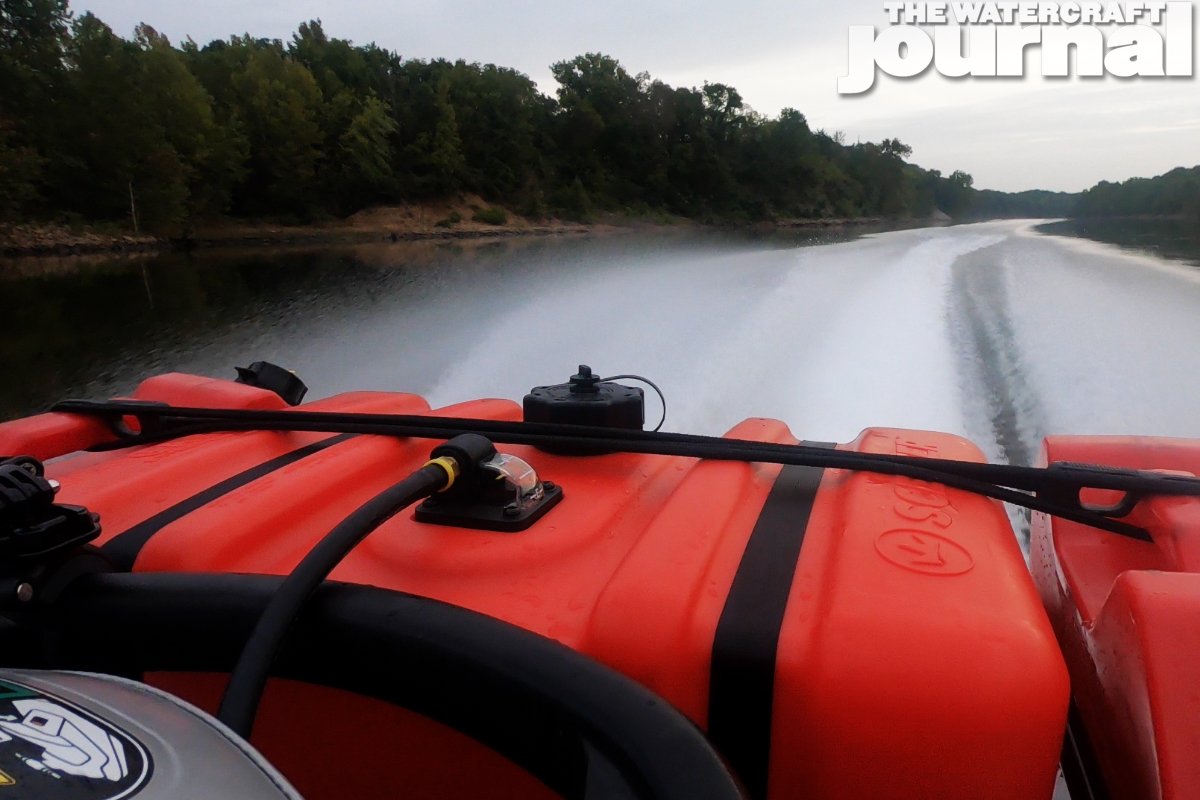
The dash went without a hitch, totaling an impressive 192-miles roundtrip. And yes, that was accomplished using just the fuel I took with me – excluding the twin Rotopax jerry cans I carried for emergencies. With over 20-and-a-half gallons in the Kawasaki’s belly and another 13-and-change on the transom, I managed a respectable 59.2mph. While this proved the system worked, the relay race to the dam and back didn’t scratch my desire for a truly memorable one-day distance record.
I mapped a pretty basic route from the base of Old Hickory Lock & Dam in Hendersonville, Tennessee (not too far from my home) running the Cumberland River – past Nashville’s riverfront – up into Lake Barkley, Kentucky. From there, I’d pass through the canal splitting the Land Between the Lakes taking me into the Tennessee River. From there, I’d run south to Paris Landing in Buchanan, TN, some 220-miles away. From there, I’d turn right around and head home. Easy, right?

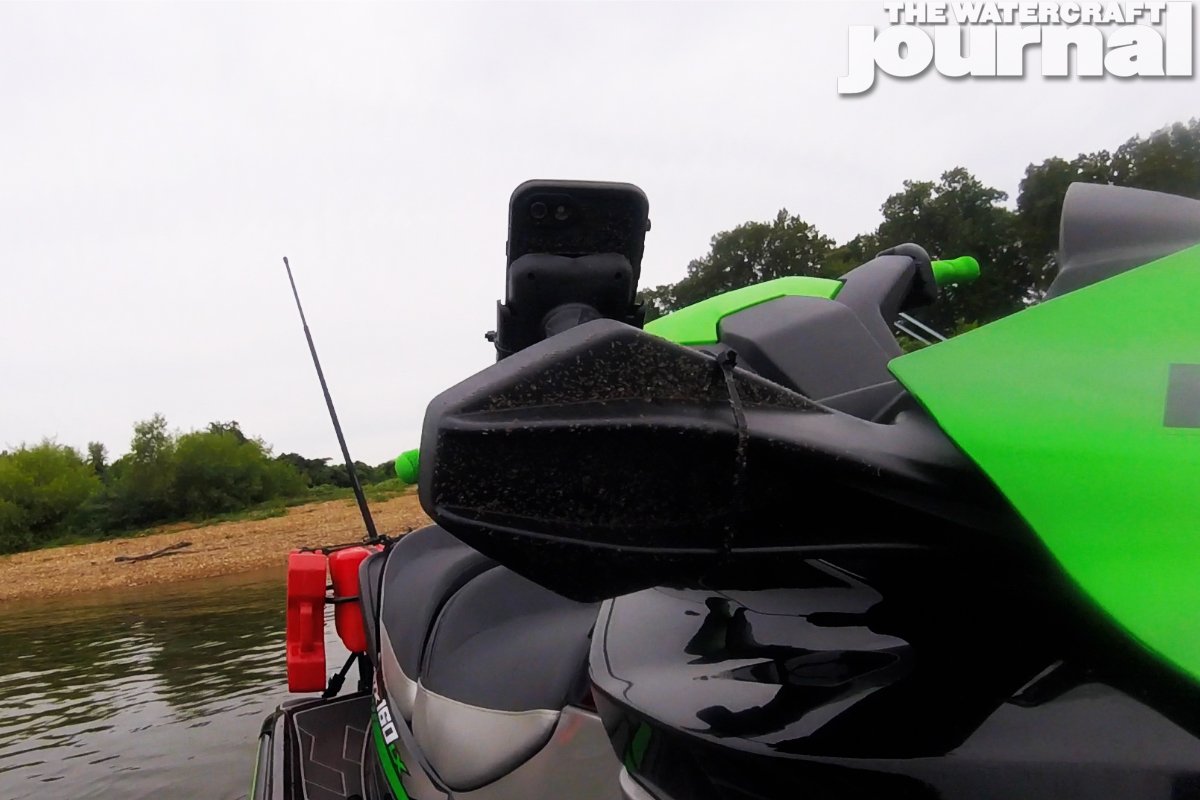
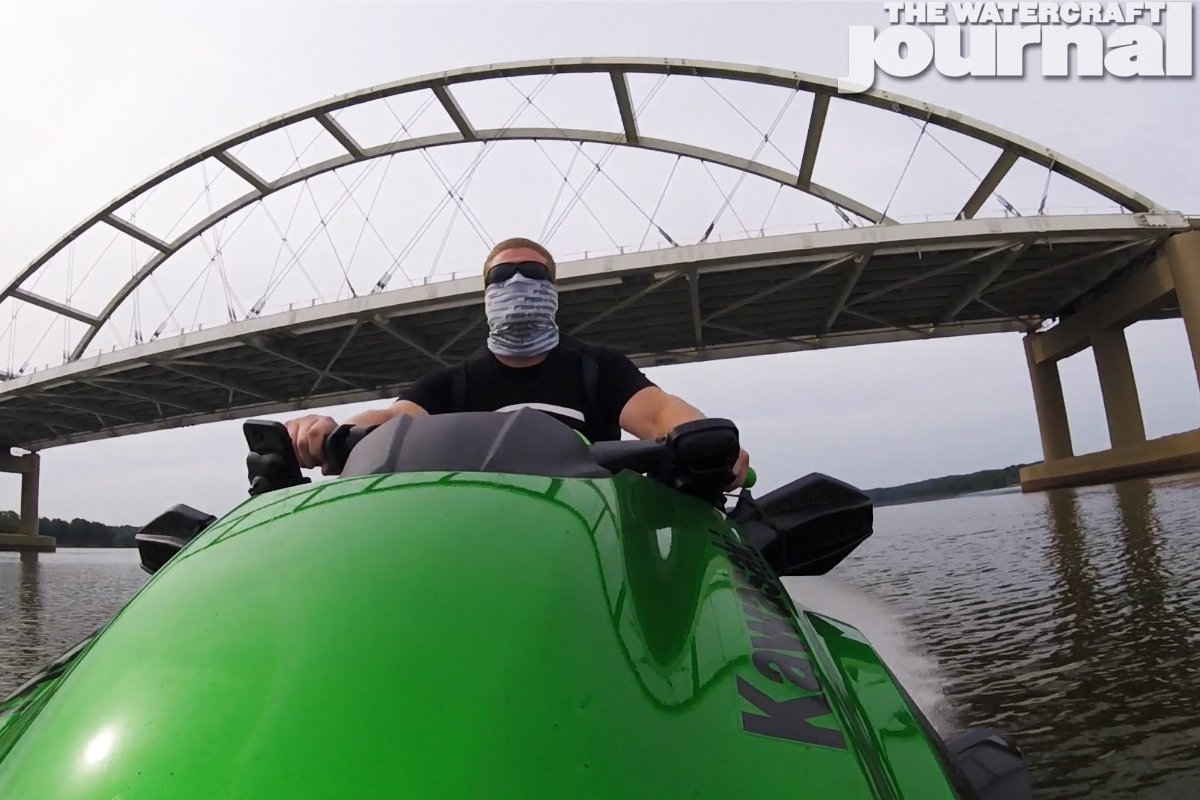
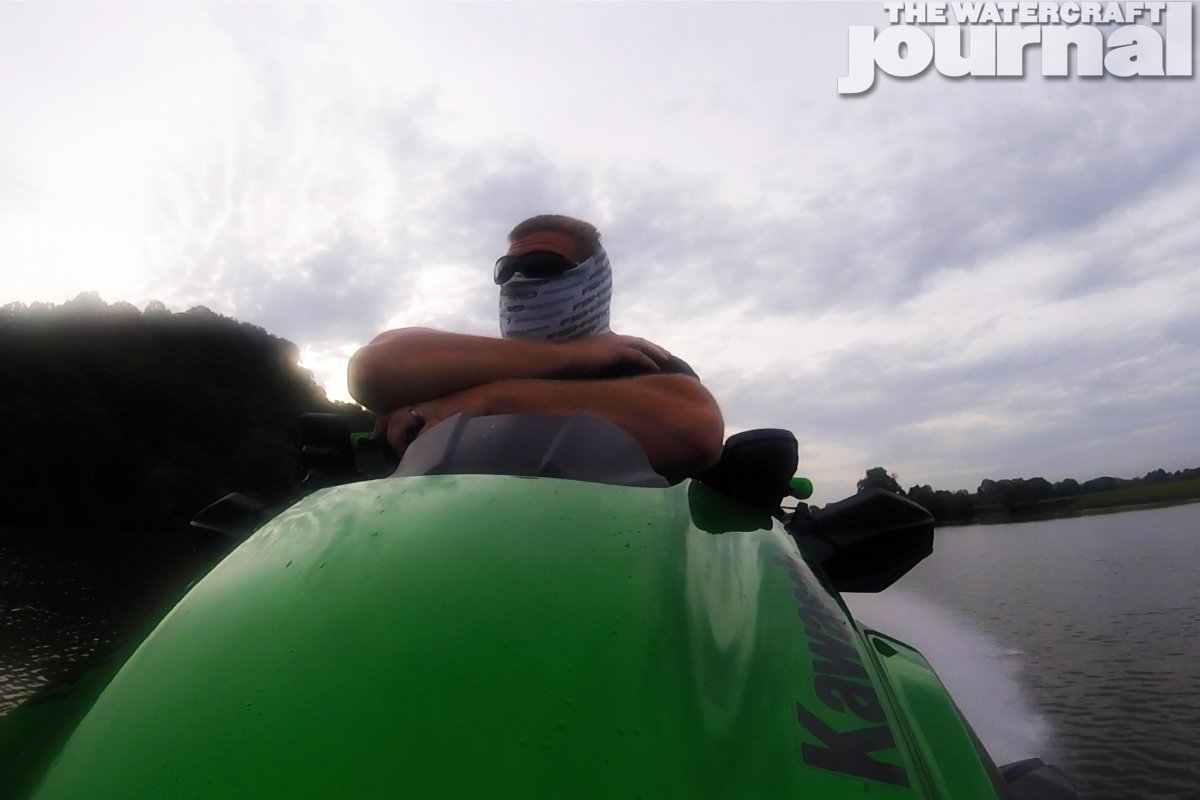
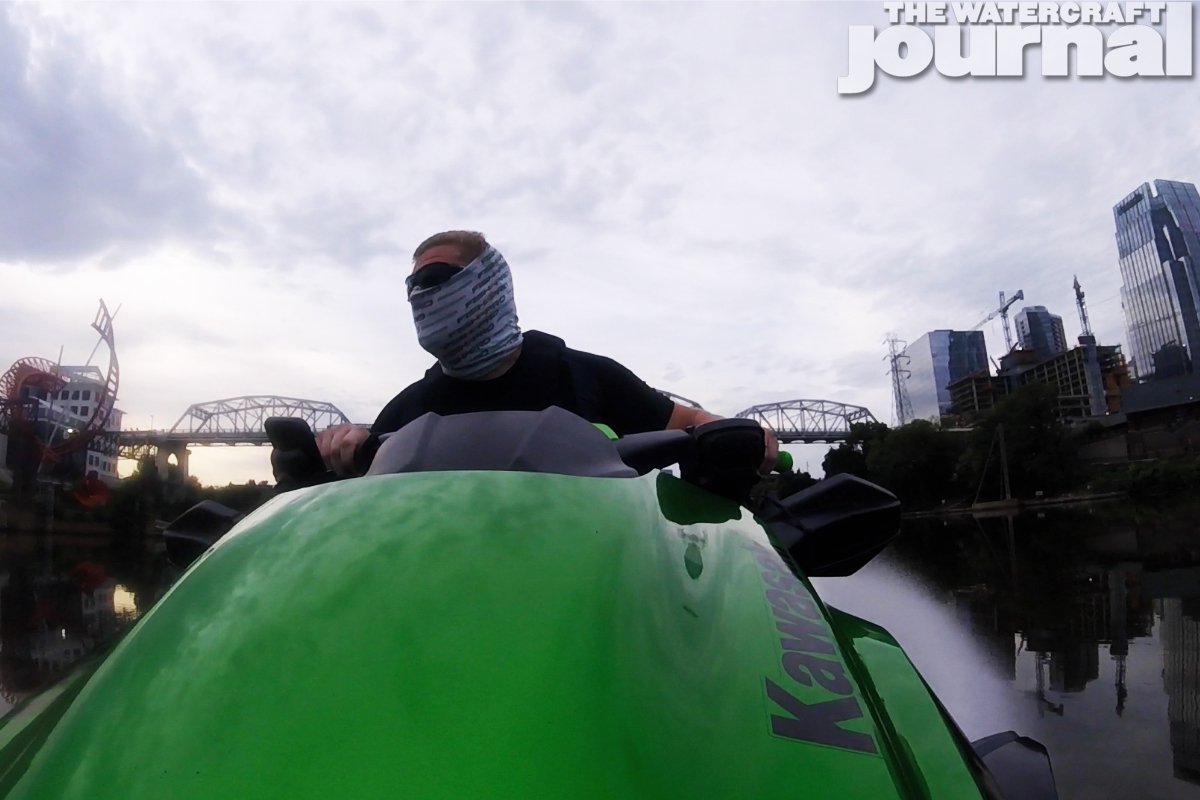
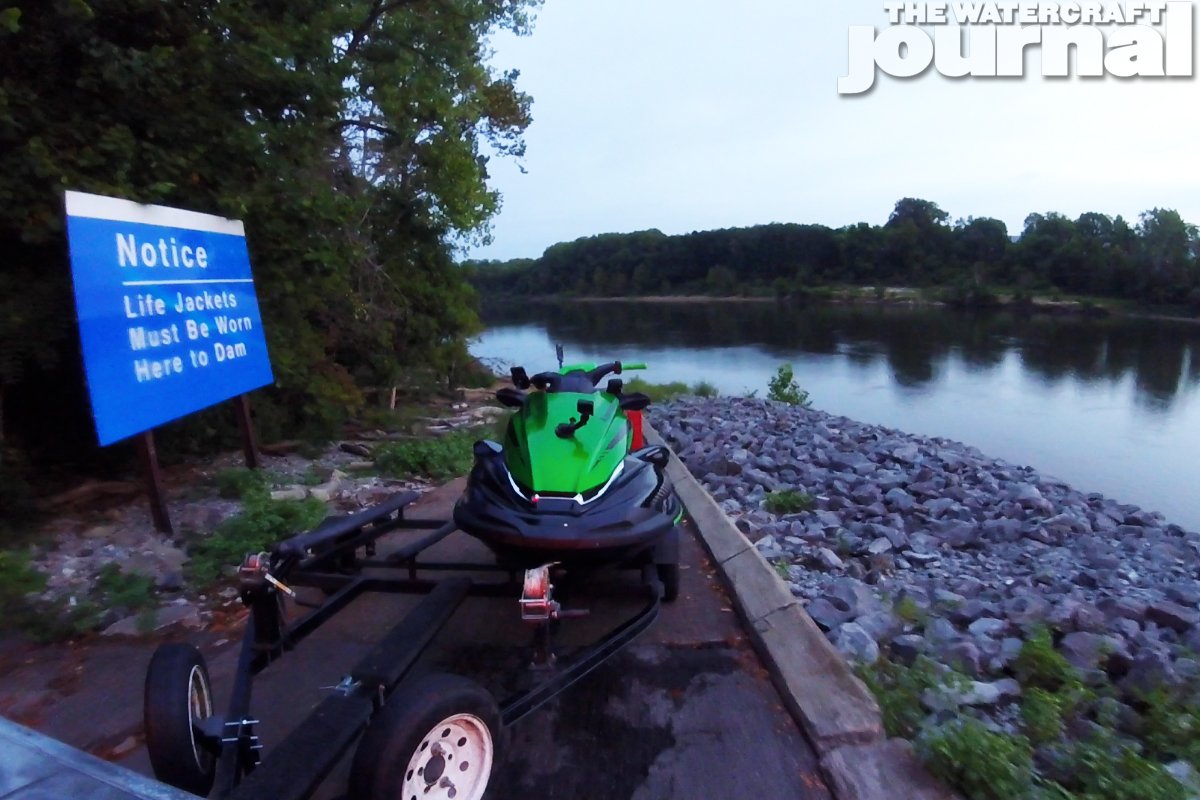
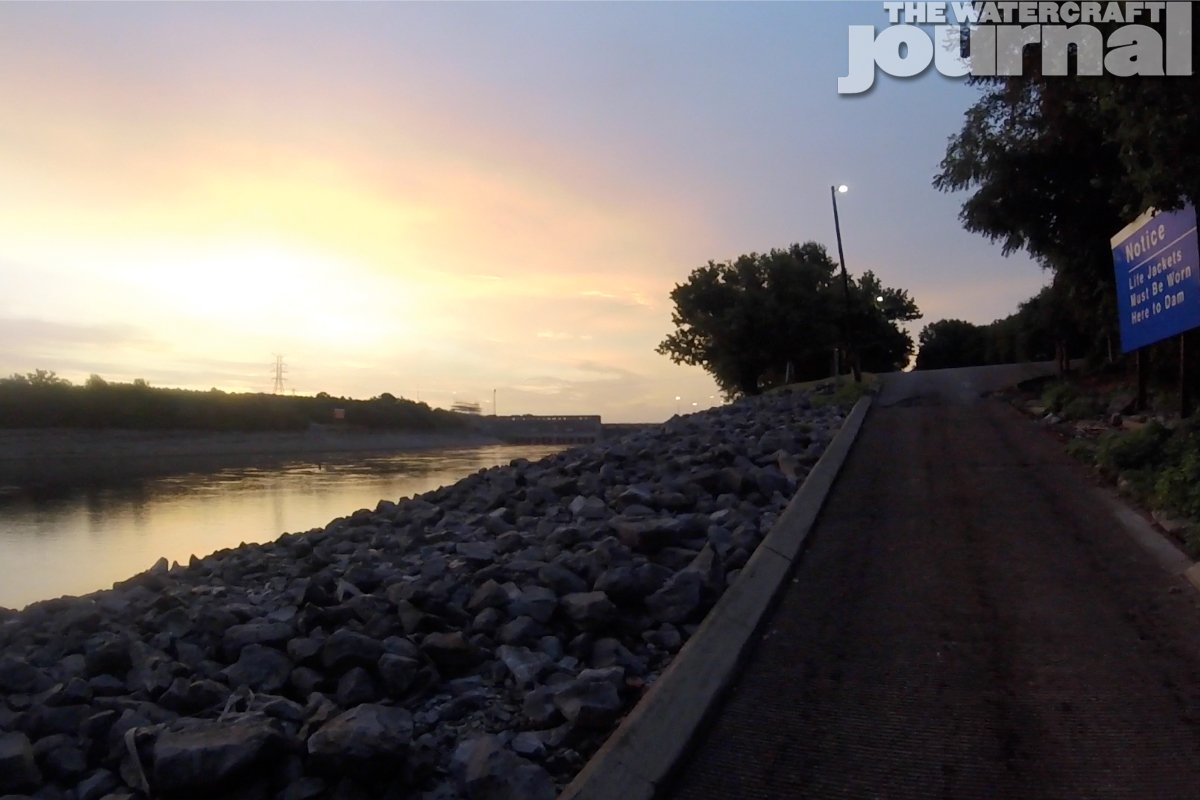
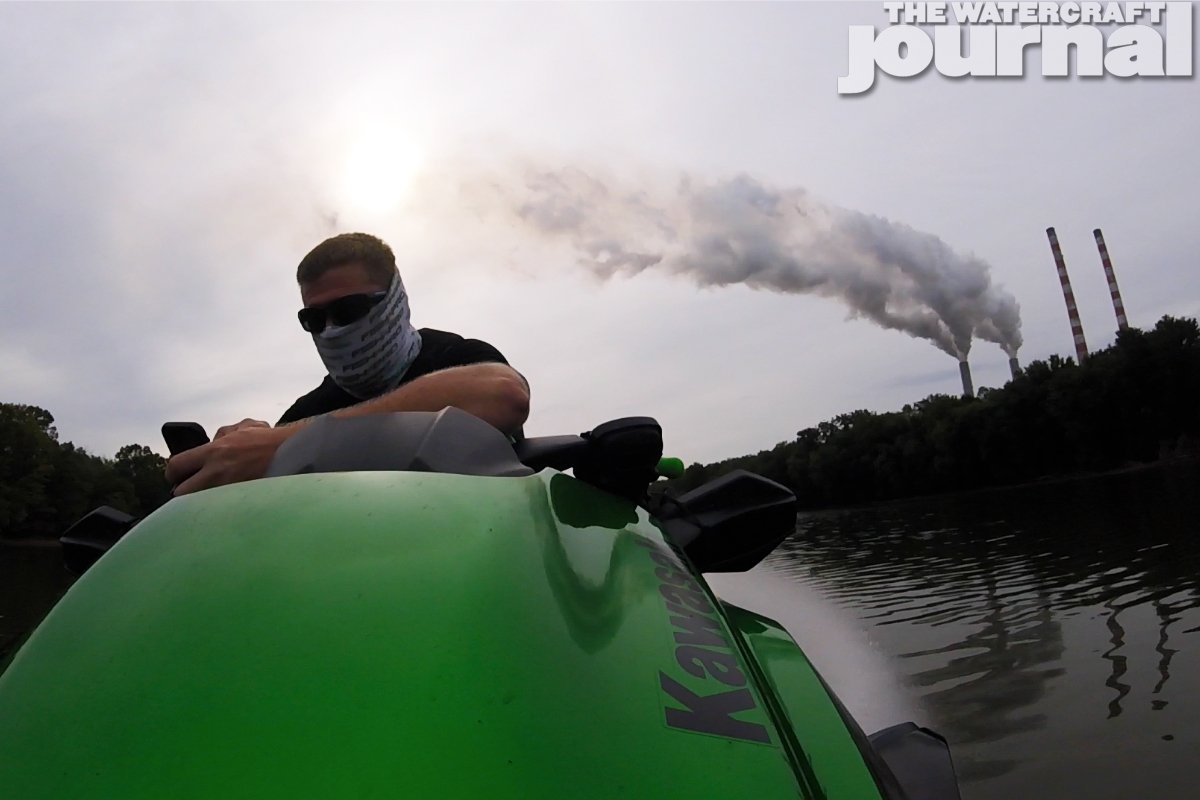
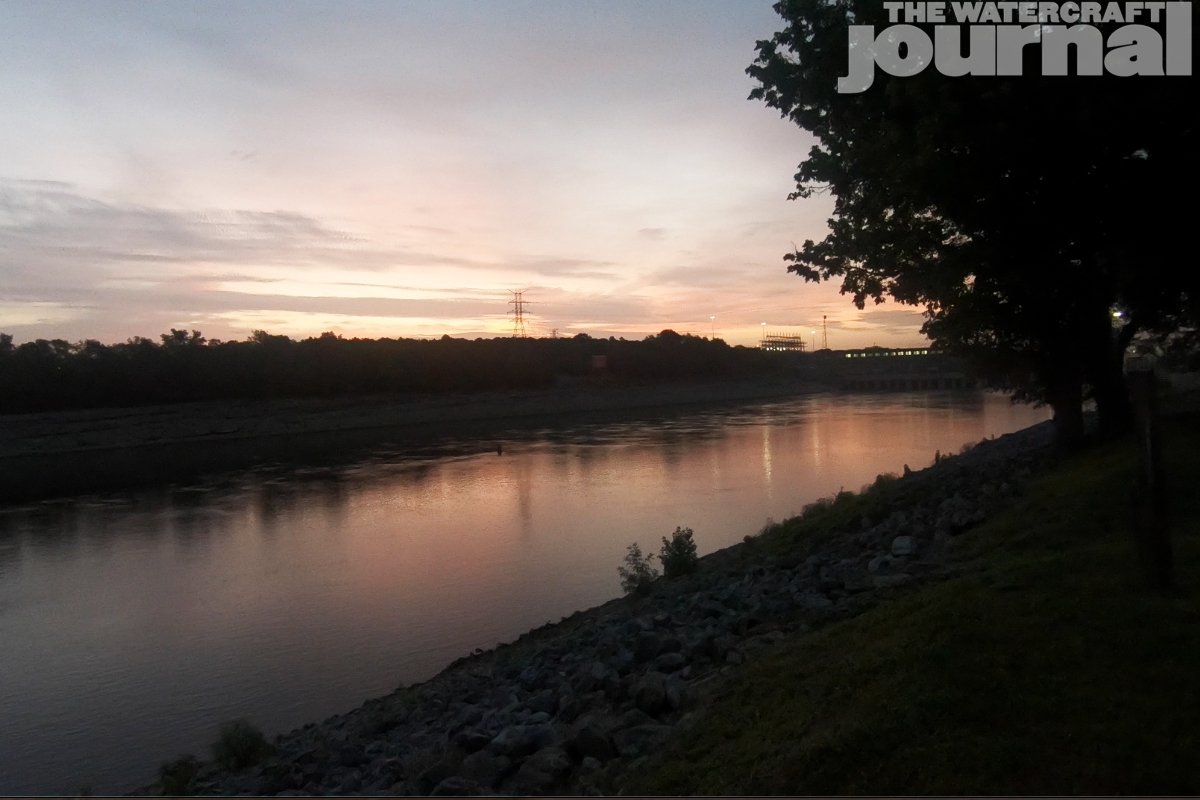
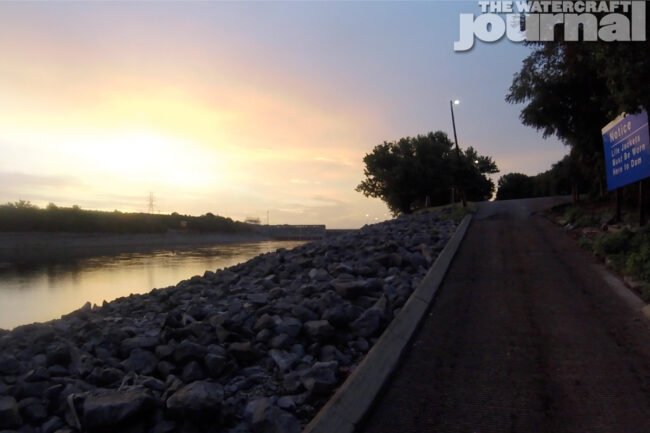
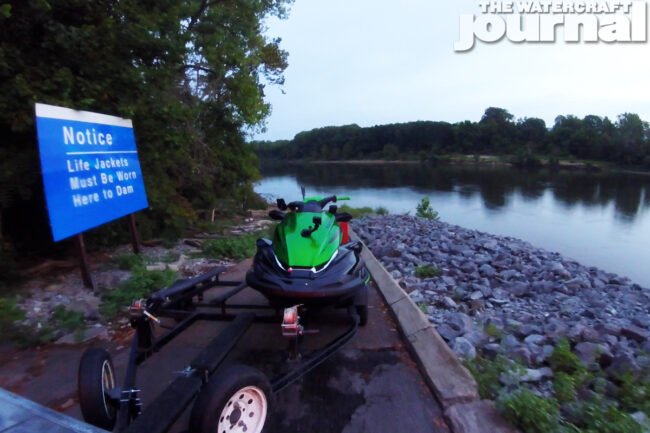
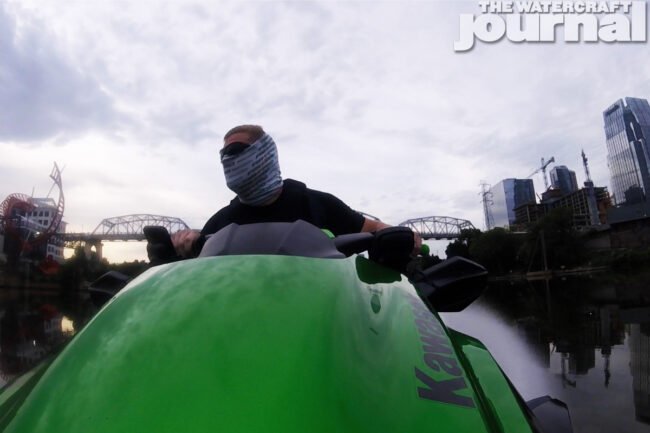
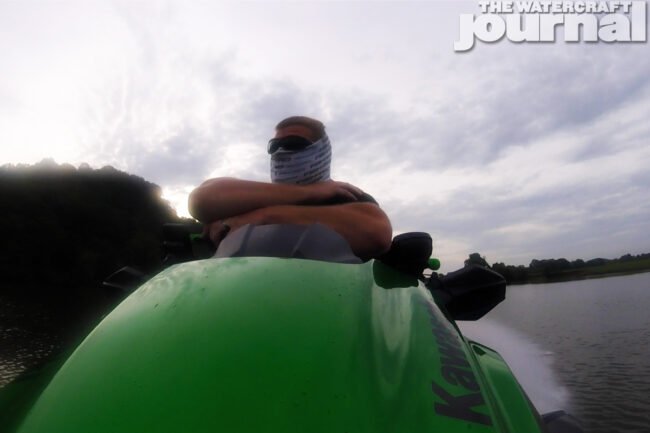
Rising well before dawn, I drove to the narrow launch downstream of Old Hickory Lock & Dam. Cicadas buzzed, whirling the cool morning air. Completely isolated from any signs of life, I loaded up the Kawasaki with some final provisions, pushed the Ebony Black-and-Metallic Green JetSki from the silty shoreline and pinned its 1,498cc four-cylinder to its throttle stop. Early morning gnats clouded the air just above the water, so I donned a fabric Hoorag to protect at least half of my face from spatter.
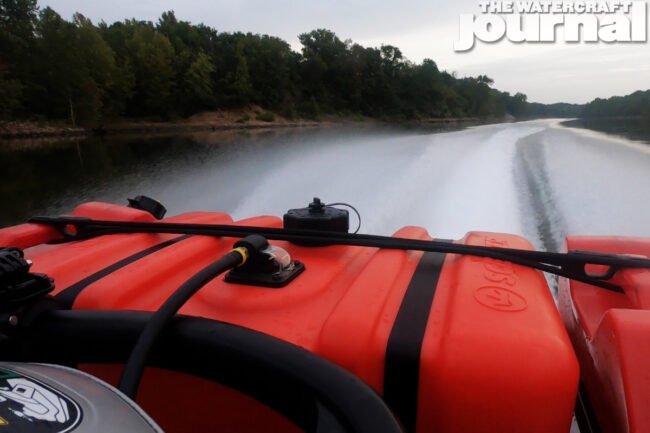
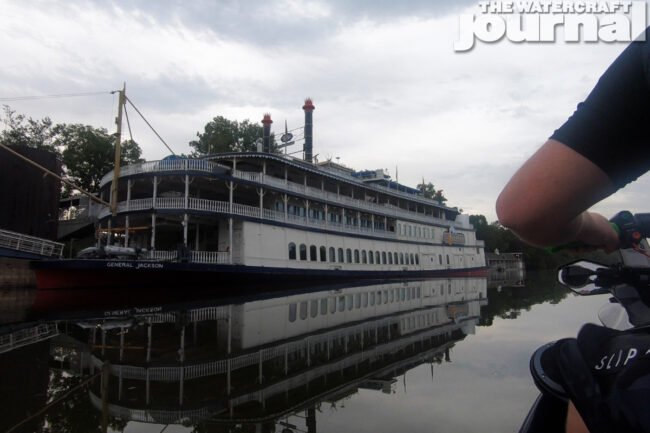
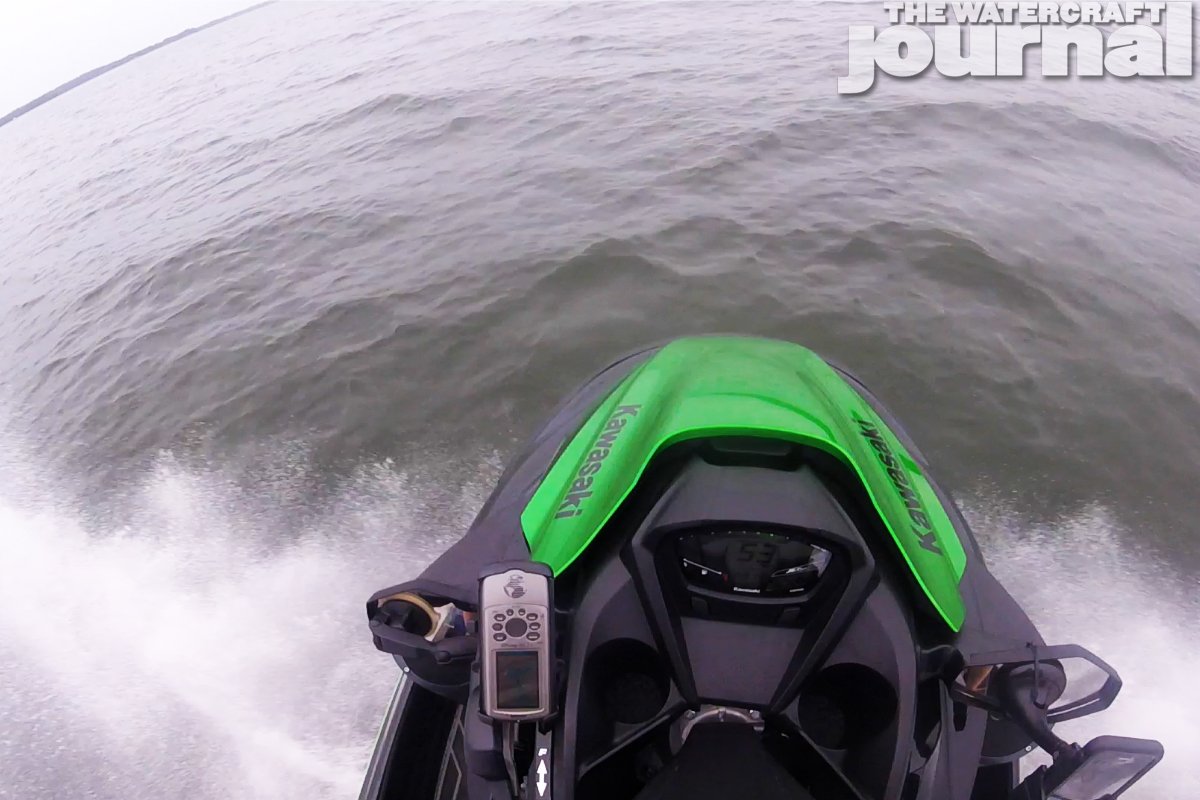
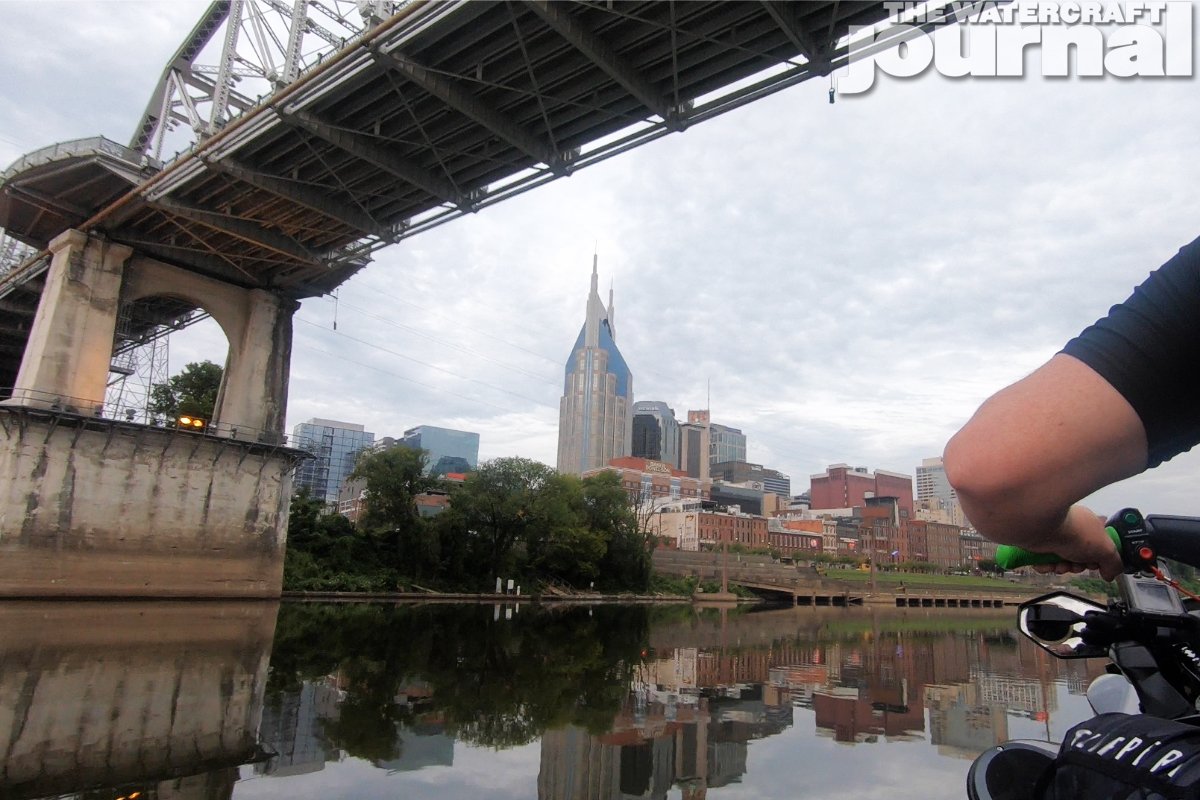
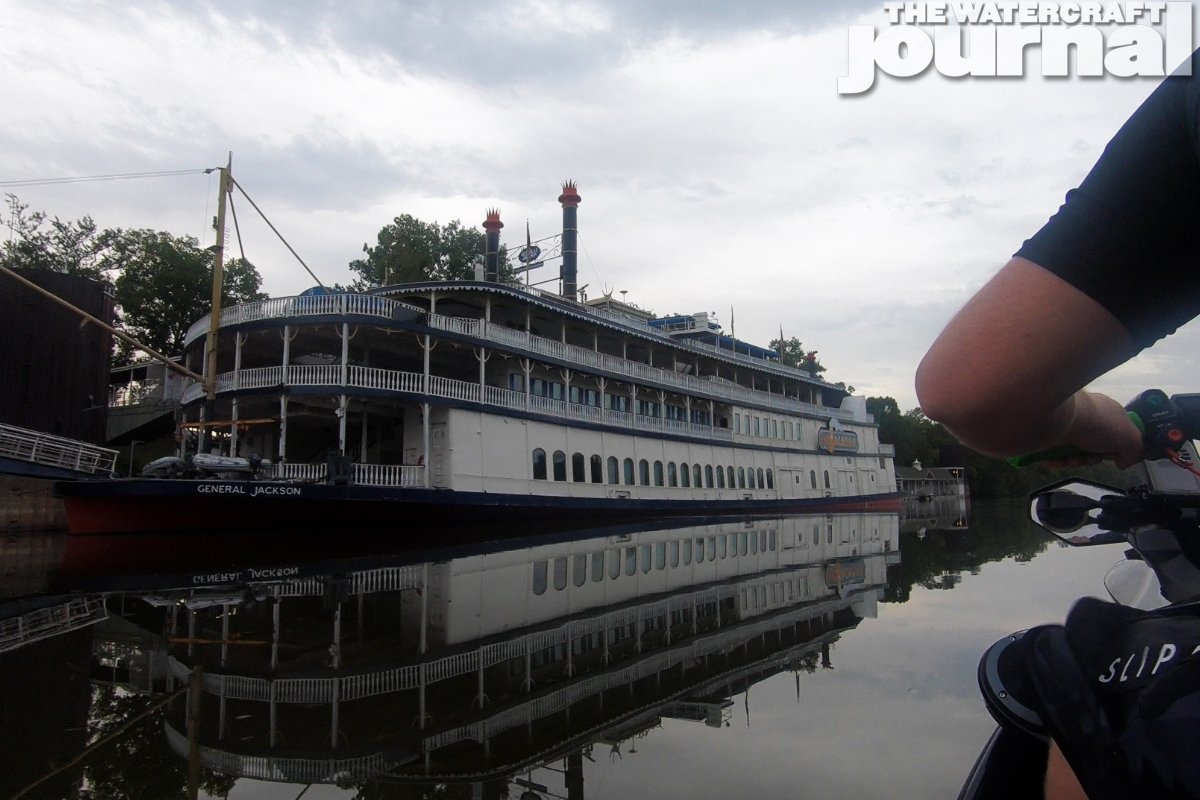
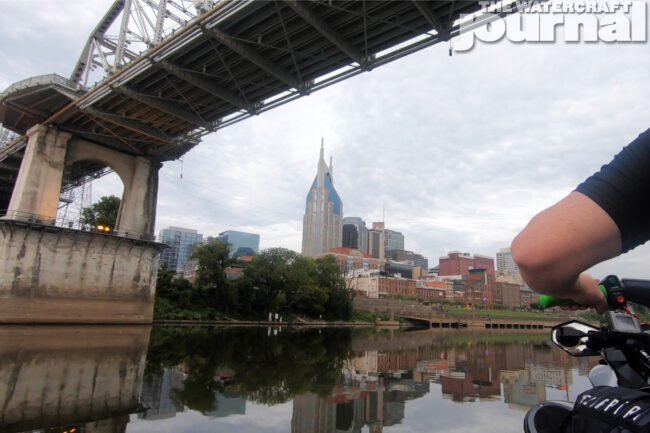
At wide-open-throttle, the heavily-laden Kawasaki couldn’t push beyond 58mph, which was expected. As the rear tank began to drain – reading its integrated fuel gauge required twisting around for a rearward glance from time to time – the JetSki leveled to its natural plane and picked up speed, which also was expected. I sped past the historic General Jackson paddle wheel-driven riverboat and rounded the corner, bringing downtown Nashville into view.

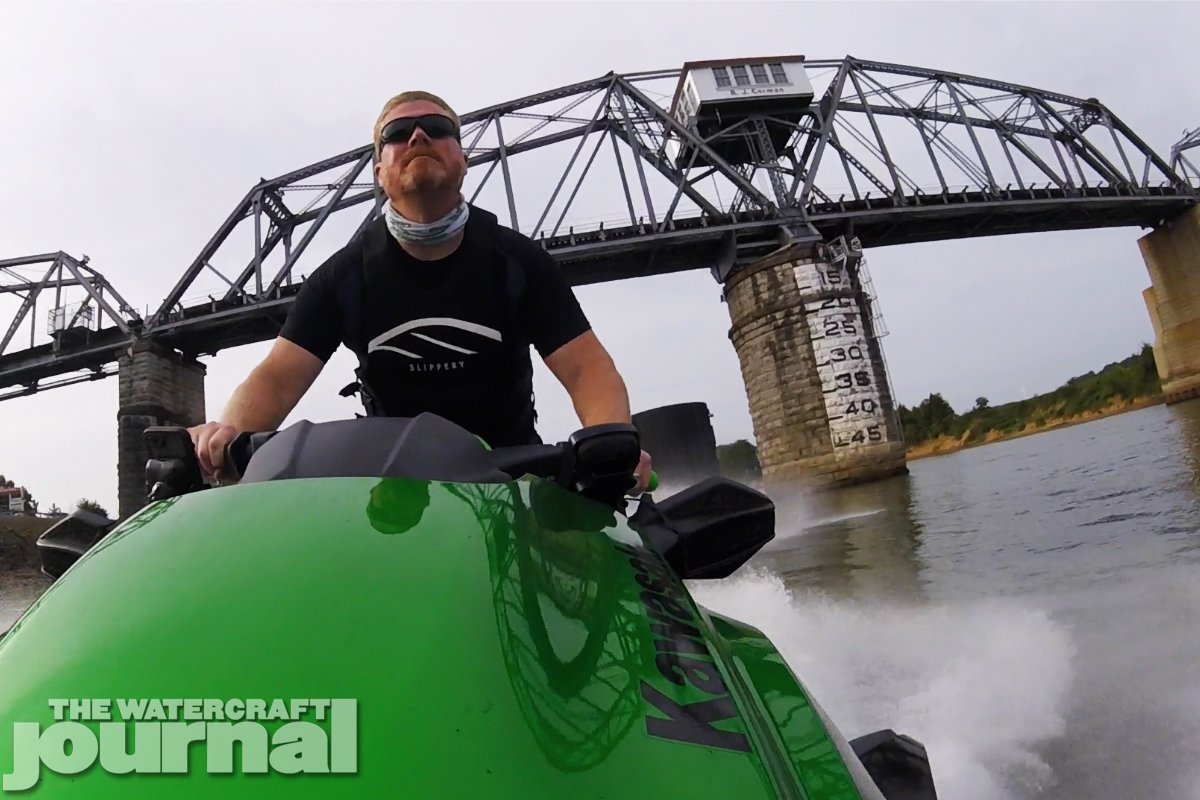
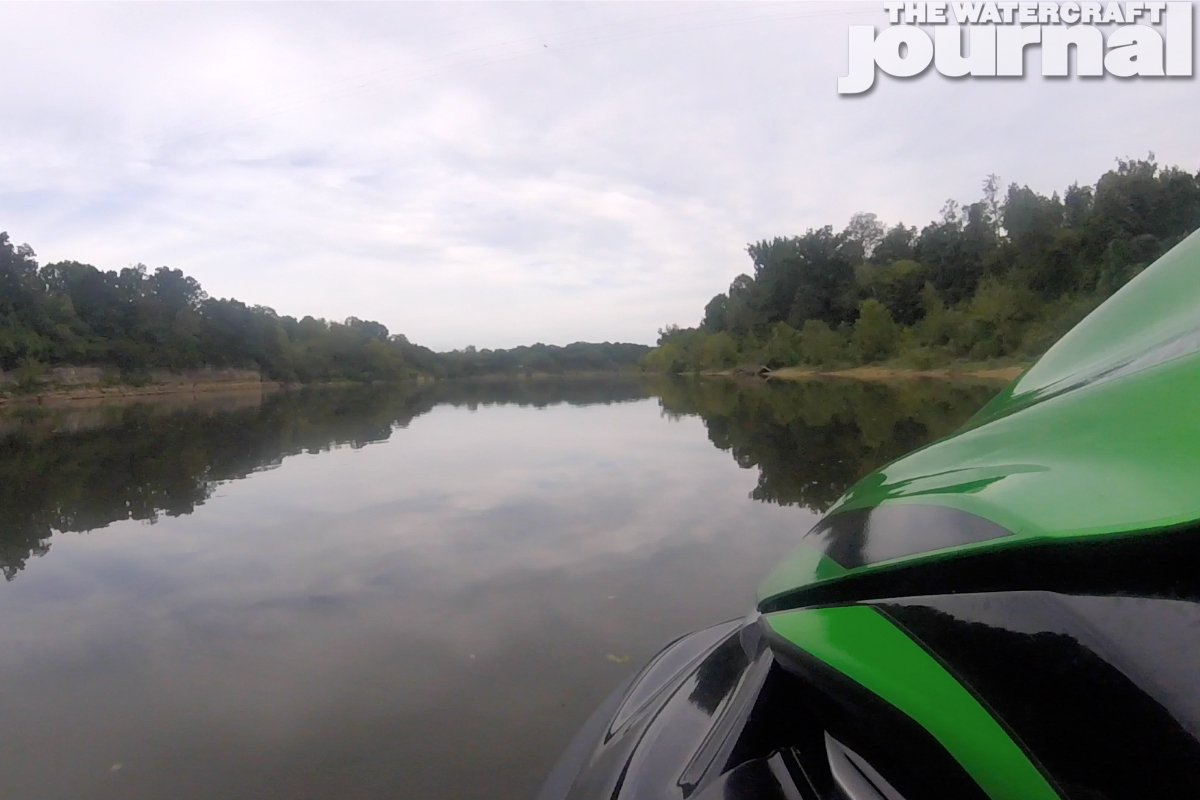
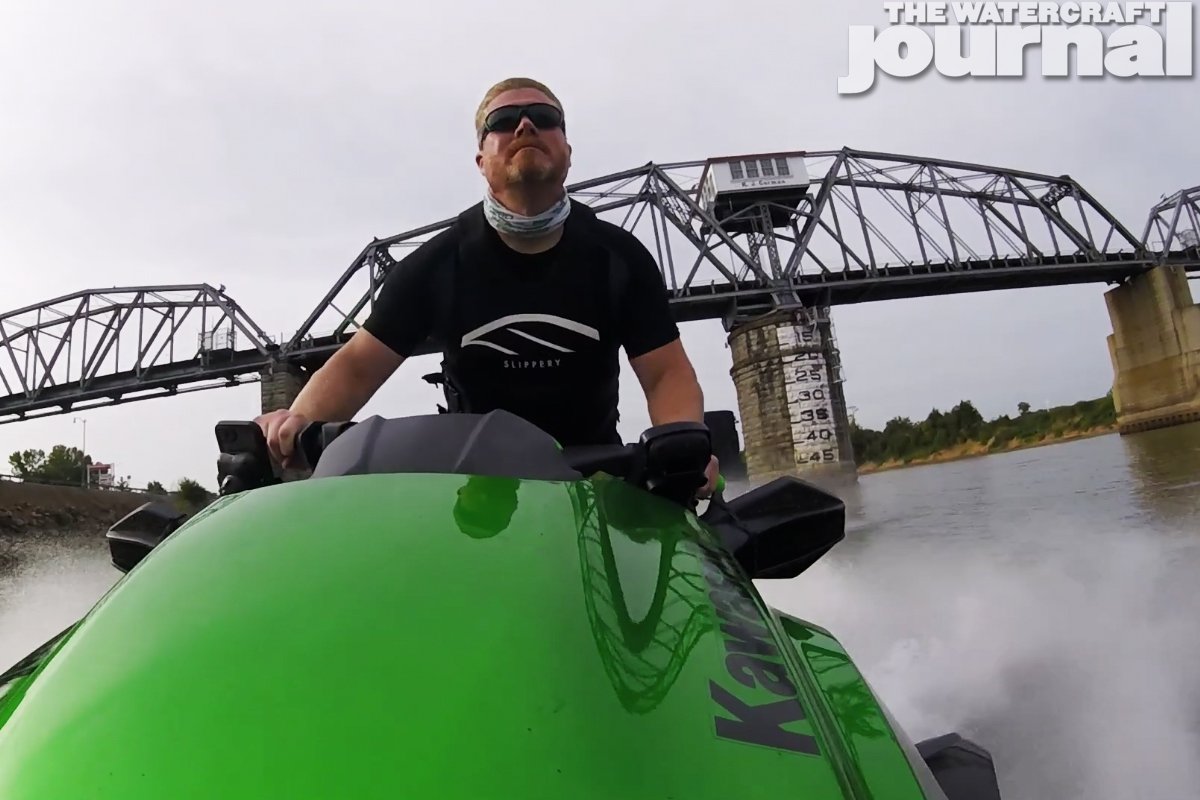
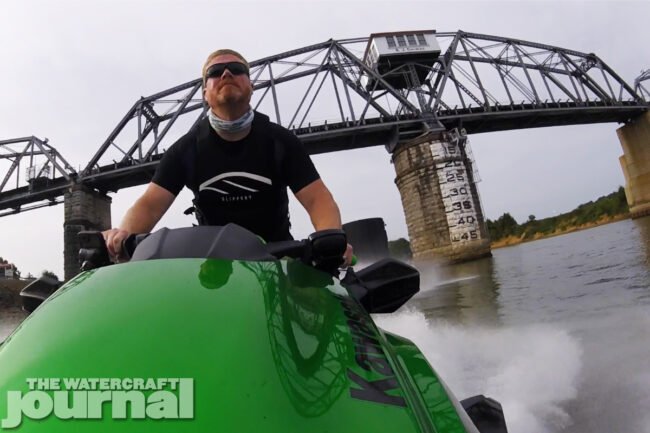
Besides a few early morning joggers, the waterfront was wholly void of life. Certainly, the sight of me streaking past aboard a bright green JetSki at nearly 60mph was something to behold – and hopefully served as some watercooler fodder for those commuters who passed on bridges overhead. Beyond that, the Cumberland River Valley is absolutely stunning; alternating from rolling farmland to high-reaching cliffs and dense timberline. It’s Southern splendor at its best.
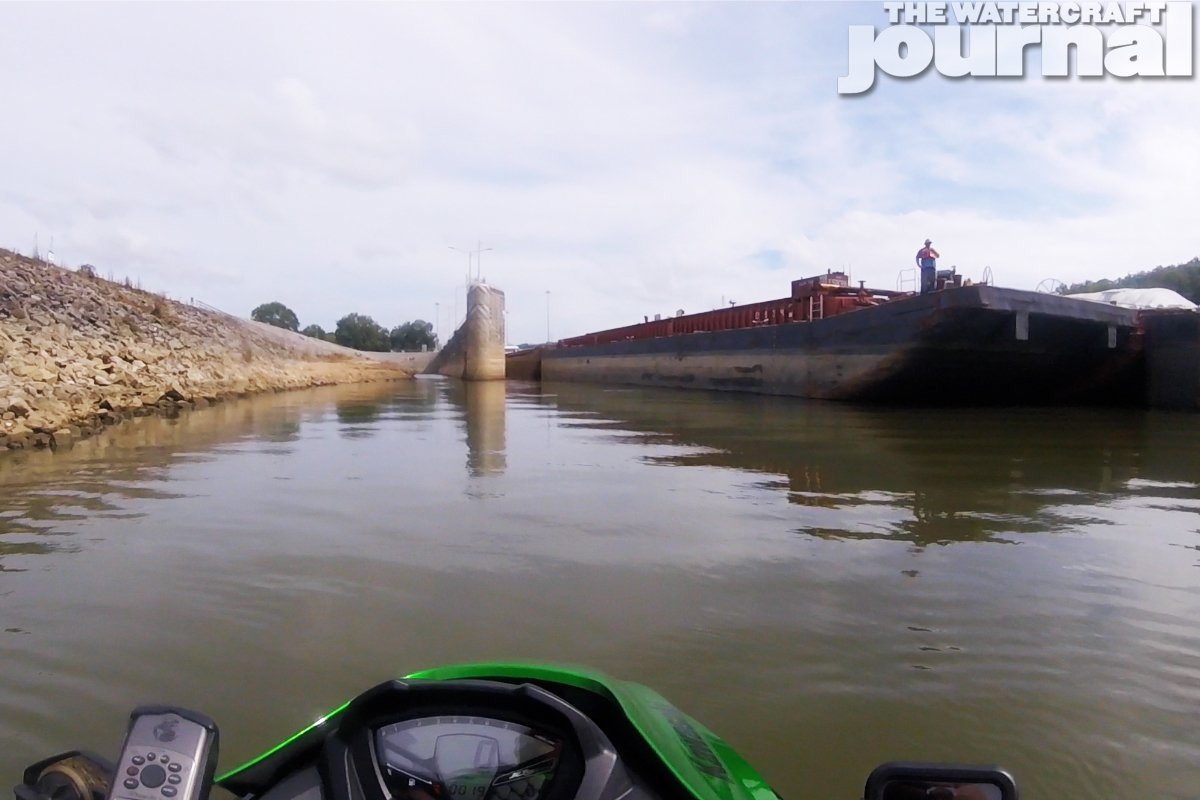
Prior to arriving at Cheatham Dam, I had passed a couple of tugs pushing flat-bottomed barges heavy with dredged river rock. The wake they kicked up was substantial, and playfully launching over their swells was out of the question given my auxiliary system. Instead, I smartly read the pattern and sluiced through the waves, reducing my airtime as much as possible.

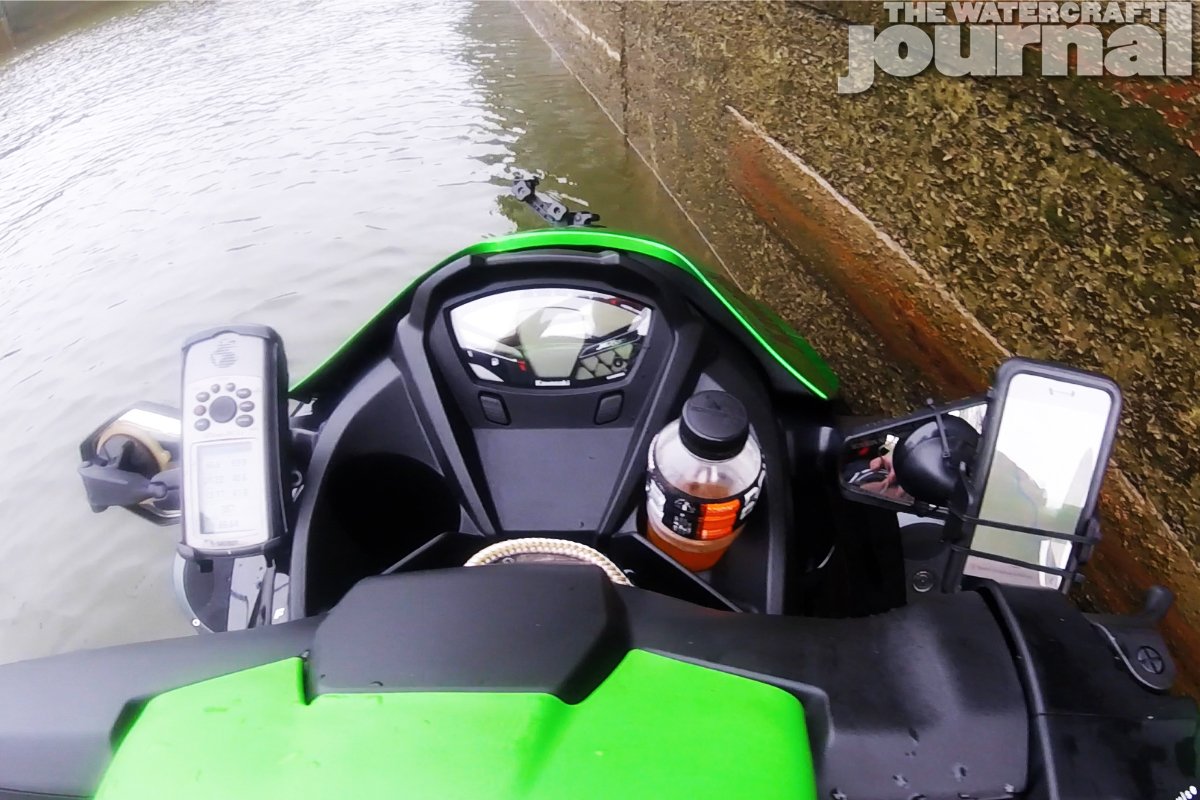
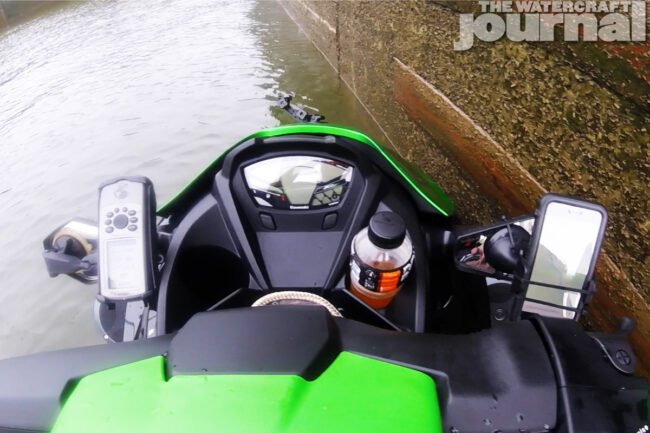
Locking through Cheatham took a scant 15-20 minutes, something which I had not expected. The lockmaster happily waved me in and chatted me up as I tied to the buoys. “How far you headed?” he bellowed over the railing. Replying “Paris!” he leaned further over the railing to draw closer. “You serious?” he yelled back. Nodding in the affirmative, he laughed and bid me good luck. When I assured him that I’d be back in a couple of hours after lunch he simply stared back incredulously.
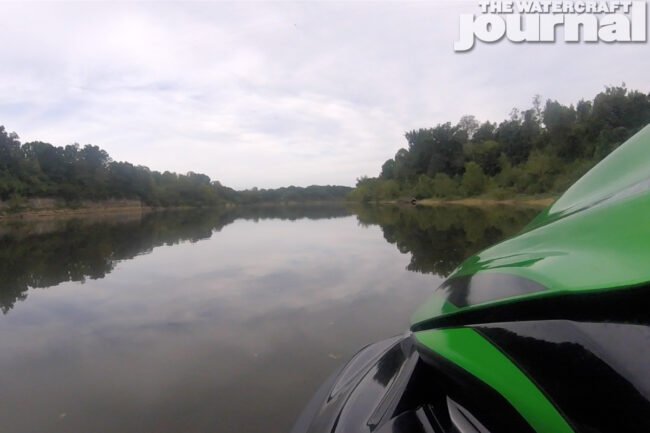
West of Cheatham Dam was pretty much unbroken smooth sailing all the way into Barkley Lake, about an hour and a half down river. As I said before, I kept the Kawasaki pinned to its throttle stop the whole time – both because of time and to measure the ski’s fuel consumption.

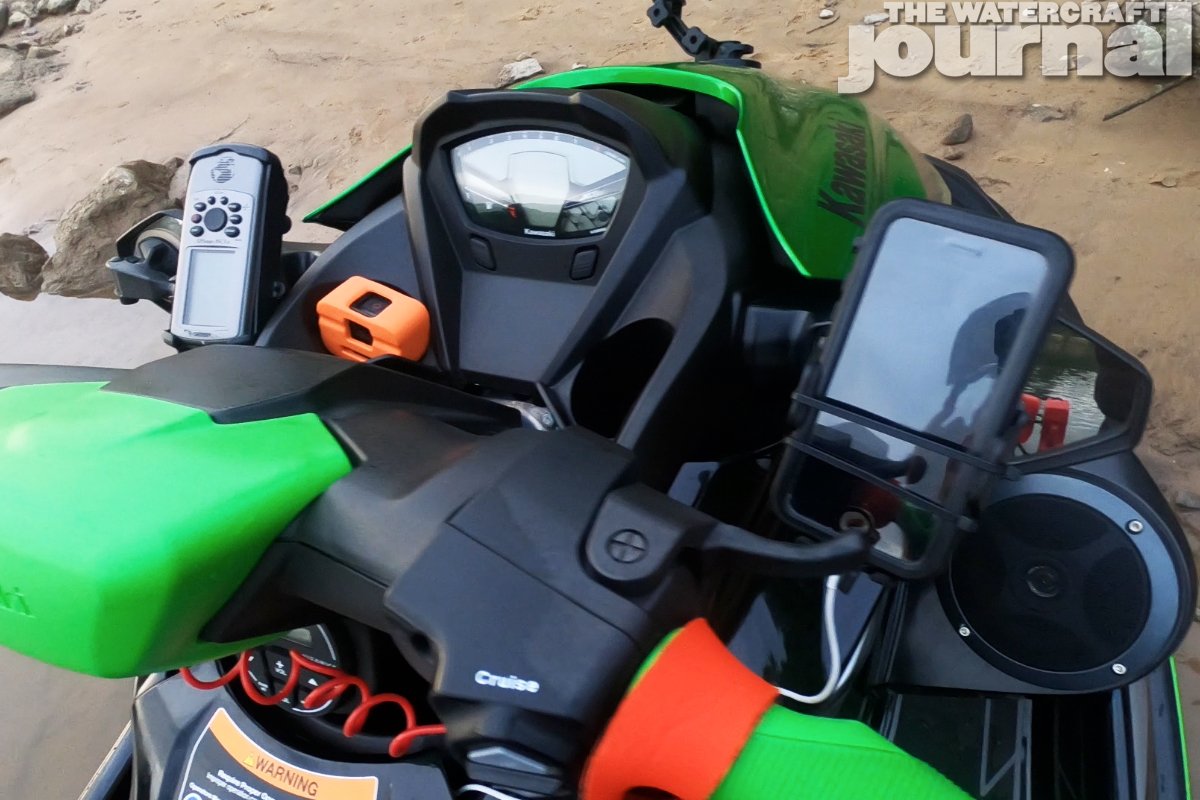
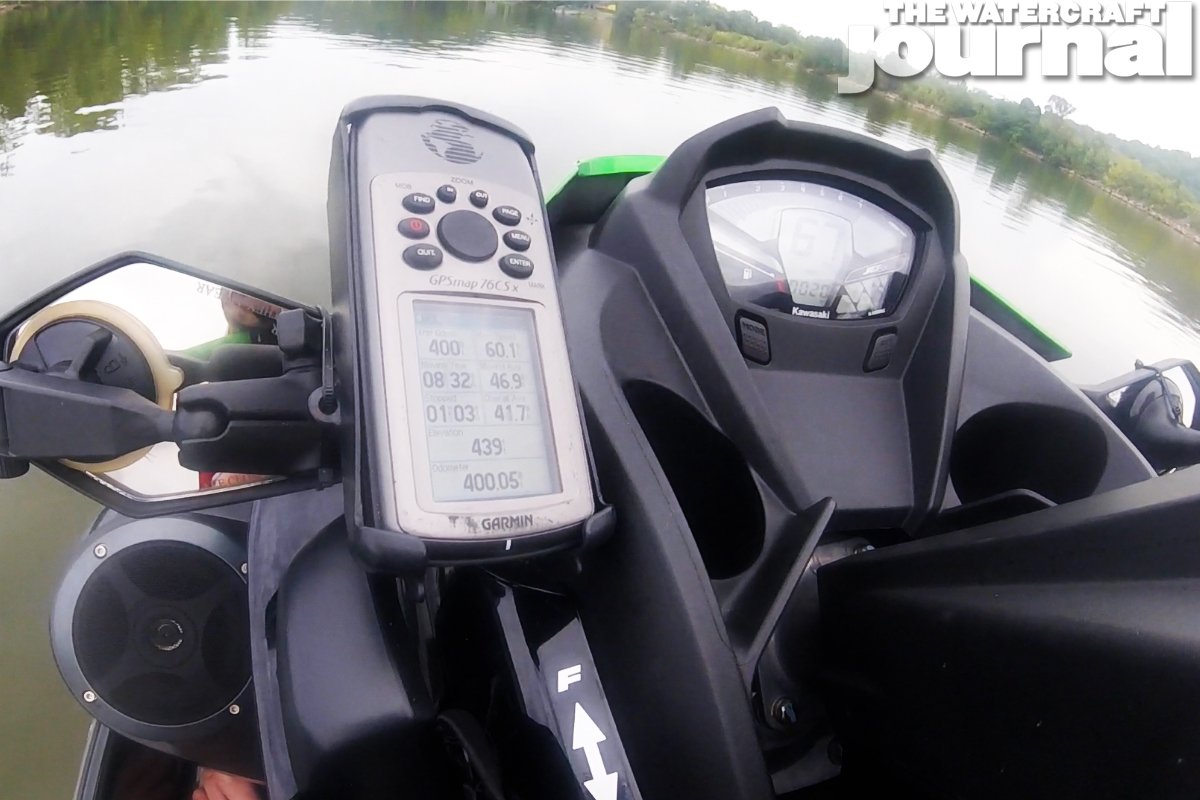
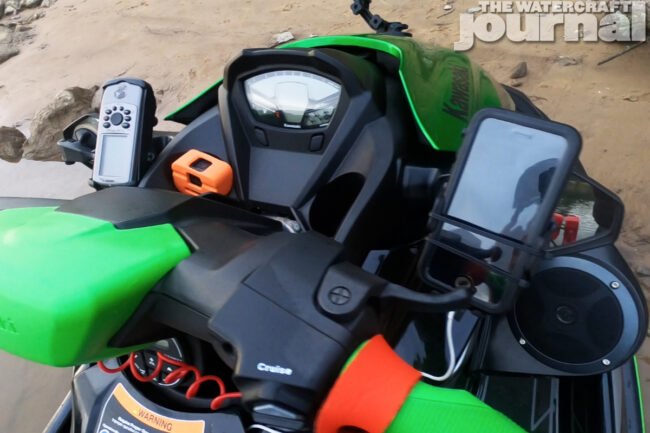
Thus far, I managed a maximum top speed of a hair under 60 miles per hour – although the speedometer in the Kawasaki’s dashboard would have us believe we’re running 65. (The paddlewheel gauges were never all that accurate.) I also kept the Cruise Control off since I ran into so many more barges, and smartly throttling past them to maintain speed and not launch myself over the bars takes a little more finesse.
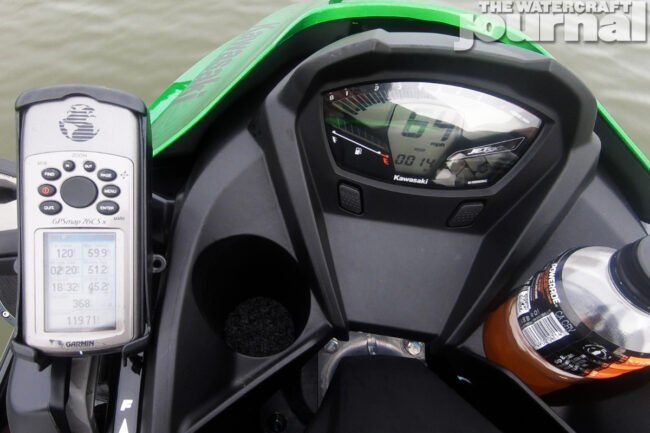
By this time, I was calculating about 5-and-a-half miles per gallon at wide-open-throttle, which was on par with what I planned for. Doing a little mental arithmetic I started thinking I could push past the fuel stop I had planned at the Green Turtle Bay resort and all the way to Paris Landing – some 30 miles south, and what I would discover, much too far for my ski to make with what fuel I had.

Interestingly, at this portion of the Tennessee River it flows north emptying into the Ohio River. With increasing winds churning the water into 2-to-3 foot chop; charging against the current; and my scant fuel supply, the Kawasaki’s alarm bells quickly began to chime. Convinced of my mental arithmetic, I fool-heartedly emptied my emergency Rotopax cans into the auxiliary tank and resumed the charge south. Again, the alarms rang, but with nearly 7-gallons in the rear tank.
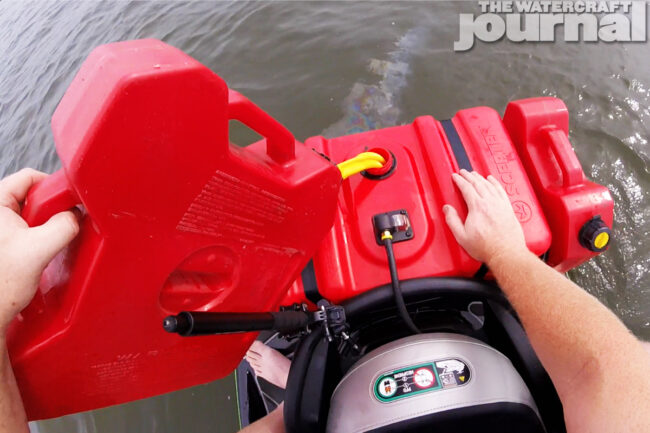
Here I discovered a major issue with my fuel system: if the ski’s fuel cell is empty (full of air) it won’t produce the vacuum to siphon the gasoline from the auxiliary tank. Had I poured the fuel into the fuel cell, it wouldn’t have been a problem; but with the fuel cell nearly dry, it couldn’t generate the vacuum necessary. I was in trouble now, I thought. Frustratingly, I had missed my last chance for gas some time ago, so now desperate, I idled towards a cove of waterfront homes hoping for sanctuary.

“You’re outta gas?” a friendly face queried, looking over my rear tank setup. “Well, if you can make it another 300-feet, you’ll run into Leonard’s. He’s got gas, but it ain’t cheap.” Well, “Leonard’s” was the Lynnhurst Family Resort, a waterfront cabin experience, where families could engage in boating and kayaking on the river. Nearly bone-dry, the Kawasaki swallowed an impressive near-40 gallons of fuel (setting me back $146), but gratefully, I was back in business.
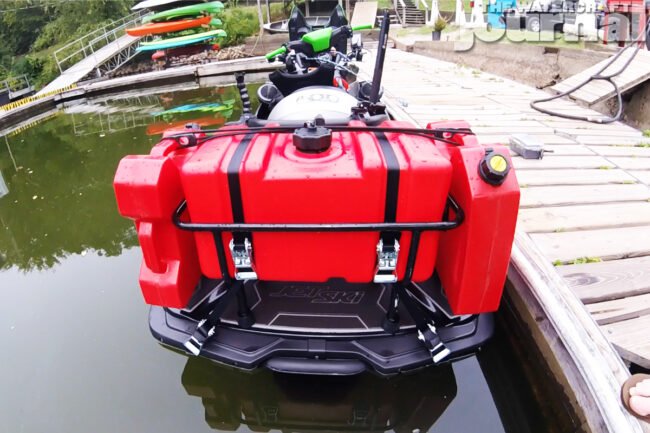
Both the Kawasaki and myself properly refreshed, the sprint to Paris Landing took little time. Marking my location, I turned around quickly and reversed my course. Considering that a gallon of gas weighs 6-pounds, I had roughly 140-pounds of extra weight on the back of my ski. And without trim control to force the nose down, I finding that the only way to keep the Kawasaki from porpoising is to stand up and lean as far forward over the bars as I can.

But this doesn’t do any bit of good now because Hurricane Hanna had worked its way up from the Gulf of Mexico and was starting to make its way – now as a tropical storm – into Tennessee. Gray skies and high winds whipping the trees were churning the Tennessee River into a choppy nightmare. It took about 40 minutes of brutal riding to reach the opening of Barkley Canal and all of my patience, but with the river narrowing and the high hills blocking the storm, the way back should be pretty smooth sailing from here on out.
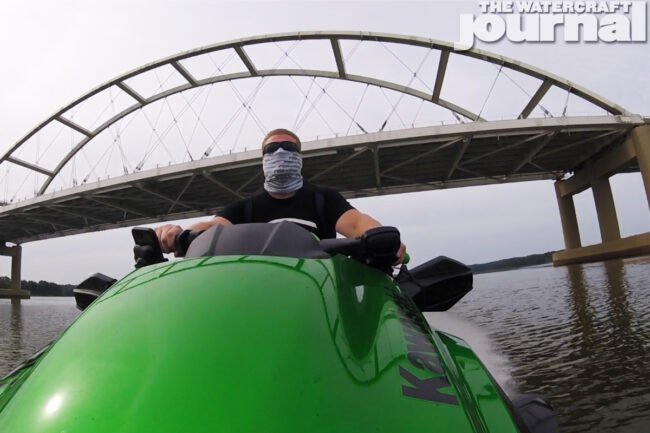
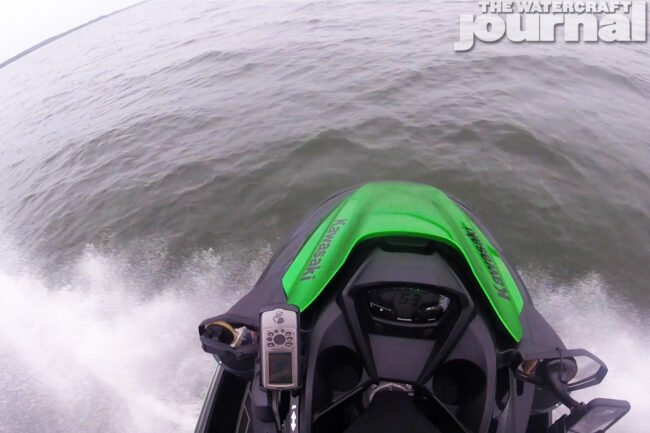
Learning from my severely over-confident calculations earlier I made it a plan to splash a few gallons into the rear tank at Clarksville Marina. The belly tank was about three-quarters full, but an extra 12-13 gallons provided me all of the fuel I need to make it home (even with a little extra fuel to spare, just to be safe. I promise I learned my lesson). At the opening of the Clarksville Marina is Freedom Point in Liberty Park, and is a really standout point of interest on the riverfront, somewhere I plan to visit again soon.

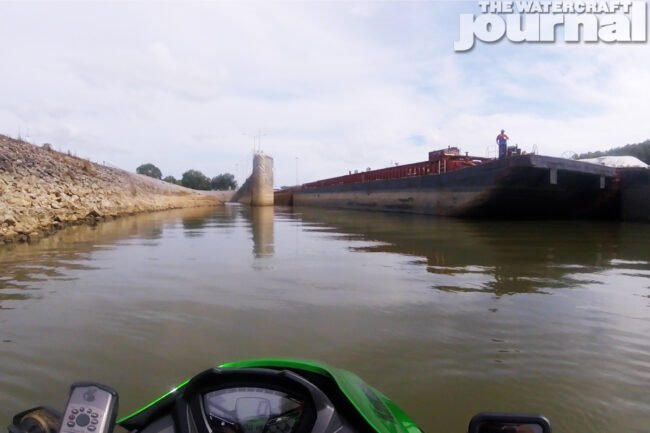
By this time, I noticed a whole lot more barge traffic in the afternoon than in the morning – including waiting nearly 45 minutes for one to vacate the Cheatham Dam & Lock. I took the time to stretch my legs, reapply some sunscreen, and choke down my third energy bar with the aid of a luke warm bottled water. When I asked the lock master regarding the increased traffic, he said that the barges were scrambling to find mooring before the storm hit – which made sense.
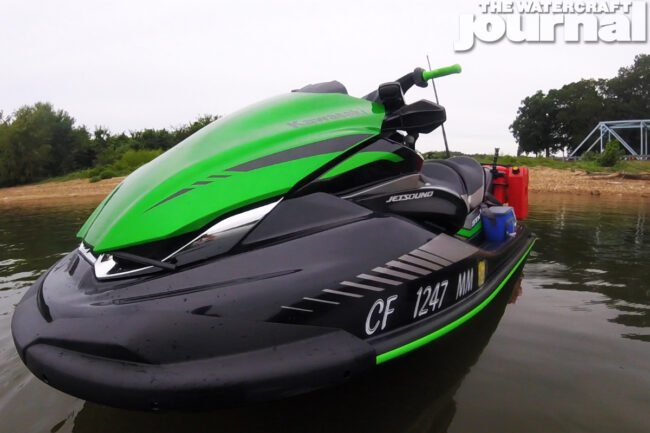
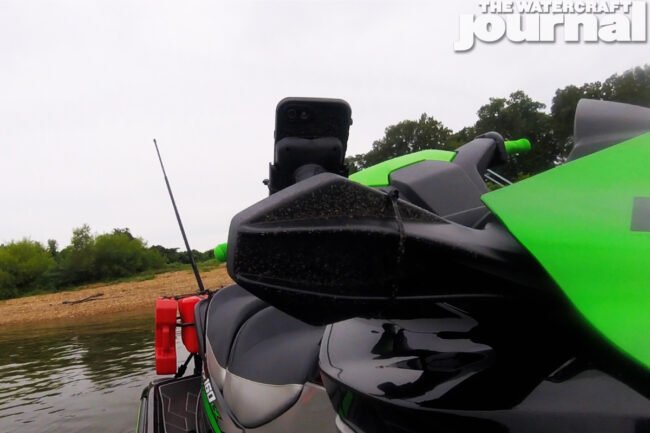
Then again, that also meant having to weave around these big ol’ things without scrubbing too much speed. If you’ve ever tried to pass a tug pushing a couple of barges down a narrow river, you’ll know what kind of wakes I’m talking about. You can quickly find yourself airborne or complete submerged in a matter of seconds. Thankfully, even as I maneuvered the Kawasaki around them, I could weave through the steep rollers with reasonable ease.

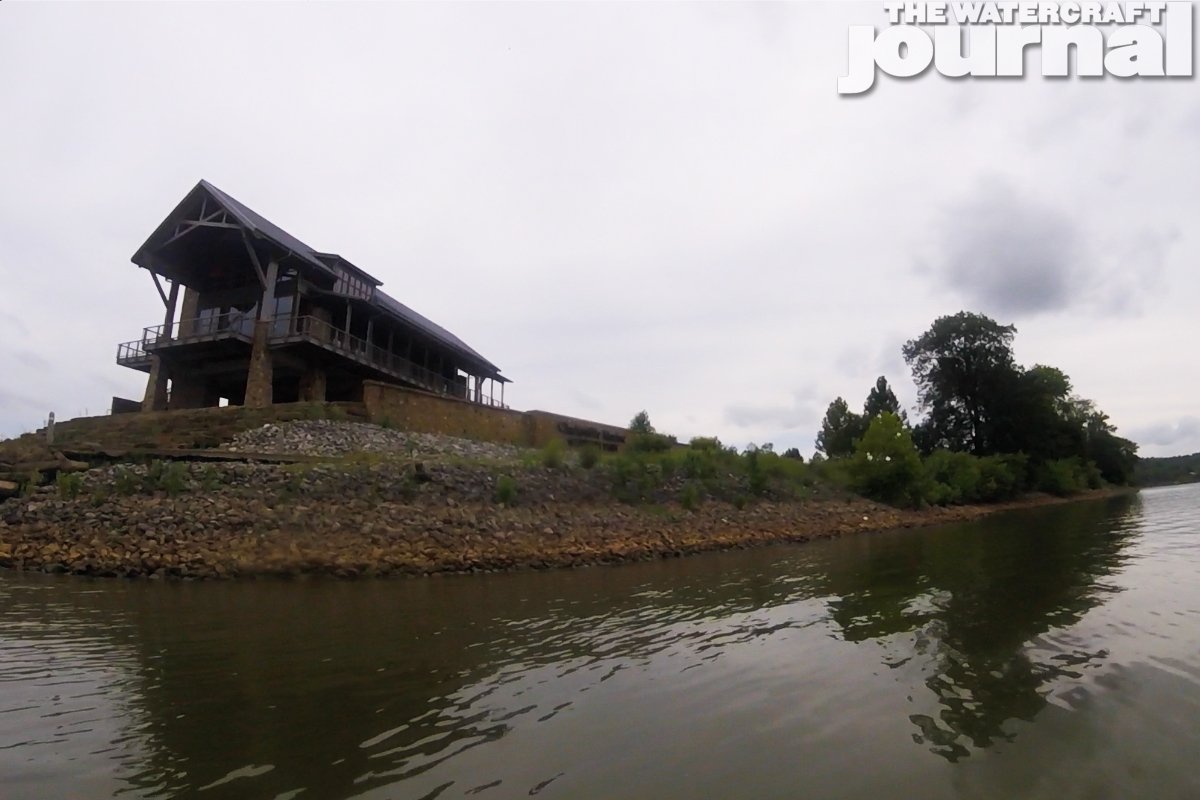
Above me the skies continued to gray and the tops of the trees began to bow under the wind. The storm was coming and I had about an hour left to make it home. I wasted no time blowing past downtown a second time, leaving many fishermen befuddled at what they saw – and likely a little irritated. The final stretch of the Cumberland serpentines through a deep channel littered with homes, parkland and farms before exposing the broad face of the Old Hickory Lock & Dam.

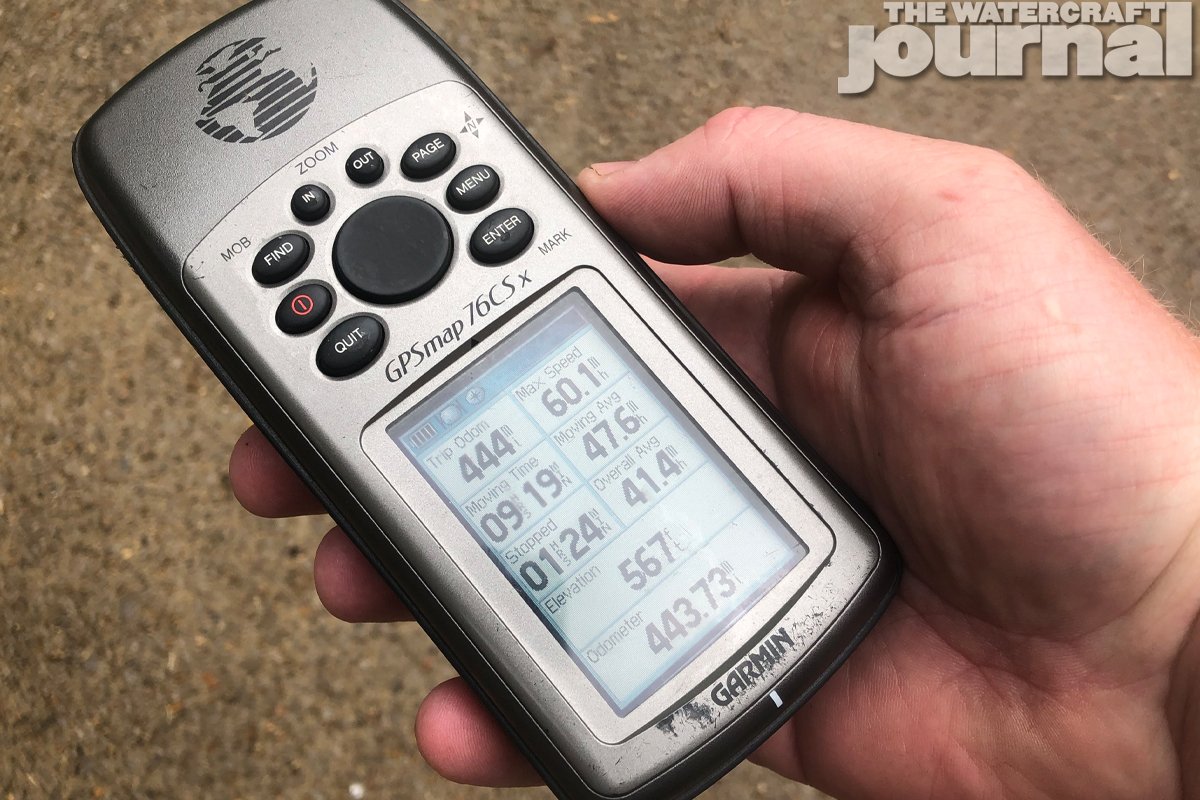
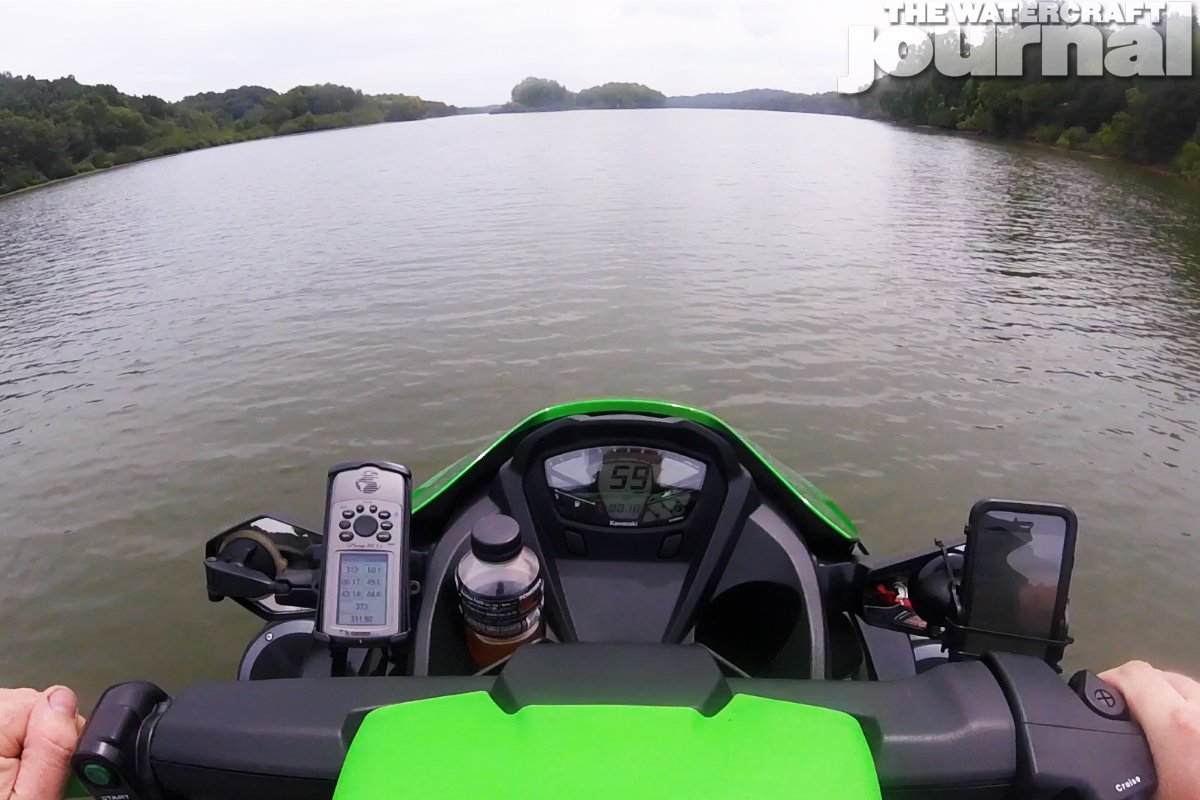
In all, the final tally was 443-miles with a moving average of 47.6mph (including slowing down to pass barges and locking through dams), and a maximum speed of 60.1mph. Equally, I burned through just over 60-gallons of fuel, given my calculated average of 5.5 miles-per-gallon. Needless to say, without my poor calculations, I could’ve saved myself the extra 3-miles and made it a nice, even 440. Maybe next time.
Survival Thriller “Jetski” begins Production in Malta

3

Production of the survival thriller, Jetski, is underway in Malta. The film is directed by James Nunn, known for his 2012 British thriller, TowerBlock. Jetski follows a group of spring-breakers who are having a good time partying in Mexico. Things go awry when they steal a couple of jet skis and take them out and wind up having a head-on collision. The group ends up stranded miles from the coast, finding themselves in the midst of underwater predators. We know how this is going to go!

The film, written by Nick Satrese, will be shopped to buyers at the American Film Market, which runs from November 9-13. Shooting began on location in Malta on October 14 under strict COVID-safe guidelines.

Producer Andrew Prendergast said, “We are thrilled to be producing Jetski on the beautiful island of Malta with such a talented cast and crew in these difficult times. Jetski is a nail-biting ride that will keep audiences on the edge of their seats until the very last minute.”

Executive producer Al Munteanu for SquareOne Entertainment will distribute the film in Germany and Austria added, “A famished shark, college kids — what more do you need? However, finding real freshness in this genre is the holy grail and we believe with its unexpected twists and turns, Jetski has the DNA to become the next guilty pleasure that speaks to everyone’s desire not to get devoured.”

We are looking forward to grabbing some popcorn and a soda while watching the kids try to escape the toothy men in the grey suits.

Broward Motorsports GP1800 Stage 1 and Stage 2 Kits

0

Increase the speed of your Yamaha GP 1800 with a Tuning kit from Broward Motorsports. Their Stage 1 Kit is no frills, reflash without the performance parts and gain 9 mph over your top speed. This kit will cost you $599.99 or $55 a month if you are approved through Affirm.

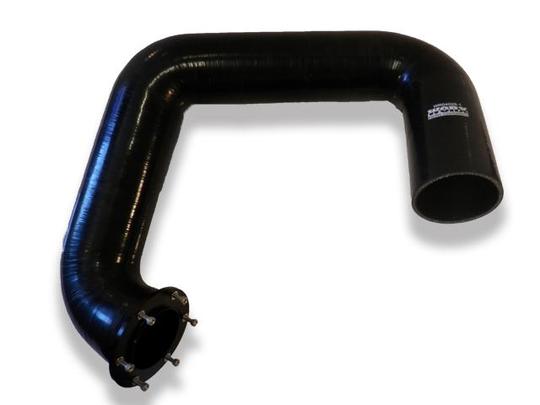
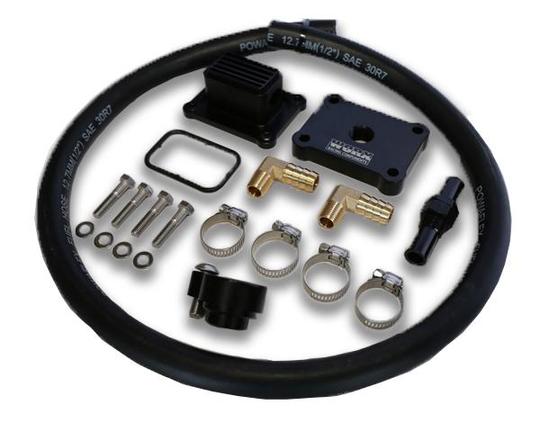
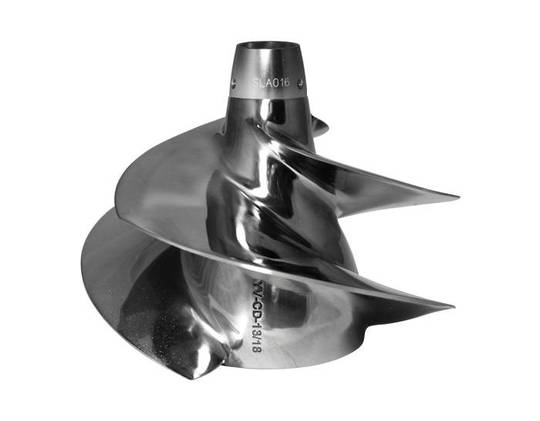
If you prefer to go faster, check out the 2018 GP1800 Stage 2 Kit from Broward Motorsports. This kit will increase acceleration and give you top speeds of 15-18 mph over stock. The Stage 2 Kit includes the following components: BMS RacingStage 2 Tune, WORX Racing Yamaha Air Filter Kit, Fizzle Y 1000 Intercooler Kit W/Tial Blow off Valve, WORX Racing Engine Cooling Kit, BMS Racing Titanium Valve Retainers, WORX Racing Free Flow Exhaust, Solas YV-CD-13/18 Impeller, WORX Racing Ride Plate, WORX Intake Grate, and WORX Pump Seal.

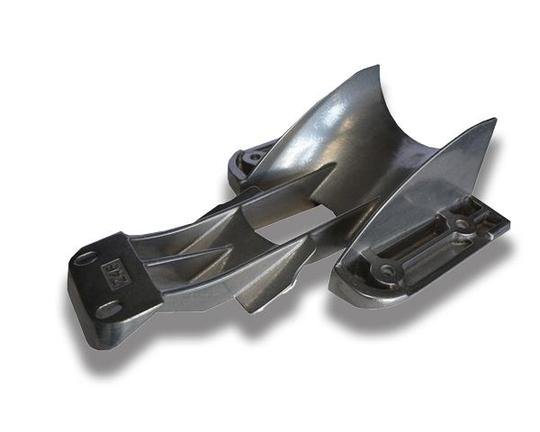
Just to highlight a couple of components and their benefits, the BMS GP 1800 Stage 2 Kit offers better handling and more speed with the addition of a Solas impeller. The impeller will dramatically decrease cavitation, enabling your watercraft to cut through chop much easier as it processes the water more efficiently than a stock impeller.

The WORX Yamaha Engine Cooling Kit provides your ski with extra cooling by making room for installation of an additional water line from the jet unit directly into the engine block. This will significantly lower the engine temperature and increase engine reliability and performance.

The 2018 GP1800 Stage 2 Kit retails for $3,626.93 or $328 a month if you qualify with Affirm. Check out the Broward Motorsports Racing website for complete details on the BMS GP 1800 Stage 1 and Stage 2 Kits.

Kawasaki To Spin Off Engine And Motorcycle Business Divisions

2

In a recent announcement from the President and CEO of Kawasaki Motors Corp, there will be some internal restructuring at Kawasaki Heavy Industries, Ltd. (KHI) next year.

KHI has announced that they will spin off their engine and motorcycle division brands as part of a restructuring plan that will also see the rolling stock section of their manufacturing business and ship & offshore portions get slated for change.

The engine and motorcycle divisions will effectively become separate companies from KHI starting on October 1, 2021.  Based on this new business direction, Kawasaki has commented that these changes will enhance the ability of their powersports sectors to innovate with technology and safety.

As for what this will mean for innovation to the JetSki lineup, we have no specific details and will have to wait and see what changes may lie ahead.  To read full details on this announcement, the KHI press release is below.

A message from the President and CEO of Kawasaki Motors Corp., U.S.A. (KMC):

During the COVID-19 pandemic, our business in both Powersports and Engine divisions has seen considerable success.  New and reignited interest in our industry has been met by tremendous efforts from Kawasaki team members and our dealer network to meet the needs of our customers in a new environment where health and safety are the first priority.

Today, Kawasaki Heavy Industries, Ltd., KMC’s parent company and 100 percent shareholder, announced a restructuring plan to spin off the Motorcycle & Engine business and the Rolling Stock business into separate companies on October 1, 2021. The Ship & Offshore Structure business will also be integrated into the Energy System & Plant Engineering business. These changes are part of achieving Kawasaki’s new business direction and will further enhance Kawasaki’s ability to continue to innovate with technology and safety for the powersports industry.

As for operations in the United States, KMC will see no changes. All KMC’s tasks and missions will remain the same and KHI’s restructuring plan will only further enhance KMC’s ability to serve KMC’s customers by furthering KMC’s ability to be quick and efficient when studying the industry and the future of powersports. The Kawasaki brand in North America is strong and getting stronger even under the COVID-19 situation and we at KMC will continue our great mission of delivering Kawasaki products and satisfaction to our customers

Yamaha And Jobe Sports Collaborate To Offer New Range Of Products

0

What happens when a leading watercraft manufacturer teams up with one of the largest watersport products brands in the industry?  Well we are about to find out for 2021.

Jobe Sports; the leading watersports brand, has just announced their collaboration with Yamaha.  Next year Yamaha will be releasing a totally new range of softgoods products which will be a great addition to your Waverunner gear.

Check out this press release for more details:
For 2021, Yamaha will release a brand new product range of softgoods in collaboration with the biggest watersports brand: Jobe Sports.

This brand new 2021 range comes with all the latest tech and is the perfect match with every piece of Yamaha Marine gear out there.

Yamaha has worked extensively with the team from Jobe Sports and handpicked the best products for their PWC range and ensure that the quality is up to the highest standards!

The result: A comfortable range of the best softgoods out there which is the must have addition to your Yamaha PWC!

Want to find out more about this new Yamaha Licensed collection and all the tech that comes with it? Be sure to visit your local Yamaha dealer now and get all the details!

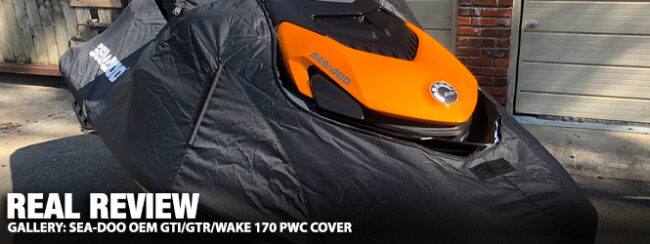
Real Review: Sea-Doo OEM GTI/GTR/Wake 170 PWC Cover

0

No, you can’t!” countered a very upset commenter in a terse back-and-forth online. The topic at hand was PWC covers and the question arose whether a watercraft could be towed any measurable distance beneath a cover without being scuffed, scratched or otherwise. I, having quite a bit of experience with this topic, answered in the affirmative with a single caveat; make sure it’s a really good cover. My opponent vowed otherwise, citing anecdotal experiences with less-than-top-quality covers, inadvertently proving my point.

Not all PWC covers are created equal, and nowhere is that more evident than when it comes to towing. Cheaply made covers are often stitched together from bargain-priced canvas, often the same stuff you’d make a child’s school backpack from. These covers discolor under heavy UV light, becoming chalky and brittle; layering your watercraft in a fine layer of black flakes that is, before ripping apart after a short while. Yes, you’ll definitely get what you pay for in this category – so spend your money wisely.

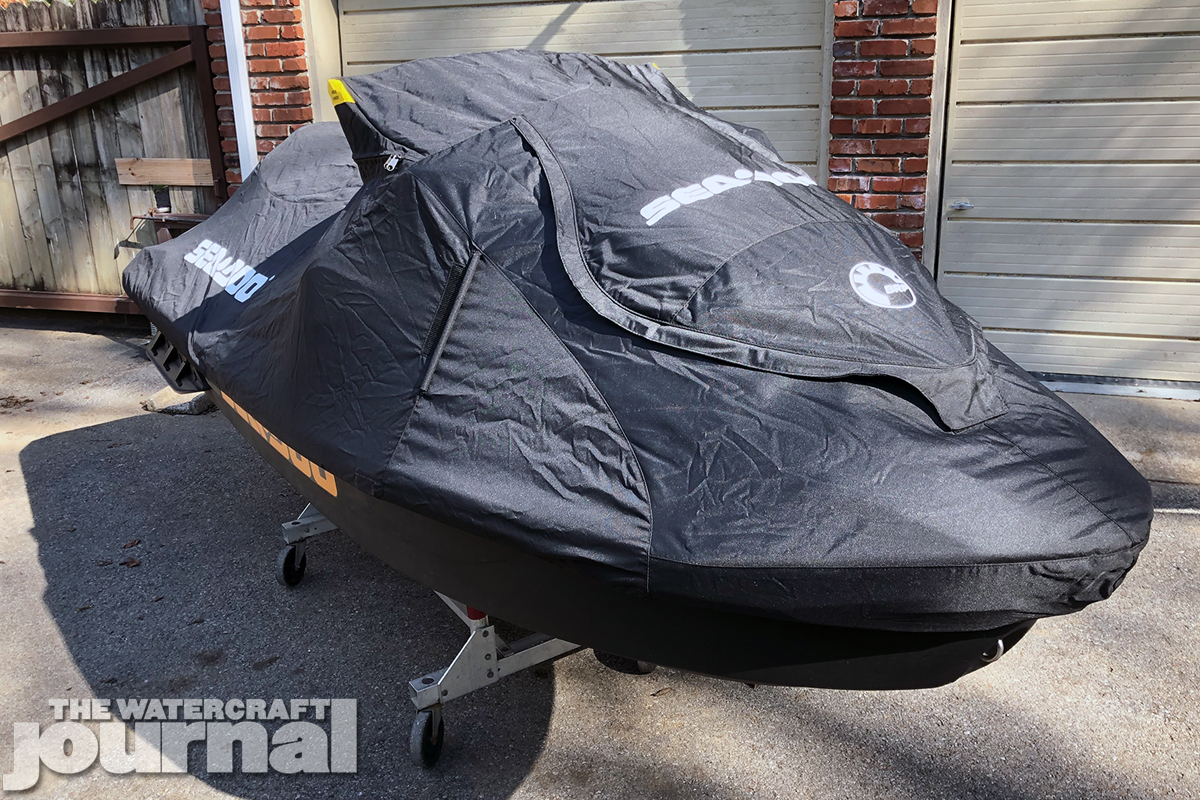
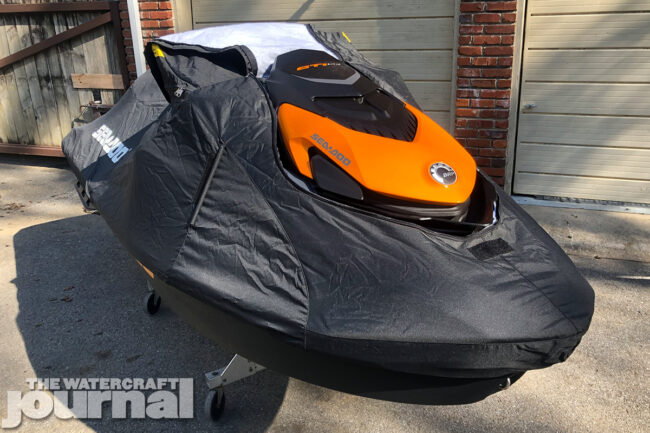
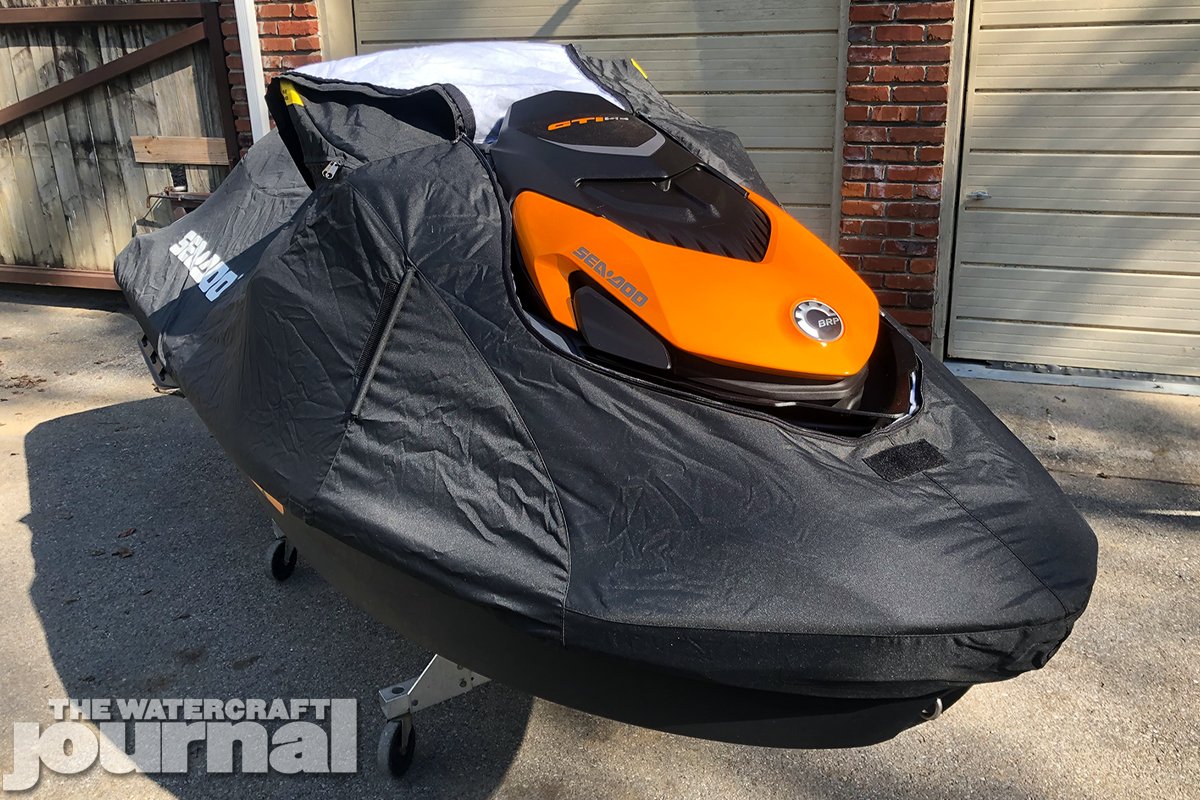
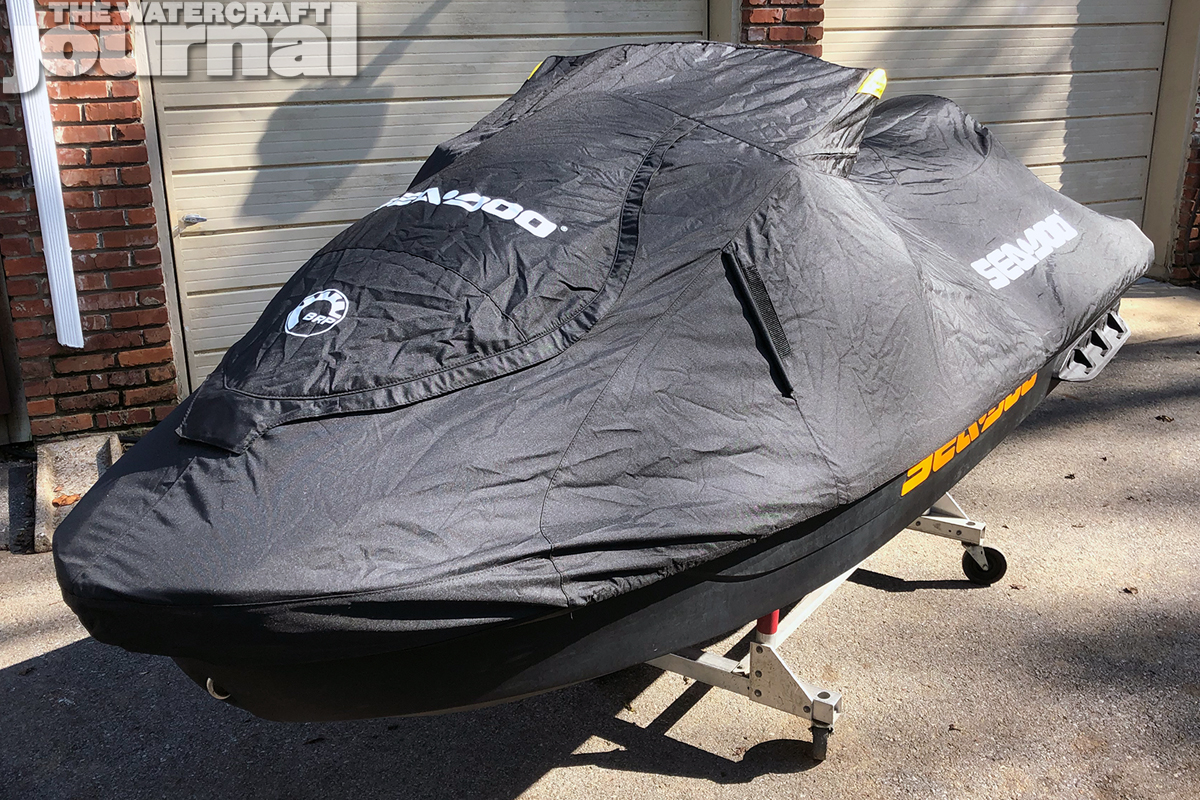
Although often maligned as being the most expensive, the factory-sold covers are often the best in the market. In many cases, the OEM covers are even included in the price of the unit – most notably top-of-the-line Limited-package Yamaha WaveRunners and the top-tier Sea-Doo GTX Limited. In the case of The Watercraft Journal‘s 2020 Sea-Doo GTI SE 170, our OEM cover was offered as an accessory item available through Sea-Doo’s Parts & Accessories catalog for $269.99, definitely not a impulse purchase.

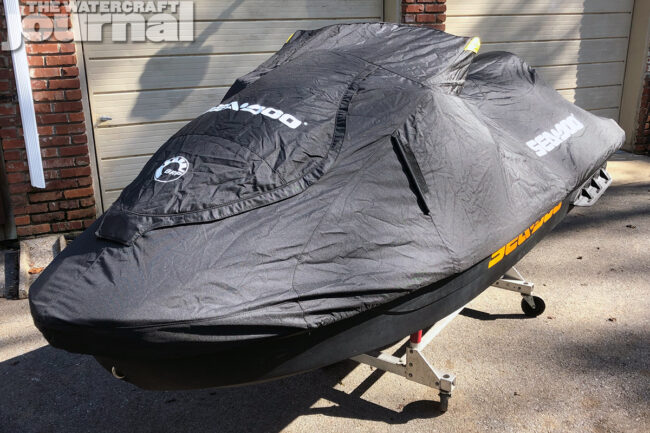
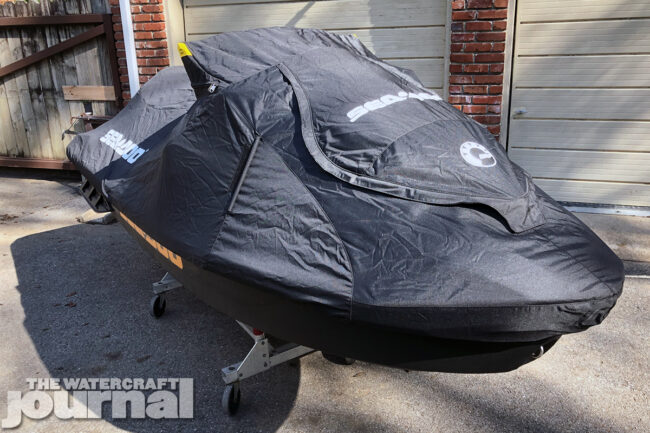
Yet, the cover (which fits all 2020 GTI, GTI SE, GTR and WAKE 170 models) is designed specifically to protect your Sea-Doo from the elements and help preserve its finish while in storage and trailering it to a destination. In fact, Sea-Doo even labels their covers as a “weather-resistant trailering cover” – so what makes Sea-Doo’s PWC covers safe to tow with when others aren’t? The easy answer is it’s soft inner lining and laminated mesh vents. Let me explain:

At speed, the disparity between high and low pressure air over the ski cover result in some pretty violent flapping, which can act as a low grit scuff pad over time. To counter this, Sea-Doo’s covers are lined with a soft, velvet-like lining that is as gentle as wool. Equally, the cover has strategically placed vents that allow passing air to vent in and out, equalizing pressures and reducing – if not eliminating – flapping. And thus, no scuffing, or “panel abrasion” as Sea-Doo calls it.
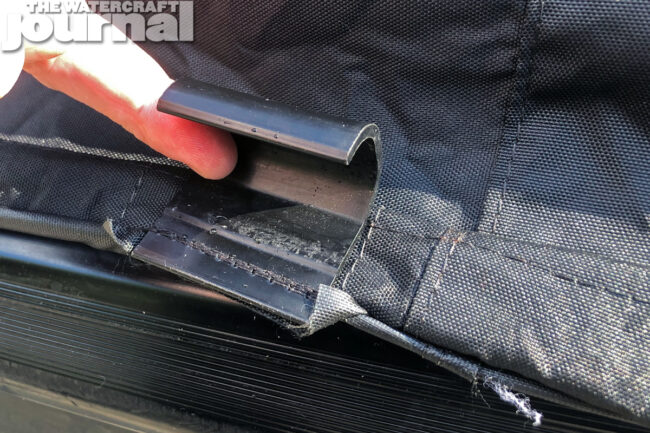
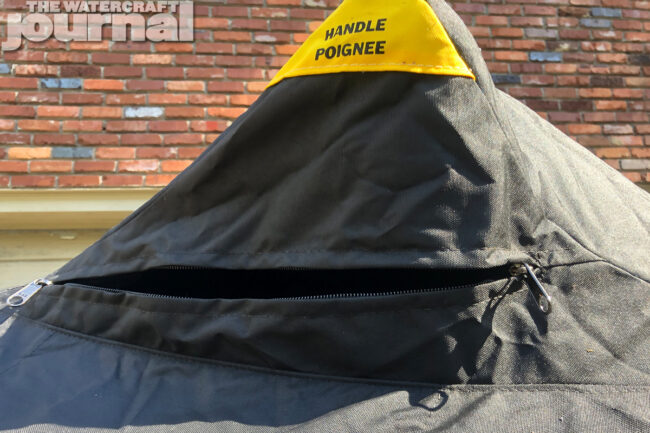
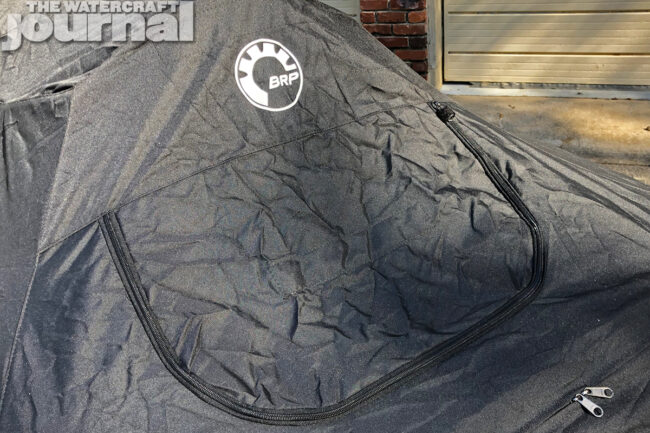
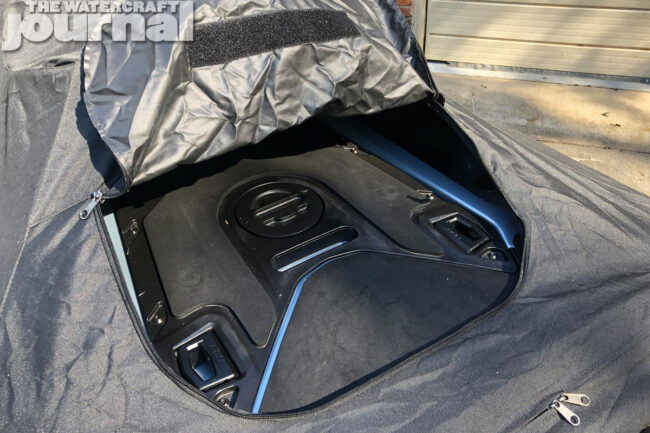
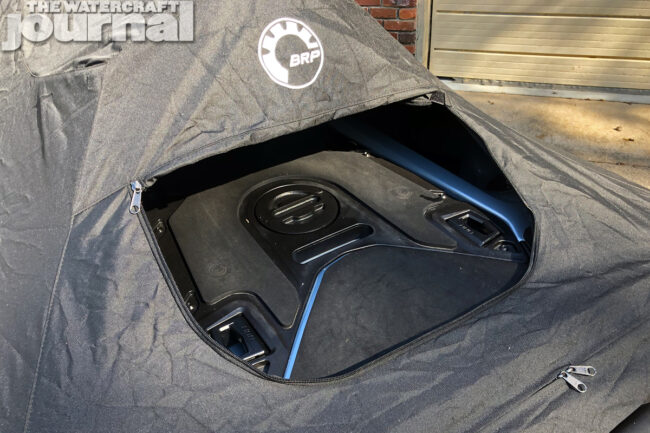
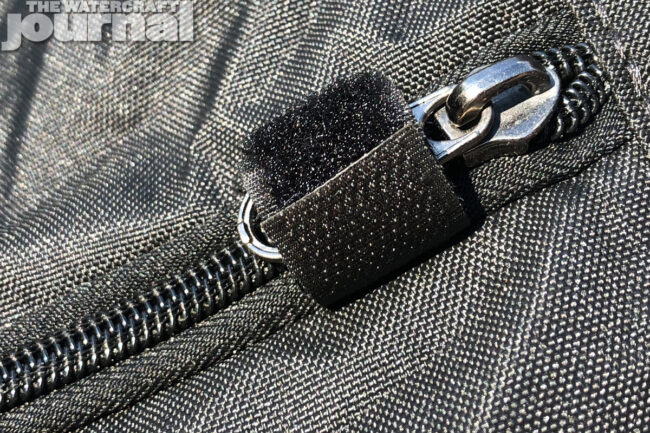
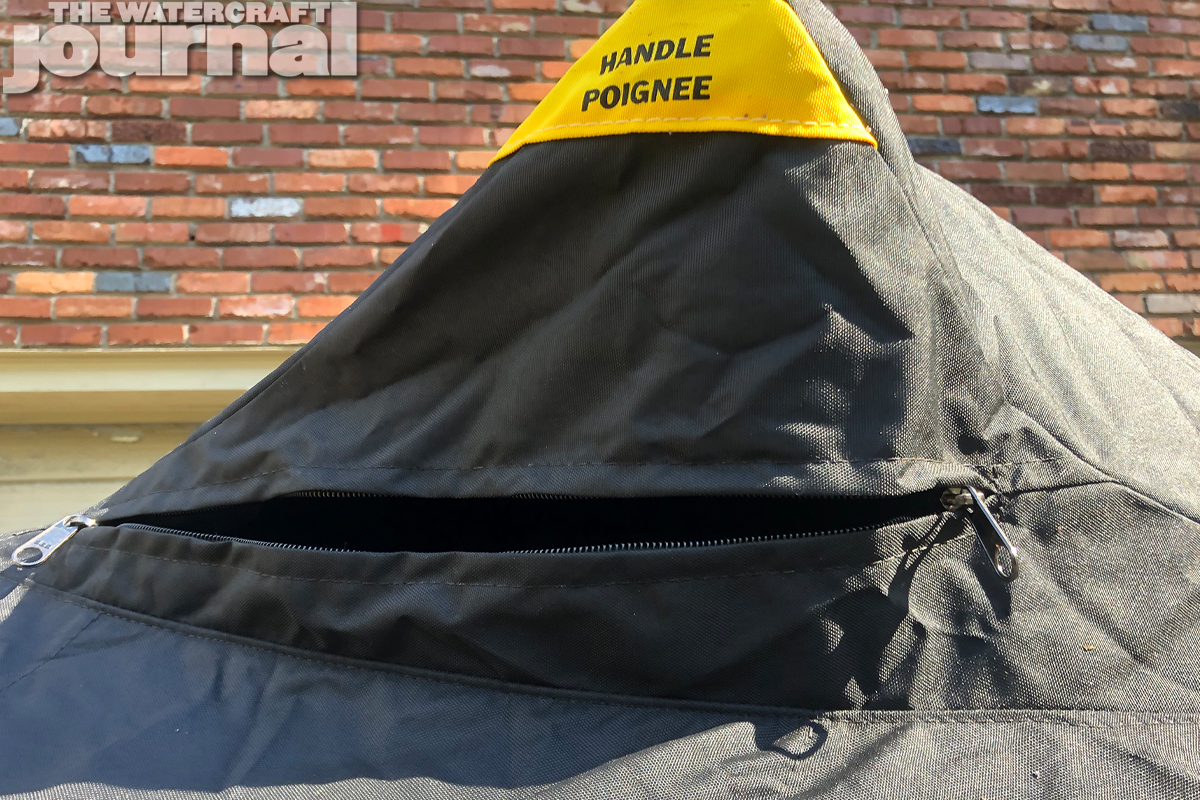
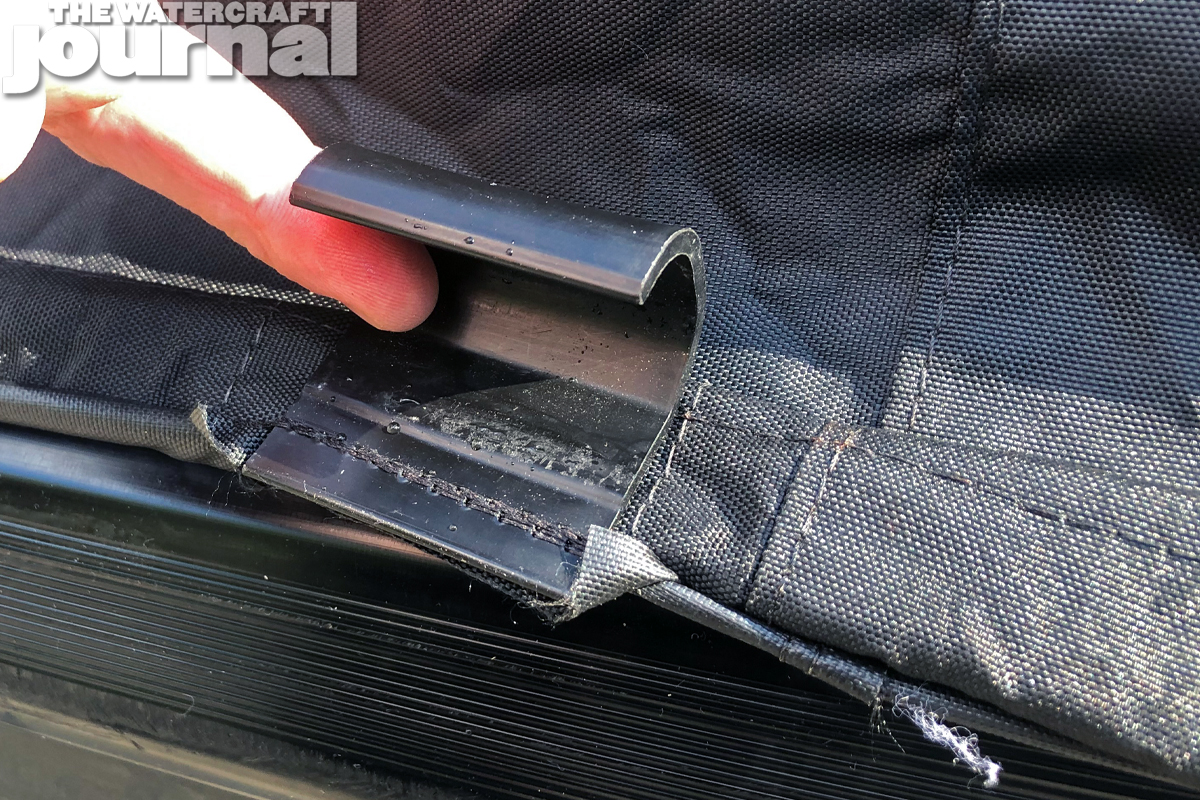
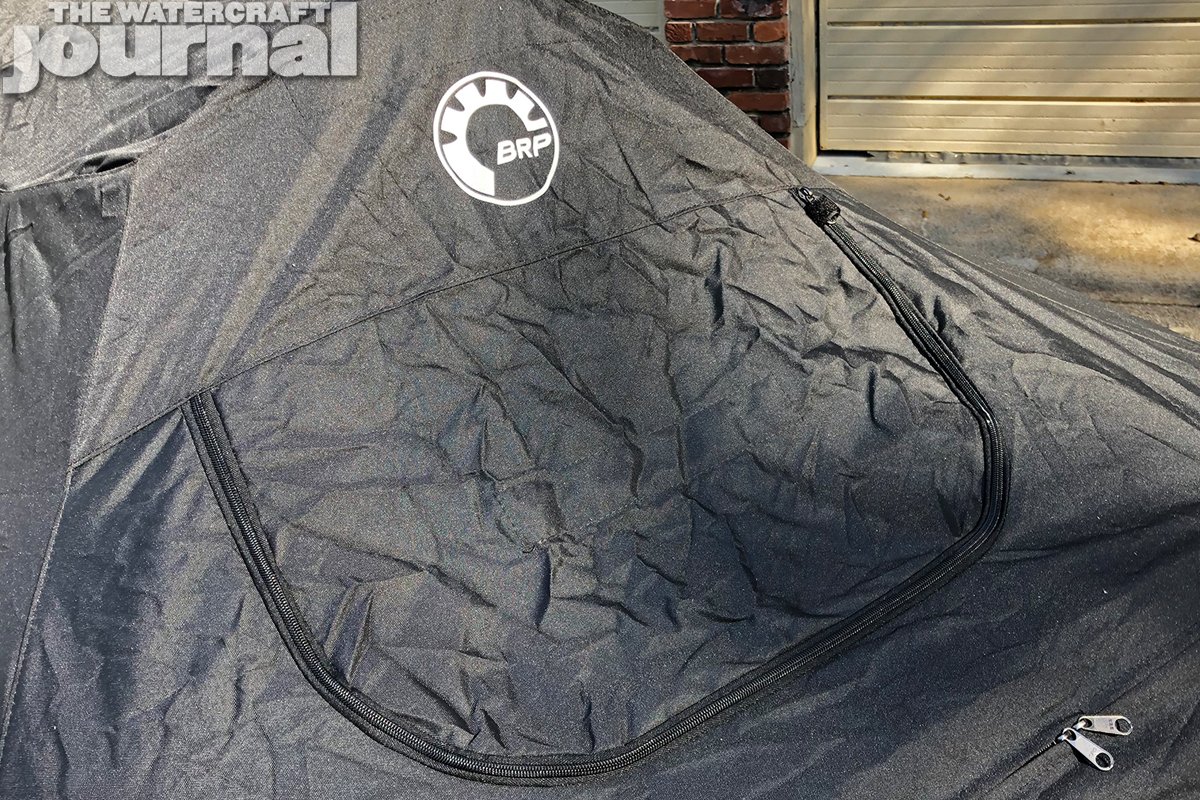
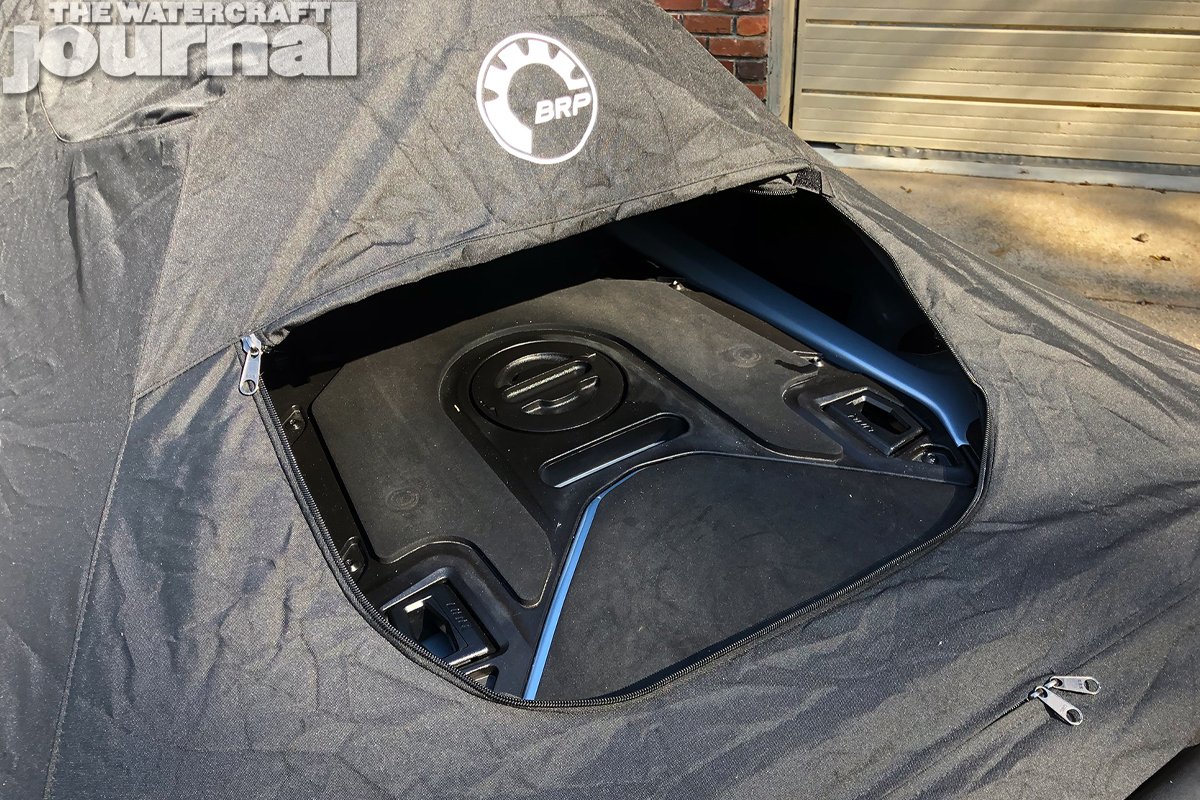
Were that not enough, the factory Sea-Doo covers are made with a heavy-duty UV-resistant solution-dyed polyester canvas with higher wear areas reinforced with a doubled-up layer of canvas. Elastic bands keep the lip taut to the PWC with side hooks that attach to the bond rail to secure the cover while trailering. Lastly, the cover includes zippered openings allow access to mooring cleats (ideal for securing covered watercraft on the trailer), the glove box, the front storage bin (good for refueling), and even the rear LinQ perches to attach accessories on the rear deck with the cover in place.
I had already towed the GTI SE 170 – with the cover installed – from Tennessee to Louisiana for the annual MudBug PWC Rally back in June and knew full-well of the cover’s ability to keep the ski clean from road grime and dirt over the 11-hour drive. Yet, it was after fully detailing the Sea-Doo for a later video and covering it did I see how well it protected it from the elements. Only a day or two after pushing the covered PWC outside did the heavens open up and rain poured for several days straight. Once the clouds parted, I removed the cover and found the plastics still looked glossy black and panels debris-free (although the footwells had collected some water after the deluge).

It bears repeating that when it comes to PWC covers, you get what you pay for. The OEs spend a lot of time and money to get their covers to fit snuggly, to offer the best access and use, and most importantly, provide the best protection as possible; and Sea-Doo’s GTI/GTR/Wake 170 Trailering Cover has not let me down once. As a final tip, it does wrinkle up pretty badly when its been crammed into its carrying bag after a while, so let it sit out in the sun a while to relax (so it’s not as wrinkled as it is in my pictures here).

Winter Boat Show Modified Schedules And Cancellations

1

By now, the manufacturers have revealed what is in store for their 2021 watercraft lineup.  There is definitely a lot of excitement buzzing around and people are anxious to get out, check out the new models, and put their hands on the fresh paint.

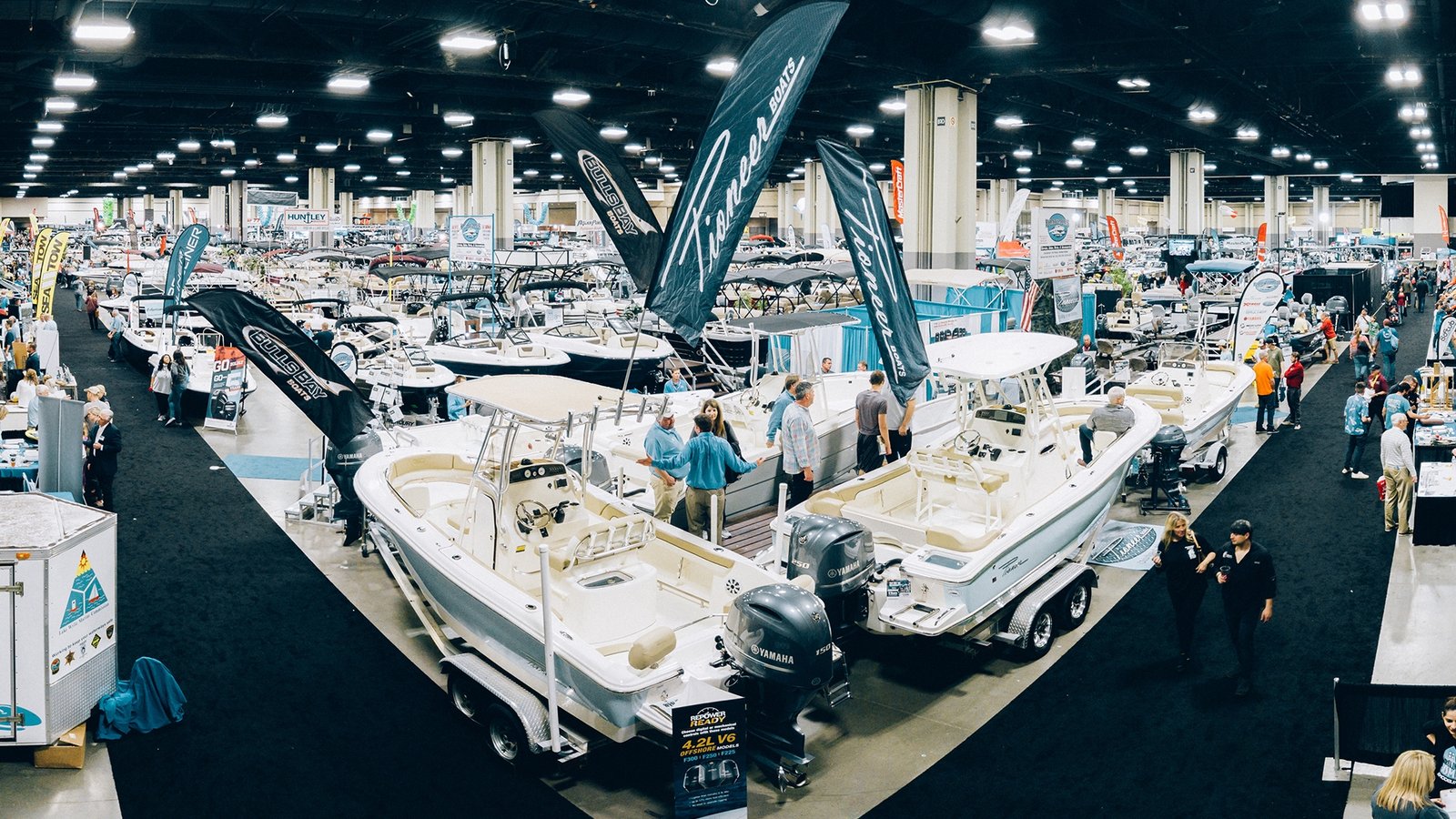
Well unfortunately not so fast says the pandemic.  The National Marine Manufacturers Association (NMMA) has just announced some changes and cancellations to the winter boat shows across the nation.

Check out the modified list below to see which shows are affected at this time as well as a full explanation from the NMMA.

The health and safety of everyone involved in producing, exhibiting, and attending our shows is of the utmost importance. Following a thorough market-by-market analysis regarding the feasibility of producing safe and successful NMMA winter boat and sport shows in 2021, we are making significant modifications to our show schedule in the first quarter of 2021.

The modified 2021 winter schedule is as follows:
 
Proceeding as scheduled:

 Postponed to a later date:

 Canceled for the winter of 2021 only:

These decisions are in the best interest of our consumers, staff, members, and industry and are the result of months-long conversations with exhibitors, health officials, venue operators, and other stakeholders on producing safe, successful, and high-quality consumer experiences. We understand the vital role boat shows play in showcasing new products and generating sales for our industry, and at this time, NMMA expects to resume its full show schedule starting in September 2021.

For the three shows currently proceeding as scheduled or postponed to the spring, plans will be guided by our ‘health and safety first’ principle and are subject to change. Our team will continue to closely monitor the situation in each market and work with federal, state, and local authorities on those events.
 
In a strategic change to NMMA’s boat and sport show roster that is unrelated to the modified 2021 winter show schedule, an agreement was finalized this week to transfer ownership of the Kansas City Boat & Sportshow, Chicagoland Fishing, Travel & Outdoor Expo, World Fishing & Outdoor Expo, and Saltwater Fishing Expo to Sportshows LLC. An update on the acquisition is being shared with those exhibitors, and an announcement from Sportshows LLC will be made in the coming days.
 
Rest assured, since the outset of the COVID-19 health crisis, we have worked closely with our Board of Directors to ensure the long-term financial viability of the association. NMMA has stable and diverse revenue streams and remains in a strong financial position. We stand ready to deliver a full range of services, including producing world-class boat shows, on behalf of our members and the broader recreational boating industry well into the future. We look forward to continuing to produce robust sales and marketing events as we navigate the global pandemic together and continue welcoming boaters to the lifestyle.

To that end, recognizing the association’s important role in reaching the consumer and extending the industry’s reach and voice, NMMA is evolving its boat shows to meet the demands of today’s consumer and tomorrow’s buyer. This winter, we will launch a new program that connects the power of NMMA’s boat shows across the country and puts into motion a strategic initiative that will integrate boat shows with the industry’s national Discover Boating campaign, providing a more seamless, meaningful consumer experience. Details will be announced in the coming weeks. In the meantime, to learn more about this opportunity, contact Alisdair Martin at [email protected].

Thank you for your understanding and ongoing support during these unprecedented times. If you have questions, please do not hesitate to contact our Senior Vice President of Boat and Sport Shows, Jennifer Thompson, at [email protected].

New Sealver Z6 Hevo Waveboat White Edition

0

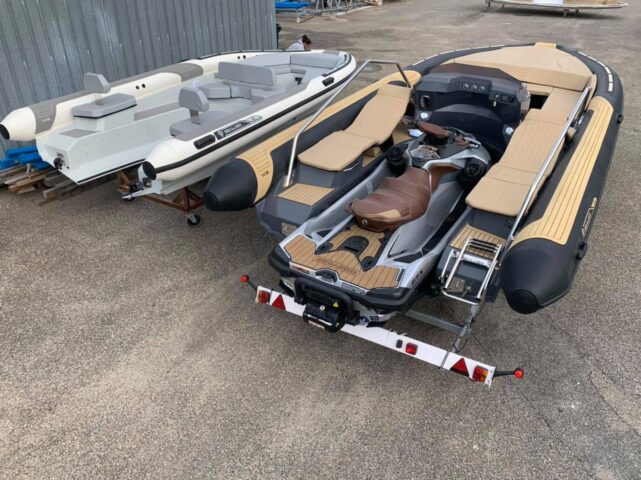
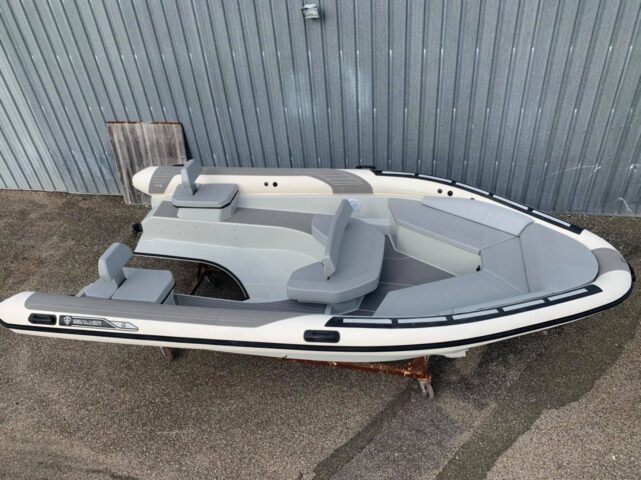
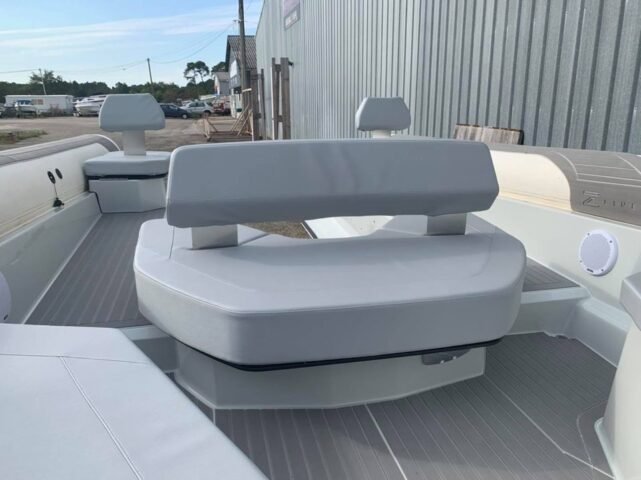
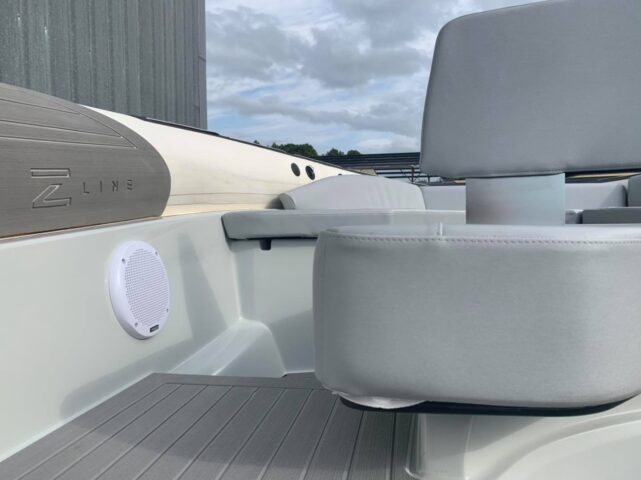
The Sealver Waveboat company expanded its Z Line with the Z6 white addition of the Hevo. Sealver introduced the new look through a recent Facebook post and it’s another stylish boat from them. The white boat has a very clean look, with contrasting gray seating and flooring. The boat has a generous amount of storage with under seat compartments and front storage.

It comes in at just under 19 feet and its semi-rigid Hypalon hull offers ease of maneuverability. The boat has the capacity for seven people, offering plenty of space for you and a group of friends. For added performance, the Z6 Hevo can be powered by a jet-ski with a 300HP engine. Ease your ski into the Sealver interlock system and off you go.

The boat is versatile and Sealver offers a choice between standard or full wake set up. The standard set up is enough to get you and some friends on the water with room to sit and also stash your bags. Options are available to make it a little more comfortable.

Add a Ti-Top for a little shade and add a table to set drinks and plates. An extra fuel tank is available as well. This will enable to go further and stay out longer. You may want to spring for the 12v inflator in order to keep the hull full and buoyant or to deflate for storage purposes.

The full wake set up comes standard with a table, Bimini top on the wakeboard tower, extra fuel tank, and the 12V inflator. The standard and the full wake offer a custom trailer as an option. The trailer will haul your ski and Sealver Z6 Waveboat.

See images of the Sealver Z6 Waveboat and watch a short clip of it in action on the website. It’s a nice rig for someone who wants the best of both worlds, without the maintenance or cost of a full-on boat.

Broward Motorsports Racing Your Performance Headquarters

0

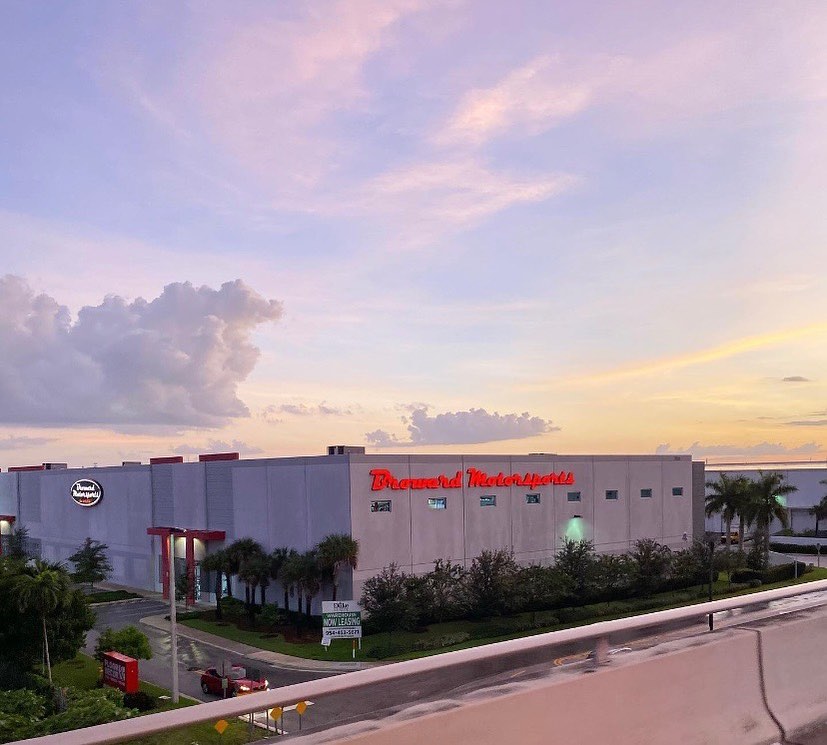
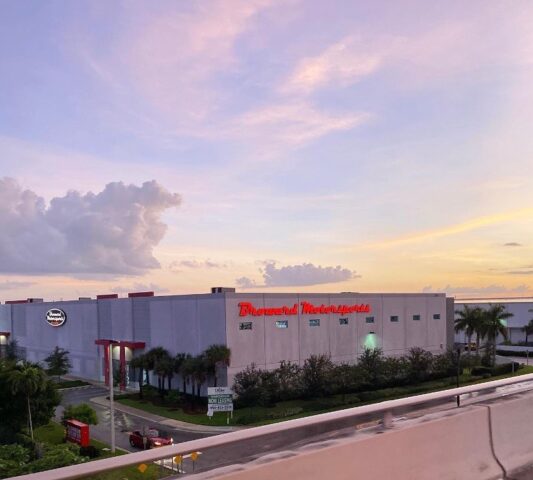
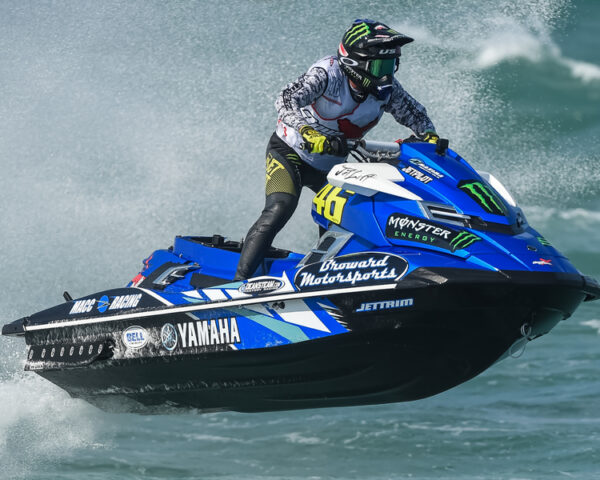
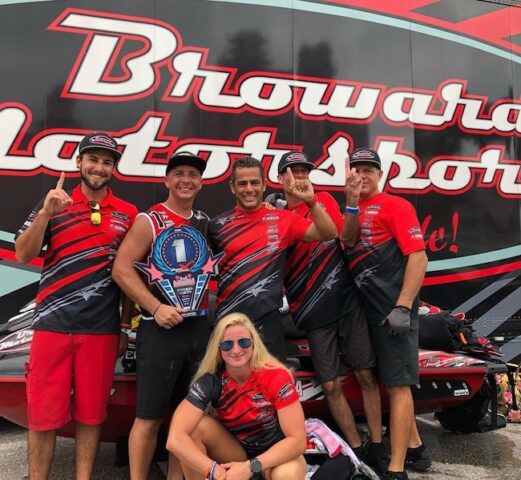
Broward Motorsports is the world’s largest factory race team. The team has won more Aqua X Championships than any other team. They have held that title for three consecutive years. Broward Motorsports has scored many World and National Championships for the IJSBA and ProWatercross.

This is one hell of a well-rounded team. When guys like Chris MacCluggage, Eric Francis, Jimmy Wilson, Sam Nehme, and many others, one can expect success. This is the cream of the crop! The Broward Motorsports website has a gallery of pictures of the team in action.

Tim Judge and Dean Charier are two of the best mechanics in the watercraft industry and they are the backbone of this team. Judge and Charier are responsible for keeping the PWC in top shape and that doesn’t stop with the racers; the customers’ machines receive quality maintenance and repairs as well.

Judge and Charrier want to ensure that everyone is happy with the performance of their watercraft. The Jet skis are taken out on the shops’ private lake and tested to make sure the craft meet Judge’s and Charrier’s expectations before returning them to their rightful owners.

Check out the website to find everything you need and maybe some things you don’t. Broward Motorsports created its website with you in mind and the intention of providing all customers with access to the same components that they use on their personal watercraft.

Broward Motorsports has five locations and the company is an authorized dealer for Yamaha, Sea-Doo, and Kawasaki ensuring that the staff are able to meet your needs. You can contact them here, [email protected], with any questions you may have and the crew will be happy to help.

IJSBA Announces 40th World Finals In 2021

0

Building from the then-budding USJSBA racing championships in 1980, the newly formed International Jet Sport Boating Association hit the ground running in 1981, culminating in the first-ever World Finals held in Lake Havasu City, Arizona. Believe it or not, that was forty years ago and 2021 will celebrate four decades of the IJSBA World Finals this next October 2nd-through-the-10th.

This news comes at the conclusion of the 39th annual Finals that saw depleted numbers of racer participation, attendees and vendors due to the COVID-19 pandemic, which most notably, heavily restricted international travel. IJSBA’s Scott Frazier wrote:

IJSBA is announcing the 40th World Finals. No asterisk, no question about it, we just wrapped up the the 39th consecutive World Finals and next year will be the real deal when it comes to the ruby anniversary in 2021. Mark your calendar now for October 2-10, 2021, at Crazy Horse Campground and Resort in beautiful Lake Havasu City, Arizona. IJSBA will start releasing regular information in just a couple of weeks after we wrap up all of the 2020 World Finals business. We look forward to seeing all of you for this very special celebration.