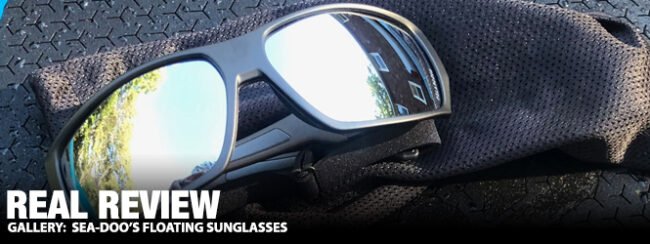
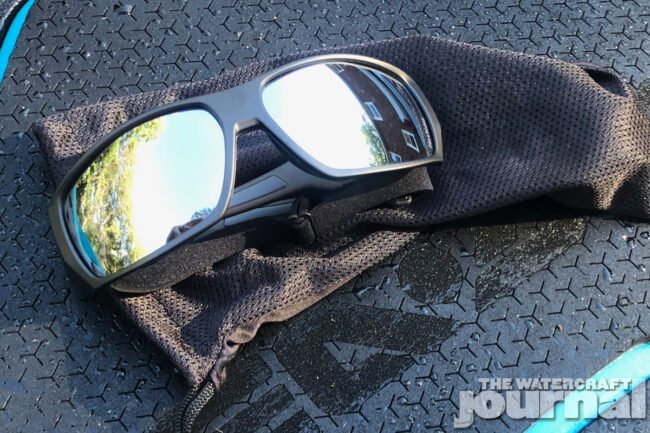
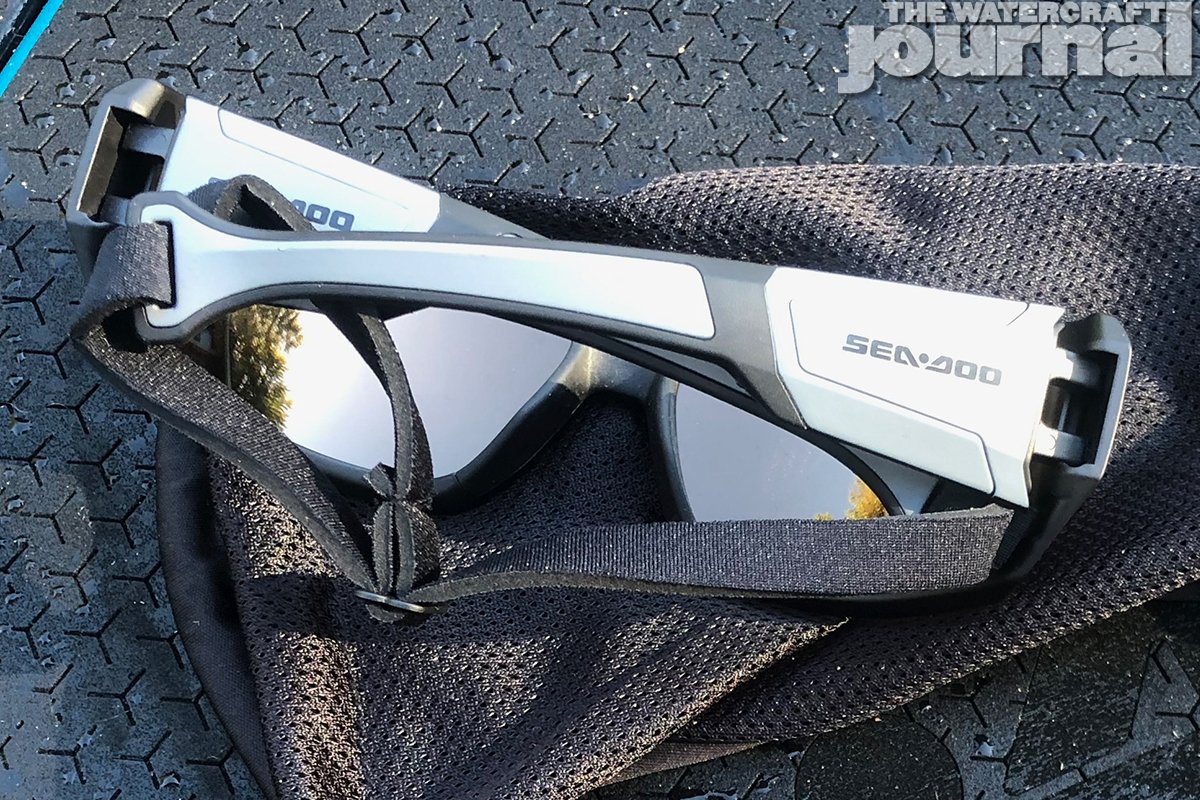
OK, this review is gonna be a little mean. No, not in that way, but I mean, mean to you, the reader. Why? Because the Sea-Doo Floating Sunglasses aren’t available yet. I say “yet” because these are expected to be made available on November 6th along with the entire 2020 riding gear collection on sea-doo.com and Sea-Doo dealers. So as much as you may want a pair of these (and trust me, you do), you can’t – well, at least, not yet. And that’s just mean, I mean.
So how did I get my hands on these, then? You ask. Well, shortly before departing from the 2020 Sea-Doo press introduction event in Austin, Texas last month, I was handed a pair of their brand-new Sea-Doo brand Floating Sunglasses. We weren’t even given a chance to try ’em out while we test rode the new 2020 GTIs and GTR 230’s for two days. It was kind of a tease, really.
Thankfully, that was a month ago and I’ve gotten plenty of time to try ’em out on the water since then. As many of The Watercraft Journal’s readers will note, I’m a pretty tough stickler on what makes a good pair of sunglasses for riding a PWC. First, flat frames are a no-go, as they can be easily whipped off of your face with a slight turn of your head. (Ask me how I know.)
Next, they gotta float but without requiring big ol’ slabs of buoyant Hydro-Turf being glued to their sides. Nobody wants that, and anyone who tells you different is lying. And finally, they’ve got to be polarized and UV resistant. Those last two are pretty much no-brainers, but you’d be surprised how much needs to be spelled out these days. Any added features are extra bonuses, but you gotta hit these four requirements.
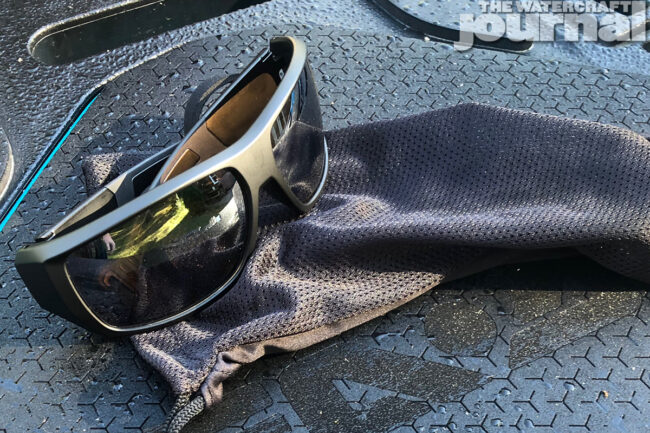
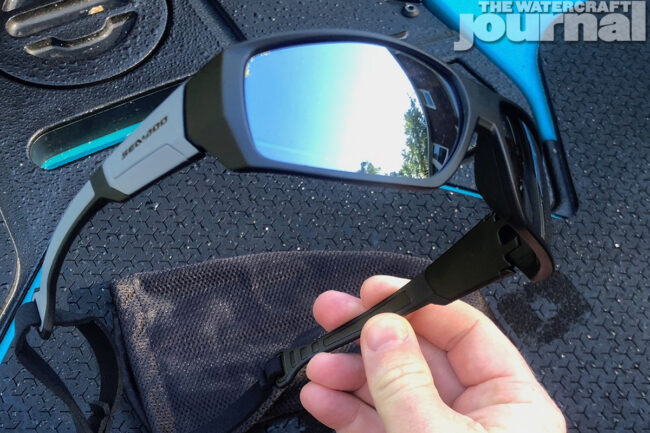
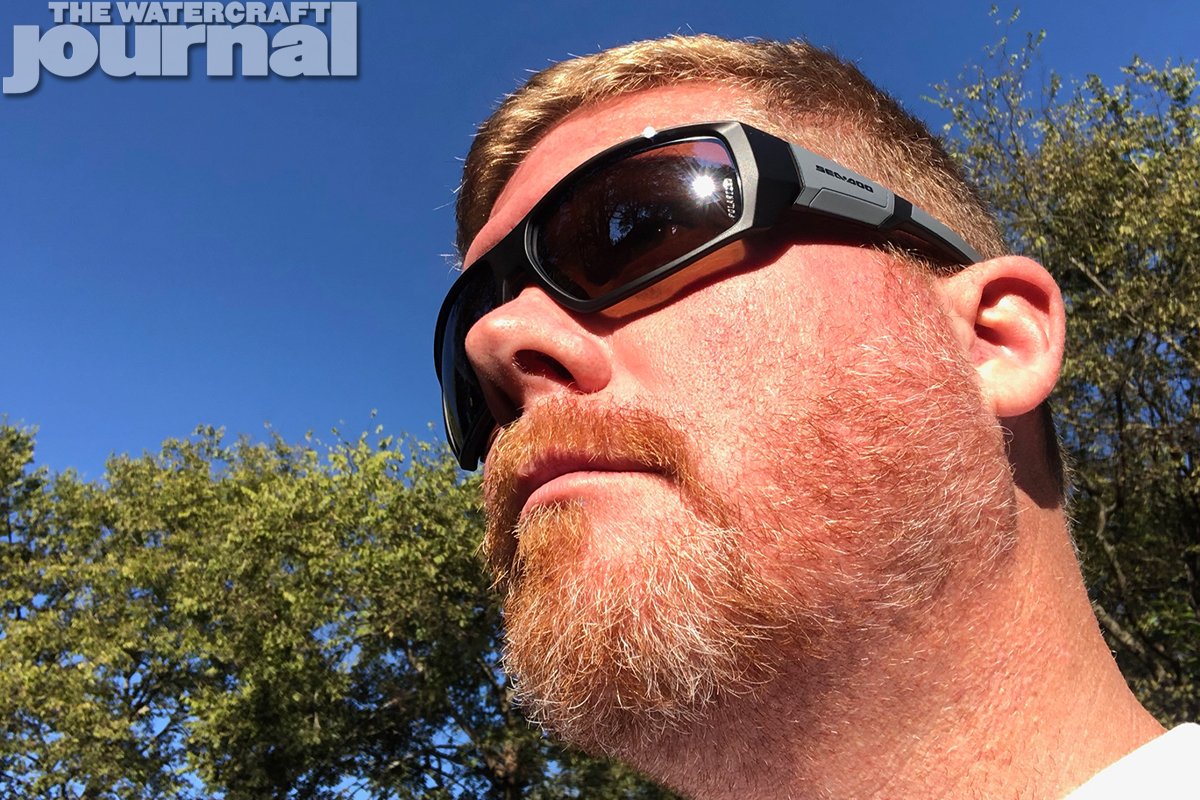
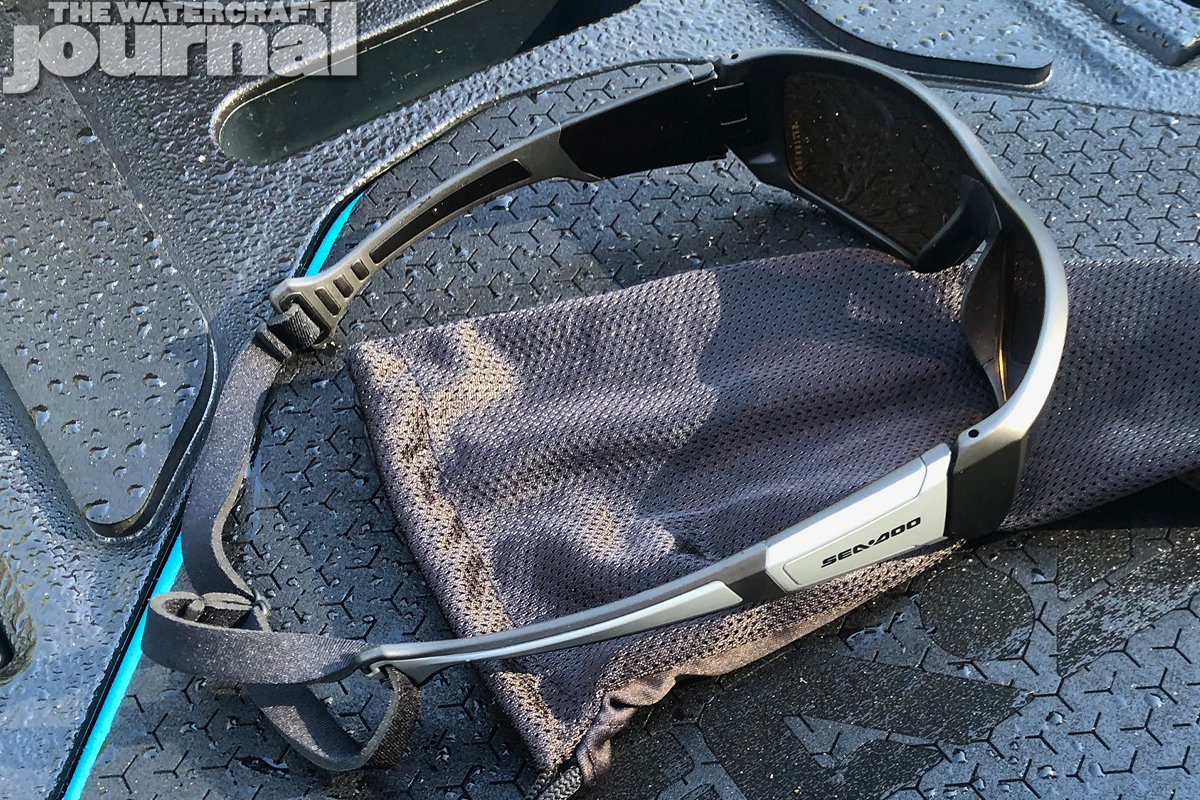
Smartly, Sea-Doo knows a thing or two about what personal watercraft enthusiasts like, and these floating sunglasses hit all the marks right in the dead center. These frames are perfectly contoured to match your face (without feeling claustrophobic) and rest lightly on your ears and bridge of your nose. The soft and rubberized perch for the nose runs all the way up to the brow, which is very nice too.
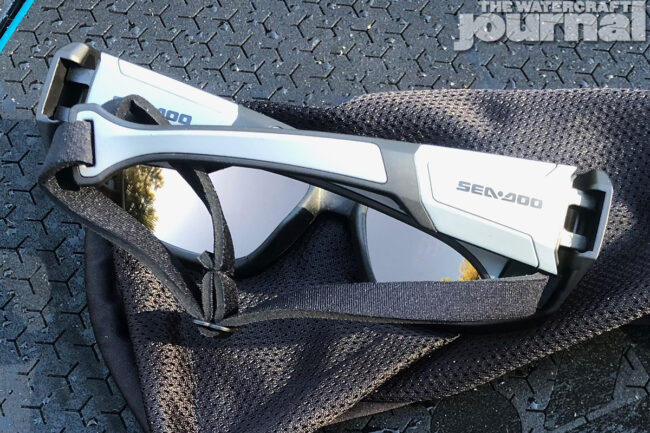
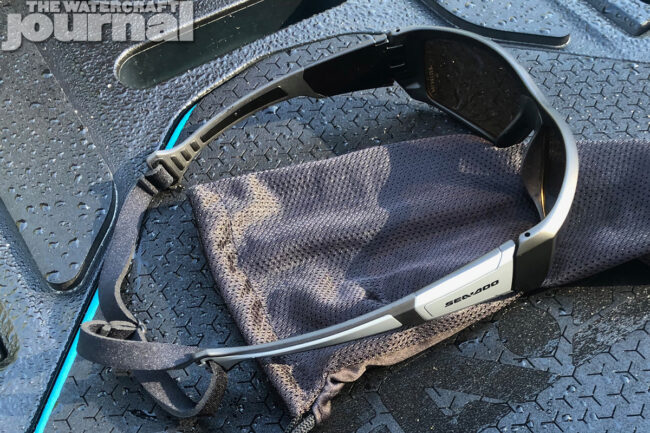
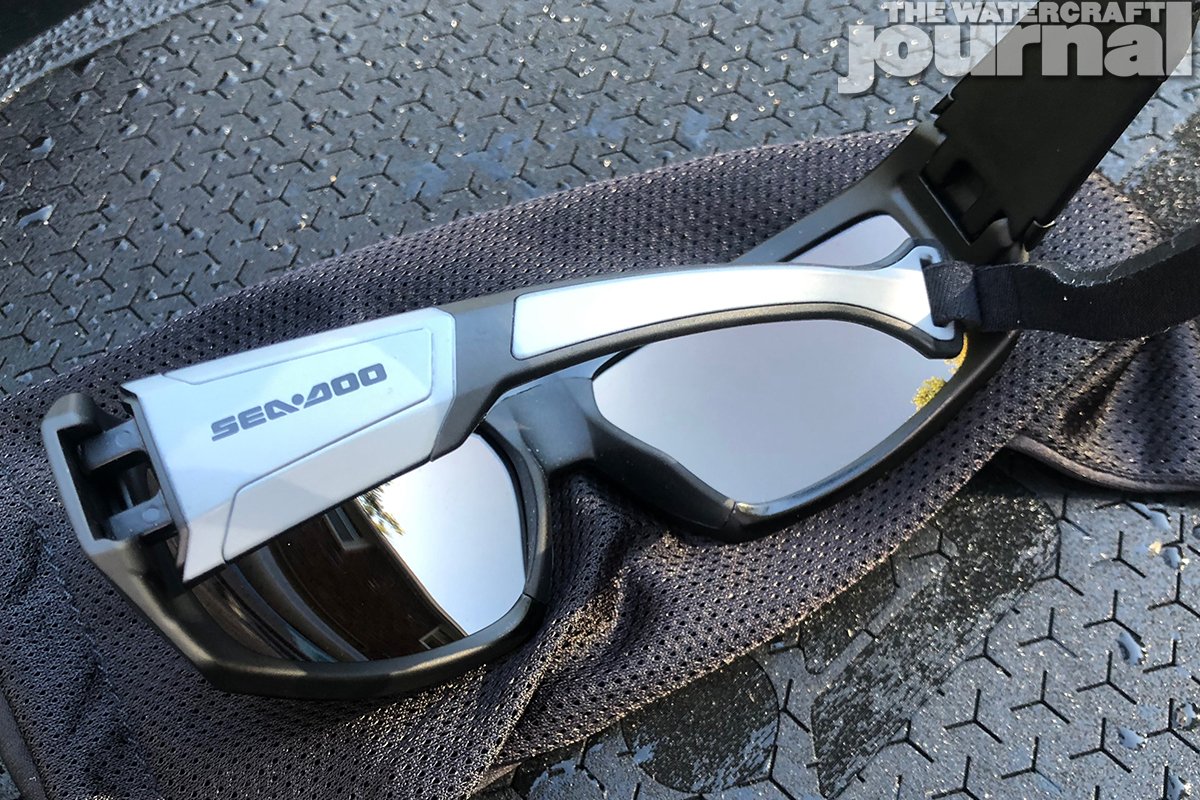
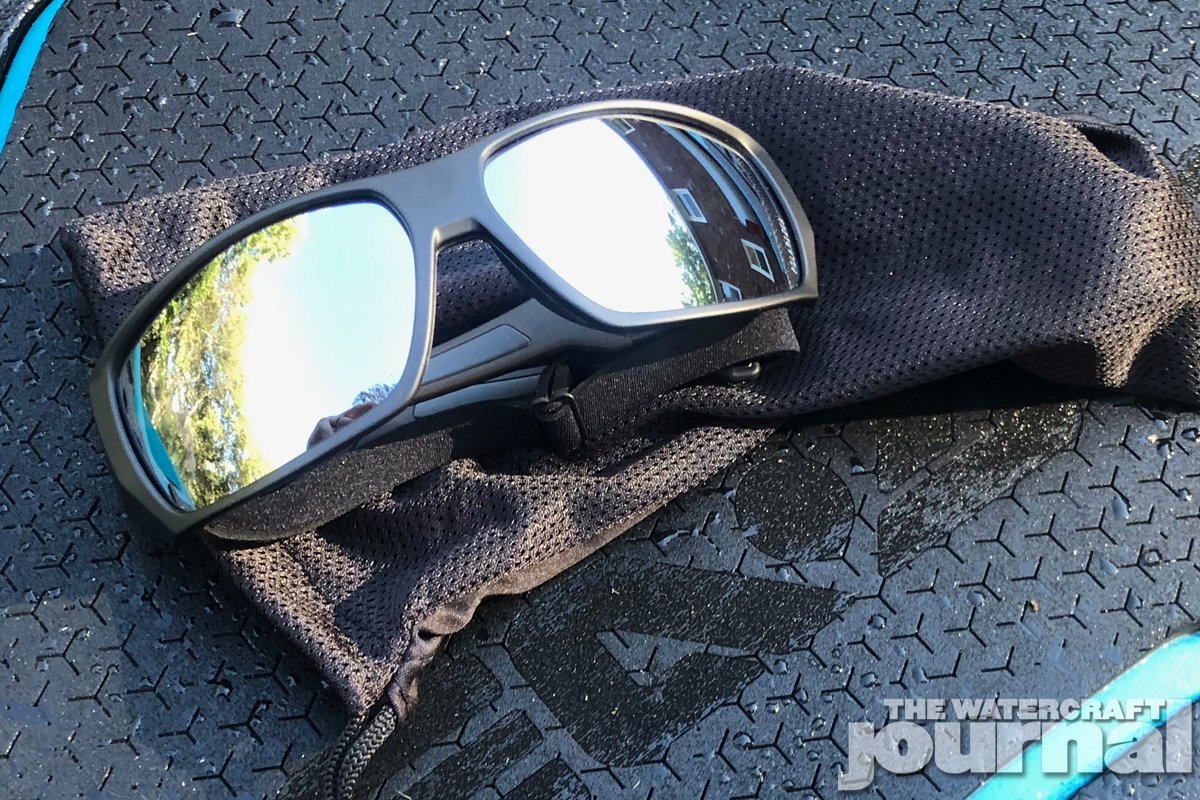
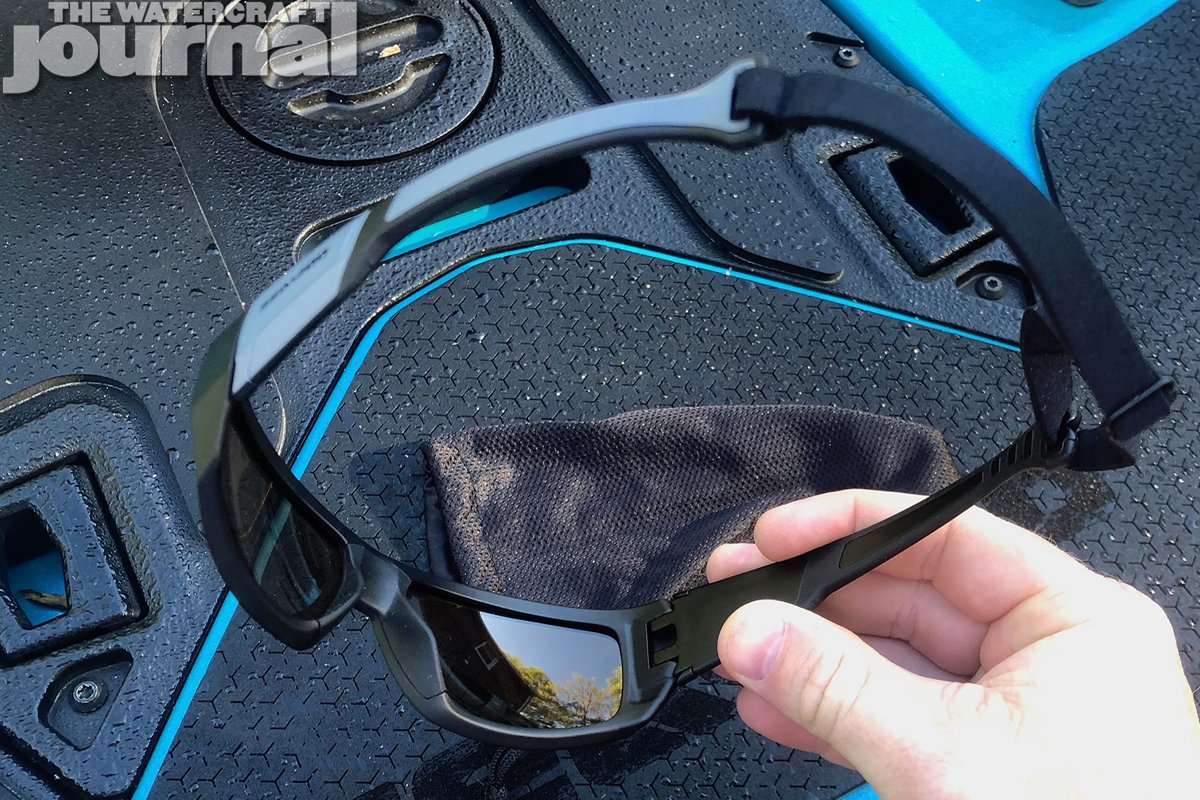
The reflective polarized lenses are big, wide and don’t have big ol’ blind spots either. Made with the same superior materials and build quality as our trusty Windrider Floating Sunglasses, the Sea-Doo shades are slightly less narrow, and are tethered together at the arms by an adjustable neoprene lanyard to ensure that they stay on your face, even while peering over your shoulder as you keep the throttle down.
Our pair came in black-and-gray with silver argent lenses, which suited my tastes just fine. We were told other colors may be soon-coming. They also come in a very nice, breathable mesh bag. Since these have yet to be released to the public, there’s no listed price to give you or even an official part number. So really, all I can give you is my very happy recommendation and a strong suggestion to keep your eyes peeled for their release on November 6th along with the rest of the 2020 riding gear collection.
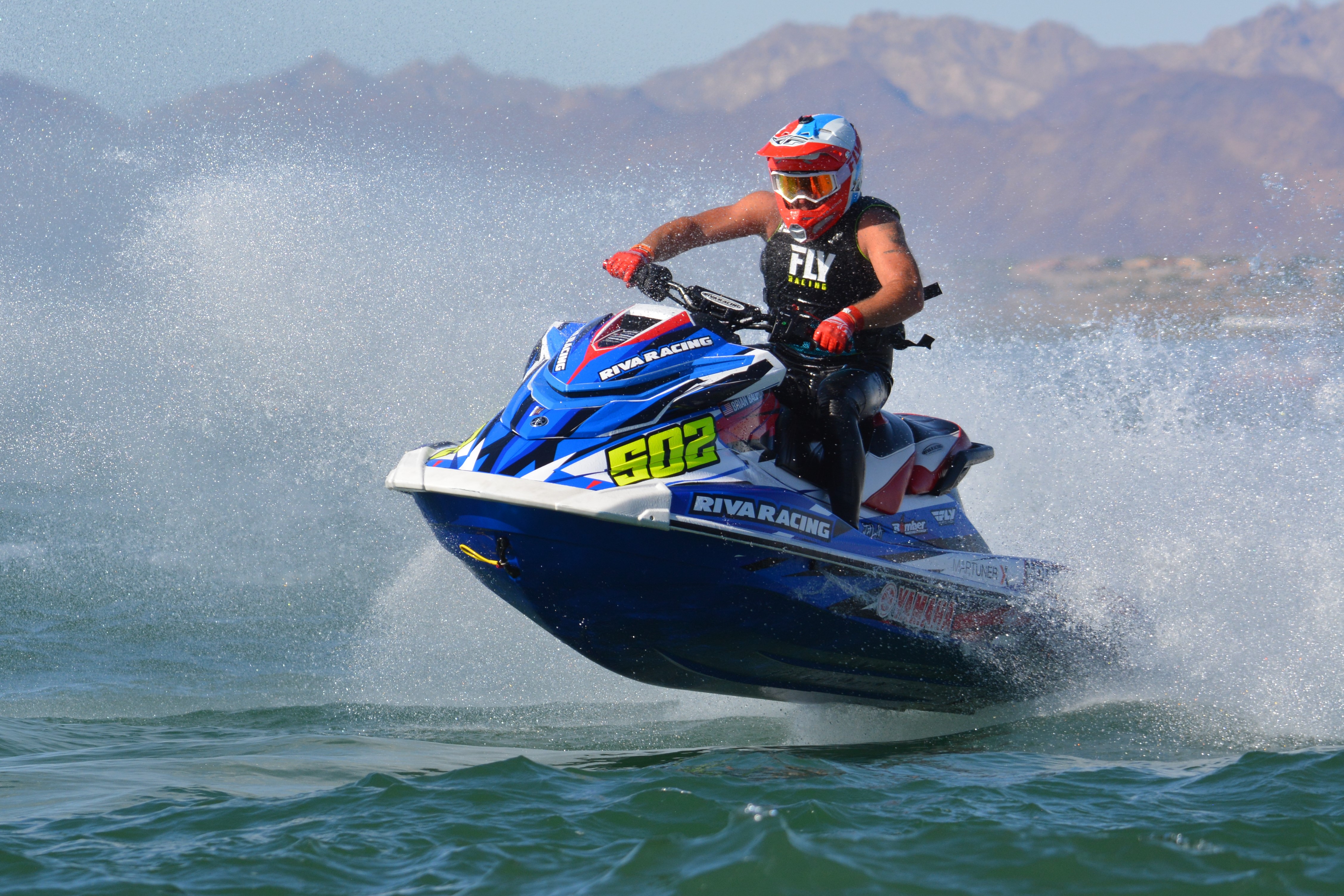
It was a sight to behold. The entire lineup of Pro Runabout Stock class was filled with Yamaha WaveRunners. No, that’s not hyperbole. Every. Single. Watercraft. That’s a heck of a thing to see at the IJSBA World Finals, and no one was happier to see it than the brass at Yamaha Motor Corp.
One brand being preferred by all competitors is staggering, but given the SVHO’s track record, understandable.
Now, with the lake still churning from the weekend’s World Finals’ racing, the tally of World Championships for Yamaha is substantive: Pro Runabout Stock; Pro Runabout Limited; Pro-Am Women’s Runabout; and Pro Runabout Limited 1100.
Here’s Yamaha’s official press release: Yamaha, the premier brand on the water, dominated the premier pro classes at the 2019 IJSBA World Finals held in Lake Havasu City, Arizona; winning World Championships in the Pro Runabout Stock, Pro Runabout Limited, Pro-Am Womens Runabout and Pro Runabout Limited 1100 classes.
In the Pro Runabout Stock class, also known as the Manufacturers’ Cup because the racing machines in the class are the best representation of out-of-the box performance, Yamaha GP1800R rider Brian Baldwin won the world title followed by Yamaha GP1800R racer Abdullah Alfadhel and FX SVHO rider Eric Francis, who finished second and third respectively.
In Pro Runabout Limited racing action, Yamaha FX SVHO racer Troy Snyder won the world championship followed by fellow FX SVHO racer Eric Francis, who rounded out the podium with a gutsy performance and Moto 2 win.
In Pro-Am Women’s Runabout racing, Thailand’s Oraphan Teerapatpanich won the world title aboard her Yamaha GP1800R followed closely by Yamaha FX SVHO racer Sophie Francis who finished third overall with an exciting 3-2 performance.
In the Pro Runabout Limited 1100 class, Yamaha EXR rider BJ Ang from the Philippines won the world title, dominating the field of Sea-Doo Sparks.
“I couldn’t be more excited for our world champions and the awesome showing by the Yamaha GP1800R, FX SVHO, and EXR that have dominated pro racing all year long, and especially this weekend at the World Finals,” said Yamaha WaveRunner Racing Manager Bryce Parker.
“Yamaha is the premier performance brand on the water and we continue to prove ourselves on the closed course and in ocean endurance racing. And what’s exciting for Yamaha as a manufacturer is that our wins are translating to big sales with the Yamaha GP1800R being the best-selling performance model and the second best-selling model in the industry for the past several years.”
Congratulations to all the Yamaha WaveRunner racers who competed at the IJSBA World Finals this year, and special thanks to Broward Motorsports, RIVA Racing, Dean’s Team, Kommander Industries, and to the families and friends who support personal watercraft racing.
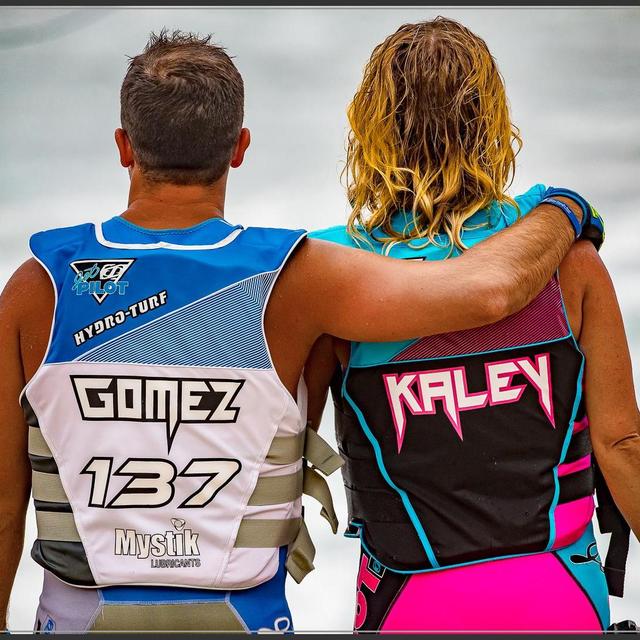
It can be hard trying to figure out where you want to plant your roots. Most of the time, the decision comes down to our careers or how close our family will be to us. While many of you know that Lake Havasu is the mecca for all watercraft racing and Free Style PWC events, we are not able to pack up the family and move there. Luckily, Mark Gomez, a triple world title owner was able to talk with his fiancé and make the move to live in Lake Havasu permanently.
Mark Gomez and Kaley McNay make the perfect couple, their love for the water is what brought them together and allows them to experience new adventures. While riding a freestyle watercraft at the highest level along with many other events is a dream job for many of us, nothing was given to Gomez. He had to work hard on his skills before sponsoring companies would even talk to him. With Gomez’s hard work and dedication, he has been able to secure some of the industry leading companies as sponsors. Hydro-Turf is one of the industry leaders in PWC traction mats and they have been able to support Gomez is his very successful career.
Lake Havasu is the perfect place to call home when you are a professional freestyle rider and your soon-to-be wife loves to wake board and wake surf. While Gomez’s job requires him to travel a lot, being able to have his home where the 2019 World Finals will be held will allow him to focus on winning another world title this year.
For those of you that are sports fans, whenever you go to a game, you have to have on your game day attire. Whether it is your favorite players jersey, hat or even both, you can’t leave home without it. Well, when you go to PWC Races, you have to make sure you are decked out in the latest gear. If you are in need of gear or looking to update your wardrobe, RIVA Racing has some new gear to keep you looking good!
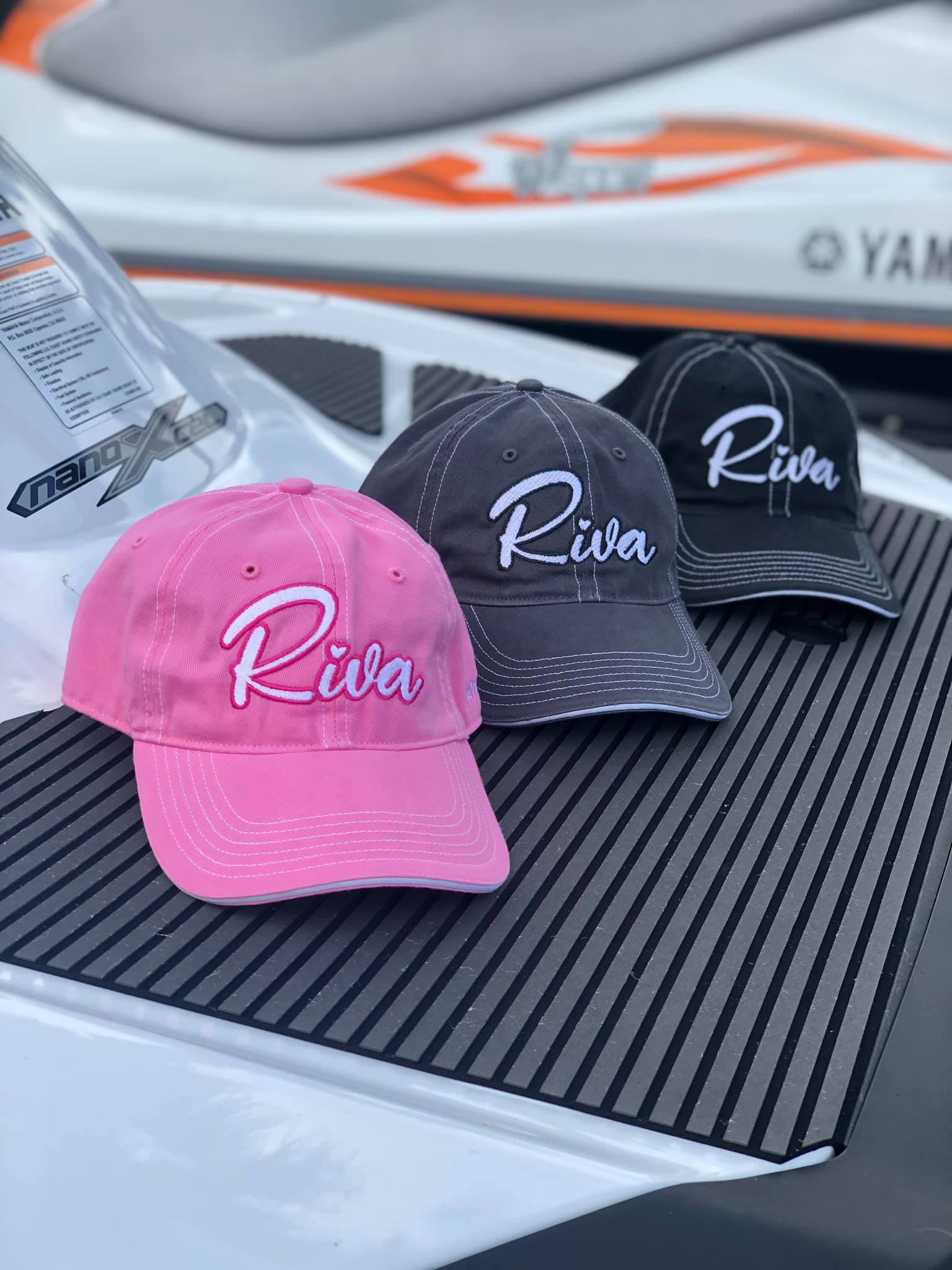
RIVA Racing just came out with some new chino hats designed just for the females! From pink, black and charcoal there is something for everyone. One of the key features about these hats are that they have adjustable back straps allowing you to get a perfect fit. They are embroidered on the front and on the left side of the hat. Along with hats, RIVA offers shirts, rash guards and more for men and women.
Showing up to the races is a great way to show case a great hat made by a great company. It’ll block the sun from your face and you’ll fit right in with the crowd. Offered at a competitive price, check out RIVA Racing today and order yourself a new hat!
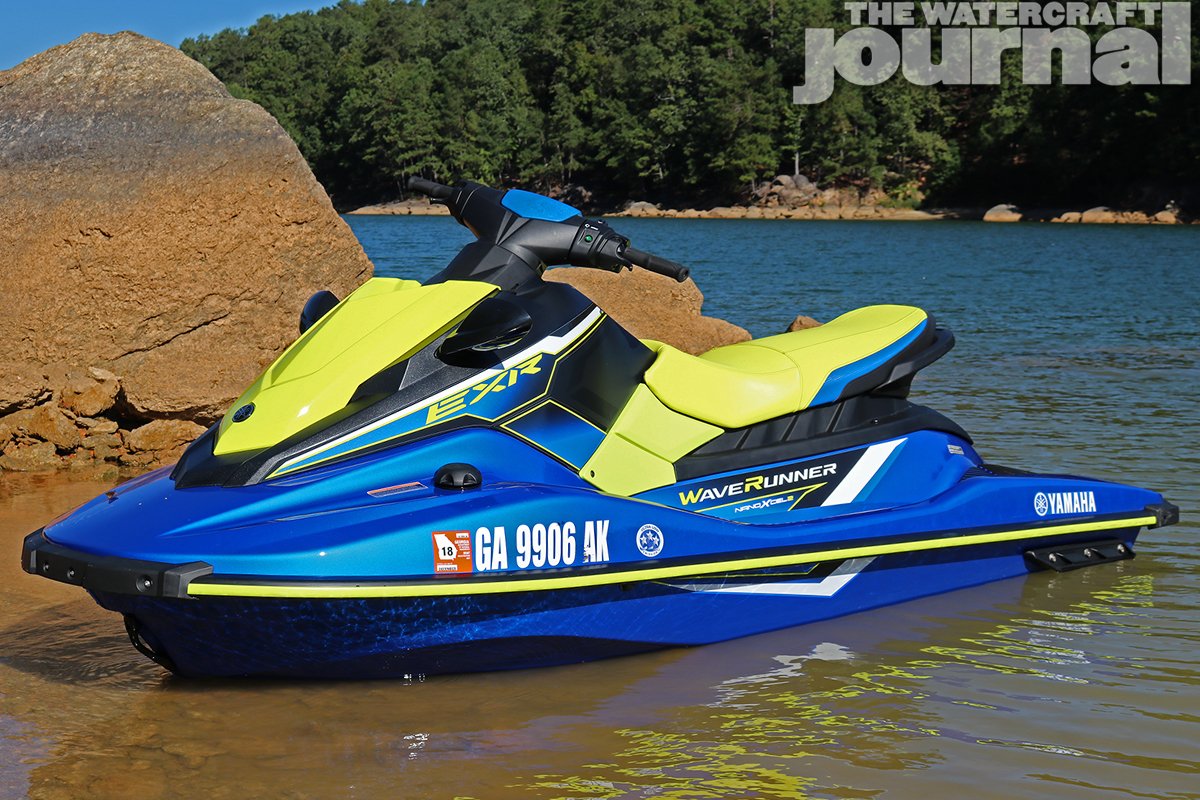
Our good friends over at Broward Motorsports have just come out with a Stage 1 Performance Kit for the new Yamaha WaveRunner EX and EXR models. The time is now to unlock the true potential your Yamaha EX and EXR has!
The main function about this stage 1 kit is that it unlocks your factory ECU and reprograms it. By reprogramming the ECU, it unlocks a whole new PWC for you. Some of the key features about the stage 1 kit is that it increases your overall horsepower by using a new maps that enhances your timing and fuel consumption, provides a quicker throttle response while riding, is overall more efficient when riding at higher RPM’s, increases your rev limiter higher, provides more torque throughout the powerband and when you add all of these key features up, it equals a more efficient PWC that can reach a higher top speed.
An important thing to note when applying a stage 1 kit, is that you need to use 93 octane fuel to satisfy your motor without running lean. An additional note is that you will need to send in your stock ECU to Broward Motorsports to get reflashed. By clicking on this link, it will provide you with all of the details to start your order.
IF you have been shopping around for a Stage 1 Kit for you Yamaha EX and EXR, there are multiple reasons to purchase from BMS. One, they offer free shipping on all orders over $125. The cost of the Stage 1 Kit is $599.00. Another reason is that by using “BMS10” when checking out, you will receive 10% off your entire order! After these discounts if you are still trying to crunch the numbers to purchase this kit, BMS has partnered with Affirm to offering a financing option as low as $56 a month! Broward Motorsports want to provide the best option for their customers, if you have any questions or concerns, feel free to reach out to them and they will be happy to talk with you!
Whether you are still riding your watercraft, enjoying some last-minute warm weather or getting ready for the season to end, it’s always important to take some time after each ride to keep your watercraft in good shape by performing some necessary maintenance.
Earlier this year we did a quick recap on an original article from personalwatercraft.com which gives some good tips on post-ride maintenance. For those of you still enjoying the season, here is the list of items we told you about in the last article.
For those who are done riding for the year, these maintenance tips are still good to follow when storing your watercraft. You can always check out our list of how-to articles for other great in-season and out-of-season maintenance tips.
First and foremost, flush and rinse your ski especially after those saltwater rides. You want to get all of that contamination out of your exhaust or engine. Flushing should take place after every ride no matter what type of water you ride in.
Rinsing off your watercraft is not mandatory after every ride unless it was playtime in the brine. You should however give it a good wash after every few rides even when riding in freshwater to keep it free of grime or water spots.
Don’t forget your engine compartment either since it is not completely watertight. Over time you will learn how much water is actually entering your particular watercraft’s compartments but it is generally a good idea to give it a light rinsing and possibly a light spray of anti-corrosion lubricant on metal surfaces especially if you notice corrosion spots developing. Just avoid using a pressure washer inside the engine compartment.
Also keeping your seat and drain plugs open will help dry out all of the leftover moisture. If you burn through your full tank of fuel during each ride and your next ride is just around the corner, don’t worry about fuel stabilizer however if your fuel will be sitting for some time then it is a good idea to keep it fresh with stabilizer.
Checking your oil level before or after each ride is also a good idea and changing the oil when it is due will keep your watercraft running longer. For more details on these and many other tips, be sure to check out the links above.
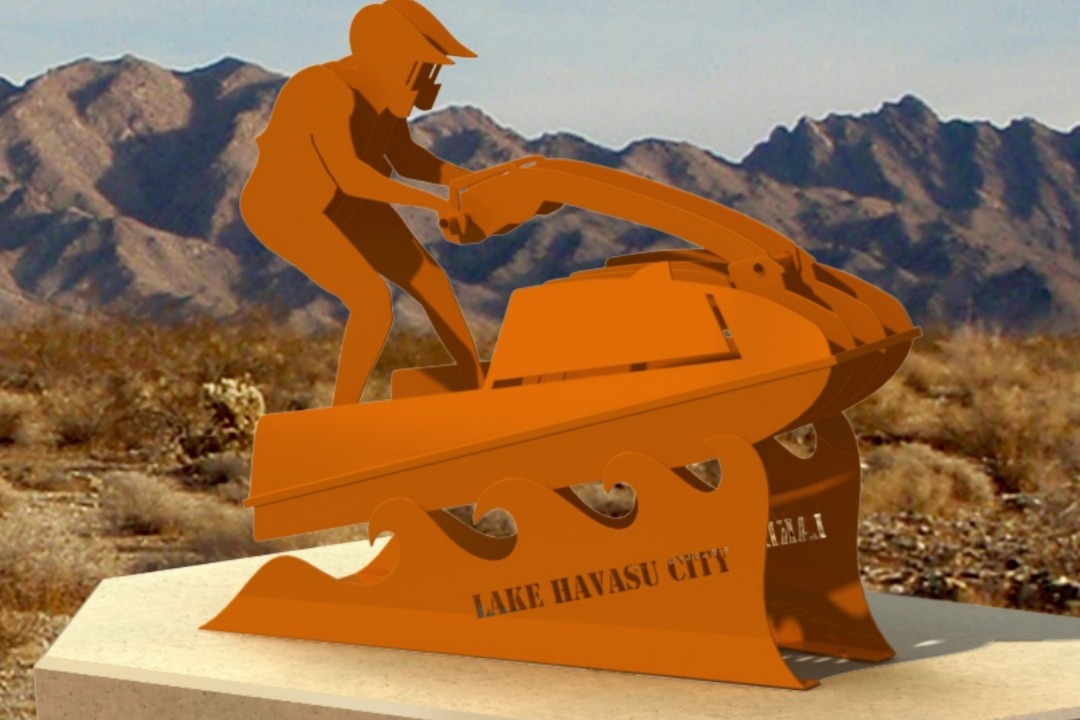
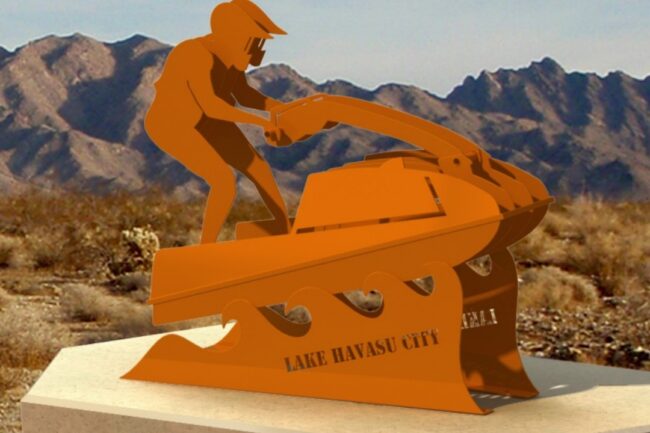
As the World Finals get underway at Lake Havasu this week, some members of the community have set up a GoFundMe page to raise money for a PWC monument. The monument is set to symbolize the history of personal watercraft racing and the positive impact at Lake Havasu.
According to the page, the city officials are onboard with the monument however the donations will add some desired features and to ensure that the monument is built and installed properly.
Donors will be rewarded for their generosity per level tier of donation made. You can read the full gofundme monument description below.
We are raising funds to build a PWC monument in Lake Havasu. This monument will symbolize the love we all have for the sport. Our goal is to educate people that do not realize the deep history this sport has positively impacted Lake Havasu.
The city officials are supporting this monument but we need your support to build it the way we want it. Large steel structures, bolted together will create a 550 standup with a rider (dimension will be a little larger than life). We also want to add a scoring tour with a brief history of the sport in Lake Havasu and the 30+ years the World Championship has been in this town.
We will be offering up different levels of donations tiers:
Gold level: $2000 receives a personalized “brick” around the monument with a thank you and a quote (with approval). Also included is an official letter framed for your generosity paired with a “Gold Level size” 3D replication of the monument as a thank you.
Platinum level: $1000 receives an official letter framed paired with a 3D replication of the monument.
Bronze level: 1‐$999 will receive a thank you email, attached with a file for you to print and hang up to show your efforts of support. All of our supporters are important to us and the info about the monument will be on www.golakehavasu.com on this page we will list all names that have donated.
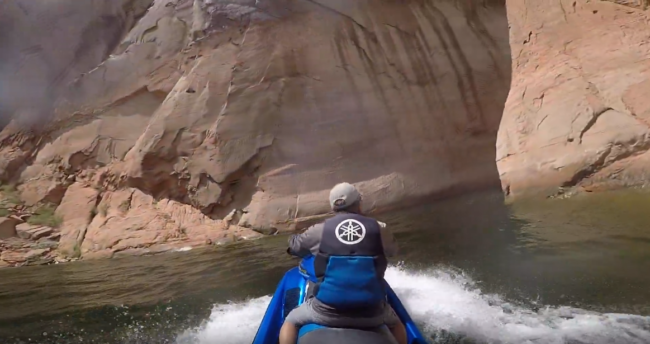
Many people know that there are opportunities for recreation or organized rides through the Lake Powell and surrounding canyon areas in southern Utah and into Arizona. One such example is the WCWCC annual ride.
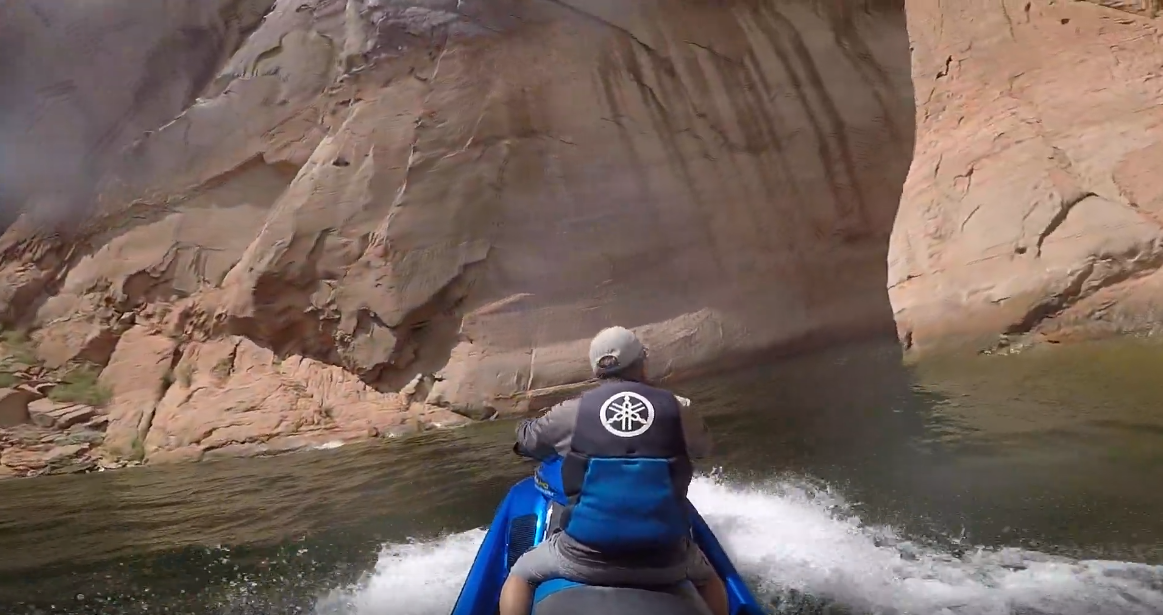
For those who have never ventured here or aren’t sure what the ride will be like, there are some YouTube channels which are posting POV videos of the types of experiences you can have when riding through some of these canyons.
One of these channels posted many recent videos on their channel. As seen, you can get a variety of riding conditions from narrow and twisty canyons to open river and lake conditions.
The exposure gives a good view point of what can be expected and just how narrow or shallow some areas can get for the inexperienced destination-seeker. Some warning though, a few of these videos have some explicit language seemingly when the riders encounter a few unknowns.
This ride location is a prime example of one of the nation’s most unique areas and the views alone are staggering. Add in the demanding conditions with narrow walls and crevices, and you have ride experience like no other.
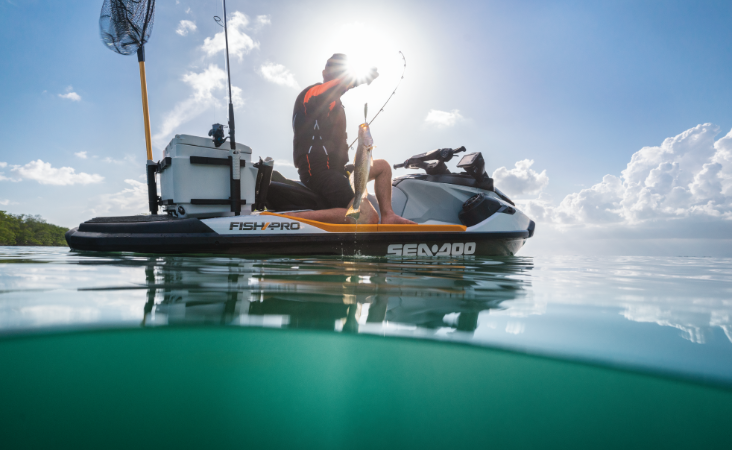
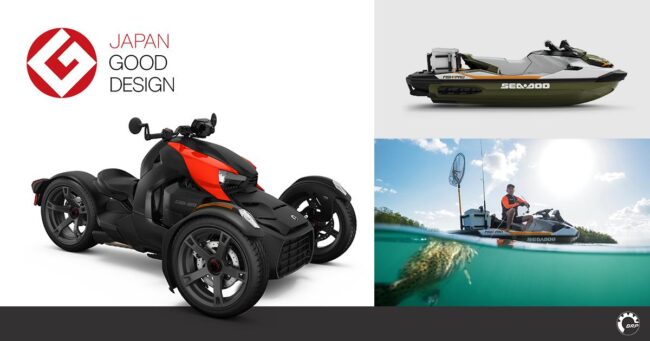
BRP continues to win award after award this year. 2019 has not been wrapped up yet without BRP scooping up more design awards, this time through the Good Design Japan ceremony.
Once again, the Fish Pro is being praised for its excellent design that offers both adventure and utility. The new Can-Am Ryker road powersport vehicle has also been awarded for design and innovation, in part due to its high level of user customization.
See the whole press release below for more information.
Valcourt, Quebec, October 3, 2019 – Once again, the hard work and passion for innovation of BRP’s teams have been recognized at the Good Design Japan awards. BRP received two prizes in the Automotive and Transport category for outstanding design and innovation. The winning models are:
Sea-Doo FISH PRO
Can-Am Ryker
“We are very proud of what we have accomplished over the years and being recognized by Good Design Japan is extremely rewarding for all of us at BRP. This year, we are celebrating the 50th anniversary of design at BRP,’’ said Denys Lapointe, Senior Vice President, Design, Innovation and Creative Services at BRP.
Comments from the Good Design Awards Jury
Sea-Doo FISH PRO
“The Sea-Doo FISH PRO is a combination of adventure and utility. It is a personal watercraft with the utility of being a solo fishing water scooter. It combines excitement and versatility in one package. The Fish Pro is full of features designed carefully for fishing. It comes with a fish finder and hook-ups for fish rod holders. The two storage units, one for the fish catch and another for personal belongings including a water proof compartment, adds to the functionality in addition to the possibility of a third storage unit being added. The side footrest design and attention to stability make it possible for the rider to assume any position while fishing. It is true to its function and delivers unique value.”
Can-Am Ryker
“Smaller than the conventional products of this brand, its handles and steps can be adjusted without tools, so even shorter people can handle it. While giving a powerful feeling, the frame with an edge gives a sense of agile movement. Part of the body panel can be easily replaced, and attention was also paid to the high level of customizability that allows you to create your own car.”
Potential for another record year in terms of awards for BRP Last year marked a record year with 15 design awards, and in 2019 BRP has already received three Good Design Australia awards and seven Red Dot awards.
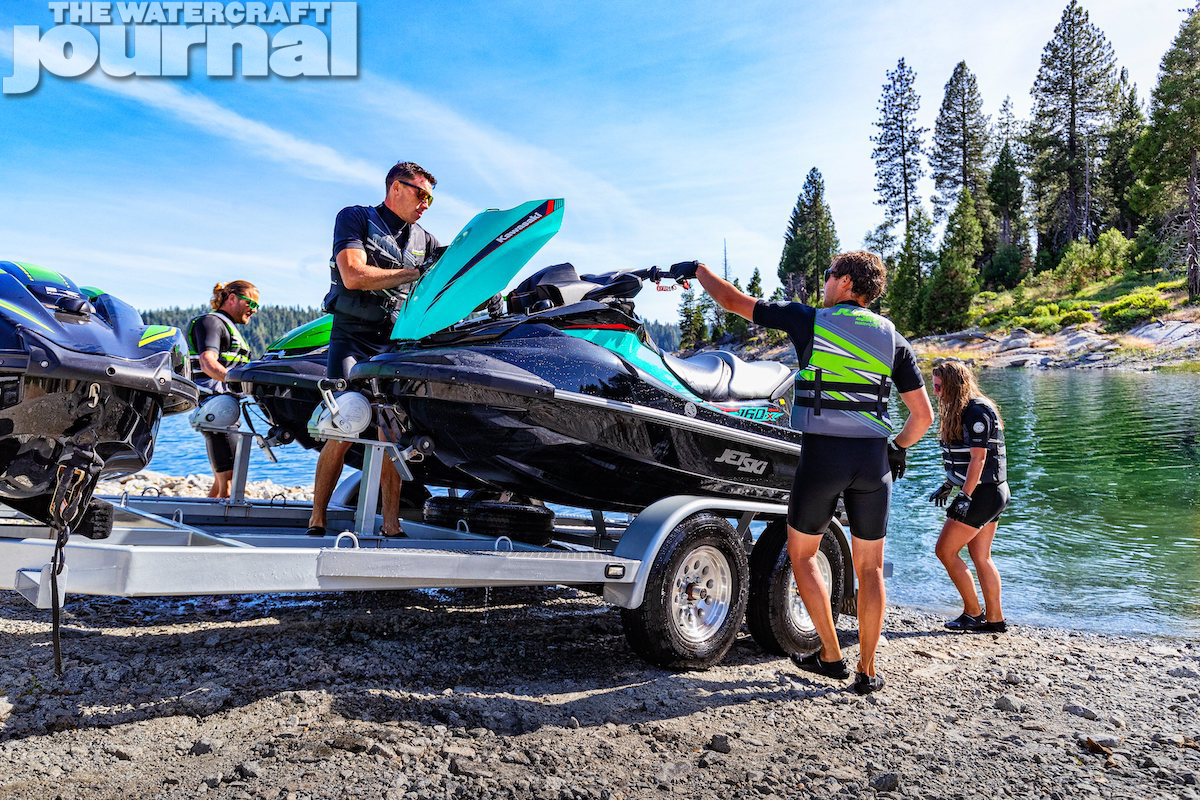
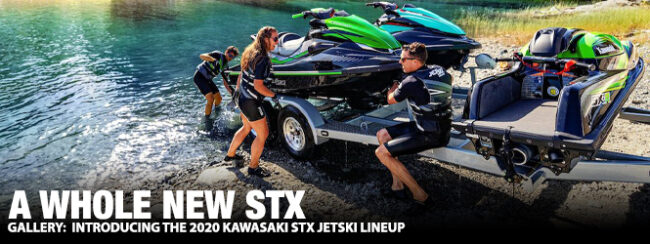
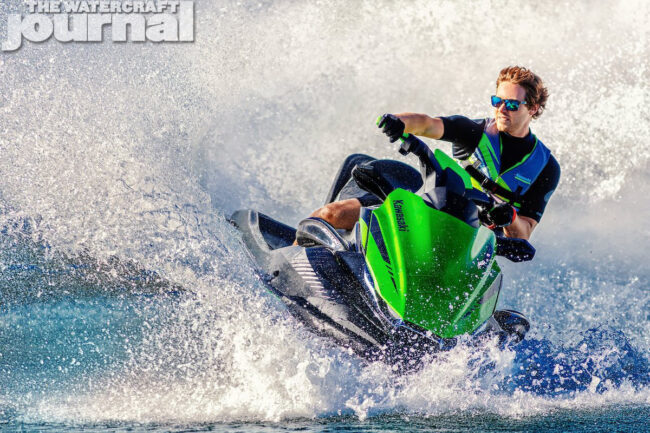
This is a day that we are more than happy to help ourselves to a heaping serving of crow. Initially, spy photography of the new STX-160 that was leaked to The Watercraft Journal didn’t give us much to get all that excited about. Sure, ergonomics had improved as well as the possibility of Kawasaki’s Jetsounds audio system on the smaller runabout, but apart from that and a few other speculative features, we just weren’t all that jazzed.
Beginning from the ground up, the new STX-160 platform is completely redesigned. No, it’s far more than we had predicted and we’re happy to announce that! The reshaped hull is made from lightweight gel-coat finished, fiber-reinforced plastic (FRP) that features “an integrated floating cell structure.” Sporty yet intuitive, the new hull strikes a balance of old STX and Ultra.
Integrated into the shape is Kawasaki’s Triple Splash Deflector designed to minimize splashing, with aggressive strakes running the near entire length of the craft and sharp-angled chines to improve straight-line stability. The new deck includes a newly-expanded rear platform perfect for re-boarding and carry larger items (like wakeboards or rafts) with ease.
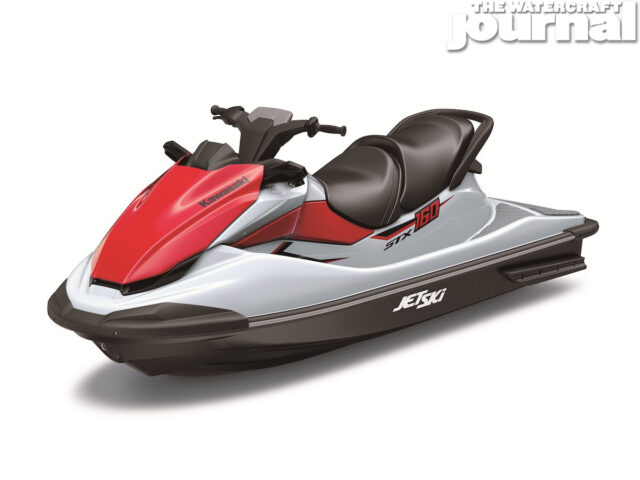
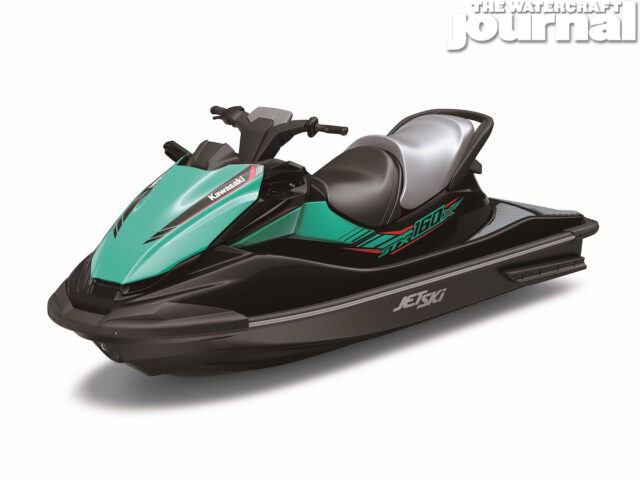
Ergonomically, riders enjoy a taller, more natural riding position with greater room at the knees thanks to a more pinched saddle. Seat designs vary per their respective trim levels: STX-160 has a single-tone, simple shape; the STX-160X is a sportier, black-and-silver bench with lumbar support; and the STX-160LX features a high-backed, heat-resistant stadium-style seat – all of which feature Kawasaki’s new hinged “Slide-and-Lift” rear seat hiding 4.4-gallons of storage.
Speaking of storage, the newly expanded bow stowage grows to 30.1 gallons, as well as a newly redesigned glove box includes a small waterproof compartment perfect for storing smartphones, while two cup holders have been molded into the upper deck, just forward of the steering neck, similar to the previous generation Yamaha FX WaveRunners.
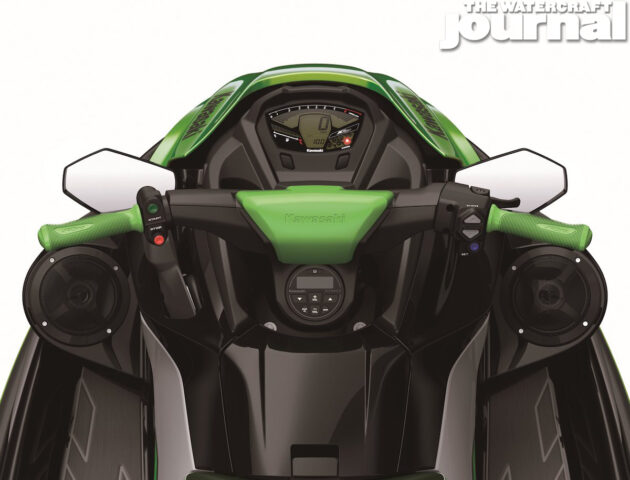
All of the steering necks and handlebars have been redesigned with sleeker, more narrow housings, with the X and LX models featuring new pistol-style hand grips and re-angled bars that taper outward, making for a more natural riding position. New wider-set rear view mirrors provide the rider a larger field of view.
All STX models debut a new large LCD dashboard that is comprised of a speedometer with a bar graph-type tachometer; fuel and instantaneous fuel consumption is clearly visible, as are the hour meter, outboard water temperature and external temperature, maximum speed history, and economic riding indicator – all very welcome additions for 2020.
Kawasaki sought to make every inch of the new STX platform usable space, and in doing so allowed for the new runabout series to swell its fuel capacity from 16.4 gallons to a whopping 20.6 gallons – giving it the largest capacity in its class. Combine that with the STX’s new use of Kawasaki’s electronic throttle actuation system, and you’ve got a full-day’s ride ahead of you.
Typically coined as “fly-by-wire,” Kawasaki’s ETV (Electronic Throttle Valve) removes the mechanical connection between the massive 60mm throttle body and throttle trigger, which reduces fatigue over long trips, and provides a clean, crisp throttle response every time. Best of all, it allows for precise cold-engine idling control, and better fuel mileage.
And prepare to be excited, because Cruise Control comes as standard equipment on all three models. After setting your desired speed, Up/Down toggles allow the rider to adjust their speed on a whim. Equally, all STX’s include Kawasaki’s one-touch 5 mph mode so you can avoid churning up a wake without touching the throttle.
Lastly, all JetSkis include Smart Learning Operation (SLO) Mode, which limits engine rpm to 5,800 rpm, reducing maximum speed 30 percent. Albeit a great option for less experienced riders, it’s also a great tool for maximizing your fuel efficiency. When the Economical Riding Indicator “ECO” symbol lights up you’ll know when you’re operating within the ideal perimeters for optimal fuel consumption efficiency.
The engine itself is a naturally-aspirated version of the superior 1,498cc DOHC, 4-cylinder 16-valve engine powering both the supercharged Ultra models and what was inspired by the Ninja motorcycles. Featuring chrome composite plated (KP) cylinders, they’re lightweight, durable, and quickly dissipate heat away from the combustion chamber.
The 1.5-liter includes an extraordinary semi-dry sump oiling system with proprietary oiling for the most sensitive bearings, and dual under-piston oiling jets. Equally, a unique crankcase venting system prevents oil from entering the intake tract if ever the ski is capsized. A double-walled, water-cooled exhaust manifold helps reduce noise, operating and engine compartment temperatures.
Speaking of engine compartment, the redesign also allowed for a far larger, more voluminous compartment helping lower engine temperatures and to give the conspiracy theorists enough room to speculate whether the 310X’s Eaton TVS supercharger and intercooler could fit inside [no comment –Ed]. There’s also a system that can clean the engine-cooling path with the engine room closed to help reduce the noise during maintenance.
While our reveal of the Slide-and-Lift rear seat came to fruition, the absence of an electronic braking system is a little disheartening. Rather, the lever has been moved to the left, and the injection molded plastic reverse bucket deploys traditionally, pivoting manually from the “high-performance” ride plate.
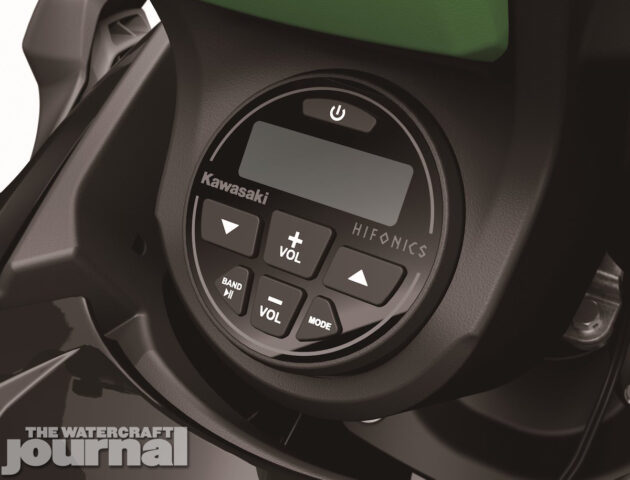
Ranging between the different trim levels, the LX is noted by its Ebony/Candy Lime Green coloring, two-tone CNC-cut traction mats, and of course, Kawasaki’s 60-watt Jetsounds system as standard equipment, consisting of an 40-watt, 4-channel amplifier, an audio controller, and two 30W speakers placed under the mirrors.
Now connectable via Bluetooth, the USB, and AUX ports are installed in the waterproof storage in the glove box, as the audio controls are integrated into the handlebar pad. Standard for all STX’s, a new rear grip with two grip sections for convenient re-boarding, an automatic siphon bilge system, and Kawasaki’s theft deterring immobilizer function returns.
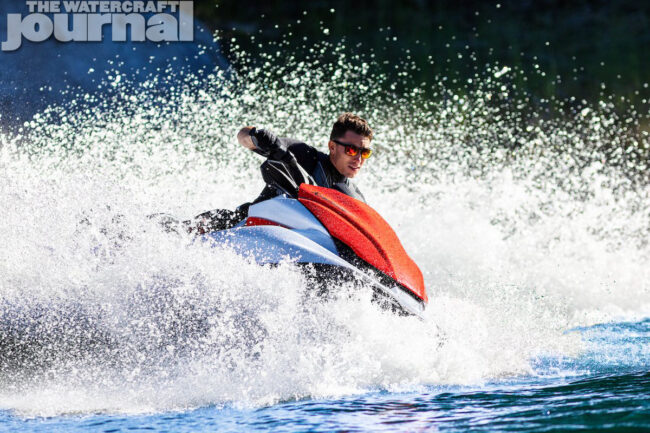
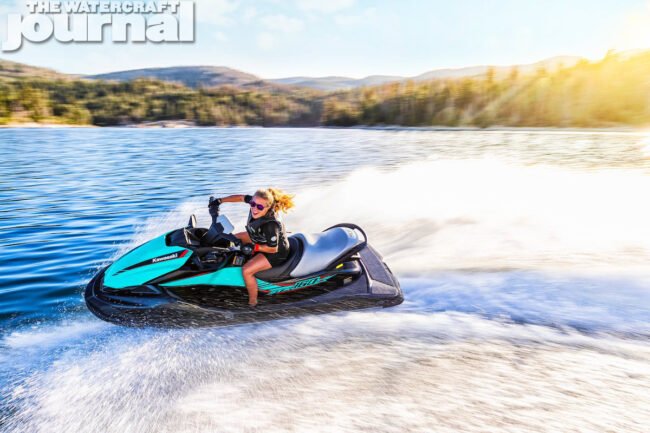
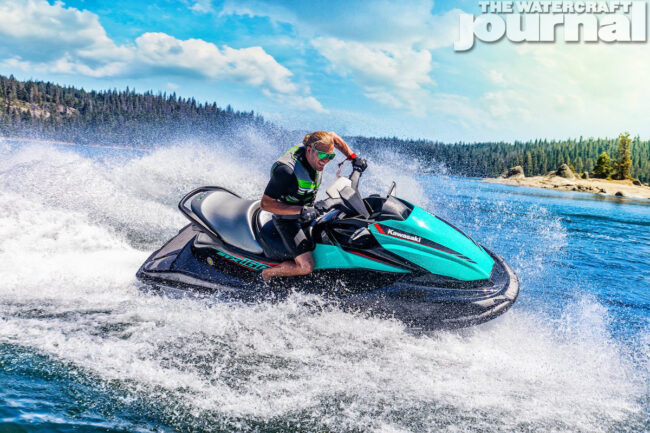
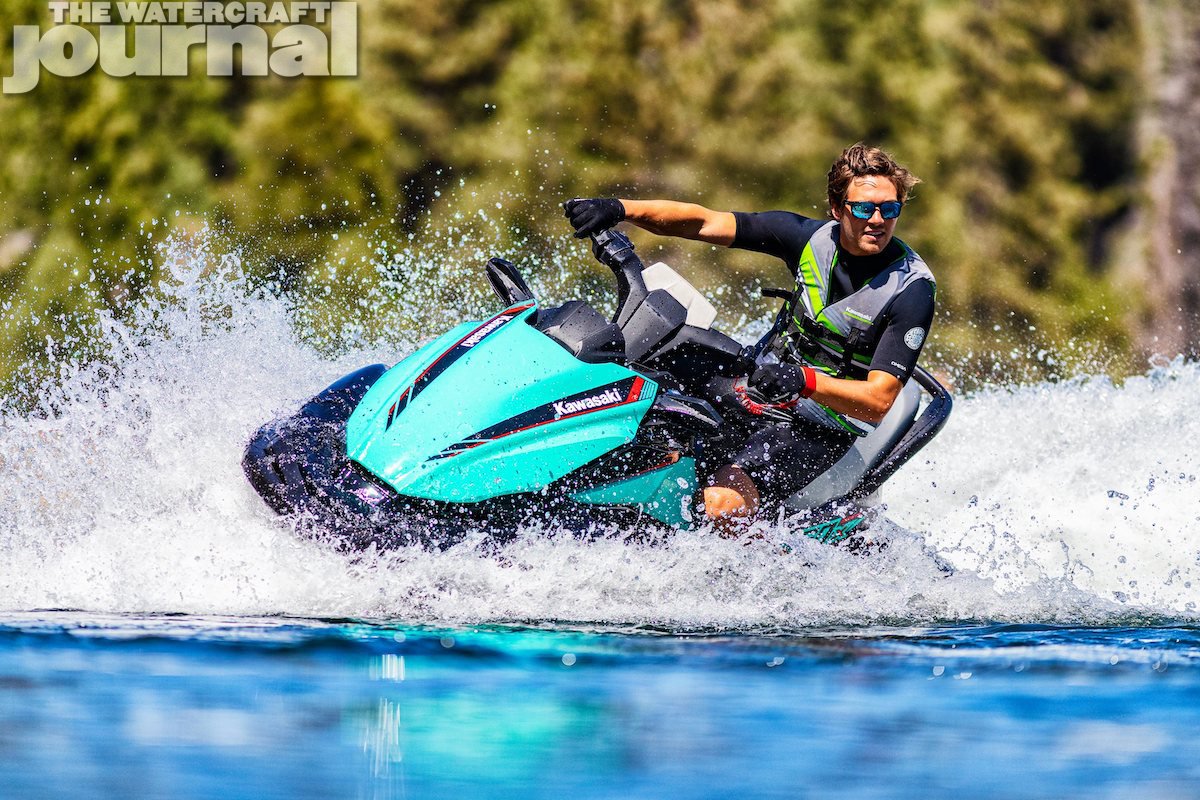
The standard-trim, entry-level STX-160 (starting at $9,599 – a staggering $100 cheaper than the previous SX-15F) is available in Gelcoat Crystal White and Sunbeam Red while the Jet Ski STX-160X (with a listed MSRP of $9,999) comes in a very fetching Ebony and Riptide Turquoise livery.
In all, Kawasaki surprised all of us with a complete “white page” redesign of the STX model. While all of us were left in anticipation to see how Kawasaki would revise its longest-running runabout, those at the Big K were certain to make the right changes to unify the JetSki lineup, bring in “just enough” DNA from the Ultras without the STX losing its soul, and introduce a Recreation segment lineup that will hopefully pull the brand back up into the fight.