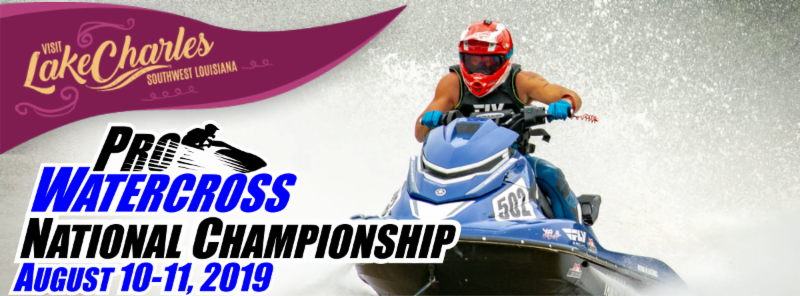
Get ready to head to Lake Charles, Louisiana because the Pro Watercross national championships are being held there August 10-11, 2019. The league has posted some hotel information for those of you headed to the venue. For more information, check out the news flyer below and as always you can stay tuned to Pro Watercross for the latest details.
Over the next few days, we will continue to update the Lake Charles, LA – National Championship page…
Four Host Hotels are listed along with numerous other area hotels. This is going to be an epic event and you do not want to miss it, so make your hotel and travel arrangements now!
Tru by Hilton – Lake Charles | $109.00 | 337-564-6878 Best Western Plus Prien – Lake Charles | $99.00 | 337-477-5900 Comfort Inn – Lake Charles | $94.00 | 337-478-4650 Quality Suites – Sulphur | $85.00 | 337-626-7000 For more hotels and area information – click here!
Lake Charles, Louisiana right there in the heel of the boot. When you get to town just slip on your dancin’ shoes, and sway to the music. Everybody’s dancing and on their way to the Pro Watercross National Championships and we can’t wait to see you there!
Northwest Jet Sports Watercross races into Rounds 3 & 4 this coming weekend as Lake Osoyoos Cup action hits Deep Bay Park. Competing under the American Water Sports Association this year, the Pacific Northwest tour includes the Lake Osoyoos Cup and the Apple Pie Jamboree, which took place July 20-21 in Pateros.
“We’re expecting one of our best turnouts ever at Lake Osoyoos,” promoter and race director Roger Harnack said. “We’re hoping the turnout exceeds our opening rounds on the Columbia River in Pateros.” Appearing on the OpenLine radio program last Friday, Okanogan County residents tuned in to hear about the upcoming race.
“We have classes for everyone,” Harnack said. “If you’ve never raced before, this is a great place to get into the sport.”
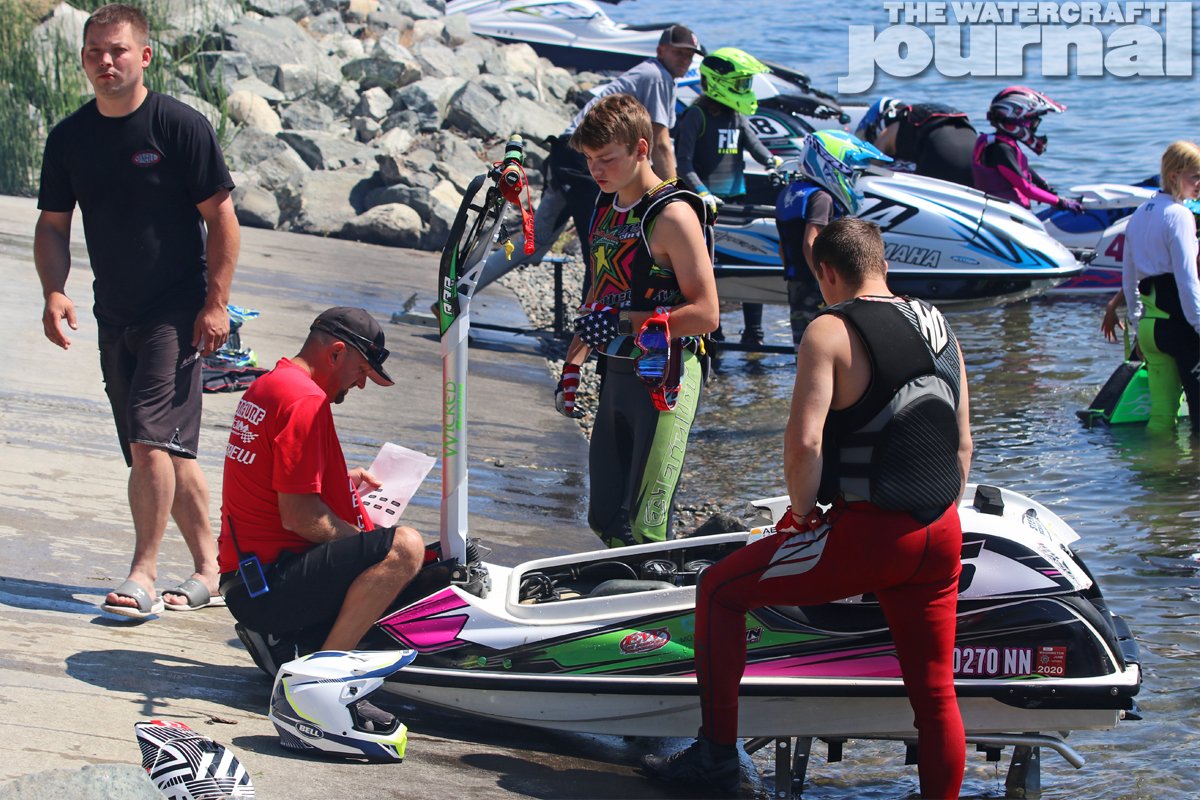
Indeed, Northwest Jet Sports had a solid beginner turnout at Apple Pie Jamboree, with three racing beginner ski, two first-time racers in the X2 class and four youngsters in the Junior 10-12 ranks. Another first-time racer was entered the women’s class. With seven racers on the line, Apple Pie Jamboree also boasted the largest women’s ski class in the region – which includes Oregon, Washington and Idaho – in at least a decade.
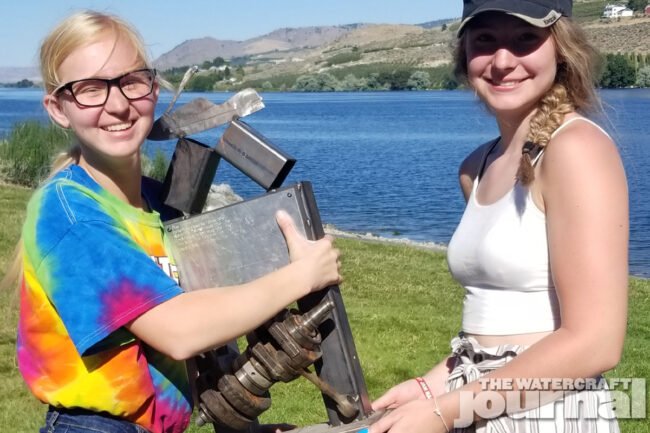
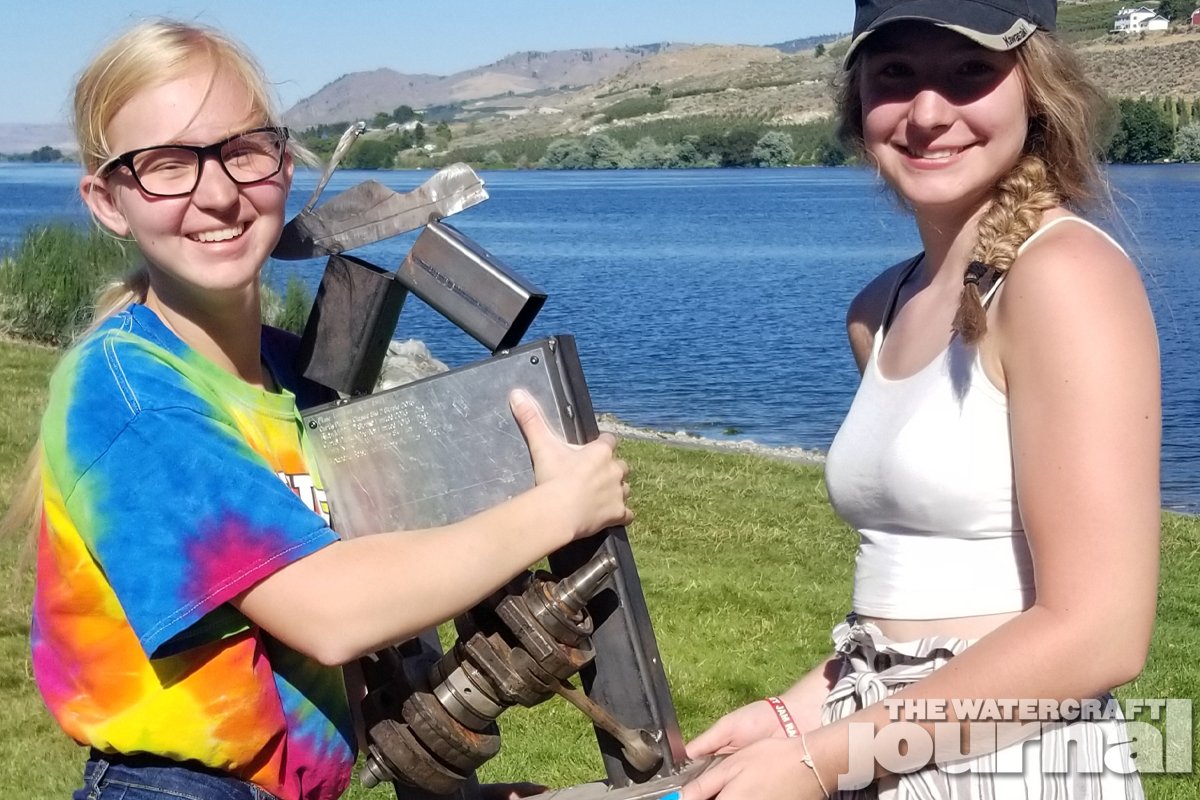
Alexz Benson of Hayden Lake, Idaho, would go on to dominate the Women’s class. And after the Jamboree was over, Trinity Klecker of Cathlament presented Benson a traveling trophy for being the Pacific Northwest’s best racer in the 2018 World Finals. Benson finished second last year and her name was etched into the trophy below Klecker’s and others who received the award in recent years. The trophy was hand-crafted by Curtis Pitman, now of Spokane.
Prior to the start of the festival, Washington Gov. Jay Inslee, a Democratic presidential hopeful, visited Pateros to see how the community is coming along after about a third of the town was destroyed by wildfire five years ago during Apple Pie Jamboree week. That 2014 fire, the Carlton Complex, remains the largest ever reported in Washington state.
This year’s Apple Pie Jamboree kicked off with a parade Friday night. Racers are allowed to enter their watercraft, but none entered. The community-wide event resumed Saturday with a bass fishing tournament launching at 4am, followed by a 5K color run at 8am. The festival also included food vendors, arts, crafts, a community breakfast, a book sale, music and fireworks.
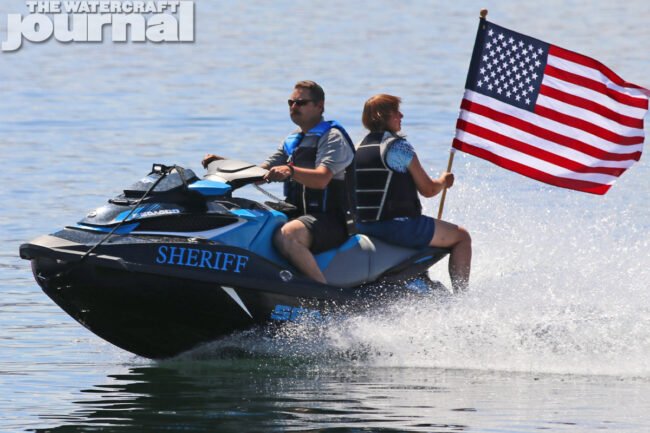
Proceeds from the different activities benefit the small community’s youth programs. Last year, the funds paid for every child in town to take swimming lessons if they so chose. The watercross action kicked off about 11am after the presentation of the National Anthem. Okanogan County Sheriff’s Deputy Dave Yarnell piloted a law enforcement ski while Apple Pie Jamboree Committee President Tracy Wilson of Pateros carried the flag, presenting the flag as the National Anthem played.
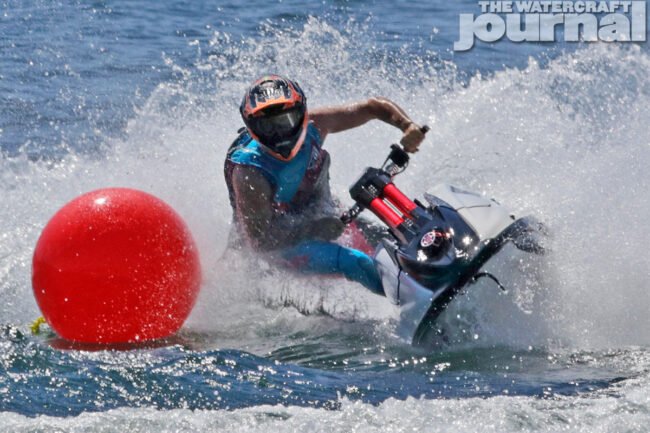
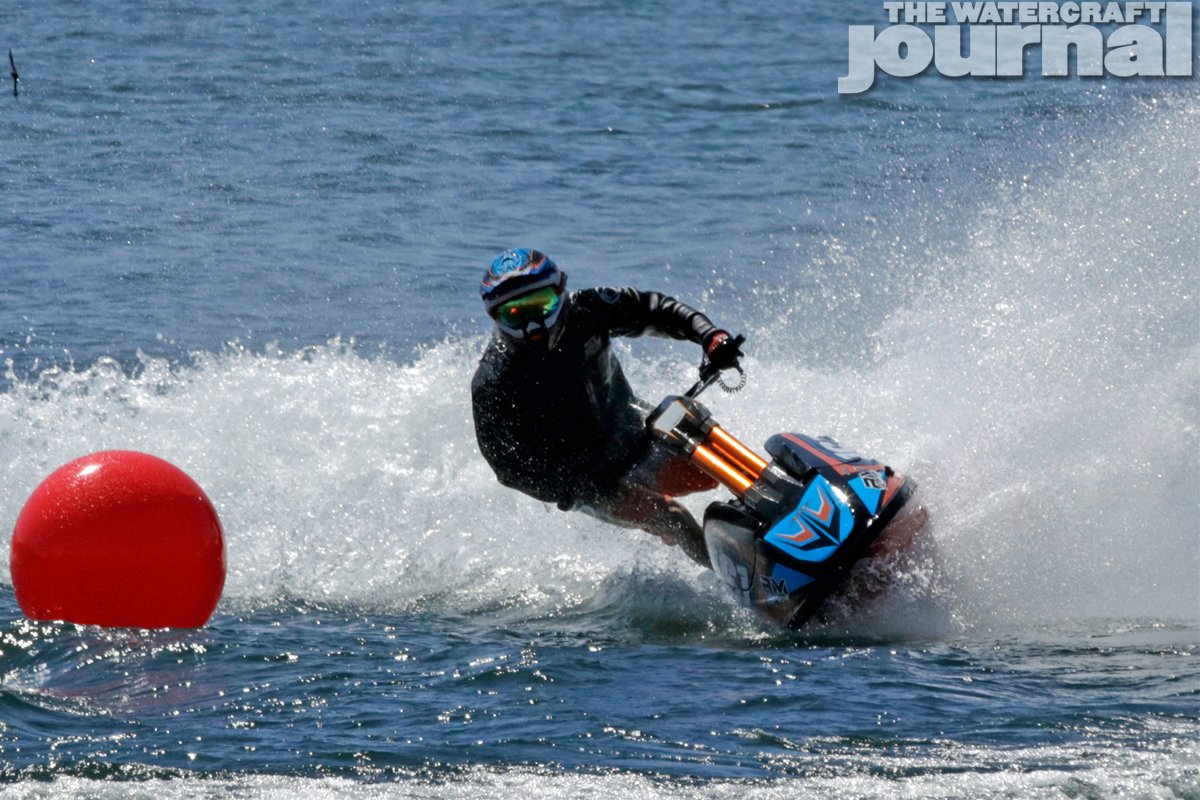
Other Apple Pie Jamboree activities, including a large 3-on-3 basketball tournament, paused as the anthem played. Doug Wolff manned the tower, and certified rescue diver Archie Dennis of Coulee Dam anchored nearby as about 40 racers hit the cool water on a weekend where daytime temps hovered in the mid-90s.
Angela Clements of Marysville and Jen Effrig of East Wenatchee handled registration, scoring and announcing as they have done in the region for years. Wayne Hilsinger of Sedro Woolley manned one of the course marshal skis while his wife, Katie, served as a spotter for Dennis. Jason Ward assisted Effirig on the mic Sunday.
Harnack manned the other rescue ski as Yarnell and Okanogan County Sheriff’s Office Deputy Josh Brown patrolled the Columbia River keeping other boats at bay. Racing continued throughout the day, with only a 20-minute lunch break to allow bass boats into the docks to weigh in fish. After 26 motos, racers pulled their skis and pit area, making way for pyrotechnicians to set up the evening’s half-hour-long fireworks display.
The action continued Sunday, with only one on-water incident as a minor collision sent the hood of 550 rider Seth McNeil’s boat flying. Sunday’s course marshal’s, Harnack and Mike Reynolds, quickly got to the area, with Reynolds tending to McNeil and Harnack towing the ski back to the docks. McNeil was uninjured; he pumped the water out of his boat and fired it up, returning to the line later in a later moto.
After an additional 26 motos, the racing concluded without any injuries. “It was a great weekend of racing,” Harnack said. “We’re ready to go again.” And go again they will. The Lake Osoyoos Cup gets underway Friday, Aug. 31, with course set up and camping opening in Deep Bay Park. Racing is set for 11am to 5pm Saturday and 11am to 4pm Sunday on Lake Osoyoos, which lies half in the US and half in Canada. Several Western Canadian Watercross Association members are expected to join in the action. “It’s going to be 90 degrees and the water is great,” Harnack said. “See you in Oroville.”
Photography: Katie Pedersen and Al Camp/Omak-Okanogan County Chronicle
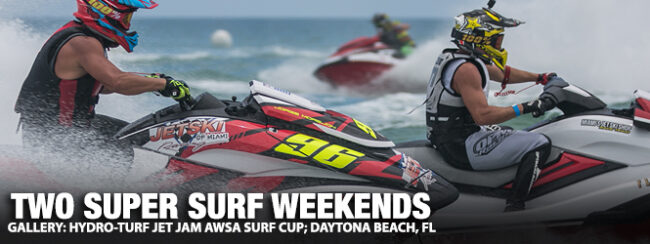
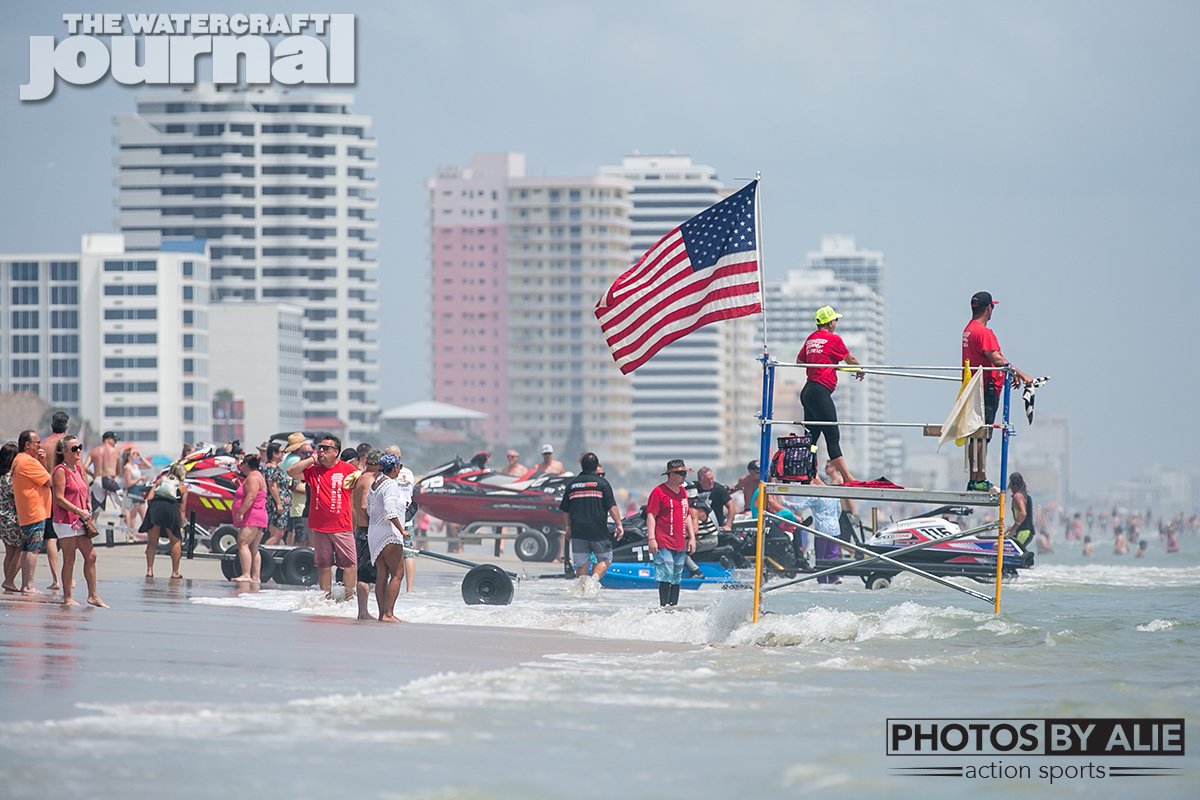
Wow! is the best word I can think of to describe the trip that the Jet Jam Racing Crew and riders took to Daytona Beach, FL. Let’s start with our Red Shirt Crew that drove 36 hours each way to take the race equipment and the trailer full of skis for the West Coast riders. The Red Shirt Crew took 10-12 days out of their busy schedules to make this race a blast.
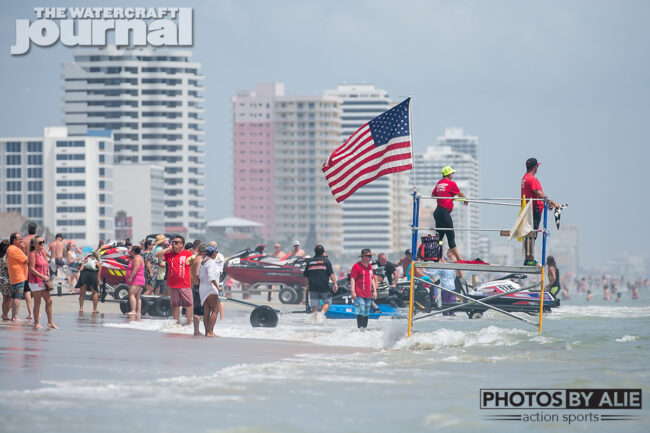
Fun in the Sun best explains Daytona Beach. This beach is most famous for it’s white sandy beaches and being able to drive your vehicle right on the sand right to your pit area! The beautiful blue-green waters and white sand did not disappoint.
The Plaza Resort and Spa treated us all like royalty. From the basement on-site parking to the registration right off the pool. The pool and the pool restaurant soon became the HUB for all of the riders and crew.
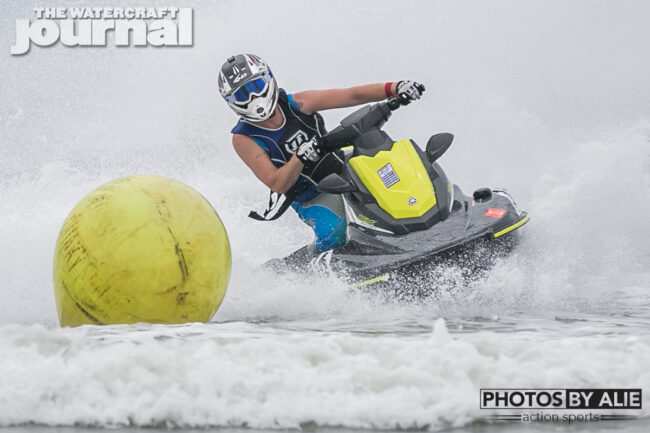
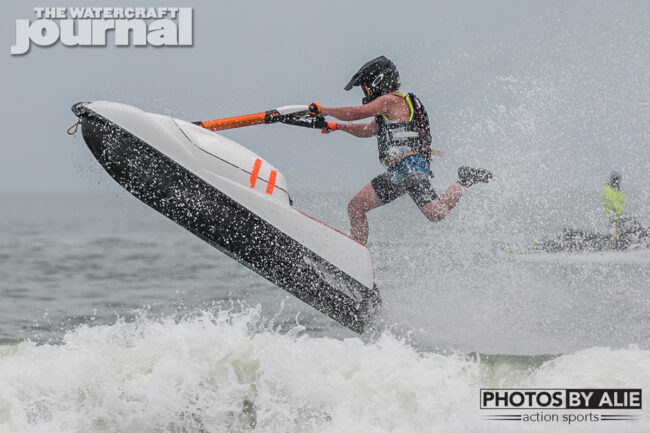
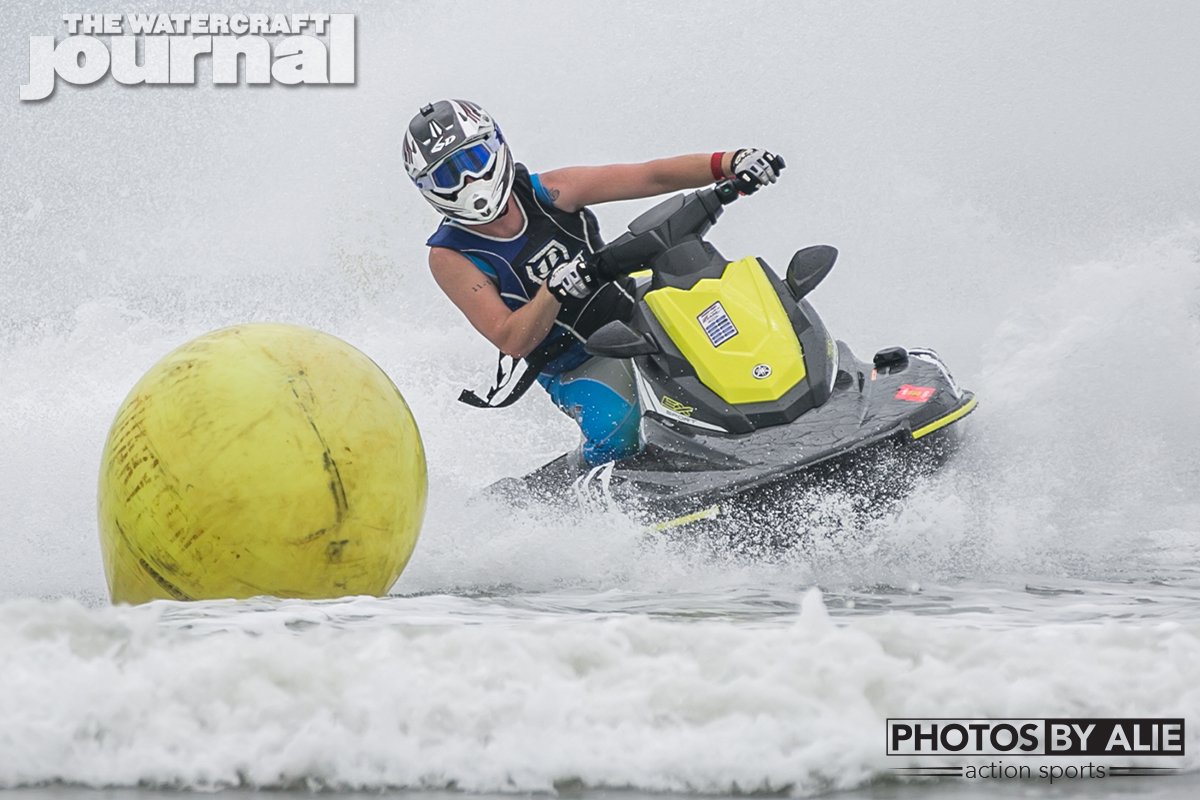
The four largest groups of riders were all battling for the two weekends for the AWSA Gold Surf Cup. This made every moto very exciting. The motos also became very exciting with Bill Austin adding a split in the ocean, something the riders had not seen before.
One of the most exciting races of the two weekends was of course the Runabout class. Cameron Frame from our sponsor Hidden Trails Motorsports jumped in to change it all up after Jorge Morejon and Troy Leseney had been swapping first and second back and forth. In the end, Jorge won the series and the gold cup.
The Sport Spec class was a blast to watch, with Nick Leseney coming in first after battling Deven Farthing, who took second. Deven Farthing put it out there 100-percent in every moto, racing in three classes, he gets the Ironman award for the week!!
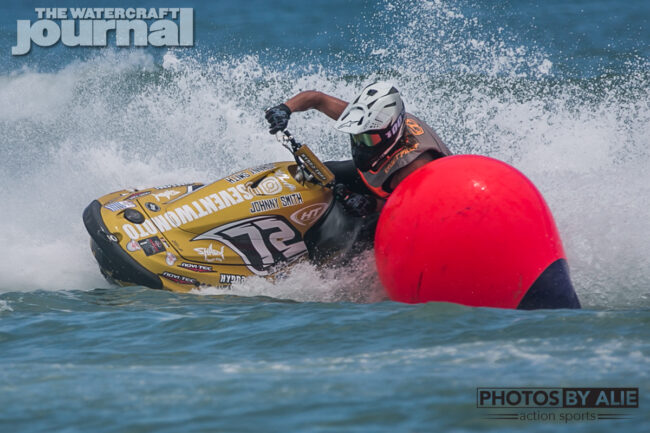
Johnny Smith dominated the first weekend of the Sport Open Class, with Hayden Skillet dominating the second weekend, with Deven Farthing also mixing it up. Johnny Smith ended up taking the Gold Cup overall with Deven Farthing in second and Haden Skellett taking third place. Glen Jung, Jordan Carrol, Bobby Cardone and Nick Leseney also made this class a great race, but all of them ended up with boat issues.
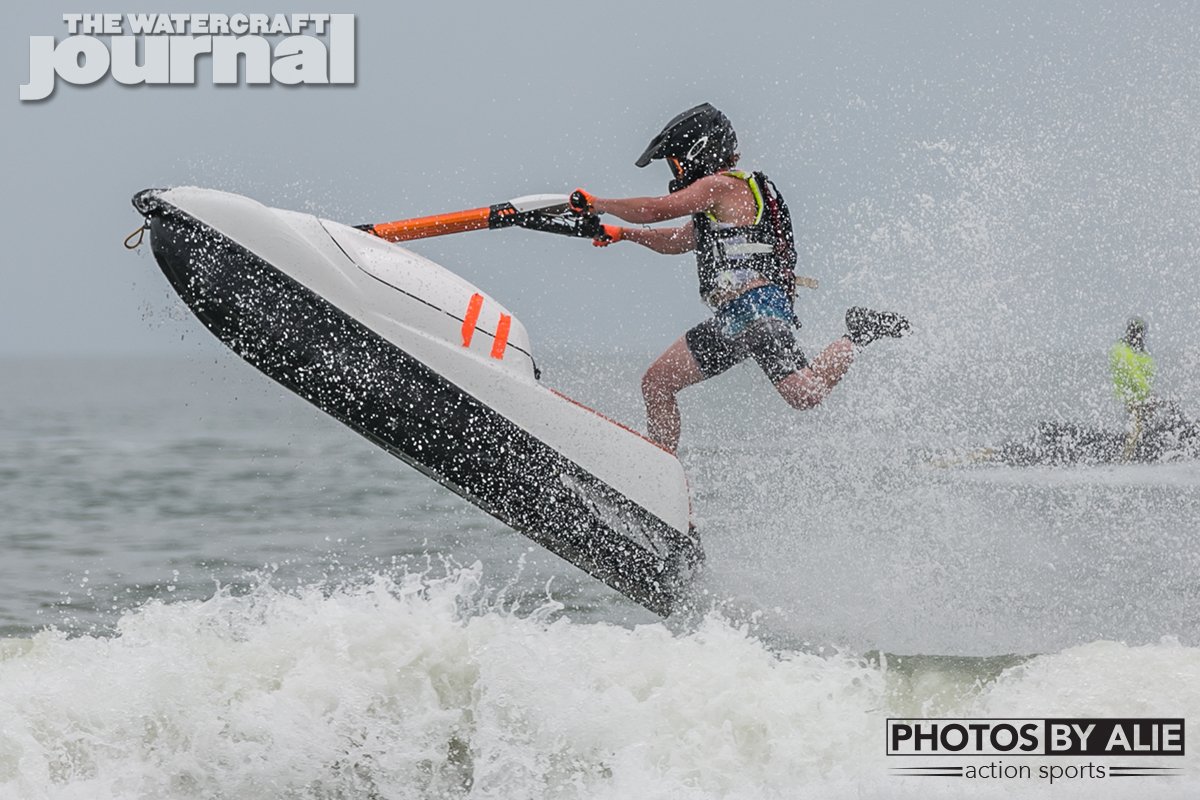
After all of that racing, Deven Farthing jumped on his stand-up and won the overall Ski GP5 Stock Novice Cup. With great surf riding by Dominic Cannady taking the second overall, and another new rider, Auddy Leza taking the third. Matt Rollings and Dominic Cannady were our leaders for the Ski GP 2-stroke class.
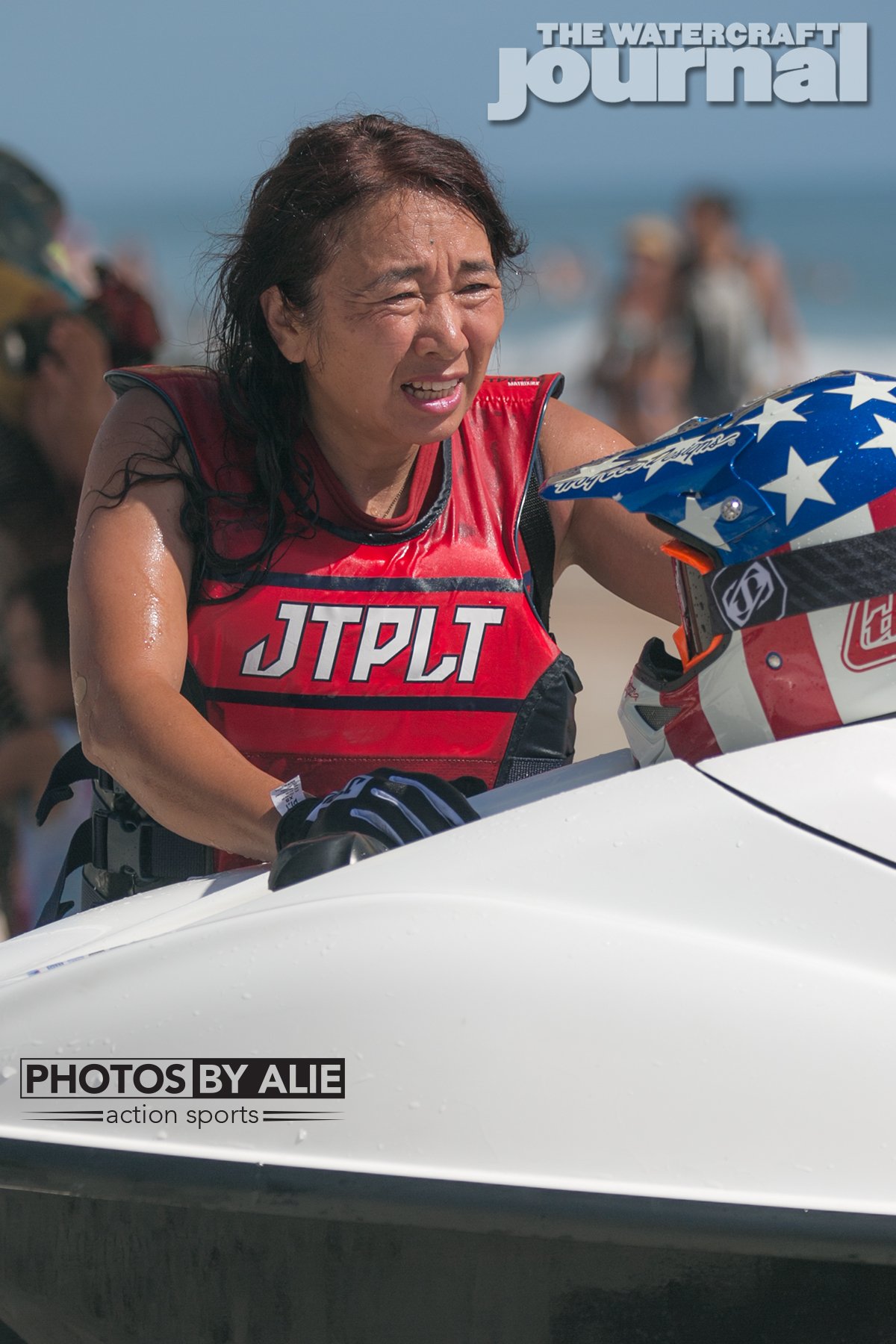
Much to our surprise, after the first race, we got a message from Yukiko Kume, telling us it was her dream to race in Daytona Beach. We said we wish we would have known, we would have made sure she had a ski to race. She said if we could get her a ski, she would fly in from Japan.
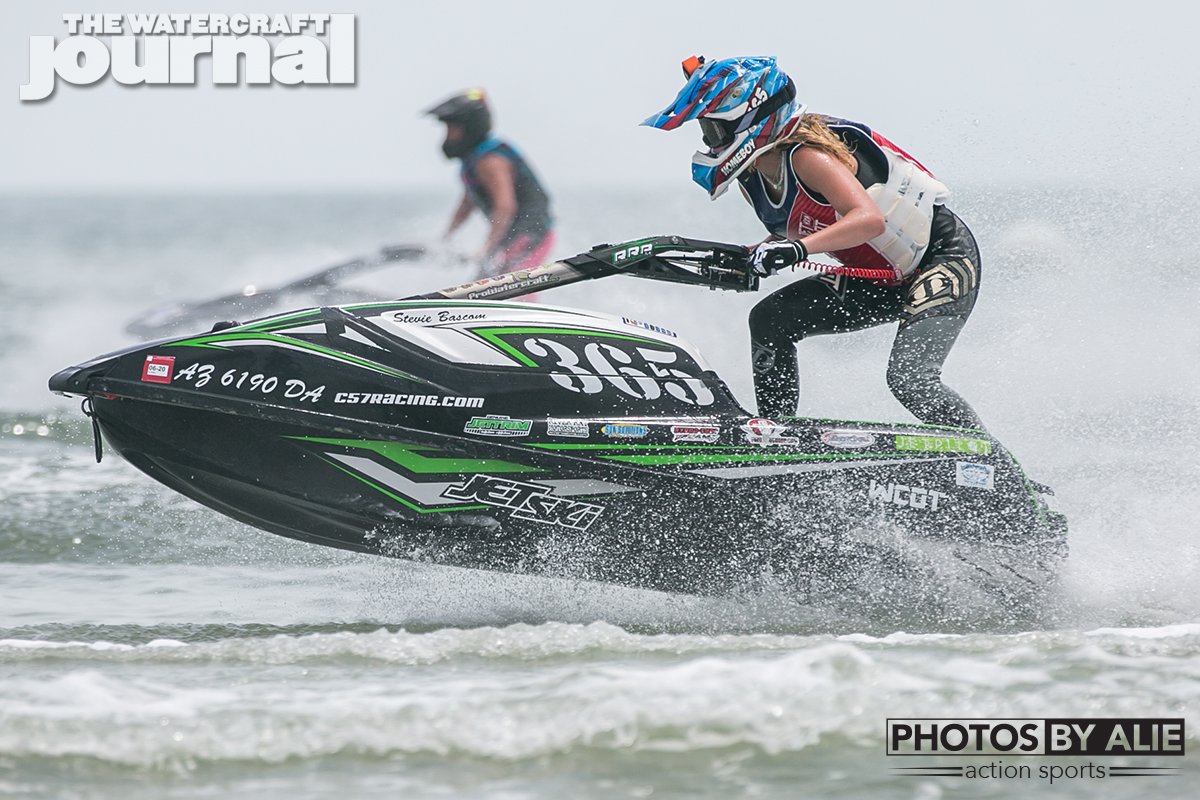
Immediately, Bill and Brock Austin gave her Bill’s SX-R 1500 to race. She flew in and raced in the Veteran Open Class taking third overall and raced in the Ski GP4 Class running first and second against Stevie Bascom. Which gave Stevie Bascom the overall AWSA Gold Surf Cup.
With Yukiko Kume winning the third overall in Veteran Open Class, that put Travis Pepin, a brand new rider from moto cross on the opium in second, and Duane Bascom taking the overall for the AWSA Gold Surf cup. The father/daughter duo of Duane and Stevie Bascom took home two AWSA Gold Surf Cups.
Attrition was a bad word for several of our riders and their boats. But it was amazing to watch our race family start sharing boats with each other to make sure everyone got to ride laps and get into a class that they could have some fun racing. Thanks to Matt “Happy” Rawlings” and Bill and Brock Austin for sharing their boat and helping with all of the boats to keep everyone on the water!
Huge thanks to Hidden Trails Motorsports’ Trey and Cameron Frame for bringing the amazing Electric Mountain Bike to give away to our racers. Troy Leseney Sr. had a great time, saying, “So our trip to Daytona Beach was great! We raced in the surf for the first time,crashed,jumped,laughed,cussed,blew stuff up,fixed stuff, ate lots of food, saw an alligator, an armadillo, huge grasshoppers, drove through and stood in crazy storms, hung out with friends and met some outstanding people! Got some trophies and won a super cool mountain bike!”
Closing out the weekend, the pool party for the Awards turned into a great time for us all to catch up with old friends and say good-bye to all of our new friends. Please log into jetjam.racing for all of the results! Coming up next Jet Jam Racing’s last two races of the season, Mossdale on August 3-4 and Lake Ming on August 24-25. See you there!
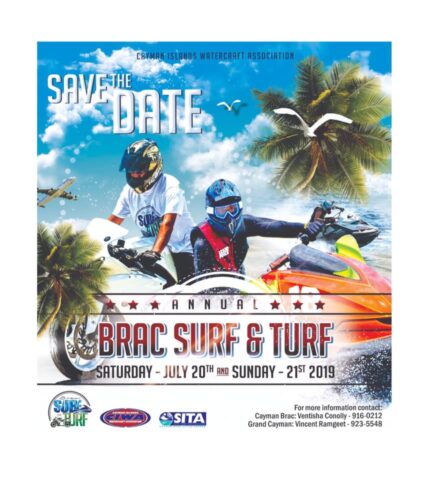
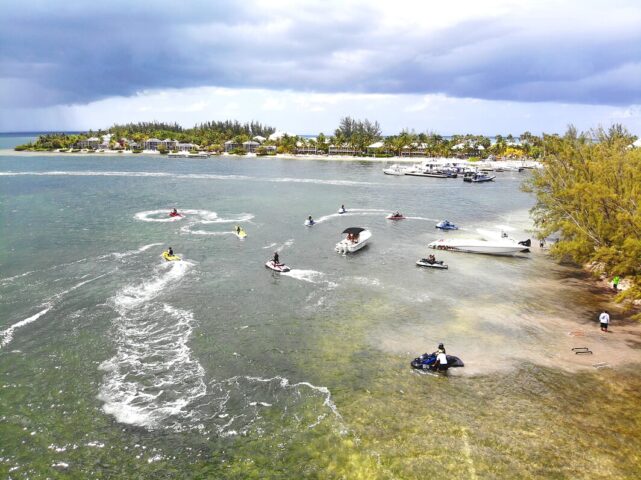
On July 20-21st, the third annual Surf n Turf Ride was held at the Sister Islands on Cayman Brac, the easternmost island of the Cayman Islands. The Cayman Islands are a set of beautiful island located in the Caribbean Sea, therefore making it the perfect place to hold a watercraft and motocross event.
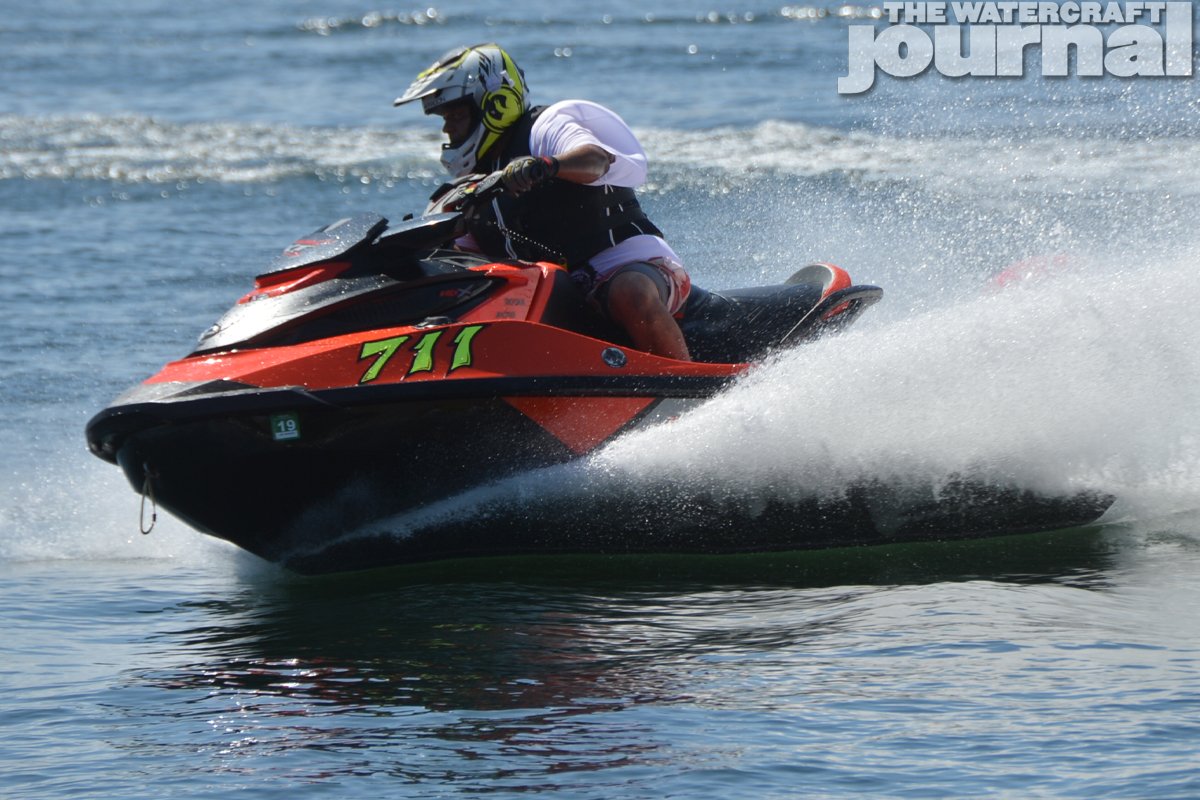
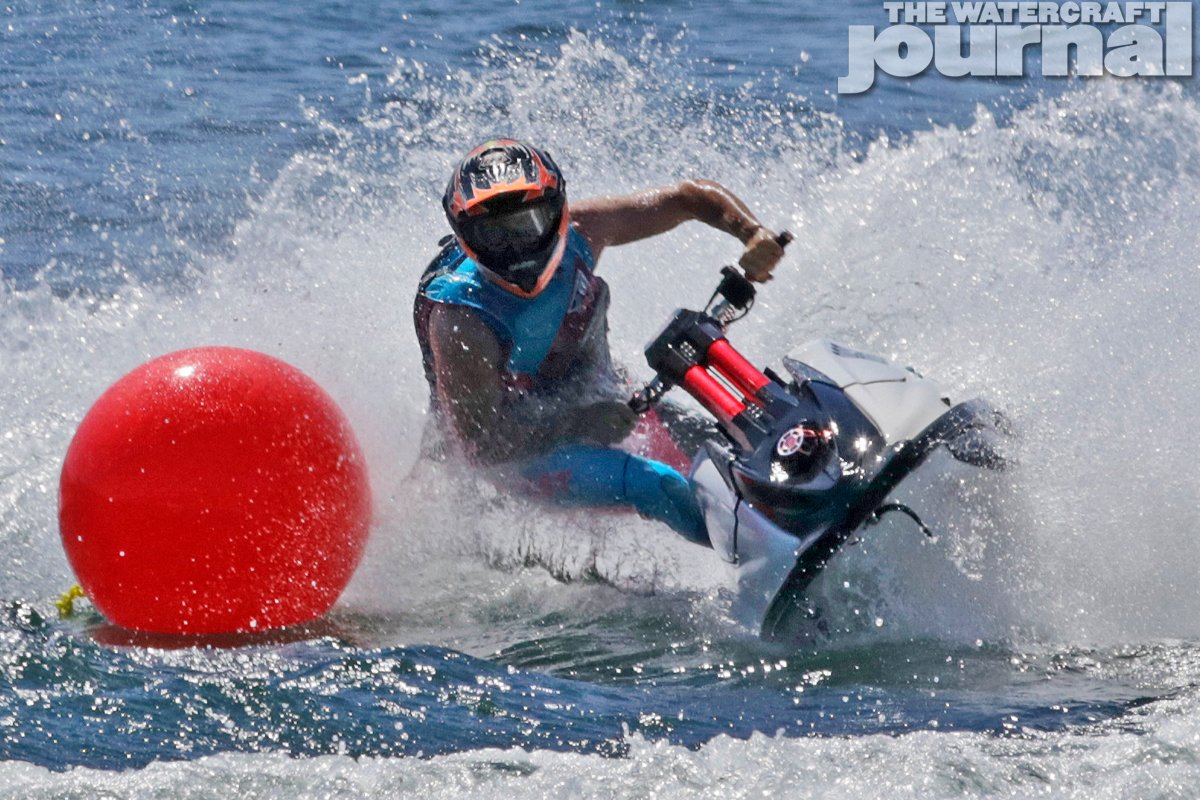
In the watercraft event, there were nine riders in the novice and pro-am classes. They raced three on Saturday while on land there was a bike judging contest. Thase Walter in the novice class took the overall win with 60 points from the three motos. In second place was Michael Chambers with 53 points overall. In third place was Leroy Whittaker with 48 points followed by Emma Conolly with 43 points and Tyler Walter with 39 points.
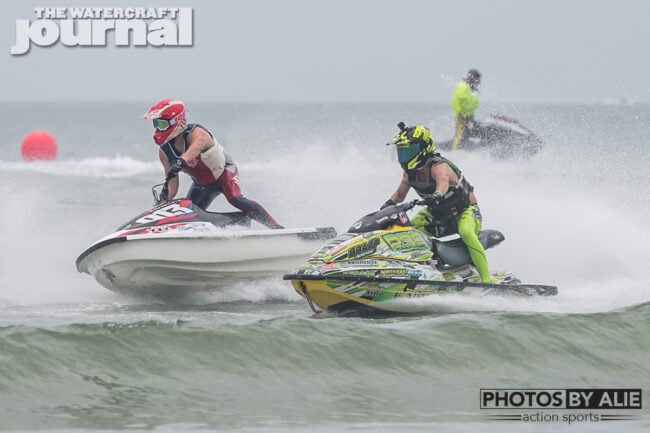
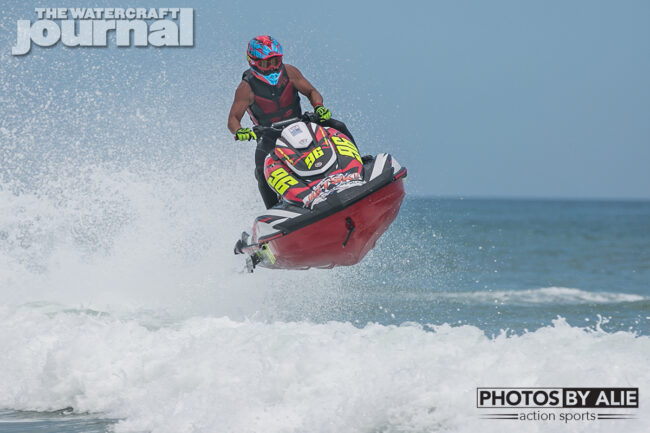
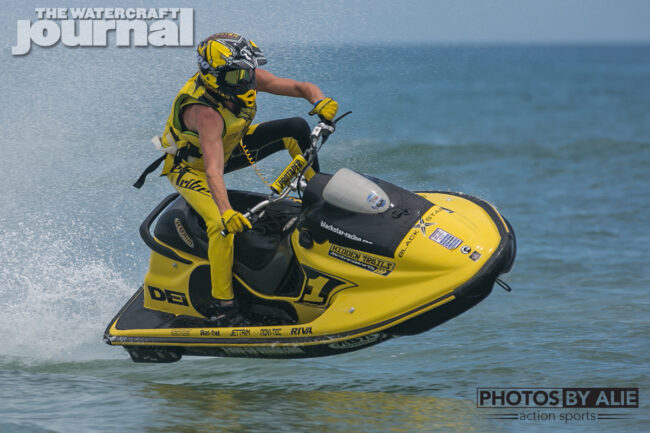
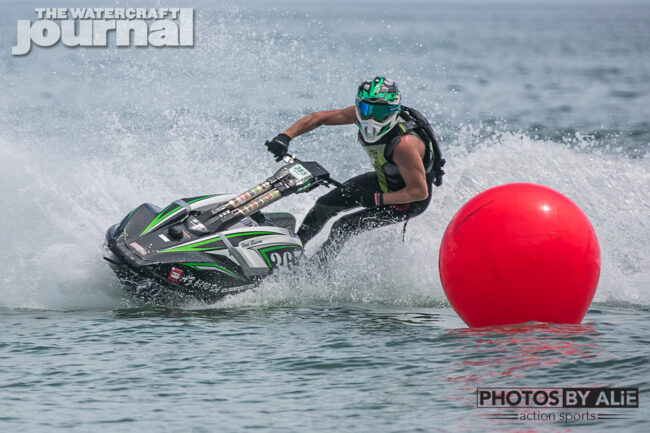
All of these riders battled hard and provided the fans with some great racing! Tyler Walter who is an accomplished boxer said that he has raced in every Surf n Turf event and lives for the competition. He says, “I like the adrenaline rush before the race. It’s a good event. Cayman Brac doesn’t have many events like this so it’s exciting for the people that live here.”
In the pro-am motos, Matthew Panton was able to secure the overall win with 60 points, beating out Vanjae Ramjeet by 7 points. Chris Bodden finished in third place with 48 points, Billy Ebanks finishing in fourth place with 43 points and Michael Chambers in fifth place with 39 points. Chris Bodden, co-organizer and rider in the pro-am says that, “We want to do a sport where you live. Cayman is the perfect place for Jet Ski racing. We are passionate about the sport.”
For the Turf part of the Surf n Turf event, there were awards for “People’s Choice”, “Burnout” and “Best in Show” for 300cc, 600cc, and 1000cc for original and customized motorcycles. The winner for People’s Choice was Vance Ramgeet. For Best in Show Customized it was Sabrina Douglass for the 300cc class, Dr. Ruthlyn Pomareis for 600cc and Roy Owe for the 1000cc class. For the Best in Show Original winner for the 300cc class was Lavender Bryan, Felano Francis for the 500cc class and Damian Christian for the 1000cc class. And last but not least was Vance Ramgeet who put out the best burnout.
Overall, the weekend was a great success with the contribution of multiple individuals and for the watercraft riders and motorcycle riders for showing up and putting on a show. For a quick recap video, check it out here.
Nowadays, the most dangerous part of a kid’s day is trying to avoid carpal tunnel syndrome from drawing too much on the iPad or ruining their eyes from staring at the smartphone for too long. Things seem like they aren’t what they used to be but that’s not the case for every kid.
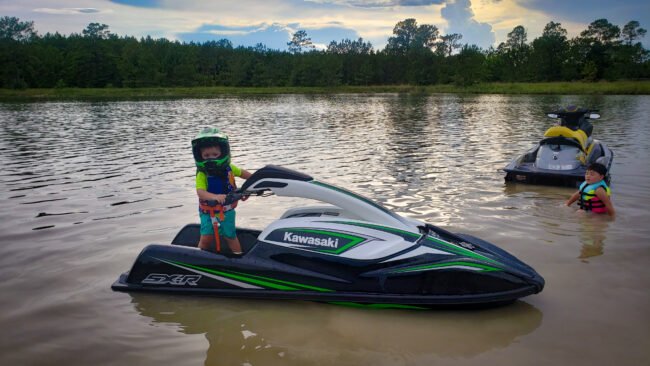
Take for example Ricky Hinch’s two young boys who are three and four-years-old. They are riding a 2017 Kawasaki SX-R 1500 stand up JetSki.
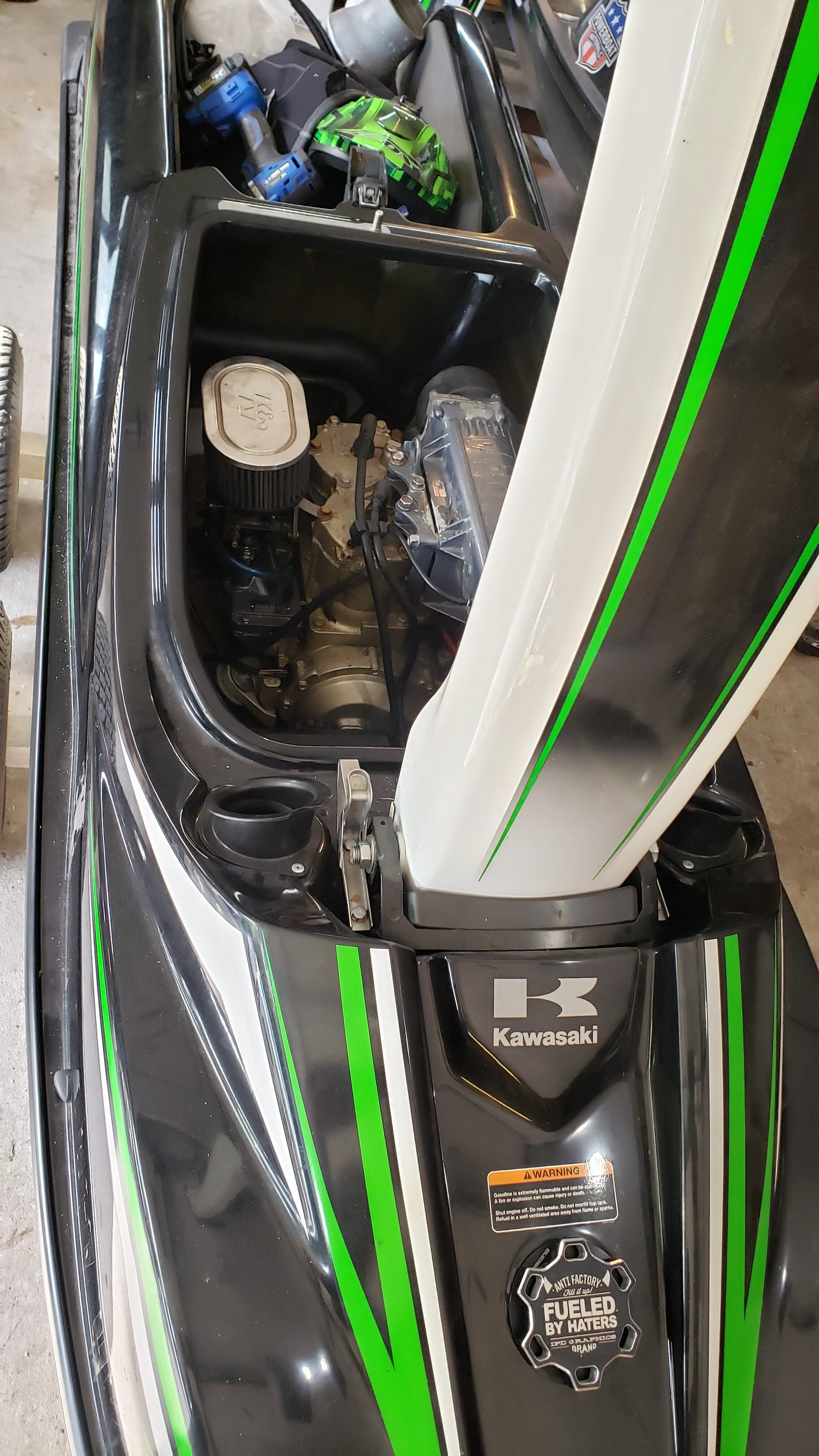
Yes, you read that right, but don’t worry, there’s no need to act like the concerned neighbor and ask does their dad know what his kids are doing or for that matter does he know how crazy he is? Well yes, he knows exactly what they are doing and he is not crazy because it is no longer an SX-R 1500 with the OEM 160 horsepower engine.
Instead, Ricky has built a custom JetSki based on the SX-R hull using a highly de-tuned and less powerful engine. Additionally, he is using an adjustable throttle stop that limits the throttle and hence the speed at which the boys can go.
The video shows the young boys riding in a closed pond not in open public waters and under adult supervision. Ricky is just a normal Father who wants to open his kid’s eyes to the world around them and give them real experiences.
“I’m a firm believer of giving your kids real life experiences,” Hinch explains. “Experiences become part of our identity,” which is why he did not hesitate when his boys asked about riding a stand-up JetSki.
Ricky’s kids have been around watercraft their entire lives and he knew that a stand-up ski was the next thing to do. Despite some people’s reactions to his build, Ricky pushed through. Some would tell him that his kids are too young or they would not remember the experience.
However, he did not let that deter his ambition. Ricky recalled all of the wonderful times he has had with his sons over the years just by getting them out and exposed to a variety of activities. He tells us that “what you do with children will mold them into who they will become.”
Having good experiences do not necessarily mean spending a lot of money though. As Hinch emphasizes, he spent less than one thousand dollars on the entire SX-R project including sourcing the used hull, engine, and other accessories.
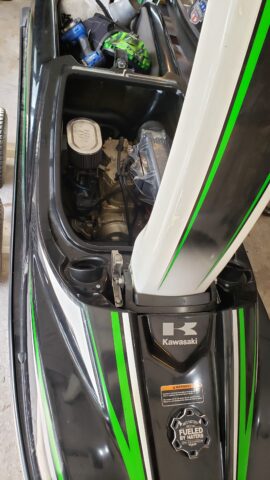
He bought the used 2017 Kawasaki SX-R hull, which somebody was selling after removing the original powertrain and accessories. Since the OEM 1500 motors are common to use in other projects, it is not that uncommon to come across used late model SX-R hulls.
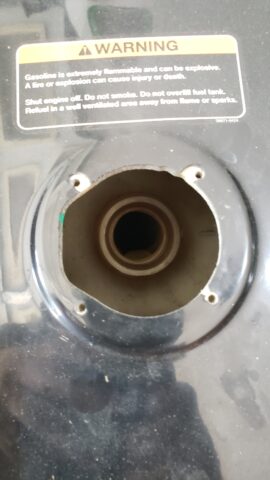
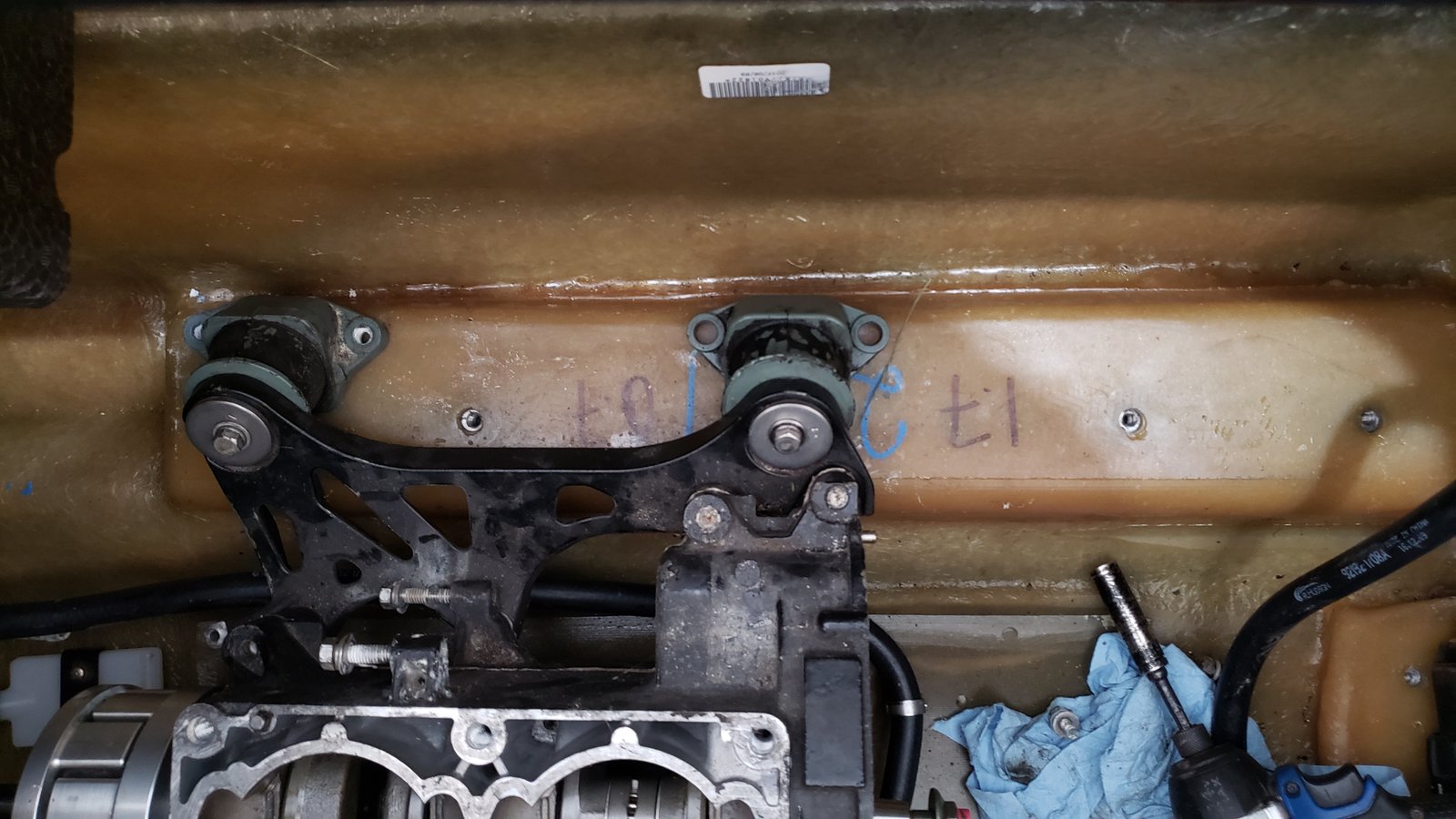
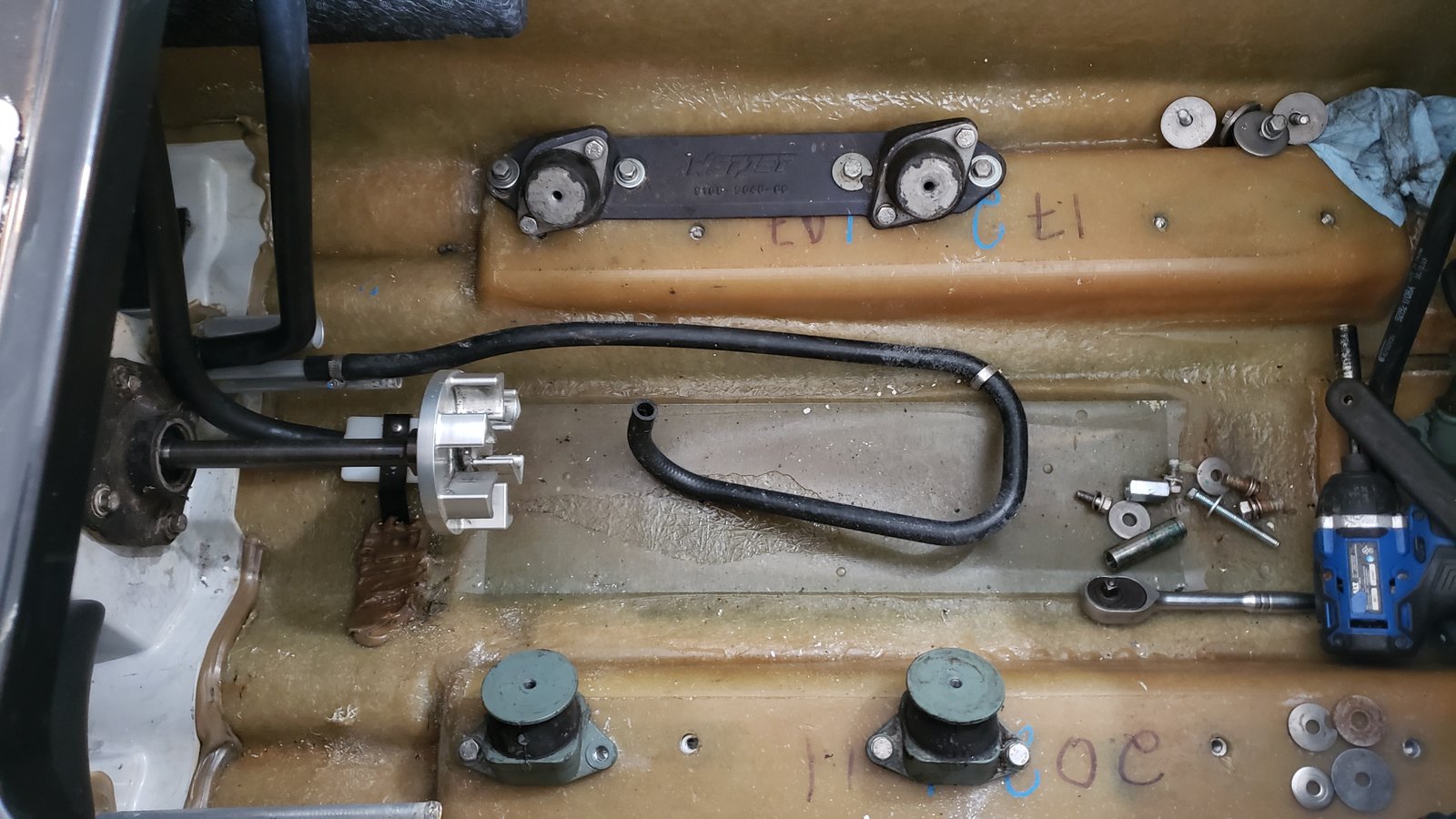
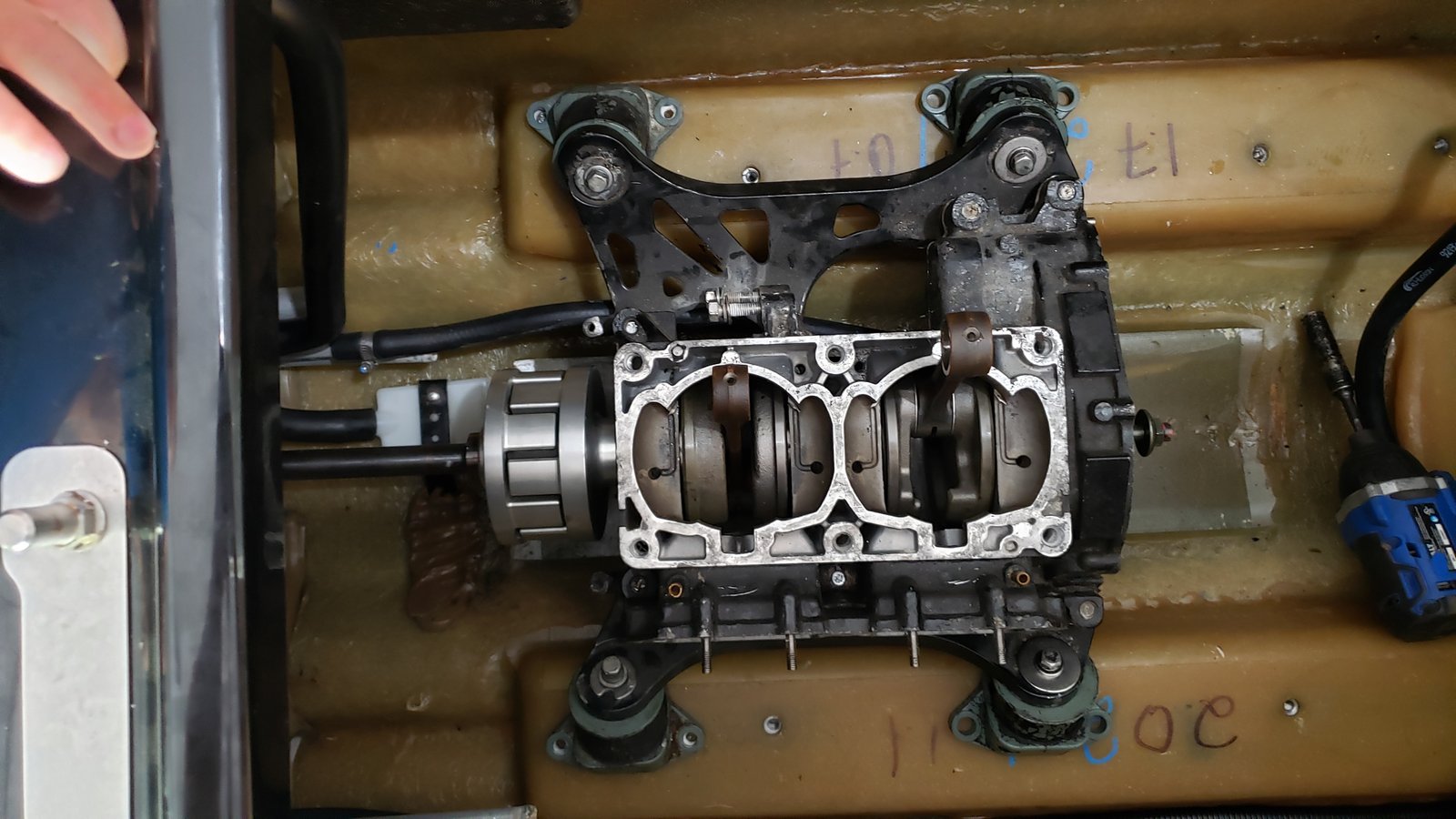
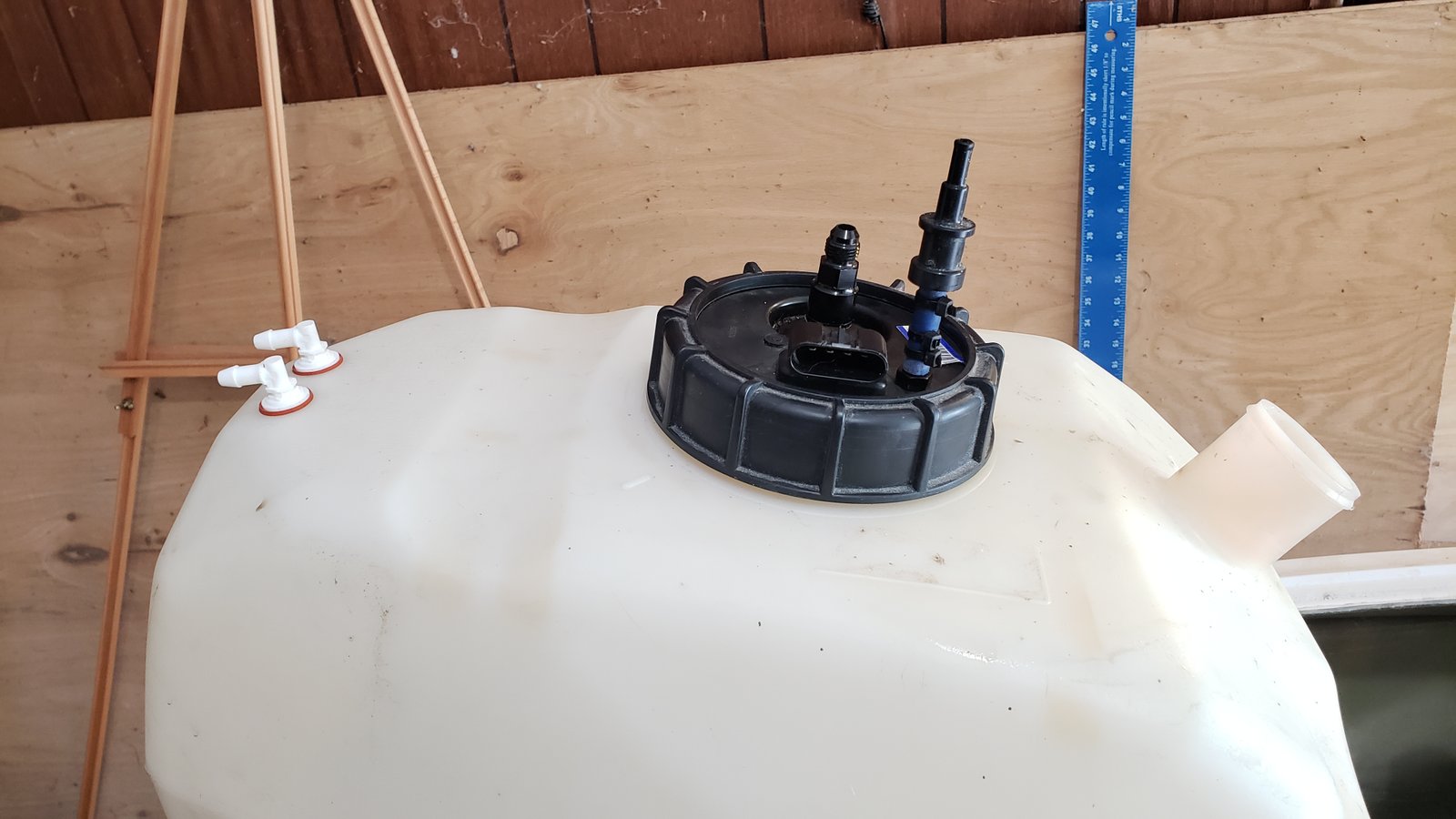
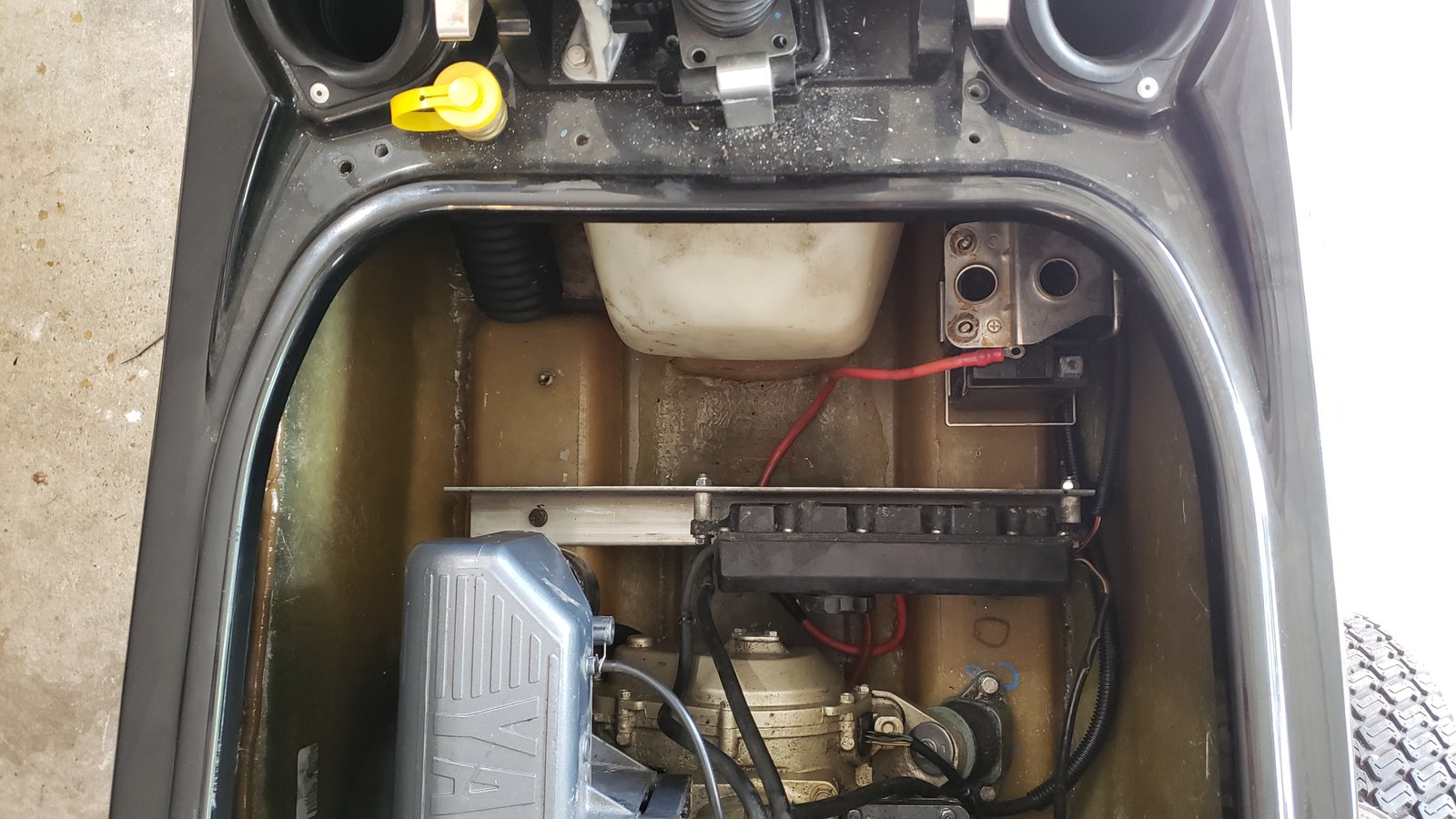
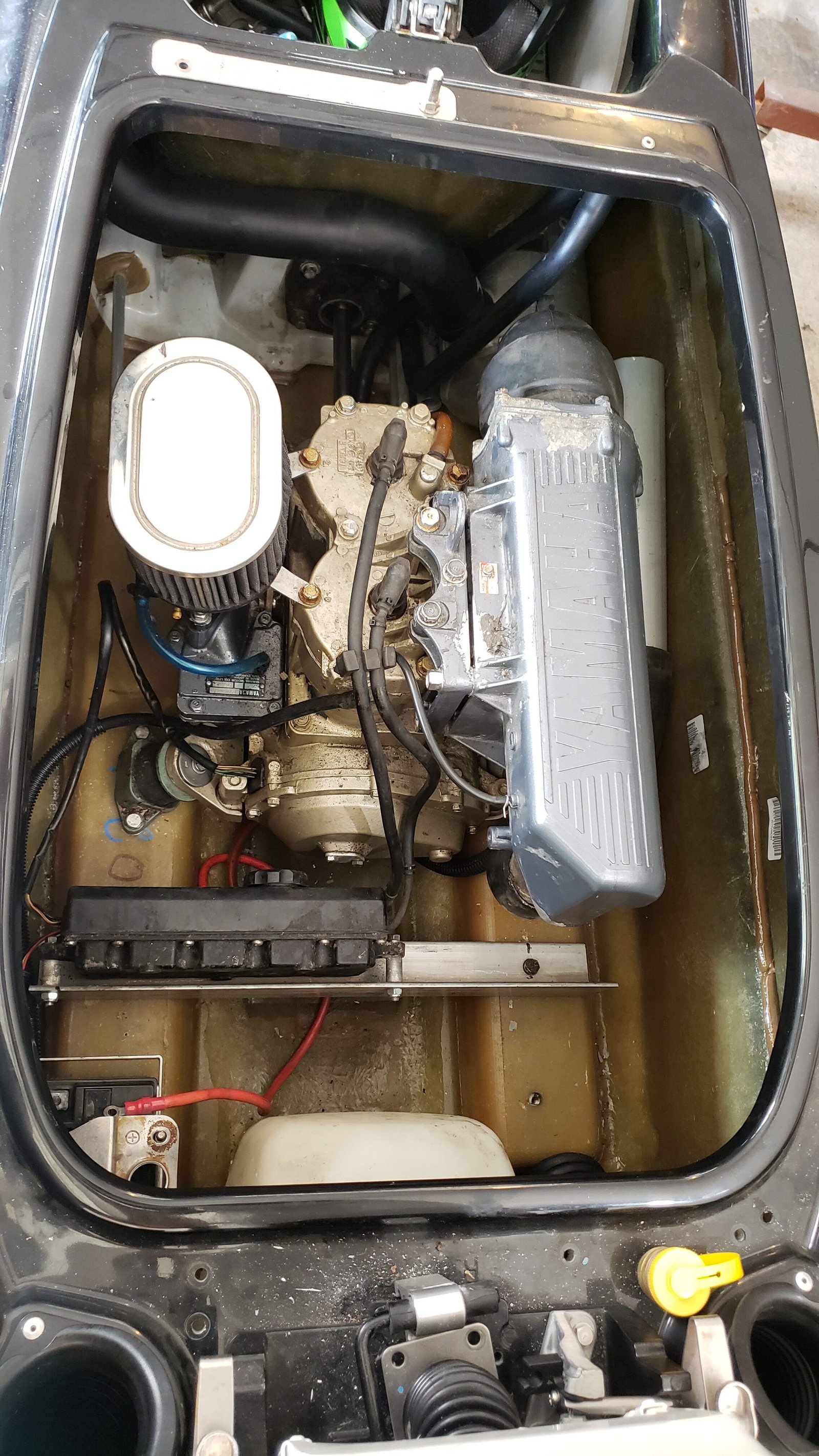
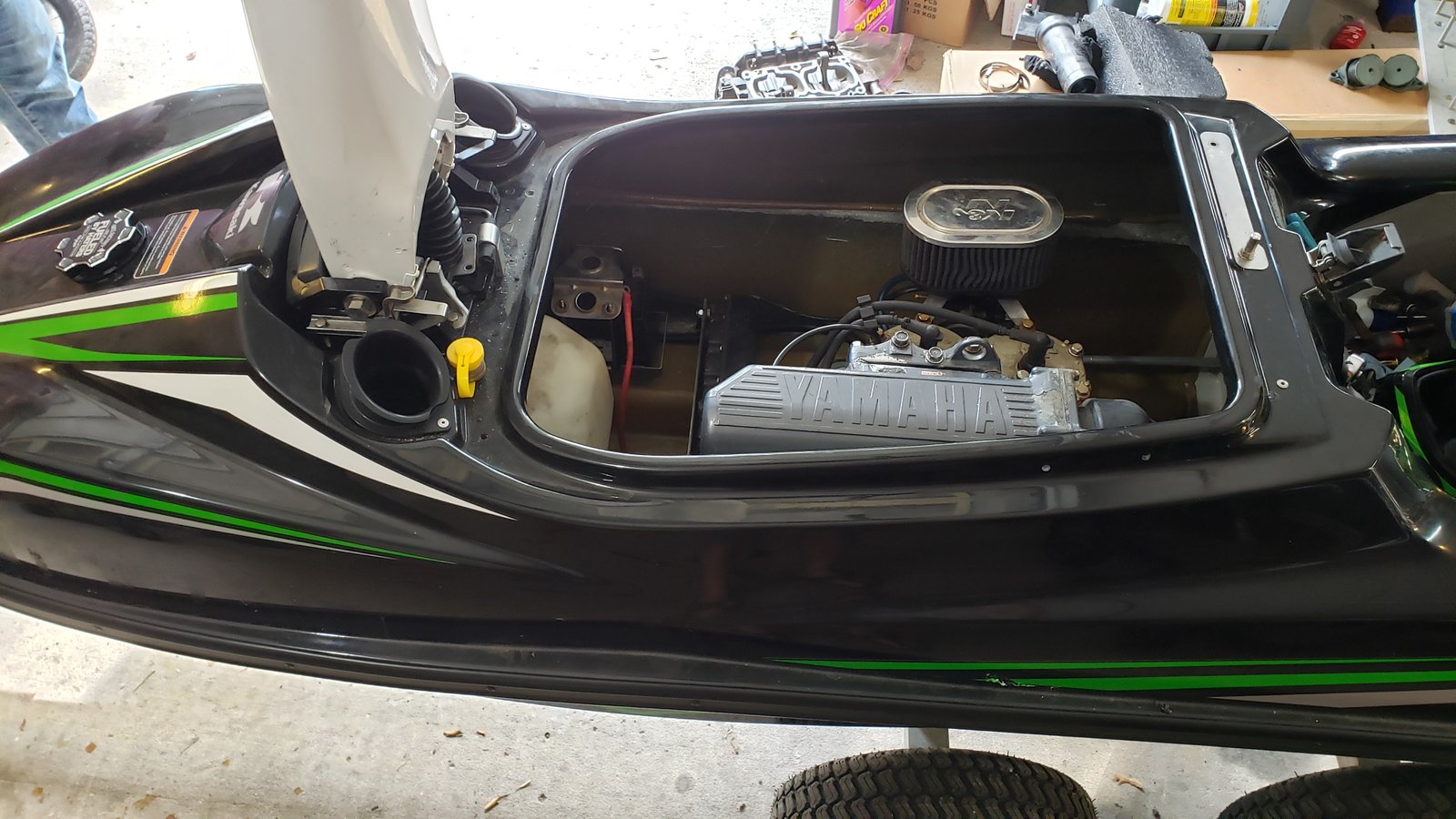
He decided to use a Yamaha 61x 701 WaveRunner engine, which are fairly common items to be found second-hand. In addition, Ricky chose to use a fuel tank from a Sea-Doo Spark, which conveniently fits perfectly in the SX-R hull. Since there are a plethora of Sparks out there, this item can be found very easily as well.
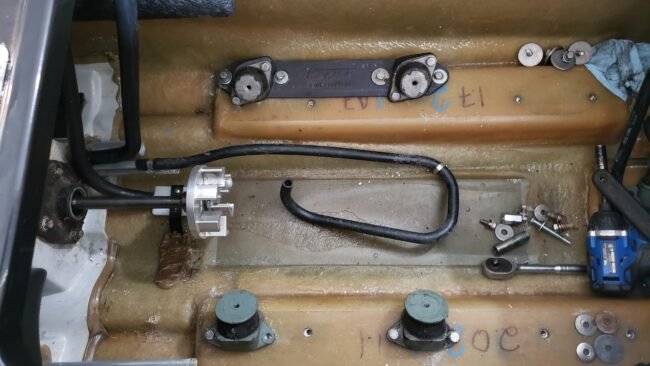
Then the only thing left was mounting the engine and matching the height of the output shaft to the driveshaft. Some ADA drive couplers, a few fasteners, and three fuel tank fittings later, and Ricky had completed the homework stage and began to adapt and assemble everything together.
Conveniently, Ricky found that by using some OEM Yamaha runabout engine mounts, they fit on the 701 engine without having to shim for height alignment. After everything was test fitted and mounted, he buttoned up everything and ran all the cables and lines.
As mentioned earlier, Ricky knew he needed a way to further de-tune the speed of the watercraft for the young kids so he used an old throttle from another Kawasaki ski which had a built-in adjustable throttle stop.
He hooked everything up and then it was off to testing. With parts from Kawasaki, Yamaha, and Sea-Doo on this ski, it is truly a hybrid watercraft and one that definitely screams saving money while meeting your goals.
This is a testament to getting out there, having family experiences, and getting your kids involved and proof that it does not take a whole lot of money to have life experiences. Ricky’s kids sure look like they are having fun riding and we imagine that Ricky is having equally as much enjoyment watching his boys ride.
No matter what you are involved in whether it’s a powersport activity, taking walks at your local scenic spot, or going on weekend destination trips, it’s important to get your kids involved too.
Getting them involved at a young age grows their minds and builds character. You can only learn so much from reading or watching a screen but even later in life the real learning comes from the hands-on stuff; the internships, the on-the-job training and much of that stuff will come naturally if you are exposed to a variety of activities growing up.
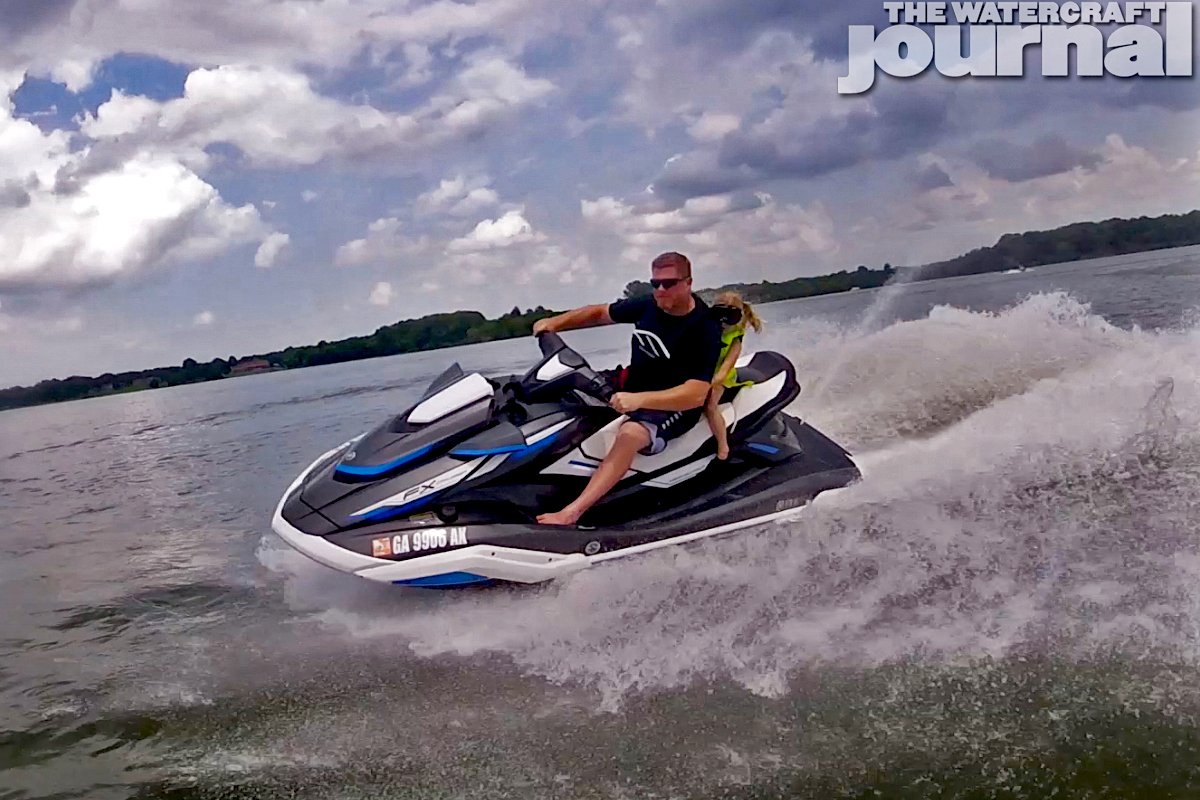
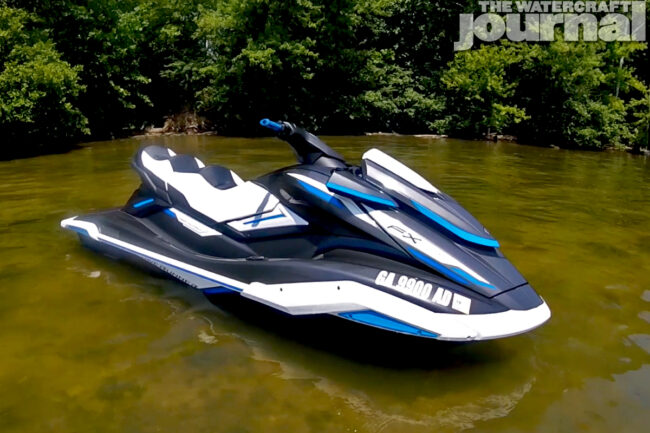
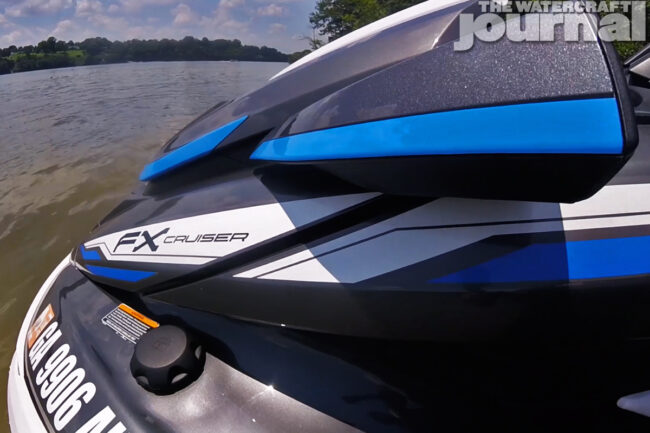
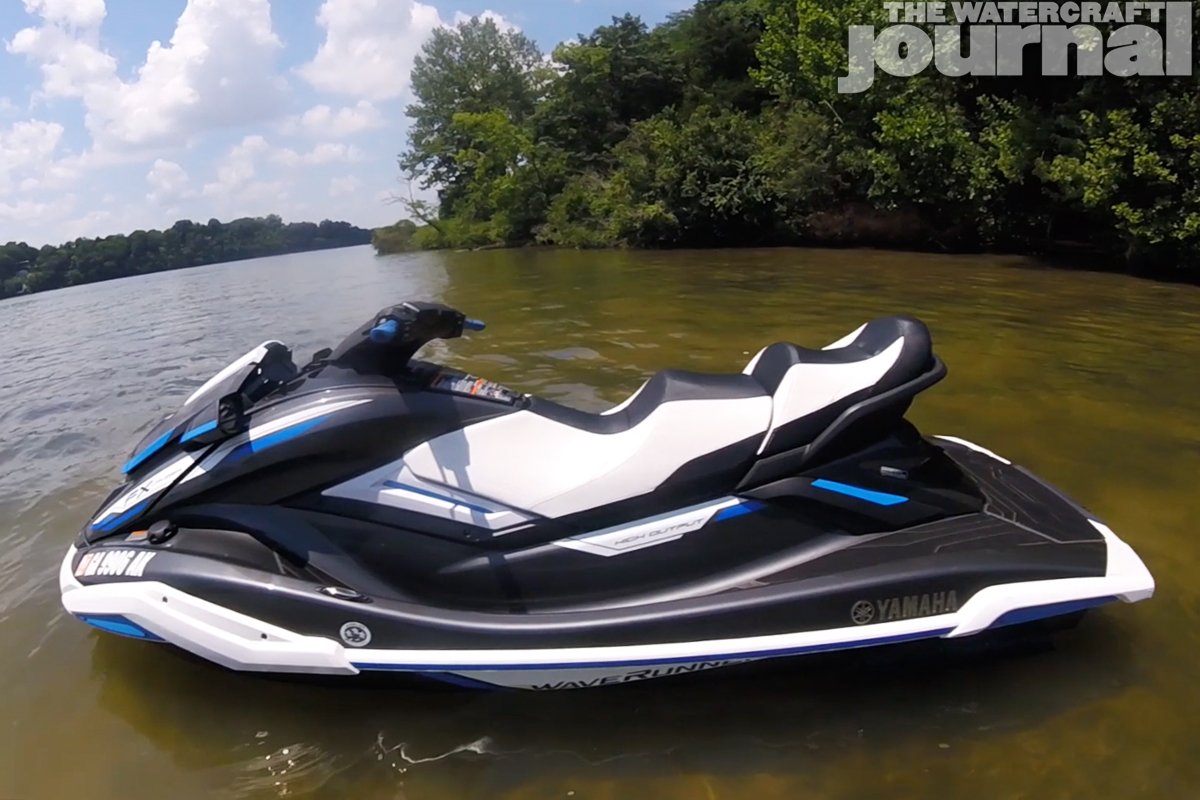
For 2019 Yamaha found itself in a bit of a conundrum; the problem was, how to you improve upon a watercraft that is already so popular? Prior to 2019, the FX Cruiser HO WaveRunner was one of Yamaha’s most popular watercraft.
A particular favorite of riding clubs and long-distance tourers, the nine-year-old FX Cruiser HO enjoyed consistent sales, glowing reviews and some of the highest customer satisfaction in the industry. So how do you essentially fix something that simply wasn’t broken?
First, Yamaha engineers listened closely to its loyal customer base; people wanted more storage, better instrumentation, and most importantly, superior handling – particularly in rougher water conditions.
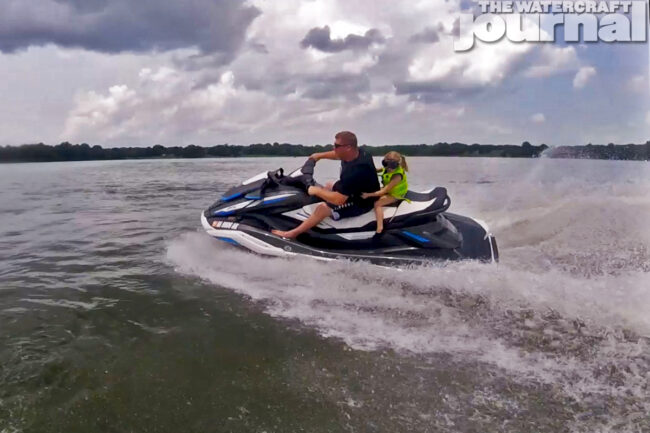
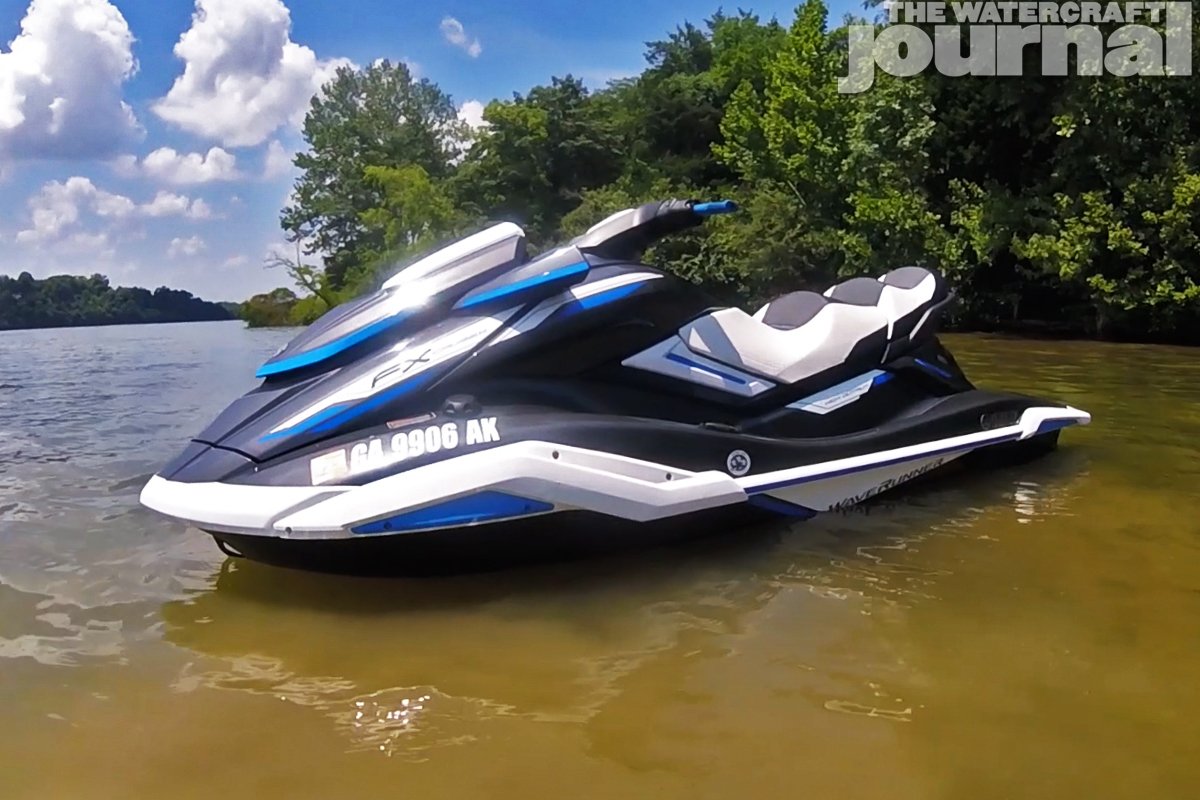
In developing the all-new hull for the FX, Yamaha borrowed heavily from the resoundingly successful GP1800 – and now GP1800R. Integrating the GP’s large, rounded bow chines and tiered lifting strakes running along its hull, the new FX – like the GP – can track a straight course through some of the ugliest, windblown chop without wandering, hunting or requiring extra rider input. It’s as predictable in stormy waters as it is on glass.
What fans of the previous version of the FX might find interesting is the full-sized 3-seater’s newfound ability to execute corners like a craft half its size. The new hull is stepped with its outermost chine very similar to the GP, giving the FX a very natural inside lean, allowing it to naturally roll inward on its rail during a particularly sharp turn.
This new characteristic gives the otherwise staid WaveRunner a far sportier feel. Maneuvering around obstacles at speed is no longer a issue; just goose the throttle and flick the handlebars and the FX will whip around smartly and predictably.
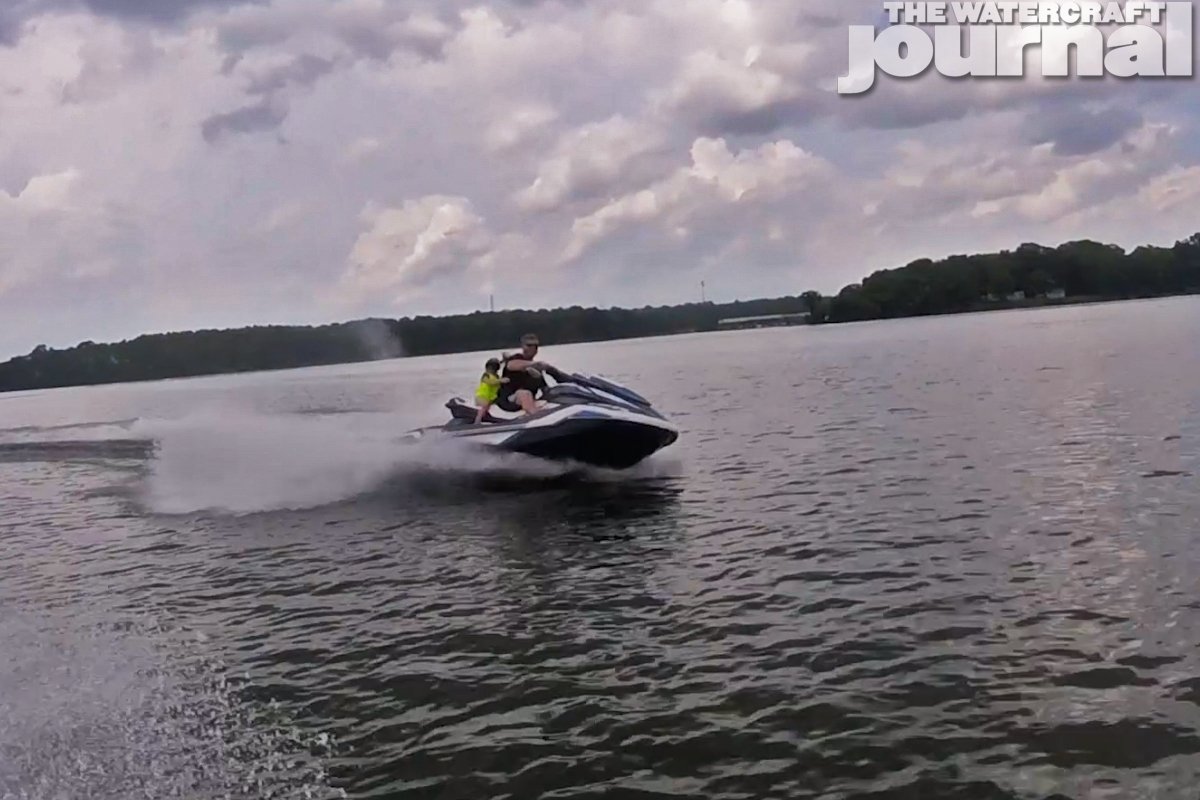
This emphasis on traction and handling does put a particular focus on the hull’s fore section; meaning the craft naturally favors its nose. If you’re looking for top speed, we recorded a respectable 58 miles per hour at 7,400rpm. While some will note the previous generation fared slightly better, personally, we’d happily trade a mile or two off the top end for far, far better handling in all water conditions. And we think most of you will too.
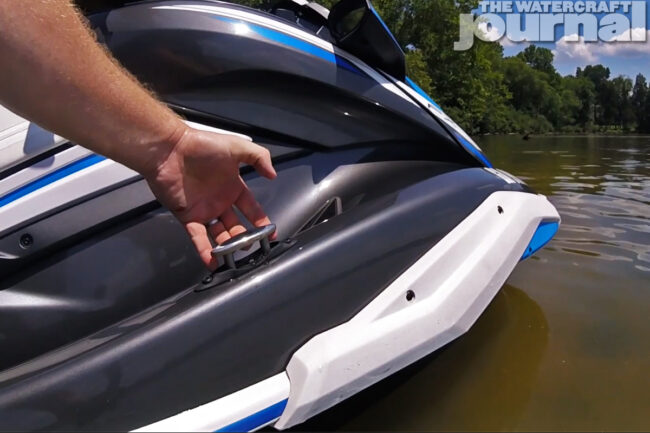
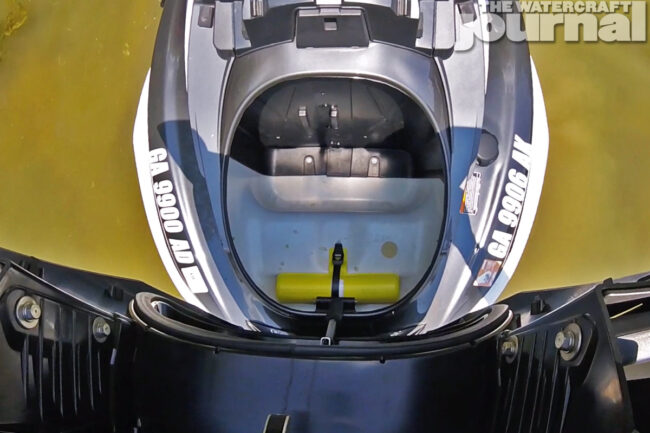
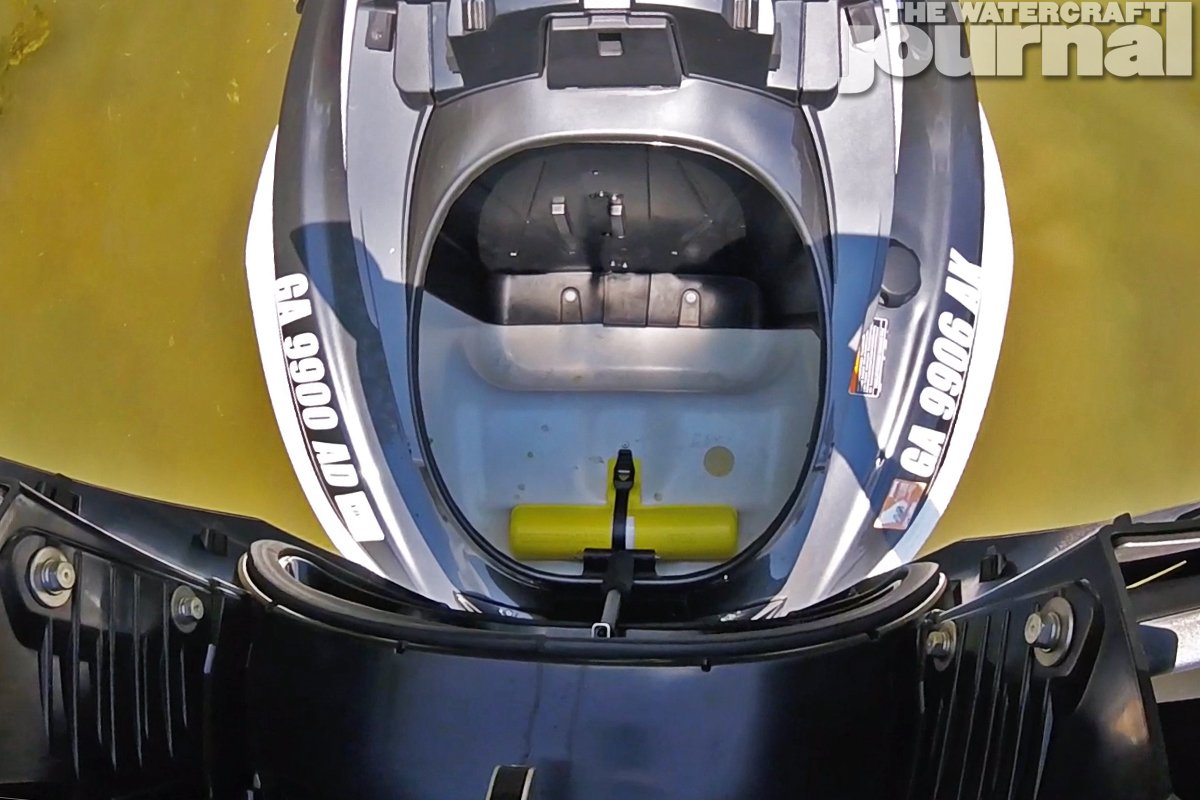
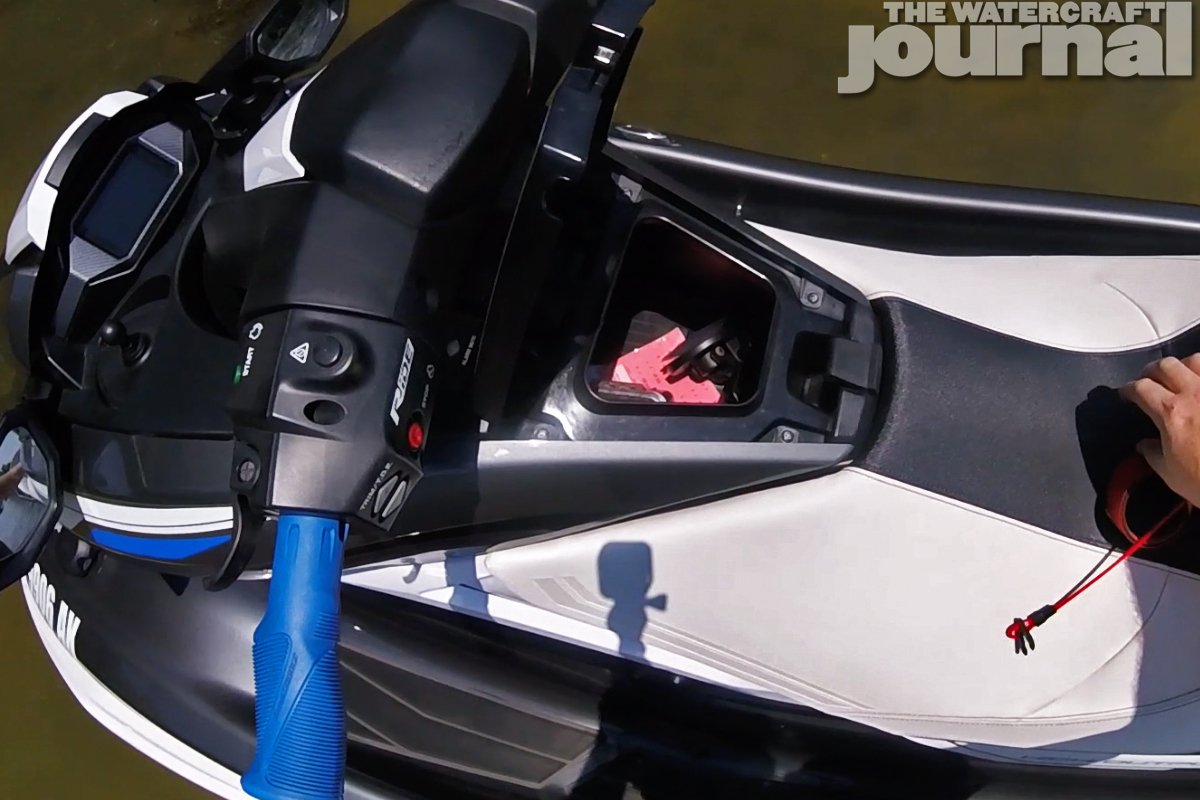
Of course, it wasn’t just the hull that got a complete redesign. The new 2019 FX Cruiser HO enjoys a new, giant front storage bin. Featuring a wide recess, it’s roomy enough to safely stow a cooler or gear bag; the opening is far wider, making loading and unloading less of a chore too. In fact, the leap in storage is considerable: 30-percent! From just over 33 gallons to 44.
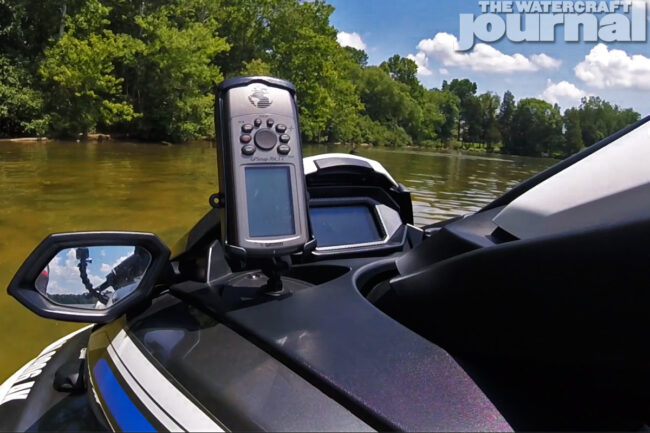
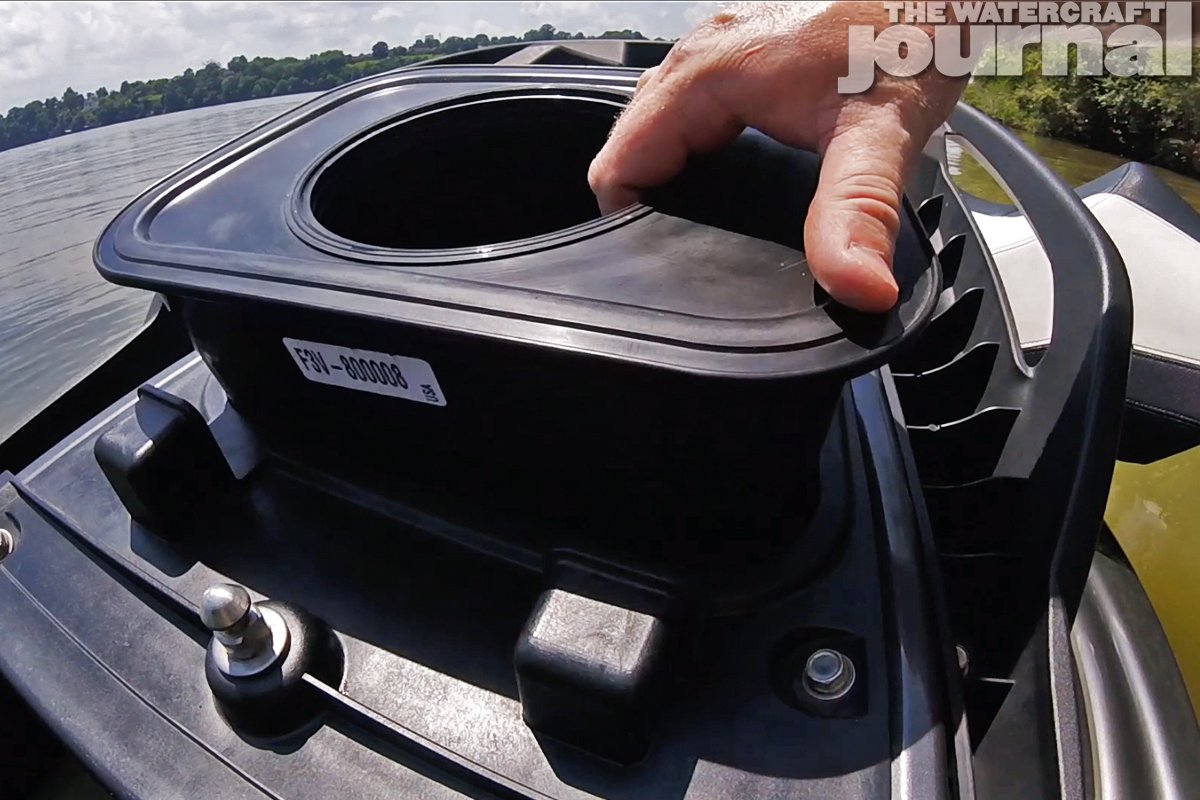
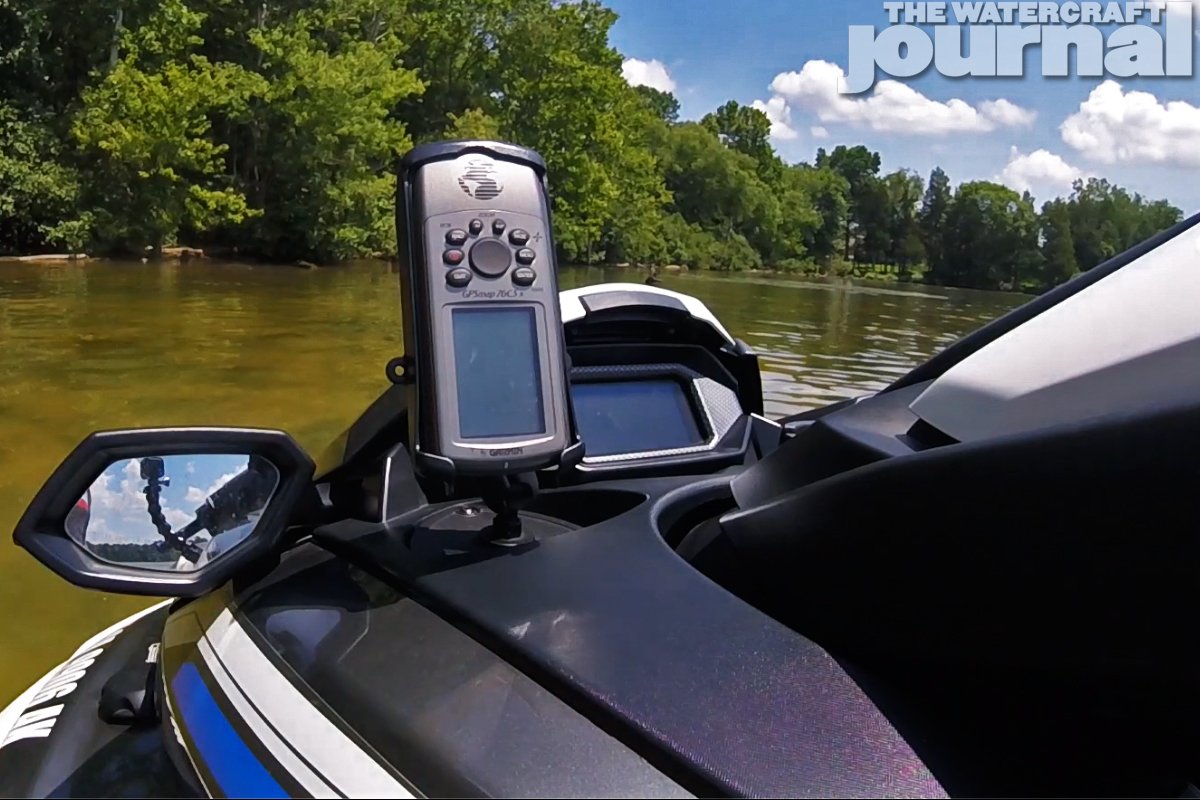
Yamaha cleverly redesigned its glove box with a new rubberized latch that gives the massive glovebox a waterproof seal, the first of its kind in the industry. Above, near the redesigned dashboard, Yamaha has integrated it’s new Multi-Mount system; where a cup holder or RAM mount can be fitted. This gives the FX runabouts a designated place to mount a GPS, GoPro camera or a fishing rod holder.
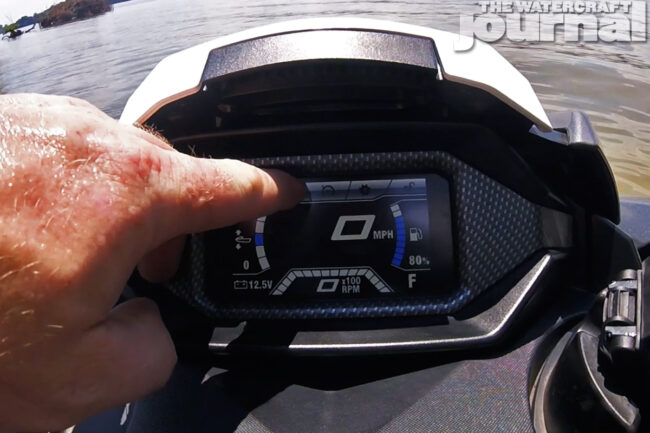
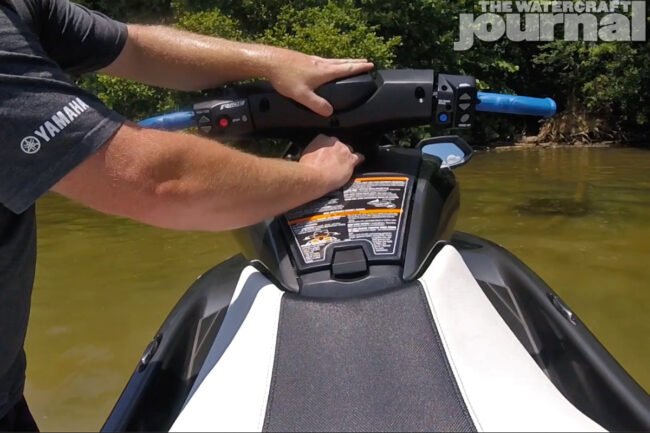
Of course, the big news is the aforementioned dashboard. For 2019, Yamaha introduced its ConNext digital display; the first touch-screen, full color dashboard in the industry. Here, control settings can restrict top speed for “less experienced” riders, set a security PIN number, or even manually adjust the background colors.
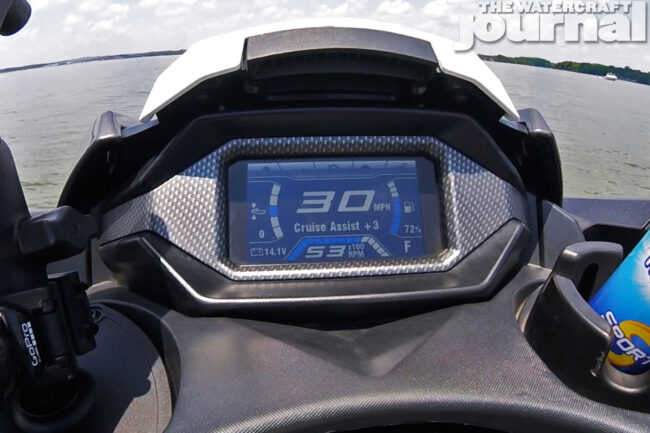
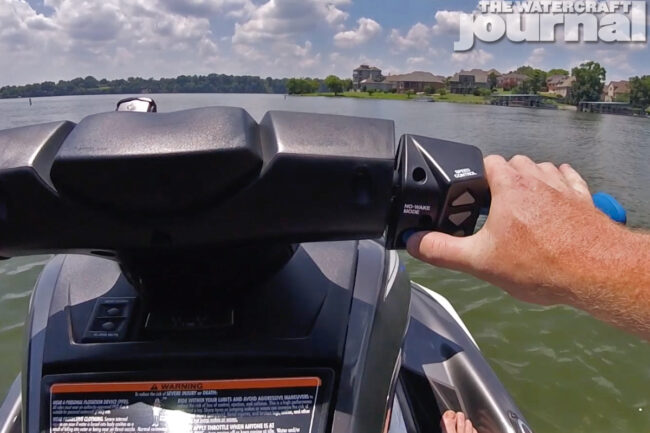
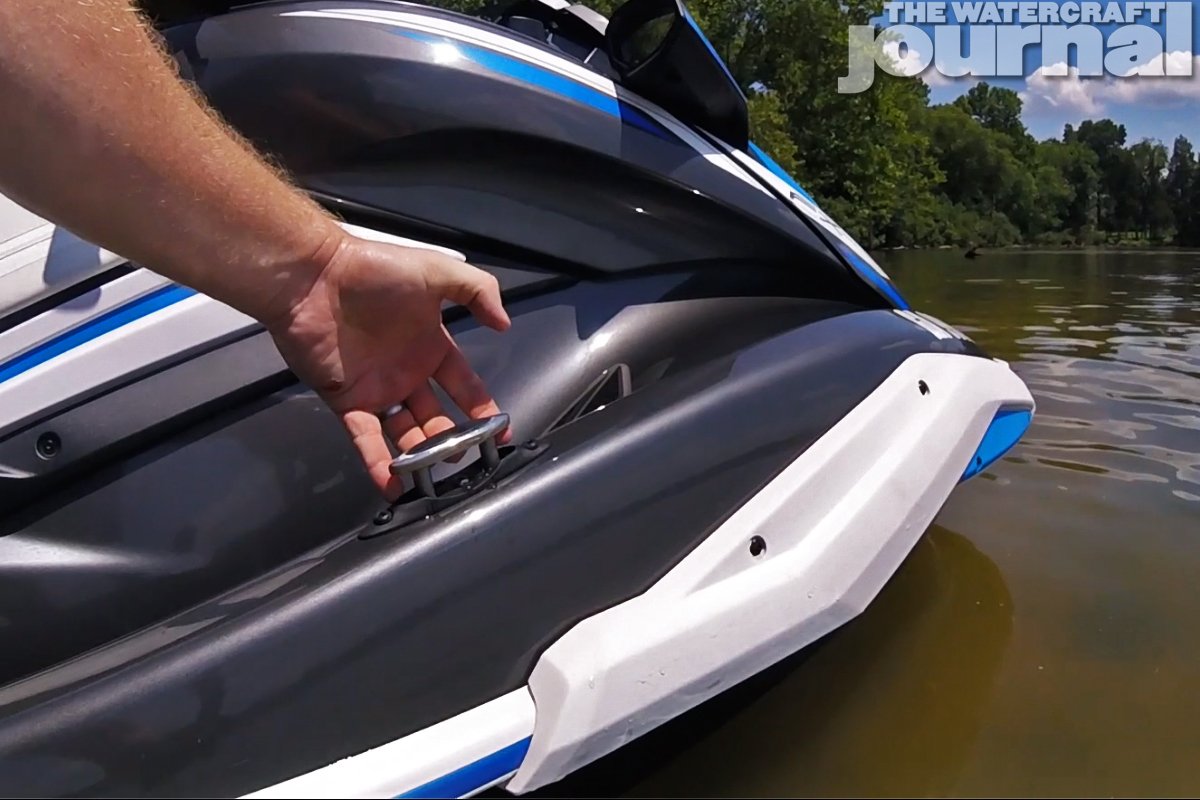
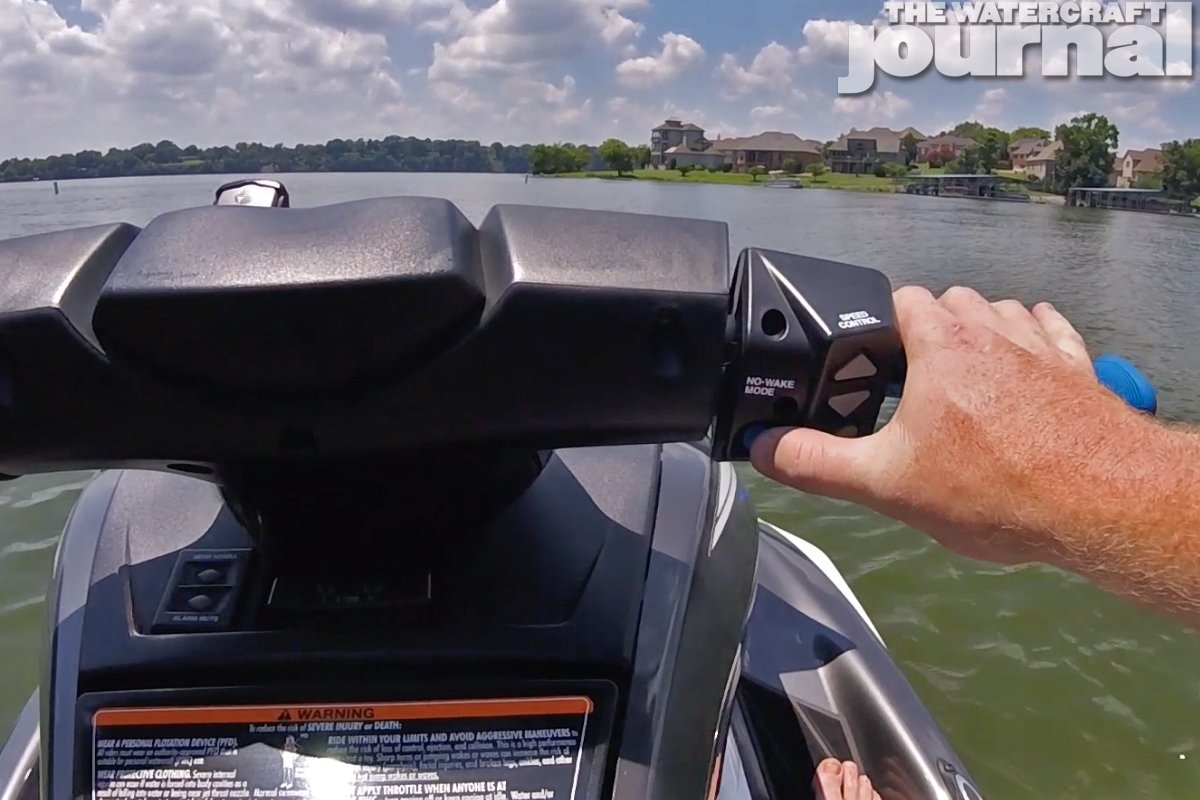
Of course, the FX Cruiser HO comes equipped with the standard features you’ve come to expect, including pull-up cleats in the gunwales, the innovative “No Wake Mode” that sets the WaveRunner’s speed to a manageable 5 miles per hour (with the option to bump up or down one mile per hour); and Cruise Control. Cruise Control is easily set once you’ve maintained a predetermined speed. And Yamaha gives you up to five miles per hour of play (either up or down) to adjust your chosen speed.
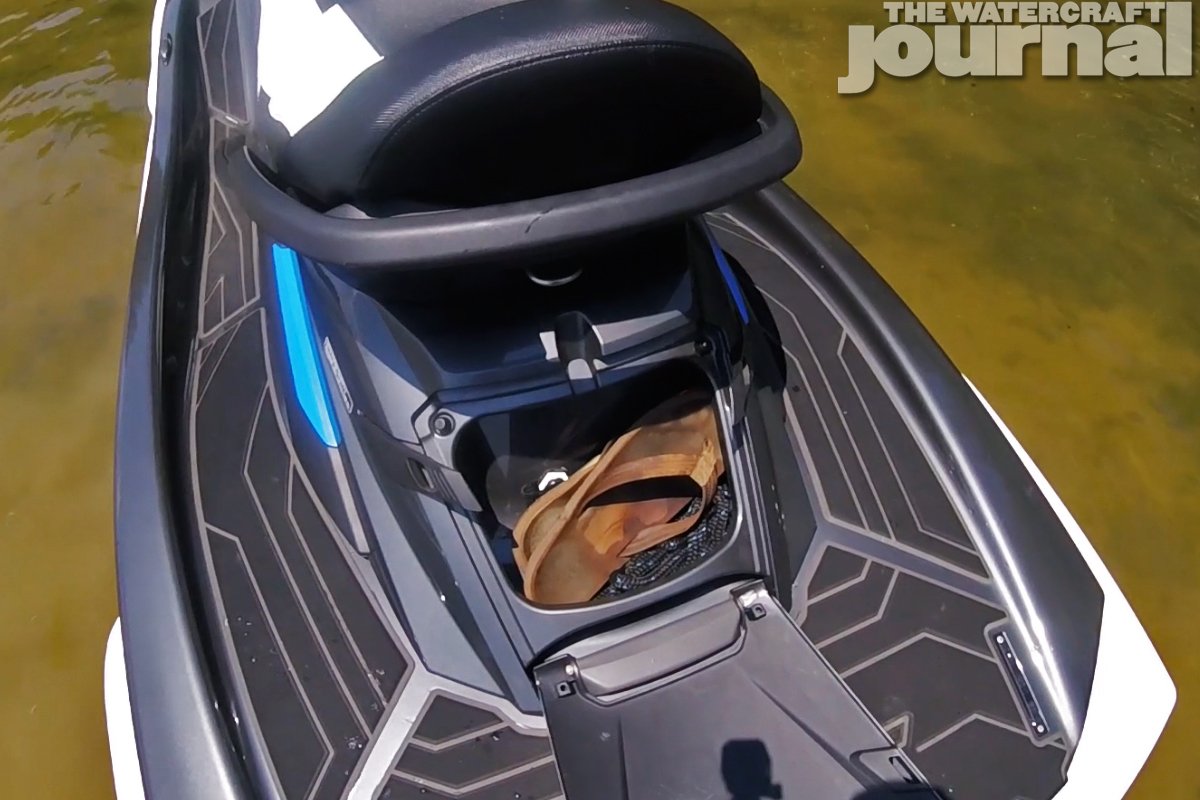
For 2019, Yamaha redesigned its folding swim step with a thick pad making reboarding far easier; and all of the two-tone laser-cut traction matting comes from industry leader, Hydro-Turf. Beneath the rear passenger’s seat is the wet storage bin, ideal for holding dock lines, a tow rope or just a pair of flip flops.
Another great bit of innovation is also one of the FX’s most unsung: the industry’s first footwell drains. We found that these work best when the craft is sitting out of the water while on the trailer or at home, allowing standing water to leisurely drain out of a port in the pump tunnel. The drains’ pin holes are easily clogged, so make sure to keep an eye open for debris.
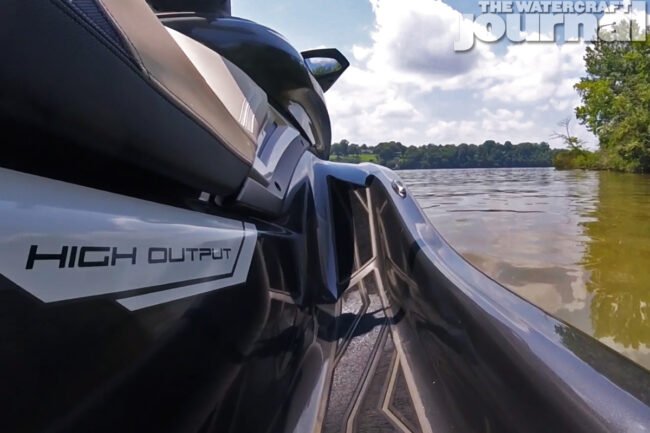
Famously powered by Yamaha’s 180-horsepower and nearly-bulletproof 1,812cc (1.8-liter) High Output 4-cylinder four-stroke, the Yamaha FX Cruiser HO conservatively sips from its 18-and-a-half gallon fuel tank, averaging about 5.8 miles per gallon (under general use) according to our in-dash calculator.
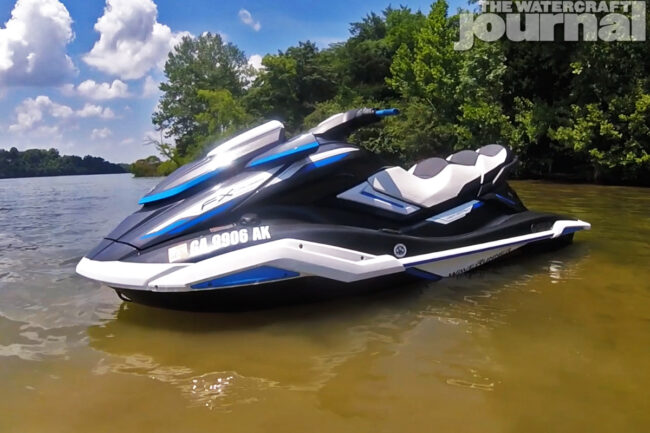
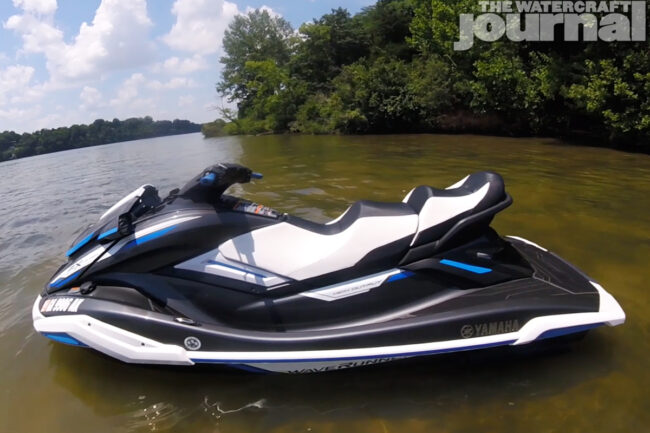
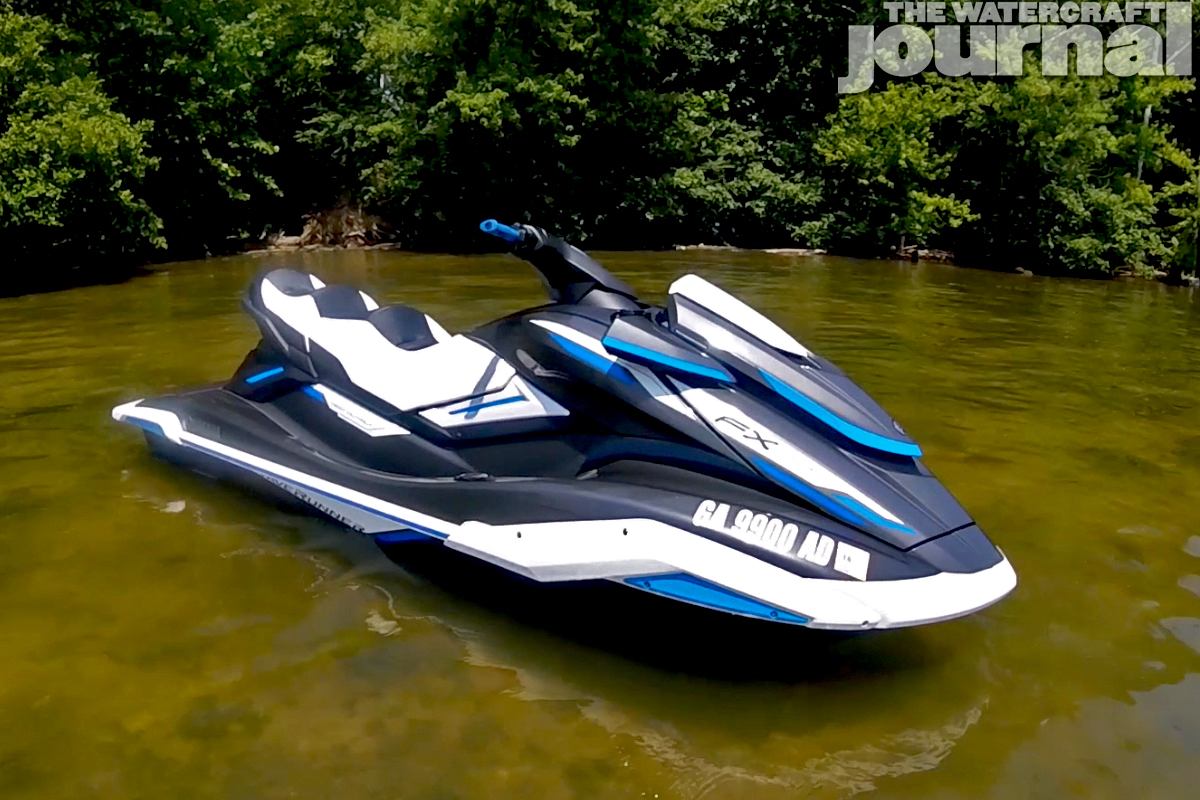
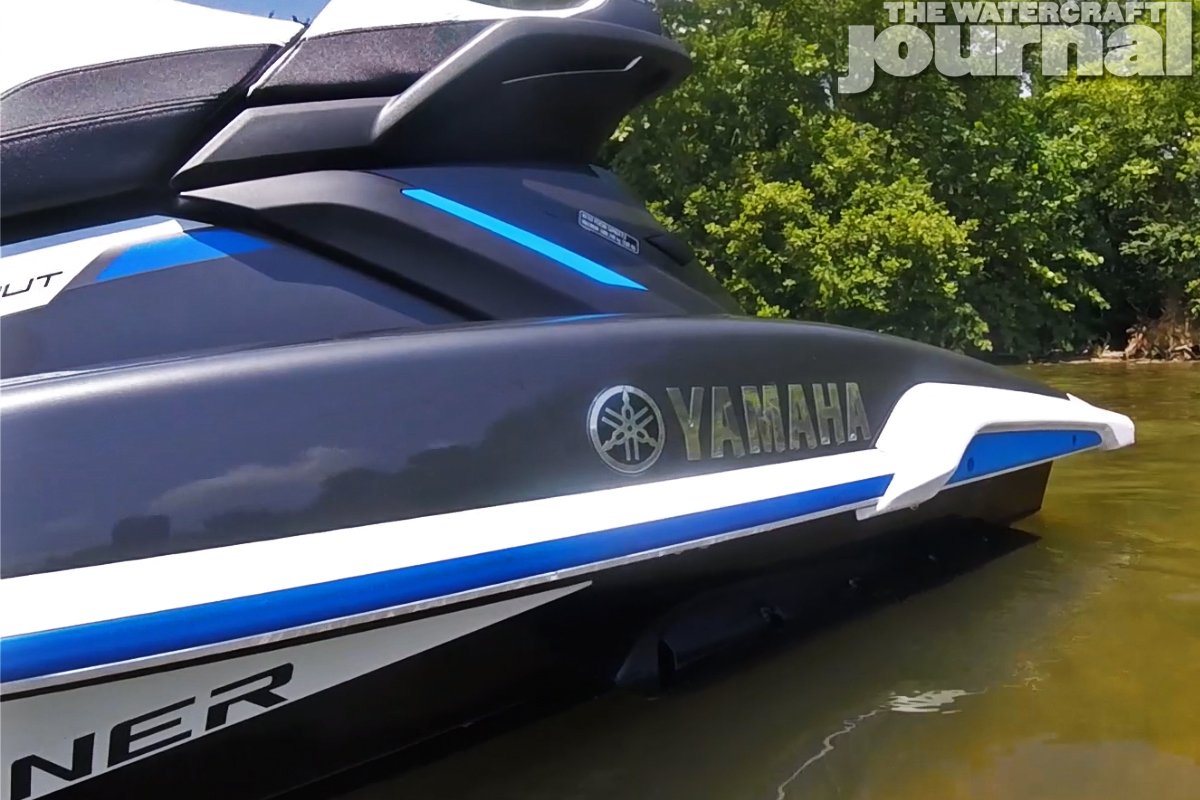
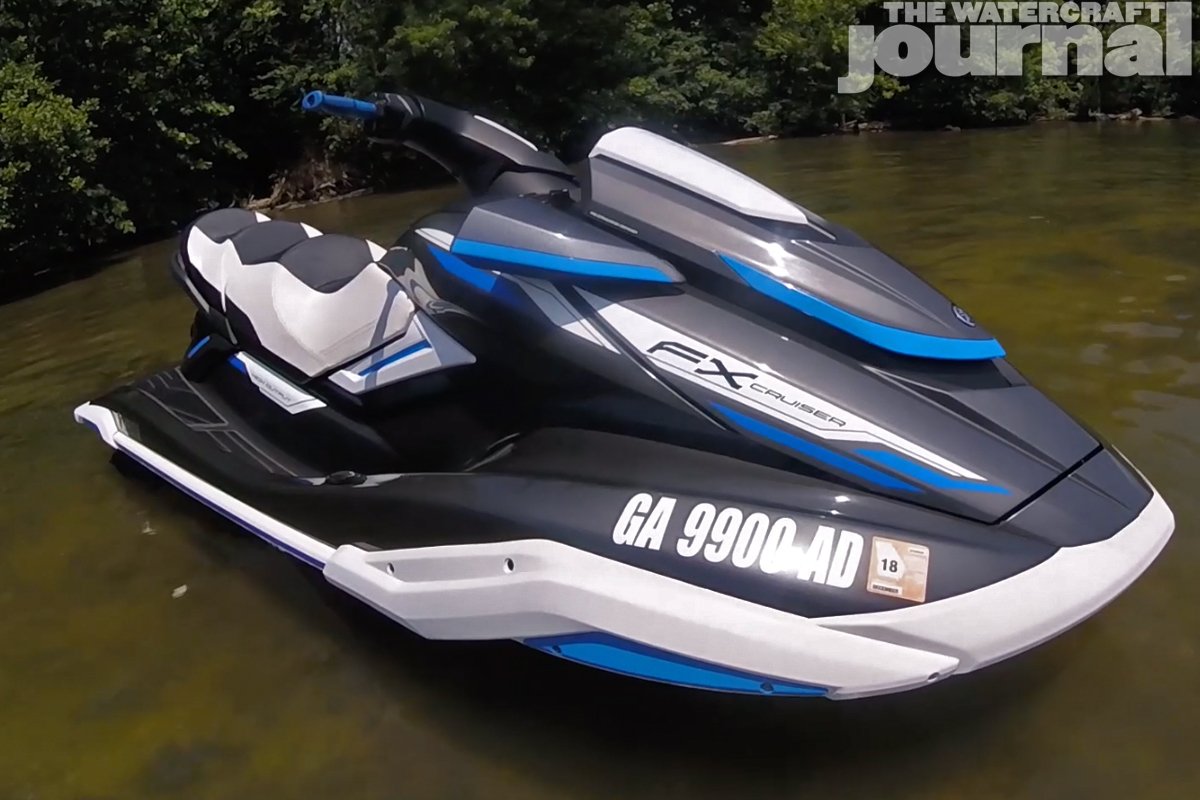
All of these changes swelled the new 2019 FX ever-so-slightly over its predecessor; picking an inch in length, two inches in width and an added 7-pounds – up from 831 to 838-pounds. Our Cruiser came to us in Carbon Metallic with Blue, but a Pure White with Carbon coloring is also available at no extra charge.
The tiered seat is made with grippy-yet-comfortable material, and yes, is easily cleaned. The FX Cruiser HO’s many white surfaces (seat, rub rails, etc.) may scare some, but rest assured are not as high maintenance as you may fear. Priced at $13,999, the 2019 Yamaha FX Cruiser High Output offers much more machine than its prior namesake and a welcomed evolutionary step forward in rider comfort, control and enjoyment, making this WaveRunner practically perfect.
April 21st, 2019 saw “The Challenge” go down in the Grand Cayman Islands on Kaibo Beach. The venue was packed with spectators and pwc racers alike. Racers competed on Easter Sunday for a sweet pot totaling $10,000 worth of cash and prizes. “The Challenge” brings together high-speed personal watercraft and powerboats. It’s an exciting event with everyone raring to go and kick some butt to get those bragging rights!
Endurance racing consisted of three motos with Amateur and Pro Open Classes. Teammates, Gary “GJ” Whitaker and Matthew Panton of Nuttin’ 2 Lose Racing and Nathan Ebanks of Tony’s Toys Watercraft Racing each took 1st, 2cd, and 3rd respectively in the Pro Open Class.
Anthony Logan, “The Mean Machine”, couldn’t be stopped in the Amateur Open Class. He picked up all three wins. Chris Bodden grabbed 2cd and Dylan McLaughlin came out of retirement and took 3rd, blowing away all the other guys.
Mark “Tony” Hydes picked up 1st in the power boat class. It was an easy win because his competition literally blew up on the way to the start of the first of five drag races. Ouch!
This entertaining event was sponsored by MARMEE, Captain Eugene Ebanks, JP, MLA-Councilor of Environment, Culture and Housing and elected member for West Bay Central of the Cayman Islands, Hurley’s Media, Irie 98.9 FM, Hydro-Turf, and Jet Pilot.
The event was a huge success with awesome people in attendance, entertainment, and a host of other activities to keep the fun going. Cay Jet Watersports put on a fly board show. Lotus cars were on display from Cayman Islands Motorsports Association. The adults even had an Easter Egg Hunt. Food was provided by Island Bites and the Cayman Islands Imperial Beauties.
MARMEE Entertainment has big plans to grow “The Challenge”. One step in that direction is to invite international riders and attendees to future events. This was the first event produced at the new race site and it was a success.
Expect more exciting events to come out the Cayman Islands. Check out the Cayman Island Watercraft Association Facebook page to keep up with what’s happening on the island.
Technology is a terrific thing, it allows us to communicate instantly, receive notifications from friends and family and for us to create new products. One company is doing just that; Seabob.
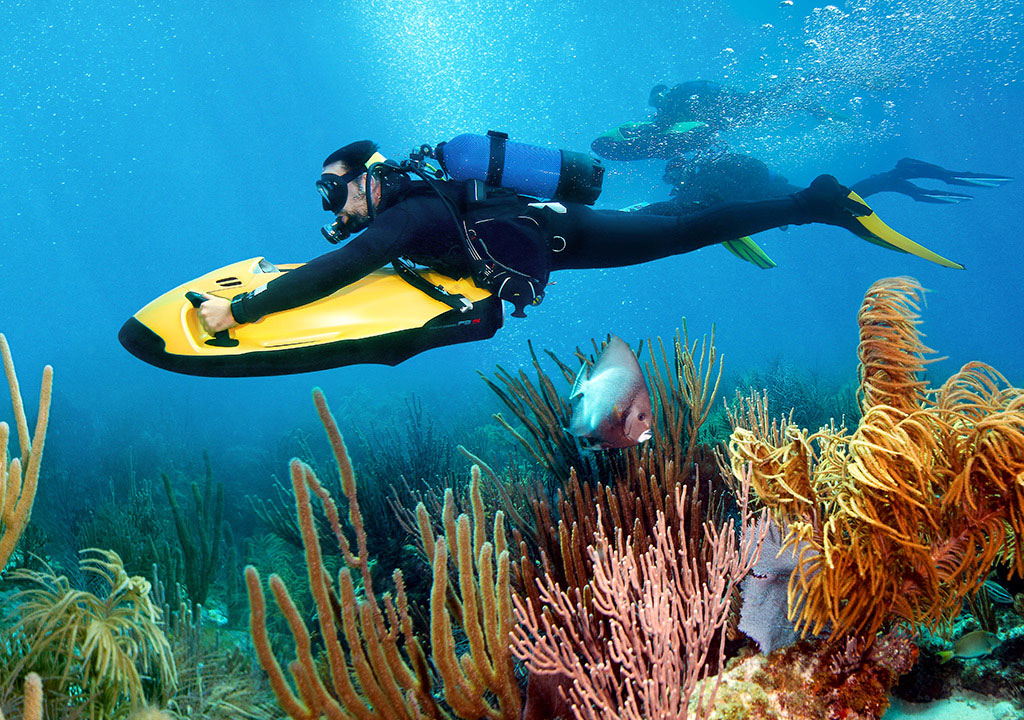
Seabob is a company headquartered in Greece and is producing some of the fastest sleds in the world. These sleds are under water machines that take all of the work out of diving. Instead of moving around slowly while scuba diving, why not put a little pep in your step with the help from one of the three models Seabob offers.
Here at The Watercraft Journal, we tend to cover personal watercraft that consist of riding on top of the water. Well, we also love to try new things and show you how there are many different ways to enjoy your time on the water.
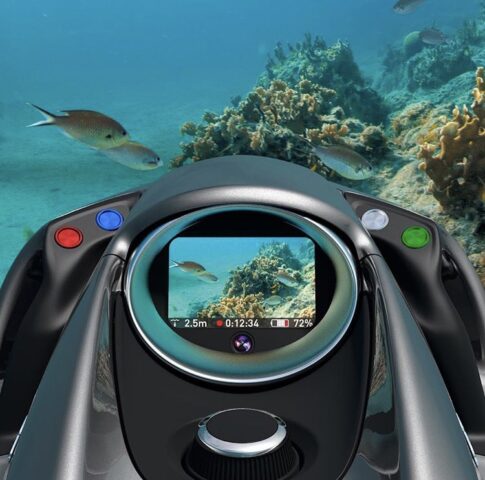
Seabob offers three different models to provide you with the best experience. The Seabob F5 2.5kW (3.3HP), F5 S 4.0kW (5.3HP) and the F5 SR 4.5kW (6HP). The base model is the F5 and every model up has more features such as additional power and thrust, operation time and diving depth.
Keep in mind while operating a Seabob to not disturb the marine life. Our world has some beautiful coral reefs that we want to keep protected. Make sure to have on proper equipment while diving and to have fun!
Be sure to check out Seabob on Facebook and Instagram! They post pictures and videos regularly of people out riding a Seabob. Rumor has it that everyone who has operated one has had a smile on their face the while time.
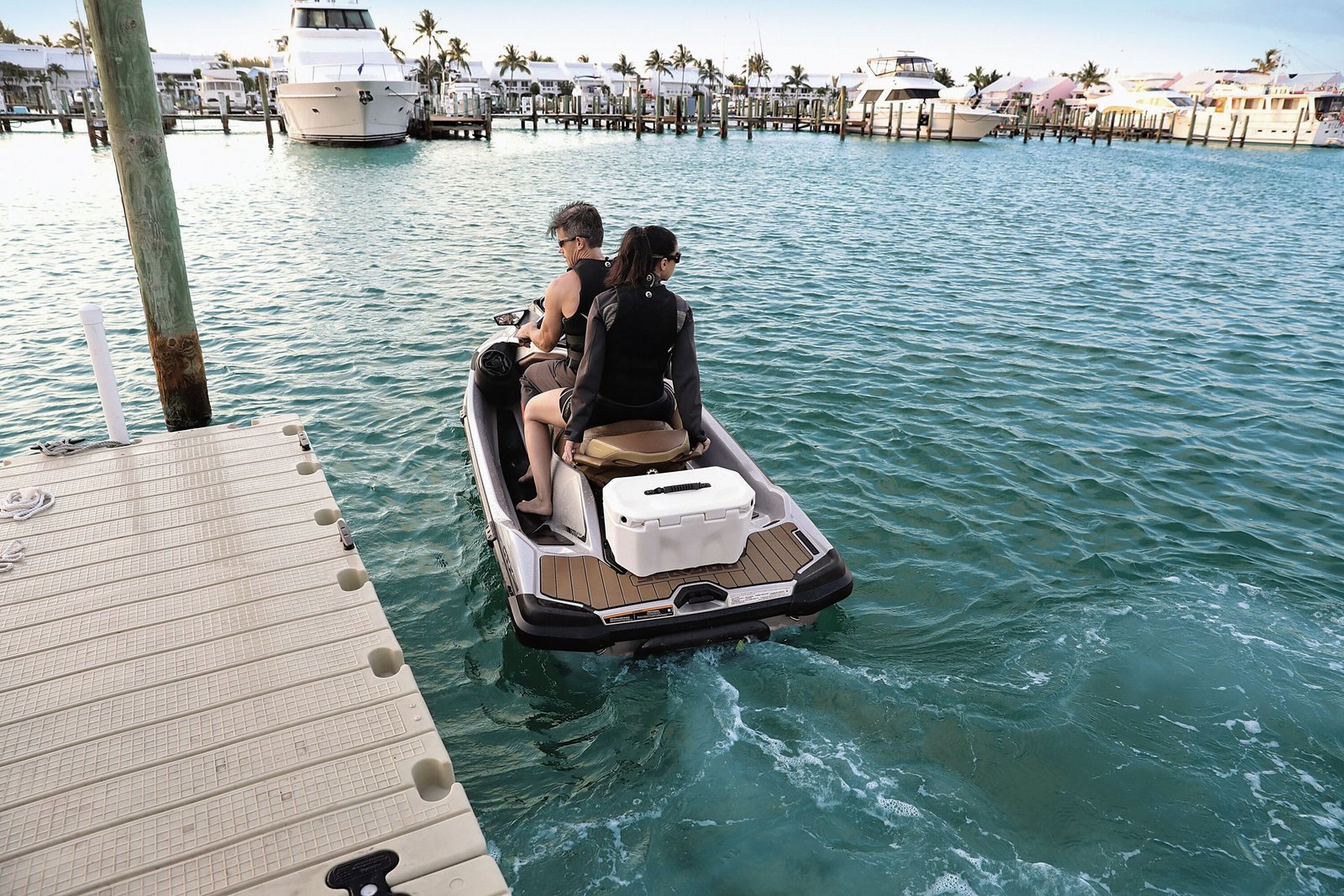
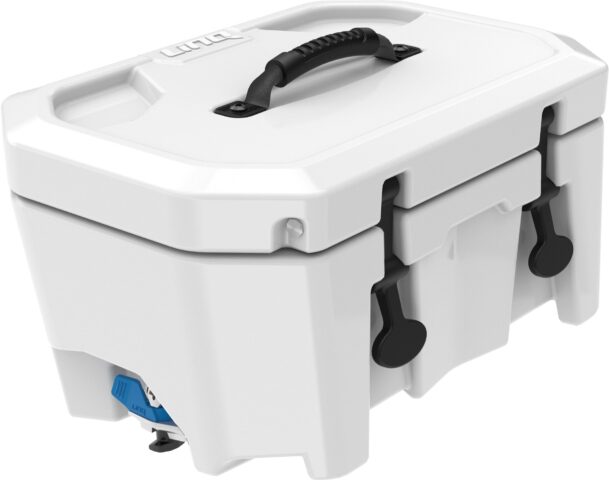
We have seen it many times this year, Sea-Doo’s LinQ system. The feature for this edition of the Sea-Doo media blog details the 4.2-gallon cooler system which snaps into your LinQ-equipped model.
If there were ever a time to talk about it, it’s now considering some of the recent heat waves that many regions have experienced this summer. Staying hydrated on your ride has never been easier than with this single accessory. Now you can keep drinks ice cold and food fresh on your next outing.
See the Sea-Doo media content below for more information:
The LinQ accessory system allows Sea-Doo watercraft owners to enhance their Sea-Doo life. The cooler is one of eight LinQ accessories that attaches in seconds with no tools. What ever they want to do on the water, the LinQ accessories allow them to do it further, longer, and with more of the things that they want with them.
The Sea-Doo 4.2-Gal (16 L) Cooler is bringing more convenience and adventure to the Sea-Doo Life. Keep your summer essentials cold with this high-quality cooler that quickly and securely attaches right on the back of your Sea-Doo. This durable, rotomolded cooler allows you to pack more, play more, and ride farther while your food and drinks stay fresh. Rumor has it, the cooler will comfortably fit a 12 pack (of soda). The LinQ 4.2-Gal Cooler accessory now fits all platforms and are sold separately for USD $284.99.
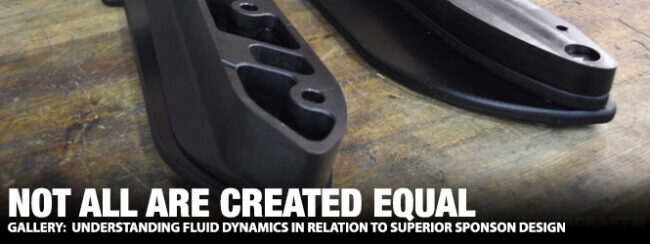
All too often modern watercraft sponsons are described in terms best categorized as either blades or wings; and while key attributes are certainly appropriate to these two monikers, there is a great deal of science to be considered when designing a sponson – which is what we’ll be discussing in this essay.
This, like several other articles we have published before (here, here and here), is part of a succession of atypical in-depth feature entries aimed to provide the enthusiast audience a firmer understanding of the mechanisms integral to personal watercraft engineering and more appropriately, the study of hydrodynamics (ie. “fluid dynamics”).
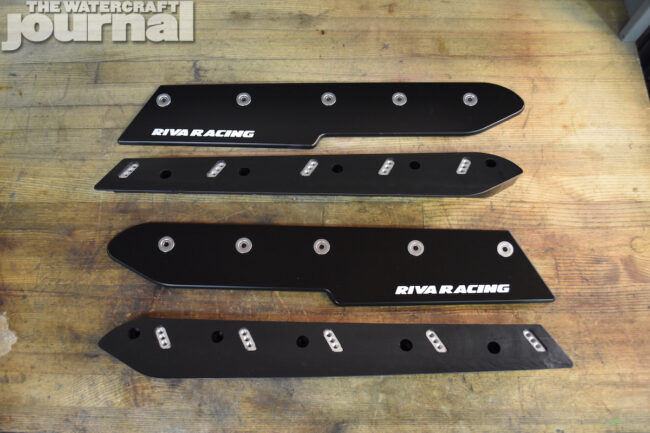
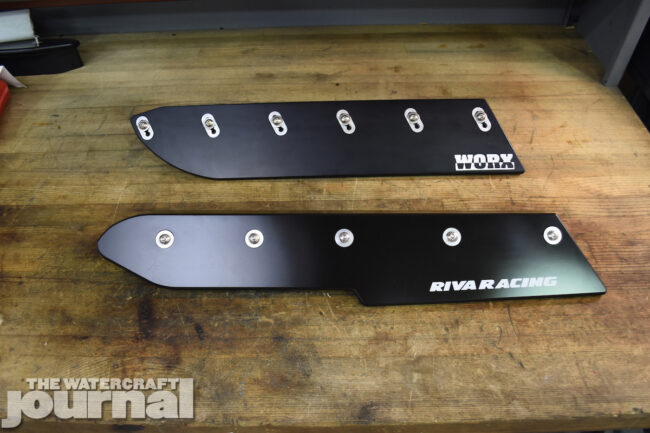
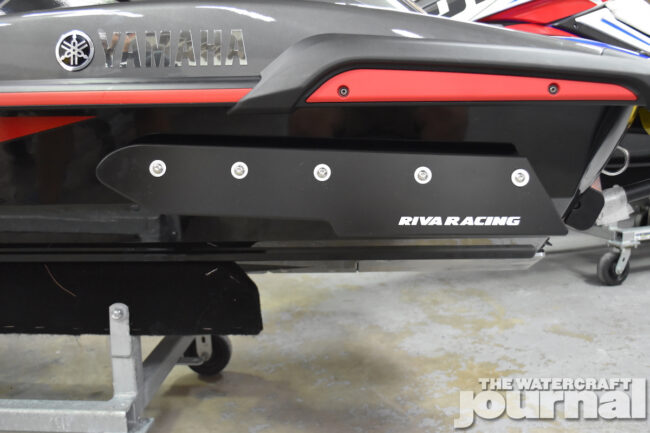
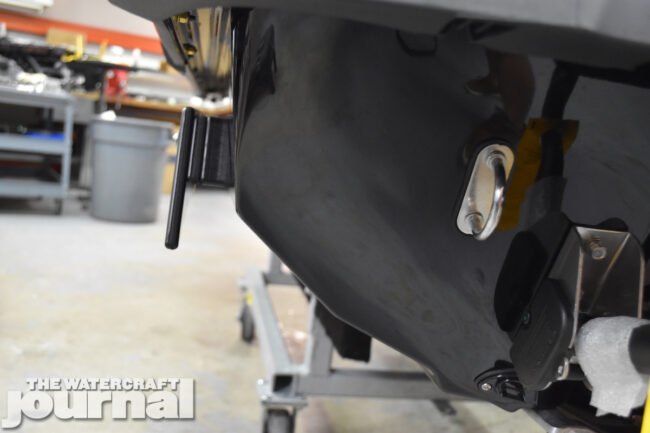
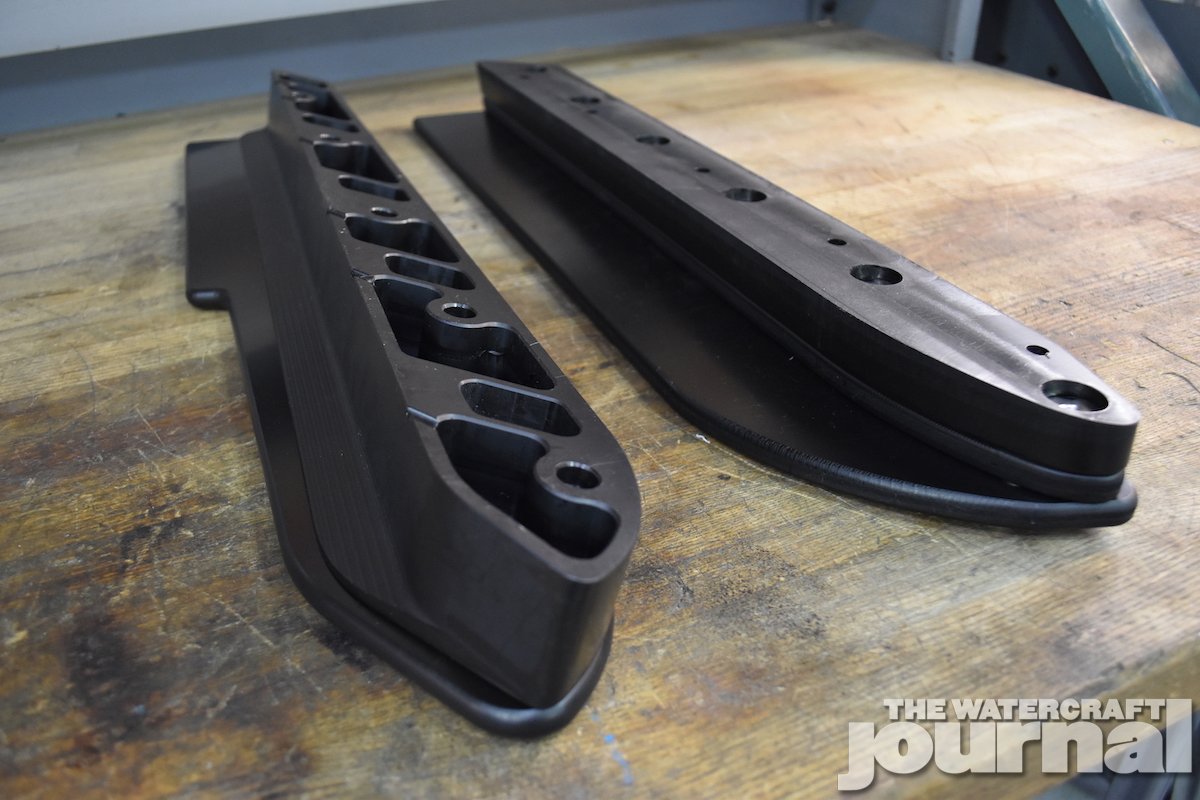
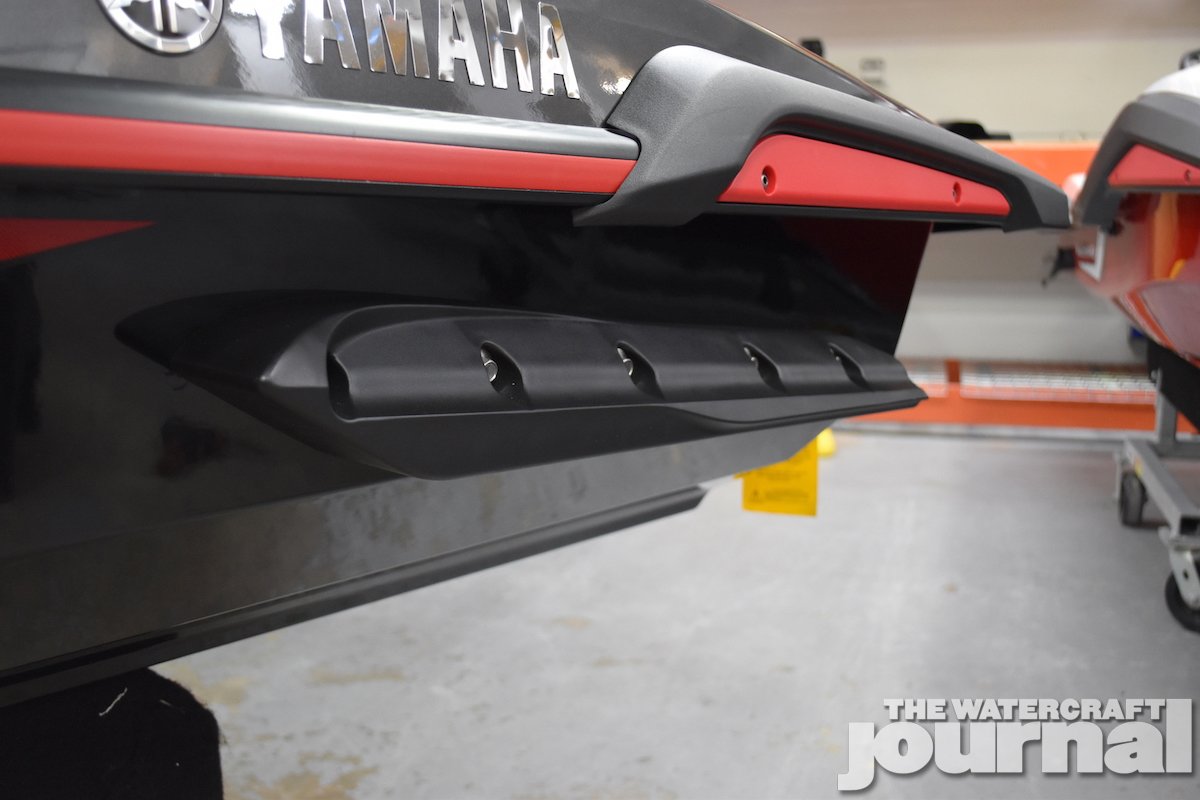
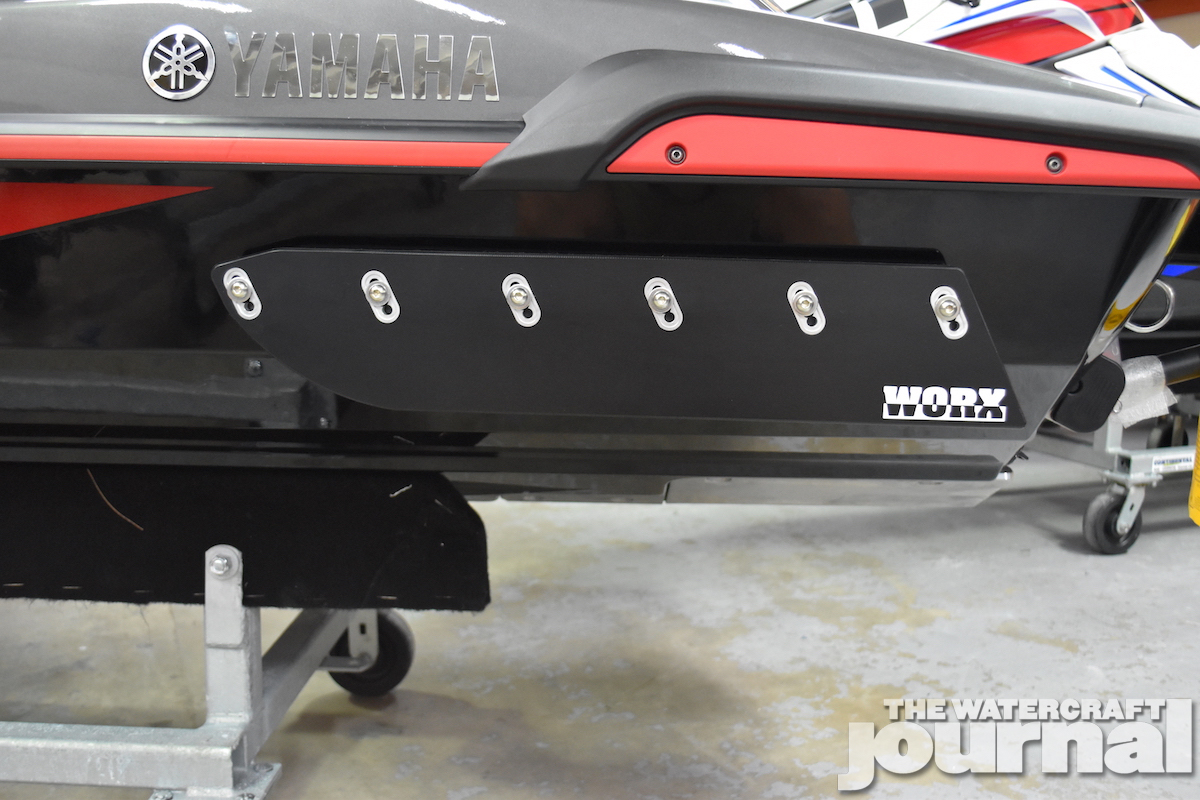
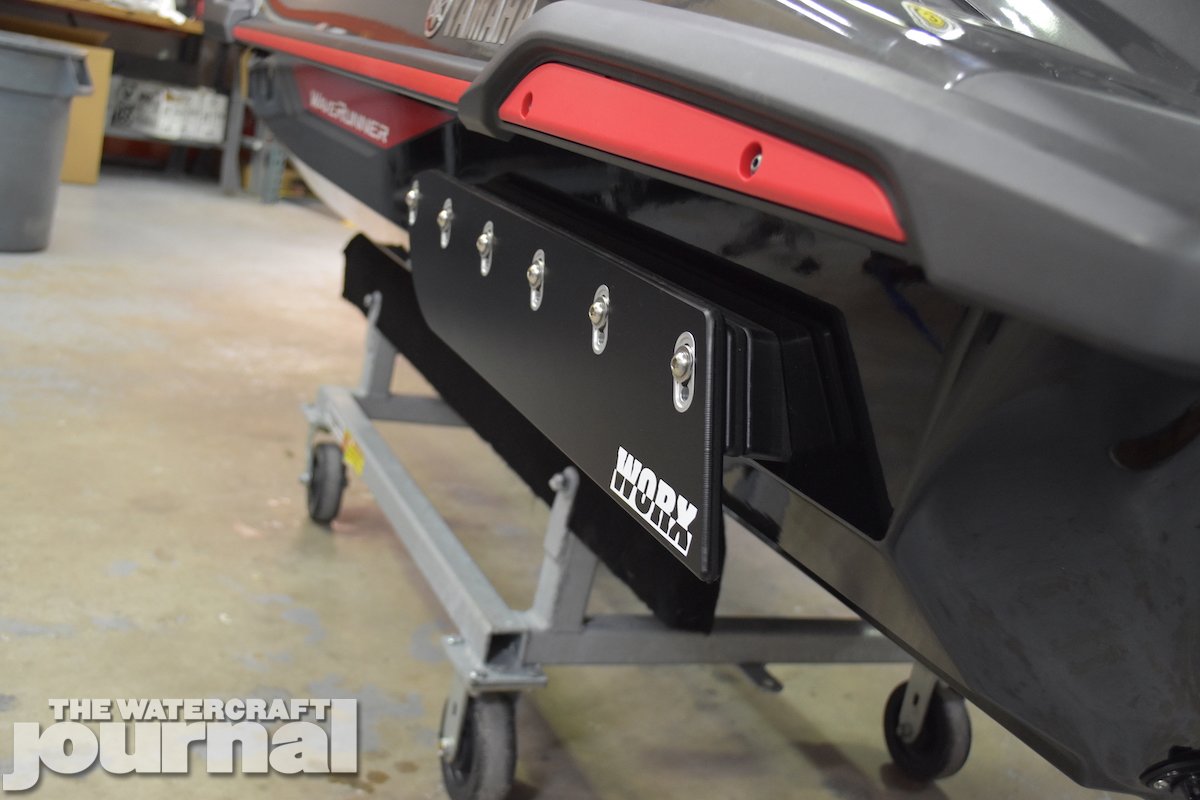
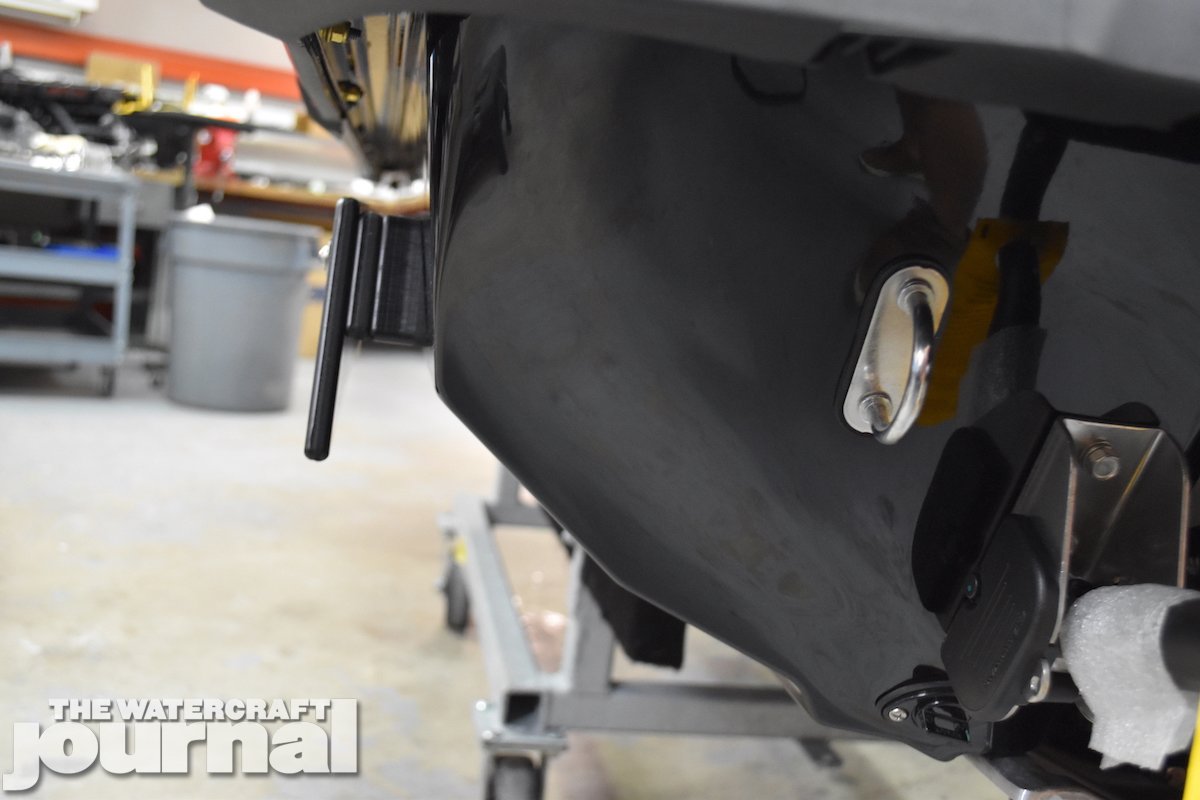
Above: In these images, we will take a methodical look at the intended purposes and successful execution of a performance sponson, and compare two brands’ offerings for the 2019 Yamaha FX SVHO – the RIVA Racing Pro Series Sponson and the WORX Racing Sponson – as well as take a closer look at the factory-supplied sponson and how they stack up as well.
To begin, by its most basic definition, a watercraft sponson is a protrusion that extends outward from the sides of the hull to improve stability while at speed (and while stationary), lift at acceleration, and traction (ie. “bite”) in cornering. [For this essay, we’re going to forgo exploration of forward-mounted sponsons typically added to standup watercraft (ie. “tubbies”) or those used by sailing vessels, and focus strictly on personal watercraft runabouts. –Ed.]
So why is lift so important? A watercraft sits lowest in the water while at rest. While moving at low speeds, the resistance of the water’s density against the momentum of the craft will generate some lift naturally. By using angled sponsons (similar to aircraft wings), added lift will raise the watercraft higher at a quicker rate, bringing the PWC to plane where it has the least resistance.
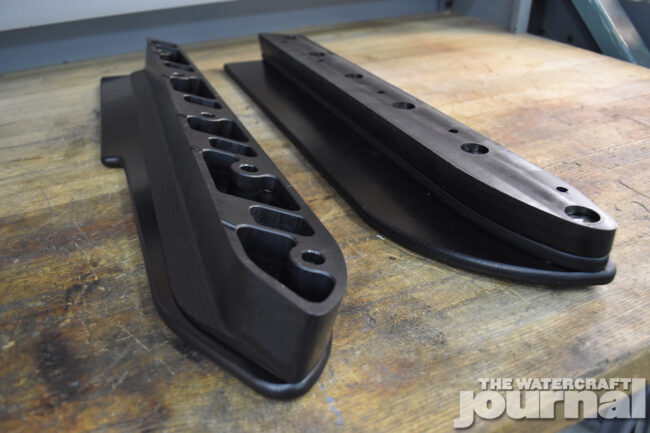
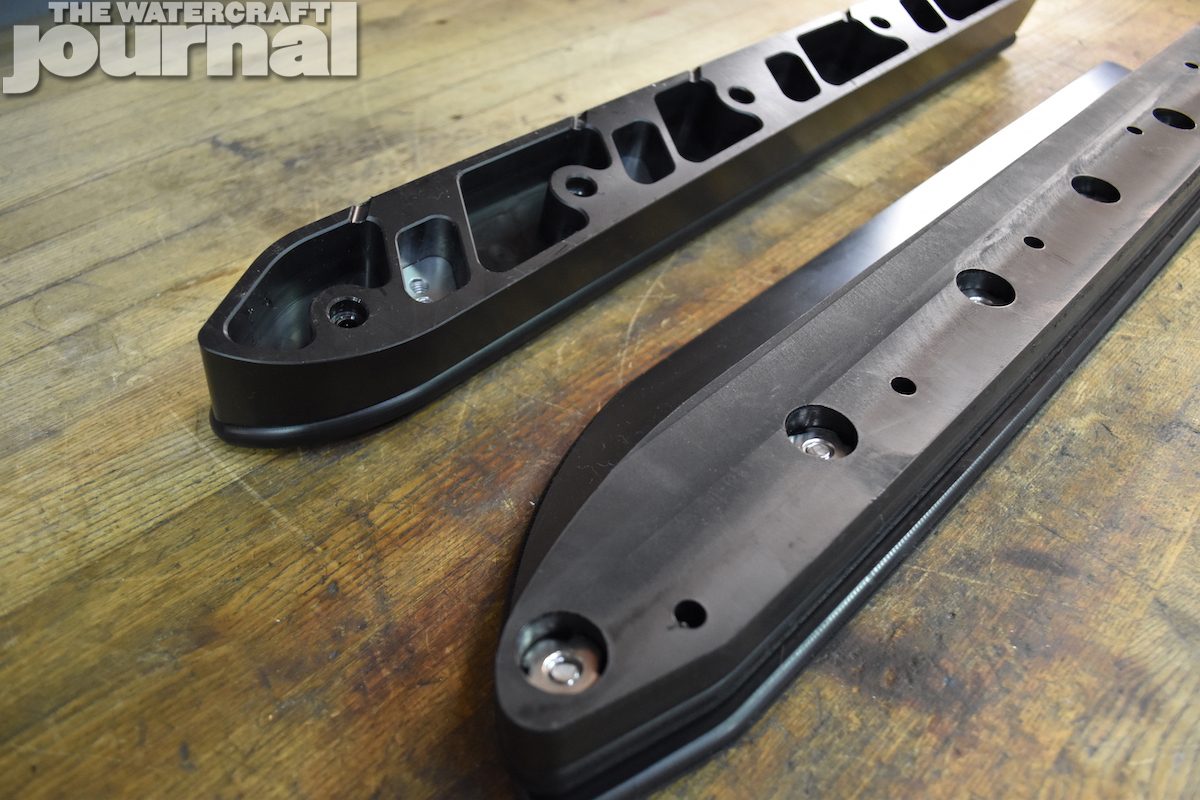
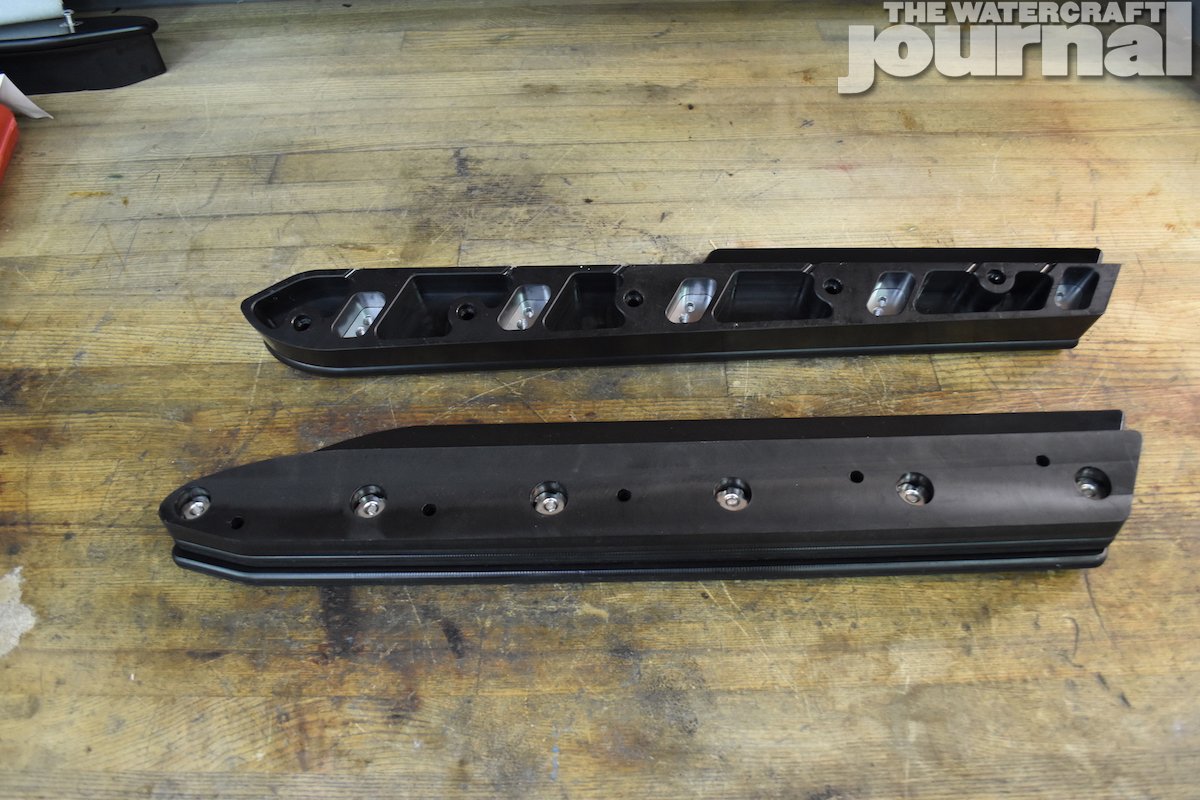
Above: Both RIVA and WORX’s offerings provide 3-levels of blade height adjustment. Note the difference in lengths for both the blades and backing plates.
The early Sea-Doo GTs in the late 1980s were the first runabouts to employ sponsons; their purpose was to generate initial lift and reduce porpoising. While these first crude “block type” sponsons were effective in providing better stability, “sponsons didn’t become a tool for better handling until 1993, when Sea-Doo widened their existing GT sponsons and added a curve,” according to a report by Joel Johnson.
This immediately drew the attention of the racing/performance aftermarket community and soon became an essential fixture in future watercraft design. During these nascent years, engineers and shapers retained a basic “block” shape, featuring a round or pointed nose to allow water to pass over it more efficiently.
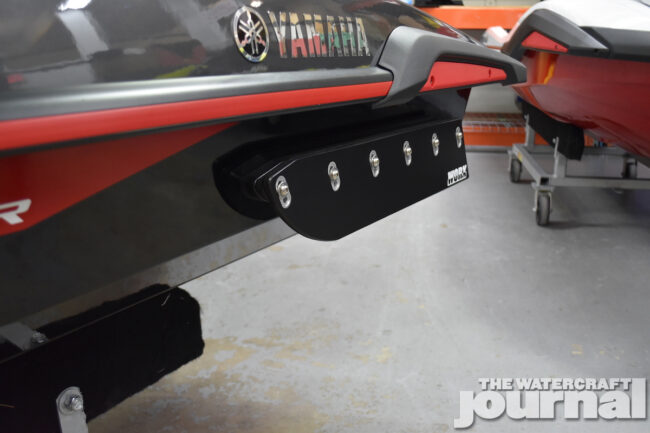
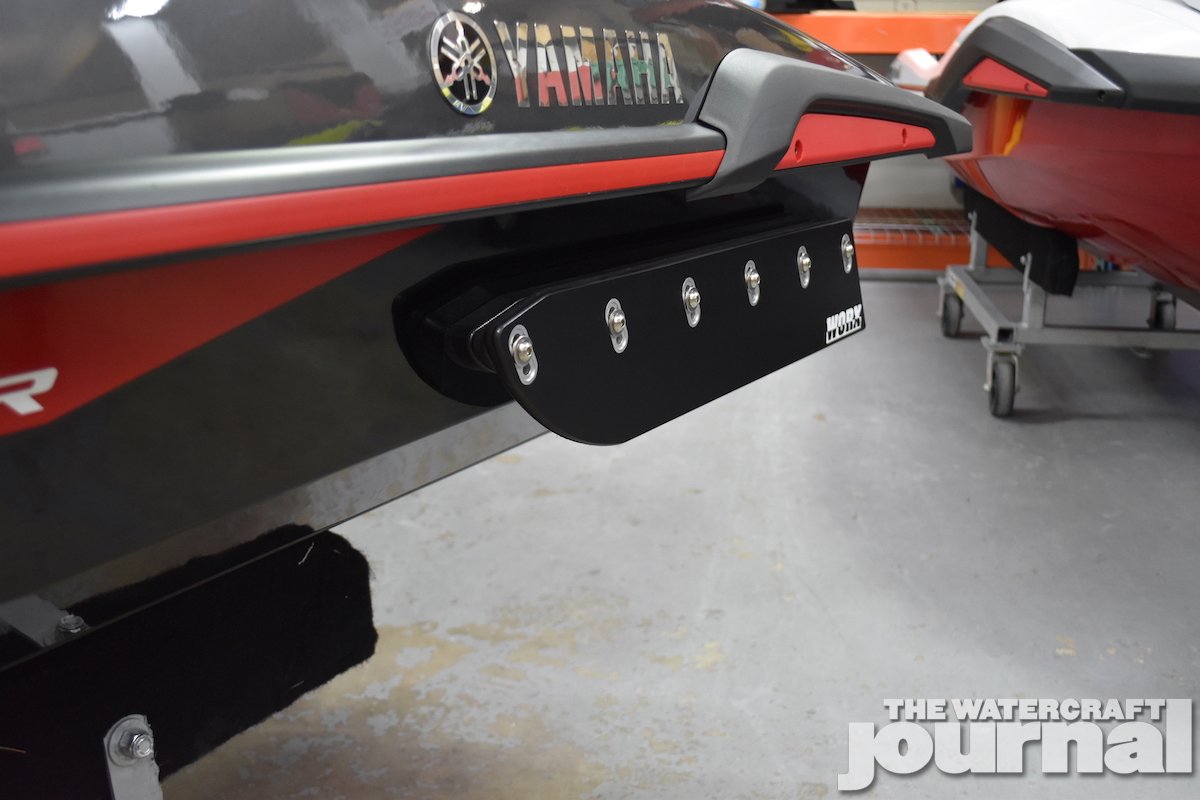
Above: Unlike the RIVA sponson, the WORX sponson was not designed specifically for the FX, but is applicable for all FZ (2008-2016) and three generations of FX (2008-2019+) models.
While intended to provide added lift at the back of the hull during acceleration, these primitive sponsons also aided side-to-side stability while traveling at speed and reduced porpoising by increasing hull surface at the rear of the craft as well. As sponson design progressed so did the science and performance gains with them.
Sponson design soon grew to include a winged leading edge. This new leading edge allowed the sponson to provide not only initial lift, increased running surface and side-to-side stability, but increased grip in corners. The extended, wing-like outermost edge allowed riders to turn sharper and with confidence that the back end wouldn’t break loose and “slide out.” Today, most all personal watercraft employ a variation on this type of design.
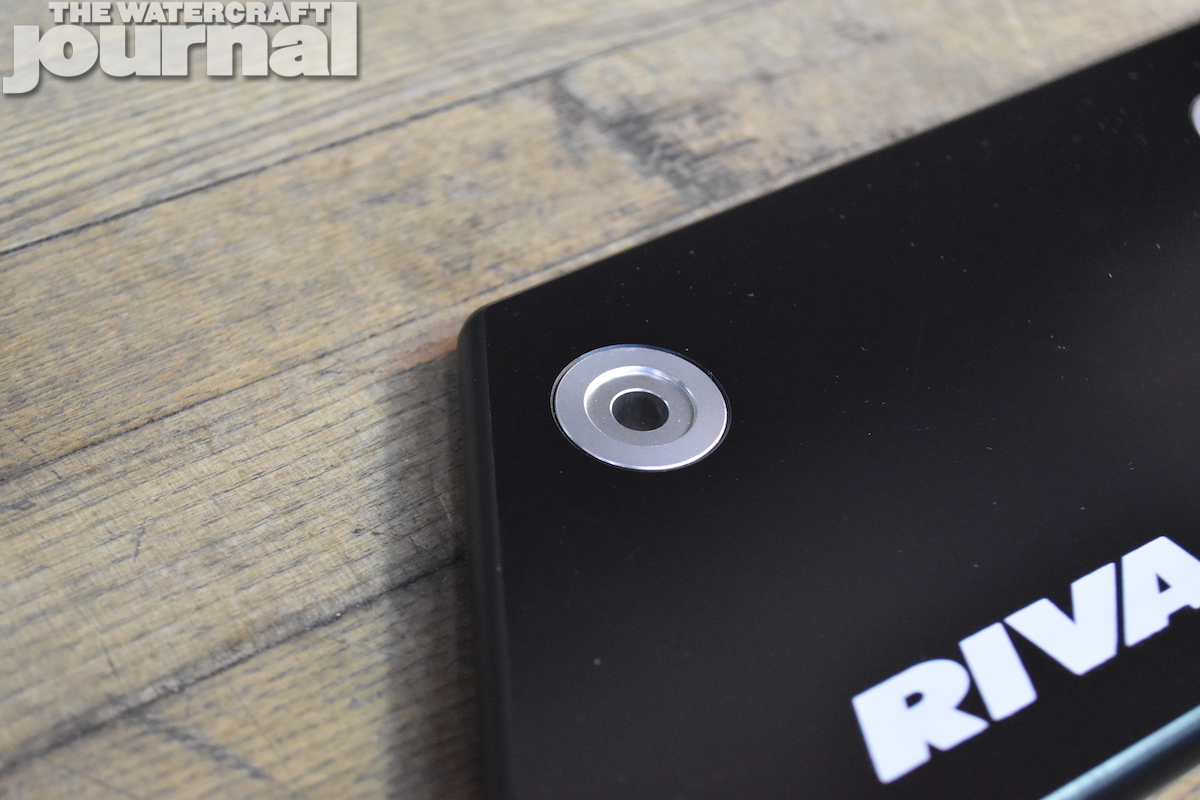
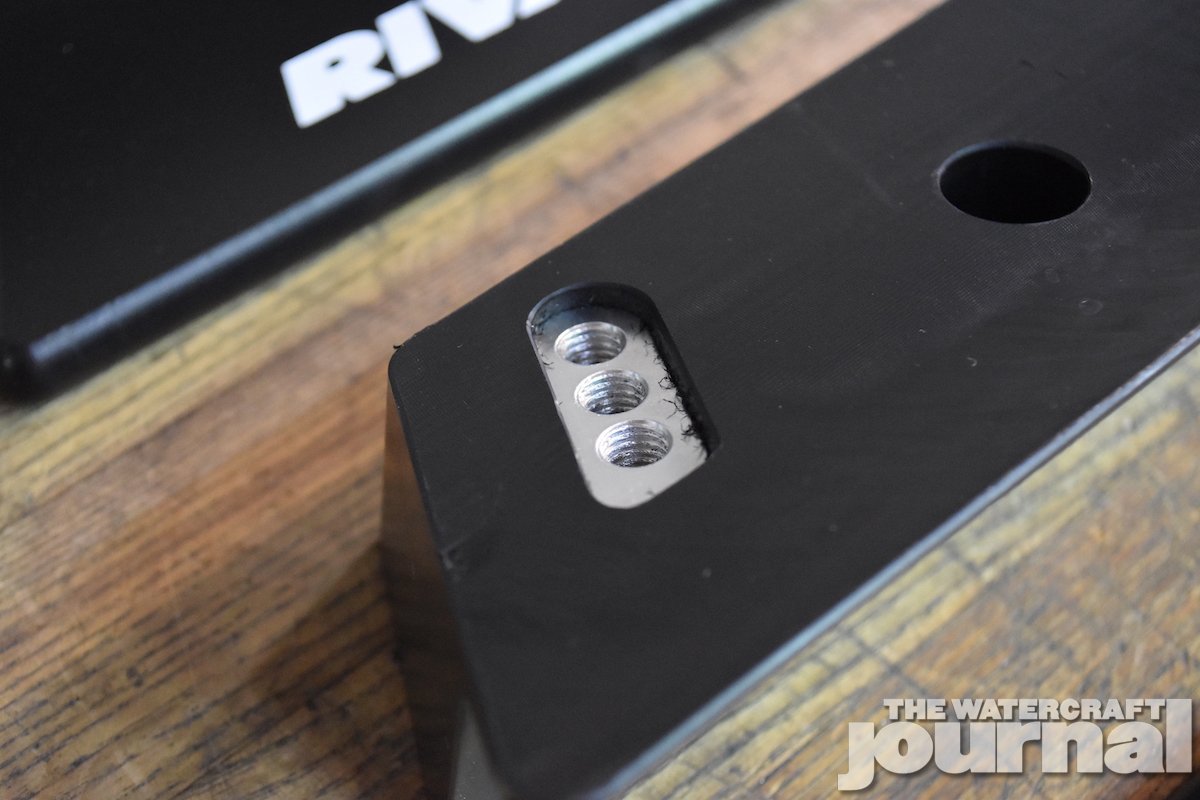
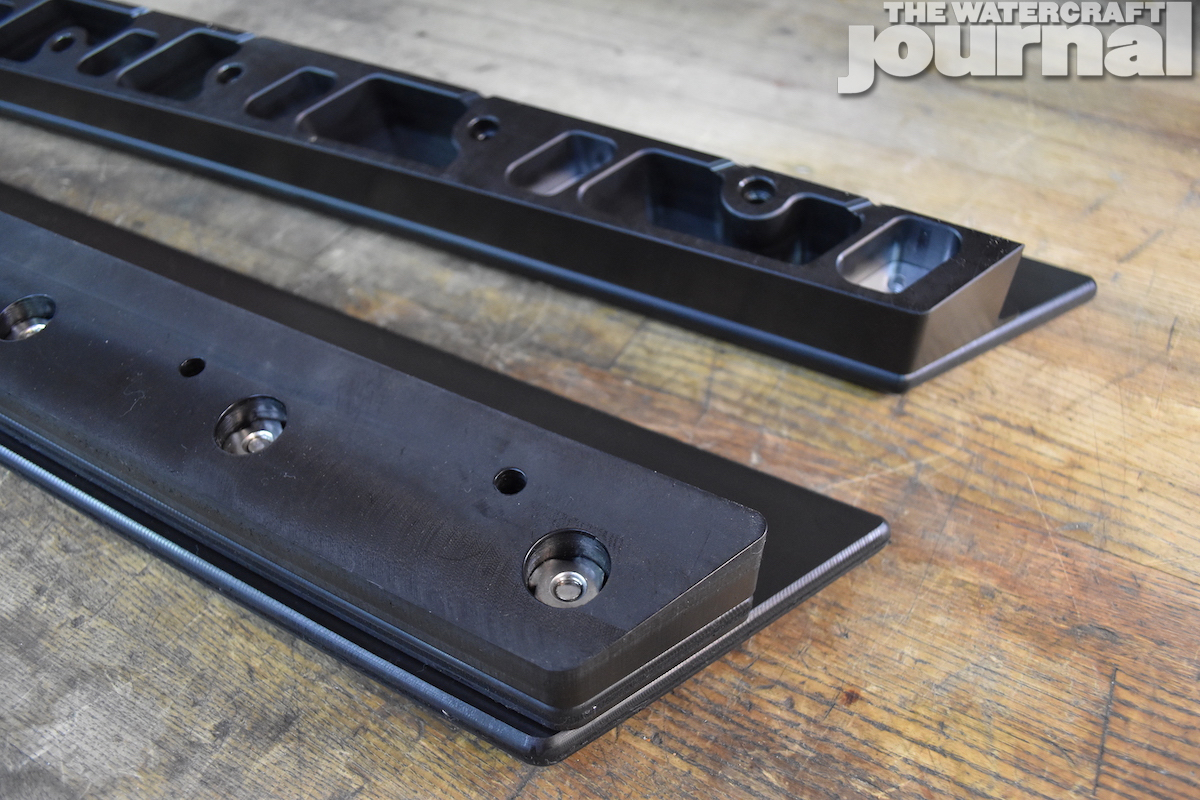
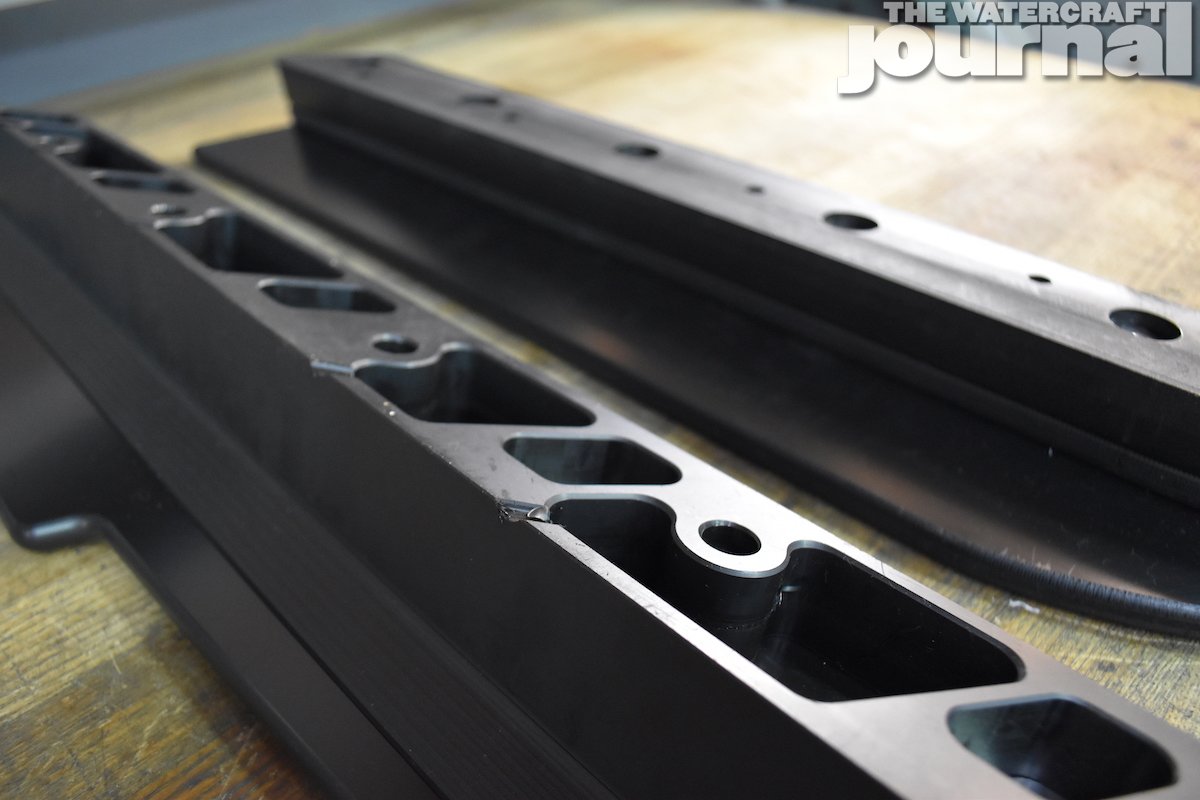
Above:Note the difference in metal inserts; the RIVA offerings are made with billet aluminum inserts for added strength; the WORX is a flared machine set screw.
A third basic design which has made its way into a small selection of factory-equipped watercraft, as well as become the go-to design for the performance aftermarket are “blade” or “rudder-type” sponsons. These use a flat-faced rudder attached vertically to a block-type sponson. The flat, vertical blade of the sponson provides a “sharper and more pronounced edge” to catch the water.
Unfortunately, not all sponson designs are created equal – and there is no “one design” that fits all hulls. As a hull’s shape or weight distribution can dictate how a watercraft will behave in a variety of sea-state conditions; so too will specifically-matched sponsons affect the watercraft’s final ability to navigate predictably, comfortably and with confidence.
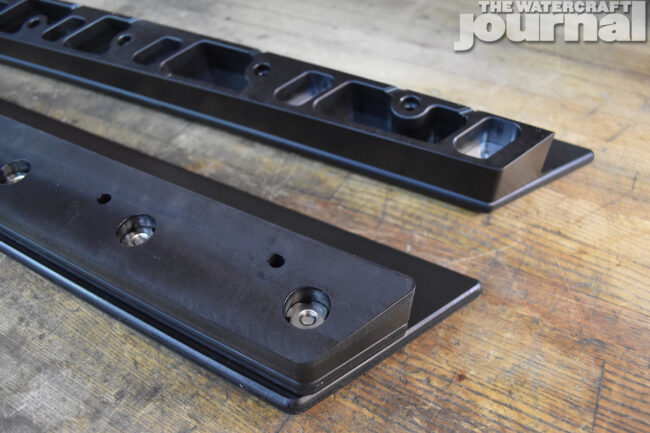
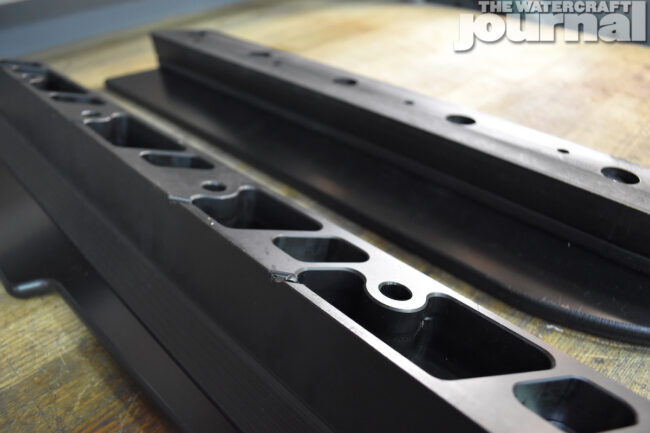
Above: RIVA Racing’s backing plate is precision-machined to hollow out unnecessary weight and provide drains to evacuate water while on the trailer. The WORX plate is a solid piece.
As Johnson explains, “Generally, the more the sponson angles up toward the front of the craft, the more lift it provides, but if it’s angled too far up, it won’t grip the water as well in turns. On the other hand, if the sponson is angled to far down, water can start flowing over it and create control problems.”
Advanced hull shapers and sponson designers have found that they can also manipulate the hull’s pivot point; or where on the hull the craft executes the center of its turn. This means a sponson properly positioned to match the watercraft hull’s particular shape can literally change where on the PWC it rotates (or pivots) into a turn. When done right, sponsons can radically increase the vehicle’s predictability and control in full-throttle or turbulent applications.
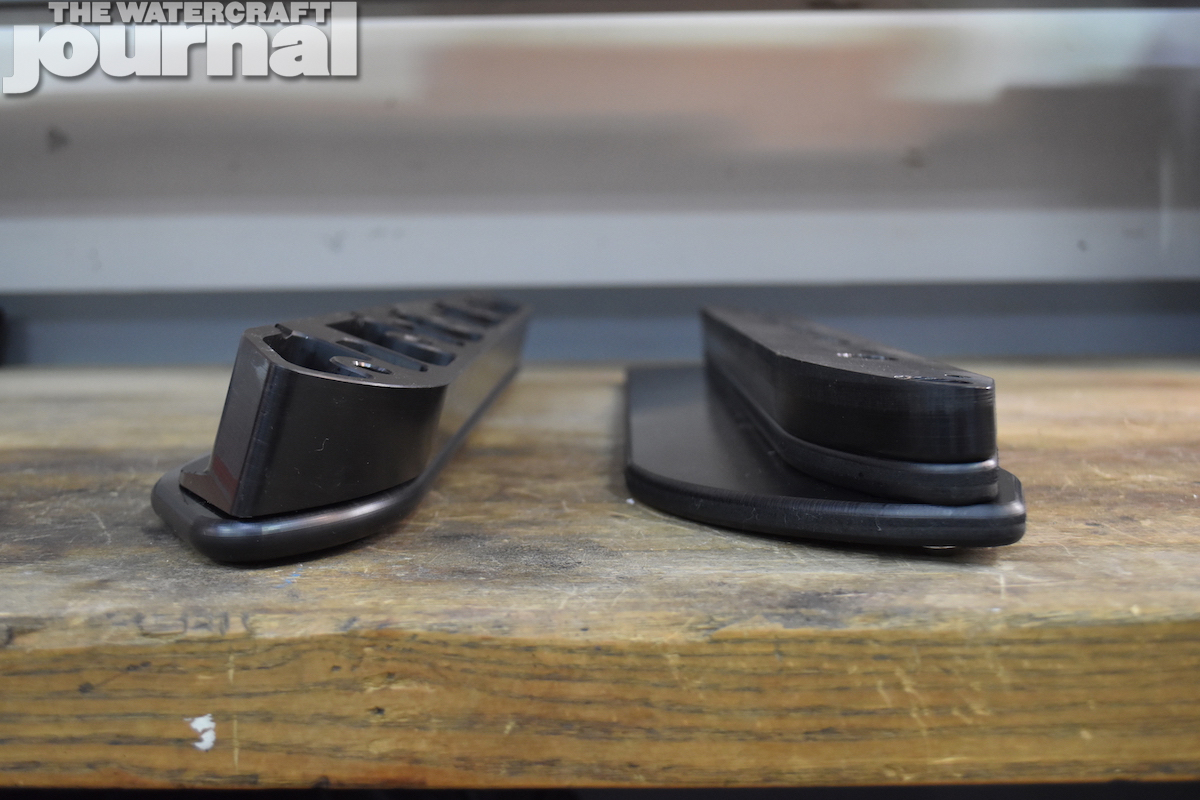
Above: One of the more interesting features to the RIVA Racing sponson is the backplate’s natural tapering at the tail and machined angle that blends into the blade. This results is a sponson that generates less rear turbulence as water passes above and below it, and places a greater emphasis on the blade.
A little less than a year ago, The Watercraft Journal discovered some interesting behavior with a long-term test 2018 Sea-Doo RXT-X 300. Initial acceleration testing showed that the lift generated by the Sea-Doo’s ST3 hull, new “Launch Control” feature and factory-equipped X-series sponsons gave the RXT-X 300 a key advantage; the runabout shot to plane half a second faster than its competition.
Yet, when it came to negotiating through the narrow, pump wash-churned bayous of Louisiana, the factory sponsons’ leading edge couldn’t keep the tail secure, resulting in two unexpected spin-outs. Equally notable was the RXT-X’s tendency cut sharply and suddenly during wide gradual turns when the sponsons caught the water, surprising the riders.
Above: Note the radical camber angle of the RIVA backing plate compared to the near-flat camber of the WORX sponson. This places the sponsons’ leading edge not only further out but wider than the hull’s outermost chine.
This lack of “bite” in turbulence and the sudden “snap” effect when the sponsons regained traction were due to a single issue: poor leading edge design. The sponsons’ leading edge was placed too far back, not angled out wide enough from the outermost chines, and too high up on the hull, all of which negatively effected the Sea-Doo’s natural pivot point. By moving the sponsons’ leading edge forward and down, these effects could be lessened.
Interestingly, Sea-Doo addressed this very issue with the RXP-X 300 years earlier. Featuring an adjustable blade-and-block design, owners of the RXP-X can set their sponsons’ blade depth. Providing three settings of adjustment, the factory-equipped X-series sponsons are exactly what the larger RXT-X 300 needed but weren’t available.
Above: Both WORX and RIVA offer three-points of adjustment; RIVA places the adjustment inserts into the backing plate; WORX has them in the blade itself.
This lead to the RIVA Racing Pro Series Sponsons for the RXT-X 300 being created. Specifically shaped in a receding step pattern, with the blades being deepest at the front and gradually narrowing towards the tail, the sponsons’ deep-reaching blades ensured added traction in all water conditions; and their forward-emphasis moved the hull’s pivot point several inches forward, closer to the craft’s center of weight.
Typically, the deeper the sponson is placed, the more aggressive the handling. However, if set too far down, the sponson can catch unexpectedly and abruptly, particularly in rough water. This is why RIVA Racing tapered the blade’s design; to reduce overall drag (which reduces overall speed) while giving the RXT-X the added traction it required. The Pro Series sponsons radically changed how the RXT-X tracked through chop, bit through corners and maneuvered at high speeds; and made us fall in love with the Sea-Doo all over again.
Above: Blade design is paramount to a successful sponson. The RIVA entry mimics the factory’s leading edge and extends a step thus directly effecting the Yamaha FX’s pivot point, improving the hull’s ability to corner on its tail. The WORX offering is a solid, uniform blade which will certainly produce drag and added bite but gives no consideration to adjusting the hull’s pivot point.
RIVA’s Pro-Series sponsons are made in the aforementioned “blade-and-block” design; using a shaped block and vertical blade configuration. Great care is spent to ensure that the mounting block provides the necessary lift and stability the same way aerodynamics are applied to designing aircraft wings. In fact, hydrodynamics plays an integral part in design simply because water is 784 times denser than air, and ergo far more resistant.
Paying particular attention to the Pro Series Sponsons for the new 2019 Yamaha FX WaveRunner, RIVA Racing made unique changes to its newest design that delineate it from those offered on the Sea-Doo RXT-X. The easiest to note is the blade shape; with the Yamaha’s favoring the tail while the Sea-Doo’s its nose. This was done to counter the new FX’s bow-heavy tendencies and give the craft a more balanced, rearward pivot point.
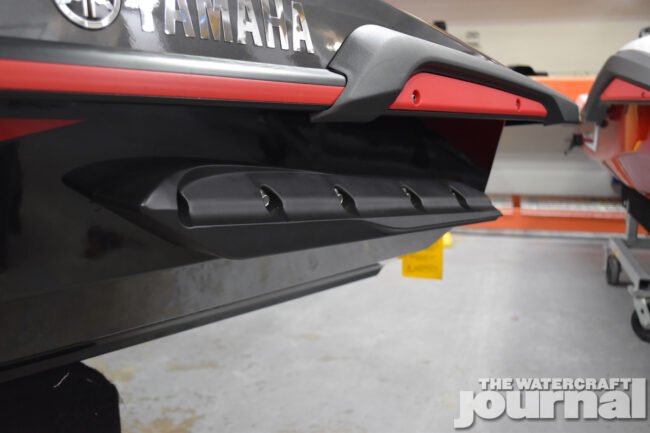
Above left: Pay close attention to the factory sponsons’ almost “snubbed” forward angle and the angled, almost winged leading edge favoring the sponsons’ latter half. Above center: RIVA Racing’s Pro Series sponson mimics the rounded nose and extends the stock “winglet” with the larger stepped and cambered blade. Above right: The WORX blade features a more up-swept, angled nose angle and extends the blade depth uniformly down the length of the sponson.
Equally, the mounting block (or as RIVA describes a “backing plate”) is CNC machined with a gradual-lift angle at the nose and a teardrop-like taper at the rear. This borrows from low-drag shapes found in nature, with a one-of-a-kind machined arch that (when mounted to the blade) hollows the mounting block into a traction-increasing inverse strake.
This effect draws the FX Yamaha’s tail deeper into the water, reversing the hull’s tendency to favor the bow; increasing the WaveRunner’s traction and straight line stability in an array of sea-state conditions. Interestingly, the length of the blade extends beyond the factory sponson, as does the outward-angled camber of the blade.
Above left: This comparison is probably the most important. The first is the factory one-piece sponson; note the camber of the leading edge and height (or vertical thickness) of the sponson. Above center: The RIVA sponson retains a near-identical sponson height and width, and extends the leading edge depth and camber angle for increased bite in turns and place greater emphasis on moving the pivot point rearward. Of course, most prominent is the RIVA’s machined arch that blends the backing plate into the blade itself, creating an inverted strake. Above right: The WORX sponson shows a far thicker sponson height, which will result in increased rear turbulence and a near-vertical blade camber. With nearly zero camber and a solid blade shape, the sponson will act more like a rudder than helping amplify the Yamaha’s natural hull attributes.
The camber of the blade can be compared to the leading edge of a single-piece sponson; the angle, shape and length of this edge can right dictate how a craft can lean into a corner, retain traction, and cut a clean line around a turn. If angled too high or too low (or vertically) the effectiveness of the sponson can be effected, as can the craft’s ability to remain stable and manageable in said turn.
A straight, vertical blade works less as a leading edge and more like a rudder, which if not shaped to match the unique design of the hull can deliver ill if not erratic results. All of this has been knowledge gained over the past 30 years, and technology has only worked to reveal greater understanding of the hydrodynamics involved in creating an optimally-operating hull-and-sponson configuration that provides the rider the single most predictable, high performance handling watercraft to date.













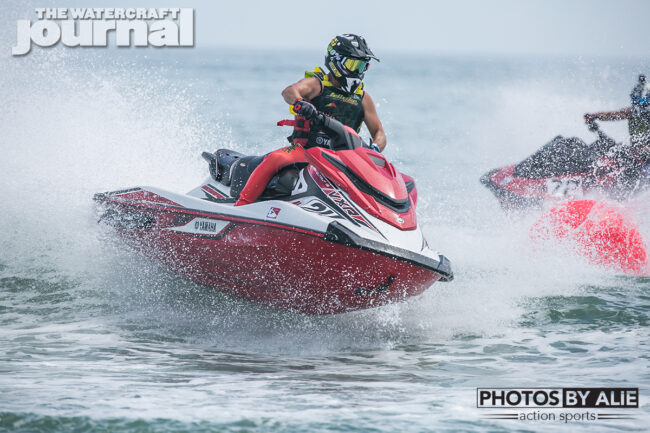
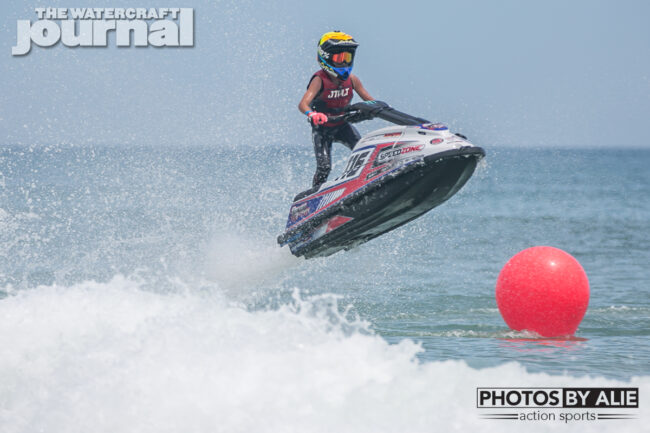
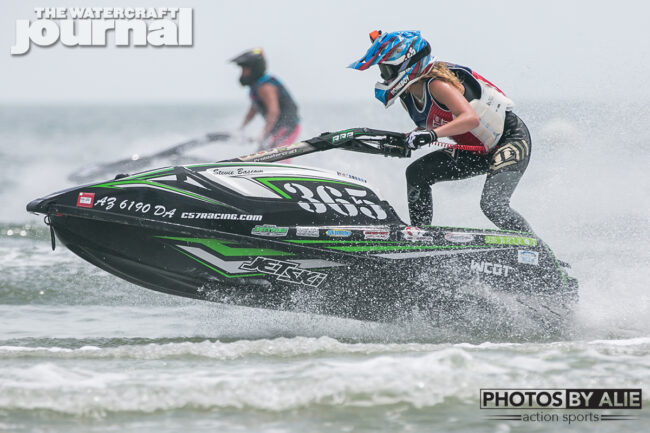
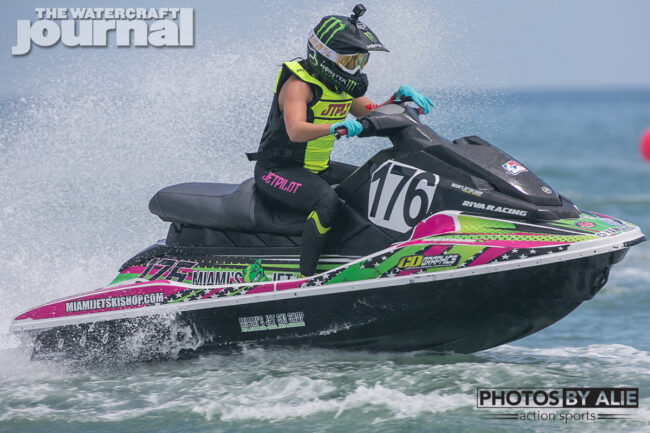


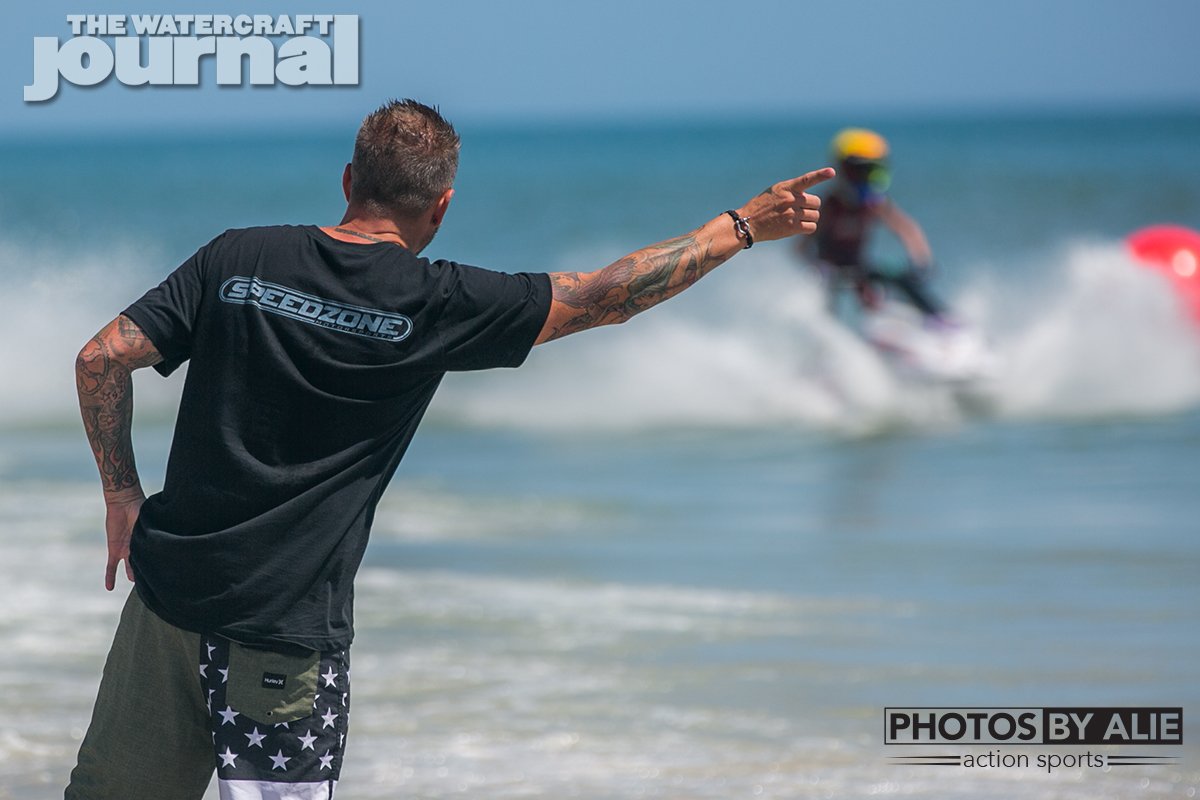
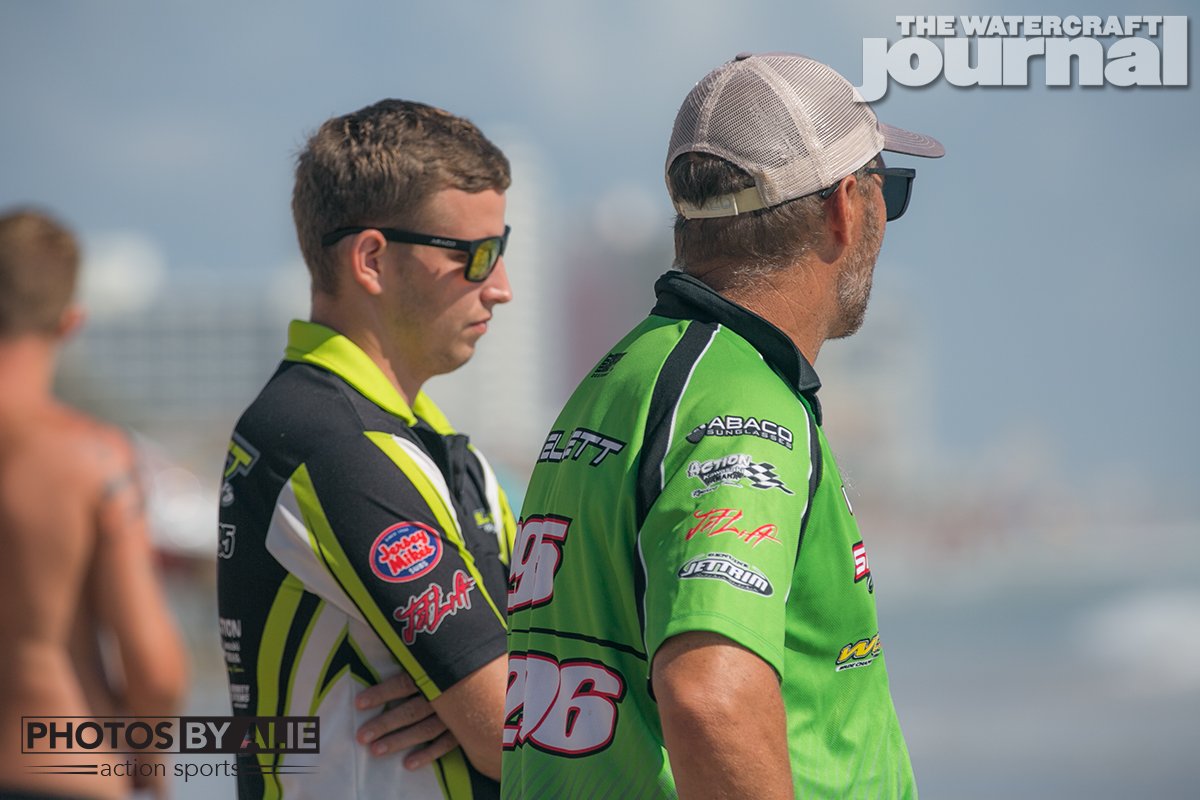

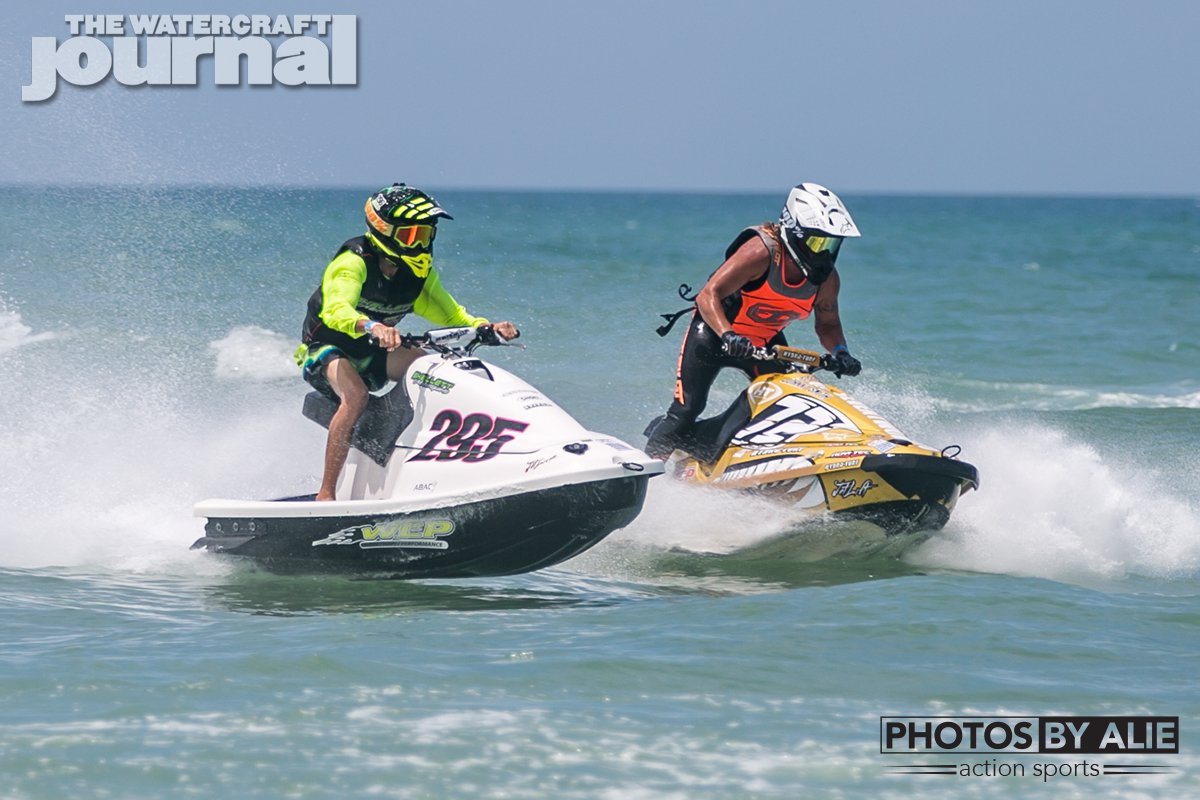
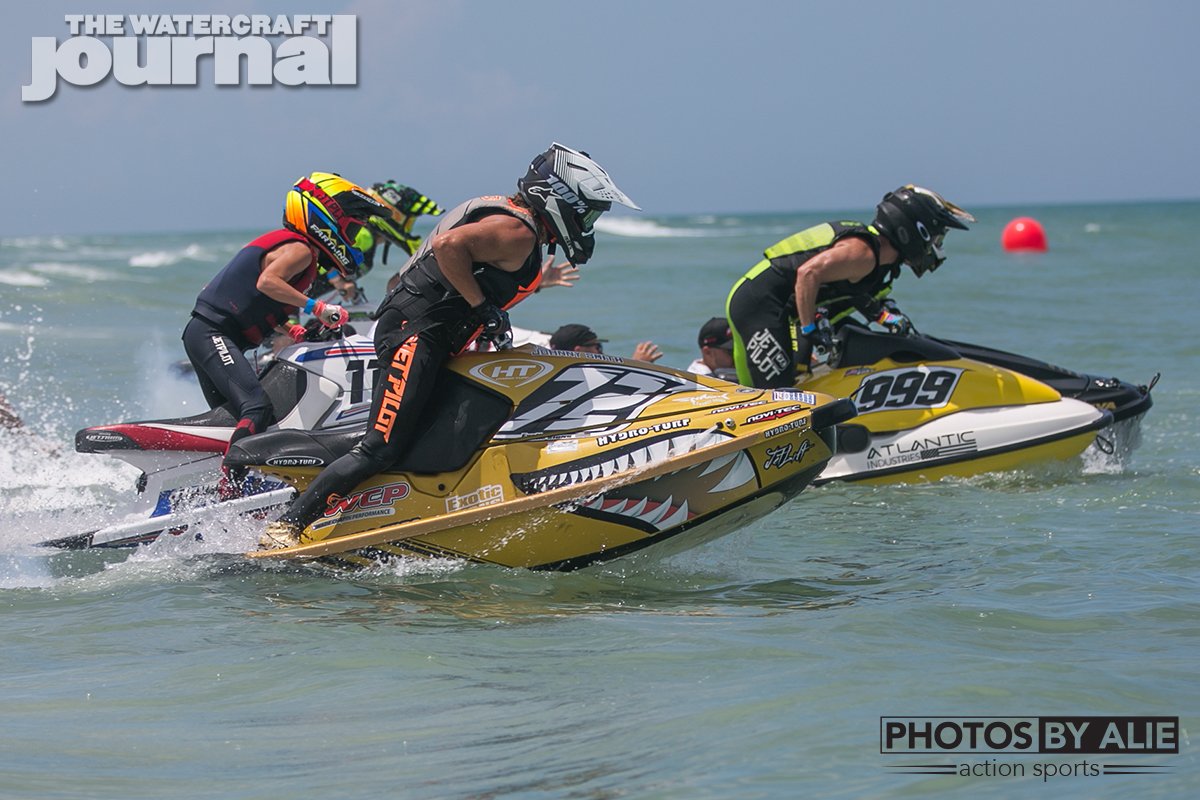
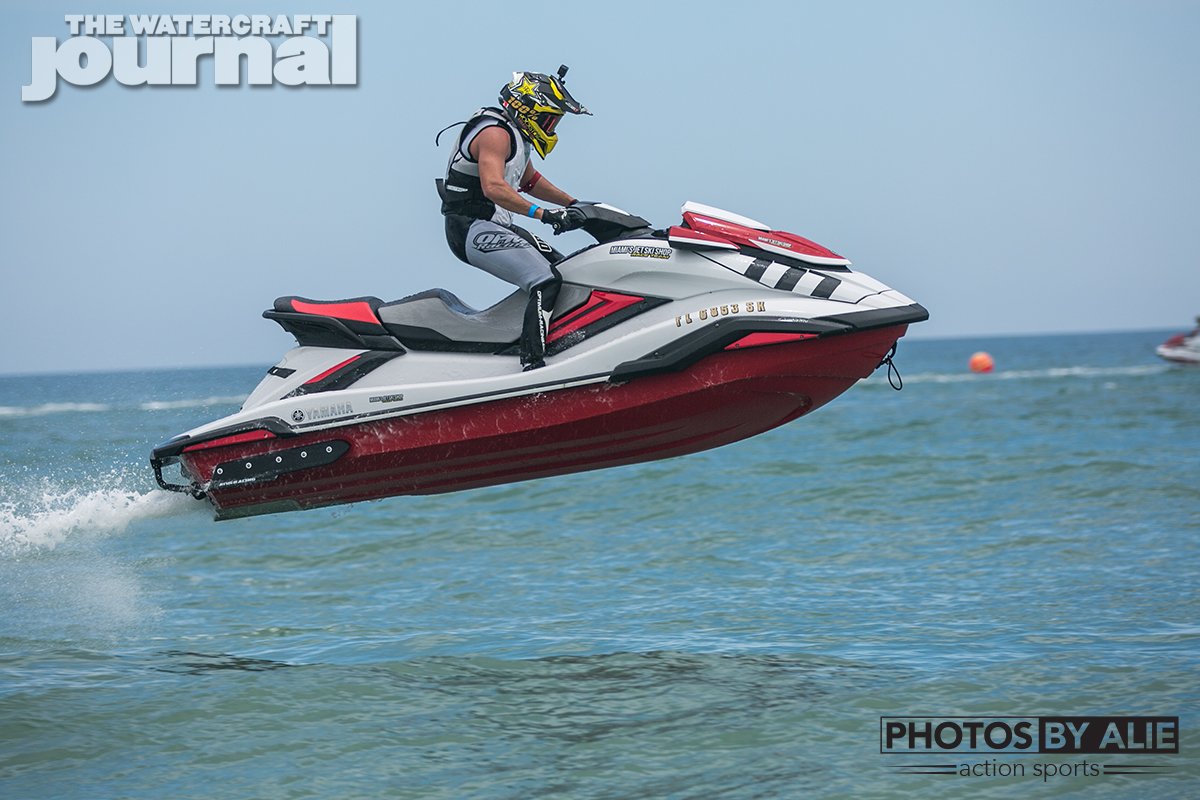
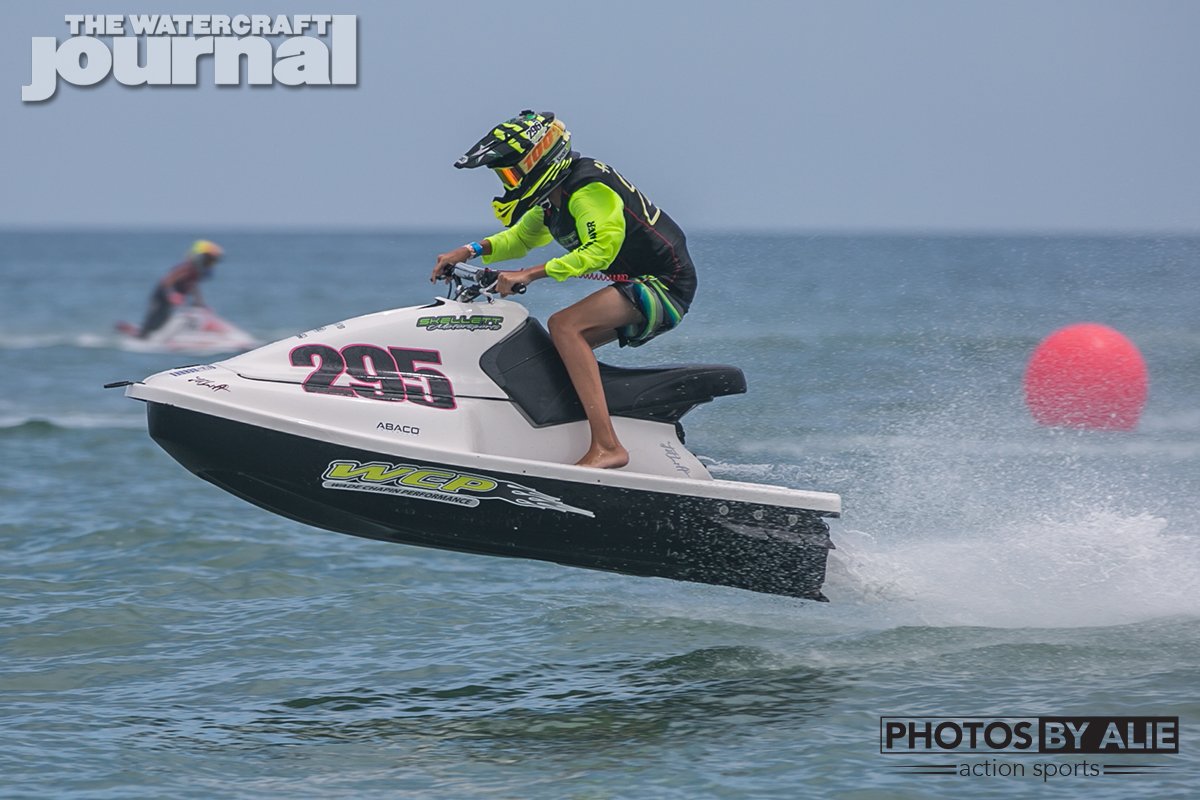
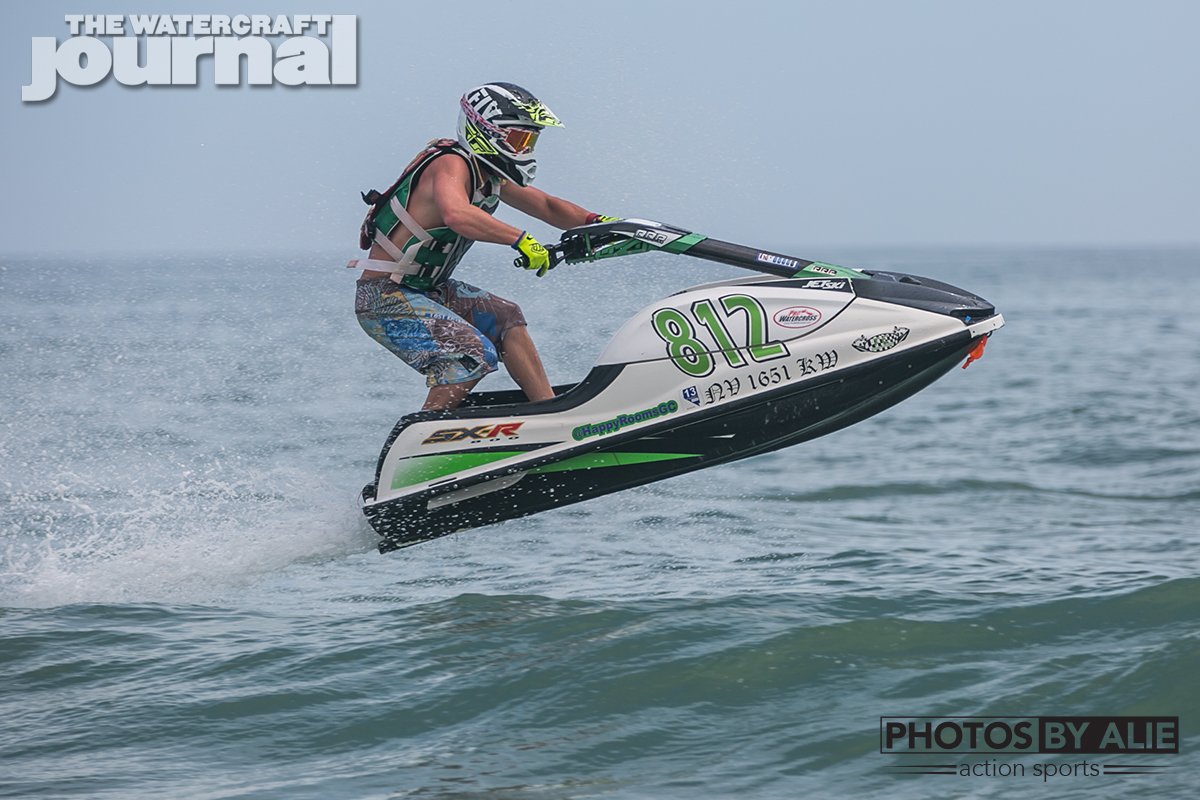

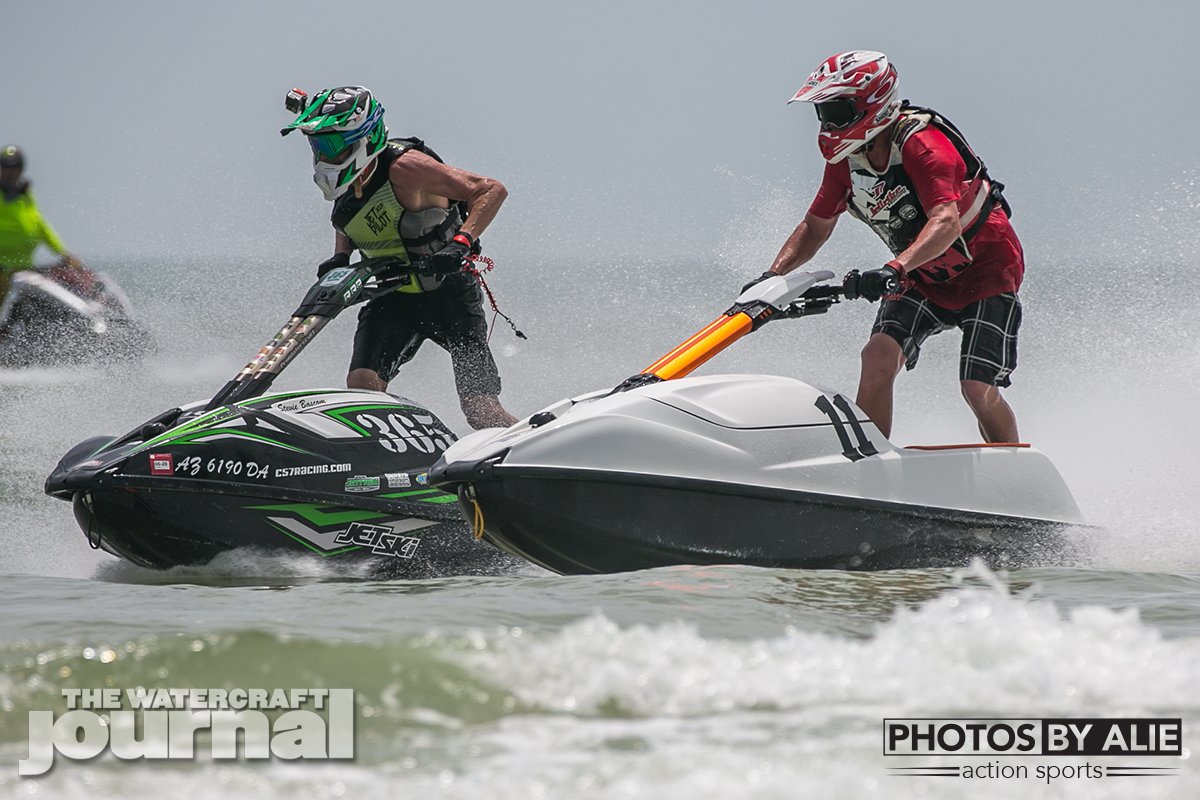




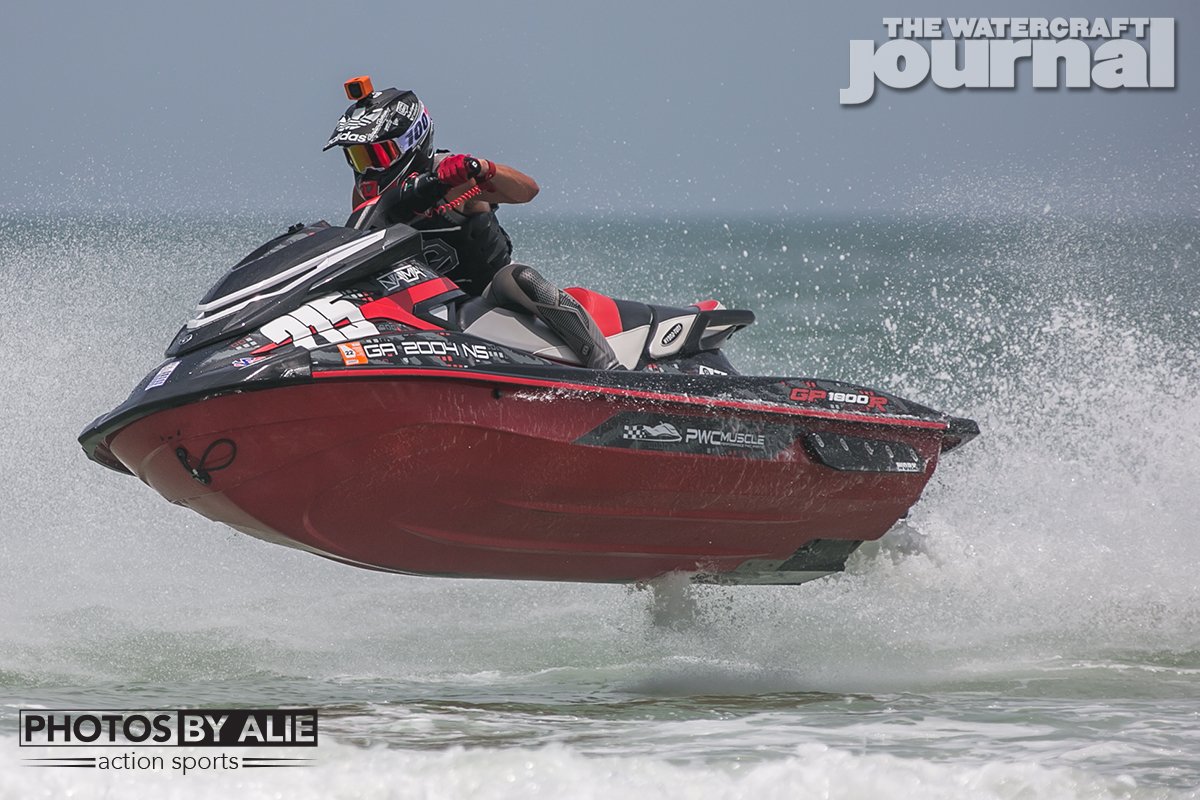

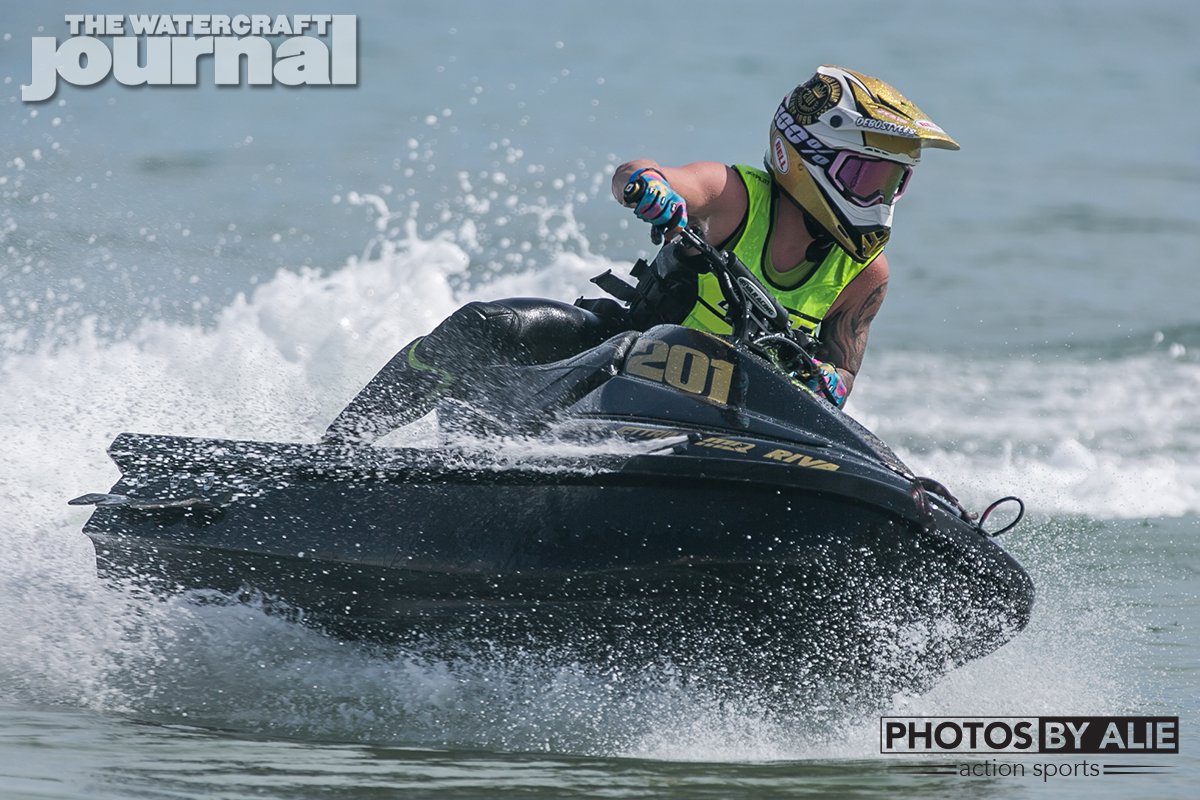
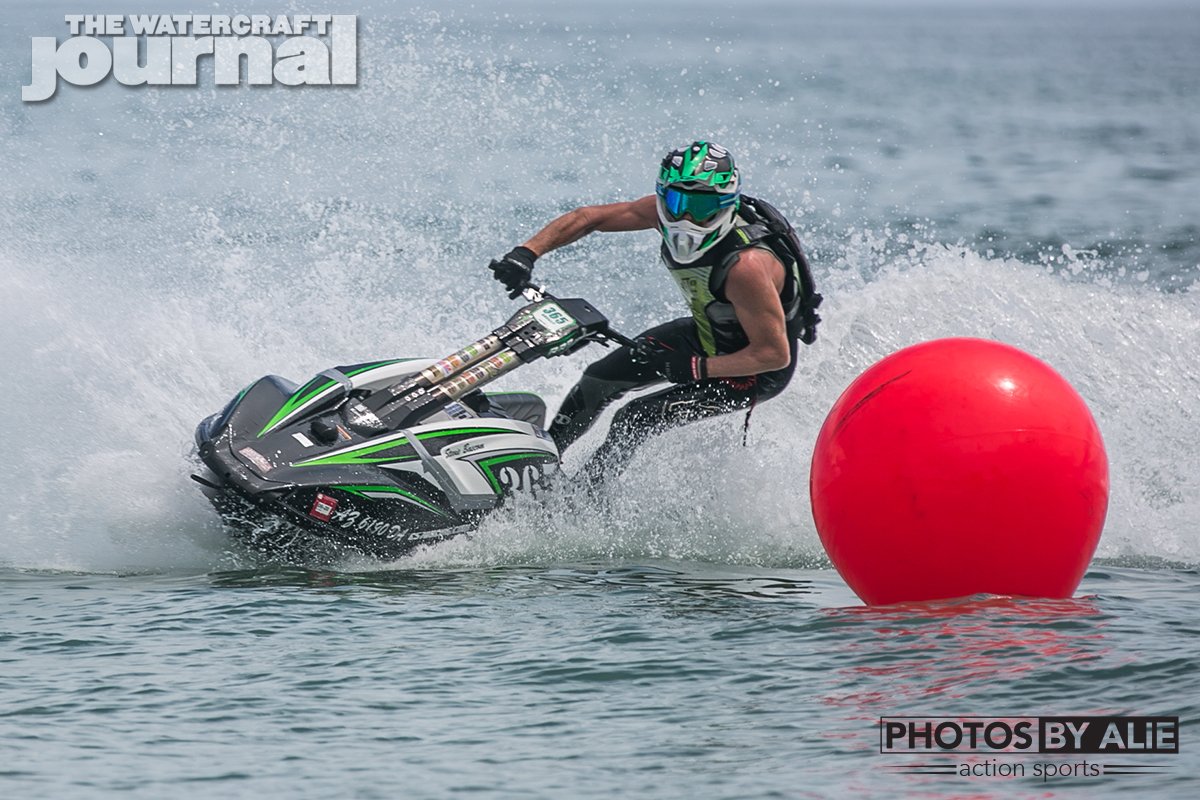
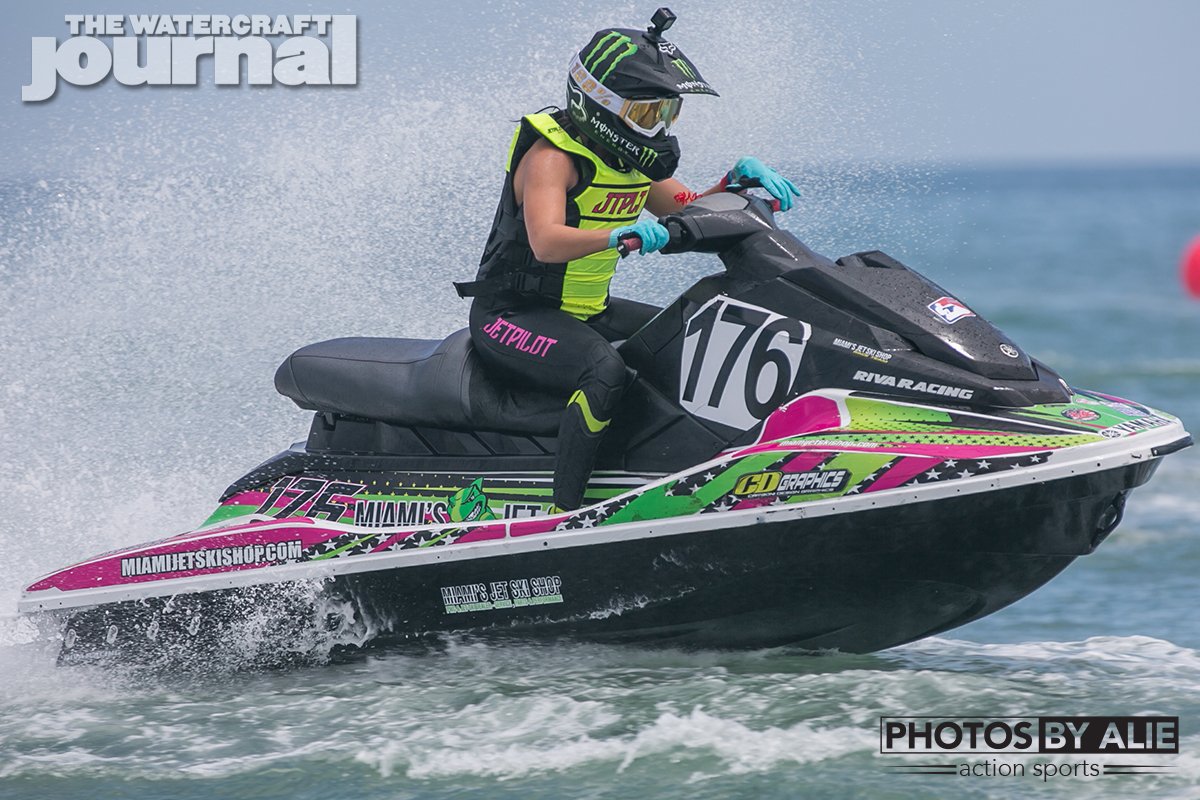

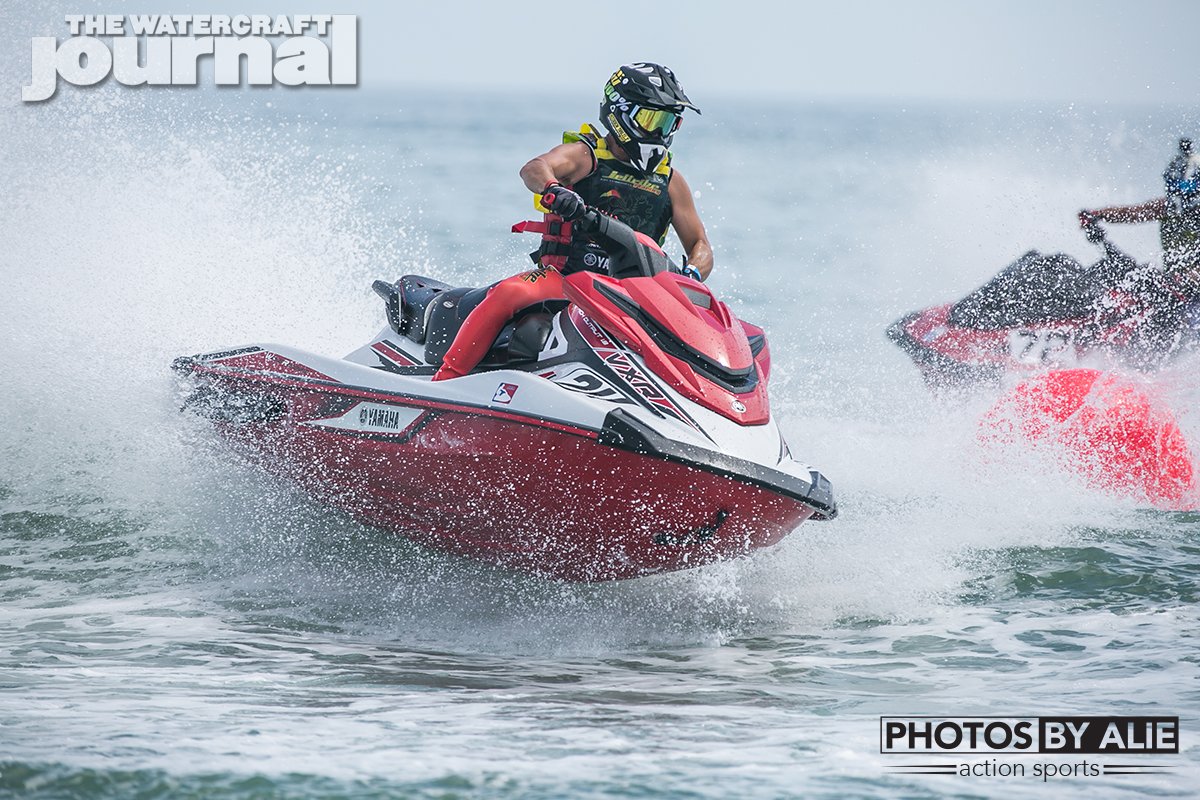
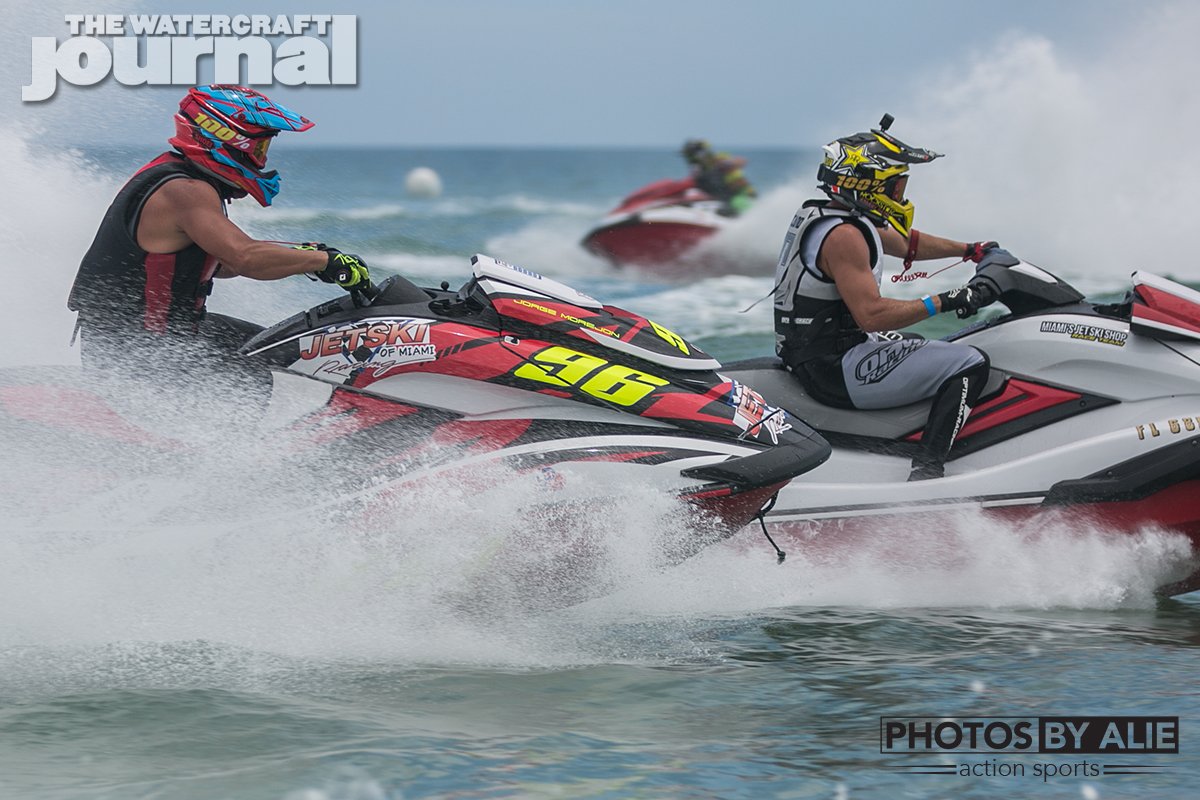
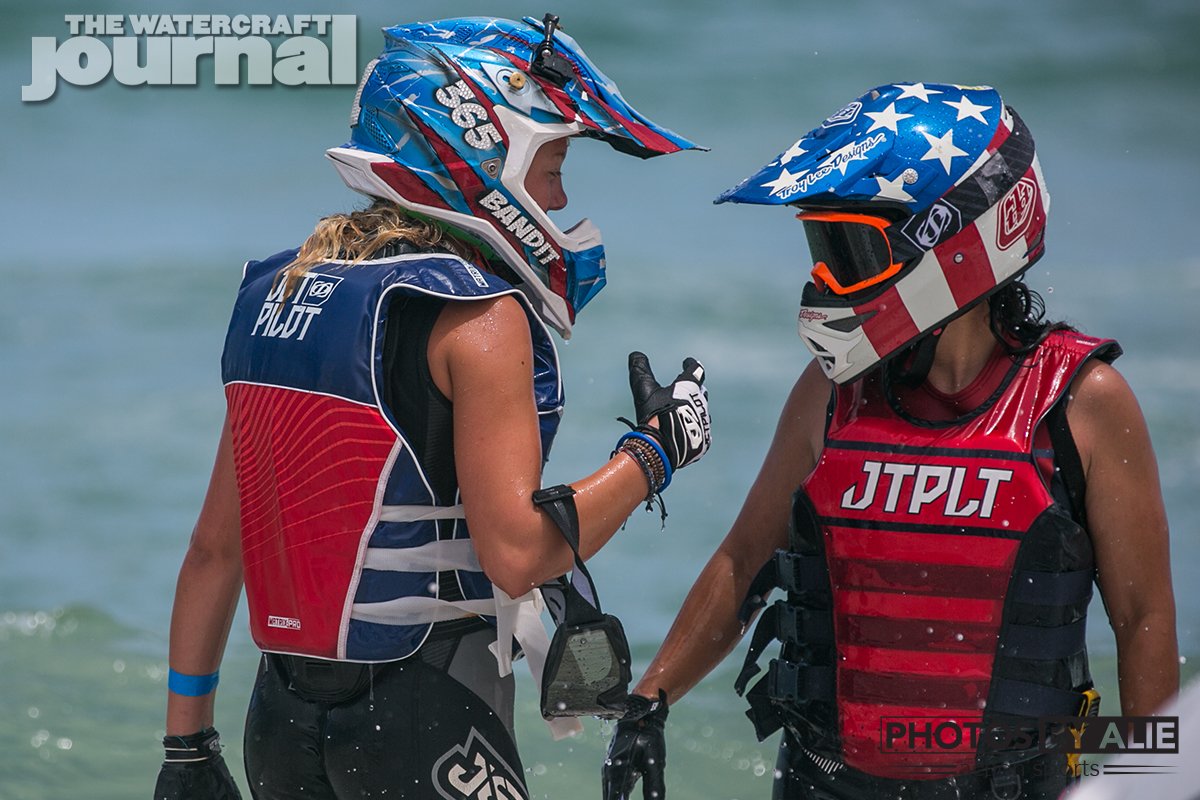

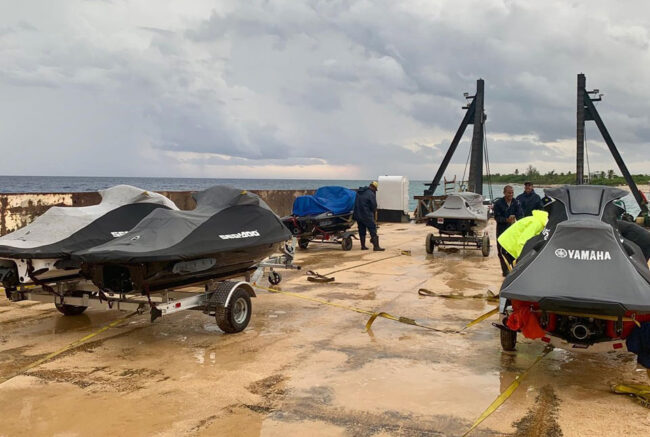
 All of these riders battled hard and provided the fans with some great racing! Tyler Walter who is an accomplished boxer said that he has raced in every Surf n Turf event and lives for the competition. He says, “I like the adrenaline rush before the race. It’s a good event. Cayman Brac doesn’t have many events like this so it’s exciting for the people that live here.”


































 Seabob offers three different models to provide you with the best experience. The Seabob F5 2.5kW (3.3HP), F5 S 4.0kW (5.3HP) and the F5 SR 4.5kW (6HP). The base model is the F5 and every model up has more features such as additional power and thrust, operation time and diving depth.