
Home Blog Page 198

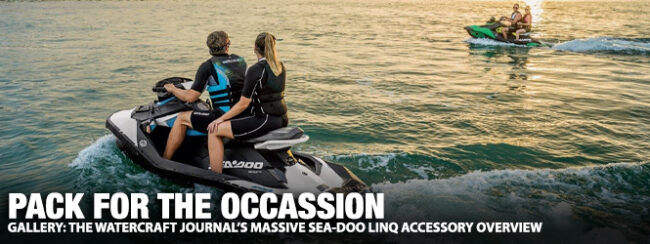
Gallery: The Watercraft Journal’s Massive Sea-Doo LinQ Accessory Overview

0

When we perused an article pertaining to all of the 2019 Spark Accessories, it appeared that a glaring omission was made. Where were all the new LinQ Accessories? Upon rereading the piece on PersonalWatercraft.com, we discovered a short paragraph on the LinQ accessories and decided the items needed more attention.

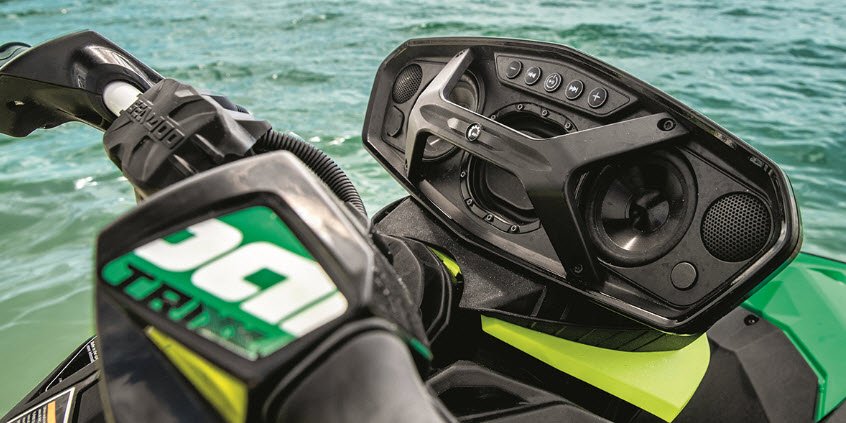
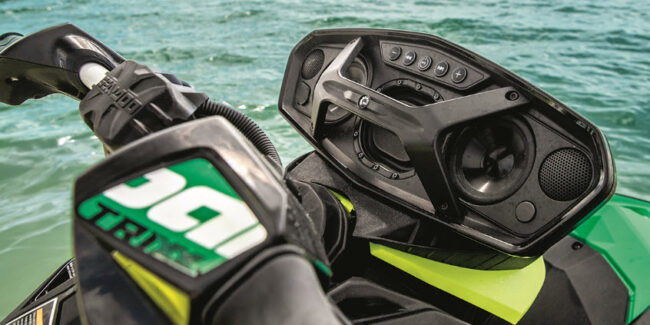
The article touches on many fine Sea-Doo accessories like the 50-watt floating waterproof BRP Portable Boom Box music system. It puts out just enough sound so you can enjoy the music while you ride. The Boom Box has 25-watt speakers and easily attaches to the Spark just forward of the handlebars. The bracket mount is solid and it’s an easy clip on/off system. The lithium ion battery gives a rider 24 hours of play. The system is simple to charge. Just plug it in at home. The price is $550 and requires the 3-up Convenience package.
Now, let’s get into the meat of the LinQ accessories. Fifteen products are available through Sea-Doo. A couple of LinQ Base Installation kits are available for 2011 and up GTI, GTS, and GTR. 2017 and later kits are available for the GTR-X. RXP kits come in base models for the 2012 models and later. A base kit is available for GTX 2016-2017 and RXT-X models built in 2016 and 2017. LinQ Base Kit for the Sea-Doo Spark 3up is also available.

These models require the base kits in order to install all the LinQ gadgets that Sea-Doo has on offer. Each LinQ kit costs $49.99 and Sea-Doo claims it’s fast and easy to install. The system is secure and now fits all platforms. LinQ doesn’t even require tools. It’s a quick attach rear cargo system. You get to pack more, play more, and ride farther while keeping food and drinks cold and fresh.
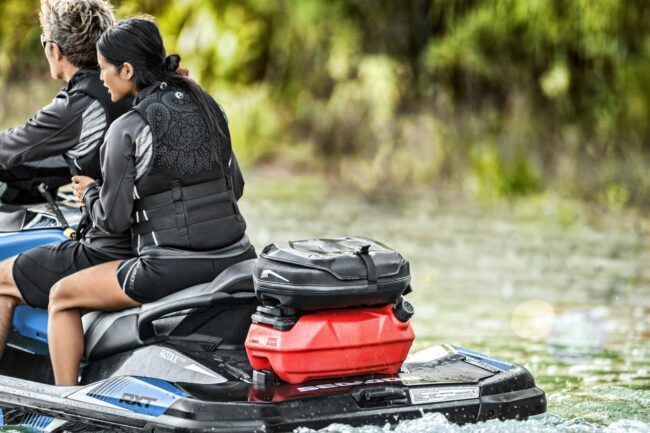
The base system for the Spark 3-up allows you to mount accessories to your Sea-Doo watercraft so your cargo options are less limited. The system will hold the LinQ Fuel Caddy, SR 21L LinQ bag, LinQ Sport Bag, LinQ Toolbox, and LinQ 4.2-Gallon Cooler. The Spark base system isn’t compatible with the LinQ 13.5-Gallon Cooler. The LinQ Base System includes 2 LinQ bases and hardware. The base system is a necessary building block for all of Sea-Doo’s LinQ accessories.

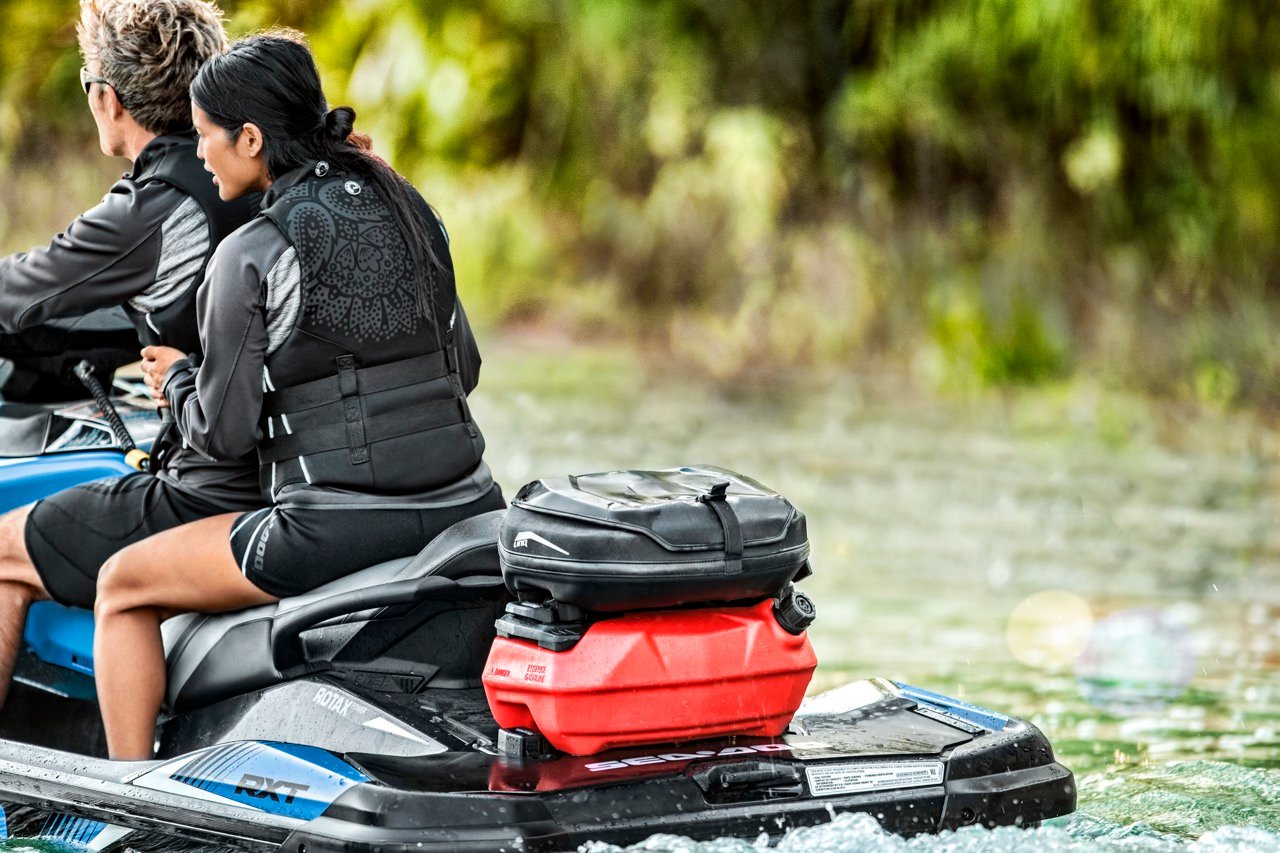
The LinQ Fuel Caddy holds 4-gallons of fuel, is designed for easy pouring, and has been marinized for saltwater usage. The Fuel Caddy comes with the LinQ Cargo Base Kit. The caddy can also be used for stacking the LinQ Bag or Sport Bag to give you more storage. Don’t stack fuel caddies though. If you lose your fuel cap, Sea-Doo can provide a replacement for $28.99.
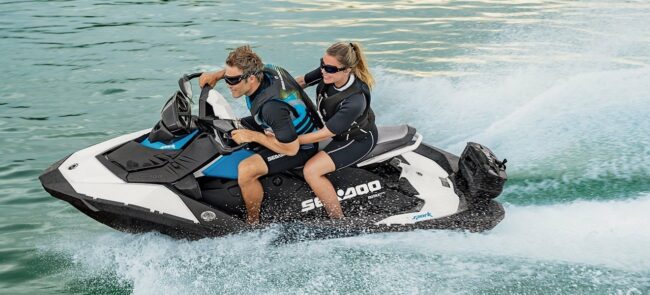
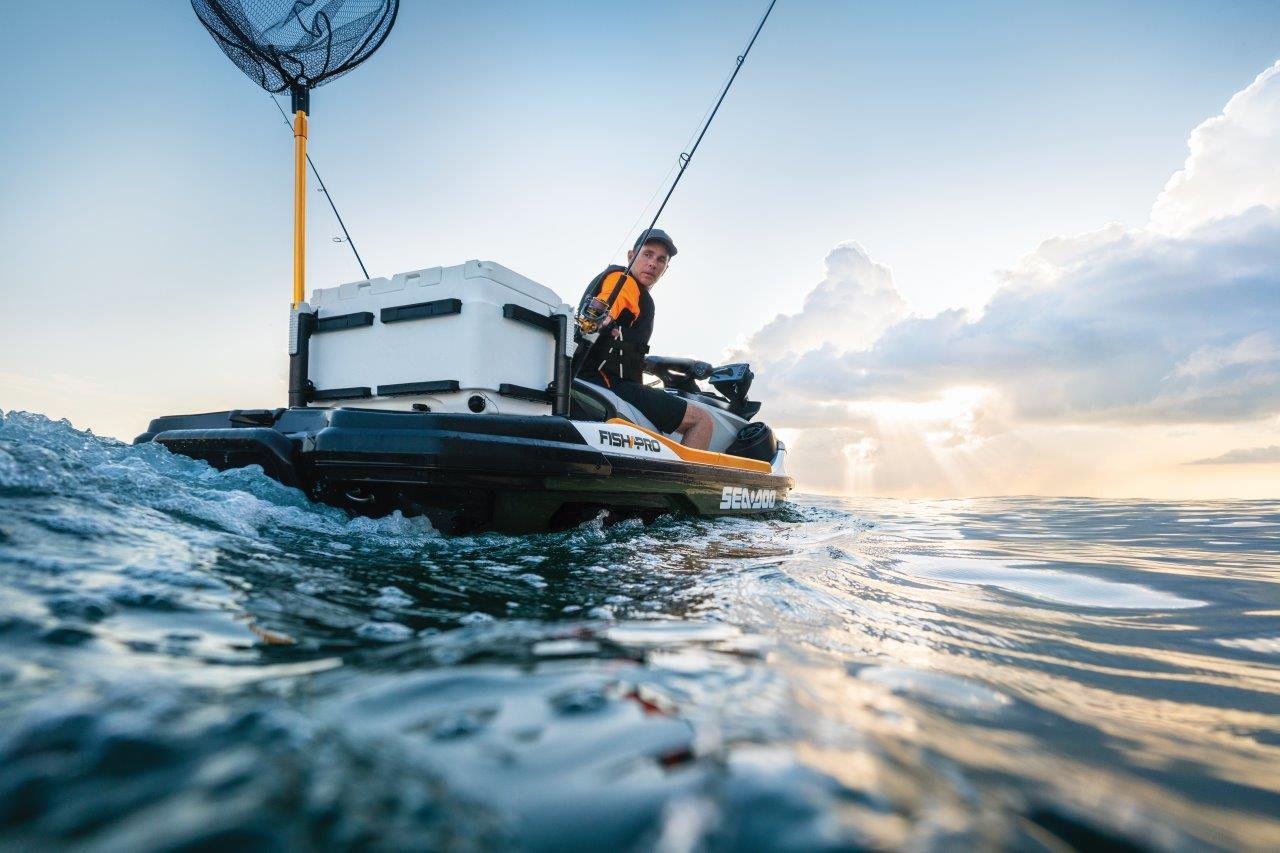
Prefer different LinQ Locking Anchor Bases? Sea-Doo has those for $9.99. LinQ bases with locking system for staying in the “up” position while installing LinQ accessories. These are required for installing the LinQ 13.5 Gallon Cooler. They also replace standard LinQ bases and the locking bases are standard on the Fish Pro.

Speaking of the Fish Pro, LinQ has a nice Quick-Attach Rod Holder and it’s only $24.99. The holder features a quick attachment system with release lever for easy installation onto or removal from any of the 30 different positions on the 13.5-gallon LinQ Cooler. It firmly holds a fishing rod using a molded rubber cap specifically designed to quickly secure or remove a fishing rod using the reel arm. It’s also perfect to safely transport your fishing rods to your favorite spots or if you just want to troll the waters.
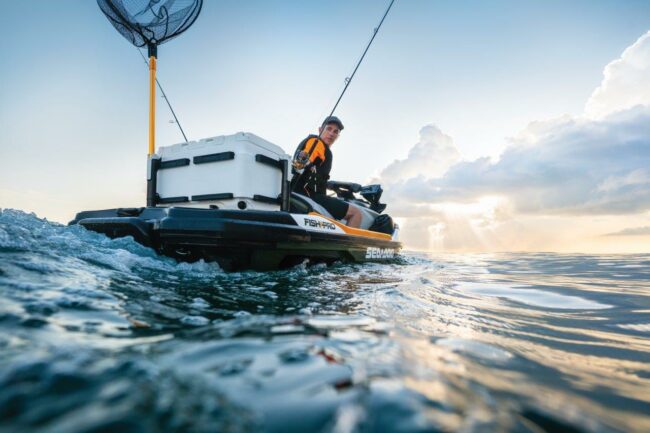
Prepare to pay if you want the LinQ 13.5-Gallon Cooler. It’s going to cost you just under $650. Granted, the cooler has some nice features, especially for the fisherman in the family. The LinQ is a high volume cooler and is weather resistant. It includes a heavy-duty storage pocket lid with recessed work surface, quick-attach rod holder system, trolling slots, and an easy latch lid. It features a drain plug and handles for easy transportation.

It is crafted using rotomolded construction for exceptional rigidity and durability and contains premium-quality foam insulation for optimal ice retention. Another item of note is that the cooler requires LinQ Locking Anchor Bases for installation on 2018 models and on some 2019 models.
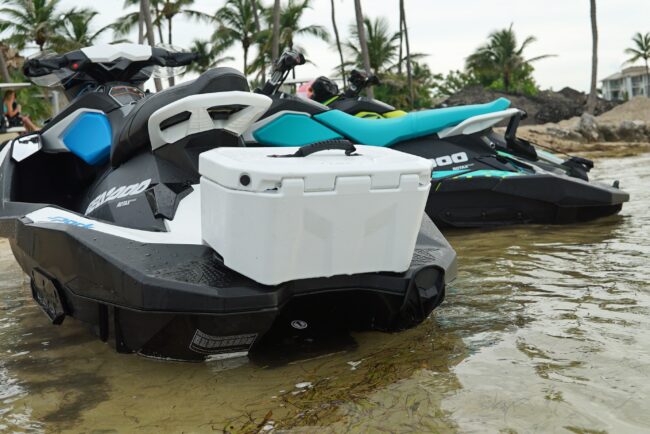
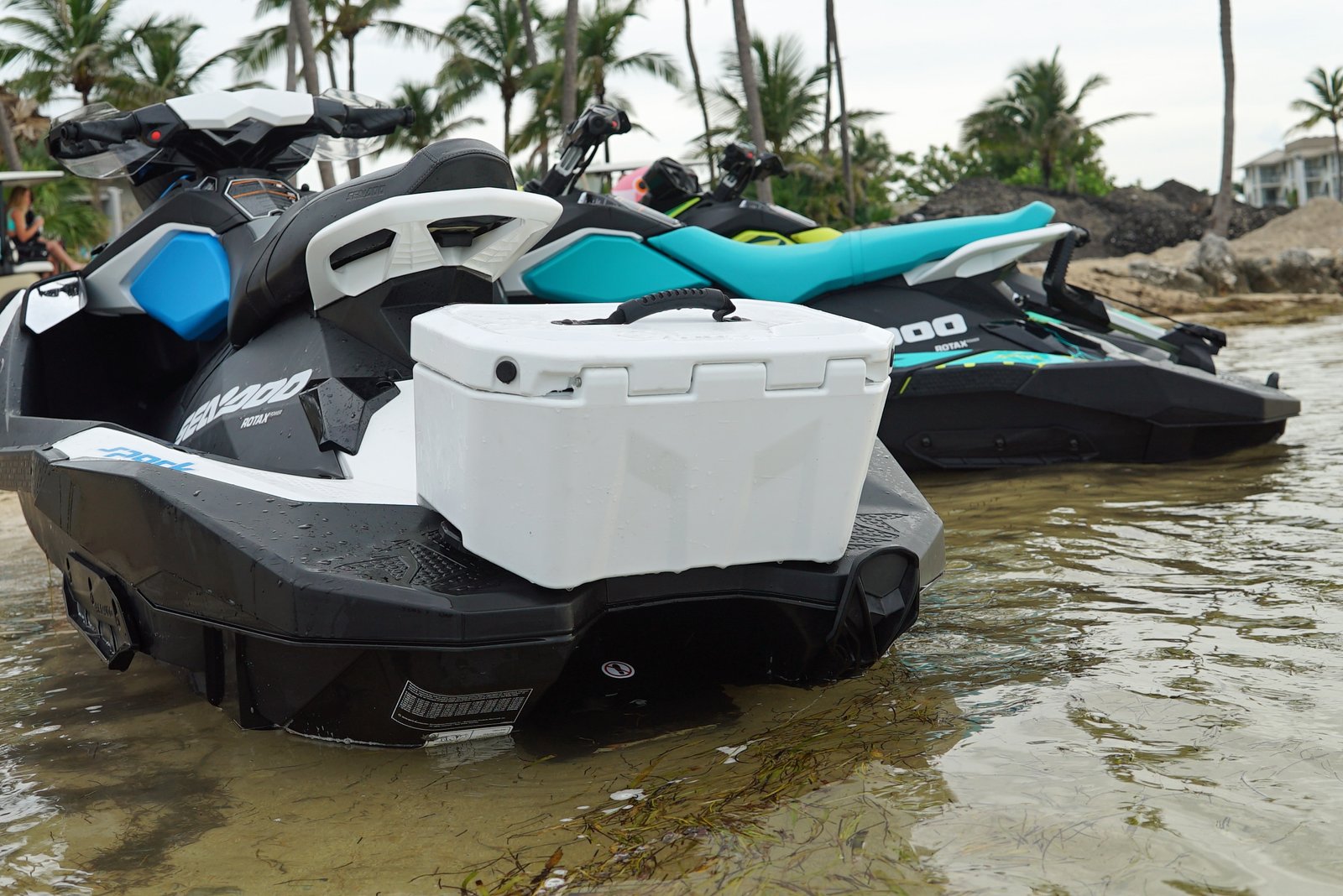
If you don’t need a huge cooler, Sea-Doo offers the LinQ 4.2 Gallon Cooler. It’s constructed from the same high quality materials as the 13.5 just at half the price. The smaller cooler doesn’t have all the bells and whistles. However, if you only plan to use it to haul drinks and snacks, this cooler is perfect.

The LinQ Box is great for stowing extra items while on all day excursion. It has a five gallon capacity, is weather resistant, and even has a lockable cover. The box is made of high precision injected HDPE, which provides durability and rigidity. The box is equipped with marine grade hardware. The SR 21L LinQ Bag is also available. This bag comes in at a 5.5 gallon capacity and is expandable.
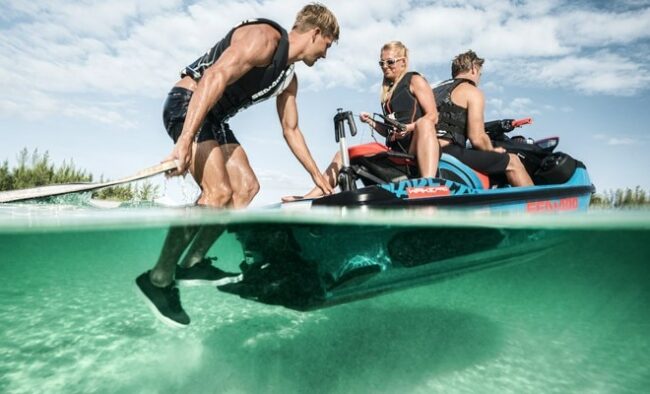
Sea-Doo also has the LinQ Sport Bag with a rigid bottom and semi-rigid top. The bag holds 4.5 gallons and again, if you’re a saltwater rider, pick up the Marinized LinQ Hardware Kit. You’ll want to protect your investment. The Marinized LinQ Hardware Kit comes with everything you need to protect your LinQ Bags from the corrosive effects of saltwater. It’s worth it for the additional $17.99.

The last item we’ll cover is the LinQ Retractable Ski Pylon. The pylon adjusts to keep your rope out of the water for more fun in the water. It also features built-in spotter grab handles and is retractable. Sea-Doo says, “Nothing outdoes our exclusive quick-attach, tool-less rear-cargo LinQ System. It redefines what your watercraft can carry, and how it carries them. You get to pack more, play more, and ride farther, all while keeping food and drink cold and fresh.”
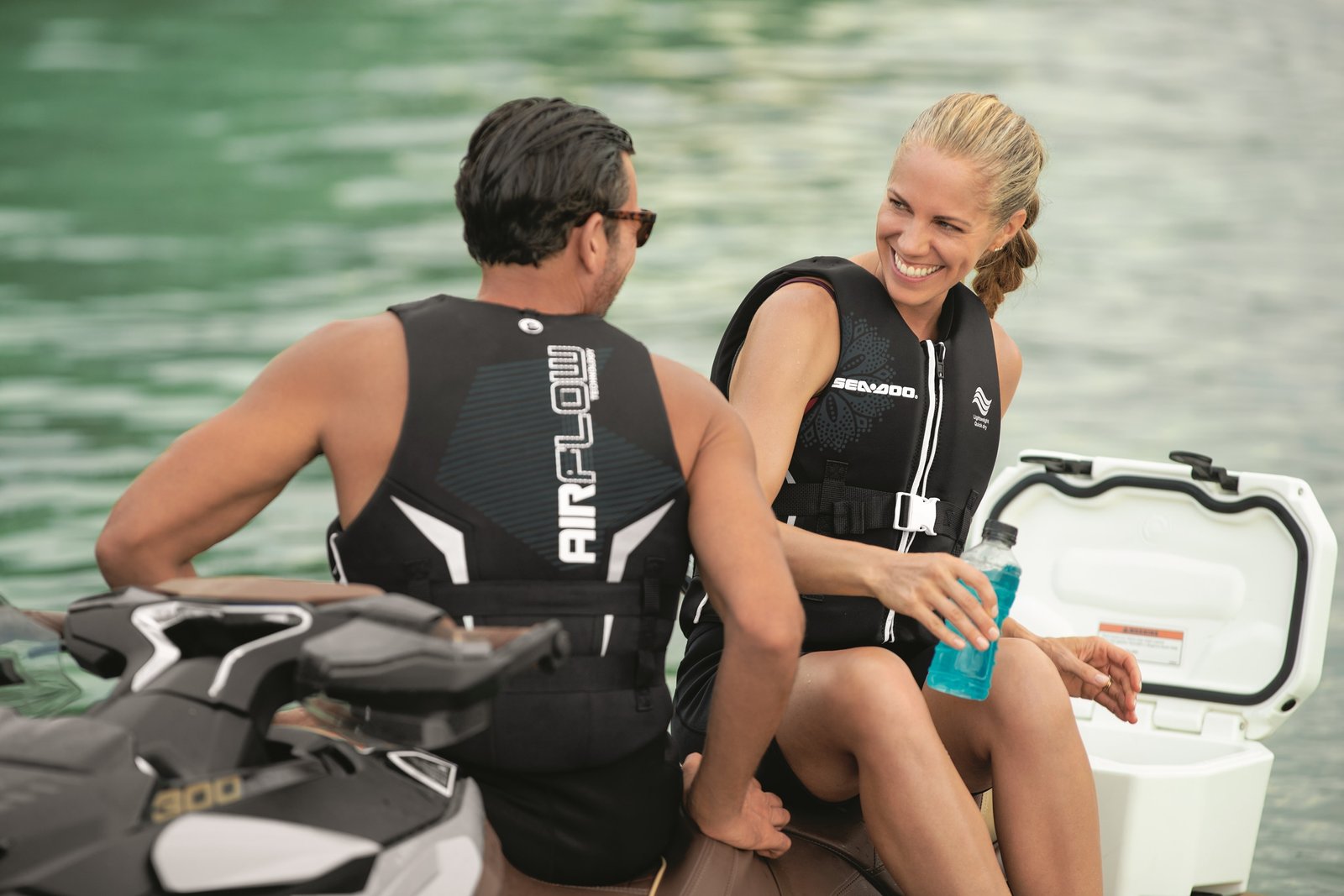
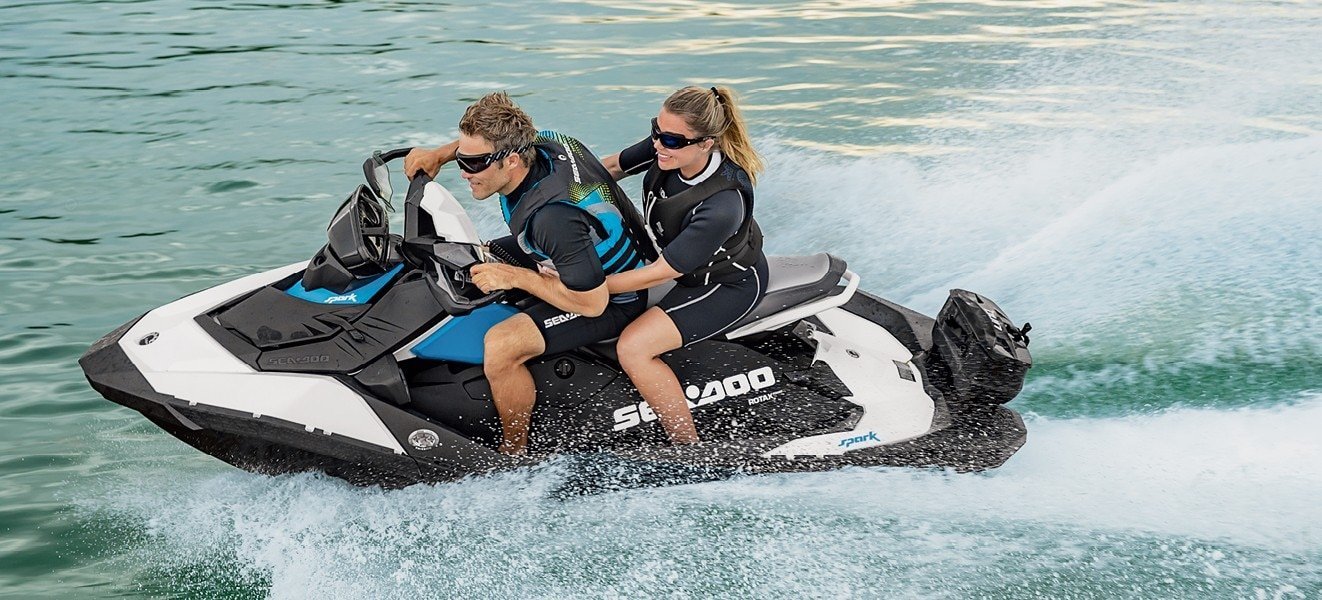
The Watercraft Journal Awards 2019 Skyway Ski Show Guest Judge Prize

0

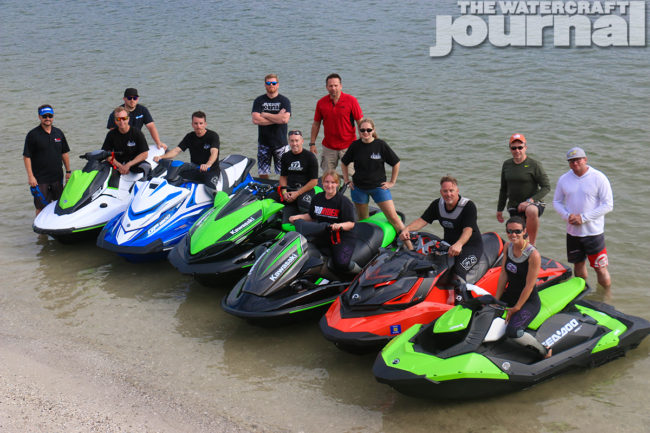
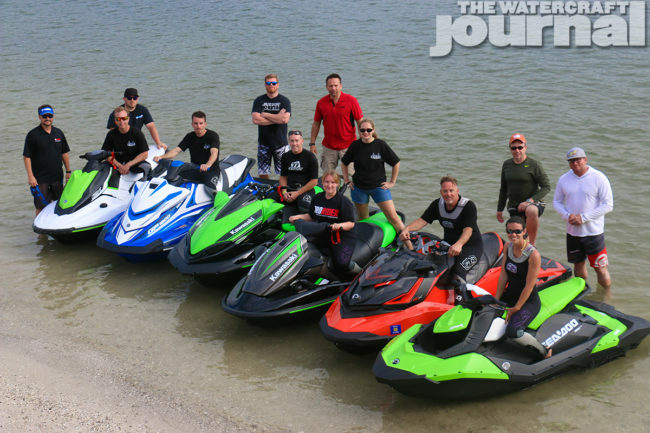
We told ya exactly a month ago. And thankfully, a whole bunch of you listened. The Watercraft Journal is excited to announce that we have selected one lucky reader to be a guest judge at the Skyway Ski Show! To those unaware, the Skyway Ski Show is the collaborative effort of the Watercraft Superstore with Cycle Springs Powersports, that welcomes half a dozen PWC enthusiasts to test ride some of the newest watercraft from the major manufacturers – Kawasaki, Sea-Doo and Yamaha. Then the riders evaluate each one with the winner being announced in the Watercraft Superstore’s annual magazine/catalog hybrid.

This year, we welcome Bobby Sessom to represent The Watercraft Journal at this year’s Skyway Ski Show. Bobby will be flown in, plopped in a luxury waterfront hotel, fed waaay too much food, and get to spend the next day riding brand new watercraft around Tampa Bay – and all entirely free (except for maybe having to cash in a vacation day or two with work. Bobby’s gonna score a whole bunch of brand-new riding gear, a swag bag and be featured throughout the Watercraft Superstore’s massive “magalog” as well as an article here at The Watercraft Journal. It’s pretty much the jet ski lover’s dream come true.

There will be plenty of social media updates on Bobby and the Skyway Ski Show on The Watercraft Journal’s official Facebook page as well as the Watercraft Superstore’s official Facebook page, so make sure to follow along. We’ll also be present to snap pics and provide the rest of you with a full report from Bobby’s big adventure here on The Watercraft Journal.

Video: Understanding Crankcase Pressure, Blow-By and Oil Catch Cans

2

Let’s talk about something super exciting: regulating crankcase atmosphere. To the layman, this isn’t really sexy stuff and will likely cause most of you to tune out right about…now. But for those still reading, I’m going to explain how regulating internal engine atmospheric pressures (ie. crankcase pressure) will not only ensure the longevity of your personal watercraft’s engine, but will actually help pick up some power.

An internal combustion engine, it’s most basic form, is an air pump. Air goes in, air goes out. The energy created and dispersed in this process is the byproduct we use to power modern machinery. The effectiveness of that process is predicated upon the engine’s efficiency. When an engine is properly sealed – machined tolerances, properly torqued hardware, gaskets and piston rings – it will often run optimally.

When an engine isn’t properly sealed, things go south pretty quickly. Improperly gapped rings can permit blow-by and oil contamination. Detonation can occur. Compression can be lost. Gaskets can be bubbled, burned or blown out. And of course, water can penetrate into the oil, or worse, the cylinders and hydrolock the engine.

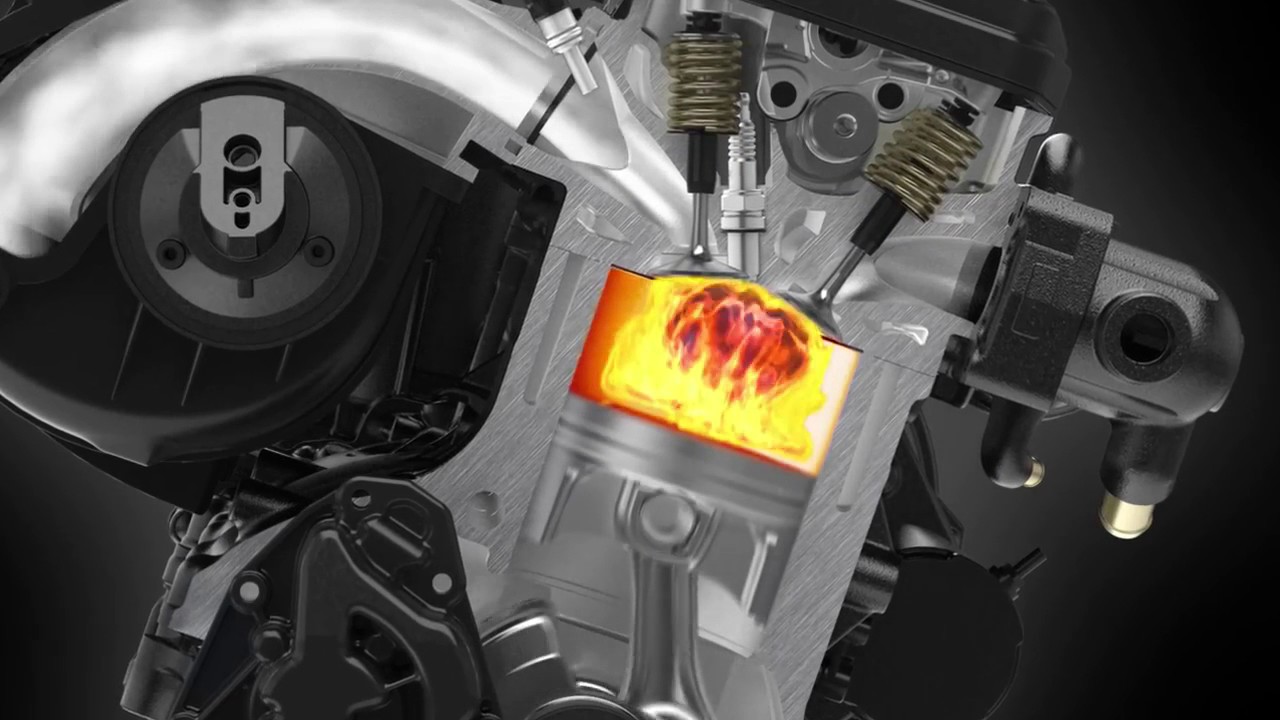
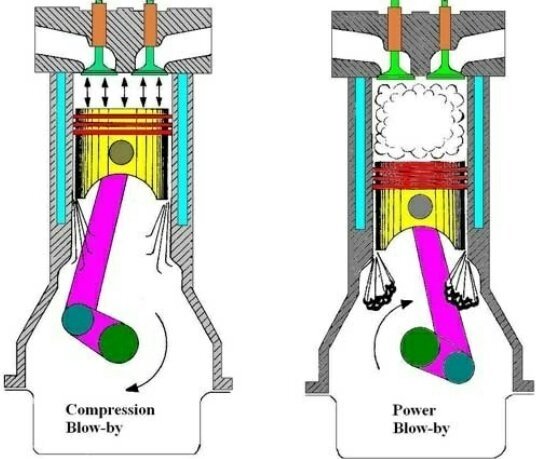
Not nearly as catastrophic but equally as terminal is excessive blow-by. Blow-by, as the name suggests, is when during the compression stroke, unspent air and fuel in the cylinder literally blows by the piston rings and enters into the crankcase. The raw fuel and carbon particulates quickly contaminate the engine oil as the compressed, heated air pressurizes the atmosphere within the crankcase itself.

Thankfully, today’s modern 4-stroke engines feature incredibly well-designed multi-valve combustion chambers with machined quench surfaces, and valve reliefs integrated into the piston crowns, which was all high-end racing technology only a few years ago. Piston ring technology has also found its way into stock equipment, with multiple precision ring grooves, compression rings, oil control rings and return drains.

Yet, even in the face of these innovations, blow-by can occur – particularly in high compression or heavily-boosted applications (turbo or supercharger). When the compression charge of ignited fuel and condensed supercharged air exceeds the efficiency of the cylinder bowl design, piston shape and rings, the excess pressure seeks out the weakest route to escape, which is often by blowing by the piston rings.

Modern engine tuners have also found that poor or inefficient ignition and timing of the return stroke and/or the exhaust cycle is also a contributor to blow by. Commonly referred to as “prolonged duration,” the cylinder pressures are not permitted to escape through the exhaust valves fast enough, and thereby, look for another way out.

Once entered into the crankcase, the atmospheric pressure begins to build. This superheats the air and oil – far faster than what the engine was designed to withhold, consequently boiling the oil into a miasma of oil mist and fuel vapor. If left untreated, unspent fuel can break down the oil’s protective attributes on sensitive bearings and rings, causing excessive heat and accelerated wear.

With the engine sealed, this pressure struggles to find release, and will eventually push oil up past the piston rings, causing the engine to start burning oil, blowing white smoke out of the exhaust. Many modern engines feature a PCV valve that plumbs the crankcase to the engine’s intake – either before the throttle body or directly into the manifold. The Positive Crankcase Valve is meant to maintain an equilibrium of healthy crankcase pressure and an internal engine temperature in a normally operating engine.

Yet, when heavily-contaminated crankcase atmosphere blends into the incoming air-and-fuel mixture in the combustion chamber, the mixture can cause pre-ignition (when super-heated fuel detonates before the timing spark) or detonation (also known as “knock”, when the mixture detonates post-ignition timing). Both are highly detrimental to the health of the engine and can quickly weaken and destroy valves and pistons.

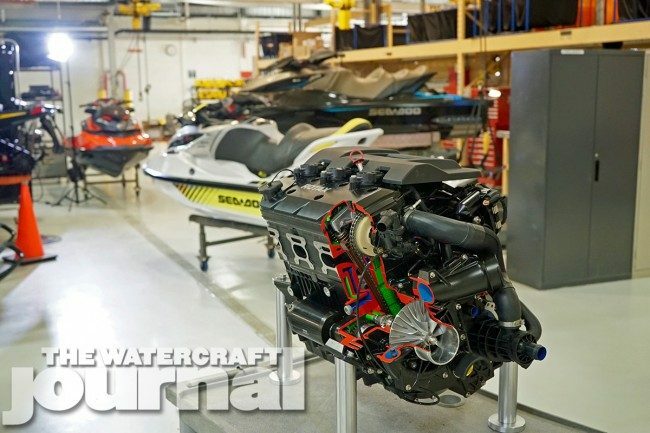
In supercharged watercraft – particularly today’s 300-horsepower Sea-Doos – the PCV routes into the air intake prior to the throttle body. This means that the contaminated, oil-and-fuel heavy fog from the crankcase passes through the intercooler uninterrupted. This vaporized oil can coat the cooling fins and core tubes, stiffing the intercooler’s ability to cool the intake charge.

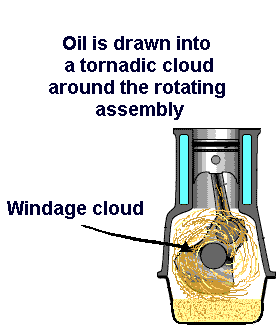
A far less catastrophic occurrence is excess windage. Windage is when too much oil clings to the throws of the crankshaft, connecting rods and piston skirts, literally weighing these reciprocating parts and throwing off their carefully balanced weights. Windage can slow down your engine’s operation and, again if left unchecked, can cause unusual wear patterns in the cylinder walls.
As blow-by saturates the crankcase atmosphere with super-heated oil, it chokes the air inside the crankcase, coating the crank, rods and pistons with a heavy layer of lubricant – far more than these parts need. Of course, a direct contributor to oil windage is excess/over-filled oil levels.

RIVA Racing’s own Brian Rosencrantz explained: “A common cause of poor performance is over-filled engine oil. Failure to follow the correct procedure will result in the ski being over-filled. This causes decreased engine performance due to windage losses in the engine.”

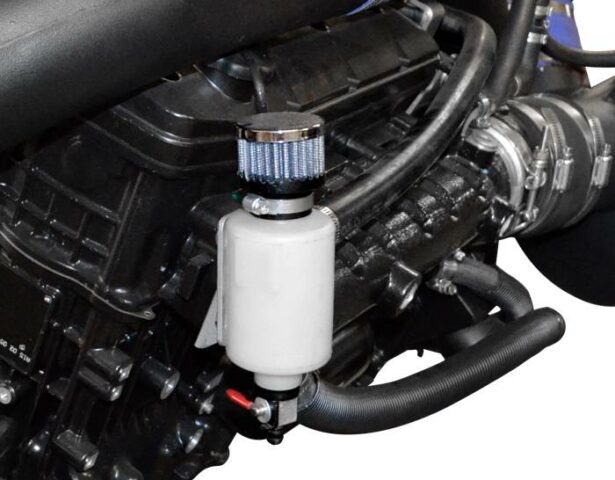
Thankfully, resolving these issues is surprisingly easy. As Rosencrantz noted, properly following the oil filling instructions outlined in the service manual of your personal watercraft will ensure that you will not over-fill your engine, even if your dipstick might say otherwise. Secondly, we found that a supplementary crankcase breather, such as RIVA’s Sea-Doo 4-TEC Catch Can/Engine Breather Kit works flawlessly.

The RIVA Catch Can works as an intermediary between the PCV valve coming from the crankcase and the feed into the intake. This added step helps separate the super-heated oil vapor and unspent fuel, permitting only positive air pressure to filter through into your intake – ensuring a healthy crankcase atmospheric pressure without contaminating the intake charge – all while improving intercooler efficiency by preventing oil contamination which lowers thermal efficiency.

The catch can literally collects the oil and fuel byproduct that can be drained occasionally via a petcock valve (you don’t want that mixture feeding back into the crankcase). The kit is incredibly easy to install, mounts to the side of the 300 ACE’s engine block, and comes with all of the necessary hardware to do it in a matter of an hour or so. The plastic bottle even features a K&N breather and CNC-cut mounting bracket.

If left stock and oil levels maintained at proper levels, your engine will operate as engineered. The addition of a oil catch can will only serve as an extra filter – a preventative measure. Yet if modified, the addition of a catch can is almost mandatory to ensure a healthy, equalized crankcase atmospheric pressure as well as a clean, uncontaminated intake charge – which will result in greater engine efficiency and thereby, increased acceleration and horsepower.

Awake RÄVIK, The Swedish $21,000 Electric Surfboard

0

Technology is truly amazing. With technology we have been able to make our lives easier but at the same time innovate new products. In fact, without technology you wouldn’t be able to read The Watercraft Journal. But, let get into the meat of this news article.

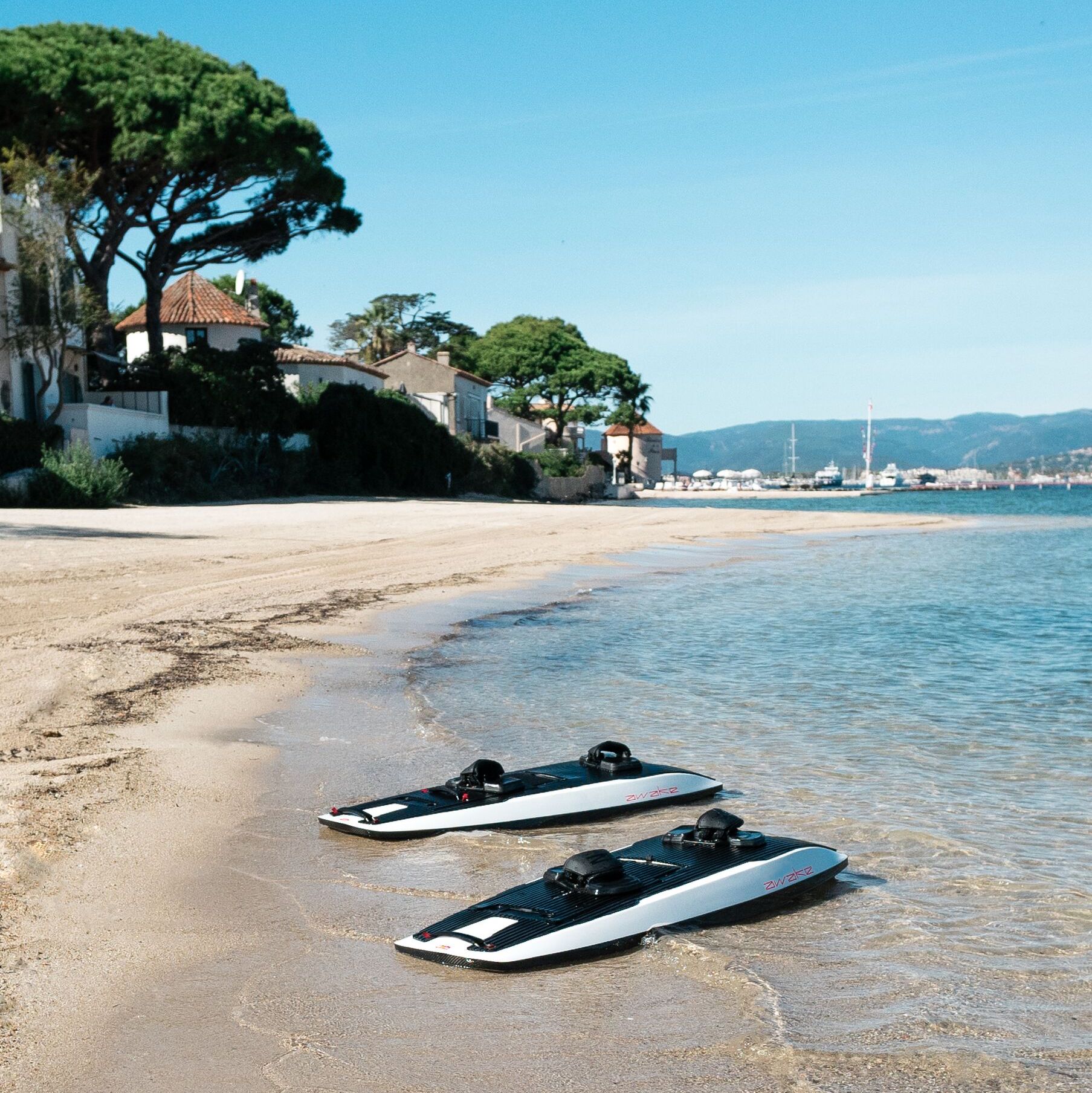
Awake is an electric surfboard company out of Limhamn, Sweden. While most people wouldn’t consider Sweden to be a major surfing hub, Awake has created a new way to surf. Introducing The RÄVIK, a light-weight electric surfboard that reaches up to speeds of 30 knots or 56 kph. One of the things that makes The RÄVIK so special is that it is one of the fastest electric surfboards on the market that is not made specifically for racing.

The RÄVIK is made out of very high quality composites such as carbon fiber. Carbon fiber allows the surfboard to be light-weight but strong and durable. The electric motor is a 11kW brushless electric motor that provides a very quick response time. There is a water tight seal which allows the chance of water entering  into the motor minimal. The motor requires minimal maintenance, letting you ride more and not having to worry about changing any fluids. The lithium battery pack that powers the motor allows you to ride up to 40 minutes on a full charge. A light indicator will warn you when the battery is getting low suggesting you return back to shore. Additional battery packs are available to switch out the dead battery and keep on riding.

A key feature of The RÄVIK is that the throttle is completely wireless. This allows the rider to focus on balancing and can then apply throttle as necessary. Equipped in the surfboard are multiple safety sensors, for example letting you know if your motor starts to run hot. Also equipped is a “dead-man’s grip function”, similar to personal watercraft. This is a feature that allows anybody to learn how to operate safely, and if the rider falls, the surfboard wont ride off on its own.

Many of you are probably wondering the cost and some of the specifications. The price in USD is $21,319. $564 is due as an order deposit, $10,377 for the first installment payment and then $10,377 as the final payment.

Here are a few specifications:

  • Top speed: 30 knots / 56 kph
  • Acceleration: 050 kph in 4 seconds
  • Runtime: 40 min of mixed riding
  • Exchangeable battery: Yes
  • Charge time: 80 min
  • Wireless throttle: Yes
  • Carbon fiber body: Yes
  • Dimensions: 179x61x22 cm
  • Weight: 35kg / 77lbs.

Awake will be coming out with some more exciting news so make sure to subscribe to their newsletter.

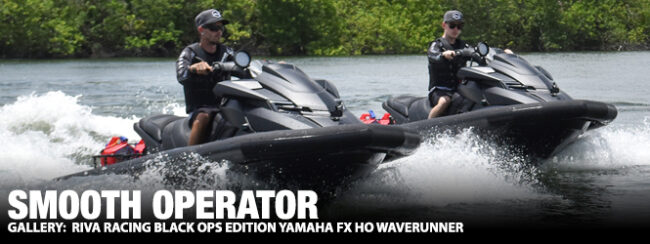
Gallery: RIVA Racing’s Black Ops Edition Yamaha FX HO WaveRunner

0

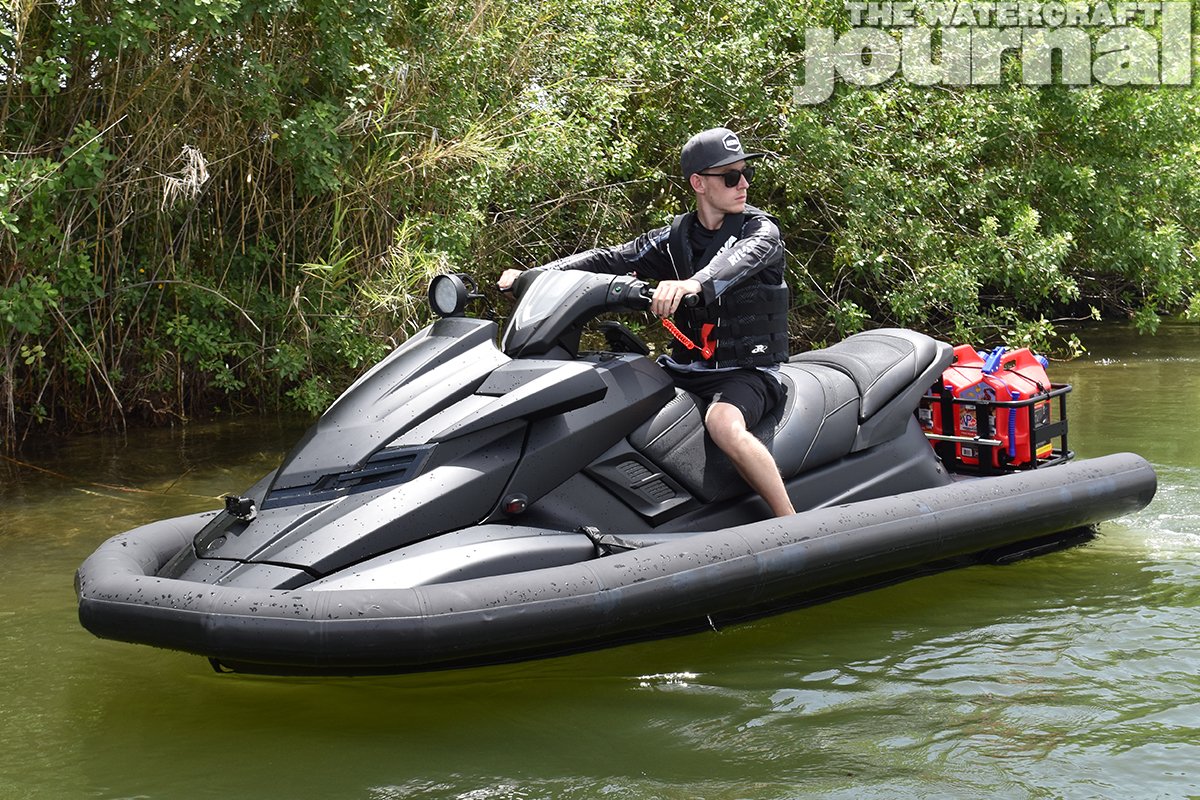
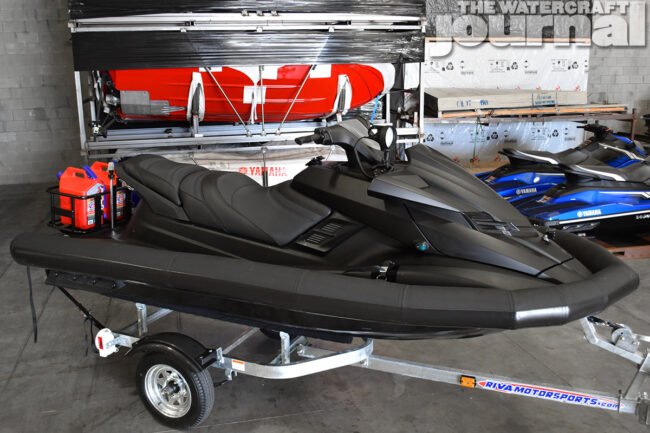
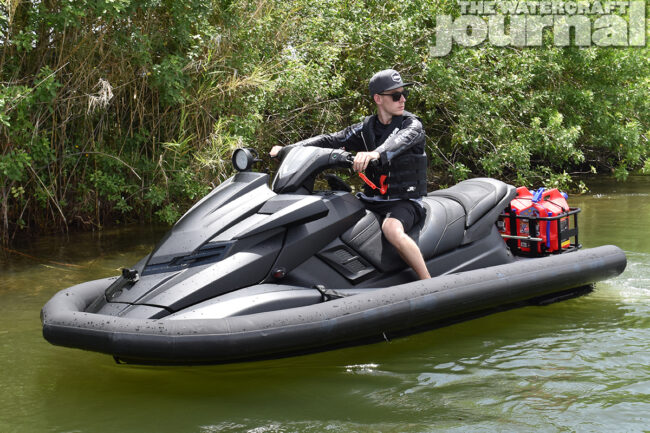
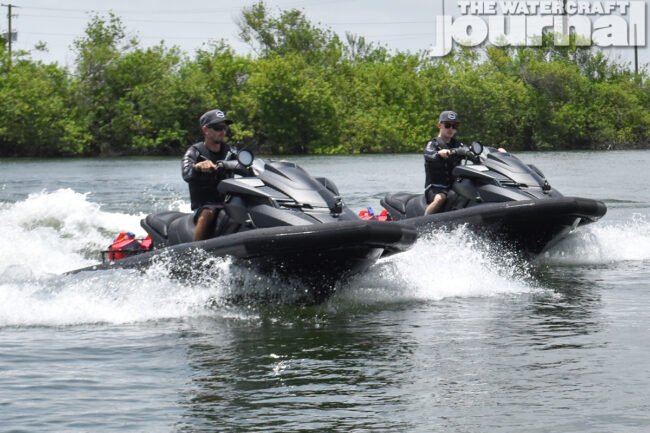
Chances are you’re no operator. You’re no Mat Best. And you sure as $#@% ain’t with Beckwith’s Unit, son. Nope, rather it’s far more likely that you’re a regular ol’ schmuck like us – so something like what RIVA Racing whipped up is probably not going to be your cup of tea. What you’re seeing here is the result of a unique request made to RIVA’s special vehicle team. This quiet division of RIVA Motorsports builds custom PWC for Military, Search & Rescue and other special applications.

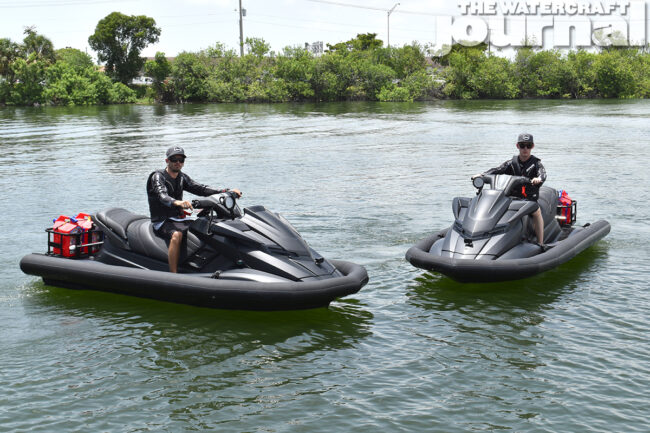
“The units were supplied to the US Government for military patrol purposes,” RIVA’s Dave Bamdas explained to The Watercraft Journal. Unlike RIVA Racing’s limited 25-unit “Special Edition” performance edition runabouts, the two stealthed-out ’18 Yamaha FX HO WaveRunners were two-of-a-kind builds that, while having stirred up interest online, are not a regular offering. “We have no standard specification for these craft. Each one is custom built to our customer’s specification.”

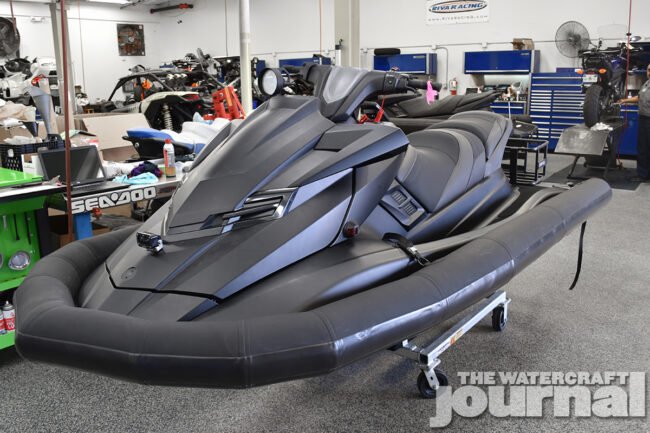
Beginning with a pair of hold-over 2018 Yamaha FX HO WaveRunners, RIVA sought to build a pair of durable, reliable and easily operated machines that could be used for stealth extraction and infiltration. “The Yamaha High Output Marine Engine is really reliable, runs quiet and still has plenty of horsepower to get the job done,” Bamdas added. The “Black Ops” military build required that the units were stripped down for painting; all graphics were removed, all of the chrome elements were prepped and primed for painting as well.

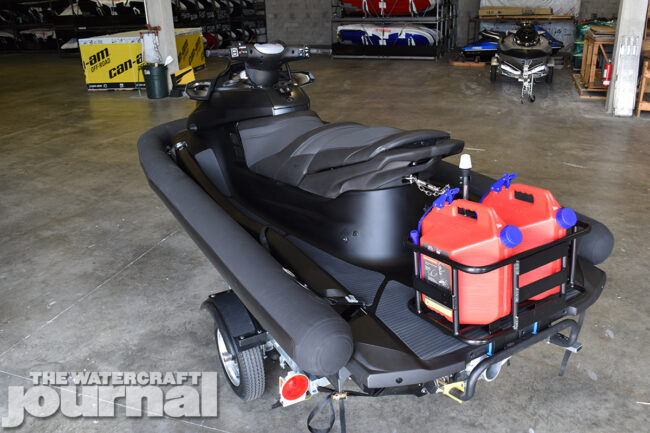
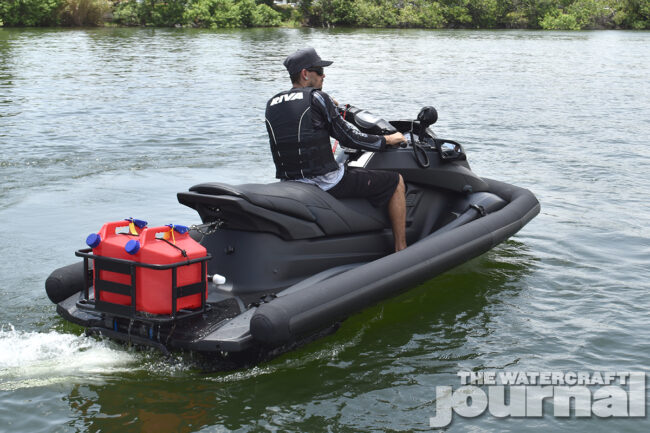
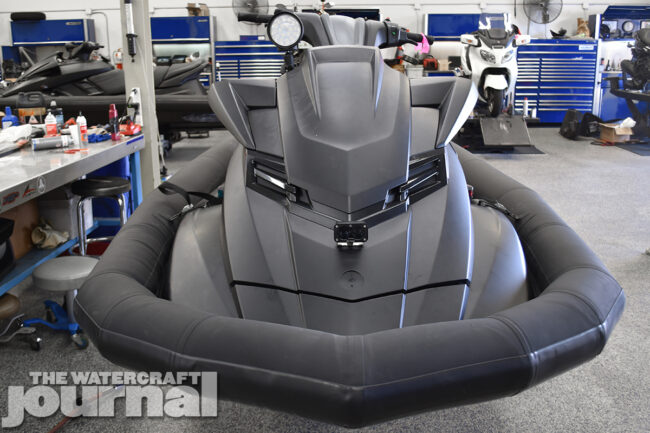
“The hull and deck were painted with special non-reflective black paint along with hood panels and all exterior trim components,” Bamdas detailed. The plastic rear “wet storage” panels were removed to permit more deck space. Black rub rail inserts were installed as was a RIVA non-slip tactical seat cover in non-reflective black. Wrapping the rail of the WaveRunners was a WING Inflatable Stability Bumper.

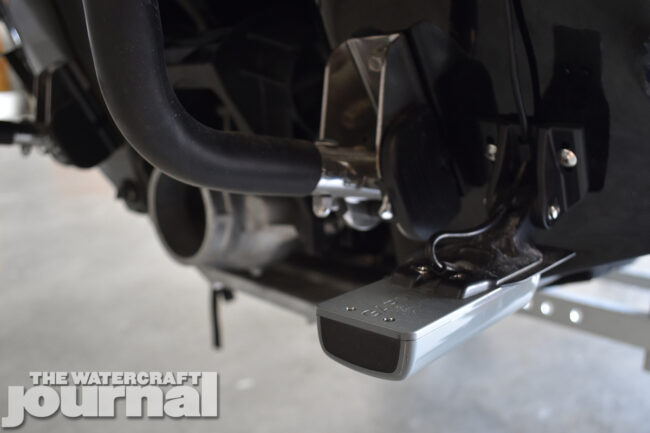
For being a stealth vehicle, RIVA installed quite a bit of lighting, including a removable spotlight with a RAM mount; a navigational light system including removable rear pole light (with a remote military-spec switch); and an infrared headlamp also with remote military-spec switch. A Garmin Echomap 44cv GPS/Sonar was mounted on glove box door with the transponder puck mounted below the rear swimstep.

Keeping the Yamahas powered was a main battery switch with a custom military-spec wiring harness integration. As redundant systems are standard military issue. Completing the build were a pair of custom rear aluminum fuel racks from Super Rack, both secured with stainless steel turnbuckle; each filled with a pair of SureCan 5 gallon fuel containers. The final result were a pair of unique machines that military personnel could use reliably in night maneuvers with confidence.

Well after the client received the two units, RIVA Racing was given permission to share the results of the build with The Watercraft Journal. Earlier in the month, RIVA’s social media team leaked out a few pictures of the stealthy build to almost instantaneous adulation. “It was a little surprising,” Bamdas laughed, teasing: “Obviously, this isn’t something that we do for anybody, but the sudden demand for customized one-off watercraft was exciting. We might have to consider looking into it.”

Celebrate the 10th Annual Hydro-Turf US HydroDrag Nationals

0

The IJSBA shared some exciting news from Florida and Ohio. Mike Young’s Surf and Turf Promotions has partnered with Powerboat Nationals to bring three weekends of PWC Competition to Tavares,FL. This year’s event will not only feature HydroDrag Racing, Sparks, Sport Class, and possibly some other watercraft will be involved in some events.

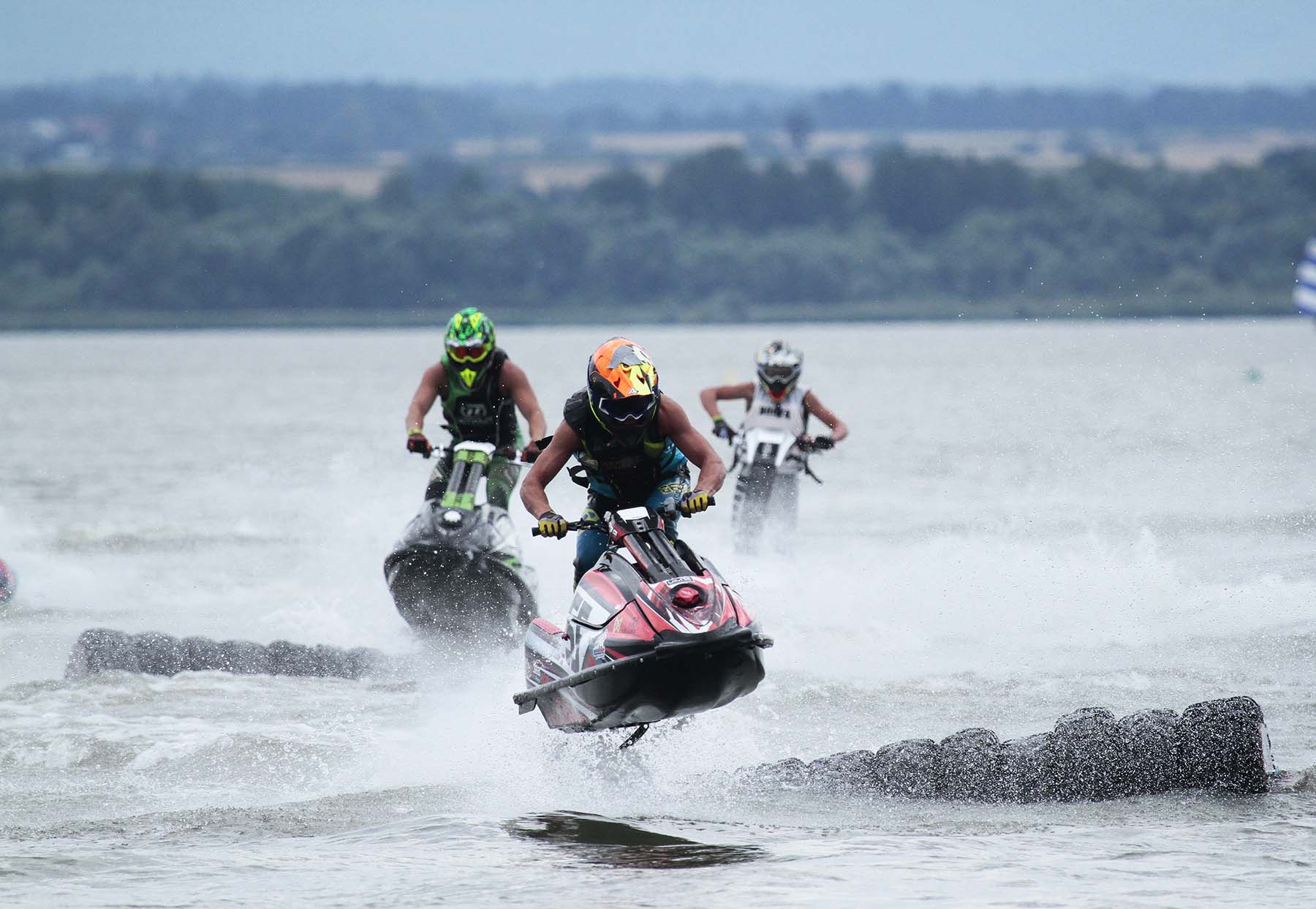
The 10th Annual Hydro-Turf US HydroDrag Nationals and World Championships powered by Yamaha will return to Lake County for four events. These begin April 6 and will feature the “World’s Fastest Race on Water.” This event runs for two days and is sanctioned by the IJSBA of Half Moon Bay,CA. The HydroDrags feature a one of a kind launch pad and it will be set up directly behind Kalua Beach Bar. Five classes of HydroDrag Racing will be entered. These classes include Pro Stock Sea-Doo, Pro Stock Yamaha, Spec, Superstock, and Unlimited. Stock and Spec Classes run on Saturday and the more modified machines run on Sunday.

This is promoter Mike Young’s 32cd year in the industry and the 39th year of organized PWC racing. Young said, ”I enjoyed putting on the races in Tavares so much that I moved here from Bradenton and our relationship with the City of Tavares and Lake County Economic Development is excellent” With that being said, Young said that there will be 3 additional events held on May 18-19, July 18-19, and November 9-10. The May and November events will also feature the Powerboat Nationals Hydro Cross Classes; Sport and Spark, which will bring a lot more people to Lake County for the event as this series (powerboatnationals.com) goes to Ohio, Michigan, Tennessee, Wisconsin, and West Virginia!

The Series attracts hundreds of racers from all over the U.S. National and local sponsors include Hydro-Turf, Yamaha, City of Tavares, Lake County, RIVA Racing, Greenhulkstore.com, Tiki West, Key West Resort, Blowsion, Jet Pilot, IJSBA, pipmthatride.com, 4-Tec Performance, Team Mean, MVP Production, and Jet Ski Daily. The events run from 9am to 4pm and are free for Lake County residents to attend. Non-residents can purchase a pit pass for $10. Surf and Turf Promotions has more information available on its website. Bleachers will be provided, however, attendees are urged to bring their own seats and ear protection. It will be loud! Free parking is available at the Tavares City parking deck.

This is a family-friendly event with a high energy vibe. Prepare to have fun! Drag Racing, Freestylye, and Closed Course racing will be on full display. Plenty of vendors will be on site and many restaurants are within walking distance. Uva Perez from U-Jet is the current holder of the World Speed Record in the Unlimited Class. The record happened in 2017 on Lake Dora and it was an impressive 127.7MPH! Are you ready Tavares, ’cause the 2019 Hydro-Turf US Drag Nationals and World Championships are coming back to town!

Missing PWC Rider off Long Beach, CA Rescued, Succumbs to Exposure

0

According to a report in the Press Telegram, Twenty-year-old Jean Carlos Cheryl was underway on his personal watercraft the morning of February 10th. He left Long Beach, California and was on his way to meet a friend on nearby Catalina Island, some 26 miles due south. When Cheryl failed to show up at the agreed meeting time, his friend notified authorities. Cheryl was last seen riding his red and white ski at 9:50 am.

The Coast Guard was notified at 10:40 am and dispatched two vessels and a helicopter to search for the missing man. LA County Lifeguards and other first responders were involved in the search as well. At 1:45pm, Cheryl’s watercraft was found 5 nautical miles away from the Long Beach Lighthouse. This news came from Coast Guard Petty Officer Mark Barney.

Investigators from the Long Beach Fire Department have the craft under examination. So far no reports have come out as to whether the machine malfunctioned or if Cheryl suffered some kind of medical emergency. What is known is the treachery of the Pacific Ocean that threads between Catalina Island and Southern California’s coastline. Weather and water conditions can rapidly and unexpectantly change leaving an unprepared rider in dire circumstances.

Cheryl wasn’t located until almost 8pm. A Coast Guard helicopter spotted him about 8 nautical miles southeast of the Long Beach Lighthouse. LA County Fire Department Lifeguards reported his condition as critical. He was hoisted into the chopper and transported to the Long Beach Airport and then to Long Beach Memorial Hospital where he was later pronounced dead.
This is a developing story and we will update you as we learn more.

IJSBA Recommended Rule Changes For 2019

0

Imagine for a second that you are a class-leading racer, racing your watercraft in a heat leading up to the national title race. You and the next best racer are battling it out. Coming around on the final lap you and he are head to head and as soon as you reach the last turn, he reaches over and yanks your safety lanyard instantly killing your watercraft. He breezes by and crosses the finish line ahead of you.

You look over and all the fans are jumping up and down screaming in dismay, the crooked act was caught on live television, and yet the sanctioning body officials do not know what the big deal is, the act is left unchallenged, and you just lost your chance at winning the national title race.

Okay so this story seems very far-fetched however if you were rooting for New Orleans leading up to this year’s Superbowl, then such a scenario is not too far from reality for you right now. If the sport of watercraft racing got as much national attention as the NFL, then rule change outcries would be heard from miles away.

All kidding aside though, every sport goes through technical and political changes and the rules must constantly be analyzed and changed if necessary. The IJSBA has already submitted recommendations for rule and policy changes in 2019.

The managing director has made a list of recommended changes and recently submitted them to the Board of Directors. All recommended changes can be seen below and if approved, could be in effect starting next year.

  1. Recommendation that the Board of Directors pass a Ski Class rule change that formalizes the interpretation ruling that aftermarket hull and top deck configuration may be a maximum length of 97 inches from the furthest point of stern to the rear of the unit with an additional length of 5 inches, beyond the overall watercraft length, to be permitted for ride plate length and nozzle/venturi length. Under no circumstances will the combined hull/top deck and extension exceed 102 inches. The maximum engine displacement allowed will be: 1300cc if powered by a naturally aspirated two stroke engine; 1500cc if powered by a naturally aspirated four stroke engine and; 1100cc if powered by a four stroke engine that is equipped with any sort of forced induction.
  2. Recommendation that the Board of Directors adopt the following policy for Runabout 1100 Open and Modified Classes: To utilize an aftermarket hull or top deck, a watercraft must be of one the following units: Sea-Doo Spark (any); Yamaha EX (any). All other units must utilize OEM hulls only. This ruling has no effect on existing 800cc based two stroke watercraft that are currently allowed aftermarket hulls.
  3. Recommendation that the Board of Directors amend the Rec Lites category to allow the standard Yamaha EX but specifically exclude the Yamaha EXR.
  4. Recommendation that the Board of Directors approve a policy that prohibits any type of Runabout seat or seat and accessory combination that allows the rider to lock into place while on the watercraft. Language to be developed that limits the degree of saddle characteristics to the seat. This policy will be in effect at the 2019 World Finals and must be adopted by all IJSBA Sanctioned Organizers by January 1, 2020.

In addition, the Board of Directors will be briefed on the following class changes at the 2019 World Finals:

  1. Mod Lites to be integrated into the Womens Ski class. No change to be made to the Womens Ski Lites Class.
  2. A Sportsman Classic Sport GP class to be tentatively added. Competitors may be allowed on an original Yamaha Waveblaster (also known as B1 Blaster) and original Kawasaki X2. The Sportsman designation will exclude Pro Licensed riders as well as riders who have earned World Championships or frequent podium finishes in the last three years. This will be a weekday class. Standard Sport GP to be moved to the weekend.
  3. A tentative Classic Runabout 1000 class to be added. Two Stroke Runabouts up to 1000cc will be allowed.

 These will be the only changes and policies recommended to the Board. For any questions or comments regarding this press release, please email [email protected].

Powerboat Nationals To Be Aired On Mav TV For 2019

0

The sport of watercraft racing just got a lot more attention. The IJSBA has announced that for 2019, Powerboat Nationals events will be aired on the national cable channel Mav TV.

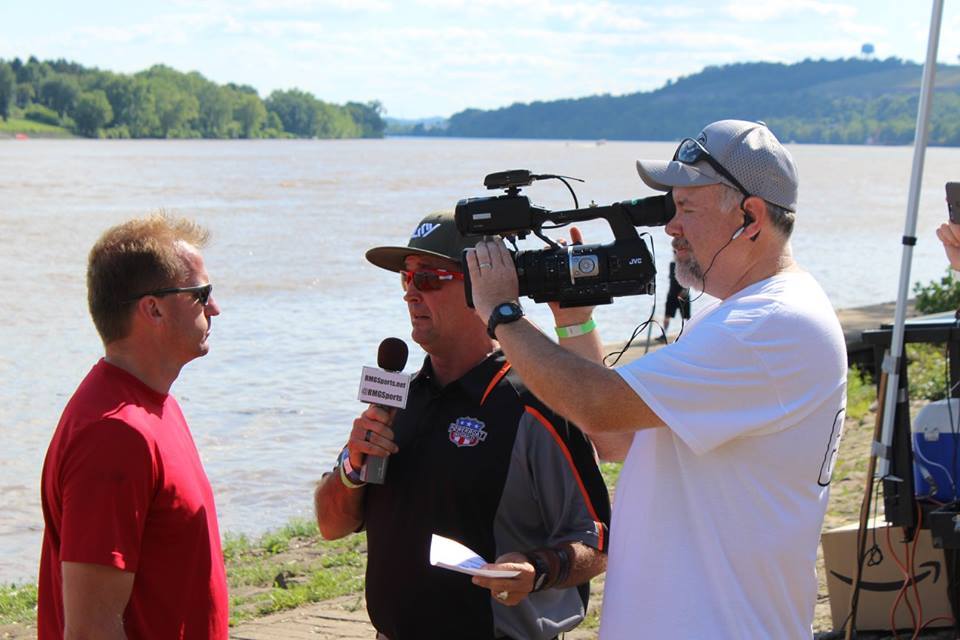
The IJSBA sanctioned event will be covered again this year by RMG Sports in its fourteenth season of coverage. This year however opens new possibilities. With Mav TV airing the coverage, it will bring viewership to millions of households across the United States and Canada.

Since the coverage will be available on DirecTV, Verizon Fios, and through many other cable providers, this will provide access like no other for all fans and enthusiasts.

For full details, you can check out the press release below.

RMG Sports has been working hard building on its success with Powerboat Nationals.

RMG Sports will return for its fourteenth season of covering powerboat racing and has put together one of the most robust production and distribution packages in the history of the sport.

In 2019, RMG Sports’ coverage of Powerboat Nationals racing will be seen in over seventy-three million households on nine television networks.

MAVTV, a cable channel dedicated to motorsports, will deliver Powerboat Nationals racing to nearly forty million households across the United States and Canada. MAVTV is available nationally on DirecTV, Verizon fios, and numerous cable TV providers.

RMG Sports has also negotiated deals that put Powerboat Nationals racing on multiple regional sports networks that include Fox Sports Southeast, Mid Atlantic Sports Net (MASN), and AT&T Sports Networks.

“We are proud to be part of the dynamic growth Powerboat Nationals has seen over the years,” said RMG president, Jarred Romesburg. “Our 2019 coverage will be seen in more households highlighting the racing teams, riders, and drivers while showcasing our host cities and promoting our sponsors like never before.”

RMG Sports is the sports production and distribution wing of Romesburg Media Group. Headquartered in Somerset, Pennsylvania, RMG is an award-winning, veteran-owned digital media production company. Learn more at www.rmgtv.us.

Powerboat Nationals is a national touring series that provides world-class tunnel hull powerboat and jet ski/PWC racing on rivers and lakes across North America. For more information, please visit www.powerboatnationals.com.

 Photo captions (photos courtesy of Powerboat Nationals):

ProTunnel1 (PT1) Series drivers Jeff Shepherd (38) and Lee Daniel (2) compete at a Powerboat Nationals race in 2019.

Powerboat Nationals’ Mikey Young and RMG Sports’ Jarred Romesburg interview ProTunnel1 boat driver Mark Jakob after a race in Marietta, Ohio.

Powerboat Nationals Makes Some 2019 Schedule Changes

0

There is quite a bit of planning that goes into a huge power sport tour series. The team of tour officials must heavily coordinate the activities and dates and work with state and local officials for securing event spots.

In some cases for whatever reason, the event dates must be revised. Such is the case with Powerboat Nationals who recently announced a few changes to their 2019 schedule and global championship date.

It seems that all changes were accommodated with relative ease in this case and now everyone is on the same page for the 2019 schedule. Also joining the fun for this season will be the new ProSpark and ProSport series. This should make for an exciting year.

For confirmation on all changes, check out the press release below: 

(Columbus, OH) Powerboat Nationals announced today that changes have been made to its 2019 schedule and season-ending Global Championship weekend in Naples, Florida.

The event at Sugden Regional Park, which was originally scheduled for later in October, has been moved up to Columbus Day weekend. Powerboat Nationals’ 2019 Global Championship at Florida’s Paradise Coast will now be held October 12–13, 2019.

In addition to the ProTunnel 1 and ProTunnel 2 series racing in Naples, Powerboat Nationals has added Hydro-Cross to the schedule. The ProSport (SportGP/Spec) and ProSpark (Runabout Rec Lite) series will be joining the fun and concluding their 2019 seasons on Lake Avalon.

Powerboat Nationals also made a change to the 2019 Hydro-Cross schedule moving their November 11-12 racing event in Tavares, Florida to earlier in 2019. The ProSport and ProSpark seasons will now start on April 6-7 in Tavares. This change allows for all four Powerboat Nationals racing series to conclude their 2019 schedule on Global Championship weekend in Naples.

“We thank everyone with Collier County and Florida’s Paradise Coast for their help with the schedule change,” said Powerboat Nationals Managing Director, Dan Bunting. “Everyone should be making plans now to join us at the season finale in Naples as this year’s Global Championship event at Sugden is going to be epic.

Complete, updated 2019 race schedules for the PT1, PT2 and HX series are available on Powerboat Nationals’ Facebook and Twitter pages.

Powerboat Nationals is a national touring series that provides world-class tunnel hull powerboat and jet ski/PWC racing on rivers and lakes across North America. Their racing will be seen on nine television networks in 2019 to include the national motorsports channel, MAVTV. For more information, please visit www.powerboatnationals.com.