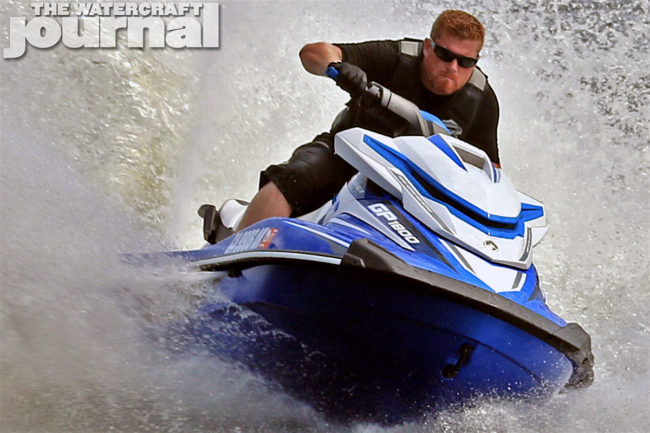
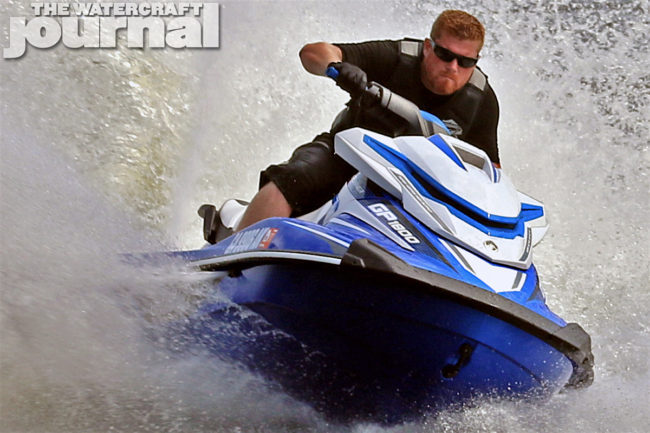
You know what you’re doing is making a difference when the biggest companies in the industry are using your stuff to promote their products. And for those paying attention, Yamaha WaveRunners is taking the announcement of the 2017 GP1800 WaveRunner as The Watercraft Journal’s “Watercraft of The Year” quite seriously. Just today, Yamaha Motor Corp. USA published a sweet video teaser of some highlights from our article awarding the supercharged machine as “Watercraft of The Year” as well as some never-before-seen aerial footage from both the IJSBA World Finals this past October as well as our private testing session just a little over a month ago.
We know, we know. Sea-Doo just introduced a handful of brand-spankin’-new runabouts literally two months ago and we have the gall to start talking about what the company has planned for the future? It’s a little presumptuous, we get it – but like so, so many times before, we’re pretty stinkin’ sure about this stuff and we thought we’d open up a Christmas gift a little early for you guys, since you’ve stayed off of Santa’s naughty list. (Well, except for Florida. You guys really need to do something about Polk County.) Nope, what we’ve got is not so much hearsay as much as directly from the horse’s mouth and in a not-so-subtle way – meaning, they really want us to know about it.
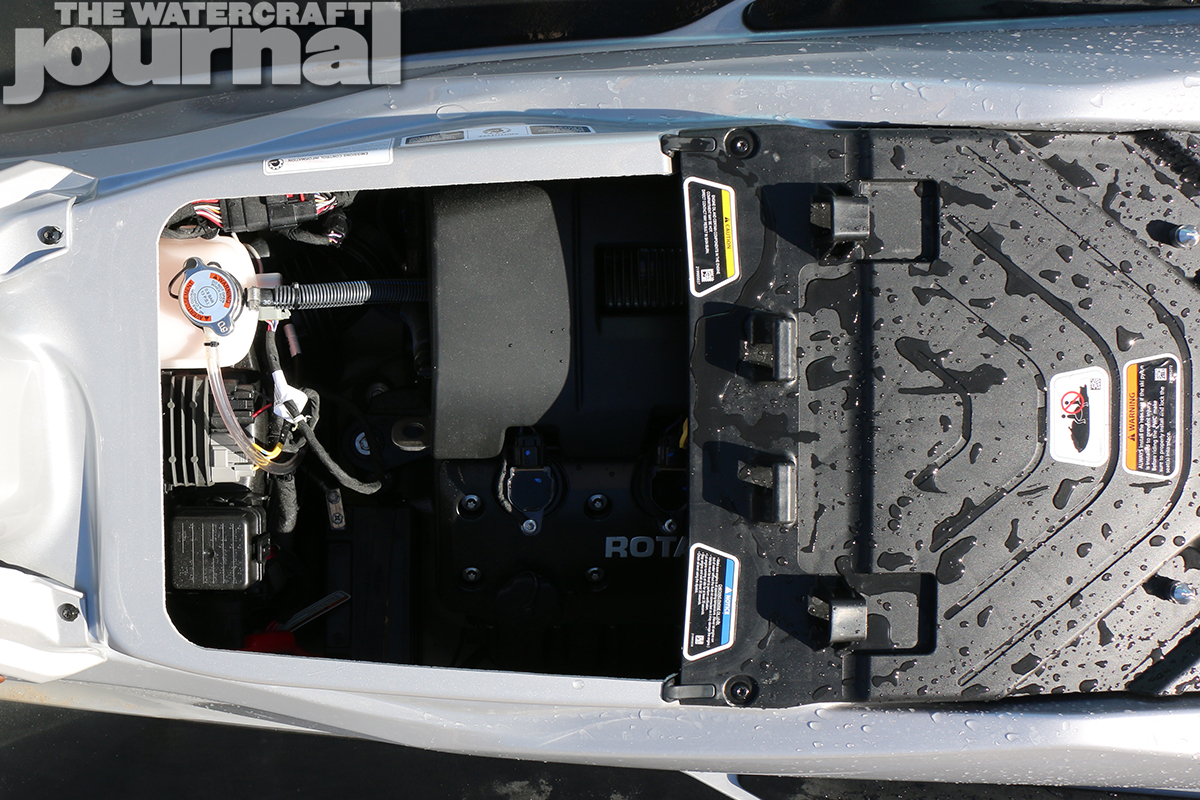
So what on earth could be coming down the pike that isn’t already featured on the all-new ST³-based runabouts? The answer is two-fold, and it’s right in front of your noses. Let us explain: At the 2018 product line media introduction, we were given not only exclusive access to the new RXT, RXT-X, GTX and Wake models, but also a full roster of chief BRP and Sea-Doo staff to bounce inquiries off of. The Watercraft Journal was the only PWC publication to ask to see the engine compartment completely uncovered, and watched as the 13-torx screws were backed out and the lid lifted. Apart from the generous access to the engine, we looked forward towards the bow.
While it’s understandable to think that the new Sea-Doo’s Direct Access Front Storage bin would sit right on top of the engine’s air box and/or fuel cell, there is a surprising amount of room remaining. Remember that there is nothing fore of the central storage tub besides a quasi-sealed air induction box. The room above and around the fuel cell itself, is quite spacious. This of course, led to some questions with Sea-Doo Brand Manager James Heintz and BRP Engineering Director Martin Lachance, who both commented on the public outcry for a larger fuel tank. “There’s definitely room for one,” Heintz confessed. Lachance was more forthcoming, “We have made one, yes. Unfortunately, we must wait for certain…reasons.”
What could be the hold up, we queried. “California has specific laws requiring extra testing, more data. It can take up to several years to earn permission to sell it there.” As it stands, the current full-sized Sea-Doo runabouts wield a 15.9-gallon total fuel capacity, far less than the current FX-line of Yamaha WaveRunners and their 18.5 gallon tanks or the massive 20.6-gallon tanks in the bellies of Kawasaki’s Ultra JetSkis. And with Sea-Doo’s emphasis in 2018 being on adventure touring and exploration, the diminutive tank seems a little counter productive. Both Heintz and Lachance hinted that the process is “well underway” for a larger fuel tank to happen “in the near future.” So for now, the rest of the world has to wait for California’s bureaucracy to rubber stamp Sea-Doo’s larger fuel tank.
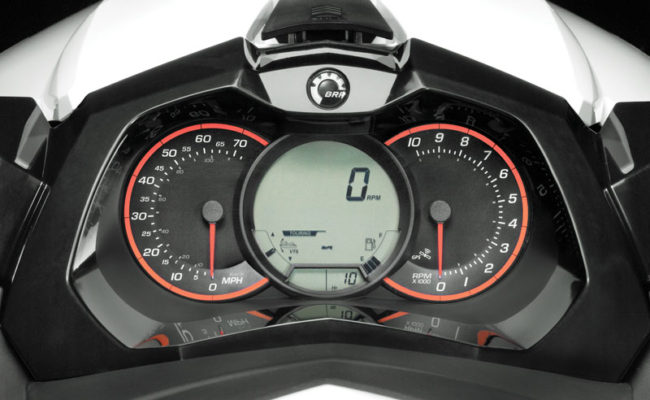
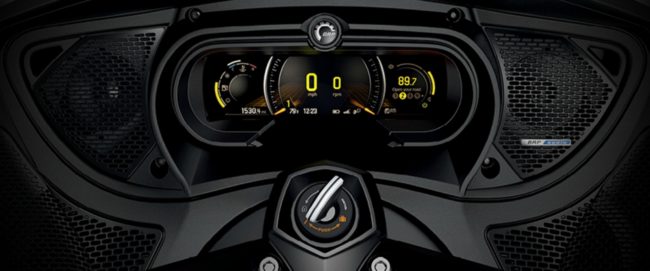
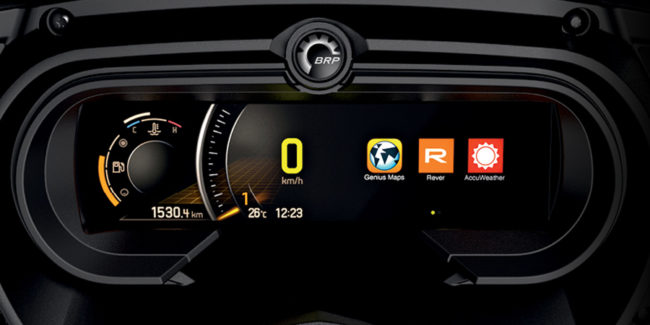
The second item of incoming changes will also take a couple of years, as the technology spreads to higher-selling product lines, but it is imminent nonetheless: a full-color digital instrument panel with seamless smartphone connectivity for app integration while riding. Whaaat? Yup, it’s real and it already exists. While Sea-Doo was drawing back the curtain on the new 2018 lineup, BRP was revealing its new Spyder lineup with the aforementioned full-color, all-digital dash. Both the Spyder and Sea-Doo ST³ machines also received BRP’s new Premium Audio systems both featuring Bluetooth connectivity for enabled mobile devices. Previously, the Spyder provided access to third-party smartphone apps thanks to BRP Connect. Now, riders can access a navigation application, play content, and listen to music directly.
Best of all, the system is extremely intuitive and simple to operate; a new joystick control is found near the left handgrip, letting riders navigate the screen functions while keeping both hands on the handlebars at all times. The joystick navigates a pair of large 4.3-inch screens (the dual screens provide optimal viewing from all angles), offering up live data like fuel level and speed perpetually on the left, and display-compatible apps on the right, like: Genius Maps: advanced GPS navigation platform that requires no internet connection; Music: sort easily through personal music libraries for the perfect playlist; AccuWeather: be prepared for the elements and pack accordingly with real-time weather information; and Rever: connect with friends on the go, share rides and discover new roads.
Someone at Central Florida Powersports was having a bit of fun with Photoshop, this is NOT a real image of the new all-digital display, but is pretty close to what we expect to see in a couple of years.
This major advancement is guaranteed to find its way to Sea-Doo in the coming years, and relatively soon. The modular design of Sea-Doo’s hardware from one trim level to the next, the new ST³ and Spyder both sharing the same Bluetooth connectivity for the Premium Audio System via mobile devices, and the familiar parts sharing becoming more common throughout all the brands (ACE engine management, LinQ storage systems, etc.), and even the standardized protective phone case on all of the new watercraft all speaks to the inevitability of the new dashboard.
We surmise that the change will happen with the rollout of the new GTI/GTS platform – expected for 2020, as it will mark 9 years since the last redesign. Of course, we also suspect all future GTI/GTS models will ride on a Polytec hull with a CM-Tech tech deck like all but two current GTI’s do (more on that revelation later). But for now, we hope that the larger fuel tank (believed to be comparable in capacity to Yamaha’s) and the high-tech digital dashboard (and adjoining left-side handlebar control pad) will be a plug-and-play installation, allowing for those purchasing a new 2018 ST³-based machine to go to their dealers and ask to be retroactively “upgraded”.
Although performance 4-stroke engines have been common place since 2003, the art of being a successful home garage tuner or custom ski builder has still remained a bit out of reach for many.
Sure, there’s no shortage of guys performing their own maintenance and upkeep, but diving into engine modification has typically been the territory of professional shops and builders. Thankfully, an expanding and growing aftermarket is opening doors for the “shadetree” mechanics to finally get their due.
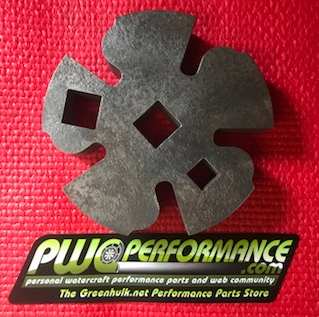
One major hurdle has been the cost of tools necessary to get the job done. The coupler removal tool for Yamaha SHO/SVHO WaveRunners retails for as much as a staggering $675. A few companies have offered their version of the tool, and at a cheaper price, but not to the level of strength and durability that many would require.
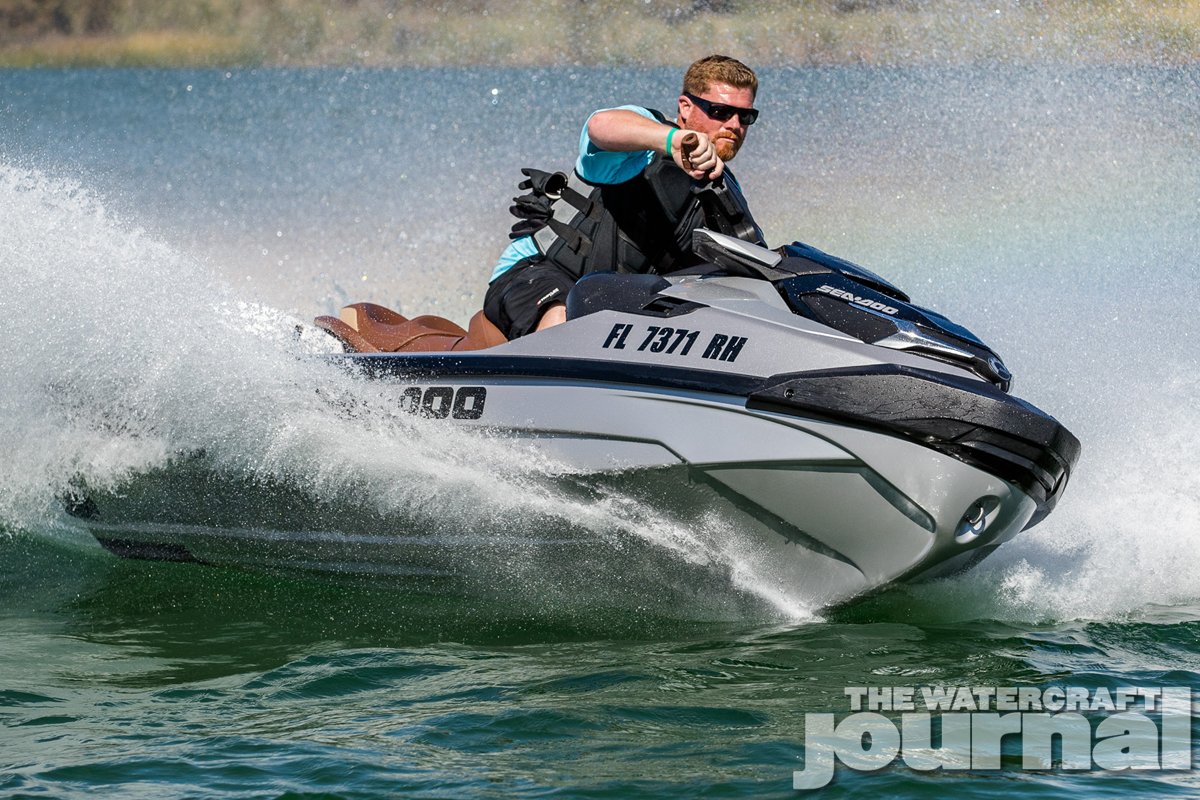
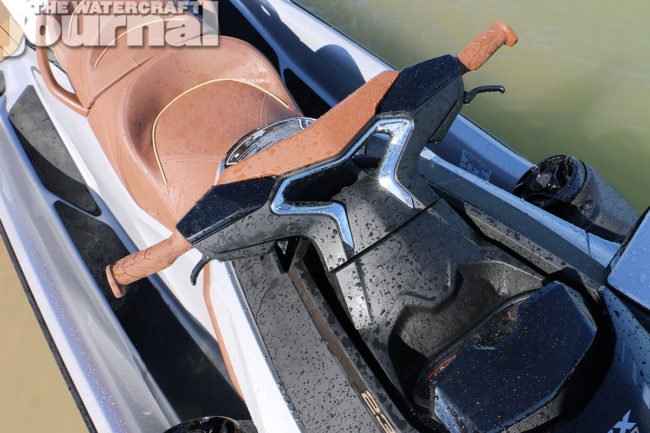
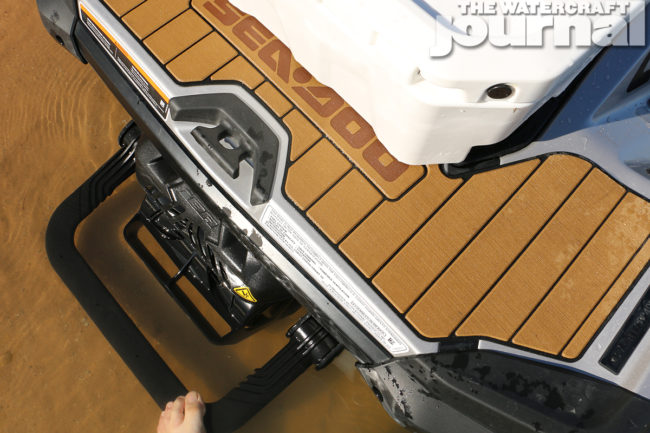
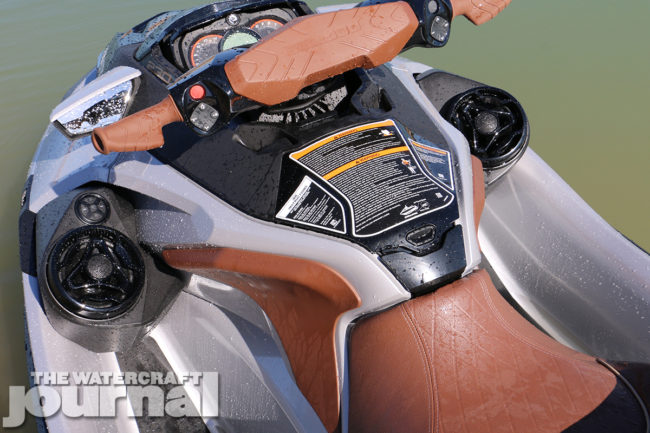
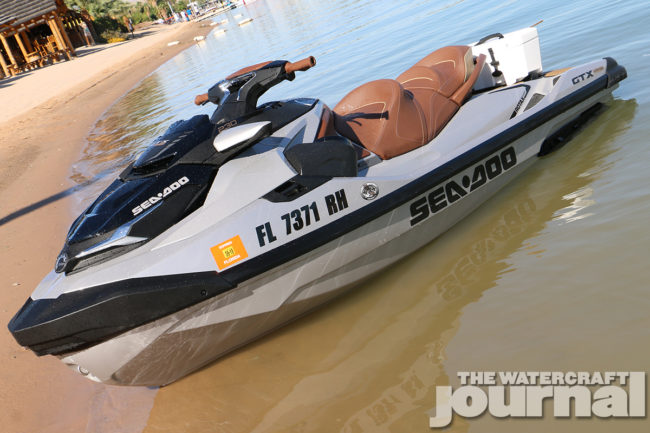
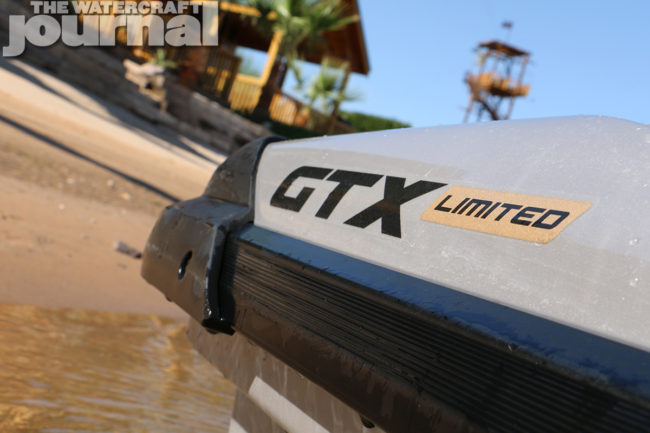
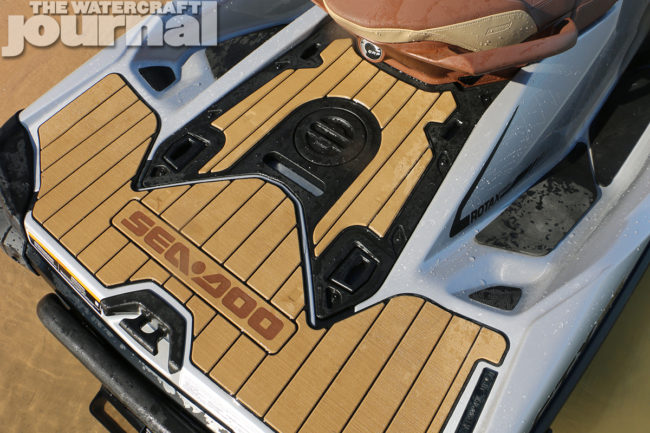
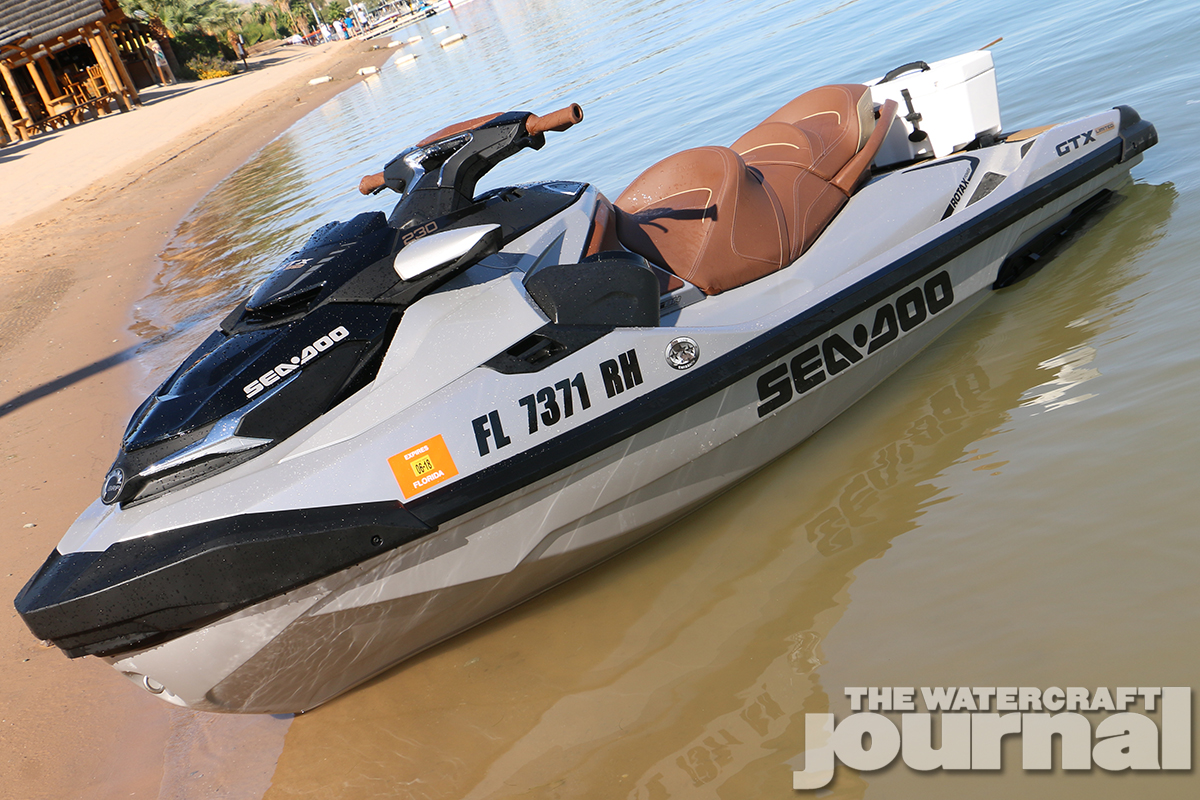
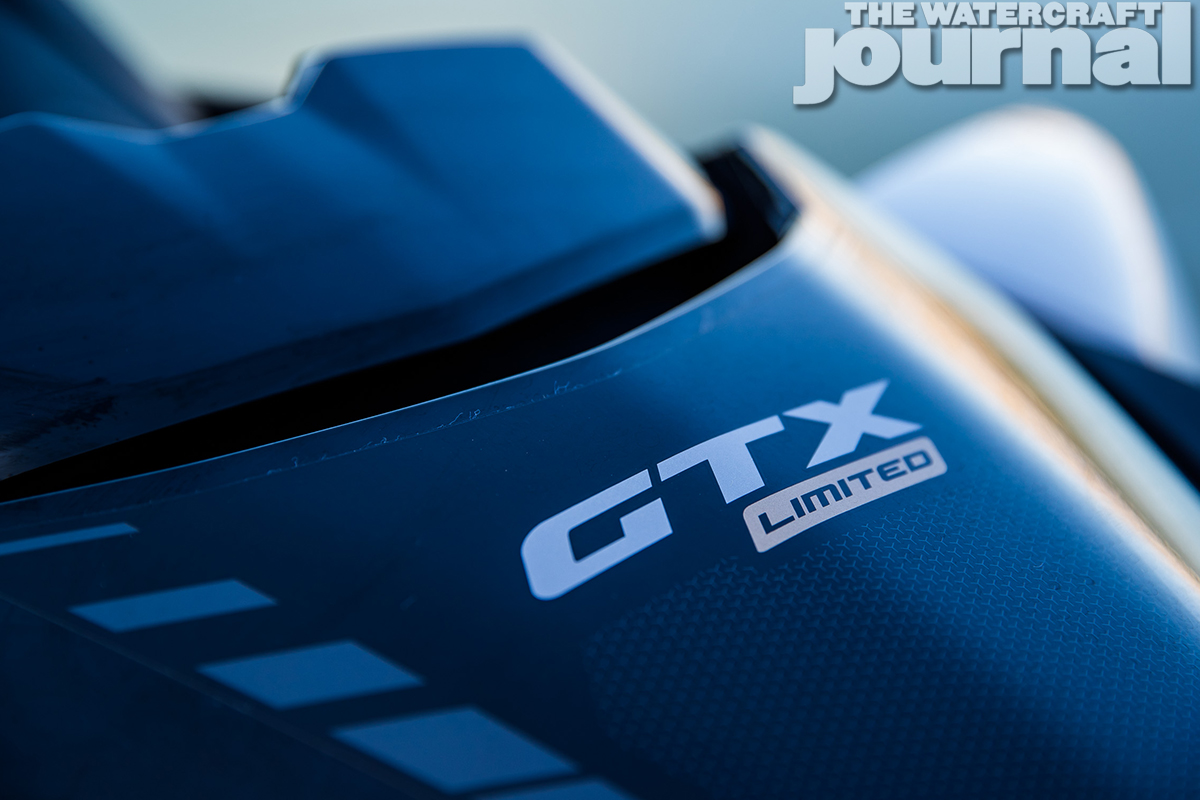
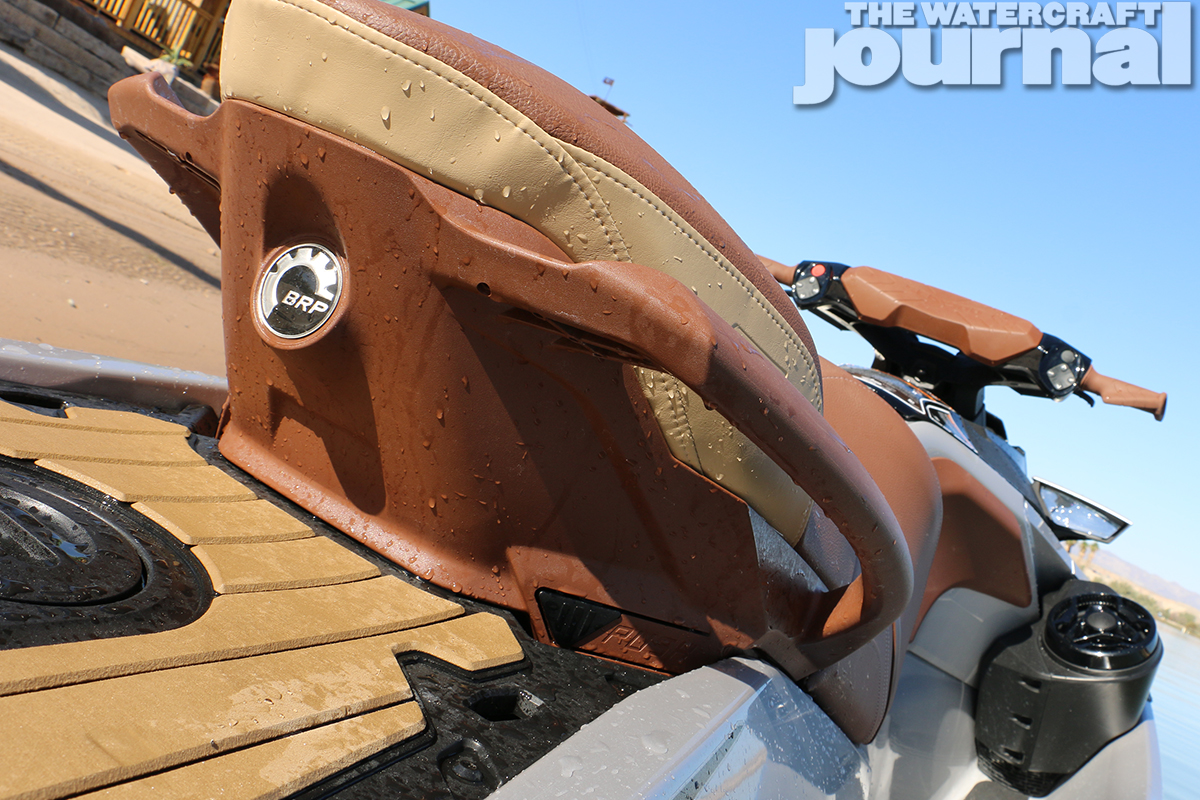
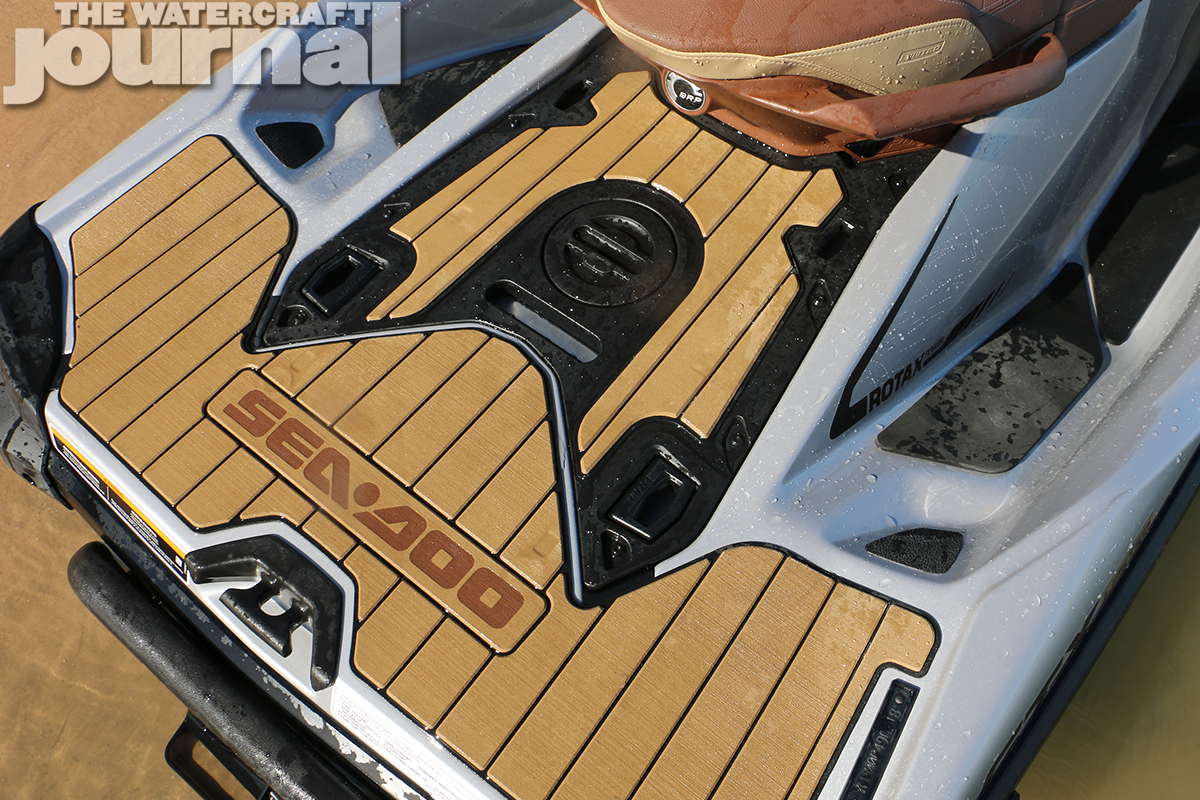
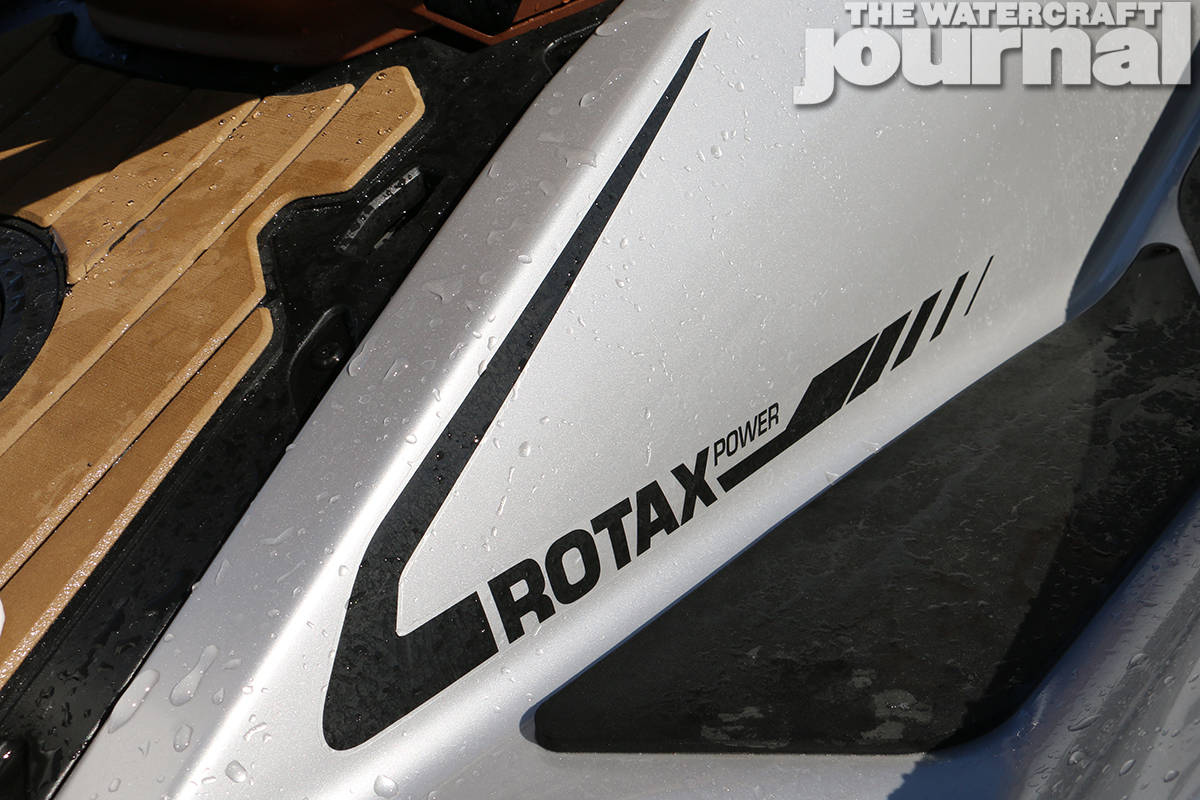
“Just look at that rich Corinthian leather!” I joked in my smarmiest Ricardo Montalbán impersonation, running my hand over the chocolate brown faux leather seats. The accent garnered a few laughs from the Sea-Doo staff as they doled out lifevests, sunscreen and snacks to those present at the media introduction of the 2018 Sea-Doo lineup. Leaning heavily on the livery cues of luxury automobiles, Sea-Doo made the best out of the new ST³ hull’s use of its proprietary CM-Tech molding process, and painted the GTX Limited 230 and 300 units in Liquid Grey Metallic to go with its Equestrian Brown seating. Certainly, brown is not the first hue to come to mind for a supercharged watercraft, but the cross-hatched printing and tan piping, paired with surprisingly convincing false teak-appearing traction mats on the expansive 366-square-inch rear platform, pushes the GTX Limited deeper into personal yacht territory.
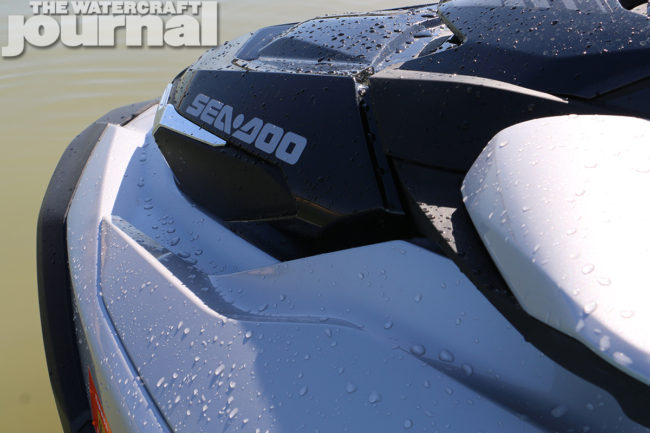
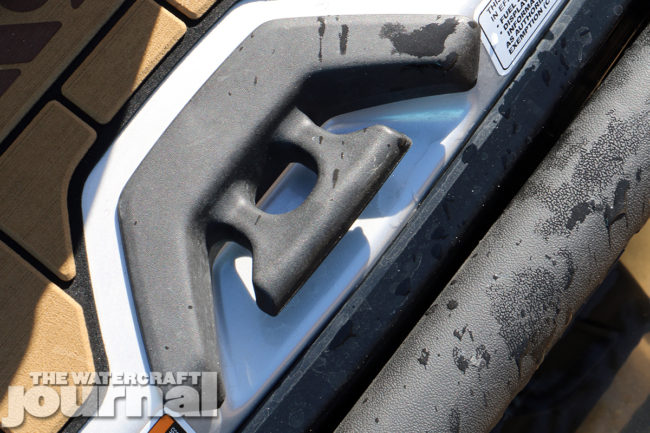
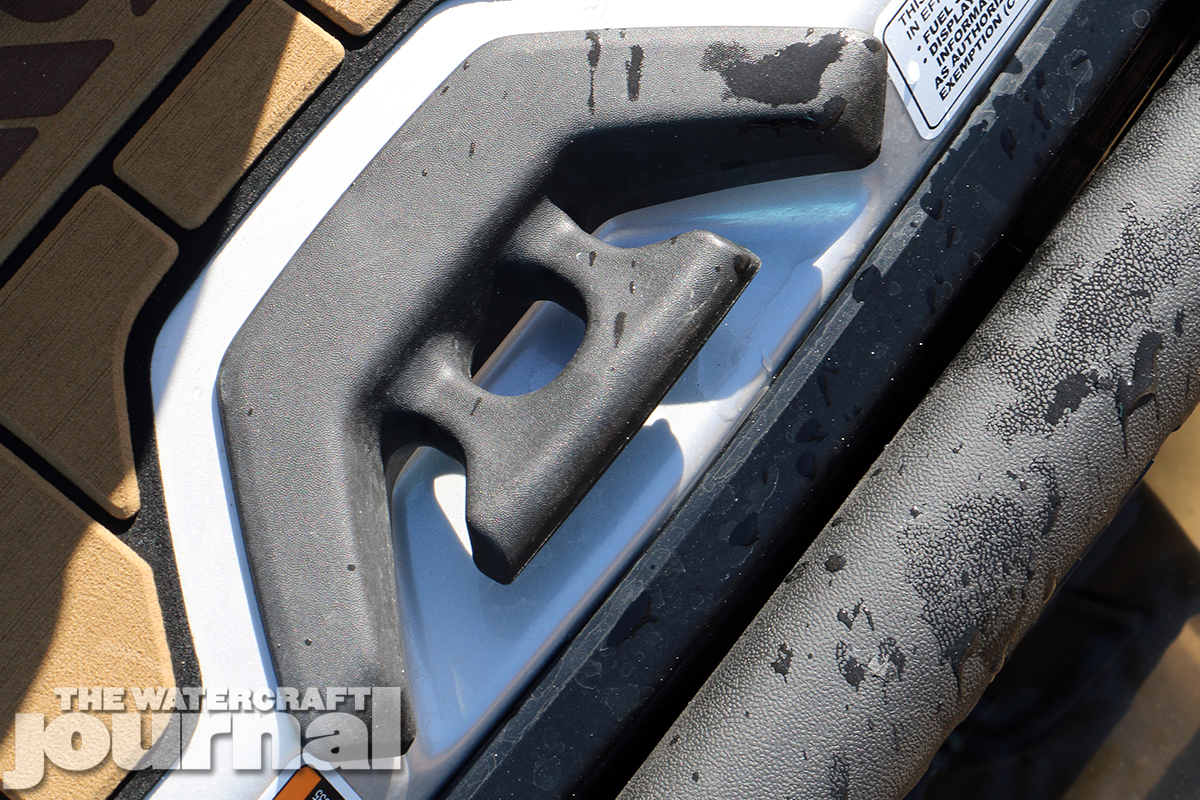
In fact, the adorning styling cues throughout the new GTX Limited 230 and 300 units are impressive. The various body panels left in natural plastic on other units are painted, giving the GTX Limiteds a more angular but streamlined look. In fact, natural plastic is kept at a minimum. Accentuating certain key body lines are narrow, smartly formed threads of chrome – highlighting the “open buttress” steering neck and pseudo grille nose piece are two of the better examples. Gone is the complex “Transformer” aesthetic of the outgoing S³ platform, again giving the new ST³ a whole new curb appeal. Features like rope cleats are now smoothly integrated into the deck itself, both forward of the footwells and a center cleat at the transom.
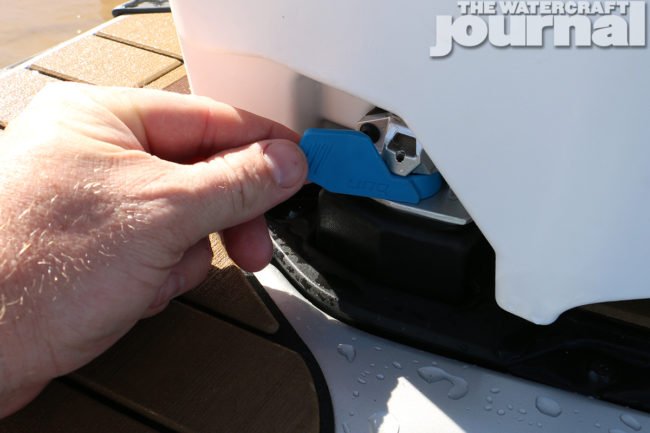
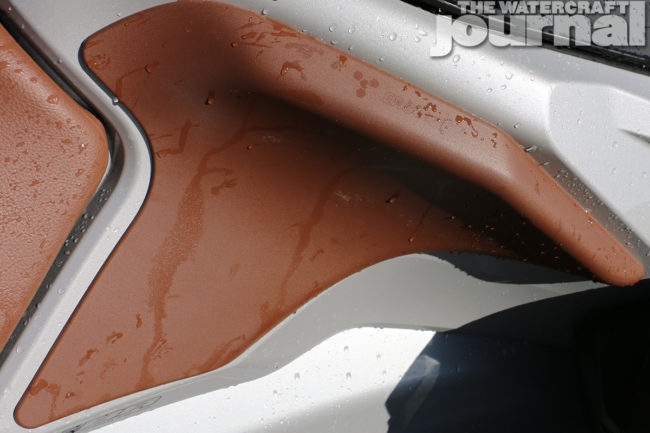
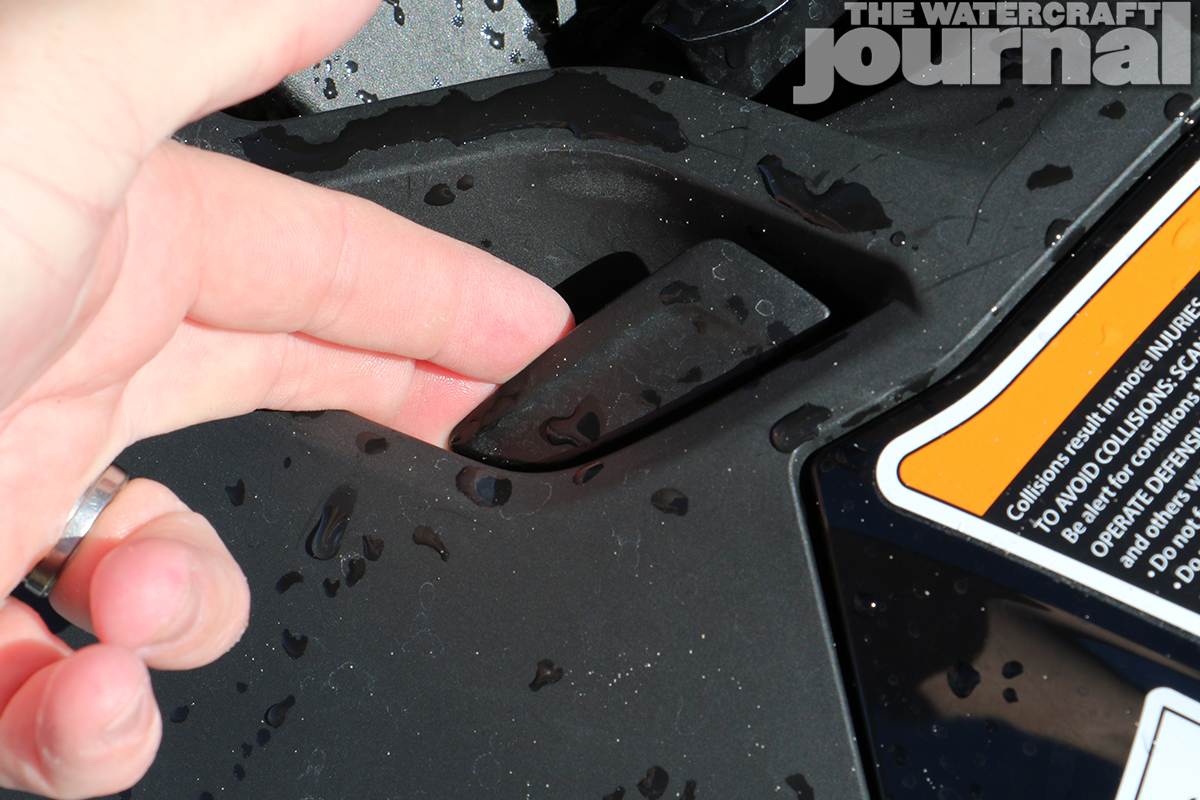
In person, the machine looks low, and it is. Both driver and rider positions have been lowered 1.2-inches and 3-inches respectively. The footwells are also deeper and significantly wider, allowing a rider to easily swivel their foot around without discomfort (unless of course, you’re Shaquille O’Neal). The seat itself has been broken up into three pieces: the once one-piece bench is no longer hinged to the deck with a gas strut. Rather, the rear passenger seat separates with the push of two tabs at the base. The driver’s bucket seat is also quickly removed, revealing a small access portal permitting basic maintenance and fluid checks. The forward wings of the Ergolock seat are now padded coves smartly integrated into the top deck itself.
As with all ST³-based Sea-Doos for 2018, 13 torx-head screws hold down a nearly 4-foot-long access panel that when removed, reveals almost the entirety of the engine compartment. Access to the 1,494cc or 1,630cc four-stroke 3-cylinder (depending on whether you choose the 230 or 300-horsepower model), the supercharger, intercooler and exhaust arrangement is unparalleled. Improvements made to the powertrain aren’t noticeable but palpable: a simplified CLCS (Closed Loop Cooling System), a more thermally-efficient ride plate, a larger oil cooler, and a sacrificial anode in the intercooler are all new for 2018. For the 300-horsepower GTX Limited, the strongest performance gains were seen not in top speed (USCG caps it off at 68mph, we saw a bit higher), but in mid-range 30-to-60mph times, with the new GTX Limited 300 shaving off half a second (2.5-seconds vs. 3-seconds).
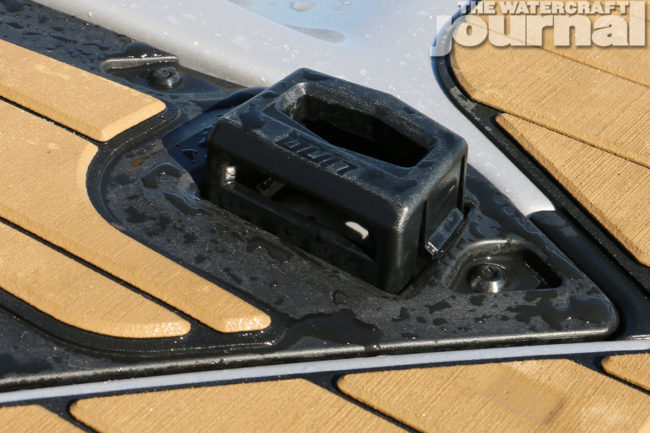
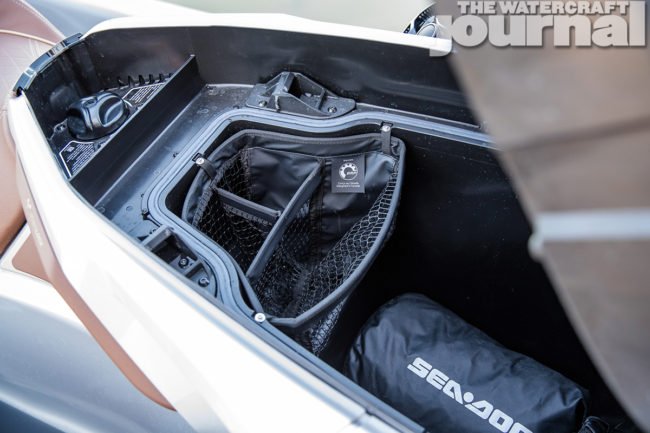
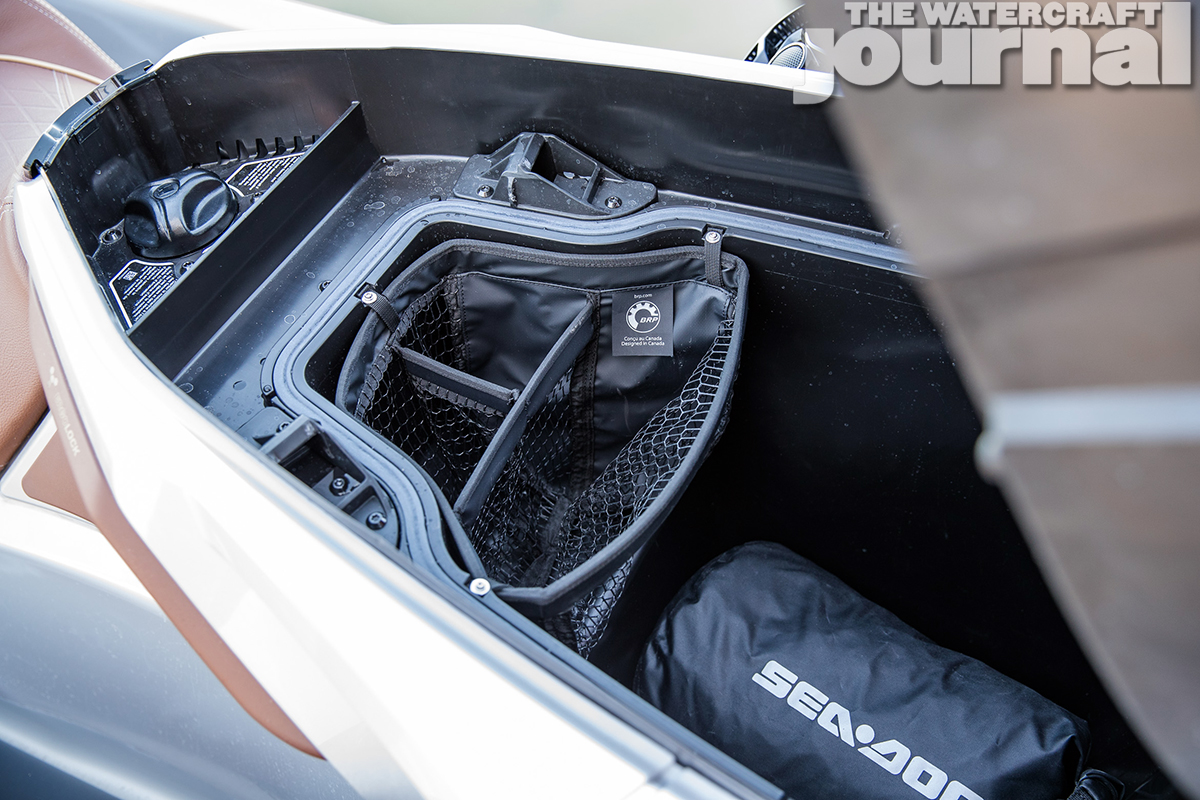
When in place, the access panel also provides a mounting point for both the telescoping Wake tower (previously only found on Wake 155 and Wake 230 models), and Sea-Doo’s new LinQ system (taken from the Ski-Doo and Can-Am lines). Through the use of two pop-up attachment blocks, a selection of accessories can be attached to the transom: a 4-gallon fuel can; a semi-rigid, 5.5-gallon storage bag; or a 4.2-gallon ice chest. (Each sold separately through Sea-Doo’s accessory line.) Moreover, the storage bag can attach atop the fuel caddy (nothing goes on top of the cooler), for even more storage. And speaking of storage, the biggest departure from traditional PWC is Sea-Doo’s relocation of the bow stowage towards the center of the craft. Sea-Doo’s Direct Access Front Storage gives the ST³ a giant 27-gallon single basin to fill to the gills, and the GTX Limited smartly equips it with a netted storage bin organizer to divvy up needful things like drinks, sandals, a hat or what have you.
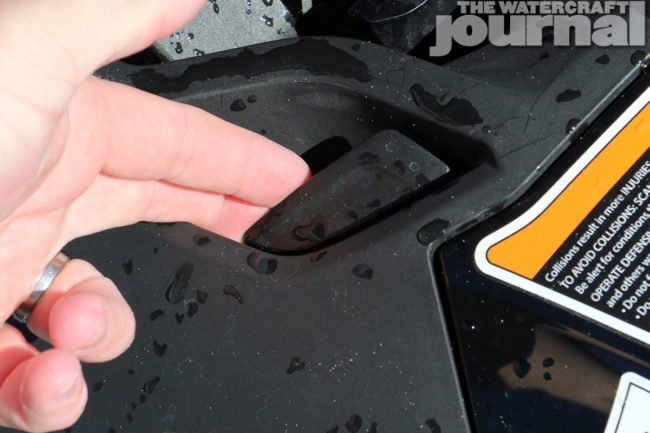
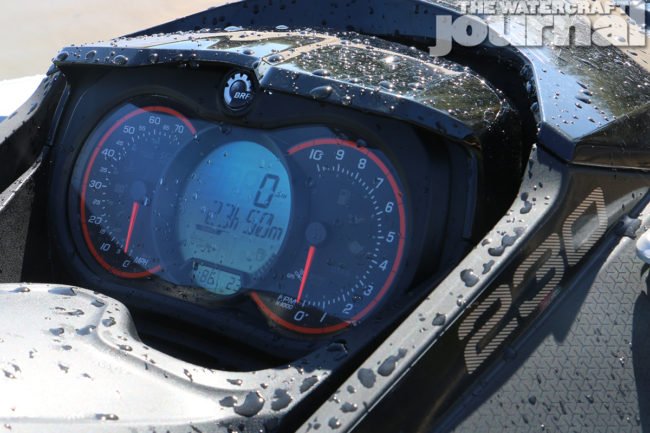
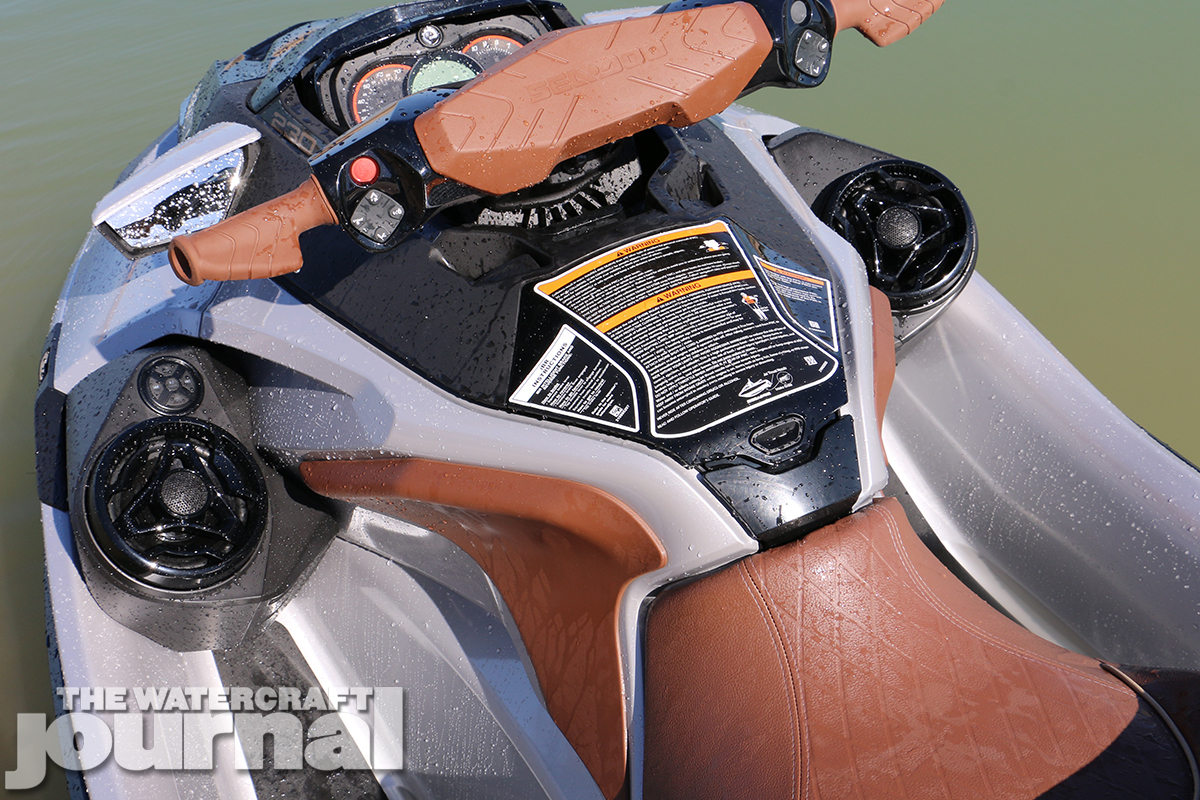
The lid of the Direct Access Front Storage is also the cockpit’s control panel, integrating the 5-position tilt steering (which features completely redesigned toggle pads allowing for scrolling through the Limited’s additional gauge functions, high performance VTS settings, Sport and Eco modes, and setting and adjusting Cruise settings); the analog-and-LCD digital dashboard; two heavy-duty hood release locks; and a smaller, secondary glove box (that won’t fit any gloves). Rather, it features a watertight, padded cell phone case. Exclusive to the Limited package is also a USB port to keep your phone fully charged while you go about adventuring. A small set of keys and a second lanyard were all else we could cram into the tiny cubby. It’s worth noting that the new ST³ is down considerably in storage (from 42.8 to 27-gallons) from last year, but the centralizing into a single bin does eliminate the need to double up over the handle bars to fish something from the front bucket – so we rack that up as a “win.”
The final addition to the GTX Limited is also the best: Sea-Doo’s 100-watt BRP Premium Audio sound system. Comprised of two 50-watt pressure washer-safe, all-weather speakers with an external playback control pad located above the left speaker allowing the rider to toggle through your phone’s song list while at speed or simply lounging around. Of course, the neatest feature is that it is the world’s first Bluetooth-controlled PWC audio system. Simply go to your phone’s connectivity controls (found in your “Settings” control panel under “Bluetooth” if you have an iPhone), select “BRP Remote”, and bam! there you go, listening to your favorite tunes as you streak across the lake. And for those looking to lounge around while at the dock or on a secluded sandbar with the engine off, a sensor kills the sound after an hour or low battery signal, whichever comes first.
Yet, all of the bells and whistles in the world can’t make up for a poor ride. Building upon years of data, BRP engineers began to sketch a hull that was both unique and familiar and would perform at all levels. The new ST³ borrows heavily from the T³ hull of the racy RXP-X 300 in the way of a blend of multi-faceted strakes, a 22-degree deadrise giving the hull a steeply raked bow, and a 1-inch wide, flat outside chine replacing the soft, rolling outermost edge. All of which resulted in a hull that is 1.2-inches wider (from 48.2-inches to 49.4-inches), 3.3-inches shorter (from 139.2-inches to 135.9-inches), and a staggering 86-pounds lighter (828-pounds compared to 914). And the hull and deck employ the aforementioned CM-Tech bonding process for both its adhesion to automotive-quality paints and its superior flexibility and durability.
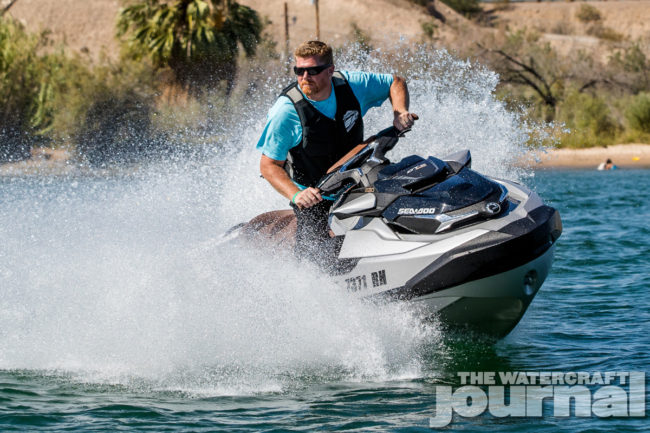
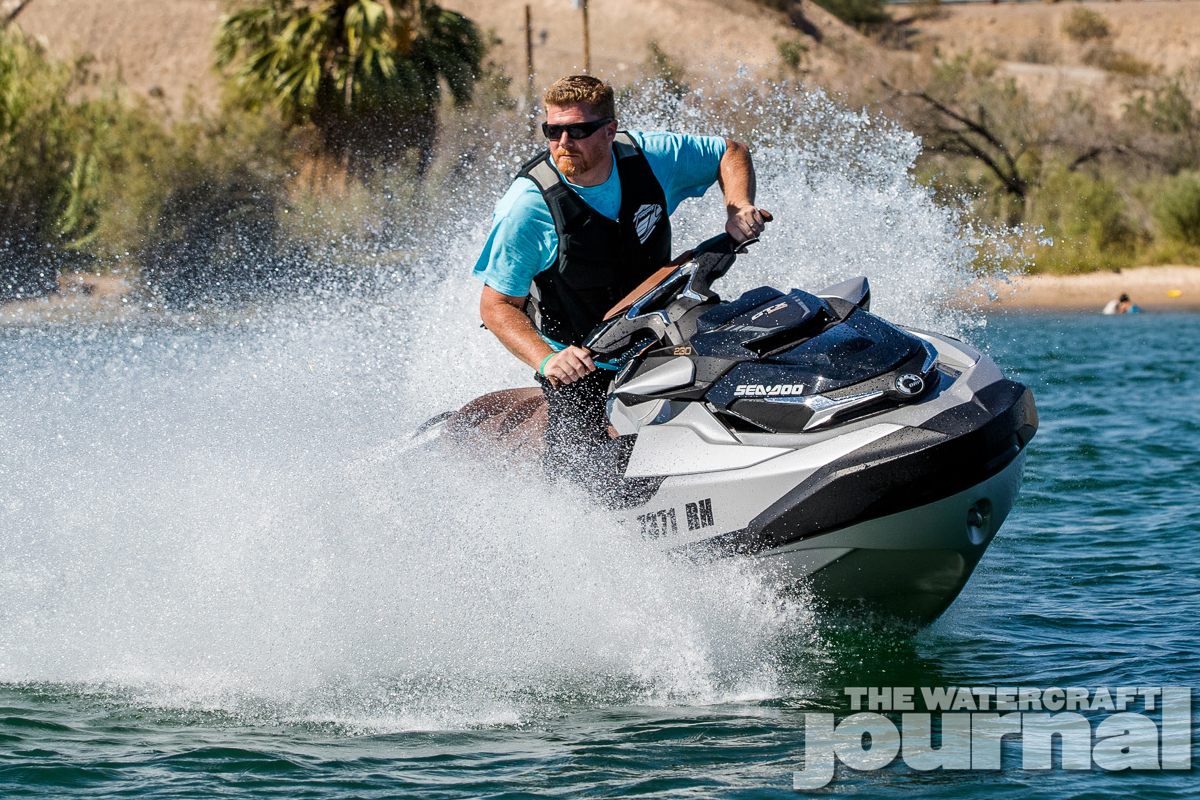
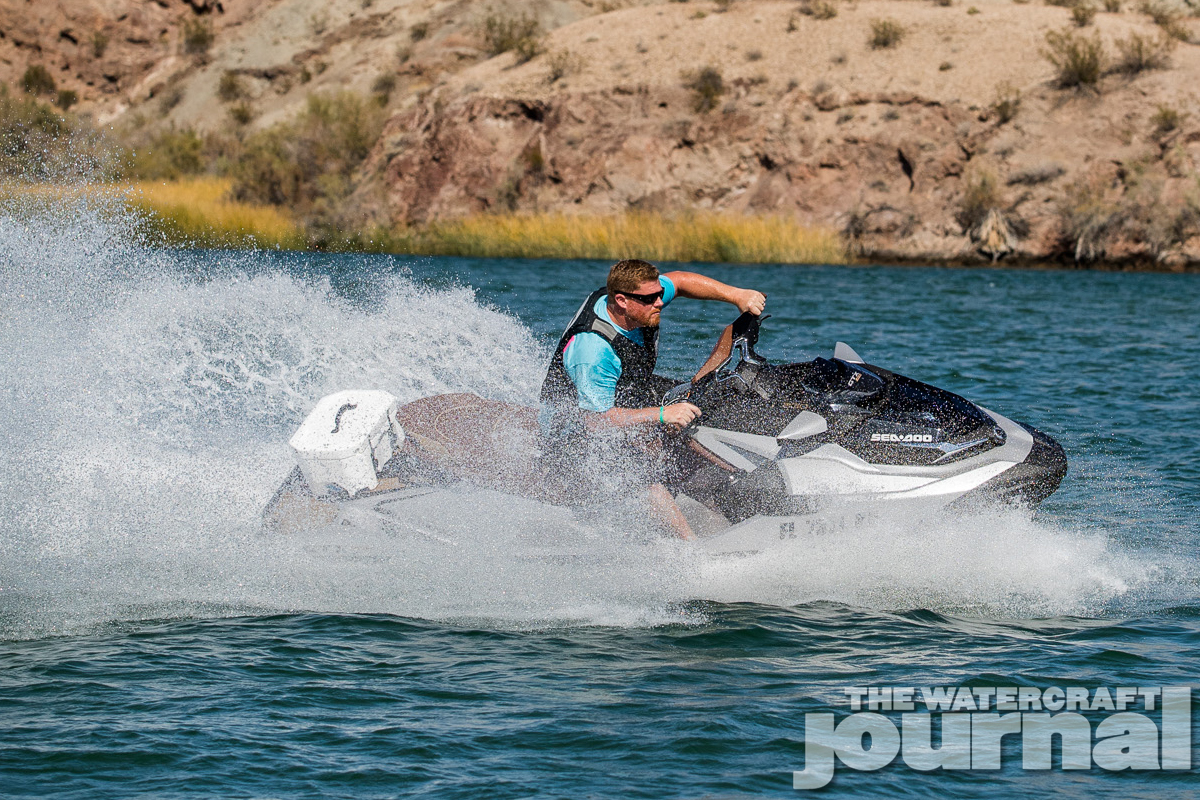
These attributes give the ST³ a bit of multiple personality disorder; the GTX Limited tracks true through a variety of chop, particularly at neutral trim. It deftly slips across the surface thanks to its radical weight loss – rather than battering through waves like the 1,000-plus-pound Kawasakis – but impressively remains hooked up, continually pushing thrust through its jet pump. When in the tumult, the GTX doesn’t rattle, chatter or creak either, making it one of the highest quality-built watercraft the brand has made. When trimmed down though, the metamorphosis begins. Suddenly, the gentlemanly cruiser takes on new life as a wickedly responsive, aggressive neck-snapping g-force machine. Its handling traits clearly hailing from its RXP-X sibling, but unlike the two-seater bruiser, the GTX Limited can also careen through wide sweeping arcs as aptly as it can snap a buoy-marked hairpin. At neutral trim and light on the gas, the ST³ can tend to wander in cross-chop, but drop down the trim a rung or two and squeeze on the throttle, and it’s as precise as a sniper’s scope.
Of course, the Limited package imbues the GTX with several other additions including a watercraft cover, removable dry bag, safety kit, depth finder, water temperature gauge, and all of the previously mentioned features including exclusive coloration, BRP Premium Audio sound system, USB port, storage dividers, ErgoLock knee padding, and just a gaggle of other items. As equipped, the lower tier GTX Limited 230 is listed at $15,899. For the top-of-the-line GTX Limited 300, the price jumps up to $16,899. And while generously equipped, neither of the Limiteds include any of the LinQ accessories (gas caddy, storage case or cooler), which can only be purchased through Sea-Doo’s accessories line. Online trolls will bemoan the price, that it’s incredibly well balanced, comfortable and so well-equipped, crying that “it’s more of a boat than a ski”, and they’d be right. But calling it a “boat” won’t stop those buyers looking for the nicest, fastest, most luxurious PWC that Sea-Doo offers, and this machine is it.
Are you a holiday shopping procrastinator? (The answer is “yes.”) Well, fear no more, Abaco Polarized sunglasses is guaranteeing that if you order your new sunglasses before Christmas, you’ll take home not only a sweet pair of polarized shades, but a cool holiday gift set, including a unique bamboo case, lens cleaning kit and sunglass container, which cannot be had anywhere else.
So again, act quick if you’re going to get your order in to Abaco before the Christmas cutoff date so that you can score your free Holiday Gift Set with the purchase of a new pair of Abaco Polarized sunglasses!
OK, so this might be our most superfluous post in a really long time as we’re ripe to publish our complete review of the all-new 2018 Sea-Doo GTX Limited 230 (and 300) runabout within a few short hours, but we would be remiss to not publish an article specifically announcing our latest episode of our on-going YouTube series “Long Haul” – marking our 18th episode thus far.
The subject at hand is the aforementioned GTX Limited in both its 230- and 300-horsepower configurations. We don’t dive too deep on the performance aspect of the machines themselves (because really, if you’re looking at buying one of these, you’re not looking to go racing, but want the nicest-equipped, top-performing machine you can buy), but rather focus on the unique design features imbued in the new ST3 platform.
And zooming in on the many features and accessories on this sweet machine is worth a closer look too. Sea-Doo smartly adorns the GTX Limited models with rich automotive-grade colors both above and below the bond line, tasteful chrome accents and some really neat faux leather wrapping the three-tiered two-piece bench seat and imitation teak wood traction mats. For all of you howling that today’s new PWC are too much like boat, you’re gonna haaate this thing.
So while we hammer out the final details on the full-length feature review, coming within a few hours of this publishing, why not scroll down and enjoy a detailed look at the 2018 Sea-Doo GTX Limited 230 & 300 in our latest episode of Long Haul HERE:
Being my first trip to Thailand, I was a bit unsure of what to expect from the Jet Ski World Cup Grand Prix in Pattaya, Thailand. Not what you’d call a “world traveler” I was a little hesitant to venture so far from home; how would I like the food, the smells and sights of such a foreign land? And of course, how would the racing be? Well, like everything, it all depends on where you go. I saw food being cooked on the back of a bicycle parked on the side of a street while I walked to a 5-star restaurant. The smells of beautiful orchids filled the air. And the sights? Imagine sunlit beach, amazing temples and a nightlife like no other.
A massive list of International and local riders lined the beach at Jomtien, Pattaya, welcoming 50 more riders than last year. With 4 days of racing, there was plenty on offer the spectators, family and friends. Every class you could think of was going for a world title, from Amateur Novice Ski to Pro Freestyle, Pro-Am Endurance to 1100 Super Stock.
The first day was mainly Amateur racing with the Pro Endurance class coming in to finish the day. With 38 riders on the line for this heat – one of two 30-minute (plus one) lap races. Last year’s winner, Christian D’Agostin was there to try to hold onto the trophy. Unfortunately, he popped an intercooler hose in the first few laps leaving him out of contention for Moto One. Aero Aswar was flying and unlikely to be beaten until he had engine failure with only three laps to go. This left it wide open for the Frenchman, Jean-Bruno Pastorello, who took the day’s win. Pastorello also went on to take the second moto, as D’Agostin experienced another hose failure and leaving him in 19th.
Pro Runabout GP was also packed over the heats and finals. This year with numbers up, heats were held with the Top 7 going through to the final. With a line up of names like James Bushell, James Masterton, and Chris McCluggage, the race was guaranteed to be fast-paced and action packed. McCluggage was strong from the start with a solid lead in Moto 3. His smooth style and reliable steed (on loan from Hungarian György Kasza) let him take out the win in all three motos and the $45,000 check, closely followed by Burbayea in second overall.
Pro Ski GP was a great bit of racing with a strong field and some beautifully turned out skis. Jeremy Poret from France was the man to beat. He was unstoppable and took the win in all four motos. Another great bit of racing was Pro-Am Runabout. It was a full class with 16 riders from 9 different countries. The racing was close, with three different winners throughout the four motos; Masayuki Chigira of Japan, Shinji Kugizaki also from Japan and Wu Rong Hua of China battled it out for first, second and third. Wu was set to take the title until he broke a drive shaft in Moto 3. His team managed to get the ski fixed and ready for the last race, which he took second and third overall. Expect to see a lot more from him and his team.
Freestyle was also a crowd favourite with current IJSBA World Title holder Mark Gomez making his first appearance at Kings Cup. Also on hand was crowd favourite and former world champion, Lee Stone and Taiji Yamamoto from Japan. Lee was back to try and reclaim his title from Gomez after having engine trouble at Havasu back in October. Gomez was strong and consistent in round one, throwing out Superflips, Can Cans and a Scarecrow flip. He was smooth and looked on track to hold his title.
When it came to Lee’s ride, people were expecting to see the infamous Double Back Flip. This put a lot of pressure on Stone who pushed to execute it as the first trick of the round. Doing so takes the trim to be pre-set meaning that no other trick can be performed while this is in place. Once Stone lands the Double Flip he can then reset the trim to standard. Unfortunately for him, Stone didn’t land the trick and the ski would not restart, putting him out of the heat and leaving him with an uphill battle to take back the title. Gomez went out strong in the second heat and was declared the World Champion once again. Stone went on to take second after a showing that he is one of the best freestyle jet skiers ever.
So how was my first trip to Thailand? Everything was an eye-opener. In all, it’s a place you should see at least once, especially the Kings Cup. It was the best jet ski event in the world by far, being the most professionally ran event I’ve ever encountered, and the nicest setup I’ve seen or heard of. And let’s not forget the biggest checks for the place-getters too.
Pro Ski GP 1. Jeremy Poret, 2. Botti Jean Baptiste,3. Raphael Maurin, 4. Kevin Reiterer, 5. Dustin Motzouris; Pro Runabout GP: 1. Chris MacClugage, 2. Muhammad Burbayea, 3. Waleed Alsharshani, 4. Hajme Isahai, 5. James Bushell; Pro Freestyle: 1. Mark Gomez, 2. Lee Stone, 3. Taui Yamamoto; Pro-Am Endurance: 1. Jean Bruno Pastorello, 2. Suphathat Footrakul, 3. Teera Settura, 4. Jin Won Kim, 5. Chaiyaporn Nornua; Pro-Am Women Ski Limited: 1. Kylie Ellmers, 2. Yukiko Kume, 3. Orraphan Teerapatpanich; Pro-Am Runabout Stock: 1. Marjak Pancho, 2. Abdullah Al Fadhel, 3. Aqsa Sutan Aswar
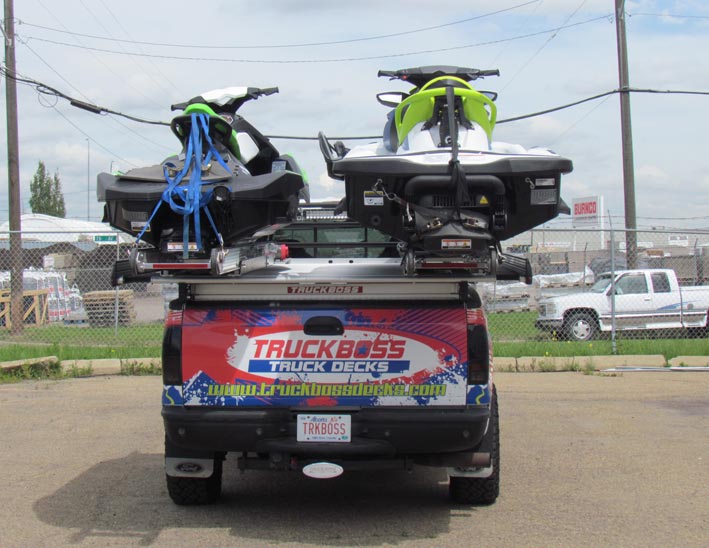
The above statement is absolutely true. Take a look at the pictures and videos on the TruckBoss site and see for yourselves. The FlexxLoader cradle and guide system are efficiency at its finest. The Flexxloader transforms from a hauler to a buggy system. This method is an easy way to get your ski down to the beach by easily converting the FlexxLoader’s cradle to a buggy. It’s useful as a beach dock as well as for storage at home.
Coupled with the TruckBoss Deck, the FlexxLoader is like a dream come true. It’s a hassle free method that can be used to haul snow bikes, Jet Skis, or sit down PWC’s. FlexxLoader is designed for use only with the TruckBoss Deck System, equipped with winch loading. Easily attach the FlexxLoader to a TruckBoss Deck with the new and improved guide and slide system. The ramp is also lighter and easier to handle.
The FlexxLoader components are compatible with all major PWC brands. TruckBoss parts are made in the USA and Canada. The FlexxLoader System Components consist of either a large or small cradle. The large cradle is built for sit down PWC’s and the small cradle is designed for stand up PWC’s. Each cradle comes with the deck and glide system. Check out the TruckBoss website for a more detailed description of each system and its components.
Also, don’t forget the TruckBoss annual Snow Savings Event that ends December 31st. Save a bundle on a Bundle!
It’s not often that we’re able to tie things up so nicely, but this year we’re able to welcome all three manufacturers – Kawasaki, Sea-Doo and Yamaha – to the podium for The Watercraft Journal’s prestigious Watercraft of The Year award. For 2017, all three OE (original equipment) manufacturers brought a unique and diverse array of new vehicles to the water, each of them targeting a specific audience, many of whom were either completely new to personal watercraft or absent for far too long. Either way, all three of these entries were responsible in some way or another for bringing droves of new and returning enthusiasts to the water.
As we’ve noted previously, the personal watercraft industry experienced a surge in growth unlike anything seen prior to 2008. That’s nearly a decade of lackluster sales, that is, until now. We’re seeing growth of over 11-percent, market share growth deep into the double digits, and unparalleled product advancement. There’s a lot to be excited about, and the products shown here are directly responsible for (in large part) that growth and expansion, so while not all can be Watercraft of The Year, their respective success is worth praising all the same.
2017 Watercraft of The Year 2nd Runner-Up: 2017 Sea-Doo Spark Trixx HO 2-up
Haters gonna hate, they say. And when it comes to the Sea-Doo Spark and its Polytec hull, there sure are a lot of haters floating around them intarwebs. So amid all the chatter and hubbub professing that there’s no way Polytec could hold up to any sort of abuse, what does Sea-Doo do for 2017? They offered a Spark designed for jumping waves, power slides, 360’s and other freestyle tricks. Yup, Sea-Doo literally trolled all the anti-Spark trolls. Hell, they even named it the “Trixx.”
Starting with a 90-horsepower, 2-up (two-seater) Spark, Sea-Doo offered the machine in a more-fun-than-usual Candy Blue and Chili Pepper color combination; screwed down some smartly-molded padded foot wedges (ideal for doing wheelies like the back footpegs on a BMX bike) and crafted an aluminum telescoping steering neck. Some fun graphics around the Trixx liven up the look too.
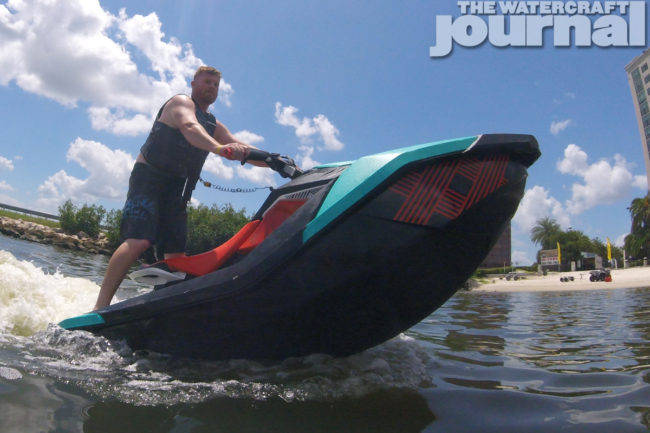
Being absurdly lightweight and equipped with a rev-happy ACE 900 engine, the Trixx is a ton of fun. Take into account its radically extended VTS (Variable Trim System) with 17-degrees upward and negative 6-degrees downward (a total of 10 degrees of additional movement), and the Trixx can stand nearly vertical. And when you’re done showing off, you can still ride it like a regular Spark. Sure, you might think this was a fun, flash-in-the-pan, one-year-only limited edition, right? Wronnng! Not only was the Spark Trixx the single highest selling PWC for 2017, but Sea-Doo sold twice as many Trixx’s as Kawasaki sold watercraft. Let that sink in for a minute.
2017 Watercraft of The Year 1st Runner-Up: 2017 Kawasaki SX-R JetSki
“You did it. You crazy son-of-a-b***h did it.” Although that quote is famously attributed to Dr. Ian Malcolm of Jurassic Park fame, it was pretty much all everyone could say when Kawasaki finally revealed what was easily the single-most anticipated personal watercraft in, what? A decade? Hmm, maybe less. But still, a factory-built 4-stroke standup from the company who invented the standup JetSki is a big deal, and that it finally became a reality this year makes it a shoe-in for contention as The Watercraft Journal’s 2017 Watercraft of The Year.
We just returned ours after half a year of testing and we’re sad to see it go. Albeit the heaviest standup Kawasaki has built (551-pounds) and over eight-and-a-half feet long, the new SX-R is quite the beast to master. But it tracks straight, it’s massive, angled tray allows for plenty of movement, and man, does it run. (Nearly 160-horsepower will do that.) Racers are just now beginning to polish the SX-R’s rougher edges through aftermarket support, and the ski is finally overcoming its rocky first impression with the hardcore standup crowd.
Being almost mandatory equipment for competing in certain key IJSBA Ski classes also pushed to make the SX-R so popular. Coming in at $9,999 was also a major feat, and for Kawasaki to achieve that goal required a lot of tight budgeting and cost cutting. The ’17 SX-R is famously stitched together from a warehouse of existing KMC products including the Teryx side-by-side, and a whole lot of stuff borrowed from all of the other existing JetSki runabouts, including the Ultra 310X. It was met with moderate success this year, and hopefully continued sales throughout 2018 will ensure a future for the SX-R for years to come.
2017 Watercraft of The Year Winner: 2017 Yamaha GP1800 WaveRunner
Possibly, at no time in the past decade did “Win on Sunday, sell on Monday” hold more truth in the personal watercraft industry than with Yamaha’s 2017 GP1800 WaveRunner. Internet naysayers had less than two months to besmirch the new GP1800 before the performance aftermarket started rolling out tuning results. 79, 80, 81…84 miles per hour all with an air ribbon delete and an ECU tune. Toss in an intercooler upgrade and a repitched prop, and the GP1800 was capable of 86mph all day long. And that was just what the runabout did in a straight line.
On the race course, the GP1800 has famously and consistently beaten everything. Pilots earned multiple world titles at the IJSBA World Finals. The GP1800 reigned supreme throughout the AquaX USA tour. At the annual Long Beach-to-Catalina Offshore enduro, the GP charged through 5-foot-plus Pacific chop to clinch the championship. The combination of the industry’s largest-displacement supercharged four-cylinder 4-stroke, and the lightest mid-sized runabout hull makes the GP1800 an unstoppable juggernaut. In fact, the GP inspired more racer defections from competing brands than any single machine in a long, long time.
Frills free and priced to kill at $13,999, the 2017 GP1800 literally sold out its production run by mid-June. So successful was this machine among enthusiasts and racers alike that it climbed to the 6th place in the Top 10 highest selling personal watercraft for 2017. That’s a massive feat, especially for a high performance supercharged, race-bred watercraft. (Not the typical stuff for the mainstream.) The unparalleled success of the GP1800 both on the showroom floor and the buoy course is truly impressive and truly a worthy recipient of this year’s Watercraft of The Year award. Congratulations!
It’s wintertime, so you know what that means for those poor souls down in Florida, right? Nothing. It’s always like 70-something-degrees there. It frosted once a few years back, and the entire state ran out of bread and milk in 6 hours.
All joking aside, it is the holiday season and the good folks at Cycle Springs Powersports will be shutting their doors to let their employees spend time with their families and prepare for the new boating season. Per a Facebook post, they wrote:
“We will be closed for Christmas December 25th, and New Years Day January 1st, 2018. And it’s inventory time we need to count all the toys. We’ll be back on January 8th, 2018.”
Yes, that means besides Christmas and New Years Day, Cycle Springs will also be closed for the first week of the year so that they can get properly stocked up for 2018. So, enjoy the time off, maybe schedule an appointment to bring your current machine by their service center when they reopen, or maybe chat with a friendly sales representative about taking home a new unit. It’s Christmas after all, and mom always said it was OK to get yourself one present…


























































 It’s wintertime, so you know what that means for those poor souls down in Florida, right? Nothing. It’s always like 70-something-degrees there. It frosted once a few years back, and the entire state ran out of bread and milk in 6 hours.