Let’s just begin by saying that the rider is safe and (for the most part) unharmed. With that being said, we need to take a moment to say that no matter what type of rider you are, one thing that must always be on your mind when operating a PWC is safety. These machines are pretty dang powerful and are able to commit some serious damage if not operated properly.
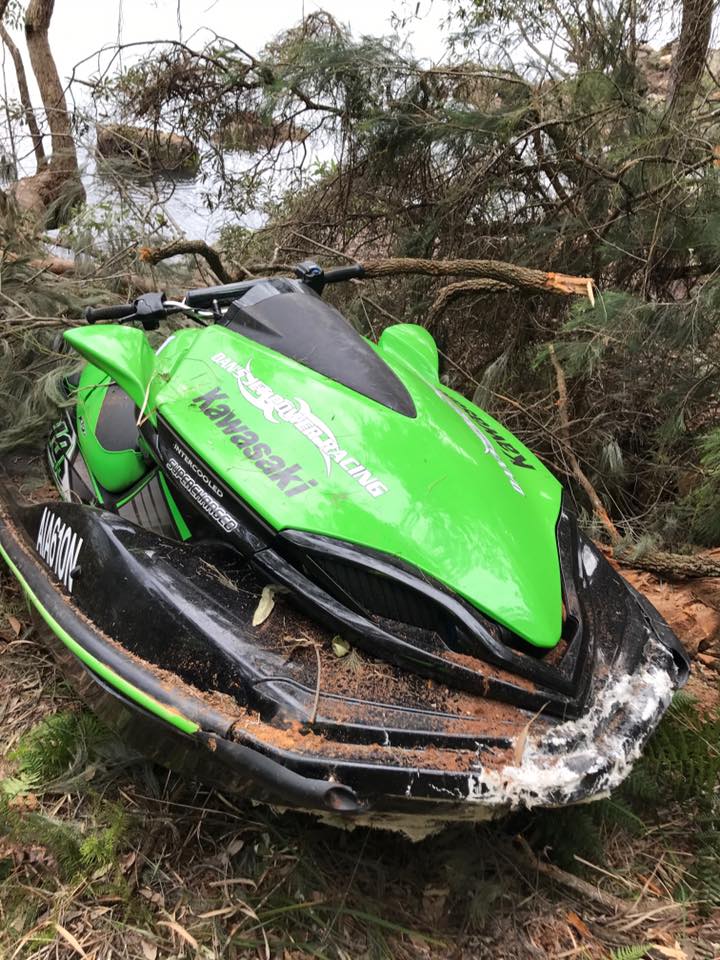
This past weekend a PWC rider managed to park his Kawasaki Ultra 310R JetSki nearly a football field’s length up the side of Cottage Point’s mountain slope. Located in Broken Bay, just north of Sydney on the coast of New South Wales, Cottage Point is a popular spot for all sorts of boating, and as illustrated, all sorts of boaters. Thankfully the rider was able to eject before running into the rocky shoreline and walk away uninjured, not such cannot be said for his bright green Kawasaki, which scaled the hillside, bouncing over boulders and snapping a tree in half.
While the JetSki was severely damaged, it amazingly was still intact (for the most part). Saw what you will about today’s hull materials, this proves that Kawasaki builds their products to withstand some serious contact. But there is only so much they can do. Wearing the proper safety equipment is a must. So again, let this serve as a reminder to anyone that no matter if you are going fast or just out for a cruise, stay aware of your surroundings and never ride if you feel the conditions are out of your riding ability.
Be sure to mark Saturday, February 24th, 2018 on your calendars! That’s the date that has been set for the 2018 Hot Products IJSBA Mark Hahn Memorial Havasu 300 Mile National Team Endurance Race Presented by Yamaha. The 14th annual event that has been described as the “World’s Longest Continuous PWC Race” was announced recently by the event promoter Jim Russell and Executive Producer Mike Follmer. The event venue has been chosen as well with Crazy Horse Campground in Lake Havasu City, Arizona hosting the event for yet another year.
“The race is returning to Crazy Horse Campground’s Main Beach site for this very important event”, said Jim Russell. He continued with, “the 10-mile course has been approved by the Coast Guard and will pit all the teams against the wind, rough water and long runs that this event has become synonymous with.”
“After the gigantic success and worldwide recognition received in the press of the 2017 Hot Products Mark Hahn Memorial Presented by Yamaha, it is expected that a new record number of entries will come out for the 14th annual event. We’re already in high gear making preparations so that the 2018 event will out shine what we did last year in 2017. We’re going to do that by getting more giveaway prizes and even nicer trophies for the massive awards banquet at the Aquatic. We have on the water still photography and magazine coverage to chronicle the event for the riders. The awards banquet will feature a sit-down dinner for over 300 people and over 50 award trophies to be presented too overall and class winners with a host of special awards that will once again surprise their worthy recipients,” says Mike Follmer.
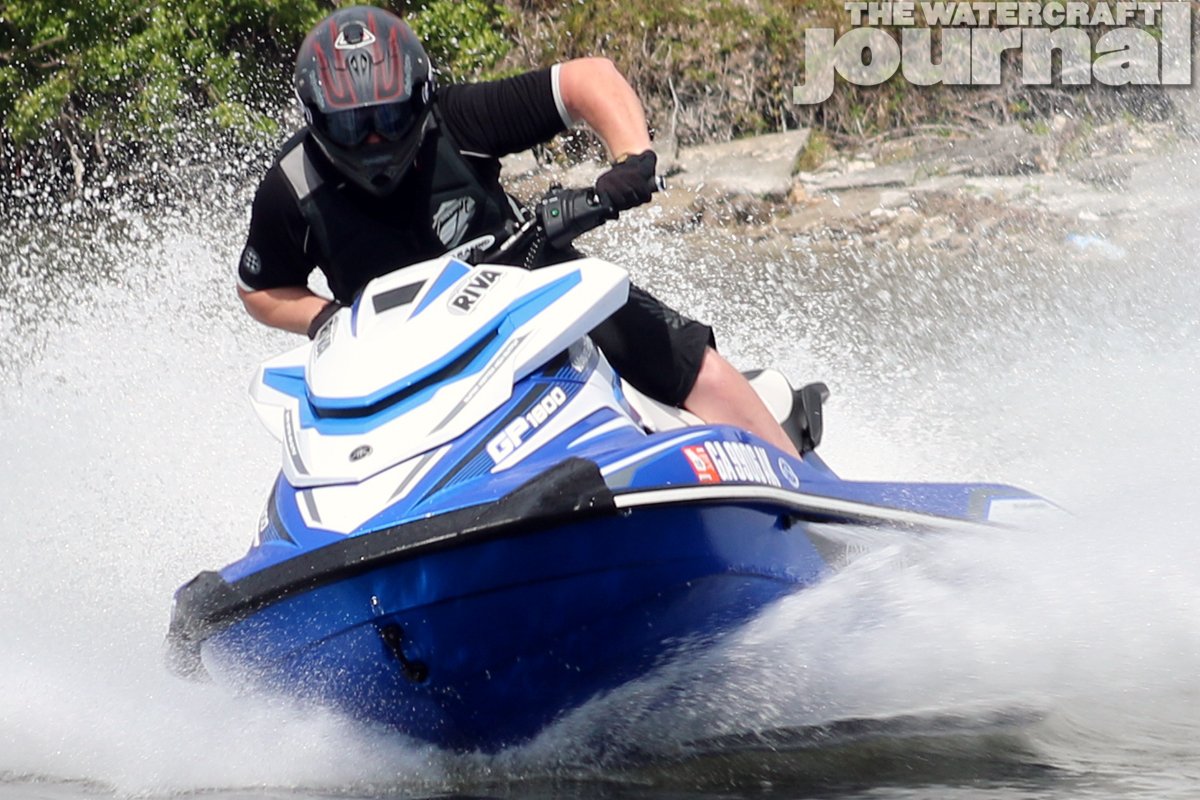
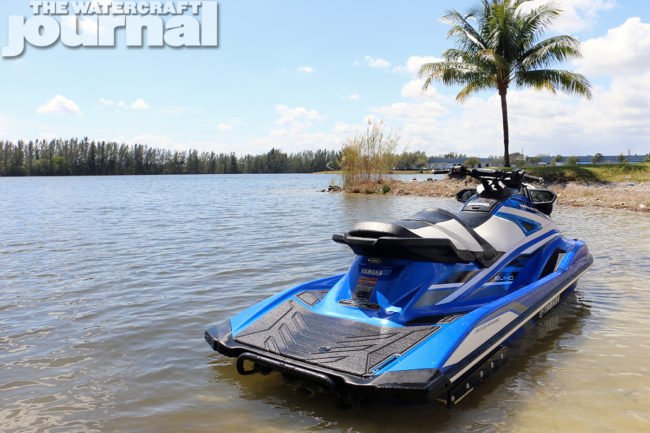
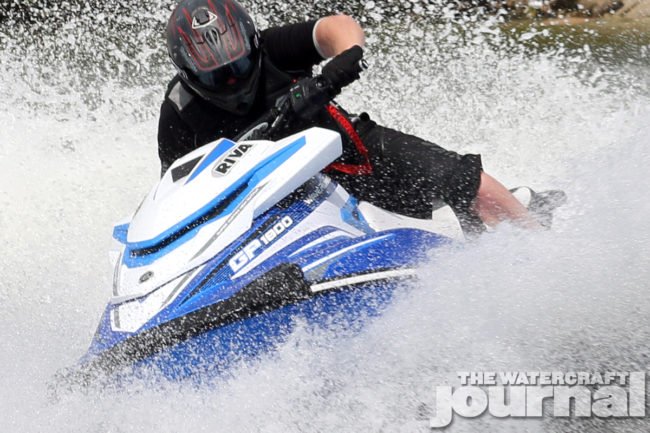
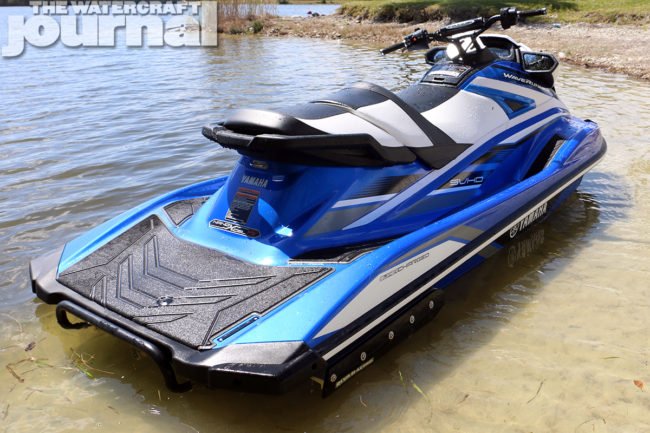
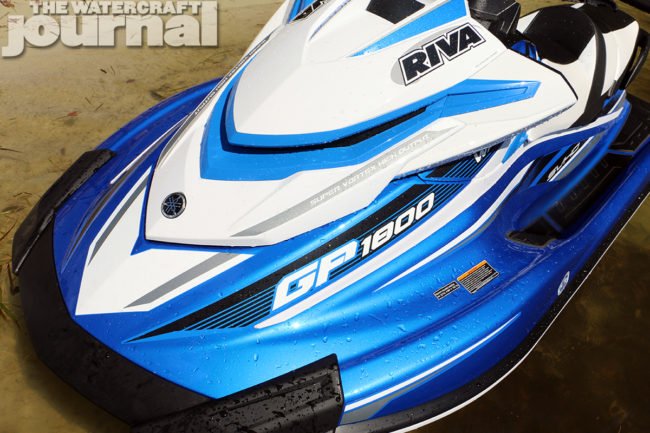
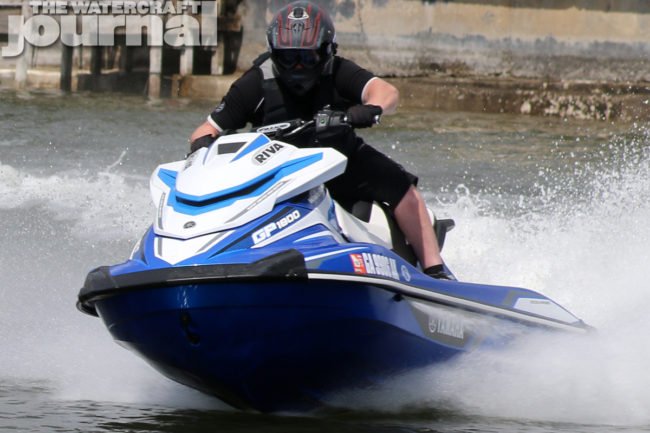
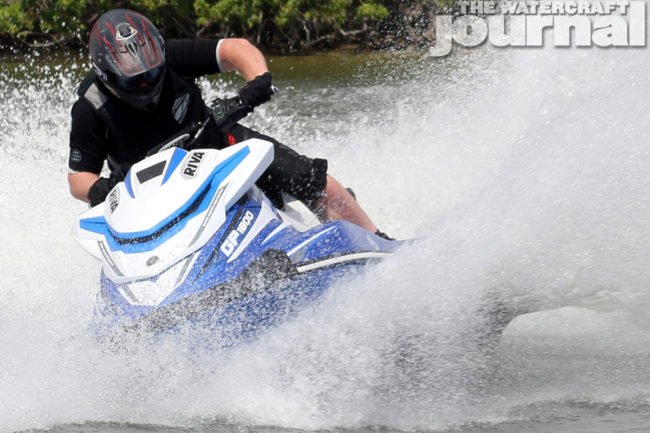
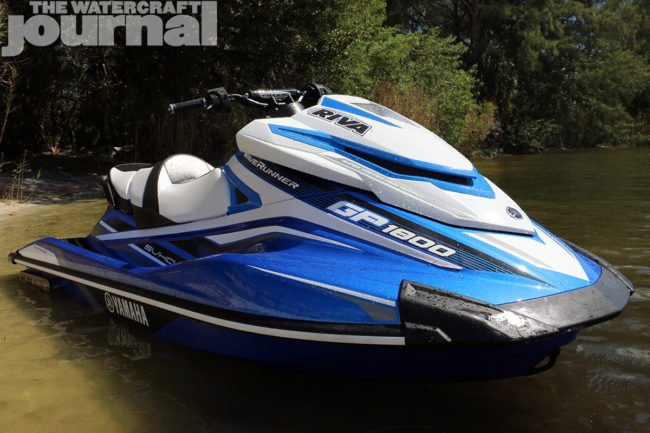
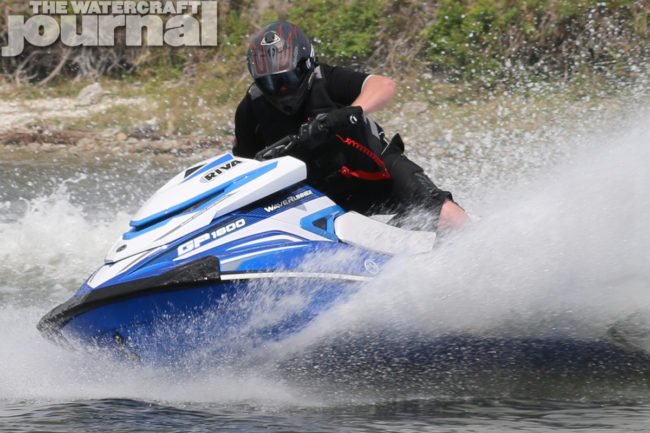
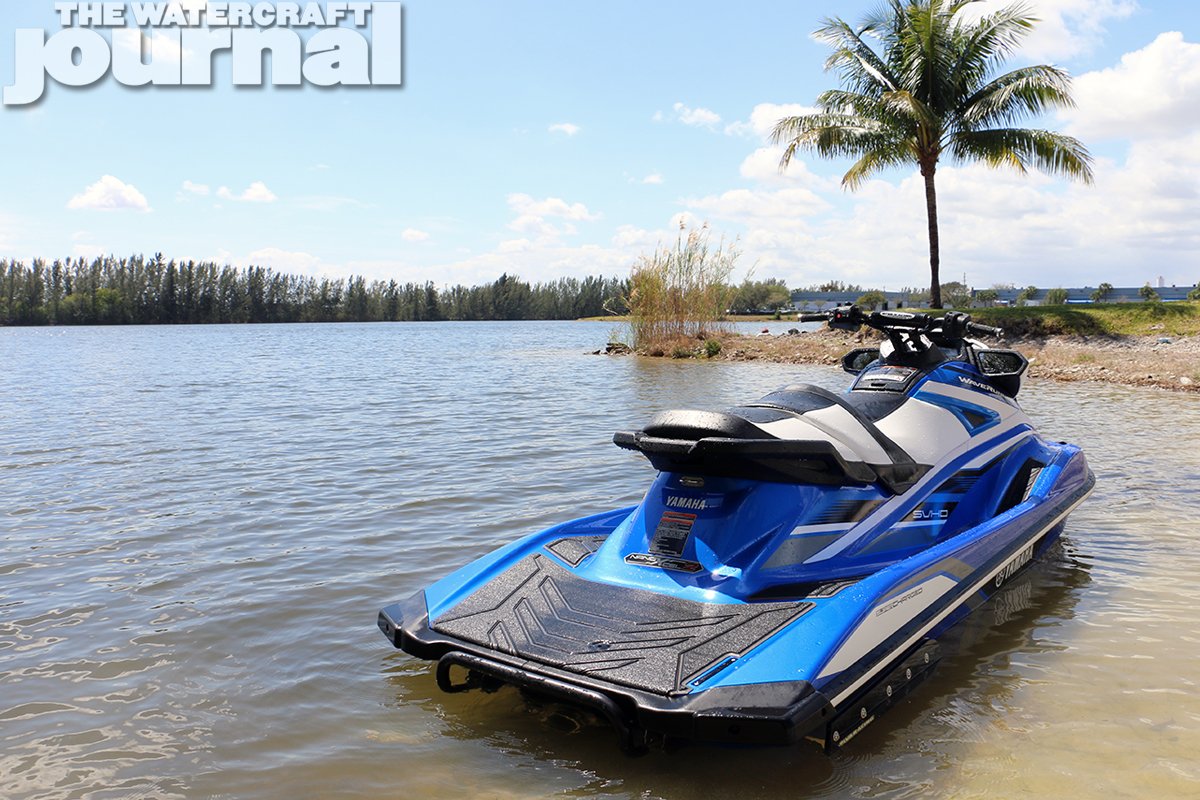
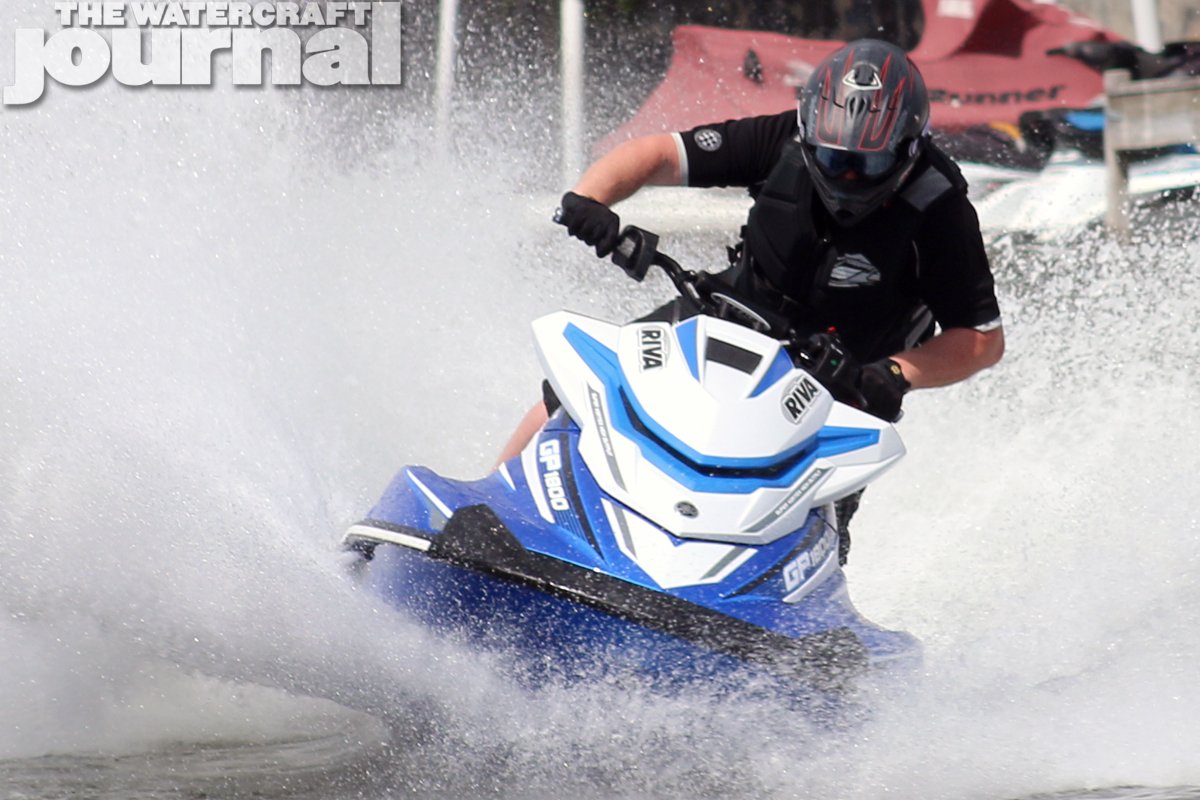
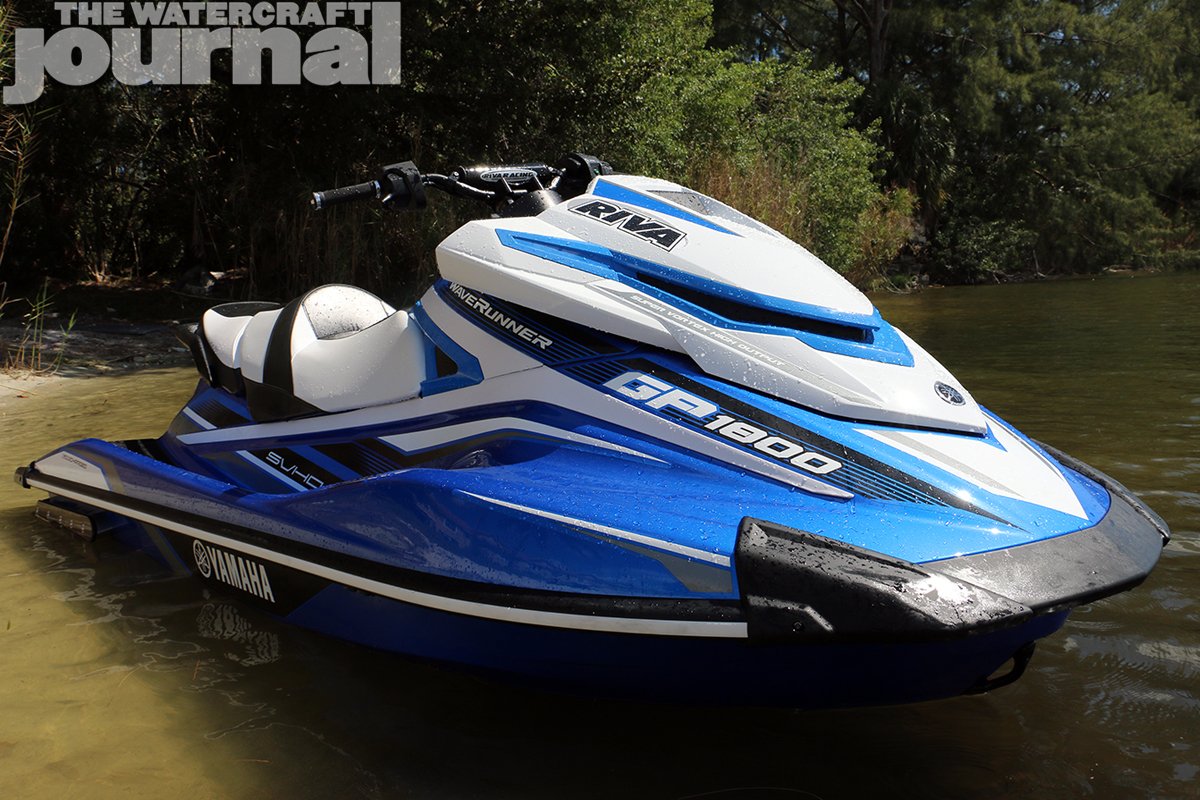
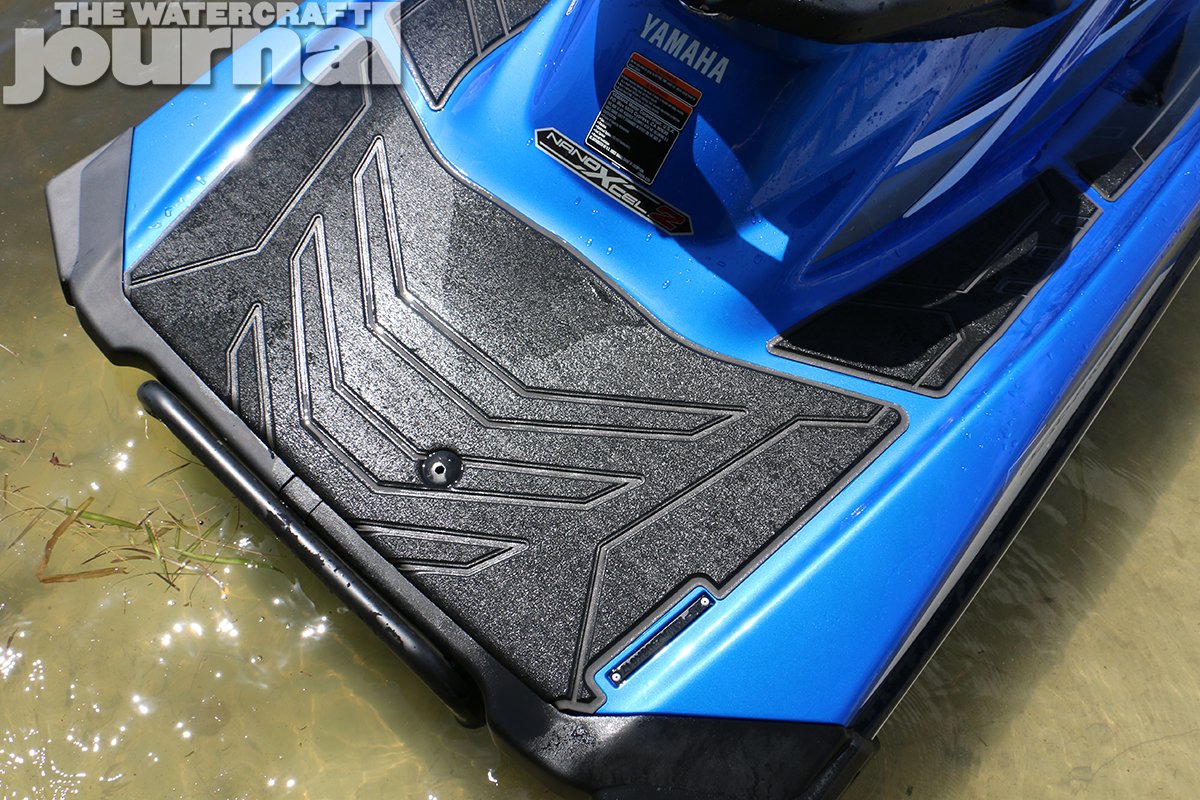
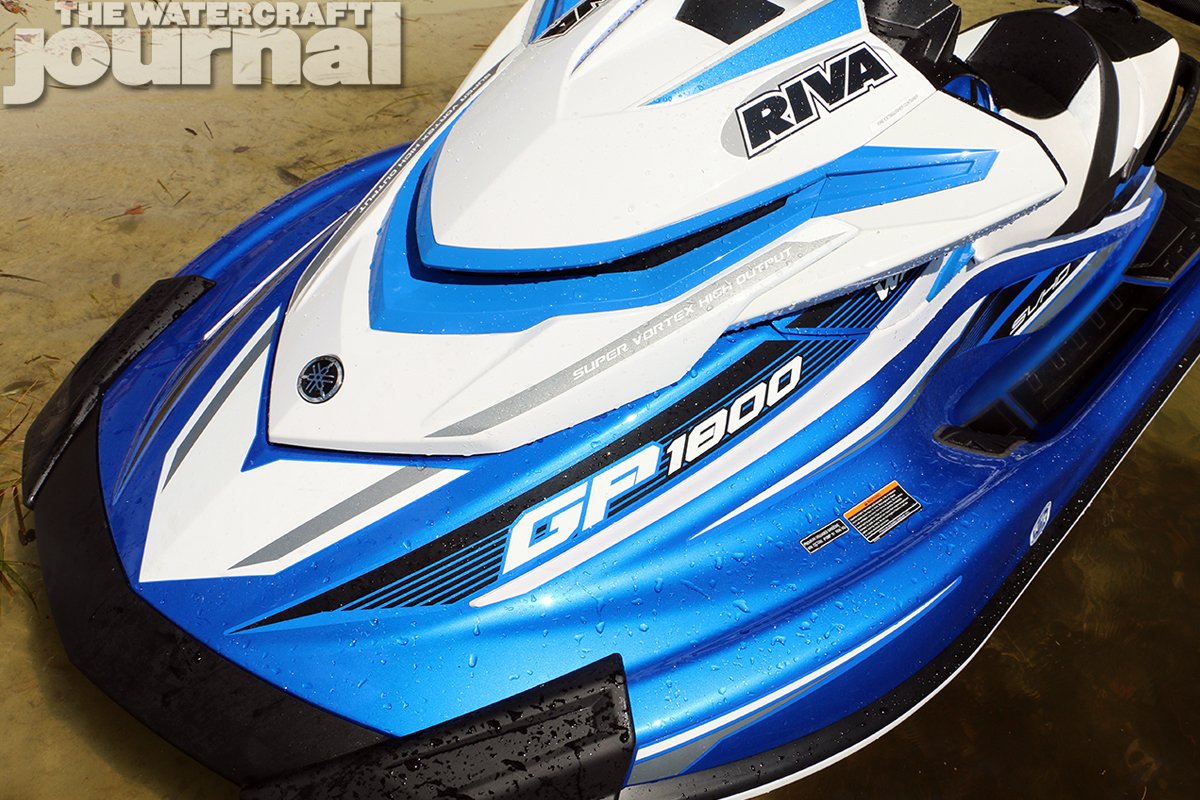
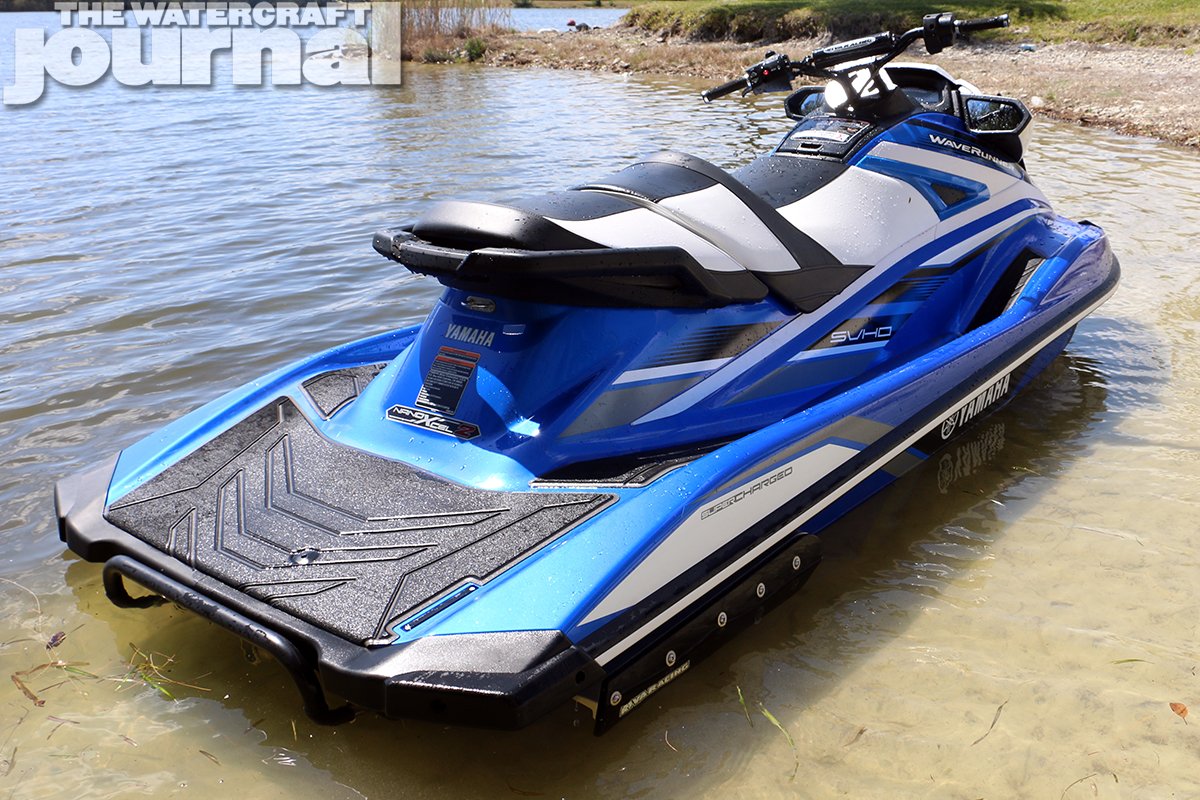
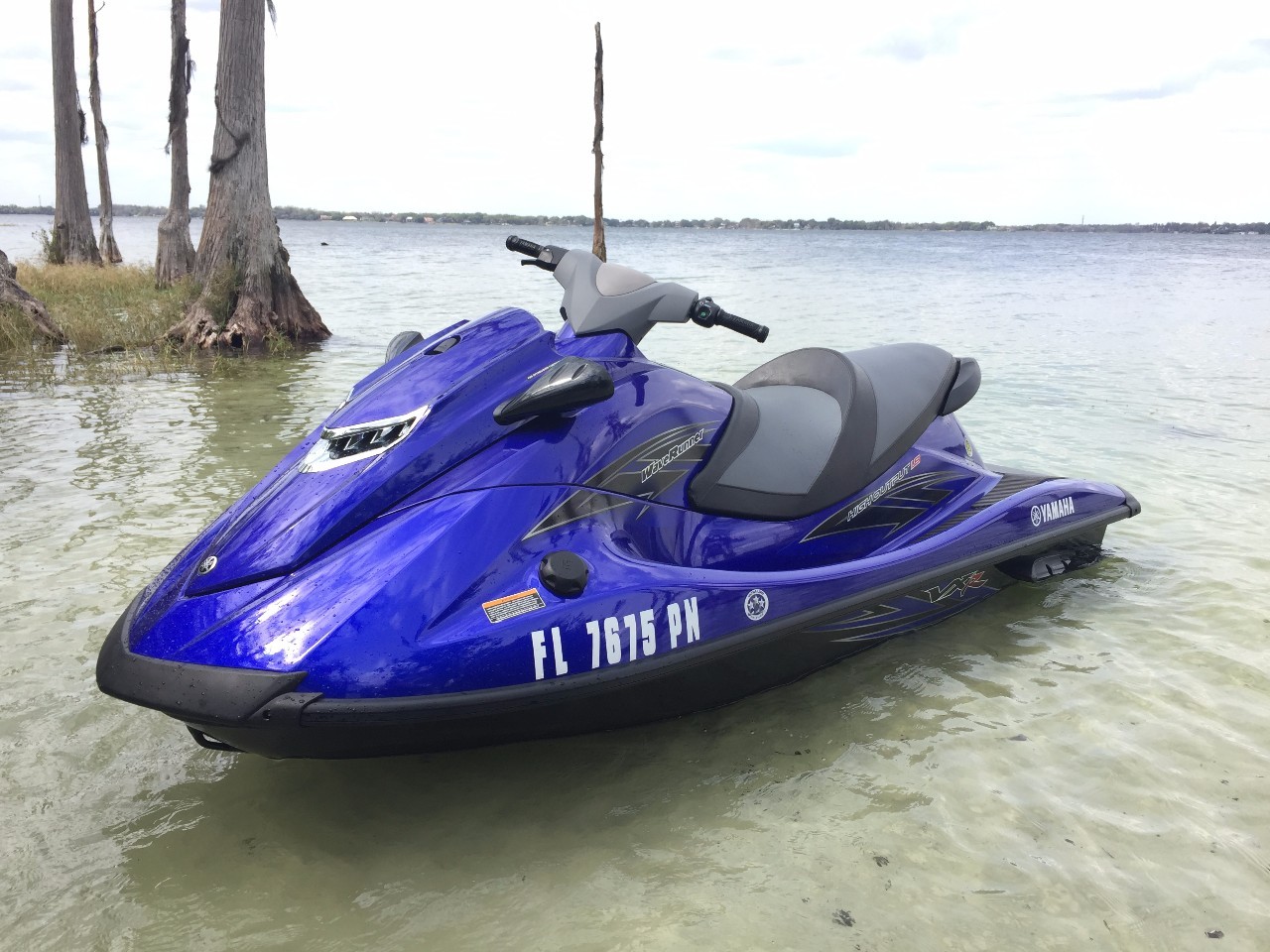
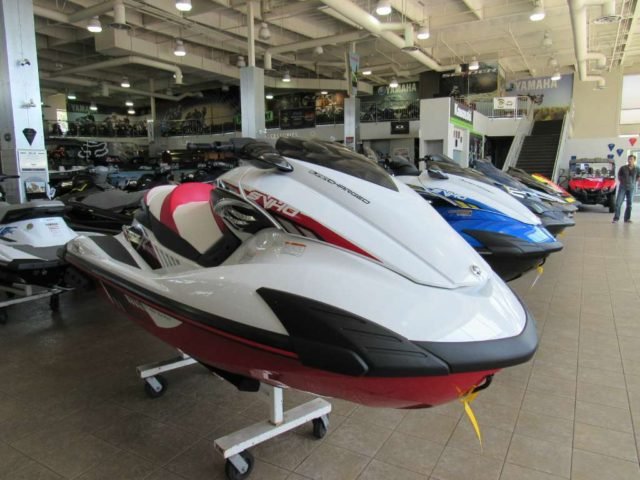
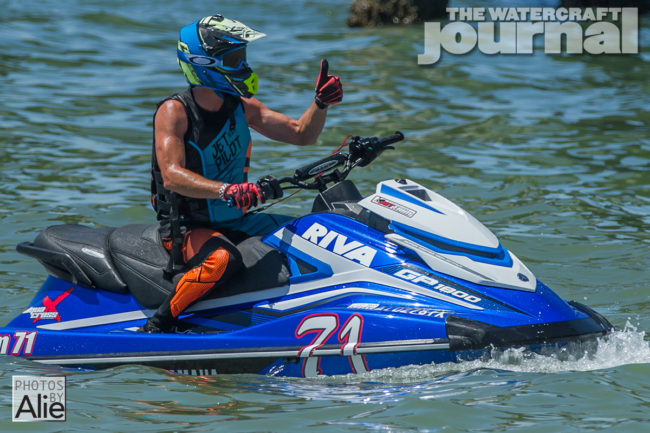
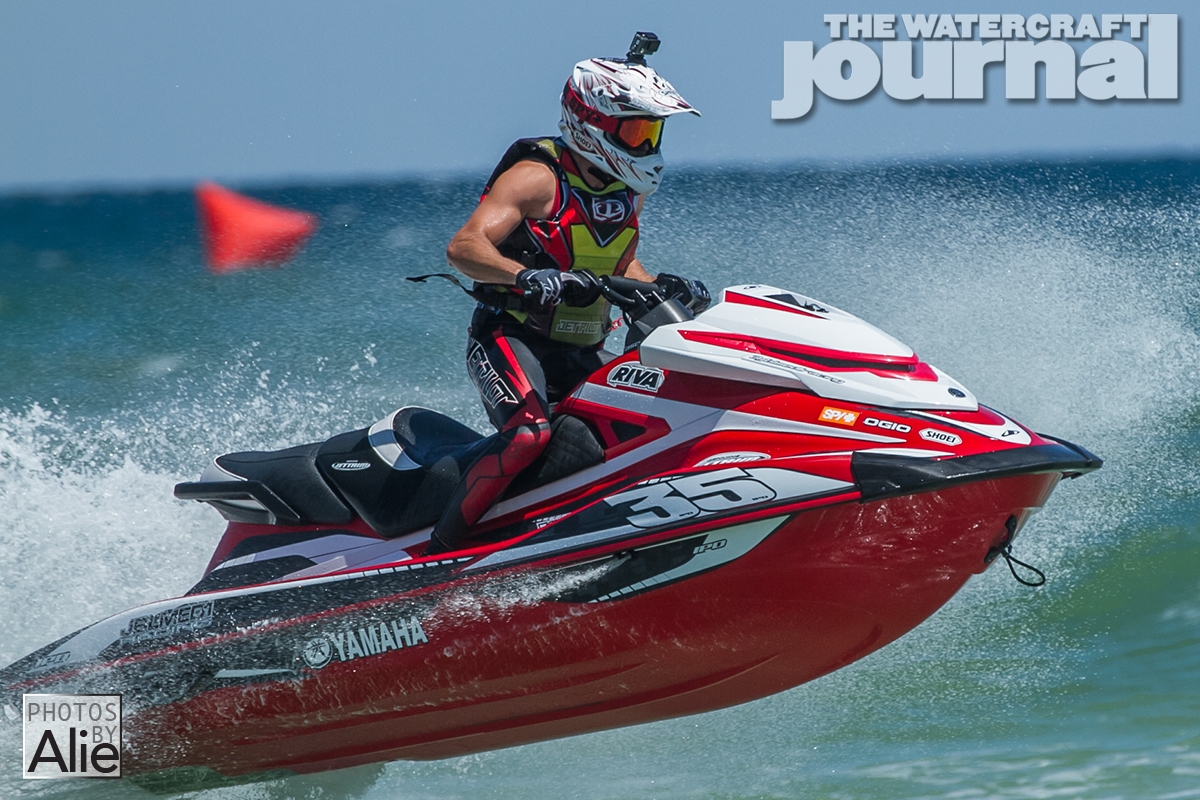
We’ll just get right to it: When we first rode the 2017 Yamaha GP1800 WaveRunner it was well, pretty darn-near perfectly balanced, both literally and figuratively. Yamaha kept the size and weight of the ski manageable by using its NanoXcel2 hull and deck material, which not only reduces total weight (totaling 769 pounds), but also strengthens the final mold’s bond and tensile strength over traditional SMC composites. With this, Yamaha created a machine 18-pounds lighter than the NanoXcel VXR and 22-pounds less than the retired FZR; and that’s including the SVHO supercharged 1.8L four-stroke, and 160mm, 8-vein impeller mounted in a 75mm hub, a quick-response electric trim system, a folding swim step and RiDE, Yamaha’s dual throttle braking system.
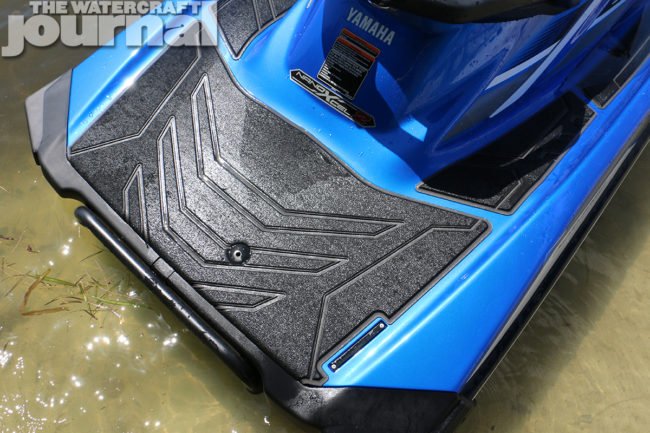
The ergonomics of the ’17 Yamaha GP1800 WaveRunner are simple, to the point and serviceable. The steering system is fixed with fun color-matched pistol-inspired grips, the two-tone “cut-and-sew” stitched saddle is notably narrowed at the knees. CNC-cut traction mats fill the footwells and cover the deck. The LCD “multifunction information center” (ie. gauge cluster) – although unique to the GP – is a little underwhelming in its lack of a boost gauge “and other high-end data that gearheads would love to see,” as we stated in our initial review. The two color schemes: Azure Blue Metallic or Torch Red Metallic, give the buyer an option of livery, but little else varies. Again, the GP1800 is a down-to-brass-tax kinda watercraft…
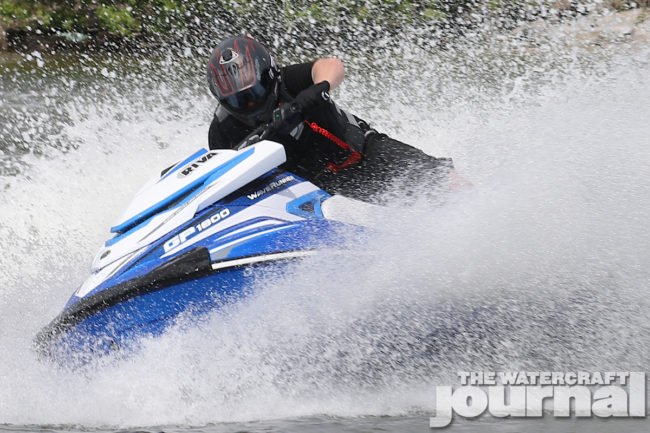
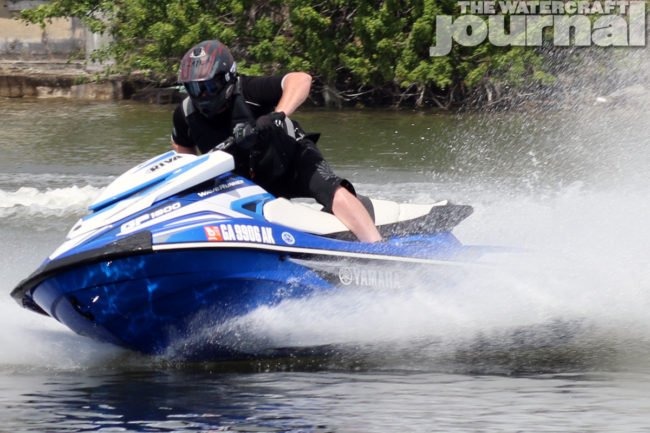
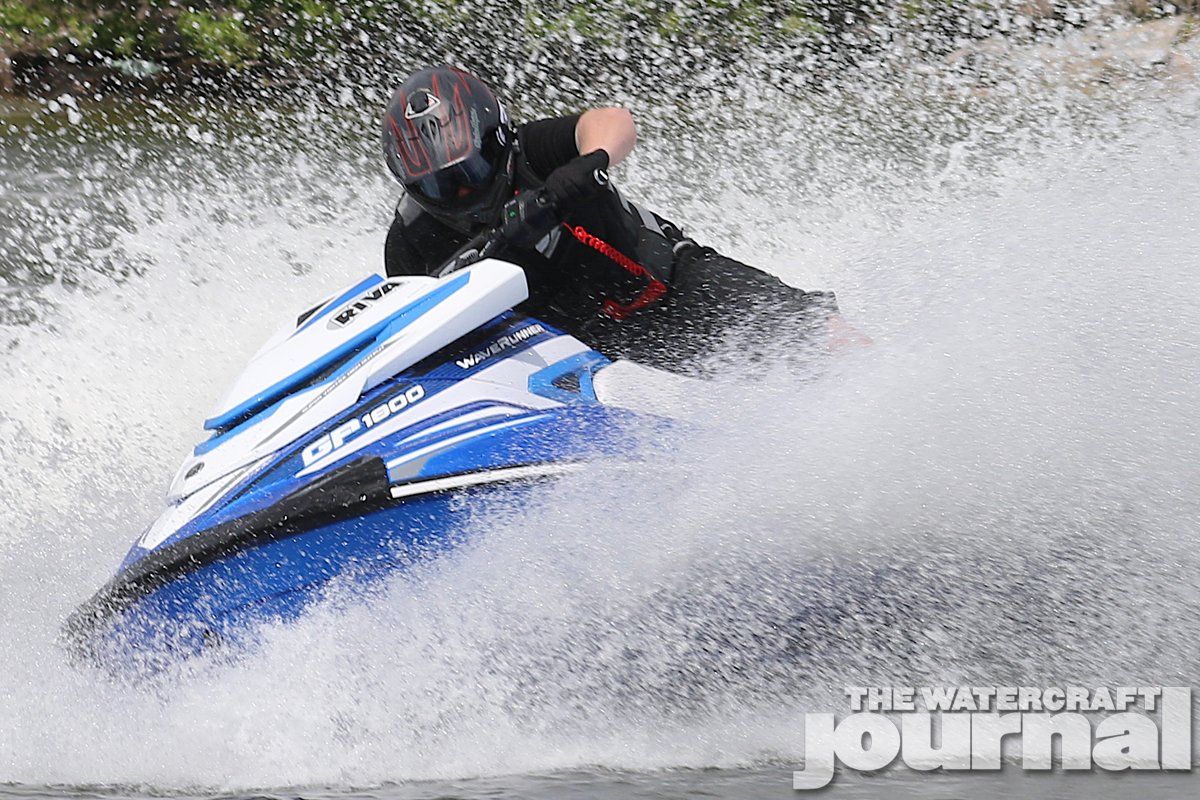
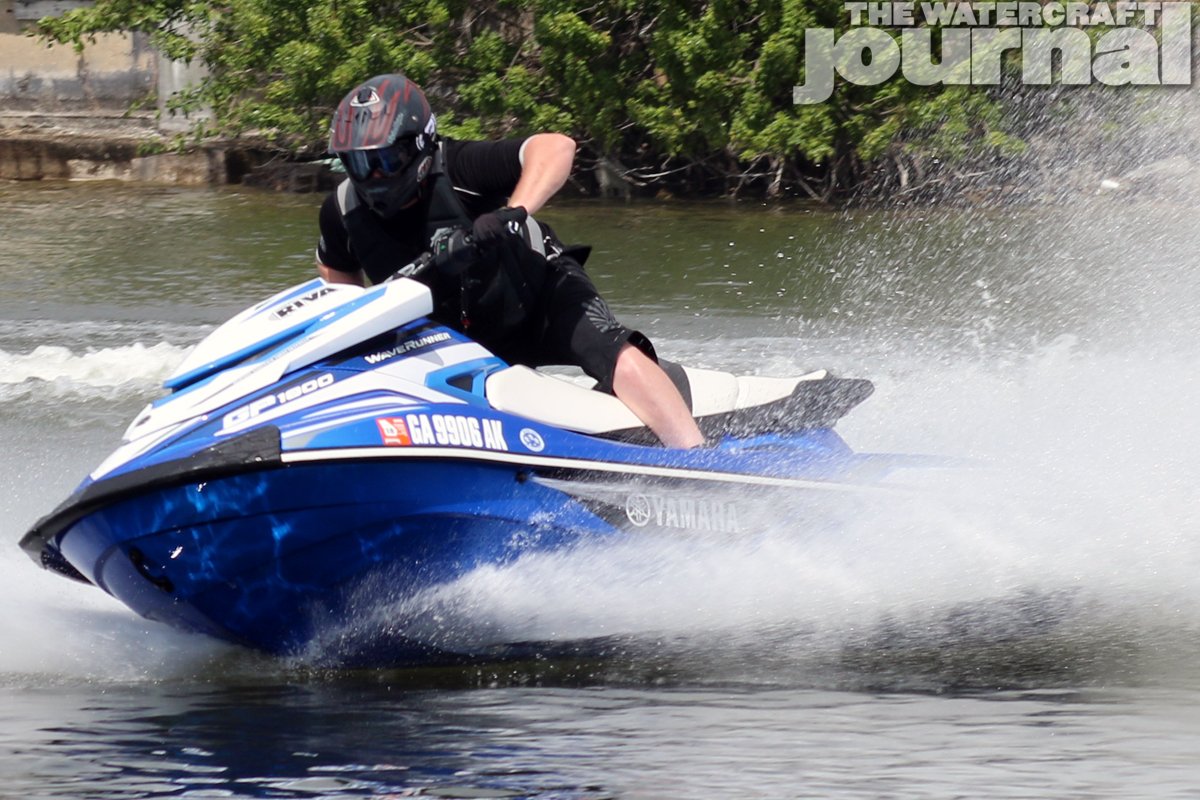
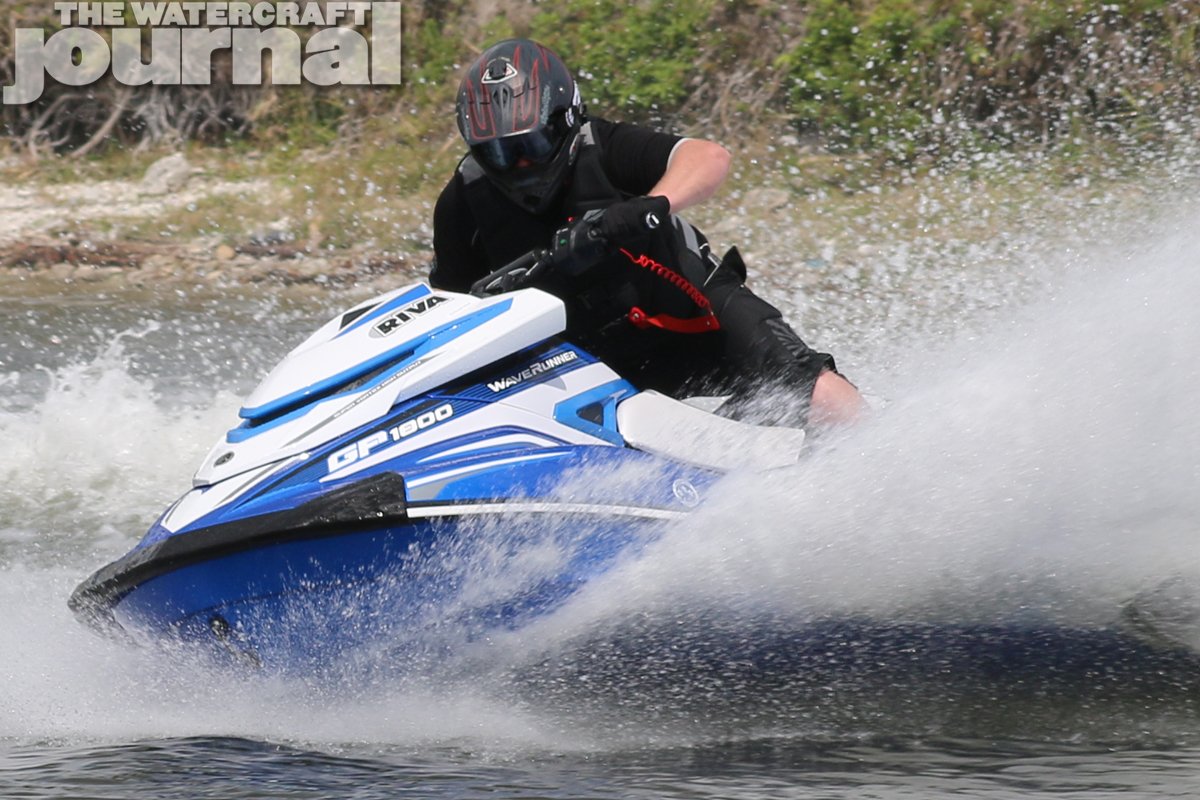
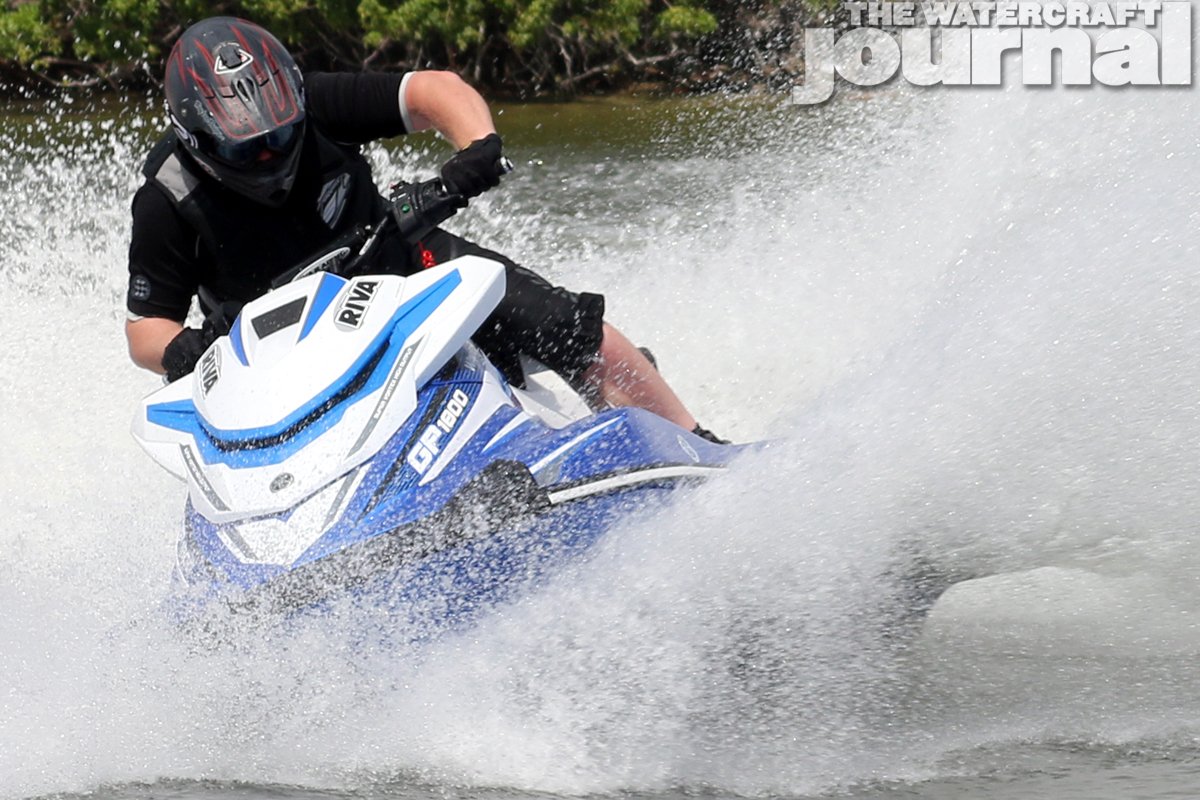
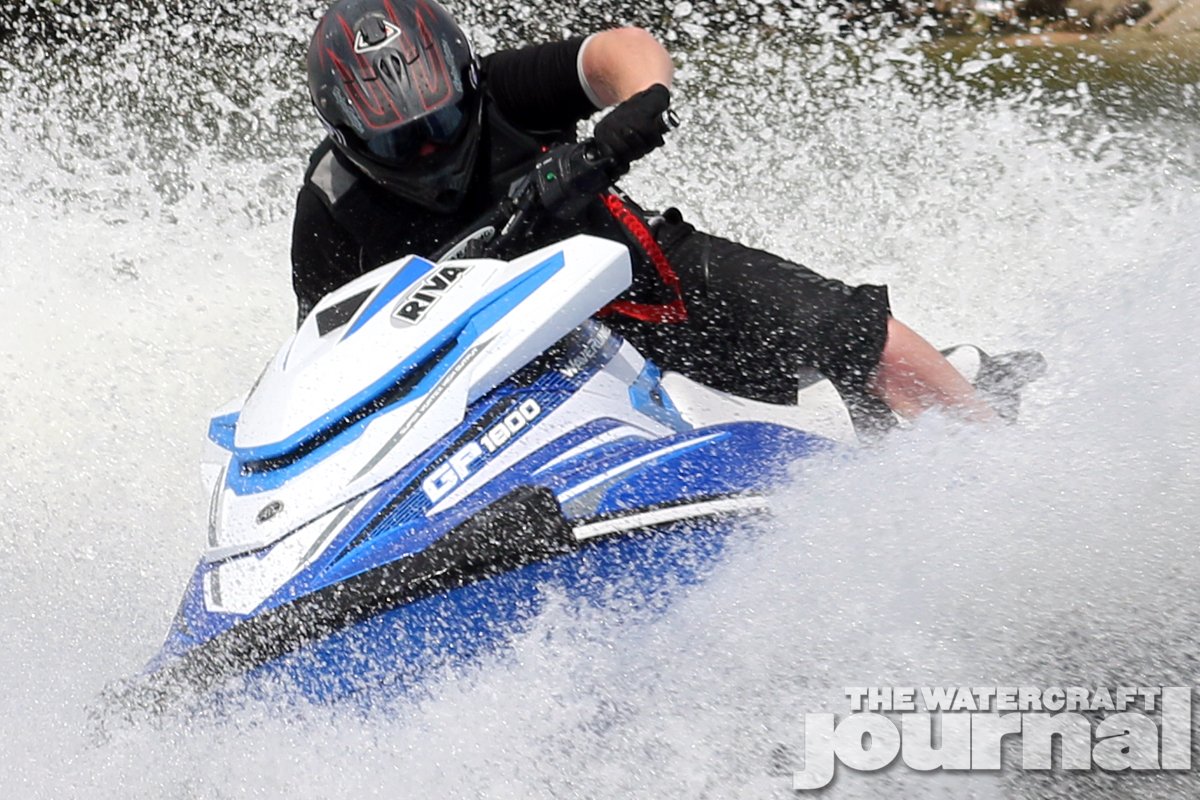
…And performance is what the GP1800 is all about. Acceleration is aggressive but not brutal, as the 265 brake horsepower, 1,812cc engine opens up wide and inhales a compressed blend of 92-octane and cool, dense air through its 54mm throttle body. At an open gallop, we reached a top speed of 68.8mph on a Garmin GPS (at 7,400rpm) that was rock solid. Yet, it is in the twisties where the GP1800 shines brightest. The WaveRunner rides high on the surface while retaining significant pump engagement even in moderate chop. For the most part, the GP1800 turns surprisingly flat, that is until properly coaxed. The narrow, scalloped seat allows for faster weight transitions from side-to-side, allowing the rider to drop a knee deep into the well and shift far over and low into the turns.
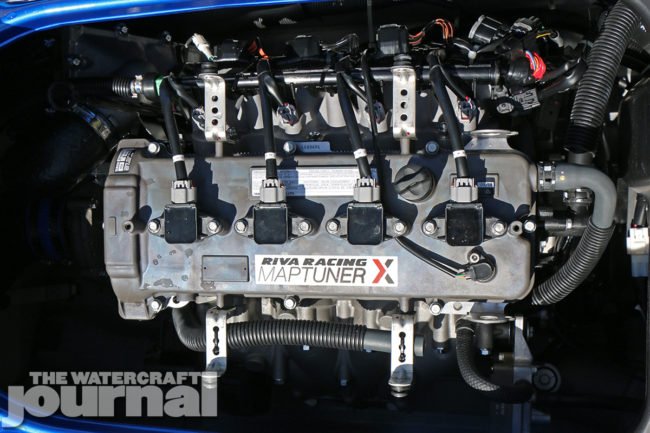
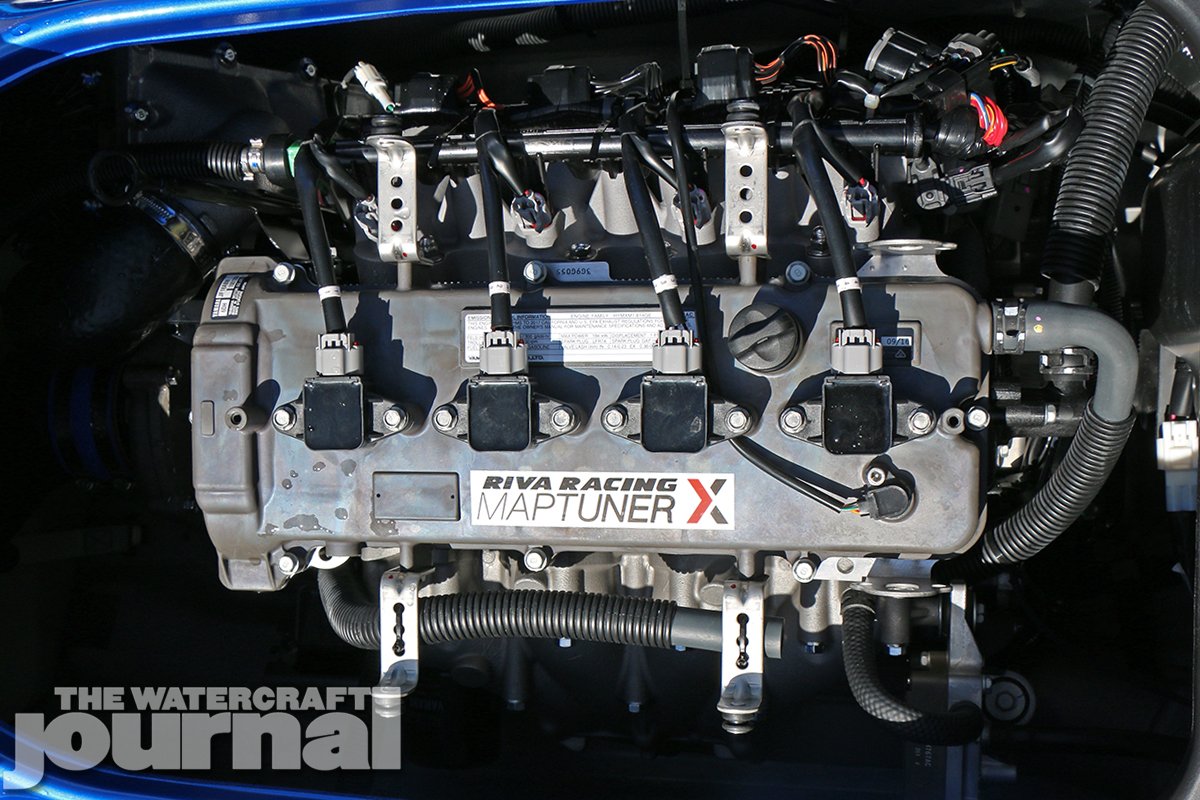
So what could RIVA Racing really do to improve upon such a machine? The world-leader in performance PWC hardware and engine management software was well-stocked with a slew of products to unlock the GP1800 from its USCG shackles. The newest member of the RIVA Development team, Jesus Garcia, who is over RIVA’s engine management development, specifically the MapTunerX, knew it wouldn’t be as simple throwing what they already had at it. To create a package that would comply with IJSBA (International Jet Sport Boating Association) Stock class runabout rules, certain specifics to the tuning software would need to be adjusted to compensate for the lack of permissible performance products. Stock class requires that factory exhaust remain in place as well as all internals concerning the engine. Constrained to almost entirely external handling items and an ECU tune, the challenge was on.
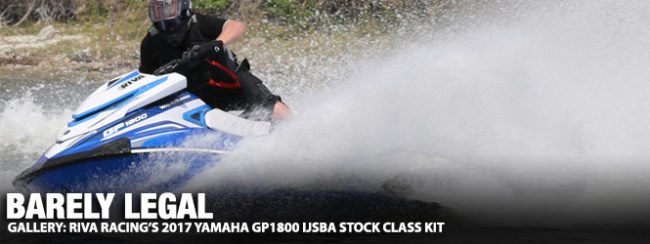
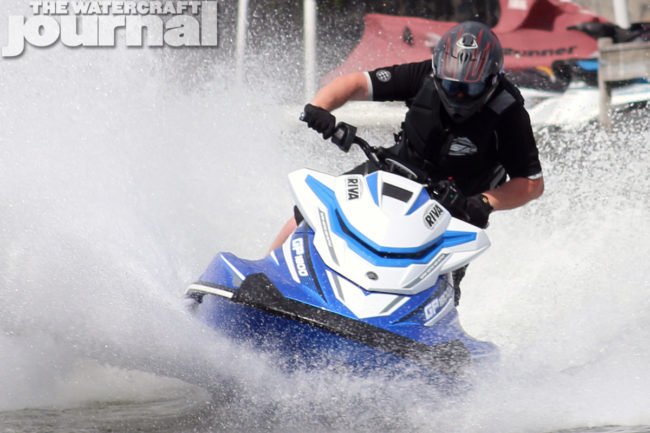
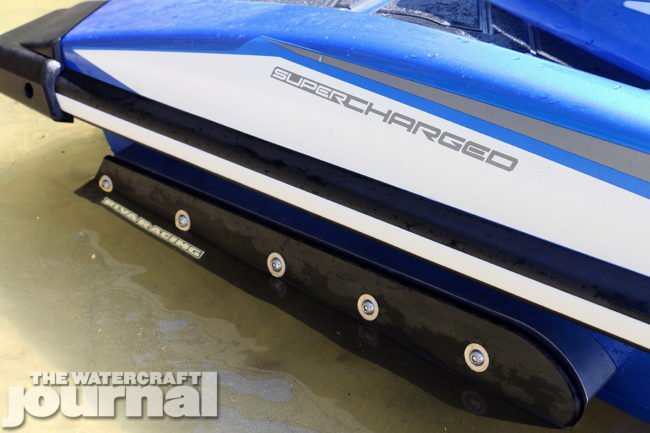
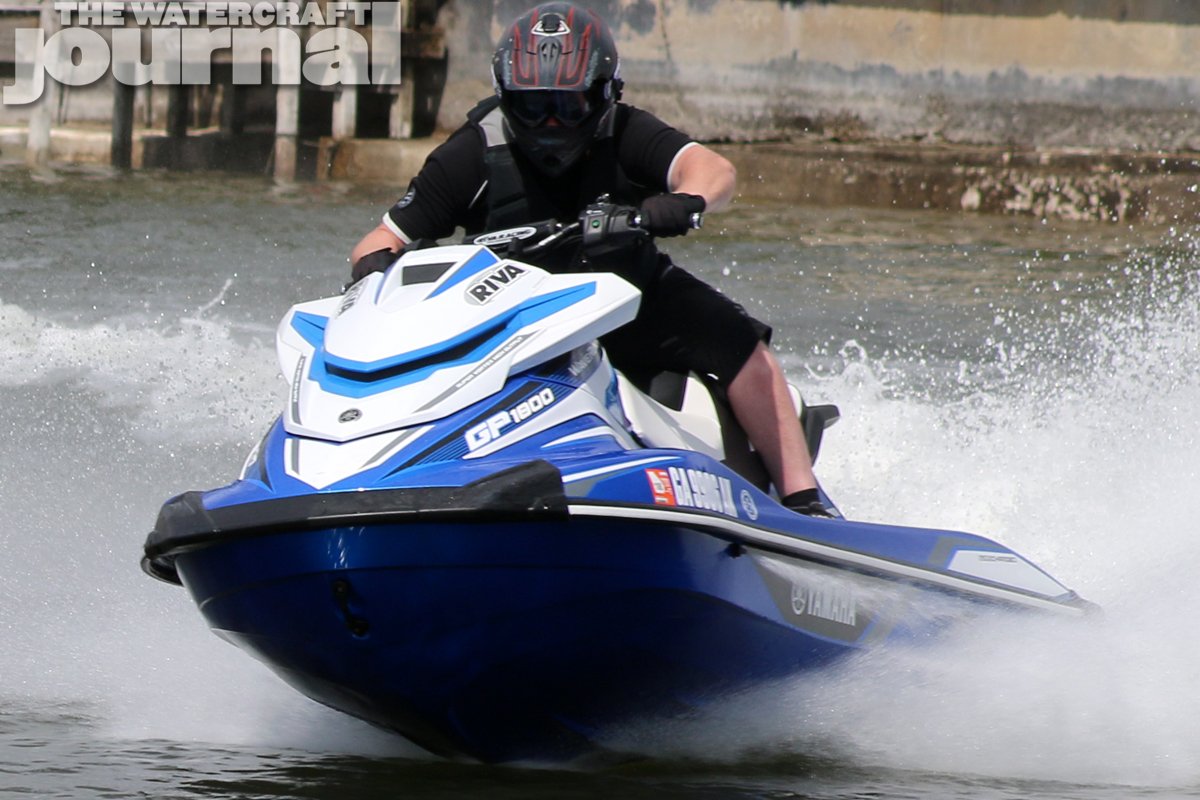
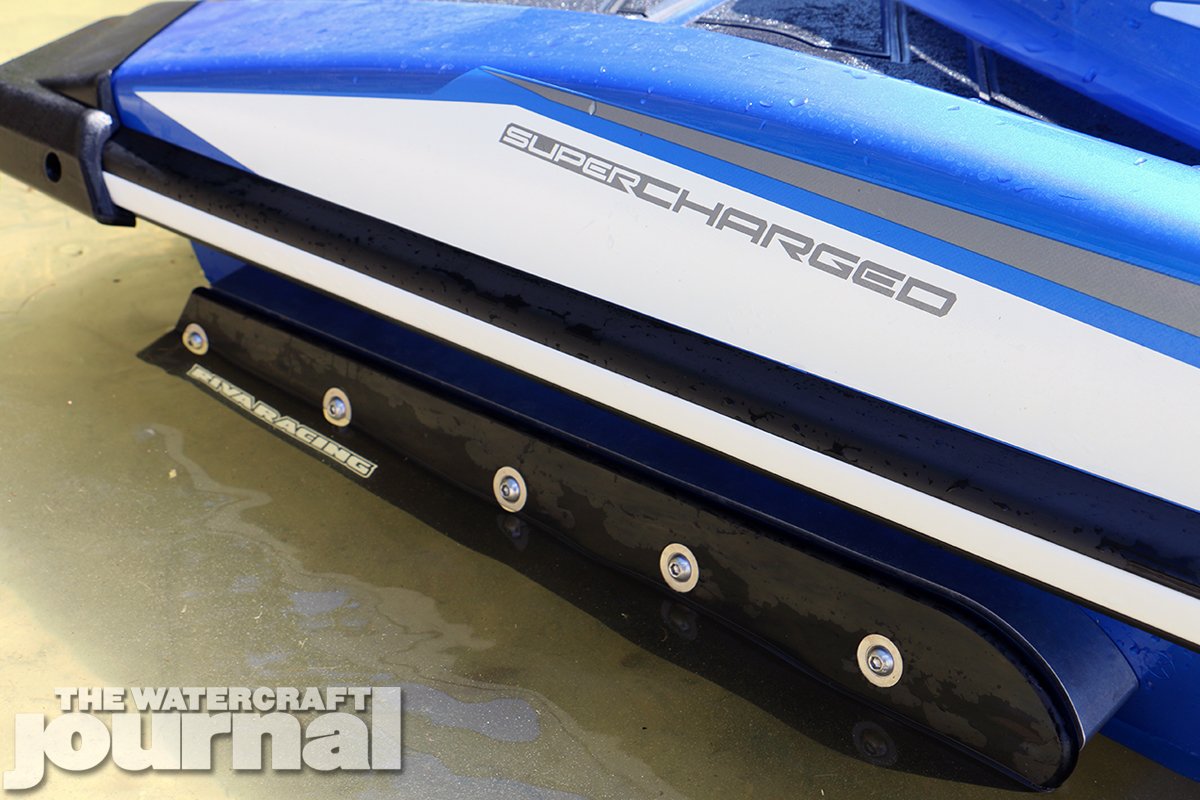
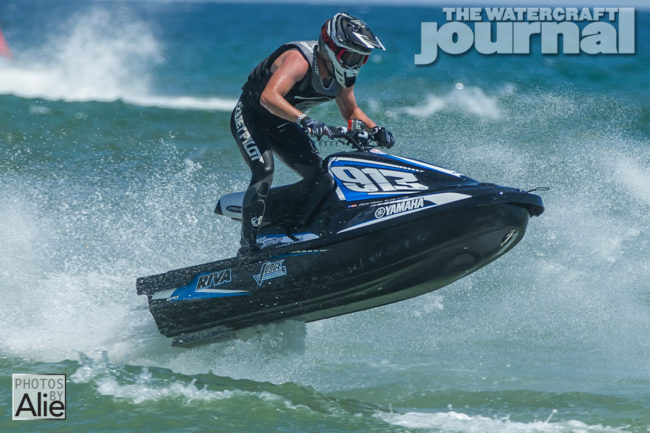
The end result (after months of tuning at RIVA’s private test lake) was a package that delivered a blistering 83mph at 8,650rpm. The RIVA Racing 2017 Yamaha GP1800 IJSBA Stock Class Race Kit consists of a RIVA MaptunerX Yamaha 1.8L Bundle (PT# RY110SC-B), a RIVA Yamaha GP1800 Power Filter Kit (PT# RY13110), RIVA Billet Pump Strainer for Yamaha SVHO (PT# RY1013-WS-80), a RIVA Yamaha GP1800/VXR/VXS Top-Loader Intake Grate (PT# RY22110), a Solas Yamaha 160mm Concord 13/18 Impeller (PT# YV-CD-13/18), a RIVA Yamaha GP1800 Pump Seal Kit (PT# RY25110), and a RIVA Yamaha GP1800/VXR/VXS Performance Ride Plate (PT# RY21110). And if you’re wondering about the sponsons, those aren’t quite done yet. The pair that we tested this day were prototypes, and while the pictures show a finished product, they were far from it. “These will be our most aggressive sponsons we’ve ever made,” RIVA’s Dave Bamdas beamed. “We’re still working on getting them ready for market, so it’ll be a few more months.”
While the finished blades won’t provide the Stock class kit any more top speed, the promised gains in handling (particularly in ocean and severely choppy water) are substantial. “They’re pretty remarkable,” Bamdas continued to tease. “We’ve never made a sponson like this. We’re really excited to hear the feedback.” For what it’s worth, the “temporary” sponsons we tested with were stellar. Initial bite and full throttle lateral-g turns revealed a machine that leaned securely as if hard-mounted to a roller coaster rail, turning incredibly flat in corners, giving the rider a body-torsion inducing slot-car sensation. Regardless of body weight distribution, the tail refused to break free, and top speed through a variety of surfaces remained true and predictable – almost eerily so. It was, and with no need for hyperbole, more watercraft than we could handle.
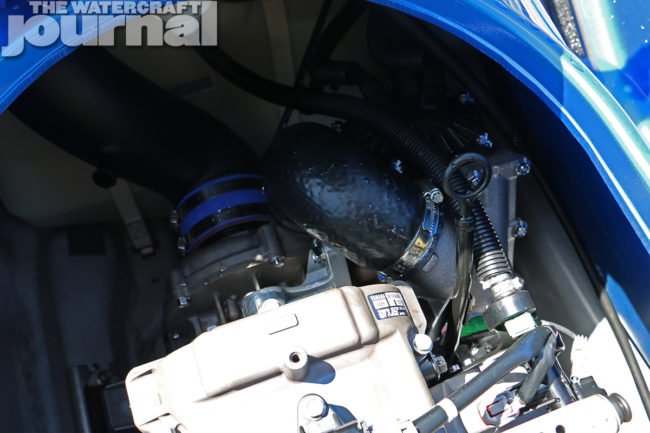
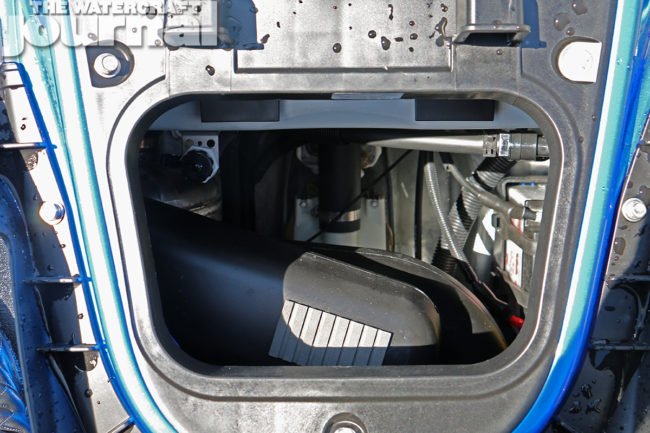
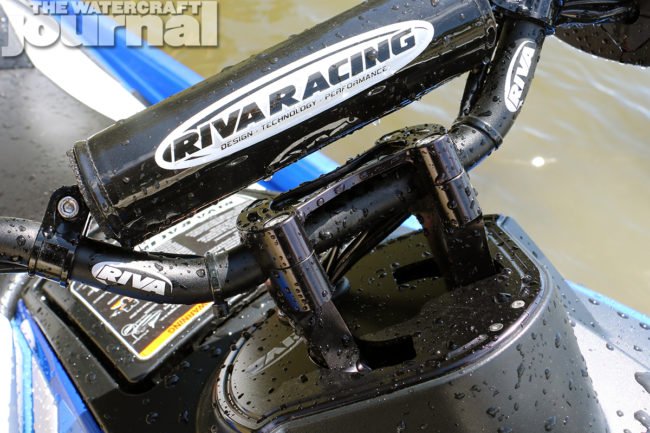
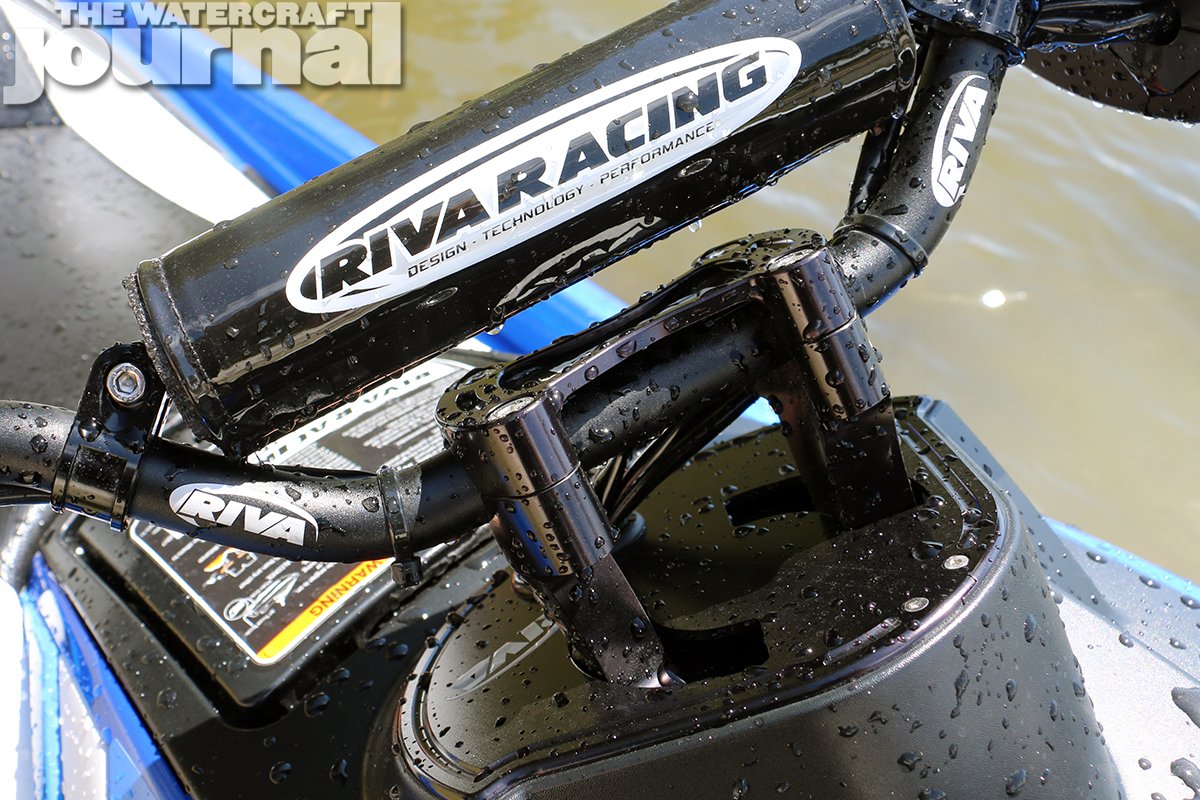
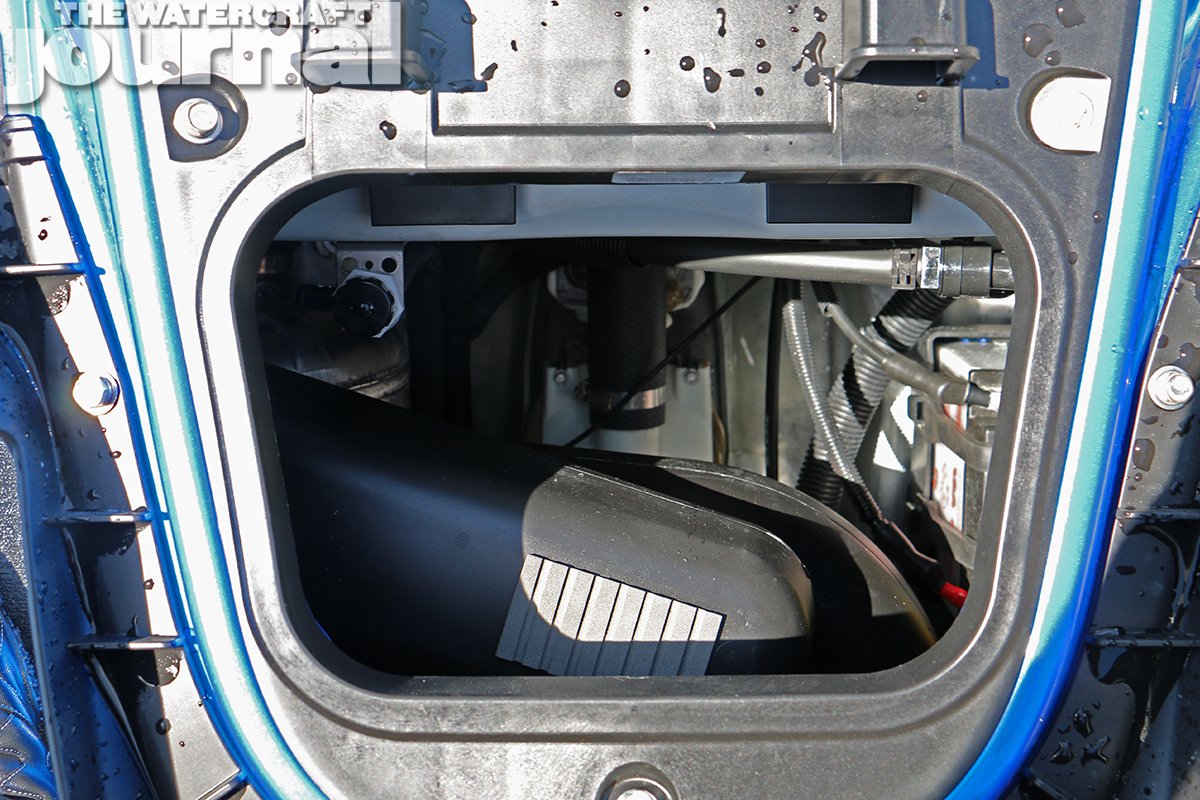
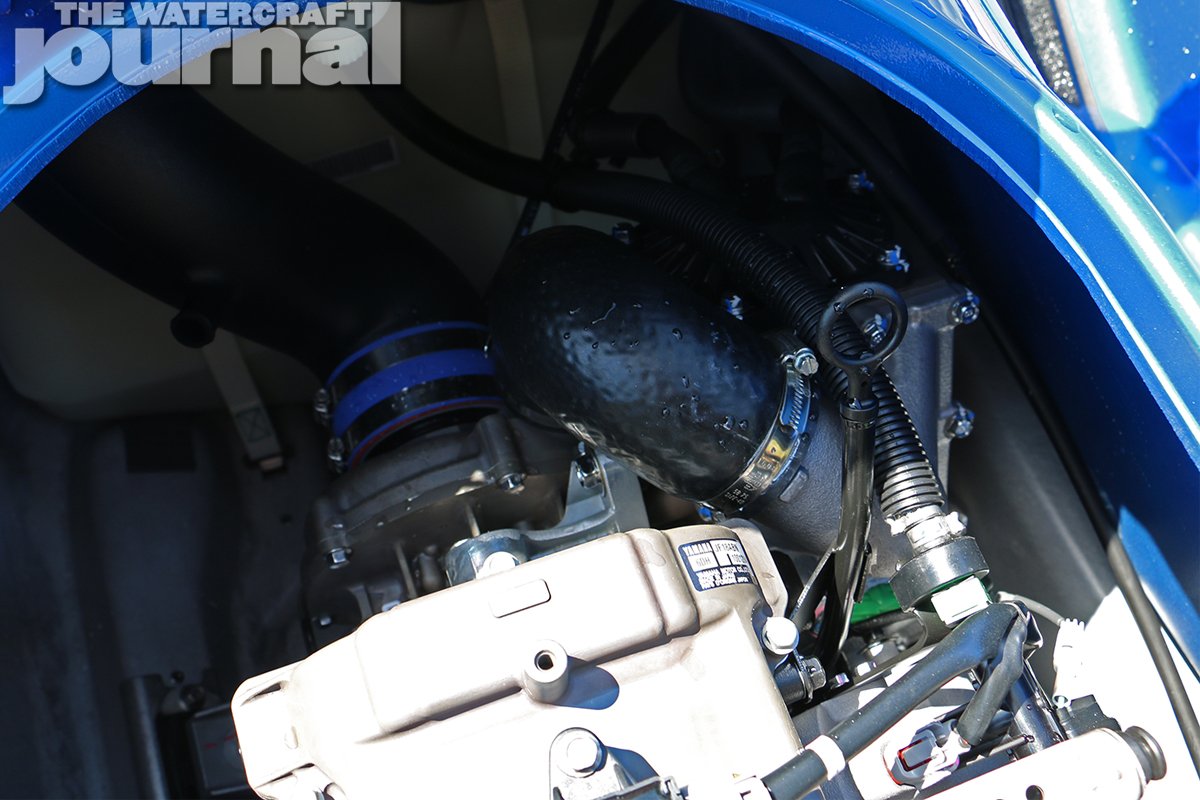
Beneath the seat, only the cold air induction kit and the reflashed ECU (via a MaptunerX handheld tuner)converted the once civilian-friendly GP1800 into an unbridled beast. Power response is immediate – not neck-snapping but linear, pulling up hard and consistent and climbing deep into the 80s. RIVA cautions that the limitations of Stock class prohibit the use of a RIVA SVHO Engine Cooling Upgrade Kit and RIVA Power Cooler Kit so the recreational rider will want to spring for these to ensure maximum engine life. Additionally, the eagle-eyed reader will note the RIVA Yamaha GP1800/VXR/VXS Pro-Series Steering System. That too isn’t part of the RIVA IJSBA Stock class kit, but makes a considerable difference in rider input and steering response.
Nearly a decade ago, we labored for 2 days under the blazing Arizona sun to push a then-new ’08 Yamaha FZR to 80 miles-per-hour. It took well over $8,000 worth of products, an excessive amount of trial testing and long nights of invasive procedures and fuel curve tweaking, but we accomplished our goal: 80.1mph. Today, with less than $2,300 in bolt-on parts that are easily installed on a Saturday in the comfort of your own garage, speeds handily eclipsing that ancient achievement can be had thanks to RIVA Racing. Considering the GP’s $13,999 MSRP (undercutting the FZR’s $14,799 price tag by $800) and RIVA’s listed kit price of $2,272.35, never before has a race-ready, world championship-worthy machine been so dramatically affordable to the layman. Arming civilians with such a weapon would almost be considered irresponsible were it not so much stinkin’ fun.
As The Watercraft Journal continues to grow in both readership and worldwide reach year-after-year, we have been able to provide its supporting advertisers the single-greatest access to self-identified personal watercraft enthusiasts, and with it new and returning customers that might not have come to purchase their products and/or services otherwise. (This is the exact premise to each of our updates of By The Numbers published on the first of every month.) And as we recently announced new and aggressive efforts to assist regional dealerships to reach local buyers, we also have big news for those on a far wider range:
Earlier this month, The Watercraft Journal partnered with the world’s largest online marketplace for PWCs – be them used or new – PWC Trader. Together, we now offer you, the readers of The Watercraft Journal our own customized access portal to PWC Trader’s massive selection of “new and used stand-up and multi-seat PWC models to experience the thrill of the water” through our all-new Classifieds section. The search engine is incredibly easy to navigate, providing users best service possible with immediate access to PWC Trader’s massive selection of watercraft and boats.
Last year, PWC Trader welcomed 1.7 million visitors and together we look to combine our total reach to help get more PWC enthusiasts out on the water! How? You can look forward to seeing many segments of The Watercraft Journal’s industry-leading editorial content on PWC Trader in the coming weeks and months, as well as in newsletters and email blasts. We at The Watercraft Journal are always looking for ways to make our publication a better resource for you and by partnering with PWC Trader we see a very bright future ahead of us! Make sure to check it out and give our new Classifieds section a look HERE!
Team Jet Renu Non-Profit Inc. is excited about giving you the opportunity to win an electric pressure washer! The prize winner’s package includes the electric pressure washer, Bubble Foam Gun, and some sweet Jet Renu cleaning products. The power washer operates on 120 volts, has 1.5 Horse Power, and comes with a 20 foot pressure hose, giving plenty of leeway for cleaning your machine. Other features include a 2 piece quick disconnect, built in detergent bottle, variable spray nozzle lance, turbo nozzle lance, and a 32 oz. Foam Gun.
One lucky winner will be announced May 15th so rush to Jet Renu to buy your $5 raffle tickets online before you get left in the dust or the wake. The pressure washer retails for $295.00, so spending five bucks in order to help a good cause and to have a chance to win makes it worthwhile. Moreover, the pressure washer allows for less clean up time for your personal watercraft or other motorized vehicle and with the accompanying Jet Renu products, you’ll get that extra shine The whole package is valued at $350 and all proceeds go to Team Jet Renu Non-Profit Inc, so please help support the team by purchasing a raffle ticket or several. Good luck!
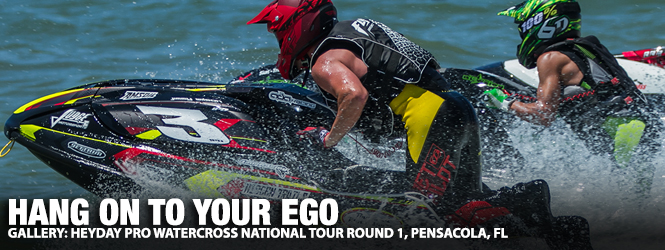
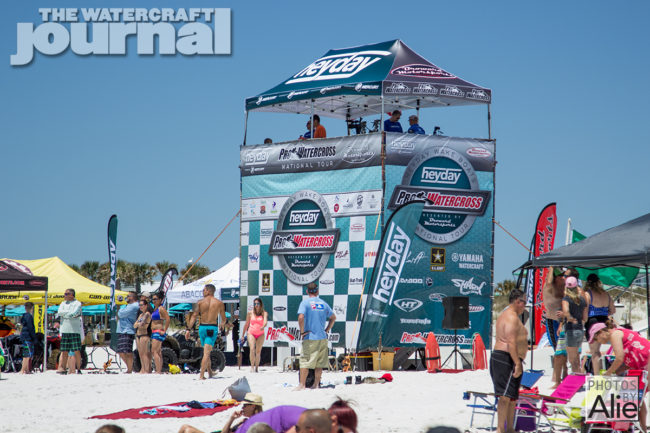
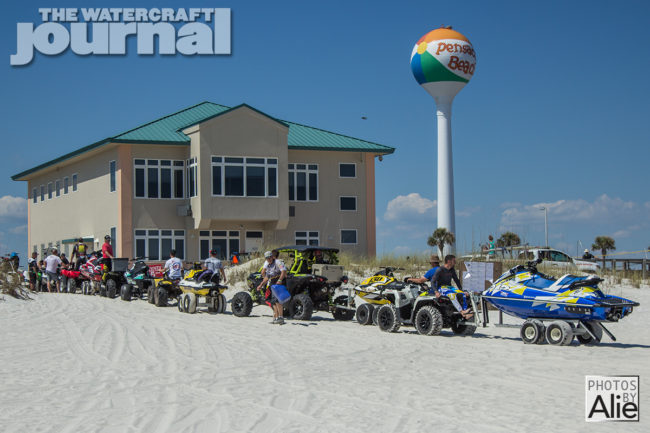
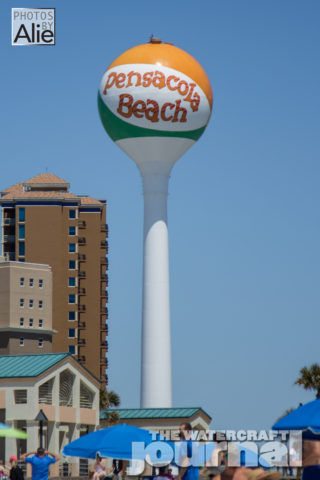
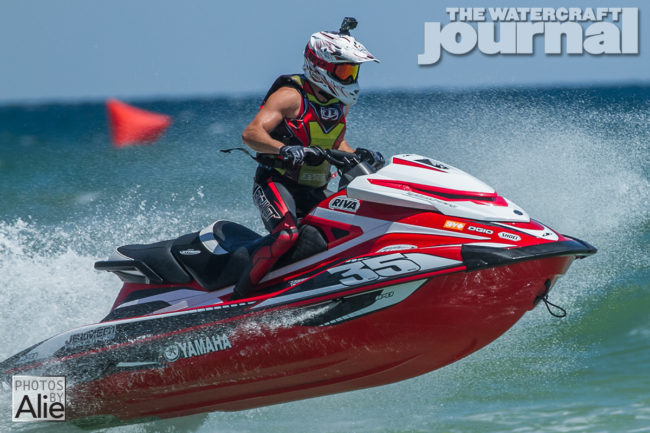
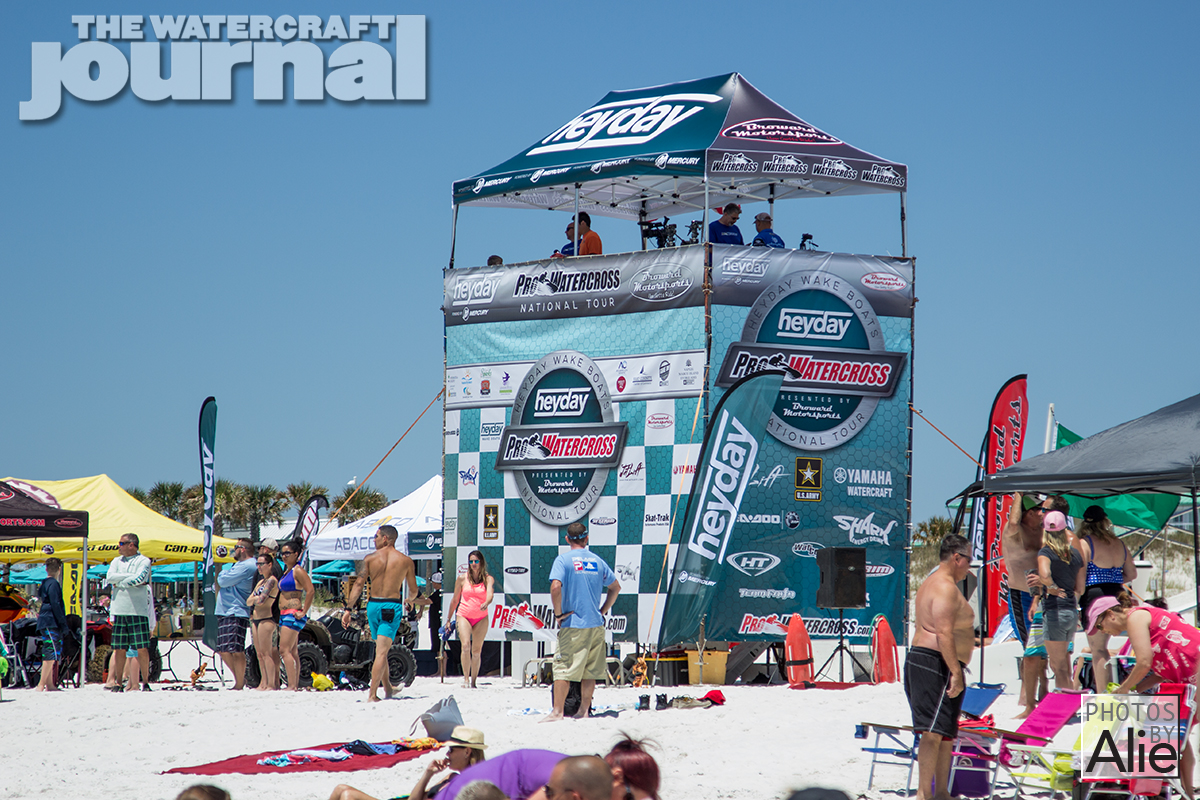
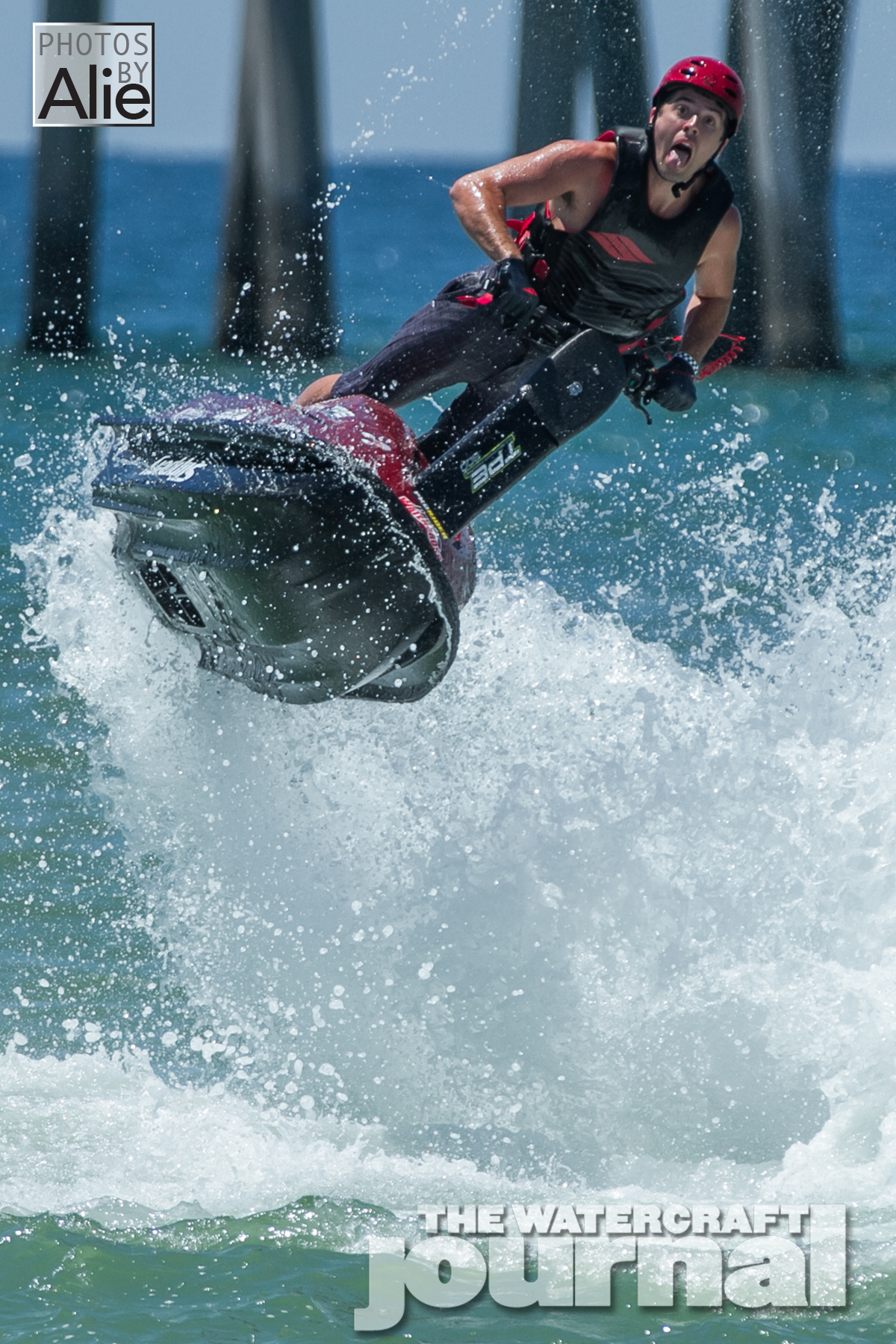
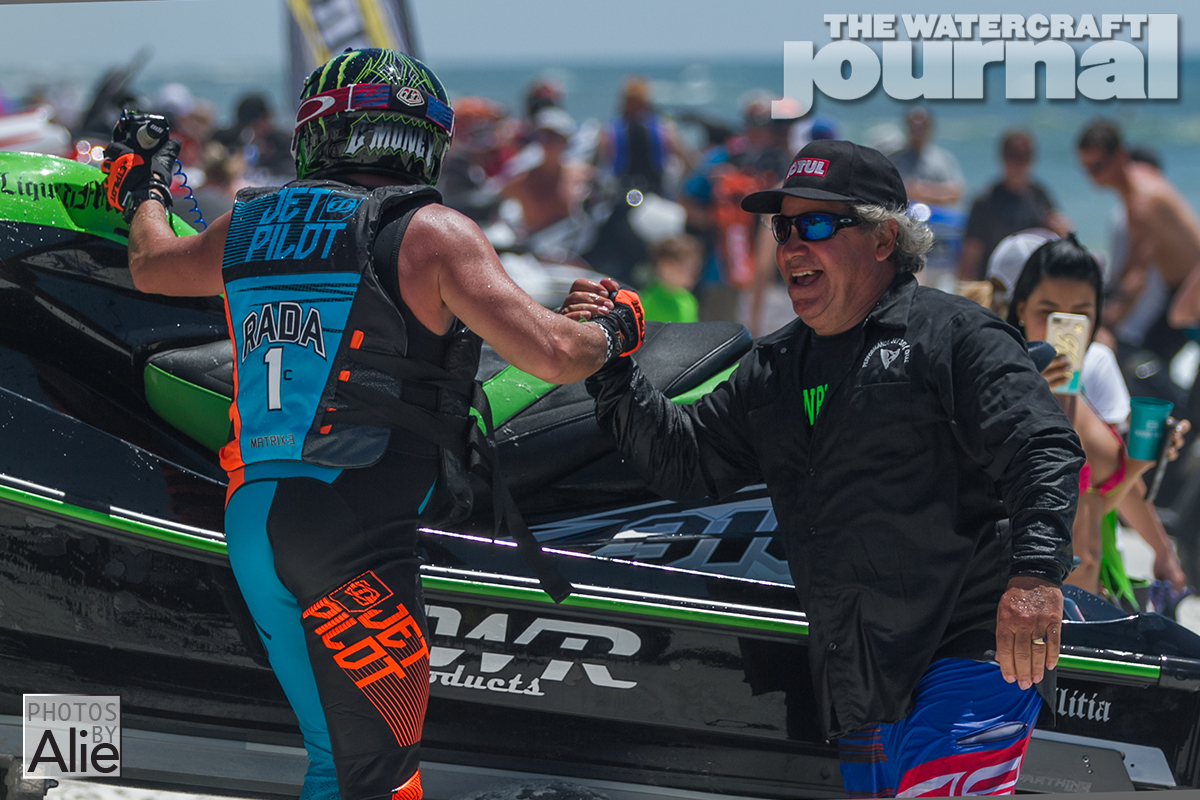
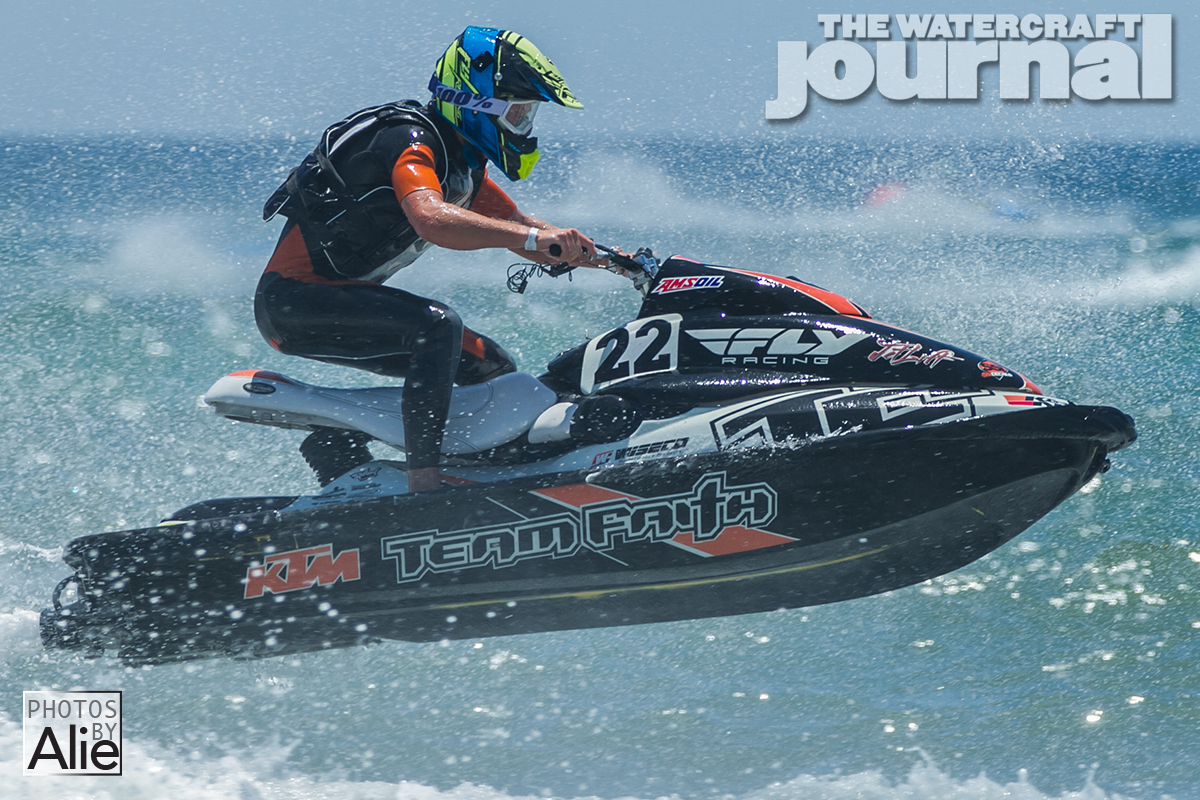
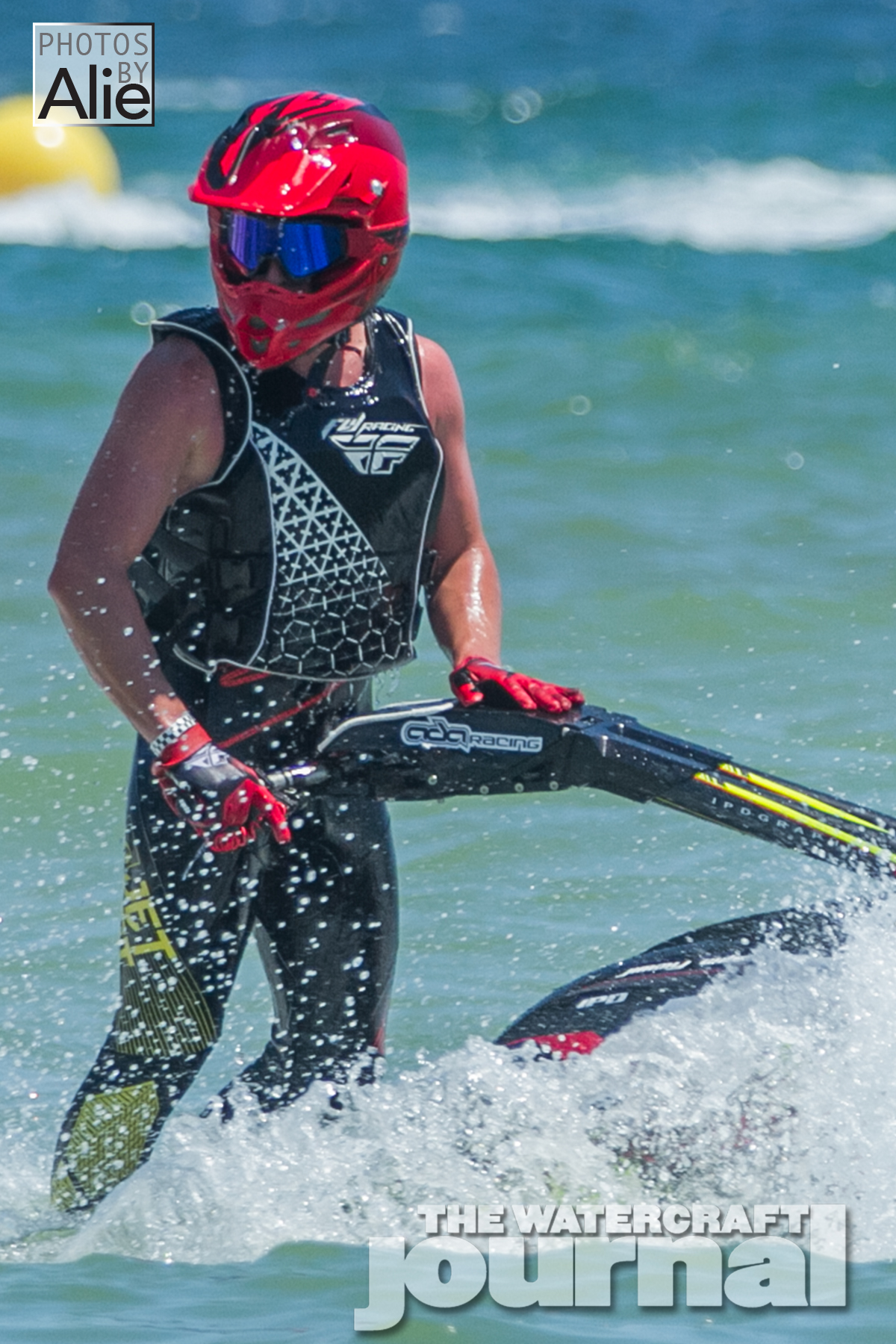
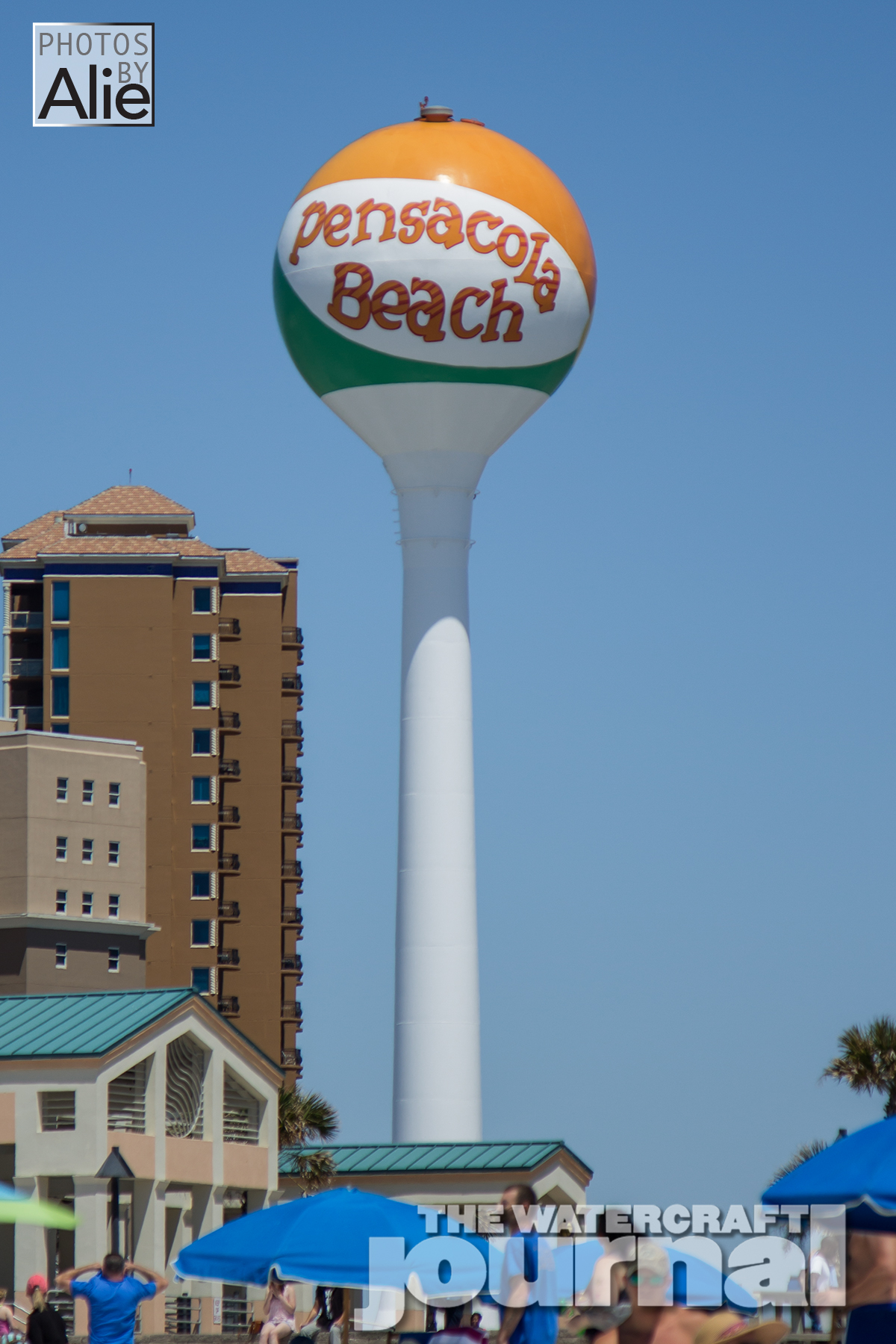
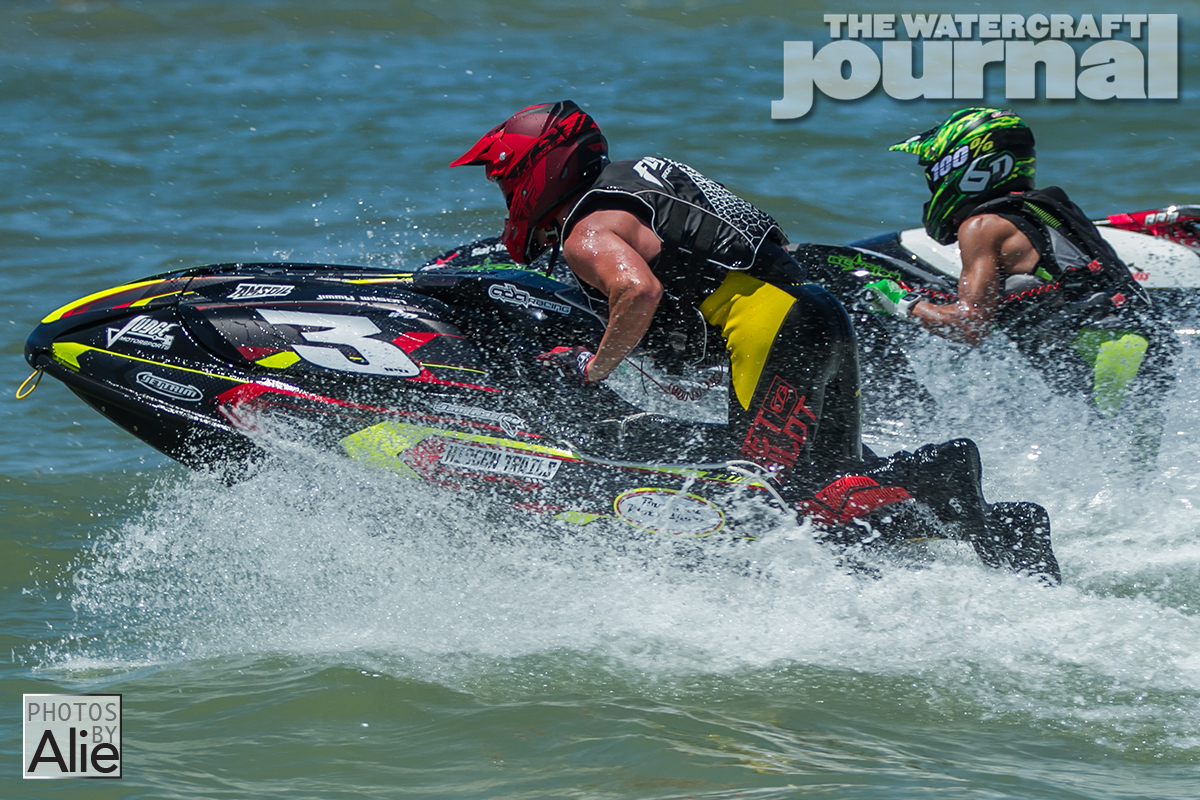
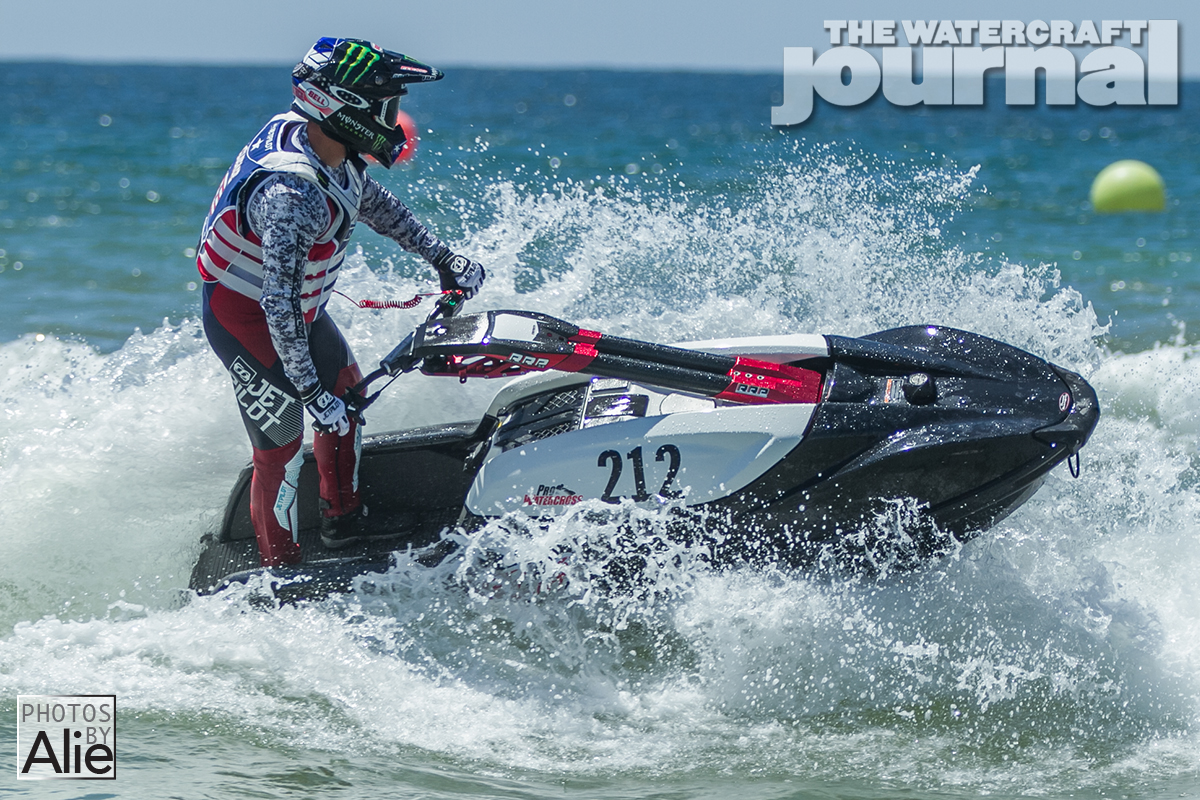
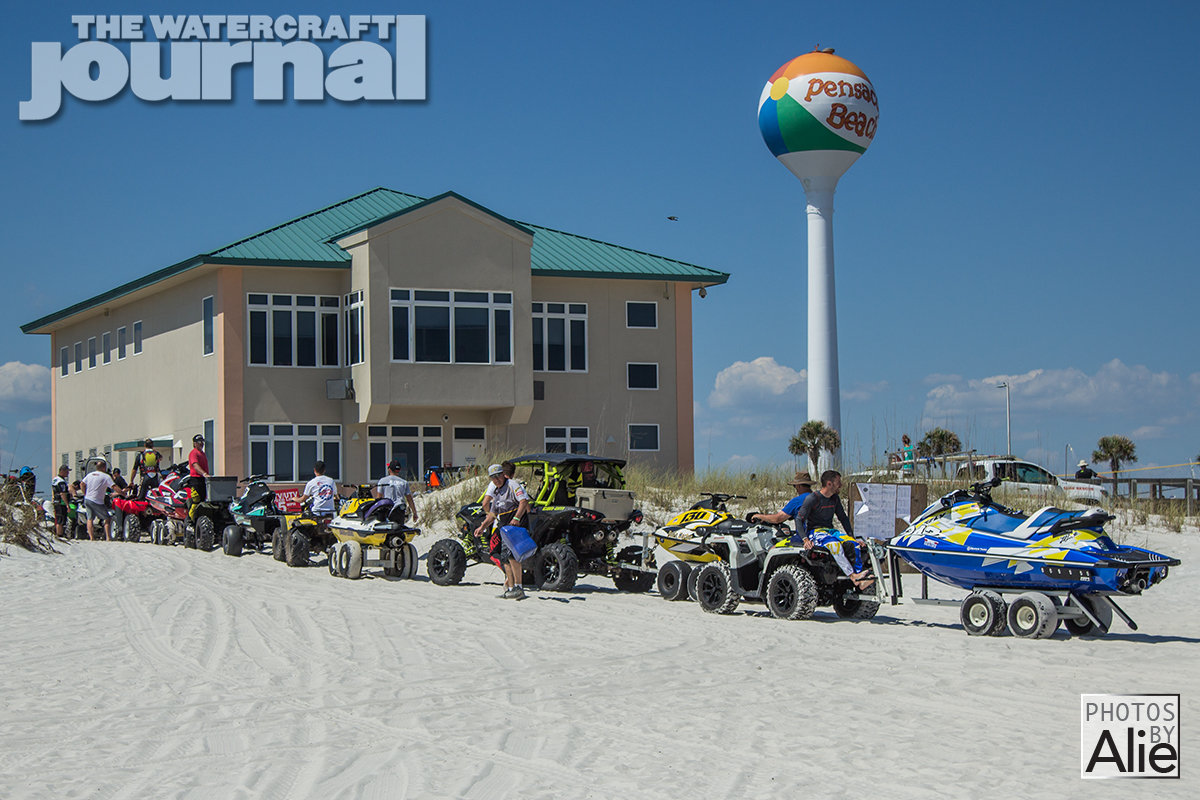
There is no better place to kick off the Heyday Pro Watercross National Tour than the beautiful snow-white beaches of Pensacola Beach, Florida. Though the surf was not as big as we have seen in years past, the 20-miles-per hour gusts was more than enough to churn up some gnarly waves to challenge even the most experienced riders. The sunny Florida weather always seems to attract the largest number of competitors and spectators alike.
Before we get started with the recap, we have to acknowledge what a wonderful job AJ Handler and the Pro Watercross team has done with evolving the National Tour to what it is today. Not only have they set the level for professional competition in the United States, but also continue to raise the bar higher each and every year.
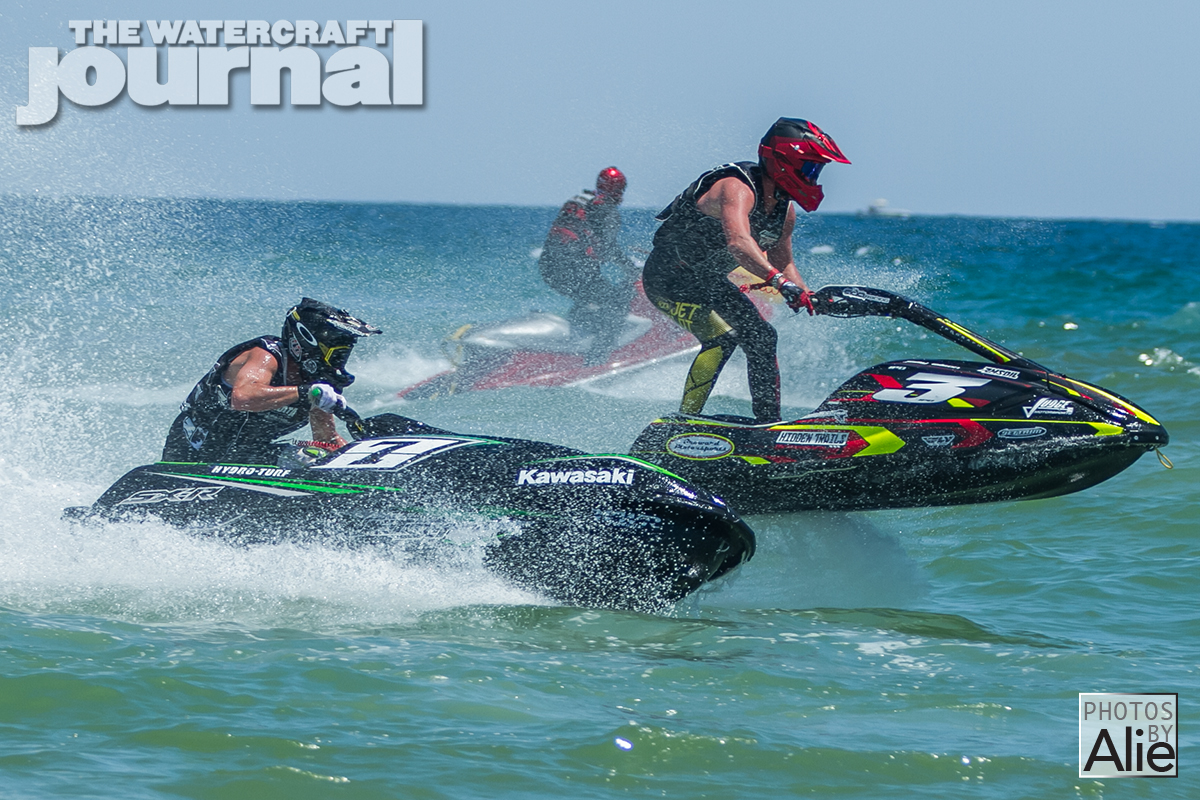
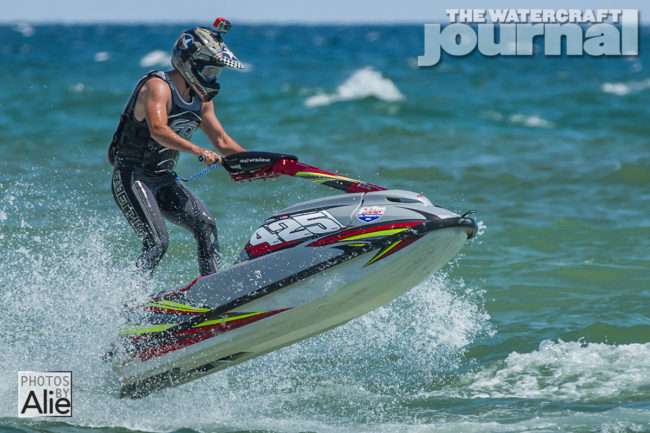
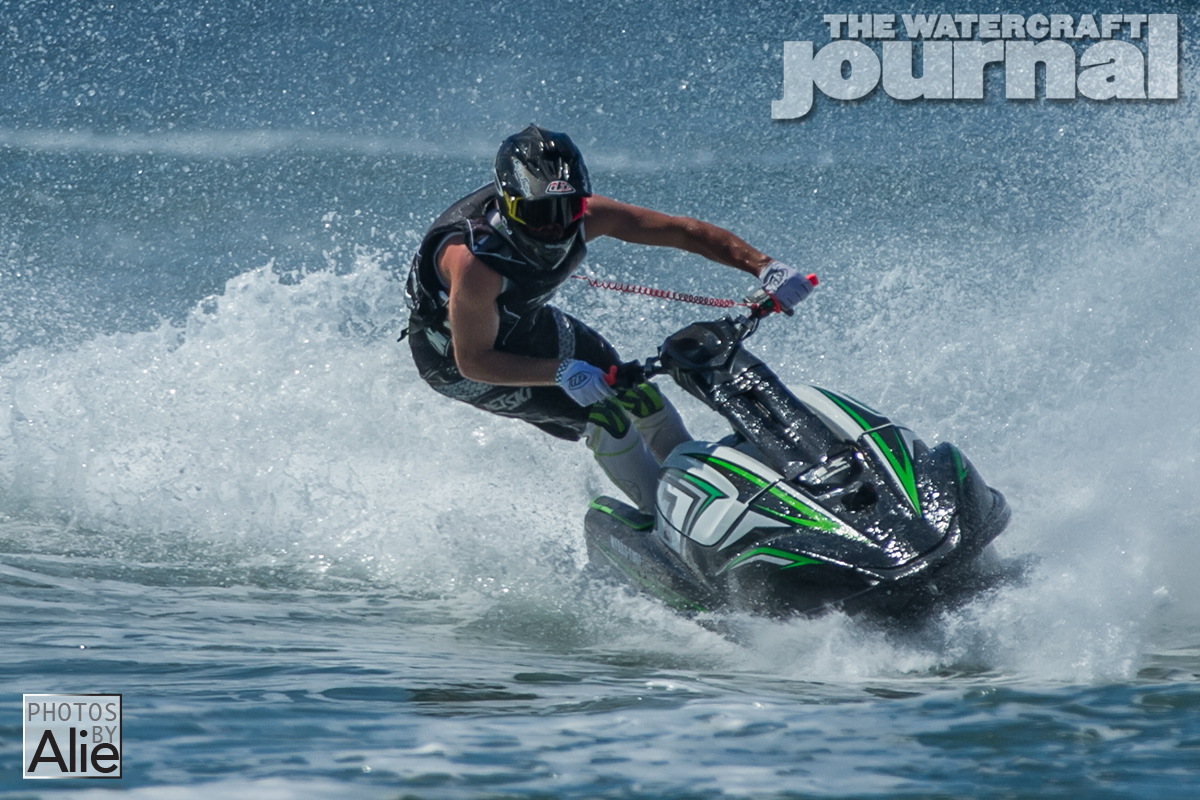
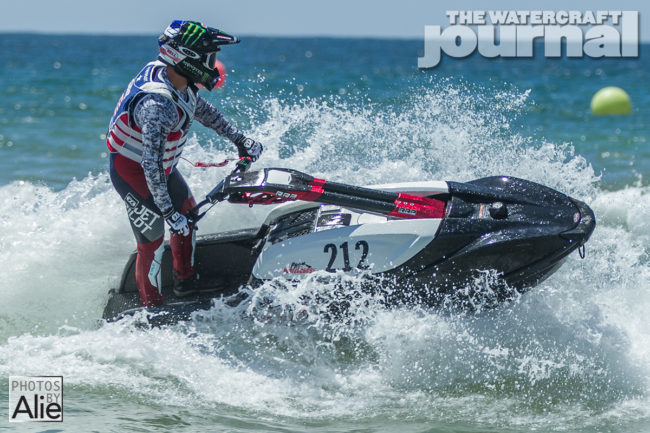
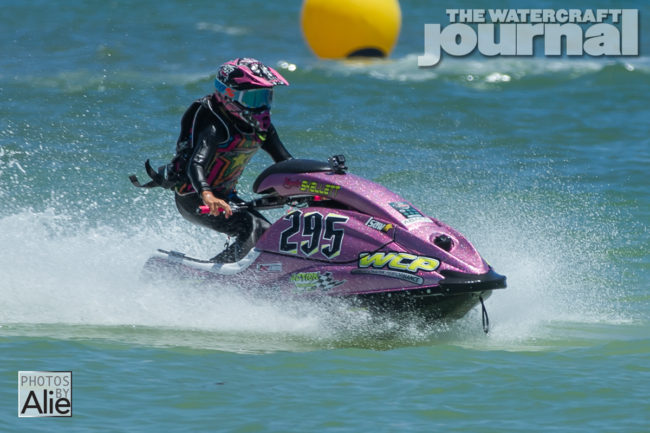
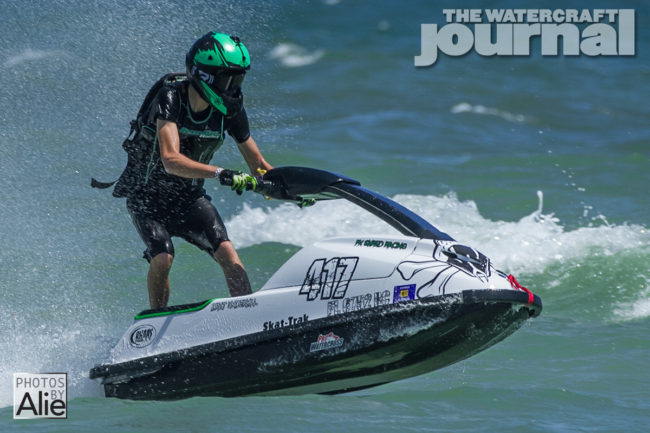
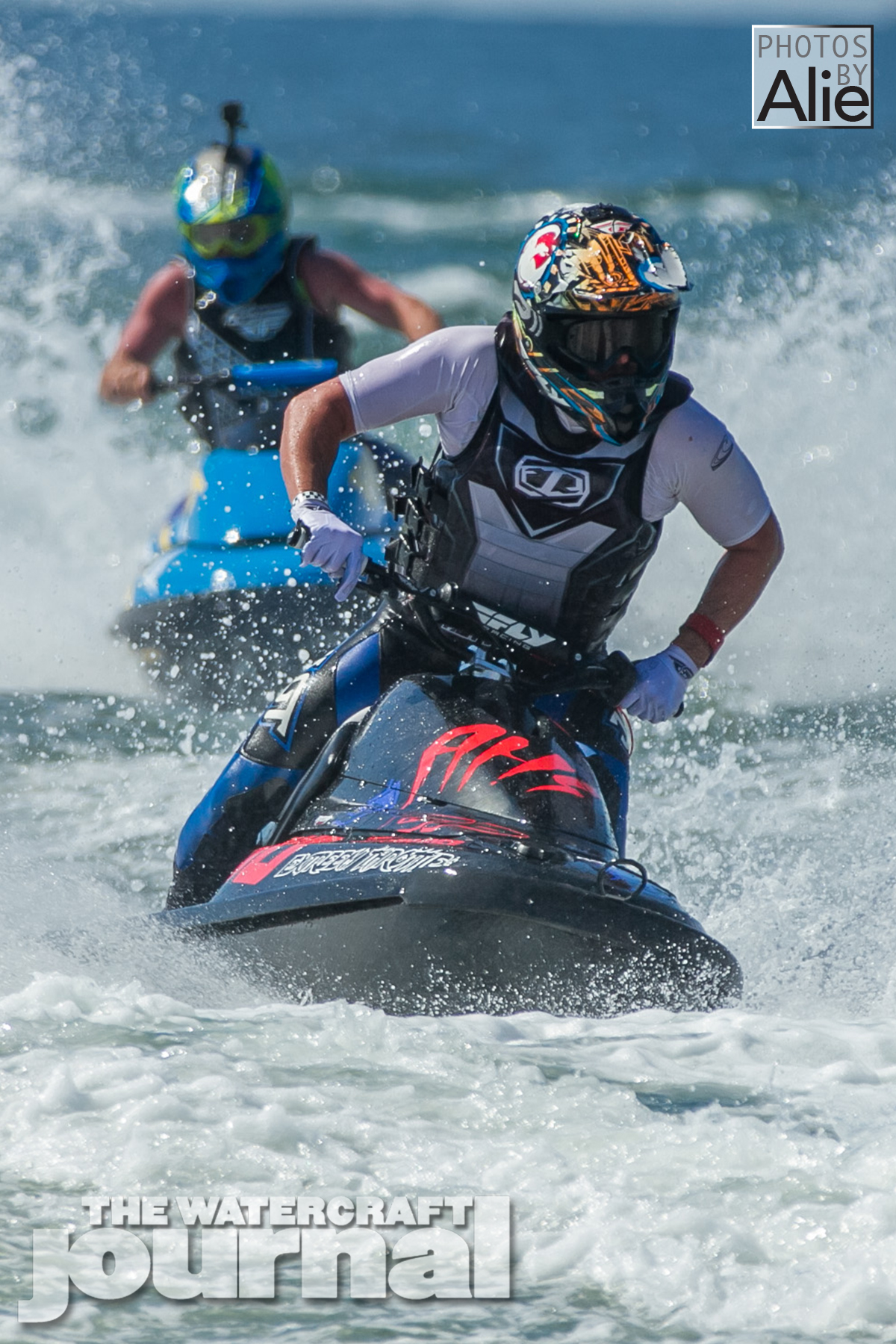
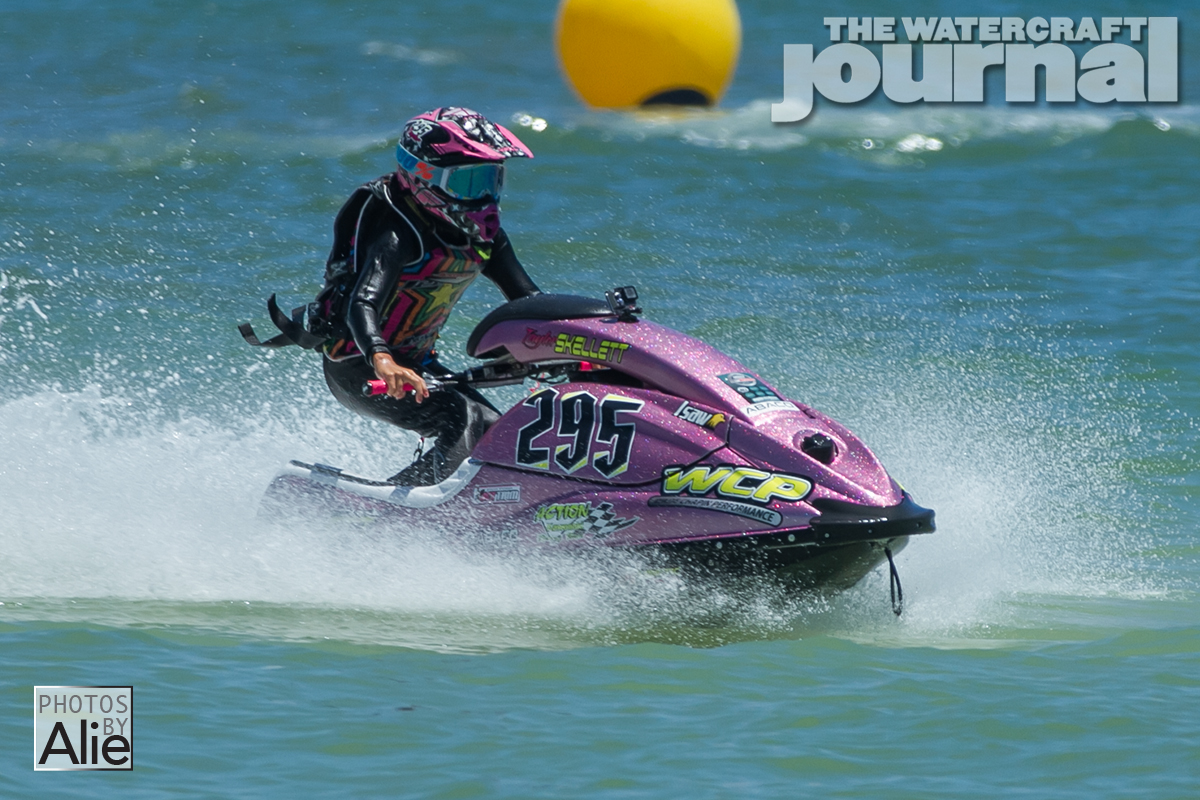
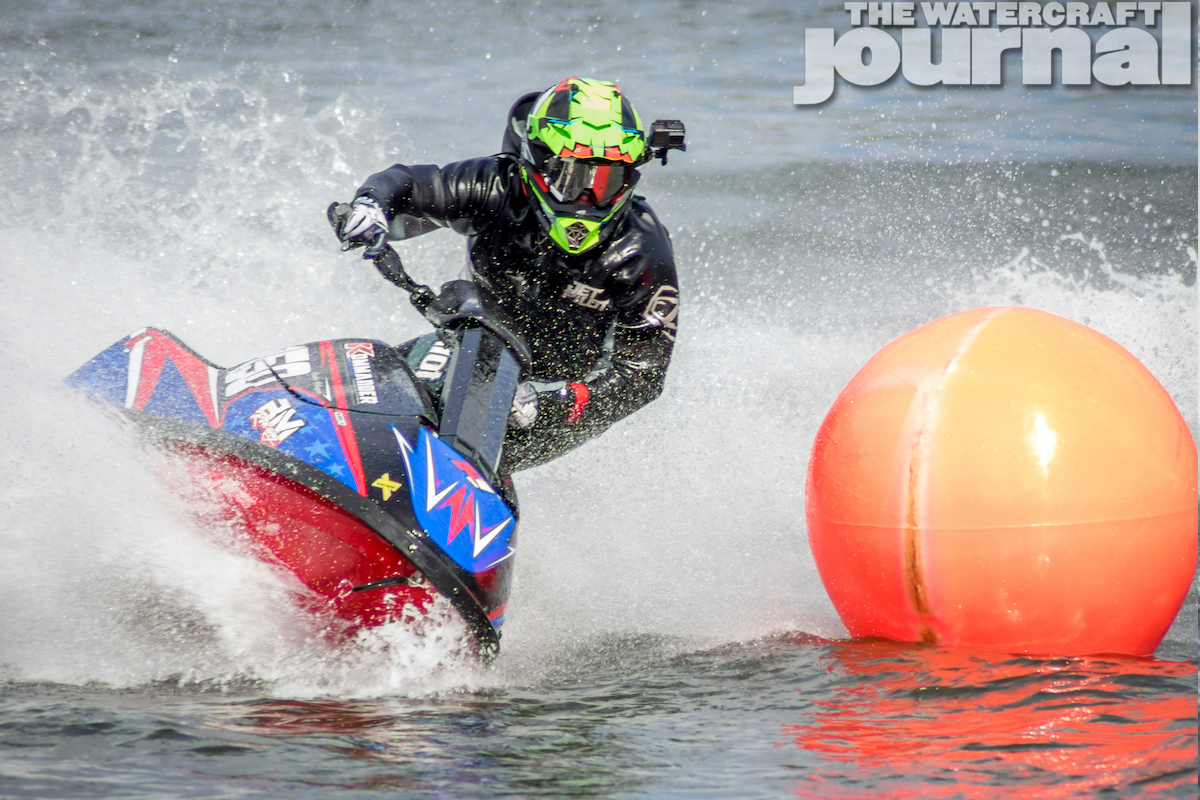
After opening ceremonies had commenced, the racing weekend kicked off with Pro-Am Ski GP. An interesting addition to this year’s Ski GP class was the introduction of the new Kawasaki SX-R. It did not take long for Chris MacClugage to get used to the new craft as he captured the moto 1 holeshot with Jimmy Wilson and Franco Tobler in tow. MacCluggage’s lead would eventually come to an end as he would retire with a fuel issue. Jimmy Wilson would go on to win moto 1 with Franco Tobler in second and Broc Harris finishing up third.
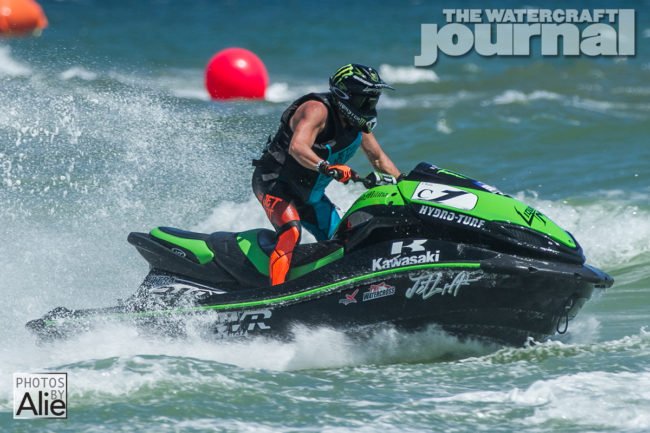
Moto 2 started with drama for Jimmy Wilson, as he lost his hood on the way to the first buoy. Franco Tobler captured his first Pro Watercross holeshot aboard his Team Mean Racing built Trinity. As the surf grew bigger, Tobler would eventually be hunted down by Factory Kawasaki’s Craig Warner on the new SX-R. It was not long until Chris MacClugage would also pass Tobler to slide into second place. Moto 2 finished with Warner on the top step, MacClugage in second, and Tobler hanging on to third place.
Moto 3 started with Warner grabbing the holeshot, but Jimmy Wilson was latched on right behind him. Wilson stayed on Warner for the entire race, relying on his amazing natural surf riding talent to outweigh the advantages the new SX-R had in the surf. Eventually, Warner bobbled on the front straight and Wilson capitalized on this opportunity. Wilson continued to lead until the checkered flag and capture the Pro Ski GP overall for the weekend. Warner came out with a second overall, followed by Broc Harris in third.
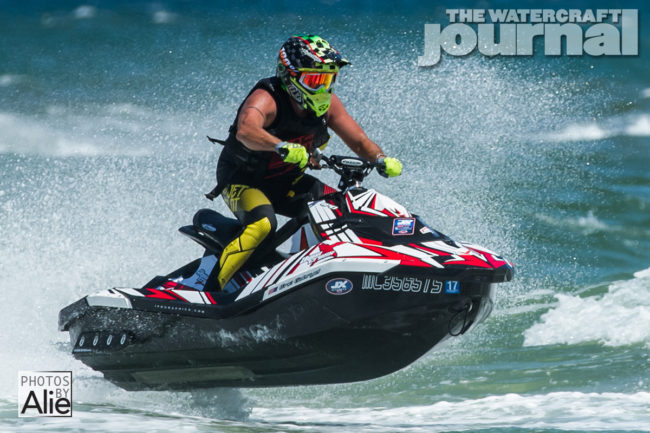
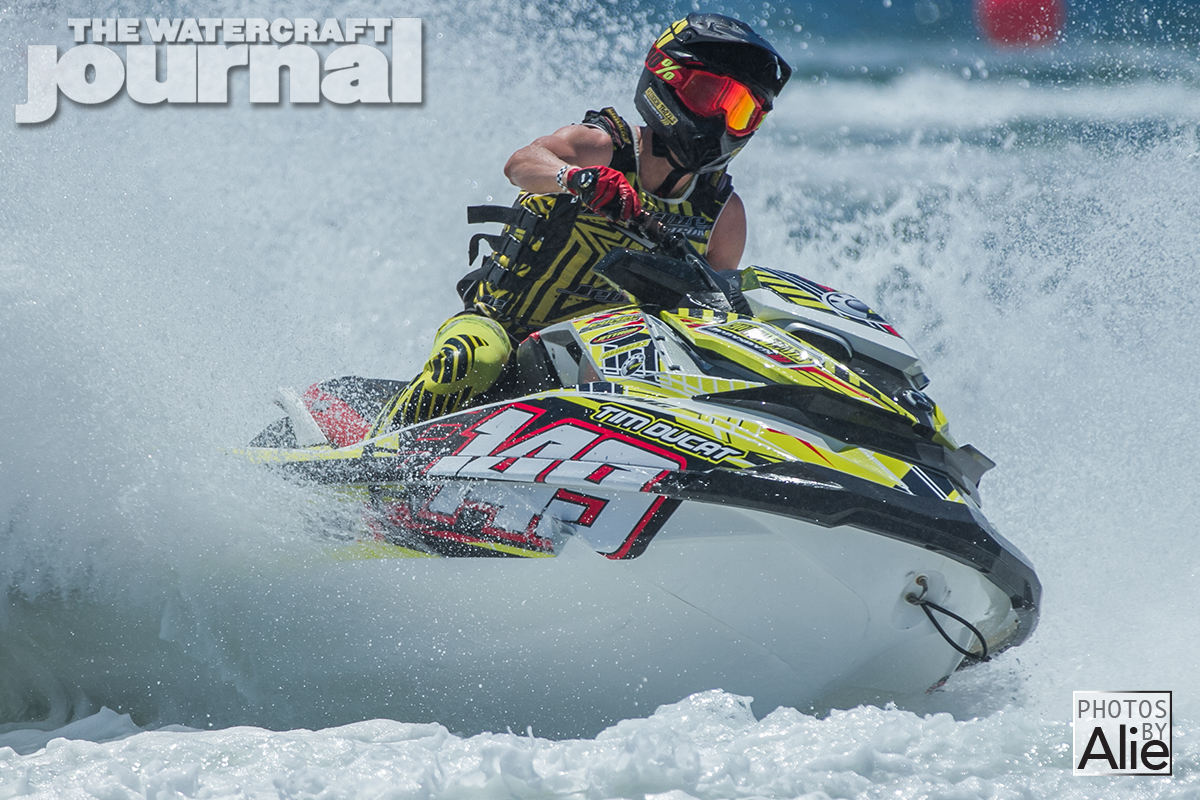
Next up were the fastest runabouts on water, Pro-Am Runabout GP. Jason Russo took the Moto 1 holeshot and ran with it all the way to the checkered flag, but Sea-Doo’s Erminio Iontosca was right on his back door ready to capitalize on any mistake. Tim Ducat would round out the top three of Moto 1. Iontosca went on to an uncontested victory in Moto 2 with Claude Clayton and Jeff Dyckowski rounding out the top three. Moto 3 saw Jason Russo back up top with an early lead, but Iontosca was on a mission to gain the lead. Trey Frame eventually passed up to third and joined the fight with the top two. Erminio Iontosca came out to be the Pro-Am Runabout GP overall champion for the weekend, followed by Claude Clayton in second, and Tim Ducat in third.
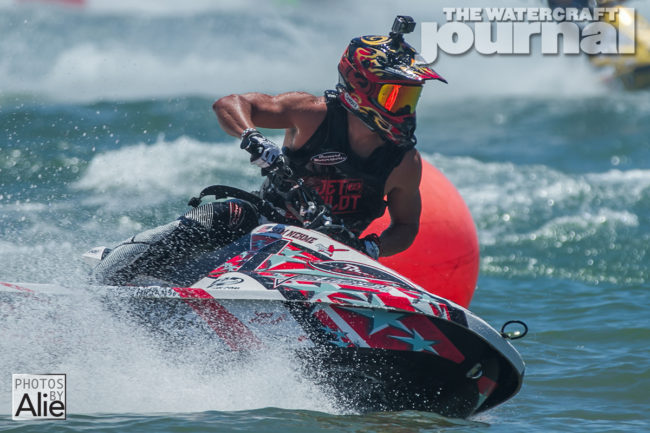
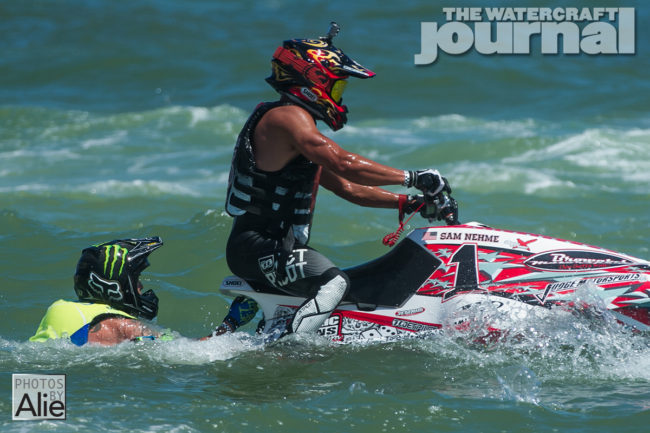
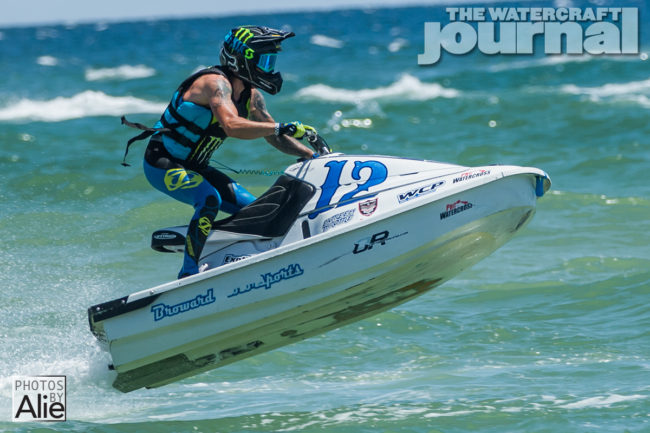
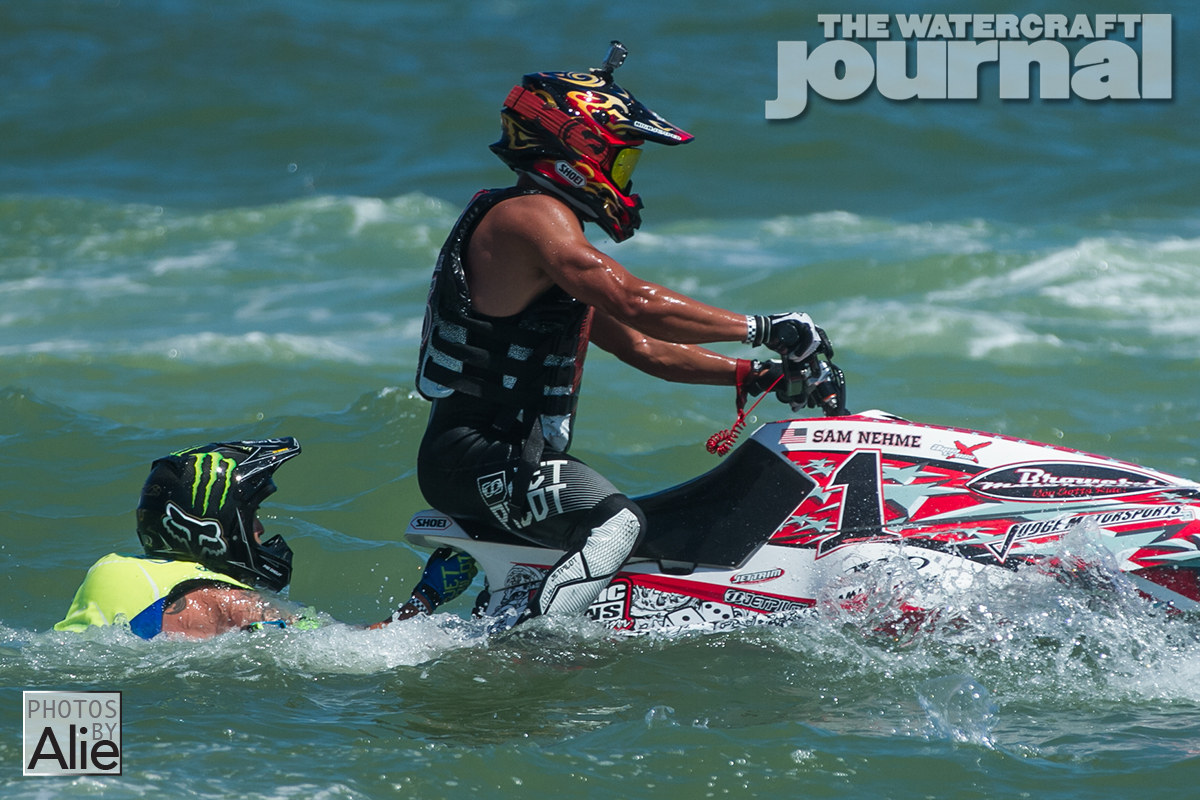
The Sport classes continued to completely stack the gates full of competitors. The Sport Stock class was forced to run two heats on Saturday and two motos on Sunday. Eric Gabryel won Heat 1 and Gary Hopkins would win Heat 2 with a wounded boat, but it was Jeff Mcphail that would take the overall with a 1 – 1 in both motos. Sport GP was packed full of action across all three motos. The front straight in Moto 1 seemed to cause some trouble for many riders in the pack, but this was not the case for Billy Dearman and Broward Motorsport’s Sam Nehme.
Nehme made Dearman work for it the entire moto and finished only a few boat lengths behind. Jules Hopkins rounded out the top three for Moto 1. In typical fashion, Sam proved why he is the National Champion and led the entirety of Moto 2 from start to finish with no one to challenge him. This would change in Moto 3, as Johnny Smith pulled the holeshot and battled it out with Nehme until Nehme missed a buoy. Smith led most of the race until a mistake caused him to eject from his ski, giving Nehme the overall for the weekend.
Pro-Am Ski Stock saw plenty of new faces, but the whole weekend turned out to be a MacClugage vs. Wilson showdown. These two battled it out through every single moto, but it was Jimmy Wilson who came out on top with a 2 – 1 – 1 to give him the overall. MacClugage came second on the podium and Matthew Richuk would round out the podium in third.
Sea-doo had to be pleased with Erminio Iantosca’s performance in the Pro-Am Runabout Box Stock class aboard his RXP-X 300. It was a flawless weekend for Iantosca as he went wire to wire in all three motos to capture first overall. Troy Snyder finished up second overall for the weekend, and Jason Russo would end up with third overall.
We are sure we speak for the whole jet ski community in saying that our hearts are with Tim Ducat. Tim was severely injured in Moto 3 of the Pro-Am Runabout Box Stock class and suffered many internal injuries. If you have not already, please go visit his GoFundMe page and consider making a donation. We wish you a speedy recovery, Tim!
The 2017 Heyday Pro Watercross National Tour opener was definitely one to remember, and we cannot wait to see what the rest of this year has in store for us. We will see you this weekend at the beautiful emerald waters of Panama City Beach, Florida!
The Western Canadian Watercross Association (WCWA) has just released the full schedule for their summer 2017 events and we are pleased to share them with our readers. From what we can see, this is shaping up to be quite a summer for PWC events around the world. For PWC enthusiasts in Western Canada, these events listed below are must go events if you love everything PWC! The WCWA is the westernmost IJSBA (International Jet Sports Boating Association) Sanctioned Affiliate in Canada.
Rounds 1 and 2 take place on the weekend of June 10th and 11th at Golden Sheaf Campground on beautiful Rattlesnake Lake, Alberta. If you don’t know where Rattlesnake Lake is; it’s about 30 minutes west of Medicine Hat and 3 hours southeast of Calgary.
After that, Rounds 3 and 4 head over east a province to Blackstrap Lake at Blackstrap Provincial Park in Blackstrap, Saskatchewan. These events will take place on the weekend of June 24th and 25th. Blackstrap Lake is about 35 minutes from Saskatoon.
Once those are done, the next dates are tentative. From there, rounds 5 and 6 head north slightly and take part in the “Taste of Saskatchewan” Festival on the South Saskatchewan River in the heart of Saskatoon. These will happen on July 15th and 16th.
There is a small break in the schedule before we head back into the province of Alberta to gorgeous Crane Lake in Bonnyville for the final events; rounds 7 and 8. These will take place on the weekend of September 2nd and 3rd. Crane Lake is about 3 hours northeast of Edmonton, Alberta.
Western Canadian Watercross Association has events planned for:
June 10th & 11th – Golden Sheaf Campground, Rattlesnake Lake, AB
June 24th & 25th – Blackstrap Lake, Blackstrap, SK
July 15th & July 16th – Taste of Saskatchewan, South Saskatchewan River, Saskatoon, SK
September 2nd & 3rd – Crane Lake, AB
The toughest lesson in life is learning (and accepting) that bad things can happen to good people. Unfortunately, such an instance struck not only a good man, but a loyal friend (and race coverage contributor) to The Watercraft Journal, and we’re saddened to announce that Sea-Doo racer Tim Ducat was seriously injured during the season opener for the Pro Watercross Tour in Pensacola, FL, on Sunday, May 7th.
Tim sustained serious impact to his chest that resulted in multiple internal injuries including several broken ribs, a torn aorta, lacerated liver and kidney. Paramedics on site rushed Tim into heart surgery where surgeons were able to insert in a stint before the aorta ruptured. Right now, Tim is fighting to keep his kidney and expected to be in the hospital for at least a week.
Sadly, as Tim was “in between insurance coverage,” he is in desperate need for financial assistance in covering his medical expenses. A GoFundMe account was created to helping cover Tim’s surmounting expenses as this degree of treatment isn’t cheap. Tim will have a long road ahead of him, and the generosity of the PWC racing community (and beyond) is being called upon to come together and help Tim out.
Tim’s energy is as abounding as his positivity making him one of the most liked racers on the field. He’s quick to lend a hand to others on the beach or in the pits, so as The Watercraft Journal has joined 60 other people (at the time of this writing) in donating to cover the estimated $75,000 needed to cover Tim’s medical expenses, we hope that all of you will pitch in what you can.
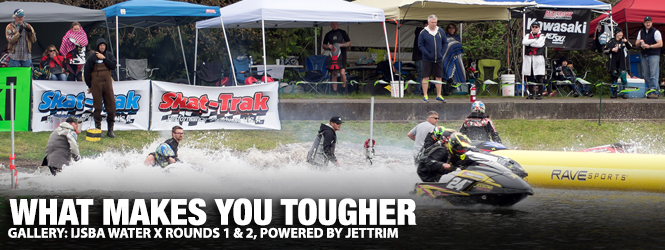
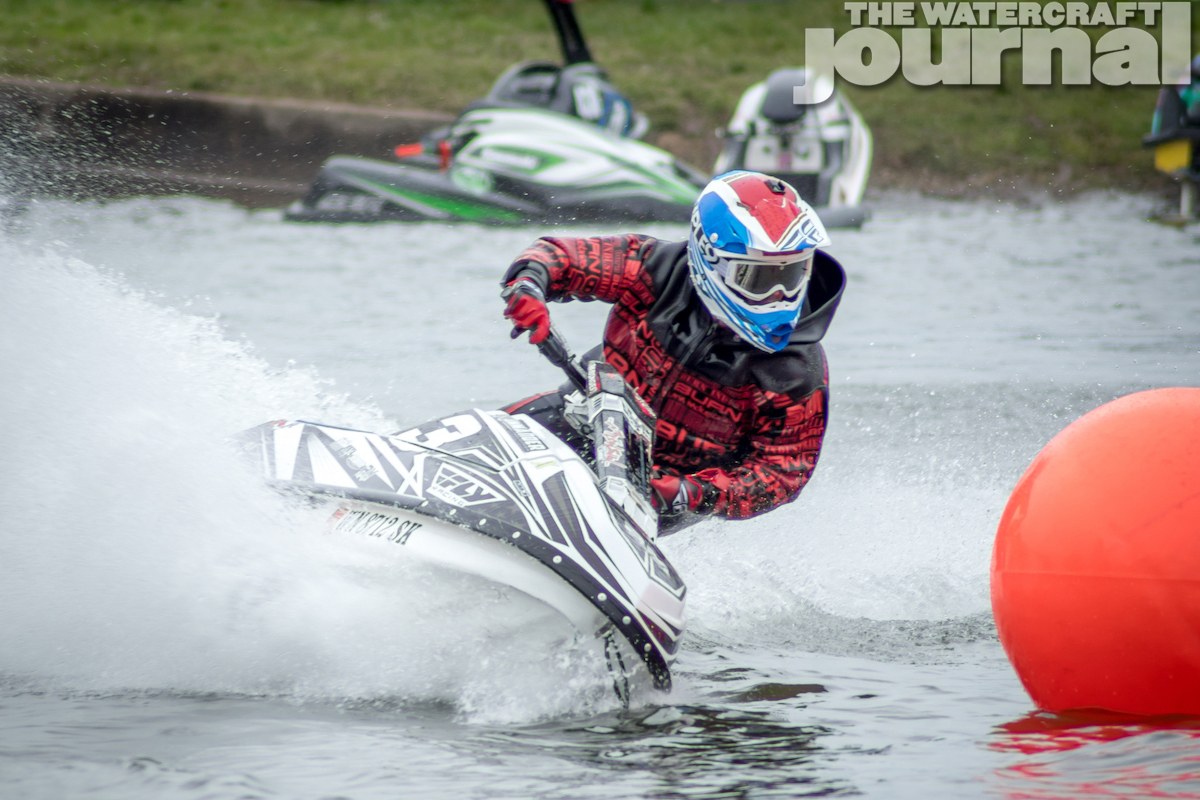
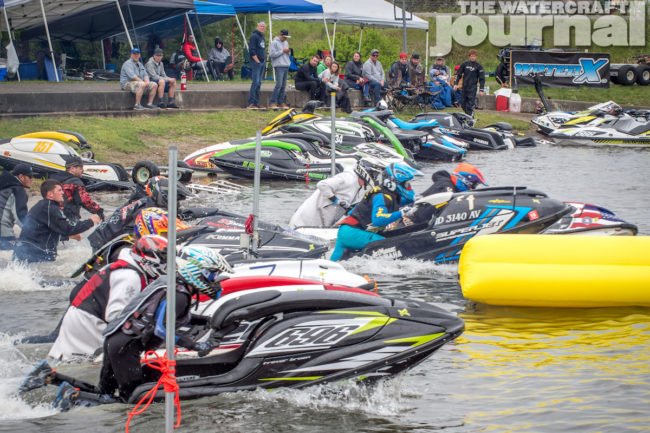
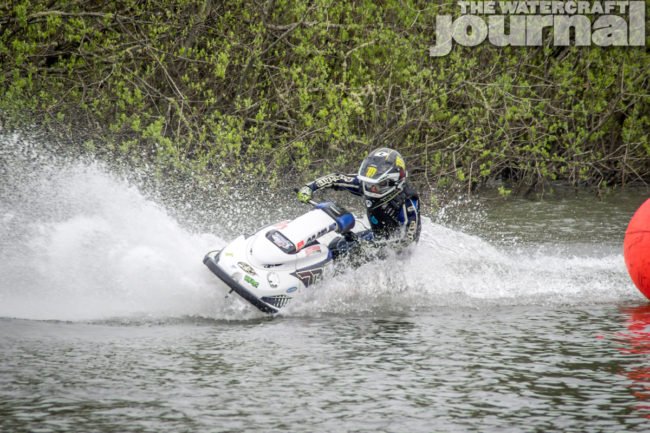
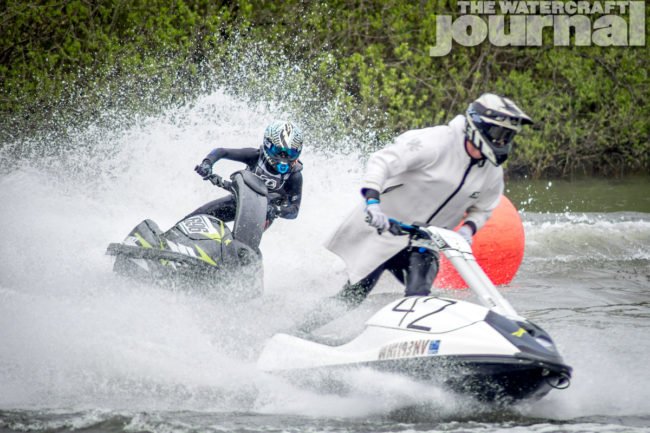
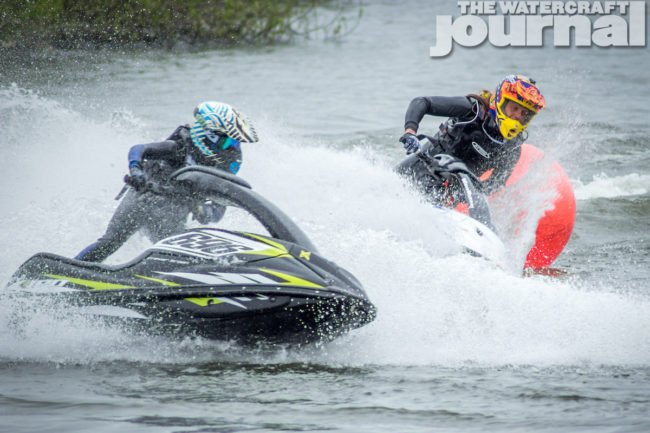
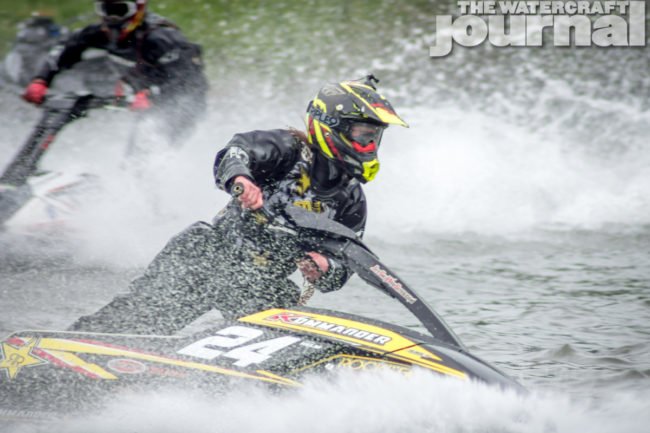
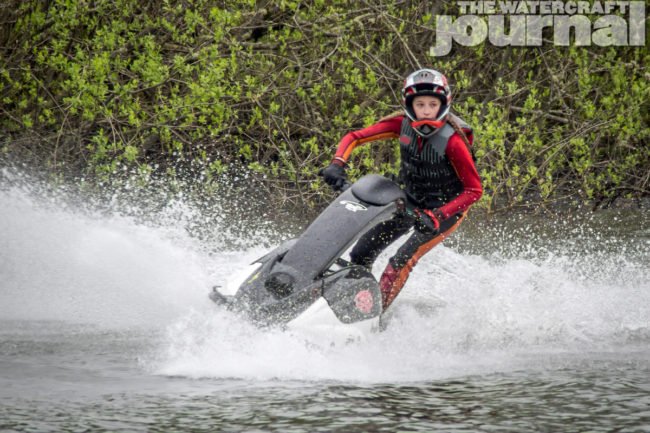
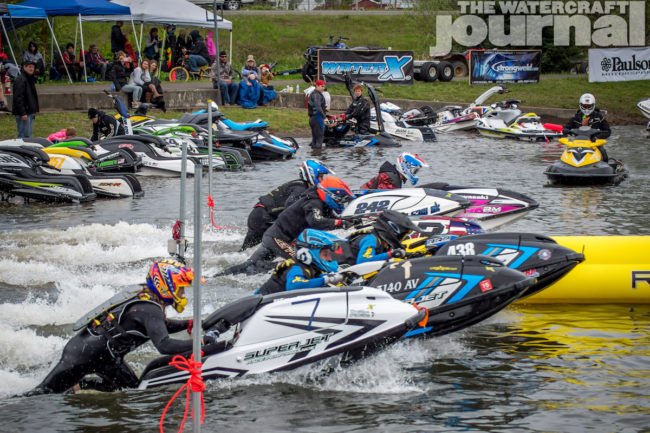
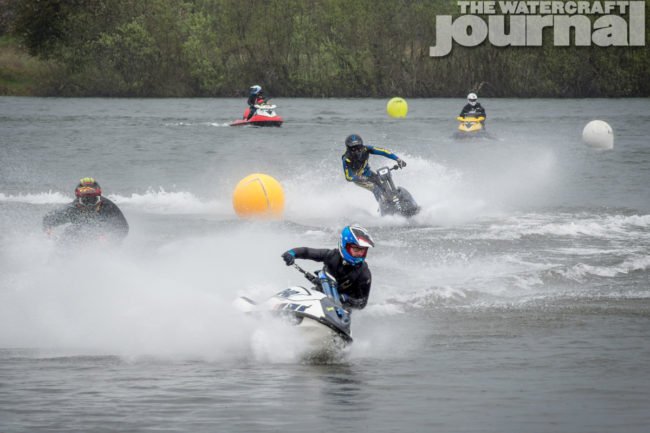
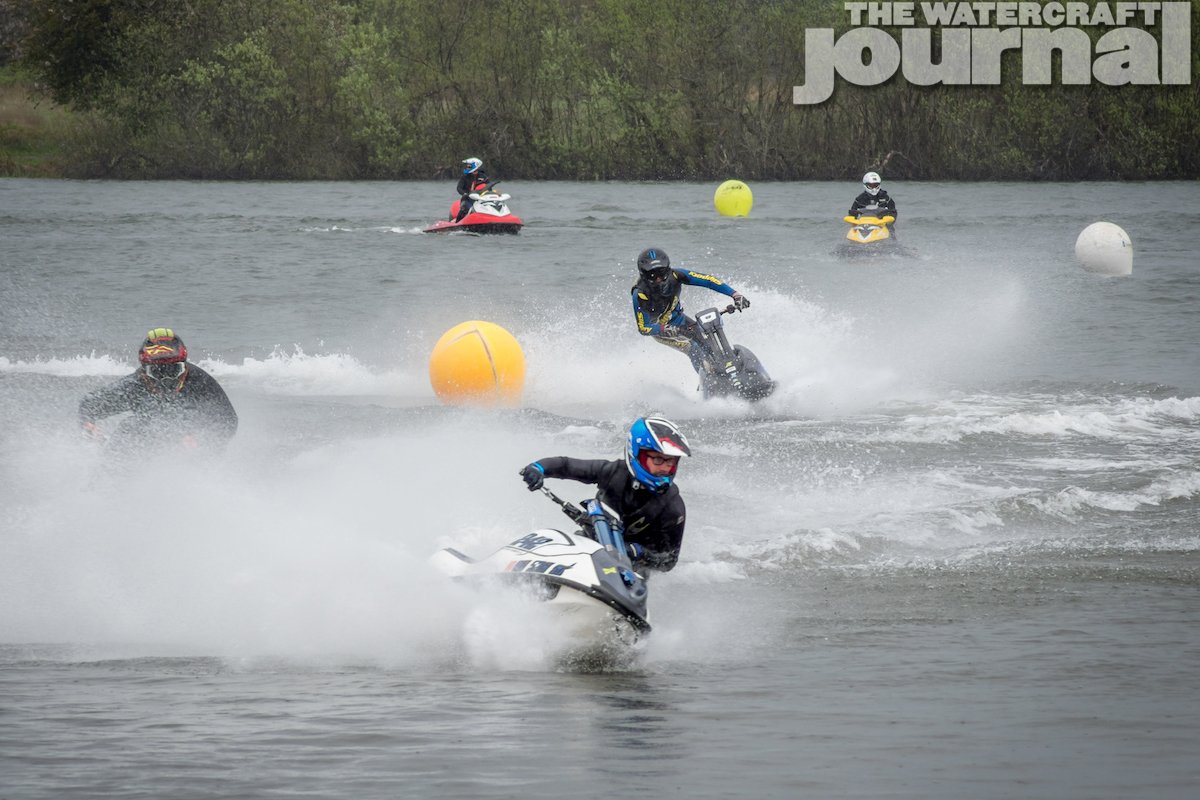
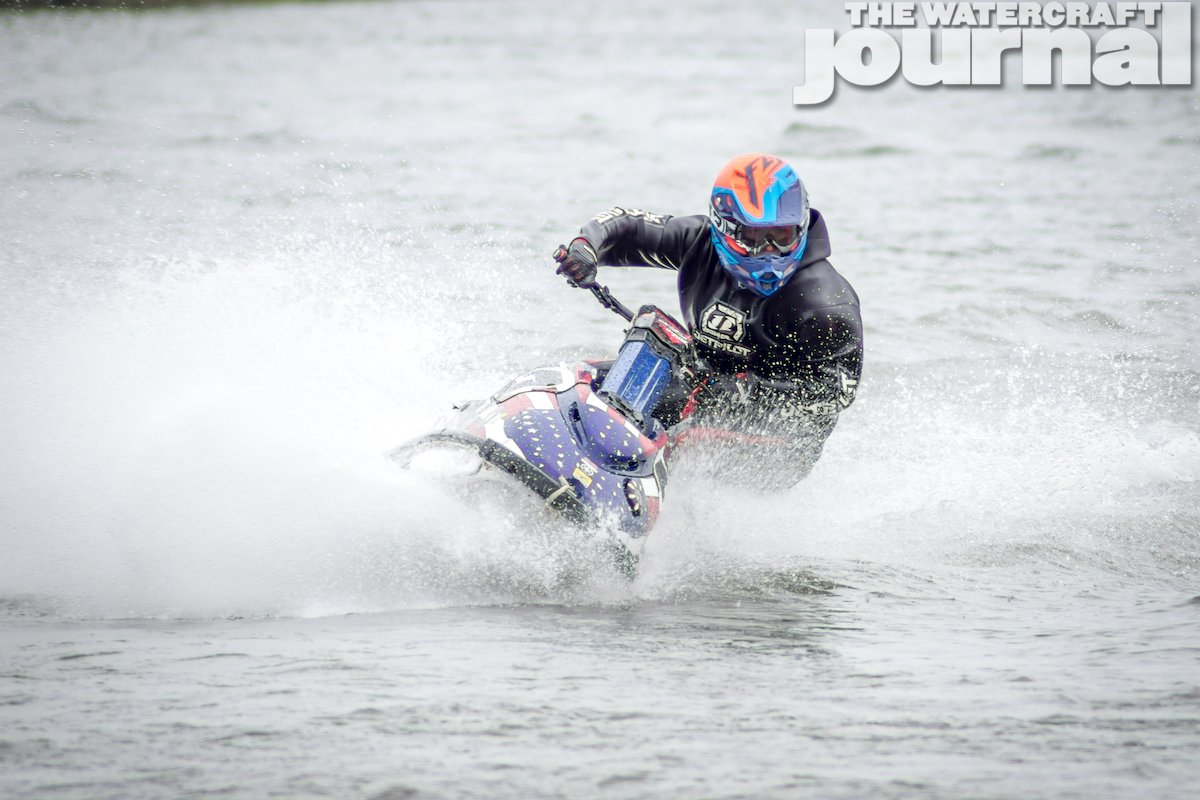
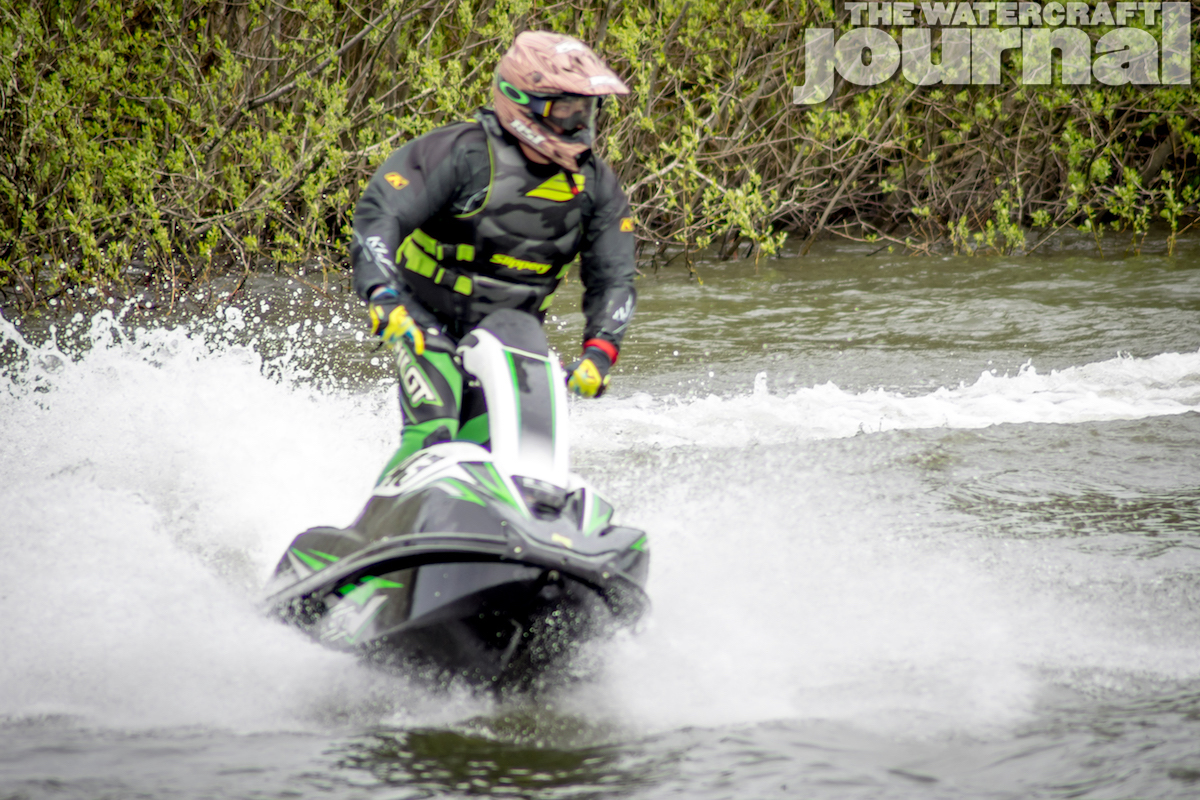
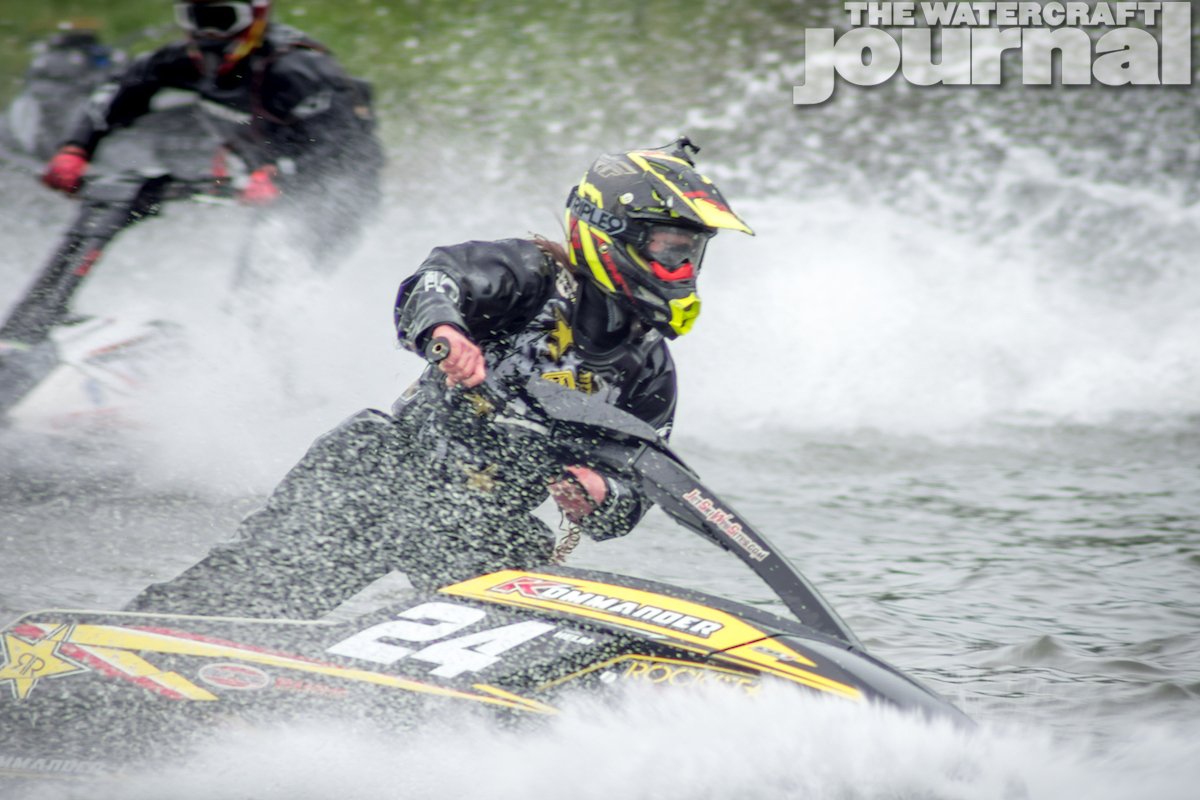
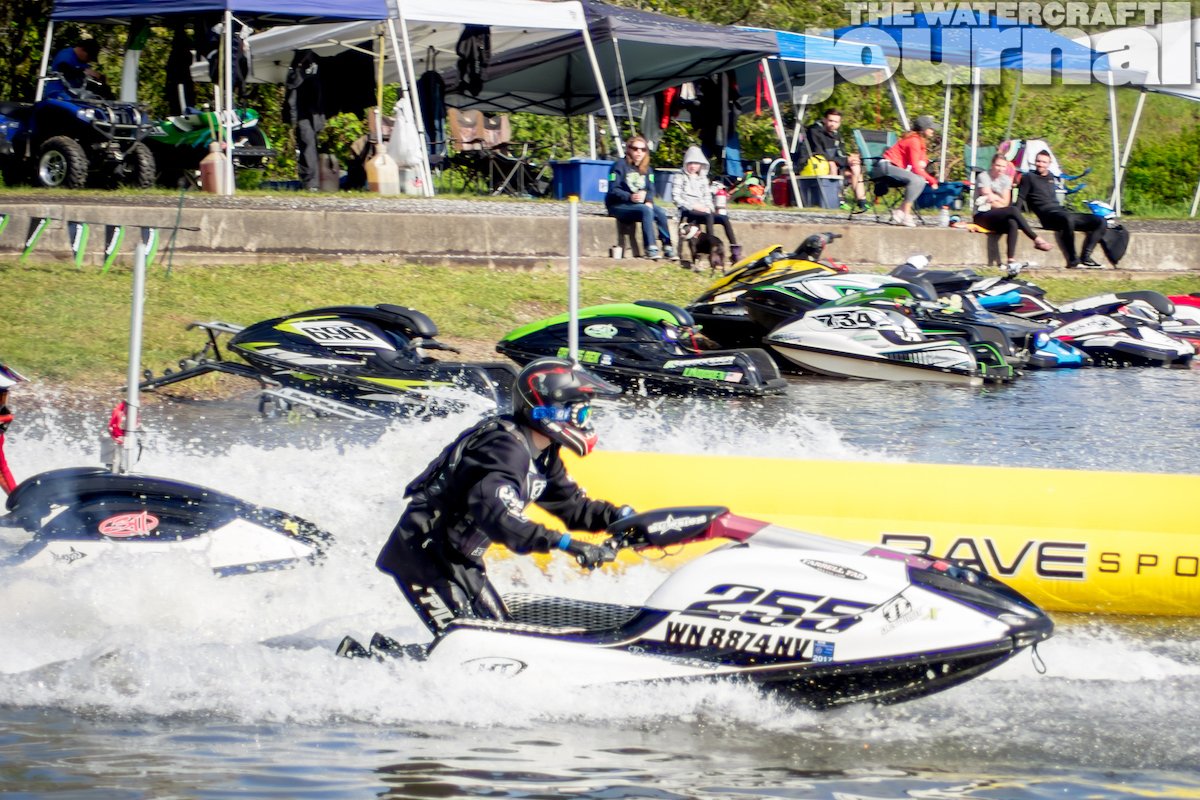
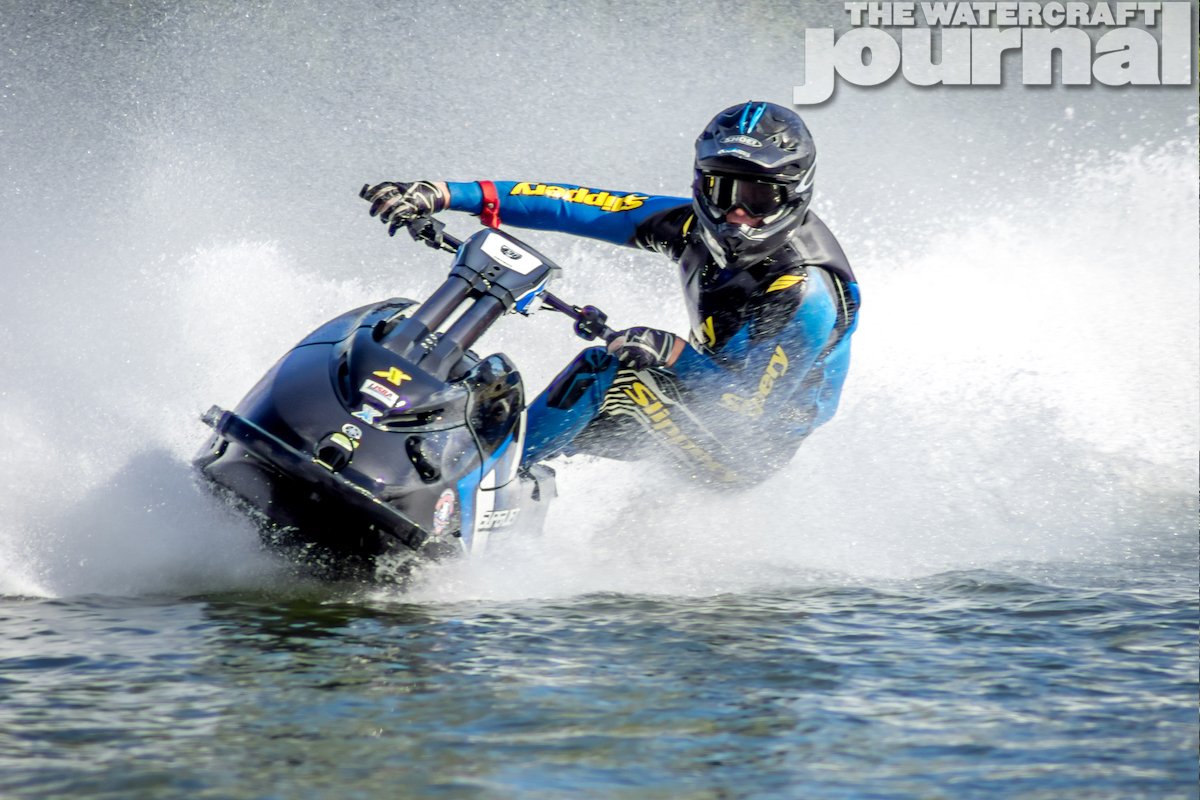
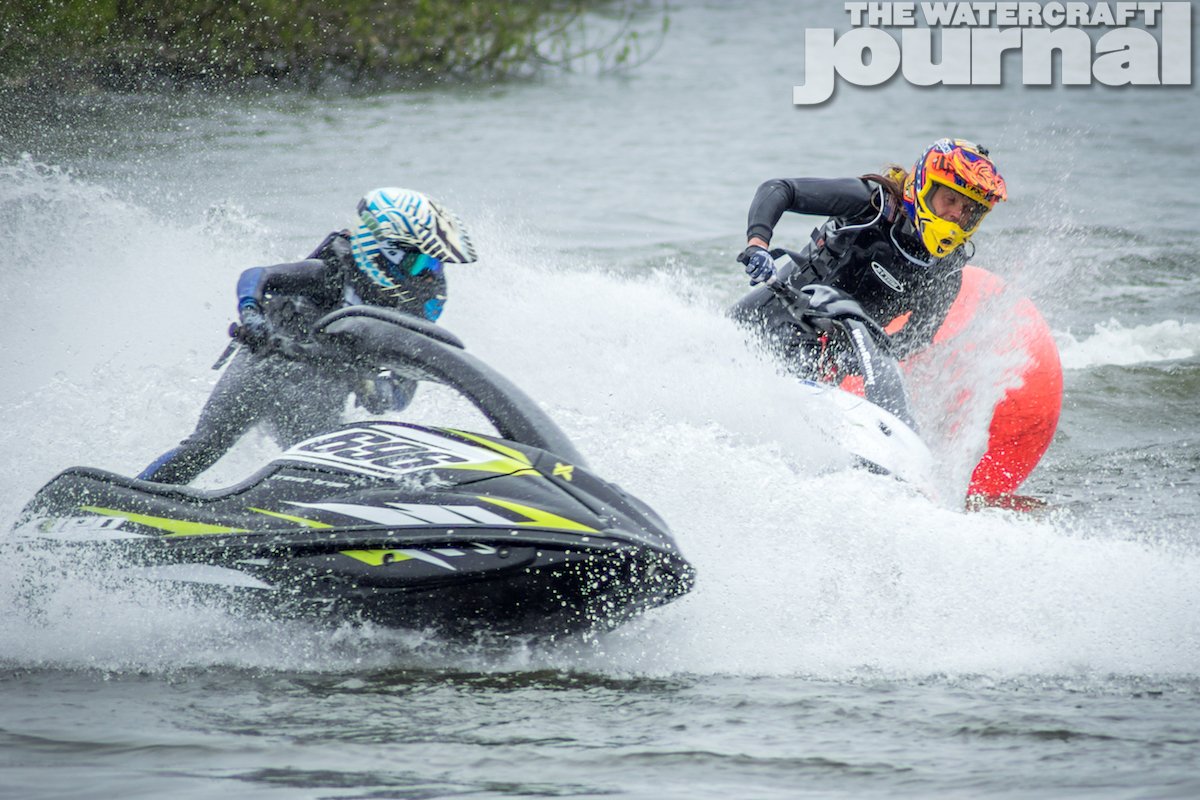
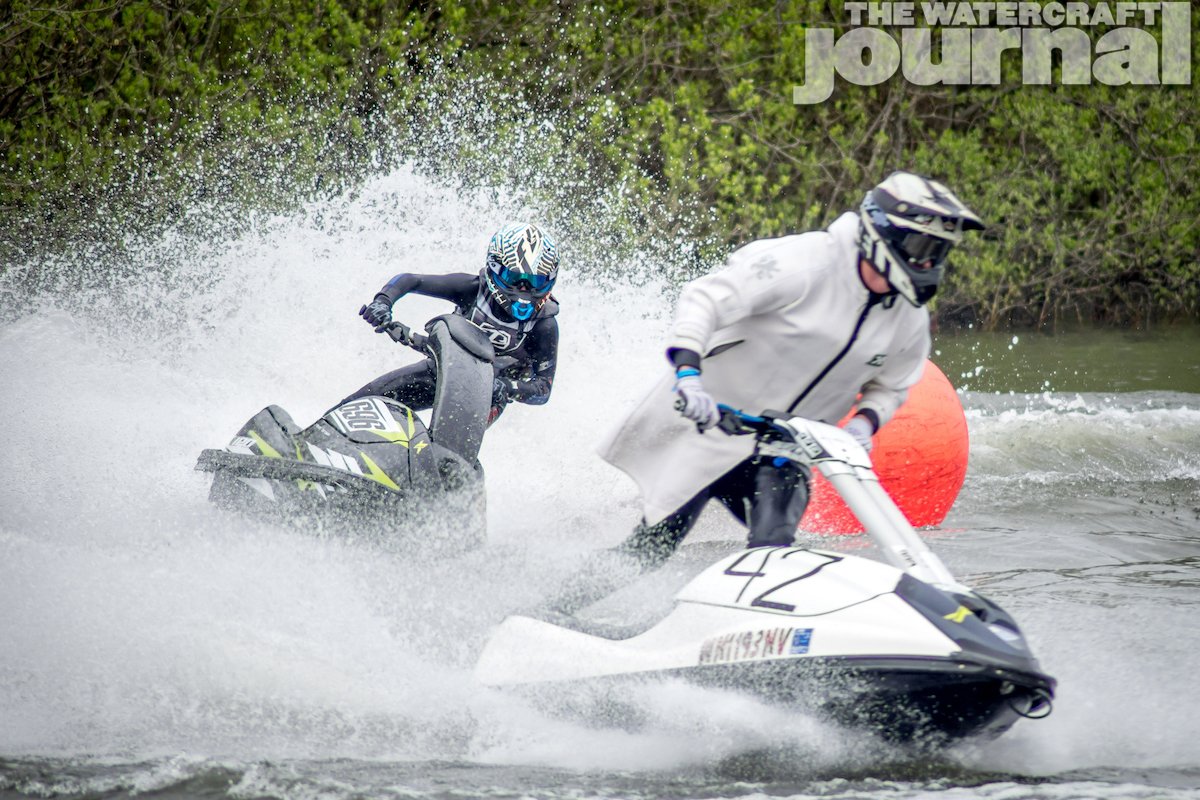
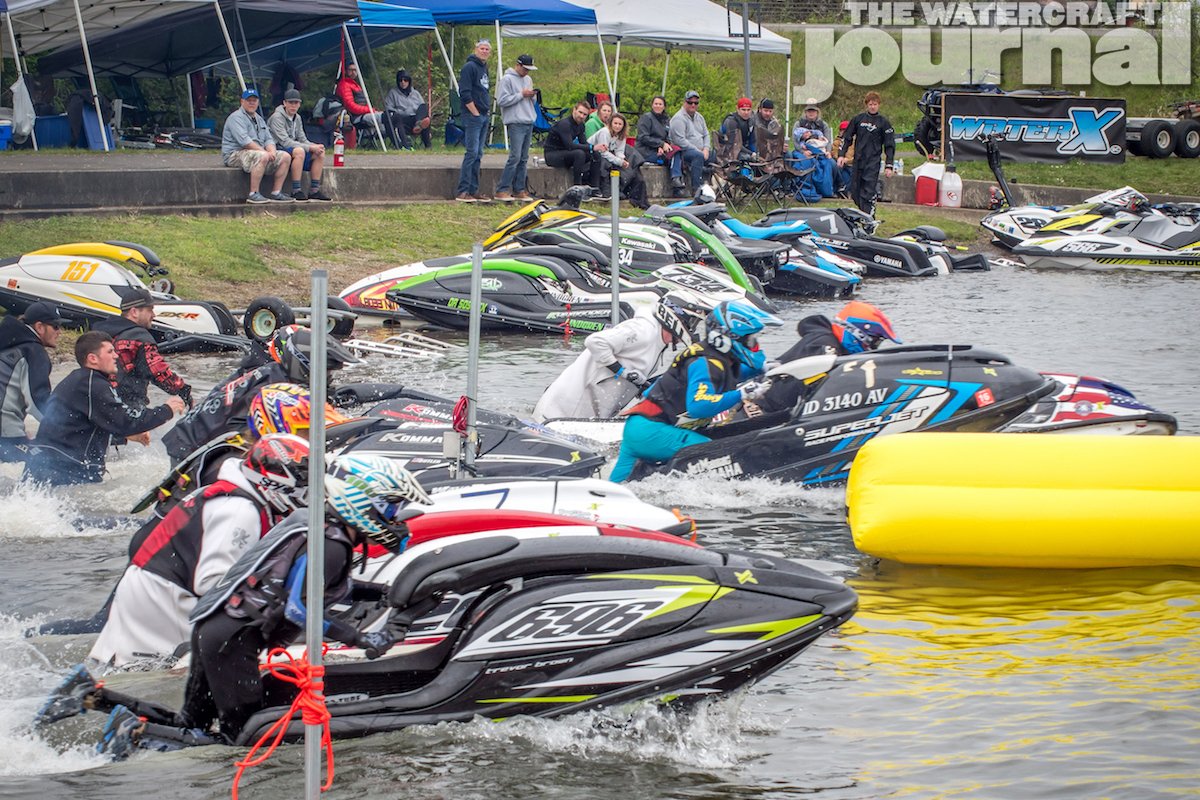
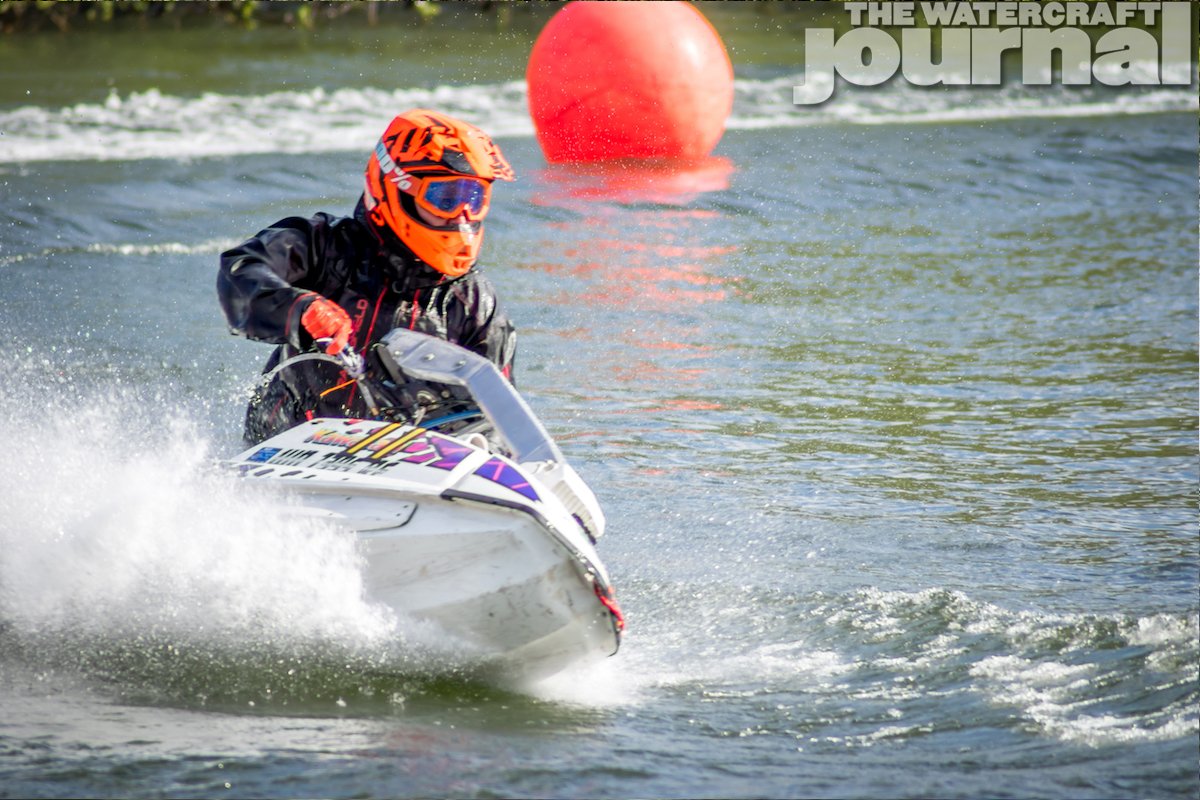
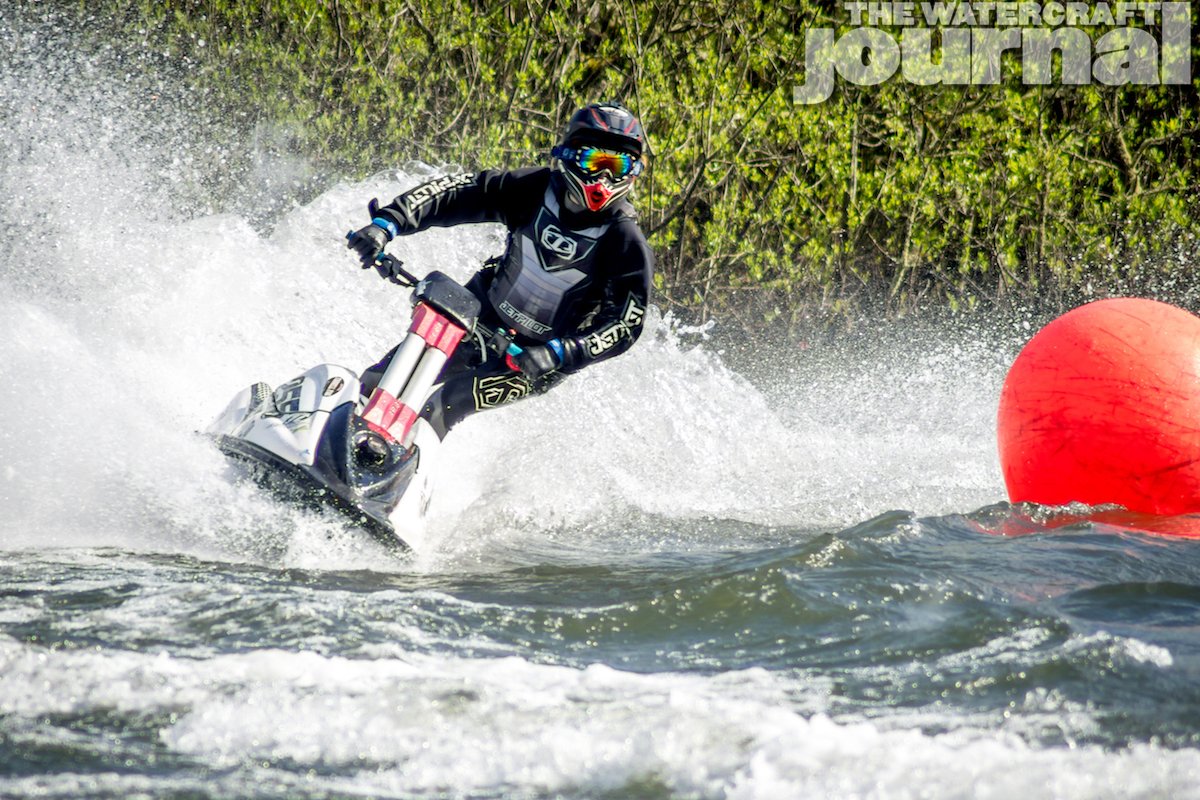
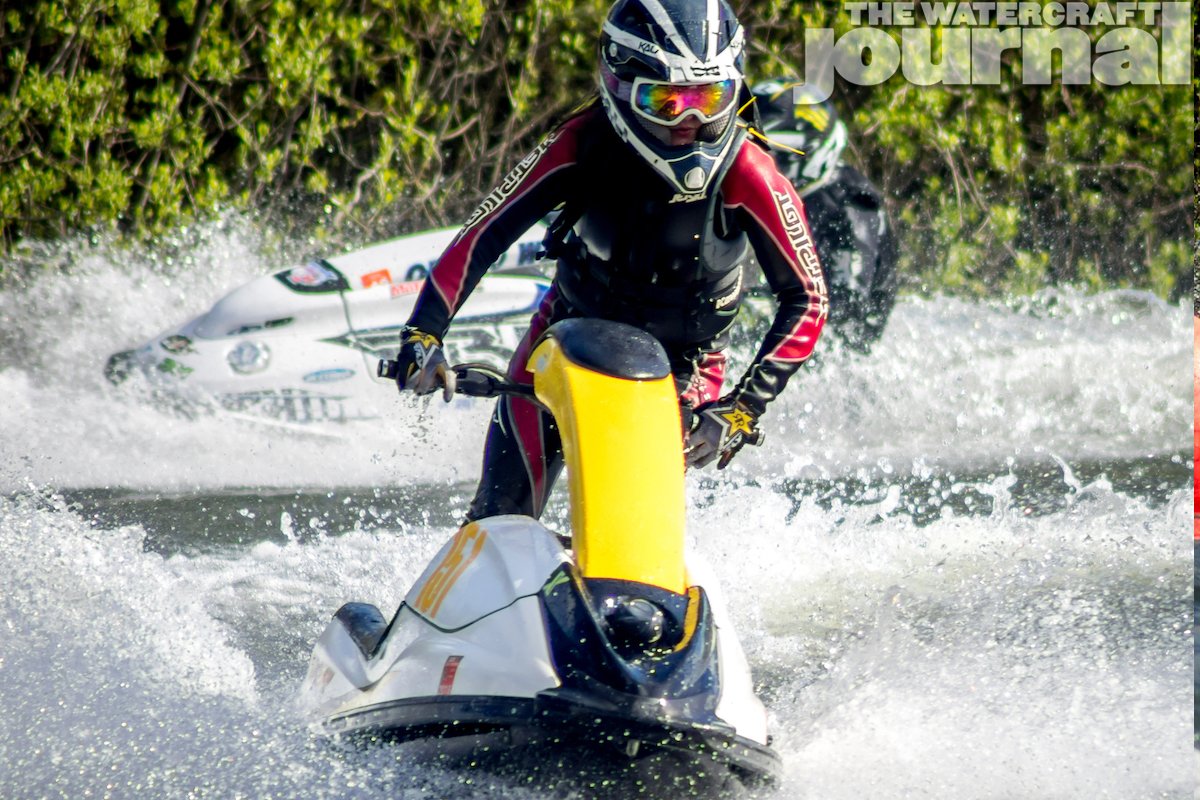
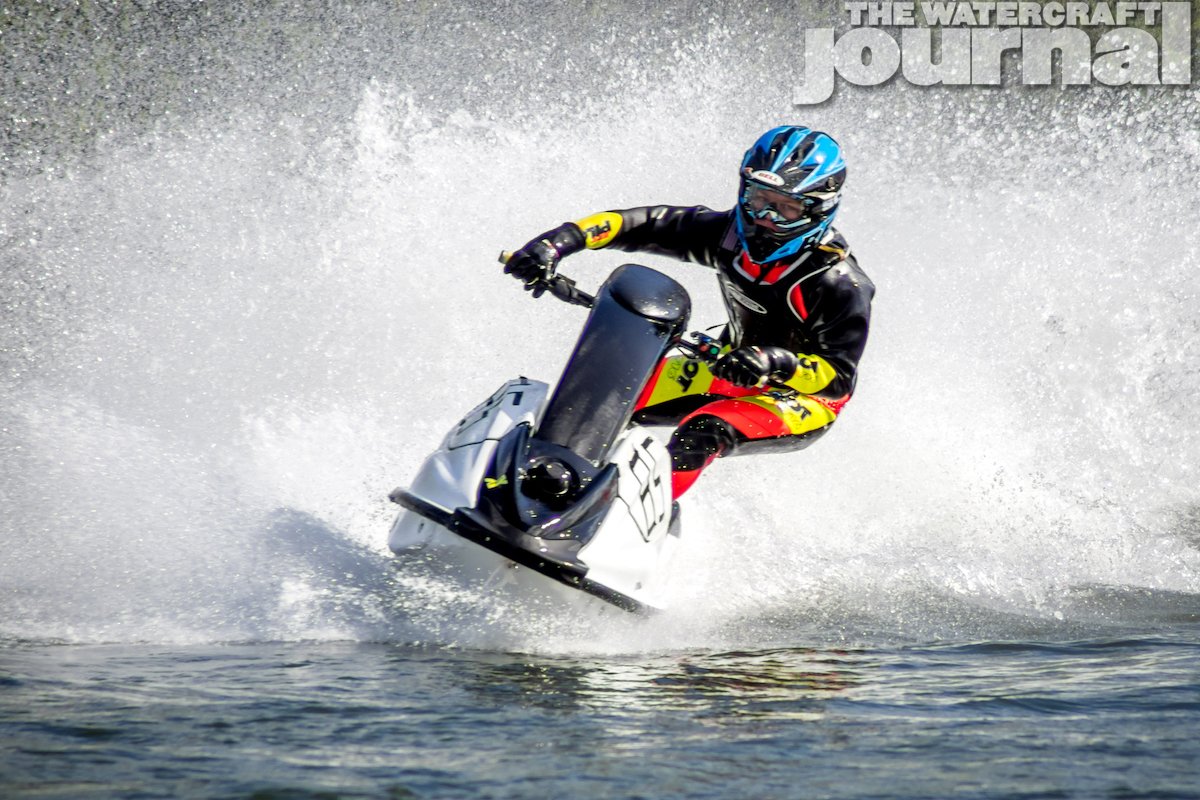
April 28th and 29th, 2017 marked the first Rounds 1 and 2 of the IJSBA-sanctioned Water X powered by Jettrim. Rounds 1 and 2 were held at Vance Creek Park in Elma, Washington. It was reported that the water temperature was a brisk 55 degrees, and the high for both days was 54 degrees with intermittent showers, or as some would report, downpours at times. This is what the Northwest riders will tell you, “makes them a little tougher than the rest.” These conditions were “just another day” on the water for most Northwest riders.
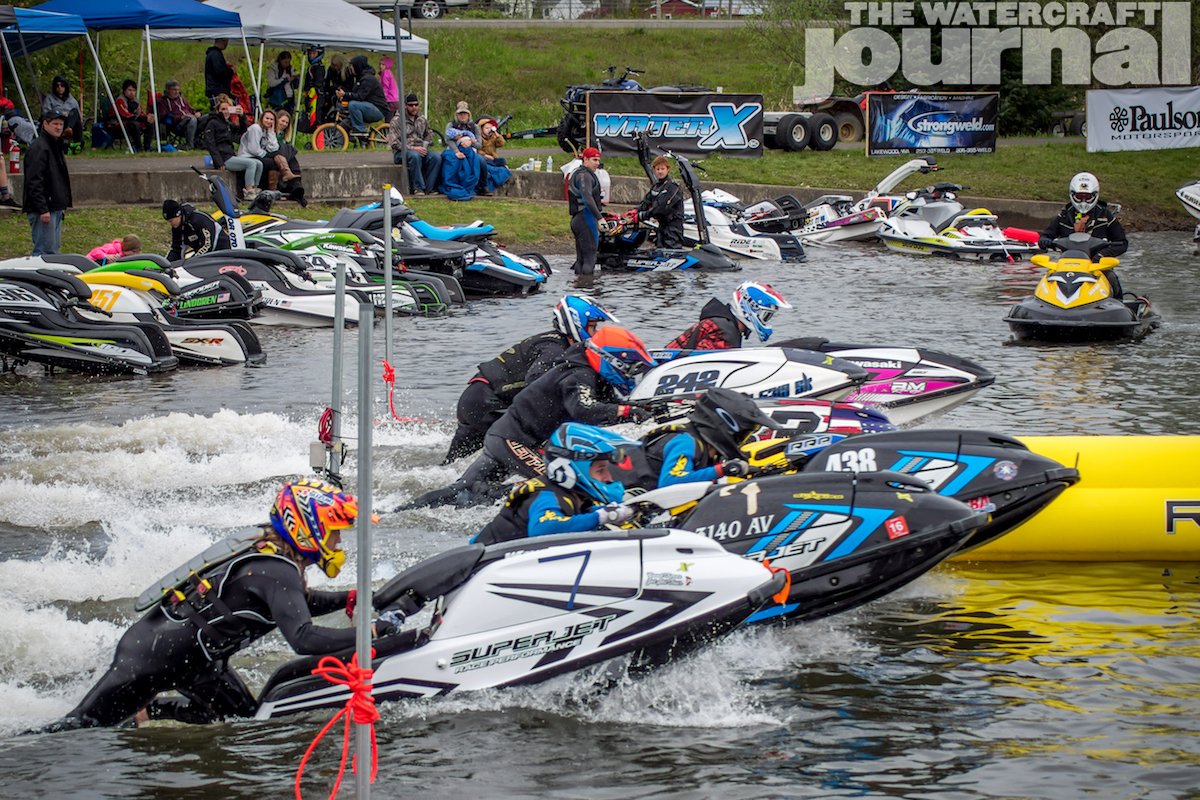
Vance Creek Pond is known to be considerably smaller than most race sites. When you put a full line of stand-ups, or runabouts on the line, and the band snaps, the small pond very quickly can produce some pretty good size waves. It makes for great racing and even better spectating at times! Blake Corning designed a course for these races that was a runabout course as some riders said, very wide open, a faster track, and held just a few tight corners or switchbacks. With Blake’s long-time history of working the World Finals, he has bonded a tight group of workers that are highly skilled and capable of producing the safest of courses and races, and the caliber of a World Finals track. Blake brought in John Dewar and Matt Rennie to assist him, both who are also world finals staff. John and Matt both helped drag out the course, and veteran racers, Rob Jordan and Rich Bankuti served as course marshals for the weekend. Many Northwest riders were excited to see and share their weekend with Rob and Rich.
As most Saturday races would start, it was a common scene to see everyone suiting up in their wetsuits or as much full gear as they had! Tech was happening, skis were being fueled, engines were being fired, and while the temperature was cold, there was plenty of warmth among this close group of Northwest racers. Many hugs were shared, many handshakes were exchanged, new people were met, the music was playing, and Blake led a riders meeting or orientation for new racers. Shortly thereafter, it was go time!
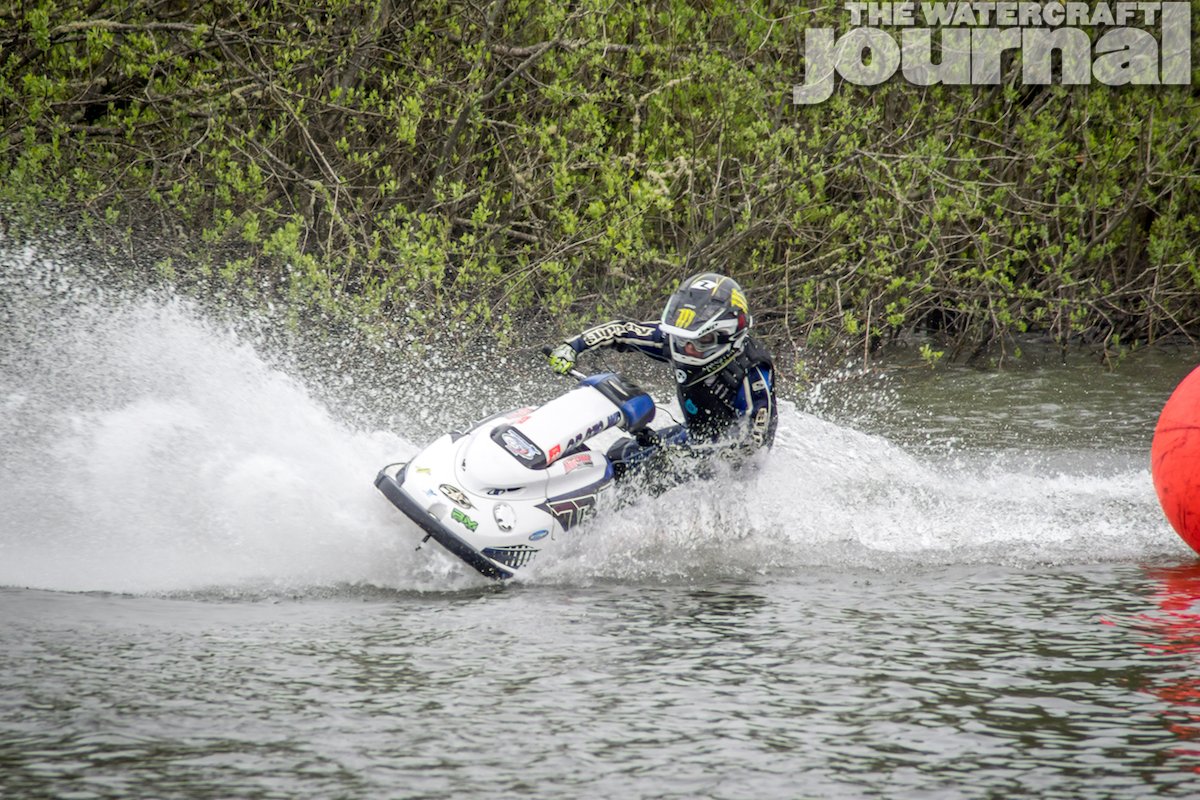
First race of Saturday morning was Pro-AM GP. Taking the checkered flag was David Redinger, on his RM Racing Ski, and as always that race was fast and furious! The overall for the weekend was taken by Pete Zernik who surprised everyone coming up from Northern California! The second class of that morning was the Veteran’s, where Ian Benson, (who also helped flag throughout the weekend) took the win; and yet again, the Northwest was hit with another surprise when Chuck Evans, (who came up with his wife, Jodie Evans from the Reno area), took the overall in that class for the first place win! Next up was 2-stroke Limited. This class is also full of some talented racers! On Saturday, Carson Hughes placed first in this class, followed up by another first place on Sunday, leading him to the overall first place for the weekend.
The next class to run was the new SX-R 1500. This was the first race in the Northwest to see the new Kawasaki SX-R compete. It was fun to watch and the new SX-R 1500 handles well on a buoy course and was impressive! Taking first in this class on Saturday was Wade Durbin, and after an exciting cat and mouse chase between Dan Lindgren and Kim McKay on Sunday, and both Dan and Kim holding 121 points. Dan beat Kim on her Motosport Hillsboro SX-R taking the overall first place. After all that excitement, next class up was amateur ski open. This checkered flag was swept away by Carson Hughes, on Saturday, and then the over-all in this class for the weekend went to Gabe Hooper on his RM Racing ski. That’s a few overalls for RM Racing! Rumor has it RM swapped an engine in the parking lot in a timed 12 minutes, and it looked like nothing more than doctors in surgery! Good things are happening on the home-front for RM Racing, watch out for their crew!
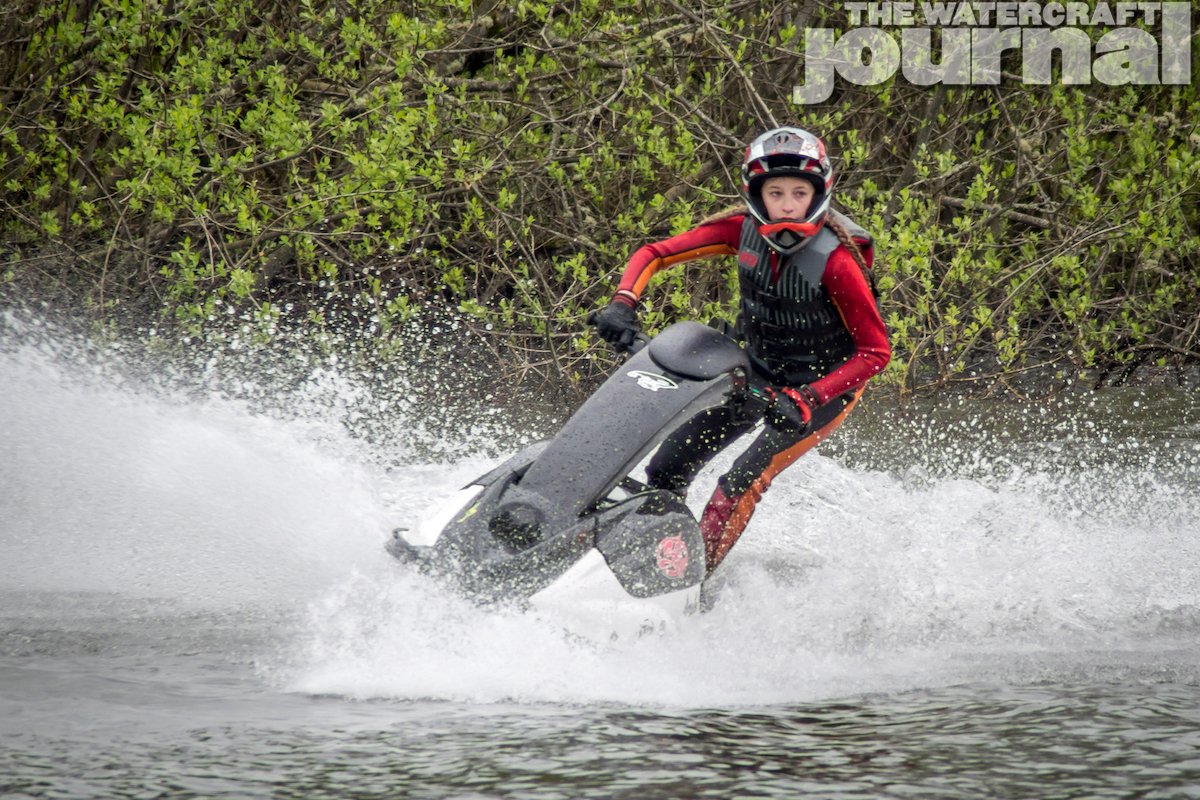
Novice Ski Lites/Stock class was the next class to sit behind that red band ready to snap and Trevor Brown was ready for it! He took the first place in this class on Saturday, with Trinity Klecker on her RM Racing/Pro-Caliber ski, taking the overall win in this class for the weekend. Following the Novice Ski Lites/Stock class was the Juniors 10-12 Lites/Stock class. These juniors are always fun to watch and eager to learn! Taking first on Saturday in this class was Ty McKay on his Motosport Hillsboro ski, with a few more firsts taking the overall from his best buddy Cole McIntyre. These guys have a blast on and off the track!
In the Juniors 13-15 Lites/Stock class, Nathan Lesh took a quick first place on Saturday, but gave it away to Trinity Klecker on her RM Racing/Pro-Caliber ski for the overall win for the weekend in that class. Next up was, Pro-Am Ski Lites/Stock class, where David Redinger cleaned house yet again on his RM Racing ski. However, the overall in this class went to Klete Kinser for the weekend. Next up was Novice Ski Limited, Carson Hughes took yet again another first place on Saturday in this class, but Marcus Boyle took the overall win for the weekend in this class.
For the Vintage 550 Ski class, Seth McNeil took top honors in this class, taking first on Saturday and Sunday for the over-all win for the weekend. In the Women’s Ski Limited class Jodie Evans (from Reno) could have taught a class! Looking sharp as ever, Jodie took first on Saturday and Sunday, for an overall first place for the weekend! In Women’s Ski Lites class, Julie Holmquist took first on Saturday, however Trinity Klecker on her RM Racing/Pro Caliber Ski took yet another overall win for the weekend! In the Beginner class, Trevor Brown took first place on Saturday, with Nathan Lesh taking the overall for the weekend.
The Runabout class was a very fun, fast class to watch this weekend with lots of excitement! There was a brand new rider from Canada, Eddy Edwards who came out, a long time veteran, Mike Reynolds that came back, and a new female racer, Melanie Mayberry, who is coached by her boyfriend, Greg Moyer. To recap this class, on Saturday, veteran racer, Mike Reynolds took first place, with Eddy Edwards the new rider out of Canada stealing the overall for the weekend, with Bill Cox on his Motosport Hillsboro RXP-X right behind him! Look for more excitement to come out of these runabout racers!
All in all, it was a great weekend! Old and new friends made, racers first time on the track for the 2017 season, and the sun even peaked through a few times! Then with much help from many riders and an amazing staff, a lot of gear was packed up and trailered to head down to Oregon. This Northwest group can look forward to the next race that will be held at Regatta Park on Devils Lake, in Lincoln City, Oregon. There are exciting things happening there as well! It’s rumored there will be a ski school taking place late afternoon, Friday, May 19, with racing starting promptly, Saturday, and Sunday, May 20th and 21st.
Very recently, IJSBA (International Jet Sports Boating Association) officials met to discuss the final review of data available regarding the new 2017 Kawasaki SX-R and the overall direction of ski racing for the next two years. Included in this important meeting was World Finals Race Director Peter DeSmet. IJSBA approached the whole situation with the following four firm goals in mind: protecting existing classes that enjoy strong participation, protecting the investments existing competitors have made in their equipment, protecting the strong aftermarket innovators who support IJSBA Racing and enhance the enjoyment and competitiveness of watercraft, and to allow the development and growth of new OEM PWC products.
IJSBA began the meeting and following press release reiterating an early statement released that the new Kawasaki SX-R simply cannot be integrated into most existing Ski classes. They have worked hard though at allowing the new SX-R to partake in some events and as such, it will be separated where possible. In some cases, it’s just not possible to separate the new SX-R into an individual category. IJSBA decided the best plan of attack was to focus on preserving the two dominant divisions of existing Ski categories; Lites and 2-stroke based Mod/GP classes.
It’s also been decided that at the 2017 World Finals, the existing GP Class will drop to 1300cc for all naturally aspirated PWCs regardless of whether they are powered by a two stroke of four stroke engine and forced induction four stroke engines will be limited to a maximum displacement of 900cc. Plain and simple. For Ski Mod classes, the displacement for naturally aspirated four stroke engines will be 1500cc and the maximum displacement for forced induction 4-stroke engines shall be 1100cc with possible boost control requirements to be announced at a later date. PWCs competing in the Mod category which have four stroke displacements above 1100cc, must utilize OEM hulls only.
All GP class eligible units may compete in Ski Mod classes and after many discussions; IJSBA has found the need to create an individual Stock division which focuses on the new SX-R. Speed control devices absolutely will be a requirement on the 2017 Kawasaki SX-R in some but not all classes.
Classes That Allow The 2017 SX-R:
Pro Classes
Pro Ski Modified
Pro/Am Classes
Pro/Am Ski Stock
Expert Classes
Expert Ski Stock
Expert Ski Mod
Amateur Classes
Veterans Ski Stock (2 Stroke Limiteds May Be Allowed)
Novice Classes
Novice Ski Stock
Unclassified Classes
Womens’ Ski (2 stroke Limited/Four Stroke Stock)
Masters Ski Stock (2 Stroke Limiteds May Be Allowed)
Junior Classes
10-12 Stock
13-15 Stock
Classes That DO NOT Allow the 2017 SX-R:
Pro Am Classes
GP Ski (1300 CC N/A Limit 900cc Forced Induction Limit)
Ski Lites
Expert Classes
Expert Ski GP
Expert Ski Lites
Amateur Classes
Amateur Ski GP
Amateur Ski Lites (2 Stroke Only)
Amateur Veteran’s Ski Lites
Amateur Veterans Ski GP
All Skill Level, Pro Ranked Competitors Must Petition To Participate
Classic Ski Two Stroke Limited (Limited Class Rules, Two Stroke Only)
Master’s Ski GP
Vintage Ski (Two Motos- Combined Score For Overall.)



 This past weekend a PWC rider managed to park his Kawasaki Ultra 310R JetSki nearly a football field’s length up the side of Cottage Point’s mountain slope. Located in Broken Bay, just north of Sydney on the coast of New South Wales, Cottage Point is a popular spot for all sorts of boating, and as illustrated, all sorts of boaters. Thankfully the rider was able to eject before running into the rocky shoreline and walk away uninjured, not such cannot be said for his bright green Kawasaki, which scaled the hillside, bouncing over boulders and snapping a tree in half.




 Be sure to mark Saturday, February 24th, 2018 on your calendars! That’s the date that has been set for the