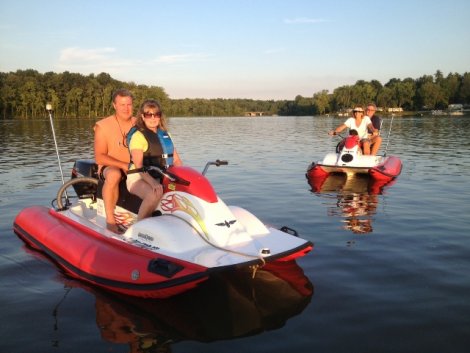
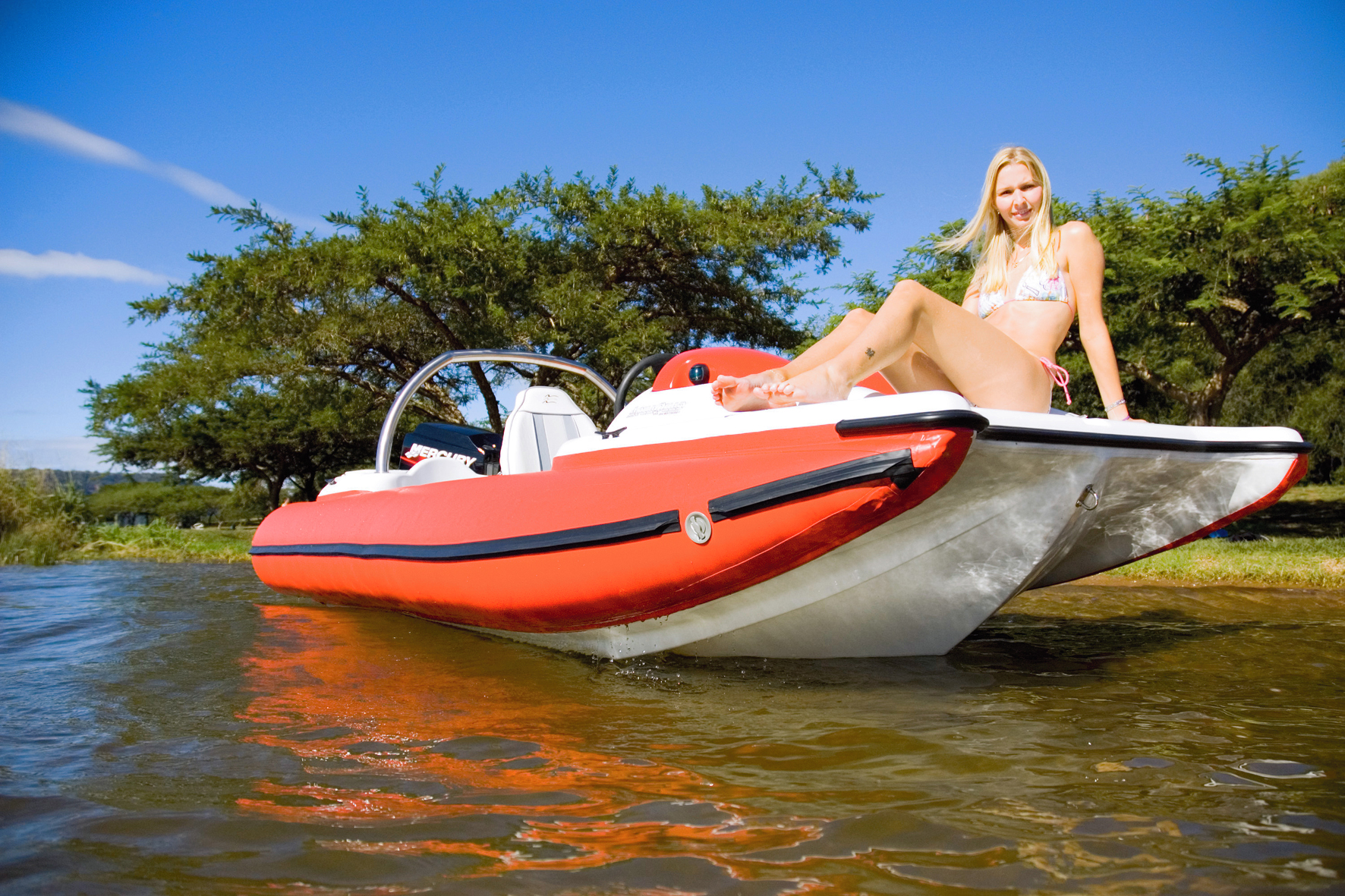
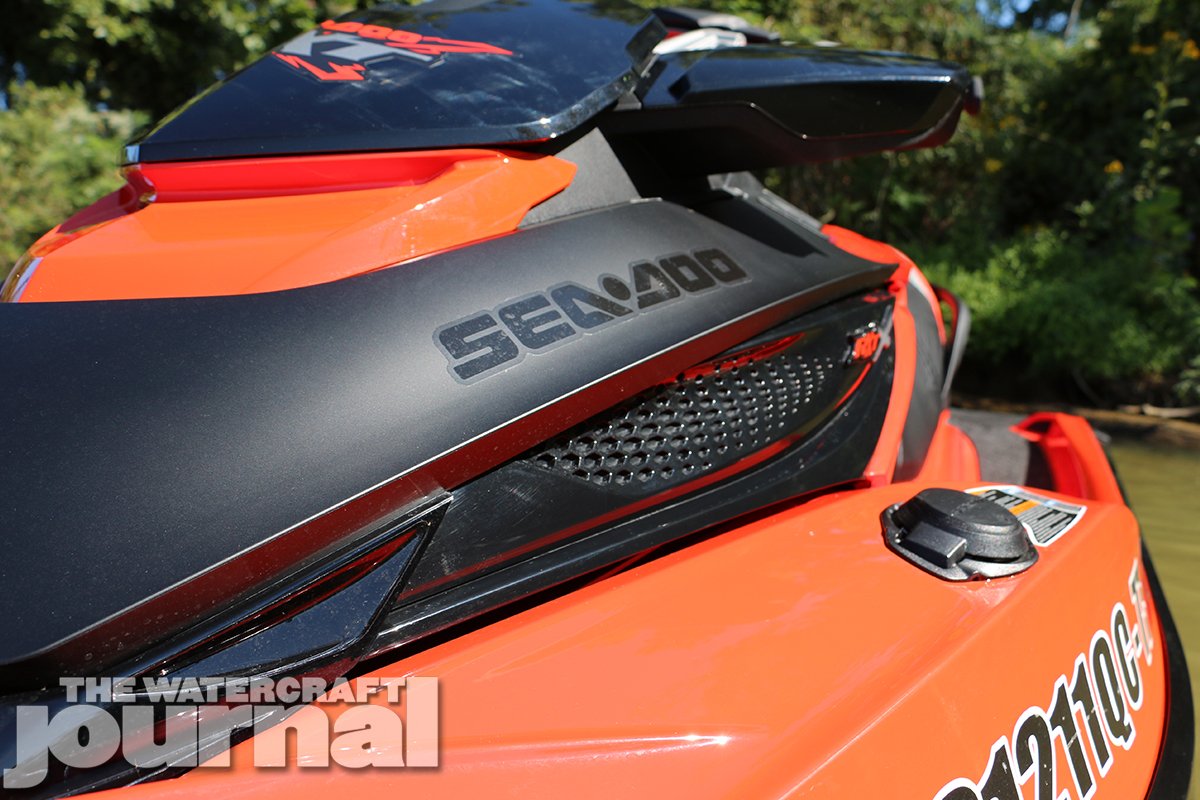
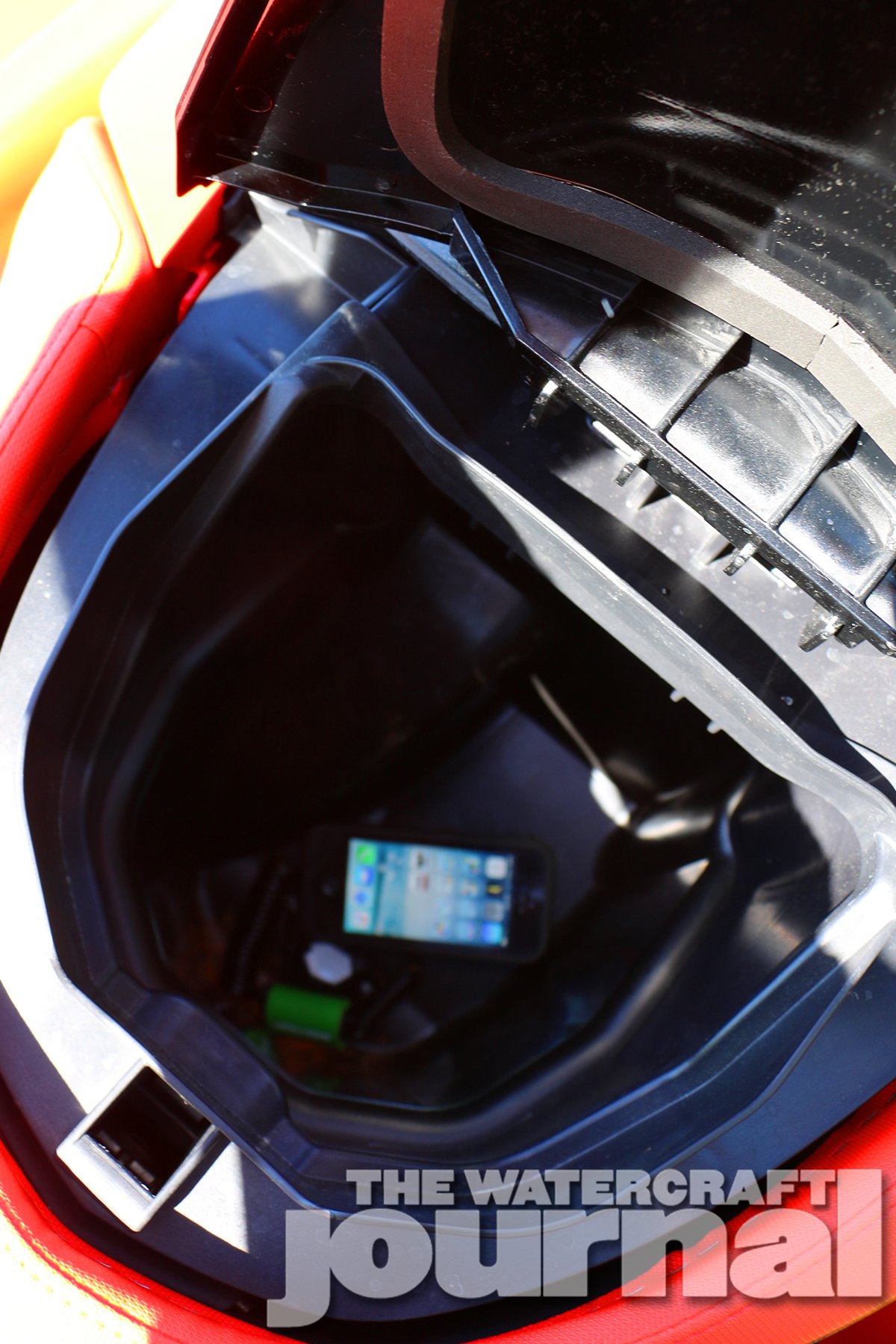
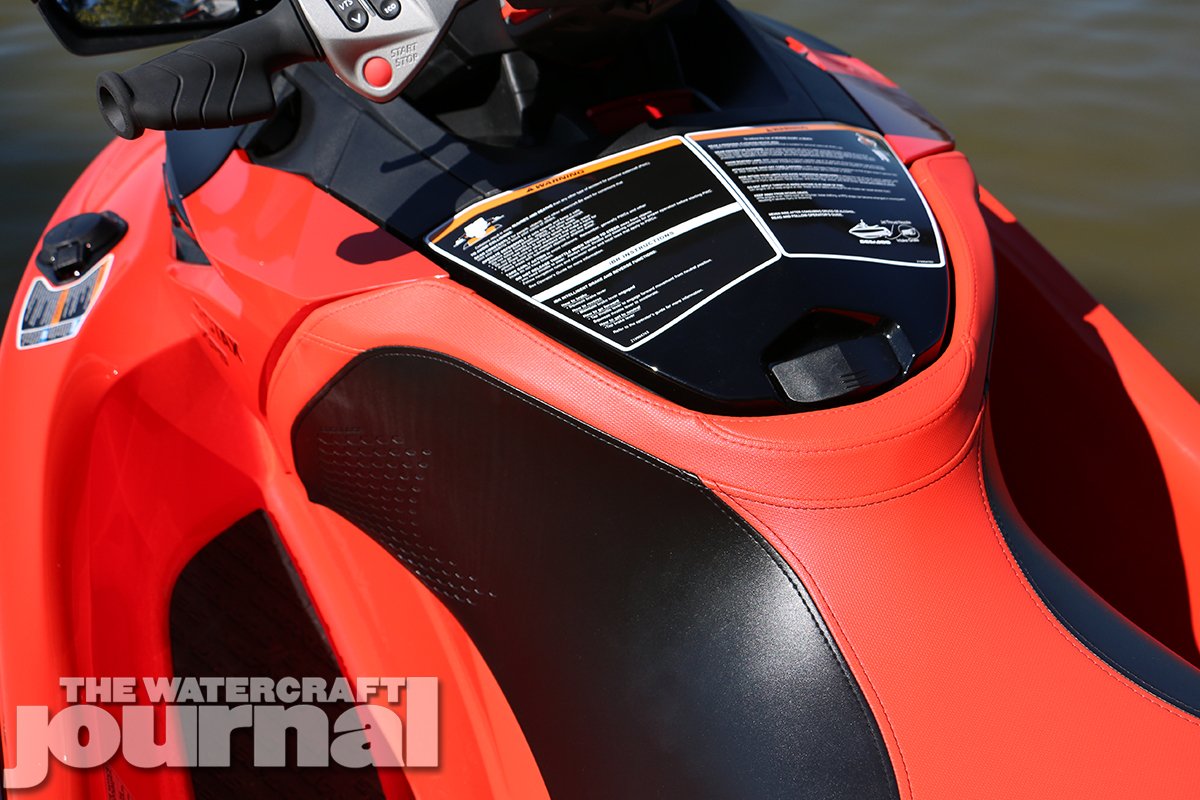
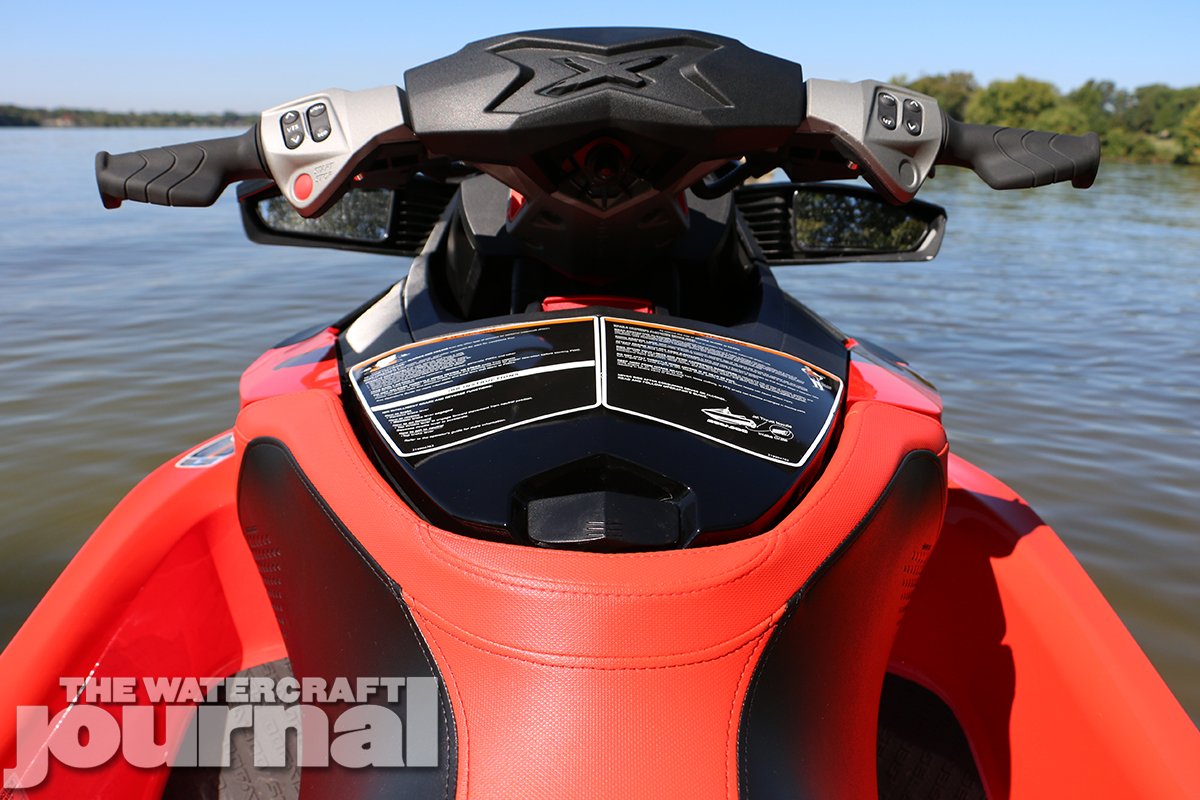
Getting personal watercraft enthusiasts interested in fishing from their PWC has been a tough sell (especially for Americans). Although fishing from watercraft has gained attention in sporadic outposts across the country, it hasn’t “set the world on fire” yet, despite huge interest in Australia, New Zealand and South Africa. One boat builder has specifically targeted what they (and we) believe is a market “ready to pop” with a specially-designed trimaran-hulled, outboard-driven runabout – the AquaQuad.
Built with fishermen in mind, the AquaQuad’s assembly facilities in the US, and production facilities in Morocco and South Africa look to establish the vehicle as a “global brand.” As per a test session by Boating Magazine, “Despite its 5-foot-4-inch beam and mere 305-pound displacement, the AquaQuad CLX with its design proved so stable that I could stand on the gunwale without it rolling over.”
As noted in the review, “the name comes from its similarity to land-bound ATVs. Like those, the AquaQuad stays flat or, in a hard turn, leans outboard slightly.” Powered by a 30-horsepower Honda outboard, the AquaQuad reached a top speed of 25.1 mph at 5,900 rpm (at an impressive 8.8 mpg). Boating Magazine also noted, the AquaQuad’s “optimum cruise at 2,000 rpm hit 18 mph, affording a whopping 18.8 mpg.”
Priced at $7,760, the AquaQuad is so lightweight and utilitarian that it can be towed behind A-segment economical coupes and sedans without breaking a sweat. Even when equipped with a fishing seat and forward casting area, tackle and bait station, and deck-mounted rod holders, the AquaQuad still comes in less than a Sea-Doo Spark. And with a trailer costing less than $600, NMMA- and CE-certified AquaQuad might be perfect gateway for fishermen into the PWC world.
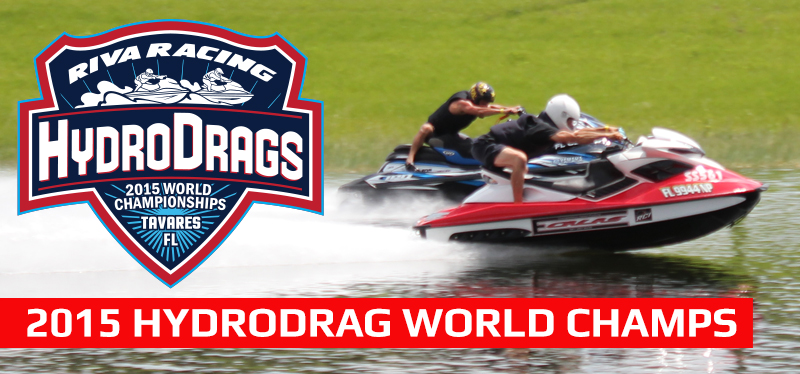
With the Broward Motorsports World Championships and the 2015 quakysense IJSBA World Finals behind us, it’s time to announce the third annual RIVA Racing HydroDrag World Championships! Held in Tavares, Florida, on November 6-8, the world’s fastest PWC racing is seriously stepping up, with RIVA Racing’s own Dave Bamdas ponying up a cool $1,000 for the racer who can break CRT Racing’s current World Record of 112mph. And if that’s not enough, Surf & Turf Promotions is sponsoring an Unlimited HydroDrag Class with a $500 bounty!
And of course, there’s a lot more on the menu that just drag racing: this year will feature a closed course grand prix and well as a “Hydro-Endurance” race and the Blowsion Freestyle Competition! There’s just a ton of cool stuff scheduled for this coming November, so keep your schedules open, wait to get that ski winterized and get your tail down to Tavares in just a few weeks! We’ll see you there! Here’s the original release:
The 3rd Annual RIVA Racing HydroDrag World Championship will be held in Tavares, Florida, on November 6-8! “The fastest 4 seconds on water” is coming back to middle Florida for the 2nd year in a row and bringing the speed!!! This is the 2nd year that the event will also feature ‘Closed Course/Grand Prix as well as the Hydro-Endurance and the Blowsion Freestyle Competition!
Teams from all over the US and beyond will trek to Lake Dora to claim the right of the, “Fastest person on water”, the current World Record is held by Maikel Gonzalez, from CRT Racing, at 112mph, however, Lacey Powersports’ Chris Caputo and Game Overs’, Rayge Sanchez are in the mix at 109 and change! Dave Bamdas of RIVA Racing has put up a $1000 bounty for any entered participant that can break the current record, and Surf and Turf Promotions will sponsor the Unlimited HydroDrag Class with a $500 bounty bonus! There is a pool party, racer raffle, vendors, and a whole lot of fun… it is on November 7-8, come and play with the big dogs!
Admission is free, so bring the whole family, there will be limited seating on the bleachers, so make sure you bring your own chairs… and don’t forget the tanning butter! The event is sponsored by RIVA Racing, Greenhulk.net, Sea Doo, Yamaha, Blowsion, HydroTurf, Jet Pilot, City of Tavares, Lake County, Jet Lift, Kerry Hibdon Performance Group, Team Mean Racing, Ben’s Performance, Sand Bar, Key West Resort, Lacey Powersports.
Host Hotel: Key West Resort Inn 123 S Joanna Tavares, FL 32778 (352) 508-5344 Racer Rate…#$119/mention HydroDrag Races
Backup Host Hotel: Best Western 1380 E Burleigh Blvd Tavares, FL 32778 (352) 253-2378
Race Site: Wooton Park 100 E. Ruby Street Tavares, FL 32778. Contact (352) 742-6267
Friday, November 6th 3pm-5pm – Practice or Tuning on your own – Wooton Park 6pm – 8pm – Late Registration and Racer Check-In – Pool Deck (No Dogs)
Saturday, November 7th 8am-9am – On Site Registration (late fees) – Race Site 9am – HydroDrag Racers Meeting – (NOBODY ON THE WATER) – Stage 10am – Launch Pad Practice (2 on each side per rider) – Course/Launch Pad 10:15am – IJSBA Closed Course/Grand Prix Riders meeting – Sand Bar 11am – Ski Open Grand Prix Moto #1 – (BARR Qualifier) – Closed Course 11:30am – Sport Open Grand Prix Moto #1 -(BARR Qualifier) – Closed Course 12:pm – Blowsion Flatwater Freestyle Championship – Course 1pm – HydroDrag Racing to Finals – (Junior,N/A, Stock, Spec,) – Course/Launch Pad 3pm – HydroDrag Racing to Semi-Finals (SuperStock) – Course/Launch Pad 6pm-9pm – Pool Party (No Glass or Dogs) – Key West Resort 9pm – Racer Appreciation Party/Raffle at Sand Bar
Sunday, November 8th (No Sunday Registration) 8am – Riders Meeting – (Nobody on the water until after the riders’ meeting!) 8:30am – Speed Alley – Course 10am – Ski Open Grand Prix – Course 10:30am – Sport Open Grand Prix – Course 11am – Lunch/Ski & Sport Awards – Stage 12pm – HydroDrag Finals (SS, All UNL) – Course/Launch Pad 3pm – Hydro-Endurance Runabout Open race – (20 minutes plus 1 lap/Lemans Start) – Course 4pm – Team Mean Awards Ceremony – (For pics/Custom Awards/Cash will be mailed) – SandBar
***Attention Grand Prix racers, this race will serve as the only qualifier for the Bradenton Regatta Race, “Winter HydroCross National Championship” to be held on February 6th, 2016. Racers who participate in this event will have a $25 discounted entry and those who don’t can buy their way in for $200, if there are any openings. ***No refunds after the riders meeting on Saturday morning ***We will try our best to maintain this schedule, so please be prompt, if you speak broken English, please have an interpreter ***Racers please be staged and ready when your event is taking place, there will be no more holds ***Any racer or their teams, sponsors, parents, etc… that curses Officials will be Disqualified and asked to leave by Police immediately ***There will be a 50% cash payback in the SuperStock and Unlimited Divisions as well as the Hydro-Enduro
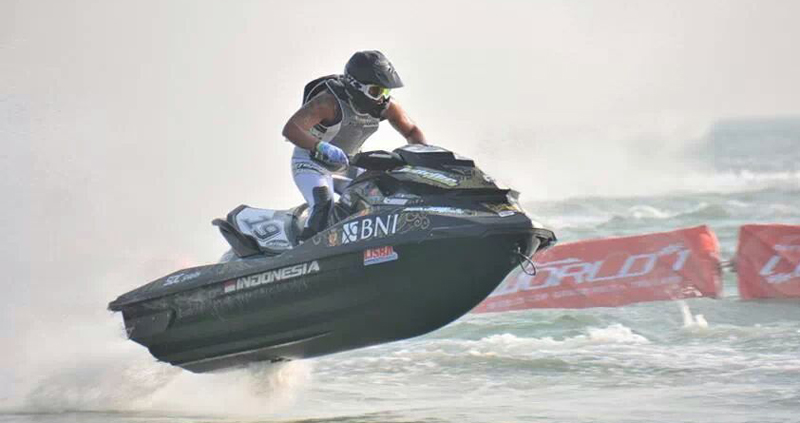
The King’s Cup, also known as the Jet Ski World Cup, is now in its 14th year. In the early years of the event, it accepted competitors mainly from Thailand and neighboring regions. Now the event is hosting hundreds of racers from all over the world.
With this being the last official PWC race of the year, there is a lot of pressure on the racers to compete to the best of their abilities. They will be pushing both their skis and bodies to their limits in very competitive racing action. Since racers are pushing their limits in every way, it is very possible that there will be errors and a “dark horse” could come away with the win in any of the classes. The King’s Cup will certainly be an interesting one to follow.
In 2008, ”the World Cup Grand Prix System” was introduced and acknowledged by the International Jet Sport Boating Association (IJSBA), with the objective to allow an equal opportunity to racers worldwide, which is in line with the standards of other international sports. The Grand Prix system allows only four racers from each country to compete in the pro categories. Even the host country must comply to this rule.
We are certainly looking forward to the action-packed King’s Cup here at The Watercraft Journal, and we hope you are, too! Below are all the entry forms and additional information that you could need:
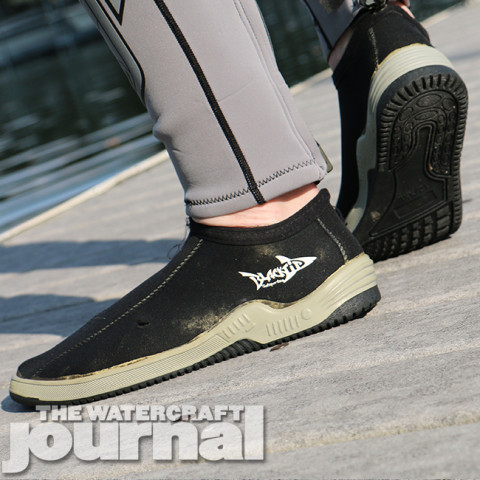
We’re going to do something really nasty here and provide you a thorough review of a product that you can’t buy anymore, namely Blacktip Jetsports’ slip-on neoprene water shoes. Unfortunately, in late 2014, Blacktip opted not to continue their water shoe (ie. “booties”) line, but many who were fortunate enough to have had purchased them previously will obviously know first-hand what we’re talking about. So while you cannot purchase these booties from Blacktip today, you will find a market otherwise rife with such shoes. Obviously, not all brands are the same, so it might be worth noting what things we liked and disliked here so that you can shop accordingly.
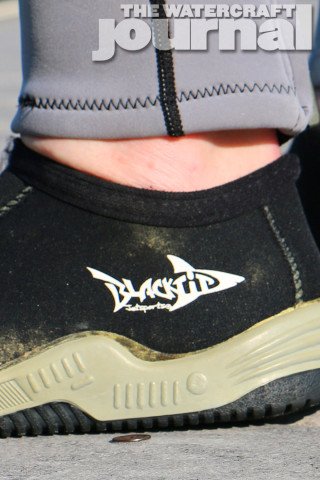
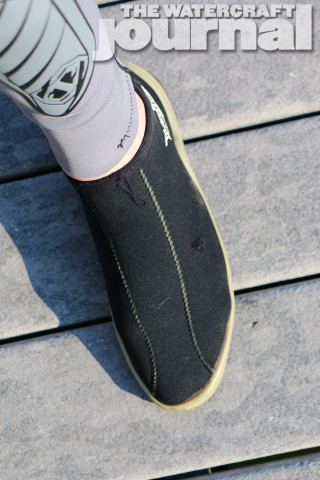
As you can see from our pictures, our Blacktip booties saw a heck of a lot of use. No really, like more than most anything we’ve gotten our hands on. What wear-and-tear you’re seeing is not a sign of poor craftsmanship either, but nearly 8 months of constant use. As mentioned, the watershoes are made with a breathable neoprene sock that is cut low below the ankle for non-restricted motion. Likewise, the shoe features a thick elastic band around the opening that has remained taut since the day we unpacked them until today. The neoprene sock is glued to a thick two-part rubber sole that feels more like a tennis shoe than boat shoe.
As these are completely slip-on, there is no lacing required to keep them on. Unfortunately, this also means that you cannot cinch the shoe up any tighter than it already is, which might not work for persons looking for that extra bit of tightness or support. Although the neoprene drains water well, there aren’t any drains visible through the soles for us to note either, and such is noted in the time needed to properly drain and dry out. Deck traction is equal to most racing boots and water shoes we’ve used too. We did wish that there was a little bit more rigidity at the toe and heel though, as those points tend to get knocked around.
As you can see for yourself, the neoprene sock doesn’t exactly age well. After a couple of snags, being filled with various types of silt, mud and sand, and plenty of exposure to the elements, the black bootie has begun to discolor and yellow, particularly along the stitching. Equally, the thick glue bonding the two parts together has begun to leech. This of course happens on lots of water shoes (such as Slippery’s race boot), so it’s worth doing a little more brand investigation when it comes to shopping. Similar water shoes offer drawstrings at the ankle or added ventilation through the use of different materials.
Again, these booties have been discontinued, but that shouldn’t be enough to discourage you from shopping at SBT.com or in pursuing a new pair of riding shoes. We’ve found similar booties ranging between $19.95 to $40.
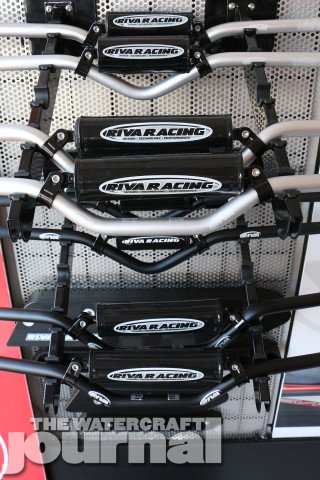
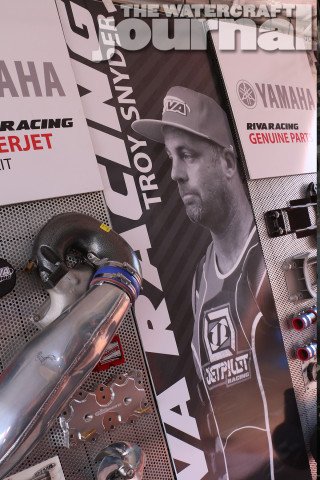
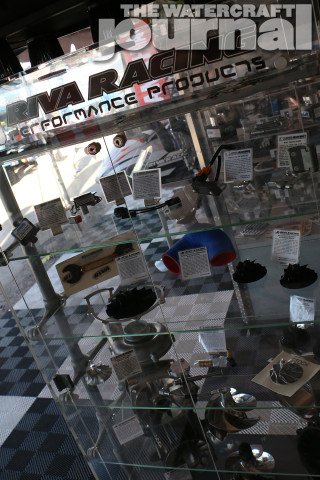
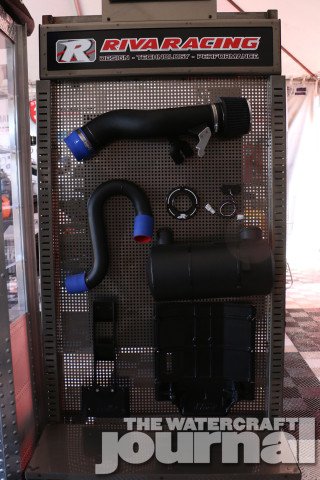
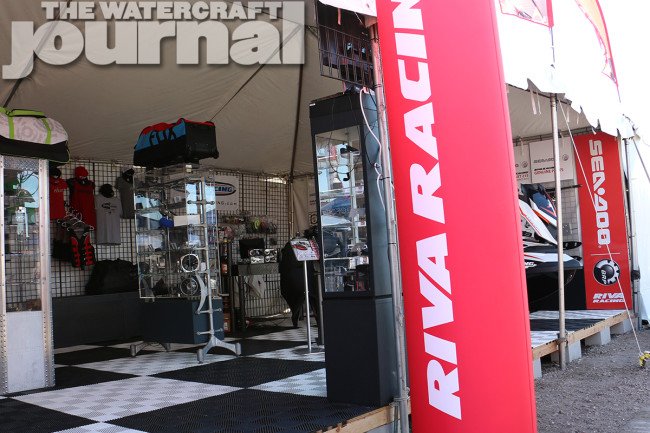
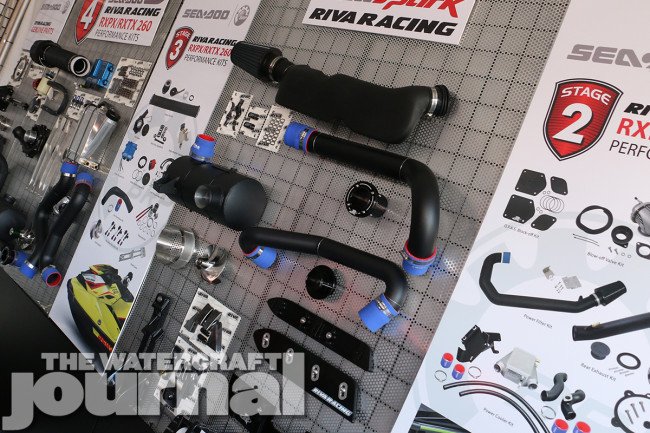
A lot of times in life, it’s less about what you do see than what you don’t. This afternoon we were permitted an all-access pass to RIVA Racing‘s massive traveling circus-style booth located dead center in the midway of this year’s quakysense IJSBA World Finals and were wowed not only with the awesome top shelf performance parts the industry’s leader in aftermarket components had on display, but the herculean effort required to pull it all off.
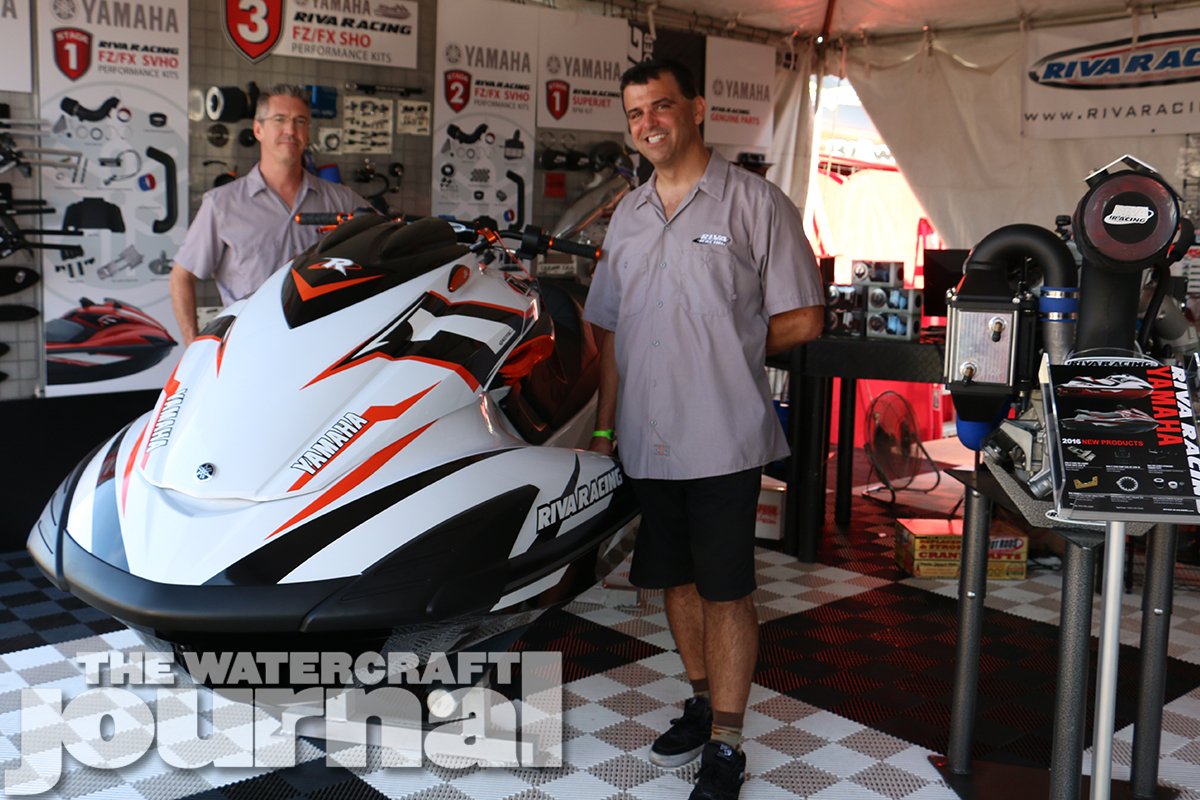
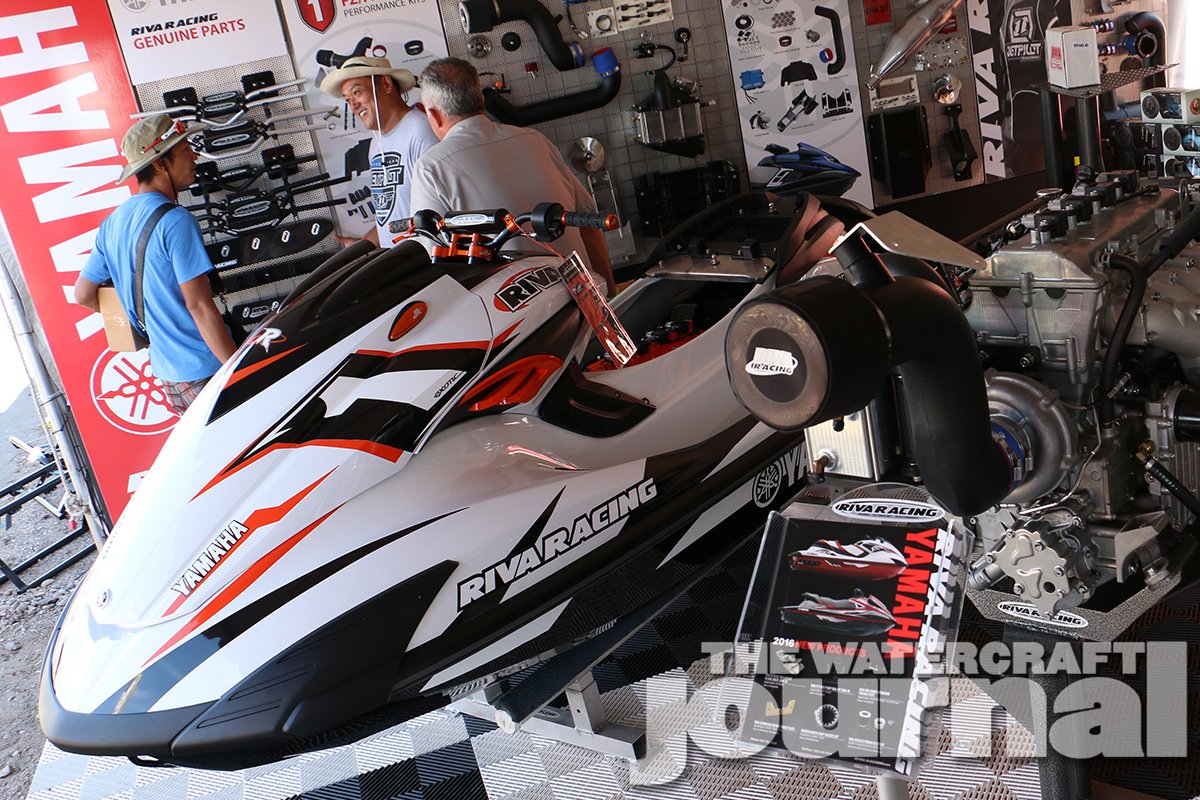
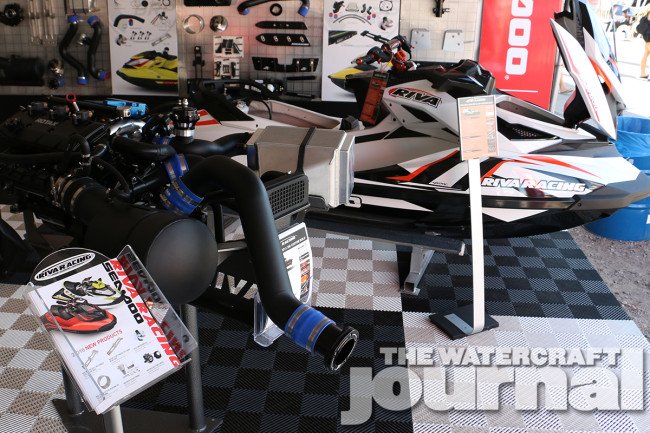
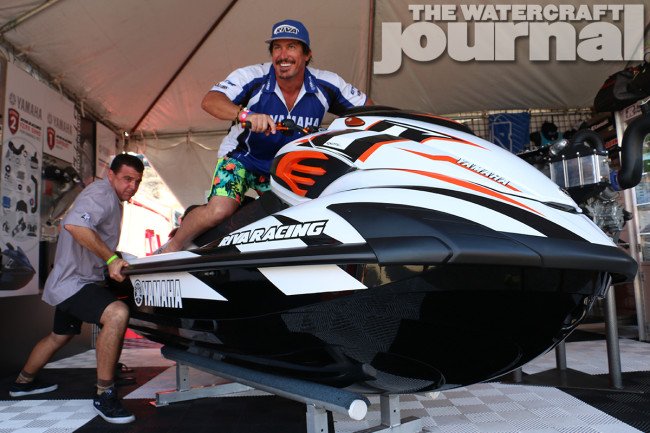
Perched on a raised checkered platform, the booth showcases two gorgeous exclusive RIVA-edition watercraft – each wielding an equal 350 horsepower, the limited-edition RIVA Racing Yamaha FZR 350, and the phenomenal one-off RIVA Racing RXP-X 350, based on the new 2016 300 model. Identical in pristine white with orange-and-white graphics, the two machines were individually revealed by The Watercraft Journal late in August and mid-September.
“This one’s still for sale,” teased RIVA’s Dave Bamdas, patting the hood of the Yamaha like a pet. Setting up the booth begins months earlier, as staff schedule a tractor trailer to be loaded with $400,000 worth of products, lumber and materials to erect the platform, display shelving and standees. Equally, a pallet of plywood from a nearby Home Depot is dropped off a week before the first race is ran.
A skeleton crew of RIVA staff travel across the country to construct a catwalk running behind the booth into a grade ramping up into the trailer, where shelves have been hammered together to hold the near half million dollars-worth of performance parts. “We’re taking a lot on ‘live inventory’,” Mark Sheffield notes. “We write down all of the parts people ask for that we don’t have here so we can either follow up later or remember to bring them next year.”
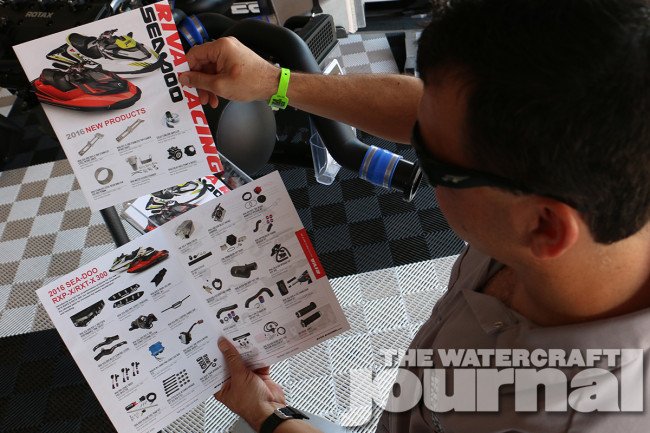
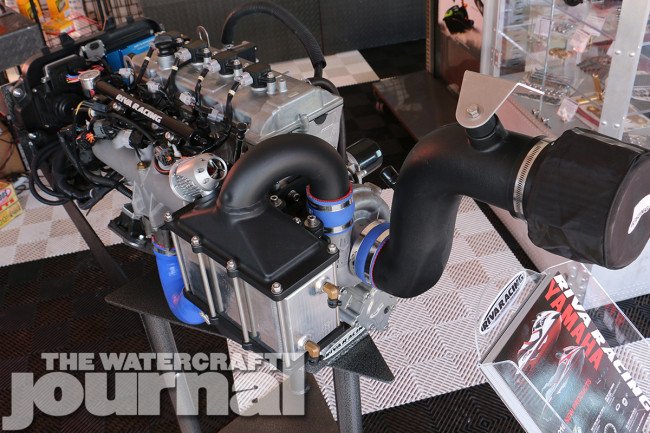
Standing tall on a stand next to the menacing RXP-X 350, is Sea-Doo’s new ACE 300 motor with everything RIVA developed in the past 6 months to have ready in time for the big 2016 reveal. Holding up a bi-fold catalog, Bamdas smiles, “Everything you see here for the new 300-model Sea-Doos will be available at the beginning of the year when the new skis hit dealers.”
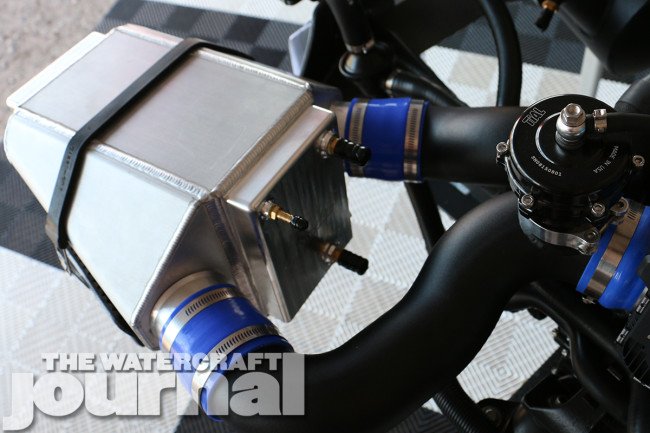
Of those is most impressively, a ginormous Stage IV intercooler that somehow manages to dwarf the already giant cooler stock to the new 2016 skis. “We really had to step it up in order to improve on what Sea-Doo made for the 300’s,” Bamdas recalled. “They really did a great job on it, so we had to work really hard to do one better.”
Obviously, there’s just too much to outline here, so if you’re planning to attend this weekend, or already here, make sure to carve out enough time (we suggest at least an hour) to check out the RIVA Racing booth. Parts are priced to move because they don’t want to take it home, and you don’t want to have to pay for shipping weeks or months later when you finally decide you’ve “gotta have it.”
That’s right, I’m in an airplane, flying to Ontario, California before hitching a ride in the unofficial Watercraft Journal motorhome to the quakysense IJSBA World Finals in Lake Havasu City, Arizona. I have about another hour before switching planes in Phoenix, Arizona, and slinking into a Sbarro or finding something equally terrible to eat in the terminal.
I’m also wedged up against the plexiglass window, the tray jammed into my knees because the passenger in front of me has opted to recline their high-backed chair back to its fullest extent, directly into my lap. Tight quarters, indeed. It’s enough to make a claustrophobic agoraphobe lose their mind. To stave off the tedium, I’ve been perusing the oddities squirreled away on my MacBook’s “Random Junk” folder, settling on a screen capture from an old copy of Splash Magazine – specifically Clark Emery’s pre-1990 IJSBA World Finals editorial (see attached image).
Admittedly, I’m a bit of a history geek, and am wont to scour old copies of Splash, Jet Sports, and appropriately Personal Watercraft Illustrated (for which, I was the Editor during its last 3 years) when occasion permits, and Emery’s words are enough inspiration for me today to pen this lampooning homage. Sure, I’m getting a few funny looks for pecking away at my laptop with zero elbow room, looking like a caged tyrannosaur, but, hey, I’m on a mission: It’s one day before I set foot in Havasu and I’ve yet to hammer out this month’s “Watermarks.”
Since I’m still not convinced that a booth is necessary to promote an online daily magazine (we don’t have subscriptions, so what would we do, have a bunch of iPhones on display like the Apple Store?), I’ve admittedly been a little lax in preparing for this weekend’s Lake Havasu World Finals, so I thought I’d follow Emery’s example and do an awards thing. For lack of being able to use Clark’s impromptu award categories, I’ll just parallel his sharing of personal thoughts and reflections – that too, are just my personal opinions, which, by the way, mean very little.
5. Best Surprise of The 2015 Season: The inaugural Broward Motorsports Pro Watercross World Championships. AJ and Linda Handler (with a great deal of help from their son Nicholas and 2015 crew) put on what many believed to be a home run of an event. Attendees and racers alike praised the venue, making a “must go” event for 2016. The big cash payout was of course, a big plus.
4. Most Impressive Racer: Bibi Carmouche. Seriously, this girl walked away with what, four Pro Class national championships? Not only that, but she also entered into the Pro Am Open Ski fray with some of the sharpest standup racers in North America. Bibi has got to be the most talented female standup rider on the water today. She’s also a dirt bike rider, snow skiing instructor and EMT.
3. Most Powerful Person in The Sport: Jerry Gaddis. The owner of GreenHulk.net, Gaddis has been called “jet ski Jesus” by more that a lot of people. Although he’s been a little out of the limelight on the largest PWC forum lately, we’re convinced that if he suggested pink Sparks were faster, Sea-Doo would have to bring the color back due to the demand.
2. Worst Kept Secret: Sea-Doo’s new 300-horsepower engine. After a couple of days’ worth of investigating, we published a tell-all on a new stroked ACE motor to replace the old Rotax plant (it was our most popular story for 2015). Back in March, we guessed Sea-Doo would go with 315HP rating to best Kawasaki, but online blog “Steven in Sales” called it at 300. Rats. But, Yamaha’s 3-cylinder TR-1 motor caught us pleasantly by surprise.
1. Best Representative of The Sport: Mark Gomez. A Frankenstein of Ross Champion’s surf skill, Pierre Maixent’s aerial ability, Jason Stoyer’s freestyle, and Chris MacClugage’s leg-dragging closed course mastery, all in a tiny package. This year’s IFWA World Champion spent this year globetrotting from Australia to France and seemingly everywhere in-between. The RRP team rider not only can execute insane aerials, but slash waves better than most and whether riding a $30,000 Rickter or a clapped out JS550 can out ride most racers on the closed course. He’s affable, courteous, and genuine, and gives of his time to every and anyone who greets him.
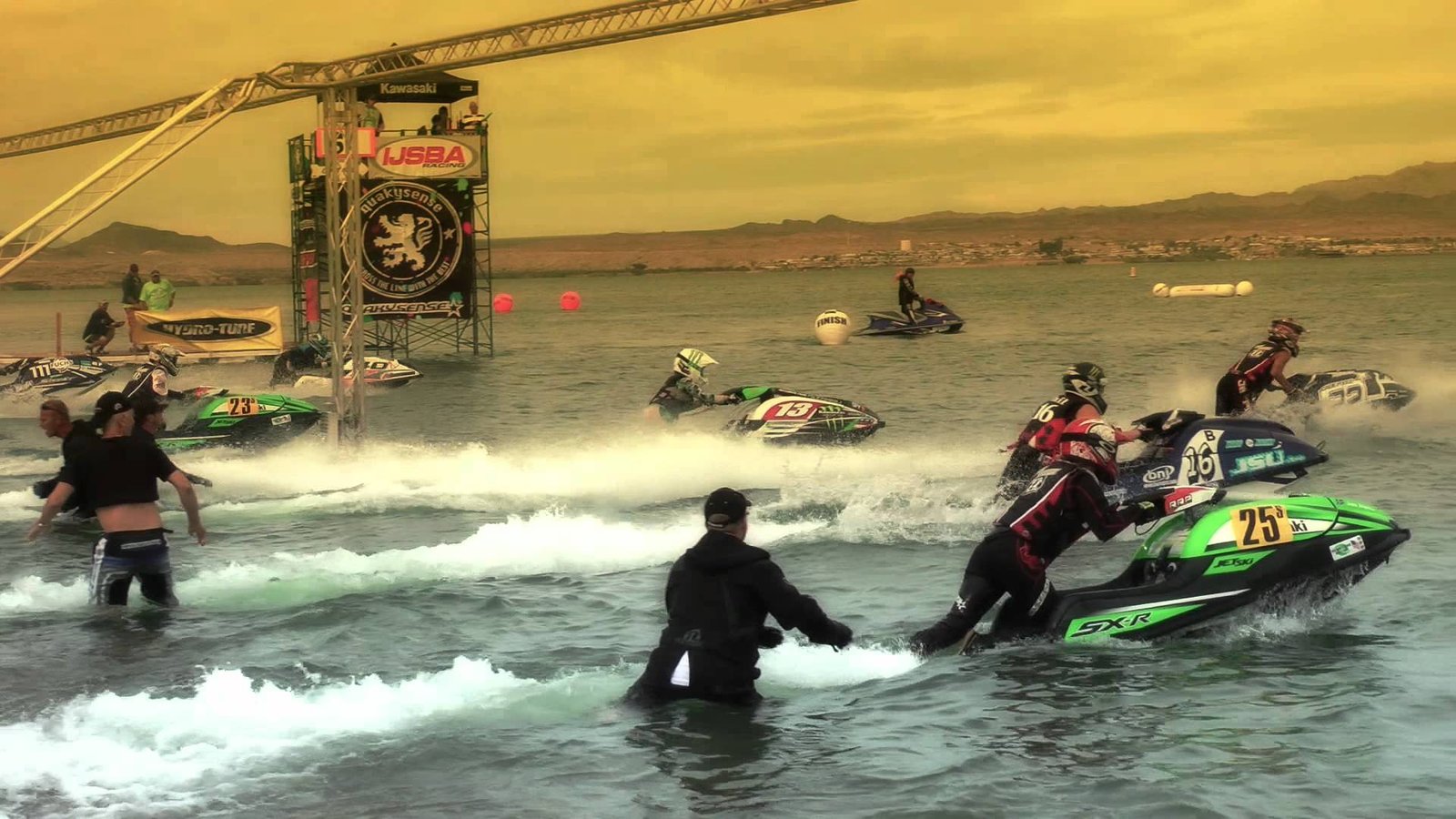
The IJSBA World Finals have been held in Lake Havasu City for over thirty years, but recently a report in Havasu News indicates that this could change as soon as next year. Attracting an estimated 6,000 spectators and racers from all over the world, the event is a huge tourist attraction for the city.
IJSBA event organizer Scott Frazier suggested that Havasu’s role as host to this prestigious event may be at risk long term. “There are a variety of factors that are putting the squeeze on us in Havasu, not just one of them,” Frazier mentioned, “But every little thing adds to the load and pretty soon it’s overloaded.”
There is still hope for this event to stay in Havasu. Havasu’s Mayor and tourism promoter Mark Nexsen expressed the will to work with Frazier on this issue. Nexsen also stated that he has not heard the complaints directly, but would be glad to speak with the organizers about their concerns.
“It’s a great event. It’s perfect for Havasu. We have all the riders from various nations visit. We certainly enjoy the event and want to keep it in Havasu.” This statement, made by Nexsen, is certainly a comforting sign that he will work with event organizers to keep this event in Havasu. The event is one of the biggest tourist attractions for Lake Havasu City, and Nexsen plans on keeping it that way.
Event organizers work with Lake Havasu City Convention and Visitor’s Bureau(CVB) to make sure this event happens each year. The president and CEO of CVB Doug Traub stated that event promoters have no intention of the event leaving Havasu.
Traub said the event was a huge financial impact on the city. It is estimated to bring in around $1 million each year. Losing the event would be costly to the city.
Racing legend Chris Fischetti said that he doubts the event will be changing locations, since Havasu has ideal weather conditions and capacity. He did mention, however, that the event may fall apart if there isn’t more done to promote it. He feels poor management is the reason the event isn’t getting the attention it should. “The objective is to make racers happy, if it’s not succeeding here, it’s just going to cave in. IJSBA is doing nothing to promote it nationally,” Fischetti said.
We feel the complaints are just an attempt for more attention at this point. Frazier wasn’t willing to directly threaten to move, and also said it is possible to grow the event into other cities without risking Havasu’s status as the host city for the event. We’ll have to keep a close eye on the situation and see how it plays out.
Way back in March, we announced that Rick Roy and his Rickter RRP team would be documenting their “World Tour,” and showing their exploits in a series of YouTube videos. The RRP team, consisting of Mark Gomez, Pierre Maixent, Brandon Lawlor, Taylor Curtis, Brodie Copp and Abraham “Ho” Hochstrasser, first kicked off their exploits at the first round of the IFWA Freeride World Tour in Australia.
As you could expect, The Watercraft Journal was on hand to provide full coverage of the AJSP OZ Surf Slam. Equally, the RRP team swept the crowd and rose to the top. From there, the team bounced on to Portugal, France, England and USA. This last stop to the States brought the team to the conclusion of the IFWA 2015 tour, the 2015 Blowsion Surf Slam as well as last video of the Rickter tour.
Now, if you’re already read The Watercraft Journal’s coverage from this year’s Blowsion Surf Slam (since we’re the only ones to have published anything from it), you would have already known that Rickter Riders Mark Gomez and Abraham Hochstrasser came away with the title and second place finish from the 2015 IFWA World Freeride championship.
This final video not only recaps the Blowsion Surf Slam (congratulating winners Jordan Fielder, James Juvet, Thomas Scaccianoce, Sean Star, Edgar Quezada and Nicholas Collins), but also takes us to three different locations along the Pacific Coast, namely Pacific City, Oregon; Santa Cruz, Steamer Lane and Lake Nacimiento in Paso Robles, California.
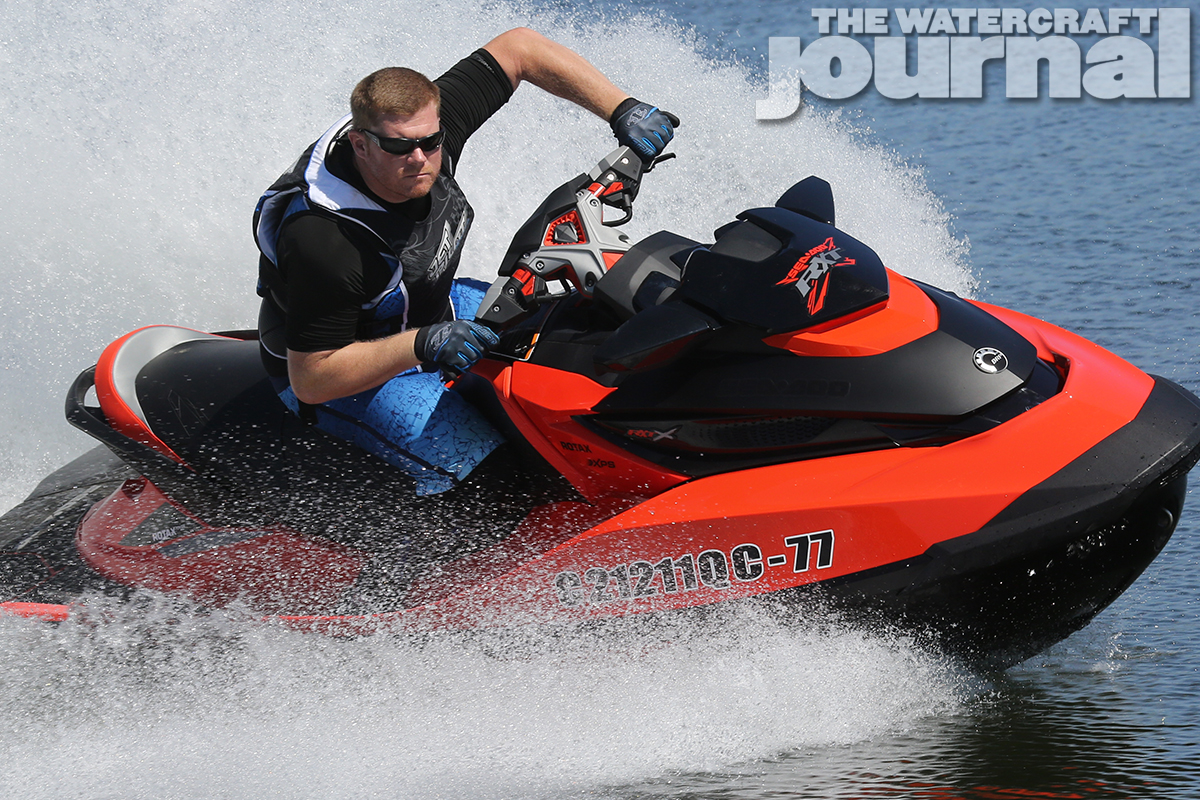
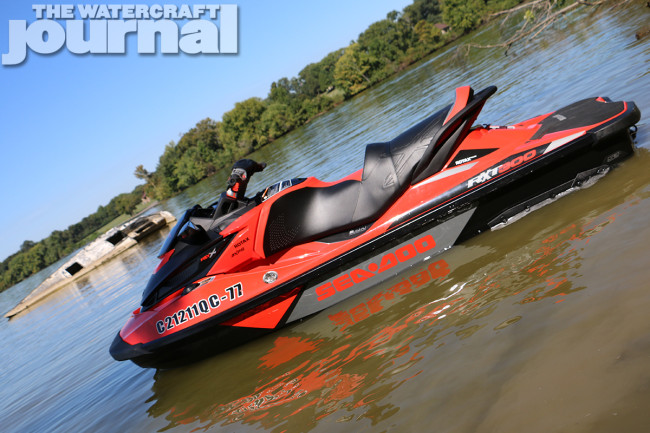
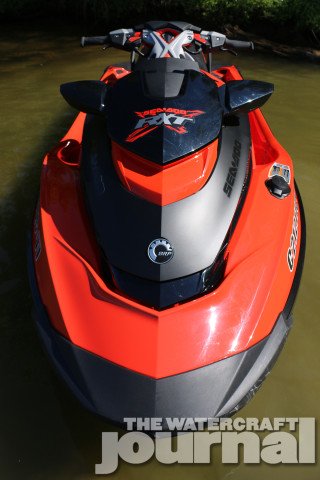
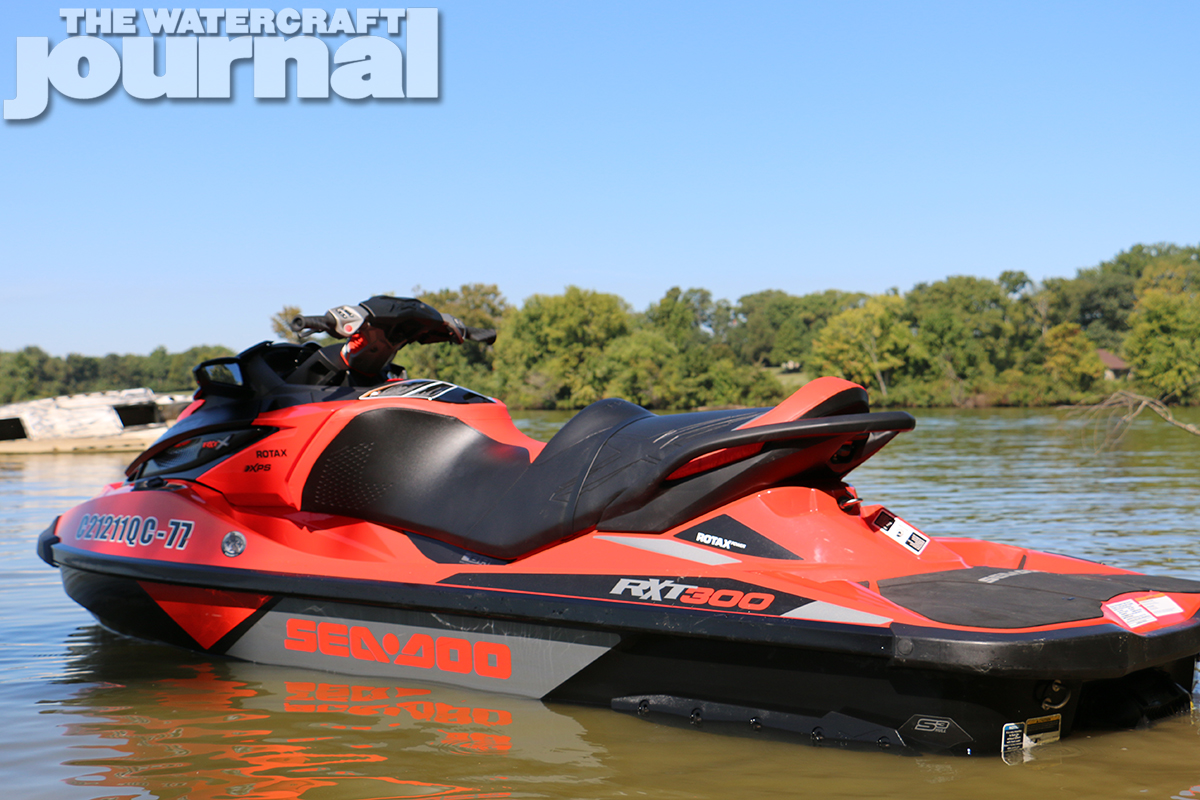
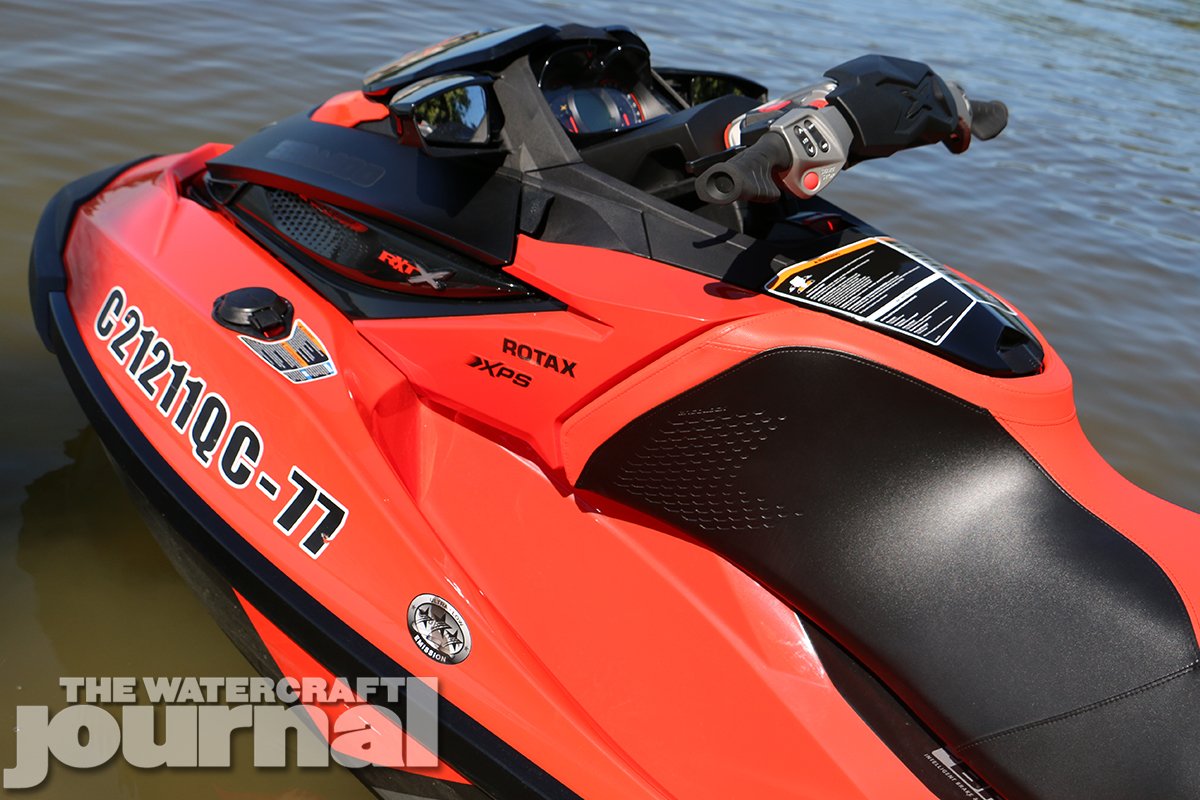
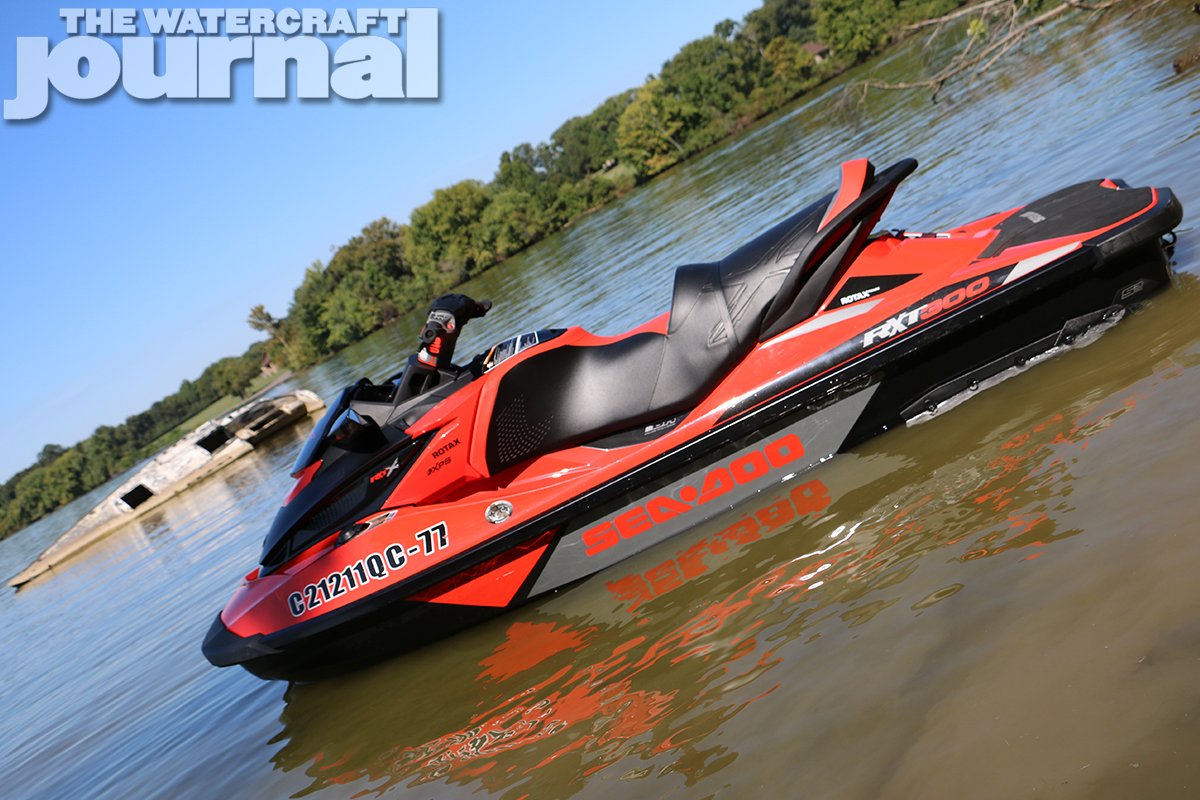
How do you get a middleweight boxer to hit like a heavyweight and be as light on his feet as a featherweight? That, we presume was the challenge pinned to the board in Sea-Doo’s new product development office a few years back. The evolutionary step from last year’s RXT-X 260 to the 2016 Sea-Doo RXT-X 300 of today is far more than horsepower and deserves some further understanding.
Back in 2010, with the 260 model replacing the outgoing 255 RXT-X, the change also heralded the use of the S3 hull married to a fixed-deck (2009 had the S3 exclusive to the RXT-X iS 260 and GTX iS 260). The move was one of Sea-Doo’s more exciting announcements, as it included the widespread use of BRP’s Intelligent Throttle Control (iTC), 5-point tilt steering that encompassed the gauge cluster, and a hinged, single-piece seat.
Besides the bump in performance, the new 2010 RXT-X 260 was long, lean and strikingly aggressive in both looks and performance. But as the past five years rolled past, Sea-Doo’s Performance segment flagship started to slink into the background behind SVHO-powered FX Yamahas and 310-horsepower Kawasakis. If the RXT-X was to reclaim its crown, something needed to be done.
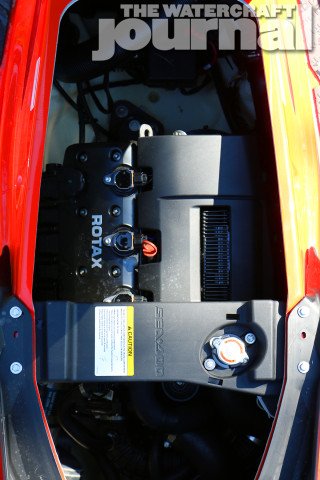
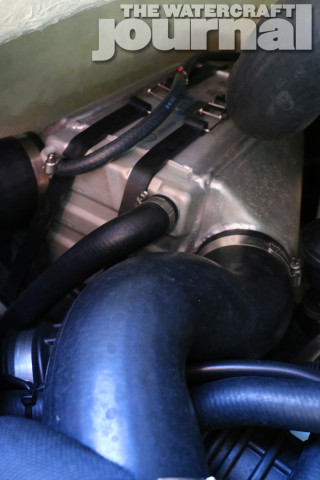
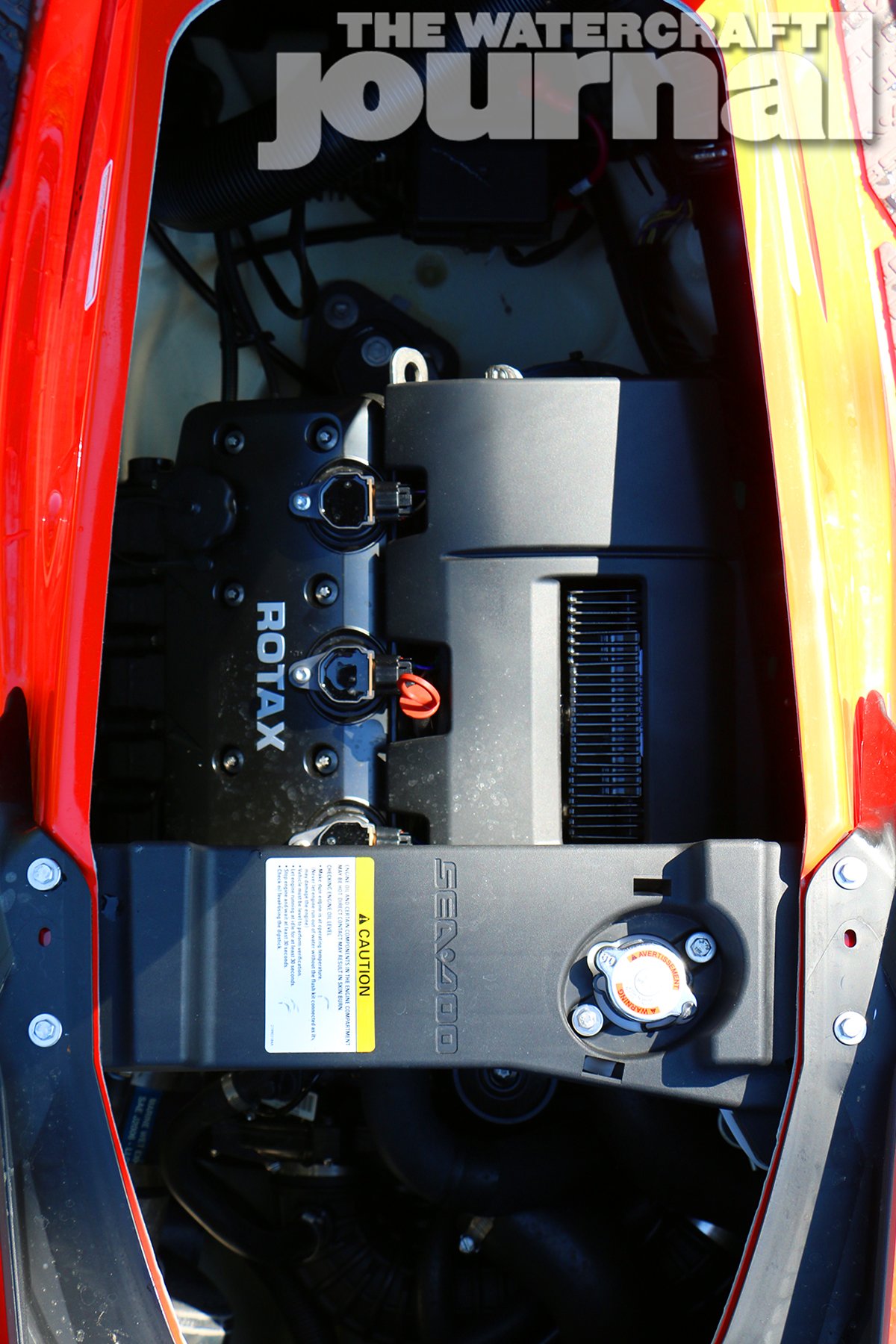
Above left: The new 1630cc ACE motor produces 15-percent more power than the outgoing 1503 Rotax. Above center (and top): The new intercooler features sacrificial nodes, and more than double the cooling capacity of the previous intercooler. It is also available as a retroactive replacement for 260 and 255 models. Above right: The revised flush-mounted hood is not only attractive but purposeful, as a small number of riders had the heavy overhanging top fairing blown off by oncoming waves.
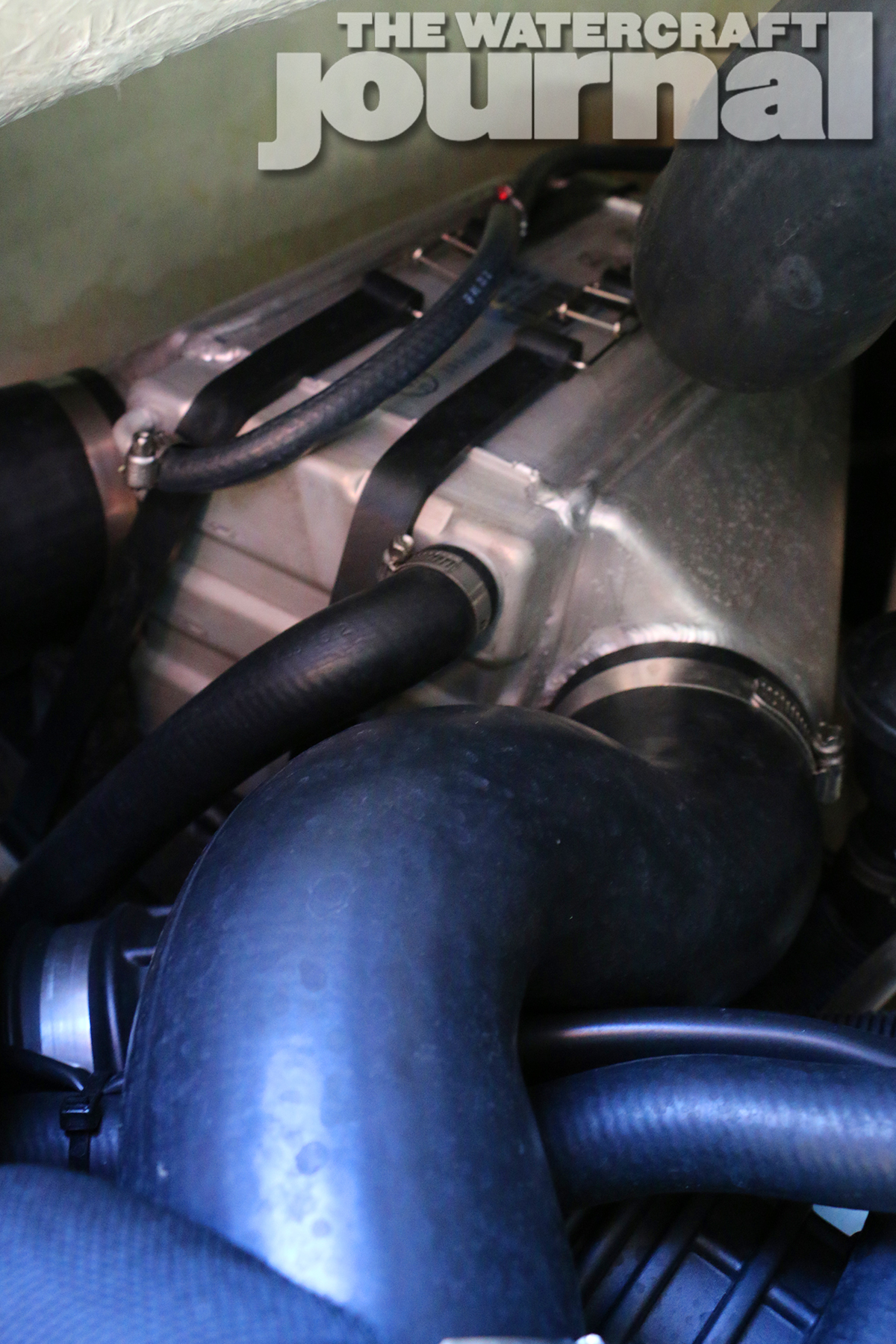
An increased 69.2mm stroke (over the previous 63.4mm), gives the new 1630.5cc ACE its 9-percent added displacement. To offset the larger crank’s throw, shorter, lighter connecting rods topped with more robust, but 20 grams lighter 100mm pistons. Combined with an additional cooling circuit, a single-stage dry sump oiling system, larger heat extractor, and a new, larger intercooler that is 2.2-times more efficient with over twice the capacity, equals 33-percent improved engine cooling, and subsequently, 15-percent more power.
Well, not entirely. A large contributor to the added power is due to redesigned centrifugal supercharger that produces 30-percent more boost (18psi). A new compact wheel spins 8-percent faster at 47,000rpm. The new efficient design features twice the blades of the outgoing design (from 16 to 32) and a revised drive shaft that rides on two composite bearing packs at either end of a near inch-thick shaft, engaged by 8 steel clutch washers.
As per BRP’s Engineering Director for the new engine, Martin Lachance, all superchargers are dynamically balanced prior to assembly, assuring that they are, in fact, “maintenance free.” Of course, there are larger changes to the ACE motor’s single-camshaft top end, including a new combustion chamber design, new larger injectors, and a new coil-on-plug direct-ignition system that produces double the ignition energy for a hotter, more efficient burn.
Equally, Rotax minimized both weight and internal engine temperatures by replacing the pressed-in steel sleeves with a new plasma coating created by Rotax’s team in Gunskirchen, Austria. Applied through a proprietary thermal spraying process, the coating not only saves weight from the heavy steel sleeves, but improves surface durability, minimizes friction and increases heat transference.
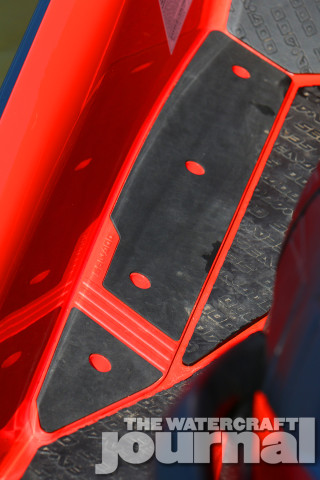
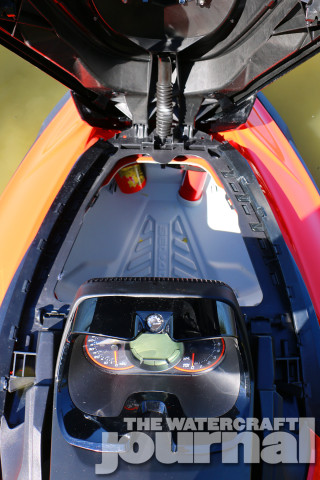
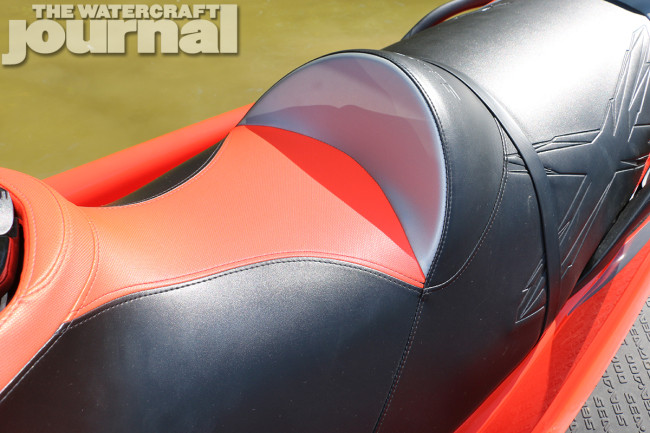
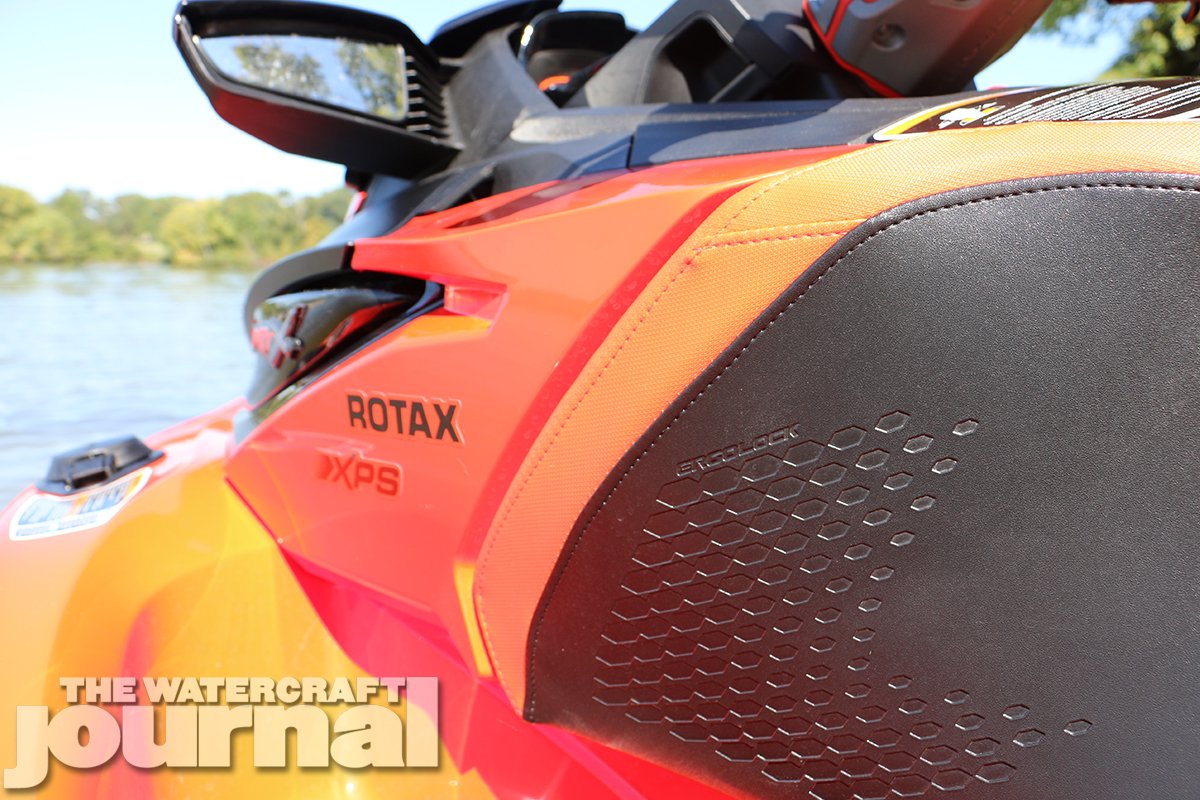
Above left: The foot wedges help angle the rider’s knees inward to pinch the seat like a sportbike. Above right: Accommodating the new Ergolock seat resulted in enlarging the glove box. The iPhone 5S is to show scale. It’s possibly the biggest glovebox on the market today.
All of this results in a arm-stretching amount of mid-range power, continually pulling upward along its ascending torque curve. Staving off cavitation is the 10-vane stator, multi-diffuser venturi, new 159.5mm prop and larger diameter wear ring identical to the RXP-X 300, keeping the RXT-X’s pump loaded and biting hard, be it in a straightaway, in the apex of a turn or rocketing through chop.
Yet again, the 2016 RXT-X 300 isn’t merely an increase in horsepower, but so much more – particularly to rider ergonomics. Sea-Doo has already applied its multi-point-of-adjustment AES (Adjustable Ergonomic Steering) handlebar to the RXT-X back in 2010, its eight points of adjustment permiting for dozens of configurations (to handlebar grip width and angle). The addition of new palm wedges molded into the grips being new.
The RXT-X won’t lay over on its outer edge like the P-X, but will bank conservatively, offering a slightly more secure, easy feel. And unlike the P-X, the longer T-X shines best in snapping long, sweeping turns. Admittedly, we struggled to find enough boat chop to truly upset the RXT-X’s pump engagement, so we failed you offshore guys on that one. Sorry.
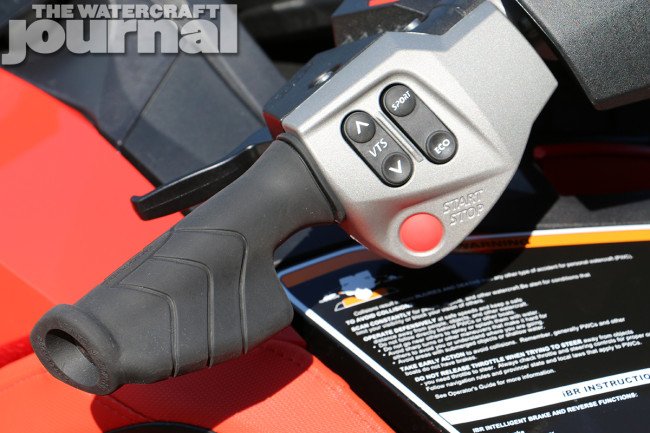
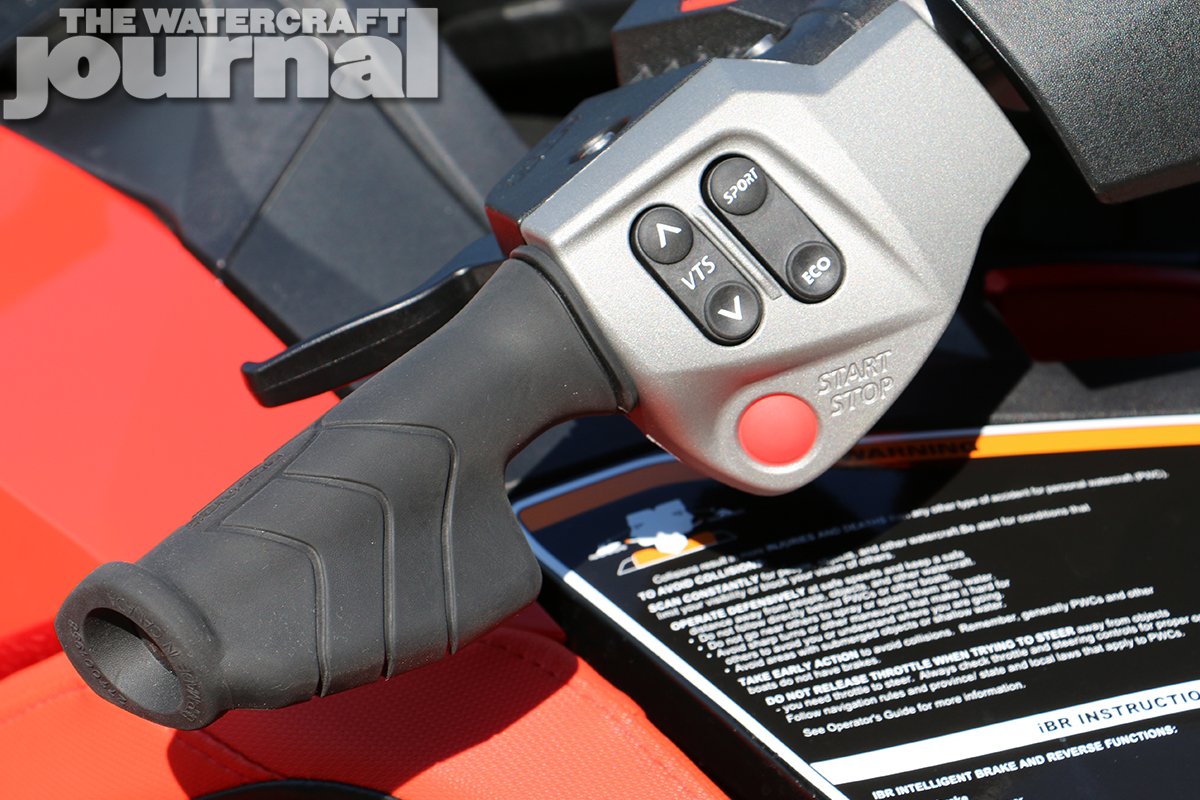
Likewise, the integration of the iControl controls into the AES handlebars – allowing iTC commands for Touring, Sport and ECO engine tunes, on-demand trim settings via the VTS system, and toggles for the in-dash controls (RPM, MPH, MPG, and fastest lap time counter). Identical to the RXP-X, boost gauge tops the LCD screen flanked by an easy-to-read analog speedometer and tachometer.
But the big change to the RXT-X’s ergonomics is found in the seat and footwells. By incorporating its Ergolock seating system and accompanying foot wedges from the RXP-X, the new RXT-X (and all S3-hulled machines) now allows the rider to use their knees and thighs to pinch the narrow saddle just like the sportier P-X. The result is a dramatic difference in rider input and comfort, particularly while cutting a tight corner.
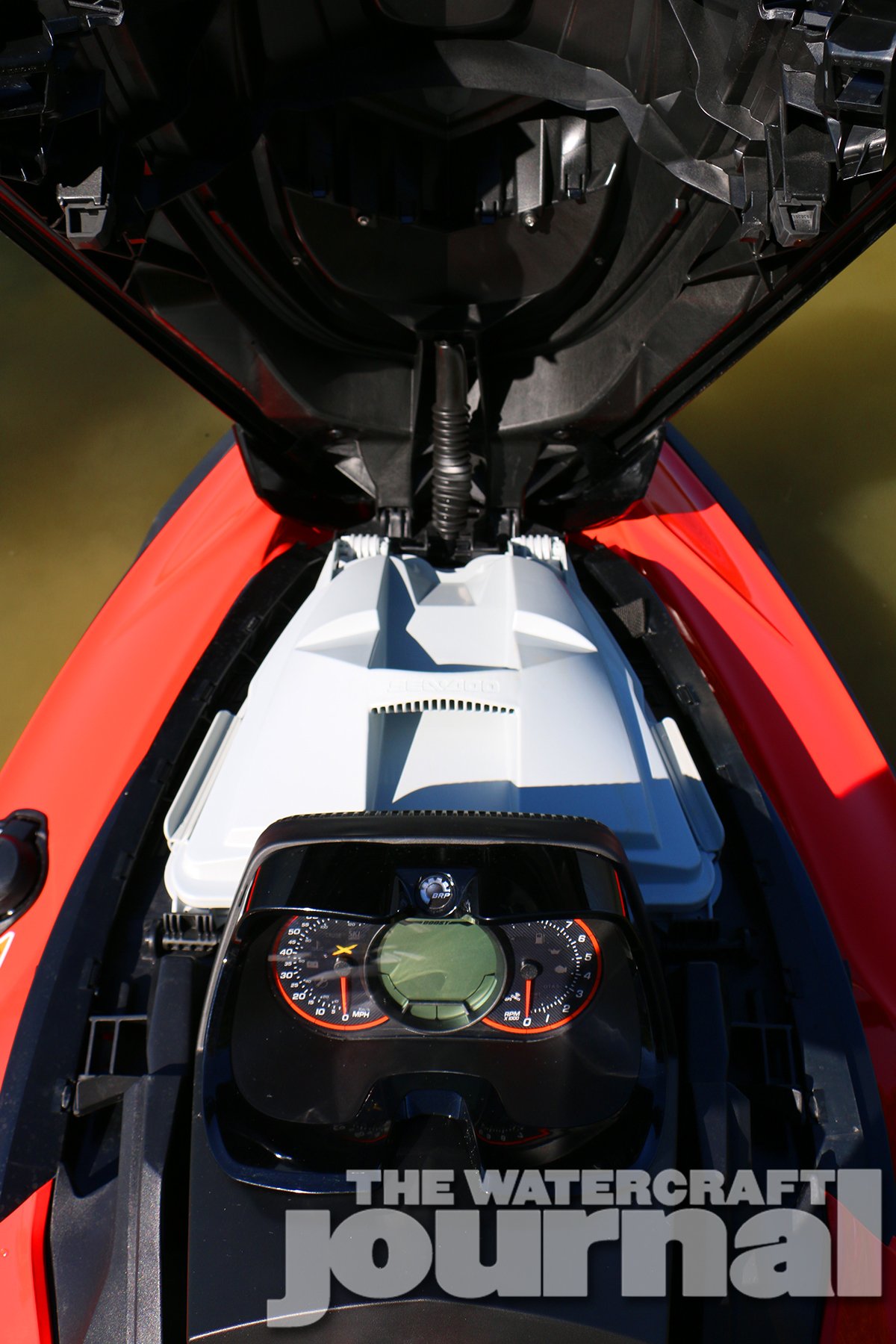
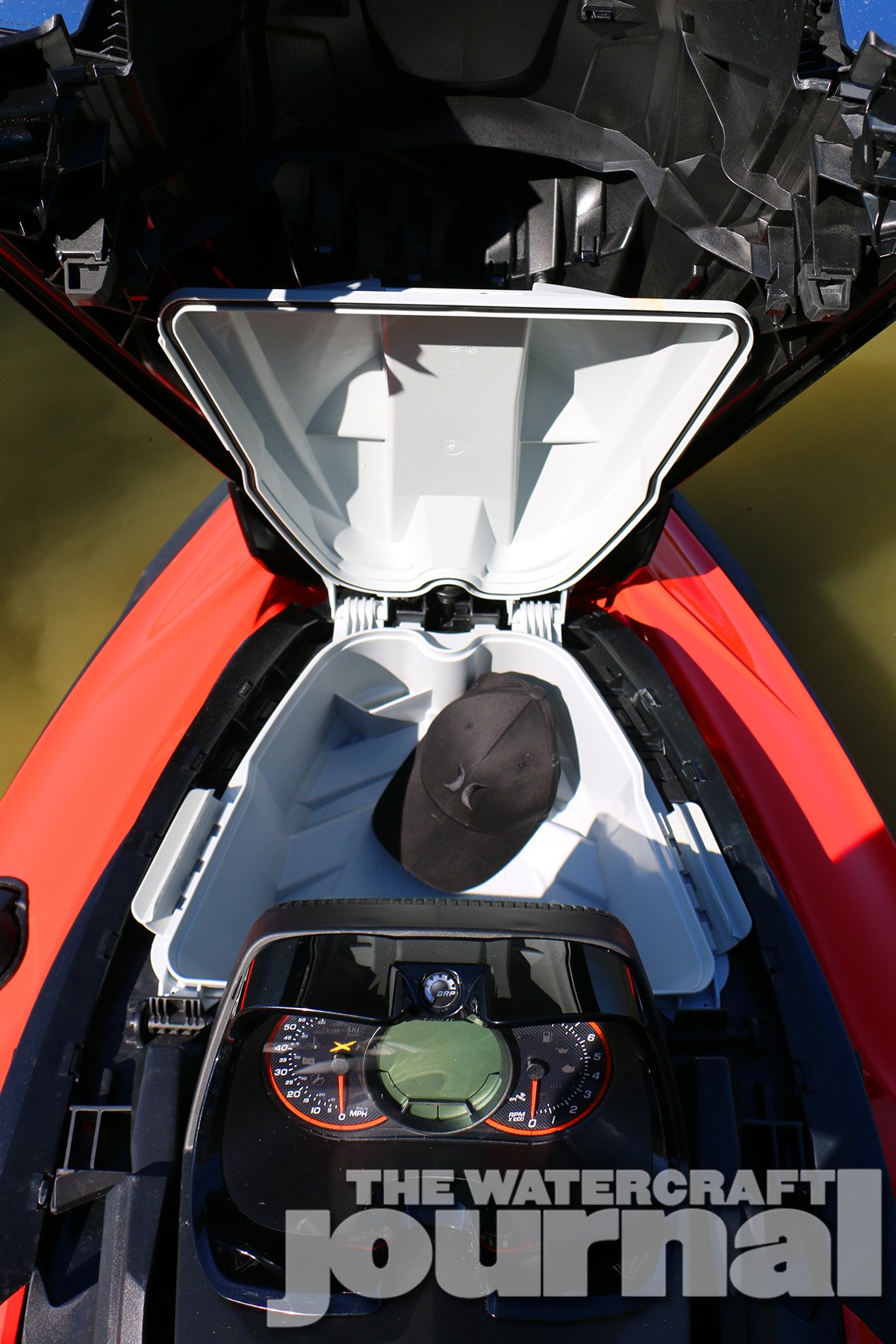
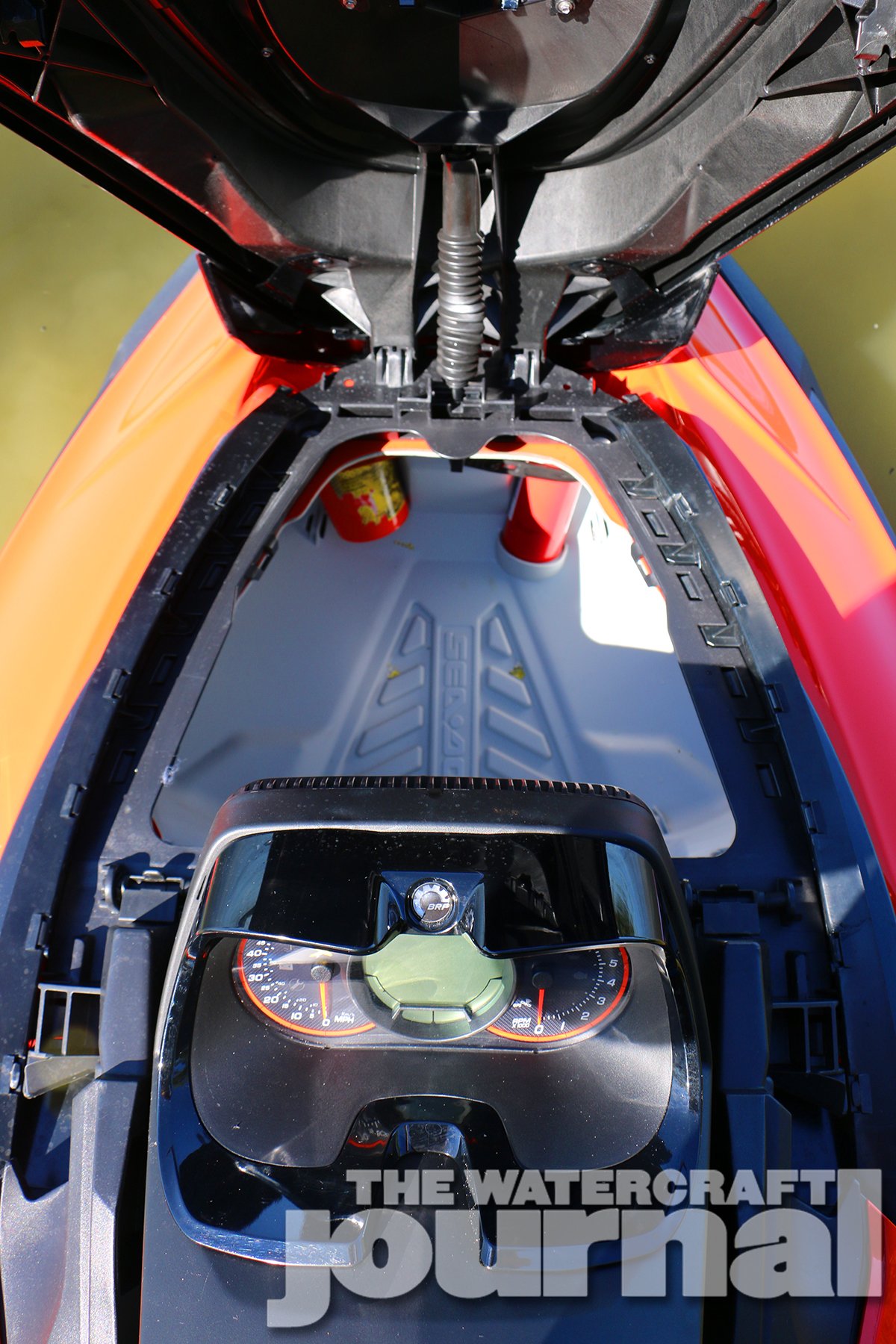
To allows for the new hourglass-shaped Ergolock seat, Sea-Doo needed to expand the fairings, consequently nearly doubling the glovebox capacity. Together with a new, completely furnished front storage in the box not only permits stowage of Sea-Doo’s removable watertight bin, but under it as well. This adds up to three times more total capacity than before (42.8 gallons).
In a surprising turn of events, the 2016 RXT-X 300 actually weighs less than the outgoing 2015 RXT-X 260 by an impressive 35 pounds (850 lbs. vs. 885 lbs.). Contributors to the weight savings are found in the relocation of the battery fore of the engine and the new second-generation iBR (Intelligent Brake & Reverse) motor located over the pump tunnel, thus removing the rear access panels.
Above: Here you can see how Sea-Doo’s RXT-X 300 not only offers its watertight, sealed storage bin (hat shown for scale), but now features a fully furnished storage cabin beneath the bin, which can house a full-sized PWC cover.
Of which, the new iBR employs a redesigned three-piece bucket system that deploys to slow the RXT-X 160-feet shorter than other non-brake equipped watercraft. New too are the motor, actuators and mounting hardware, all in an effort to successfully eliminate the heavy nose-plowing of the previous iBR-equipped runabouts.
In all fairness, our review of the 2016 RXT-X 300 should’ve been published first. It is after all, the ski Sea-Doo introduced to us before the others, and as you might’ve already seen, features the most improvements and innovation over its previous model than the RXP-X. (We just knew more people would want to see the 2016 P-X first.)
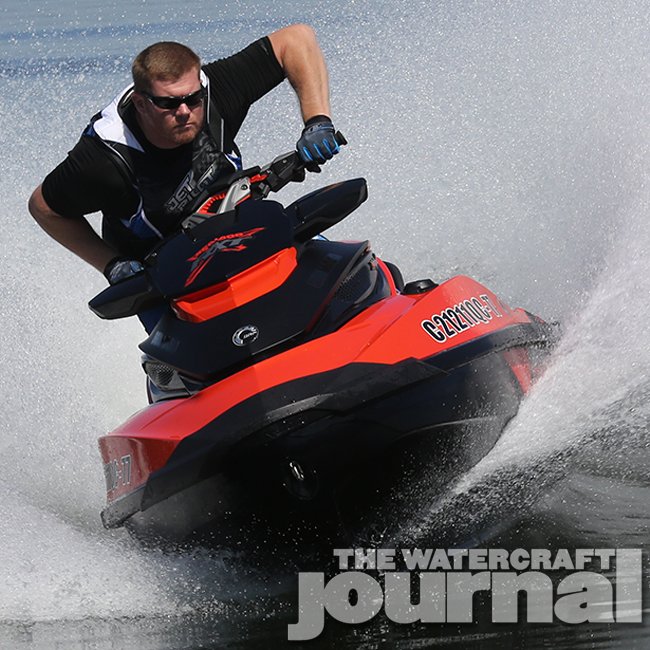
In our two days of testing, the RXT-X 300 never once failed to impress. With ideal conditions, our test unit (which was running the international “RS” tune, and not capped by the United States Coast Guard-mandated 68mph) reached a best of 71.1mph at 7,800rpm. Unfortunately, for us Americans, we can expect that number only after going with an aftermarket ECU or reflash.
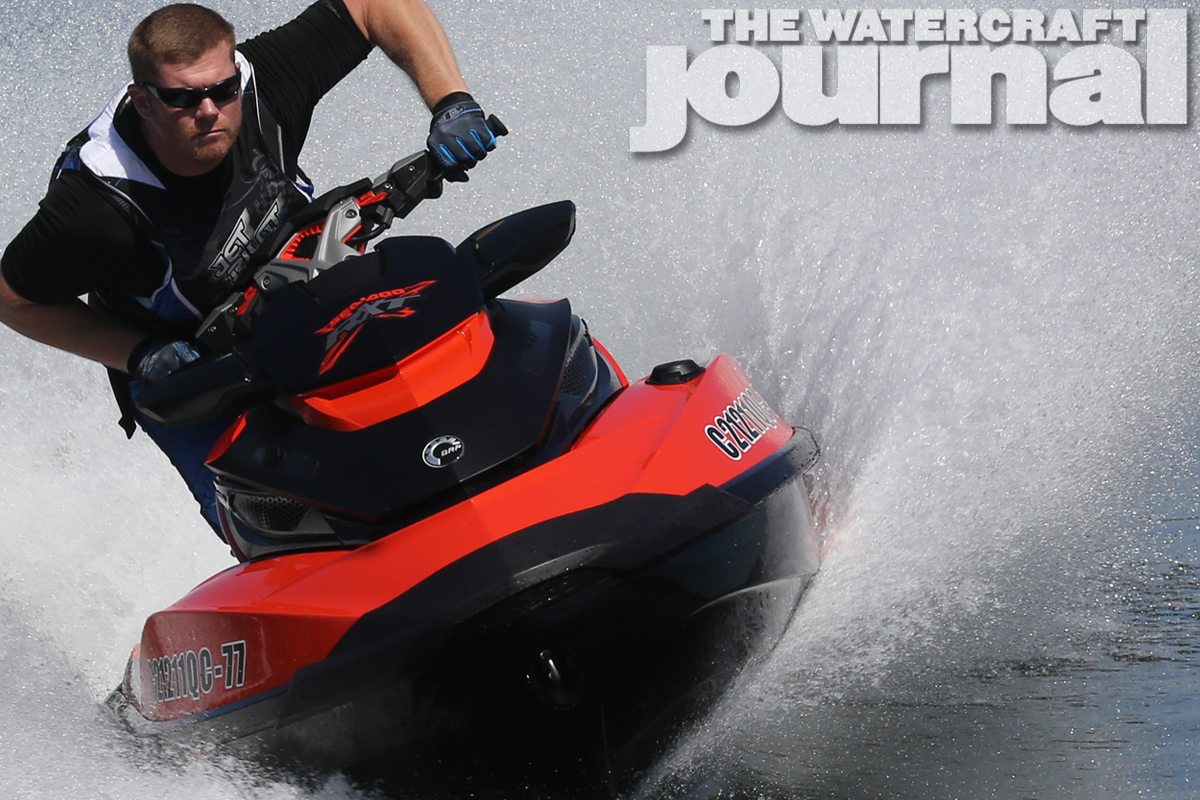
Although the hull and adjustable sponsons remain untouched, the addition of the 300-horsepower ACE motor, larger prop, improved (and lightened) weight distribution and rider positioning radically changes how the RXT-X enter, banks and exits a turn. Employing the full use of the Ergolock seat, and centering ourselves forward over the handlebars, the large RXT-X snapped corners like a craft three-quarters its size.
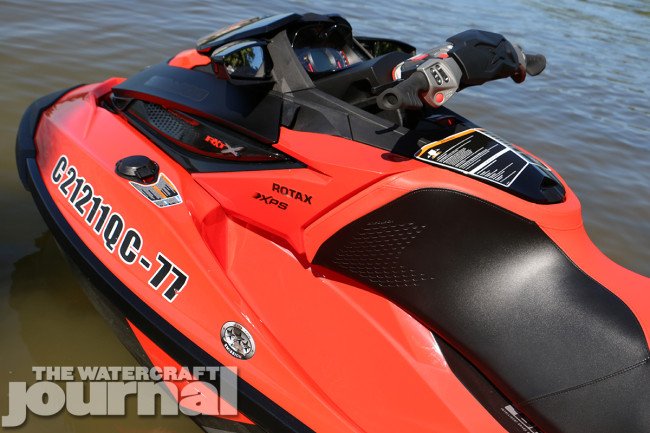
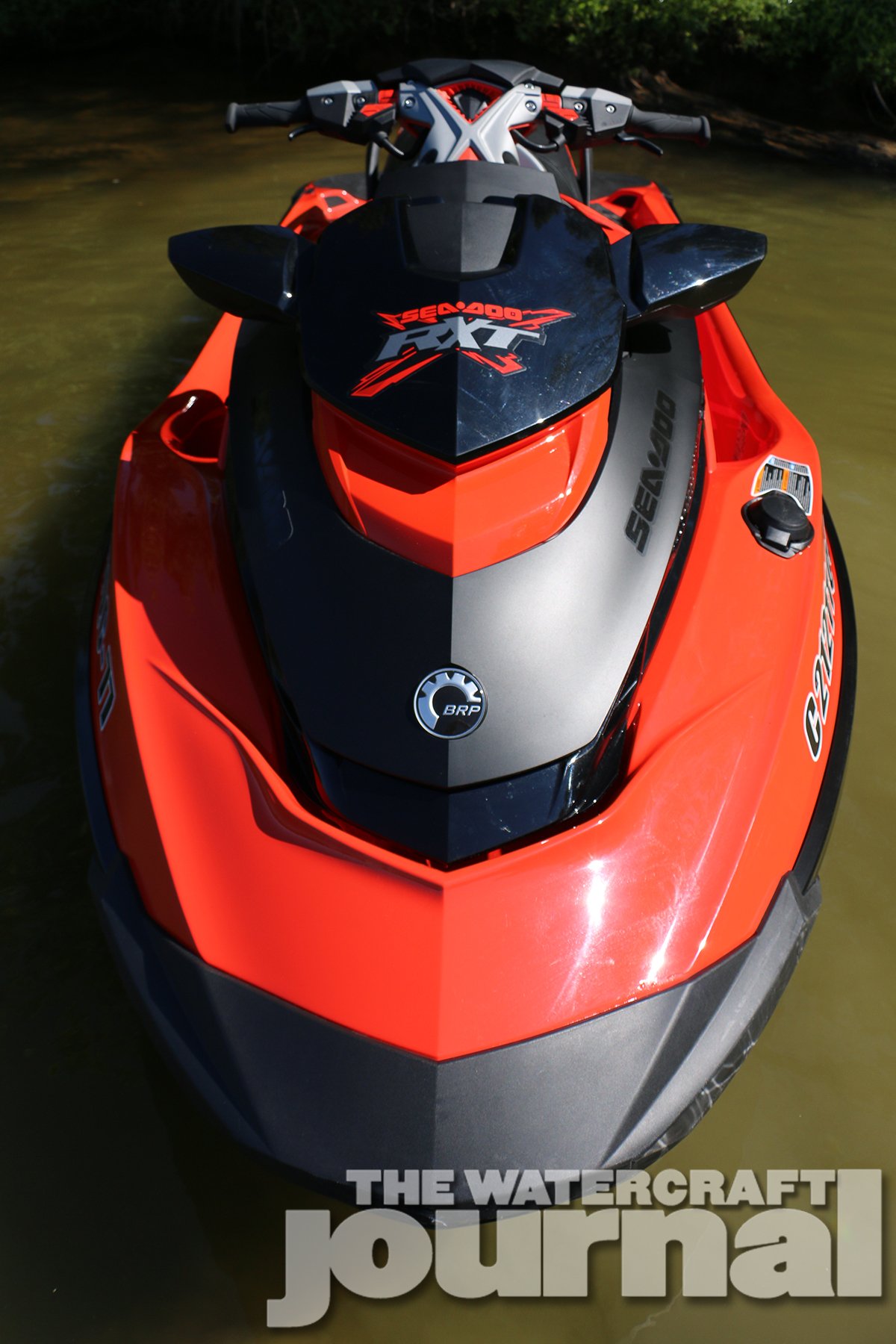
Although we had our choice of either Lava Red/Satin Black or White/Dayglow Yellow, the former is our personal favorite. Priced at $15,399 MSRP, the price is a $400 hike from the outgoing model, but the weight savings, horsepower increase, and added innovation more than equates for the jump in our view.
All-in-all, we couldn’t help but gush over the newest RXT-X and feel its possibly Sea-Doo’s best performance-bred three-seater to date. It was the first of the 2016 lineup we wanted to ride, and after two days of hammering on it, remained our favorite until we were asked to give it back – and we’re pretty sure you’ll feel the same way.
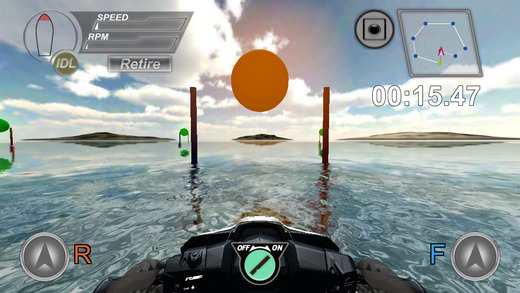
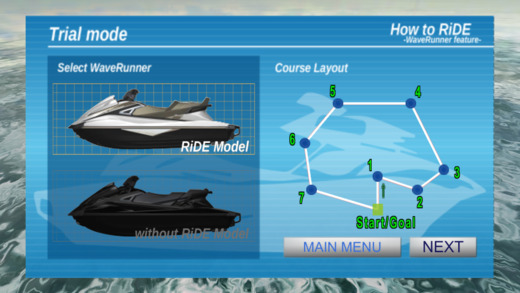
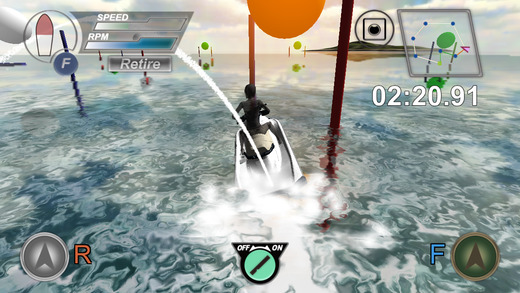
We know what you might be thinking, but according to Yamaha Motor Corp. the new WaveRunner HowToRiDE app (downloadable through iTunes) is less of a video game and more of a instructional tutorial that gives you a “virtual experience of the RiDE system.” While Yamaha still stands its ground in refusing to call their dual throttle system a “brake & reverse” lever, it’s also trying to educate new and returning WaveRunner owners on how to familiarize themselves with RiDE(Reverse with Intuitive Deceleration Electronics).
We first were introduced to this app while at the Yamaha booth at our local Nashville Boat Show, as other attendees of boat shows across the globe have. The app enables the rider to find out how to operate the RiDE system by reversing and braking using the left lever (although we’re not entirely sure how using a iPad gives the same feel).
As per the app’s page on iTunes, “In an actual riding situation, take early action to avoid collisions. The RiDE system is not a braking device for avoiding dangerous situations.” New to the app’s second version are “several cards about use method are indicated at the beginning of the Training mode” as well as a new course for the Training mode, and “The operating method of a throttle and a RiDE lever was changed. Now you won’t need to let a finger slip at the front to increase engine power, but instead you can place your finger on the appropriate button.”