
Home Blog Page 409

Happy August 15th, International Day of the Jet Ski

2

Sometimes, there’s just very little that can be added. When we came across this post on Australian PWC forum jetskiclub.com.au in celebration of the official release of the first Kawasaki JetSki in 1973, we knew there was very little we could say or add to forum member Nigel’s words.

That being said, we wish you all a very Happy International Day of The Jet Ski and hope you can make your way out to the water tomorrow. We might just do the same.

Kawasaki introduced Jet Skis WSAA and WSAB in 1973, the first ever stand-up watercrafts which were limited in production before the company from Akashi decided to bring them in to mass production in 1976.

There are not many out there in the international personal watercraft scene or jet skiing as it used to be in past that know many things about the history of this sport. Actually, many people including enthusiasts of the sport or even Kawasaki CEO’s in many countries who believe that Kawasaki invented the Stand-Up watercraft. Well, they are wrong since there is only one guy in the world who had this vision and drew it on paper and patent it before actually signing an agreement with Kawasaki to produce the first Stand-Up. It was Clayton Jacobson II, an ex banker from Arizona who started working on this project –the project of personal watercraft- in 1960.

On August 15, 1971, Clayton Jacobson’s agreement with Bombardier had expired and it was that very day that Kawasaki signed an agreement to license Jacobson’s invention. By this time, Jacobson had already built his seventh prototype stand-up personal watercraft, using a 372ccRotax water-cooled engine that was in the 1969 model Sea-Doo. However according to Jacobson, Kawasaki was much more receptive and gave him everything he wanted, including corrosion-resistant materials and a 40hp, 400cc, water-cooled engine. The original engine Kawasaki gave Jacobson was a prototype snowmobile engine and it ended up becoming the foundation for 440cc Jet Ski engine.

When Kawasaki manufactured the very first production stand-up personal watercraft, the term or logo of Jet Ski was not yet in use. Originally it was referred as a “Water Jet” on service manuals and later on as “Power Skis” in the owner’s manual.

Jacobson and Kawasaki created six-to-seven different prototypes in 1972, before bringing two models to the market in 1973, the WSAA and the WSAB. The two original models were made of hand-laid fiberglass and included the 1973 WSAA Jet Ski 400, and the WSAB Jet Ski 400. The WSAA featured a flat bottom design that stayed with the JS hull until 1994. The WSAB featured a V-hull that enhanced turning, but was less stable and harder to ride. Approximately 550 of these, WSAA and WSAB, Jet Skies were ever produced, a third of them with the V hull and the other two-thirds with the flatter WSAA hull.

Fred Tunstall, a long time Kawasaki employee had mentioned in the past that they worked on a half-dozen different prototypes in 1972 before eventually deciding on the two models that would hit the market a year later (1973), the WSAA and WSAB. WSAA featured a hull similar to the one installed later on the JS400 and JS550 models. On the other hand WSAB used an aggressive, deeper-V hull. Kawasaki had worked on a lot of different things back in those days but there are probably about six prototypes they were actually testing. The crafts were fairly similar to each other, though Kawasaki were trying different strake patterns or add sponsons, and other things in order to find out how they respond. There was a lot of trial and error involved in to testing back in 1972.

Why the two hull design?
According to Tunstall, Kawasaki went with the two hulls because they were uncertain about who the customer was going to be. The flat hull was much more stable and easy to use; however there was some thought that the V-hull would attract riders interested in competition. Kawasaki never quite knew what they are going to do, especially in rough water. “Man, that thing could curve. The first ride on it, it is worse than a wild horse, but after you spent some time getting used to it, it turned into a lot of fun.”

Apart from the hull design, the two models were the same. In fact, they share the same dimensions, 6-feet, 10 inches long, 24 inches wide and 26 inches high, with a dry weight of 220 lbs and a draft of 4 inches. Those crafts were only slightly shorter approximately by 2.5 inches and lighter about 25 lbs than the long lived Jet Ski 400. The 1973 models had a real prototype look, with the wooden bulkhead braces and hand-machined hardware and sand cast aluminum parts.

The handlepole was also made of fiberglass, but in two parts which were then riveted together. The first prototypes used –one-piece aluminum tubes but Kawasaki switched to the fiberglass on those first models, which worked pretty well. When Kawasaki moved the Jet Ski production line to Lincoln Nebraska, it switched to SMC (Sheet Molding Compound) and then had a few issues with the handlepoles braking therefore, they pretty much shut down production for almost a year until they solved the problem. The aluminum bars when 30? bend and featured a trigger throttle lever.

The first engine
WSAA and WSAB featured the same two-stroke, twin-cylinder water-cooled engine which was actually a Kawasaki snowmobile engine. Engine displacement was 398cc with a bore and stroke of 65 x 60 mm and a compression ratio of 5.8:1. On the inlet side there was 2-1 intake manifold topped with a Mikuni, 38mm diaphragm type carburetor with a piston-port intake system. On the exhaust side, a water-jacketed head pipe was fit with a stainless steel expansion chamber.

Horsepower was translated in to thrust via a single stage axial flow aluminum jet pump of 121.7mm. The pump intake was fitted with a cast-in bar scoop which design was based on the same theory of latter’s top-loader intake grates. The pump featured initially an aluminum two-blade impeller (only a handful of those prototype skis had two-blade props) which was later replaced with a three-blade one.

Both WSAA and WSAB came standard with a trigger throttle lever like many of today’s personal watercrafts. However the start/stop buttons and the manual choke were situated on the dashboard along with the stainless steel hood latch. The reason behind the awkward position of the start/stop buttons was that at the moment this was the safest way to keep the electric box dry. This was actually one the most important aspects that puzzled Kawasaki engineers back in 1972. Many people assumed it was because so many people started out riding on their knees.

Back in 1973 Kawasaki WSAA and WSAB cost $1995 and both craft were the pioneers of Jet Ski that Kawasaki launched in mass production in 1976 with the JS400.

Specifications
Kawasaki WS-AA and WS-AB
Model:T1C91

Engine
Type: 2T, vertical twin,180? firing piston valve, water-cooled
Displacement (c c ): 398cc
Bore x stroke (mm): 65 x 60
Power (hp/rpm): 26/6.000
Torque (Ft.Lb/rpm): 24/5.000
Compression ratio: 5.8 :1
Fuel induction system: 1 x Mikuni BN38 diaphragm type
Exhaust system: Cast exhaust wet pipe with a 2-1 header
Cooling system: Engine-Exhaust-Open loop system
Fuel consumption (L/h):5.7 @32kph (1.5gal/hr 20mph)

Hull
Type: Modified V, double concave (model WSAA-Flat hull); Deep V, Double concave (model WSAB).
Hull material: Hand laid fiberglass, with gellcoat finish and wood bulkhead bracing.
Deck Material: Fiberglass reinforced SMC
Overall length (mm): 2.140 (84in)
Overall width (mm): 610 (24 in)
Overall height (mm): 640 (26 in)
Weight (kg): 110 (243 lbs)
Pump and drive line
Pump: Axial flow, single stage, 6-vane stator.
Pump diameter (mm): 121.7 (4.8in)
Reduction nozzle diameter (mm): 70
Steering nozzle diameter (mm): 84
Impeller: Aluminum, two blade

The Kawasaki Jet Ski stand-up dream started in 1973 and was sadly ended in 2011 with the last model of the stand up jet ski, the SX-R 800. From 1973 to 1976 the JS 400 was the only model ski to cruise the waterways. then in 1977 the JS 440 came about with not too much more power but it was a change. 1982-86 the JS 550 and JS 300 made the scene. the 550 for adults and 300 for the children. once 1987 hit, it was just a steam rolling of new types of jet ski’s year after year. Below are the dates and skis that came out within that time period:

1973-1977: JS 400JS 440; 1982-1989: JS 550, JS 300, 650 X-2, 300 SX, 650 SX, JB 650 (jetmate), JF 650 TS; 1990-1995: 550 SX, 650 SX, 750 SX, 750 SXi; 1996-2000: 550 SX, 750 SXi Pro; 2001-2011: SX-R 800, X-2 800
 

Gallery: Krash Nationals USA Tour Kicks Off With Grayland Open 2014

1

The Krash Nationals USA held its opening round of the 2014 freeride season at the Grayland Open in Grayland, Washington this past weekend. With a field of 40-plus strong competitors across the five classes: Rookies, Amateur, Pro, Masters, Runabout and a Pro Jam, everyone knew it had the ingredients for a weekend full of spectacular riding.

The conditions for the duration of the weekend were challenging with a small inconsistent swell for the most part but the event was blessed with clear sunny conditions and moderate winds.

The contest was judged on a similar format to the one used at the IFWA and Krash Nationals Australia, which consists of 50-percent surf riding and 50-percent aerial tricks (apart from the Rookie class which was only judged on surf riding and nose stabs).

The score card shows numerous boxes for aerial tricks, each box has a category for height, difficulty, execution, body extension and number of limbs off the craft. Surf riding on the other consists of open face riding being the lowest all the way through to trick re-entries and tube riding being the highest, and at the end of each criteria a calculator to work out the overall scores.

The Pro field consisted of riders like Jake Montandon, the reigning world champion who made the trip from South Africa to familiarize himself with his new Blowsion-built Krash Predator and get in some vital training leading up to Surf Slam next month in Oregon.

Tanner Thomas made the trip down from Ketchikan, Alaska after a long winter to get back in the surf and begin his assault on the US freeride scene over the coming months.

Abraham Ho all the way from Cancun, Mexico also made the trip out for this year’s National Tour also a stand out in the Pro class with big corked out can can flips and a solid surf riding.

The Bright brothers didn’t disappoint with some of their signature moves on display, Jake absolutely sending it in the Pro Jam with one of the biggest corked-out underflips that any of the judges have ever seen, followed by a wicked flex roll to take it out; and Zack doing a clean barrel roll re-entry on one of the larger sets of the weekend to put him in a close second in the Pro Jam and third overall in the Pro Class.

Pete McAfee was a true inspiration in the Pro class over the weekend, throwing can-can flips throughout the opening heats, proving himself to be a real contender in this year’s championship.

The Lawlor brothers were there after taking out the Grayland Open in 2013 and were pretty keen to take it to the Pro class and put their skills on display. Randy unfortunately, just dipped out in the opening heats by the slimmest of margins but definitely showed he will be a force to be reckoned within years to come.

Brandon – after taking out the UK National Round in June – was quick to stamp his authority on the Pro class with an array of difficult aerial maneuvers combined with some fluid surf riding, putting him in the finals on Sunday and in contention for some valid points.

Our weekend announcer, Mr. Mark “Hollywood” Gomez also graced the scene as someone that has obviously been doing some serious training leading up to this year’s season. Mark not only took out the “Best Trick” of the contest with a double can-can flip but also won a closely-contested final with Brandon Lawlor. Both riders took to the water for their 8 minute final in tricky 2-3 foot conditions with intent to be crowned the Round 1 winner.

Brandon opened up strong with some very clean Madonna flips and one-foot, one-handed rolls while Mark opted to get some strong electric surf riding on the board. As the heat reached the 6 minute mark and both riders looking tied for points, Mark launched a big and perfectly executed scarecrow barrel roll, soon after that, Hollywood was spotted kneeling in his tray and setting his flip bars up, as the judges looked on in anticipation to see whether he could pull something miraculous out of the bag to tip the scales in this closely contested class.

He didn’t disappoint. With a minute to spare, Mark did the seemingly impossible in the tough conditions and not only did one but two double can-can flips to seal himself on the top of the box. Big congrats go out to Mark Gomez full pulling down the Pro class win at the first round of the Krash Nationals tour.

The Amateur class had one of the largest fields and some great up and coming talent. Danielle Lawlor lived up to the Lawlor name and charged her way through the opening heats, but found herself stepping off of her Rickter in two of the most spectacular bails we saw all weekend and earning herself the Gnarliest Wipeout award.

The finals between Dane Dials and Jerry Cox was another hotly contested round with both riders going straight at it after the sound of the horn, racking up valuable surf riding points with Dane opting to go for some flips at the half way point to secure his win in the class and earn himself our other top prize of $500 to be spent at DASA. Jerry with some flips also but it wasn’t quite enough to take the top spot.

In the Rookies class we had Curtis Marker, Donovan Issac, Demian Morgan and Ky Hyytinen making up the Top 4 and really showed great surf riding for being in the beginner class. The two young guns, Demian and Donovan prevailed and put on a great exhibition in the finals. Young Donovan opened every wave he could find on his dad’s borrowed ski but it wasn’t quite enough to topple Demian who showed fantastic skill as a surf rider. Displaying her ability to do nose stabs in both directions, she earned the top spot by the slimmest of margins.

The Grayland Open, by design, is geared toward the young and beginning riders. As the winner of the Rookie class, Demian was awarded the top prize for the weekend which was donated by Xscream. She was given a complete adjustable handle pole, steering, bars and mount set up. She was super stoked but very humble to receive such an awesome prize at her first competition. She showed great character along with solid riding ability all weekend and is for sure a future star in this sport.

The Masters displayed true superiority in the ocean with their years of experience. Jay who rode in three classes and took out the top spot, Rick Pearce a former Canadian Freestyle Champion both barrel rolling and back flipping his way through the heats and taking out third, Chris Batten of Idaho who up until the weekend hadn’t performed a backflip but dug deep in the semis to complete two and go on to finish second.

We also saw the return of the runabout class with Jason Lindstrom grabbing some huge air and variety of aerial tricks to take out first, Crescent City freerider Roy Rook on his X2 wasn’t to be out done and with some of the most intense surf riding ever seen in the run about class, took out second followed by Eric Wilson showing some quick surf maneuvers and airs on his Sea-Doo XP.

All in all, it was a fantastic turnout for the 2014 Grayland Open and the first round of the Krash Nationals USA some new faces and some old. Extremely well organized by Dan Lingren and Chris Farell. A huge thanks to Chris and Maria Tiffany at the Cranberry Road winery for his exceptional sound system, breakfast burritos, pizza and winery for hosting us every night and feeding us every day.

A big thanks goes out to all the sponsors for supporting the Krash National Tour and the Grayland Open: Krash Industries, Liquid Militia, Tyler Rental, Cranberry Rd. Winery, Bennet’s restaurant, Blowsion, Hydro-turf, DASA, TC Freeride, Pape Rents, Westport Inn, Xtreem Throttle, Grays Harbor Tourism, House Brothers Const., 105.7 The Jet, Westcoast Surf Riders, Pro Rider Magazine, Wetracer Magazine and The Watercraft Journal.

Photography courtesy of Denise Knudson and Mark Fischer.

_DSC3885 _DSC4118 _DSC4220 _DSC4221 _DSC4238-Edit _DSC4238 _DSC4239 _DSC4423-Edit _DSC4975 _DSC5162 _DSC5221 _DSC5276 _DSC5277 _DSC5280 Demian Marco Grayland 2014-1-2 Grayland 2014-1-5 Grayland 2014-1-6 Grayland 2014-1-7 Grayland 2014-1-9 Grayland 2014-10 Grayland 2014-11-3 Grayland 2014-0730 Grayland 2014-1883 Grayland 2014-7105 Grayland 2014-7621 Grayland 2014-7707 Grayland 2014-7721 Grayland 2014-7733 Grayland 2014-7746 Grayland 2014-7748 Grayland 2014-7755 Grayland 2014-7760 Grayland 2014-7765 Grayland 2014-7769 Grayland 2014-7771 Grayland 2014-7776-2 Grayland 2014-7776 Grayland 2014-7782 Grayland 2014-7791-2 Grayland 2014-7791 Grayland 2014-7792 Grayland 2014-9397-2 Grayland 2014-9398-2 Grayland 2014-9403 Grayland 2014-Fri-0043 Grayland 2014-Fri-0111 Grayland 2014-Fri-0597 Grayland 2014-Fri-7189 Grayland 2014-Fri-7190 Grayland 2014-Fri-7195 Grayland 2014-Fri-7214 Grayland 2014-Fri-7215 Grayland 2014-Fri-7239 Grayland 2014-Fri-7302 Grayland 2014-Fri-7304 Grayland 2014-Fri-7377.2 Grayland 2014-Fri-9501 trophies
<
>

Video: Hydro-Turf Used In Monumental SpaceX Dragon Spacecraft

0

We’ve had quite a bit of news coming in from our friends at Hydro-Turf lately. Although this latest bit of info isn’t exactly focused on personal watercraft, it’s just too cool not to share: Because of the high durability against the harsh marine environment and applied pressures, Hydro-Turf matting (and quite a bit of it) was used to line the recovery cradle for the SpaceX Dragon spacecraft.

Not sure what we’re talking about? That’s OK, many still are. After the current American presidential administration effectively reduced the National Aeronautics and Space Administration (NASA) into a redundant surveillance outlet for data gathering, the task of exploring the outer reaches of our universe was unceremoniously handed over to the private sector.

Former PayPal creator and Tesla Automotive chairman Elon Musk sought to do what was only possible by seemingly limitless-funded government agencies: put a man in orbit. On May 25, 2012, SpaceX made history when its Dragon spacecraft became the first privately developed spacecraft in history to successfully attach to the International Space Station.

It took four days, from May 22 to May 26, for the Dragon to be launched via SpaceX’s Falcon 9 rocket from Cape Canaveral Air Force Station, to orbit the Earth as it traveled toward the International Space Station, and eventually berthed to the International Space Station. After spending six days attached to the ISS, the Dragon returned to Earth, carrying a load of cargo for NASA.

In the video below, you’ll notice the Hydro-Turf matting lining the cradle during recovery of the spacecraft at 2:10. Enjoy:

Gallery: Kicking Off The Coquina Beach Freeride

0

This past weekend was the first annual Coquina Beach Freeride. Coquina Beach is a beautiful spot located on the southern tip of Anna Maria Island near Tampa Bay, Florida. It was the first freeride on the west coast of Florida and was hosted and organized by Cody Taylor.

The event was held at Coquina Beach park in Manatee County. There is a boat ramp for launching larger skis and a beach launch as well. From the launch there was riding on the protected bayside waters.

From there it is a short ride out the pass between Anna Maria Island and Longboat Key for riding in the Gulf of Mexico. There are shoals on each side of the pass that offer surf riding when the conditions are right.

It was a great turn out for the first year with over 50 skis on Saturday. The weather was postcard perfect and water was super clear.

Riders came from all over Florida including a group of east coast surf riders from the Daytona Beach (including Nick Foederer of the Daytona Freeride with Carter Brackett, Ken Cupo), and a group from southeast Florida from Thrust Innovations (with Joju Frankel and Edward Dale Graham) as well as lots of local area riders.

The lineup of skis was as diverse as their riders, which included Sea-Doo Sparks, WaveBlasters, Kawasaki SX-Rs, SuperJets, FX-1, and many aftermarket hulls including Superfreaks, Rickters, Backie Chan, and others.

Event sponsors included Riva Racing, JetManiac, Thrust Innovations, ESI powersports, Westside Powersports, Blowsion, Liquid Militia, Extreme throttle, and Carter B designs.

The event raffle was held Saturday evening poolside at the event hotel Tortuga Inn and Beach Resort. Sponsors donated some great freeride parts and swag. Nearly a thousand dollars was raised and donated to the charity Cancer Foundation: Angels for Lila Ruiz; a little girl who suffers from megacystis microcolon intestinal hypoperistalsis syndrome, a condition that has Lila going back and forth to the hospital to see specialists, racking up significant medical costs.

The host hotel was located within easy walking distance to some great beachside restaurants and bars for after riding unwinding and partying. This event was a good time and offers a new summer freeride for the west coast of Florida.

1 2 3 4 5 6 7 8 9 10 11 12 13 14 15 16 17 18 19 20 21 22 23 24 25 26 27 28 29 30
<
>

Quick Tech: Customizing Your Ski With IPD Graphics and Hydro-Turf

3

We went with Hydro-Turf’s pink-and-black two-tone mats as well as a custom silver-and-pink Cruiser seat cover. Because of HT’s high volume, turnaround between our initial order to arrival was about a week.

Despite a price tag dancing around $11,000-$13,000, Yamaha’s FX High Output Cruiser is one of the most popular full-sized naturally-aspirated runabouts on the water today. Equipped with cruise control, manual trim control, a No Wake mode and plenty of other comforts, the Cruiser manages to be both sporty and economical, while being just a lot of fun.

The problem is that with only two available color combinations (double that of similarly-equipped competitors), the Yamahas tend to be a little conservative in their styling cues. That’s why many are turning to find new ways to personalize their newest toys. While there’s no shortage of performance goodies to eke out some much desired miles per hour from their machine, giving your ski a unique look to match your personal taste is still a rare art form.

To give this ’14 Yamaha FX HO Cruiser a bit of personal flair, we reached out to IPD Graphics and Hydro-Turf. Many will recognize IPD as a major vinyl graphics sponsor for a collection of top notch PWC racers around the globe, including Jimmy Wilson, Tommy Bonacci and Bibi Carmouche.

The ease of removal of the factory traction mats depends on age and weathering. Because our ski was so new, the adhesive-backed factory mats peeled off effortlessly.
Prior to gluing the mats in place, first clean the surface of any residual adhesive. Then place the mats in the desired area and mark your corners.
Hydro-Turf makes installing their mat kits incredibly easy with their adhesive-backed mats. It’s as easy as peel-and-stick.
Likewise, the gunwale mats are just as easy to install. Just make sure to place them on straight the first time.

Of course, Hydro-Turf needs little to no introduction, but as the title sponsor for the Pro Watercross Tour, major traction mat supplier for Kawasaki, Yamaha and BRP as well as boat builders around the globe, they’re no stranger to providing unique and durable materials.

Ordering from both companies was as easy as a couple of emails. Both IPD and Hydro-Turf provide high resolution color swatches to compare to your desired combination. Because we wanted a little retro action, we opted for a hot pink, silver and black combination. With only a new graphics kit, seat covers and traction mats, we were surprised at how dramatic the change was – and we think you will too.

Here we’ll show you a complete step-by-step process how we transformed this “plain Jane” FX HO into a cool, customized ski that grabs everyone’s eye – and how quickly you too can do this. (Altogether, it took us about four hours of work.)

We suggest applying some weight (although it’s not mandatory) to get the mats to adhere evenly across the surface.
Next, we went about removing the factory graphics. We left the adhesive-backed chrome “Yamaha” emblems as we thought they provided a nice touch, but opted to replace all the vinyl decals.
Because the IPD Graphics kit we chose wasn’t covering a lot of space, we didn’t have to chase bubbles and wrinkles as much as kit that cover larger surfaces.
The IPD Graphics kit is not cut at the seams for the hood or other fairing panels. You will have to do this yourself. This is why it is best to apply your vinyl decals wet (using a spray bottle filled with water is best), so you can slide them around.

Admittedly, applying new graphics to a personal watercraft can be tricky (just refer to our previous article on custom graphics kits). Thankfully, the IPD Graphics kit for the FX HO was nowhere as complicated, nor required much effort to contour over complex corners and convex curves.

Rather, we opted for a rather simple kit that merely highlighted the angular lines of the Yamaha’s fairings. Many kits cover a large amount of surface area, and thereby require a lot of bubble and wrinkle chasing. The hardest part of our IPD kit was knowing where to place every stripe, and doing so in straight, equally spaced lines.

Also, pay close attention not to accidentally discard your instruction card. IPD includes a glossy instruction card that forwards you to a web address. This website will show you how to instal your kit, where to place your stripes and how to trim around edges and splits in panels.

Although we would’ve preferred a regular printed-out instruction sheet, rather than running back and forth to our computer, the online format did provide a lot of good information.

We found the most difficult part being simply getting the individual stripes parallel to one another. Be patient and don’t rush the installation or you’ll find mistakes that are all but impossible to fix.
With the decals still a little wet but tacky, we slowly ran a putty scraper over what few bubbles and wrinkles we could find. Don’t press down too hard or you’ll “burn” the vinyl or stretch out the decal.
Disassembling the Yamaha’s Cruiser seat is very easy when you’re not modifying the seat foam. Simply remove all of the factory-applied staples from underneath the seat. We let the foam air out for a few hours as we installed the graphics kit, and then went about installing the new Hydro-Turf seat cover.
The only tools needed are a decent upholstery staple gun. We also suggest using a spray adhesive to shoot on the foam around the tighter corners of the Cruiser seat.
With only a few hours’ worth of effort, we turned this bone-stock ’14 Yamaha FX HO Cruiser into a cool customized machine that is both unique and eye-catching.

Video: Freerider Couple Ride Along With Pod of Dolphins

1

A couple handholds in a lightweight hood. A Hydro-Turf chin pad. A custom air brushed paint job. Yup. All signs of a cool freeride ski. But what was unexpected for this couple taking their skis out to the surf was the company they would share. Leaving out of the breakwater in San Diego, the two freeriders – equipped with helmet-mounted GoPros – were joined by a pod of dolphins including a couple babies.

As reported by San Diego-affiliate CBS 8, “A San Diego couple out to jet ski in the bay Sunday got the surprise of a lifetime. The pair came across a large pod of dolphins who traveled and played in the jet ski’s wake. In the video, you can see the dolphins swimming directly below the jet ski and the couple tells us one of the more playful baby dolphins even jumped out of the water.”

San Diego, California News Station – KFMB Channel 8 – cbs8.com

Video: Watch Kawasaki’s POV Look at Racing The Long Beach-To-Catalina Offshore

0

Last month, The Watercraft Journal dared the elements and a whole lot of common sense to compete in the annual Long Beach-to-Catalina Offshore National Championship. Known as possibly one of the most grueling open ocean races in the United States, the event has all been claimed by the all-time record-holding winner, Craig Warner with five championships – three of which he earned consecutively.

But as ventured to compete in this fantastic event, we were permitted to race alongside Kawasaki’s perennial guru of go-fast testing and development, multi-time World Champion Minoru Kanamori. The units Kawasaki proved us to race were identical bone-stock 2014 Kawasaki Ultra 310R JetSkis, qualifying us for inclusion in the lauded Manufacturer’s Stock class – requiring zero modifications other than traction mats, seat covers and handlebars.

Below, we’ve included an incredible point-of-view video of Kanamori’s effort on July 20th. Kanamori did his best to give chase to Warner’s Monster Energy turbo-powered Kawasaki.

Although Kanamori held tightly onto second place for most of the race (including an impromptu fuel stop), Kanamori was bested by KC Heidler in the final moments, leaving Kanamori to claim third place overall and first in the Manf. Stock Class.

Here’s what the caption has to say:

“Kawasaki swept the entire top ten of the Long Beach to Catalina and Back Offshore National Championships, with Monster Energy Kawasaki’s Craig Warner winning for a historic 5th time on the Jet Ski Ultra 310R and Kawasaki’s Minoru Kanamori taking third place overall and first in the stock class. Watch some of Kanamori’s run in this GoPro video.”

http://youtu.be/lNvnH2XXjgA

Video: Flashback Friday, Kawasaki JetSki Story 1975

1

Spending a couple of days with Yamaha’s Scott “Hollywood” Watkins has a way of getting standup skis on your mind. That’s how this week started for us at The Watercraft Journal, so when we stumbled across this restored vintage reel from Kawasaki’s “Good Times Theater,” we had to share it for this edition of Flashback Friday.

According to the video’s description, “This is one segment from the restored video player ‘Kawasaki Good Times Theater.’ The Good Times Theater video players were used at Kawasaki dealerships in the 1970’s for customer viewing on the showrooms. This restored video features great Kawasaki moments from the mid to late 1970’s. Audio quality on the restored video is fair, but clearly understandable. This is a great piece of Motorcycle History. Hope you enjoy it.”

This was just one of several promotional videos that helped introduce boaters and powersports enthusiasts to the all-new 400cc Kawasaki JetSki. A completely unique and innovative machine, the JetSki was unlike anything seen before, and by 1975, Kawasaki truly owned the water all the way until 1988 when both Sea-Doo and Yamaha introduced their sitdown entries.

Squeeky Clean: Inside Jet Renu Headquarters

1

It wasn’t more than a couple of weeks ago that we were driving through sunny Southern California’s Inland Empire. What was once acreage of farmland only decades earlier, has become a seemingly endless sea of stucco-walled suburban housing tracts and pristine business complexes. Nestled in a quiet corner of one such industrial parks rests the home of Renu Cleaners, LLC.

Greeted at the front door by Managing Partner, Nanette Moreno, the headquarters for the industry’s first dedicated personal watercraft cleaning system is expectedly immaculate. Jet Renu is only a division of the larger aforementioned Renu Cleaners, LLC that also provides top quality cleaning, restoration and protectant chemicals, sealers and waxes for the automotive aftermarket, the boating and marine industry as well as the whole of the powersports industries.

Celebrating its first year in production (as of this past June), Jet Renu has made a big splash in the PWC industry. Nanette explained that she was charged with launching a new product line, and as a personal watercraft enthusiast looked into reaching out to key persons within regional racing to help develop the new product.

“I first reached out to Ross Wallach (of RPM Racing Enterprises), who quickly took me under his wing,” Nanette told The Watercraft Journal. “He’s been instrumental in introducing us to some great people, especially the Disney family. We absolutely love them!”

Brent and Kyle Disney are two Junior Ski racers participating in the Jettribe West Coast Nationals PWC Series, who are consistently racking up points and hardware with each stop of the tour.

“We really pride ourselves on working with good people,” she continued. “It’s more important to us that the people associated with our product are positive, kind and friendly. We’d rather have great people on our team than the biggest names.”

As Jet Renu continues to gain traction in the PWC market, particularly through a new storefront in mega-retailer Amazon.com, the larger parent company wields over 23 years of experience with “product research and development as well as an advanced background in Marine reconditioning, sales and customer service,” according to Nanette, and husband Jim.

Although the facility is spacious, Nanette joked that they’re nearing maximum capacity with the demand for outgoing product, ” We will continue to develop new products for the market as well as our ‘vigilance to maintaining our ever changing environment.'”

According to the company’s official press release, “As our growth continues to move forward into the marine reconditioning aftermarket, are resources will be devoted to ensure we are the most service orientated and innovative company in the industry.”

Jet Renu recently added the Jet Renu MX Dri Wash aerosol spray waterless cleaner. Likewise, efforts are underway to reformulate the current “Clear” glass cleaner so that it can act as an anti-fogging agent for goggles and sunglasses for PWC riders. Jim Moreno’s extensive background in chemical engineering is the basis from which Jet Renu – and Renu Cleaners, LLC is built upon, but it’s Nanette energy, positivity and drive that has helped create the brand family we see today.

As for the future, Nanette is increasing optimistic. “We’ll be at the World Finals again this year. We had so much fun last year with our ‘wheel of fortune’ prize giveaways, so we’ll be doing it again. We never miss one of Ross’ events either and just love the riders and racers that we support. We’re so happy with the new friends we’ve made in the sport.”

Being a company handling the development, bottling and distribution of chemicals and cleaners in California, all eyes are on Jet Renu to abide by the state’s ever-constricting environmental laws. “We are certified ‘green’ company,” Nanette beamed. “We manufacture all of our products in strict adherence to state regulatory laws. We even have 24-hours to collect rain water runoff from our building and get it tested by a state-approved lab. We’ve never missed one yet.”

The Global AquaMoto GP Championships Brings More Classes and Events

0

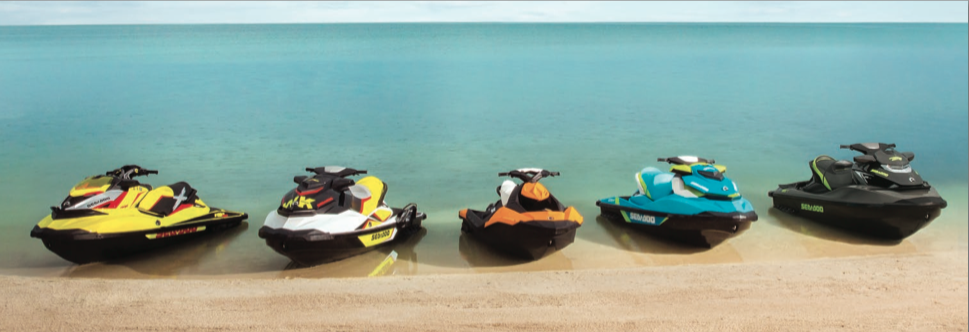
So what is The Global AquaMoto GP Championships, you ask? It’s a race that every PWC has a class to race in. According to event coordinator, Chris “Fish” Fischetti, “This is what our sport has been missing for years, and it is time to get back to where the racing, excitement and fun that our sport originated from.”

Scheduled for September 26-28, 2014, AquaMoto has also changed the skill level of racers: The all-new Beginner Class (B ­Class) is aimed for new or less-experienced racers. New additions to the The Global AquaMoto GP Championships include the Aqua Moto Timed Track, which Fish calls “a lot like slalom, just with more turns), and is open to all classes and levels of riders.

Likewise, the Aqua Moto continues to be the only event where standard close course racing is restricted to only Vintage Ski, and all other Ski Classes, Sport and X2 classes.

A second new event is the Long Course Race, dubbed the “King of Body Beach Super Course.” This will be a dead engine LeMans-style start. Every skill level of rider will race together in each division to determine the King of Body Beach. It will feature a simplified buoy long course track with a very long first turn to space out all the racers. This will allow runabout racers to ride safe at speed on a larger track. Best of all, every kind of PWC can be the King of Body Beach.

Finally, the “Flow Moto” or freestyle event will pin rider against rider in an elimination-style format where they’ll be judged on speed, style and tricks. The last two meet Rail to Rail in a final. But that’s not all! AquaMoto is proud to announce a huge name in the freestyle industry advising on event aspects of the Freestyle Flow moto: Eric Malone!
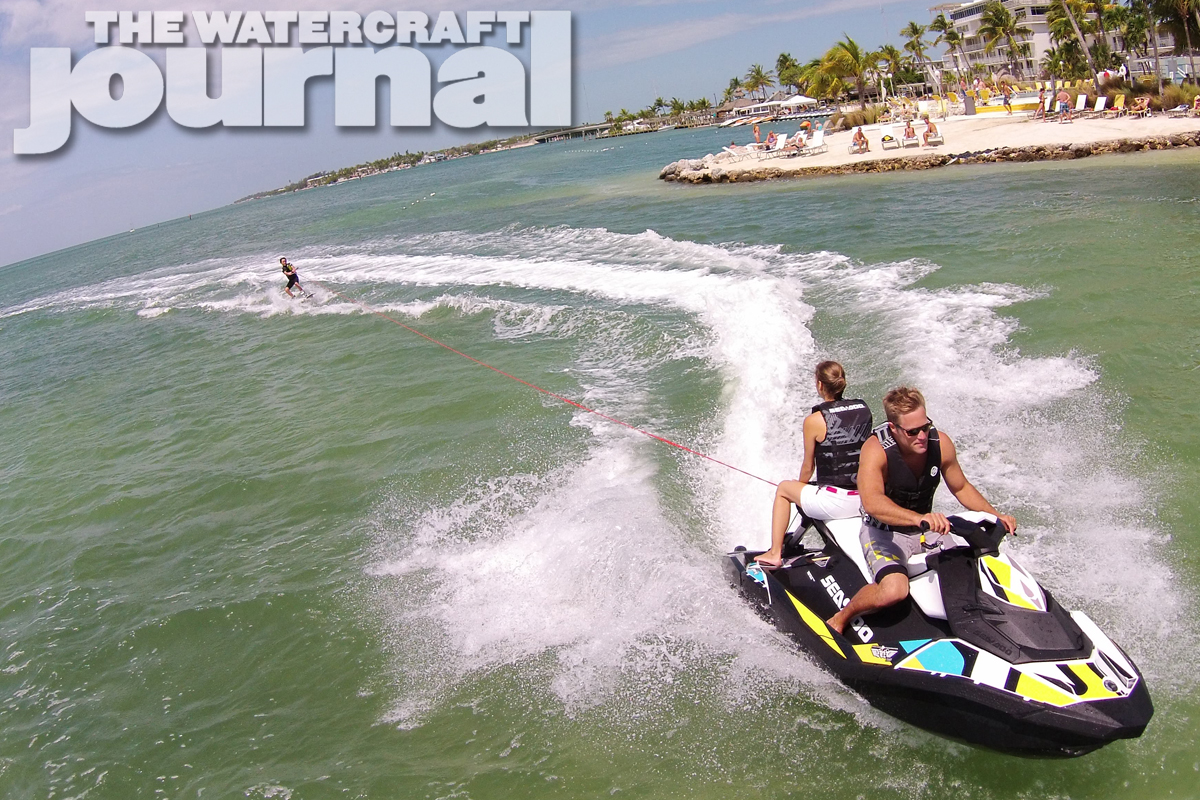
As Fish explained to The Watercraft Journal, “This is an awesome way to put a spotlight on PWC racing back on the main stage with the Action Sports Market. AquaMoto – Safety comes first, new insurance, new starting gate, new race and track design, and some awesome post race parties.

“We are seeking support to make this race successful and help steer the ‘coolest water sport’ in a positive direction. I have amassed the industry’s greatest talent and knowledge for an event that will showcase our sport!”