
Home Blog Page 421

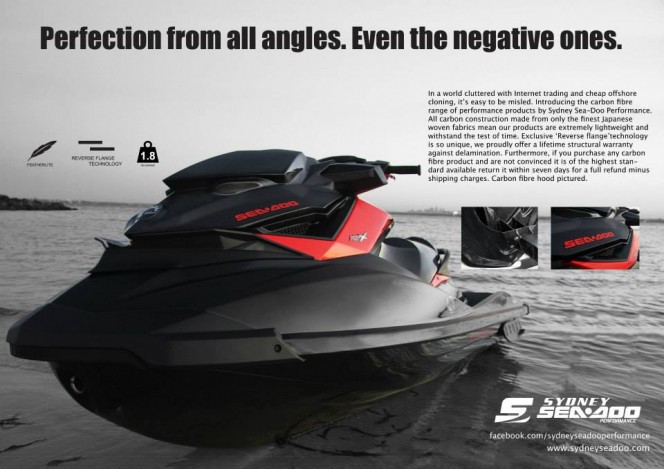
Sydney Sea-Doo Performance’s RXP-X 260 Carbon Race Hood (Updated)

3

Power-to-weight ratio; the quickest way to gain some added speed is by cutting weight, and there are none more familiar with this than today’s personal watercraft racers and freeriders. New skis donning exquisite carbon fiber and Kevlar hulls, hoods and decks are abundant on the shorelines.
Unfortunately, with innovation comes mimicry and often those who follow are a pale shadow of the originator. Corners are cut to save money and in turn, undercut the price of the original product. We’ve all seen it happen far too regularly in our sport. As competition breeds excellence, it also requires buyers to do some due diligence to pick the right product and not get ripped off.

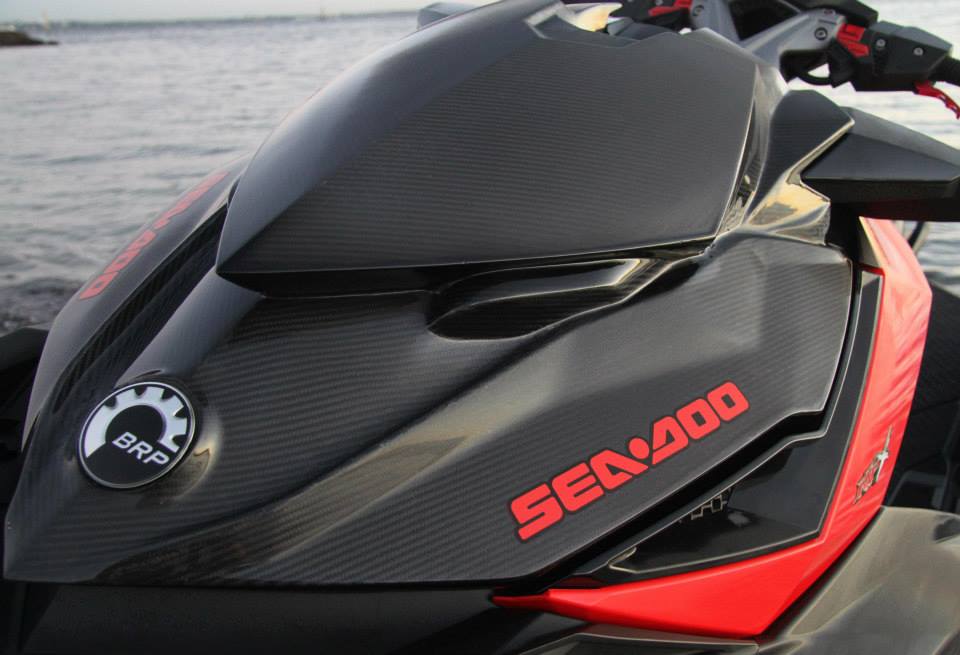
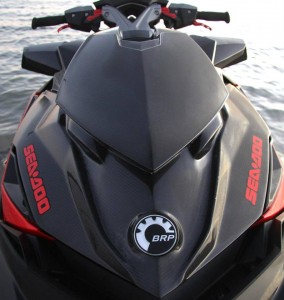
World champion racer and owner of Sydney Sea-Doo, James Masterton launched Sydney Sea-Doo Performance as a branch of his dealership to cater to those who wanted to wring out as much power and speed from their Sea-Doos as possible. Offering a selection of go-fast goods that are not only top-of-the-line in build quality but power output, Sydney Sea-Doo Performance announced their superior carbon fiber RXP-X hood recently stating,

“Our carbon fibre products come in raw and clear finish with all detail shown. We don’t hide any workmanship under paint or flow coat. If not 100% satisfied this is the lightest, highest quality standards available, return within 7 days for full refund minus shipping charges.”
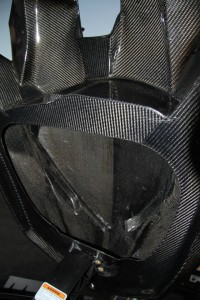
The Watercraft Journal had a chance to talk to James who had this to say, “Our focus is to design high-end products for Sea-Doo watercraft to suit both recreational owners and Pro Open racers. Our composite pieces are the same strength and quality being used in top category Australian V8 Supercar, LeMans and Factory Superbike racing.

“In my opinion, our sport is a long way behind factory auto racing teams in terms of carbon composite engineering and aero design. Most products are made in home garages, the quality is poor and delaminates after 6 months of hard use. Our pieces are built from really complex moulds and come with warranty from structural defects. I was lucky enough to have grown up in the car race industry which has now allowed me access to the right people in different fields.”

He concluded by adding, “We have some really unique pieces coming shortly that I’m sure will help RXPX racers. We are even looking into some parts for the Yamaha FZR.”

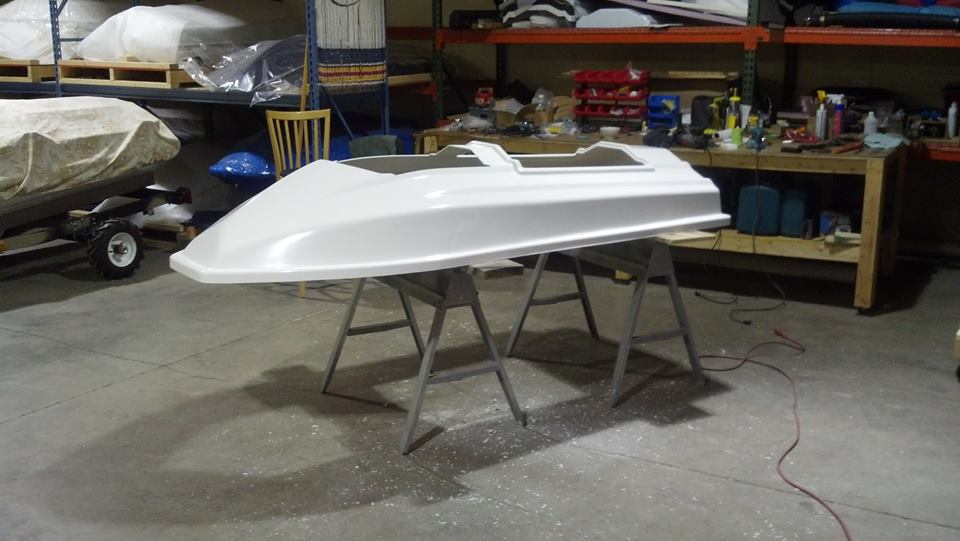
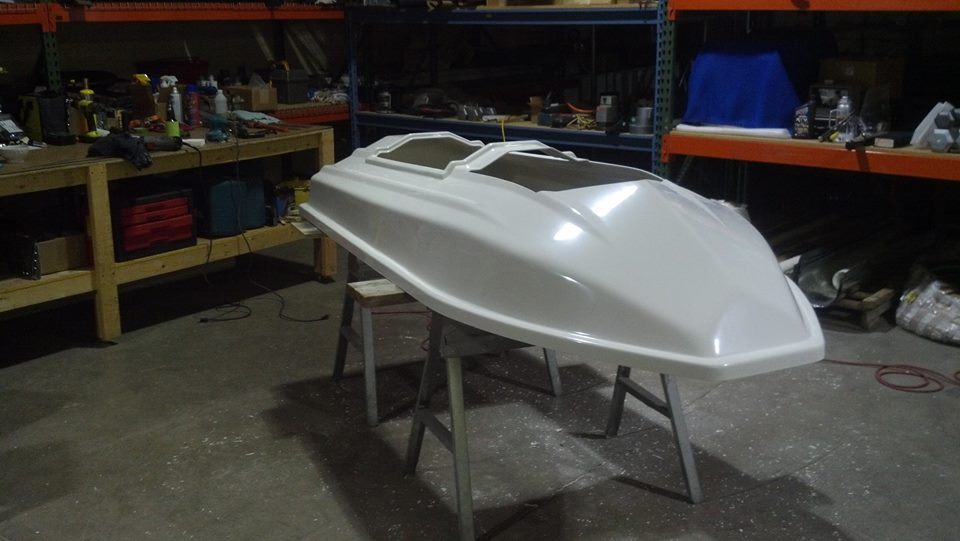
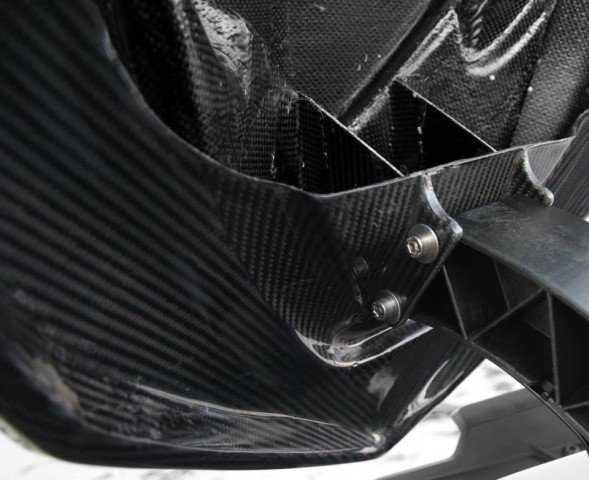
Take a close look at these shots and you’ll see their commitment to smooth finishes, edging and layering. In addition to these hoods, Sydney Sea-Doo Performance also offers carbon fiber seats as well as an array of billet components to not only drop some necessary pounds but improve the look of your Sea-Doo.
PWCOffshore.com Releases Offshore Racing Promotions Guidelines for Promoters

0

The conversation started months ago, but spiraled quickly under its own gravity into a far larger sphere when I posed the question, “If it was up to you, what would you do differently?” It doesn’t take a whole heck of a lot of looking to learn that we at The Watercraft Journal are particularly fond of offshore racing. The challenges of offshore racing are unlike those found elsewhere – apart from an ironclad commitment to pushing through pain and exhaustion to persevere.

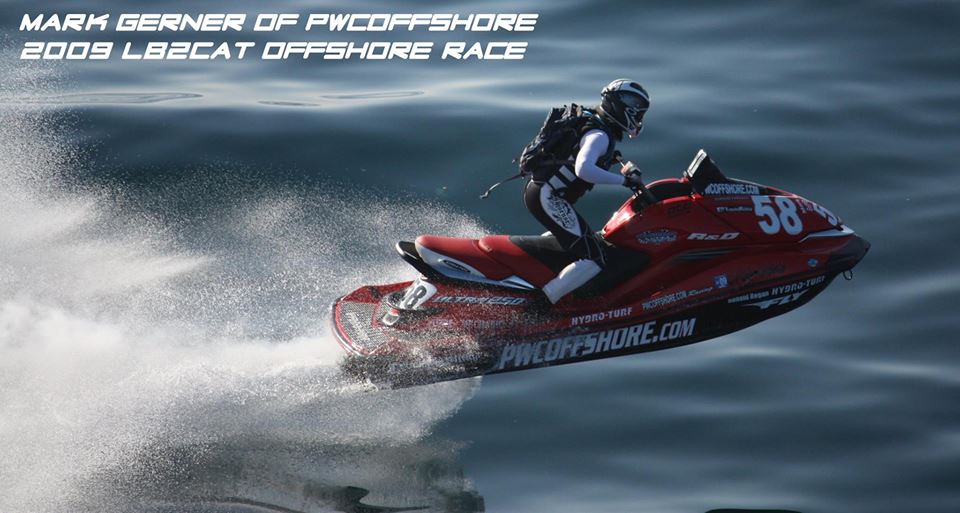
In talking with PWCOffshore.com‘s fearless leader, owner and organizer Mark Gerner, we learned how deep his desire to dramatically grow the world of American offshore racing was. “People think I’m an event promoter. That’s 100-percent not the case,” Mark admitted. “I help rally everyone to go, but I’m not putting on the races.”

But that’s not entirely true. Anybody who knows Mark or the PWCOffshore.com crew know that they do much, much more than just “get the word out.” And it’s because of this steely drive to help grow offshore racing that PWCOffshore recently announced their “Offshore Racing Promotions Guidelines for Promoters.”

According to PWCOffshore.com’s Facebook wall, “PWC Endurance and Offshore PWC Racing needs more promoters and more races throughout the world, especially here in the United States. Have you ever thought about becoming an offshore PWC and/or PWC Endurance Race Promoter – here’s a checklist and set of guidelines we put together that might assist you in doing a race. Great Lakes, Northwest, Northeast, Texas area, Louisiana? Why not? Let’s go racing.”

We at The Watercraft Journal are honored to have played a small role in this document’s development and looking forward to seeing these guidelines put to good use soon!

Video: Maikel Gonzalez Shatters World Record With 112mph Top Speed

6
The podium also marked the first time all three Unlimited class finishers surpassed 100mph: with Carlito David del Valle (101), Maikel Gonzalez (112) and Leya-ray Sanchez (108). Image: April Odineal Hibdon

The numbers don’t lie. It’s a maxim we at The Watercraft Journal have been using and its sure to be repeated with the results of this weekend’s Greenhulk Hydrodrags. Following the annual MudBug gathering of Greenhulk.net forum members in Morgan City, Louisiana, the second round of the Hydrodrags came to the quiet port town to chew up the still southern waters.

While there was no shortage of trash talk and money being exchanged between drag racers, the big talk was who was going to beat the standing record of 106mph in the Speed Alley. The record has stood for a good while now and quite frankly, folks were getting antsy for a new champion.

Aboard a CRT-built “GPRXP”, Miami, Florida’s Maikel Gonzalez not only broke the record, but outright shattered it with two back-to-back world-dominating passes. Titled “Blue Zone,” Maikel’s GPRXP was anticipated to surpass the standing record, but not like this…

Blue Zone – a full-tilt conversion ski comprised of a Yamaha GPR1300 hull and deck with a turbo-powered Rotax 4-tec plant – is now the fastest ski on the planet.

In his first pass in the RIVA Racing Speed Alley Hydro Unlimited class, Maikel tipped the GPS’ and radar gun at 108 miles per hour! If leaping past the standing record was a fluke, Maikel made his second – and most amazing – attempt, firing off an astounding 112 miles per hour.

The Watercraft Journal talked with Maikel who beamed, “I can’t explain how happy I feel right now; it’s a dream come true! The pass I did was from 35mph to 112mph in 3.4 seconds…insane!”

Although unwilling to share all of his secrets, Maikel did provide a small breakdown of what propels “Blue Zone”: “The ski is powered by a CRT-built, turbocharged Sea-Doo 4-tec engine making in excess of 700hp but still driveable as a recreational ski. Power is delivered by a Precision Turbocharger and intercooler, but kept under control at all times by AEM performance electronics. Fuel delivery is accomplished through a custom CRT setup consisting of an E85-compatible system feeding six 2200cc injectors.”

Maikel concluded, “I would like to thank our sponsors AEM Performance Electronics, WWR, Gato Performance, Euro Export, Modular Wiring Solutions, and CRT.”

It’s hard to wrap your head around how fast 112 miles per hour is on a personal watercraft, so to help, we’ve included exclusive footage of the legendary speed pass graciously provided by Adam Barbanell who was on hand at this weekend’s Hydrodrags:

2014 Greenhulk.net Hydrodrag Results

HYDRO N/A
1. Clay Barbee
2. Rich Block
3. Tonito Lopez

HYDRO STOCK
1. Stan Hightower
2. Scott Rice
3. Brett Nance

HYDRO SPEC
1. Kerry Hibdon
2. Stan Hightower
3. Chuck Germany

HYDRO SUPERSTOCK
1. Kerry Hibdon
2. Stan Hightower
3. Brett Nance

HYDRO UNLIMITED
1. Kerry Hibdon
2. Stan Hightower
3. Carlio De Valle

RIVA Racing Speed Alley

Hydro N/A
1. Tonito Lopez 71
2. Clay Barbee 66

Hydro Stock Speed Alley
1. Scott Rice 81 80
2. Kristian Izchazo 81 78
3. Carlito De Valle 63

Hydro Spec
1. Ron Allision 58 (broke)

Hydro Superstock
1. Brett Nance 97*
2. Ross Niemoeller 95

Hydro Unlimited
1. Maikel Gonzalazes 112**
2. Rayge Sanchez 108
3. Carlito De Valle 101

· **IJSBA World Record
· *New Records
· First time that three Unlimited racers go over 100mph

Flashback Friday: Pierre Maixent’s Amazing Double Backflip

0

In yesterday’s news report on Art Burgess training on his amazing $50,000 custom-built freestyle ski, we attributed much of the evolution of the sport of freestyle to the machines themselves. While that might be true, it is slightly disingenuous particularly towards the level of athletes that populate modern jet ski competition.

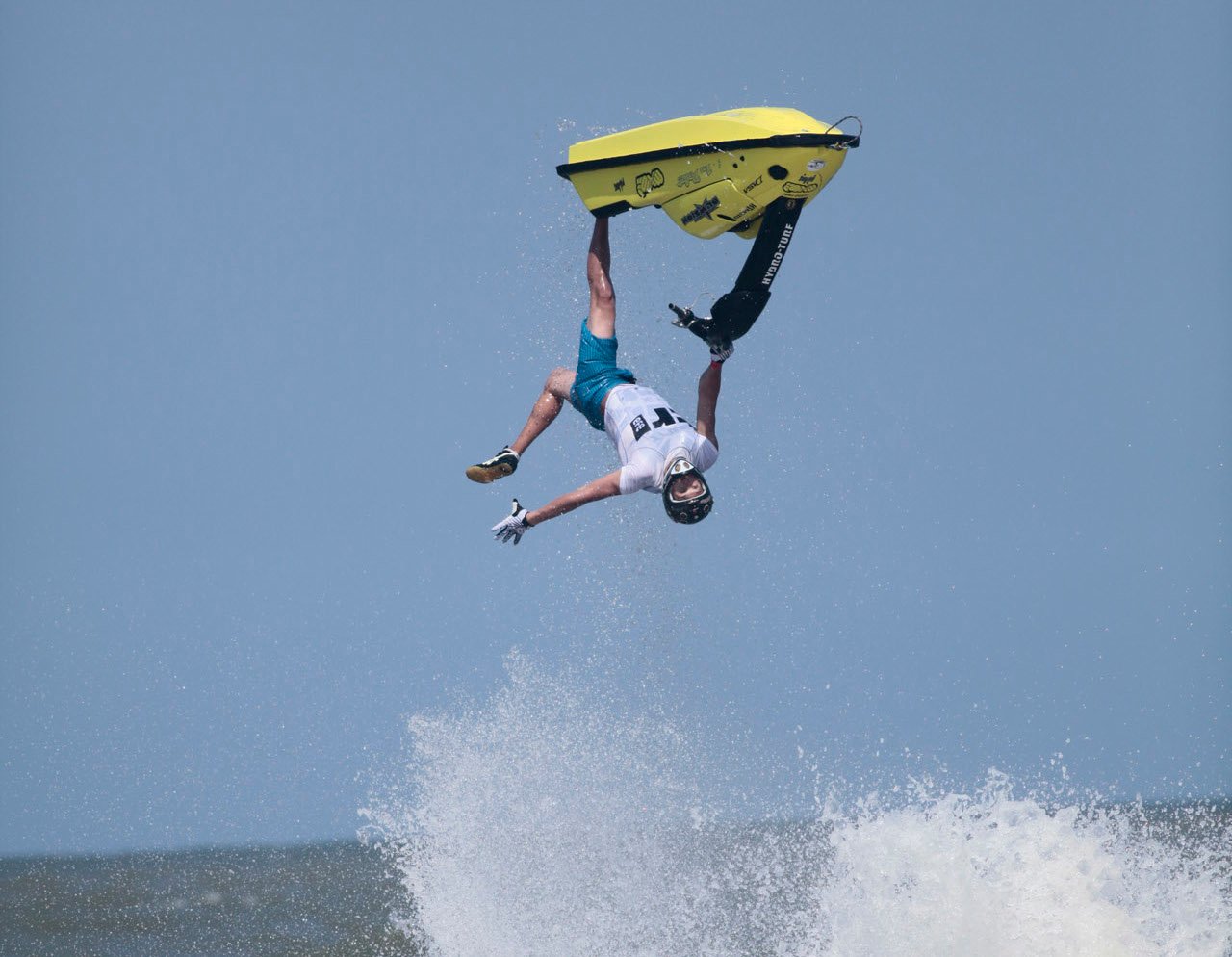
To really hammer the nail in this argument, we want to present what we consider possibly one of the greatest feats of pure athleticism, talent and skill – the double backflip. Executed by France’s most famous freerider Pierre Maixent, he was filmed in 2008 successfully performing the first double ever landed on a jet ski.

Even today, few can perform the double backflip, and all honor Maixent for being the first to master it. Even as machines become lighter and more powerful, the double backflip eludes many and it’ll probably be a good while before we see another do so with Maixent’s flare.

Video: Ant Burgess Executes 14 Flips on His Custom $50,000 Freestyle Ski

0

Oh how things have changed since the early days of Freestyle. In fact, it’s only in the world of closed course racing that people decry where the sport has gone. Freestyle, freeride, offshore racing and many, many other branches of jet ski performance have evolved into new and exciting sports in their own right. But we have to say that we see an exponential maturation within freestyle unlike anywhere else.

The machines of today’s freestyle athletes are unlike anything imagined twenty years ago. Made from lightweight carbon fiber and Kevlar composites, weighing fractions of what skis once did and delivering far more thrust and torque than even the gnarliest of close course racers years earlier, freestyle is an acrobatic dance that defies gravity and astounds crowds with each backflip, barrel roll and scarecrow.

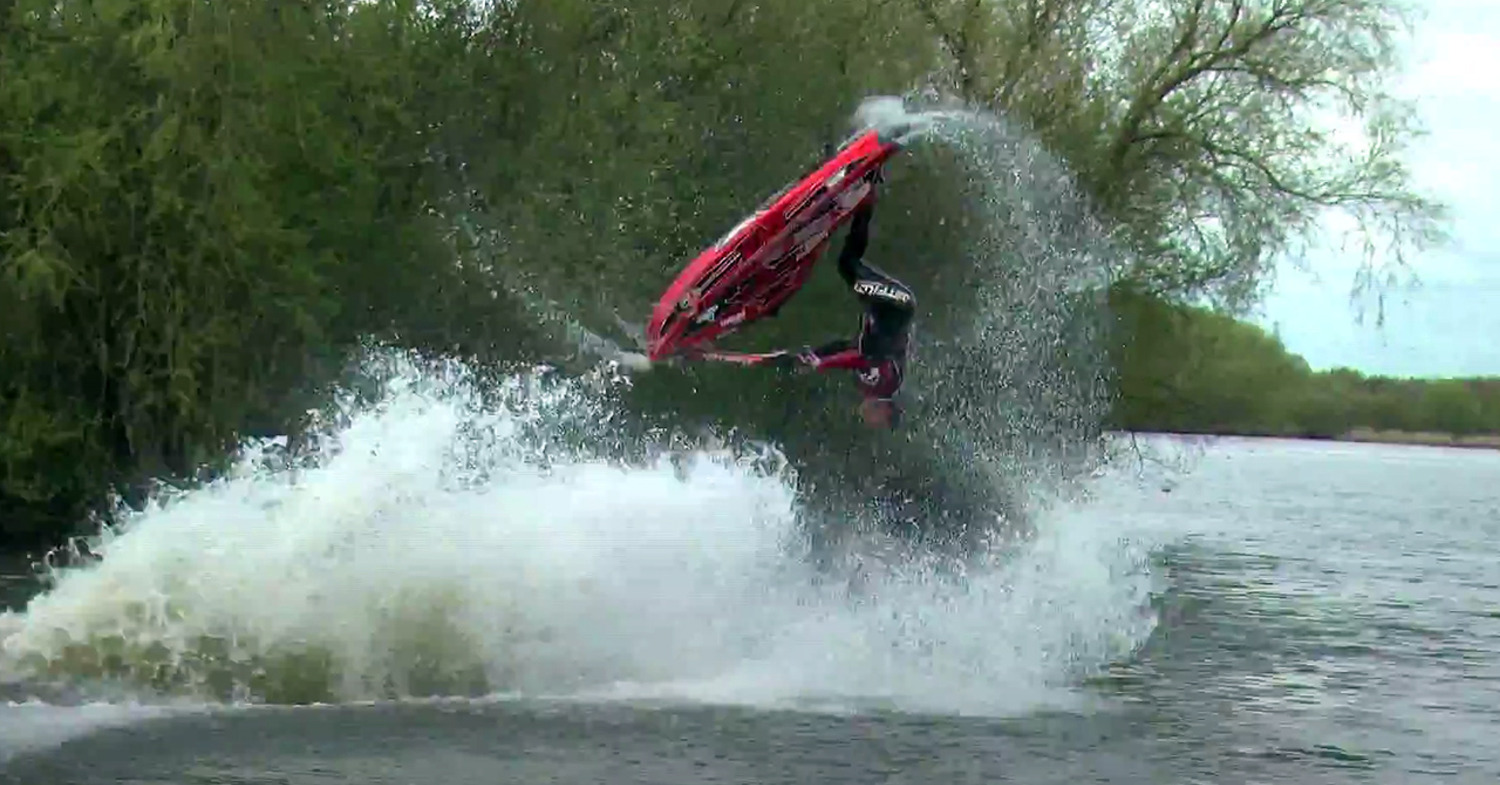
World champion freestyle rider Ant Burgess was recently caught on camera training on his insane $50,000 custom-built machine over the Easter weekend at Kingsbury Lakes. Mind you Burgess is merely testing the ski out, gaining a feel for how it behaves. But in this routine, Burgess impresses all with a sequence of flips, 360s and six backflips in a row.

The Watercraft Journal By The Numbers: April 2014

1

Where did the last six months go? Believe it or not, it was half a year ago that The Watercraft Journal was first launched to the world, and since that time we have seen a staggering – and we mean that without any hyperbole – amount of people coming to the Internet’s only daily personal watercraft magazine. Not only has our booming readership surpassed those who want to claim us as competition, but The Watercraft Journal is homing in on readership numbers that rival message boards and forums.

And why is that a big deal, particularly if you’re a business owner considering advertising with The Watercraft Journal? Because as an advertiser, your brand is guaranteed significantly more and immediate access to more potential customers – both new and returning – through our digital advertising and endemic and attention-grabbing feature content and professionally-written daily news stories.

Advertising in magazines, be it in print or digitally, has always been about marketing your name, product or brand and it’s only smart business to find the outlet that will provide you the most access, the greatest return on your dollar, and for the lowest fare possible. Because The Watercraft Journal is free to its readers, and thereby entirely advertiser supported, we ensure that our rates are lower, our turnaround is faster and our readership larger than anybody else. And if today’s “By The Numbers” has anything to say, it’s exactly that.

November 2013 Through April 2014

April 2014

More Of What People Want
Frankly put, the days of sitting idly by waiting for the mailman to drop off the latest issue of our favorite magazine are all but over. We don’t rely on a few pages of print for late-breaking news, entertaining pictures and video, or needful information. That’s what the Internet is for, making print magazines a novelty. On the other hand, The Watercraft Journal publishes originally-written content on a daily basis; articles that are timely, sharp and professional.

Total Feature Articles Published in 2nd Quarter: 41 (excluding daily news)
Total Articles Read in 2nd Quarter: 68,700
Highest Read Article in 2nd Quarter: 4,775 views

Total Feature Articles Published: 83 (excluding daily news)
Total Articles Read: 128,748
All-Time Highest Read Article: 4,775 views

Feature articles published in April: 15
Total word count: 14,041 words*

*When this number is translated to print publication standards equals a 112-page magazine. Please note that this number does not include an average of two uniquely-written news articles published daily.

Real Readers, Real Numbers, And More of Them
Readership for an online magazine is very easy to evaluate – if you know what you’re looking for. Many companies are thinking all they want is a few “click throughs” on their ad, but that’s just the tip of the iceberg. Getting your name, your company’s look and brand in front as many eyes as possible is where The Watercraft Journal shines. Throughout our six months of publication, we saw a steady increase in both return and new readership. And although we’re excited about our new international readership, The Watercraft Journal still remains the clear favorite for domestic PWC enthusiasts, meaning our advertisers have access to more potential customers than with any other publication.

Total Readers in 2nd Quarter: 34,716
Total Unique Readers in 2nd Quarter: 21,911*
Top (5) Nations in 2nd Quarter:

  • United States – 19,778
  • Australia – 3,155
  • United Kingdom – 1,628
  • Canada – 1,542
  • New Zealand – 802

All-Time Total Readers: 63,663
All-Time Total Unique Readers: 37,793*
All-Time Top (5) Nations:

  • United States – 37,269
  • Australia – 5,624
  • United Kingdom – 3,092
  • Canada – 2,622
  • New Zealand – 1,447

Total Percentage of Mobile Device Users: 39%

*This number is considered equal to an individual sale of a single copy of a magazine.

More Readers With a Wider Reach
It’s been a nice compliment that so many media outlets are doing their darnedest to either match, mimic or even surpass what we accomplish here at The Watercraft Journal. But since the launch of our Facebook, Twitter, Instagram, YouTube pages, The Watercraft Journal has made it a point to use social media to its fullest extent to bring the PWC enthusiast industry all of its daily content in fastest ways possible.

Total Facebook Followers: 7,506
Total Twitter Followers: 114
Total Instagram Followers: 240
Total Weekly Newsletter Subscribers: 697

And It Only Gets Better
Let’s take into account that we’ve just surpassed 10,000 individuals reading The Watercraft Journal a month. Let’s take a second to consider that in six months we’ve reached out to nearly 40,000 individuals. And lastly, realize that it’s only May 1st, and that it’s just becoming riding season here in the States. In the last three months we were the only magazine to publish full-length, in-depth coverage of the Daytona Freeride, the Champion Timepieces Mexico Freeride weekend, Pismo Spring Break Freeride and the Crescent City Spring Break Freeride, not to mention our massive Mark Hahn Memorial 300 coverage. And that was the “off season!” Can you imagine what we’ll look like another six months from now? We can. And that’s why we’re excited – and so should you.

The Watercraft Journal Welcomes Kool PWC Stuff To Its Family of Advertisers

1

Here’s a weird conundrum: recreational fishing is a huge, multi-multi-million dollar industry in the United States, yet the number of fishermen failing to use personal watercraft – particularly in light of the overwhelming cost of a new fishing boat – is staggering. There are some who have mastered it, like our own “JetSki Brian” Lockwood (expect another update shortly), but for the most part, PWC fishing is an art absent to most Americans.

Well, the father-and-son team from Fort Myers, Florida that originated Kool PWC Stuff (watercraftstuff.com) are the original designers of the universal JetSki fishing and cooler racks. Engineered to fit virtually any personal watercraft runabout available today, the easy-to-use and easier-to-install rack is possibly one of the best accessories on the market today.

Requiring a minute or two to install, the Kool PWC Stuff rack is just a part of the company’s repartee of fine PWC accessories and tools, including rod holders, gas can holders and lightweight saddle bag-style jerry cans, and much more. Best of all, all of Kool PWC Stuff’s products are designed for the least – if not zero – intrusion imaginable. No drilling. No cutting.

New to their roster is the Flyboard rack, which has quickly caught on with those using full-sized personal watercraft as the powersource for a Flyboard. All of Kool PWC Stuff’s racks feature individually adjusted legs provide a flat, secure surface for their rack to rest.

All of us at The Watercraft Journal are very excited to welcome Kool PWC Stuff to the family and look forward to getting to test out their awesome rack and even try our hand at some exciting PWC fishing!

Video: Leaping Stingray Nearly Hits Rider at Quiksilver Roxy Pro

0
Image: ASP

One very close call between a high flying stingray and professional surfer Stephanie Gilmore and her Yamaha FX thankfully resulted in little more than a acrobatics show rather than something far worse.

As reported by The Australian, the altercation was captured during the Quiksilver and Roxy Pro held at Snapper Rocks in Australia’s Gold Coast, cameramen captured the short second-long encounter between the female surfer and the ski’s pilot aboard her tow-in runabout and the stingray.

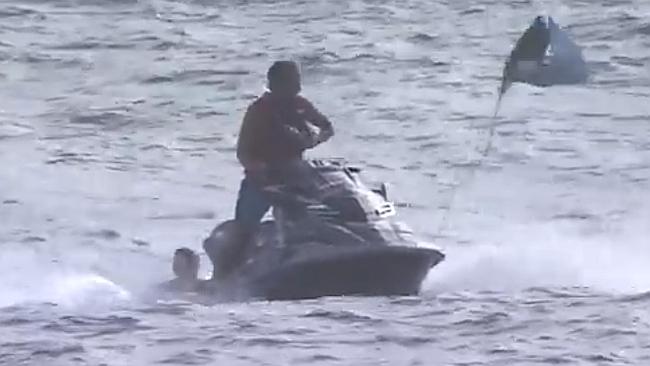
Gilmore was being pulled out for her quarterfinal showdown at the Roxy Pro when the winged stingray leaped several feet in the air, it’s barbed tail whipping in the air close enough for the rider to raise an arm to shield himself before the stingray dove back down into the water.

Personal watercraft riders have had countless encounters with wildlife while riding. Thankfully, nobody was hurt, but this close scrape is a reminder of how to always remain vigilant while riding. You never know what’s going to jump at you.

Cargo Wave Teases Development of Dual Hatch Trailer

0

10155303_867501616596949_190895388975969733_n

Only a few weeks ago The Watercraft Journal had the pleasure of trial testing the rock-solid Cargo Wave trailer. We purposely beat the tar out of the watertight PWC trailer and came away impressed that we couldn’t cause more damage than thoroughly shaking all of the frosty beverages we had in the cooler into a whipped up foam.

When discussing the Cargo Wave with Paul Thomas, he explained that the goal behind the Cargo Wave was to develop unmatched durability so that rescue, life support and even military organizations would want to put the Cargo Wave to use. Now, as the seasons finally drift into some suitable riding weather, Cargo Wave has leaked out the next generation of PWC trailers.

In a recent Facebook post, Cargo Wave published a handful of images showing a new design in the development stages: “A little boat building going on today at Cargo Wave. Two new prototype “Dual Hatch” units going together. One unit set up for Commercial – Search and Rescue / Red Cross use, the other dialed in for personal use / marketing. Plans completed already for tooling mods. There will also be a single “Full Access” model as well. Here’s some pics!”

Rest assured, when the new dual hatch Cargo Waves hit the streets, The Watercraft Journal will be one of the first to test it out. Until then, stay tuned!

Quick Tech: WMF Watercraft Installs a RIVA Racing Pro Series Steering system

1

Today’s top-of-the-line personal watercraft come from the factory performing at such levels that could outpace the craft that competed in the World Finals less than a decade earlier. It’s astounding the rate of progress we’re receiving from “out of the box” runabouts these days. The handling, cornering, acceleration and added amenities of modern runabouts are truly amazing – but that’s not to say that there isn’t room for improvement.

WMF Watercraft, Millsboro, Delaware’s premier pontoon and pre-owned personal watercraft dealer knows this all too well, as their Service Department excels and modifying and tuning some of the meanest aftermarket-equipped Sea-Doos around. Working closely with the go-fast gurus at RIVA Racing, WMF showed us how to radically improve the handling and ergonomic feel of Sea-Doo’s closed course burner, the RXP-X 260.

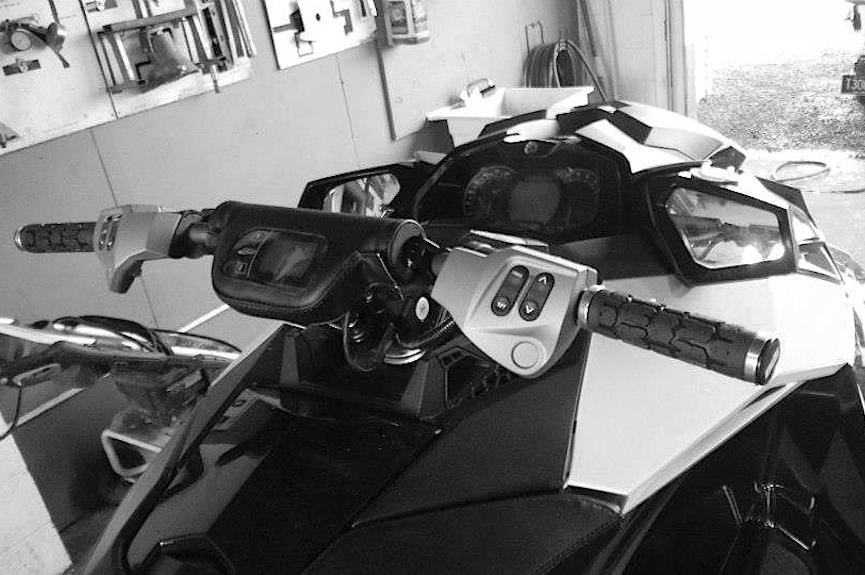
RIVA Racing’s Pro Series steering system not only replaces factory plastic with billet aircraft-grade aluminum and stainless steel, but improves steering response, stiffness, durability and adjustment.

RIVA Racing’s Sea-Doo RXP-X 260 Pro-Series Steering System is designed as a direct replacement for the factory OEM steering neck and shaft, as well as the handlebars and grips. The system replaces plastic system with a significantly stronger piece providing variable tilt positions, precision feel, and improved dependability.

The replacement steering shaft is constructed of aircraft grade aluminum tubing for maximum strength and rigidity, and stainless steel construction ensures no rusting or discoloring in fresh or salt water. The engineers at RIVA made sure that the hollow steering column would accommodate the OEM wiring harness, tucking away the sensitive wiring. Additionally, the bar clamp accepts any 7/8-inch handlebar or 1 1/8-inch bulge bar.

Altogether, racers and performance lovers have cheered RIVA’s inclusion of the factory “Off Throttle Assisted Steering” system and the adjustable “quick-turn” settings on the billet aluminum steering arm. And as one has come to expect from RIVA, all of the aluminum parts have been anodized to further prevent corrosion.

Installation of the complete Pro Series Steering System took only a couple of hours and required a handful of basic tools. The certified technicians at WMF made short work of the project and you should too. The steps are easy to follow so we made it a point to break them down in an easy-to-follow format:


Step One: When dealing with electronics in any form, always disconnect the battery first. Next, organize yourself to have your tools, lubricants, and instructions from RIVA nearby.
Step Two: With an Allen driver or wrench, remove the iTC and iBR control panels from the handlebars.
Step Three: Removing your handlebar pad next will allow you access to move the handlebars themselves.
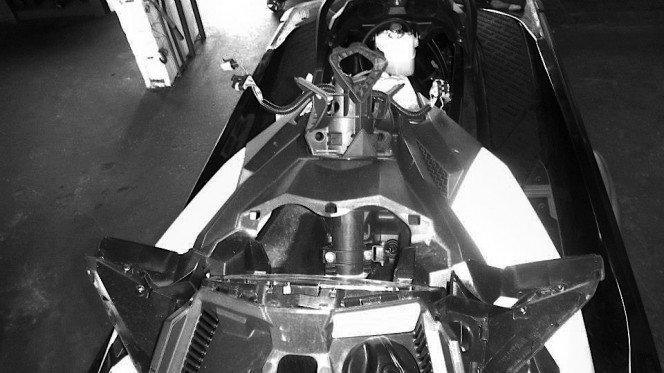
Step Four: Accessing the complete steering neck and linkage requires removing the fixed gauge pod bezel.
Step Five: Removing the factory steering neck is made easy once you disconnect the steering linkage and feed the factory iTC and iBR loom through it.
As a quick comparison, you can see how the RIVA Pro Series steering system is far superior to the plastic factory unit. The Pro Series also allows for quick ratio turning adjustments.
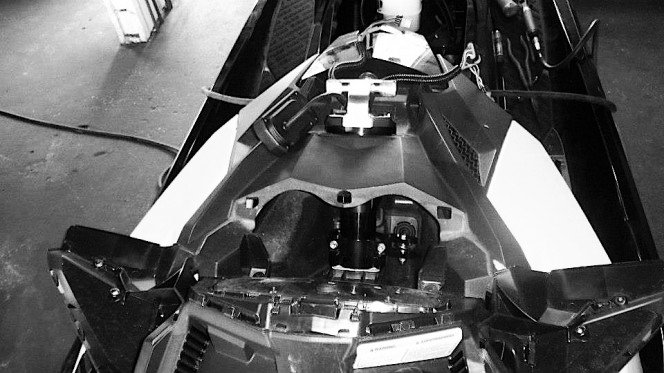
Step Six: Because the Pro Series system is designed to be a direct replacement, there is no cutting or modifications required to install the new aluminum neck.
Step Seven: RIVA’s engineers thoughtfully designed the new neck to be hollow, allowing for the factory loom to be fed up through just like the factory.
Step Nine: The new billet head unit attaches effortlessly to the neck, and allows the use of any 7/8-inch handlebar or 1 1/8-inch bulge bar.
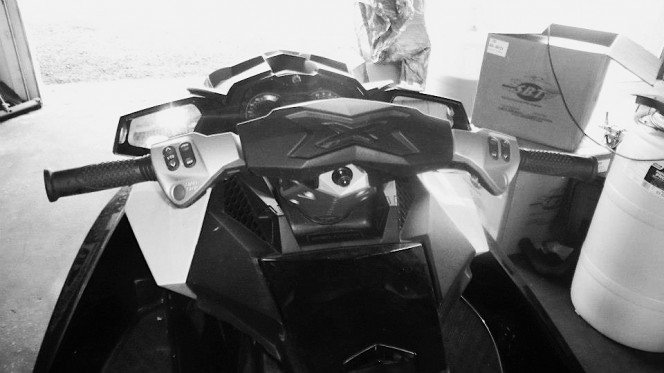
Step Ten: With a pair of new ODI grips, the direct replacement RIVA Pro Series Steering System radically changes the look and feel of your RXP-X 260 with only an hour or so’s worth of time.
Bonus: Because WMF Watercraft always goes the extra mile, the crew had a custom Athena cover made so adjustments to the aftermarket Athena computer could be made on the fly.