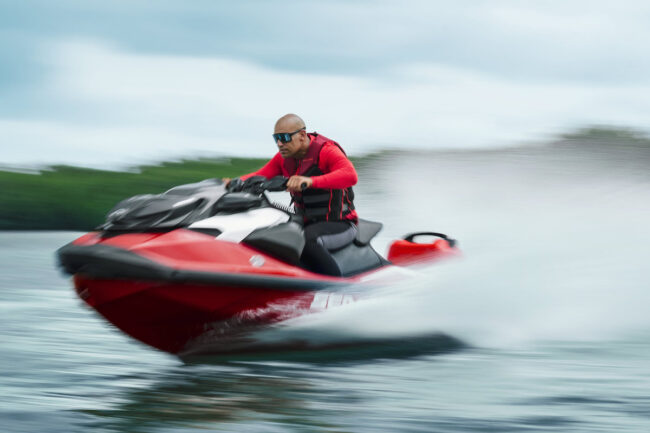
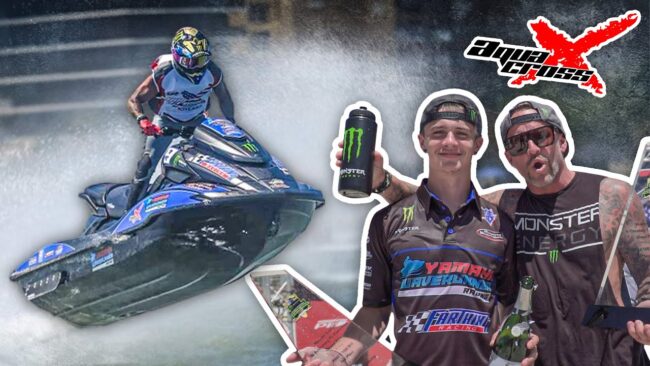
Yamaha WaveRunners are enjoying some unprecedented wins – particularly from young talent – in 2023. After a hard fought battle, Tory Snyder pulled out the overall against multi-time world champion Dustin Farthing and his son, Deven both riding supercharged Yamaha WaveRunners.
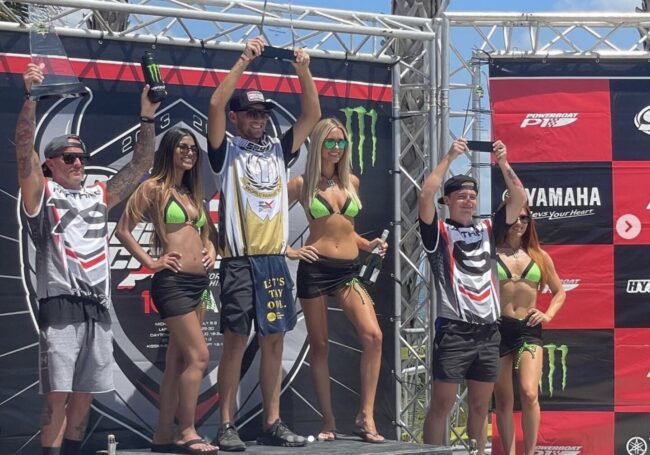
The points leaders gave Yamaha a full sweep of the podium at the P1 AquaX Pro Enduro Championship in St. Petersburg, Florida this past weekend. Moreover, the win also places Yamaha WaveRunner Racing on the path to enjoying longest winning streak in history with its consecutive wins on the P1 Aquax Pro Enduro watercraft racing tour.
Currently, Snyder trails the senior Farthing by 37 points, placing Yamaha FX SVHO WaveRunners in the top two positions with Kawasaki 310X rider Camden Powell in third place. Snyder carries the 110 number same as his father, Troy Snyder who took that number to several podium finishes over his career.
Here’s the original press release: Yamaha WaveRunner Racing swept the podium at Round 3 of the P1 AquaX Pro Enduro Championship in St. Petersburg, FL, with Yamaha FX SVHO WaveRunner rider Tory Snyder taking home the overall win. He finished the weekend 1-1-3 with fellow Yamaha FX SVHO riders Dustin Farthing and his son and teammate Deven Farthing completing the podium sweep, respectively.
The Round 3 overall win secured the #110 Snyderbuilt Racing‘s second-place position in the tour points standings. Dustin Farthing leads Snyder by 37 points with just one round remaining. Kawasaki rider Camden Powell is in third place, following Snyder by 25 points.
“We’re excited that Tory found the speed and consistency he’s been looking for all summer long,” said Yamaha WaveRunner Racing team manager Bryce Parker. “We couldn’t be more pleased to have Dustin, Tory, and our championship-winning FX SVHO leading the Pro Enduro contingent with just one race weekend remaining.”
Pro Enduro racing is a test of rider skill and mechanical endurance. A rider must have stamina and strength to go the distance, and their equipment’s reliability is just as important. There are three motos that last 30 minutes plus 1 lap. P1 AquaX Pro Enduro racing action continues Sept. 16-17 in Kissimmee, FL, where the P1 AquaX Tour championship will be decided.
We have a story that is both frightening and uplifting from 7News Brisbane on how a friendship was forged after a harrowing crash during the Changwon International Grand Prix in March.
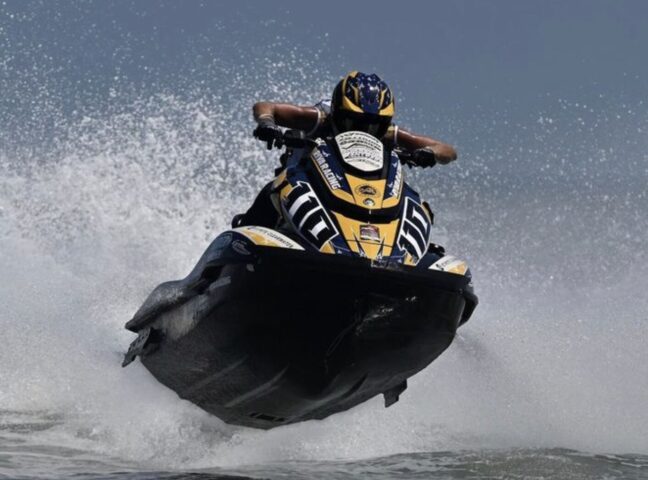
Brisbane’s Baily Cunningham had a late start to the race and was trying to catch up when he saw a horrific incident take place. A big yellow ski went airborne with the rider flying above it.
Cunningham witnessed both the rider and the jet ski come crashing down into the water. The watercraft had been traveling about 75mph and Cunningham knew it was likely the rider suffered critical injuries on impact.
Cunningham made the heroic decision to bail his ski and swim to the injured rider. Floating face down, was his teammate, Christian Cagnard. Cunningham and other nearby riders quickly loaded an unconscious Cagnard onto the back of a jet ski.
Cunningham was relieved when Cagnard regained consciousness about halfway back to shore and started complaining about losing a shoe! Cagnard suffered 8 broken ribs, a fractured eyesocket, and fluid on his lungs.
Cunninghams’s quick actions saved Cagnard from further injuries and probably death. In August, Cagnard invited Cunningham to his hometown in Sweden so he could be awarded for his bravery in saving his life. Cunningham received a beautiful plaque and the Hero of the Year Award from Cagnard’s Jetski club. A humble Cunningham said he won’t let the crash stop him racing and said he was looking forward to racing the following weekend. Kudos to an awesome human!
Following in the similar form as “The Deegans” YouTube channel that documents the exploits of Brian Deegan, 14 time X Games medalist and his kids’ NASCAR racing and motocross careers, 23-time world champion jet ski racer Dustin Farthing launched the “Farthing Racing” YouTube channel. Farthing Racing follows the racing exploits of the 45-year-old father of two boys, Deven and Talon, as they charge into the 2023 racing season.
Participating in both P1 AquaX and IJSBA sanctioned racing series, the Farthing Racing channel does a fantastic job of embodying the stoke, excitement and fast paced action of professional PWC racing. For 2023, the Farthings enjoy sponsorship support from Yamaha Motor Corp. USA, Broward Motorsports and Monster Energy – and take to the water aboard 2023 Yamaha FX SVHOs and GP1800R SVHOs.
While certainly a great way to catapult his own sons’ notoriety, the Farthing Racing video series also serves to present personal watercraft racing in a positive, professional manner. Thankfully, there’s no staged drama or the usual BS that comes with reality-style shows like these. Rather, Farthing keeps the pace of each episode crisp, the running length short and the action tight.
If you’re a fan of Dustin Farthing, either of his boys or professional racing as a whole, you owe it to yourself to subscribe to the Farthing Racing channel. Below we’ve included the most recent episode (currently, there are nine episodes published as of this writing with new episodes airing – typically – each week). So tune in, hit the subscribe button and look out for more episodes.
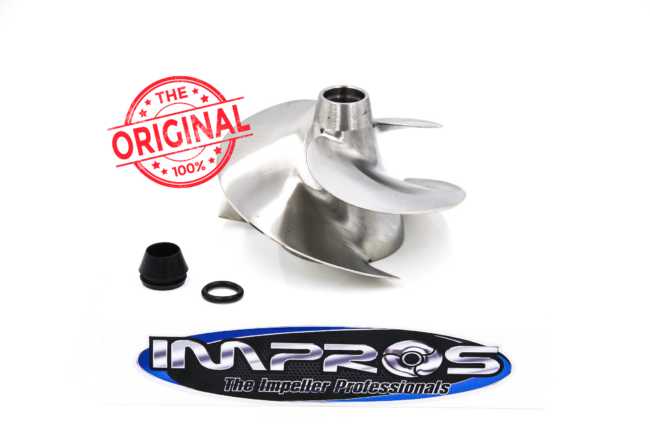
Impros has a full line of Hooker Impellers for Kawasaki and Yamaha standup jet skis. The Impros Kawasaki Hooker impeller for the SX-R 1500 is the best impeller if you are looking to maximize the bottom end and rough water hook up. Its stainless-steel radial edge design hooks up and provides excellent performance. This model fits the Kawasaki 148mm pump in the SXR 1500.
The 140mm impeller for the Kawasaki 140mm pump is a 3-blade large hub diameter made of stainless steel. It is designed for freestyle and freeriders who want to go big in the air on an SX-R, SXi Pro, or SX watercraft. Impros has five different impellers for Yamaha, including the new SuperJet Impeller. The new one is for 2021-2023 models of the Yamaha SuperJet.
It features a large hub design that works with the newly designed stock 144mm pump that comes on the 2021 SuperJet. This 3-blade large hub diameter with its radial edge design stainless steel impeller is made to improve the overall performance of your jet ski. It hooks up like a dream.
Impros offers the E-75/20 Impros Magnum Hooker with a 155mm impeller, 75mm hub, and 20mm threads for riders who are seeking a better hook up for their modified jet skis. Mods may include custom hulls and big engines that are pushing out large amounts of horsepower.
Those little 144mm pumps can’t handle the power of a performance engine, so riders are opting for the Magnum Hooker to get the maximum hook up. Check out the site for all the details on the Impros Hooker Impellers and to hit them up with any questions you may have.
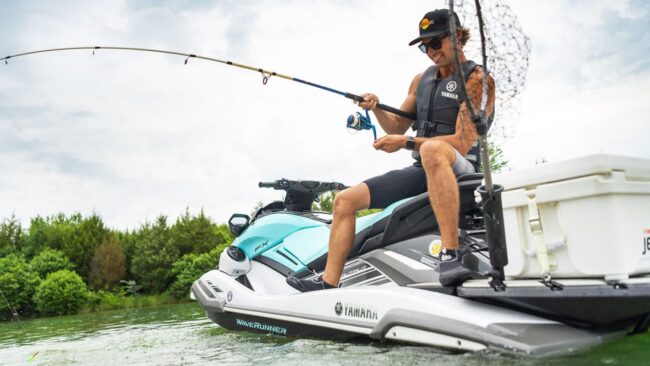
BMS Racing now has Yamaha FX RecDeck and accessories in stock. If you’re looking to get into fishing or other watersports with your FX Series WaveRunner, now is the rime to get after it. RecDecks could sell out and be hard to find again.
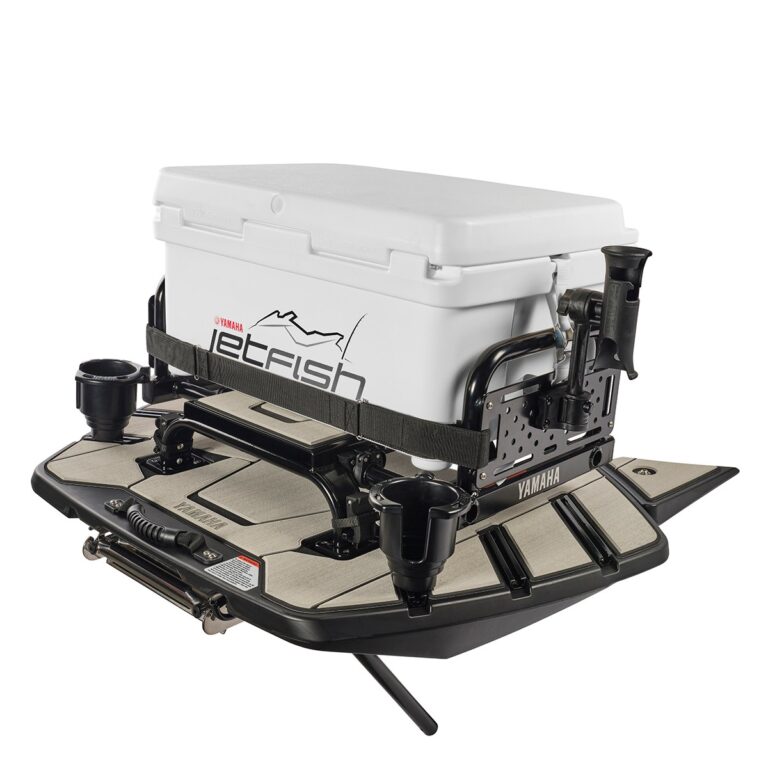
The RecDeck is a necessary component for outfitting your WaveRunner with the accessories needed for other activities. It is the base for all the great add-ons. The RecDeck costs $1,119.95 and is a versatile multi-use platform that gives you the option to have more fun with your watercraft.
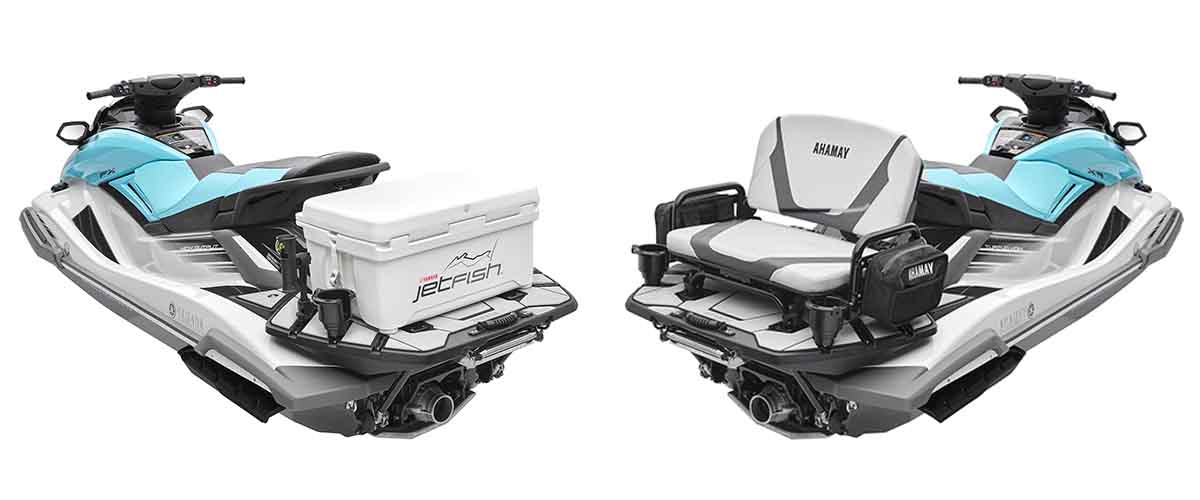
The RecDeck platform integrates with the swim platform and reboarding ladder. With a package like the Yamaha FX Premium Jetfish, you get the multi-use rack, an Engel 45 JetFish branded cooler, two rod holders, two cupholders, tie down straps, and eyelet mounts.
The included multi-use rack, allows you to add the Lounge Package, and get down to some serious relaxing while wetting a hook. It includes cupholders and two Yamaha Cooler Saddlebags, and they attach on each side of the chair.
Put your bait in one and food and drinks in the other and you are set for the day. You also have the option to buy a single track mounted fishing rod holder for the RecDeck if you don’t want to splurge on the whole package yet.
The Multi-Use Rack can also be purchased as a stand-alone accessory for the RecDeck. You can use it to secure coolers and other items you want to take on the water. Check out the Yamaha RecDeck and accessories at the Broward Motorsports Racing and get more out of your Yamaha FX WaveRunner.
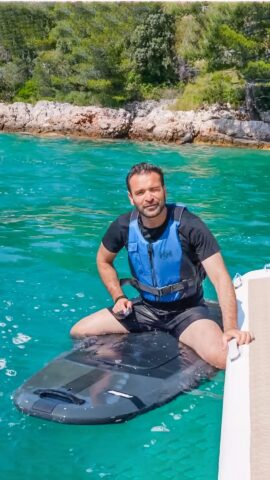
Radinn Electric Jetboards can be rented at almost a dozen locations worldwide, with new rental partners in Serbia becoming their most recent. Radinn was founded in Sweden ten years ago and began a rental partner program a little over a year ago.
Radinn has grown into a worldwide enterprise of fun with rentals and sales available worldwide. You can check out the locations on their website here and use the user-friendly search function and worldwide map to find what you are looking for.
The Awesome View Lodge in Croatia offers Radinn Electric Jetboard rentals through its Awesome Adventures program. They will hook you with a rental at SV.Marina and get you out there making waves.
You can also catch ride on a Radinn aboard a luxury yacht in Croatia. People love it and enjoy cruising 30-35 mph across the turquoise waters of the Adriatic Sea.
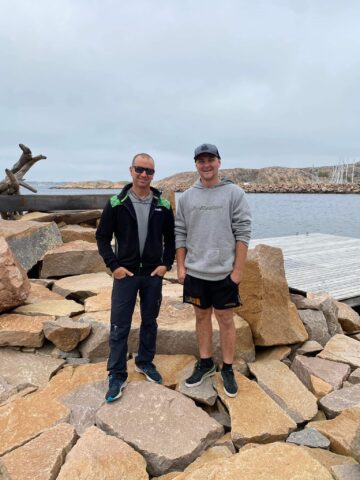
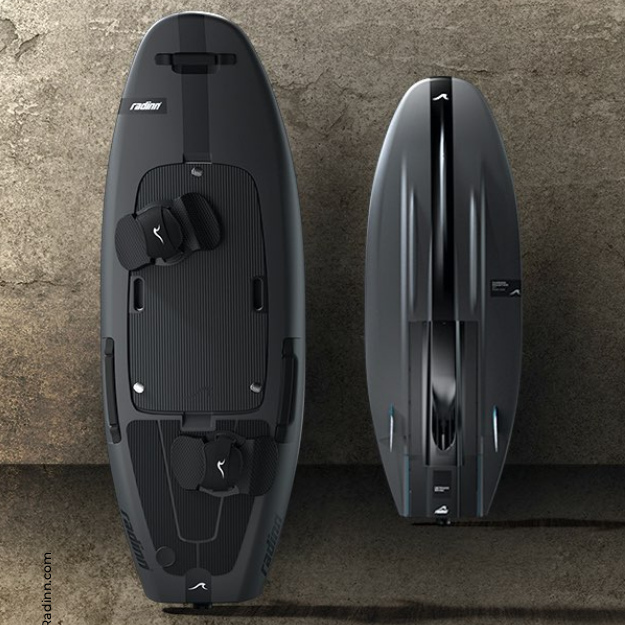
Enes Yilmazer enjoyed his time carving the waters on the Radinn Carve Phantom, a board made for this lifestyle. The Carve is a high performance jetboard which provides a quick response when you want to make long drawn out turns or sharp cutbacks. This board delivers and you can give it a looser feel by using a twin fin set up.
For more control, use a thruster set up. The Carve is Radinn’s lightest board, allowing for more critical moves and for when you take to the air. This board is made for the rider who wants to up their game. Buy a Radinn Jetboard for yourself or find a Radinn rental when you’re on your next trip.
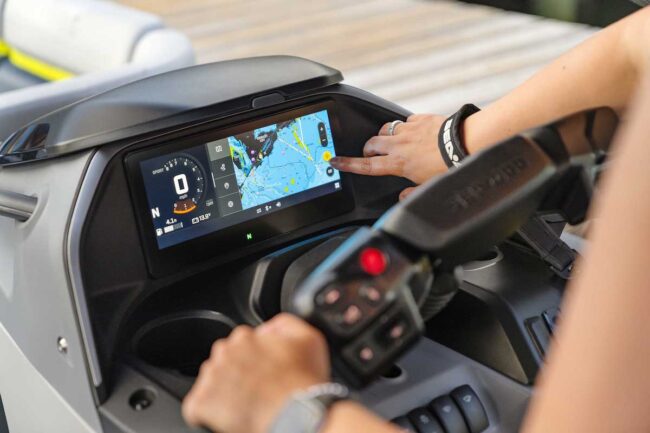
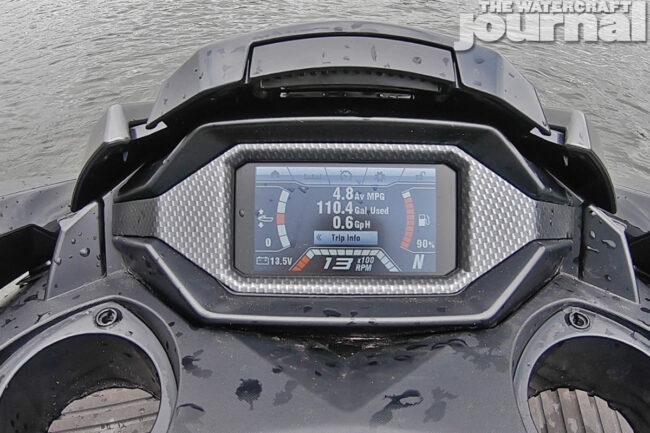
Over the past two-plus-years, consumers have regularly complained about their FX series Yamaha’s irregular fuel gauge and woes pertaining to the Connext’s “Trip Info” page that measures average miles per gallon, gallons per hour and gallons used – namely all of the page’s counters resetting every time the engine is turned off.
For those planning longer trips without fuel stops, following this data can make or break a day on the water. And for the less initiated, incorrectly planning one’s fuel stops can lead to unnecessary trips to the dock or inversely, coming back to the boat ramp on the back of a tow rope. Add to that an almost inextinguishable fuel alarm chiming every minute or so, and you too would go batty.
And true to consumer’s complaints, the fuel alarm will begin chiming with nearly half a tank’s worth of fuel remaining. Others note the rate in which the fuel gauge drops from FULL to EMPTY. After years of reaching out to dealerships and Yamaha’s Customer Service and receiving no satisfactory response, one customer, Mitchell Higgins has filed a class action lawsuit against Yamaha Motor Company, USA.
According to ClassAction.org, the 11-page lawsuit states that “Yamaha has long been aware of the products’ fuel gauge problem but offers no remedy for the alleged defects.” While the lawsuit includes 40 other “members”, Mitchell is personally seeking $5,000,000 in damages – listing such “damages” as being “annoyed”, “unable to enjoy” his PWC and “inconvenienced” by the low fuel alarm.
Whether this class action lawsuit will gain any momentum or result in a retroactive fix for the faulty fuel system and/or Connext software remains to be seen. Anyone experiencing similar issues with their Yamaha FX WaveRunner should first contact their closest certified Yamaha Service Department and Yamaha Customer Service.
Wait! Whaaat? Yup, that’s what many people are saying. And by all accounts the two skis shown in the image on the right, which was posted by FNGYogi in a Reddit thread, shows two such X2’s; one in Kawasaki Green and the other in a pale blue – both touting some impressive custom stitchwork by Jettrim.
Based off of a modern SX-R 160 (touting the Kawasaki’s proven 160-horsepower 1,498cc four cylinder 4-stroke), each X2 features a completely redesigned deck with a heavily contoured single seat, dual latch hood cover and fixed steering neck. Unique kickouts at the rear provide a “tray wedge” shape for foot placement.
Unfortunately, even the most casual observer can see the “Speed Magic” banner stretching across their hoods. Speed Magic is a manufacturer of speed parts (mainly for Kawasaki) out of Japan, as well as very unique conversions and custom kits. Prior to 2018, Speed Magic was famous for its 1.5-liter 4-stroke swaps in SX-R 800s until the SX-R 160 debuted.
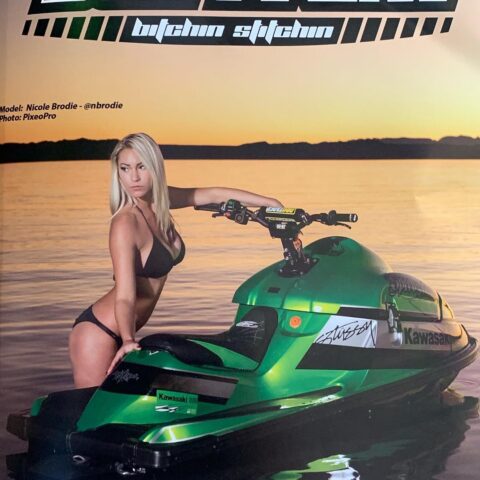
Shortly thereafter, Speed Magic revealed its X-2 project in April of 2019. At the time, the conversion kit took the current SX-R 160 JetSki and replaced the deck, hood and handle pole with a new top, single-rider seat, added a fixed steering neck and a heavily reinforced hood/engine cover. These two skis are not official pre-production X2’s from Kawasaki, but a customer’s skis built by Speed Magic. Even a metal flake X2 similar to the ski on the left debuted in an issue of Pro Rider Magazine (see attached image) a few years ago.
Florida continues to secure its foothold as the leading market for personal watercraft and motorcycle sales, as RIVA Motorsports just announces the acquisition of Spaceport Cycles in Titusville. The newly renamed dealership will be known as RIVA Space Coast, and will continue the tradition of motorcycle and off-road sales, as well as expand into PWC and marine sales.
The expansion of the RIVA Motorsports dealer network helps to service the Central Florida market as well as pull a portion of workload from its existing dealerships. Even amid concerns for the current economy, RIVA service departments are slammed with work orders and expanding the dealer’s network of certified technicians was a “must.” Read the original press release below:
RIVA motorsports has expanded its dealer group with the addition of RIVA Space Coast located in Titusville, Florida. This is RIVA”s 4th location with 3 existing dealerships in South Florida. This new location will allow RIVA to service the rapidly developing Space Coast and Central Florida motorsports markets. To achieve this, RIVA acquired Spaceport Cycles, a longtime Titusville based dealer for Yamaha, Suzuki and KTM. The experienced staff of Spaceport Cycles has joined the RIVA Space Coast team under the leadership of general manager Shane Hildy.
“We are excited to expand our business into the Space Coast/Central Florida market,” said Dave Bamdas, President of RIVA Motorsports. “We have plans to grow the PWC and marine side of this dealership while respecting the off-road legacy and community connection created by former Spaceport Cycles owner Conrad Eigenmann over the past 30 years.” This acquisition marks a key step for the RIVA Motorsports Group as it grows its footprint within the industry while delivering a high level of service to the area.
I’ve been either somewhat adjacent or wholly embedded in the personal watercraft (PWC) industry for roughly 18 years (as I can measure) and I can say with some surety that this industry is changing. Of course, change isn’t anything new and it shouldn’t surprise anyone, but the direction of this latest change is what concerns me.
As far as I can see, there have been three major (and I mean full scale, tectonic-level) changes in this industry that comprehensively changed the landscape – with a fourth currently underway.
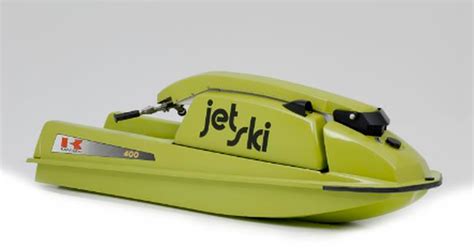
First, I’m not counting the introduction of the 1972 JS400 “JetSki” from Kawasaki as that is less of a change as much as it was the beginning. Rather, I’m looking at events that altered the trajectory from that point forward.
The original JetSkis were small, uncomplicated and required a degree of athleticism to master, which effectively made them exclusionary to casual entrants looking for a leisurely pastime. That is, until 1986 when Yamaha revealed the WaveRunner, providing a somewhat stable 2-seater platform that was less challenging and far more accessible.
Now “jet skiing” was available to everyone. This was the first of these industry-changing events.
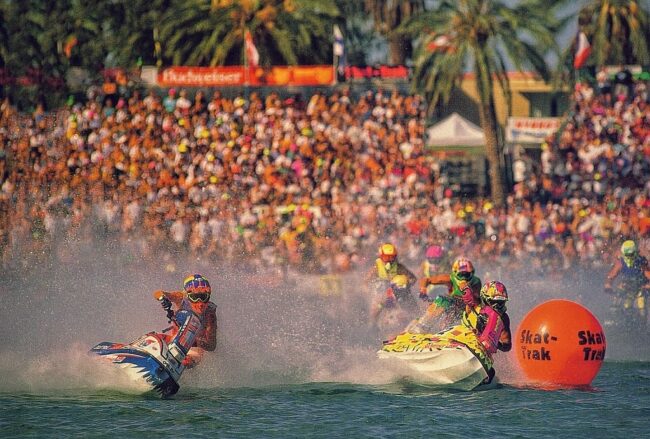
The advent of the “sitdown” sparked Bombardier’s return to personal watercraft in 1988. Suddenly, sitdown sales rivaled that of standups, and waterways were filled with all types of riders. By 1991, sitdowns were introduced into professional racing – previously exclusive territory of standups.
This period took us to 1995, which marked the industry’s all-time peak for new unit sales. As I understand, that number was as high as 155,000 units sold in a single year. The newfound popularity of PWC drew in new manufacturers like Polaris and Tigershark with each OE offering dozens of models and trim levels.
Suddenly, everyone owned a jet ski. They were cheap, easy to work on, easier to repair and parts were plentiful. Conversely, every body of water was packed with rowdy buzzing 2-strokes jumping boat wakes spouting plumes of blue smoke and leaving prismatic snail trails in the water.
While few will look at 1995 as I do, I see this as the industry’s breaking point – and the second biggest pivot point in our industry. Why? Because it was at this time that the public’s tolerance for PWC was pushed to its limit, and the years that followed were a procession of legal actions outlawing skis from lakes, shorelines and public waterways.
Without the explosion of popularity in 1995 and the legal backlash that ensued, we wouldn’t have seen the industry forced into developing 4-stroke powertrains. In 2002, Sea-Doo was going to roll out its new 4-tec 1503 3-cylinder first, but Yamaha poured on the gas and rushed out its 4-stroke FX140 on the exact same day.
It is here, with the advent of the 4-stroke engine that I submit the third biggest change in our industry occurred. Although the move to 4-strokes eventually pushed Polaris and Tigershark out, it did welcome Honda into the fray that same year. Shortly thereafter, Kawasaki joined it’s competitors finalizing the era of smog-compliant 4-strokes.
Equally, the performance aftermarket either had to convert, hold fast or fade away. Like Hemingway, once household brand names like Performance Jet Ski (PJS), Mobby’s, Pro-Tec and Beach House vanished gradually, then suddenly.
Unfortunately, 4-stroke engines were far heavier than 2-strokes and relied less on low-end torque but high RPMs to generate horsepower. Carburetors were replaced with clunky electronic ignitions and digital fuel delivery systems adding even more weight and greater sensitivities to water intrusion.
Watercraft ballooned in size as heavier internals required greater buoyancy. Wider, more stable craft also welcomed less athletic riders whose purchasing power pushed manufacturers to cater to their demands over the slim number of racier riders. Skis swelled further, more endowed with gadgets, digital features and novelties.
Is this tidal surge of technological accessories the next change mentioned at the beginning? No, although it is significantly altering our industry. Rather, the next change is far less visible to the outward observer: the trajectory of future watercraft are being directed by focus groups, emailed questionnaires and sampled dealerships instead of enthusiasts.
Look, I’m not naive. Seeking maximized sales has always been the name of the game, but previous industry stewards knew who they were targeting. Today, OE’s are staffed with corporate ladder-climbers and marketers – gone are almost all of the diehards who built each brand’s respective watercraft divisions – and they don’t know how to create new and exciting product.
Here’s some wisdom: focus groups can only react to what’s currently happening – they can’t tell you what’s coming. The most successful companies understand that reacting to ever-shifting trends (instead of setting them) has forever been a failed business model. Always chasing “the latest thing” is often costly and if response is too slow, ineffectual.
If the PWC industry was to learn anything from tech mega-giant Steve Jobs’ success, it is that the product should always drive the demand, rarely the inverse. Currently, I and many others recognize Sea-Doo as the industry’s leading innovator. It’s a dangerous position to hold as the gamble can fail spectacularly or hit the ball out of the park.
As far as I can tell, for every one failure, BRP has enjoyed three successes. This forward-thinking posture also has given Sea-Doo the upper-hand as being the brand that seems to care most about performance enthusiasts; changes made for the 325 ACE directly target the top echelon of tuners and racers – and that speaks volumes to this tight-knit community.
My hope is that Sea-Doo’s most recent moves shake Kawasaki and Yamaha awake to the value in directly addressing the core enthusiasts first before sampling the opinions of a focus group or dealership managers. If not, I don’t see this industry coming around this last corner.




 We have a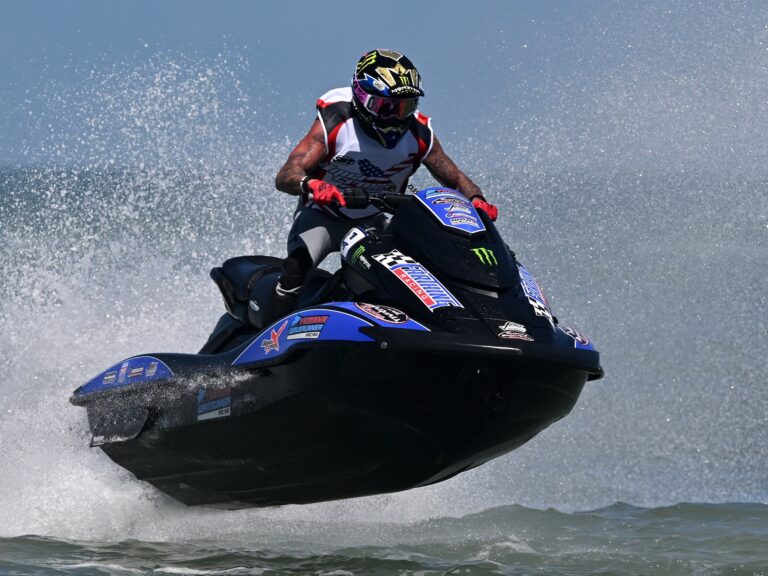


 Radinn Electric Jetboards can be rented at almost a dozen locations worldwide, with

 Wait! Whaaat? Yup, that’s what many people are saying. And by all accounts the two skis shown in the image on the right,