
Home Blog Page 144

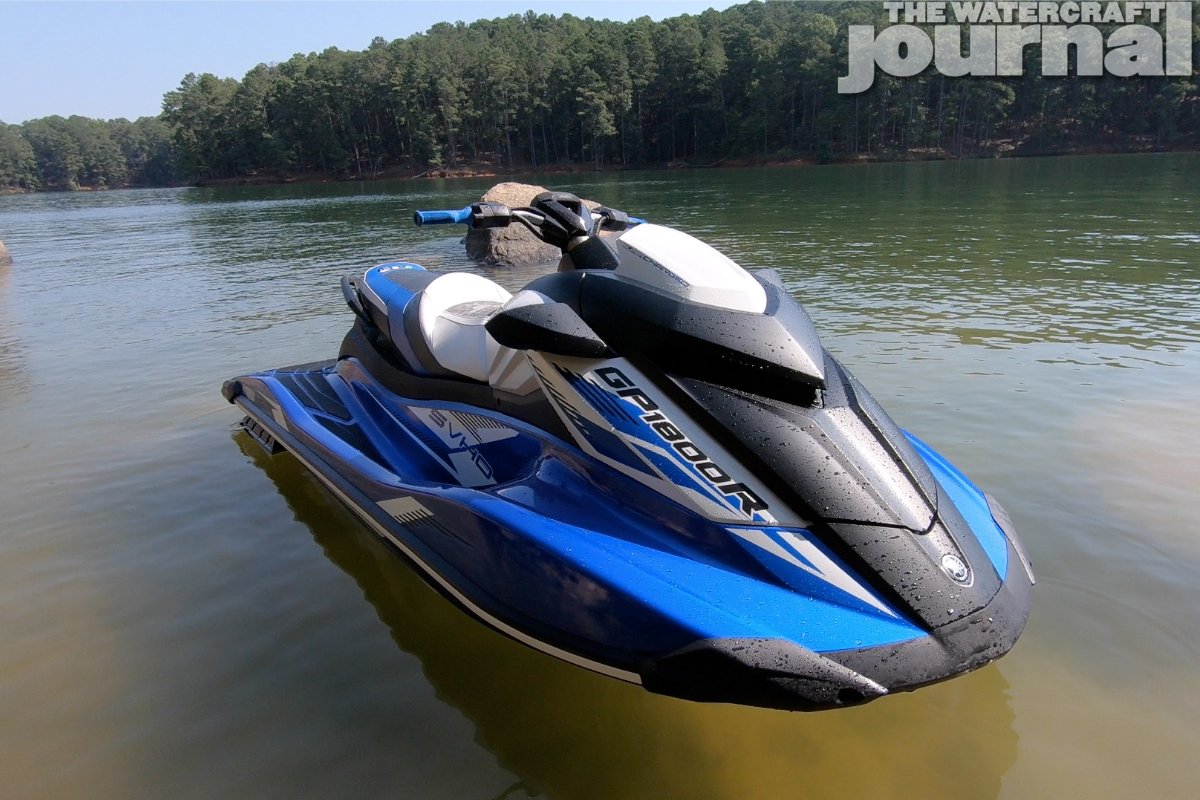
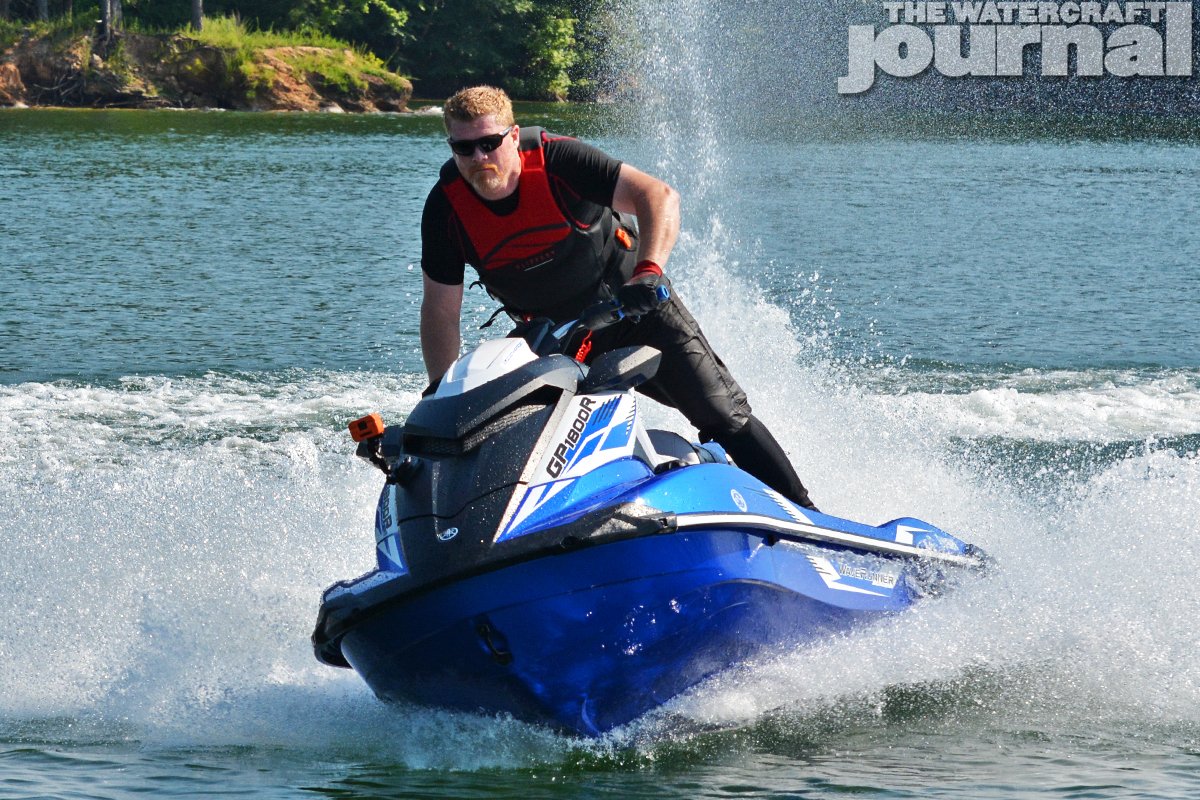
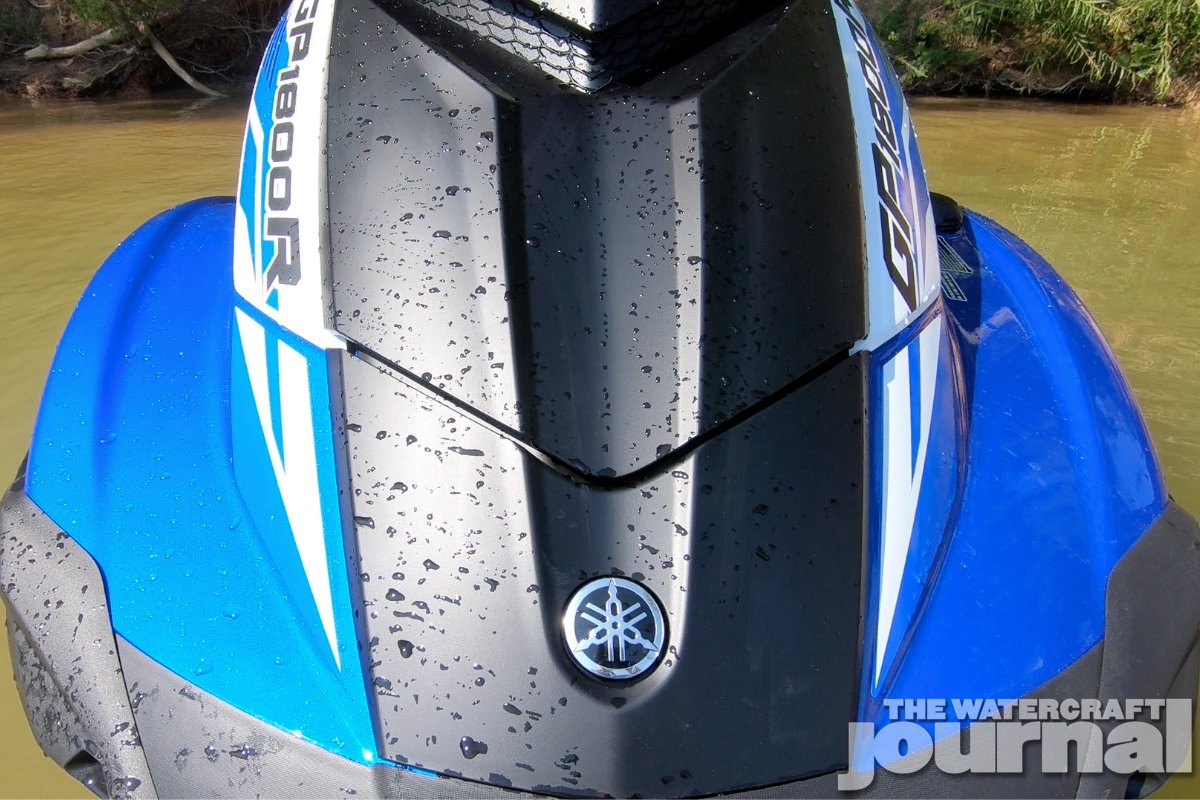
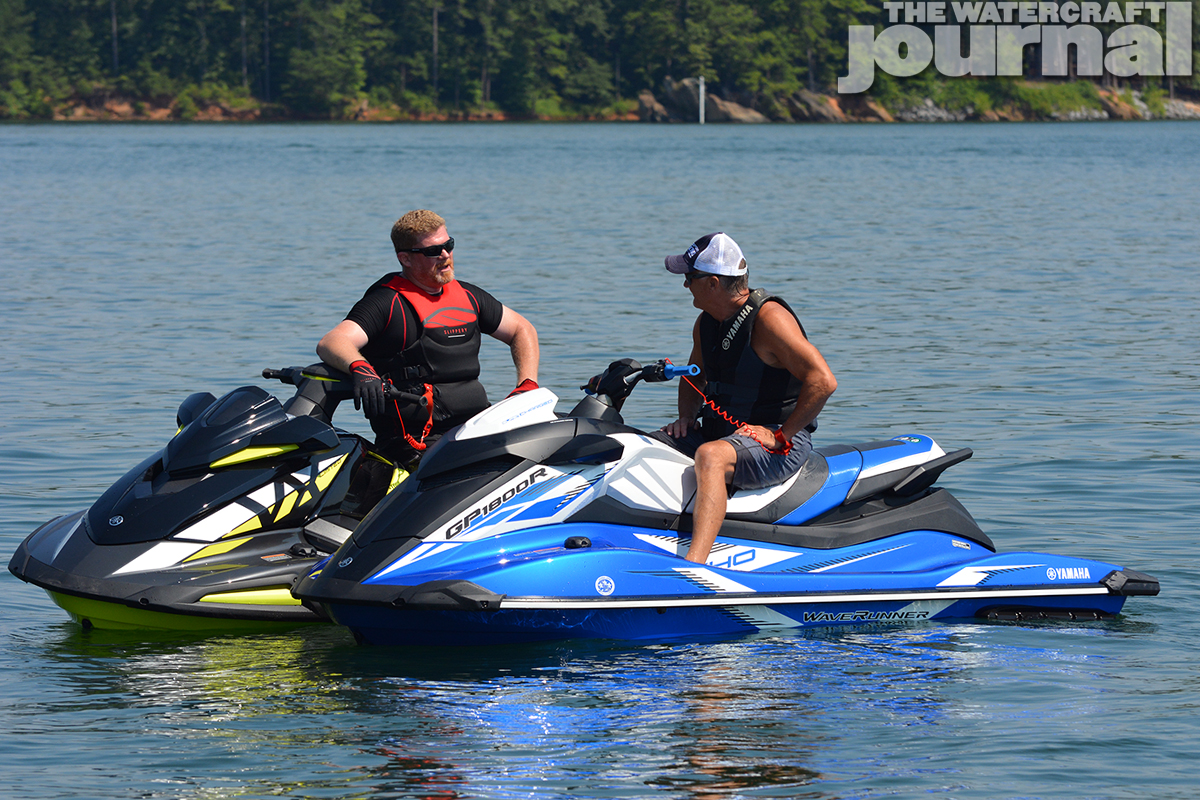
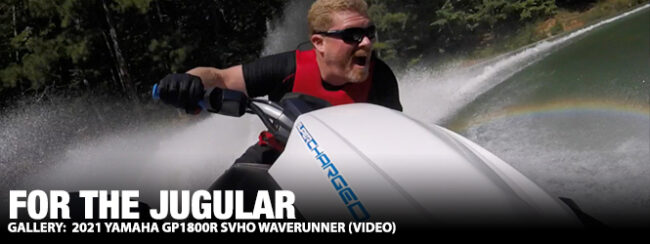
Gallery: 2021 Yamaha GP1800R SVHO WaveRunner (Video)

10

We’ve ridden our fair share of race-prepped watercraft over the years; both modified and piloted by some of the most prolific athletes in the sport of personal watercraft racing – from 90-plus-mile per hour drag racers to laser-precise, hairpin-cutting closed course machines, and pretty much everything in-between.

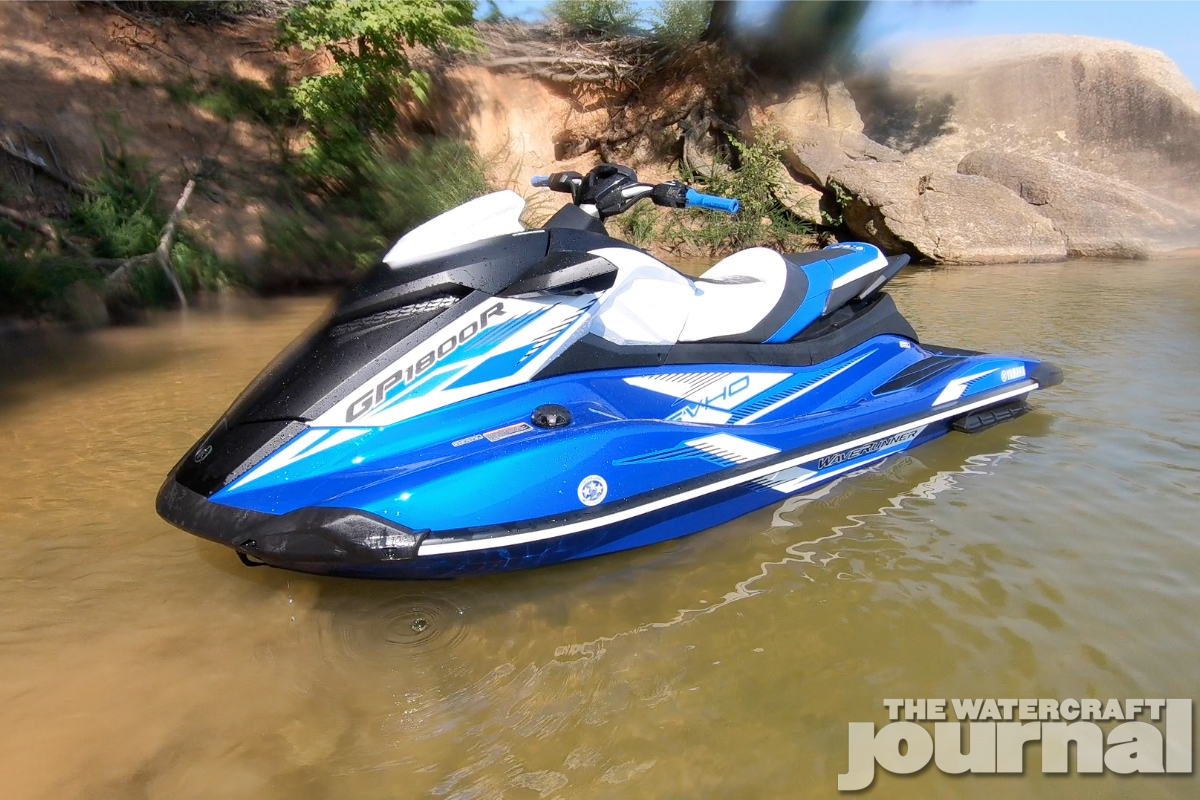
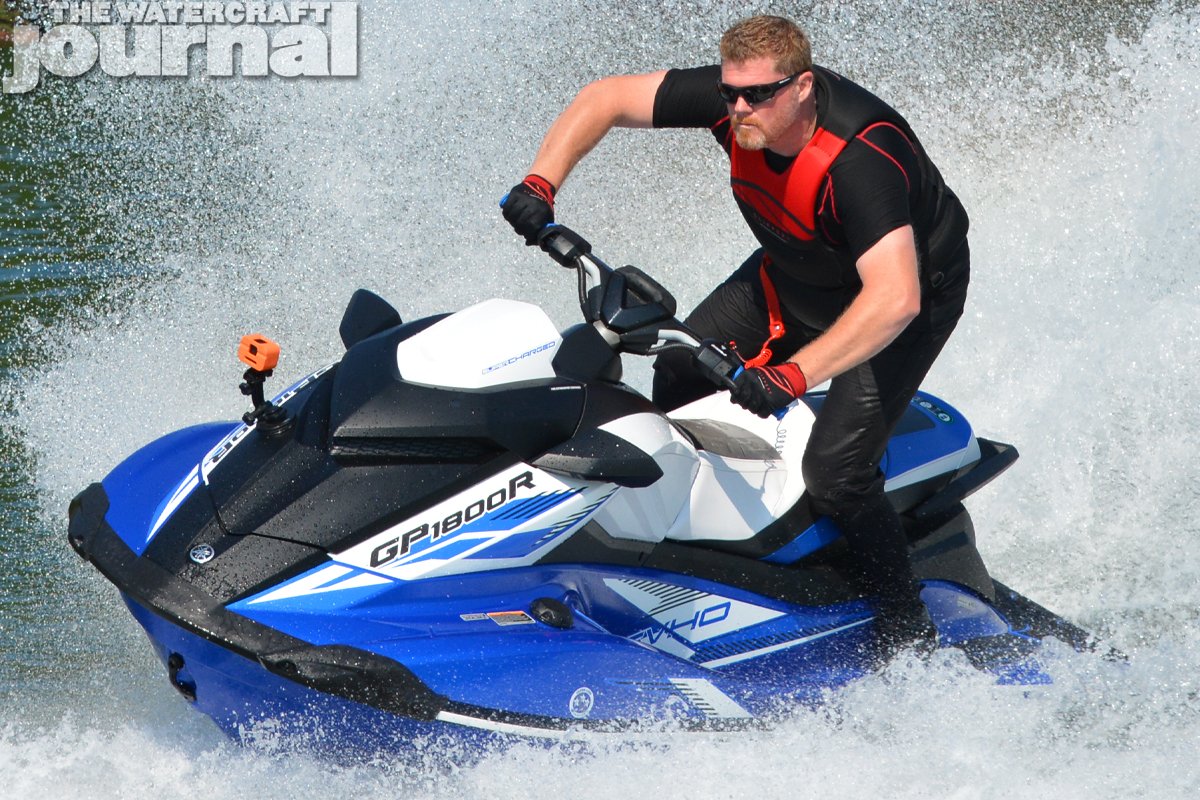
So when we say authoritatively that the newly redesigned 2021 Yamaha GP1800R SVHO WaveRunner (MSRP $14,749) is the single best platform from which to dominate the world of racing that we’ve seen in at least the last decade – if not past 20 years or so – please understand that it’s coming from a place of experience.

Today’s redesign began just over two short years ago, as marching orders came down from corporate that Yamaha wanted to “freshen up the VX line”. Project Manager Scott Watkins and his research & development team quickly began culling through notes gathered by the world’s best riders and years of testing. Certainly, the past four years of national and world championships earned the GP1800R legend status, but as Scott told The Watercraft Journal, “There still was plenty left on the table.”

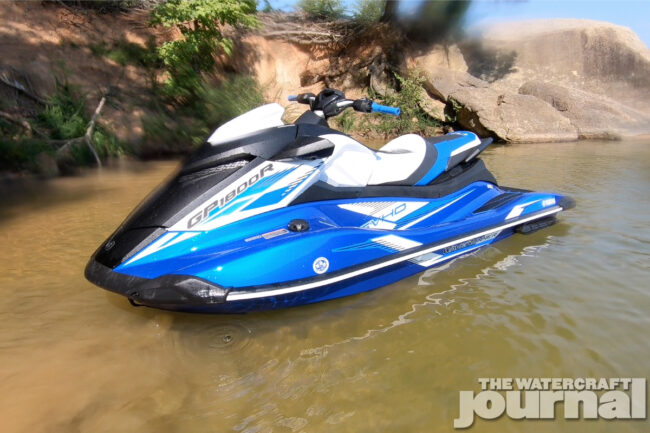
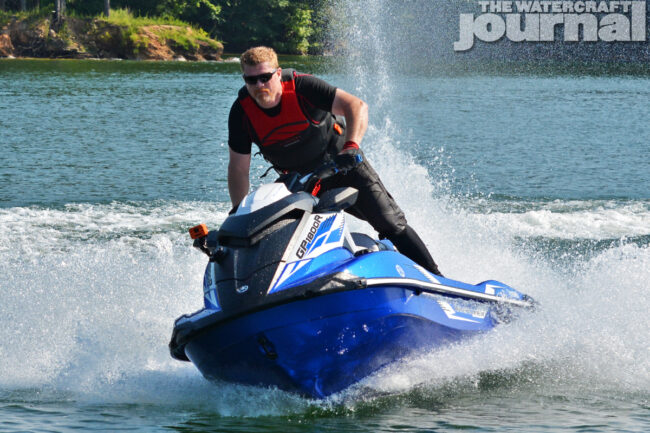
For 2021, Yamaha re-engineered its GP1800R musclecraft by focusing on four key characteristics: improving rider ergonomics, weight distribution, acceleration and cornering.

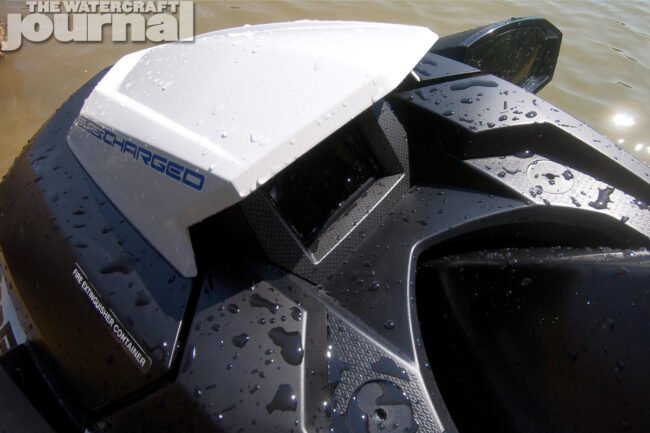
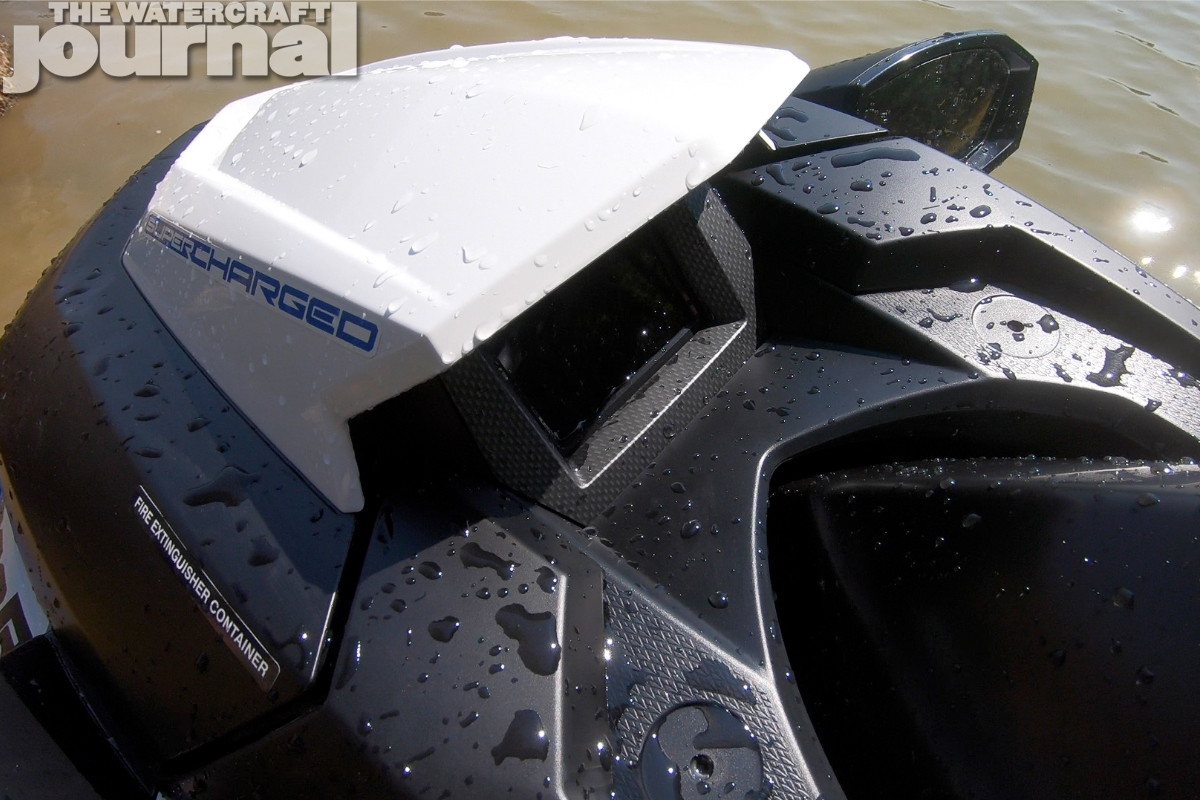
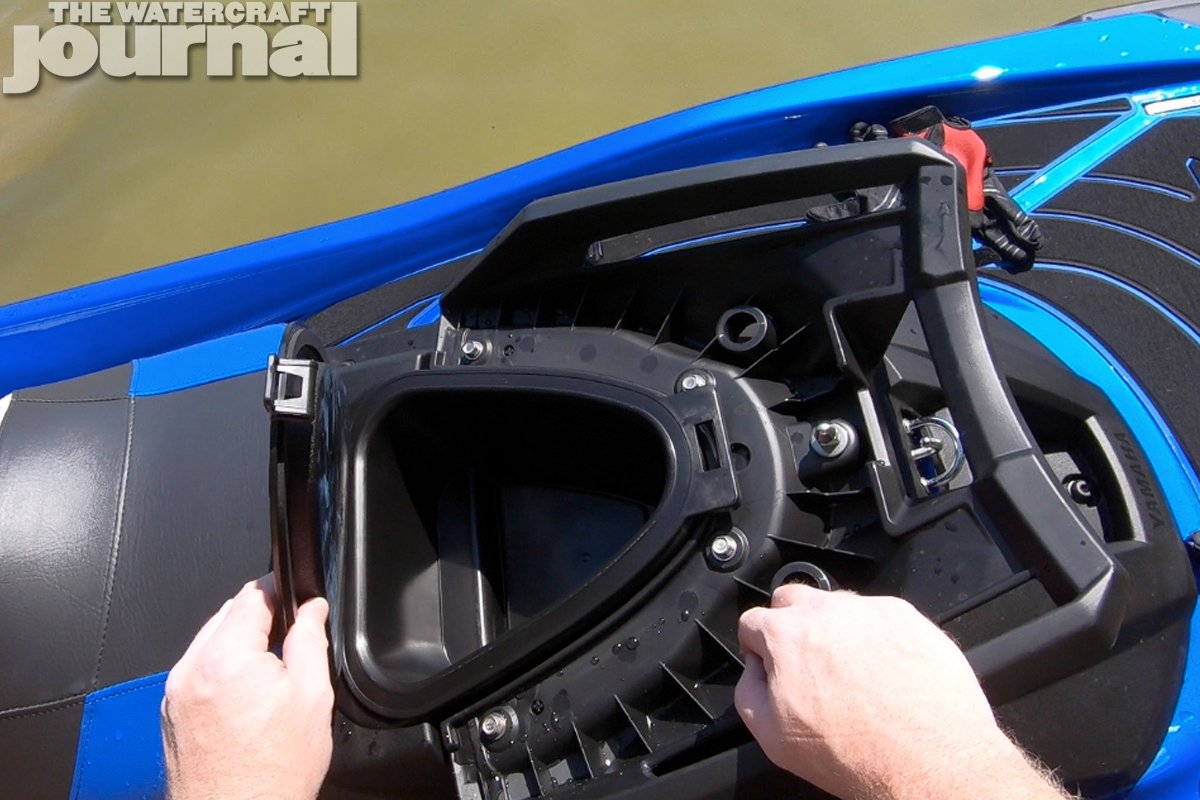
Beginning with a wholly redesigned deck, the GP’s upper half borrows heavily from both the entry-level EX line as well as Yamaha’s full-sized FX Series. The upper half of the WaveRunner is now a two-piece, employing a plastic secondary deck panel – similar to those first used on the EX WaveRunners. When removed, the near entirety of the engine compartment is exposed, making access to the supercharged and intercooled SVHO engine and exhaust system demonstrably easier.

This second-deck also allowed Yamaha to provide riders a far racier saddle. Curved and contoured to allow greater range of motion – particularly if you’re dropping a knee into the deeper, wider and self-draining footwells as you enter into a high speed corner – the new seat features a high bolstered back that’s wrapped in a grippy, traction-enhancing material so the g-forces can’t pull you out of the seat as easily (but they still will).

The reshaped saddle is 1.5-inches narrower and tapered at the knees, allowing the driver better lower-body grip in cornering and comfort while cruising. Coves at the knees open up the rider to easier foot placement and leg movement too. The GP1800R’s new hood and fairings are also entirely new – and surprisingly “retro” in our view, drawing a few styling cues from the GP1300Rs of years passed.

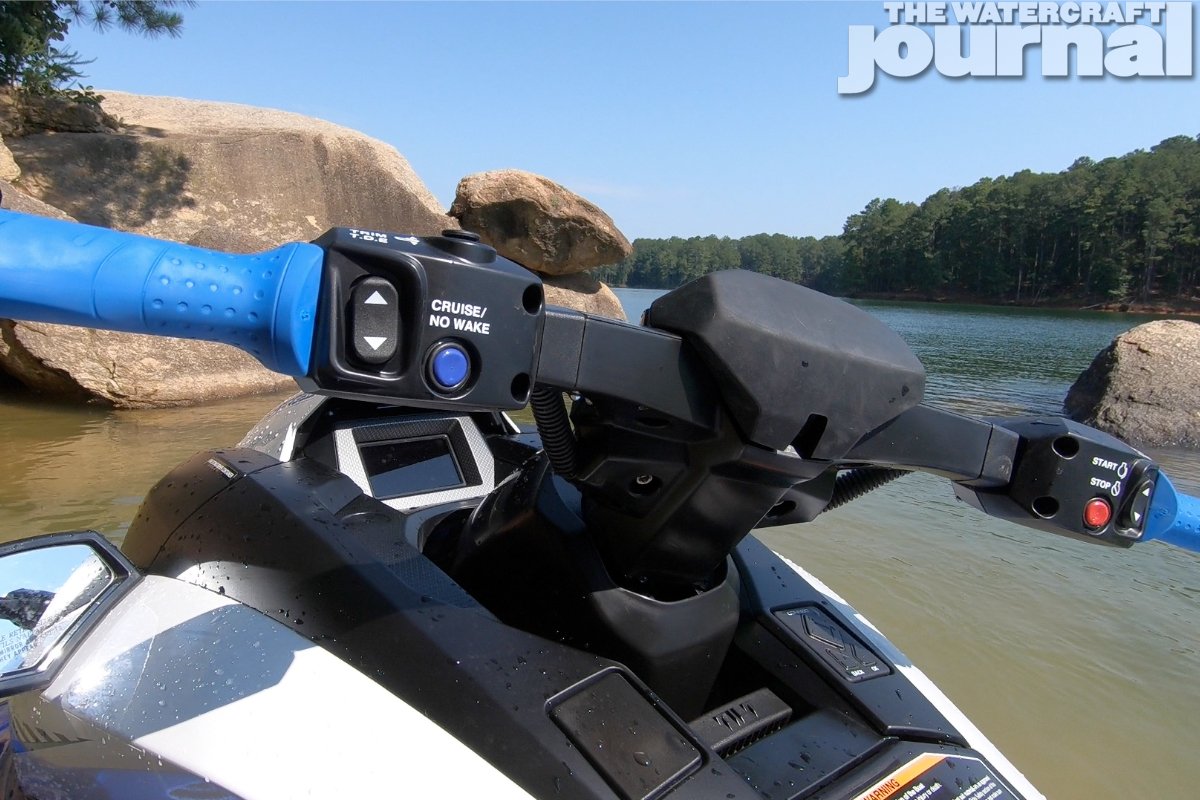
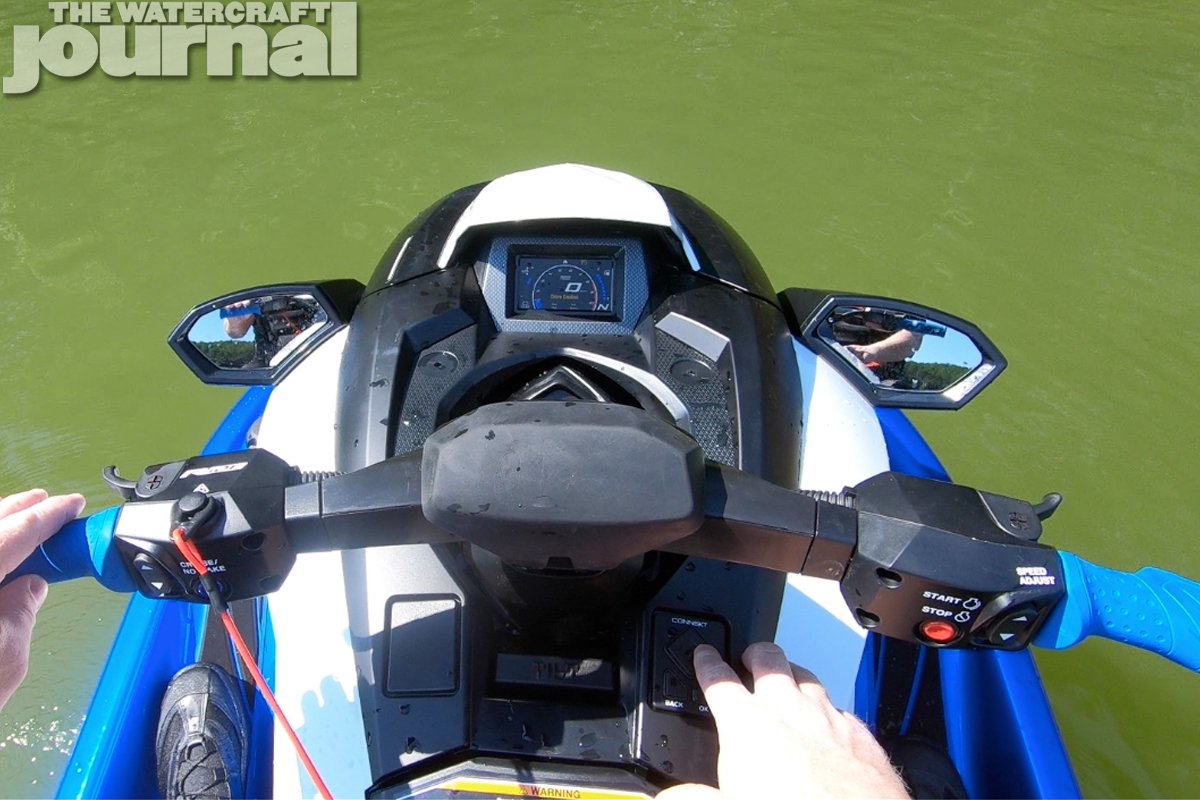
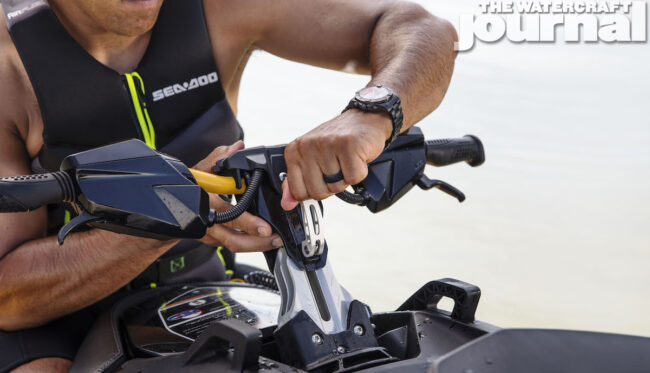
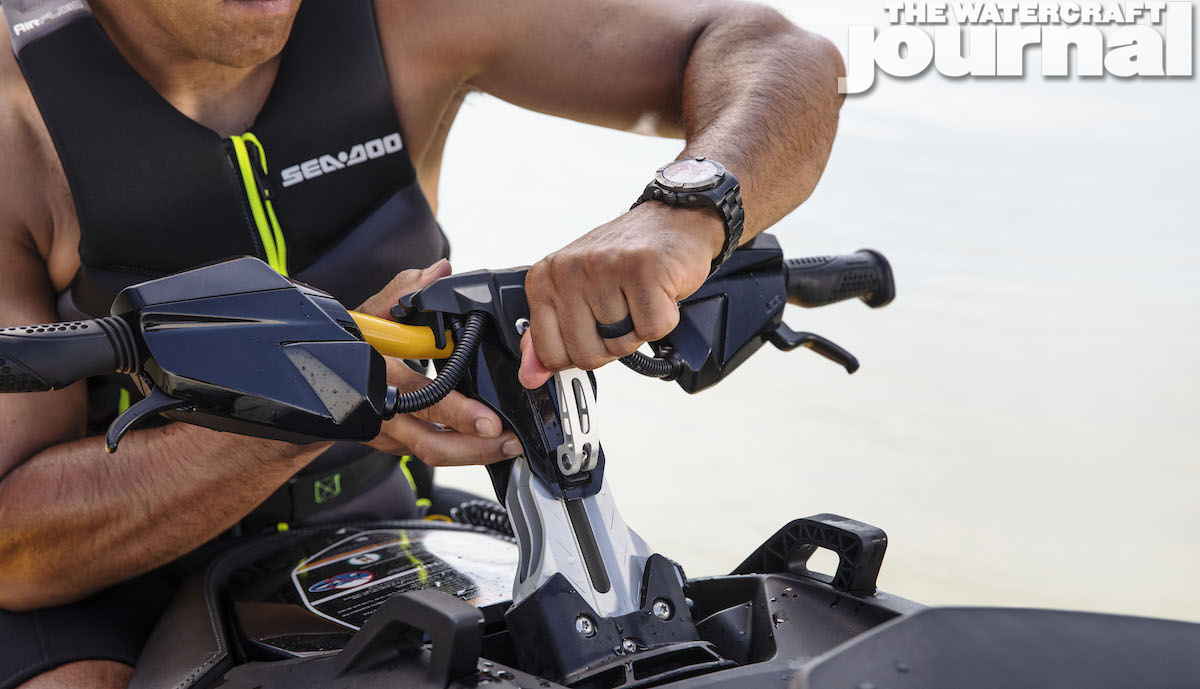
Adding to the GP’s newfound ergonomics are all-new color-matched pistol grip-mounted, tilt-adjustable handlebars. With five settings of adjustment to choose from, taller riders can finally enjoy standing upright with the bars set at their highest without having to stoop over. And if you’re looking at tucking in low and snapping a hard S-turn, the lowest setting drops the bars down into the cowling perfectly.

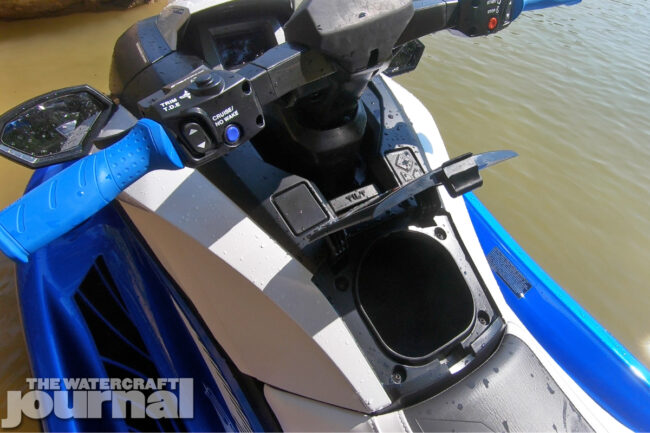
Equally, the control pods on the handlebars have been wholly redesigned, with a single Start/Stop button now on the right-hand side, and the Cruise Assist/No Wake Mode button on the left. (The electric trim and cruising throttle toggles remain in their same places though but also have been redesigned and are more responsive to quick inputs.)

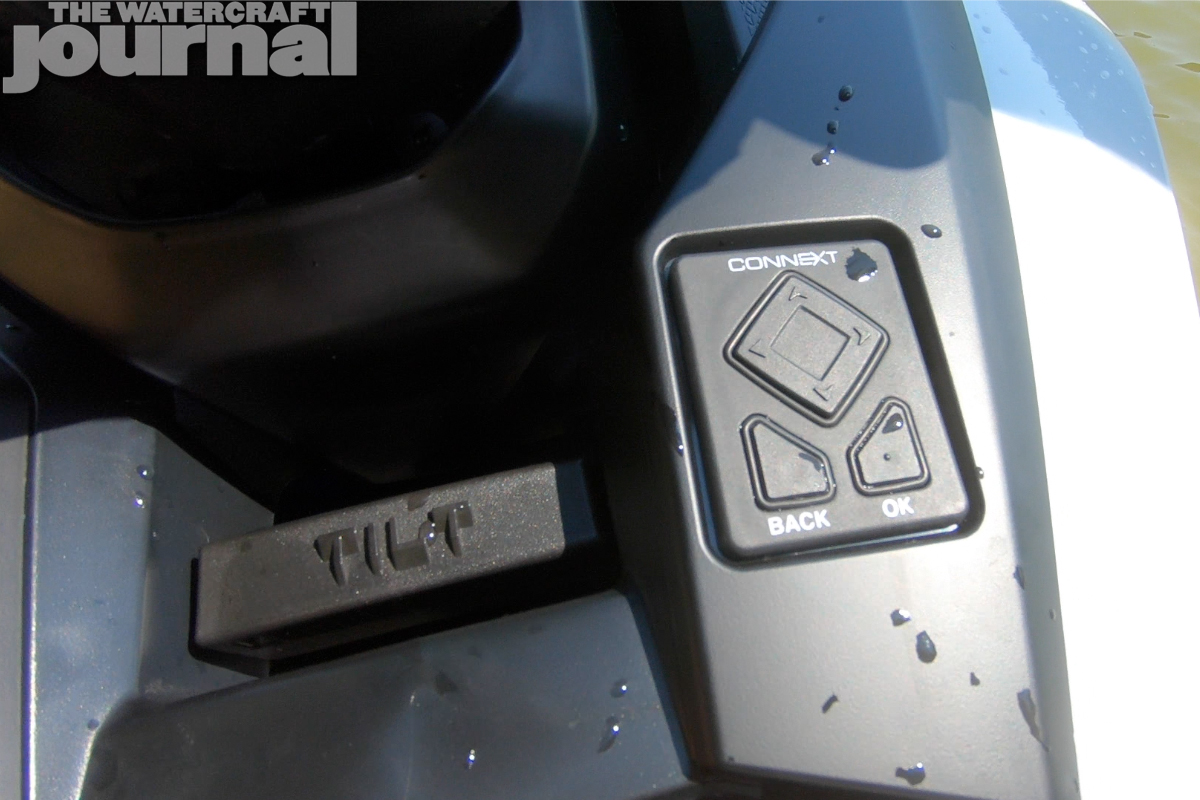
Ahead of the handlebars is the GP1800R’s full-color “Helm Control” digital dashboard. The 4.3-inch Yamaha Connext dash is not a touchscreen like the FX, but is controlled by a touchpad located beneath the steering on the right hand side. Riders can freely scroll through pages offering fuel mileage and consumption rates, a PIN security code and even pre-setting a maximum speed.

For the would-be racer, the GP1800R includes two new computer-controlled handling features: the first being “Launch Control” that digitally toggles the trim as the WaveRunner pulls hard from a standstill or idle speed; and second, the industry’s first Auto Trim system, exclusive to the GP models. Advertised as “Cornering Control,” the Auto Trim feature operates independently from the electric trim system on the handlebars.

When activated, “Cornering Control” automatically trims the bow down when decelerating for a tight corner. This action “loads” the hull’s surface tension prior to accelerating out of the apex of a corner. As the rider accelerates out of the apex, the Auto Trim will rise back up to plane as speed increases.

Cast into the fairings between the dashboard and handlebars are threaded portals for Yamaha’s multi-mount accessory system; simply screw in a RAM ball-mount and you can attach any number of items, like a GPS, action camera, etc. – sorry, no cup holders, guys.

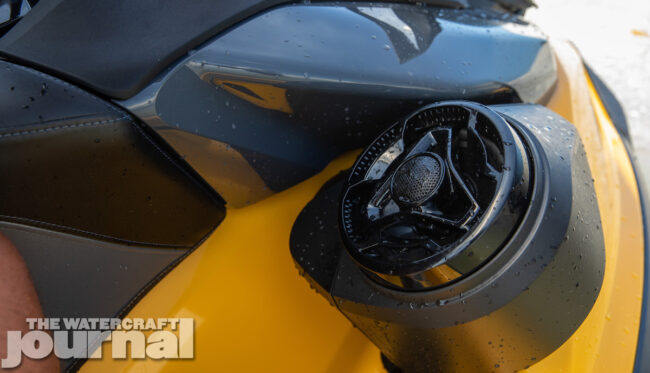
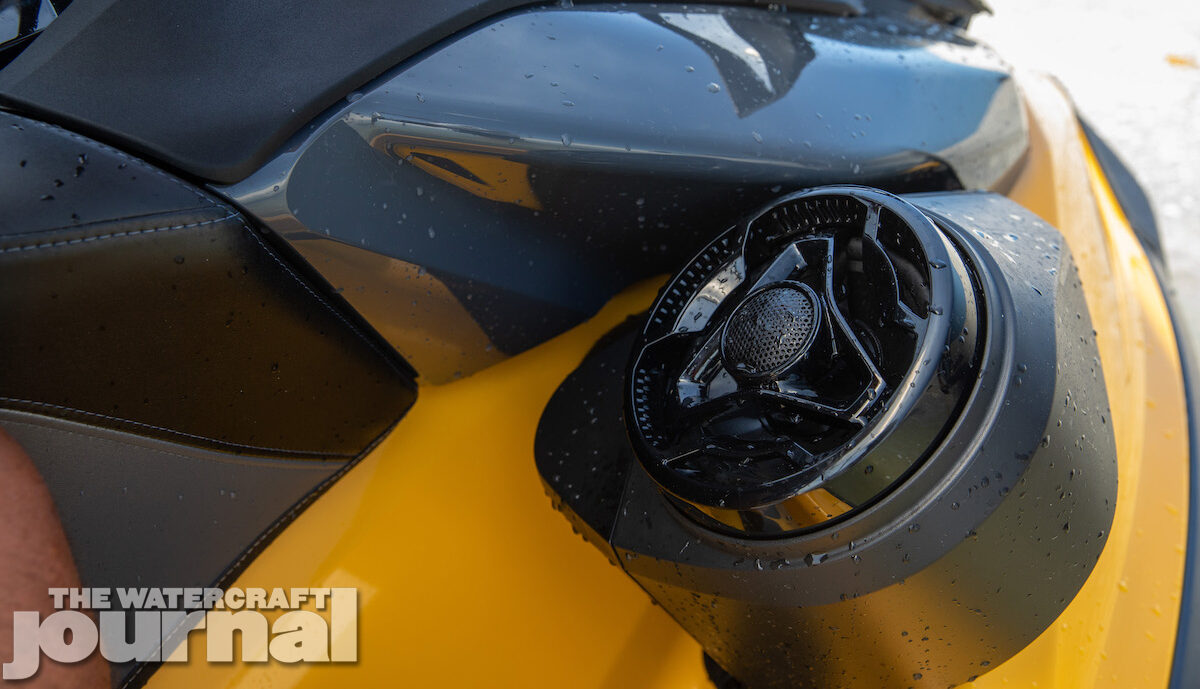
If course, if you’re looking to really kit-out your GP1800R SVHO, Yamaha just introduced its first factory-installed marine audio system. The $800 option consists of twin 4.5-inch waterproof marine speakers, an integrated 2-channel (50 watts per channel) amplifier, and a low-voltage regulator to protect the battery; all of which is operated by an easy access control pad below the handle bars on the left hand side. And no, this sounds system WILL NOT retrofit on previous GP or VX models, as it is cast to fit the newly designed deck.

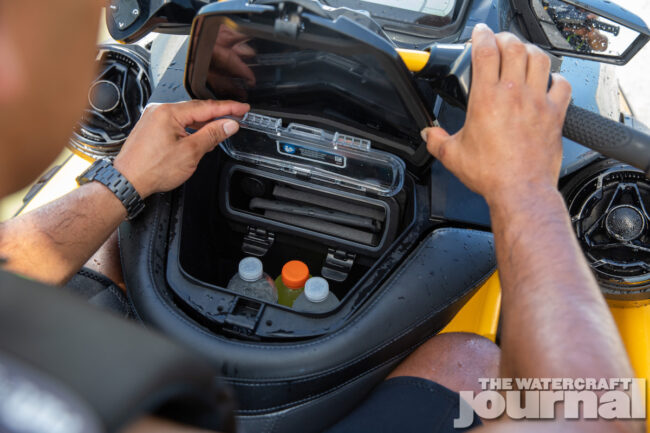
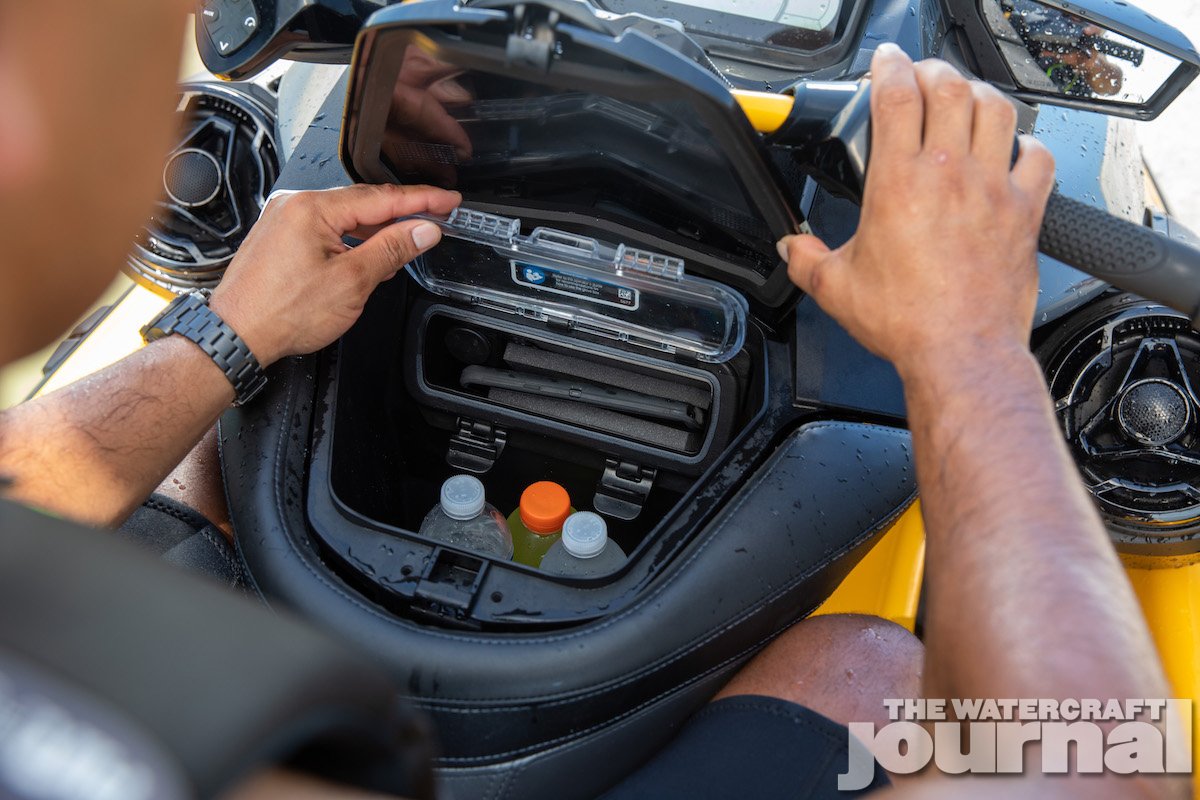
With the deck’s redesign also comes an all-new glovebox. Not only is it the largest glovebox ever offered for the GP Series, it’s also watertight and includes a removable rubber lining. (Although the exact same size inside, the opening for the GP’s glove box is a little tighter. And you’re going to have to check the option box for the blue LED-lit USB port and 12v socket that comes standard on the VX models.)
Base storage is also up to 28.4 gallons from 24.6 thanks in large part to the larger bow compartment, made wider for easier access and features a more durable, high strength hinge and gas-filled shock dampener; as well as a snap-top, water-resistant box found beneath the rear seat. And the new deck also gives the GP’s a wider rear swim platform, a wide folding swim step and molded-in reboarding handle as well.

Below the seat, the Super Vortex High Output 1,812cc 4-cylinder four-stroke remains mostly unchanged. Although not advertised, two changes were made to the GP’s powertrain; a redesigned supercharger clutch that includes more teeth (27 vs. 24) and a larger diameter. This means greater engagement throughout the RPM range. The SVHO’s total power output remains the same, but is now significantly more efficient.

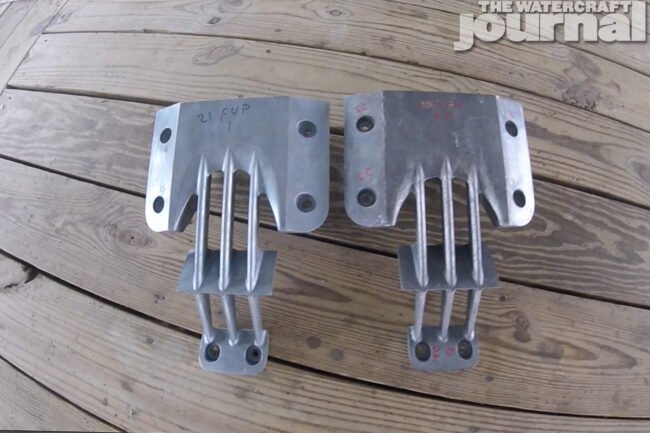
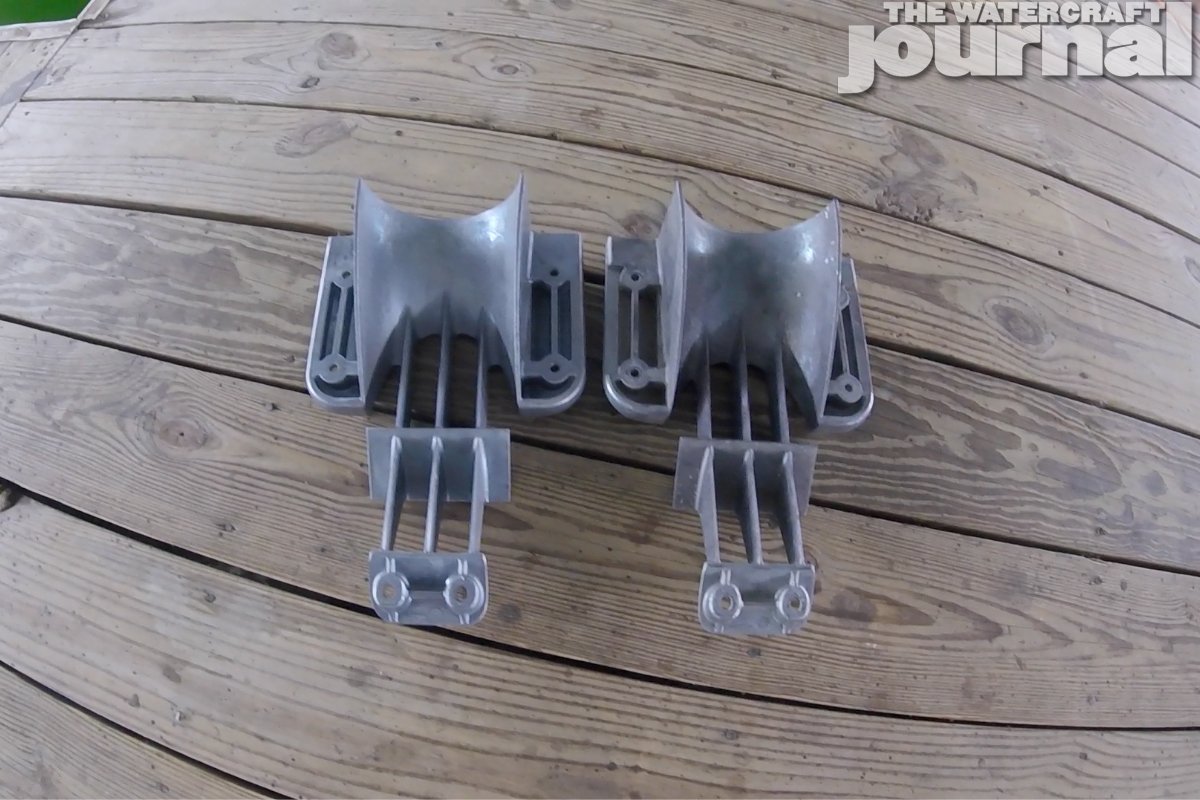
Secondly, the transom plate has been machined wider, from 155mm to 160mm, permitting a more stable flow of water into the pump. Gone is the abrupt step in the aluminum transom; instead, it’s a true 160mm that flows into the one-piece pump with a removable 160mm liner and impeller, and a tapered stator with a 160mm exit.

Feeding the larger pump inlet is re-developed top loader intake grate. Featuring a stepped wing blade design and dramatically increased chip-inlet, the all-new top loader grate increases volume and traction while reducing cavitation, veritable one-two punch when it comes to initial acceleration and rough water hook-up.

Yet, easily the biggest change to the GP1800R is the one that will likely go the least noticed: although the GP1800R’s hull below the bondline remains unchanged for 2021, the inner hull liner was redesigned, moving the 18.5-gallon fuel tank 3.15-inches back and half-an-inch deeper down. This move alone dramatically readjusts the craft’s center of gravity and neutral pivot point.

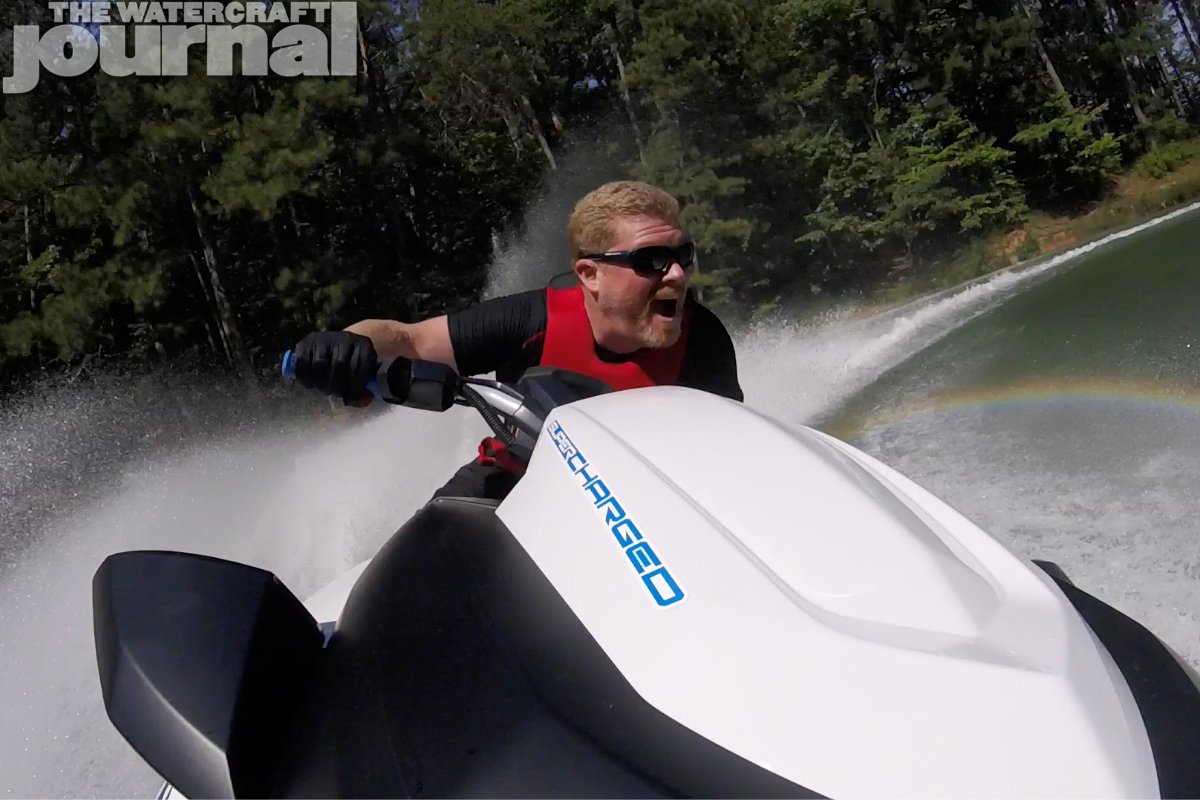
So what does that mean? No longer does the GP1800R feel like its cornering from behind the rider, but directly below them, radically improving the WaveRunner’s handling and overall agility. These changes have fine-tuned the GP1800R SVHO into an entirely new machine. We must stress that we’re not being hyperbolic here. The 2021 Yamaha GP1800R SVHO rolls smoother into a turn and out through the apex than any WaveRunner before it.

No, the 68-and-a-half mile-per-hour top speed hasn’t changed, but getting there is a whole different experience. Instantaneous hookup and an unceasing mid-range that lifts into the boost curve has made the 2021 GP1800R easily one of the most exciting personal watercraft we’ve seen a mainstream manufacturer build. Add that to its newfound cornering prowess and you’ve got a ski that pulls harder out of a corner like a hand-built race craft.

Before, the previous GP1800R SVHO would almost leap out of the water as it tried to accelerate. Now, launching from idle is a totally different experience; initial cavitation is almost nonexistent, and the GP’s super-balanced inside lean through a hairpin is all-the-more predictable.

Yeah, the new unit picks up half an inch in height (47.2” vs. 46.9″) and two-and-a-half extra pounds (772-pounds vs. 769-pounds, dry weight) over last year, but isn’t much to cry about. The NanoXcel2 hull and deck material still shaving off 18-percent more weight than the standard NanoXcel material, giving the Yamaha it’s excellent power-to-weight ratio.

Again, looking from the outside the changes appear to be merely cosmetic: 15-percent more storage? Sure. The multi-mount accessory system and the full-color Connext Helm Control? Yeah, you betcha. Even an optional sound system. Yeah, that’s pretty cool too. But it’s truly what’s under the skin that makes the new race-ready 2021 Yamaha GP1800R SVHO the single-most aggressive WaveRunner we’ve seen leave the assembly line.

Gallery: Introducing The 2021 Sea-Doo Lineup

11

[Editor’s note: Yes, this article was supposed to have gone live on Friday, September 11, 2020. Unfortunately, the hard drive in our MacBook Pro died, and with it any chance of us completing this reveal until today. While much of this information has been disseminated throughout the internet, we’re going to compress and compile all of it into a single, easy-to-follow article. – Ed.]

Admittedly, this was probably the tightest-lipped Sea-Doo had been in years. Given the past several months, we at The Watercraft Journal had high hopes for 2021, but expected something, well…a little more measured. Instead, what we’re getting is a pummeling of performance and next level innovation. The best racers, tuners and aftermarket parts suppliers have been champing at the bit to spill the beans before the appointed deadline. Heck, anyone who knew anything was bursting at the seams.

Now here we are, and the cat’s out of the bag. The all-new RXP-X 300 is easily the most ambitious race-ready 4-stroke to come from Sea-Doo. From it’s GP-class, high-bolstered saddle to its one-of-a-kind T3-R hull, the new RXP-X makes some seriously bold moves. Add to that, the introduction of the world’s first forward-and-reverse gear-driven transmission for true reverse-thrust pump clearing (iDF) and the most advanced digital dashboard in the industry, and there’s just too much to talk about – well, almost.

OK, OK. But before we delve into the super-exciting stuff that you would-be racers are salivating for, we’re gonna talk about the rest of the lineup first. That’s right, we can’t forget everyone else in the room! Beginning with Sea-Doo’s Rec-Lite segment, we’re gonna work our way up the food chain, so let’s just cool our jets and talk about Sparks. That’s right! The Spark returns for 2021 all but unchanged.

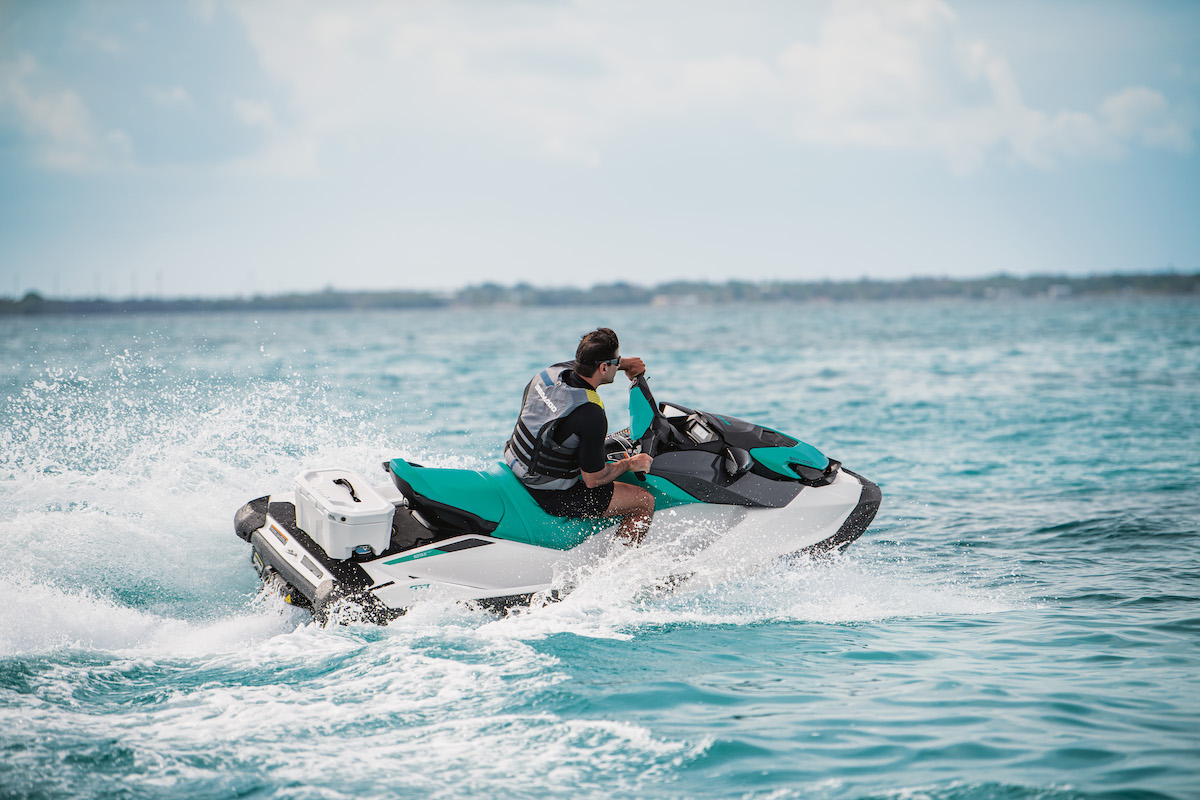
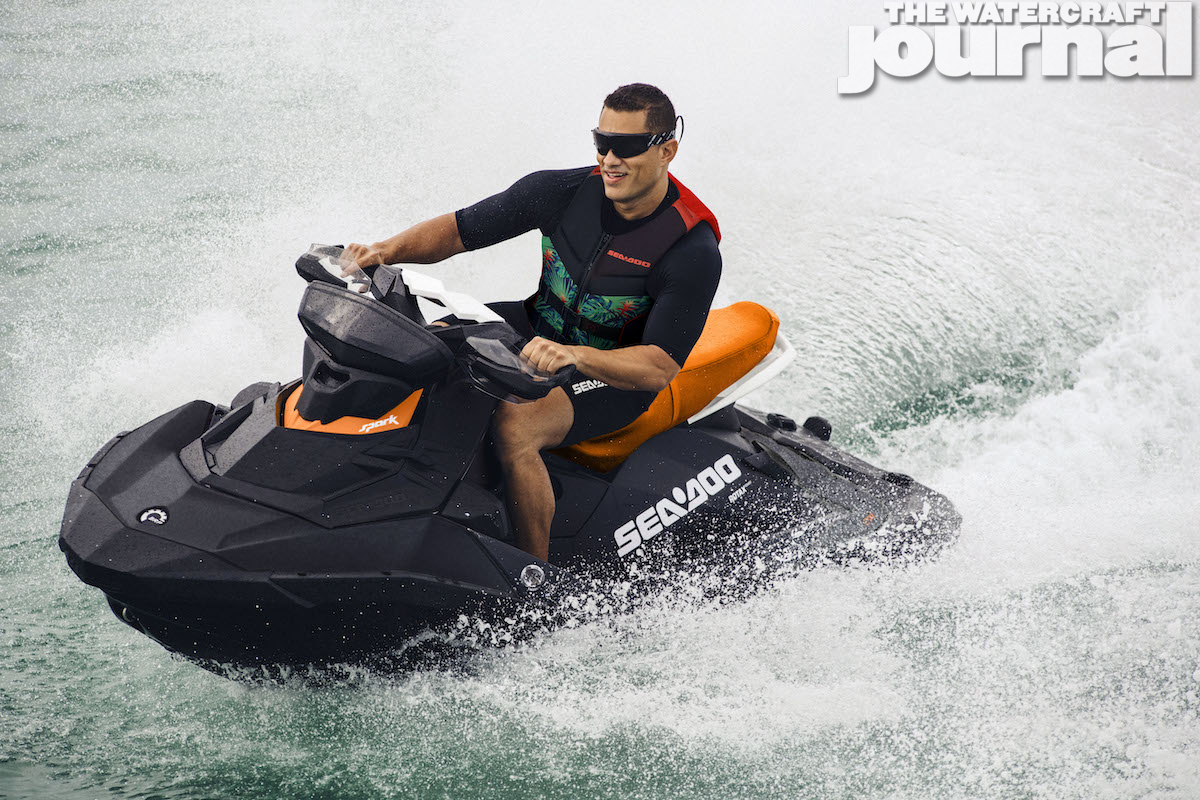
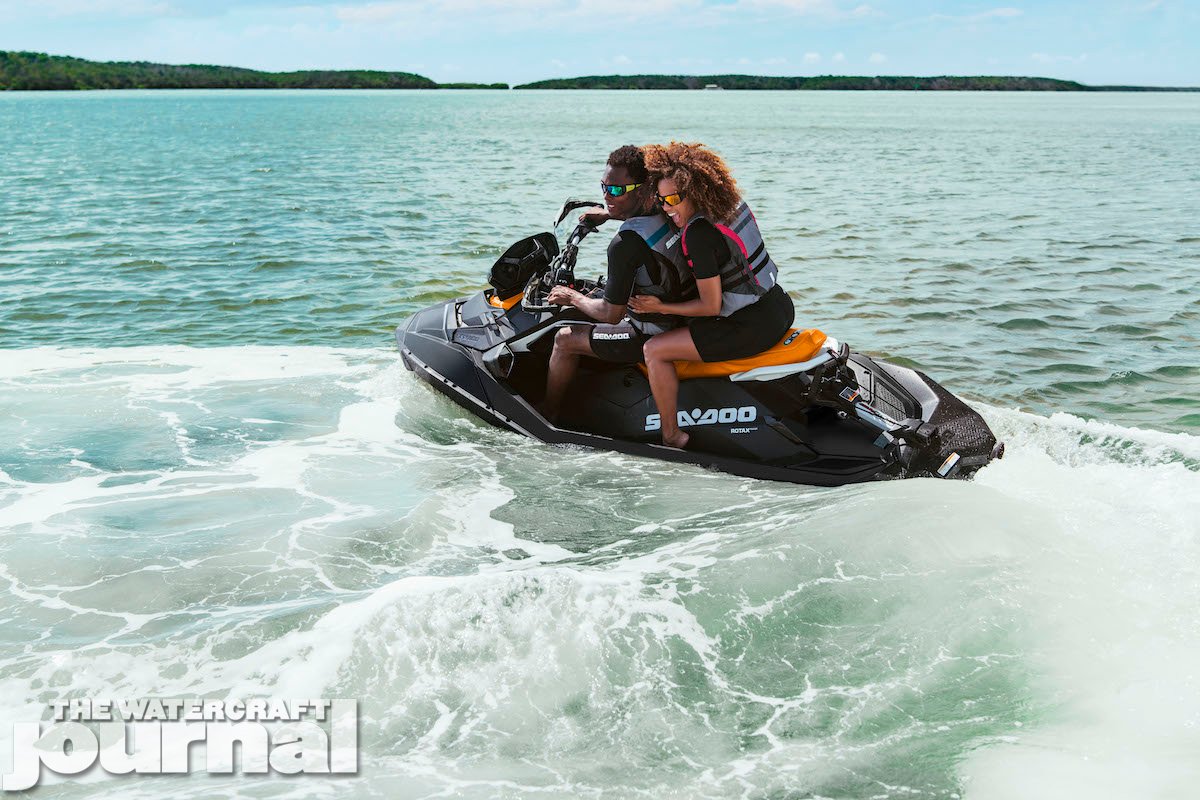
Thus far, the Sea-Doo Spark ($5,499) reigns as easily one of the brand’s most reliable sellers. And for good reason too! Priced to move, these lightweight entry-level PWC offer a mild gateway into the wider world of Sea-Doo ownership. Powered by the same 900 ACE 998cc producing either 60 or 90-horsepower, Sparks return in either 2- or 3-up seating arrangements, as well as in the upper-tier Trixx configuration ($7,699), providing an extended-range VTS trim setting.

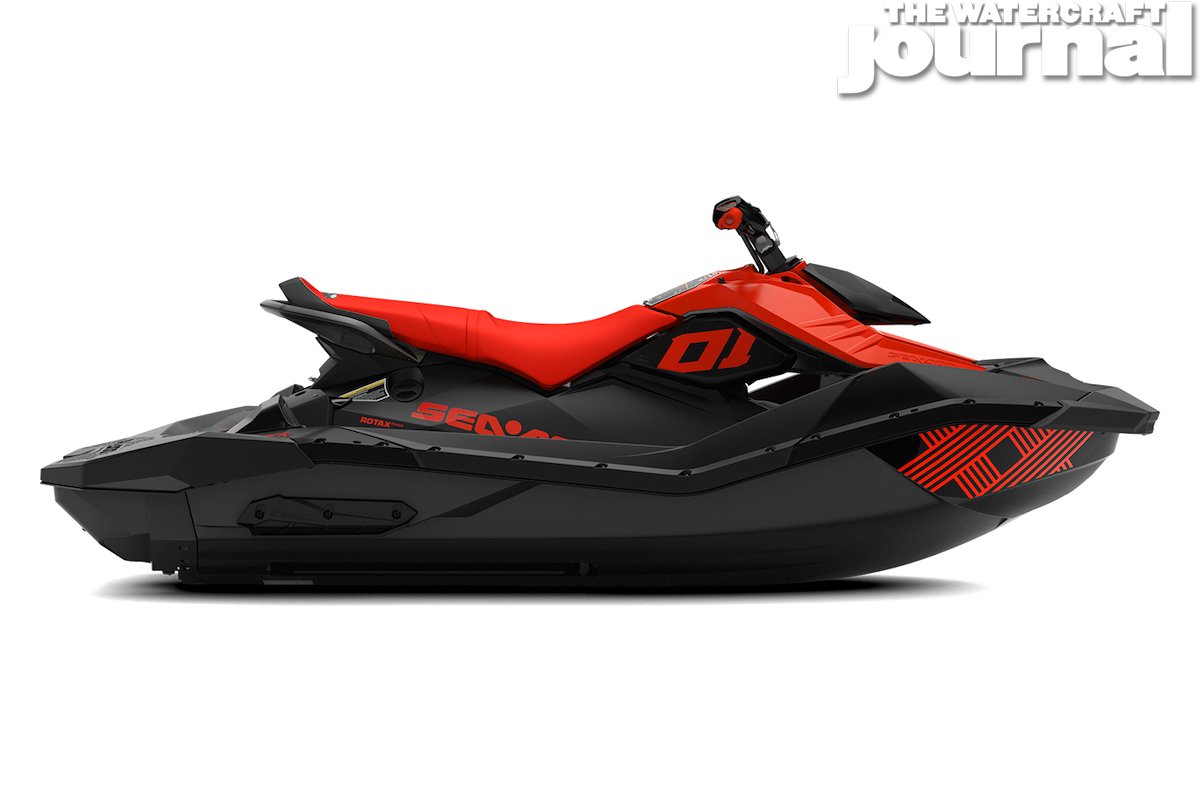
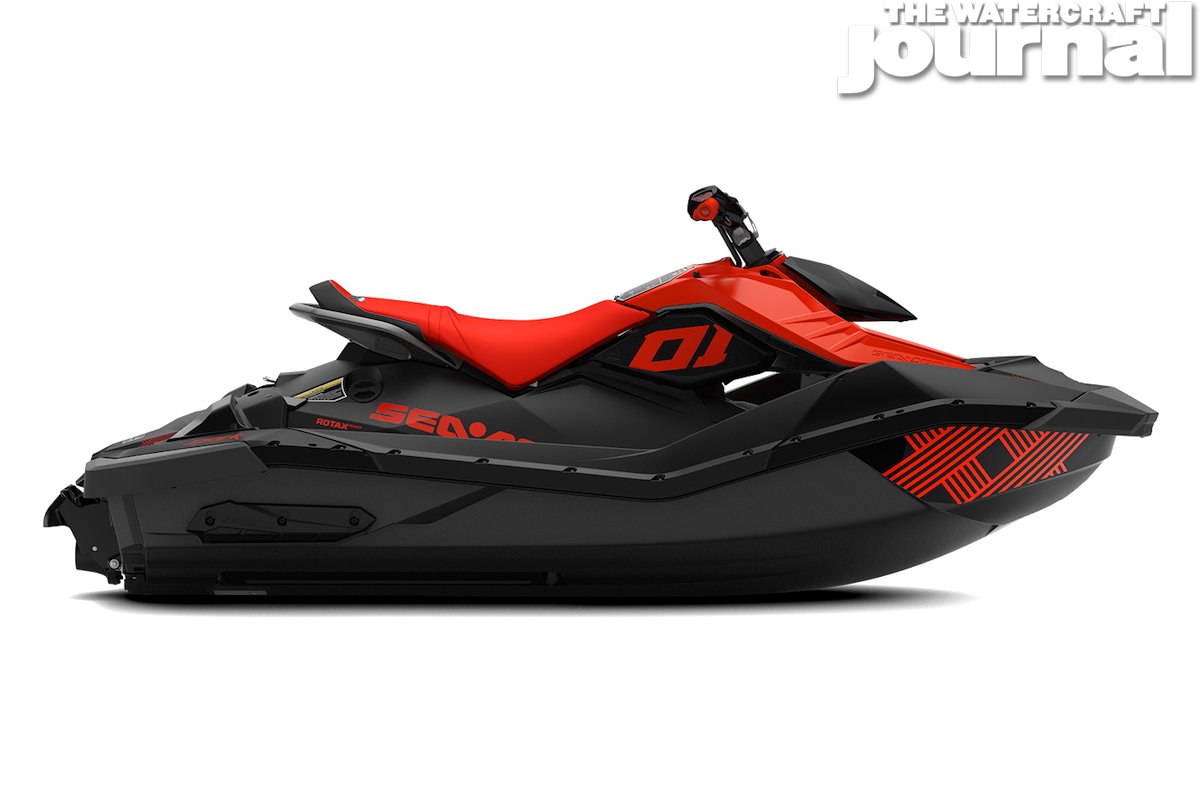
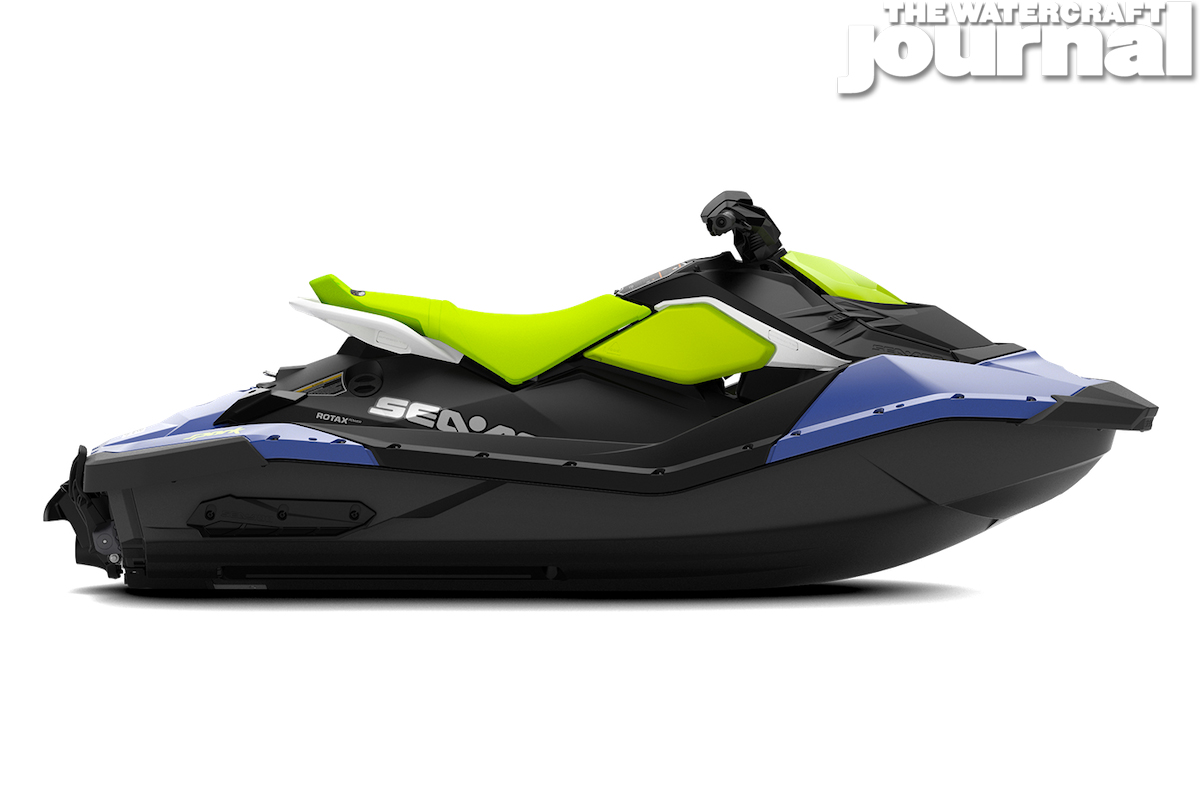
The colors are far more mature than those early nascent days too, with the aforementioned Trixx available in either Lava Red/Deep Black or Manta Green/Quetzal; and the standard 2- and 3-up Sparks in either Dazzling Blue/Manta Green or Orange Crush/Deep Black. Sure, the Spark is still a super playful, fun experience; but it’s obvious that Sea-Doo is looking to appeal to an audience with a slightly more subdued taste with these more reserved colorings.

Of course, you can still custom wrap your Spark too, if you so desire. Equally, iBR, a single-sided retractable reboarding step, a front storage bin, or most notably, the floating BRP Audio-Portable System are all optional equipment as well. These changes are considerable when you look at the 2021 GTI family. Seeing that the platform was wholly redesigned from the ground up just last year (it feels forever-ago, doesn’t it?), we weren’t expecting much of anything.

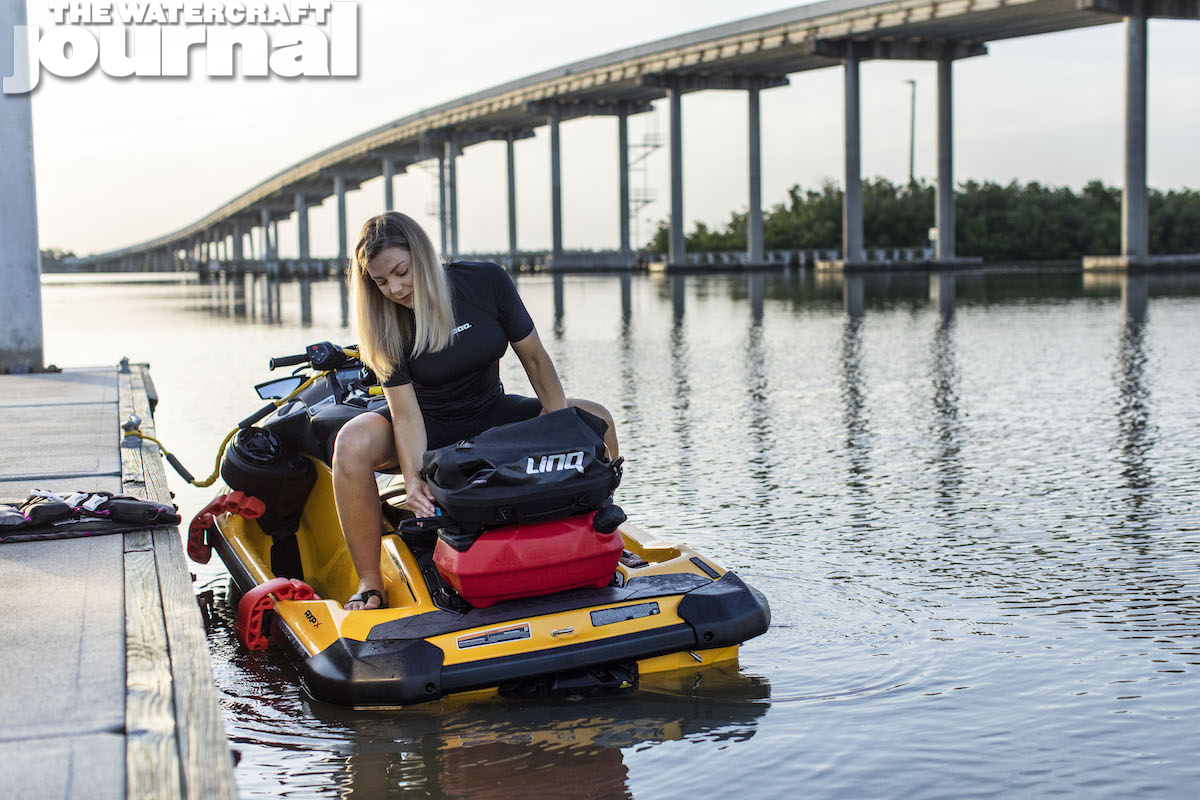
The GTI’s enjoy a whole new Polytec 2.0 hull that is double the thickness of traditional Polytec (used on the Sparks) bolstered with fiberglass stringers giving the new GTI hull is added strength and durability, all while be significantly more predictable in cross chop than even its larger ST3 sibling. Add to that a redesigned deck giving the GTI the same LinQ accessory system and a surprising one-and-a-half-times more storage than the full-sized machine as well, it’s definitely a winner in our book.

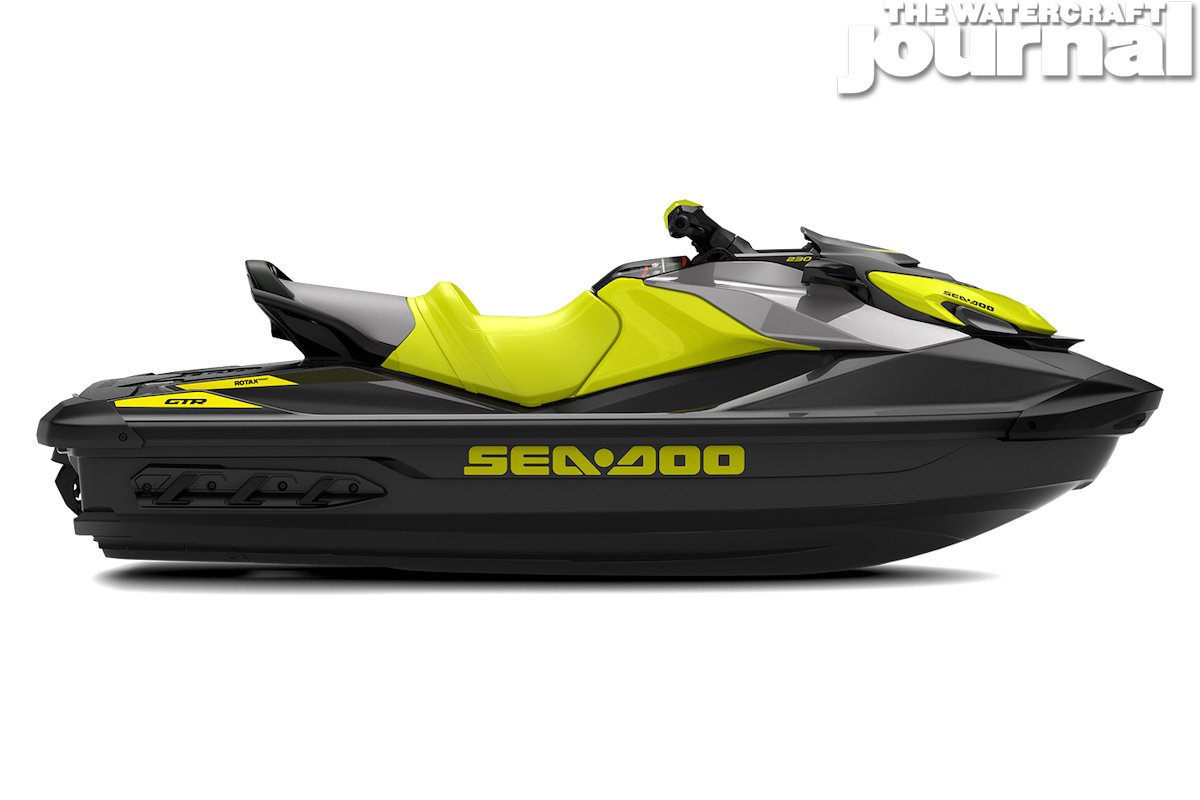
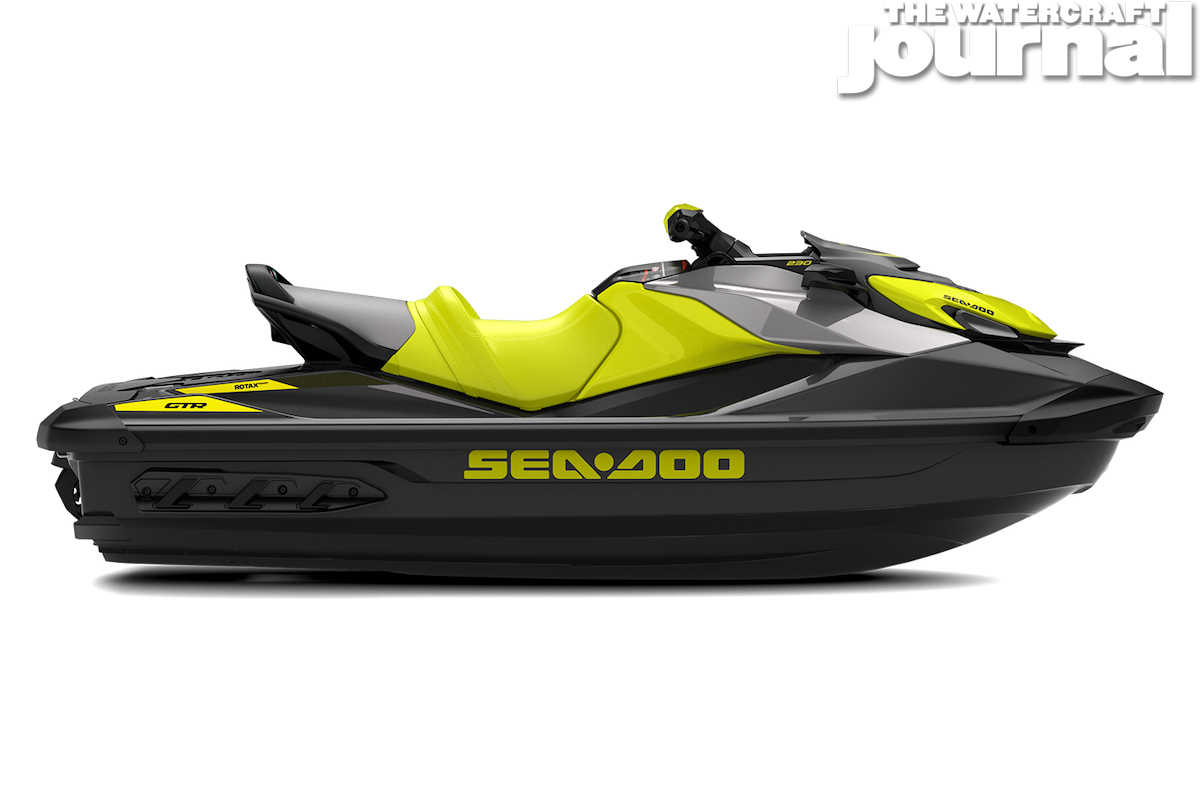
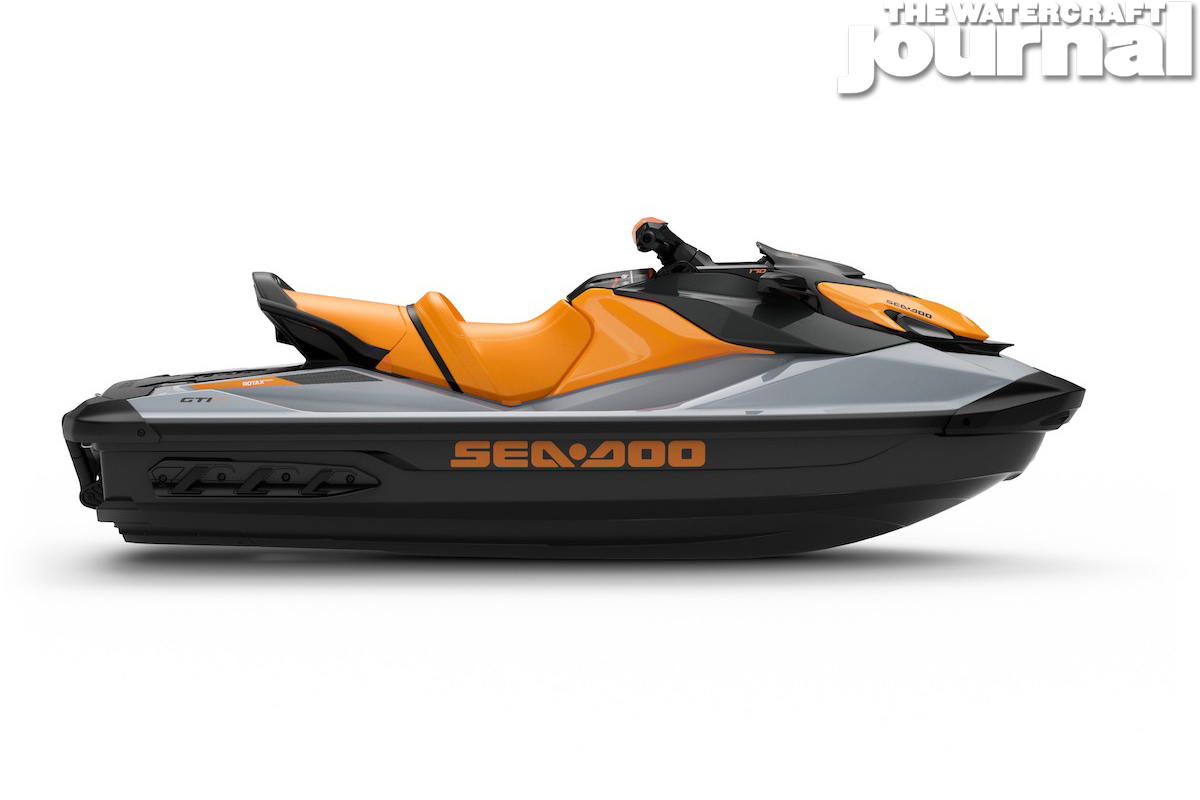
The GTI family continues almost entirely unchanged, save for a little color rearranging. The base GTI 90 ($9,099) and GTI 130 return in White and Reef Blue, and powered by the 90-horsepower 900 ACE 4-stroke or the 1630 ACE 4-stroke, respectively. Stepping up the ladder are the GTI SE 130 ($10,899) and GTI SE 170, available in two color variants: either the same Eclipse Black and Neon Yellow exclusive to last year’s GTR 230 or the returning Beach Blue Metallic and Lava Grey on the 130 and Ice Metal and Orange Crush on the 170.

Speaking of last year’s GTR 230, it too carries over into 2021 ($12,599) without any changes either. In fact, many of the carry-overs were done more to expedite manufacturing and delivery of new units as 2020 witnessed the unheard-of collision of explosive demand and limited production numbers due in large part to the COVID-19 shutdowns. Rather than delay delivery of recolored units to dealers already desperate for product, Sea-Doo wisely opted to continue several units as-is to maintain some flooring.

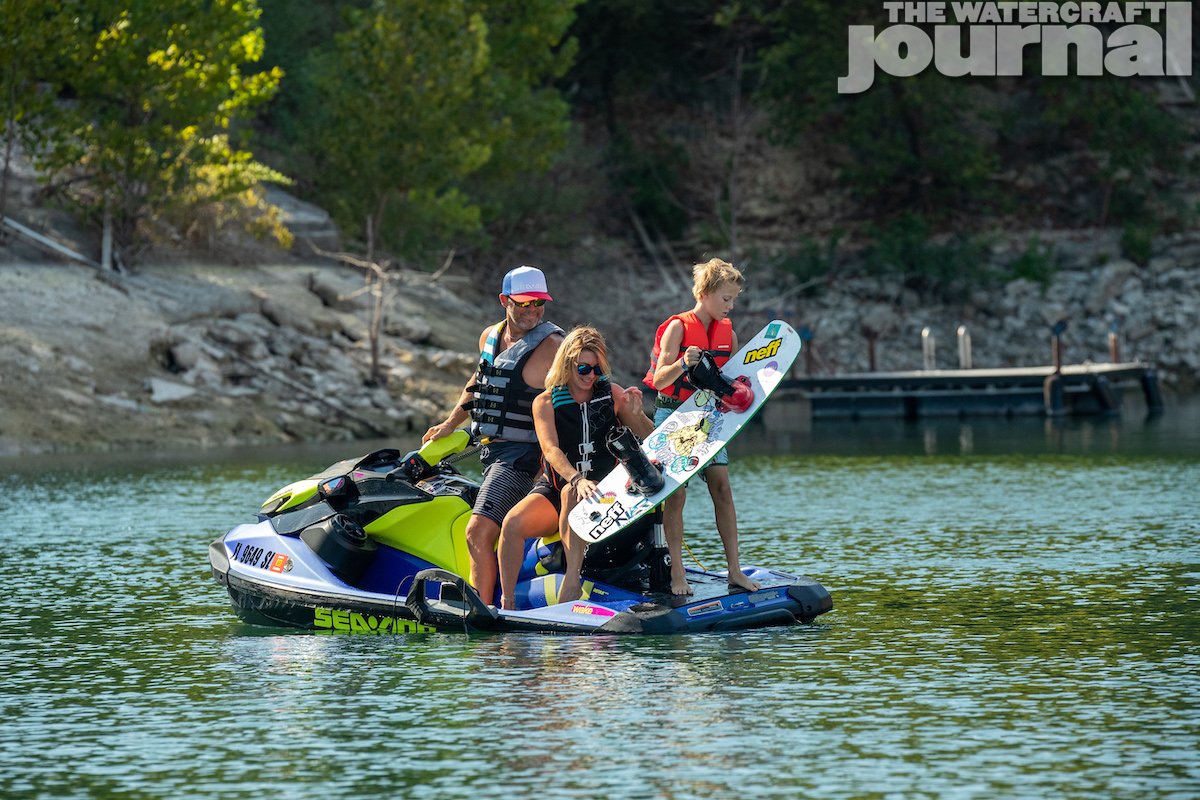
Segueing smartly from the GTI lineup are the two Wake offerings. Sharing the same hull, deck and powertrain as the GTI SE 170 is the Wake 170 ($12,299). It’s stable-yet-playful Polytec 2.0 hull is planted enough when towing a raft (via the tow eye) or a wake skater with the standard-equipment retractable ski pylon. Also too, the 15.8-gallon fuel cell will likely last throughout the day particularly as you employ the Wake’s various launch control settings, making first-time tow sports a cinch. Both return in Malibu Blue and Neon Yellow for 2021.

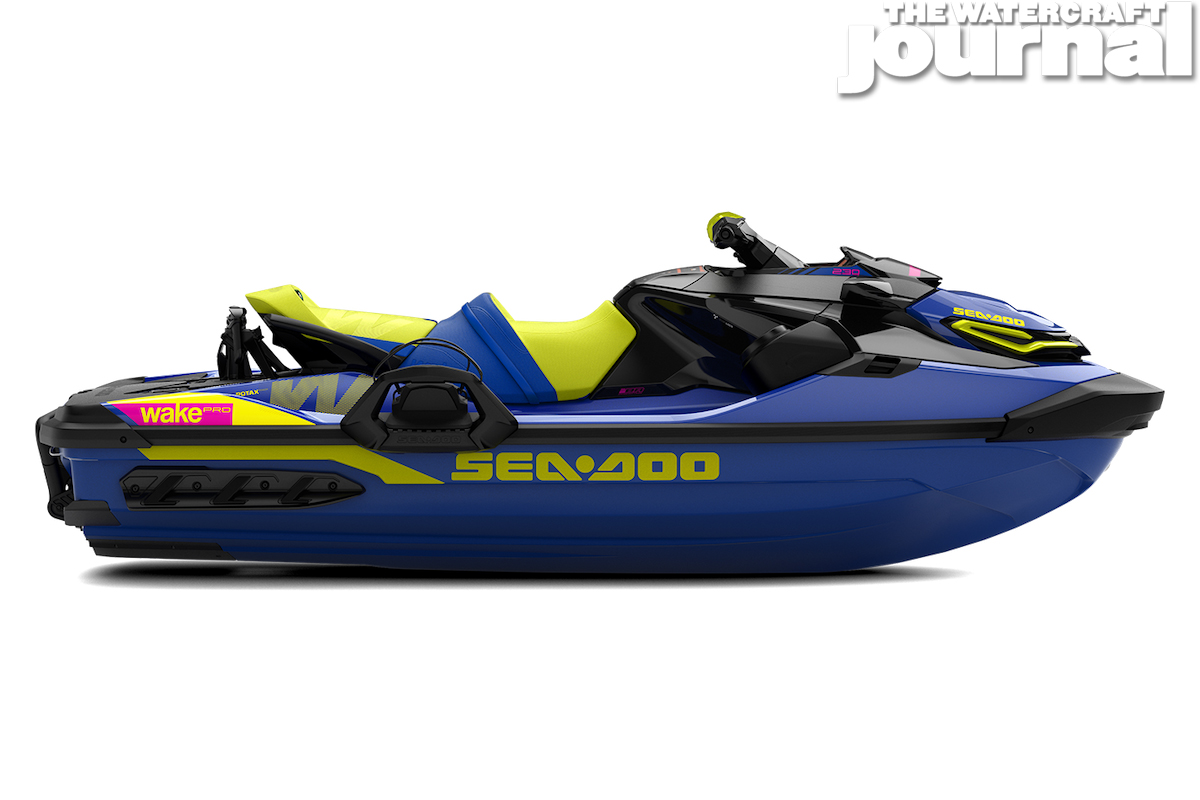
Stepping up in the wake sports game is the full-sized ST3-based Wake Pro 230 ($15,799). Offering a treasure trove of accessories as standard fare, the Wake Pro provides the aforementioned retractable LinQ ski pylon; a removable wakeboard rack and reboarding step; iControl Speed Limiter, Slow Mode, Sport Mode, and Ski Mode; and BRP’s Premium Bluetooth audio system (standard on Wake Pro 230, optional on Wake 170).

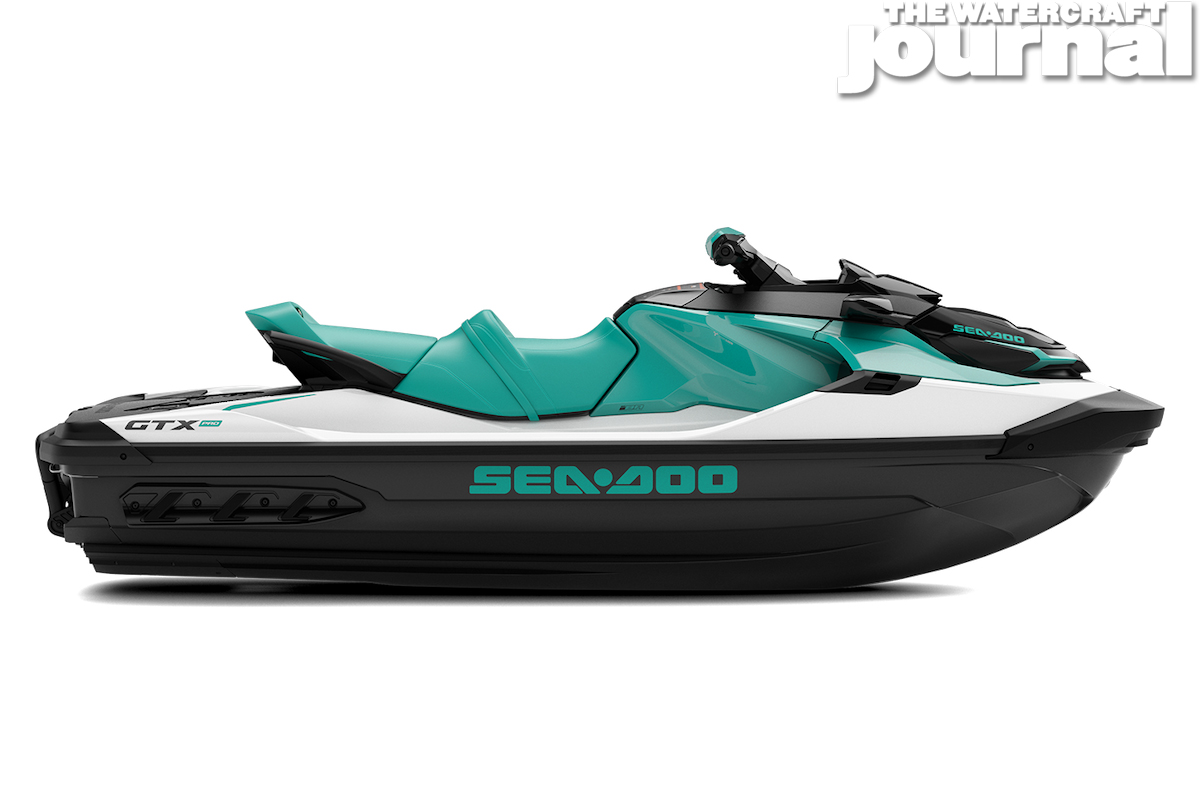
Powered by a grunty supercharged 230-horsepower 1630cc ACE 3-cylinder, the Wake Pro 230 also delivers plenty of sporty fun when you’re not dragging somebody behind you. And just in case, you’re looking at keeping the engine pinned, its 18.5-gallon fuel cell should last you most of the day too. Then again, if you’re looking for something as stable as the Wake Pro but are new to PWC, the all-new, rental-only GTX Pro 130 is gonna be what will be many novice riders’ first introduction to PWC.

Similar to the GTI Pro of a couple of years ago, the GTX Pro 130 – offered in White and Reef Blue – features some slightly more robust components that are designed to stand up to the usually high wear-and-tear that comes from newbies and less-attentive riders. Sturdier electronics, reinforced sockets and couplers; more durable vinyl seat covers, tougher hand grips; and a longer-lasting wear ring are all part of the Pro package. It also features the smaller LCD dashboard used on the GTI models.

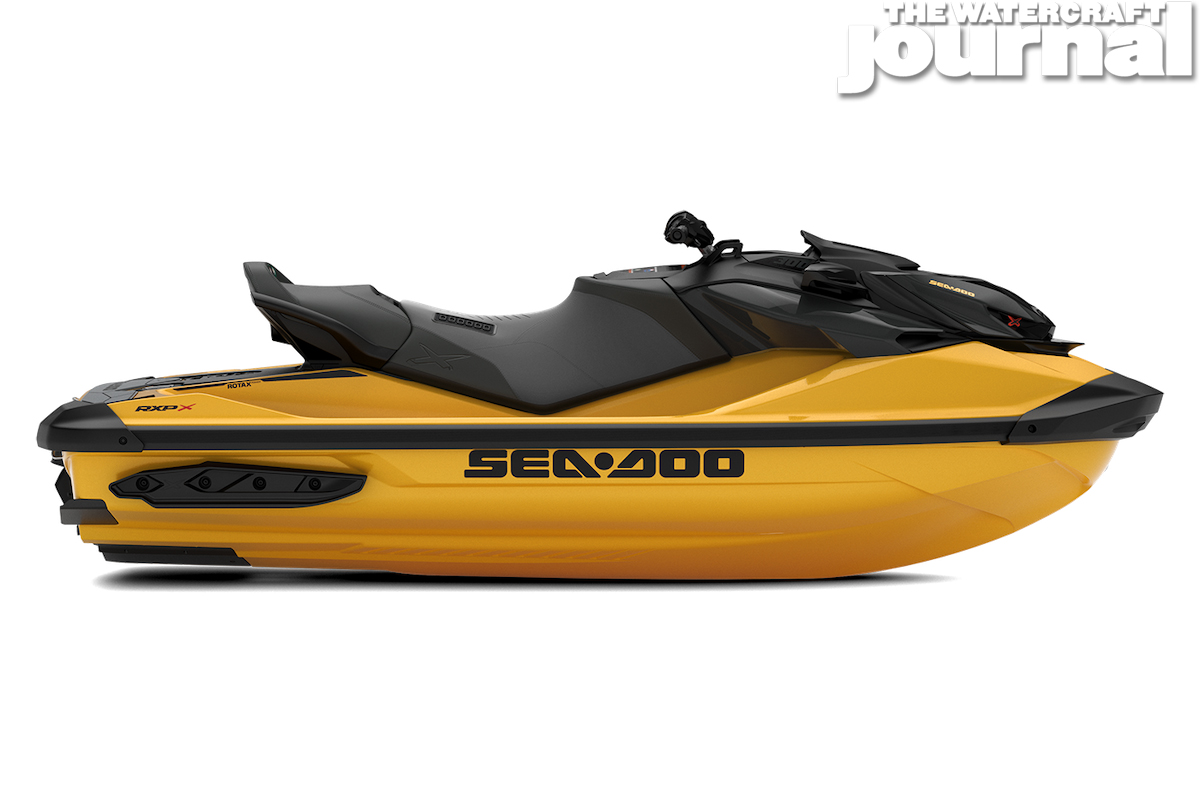
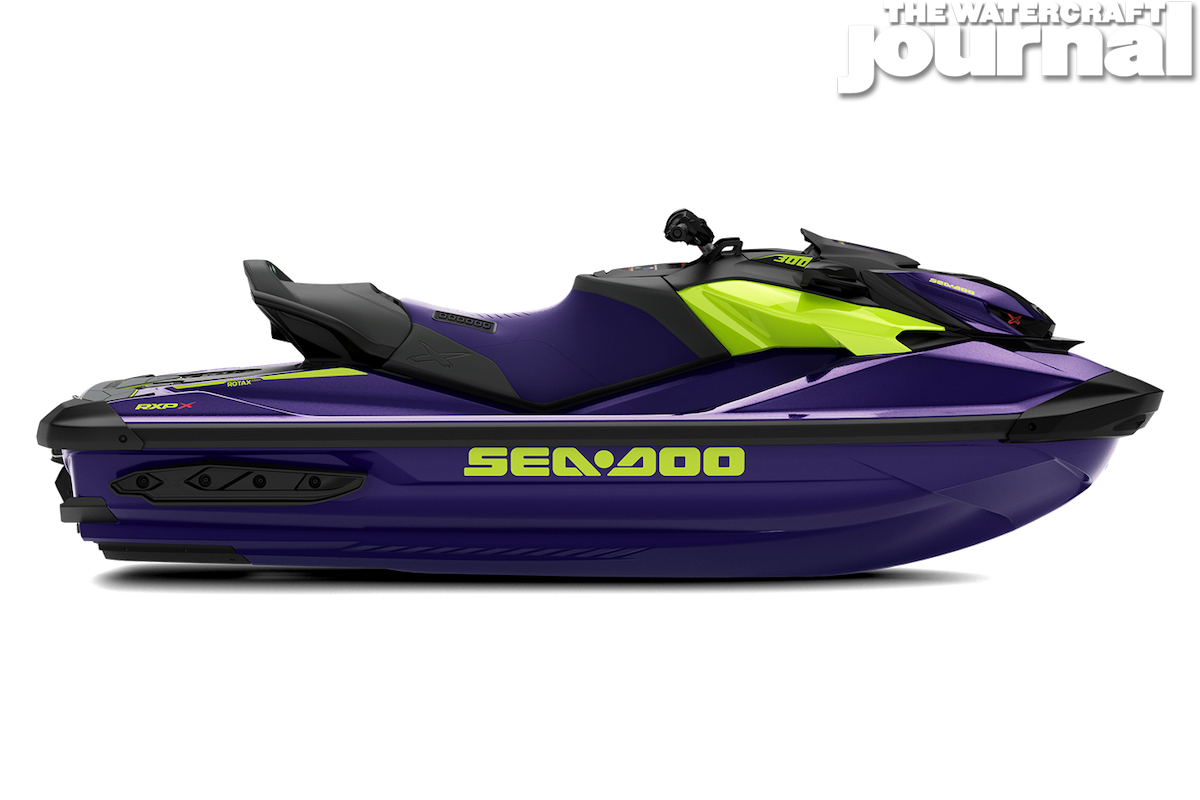
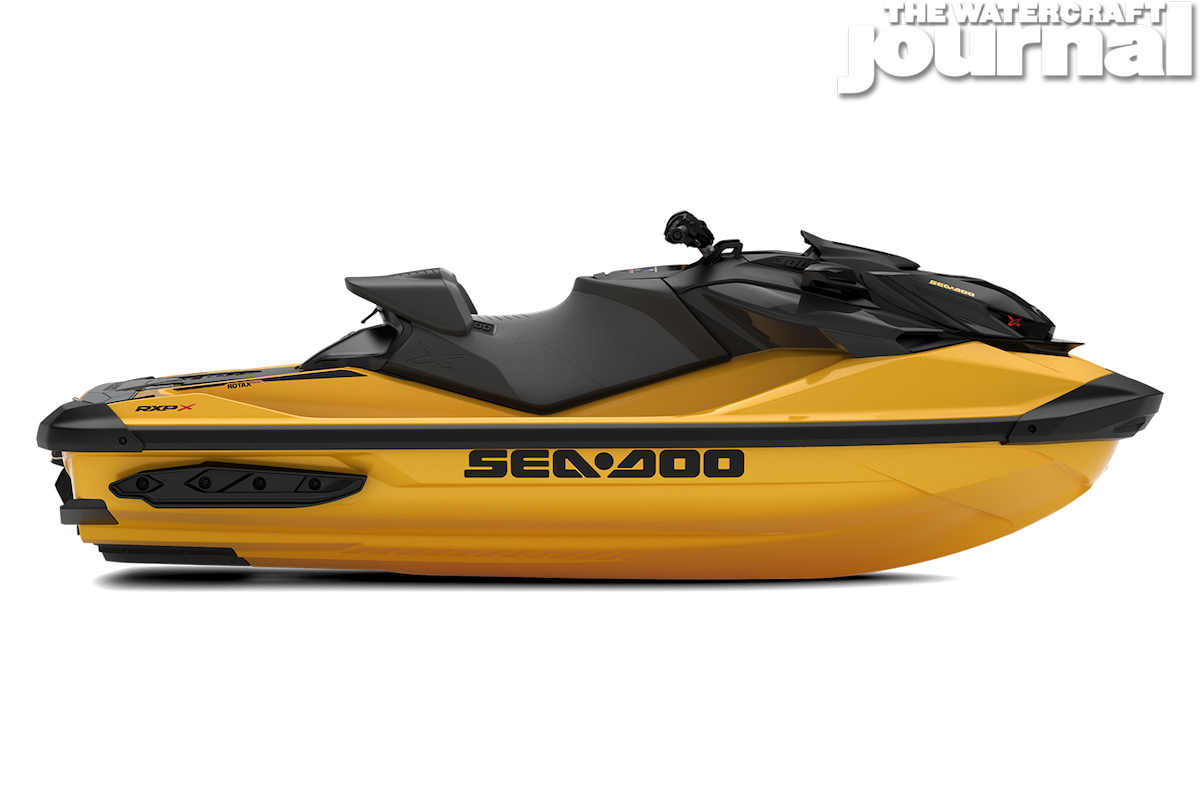
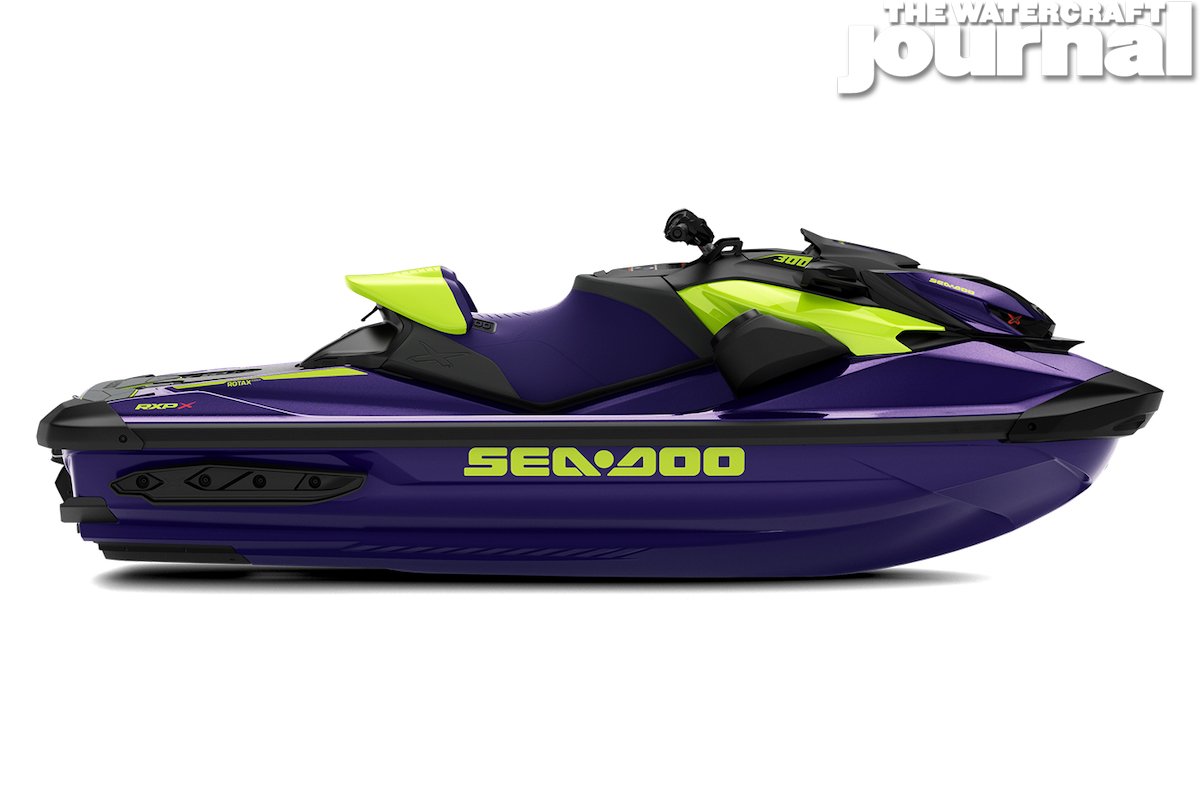
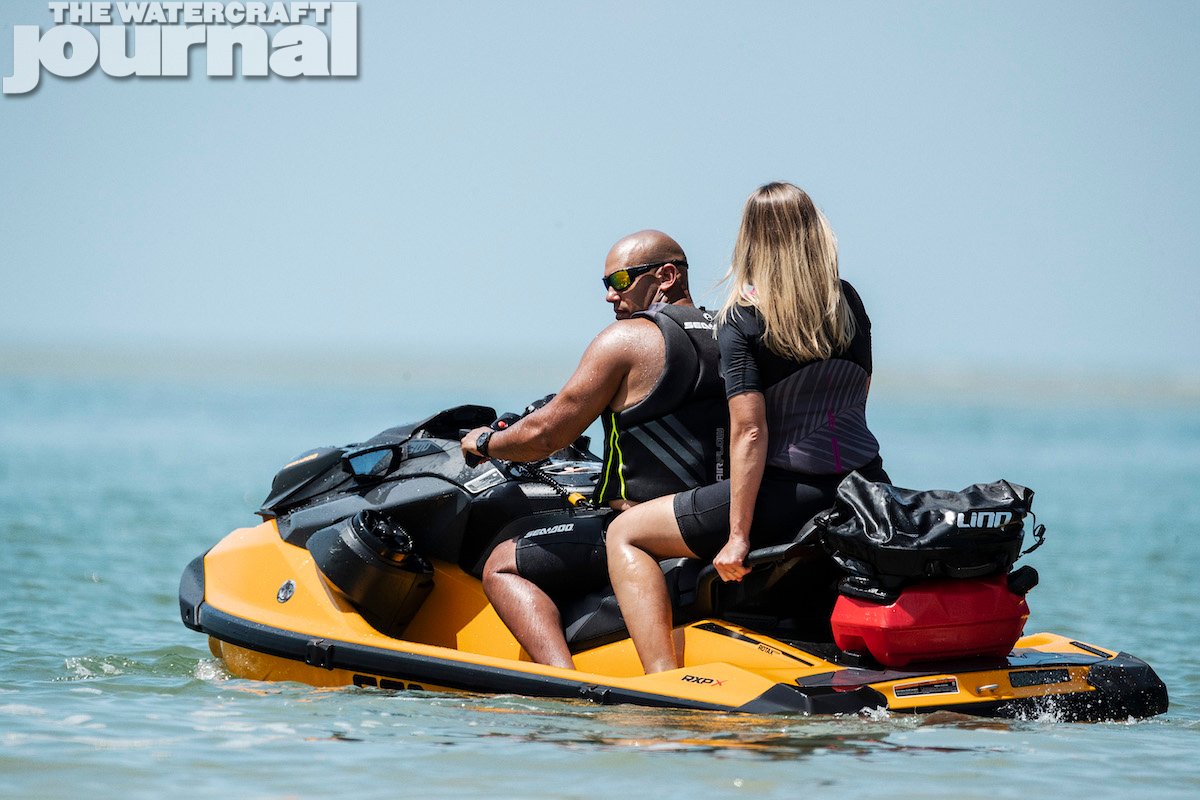
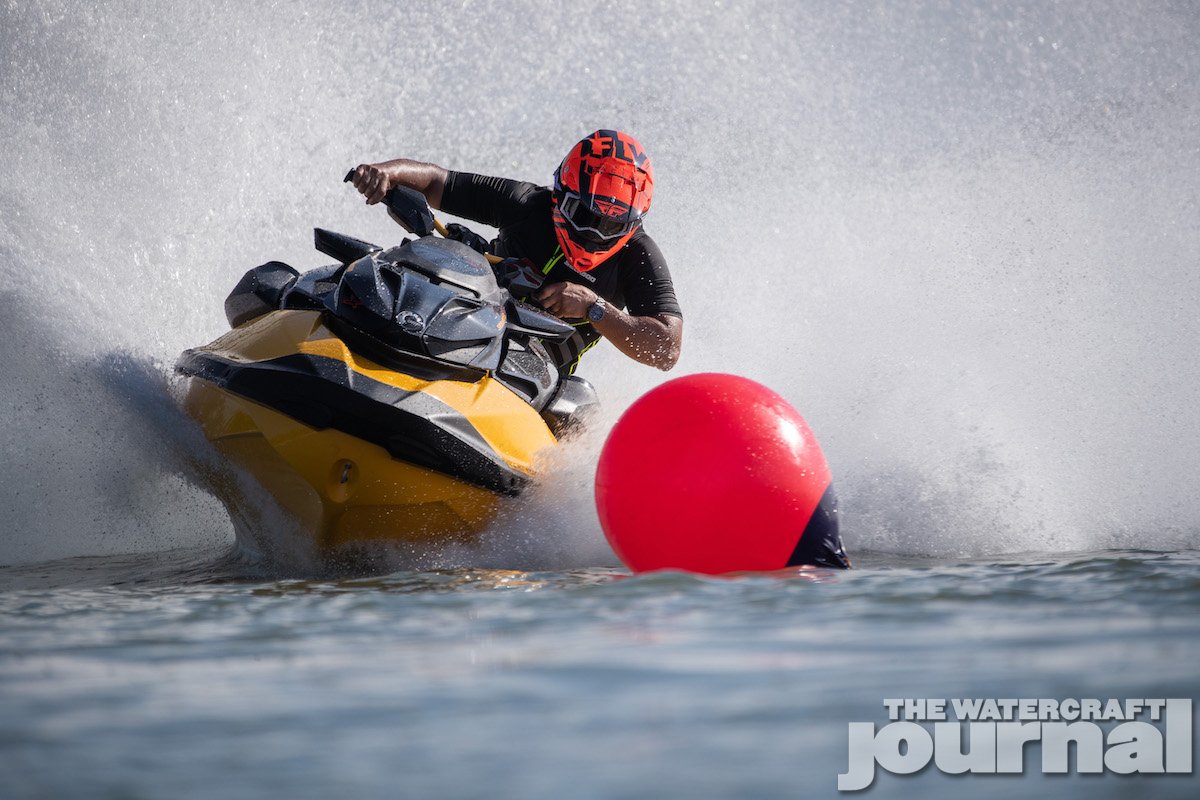
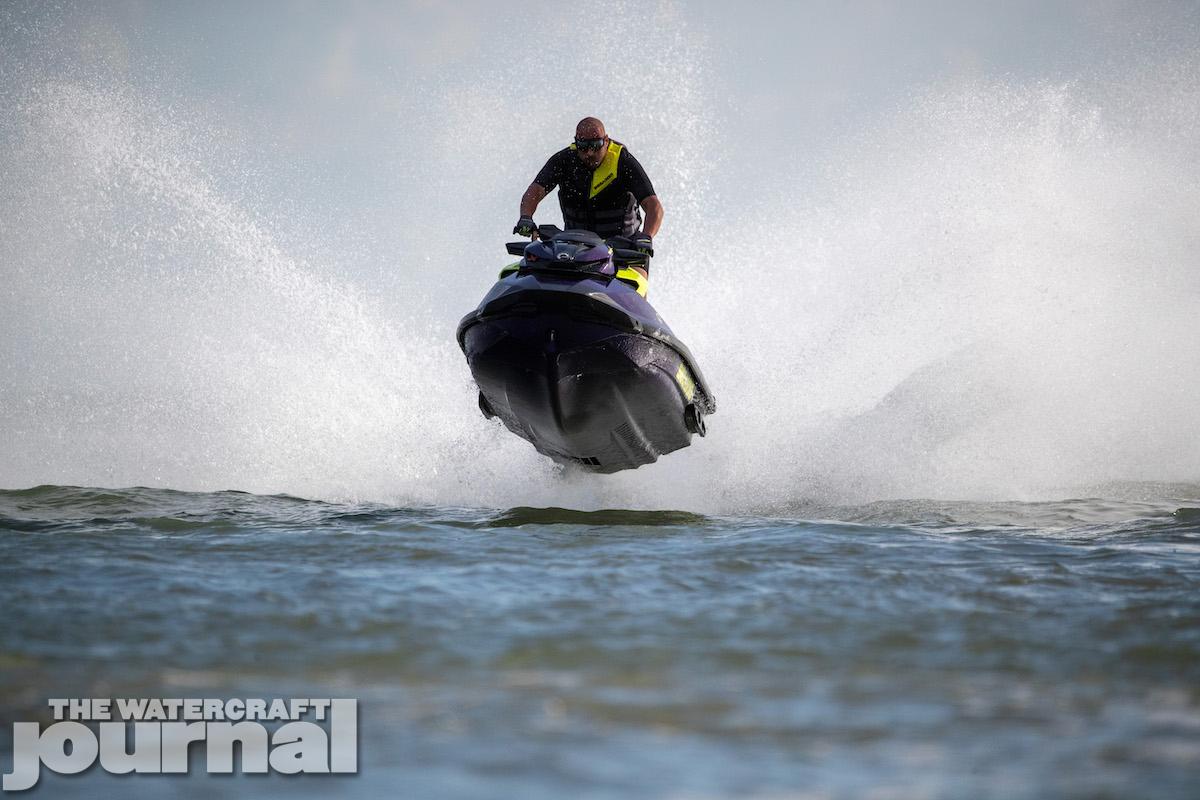
What might surprise some is how much the redesigned 2021 Sea-Doo RXP-X 300 ($15,799) shares with its GTI/GTR sibling. Both share the same CM-Tech molded top deck, LinQ accessory and engine access panel, and hood understructure. Equally, both enjoy the brand’s best overall storage, with 40.6-gallons of room broken up between a 37.8-gallon front bin and a voluminous 2.5-gallon glove box. But it’s here that the RXP-X takes one of many exciting turns.

For 2021, the RXP-X returns 67-pounds lighter than its previous generation (782lbs. vs. 850lbs.), all while retaining the same overall length (130.6-inches), and .9-inch wider (49.2″ vs. 48.3″). While the supercharged-and-intercooled 1630 ACE 300 engine returns unchanged, the RXP-X spins a highly polished, repitched prop producing greater thrust and initial hook-up.

All of this equates to a far superior power-to-weight ratio, and measurable gains in acceleration: 0-to-50mph in 2.9-seconds, 0-to-60mph in 3.6-seconds (versus the previous 3.9-seconds). While units sold domestically will be restricted to a USCG-approved 68.5mph, our unrestricted test unit reached a Garmin GPS-confirmed peak 73.8mph @ 8,000rpm (the speedometer read 75).

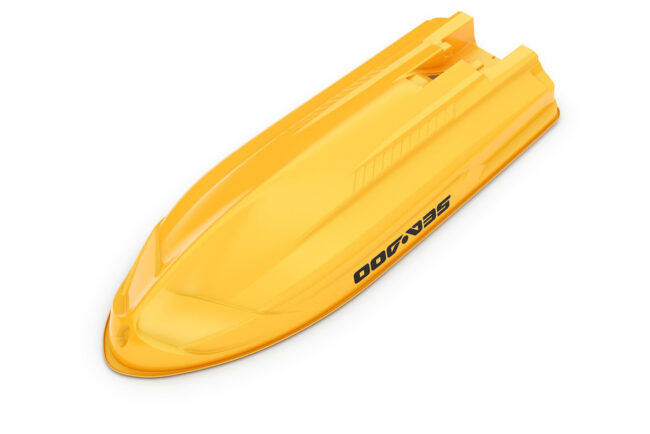
Yet, much of the new RXP-X’s appeal is found in its handling prowess. Riding on a tiered T3-R hull, the RXP-X borrows its pronounced bow from the full-sized ST3, it’s straight line, rough water tracking to the GTI and a lot from racer input. At its outermost edge is a rounded chine, which might look familiar to those acquainted with the past Yamaha FZR.

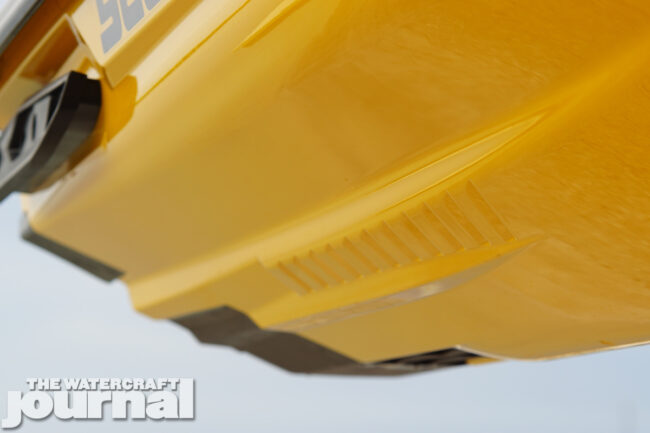
This rolled chine provides unbroken surface tension (ie. traction) when snapping a tight turn at wide open throttle. Yet, this is not how most enthusiasts ride, so Sea-Doo developed a more forgiving secondary chine outside of a lifting strake. This means that at slower speeds or in a gradual sweeping turn, the RXP-X rides on this second chine, which has been serrated at midships with what BRP calls “Shark Gills,” aerating the surface tension and making for a slightly looser, more gradual corner.

All of this gives the RXP-X a more forgiving feel for casual riders as well as athletes attempting aggressive outside sweeps in rough water. And don’t be fooled, this PWC is designed to corner – and do so on the nose. Why else would Sea-Doo relocate the engine and fuel tank two inches (50mm) forward, as well as design a new forward cockpit if not to put as much weight on the nose as possible? It begs, Trim this sucker down and snap those bars with the throttle trigger pinned!

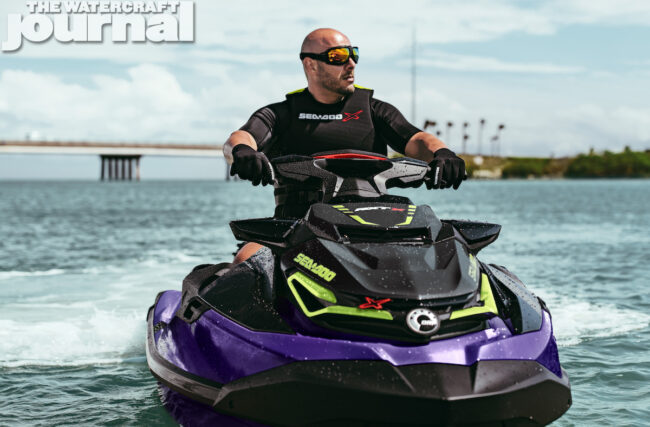
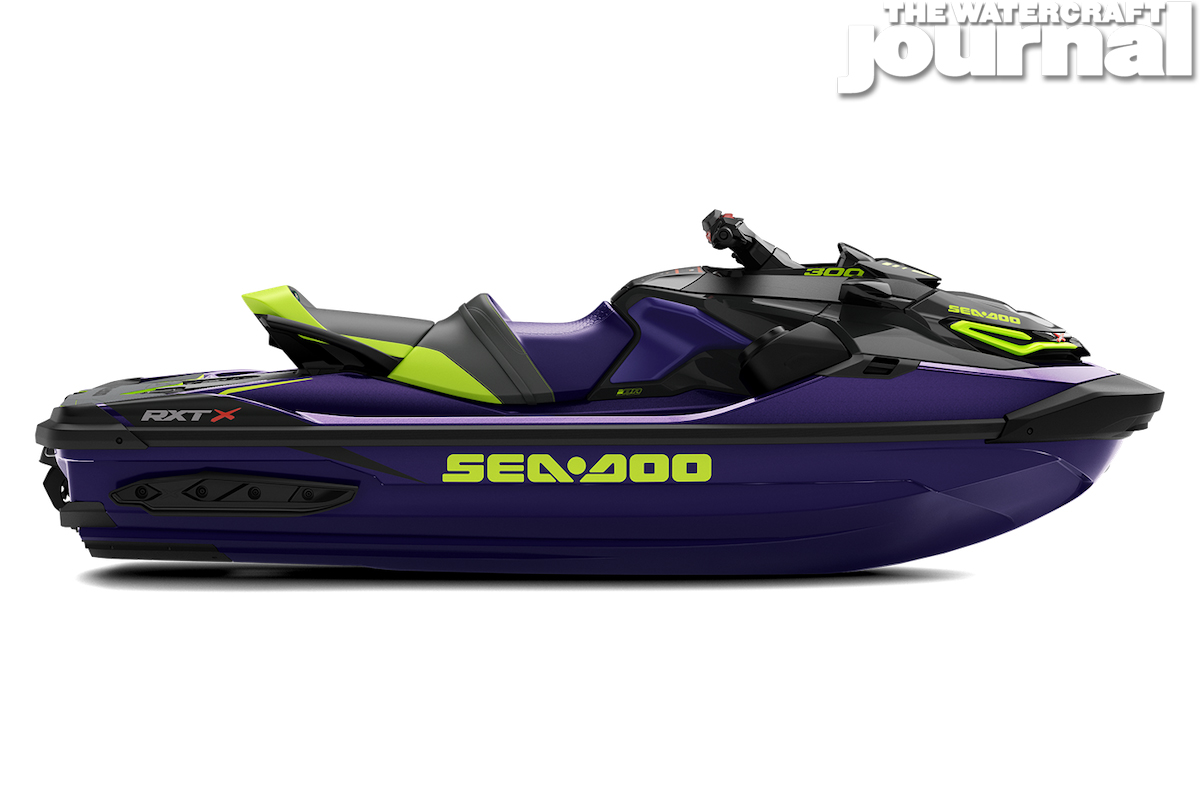
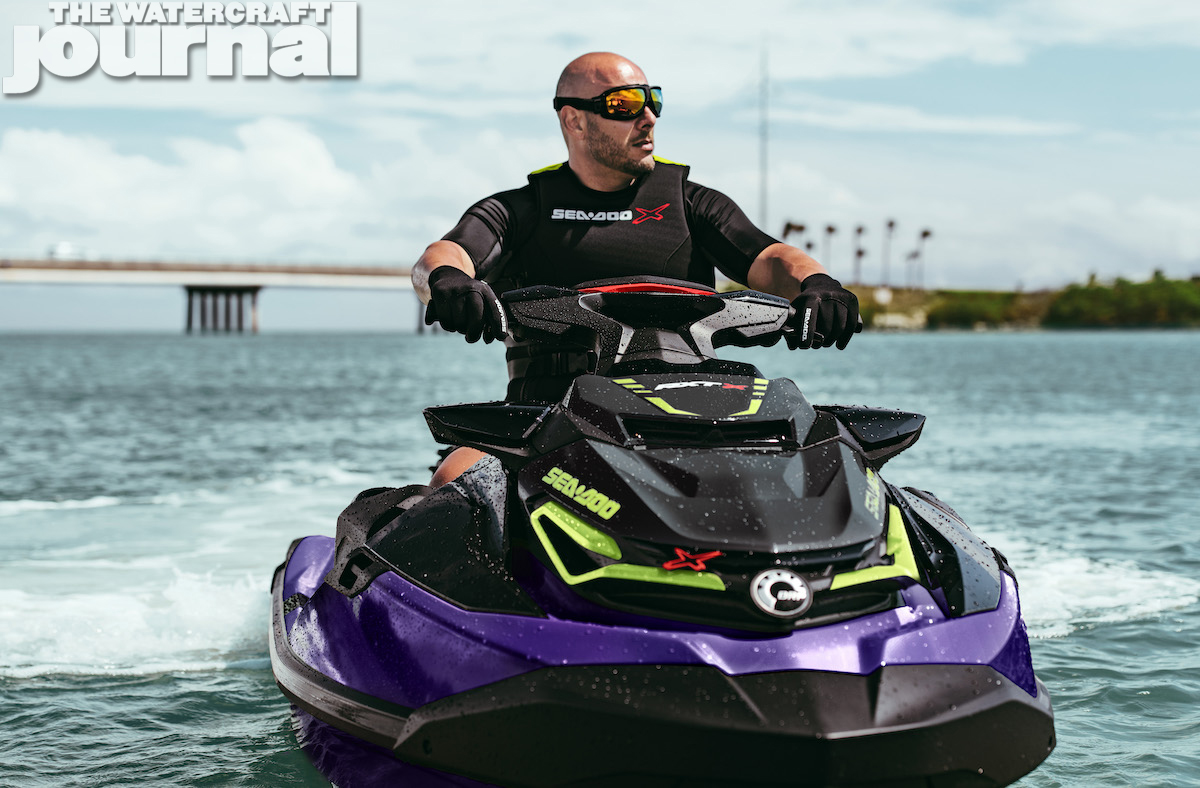
And if you were questioning how bold Sea-Doo was as a brand, look no further than its standard 1-person seating (that’s right, the passenger seat is sold separately!), and two color options of Midnight Purple and Manta Yellow, or Millennium Yellow. Listed with a MSRP of $15,799, that doesn’t include the optional telescoping steering neck (same as used on the Trixx and previous RXP-X), second seat or BRP Premium Sound System – now finally available on the RXP-X.

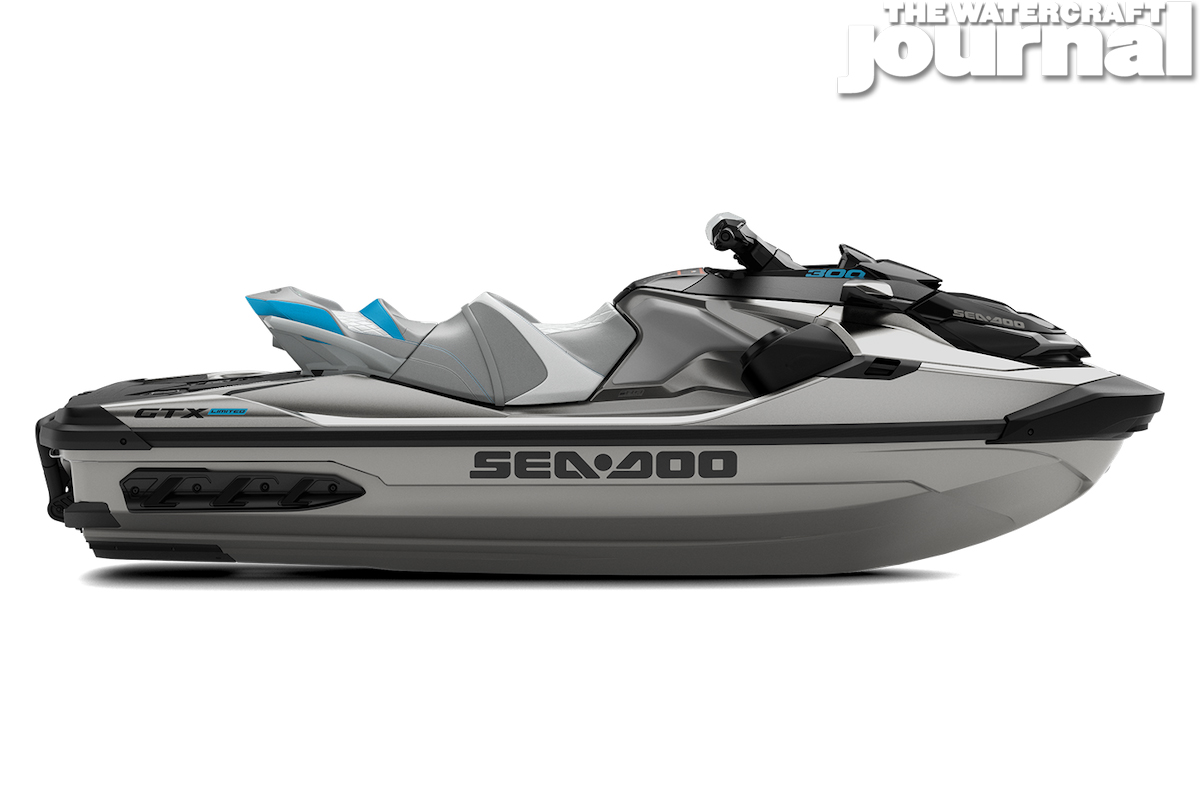
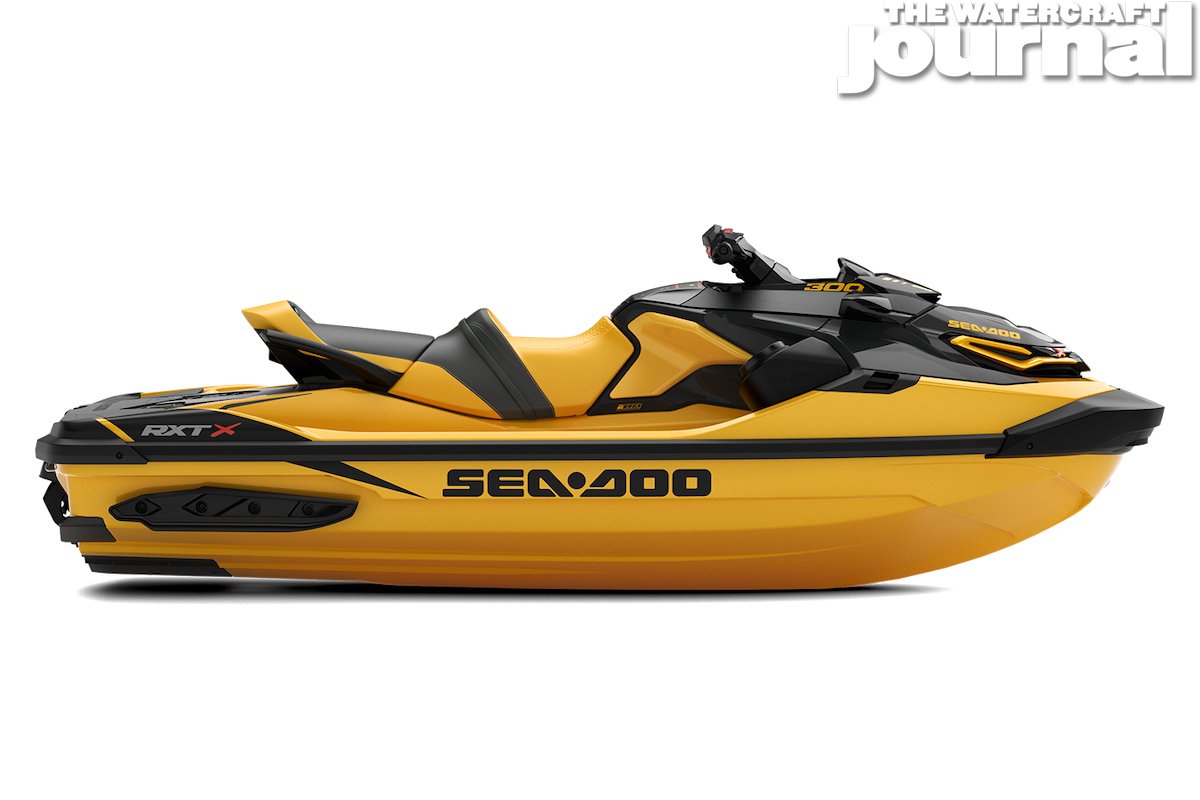
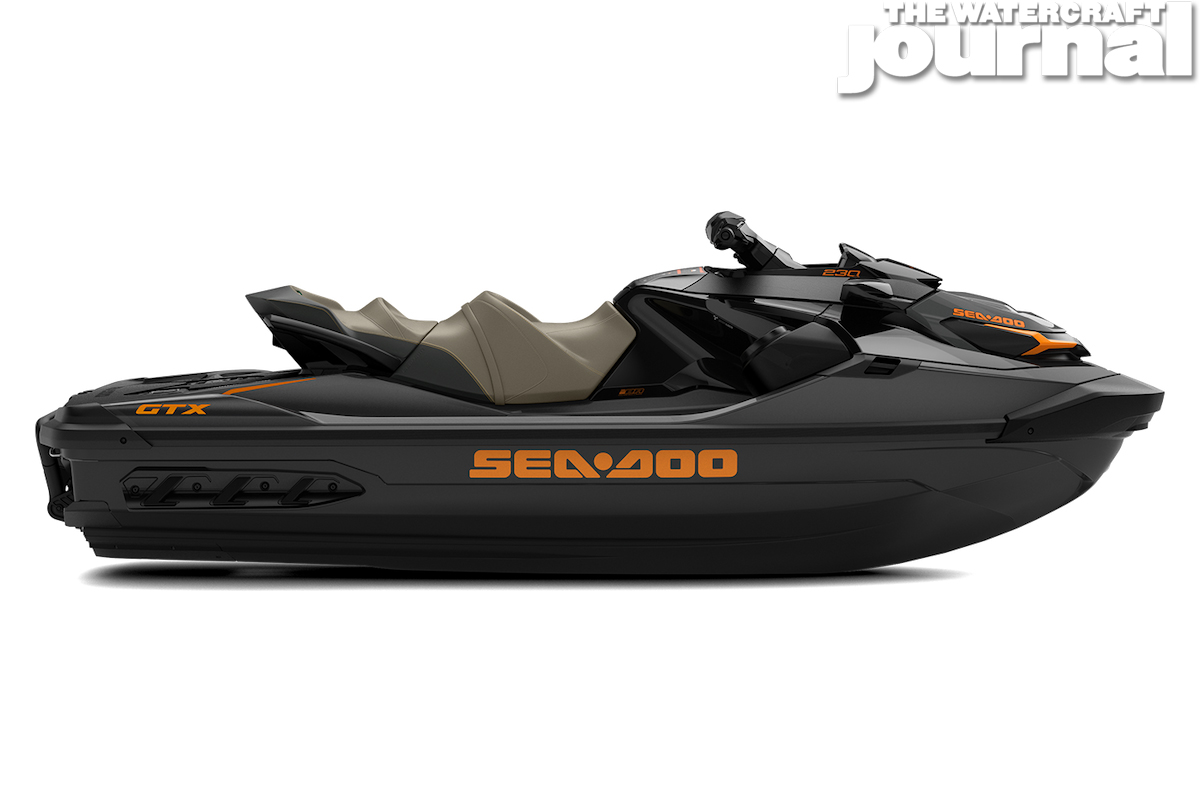
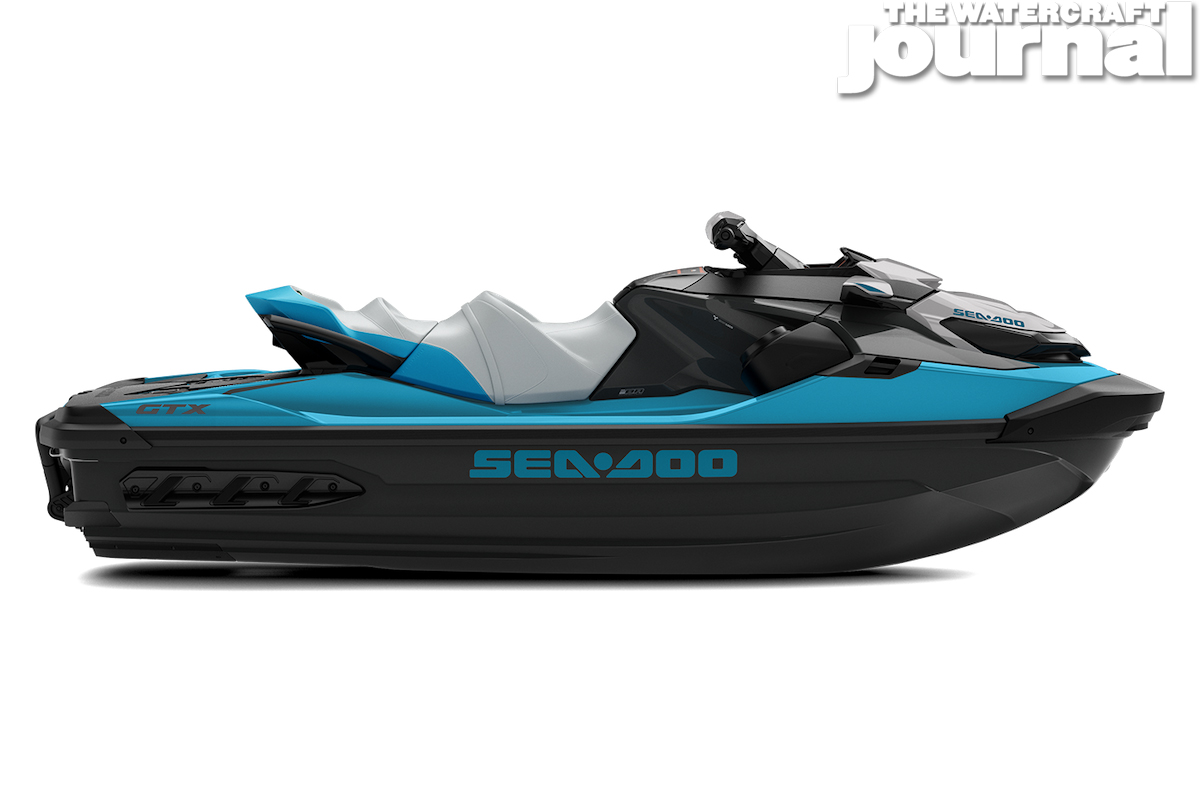
The equally-powered RXT-X 300 ($16,799) carries on mechanically unchanged for 2021, but with matching livery options, which is pretty cool. Another machine enters the fray wielding 300-horsepower, but it’s not what you think. New for 2021 are a base-trim GTX 230 ($14,099) and GTX 300 ($15,799), both in Eclipse Black. (The GTX 170 – $13,099 – returns in Beach Blue Metallic and Lava Grey.) Unlike the RXT-X 300, the GTX 300 and GTX 230 come with a reboarding step, cushier seating and standard (non X-series) sponsons.

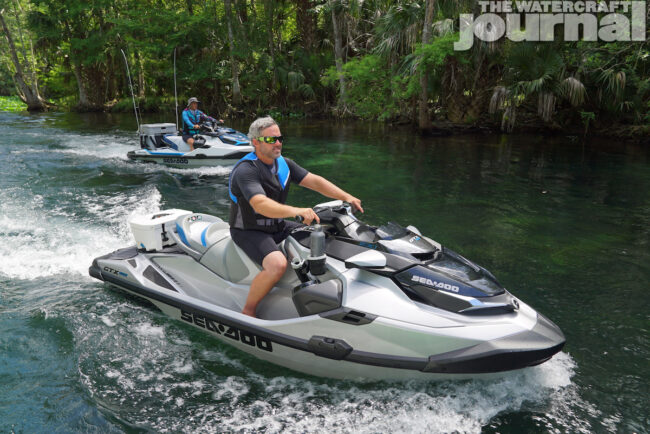
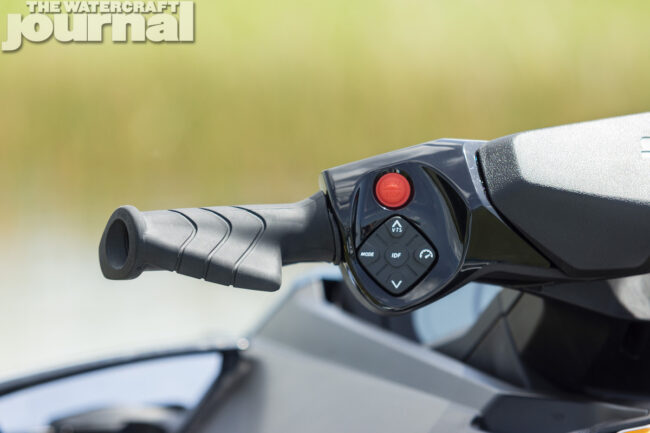
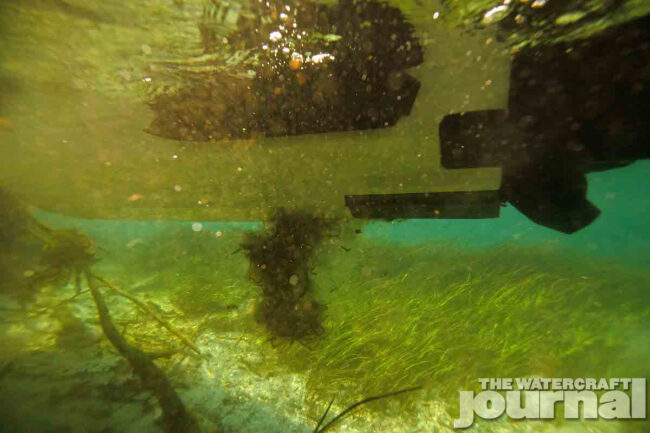
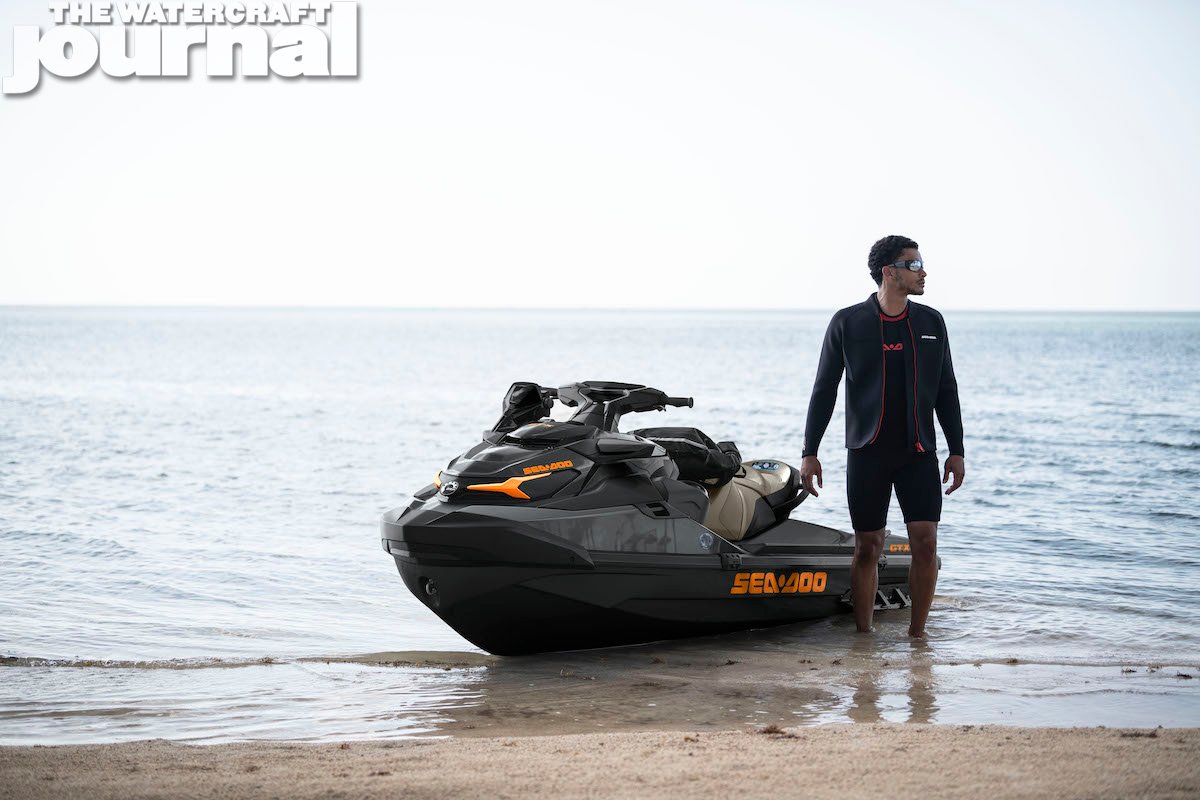
Alas, there is another 300-horsepower entry that is sure to wow. For 2021, Sea-Doo’s GTX Limited 300 ($17,999) not only emerges as the brand’s top-of-the-line entry, but brandishes two of the most consequential innovations in personal watercraft. The first being its Intelligent Debris Free pump system (iDF), which “quickly and effectively clears debris from the water pump intake with a touch of a button.”

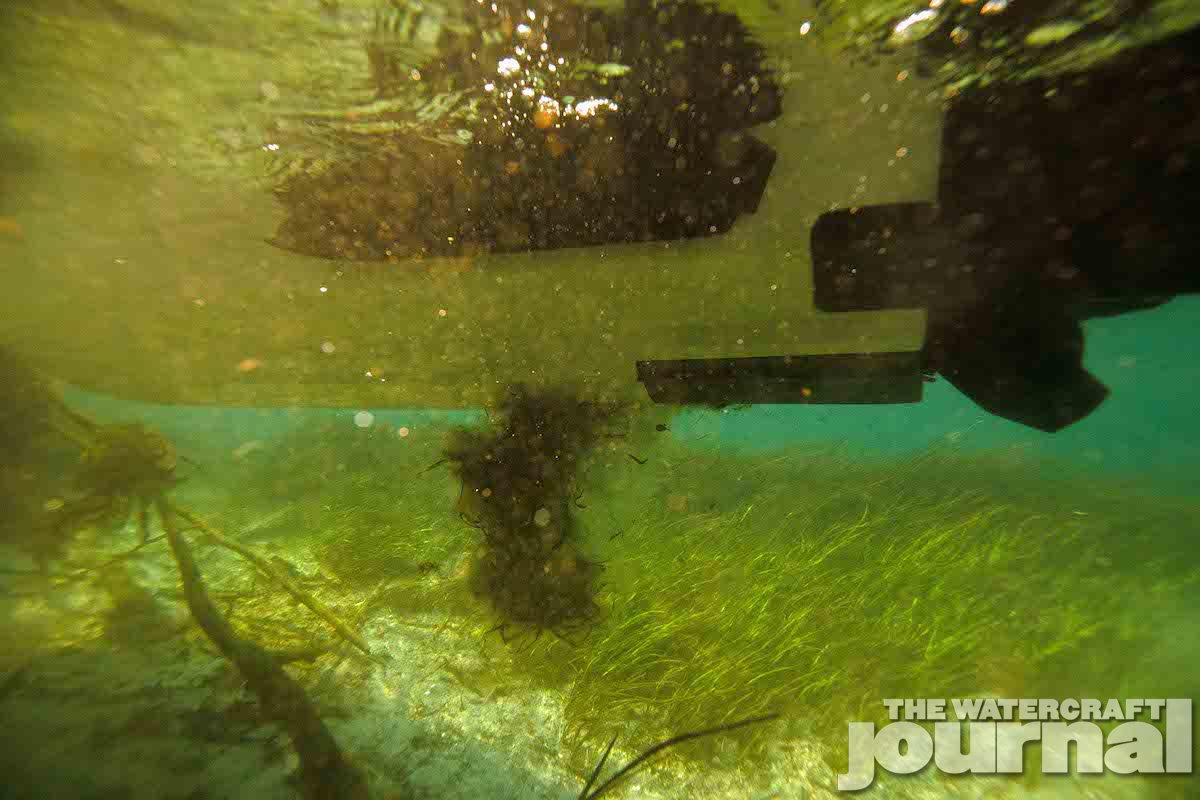
Neatly tucked away into the PTO cover is a sequence of intermediary and PTO gears, that when activated by the iDF actuator, engages with a split gear, reversing the rotation of the shortened driveshaft. When the iDF sensor activates this process, it also closes the shut-off valves in the pump to the siphon tubes, so water won’t flood the engine compartment. This reverse thrust pushes debris from the intake grate and pump in 12-second spurts, so as to mitigate heatsoak.

“Debris such as seaweed and other vegetation is a constant challenge for riders, regardless of whether they’re taking a joy ride on a lake or running weed lines offshore like I do,” said Bri Andrassy, Sea-Doo Fish Pro ambassador. “The BRP design and engineering teams listened, and this revolutionary new iDF technology is going to be a gamechanger to make it an easier, less-stressful ride.”

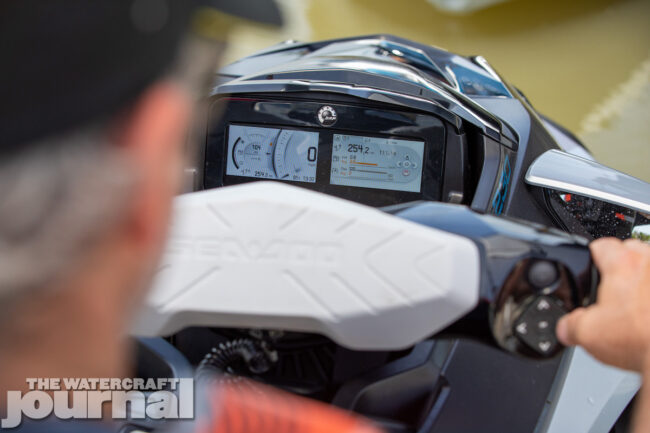
In addition to being standard equipment on the GTX Limited 300, the iDF system is available on two of the three 2021 Sea-Doo GTX models – 170 and 230 – as well as standard on the Fish Pro – more on that in a second. Lastly, the GTX Limited 300 is the only Sea-Doo to include a new 7.8-inch wide panoramic full-color display that not only reads off all of the vitals, but also syncs to your smartphone, opening up to a whole new world of interactivity.

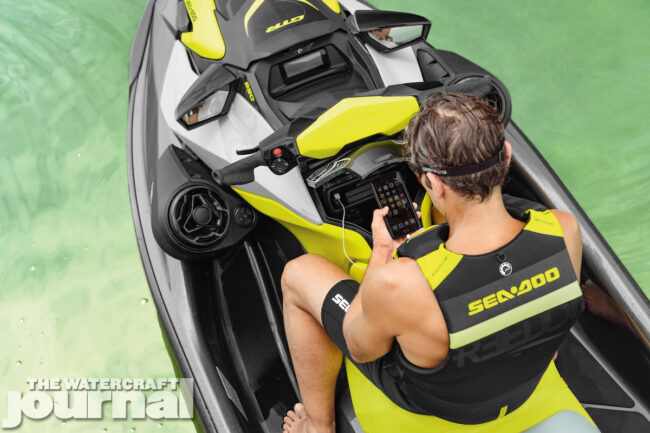
By downloading the BRP Connect app to your smartphone and connecting to the GTX Limited’s dashboard, you can navigate through your music playlists, receive updates on the latest weather forecasts, and – through a partnership with Wavve Boating – open up your access to maps and navigation options. Although an exclusive item for just this one model, you can bet the 7.8″ dashboard will see its way into future models in the coming years.

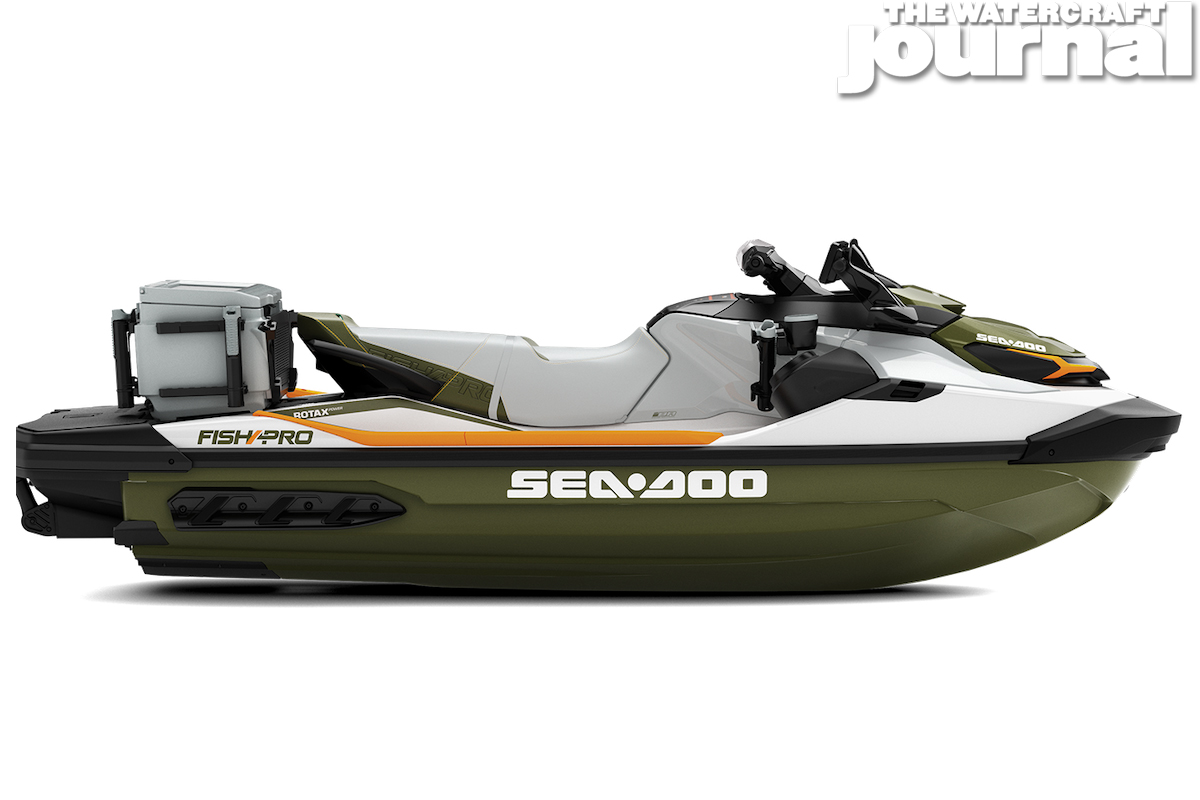
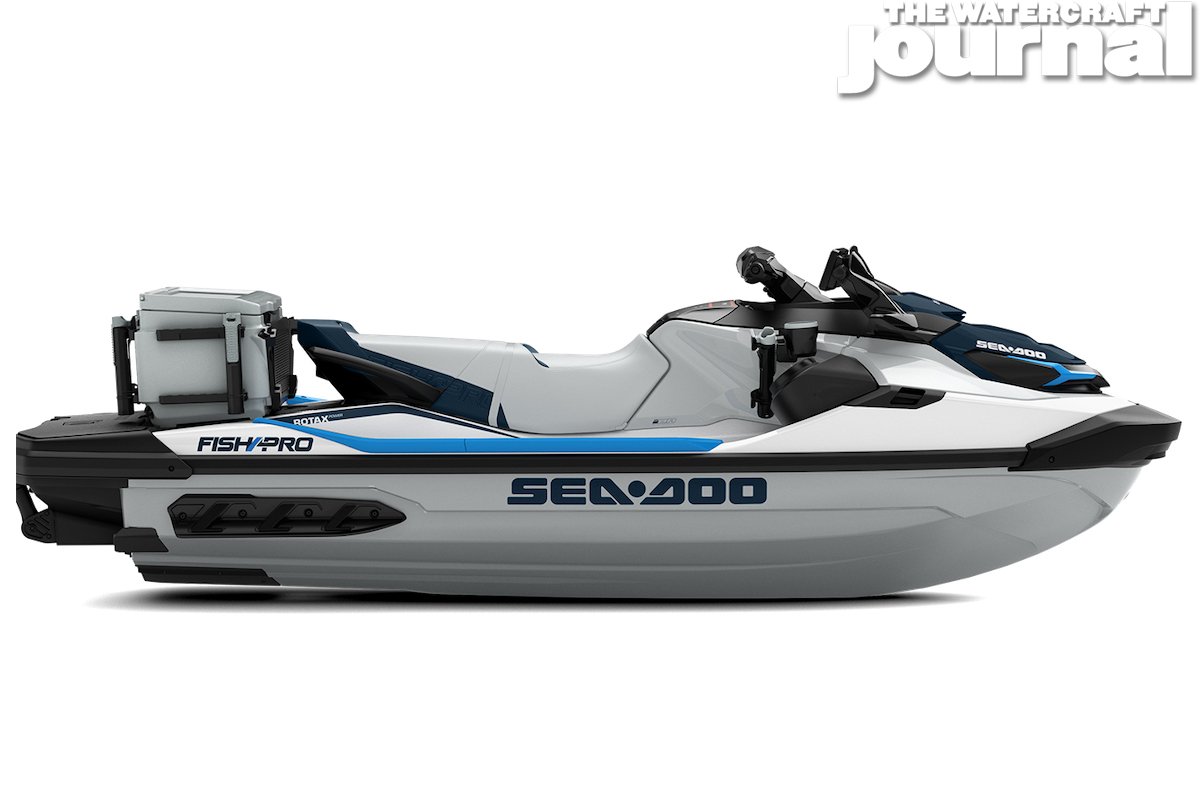
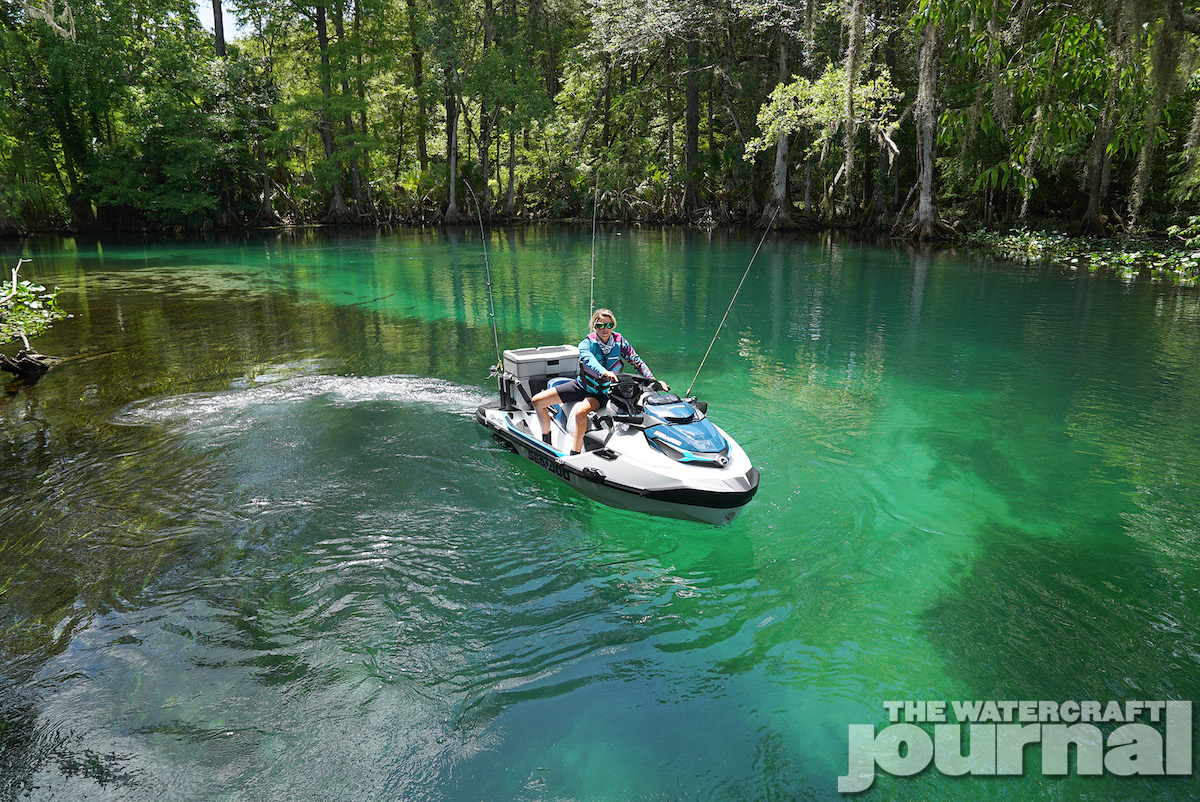
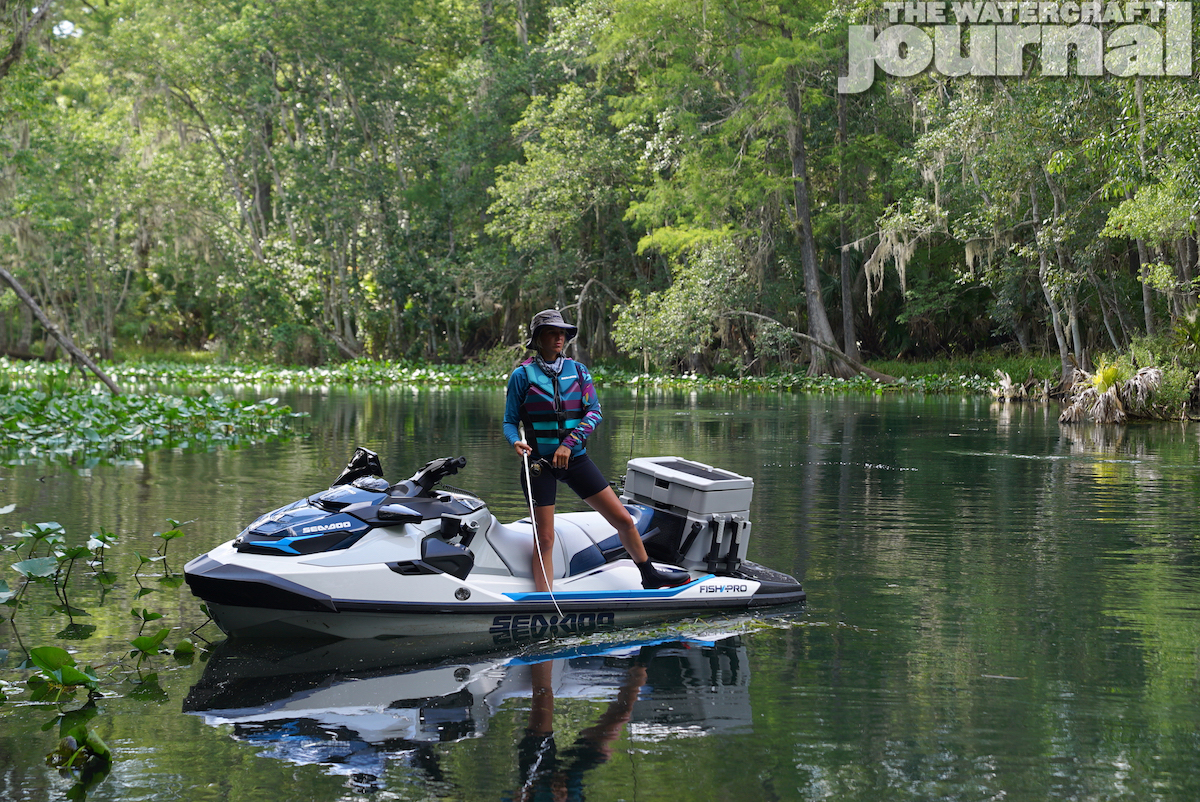
Lastly, Sea-Doo gave the Fish Pro ($15,599) three new touches; obviously, the inclusion of iDF as standard equipment, as it is certain to be a life-saver for many fishermen. Next, the Fish Pro gets a second color option: White and Gulfstream Blue (White and Night Green also return).

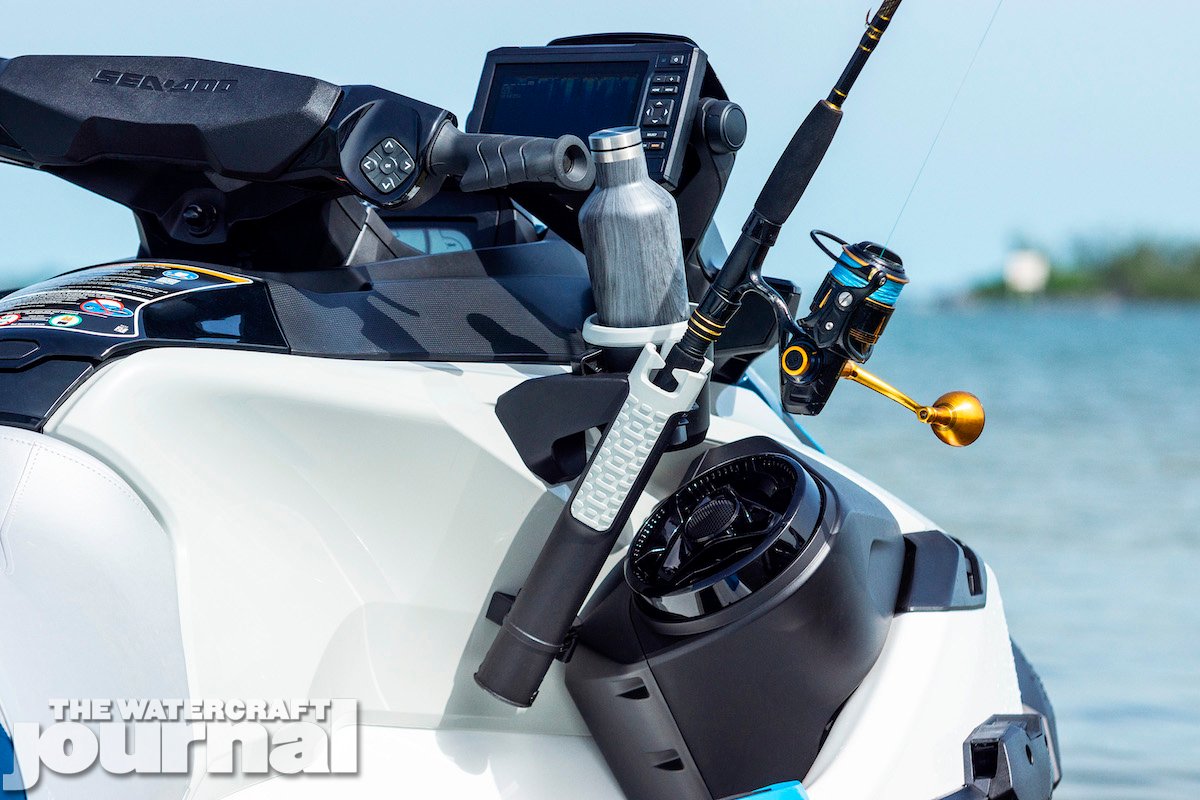
And lastly, BRP has outfitted the Fish Pro with new angled rod holder mounts at the fairings for easy trolling, as well as a new LinQ cup holder. And it doesn’t end there, as the Fish Pro LinQ cooler gets an extra 5-inch tall extension to separate your bait from your snacks and drinks!

In all, 2021 promises to be an incredibly exciting year for Sea-Doo and the folks looking to expand their view of the world around them – whether you’re looking to tow a raft or wakeboarder; explore new waterways and channels; race your friends across the lake at wide open throttle; or leisurely cruise the shoreline with your favorite tunes playing in the background. For more information on each of the models mentioned here, visit www.sea-doo.com.

Video: The Watercraft Journal IRL 2021 Sea-Doo RXP-X 300 Walkaround

3

Oh the woes of technology. You see, this morning – in the midst of possibly one of the biggest new product launches – my trust travel laptop (an 8-year-old MacBook Pro) gave up the ghost. That means that not only could I not complete the massive task of editing, cropping and watermarking nearly 60 images, but I couldn’t even finish typing up the text, which around the time the laptop’s solid state drive died, was nearly a third of the way done. So, what you’re getting instead is a bit of a placeholder.

Thankfully, while a local repair shop toiled to resurrect my wonky McIntosh, I spent the better part of the day riding the all-new 2021 Sea-Doo RXP-X 300. Building off of nearly a decade of on-the-water testing and development, the new RXP-X benefits from years of racer input, aftermarket testing and all you fine folks making Sea-Doo’s muscle craft one of the most popular out there. Although I won’t use this time to divulge all of the nitty gritty details or my final take on the PWC, the video below pretty much does it for me.

See, after the big reveal, Sea-Doo’s Tim McKercher gave The Watercraft Journal exclusive hands-on access to all of today’s test units – all to provide you an intimate look at these new machines, and to answer your questions live as we walked around them. And just as an added bonus, we also poured over the new 2021 Sea-Doo Fish Pro 170 with its industry-first, game-changing iDF fully-functional transmission! That’s right, the Fish Pro 170 comes standard with the ability to reverse the driveshaft and prop to redirect thrust forward to clear a clogged intake grate.

The feature is also standard on the fully-loaded GTX Limited 300 and is available as an option on the GTX 170 and 230 (but not the new GTX 300). So until I can get my damn laptop back and thrash all weekend to finish the article that should’ve been done already, you’re getting this teaser and a link to our YouTube channel’s latest video, another episode of The Watercraft Journal IRL. Enjoy!

Up Your Kawasaki Performance With A KSpeed Reflash

0

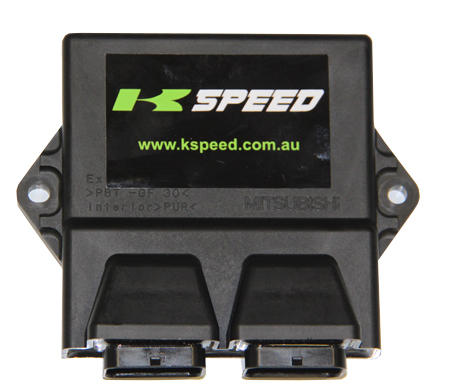
Looking for more performance out of your Kawasaki STX or Ultra platform ski?  Well look no further than KSpeed’s ECU reflash service.

At Brisbane Kawasaki’s KSpeed performance group, they specialize in Kawasaki upgrades, performance innovations, and ECU tuning.

Whether you are looking for more horsepower, a higher top speed, or simply more fun, a reflashed ECU will offer it all.

KSpeed has been innovating for many years and their tunes are dyno proven and safe.  They will give you a reliable option for improving the performance of your JetSki. Best of all, the reflashing will no longer require you to purchase the speed override device since the tune itself inherently unlocks a higher top speed.

Once you email KSpeed at [email protected] to initialize the process, then all you do is simply unplug your existing ECU and send it in along with your FPO key. KSpeed will then flash, test, and return your ECU and from then on it’s plug and play for you.

So head on over to KSpeed for all of the latest offers and promotions and start the process to unlocking the full potential of your Kawasaki JetSki.

Video: Sea-Doo Adventures From Long Beach to Catalina Island

0

It’s kinda hard to miss it – especially on a clear day. Just 22 miles off the coast of Long Beach, CA sits Catalina Island. The peaked island has been made famous for its incredible wildlife (did you know that wild buffalo have been roaming its hills since the 1930s?), skin and scuba diving and of course, its brilliant round-sided casino. There’s even the historic Wrigley mansion, owned by none other than the family who made the Double Mint Twins a “thing.”

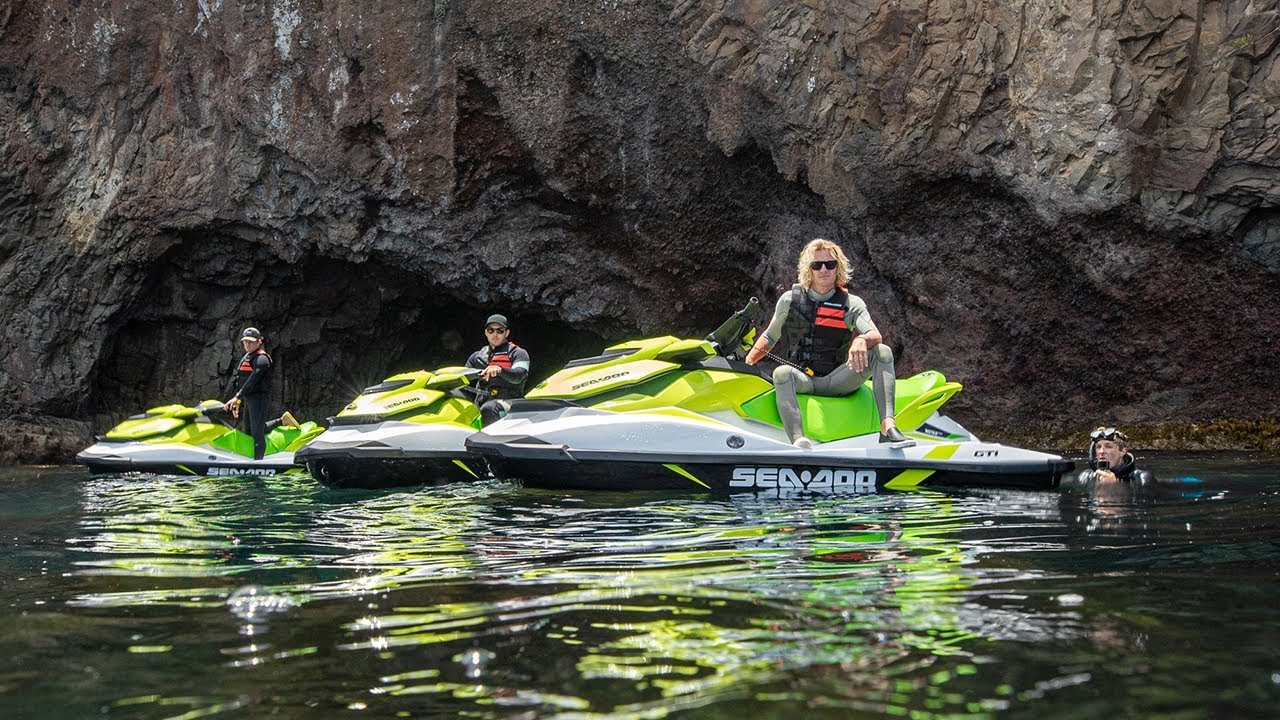
It takes about an hour to reach the island by ferry, a quarter of the time if you fly by helicopter, but when Christopher Farro and company sought to reach the island via Sea-Doo watercraft, it wasn’t just quick but an experience they’d never forget. Watch this quartet enjoy everything above, below and on the surface of the water along the way in this newest addition to Sea-Doo Adventure series on YouTube. Then consider your own adventure – there’s no time like the present!

Video: Kspeed Gives a Brief Walkaround of its STX 310LX Project Ski

0

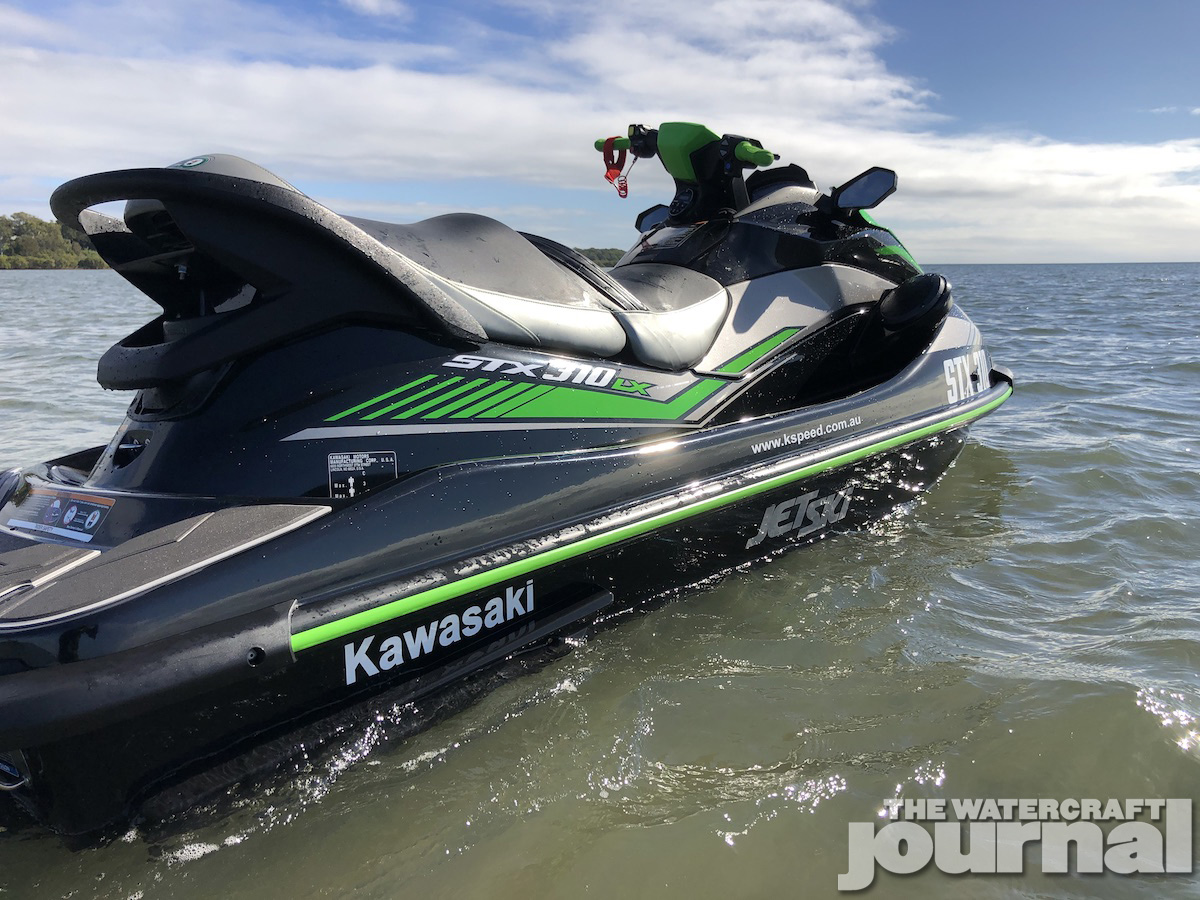
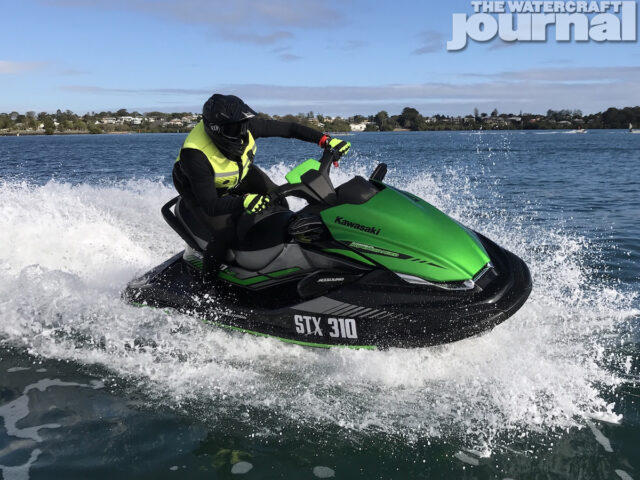
Hopefully, you’ve already seen The Watercraft Journal’s exclusive test ride and review of Kspeed’s absolutely insane 80-mile per hour Ultra-powered STX 310LX Kawasaki JetSki. Brisbane Kawasaki’s KSpeed performance group has built an STX 310LX JetSki that as you imagine utilizes the lighter STX 160 platform, stuffed a 310-horsepower engine in it from the Ultra platform and the results are phenomenal.

Best of all, every part that they used is directly from factory Kawasaki models so this literally looks like a ski that could come right off the Kawasaki assembly line. The entire engine and running gear from the Ultra platform fits perfectly within the STX hull and the dash display is utilized from the Ultra platform.

Check out their explanation video for more details and those keen readers will note that we have an exclusive look at this ski coming up so you definitely want to stay tuned and don’t miss that.

Jet Ski World Cup Postponed Until March 3-7th, 2021; $308,000 Purse

0

Let’s just cut right to the chase: the annual King’s Cup has been moved to March 2021. But before you get grouchy, sink your teeth into the idea of a $308,000 USD cash purse, $80,000 to win Pro Ski GP and Pro GP Runabout. (Yeah, we know they call it the “Jet Ski World Cup” and insist on writing it out in all caps, but it’s the King’s Cup around these parts and we ain’t gonna change now.)

The official press release read as follows:
Jet Ski World Cup Co., Ltd, the owner of the right of JET SKI WORLD CUP and JET SKI WORLD SERIES tournaments and Asian Multi Sports and Entertainment Co., Ltd who is the organizer of the event, have been monitoring of the COVID-19 situation closely, including the restriction measures of the Thai government. We would like to confirm the rescheduling of the JET SKI WORLD CUP from 9-13 December 2020 to 3-7 March 2021.

Moreover, we have decided to make this tournament grander to become “2 in 1″ Super Tournament. The champion in each category of this one tournament will receive both of the 2 titles i.e. the champion of JET SKI WORLD CUP and JET SKI WORLD SERIES of 2020-2021 Season.

The important reasons for this decision are our determination to keep advancing and strengthening the World Jet Sport Community and our brave spirit not to give up because of the COVID-19 situation. Then, we would like to keep the world record and maintain the quality of both of the titles as best as we can. We are sure that by that time the riders around the world will be the readiest for this greatest game.

We have confidence that this tournament is what all riders are waiting for. We are excited to find out who will be the champion in each category, especially the best of the best category such as Pro Ski Grand Prix in which the champion gets 80,000 USD (World cup; 50,000+ World Series; 30,000). The grand total prize money of this tournament is over 308,000 USD.

Video: Sea-Doo GTI Makes An Equally Great Fishing Platform

0

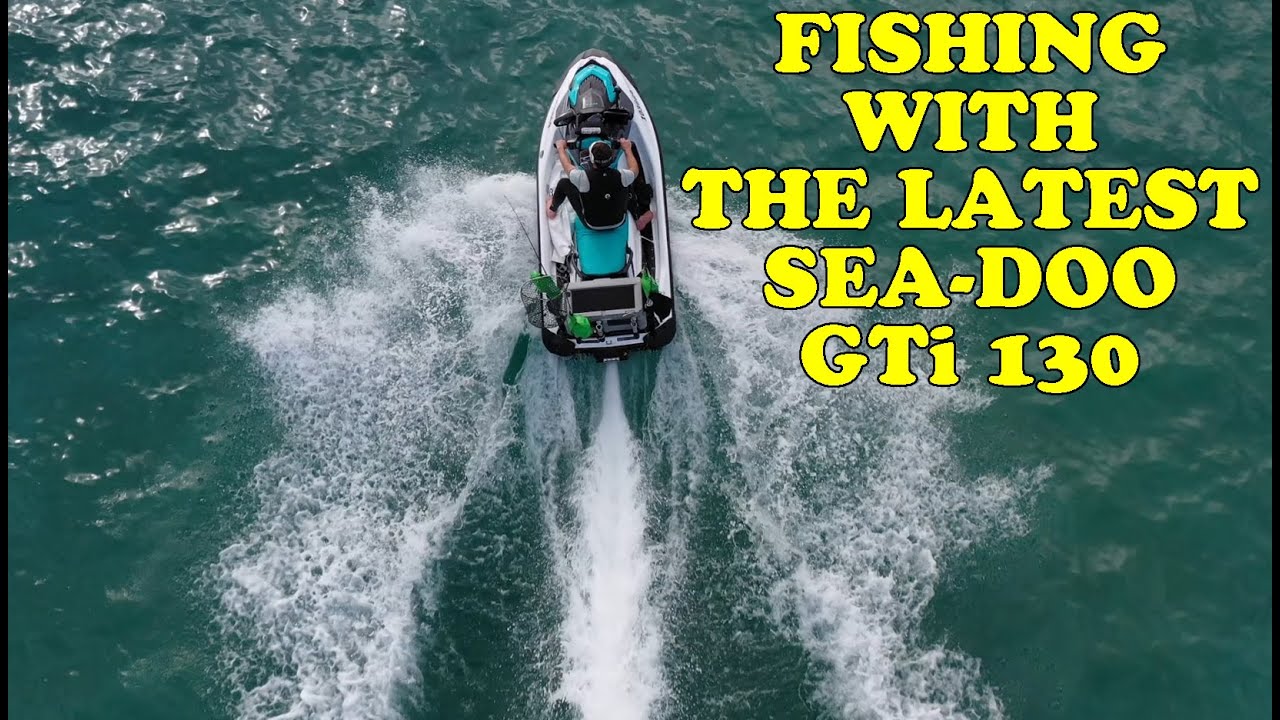
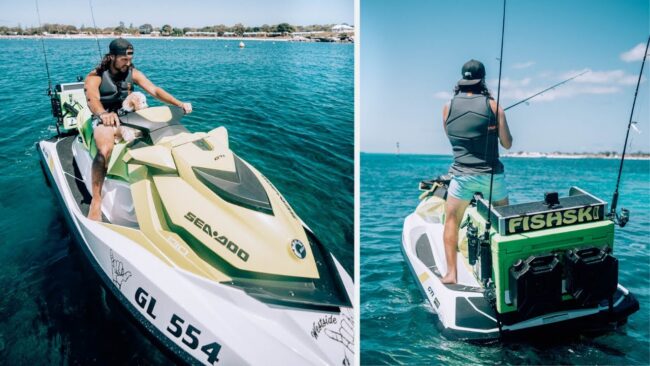
By now we all know that the Sea-Doo Fish Pro makes a great purpose-ready fishing rig.  Whether it’s in an inlet close to shore or deep sea fishing miles off shore, that platform is going to get the job done. Another contender that is perhaps equally as capable when setup properly, is the Sea-Doo GTI platform as evidenced by  Andrew Hill’s latest adventure.
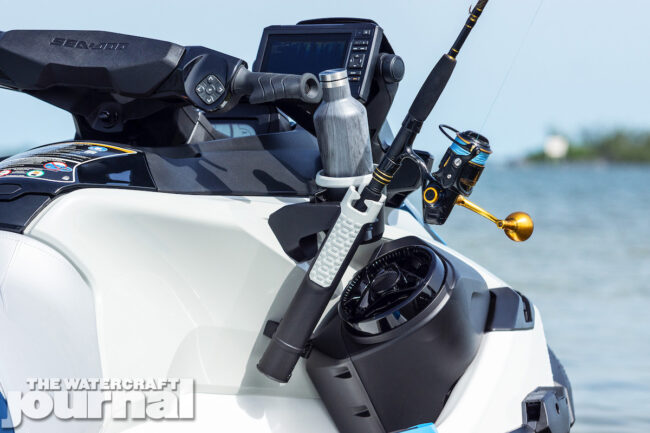
For this rig, Hill has equipped a 2020 Sea-Doo GTI 130 with the LinQ cooler as well as the Garmin 62CV fish finder.  After throwing a few rods and a net onboard, he is on his way out for a day of fishing.

The day turns out to be very successful as he snags quite a few fish including a huge snapper at the end.  It appears that Andrew is equally as comfortable aboard this GTI as he would be onboard any other personal watercraft and judging by his success, we think he is equally as happy.

This goes to show that the Sea-Doo GTI lineup is a great fishing rig as well and at a fraction of the price of the Fish Pro, it’s hard to overlook.  When you consider the ease of attaching your favorite LinQ accessories as well as the possibility to adapt the versatile fish finders, it’s definitely a great contender.

Are Master JetBoats’ MJB 380 Twin Engine PWCs The Next Generation of Watercraft?

2

Not too long ago, we received an email from MasterJet Boat Gmbh, who wanted to introduce us to the company’s new “mega jet ski,” the MasterJet MJB 310. Our curiosity was piqued, we did some digging and discovered all that we could from the all-German MasterJet Boat website (using Google Translate, of course).

At first blush, these things are big and burly…almost clunky. Each machine features a good size deck – especially for PWC but when you know why, you’ll flip. The MJB 310 will be outfitted with two 155-horsepower MPE 850 Weber prototype engines.

And if that’s not enough, MasterJet Boat claims to have a MJB 380 RS unit brandishing two supercharged Yamaha SVHO engines cranking out a ridiculous 450-to-600 horsepower (depending on how it’s tuned) and a top speed of 150mph (y’know, because there are worse ways to die). Available in either black or pink, the MJB 310 is 3.8 meters long, 1.52 meters wide, and wields a dry weight is 1,377-pounds!

The oversized skis have numerous bells and whistles, including back up cameras and underwater lights. The complete list of tools, instruments, and special equipment can be found on the MasterJet Boat website. For more information, check out the website. It is full of specifications, pictures, and contact information – but no prices and a proposed introductory date of “August 2020” which has already come and gone.
Video: RIVA Racing Showcases Unique Color RXT-X 350 Limited Edition

1

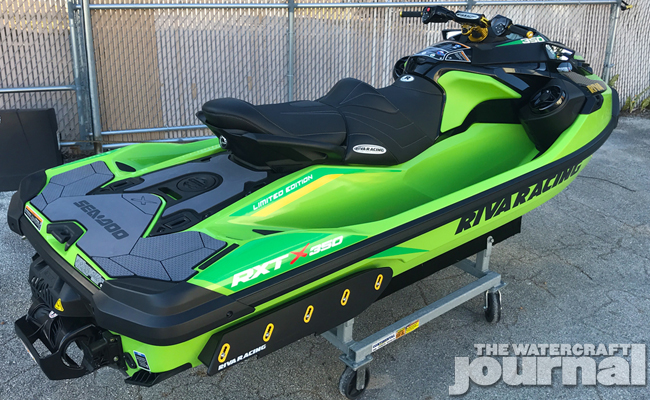
Earlier this year when RIVA Racing showcased their 2020 Custom RXT-X 350 Limited Edition, the particular limited run models shown were in the lively green and black with a special gold annodized coating applied to certain features.

Who could have thought that these custom built machines could look any sharper until they began building some extremely select units with other unique color schemes.

Take for example this one of a kind Limited RXT-X 350 with a smooth purple annodizing accent.  The purple features combined with the electric green and black just take this ski to a whole new level of fine detail.

From the front to the rear of the ski, those purple colors just pop everywhere.  The RIVA billet steering system is covered in the detail. The exhaust exit is also a fine work of art that is screaming with that candy purple color and even the seat stitching matches.

We don’t know whether this watercraft should be ridden or put in a gallery of art but either way it’s going to have one lucky owner.

Stay tuned for all of the latest limited edition model reveals from RIVA Racing and head on over to rivaracing.com if you are interested in having one of the special edition models for yourself.