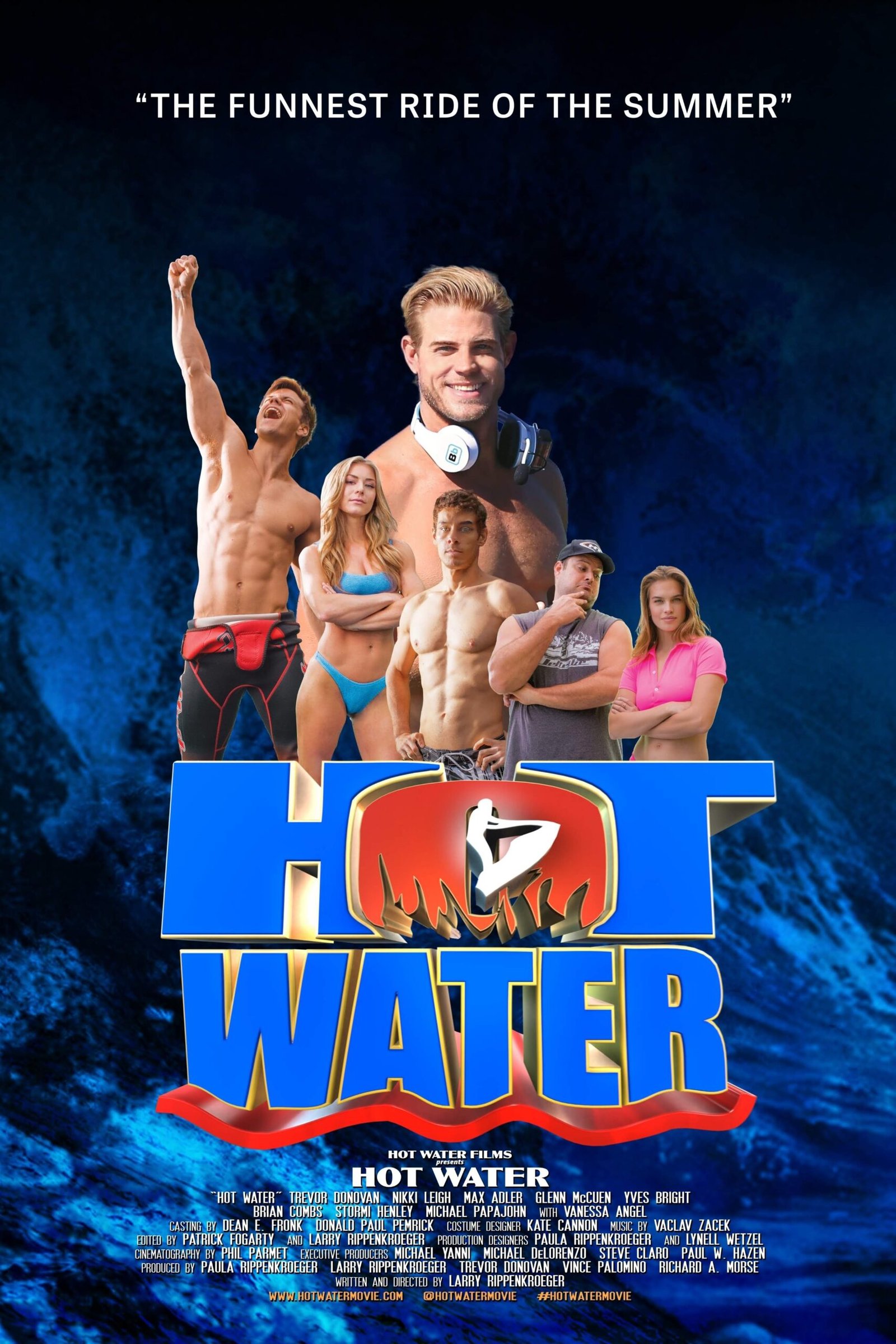
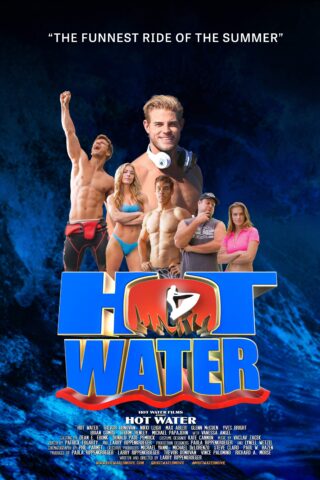
Have you’ve ever wondered, “How come they don’t make movies like they did in the 1980’s anymore?” You aren’t alone. Fun action romps chocked full of pretty girls, exciting stunts, villains you love to hate, and locations you want to visit. (How many of you remember the 1980’s BMX movie “Rad”? We sure do.) Somehow, we forgot how to make fun movies over the years – everything has to be so damned serious.
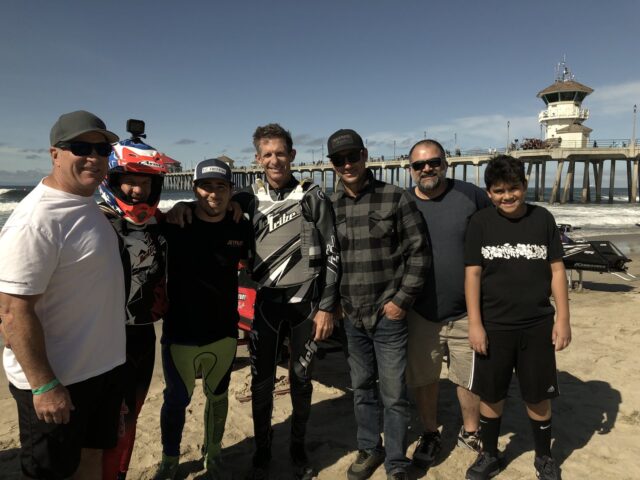
Well, gasp a sigh of relief because fun is back! Famed IJSBA World Champion and Hollywood stunt double to the stars, Larry Rippenkroeger has just completed his opus “Hot Water”, which promises to bring the fun back to movies! More importantly, Ripper’s “Hot Water” hopes to bring jet skiing back into the limelight with tons of up close and exciting race footage to get the sport we love back in front of the general public.
“Hot Water” follows young hotshot Billy Burnett who dreams of being a professional jet skier. After a few daring exploits and some major setbacks, Burnett is paired with legendary five-time world champion, Jarid Harper. The now retired racer is hesitant to bring on the young Burnett at first, but sees a chance to right some wrongs and agrees to be his mentor and coach.
There’s plenty of stunts, dumb antics, adrenaline-fueled action and plenty of bikini clad girls – so pretty much a true-life depiction of jet ski racing! Ripper has yet to announce the official release date and whether we can expect to see it in theaters, or as a digital download, so stay tuned to the official website and Facebook page for more details!
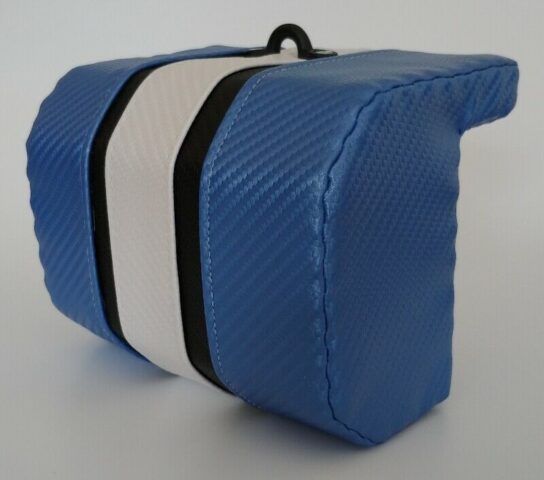
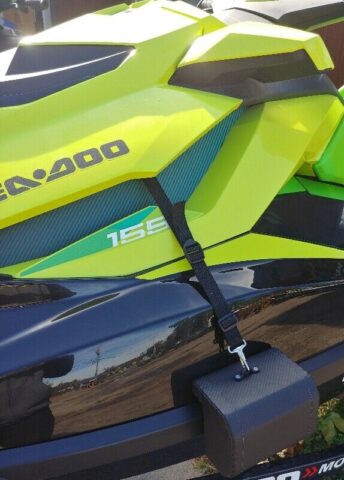
Ontario, Canada’s Makeport Marine, creators of custom PWC fenders, wants you to learn about their warranty. Their limited warranty is valid for thirty days and covers defects in materials and workmanship of the product. If the buyer has a claim, they will receive the original purchase price for the product.
The warranty won’t cover damage caused by the owner trying to modify or repair the product. Only use the product for its intended purpose, otherwise, the warranty is void. Wear and tear are not covered, and neither is weathering. The warranty is non-transferable; only the original purchaser of the product is covered.
If you have bought a custom fender from Makeport Marine and need assistance with a product under warranty, deliver the product to the shop via prepaid shipping. The address can be found on the website. When the product is received; Makeport Marine will assess it and repair it, replace, or issue a refund for the item.
If your item is lost during shipment, it isn’t covered, which is the case with most other warranties. Makeport Marine is committed to providing the best customer service and want to make sure your custom PWC fenders work properly and meet your expectations in fit, performance, and style. That’s why they offer a 30 warranty that will give you peace of mind.
Hey everyone, Kevin here. This one is gonna be a little more personal. I got a call Sunday afternoon that Aaron Cress passed away the day before (March 28th, 2020) from a sudden and very unexpected cardiac arrest. It came straight out of the blue, as did the news. Aaron wasn’t even 40 years old, I remember thinking. Worst of all, Aaron and his wife April had just had their first child, a boy – Archer – who is about 3 months old. “Good Lord,” I caught myself repeating. “He’s not even old enough to know that his dad is gone.”
Aaron was a super quality guy. I met him back in 2008 when he was still spinning wrenches at Dana Point Jet Ski Center, servicing the rental fleet and prepping new units for sale. He also had been enlisted to help keep Mark Gerner’s race skis together as Gerner pursued the Triple Crown Offshore Championship (winning first places in the Mark Hahn Memorial 300, the Long Beach-to-Catalina, and the Dana Point-to-Oceanside & Back races). Before long, Aaron was wrenching on the entire PWC Offshore team’s machines it seemed.
PWC Offshore Racing’s Mark Gerner said, “The tragic and premature loss of Aaron Cress is being grieved not only by [the] team, it is being felt by the entire offshore and endurance racing and riding community. It’s a result of Aaron’s friendly and generous nature that made everyone he interacted with feel special. Aaron was […] was a loyal friend, an avid supporter of our endeavor to revitalize offshore racing in the United States. Aaron had a huge impact, substantially more than people will ever know. I will be forever grateful for his friendship, collaboration and support. He was friendly, selfless, unassuming and had a giving soul. I will miss him dearly.”
That’s why it was such a perfect fit to see Aaron donning an official Kawasaki employee shirt 4 or 5 years ago. Kawasaki is always in the hunt for top talent – particularly when they don’t have to relocate it – and Aaron was it in spades. Kawasaki Senior Public Relations Coordinator, Jon Rall shared, “I enjoyed working with Aaron and [especially] going to and from events with him. I will miss him as a coworker but more [than that] just his true friendship. Rest in peace Aaron, as you did great things for so many during your short stay on earth.”
Upon hearing the news, K38’s own Shawn Alladio went about (with David Tew) launching the Aaron Cress Memorial Fund to help cover funeral costs and help support Aaron’s widow and son. Alladio wrote, “Aaron supported an entire community, he gave more than he was ever gifted. Aaron Cress spent long hours after hours, away from his family to breathe life into race programs, events and riders. He was a PWC Offshore Racing Team icon. He was my friend. He was my ‘safety angel’ and did so much for those in our water rescue community.”
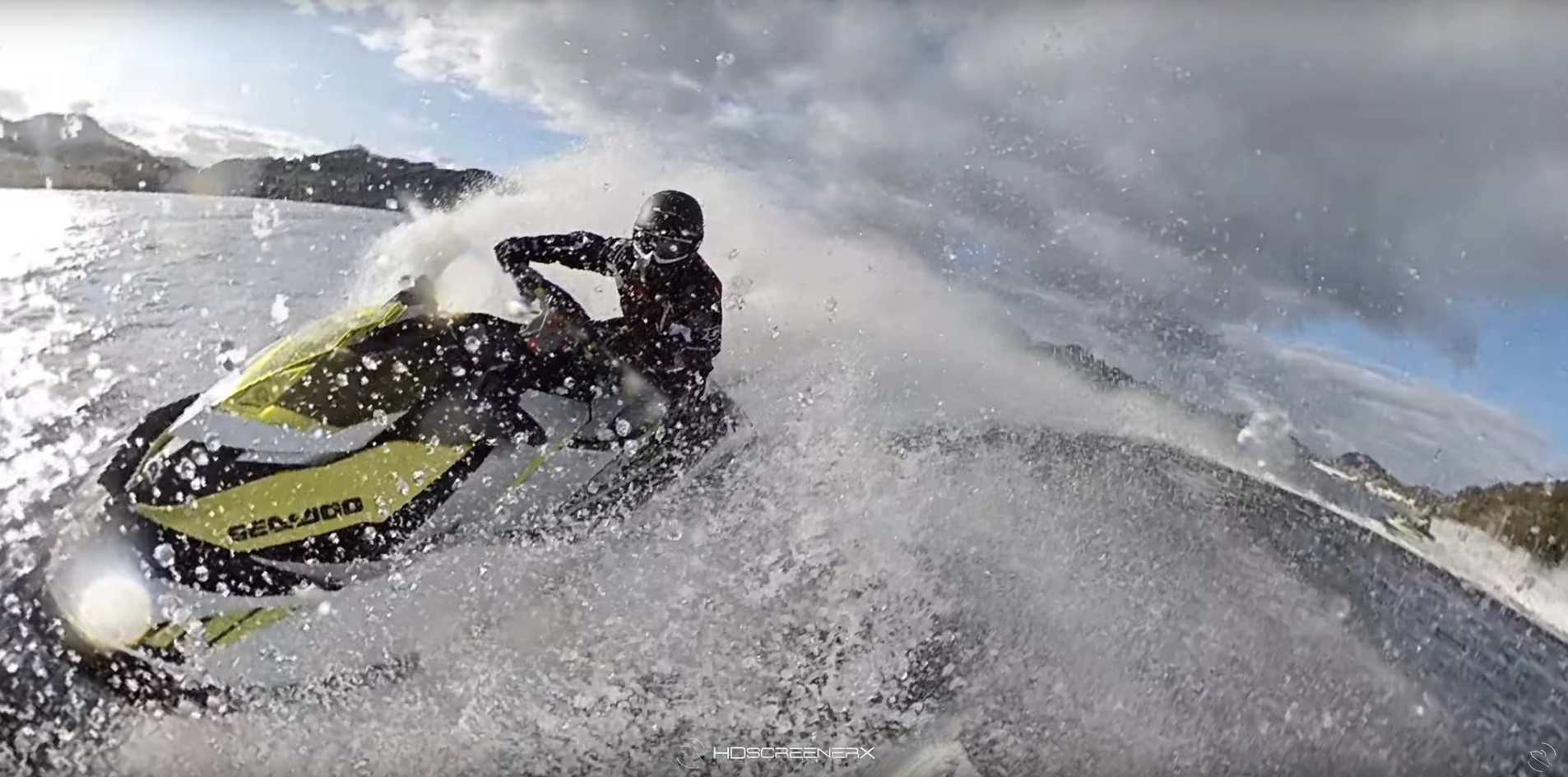
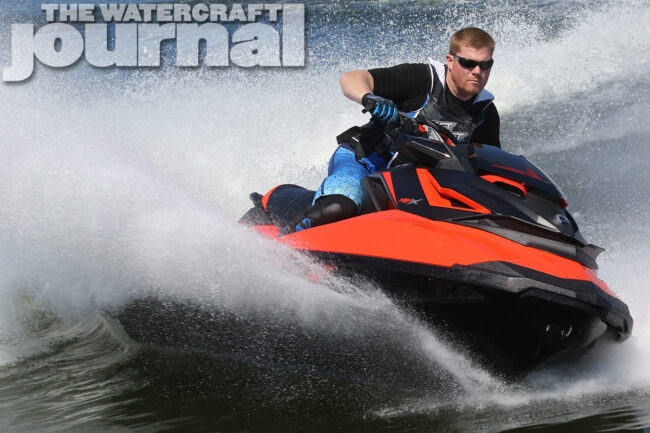
We’re stoked to present this beautiful slow motion video from the Jet Ski Club Stavanger YouTube channel. The video features a powerful Sea-Doo RXP-X 300 and its rider flowing effortlessly through the glassy conditions on a waterway in Roggland, Norway. It’s a dreamy setting that any one of us would love to take advantage of. The flawless images are captured from above the water and also from the rider’s point of view, making us feel like we’re inside the scene.
This was achieved by attaching the waterproof Insta 360 One X camera to a custom-made steering wheel bar mount, which is fastened into one of the handlebar extension screws on the ski. The rider in the clip was able to score epic shots from any angle using the following camera settings; 360 Capture, SloMo, and the Drifter. The Drifter is an accessory that turns the camera into a small drone, which is accomplished by simply attaching it to the camera. Using the Drifter, the rider was able to capture the incredibly sharp airborne footage of Sea-Doo’s RXP-X 300.
The RXP-X 300 is a mix of power, stellar handling, and control like nothing else on the water. Those elements really stand out in the slow-motion clip. Moreover, the Rotax 300 horsepower engine gives the rider plenty of speed and power to pull off some tight cutbacks while taking advantage of the stability of Sea-Doo’s T3 Hull. The video showcases many of the great features Sea-Doo has to offer with the high performance RXP-X 300. Check it out!
It was possibly one of the bravest moves made by a major OE manufacturer in the PWC industry in decades: build a model for the specific use of fishing. Yet, that was what Sea-Doo did in 2019 with the Fish Pro. Albeit a limited run model, the 2019 Fish Pro wowed all of us at The Watercraft Journal during our hands-on introduction shortly after its reveal. The then-one-year-old ST3 truly was the ideal platform for low speed trawling, providing the fisherman superior stability, comfort and range of motion throughout the deck.
Add to that the Fish Pro’s exemplary outfitting of necessary accessories – such as an extended rear platform to not only accommodate the 13.5-gallon cooler with its multiple mounting points for rod holders, a cutting board and cargo net, angled, padded foot wedges hard-mounted to the gunwales, the large 6-inch Garmin ECHOMAP Plus 62cv Fish Finder, and iTC-controlled “Trolling Mode” – and it quickly became apparent that Sea-Doo wasn’t playing around. They wanted to own the PWC fishing market, and it was going to blaze the trail.
And the Fish Pro has done exactly that – blaze a trail into a new market. Thus far, the response has been warm but moderate in the US, but again this is new territory for BRP. Thankfully, another market that BRP is well versed in is sportsman hunting. The Can-Am Defender, the brand’s sportsman-focused SxS, has been wildly successful. So working together with its Can-Am line of Essential Hunting Accessories and Sea-Doo’s Parts & Accessories Division, Sea-Doo will be launching a limited-run runabout for the sportman: the Sea-Doo Moose Pro for 2021.
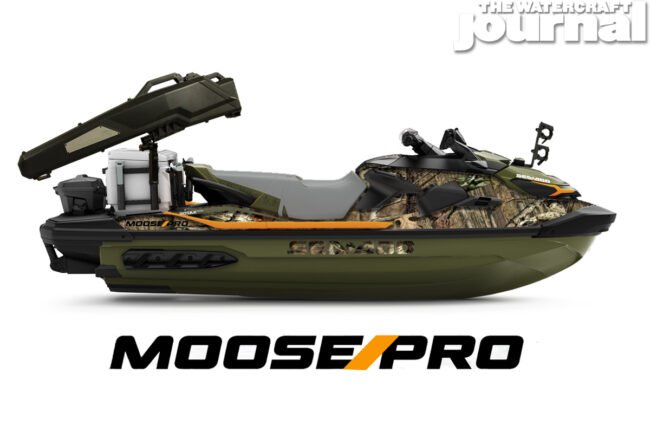
The 2021 Sea-Doo Moose Pro 170 will be made available in either White & Night Green, or the new Mossy Oak livery (shown). Standard accessories include the same Garmin GPS and 13.5gal. cooler on the Fish Pro, but include the Can-Am tactical rifle case & mount, and hood-mounted adjustable rack mounts.
Clearly building from the existing Fish Pro, the Moose Pro 170 shares much of the same features: the 13.5-gallon cooler returns but with two new changes, inside features a molded-in divider including a large locking container for ammunition; and externally, a steel-mounted, weatherproof rifle hard case; the Garmin GPS but now with new TrailFinder Plus mapping and routing; a hard-sided LinQ box behind the cooler; and a pair of Kolpin adjustable gear grips on the hood; (we’re a little disappointed that the gunwale foot rests return in the same orange as the Fish Pro) and the now-standard 18.6-gallon fuel cell.
A new Sportsman Watercraft Division (SWD:BRP) was created to investigate how to specifically address marketing these new segment-specific models. The Watercraft Journal spoke with the newly appointed head of this group, Jacques Clouseau. Due to the extraordinary overlap between the Fish Pro and Moose Pro, we asked Chief Inspector Clouseau what was available (apart from accessories) to delineate the two. He stated, “The Moose Pro 170 can be optioned ($400) with the same Mossy Oak scheme as our popular Defender and Outlander machines from Can-Am. Otherwise, it comes in the same White and Night Green colorization.”
It goes without saying that all of us at The Watercraft Journal were excited to learn that Kawasaki’s longest-running runabout – the STX-15F – was getting a much-needed fresh for 2020. Although much of the Recreation-segment JetSki would remain the same – most notably the hull and 148mm axial-flow jet pump – a larger portion of the machine would be new.
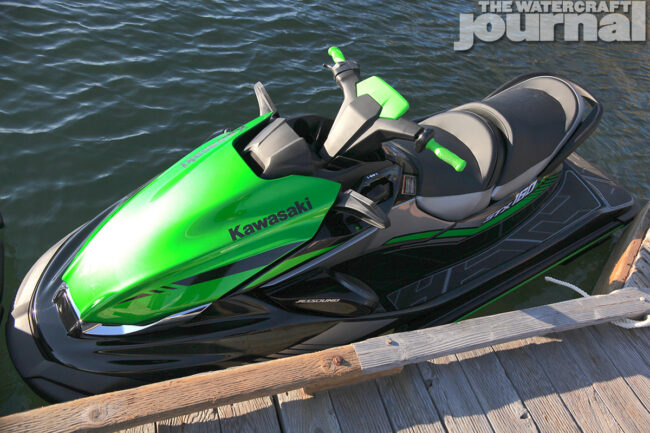
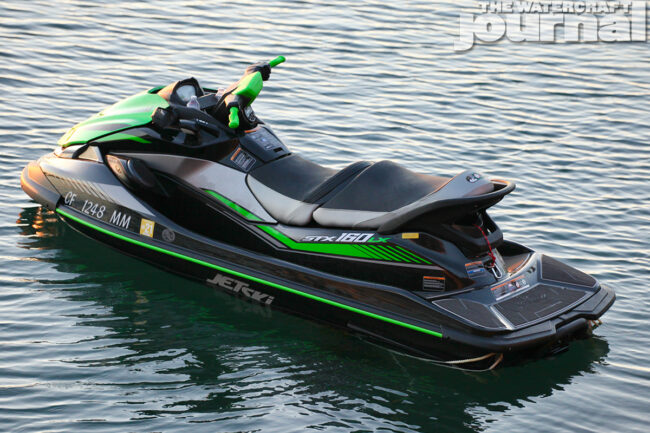
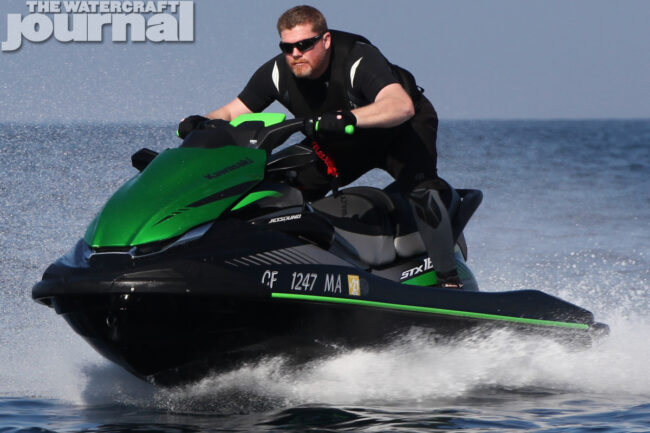
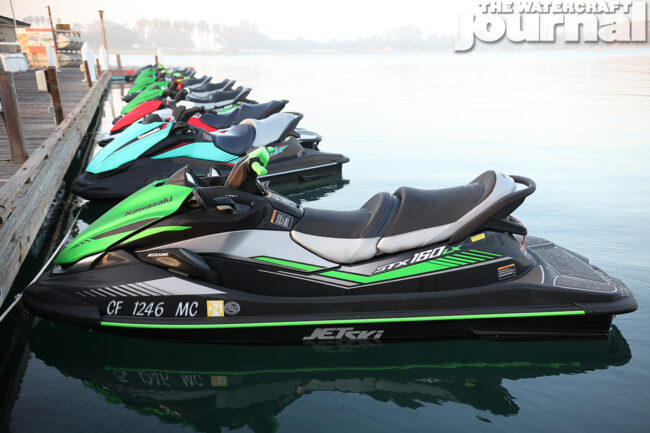
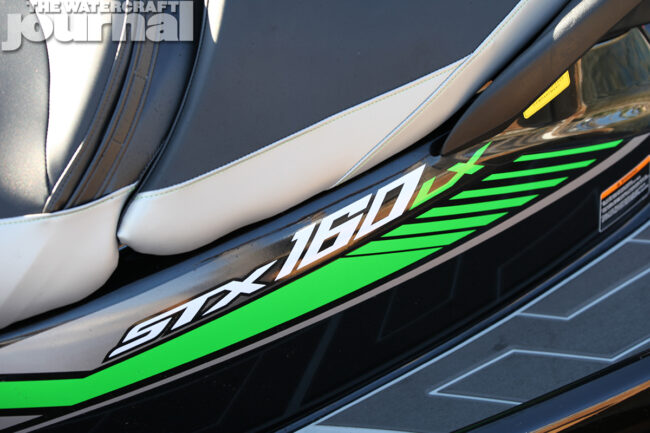
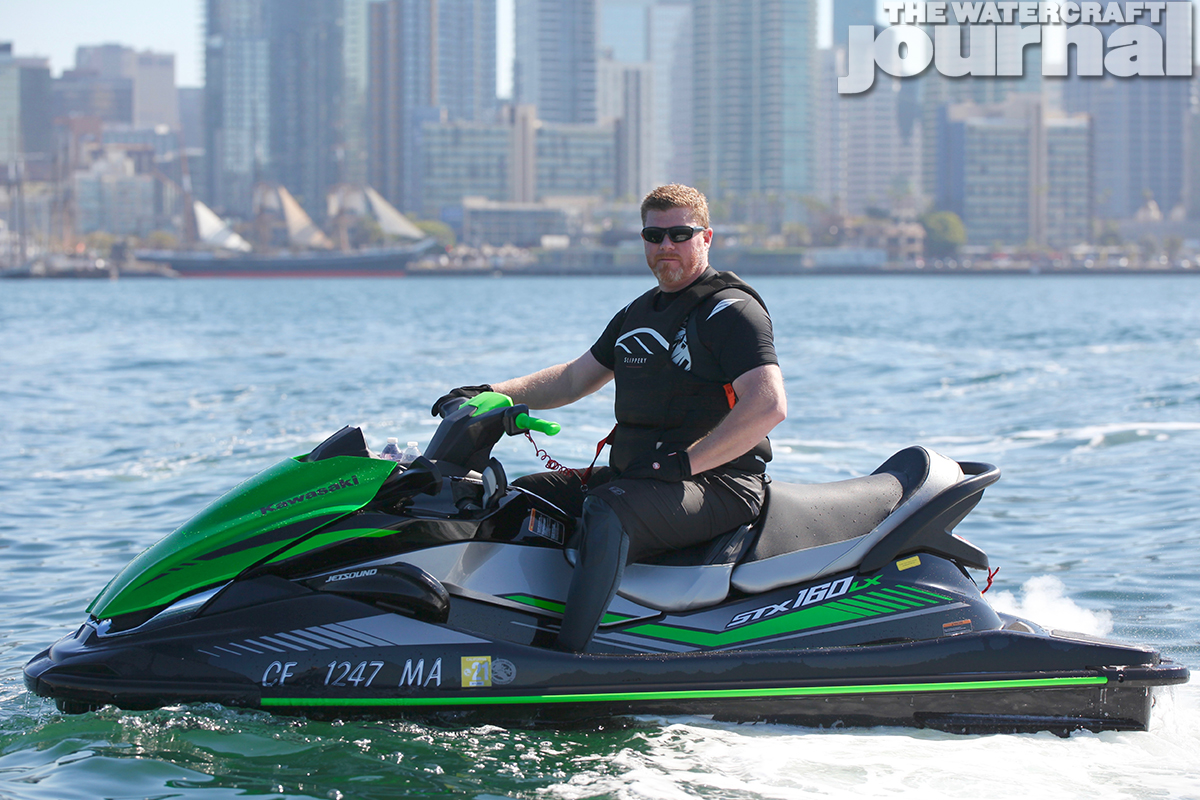
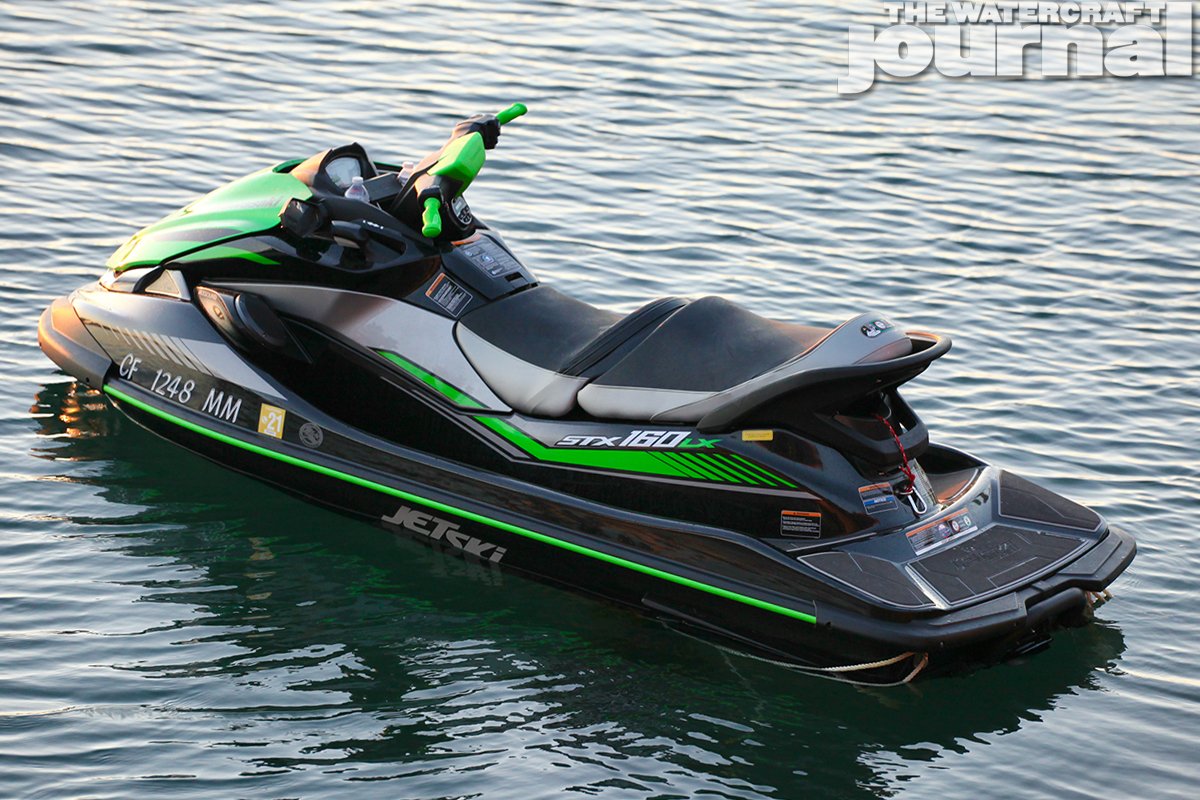
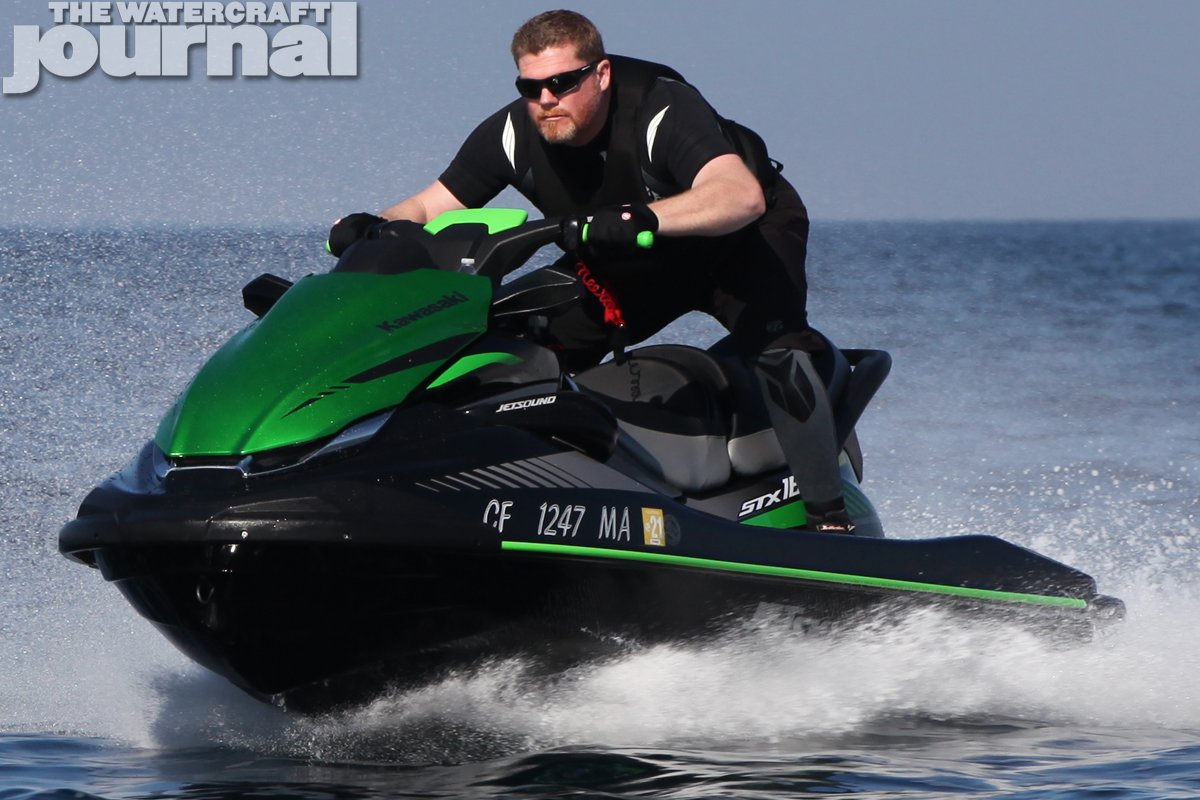
Upon its introduction, Kawasaki revealed that the STX-15F would make way for three different-optioned watercraft, the STX 160, the 160X and the 160LX. And that’s precisely the model that Kawasaki provided for us for testing today – the 2020 Kawasaki STX 160LX. Priced with an MSRP of $11,699, the STX 160LX brings with it a whole new design, greater ergonomics and plenty of punch to send the other guys running.
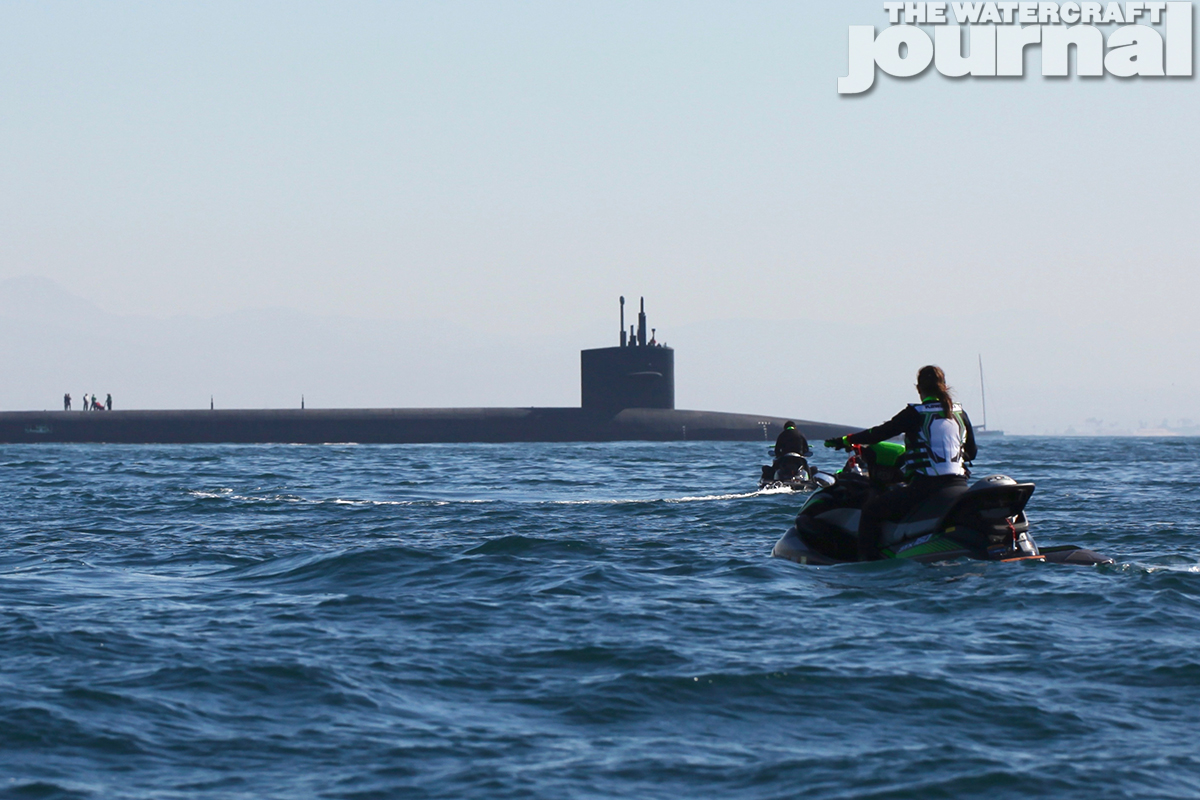
The Watercraft Journal was invited to put the new STX 160LX through its paces, so we flew out to sunny Southern California for two nights at the luxurious Paradise Point resort that occupies its own island in San Diego’s Mission Bay. But there was no time to sit on the beach, we had work to do!
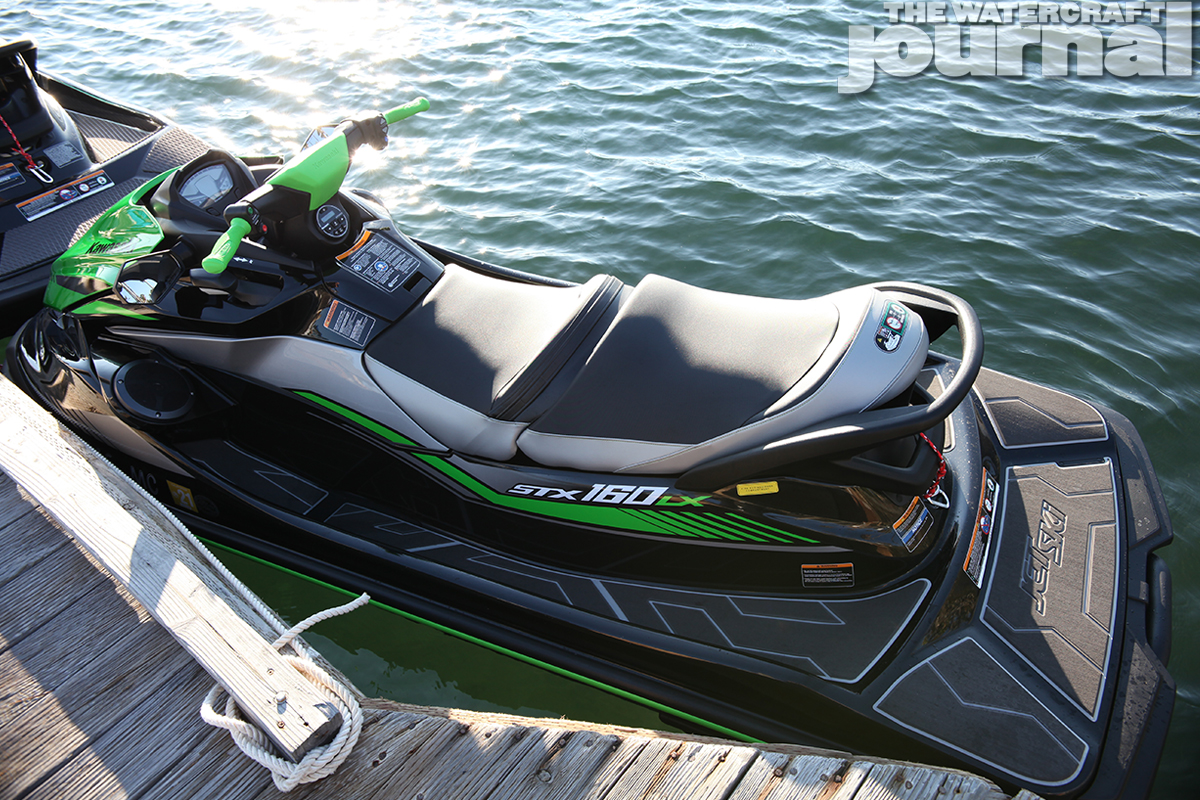
As noted, the 2020 STX was redesigned from the bondline up, with a whole new deck design. The footwells are deeper and much wider, giving the rider plenty of room to move around. The progressive rear swim platform is wide, and steps down to a lower level; together with a thickly-padded folding swim step that integrates into the bumper rail and a two-rung reboarding ladder – makes reboarding the STX one of the easiest to do in the industry.
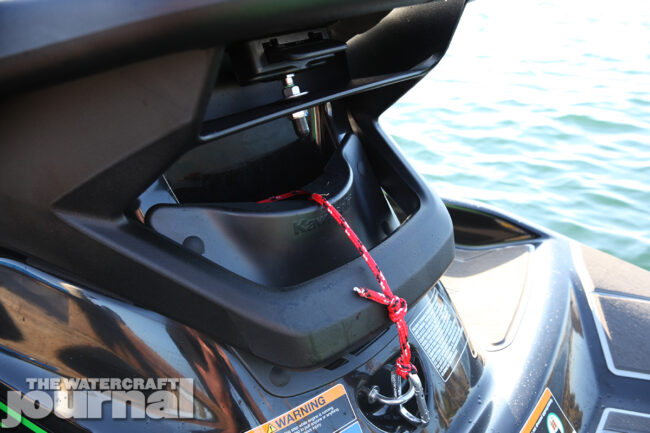
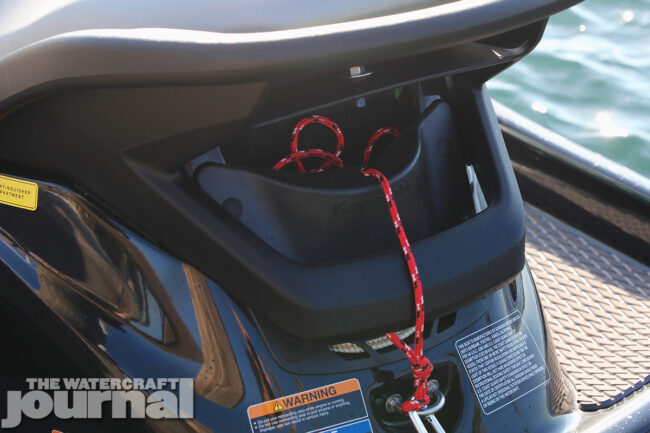
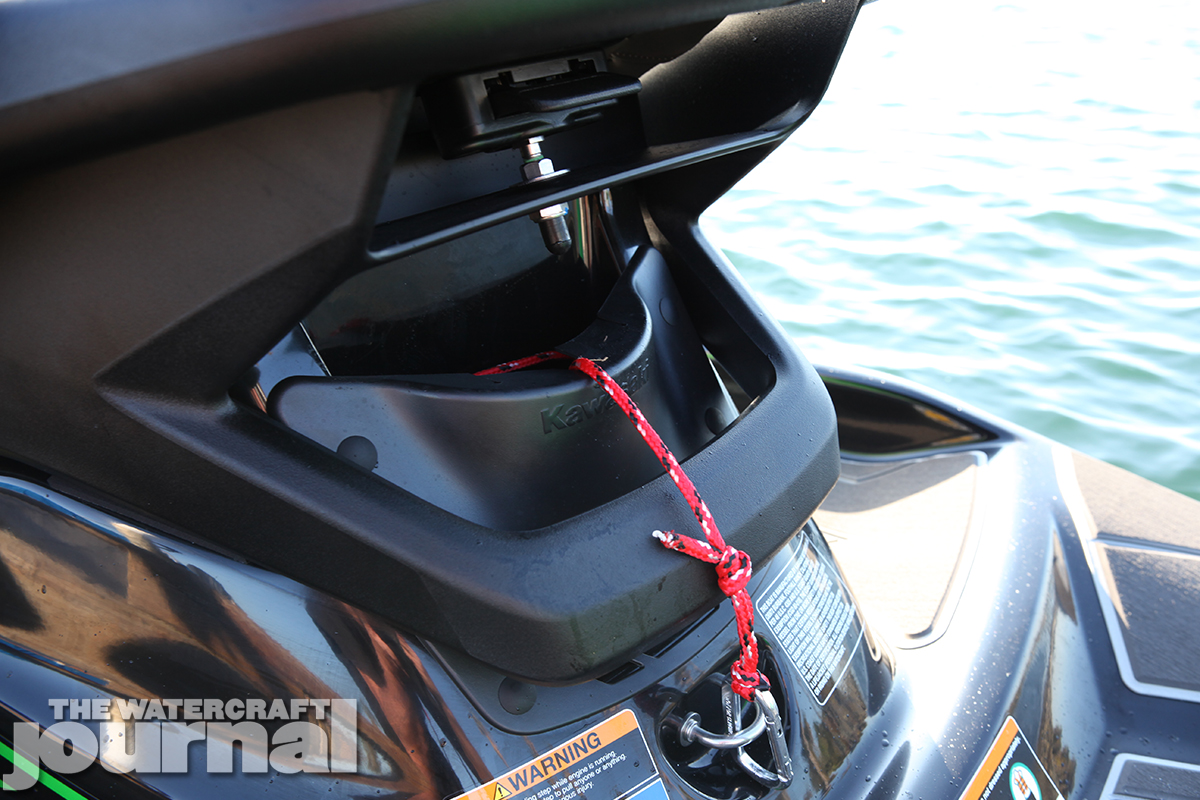
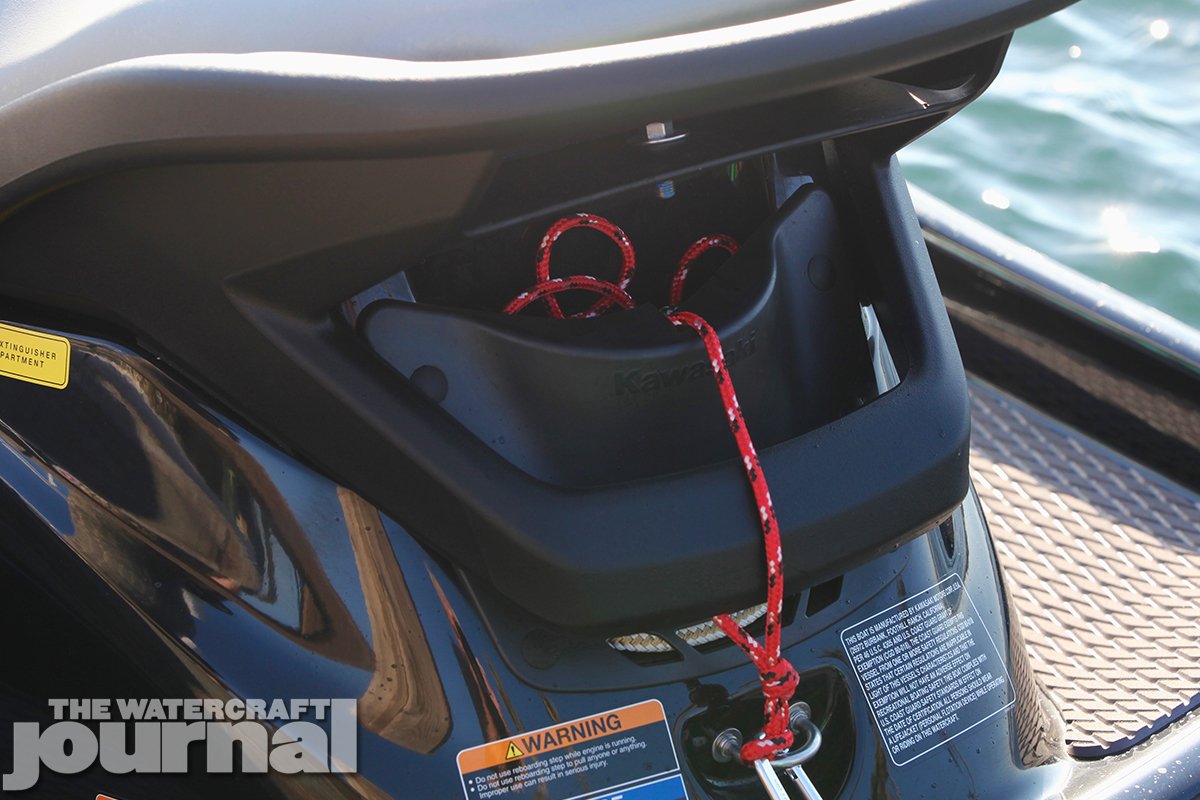
In fact, a great deal of detail has been put into the rear of the STX. Below the rear passenger seat is a rubberized pouch that stows a dock line or tow rope with ease. The stepped deck and footwells are covered in two-tone, CNC-cut Hydro-Turf traction matting as well. Of course, a key feature is Kawasaki’s new hinged rear seat that folds up to reveal a removable, deep well storage tub.
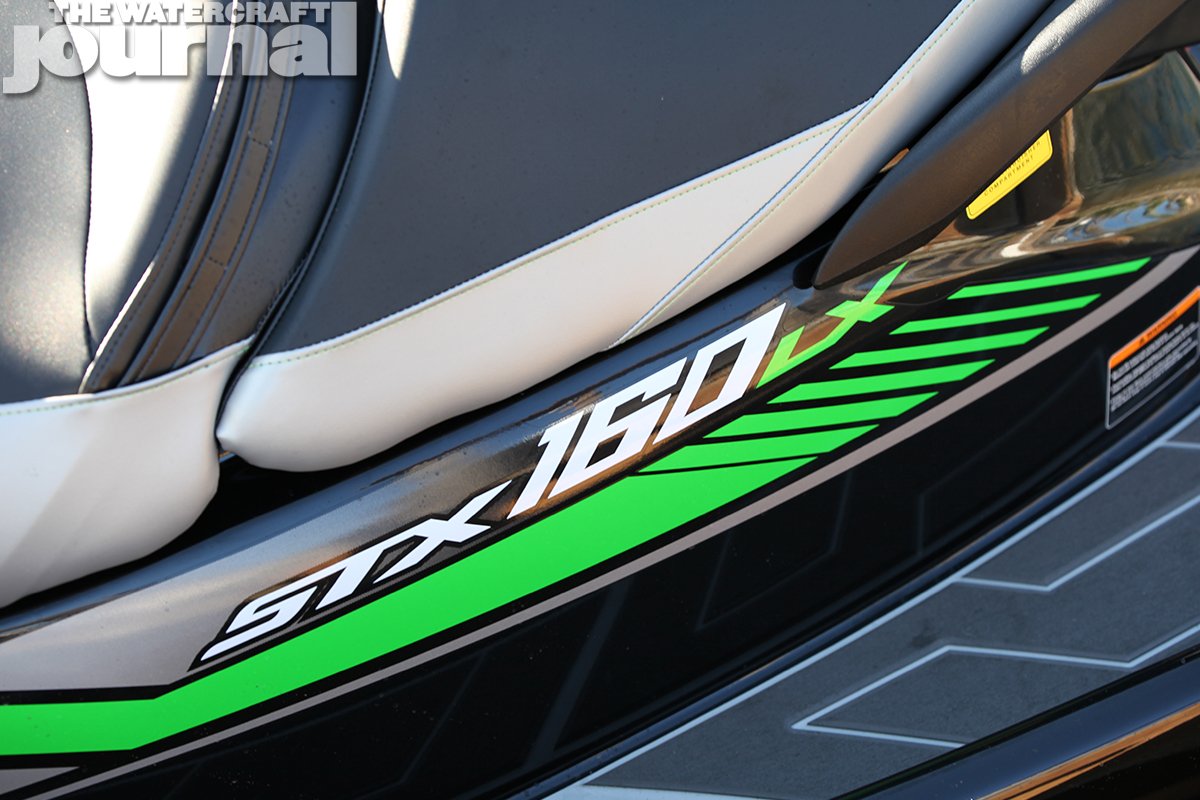
The rear seat simply unlatches, slides backward and then up, vertically. A small stainless steel kick stand keeps the seat upright. If you’re looking to access the engine compartment, the rear seat simply slides up and out – with its two arms slipping out of their tracks. For the 160LX, the seats are tiered and wrapped in grippy, two-tone cover using the same heat resistant material found on Kawasaki’s top-of-the-food chain Ultra 310LX.
Upfront is a generously-sized storage bin that together gives the STX its 35-gallon total storage capacity. It’s definitely nowhere near the neighborhood of being watertight as we learned during a grueling all day “victory at sea” excursion up and down the San Diego coastline, so be mindful when packing more sensitive items like cameras and video recorders.
On the plus-side, Kawasaki took a page from Sea-Doo and installed a waterproof lid to the inside of its glovebox. On the 160LX, there’s also a USB socket to charge your smart phone, which is appreciated. The Kawasaki retains its “Immobilizer” colored key anti-theft system, so the new glove box is a bit tighter than the models that preceded it. we did notice that the glovebox’s top lid has a wonky latch that won’t snap shut on its own; you’re going to have to manually secure it if you wish to keep anything from flying out.
To compensate for the lost room in the glovebox, two cup holders were molded into the top deck, just ahead of the dashboard. These are wide and deep enough for most standard cans or bottles, but could benefit from some padding at their base to absorb some shock and vibration that sent our water bottles flying this day.
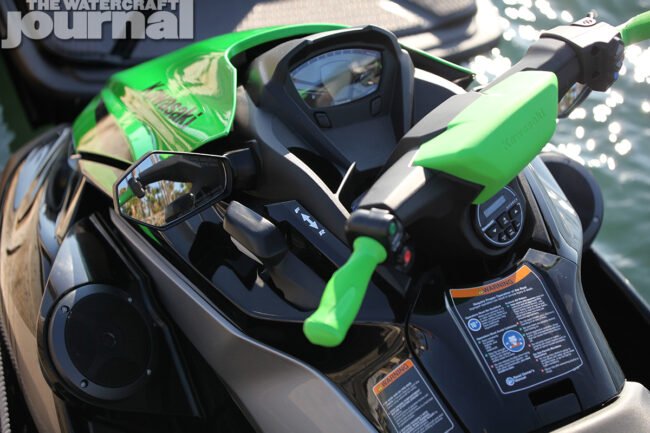
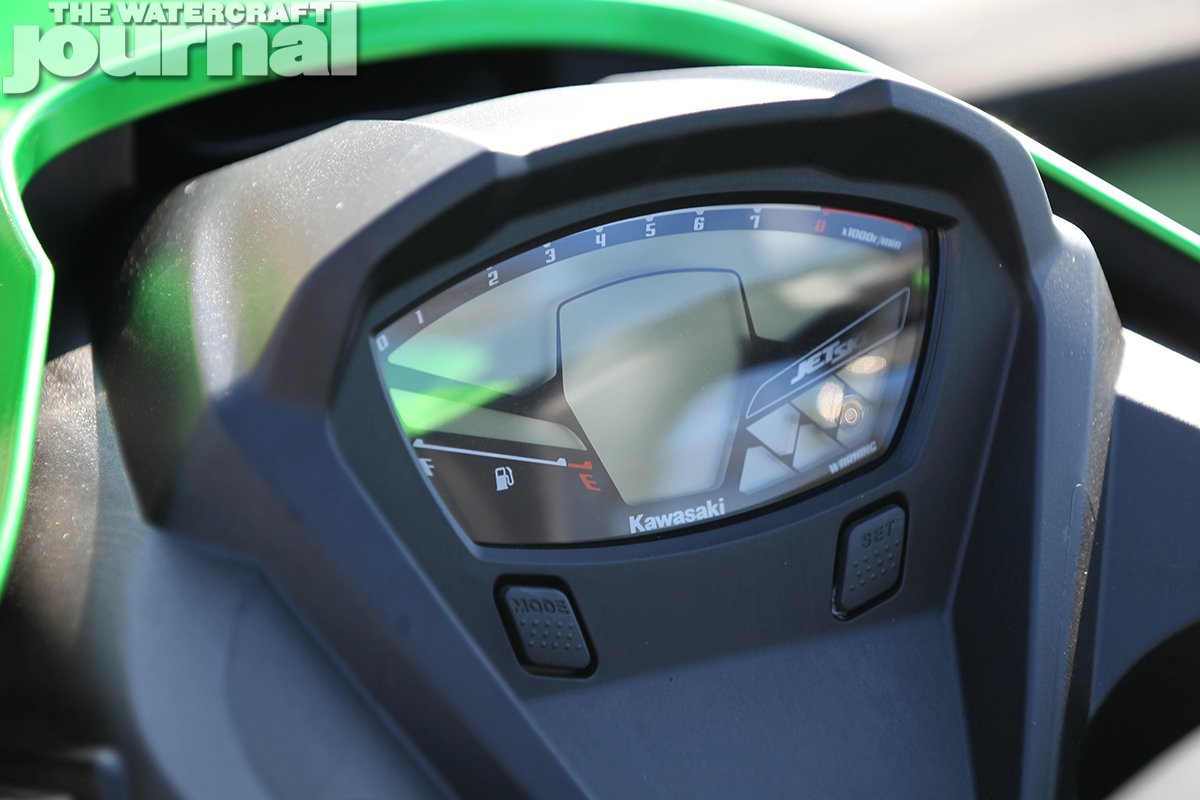
The LCD dashboard is serviceable, slightly glare resistant and reads off the tachometer and speed in large, legible readouts. An “ECO” icon will appear with chime when operating in what Kawasaki engineers deem to be the engine’s optimal curve for maximum fuel consumption. After a while, the constant chirping of the ECO bell became bothersome as we throttled in and out of the preferred speed.
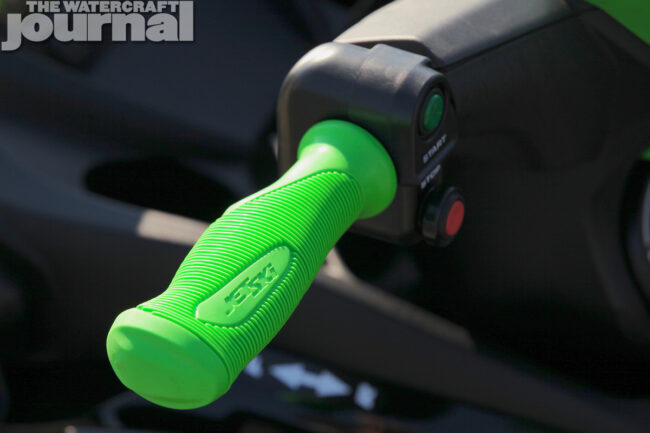
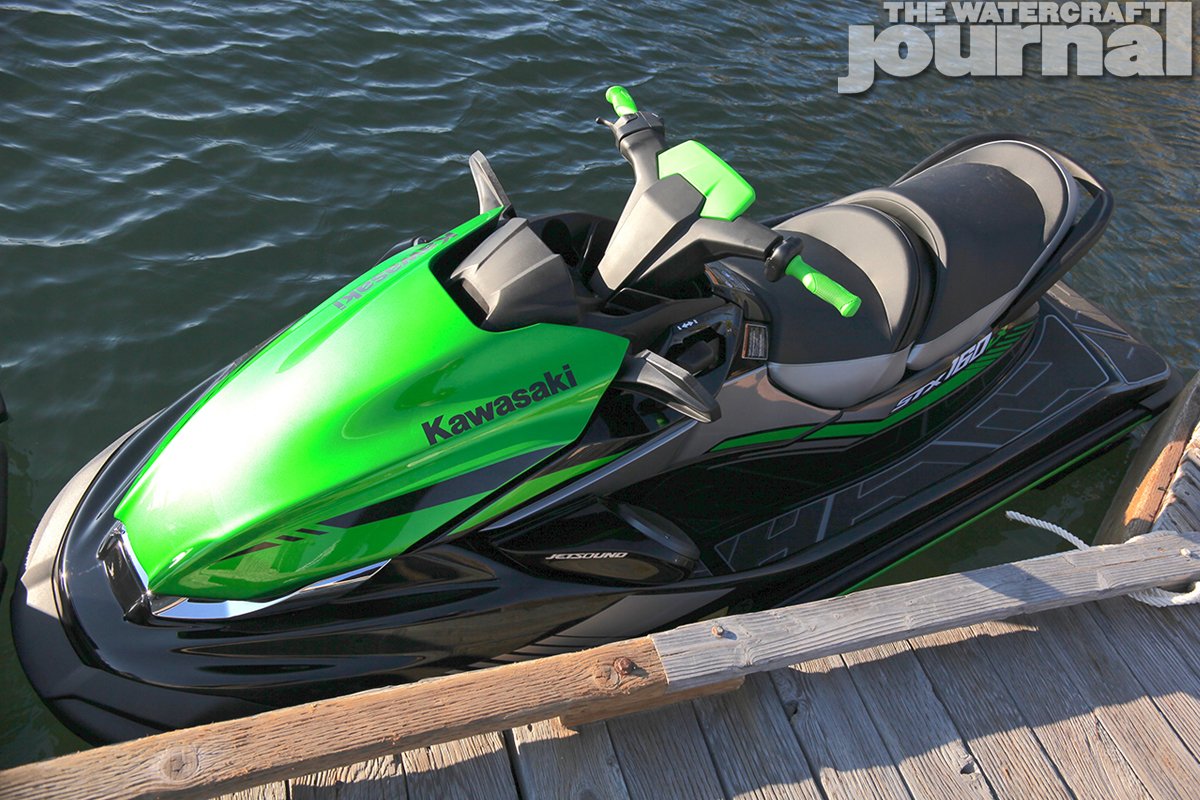
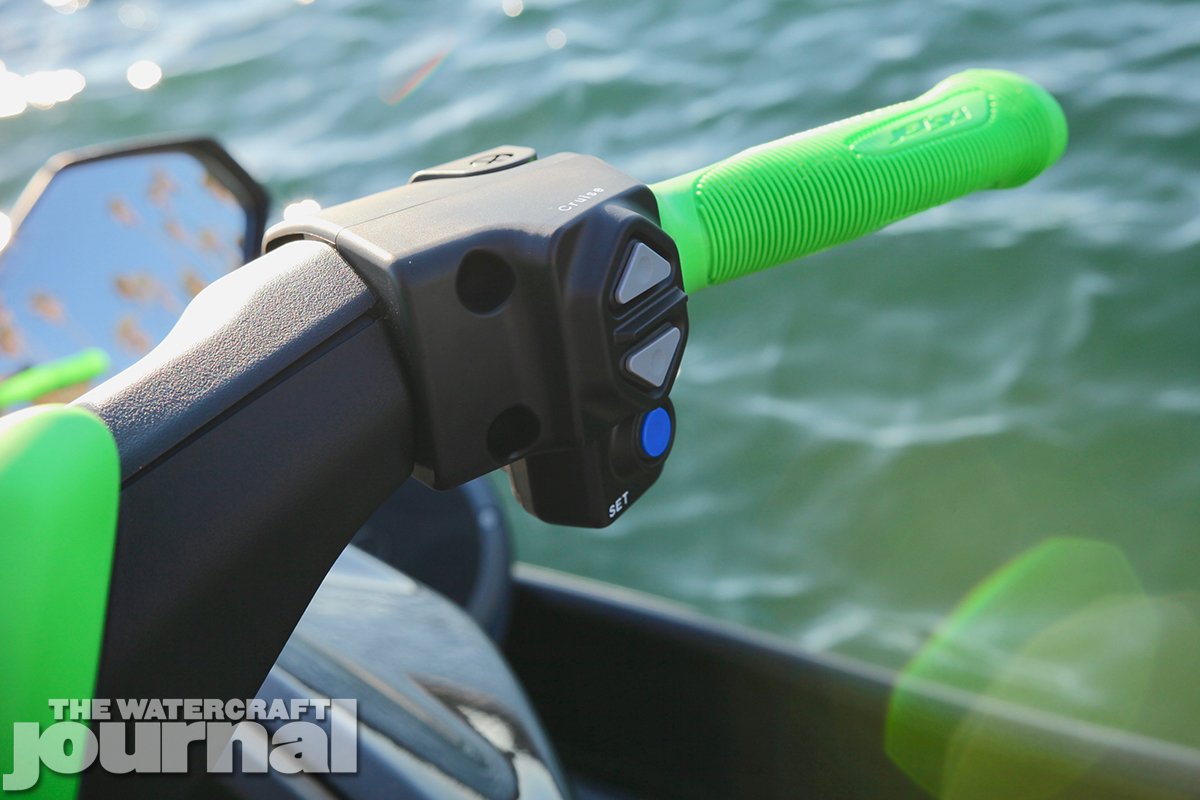
The STX’s redesigned handlebars are a shining feature. The neck is long and thin, with a sleek narrow pad. The bars are capped with color-matched pistol grip-style handgrips that are flat-sided and thin. With the addition of Kawasaki’s full fly-by-wire throttle management system – new to the STX for 2020 – the Recreation segment watercraft gets its first swing at Cruise Control and No Wake mode, both found on the driver’s right hand side. The buttons are identical to those used on today’s Yamahas (because they share the same supplier), so if you know one, you’ll know the other.
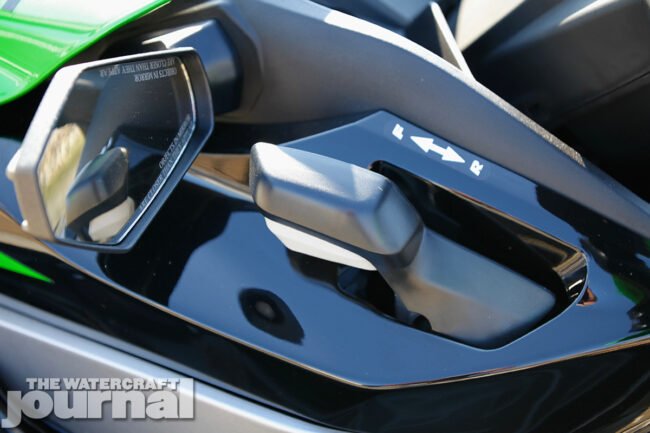
And sadly, the 2020 STX lineup returns with a manually-operated reverse lever. Eleven years since Sea-Doo first introduced on-the-water braking in 2009, Kawasaki has yet to adopt the technology that has saved lives and thousands of dollars in damage. The lever has been moved from the right to the left hand side, but its throw is so brief, that there is ZERO room to feather a neutral position. You’re either idling forward or reverse. It can be immensely frustrating while trying to dock or waiting to circle up with your friends.
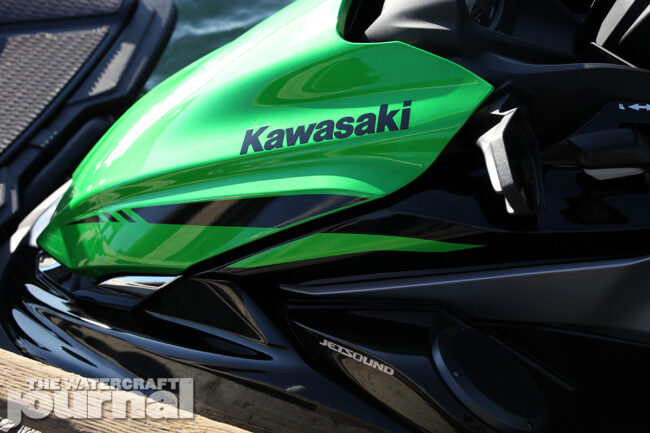
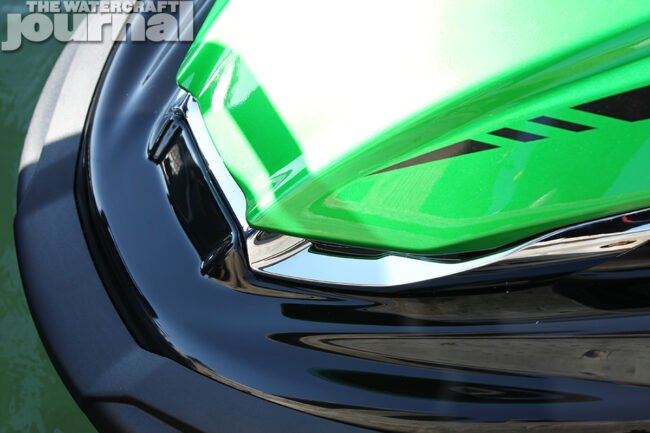
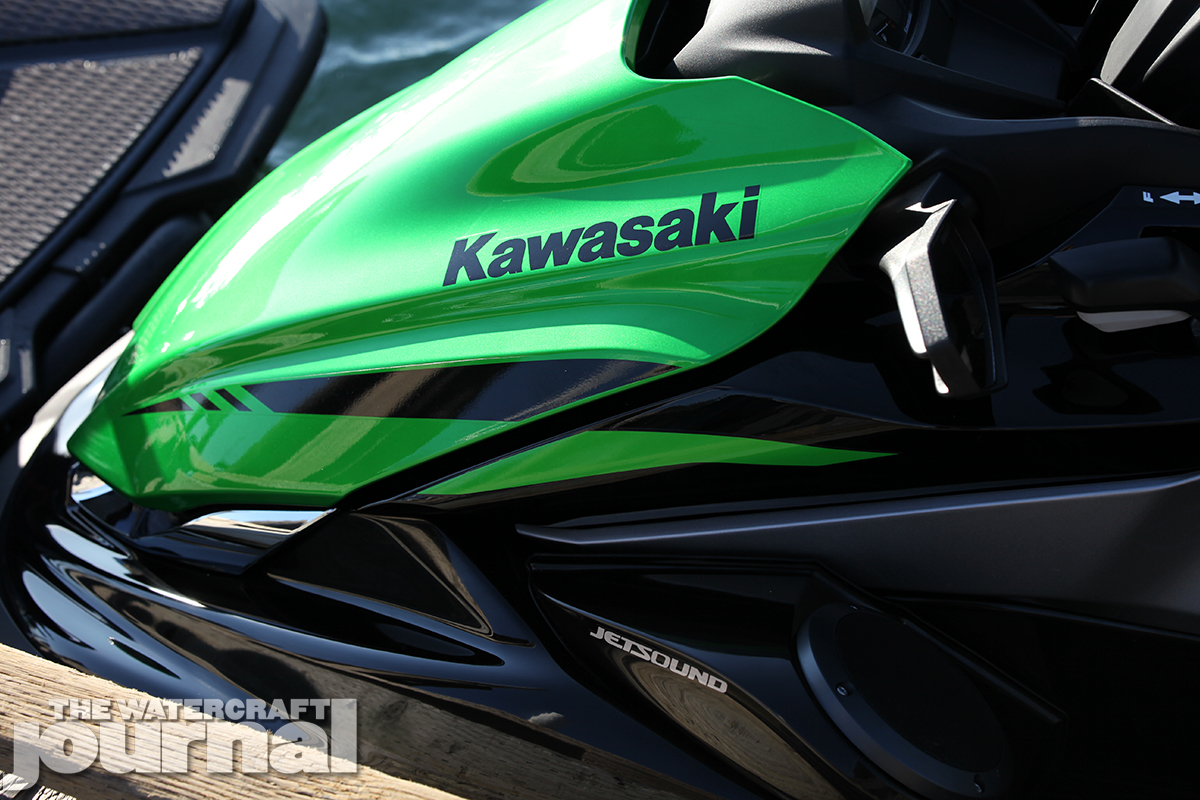
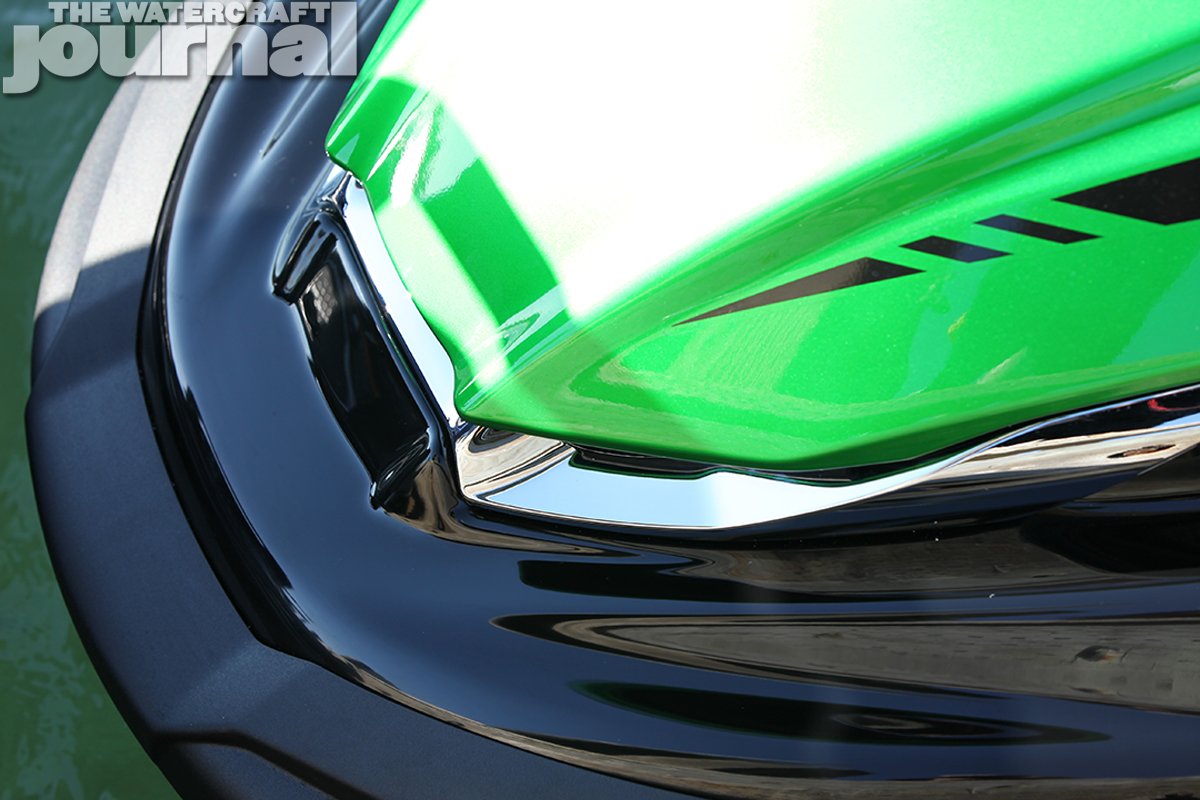
And in a similar “love it or leave it” carryover, the STX 160LX comes in the ever present Ebony-and-Candy Lime Green color variant. The Candy Lime does pop nicely in the sun, but c’mon, Kawasakis don’t always have to be green, guys. Hopefully demand will open the way for future color options.
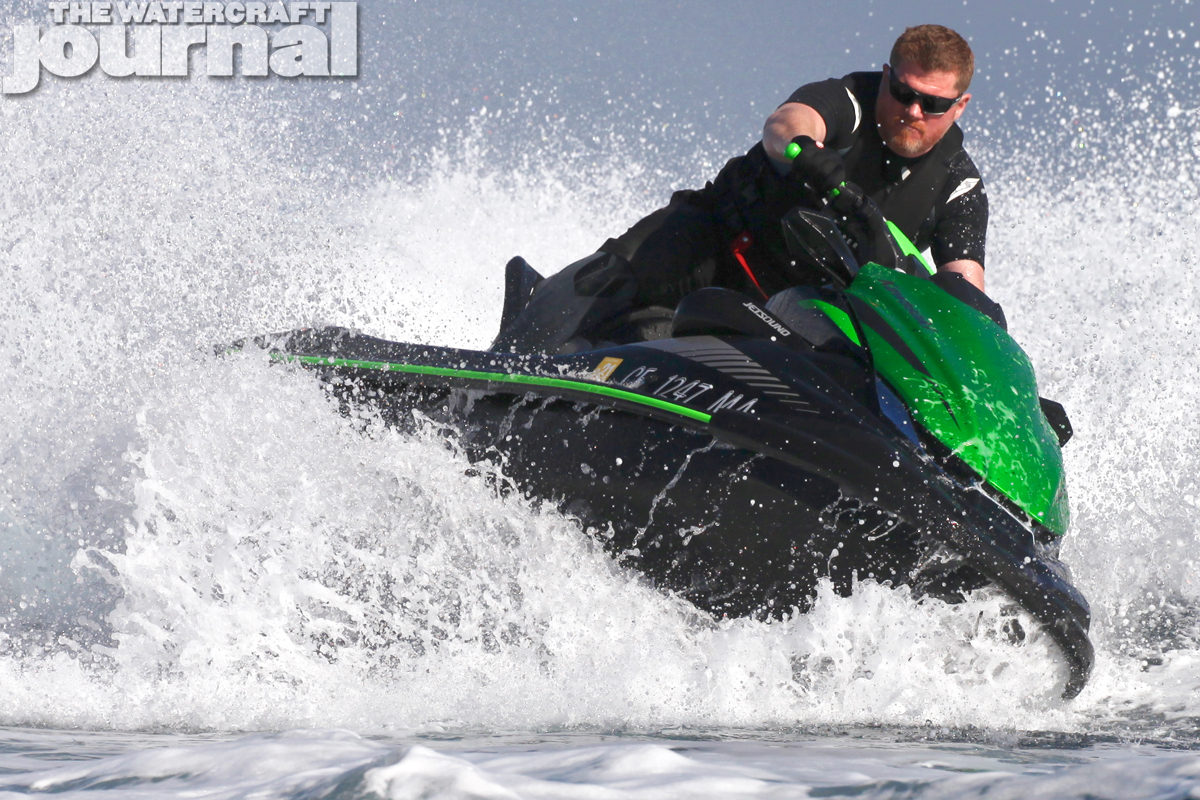
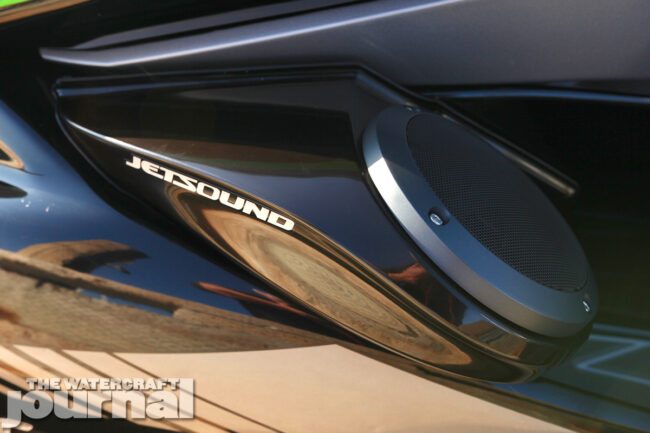
A key feature for the 160LX is the addition of Jetsounds. Previously exclusive to the Ultra 310LX, the Jetsounds audio system provides a pair of 30-watt waterproof speakers smartly mounted below the mirrors, powered by an amp rated at 20W (x2 channels, max 40W x2) which can play all of the MP3s your smartphone (or other digital music player) can carry. You’ll definitely hear your music at full speed – and so will your neighbors – and the integrated head unit lets you toggle through bass and treble settings as well.
But for us, the biggest additions to the STX lineup were beneath the seat. As mentioned, the 1,498cc, 4-stroke, dual overhead cam (DOHC) 4-cylinder gets the same fly-by-wire throttle, ignition and engine management system as the larger Ultras, thus giving it the ability to operate in Cruise Control or No Wake mode. No Wake mode is permanently set at 5 miles per hour. No toggling up or down here. Cruise Control does permit for upwards adjustment of 5 miles per hour from the set speed though.
And feeding the 1.5-liter is the massive 20.6-gallon fuel cell from the Ultras as well. This gives the STX the largest fuel capacity of any competitors’ entry into the Recreation segment (although fuel consumption is an entirely different matter, altogether). When loaded down with fuel and oil, the STX 160LX weighs in at 877 pounds – that’s 110 pounds over the Yamaha VX Cruiser HO, and 140-pounds over Sea-Doo’s GTI SE 170.
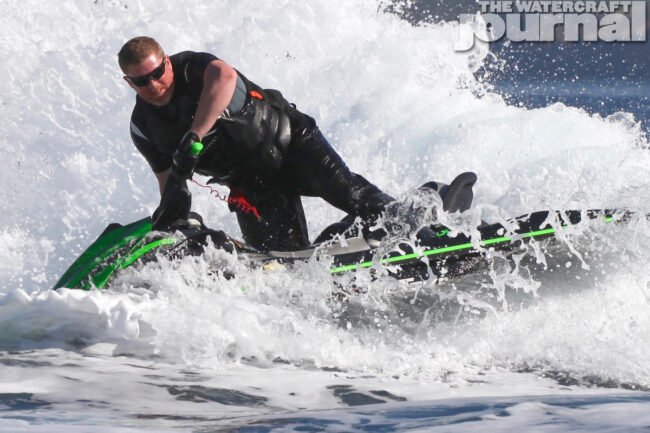
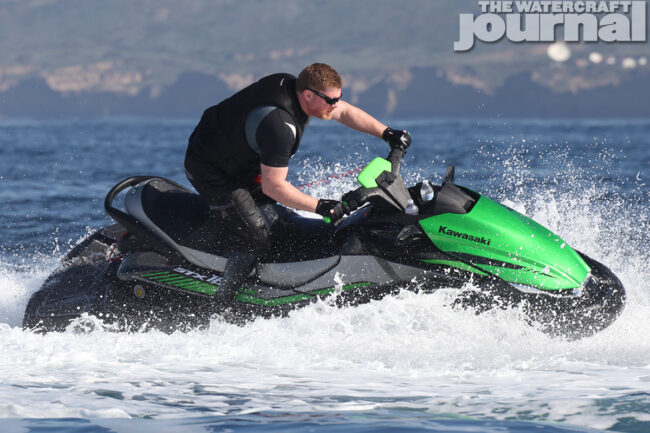
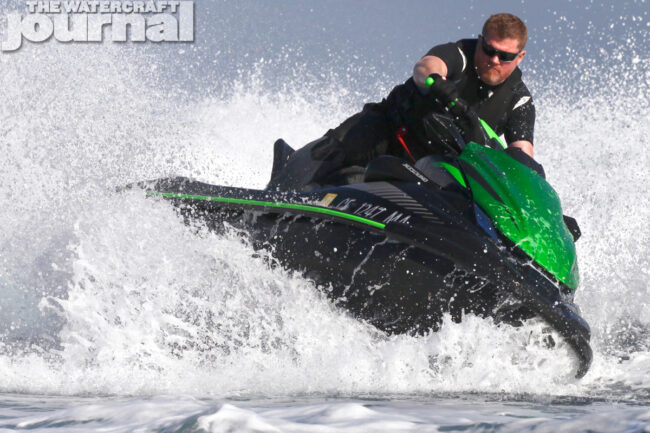
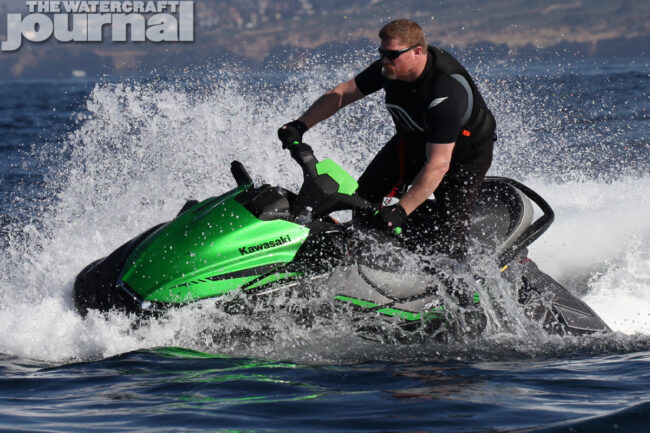
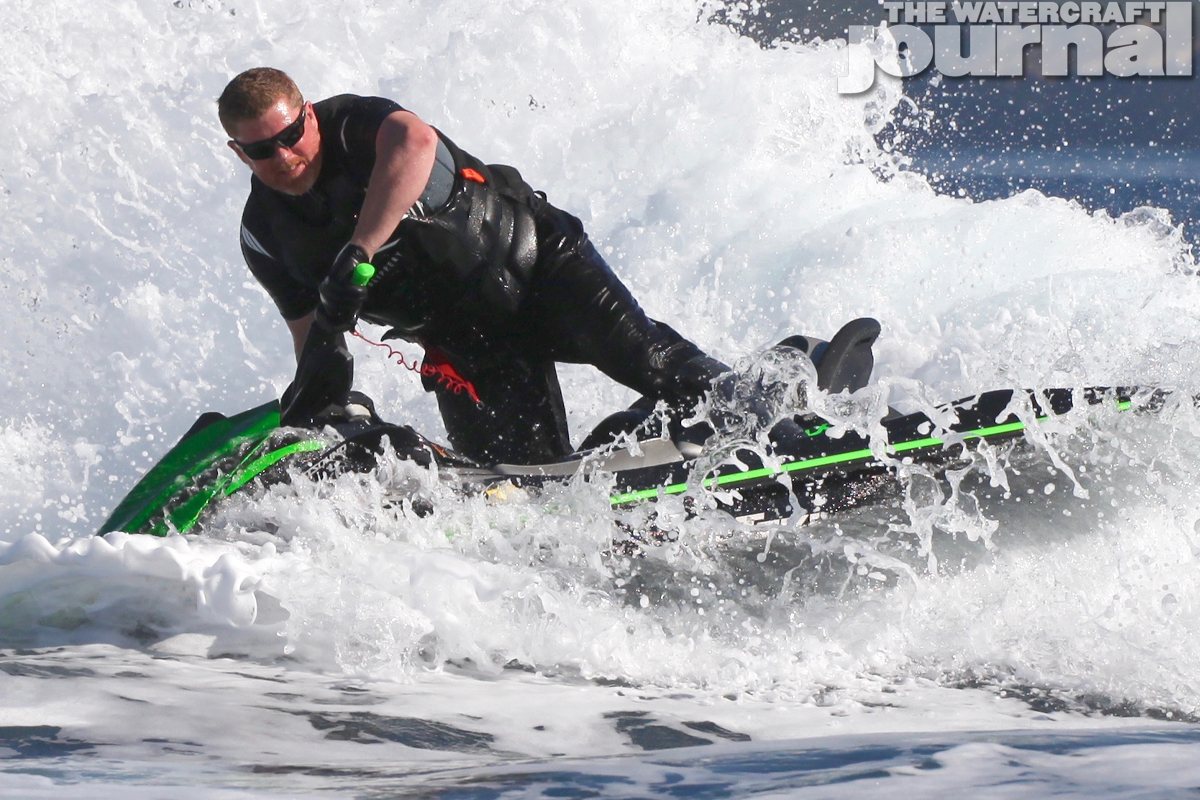
Fully loaded with fuel, gear and a 240-pound rider pounding over brutal Pacific Ocean chop, we never saw over 56 miles per hour during our testing. Certainly, smoother conditions, less fuel and a lighter rider will let the 160-horsepower on tap push it to a slightly higher speed. And while top speed is great in short bursts, we found the new STX’s handling over white caps and pounding through surf admirable, just like its predecessor. Equally, its progressive throttle control eliminated the jerky surging of previous cable-operated throttles, making for a more enjoyable ride.
In all, the new STX 160LX is a much overdue refresh of the otherwise staid Recreation-segment entry from Kawasaki. It’s fun for sure, and offers plenty of bells and whistles to make it competitive on the showroom floor…to a degree. The lack of an on-water braking system – or even a true neutral on the reverse lever – is disheartening, and will likely ward off the uninitiated or cautious buyer, particularly when such safety features are now standard on the competition. That’s not to say the new STX 160LX isn’t good, it really is, but its just this close from being great.
For 2020, Sea-Doo came out with an all new GTI Family. This completely redesigned recreation segment offers the best family fun value in the boating industry and in the latest episode of SeaDooTV, Tim McKercher walks us through an in-depth technical review of this brand new platform. Here we have highlighted some of the main features of this walk-through that you will see but be sure to check out the full video for the detailed list of technical features that come equipped on the GTI SE.
As Tim explains, the GTI family now derives some of the premium features found on the ST-3 platform and incorporates them into the recreation segment. This platform is based on versatility and value meaning that the GTI is a good all-around watercraft for the family. This includes touring, towing, fishing, and even carving up a few buoys here and there. It’s really an all-around winner in everyone’s book.
The GTI family starts with the 90 or 130 model which offers either a 90 horsepower Rotax 900 ACE or 130 horsepower Rotax 1630 ACE engine package respectively. For the GTI SE model, you also have the option of the 170 horsepower 1630 ACE engine. The 1630 ACE engine delivers greater torque and mid-range power over the previous generation engine package. This allows even more versatility when it comes to riding with extra weight or when towing.
In terms of changes to design elements, everything on this watercraft was updated. That includes a totally new top deck with Ergo-Lock incorporated into the seat. The overall stability of the GTI is also increased via a low center of gravity. This includes lowering basically everything that you come in contact with such as the seat, footwells, and handlebars.
The hull is also updated using Polytec 2.0 which is a composite mix of polypropylene and fiber material that BRP developed. This gives excellent durability, strength, and scratch-resistance. The user gauge package has been updated as well featuring a large 7.5 inch display that is easy to read and offers a full array of information.
Next up on the technical overview, Tim discusses the new storage systems which includes over 40-gallons of storage space nearly doubling capacity of competitor’s recreation models. The glove box itself has also been updated to offer great storage of essential items including water bottles and a waterproof section for cell phones.
Optional for the GTI models, Sea-Doo now gives you the ability to incorporate the revolutionary sound system as well as a charging port for your cell phone or device.
Heading to the rear of the watercraft, you now get the LinQ accessory system giving you the ability to bring along a cooler, extra storage accessories, or the fuel caddy to give you longer range. As you can see, this new GTI family offers excellent versatility, value, and fun for the whole family with many features that can’t be found across other brands.
With much of the Western world in near-to-total shutdown due to COVID-19 (or “coronavirus”) many are struggling to find productive things to do. While Netflix and Disney+ may offer some entertaining diversion for the time being, sitting on your butt indoors can quickly drive one to the brink. Add to this the fact that public schools are now shutting down for extended periods and you’ve got a pressure cooker ready to blow.
Thankfully, some smart content developers are rapidly producing both educational and entertaining ways to get the kids from driving mom and dad bonkers. Yamaha WaveRunners recently announced the creation of an easy-to-use “Jet Ski Addition” math game, they wrote in a Facebook post, “Have some fun with this personal watercraft themed math addition game that lets you race other players. The faster you answer the questions correctly, the faster your PWC goes. For grades 1 through 6. (BTW, it’s fun for adults too).”
Pinning a quartet of WaveRunners in a drag race to the finish, the “Jet Ski Addition” game requires you to quickly answer the randomly-generated math questions using your computer’s mouse. Each question is multiple choice, so it shouldn’t take your 1st or 2nd grader very long to find the right solution. Give it a try. It’s entirely free and the kids should enjoy a little bit of educational fun while mom uncorks another bottle of whine.
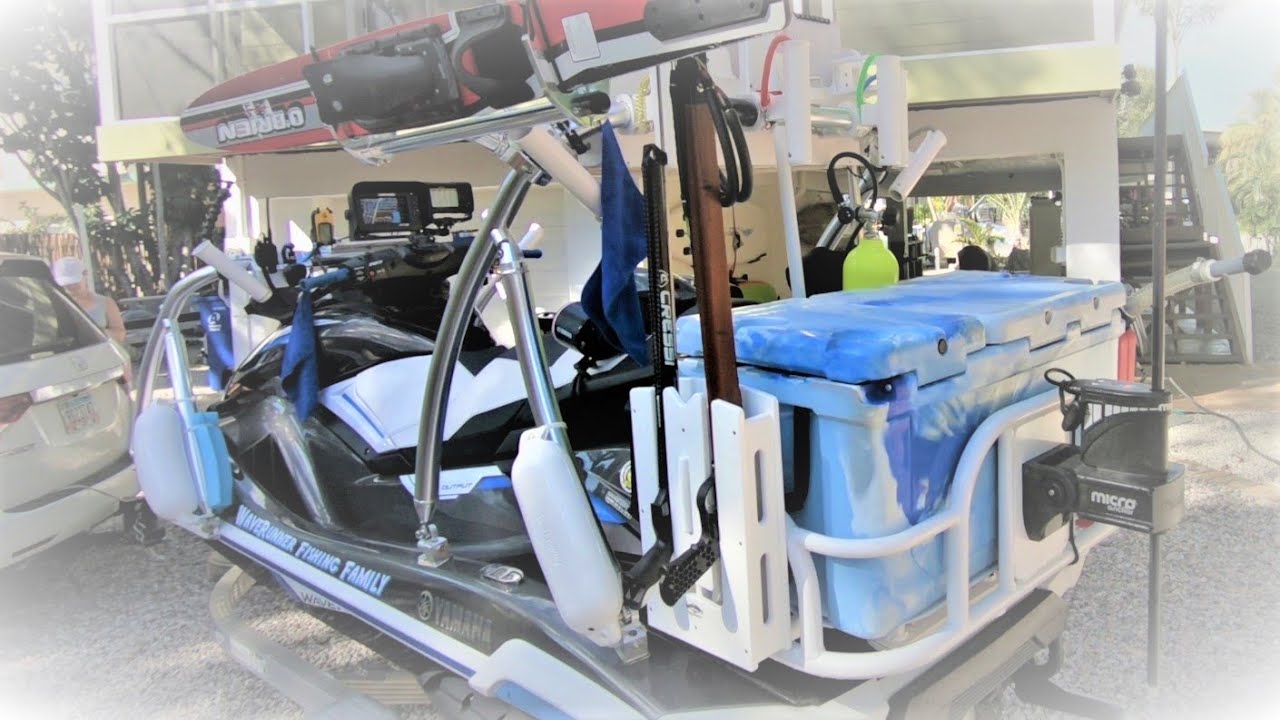
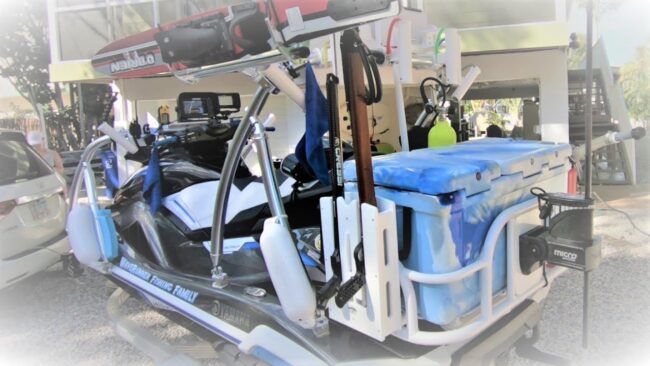
Dean Banyon is at it again, and it’s awesome! Check out this DIY custom Yamaha FX Cruiser HO WaveRunner rig built by Banyon on his WaveRunner Fishing Family channel. The machine appears to have everything but the kitchen sink onboard. Some of the water sports the ski is outfitted for are SCUBA, fishing, water skiing, and spear fishing.
When you’re ready for adventure, simply change the components on the system in order adapt it to fit your needs for the day. Add or remover whatever components are necessary for your sport of choice and leave the rest at home. Attach your gear and hit the water!
The Yamaha Sea Wing Scooter II even has a place on this ride and for your convenience, a Micro Anchor is stowed in the glove box. It’s easy to mount on the ski and you can drop it to keep your ski in place while you use the Sea Wing to go for an underwater adventure.
Come back to the surface and grab a drink from the WYLD Gear cooler mounted on the boat’s stern. The dual sided 75 Quart WYLD Gear Cooler can be set up as an aeriated live bait well while the other half keeps your drinks safe from stinky bait. The cooler is equipped with aerators on both sides so the whole thing can be used for bait or catch of the day.
If you get hot in the sun, don’t fret, the machine has an easy to use umbrella holder, which easily breaks down to stow away. The rig is equipped with navigation lights, including an anchor light with a minimum two-mile visibility. No worries if you’re on late night ride, you’ll be easily seen.
Watch the video for the full tour of the powerful DIY Yamaha Fishing Rig. You will be glad you did! The project is amazing. We can’t wait to see what the talented WaveRunner Fishing Family does next!
It’s been a really long time since we’ve done a “Vicious Rumors & Vile Gossip” article and that’s not for a lack of trying. It seems that The Watercraft Journal’s batting record for getting the exclusive on new and expecting product has been so good that the OE’s have battened down the hatches tighter than a Marvel Studios movie set. And understandably so, because if we happen to leak out the juicy details on an upcoming machine, the news may be so tantalizing that it’ll sway a would-be buyer from a current sale for anticipation of a machine that may or may not happen.
So we’re gonna preface this article with a warning: this is ALL rumor and conjecture. If you’re looking at a 2020 RXP-X 300, go ahead and buy it. OK, with that out of the way, let’s talk about what we do know, what we think we know, and well, a whole bunch of unsubstantiated thoughts on what to expect from Sea-Doo’s 2021 RXP-X 300. And yes, a new RXP-X is coming down the pike. That much is true. Sea-Doo and Yamaha are almost in lockstep when it comes to rotating out a model line every nine years, and the last redesign of the RXP-X was back in 2012, which frankly, just doesn’t feel that long ago.
The then-new 2012 RXP-X touted 260-horsepower from a supercharged-and-intercooled Rotax 1503 3-cylinder; that is, until its upgrade to the ACE 300 engine in 2016. At its reveal, we noted that the RXP-X 300 in this form was faaar too much machine for most riders. This was a top tier sport bike that wasn’t happy unless it was snapping off hairpins at wide open throttle, and frankly, our opinion remains the same. The T3 hull was designed by the late Sea-Doo engineer, Sam Spade specifically for optimal buoy course performance; and a dozen Pro Open and GP World Championships testify to Sam’s genius.
But nine years have passed beneath the current RXP-X’s hull and it’s time for a fresh take on the world’s most powerful 2-seater. Already, the “knowns” are the carryover of the current RXP-X’s powertrain. Identical to the mighty RXT-X 300 and luxurious GTX Limited 300, the centrifugally supercharged ACE 300 will continue as-is, it’s big 1630cc displacement producing a true 300-horsepower. Equally, industry-leading innovations like Sea-Doo’s third generation Intelligent Brake and Reverse, iControl engine management software – including Launch Control and Slo Mode, and Ergolock will all be found in fine form on the new RXP-X.
For those uninitiated, the RXP-X 300 (and GTR-X 230, which is expected to return for 2021 as well) shares the deck with the GTI platform. This not only allows Sea-Doo a little bit of cost cutting by not having to produce a unique deck for two models, but also allows engineers to carry over a great deal of hardware and equipment from the Recreation segment. This sharing coincidentally, also gives us an approximate size of the new RXP-X. Comparing the 2020 GTR 230, we can expect the new RXP-X to come in at roughly the same 130.6-inch length, 48.5-inch width, and (possibly) the same 44.8-inch height.
These new GTR dimensions are surprisingly close to the current RXP-X’s 130.6-inch length (.2-inch shorter), 48.3-inch width (.2-inch narrower), and 45.3-inch height (.5-inch taller). The added height is attributed to the adjustable X-Steering system, which has yet to be confirmed – yet, is very likely – for 2021. The shared GTR/GTI deck also promises the introduction of BRP’s super-popular LinQ accessory system. Now the RXP-X can enjoy the use of collapsible mounts when riders are bringing along extra fuel, a cooler full of drinks and snacks, or even towing a wakeboarder with the retractable Ski pylon.
Similarly, the shared deck and dimensions ensure that the 2021 RXP-X 300 will not only employ the same 15.9-gallon fuel cell as before, but enjoy the GTI’s increased 42.5-gallons of storage – meaning those riding a RXP-X will have over one-and-a-half times more storage than those riding the full-sized RXT-X 300 and its 26.1gal. storage! The RXP-X will also have the same large engine access portal beneath the LinQ accessory panel. And the molded CM-Tech deck features deep, wide footwells and a smartly-shaped rear swim platform, giving the sporty two-seater a roomier cockpit – which larger riders will appreciate.
The unspoken concern from many performance enthusiasts is what will the hull be made out of? First, it’s important to note that the entirety of the GTI lineup, including the GTR 230, features the brand’s second-generation Polytec material. Interestingly, the Polytech 2.0 hulls feature fiberglass stringers running the length of the hull’s inner liner providing added durability and rigidity to handle the forces and torsion made by the supercharged 230-horsepower 1630 ACE engine. The new material is also repairable using a proprietary plastic welding kit; and in worse case scenarios, is quickly replaced.
Above: For the first time ever, the RXP-X will have more than one-and-a-half times the storage as the full-sized RXT-X 300 and GTX Limited 300 (42.5-gallons vs. 26.1-gallons).
But that’s not going to be the case for the RXP-X 300 (and GTR-X 230) in 2021. When queried at the 2020 reveal, then BRP Global Product Specialist Manager, James Heintz assured The Watercraft Journal than the “next RXP-X will be CM-Tech. Not Polytec.” And like the current RXP-X, it will have its own unique hull design; not simply the GTI hull cast in CM-Tech. Although the new GTI/GTR hull design is a winner in our book, it’s also too loose and playful for the aggressive maneuvering expected from the RXP-X musclecraft. “Loose and playful” is great for the Recreation segment, but not for those looking to collect world championships.
We’ve heard accounts claiming that the new RXP-X hull will abandon the T3 shape entirely, in favor of a more shallow draft, straked hull similar to the *gasp* Yamaha GP1800R, while others have claimed that the new shape rides more like a shortened ST3, favoring the nose in cornering more than before. Either way, we won’t really know for sure until the new 2021 models are revealed this September. Finally, one last feature certain to excite would-be buyers: the confirmed addition of the BRP Premium Sound System option – a first for the RXP-X 300. With 100-watts of music thundering in your ears, it’s gonna make the new musclecraft a must-have for 2021.


 Have you’ve ever wondered, “How come they don’t make movies like they did in the 1980’s anymore?” You aren’t alone. Fun action romps chocked full of pretty girls, exciting stunts, villains you love to hate, and locations you want to visit. (How many of you remember the 1980’s BMX movie “Rad”? We sure do.) Somehow, we forgot how to make fun movies over the years – everything has to be so damned serious.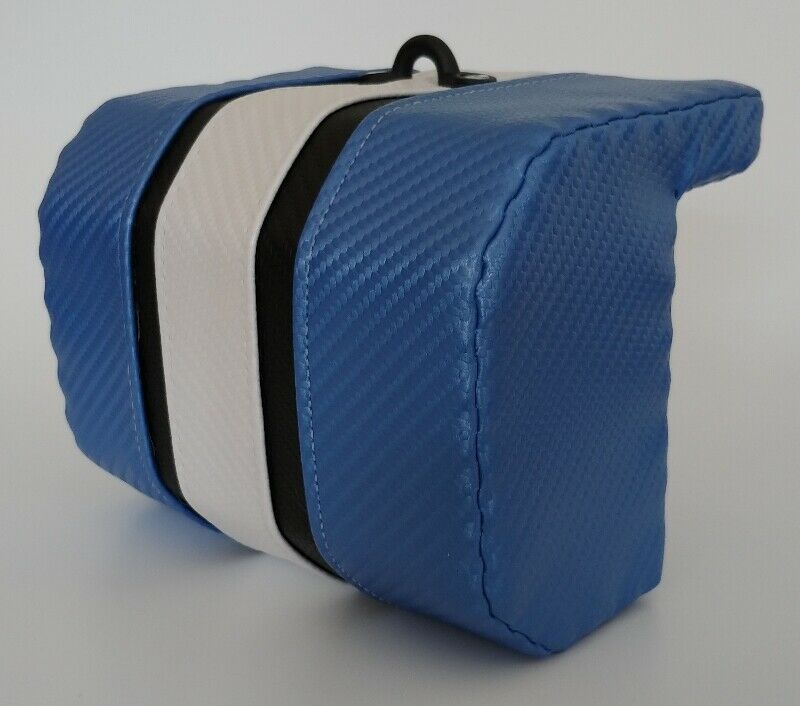
 The warranty won’t cover damage caused by the owner trying to modify or repair the product. Only use the product for its intended purpose, otherwise, the warranty is void. Wear and tear are not covered, and neither is weathering. The warranty is non-transferable; only the original purchaser of the product is covered.