I was early to the 2009 IJSBA World Finals when I met Lee Manvell. Technically, I met his dog first; a massive Rottweiler named Bentley came bounding up Body Beach before I could slide out of the driver’s seat of my truck. Bentley’s hulking paws landed squarely on my chest, happy to make a new friend. Arriving early earned me a sneak peek at many of the champion’s pre-Finals machines and that’s why I was there.
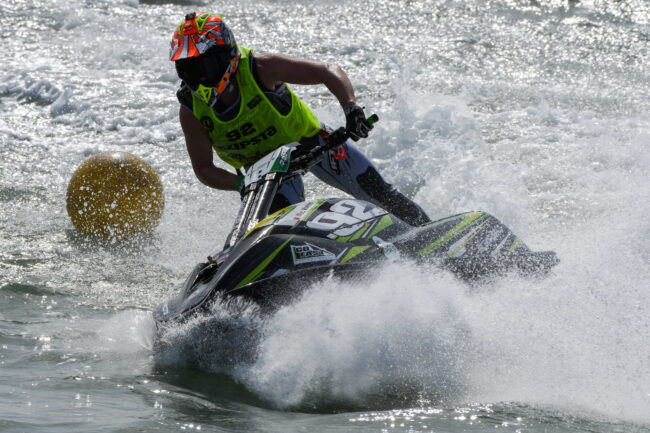
Craig Warner and Dustin Farthing both were piloting heavily modified Ultras that year, and what the two were capable of doing aboard the Kawasakis was mind-blowing. Warner was working closely with Joe Heim and the Team Green crew to push his modded Ultra with a prototype turbo setup from Bill Chapin at R&D Racing. Farthing was pushing more and more Vortech-spun boost down the 1.5-liter; pistons, valves and head bolts be damned.
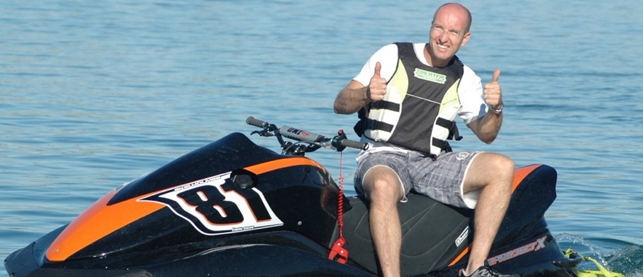
Yet, the two shared one key ingredient: they both rode atop Lee Manvell-shaped hulls and there they were shredding the cove so famous to Havasu residents and racers. The British-born racer, tuner and hull shaper had moved to Lake Havasu, AZ a few years earlier. Manvell was tall, broad shouldered and kept his head clean shaven. He might’ve been intimidating were it not for his smile. He always seemed to be smiling, I noticed. Maybe it was because he was doing what he loved so much. He recently married and was expecting a baby girl. Manvell looked to have it all figured out, I jealously mused to myself.
And then BAM!, the news hit a few months later: Cancer had spread aggressively and Lee was gone in less than a year. The loss to his young family, friends, loved ones and the community was devastating. I had only met the man once and even I hurt at the news… Now it’s been 8 years since Lee’s passing, and his impact lives on. The annual “Lee Manvell Memorial” award is returning once again. Awarded to the holeshot winner of three Pro Ski motos and two Pro Runabout motos at this year’s World Finals, each recipient receives $100.
Shawn, Lee’s widow, wrote: “The Lee Manvell Memorial Holeshot Races honors my husband who was an active member of the jet ski community for many years. I am excited to have a memorial race at World Finals to remember and honor Lee and his passion and dedication to this sport. It is also very important to me to serve as a nice way for our daughter, Ryan to know and learn about what her Dad was a part of for most of his life.”
Portimao is home to the popular Algarve resort, located on Portugal’s south Atlantic coastline and it is prepared to host the final race of the 2019 UIM-ABP European Continental series. The 11th running of the Endurance Championship will be held on the Arade River with the testing course running on the Praia da Rocha. Top international riders are expected to attend the competition and race in Runabout GP1, 2, 3 and Veterans rounding out the list. Ski GP1, 2, 3, Ski Ladies, and Veterans make up the rest of the Classes.
Local Portuguese riders, Rui and Tiago Sousa, Andre Barbosa, Martim Gallego, Victorino and Goncalo Rodrigues swept the titles in Ski GP1, 2, and 3 last year. They are frothing at the idea of again taking it all this year.
The Endurance Championship at the Grand Prix of Portugal begins September 27 and ends September 29th with the race paddock opening Friday for registration and technical inspections. The action begins Saturday at noon with the first round of Ski riders hitting the water for an hour. Following them will be Runabout race at two PM. Runabouts will be on the water for an hour and a half.
The final rounds will be held on Sunday with a two-hour session for Ski beginning at eight-thirty AM. It all ends with Runabout taking on a grueling three hour run that begins at twelve-thirty.
Portimao has had an awesome year of premier international water sports. The city hosted the opening round of the UIM-ABP Aquabike World Championship and round two of the UIM F1H20 World Championship in May. Hosting the Endurance Championship is an epic way to cap off the European season.
“It’s the best SuperJet. The best. And I’ve seen a lot of SuperJets – and this is by far the best one ever.” Although not a direct quote, we’re pretty sure that’s what President Trump would have to say about this particular 1996 Yamaha SuperSki (dubbed the “Trumpski”) that was recently listed for sale on OfferUp.
Priced at $12,000, the Trumpski is being sold privately out of North Bend, Washington, and is asking for a local pickup. Described as a “Used (normal wear) [but] pristine 1996 Yamaha SuperJet with new B-pipe, ride plate, battery, spark plugs, and Trump decal” the SuperJet also comes with a Blowsion turf kit and padding.
If voicing your political support for the current American president while riding your 2-stroke standup is exactly your kind of thing, then this Yamaha is definitely the right ski for you. Of course, we wonder how many friends the previous owner made while riding around the Pacific Northwest considering the state’s political majority, but again, we digress.
There’s only the one picture listed for this machine, so you’re gonna have to reach out to get more information or detailed images – again, only if you’re interested. Otherwise, there’s no need to reach out and battle over personal beliefs of politics. Nobody won any friends over that way.
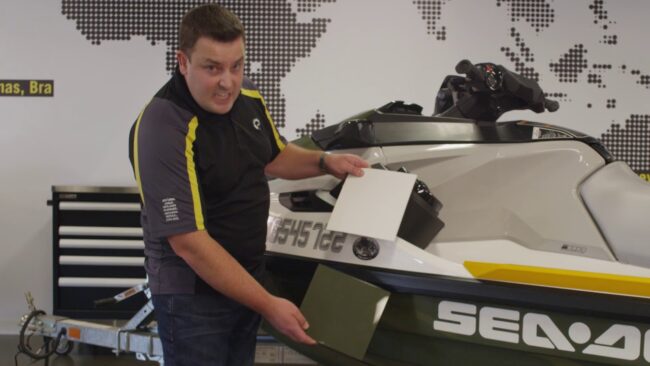
In a recent video published by Sea-Doo, Simon Boucher, Global Product Specialist, explains the CM-Tec hull and deck material. Standing for Closed Mold Technology, CM-Tec is comprised of a mixture of fiberglass and polyester resin, that together with an outer thermoformed acrylic layer, is compressed in a closed mold, sealing the structural layer of the hull and deck components to its respective colored, acrylic skin.
Thankfully, repairing the inner substructure can be done successfully using traditional fiberglass repair kits. Yet, when it comes to repairing the sensitive acrylic outer layer, Boucher says, “In case of damages, the repaired surface should be painted to maintain optimal results.”
To those familiar with paint matching and blending, successfully doing so requires the right colors and materials. Sea-Doo has worked closely preforming surface repairs and refinishing with BASF. BRP and BASF have been working together to create a “painting repair procedure specific for the acrylic,” says Boucher.
Lastly, if you have any questions about maintaining or repairing your CM-Tec hull or deck, Boucher recommends referring to Sea-Doo’s new online brochure. It has detailed information about paint repairs and routine care to keep your Sea-Doo looking great for a long time. In the brochure, you’ll find directions on how to repair structural and surface areas.
One thing to keep in mind with a CM-Tec is that you should only use certified products that are specifically designed to be used on acrylic layers. Sea-Doo offers a wide range of XPS cleaning products that will not harm or discolor your Sea-Doo’s sensitive finish as traditional gel coat cleaning products have harsh chemicals in them that can strip away at the acrylic.
Love them or hate them, the Kawasaki SX-R 1500 stand up JetSki is here to stay. JetSkis were first introduced over 40 years ago, and since then, Kawasaki has been looking to make sure that they are not dethroned. The SX-R 1500 has a much bigger hull and motor, compared to the earlier SX-R 800 model.
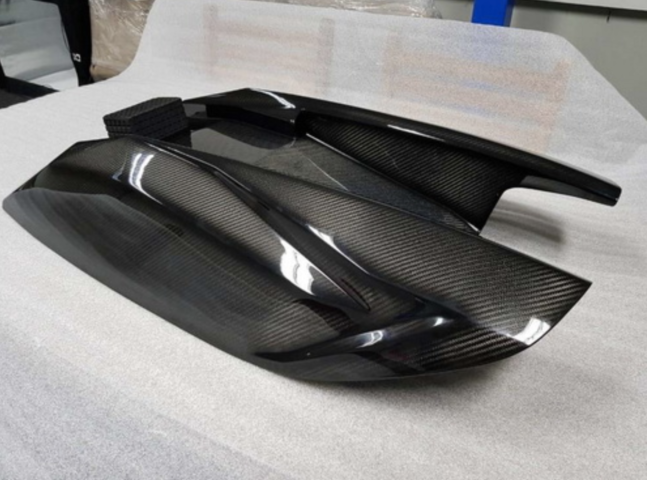
Given the additional weight, we knew it was not going to be too long before someone started making lighter parts. Jetskiworld.com just revealed these new carbon fiber hoods made by VK Composites. These hoods are just as strong as the factory hoods but they are however lighter.
The total weight of the carbon fiber hood, hood seal, hood lock and pad is only 9.9lbs. With a lighter hood, you have the ability to travel at much faster speeds whether it be in a race or cruising around. Exact speeds gains will be posted at a later date.
While this hood is lighter, it also makes the appearance of you JetSki much more aggressive. If you are heading down to the IJSBA World Finals in Lake Havasu be sure to stop by the Rickter RRP booth and check out this hood.
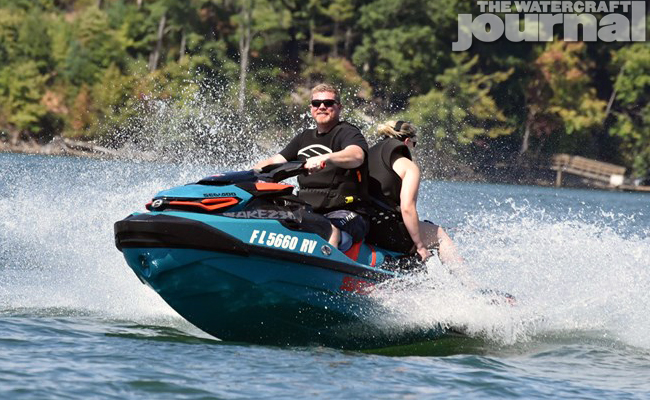
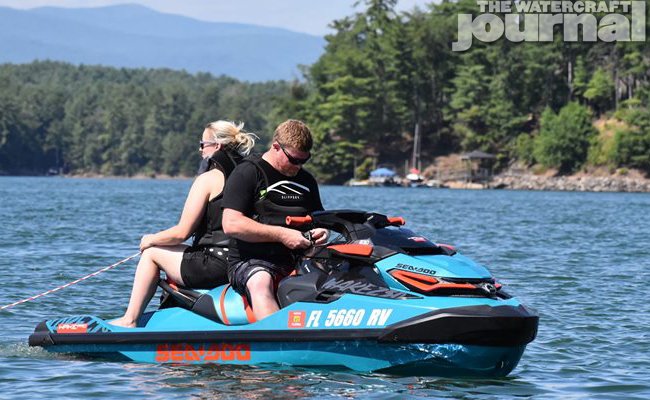
Among all of the many watercraft offered by Sea-Doo, one of its most consistently popular models is the Wake Pro series. Designed with the express purpose of towing wake boarders and skaters, and waterskiers, the Wake Pro (and its smaller Recreation-segment sibling, the Wake 155) offers enthusiasts uniquely engineered features that make towing not only easy but immensely more enjoyable.
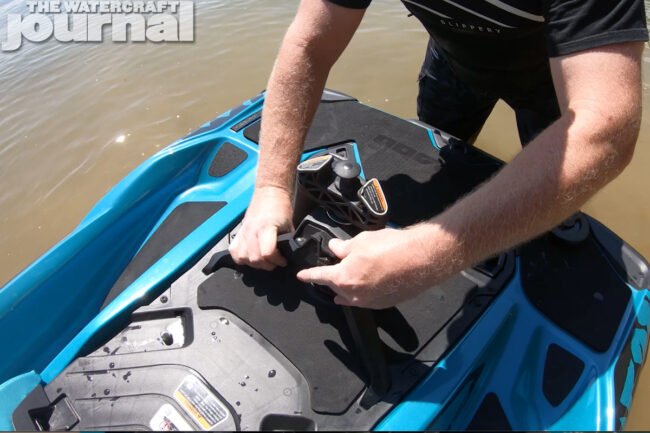
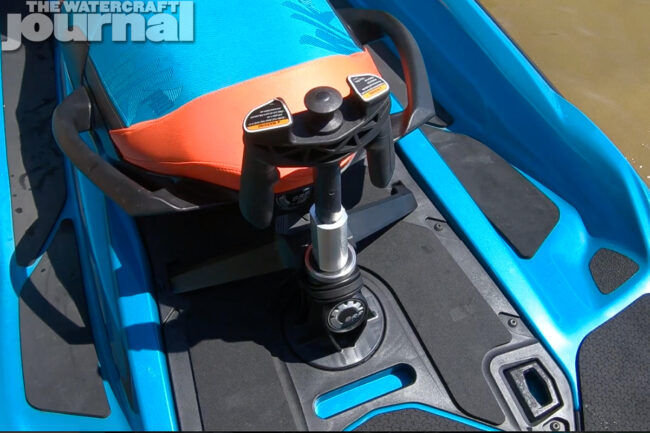
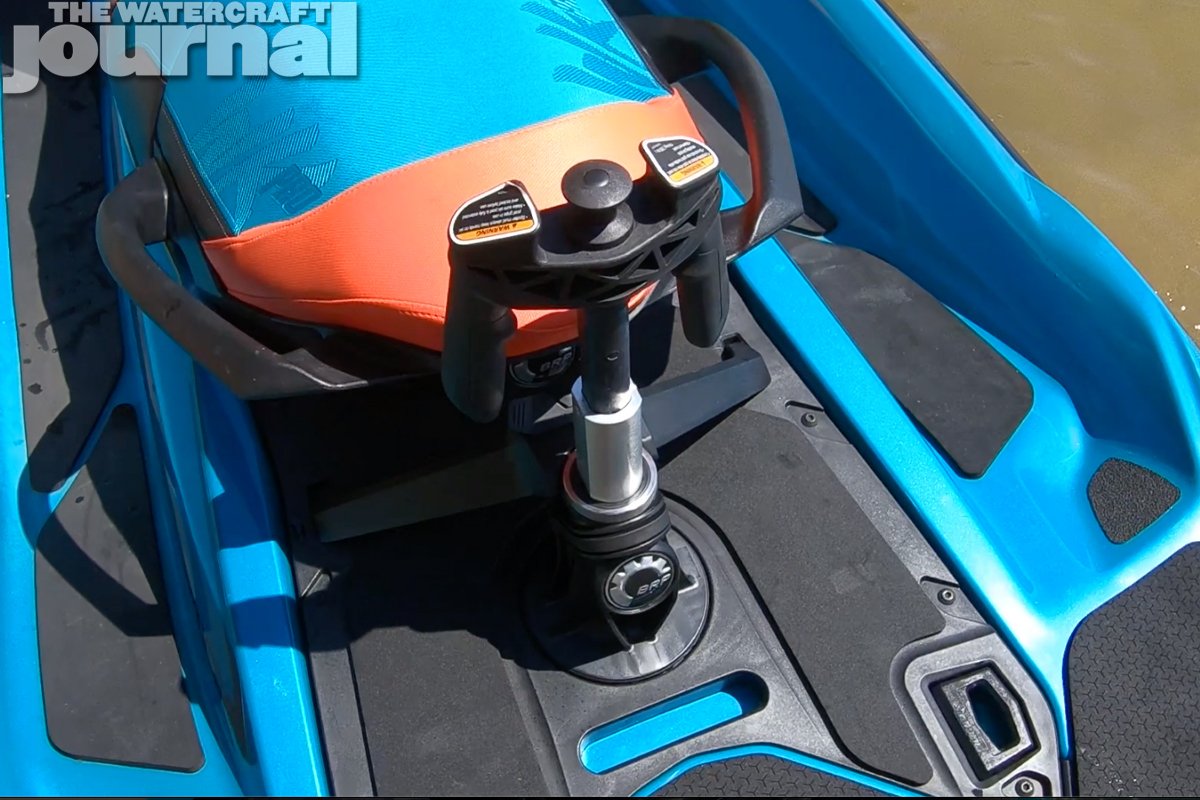
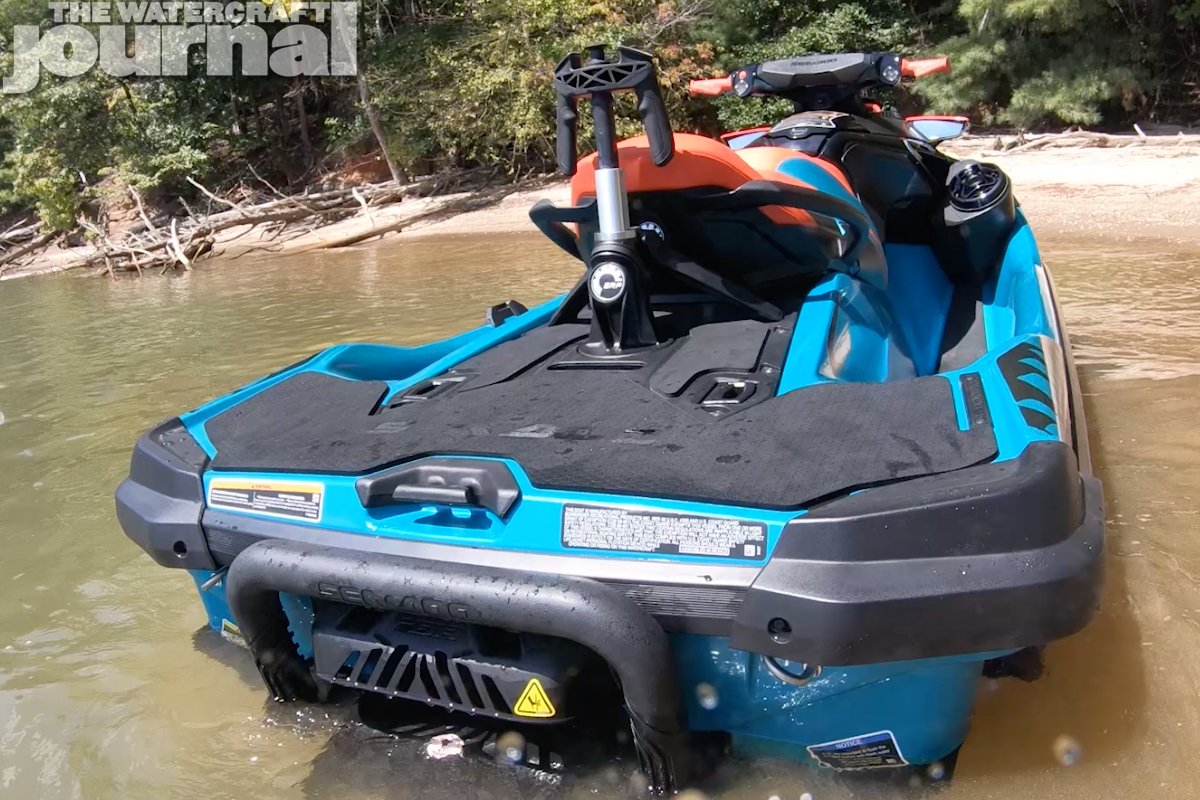
One of the Wake Pro’s most noticeable features is the LinQ Retractable Ski Pylon. Although applicable to all full-sized Sea-Doo runabouts, the LinQ Retractable Ski Pylon comes standard on the Wake Pro, providing a compact and secure mount that provides an added 7-and-a-half inches of height when extended – ideal for board sports, with inflatables needing to use the tow eye mounted above the bondrail.
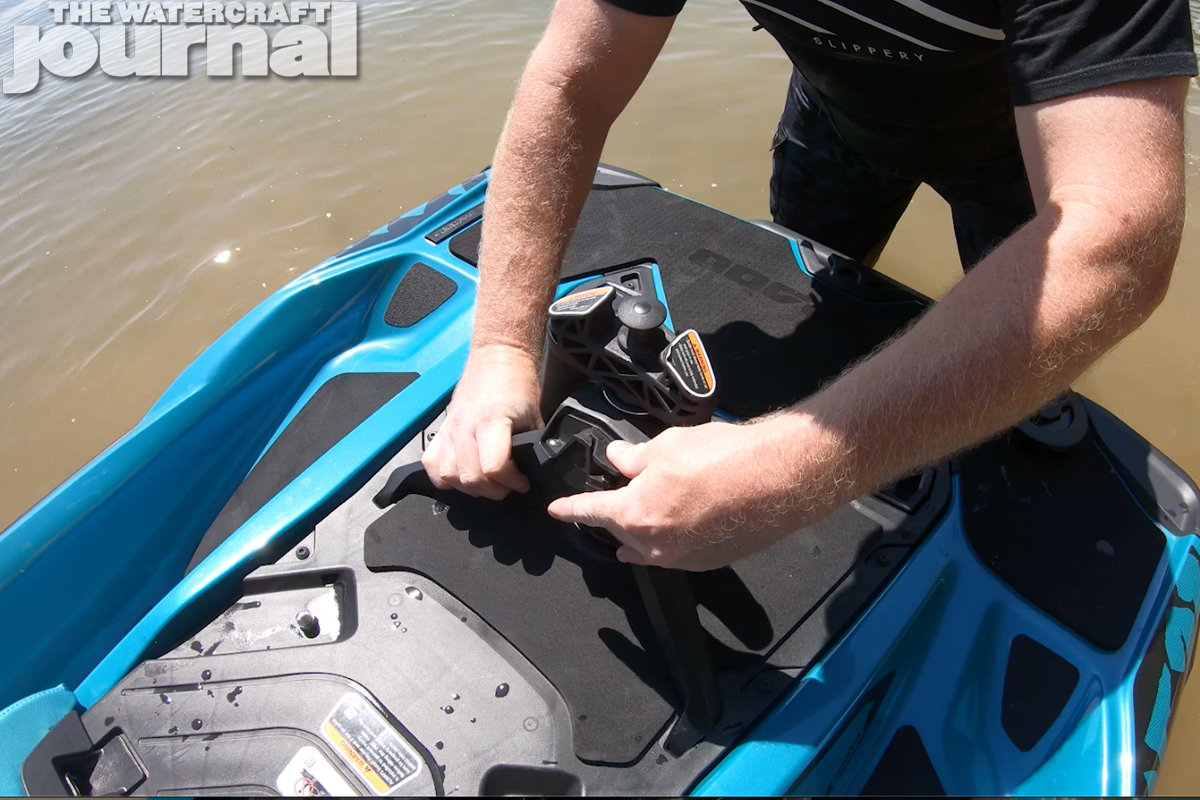
Installing the LinQ Retractable Ski Pylon takes a matter of seconds; first, simply remove the screw-top cap and rear seat. Next, the Pylon indexes into the deck, rotating a quarter turn in a clockwise fashion.
Lastly, slip the A-frame support into the two designated slots and connect it to the Pylon. A locking key slips into a relief in the pylon, allowing you to lock the two pieces together. Once locked and secured, the rear seat latches back into place – and you’re ready to go!
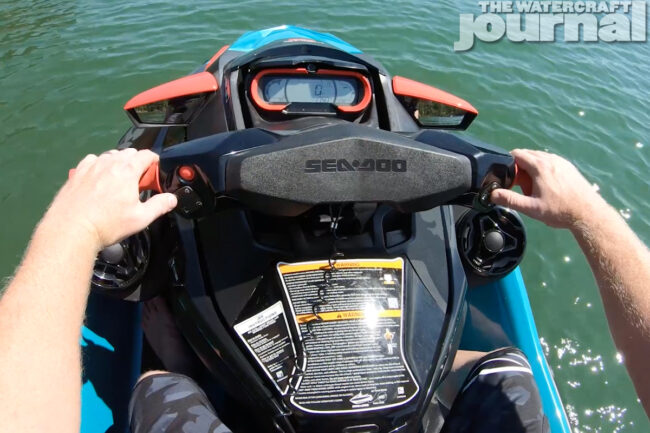
In a previous video, we showed you the ins-and-outs of Sea-Doo’s Slow Speed Mode, a feature that comes standard on all units equipped with BRP’s Intelligent Throttle Control. The Wake Pro has a special feature unique to only it and the other Wake model: SKI Mode. Designed to give the driver repeated and precision-controlled launches, SKI Mode digitally sets the towing speed and acceleration rate to best fit the skier or wake boarder.
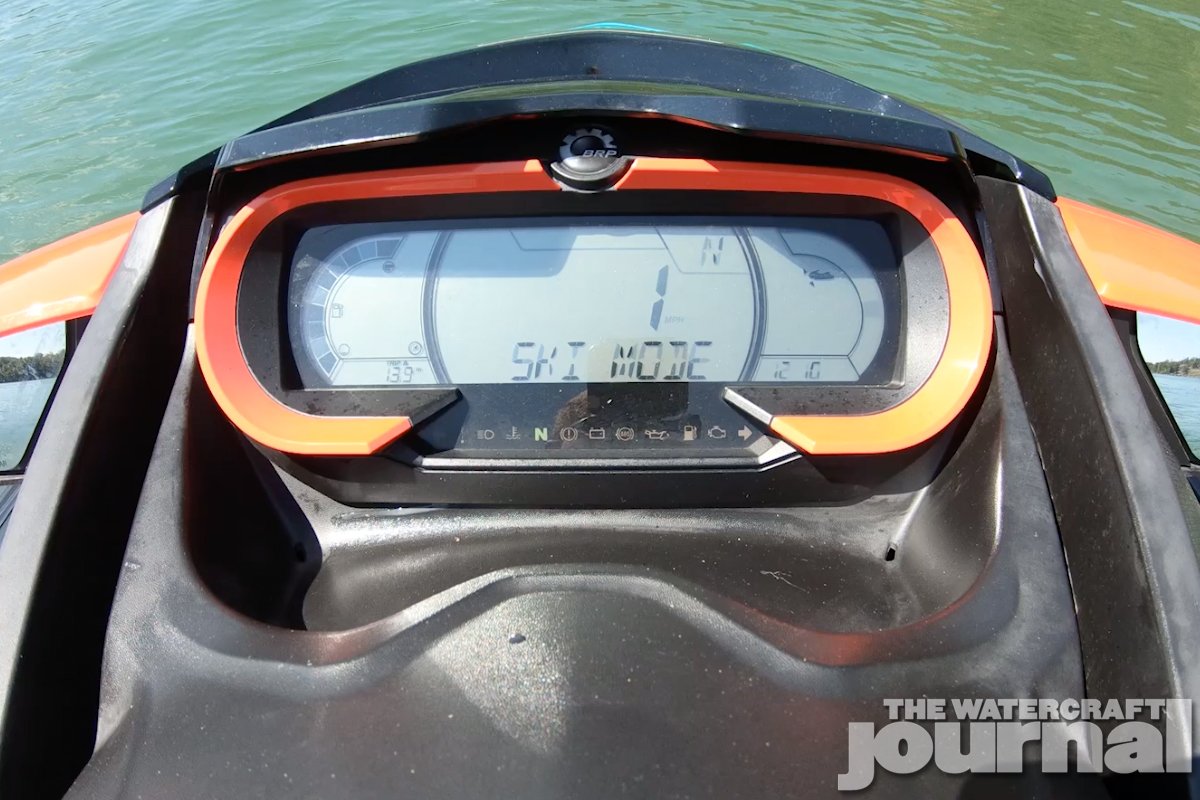
The process begins by toggling through the different Mode settings available to the Wake Pro: Sport, SKI, Eco and Touring. To select SKI Mode, simply press the Mode button until “SKI Mode” appears on the display. Then press the OK button to confirm your selection.
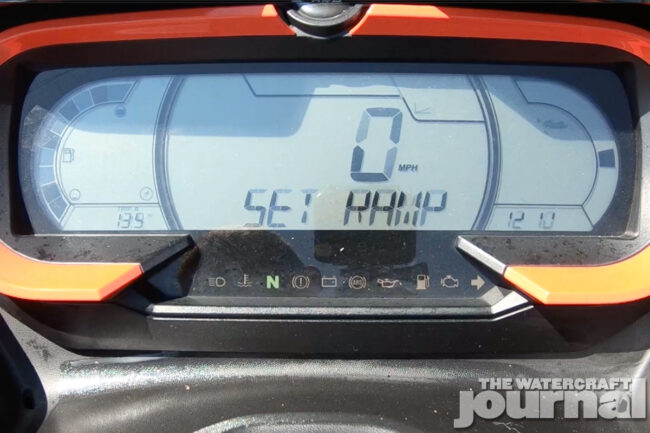
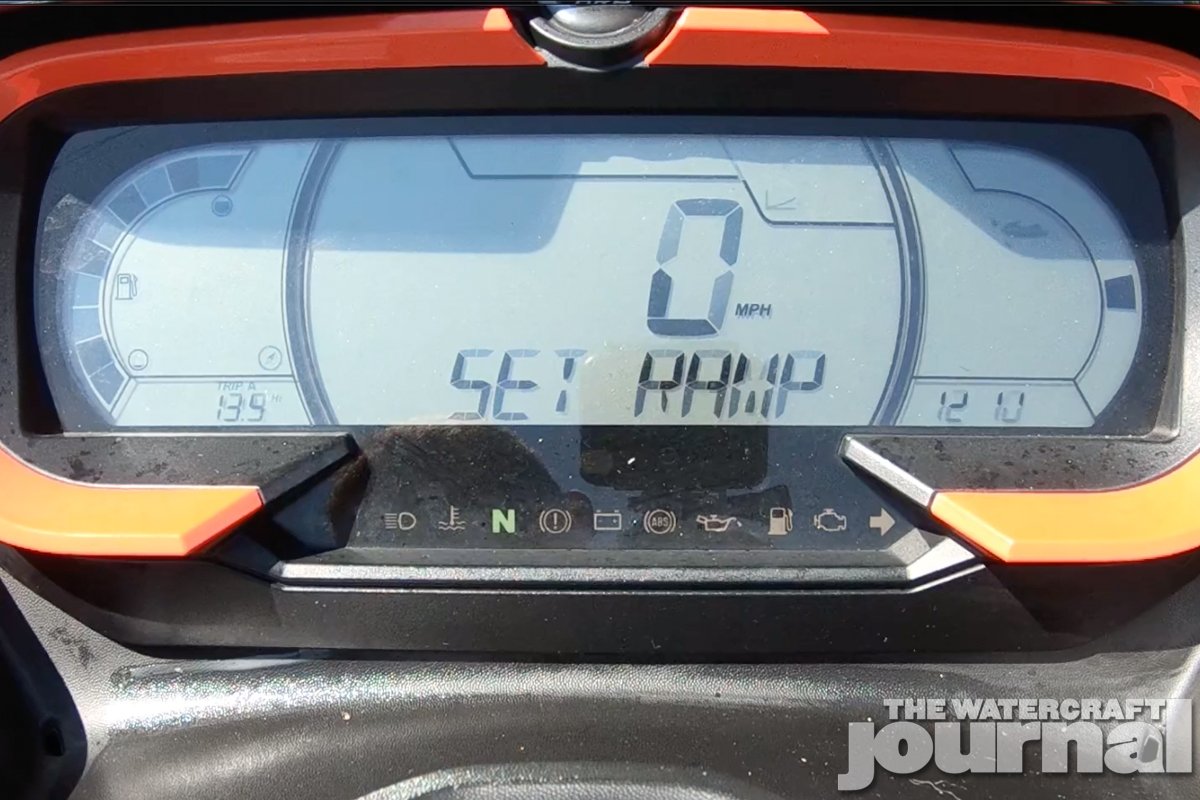
Next, the display will prompt you to select your RAMP number. A RAMP is a pre-programmed setting in the Sea-Doo’s computer controlling how hard it accelerates. #1 is the slowest and most gentle acceleration curve, and #5 being the most aggressive. To select a RAMP, simply toggle the UP or DOWN arrow buttons. To confirm your selection, you can either press the RIGHT arrow button or the OK button.
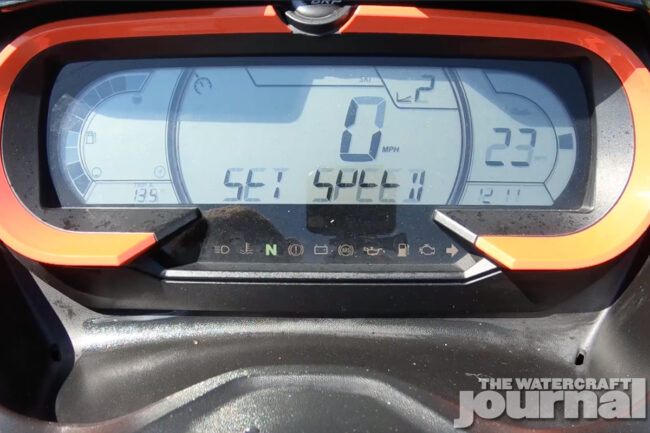
Finally, you’ll be asked to select a maximum target speed. Regardless of your RAMP selection, you can dictate your top speed all by using the UP or DOWN arrow buttons. And again, press the RIGHT arrow button or OK to confirm. After confirming your selection, press the OK button to activate the function – a message “SKI READY” will appear. And there you go!
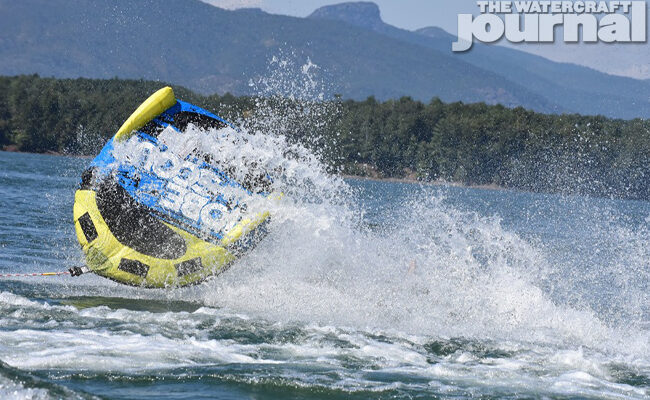
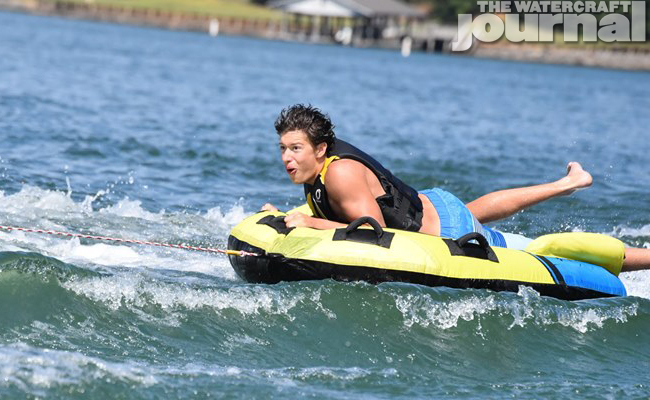
To test out the Wake Pro’s lowest RAMP setting, we towed some daring young girls around Lake James in North Carolina. With a maximum speed setting of 18mph, we managed to bounce them loose only twice. Impressively, SKI mode does pretty much all of the work; simply engage the throttle wide open and the presets do all the work. SKI mode even allows you to change the RAMP and speed settings at any time.
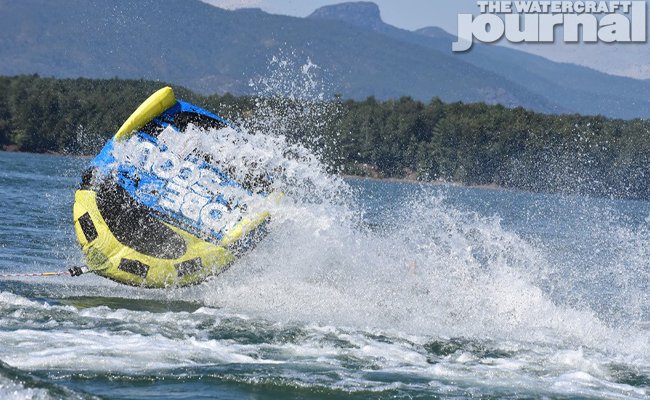
And of course, releasing the throttle or applying the brake will pause SKI mode. To pick up where you left off, simply press the OK button to reactivate your previous SKI mode setting. Lastly, we wanted to really see what SKI Mode to could offer, so we recruited a courageous teenager to let us try to catapult him as as we could.
With a RAMP setting of 4 and a maximum speed of 30 miles per hour, our 230-horsepower, supercharged Wake Pro had little trouble ejecting our test subject a handful of times despite his best efforts. We call that mission accomplished! The Wake series of watercraft from Sea-Doo definitely earn their praise; chocked full of unique and specialized features the Wake Pro is definitely the right machine for the job.
Additional photography courtesy of Melissa Brothers
Many times the OE manufacturers like to slip in mechanical upgrades and changes without letting the media or general public know. The only way word gets out is via mechanics and dealers who suddenly realize that a particular part number has either vanished completely or been superseded. That appears to be the case with Yamaha’s Super Vortex High Output-equipped WaveRunners for 2020.
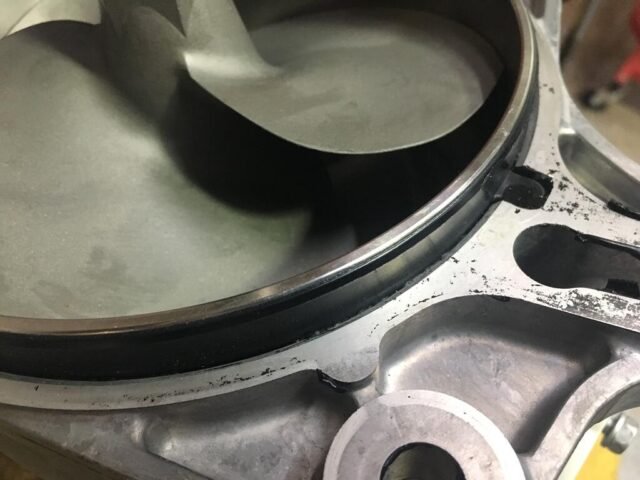
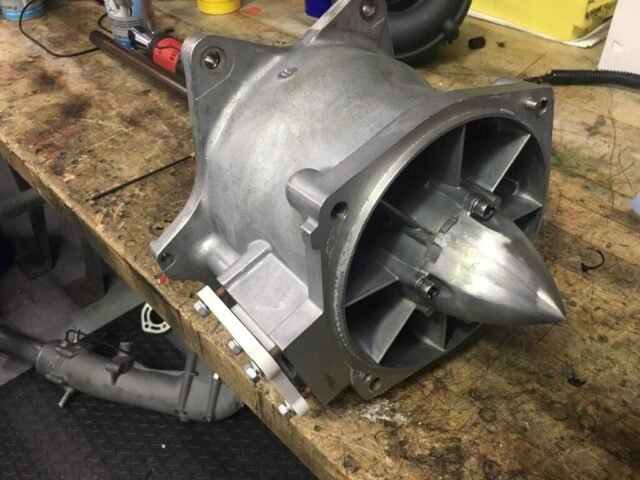
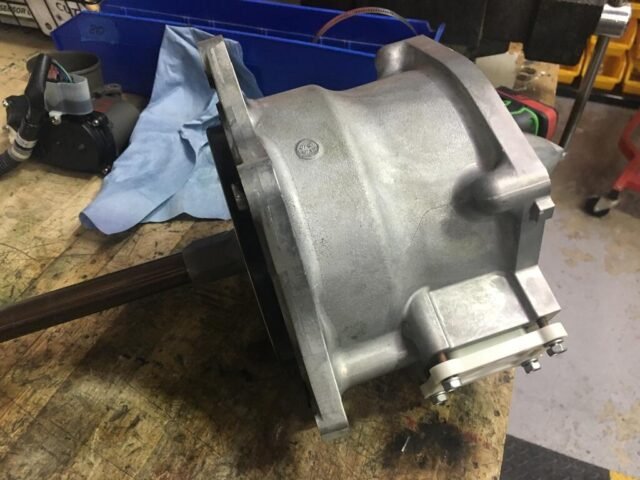
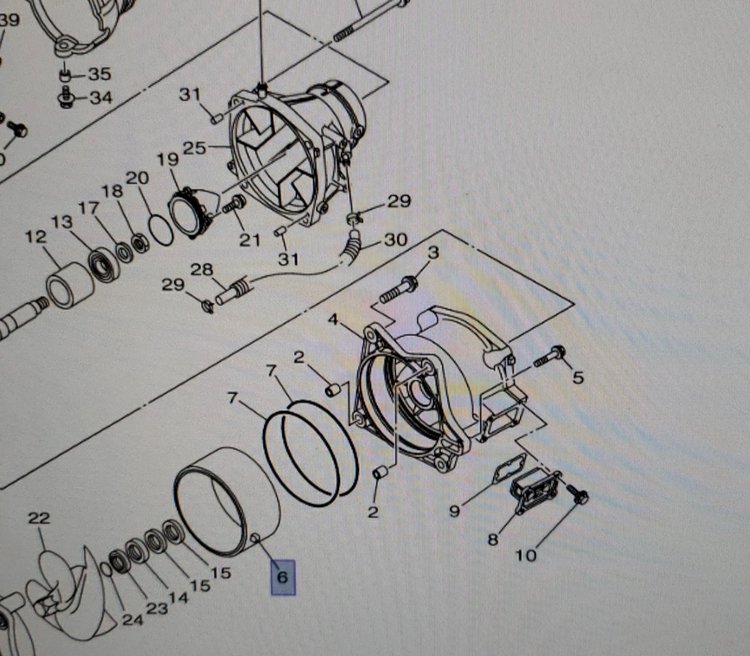
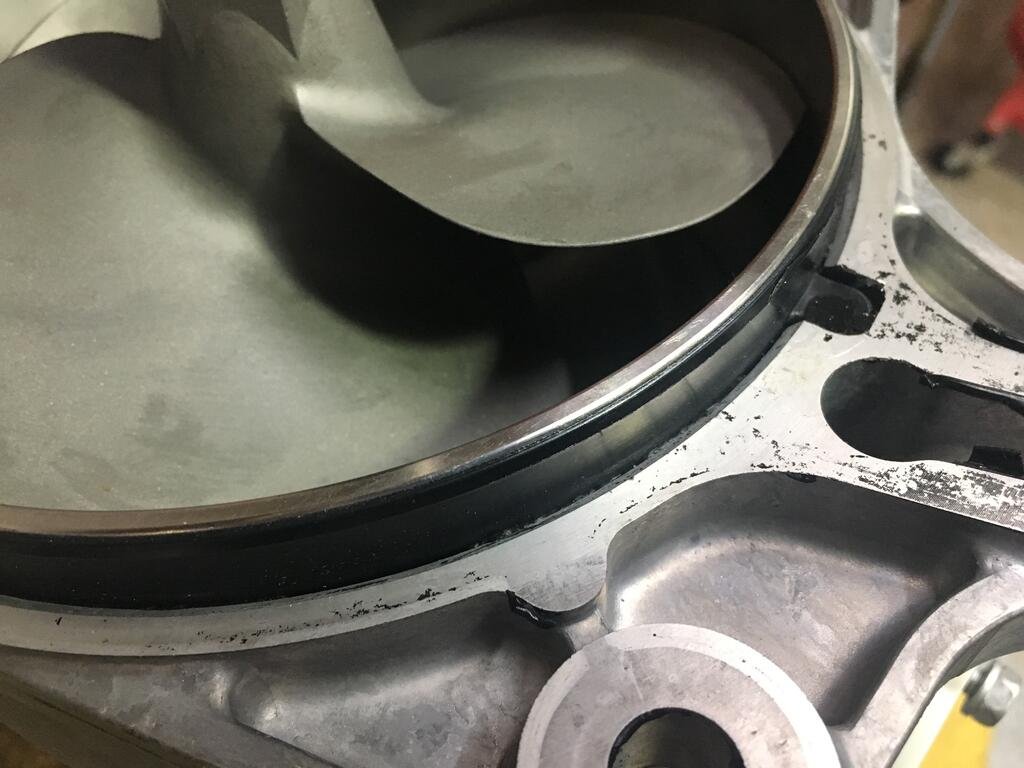
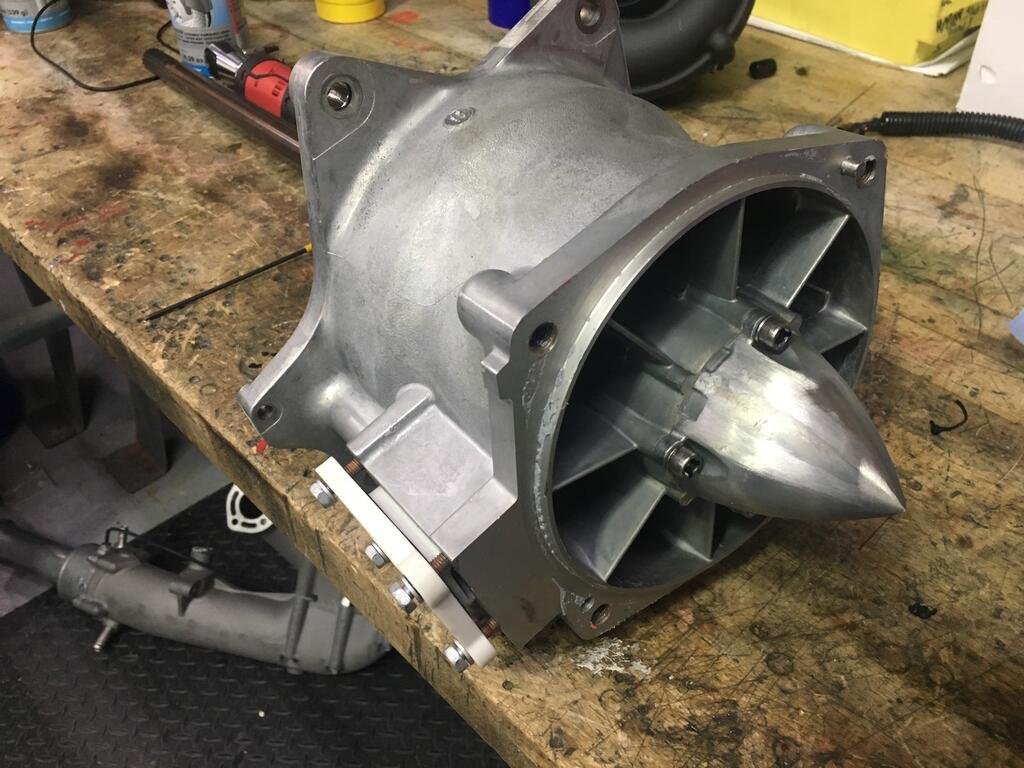
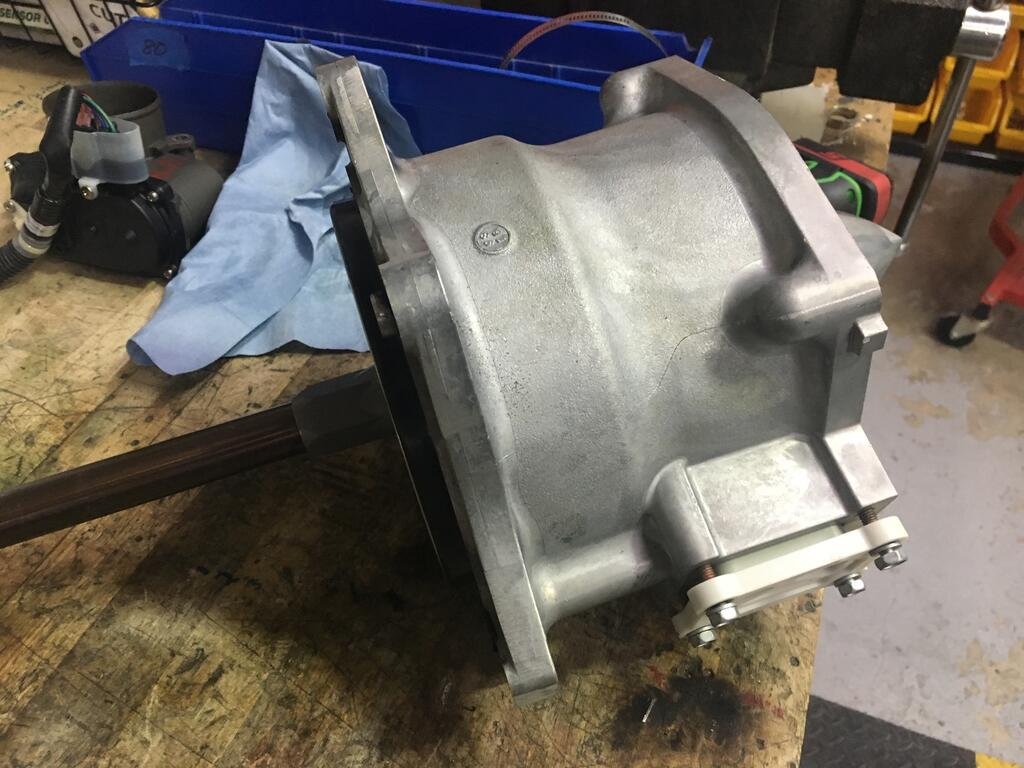
Eagle-eyed enthusiasts picked up on the part number change as well as some key improvements from the outgoing pump housing to the new item, which include the integration of a new stainless steel, replaceable wear ring and pump all into one single housing.
Previously, the pre-2020 SVHO pump was not a “true” 160mm, but rather used a 155mm stator and a 160mm impeller and liner. The new pump is 160mm all the way through due in large part to the incorporated single-piece design. Not only does this reduce the number of parts, but also permits for extended use and longevity – a particular plus for the performance-oriented SVHO owner.
Hi guys, check out the new pump coming on 2020 Yamaha SVHO WaveRunners! It’s a very cool design which incorporates the wear ring and pump all into one housing. The most interesting thing is the wear ring is a stainless steel insert and is replaceable. Very nice thinking on the part of Yamaha…
The new 2020 SVHO pump is a true 160mm pump. Previous SVHO pumps used a 155mm stator and a 160mm impeller and liner. Having a true 160mm stator will greatly improve cavitation problems that we have previously seen and it will also improve rough water hookup. This pump setup will work on all previous SHO and SVHO skis.
I have these kits at a discounted price and you can preorder now. Expected availability is October 2019. Guys, if you want one of these upgrades I highly recommend you pre order it now. This will be a VERY popular upgrade and expect them to go on back order frequently. Those who order first will get theirs first as they come off of back order. Basically, if you wait for them to be “in stock” you will be waiting a very long time.
This is a complete kit which includes the pump housing, stainless steel wear ring insert, bearings, seals, etc. Everything you need to transfer over your driveshaft to the new pump setup.
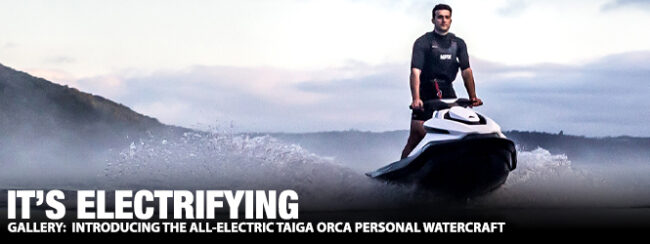
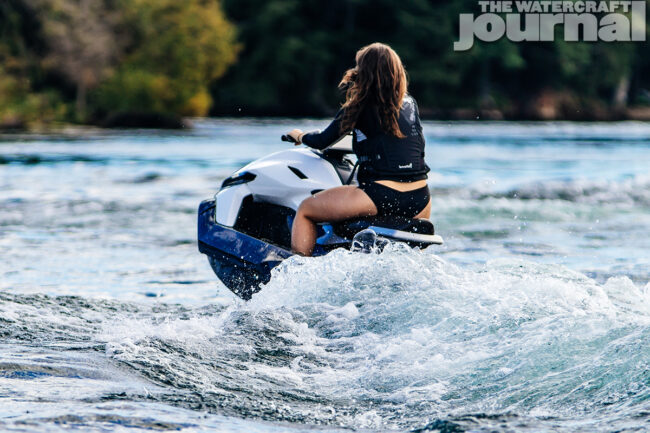
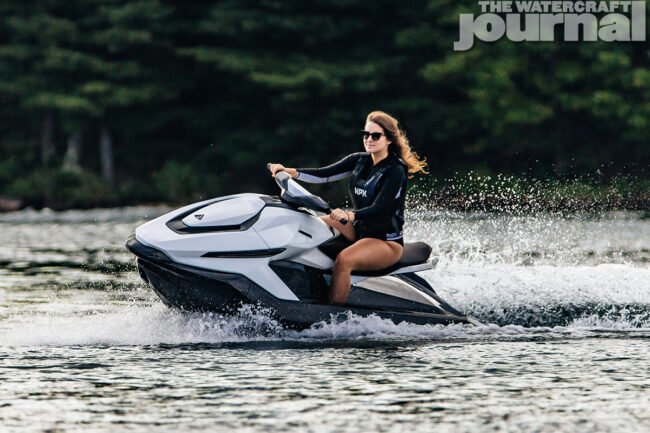
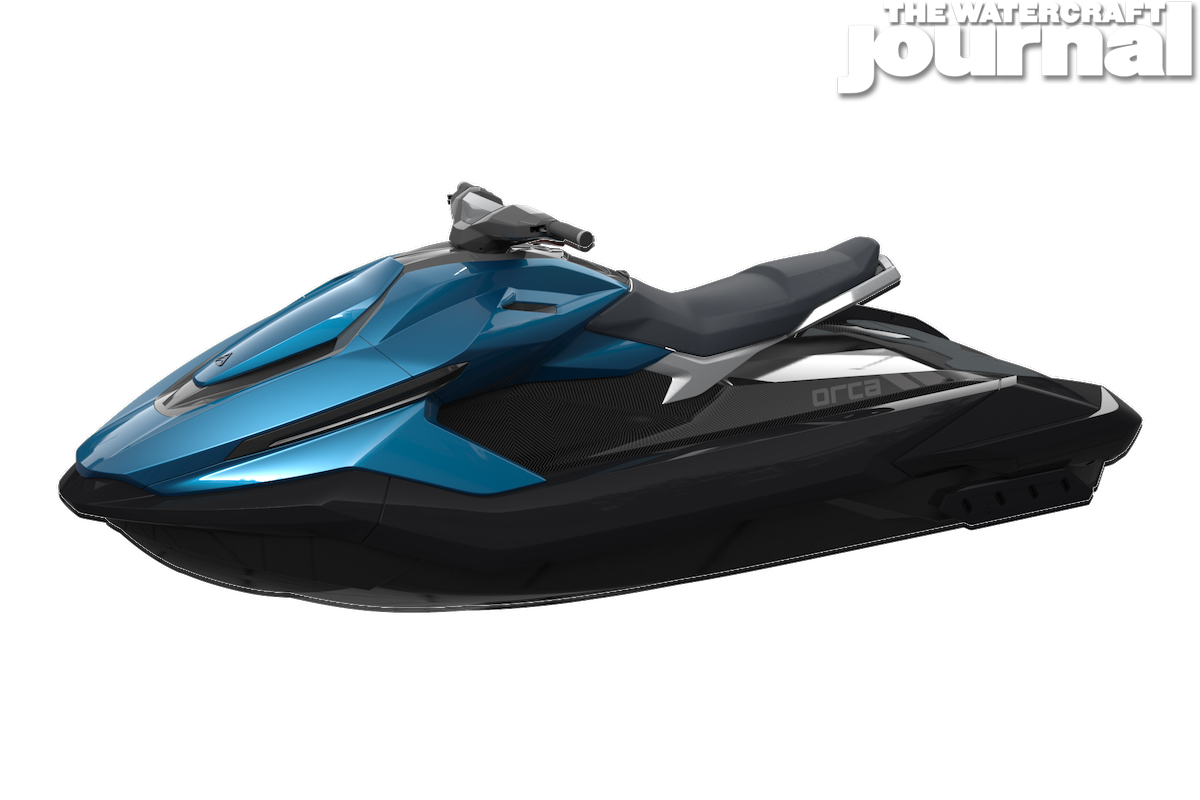
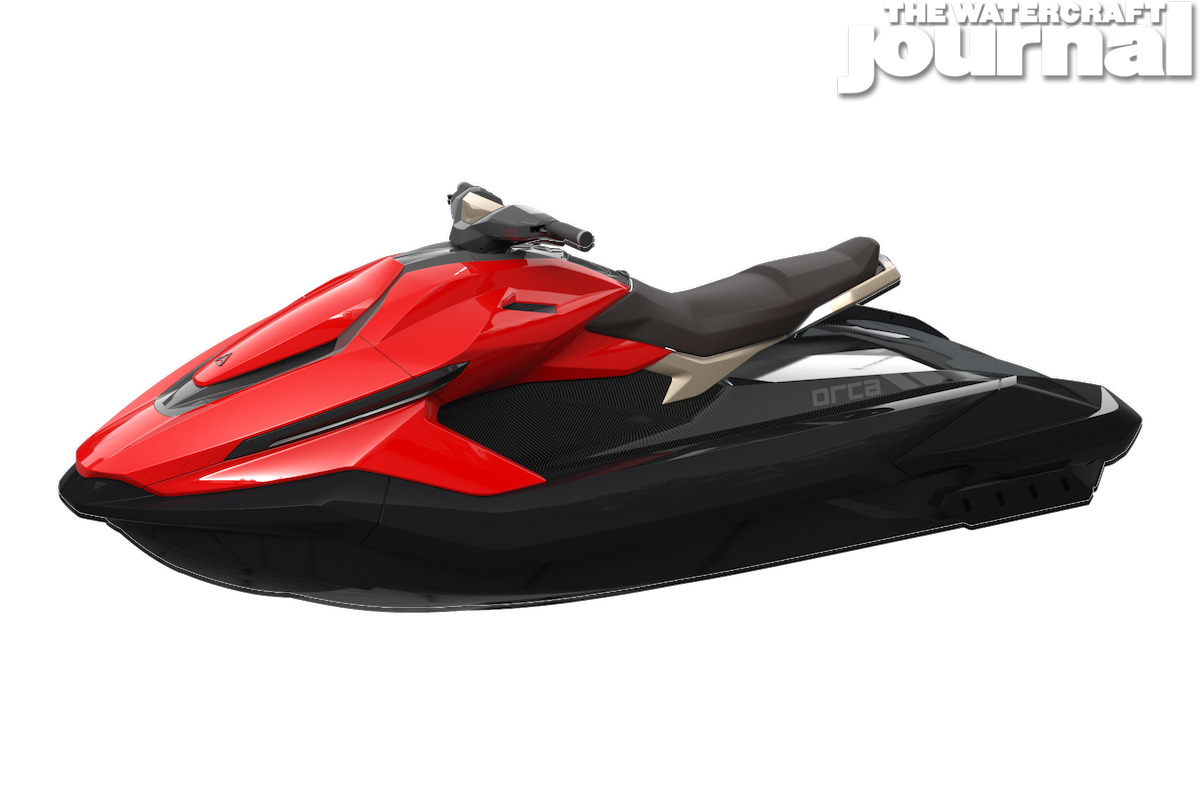
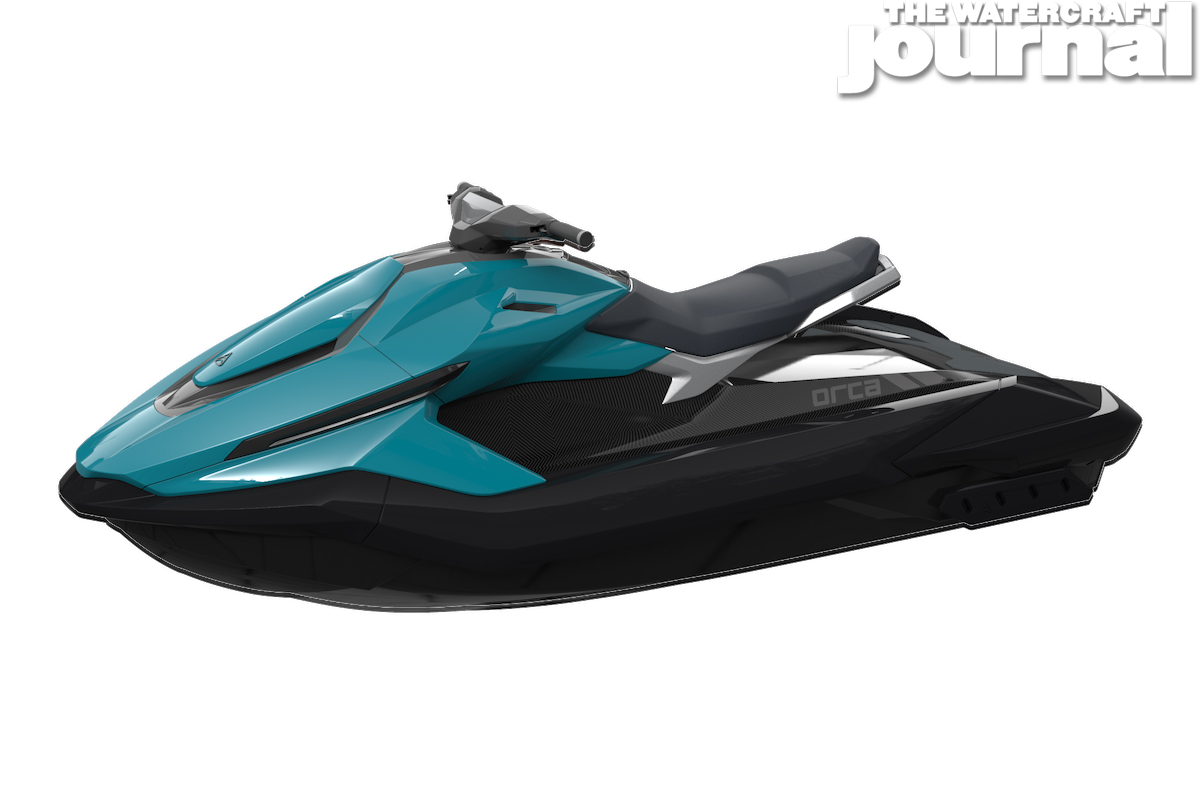
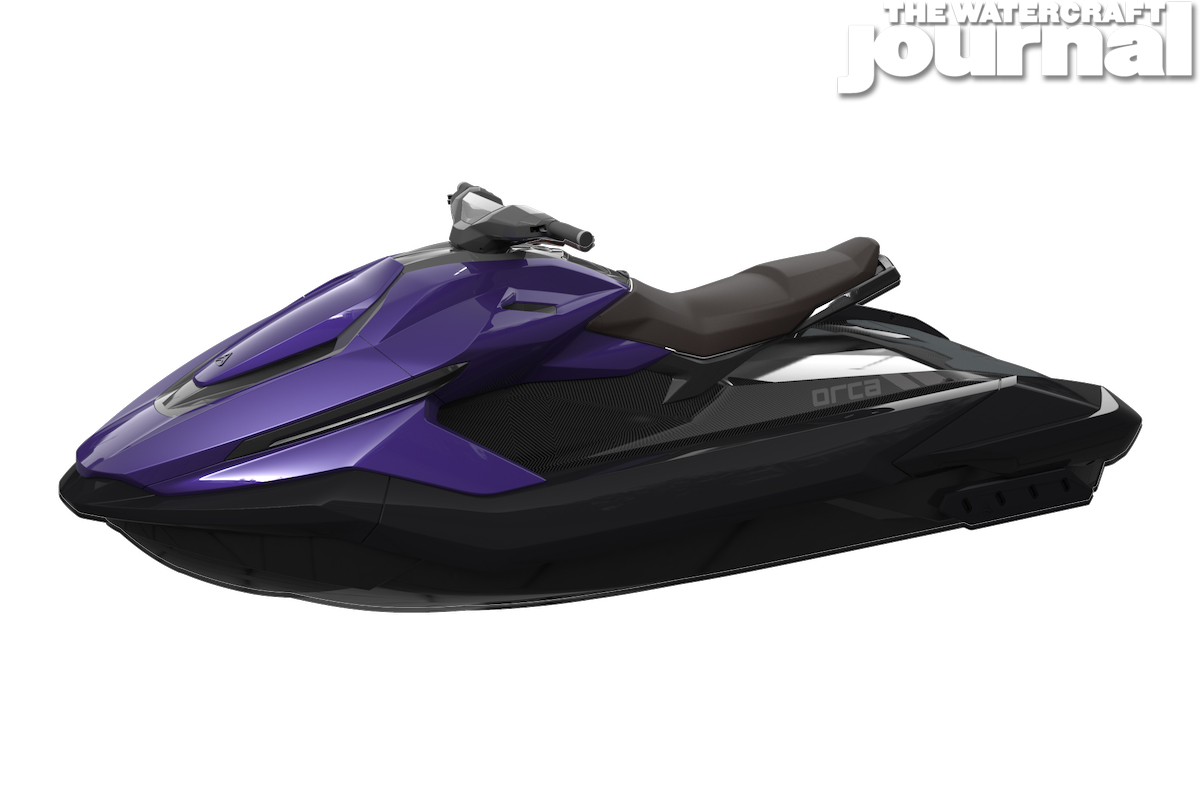
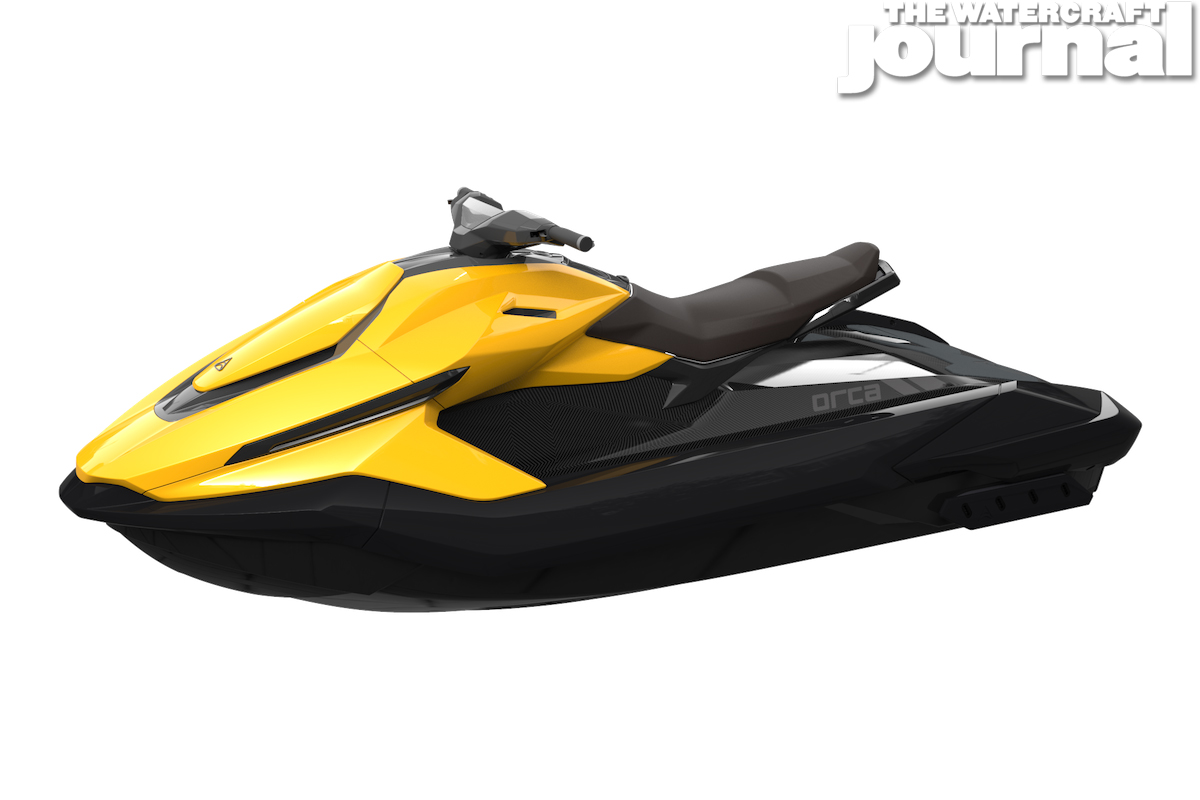
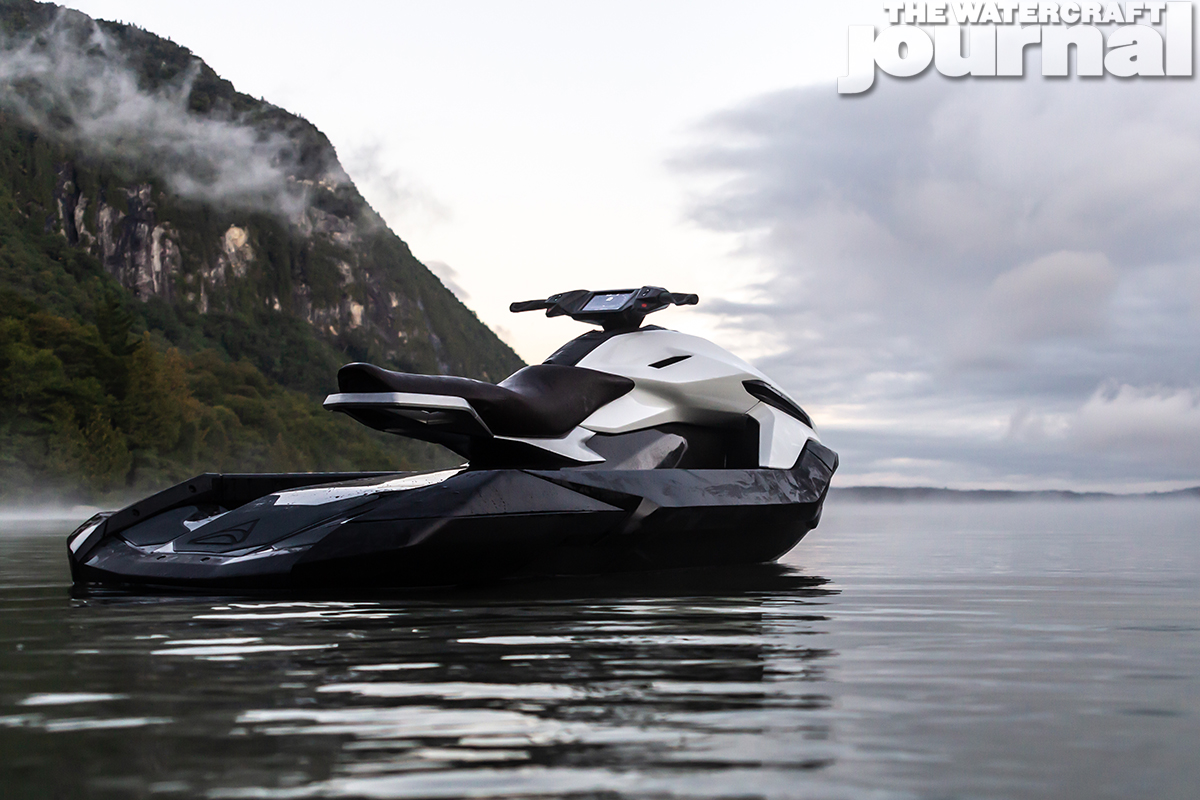
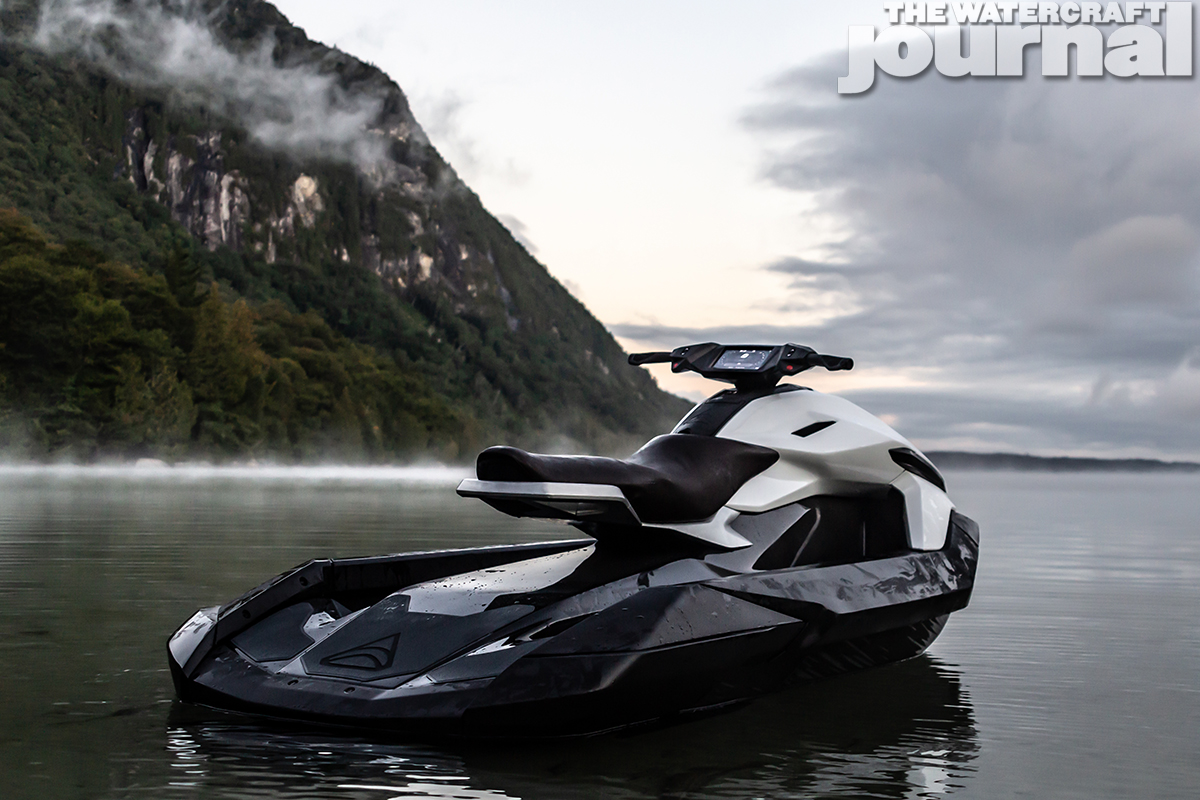
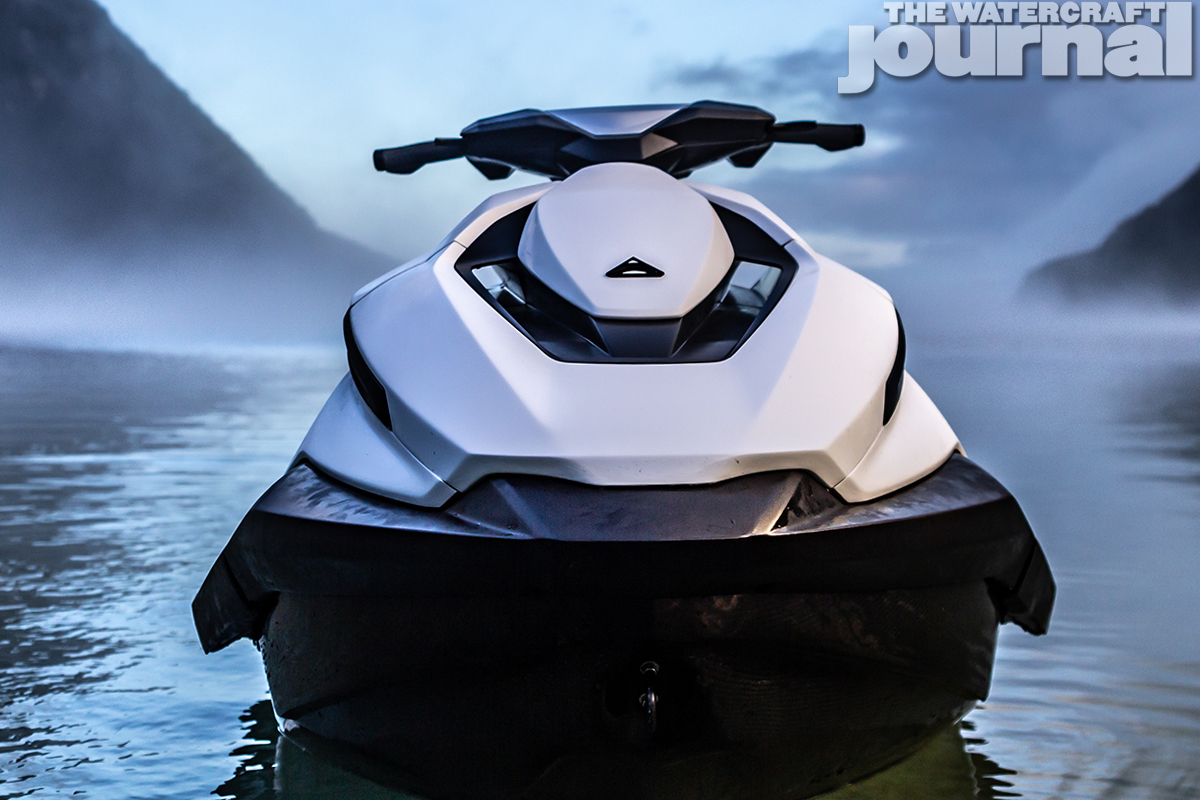
With last week’s reveal of Sea-Doo’s function prototype E-GTI watercraft, the real possibility of a completely zero-emission PWC is coming into focus. Yet, what many people don’t know is that they’re a whole lot closer to its fruition than they might think. Except it’s not gonna be from BRP. As of last night, Taiga Motors, the Canadian manufacturer behind the world’s first electric snowmobiles, just revealed its first electric personal watercraft, the Orca.
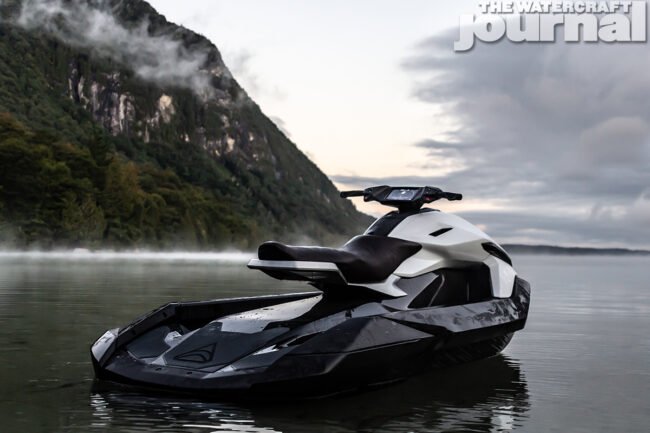
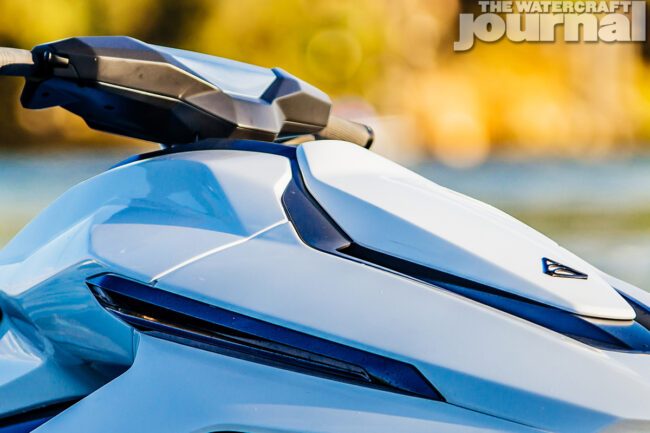
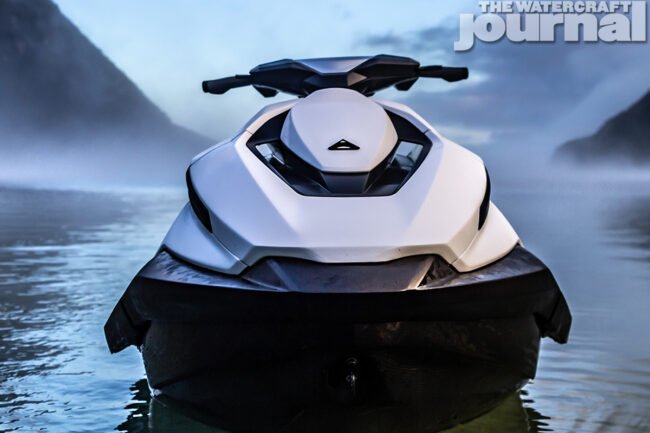
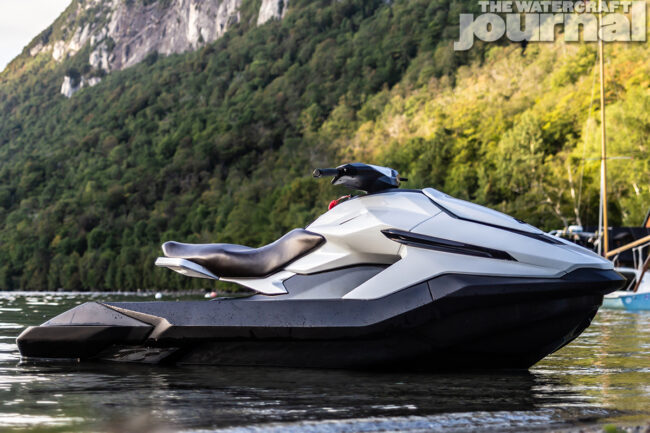
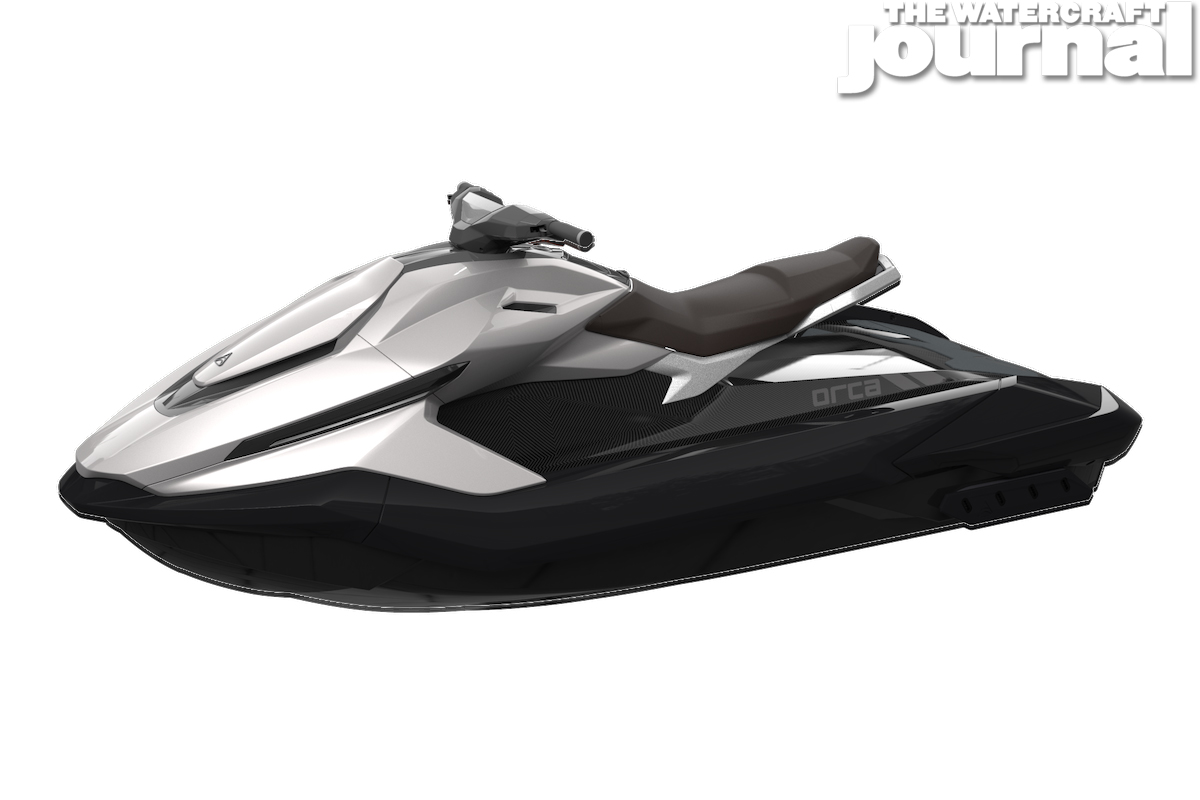
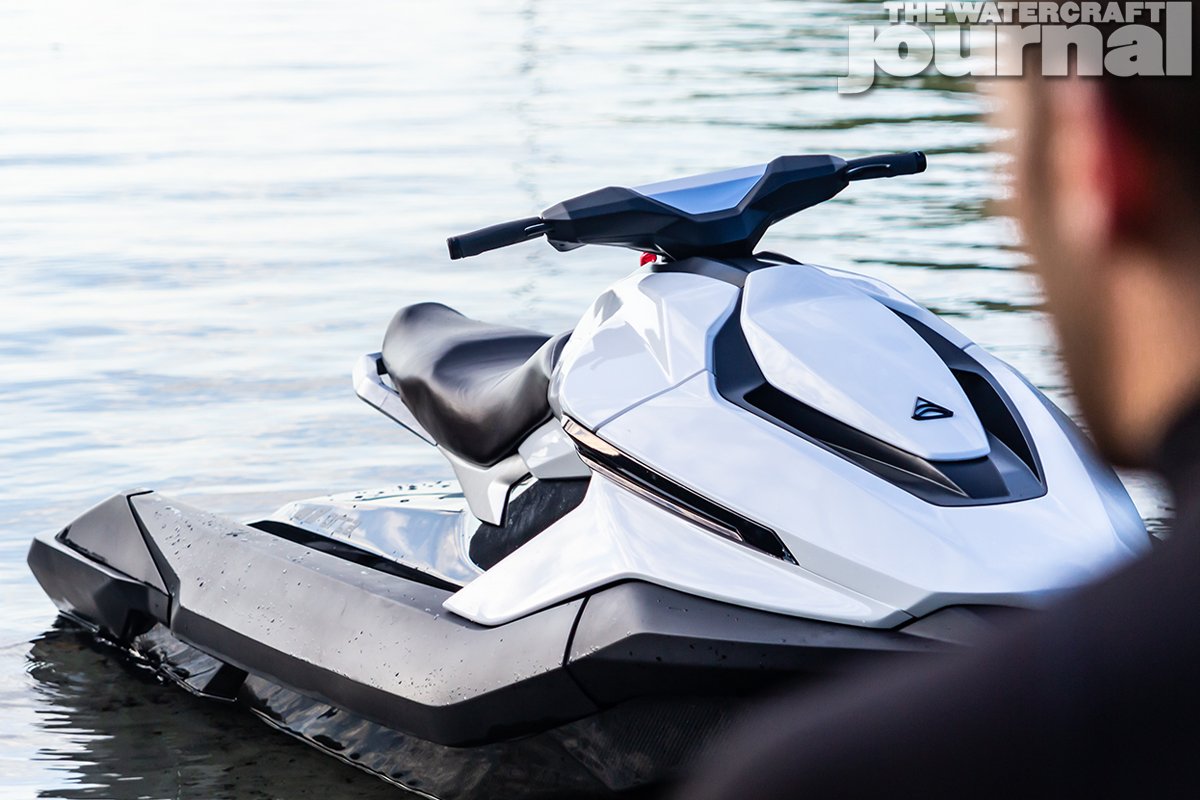
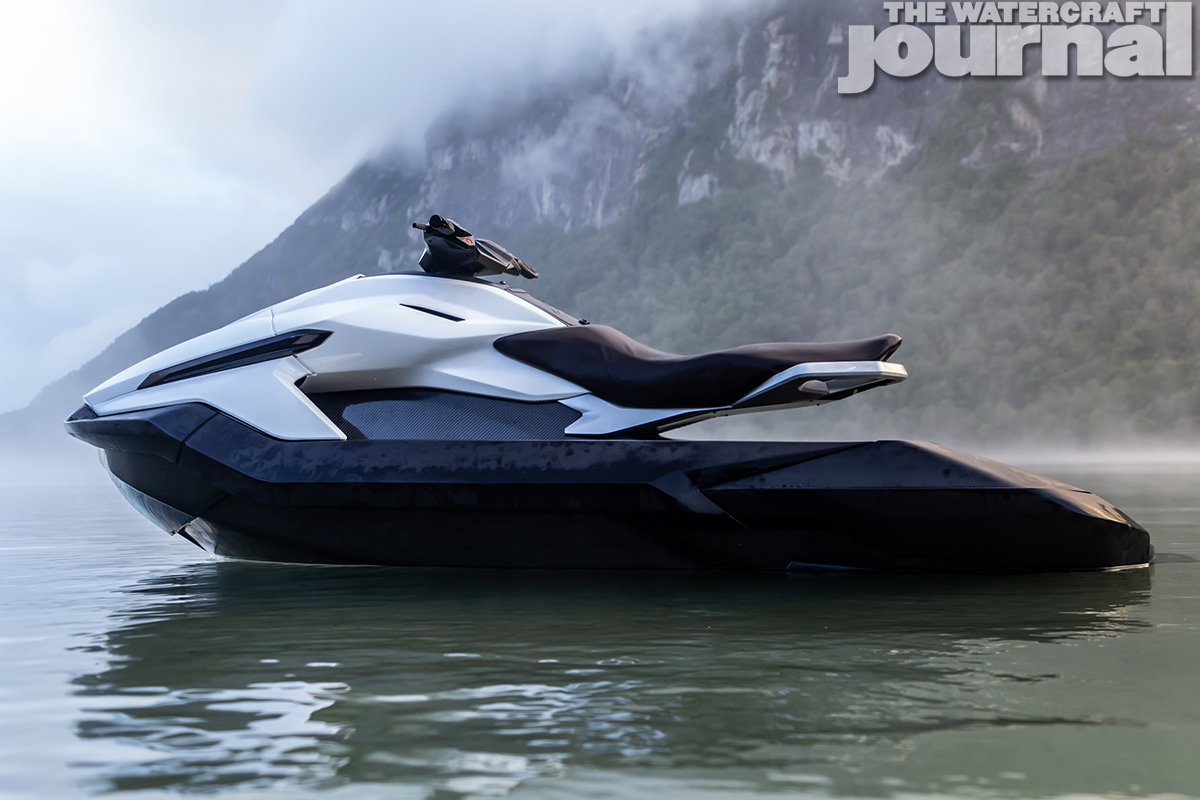
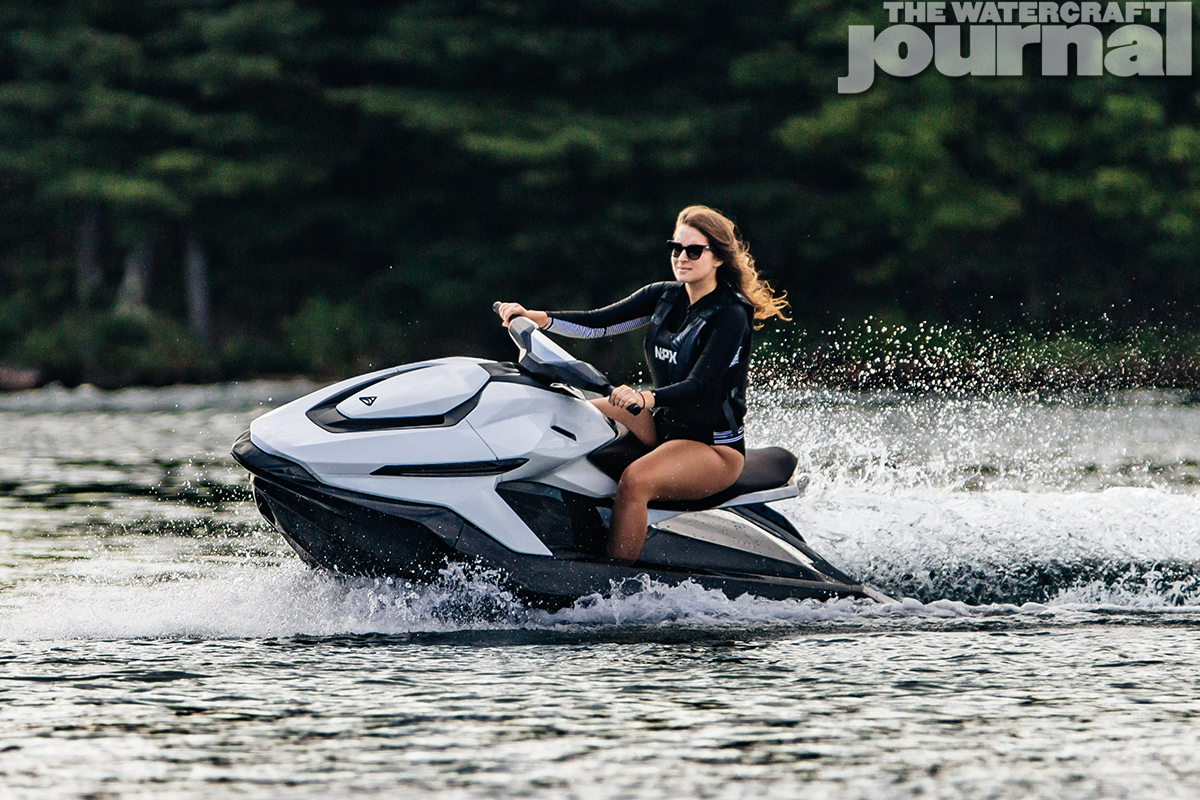
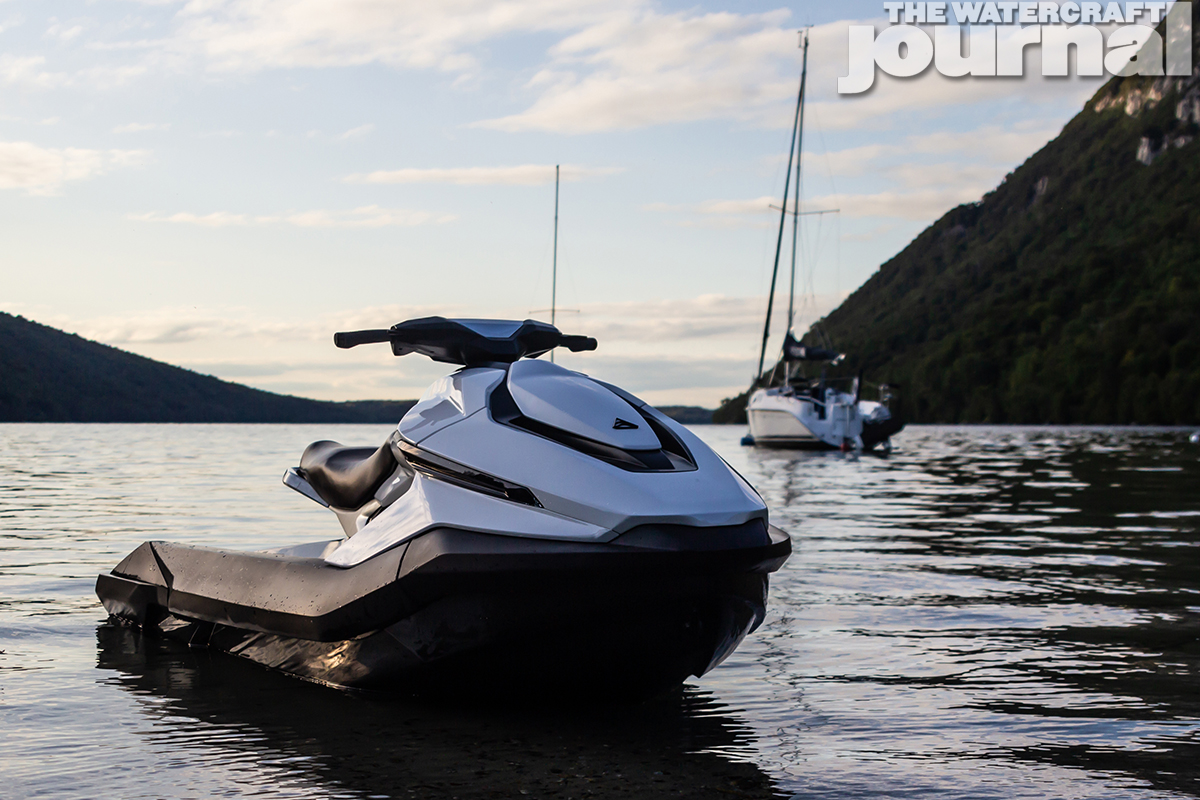
Looking to usher in a new segment of the personal watercraft industry, Taiga’s Orca introduces a variety of technologies, innovation and eye-catching design; from its heavily-sculpted deck to its suspended seat down to its 100-percent carbon fiber molding. The lightweight construction drops the Orca’s overall weight just below 600-pounds, giving the Orca one of the “highest power to weight ratios in the industry while remaining nimble, silent, and practical for every day use.”
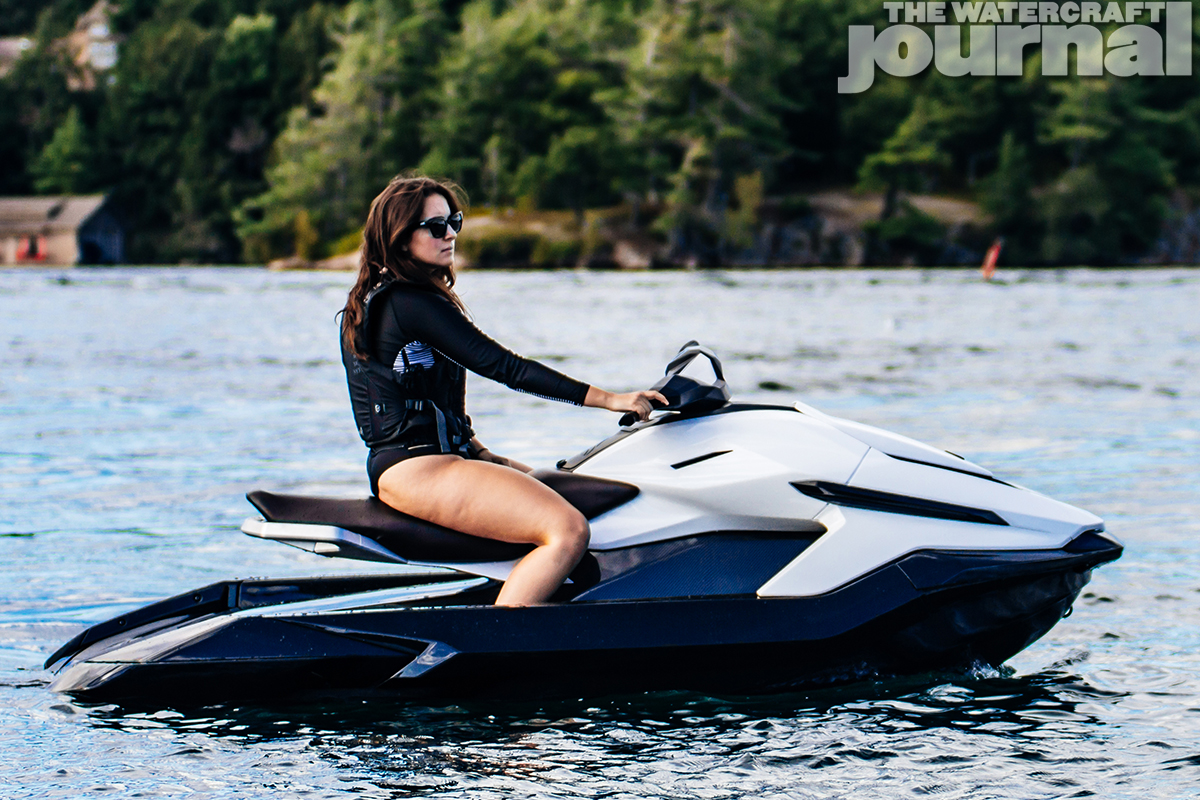
Interestingly, the Orca is surprisingly tiny. From bow to stern, it’s a little over 114-inches long (114.2-inches); nearly 9-inches shorter than a Yamaha EXR, or 4-inches longer than a 2-up Spark. At 47.2-inches wide, it’s just an inch-and-a-quarter wider than the aforementioned Sea-Doo too. Standing at 39.8-inches tall, it’s about an inch-and-a-half shorter than the traditional (non-Trixx) Spark as well. But here’s the kicker: it’s 134kW output is equal to 180-horsepower.
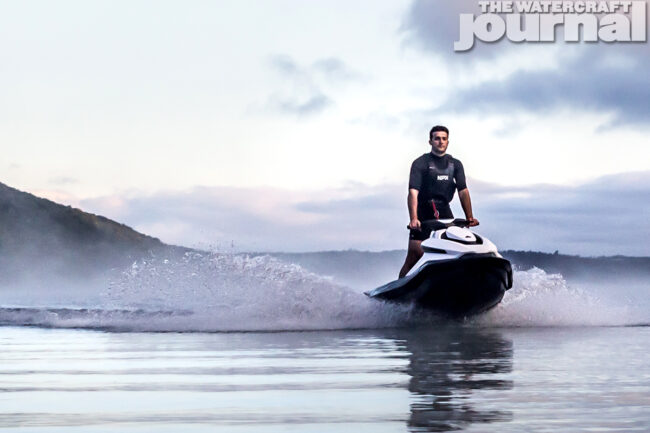
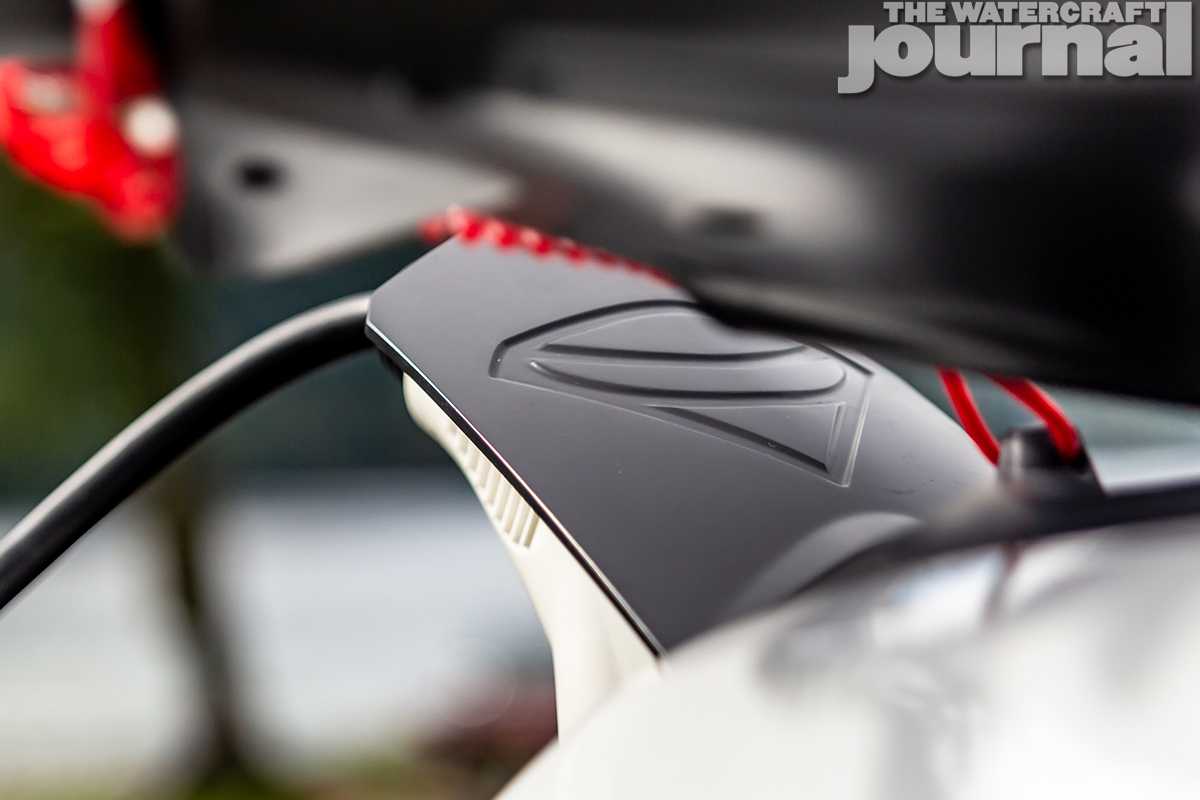
Now imagine a Spark making that kind of power and capable of 65 miles-per-hour top speeds! The Orca accomplishes this via a sealed and vibration-isolated, lithium-ion battery that operates on an automotive standard system voltage of 400 volts that is stated to last 2 hours of aggressive riding. The battery itself has been designed to be safely operated under high shock loads, high humidity environments, and even under temporary submersion!
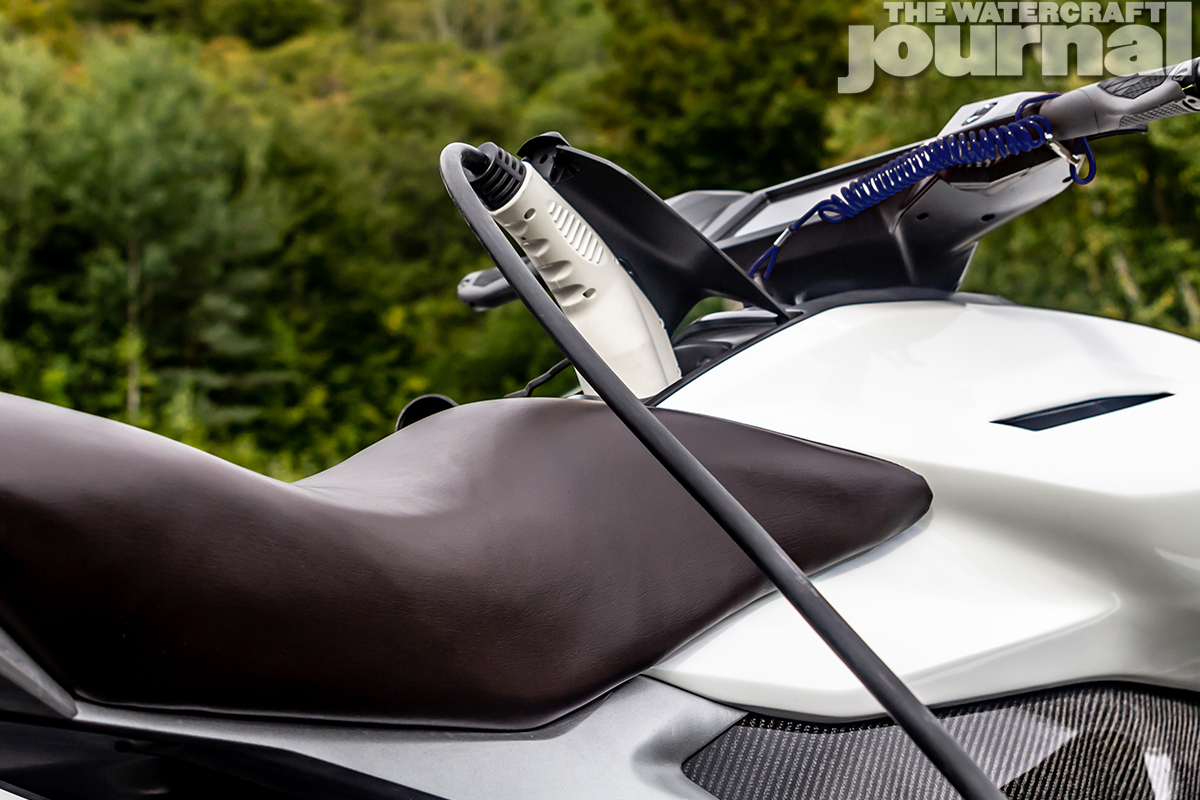
According to Tiaga, “the 23kWh battery capacity provides energy for up to 2 hours under typical drive conditions.” Weighing in at approximately 125kg (275.5-pounds), the Orca’s battery can be recharged from “a regular outlet for convenient overnight charging, from standard automotive chargers at a rate of up to 10kW, or by DC fast charging to 80% in 20 minutes for high throughput operators,” continues Taiga representatives.
This nearly-instantaneous power (sub 5-milisecond response time) pushes the Orca forward with “precision impeller speed control” that both maximizes efficiency [read: low cavitation] and reduces noise levels under “varying conditions.” This consistent power output is maintained using Tiaga’s unique thermal management system; a closed loop cooling circuit that runs through the battery, motor, and inverter.
Originally designed for Taiga’s electric snowmobiles, the closed loop cooling system means “no winterization is required,” according to Taiga. They continue, “The auxiliary systems have been designed for extremely low quiescent currents so that the vehicle can be left unplugged up to 5 years while still periodically waking itself to check on systems. Users will no longer have to disconnect their 12V batteries for fear of draining them.”
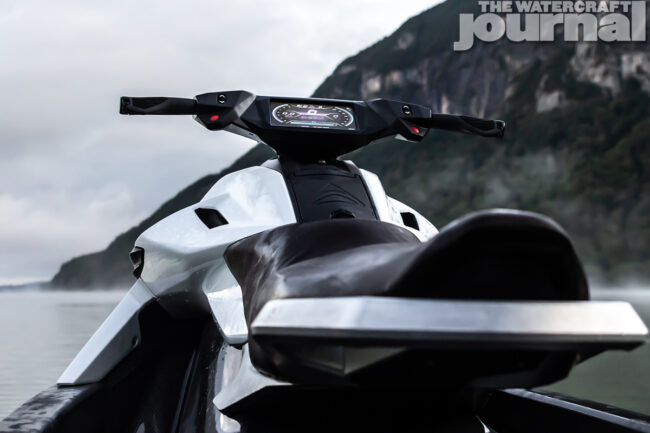
The low-slung battery array allows for a very deep-seated seating position, as well as what Taiga claims to be “the lowest center of gravity of any personal watercraft.” While the manufacturer purports to enjoy “enhanced stability and precision carving” video (see below) still reveals the small, lightweight runabout riding very high on the surface with very little draft [ie. depth of hull below the water’s surface]. Thankfully, factory-equipped adjustable sponsons allow for easy adjustment of the ride characteristics.
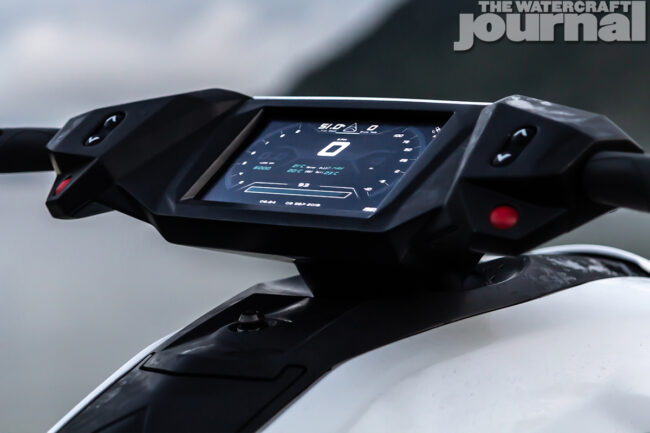
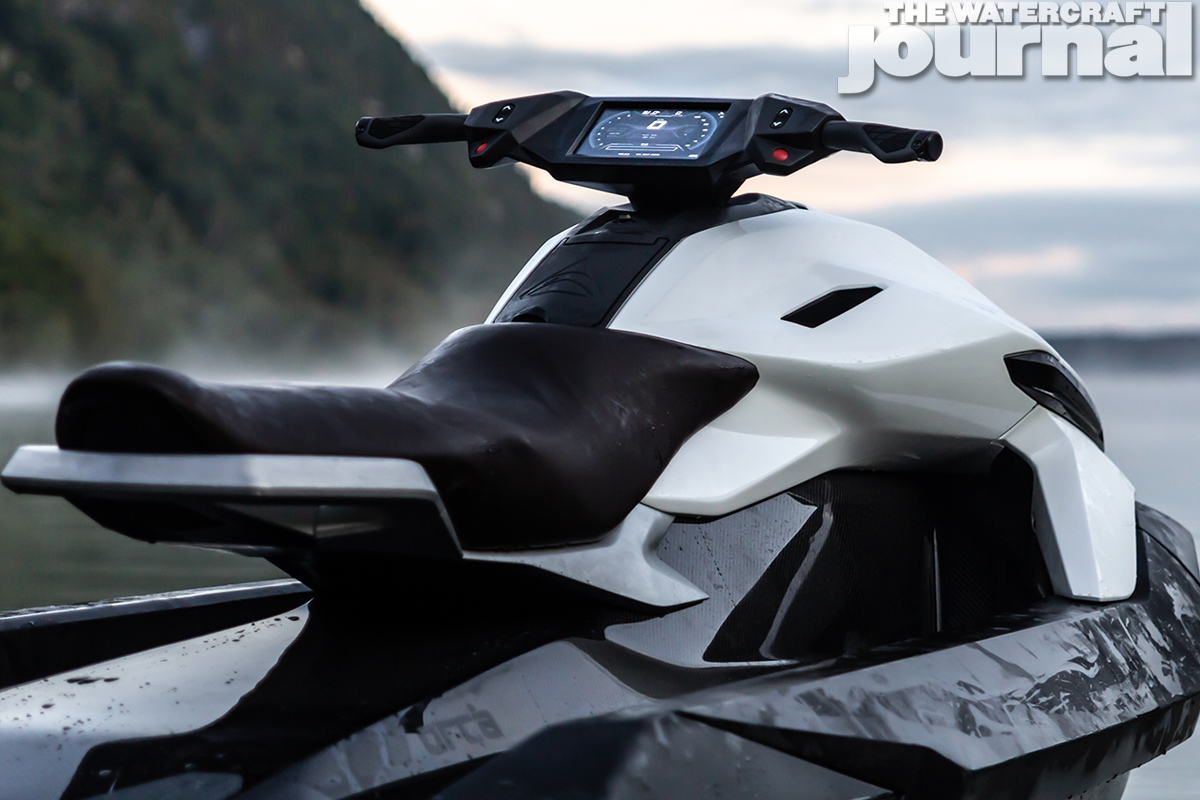
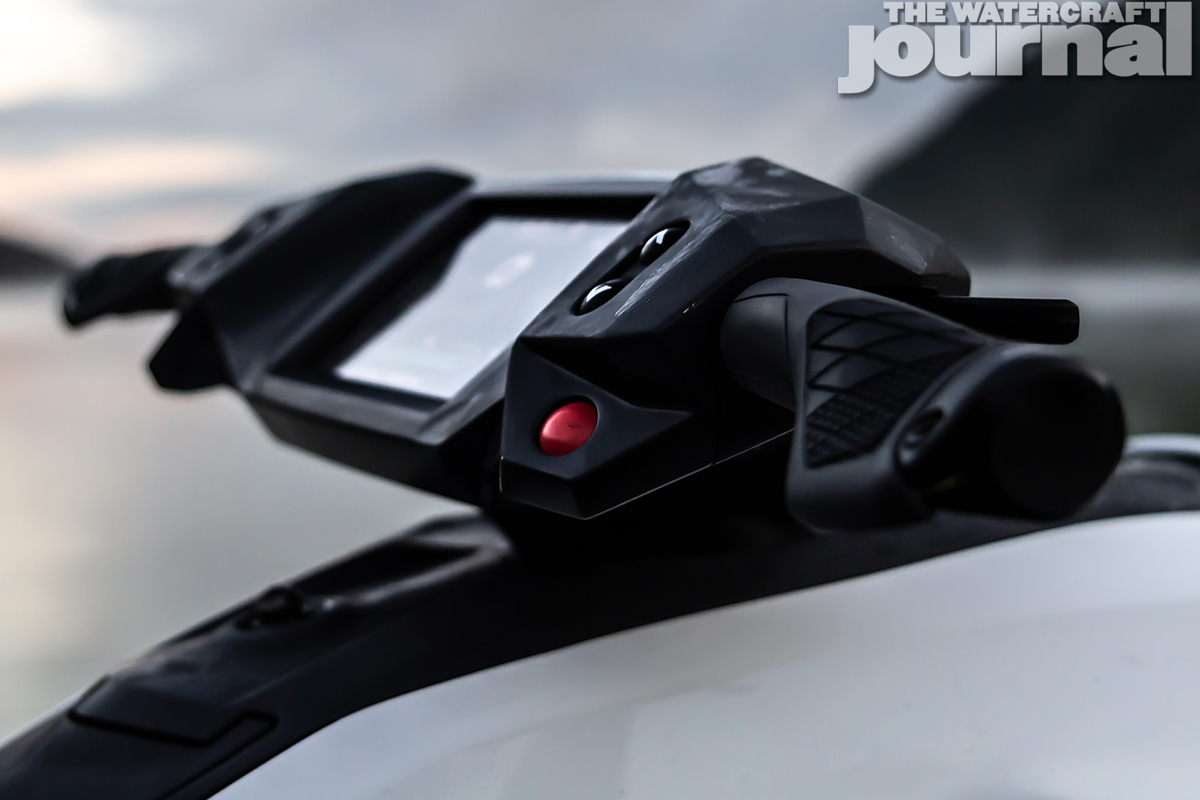
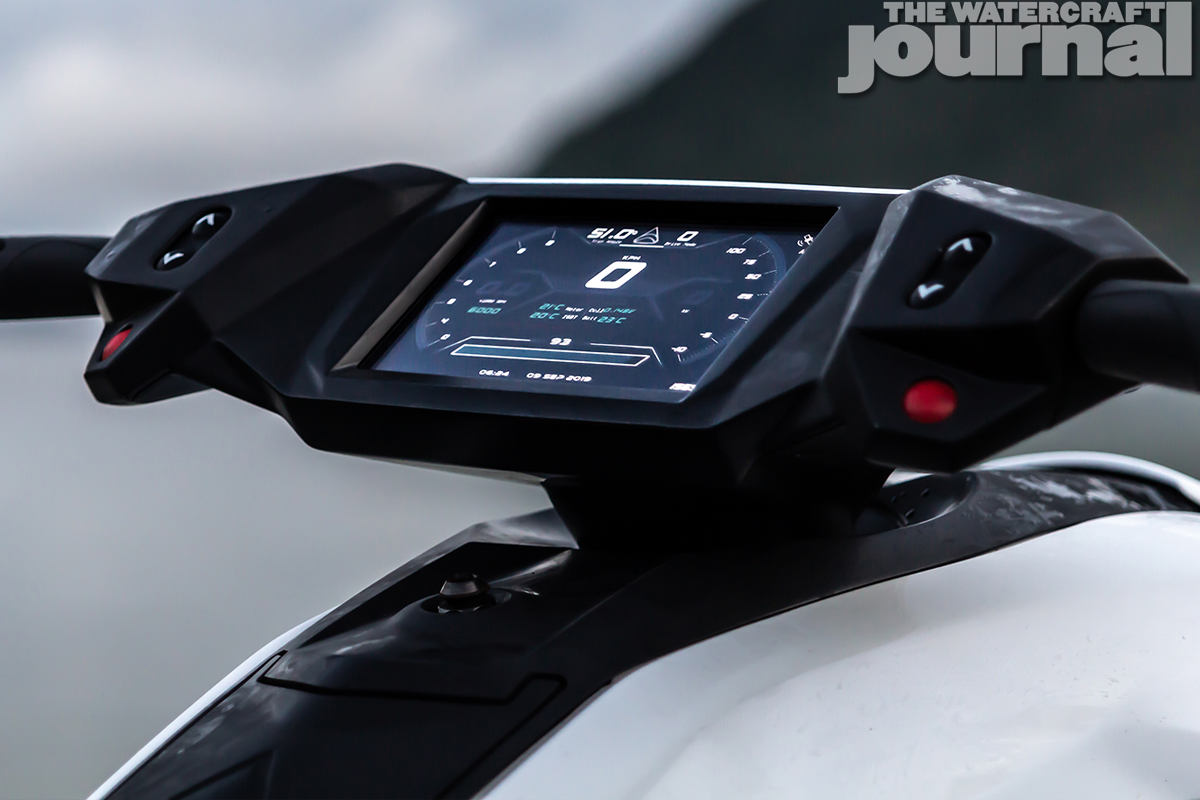
Although Taiga gives no data pertaining to storage – be it front bow or glove box – they do offer a great deal of insight pertaining to the Orca’s onboard computer; the ECM offers intelligent connectivity via built-in GPS mapping, LTE, Wi-Fi, and Bluetooth. “Users can choose from a full suite of integrated sensors from water temperature to cameras and sonar to explore their environment,” as well. Equally, users can adjust vehicle parameters either via the dashboard or a connected app.
And those connected Orca users will also receive continuous updates to their vehicles “as the latest advancements are made available via remote updates.” Even beyond that, the Orca will be backed by a 5-year no-maintenance powertrain warranty and remote diagnostics anywhere they are sold. Moreover, every Orca can be digitally tuned and adjusted to meet the driving parameters of its respective owner.
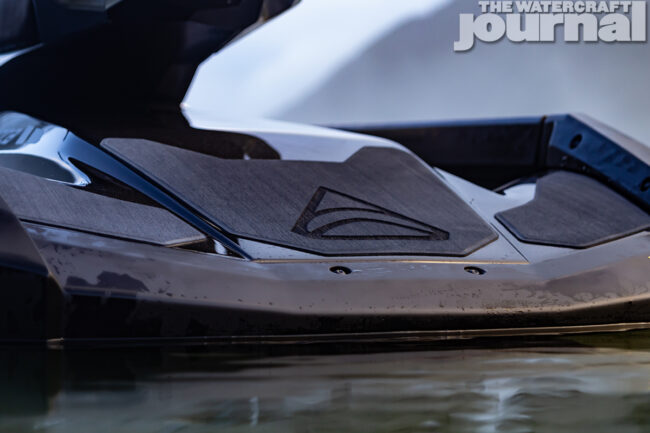
Externally, the Orca can be ordered to fit the customer’s specific tastes; be it choosing between a variety of seat upholstery options (between high-end fabrics and colors), or from 10 base colors, the Orca’s bodywork can also be optioned in an almost limitless color options with metallic and pristine gloss finishes. Even optional deck mat textures and colors can be selected.
Now here’s the catch: interested buyers must order through Taiga’s website, as there will only be a limited total production run of only 500 units. Of these, the first 100 Orcas built will receive commemorative badging branding them as “Founders Edition” models, featuring exclusive design elements and high-performance packages. Pricing for the exclusive edition will begin at $28,000 USD and will be delivered to North American customers in Summer 2020.
The remaining 400 production Orcas will begin at $24,000 USD, and will be made available to customers in North America and Europe shortly thereafter. As of this writing, reservations are now open online for the electric Orca PWC as well as the limited Founders Edition. And all units will be delivered through local Taiga-certified dealerships – so make sure to do a little searching online to find the closest dealer to you.
Taiga has high hopes for the Orca, both as a standalone vehicle being received by performance enthusiasts who also want a zero-emissions environmental footprint, as well as a gateway for future electric watercraft – hinting towards future models priced below $14,000 USD and even expanding Taiga’s electric propulsion platform into electric inboard and outboard products for the boating industry.
And here’s another video with actual audio of the ski in action:
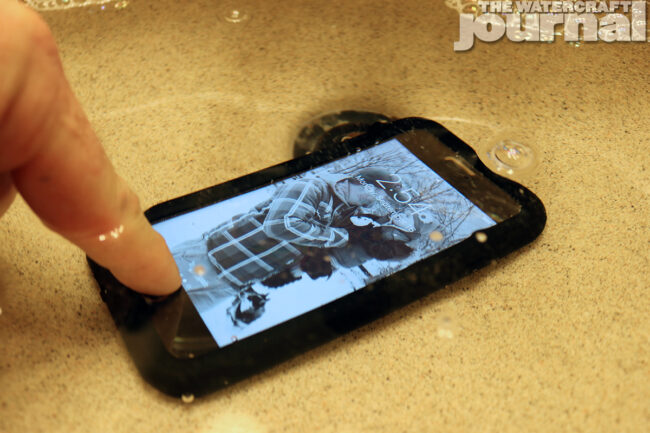
“Well, I think this is the one guys,” I announced to a small riding group one Saturday morning. “After five months of use, I’m pretty sure this is the best all-around waterproof iPhone case on the market.” For six years, I had been loyal to LifeProof cases; besides being unflappably waterproof, they were tough and protected my phone from the inevitable drops, impacts and rollovers that come with keeping a smartphone in your pocket while working in the garage.
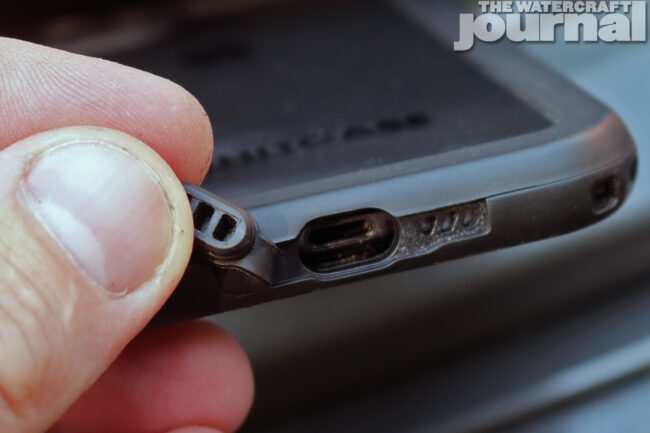
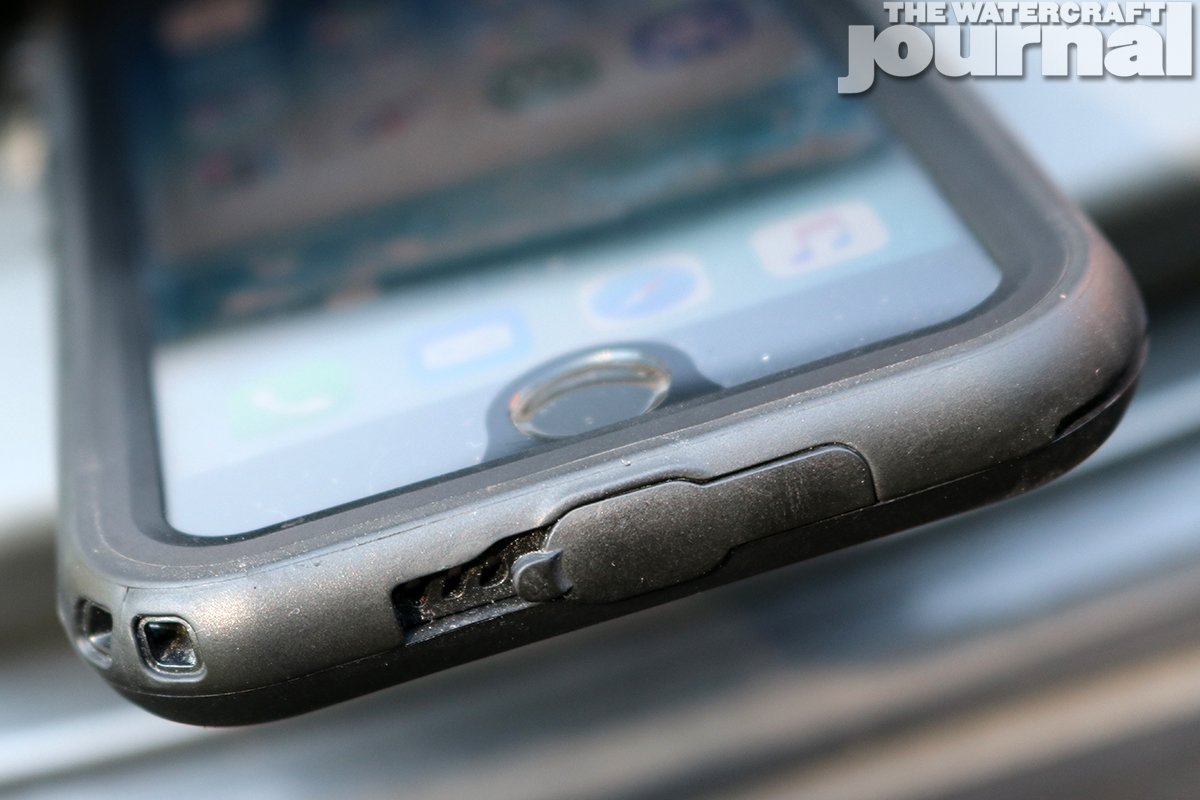
Yet, while being “life proof” I found that LifeProof cases weren’t very “Kevin proof,” and deteriorated after about a year-and-a-half. The rubberized seal always split, begin to peel away and sprout leaks – add to that two instances of the hinges that seal the headphone/charging port breaking and I was buying a new iPhone case every 18 months. And considering each case was roughly $80 and the expenses started to add up. It was about this time that I started looking for another manufacturer.
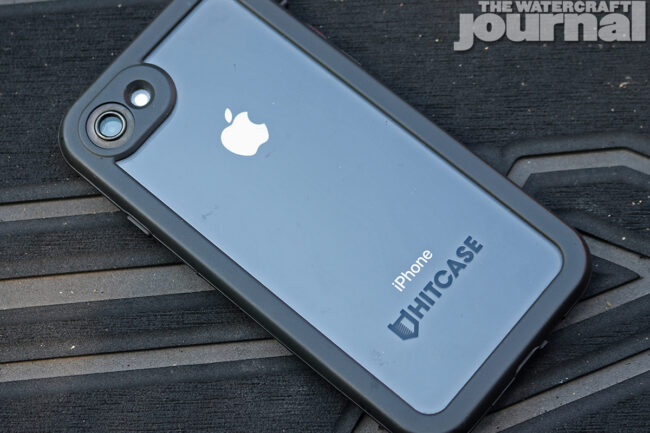
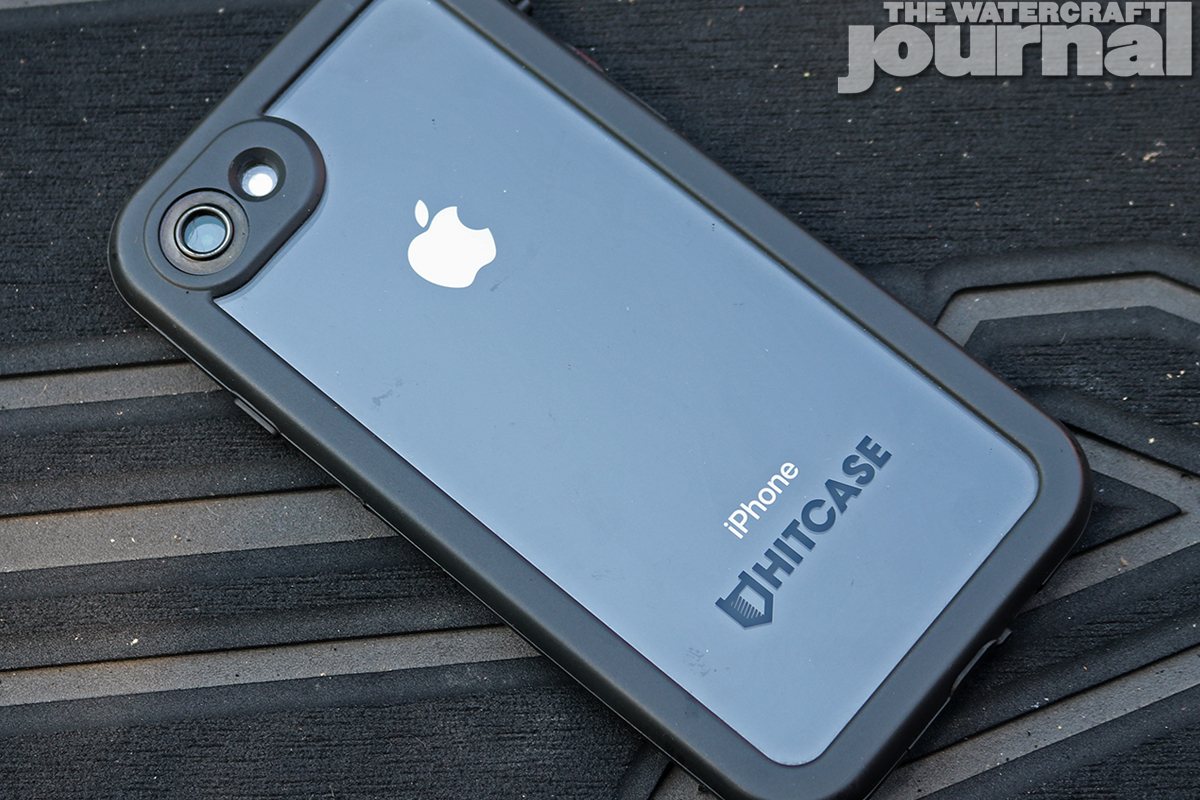
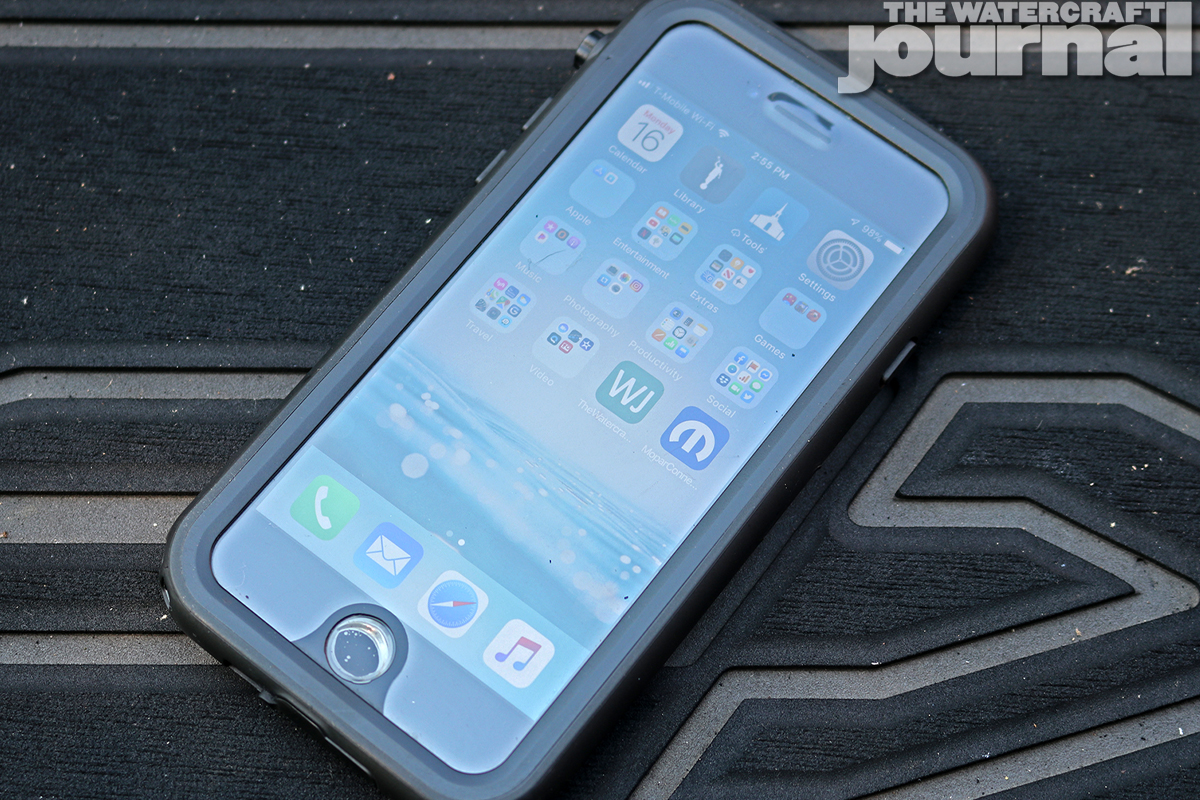
OtterBox has a solid reputation, but few offerings are waterproof – and that feature is quite the premium. Plus, OtterBoxes are ginormous and stepping up from an iPhone6S to an iPhone8 had already had me grappling with a far larger phone in my pocket. A little homework and some online reviews pointed me towards upstart manufacturer Hitcase and its Splash for iPhone 7/8. This waterproof iPhone8 case was remarkably slim, surprisingly so, and even more surprising, was its $69.99 asking price.
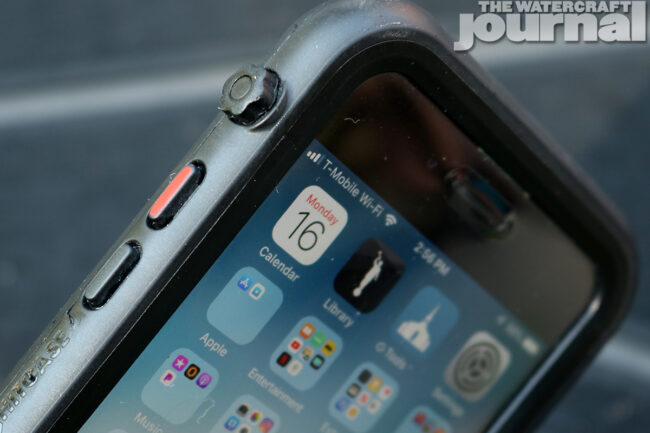
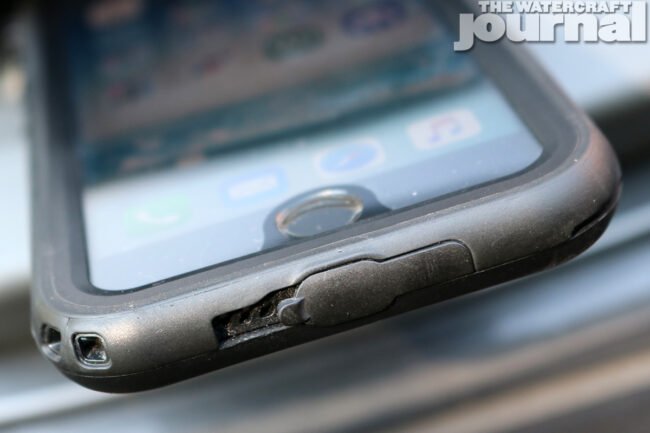
The two part case is comprised of an ultra-flat woven-fiber screen on both the front-and-back; the rear film permitting the iPhone to be charged wirelessly, which is a plus. The tactile thumb reader is just as responsive through the protective screen as without it. A waterproof diaphragm permits clear, unmuffled sound that comes in clear. So to is talking; the LifeProof almost always needed to be removed for clear communications. No so with the Hitcase. Also, the two-piece clam shell case makes for super-fast installation/removal as well.
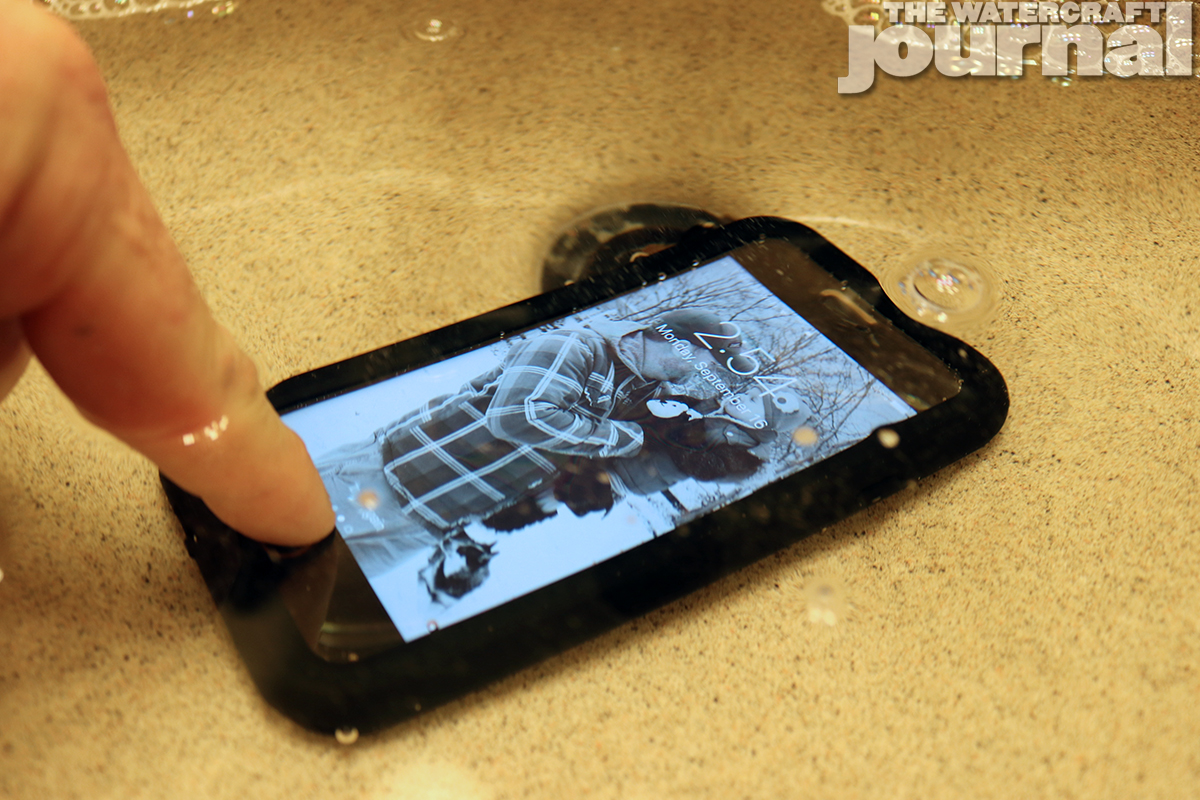
Of course, the big draw is the Splash’s durability and water protection. Wrapped in a DuroSoft TPU exterior rubber, the iPhone is easy-to-grip, never slick or oily (as other rubberized coatings can be), features a REDi Shutter Button for quick picture taking, a twist-style mute knob, and of course, has an impressive MIL-SPEC Shock rating, drop-proof up to 6-feet, and a IP68 waterproof rating of up to 10-feet. And if you’re looking to take a lot of underwater video, Hitcase also has waterproof TrueLUX iPhone Lenses available.
For those paying close attention to The Watercraft Journal, my iPhone8 has served mainly as the tool for up close photographs inside of watercraft, video recording for both our YouTube channel and Facebook page, and nearly every single Facebook Live broadcast. All done with the Hitcase Splash iPhone 7/8 case installed. I am interested to give one of their attachment lenses a try in the near future, particularly as we’ve been doing so much video for YouTube.
Somehow I’ve found an iPhone case that I can regularly beat up, drop tools on, roll over on top of, splash with caustic chemicals (more than once, ask me how), and of course, use freely in the water – and all for $10 less than what I was paying every year-and-a-half. Thus far, I haven’t seen much in the way of wear-and-tear; even the rubberized plug for the charging port hasn’t cracked or frayed! The only maintenance I’ve done is a thorough cleaning every 8-10 weeks. Other than that, the Hitcase is a true winner for the PWC enthusiast who brings their phone with them everywhere.
Each year, the IJSBA World Finals are held down in Lake Havasu, Arizona. This means racers and fans flock from all over the world to attend the big event. Because the event spans over a few days, many people opt to stay in a house rather than a hotel. Renting a house is a great cost-effective way to spend your time down in Lake Havasu. While there are multiple houses for rent, how do you know which one is the best for you?
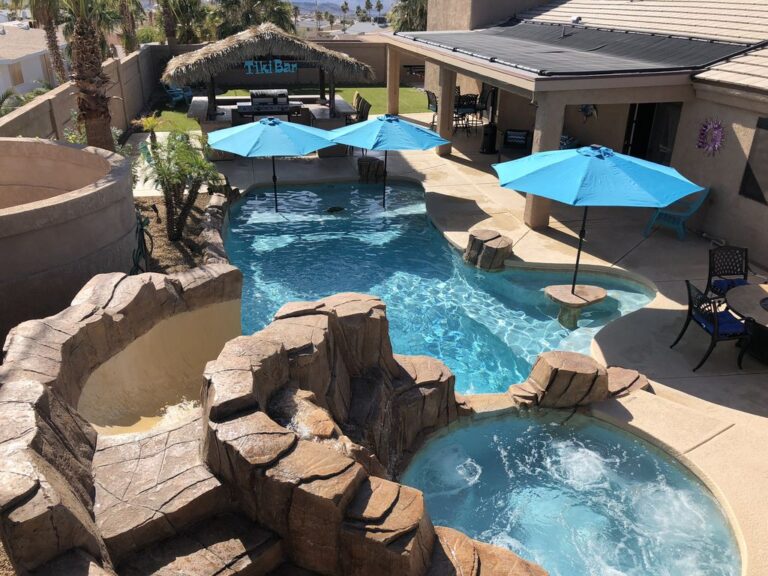
If you are a racer, planning on heading down to Lake Havasu there is a perfect house for you that just went up for rent. With 2,800sqft of living space with three bedrooms and a theatre room, you have enough room to sleep twelve people and enjoy your time! But wait, it gets better! There is a 3,000sqft garage, loaded with tools like engine hoists, welders, air compressors and much more.
There is no need to bring any tools down as this garage has everything you need for any repairs between the races. In the backyard, there is a huge heated swimming pool, and outdoor kitchen with a fireplace. Bring all of your friends and enjoy this beautiful house!
Don’t worry about distance though, the house is only 1.5 miles away from the famous Body Beach and 2 miles away from the race site. A quick shot home from the pit if you need to help someone out with a quick fix. The cost per night is $800 with a four night minimum. However, if you rent it for seven days, it will only cost you $4,800. You can save money by having a BBQ at the house and possibly sharing it with another family or with friends. Heck, it’s a vacation in beautiful Lake Havasu, live a little! For more photos and contact information, click the here.