Home Blog Page 176

Summer Spotlight on Sea-Doo’s 4.2 Gallon LinQ Cooler

0

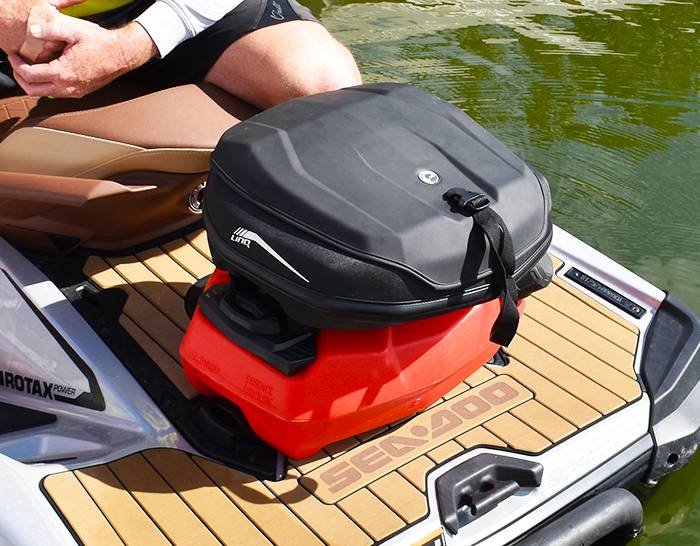
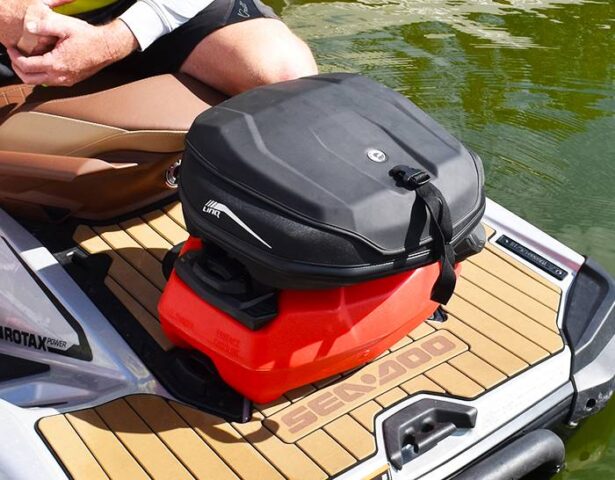
We have seen it many times this year, Sea-Doo’s LinQ system. The feature for this edition of the Sea-Doo media blog details the 4.2-gallon cooler system which snaps into your LinQ-equipped model.

If there were ever a time to talk about it, it’s now considering some of the recent heat waves that many regions have experienced this summer. Staying hydrated on your ride has never been easier than with this single accessory. Now you can keep drinks ice cold and food fresh on your next outing.

See the Sea-Doo media content below for more information:

The LinQ accessory system allows Sea-Doo watercraft owners to enhance their Sea-Doo life. The cooler is one of eight LinQ accessories that attaches in seconds with no tools. What ever they want to do on the water, the LinQ accessories allow them to do it further, longer, and with more of the things that they want with them.

The Sea-Doo 4.2-Gal (16 L) Cooler is bringing more convenience and adventure to the Sea-Doo Life. Keep your summer essentials cold with this high-quality cooler that quickly and securely attaches right on the back of your Sea-Doo. This durable, rotomolded cooler allows you to pack more, play more, and ride farther while your food and drinks stay fresh. Rumor has it, the cooler will comfortably fit a 12 pack (of soda). The LinQ 4.2-Gal Cooler accessory now fits all platforms and are sold separately for USD $284.99.

Gallery: Understanding Fluid Dynamics In Relation to Superior Sponson Design

1

All too often modern watercraft sponsons are described in terms best categorized as either blades or wings; and while key attributes are certainly appropriate to these two monikers, there is a great deal of science to be considered when designing a sponson – which is what we’ll be discussing in this essay.

This, like several other articles we have published before (here, here and here), is part of a succession of atypical in-depth feature entries aimed to provide the enthusiast audience a firmer understanding of the mechanisms integral to personal watercraft engineering and more appropriately, the study of hydrodynamics (ie. “fluid dynamics”).

Above: In these images, we will take a methodical look at the intended purposes and successful execution of a performance sponson, and compare two brands’ offerings for the 2019 Yamaha FX SVHO – the RIVA Racing Pro Series Sponson and the WORX Racing Sponson – as well as take a closer look at the factory-supplied sponson and how they stack up as well.

To begin, by its most basic definition, a watercraft sponson is a protrusion that extends outward from the sides of the hull to improve stability while at speed (and while stationary), lift at acceleration, and traction (ie. “bite”) in cornering. [For this essay, we’re going to forgo exploration of forward-mounted sponsons typically added to standup watercraft (ie. “tubbies”) or those used by sailing vessels, and focus strictly on personal watercraft runabouts. –Ed.]

So why is lift so important? A watercraft sits lowest in the water while at rest. While moving at low speeds, the resistance of the water’s density against the momentum of the craft will generate some lift naturally. By using angled sponsons (similar to aircraft wings), added lift will raise the watercraft higher at a quicker rate, bringing the PWC to plane where it has the least resistance.

Above: Both RIVA and WORX’s offerings provide 3-levels of blade height adjustment. Note the difference in lengths for both the blades and backing plates.

The early Sea-Doo GTs in the late 1980s were the first runabouts to employ sponsons; their purpose was to generate initial lift and reduce porpoising. While these first crude “block type” sponsons were effective in providing better stability, “sponsons didn’t become a tool for better handling until 1993, when Sea-Doo widened their existing GT sponsons and added a curve,” according to a report by Joel Johnson.

This immediately drew the attention of the racing/performance aftermarket community and soon became an essential fixture in future watercraft design. During these nascent years, engineers and shapers retained a basic “block” shape, featuring a round or pointed nose to allow water to pass over it more efficiently.

Above: Unlike the RIVA sponson, the WORX sponson was not designed specifically for the FX, but is applicable for all FZ (2008-2016) and three generations of FX (2008-2019+) models. 

While intended to provide added lift at the back of the hull during acceleration, these primitive sponsons also aided side-to-side stability while traveling at speed and reduced porpoising by increasing hull surface at the rear of the craft as well. As sponson design progressed so did the science and performance gains with them.

Sponson design soon grew to include a winged leading edge. This new leading edge allowed the sponson to provide not only initial lift, increased running surface and side-to-side stability, but increased grip in corners. The extended, wing-like outermost edge allowed riders to turn sharper and with confidence that the back end wouldn’t break loose and “slide out.” Today, most all personal watercraft employ a variation on this type of design.

Above: Note the difference in metal inserts; the RIVA offerings are made with billet aluminum inserts for added strength; the WORX is a flared machine set screw.

A third basic design which has made its way into a small selection of factory-equipped watercraft, as well as become the go-to design for the performance aftermarket are “blade” or “rudder-type” sponsons. These use a flat-faced rudder attached vertically to a block-type sponson. The flat, vertical blade of the sponson provides a “sharper and more pronounced edge” to catch the water.

Unfortunately, not all sponson designs are created equal – and there is no “one design” that fits all hulls. As a hull’s shape or weight distribution can dictate how a watercraft will behave in a variety of sea-state conditions; so too will specifically-matched sponsons affect the watercraft’s final ability to navigate predictably, comfortably and with confidence.

Above: RIVA Racing’s backing plate is precision-machined to hollow out unnecessary weight and provide drains to evacuate water while on the trailer. The WORX plate is a solid piece.

As Johnson explains, “Generally, the more the sponson angles up toward the front of the craft, the more lift it provides, but if it’s angled too far up, it won’t grip the water as well in turns. On the other hand, if the sponson is angled to far down, water can start flowing over it and create control problems.”

Advanced hull shapers and sponson designers have found that they can also manipulate the hull’s pivot point; or where on the hull the craft executes the center of its turn. This means a sponson properly positioned to match the watercraft hull’s particular shape can literally change where on the PWC it rotates (or pivots) into a turn. When done right, sponsons can radically increase the vehicle’s predictability and control in full-throttle or turbulent applications.

Above: One of the more interesting features to the RIVA Racing sponson is the backplate’s natural tapering at the tail and machined angle that blends into the blade. This results is a sponson that generates less rear turbulence as water passes above and below it, and places a greater emphasis on the blade. 

A little less than a year ago, The Watercraft Journal discovered some interesting behavior with a long-term test 2018 Sea-Doo RXT-X 300. Initial acceleration testing showed that the lift generated by the Sea-Doo’s ST3 hull, new “Launch Control” feature and factory-equipped X-series sponsons gave the RXT-X 300 a key advantage; the runabout shot to plane half a second faster than its competition.

Yet, when it came to negotiating through the narrow, pump wash-churned bayous of Louisiana, the factory sponsons’ leading edge couldn’t keep the tail secure, resulting in two unexpected spin-outs. Equally notable was the RXT-X’s tendency cut sharply and suddenly during wide gradual turns when the sponsons caught the water, surprising the riders.

Above: Note the radical camber angle of the RIVA backing plate compared to the near-flat camber of the WORX sponson. This places the sponsons’ leading edge not only further out but wider than the hull’s outermost chine.

This lack of “bite” in turbulence and the sudden “snap” effect when the sponsons regained traction were due to a single issue: poor leading edge design. The sponsons’ leading edge was placed too far back, not angled out wide enough from the outermost chines, and too high up on the hull, all of which negatively effected the Sea-Doo’s natural pivot point. By moving the sponsons’ leading edge forward and down, these effects could be lessened.
Interestingly, Sea-Doo addressed this very issue with the RXP-X 300 years earlier. Featuring an adjustable blade-and-block design, owners of the RXP-X can set their sponsons’ blade depth. Providing three settings of adjustment, the factory-equipped X-series sponsons are exactly what the larger RXT-X 300 needed but weren’t available.

Above: Both WORX and RIVA offer three-points of adjustment; RIVA places the adjustment inserts into the backing plate; WORX has them in the blade itself.

This lead to the RIVA Racing Pro Series Sponsons for the RXT-X 300 being created. Specifically shaped in a receding step pattern, with the blades being deepest at the front and gradually narrowing towards the tail, the sponsons’ deep-reaching blades ensured added traction in all water conditions; and their forward-emphasis moved the hull’s pivot point several inches forward, closer to the craft’s center of weight.

Typically, the deeper the sponson is placed, the more aggressive the handling. However, if set too far down, the sponson can catch unexpectedly and abruptly, particularly in rough water. This is why RIVA Racing tapered the blade’s design; to reduce overall drag (which reduces overall speed) while giving the RXT-X the added traction it required. The Pro Series sponsons radically changed how the RXT-X tracked through chop, bit through corners and maneuvered at high speeds; and made us fall in love with the Sea-Doo all over again.

Above: Blade design is paramount to a successful sponson. The RIVA entry mimics the factory’s leading edge and extends a step thus directly effecting the Yamaha FX’s pivot point, improving the hull’s ability to corner on its tail. The WORX offering is a solid, uniform blade which will certainly produce drag and added bite but gives no consideration to adjusting the hull’s pivot point.

RIVA’s Pro-Series sponsons are made in the aforementioned “blade-and-block” design; using a shaped block and vertical blade configuration. Great care is spent to ensure that the mounting block provides the necessary lift and stability the same way aerodynamics are applied to designing aircraft wings. In fact, hydrodynamics plays an integral part in design simply because water is 784 times denser than air, and ergo far more resistant.

Paying particular attention to the Pro Series Sponsons for the new 2019 Yamaha FX WaveRunner, RIVA Racing made unique changes to its newest design that delineate it from those offered on the Sea-Doo RXT-X. The easiest to note is the blade shape; with the Yamaha’s favoring the tail while the Sea-Doo’s its nose. This was done to counter the new FX’s bow-heavy tendencies and give the craft a more balanced, rearward pivot point.

Above left: Pay close attention to the factory sponsons’ almost “snubbed” forward angle and the angled, almost winged leading edge favoring the sponsons’ latter half. Above center: RIVA Racing’s Pro Series sponson mimics the rounded nose and extends the stock “winglet” with the larger stepped and cambered blade. Above right: The WORX blade features a more up-swept, angled nose angle and extends the blade depth uniformly down the length of the sponson.

Equally, the mounting block (or as RIVA describes a “backing plate”) is CNC machined with a gradual-lift angle at the nose and a teardrop-like taper at the rear. This borrows from low-drag shapes found in nature, with a one-of-a-kind machined arch that (when mounted to the blade) hollows the mounting block into a traction-increasing inverse strake.

This effect draws the FX Yamaha’s tail deeper into the water, reversing the hull’s tendency to favor the bow; increasing the WaveRunner’s traction and straight line stability in an array of sea-state conditions. Interestingly, the length of the blade extends beyond the factory sponson, as does the outward-angled camber of the blade.

Above left: This comparison is probably the most important. The first is the factory one-piece sponson; note the camber of the leading edge and height (or vertical thickness) of the sponson. Above center: The RIVA sponson retains a near-identical sponson height and width, and extends the leading edge depth and camber angle for increased bite in turns and place greater emphasis on moving the pivot point rearward. Of course, most prominent is the RIVA’s machined arch that blends the backing plate into the blade itself, creating an inverted strake. Above right: The WORX sponson shows a far thicker sponson height, which will result in increased rear turbulence and a near-vertical blade camber. With nearly zero camber and a solid blade shape, the sponson will act more like a rudder than helping amplify the Yamaha’s natural hull attributes. 

The camber of the blade can be compared to the leading edge of a single-piece sponson; the angle, shape and length of this edge can right dictate how a craft can lean into a corner, retain traction, and cut a clean line around a turn. If angled too high or too low (or vertically) the effectiveness of the sponson can be effected, as can the craft’s ability to remain stable and manageable in said turn.

A straight, vertical blade works less as a leading edge and more like a rudder, which if not shaped to match the unique design of the hull can deliver ill if not erratic results. All of this has been knowledge gained over the past 30 years, and technology has only worked to reveal greater understanding of the hydrodynamics involved in creating an optimally-operating hull-and-sponson configuration that provides the rider the single most predictable, high performance handling watercraft to date.

How Many Hours On Your PWC Is Too Many?

1

It can be difficult to look at a personal watercraft for sale and see it with 200 hours on it. You may think to yourself, is that too high or does it still have a lot of life left? How can I know that I’m not buying a pile of junk? Or you happen to be looking at your own personal watercraft and asking yourself if it is time to buy a new one? Well lets dive into this widely discussed topic with the help from Steven at SteveninSales.com

For a general gauge, based on average data, a rider will put on about 30 hours a season. This number can vary depending on multiple factors. Again this is data from riders who ride in just the summer months and from others who ride year round. Just like a car or truck, people enjoy riding so if you are buying a used personal watercraft that is 7 years old, you can expect it to have about 210 hours on the motor. No matter how many hours are on the motor, it all boils down to the maintenance. Preforming general maintenance and at mandatory intervals is very important to having a motor that will last long. For some maintenance tips, check out the article we covered a few weeks back.

You may be browsing online during your lunch break and see a great deal for a newer personal watercraft but see that it has over 300 or more hours on it. You may not want to shy away at this deal for a few things. The owner may have used it year round or gone on multiple long trips. Just like a car, a car with a lot of highway miles is not always a bad deal. Again, it comes down to the model and the maintenance done. If it is a lower end model without a lot of horsepower, it could be a good deal. Whereas, if it was a high horsepower supercharged watercraft, I would be a little more cautious about purchasing it.

If you are mechanically inclined, there are multiple aftermarket dealers who make quality parts. Check to see if they make the parts for the watercraft you are interested in. If not, you should really stay away from that particular watercraft altogether. Whenever making a big purchase such as a personal watercraft, go with your gut feeling. Do your research but keep in mind that you want this to last for years, not just for the next weekend.

Gallery: 2019 Can-Am Belle River Race; Amy Green One-on-One

0

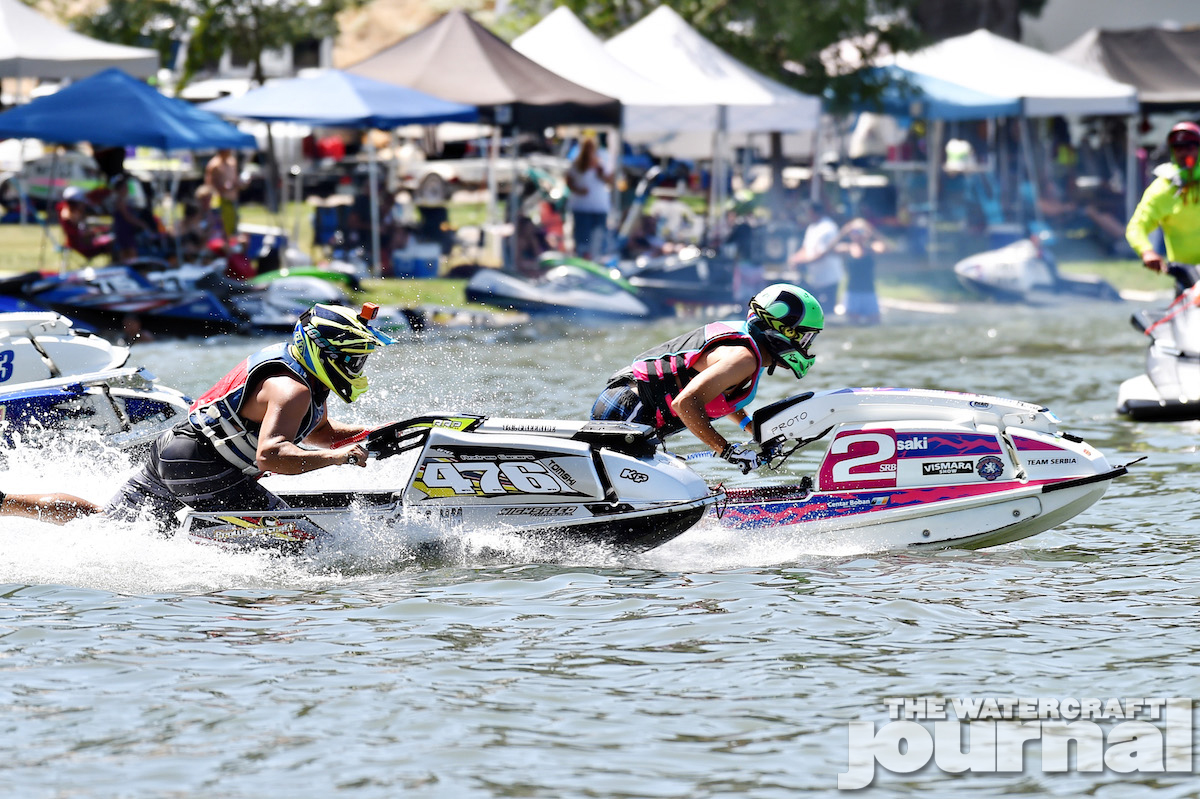
With the 2019 Can-Am Belle River Race in the books, The Watercraft Journal sat down with race promoter Amy Green to talk about the spirit behind Can-Am, and about the fun from this year’s race.

The Watercraft Journal: Let’s start with some background info.  How long has Can-Am been around, and how long have you been leading the charge?
Amy Green: CanAm has been around 9 years and I’ve been leading it since the beginning.  However, Ray (Proulx) is the one who brought racing back to Eastern Ontario after 10 years of no events by lobbying the APBA to include Belle River as part of the National Tour in 2009. Although I’m the director of Can-Am Watercross, Ray is in charge of operations and I couldn’t do it without him. He’s my operating partner.

WCJ:  What races besides Belle River did Can-Am run this year?
AG: None. This is the first year that we’ve only done one event.

WCJ: I bet that was tough, to cut back on the races and your involvement.
AG: We just didn’t want to trounce on any other events, so we had to pass on other dates offered this year. Our goal is to grow the sport and provide racers opportunities to race. We actively work to prevent conflicting dates with any other events in the area, and have passed on opportunities if the venue’s dates are in conflict.

We don’t want to make racers choose: no one wins and the sport suffer when that happens. We are not typical event promoters; we are sponsors who host events. Can-Am is a not-for-profit. Ray and I have sponsored more than 30 events in the last 10 years (at) more than $200,000.

WCJ: That is a lot of time, a lot of sweat, and a lot of funds, to put into the sport. Why the dedication?
AG: We were so fortunate to have the opportunity to race for so many years and so thankful for all the friendships and experiences, we wanted to give back to the sport so that others could have that same opportunity.

WCJ: Are most of your events based in Canada? Or the US? And are both you and Ray Canadian citizens, or is this truly a Canadian and American partnership?
AG: I was living in California when we started, but the need was in Southern Ontario and “Region 6” MI/OH/IN/IL, so that is where we focused and where our races have been. Ray is Canadian, and grew up in Belle River. I have been commuting from Cali/Nevada for nine years. I am American. I met Ray in Belle River in 2009, when I was racing the US Tour and he had coordinated it.

WCJ:  OK, let’s take a look specifically at the Belle River race. It seems to be a very popular race with competitors in the nearby region, but also draws racers from other regions. About how many racers do you have at this race each year?
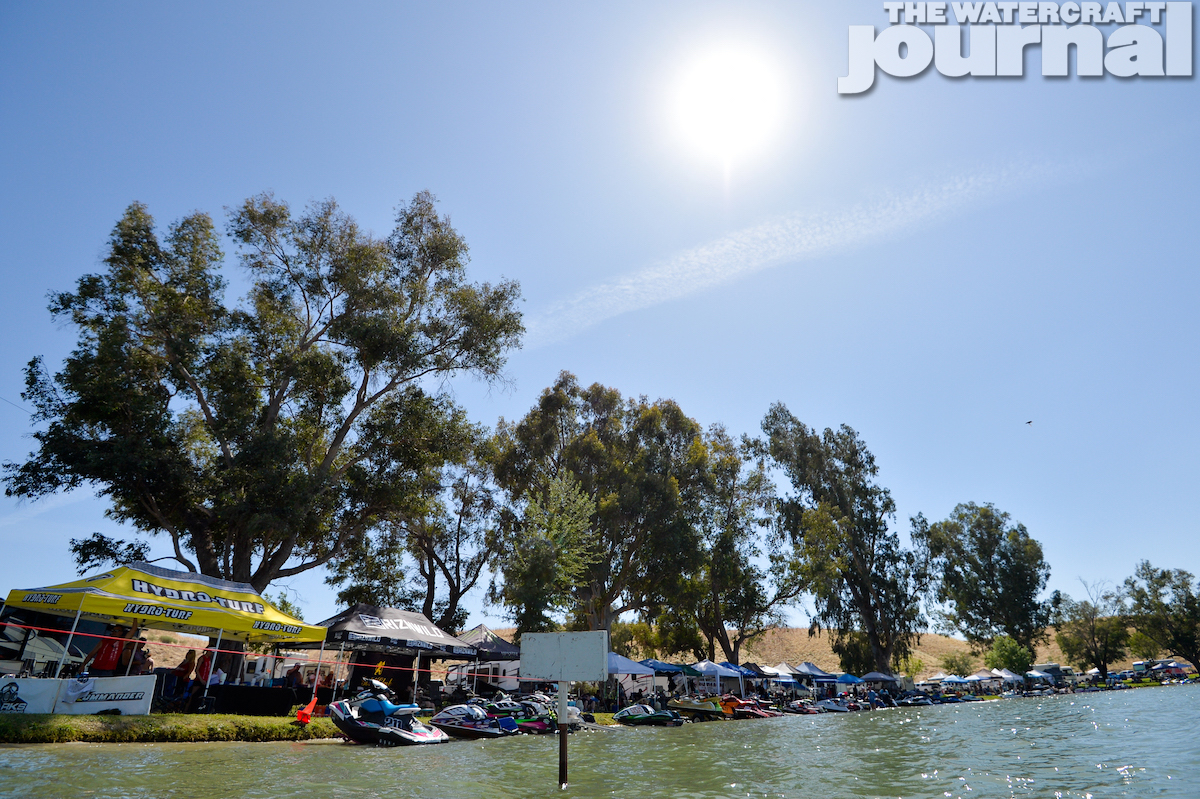
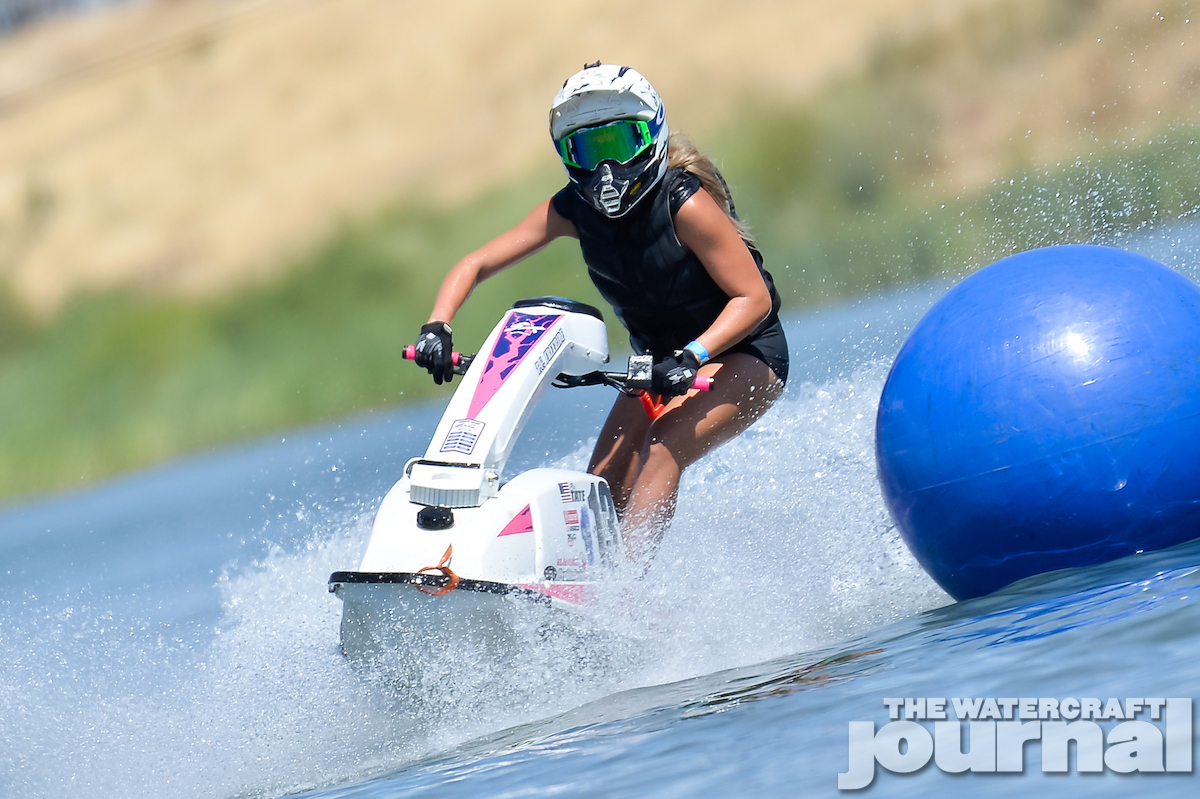
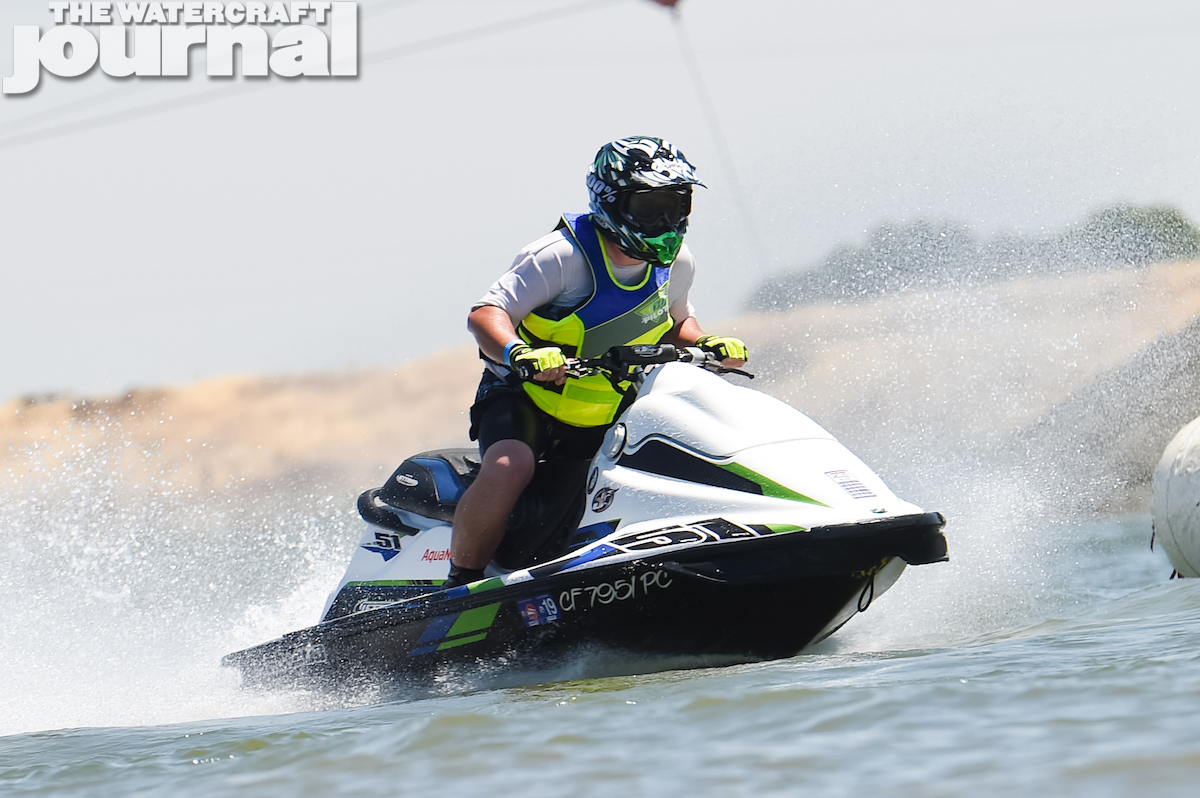
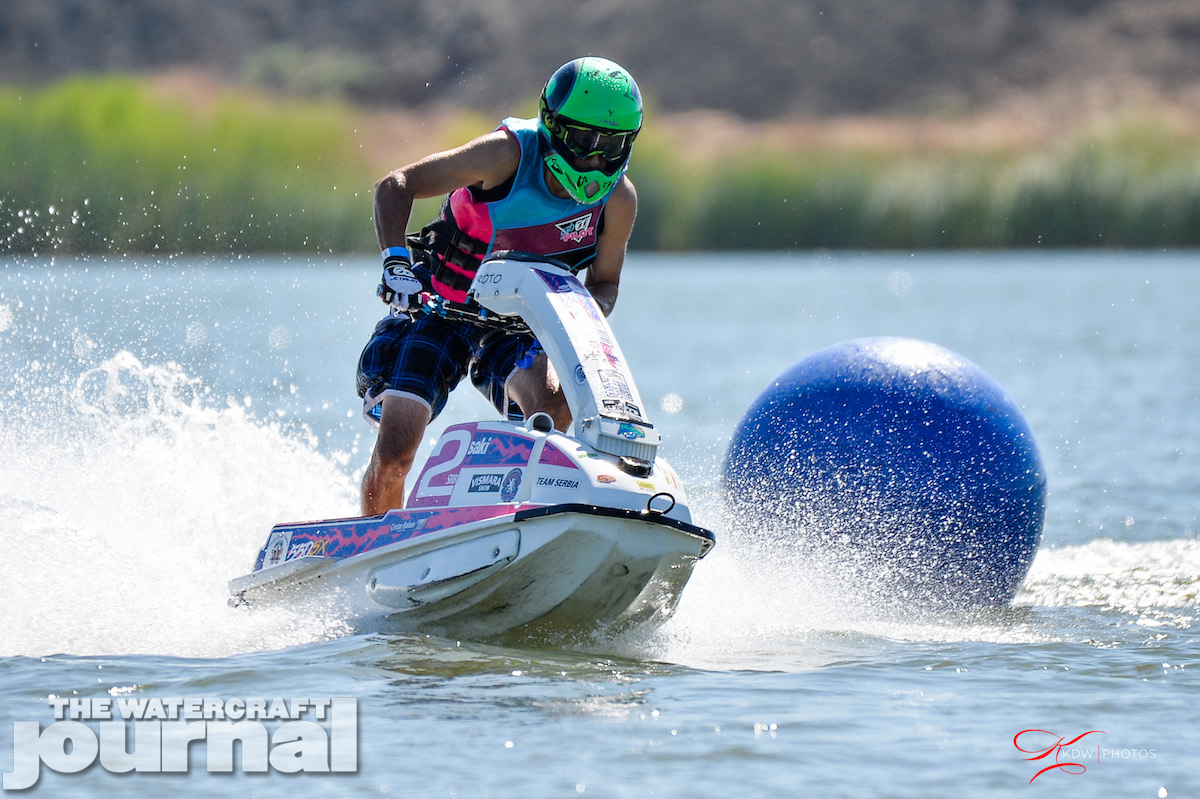
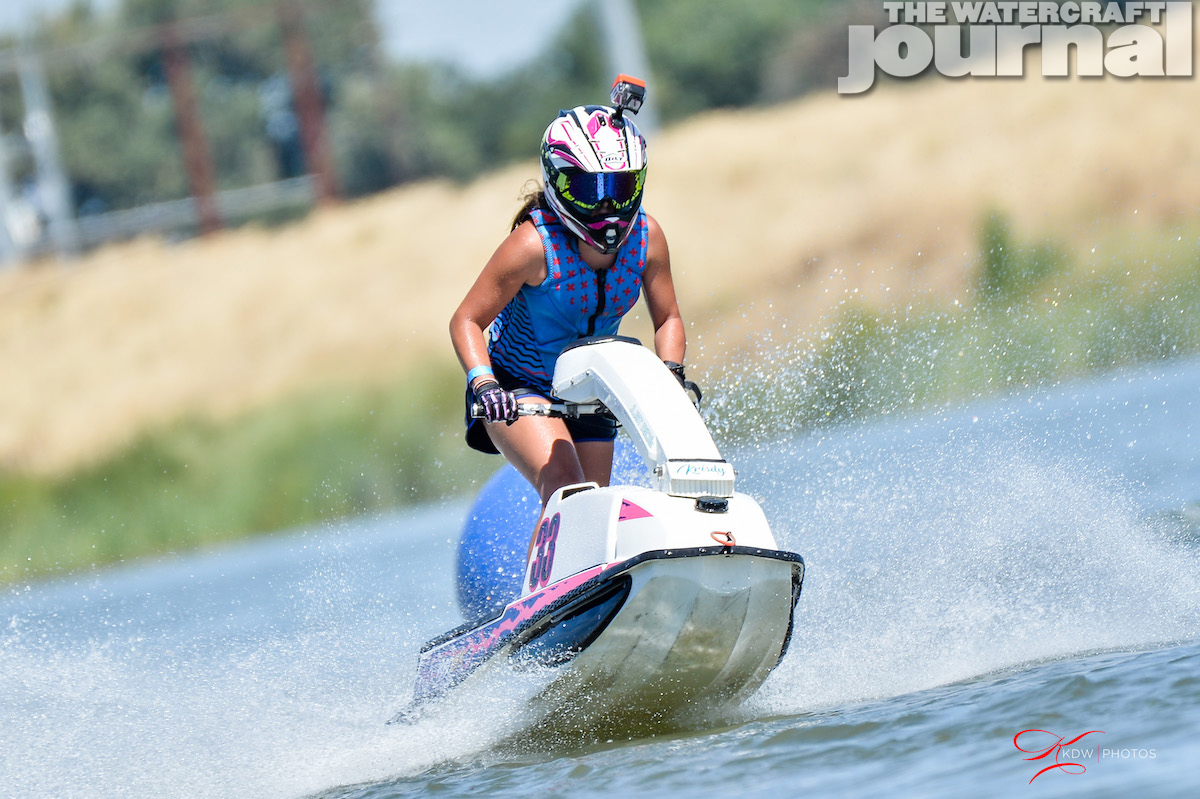
AG: We also had racers from Australia and Serbia!  We’ve had about 70 racers in recent years. Racers love the venue. They love being able to camp right where they race. The festival (The Belle River SunSplash Festival, held at the same time as the watercross race, in the park adjacent to the race site) brings lots of spectators and things for the racers and their families to do after the races.

They like being able to walk to restaurants and shops, and the hospitality of the town people. The town people have developed favorite racers they look forward to seeing each year. The local boaters anchor around the perimeter of the race course and make it an all day watch party.

WCJ: The Belle River race seems to draw a good number of junior racers, correct?
AG: We’ve had between 13-20 juniors each year since 2009. We also always have lots of beginners and novices. This year we had so many novices, we ran qualifiers. Many of our racers have advanced to racing around the US, AquaX and the World Finals (Havasu) … just what we like to see. Our goal is to inspire new racers, give them a great experience, and welcome them to the racing community.

WCJ: There seemed to be some question, earlier this year, whether Belle River would even happen; Mother Nature seemed set to intervene?
AG: Yes, the water level is so high in that area that a state of emergency was declared recently. Moving pit parking to the grass area proved to work well, and the high water level was no problem at all for the event, and the pier makes great viewing for spectators.

WCJ:  Looking back over the past several years, what were some of the race classes where you expected some tough head-to-head competition this year?
AG: The Dolecki brothers battling in the Pro-Am Stock Runabout class was exciting to watch. They are both great racers, skilled at setting up their Sea-Doos, and they just railed. The splits were perfect, so it was awesome watching them switch back and forth lap after lap trying to make one or the other work just a bit faster.

There is a core group of guys in the 1000SS class that have been battling for more than 25 years. THey are all super fast, and any one of them can win on any given day. Rick Maj, Russ Ververka, Jayme Cheney, and Todd Czarcinski. They didn’t disappoint this year.

WCJ: There is definitely a “family” feel in the pits. Not just that it is family-friendly, bu these racers all know each other. There seems to be plenty of the expected “trash talk”, but it all seems good-natured, with underlying friendships and respect.
AG:  Yes, many friendships that started more than 30 years ago. And, it’s cool to see the OG’s welcome new racers and make them feel like lifelong family , too. Many long-time Can-Am racers have their kids racing now. There are lots of two-generation race families.

WCJ: What is your favorite “moment” from this year’s race?
AG: One of my favorite moments of the event was seeing Kris Hall, multi-time World Champion Polaris racer, make a spur of the moment decision to come back out of retirement (for only the 2nd time in 20 years) and race Ryan DiPasqual’s Pro785 with the guys in 1000SS. Kris Hall was a former teammate of mine, as I raced for Polaris too in the late 90s.

WCJ: One last question, and I’ll let you off the hook. Is 2020 on the books yet?
AG: Yes, 2002 is on the schedule for the 2nd weekend in July again. And, joining the Can-Am crew this year, Errol Lange has US venues in the works again for next year!

WCJ: That is great news! Anything you would like to add before we let you go?
AG: I would like to give special thanks to Belle River BIA, the Town of Lakeshore, React Tool & Mold, Tilbury Yamaha, Keystone Groundworks, Windsor Essex Pelee Tourism, and Unique Tool & Gauge. For results of the 2019 Belle River races, visit HERE

You Can Still Buy R&D Racing Products Through Hot Products

0

For those of you that are unaware, R&D Racing after 30 years in business, closed their doors earlier this year. The main reason being that the cost of business is continuing to grow at an unprecedented rate and they were unable to stay profitable. R&D Racing played a very important role in providing thousands of customers the satisfaction of buying quality performance parts for their watercraft.

Hot Products is another great personal watercraft company that offers aftermarket performance parts. During the closing process R&D Racing went through, Hot Products made multiple trips their and bought up some of the inventory. This is great news to you because you now have the opportunity to buy some of the products R&D Racing made.

Be mindful that there is only a limited quantity of parts available and they vary depending on the brand and model of your watercraft. If you visit the Hot Products website and use their “Inventory Lookup” section, you can see what is available. Be sure to check them out quick because these parts are going quick and will be gone soon!

It is difficult to hear when a great company such as R&D Racing closes their doors when they played such a vital role in providing great parts for their customers and racing team. Luckily Hot Products was able to step in. Keep supporting the companies that make the sport of personal watercrafts go because it helps grow this sport.

A Machine For The Masses: 2019 Sea-Doo GTI Pro 130

1

It’s no secret that the PWC rental market is huge. Most popular tourist lakes and waterways have some type of outlet on them that rents out PWC for a reasonable rate. The new 2019 GTI Pro 130 is Sea-Doo’s first unit purpose-built for the rental business; giving rental operators the ability to offer their customers a reliable, fuel-efficient and fun unit that remains easy to ride. This model was developed after working with rental outlets to determine what best suited their needs. The result is absolutely fantastic.

Due to the unique and exclusive purpose of the GTI Pro 130, we at The Watercraft Journal really didn’t expect to ever get the chance to test one of these babies out. Yet, as luck would have it, we got our chance! On a recent house boating trip, we decided to rent a PWC to play with for the weekend. Much to our surprise, we were given a brand spanking new 2019 Sea-Doo GTI Pro 130 with literally zero hours on it. In fact, our butts were the first to sit on the seat!

Featured in White and Krypton Green, the GTI Pro 130 retains all of the current GTI (Recreation segment) dimensions; meaning it comes in at just over 11-feet in length and 4-feet in width, offering the ability for 3 riders at a time (with a max capacity of 600-pounds or 272 kg) while having the largest storage space in its category at 30.8 gallons (116.6 liters)!

The GTI Pro 130 uses a medium-V shaped hull that comes to plane quickly and rides smoothly through wind-whipped chop. The unit remains totally stable while being playful and remained very predictable. We tossed it around pretty good in both smooth and choppy waters and never once felt any type of tipping or high-centering motion.

It’s powered by a naturally aspirated 1,494cc Rotax 1503 engine producing 130-horsepower that runs on normal 87 octane fuel (15.9 gallon or 60 liter fuel capacity). It features a D-Sea-Bel exhaust system and a Closed-Loop Cooling System (CLCS) that prevents corrosive saltwater and damaging debris from entering the engine for increased reliability and peace of mind while riding.

To make sure the GTI Pro 130s would remain reliable in the rental market for years to come, they pulled out all of the stops with strengthening everything up. The 100-percent fiberglass GTI Pro 130 comes in with a dry weight of 718-pounds (326 kg), which is 78-pounds heavier than the Polytec-hulled GTI (powered by a 900 ACE) but nearly the same difference less than the 790-pound GTI SE 155.

A dedicated impeller with thicker blades and a straight leading edge was installed to reduce debris intrusion along with a reinforced, larger diameter drive shaft. Further strengthening includes a highly resistant wear ring (a 60-percent compression strength gain and 42-percent tensile strength improvement) along with a heavier duty wiring harness (18 gauge wire, F6 braided sleeve, silver plated fuse box terminals and high-temperature insulated XLFE wire was added to critical spots).

Thanks to BRP’s Intelligent Throttle Control (iTC) offers two riding modes; Sport and ECO. Sport mode turns the GTI Pro 130 into a whole different monster that quickly puts a huge smile on your face. ECO mode optimizes power output for up to 46-percent improved fuel efficiency while maintaining a strong fun factor. We spent a good 5-6 solid hours blasting around on it and only used about $50 worth of fuel.

The seat has been upgraded with 80-percent thicker thermoformed vinyl material making it more resistant to tearing or premature wear. The heavy duty handle grips feature higher wear resistance and stiffness. The Sea-Doo exclusive iBR (Intelligent Brake and Reverse) system stops the watercraft sooner and provides more control at low speeds and in reverse.

With both hands on the handlebars, riders can engage forward, neutral, and reverse for stable, worry-free maneuvering at low speeds. The iBR system starts you in Neutral and allows docking – be it loading or offloading a trailer, or pulling up to a dock – a worry-free exercise. We used it when pulling up to the side of our houseboat and found it to be a very useful system to have. It allowed us to pick up and drop off riders without bumping into the side of the boat.

The gauge cluster is clutter-free and easy to read with a center LCD screen reading vitals in real-time. The speedometer is fed by GPS, so you’re actually going as fast as it tells you, and the Mode toggle allows you to cycle through the various displays. As with a SE, we also enjoyed Sea-Doo’s VTS control, allowing us to adjust the trim setting at will. The unit is also fitted with a Digitally Encoded Anti-Theft Security System (D.E.S.S.) unique to your watercraft that serves as an effective theft deterrent. It’s also equipped with an iControl Learning Key that allows you to limit the speed for beginners.

With a starting US MSRP of $8,799, the 2019 Sea-Doo GTI Pro 130 provides proven reliability and great performance along with stellar fuel-efficiency. Overall, these units are an absolute fantastic addition to any rental fleet – and we must emphasize that these are only available for rental fleets. They are sure to provide many years of worry-free usage that is guaranteed to put a huge smile on the face of any renter.

Video: Sea-Doo And Make-A-Wish Give Young Boy Ride Of A Lifetime

0

When Sea-Doo had an opportunity to brighten up a young boy’s life and give him an awesome Sea-Doo experience, they did not hesitate. Sea-Doo and Make-A-Wish Foundation partnered to give Adam the ride of a lifetime aboard the Spark Trixx.

Sea-Doo Ambassador and paraplegic athlete Anthony Radetic had the honor to give Adam his Sea-Doo experience and judging by the video, we know Adam had a blast. To see more about Adam’s experience, take a look at the Sea-Doo press release and video below.

The Make-a-Wish foundation helps make dreams of children with illnesses come true. So, when a young boy named Adam wished to spend the day on a Sea-Doo, we made it happen!

Sea-Doo Ambassador, and paraplegic athlete Anthony Radetic was honored to help bring this wish to life. Radetic brought two Sea-Doo Spark Trixx to Forest Lake, Minnesota for Adam to have some fun on the water and experience the Sea-Doo Life.

With a smile on his face the entire time, Adam rode around the lake and even performed a few tricks with the help of Anthony. Both Adam and Anthony shared mutual feelings of being empowered, normal and happy while riding their Sea-Doo! Go Adam!!

Gallery: Pro Watercross National Tour, Round 4; Racine, WI

0

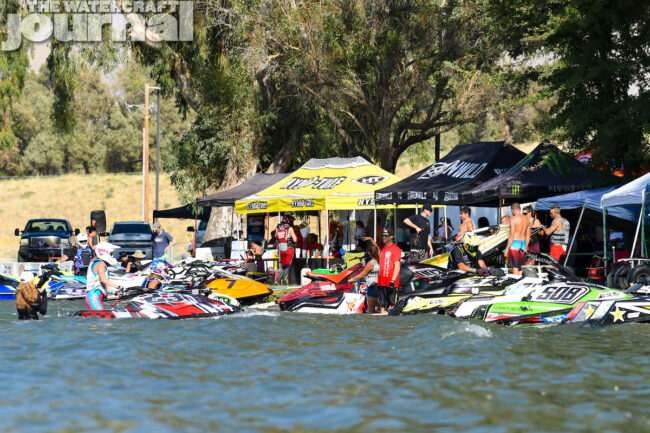
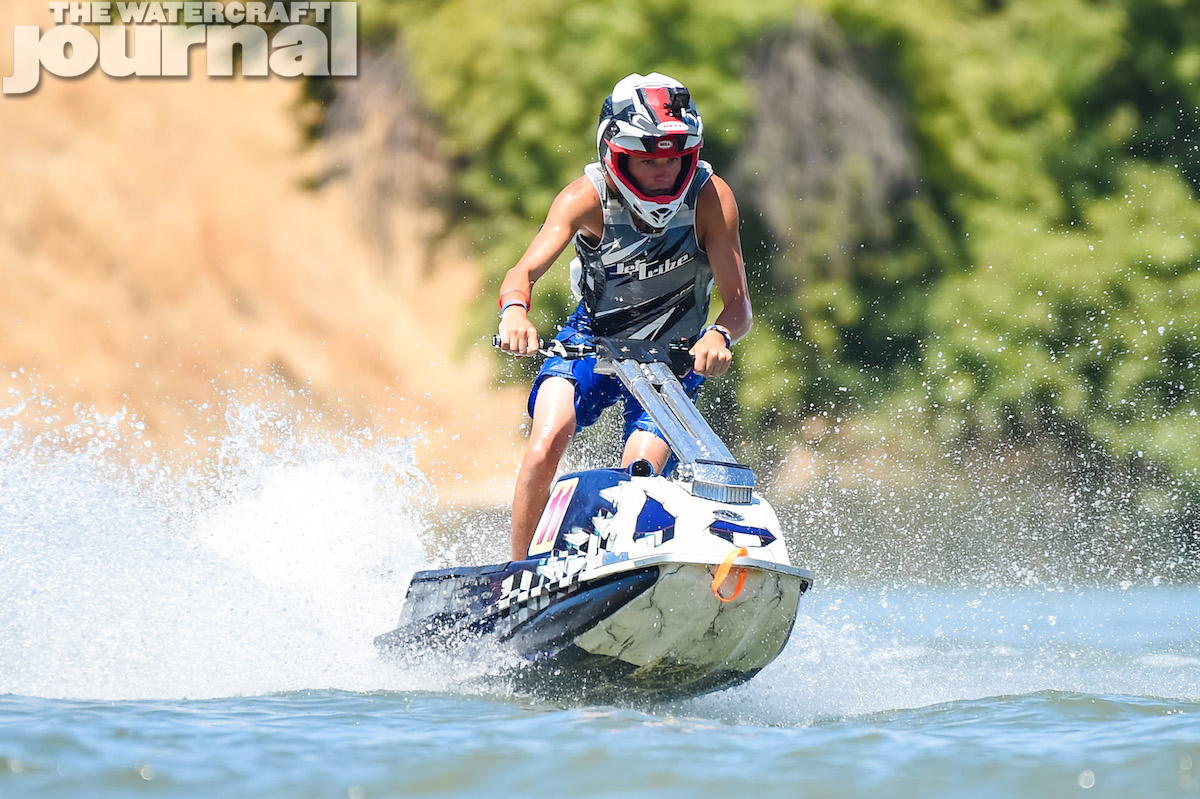
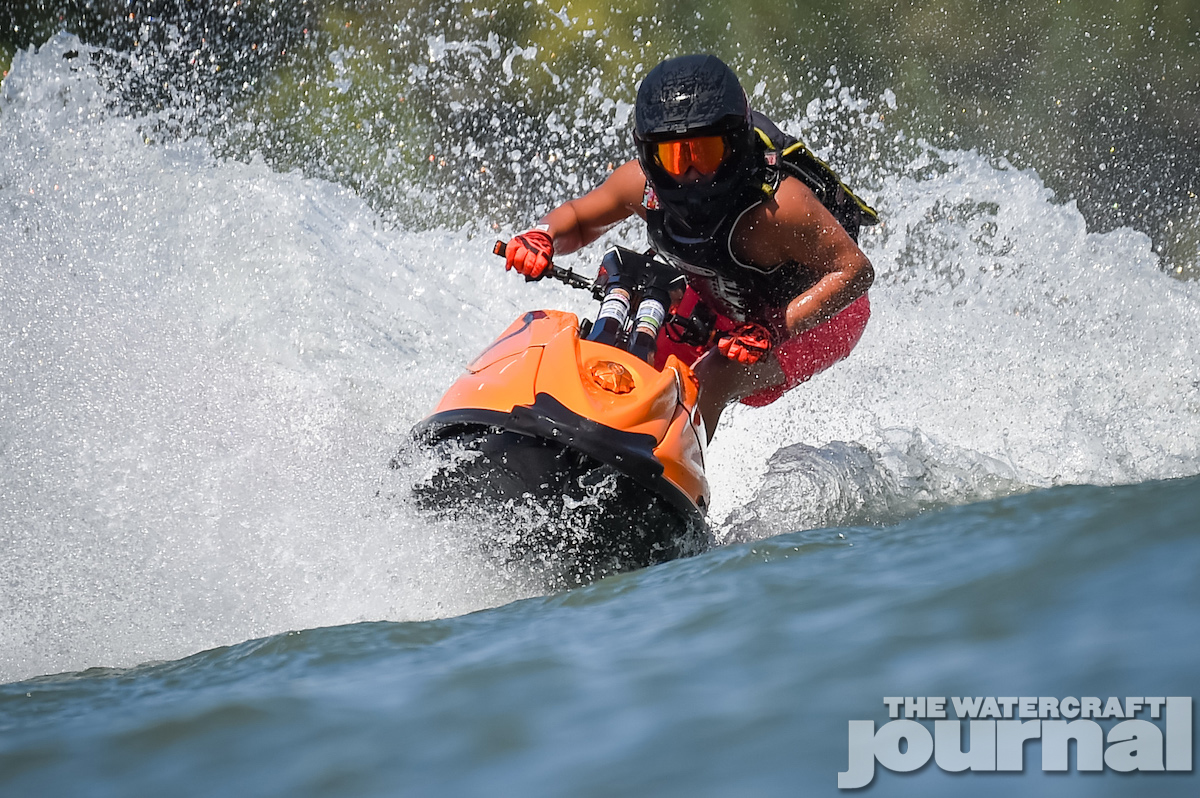
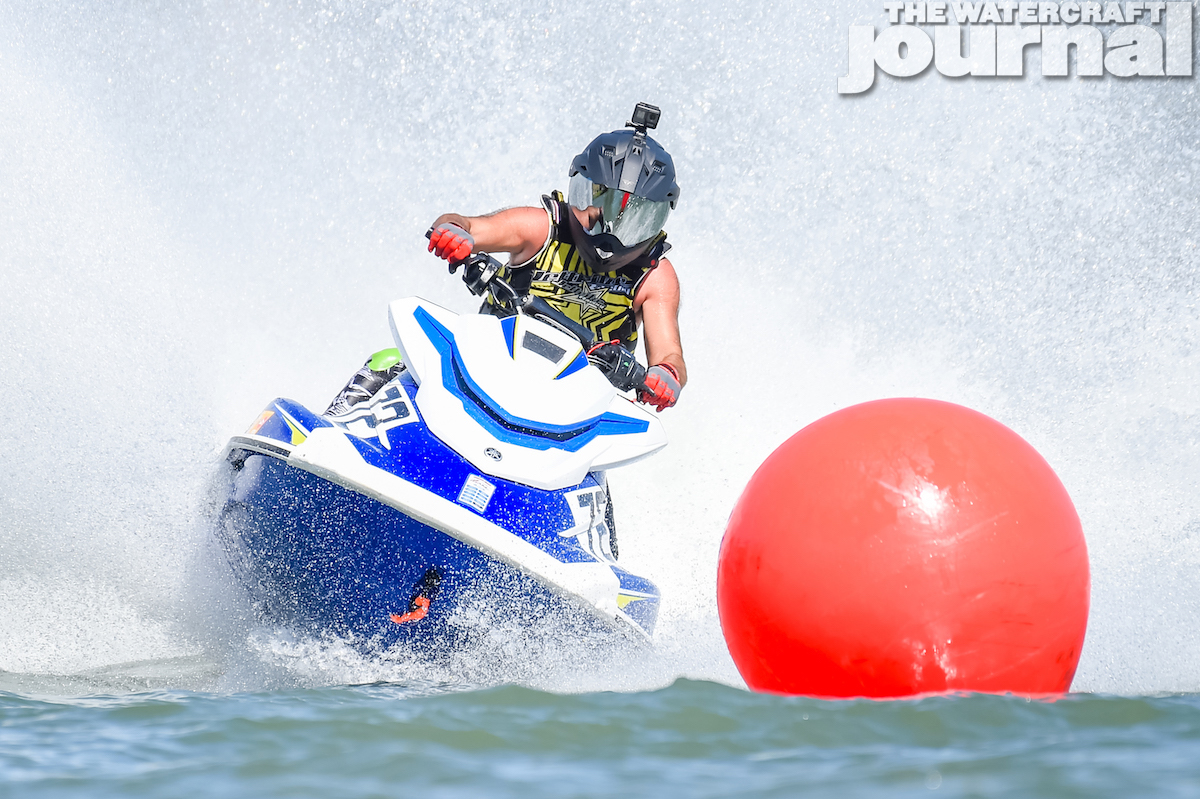
The Pro Watercross rig pulled into North Beach Park in Racine, WI. for it’s fourth round of the National Tour sponsored by Nielsen Enterprise celebrating their 50th year in business and presented by Broward Motorsports. The City opened their arms for us and the hospitality was above and beyond!

“I look forward to racing in Racine all season. The venue is not only set on the beautiful shore of the ever changing Lake Michigan but it’s the closest to my home,” said Ryan “Razz” Rasmussen, who pulled off a 3-1-1 overall win in Amateur R/A Box Stock and a 2-1-2 overall win in the Veterans R/A Box Stock division, both on his 2019 Yamaha GP1800R, as well as a third place finish in the IROC Stock division on his on his 2018 Yamaha EX sport. “This allows all my family, friends and local sponsors to come out and see why I’m so passionate about this sport. I’d like to thank everyone at RealRacine, Pro Watercross and Nielsen Enterprises for making this event a success! I can’t wait for next year!”

“Man, North Beach in Racine was amazing. Also, my sponsor RealRacine really killed it with this event along with Pro Watercross,” said area racer Jimmy Roberts. “The competition was tough when I run my debut race in the Pro Runabout GP class and faced the fastest racers around, like Dennis Mack, Brian Baldwin, Troy Snyder and Claude Clayton. There were so many amazing racers! This race venue is a special one, as it’s in my back yard and our beaches in Wisconsin are awesome! Thanks to Rock River Powersports, Dmack Racing, Lake Country Recreation and Nick Krupa for keeping me in the game! And all my family and friends.”

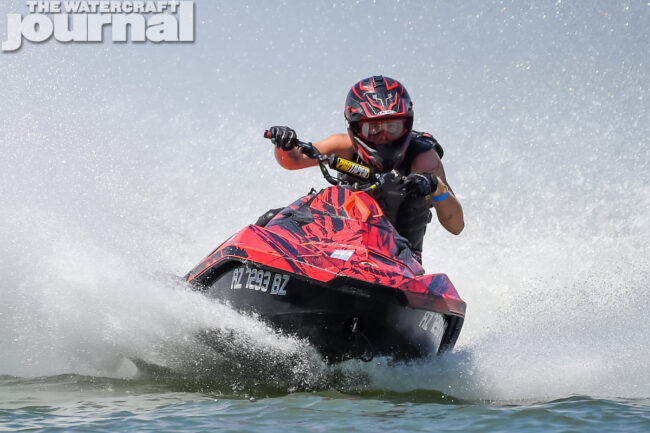
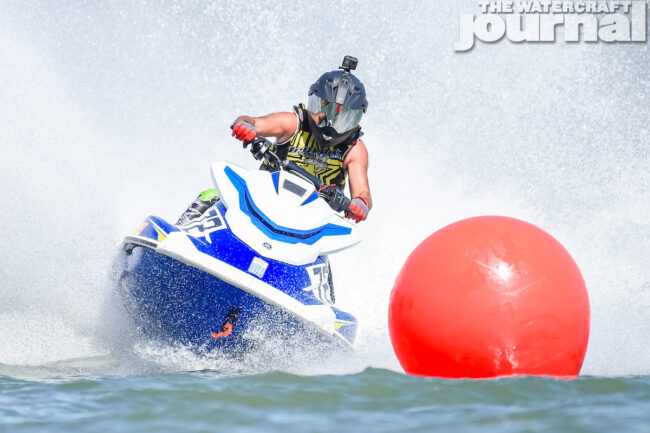
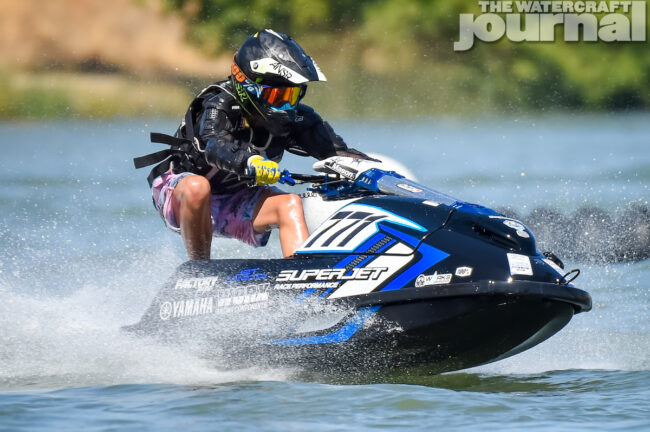
After the crew set the tight track in beautiful Lake Michigan we were ready for some great racing action! Classes were pretty big and they gave a very good show to the crowds on the shore! Each class races three motos over two days to get the overall winners.

“Glad to be back at the Real Racine race site this year! Always an awesome site and town to race in,” said long-time PWX runabout racer, Dylan Osborn. “Makes for a little challenge tuning skis for the colder water and less humidity but allows us to get the skis tuned up to be a real animal and get top speeds out of them.”

Pro Am Runabout GP was on fire with Claude Clayton and Brian Baldwin putting on a great show as well as they swapped motos and had to settle it in Moto 3, which Clayton was able to hold off the charging Baldwin for the overall win! Troy Synder finished third.

Pro-am Ski GP was also a great race to watch as Craig Warner, Haden Skellett, Mike Killpenstien and Isaiah Washington were all within a point of each other going into Moto 3. Warner and Skellett pulled away from the rest and as the checkered flag dropped, it was Craig Warner with the win, followed by Haden Skellett, and Mike Klippenstien third.

The Blaster GP class featured another fierce battle, this time between young rising star Haden Skellett, and 26-year veteran Billy Dearman, with 8 National Championships and 5 World Championships under his belt in both Runabout and Sport classes.

“Racine was surprisingly rough. From the beach, the water did not appear to be that bad, but once we got out on the track, there were good sized holes – on the back portion of the track especially. There was three- to four-foot chop back there and holes of that same depth,” Dearman told The Watercraft Journal. “Since I’m getting up there in years, I can’t take that beating that the really choppy water puts on you. I’d much rather do flat or surf – that real thick chop beats you to death. Dearman mentioned that it is always a pleasure to race against the Skellett crew, both Haden and his sister Taylor.

“I love racing with the Skellett crew, they are great; super nice people, and I’m glad to see they are doing well,” he said, adding that Haden’s age, and light weight, along with his experience, makes him a challenging competitor. “It’s always good to see the kids that are sticking with it, what our sport needs is new blood,” he added.

Although Dearman appreciates many aspects of the Racine venue – including the asphalt parking lot, clear water, and enthusiastic fans, he is looking forward to the next stop on the Pro Watercross tour, on Lake Hartwell in Georgia. “I’m looking forward to flat water racing. We went from having no surf races, to, this year, everything has been surf, so I’m looking forward to Lake Hartwell’s flat water, where I can make my boat shine again.”

The largest class of the weekend was Amateur Ski with 12 on the line. Camden Powell took the top spot on the podium followed by Ryder Wildeboer in second and Zeke Keim in the third. Pro Freestyle was a treat for the crowd as they put on a great show for the packed beach! Gary Burtka was first, Brad Hill second and Gergory Brock took third. For all the race results see www.prowatercross.com and click on results.

Convicted Felon Attempts Fake PWC Sale To Undercover Cops

0

Terrance Jones, who is a convicted felon thought it was a good idea to run a fake online ad. A couple of off-duty deputies showed up to purchase a couple of jet skis from Jones. Jones pulled a gun on the officers and ended up shot.

According to the Sumter County Sheriffs Office; the incident took place on July 7 at 2:36 pm at 6981 County Road 219 in Wildwood, FL.

The Hernando County officers had made prior arrangements to meet with Jones at the residence because they had seen the ad for a pair of jet skis and wanted to check them out.

Sadly, when they arrived, Jones pointed a semi-automatic handgun at them. He then ordered them to the ground, and they pulled out their own guns and identified themselves as police officers. That didn’t stop 19-year-old Jones from firing at them. Jones ended up with leg wounds from the deputies returning fire.

A second suspect took off on foot. There is no additional information on that person. Jones was arrested and charged with aggravated assault with a firearm, robbery with a firearm, and possession of a firearm by a convicted felon.

Previously, he was convicted of felony offenses of robbery and aggravated assault with a deadly weapon. He was also on probation at the time of his latest crimes.

The police said that the man who owns the home and the jet skis had no idea that his property had been used in the fake ad.

Sumter County Sherriff’s Office warned people to be cautious when making these types of sales because offenses like the Jones incident are becoming more common.

“Conduct the transaction in a public place and if necessary, contact law enforcement to be present during the transaction,” the department added.

Summer’s Here, Time to Get Your Yamaha Gear

0

Summer is in full swing with many states feeling the extreme temperatures. The scorching heat makes any of us want to jump off our Waverunners and chill out on the river, lake, or wherever we can cool off.

Yamaha makes some helpful accessories for cooling off at the water while riding or taking a break from riding your Waverunner. Take for example the nifty inflatable cooler which holds up to twelve cans or bottles plus six more drink holders.

The removable cooler is insulated and leak proof, allowing you to keep drinks ice cold for many hours. Additionally, the floating base has numbered drink spots so that you can remember which drink is yours. At under fifty five dollars, this makes for a great way to stay hydrated.

For even more insulating power, check out the Yamaha can koozie and for those looking for some more excitement, Yamaha makes a great inflatable tube for a single rider. The fifty four inch diameter tube has four handles with neoprene knuckle guards for easy gripping power.

In addition, the tube kit comes complete with a twelve-volt pump allowing quick inflation through the integrated Boston valve.

With all of these accessories to keep you wet and cool, don’t forget to protect your cell phone with the dry case. So get out there and beat the heat with any of these great Yamaha accessories.