
Home Blog Page 200

Yamaha Sweeps Awards At 2019 Miami International Boat Show

0

Yamaha’s U.S. Marine business unit has quite some celebration in order after this year’s Miami International Boat Show. After all, they took home more awards than any other brand at the show.

The awards include those for Yamaha’s Waverunners, Outboard motors, Skeeter Boats, and Jet Boat divisions. Each of these units all recieved industry CSI awards. The CSI award alone goes to show that Yamaha shares a stake in their customer’s satisfaction and continuously works to innovate and improve their products.

As stated by Robert Newsome of the NMMA, “The manufacturers honored here today illustrate the commitment it takes to provide unparalleled service to their customers and have created a culture of excellence in customer satisfaction,”

Further evidence comes from the fact that Yamaha also took home an NMMA Innovation Award.

Newsome goes on to note that “CSI Award winners have proven that dedication to their customers builds brand loyalty and helps to foster lifelong boat ownership, maintaining the integrity of the U.S. recreational boating industry.”

Congratulations to Yamaha and we look forward to the continued future of improvement and success. For more details on Yamaha’s success at the International Boat Show, you can check out the press release at Yamaha Waverunners News.

Great Lakes Watercross Introduces New Race Director

0

Just announced, the race director of fifteen years for the Great Lakes Watercross is stepping down. With this retirement, a new race director has been selected for this racing series. It will be Justin Treder.

Justin will be a great new director for the series. For fifteen years, Justin has been racing motocross and for the past three years, he has spent his time racing watercraft.

Continuing the trend for this Midwest racing series, the new crew will elaborate the tour with expansion of opportunities and new goals. Together, Justin and his team will take Great Lakes Watercross into the future.

For more information, you can read the press release below or check out the post PWC racing schedules.

Thank you to ALL the Personal Watercraft Racers for your years of support. I’ve enjoyed running Great Lakes Watercross since 2004. In that time, I’ve met and made many good friends, it really is a family for me. Developing this Race Series over the last 16 years has been a GREAT learning experience.

Having said that, I leave with a big smile in my heart knowing that This has created some wonderful memories for many of the Racers and their families who have participated over the years. I am now moving on to other endeavors but will continue to race as much as I can.

Great Lakes Watercross is now in new hands. I would like to introduce you to Justin Treder, he’s from the Milwaukee area. He’s been racing MX for 15 years and the last 3 years he’s been racing Jet Skis. Justin and his crew will now be taking Great Lakes Watercross into the future, continuing our great Midwest tour.

Justin’s Immediate goals are working on bring in more youth racing to the series along with expanding the opportunities for current racers. Look for him to be conducting 4 to 5 double round racing events this summer. Justin’s scheduled will be out shortly so keep your eyes on the website.

I would like to thank some of our past sponsors for all their help in making Great Lakes Watercross what it is today. Thank you to Rod Hall of Rods Ride on Power Sports, John Zigler of Watcon.com, the Ratti family at Pro Rider Magazine, Skat-Trak and Twangled.
Of course a huge thank you to all the people who staffed the events over almost 2 decades. They put in the hours to make racing happen safely.

I must also thank a few of those who have gave Unselfishly of their time over the years, Jessica Wiebisek, Steve King, Paul “EB” Summers, Mike Waspi and Jaymi Bohat.

This Could Be The Ultimate PWC Docking Station?

0

Australian company Ultimate Docking Systems has created what they call the “ultimate” Jet Ski Lift. The floating dock utilizes a solar-powered lift system to raise and lower the watercraft.

As a single-user system, this makes its operation very easy and it can even be operated remotely. The company is currently promoting the new docking system and the targeted users would be private buyers as well as marinas and businesses.

For more information on this system, we have pasted the press release below.

Australian City of Gold Coast company, Ultimate Docking Systems has launched a unique jet-ski lift (JSL) into the marine leisure market following the company’s debut at METS in November 2018.

Their “ultimate” jet ski lift is a floating solar-powered remote-controlled jet ski/PWC lift, docking system and station constructed from marine-grade aluminium and polyethylene, providing unsurpassed buoyancy and stability whilst making it virtually unsinkable.

It is a patented Australian-designed and manufactured state-of-the-art jet-ski docking station and has been developed in Queensland’s City of the Gold Coast, a mecca for jet skiers with its natural waterways and large number of private houses with pontoons attached to the properties.

The JSL allows solo launching and recovery of any size jet-ski using a solar powered operating system requiring no mains power on the pontoon giving owner the ability to trickle charge the battery on their jet ski for easy and constant use.

Personal watercraft are stored under cover within the walk-around floating lift that allows simple solo rider launch and recovery, taking away the need for anti-fouling, having to try and push the jet-ski off a dockside or trailer launch from a slipway. The lift does not need to be permanently fixed to the pontoon and can easily be moved with its light construction.

Commenting on why he saw the need in the market for the product Angelo Siokos, CEO of Ultimate Docking Systems said “Single-rider launching can be hard and especially for smaller people like my daughter, who has been extensively testing the product to gauge its ease of use. We have introduced a product that takes away the hard work and allows people easy access to a fabulous pastime. It takes approximately six seconds to remotely launch & retrieve the PWC.”

The company will be following this product up with their Ultimate Boat Lift aimed at small boat users also needing a simple launch and recovery solution for craft up to 30 feet in length. This lift will be aimed, not only at private users, but also at marinas and clubs where ease of use and low maintenance launch and recovery solutions are required by water users.

For more information on the new jet ski lift please contact Ultimate Docking Systems at [email protected]

Video: Exploring St Johns’ Creeks and Rivers With Florida Ski Riders

0

Personally, I love jet skiing in areas I’ve never been (and areas I probably shouldn’t be in)! Well, this time around a few friends of mine from the Florida Ski Riders decided to launch from Monroe Harbor Marina in Sanford, FL. We used this ramp because it’s a nice hour ride to the restaurant. Danny, Juan, Diane, Louie, Allison and I met up around 9am that Saturday morning. The weather was in the 70’s and felt amazing! We headed south, down the Saint John’s River towards Lake Harney.

Crossing the lake, we stopped at Jolly Gator’s Fish Camp for a little lunch and pictures. I’ve been to this restaurant quite a few times and their food is always great. The first time I’ve ever tried frog legs was at this place and I must say they were delicious! Once our bellies were full, we ventured down south to the Big Econ River. This river is beautiful, with palm trees hovering over the water. Previous hurricanes caused a lot of the palms to fall into the water, so had to be careful traveling through.

As we explored five miles down the Econ River, we decided to stop and take pictures. We didn’t want to go any farther because we were limited on how much gas we had, so we headed back north up to Deep Creek River. This area is extremely old. With more trees down everywhere, partially blocking the river and low waters due to the dry season, we definitely had to be careful. We came to a stop at a downed tree. That’s when Danny decided that he would be the one to venture past. Once he got past, he noticed that there were more downed trees in the water forming a dam so we couldn’t go any further. So we turned and head back to the St. Johns River.

Along the way, we kept getting stuck in the shallows. I really love this place, but I won’t come back to this area unless the water levels are higher. You always have to make safety a priority, especially if you’re riding with others. As we rode back north on the St. Johns River, we all stopped at the local sandbar, which is a very popular spot. All types of watercraft come here to hangout. Some people BBQ and some come to mingle with others.

We all filled up with gas – except me, because my Yamaha EX doesn’t waste fuel like the bigger jet skis. The EX has a 13.5 gallon tank compared to the 18-gallon tanks on most skis, but I get about 67 miles to the tank. These new TR-1 motors are awesome! I couldn’t tell you how many times I’ve pushed it to the limit and I must say I only ran out of fuel one time (and that’s only because I had to give my extra fuel to a bigger ski that was completely out).

Once we fueled up, we headed north back to Monroe Lake. It was about 30-minute ride back with lots of winding S-curves, so it was a lot of fun racing back. We arrived at the ramp around 5pm that evening. I ride with a lot of amazing people from all over the state of Florida. If you would like to ride with us, check out our Florida Ski Riders page on Facebook and you can also can follow us on YouTube. Everyone is welcome to ride! Thank you for your support and I’ll see you on the next ride!

Score A Custom-Restored Sea-Doo Explorer

5

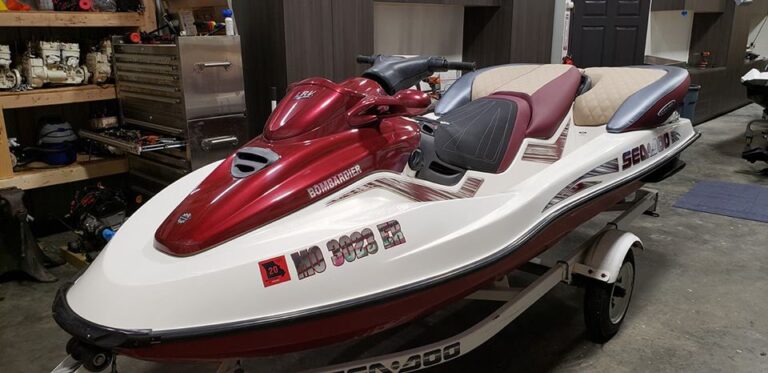
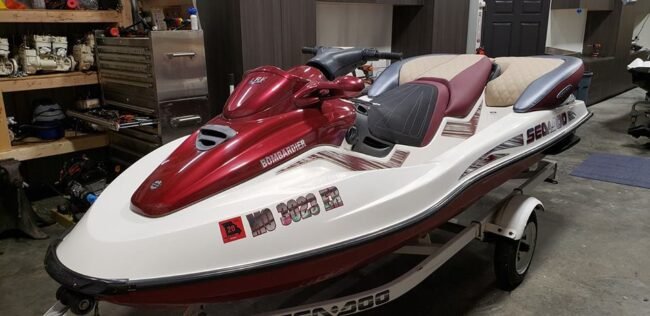
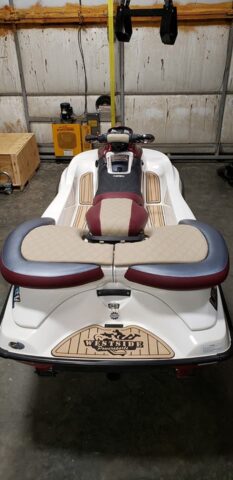
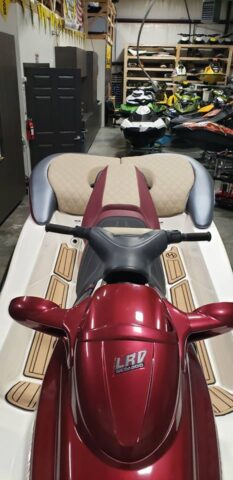
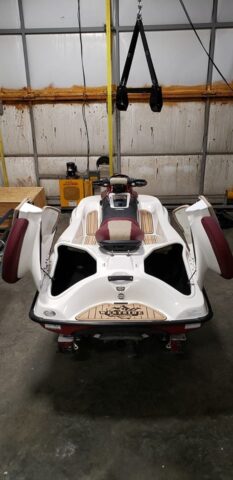
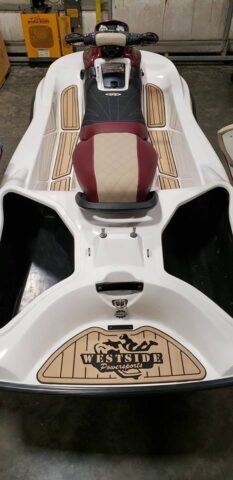
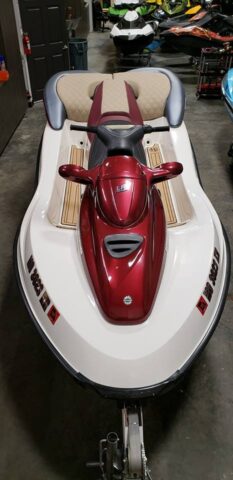
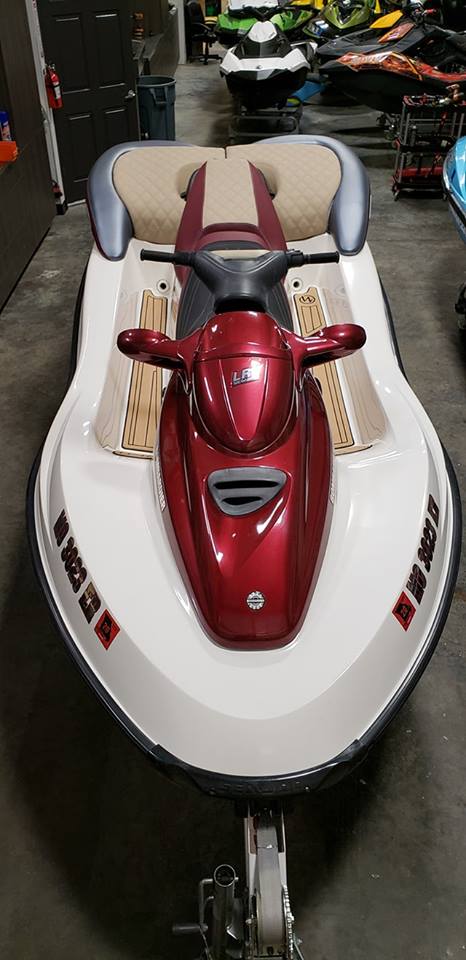
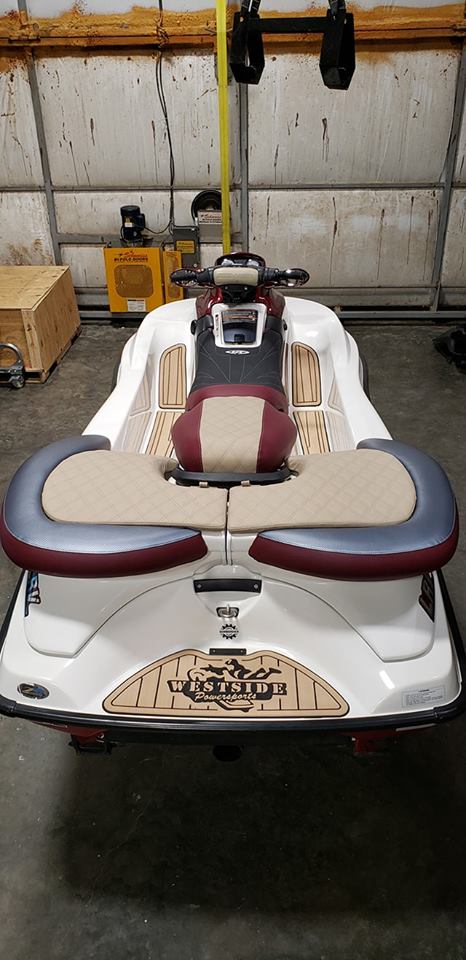
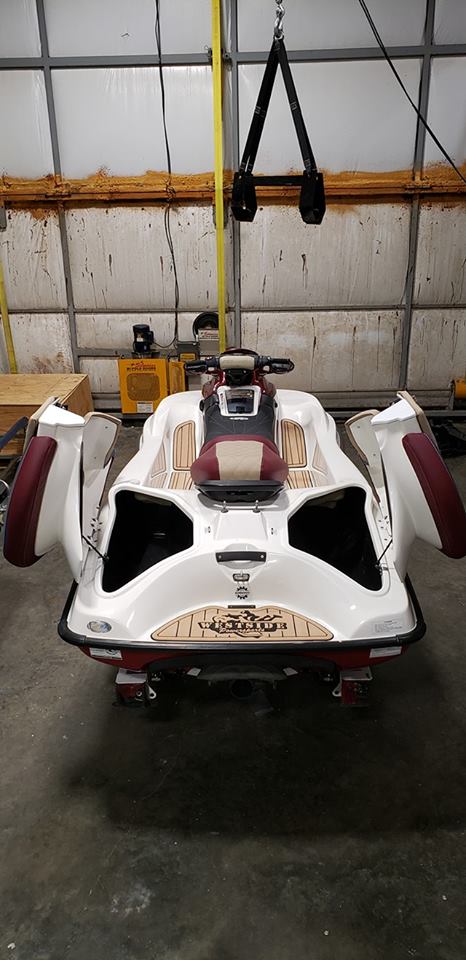
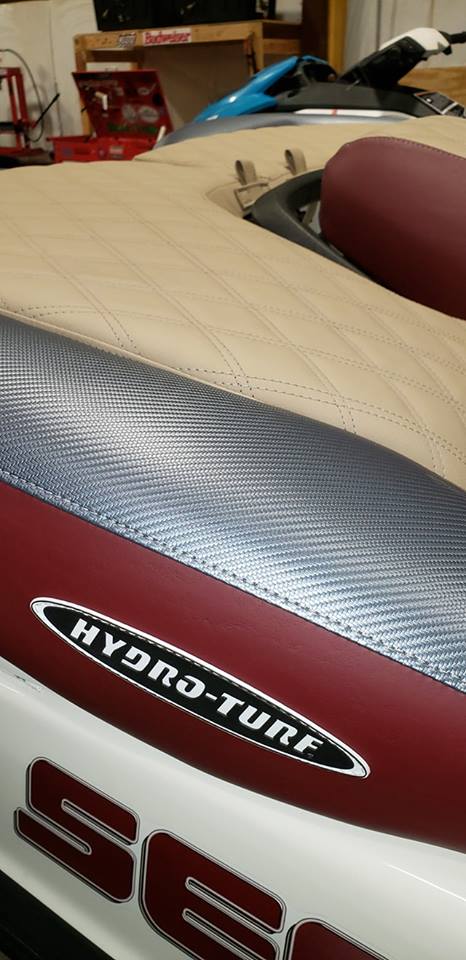
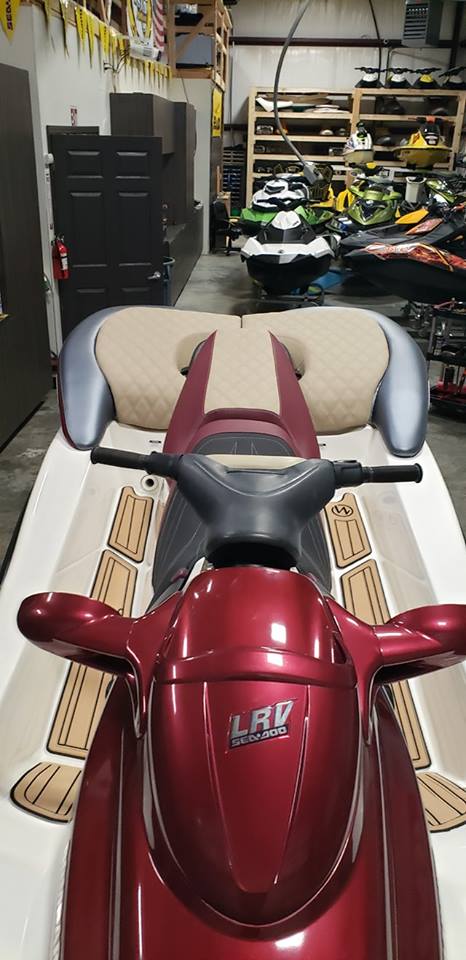
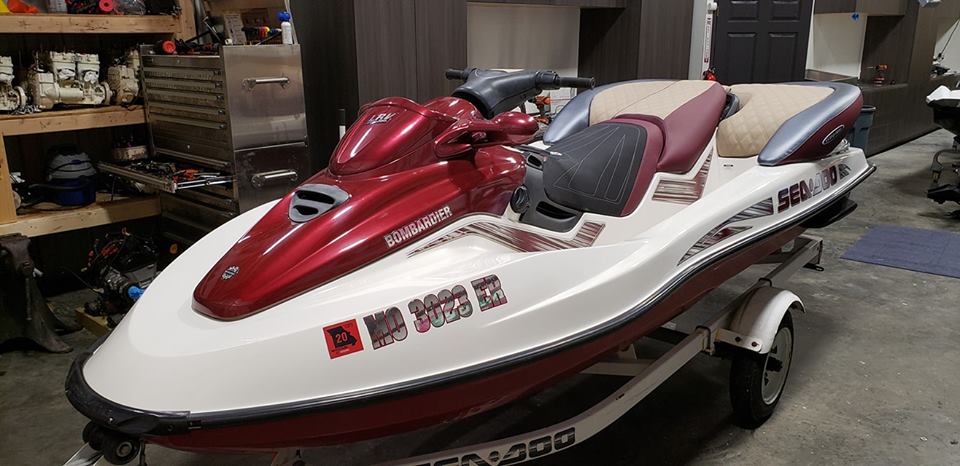
Check out this unique Sea-Doo restoration project from Westside Powersports. It is a 2002 Sea-Doo Explorer fully restored and upgraded and if you like it enough, it can be yours because it is for sale.

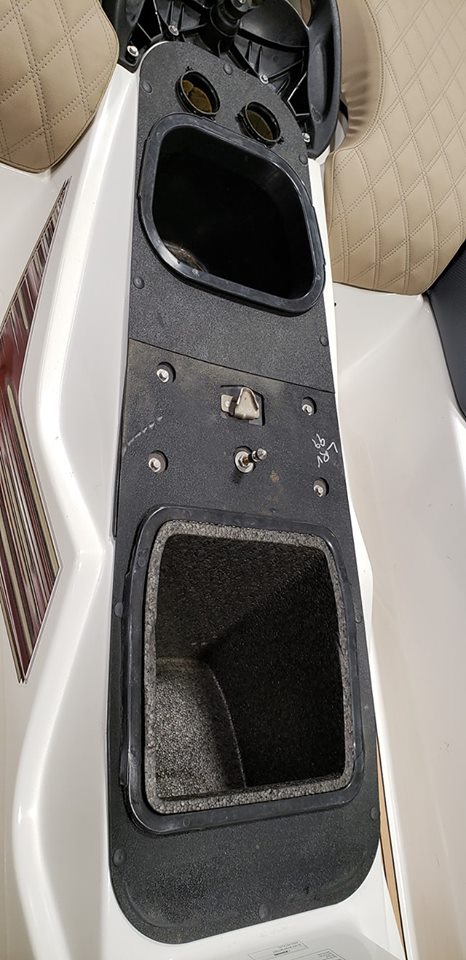
Westside Powersports has spent a year getting this thing built. With over 20 years in the business, this unit is coming from a reputable source. Virtually nothing was left untouched on this restoration and there are some very unique features here.

Starting with high quality tube, a new OEM 717cc engine with rebuilt quality carbs, the structure and powerplant are like no other. For this rare watercraft, 2002 was actually the only year that utilized the large 717cc motor.

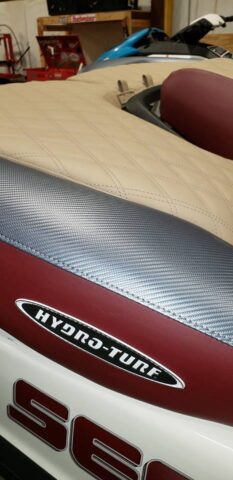
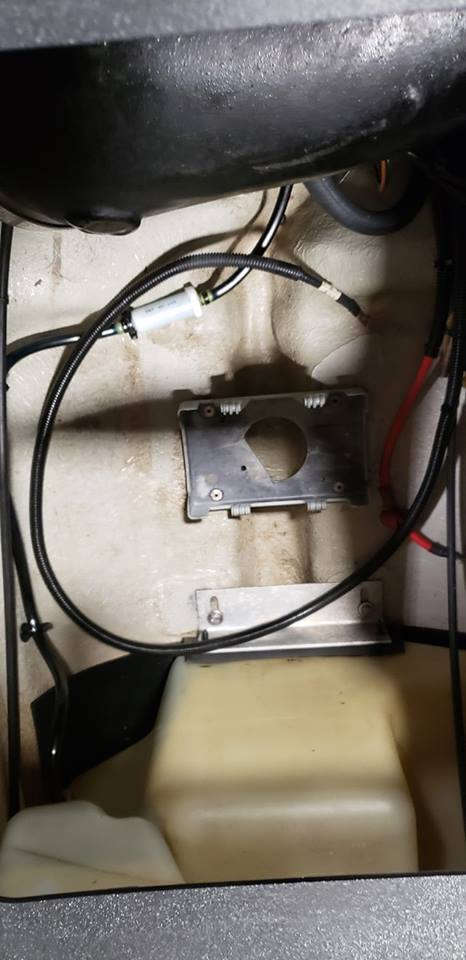
The build also features brand new oil and fuel lines, cables, drive shaft, prop, bearings, and so much more. Even if you spend a limited time riding in this thing, you can surely appreciate the quality alone in the custom teak floor mats and Jettrim seats.

Safety has been taken seriously as well with Coast Guard-approved items, lights, included safety paddles, and emergency backup bilge pump, you can be rest assured to have a safe day on the water with this boat.

For more information, pricing, and all specs, you can visit the Westside Powersports facebook page or contact Jess directly, [email protected] or (813) 363-9074.

Sea-Doo Fish Pro Awarded For Innovation by NMMA

0

Sea-Doo had success at the International Boat Show in Miami this past weekend. Particularly, the Sea-Doo Fish Pro was well-recognized and appraised for its innovation.

For 2019, the Fish Pro was awarded the National Marine Manufacturers Association Innovation Award. Sea-Doo was recognized for creating a purpose-built personal watercraft for fishing. In doing so, they have opened the doors to a new arena of prospective buyers.

Alan Jones of the innovation awards judges’ committee stated that “With fishing being the most popular on-water activity, Sea-Doo is the first to create a purpose-built small craft fishing machine that’s just as happy inshore as offshore.”

The specially-designed LinQ fishing cooler that comes with the Fish Pro is just as innovative as many of the other features on this brand new watercraft. The more than 13-gallon cooler mounts to the swim platform and has tethered drain plugs.

The Garmin fish finder, deep foot wells, as well as the plethora of other features make this a perfect small craft for fishing. Congratulations to Sea-Doo for this innovative award. For more information on this award-winning watercraft, you can check out our full review and video.

Pro Watercross Names Krash Industries As Title Sponsor Of Nat’l Recreation Tour

0

One of the most respected and well-known Freestyle Jet Ski Companies, KRASH Industries, has just agreed to be the 2019 Pro Watercross National Recreation Tour. This is a great step in the right direction by having such a great company stand behind this tour. “But having KRASH Industries behind us lends a huge level of legitimacy and excellence that is hard to achieve in the infancy of any event.” Said Jennifer Handler. This is the inaugural year of the recreational tour and they are proving that they will be making a splash. Pun intended.

Being a title sponsor is a huge commitment but KRASH Industries is taking it to the next level by providing a KRASH Industries watercraft that will be giving away concluding the final round of the tour. To be entered into the giveaway, you can be a tour participant, which will give you one entry to every event that you attend. The more events you go to, the better chance you have at willing a new ride! While it has not been announced which model they will be giving away, KRASH makes three great models that have excellent reviews.

This year is shaping up to have some excellent tour events. With the three Pro Watercross Recreational Tours, there is an event near almost everyone in the United States. So mark your calendars, fill up your cars, and get ready to see some of the best riders perform what they do best. This sport is continuing to grow at a very rapid rate and 2019 is looking to be one of the best years yet.

2019 Krash Industries National Recreation Tour
January 17-20, 2019- Daytona Freeride-Dayton Beach, Florida
April 12-14, 2019-Wave Daze-Virginia Beach, Virginia
May 18-19, 2019-Dunedin Invasion-Dunedin, Florida
June 15, 2019-Operation JET-EX-TBD
July 6, 2019-Strong Island Poker Run-Freeport, New York
August 3, 2019-Broward MTS Rec Ride-Key Largo, Florida
September 7. 2019-JetFest-Mayfield, New York

2019 West Coast Recreational Rides Tour
March 9, 2019-Ironman Ride-Chula Vista, California
April 12-13, 2019-Pirates Cove-Needles, California
May 16-19, 2019-Down on the Delta-Brentwood, California
September 14-22, 2019- Lake Powell to Rock Creek-Page, Arizona
October 11, 2019-Ultimate Ride-lake Havasu, Arizona

2019 Mid-West Recreational Events
May 30-June 2, 2019-Jet Blast-Wisconsin Dells, Wisconsin
August 10, 2019-brave the Wave-lake Orion, Michigan
August 22-24, 2019-Twin City Jet Pilot Sortie-Lake City, Minnesota

Gallery: The Watercraft Journal’s Massive Sea-Doo LinQ Accessory Overview

0

When we perused an article pertaining to all of the 2019 Spark Accessories, it appeared that a glaring omission was made. Where were all the new LinQ Accessories? Upon rereading the piece on PersonalWatercraft.com, we discovered a short paragraph on the LinQ accessories and decided the items needed more attention.

The article touches on many fine Sea-Doo accessories like the 50-watt floating waterproof BRP Portable Boom Box music system. It puts out just enough sound so you can enjoy the music while you ride. The Boom Box has 25-watt speakers and easily attaches to the Spark just forward of the handlebars. The bracket mount is solid and it’s an easy clip on/off system. The lithium ion battery gives a rider 24 hours of play. The system is simple to charge. Just plug it in at home. The price is $550 and requires the 3-up Convenience package.

Now, let’s get into the meat of the LinQ accessories. Fifteen products are available through Sea-Doo. A couple of LinQ Base Installation kits are available for 2011 and up GTI, GTS, and GTR. 2017 and later kits are available for the GTR-X. RXP kits come in base models for the 2012 models and later. A base kit is available for GTX 2016-2017 and RXT-X models built in 2016 and 2017. LinQ Base Kit for the Sea-Doo Spark 3up is also available.

These models require the base kits in order to install all the LinQ gadgets that Sea-Doo has on offer. Each LinQ kit costs $49.99 and Sea-Doo claims it’s fast and easy to install. The system is secure and now fits all platforms. LinQ doesn’t even require tools. It’s a quick attach rear cargo system. You get to pack more, play more, and ride farther while keeping food and drinks cold and fresh.

The base system for the Spark 3-up allows you to mount accessories to your Sea-Doo watercraft so your cargo options are less limited. The system will hold the LinQ Fuel Caddy, SR 21L LinQ bag, LinQ Sport Bag, LinQ Toolbox, and LinQ 4.2-Gallon Cooler. The Spark base system isn’t compatible with the LinQ 13.5-Gallon Cooler. The LinQ Base System includes 2 LinQ bases and hardware. The base system is a necessary building block for all of Sea-Doo’s LinQ accessories.

The LinQ Fuel Caddy holds 4-gallons of fuel, is designed for easy pouring, and has been marinized for saltwater usage. The Fuel Caddy comes with the LinQ Cargo Base Kit. The caddy can also be used for stacking the LinQ Bag or Sport Bag to give you more storage. Don’t stack fuel caddies though. If you lose your fuel cap, Sea-Doo can provide a replacement for $28.99.

Prefer different LinQ Locking Anchor Bases? Sea-Doo has those for $9.99. LinQ bases with locking system for staying in the “up” position while installing LinQ accessories. These are required for installing the LinQ 13.5 Gallon Cooler. They also replace standard LinQ bases and the locking bases are standard on the Fish Pro.

Speaking of the Fish Pro, LinQ has a nice Quick-Attach Rod Holder and it’s only $24.99. The holder features a quick attachment system with release lever for easy installation onto or removal from any of the 30 different positions on the 13.5-gallon LinQ Cooler. It firmly holds a fishing rod using a molded rubber cap specifically designed to quickly secure or remove a fishing rod using the reel arm. It’s also perfect to safely transport your fishing rods to your favorite spots or if you just want to troll the waters.

Prepare to pay if you want the LinQ 13.5-Gallon Cooler. It’s going to cost you just under $650. Granted, the cooler has some nice features, especially for the fisherman in the family. The LinQ is a high volume cooler and is weather resistant. It includes a heavy-duty storage pocket lid with recessed work surface, quick-attach rod holder system, trolling slots, and an easy latch lid. It features a drain plug and handles for easy transportation.

It is crafted using rotomolded construction for exceptional rigidity and durability and contains premium-quality foam insulation for optimal ice retention. Another item of note is that the cooler requires LinQ Locking Anchor Bases for installation on 2018 models and on some 2019 models.

If you don’t need a huge cooler, Sea-Doo offers the LinQ 4.2 Gallon Cooler. It’s constructed from the same high quality materials as the 13.5 just at half the price. The smaller cooler doesn’t have all the bells and whistles. However, if you only plan to use it to haul drinks and snacks, this cooler is perfect.

The LinQ Box is great for stowing extra items while on all day excursion. It has a five gallon capacity, is weather resistant, and even has a lockable cover. The box is made of high precision injected HDPE, which provides durability and rigidity. The box is equipped with marine grade hardware. The SR 21L LinQ Bag is also available. This bag comes in at a 5.5 gallon capacity and is expandable.

Sea-Doo also has the LinQ Sport Bag with a rigid bottom and semi-rigid top. The bag holds 4.5 gallons and again, if you’re a saltwater rider, pick up the Marinized LinQ Hardware Kit. You’ll want to protect your investment. The Marinized LinQ Hardware Kit comes with everything you need to protect your LinQ Bags from the corrosive effects of saltwater. It’s worth it for the additional $17.99.

The last item we’ll cover is the LinQ Retractable Ski Pylon. The pylon adjusts to keep your rope out of the water for more fun in the water. It also features built-in spotter grab handles and is retractable. Sea-Doo says, “Nothing outdoes our exclusive quick-attach, tool-less rear-cargo LinQ System. It redefines what your watercraft can carry, and how it carries them. You get to pack more, play more, and ride farther, all while keeping food and drink cold and fresh.”

The Watercraft Journal Awards 2019 Skyway Ski Show Guest Judge Prize

0

We told ya exactly a month ago. And thankfully, a whole bunch of you listened. The Watercraft Journal is excited to announce that we have selected one lucky reader to be a guest judge at the Skyway Ski Show! To those unaware, the Skyway Ski Show is the collaborative effort of the Watercraft Superstore with Cycle Springs Powersports, that welcomes half a dozen PWC enthusiasts to test ride some of the newest watercraft from the major manufacturers – Kawasaki, Sea-Doo and Yamaha. Then the riders evaluate each one with the winner being announced in the Watercraft Superstore’s annual magazine/catalog hybrid.

This year, we welcome Bobby Sessom to represent The Watercraft Journal at this year’s Skyway Ski Show. Bobby will be flown in, plopped in a luxury waterfront hotel, fed waaay too much food, and get to spend the next day riding brand new watercraft around Tampa Bay – and all entirely free (except for maybe having to cash in a vacation day or two with work. Bobby’s gonna score a whole bunch of brand-new riding gear, a swag bag and be featured throughout the Watercraft Superstore’s massive “magalog” as well as an article here at The Watercraft Journal. It’s pretty much the jet ski lover’s dream come true.

There will be plenty of social media updates on Bobby and the Skyway Ski Show on The Watercraft Journal’s official Facebook page as well as the Watercraft Superstore’s official Facebook page, so make sure to follow along. We’ll also be present to snap pics and provide the rest of you with a full report from Bobby’s big adventure here on The Watercraft Journal.

Video: Understanding Crankcase Pressure, Blow-By and Oil Catch Cans

2

Let’s talk about something super exciting: regulating crankcase atmosphere. To the layman, this isn’t really sexy stuff and will likely cause most of you to tune out right about…now. But for those still reading, I’m going to explain how regulating internal engine atmospheric pressures (ie. crankcase pressure) will not only ensure the longevity of your personal watercraft’s engine, but will actually help pick up some power.

An internal combustion engine, it’s most basic form, is an air pump. Air goes in, air goes out. The energy created and dispersed in this process is the byproduct we use to power modern machinery. The effectiveness of that process is predicated upon the engine’s efficiency. When an engine is properly sealed – machined tolerances, properly torqued hardware, gaskets and piston rings – it will often run optimally.

When an engine isn’t properly sealed, things go south pretty quickly. Improperly gapped rings can permit blow-by and oil contamination. Detonation can occur. Compression can be lost. Gaskets can be bubbled, burned or blown out. And of course, water can penetrate into the oil, or worse, the cylinders and hydrolock the engine.

Not nearly as catastrophic but equally as terminal is excessive blow-by. Blow-by, as the name suggests, is when during the compression stroke, unspent air and fuel in the cylinder literally blows by the piston rings and enters into the crankcase. The raw fuel and carbon particulates quickly contaminate the engine oil as the compressed, heated air pressurizes the atmosphere within the crankcase itself.

Thankfully, today’s modern 4-stroke engines feature incredibly well-designed multi-valve combustion chambers with machined quench surfaces, and valve reliefs integrated into the piston crowns, which was all high-end racing technology only a few years ago. Piston ring technology has also found its way into stock equipment, with multiple precision ring grooves, compression rings, oil control rings and return drains.

Yet, even in the face of these innovations, blow-by can occur – particularly in high compression or heavily-boosted applications (turbo or supercharger). When the compression charge of ignited fuel and condensed supercharged air exceeds the efficiency of the cylinder bowl design, piston shape and rings, the excess pressure seeks out the weakest route to escape, which is often by blowing by the piston rings.

Modern engine tuners have also found that poor or inefficient ignition and timing of the return stroke and/or the exhaust cycle is also a contributor to blow by. Commonly referred to as “prolonged duration,” the cylinder pressures are not permitted to escape through the exhaust valves fast enough, and thereby, look for another way out.

Once entered into the crankcase, the atmospheric pressure begins to build. This superheats the air and oil – far faster than what the engine was designed to withhold, consequently boiling the oil into a miasma of oil mist and fuel vapor. If left untreated, unspent fuel can break down the oil’s protective attributes on sensitive bearings and rings, causing excessive heat and accelerated wear.

With the engine sealed, this pressure struggles to find release, and will eventually push oil up past the piston rings, causing the engine to start burning oil, blowing white smoke out of the exhaust. Many modern engines feature a PCV valve that plumbs the crankcase to the engine’s intake – either before the throttle body or directly into the manifold. The Positive Crankcase Valve is meant to maintain an equilibrium of healthy crankcase pressure and an internal engine temperature in a normally operating engine.

Yet, when heavily-contaminated crankcase atmosphere blends into the incoming air-and-fuel mixture in the combustion chamber, the mixture can cause pre-ignition (when super-heated fuel detonates before the timing spark) or detonation (also known as “knock”, when the mixture detonates post-ignition timing). Both are highly detrimental to the health of the engine and can quickly weaken and destroy valves and pistons.

In supercharged watercraft – particularly today’s 300-horsepower Sea-Doos – the PCV routes into the air intake prior to the throttle body. This means that the contaminated, oil-and-fuel heavy fog from the crankcase passes through the intercooler uninterrupted. This vaporized oil can coat the cooling fins and core tubes, stiffing the intercooler’s ability to cool the intake charge.

A far less catastrophic occurrence is excess windage. Windage is when too much oil clings to the throws of the crankshaft, connecting rods and piston skirts, literally weighing these reciprocating parts and throwing off their carefully balanced weights. Windage can slow down your engine’s operation and, again if left unchecked, can cause unusual wear patterns in the cylinder walls.

As blow-by saturates the crankcase atmosphere with super-heated oil, it chokes the air inside the crankcase, coating the crank, rods and pistons with a heavy layer of lubricant – far more than these parts need. Of course, a direct contributor to oil windage is excess/over-filled oil levels.

RIVA Racing’s own Brian Rosencrantz explained: “A common cause of poor performance is over-filled engine oil. Failure to follow the correct procedure will result in the ski being over-filled. This causes decreased engine performance due to windage losses in the engine.”

Thankfully, resolving these issues is surprisingly easy. As Rosencrantz noted, properly following the oil filling instructions outlined in the service manual of your personal watercraft will ensure that you will not over-fill your engine, even if your dipstick might say otherwise. Secondly, we found that a supplementary crankcase breather, such as RIVA’s Sea-Doo 4-TEC Catch Can/Engine Breather Kit works flawlessly.

The RIVA Catch Can works as an intermediary between the PCV valve coming from the crankcase and the feed into the intake. This added step helps separate the super-heated oil vapor and unspent fuel, permitting only positive air pressure to filter through into your intake – ensuring a healthy crankcase atmospheric pressure without contaminating the intake charge – all while improving intercooler efficiency by preventing oil contamination which lowers thermal efficiency.

The catch can literally collects the oil and fuel byproduct that can be drained occasionally via a petcock valve (you don’t want that mixture feeding back into the crankcase). The kit is incredibly easy to install, mounts to the side of the 300 ACE’s engine block, and comes with all of the necessary hardware to do it in a matter of an hour or so. The plastic bottle even features a K&N breather and CNC-cut mounting bracket.

If left stock and oil levels maintained at proper levels, your engine will operate as engineered. The addition of a oil catch can will only serve as an extra filter – a preventative measure. Yet if modified, the addition of a catch can is almost mandatory to ensure a healthy, equalized crankcase atmospheric pressure as well as a clean, uncontaminated intake charge – which will result in greater engine efficiency and thereby, increased acceleration and horsepower.