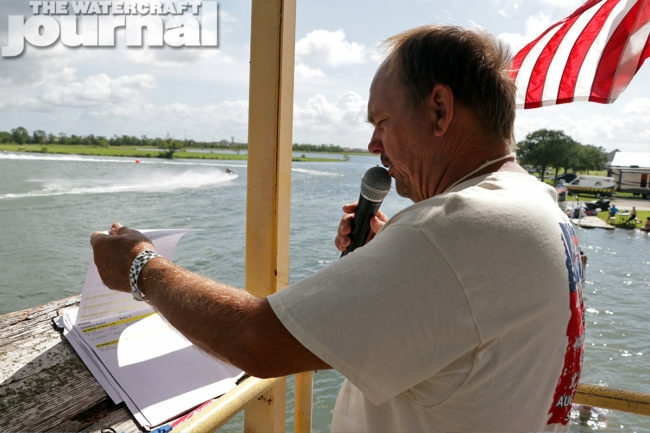
News spread fast. It tends to do that on social media, but the private messages started to pour in faster than I could make sense of it: “What happened?” “Did you hear?” Frankly, I hadn’t heard much, except that Texas’ own Shaun Compton, the event director for TXH2O Racing, had suddenly an unexpectedly passed away the day before the Jet Blast at Lake Fairview, in Orlando, FL was to begin.
While teams began to fill the parking grounds and line the beach, Compton was busy helping set out buoys after drawing up a unique double-split course that many racers were eager to try. A career trucker for Skeeter Boats, racer and “race dad”, Shaun was always one to burn the candle at both ends, and preparing the first TXH2O event of the year, was no exception.
Eye witnesses saw Compton pause between dropping buoys aboard his Sea-Doo, and silently slump over into the water. Several persons rushed to his rescue, quickly pulling Compton out of the water, dragging him ashore and applying CPR. “I was there,” Bobby Cordone explained to me that night. “I held his head as they tried to bring him back. They said it was a blood clot. It was instantaneous.”
I had talked to Compton a couple times about covering the TXH2O series after doing our interview with him in July of last year. He was affable, energetic and really, really focused on bringing youth back into personal watercraft racing. I recall him joking that “us old guys need to get out of the [kids’] way.” Shaun walked the walk as much as he talked the talk too, making a special effort within TXH2O to welcome new talent.
It seems these days that many of the car dealerships offer some sort of lifetime engine or powertrain warranty, guaranteeing you a worry-free ownership experience for as long as you own the vehicle.
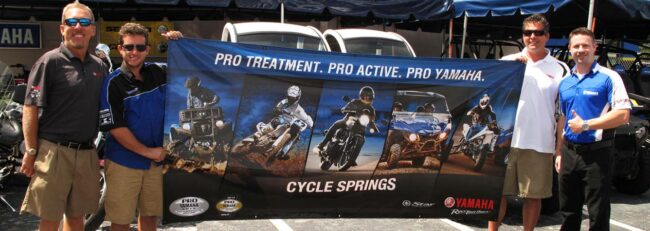
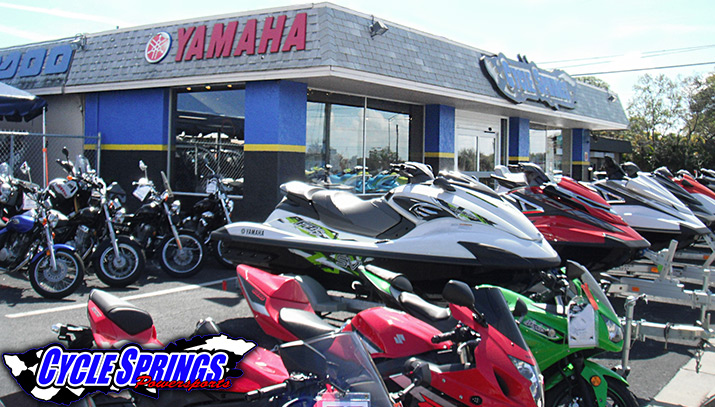
In fact, it seems so common and almost standard. So how come no one offers these type of warranties on new watercraft? Well, actually you can get a lifetime engine warranty on your new Yamaha, Sea-Doo, or Kawasaki watercraft and any other powersport vehicle if you purchase it from Cycle Springs Powersports.
That’s right, Cycle Springs out of Clearwater, Florida is in fact the only powersports dealership in the nation where you can get a lifetime engine warranty, giving you peace of mind for as long as you own the unit. No limitations on time, hours, or miles, period!
This is an unbelievable deal and an unheard notion in the powersports industry. Cycle Springs is so focused on the customer and their experience, that they want you to be happy not only when purchasing your new item, but also years down the road for as long as you own it. According to the good folks at Cycle Springs, “We want to know that our customers are out riding, having fun and enjoying their purchase!”
It gets even better too. Not only can you get this amazing lifetime warranty, but you can also get an extended warranty on the watercraft or unit itself. This warranty can extend beyond the manufacturer’s factory warranty period, giving you even more safety and confidence.
Get this, it doesn’t end there either. What’s more, if you do not make any claims on this extended warranty during the terms period, Cycle Springs will give you your money back. You read that right, a 100-percent cash refund on the purchased extended warranty if you do not use it.
https://www.youtube.com/watch?v=h0szgsrhB4I
This is like your auto insurance company sending you a suitcase full of cash, returning all of those years of premiums when you retire if you never get into an automobile accident. This is so unheard of and far-fetched, but Cycle Springs is making it happen for you.
Cycle Springs is so enthusiastic about the customer experience, that they have created this video highlighting their exclusive lifetime warranty. So check it out, head on over to Cycle Springs Online, and start your journey today.
Last year we published a story about Jimmy Kimmel giving away a Kawasaki JetSki to the person who delivered the shortest speech of the night at the 2018 Academy Awards ceremony. We are now following up with what happened to the Kawasaki JetSki Ultra 310LX. The winner of the $18,000 PWC was costume designer Mark Bridges who won an Oscar for his work on Phantom Thread and his speech was only 36 seconds long.
After winning the ski, Bridges was asked if he had any experience on a JetSki, and he replied ‘none good.’ Those two words were very telling of the situation. Bridges isn’t into jet skiing. However, it sounds like the ski went to a worthy cause. Below is what Bridges had to say about his big win:
“So I thought I’d turn lemons into lemonade, so to speak, and I donated it to the Motion Picture & Television Fund (MPTF). That does a lot of charitable work for people in the industry.”
Bridges explains the MPTF has a senior citizens home and a health facility, adding it’s an organization he’d wanted to contribute to for a while.
Bridges figured they could auction the ski and make some money. He soon received a call from the Foundation board chairman, Jeffrey Katzenberg, who thanked him for the machine. Bridges believes they were able to get some donations for the Kawasaki Ultra 310X, making it win-win situation.
So you’re thinking of ordering some fresh new parts or accessories from SBT? Wait, you weren’t planning on it? Well you had better start thinking about it now because you can win some awesome cash or prizes.
That’s right, SBT is now hosting what they call an unboxing contest where you can record and post a video of yourself tearing open the box of your brand new equipment like a kid on Christmas morning.
Don’t be afraid to get creative people. After all, SBT will be looking for uniqueness, creativity, and just a cool entertaining video.
Simply record the unboxing experience, upload your video to social media, and tag SBT for your chance to win. Up for grabs are lots of prizes including cash, gift cards, merchandise, rebates, and lots of other cool stuff.
Prizes are ranging from $20 all the way up to a $3000. The contest is currently ongoing and winners are being selected every other Friday.
For all of the contest rules and details, you can visit shopSBT.com and be sure to follow their Facebook page for the latest information.
Kawasaki and Cycle Springs are proud to offer Kawasaki’s Military Customer Promotion, which is valid through March 31, 2019. The discount is available to all active, reserve, and United States Military Personal. Military customers who purchase any 2019 or prior model year Kawasaki vehicle are eligible to receive an incentive up to $250. The incentive will be applied toward the purchase price of the vehicle and is based on the model’s cc range. Eligible products must be new and unused. This offer does exclude all 2018 Ninja H2 models and all model year Ninja H2.
Plenty of Jet Skis are on the list and they are as follows: Eligible Jet Skis from Cycle Springs Powersports are 2018 Kawasaki Jet Ski STX 15F, SX-R, Ultra 310LX, Ultra 310 R, Ultra 310 X, Ultra 310 X SE, and Ultra 310 LX. Military personnel may be required to show proof of their status via military ID. The Cycle Springs staff are honored to be part of this promotion and are stoked to give back to our military.
Cycle Springs Powersports is located at 29703 US Highway 19 N. in Clearwater, FL. However, their watercraft service has moved to 495 Douglas Road in Oldsmar, FL. Stop in or give them a call at (727) 771-1211. According the team; Cycle Springs is Tampa Bay’s best powersports dealership for great value and service.
The mysterious island of Ibiza is located in the western Mediterranean, right in the center of the oldest sea routes, linking southern Europe with northern Africa, the coasts of Israel and Egypt with the western Atlantic towns.
Throughout the centuries, the island has been inhabited by all the cultures and empires that have sailed through the Mediterranean, Phoenician merchants, Roman legions, Carthaginian troops or Berber pirates.
Ibiza Port today
It has been coveted by all, and today this has not changed. Throughout the summer, an avalanche of travelers from all over the world come to Ibiza attracted by its magnetism. Since the early ’60’s, Ibiza has become a center of cosmopolitan and hedonistic [what? – Ed] tourism, in the heat of its nature and its lively nightlife.
Today, we can find in Ibiza from Russian magnates and Arab sheikhs to young French and Italian students, all of them in search of the secret of Ibiza, all of them ready to enjoy the Mediterranean lifestyle, the food and the parties.
A “Cala”, the little beaches of Ibiza and Formentera
The Wild Paradise
Ibiza boasts, along with Formentera (its little sister) of the incredible purity of its crystal clear waters, its wild landscapes and its small and impressive coves.
The posidonia underwater forest that covers the coast means that the cleanliness of its waters is unequaled throughout the Mediterranean. Ibiza and Formentera form a small Caribbean.
Cala Bonita
Its sharp sea line creates an infinity of natural harbors known as “calas”, and are small paradises to escape by boat or jet ski. It is common to sail along the two islands for a week without having the need of stopping at any port.
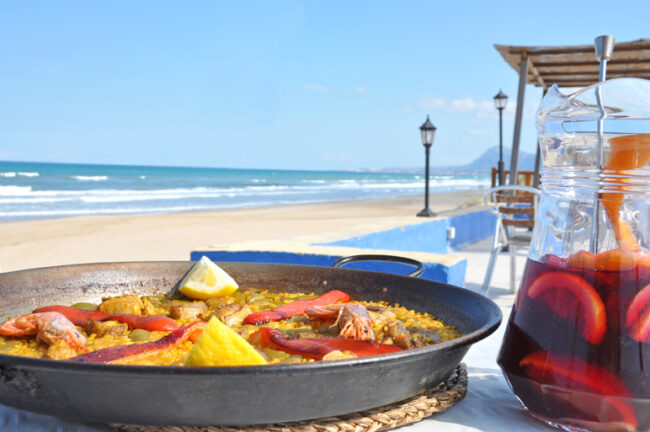
Throughout the coast we can find many restaurants and small beach bars, “chiringuitos” as locals would say, where you can enjoy the best local food or drink some cold beers without losing sight of our boat or our jet ski.
Paella & Sangria, a perfect match
Ibiza Nightlife
If Ibiza is known for something nowadays, it is for its impressive offer of nightlife and wild parties. Many of the best clubs in the world offer their shows during the summer season to many clubbers of all nationalities.
Clubs like Pacha, Amnesia, Usuahía or Hi present spectacular shows every year with world’s top DJs and international productions. Parties come in a board range of styles and multitude of genres, taking place every night of the week.
Usuahía party
There are many “Ibizas” to discover apart from the great clubs. The island still keeps a strong tradition of the hippie movement of the ’60s, and all kinds of cultures congregate with the arrival of summer.
In any corner of the island we can find a small party in the light of a bonfire any night of the year. There is something for everyone, it’s a matter of searching and finding your place in the night of Ibiza.
Routes on Jet Ski in Ibiza
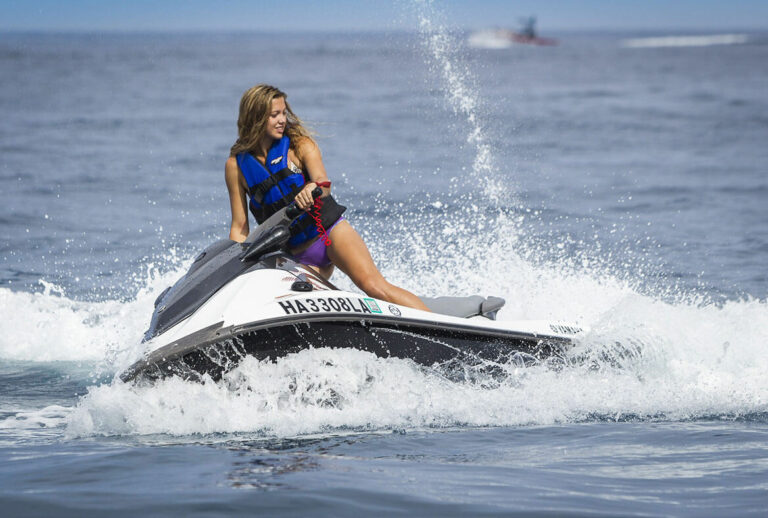
The predominant wind in Ibiza is usually a light east wind, so the west coast offers very calm waters a lot of days a year, and the best spots to discover by jet ski in Ibiza. And you can do so by renting a Yamaha WaveRunner from Es Vedra Charter Ibiza.
The port from where all west coast routes stars is San Antonio de Porrtmany, once Portus Magnus of the roman empire, and the most beautiful and big bay in Ibiza island.
Es Vedra
In this area we can also find the majestic islet of Es Vedra, which rises in the middle of the sea like an immense beacon.
Departing from San Antonio to visit Es Vedra is one of the most popular routes, where we can see the best coves of the island and among them the old canteen, “Sa Pedrera” known today as Atlantis, after the hippies of the 60 and 70 years carved into the rocks with his new sculptures.
This tour can be done in 2 hours, although it is advisable to take more time to enjoy everything with calm.
Another very advisable Ibiza Jet Ski route is to visit the islets of “Ses Margarides” to the north of the Island.
These islets are in the most wild and natural part of Ibiza, and the route is full of cliffs and caves that deserve the expedition. Departing from San Antonio this route lasts approximately one hour and a half.
If we have more time, we can continue to the north, to the Benirras cove, one of the most popular because of its natural beauty. This cove has become world famous for gathering every Sunday to all kinds of percussionist musicians who celebrate the sunset to the rhythm of their drums, in a unique show.
During the winter season the local riders organize a tour around Ibiza island that in the course of a day, stops at the best spots and ends with a good dinner and the obligatory party.
When to Visit Ibiza?
Ibiza is a good destination for lovers of jet skis throughout the year, because temperatures never reach ice in winter. It is true that the island suffers a tourist boom during the months of July and August, where the presence of travelers from around the world is concentrated to the maximum.
Therefore, the best months to enjoy jet ski in Ibiza are from May to June and from September to November, being able to discover the coast without the burden of the high season and with the water warm enough to not need wetsuit.
Article by Arturo Castro from Es Vedra Charter, a company that offers jet ski tours and rentals in Ibiza and Formentera.
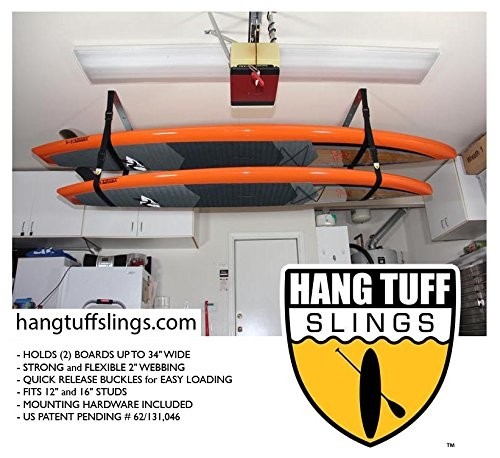
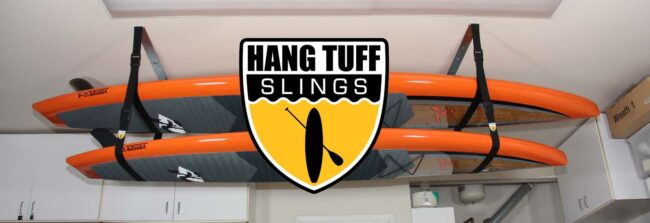
Do you have a storage problem or maybe just want to get some boards or a kayak out of the way? Well look no further, Hydro-Turf has you covered with Hang Tuff Slings. The strong and flexible two inch webbed polyproplene webbed slings come in a set of two and enable you to hang your board toys overhead. They are made to hold 2 SUP’s, surfboards, surfski, kayaks, ladders, and other items that are up to 34 inches wide.
One of the best things about the slings, is the fact that they come with quick release nylon buckles to make it easier for one person to load and unload equipment. They are designed to mount to 12 inch or 16 inch ceiling studs. The kit includes all the necessary hardware and set of double slings. The Tuff Slings are designed to hold up to 400 pounds and each loop hangs down 14 inches with a total verticle drop of 28 inches.
So you want to gain more performance out of your personal watercraft but don’t want to break the bank. Well one of the easiest ways to do so is going to be to install a top loader intake grate. A relatively cheap item, this single part can help increase the performance, handling, and overall efficiency of your watercraft in terms of converting the output energy into usable thrust power.
So how exactly does the intake grate work and how can a top loader design improve performance? This article idea came from the folks at Australian Jetski Parts (AJSP) and we will try to touch on the basics of the technology and operating principles behind these flow devices.
The purpose of an intake grate is to gather the water and supply the pump with a constant uninterrupted stream of water. The pump then of course translates this stream of water into a massive flow rate gain. In other words, it gives us that awesome thrust.
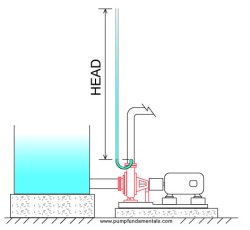
If we break it down a bit further, the science of fluid mechanics states that pump flow rate is directly proportional to horsepower and inversely proportional to pump head. Okay, so the direct proportion to power is pretty self-explanatory.
We all know that if we have a more powerful engine that this generally means we can travel at higher speeds because the pump is able to flow water at a faster rate. So what about pump head? This topic is a bit more involved and we won’t go into too much detail for the purpose of this article but it has to do with the pressure difference across the pump and its capability to produce a measured lift of the fluid.
This means that when the pump head is large, the pump flow is low and instead creating high pressure on the exit side. While not an entirely accurate view, this phenomena can be somewhat visualized with a flyboard.
With a flyboard, the jet pump’s energy is being utilized not to create flow for watercraft movement, but instead to create lift (pump head) for the flyboard rider.
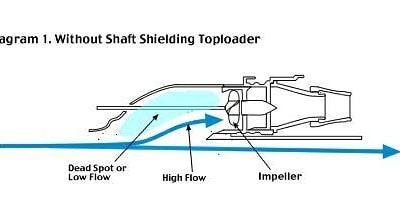
So what does all this mumbo jumbo have to do with intake grates? Well this flow rate equation in its simplest form always assumes a constant and steady supply of the fluid. As we riders know, this is not always the case.
We encounter waves, choppy water conditions, watercraft bow rise, and other real-world conditions that cause the intake grate to lose its “grip” or to scoop up and feed the pump less water. This causes a loss of thrust and a less efficient operation.
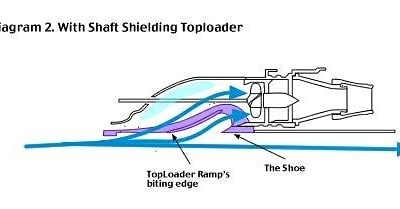
To help solve this problem, manufacturers and aftermarket suppliers have developed top loader intake grates. Top loader grates have additional scoops to gather and direct water flow upward to otherwise void areas of the pump.
This helps to fill the pump with more water and create more uniform thrust. It gives better performance and handling of your watercraft.
So are these top loaders worth the money? Many have asked the same question and as AJSP explains, they are an easy and cost effective bolt-on part which will give you instant results. In a nutshell, these grates are surely worth the money.
Just look at the manufacturers that are even now installing top loader grates on their factory watercraft. Yamaha’s GP1800R and VXR now come standard with these performance-enhancing items.
Yamaha states that “these performance enhancements provide sharper and more predictable handling with better hook up in rough water.”
This brings us to the next and final point of discussion. AJSP asked the question “Will it slow me down?” In other words, is the top loader grate meant for every rider in every condition?
Since these designs can have a larger surface area, it could mean that if you always ride in a straight line on nothing but calm water, then you wouldn’t notice a performance increase. On the other hand if you are like most folks, you not only ride straight but you change directions and maneuver your craft through sometimes choppy water.
These conditions favor the top loader intake grate. It will force more water through your pump and give you better hook up and overall performance.
The bottom line is, if you are serious about maximizing your watercraft’s performance, a top loader intake grate is one relatively inexpensive item that you should consider.
WindRider is offering a high quality foul weather jacket for $124.95. Upon reading the description, this jacket sounds totally sea worthy. It is available in Black or White and is sized from small to XXXL.
The WindRider Pro Foul Weather Jacket is waterproof and made to keep you comfortable due in part to it’s breathablity and fully taped seams. The hood can be rolled away hood and it is finished with a bill so no water will drip onto your face. The double storm flap will keep the water out and a double zipper makes venting easier. Also, the double taped seams will definitely help keep you from feeling the elements when rough weather strikes.
The jacket has a cozy fleece lined collar that will keep your face warm during a cold hard rain. WindRider claims you’ll stay warm and dry even in the worst gales, thanks to the high collar and adjustable hood. These features make good protectors from the wind on those stormy days at sea.
This coat also features 7 pockets! One of them is an internal stash pocket. There are two fleece lined pockets to warm your hands. It also has two extra deep lower pockets with Velcro enclosures for easy access to your goods. Two big chest pockets were added and they’re big enough to hold oversized cell phones.
WindRider thought of everything like adjustable inner cuffs to keep the water from running down your sleeves. A reflective logo is on the front and back and the pockets are larger than WindRider’s competitors. Moreover, the jacket has an adjustable hem and double zipper.
The Pro Foul Weather Jacket was designed by Minnesota boat builders and those guys know what it takes to keep the bad weather at bay so you can have a good day on the water. The jackets are sold direct from the factory, keeping the middle man out so you can get the best price. Check out the site for sizing details and quality graphics. We don’t think you’ll be disappointed.
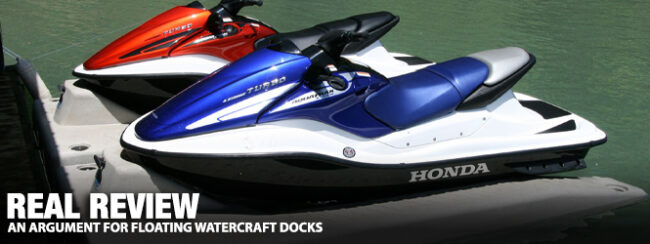
Remember the first car you ever owned? It probably had crank windows, or you at least know somebody that had crank windows. I used to think, who needs electric windows? Cranks are just fine. That’s until your next car had electric windows and you thought, “How did I ever do without electric windows, never again with the cranks!” Well, floating docks are the same animal. Once you have one you just can’t imagine how you ever got by without them in the first place.
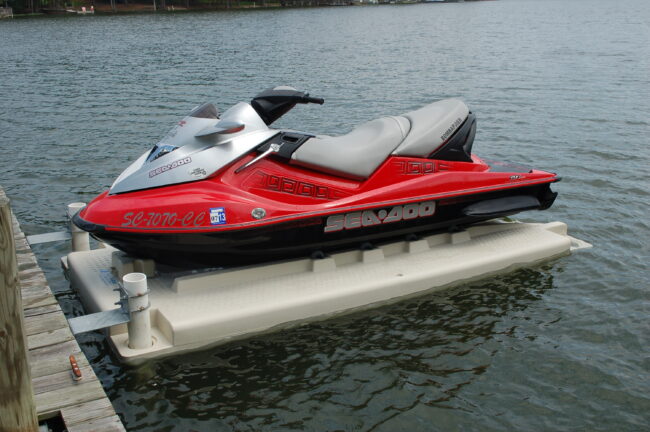
For the PWC enthusiast that likes to tour and hit different spots all the time, a floating dock might not be tops on their list of must haves, but for the PWC rider that likes to get out on the lake or river after work for a couple hours to get an adrenaline fix, it’s an unbelievably good value. Leaving work, heading down to the marina, walking your gear out to your floating staging area is priceless. The floating dock puts you at level with the machine so when loading your bags, drinks, net and poles etc. it’s a snap. Your feet are dry, no bending over, no loading and unloading in the parking lot…need I say more? Some marinas might not like you installing a floating dock, so check first, but I have never met a marina that said no to my business.
There are two main types of floating docks that you should be aware of, the one piece and the modular, they both have their advantages and disadvantages. Let’s have a look at the one piece first. This is the first type of floating dock I ever got into. They are the least expensive, fastest to install and give you a good solid feel under your feet. The disadvantage is, they are heavy and in the first year I had to get three of my friends to help lift and carry these one piece docks out of the water and into my cargo trailer, honestly I felt bad for putting my friends though that.
Adversity is the mother of invention so they say, so now I load and unload this extra-large one piece Carolina floating dock by towing it from my slip over to the ramp with my ski, I then put in my double wide PWC trailer at the ramp, float the dock over to the trailer, I then use the two winches from the trailer to pull the dock up onto the trailer, strap the back two corners down and off to the races, I miss my friends, but at least I’m not paying for chiropractic sessions. One of the best one piece floating docks is from Carolina Docks, I have used this brand for years and have had zero problems with them.
The other manufacturer I really like is Connect-A-Dock. These are well made and thought out PWC floating dock designs. I got a hold of John Krogman at Connect-A-Port and asked him what a good over all description was of their product line, “The Connect-A-Port 2XL adds a safe harbor for your one, two or three person watercraft. Specially designed for the newer deep-V hulled jet skis, it provides easy access and launching of your personal watercraft. The Connect-A-Port 2XL easily connects to both floating and fixed docks. It’s build in bow stop provides added protection to the front of our jet ski. Available in 5 colors it comes with a 5-year warranty,” I’d say that is a pretty good description.
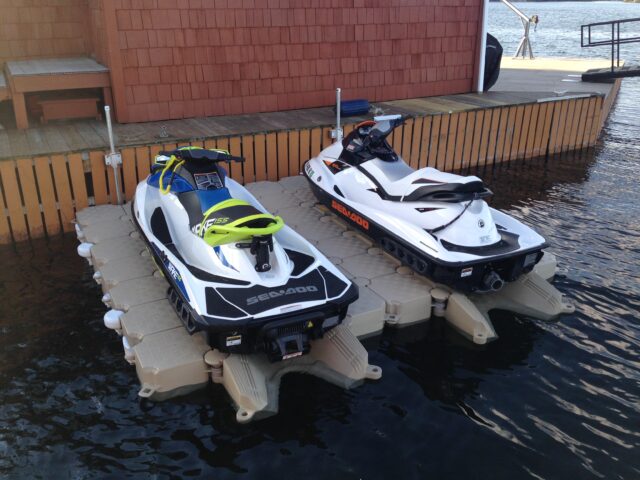
The second type of floating dock is the modular floating dock. The advantage to this type is the flexibility you get by being able to design your own configuration and the ability to set these up by yourself. The disadvantages are they are generally more time consuming to assemble, they are more expensive of the two options per square footage and loosing parts during assembly is a reality. One thing I have noticed is that the modular docks are generally supplied with more options like poles, chairs, bumpers and cleats. One of the best in the business is Candock.
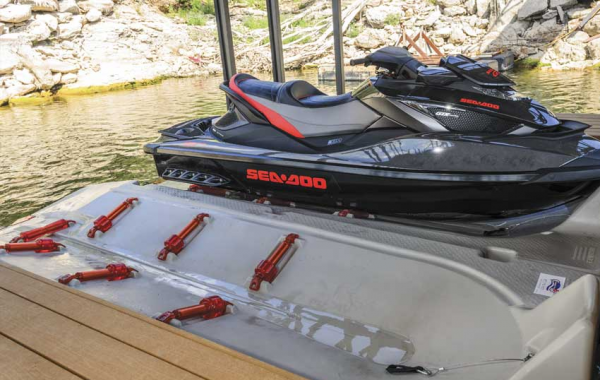
Both the one piece and modular dock styles come with rollers and with solid skids. I would suggest getting the rollers if you have the bigger three seat skis, it is just allot easier to manage getting on and off the dock. In the beginning when rollers first came out they had some problems breaking and not rolling properly, but that is mostly a thing of the past as reliability has become a standard over time. Both roller and skid types come with a lubricant that should be regularly used for proper use and longer lasting equipment.
Bottom line, for a couple grand, these conveniences of the modern day world are invaluable and if you are on the water all the time like me, or wish you were on the water more, consider some floating docks, and bring some deck chairs so you can hang out with the marina boaters and tell them how much you saved by running skis, they’ll love you for it.












 Departing from San Antonio to visit Es Vedra is one of the most popular routes, where we can see the best coves of the island and among them the old canteen, “Sa Pedrera” known today as Atlantis, after the hippies of the 60 and 70 years carved into the rocks with his new sculptures.


 If we break it down a bit further, the science of fluid mechanics states that pump flow rate is directly proportional to horsepower and inversely proportional to pump head. Okay, so the direct proportion to power is pretty self-explanatory.
 We all know that if we have a more powerful engine that this generally means we can travel at higher speeds because the pump is able to flow water at a faster rate. So what about pump head? This topic is a bit more involved and we won’t go into too much detail for the purpose of this article but it has to do with the pressure difference across the pump and its capability to produce a measured lift of the fluid.


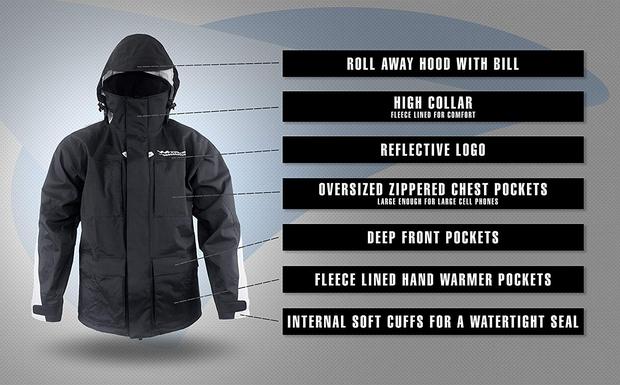
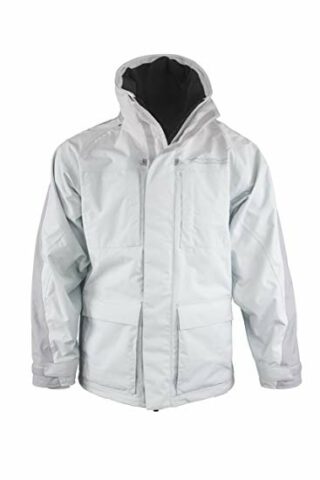 The WindRider Pro Foul Weather Jacket