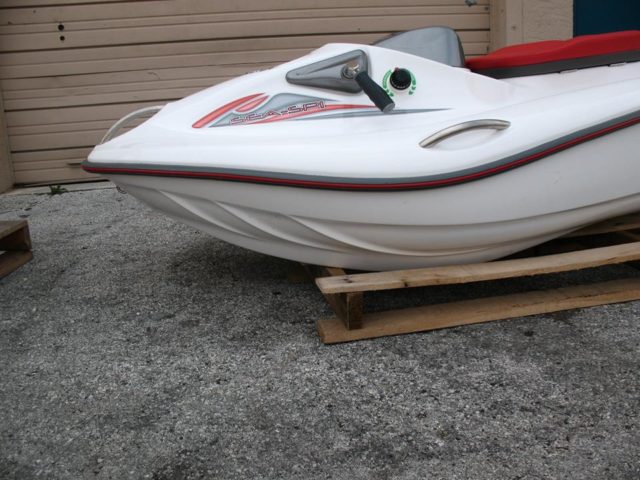
Yeah, yeah. We’re a day late on this one. But we had some other more important stuff to get out there before goofin’ on this failed PWC. The Sea Spi watercraft was (the website is down and we haven’t found anyone still selling or servicing these vehicles) a single or double-rider craft (Sea Spi I and Sea Spi II) powered by an electric motor that propelled you a wakeless idle speeds (a purported maximum speed of 4mph).
The purpose of the Sea Spi wasn’t recreational riding, but rather an alternative to snorkeling. Riders were intended to lie on their stomachs and observe the undersea world through a padded viewing glass that was built into the boat. Steered and throttled by manipulating joystick, the Sea Spi was a clever idea intended for vacationers and tourists who’d rather sunbathe on their bellies than actually exert themselves by lazily swimming around a shallow cove.
Understandably, the Sea Spi also came with certain regulations: riders couldn’t weigh more than 275 pounds for the single-rider craft. And tourist locations required a minimum age is 6 years old (!). Priced (around 2010) at $4,000 each, the Sea Spi failed to catch on with waterfront resorts and didn’t last much long after that (although we have found resorts in Key West, Grand Cayman continuing to offer rented tours).
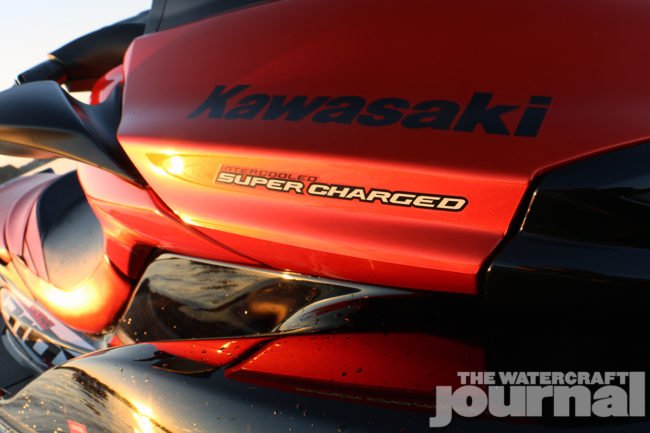
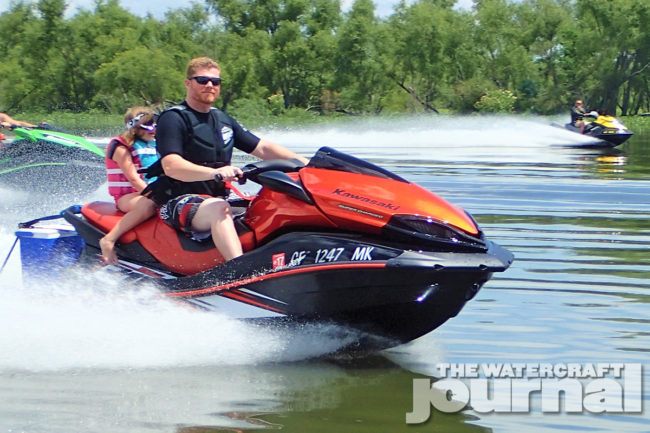
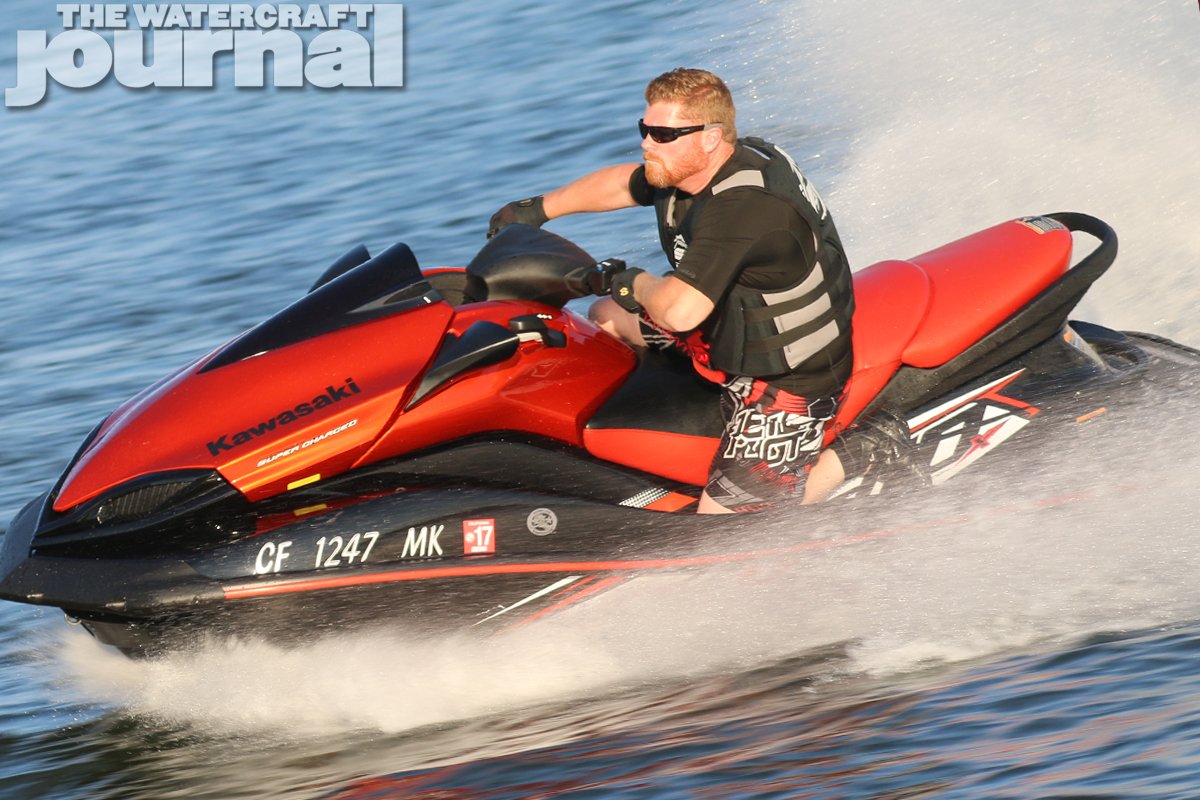
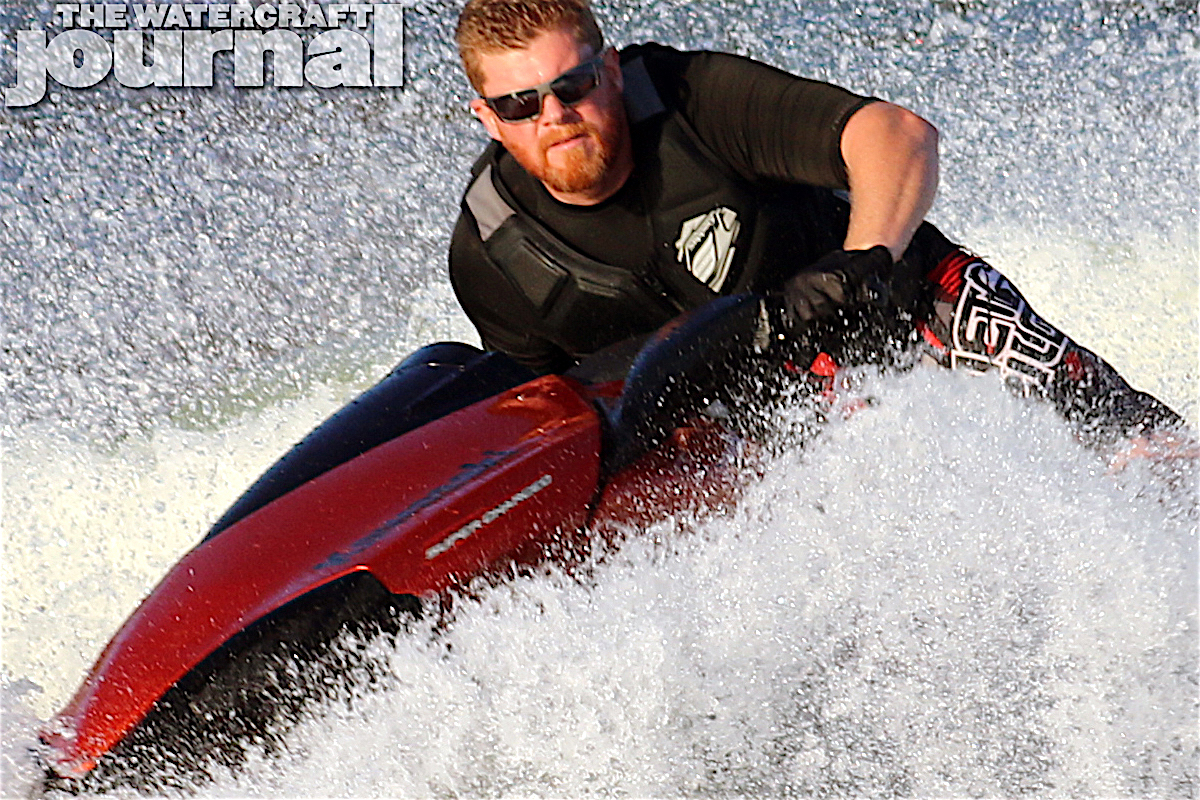
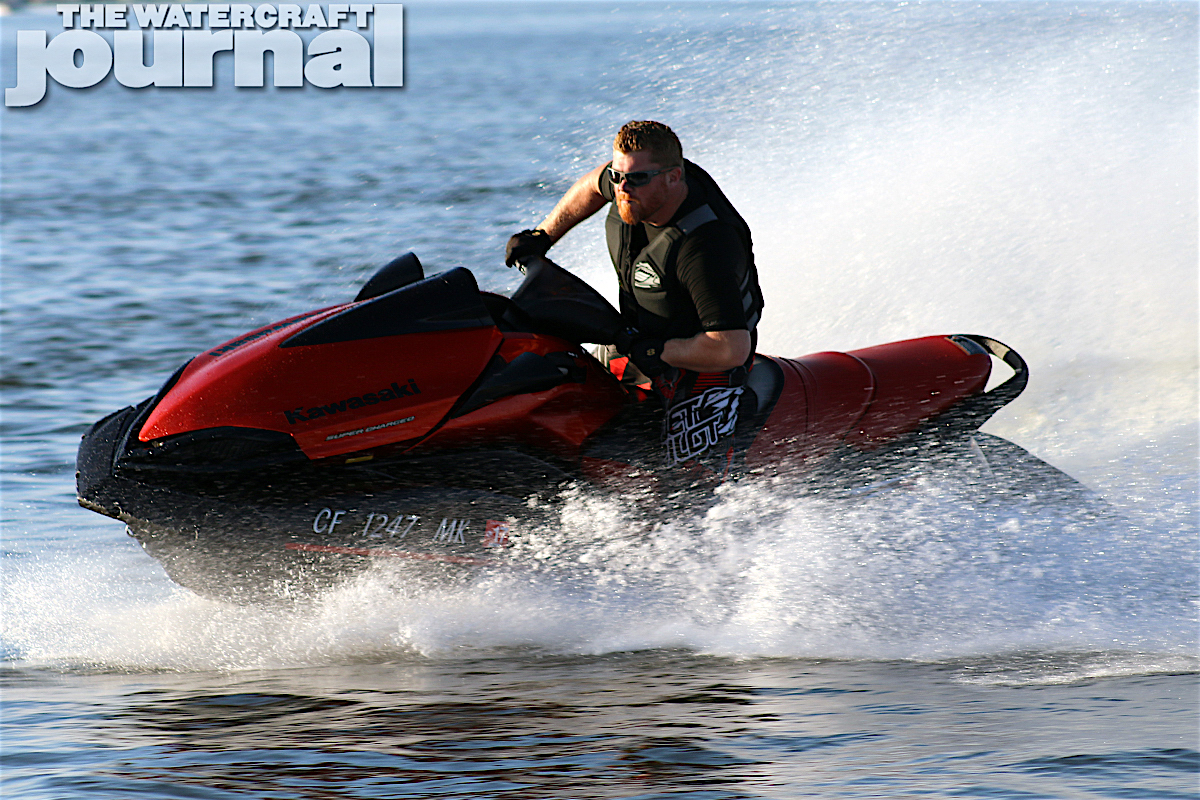
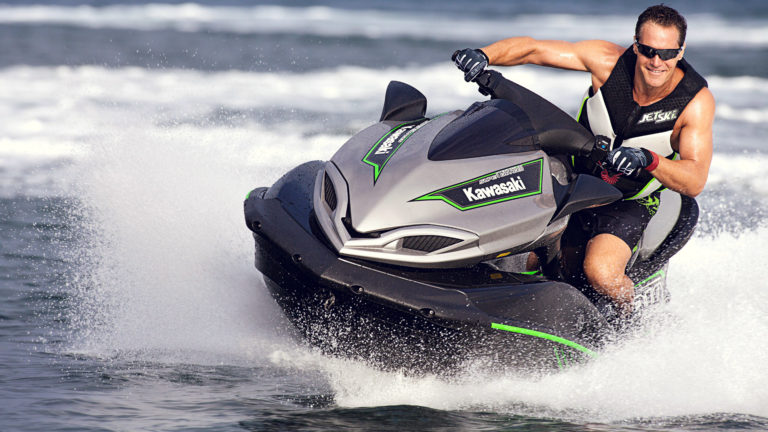
There’s a big difference between being quick and being fast. I think people often mistake the two unknowingly in conversation, but it bears noting the distinct difference both in language as well as in describing something (ie. both are an adjective as well as an adverb). My experience with all of Kawasaki’s supercharged Ultra models has been markedly similar: the brutish delivery of industry-leading horsepower teeters on the precipice of exhilarating and irresponsible. And yet, all Kawasaki Ultras reach a crescendo below that of other supercharged PWC – albeit, the dash to that point will nearly separate tendon from bone.
But first, let me take a small thematic detour: I own a 1969 Dodge Charger that I rebuilt by hand. It’s big and brutal, both in its power and purposeful lack of comfort. There’s no air conditioning, power steering, power brakes or even a radio – and it’s great. Why? Because I made it that way. Beginning back when I bought the car, I hoisted the banner of “If it doesn’t make me faster, I don’t need it.” And true to my design, it’s fast…well, I should say quick. Because while it’s a high 10-second car in the quarter mile (clicking off low 130s through the traps), I’ve only had it up to 115mph on the highway – and neither it nor I really enjoyed that experience at all.
Quickness is often correlated with acceleration, while being fast is often boiled down to meaning top speed, at least colloquially. When people ask, “How fast is it?” they often don’t care about my 60-foot speed. Sure, 0-to-60 times are respectable (2.8 seconds) but most folks just want to know the fastest top speed I’ve ever pushed that flying barn to. And there’s the rub; the Dodge Charger is an aerodynamic nightmare. The recessed grille and back glass were so counterproductive, that NASCAR racers lost control at 156mph. Despite being gorgeous and frankly, one of the most photogenic designs to come from Detroit, it was miserably slow on the big end.
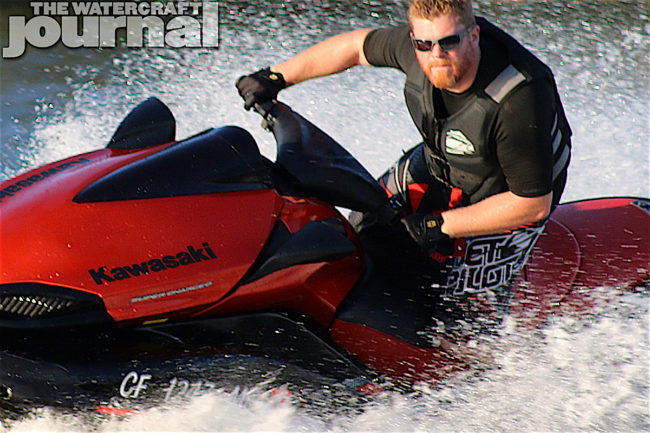
Not to put too fine a point on it, but the Ultra is not too far removed from my street/strip Charger. It’s quick – real damn quick. So much so, it’s spooks every single person we’ve given the lanyard to. But any racer will tell you, getting an Ultra to be fast is a full time job that isn’t very rewarding. There’s simply too much draw (amount of the hull submerged in the water) for that big belt-driven Eaton supercharger to overcome.
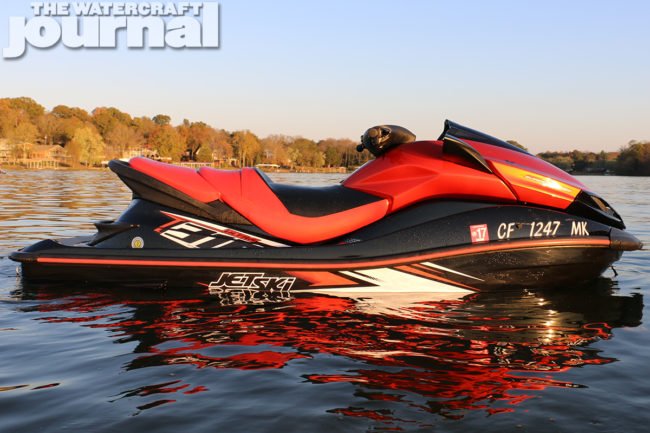
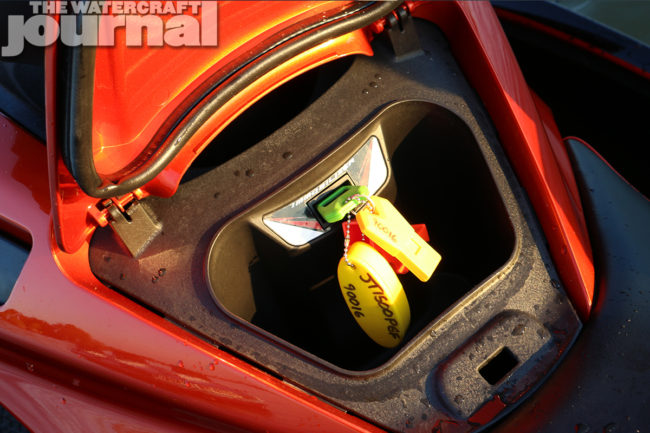
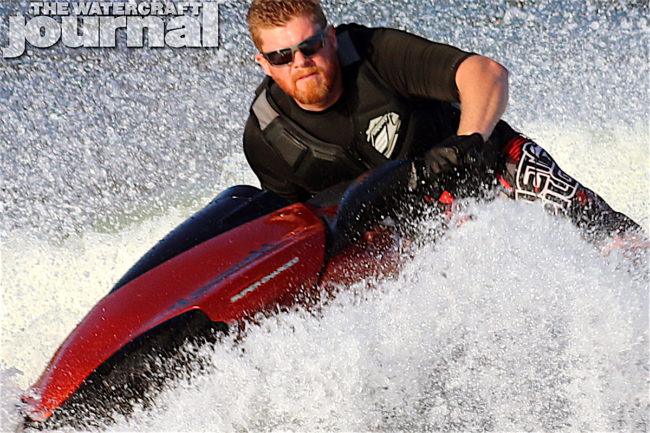
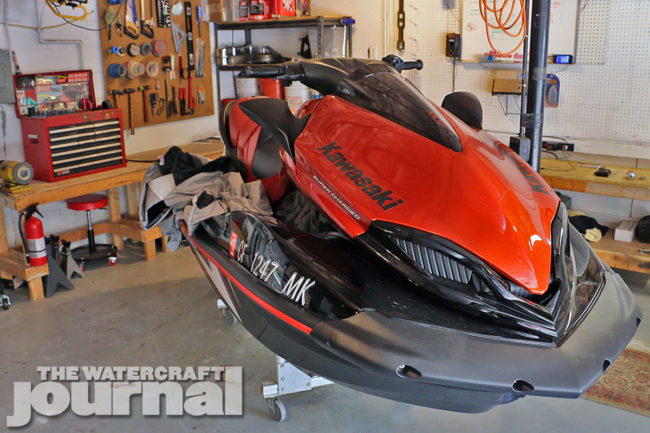
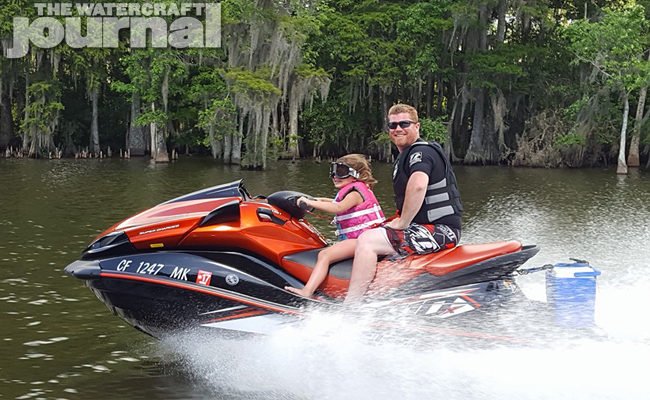
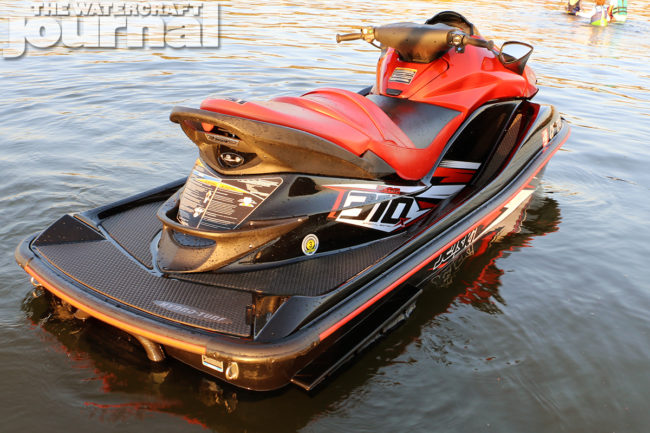
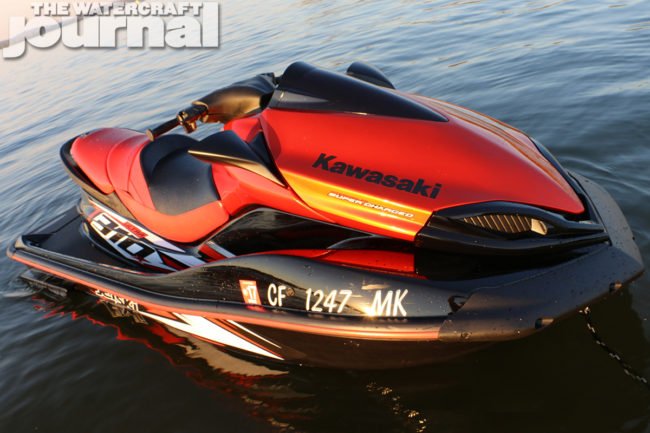
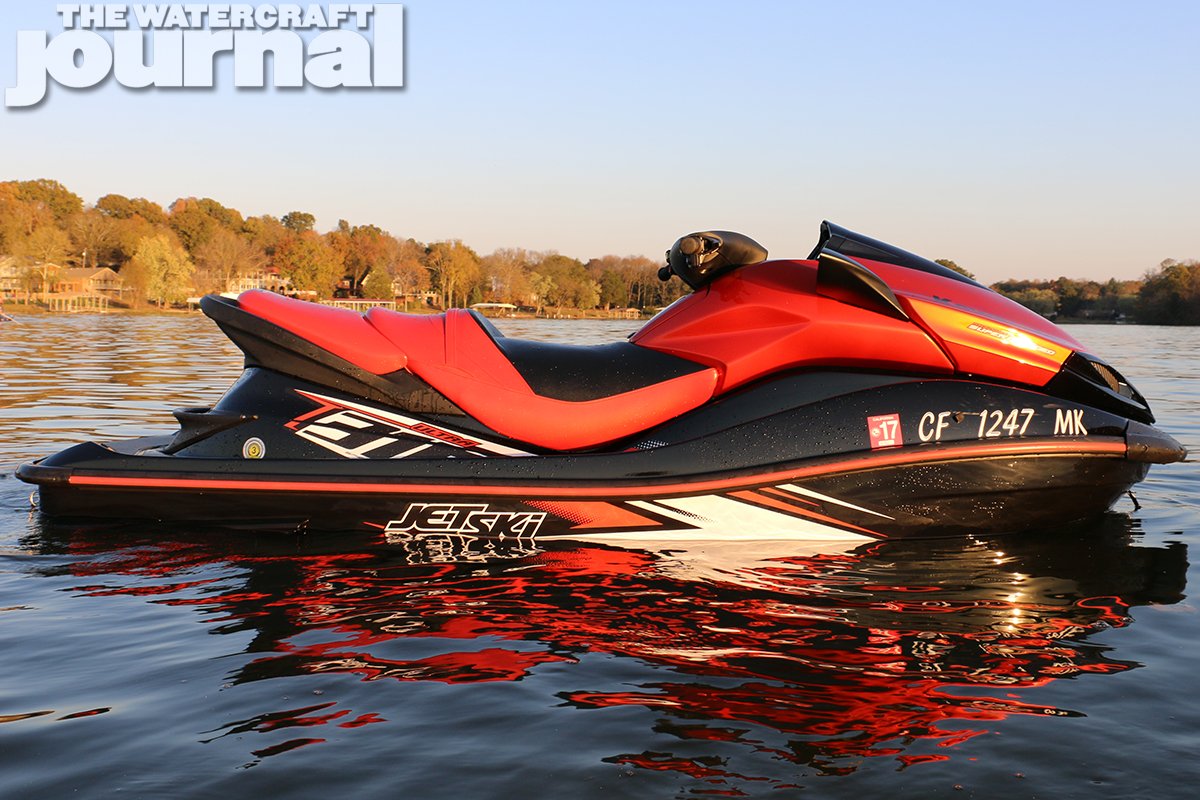
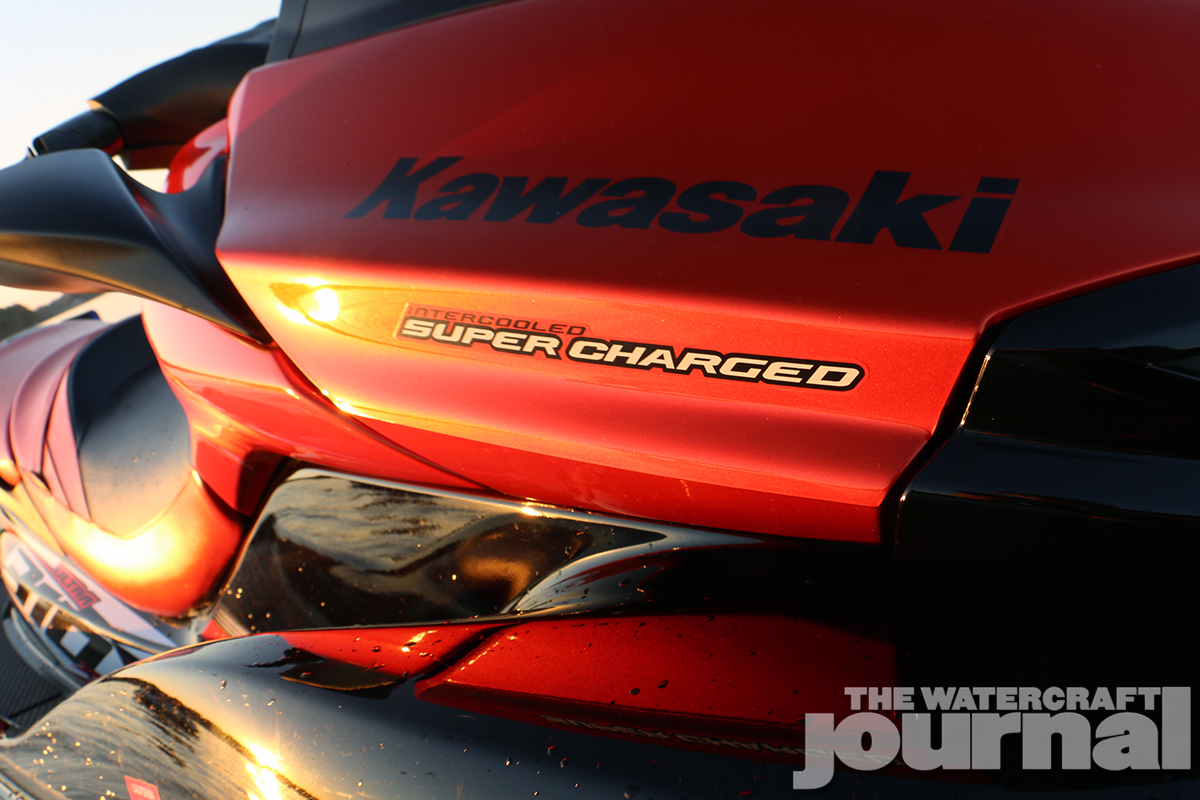
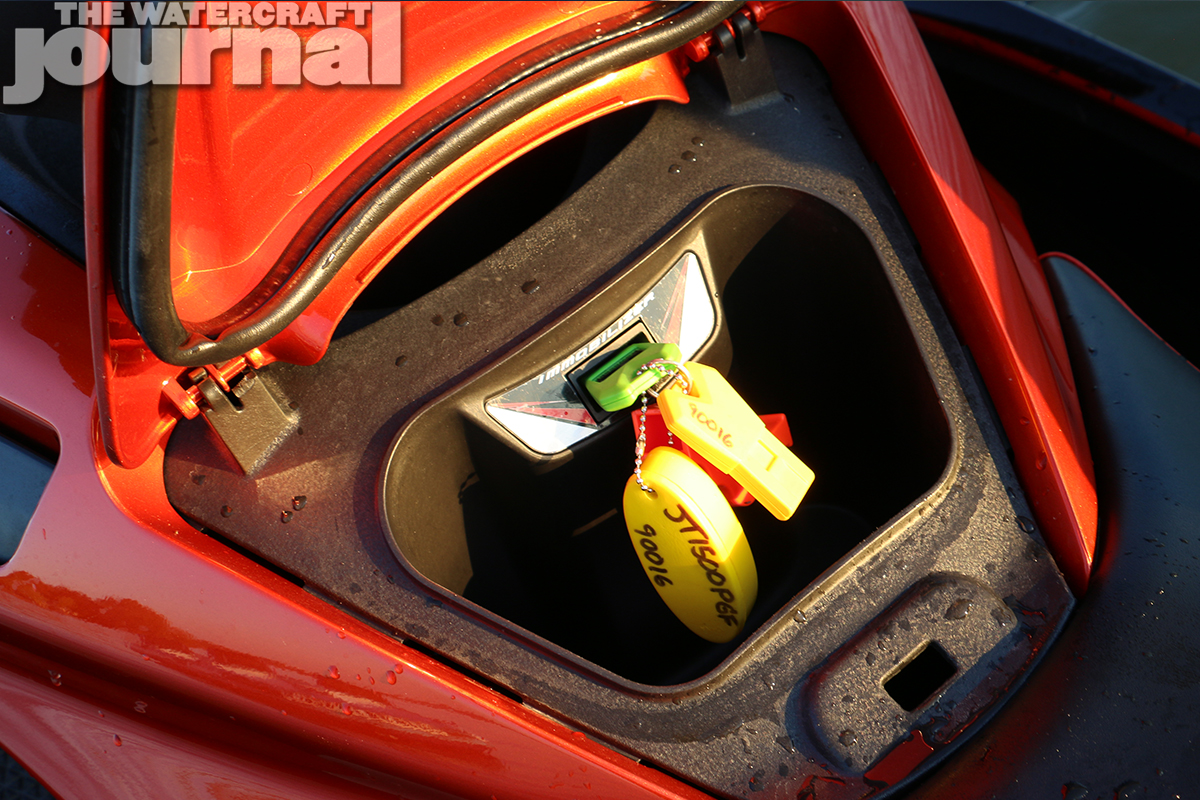
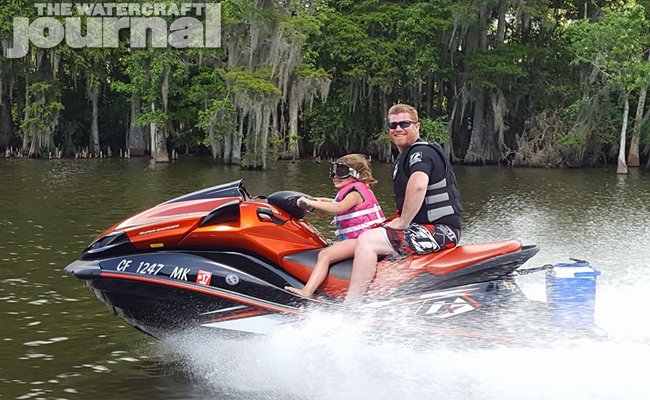
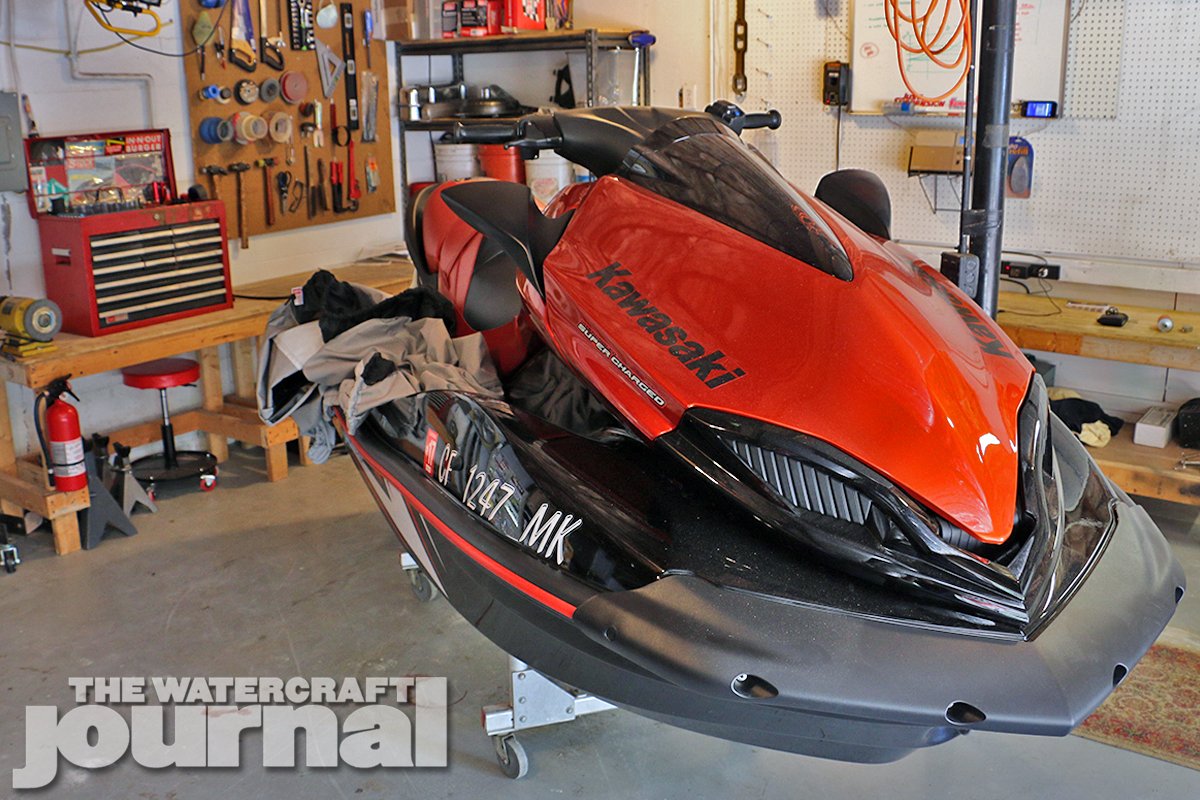
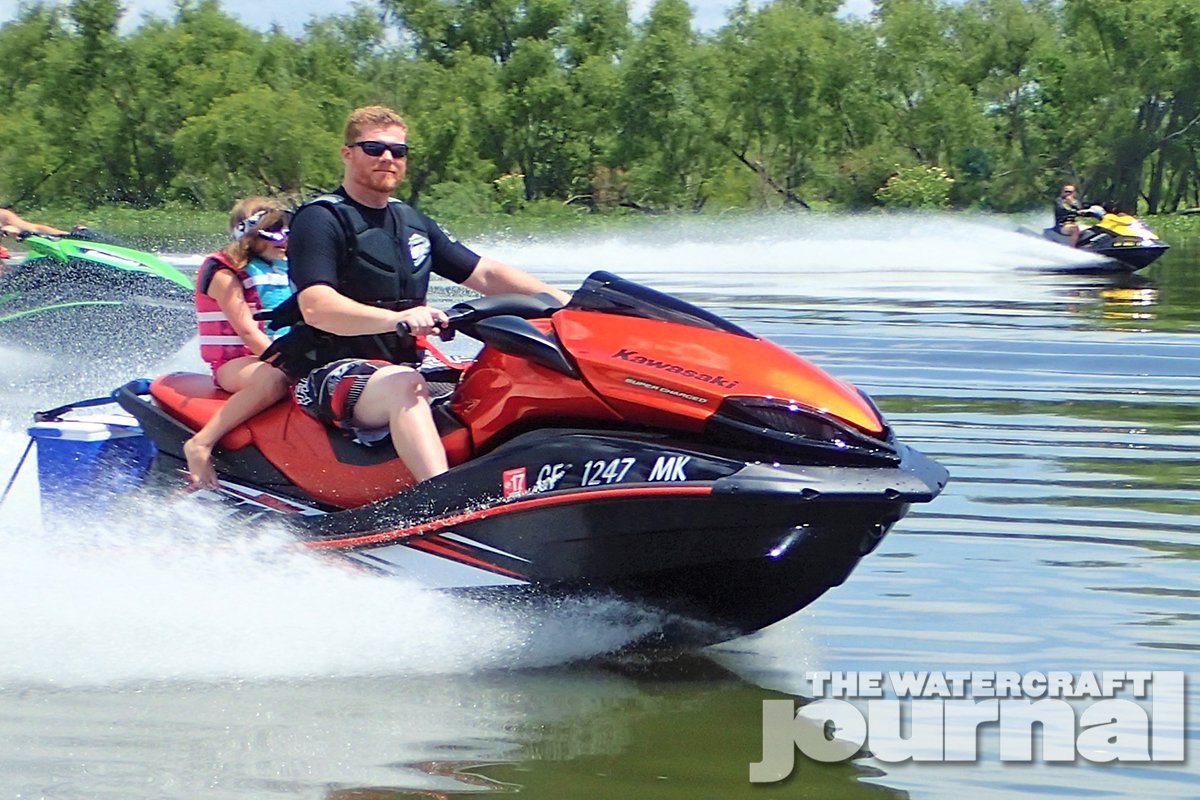
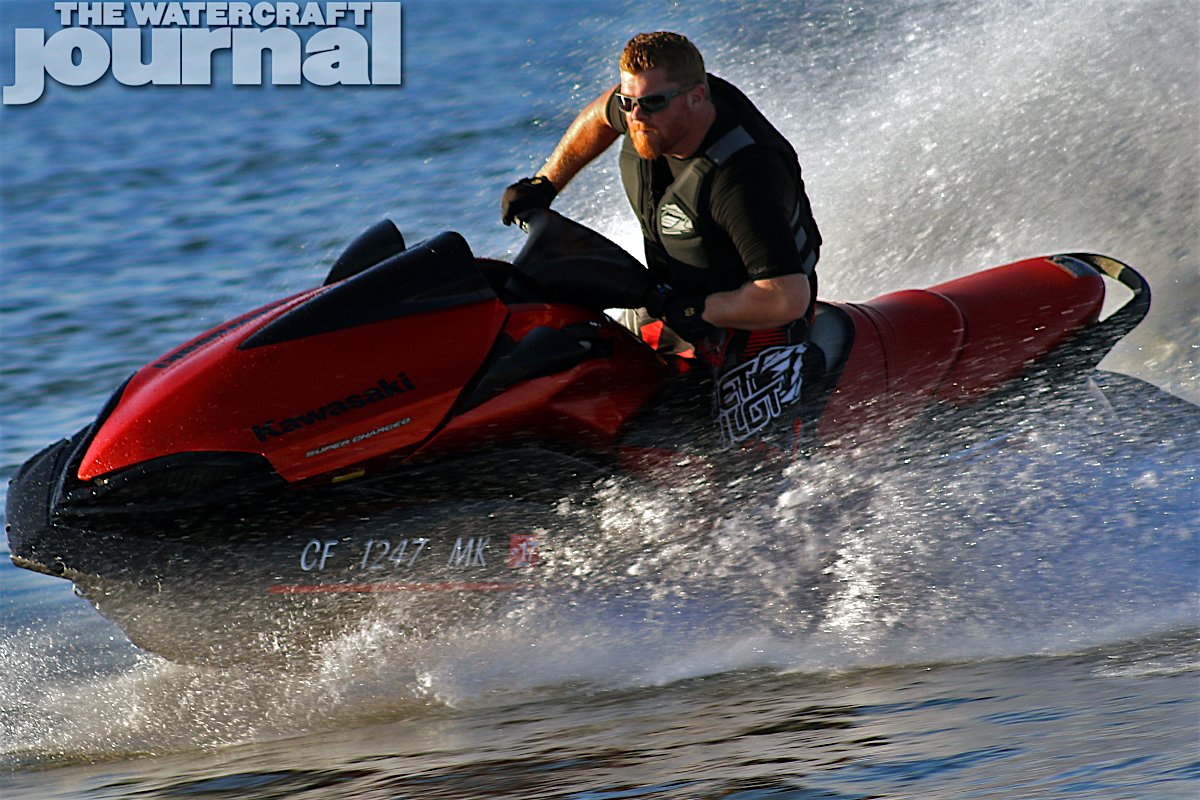
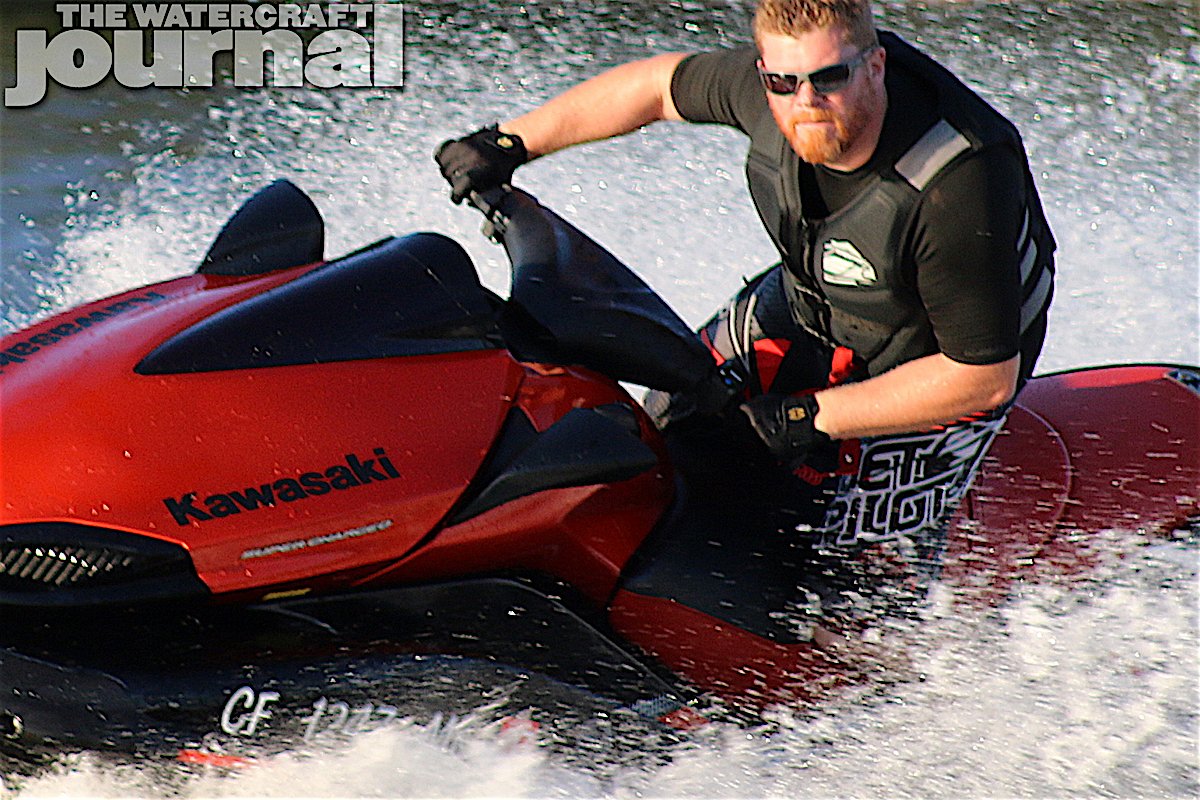
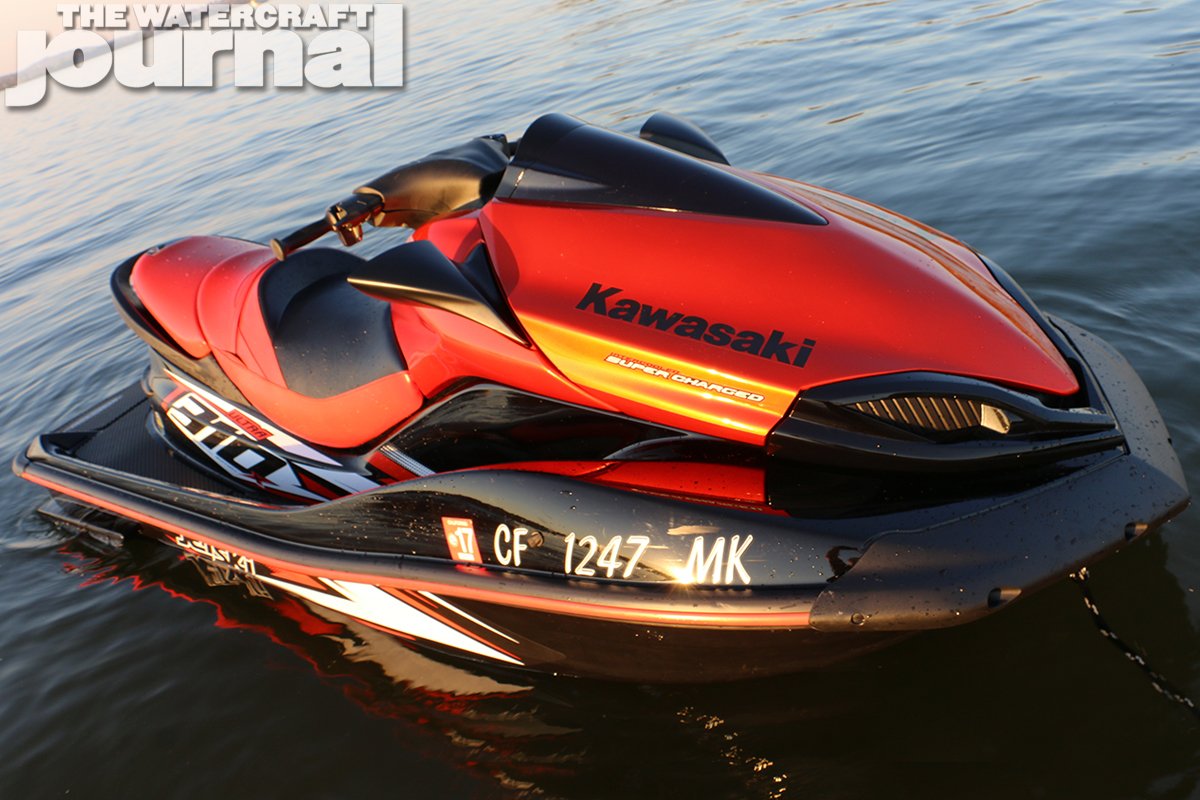
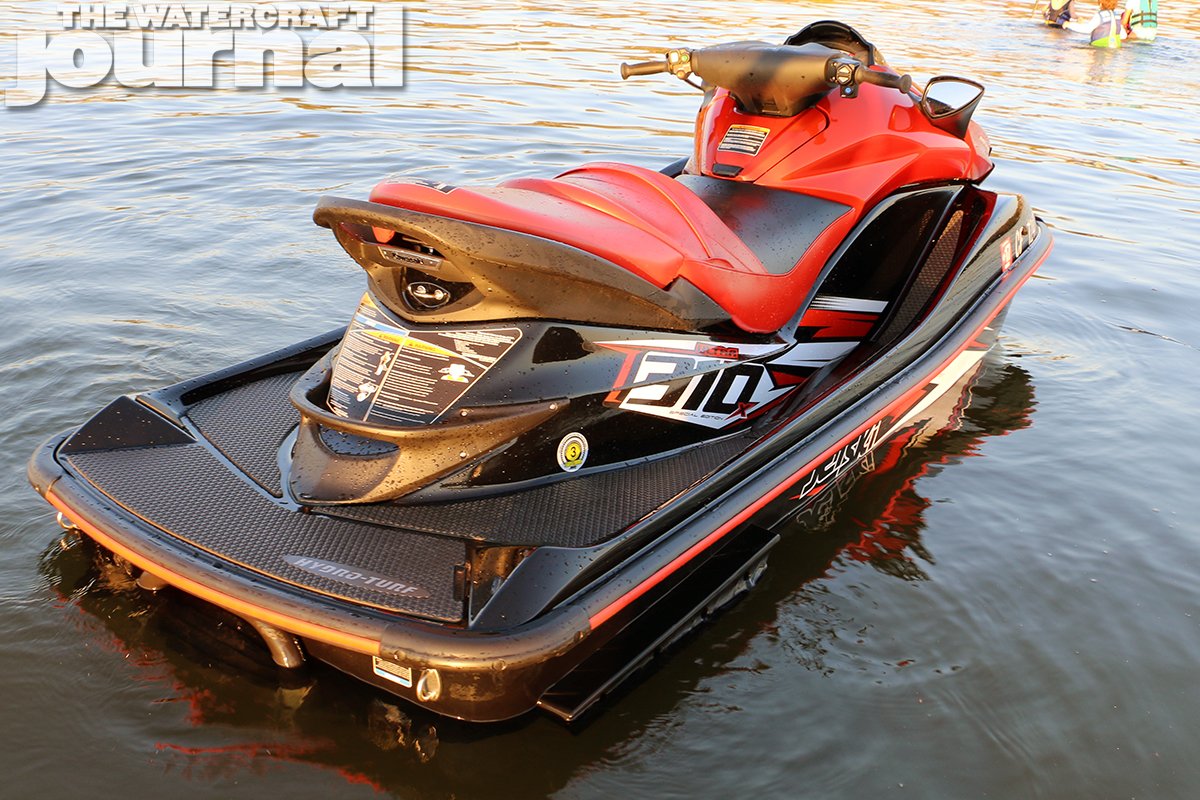
But top speed is arbitrary because all PWC need to stop at 67 (or so), that is, according the the fabled USCG agreement. And true to it, we’ve never seen much more than 68mph from a stock 310X. Earlier in the year, I was handed the yellow and green Immobilizer keys to a brand-new Candy Burnt Orange-and-Ebony 2016 Kawasaki Ultra 310X SE. Standing beneath the beating sun in Castle Motorsports’ back lot as they lowered the ski onto my trailer, I heard passersby swoon at the metallic hue as it reflected the sun’s rays.
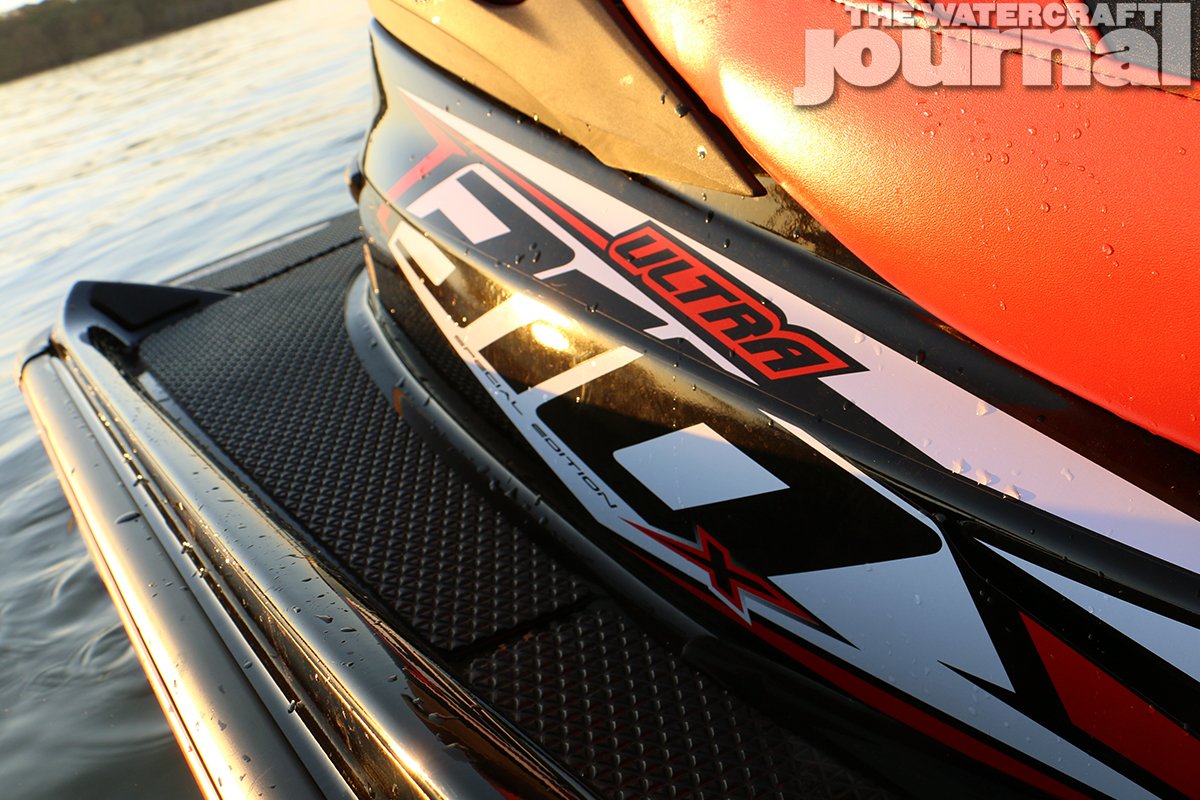
The color alone became the Ultra’s biggest draw – the horsepower output was a close second. Over the span of 7 months, people would stop me just to comment on the color. Even down in Morgan City, LA at the annual Mudbug, I had attendees mistake the color for being a custom paint job. “No, this is factory,” I’d correct them but a few didn’t believe me, saying that it must’ve been a “one-off” just to get more press in the magazine. Of the four supercharged Ultras available through Kawasaki (310X, 310R, 310X SE, and 310LX), the Special Edition is noted for only two key additions: the two-tone, scalloped seat and the color. Everything else is more or less identical with the base 310X. With a MSRP of $15,799, the SE comes in at $500 over the less-optioned sibling, and $1,200 below the fully-equipped 310LX.
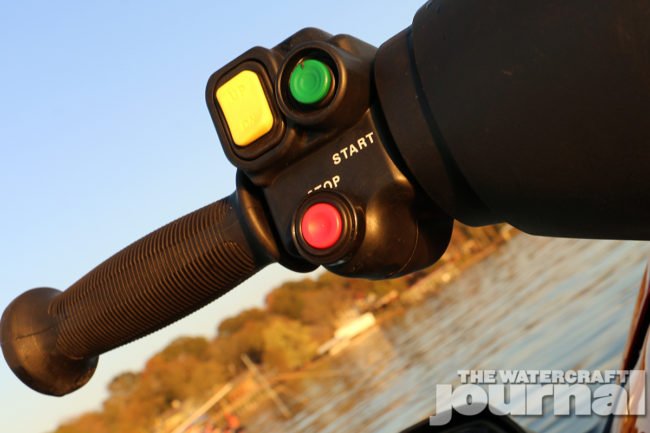
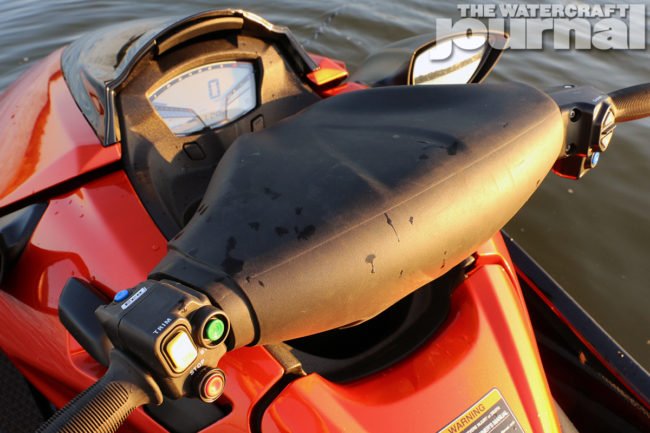
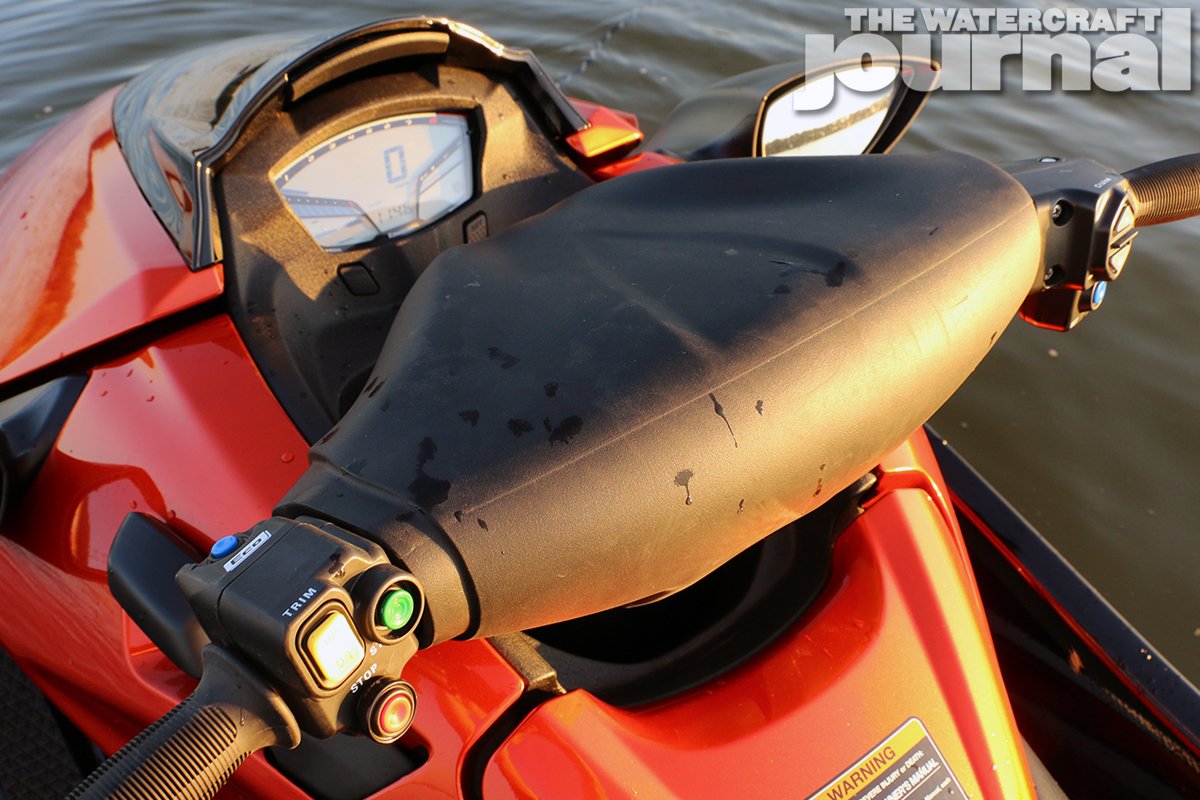
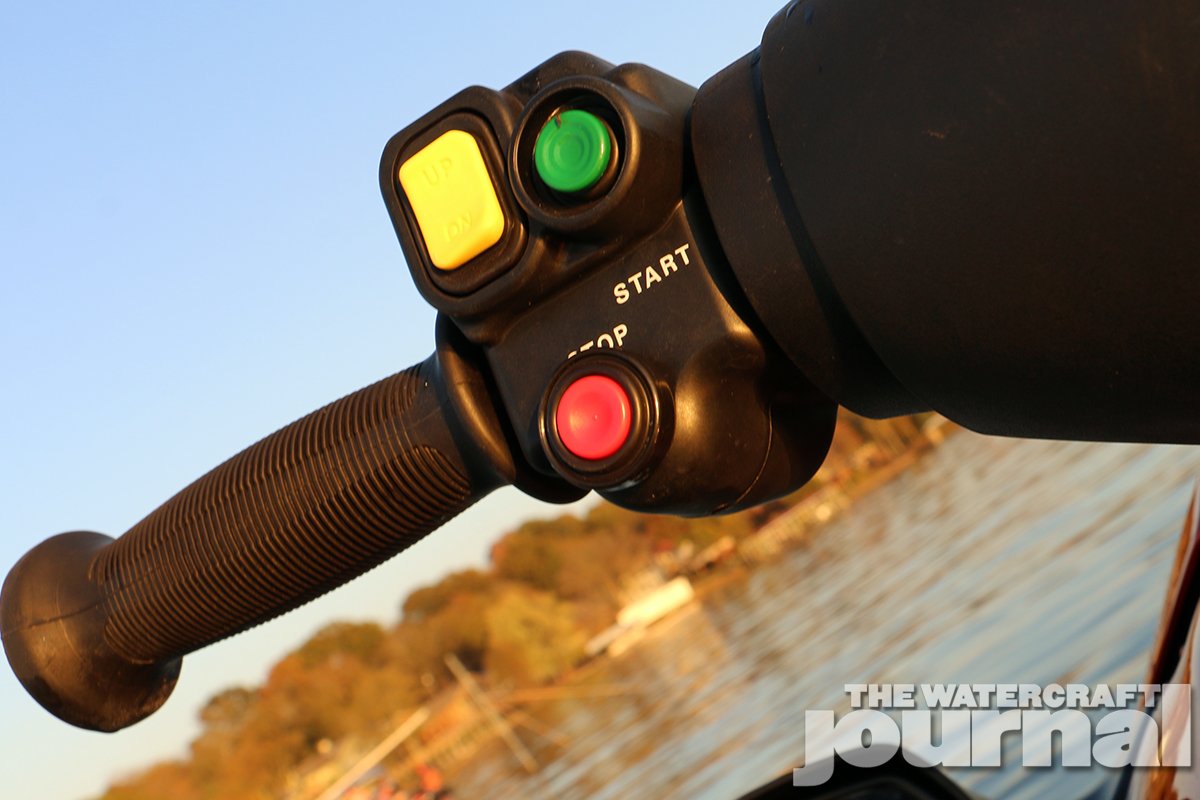
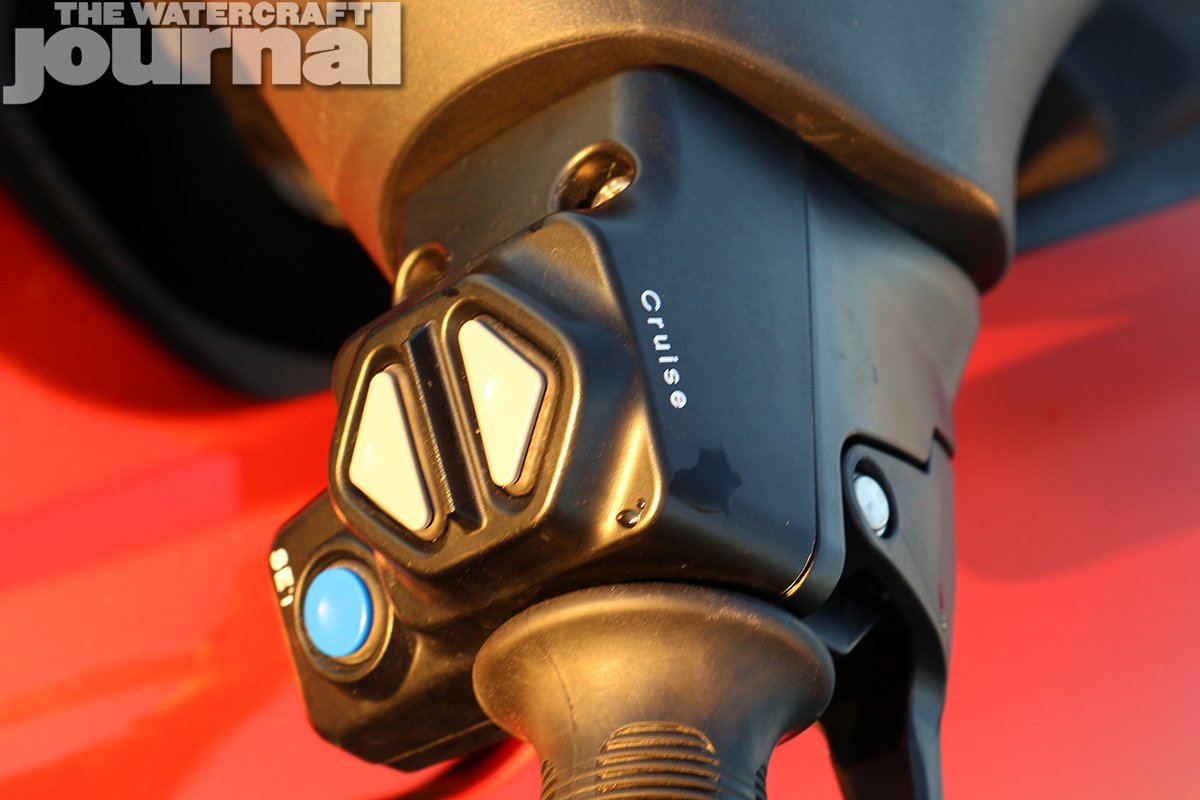
Sometime last year I realized that while I loved my old Charger, it deserved some civility (so I added fuel injection and an overdrive transmission). Kawasaki felt the same way about its Ultra lineup. So in 2011, with the advent of the new 300-horsepower Ultras, came electronic “fly-by-wire” throttle control. The advanced software allowed Kawasaki to include Cruise Control, a No Wake mode, electronic trim toggles and even an Eco setting, all operated via various inputs on the handlebars. For 2014, improvements were made to the 1,498cc, liquid-cooled inline four-cylinder plant to produce an industry-leading 310-horsepower thanks to drastically improving engine oiling, reducing heat soak and maintaining constant lower internal engine temperatures throughout the engine’s linear powerband.
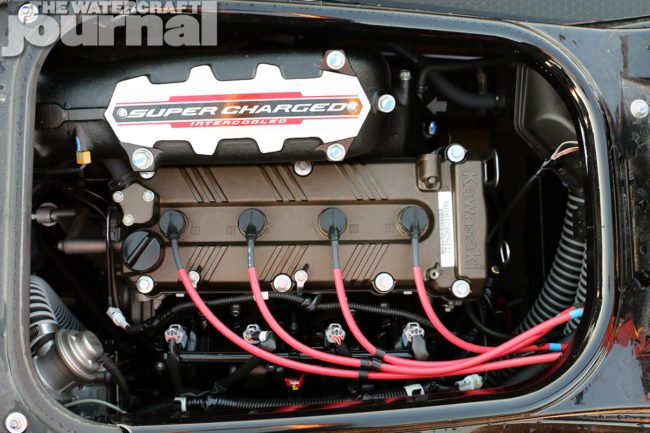
The goal wasn’t to bump up the overall output another 10-horsepower, but to make the engine all that more effective. This was first achieved by re-engineering the crankcase with thicker water jackets, larger oiling passages for quicker oil return to the redesigned baffled pan that reduces oil windage and sloshing, and dual under-piston cooling oil jets (increased from one jet per piston to two). The pistons were replaced with new lightweight cast slugs featuring additional ring land V-grooves. A larger capacity fuel pump (for improved fuel flow volume) and 500cc injectors spraying into a brand-new long-runner intake manifold made from heat-resistant plastic, radically improved low-to-mid range power.
Force-fed by the aforementioned Eaton TVS constant-displacement, four-lobe supercharger and saved by dual blow-off valves to siphon off any extra of its 17psi of boost, the 310X’s engine features a liquid-cooled intercooler with its own cooling circuit and a second waterbox to not only muffle the staccato whine of the boosted monster, but equalize the Ultra’s low speed list. A large oil breather/catch can and articulated sprung belt tensioner also made the cut. A large 160mm 8-vane pump and a repitched 3-blade, long-snout prop all help to produce the Ultra’s maniacal 1,890 lbs. of thrust.
Depending on your riding preferences, the Kawasaki’s hull is either the single greatest design or it’s not. The vertical, Deep-V keel and layered strakes make for a rough water boat that can plow through most anything. With an excessive amount of offshore and endurance titles notched into its bedpost, the Ultra is no stranger to the winner’s circle. It’s hull depth and weight makes it stable and a great rough water ski. Whether chewing through battering ocean swells or sluicing through mild 1-to-2 foot windblown chop, the big Kawasaki (1,052-pounds curb weight, 919-pounds estimated dry weight) tracks like a US Coast Guard cutter.
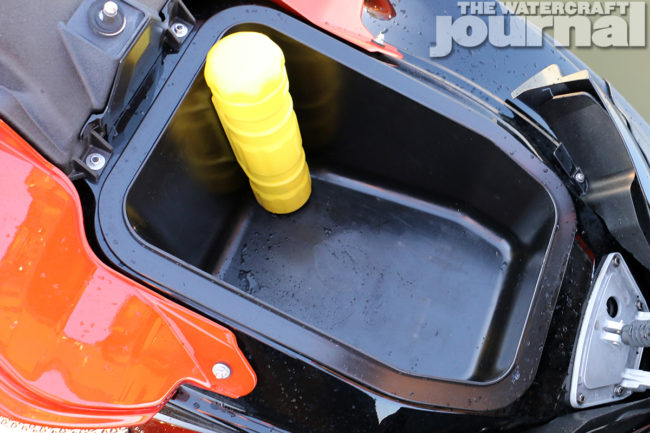
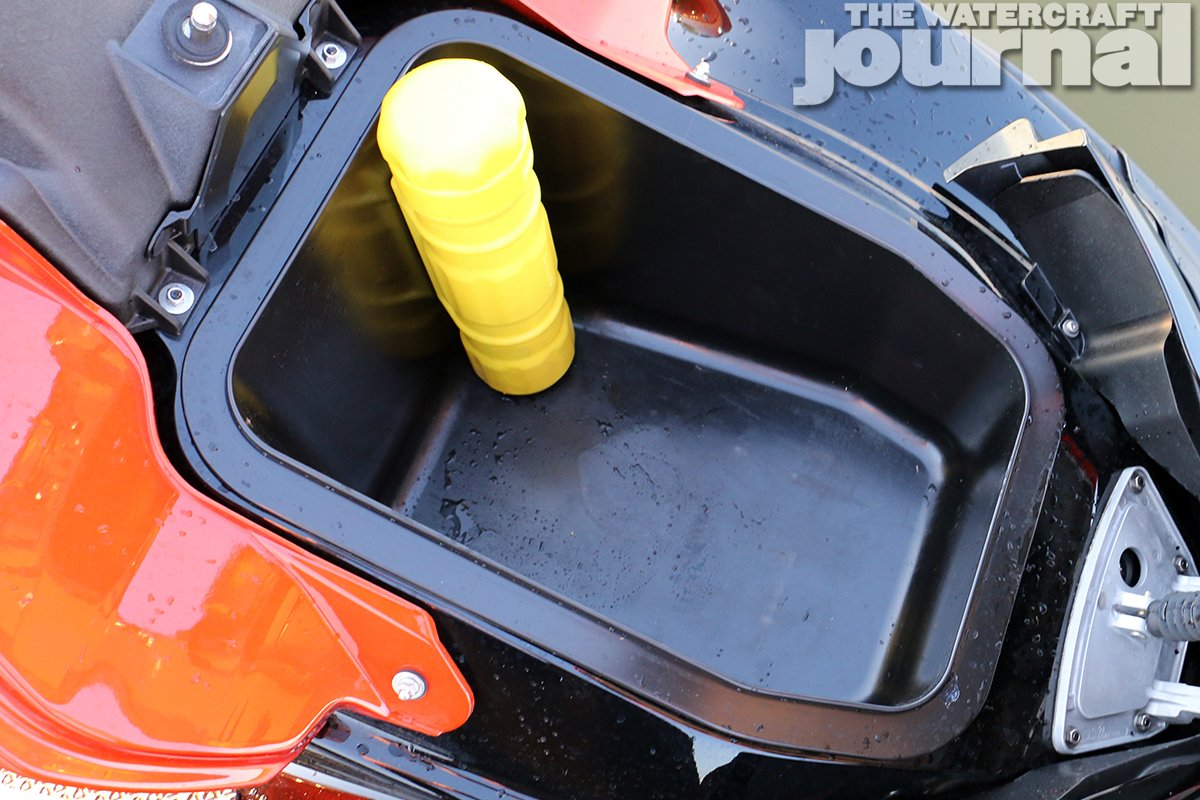
All of this is not only impressive at first blush, but even potentially overwhelming. Then again, everything about the Kawasaki is big. Power? You got it. Fuel capacity? How about 20.6-gallons? Heck, bow storage still remains the largest in the industry at 56-gallons. Even the saddle is the widest in the industry at just under 2-feet across – although, that might not be a selling point.
Yet over the better part of a year, certain things kept springing up that simply couldn’t go unaddressed. The electronic features like electronic trim and cruise control are there, but feel like design afterthoughts. Setting cruise is always a two-handed affair and toggling the trim up or down requires heavy inputs that illicit slow responses. The No Wake Mode and Cruise were both temperamental to set, and the Eco option is not what you’ve come to expect from Sea-Doo’s ECO Mode, wherein boost is scrubbed and top speed is capped, allowing the rider to cruise home at a fuel-sipping 40-45mph. Rather, Kawasaki’s Eco feature merely ignites a small icon on the dash when you’re operating within a fuel-conscientious speed.
Weirdly, one day the coil-sprung glovebox latch shot to apart unexpectedly, launching pieces across my garage. I found the spring under my workbench and discovered it had wiggled free of its snap-in plastic tongs. Meanwhile, as the LCD dash instrumentation is fantastically easy-to-navigate, and permits shuffling through a fuel consumption calculator, external water/air temp gauge, clock, trip and hour meters, and max speed functions, in addition to a revised boost gauge and riding mode goggles, reaching forward of the bars to activate these options is often out of the question, particularly at speed. Yet, the biggest complaint isn’t with what the Ultra 310X SE has, but what it’s lacking.
Brakes have become the industry standard since their first introduction (via Sea-Doo’s iBR) in 2009. For nearly a decade of riding watercraft with brakes, injuries and fatalities have dropped worldwide. Add to that the increased level of rider input, ease of loading/unloading from trailers and docking, and brakes have made riding a watercraft without them all but impossible to enjoy. The big Ultra and all of its immediate power can be pretty unruly, and feathering the pistol grip reverse lever can prove tricky because of it. But if you’re planning on stopping in the near future, you’re gonna need to plan ahead. And I mean, really ahead. (Don’t expect the off-throttle Kawasaki Smart Steering (KSS) assist to help in these split-second situations. It usually doesn’t.) Frankly put, even if future Ultras stayed the same for another 10 years, all would be forgiven if Kawasaki offered a smart on-the-water braking system.
I racked up hundreds of miles and dozens of hours of operation over the year with the 2016 Kawasaki Ultra 310X SE and every time I fire it up, it still puts a smile on my face. Horsepower will always do that for me. And it’s still one of my personal favorite looking skis, but, in a world where intelligent ergonomics, rider input and boating safety is paramount, the Kawasaki feels a bit like a rebuttal. I know that’s not the intent, but its hard to think otherwise when a manufacturer ignores the entirety of the industry and doubles-down on a new 4-stroke 500-lbs. standup, while its entry-level ski is 15 years old, and none of its full-sized, supercharged runabouts offer brakes. These are the quickest, most powerful PWC on the market today, after all. A little more civility would go a long way.
Additional photography provided by Rahny Moore and Billy Crews Jr.
Want a quick way to radically customize the look and curb appeal of your Yamaha FZR or FZS? Well, sure you could toss a few thousand bucks at a trick paint job, but chances are you’ll be taking your ski out of commission for a few weeks while your painter meticulously masks, preps, scuffs, shoots, dusts and coats your machine – and that’s before wet sanding, wet sanding and wet sanding until it looks as gorgeous as a custom paint job ought to be. And while that might sound awesome to some, trying to keep your ski from never getting scuffed or chipped ever again is a chore that nobody really wants. So what is there to do?
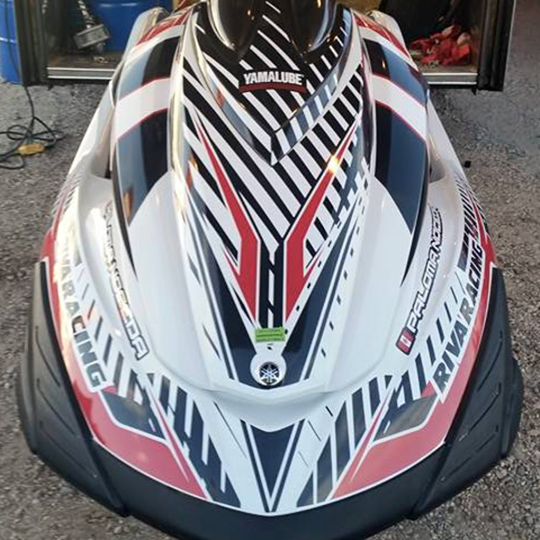
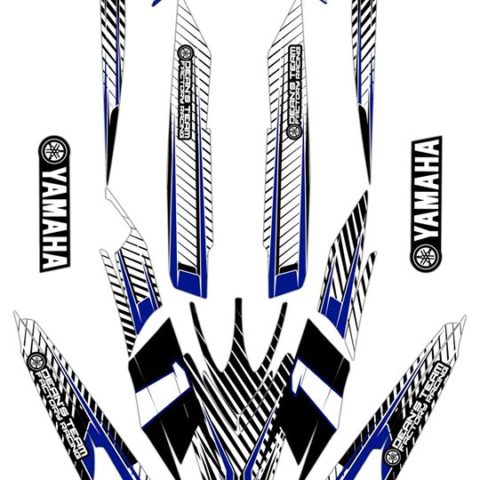
Go to Dean’s Team and pick up one of their new “Paloma” decal kits and transform your WaveRunner in the space of a couple hours! The design was first made famous by Paloma Noceda on her World Championship craft, and later featured on Abdullah Al-Fadhel and Travis Zielasko World Championship crafts. The kit fits both the FZR and FZS (because the only difference between the two was a seat and swimstep – besides the color and graphics). And if the two color combinations shown below don’t tickle your fancy, more colors available upon request. All ya gotta do is ask!
Best of all, you can also customize your kit with a custom race number and sponsors logos! All you have to do is specify what number and companies you’d like when ordering through Dean’s Team Facebook store. Each kit takes about 5 business days to ship (once complete) and you can return the kit (new and unused) within 45 days for a full refund. But c’mon, who’d want to?
Being one to never pull any punches, we know many companies in our industry are reticent to spend the money in advertising – particularly with a enthusiast-interest magazine – with so much potentially riding on the soon-to-be-decided political election. Not only do we have the Executive Branch up for grabs, but the Legislative as well; and until such decisions are made and finalized, many of you won’t be making any budgetary commitments. Heck, we’ve got quite a few projects waiting in the wings until we know better how our fiscal future projections look in two weeks’ time. (And not to incur a political firestorm in our comments section whether the election of one candidate will spell certain fiscal doom over another. We’re weighing these comments strictly on projected consumer confidence reports.)
So what is there to say until said time? In short: a whole heck of a lot. The Watercraft Journal openly and freely shares its monthly performance reports, even when the numbers aren’t all that impressive. Why? Because, unlike so many politicians, we earnestly believe in transparency. As the summer months draw to a close, the leaves begin to turn to hues of amber and ocher, and many opt to winterize their PWC and pull out their snowmobiles and side-by-sides, our traffic typically cools to a reasonable degree. Well, at least you’d think so. October’s readership – although understandably decreased – maintained a surprising close number with a record-breaking September.
Moreover, as our Novembers are almost always our lowest trafficked month, The Watercraft Journal’s popularity in Australia and New Zealand has never been higher, buoying our readership through the Northern Hemisphere’s holiday season. And while that spells continued readership for us, that also guarantees continued and perpetual exposure to a vibrant and worldwide audience. For those of you operating retail and e-commerce companies in our industry, this is a boon to what could otherwise be a slowing quarter. Not so! Advertising with The Watercraft Journal is your very best option when it comes to putting your products and services before an audience of truly dyed-in-the-wool personal watercraft enthusiasts.
October 2015
October 2016
Twice The Growth By A Third
In a couple of months, we’re going to reveal a big piece of information that we’ve been tracking for the year: specifically how much The Watercraft Journal is growing. If you see above (and in the breakdown below), you’ll notice a growth of nearly double in the month of October (from 2015 to 2016). This degree of growth is unprecedented and should speak loudly to a company wanting to maintain a healthy and continual rate of marketing exposure year round. Admittedly, were we to scrub the 3-day peak that came with the announcement of the soon-to-be-released 2017 Kawasaki SX-R, our growth would be closer to a third over last year, which is still remarkable. We maintain this steady growth by being reliable in delivering the industry’s best and most timely articles and news without missing a beat. While others let weeks and months go by between posts, we publish Monday-through-Friday without fail.
October 2015
Total number unique readers: 20,504*
Total number of articles read: 50,892
Percentage of new readers: 56.9%
October 2016
Total number unique readers: 39,262*
Total number of articles read: 78,640
Percentage of new readers: 58.6%
*This number is considered equal to an individual sale of a single copy of a magazine.
The Industry’s Only Real Resource
That’s a pretty substantial claim, we know. Yet, when all you see are a few scattered blogs that go weeks and even months in between posts, and a handful of ill-maintained websites, it’s not hard to understand how we can continually rise to the top. Moreover, when so many do opt to post it’s often inconsequential content or poorly developed text. Contrasting, The Watercraft Journal is the only source for professionally-written, magazine-quality content that even surpasses that of those few printed magazines! Our content is regularly shared, cited as a source of standardized content, and even printed out and shared at trade shows and events! This isn’t a yearbook for our close and intimate friends, but a useful, reliable and effective tool to elevate the sport and tie the industry together – both manufacturer and rider, and retailer to customer. No, we’re not just pumping out more content than the other guys – heck, upstart competitors have drowned their readership in spammy posts and bloggish updates. No, The Watercraft Journal maintains a strict publishing schedule of developing and publishing new and informative content about its advertisers and their products, as well as the industry and sport as a whole.
News articles published in September 2016: 25
Feature articles published in September 2016: 11
Total feature word count: 12,535 words*
News articles published in October 2016: 24
Feature articles published in October 2016: 12
Total feature word count: 12,748 words*
*When this number is translated to print publication standards, it equals a 130-page magazine. Please note that this number does not include an average of two uniquely-written news articles published daily.
Welcome to The New Media
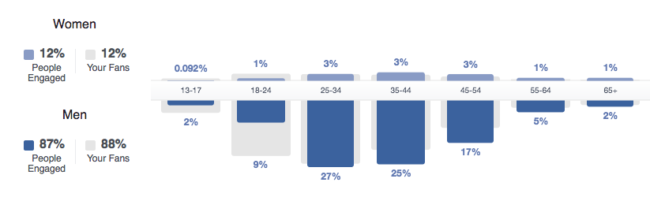
Remember when all you needed to do was buy a half page ad in Personal Watercraft Illustrated or Jetsports and just wait for the phone to ring? Well, there are still a few companies out there who think that’s how things work today. Unfortunately, such is not the case. With social media enabling so many to be their own promoters, unless you’re wielding a rich marketing background, you’re not doing a good enough job presenting your product before the audience you want. Don’t rely on your Facebook page to access the new clients you’re hoping to grab. Work with the largest and fastest growing audience in the industry – the readership of The Watercraft Journal! We share our daily content via our Facebook, Twitter, Instagram, YouTube, and weekly newsletters, as well as with a stellar partnership with the single-largest PWC forum in the world: www.greenhulk.net. By offering our content freely and easily – whether it’s via a desktop, a laptop or a portable device – we ensure that we’re the industry leader.
October Facebook likes: 19,360
Top Five countries: United States, Australia, Canada, France, Japan
We Keep Going and Going…
There’s no reason that you should continue to bank upon your company’s reputation to continue to plod along in this industry. Word of mouth does work, and it works well – but you’re only going to reach those people who already know you and a few of their pals. Let The Watercraft Journal do the work for you by publishing articles and creative content exposing our massive readership to your products and services by initializing an advertising program paired with an editorial calendar of creative and unique written content today! As continue to grow, so does your access to a larger audience of potential customers and clients. Our growth is your growth, so put your products in front of more enthusiasts faster and easier by joining The Watercraft Journal as an advertiser today. To inquire more about advertising with The Watercraft Journal, please email [email protected]
OK, so it’s the first of November many of us here in the States are still wearing shorts outside. While many of us have yet to concede that Al Gore might’ve had a point, we are enjoying what many will call an Endless Indian Summer. The leaves are changing, lawns are requiring more raking than mowing and all of us parents have already sifted through our kids’ Halloween candy to fish out the best stuff. But hey, it’s still pretty great out, so why not ride?
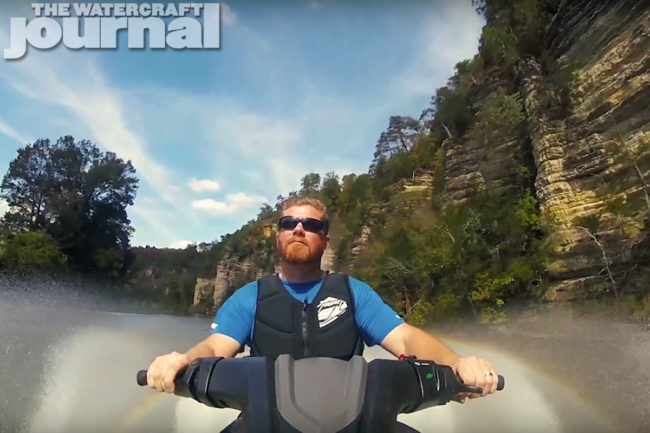
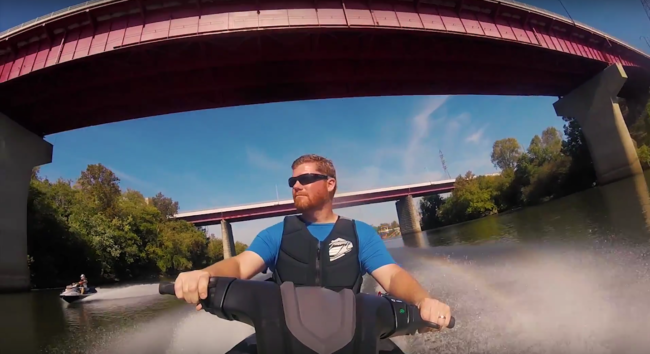
That was the idea a couple of weeks ago for the latest episode of “Long Haul,” The Watercraft Journal‘s on-going (although admittedly intermittent) video series where we give you a first-hand look at some pretty cool adventures that we get to enjoy from time to time. This go around, we got invited on a 90-plus-mile ride from Ashland City, Tennessee, down the famous Cumberland River (once canoed by frontiersmen and fur trappers, and even paddled by American folk hero Davy Crockett), into the middle of scenic downtown “Music City” itself: Nashville, Tennessee – all aboard Yamaha’s 2016 FX HO Cruiser.
You might remember that same Kawasaki-looking-green-and-white FX HO from previous rides and reports, as Yamaha was kind enough to loan us the machine for most of 2016. Anyhow, leaving from there, we double-backed and ventured into the gorgeous Harpeth River Valley with sheer rock walls and rich with autumn colors. Personally, it’s one of the most scenic rides in the South and had whistlin’ Dixie and craving a tall glass of lemonade when it was all over (or a hot bowl of grits. Insert your own preferred stereotypical Southern dish here).
Too often, the maxim, “Money can’t buy you happiness, but it can buy you more horsepower — and that’s the same thing” is the modus operandi of so many performance enthusiasts. And sure, in today’s world of non-invasive ECU reflashes, larger and far more efficient intercoolers, and no short supply of supercharger rebuilders, added horsepower is as easily attainable as ever before. [And to think, only a decade ago, the industry was decrying the influx of “big, heavy and slow” 4-strokes! -Ed] Yet, added horsepower is only as good as the craft its propelling, and no amount of additional grunt can make a heavy watercraft behave like a machine half its heft. This of course, has a great deal to do with mass effecting drag coefficients but for today’s discussion, we’re going to focus mainly on the earlier topic.
Coming to a Better Understanding
Here’s a simple example: Imagine a 1,000-horsepower car that weighed 1,000 pounds. It would have a power-to-weight ratio of 1:1 (or one-to-one) as 1,000 divided by 1,000 equals 1. Now, imagine a 1,000-horsepower car that weighs 2,000-pounds. Obviously, the second car is slower than the first, as its power-to-weight ratio is half, or .5:1, as 1,000 divided by 2,000 is a half. A 1,000-horsepower in a 3,000-pound car would be 1,000 divided by 3,000, equaling .333:1, or for every 1 horsepower there is 3 pounds of weight, and so on. So, effectively, the higher the first number in the power-to-weight ratio, the more lively the vehicle will be.
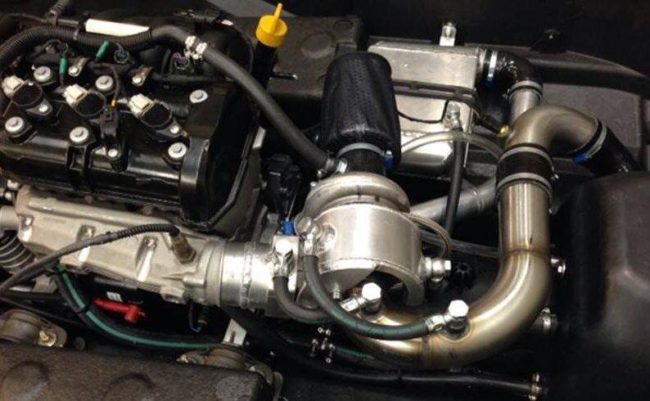
As a few functioning examples, we’ll use György Kasza’s all carbon fiber RXP-X which he rode to win a World Championship in Pro Runabout Open at this year’s IJSBA World Finals, and V-Tech Tuned’s turbocharged Sea-Doo Spark kit. In the case of V-Tech Tune’s turbocharged Spark, the numbers are rather impressive: beginning with a stock 405-pound 2-up Spark, V-Tech’s kit adds just under 20-pounds in the form of a turbo, BOV, intercooler and plumbing, pushing the weight to roughly 430-pounds. Yet, when installed and tuned to perform at its peak, the boosted Spark produces an impressive 200-horsepower. When calculated, that gives V-Tech’s Spark a power-to-weight ratio of .46:1, a number far superior to any supercharged PWC available at dealerships today (see below).
Now, to push things even further, we take a look at Kasza’s RXP-X. Hewn completely out of carbon fiber, Kasza’s Sea-Doo yields a total weight of 639-pounds. Powered by a radically tuned 1630cc Rotax 3-cylinder pressed by a fully water-jacketed Borg Warner turbocharger and factory Sea-Doo intercooler, his RXP-X is fed a diet of E100 ethanol. At wide-open, the heavily modded RXP-X is capable of a staggering 650-horsepower but was detuned to a engine-preserving 500HP for competition use. When 639-pounds is divided by 500-horsepower, we get a ratio of .78:1. When that is changed from 500 to 650-horsepower, we get an incredible 1.02:1, or literally a ratio of one-horsepower-per-pound. This of course, is what the aftermarket and professional racers can accomplish; but for 99-percent of consumers, we’re going to focus on factory equipment from here on out:
Big Power From Small Packages
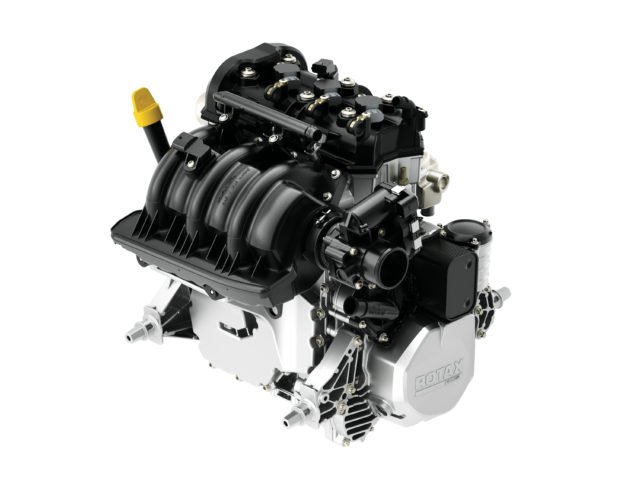
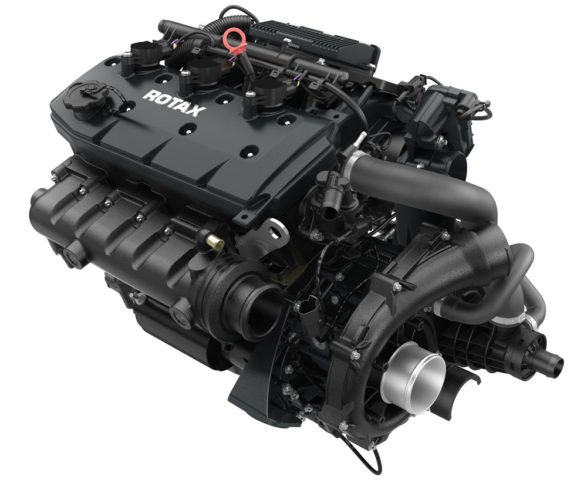
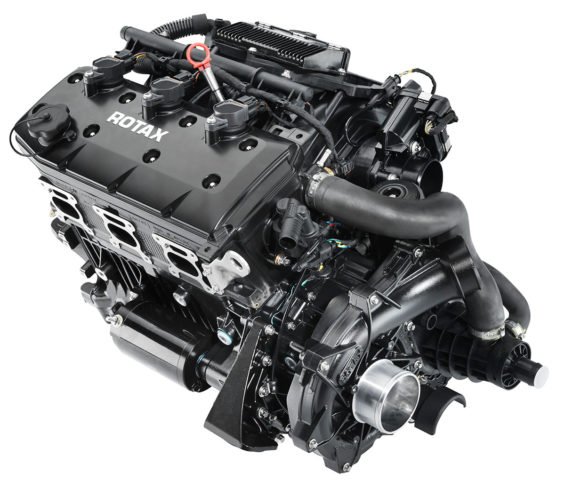
In the past three years, we’ve seen quite a bit of effort in developing powerful-yet-lightweight engines. The powerplants to emerge from this trend are both groundbreaking in their technology, as well as hugely beneficial in their advancements. Sea-Doo set the wheels in motion with its ACE 900 (Advanced Combustion Efficiency) 3-cylinder, four-stroke found first in the Polytec-hewn Spark and later in the 2017 GTI and GTI SE. The all aluminum plant (as well as all subsequently-equipped ACE derivatives introduced by Rotax since 2015) employs a new plasma coating applied directly to the aluminum casing’s cylinder walls via a proprietary thermal spraying process to replace the heavy steel pressed-in sleeves.
Equally, Rotax’s redesigned cylinder head employs dual camshafts, operating the four valves-per-cylinder aiding in the ACE’s advanced combustion efficiency (get it?). A superior intake and exhaust runner with a tighter quench makes the head a winner, particularly in producing the High Output (HO) 90-horsepower tune. And aftermarket reflashes dial up the wick to 110-ponies without harm. Displacing only 998cc’s, the scant 1-liter tips the scales at merely 100-pounds, placing its power-to-weight ratio at .9:1, or 0.9-horsepower per 1 pound (that is, using the stock 90HP as our baseline). Going up from there, the ACE 1500 HO, producing an advertised 230-horsepower and weighing 194-pounds, earns a ratio of 1.2:1; the mightier ACE 300 fetching a ratio of 1.6:1 at the estimated same weight.
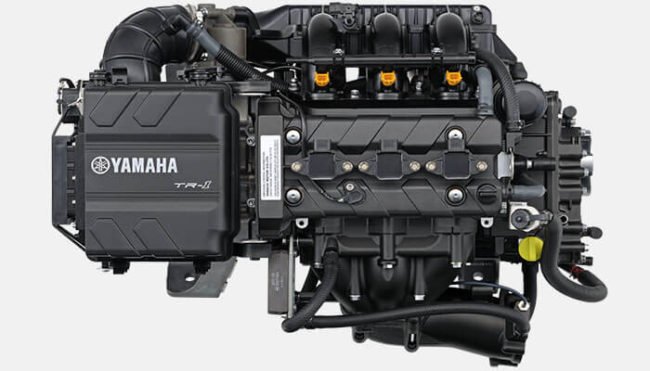
Last year, Yamaha’s response was the all-new TR-1 1,049cc (1-liter) 3-cylinder 4-stroke powerplant, which replaced the MR-1 4-cylinder. The new dual-overhead cammed, 3-cylinder not only provides 13-percent more horsepower (an official 125 horsepower) than the old engine, but also shaves off 20-percent of the outgoing engine’s heft, as well as an impressive 40-percent of its overall size. For 2017, the TR-1 gets a slightly modified sibling, the TR-1 EX, with a lighter, single-piece flywheel/coupler and redesigned exhaust log-style manifold, dropping the output to an even 100-horsepower. Weighing in at 124-pounds, the TR-1 wields a ratio of 1:1, and .9:1 for the lighter-yet-less powerful TR-1 EX.
Although Kawasaki shook the motorcycle industry to its foundations with the insanely over-powered 300-horsepower supercharged 1-liter (998cc) 4-cylinder in the H2R superbike (and the subsequent street-legal H2 version touting 197 ponies), the engine that is coming in the new SX-R is the brand’s tried-and-true 1.5-liter (1,498cc) 4-cylinder four-stroke from the Ultra LX and STX-15F. Producing 160-horsepower at a spine-breaking 208-pounds, this places the Kawasaki’s ratio at .76:1, well below that of any of the above engines.
Full Scale War, Not Horsepower War
Manufacturers have learned that the easiest route to superior fuel efficiency can be found in shaving weight and holding back on engine consumption; Sea-Doo’s ’17 GTI SE ACE 900 HO is a stellar example of this. The manufacturer slashed a staggering 150-pounds from the Recreational-sized runabout by replacing the traditional FMC hull with a PolyTec one and powering it with the 90-horsepower ACE 900, dropping the machine from 790 to 640-pounds.
Of course, Sea-Doo’s PolyTec has allowed BRP to maintain its place as the only manufacturer to produce a 2-up runabout that weighs 405-pounds (a near 150-pounds less than Kawasaki’s soon-to-be-released SX-R standup). BRP has revealed – as have the tens of thousands of Spark owners have discovered – that a day’s worth of fun and thrills can be had with minimal horsepower if the craft can remain lightweight and nimble (the new freestyle-friendly Spark Trixx is founded on this principle) – and so has Yamaha in some regard, as all of the brand’s moves have been in building race-ready, supercharged runabouts with lighter materials:
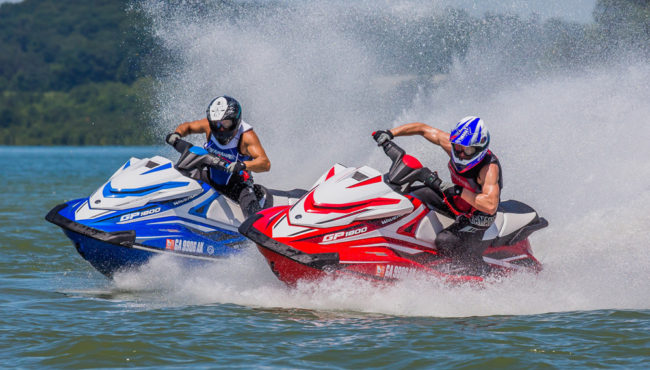
Yamaha’s decision to completely retire the FZ series upset a great deal of performance enthusiasts, many belittling the new GP1800 for lacking the characteristics that so many have become accustomed to in the outgoing FZ. Yet, the brilliance was found in the light GP1800 platform: it comes in at 769-pounds – 22-pounds less than the FZR – yet with all of the power of the outgoing machine. And unlike the FZR, the GP1800 comes with features previously unavailable to its predecessor: RiDE, Yamaha’s quick-response electric trim system, and a folding swim step. (It also is significantly more affordable than the outgoing FZR; the GP’s $13,999 MSRP handily beating out the FZR’s $14,799 price tag by $800). Without those items, the GP is estimated to be a full 50-pounds less than the retired FZR.
More importantly has been Yamaha’s commitment to its NanoXcel and NanoXcel2 technology. Dedicating years of development of a “nanotechnology-engineered material” that is light yet maintains structural integrity, Yamaha engineers, “used a combination of ‘nano’ clay and glass micro-bubbles to develop a new stronger resin that uses less material. The glass micro-bubbles used in NanoXcel 2 are smaller and stronger than other filler materials, contributing to the strength, rigidity and lightweight of the new hulls and decks.” The result was an immediate 35-pound and 46-pound drop in weight from the Yamaha FZR and FX SVHO, respectively.
Although top speeds are still arbitrarily capped via throttle positioning sensors and GPS speedometers (that is, when talking strictly about factory-floor stock models), power-to-weight superiority is easily seen in radar-tested acceleration runs. While such numbers aren’t readily available without exhaustive hours and dollars spent to track each unit and correct for variances in air and water temperatures (as well as barometric pressure, etc.), we do have a breakdown of some major players in the field of performance watercraft and their power-to-weight ratios:
*All Kawasaki units are advertised with a curb weight, including full oil and gas being factored into the weight. We’ve calculated for 20 gallons of fuel at 6.183 pounds per gallon equating 124 pounds, and 5 quarts of oil, equaling 9 pounds; all totaling 133 pounds removed from each total units’ advertised curb weight.
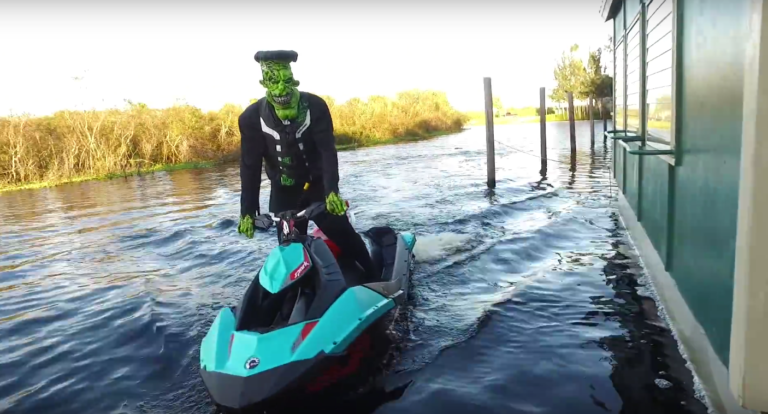
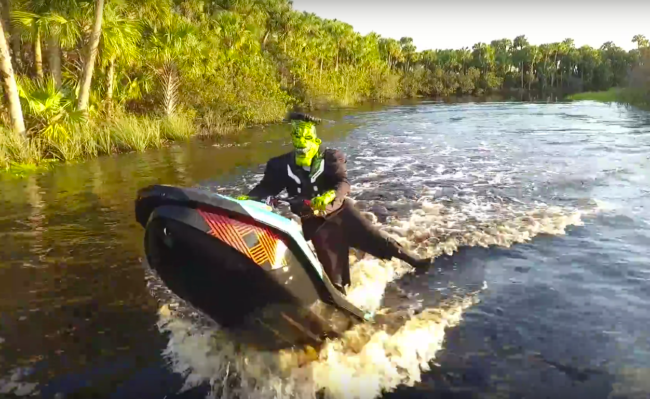
You gotta love it when a manufacturer gets into the holidays – and Sea-Doo is always on point when it comes to showing off their festive spirit. A few years back they released their Santa Claus on a GTI video, then the Easter Bunny went for a ride down the Intracoastal Waterway a few months later. Now we’ve got “FrankenTRIXX” on a brand new Sea-Doo Spark Trixx, showing off his freestyle prowess in hopes for a tasty reward.
New for 2017, the Trixx is possibly the most unique runabout built in the last decade. Designed for flatwater freestyle fun, the Trixx comes with a redesigned vertically-adjustable aluminum steering next and handlebar setup permitting for 6-inches of rise; heavy-duty padded foot wedges, and a electronically-adjusted, re-calibrated VTS trim system with an additional 20-degrees of range.
These options give the Trixx the ability to nose-down for shooting “fountains” or rising near-vertical for tail stands, as well as a bevy of other tricks. It’s a ski meant to be shared by family and friends and the subject of playful competition for hours to come. Of course, when you’re not showing off to your pals, it’s also a Spark – meaning one of the highest-selling runabouts in the industry today, so the hours of enjoyment are limitless.
OK, we get it; it’s a little too early for department stores to start pumping Christmas carols over the loudspeakers and decorating their windows in flocking and holly. But that’s not to say that it isn’t too early to start spreading some Christmas cheer. Cycle Springs PowerSports and their Slingshot Only store dedicated to performance Polaris parts and accessories, has recently announced their intent to expand their 2nd Annual Slingshot Charity Drive after the success of last year.
Now, the Slingshot Charity Drive will carry over two days, namely Friday, November 11 and Saturday 12. More importantly, this year Cycle Springs is pleased to announce that they’ll be sponsoring more local children in need. All of the proceeds from 50/50 raffle ticket sales will go to buy gifts, clothing and other necessities for these families. “Without your help these children won’t have the Christmas that they have been dreaming of,” states Cycle Springs. “Help make this Christmas one they will remember and win something in the process.”
Here’s the original letter issued by Slingshot Only: Come join us for our 2nd Annual Slingshot Charity Drive. We will be at Innisbrook Resort in Palm Harbor, Fl. November 11th and 12th. Can’t make it? That’s okay, you can still enter the raffle for the 50/50 drawing. You will also be able to view the live drawings right from your phone or computer.
This year we are pleased to announce that we will be sponsoring more local children in need. The 50/50 proceeds will go to buy gifts, clothing and other necessities for these families. Without your help these children won’t have the Christmas that they have been dreaming of. Help make this Christmas one they will remember and win something in the process.
Purchase your 50/50 tickets here or you can just donate to a great cause. Either way you will be helping these families enjoy a wonderful Christmas. You will not be shipped your tickets. Your tickets purchased online will be identified with your order number and name and be tossed into the drawing just like tickets purchased in person.
You will be able to purchase online tickets up to Wednesday Nov 9th. Drawing will be live during the event. Check back for the live drawing times. To see all the event details or to donate please CLICK HERE!
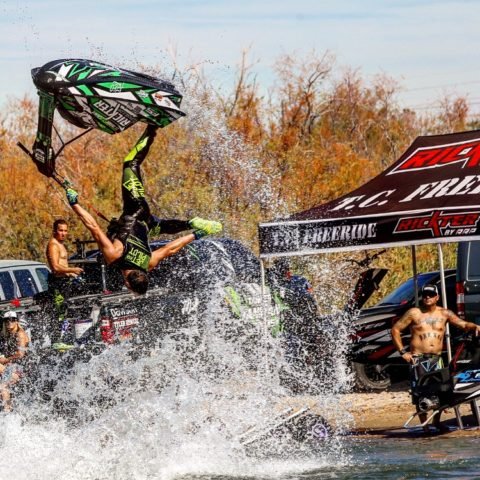
Last week, The Watercraft Journal received a great, personally-written recap from famed freeride and freestyle athlete Tanner Thomas, who gave us a person glimpse at how he prepared and performed at this year’s IJSBA World Finals:
“I can honestly say that preparing for this 2016 World Finals was the hardest I have worked for anything in my whole life. I did not win, but that was not necessarily the main goal. What I mean by that is that we are a judged sport. Quite simply put, Joe could ride much better overall rider than Bob and still come in behind. We have no finish line, no real rules, just put on the best show.
“This year, I set out to be the best rider I could possibly be. I wanted to push myself like never before to see what I could accomplish. I asked myself many mornings, ‘How bad ass do you think you are?’ To be a professional rider of any action sport, your body, your mind and your equipment have to work together seamlessly. That can be difficult, but with almost 10 years of experience under my belt on a jet ski, I feel like I am a professional at it. I am proud of the way I feel, the way I look and the way I ride. It started by completely changing my diet, my exercise, my stretching and my focus.
“I continued chasing the best equipment and working with my team and sponsors on developing more performance and I am proud of those results as well. I am proud of these photos that I get to share with you and the spectacular tricks I am able to do flying through the air on my jet ski. Most of all, I am thankful for the doors that have opened and let me run through them. My family, friends, sponsors and supporters. I do it because I love it and it has loved me back. Despite some speed bumps along the way, I stayed focused with my team behind me and I did the absolute best that I could. We took home 6th in the world!
“Now I am getting to the point in my life of wanting different things. I have learned a lot along the way and have more ideas and ambitions than I can even begin to describe to you. As of now I am not sure exactly my plan for jet skiing in the future, but I have to make some changes. I won’t be able to chase events like I have in the past. I plan on still doing special film, demo, or show opportunities. I also plan to keep working with some of my sponsors on product development as I enjoy chasing the best. I also have some business ideas. Starting off with my TanRak Truck Rack system that I have been working with JetLift on. I am hoping to launch that around the first of the year and have my own product available for people to use. That has changed the way my life works and made every one of my season tours possible!”
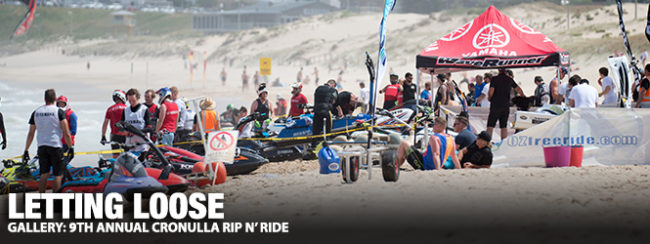
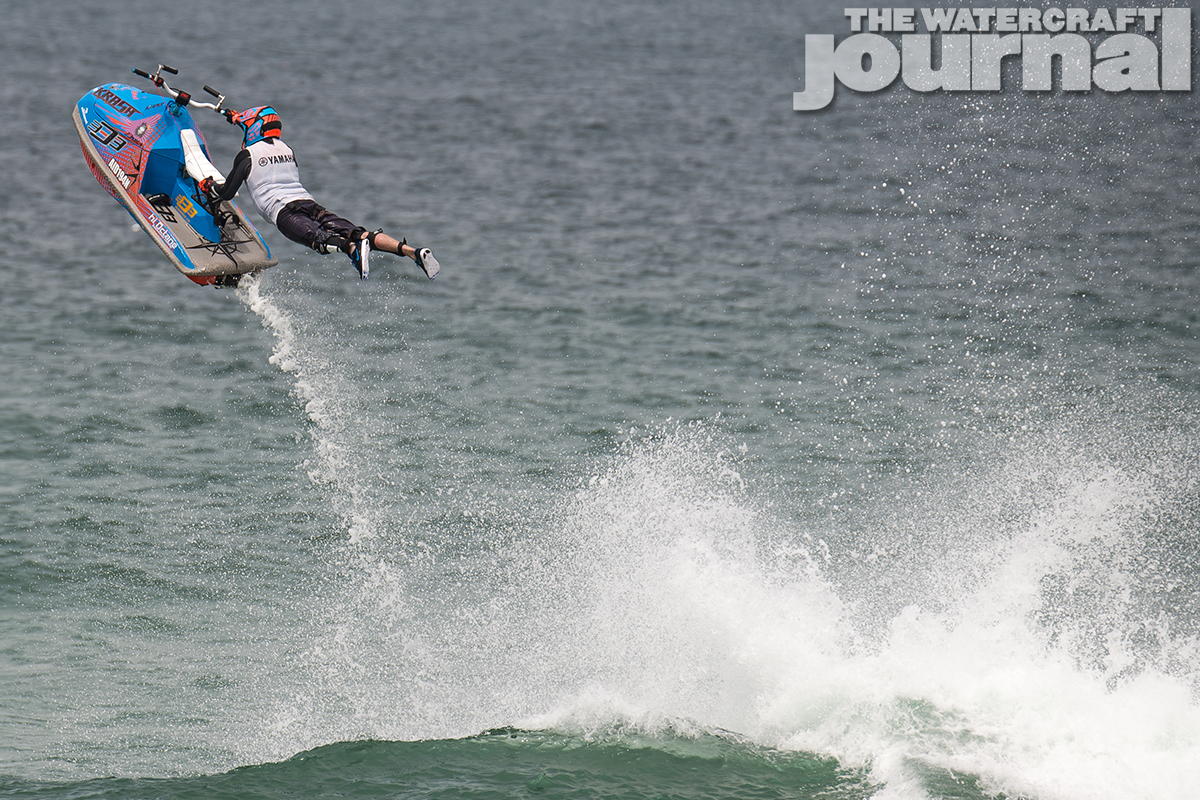
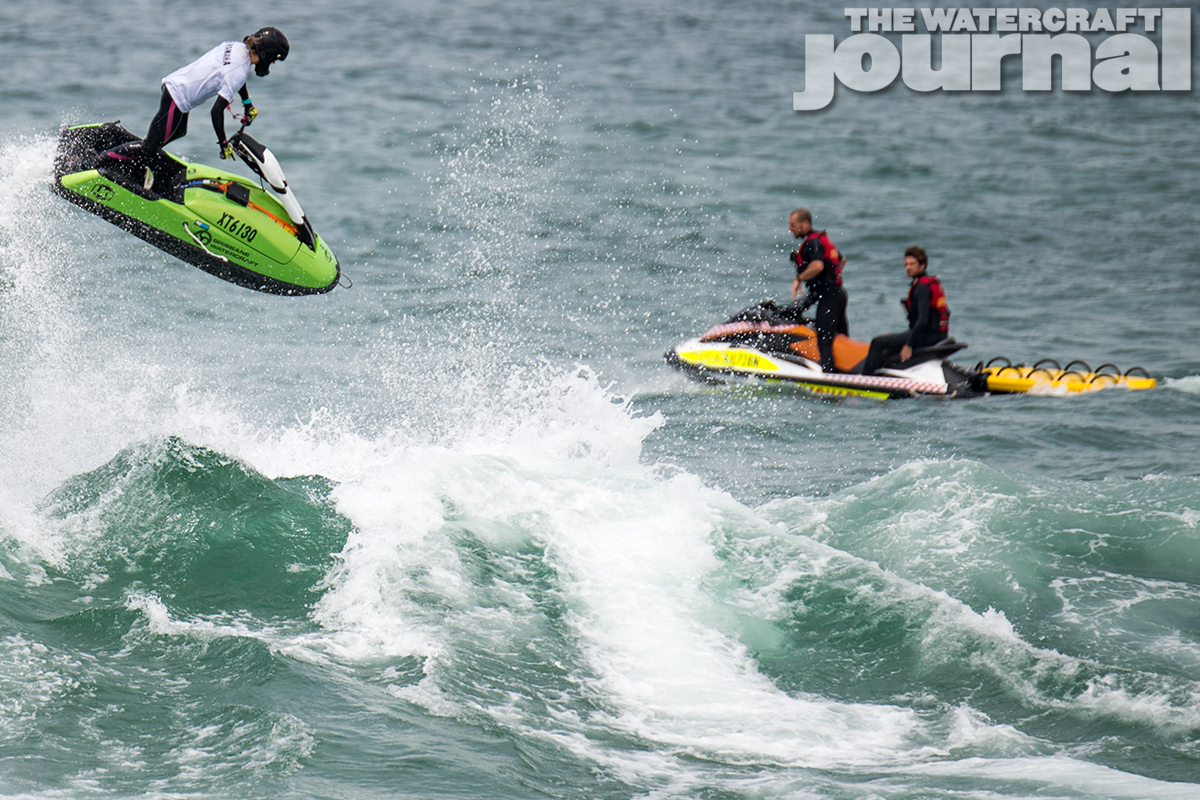
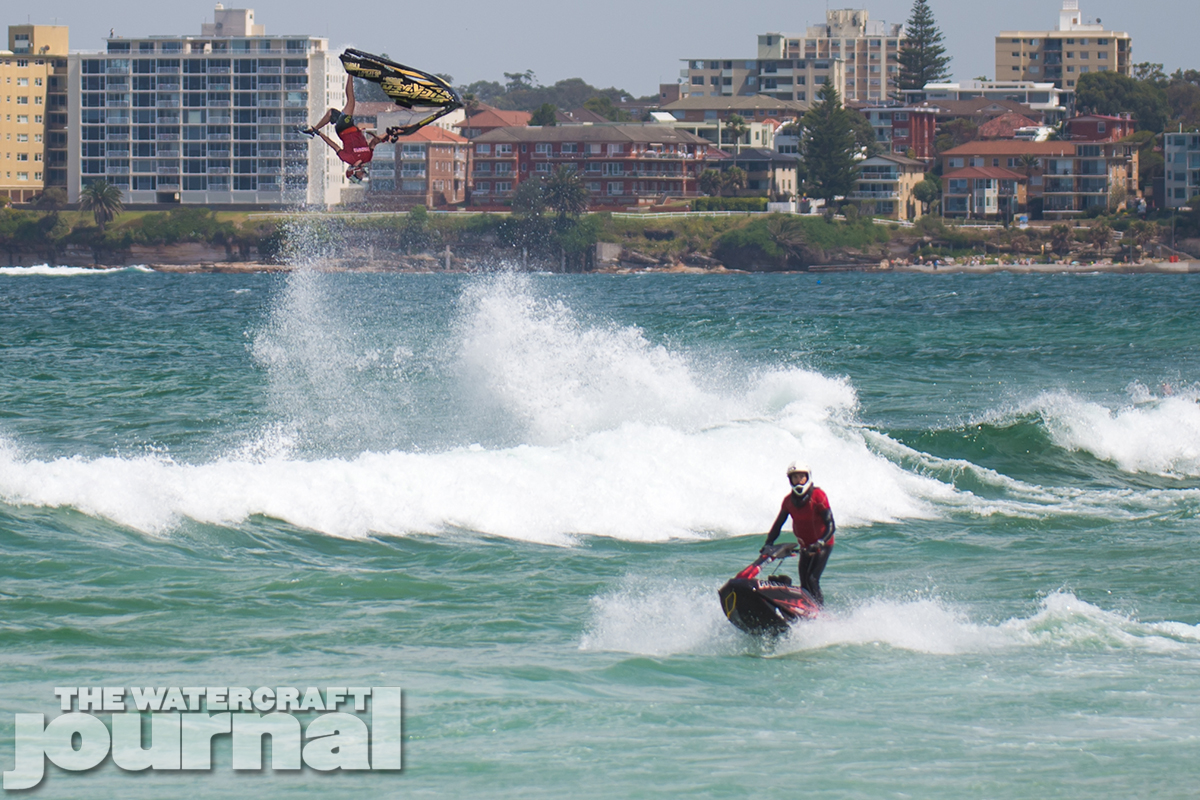
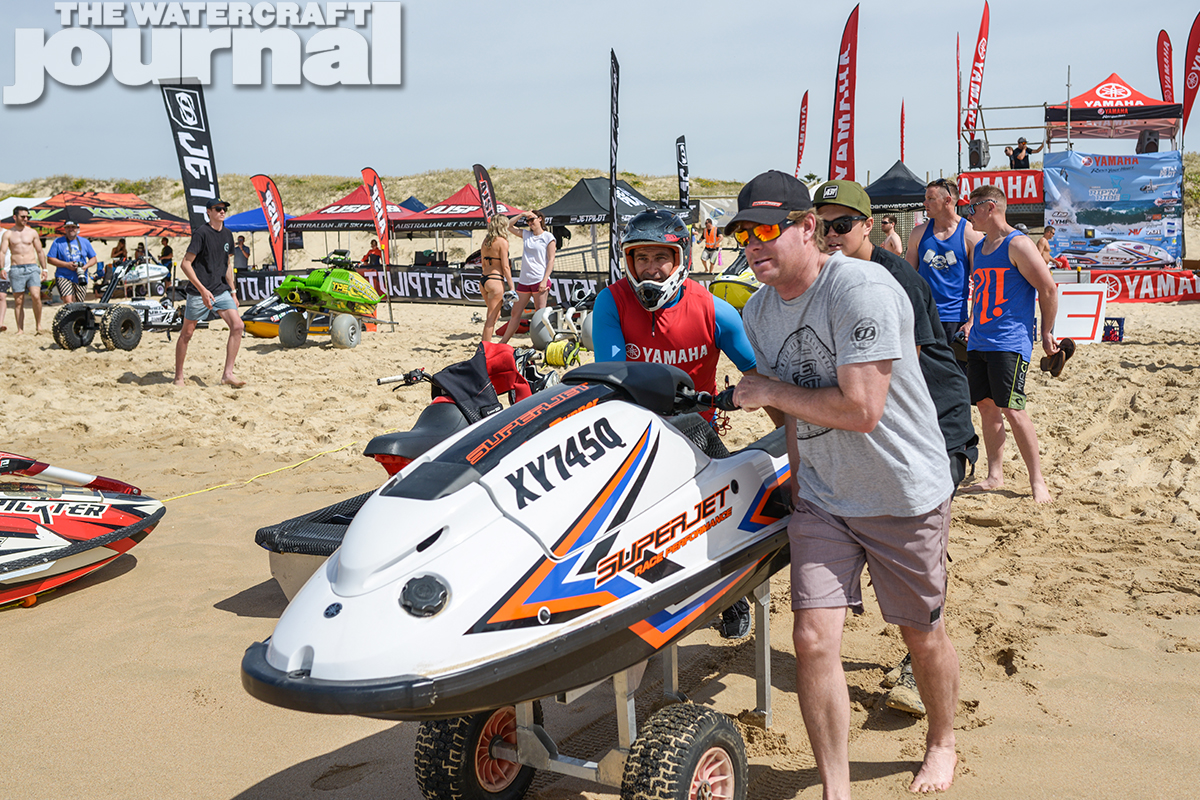
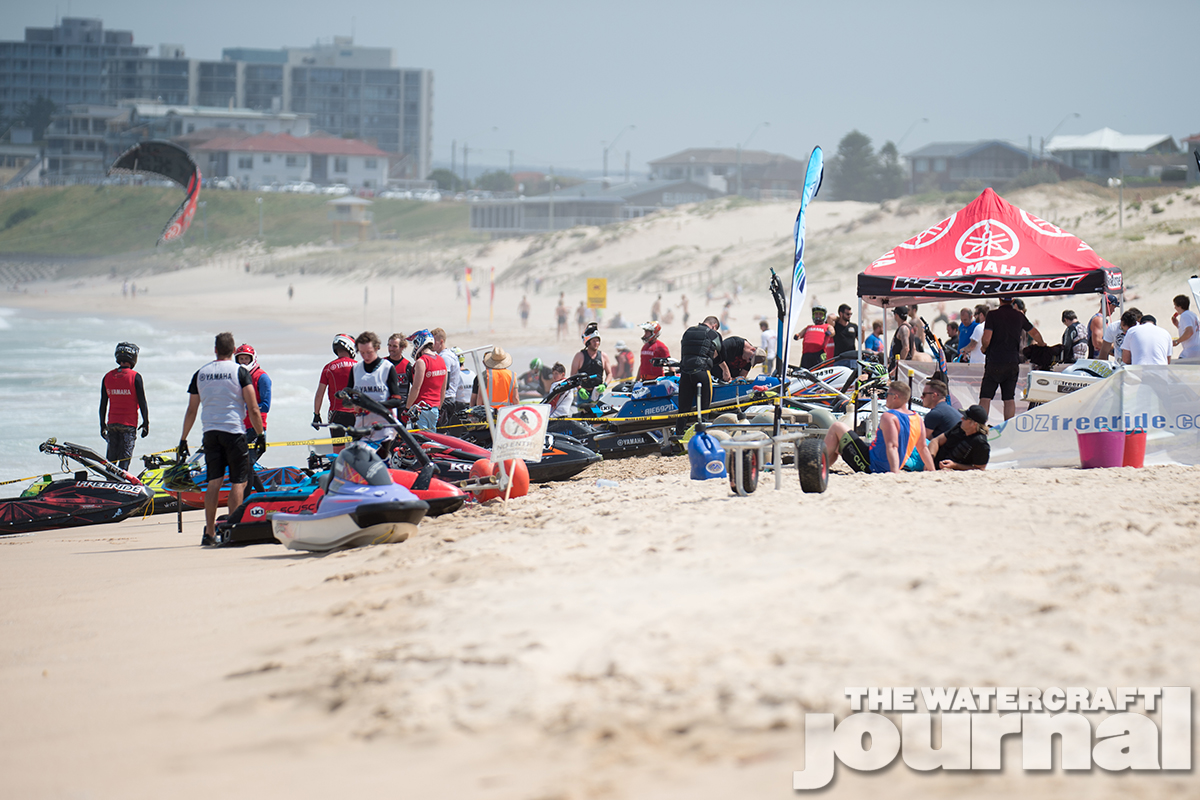
So it’s that time of year again for me to load up the car with all my camera gear and drive to Cronulla in Sydney for the annual Yamaha Rip n’ Ride. This year marks its 9th year that the event has taken place. It’s come a long way from being a BBQ on the beach with a few mates.
The first stop on my way was Yamaha Motor Australia in Brisbane to pick up a couple of safety skis (both being a pair of VX Deluxes) and a foxhole (Yamaha Mt 125 motorcycle) would do the job nicely. I’m like a kid in a candy store with so many cool machines sitting here in the factory. It’s pretty hard to walk out without adding something to your Christmas list.
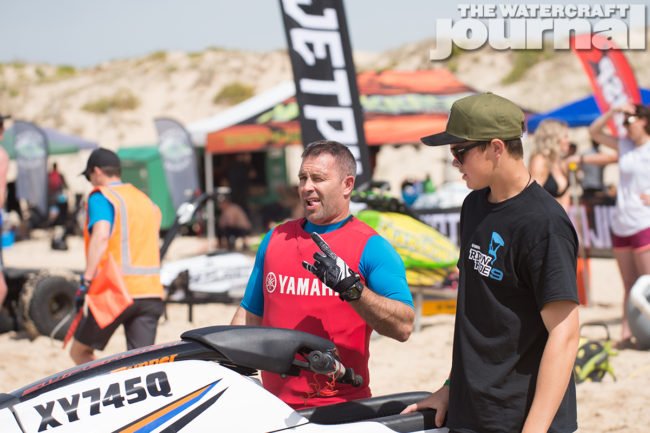
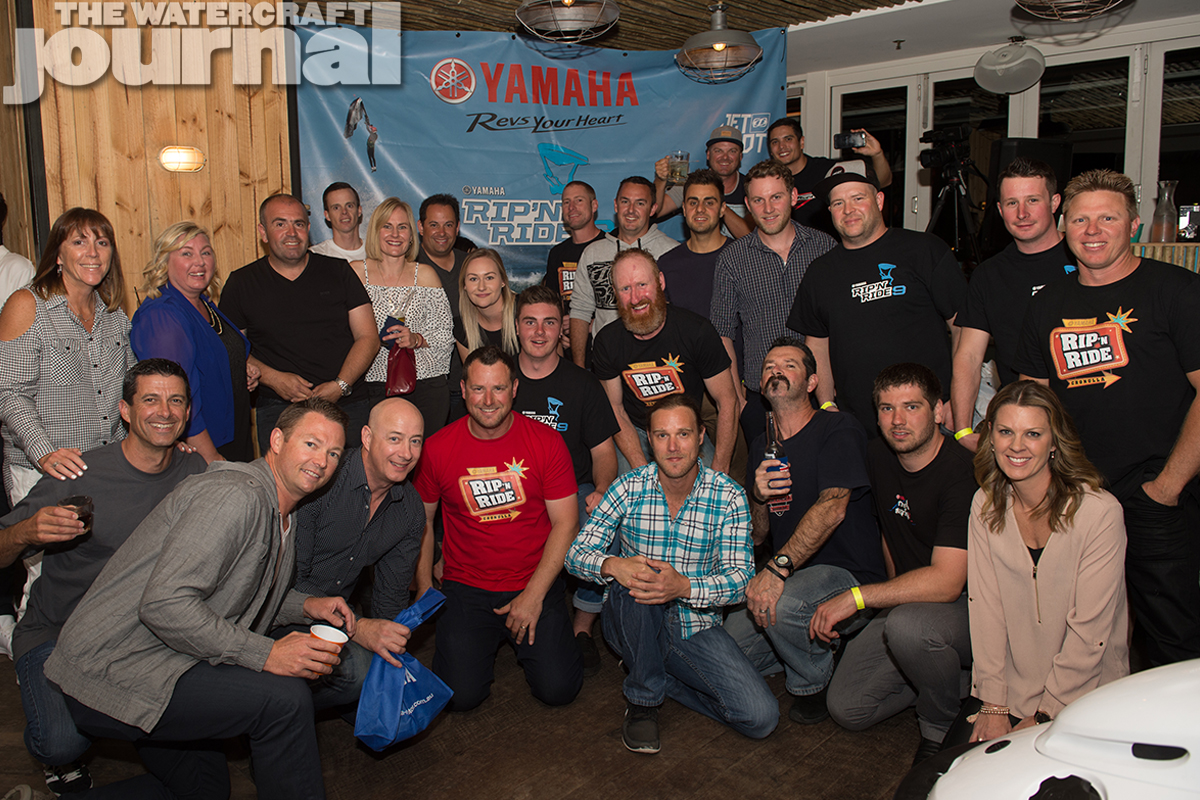
Back in the car and all loaded up, it was time to crank up the radio and hunker in for the long 10-hour drive to Butch’s house. Butch and his wife, Julie are the two fantastic people that make the RNR happen every year. Everything from organizing the permits, sponsors and riders, to finding room for wayward riders (and photographers) to sleep at their house. The time and effort that goes into organizing this event is huge. It’s not just those two that I would like to thank but everyone from the marshals to the people putting up the scaffolding, the lifeguards to the Yamaha boys that work tirelessly to make it happen.
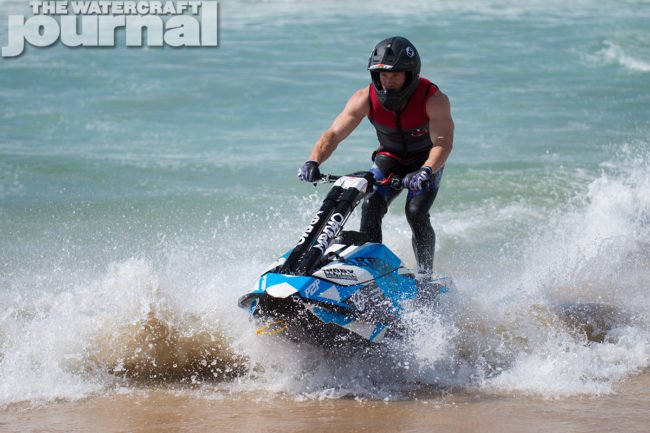
For those people that haven’t heard of the RNR before, it’s a freeride event that’s open to anyone. Once entering, you go into the draw to win a brand new Yamaha SuperJet and hundreds of other prizes. Numbers are usually capped at about 100 to give everyone plenty of ride time and a good chance to take home a new WaveRunner.
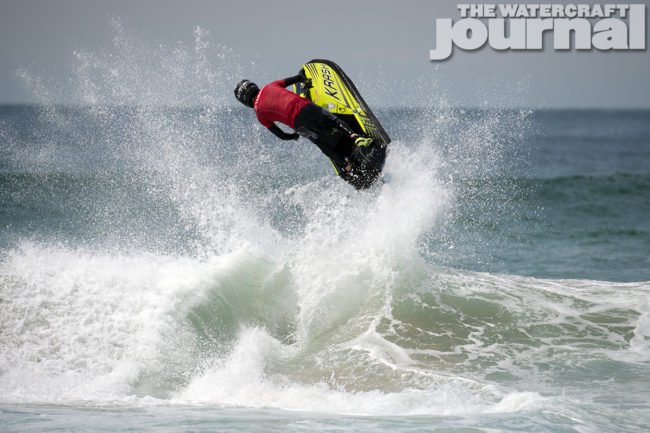
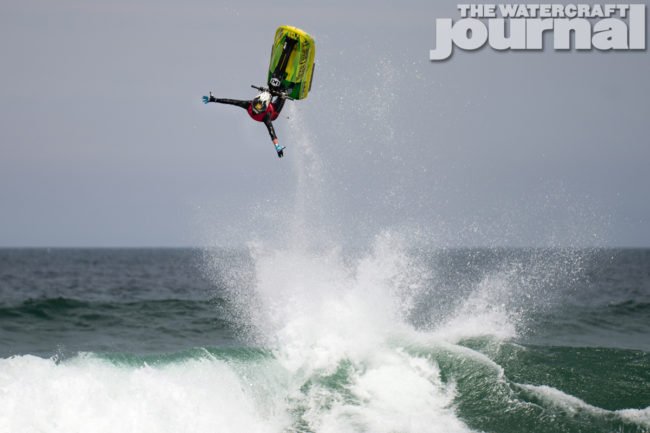
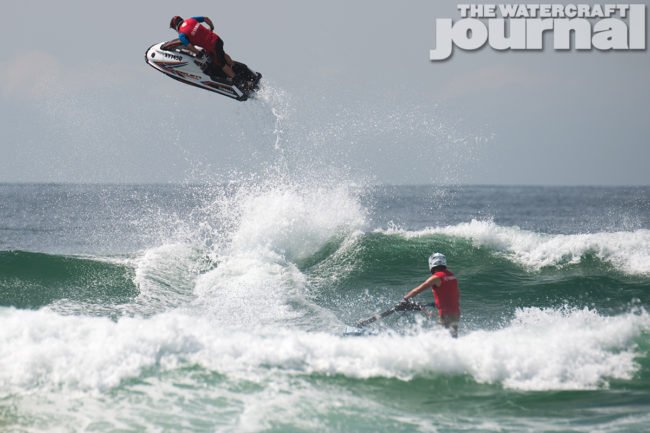
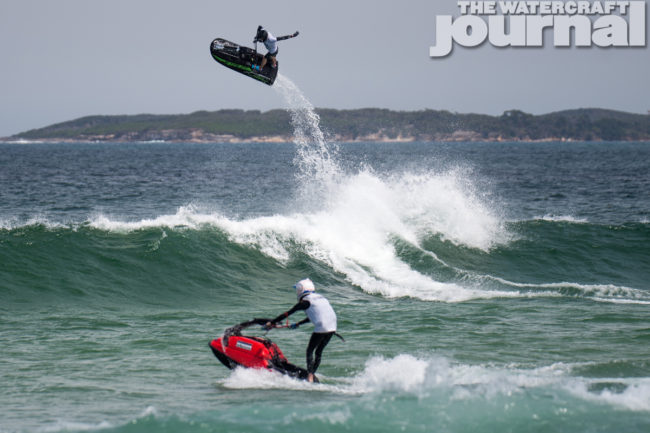
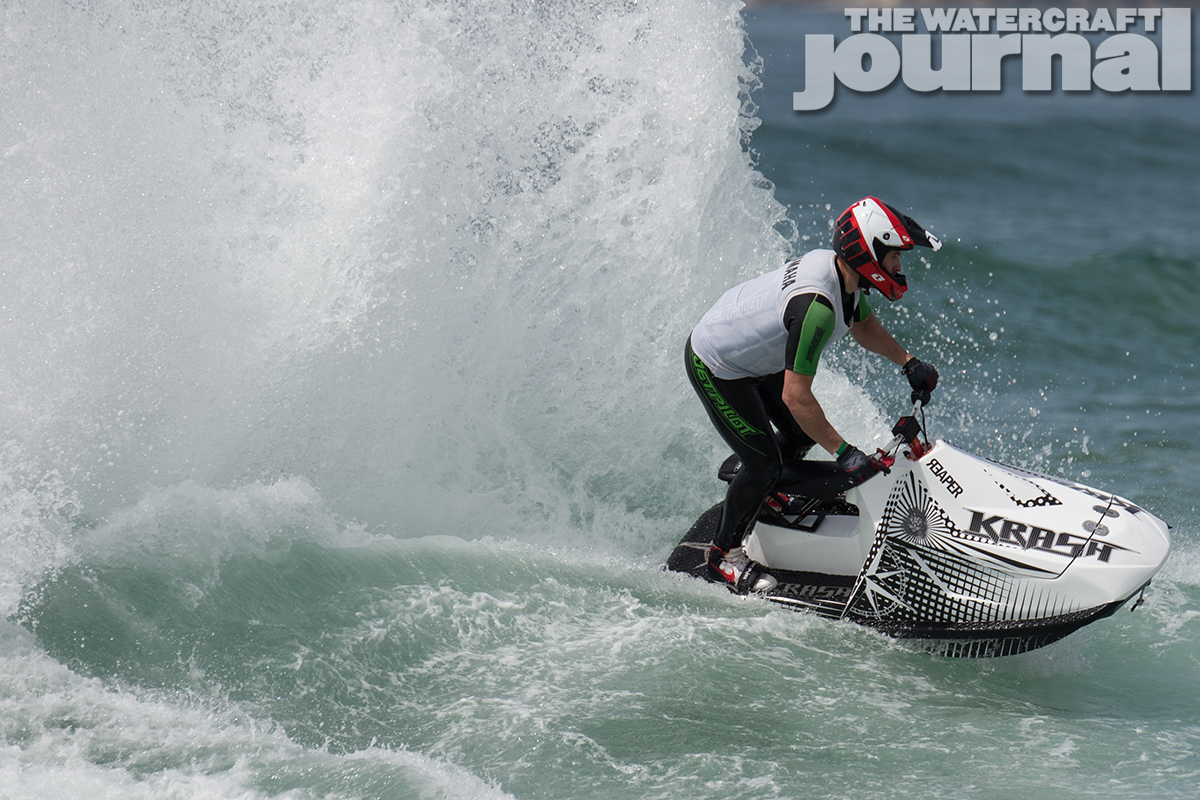
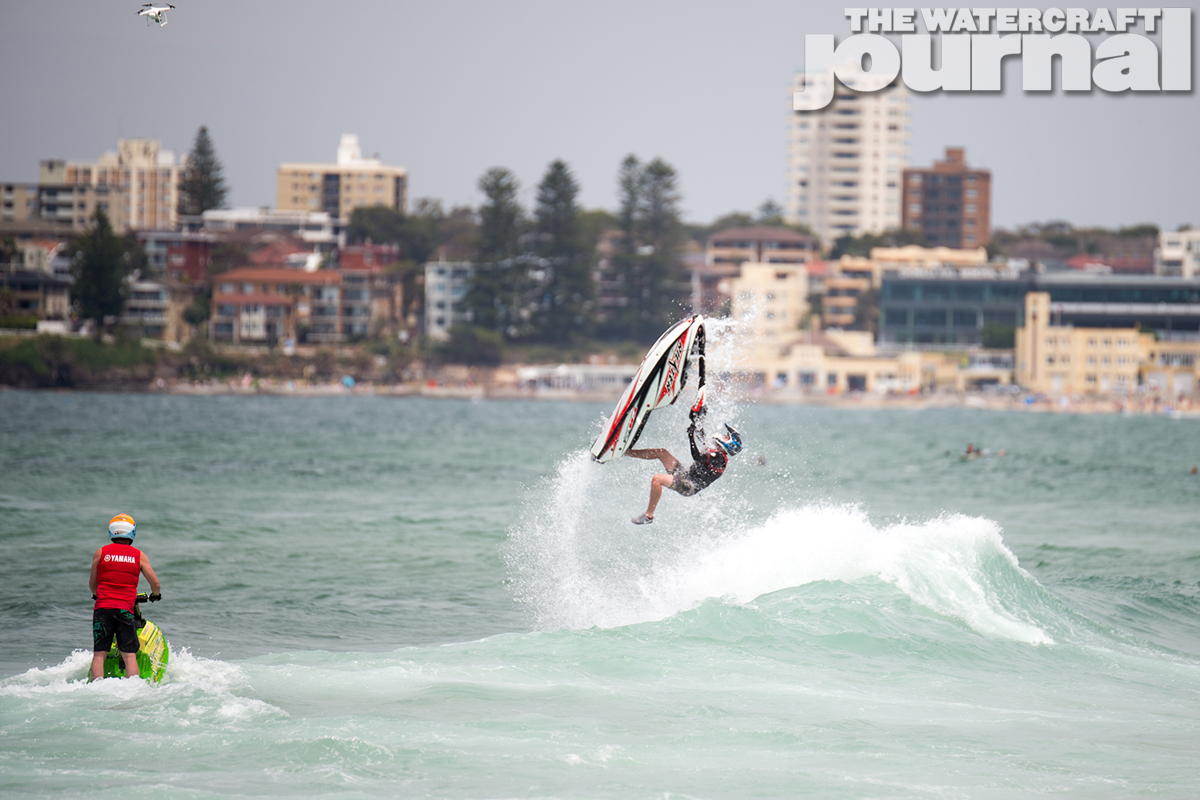
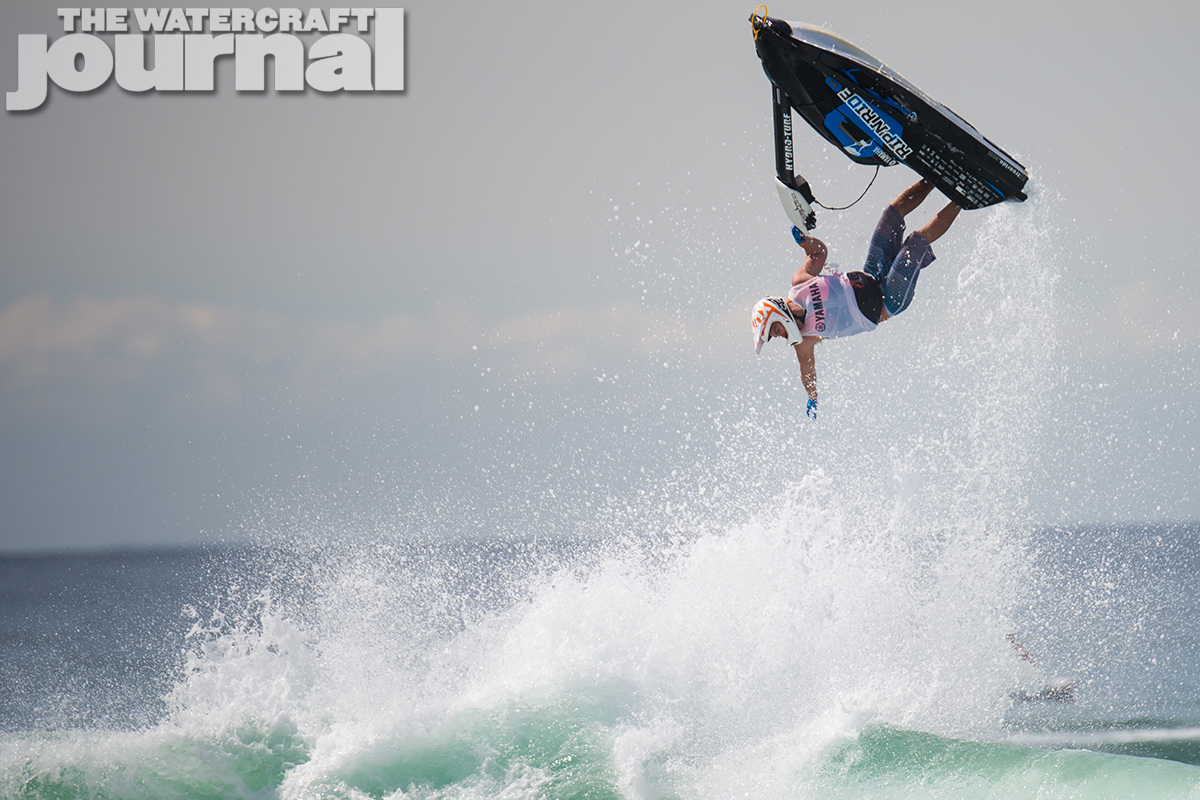
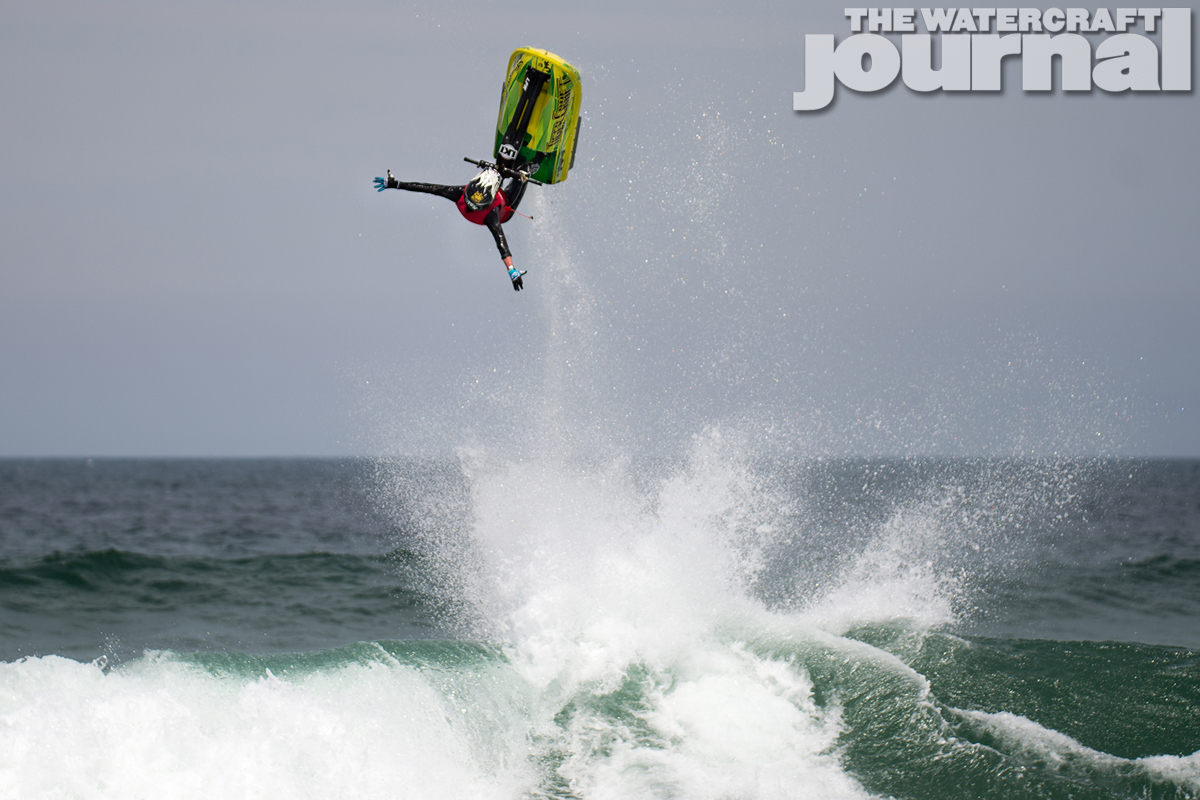
The RNR is a chance for rookie riders to ride with – and not against – some of the best riders in the world. So at one point, you can be checking out a 12-year-old grommet ripping up the waves, and the next thing, you’ll look across to see the world champion Mark Gomez busting out something awesome. That’s one of the major attributes of the RNR. Young up-and-comers can ride, talk and get tips from their heroes. There is some judging that goes on during the day too; things like “Sickest trick,” “Biggest air” and “First to sink.” Awards also go to those people that go above and beyond to help out fellow riders.
For the last few years, JetPilot has put on a small competition within the RNR: the Battle of the Best. Riders are selected by an official and go head-to-head in a battle that’s judged on “Wow Factor.” So not so much the most difficulty of the tricks but more the reaction from the beach. This year, Ryan Savagee took the title just over Mick Anthony and Zane Taylor. Brock Taylor, last year’s winner, was there to present the trophies. Unfortunately, Brock is out of action with back issues and only came down as a spectator and cooler supervisor.
Every year a challenge goes out to the novice riders that have never flipped a ski: “The Cherry Popper award.” It’s a fun event to watch with a bunch of guys and girls gathering up the courage to try to flip their ski. Some coaching from Mick Anthony and some other pros helped them get around. One of the major tips is “Never let go,” and “It doesn’t hurt to land on you head.” Unfortunately, the conditions were far from ideal for the riders it get it done.
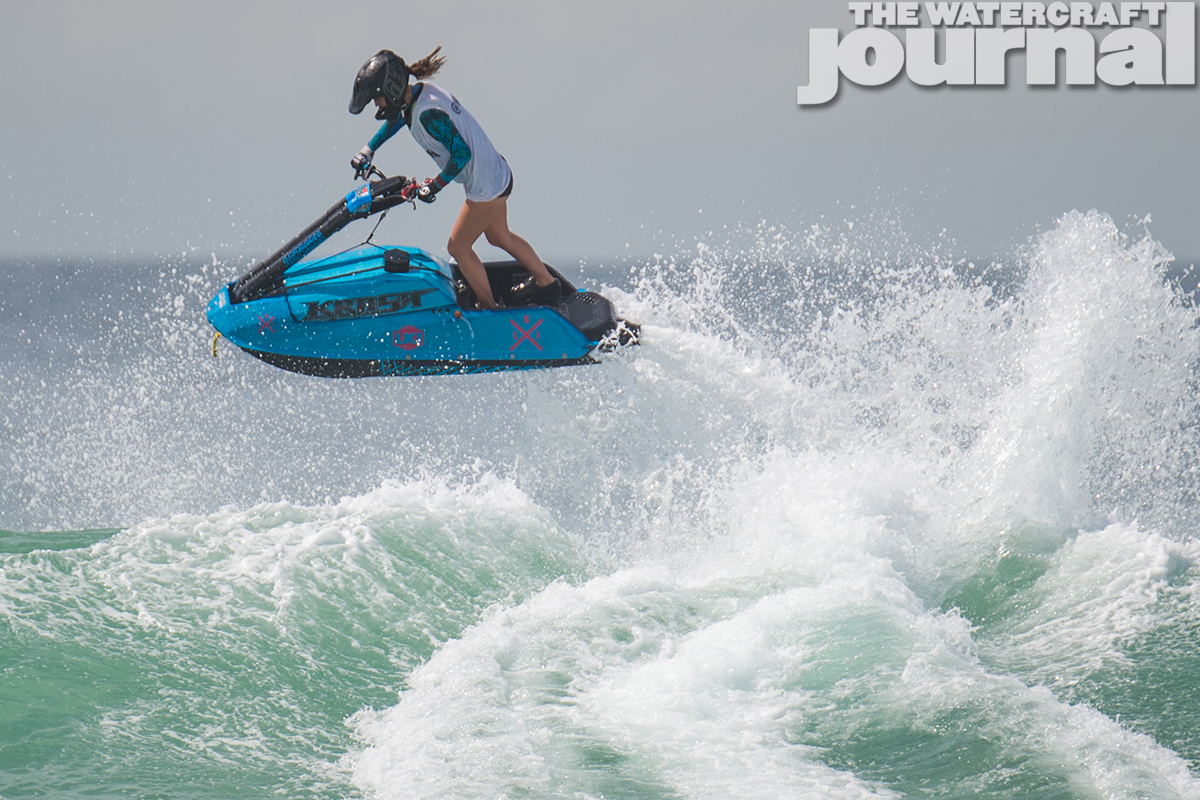
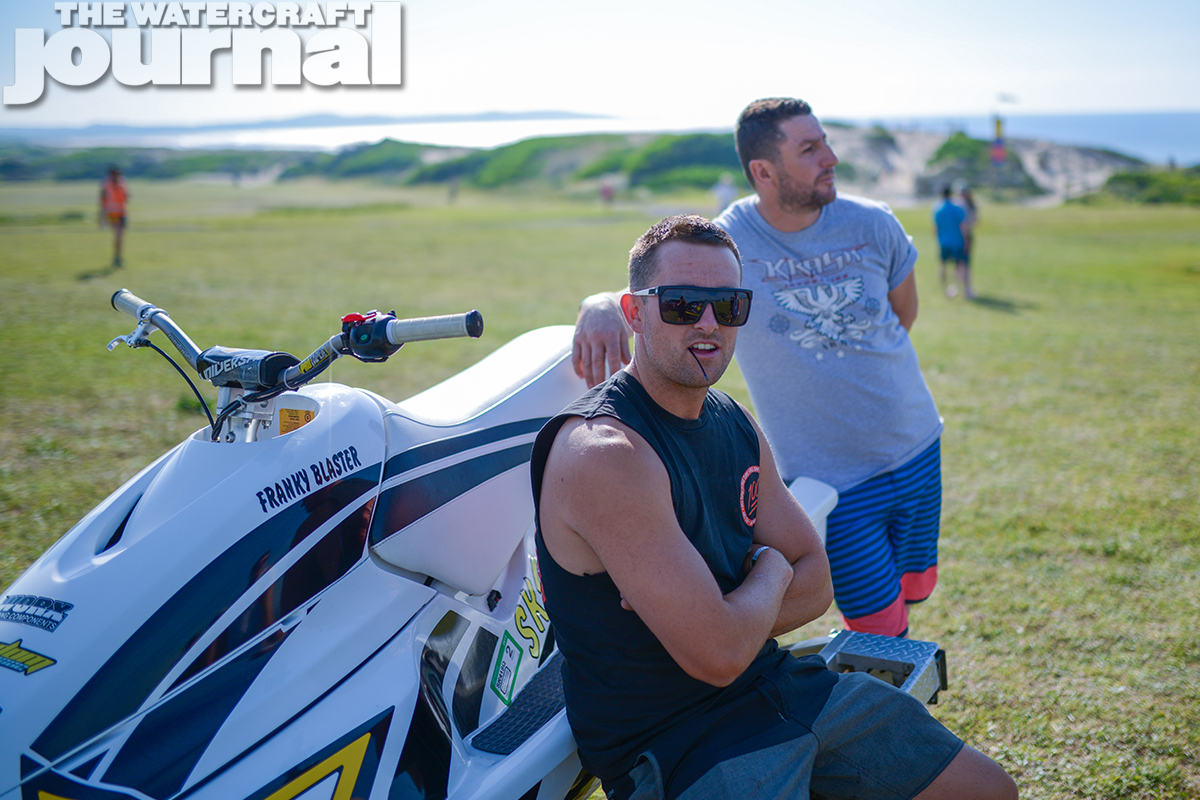
A big effort was made by James Ricardo on the ‘Blaster; he hit three waves in a row but couldn’t quite get it done. Maybe next year, bud. It was good to see a few girls out there as well. Bridget Burt, a first timer to RNR has only been riding a ski for three months and was popping super clean barrel rolls and nice 180s; she had ago at the “Cherry Popper” but couldn’t get any good waves. She is definitely someone to keep an eye on. Also 12-year-old Dean Krouskos is a natural on a ski. He would have ridden in every heat if he could have. Not even the cold weather or the messy surf could keep him from getting out in it.
It wasn’t the best conditions on Saturday, but Friday was a treat. Sunny, warm and clean waves. A great day on the water, flipping and hanging out. That’s the main reason people enter the RNR. A chance to hang out with your mates. People you probably haven’t seen since last year.
So if you would like a chance in 100 to win a new SuperJet, you better get ready for next year’s Yamaha Rip N’ Ride as its rumored to be the last. Yeah, that’s RNRX. The 10th will be the final event at Cronulla. So it’s going to be a massive farewell. Butch and Julie have done such a awesome job over the last 9 years that they deserve a rest. Hopefully, someone else will step up and make another great event for the freeride community to go to. Something just half the success of the RNR would be great.