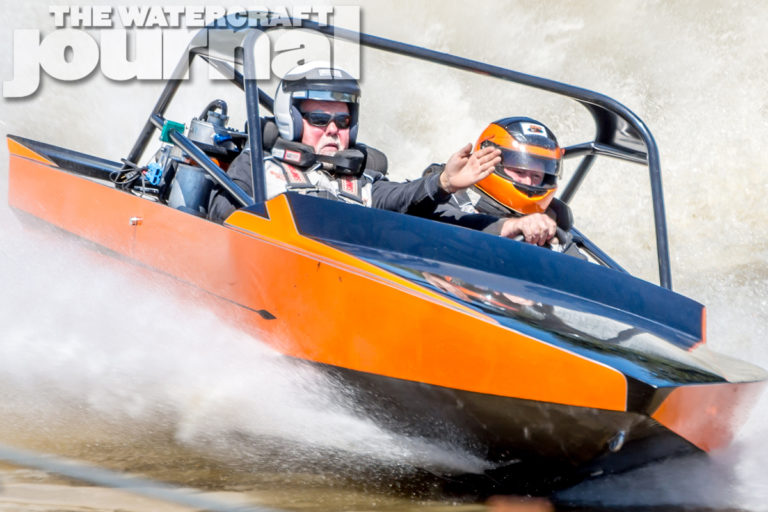
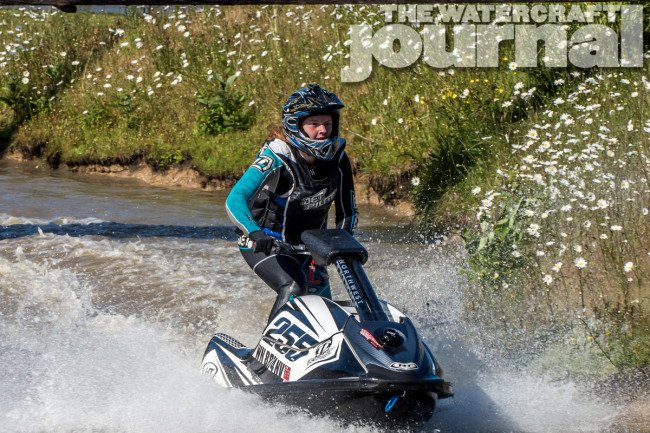
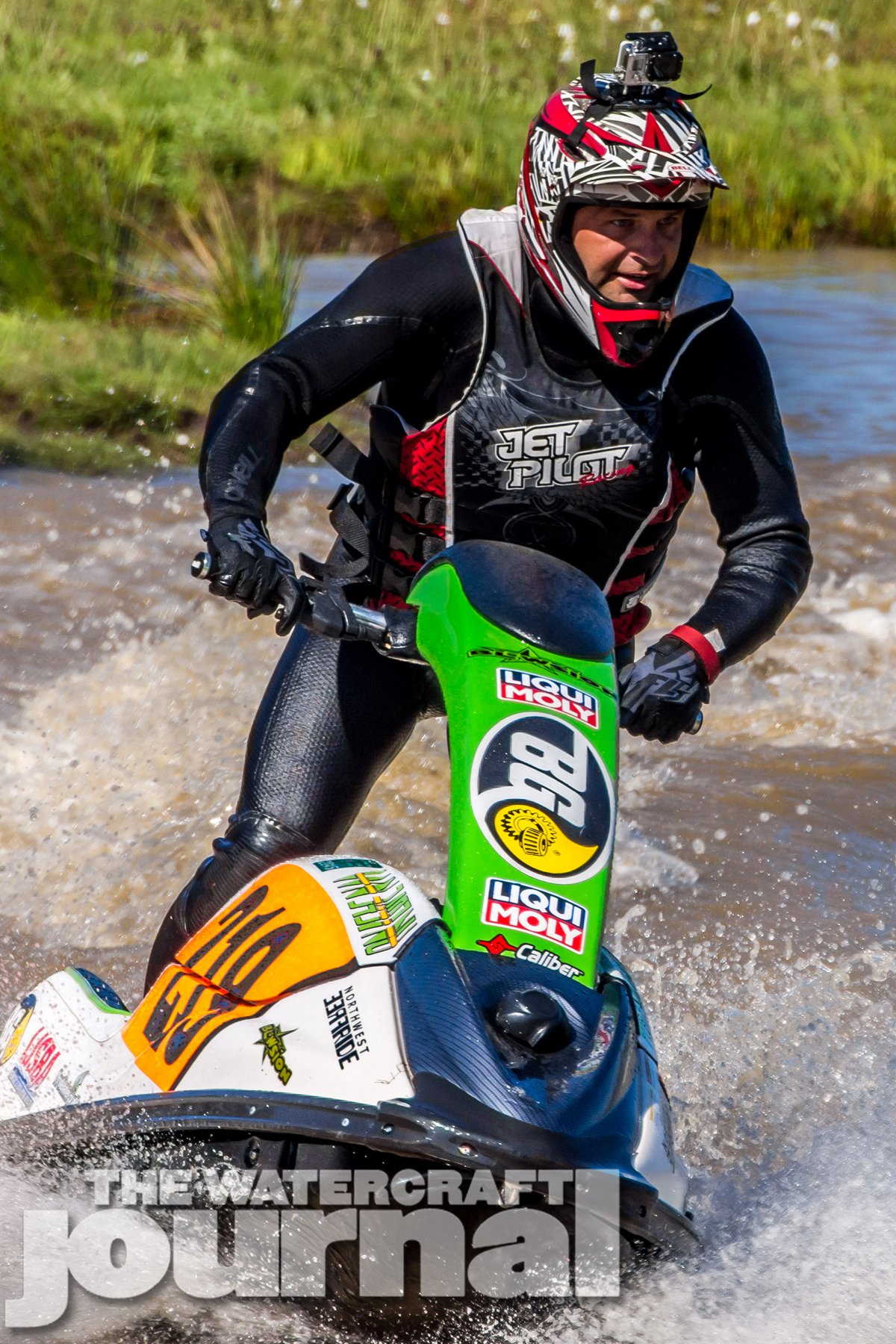
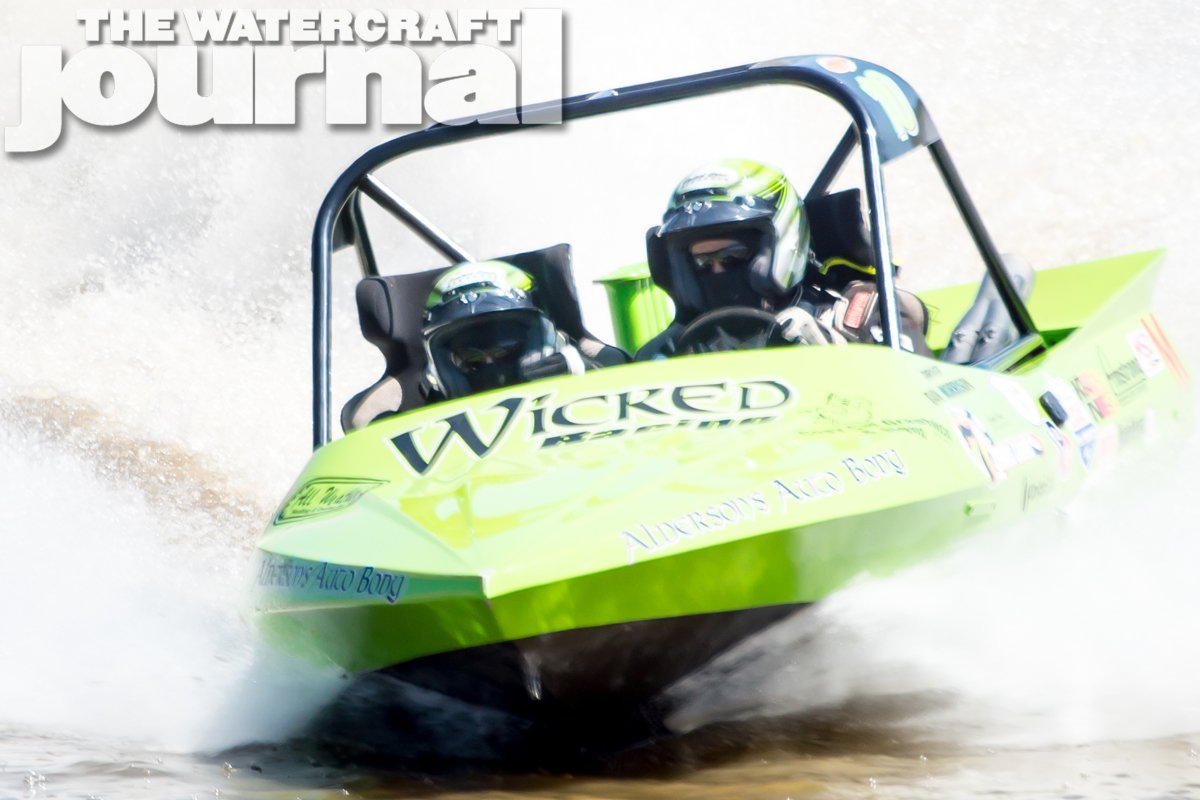
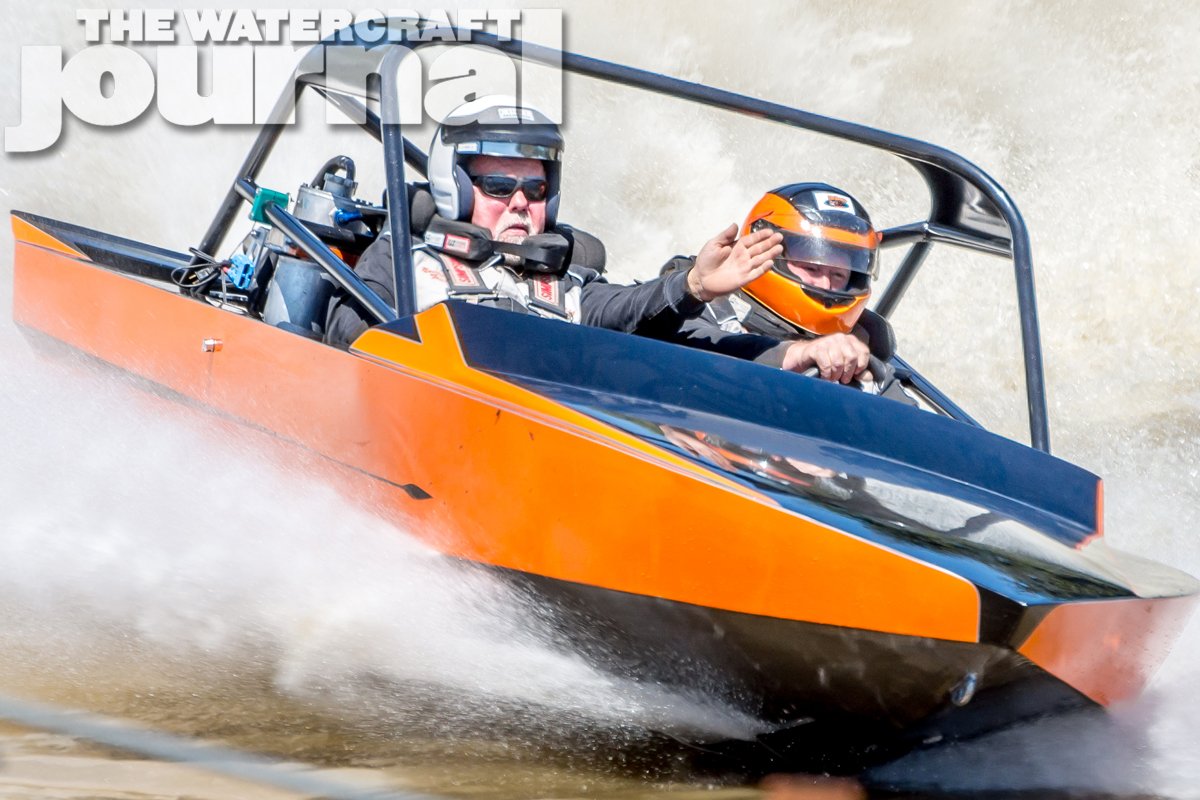
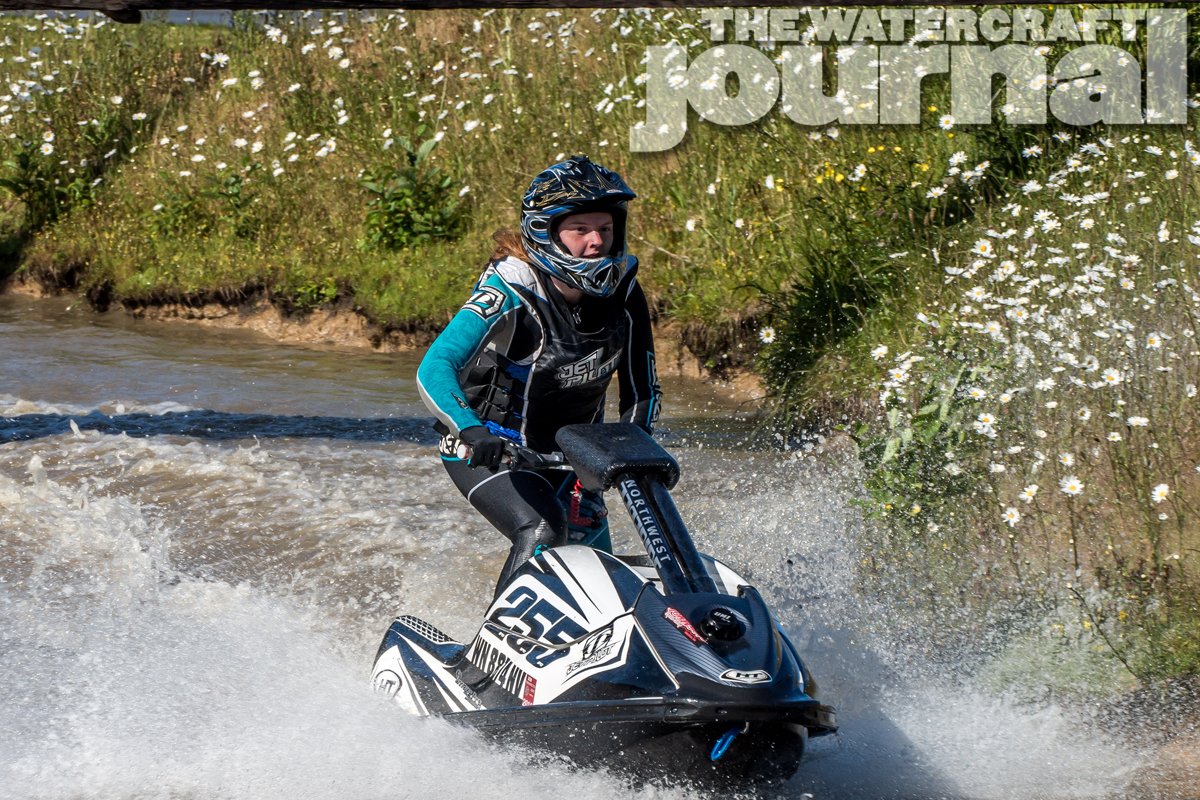
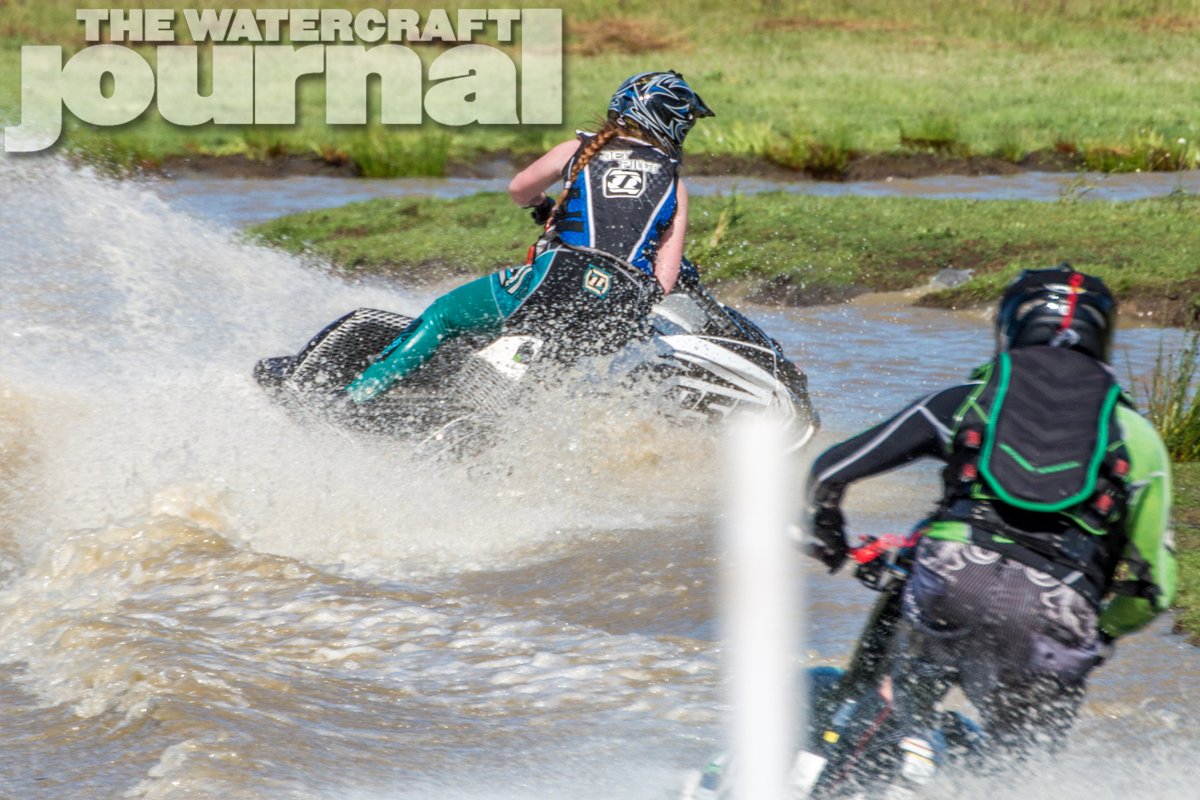
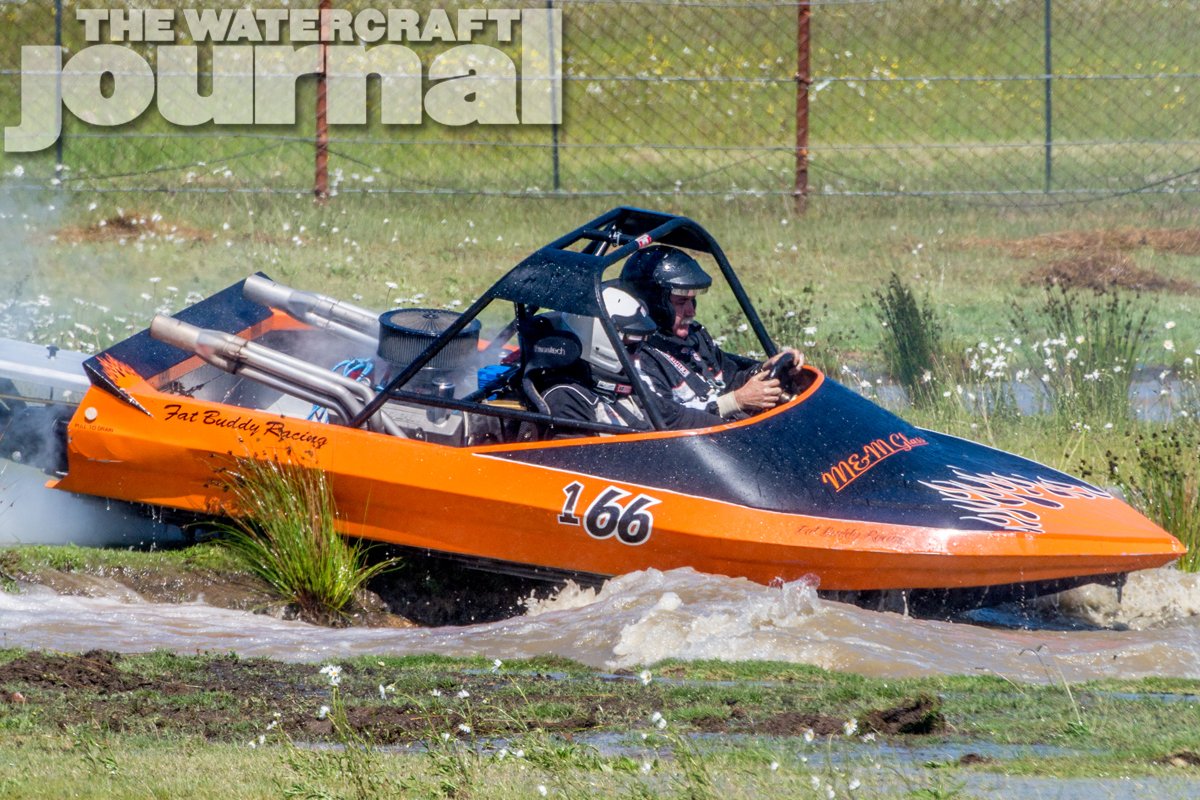
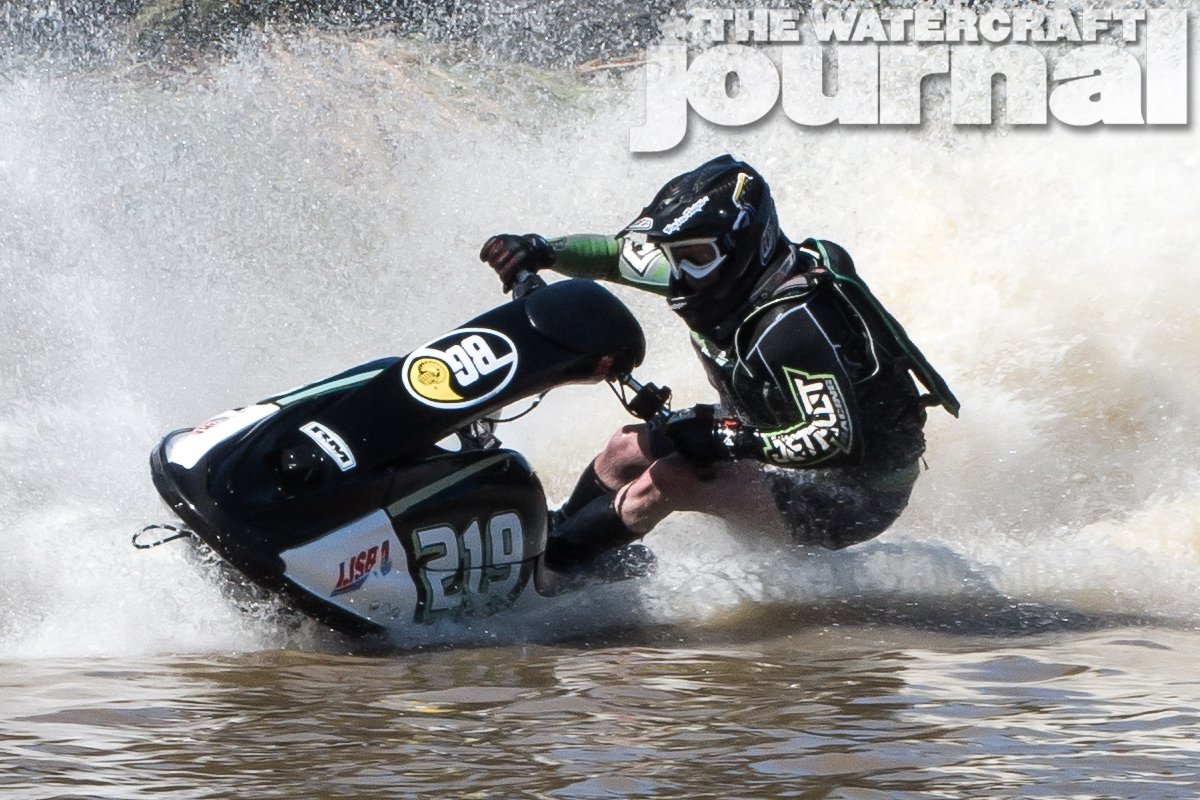
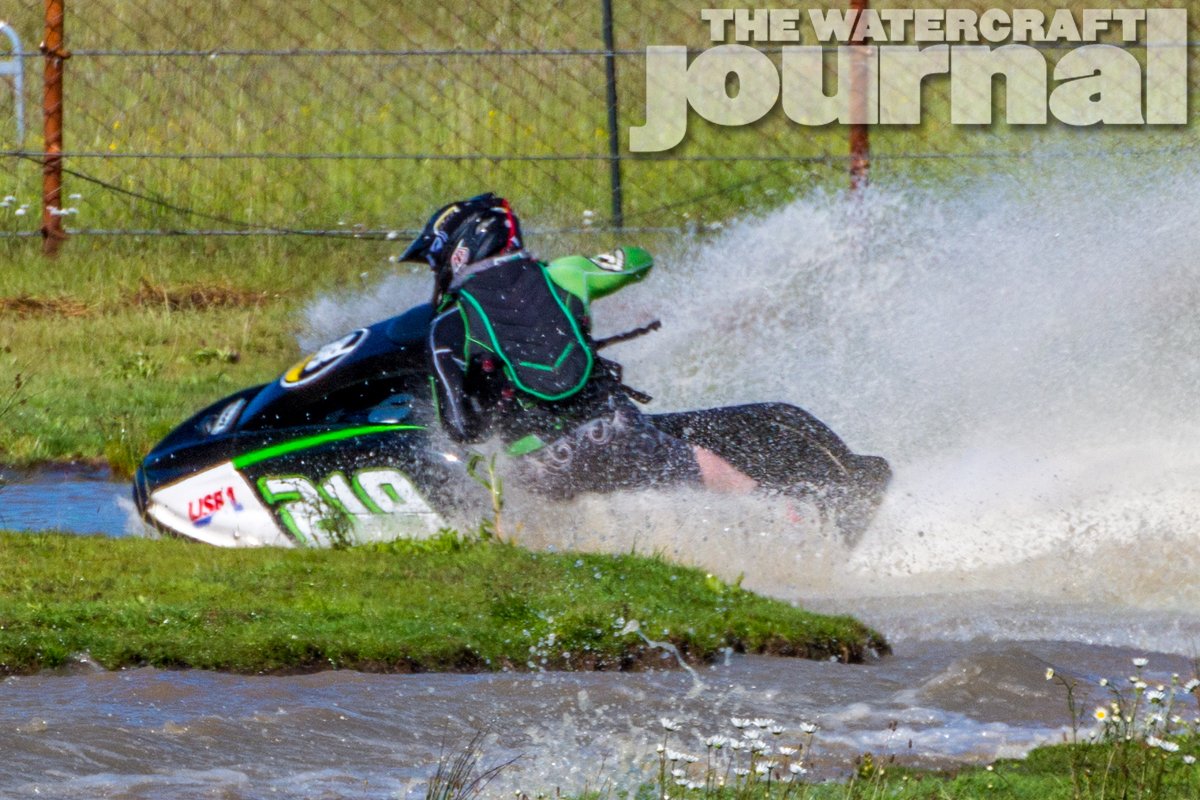
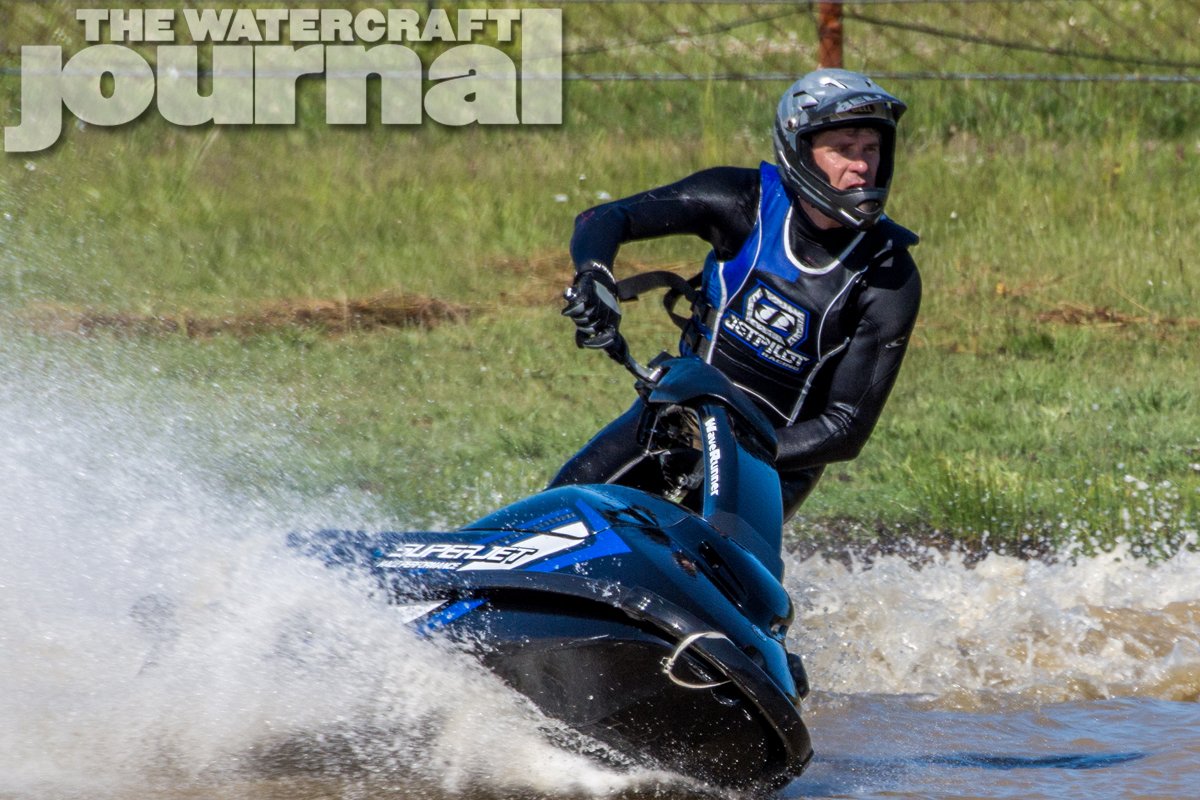
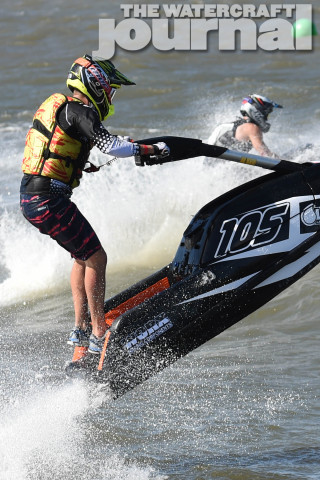
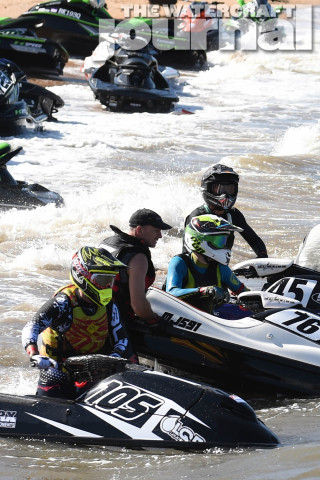
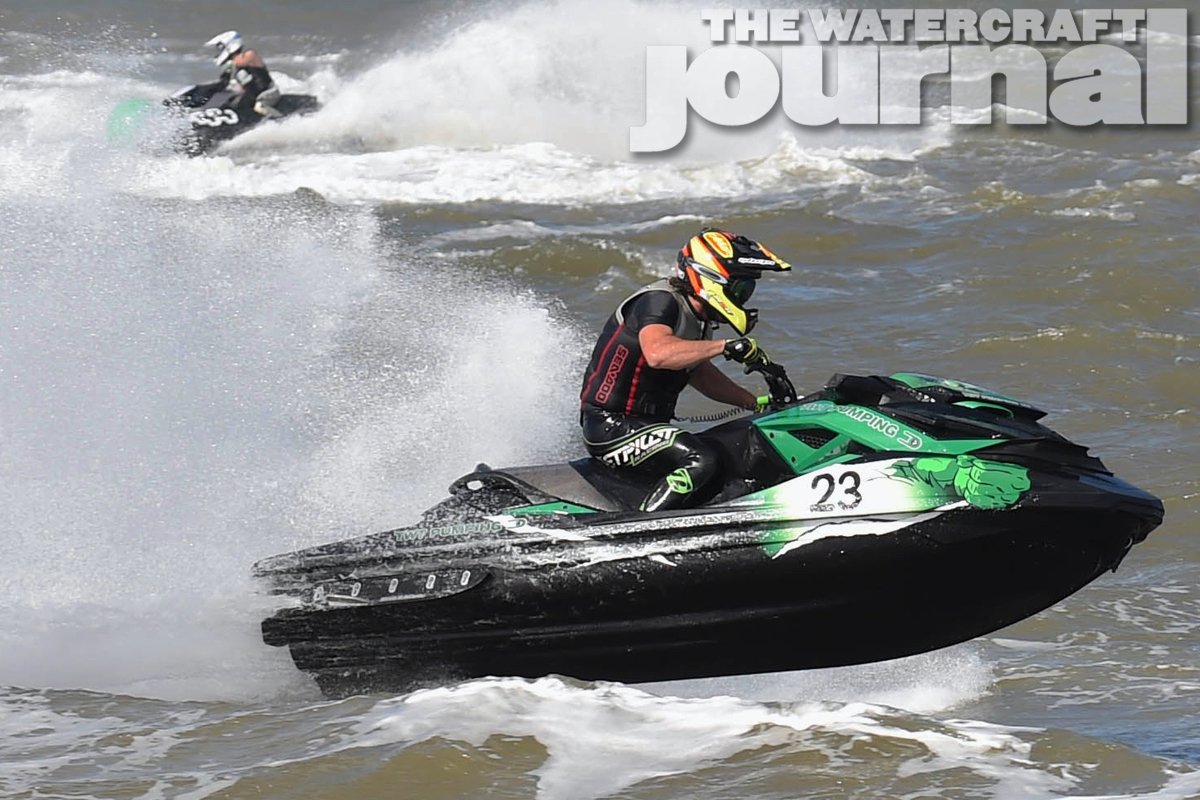
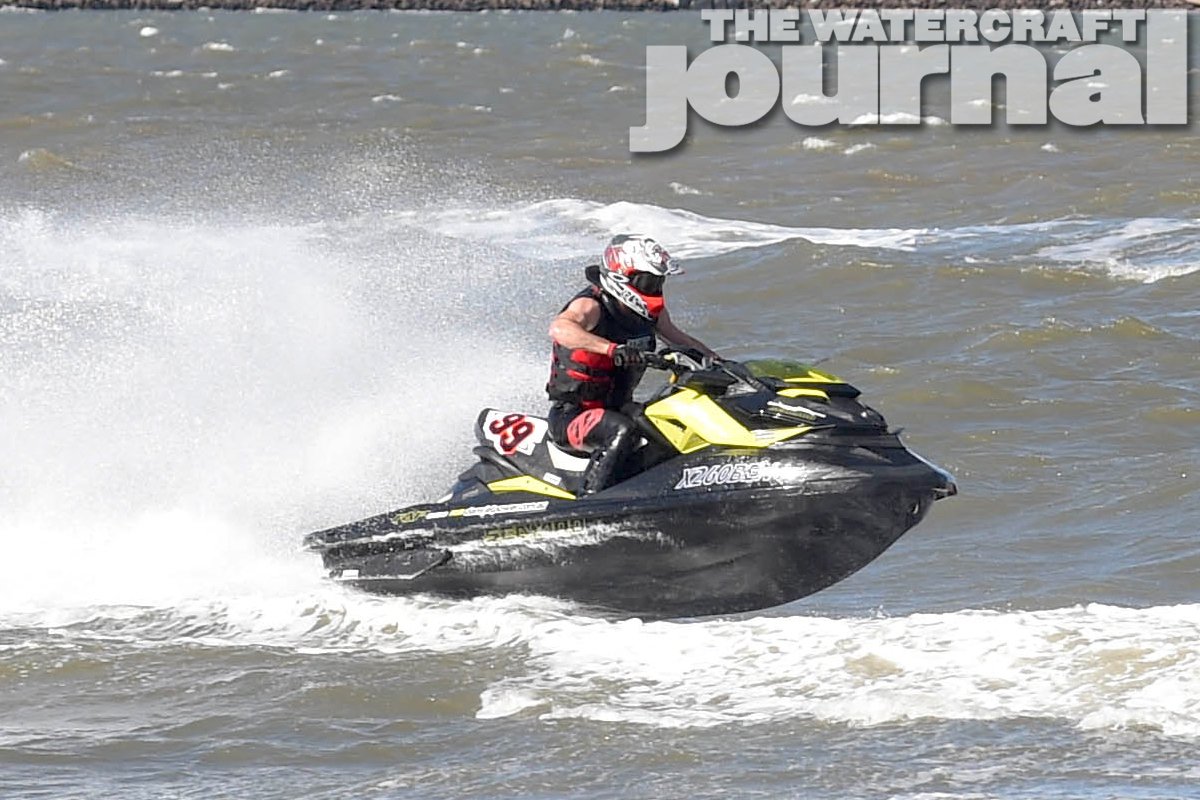
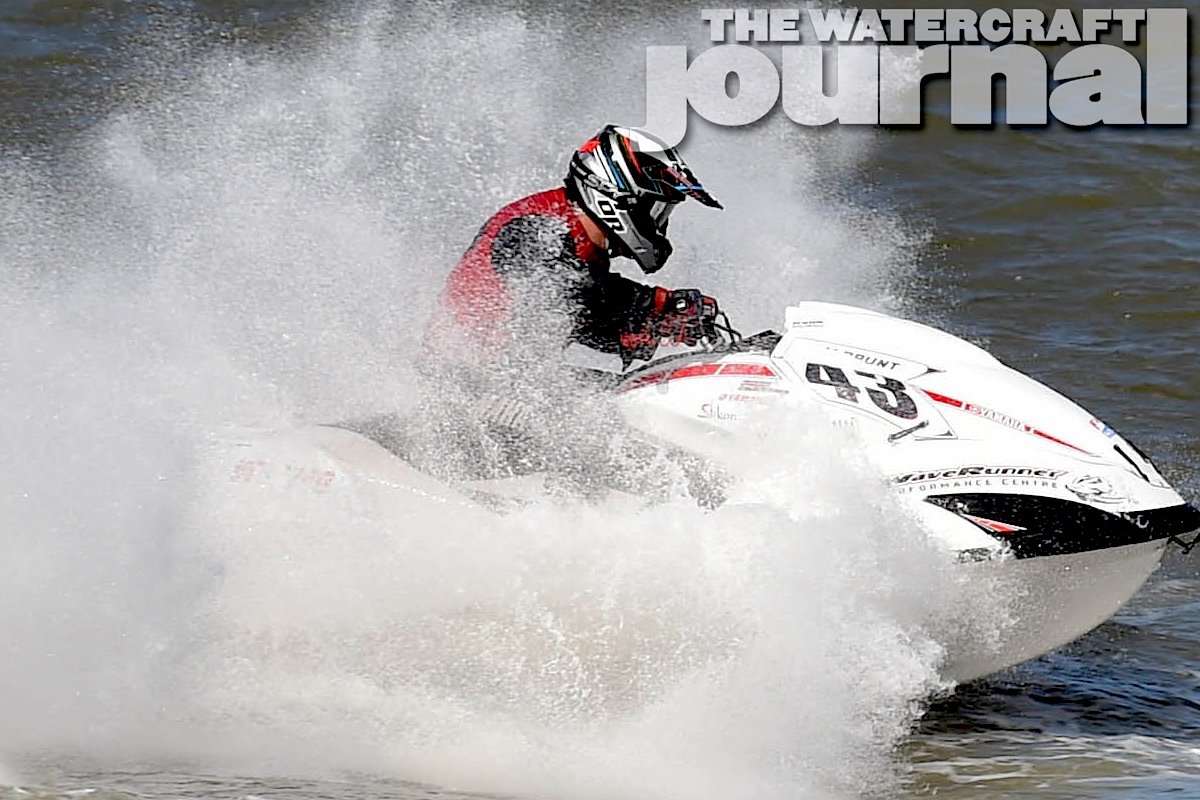
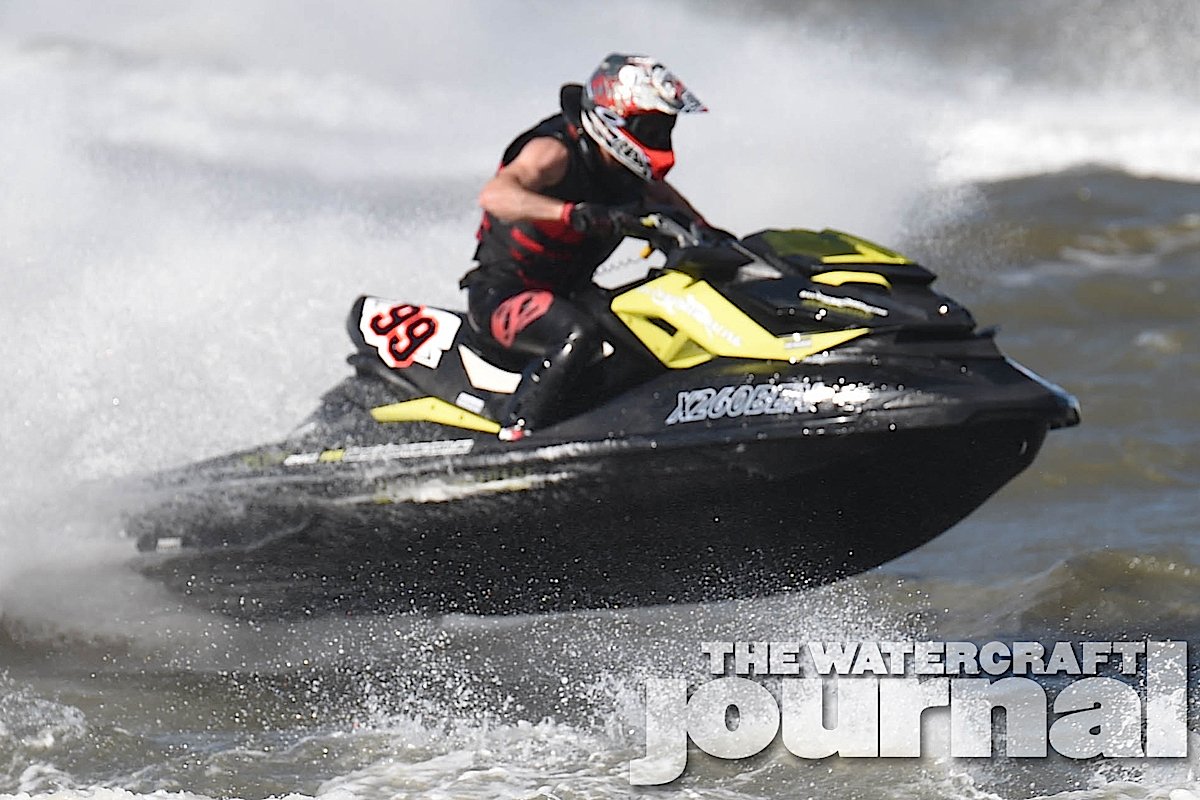
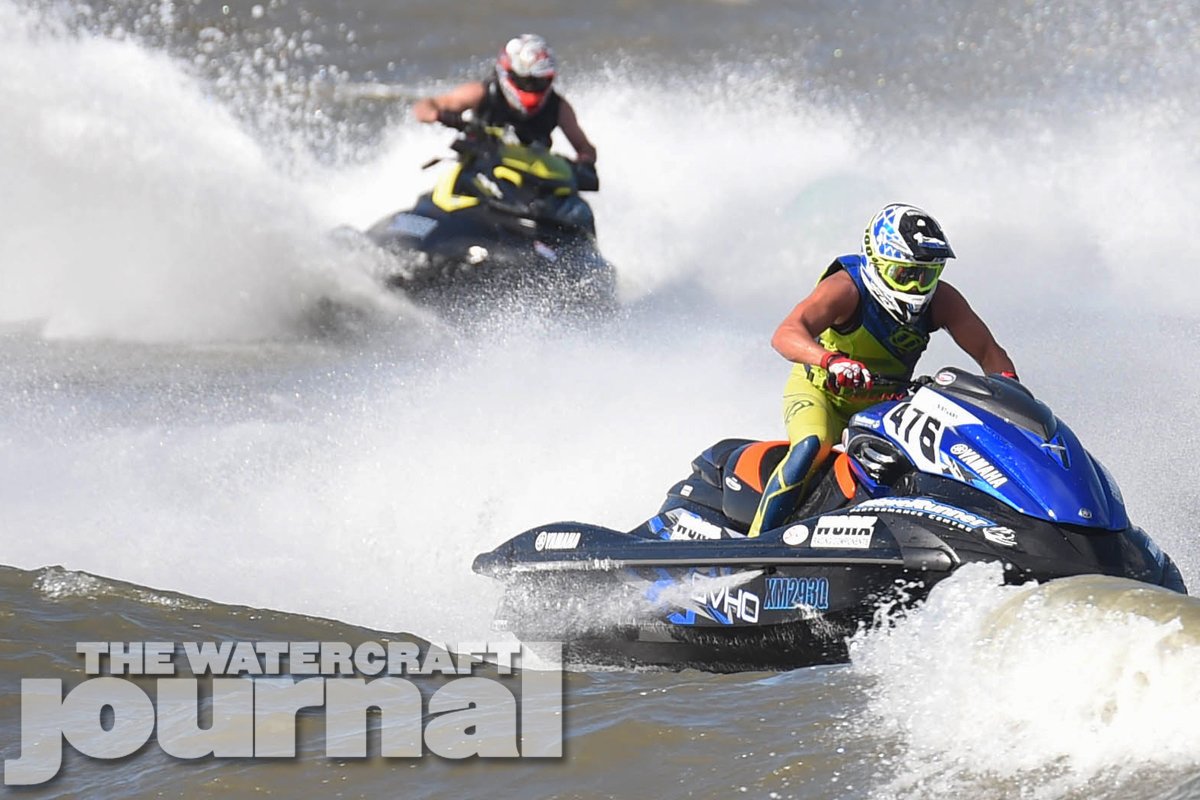
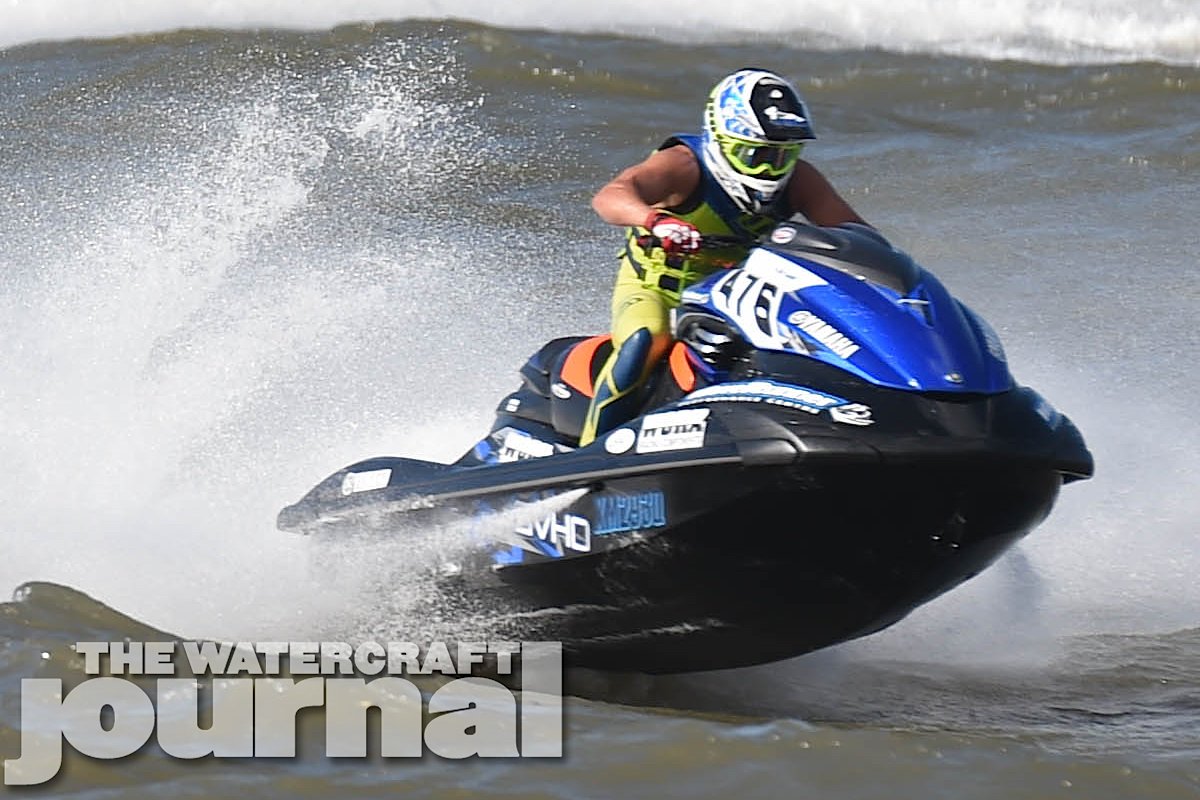
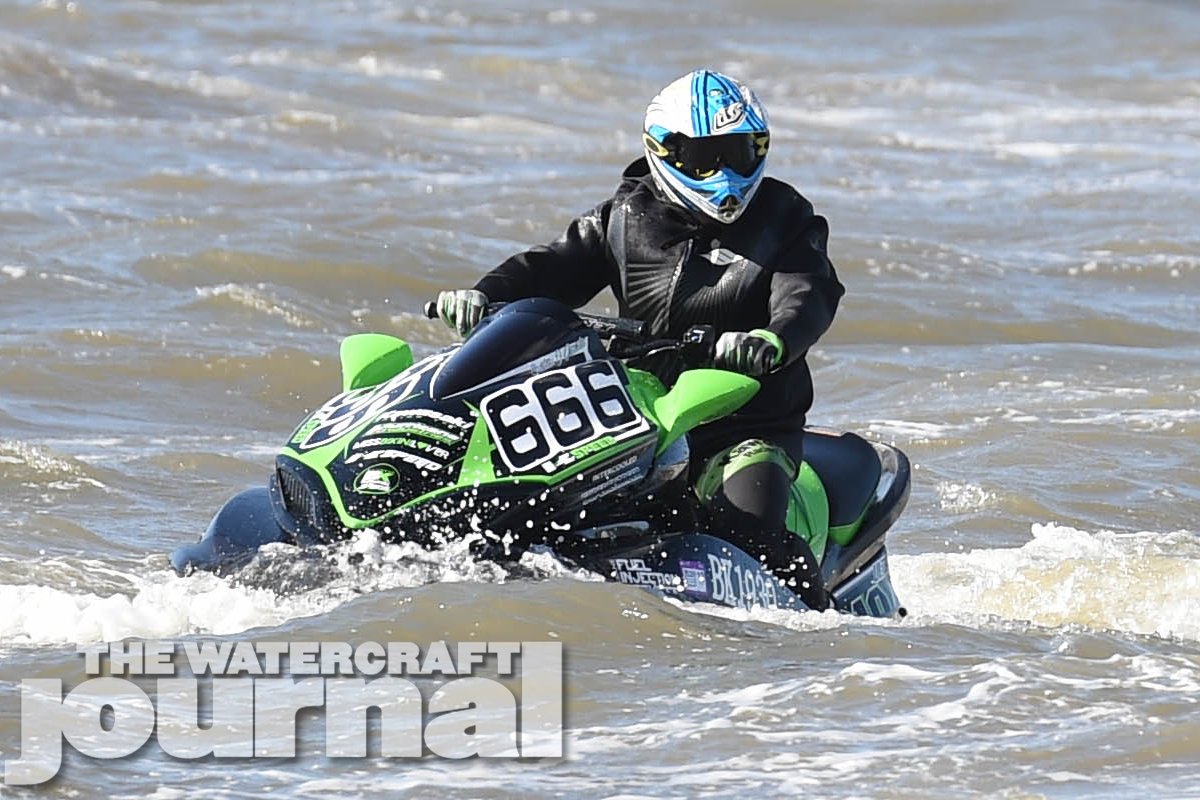
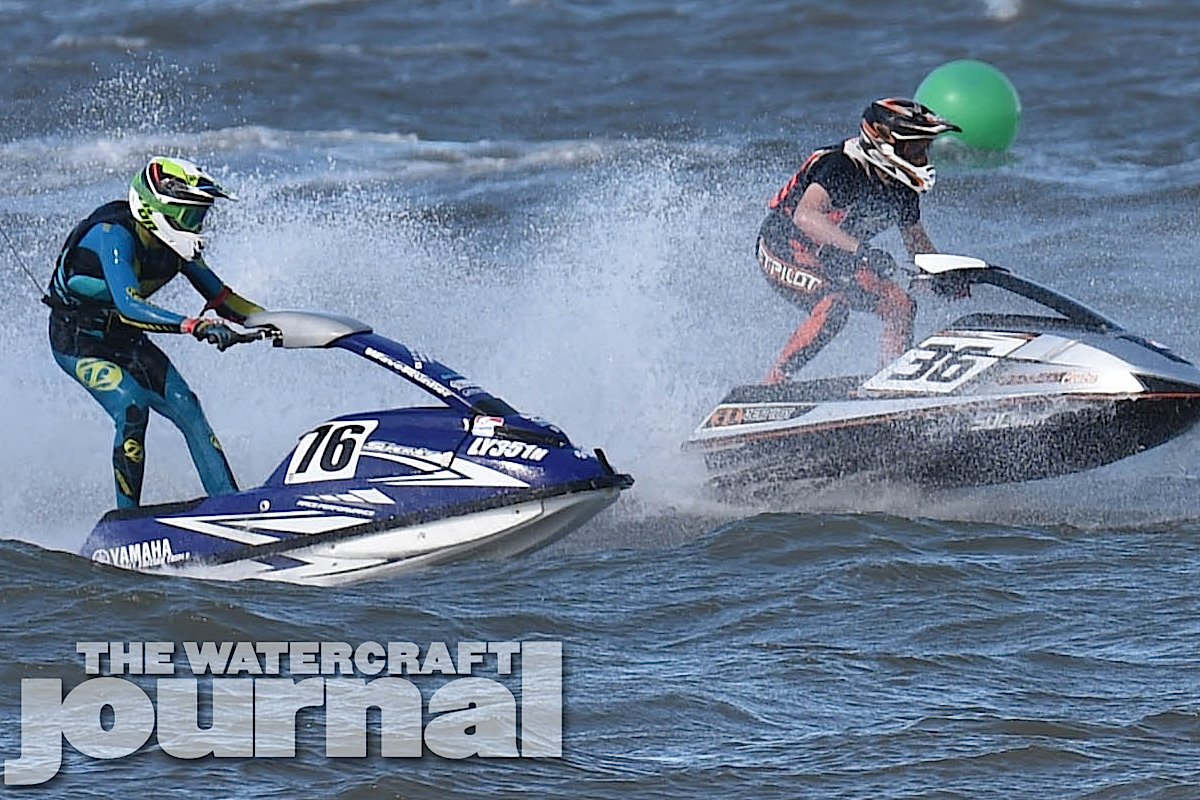
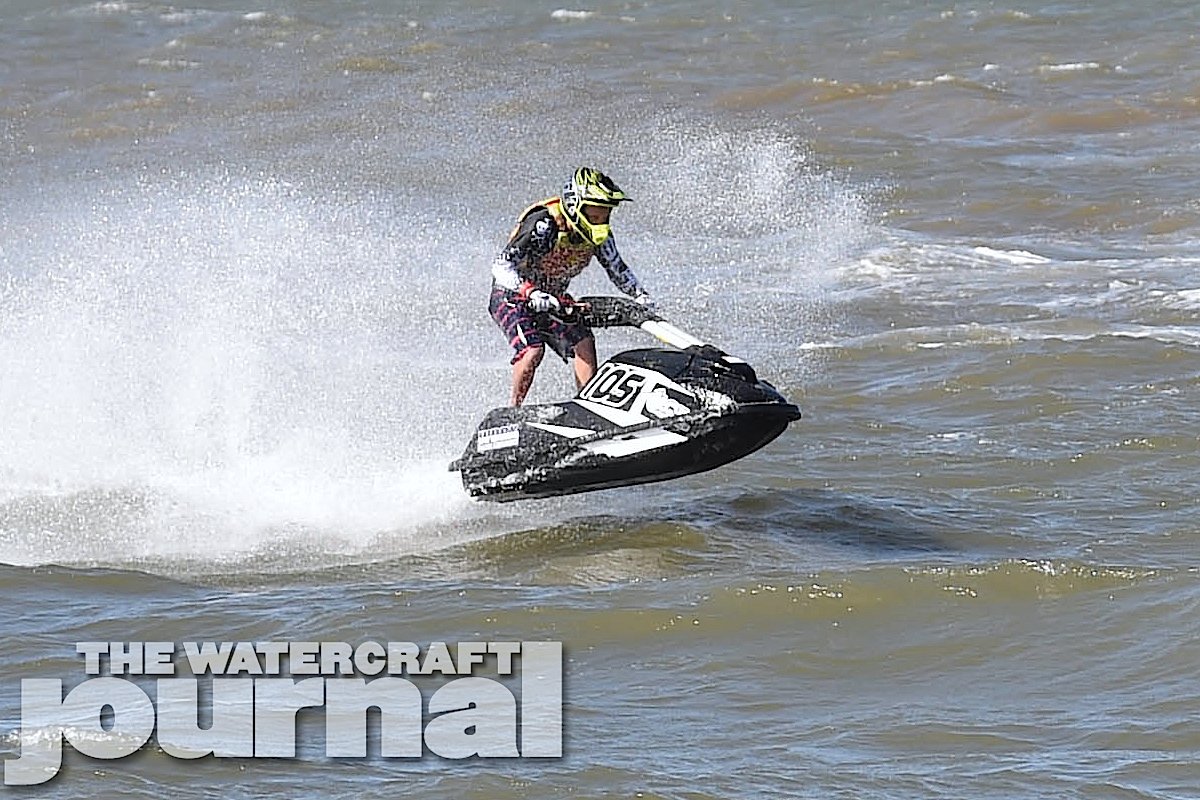
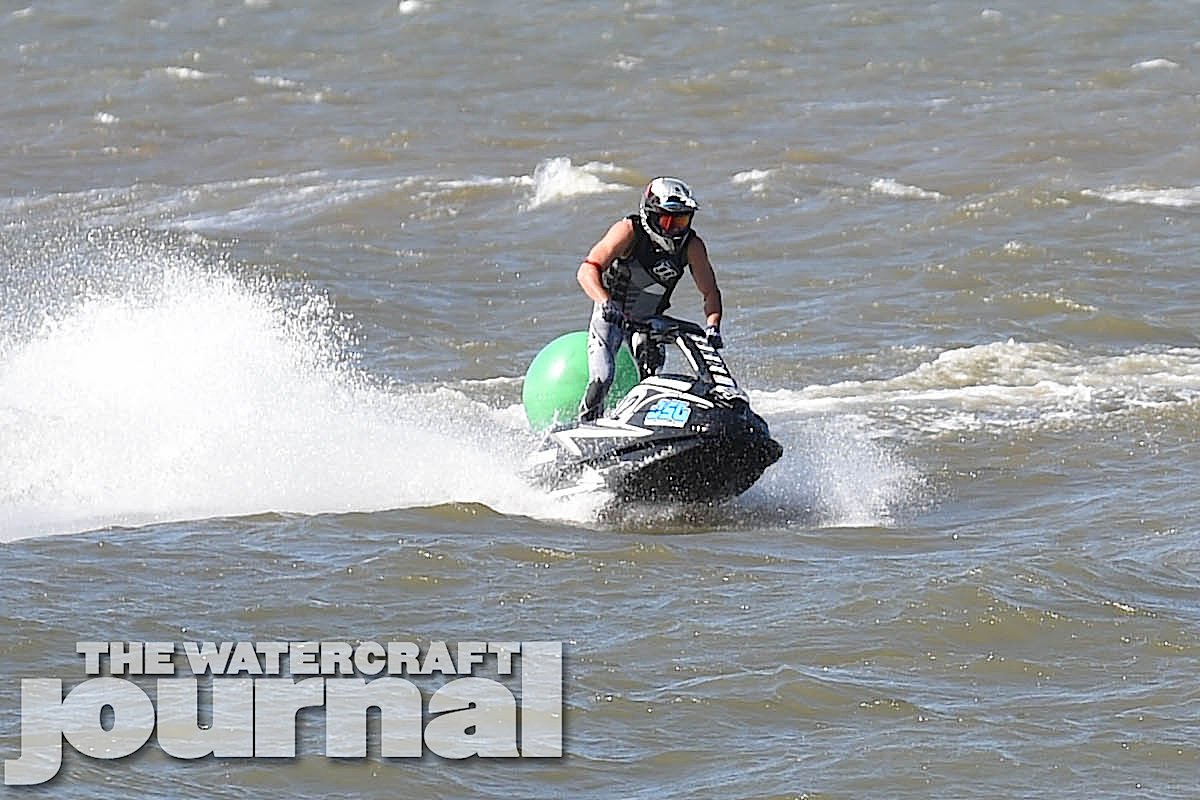
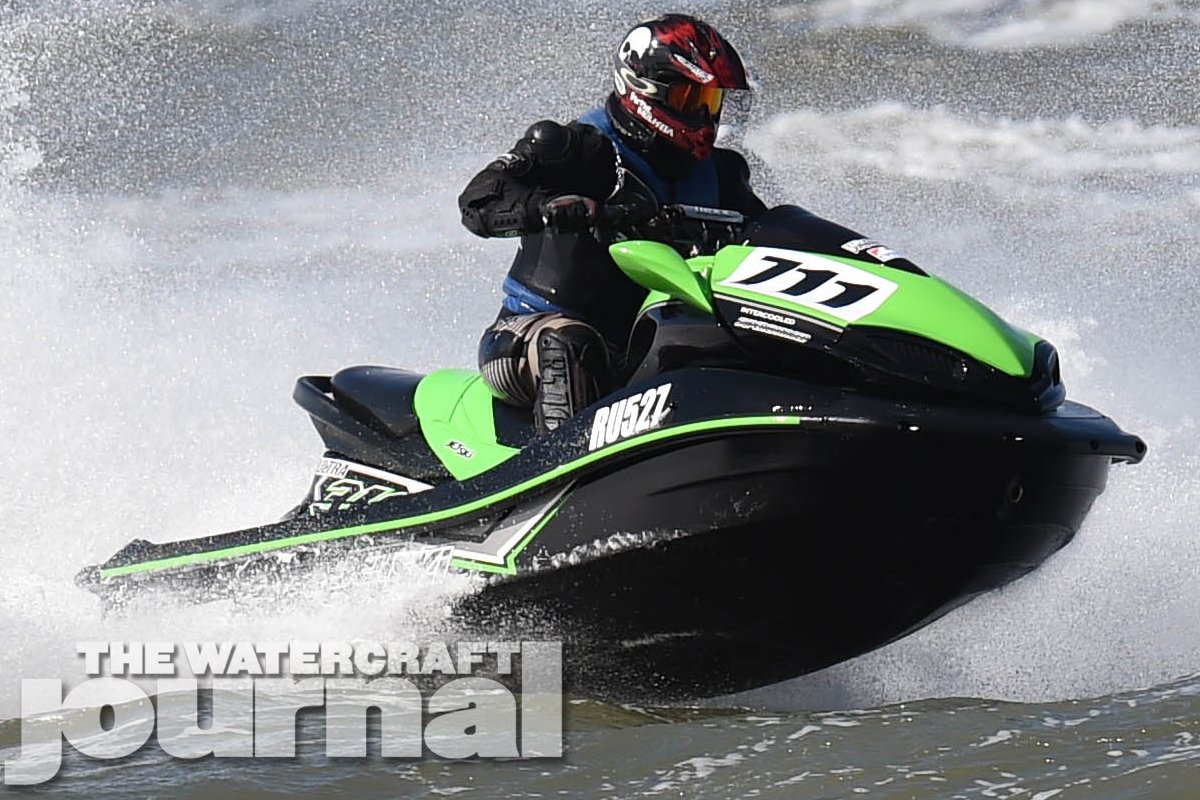
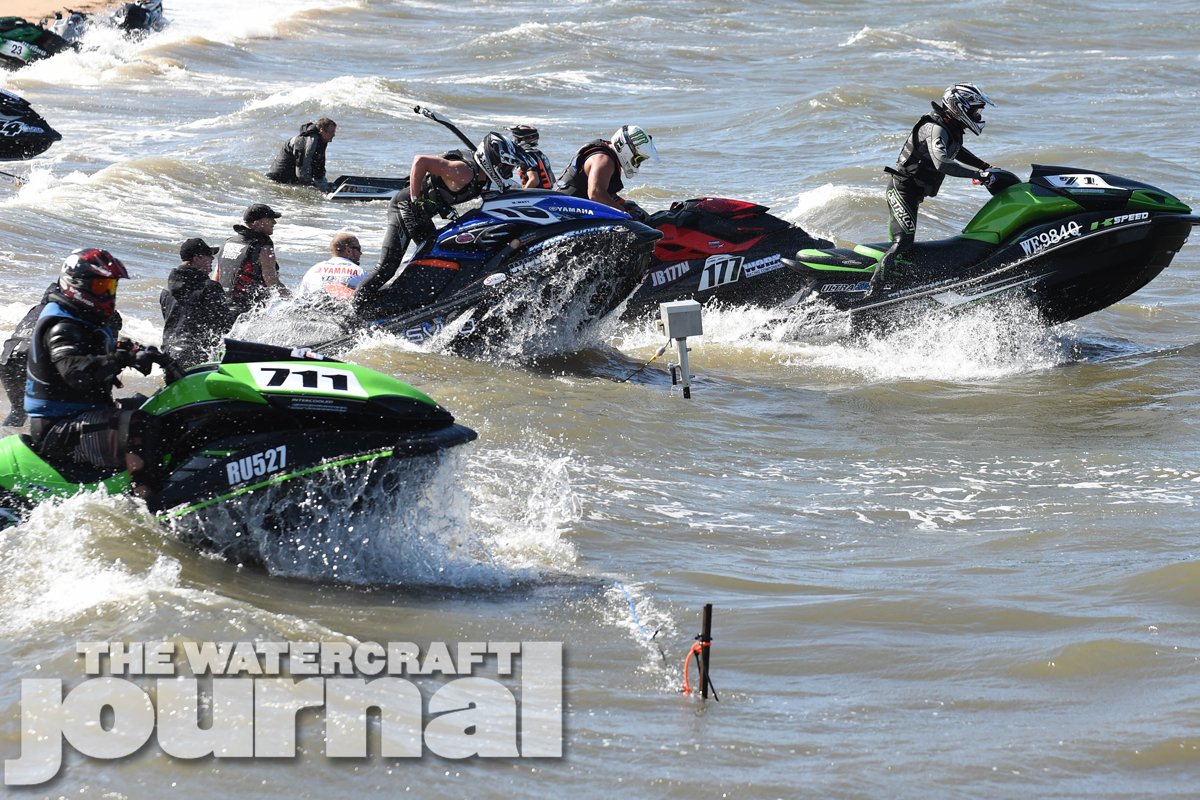
Evidently, Dan had met the owners of the track, Dan and Kelly Morrison at a City Council Meeting and suggested that it might be fun to race jet skis around the track during intermission periods at their events. The ridiculously fast sprint boats and great venue they have built typically attract between 5,000 and 10,000 spectators per event.
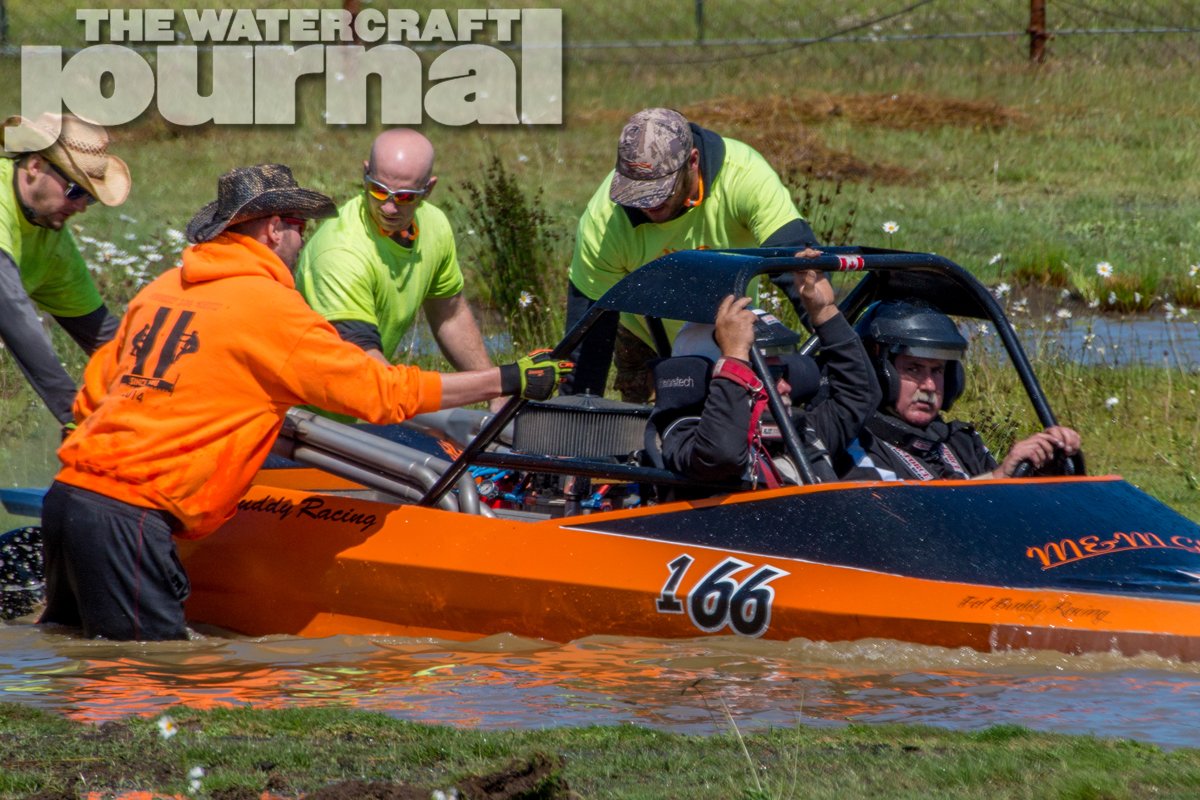
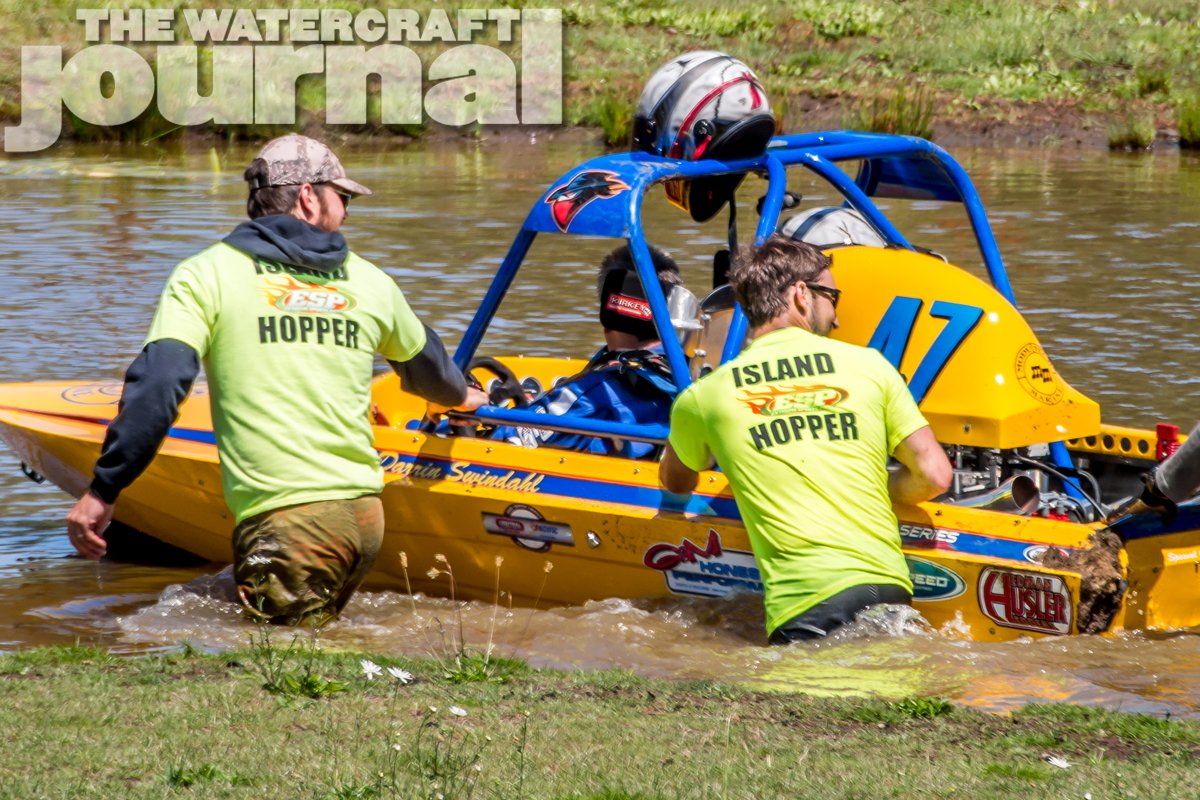
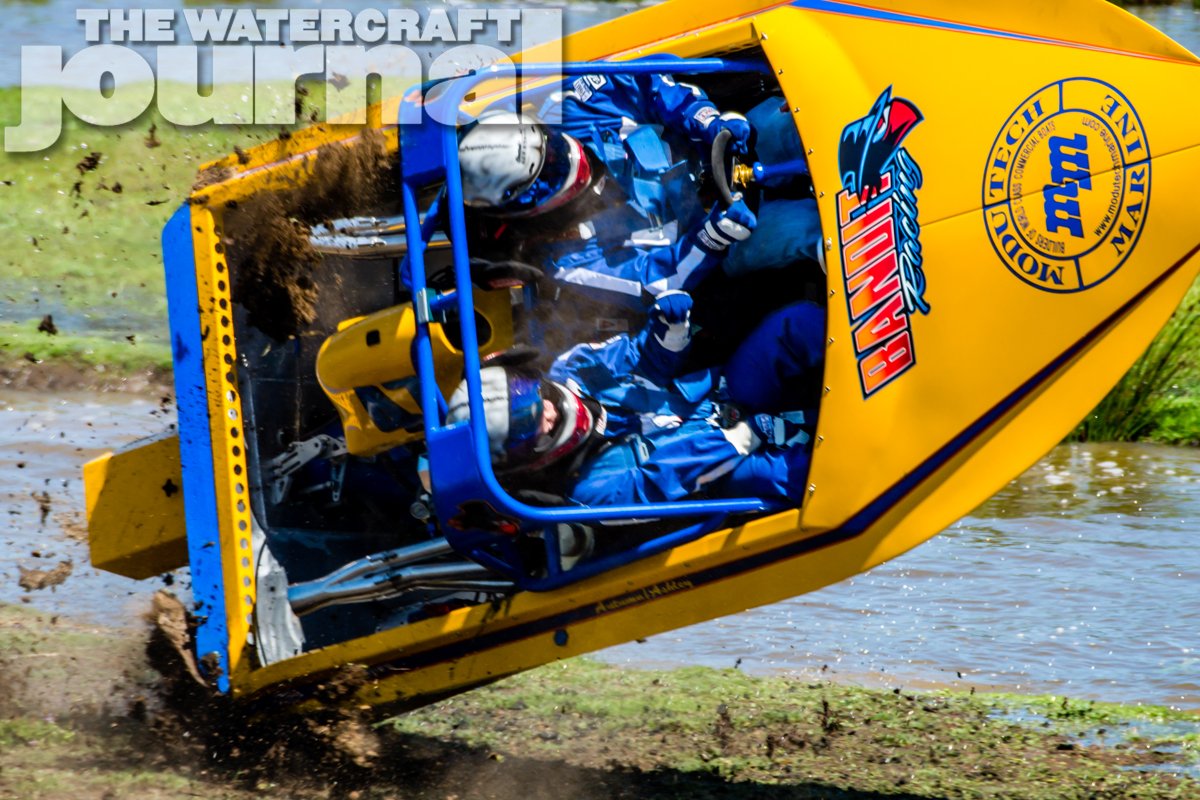
We arrived at the track just in time to witness the first wreck of the season. The boat rolled completely over twice and landed right side up. The “island hoppers” arrived quickly to the aid of the two-person crew. Many of the island hoppers are EMT trained and work in the EMS/firefighting field. There was also an ambulance on site just in case. There were no injuries and the boat was walked back to the boat launch (one of the crewmembers later referred to it as “the walk of shame”).
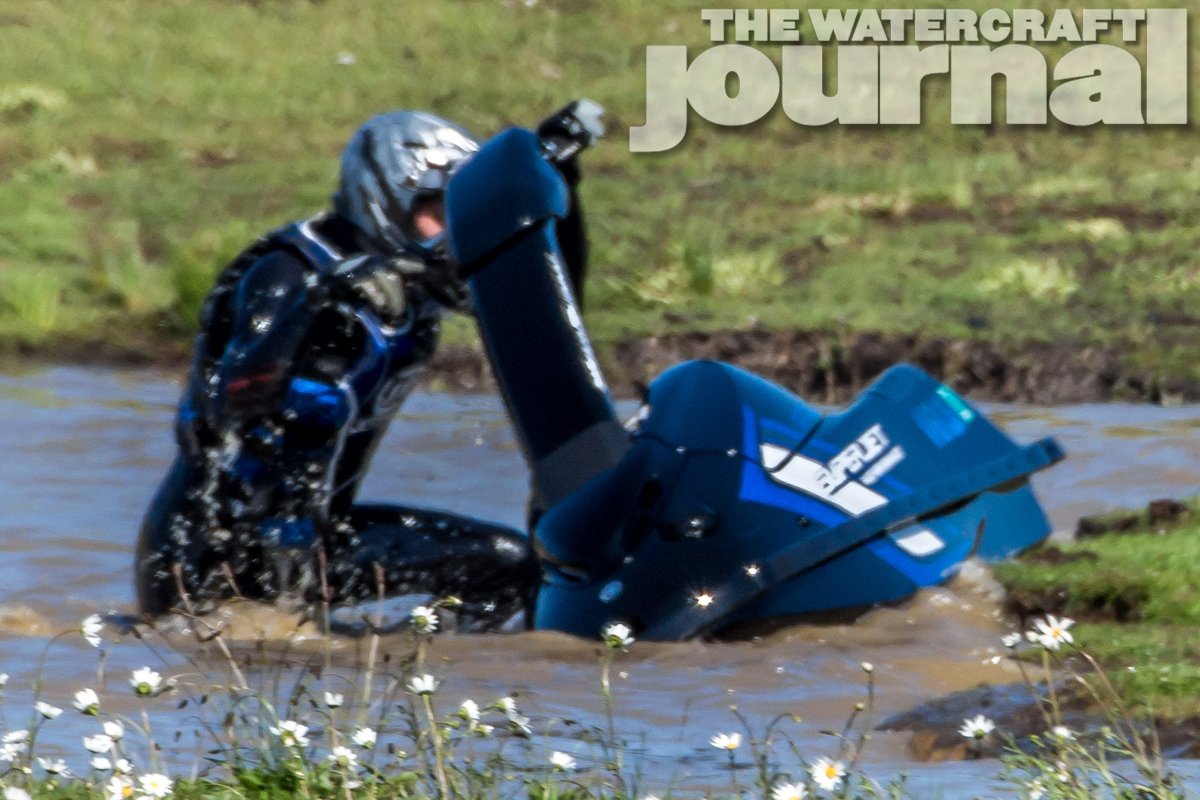
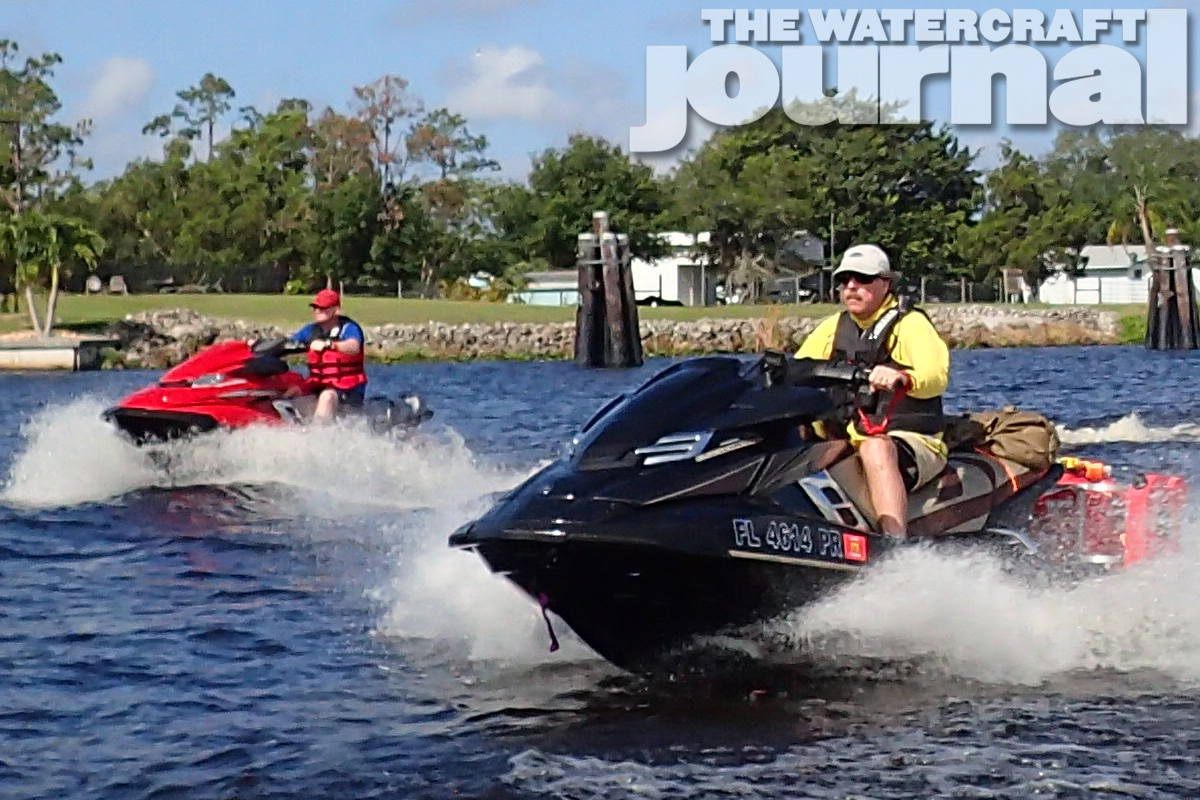
The channels they race in are approximately 14-feet wide and 2-to-4 feet deep. After a couple more heats, we suited up and launched our skis. It’s a little different racing around buoys than racing through narrow man-made channels. It wasn’t long before we misjudged a turn and found ourselves in the middle of an island completely beached. The island hoppers were very helpful returning our ski to the water and commented that it was a little lighter than the boats they were used to moving.
Dan and Kelly and all the racers and crew were very excited to have us and invited us back to be part of their next event! We will likely run some timed trials around a designated course between Sprint boat heats and score up the heats at the end of the day for placement. Details will be posted on the Extreme Sports Park Jet Ski Races facebook event page. The next race will be July 25th at the ESP track in Port Angeles, WA, so mark your calendars and if you cannot make it to watch in person, there will be live video streaming all day.
We’ve caught our share of grief from some eagle-eyed commenters who after posting one too many watercraft reviews noticed we regularly wear the same pair of worn out Arnett Catfishes. Yup, they might be a little outdated, but they’ve been the best sunglasses that we’ve owned (and by “best” we mean the only ones that we haven’t lost while riding). It’s not that we’re biased at all, it’s just finding a pair of sunglasses that rest comfortably and won’t fly off is incredibly hard to do.
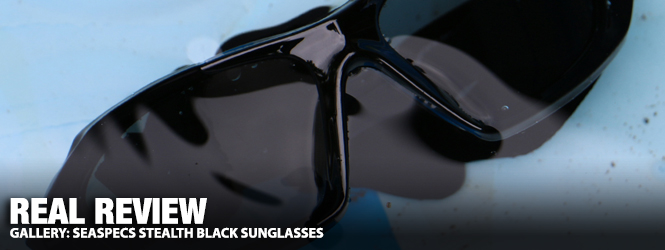
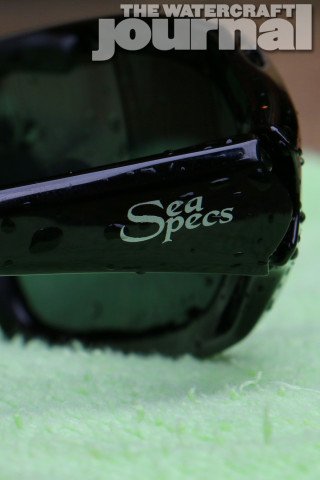
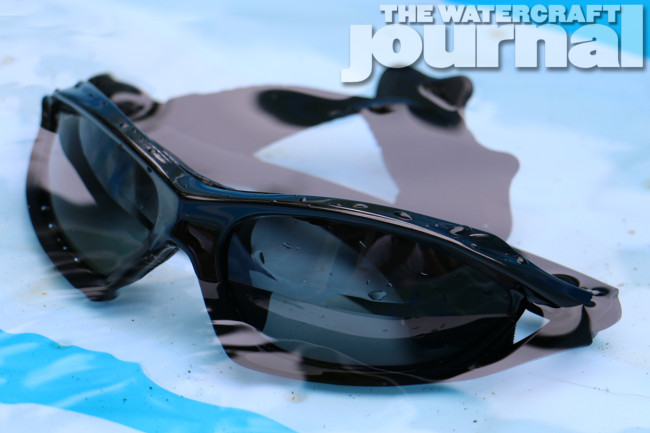
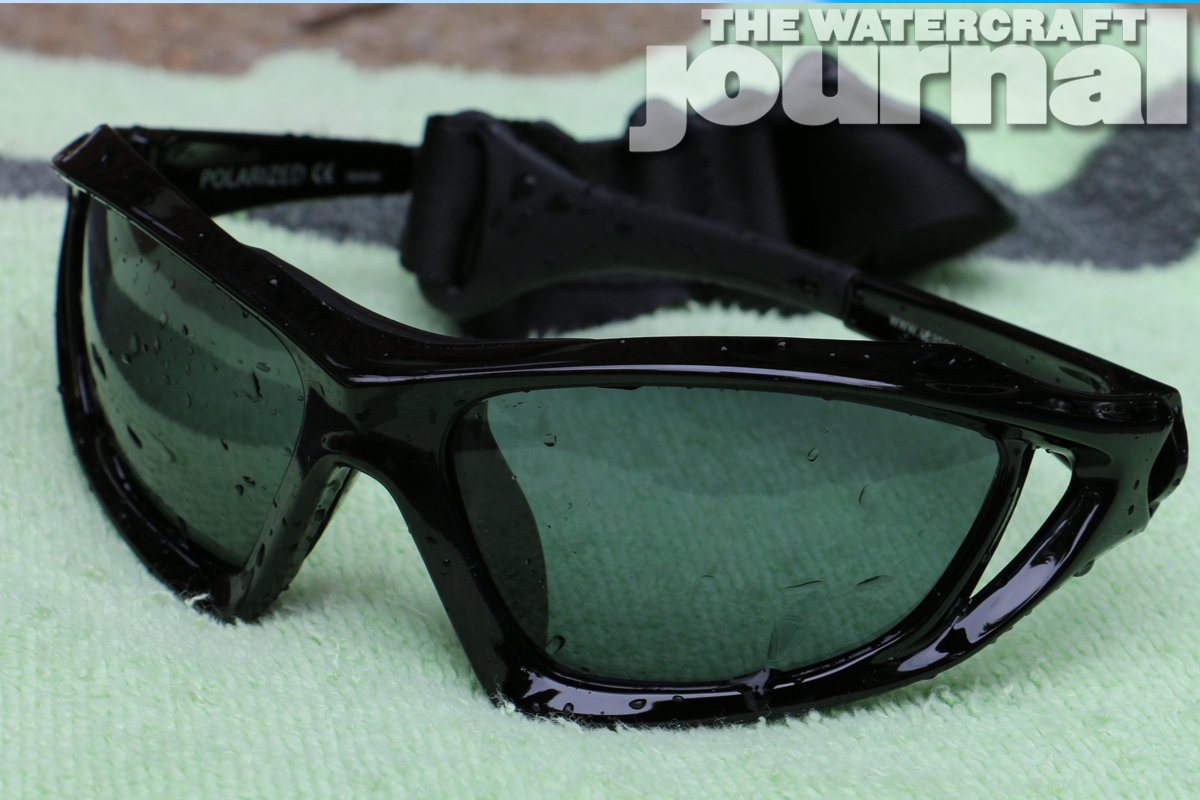
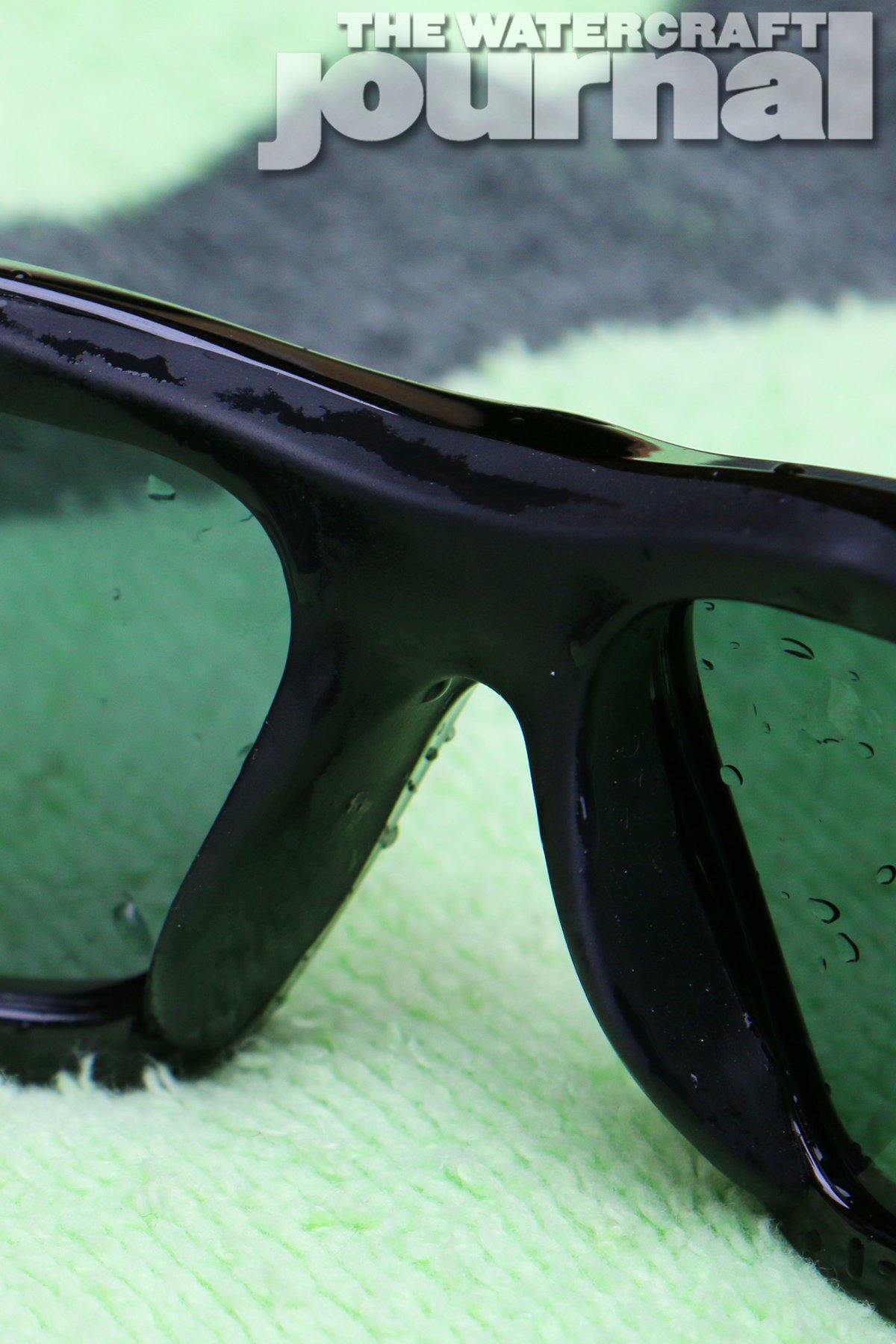
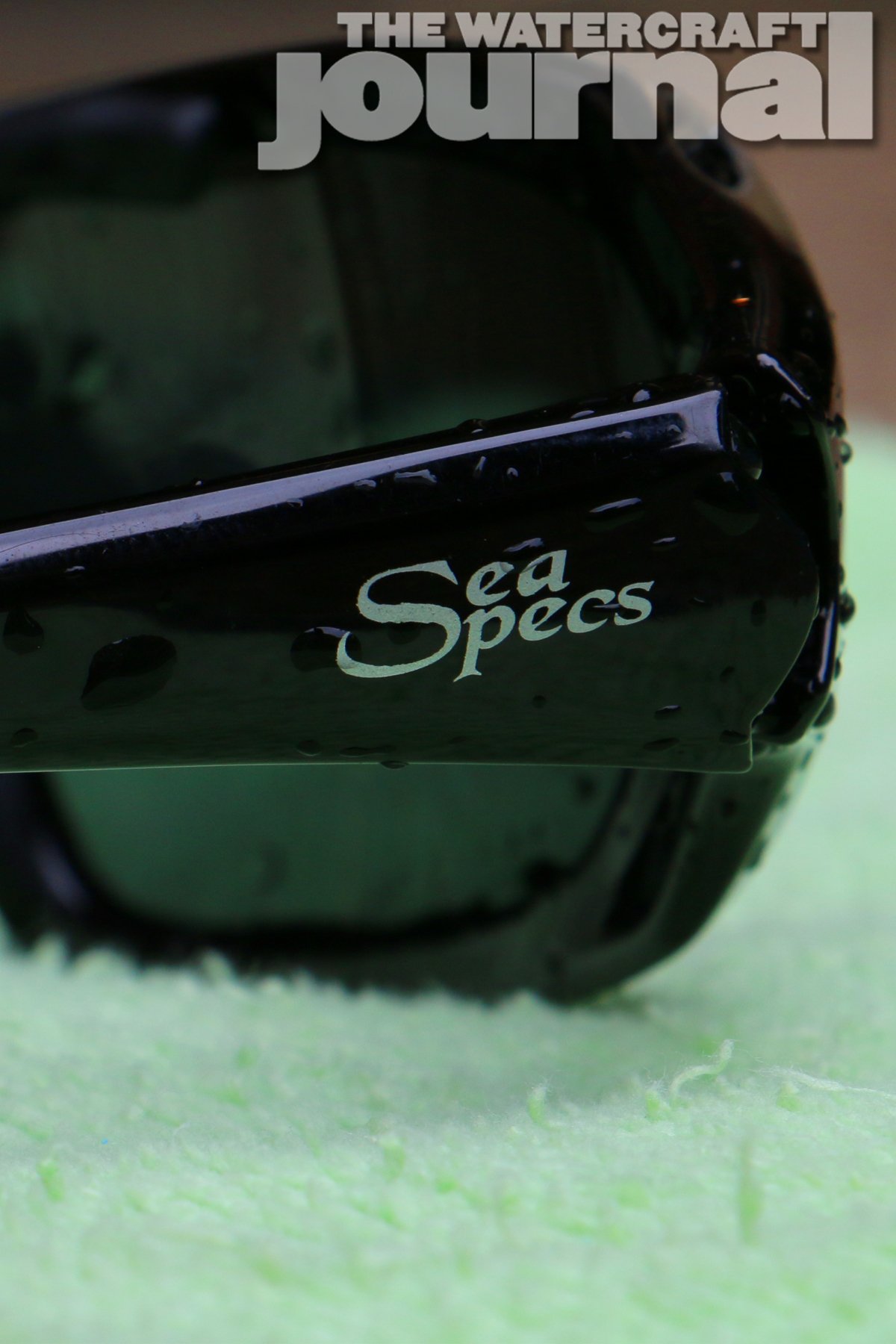
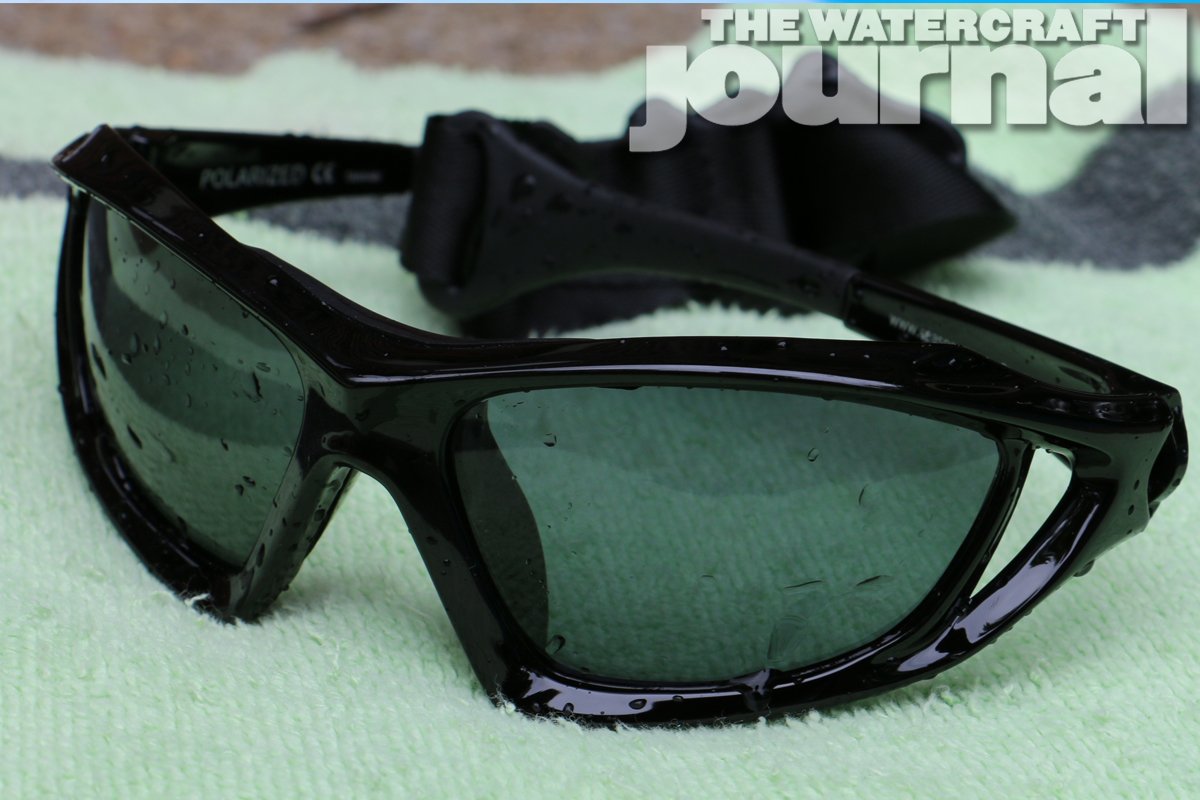
That is, until last March when The Watercraft Journal was invited to moderate the Watercraft Superstore Skyway Ski Show. As part of our goodie bag were a new pair of Stealth Black SeaSpecs. Featuring gray polarized lenses, lightweight black frames and adjustable secure strap, the SeaSpecs came very highly recommended by the WCSS staff. My day with my Stealth SeaSpecs was unfortunately cut short as their desirability was clearly too much for some sticky-fingered bystander to resist, and my pair vanished.
Alas, I was left with my trusty Catfishes yet again. That is, until last month when The Watercraft Journal was asked by SeaSpecs if we’d be willing to review a replacement pair. Arriving the week before our trip to the 10th annual Greenhulk.net Mudbug, we were able to rack up plenty of time with the new shades. Normally, we struggle with full wraparound frames as they are often prone to fogging. Thankfully, the SeaSpecs are well ventilated, keeping their patented, high quality, impact-resistant polarized lenses clear.
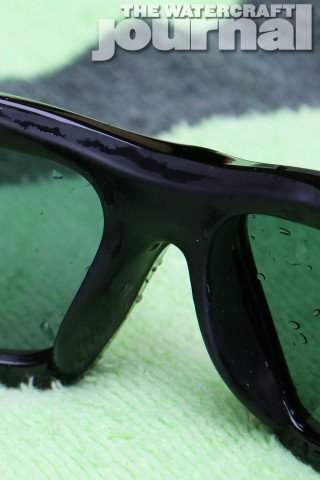
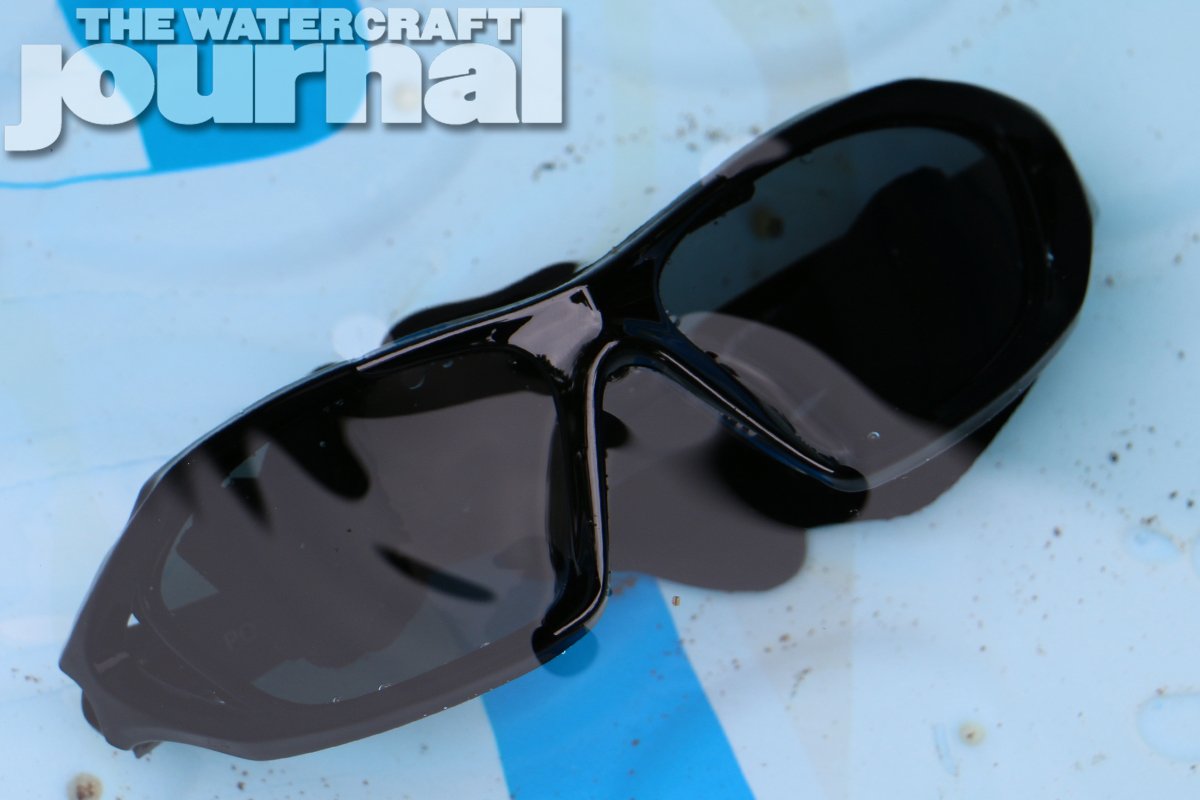
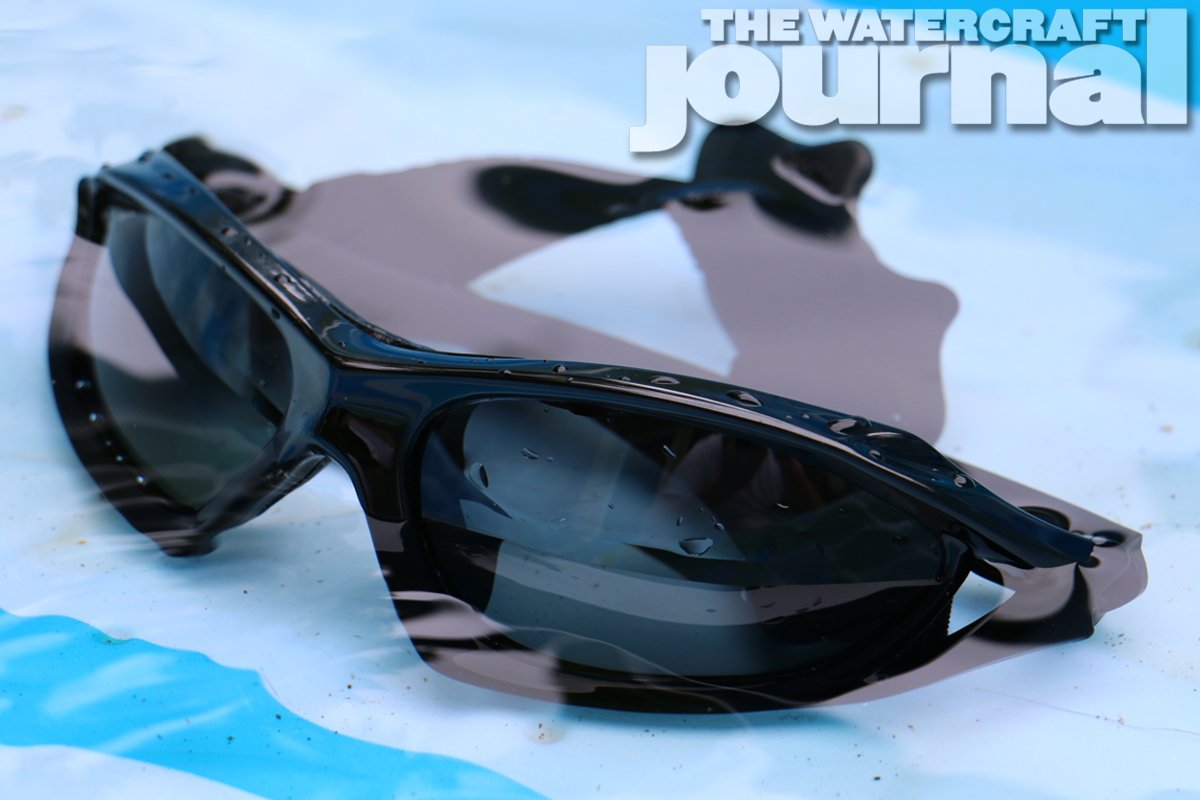
Made from injection-molded nylon, the frame is nicely flexible, making it strong, yet lightweight. Also notable is that the hinges are not metal attachments, but rather, integrated into the frame (held together with a stainless steel screw) for longer life and rust prevention. A thick, padded nose and bridge cushion not only rests comfortably but provides the SeaSpecs much of its floatation (along with its padded temples.
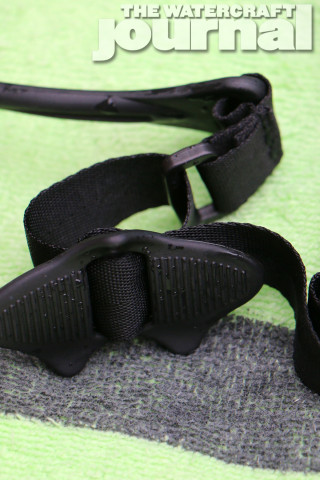
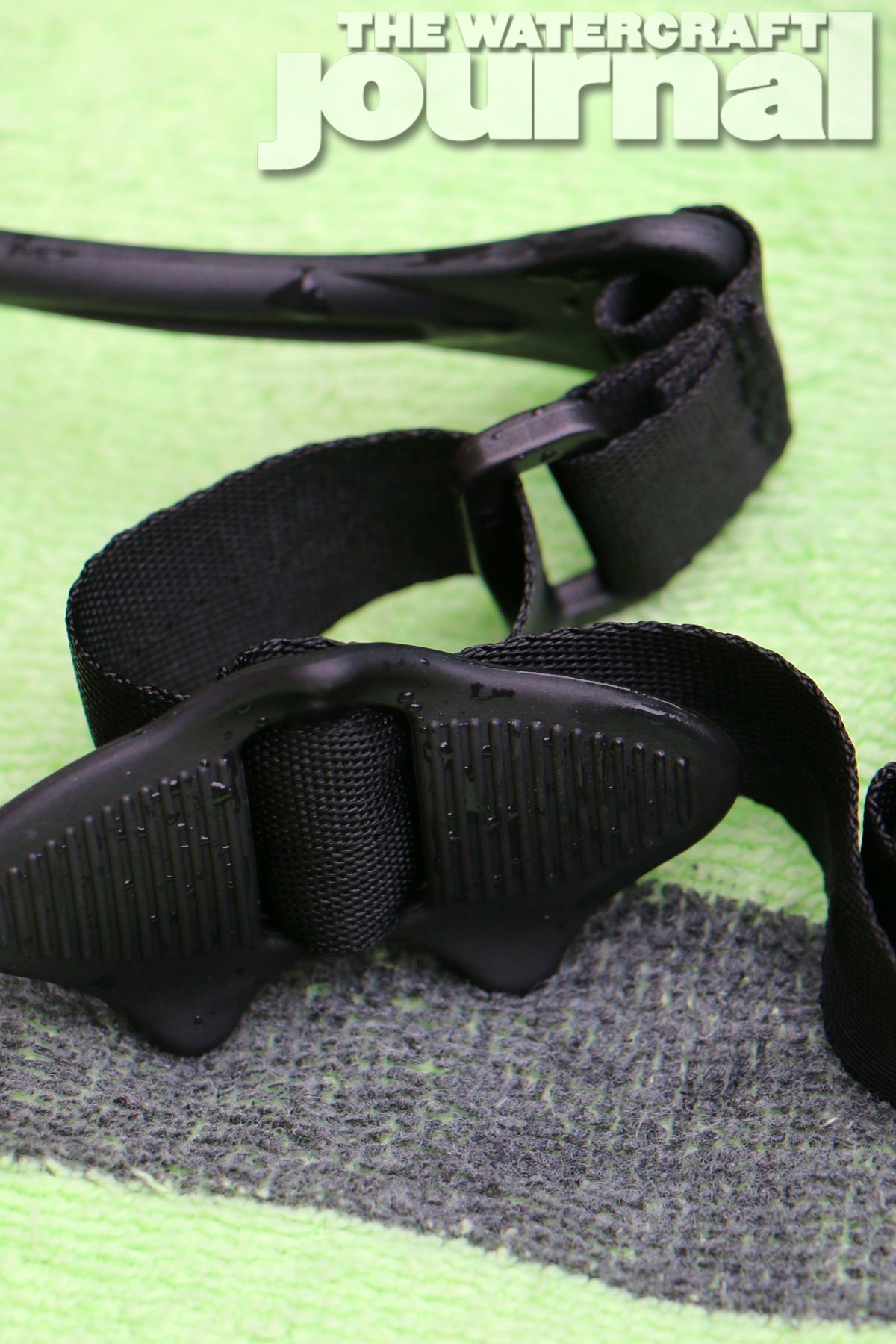
The biggest feature on the Stealth SeaSpecs is its non-removable strap. Integrated into the rubberized temples, the least is fully adjustable and fits snug around your head. We found that there’s really not enough slack to wear it loosely around your neck when not actually wearing the glasses over your eyes, but they do rest nicely on top of your head if you’re trying to read your phone or GPS.
Overall, we liked the features, design and overall aesthetic of the SeaSpecs’ Stealth sunglasses but did find the short strap and very snug fit of the wraparound frames a little claustrophobic. A cursory search of our previous reviews will attest that we’re big sticklers on personal fitment as a “make or break” factor, and ultimately fitment is almost always subjective. Those with a broader face might not enjoy the Steath sunglasses, while others with more narrow features will absolutely love ’em.
Priced at $49.95, they’re definitely a bargain – particularly when purchased through the Watercraft Superstore, which will save you an additional $5 off of the retail price. With summertime upon us and the water warming up, its always a good idea to pack as much protection as you can, and SeaSpecs’ Stealths are not only good looking but functional.
“We’re really proud with it,” the Watercraft Superstore’s John Salvatore told The Watercraft Journal back in March. “We print out over 100,000 copies a year.” The company’s “magalog” or magazine/catalog hybrid has become an annual tradition for both the Watercraft Superstore (WCSS) and its parent company SBT, Inc. (Small Block Technologies, Incorporated). Of course, SBT is widely known for carrying the largest inventory and most complete offering of PWC engine and drive line parts in the industry.
The magalog, which was recently printed and issued to subscribers and available through WCSS, SBT or other distributors, not only includes (almost) all of both companies’ massive product lines, but insightful and informative original feature stories on building your own fishing-equipped PWC, basic trailer maintenance, and of course, a thorough recap of this year’s Skyway Ski Show (with an introduction by The Watercraft Journal’s own Kevin Shaw).
And for those paying attention for the last decade or just to the heart-racing images featured here, SBT is also widely known for hiring former Playboy Playmates to feature front and center in their annual calendar. We thought it a good idea to include some shots from SBT’s annual calendar shoot with Playmate Maggie Mae, who was also Miss August 2014, as well as a video recapping the photoshoot below.
And of course, both SBT and WCSS (together with the online forum PWCToday.com), access the largest community of personal watercraft enthusiasts, dealers, shops and retailers than any other single entity. Now for 2015, the PWC juggernaut is partnering with the industry’s most popular personal watercraft magazine, The Watercraft Journal, pushing their reach from hundreds of thousands to nearly half a million!
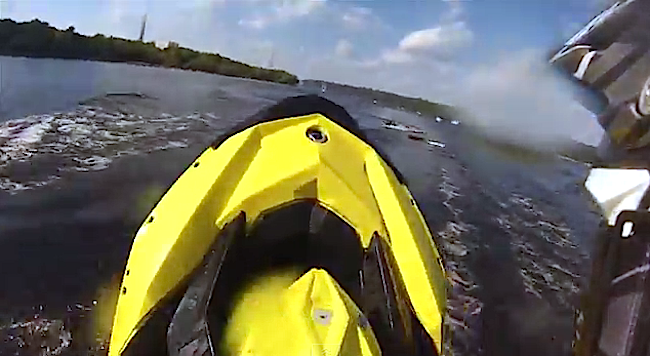
A six-minute YouTube video by Westside Powersports (under the name “bonnessei”) filmed in St. Croix September 22, 2014, features a yellow Sea-Doo Spark jumping every boat wake he encounters. The unidentified rider thanks his friend Matt for letting him borrow his Spark and says despite some concerns over the new Polytec hull, the boat held up just fine.
The operator uses the boat for about an hour, jumping wake after wake, showing a thumbs up every now and then and even hoots himself on occasion. He seems to be having a good time throughout his very bumpy ride. He fell off the ski one time after losing control, due to what appears as a mistimed jump. He easily climbed back onto the ski using the nice step at the stern, which is standard equipment on the Spark. The Spark proceeded to hit some more wake doing the same wave jumping prior to his unfortunate dismount.
He did get vertical a few times which was somewhat impressive. The rest of the jumps were just basic airs that a novice rider could easily pull. The video made us a little seasick thanks in part to the music chosen to accompany it and the same monotonous bouncing rides. (We recommend hitting the mute button. Sorry Stanton High School band, the music did not bode well with the video. That’s not your fault.) Regardless, riding the Spark looks like a fun way to spend the day jumping boat wake.
“I don’t know what you do for a living, but…” was how Pro Watercross’ AJ Handler began a conversation last month. He didn’t get to finish his sentence before I jumped all over the poor guy. AJ’s innocent segue hit a nerve, a very sensitive one that has been a pet peeve of mine for the last 18 months. During a very short time, we have leapfrogged so far ahead in readership, daily traffic and of the rest of the personal watercraft industry that many think it can’t be that difficult to do.
All things being said, I personally, am incredibly humbled and a little surprised with the immediate success of The Watercraft Journal. From January 1st to December 31st of 2014, we welcomed over 117,000 unique readers. That’s an average of 9,750 a month. In plain speak, that is an average of 9,750 copies of a print magazine sold. The next biggest magazine sells less than 3,000 copies every other month.
At the closing of May of 2015, we’re already over 82,000 unique readers, equaling an average of 16,400 a month. When extrapolated over the full calendar year, that’s an average annual growth of over 125-percent. All of this mathimatical gobbledygook is important because our readership is your potential customer. Readers of The Watercraft Journal buy our advertisers’ products. We know it because they tell us so.
And thankfully, we’ve partnered with some of the best companies in the personal watercraft industry. And we’re very excited to welcome a new swathe of top tier companies for 2015. Their support not only keeps our lights on and allows for future content, but allows us to expand our level of content. Our advertisers are the best, and we owe them more gratitude than I can properly express here.
Today’s The Watercraft Journal by The Numbers is both for all of our current supporting advertisers and those looking to expand their customer reach. Our readership is your audience.
May 2015
Unique by Professionalism
Frankly put, nobody delivers what The Watercraft Journal does, nor as quickly or as regularly. Nobody. And do you want to know why? It’s a lot of work. Producing uniquely and professional articles daily that are uniquely written, edited and published on a consistent timetable – Monday through Friday – is no easy task, as those who have broken off and tried to emulate us are quickly learning. Making the trains run on time takes a whole lot more than a “love for the sport,” a Google ad campaign, or a little start up capital to make a pretty website.
News articles published in April: 28
Feature articles published in April: 12
Total feature word count: 9,183 words*
News articles published in May: 24
Feature articles published in May: 16
Total feature word count: 14,405 words*
*When this number is translated to print publication standards equals a 102-page magazine. Please note that this number does not include an average of two uniquely-written news articles published daily.
Unique by Dedication
We don’t ever “cut and paste” news stories. And those articles that we share with other content sources are properly edited as formatted. All sources are accredited when appropriate, and all contributors are provided headshots and biographies on our About Us page. We’ve never wanted for great content or subject matter. We maintain a staff of nearly a dozen contributors who provide us the best, most timely content on the planet. I am incredibly proud and honored to work with people willing to give us and you, our readers, their very best.
April
Total number unique readers: 18,809*
Total number of articles read: 40,789
Percentage of new readers: 67.8%
May
Total number unique readers: 22,423*
Total number of articles read: 47,468
Percentage of new readers: 70.0%
*This number is considered equal to an individual sale of a single copy of a magazine.
Unique by Reach
Funny how things change. Two years ago, there was what? Three, maybe four PWC media sites? Now there’s no shortage of PWC outlets happily shilling fetid intellectual dross backed with incredibly viral social media campaigns. Recently, we’ve streamlined our Facebook, Twitter, Instagram, YouTube, and weekly newsletters, to only reach in the largest, most vibrant markets in the industry worldwide. While we’re not casting the largest net possible, we are netting literally tens of thousands of dyed-in-the-wool jet ski enthusiasts.
May Facebook readers: 13,158
May Facebook weekly reach: 12,068
Top Five countries: United States, Australia, United Kingdom, Canada, France
Distinguishing the Distinct Difference The Watercraft Journal requires quite a bit more work than many might understand. From sifting through potential news topics, assigning articles, vetting potential contributors, copy editing submitted work, and writing our own unique content, combined with updating redundant editorial calendars, and hours in communication with our advertisers and procuring new advertising (not to mention test riding new watercraft, arranging photoshoots, editing images, producing graphics), there’s a lot that goes into The Watercraft Journal, and we’re not done growing by any stretch of the imagination.
“Ever thought of riding across Florida from the East coast to West? It’s about 150 miles or so each way. Gotta cross Lake Okeechobee to do it too.”
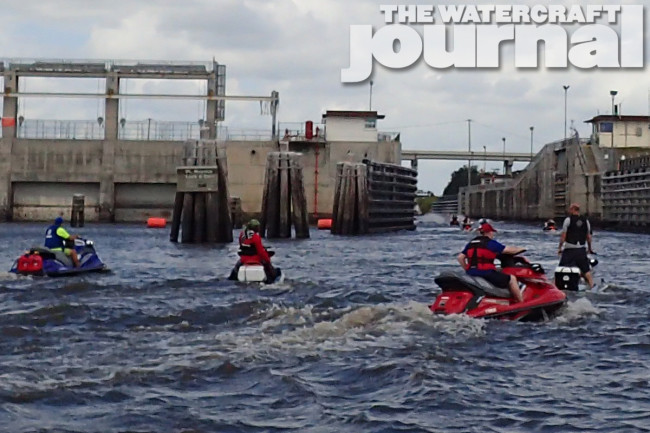
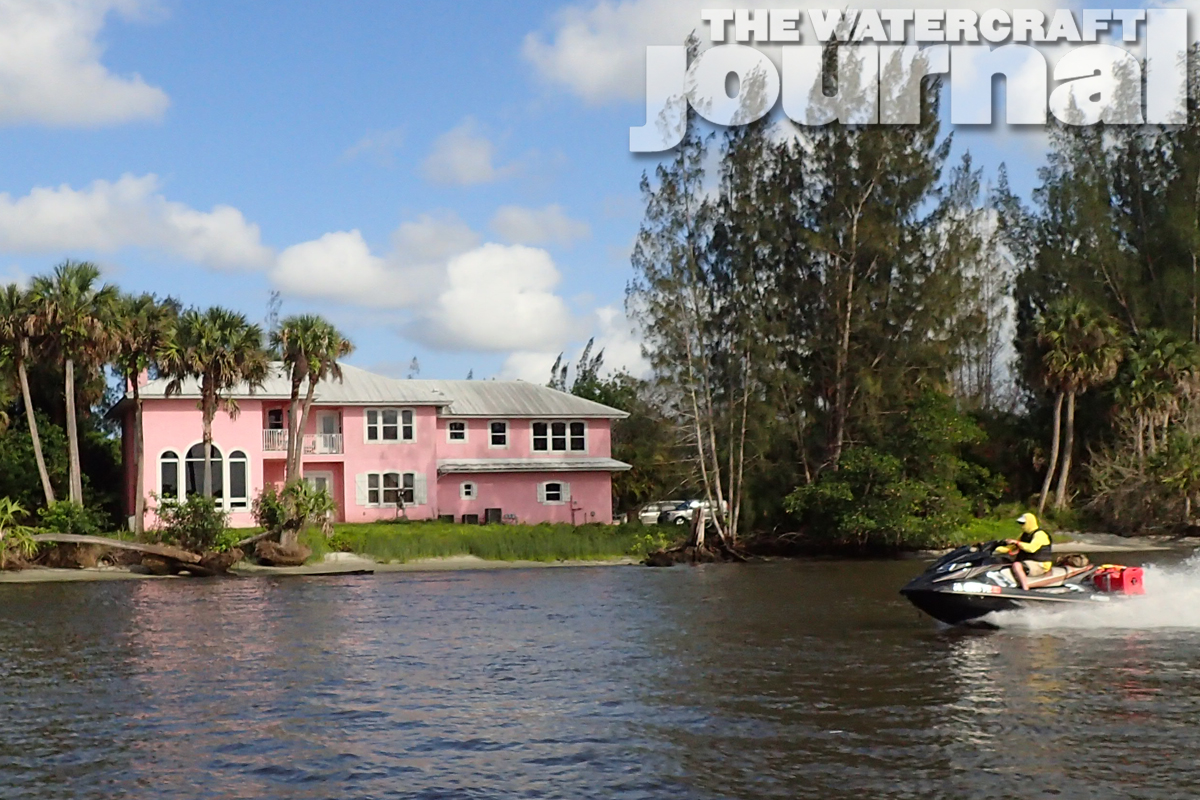
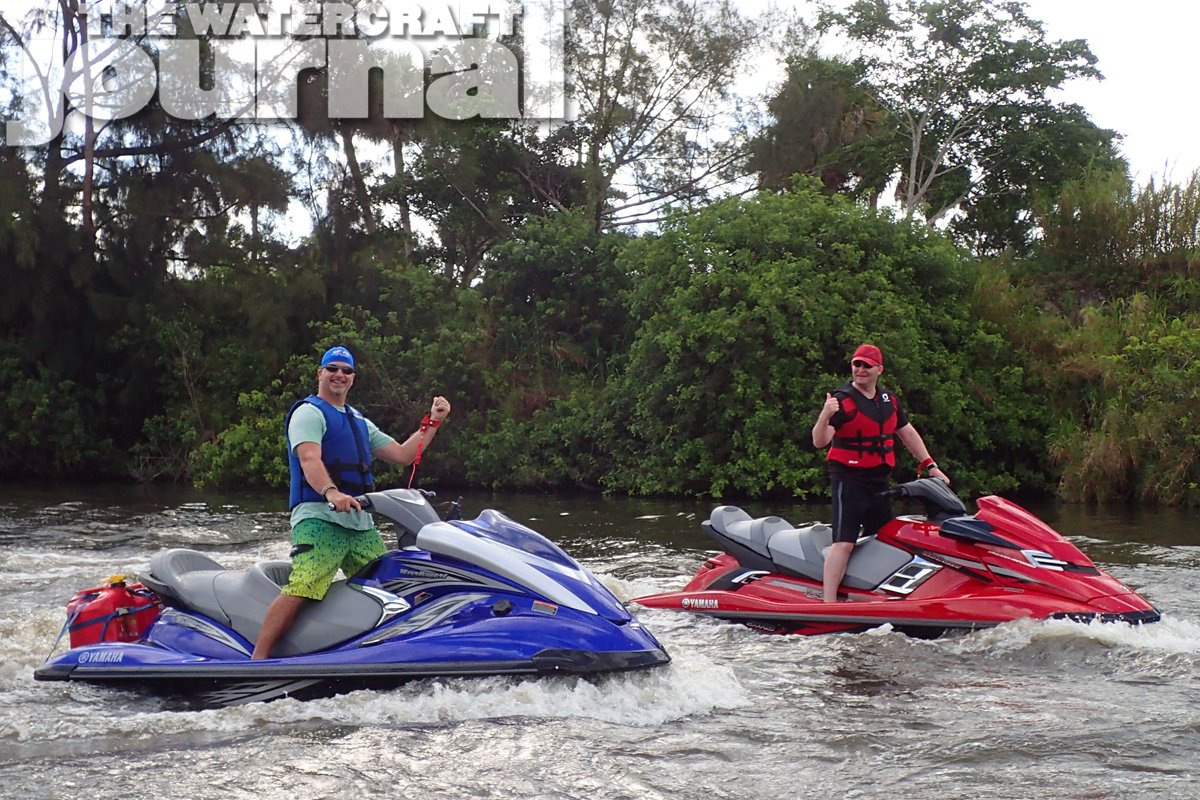
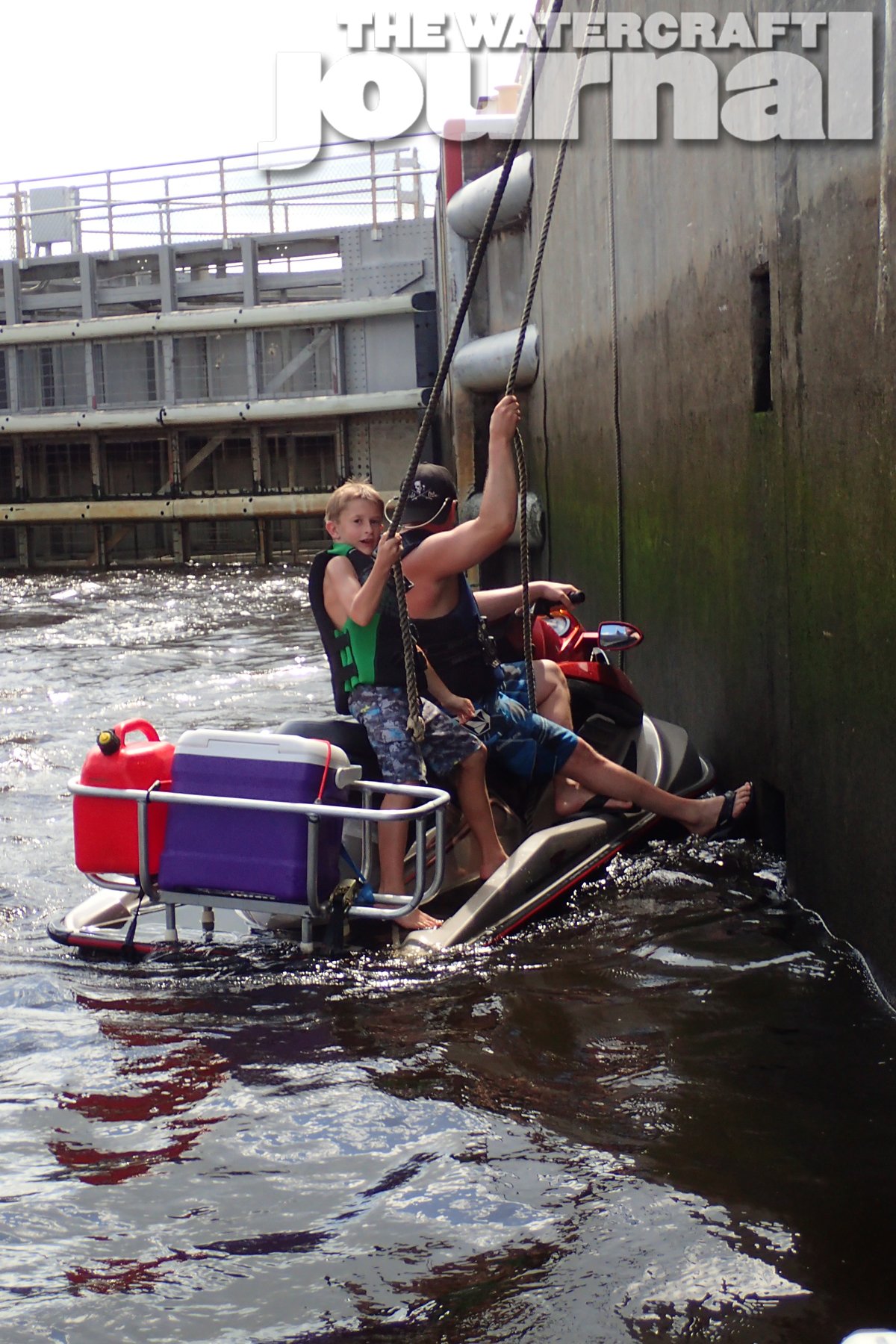
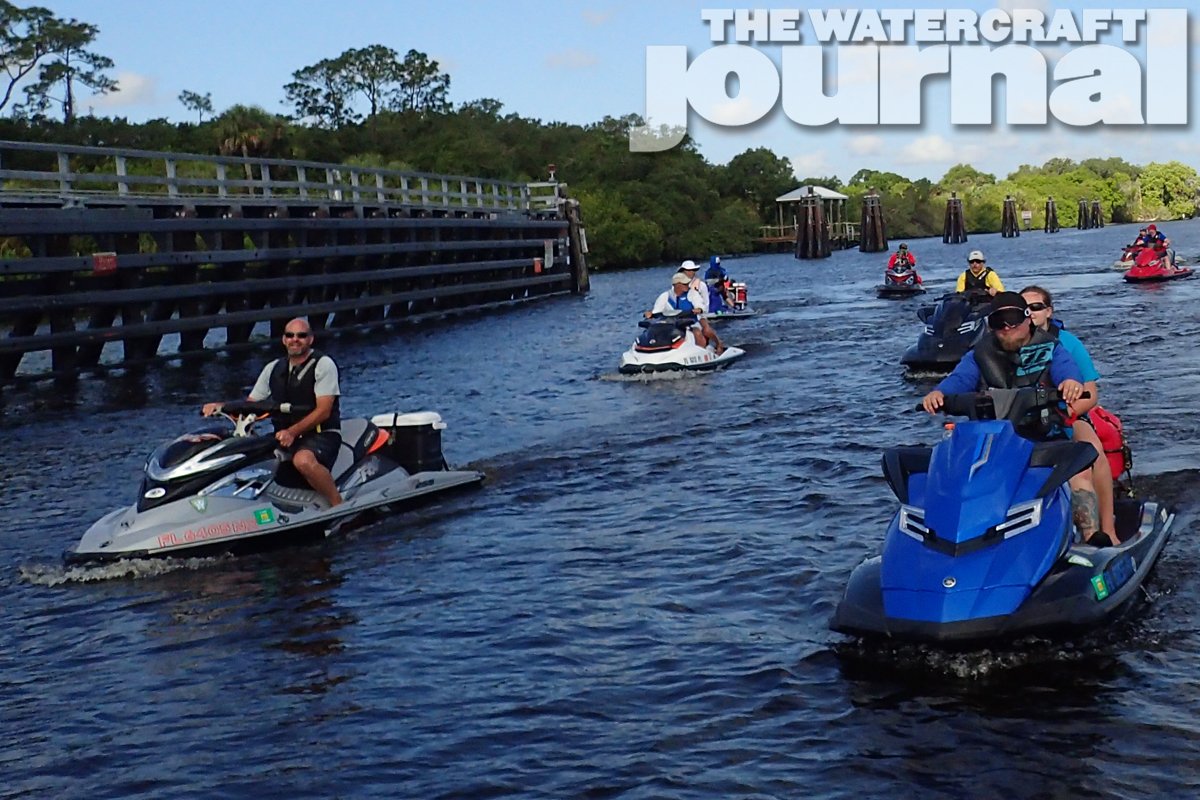
“Let’s do it,” was the reply and that started the planning. That conversation between Lee Micheau and Steve Chown, of the Jacksonville Jet Riders and Central Florida Jet Riders, kicked off the Five Locks Ride. The Five Locks refers to the St. Lucie, Port Mayaca, Moore Haven, Ortona, and the WP Franklin Locks that regulates the near 30 feet of potential elevation changes along the Okeechobee Waterway. After months of planning, the ride was presented to the members of both the Central Florida Jet Riders and the Jacksonville Jet Riders. A total of 21 intrepid riders from Florida and Georgia including Steve and Landen Dill, a father and 9-year-old son duo, made the trek on 18 skis, with one being a 2-stroke Sea-Doo RX!
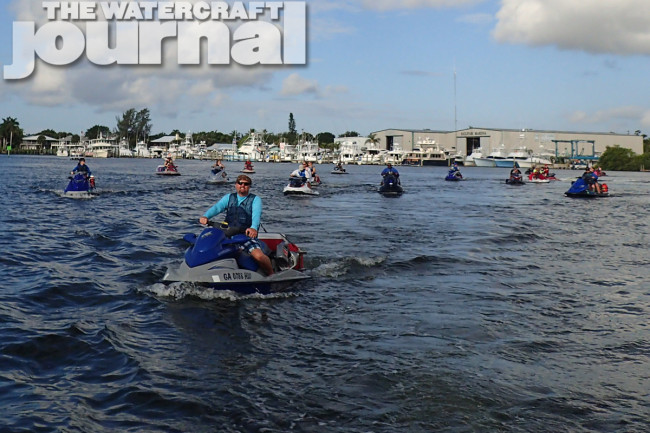
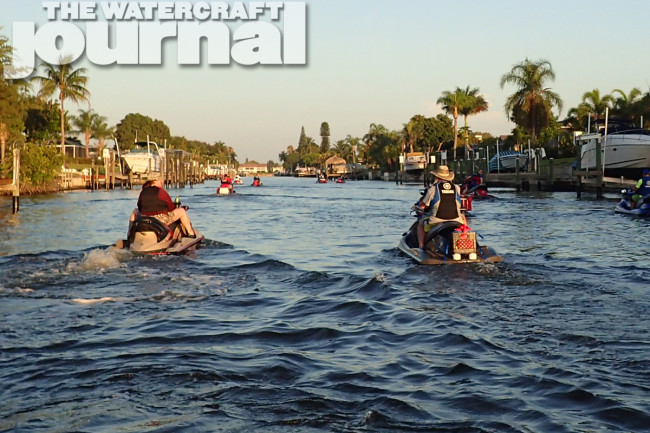
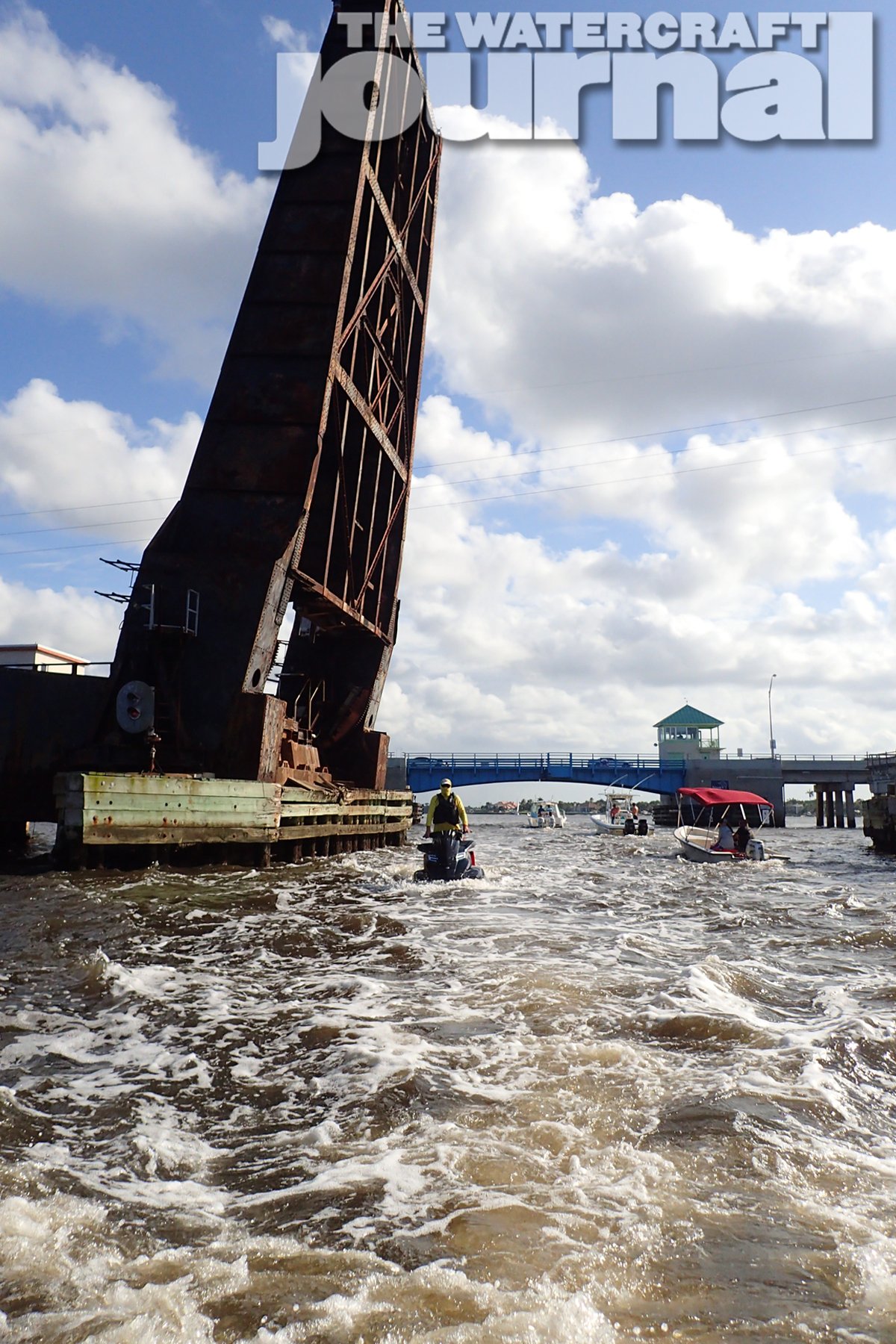
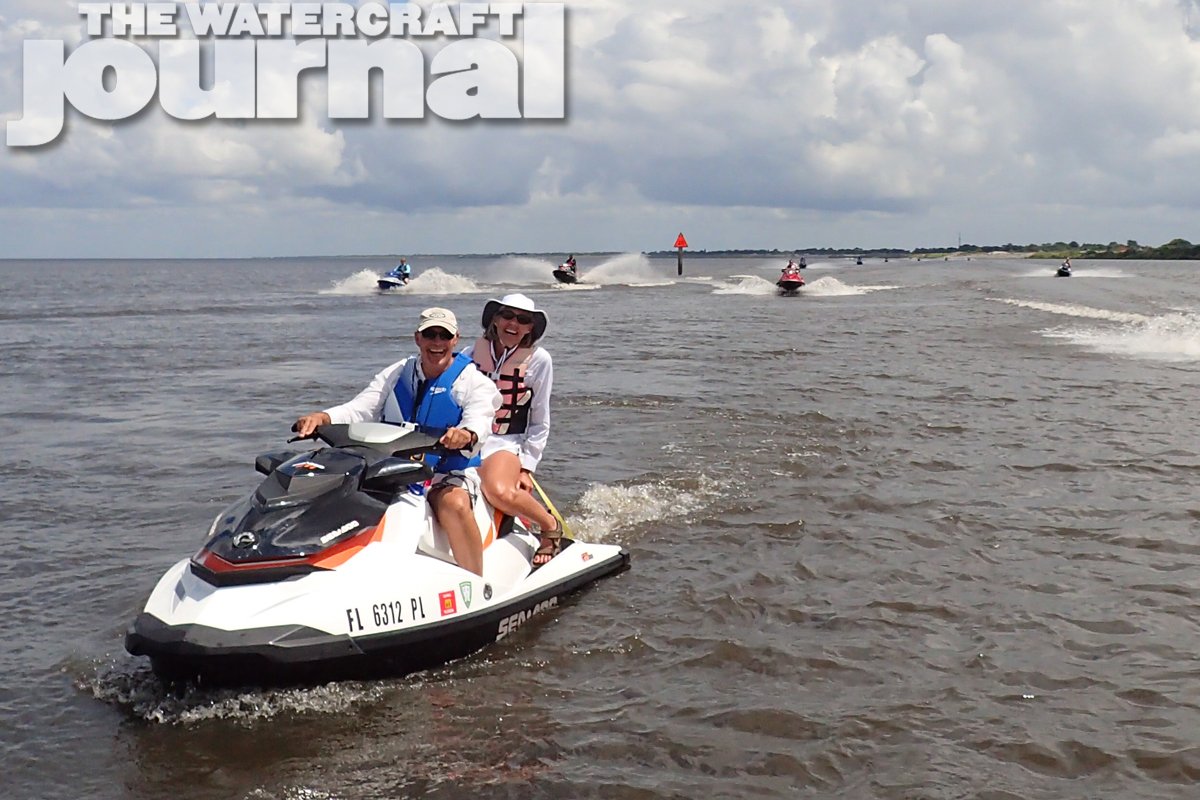
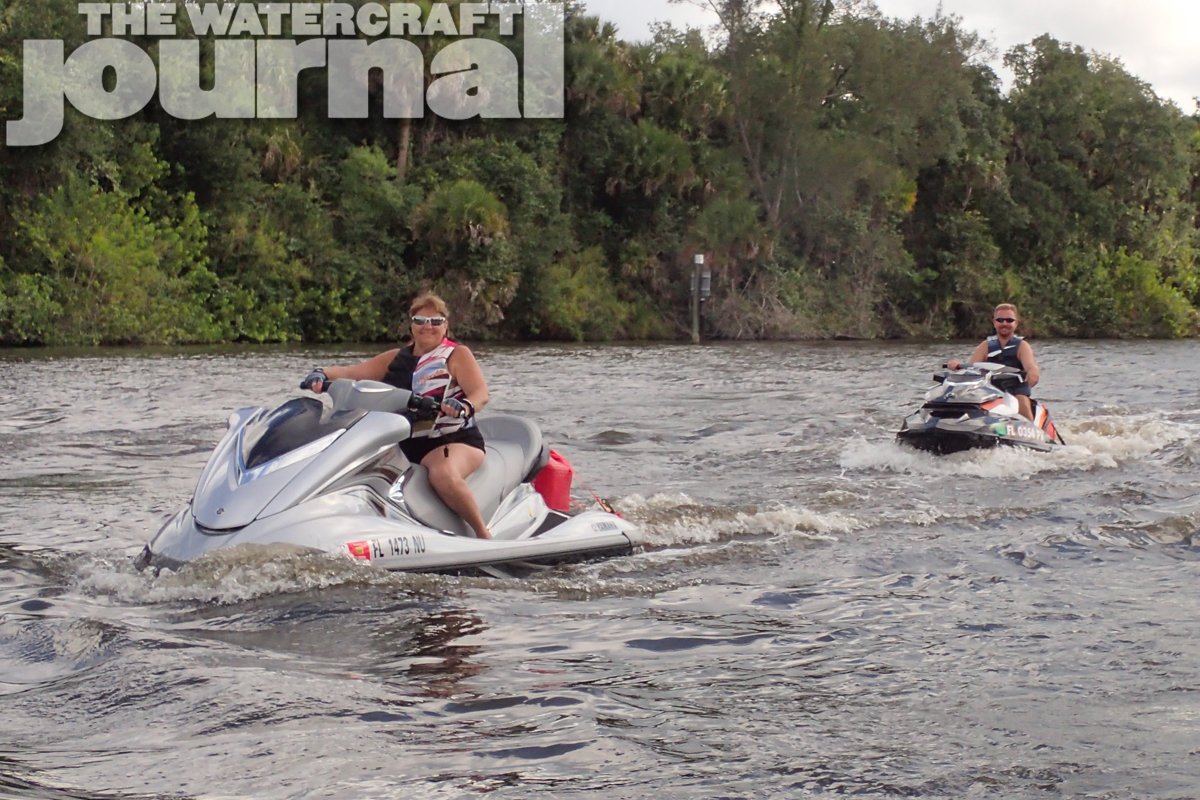
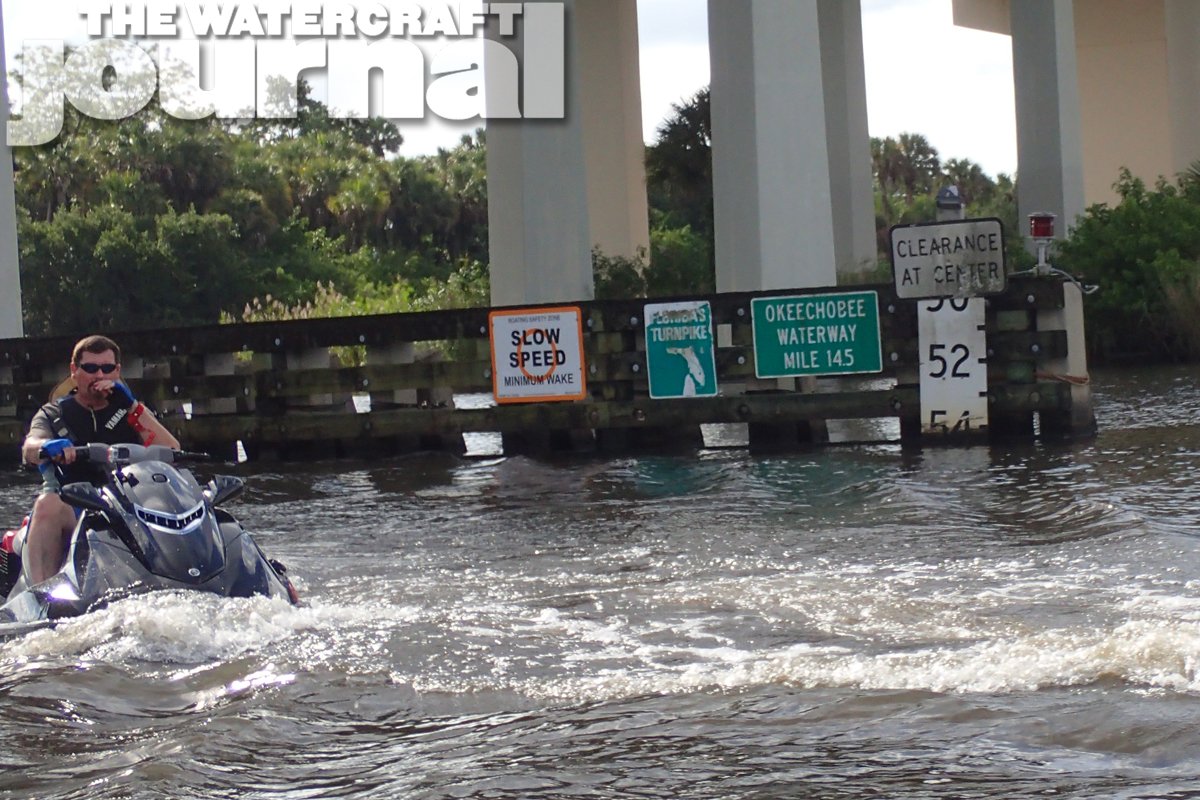
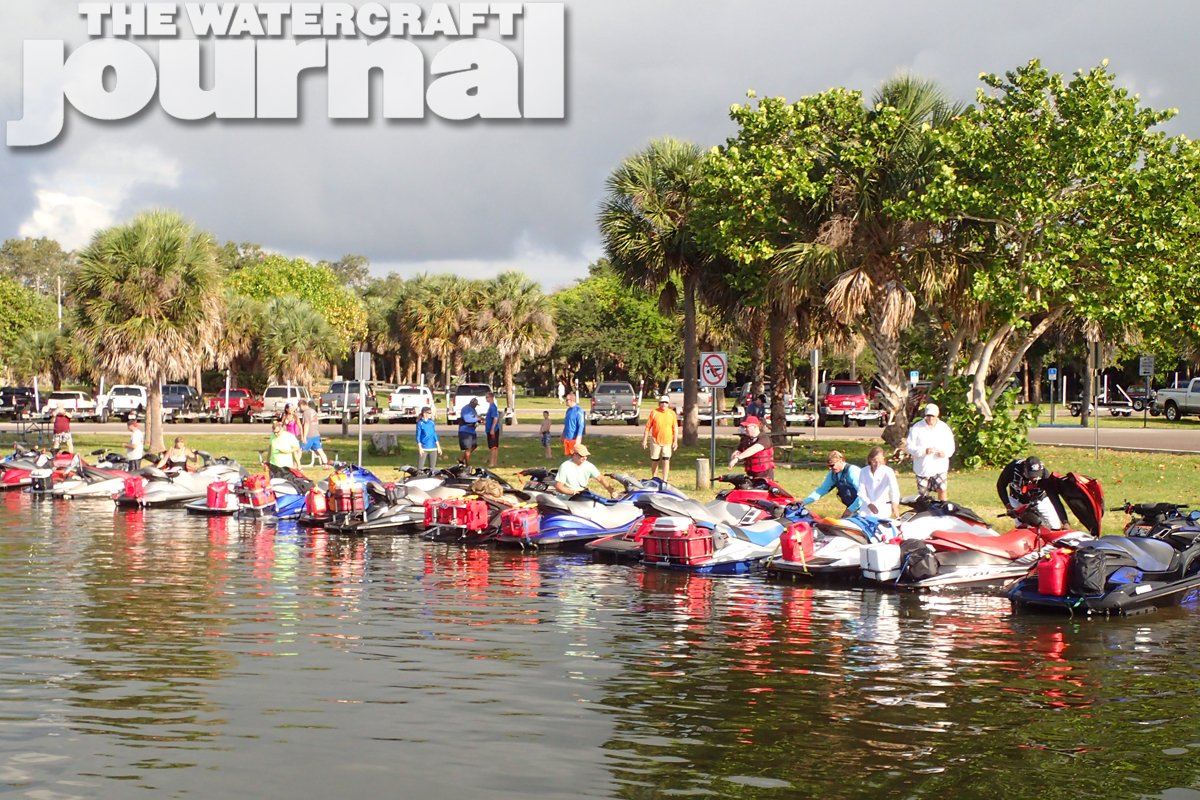
The trip was set for May 16th with the return trip on the 17th. That meant about 300 miles of riding, sun and fun in just two days. The group set off from Sandsprit Park in Stuart, Florida. With ride leaders Steve Chown, Dana Callan, Tina Johnson, Brian Dill and Lee Micheau, we traveled down the St. Lucie River passing under seven bridges to the amusement of fisherman wondering what all the rush was about!
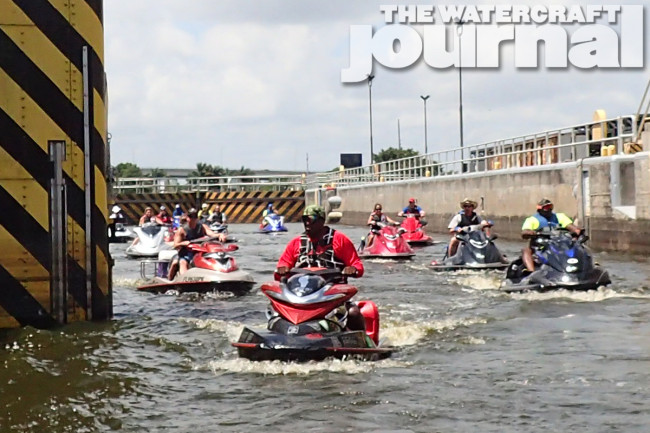
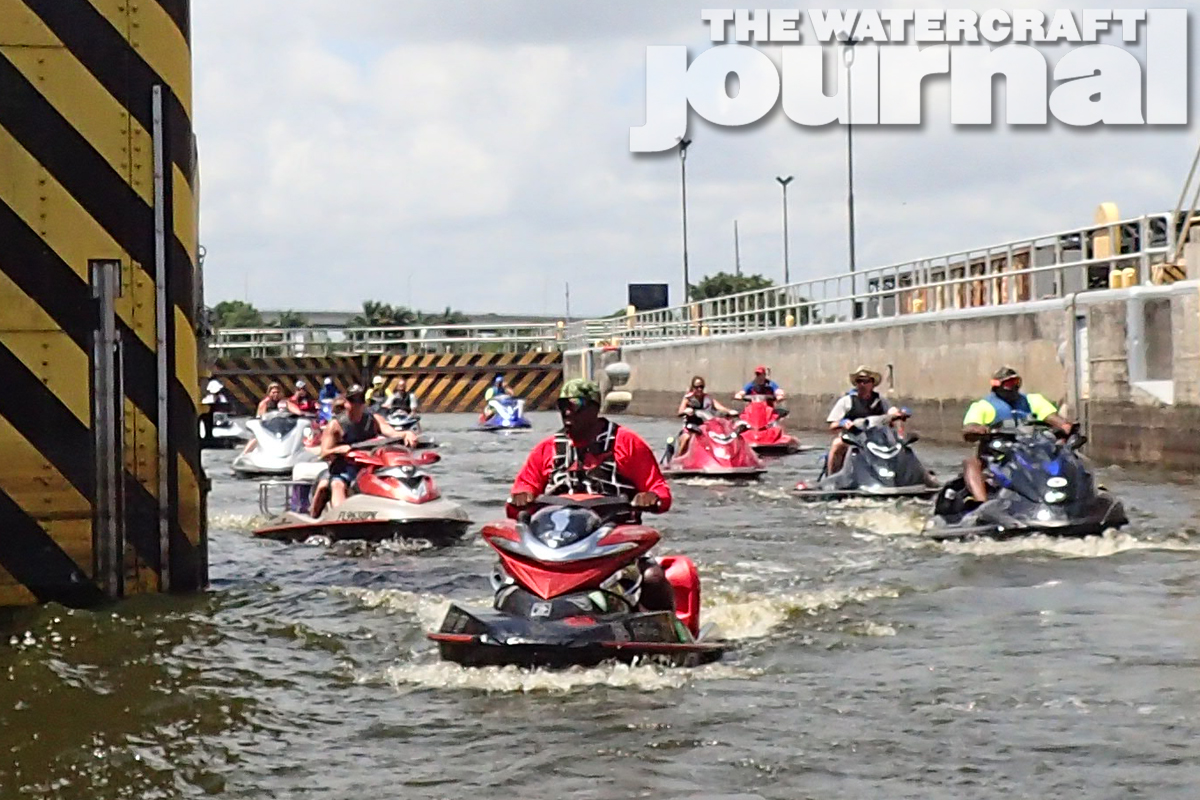
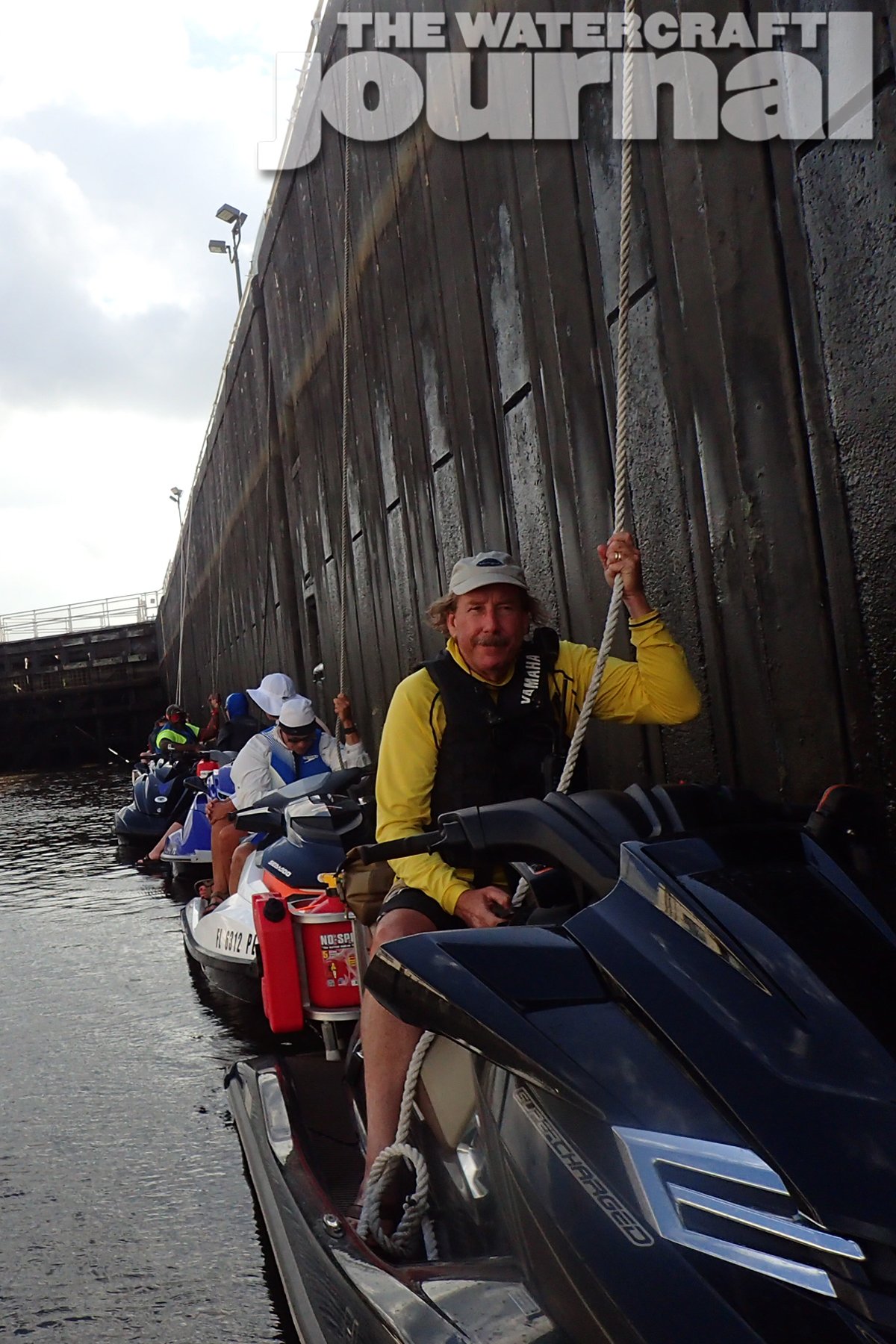
Taking in the beautiful scenery, we came upon the first Lock of the day, the St. Lucie Lock with its nearly 15 feet of lift proved to all the riders that this would be an epic trip. With boaters and on-lookers amazed at the mass of jet skiers, taking pics, giving well wishes and waves, we journeyed on to our first fuel stop of the day. Indiantown wasn’t very far from take off, but a welcome opportunity to top off before moving on to the next lock, the Port Mayaca Lock and then Lake Okeechobee.
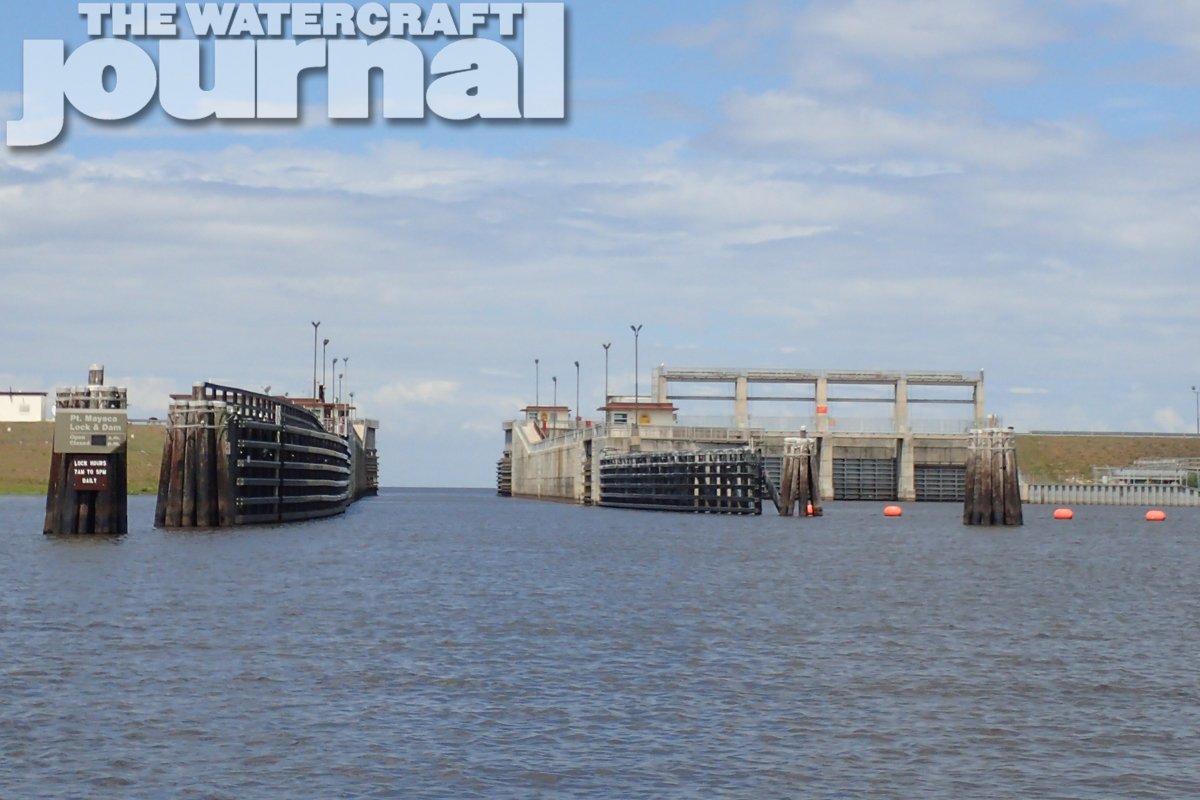
The Port Mayaca Lock is the eastern gateway to Lake Okeechobee. Its 2-foot lift varies with the lake’s water level. The Port Mayaca Lock opens to the amazing Lake Okeechobee, or “Lake O.” With it being the largest lake in Florida and the 7th largest lake in the US, the day’s route covered the scenic rim route, which took us by natural sites galore, fishermen and kayakers, who were surprised to see that many skis under way. We made our way to the second fuel stop of the day at Roland and Martins Marina in Clewiston, FL for a much needed break, lunch and time to share stories.
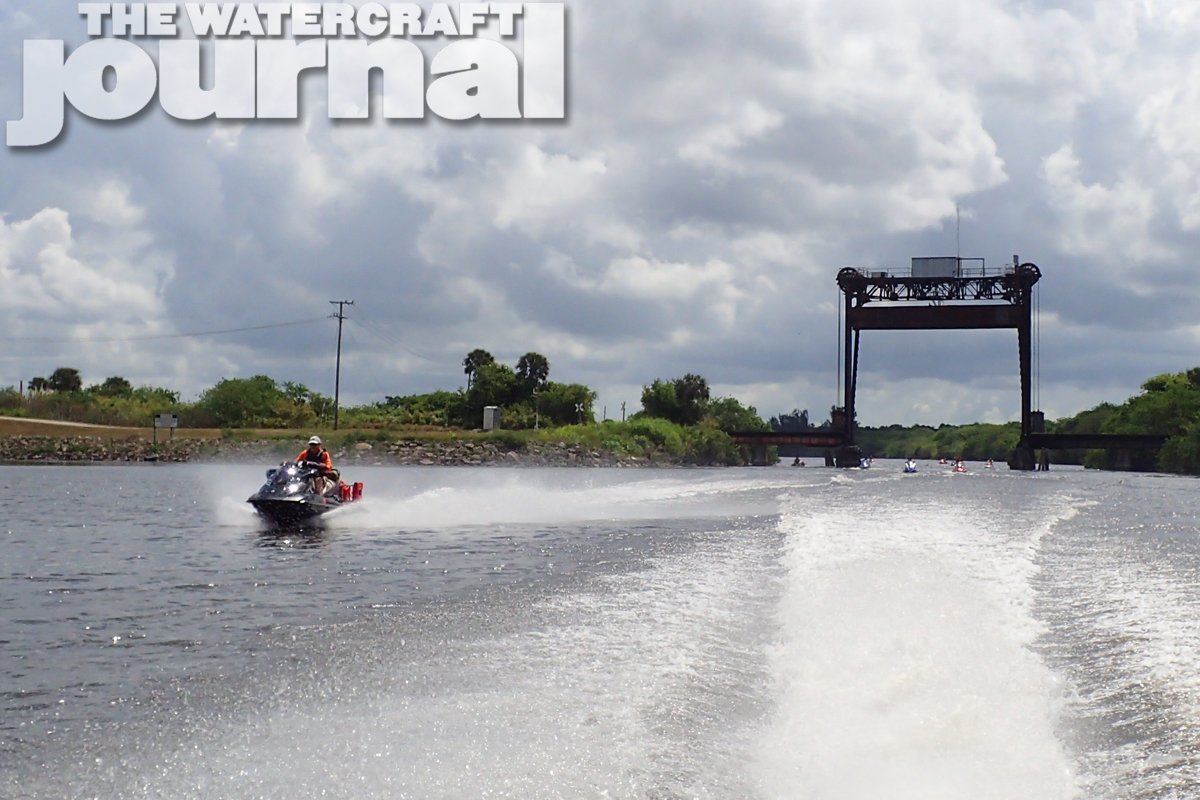
With re-fueling taking some time and running a tad behind on schedule, the group picked up the pace along the rim route to the third lock, Moore Haven Lock. With its 2-foot lift like its sister lock to the east, the Moore Haven Lock was our middle lock of the day. The group quickly made its way through and passed under several spectacular bridges down the Caloosahatchee Canal. Passing by scenic farms and Lake Hicpochee to the south, we rode the near 15 miles to the fourth lock of the day, Ortona Lock.
Ortona Lock has 8-feet of lift and having been on the water for nearly 7 hours at this point, the group pushed on toward the third fuel stop of the day at Port Labelle, for some to empty auxiliary tanks and others hitting Calusa Jacks Marina for those needing a full top off. While pit-stopping, the riders shared the day’s details with the locals, getting a few bewildered looks and even a few “Oh my’s,” finally all juiced up we headed to the fifth and final lock of the day, the WP Franklin Lock
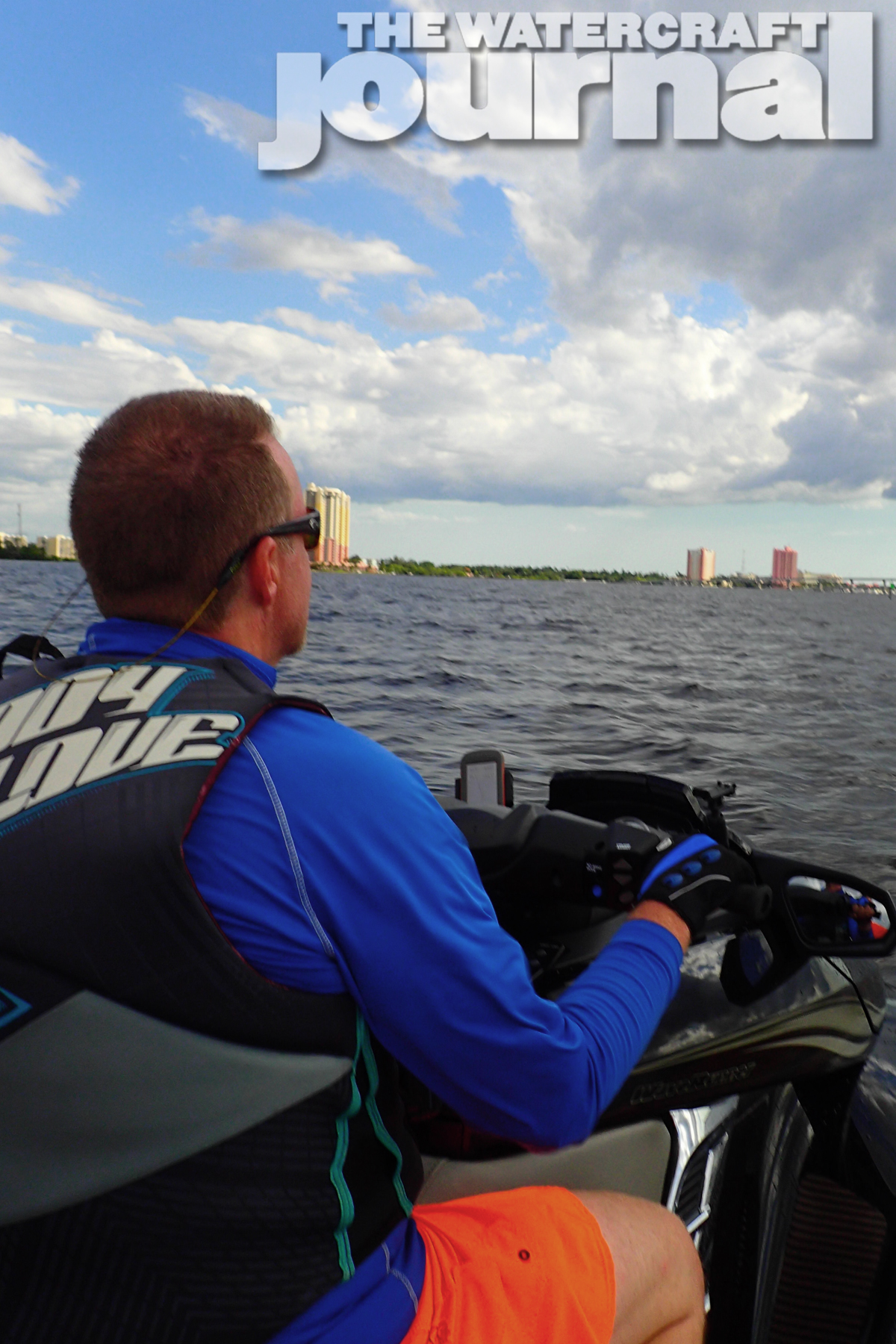
Slipping in to the lock with less than an hour to spare, the group breathed a collective sigh of relief. With smiles and excitement about reaching the hotel and dinner, the group made its way down the Caloosahatchee River. Passing through Ft. Myers and open water, the group traveled through some chop on the way to Cape Coral, FL.
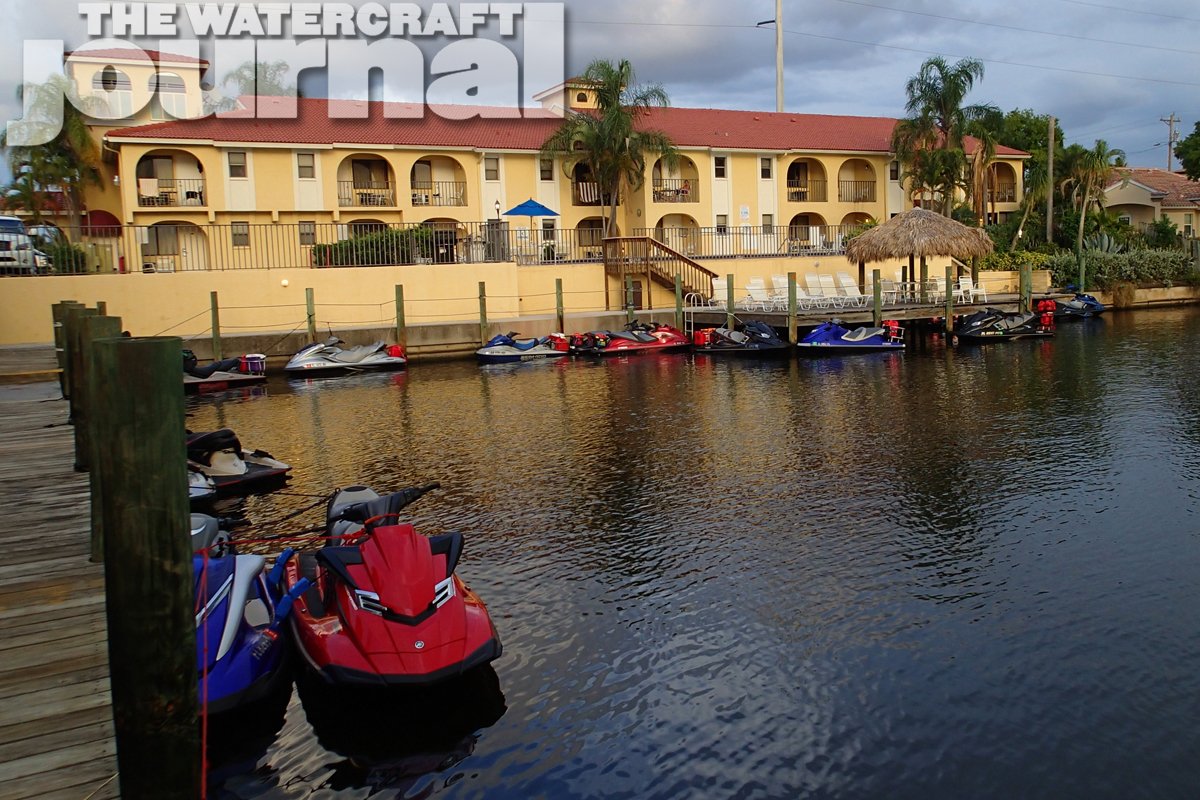
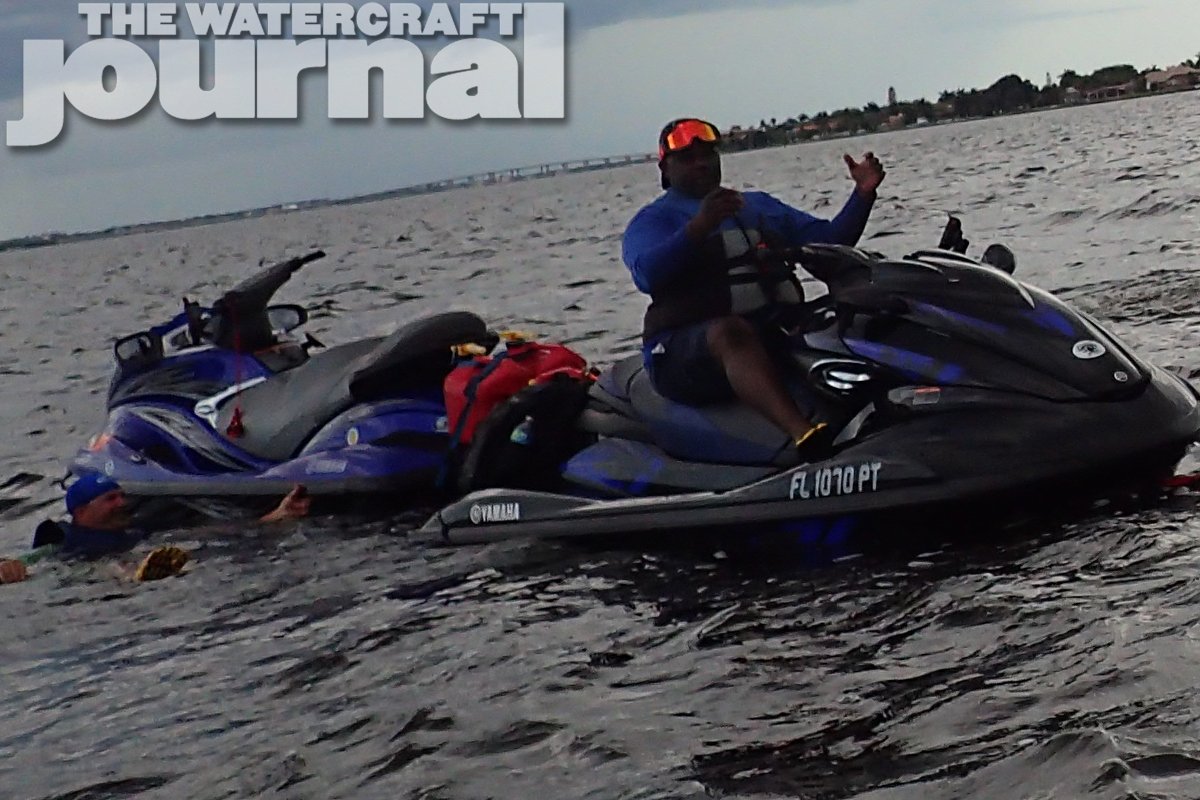
The day wasn’t without casualties as a rider sucked up a strap and needed to be towed and another suffered an intermediate shaft failure, leading to nearly sinking before being rescued and towed to a boat ramp then drained. With help from local jet skiers, arrangements were made and the ski was trailered until a local mechanic could look at it the following morning. Finally calling it a long, long day, the group arrived at Casa Loma Hotel.
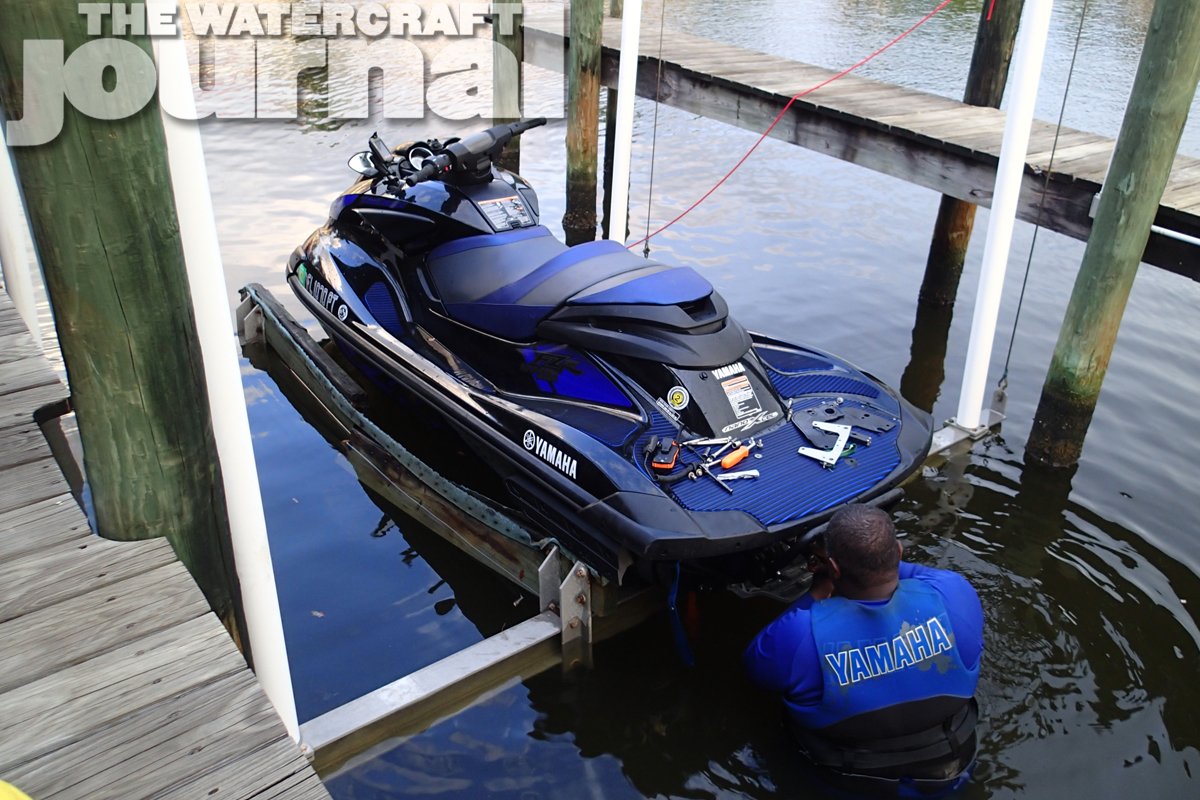
Still down one ski, the group utilized the boat lift with some members stopping by and others gathered around offering tools, encouragement, holding flashlights and forgoing dinner until the necessary repairs were made. With a one for all and all for one attitude, the bonds of group riding on such a trip showed through. Pulling off the lift, another rider, Avery, noticed his ski was sinking while tied at the dock. With some quick thinking, fellow rider Brian Dill got him on the lift, drained the ski and pumped the water out of the engine. With repairs running past midnight finally engines rumbling back to life, the skis were finally ready for the ride back.
With the 6am alarm signifying the start of Day 2, it was a bunch of achy, tired riders that ate breakfast and readied themselves for the nearly 150 mile return trip ahead of them. The Sunday morning launch came earlier than some riders had hoped. After a few prayers for the repaired skis, the group was off. Although being a return trip, the group vibe was different as all the riders shared a sense of accomplishment from the day before. With ride leaders, Brandon Ford, Brian Dill, Steve Chown, Dana Callan and Tina Johnson, the group was off and on to the first fuel stop at Ft. Myers Yacht Basin and the other half at Calusa Jacks Marina to save time.
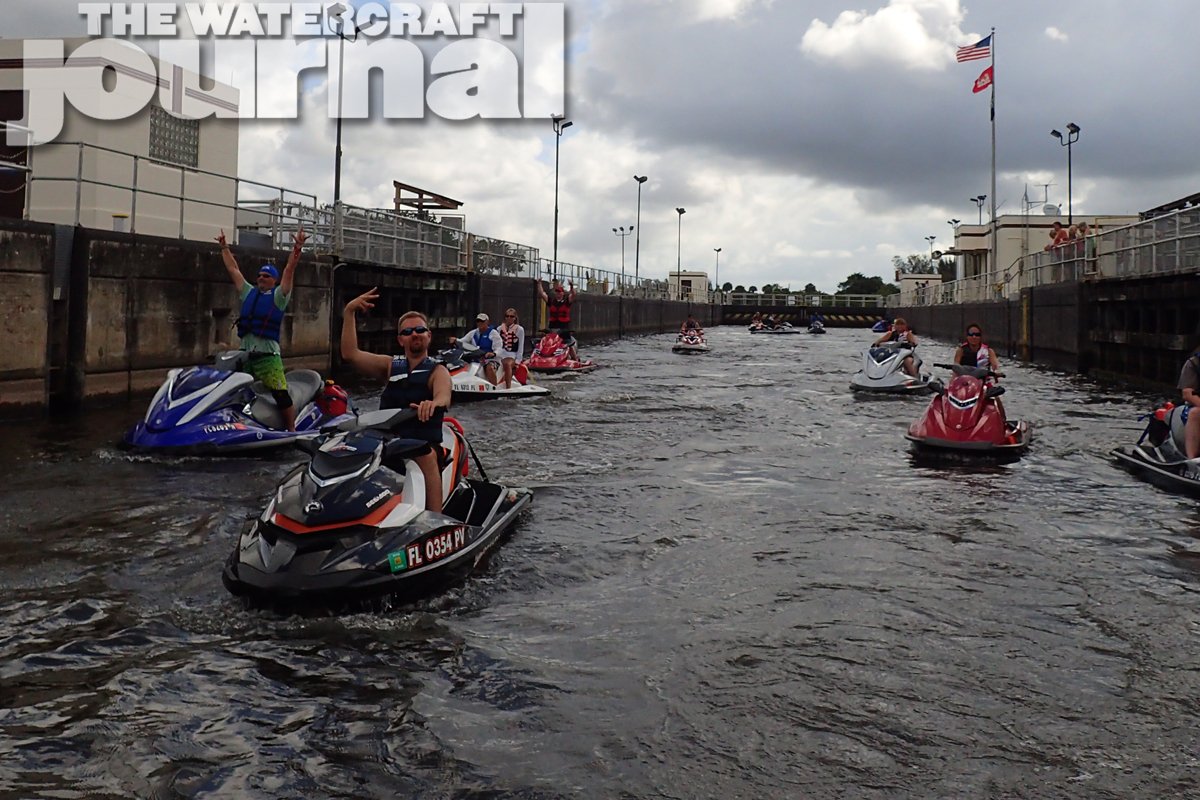
When we told the fuel attendant the final destination, he replied, “Stuart? Stuart, Florida?” With laughs, full tanks, and as many snacks as could fit, the group made their way to the WP Franklin Lock. At this point, the various lock operators had advance warning of the Sea-Doo crew, jet ski guys, jet ski club or “all those guys on jet skis” that were coming!
We made our way through the 8-foot lift of WP Franklin Lock and back up the Caloosahatchee River and onto the Ortona Lock. Some lock locals were telling others, who weren’t there the previous day about this group of crazy guys and gals riding from Stuart to Ft. Myers and back which was then usually followed by a few “no way”s and several snapshots to commemorate.
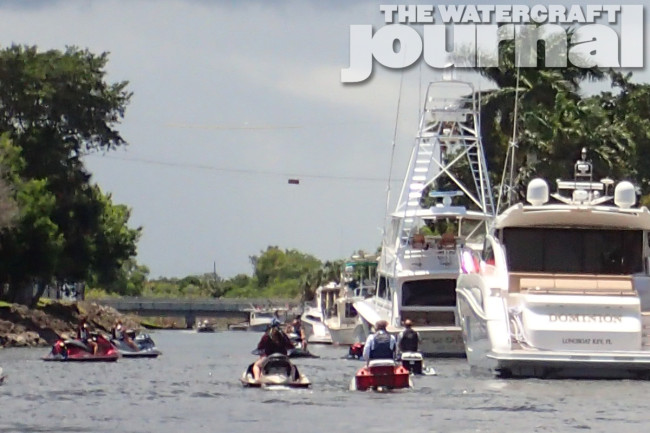
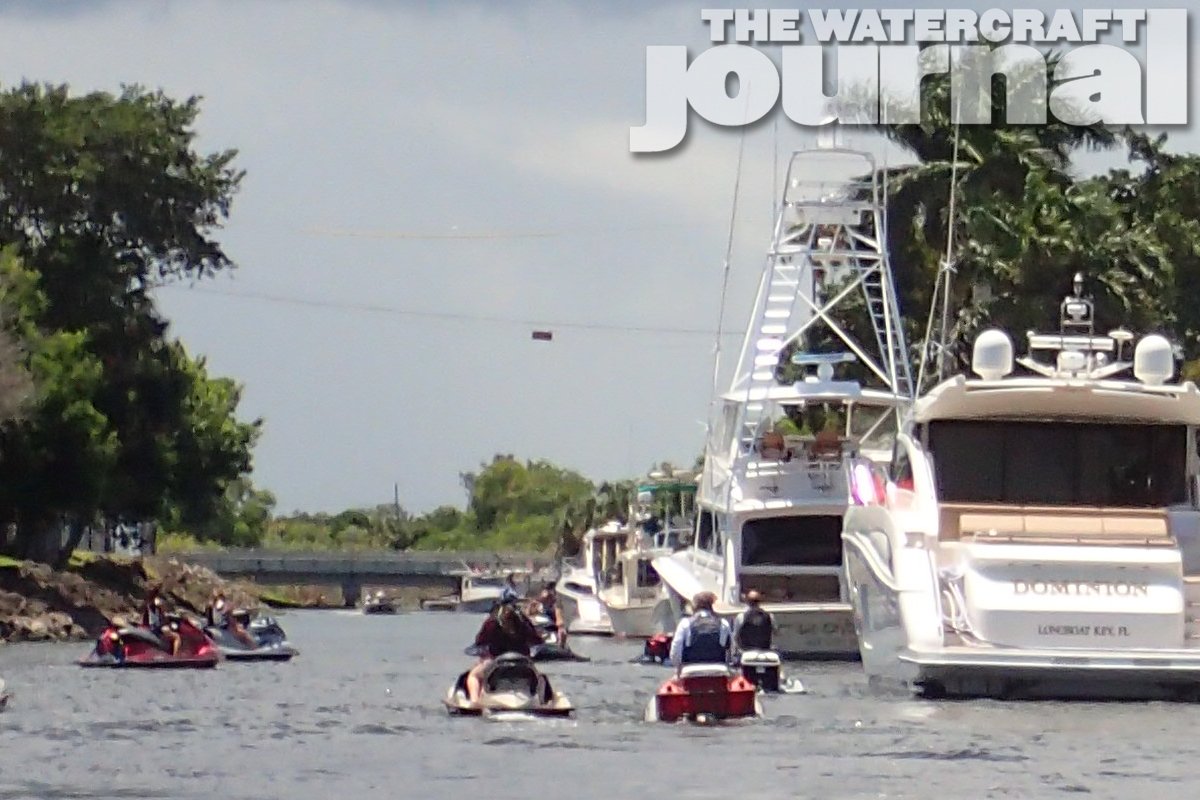
From the Ortona Lock back up to the Moore Haven Lock we reached speeds in the 70’s as many had thrown caution to the wind and were enjoying the blue skis and smooth waters. Many boaters were slowing down, some waving at the riders which made for quite an experience where jet skiers were given the right of way. Now we were talking! Smiles galore, we passed through the Moore Haven Lock and on to the second fuel stop of the day at Roland and Martin’s Marina. Being behind several million dollar yachts, riders made great use of time grabbing a hot lunch, refreshments, and chit chatting while listening to the live lunch band. An amazed yacht owner after listening to the story and aided by some hush money from
Steve Chown, allowed us to skip in line and fuel up before crossing Lake Okeechobee on the open water route. With the saying, “We will try anything once, maybe twice” fueling the riders, that open water route fell soundly under the once only clause. Some weatherman should have lost his job that day as a light chop turned in to the occasional 2-3 footers. The radio channel was ablaze with boat captains chatting about those crazy jet skiers crossing Lake O.
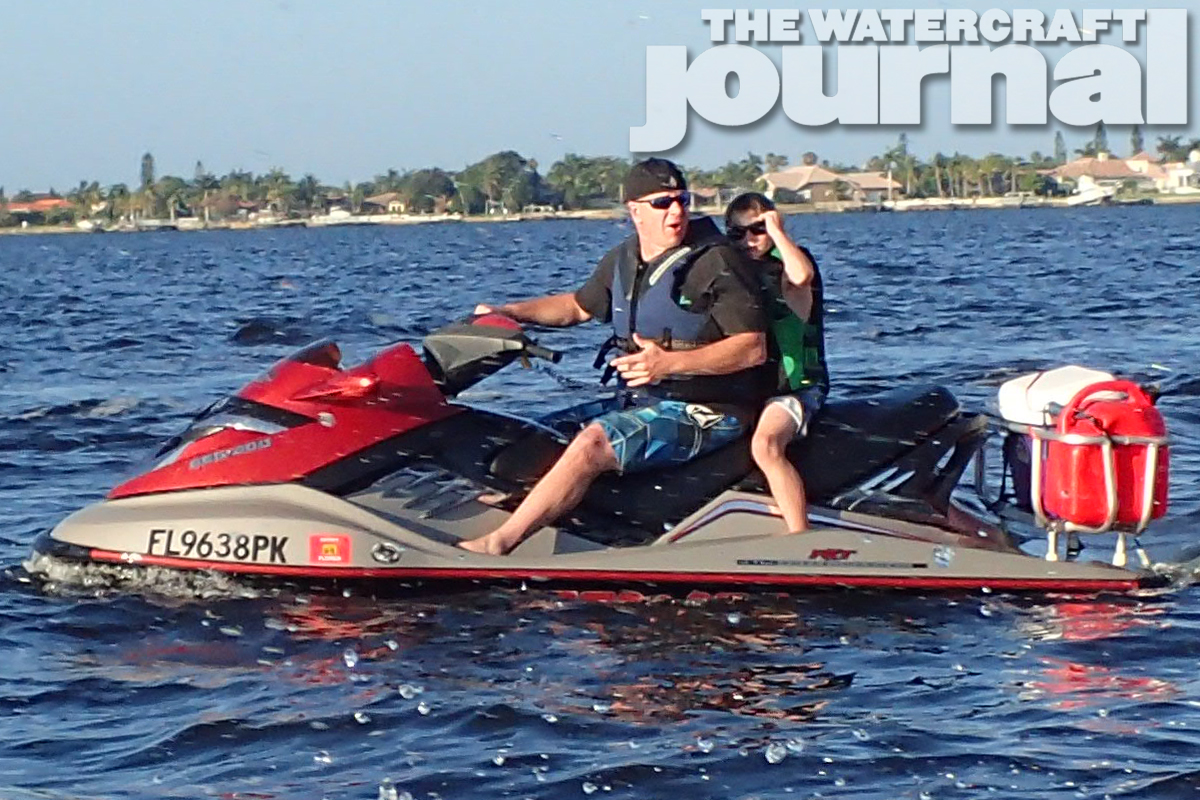
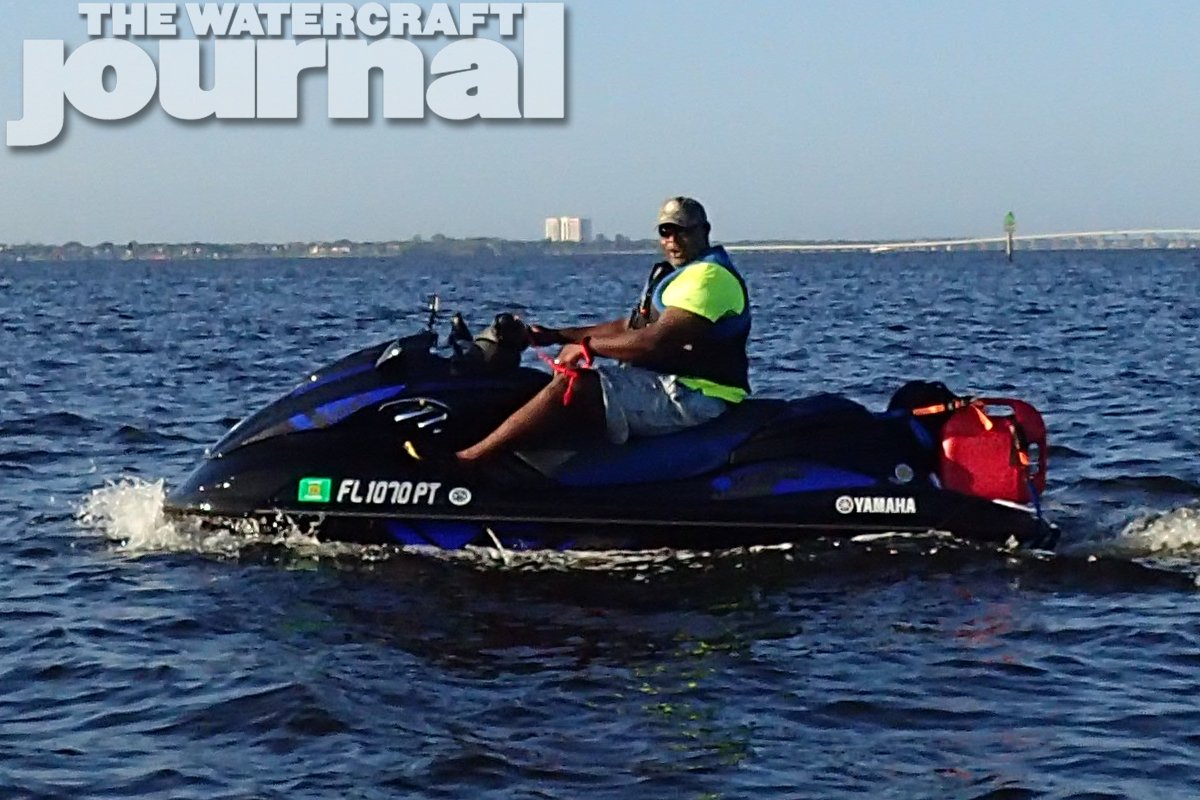
Gas cans and racks that came loose needed to be secured, but these being seasoned riders they muscled through and regrouped at Port Mayaca Lock to check and make sure everything was still there. Hats go off to Michael Rodney on the 2-stroke Sea-Doo RX, who rode most of the ride to the front of the group proving that a well maintained 2-stroke with a capable rider was still more than adequate to handle the almost 300 mile trip. The lock operator waved us through and it was a mad dash to the final lock of the day.
Bypassing the 3rd fuel stop at Indiantown and carrying auxiliary fuel if need be, the riders rode hard to St. Lucie Lock in record time. We ended up with a long wait and a few boaters caught up and started sharing stories from their view points and congratulating the group for a job well done and the nerve to cross Lake Okeechobee. We entered the lock with less than an hour to spare. A few more pics and with thoughts of the St. Lucie River separating us from the ramp, we put the St. Lucie Lock quickly in the rear view. It was a final dash up the St. Lucie River past Palm City with a little of everyone in lead. Special care was given to observing the wake zones and to fellow boaters with the Sunday traffic.
With Sandsprit Park coming in view and the nearly 300 miles coming to a close, the riders shared a moment enjoying what they had accomplished as a group. After logging about 300 miles of travel in 2 days, using 60 gallons of fuel, riding 14 hours in the saddle, crossing Lake Okeechobee the group was finally in. What started out as an idea came through with 21 die-hards with one being only 9 years old!
Thanks goes to Steve Chown of Central Florida Jet Riders and Lee Micheau of Jacksonville Jet Riders for the many hours of planning over the months, calculating various fueling scenarios, phone calls, a pre-ride group conference call and hotel hunting for reservations. Michelle Chown for sacrificing her riding and leaving her ski at home to take pics of the trip. Brian Dill for making a comprehensive supplies list and ride leaders Brandon Ford, Dana Callan, and Tina Johnson for keeping an eye on the front and back of the group with the organizers.
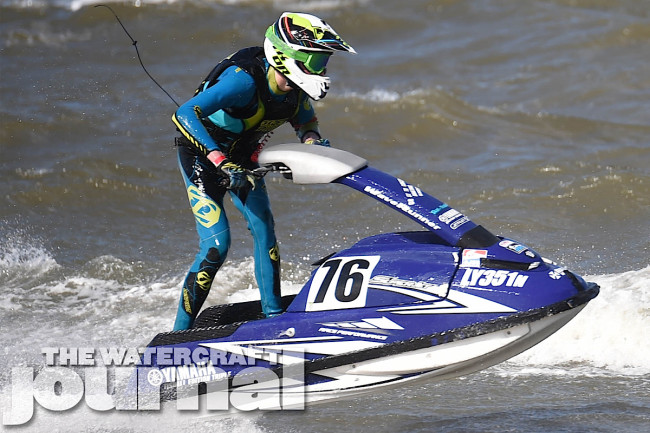
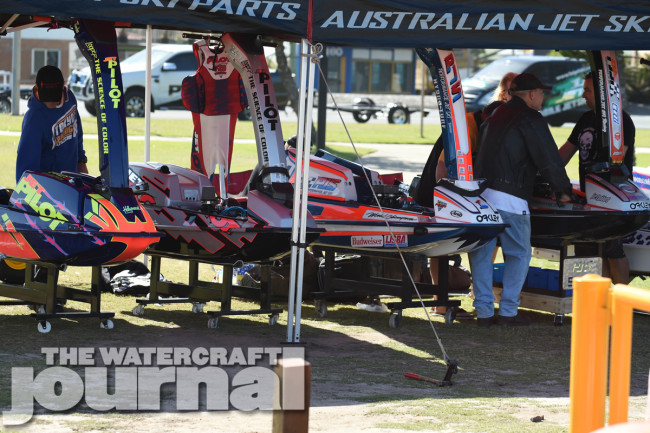
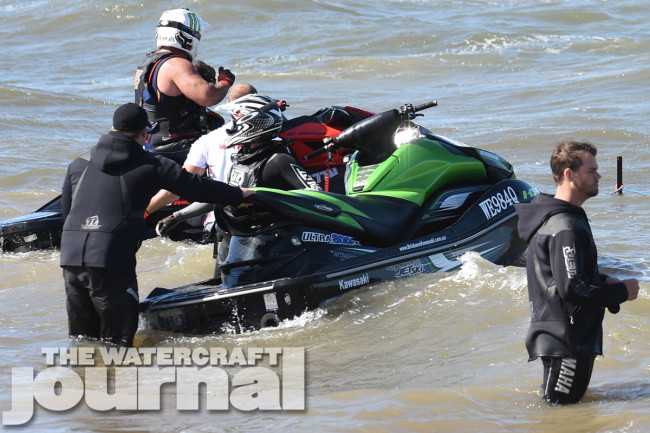
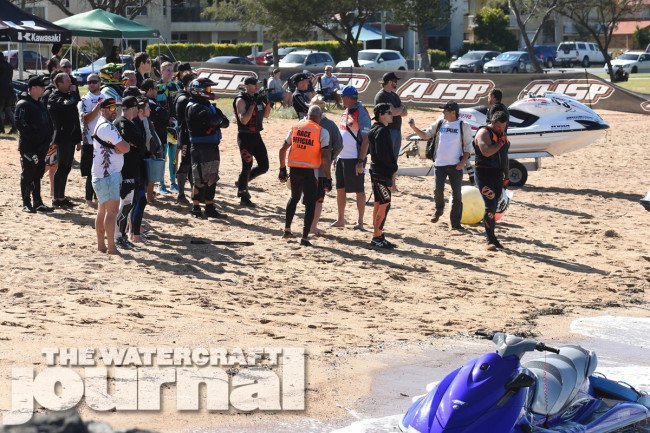
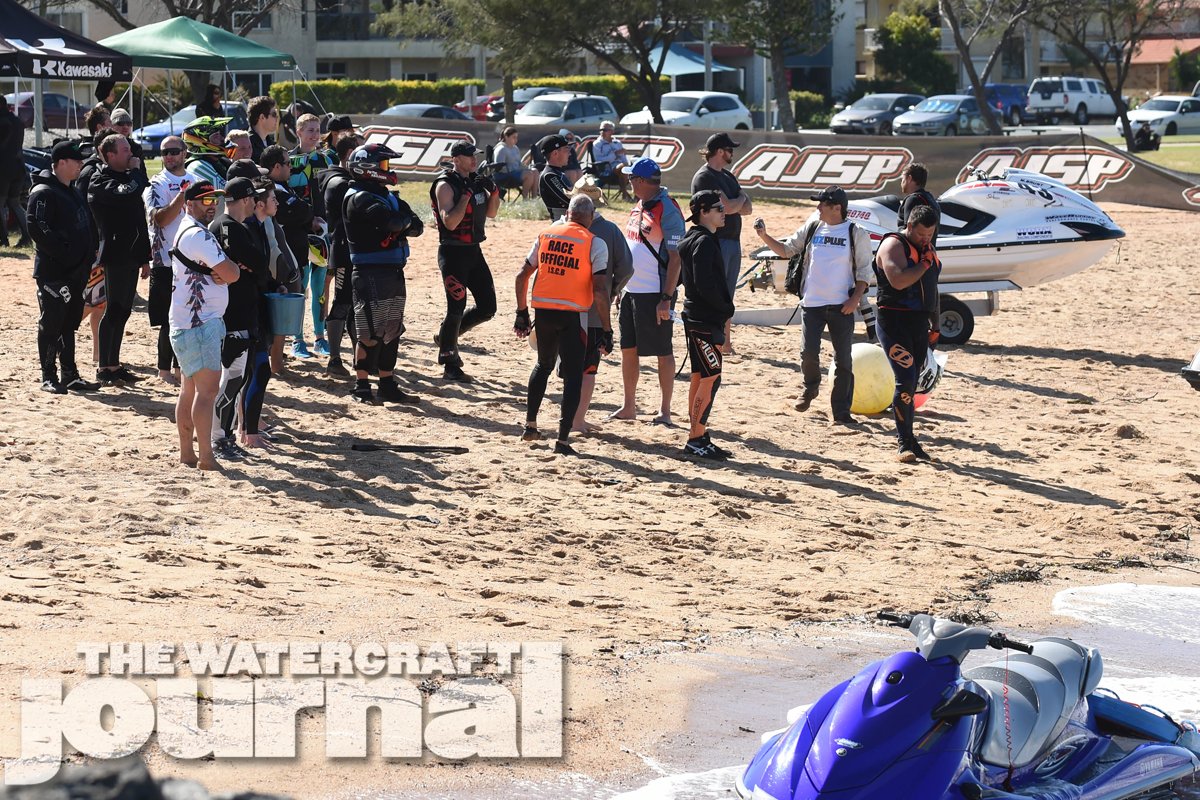
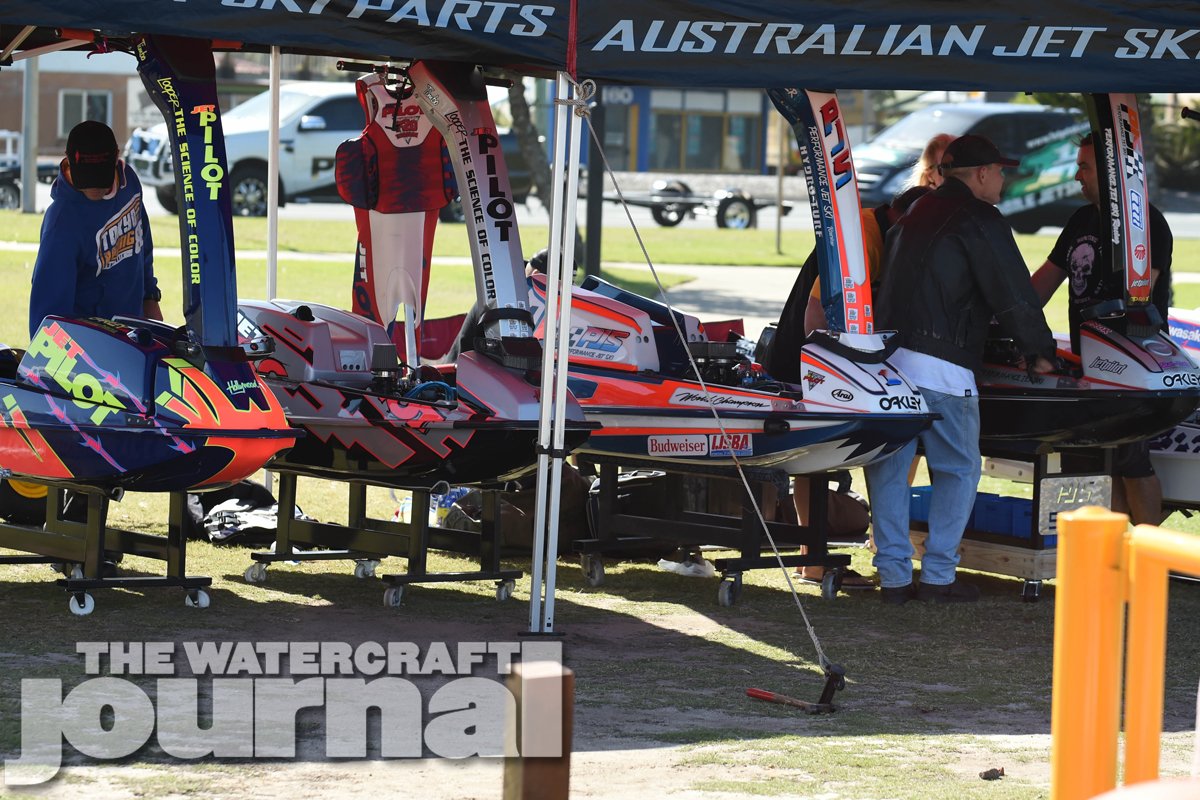
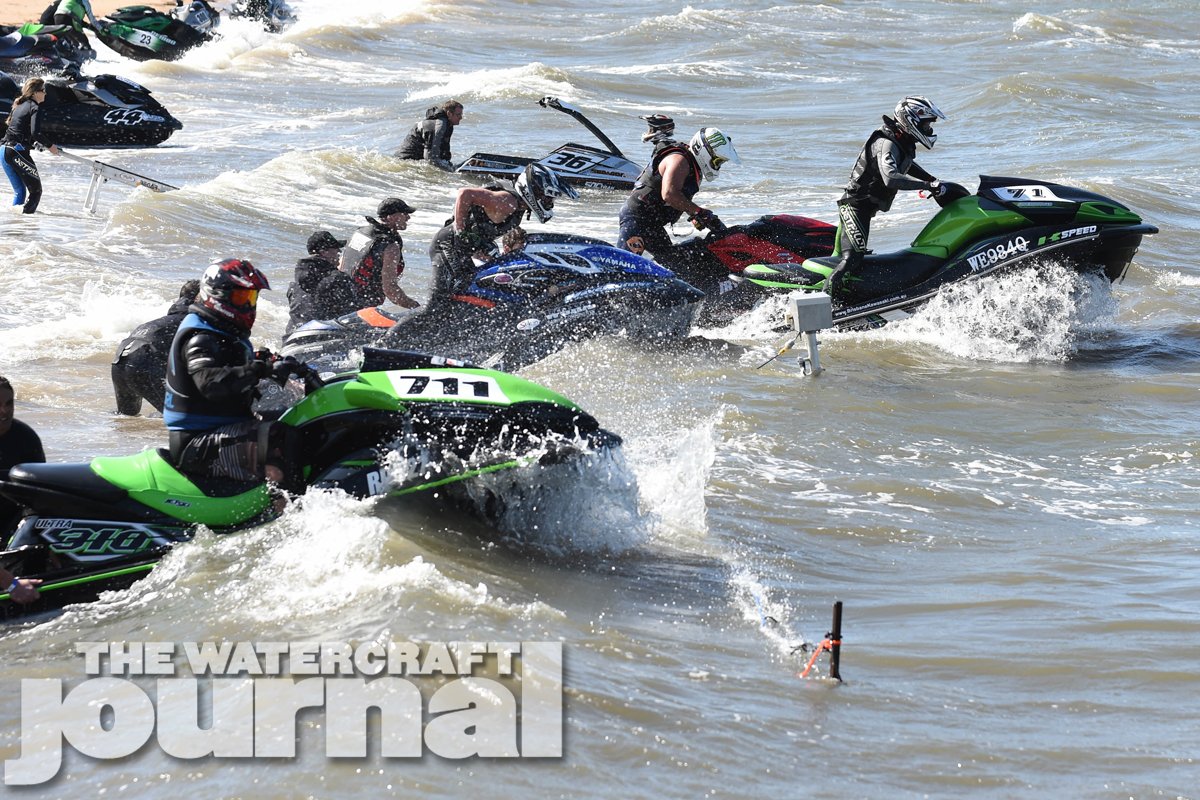
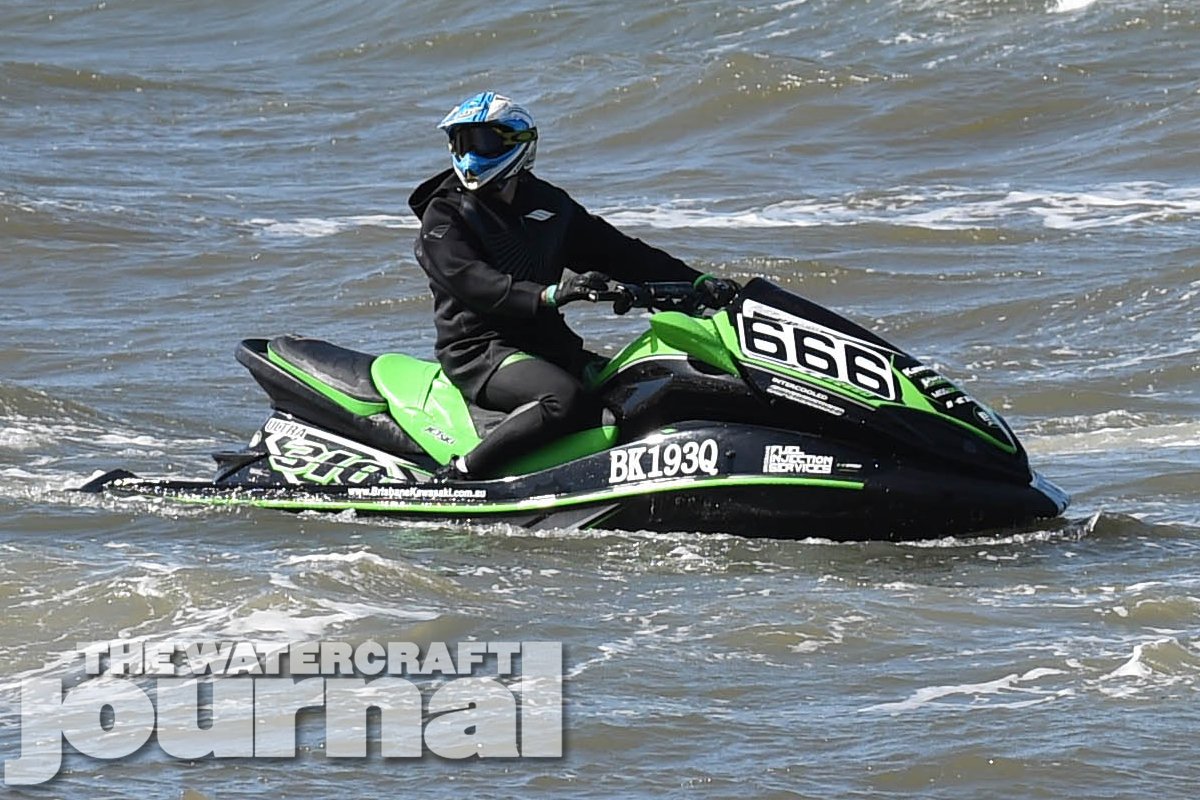
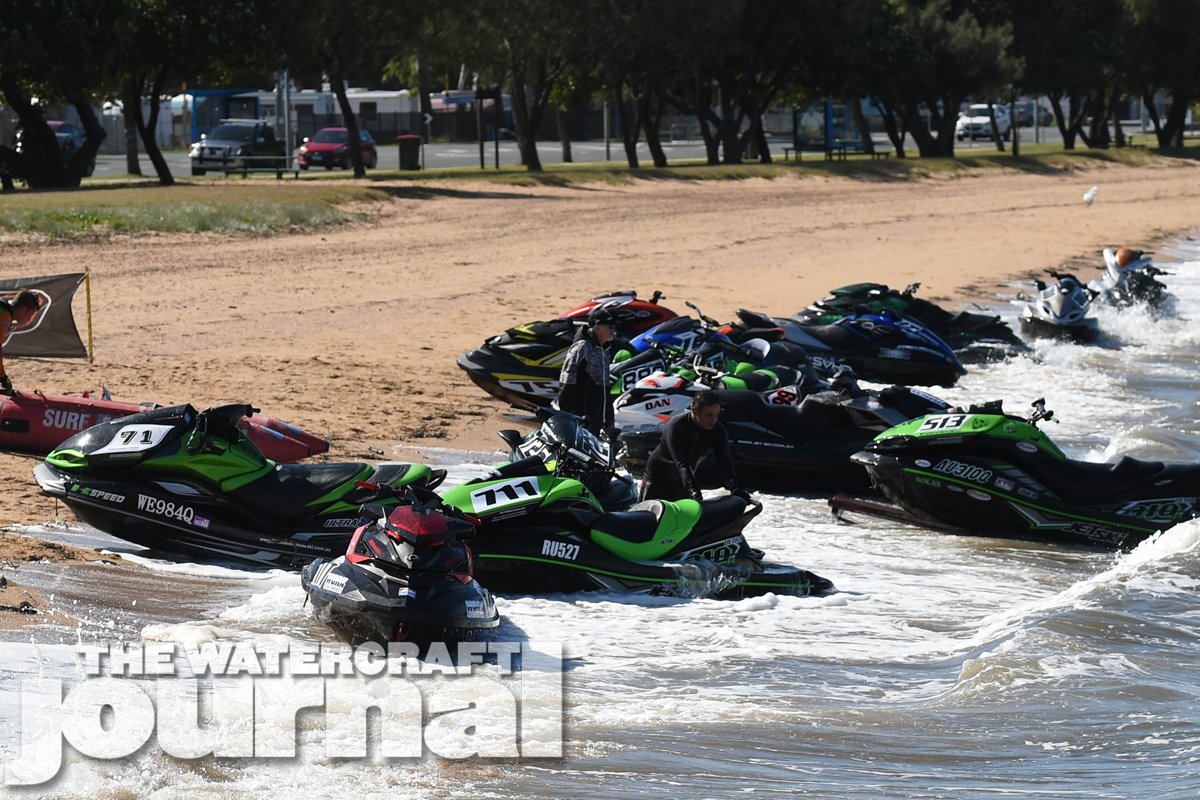
Volunteers and competitors in the 2015 Yamaha Australian Jetcross Championships were met with harsh and difficult conditions when they turned up to Bells Beach, Redcliffe for the final round. 54km/h (35mph) winds tore up the waterway and pushed rolling swell towards the beach, unlocking an opportunity for those experienced in surf conditions to power forward in the field and perhaps change what might have been previously assumed championship results.
As a pre-emptive strike against possibly worsening conditions the day started with the Enduro moto. Some fresh competitors from Liquid Industries as well as the highly experienced Guy Greenland and returnee Christian D’Agostin joined the committed tour field. The Showroom Stock Runabout class was jumbled in the swell and saw Daryl Bone take first place from Kawasaki Racing Team Australia’s (KRTA) Cameron Martin in second and Dane Alberti in third.
Waverunner Performance Centre’s (WPC) Mitch Wayt performed well in the conditions and solidified his dominance with his fourth first place finish for the tour in Stock Runabout. In second place was fellow team member Brett Douglas followed by Jet Ski World’s reliable racer Ben Mountford. The Open Runabout class saw Guy Greenland take first place in his first enduro entry in the tour, followed by enduro specialist Christian D’Agostin (KRTA) and QLD’s Sam Burkett-Barratt.
Without any improvement in conditions on the water, race officials aimed for short, sharp circuit motos to see out as much of the day’s racing as possible. Lites Ski prodigy Tom Aiken finished his tour strongly with another first place and another AJSP voucher, followed by Justin Windsor in a class of only two after the withdrawal of a few competitors.
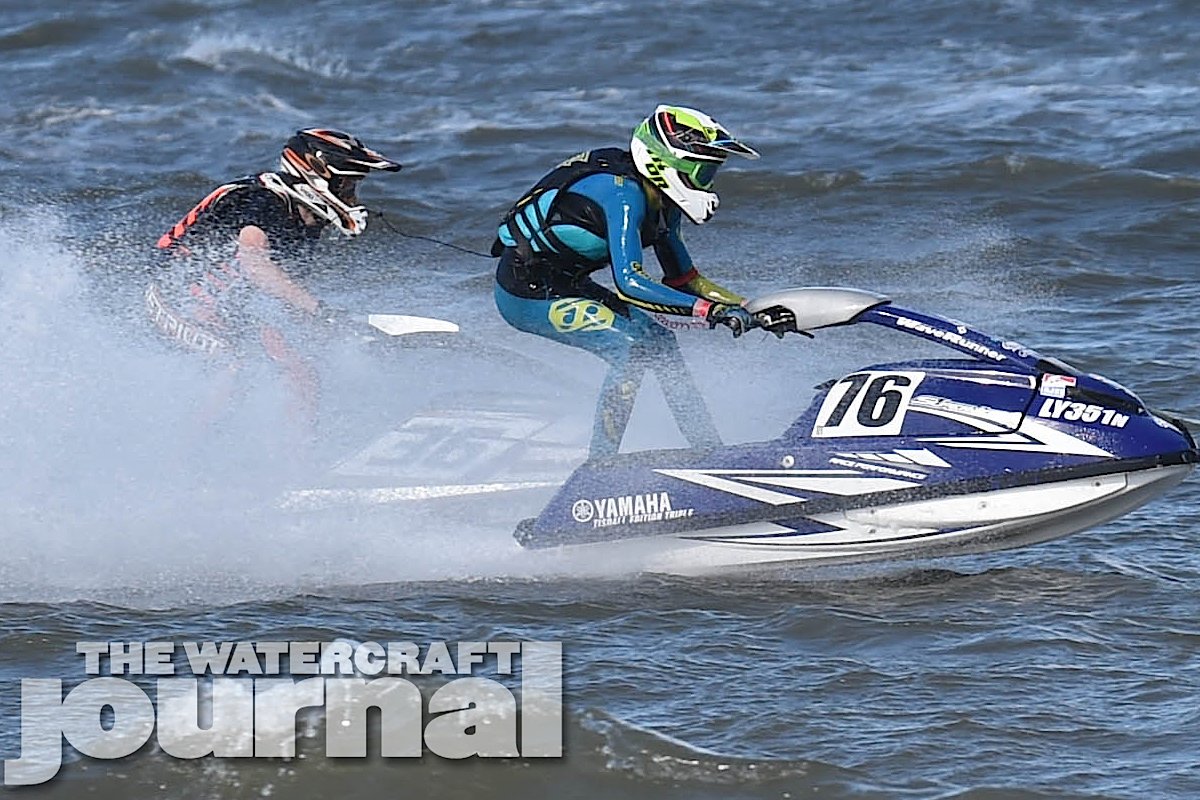
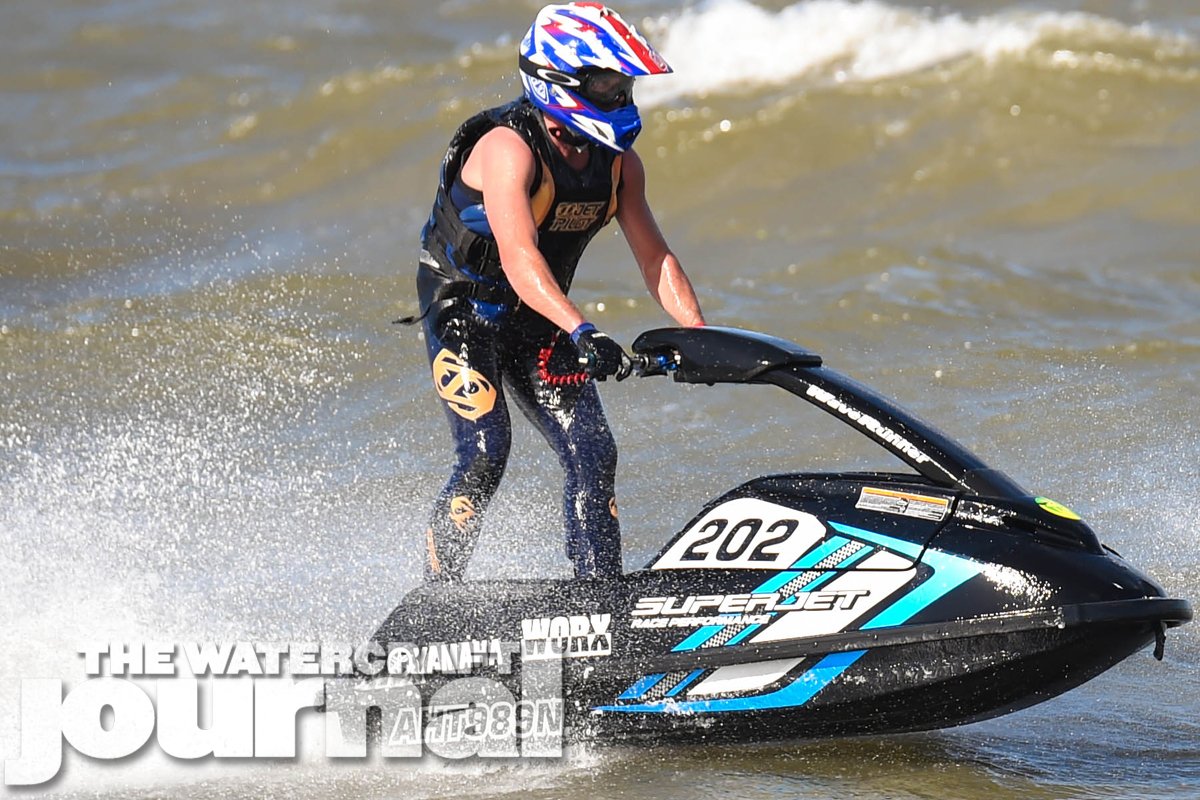
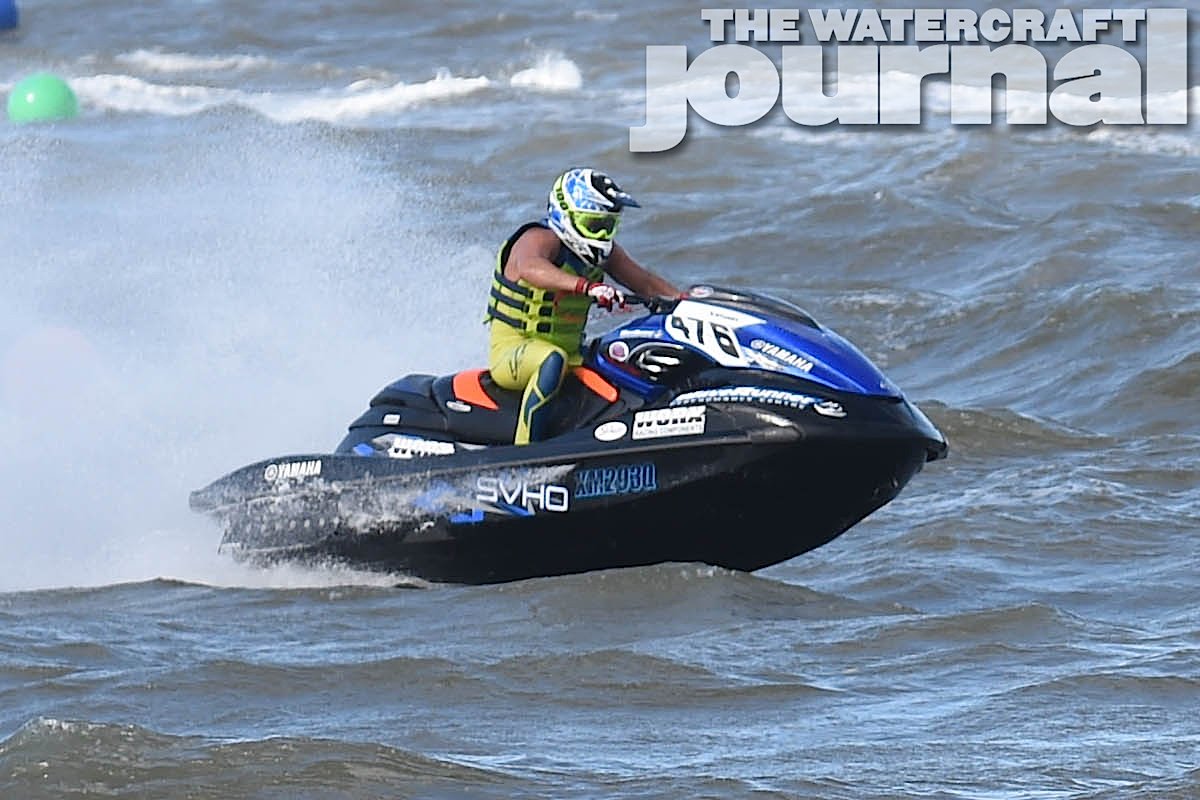
Yamaha’s Superjet Cup class saw the same competitor numbers, with only the most committed in Worx Racing’s Ryan O’Keefe and Anglom Oil’s James Xuereb braving the surf-like conditions. World Champion Xuereb provided some stiff competition but couldn’t wrangle first place from the ever-consistent Ryan, securing the presentation of a very heavy and very expensive prize at the presentation function later that night.
The AJSP-supported Showroom Stock class tour results came down to this event and KRTA’s Cameron Martin showed steely determination to take out both motos to secure a first place finish for the day. Second place might have been NSW racer Corey Styles’ if it wasn’t for a wayward wave that threw his ski directly at the rock wall. Corey luckily bailed out just in time but his day of racing was over with a visit to the hospital and a fractured rib. KRTA’s Dane Alberti took the opportunity to rise to second place with WPC’s James Rice closing out the podium in third.
With the absence of JSW Powersports’ Frank Waite, the Stock Runabout podium was up for grabs. WPC’s Mitch Wayt managed his clean sweep of the tour with a seventh first place finish, fending off NSW newcomer Gary Zaradic who surprised all with a second place finish. After AJSBA President Justin Belczowski decided he was of a vintage not suited to the conditions, good mate and WPC’s Brett Douglas graciously took his third place position for the day.
With a Lites Ski championship secured NSW young gun Tom Aiken decided to try his hand at Open Ski with the big boys, borrowing a ski from our current Veteran’s World Champ. With freakish skills and confidence in the surf conditions he ended up with a first place finish, followed by Sea-Doo Centre’s Jake Barker who suffered a breakdown in Moto 2. Step Into Zero’s Michael Stevens bowed out of Moto 2 allowing James Xuereb to take third place for the day, with Michael in fourth.
JSW Powersports’ Anthony Antees committed his weekend to the Sanctuary Cove Boat Show but had performed so consistently well over the tour that there was only space left in the second and third podium spots in the Open Runabout class. Queenslander Brendan Boyd made his second appearance in the tour and demonstrated the kind of threat he will be next year, winning the battle with Guy Greenland for first place. Dan’s Jet Power’s quiet achiever Paul Leven secured a third place finish against some stiff competition from an experienced field.
Unfortunately the day was cut short at two motos with concerns from both officials and competitors about the safety of the conditions; there was much agreement that it was too dangerous to precede. The AJSBA appreciates the support from the Queensland Personal Watercraft Club (QPWC) and competitors on this decision. Queensland’s sometimes-cyclonic weather has proven an obstacle for this tour but with huge competitor numbers and fantastic venues we all hope to be racing there often and long in to the future.
The AJSBA would like to thank the QPWC for hosting the event at the premier location of Bells Beach and all the volunteers who make these events possible. To our competitors, thank you for your commitment in doing what it took to attend the tour rounds and we hope to continue to build on the achievements of this year moving forward.
Special thanks to Tessa Phipps for the story and Timbo Ryan for helping out with the photos.
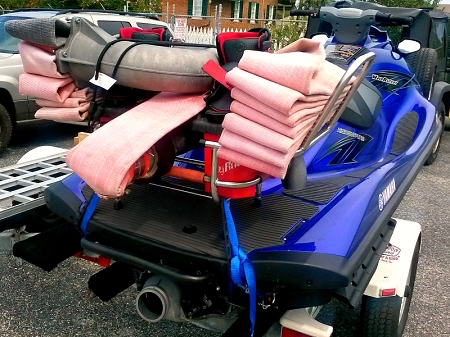
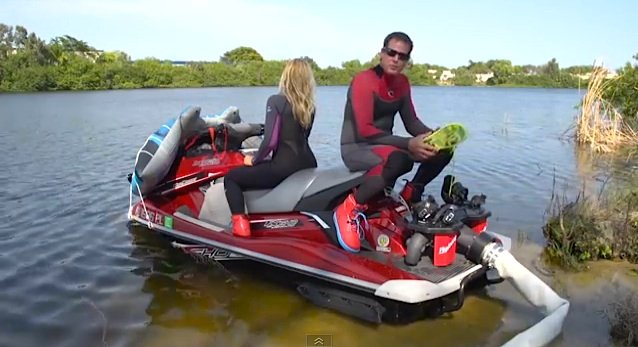
The latest innovation to pump new found life into personal watercraft certainly has to be the Flyboard. The impact of the Flyboard has been so big on the PWC industry that world championships are held annually in Dubai and a magazine dedicated to Flyboarding is in circulation.
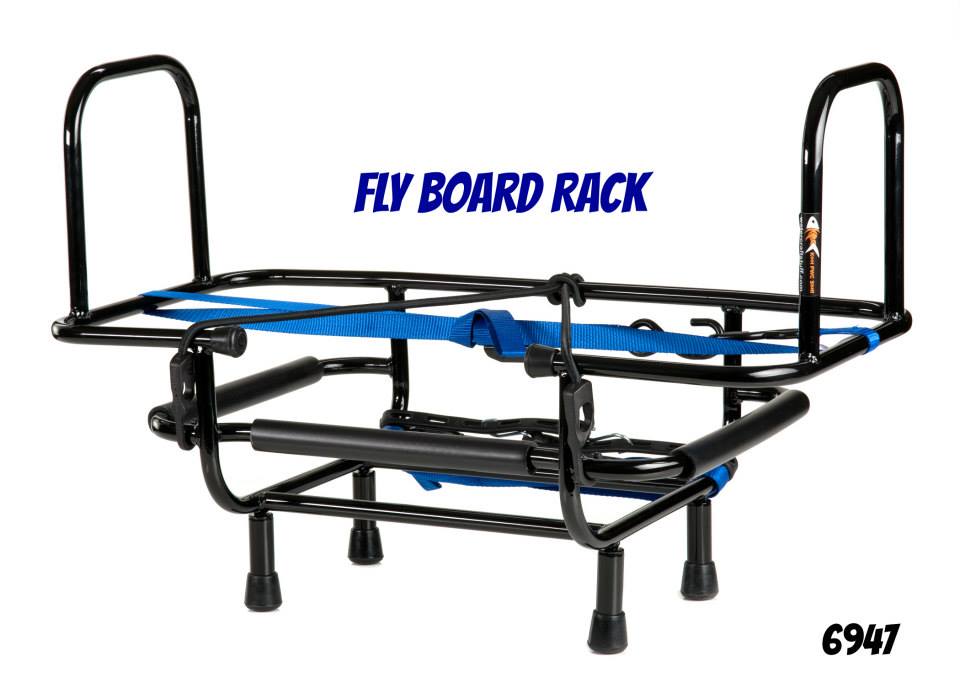
And as Flyboards become more and more prevalent throughout the globe, it only makes sense that Kool PWC Stuff would create an innovative new rack to hold all of your Flyboard equipment that requires zero drilling or cutting to your PWC. Each rack is professionally powder coated and comes with adjustable legs to fit any runabout’s rear platform.
Likewise, each Flyboard rack installs in less than 2 minutes thanks to the strap-down-and-go installation, using your runabout’s eye-hooks. Be it a Sea-Doo, Yamaha, Kawasaki or even a Honda or Polaris, the Flyboard rack can work with any runabout (except for suspension-equipped Sea-Doos).
Made from durable stainless steel that has been powder coated black, the rack comes with 2 6-inch adjustable tie downs straps, 2 1-inch wide industrial strength Velcro straps, 1 1-inch industries strength safety Velcro strap, and 2 bungee cords. The Flyboard Rack can be yours for $510 and shipped today.
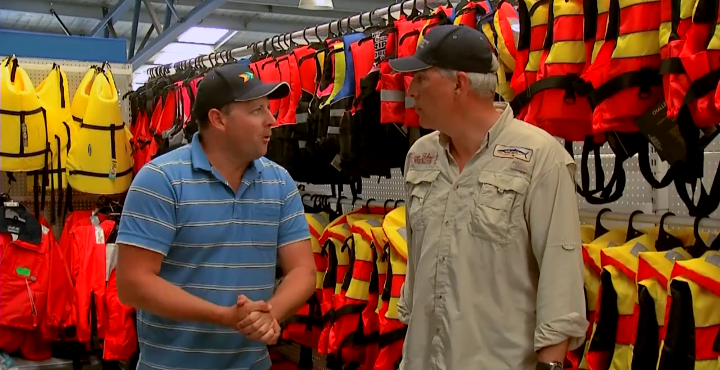
Andrew and Nick from Hook, Line, and Sinker compare lifejackets in this entertaining video that can be seen on Facebook. According to Andrew and Nick there are 100’s of lifejackets to choose from. Selecting the correct one to fit your needs and one to meet the proper standards of Victoria is the focus of this video.
Personal flotation devices (PFDs) are grouped into three classifications: Types 1, 2, and 3. The lifejackets are rated according to buoyancy and color. Type 1 pfds are for use in boats operating in coastal, enclosed, and offshore waters. They are designed with a collar that will roll you face up in the water in case you end up overboard. The jackets are rated at 100 Newton’s and are also inflatable, either manually or with a Co2 cartridge. These particular jackets must be serviced annually.
Types 2 and 3 have a Newton rating of 50 and are used for all other recreational activities such as jet skiing or kayaking. These jackets are typically bright colored so the person wearing them is easily seen. Jackets used specifically for paddling, have thinner shoulders to keep underarm chafing at a minimum.
A type 1 jacket can be worn for any water related activity. The same cannot be said for the type 2 or 3 because those jackets won’t keep you face up and they have a lower Newton rating.
Children under ten must always wear a lifejacket during boating and the most important thing is that the jacket has a proper fit with a fastened strap. An ill-fitting jacket is virtually useless. Make sure everyone onboard has the correct fitting jacket and that it also meets the guidelines set by law.
The boating motto in Victoria states, “Wear a life jacket or others wear the consequences!” A great website to visit for more information about boater safety in Victoria is wearlifejacket.Vic.gov.au
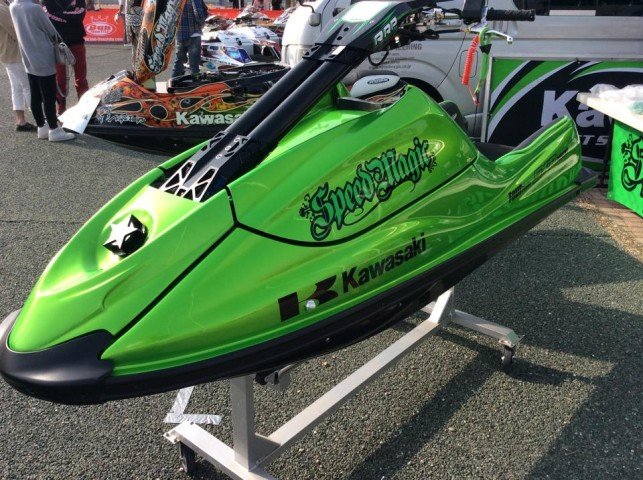
Listen, we’ve all wanted to see it come to reality and some of us (look directly in the mirror) have even made compelling arguments as to why Kawasaki should get back into the standup JetSki game (after mothballing the program in 2011). It all comes down to getting a reliable 4-stroke inside of the stellar SX-R, and doing so at a minimal cost. We’ve bandied about the notion of dropping the featherweight Ninja H2 998cc mini-Ultra engine into the standup hull so much so that Kawasaki has asked us to “move on” from the subject.
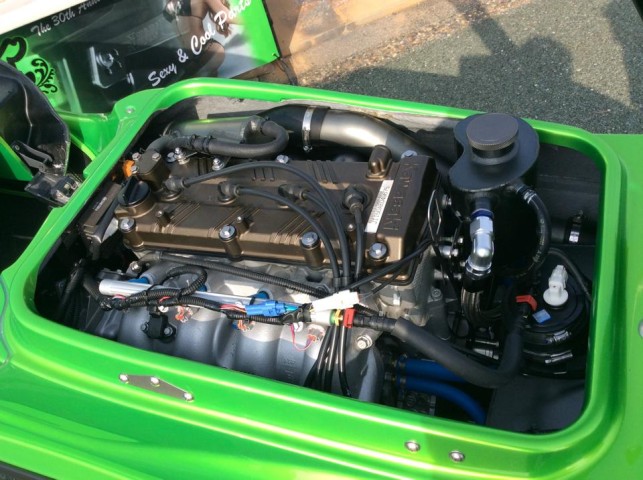
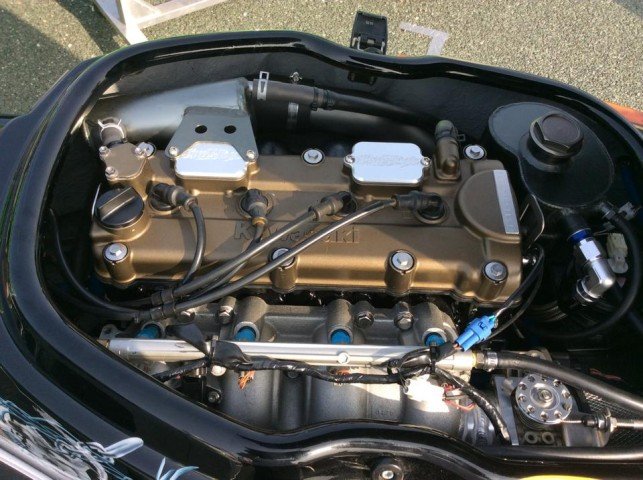
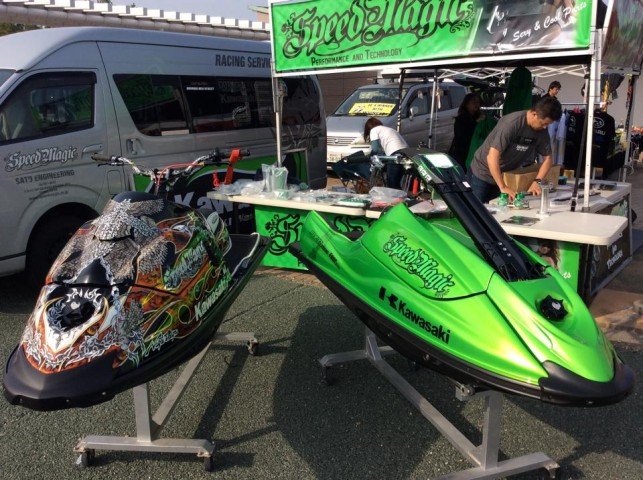
But how about shoehorning the massive 1,498cc naturally-aspirated four-cylinder 4-stroke from the entry-level STX-15F? The engine has definitely proven itself both recreationally and on the field of battle, but how would the hefty plant fit into a standup? Well, the geniuses at Speedmagic seem to have mastered it. OK, it’s very likely that many of you have seen this conversion before, but the company from Osaka, Japan has taken great strides to streamline the process. And they’ve added a very cool Kawasaki X2 to the conversion kit.
That’s right, whether it’s a standup SX-R 800 or a X2 800, you can get all 180 horsepower from Kawasaki’s 1.5L STX in a far smaller platform. From engine mounts, fuel tanks and pump setups, Speedmagic is cranking out everything to make the conversion that Kawasaki won’t build available at your fingertips. Prices on the conversion are a little hard to dig up as every conversion is a little different from the next, so just expect it to not be cheap.