There’s probably no less formidable terrain to find oneself in that the untamed wilderness of Alaska. The northernmost State in the Union is home to some of the most inhospitable frontier, rife with wildlife more than happily to core, maim or outright devour a man, or weather so drastic that exposure for longer than minutes can result in almost immediate disfigurement or outright death. Many a daring adventurer has met their demise in Alaska, and certainly more will follow.
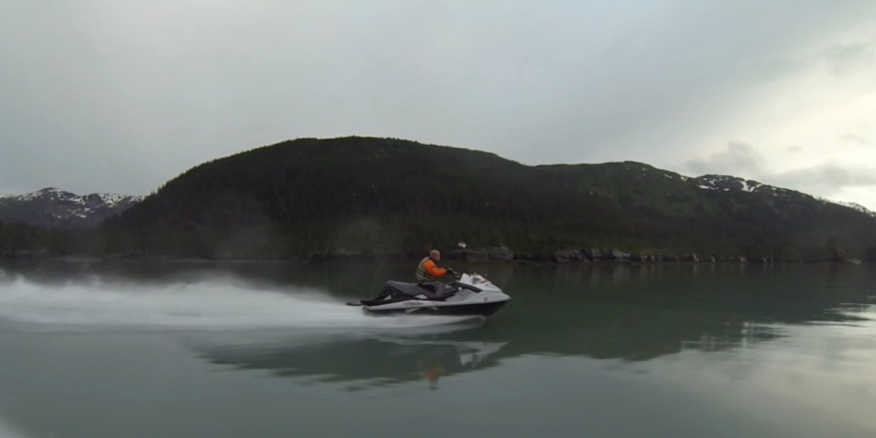
Sounds like a perfect place to go jet skiing, right? Well, that’s what these explorers thought as they slipped into Alaska’s famous Blackstone Bay, home to pristine waterfalls, calving glaciers and breathtaking vistas. Located just outside of Whittier, Alaska, these intrepid riders documented their journey through Blackstone Bay via various GoPros over the course of two different trips.
The video below is stitched between video and stills, but shows the sheer vastness of the terrain in all of its awesome glory. Normally reserved for kayakers, exploring the bay requires paddlers days to gain the full experience. With the assistance of modern personal watercraft, the trip was cut down to a fraction, and done so safely and without the threats brought on by needing to camp overnight and brave the cold.
Although normally populated with whales, seals, and sea otters, not much in the way of wildlife is visible in this video, although the documentarians vow to return. So, it’s likely we’ll see more of Blackstone Bay’s beauty. Until then, enjoy the video below (although, the music is really obnoxious. You’ve been warned):
Oh winter, you foul mistress! Why won’t you leave us be and step aside to allow Spring to come forth! Begone! Alas, for much of the country we are still caught in winter’s icy grasp, but fear not! Slippery Wetsuits knows the perfect remedy for yet another onslaught of wintertime blues: their all-new 2015 product catalog!
Recently Slippery Wetsuits released this video showcasing their new 2015 lineup of riding apparel and gear; from a whole new array of brightly-hued full suits and johns, to spring suits, jackets, gloves, boots, and shorts. Slippery’s new look for this year’s upcoming riding season is only matched with its sibling to MX riding gear manufacturer Thor, in superior comfort and just a great look. With meticulous detail given to making superior molds, by using better materials and more attractive designs, the wetsuit manufacturer once known as “Slippery When Wet” much more than ever before!
Obviously, you’ve likely seen Slippery quite a few times in our Reviews section. And you can count on more in-depth reviews and insight on new 2015 Slippery product in the coming months. We’ve been very happy with what we’ve used and are sure you will too! Look forward to more on Slippery products from The Watercraft Journal in the weeks and months to come!
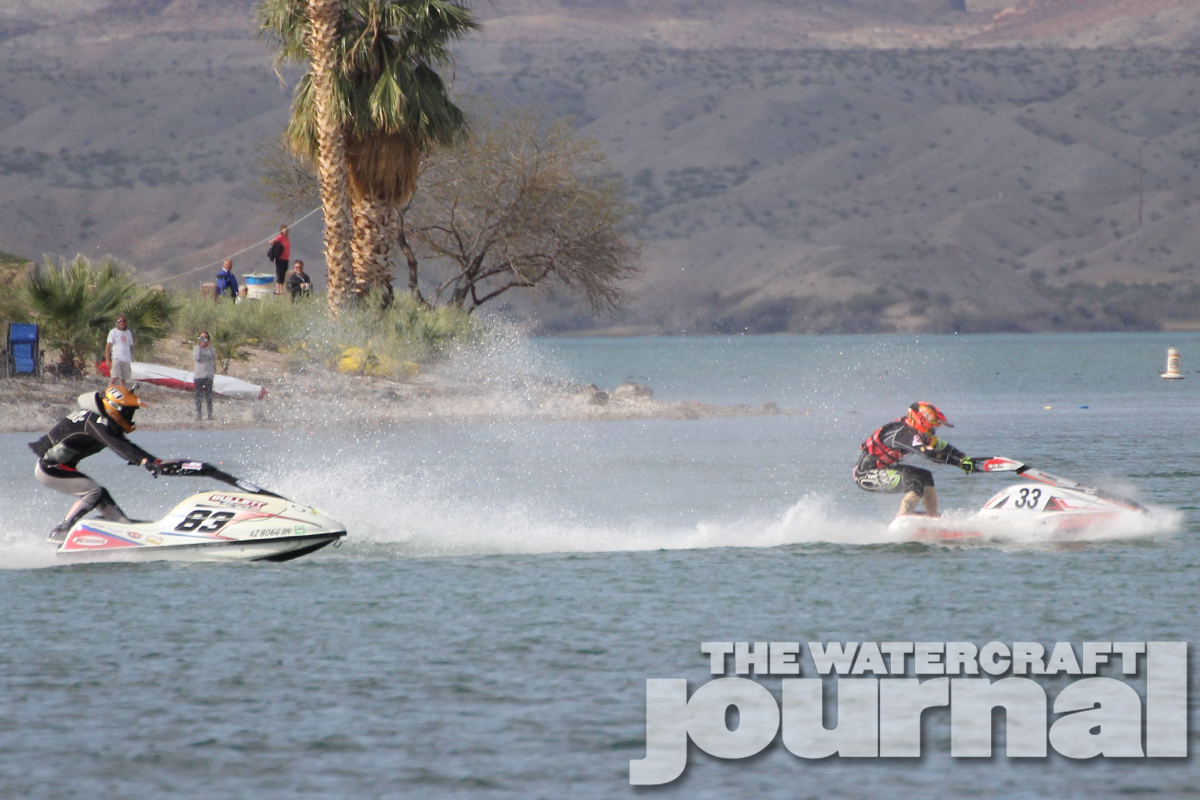
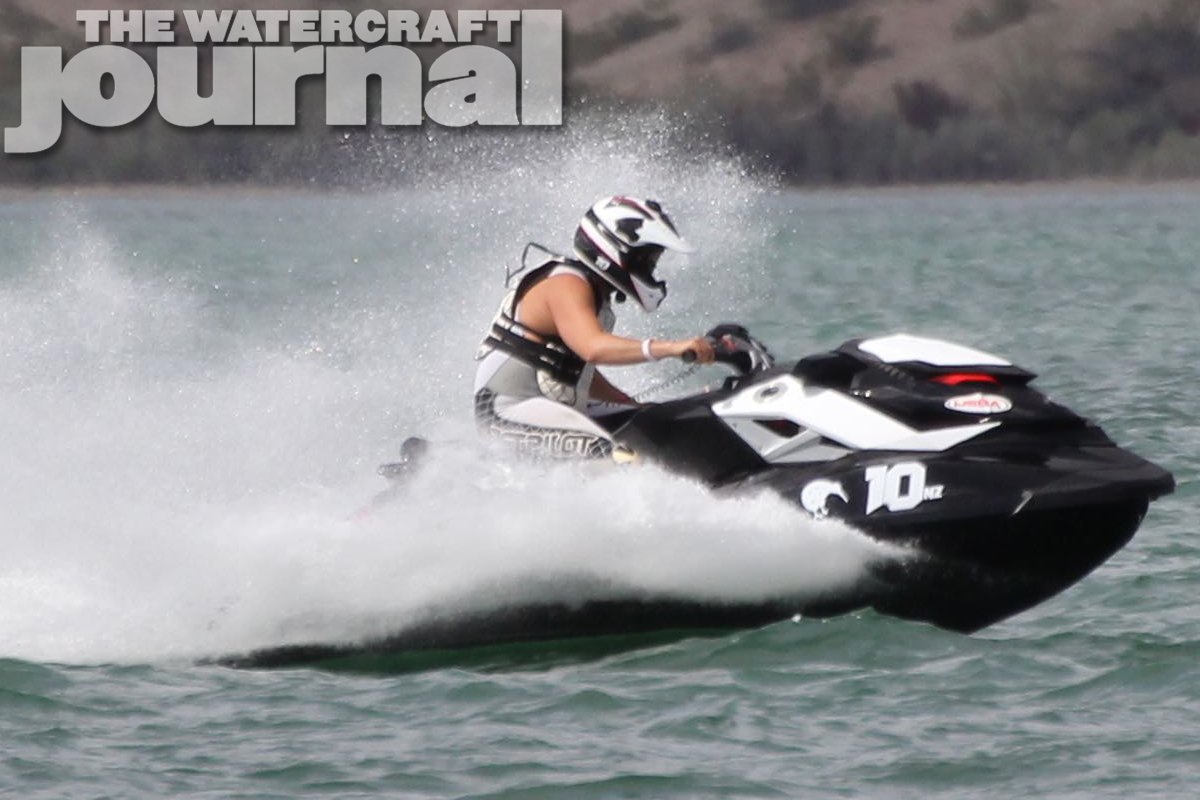
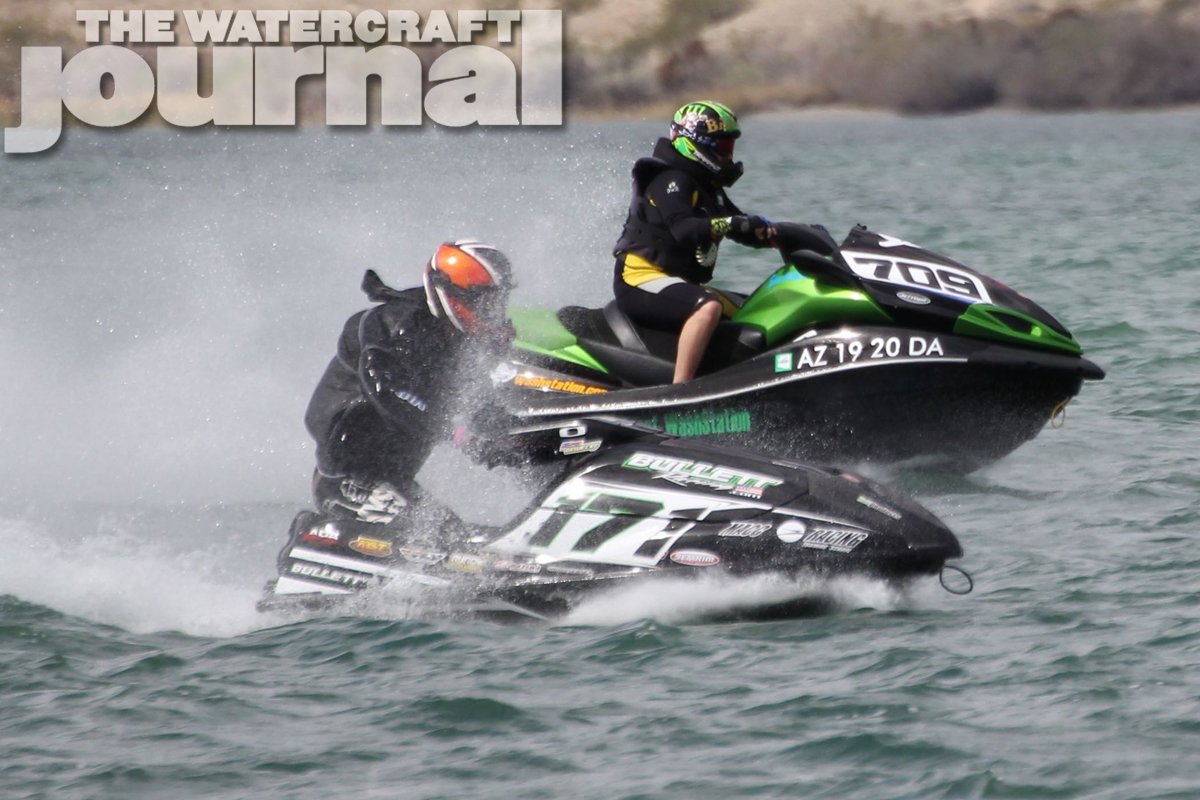
It is the world’s longest continual race, a full 300-miles (30 laps circling a 10-mile course encompassing almost the entirety of Lake Havasu, Arizona). It is also possibly, the single most challenging one-day event in all of competitive personal watercraft racing. Not only are challengers required almost superhuman levels of endurance and physical ability, but logistical skills, methodical planning and steeled determination.
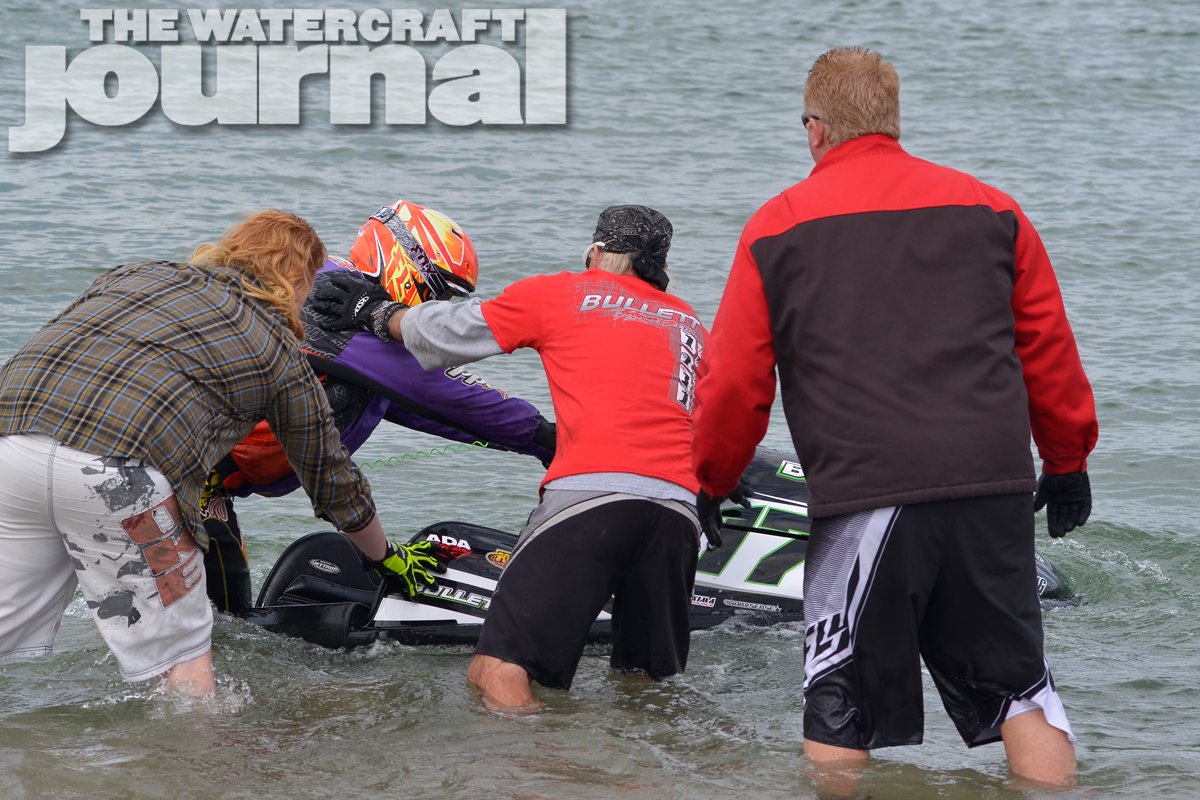
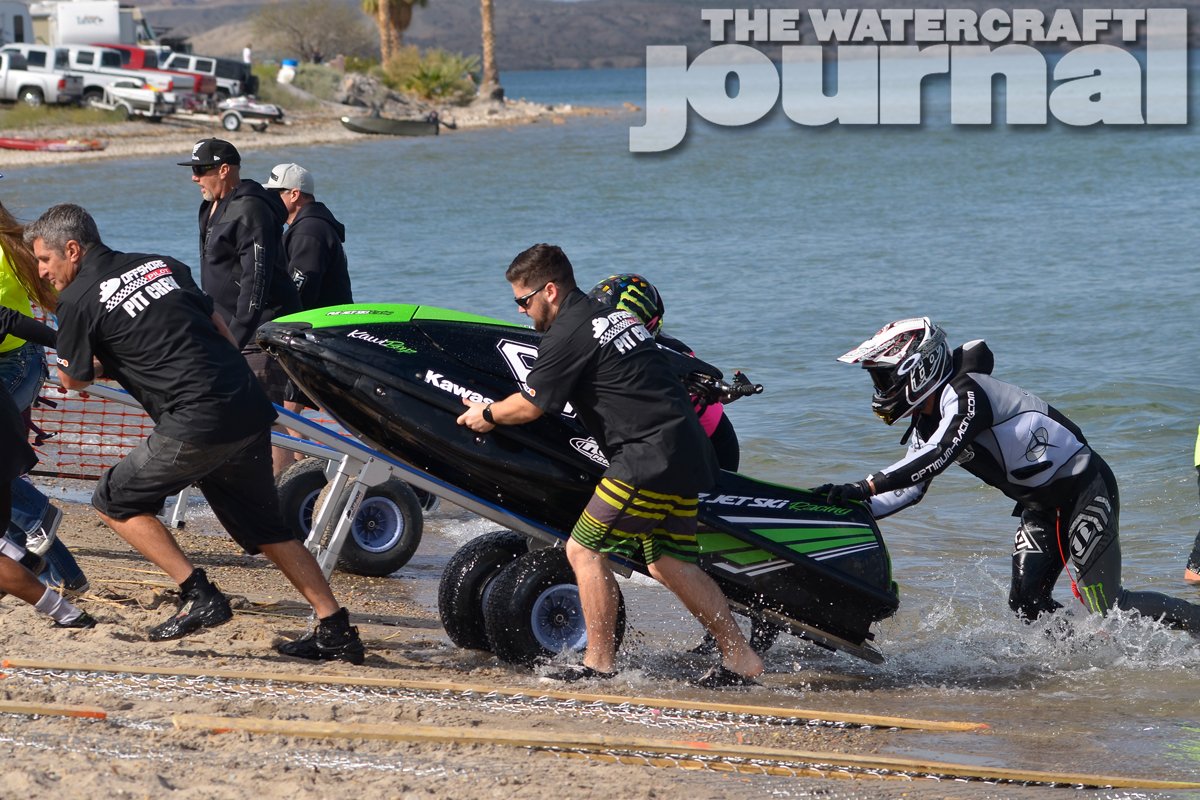
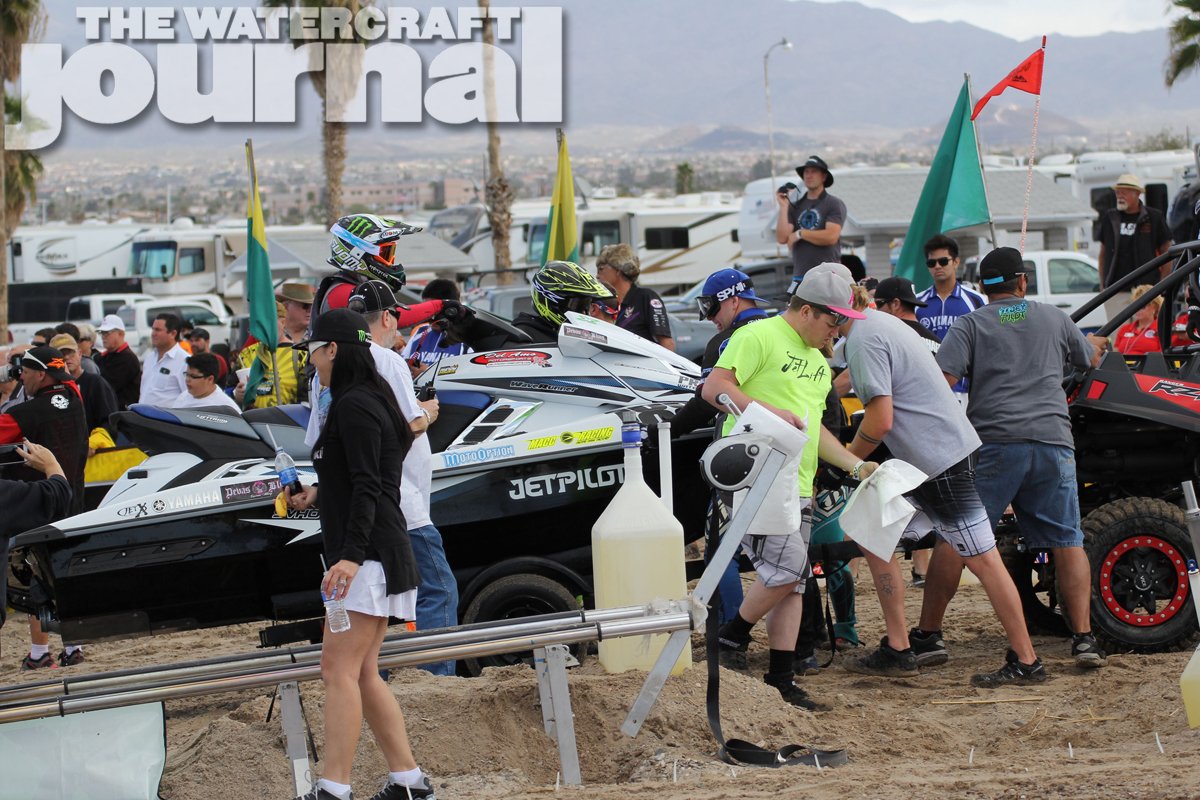
Equally, no racer is alone, as a full credit of teammates are needed to parlay the riding responsibilities (two riders for runabout classes and three for all standup ski classes), but to man the pit crew, tasked with extracting and launching the craft several times throughout the race, refueling without spillage and help in exchanging the riders when called for.
Some have even speculated that the annual Mark Hahn Memorial Havasu 300 is also the single-most expensive single-day event, requiring upwards to $30,000 to remain competitive; weighing in costs for purchasing and building a worthy craft capable of surviving the 300-mile course, the ATV or SxS and dolly to launch from, the fuel, tools and equipment, not to mention feeding and housing the persons to staff one’s crew.
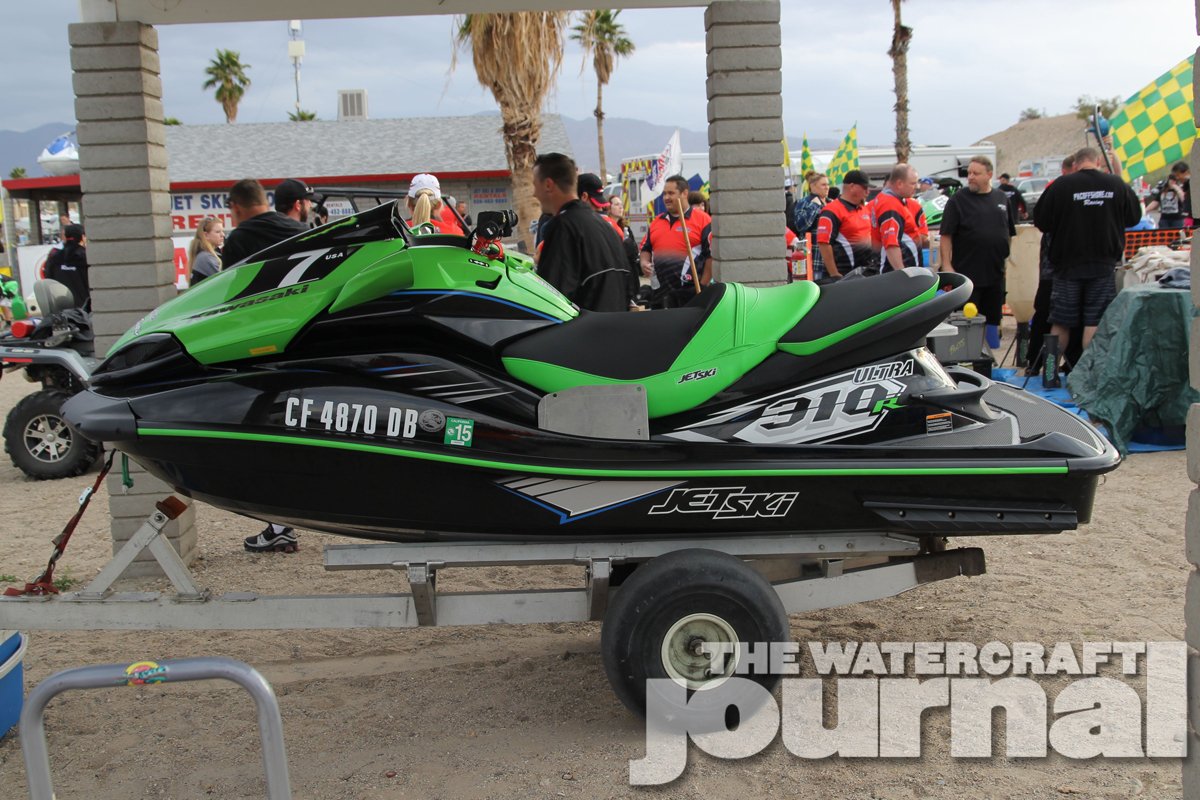
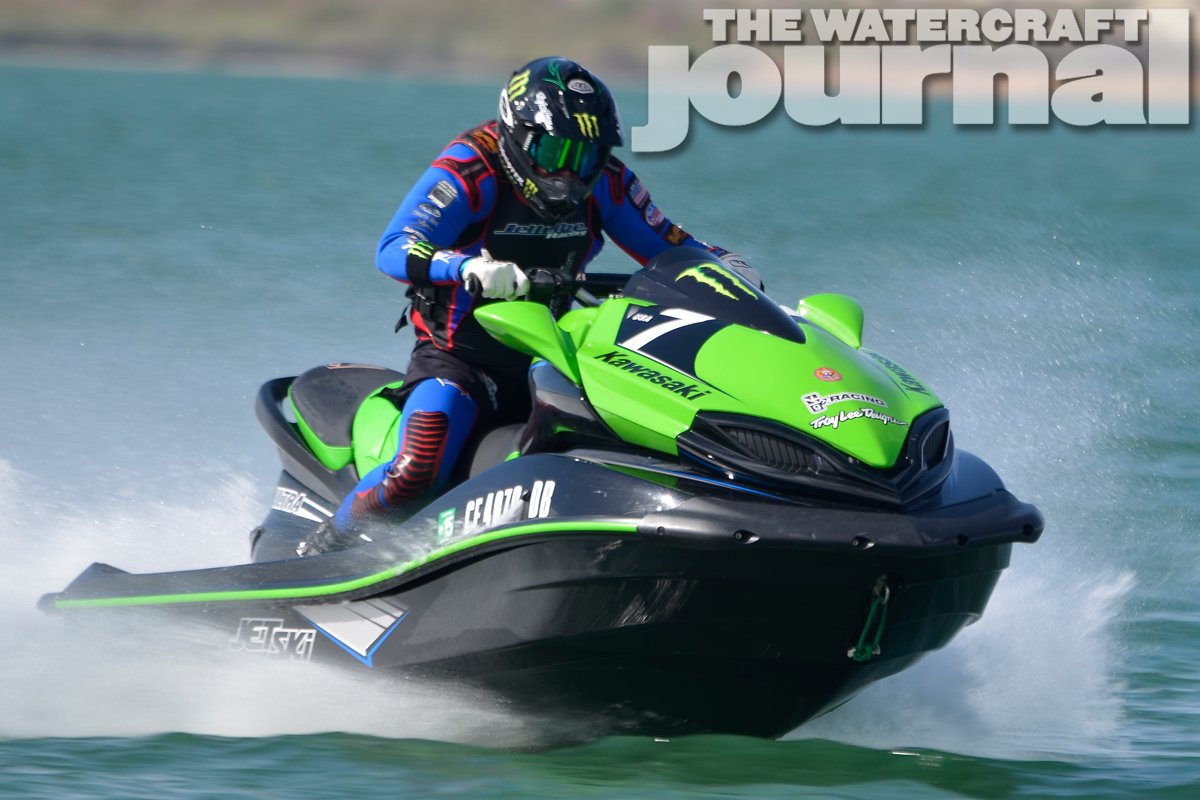
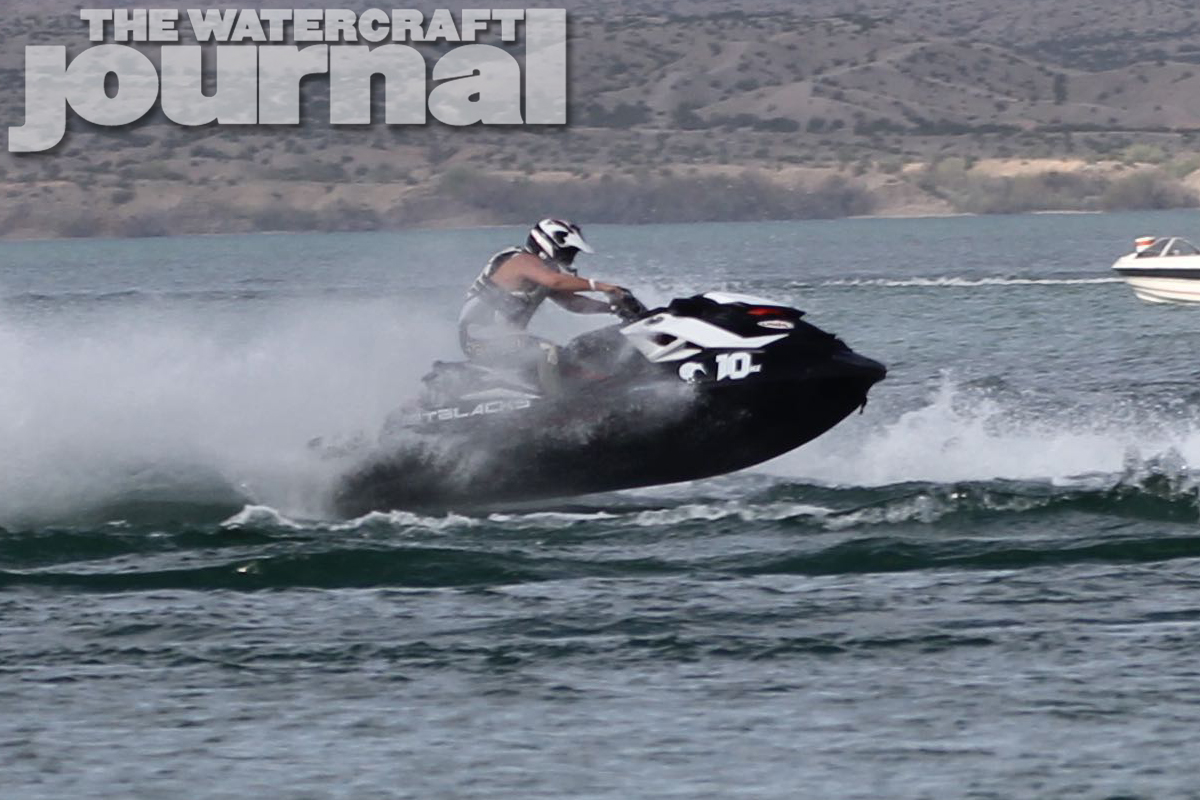
And when all has been planned and paid for, even the best will fail to complete the race. This year alone, some of the world’s finest fell to misfortune: Russel Marmon only completed one lap on a turbocharged Kawasaki Ultra 310X before falling to the tow rope. Two-time previous Mark Hahn champion Craig Warner remained in the Top 5 until an elongated pit stop ate up precious minutes, pushing him further in the pack.
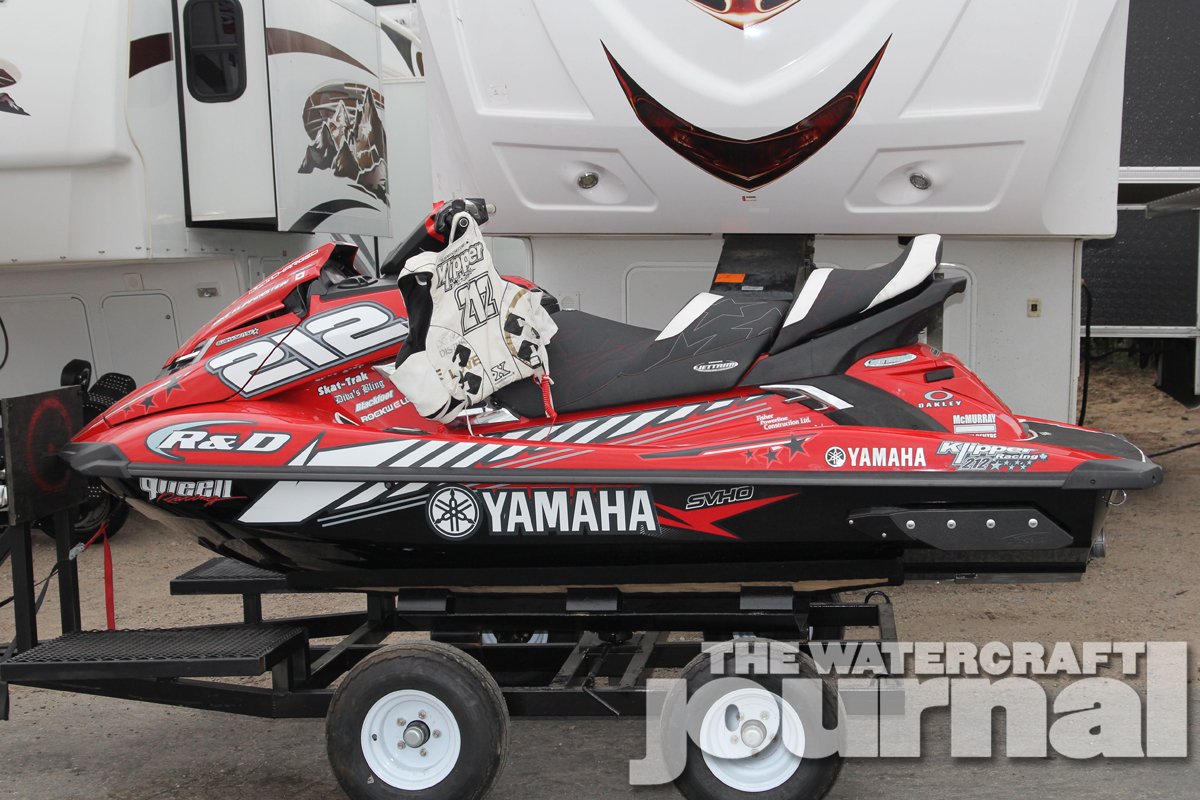
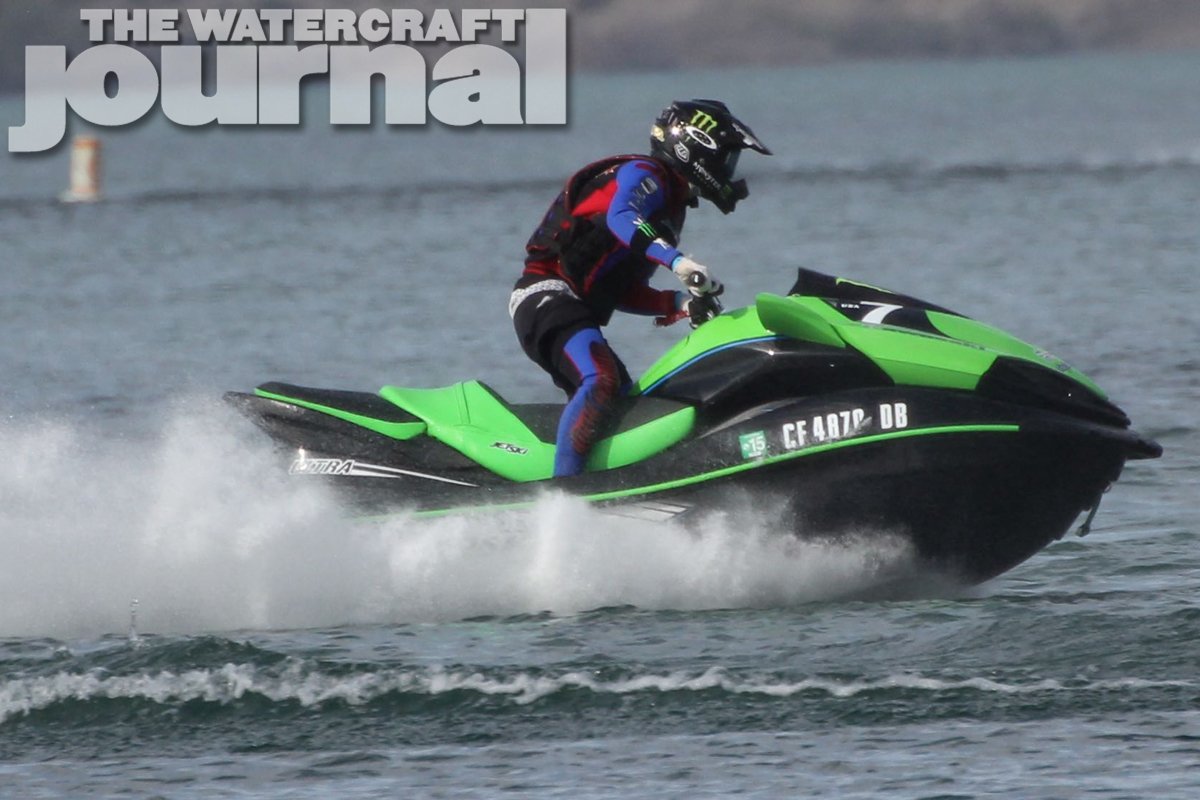
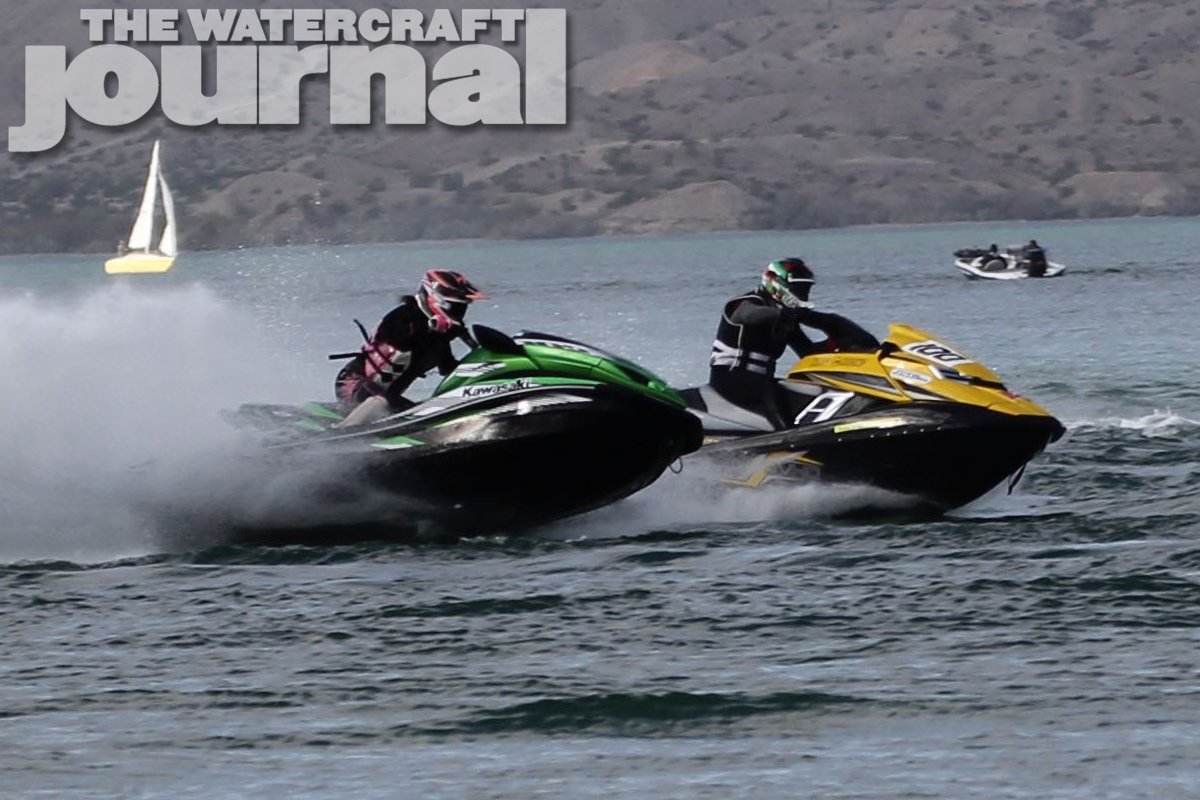
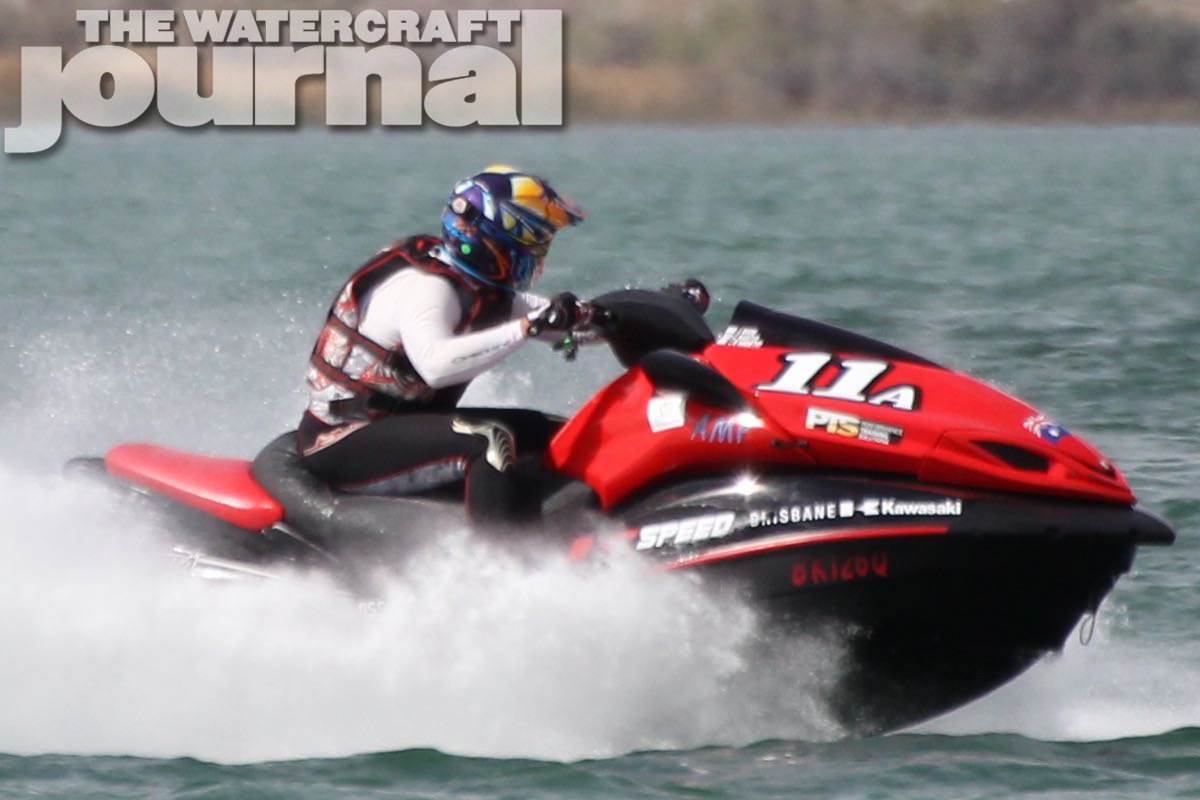
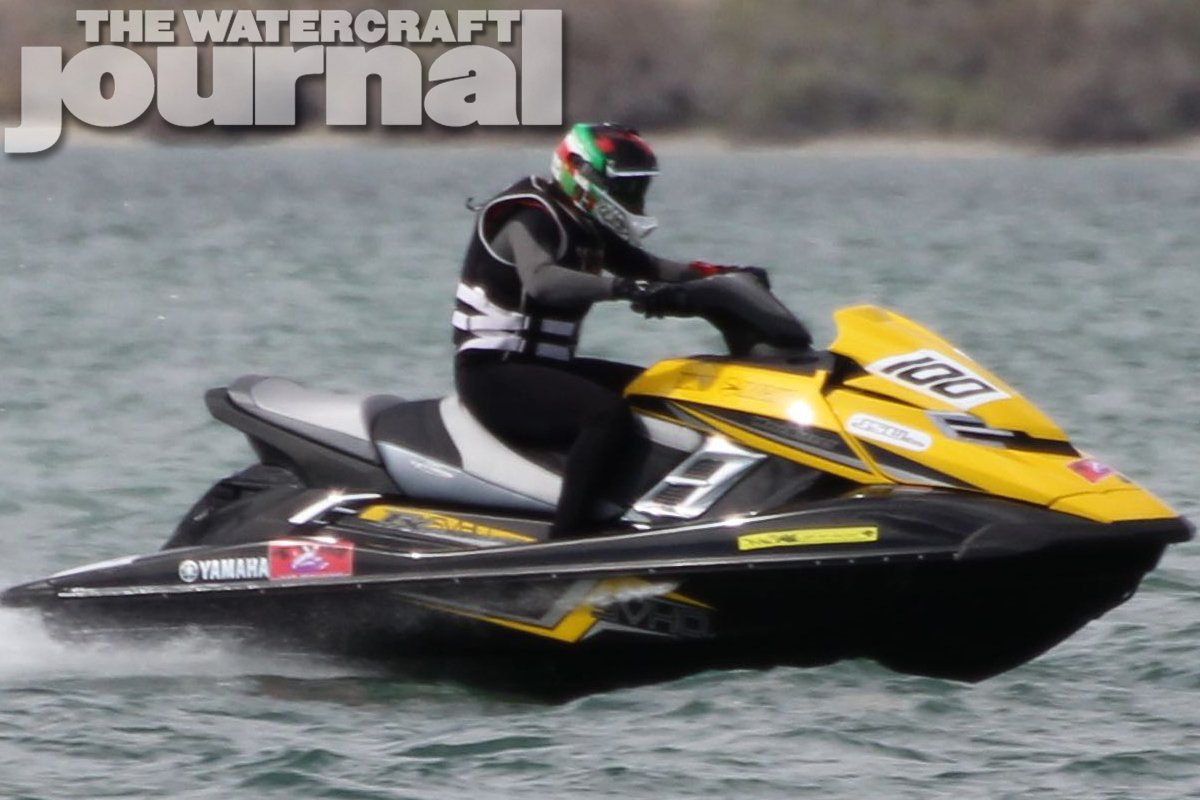
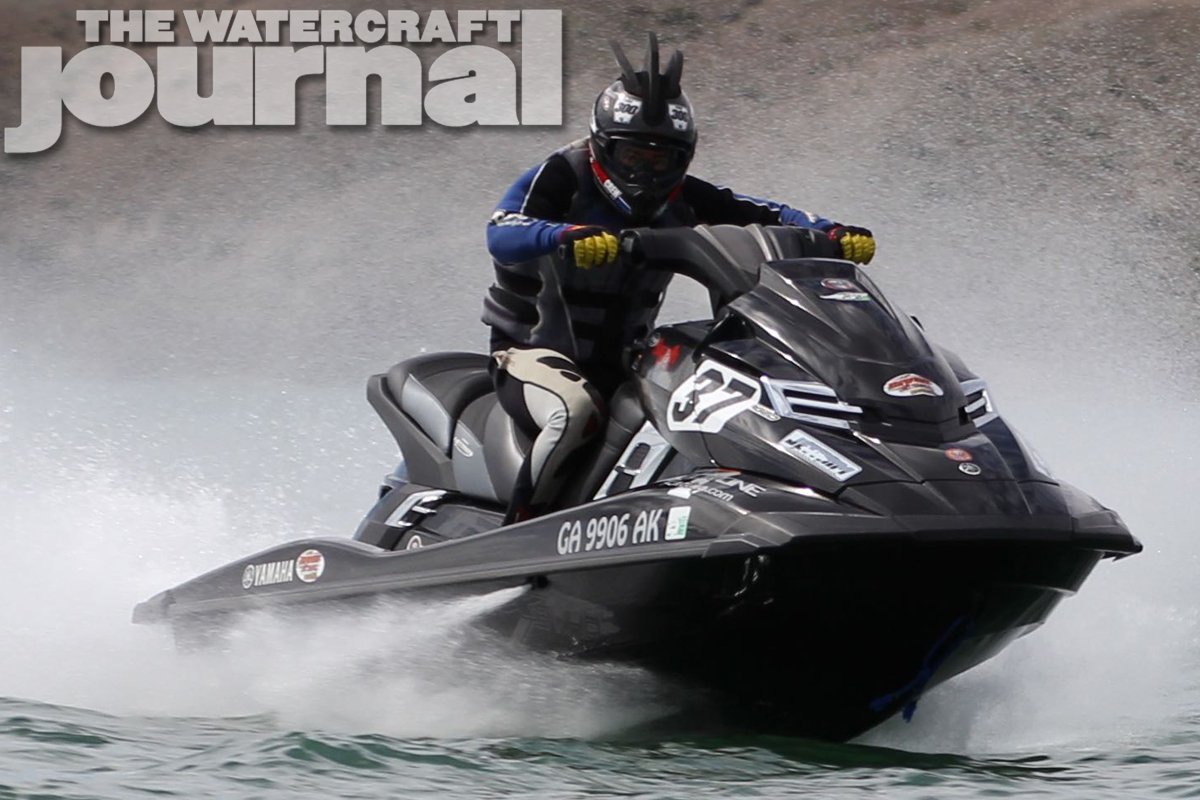
Another previous Mark Hahn Memorial winner, Mark Gerner wrestled with strategy as inclement weather upset plans for use of a 80-85mph turbo Yamaha FX SVHO, opting instead for a more reserved tactic, a near-stock Ultra 310X. The Kawasaki served valiantly, but the conditions – albeit rough, particularly as winds picked up – weren’t enough to hold back the flock of tuned Yamahas that pulled ahead.
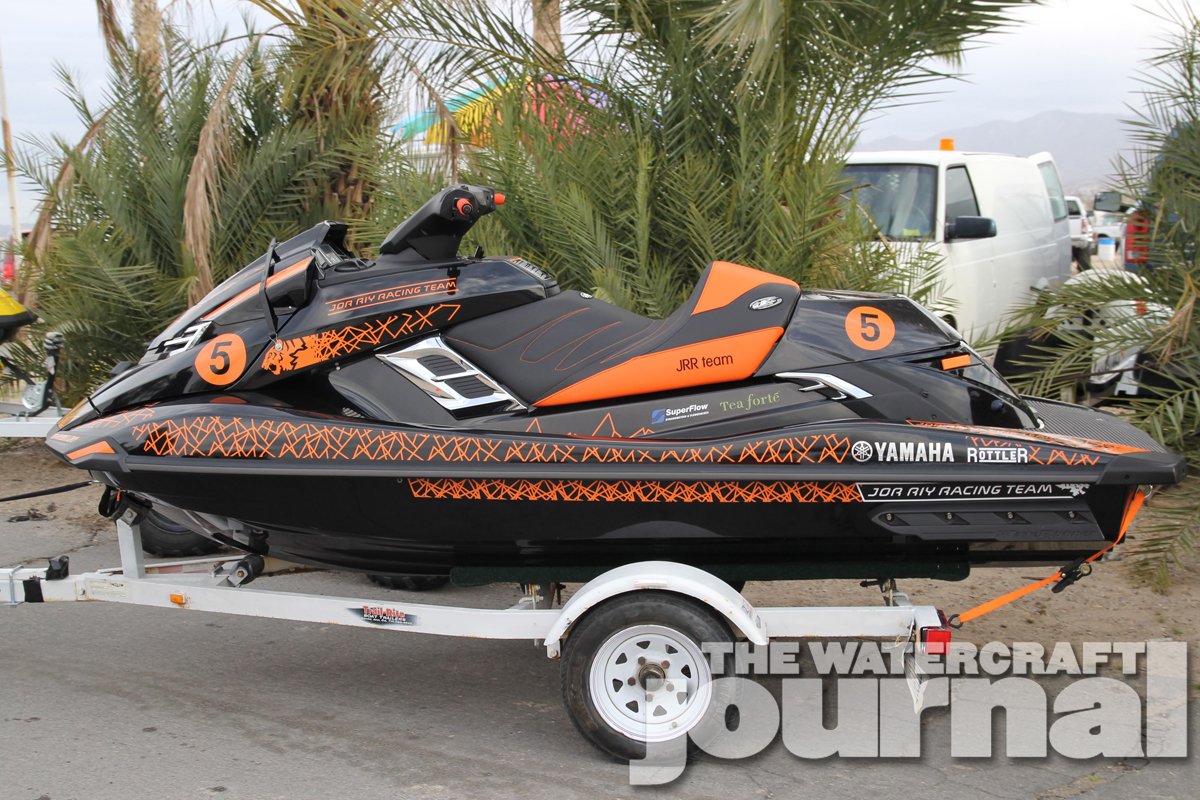
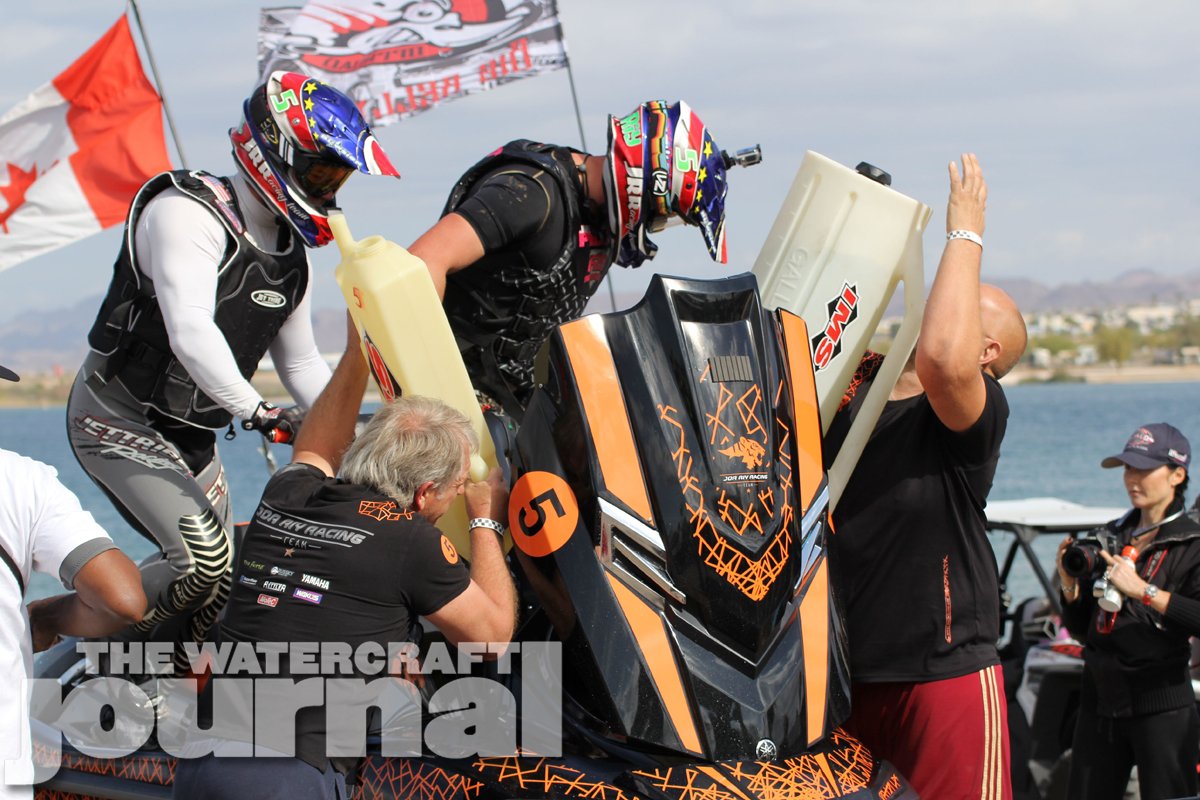
Most upsetting of these was Russian duo Yury Riabko and Peter Desmer who led the race handily aboard an exceptionally fast turbocharged Yamaha FX SVHO for nearly 28 consecutive laps before the monumental stresses from excess speed and the wind-churned 4-foot chop battered the Yamaha’s hull to its breaking point. After an unmatched lead, the pair ended in fifth place when the checked flag waved.
So why would anyone undergo these trials – both physically and financially – for a single day’s race? The answer is quite simple: for glory. The Mark Hahn Memorial has become unequivocally one of the premier races in the world. Completion of the race is monumental. Finishing a champion is herculean. It has become the Everest of our sport and no better salute to the man its named after. Event organizer Mike Follmer told The Watercraft Journal, “I feel that by having 16 countries represented this year and us being recognized around the world says it all […] We are now the biggest offshore event in the US (and world), and we’re very proud of that.”
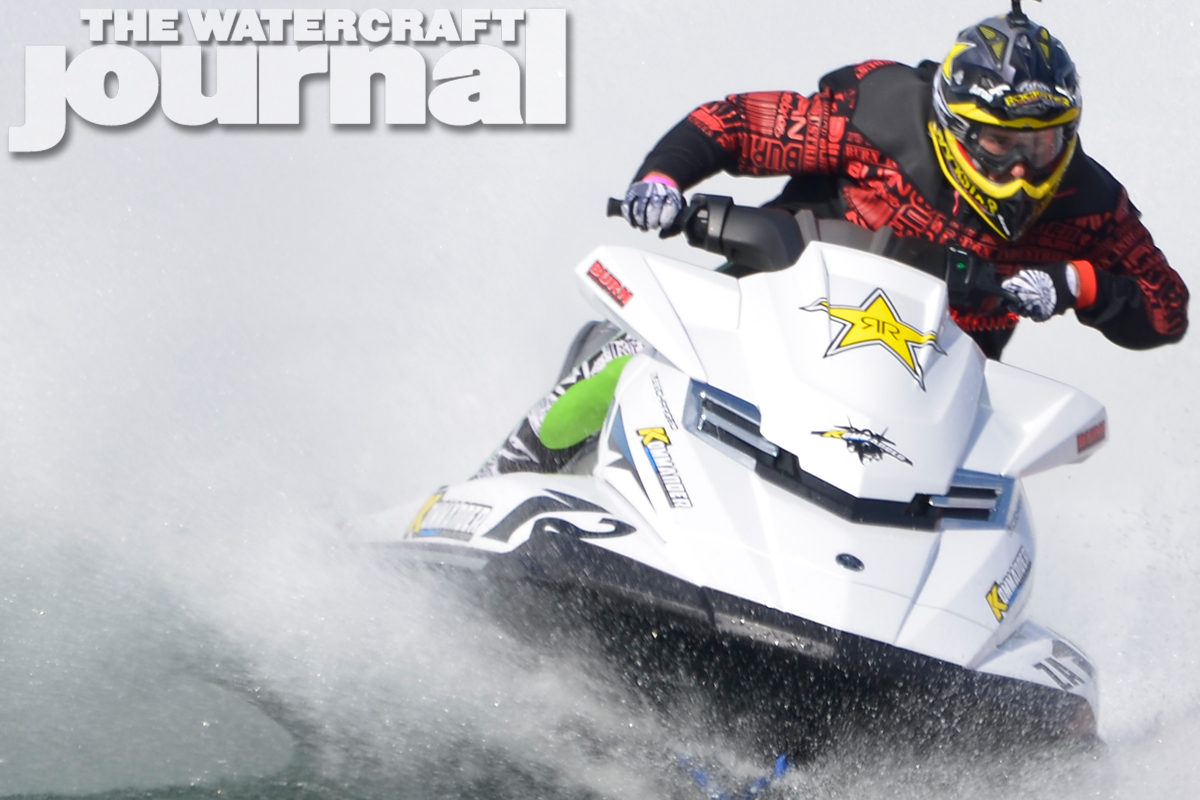
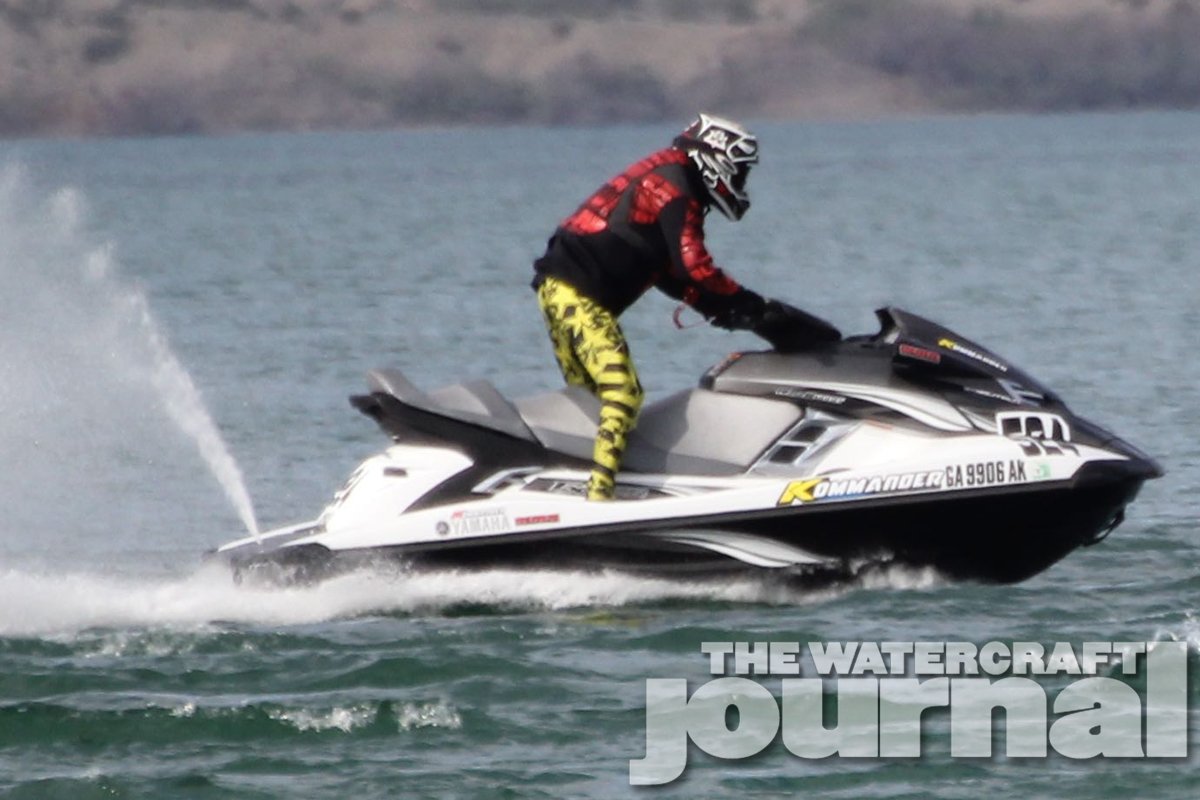
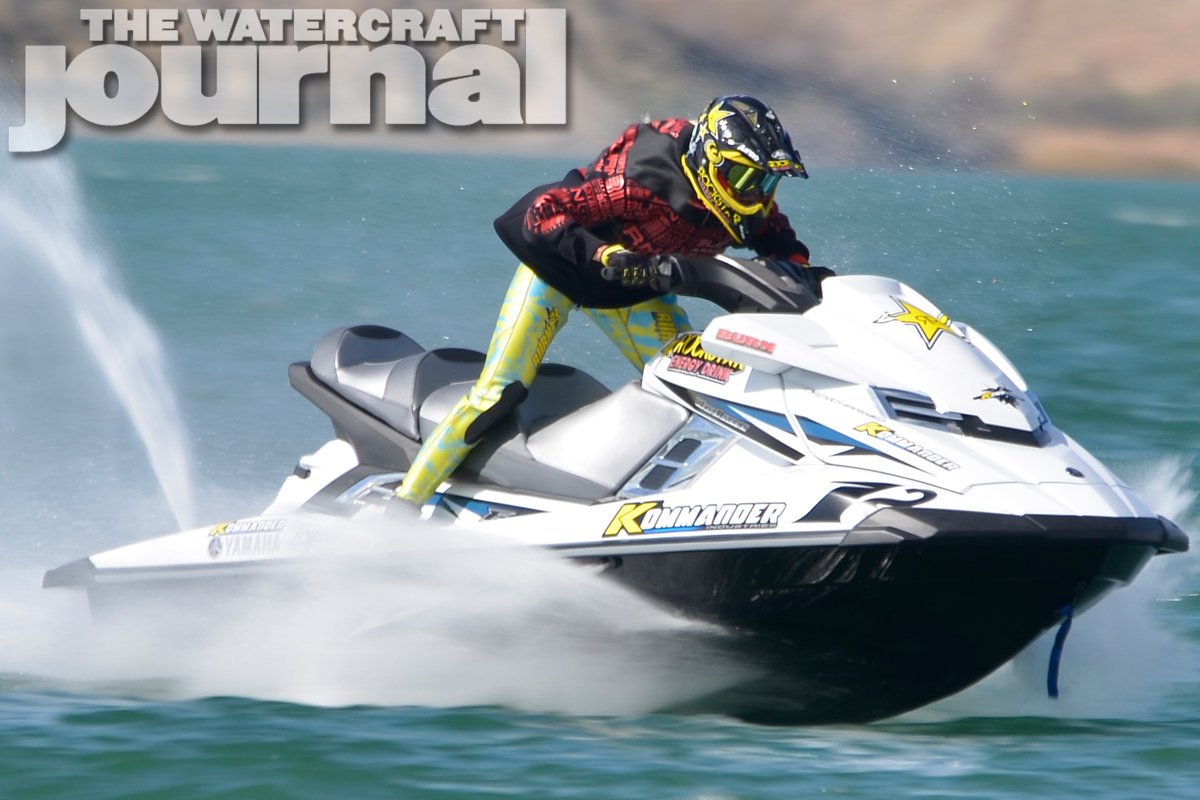
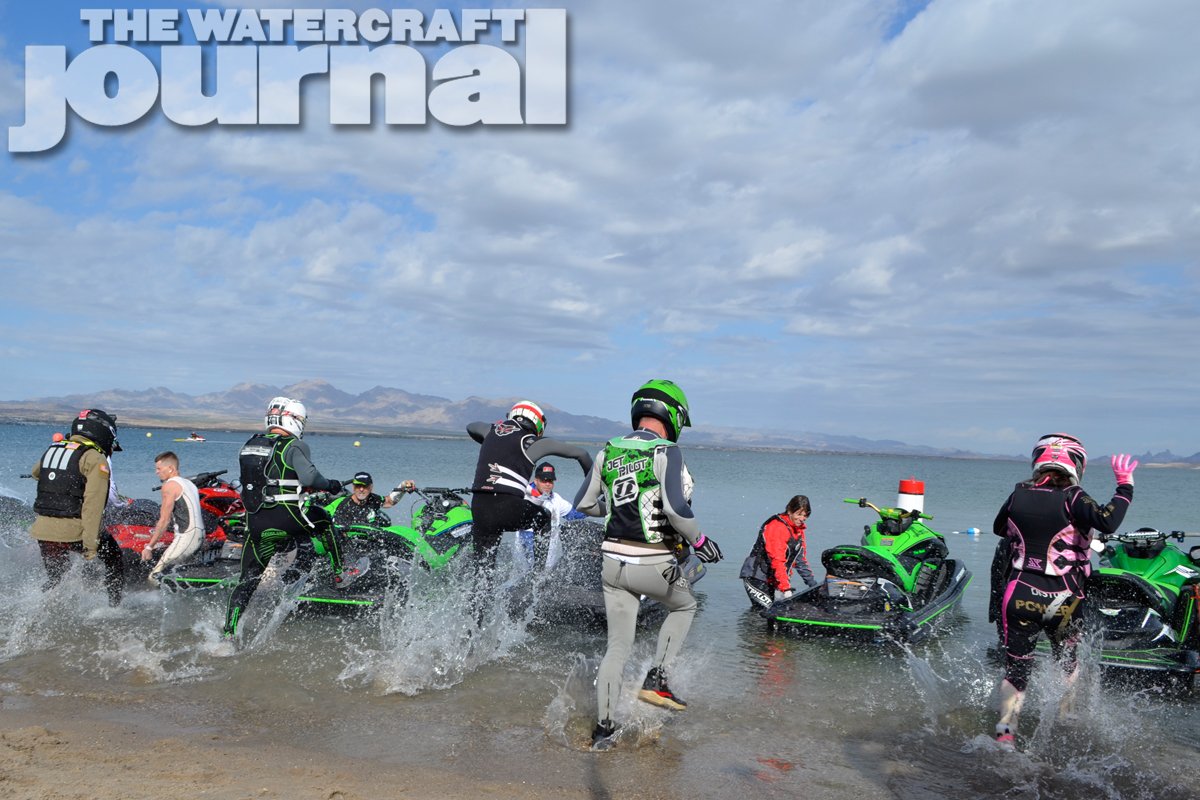
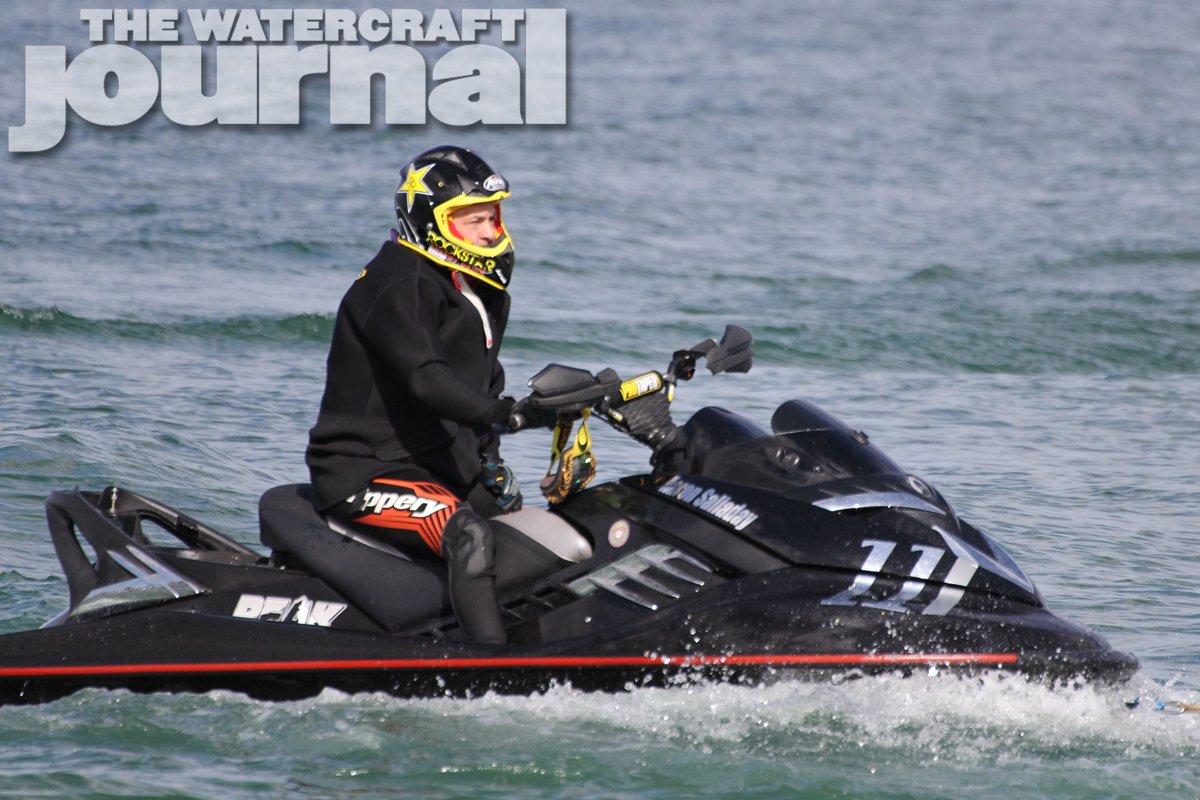
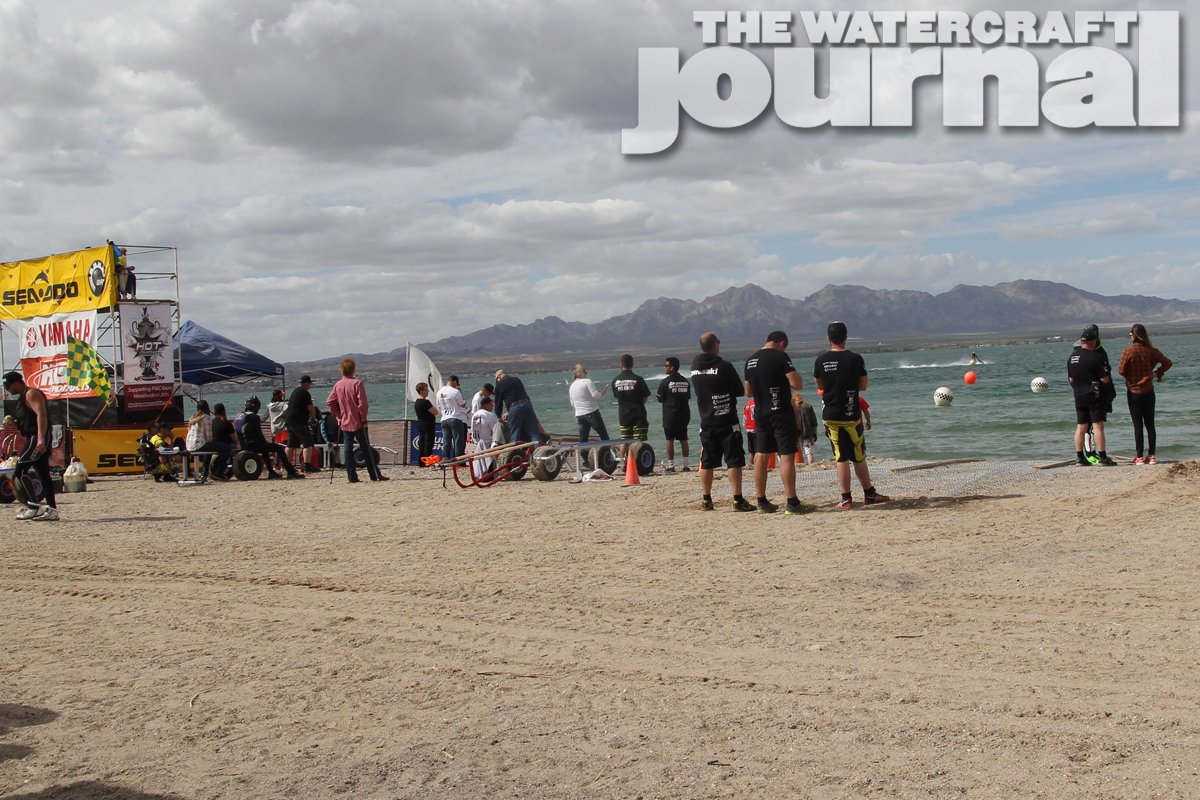
To Follmer’s point, the world’s finest converged on Lake Havasu City the final day of February, with the shotgun’s crackle at 10am sharp marking the start of the race that Saturday morning. Hailing from South Africa, Rockstar Kommander Industries’ Shante Bukes was joined by Dustin Motzouris who relocated from his native country to Arizona last year.
Motzouris explained their plan, “We took a bone stock FX SVHO off the Kommander floor and raced exactly as you buy it, it is amazing how good the new Yamahas are even when it got rough and nasty. We had a fun crew at the race and we where competitive without being overly stressed and that’s the right way to approach this race as so many unforeseen events can happen over such a long distance.”
Bukes parroted her teammate, saying, “The 2015 Mark Hahn Memorial 300 race was definitely one to remember […] It was an awesome event. The weather got quite cold and windy but it didn’t stop us from racing. It’s the best way to get experience in that rough conditions. It was some close racing, having to swap with Dustin every 5 laps to refuel […] It was Definitely a hard endurance race but I loved every minute off it.”
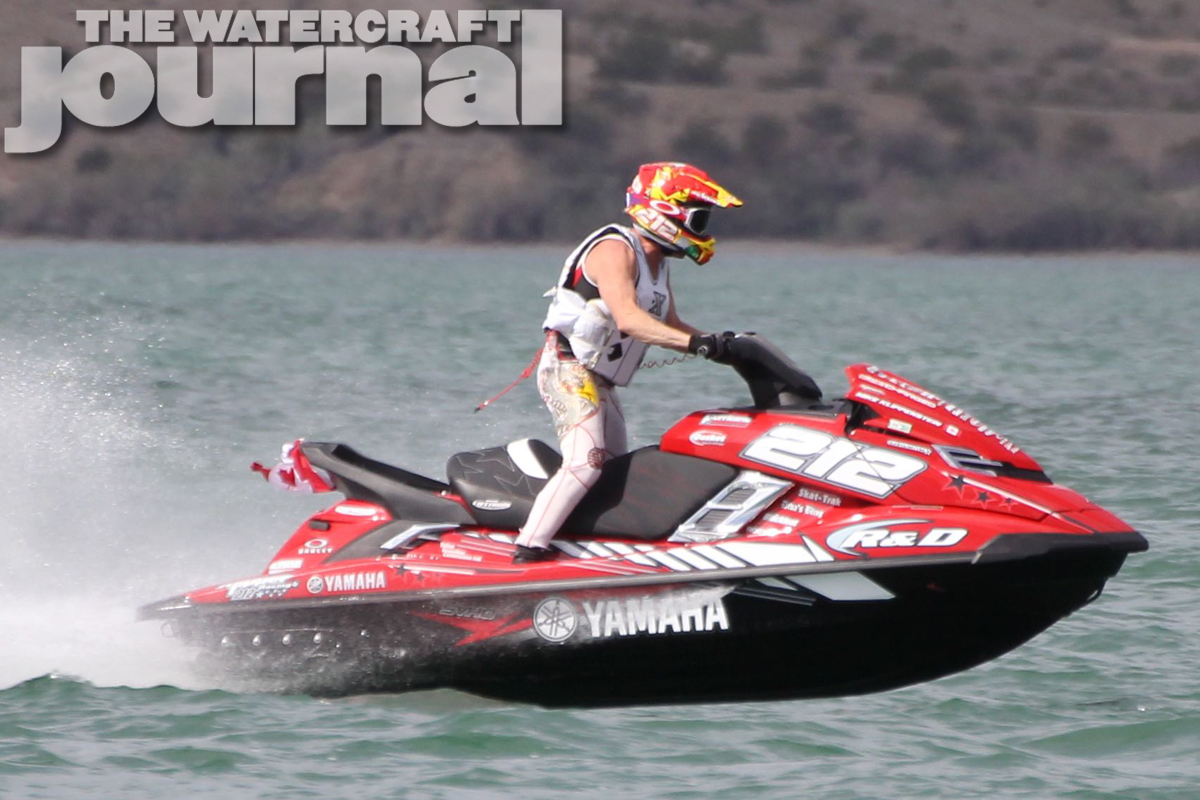
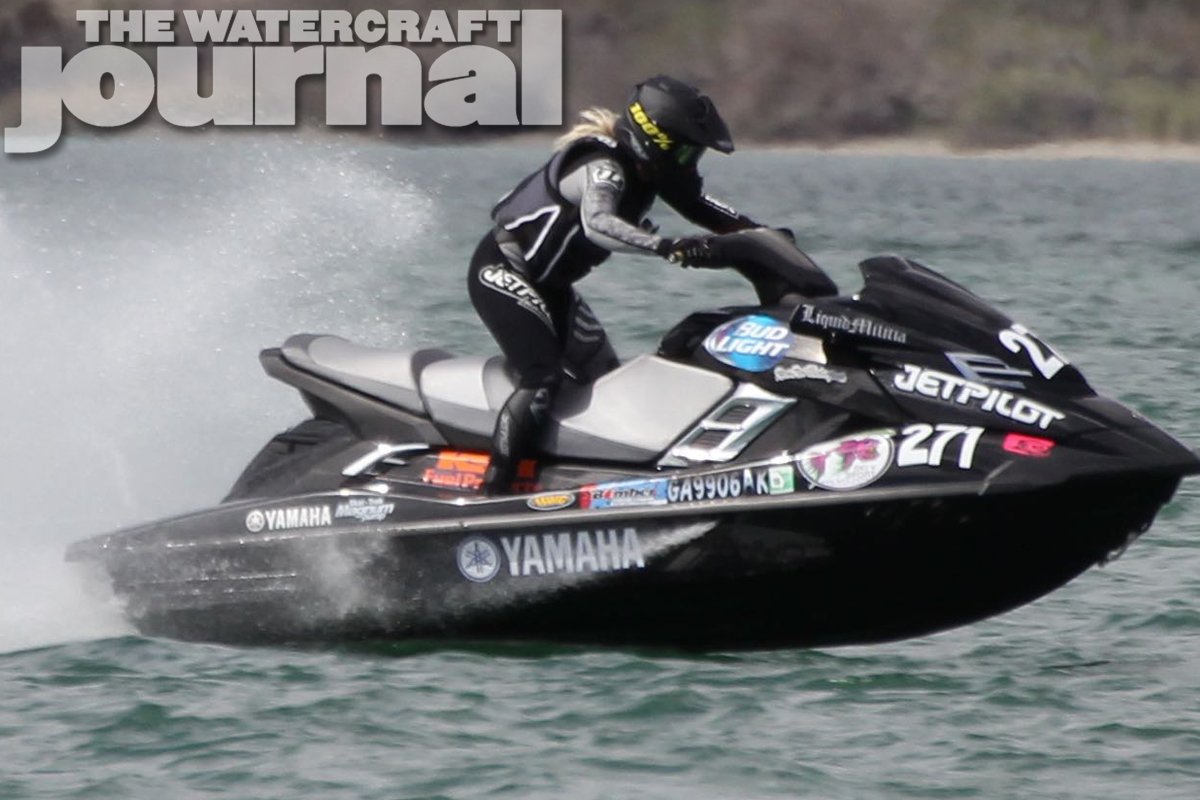
Unlike previous years, the field of competitive craft was uniquely diverse, with SVHO-powered Yamahas being equal to or even greater than that of the rough water-friendly Kawasakis. Factory Yamaha was even represented by an unlikely duo, “Flyin Brian” Smith and JetPilot’s own Steve Goldberg.
Smith recounted, “This year I had the pleasure of teaming up with JetPilot’s Steve Goldberg and given the opportunity to race for Factory Yamaha. The race was very challenging for me this year and a bit more than […] years past, mainly because I haven’t been able to ride or practice on a runabout (or ride for that matter) since [an] injury I sustained at World Finals this past year.
He continued, “[…]After a few minor setbacks and my partner sustaining a shoulder injury, [I was left] to finish the race Ironman-style about halfway through.” Goldberg echoed, “[This] marked my first experience in PWC racing. After meeting Brian last year and helping him and his team pit in the standup class, I thought it would be a great opportunity to get involved and support those who support the brand and possibly race.”
“Overall the experience was epic,” Goldberg concluded. “Much respect to all the racers involved. Unfortunately, I suffered a shoulder injury that would sideline me at the halfway point but with the courageous ride by my partner, we were able to hold on to 5th in class.”
Those who chose to “ironman it” or compete solely are often revered as the challenge is exceptional, as both man and ski are put to the utmost test. Australian Christian D’Agostin did so on an Ultra 310X SE. He explained, “Man, what an awesome event! [With] 50-plus runabouts on the line – [it was] spectacular! I completely duffed the start, [but] got up in the Top 10 by Lap 2. [We] had an awesome pace, the team aced every fuel stop. At the last fuel stop we were first in Ironman, first in class and third outright – we where bringing it home and on Lap 26 we developed a misfire and couldn’t continue – we where guttered.”
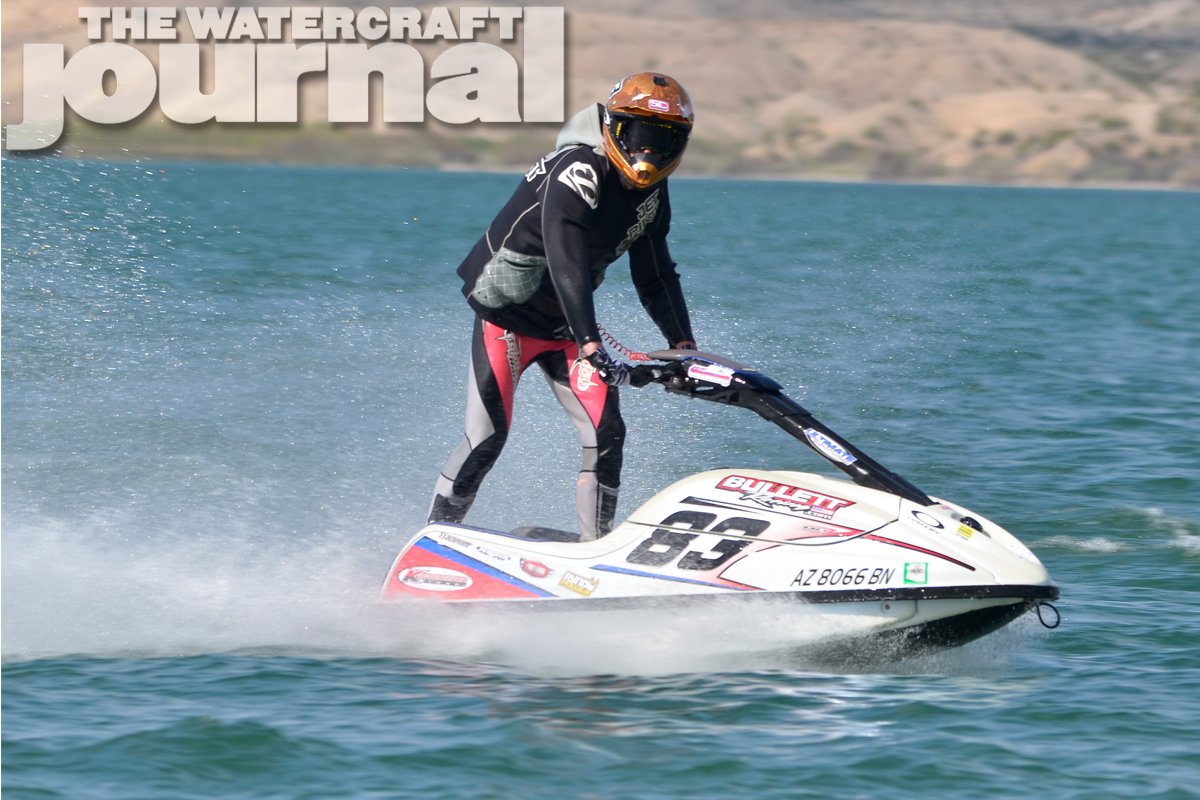
Yet, it are those who dare to compete in both Standup Ski and Iron who stand above. One such, Brock Austin, did so. “The 2015 Mark Hahn 300 had its ups and downs but overall was good! I took first overall in Ironman on a Polaris Octane and scoring said ninth overall in Standup (I thought I was around fifth but I had some mechanical issues so scoring probably had a tough time keeping track of me). I ran out of gas trying to make it three laps but it was too rough, so I didn’t make it and when the ski ran out of gas it leaned out and put a hole in my pipe coupler, so we had to fix it three different times throughout the whole race. I still finished 14 laps even with all of the problems!”
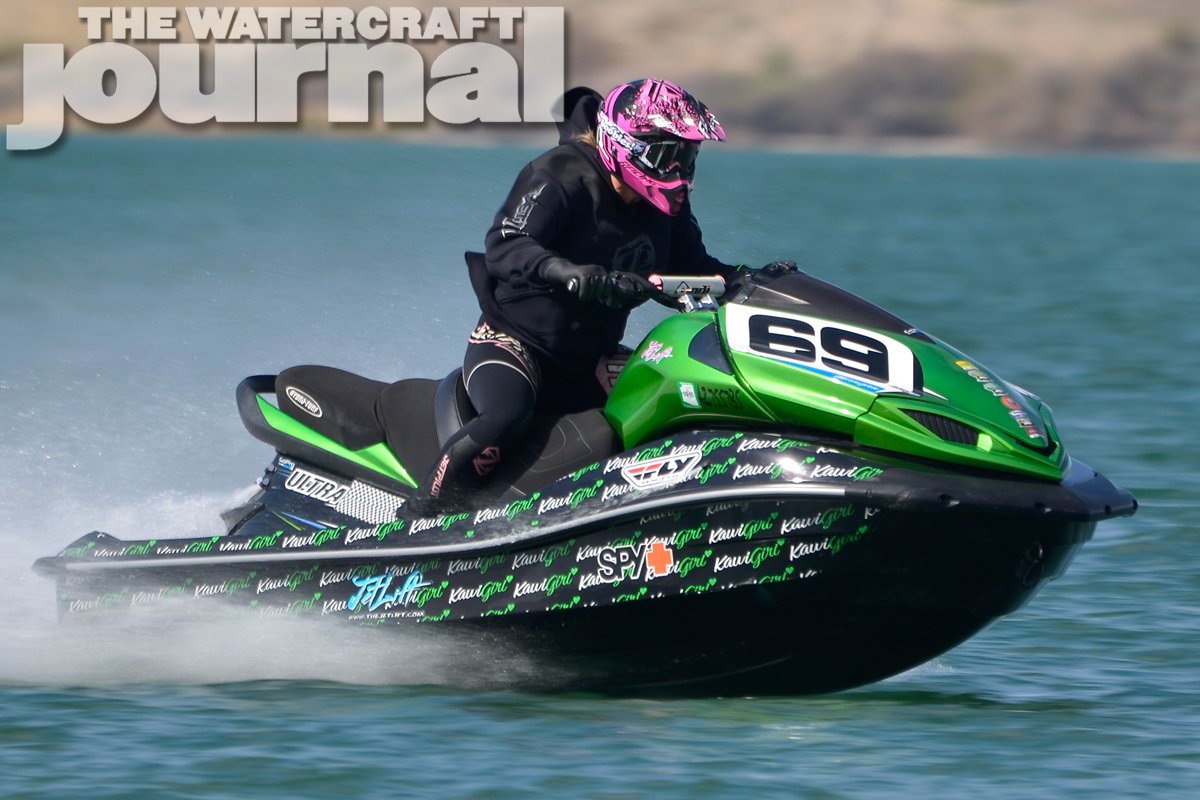
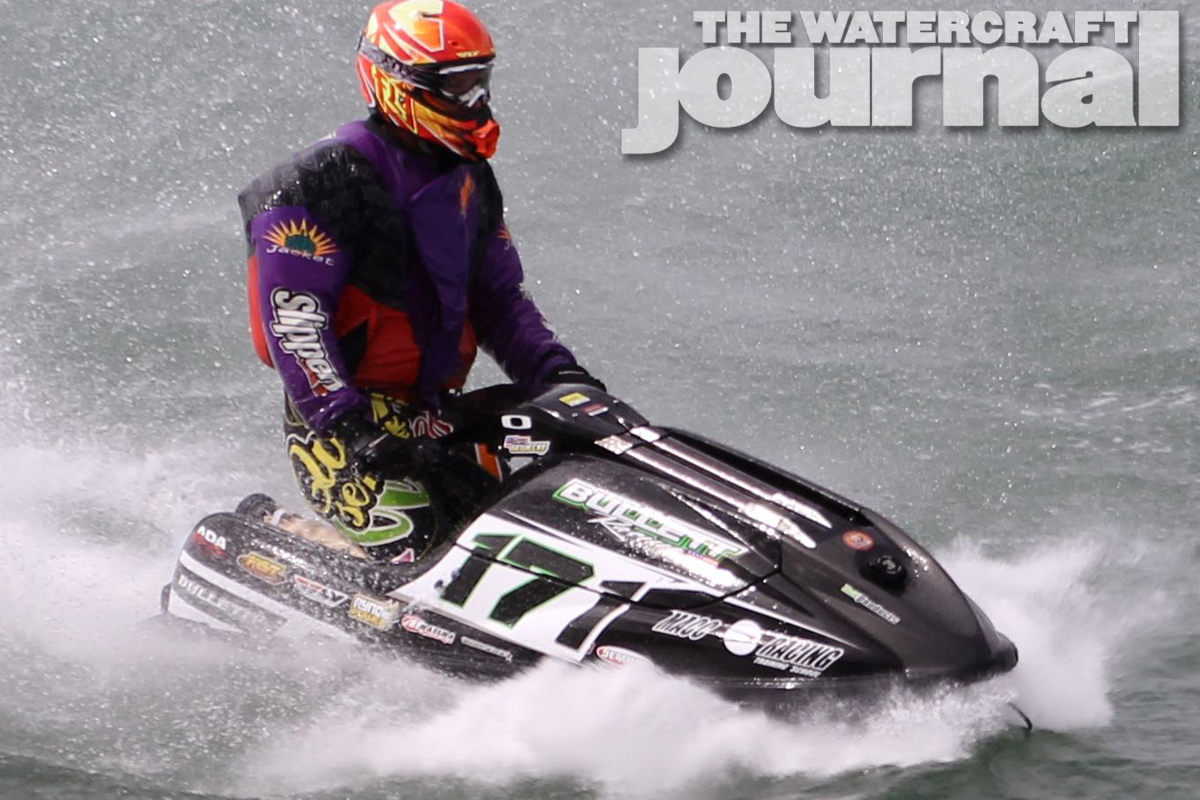
For the Standup class overall, the win went to teammates Bibi Carmouche and Kody Copenhaver. Bibi recalled, “After seeing the weather forecast, I knew things would be much different then the flat water conditions from my first Hahn last season. [We] were excited to see what Mother Nature would bring us because being on a slower ski only meant that rough waters would help us. Kody started the race with a great start and was in third by the time the first lap was completed, from then on we just kept our pace and waited for the anticipated storm to come through.
“As the day went on conditions got more intense and fatigue in all teams started setting in, our pit crew was flawless in the pit stops and we weren’t giving up until the checkered flag,” Bibi continued. “Although it looked as if we were going to finish with a second place, our consistency and grit lead us to victory!”
Kody shadowed by telling The Watercraft Journal, “The race started out cold and cloudy as everyone predicted. On the start I holeshotted the Ski class to about the first boat until Aaron Gewecke passed me, and after second boat Brock Austin passed me. About half way through the race, it got super windy, with big waves and wind pushing us. That’s when our team start excelling. After moving into second in lap 15, on the far back section of the 10 mile loop, I made the pass for the lead. Bibi finished off the race with a good lead. After about six years of doing this race it finally paid off with the roughest conditions and a win.”
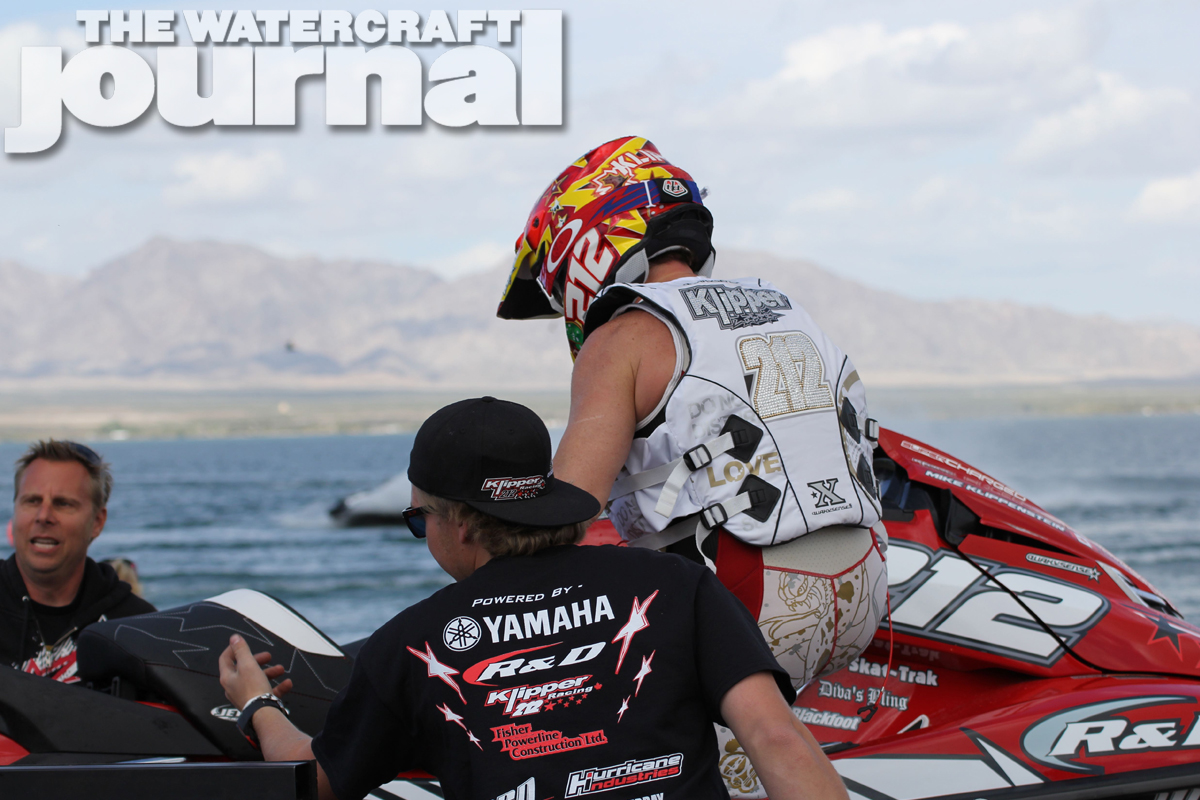
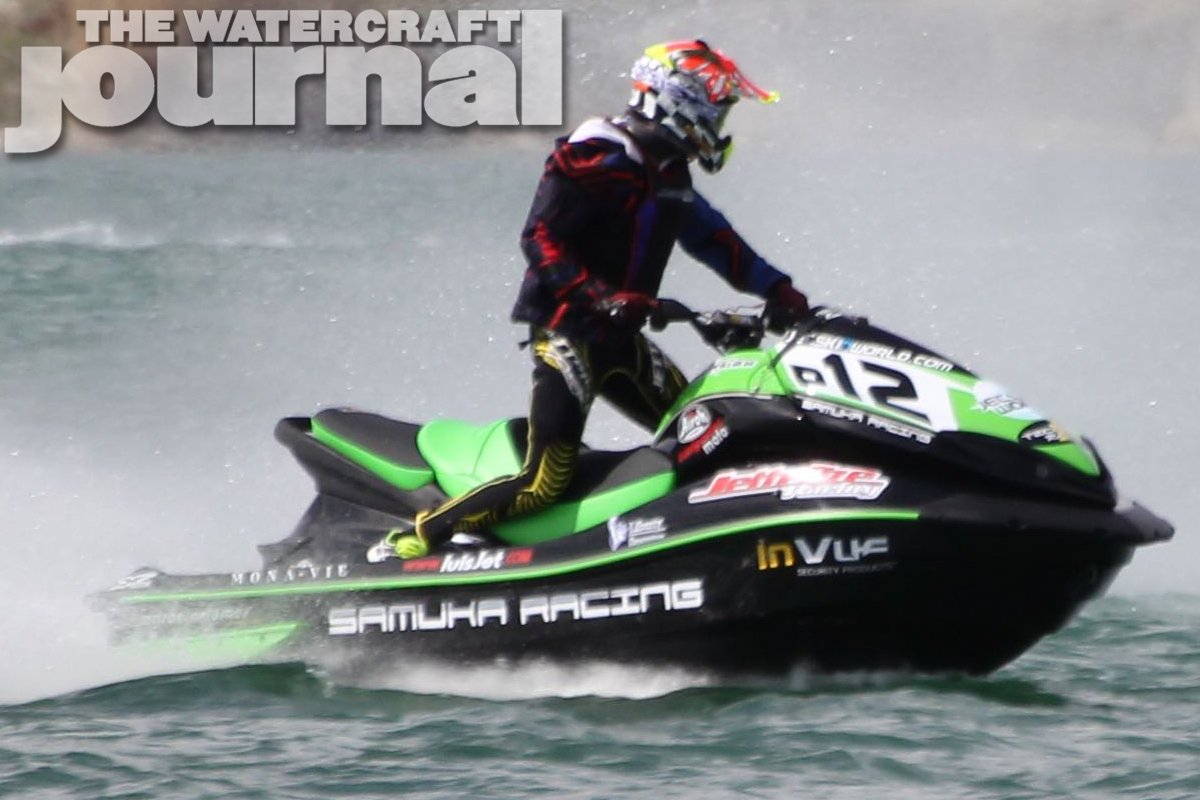
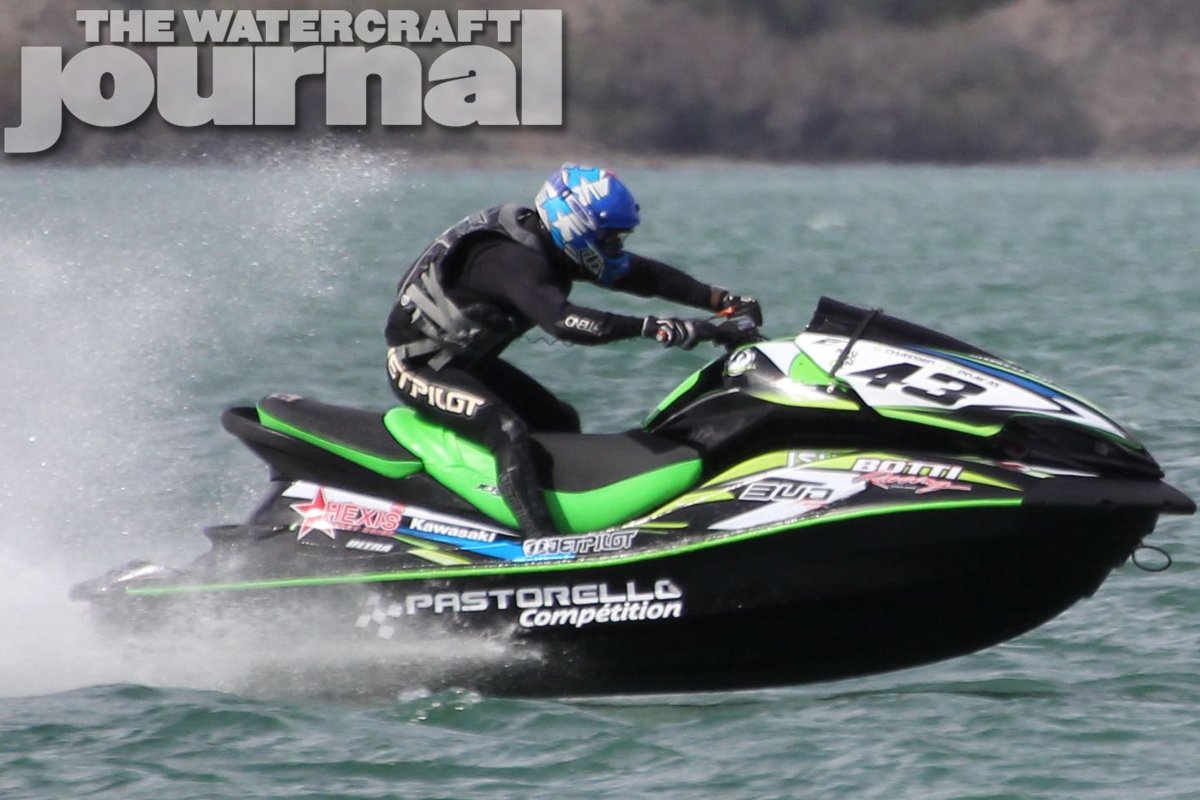
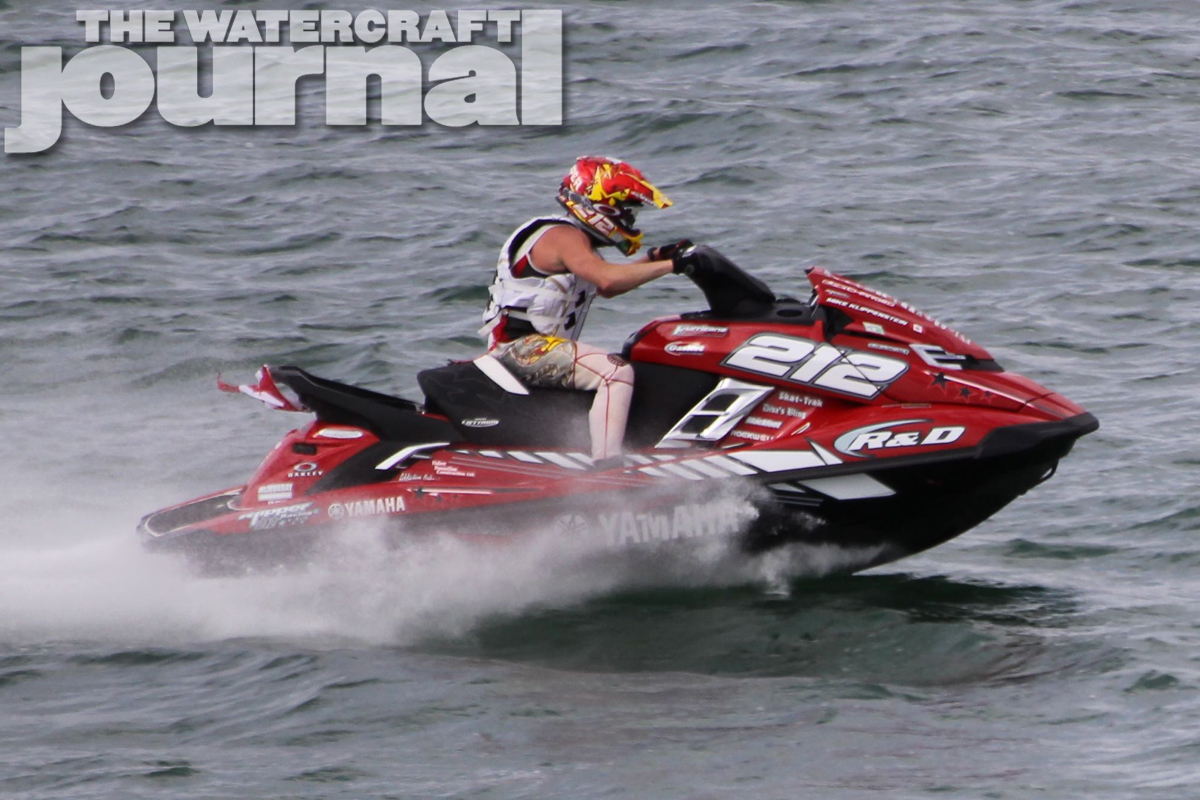
As mentioned earlier, Russians Riabko and Desmer suffered a terrible defeat at the loss of their race-leading boat. That opened up the field to teammates Jean-Bruno Pastorello and Jean-Baptiste Botti, both exceptional competitors in their own right, and Canada’s Mike Klippenstein. Other than a few laps when Riabko and Desmer’s #5 pitted, they led the first 25 laps. By the pit for the next-to-last stop, Pastorello and Klippenstein passed them for good.
Although Botti and Pastorello failed to pierce the Top 25 in the first lap, the duo went on to win by a couple of minutes over Klippenstein, proving that it’s not how fast one starts or how fast a lap can be run, but consistency in the pits and on the course.
Images have been provided by John Carter and Danyelle Glendenning. For unaltered, full-resolution versions, please visit the respective hyperlink.
Allowing consumers direct access to product information and rich media content on all of Yamaha’s 2015 Boat and WaveRunner products, the intuitive, device specific experience offered by the new apps have dramatically improved the informing process and helped increase Yamaha’s buyer experience. Downloaded by tens of thousands of consumers interested in learning more about Yamaha products, the new apps were recognized by the Marine Marketers of America with the Neptune award for excellence in marketing the marine industry.
Yamaha WaterCraft Group, a division of Yamaha Motor Corporation, U.S.A., today announced that it received the Neptune award for Best Mobile Application from the Marine Marketers of America (MMA). MMA’s annual Neptune awards are presented at the Miami International Boat Show Industry Breakfast in recognition of marketing excellence in the marine industry.
Yamaha’s free mobile applications for iPhone, iPad, Android smartphones and Android tablets allow consumers to access product information and rich media content on all of Yamaha’s 2015 Boat and WaveRunner products through an intuitive, device specific experience. The apps have been downloaded by tens of thousands of consumers interested in learning more about Yamaha products, while also being used by sales staff at Yamaha Watercraft dealerships to present product information, photos, and videos as well as to stay abreast of the latest promo offers.
“Our mobile apps continue to attract interest from consumers and dealers alike, and we’ve met that growing demand with new experiences tabs, new competitive comparison data, more videos and even more product information,” said Andrew Cullen, Yamaha’s digital marketing and communications manager. “These apps have become an important element to our new media market strategy aimed at connecting the Yamaha brand and our products through all of the new platforms and devices customers use to consume information today and in the years to come.”
“We’re thrilled with the win and appreciate the recognition in such a difficult category. Our long standing partnership with Yamaha Watercraft has been a source of truly soulful work from our team,” said Naushad Huda, Co-Founder and Creative Director at XTOPOLY, Yamaha’s digital agency in the design and development of the mobile apps.
Formed in 2007, Marine Marketers of America is the exclusive, leading association of marketing professionals who specialize in publicizing, promoting, showing, advertising and selling the products, services and causes of the boating industry.
Whether they were one of the many sponsored competitors hailing from 16 countries from across the globe, or just a racer riding a stock Kawasaki Ultra 310X or Yamaha FX SVHO, Hydro-Turf was found on personal watercraft at this year’s Mark Hahn Memorial 300. Standups with custom-covered trays or supercharged sitdowns with trick two-tone mats and seats, the legendary traction provided by the HT brand kept riders planted as they lapped the 10-mile course again and again and again…
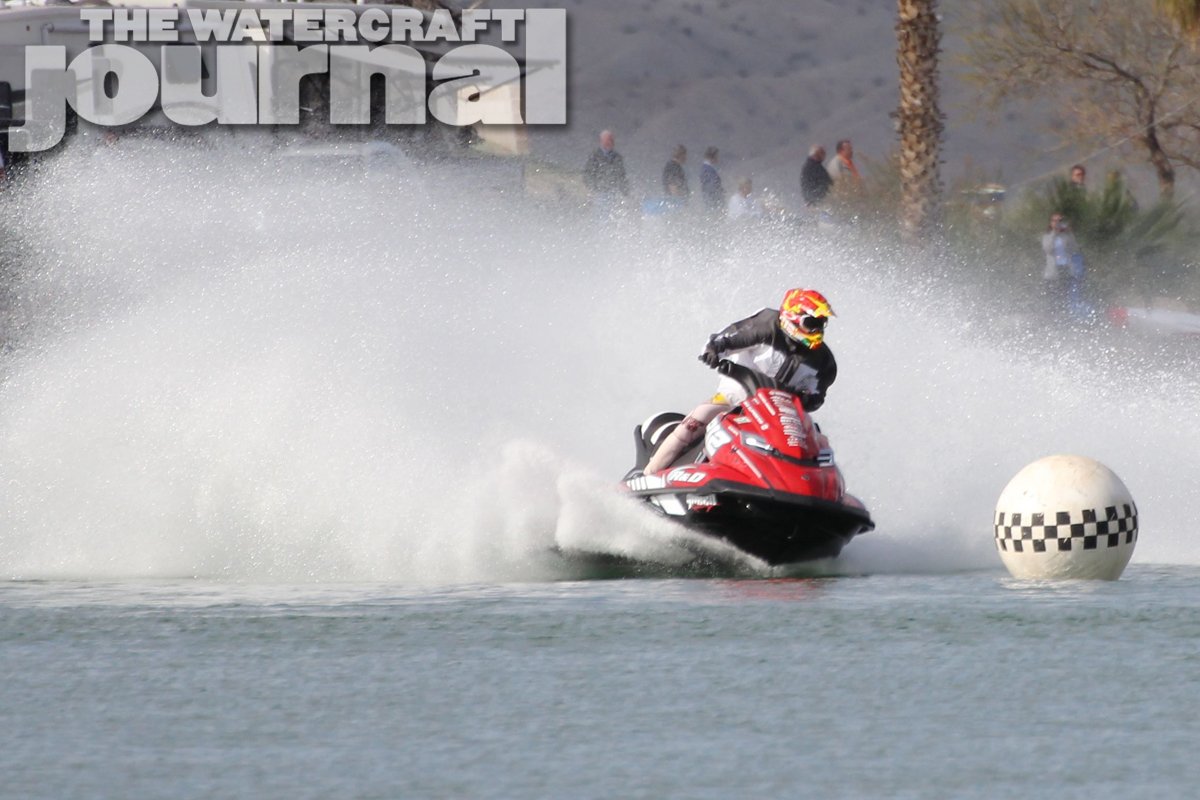
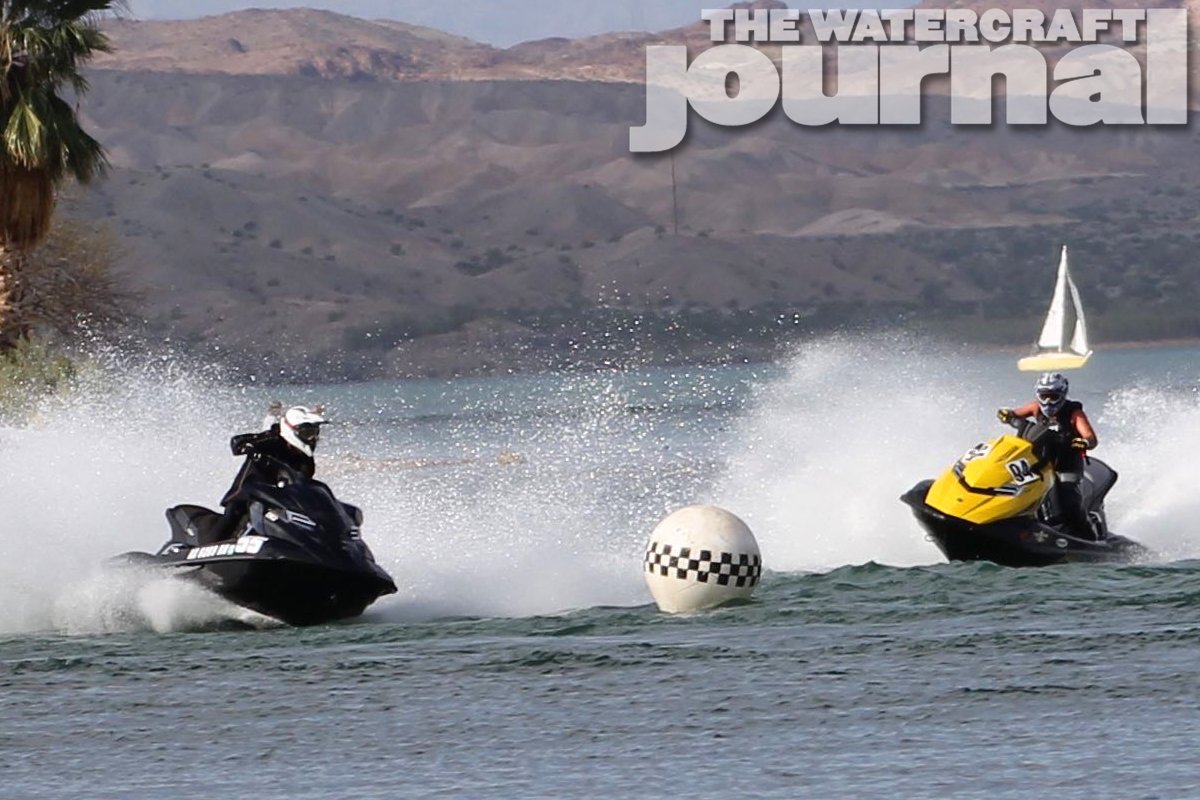
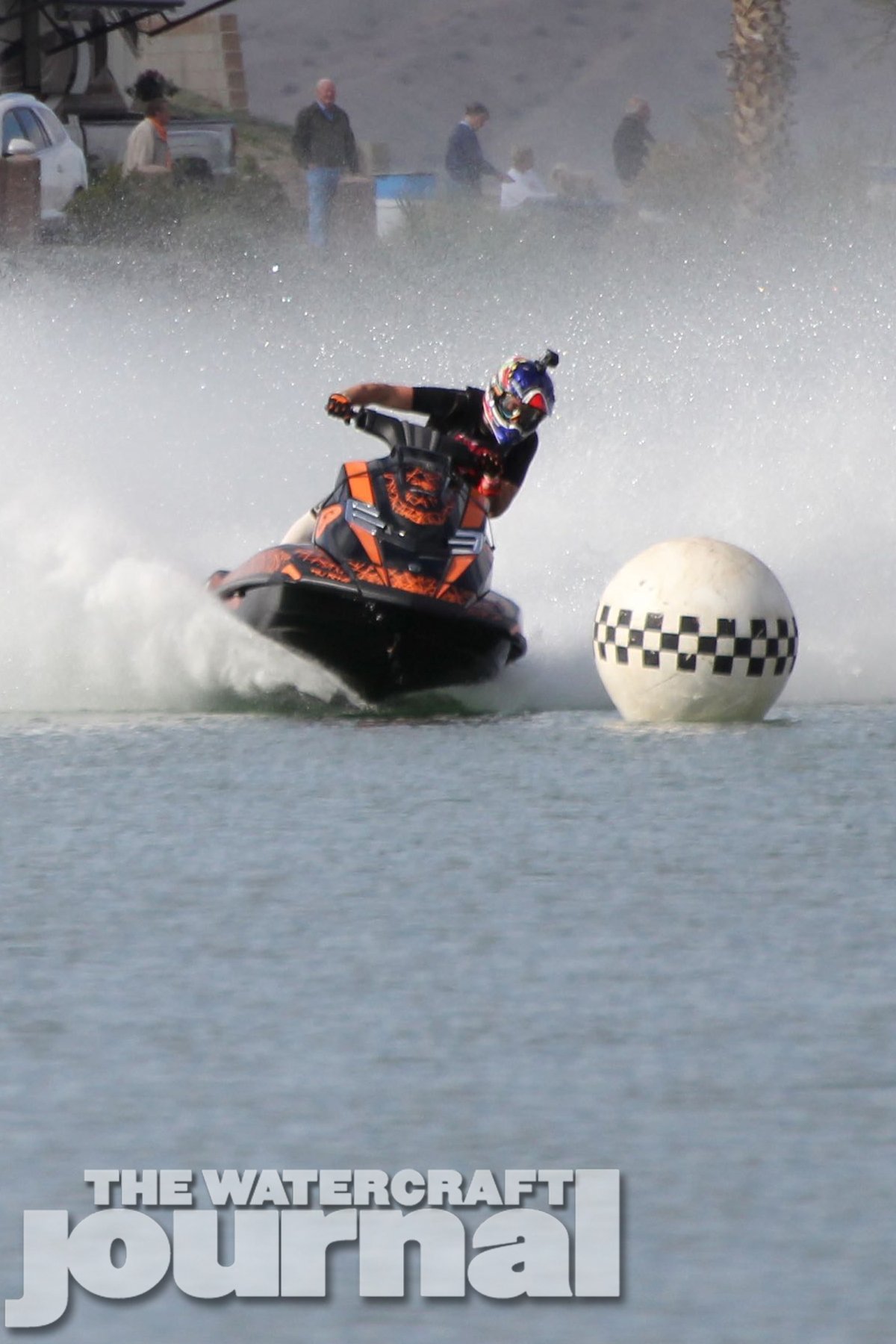
For the 11th annual Mark Hahn, Mother Nature kicked up her fury a few hours into the competition, with winds coming from the south churning up the lake into 4-to-4-and-a-half foot chop peaking in 8-foot intervals. Already well into the race, riders’ fatigue began to set in with many simply “checking out,” tensely gripping their handlebars with all the strength they could muster. The mind is willing, but the flesh is weak, as they say. Other racers pushed their craft to their breaking points.
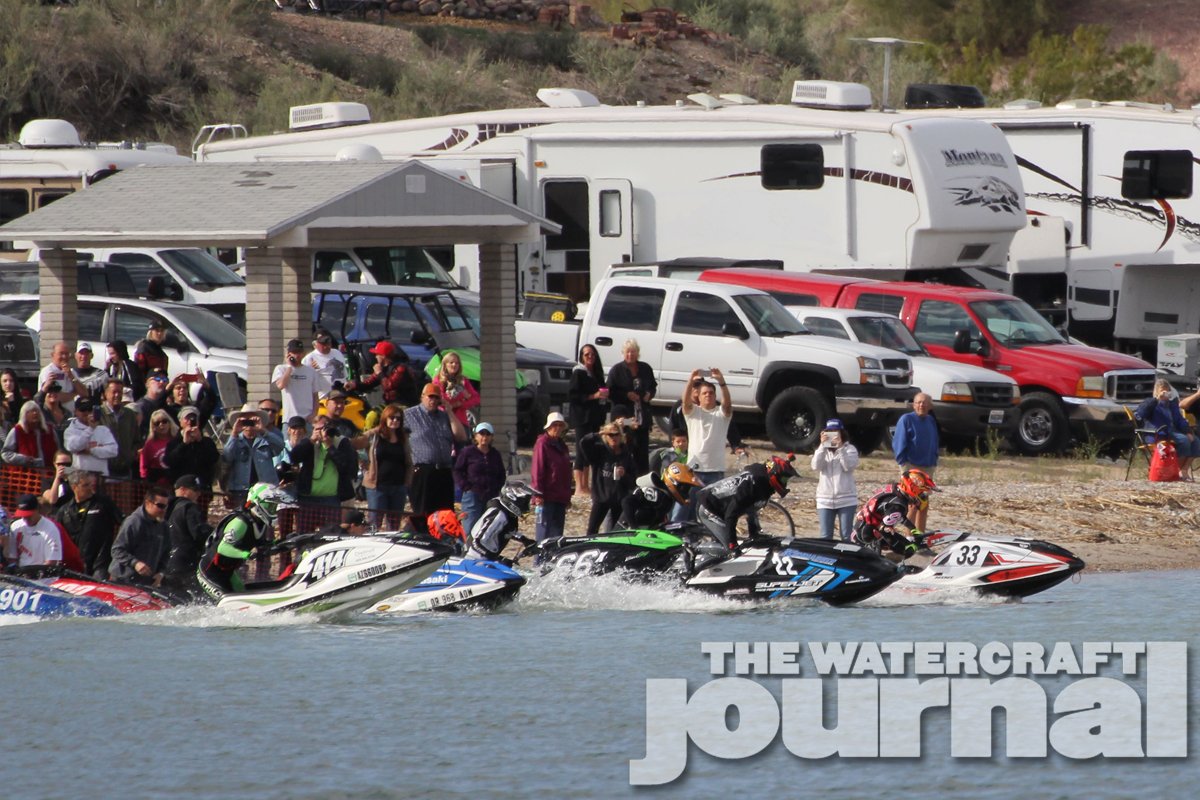
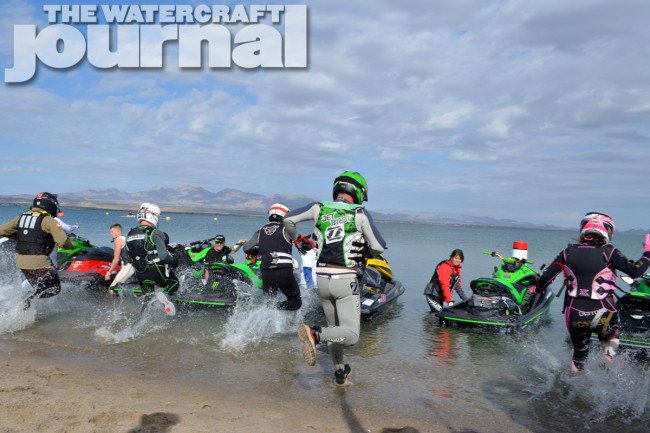
While The Watercraft Journal will be bringing you our excellent coverage from this past Saturday’s race, we wanted to bring you an awesome perspective of the exciting shotgun start of this year’s Hahn. This start differed from previous years, as runabouts were densely packed together (causing some very near misses and collisions), with the standups starting a delayed 30 seconds behind the melee of the larger PWC. The breakup was praised by racers after the event as a smart amendment to the start.
The Watercraft Journal: How did you first got into jet skiing and then into racing?
Callaway Turner: I always enjoyed being on the water growing up and I first had the opportunity to ride a standup jet ski on my 18th birthday thanks to John McAlpine of MacsBoost. I was hooked on riding standups from that point as I bought a Kawasaki 650SX that summer for my first ski. I enjoy the freedom of being on the water and being able to have fun both on your own and with others when riding jet skis. My first race was in 2009 on Lake Norman thanks to the help of Brian Baldwin of Champion Performance. Later, my real racing career started in 2012 when I met Bill Haig and the Hurricane Racing team at Jordan Lake while I was in graduate school at NC State University. I have been riding/racing with Hurricane Racing ever since.
WCJ: You had a pretty whirlwind year of racing. How did 2014 go for you?
CT: The 2014 racing season was a blast. After finishing second nationally in Novice Ski Stock in 2013, I moved up to Amateur Ski Lites in 2014. The season started down in Pensacola, Florida, with the largest surf conditions I’d ever ridden in. At that point, I had only ridden in the ocean once or twice and just for fun, not for racing. I was intimidated at first, especially because I was borrowing Bill Haig’s stock SX-R for that race. However, after some reassuring that the conditions would play to my advantage as long as I rode smart, I had a blast and swept all three motos for a first place finish.
I kept that momentum going through the season, winning every moto in Panama City, Colonial Beach, and Lake Hartwell. The one race of the National Tour I wasn’t able to make in 2014 was the one in Sparks, NV. At the Nationals in Charleston, WV, I finished first in the first moto, but had some less than optimal starts in the second two motos and had to fight through the pack which made for some exciting racing. I managed to fight back just enough to take the first overall and win both the National title as well as the tour championship for Amateur Ski Lites which was the perfect end to an exciting season.
Image: Julianne Wilson
WCJ: Tell us about your experience racing at your first IJSBA World Finals. How did it go?
CT: This was [2014] was my first year racing at the IJSBA World Finals. I only raced one class, Amateur Ski Lites, and was on the fence about adding a second class, Pro-Am Ski Lites. Looking back, I wish I would’ve added the second class. In the Amateur Ski Lites class, I qualified for the main event, which was exciting, but had a rough race in the first moto, finishing near the back of the pack. I redeemed myself somewhat in the second moto, finishing within the Top 10, but still wasn’t racing as well as I know I could. Personally, I was disappointed with my performance, knowing I could’ve done better. But that just means I’ll just have to prove it at the World Finals in 2015.
WCJ: Tell us more about your relationship with your racing team. How are they helping you out?
CT: The Hurricane Racing Team has been pivotal in everything I’ve accomplished so far in my racing career. Without them, I’d probably still just be riding recreationally. Bill Haig’s expertise and experience has taught me a lot and has helped make racing a possibility. Having the backing of the Hurricane Racing Team helps in all aspects – prrparing the ski, transportation to/from the race sites, and especially practicing for the races. Having the group we have to practice with (great riders such as Bill Haig, Jimmy Wilson, Brian Kemp, Ralph McGregor, Zack Spring, and Nick Spring) is a great help for both building the endurance needed for racing and having the head-to-head racing experience necessary to perform well in the races.
As far as skis goes, I have one SX-R currently that will probably remain stock for the 2015 season. There are some minor tweaks I would like to make and would also like to do some dyno tuning to make sure I am getting everything I can out of it. While every little bit counts for attempting to gain a competitive advantage, I’ve learned that practice and training are just as important if not more important for doing well in the races.
WCJ: What are your plans for 2015? What races do you plan on attending? What class(es) are you entering?
CT: For 2015, I definitely plan on all the East Coast races of the Pro Watercross National Tour, but I’m unsure about whether I can make it to the races out in Nevada and Utah (as far as both getting equipment across the country and having the work schedule work out to allow me to travel to those races).
I’m currently thinking about moving up to the Pro-Am Ski Stock class on the National Tour. Also, if I can find a ski to practice and race, I’d like to be able to race the Amateur Ski GP class. Adding a second class would allow me to race more during the weekends and riding a GP Ski would be good practice and help prepare me for hopefully eventually moving up to the Pro-Am Ski GP class.
WCJ: What long-term goals do you have for your jet ski racing career?
CT: In the short term, I’ll be racing in the Pro-Am Ski Stock class and hopefully be able to be competitive this coming year. In the next five years, the ideal situation would be to have the opportunity to race professionally with full sponsorship while working as an engineer for one of the manufacturers as I completed my masters degree in mechanical engineering two years ago.
WCJ: Who would you like to thank for helping you get this far?
CT: First, I have to thank Hurricane Racing, especially Bill Haig for making my racing career a reality. The rest of the Hurricane Racing team is also a great group of people to have to practice with and provide great support at the races. I also have had great support from my girlfriend, Carrie Oliver, and sister, Niki Turner, who have raced in the Womens class as they finished 5th and 3rd Nationally on the tour in the Women’s class in 2014. I’d also like to thank Amsoil for their high performance synthetic lubricants.
Admittedly, it’s been a few months since we’ve last published an edition of “By The Numbers,” not for a lack of wanting to but the belief that frankly, we didn’t need to. Throughout the past four months, as the core of the personal watercraft industry settled in for a blistery and bone-chilling winter here in the States, both we at The Watercraft Journal and PWC enthusiasts throughout the globe central to and below the equator have been kicking into high gear, making the most out of their temperate riding season.
And its to our friends in Australia, New Zealand and South Africa that we salute for not only providing us with some absolutely incredible content, but for buoying our already industry-leading readership even higher than ever before. At the conclusion of the first month of 2015, we were amazed to discover that our January readership had eclipsed that of July of 2014. Let that sink in for a minute. We had more readers reading our daily articles in the middle of January than we did in the height of the US riding season last year.
Oh, and this was no fluke. With less days in this month than the previous, our February readership has surpassed January’s and only continues to increase with each day. As the only personal watercraft magazine to offer a diet of professionally-written, intelligent and engaging content every single weekday, Monday-through-Friday, and to do so completely subscription-free, we are the only outlet that PWC enthusiasts read daily. That’s a fact. So if you’re a company looking to introduce your brand to more readers, more diehard PWC enthusiasts, there is unequivocally no better choice than The Watercraft Journal.
Your Morning Routine
We’ve said it before and it’s never been more true, but each morning – between 7:30am-10am – sees the biggest spike in readership for The Watercraft Journal. Of course, we welcome bumps during lunch and after dinner, but without a doubt, we see the majority of our readers in the morning. So what does that mean? It means that like your morning cup of coffee or weeding through the overnight emails, we’re the first thing people check when they sit down to begin their day. Marketers climb over each other to gain that level of habitual exposure, and we’ve got it coming to our magazine everyday, Monday through Friday.
News articles published in January: 23
Feature articles published in January: 13
Total feature word count: 10,661 words
News articles published in February: 17
Feature articles published in February: 19
Total feature word count: 12,350 words*
*When this number is translated to print publication standards equals a 122-page magazine. Please note that this number does not include an average of two uniquely-written news articles published daily.
Your Industry Resource
“Your reviews helped me buy the Dragon goggles when I was looking to get goggles,” one loyal reader wrote. “[When] I was looking into gloves…out of no where your review came out [on the JetPilot gloves] and I bought mine and my fiancé’s set right there!” And this account is only one of several testimonies we have attesting to the impact our reviews, interviews, shop tours and technical articles have made on our industry. We’ve helped sell skis just by mentioning them. As a resource, people look to us for insight and input.
January
Total number unique readers: 14,680*
Total number of articles read: 31,727
Percentage of new readers: 67.6%
February
Total number unique readers: 14,834*
Total number of articles read: 34,372
Percentage of new readers: 64.6%
*This number is considered equal to an individual sale of a single copy of a magazine.
Your Friends Like Us
Chances are, you’ve either visited our Facebook page, liked one of our posts or shared one of our daily pictures. We love our social media friends, and are the first to thank those who follow us, share and like our posts and leave comments on our Facebook, Twitter, Instagram, YouTube, and weekly newsletters. Without all of you, we wouldn’t be where we are today – the single-most popular personal watercraft magazine in the United States of America, and soon to be all of the industry worldwide.
February Facebook readers: 12,462
February Facebook weekly reach: 16,038
Top Five countries: United States, France, Canada, Australia, United Kingdom
We’re Ready for 2015, Are you?
Even if you’ve just glanced over this article, you should’ve gathered two major points: 1) we have more readers than any other publication within the shores of North America, be it a digital outlet or printed periodical; and 2) we see more engagement, more response and more interest in our content than any of the above. Again, if you are a company looking to introduce your products or services to a dynamic and active audience, you will not find a better advantage than to advertise with The Watercraft Journal.
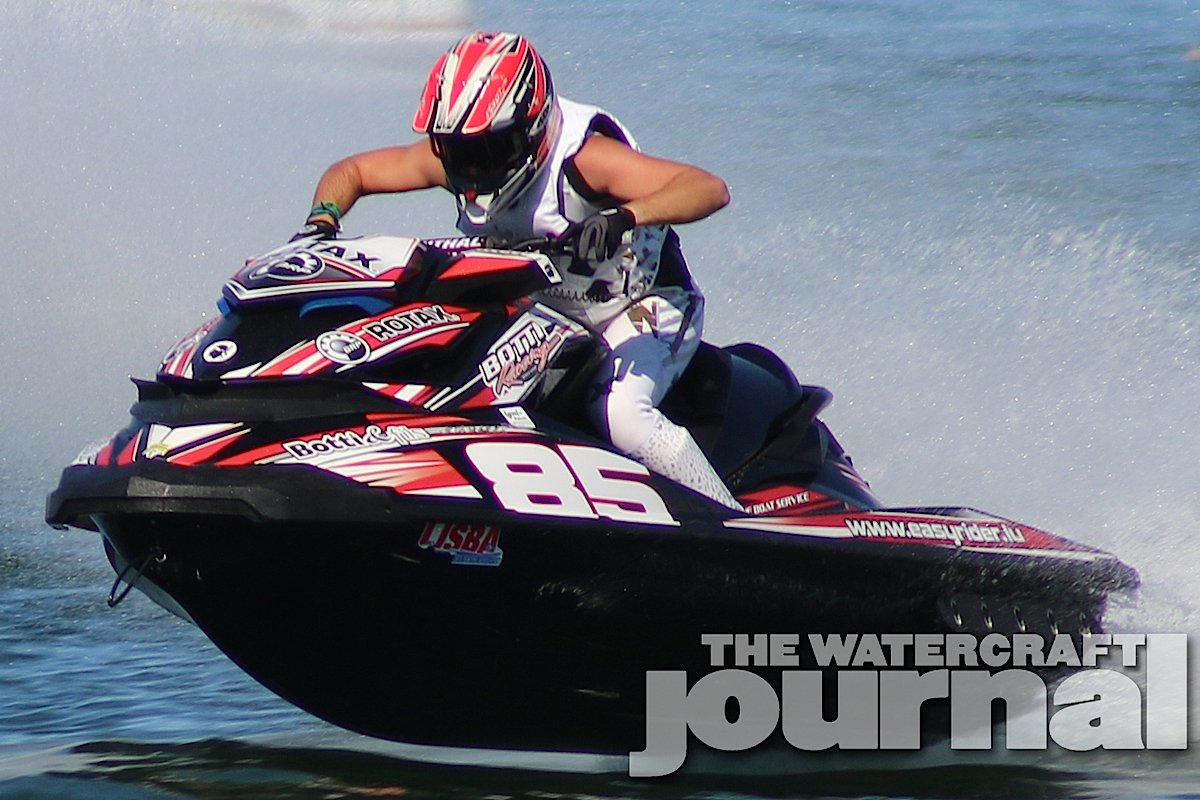
To all who were witness to it, Jean-Baptiste Botti’s performance at the 2014 IJSBA World Finals was nothing short of masterful, comparable to an accomplished violinist beautifully performing Bach’s “Adagio” before a reverenced amphitheater. The Frenchman’s black-and-red Rotax Racing RXP-X never once faltered, consistently outpacing its Pro Open Runabout challengers, the whine of the centrifugal supercharger whistling over the cacophony of pursuing turbos.
Yes, Botti bested a field populated by runabouts built by some of the best minds and technicians in the sport, and to add insult to injury, did so on a RXP-X employing impressively standard equipment. According to a report by Vasilis Moraitis, the factory Rotax runabout rode on a slightly modified and lightened RXP-X hull assisted by a pneumatic trim tab and drop nozzle system. Likewise, the hood and seat were also lightened but maintained much of the factory appearance.
Jean-Baptiste Botti piloted an impressively stock RXP-X to world domination at the 2014 IJSBA World Finals. Only recently did The Watercraft Journal learn that Botti’s Rotax Racing craft was the template for future X-Series Performance craft.
Beneath the hood, the modifications were kept equally as minimal: Rotax Racing’s engineer Franco Dettori described the engine as built around a Rotax stroker crank slinging forged steel rods and lightweight pistons, increasing the factory displacement to 1,600cc, a note which Moraitis extrapolates in late 2014 as being “the future of the OEM boats.”
Equally, the cylinder head is also a Rotax Racing unit featuring lightened exhaust valves. A Rotax Racing camshaft received a custom grind, with modified ignition timing and bumping machined rocker arms. Mated to the high-flow head is a Rotax intake manifold, fed by large 60-pound injectors and a massive 61mm throttle body. Most important to the package is the factory watercooled centrifugal blower housing a 140mm supercharger wheel. Together, the engine produced an impressive 420 brake horsepower.
In addition to the newly re-motivated RXP-X, it is expected for other X-Series Performance craft, like the full-sized RXT-X to receive the same powertrain upgrade.
Backing the race craft’s powertrain is a new 18-vane set-back 159mm pump with an adjustable pump cone and Rotax reduction steering nozzle. All of this equated a final result of 84.5 miles per hour top speed clocked a few days before the World Finals’ main event. The combination proved an unmitigated success naturally, and performed under the hardest conditions imaginable but more importantly, as The Watercraft Journal was recently informed, Botti’s craft was purportedly a “trial by fire” test mule for the new engine and pump arrangement that would eventually become the template for Sea-Doo’s 2016 Performance line.
Our sources affirmed the change citing the addition several new powertrain part numbers as well the replacement of several other SKUs, particularly for the RXP-X. Likewise, sponsored X-Team racers have been reportedly alerted to “hang on to their current units” as the new engine and pump components will be issued according to their consignment programs.
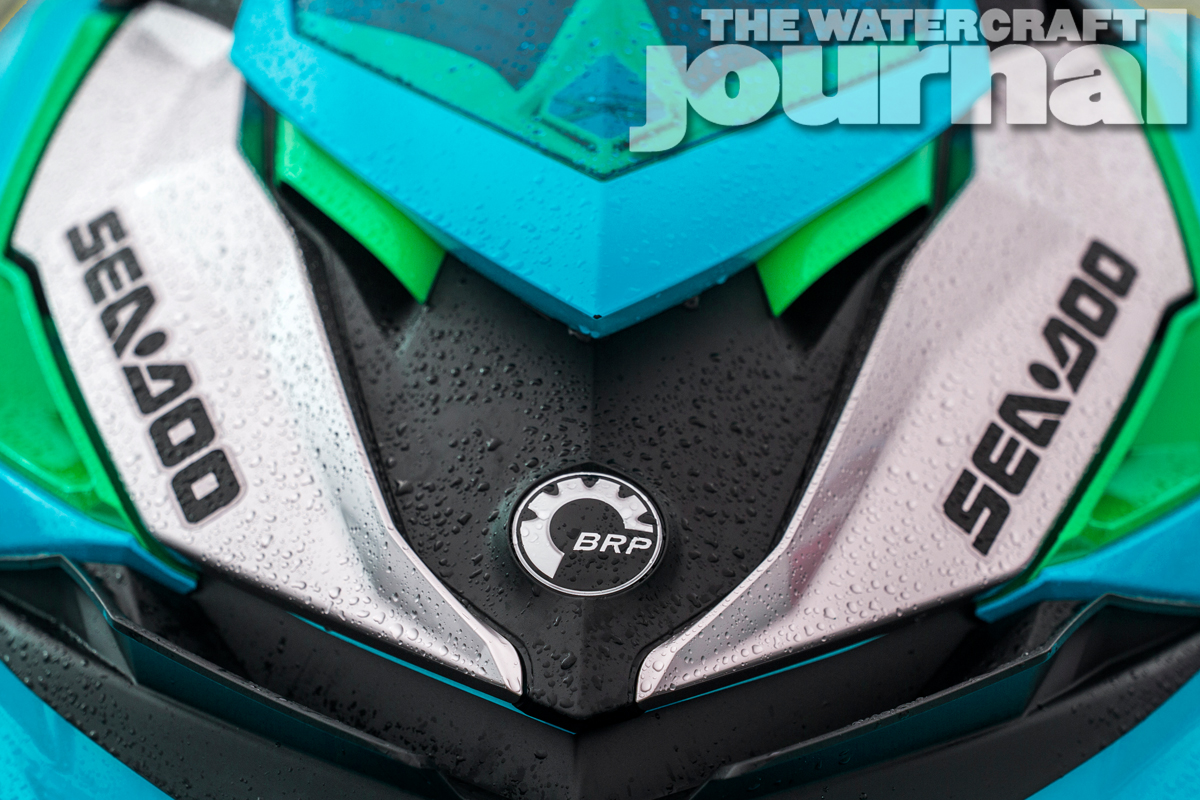
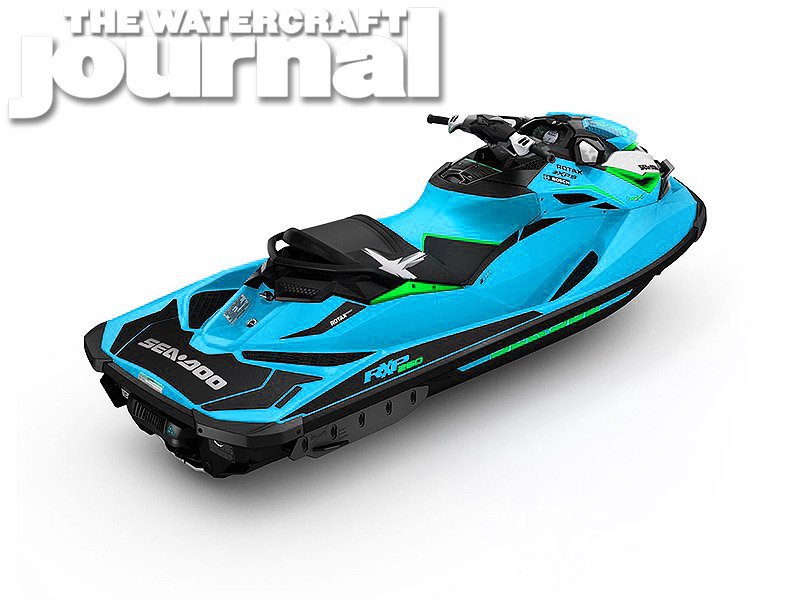
Although the images presented are merely renderings of existing 2015 models in Maldives Blue-and-Manta Green livery found on current GTIs, its actualization isn’t too far of a stretch of the imagination.
As described, Sea-Doo is expected to challenge Yamaha’s SVHO and closing in on Kawasaki’s Ultra 310X with a revised Rotax-powered X-Series of Performance craft. Rather than leapfrogging in technology from the current 1503 SC 4-tec SOHC to a larger displacement derivative of the Spark’s ACE 900 as we had hoped, Sea-Doo will likely opt for the safer alternative, employing tactics proven by Rotax Racing’s latest foray with Botti.
By offering a revised intake manifold and cylinder head, and increasing overall engine displacement to 1.6 liters (from 1,494cc), fuel injectors (from 48 to 60lbs.) and throttle body size, the supercharger housing and wheel (from 137mm to 140mm), as well as a revised intercooler similar to Botti’s set up, Sea-Doo could safely and effectively offer the world’s first 360-horsepower personal watercraft.
Alas, this is an unlikely scenario; it is doubtful BRP will unload both barrels at once by offering a Rotax Racing cylinder head and intake on a showroom stock vehicle (at least, for now). Rather, we anticipate that wiser minds are sure to prevail, likely reserving the new X-Series Sea-Doos to a more manageable 315 ponies – just enough to eke past Kawasaki as the King of the Horsepower Hill.
As we’ve stated previously, Sea-Doo is never one to sit idly by allowing their competitors to jockey too far ahead. And from all that we’ve received over these past three days, we have a lot to anticipate from one of the most daring companies in our industry.
Lastly, the new X-Series are rumored to receive a reworked 160mm multi-vane set-back pump. Whether the design will exactly follow the aftermarket Easy Rider 159mm unit Botti used to propel him to victory remains unseen. The advent of an added 50-plus-horsepower does justify a intake grate design, but there has been no verification on this point.
[Update 9/6/15 – Recently, sources reemphasized the likelihood of an “all new” Rotax powerplant, very similar to our initial predictions of a larger displacement ACE-inspired engine. Aftermarket performance parts manufacturers have reported needing to make “extensive changes” to their current Rotax 1.5L parts to accommodate the new engine. Increased displacement and a minimum of over 300-horsepower are still expected, but the addition of a new dual overhead camshaft cylinder head radically improves the future Sea-Doo’s longevity as a performance leader. – Ed]
PWCOffshore.com racing team #58 pit crew member Lauren Theroux of Orange County, CA has become a fixture on the PWCOffshore.com racing pit crew for years. Ms. Theroux was selected for inclusion into the #58 pit crew team by KC Heidler and Mark Gerner. Lauren’s laser focus and attention to detail regarding every facet of the team’s efficiency in the pits was no surprise to pit team leader Mike Arnold and the rest of the team. What’s more, Lauren is the first known woman pit crew team member on a formal PWC pit crew team.
Fastidious in her approach and always flanked by Steve Rasmussen of Mobile Motorcycle Mechanics Inc., Lauren is setting the standard for women in the crews. PWCOffshore.com founder Mark Gerner said, “Lauren meets our standards in every way and we are proud to call her a member of our team. She is an invaluable member of our team and we have grown to rely on her eye for detail and passion for doing everything right.” We had the opportunity to spend some time speaking with Lauren regarding her experiences with the PWCOffshore.com racing pit crew team.
PWCOffshore: So how did you connect with the PWCOffshore.com racing pit crew?
Lauren Theroux: I was invited to join PWCOffshore.com by Aaron Cress, at first i thought he was kidding or that they needed me for score keeping or something along the lines of what most would consider a good female job. Aaron assured me they just really needed someone who could float duties. Uncapping jugs, runway up keep, basically helping where needed. I was excited and nervous – how would a team of men take a girl joining their team? I didn’t want to be seen has someone they would have to watch over and pick up the slack.
PWCOffshore: What if any challenges did you experience as a member of the pit crew?
LT: The first year was a bit nerve wracking, I really wanted to make a difference for the team and step up to the plate of what was expected. I must have because the Mark Hahn 2015 will be my third Hahn. I wanted to be considered a part of the team so I really wanted to make sure I was pulling my weight and go above and beyond for the team. Everyone was super supportive of my presence. But a main challenge I had to maneuver the first year was getting “the guys” to believe I really knew what I was talking about, whether it was what tool was needed, where someone should be at the time of the pit instead of somewhere else, or just trying something I had suggested.
Mostly they listened to my concerns and suggestions but definitely with some reserves. The huge ice breaker was when we needed to do an emergency pump swap mid-race and between Aaron Cress and Steve Rasmussen working on two skis I knew the tool box best, lying on their backs on the ground they need the correct tools in their hands and quickly to get it done efficiently I think everyone watching was quite impressed to see me manage the situation, it was probably the fastest pump swap ever with only three people.
PWCOffshore: You are the first known female member of a professional PWC pit crew team and PWCOffshore.com’s pit crew, how did it happen and how was the transition into the team?
LT: I was shocked to learn I was the first female in an official pit crew. Women are determined, focused and organized, not that men aren’t but I would think more teams would have utilized a woman’s resources on teams like this. I was fortunate and feel privilege to be invited to join PWCOffshore team, it is something I look forward to all year to be apart of these offshore and endurance races. I have Aaron Cress to thank for suggesting me to the team and making it all happen.
PWCOffshore: What role do you play within the pit crew and how do you train?
LT: My job on the pit crew is diverse, my primary roles are to set up our pit and runway, also to support our main fueler and secondary fueler, I uncap their quick fill system fuel jugs and take over our primary fuelers quick fill so he can return to the rear of the boat for the procedure of returning our boat and racer to the water. While taking over primary fuel jug I also spot for our secondary fueler, watching his back and assisting in safely and properly getting him and his jug out of the way. Oftentimes he has remaining fuel in his jug, so the risk of spills and his safety are high it’s my job to make sure he can return to fuel safely. Between pit stops I maintain our runway, this is a key to a successful race as many who have raced the Hahn know, your runway can make or break the race. It is vital to have a very specific and well maintained runway.
PWCOffshore: What do you see in your future with pit crewing and PWCOffshore?
LT: I consider PWCOffshore a family – for years to come we will be supporting each other and continuing the tradition of PWC endurance racing together. Every year our team looks forward to the Hahn and every offshore race for year. In 2015, I was invited to help keep times on the score boat for the Dana Point to Oceanside race, I hope to do more of that, as well as the Hahn.
PWCOffshore: Are you and the PWCOffshore pit crew ready for the Hahn?
LT: We are ready, we are prepared. We take numerous steps to be at the top of our game and our focus to be mutual and set in stone.
PWCOffshore: You have quite a history with racing and race related vehicles, how did you get so involved in racing and so knowledgeable on the technical component of race vehicles?
LT: Growing up my father was very involved in the car industry. That brought many races into our lives. He is also an avid off-road motorcycle rider, my dad having been blessed with two daughters, wanted to share his passion so he got me involved.
When Stephen and I met in 2010, of course he’s a motorcycle mechanic, it all came together from there. I was soon wrenching on bikes and running the paperwork end of his business and that is how I came to meet Aaron. Being a woman in a man’s business you either stare blankly during conversations or you become involved and get your hands dirty. The mechanics of motorcycles, ATVs and PWC fascinates me, so I forced the boys to teach me and involve me in the industry.
Hey! Remember doing this with your old 550? We do. In fact, considering that the JS550 is what? 30-years-old, it’s pretty impressive that we still have new watercraft that actually fit in swimming pools given the way skis keep getting bigger and bigger over the years.
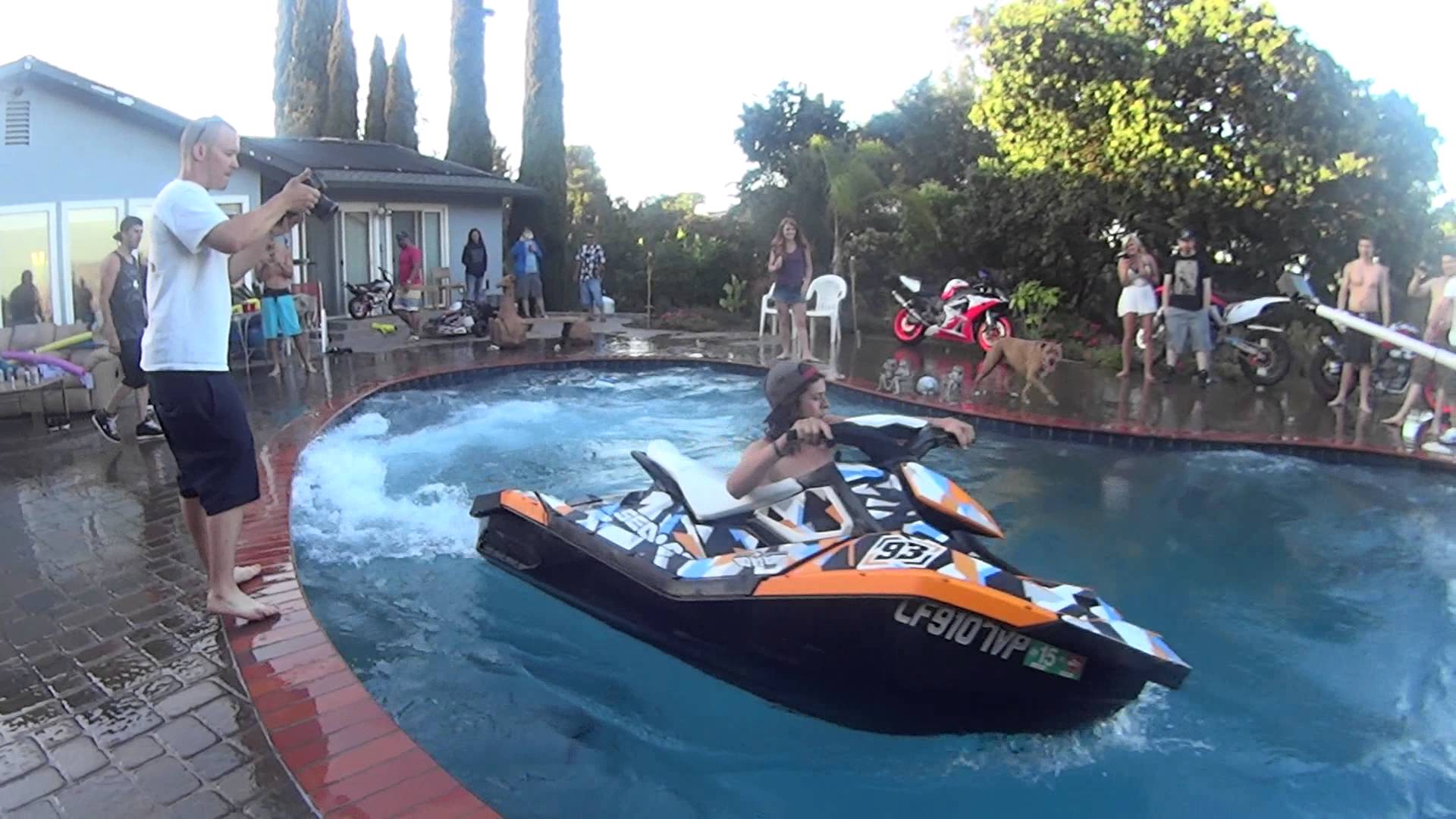
We spotted this first little clip over on Adriano Oda’s Facebook wall. Clearly meant to be just a pair of friends having a little bit of fun hamming it up on camera, stating in a very poorly Google-translated prose, “The sea was very angry, so we will stay in the pool.”
The second video of famous street-freestyle rider Aaron Colton nearly launching a wildly wrapped Spark around a buddy’s pool is also good for a laugh (although, admittedly stupidly dangerous), but also speaks to just the sheer amount of good ol’ fashioned fun the Spark offers.
We loved the Sea-Doo Spark enough to give it the 2015 Watercraft of The Year award late last year. But some will ask, is it the a “perfect” PWC? No, and deeming any one ski “perfect” is almost an inescapable trap of subjectivity. But is it double its 400-plus-pounds weight in stupid fun? Yes, yes it is. And that’s why it won (although its bargain price and huge sales numbers helped).
The little thing is a ton of fun, and we’ll never back down from that statement.