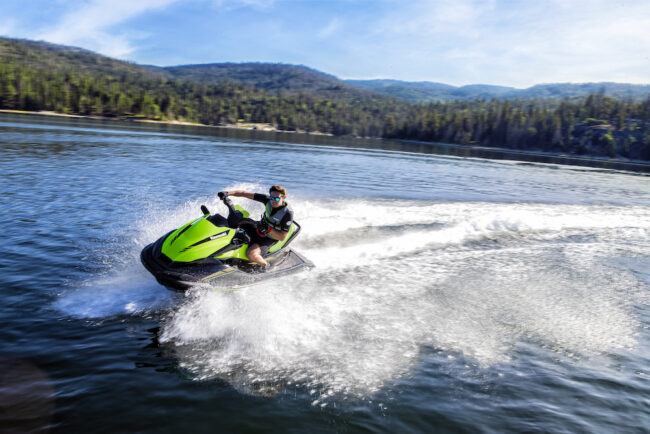
Since it’s development over 20 years ago, the STX hull was one of the single-most successful designs to hit the water; both recreationally and professionally. Well balanced, stable in chop and featuring a natural inside-lean in aggressive cornering, dozens of athletes earned national and world championships aboard the STX and for good reason. It works really well.
Although a bit staid by today’s technological standards, the STX-160 lineup (160, 160X and 160LX) remains a viable rung on the market’s ladder, offering a solid, reliable machine for entry level buyers and those on family budgets. But how about those wanting a little more from their STX? Kspeed has exactly what the performance enthusiast is needing to pour on the pizazz.
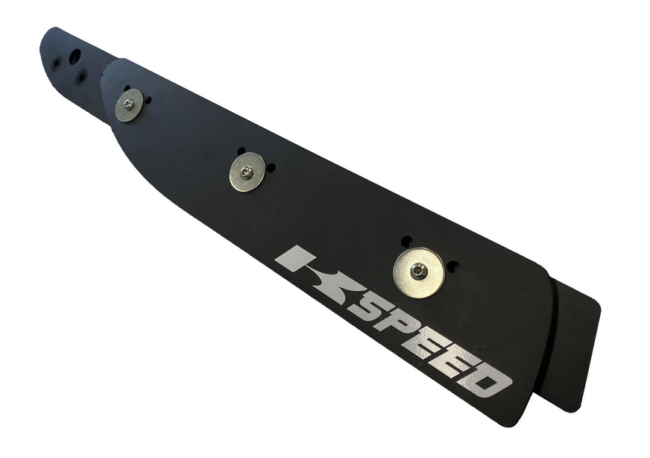
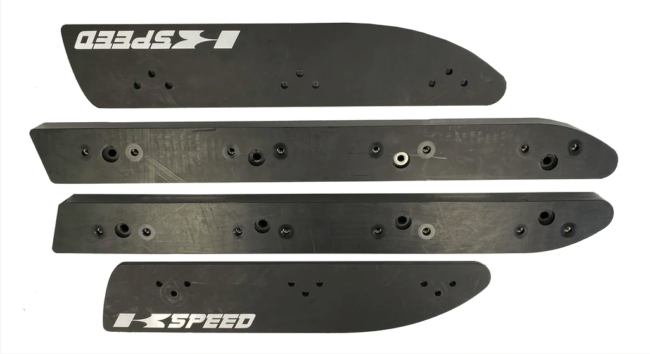
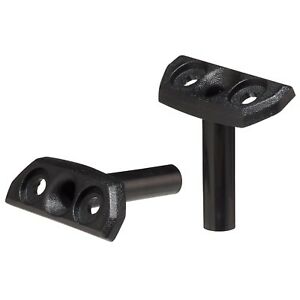
Kspeed’s Adjustable Race Sponsons fit all years and makes of STX JetSkis – whether its a STX-1200R, 12F, 15F or any of the new 160 models. And they also fit on the SX-R 1500 stand-up! The machined backing plate permits for a handful of adjustment settings, placing the deep-set blade forward, rearward or deeper in the water for maximum traction in chop and bite in the corner.
The steep rise of the backplate raises the bow as the blades cut at an aggressive negative-camber angle, ensuring that you can power through a hairpin or sweep a wide circle without losing the tail. Priced at $300 AUD (or $225 USD), you too can speed through tight corners and navigate the surf with Kspeed’s STX/SX-R Adjustable Sponsons.
Check out these best-selling accessories from Sea-Doo. They may not have a lot of PWC in stock, but they do have a lot of gear on the shelves. A 2% commodity surcharge has been added to help offset the rising cost of raw materials on the market. The increase also allows Sea-Doo to continue to provide high quality products to their customer base. With that said, let’s get on with high lighting some of their great products.
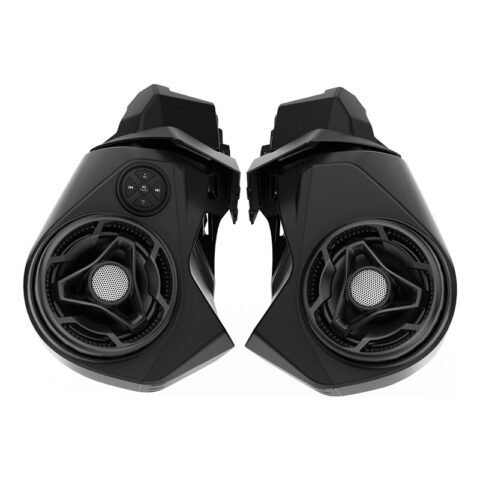
Add some sound to your Sea-Doo with the additions of a BRP Audio-Premium System is. This is their fully submersible system that you can use even when the engine is off. It has Bluetooth connectivity and two 50-watt speakers that put out clear sound, even when riding. For those days you want to stop and chill for a bit and don’t want to deal with the drift from the wind or a lot of current, grab a Sea-Doo Sandbag Anchor. Fill the heavy-duty bag with sand, and you’re set to stay in place.
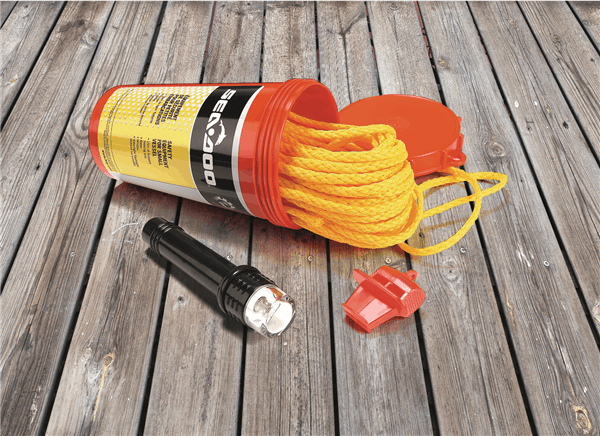
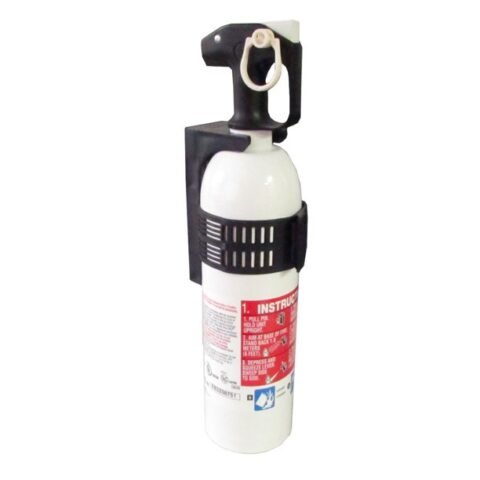
A safety kit that includes some essential items is also available. It includes 50ft. of buoyant heaving line, bailer, whistle, and a watertight flashlight. With a $20 price, you can buy several just to have or give to friends. Add a Coast Guard approved fire extinguisher to round out your safety kit. It fits on all LinQ with 16” base. At the time of this writing, Sea-Doo had all these items and more in stock. We recommend you order now or head to your local dealership to get what you need. Happy riding!
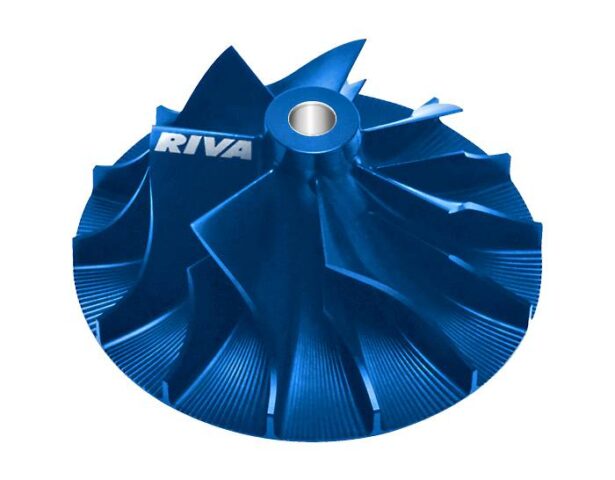
All three impeller designs began as “clean sheet” designs despite years of offering impeller wheels for these two platforms since their respective introductions. The intent behind each entry was to maximize the total boost or psi (pounds per square inch) throughout the engine’s powerband. Previous iterations build boost in a gradual curve, increasing the positive atmosphere progressively; the new impeller designs by RIVA provide greater boost earlier in the curve, continuing to increase throughout the band.
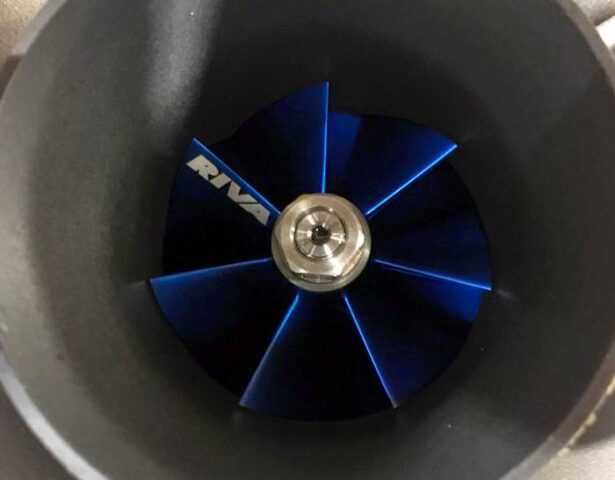
For Yamaha applications, RIVA Racing designed two impeller wheels for the SVHO that do not require any milling or modifications to the factory housing itself. Although part of the Stage 3 and higher levels of modified engines, removing the need to machine the housing saves engine builders a major step. Rather, the new R3 and R4 impellers ($499.95 each) generate increased boost pressures earlier and continually, delivering increased horsepower and torque throughout the RPM curve without permanent modification.
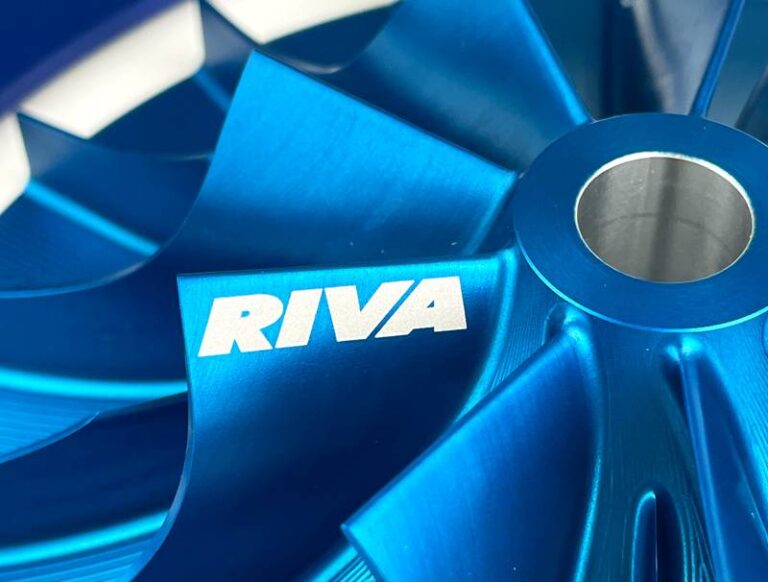
These gains are achieved via two methods: Radical new blade designs that maximize internal volumetric efficiency and optimized precision machining. Each impeller wheel is machined within exact tolerances, resulting in an impeller wheel without the telltale “bite marks” taken out of the leading edge – the result of post-production balancing. Made from 2618 US forged aluminum and machined in North America, each impeller is anodized to prevent corrosion, and labeled with RIVA’s logo via laser etching.
Although not visually significant, the differences between the RIVA Racing Yamaha SVHO R3 and R4 supercharger impellers are significant when comparing the boost pressures throughout the acceleration curve (particularly when reaching revolutions above 8,000rpm). Each requires an engine management tune and supercharger shaft upgrade kit to handle the radically increased boost pressures:
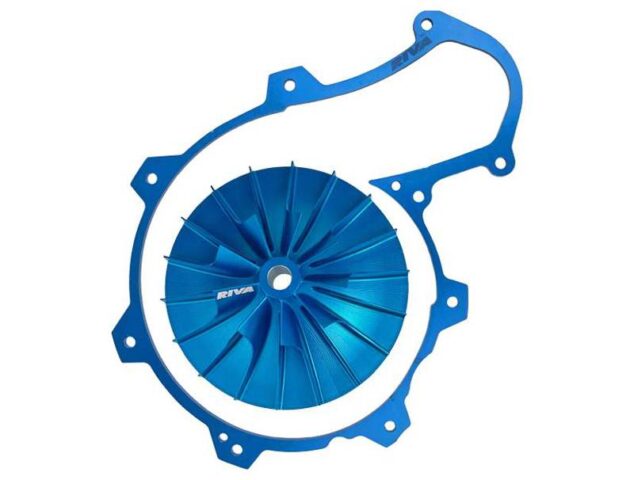
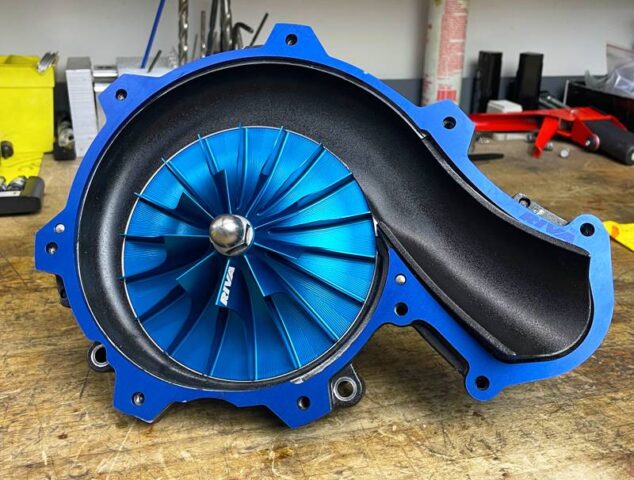
For Sea-Doo enthusiasts, RIVA Racing offers an all-new XX-Charger Upgrade Kit ($649.95) for all 300 ACE 1630 applications. Unlike the two Yamaha SVHO applications, to best maximize the efficacy of the new XX-Charger impeller wheel, RIVA includes a billet spacer made from the same 2618 US forged aluminum as the impeller itself. This 3mm spacer fits between the front and rear housing of the factory supercharger, increasing the housing’s total volume, permitting RIVA to design a taller, more aggressive blade design for wheel.
Due to the superior materials used, RIVA is able to shave 22 grams off of the impeller’s wheel (168 grams) over stock (190grams), meaning although taller and more aggressive, the XX-Charger wheel is lighter and better balanced. This also means less wear on the clutch and bearings. Similar to the aforementioned Yamaha R3 and R4 impellers, the XX-Charger impeller is precision machined so there’s no need for re-balancing after final machining.
Equally, the XX-Charger is anodized for corrosion resistance and is made entirely in North America – so no waiting for a container ship from overseas. For those professional racers, the new XX-Charger Kit is also IJSBA Limited Class legal; otherwise, the impeller upgrade is designed for dedicated performance enthusiast running the Stage 3 or Stage 3+ kit with an upgraded engine management tune and fuel delivery system, as the XX-Charger produces a peak 17.5 psi at 8,700rpm – nearly double the peak psi of the stock impeller wheel.
As RIVA Racing remains unrivaled in its ability to design, prototype, test and manufacture some of the industry’s most successful performance products, it’s also the tip of the spear when it comes to customer assistance and troubleshooting.
RIVA has a full technical support team dedicated to answering emails and phone calls if you’ve got questions regarding your particular application or deviations from RIVA’s prescribed packages. As RIVA Racing president, Dave Bamdas stated, “Even if you’ve got a somebody else’s camshaft, we can work with you to get that calibration – through MaptunerX – to get that to work with your package.”
Superior performance has never been this easy, and RIVA Racing remains at the forefront of this effort. If you haven’t already, visit www.rivaracing.com, enter in your personal watercraft into the search function and begin perusing the pre-packaged Stage Kits or scour the catalog of parts to begin building your ideal performance package.
This year, Sea-Doo stepped up as the presenting sponsor and has ponied up for an awesome Grand Prize for catching the five longest Large Mouth and or Small Mouth Bass: a brand-new 2022 Sea-Doo Fish Pro Trophy and a single-place trailer!
Held on Saturday, May 14th at the Stateline Auxiliary Launch Ramp at Lake Powell, the venue rides right on the border of Utah and Arizona so it will be operating on Arizona time, which just so happens to be one hour behind Utah time.
Competitors note that you’ll be fishing for Large and Small Mouth Bass, with an entry fee of $225 each. There are also tickets for the Largest Striper and Largest Walleye for $25 each ticket. Winner wins the pot. Please note that this is a CPR tournament (meaning Catch, Photo & Release).
This means that after a fish is caught, it is photographed using your cell phone with the fish being placed on an approved measuring board. Then the photo is uploaded to the Fishing Chaos App. After a judge approves the catch, it is then placed on the leader board. The angler with the most inches at the end of the tournament wins the Grand Prize.
In addition to the Sea-Doo Fish Pro Trophy grand prize, many other prizes (and cash) will be awarded to other finishing positions, including Castaway rods, Icom handheld marine radios, Camp Chef pellet grill, Helinox chairs, Sun Bum merchandise, and many other cool items! Click HERE to enter next month’s tournament and a chance to win!
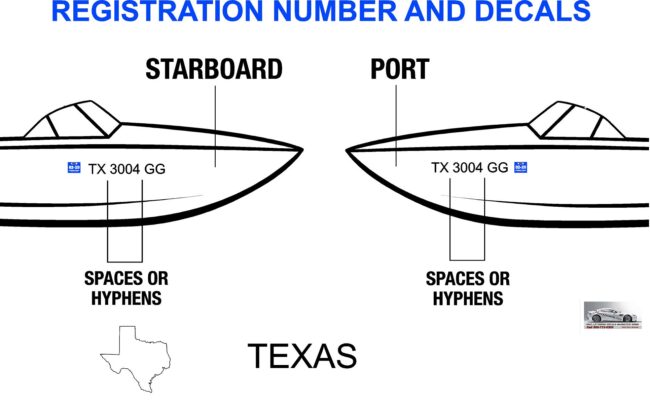
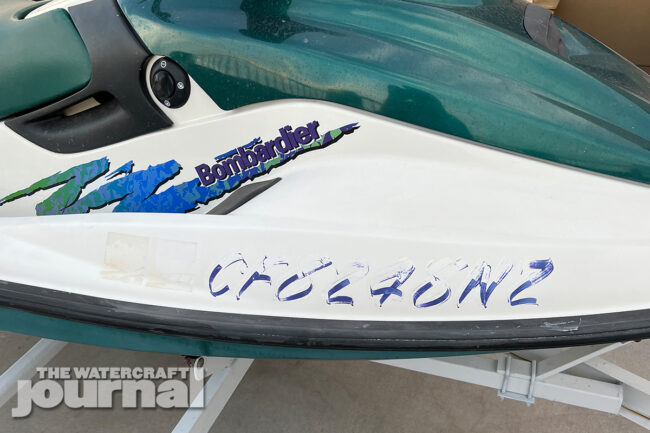
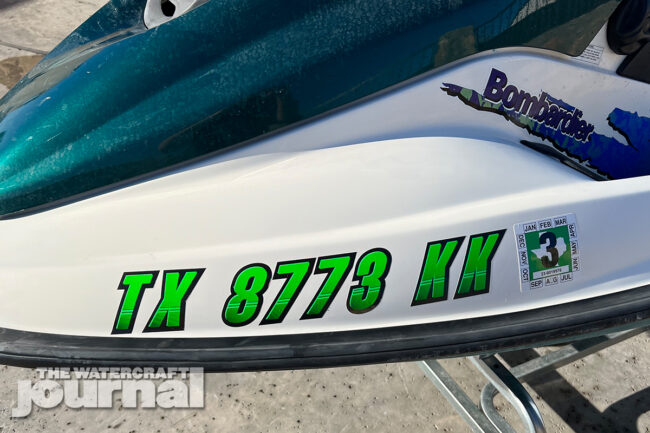
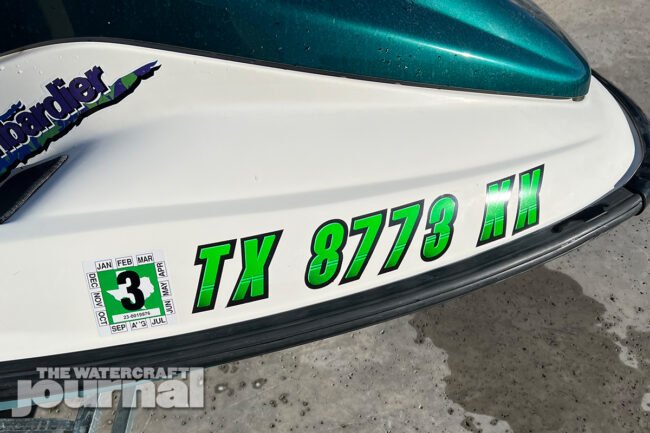
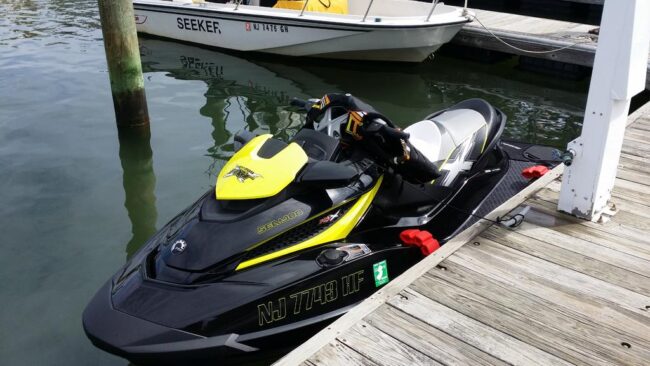
Now that you have your watercraft registration number and date sticker, you’re required to display it on your vessel. And this is the same for all states. As mentioned before your state-issued eight-digit registration number, the first two digits are your state’s abbreviation followed by four numbers, followed by two letters.
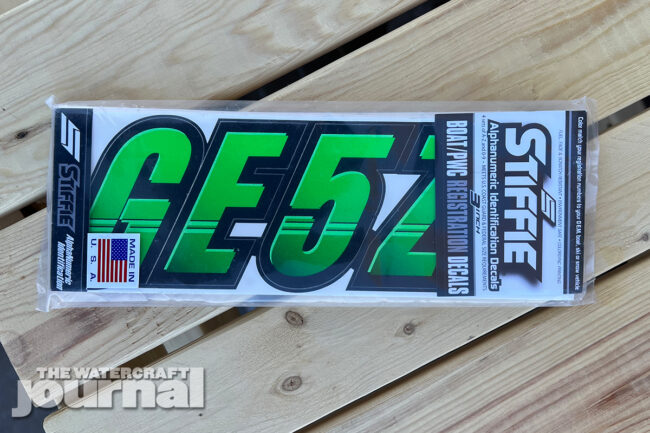
There are a couple of ways you can go about getting these numbers; first, you can go down to a local marine supply store like West Marine. You also have the option to go to a sporting goods store like Bass Pro Shops, Academy and so on. In the marine section, they all have registration number packs that you can purchase. If you do not live close to one of the stores, Amazon is also a decent option because they have different designs, colors and fonts to choose from.
Another way of displaying your registration numbers is to have pinstriper paint on your registration numbers. This was very common back in the day; however, it is almost a lost art. You can also do what we have done in the past and go to a local graphics shop and have them match colors to your watercraft’s design and color palette. This by far is the most expensive option but it also looks the best in our option.
Now if you bought a used ski, it is far more common for people to have pinstripers paint on their registration numbers. Even though this looks extremely cool it makes for a bit of a pain for the next person who buys your ski given that they are going to have to change the registration numbers.
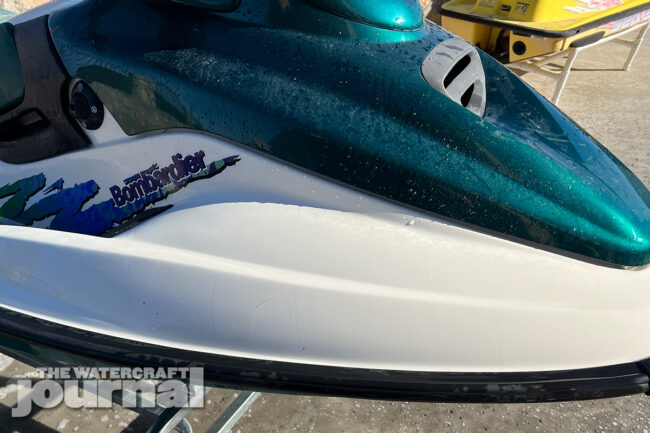
If your ski is gel coated you were going to have an easier time removing pinstripe numbers compared to skis like the newer Yamahas that are painted with automotive grade paint. If so, you might want to consider covering the old pinstriping with a vinyl sticker and put vinyl registration numbers over it because anything short of a repaint is going to damage the base coat color of your watercraft.
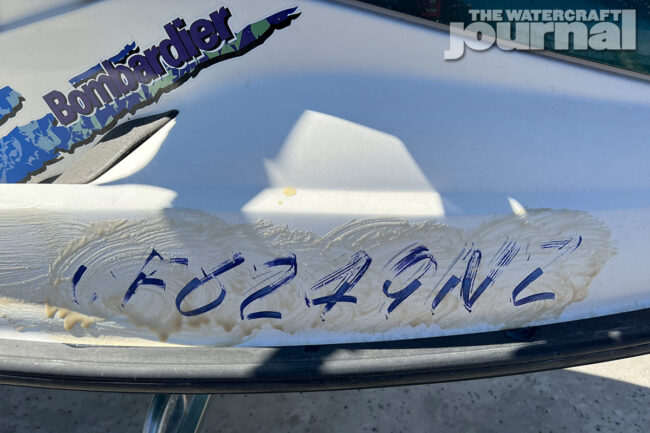
Here we’ll show the removal of pinstriped registration numbers and install registration decals along with a date sticker on this 1997 Sea-Doo GTX. If your ski is painted with gelcoat, you are in luck because there are products on the market like Owatrol Marine Strip, which is gel coat safe. This product works extremely well at removing old paint like pinstripping and will not harm your gel coat.
The process of applying this product is quite simple. Begin by cleaning the area you wish to remove with soap and water and apply this product liberally with a paintbrush. Allow it to sit long enough to soften the paint. This may require a few applications to remove all the paint.
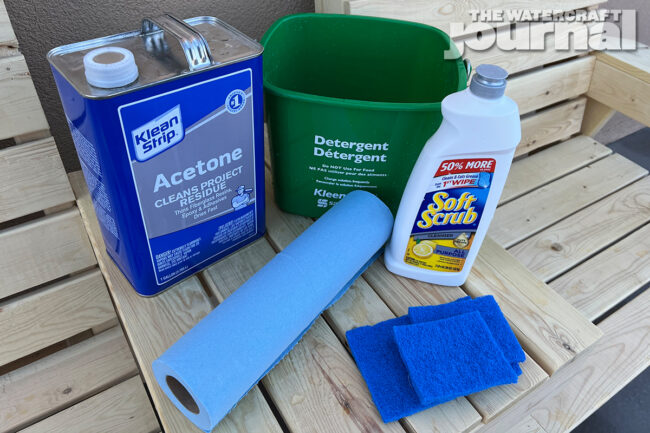
You can also use a non-scratch Scotch-Brite pad along with bleach-free Soft Scrub with a bucket of warm water to assist in the removal of the paint. If after a few coats you are not seeing results, you’re going to need a little elbow grease to get those last lingering bits off.
When it comes to removing vinyl decals, another product you can use to remove any leftover adhesive residue is acetone but we will caution to use this sparingly as not every ski is the same material. Acetone on a Yamaha will permanently ruin the automotive-grade paint. Yet, a little acetone on a rag on older 1990’s and early 2000‘s Kawasaki and Sea-Doo gel coat is extremely tough and can hold up to these harsher chemicals.
When it comes to applying new stickers it is required that you do so in a certain way. Your date sticker will always go to the rear of the vessel no matter if it is on the starboard or port. And your registration number must read left to right no matter if it is starboard or port.
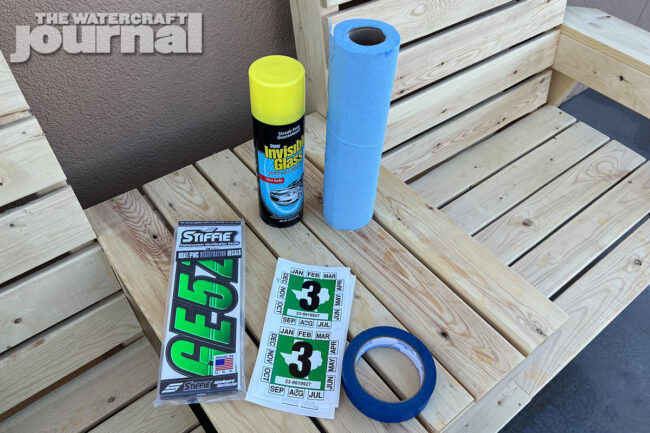
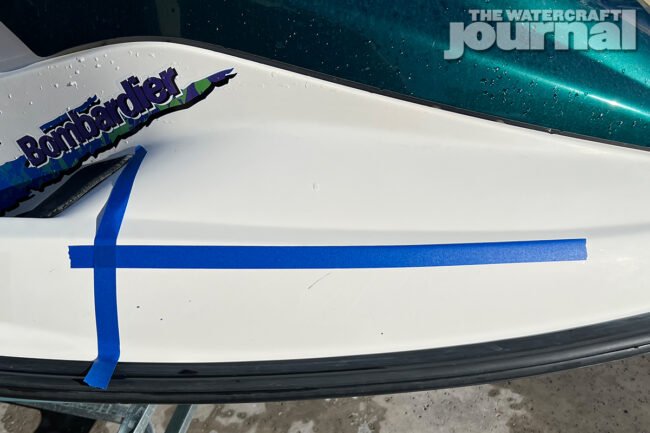
Once you have cleaned the surface it is time to apply for your registration numbers. Use a very mild solvent like glass cleaner and lint-free paper towels to remove fingerprints and oils from the surface. Next, using masking tape to make a guide line, align your decals on the ski (prior to removing the paper backing) with the curve of the watercraft.
Now with everything lined up to your liking, begin peeling back the paper backings exposing the adhesive and begin applying. Most off-the-shelf decals are applied to a dry surface while some higher quality vinyl decals are applied to a wetted surface (be sure to verify which ones you have before applying them). Finally, apply your date sticker and registration number. If you wanted to look nice and straight, take your time. There is no rush because you want to get it right the first time.
The Sea-Doo crew knows it can be tough for some of us to dock our PWC for myriad of reasons. Unfavorable winds, strong currents, waves, and inexperience at the helm are some of the problems that can make it tough to dock a PWC. Fortunately, Sea-Doo has fenders to help protect your when any of the above mentioned conditions arise. Fenders can also save you money on costly repairs that can occur when your watercraft bangs into the dock. They can also help stave off the damage an unattended ski at the dock can suffer due to rough conditions.
Sea-Doo carries a 16-inch polyform fender that can be used for all PWC. The fender has a vinyl valve system for inflation adjustment. It also comes with a rope for easy attachment to your craft. The poly fender is a decent inexpensive option at under $40.
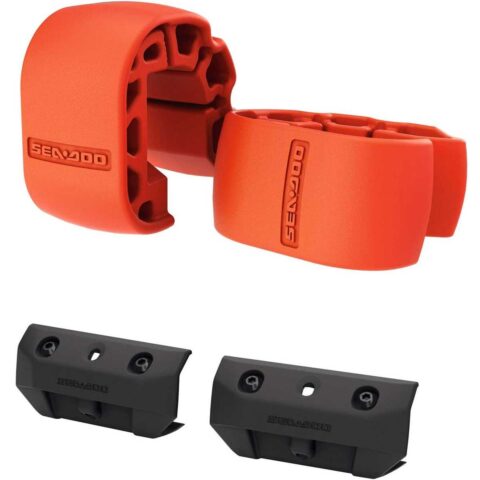
The easy to install Snap-In Fenders, which are exclusive to Sea-Doo brand, are a little over $100. They are sold in pairs and mount on the front and rear of the Spark models. The fenders come in high visibility orange, and they float, making them easy to retrieve if you drop them in the water. These are ready to install on all Spark Models. Snap them on and go.
For all other Sea-Doo models, a Snap-In Fenders Installation Kit is required. There are several different kits available for the various models of Sea-Doo watercraft. Order a set of Snap-In Fenders now protect your Sea-Doo before it ends up in the shop needing bodywork!
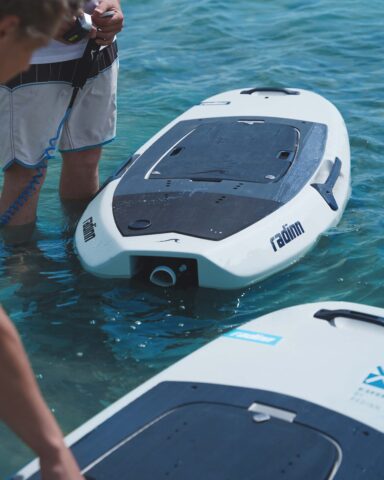
Radinn makes it easy for everyone to get their stoke on regardless of ability and this Instagram post says it all. It is a family affair.
Whether you’re an up-and-coming ripper or someone with mad skills who likes to throw buckets of spray, there is a board configuration for you.
Radinn’s modular set up makes it easy to customize your jetboards, with interchangeable components. The handheld remote is a breeze to use for controlling acceleration, once you’re up and riding.
The kids will be cruising in no time and Radinn’s mobile app makes it easy to change the speed of the jetpack with the touch of a button.
The standard jetpacks are perfect for beginners and with speeds of up to 25 mph, there’s enough power to get moving and gain confidence.
As the crew progresses, pick up a high performance Carve so they can up their game with advanced maneuvers, like riding on rail to pull off some deep carves. Swap out one of your jetpacks, download the Jetpack G3 Pro upgrade, and with speeds of up to 35mph, a new realm of possibilities has opened up for the rider who likes to push the limits.
From big cutbacks, to getting launched, you can do it all on a Carve. It’s a stellar board for performance riding. This is the board your family can aspire to. Radinn Jetboards are ideal for families who like to play outside and push the boundaries when it comes to getting wet. Get out there and get your ride on!
Yes, this might not be watercraft is however it is rather significant industry news, particularly when c0nsidering where the manufacturer in question is headed. BRP is the parent company of Can-Am, Sea-Doo, and Ski-Doo have just announced that they are bringing back the Can-Am motorcycle with an electric lineup.
We are faced with the fact that the industry of motorsports and auto manufacturers are being continually forced closer towards electric offerings due to regulatory actions of state and federal governments. As sad as this is, it is the way of the foreseeable future. Can-Am is now the first powersports manufacturer to offer a complete all electrical lineup for motorcycles.
As stated by BRP in a press release below, “With the motorcycle industry shifting to electric we saw an opportunity to reclaim our motorcycle heritage and to re-enter the market. This new product category is extremely important to us and we are thrilled that Can-Am motorcycles are the first EV models in the BRP electric lineup to be confirmed to consumers.”
With this confirmation, one thing we know for sure is that BRP is dedicated to the motorsports industry no matter what happens due to emissions regulations. As they are planning to be here for years to come. This is fantastic news as the industry source to shift all we can see is how other manufacturers will compete in the new EV space.
Original press release: Valcourt, Québec, March 25, 2022–BRP Inc. Announces today that the iconic Can-Am brand is returning to its motorcycle roots with a product line-up that will be completely electric. To mark the 50th anniversary of the beloved Can-Am brand, the Company will launch a family of electric 2-wheel motorcycles.
“With the motorcycle industry shifting to electric, we saw an opportunity to reclaim our motorcycle heritage and to re-enter the market. This new product category is extremely important to us, and we are thrilled that Can-Am motorcycles are the first EV models in BRP’s electric lineup to be confirmed to consumers. Many of us have very fond memories of riding the early dirt bike models, and now we look forward to building on the rich history of the Can-Am brand to inspire and impress a new generation of motorcyclists and electric vehicle enthusiasts”, said José Boisjoli, President and CEO of BRP.
The first Can-Am motorcycle was introduced in 1973 and immediately reigned over motocross and endurance racing. The instant success elevated the brand to an iconic status right from the start. Half a century later, the new products have been developed with many different riders in mind, more specifically for those who crave adventure, seek the thrill of the open road, long for a quiet ride in the country or want to liven up the city streets. Riders can expect these new state-of-the-art electric Can-Am motorcycles to be perfect for everyday commuting and, to stay true to the track & trail heritage of the brand, recreational on- and off-road riding.
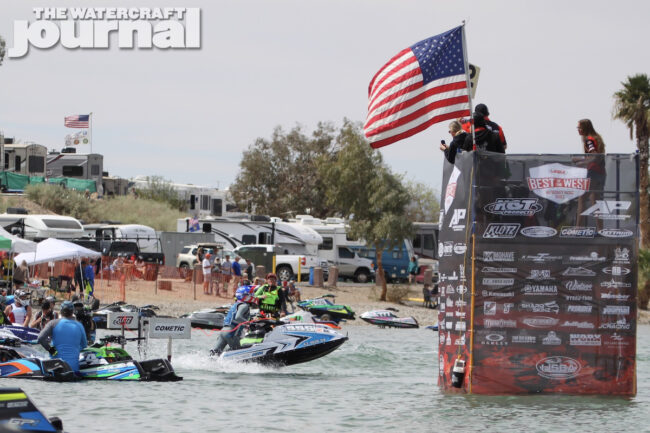
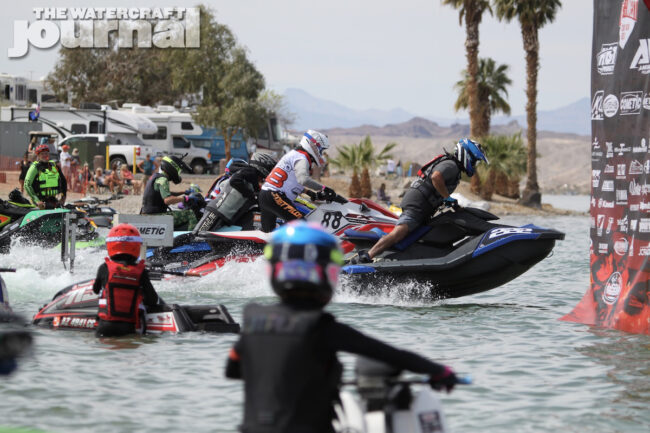
It’s the moment racers and enthusiasts have waited for all winter: the first race of the 2022 season. Mechanics and privateers have spent months prepping machines to be top-notch competitive. Riders have spent hours training at their local tracks. They’ve all gathered at the same venue to line up behind the starting gate with their rivals.
The card goes up, and engines are revved. Families and fans scream and cheer in the background, but the racers are oblivious to the noise around them. They stare straight ahead through a fresh pair of goggles, eyeing the first turn hundreds of yards in front of them, waiting for the slightest movement of that gate…
You’d think this was written while sitting trackside at Angel Stadium at A1, right? Wrong! Let us introduce you to the “H1” round of this season’s jet ski racing!
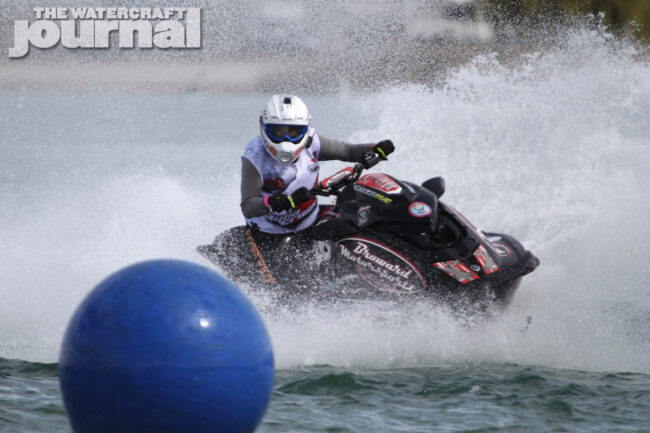
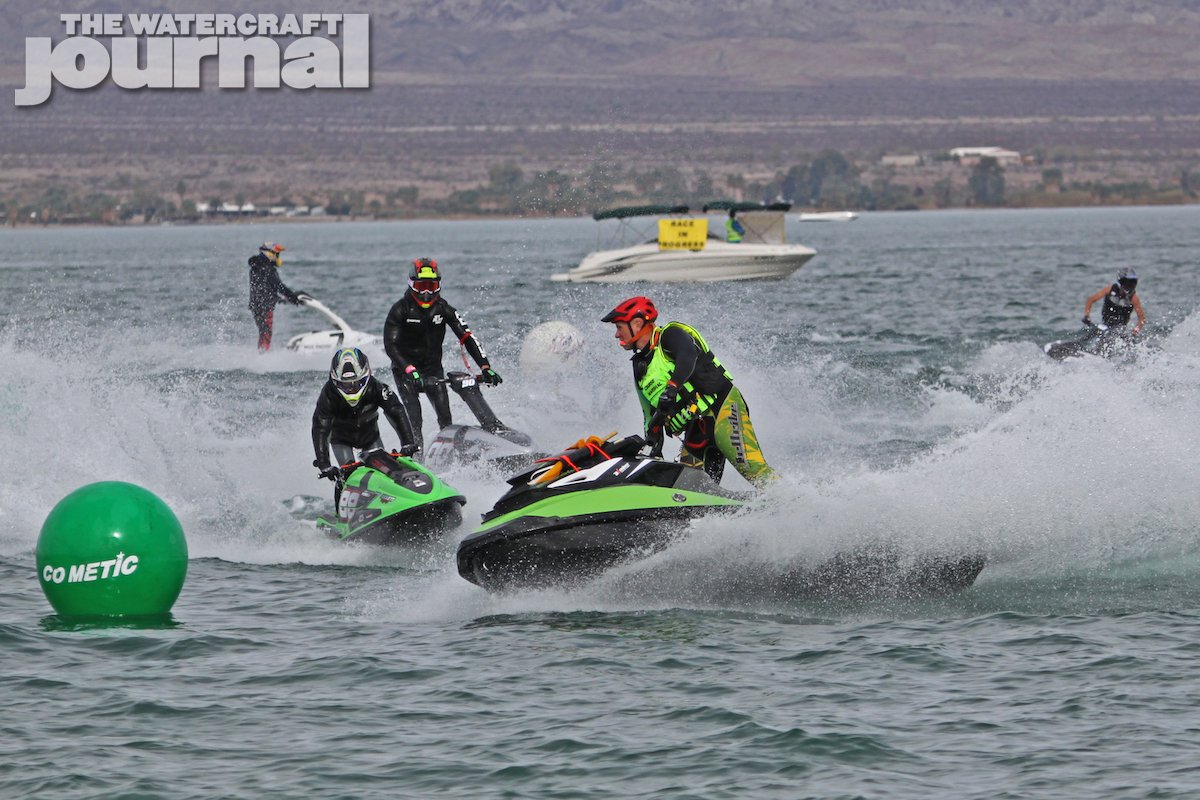
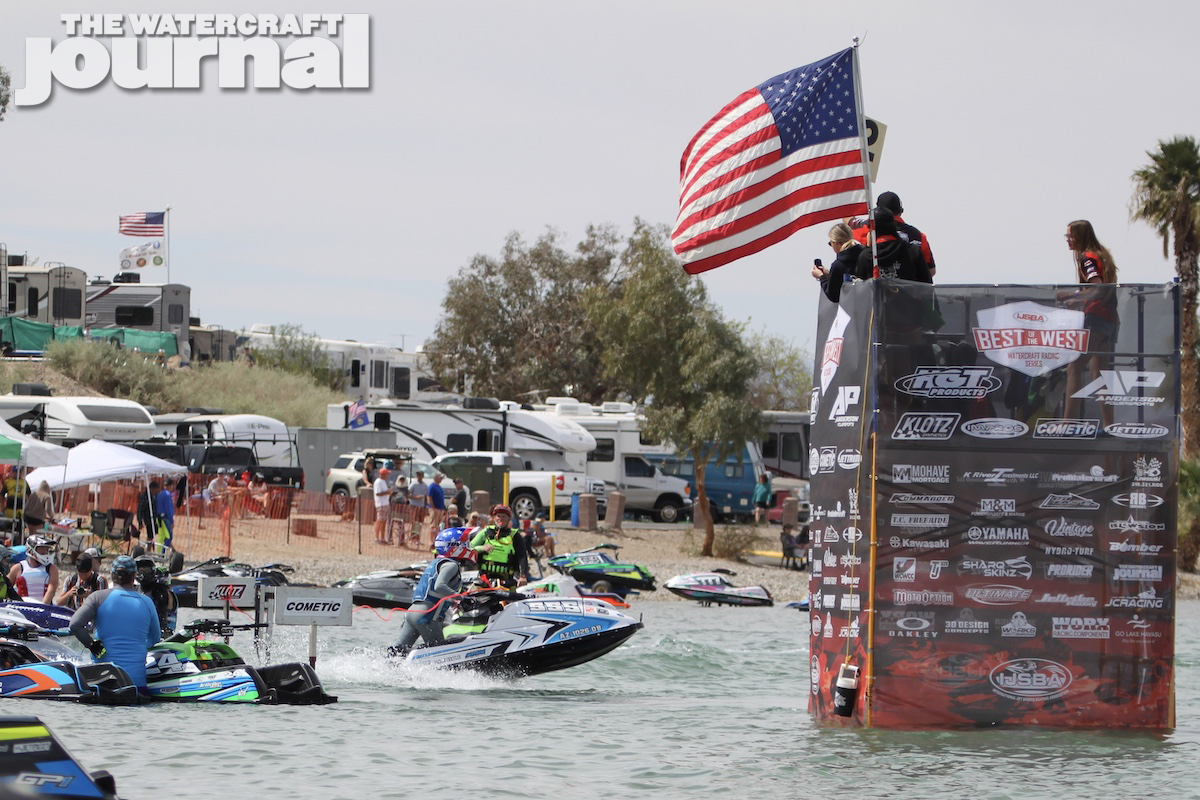
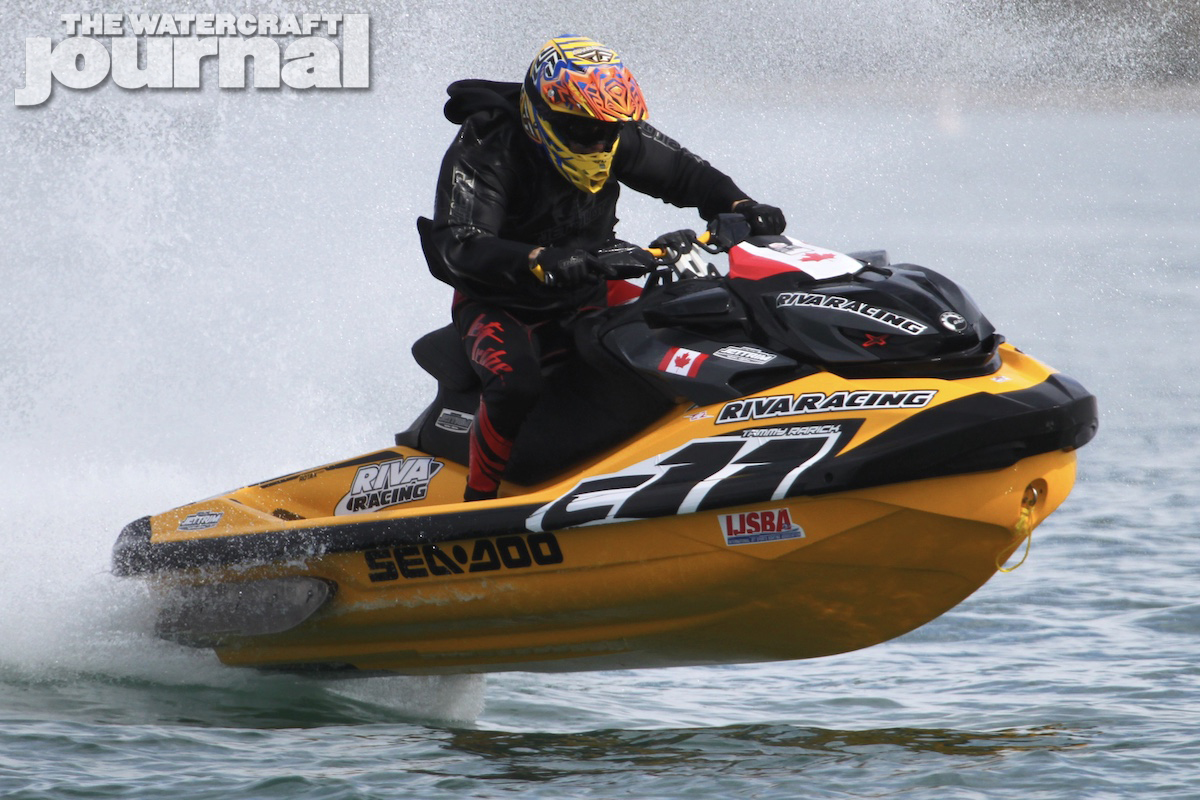
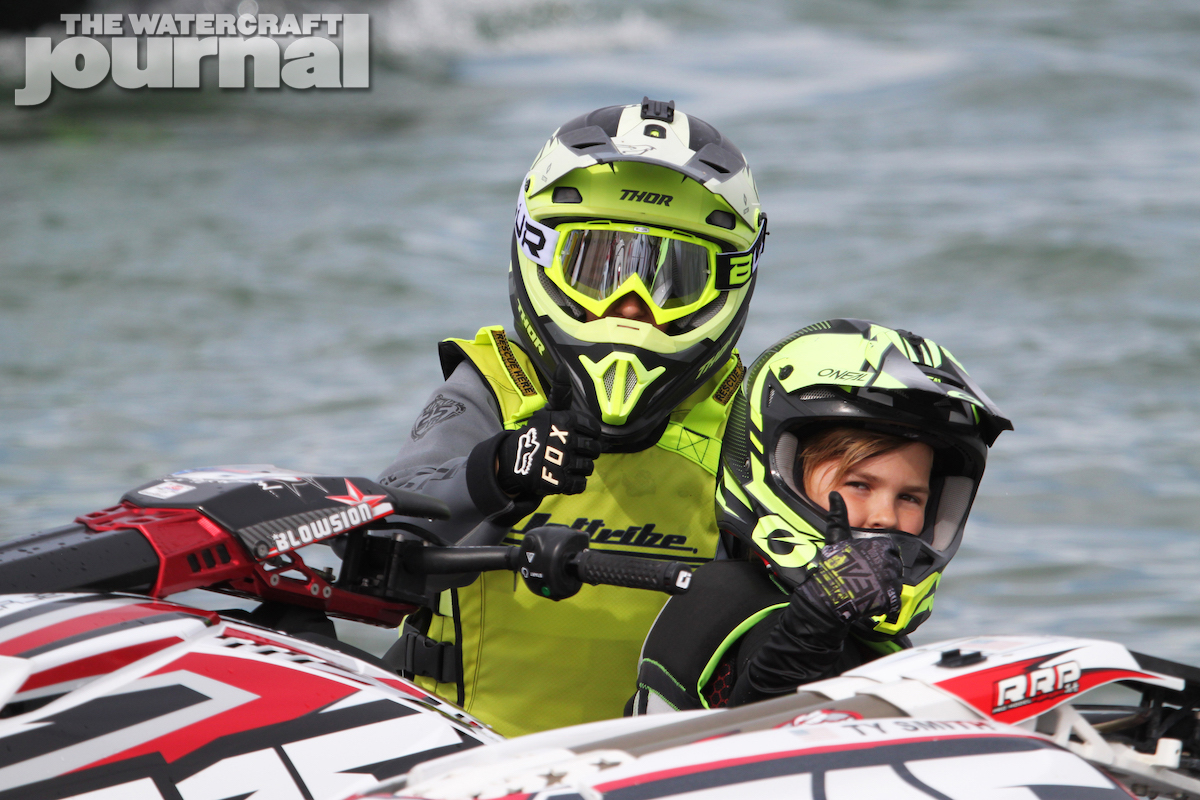
The completely revamped Jet Jam Racing staff, and with the help of RPM’s Ross Wallach, officially kicked off their race tour at Crazy Horse Campground in Lake Havasu two weekends ago. Similar to the three rounds of Supercross held in Anaheim, the JetJam racing tour will also feature three rounds held in Havasu this season.
Race director, Monte Hughes was slightly hesitant about combining the series at first. He stated, “Ross contacted me to join together and create an 11 round, 6 weekend race series with him. At first I was a little concerned about how we could do this and still maintain both of our sponsor’s requests. But after all of the good feedback we got once we publicly announced the combined series, I knew then that I had made the right decision.”
Monte and his staff seemed to have thought of everything when planning this event, “The parking was a little difficult at first, but I was able to have the Lake Havasu City Police Explorers come and help us out with that. In return, I gave them a large donation to their program, which helps officers mentor these young adults in preparing for a career in Law Enforcement. I also secured a limo for shuttle service from Brady Courson with All Things Rental to help get racers and spectators into the event.”
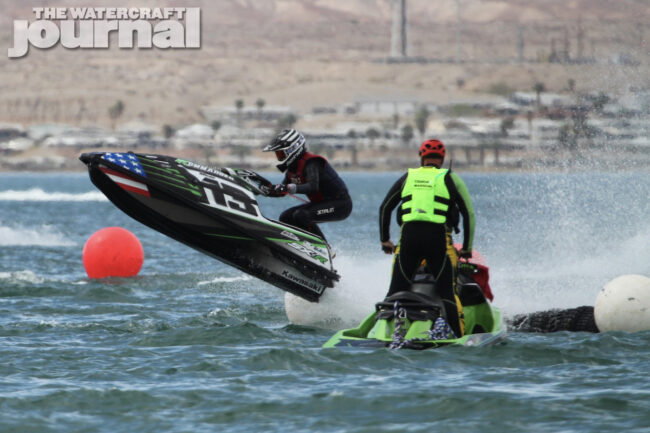
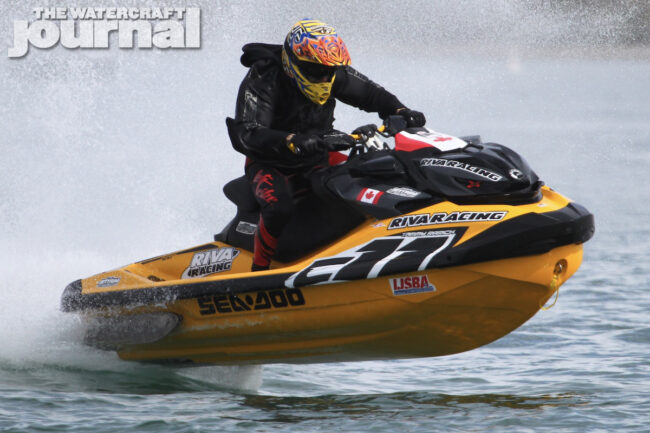
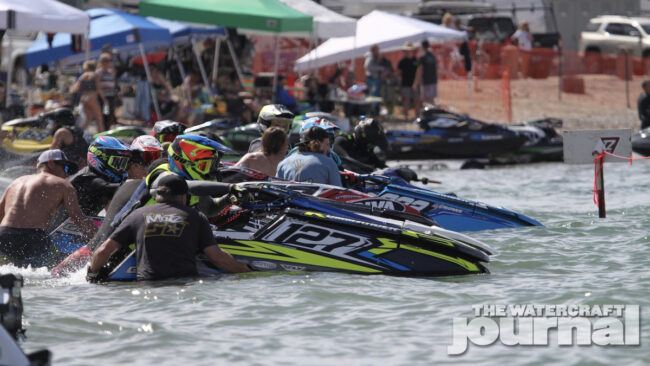
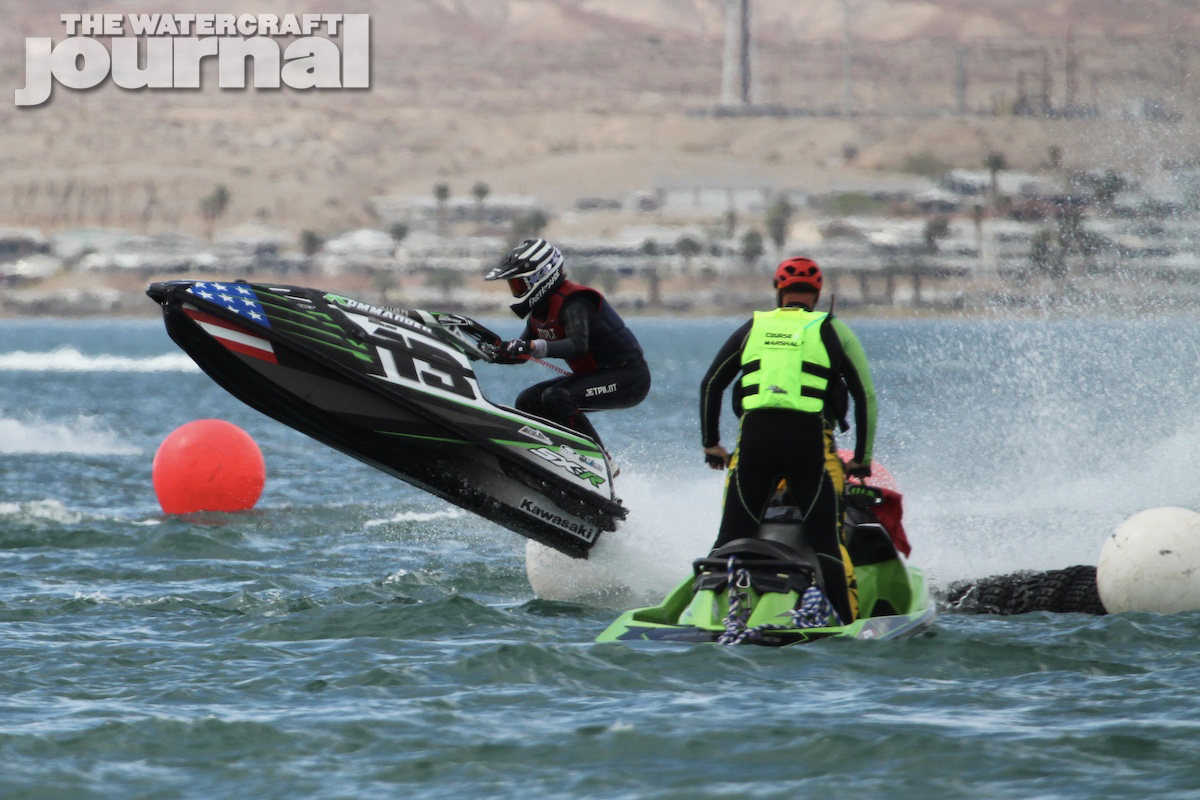
“This event was one of the largest turnouts that I had ever seen,” Monte continued. “We had around 120 racers with 170 entries. And the racing was very exciting to watch! We had a lot of compliments on the right-handed course that Todd “Sarge” Young set up, including a log jump.” The staff also was able to engineer an “air-band” system, which operated off compressed air that triggered the starting bands to snap.
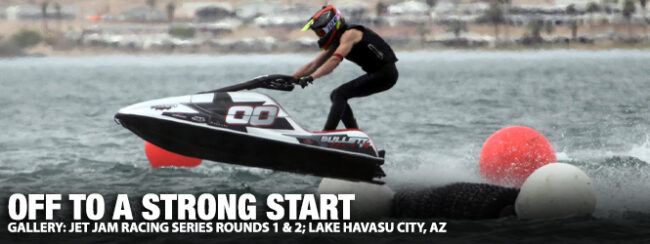
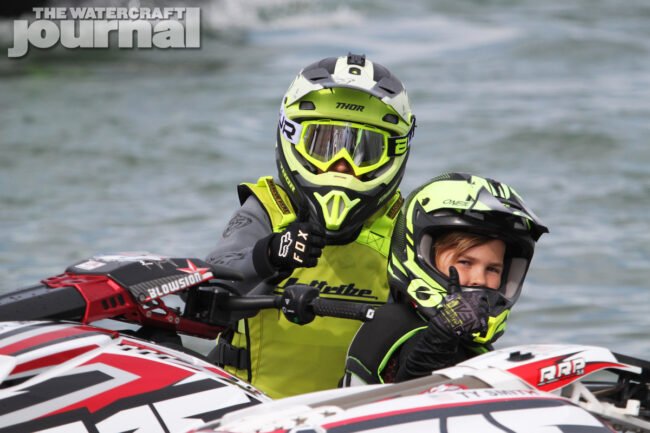
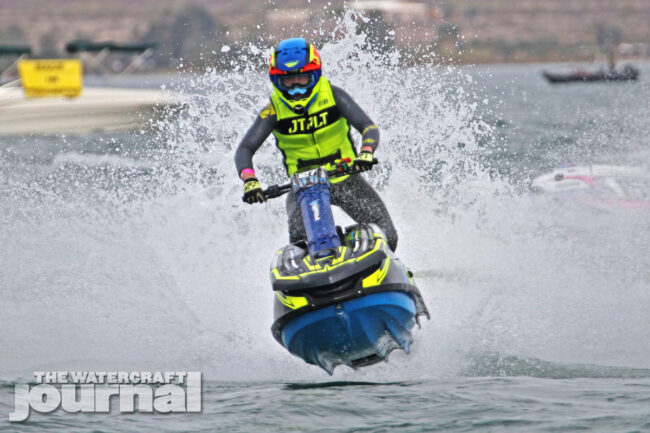
Racers seemed to be extremely happy to be racing again, and their success was evident on the podium at Sunday’s award ceremony. One notable racer was Reese Giese (#141), who competed in Women’s Lites, Women’s 1500, and 4-Stroke Lites and won a staggering 10 out of 12 motos.
“The most fun class this weekend was probably the 4-Stroke Lites on the new Yamaha SuperJet,” Reese told The Watercraft Journal. “And I really enjoyed racing at Crazy Horse because not only is it where World Finals is held, but the water on this side of the island is super rough, and it makes for some fun and interesting racing!”
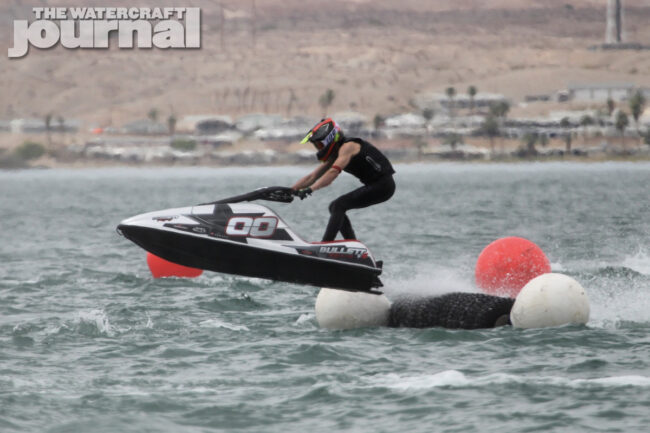
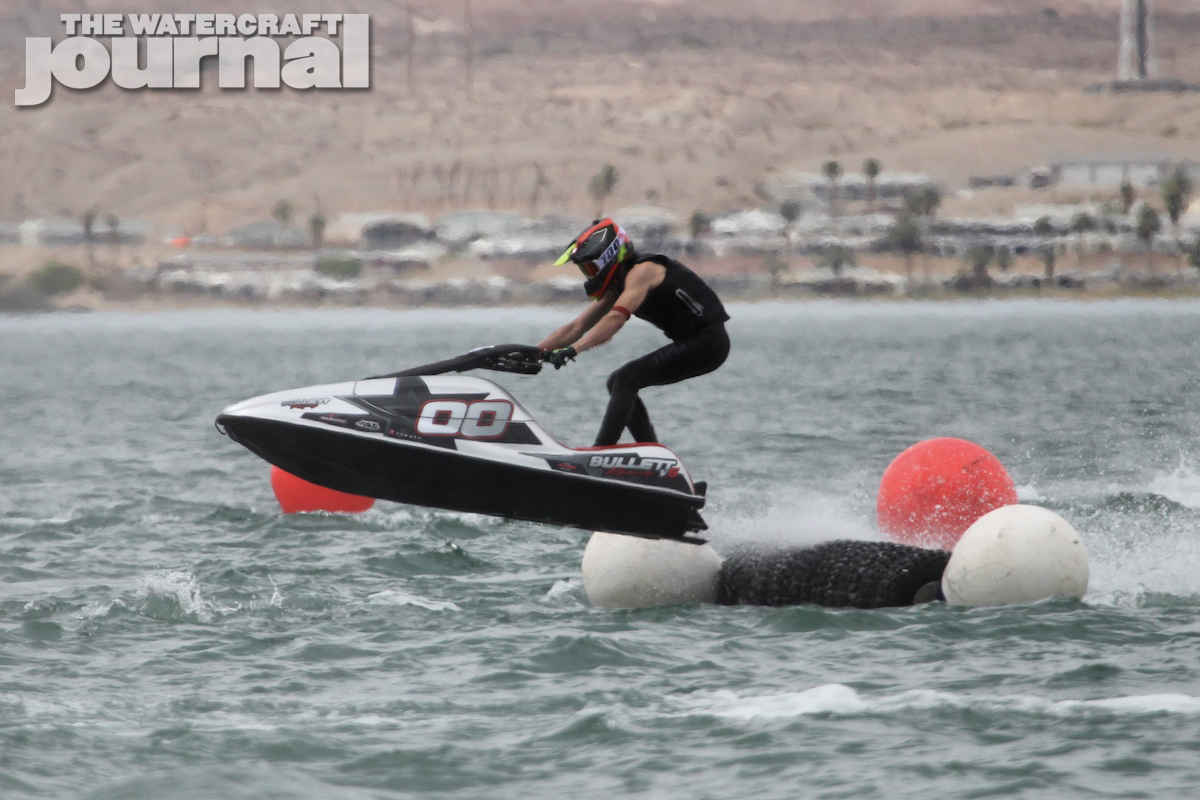
Another prominent racer, Tom Aiken (#00) made the long haul all the way from Australia to compete in Pro/Am Ski GP due to a lot of racing being cancelled back home. “With it being my first time racing in America and first time racing overseas in the Pro Ski GP class, it was pretty awesome to line up next to top riders and be a part of a big event! I had planned to come and test the new Bullett V5 and Rusty Gewecke was awesome to let me race that weekend.”
Another stunning display of racing came from none other than Coy Curtis (#155), who raced in Vintage 550, Am Ski Lites, and Am Ski GP. Coy, who picked up his Kommander GP1 five days before the race, was seen flying down the back straight and through the rough conditions while never lifting off the throttle.
Father, Taylor Curtis and ski builder, Dustin Motzouris stood on the beach and watched and couldn’t help but laugh in astonishment. “I had the most fun on my GP1 on the last moto,” Coy stated. “It was super rough and my GP1 handled it really well!” Overall, racers and families were extremely satisfied with Jet Jam’s H1 turnout. And with a full race tour of 11 rounds, one can only assume that it will be an exciting and successful year for Jet Jam!
Specific watercraft platforms come and go over the years; the trick is knowing how long a particular ski is going to last. Following the production cycles of original equipment (OE) manufacturers reveals how most of these companies tend to operate. As an example, Yamaha tends to phase out the life cycle of a particular hull design every 9 years with an average of two or three updates sprinkled in-between.
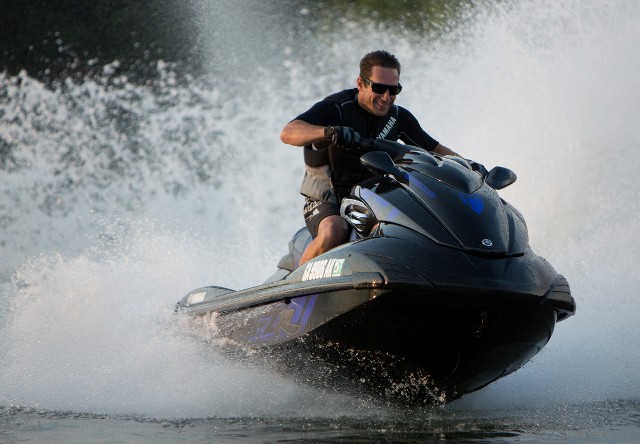
The FZR and FZS were both introduced in 2008, powered by a 215-horsepower (estimated) Super High Output 1,812cc 4-cylinder four-stroke. In 2014, the FZ platform received the redesigned SVHO (Super Vortex High Output) producing 285-peak-horsepower, and in 2016 dropped 30-pounds from its heft with the introduction of NanoXcel2 to the molding process.
In 2017, the FZR/S was replaced by the current GP platform. As many will note, the craft was first introduced as the GP1800. In 2019, it became the GP1800R with the addition of a new ride plate and intake grate, and in 2021 was renamed the GP1800R SVHO. That same year, it also received an all-new deck design with a full-color LCD dashboard and larger storage access. These changes will remain until the platform is likely phased out for 2026.
Similarly, Sea-Doo follows a comparable program. In 2012, Sea-Doo redesigned its sporty 2-seater the RXP-X 255, replaced with the angular muscle craft-looking RXP-X 260 riding on the all-new T3 hull. Introducing the world to Ergolock seating, the 2012 RXP-X 260 came with adjustable sponsons and a fully customizable X-Steering package.
In 2016, the RXP-X received the 300-horsepower 1,630cc 300 ACE powerplant and “serviceless” supercharger as well as angled footwedges and a new 159.5mm prop and larger diameter wear ring. All of this was great, but by 2021, the RXP-X 300 was in need of a refresh. The T3 evolved into the T3R, improving pump hookup and cornering capabilities by breaking up the hull’s surface tension via two rows of “shark gills” serrations.
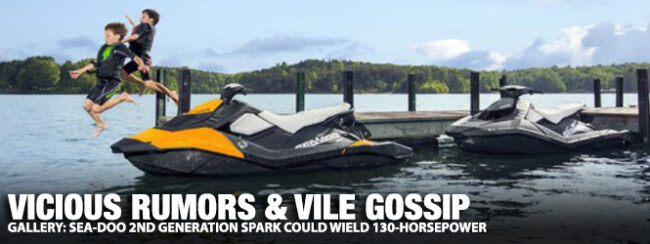
All of this is to illustrate that for 2023, Sea-Doo plans to unveil an all-new Spark. Yes, it has been nine years since Sea-Doo’s wunderkind Rec-Lite machine was first introduced. At its initial reveal the Spark ignited a sea change in the market, so much so that Yamaha was forced to respond in three years’ time – a far faster turnaround than the company’s typical 5-year development phase.
While at last year’s press introduction of the 2022 Sea-Doo Switch, The Watercraft Journal spoke directly with Martin Lechance – the Personal Watercraft Product Development Director at BRP – specifically about the incoming Spark reboot. While Lechance was appropriately tight-lipped on certain specifics, he did reveal that the new Spark will be a “from-the-ground-up redesign.”
Inquiring further, Lechance noted that the Spark will retain its ultra-lightweight Polytec hull and deck, low entry price and wet-and-loose playfulness – all tenets to the craft’s success. Equally, the Spark will preserve its 899cc 900 ACE engine – available at either 60 or 90-horsepower (in the 900 ACE HO variant). But what we wanted to know most was all about a fabled “Spark X” that has been rumored for the last 4 years…
Lechance artfully dodged our specific inquiries, allowing us to fill in gaps where he would suddenly go silent. Our initial presumption that the new Spark would receive the turbocharged ACE engine from the Ski-Doo line was refuted, citing super-heated plumbing as a concern as it ran alongside the Polytec deck. Rather, Lechance hinted towards the offerings powering the Switch models – namely the naturally-aspirated 1630 3-cylinder four-strokes.
Currently, the Switch is offered with 100 and 170 power outputs (besides the supercharged 230). It’s worth noting that in other watercraft (GTI and GTI SE), the 1630 is also rated at 130HP.
Lechance was quick to state that the 170-horsepower tune was an untenable option, as it propelled their research-and-development unit to a blistering 63 miles per hour – far quicker than what the OE would want to make available to the public.
Yet, that is not to say that 130 or 170HP (or more) is an impossibility. Modifiers know that the difference between the 130 and 170-horsepower 1630 is a matter of engine map tuning. If a 100HP Spark is revealed this coming August, it’s very likely we’ll see a few 170HP 63mph Sparks achieved through aftermarket tuners.
The Watercraft Journal inquired further regarding the weight differences between replacing the 900 ACE with the larger 1630, to which Lechance coyly shrugged, “No more than adding a turbo kit to the 900 ACE.”
He concluded by assuring The Watercraft Journal that in its current form, the 1630 ACE-powered prototype Spark is “a handful” and will “introduce a whole new generation to small, nimble race craft.”
Regarding further changes to the Spark (storage, fuel capacity, integration of LinQ, larger instrumentation) no more was divulged, but we were encouraged to remember how Sea-Doo managed to keep the entry price of the Spark so low. We’ll certainly see a gradient scale of optional packages that will allow the buyer to personalize and uniquely equip their Spark, but as far as further details, we have none at this time.
We at The Watercraft Journal expect to be introduced to the redesigned Spark sometime in mid-to-late August of this year, and will have a full-length video and written coverage of the full range of Spark watercraft, as well as the remaining lineup of Sea-Doo PWC for 2023. If you’re looking for further information on this impending redesign you can watch the video below.













 Radinn makes it easy for everyone to get their stoke on regardless of ability and this







 Currently, the Switch is offered with 100 and 170 power outputs (besides the supercharged 230). It’s worth noting that in other watercraft (GTI and GTI SE), the 1630 is also rated at 130HP.