

Home Blog Page 189

Vicious Rumors & Vile Gossip: Kawasaki’s Big Play for 2020; Two New STX-15F Models

0

Whoa, Nelly! Only three days into the new year, The Watercraft Journal kicked things off with some pretty polarizing gossip concerning the Big K: Either Kawasaki’s watercraft division was planning on calling it quits after 2022, or they were currently in development of a Rec Lite-segment runabout to compete with Yamaha’s EX Series and Sea-Doo’s Spark. As time would reveal, the latter was closer to the truth.

Understandably, the article ignited a maelstrom of chatter, ruminations and more comically, hate mail. Nevertheless, The Watercraft Journal‘s sources within Kawasaki were resolute; morale within the watercraft division was at an all-time low; corporate had become disenfranchised by the brand’s ever-slumping PWC global market share; and there was no money to develop anything new.

It is imperative for PWC enthusiasts to understand that the most expensive part of redesigning a watercraft is the tooling, which by information gleaned from all three OE’s averages about three million dollars. Much of that cost goes into creating the stamping molds for the hull and deck alone. Smaller items like fairings, hoods and the like are resoundingly cheaper given their respective size and weight.
Consider the savings accrued by Yamaha when you realize that the GP1800R, VXR, VX Cruiser HO, VX Deluxe, VX Limited, VX Sport and standard VX all share the same molds. Equally, Sea-Doo’s RXP-X 300, GTR-X 230, GTR 230, and entire GTI lineup share the same deck, with all but one of these sharing the same hull. Manufacturers are in a constant pursuit to save production costs, and Kawasaki Motor Corp. USA efforts to shave a few bucks couldn’t be more evident than in its 2017 SX-R.

Culled from a who’s who of parts bin bits and pieces, the SX-R shared more with the STX-15F than its namesake. Moreover, the ski’s developers, Minuro Kanamori and Craig “Fuzzy” Boyd, were given nearly zero budget to develop the SX-R, having to spend their own time rigorously testing the standup out of Dana Point, California. Despite the team’s hamstringing, they presented a viable ski worthy of the SX-R title, only to have accountants penny-pinch it into the patchwork that hit dealer floors.

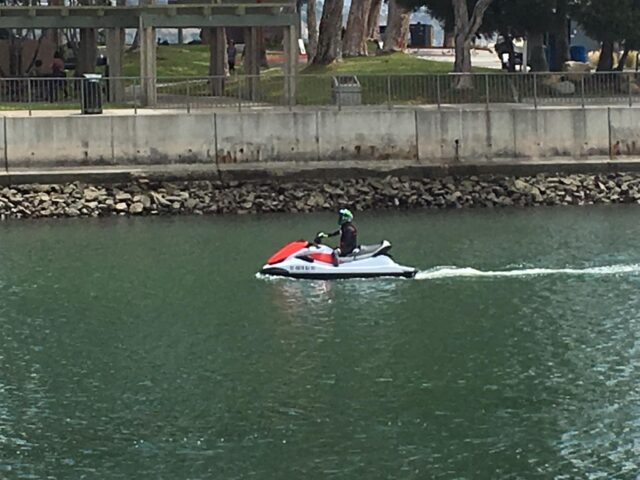
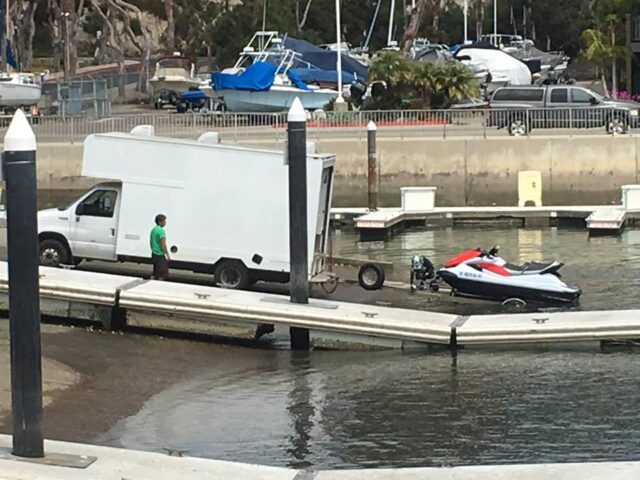
Therefore, it was one heck of a stretch to believe that Kawasaki was developing a Rec Lite entry from whole cloth. Rather, persistent digging revealed that the mystery ski spotted at Dana Point late last year wasn’t a Spark-fighter at all, but what will become the 2020 Kawasaki STX-15F. The craft would go mainly unchanged, using the same hull and deck that has existed for over sixteen years, with some minor adjustments.
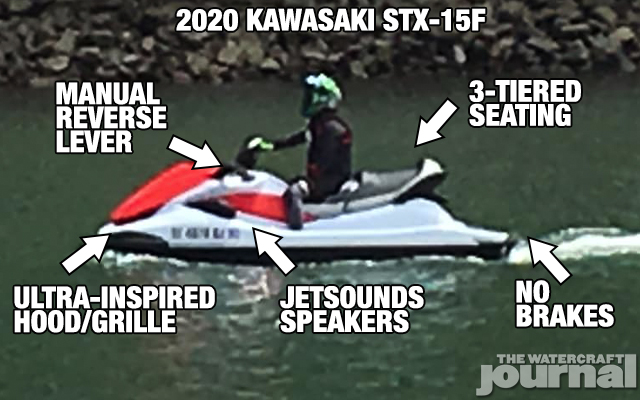
First, a wholly redesigned upper deck is expected to feature superior ergonomics, a taller seating position to improve rider posture; a three-tiered seat; a reconfigured dashboard and steering headpiece; as well as new angled fairings and hood more reminiscent of the larger Ultra models. The STX is expected to pick up a bit more storage with a larger glovebox and bow storage too.

The big reveal is the incorporation of the Ultra’s fly-by-wire engine throttle control. Seeing as the STX-15F shares the same powertrain as the naturally-aspirated SX-R and Ultra LX, Kawasaki is finally permitting the lowly STX-15F some accoutrements – primarily Cruise Control and Eco mode. Whether the Ultra’s electric trim will be included has yet to be confirmed.

These additions will give way to a second STX offering, which we’ve been told will be marketed as a “LX-type” segment. It is this more well-equipped STX that will likely get Cruise Control, the stadium-like seating, and superior materials used on the 310LX. While there was no hard confirmation, it is believed that Jetsounds will be available on this higher optioned model.
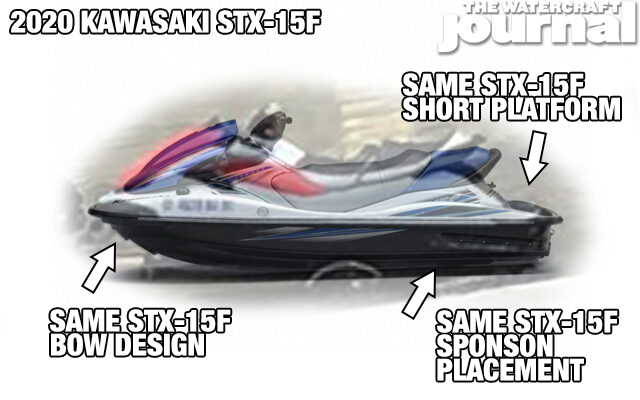
Above: Although not our best Photoshop work, this image superimposes the above leaked image over the profile of a 2003-2019 Kawasaki STX-15F. While the differences in the hood, fairings, and seats are visible, the deck, swim platform and everything below the bondline matches up to the existing STX-15F.

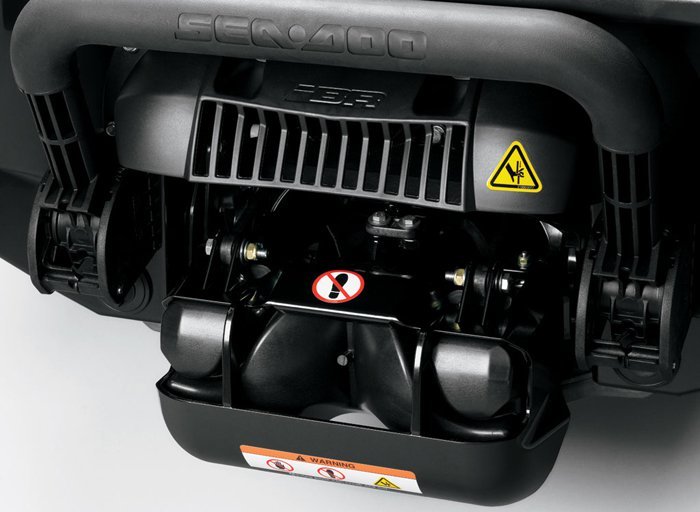
We did receive word that no, Kawasaki has yet to develop a proper braking system, instead retaining the 30-year-old left-hand lever-operated reverse bucket. This was confirmed last Friday when the prototype watercraft was spied at Dana Point’s launch ramp. The reverse lever is clearly visible, as is the same sawtooth bow and the deck’s stubby rear platform of the previous hull; so too are the shape and angle of the sponsons.

So again, what was leaked is not a new Ultra or for that matter a completely-new STX-15F, but rather, a slightly upgraded STX for 2020 – one of two trim levels to be made available. While not the Rec Lite machine we had hoped for, it does hope to pump some much needed vigor into the otherwise staid entry-level runabout and, as Kawasaki hopes, sales too.

Team Green saw an 11-percent uptick in new vehicle sales in 2018. Yet that bump wasn’t enough to outpace similar sales growth by both Sea-Doo and Yamaha, resulting in a half-point loss in total market share. Ultra sales have plateaued according to three dealerships we questioned recently – and the unspoken consensus is that the revived JetSki standup has been recognized internally as an under-performer. Frankly put, Kawasaki needs a win and we really hope people take to these new offerings.
Pro Watercross Welcomes Hullspeed As 2019 Sponsor

0

For 2019, Hullspeed Performance Marine Coatings will be joining the Pro Watercross as an official sponsor. Hullspeed specializes in marine hull coatings which offer a smoother hull and increased performance.

The first round of Pro Watercross is set to take action on May 4 & 5 in Pensacola, Florida so get ready. For all of the details on Hullspeed and the sponsorship, we’ve pasted the press release below.

Pro Watercross is proud to announce the addition of Hullspeed Performance Marine Coatings as an Official Sponsor to the 2019 Pro Watercross National Tour and World Championships. Hullspeed Performance Marine Coating’s secret formula works on all forms of watercraft, whether they are racing or just out to enjoy a day on the water.

Hullspeed’s product line up is a boater’s dream, with the highest return on investment for better mileage, increased performance, quicker acceleration and greater top speed all without affecting reliability in the slightest! The secret to the Hullspeed improves performance with the reduction in drag created by applying their products to any hull. With a “Slipperier” hull the boat takes less energy to go through the water and thereby increases top speed all without putting any additional stress on engine components!

Ian Germain the Marketing Director of Hullspeed Performance Marine Coating was very impressed with Pro Watercross’ dominance in the PWC racing world as well as their network of recreational ride promoters across the US.  “We are thrilled with the partnership between Pro Watercross and Hullspeed “said Mr. Germain.

Look for the Hullspeed Marine Coatings booth at every stop on the National Tour to purchase their magical elixir and then go stomp the competition. For more information on the entire product line and how it can benefit you visit them at www.hullspeed.us or check their link at ProWatercross.com

Gallery: Easy Detailing Tips to Look Good All Summer Long

0

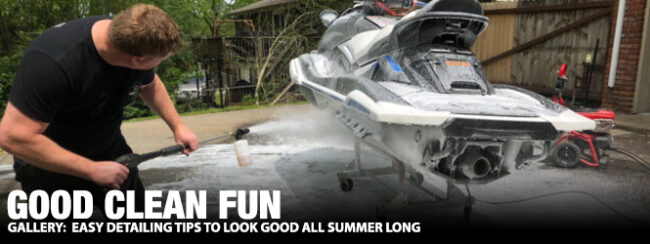
Oh the pains we take to look good. Nobody likes their ski looking like it was just pulled out of the sideyard, especially when joining a group for a full day’s ride. For those of us in wetter climates, mold and mildew can grow quickly, discoloring seats, traction mats and more (if left to flourish). Dirt, pollen, and heavy caked-on waterspots are just as bad. Moreover, the damage that neglect can occur when left untreated can result in permanent wear and tear, if not wholly expensive to repair.

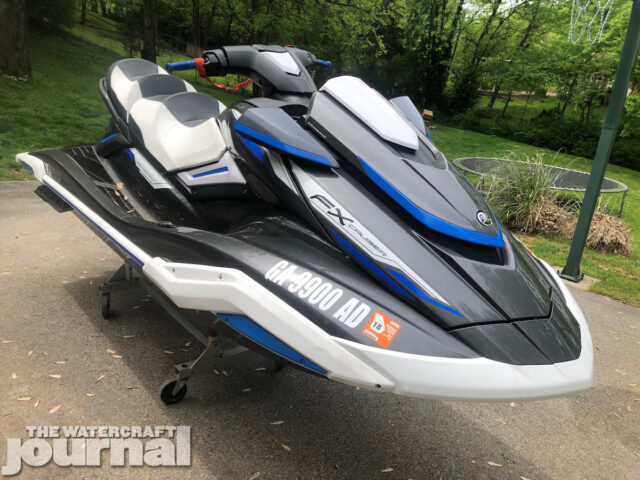
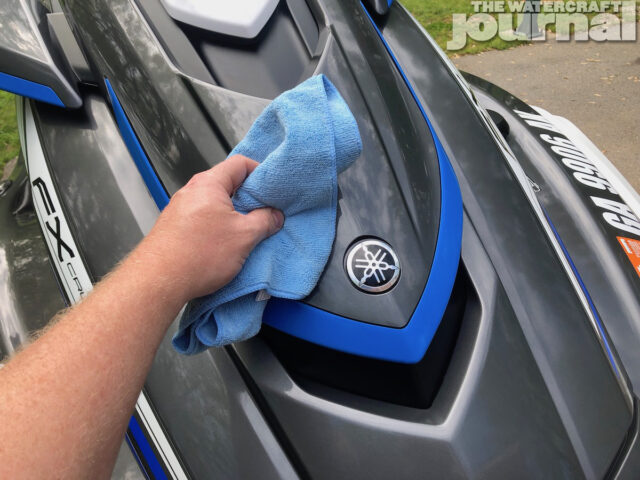
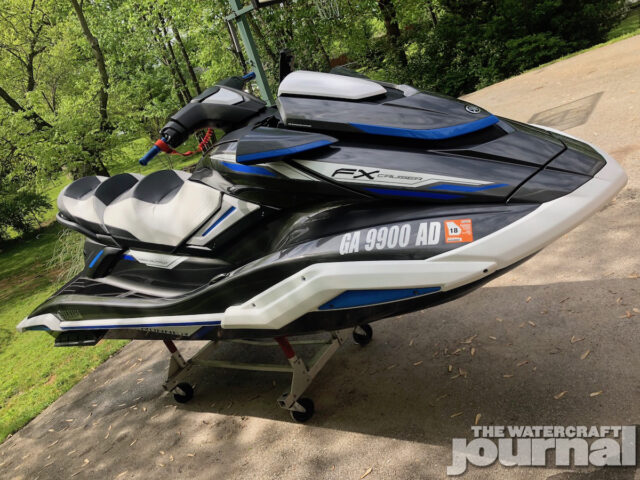
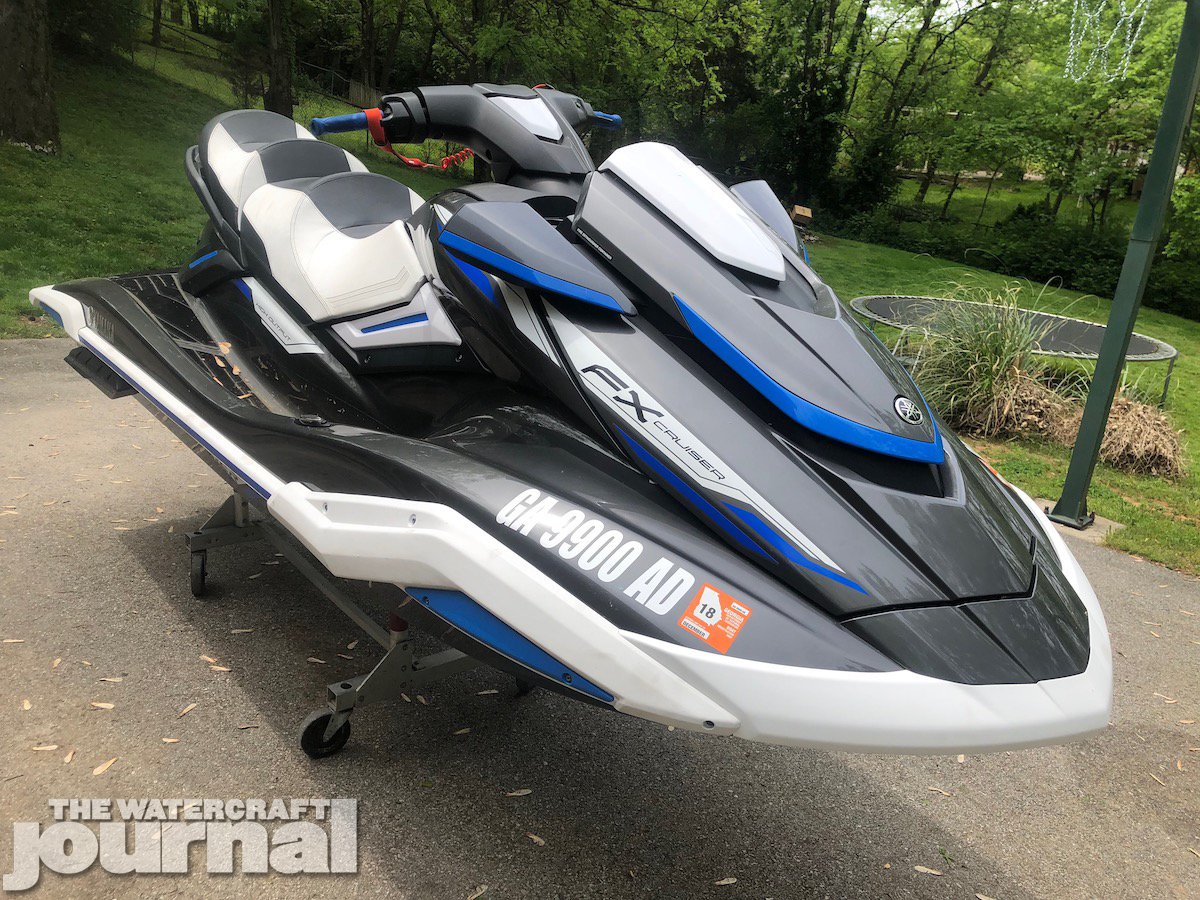
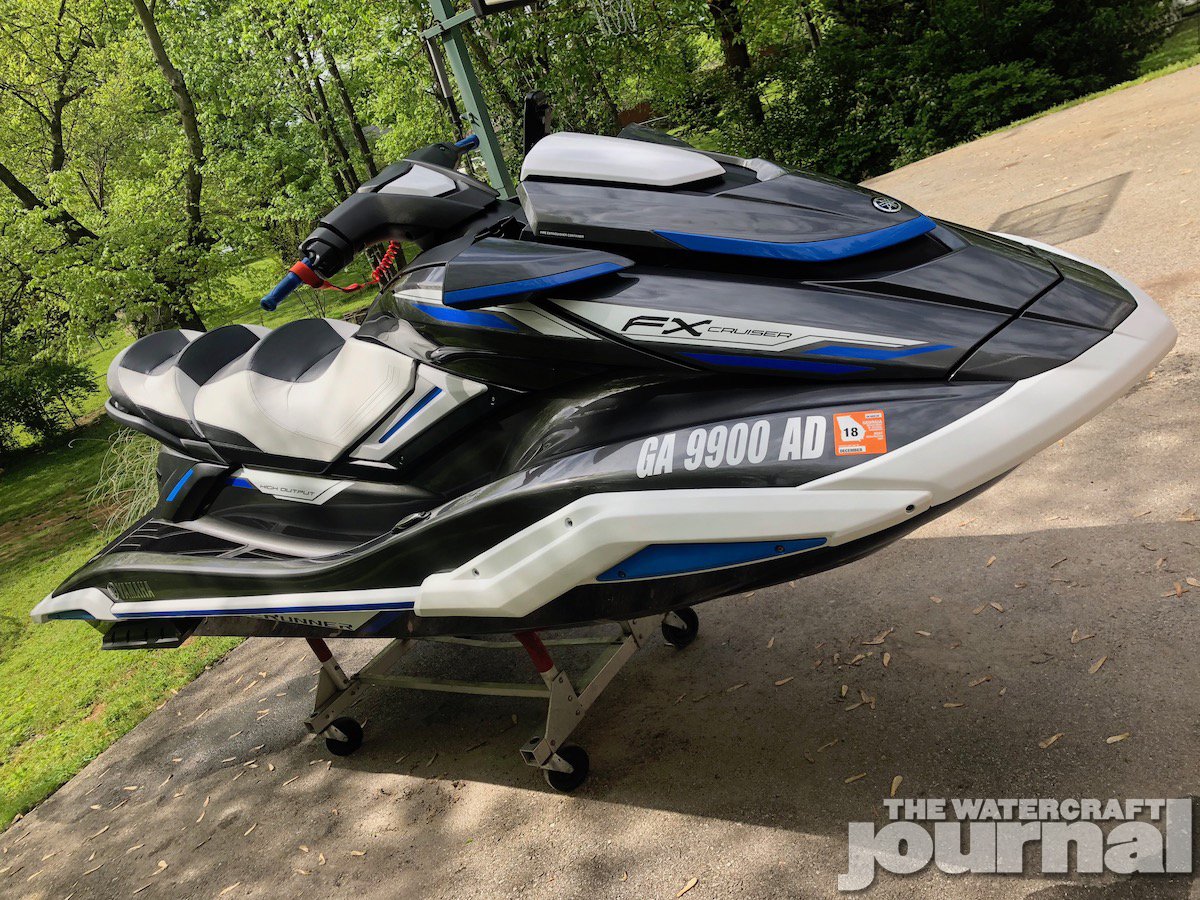
Our 2019 Yamaha FX HO WaveRunner came to us after a relatively short life of rather brutal living. The vehicle itself was the very same used for all of the 2019 product photography and video; the early media introduction; dealership demonstrations and much, much more. By the time we received it, signs of wear were everywhere – despite its short 20-plus-hours of operating time. Frankly, it hurt our hearts a little; like rescuing a neglected or mistreated dog from a shelter. From there it became our mission to bring back its as-new luster.

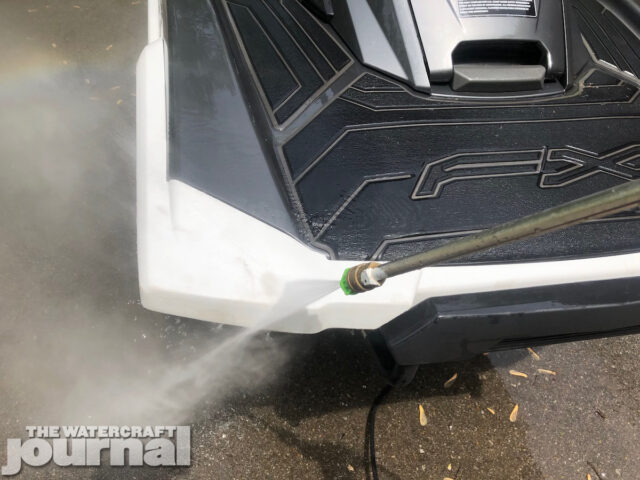
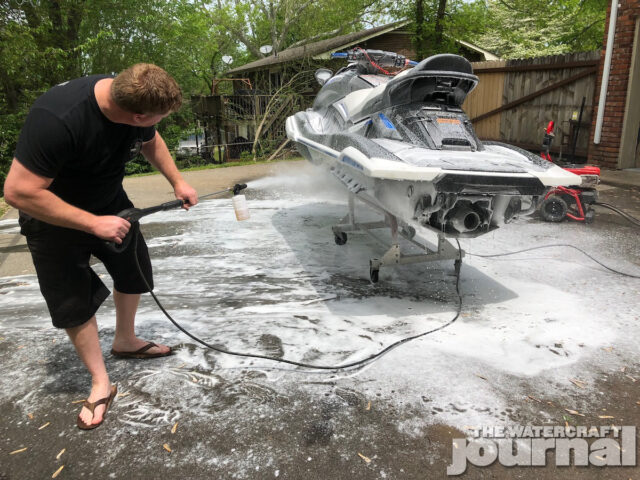
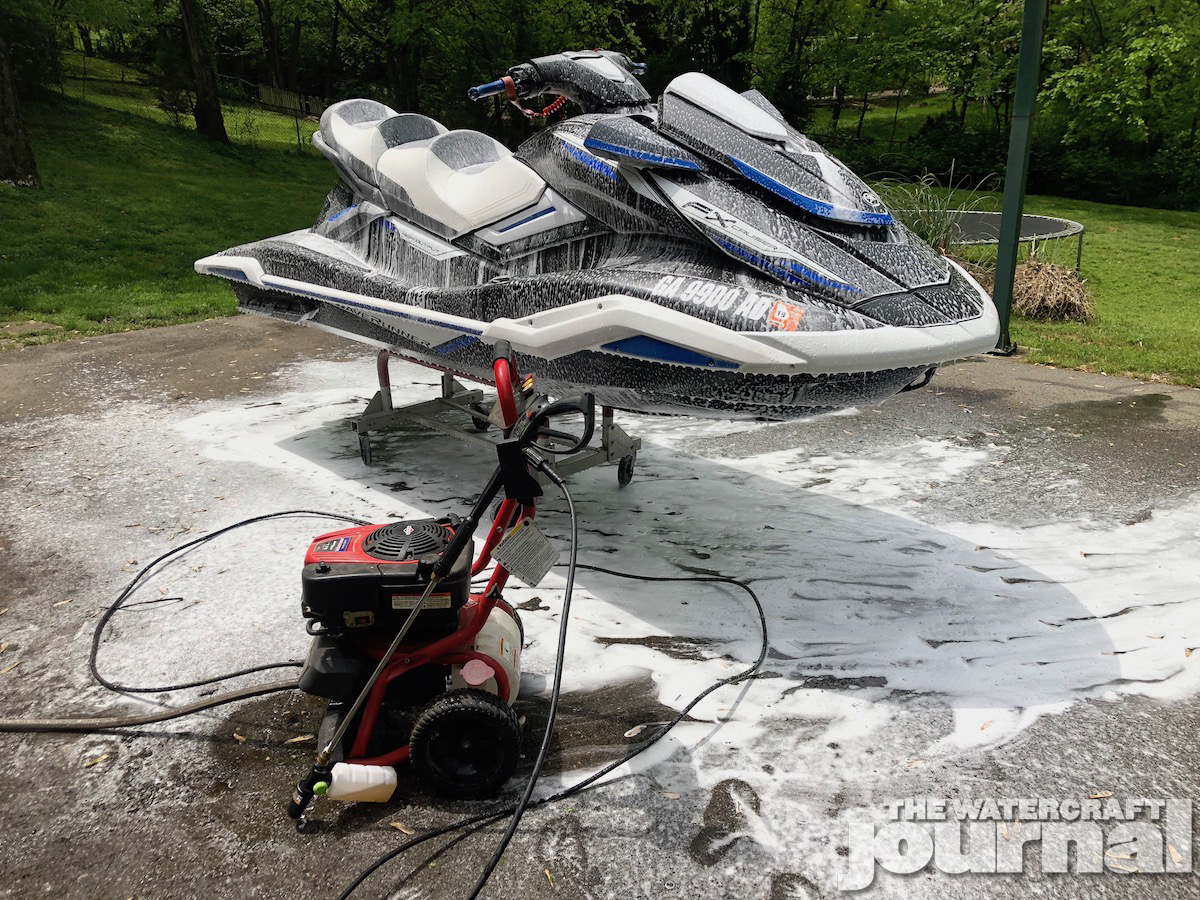
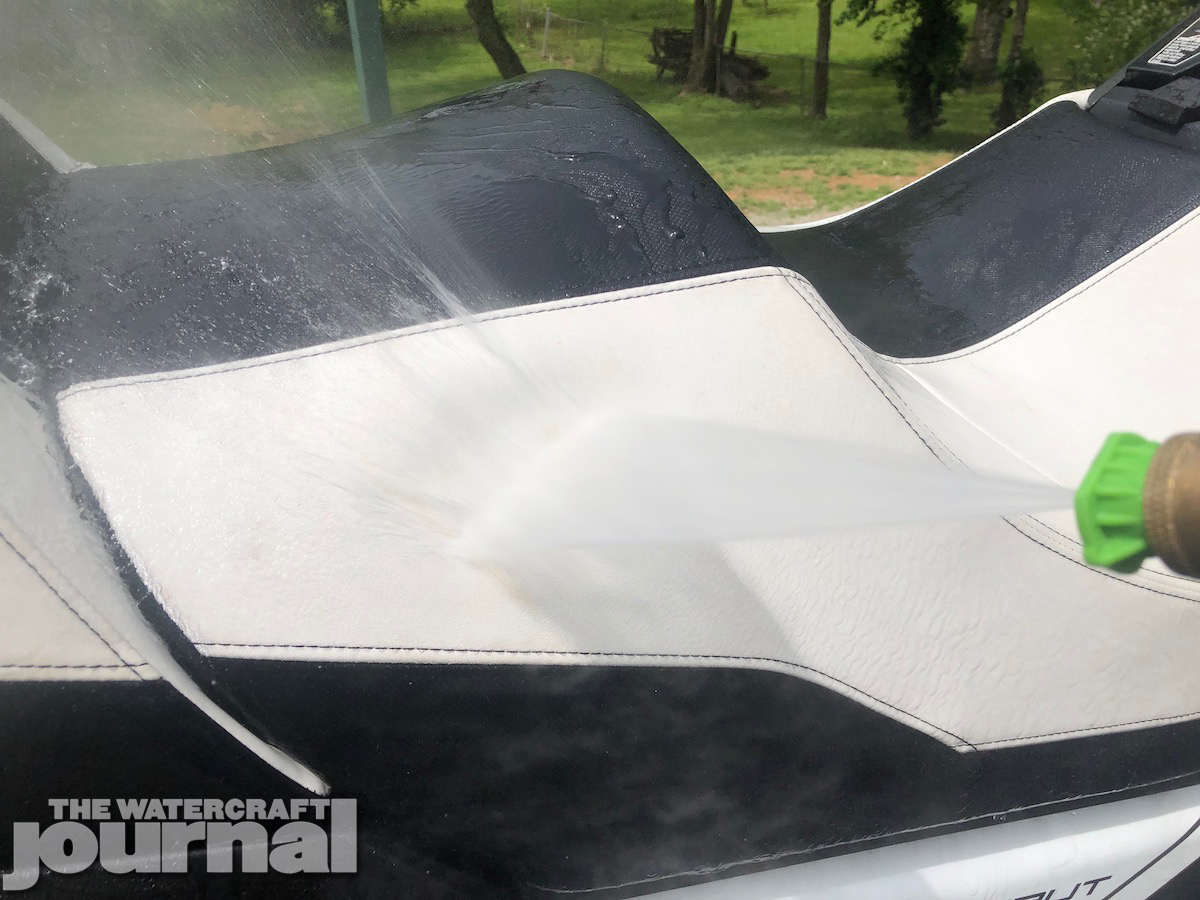
As always, we whipped out our trusty pressure washer and knocked off as much of the topical dirt, pollen and grime with our 25-degree nozzle. We also came in close to try to blast off any spots where dried-on sunscreen, grease, grim and tree sap had collected. Then we switched to a soap broadcaster nozzle and filled it with (*gasp!*) XPS Boat & PWC Wash and Wax. Not because we prefer it over any other brand, but because we have a ton of it to use. Plus, it really does do a nice job.

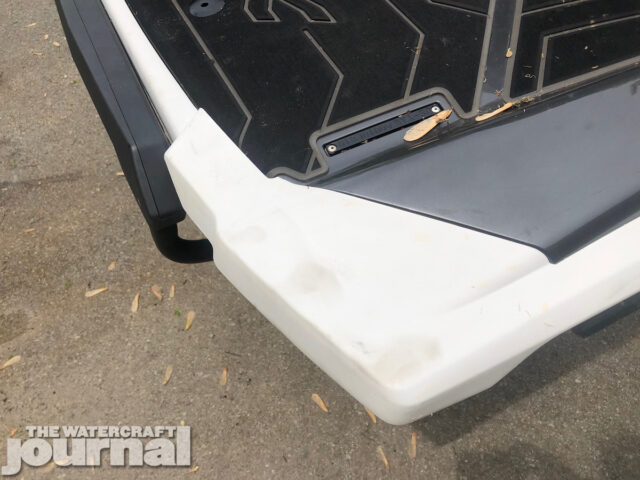
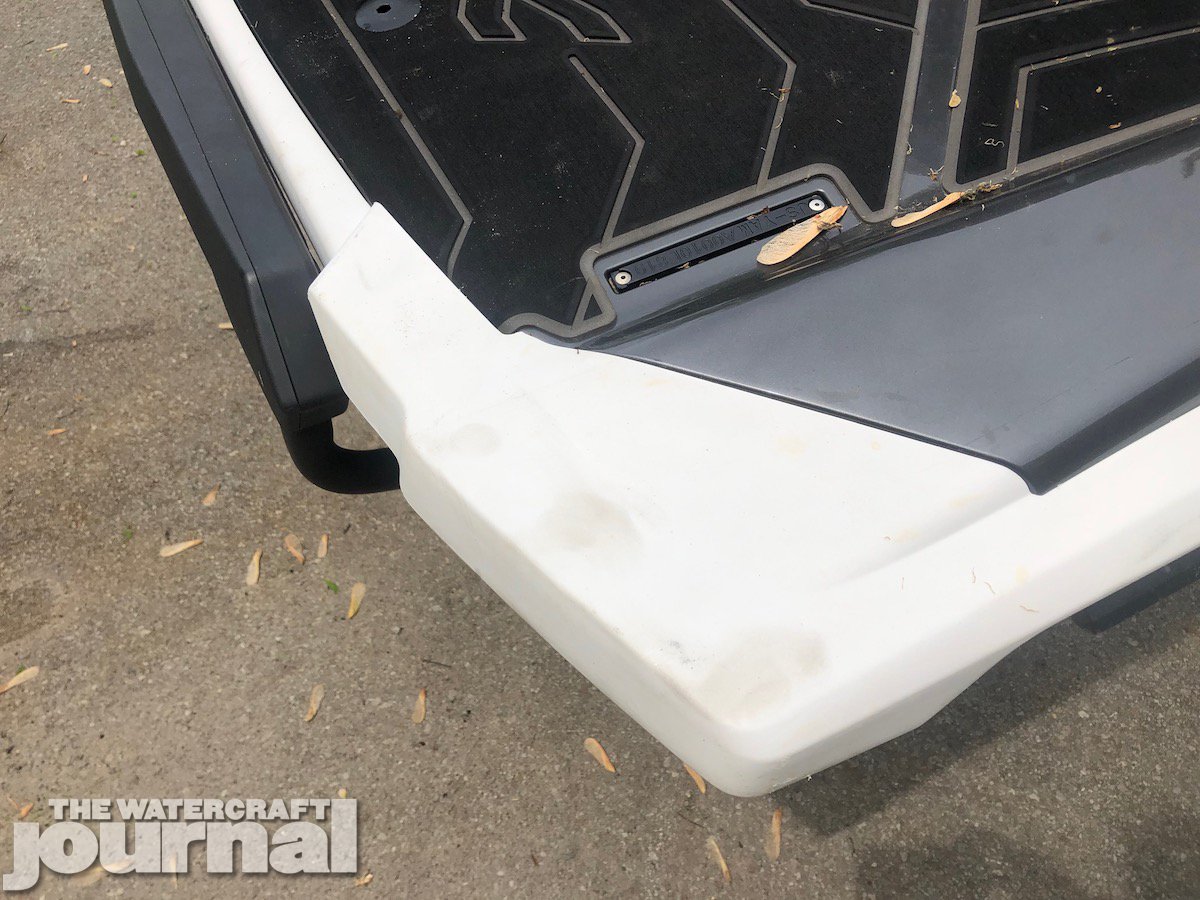
The first issue pertains to a couple of cosmetic decisions Yamaha designers have been hip on for some time now: white bumpers, rub rails and seats. Obviously, each of these items are made from different materials, receive damage in different ways, and require unique solutions to be cleaned. For 2019, the new FX models feature large portions of white plastic bumpers, both at the rear corners as well as at the front. The six pieces (three at each end) are made from durable plastic that also happens to be textured.

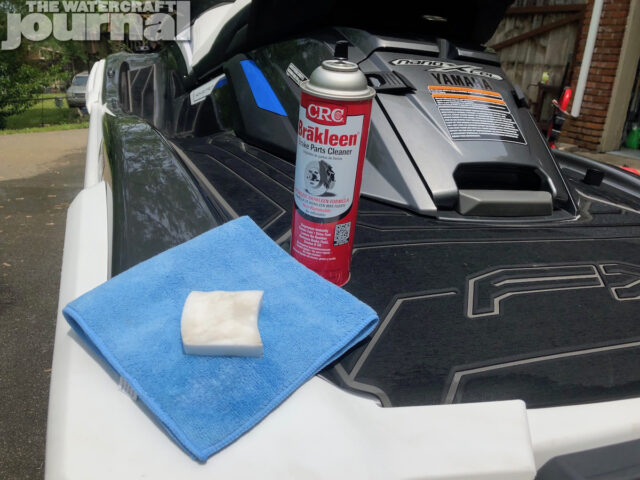
The texturing of these pieces also makes them porous, meaning that dirt, grime and other contaminants can embed themselves making most cleaners ineffective. We tried the usual suspects: vinyl cleaners, general surface cleaners and even PWC brand-specific cleaners to no avail. What we did find was that non-chlorinated brake cleaner applied to a microfiber towel works astoundingly well. Modern non-chlorinated brake cleaners from brands like CRC’s Brakleen do not leech out valuable oils from the plastic and is non-flammable as well.

For tougher stains, we wetted a Mr. Clean Magic Eraser and rubbed on the particularly nasty spot. Once satisfied, we rinsed off the bumper, and applied a suitable vinyl protectant. While our methods are somewhat unique, we also don’t want to leave those harsher chemicals on the plastics for too long. We also purposefully avoided any agents or cleaners with bleach as it could discolor the Yamaha’s traction mats or blue highlight trim parts.

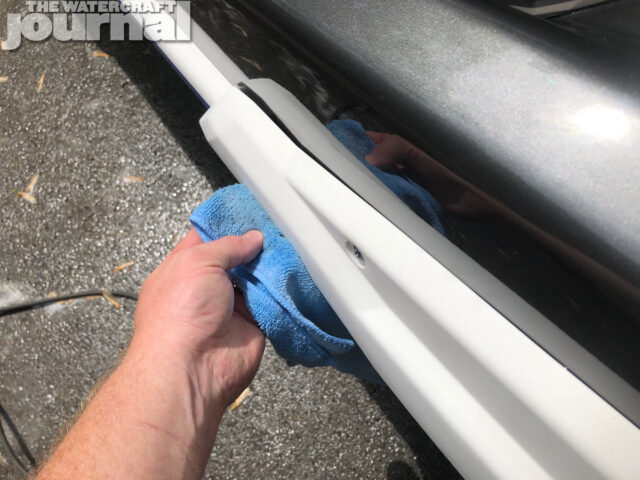
The white rub rails are not nearly as porous but can be discolored nearly as easy. We found the Magic Eraser worked swimmingly here as well, as the WaveRunner had (what we believed to be) dried tree sap hardened on the front fairings, fender and railing. And like the bumpers, we watered down the rail once we were done and coated it with a vinyl protector. We’ve heard that Magic Erasers do tend to leave a visible chemical film on darker plastics, so we were mindful to only use it on white, and to wash it off once we were done.

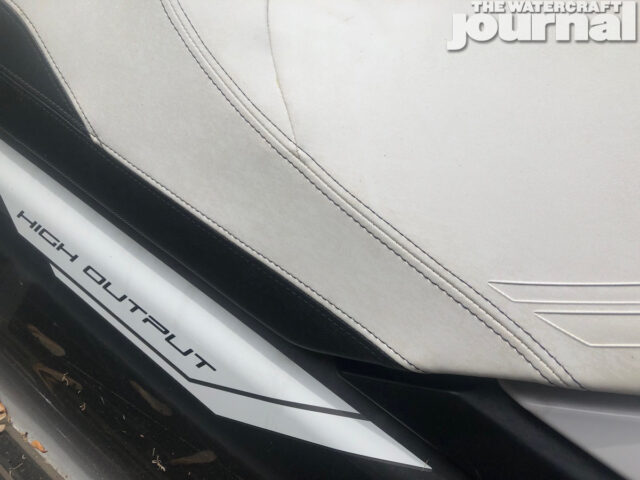
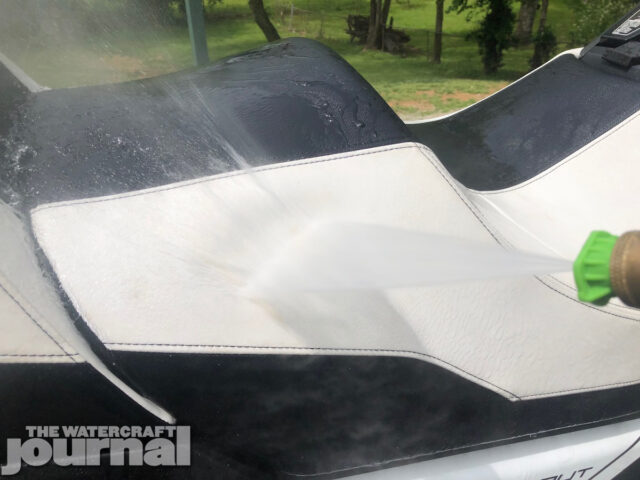
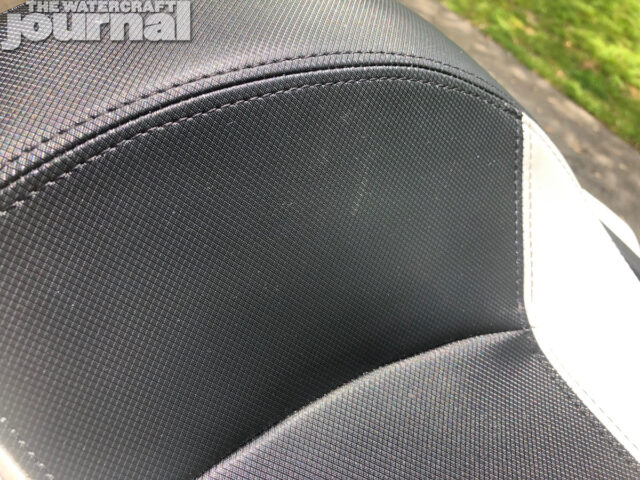
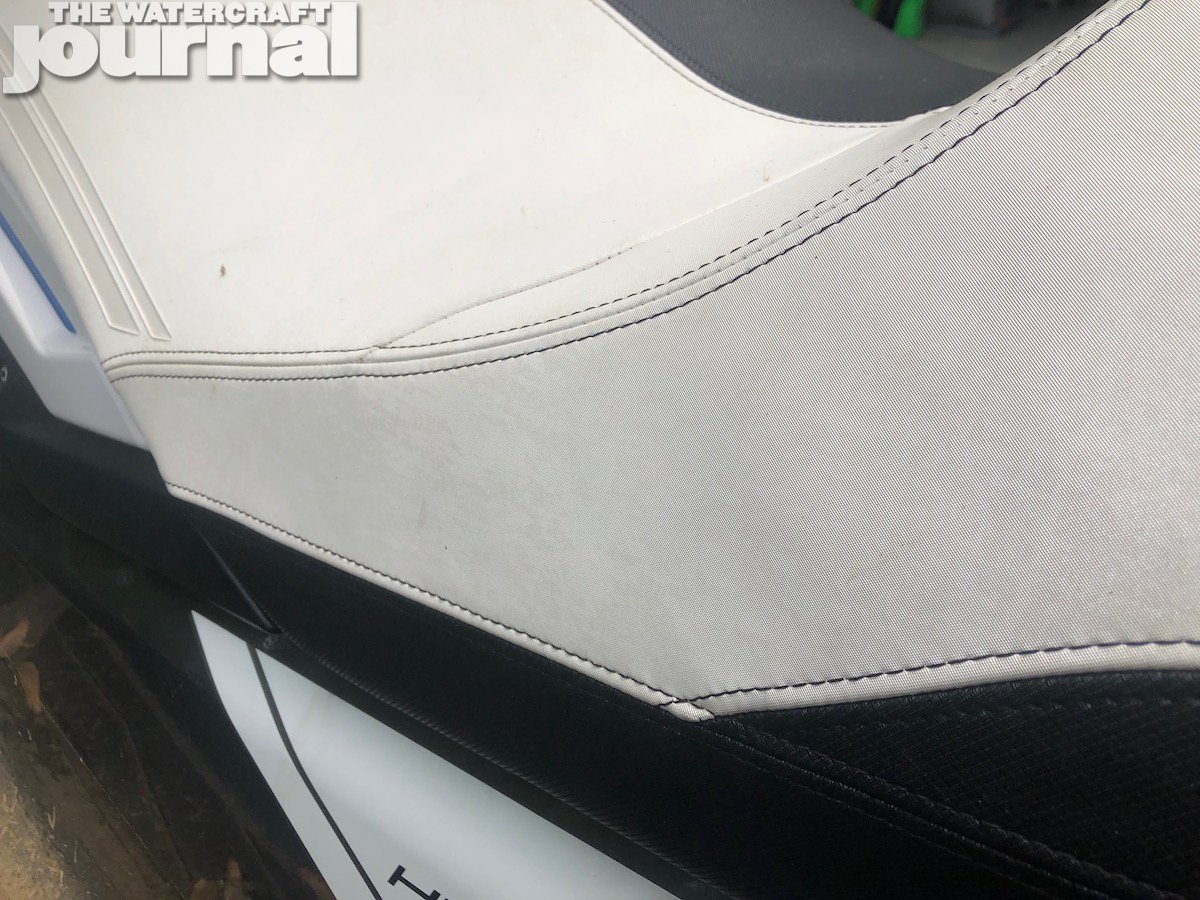
White vinyl seats are nothing new to boating and personal watercraft; yet, the materials used are. Yamaha’s newest WaveRunners employ a durable, tear-resistant canvas that isn’t slick like old vinyl seats of yesteryear. These new seats provide improved grip and traction without chaffing exposed skin and also reflect heat, so they won’t scald after sitting in the sun too long. With the new material comes new ways of treating them. Vinyl cleaners simply cannot penetrate the tightly woven fibers.

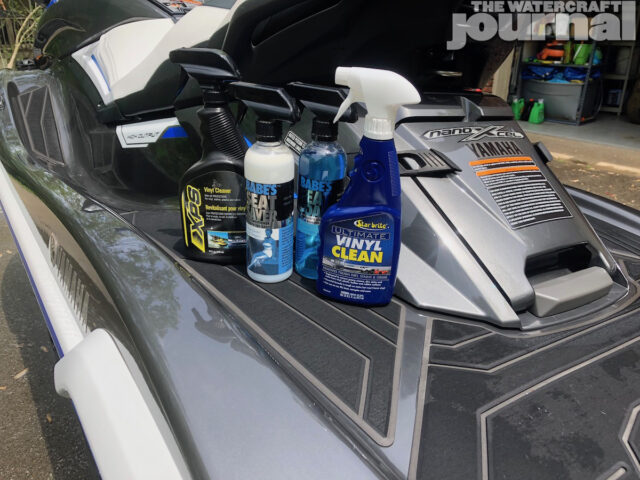
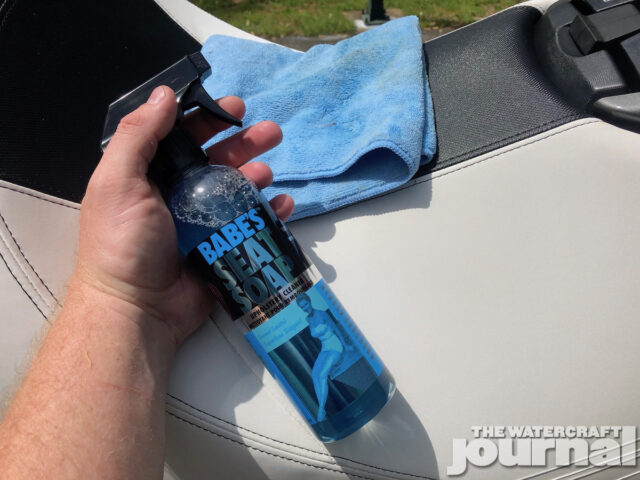
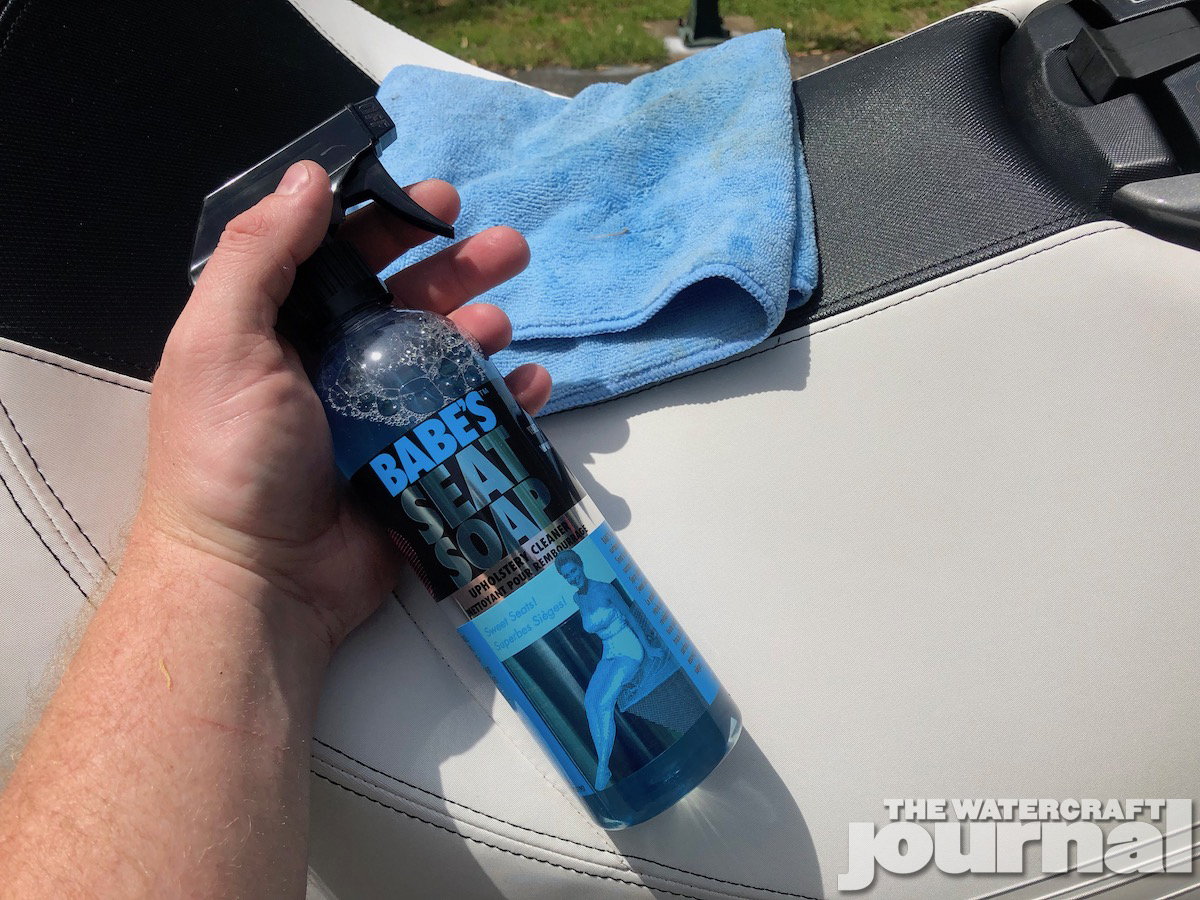
We attempted a little of our brake cleaner on a rag in a small section and weren’t happy with the results either. So we skirted off to a local boat dealer for suggestions. While we were showing discoloring from dirt and exposure to the elements, we weren’t showing signed of the dreaded “pink mold” which often appears with white seats. The dealer’s service department suggested we try Babe’s Seat Soap, a dedicated upholstery cleaner meant for larger pontoon boats and even outdoor furniture.

Not a slick coating but an actual fabric cleaner, we found that the Babe’s Seat Soap lathers quickly and penetrates into the seat material with a little scrubbing with a microfiber towel. Babe’s worked well on the white panels but struggled to really deliver the finish we wanted on the seat’s darker center section. Here, the Starbrite Ultimate Vinyl Clean stepped in. While, not as successful in cleaning the white portions, it did get the last few spots off of the black panels. So a marriage of the two is what we found to be the most successful.

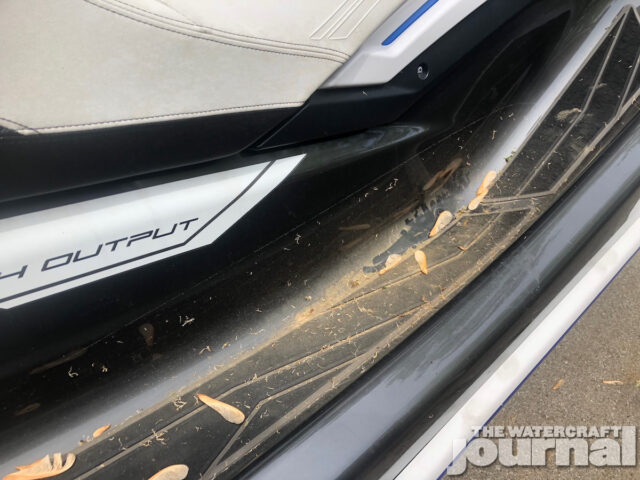
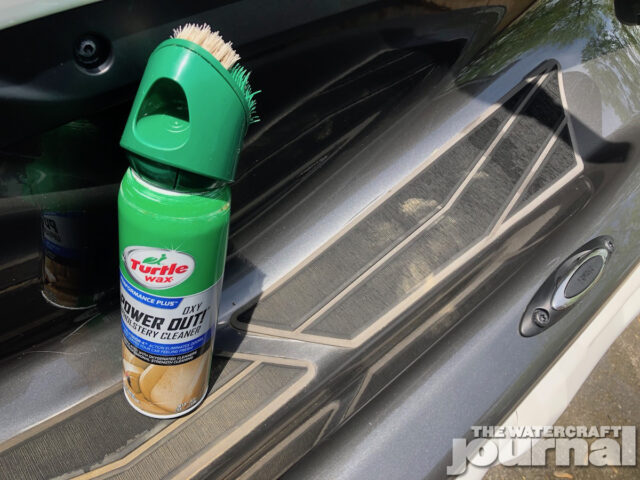
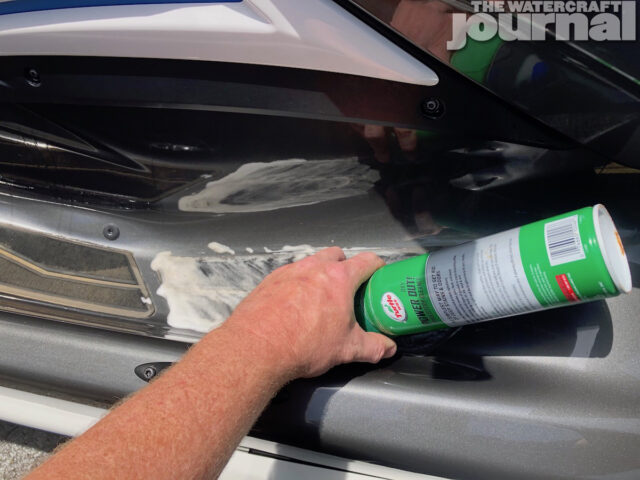
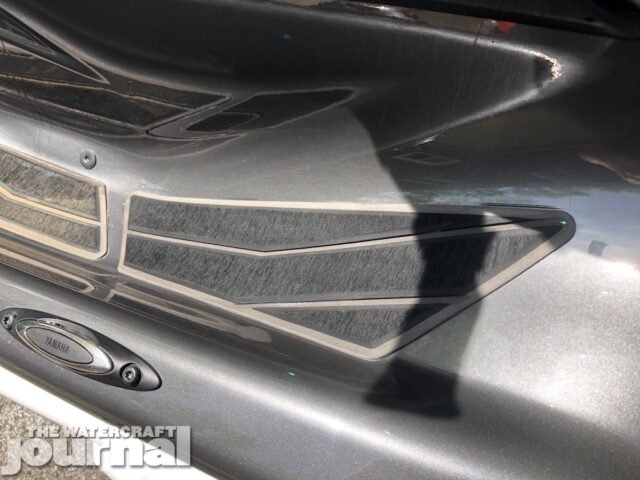
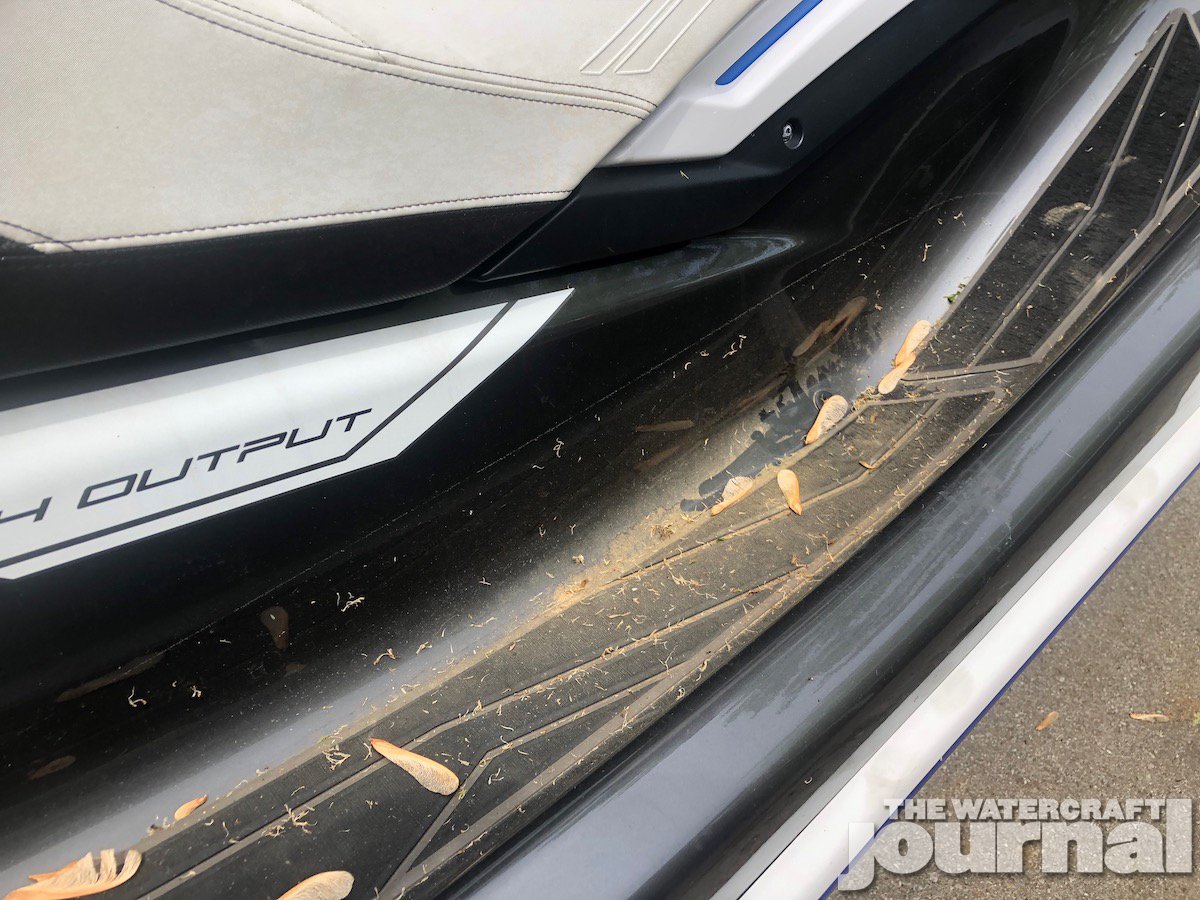
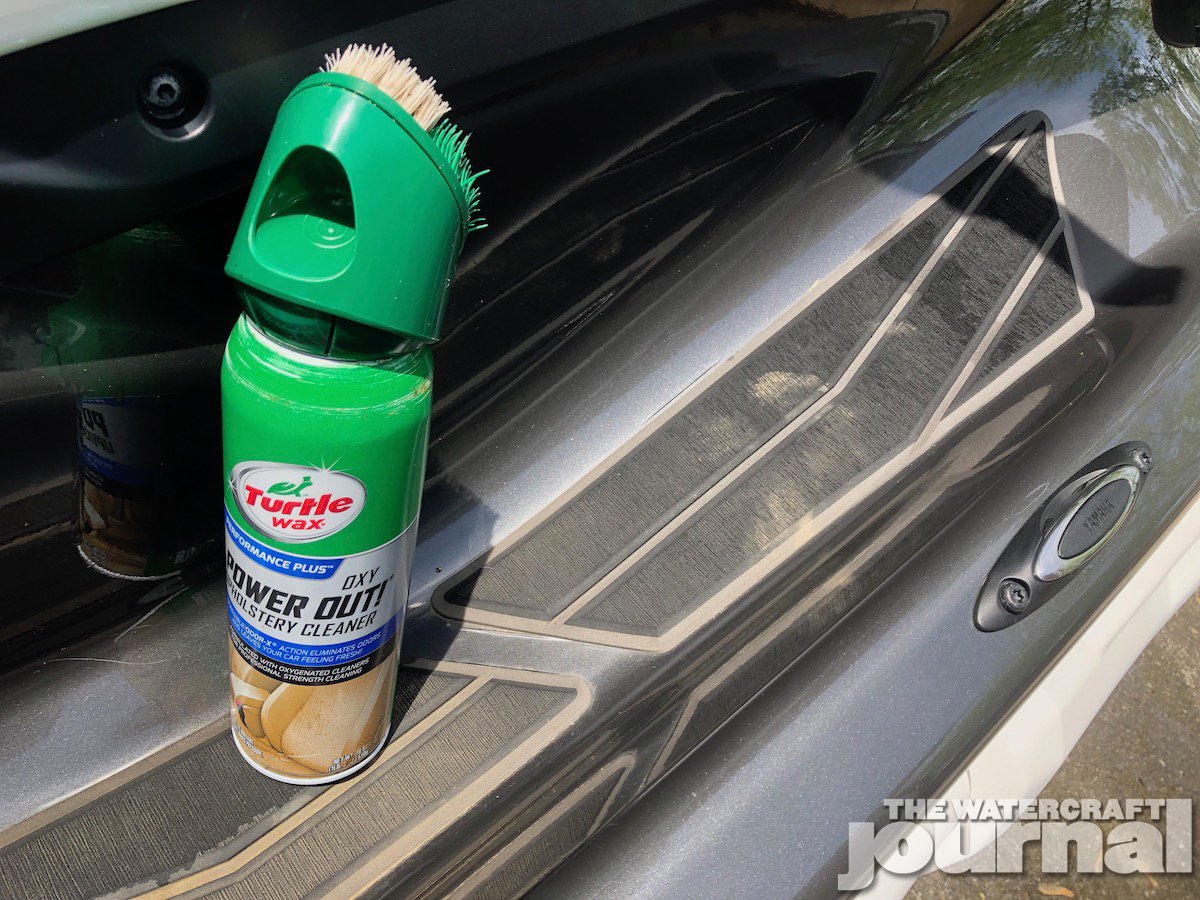
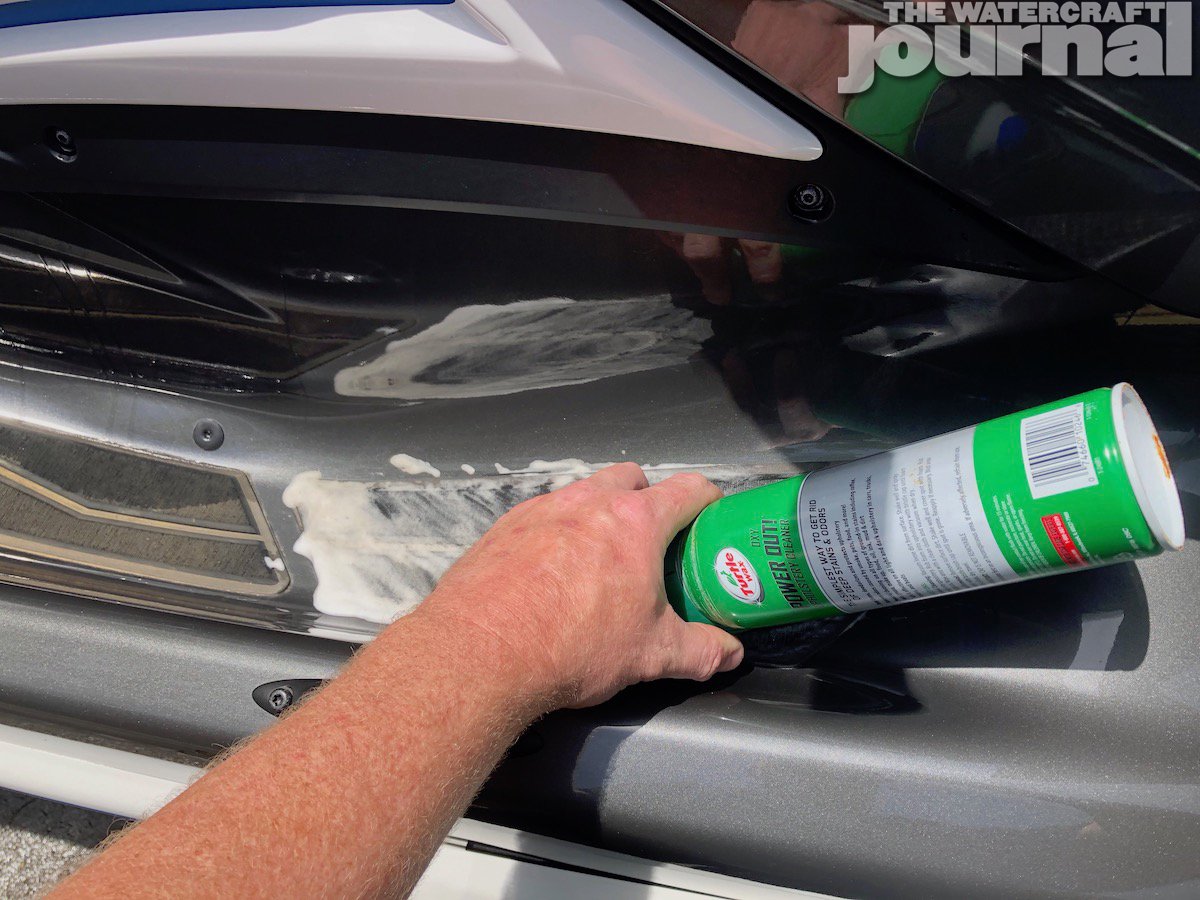
Much to our chagrin, the beautiful CNC-cut Hydro-Turf traction mats are also a massive pain in the butt to get mud out of. The pressure washer couldn’t do it. None of our upholstery or vinyl cleaners could cut the mustard either. The mats feature a very fine, horizontal pattern that red Georgia mud has simply penetrated and refused to leave. So we pulled out the big guns, and put a bristle-topped can of Turtle Wax Performance Plus Power Out! Upholstery Cleaner to work.

Purchased after a very angry toddler dumped fruit-and-vegetable smoothie in the family car, the industrial-grade upholstery cleaner was our nuclear option when it came to cleaning and restoring our traction mats – and boy, did it not disappoint. Scrubbing the rich oxidizing foam into the mats was all it took. We literally wiped down the mats with a towel and BAM! they looked as good as new. It was also the most laborious part of our day, but well worth the effort.

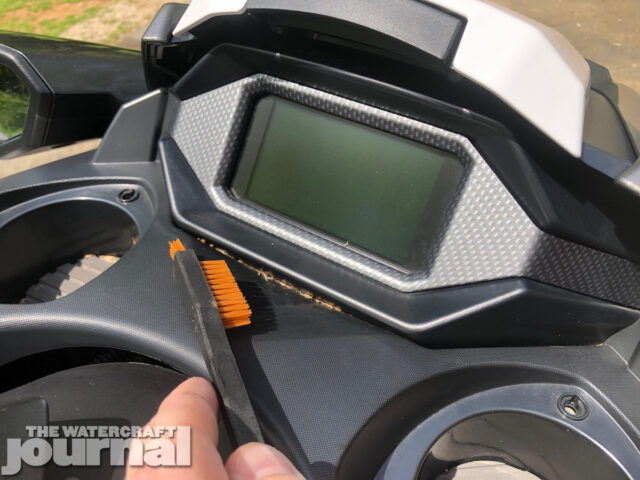
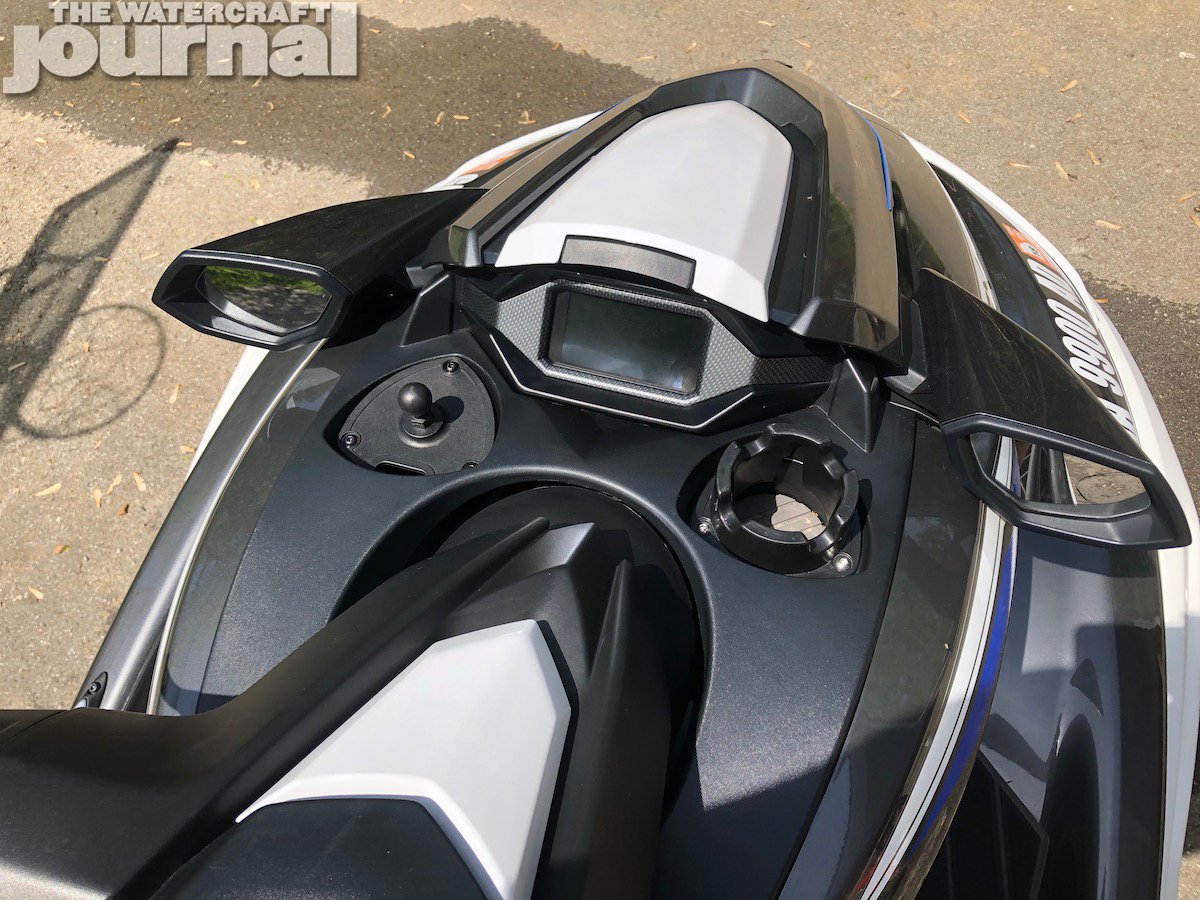
Being left outside, the WaveRunner had collected quite a bit of debris during a very active Tennessee springtime, and needed a little bit more detailing than what we have given to previous loaner units. This meant whipping out the detailing “toothbrush” to get into the smaller cracks and crevices. One particularly problematic spot was the gap between the LCD digital touchscreen dashboard and the top of the steering cowl, where leaves and pollen had nested. That too required a bit of time, but the right tools makes for easy work.

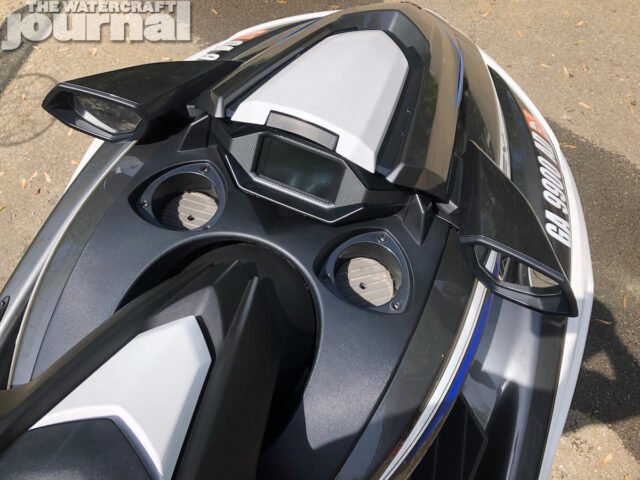
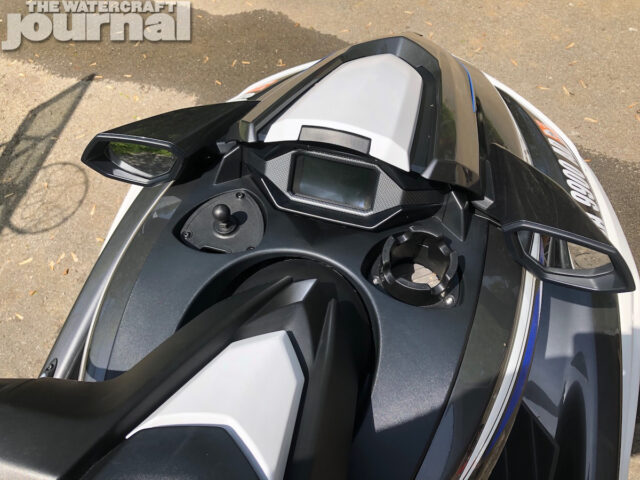
While sitting in the seat, we figured it was the right time to install our Factory Yamaha Accessories’ RAM mount puck and cup holder. These two items didn’t come with our FX HO a little less than a month ago, but were “must have’s” on our list. We have a handheld Garmin GPS that we use regularly for navigation and data gathering, and would be lost without it. So too was the cup holder, which allows for taller water bottles and drinks to be carried at speed without fear of toppling out. (FYI, Yamaha sells and packages each of these electroplated hex-head screws separately, so pay attention to order accordingly.)

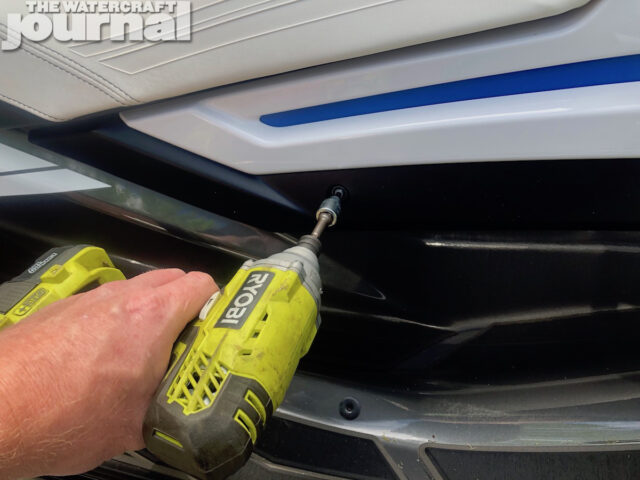
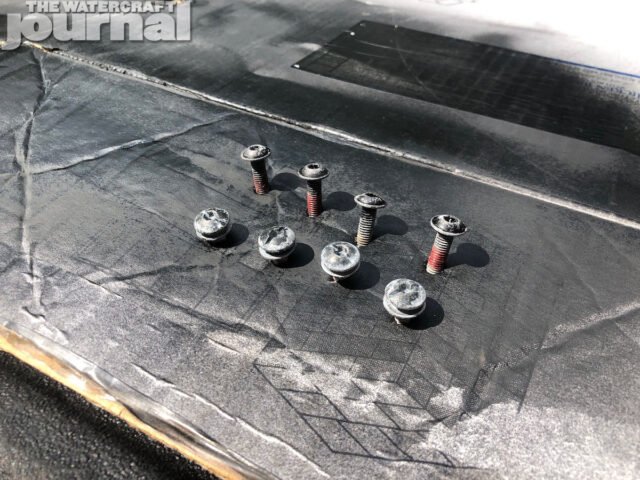
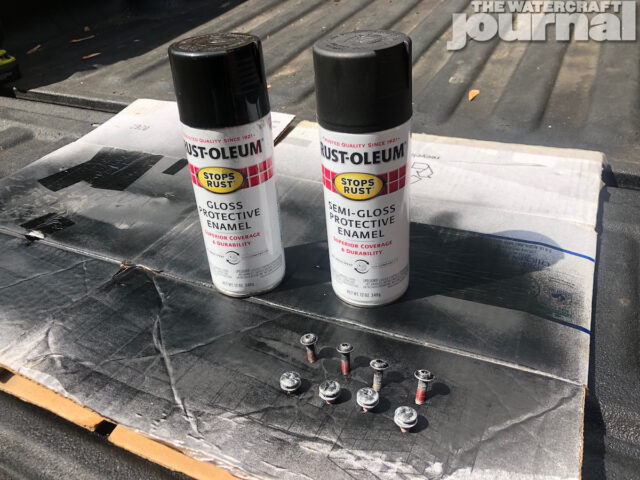
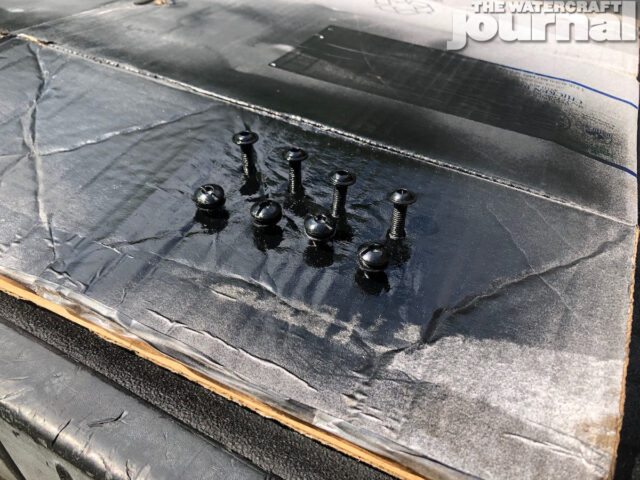
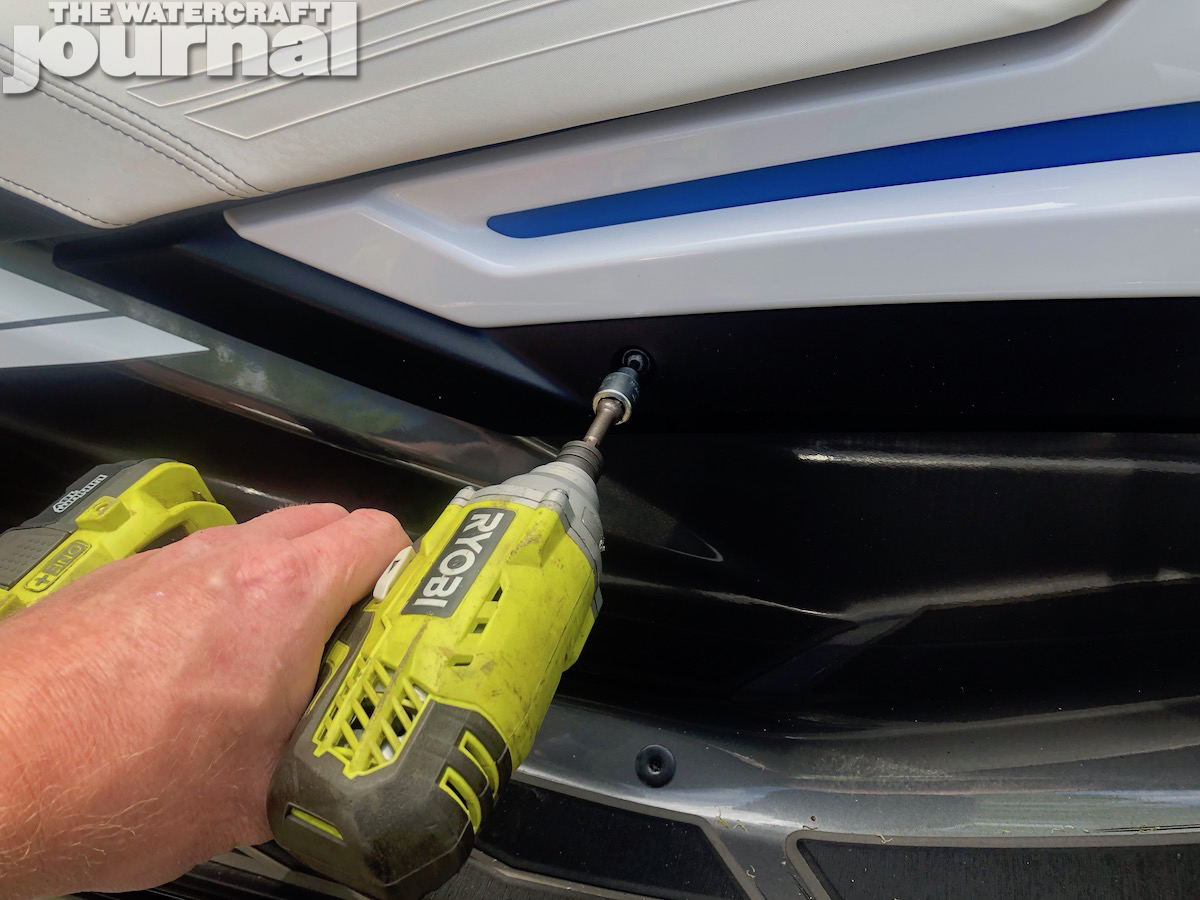
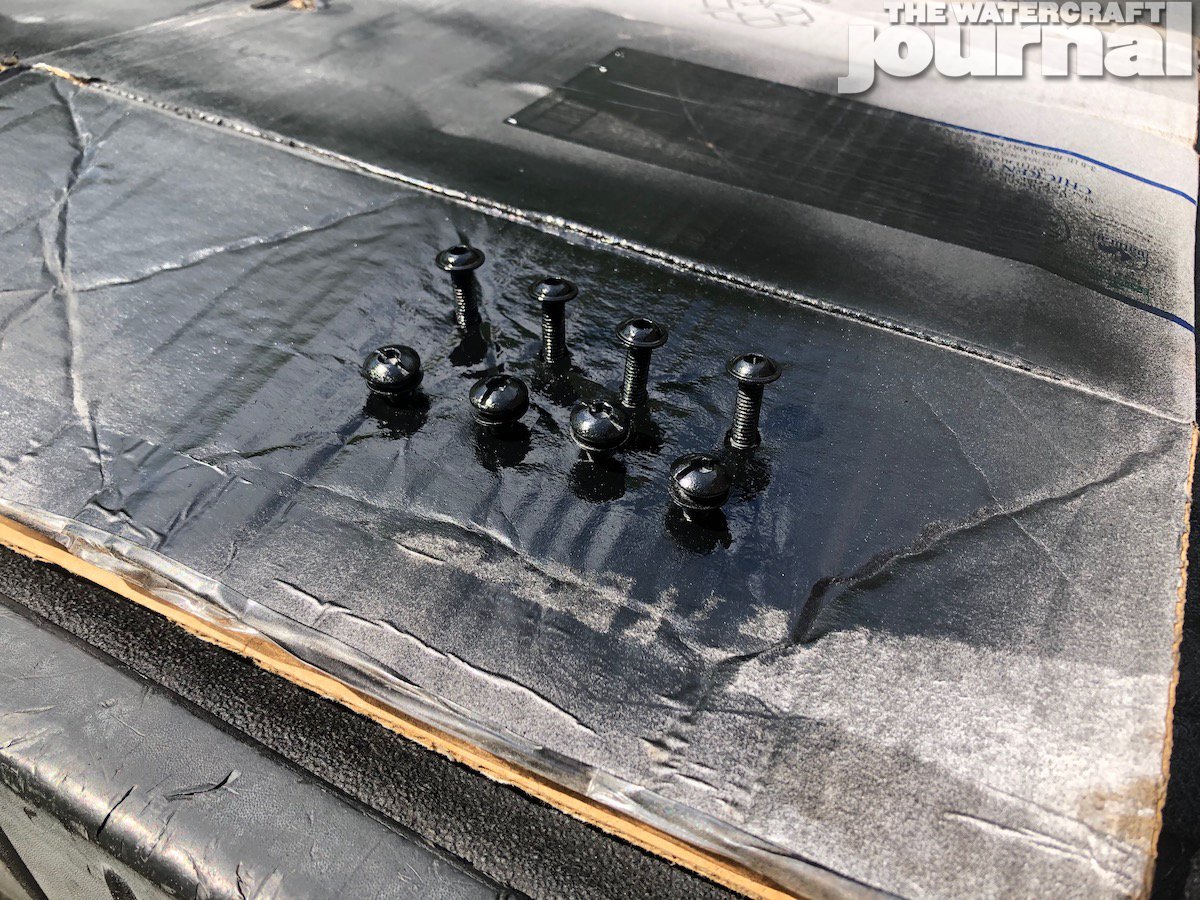
Speaking of hardware, we also noted that many folks online were painstakingly removing all of the exposed hex-headed screws and either having them replated or simply replacing them with stainless hardware. This is because the coating on the factory screws is thin, and does not guard against discoloring, scaling and rusting well at all. While nowhere near as permanent of a fix, we found simply scuffing them on a red Scotch-Brite pad to knock the loose scaling off and dusting them with a few passes of Rust-oleam semi-gloss enamel (and a pass of gloss to replicate the factory sheen) made for a good semi-solution.

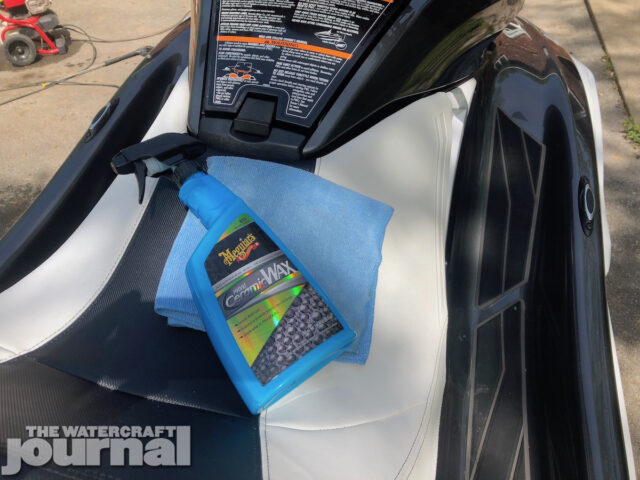
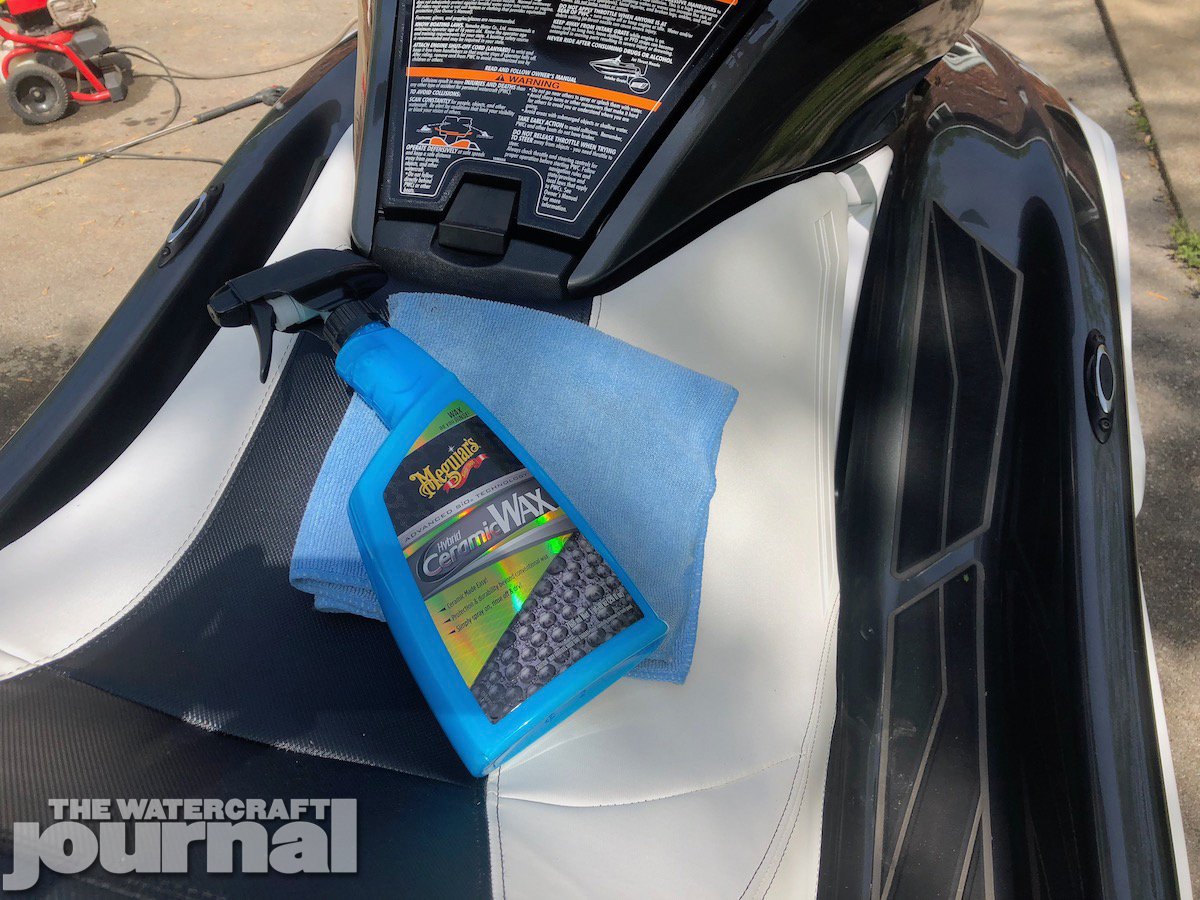
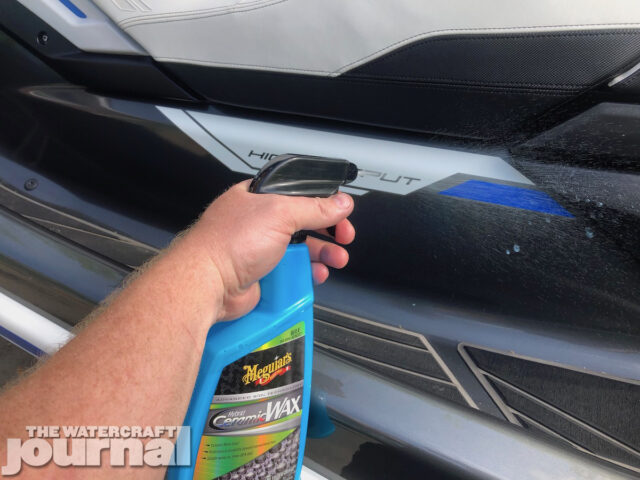
The final act of the day was also our most controversial. To many, there is no greater technology than ceramic coatings. And rightfully so, as the hard-bonded material provides a near-perfect protecting layer over paint. Unfortunately, the process is exceptionally laborious, requires several hours to apply, longer to cure and if done wrong, can actually damage paint and other surfaces. Considering this, automotive and marine cleaner and detailing leader, Meguiar’s developed an advanced Hybrid Ceramic Wax.

The one-step spray was painstakingly developed to simplify the ceramic coating process; and while Meguiar’s itself admits won’t provide the same level of protection as a professionally-applied ceramic treatment, does provide UV and contaminant protection and durability far beyond that of a conventional wax that is both easy to spray on, rinse off and dry. Because our FX had never been coated with Meguiar’s Hybrid Ceramic Wax, we needed to first spray on and dry off to set an “initial application.”

The spray comes out as a thick, high viscosity spray that can go on all surfaces (including decals, plastics and even upholstery, although we avoided the traction mats and seats, as well as the touchscreen). With a microfiber towel, we wiped down and dried the ski completely – not needing the multiple passes a wax job normally requires. Then, per Meguiar’s instructions, reapplied the Ceramic Wax and brought out the hose again.

Spraying from the top down with a “strong stream,” we rinsed the Yamaha down a second time. Per Meguiar’s, “the hydropower of this rinse will spread the product, coating all the exterior with our Hybrid Ceramic protection.” After doing so, we dried the ski off again, and viola! We had a newly ceramic-coated WaveRunner. In all, the process took us about 3-and-a-half hours, but that included taking pictures and stopping to try new and creative ways to rid those pesky stains – so expect to spend half the time replicating our results.

Add Some LinQ To Your Sea-Doo Experience

0

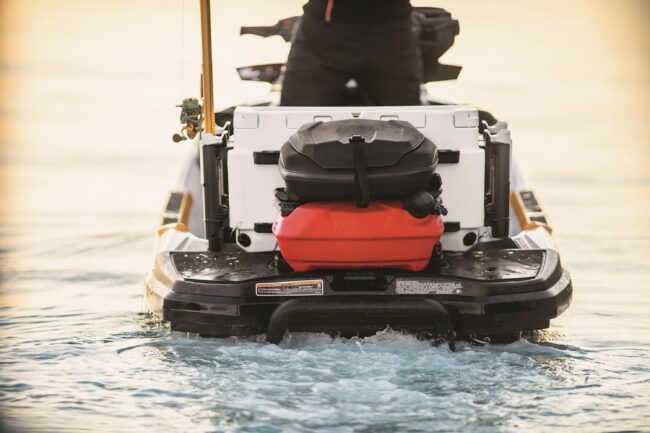
BRP revolutionized Sea-Doo when they brought their popular LinQ Accessory System from their other powersports line and applied it to Sea-Doo Watercraft. This opened the door of possibilities in the way in which riders will use their Sea-Doo and it quite literally enhances the #SeaDooLife.

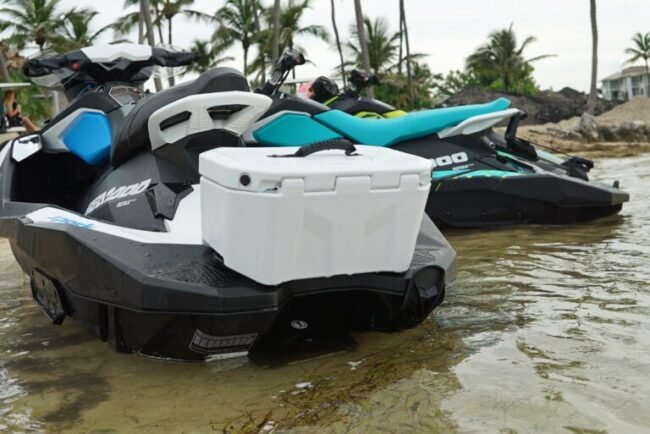
You can now add this versatile LinQ to every Sea-Doo platform. Whether you want to go fishing, wakeboarding, add some extra storage, or even carry some extra fuel for the longer hauls, you can do it all by simply swapping out or adding that particular accessory.

Sea-Doo likes to think of this unique system as apps, but for your watercraft instead of your phone. For more information, you can check out Sea-Doo’s latest fun-filled facts below or head on over to their LinQ accessories page.

The LinQ accessory system allows Sea-Doo watercraft owners to enhance their Sea-Doo life. What ever they want to do on the water, the LinQ accessories allow them to do it further, longer, and with more of the things that they want with them.  

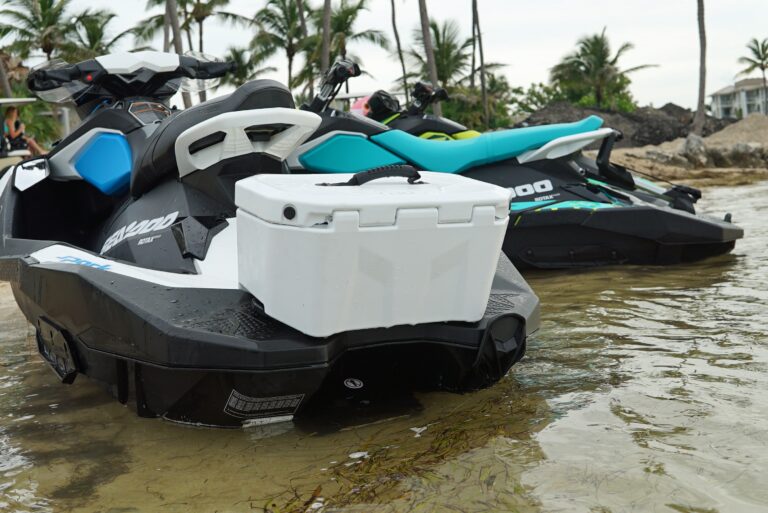
The incredibly versatile LinQ accessory system is now available on all Sea-Doo platforms! The exclusive quick-attach rear cargo system is the best way to carry items on your Sea-Doo watercraft. LinQ allows riders to securely attach accessories in seconds and without tools. The available accessories include; Fuel Caddy, 4.2 gallon Cooler, 13.5 gallon fishing cooler with work surface and adjustable rod holders, sport bag, LinQ box, and retractable Ski Pylon. The LinQ accessories are virtually watercraft apps, what ever you want to do that day, simply plug-and-play.

Sea-Doo Fish Pro Helps Create Fishing Tournaments

0

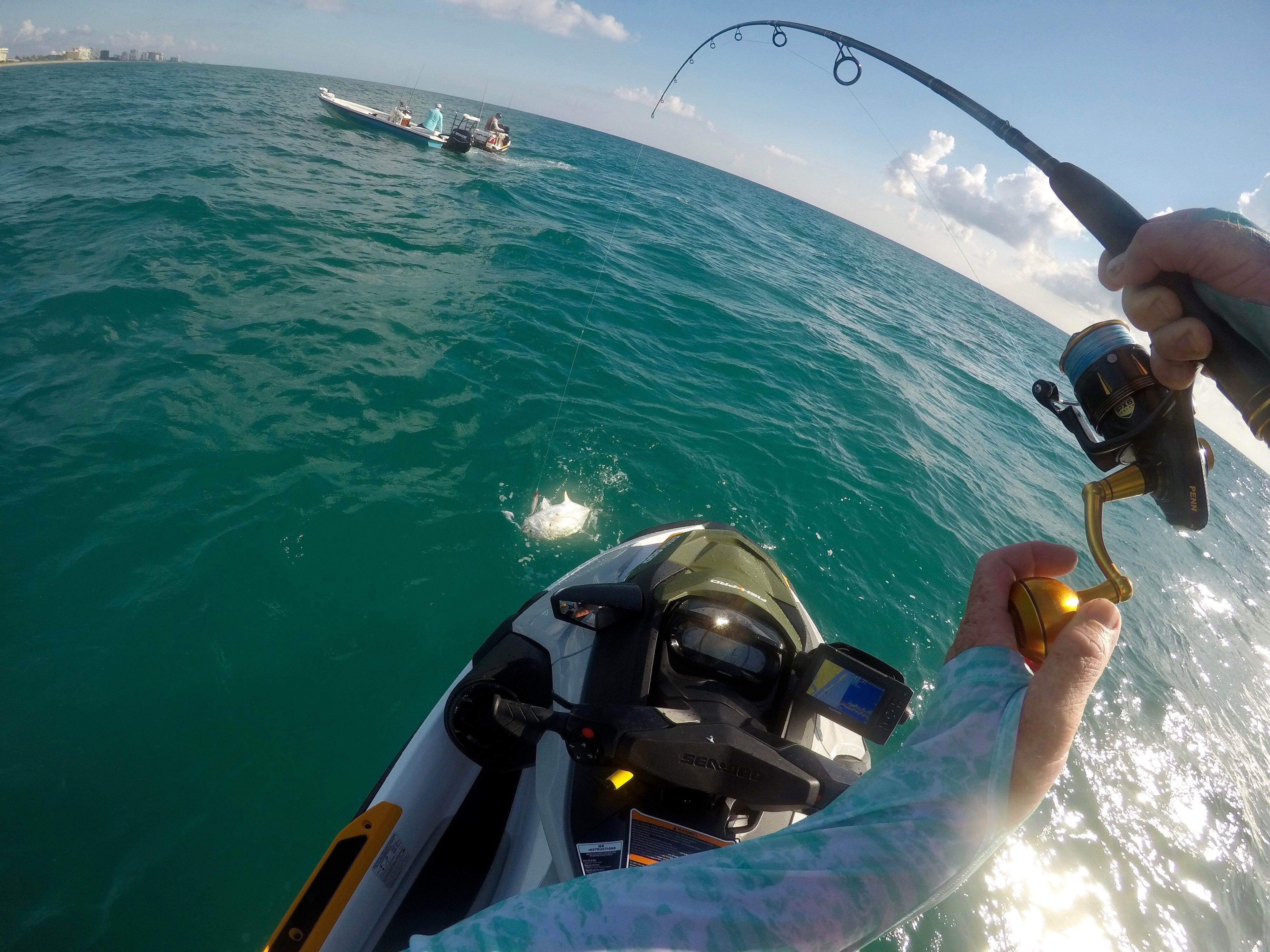
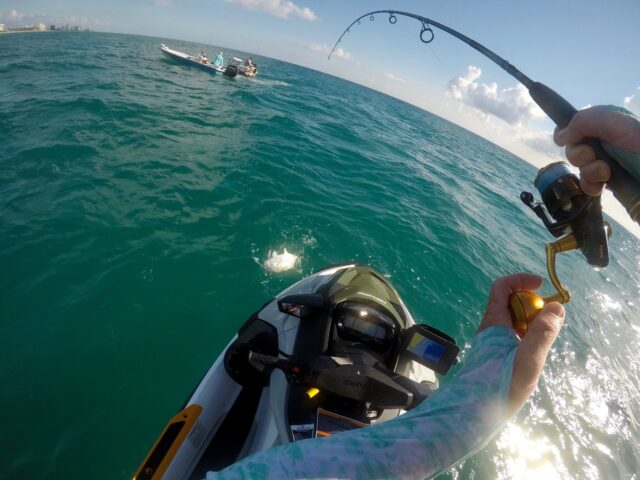
The release of the Sea-Doo Fish Pro has been widely accepted throughout the industry and people seem to be running to dealerships to reel theirs in. The Fish Pro is yet another industry-first concept from Sea-Doo.

The PWC dedicated to fishing is actually helping to spawn fishing tournaments based around fishing from a personal watercraft. Actually, people have been fishing from PWC for a long time but the Fish Pro is making that concept easier and helping to expand the sport.

Traditionally if you wanted to go fishing on a PWC, you would have to purposely outfit it to do so. That included building or installing pre-fabricated fishing rod holders, attaching cooler systems, installing and setting up fish finders, ect.

Well with the Fish Pro, that is no longer necessary since all of those items come from the factory. Sea-Doo further expands on the newfound use of the Fish Pro in their April newsletter as seen below.

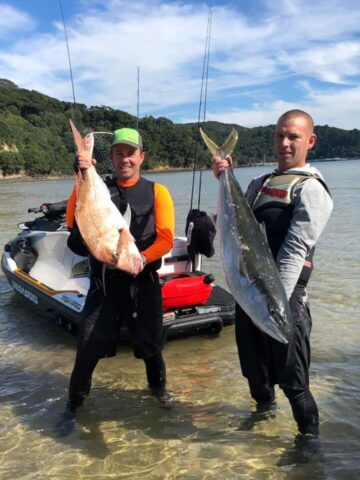
Sea-Doo Fishing ambassador Andrew Hill has been fishing from watercraft for a long time (actually 70% of all PWC owners in New Zealand use them for fishing) and has begun organizing PWC fishing tournaments. PWC tournaments are something that looks to expand in 2019 and beyond with the introduction of the first factory equipped for fishing watercraft in the Sea-Doo FISH PRO. Tournaments have been planned for waters in Delaware, Florida, Texas, and New Zealand.

Gallery: 2019 P1 AquaX, Round 1; Daytona Beach, FL

0

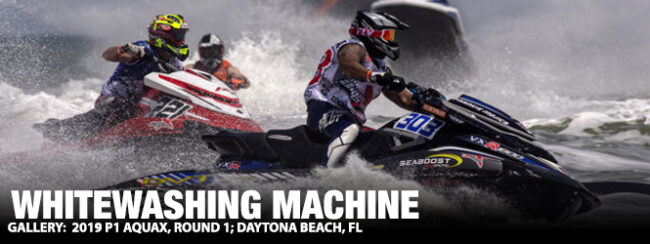
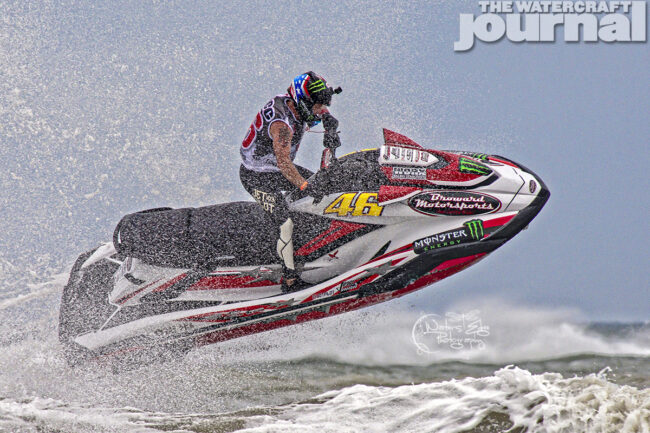
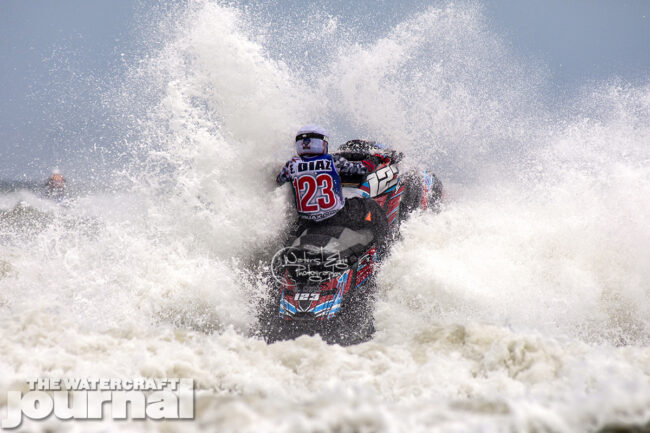
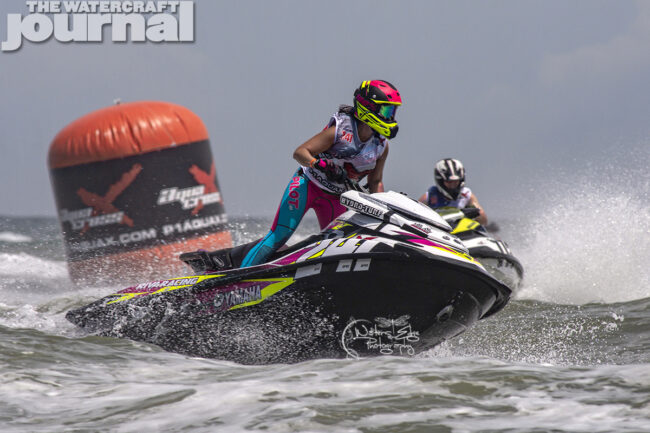
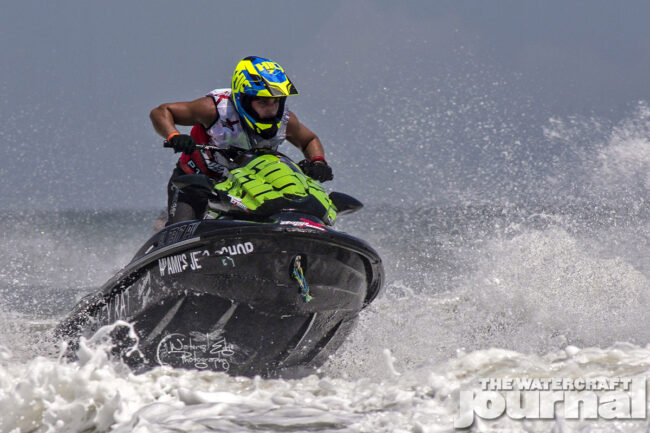
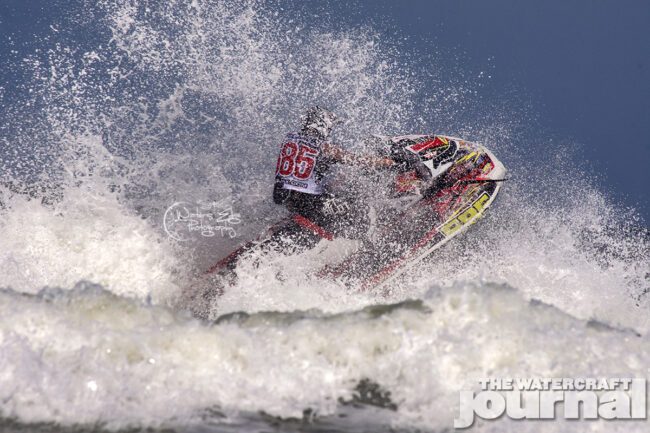
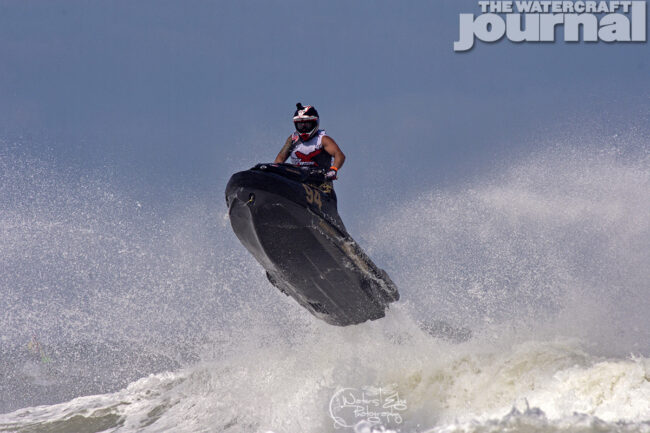
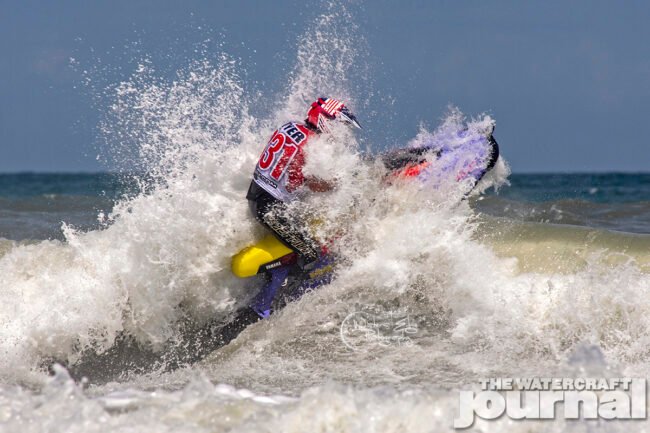
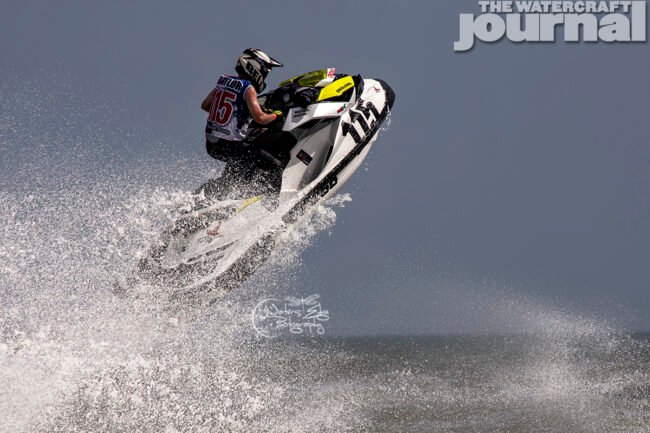
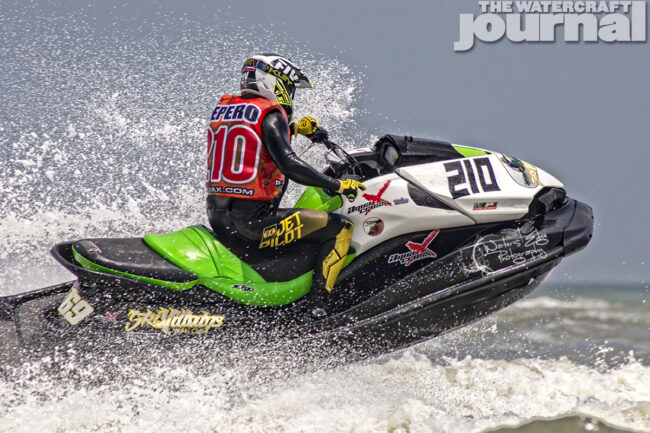
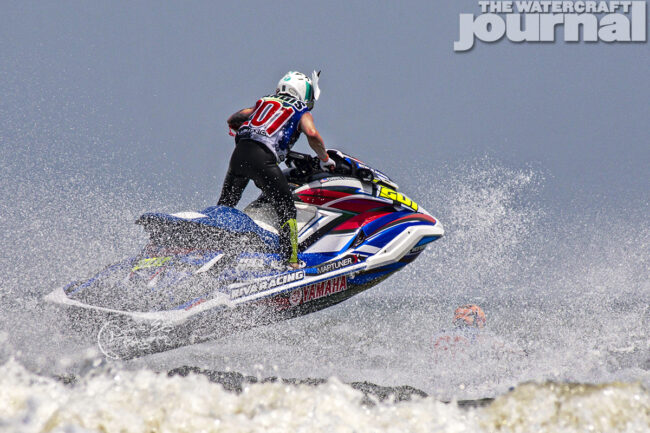
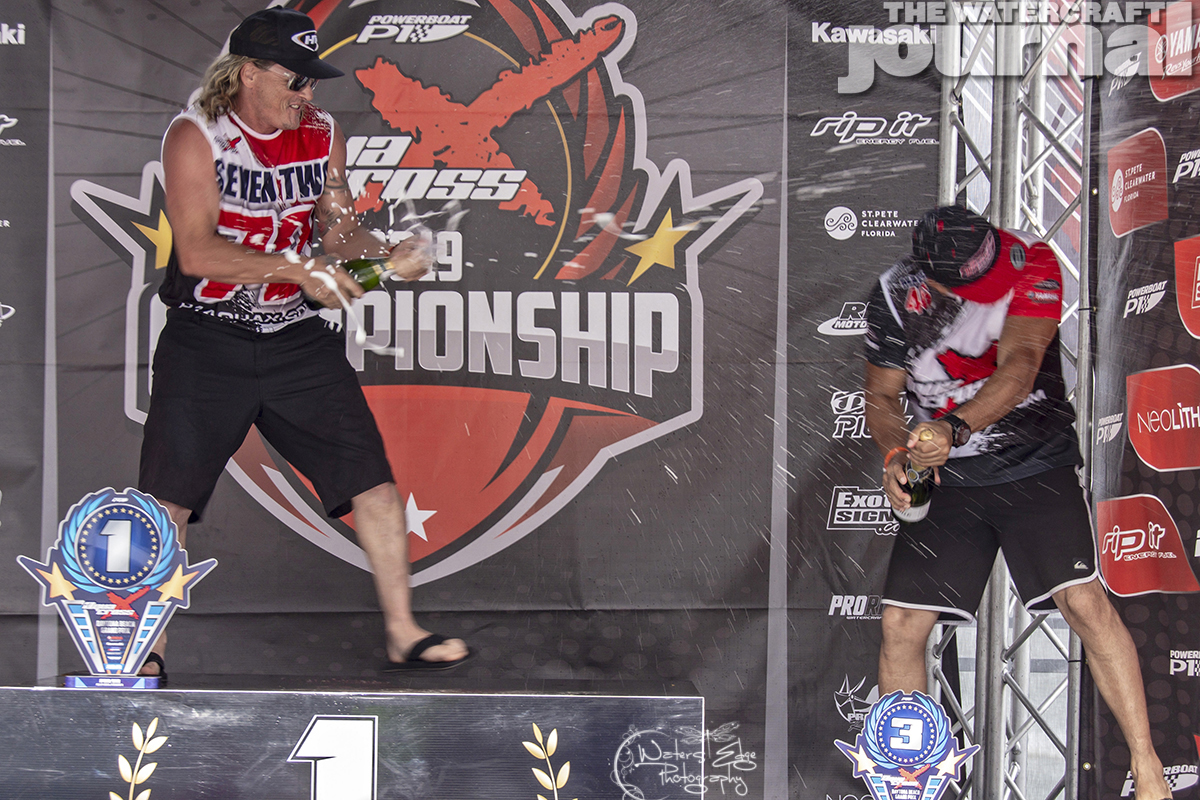
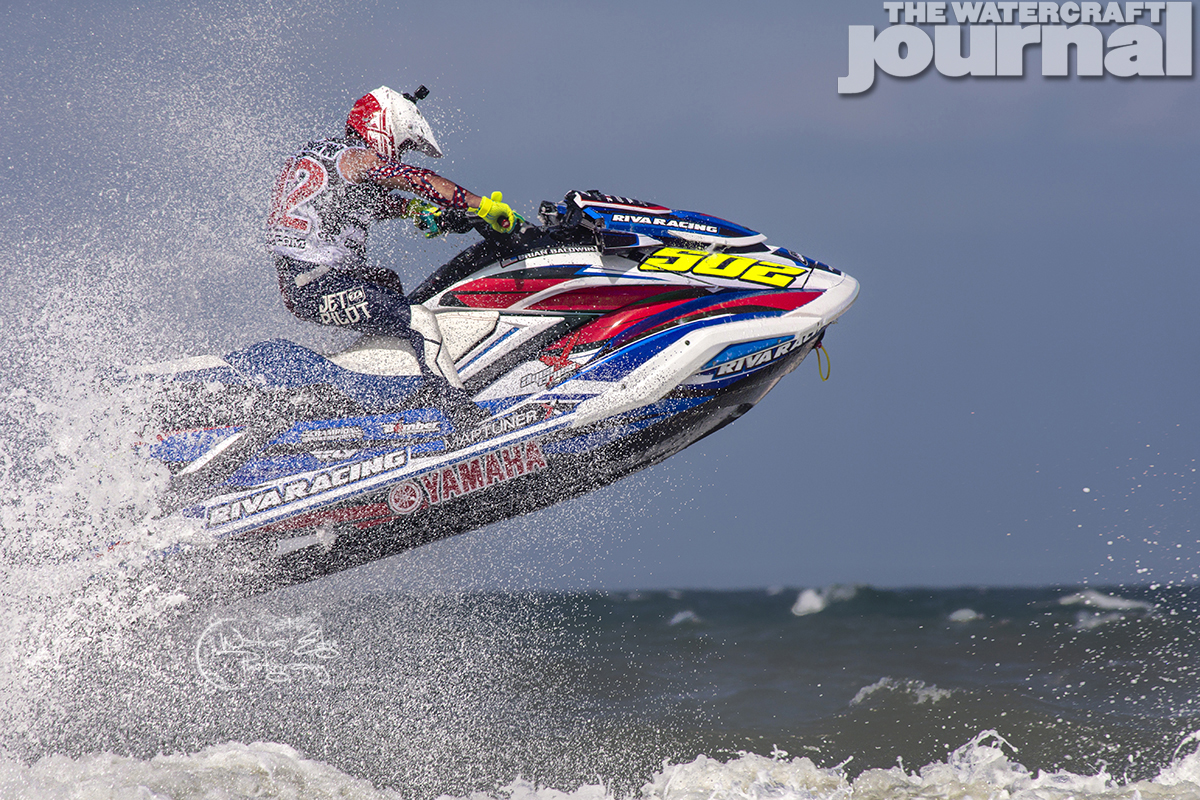
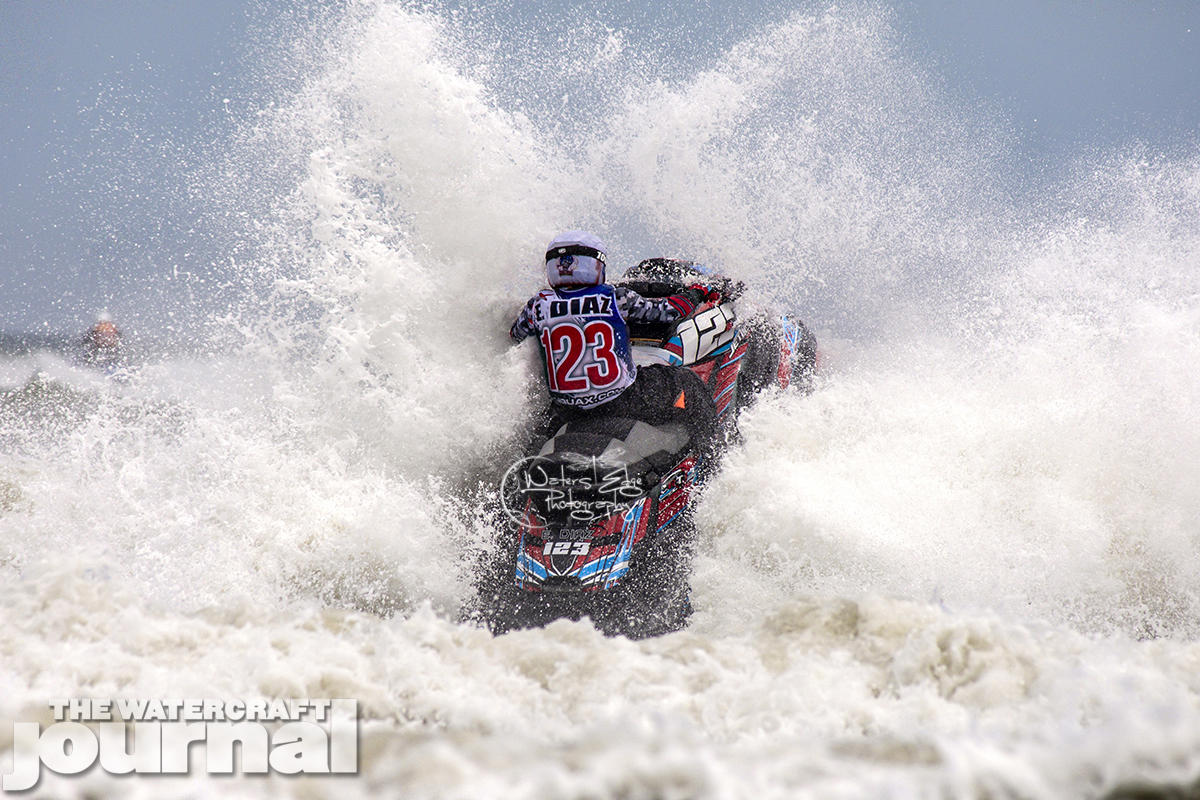
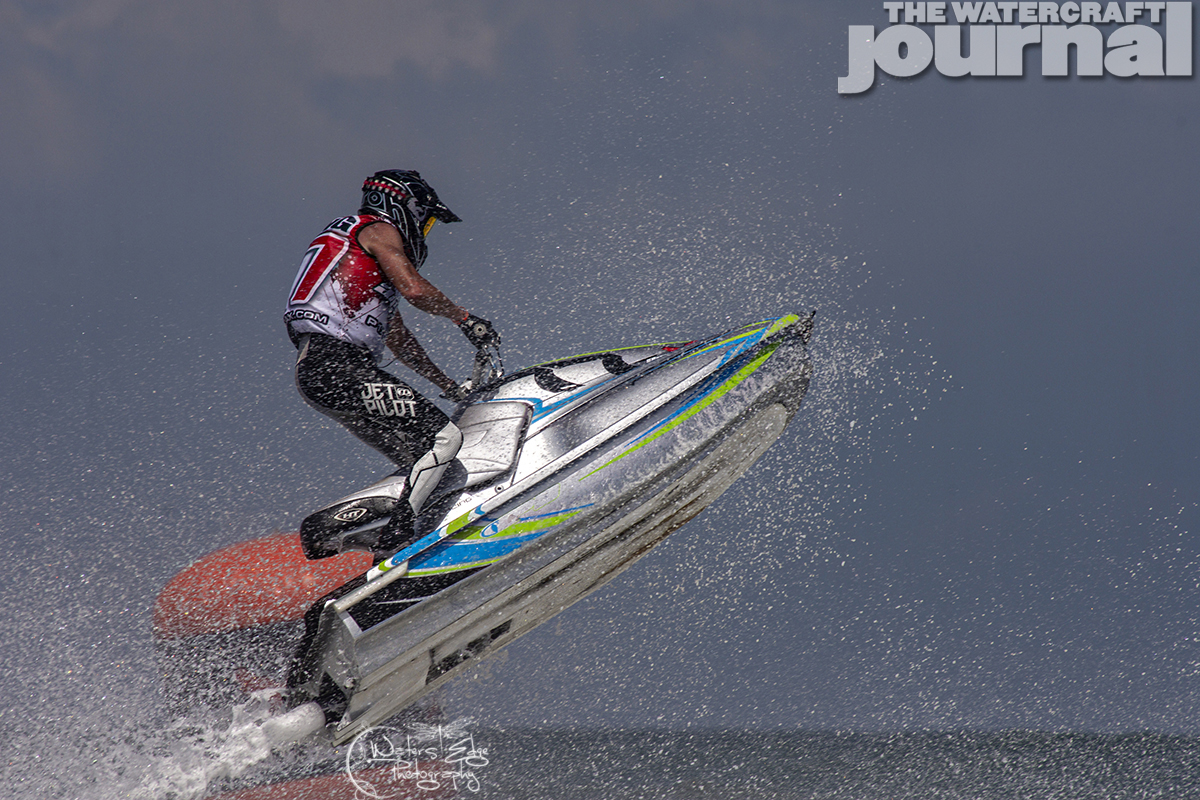
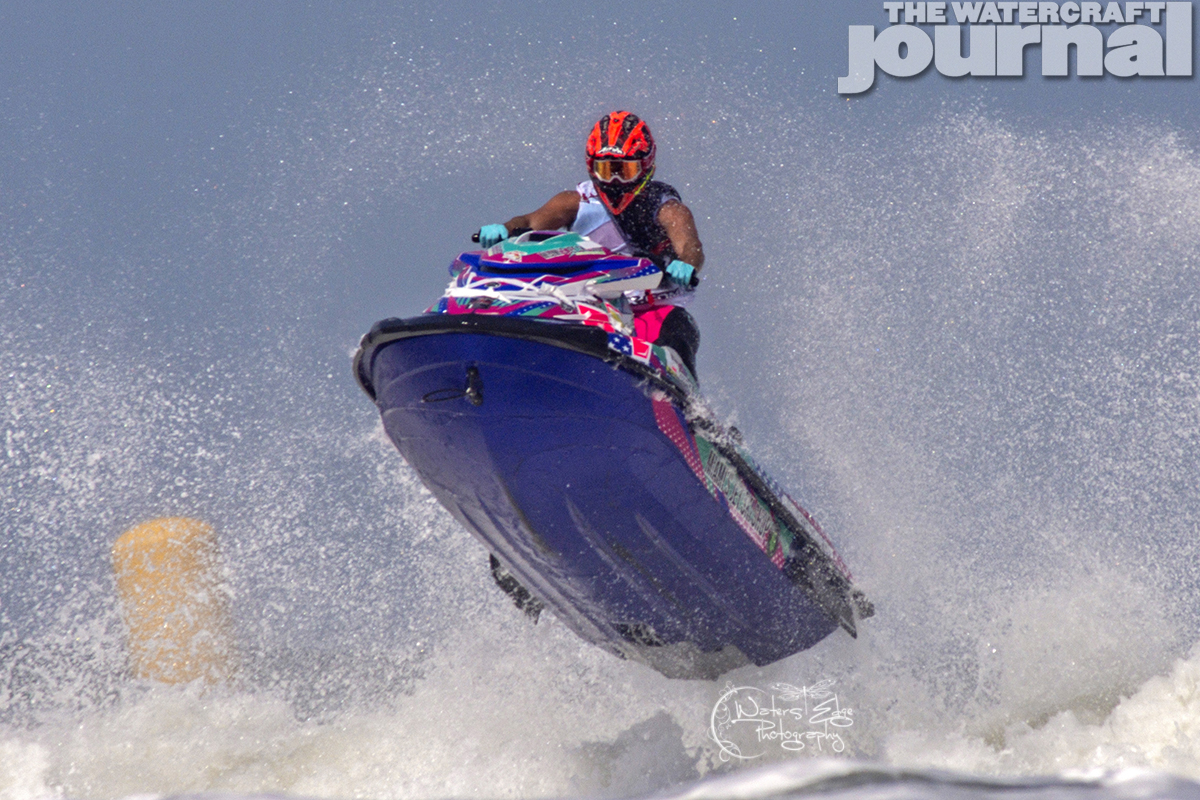
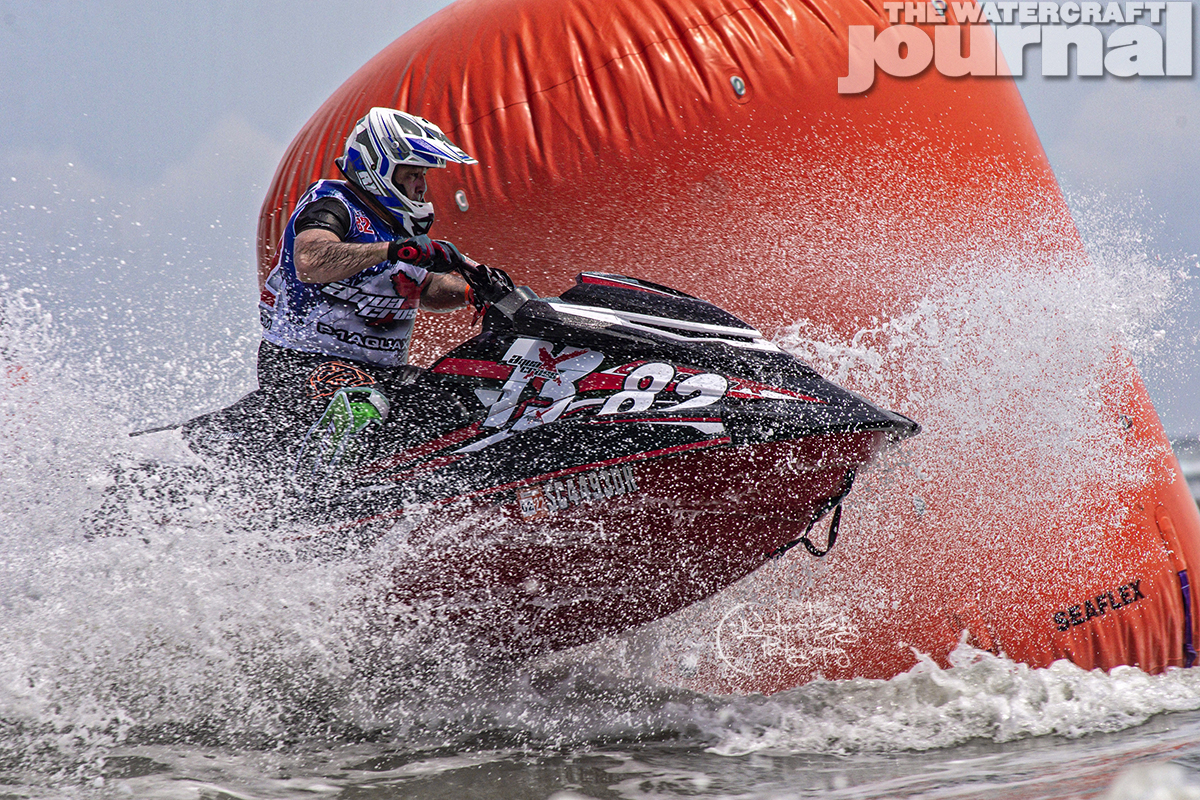
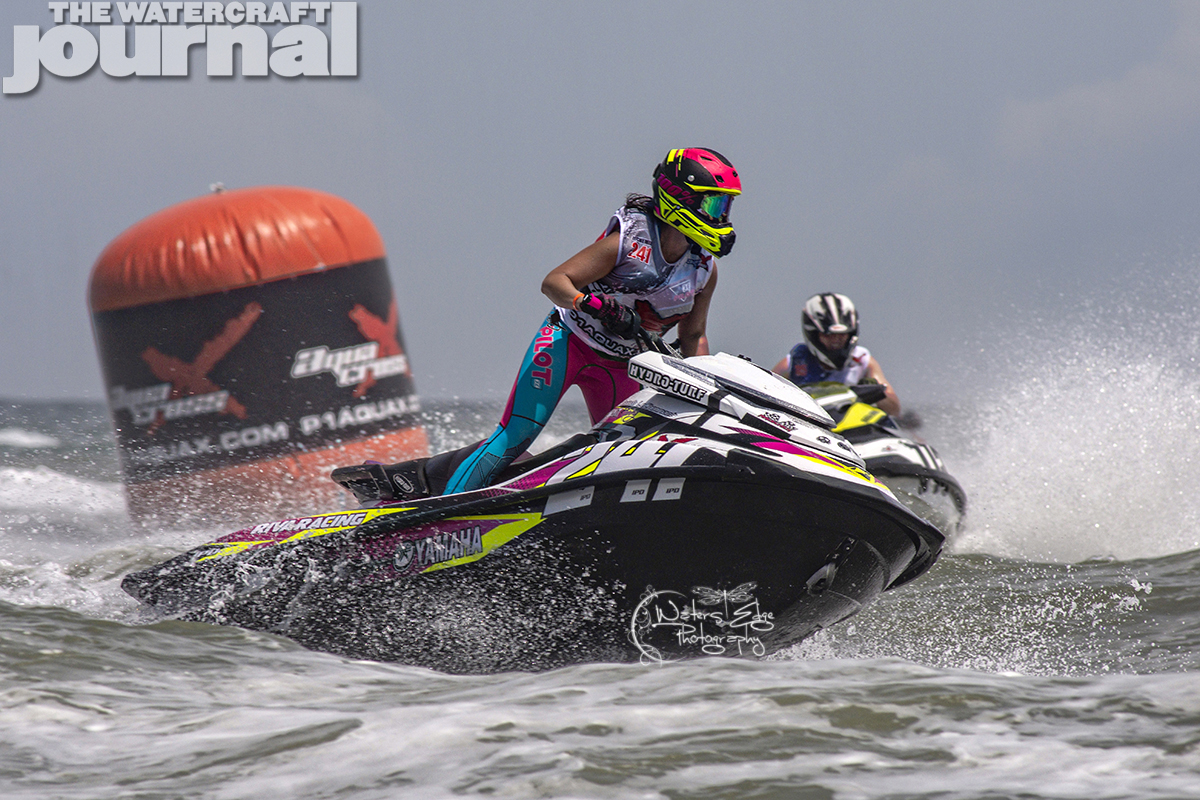
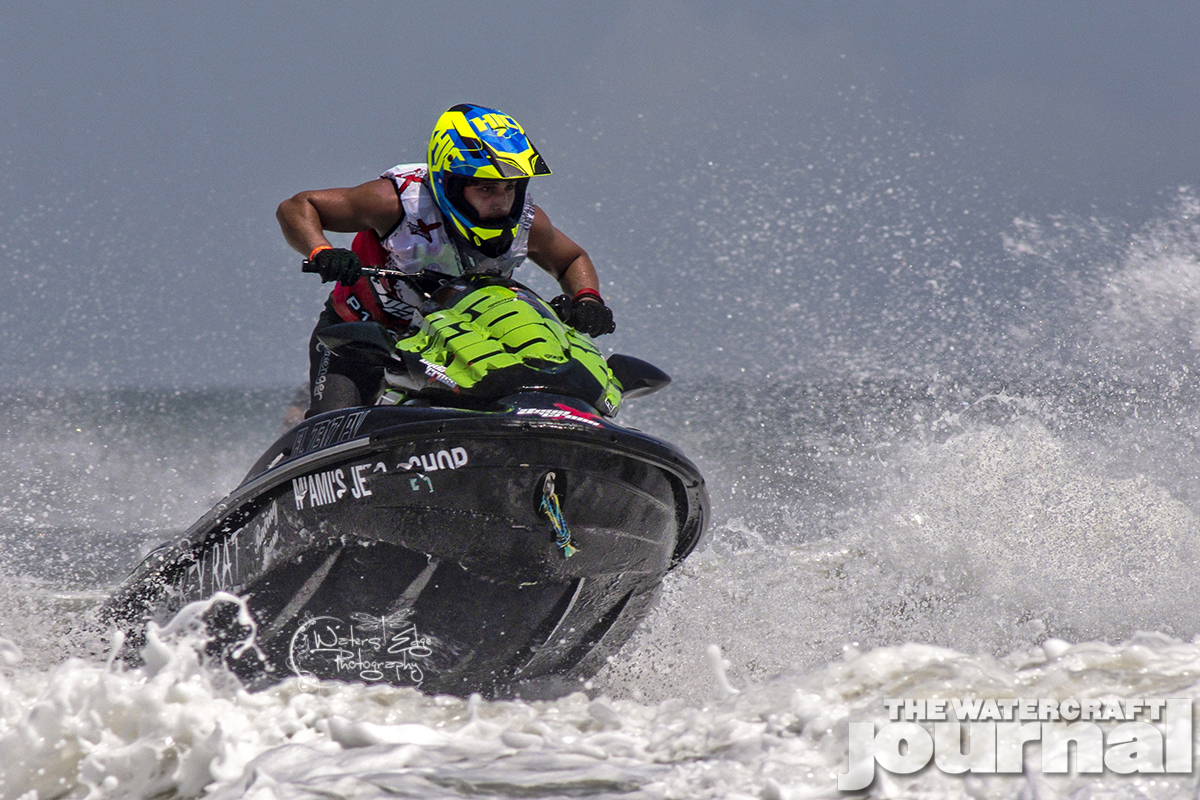
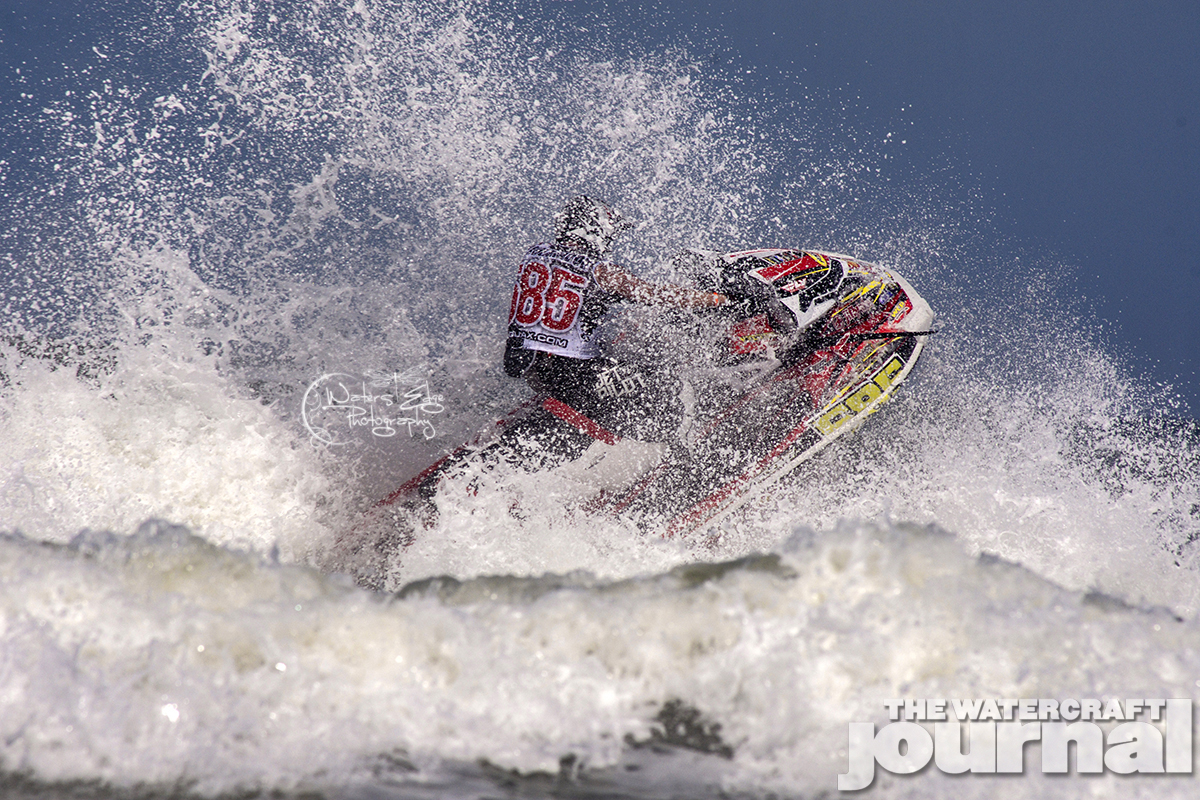
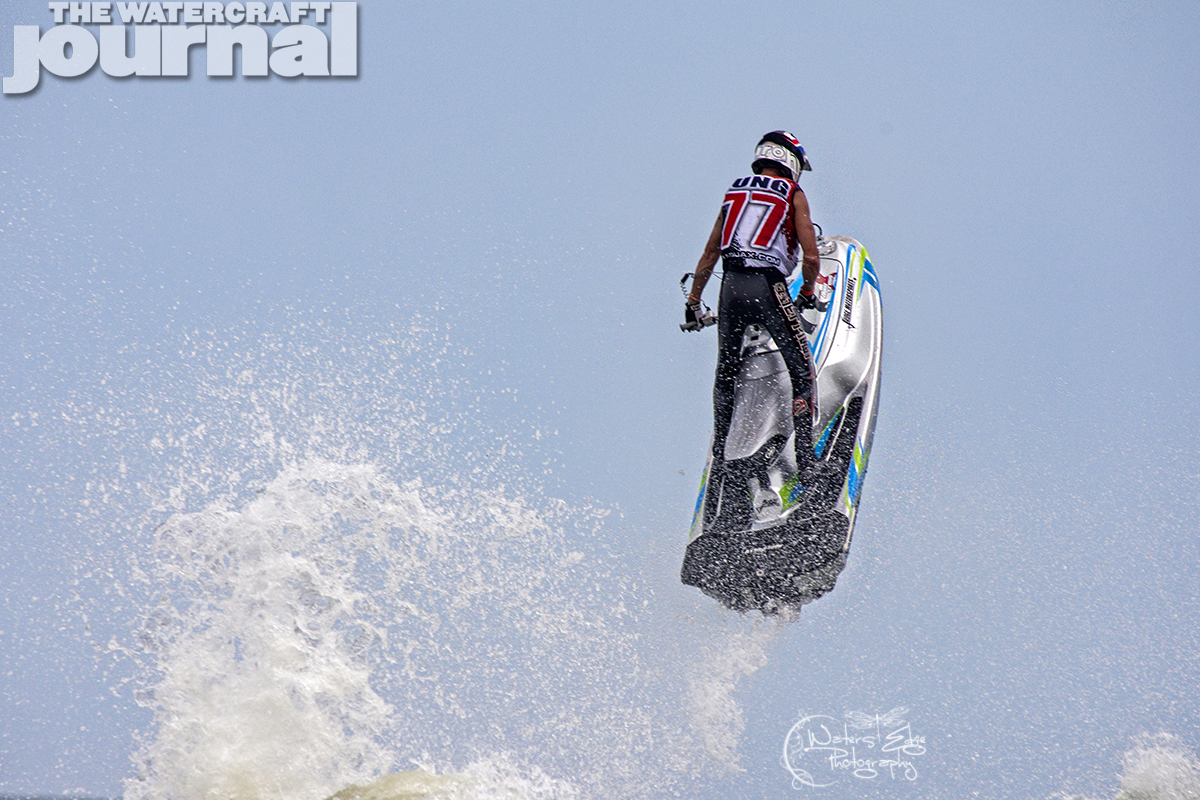
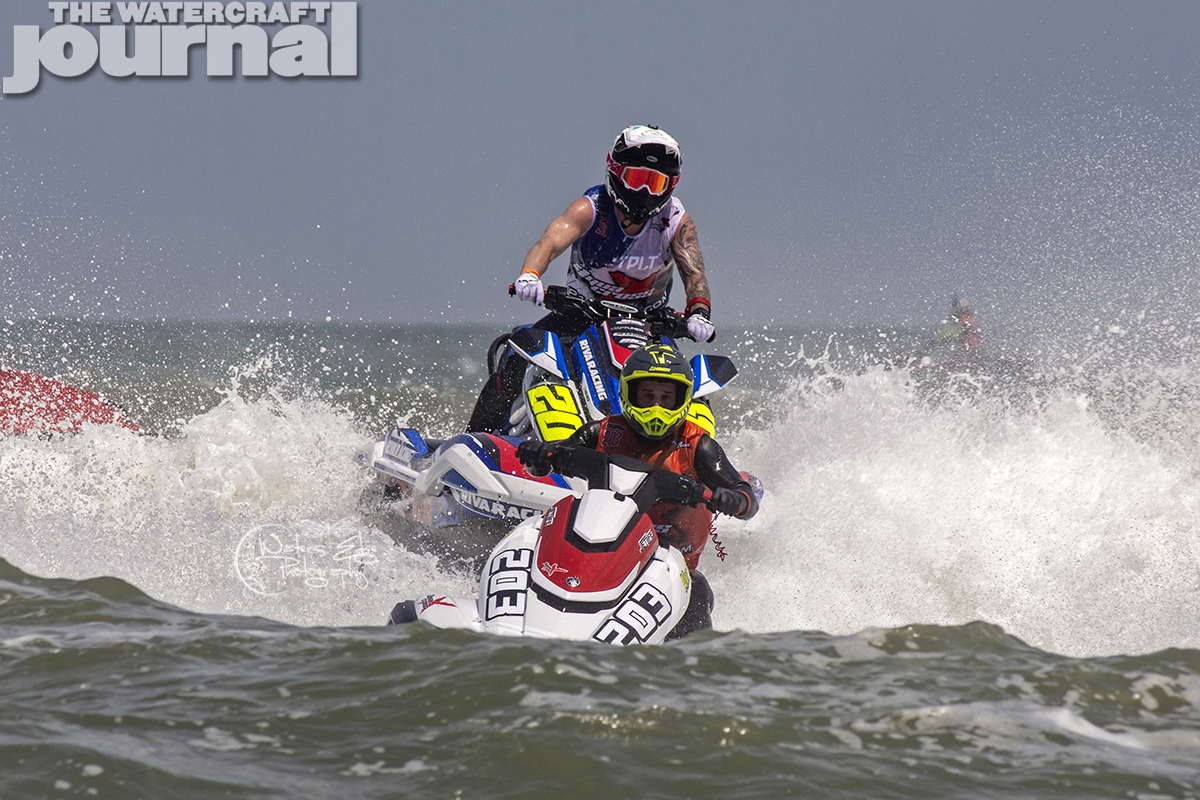
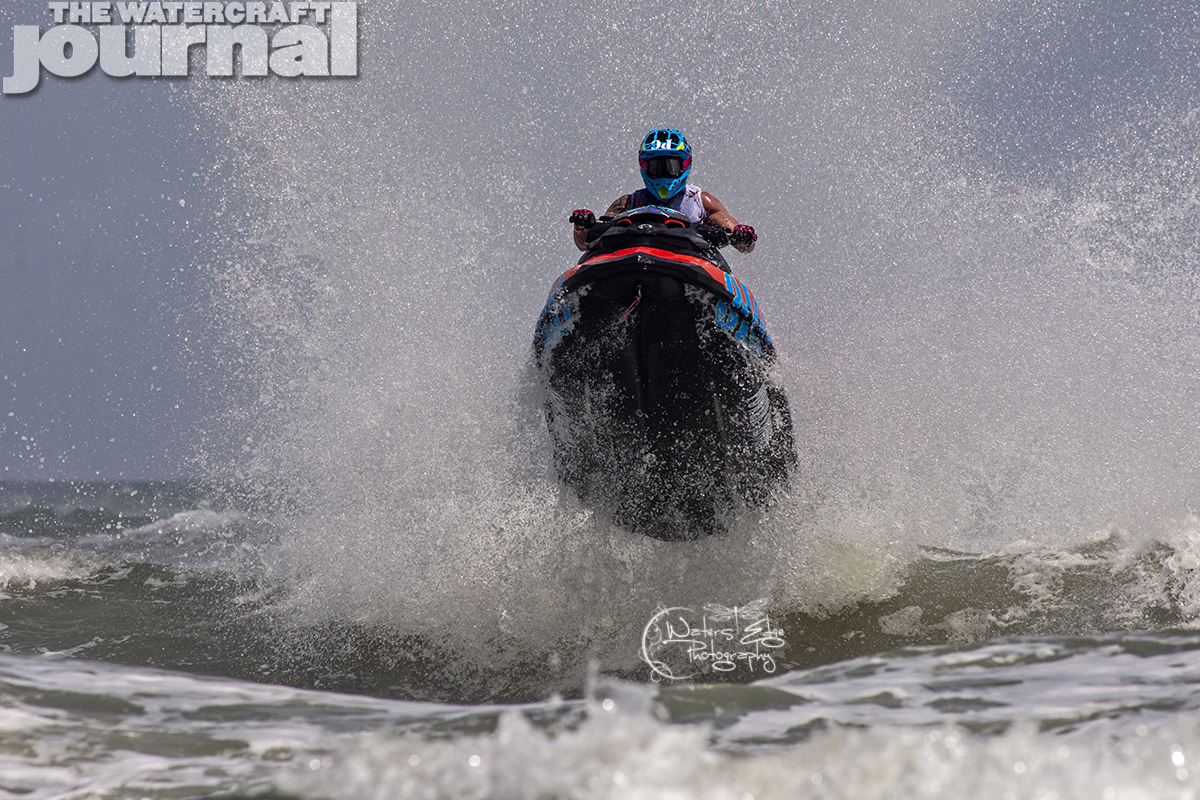
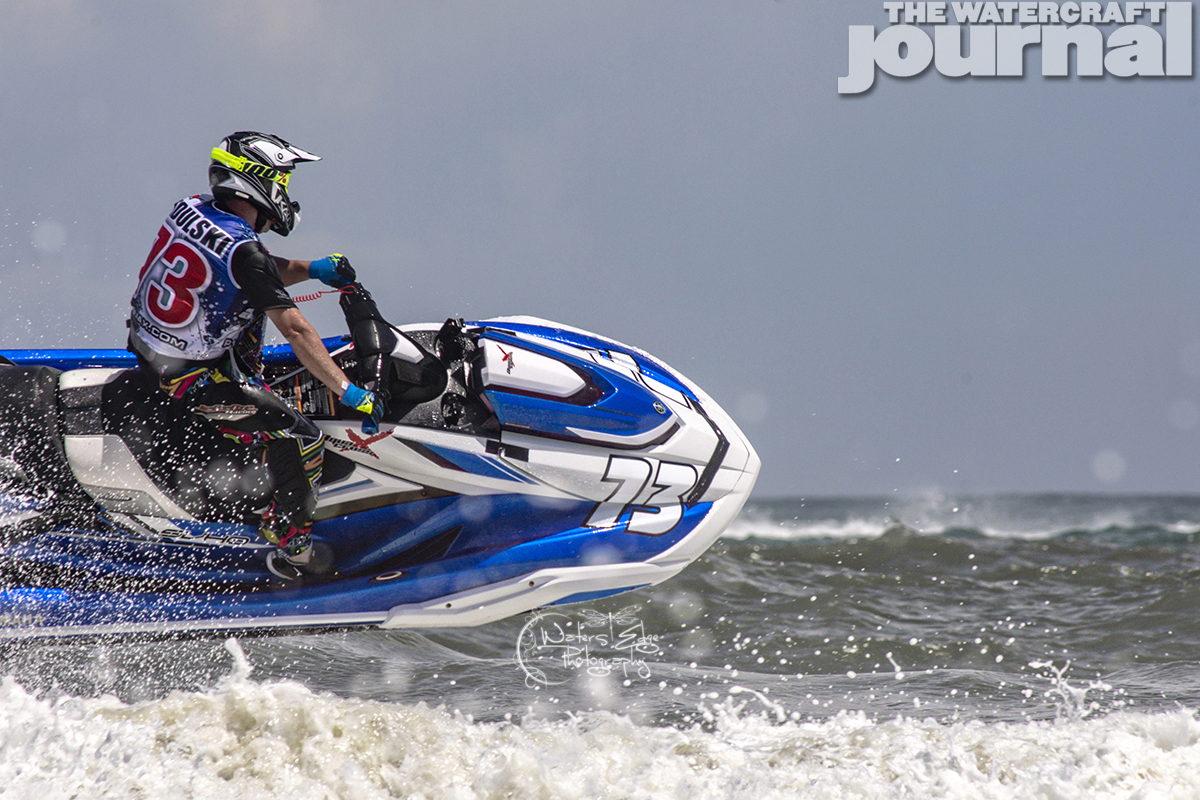
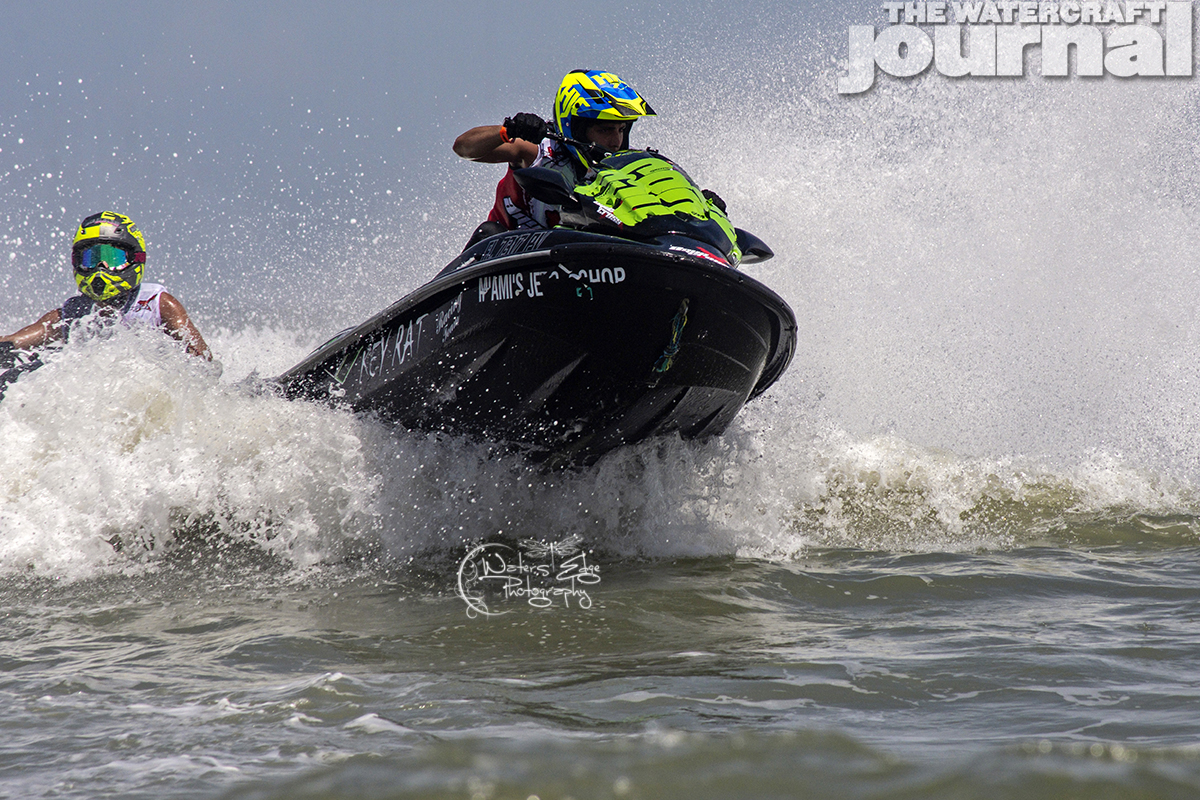
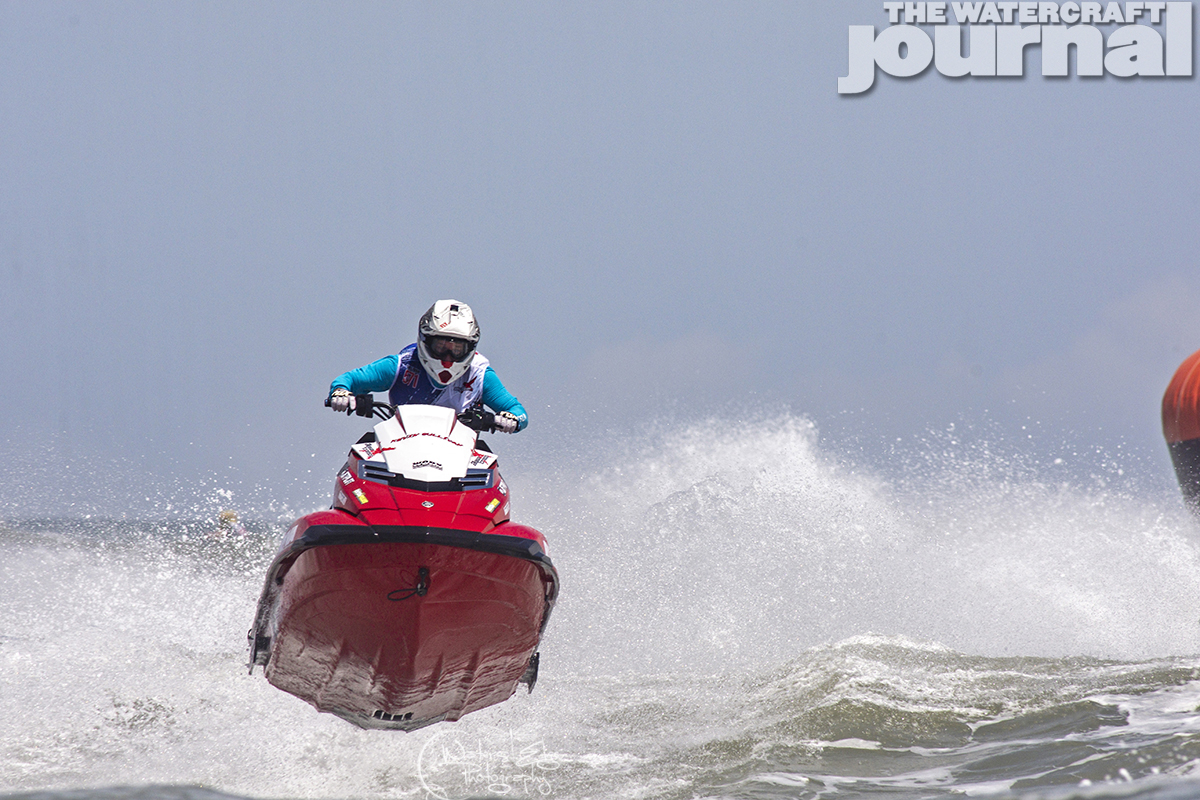
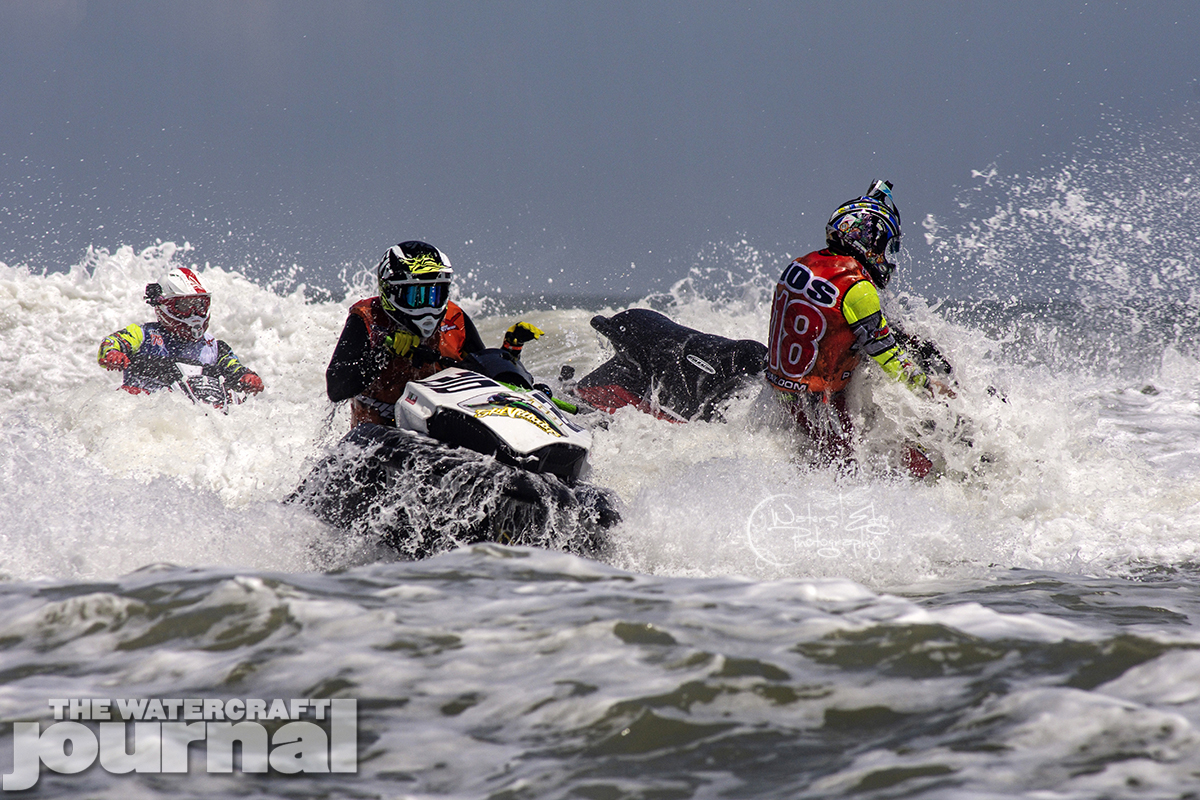
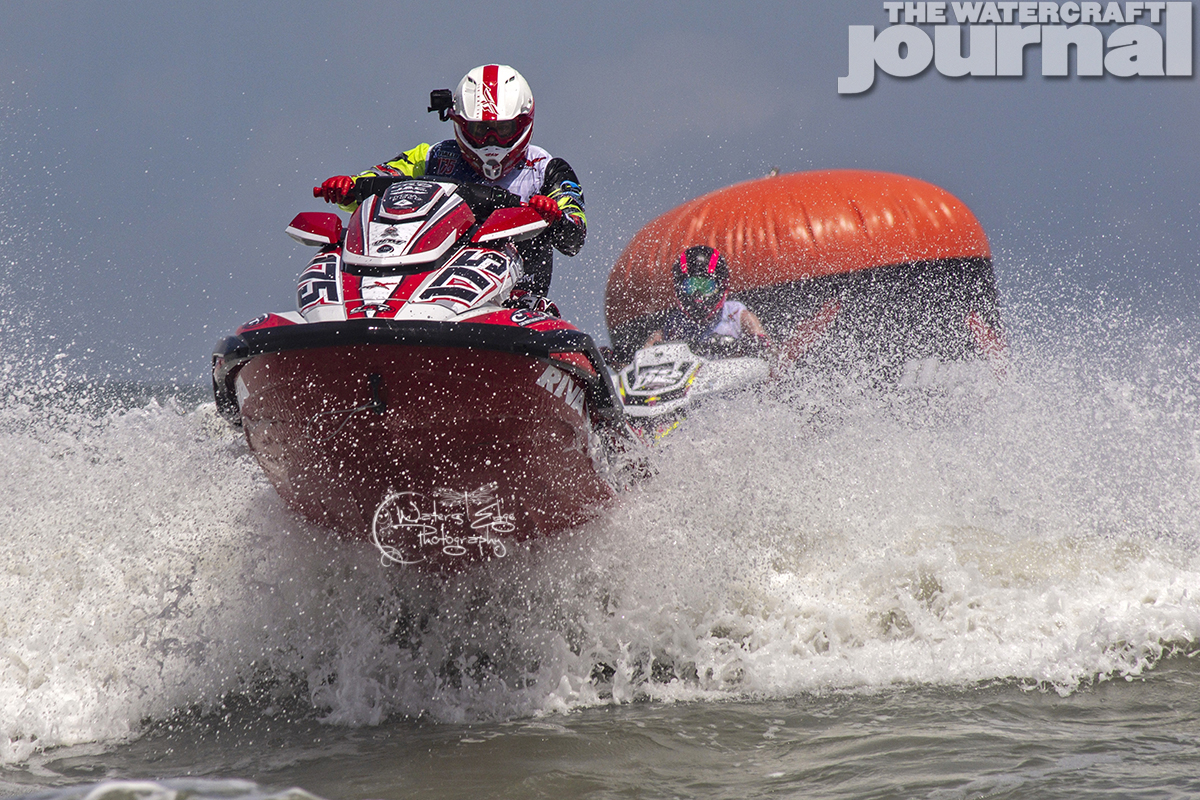
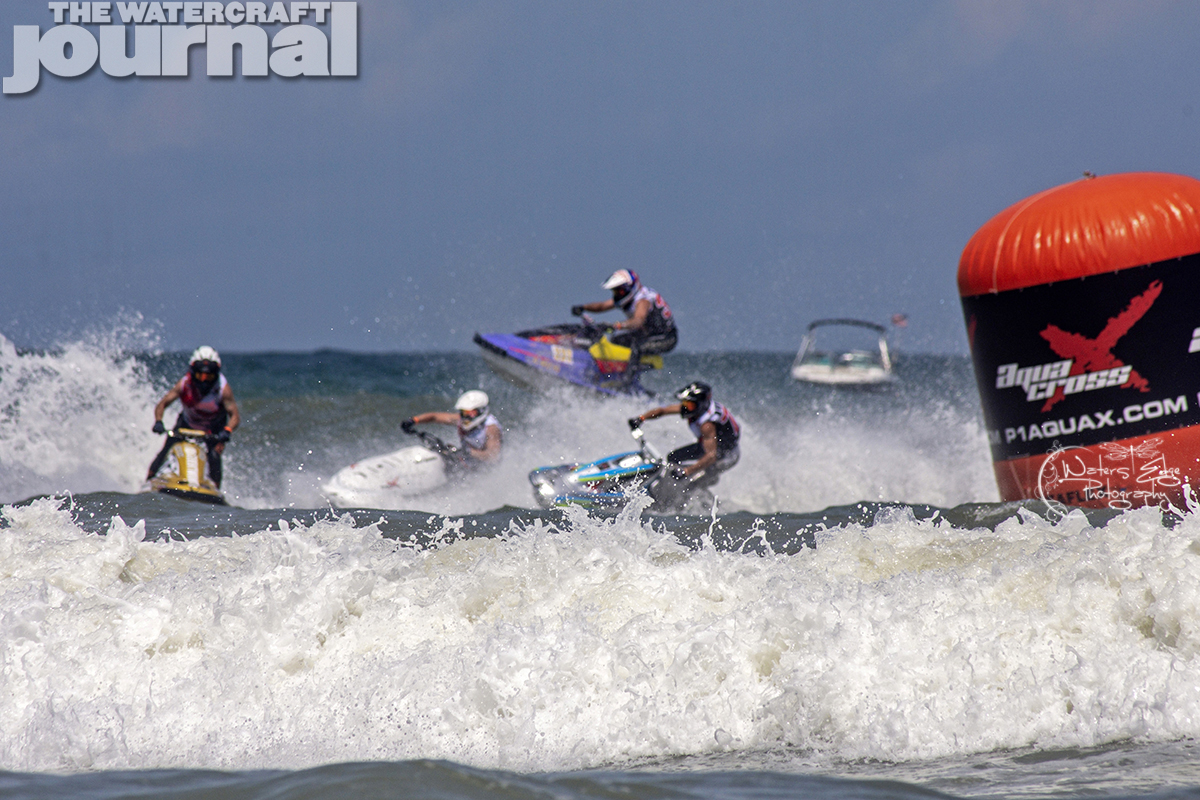
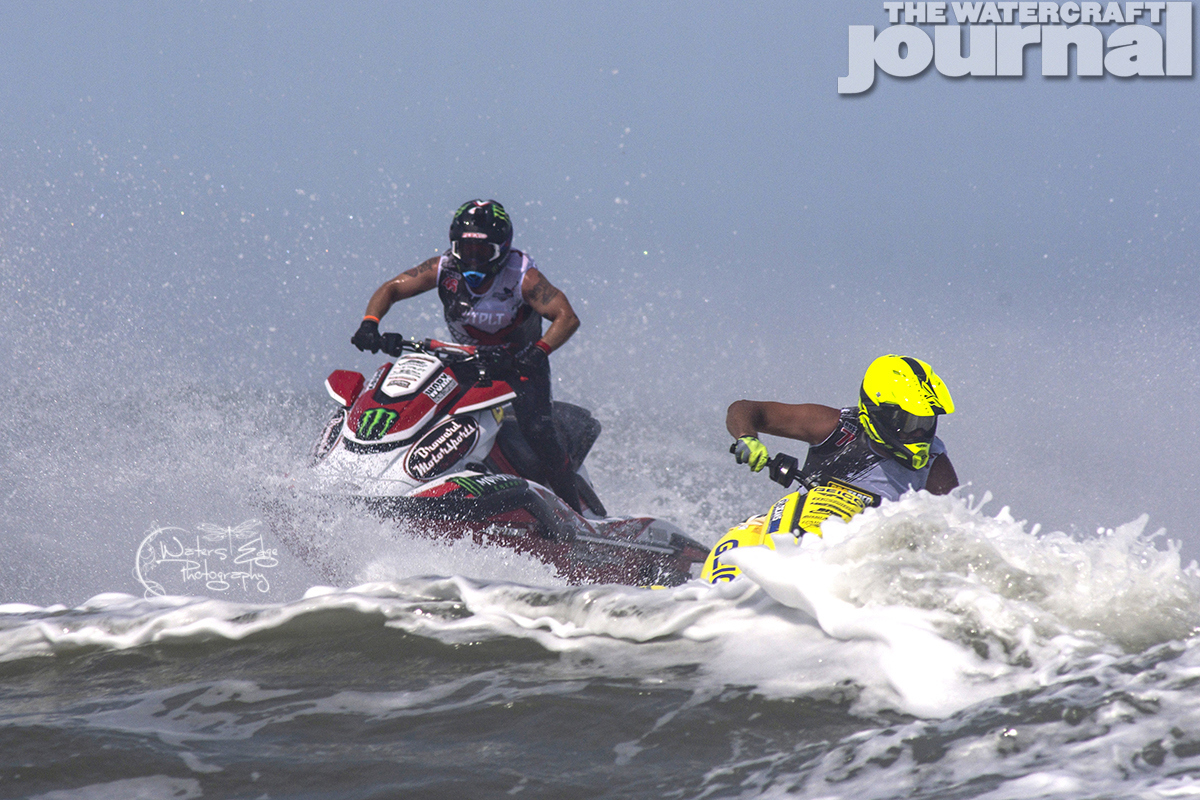
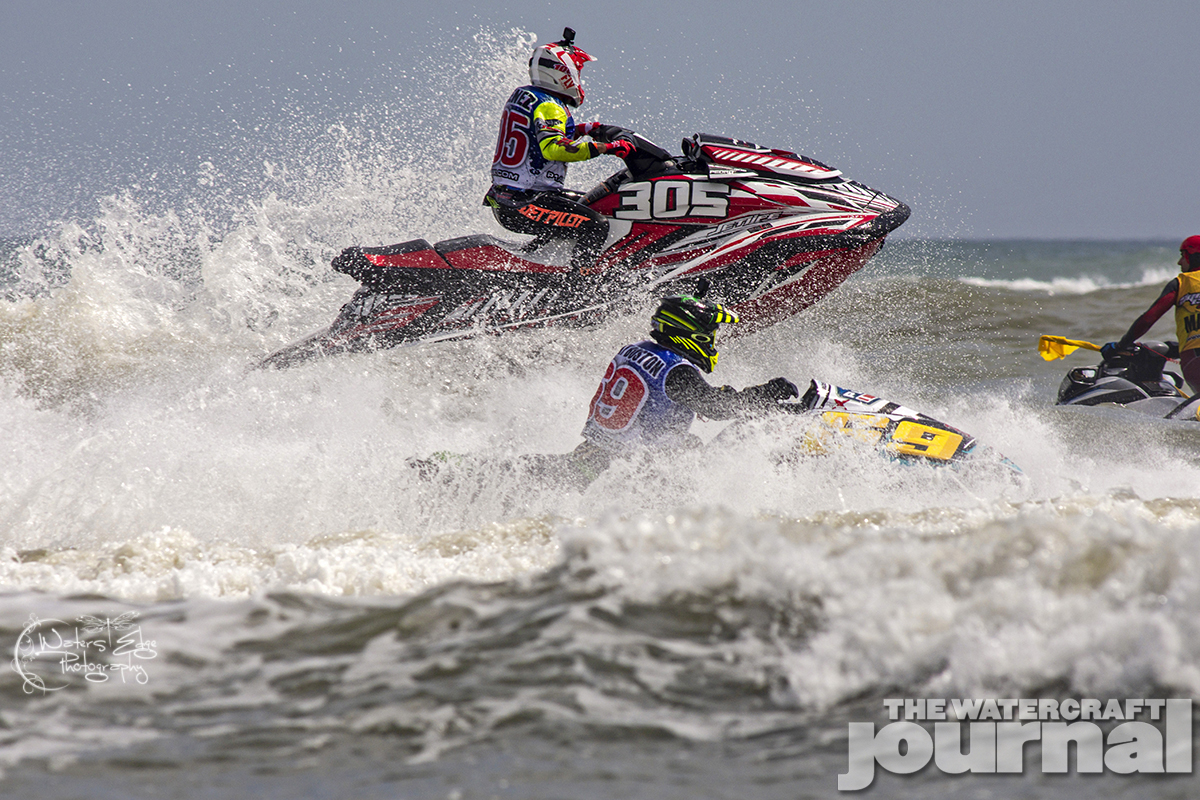
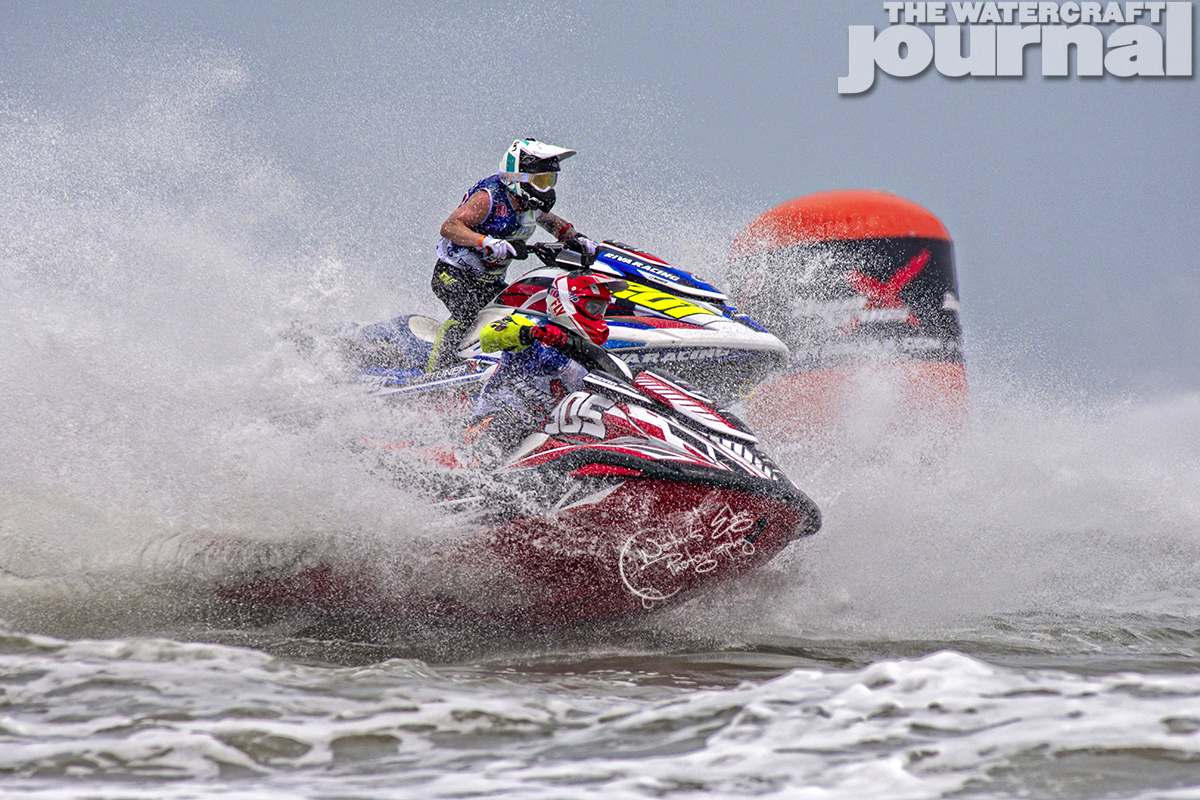
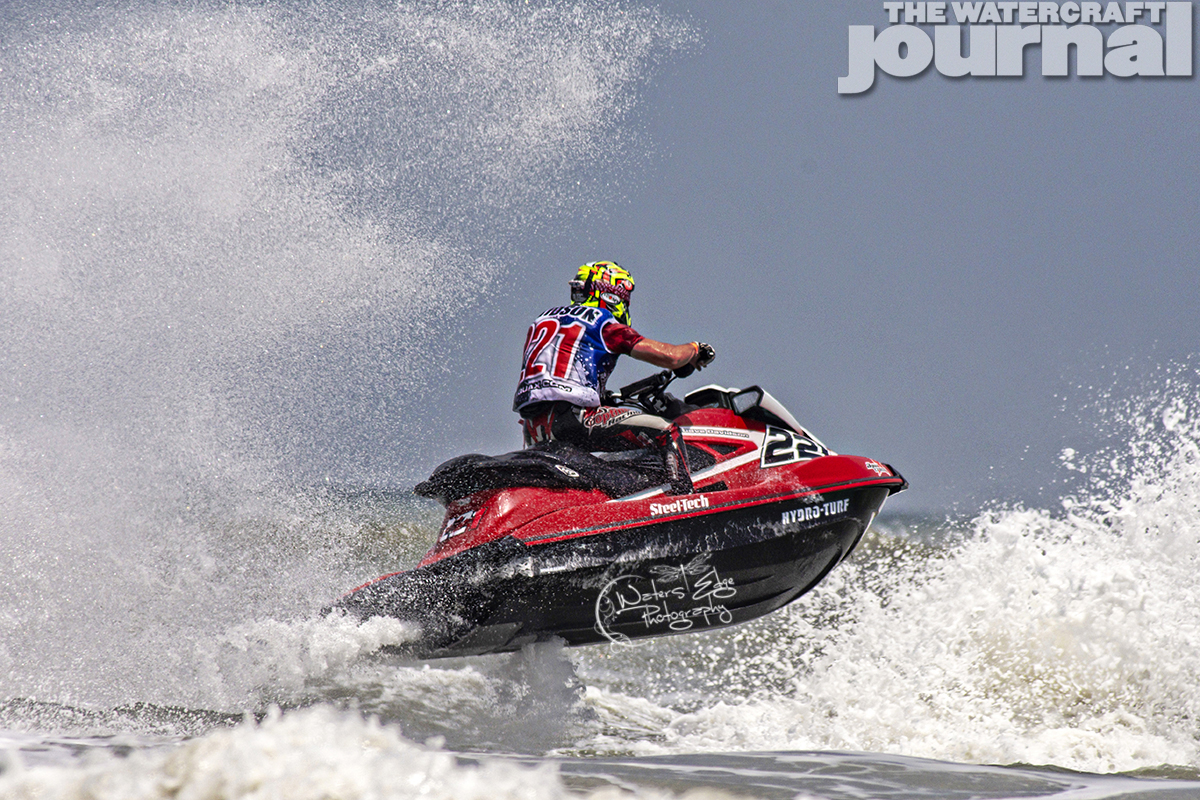
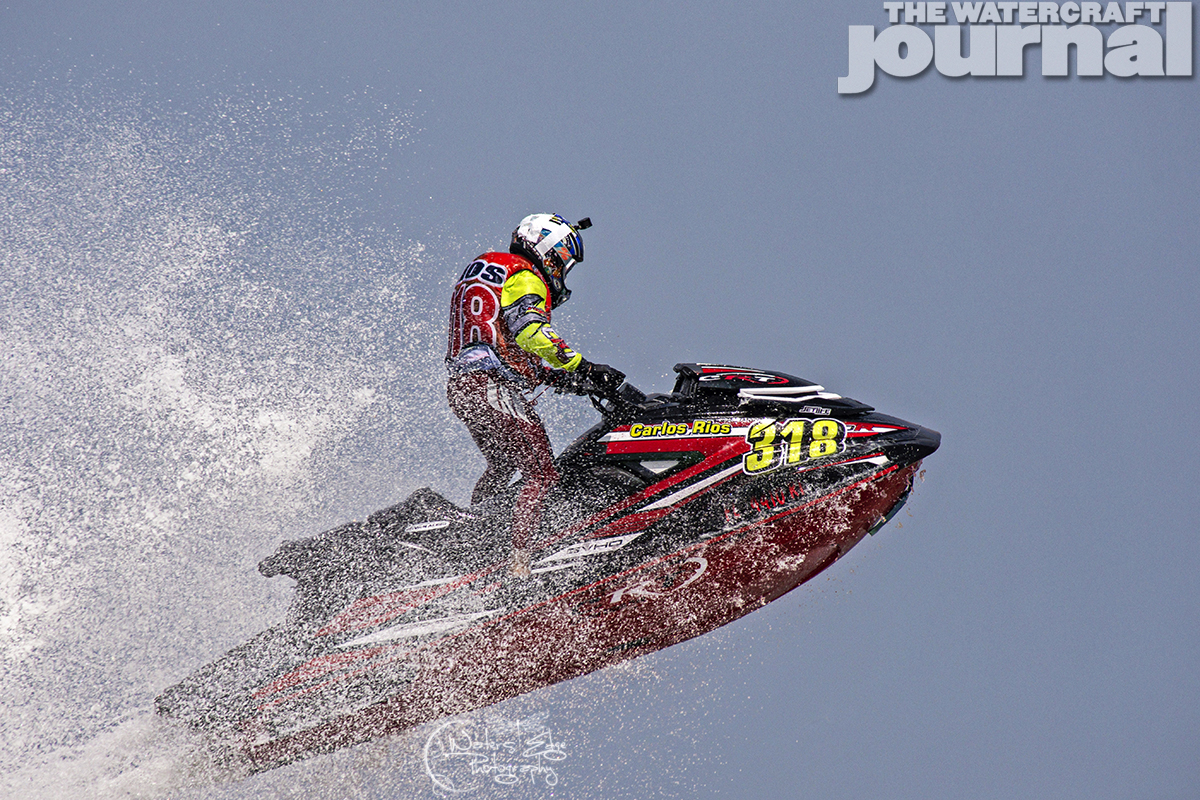
The 2019 AquaX race season opened with a splash literally. Six-plus foot rollers that tossed around 800-pound runabouts like so many matchsticks kept the April season opener exciting, kept racers on the edge, and kept the safety crew on their toes. But high surf was not the only big attraction at Daytona earlier this month – a roster of some of the biggest names in the watercross world meant a weekend of nonstop battles where talent, courage, mechanical excellence and fortitude were tested – and where a small measure of insanity probably didn’t hurt.

While AquaX took a brief hiatus from the popular Daytona race site in 2018, kicking off last season instead at Miami Marine Stadium, race organizers and athletes alike were glad to return to Daytona.

“Daytona has always been a p1 favorite from the beginning. It was where the first AquaX race took place. We went to Miami Marine stadium last year because an opportunity opened up for us to be the first marine power sports promoter to return after 25 years of the stadium being abandoned,” explained AquaX’s Michelle Petro. “Daytona has always given us challenging and exciting water for the racers and it has not let us down. Partnering with the Hard Rock hotel was perfect and literally icing on the cake. We look forward to going back next year. They were amazing to work with.”

There was an almost palpable sense of anticipation in the weeks before P1-AquaCross kicked off it’s 2019 season at Daytona Beach. A racer-favorite venue, Daytona Beach is known for its unpredictable surf, its sundrenched shores and its wild nightlife, and where 24/7/365 racing, adrenaline and excitement is the name of the game. Social media threads were packed with surf predictions to marine life worries, and no small amount of smack talk.

True to form, Daytona, nor the racers, disappointed. Surf conditions that were not only sizeable, but choppy, gave riders a definitely challenge to overcome. Add in sizeable lines, especially in the amateur classes, and just lasting out the clock was an accomplishment.

“Not only are you reading the water, you have to try and navigate through 40 plus riders also,” said Amateur 300 class rider Christopher Landis. “Most people say to pace yourself, but you can’t with P1 because it’s so competitive. You have to ride 110% for 30 minutes, so it’s pretty much just pin it and charge!”

Conditions were brutal,” Brian Baldwin said. “The warriors came out on top”

While the Pro Enduro line was not as populated as the amature race, the roster read like a who’s-who of watercross, and even the first laps of moto 1 proved that this was going to be a battle of the titans. 2019 AquaX champion Chris MacClugage, multi-time world and national champion Brian Baldwin, equally-titled Eric Francis, the doubly-talented Aswar brothers, Aero and Aqsa.

Rising star and 2018 Kings Cup champion Christian Daly. Sophie Francis, Eric Lagopoulos, Dennis Mack – the 2019 AquaX season opener brought together a mind-boggling pool of talent rarely seen all together on the same line.

Bringing racing back to the basics is at the core of P1 AquaX’s model, and at the heart of why so many racers have become dedicated to the series, said Petro.

“I think that P1 brought PWC back to basics. We have 1 pro endure class, 2 am classes and a level playing field,” Petro told The Watercraft Journal earlier this week. “I think that P1 has stepped up the quality of the events as far as TV and social media which makes it appealing. We are conscience of the sporting side as well as needing to make the sport appealing commercially. I think we are almost there.”

While Daytona provided edge-of-your-beach chair racing, it also highlighted some improvements yet to be made, Petro acknowledged, saying that the high surf made scoring a challenge, but adding that P1 is working diligently on making improvements to rectify those problems.

We have actually tested several different types of scoring systems, all have had issues one way or another. We are still working on looking for the system that will be most reliable on a race track on the water with multiple riders in the area. Once we have nailed that down, I think AquaX will be taken to the next level.”

Petro also gave recognition to the AquaX safety team, who were tasked over the weekend with safeguarding riders as they rode the crashing waves – and sometimes got bucked off.

“The safety team were put to the test but they all worked hard and got the job done,” Petro said. “We have the best marshals in the business.”

Official results were posted on the AquaX website late Monday, and top finishers in each class were:
Pro Enduro
1st: Chris MacClugage/Yamaha GP1800
2nd: Brian Baldwin/Yamaha GP1800
3rd: Aqsa Aswar/Yamaha FX SVHO

Amateur 300
1st: Greg Radulski/Yamaha GP1800
2nd:Christopher Landis/Yamaha FX SVHO
3rd: Dave Davidson/Yamaha GP1800

Amateur 200
1st: Scott Reeves/Yamaha HO
2nd: Benjamin Mantel/Yamaha VXR
3rd: Frankie Mojica/Yamaha VXR

Pro Sprint (Ski 4-Stroke)
1st: Johnny Smith/Kawasaki SXR1500
2nd: Mouad Salhi/Kawasaki SXR1500
3rd: David Cabrera/Kawasaki SXR1500

Sprint SE (Spark, EX)
1st: Eric Lagopoulos/Yamaha EX
2nd: Jason Lester/Yamaha EX
3rd: Tory Snyder/Yamaha EX

Sport GP/Spec
1st: Billy Dearman/Yamaha Waveblaster
2nd: Shawn Reynolds/Yamaha Waveblaster
3rd: Johnny Smith/Yamaha Waveblaster

Sea-Doo Celebrates 10th Anniversary Of iBR System

0

Sea-Doo has a lot to be excited about lately and one of their celebrations this year is the tenth anniversary of Intelligent Brake & Reverse (iBR). That’s right, it’s been ten years since the release of their original version iBR system.

This system was and to this day is still so celebrated that it was awarded innovation in boating safety award from the United States Coast Guard back in 2009 when it was debuted. Those of you familiar with iBR know that it makes for effortless control and maneuvering of your Sea-Doo and gives a more enjoyable ride.

To read more about this moment in Sea-Doo history and to see even more about the latest 3.0 version of the iBR system, we have placed the full press release below. As always, be sure to check out Sea-Doo.com for more scoop on the latest watercraft.

Sea-Doo Enjoys A Decade Of More Control As Intelligent Brake & Reverse (iBR) Turns Ten

It’s hard to believe Sea-Doo introduced the first, and to this day, only on-water braking system for a PWC over ten years ago with the introduction of the Intelligent Brake & Reverse (iBR) system. It was 2009 when the United States Coast Guard (USCG) awarded Sea-Doo with their innovations in boating safety recognition at the Miami Boat Show. Now Sea-Doo watercraft are equipped* with the third generation of iBR.

The Sea-Doo iBR system provides riders with greater control making docking and loading easier. The Sea-Doo with iBR starts in neutral, shifts to forward, to reverse, and back to neutral with out ever having to take your hands off of the handlebars and eyes off of the environment. The braking system stops the watercraft in a shorter distance than any other system, a full 100 feet sooner than a watercraft with out the system at 50 mph.* Now Sea-Doo offers iBR 3.0 that stops quicker, flatter, and provides greater control in tight quarter situation. We enjoy a decade of making the Sea-Doo life easier, more fun, and safer. A look at the original video. https://youtu.be/JDGaQ-dT1yA

Summer Super Sale Drops KickBack PWC Chair to $99!

0

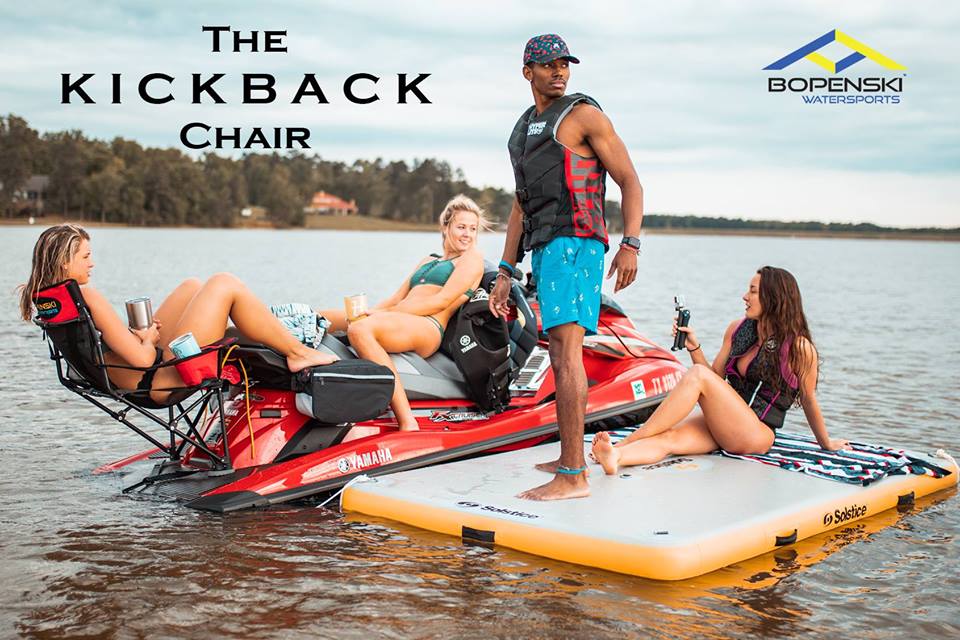
This is what we like to call a “No Excuses Sale”; meaning, everyone who thought they wanted to buy a Bopenski Kickback PWC chair but grumbled over the price now has absolutely no excuse anymore. That’s right, you lollygaggers. Bopenski Watersports is absolutely hacking its original asking price by more than half down to $99 for the summer!

No really, you can score a Kickback PWC chair for $99 bucks. That’s the cheapest they’ve ever sold one – and it’s still the single-most well-built lounging accessory you could ever buy for your personal watercraft.Designed to last and made from anodized aluminum with stainless steel hardware, the Kickback chair can withstand the brutality of salt water, won’t ruin your ski’s traction mats thanks to its oversized, rubberized Vektorflex feet, and can support up to 225-pounds.

And if you’re still unwilling to pony up the cash for a new Kickback chair, you can win one for free exclusively from The Watercraft Journal by entering our giveaway – but you better because time is running out fast. All you need to do is click here, read the instructions and submit your entry to the email address. It’s that easy! Otherwise, watch the video below to get excited about the best new accessory for PWC since the second passenger!

https://www.facebook.com/bopenski/videos/1299634683536775/

Gallery: The Great Sea-Doo 18.5-Gallon Fuel Tank Upgrade

6

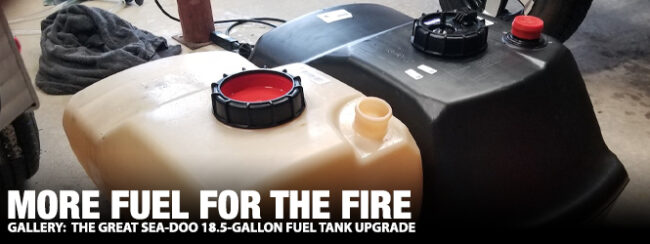
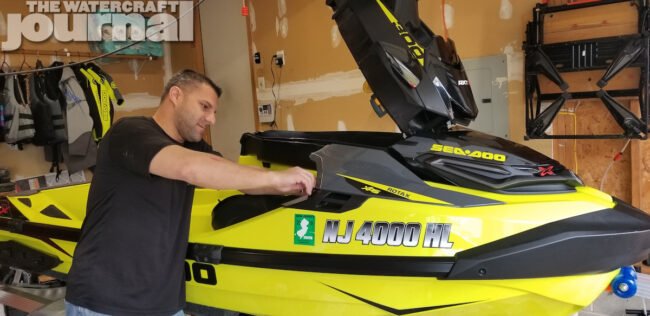
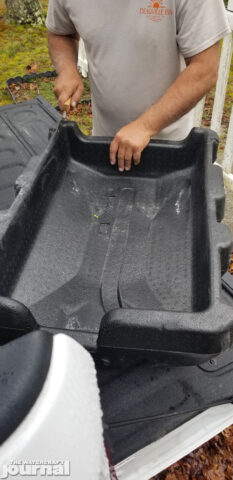
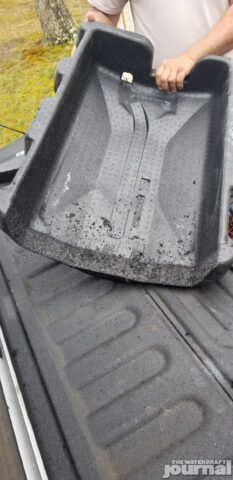
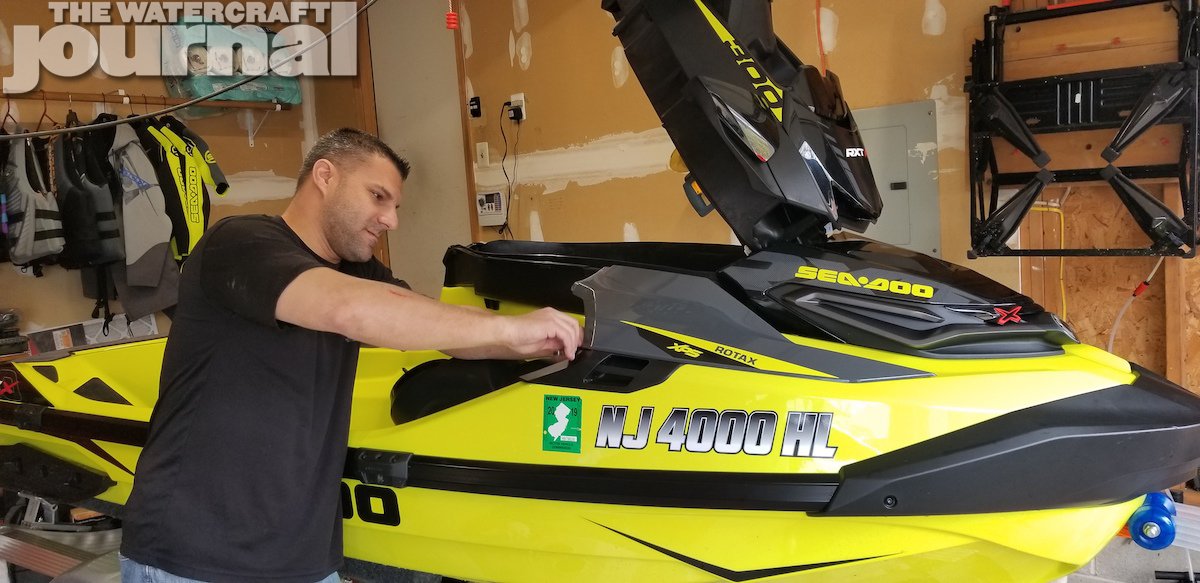
It was a rainy Saturday on the Jersey Shore when two friends, Tommy Branella and Jason Frank, decided to perform a fuel tank swap on a 2018 Sea-Doo RXT-X 300. Since the ST3 platform was first released, a lot of gripes about fuel consumption sprung up. Yet, when Sea-Doo released the 2019 Fish Pro this year with a 18.5 gallon fuel tank and many asked, “Can that tank be retrofitted into all ST3 models (both 2018 and 2019)?” The answer is yes! But with some slight modification, of course.

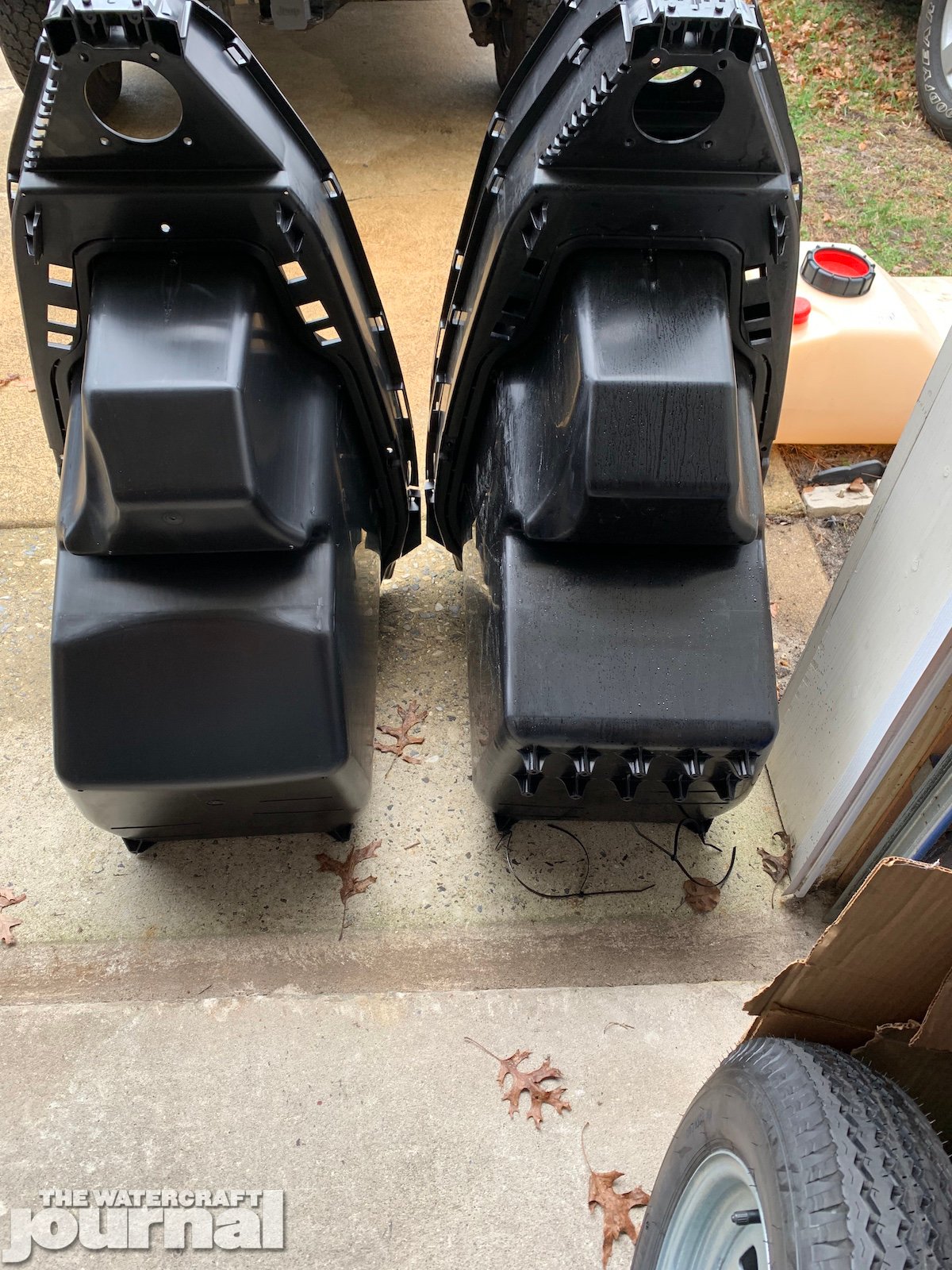
So with that said, here is the breakdown of what parts we needed to convert our 2018 RXT-X – and any ST3 hull Sea-Doo – to the Fish Pro’s larger fuel tank! First, you’ll need the 2019 Fish Pro Fuel Tank (PT# 275500997); the 2019 Fish Pro Fuel Tank Filler Neck Hose (PT# 275500999); and the 2019 Sea-Doo Front Storage Compartment Bucket Bin Compartment (PT# 264000144).

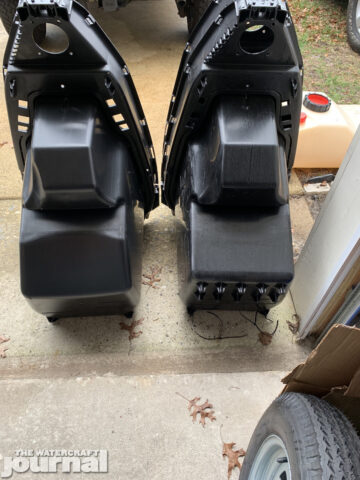
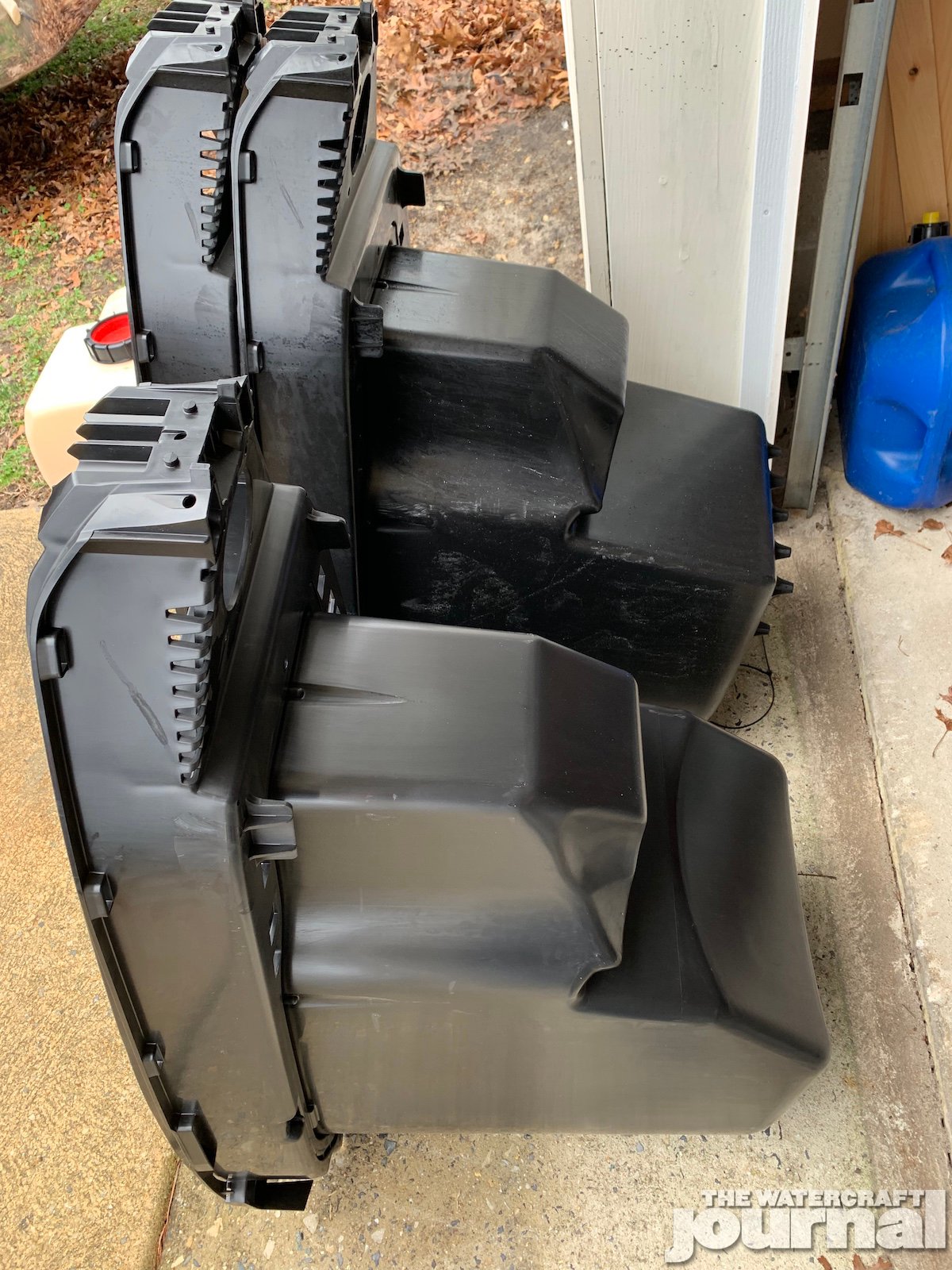
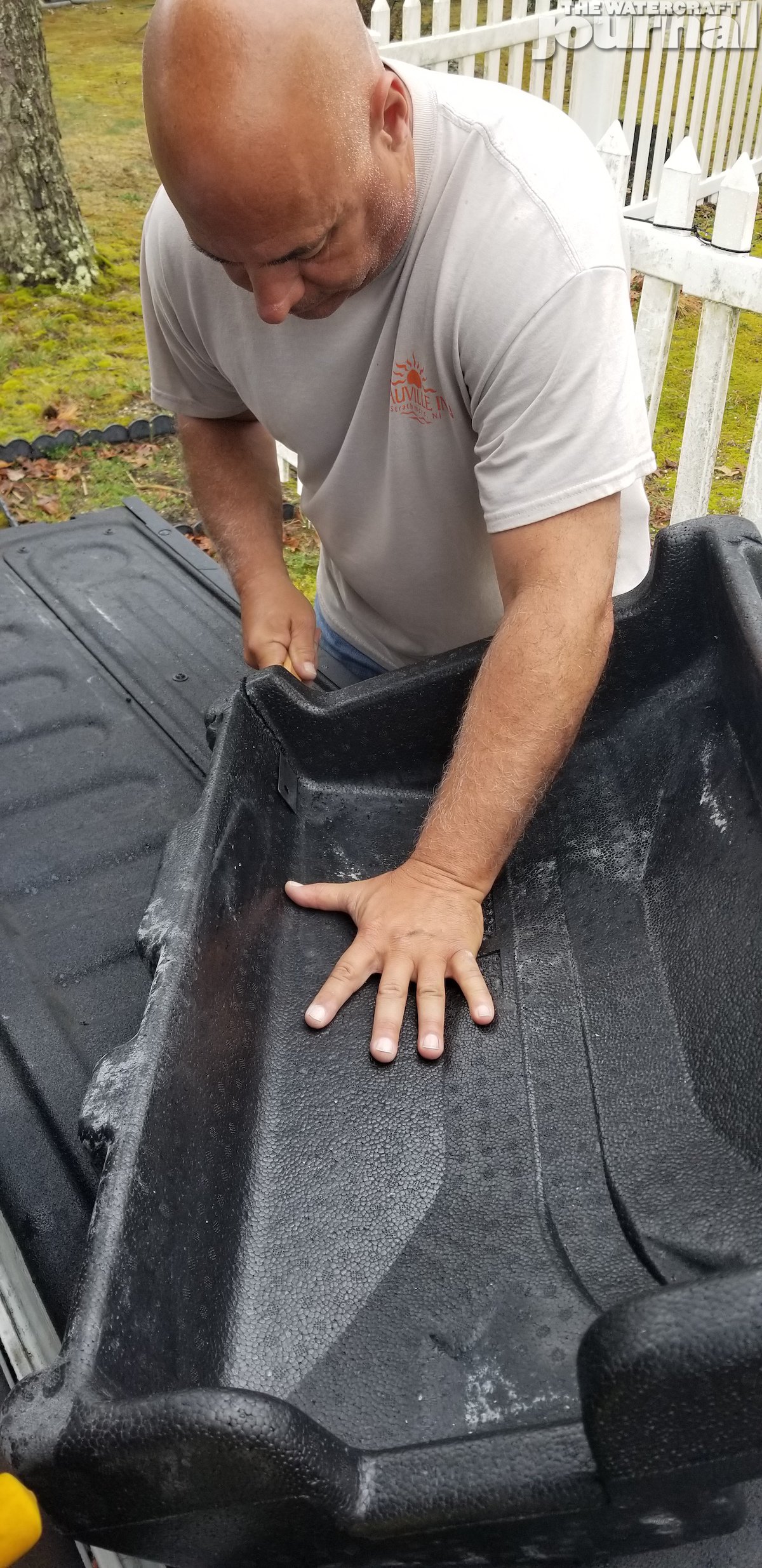
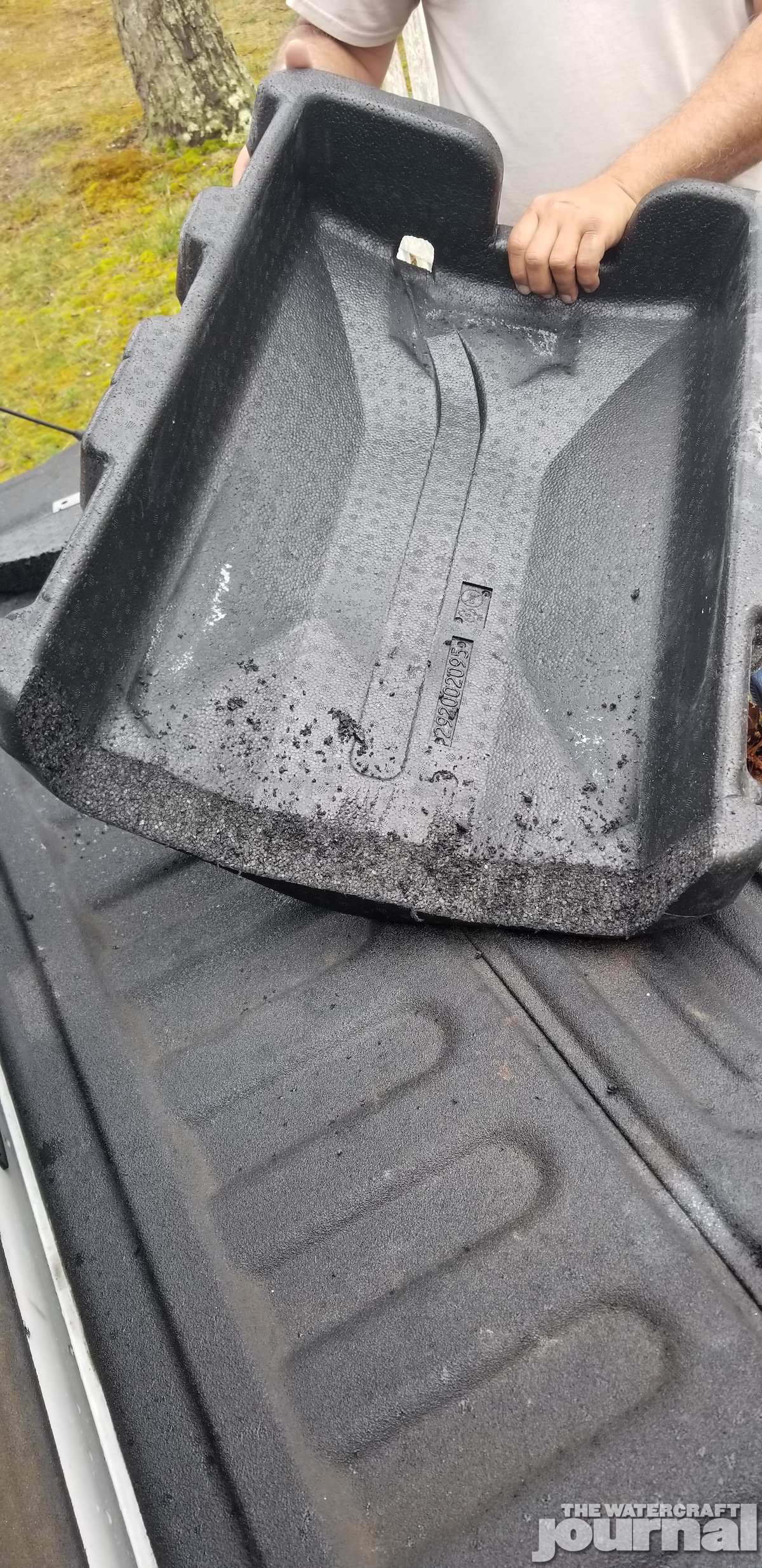
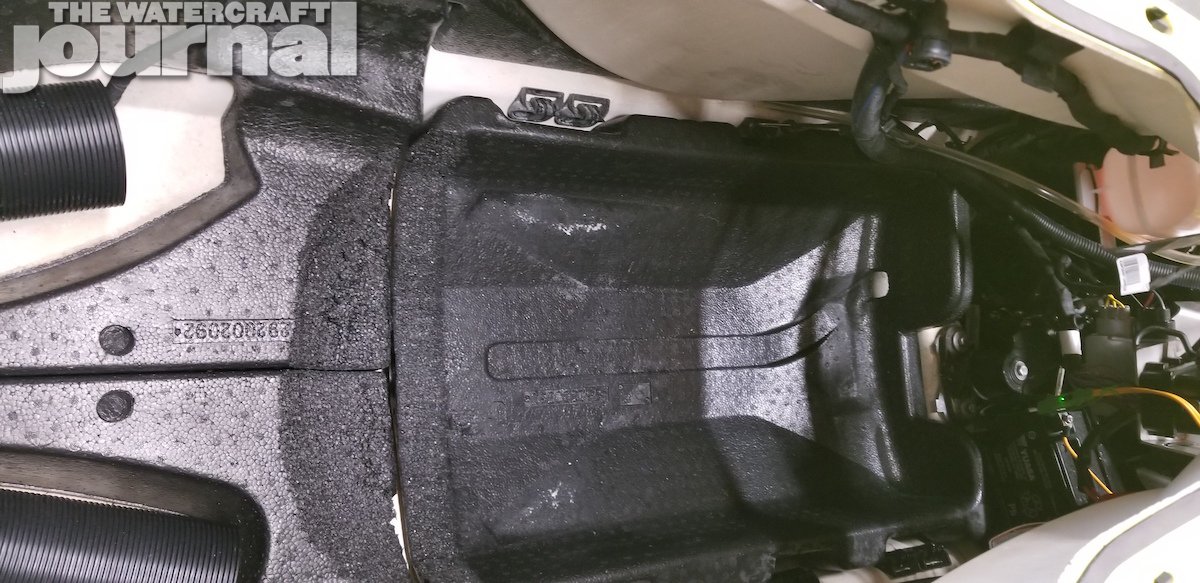
Above: Here you can plainly see the differences between the 2018 and 2019 (and up) ST3 storage bins. The concave bin on the left is the 2019 (and up) unit, while the flat-sided bin is the 2018. This relief is to fit the larger 18.5-gallon fuel cell.

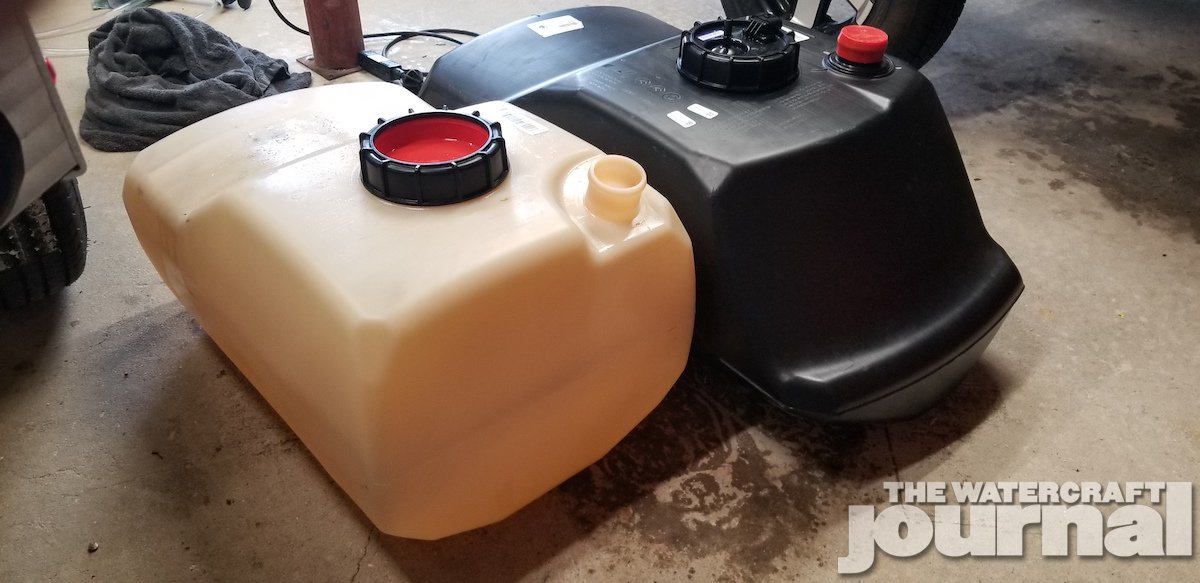
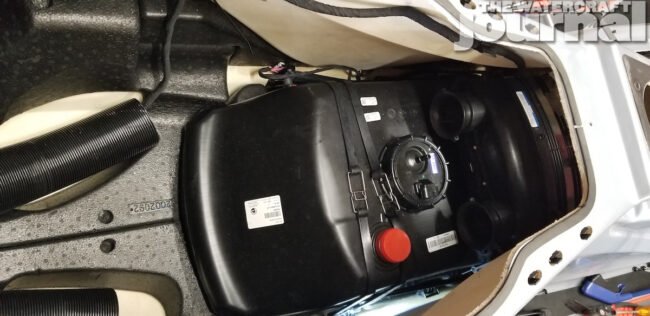
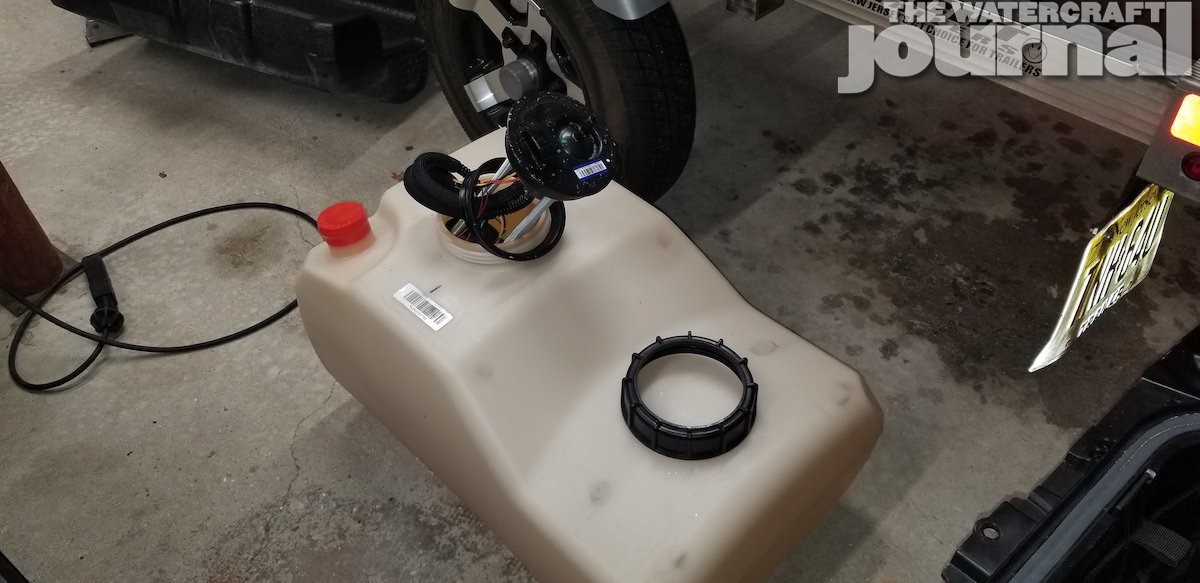
Above: Of course, here are the fuel tanks in question; the 15.9-gallon 2018 model being on the left and the 2019 (and up) 18-5 gallon tank on the right. We will show you all of the steps necessary to fit the new 18.5-gallon tank in your 2018 and 2019 ST3 models.

Above: With the seats and access panel off, we removed the three pop rivets in the front; one on each side of leg panels and dead center of the front seat.

Now, if you own a 2019 model, you do not need to order the storage container as all 2019 models come with the redesigned “slanted” storage container. So that’s one less item you need being you already have it. Also note that for the storage bin, you will need to remove the foam seal strip from the 2018 bin and place it in the 2019 once installed in craft. This is fairly straightforward install; most semi-mechanically minded folks can do it themselves in 4-to-5 hours in the comfort of their own home.

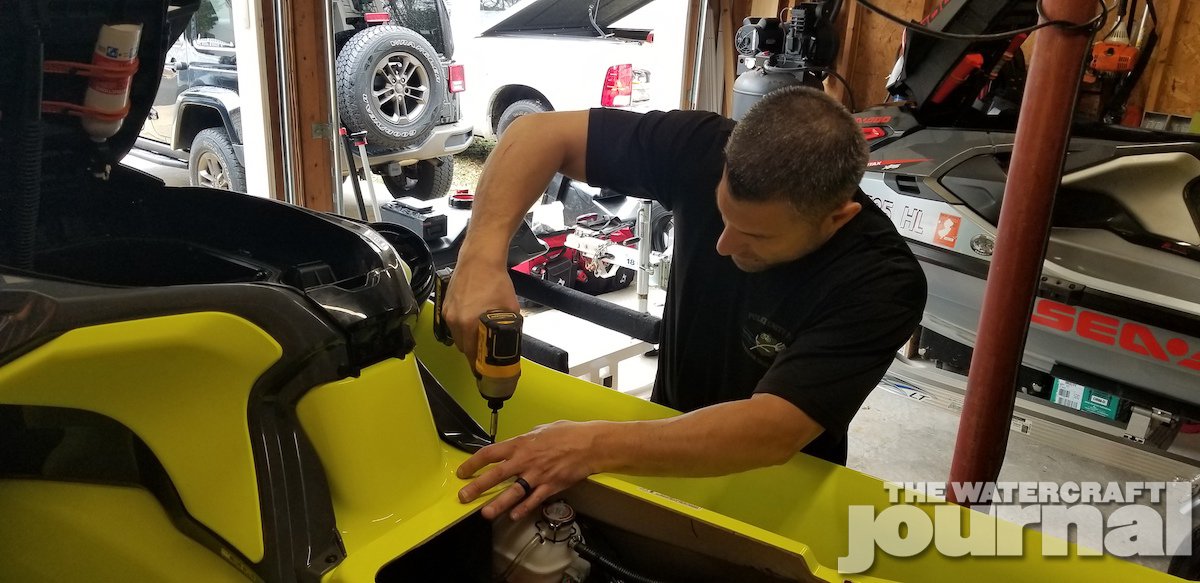
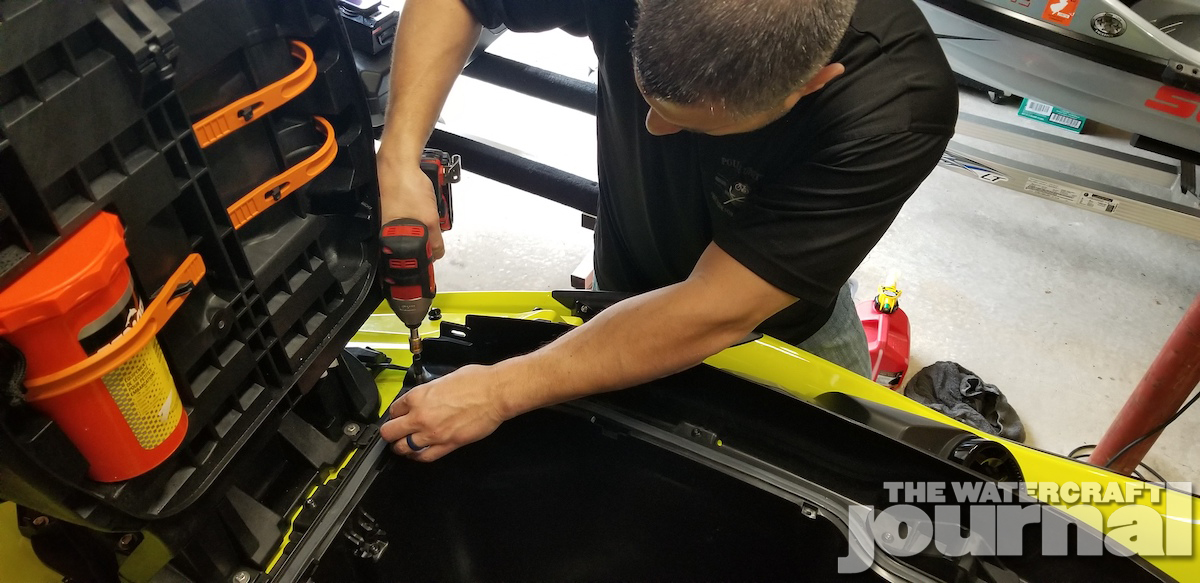
First and foremost, the seats were removed and the access panel unbolted. After that, we removed the three pop rivets in the front; one on each side of leg panels and dead center of the front seat. We removed those with flat head screw driver but you should probably use a rivet removal tool. Also as seen in the picture there is more of the same bolts you removed from access panel. Well, they have the same T30 head, but just are a different type of screw. Try and keep them all separated and managed for the re-installation.

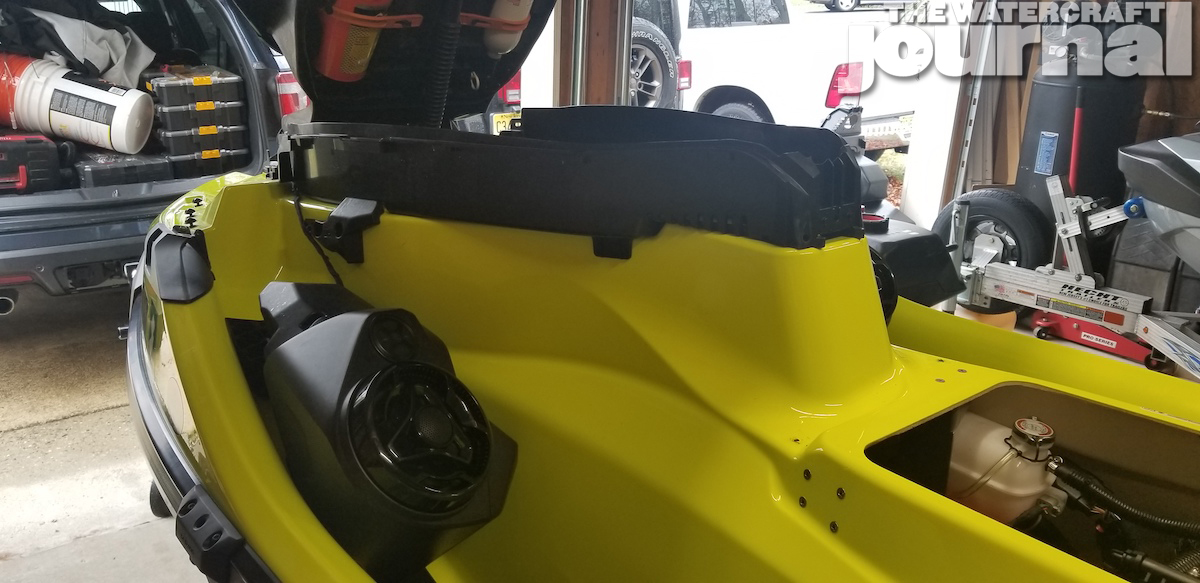
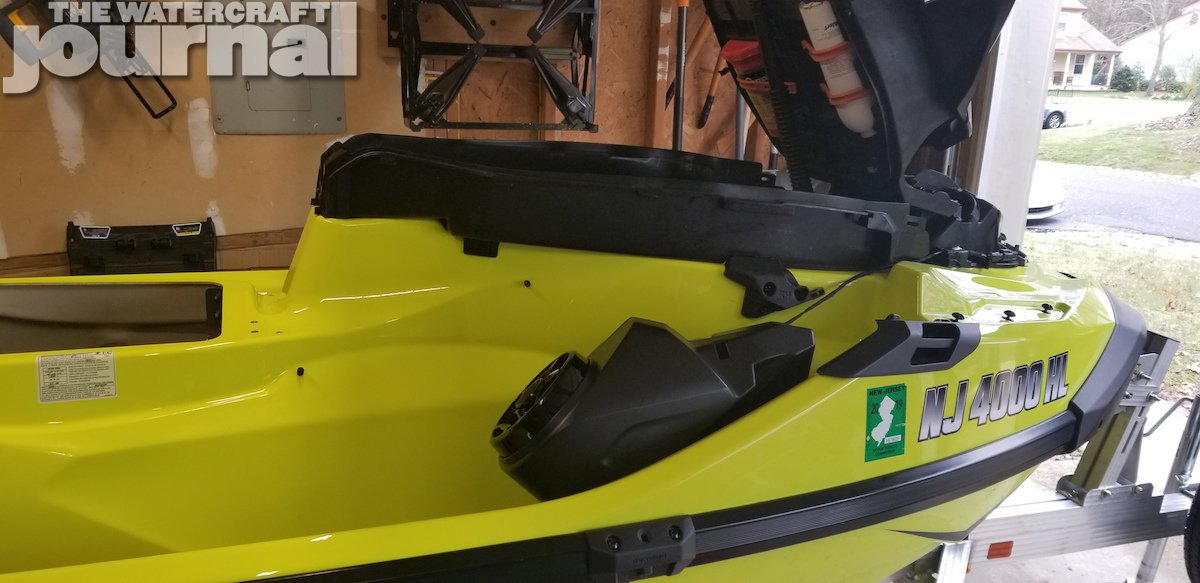
Above left: We also needed to remove our BRP Premium Sound System speakers, which was thankfully pretty simple. Above center and right: With the speakers removed, we could begin unbolting the storage bin.

Above: We looped a strap around the handlebars and a rafter in our garage to keep the storage lid from falling down.

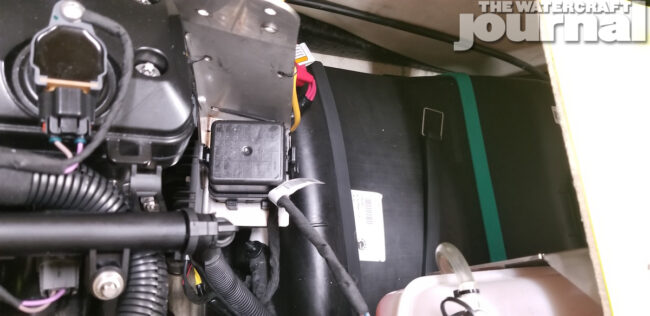
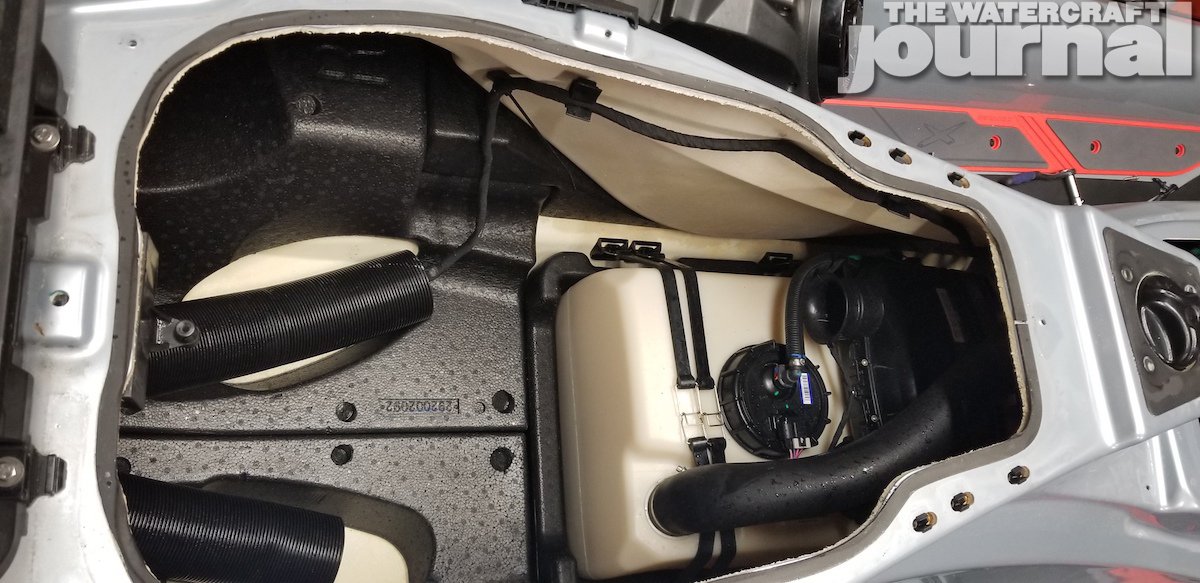
Above: With the bin removed, you have unfettered access to the factory air box, filler neck, fuel lines and fuel tank. Above right: Next we siphoned all of the fuel out of the factory 15.9-gallon fuel tank.

For those with speakers, you’ll be relieved to know that the speakers are fairly simple to remove. They have one bolt at the top and in the bottom where the grille is. We found that there is a hole for a large long flat head screwdriver to go into. This accesses the pop rivet that needs to be pressed to remove the speakers. It’s fairly simple once you get it, but takes some forcing. Once they are pressed down and out of the way, you’ll find more T30 bolts holding the panels on – and also silver bolts 8mm head for removing the panels. All easy to access with proper extensions on the drill or hand socket.

Now comes the removal of 2018 storage compartment. The new bin was molded with an angled wall to make room for the 18.5 gallon tank, as the tank itself is longer. We removed all the T30 screws holding the compartment down. We also slid the front panel out of the way that snaps on to the exterior once the bolts were removed.

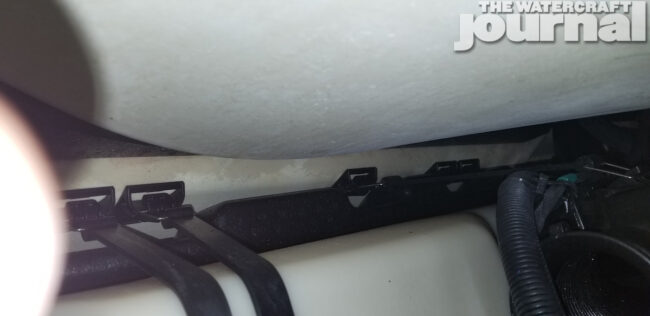
Above left: Reaching the 4 straps holding the 15.9-gallon tank down is straightforward but challenging given their position and tension. Above center and right: With the tank unstrapped, the fuel lines and filler neck can be disconnected and the tank removed with relative ease.

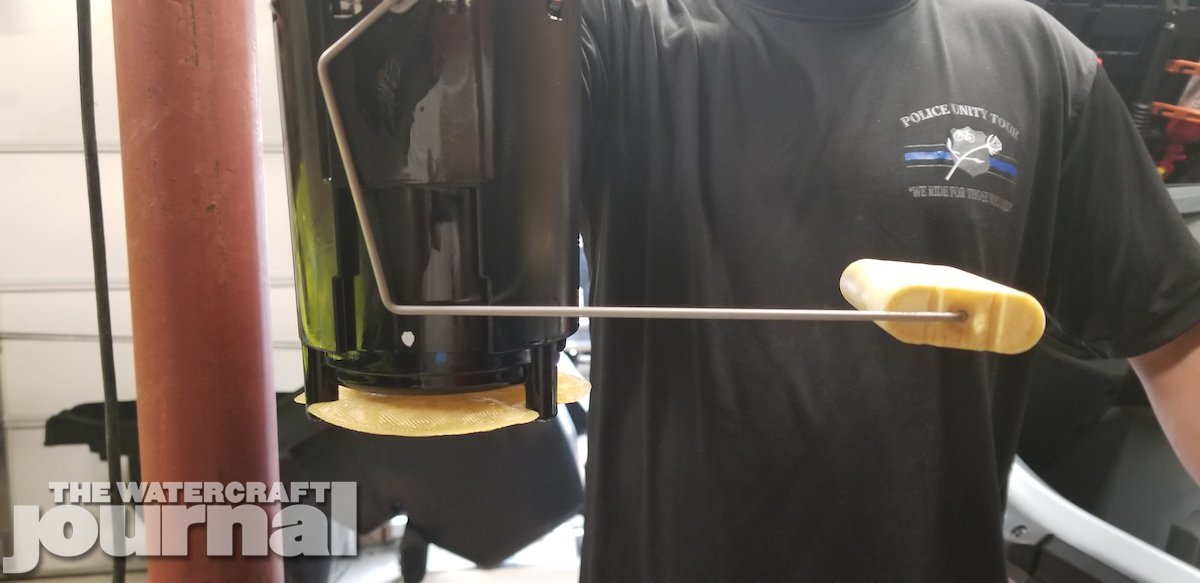
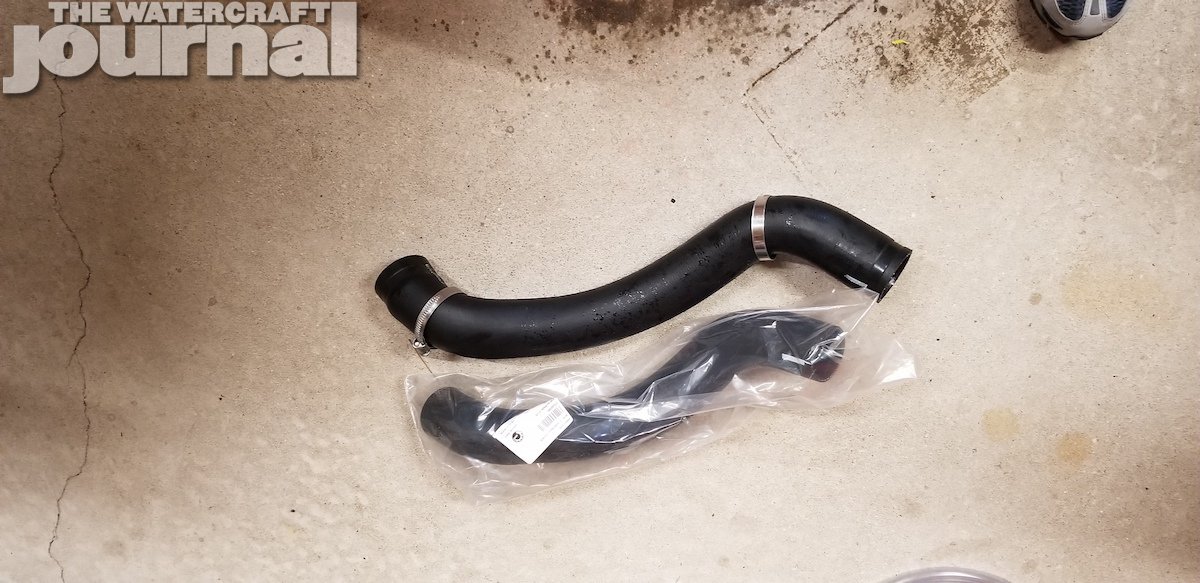
Above: While this next step isn’t mandatory, we think anyone who owns a Sea-Doo would be most grateful for: We removed the filler neck from the old tank (which we chose to re-use in the new 18.5-gallon tank) and bent the float arm down a bit so the low fuel buzzer no longer comes on at 5 gallons! It now comes on at 2.5 gallons! No more dreaded buzzer with ¼ tank of fuel left!

At the same time, we had to unscrew the shock from the mounting base in the storage compartment. That’s fairly simple; just snip the two small zip ties top and bottom and slide the rubber boot up, grab the shock and unscrew off the base. Then you can reach the one T30 bolt head and move the lid up and out of the way! For stabilizing it we took a tow strap and looped it around the handle bars and tied it off. This secured it up out of the way.

Now we had to siphon all of the fuel out of the 15.9-gallon tank. With the ski now empty, we were able to remove the tank. We began by removing the filler neck, unplugging the tank and removing the fuel supply line. The line snaps on-and-off but word of caution: the line could be pressurized. So have a towel and/or some rags handy to immediately place over the end of the line in case any fuel comes pouring out.

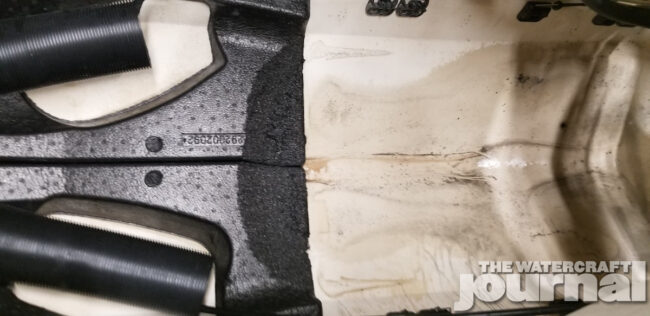
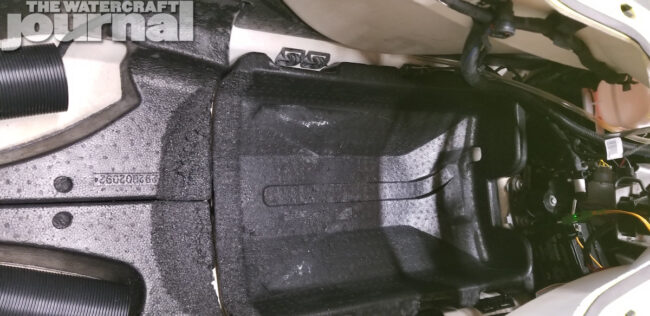
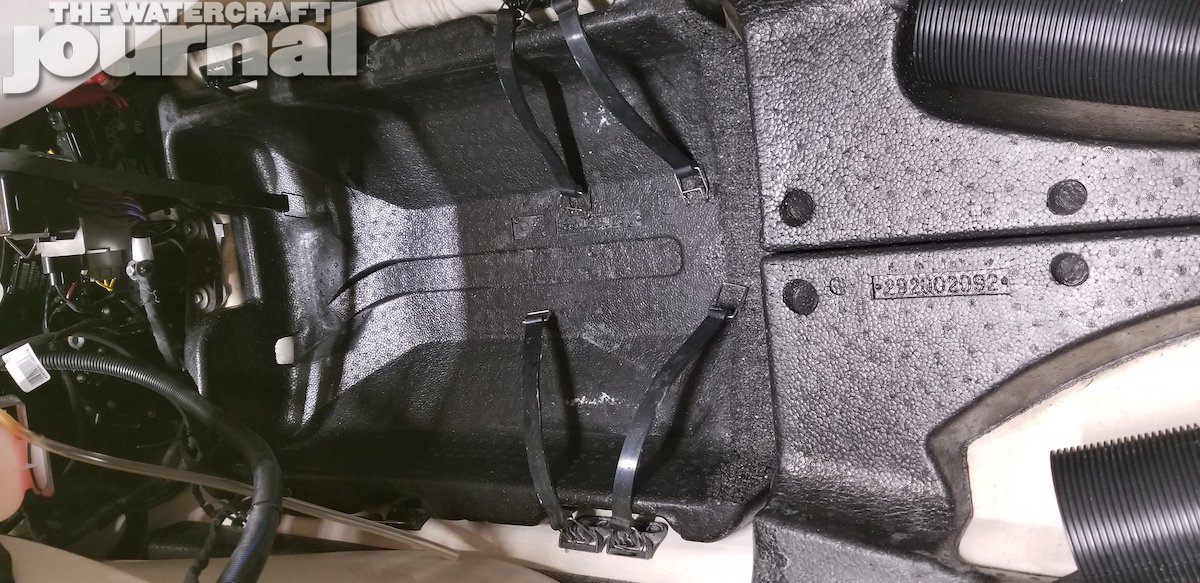
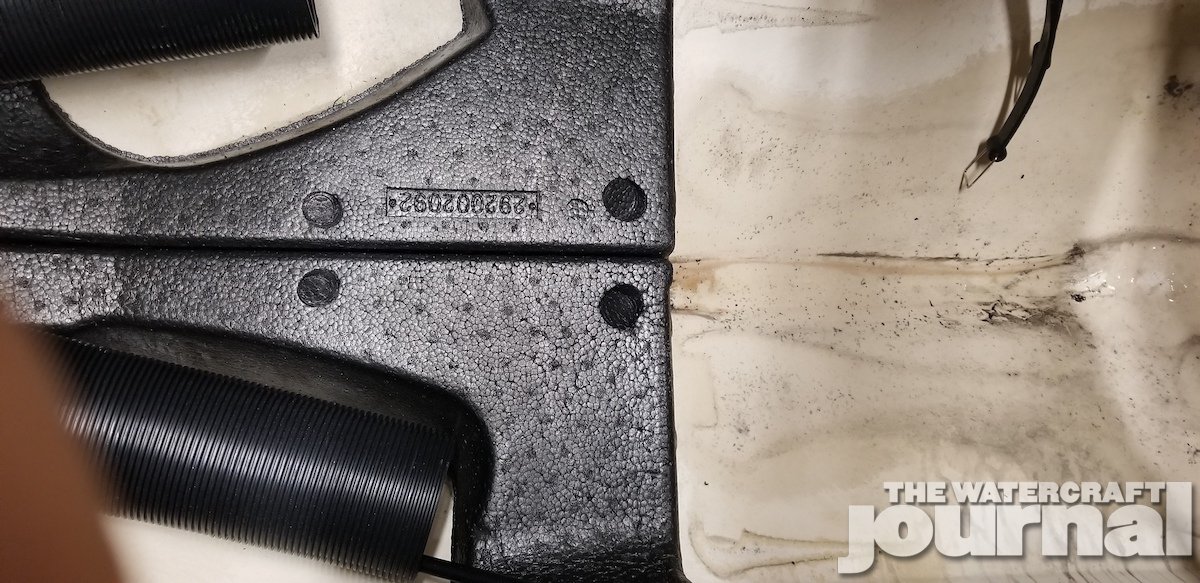
Above: Rather than purchasing new foam specifically molded to the new tank, we saved a few bucks by manually trimming the foam base to fit the longer tank.

Above: Like the foam base, which the tank sits on, the front lip of the tank also rests on the forward foam pads. These needed to be shaved down at an angle to fit the front of the tank. This took some trial fitting, requiring us to drop in and remove the tank a few times to get the shape right.

Above left: With our foam finally shaped correctly to the contour of the tank, we were able to finally install the tank for the last time. Above center: The reshaped tank also requires a new filler neck. Above right: With the straps attached, we were ready to reverse our steps and put our RXT-X 300 back together.

Once you’ve pushed all of hoses to the side, the smaller stock tank slides right out the giant compartment. Beneath it we found the foam that the tank rested on needed to be removed and slightly altered to fit the larger tank. The front lip of the foam tray needed to be cut with a sharp knife. We also shaved the front foam to allow perfect fit of the new 18.5 gallon tank. Remember this tank is longer, so we had to test fit it a few times to make sure everything was shaved perfectly and fit properly.

With our foam properly shaved to fit the new larger fuel tank, we had to install the four rubber straps. With that said, we began retracing our steps by hooking up the fuel line, installing the new re-angled filler neck tube, and of course, the new 2019-and-up center storage compartment bin. We are excited to extend our day with these 3 extra gallons of fuel, and who knows, maybe add an extra 15 miles of riding (conditions permitting, of course). Thank you to Sea-Doo for expediting these to the best Jersey Shore Dealer around, East Dover Marina and getting us these in a expedited time and price!

Gallery: Just Chillin’ At the 2019 Skyway Ski Show

0

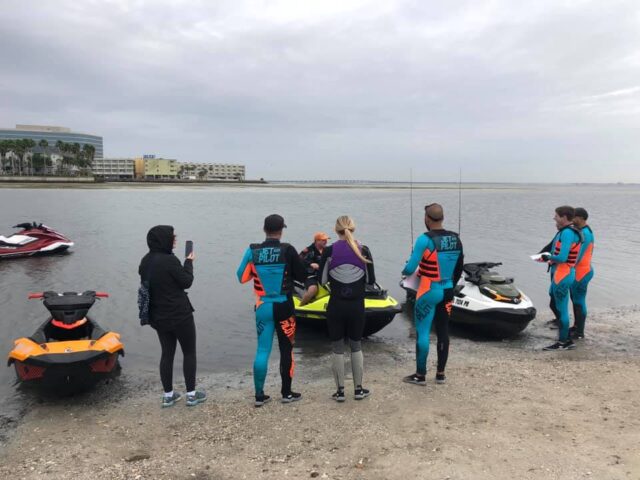
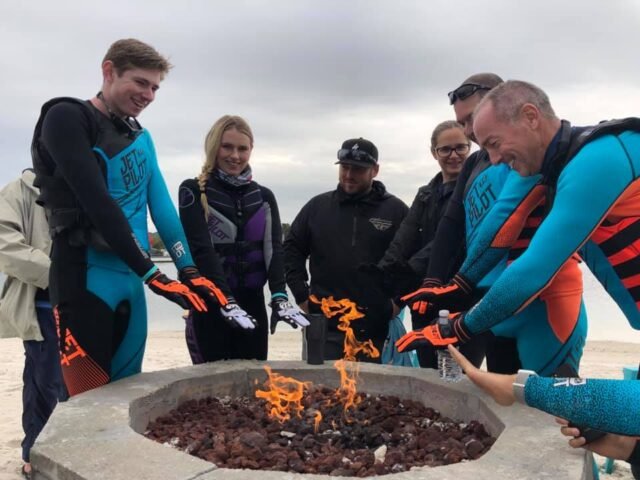
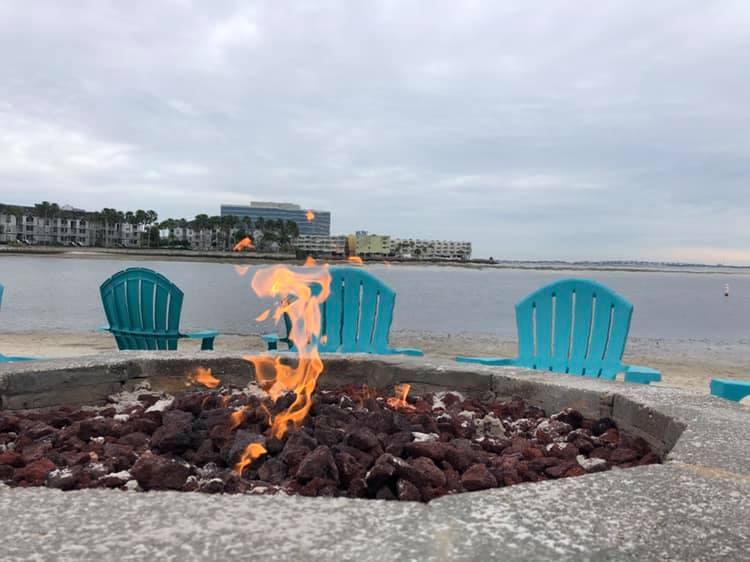
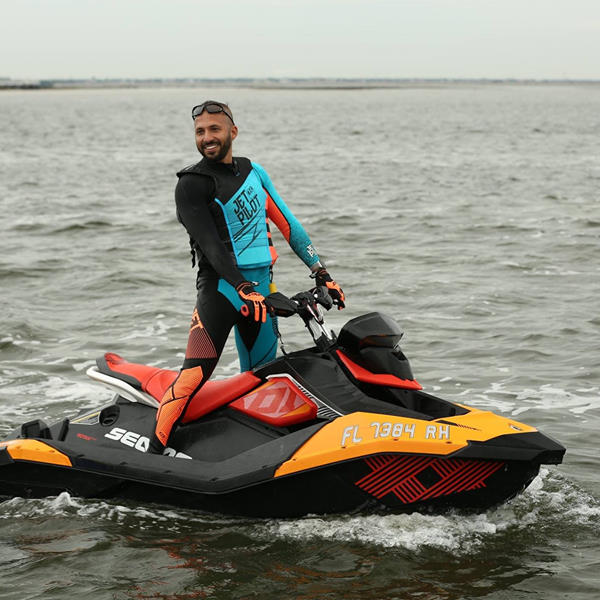
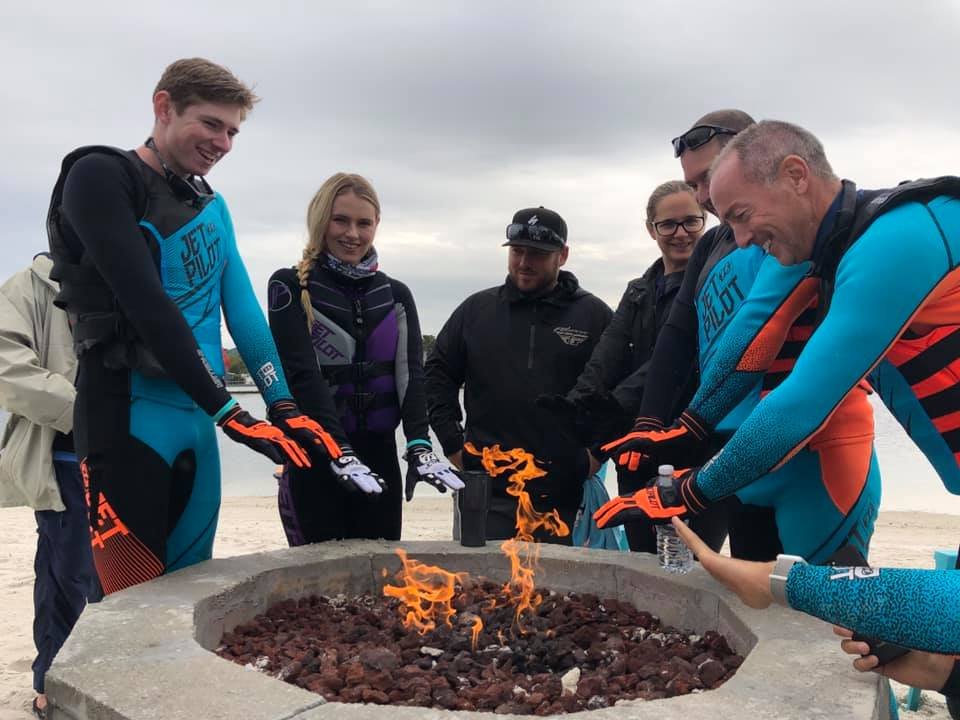
“What am I doing here?” a chattered, rubbing my together vigorously over the gas fire pit. The attempt to warm myself against the bristling late-winter gusts blowing across the Tampa Bay was wholly in vain. The Clearwater/St. Petersburg area was being blasted by some unseasonable weather that plummeted the temperatures and whipped in waves of stinging rain. And here I was standing on the sugary white sand trying to regain a little circulation in my extremities.

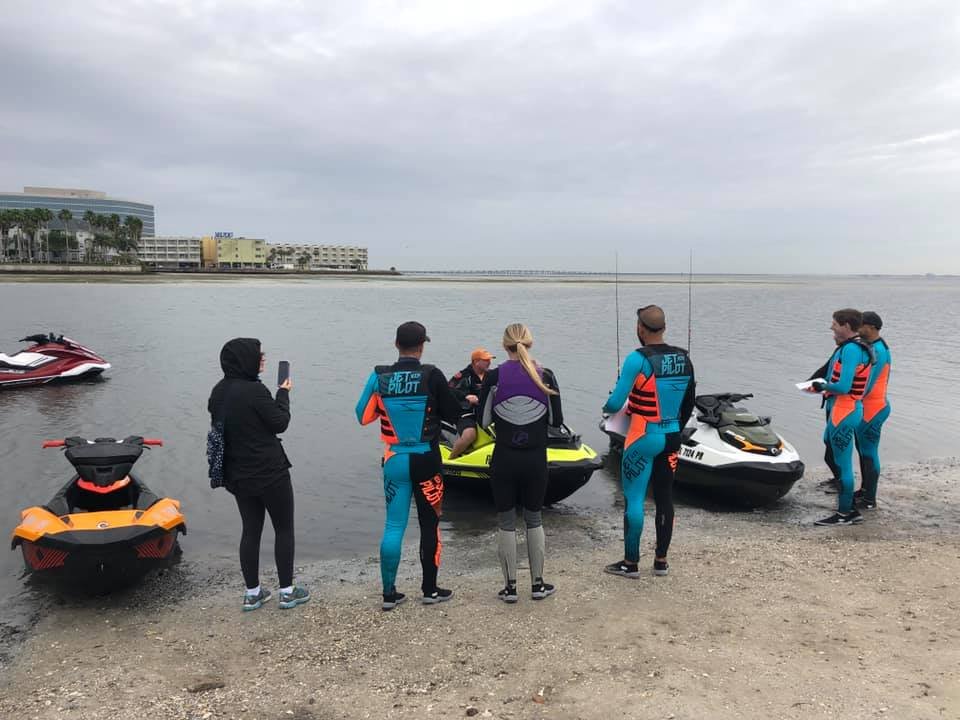
Mid-March means making my annual trek from Nashville, Tennessee to the Watercraft Superstore headquarters in Clearwater, Florida for the annual Skyway Ski Show. Carrie and Stephanie had alerted me that “things were going to be a little different this year” but not to what extent. The event’s format of inviting 6 guest judges to ride and evaluate a sampling of latest personal watercraft models hadn’t changed – The Watercraft Journal had even played a role in selecting one.

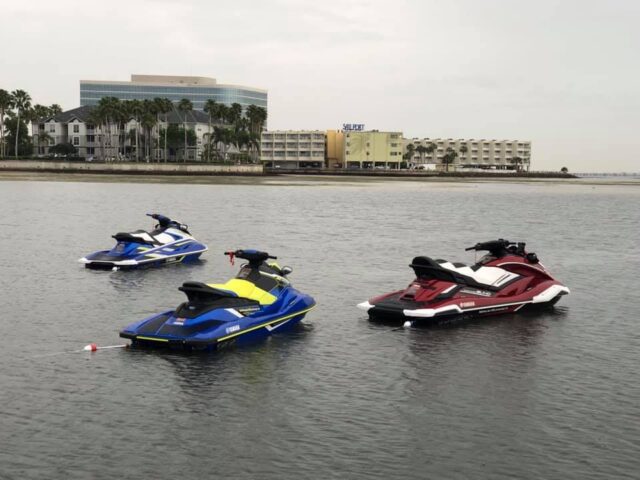
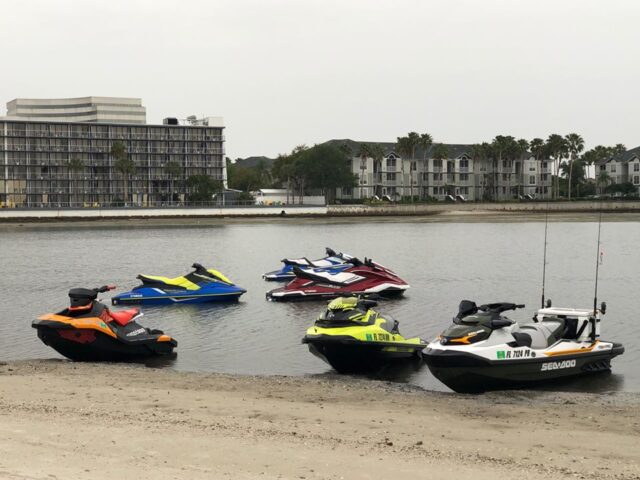
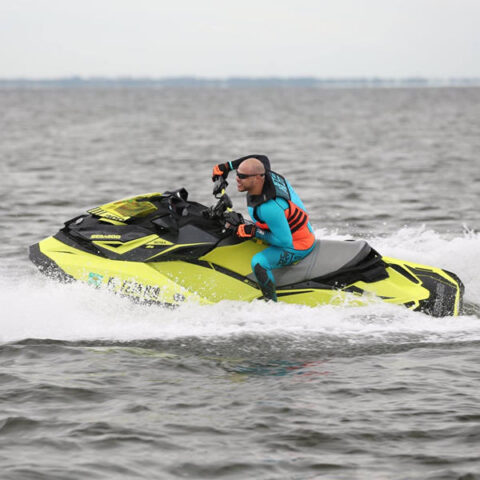
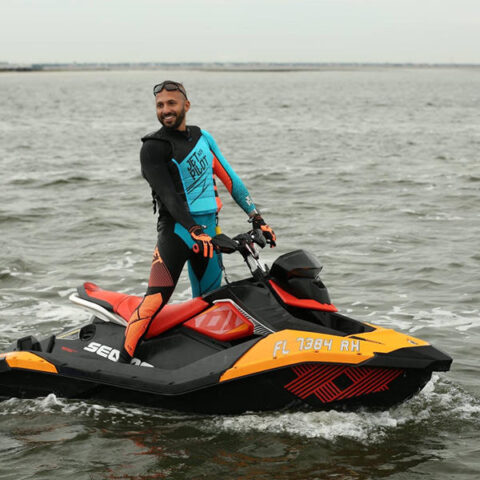
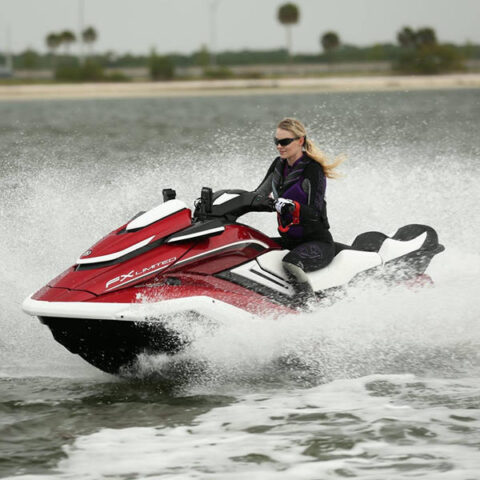
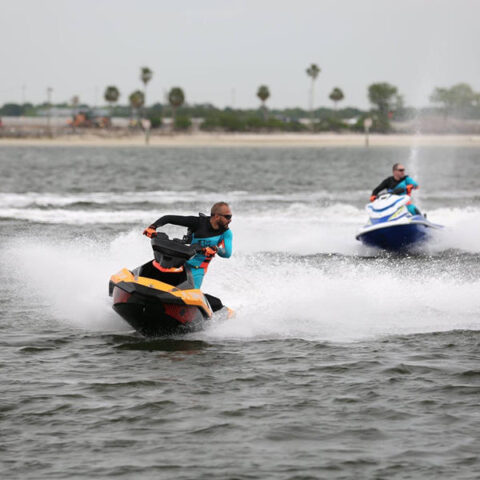
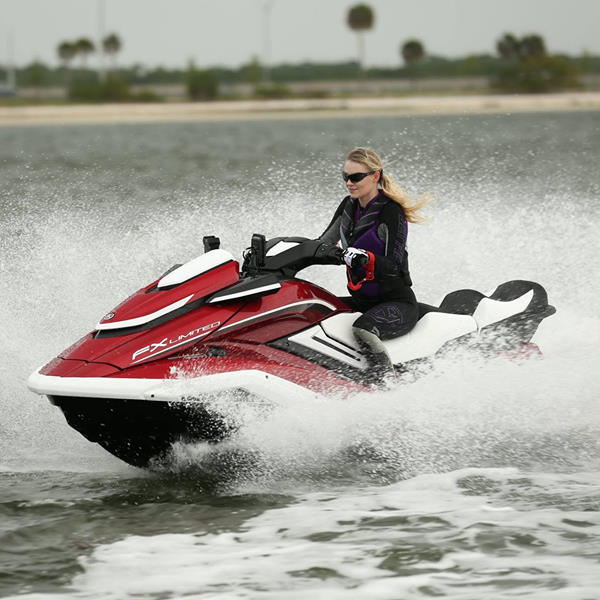
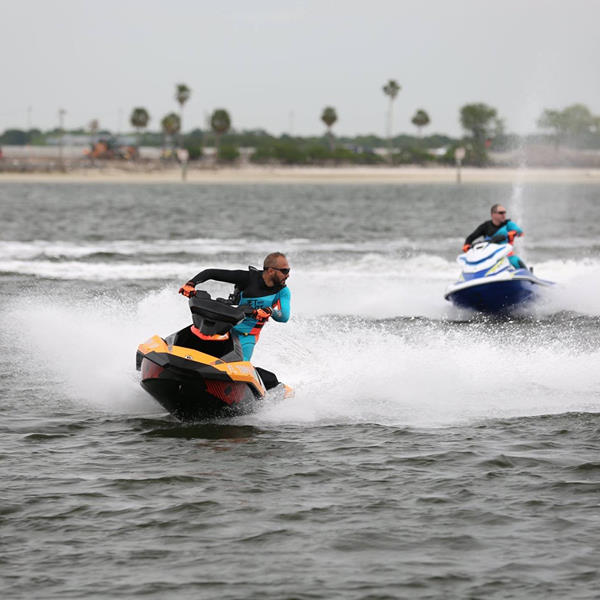
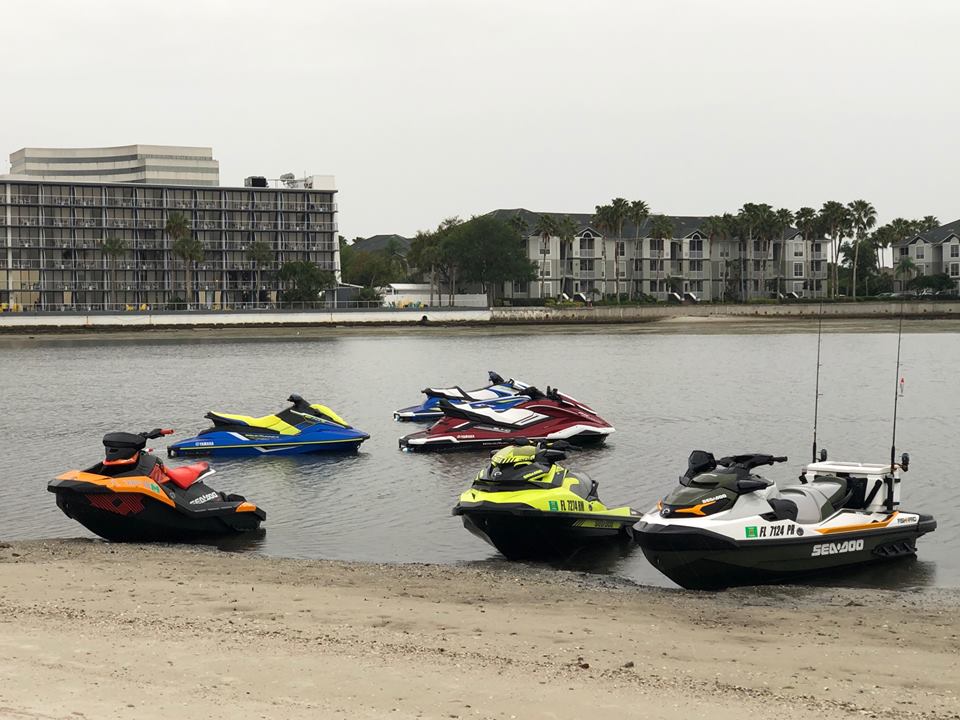
Earlier in the year, we invited readers to “like,” “comment” and “share” a post on The Watercraft Journal‘s Facebook page to qualify to win the prize of being a guest judge. Bobby Sessom earned the honor and was more than happy to join the show. The selection of craft though, has thinned. Kawasaki opted to back out for 2019; leaving Sea-Doo and Yamaha. The latter brought out an EXR, GP1800R and FX Limited SVHO. Sea-Doo presented a Spark Trixx, RXP-X 300 and Fish Pro.

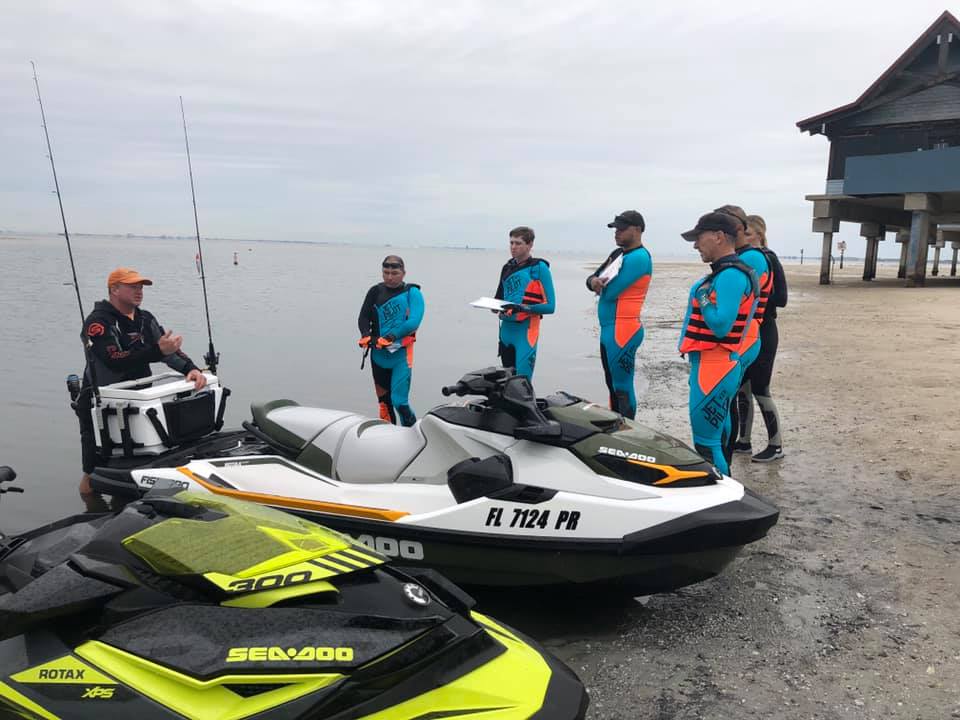
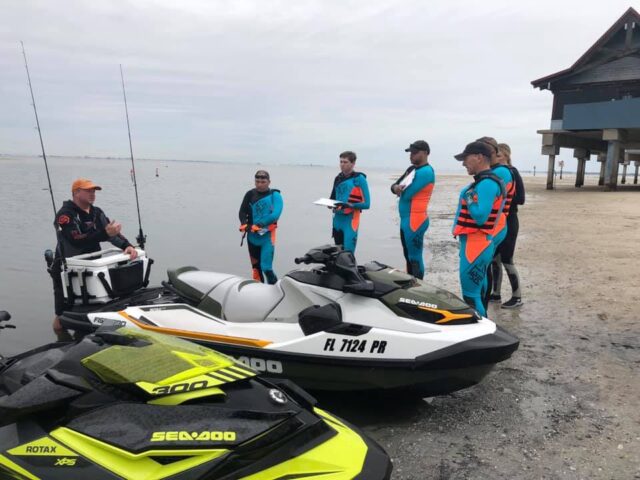
Ultimately, the judges were asked to evaluate the brands’ top tier Rec Lite entries as well as their respective muscle craft offerings. In addition to some new swanky JetPilot wetsuits, gloves and side-entry vests, each judge was provided with SBT slip-on booties, SeaSpec shades, and a clipboard with a whole lot of paperwork to fill out. Evaluating a new machine takes much more than a thumbs up or down, but some well developed though and consideration. Apparently, I make it look easy.
I had ventured down to help facilitate, drive skis from the launch ramp to the beach and back, and generally be a help where I can. Retired WCJ contributor Kurt NgSaye stepped in to snap pictures, while representatives from Yamaha, Sea-Doo and Cycle Springs Powersports were present to provide walk-arounds of each unit, detailing their respective features and characteristics.
Water levels were low around Whiskey Joe’s beach-side restaurant, and riders were cautioned to follow channel buoys as close as possible. Of course, I did not follow this council and rightly ran the Fish Pro (y’know, the only ski there with the dedicated depth gauge) into 1-foot deep water. A short, laborious walk back unstuck the big Sea-Doo; and I returned to the shore to applause and laughter. This was not a great start, I thought.

Thankfully, the night before was fantastic, as it usually always is. The food was phenomenal, the company even better. Again, the annual pilgrimage is one of my favorites. Equally, the evening marked the Watercraft Superstore’s and Pickren Community Outreach Program’s presentation of Oldsmar Cares; a local outreach that “provide[s] stop gap rent and utility assistance, a food pantry, and a clothes closet – at no cost – to those in need in the greater Oldsmar area.”

Oldsmar Cares has added health screenings and dental services to children over the past decade, which simply put them over the top. For their efforts, WCSS and Pickren Community Outreach Program awarded them $5,000, and invited one of their team members to be a guest judge for the day. Steal gray skies and wafting sheets of rain nearly spelled doom for the day, but the rain ceased long enough for head judge Jeff Hemmel to guide the group through a short predetermined route, allowing riders to stop and trade craft intermittently.

Even without Mother Nature’s cooperation, the Skyway Ski Show managed to perform without much of a hitch. Yet, there was one more change still left on the table. For 2019, the Watercraft Superstore won’t be publishing its massive annual catalog. Rather, all of those products, the individual evaluations, the final analysis and awarding of “SBT’s Watercraft of The Year” will be announced on WCSS’ website and social media channels. So if you’re dying to find out who won, you’re gonna have to like and subscribe their pages.