
Home Blog Page 357

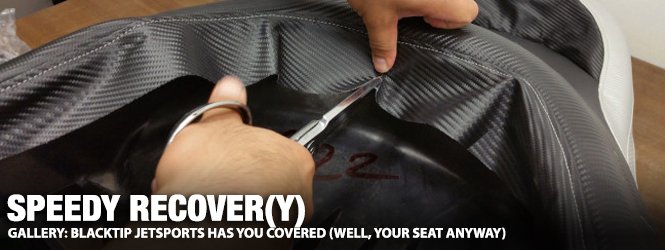
Gallery: Blacktip Jetsports Has You Covered (Well, Your Seat, Anyways)

0

BLACKTIP

Like other enthusiasts, we love our personal watercraft and would do about anything for them! Well, maybe that’s a little much for some of you, but keeping your ski in good condition with a bit of personalization is imperative.

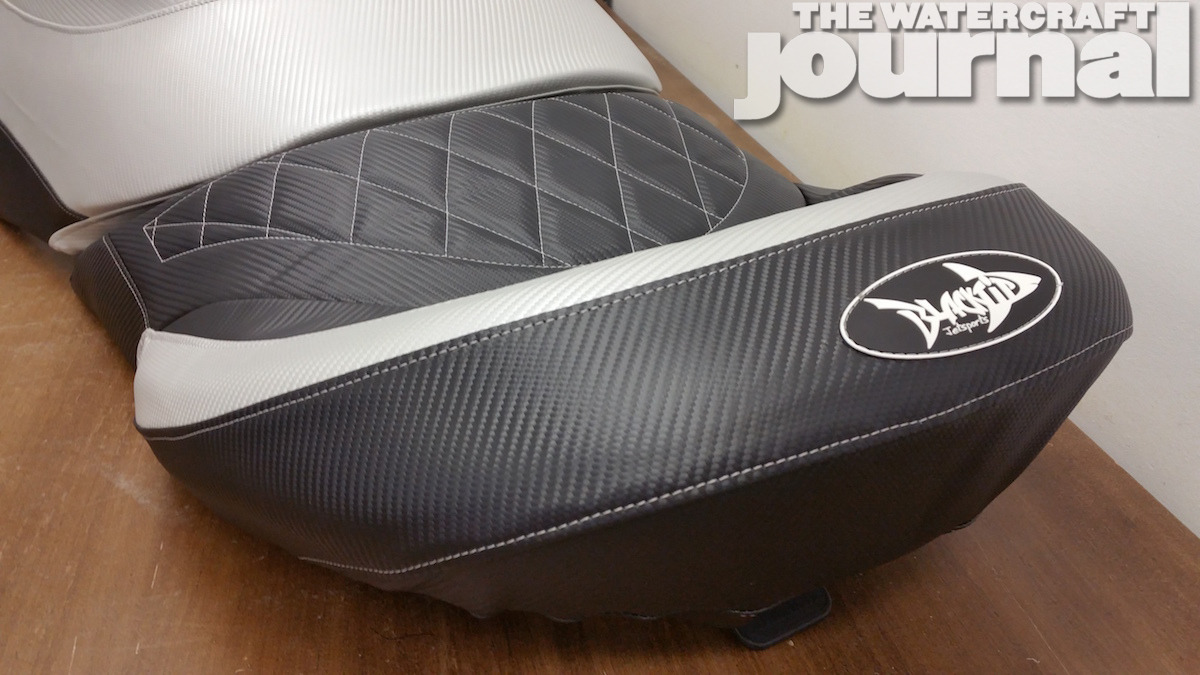
That’s where Watercraft Superstore’s line of Blacktip Jetsports replacement seat covers come in. There is no better way to make your baby look new again, or add that customized look, than with a new seat cover to cover where you sit.

Yes we know… the elephant in the room; “How do I put the new seat cover on” you ask? We at The Watercraft Journal are here to help! We recently made a trip to Watercraft Superstore headquarters to shadowed Blacktip’s expert installer who walked us through a few tricks to use during this process. These details will help make you look like a pro when finished!

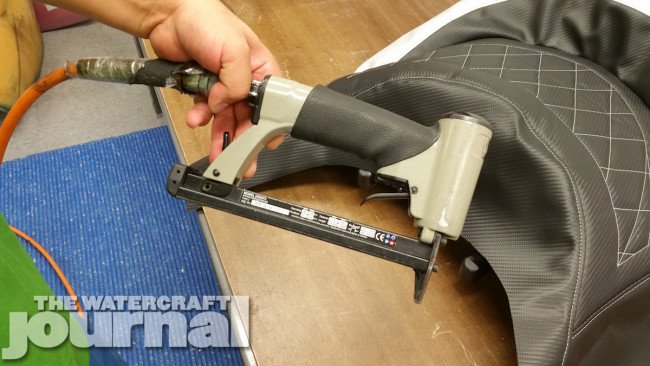
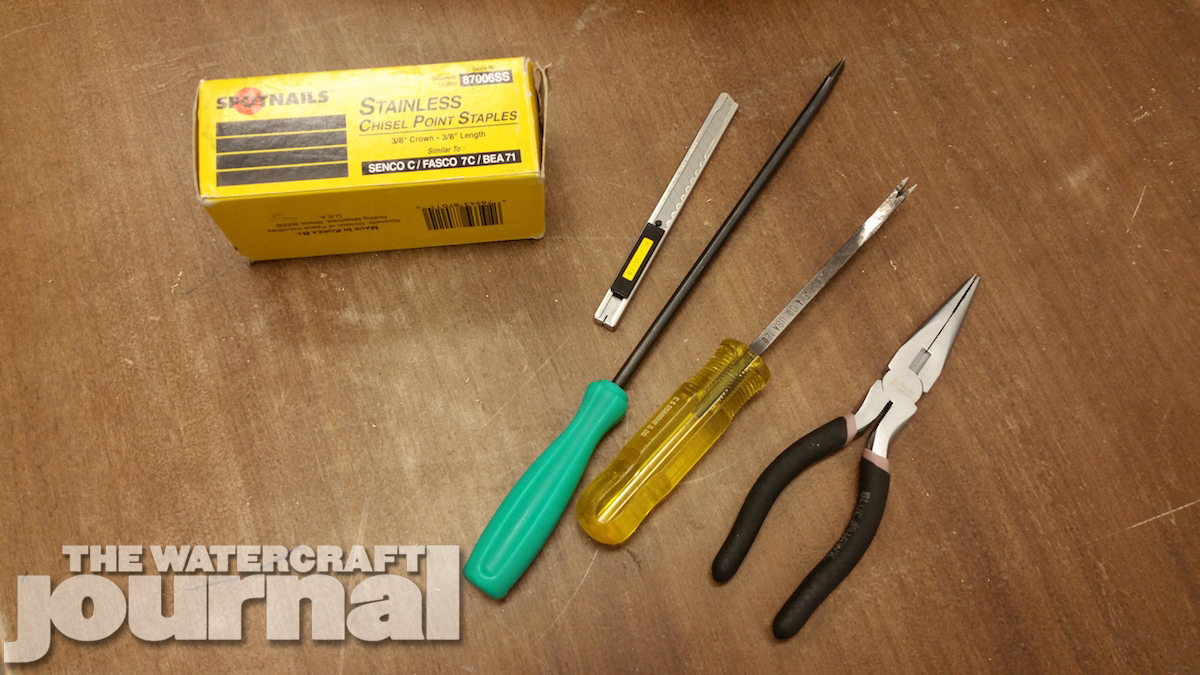
Above: A few basic tools of the trade will make your life easier while recover that old seat: a long straight blade screwdriver, a pair of needle nose pliers and/or a staple puller, a staple gun, staples (preferably stainless steel), a razor blade, scissors and to make things really easy on yourself, a heat gun.
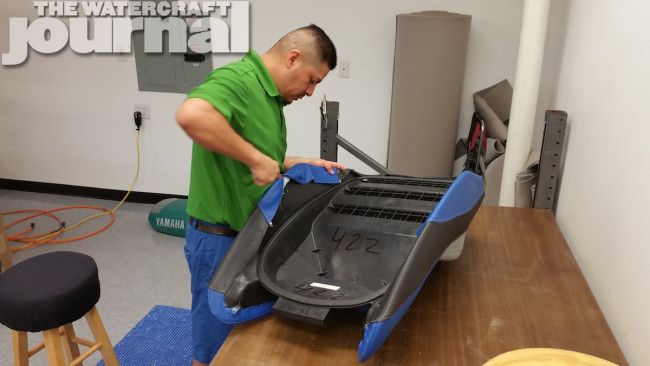
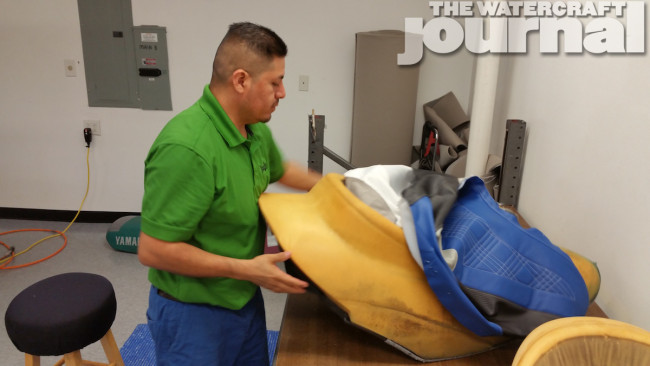
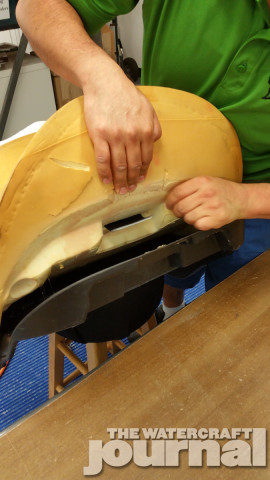
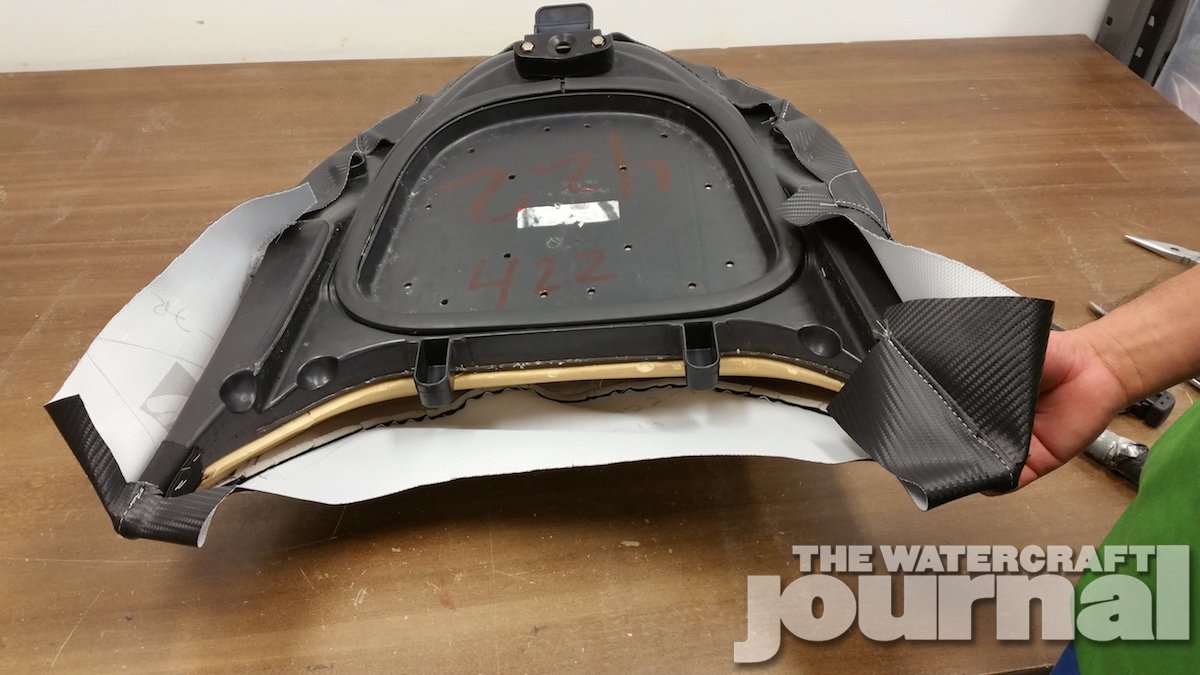
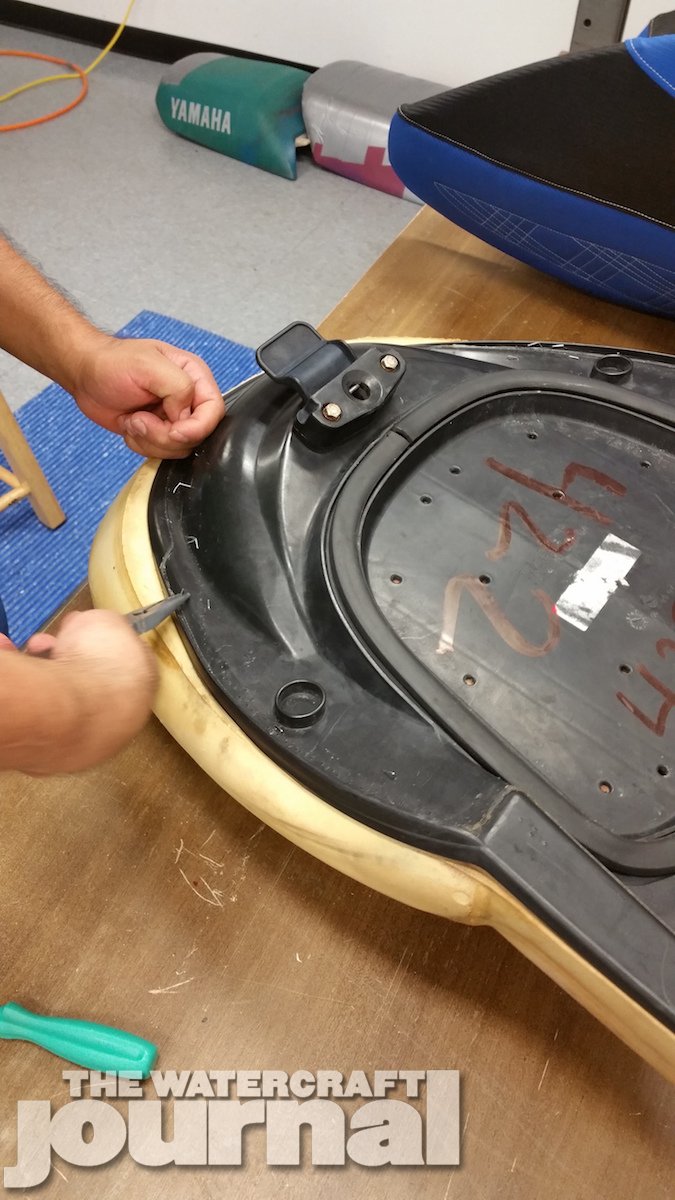
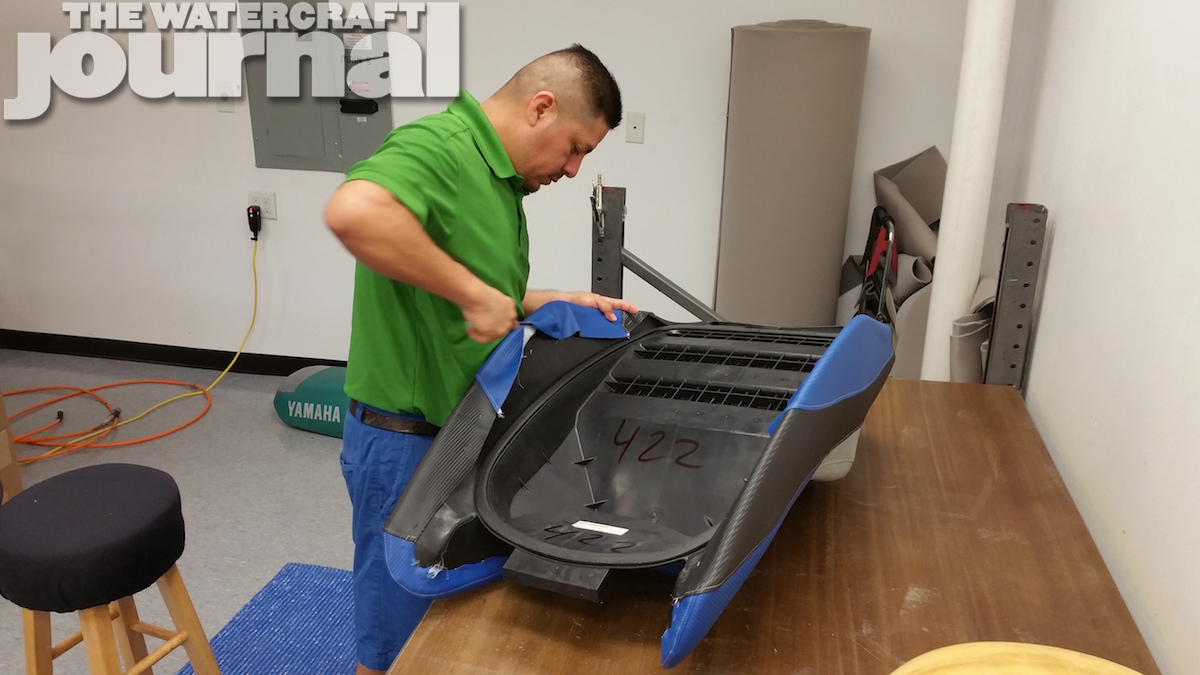
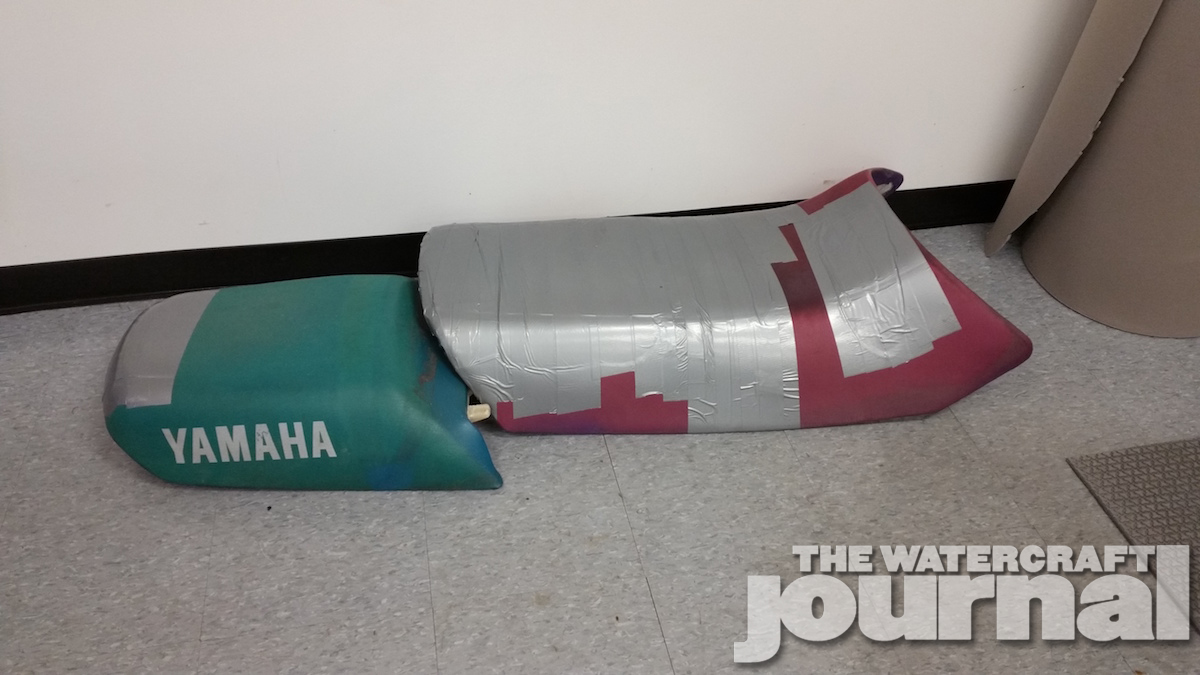
Above left: First you need to remove that old, faded, worn out seat cover by flipping the seat upside down, wedging the screwdriver between your old seat cover and the seat base and rip up and away! Above center: Continue around the entire edge of the seat base until the cover is completely torn free. Flip the seat back over and remove the old cover.

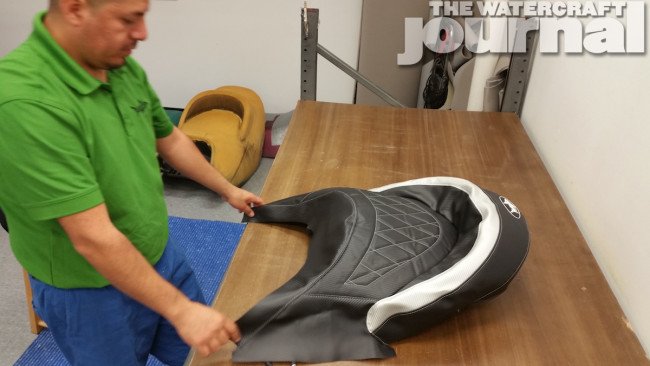
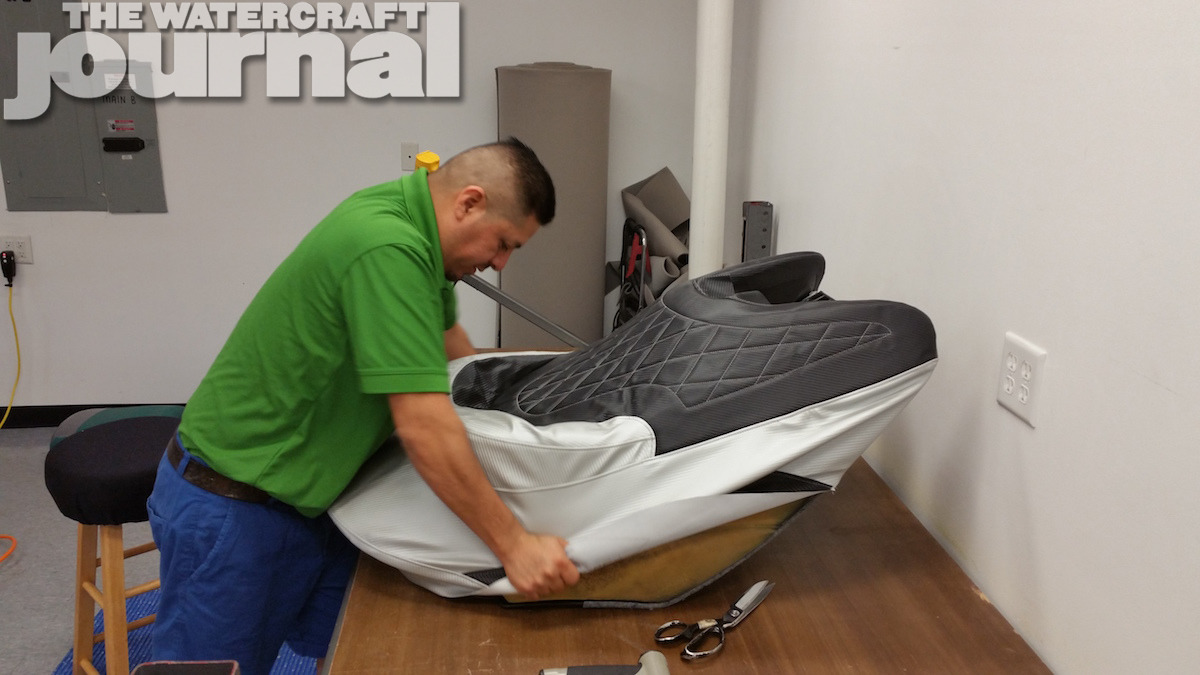
Above left: Your new Blacktip cover will arrive from the Watercraft Superstore folded up in a bag. Rip open the bag like Santa just came down the chimney and drape the new seat cover over your old seat foam and base. Carefully align the cover in the basic position it is going wind up. Make sure that it is both centered from side to side and front to back, and that the seams and contours line up correctly with your old seat. Above right: This is where the heat gun comes in handy. While the new cover is draped over the top of your formerly naked seat, apply a little heat to make it more pliable. Work out the kinks in the cover left from it being folded up in a bag by pulling down on the edges and smoothing over the surface with your hand. Many modern watercraft seats have dramatic contours and bolsters molded into the seat foam. There are two important steps that need to be noted here for these types of designs.
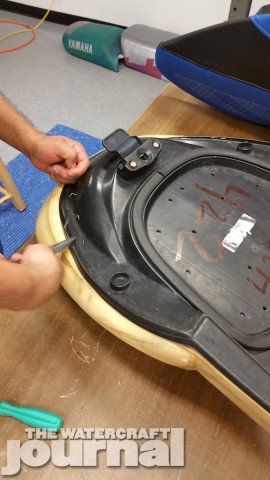
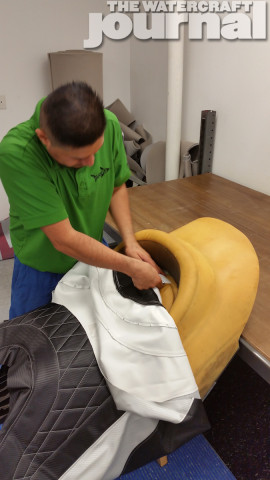
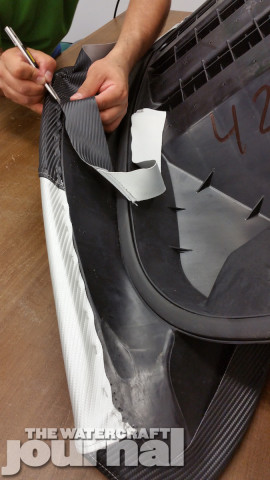
Above left: Turn the seat upside down once again, and with the needle nose pliers or staple puller remove all the remaining staples from your ski’s plastic seat base. Above center: There will usually be a plastic tab sewn into your seat cover that you removed in step one. It is used to keep the cover taut around the bolster. Above right: You will need to feed the tab back through the slot in the foam bolster.
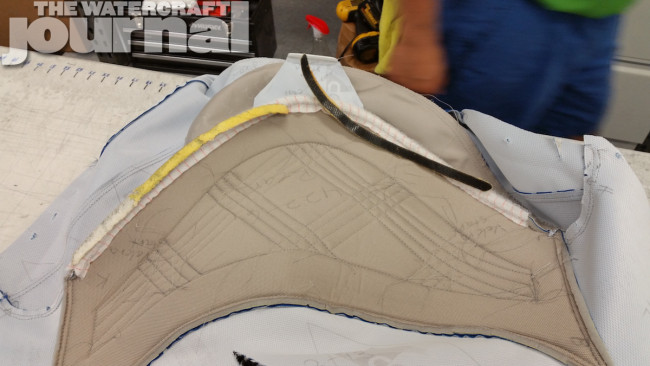
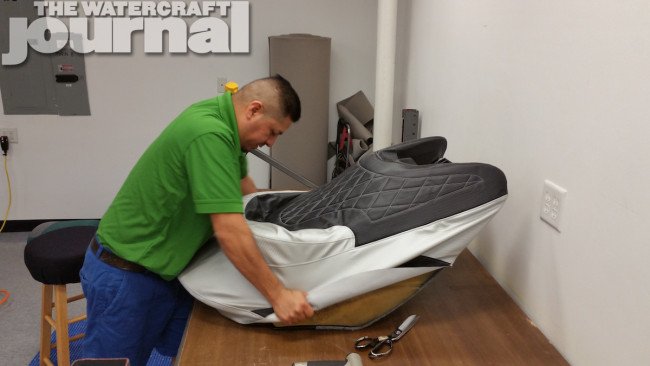
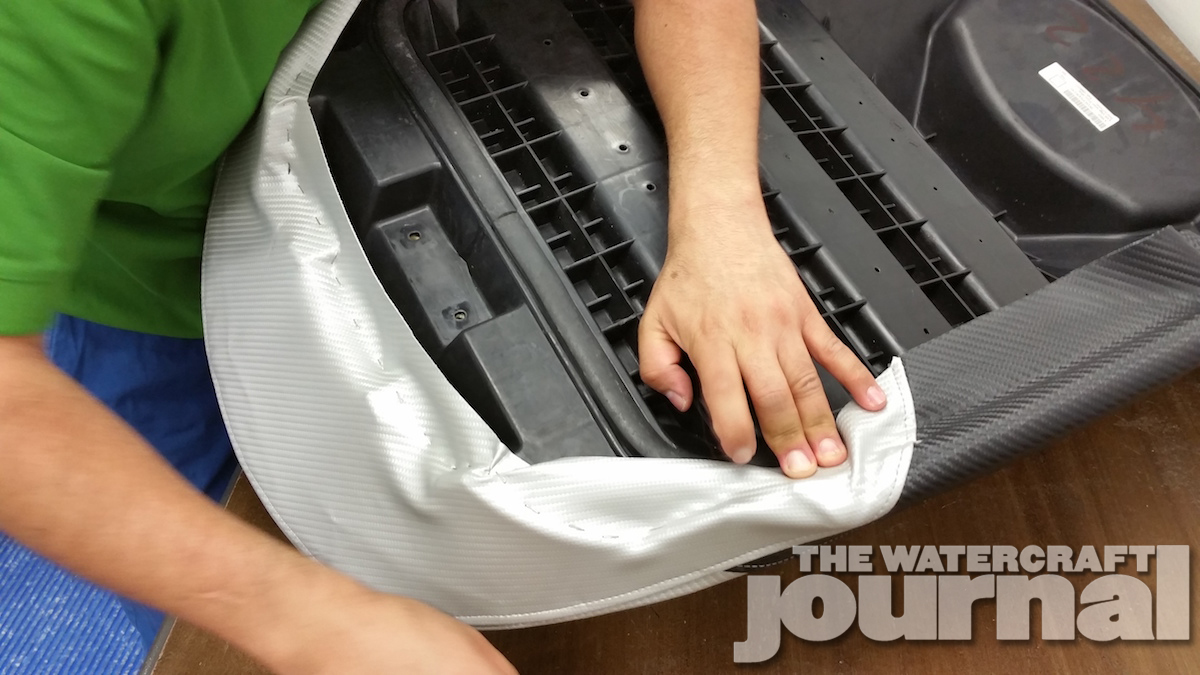
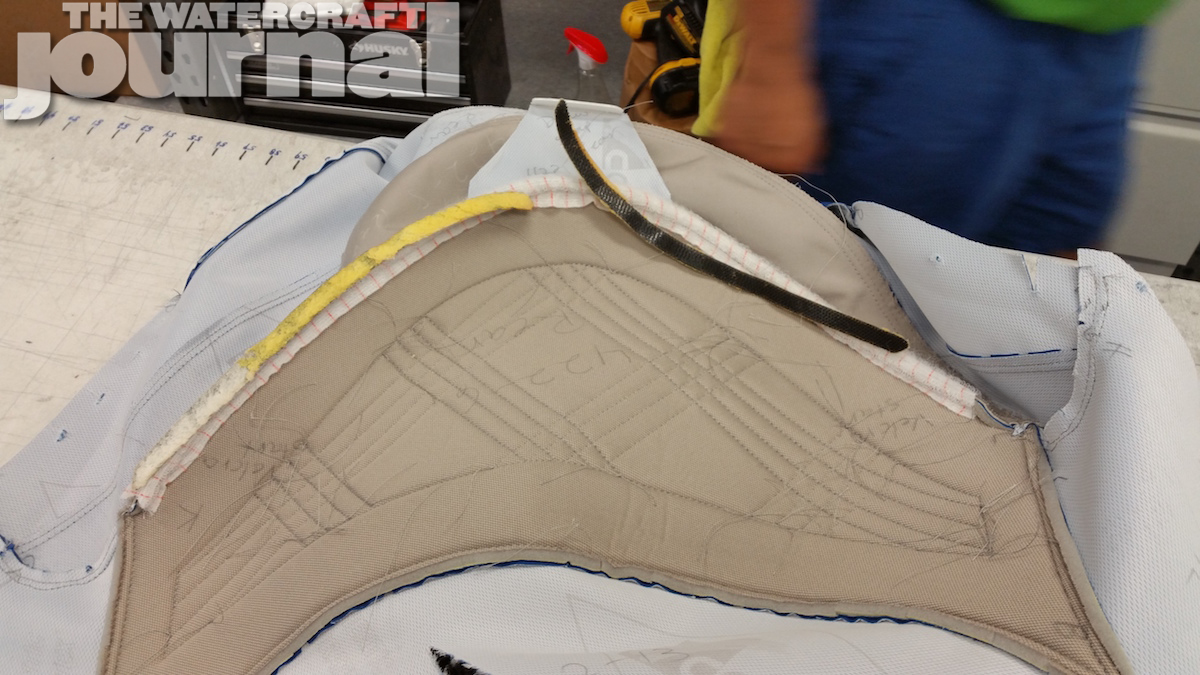
Above left: Many of the Blacktip Jetsports seat covers come with a velcro strip sewn in the seams that needs to be applied to your seats foam base. Similar to the plastic tab, the velcro helps to keep the cover in place and tight to the foam for a “factory look” once you’ve finished the install. Above right: Stretch the cover over the seat (not so gently) pulling it down by the edges. Start tucking and aligning the seams into the contours of the foam and around the edges of the seat base. Continue this process until it is aligned properly and lying flat on the foam. (Note, this process of aligning and stretching your seat cover is continuous as you proceed through the following steps: align, stretch, staple and repeat!)
initial1

Above: Start by aligning the two front corners of the new cover with the seat. 
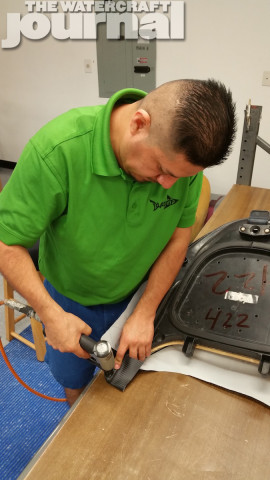
Above left: Next align the seams from the front to the back of the cover making sure they line up with the edges of the foam and seat base. Above center: Staple the cover a couple times on each corner to hold the cover in place. Above right: Spin the seat around, align the back center of the cover (marked by the customary Blacktip emblem) with the center of the seat base.

initial4

Above: Stretch the seams to the appropriate edges of the foam and base, and put a couple staples through the cover into the base. Turn your seat to the side and upside down. Again, repeat the process of lining up the seams and stretching the cover to match the edges of the foam and base. Staple it! Turn the seat to the other side and repeat this process.

Repeat the above steps of aligning, stretching and adding staples to your new cover while making sure everything is lined up properly with the edges of the base and contours in the foam.

If your seat has rounded corners, the cover’s corners are usually sewn together when it arrives from Watercraft Superstore. All you do is slip the cover over the base and stretch it tight. However, if your seat has sharp corners (usually the second seat where the passenger rides) the cover’s corners will most likely NOT be sewn together when it arrives on your doorstep.

Pay close attention to the top of the seat while stapling both sides of the cover to the base. Make sure the new cover is pulled tight enough so that it lies flat on the foam and also remains aligned evenly from side to side. You do not to flip your seat over and see a “bubble” in the cover from it being installed loose, or have a seam halfway up one side of your new seat!
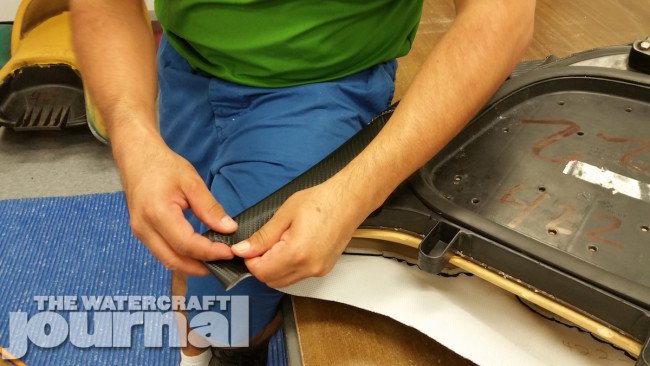
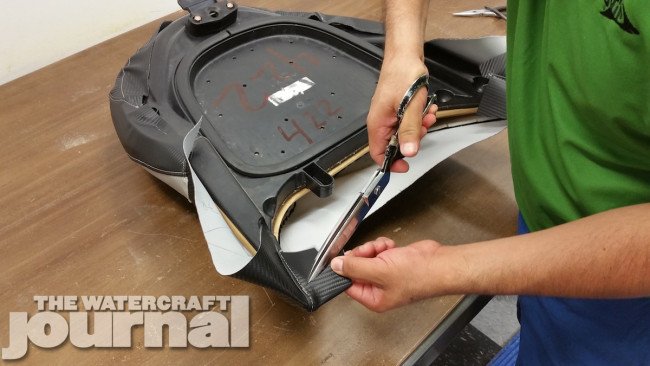
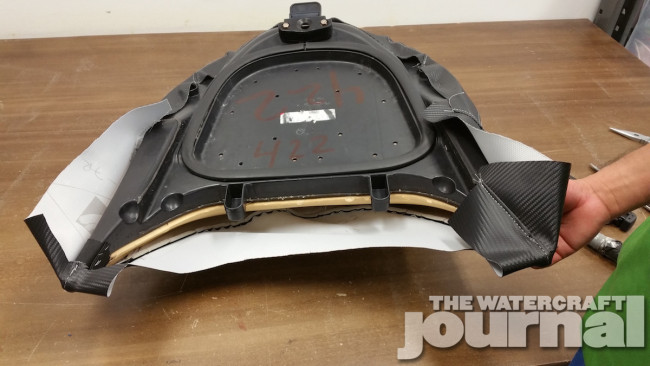
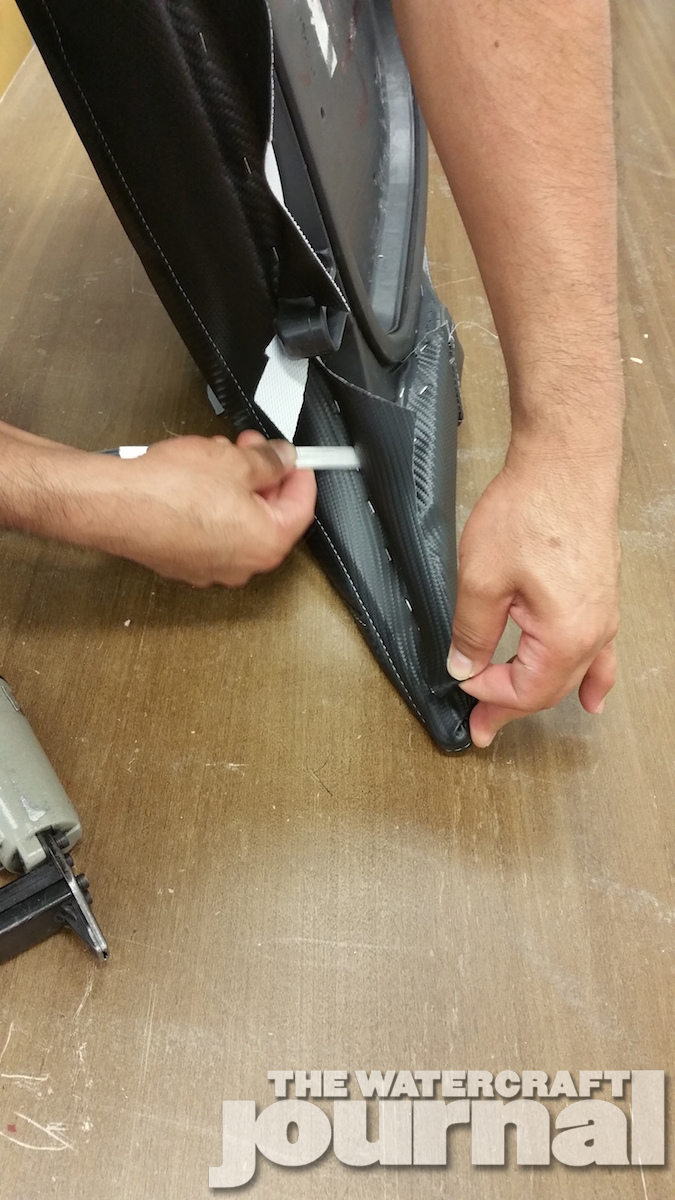
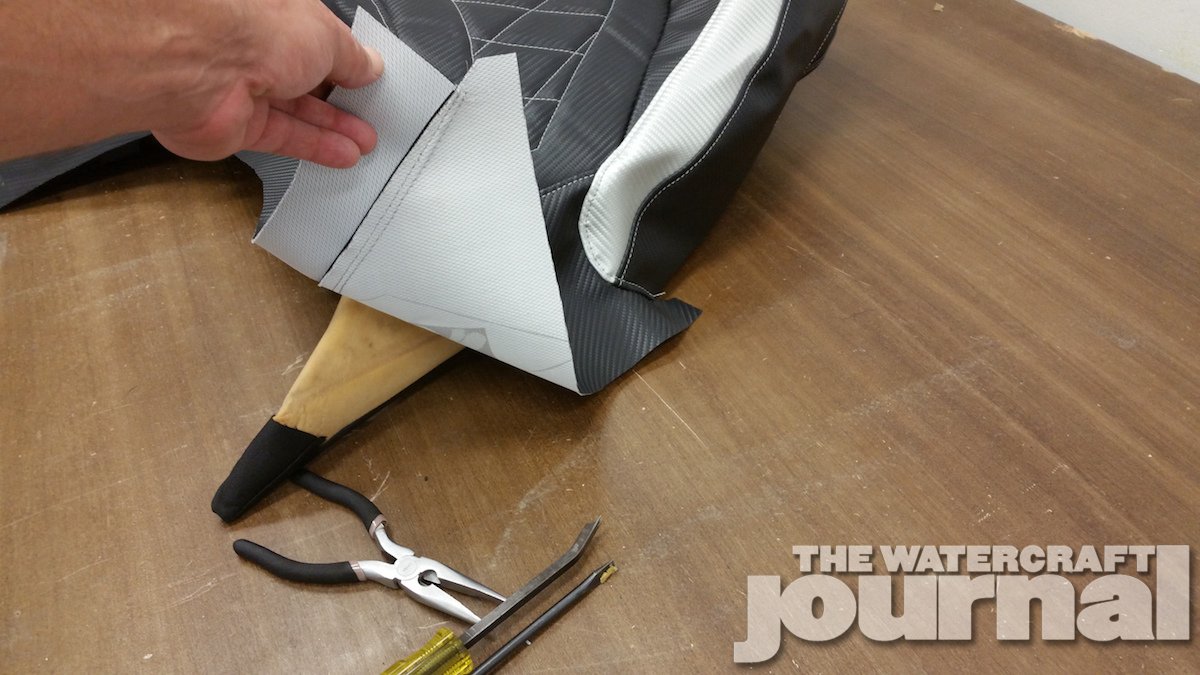
Above left: Fold the corners of the cover together with the bottom portion of the cover under the top, and the top portion overlapping the bottom approximately a half an inch. Above center: Pinch the excess seat cover material together with your fingers and carefully trim it with the scissors. Above right: After trimming the excess material away, staple the cover again on the corners with the top portion of the cover overlapping the bottom.
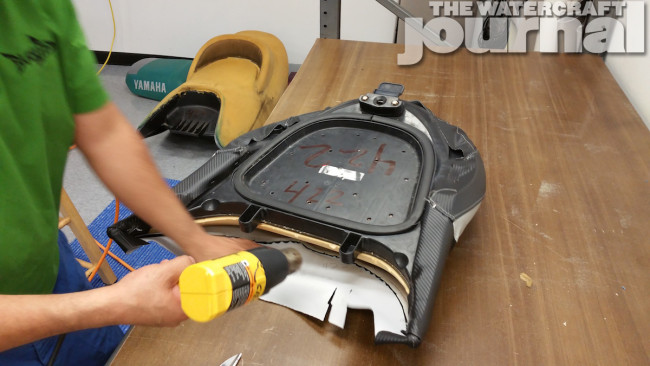
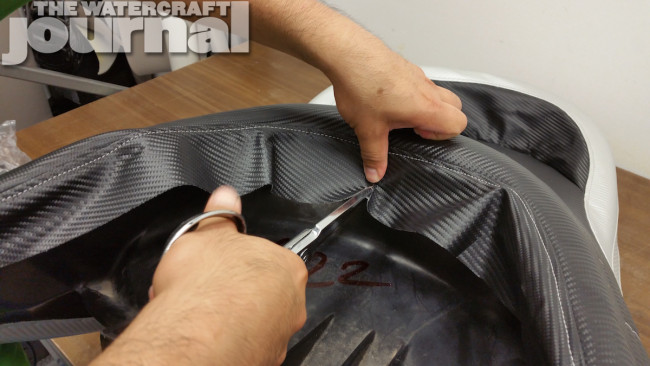
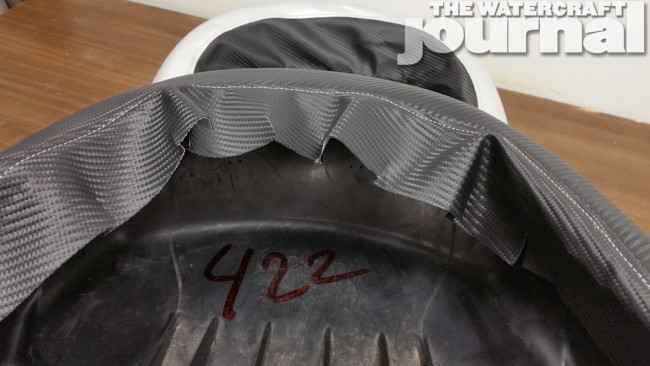
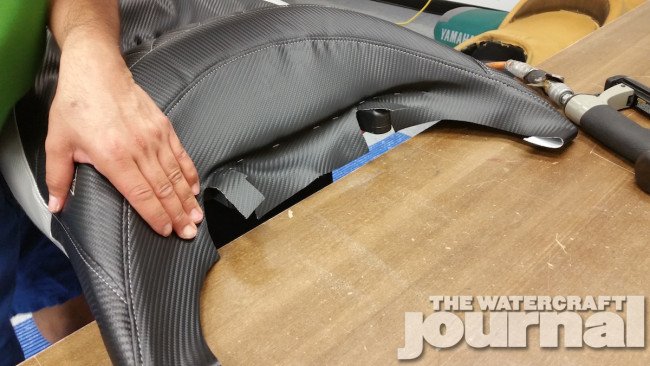
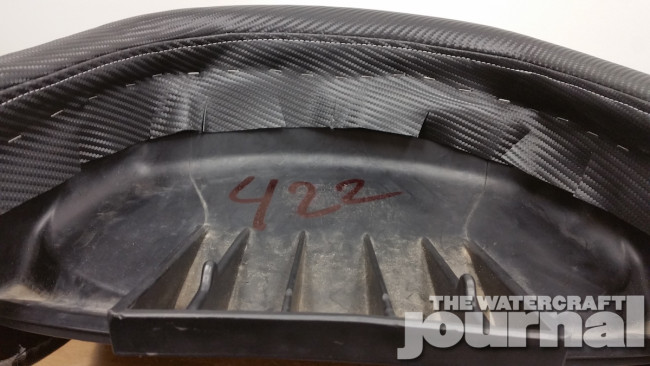
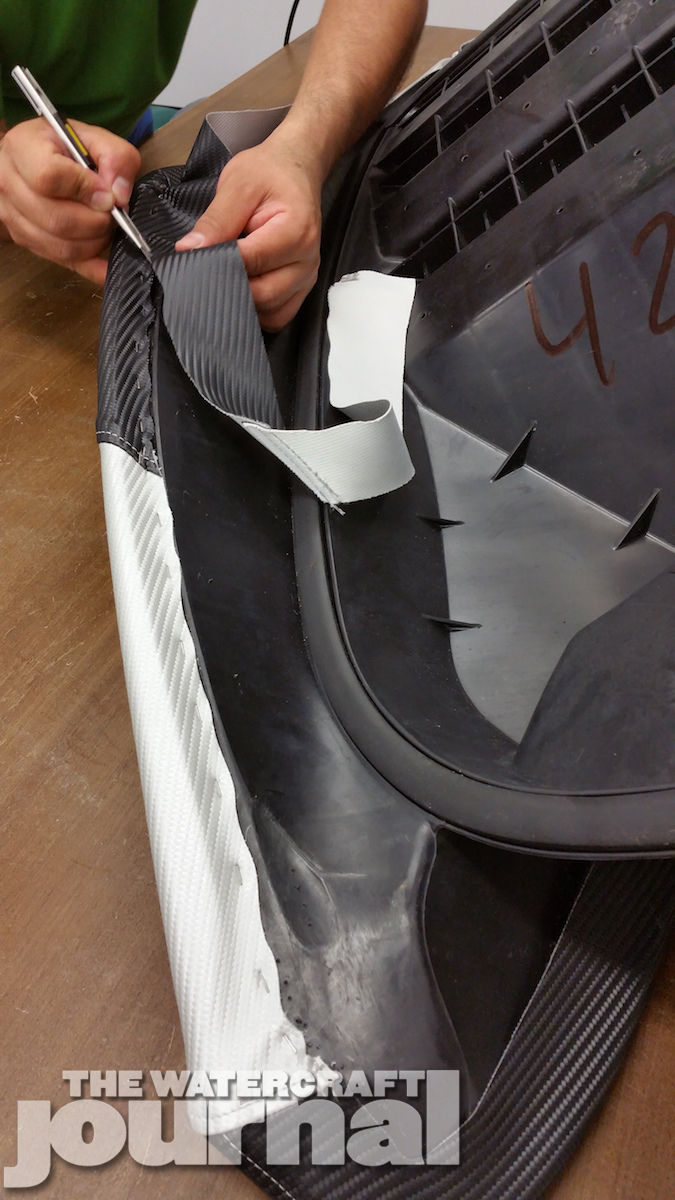
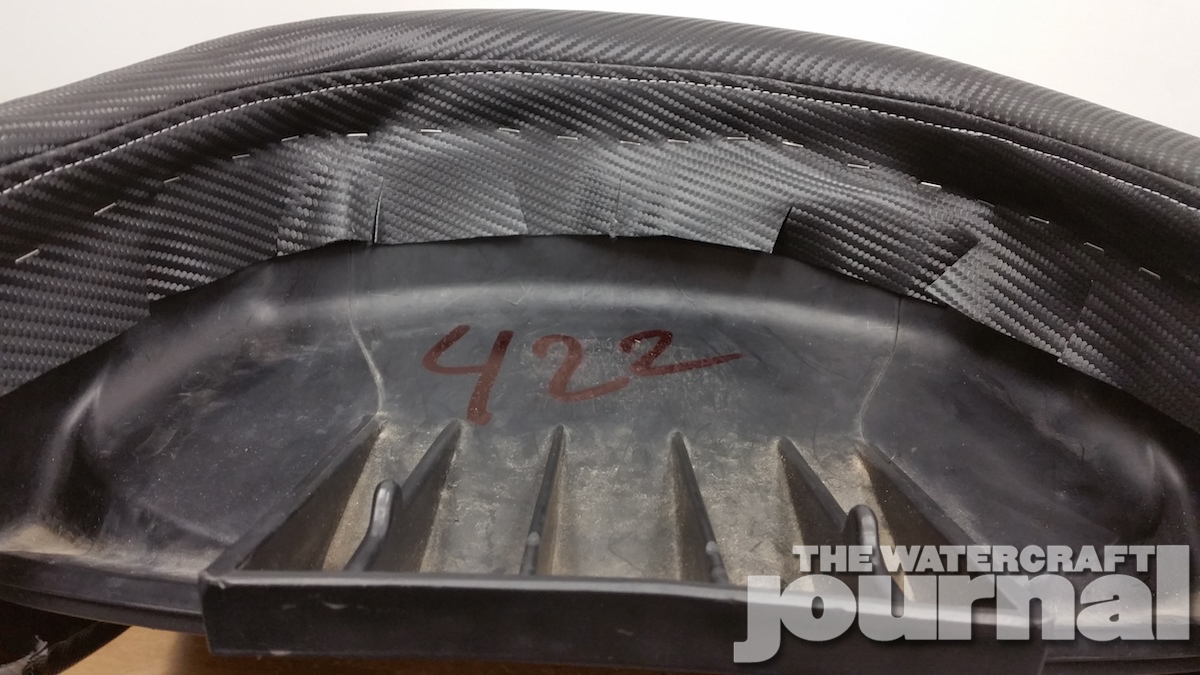
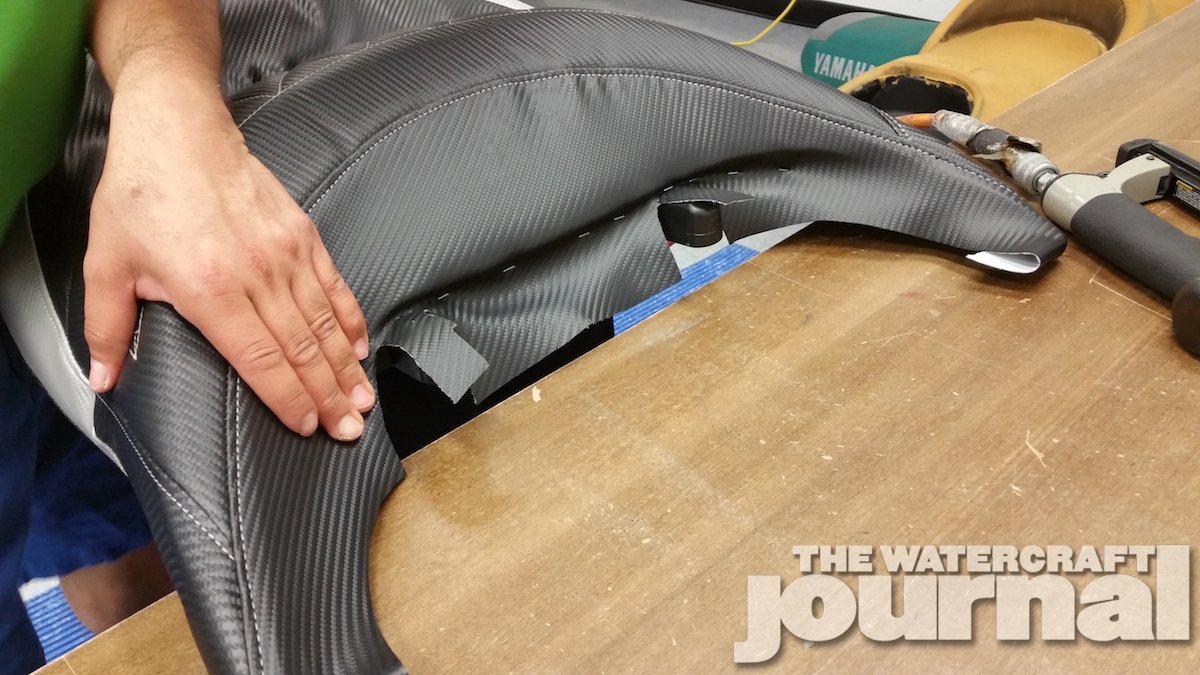
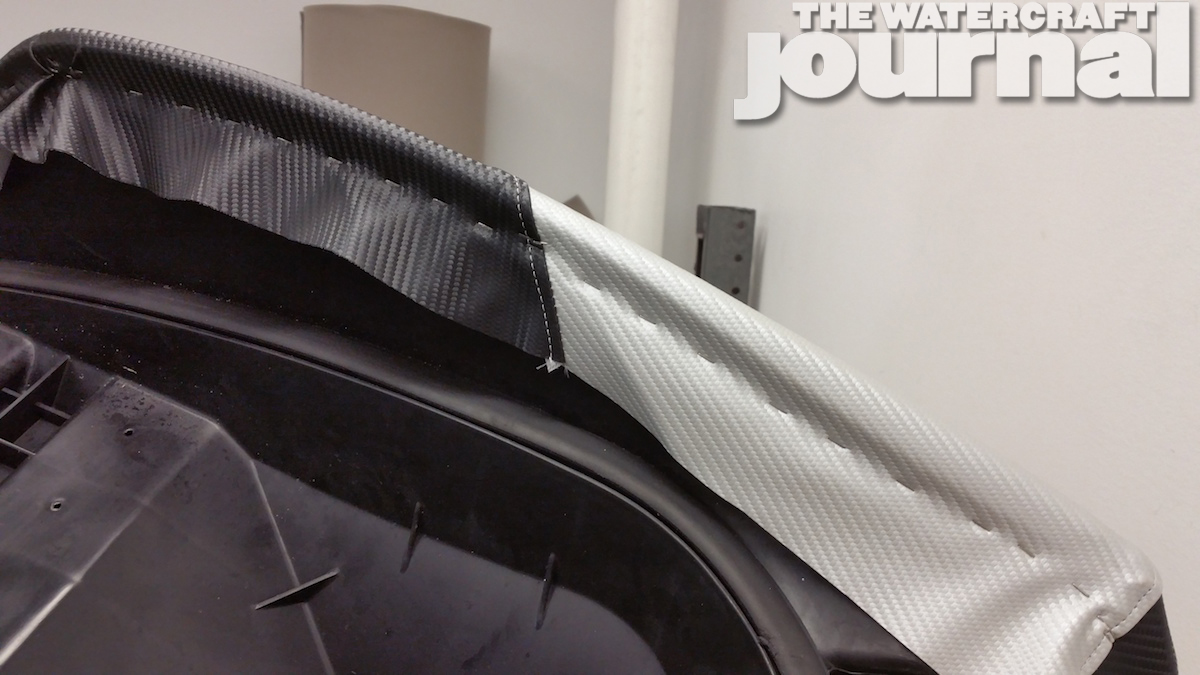
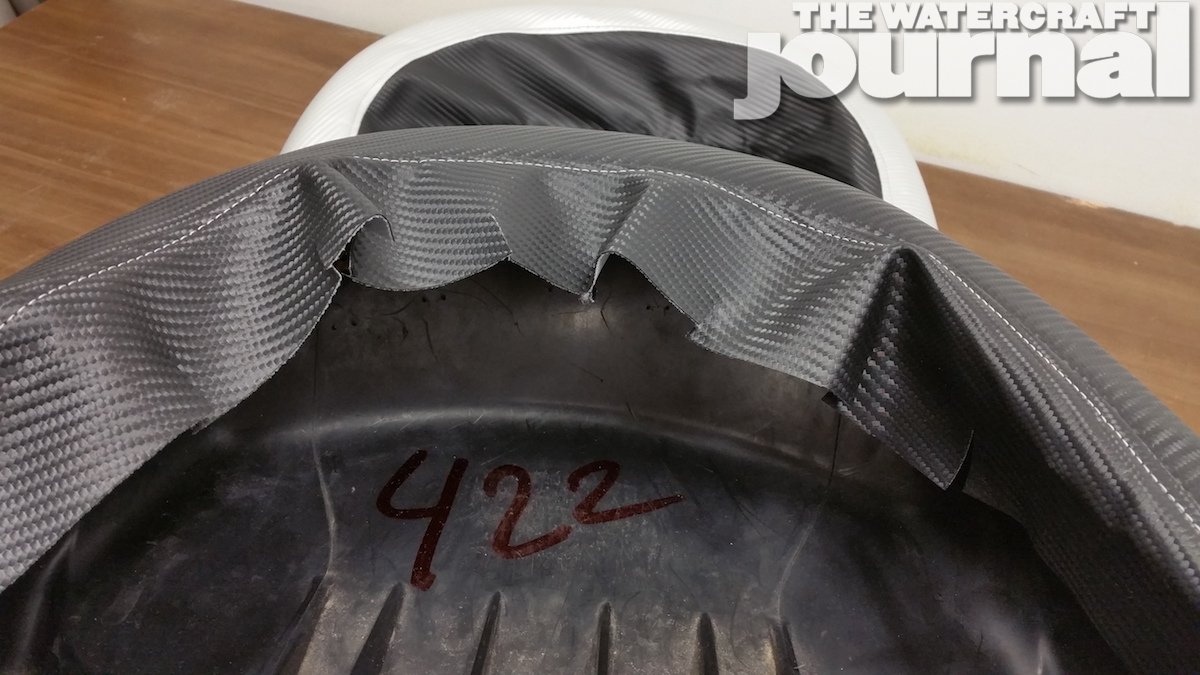
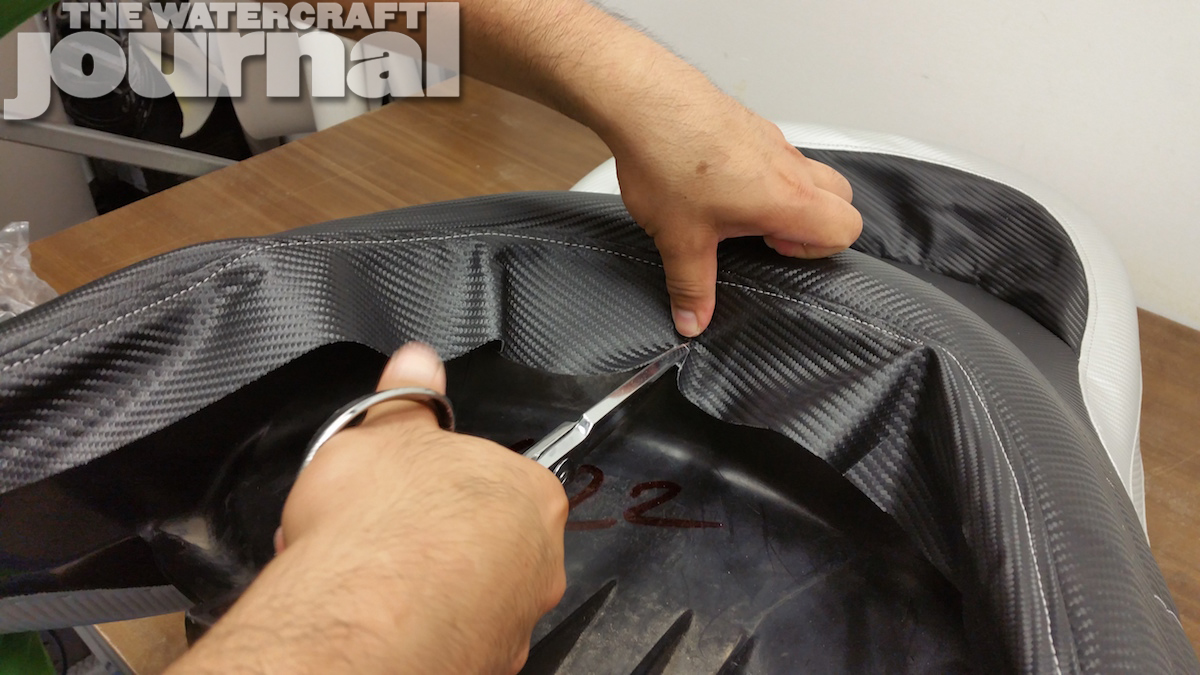
Above: When there are big curves in the seat design (usually found on modern watercraft) you will want to make small cuts where the cover is “bunching up” to help it lie flat during alignment and installation. Again, the heat gun is your friend! Apply some heat, stretch the cover over the curved area lining up the edges and seams, and make small cuts where it is bunching up. *Note: make sure the cuts do not extend into where you are stapling the cover to the base.
staples8

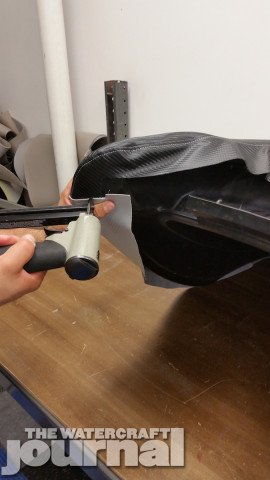
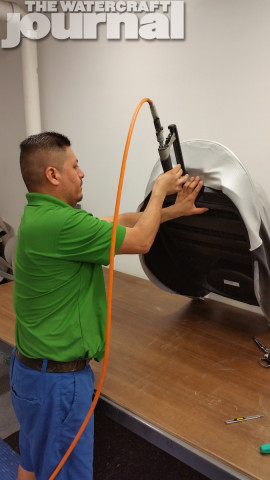
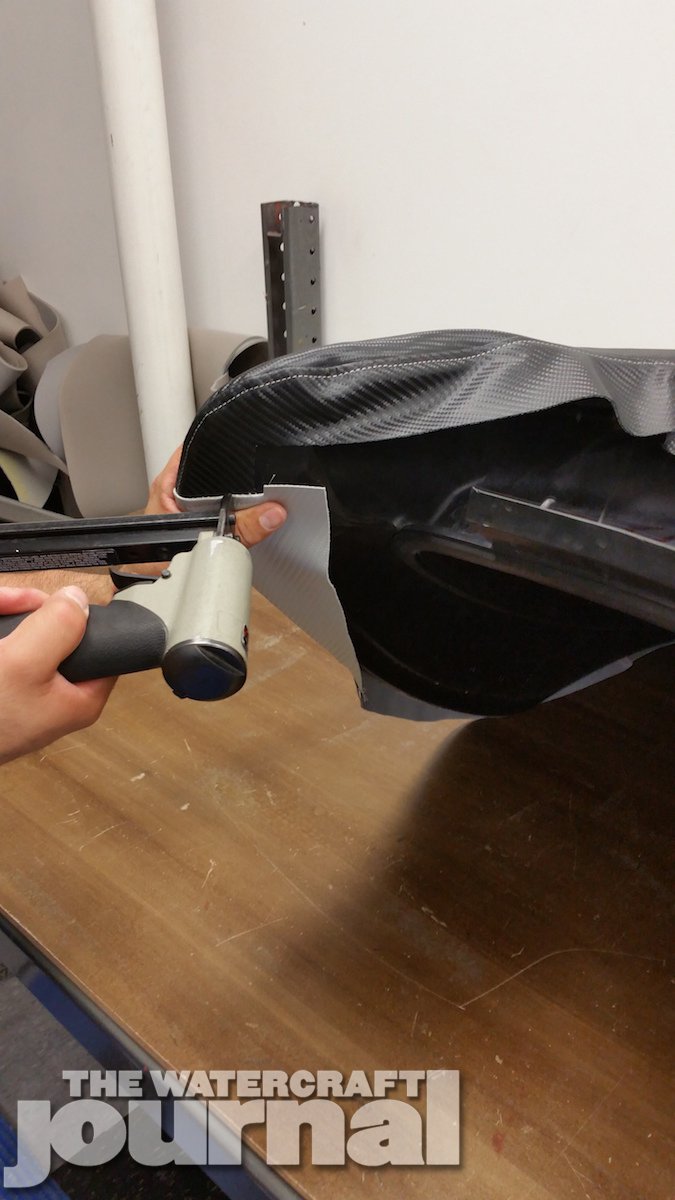
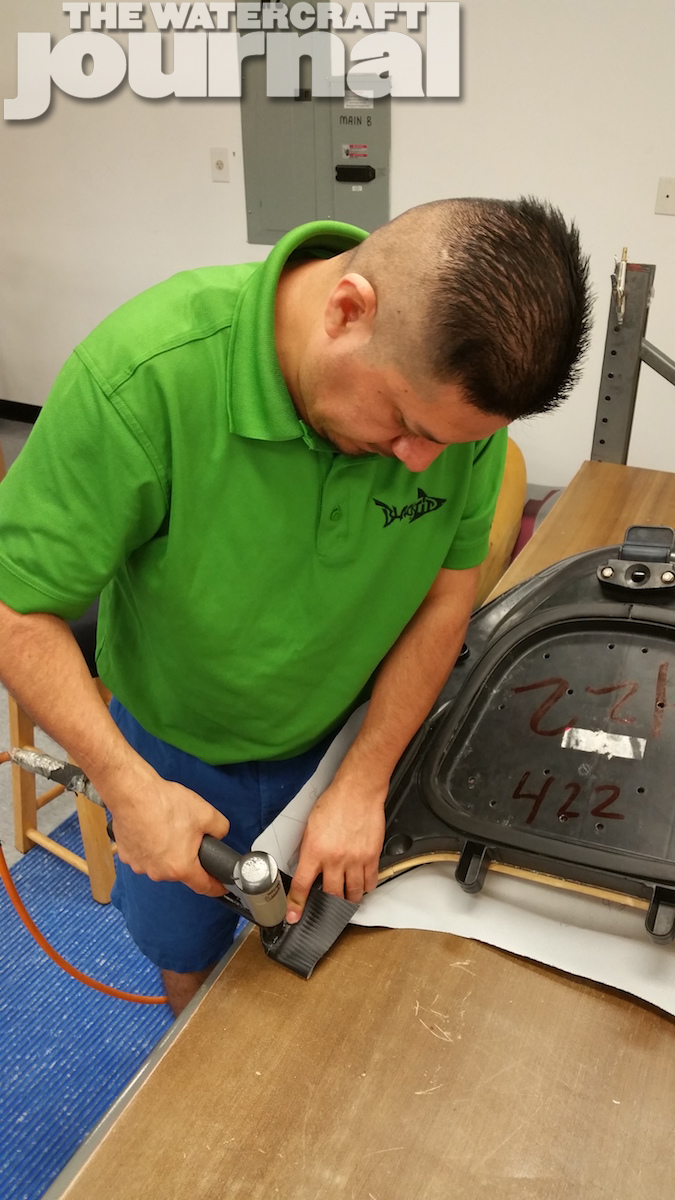
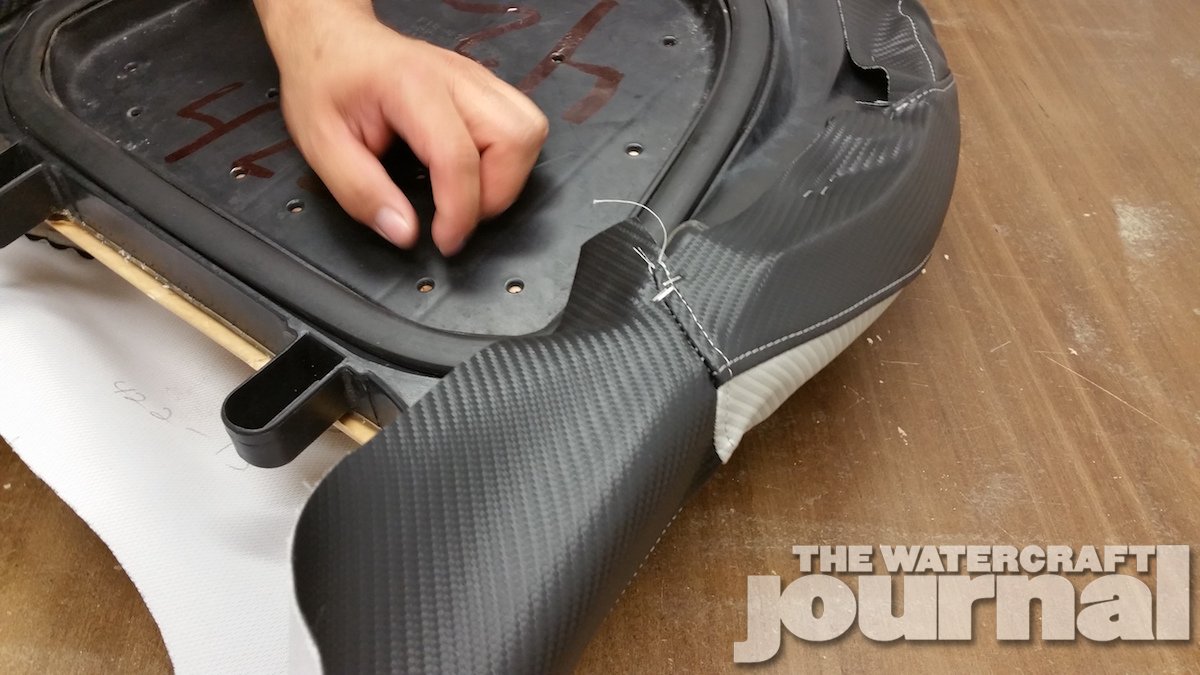
Above: When stapling over seems there is a specific technique used to help strengthen and minimize “pulling” where the cover is sewn together. By applying one staple directly over the seam, and one on each side of the seam (1+1+1=3 total staples) you will help your new Blacktip cover withstand your abuse!

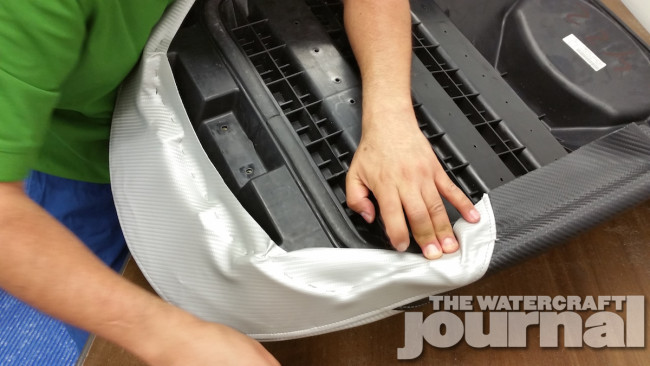
Above: Now you have your new cover aligned, stretched and securely stapled in place! Add staples, and add more staples about a finger width apart all the way around the edge of the seat base.
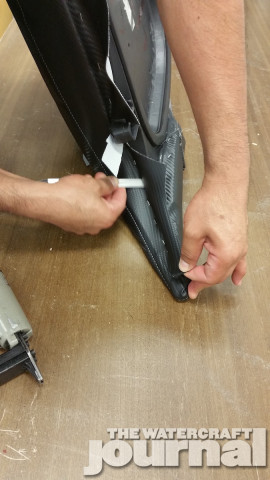
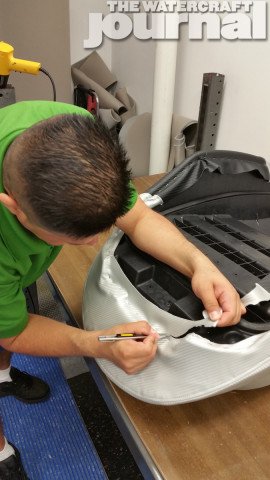
Above: Finally, we’ve made it! Trim off the remaining excess cover material along the line of staples.
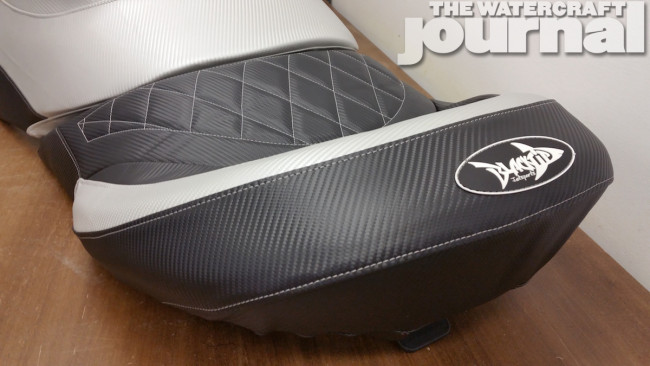
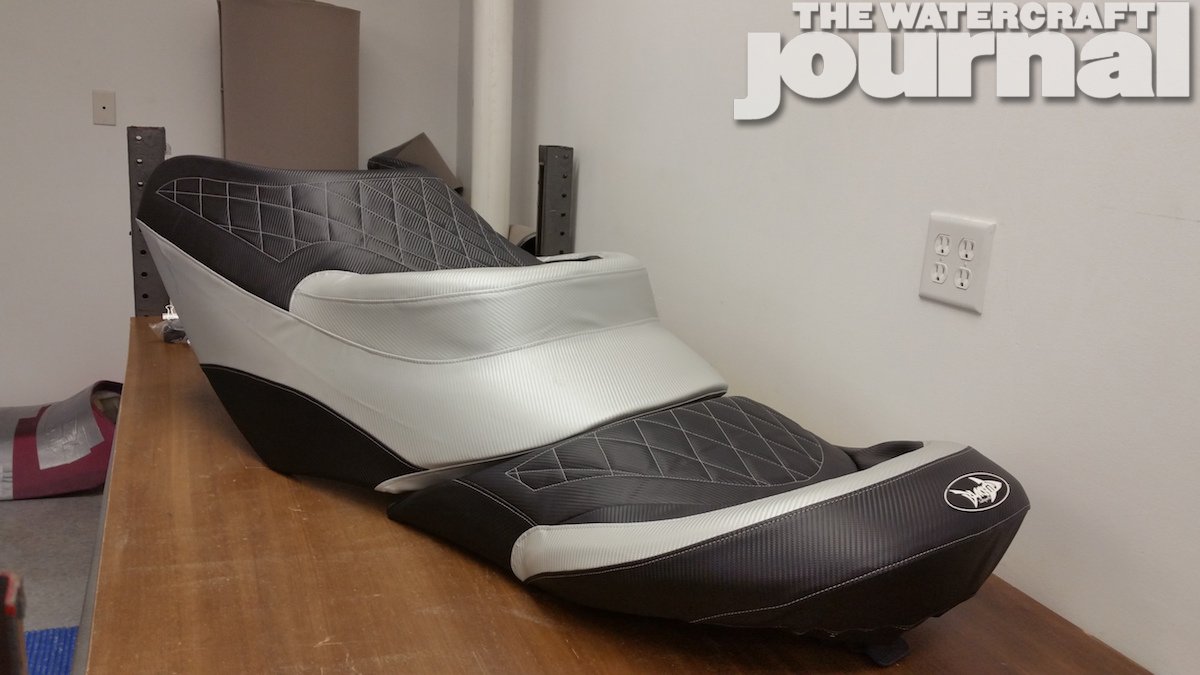
Above: The only thing left now is to put that fresh, custom looking Blacktip seat courtesy of Watercraft Superstore, back on your beloved ski and go rip around your local waterways annoying more boaters! Smile and enjoy! You know the saying “Money can’t buy you happiness, but it can buy you a jet ski! Have you ever seen anyone sad on a jet ski?”
remove1 fin2 fin1 trim3 trim2 trim1 staples14 staples13 staples12 staples11 staples10 staples9 staples8 staples7 staples6 staples5 staples3 staples2 staples1 staple4 initial4 initial5 initial3 initial2 initial1 stretch1 align5 align1 remove4 align4 align3 remove3 remove2 align2 tools2 tools1
<
>

Case of The Mondays: Could This Floating City be The Modern Atlantis? (Video)

0

citymiriens

Tech Insider posted a cool video of the floating city that French Architecht, Jaques Rogerie designed in the shape of a Manta Ray. He named it the City of Meriens, which translates to “City of Oceanites”. It was engineered for marine research and designed with an oceanic university city in mind. The structure measures 3,000 feet long, 1,650 feet wide, and is capable of housing 7,000 researchers, professors, and students. The floating city is completely sustainable, operating on renewable marine energy, with zero waste. The upper deck is lined with wind turbines.

The university on water is equipped with living quarters, classrooms, marine labs, and areas to relax. A lagoon in the shape of a manta ray’s tail was installed on the back of the Meriens to hold the Sea Orbiter, an underwater mobile research vessel that Rogerie put more than 30 years into designing. It is capable of housing a crew of 22 and will allow 24/7 observations of marine life. The underwater vessel serves as a laboratory, home, space simulator, multi media platform, and an all around underwater base for gathering important marine data.

According to Fondation Jaques Rougerie, Jacques Rougerie has successfully melded his two passions, the sea and architecture. His research and the structures he builds are based on a bionic architecture inspired by marine forms and a concern for sustainable development. He has built underwater habitats, laboratories, marine research centers, vessels with see-through hulls, sub-aquatic museums, and designed underwater villages, and structures to focus on the beauty and fragility of the sea and its major role in society.

Rougerie, inspired by the imaginary work of Jules Verne, adopted his motto: “Anything one man can imagine, other men can make real”.

Gratuitous Power Guaranteed: Jetski World Introduces Two Special-Edition Kawasakis

0

RE

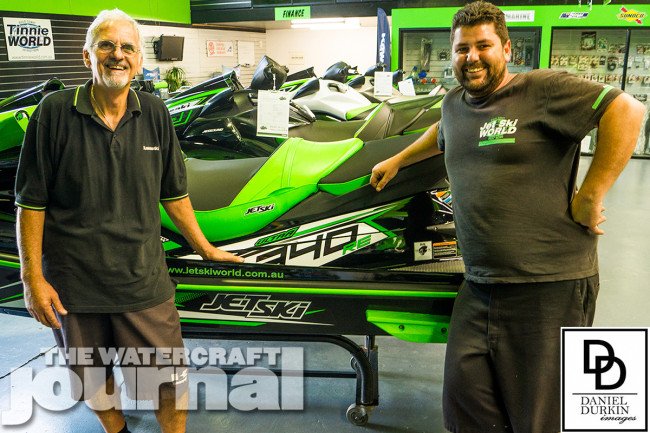
“Y’know its all BNG for next year,” Jetski World’s John Moyle yelled, although I was seated only a few feet away. Moyle needed to raise his voice over the din of the pits at the 2015 quakysense IJSBA World Finals, and “BNG” being a common industry acronym for “Bold New Graphics,” indicating only the slightest of changes from one model year to the next. Moyle’s eyes flickered from behind his wire-rimmed glasses, “Since Kawasaki decided not to do anything for 2016, I thought we should.”

Moyle is the patriarch of Jetski World, one of Australia’s most well-established authorized Kawasaki JetSki dealers. Over the decades, Jetski World has grown far beyond that of a traditional dealership, expanding to include an advanced machine shop where they develop and test their own performance products, an R&D team that extensively tests various configurations of proprietary and competitor’s products, and becoming Australia’s only licensed SBT dealer servicing the entire continent exclusively.

4

Although Sea-Doo’s announcement of its new 300-horsepower models permitted Kawasaki its unchallenged position of “King of Horsepower,” Moyle knew that it wouldn’t be long before BRP’s new ACE 300 would come a-challenging. Because Kawasaki’s 2016’s lineup revealed only cosmetic changes, Moyle felt a looming threat from Sea-Doo and took action to personally extend the brand’s grasp on the crown – even as Kawasaki refocuses its efforts towards a new entry-level runabout to challenge the BRP’s Spark in 2017 – by developing and offering two very attractive limited edition Ultra JetSkis.

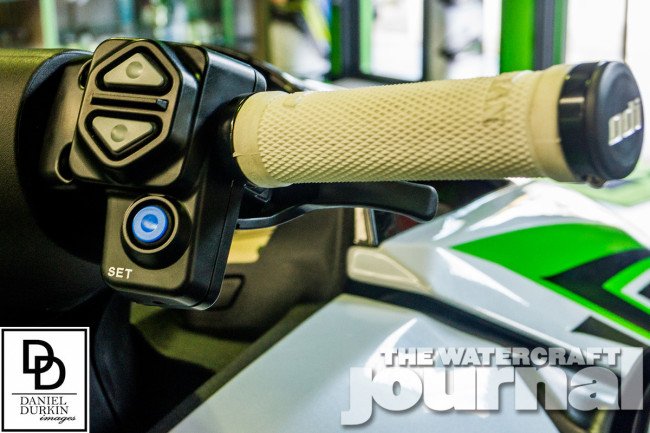
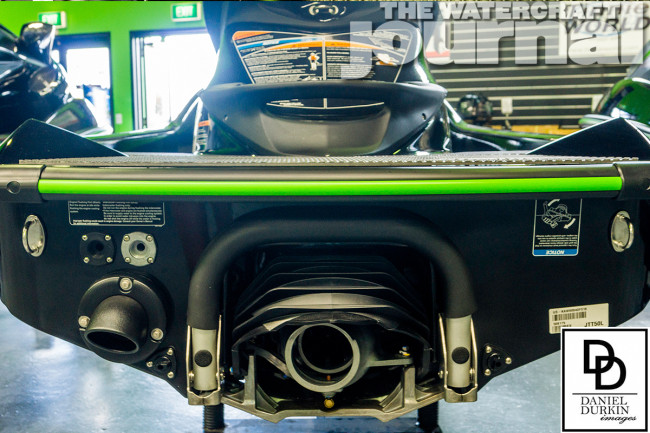
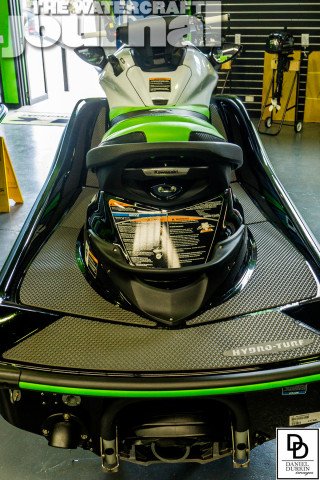
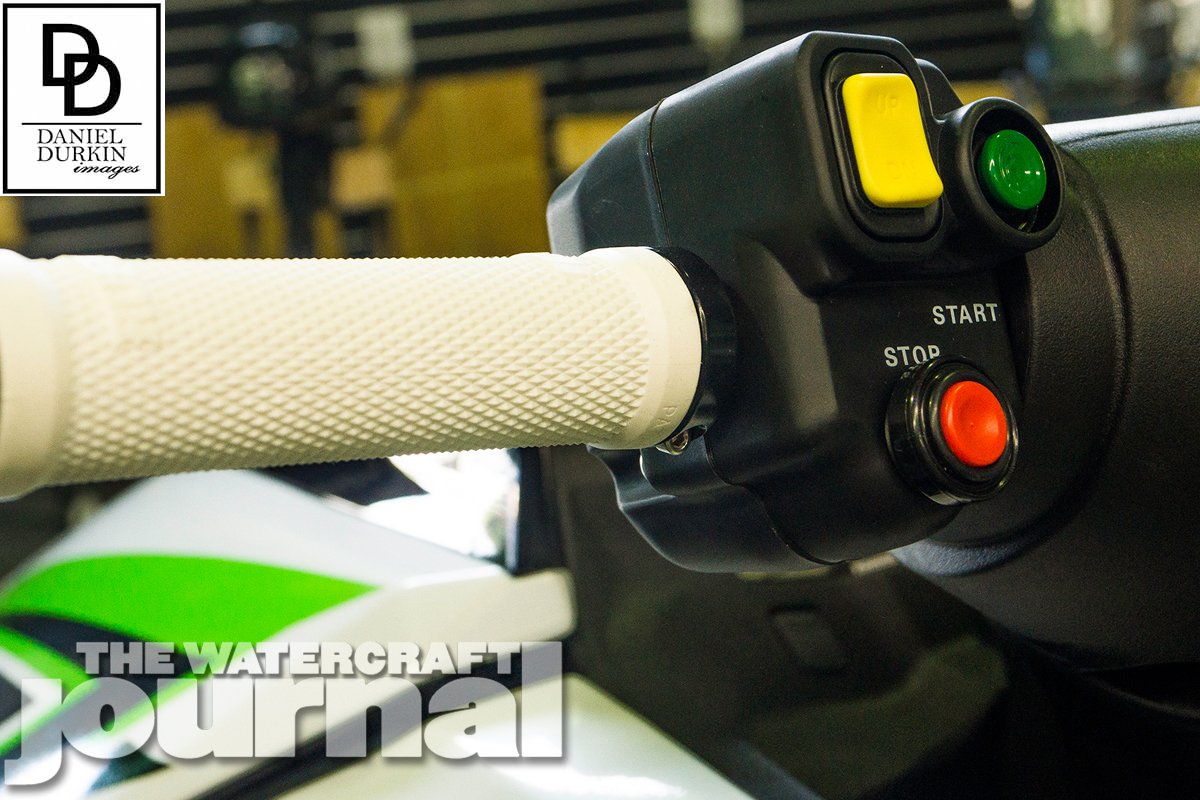
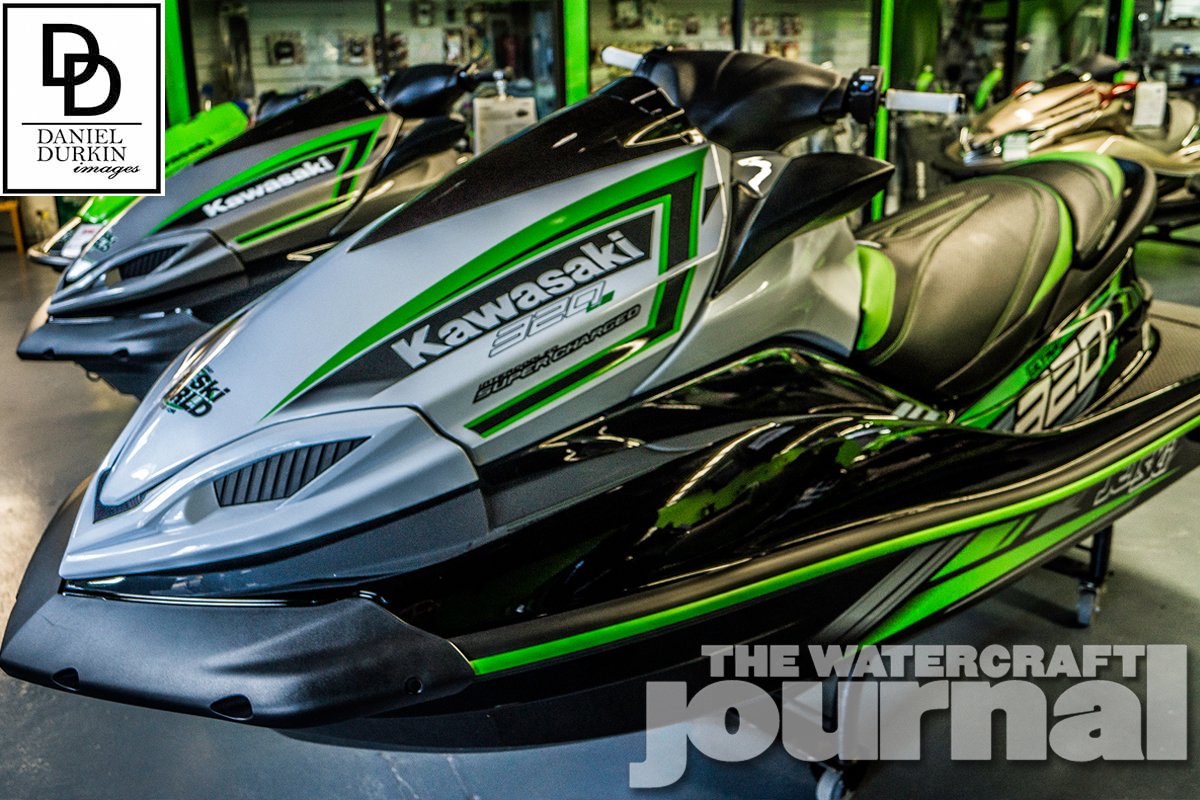
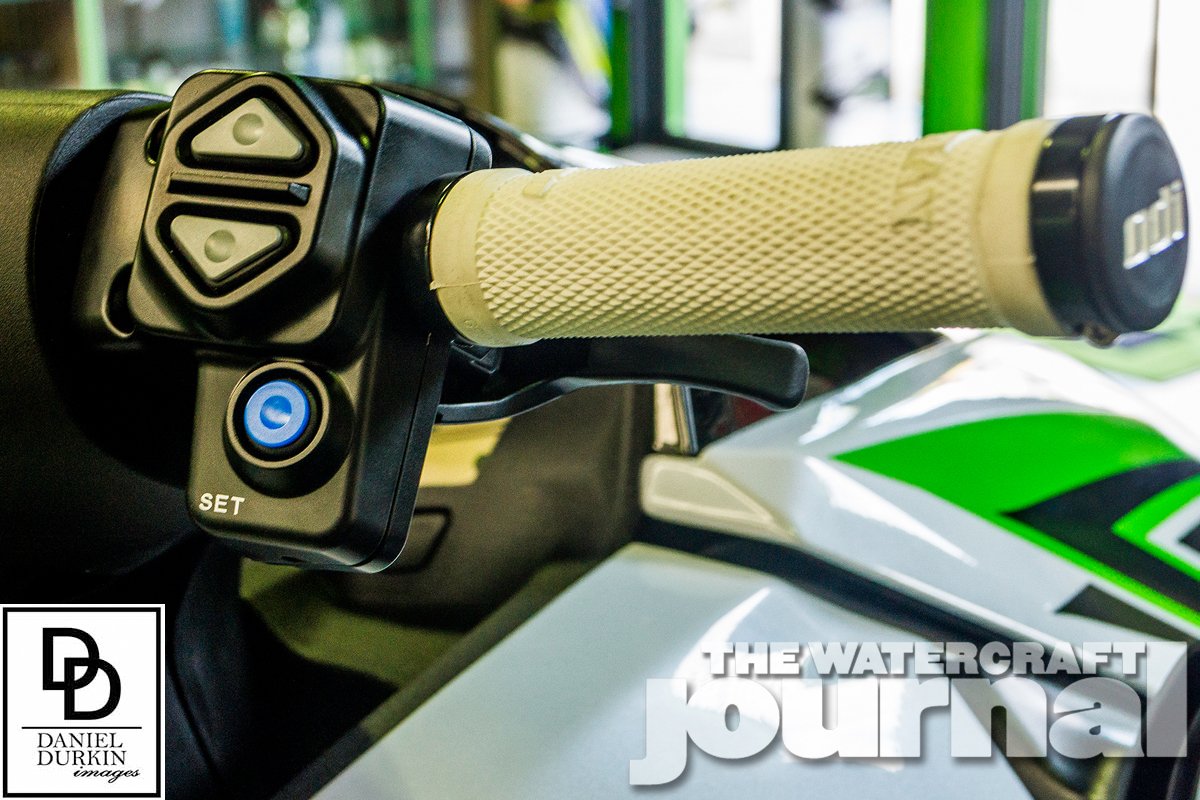
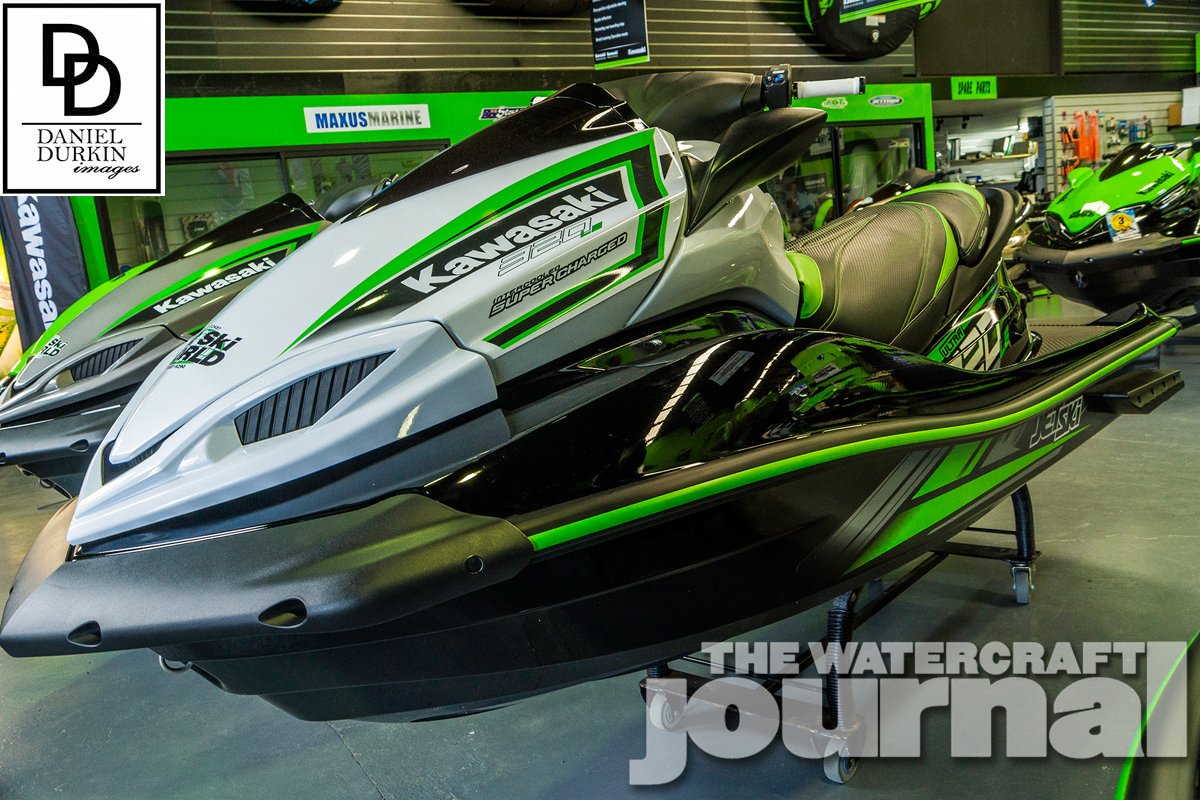
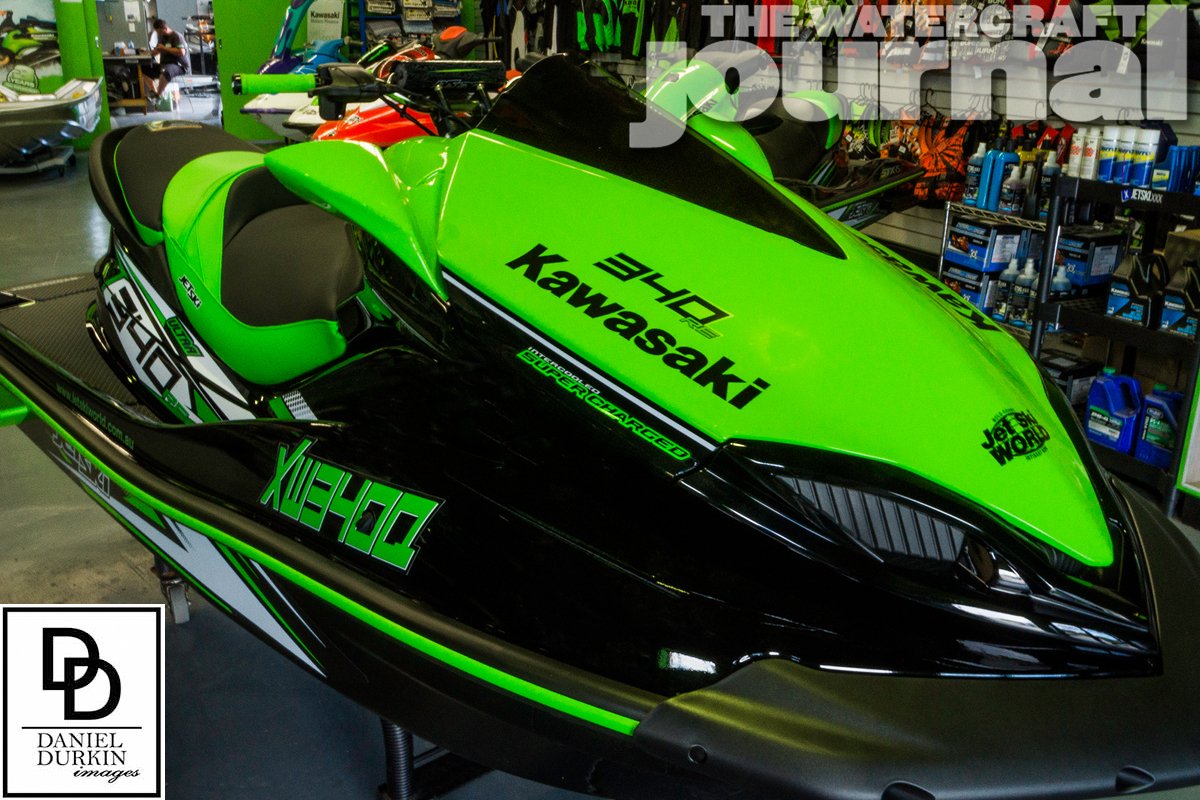
Working frantically throughout the past several months, Jetski World developed (completely in house, mind you, by their own performance team), two special edition Ultras for 2016: the 340RE and 320LE. The two both offer increased overall horsepower, improved acceleration, rider input and ergonomic comfort. Equally, both craft are sold exclusively with paint-matched ODI grips, hand-stitched Jettrim custom seat covers, and new vinyl graphics made to look like OE decals (printed in house).

13

Yet, most impressive of all is that both of these machines will come with a special 3-year warranty guaranteed through Jetski World themselves. Moyle beamed, “Each is backed with a 3-year warranty fully covered by Jetski World and is identical in coverage as the factory warranty.” To claim performance is one thing, to back it up with GPS and radar results is another, but to guarantee it with a personally-backed warranty to to show complete confidence in one’s product, and that is exactly what Jetski World is doing here.

Moyle introduced us to the 320LE, or “Limited Edition,” saying, “It’s is based on the new Ultra 310x. The ECU is our Stage 1 unit reprogrammed by us for the best performance/reliability package for recreational riding in all conditions. The water flow to the intercooler has been redesigned, and the jet pump has been trued and realigned for optimum water flow and reduced drag. All of this results in increased performance through the whole rpm range and a top speed of 72mph.” All of which adds up to $23,000 USD asking price.

5

For the top-of-the-line performance enthusiasts, the 340RE (the “RE” standing for “Race Edition”) pushed the envelope even further with a ferocious combination of many of the above listed items and a few proprietary modifications special to Jetski World. Moyles explained, “The Ultra 310R was developed over 8 months of testing and 1000kms of racing the Australian tour resulting in a powerhouse product capable of awesome acceleration and a top speed of 76mph.”

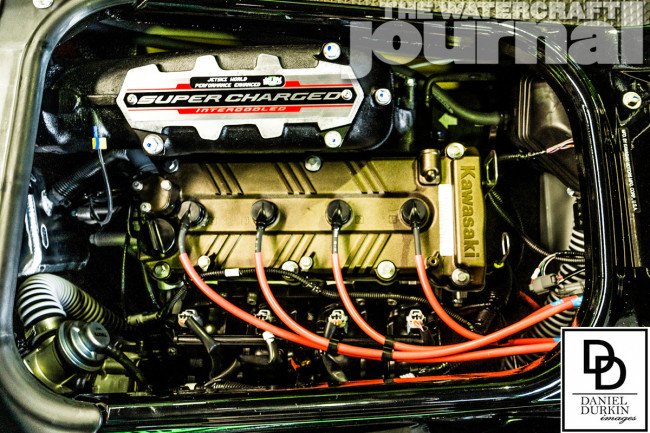
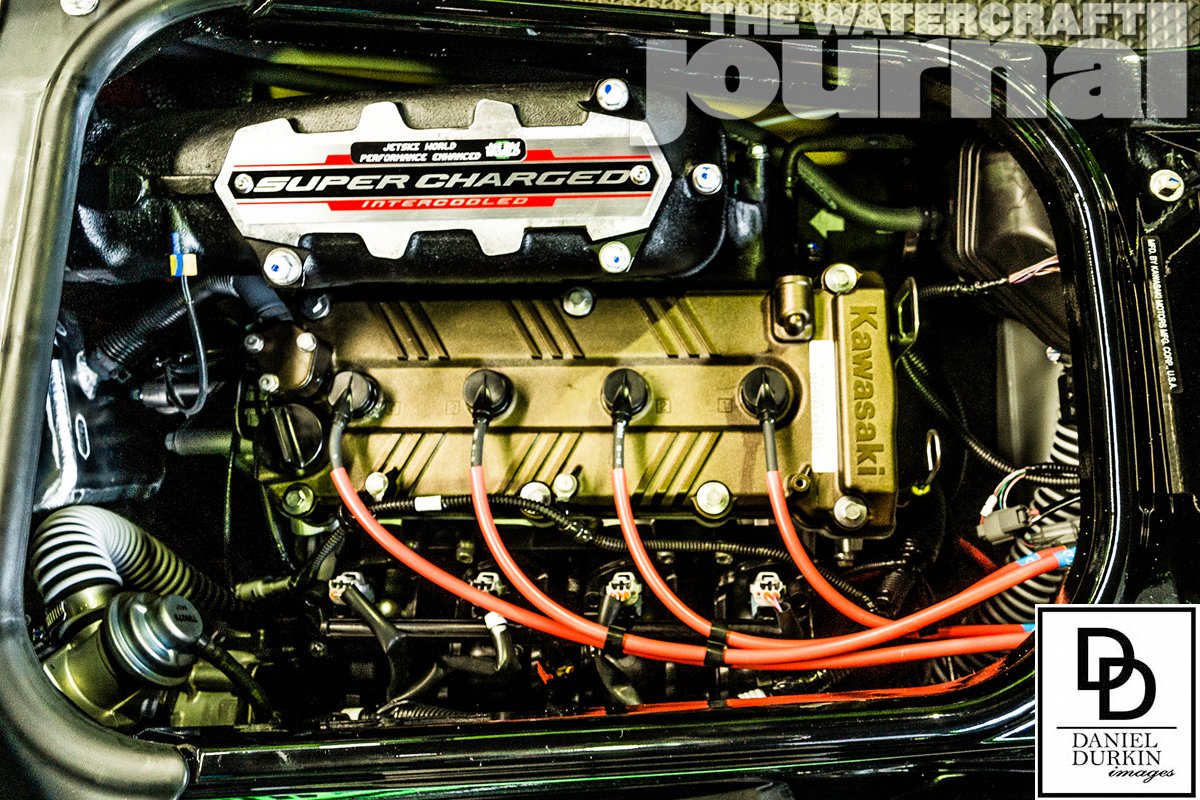
He continued, “The ECU is our race ready Stage 2 unit coupled with our revolutionary new air intake system (design registered for protection). The supercharger has been upgraded to deliver the factory boost of 17psi, [according to Moyles, production models only make 14psi, although Kawasaki advertises a factory maximum of 16.8psi – Ed.]. The exhaust gaskets are replaced with our special self-sealing parts to eliminate water leaks (a common problem), the jet pump is modified to straighten the water flow and reduce drag, with a repitched Solas impeller, as well as the intercooler water flow is improved.”

It took comes with color-matched ODI grips, new vinyl graphics specific to the 340RE and of course, a 3-year warranty fully backed and covered by Jetski World identically matching the same coverage as the factory warranty. Priced at $25,000, the 340RE is a highly competitive craft, worthy of offshore/endurance races straight from the showroom floor (if the factory 310R wasn’t already race-ready enough). Although the changes aren’t overtly radical – at least at the onset – they are palatable.

17

It used to be that for an Ultra to reach 76 miles per hour, a completely new power-adder system (most commonly a turbo kit) needed to replace the Eaton roots-style blower, not to mention an aftermarket intercooler and even modifications to the engine internals. Jetski World has managed to achieve this feat without pulling the valve cover. Moyles is currently considering selling the individual components from the 320LE and 340RE as performance packages for those overseas, but understandably, without the 3-year warranty.

Already, speculation is swirling that depending upon the public reaction to Jetski World‘s special edition skis that Kawasaki might consider pushing the 310 just a tad further, maybe say…330? If only just to raise the bar all the more out of Sea-Doo’s reach. The ACE 300 is handily capable of 310, 315 or even 330HP, so we might be standing at the cusp of a new horsepower war.

All images by Daniel Durkin Images

1 8 2 17 4 30 3 13 7 9 6 5 10 11 15 16 12 14
<
>

Video: 701 Industries’ Insane Durability Tests For Its Steering Nozzles

1

maxresdefault

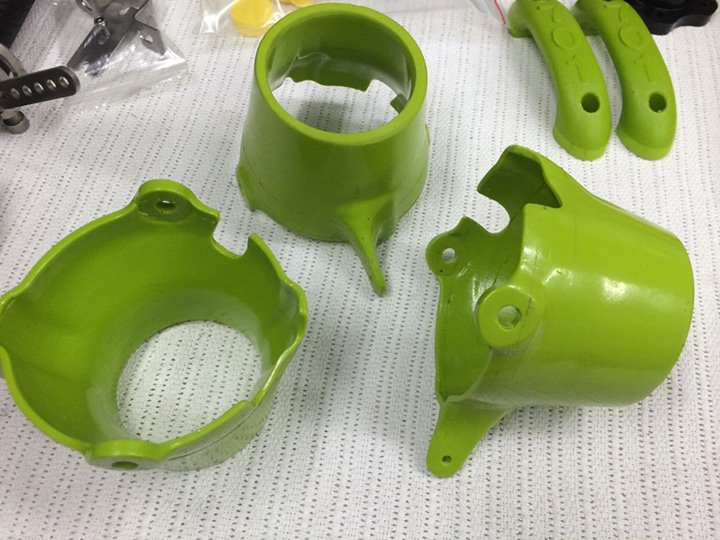
Listen, we’ve all seen our fair share of late night infomercials shilling “indestructible” items – but we think we’ve actually seen something that is, for all intents and purposes, idiot-proof. Following a video posted on 701 Industries’ Facebook page, we dug a little deeper and were completely impressed with the company’s proprietary Duro Trim Nozzle.

Made specifically for freeriders, the Duro Nozzle is formed from a flexible urethane that is rigid during use, but able to flex under stress and absorb seemingly endless blunt force impact – particularly from hitting the seafloor upon reentry – protecting other pump parts from impact and keeping them from failing. Priced at $89.00 (AUD) the nozzles are in high demand and a waiting list continues to compile.

But that’s what is expected from a company producing top quality products for Yamaha WaveBlasters, SuperJets and a wide variety of aftermarket hull manufacturers. 701 Industries was founded by Dave Dale in 2013 to service an industry where aftermarket parts were “drying up,” by designing and crafting innovative parts for jet skis.

The video you see below is possibly one of the most over-the-top, insane durability tests, ranging from direct hits from hammers, rocks, stomping and even a small panel truck. Oh yeah, and make sure you see how the Duro Trim Nozzle fares when crushed in a hydraulic press. IF that doesn’t convince you, nothing will.

Video: MX100 Factory’s Successful Spark Backflip Wows

1

Screen Shot 2015-11-04 at 8.34.42 PM

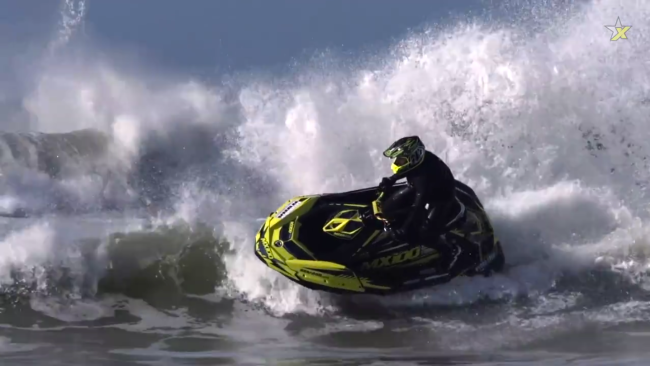
Earlier this year, The Watercraft Journal was the first to publish what later would be a viral sequence of IFWA World Champion (and occasional WCJ contributor) Mark Gomez barrel-rolling a specialized Sea-Doo Spark from WORX Racing. The sequence was captured during a session held shortly after the year’s first round of the AJSP OZ Surf Slam. Although Gomez stuck the landing on the barrel roll, the part-time stuntman and full-time freerider failed to land the multiple backflip attempts before needing to hop a plane back to the States.

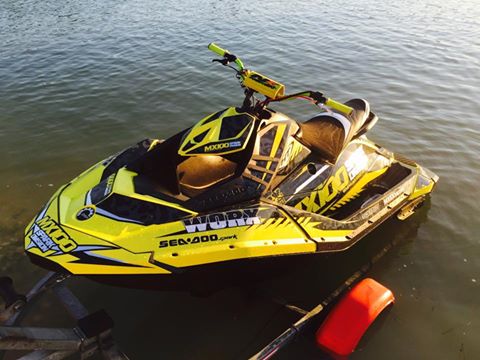
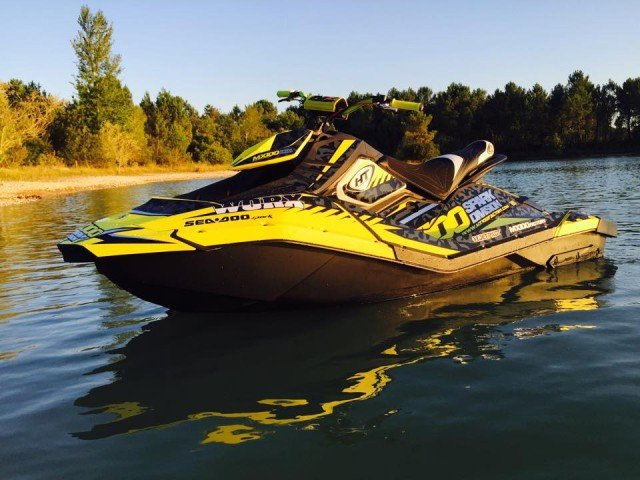
This left the virgin territory of successfully executing a backflip on a Sea-Doo Spark wide open. To WORX and Gomez’s credit it took the better part of six months and one of the most decorated freeriders on God’s green earth – Pierre Maixent – to pull it off, and how! Maixent’s company MX100 Factory is a freeride and freestyle shop specializing in building custom skis “on demand” as well as selling of all the “sickest products” in the industry. Likewise, Maixent applies his experience as a 7-time world champion to advise other freeriders.

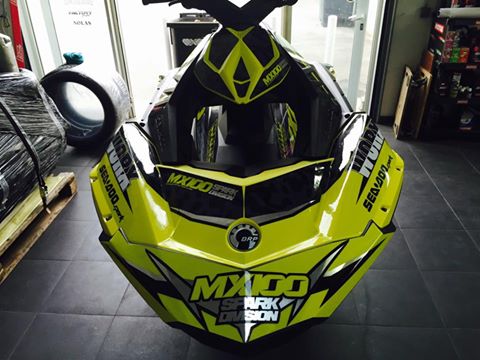
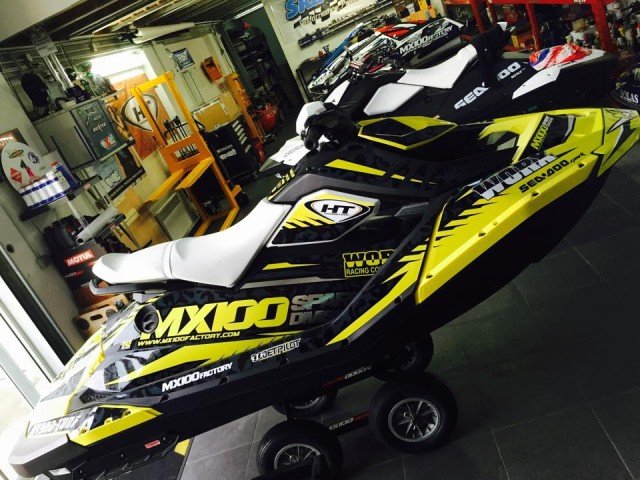
Recently, MX100 unveiled a new “Spark Division” with the announcement of MX100’s Spark re-mapping services, as well as offering a full array of WORX Racing components specifically for the Spark – all of which add up to an impressive 120-horsepower. The company’s prototype is a handsome Pineapple Yellow 2-up unit wrapped in a custom vinyl kit and touting all the goods necessary to propel Maixent not only through one successful backflip but a recorded two others – including a one-handed flip for good measure.

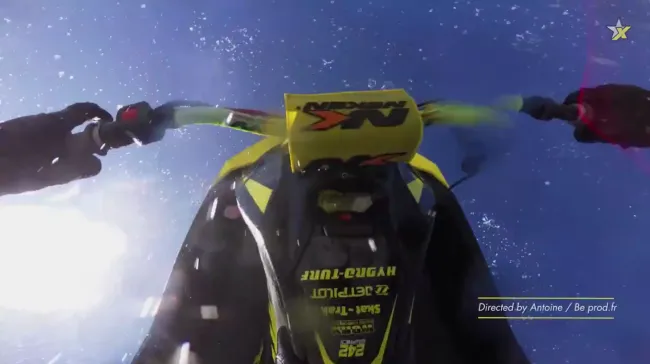
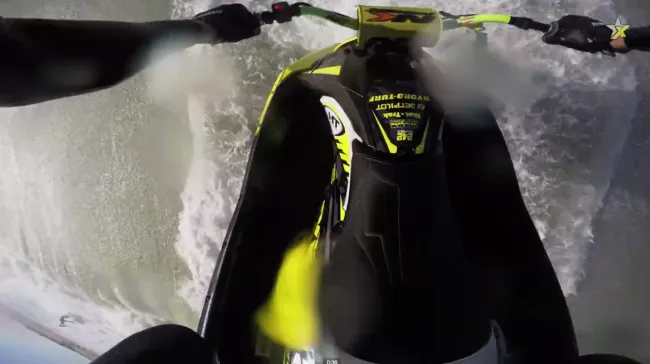
Below the video published on Antoine Mortoire’s Facebook page was filmed in Montalivet, France only three days ago and has since gone stupidly viral. We only share it here to those who haven’t seen it yet. Enjoy!

The Watercraft Journal Welcomes Thrust Innovations For 2015/2016

0

12191582_883399971736528_451201791982133566_n

All of us are very excited to welcome one of the most exciting companies in our industry – Thrust Innovations. Committed to providing quality PWC service, developing amazing billet and hand-fabricated performance parts for and custom-made jet skis, Thrust has evolved since its beginnings in 2007 to become one of the premier freestyle and freeride stores (carrying hundreds of parts from some the best in the business). But, if you’re like us, you know Thrust for its own line of premium billet, carbon and composite parts.

Working together with The Watercraft Journal, we will bring you all of the latest news and special offers from the Florida-based manufacturer helping us bring you the coolest freestyle and freeride jet ski performance parts and jet skis – because unless you’ve been living under a rock, these are some of the most impressive machines on the water today. Thrust and its team of highly skilled machinists, builders and riders are always innovating, tweaking and improving previous and current designs to offer the PWC industry some seriously impressive parts.

“What makes Thrust different is that our sales staff individually tests all products, as well ride and compete in racing and freestyle events on Thrust-built skis,” Thrust Innovation‘s Brian Vergin states. “This first-hand knowledge of products allows us to gain the best technical advice and maintain the highest standards of quality possible. In fact, you’ll never find us selling products or offering advice we wouldn’t take ourselves. From our machining service to our selection of over 5,000 in-stock parts, we always offer quality equipment and a personalized customer service experience. Whether you’re looking for parts or repairs, the Thrust team is ready to help.”

PWCOffshore.com Announces Best Offshore PWC Recommendations for 2015

0

a1ccf1ef0d3f386f6ca7524369200a1e_zd84

As the year begins to finally wind down and all of the North American race series draw to a close is when we start seeing the recaps, cumulative awards and “best of’s.” The Watercraft Journal is no different and will be announcing its “Watercraft of The Year” award (and runner up) in just over a month’s time. Last year, we weighed the results ultimately upon a total impact on the industry as a whole: the 2014 runner-up was Yamaha’s then-new SVHO-powered FZR that ran roughshod over every race series and class it entered; but it was Sea-Doo’s revolutionary Spark that came home with the honor of “Watercraft of The Year” as it nearly upturned the whole industry on its ear, singularly accounting for a double-digit percentage increase in new PWC sales and bringing more neophyte riders to the sport than any other machine.

Yet before we dish out the year’s winners (that is, in our view), we were entreated with PWCOffshore.com’s announcement if its choice for offshore watercraft of the year and their choice for runner up. For those familiar with the site and accompanying group of dyed-in-the-wool offshore/endurance racers and enthusiasts, their selections will come as very little surprise. Their process of selection though, comes after fielding endless and questions asking, “What is the best craft for riding hard in the ocean?”

e52383f10d9eb453f883a92e2a7b6ea1_u4kz_gla8

As PWCOffshore.com writes, “Personal Watercraft that we believe are best suited for enthusiasts and racers who are riding aggressively, at high speeds in the ocean in straight lines (not lakes, not glass water, not closed course, not for waterskiing, not for doubling up). The ocean/offshore riding denotes riding aggressively in chop, rough water and waves at higher speeds for long distances.

“We are defining ‘offshore’ as salt water riding and racing beyond break walls piloted at high speeds where there is a minimum of two and a half foot chop and ocean waves. Our methodology was either to ride the craft and / or solicit feedback from very experienced riders & racers who have ridden all of the models and were selected to provide a review. Stability, hookup, average speed, recovery time, the ability to fly straight when the craft was out of the water combined with the least amount of nose hunt possible in the rough is the name of the game in aggressive offshore riding and the basis of our selection.”

And with these parameters established, PWCOffshore.com gave the accolade to Kawasaki’s Ultra 310R JetSki as the ultimate offshore PWC, with Yamaha’s FX SVHO coming in as the runner up. Make sure to read their full report for all of their listed pros and cons and see if you agree!

1f44654c4c641cfdef1b6e9206f9558d_m4pb

Sea-Doo/RIVA’s Eric Lagapoulos Claims 2nd Consecutive AquaX Championship

0

12065557_10153052192407721_3993624819867618961_n

Last weekend marked the end of the 2015 AquaX season, and boy, was there excitement in the 250 class. This was not a race to miss if you have been following a rider from the 250 class or if you’ve just been following the action throughout the 2015 AquaX season.

Coming into the event, the AquaX 250 class was very close in points, and produced plenty of excitement. Peruvian Paloma Noceda came into the weekend with only a two-point lead over second place rider, Sea-Doo/RIVA Racing’s Eric Lagopoulos.

In the first moto, Brian Baldwin pulled away and got the win, and the two points leaders battled it out for second place. Lagopoulos was able to hold Noceda off and take second place, which evened up the points race. In Moto 2, Baldwin again took the win, with Noceda taking second this time, and Lagopoulos third.

Going into Moto 3, only two points separated Noceda and Lagopoulos, whichever one crossed the finish line first would leave with the AquaX 250 class championship. Noceda jumped off to a huge lead and looked to have the moto and the points lead in the bag, but after falling off, she lost a few positions and came in at a disappointing fifth position. Lagopoulos took second in moto three (behind Brian Baldwin) and the points lead for the season.

“I really love the mental side of the sport, so knowing I had to beat one rider for the overall championship was really exciting!” Lagopoulos said, “I pushed the entire race from the drop of the green flag to the beautiful checkered flag and my second Aquacross championship in a row! It was a tight race figuratively and literally. The GTR 215 simply proved it’s the better overall watercraft.”

“I’ve had so much success on the GTR 215 in regards to Aquacross because of the different conditions each round. I mean is good in every condition. The GTR 215 is good in the flat water, good in chop, and good in the big surf races. It’s a watercraft that you can ride hard no matter where its ridden.”

Lagopoulos concluded, “It was an incredibly exciting season filled with ups and downs but when it came down to who was destined to be on top the season ended in pure satisfaction with the X-Team’s second championship in two years!”

Pro Watercross Releases Tentative 2016 Schedule

0

image1

Just a little over a month after the 2015 Pro Watercross season came to an end, the Pro Watercross staff has already released a 2016 tentative schedule. The schedule outlines the Pro Watercross plans to stop at the same locations as the 2015 season, in the same order.

2016 Tentative Tour & Championship Dates:
Round 1 May 7-8 Panama City Beach, FL
Round 2 May 14-15 Pensacola Beach, FL
Round 3 June 18-19 Sparks/Reno, NV
Round 4 June 24-25 St George, UT
Round 5 August 13-14 Lake Hartwell, GA
Round 6 August 20-21 Charleston, WV – National Championship
World Championship September 20-25 Naples, FL

Just as with the 2015 schedule, the tour kicks off the season at Panama City Beach, FL. This location is a favorite of many of the racers on the tour. The race will take place May 7-8.

Round 2 will go down on the beautiful coast of Pensacola Beach, FL. It will be one week after the season opener, on May 14-15. That Sunday (15th) is Mother’s Day. The Pro Watercross staff looks forward to honoring all the moms at this event.

The Pro Watercross Tour takes a trip out west for the third and fourth rounds. Round 3 will take place in Sparks/Reno, NV on June 18-19. Following that event, Round 4 will be in St. George, UT on June 24-25. No, this is not a typo, the Pro Watercross staff has decided to begin the racing action on a Friday and wrap up on Saturday.

As of right now, there is no tour stop scheduled for Lewisville, TX, but the staff at Pro Watercross tells us that they are working with the city to get a round scheduled there.

Round 5 will take place in the beautiful city of Hartwell, GA. The stop is scheduled for August 13-14. This is about when the points race begins to tighten up, and we expect very exciting and competitive racing action at the last couple of rounds.

Round 6, in Charleston, WV, will again host the Pro Watercross National Championship. This event is set to take place one week after round 5, on August 20-21. As the last event where racers can earn points, racers will be giving it everything they have to try to leave with the points lead.

Racers will then have a one month off period to rest and get their skis set up for the second Pro Watercross World Championships in Naples, FL. The event will go from September 20-25, and will host racers from all over the world trying to claim a World Title.

Keep in mind, this is a tentative schedule and is subject to change before the season actually starts. We are already looking forward to the 2016 season here at The Watercraft Journal, and, as always, will be bringing you exclusive coverage of each round throughout the season.

The Watercraft Journal By The Numbers: October 2015

0

oct1

Today is a special day as we celebrate the second anniversary of launching The Watercraft Journal. So we’re not going to solely review the past month’s performance, but look back over the past two years’ performance of the internet’s only daily PWC magazine. In fact, The Watercraft Journal marks a series of firsts for the personal watercraft industry that bear noting: Again, it is the only digital publication in our industry to publish new, informative and entertaining articles each and every day, but it is 100-percent subscription-free. There’s no downloads. No apps to buy. No bulky PDFs to download. If you’ve got access to the internet, you can read what we publish.

This level of unprecedented access has catapulted The Watercraft Journal ahead of all other magazines, blogs, news aggregates and even several forums in both readership and popularity. And since The Watercraft Journal has never missed a day (except intentionally, for major holidays. And although we didn’t publish anything, last Christmas was conspicuously popular. Apparently, you get bored hanging around with the family). Our new twice-a-day publishing schedule also caters to our Australian and Japanese readers, as well as our North American friends, publishing one article at midnight Central Standard (CST) and the second in mid-morning. But of course, as a reader, you already know this.

What you might not already know is that The Watercraft Journal machine is equally as well-oiled behind the scenes. Our collaborative contributors are all paid inside of 45 days of invoicing, and are never short on work to do. Our advertisers – for which all of us at The Watercraft Journal are immensely grateful – are our biggest advocates, as The Watercraft Journal’s readers are active buyers of their products. Sure, ad clicks might not rival that of Google, but they are introduced to and learn about your products, and then buy them equipped with the information they learned here. And we’ve got the right age demographic and written testimonies to prove it.

That is what a healthy, reciprocal professional business relationship is. And frankly, many are surprised how well it works. Our product reviews, ride tests and event reports have been directly responsible for added attendance, increased sales and greater brand (and product) awareness that through any other PWC magazine. Likewise, The Watercraft Journal is the only remaining privately-owned PWC publication in North America. No marketing agency, group publisher or top level advertiser has final say on what is printed in The Watercraft Journal. While others jettison off portions of their content to cover content outside of the industry, we remain true to the core sport.

November 2013 to November 2014 vs. November 2014 to November 2015

November 2013 to November 2015

Screen Shot 2015-11-02 at 8.24.19 AM

What’s All This Stuff?
To the untrained eye, everything above can look like nonsense. Yet, to those attuned to tracking any sort of trending, this is rock solid evidence (as reported by Google’s data tracker, Google Analytics) of an unprecedented growth curve for such an intimate industry. With 40- to 100-percent annual growth in respective segments, The Watercraft Journal has broken several records, including surpassing 200,000 annual individual readers in 2015 (and nearing a quarter million before the end of the year) equaling a monthly average of 18,200 individuals a month, and comparing that to last year’s monthly average of 9,451 shows a near perfect 100-percent increase in readership.

November 2013 – November 2014
Total unique readers: 113,419*
Total articles read: 339,115
Percentage of new readers: 60.7%

November 2014 – November 2015
Total unique readers: 218,410*
Total articles read: 576,303
Percentage of new readers: 63.6%

November 2013 – November 2015
All-time unique readers: 328,507*
All-time articles read: 925,056
All-time percentage of new readers: 62.6%

All-time percentage of mobile device users: 59%

*This number is considered equal to an individual sale of a single copy of a magazine.

Get More Here Than Anywhere Else
As the last print PWC magazine thin out and eventually evaporate, and competing websites fail to keep up with the rigors of working Monday-through-Friday, The Watercraft Journal continues to push forward, blazing new trails in media for the industry. Publishing professionally-written magazine content each and every day adds up in more ways than just expense; The Watercraft Journal’s consistent publishing schedule has averaged an impressive 118-plus page count if we were foolhardy enough to waste our money on printing. And that’s just counting our feature content – adding in our massive production of daily news and thousands of pictures filling over a hundred photo galleries, then you’ve got a 200-plus page magazine every month.

Total feature articles published: 309
Total news articles published: 648
All-Time Highest Read Article: 35,330 views

Reaching More People in More Places
Contrary to what many millennials might advocate, social media is not the end-all cure for today’s business ailments. Rather, it only puts your brand under a microscope. So if you’re producing new and entertaining content, a robust social media campaign with get the word out. But if there’s not much going on, it only amplifies how bad things really are (there’s quite a few examples to be sure). The Watercraft Journal only uses its social media to directly drive readership to the magazine itself. Doing otherwise is not only wasteful but disingenuous to your followers. Our Facebook, Twitter, Instagram, YouTube, and weekly newsletters are purpose-driven, to bring all the magazine’s articles directly to you.

Total Facebook Followers: 14,596
Total Twitter Followers: 534
Total YouTube Subscribers: 132
Total Instagram Followers: 4,378
Total Weekly Newsletter Subscribers: 1,237

There’s Only One Way, And That’s Up
So, to all of our advertisers we wish to express our deepest gratitude for supporting The Watercraft Journal, and we, in turn, strive to present your products and services to the largest audience of bright, energetic, intelligent and active readers in our industry by producing the utmost in professional content day in and day out. And as we’ve promised before, we’ll never dilute our standards for superior and family-friendly content. Again, please don’t mistake this for braggadocio, but a promise to you. The Watercraft Journal has earned your trust because of our dedication to hard work, reliability and integrity; we publish fun, informative and insightful daily news, weekly product and vehicle reviews, interviews, technical “how-to’s”, shop tours and event coverage for you, every day, for free. And that is a promise.