
Home Blog Page 380

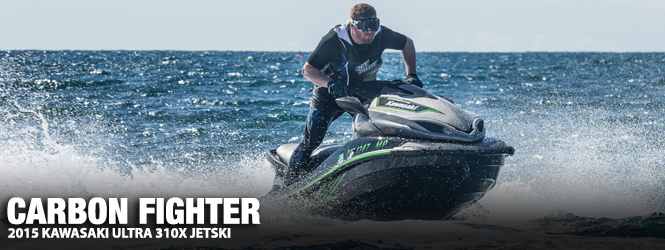
Carbon Fighter: 2015 Kawasaki Ultra 310X JetSki

0

CARBON1

It started in 2007 with the 250-horsepower Kawsaki Ultra 250X. The next year, when rivaled by Sea-Doo’s ’08 255HP X-series, Kawasaki raised the bar to 260. Sea-Doo matched in 2009. Within a year, the Ultra was now a 300X and wielded improved handling on the closed course as much as in the open ocean. And, looking to improve internal engine temperature management and increased combustion efficiency, the 310X was born in 2014.

As much as you might like the different takes on Kawasaki’s Ultra JetSki – nothing beats the original. In these pages you’ll find reports on the 310R, the 310X Special Edition and the top-of-the-heap 310LX, and you’ll find praise for each of them in their own right. But at their core, and what ultimately attracts performance enthusiasts is the straight-laced, bare-knuckled street fighter, the 2015 Kawasaki Ultra 310X JetSki.

5

Strip away the luscious burnt orange hue of the Special Edition, the racy motocross-inspired handlebars and narrowed seat of the 310R, or the over-the-top Jetsound system (with in-dash radio controls) and heat-resistant bolstered seat of the 310LX, and you’re left with the 310X, which in our experience, is what people really want anyways. Of course, what can be said of the Kawasaki Ultra JetSki that hasn’t already been said? Give us a minute…

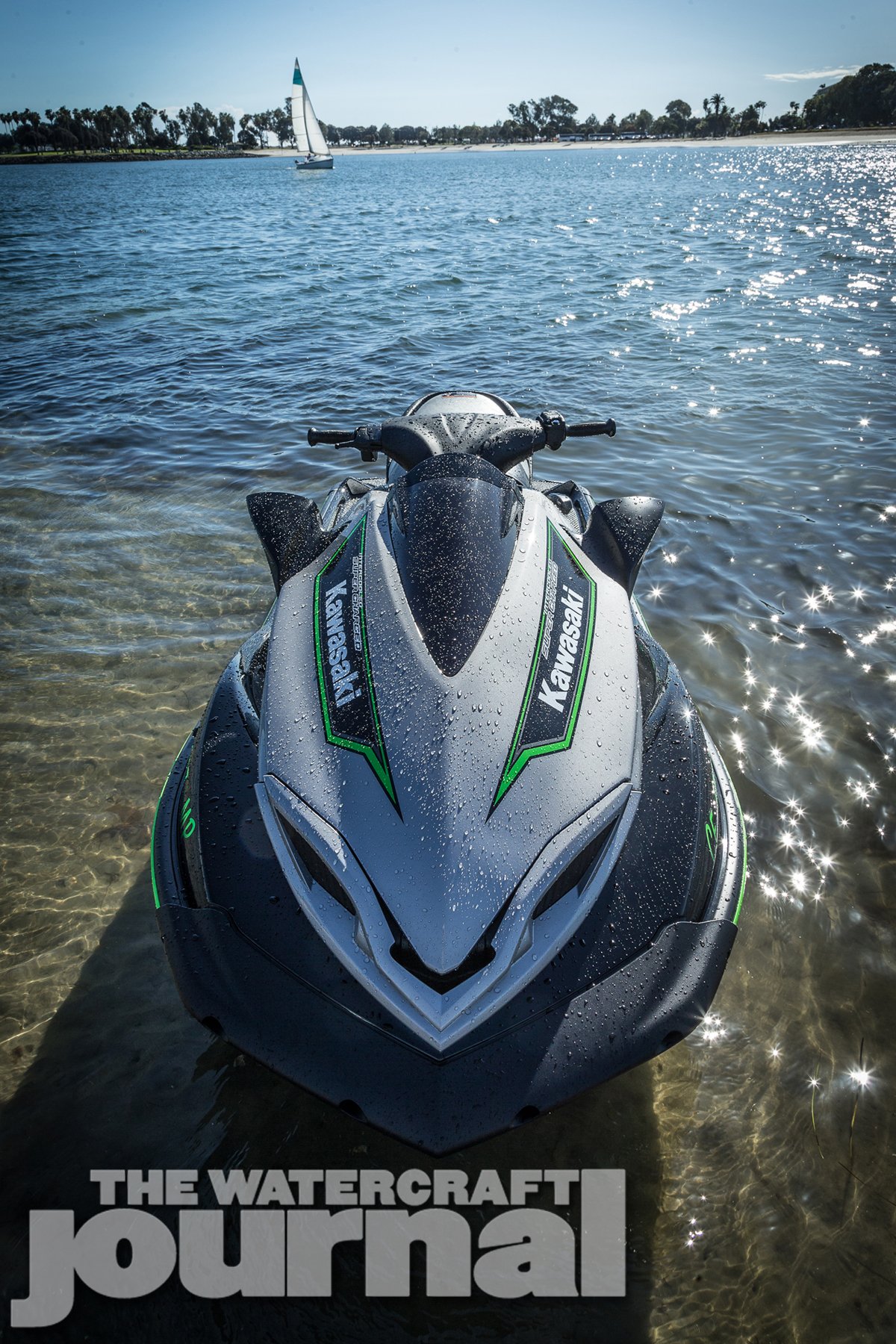
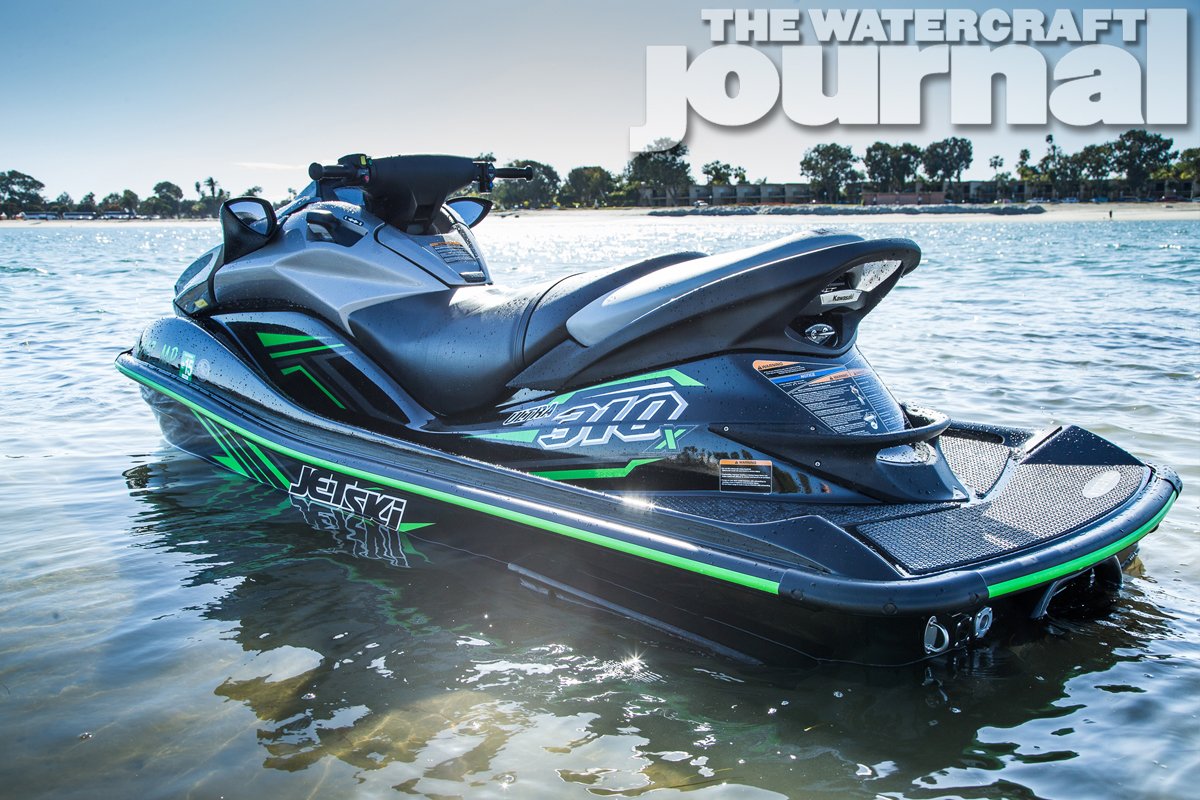
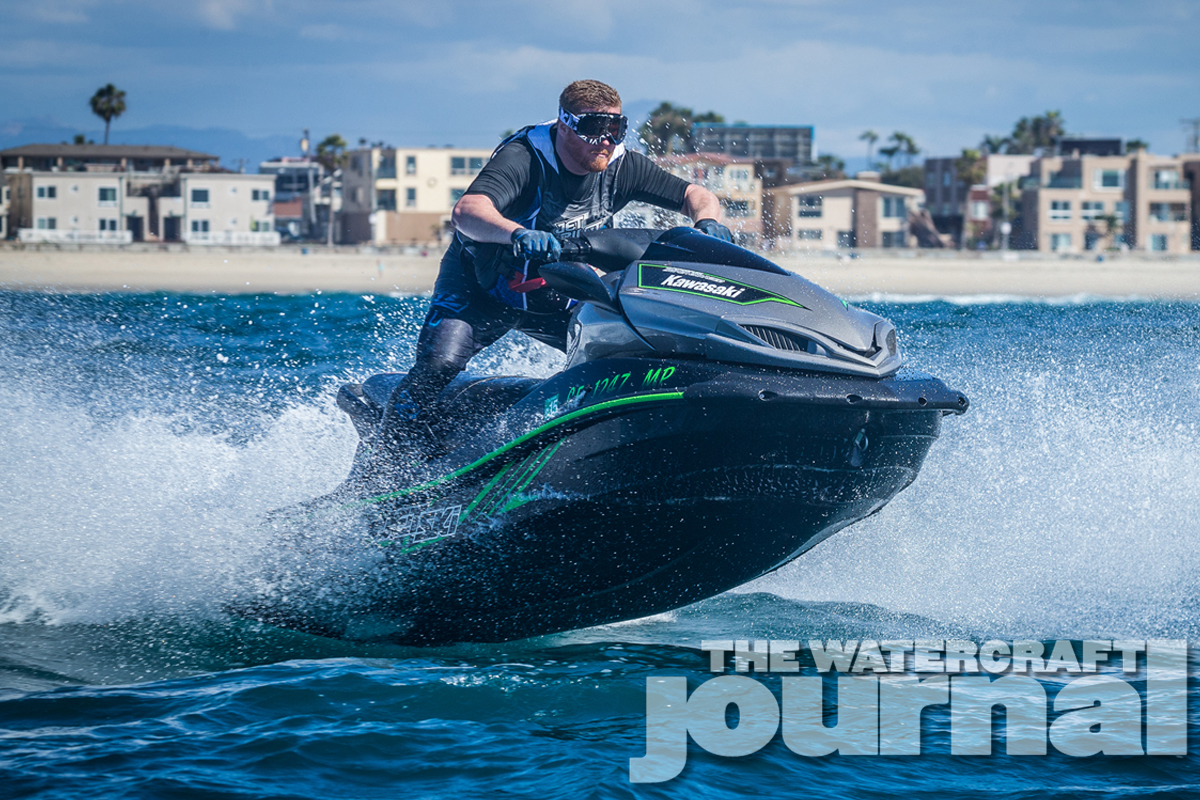
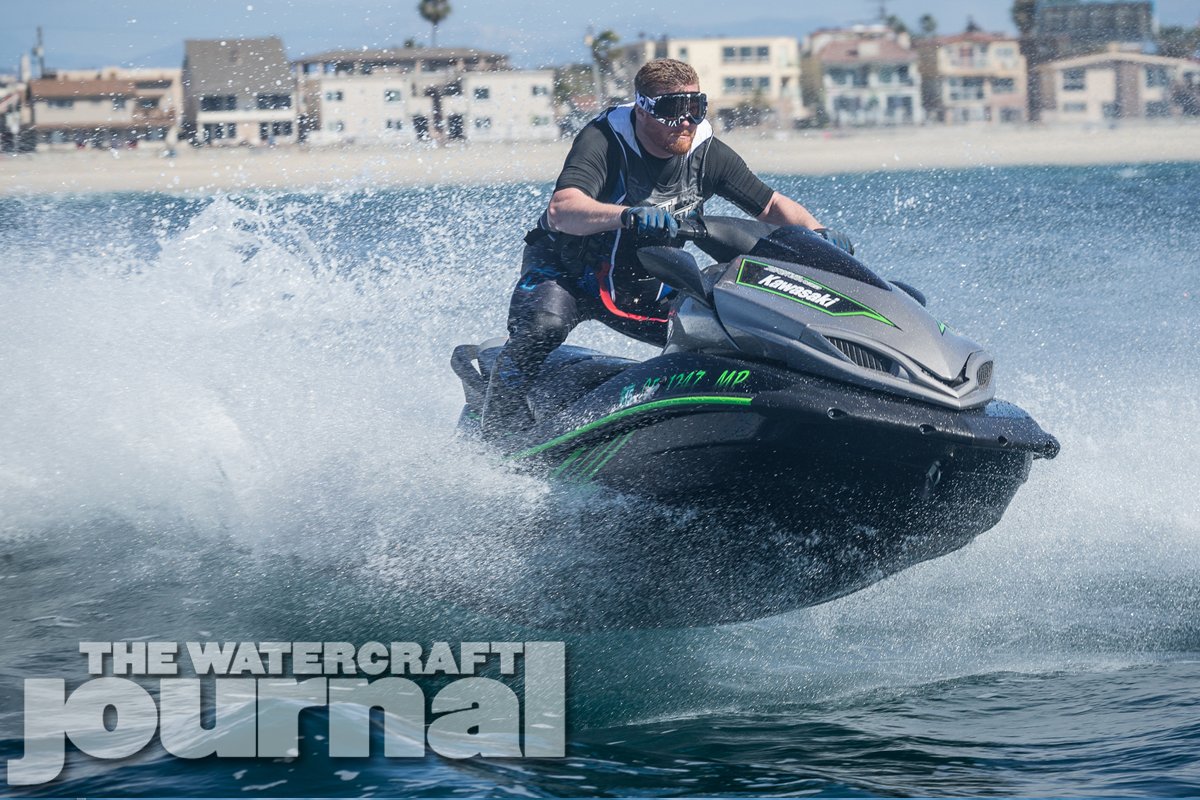
From the outside, the Ultra 310X is handsome in its simplicity. There’s nothing super busy about it. No complex angles, chrome louvers or business to confuse it with a Michael Bay production. Twin snouts are angrily flared, as the hood’s curves flow up and over the fairings into a low and broad saddle and back up into a pointed rear grip. The footwells are wide and deep, the rear tray spacious. The Ebony and Metallic Phantom Silver livery touched with highlights of iconic Kawasaki Green.
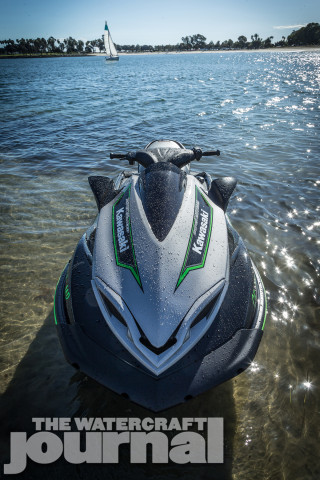
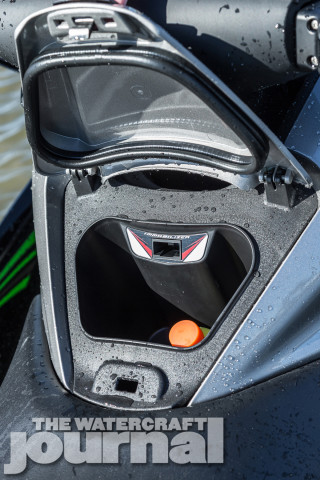
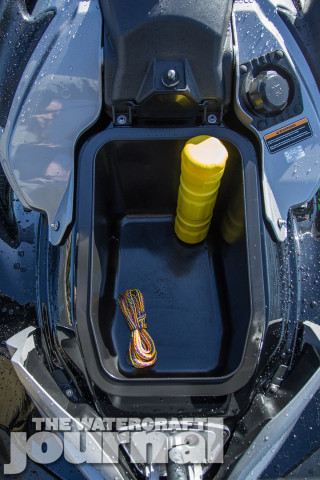
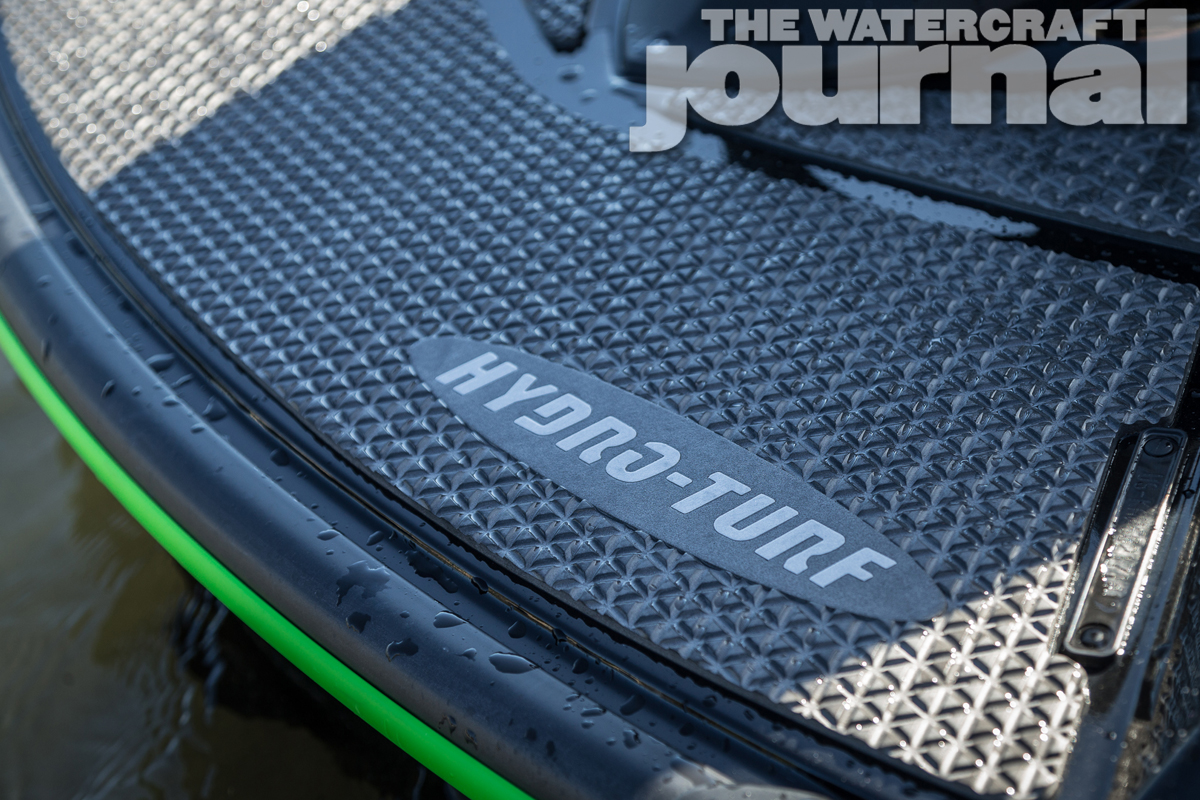
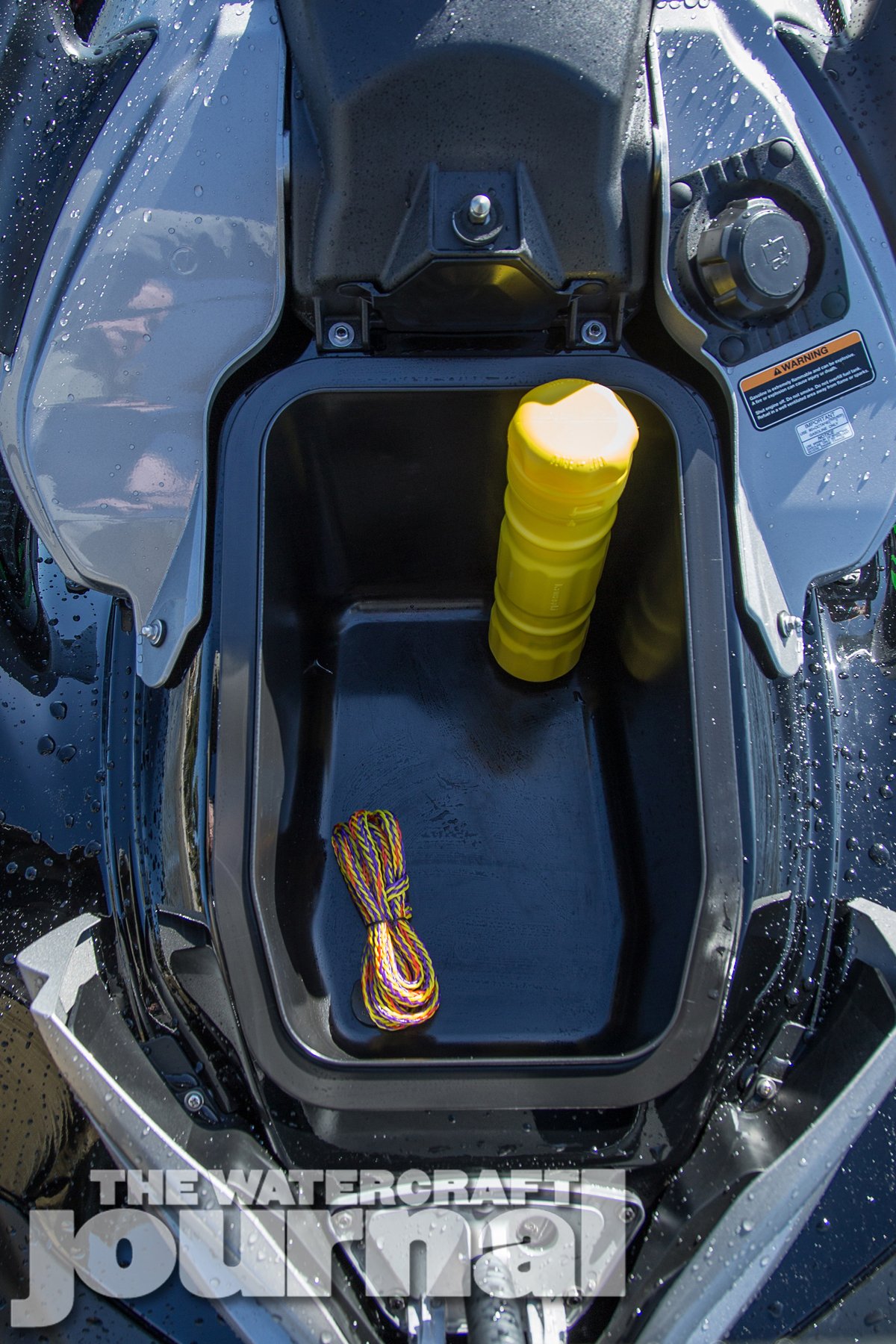
Beneath the front bonnet and within the glove box is a cavernous 56 gallons of combined storage, as well as a removable weather-sealed bin. Tilt steering offers five different riding postures, the highest and the lowest ideal for extreme positions for offshore and closed course, respectively. A spring-loaded retractable swimstep leads to thick Hydro-Turf traction matting on the deck, with a lower and higher handgrips for easy boarding. A tow-eye is also found beneath the stern handrail.

Ergonomically, the bench is wider than many craft considered its competition with only slight contouring. Newly redesigned rearview mirrors and a pistol-like grip of the left-hand reverse lever are nice touches, although the absence of a handlebar-mounted brake and reverse lever is all the more amplified now with Yamaha’s RiDE system (new for 2015) following Sea-Doo’s lead with iBR in 2009. It’s certain Kawasaki engineers have likely drawn up their own version of the technology that far surpasses anything we could imagine.
7

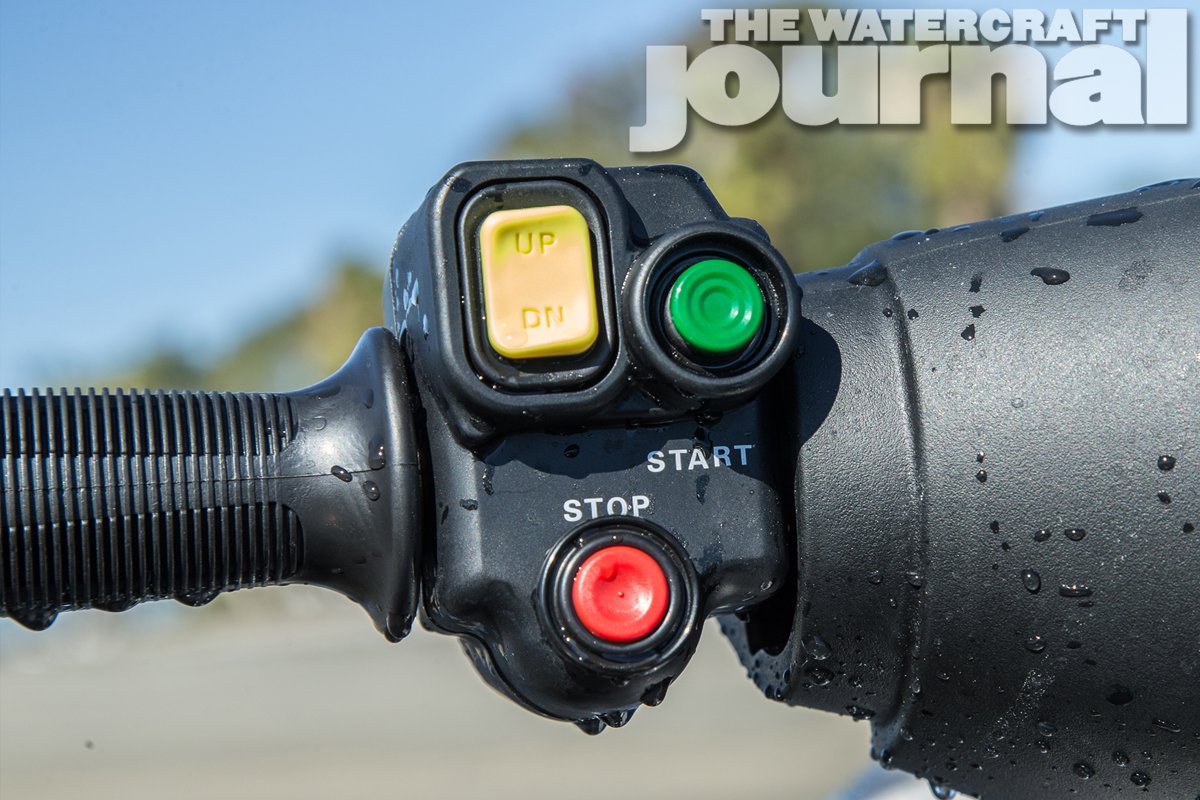
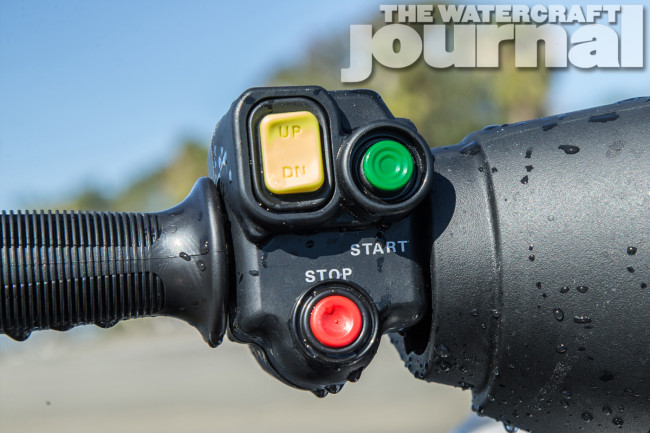
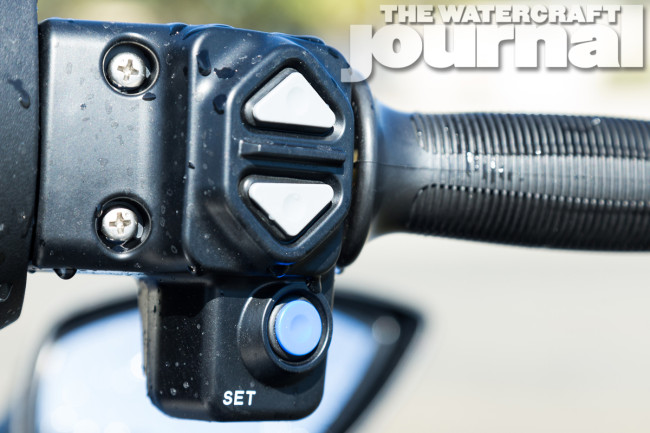
The dashboard’s LCD screen fans out nicely and allows for easy reading of instrumentation while at speed all while mitigating glare. The handlebars now feature up and down toggles for Cruise Control, electronic trim and Kawasaki’s own take on ECO mode.

We did find ECO mode to be the most aggressive of all three brands’ fuel-saving tunes, capping the 310X’s powerband to low 60’s mph, rather than say, Sea-Doo’s that restricts their craft deep into the 40’s. For true fuel savings, we found the use of Kawasaki’s yellow “Learner Key” to be far more successful in reigning in the Ultra’s bridle.

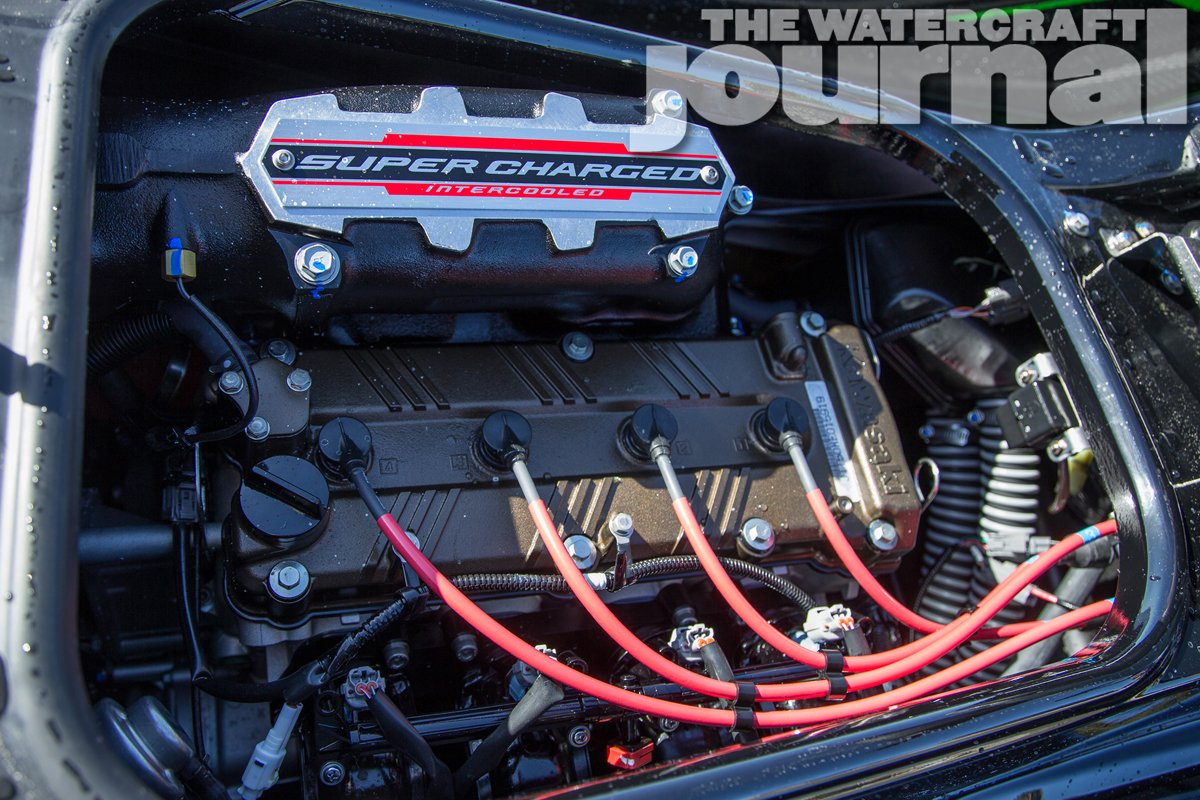
Beneath the seat though, is where the 310X truly starts to get interesting. Currently, the second-largest displacement 4-stroke in the industry (1,498cc) delivers by far, the most horsepower of any personal watercraft available, spooled by an Eaton Twin Vortices Series (TVS) roots-style supercharger (with air-to-water intercooler) producing an impressive 16.8 psi.
2

The dual overhead camshaft (DOHC), four valves per cylinder, inline four-cylinder presses all that boost past 8.2:1 compression pistons through a direct-drive coupler to a massive axial-flow, single stage 160mm jet pump, spinning a three-blade, oval-edge stainless steel impeller to produce 1,890 lbs. of thrust. If that sounds impressive, it is. But it’s also not cheap.

Even with the use of advanced Digital Fuel Injection (DFI) with intelligent engine mapping, the big Ultra is thirsty, and that 20.6 gallon tank of 91 octane can vanish quickly if the 60mm throttle body is left wide open. Even casual play with plenty of hot dogging emptied three quarters of the tank by lunchtime. What’s the old saying go? You gotta pay to play…
13

Make no bones about it, there is nothing gentle about the Kawasaki 310X – or those that share its powertain. It comes on hard, and we mean it. To our knowledge, this craft has racked up more championships in its bone stock form than any of its contemporaries. That alone should speak volumes. And to reiterate previous evaluations, we have yet to encounter a runabout to manage rough water or the open seas as aptly as the Kawasaki Ultra.

Personally, we doubt we’ll see much in the way of changes for the 310X in the next few years. And rightfully so. Kawasaki has persistently raised the bar of performance, and we can’t imagine them changing that philosophy. The Ultra 310X is a brute, and Kawasaki meant it that way.

11 12 1 7 3 4 13 10 5 8 9 2 6
<
>

Videos: Diptech Performance Powers Very Happy Customers

0

10363386_312215292236687_5014252618417049197_n

A few weeks back we got a note from our friends at Diptech Performance, “Don’t be fooled by any dealership out there that will tell you where you have to get your jet ski serviced so that your warranty is not voided. The team at Diptech Performance provide a service that is second to none and above all DOES NOT void warranty. We use genuine parts and follow all service procedures as a dealership would and more. Please call us for more information.”

All of us at The Watercraft Journal can attest that the technicians at Diptech are some of the best found in Melbourne, Australia. But rather than simply pontificating on and on about their professional staff and top-level skills at not only servicing personal watercraft, but finely tuning performance craft for all levels of enjoyment, we thought it best to leave the talking up to some of Diptech’s most satisfied customers.

It didn’t take long to receive an influx of videos from very satisfied customers very happy to share their exploits aboard their newly tuned and serviced Sea-Doos, Yamaha WaveRunners and Kawasaki JetSkis. Below are just a sample of locals getting the most from their machines during Australia’s prime riding season:

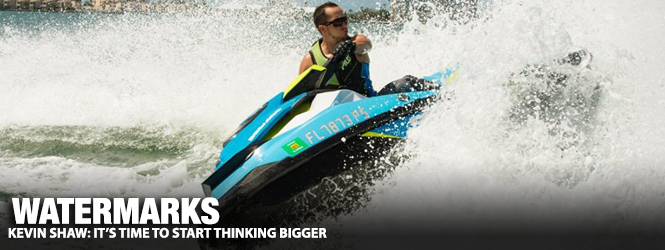
Kevin Shaw: It’s Time To Start Thinking Bigger

1

BIG4

I find that if you shut up and let people talk, they’ll tell you more about themselves than you could ever discover on your own. These past two weeks have been a whirlwind of travel, salty photo sessions, tanlines, in-depth conversations with people waaay above my pay grade, hotel rooms with lousy pillows and tiny shampoo bottles, endless hours of driving and flying, and really, really nice meals that I haven’t had to pay for. Add to that possibly the most exciting exclusive The Watercraft Journal has ever landed and the launch of our parent company’s second magazine, sleep has been a necessary inconvenience. Oh yeah, and I lost my wallet like a complete moron.

All that being said, throughout my exploits I was able to sit back and listen to a huge range of personal watercraft enthusiasts from all walks of life share their experiences in and out of our sport. Sadly, I was left feeling like I wish I hadn’t. What bothered me most was first, how negative people were toward others (be them groups, clubs, racers, sanctioning bodies or persons with slightly contrasting interests), and secondly, how isolated they all felt. (This is where your sense of irony should be kicking in, folks.) Again, it’s been said that you can learn a lot about a person if you’d just shut up and let them talk, and I did my best to do exactly that this past two weeks.

BIG5

“It was amazing,” Kev Hemingway said to me. “All I wanted to do was see if they’d want to join us.” Hemingway’s Jetski Junkies group is considered one of the most successful in the nation, with a variety of adventure rides ranging from half-day jaunts to week-long excursions across some of the most picturesque water in the continental United States. When he approached another Florida club about partnering for a multi-day event, he wasn’t just met with disinterest, but outright contempt. “The guy swore me out until I hung up. It was ridiculous. Seriously, what’s wrong with these guys?”

Unfortunately, contention between many riding clubs and groups – particularly in popular areas like Southern California and Florida’s coastline – is as hot as rival Hawaiian surf brotherhoods. It’s understood that athletes need that competitive spirit to drive them. It’s tough to be a happy-go-lucky kind of guy or gal when you’re facing off against the competition on the field of battle, I get it. But I always knew that the difference between an athlete and a sportsman (y’know, what your mom called being a “good sport”) was how you behaved both on and off the field.

BIG1

“You wouldn’t believe the hate I got for that,” Mark Gomez glowered. Gomez had participated in a one-day heat of AquaMoto racing in between surf sessions at this year’s Daytona Freeride. Amid a lineup of seasoned and novice standup racers, the celebrated freerider took to the buoy course on his Rickter Edge. Spectators reveled as Gomez not only dominated the competition but happily threw in multiple backflips and barrel rolls throughout the race for good measure. “People got all on me for showing off. And I was like, ‘Hey, I’m not going to waste these waves.'”

Let me reiterate: Gomez, who is defensibly at the height of his game, is fielding spite and hatred for excelling. But that is a tale as told as time. Those who rise above the status quo are seen as upsetting the curve, angering the mainstream with the knowledge that to retain their mediocrity they need to try a little harder (or less, as it were) than before. No, the facts are that competition breeds excellence and those who strive for continual and constant growth and improvement chase this unceasingly, while those who seek to be comfortable rationalize their station until they find complacency.

BIG6

Currently, the world of American jet ski racing is in a rift. The fracturing of AJ Handler’s Pro Watercross Tour and the IJSBA has yet to reveal what the landscape of American PWC racing will look like in a year’s time. The feud between Handler and IJSBA’s Frazier has been almost a constant subject for racers. To those completely disinterested in racing, it’s a non-topic. Personally, I won’t pretend to put on airs that I even care as to the details of the rivalry (I don’t). All that I do care about is the divisiveness and dissent that the break has caused. The backbiting, contention, bemoaning and bitterness is toxic, and poisoning a sport that is already trying to mend.

Lastly, one final story: Marcos Smith of RIVA Racing, is new to personal watercraft having joined the company from working at Red Bull, a company who knows a think or two about growing sports too. Smith’s introduction to performance PWC couldn’t be more intensive than working with the brilliant minds behind the sport’s single-largest manufacturer of aftermarket performance equipment, as well as beneath one of the sport’s greatest supporters, Dave Bamdas. Yet, his experience with jet skiers has been soured. “I looked around online and found a local group,” Smith told me. “All I wanted to do was find a bunch of guys to go riding with, but when he found out I worked at RIVA, he was like, ‘No thanks. We don’t want any corporate guys on our rides.’ All I could say was, ‘Wow’.”

BIG3

Yesterday, we published a story about how Queensland, Australia is considering more sanctions on PWC near local beaches and surf spots. Many of your comments on the story were, “It’s not fair that a few individuals ruin things for everyone else.” Yes, it is sad. But I keep hearing more and more tales like Smith’s, or Gomez’s or Hemingway’s. Personally, apart from being a listening ear, much of the negativity doesn’t affect my life or enjoyment out on the water. And for a large part of our readership, nor they. But for so many who have dedicated their lives to our sport, it’s corrosive and damning.

How can people expect this sport to grow with so many people pulling one another down? As I sat at a meal with some of the biggest names and brightest minds in our industry, I was asked my take on all of this to which I replied, “The sport will remain small because so many within it are small. They think small. They act small. When people start thinking big and acting like grownups, like professionals, things will start growing again.”

Go Get Wet,
Kevin

Additional images courtesy of Watercraft Superstore.

Videos: Game Over Racing’s 100-Plus MPH Boosted Demon PWC

0

maxresdefault

There’s no denying the facts, when pursuing the big triple numbers, the first step is acquiring a 15-year-old Yamaha GP1300R hull. The design of this particular hull has become the standard from which all top speed Open class Hydrodrag racers have built upon in their race towards world domination. From this singular foundation, all of the fastest personal watercraft racers in the world then insert their own formula of performance to push them to that coveted 110-plus-mile per hour level.

One such racer is Ray Sanchez. Piloting the “Boosted Demon” built by Game Over Racing, Sanchez has chased the world record of 112mph closely now. Below, we’ve included two videos from Gregg Mandigo’s “unsane” YouTube channel documenting Sanchez’s pursuit, the first run was taken during Round 3 of the 2014 Hydrodrags in Polk City, Fl. on July 13, 2014. Verified by a Stalker Radar Gun, Sanchez clicked off a 104.5mph pass even while navigating 3-inch chop.

As you watch the second video, wherein Ray clicks off an impressive 109.5mph pass, you’ll see the difference absolute glass makes for skis at these speeds to keep them hooked up. Sanchez will chase the record again this year and look to overthrow Mikael Gonzalez’s standing as the fastest personal watercraft in the world.

Australia Considers Another Potential Ban on Jet Skis

0

jetban

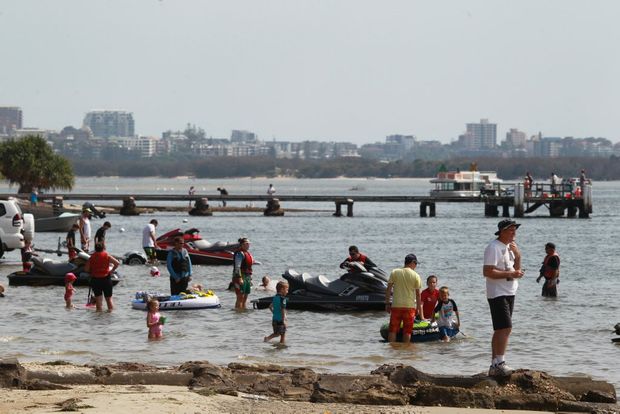
Areas of Queensland, Australia’s Pumicestone Passage may be blocked to jet skis to stop “cowboys” on the hectic waterway according to an article in the Noosa News.

Mark McArdle, Member for Caloundra said he was examining the change and introducing rangers after hearing grievances about personal watercraft riders for twenty years.

The proposed changes may occur within the next 12-18 months. Three petitions with 1,000’s of signatures have been presented to the Parliament during the decades of complaints.

Edwards expects McArdle to make his plans clear for the proposed ban and before the election. He expects him to do something to intervene after another long weekend of noisy jet skis and drivers using Pumicestone Passage as a drag strip.

Edwards went on to say that the Ramser Convention, which was put into place to protect migrating birds and other animals, safeguarded the Passage. Edwards quote goes on to explain the reasoning behind the Ramser Convention.

Edwards also stated that the residents of the area were being discriminated against since jet skiing was banned in Noosa. The ban has increased the number of personal watercraft riders on the Passage, which has impeded recreational use of the Passage for passive recreational activities.

McArdle understands the worries of citizens and also believes that jet skiers have made a valuable contribution to the economy and that most of them followed the rules. The majority of them are not the problem and he would like to see a designated area for the personal watercraft enthusiasts.

Videos: Get The Most Out of Your Spark With Official Sea-Doo Accessories

0

Spark-Licorice_2107_MY14

Late last year, Sea-Doo took possibly the boldest step in the company’s history and introduced a personal watercraft that not only hearkened back nearly twenty years to its smaller, more nimble days of the HX; but also radically rewrote how a runabout can be designed, built and priced. The Spark rocked the PWC industry with its unique architecture, light weight and sub-$5,000 price tag.

With it’s estimated run of 10,000 units almost sold out prior to June, BRP was forced to scramble to fire up production mid-year to satisfy the swelling demand. For 2015, with much of the colors remaining the same (we’re personally still anticipating the arrival of a rumored “Blueberry” color for 2016), Sea-Doo poured on the steam and will be increasing production by 50-percent.

Sure, rocking the boat is bound to upset a few, but Sea-Doo has never been one to shy away from that. Boldness is a mandatory trait for a company looking to be on the cutting edge. Besides the Spark’s fun factor, another attractive attribute is its modularity, allowing owners to customize and equip their unit specific to their needs. We picked up on a few really cool items that we think you’ll like too:

2015 Sea Doo Front Storage Bin Kit
This easily-installed front bin is the only item on our list that is also part of the Sea-Doo Spark’s optional equipment list. Although not watertight like the slide-in bins on the GTX models, it is nevertheless equally handy and useful. Drain holes ensure zero pooling, and 7 gallons of added storage is always welcomed.

2015 Sea Doo Snap in Fenders
One of Sea-Doo’s more creative new items are their snap-in fenders. Some might’ve noticed the vertical pin holes in the Spark’s bond rail. These are for the holding rod for the fenders. Sliding in and snapping snuggly around the bondrail, gone are concerns of marring your brand-new Spark against a dock or other ski.

https://youtu.be/480Evgg3HAQ

2015 Sea Doo Tow Pro
Finally, and one of the most interesting accessories is the Tow Pro collapsible tower. Unlike the retractable ski tower available on larger Recreation and Sport watercraft (and standard on all Wake models), the Tow Pro holds a wakeboard and rope, and works as a spotter-handgrip as well.

Video: Human Smuggling With Personal Watercraft

0

coastie

Jet skis have become a preferred method for the transport of illegal immigrants, drugs, and weapons from Mexico and into the United States of America. Personal watercraft are launched from Tijuana and then landed on the beaches from the border up to Point Loma.

According to a report by UT San Diego, some jet skis are stolen from San Diego rental companies and used for the nefarious purposes described above. The cargo is usually human. However, they’ve been known to move drugs or weapons, according to Coast Guard Captain John Spaner.

“It’s become a routine conveyance of organized crime. Because of that, and because 50 to me is a high number, I see that as a security threat,” said Spaner, the Coast Guard’s San Diego sector commander.

During fall of 2013, 50 smugglers on personal watercraft were apprehended over a course of three months. The Coast Guard, United States Border Patrol, and other federal agencies contributed to this number of captures. This figure dropped significantly in the fall of 2014. Only ten criminal transporters were caught and the Coast Guard claims that low number is due to increased vigilance.

“I think our system of sensors is very good, and we’re very good at detecting when this happens,” Spaner said.

The pressure along the border has caused a spike in the cost of transporting potential immigrants. The cost of illegal transports by non-law abiding Jet Ski drivers has increased exponentially. Undocumented immigrants are paying 40% more for a potential ride to the southern California Coast.

Law Enforcement Officers claim that migrants are paying thousands of dollars to cross the border by personal watercraft.

He went on to say that a person can rent a ski for a mere $500 deposit in San Diego. This makes it easy for smugglers to pull off their illegal actions. The ski can transport up to 2 people per trip at the cost of near $7000 per person. That is good money and gives smugglers incentive to continue.

Unfortunately, there is no reputable data publicly available to let us know when the human smuggling began although since 2012 there has been a decline in the use of pangas for human smuggling. This means it’s possible that is when jet skis came on the scene as the new watercraft of choice for smuggling.

“With the fall off of pangas, we saw more of an uptick in Jet Skis. I’m not sure what’s driving it,” Lavergne, a Border Patrol agent, said. “We still have pangas coming, but for the most part pangas have gone toward carrying narcotics.”

Federal agents say that drug pangas head farther out to sea and land north off the San Diego coast to keep from being captured.

It’s a different game for smugglers and their cargo since they don’t usually have high tech equipment. Typically, smugglers on jet skis don’t even use GPS so they only have their eyes to rely on when figuring out their route.

Lights on the coast are the only things visible at night and U.S. officials say that they worry about the immigrants arriving on skis due to safety concerns.

Make sure to watch the UT San Diego video HERE.

Video: Jet Ski + Snowmobile = Jetsnow!

0

Screen Shot 2015-03-17 at 11.23.20 AM

As the mercury in the thermometer continues to climb and the snow finally begins to ebb, hope for warmer days on the water begins to spring as much as the grass. But, that’s not to say that our friends in Canada are zipping up their lifevests just yet. Unfortunately, much of the Great White North continues to be well, white. Yet, that’s not to say they’re not scratching their PWC itch.

One such enthusiast is inventor Christophe Paquin who figured out possibly the best marriage of a standup ski and a snowmobile. The Québec resident reapplied a Rotax 670 motor to a repurposed snowmobile, employing the same traditional twin skis and tread platform. While the prototype is a little rough around the edges, it’s still impressive how well the rider input works so well with the snowmobile’s format.

If you live along the coastlines, then yeah, enjoy your eternal summer. But for so many other PWC enthusiasts, this might be one way to keep on riding even when the white stuff is still covering most the earth.

Gallery: West Coast PWC Club Ride Around Catalina Island

0

CATALINA

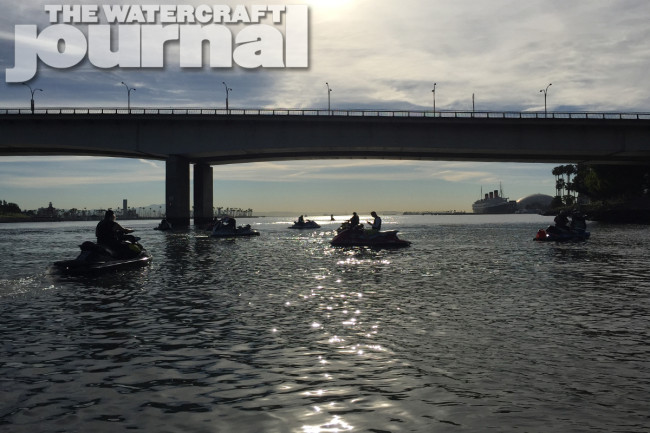
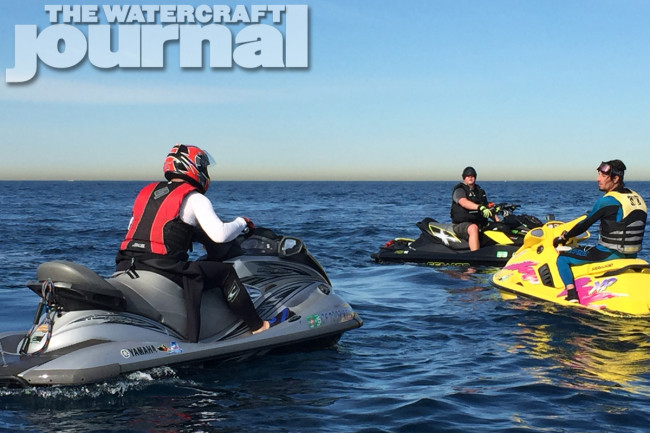
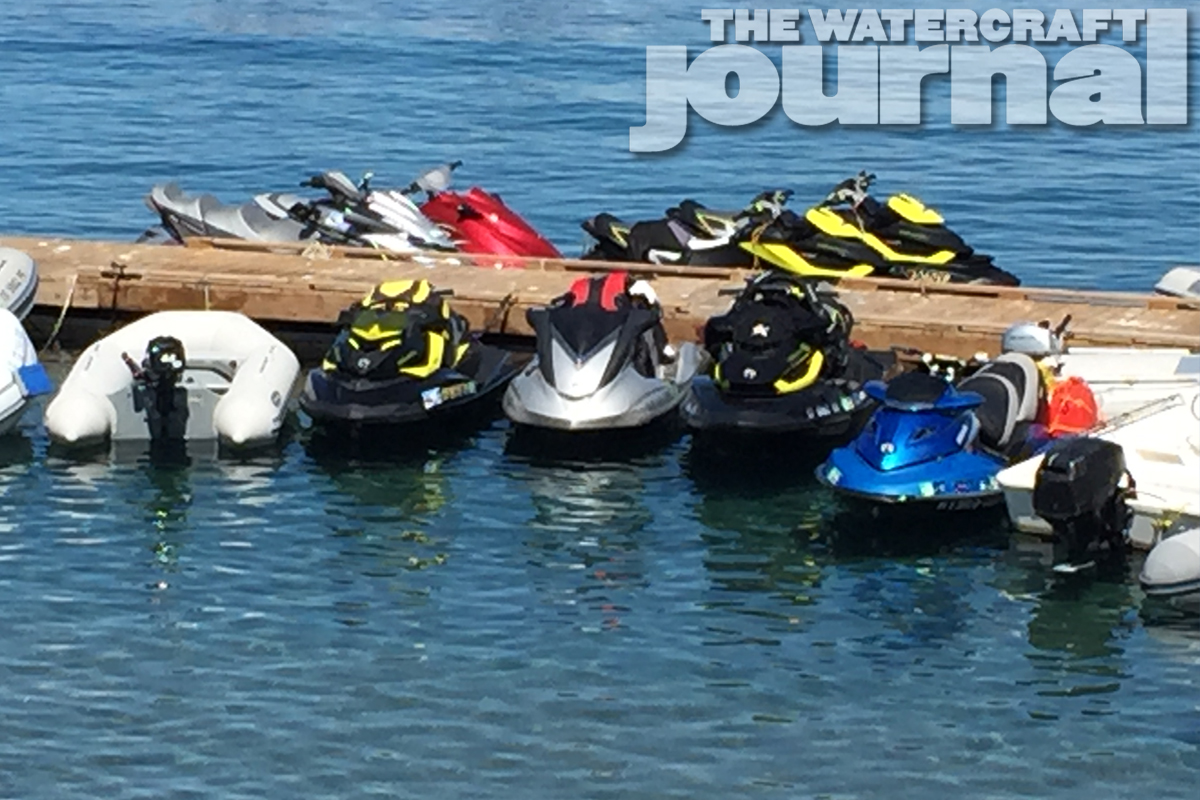
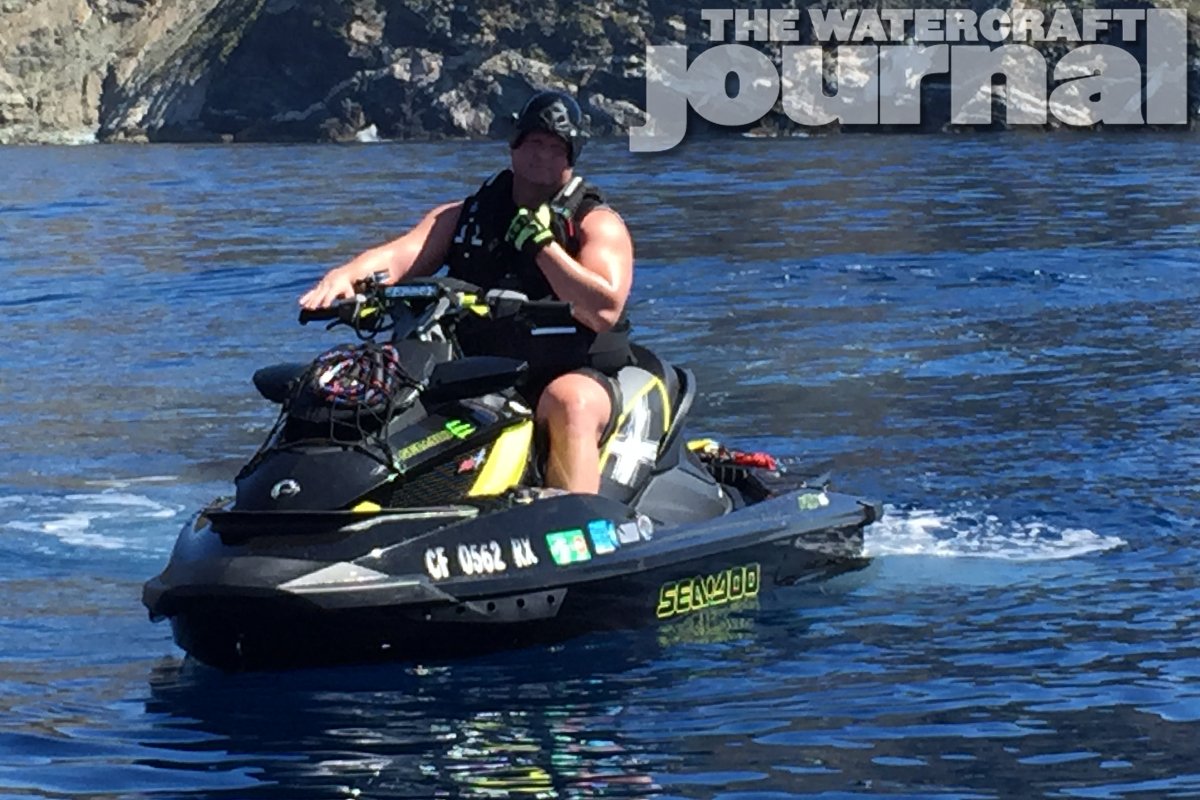
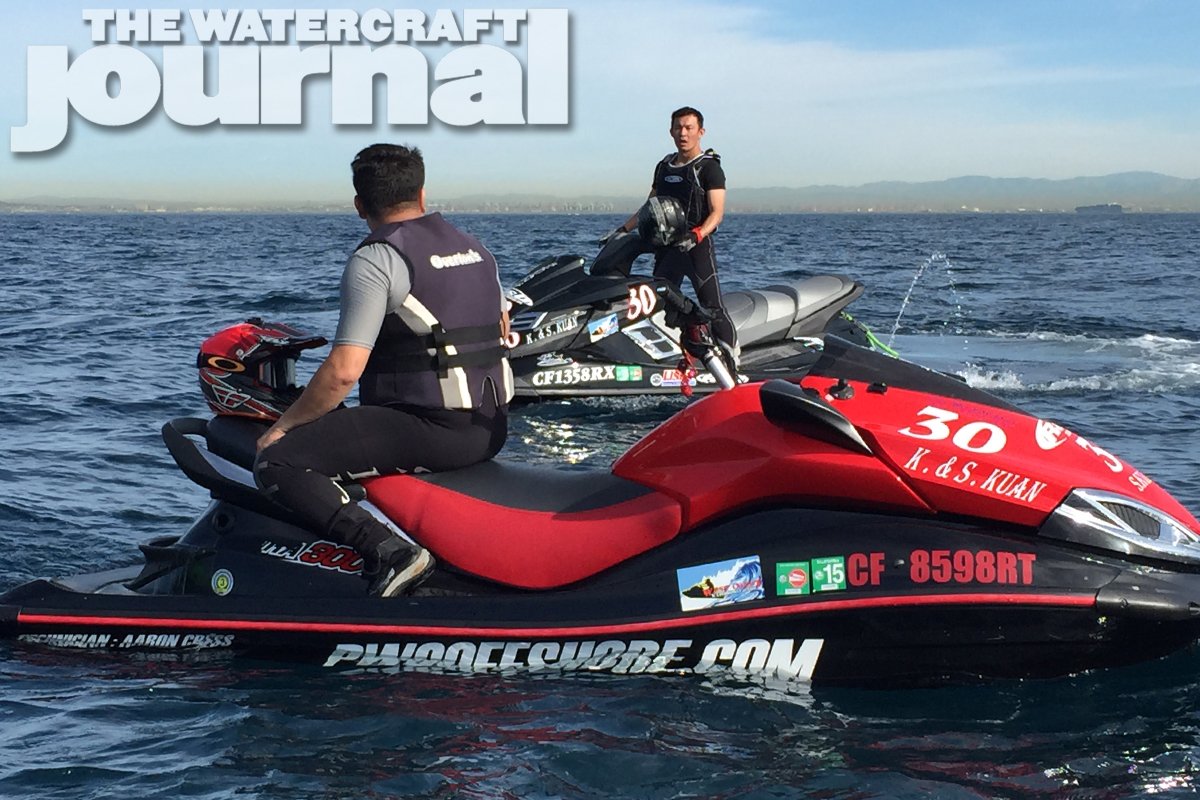
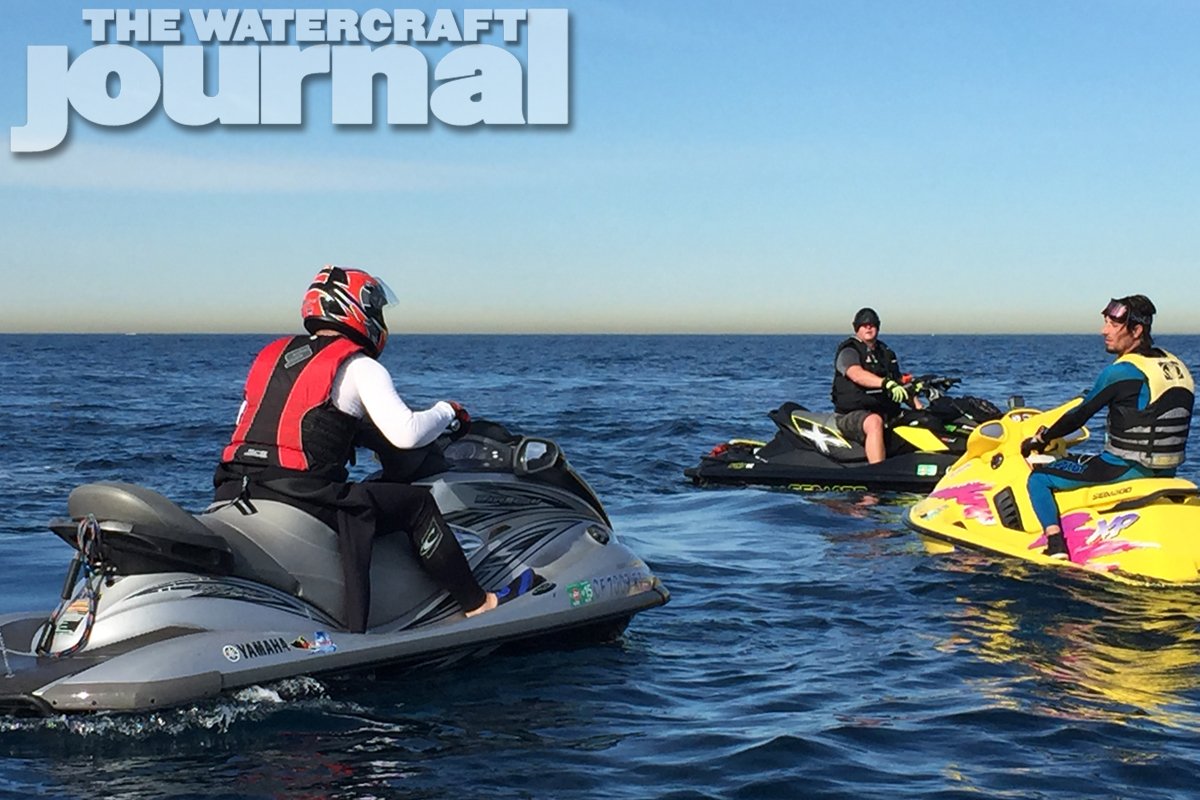
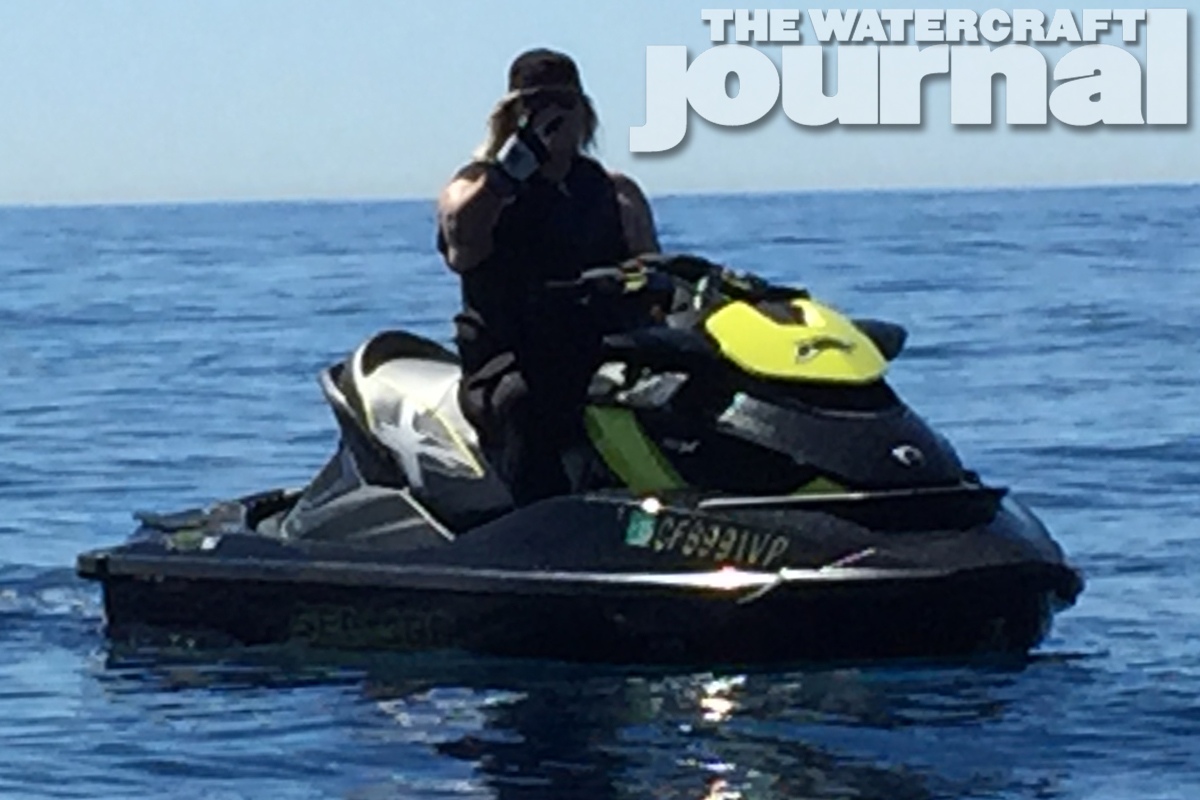
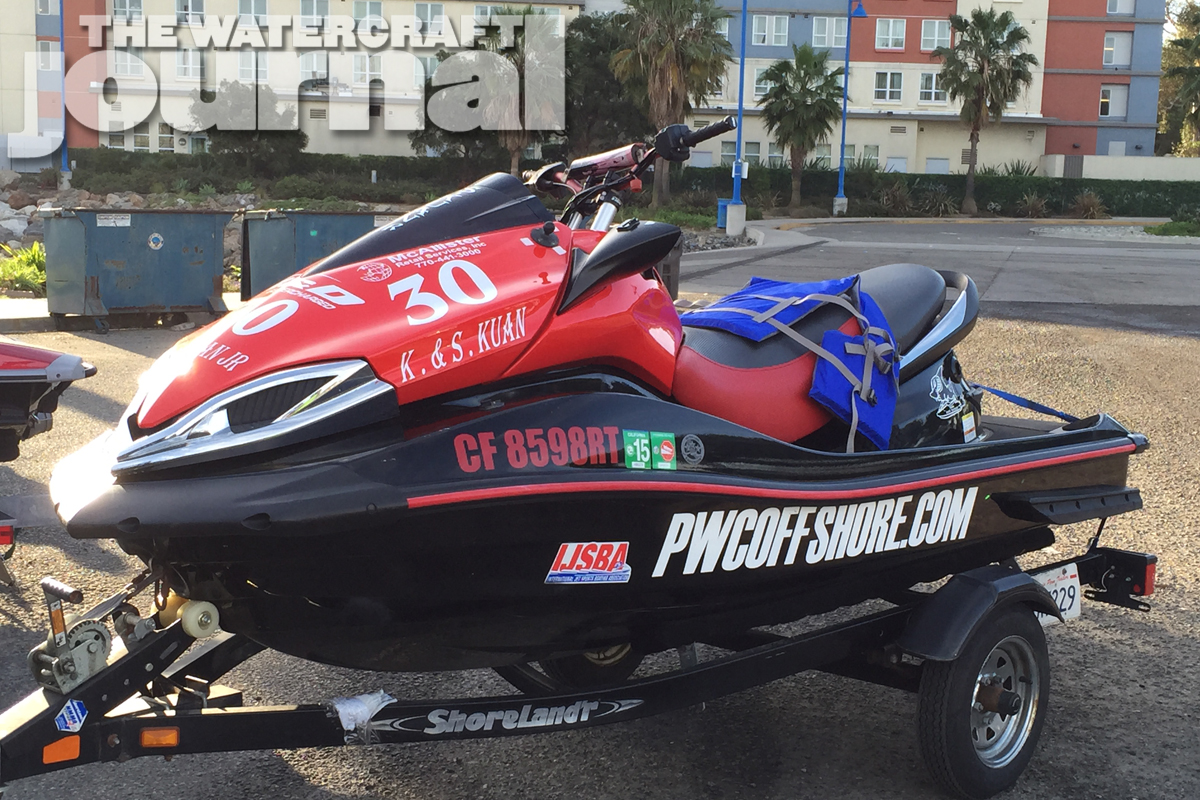
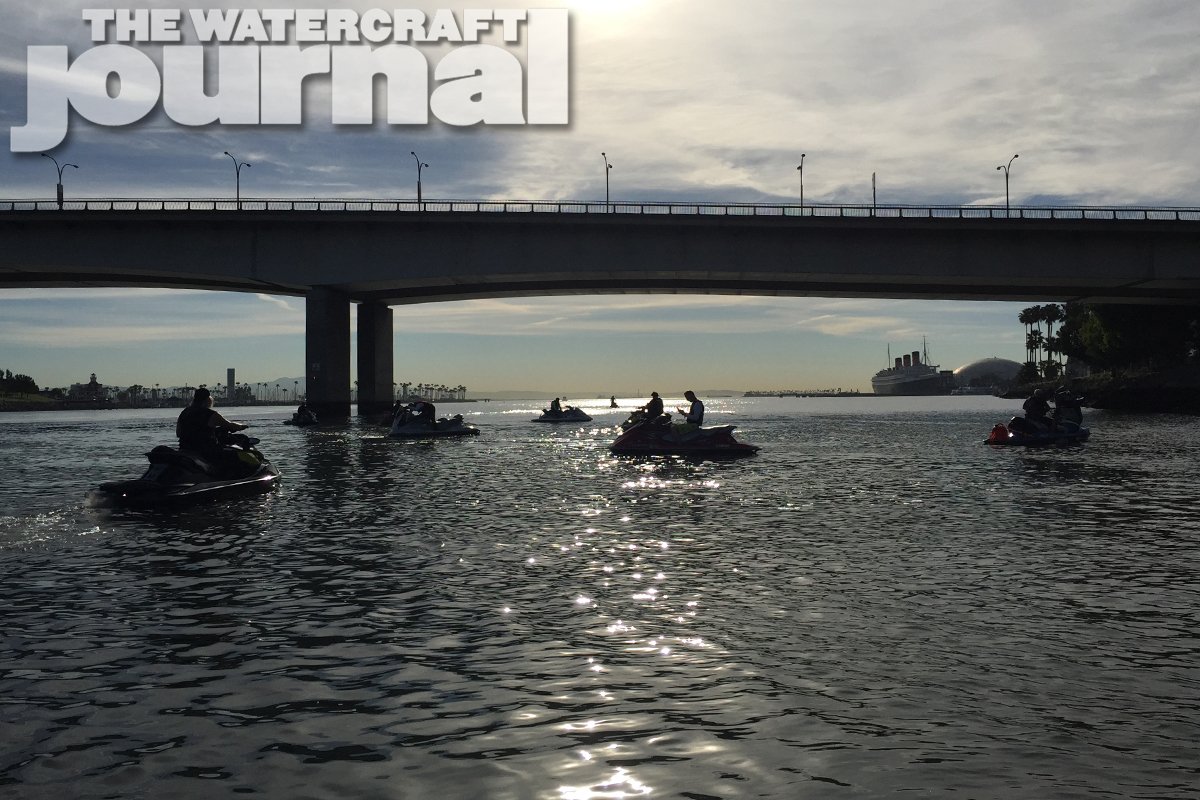
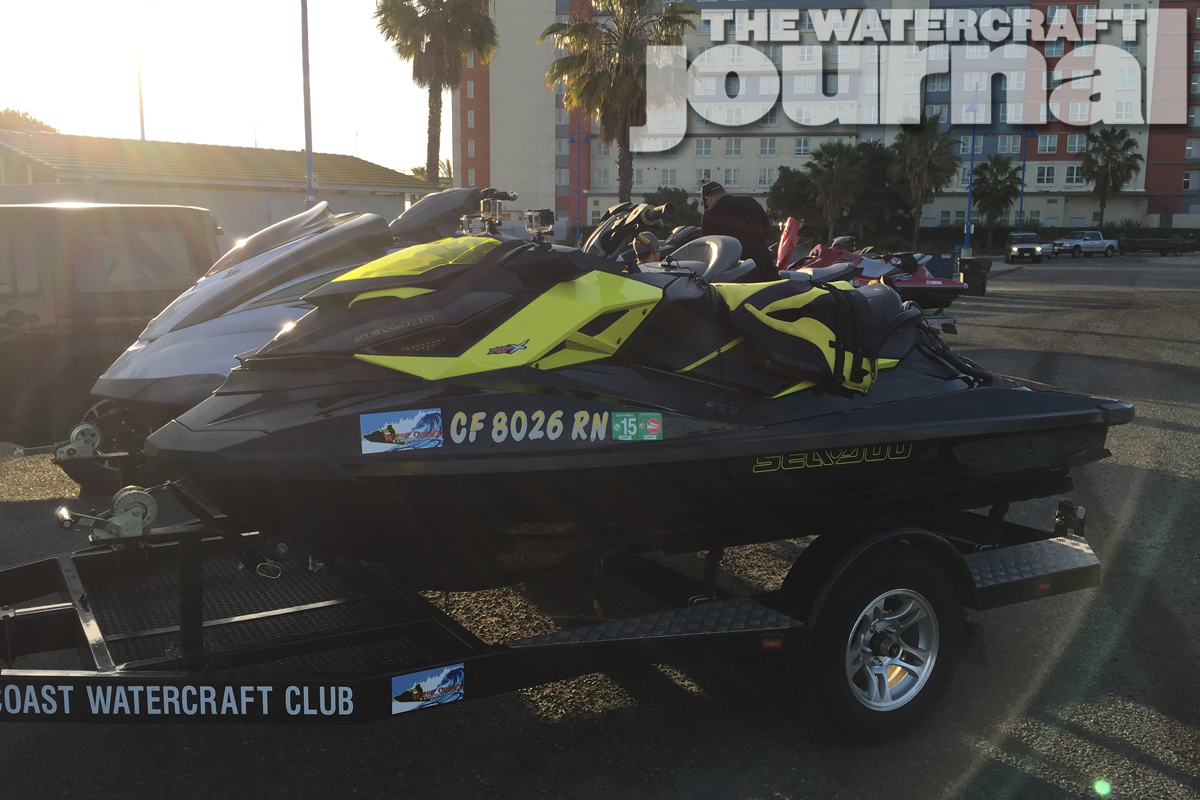
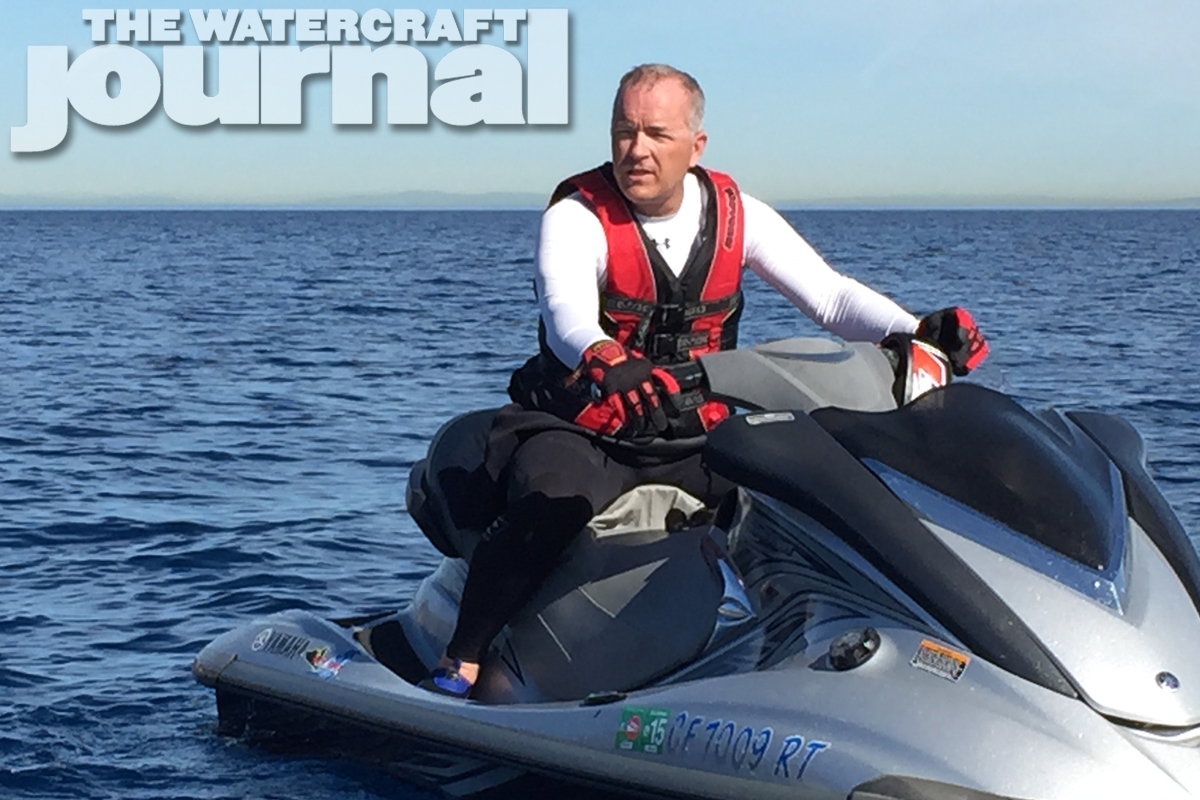
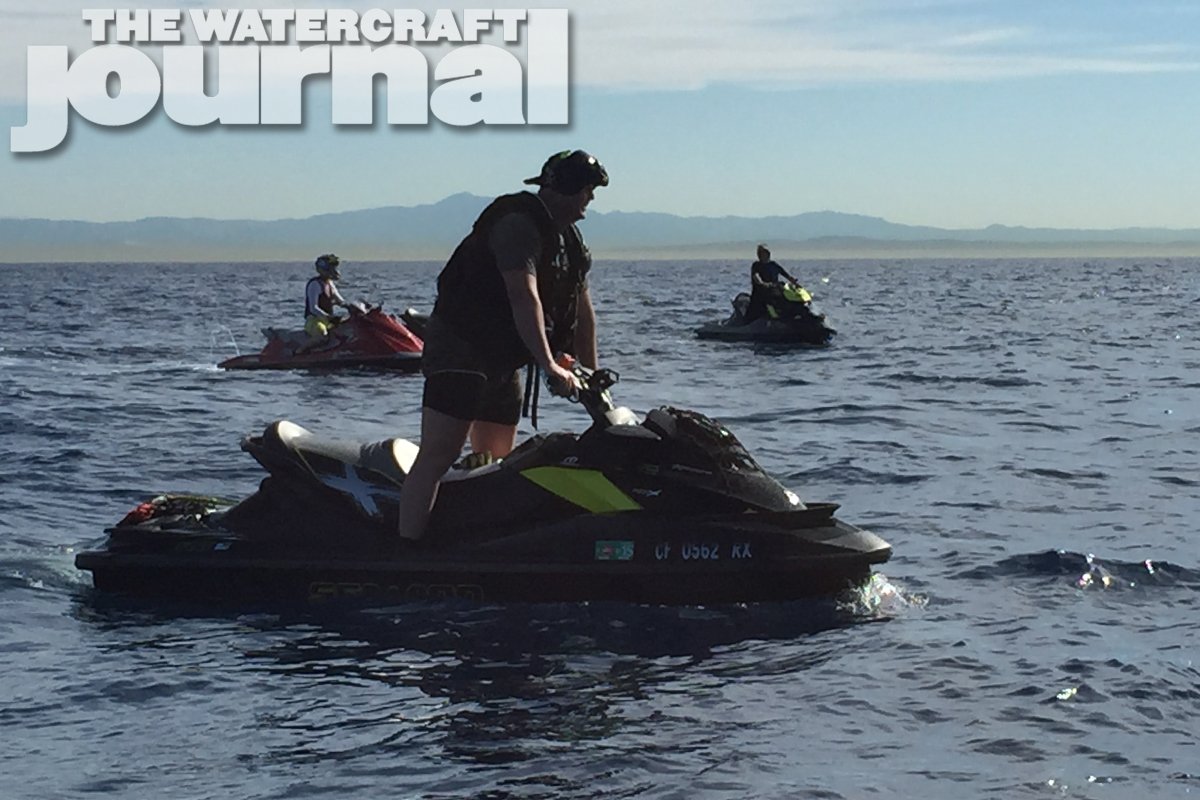
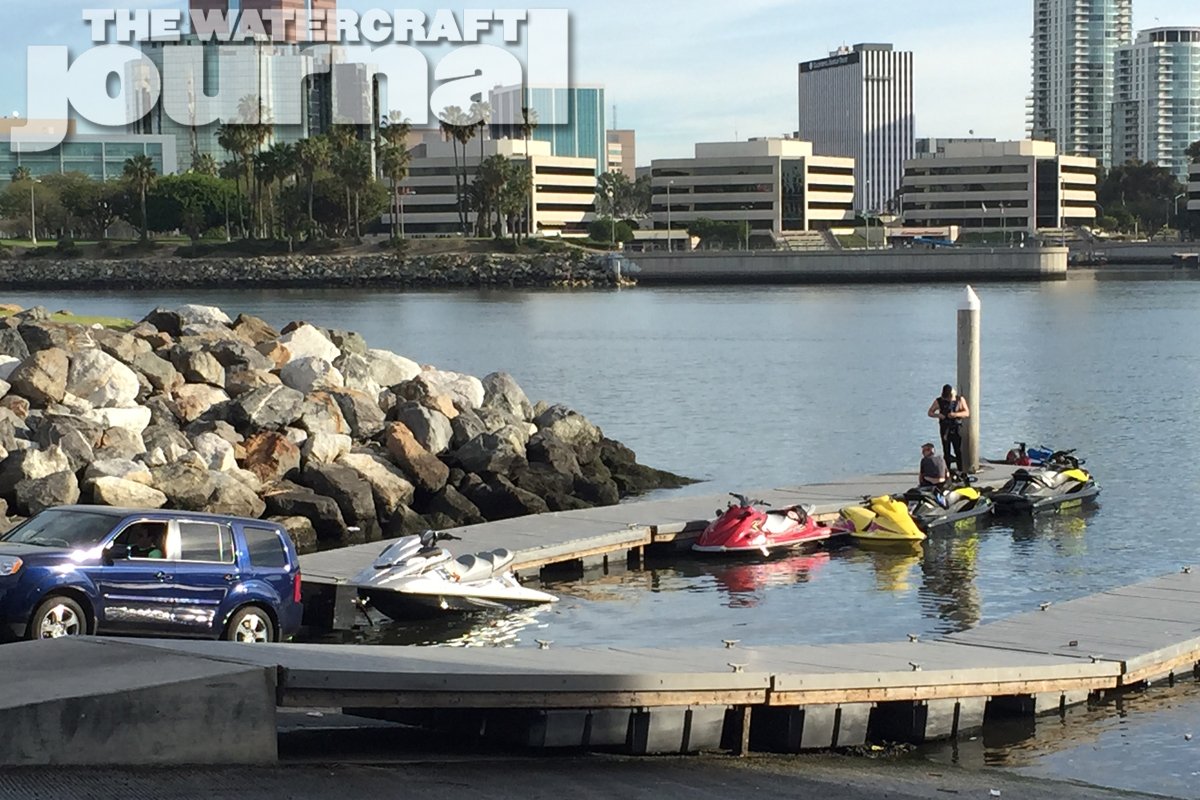
Last Saturday, March 14, 2015, Southern California’s newest PWC club, West Coast Club rode from beautiful Long Beach, California (start of the LB2CAT PWC Offshore race) to and around Catalina Island. West Coast Club President, Lewis Lipstone surprised some at the breakwater opening when he suggested that, though advertised on our Meet Up group as a ride to Avalon, Catalina Island; current conditions favored an around the island ride. Some feared committing this early, as offshore blue water conditions can and do change, but not today. Great call, Lewis!
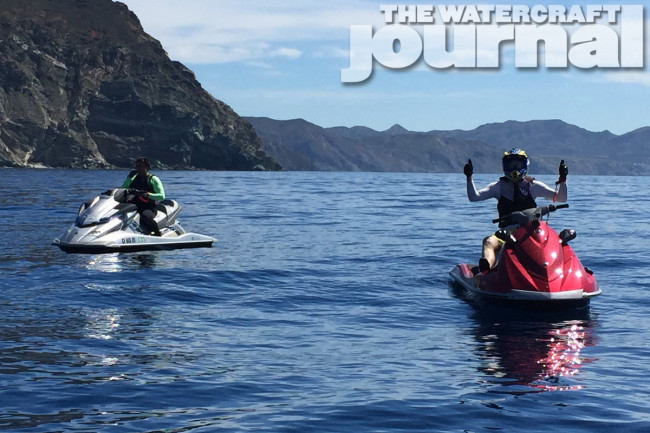
They say that skillful pilots gain their reputations from storms and tempest. Fourteen riders today, did so with total immunity. Eight PWC chose to go around the island and then enjoy lunch at Two Harbors, the more laid back, less commercialized part of the island. Troy on the Sea-Doo “Bumblebee,” and Jay and Fadi on the chase boat headed to Two Harbors while Tony, Santiago, and Caccius raced back on lake like conditions to the launch ramp at Long Beach.

Today, there was no piper to pay for a perfect run to, around, and back to the launch ramp. The ride to Avalon on PWC surprises most Catalina Island boaters, as most will never see the backside of the island for fear of the unknown. Don’t expect to find the same conditions on the back side of the island as you do the front side. Several years ago my front hood exploded as I came off a huge swell, early on in the ride.

Since then, I refer to the backside of Catalina as Jurassic park, due to eerie clouds and sudden fog, jagged protruding rocks, and irregular coastline encountered. Today, once rounding the east end it felt like Bahamas weather as we start seeing a clear, coastal white sandy bottom. The nearby islands of San Clemente and rarely visible San Nicholas, though inaccessible by PWC looked invitingly visible and close.

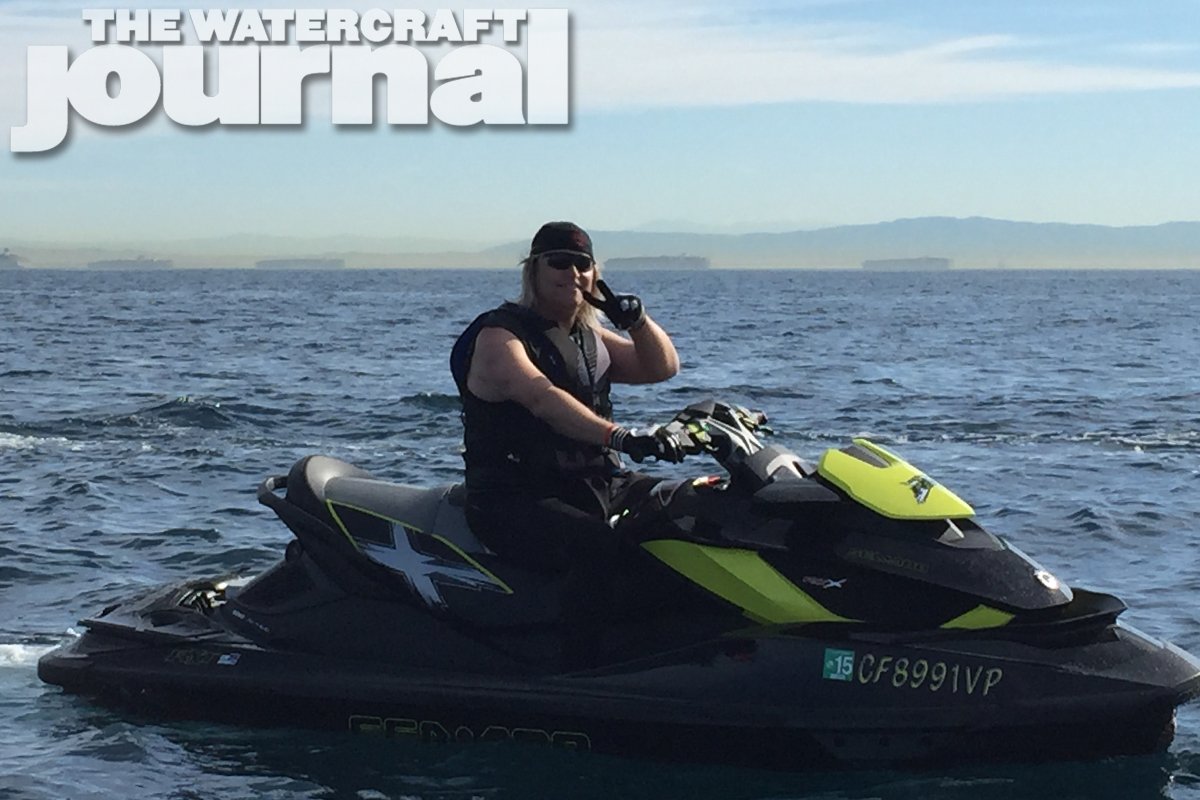
Recent Mojave Desert winds calmed any wave and swell action today creating near perfect conditions for riding offshore. Extremely dry 70’s air temperature and 64 to 68 degree water temperatures led most everyone to forgo full body suits and opt for shorties. Tony was even sporting a new Jettribe vest.

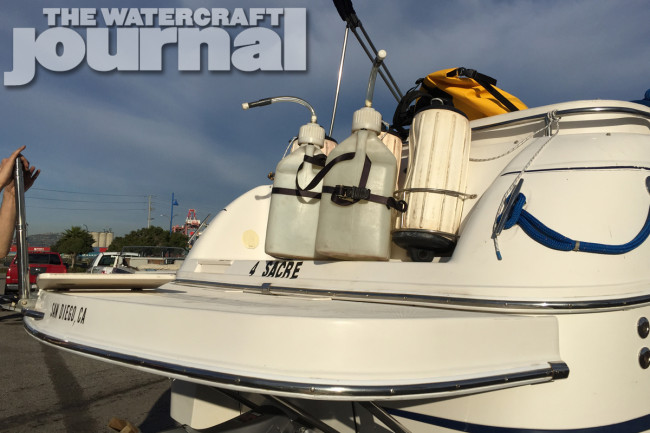
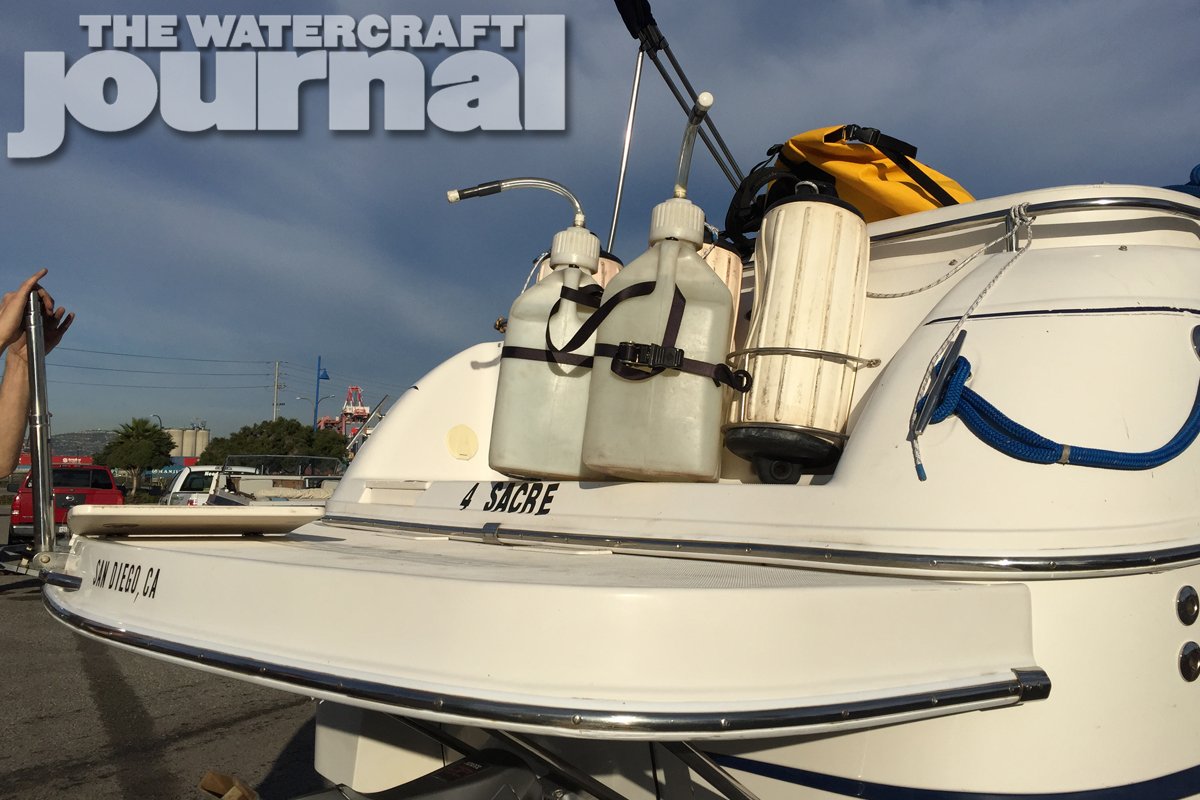
Our offshore run to Avalon was pretty uneventful, except in mid-channel when we all stopped to look at a USCG helicopter that dropped down on the group for a closer inspection. Several of us filled up at Avalon at $6.10 per gallon for 89 octane. All made it around the island and back home with a blaring low fuel alarm. One club rider, who today showed up with a home-built version 2.0 PWC fuel rack became our first casualty several miles into the ride. The rack will need another upgrade and further testing. Stay tuned for Version 3.0. Surprisingly, his version 1.0 PWC homemade fuel rack made it on the clubs recent ride from Long Beach to San Diego and back ride.

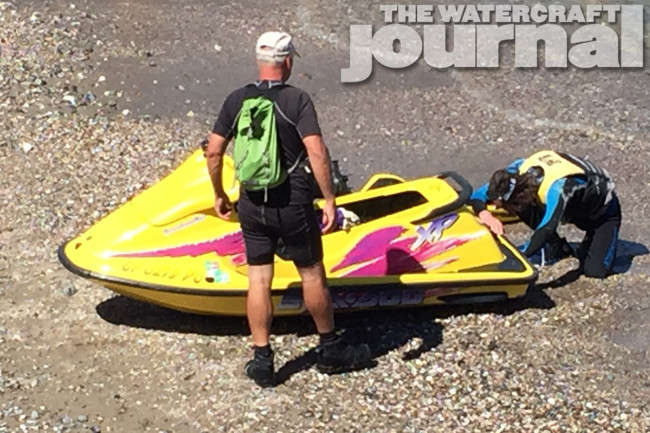
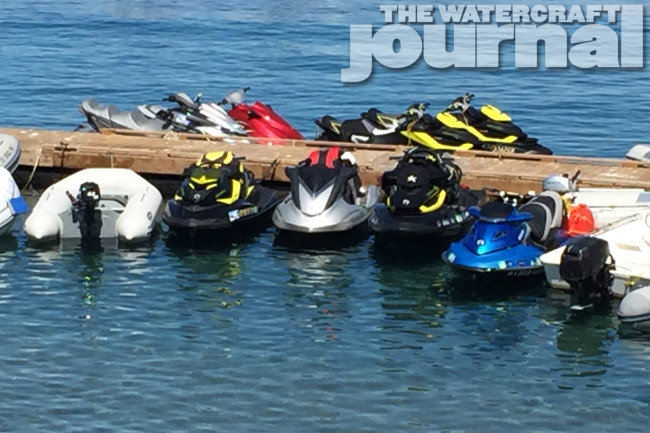
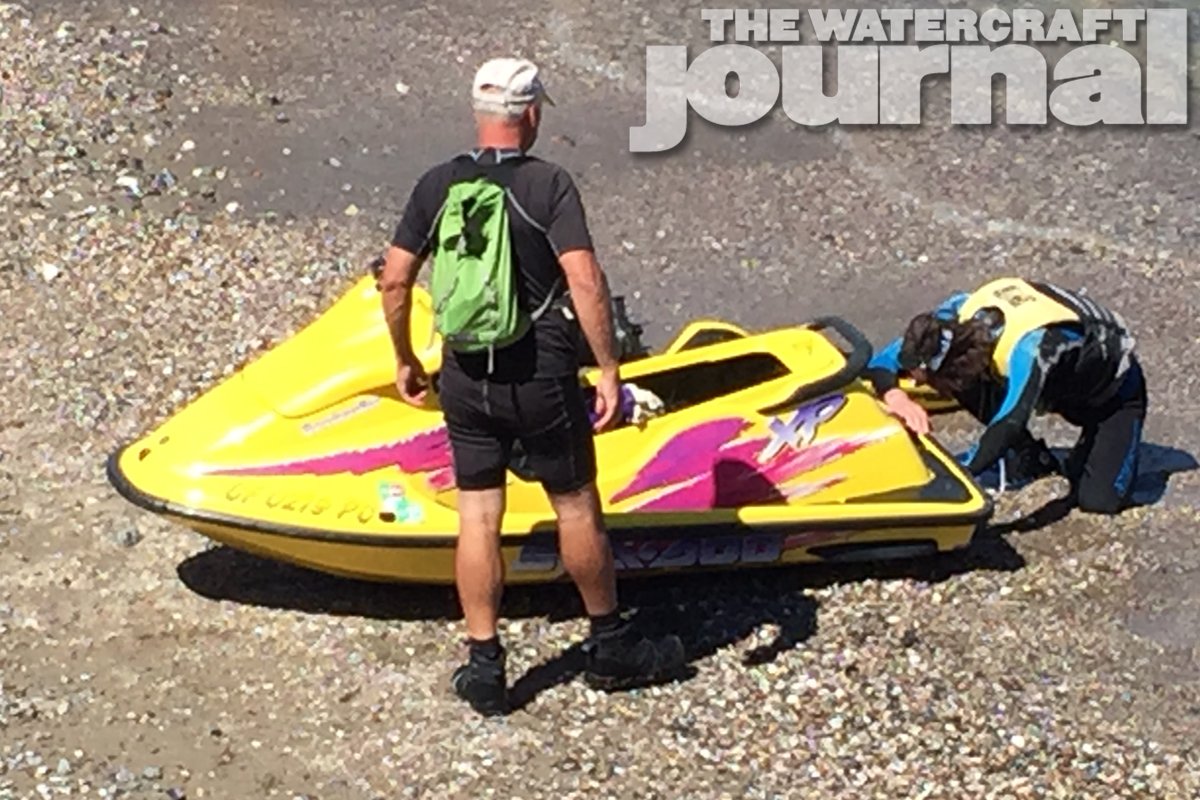
Our second casualty, Troy on an early-era Sea-Doo started sinking at the dinghy dock at Two Harbor. When the bumblebee was beached a hairline crack above the waterline was found to be the culprit. Fortunately for Troy the souvenir, ice cream, liquor, and boat marine parts store at Two Harbors also carries quick bonding epoxy. Ironman Troy was able to fix his ski, ride over with the chase boat to Two Harbors and return safely back to the launch ramp at Long Beach.

Today’s island ride reminds me of a book I once read about time. As children every second counts; because we want to do something exciting that counts, similar to our around Catalina Island ride. As we continue to grow our time becomes altered, because now we are calling our own shots, on a day-to-day basis. Suddenly adulthood and a job, sometimes a job we don’t enjoy. Time now is altered once again between the things we enjoy, like PWC riding on weekends.

Our years are no longer 365 days they are now 52 weekends a year. Weekends just fly by. Six riders today were recently at the 2015 Mark Hahn 300 mile race at Lake Havasu, Arizona; with three racing. Three riders including yours truly also recently rode from Long Beach to San Diego and back, on the same day. Before long spring has sprung, and you are in the middle of the San Pedro Channel, riding with whales and dolphins. Almost half a weekend is now gone and most like me, will likely spend Sunday recuperating. Several in our group see new PWC’s in our future. Clubs like West Coast PWC club are manufacturer’s new best friend.

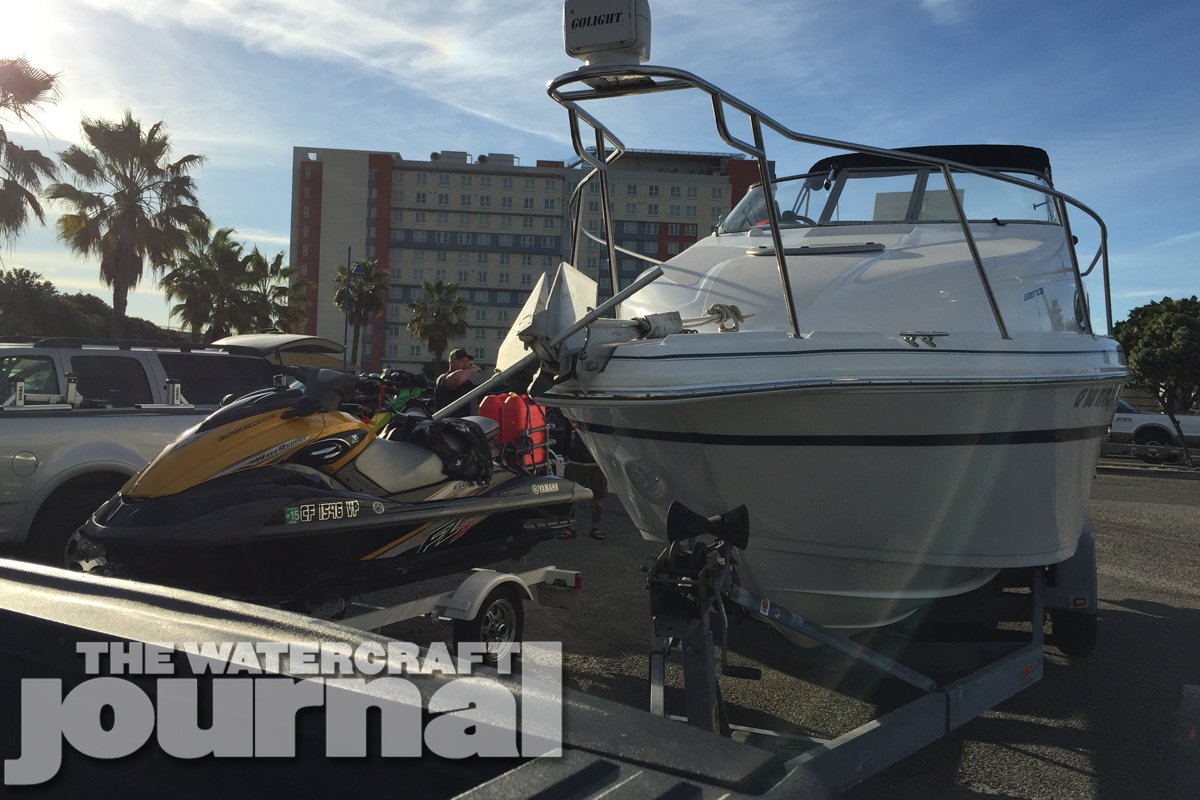
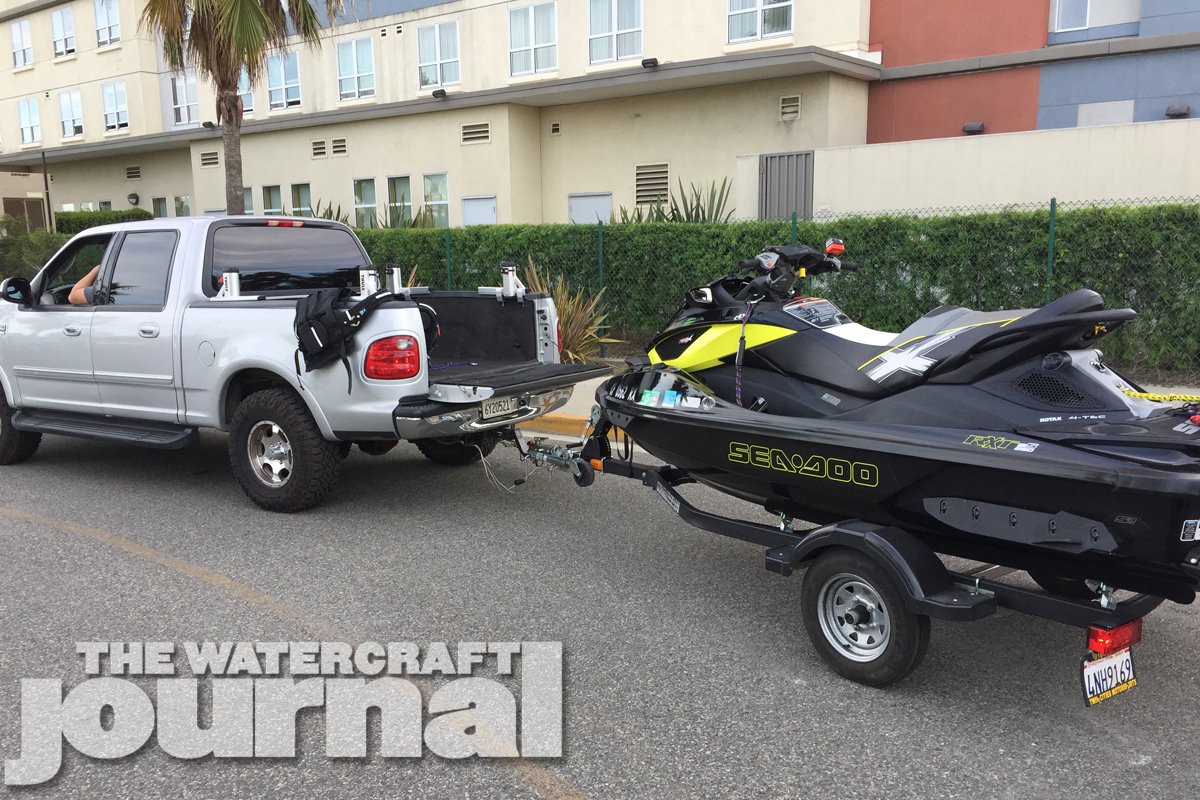
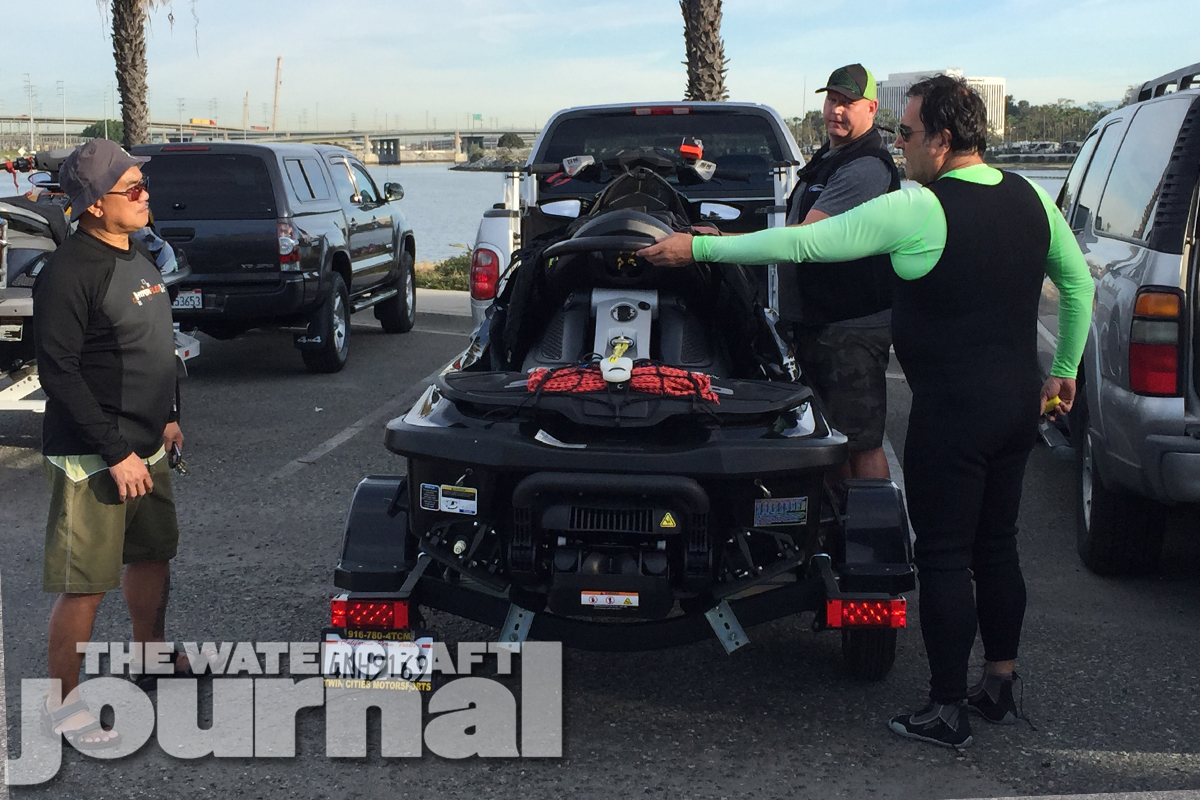
How does one go about getting ready to ride offshore? For some, living less complicated lives, it goes similar to this. Back up the truck to the trailer, unlock things, and plug things in. Haul your tote box of PWC riding gear to the truck’s cab, take inventory. Now check that you also have the electronics, camera, iPhone, wallet, and money. Next go fill up with fuel and then show up at the appointed launch ramp with a crisp $ bill for the automatic gate or gate-keeper. Sounds simple, you say.

For some. Others have shown up forgetting their life vest, or two left-handed gloves or forgot to fuel up. Could we do this day in and day out, and then work on the weekends? Why yes, you might say. Then we could come up with a business jargon sort of approach to riding like adding action items and task lists. Next you would see deliverables and new vocabulary terms like in sailing. Further thought says no. Let’s keep this PWC riding as the freedom machine that it now is.

Our weather may not be the same next weekend, so when we ride on days like today, rest assured that we rode an ultimate ride. If you joined us, then you too would know or as Louis Armstrong once said, “If you have to ask what jazz is, you’ll never know.”

2

11 8 4 3 2 6 7 9 10 19 16 5 30 29 21 28 22 26 27 1 12 13 14 15 17 18 20 23 24 25 32 33 34
<
>

Video: Rickter Teases 2015 RRP World Tour

1

world_tour_draft_10-w800-h600

This year is shaping up to be one of the most transformative in the personal watercraft industry. A recent uptick in consumer confidence has fueled a dramatic increase in new vehicle sales, which in turn, is supplementing an already burgeoning aftermarket, giving us a landscape rife with waterways brimming with new and returning PWC enthusiasts. The industry is the healthiest it’s been since 2008, and to this, 2015 is seeing more aggressive moves from many of its biggest and savviest players.

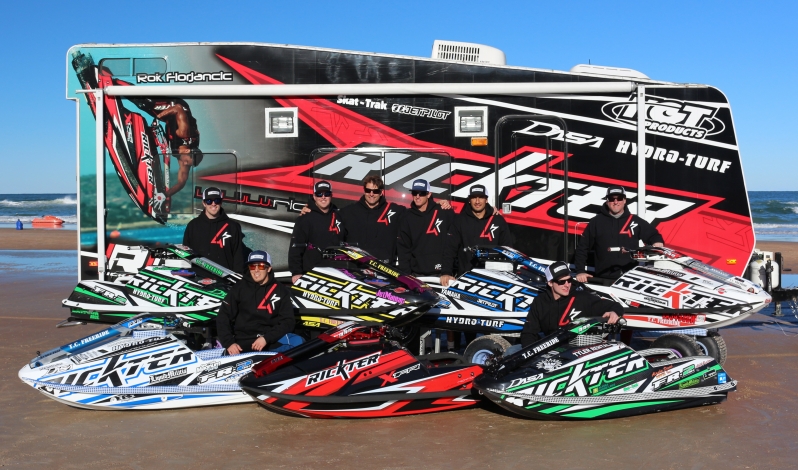
Rick Roy and his Rickter RRP team are easily one of these key players, and never one to let the fiery iron cool. Signaling what they deemed “a new adventure in ski freeride,” the whole roster of the RRP Team – consisting of Mark Gomez, Pierre Maixent, Brandon Lawlor, Taylor Curtis, Brodie Copp and Abraham Hochstrasser – will travel the entirety of the IFWA Freeride World Tour; from Australia, Portugal, France, England and USA.

Not only representing Rickter RRP, but acting as ambassadors for the sport of freeride, the Rickter RRP Team riders will be promoting the “sport’s true hard core freeriding and wave competitions.” Accompanying the press release was an equally-professional teaser trailer which we’ve included a link below:

Until the IFWA Tour begins, we invite you to prepare for an influx of coverage by following the Rickter RRP crew via social media, to gain “a taste and a feel of the countries visited by the Rickter RRP Team.” Likewise, “Events videos will be produced and published on our website and a wrap-up video of the complete tour will [be produced] at the end. Come and join us on the locations; dont miss the chance to meet and ride with the Rickter RRP Team Riders.”