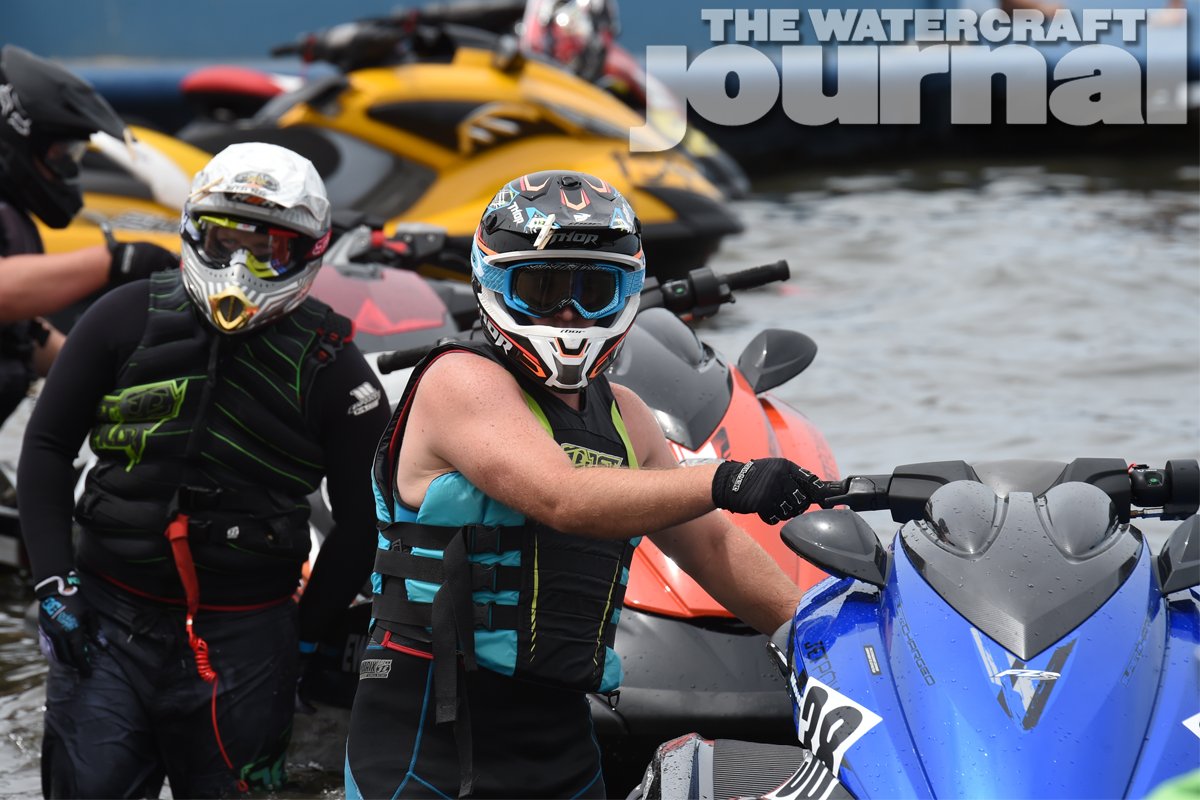
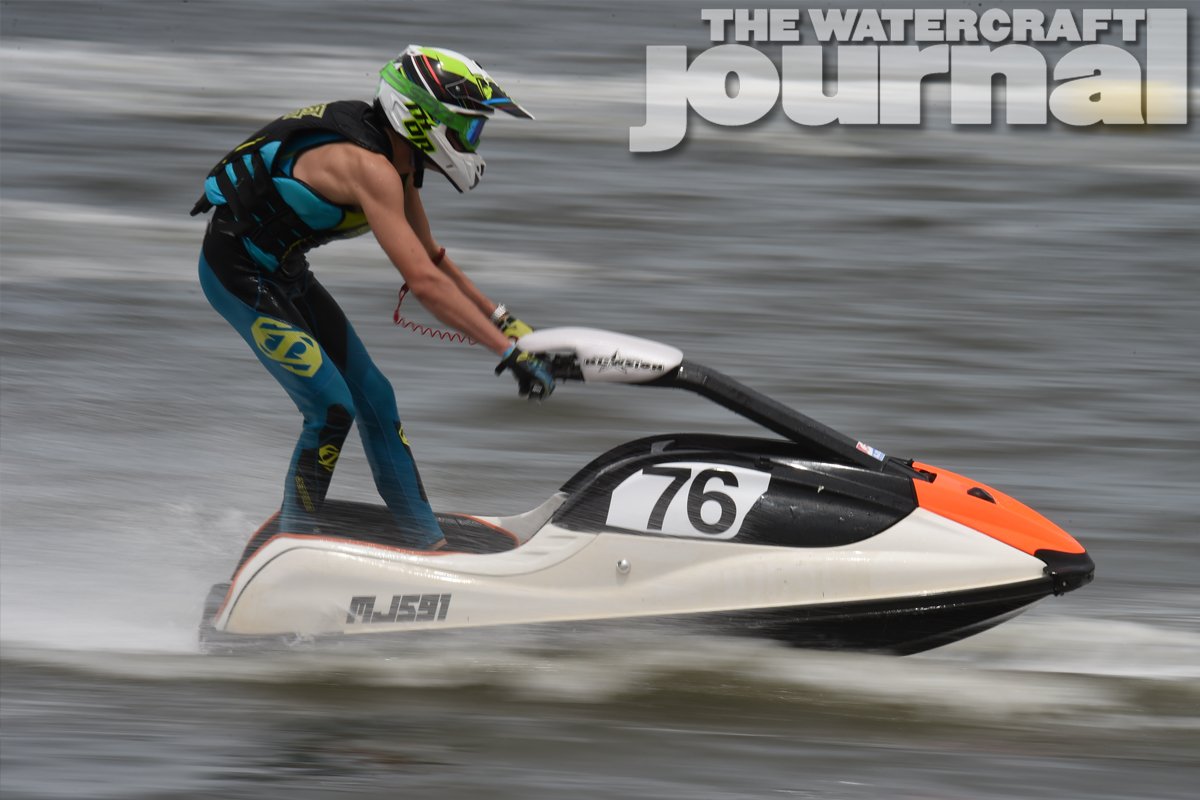
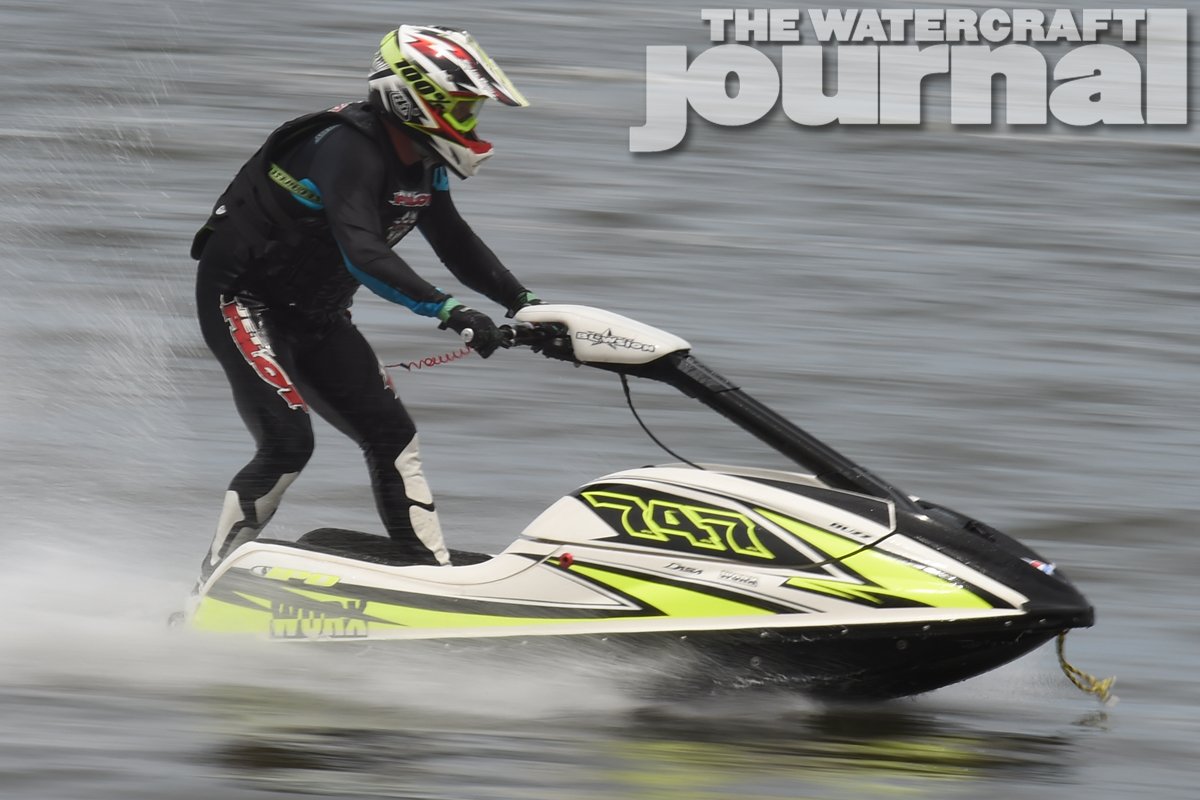
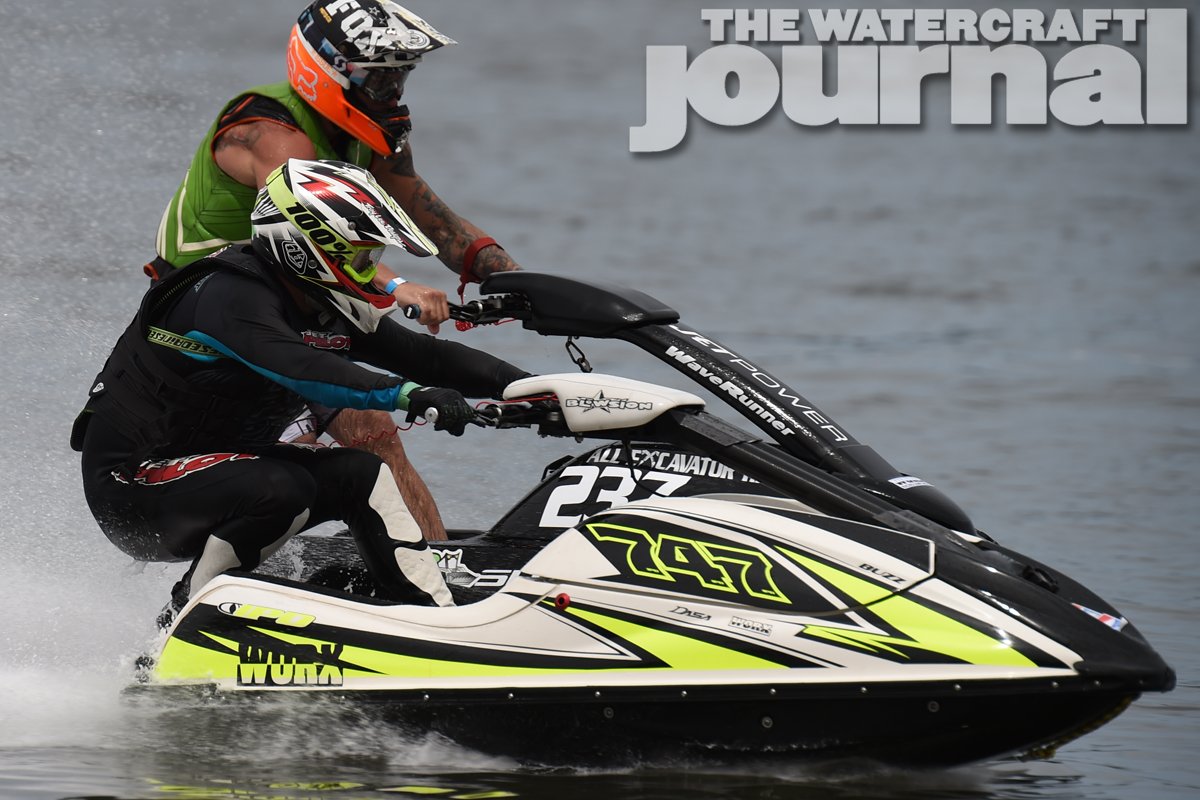
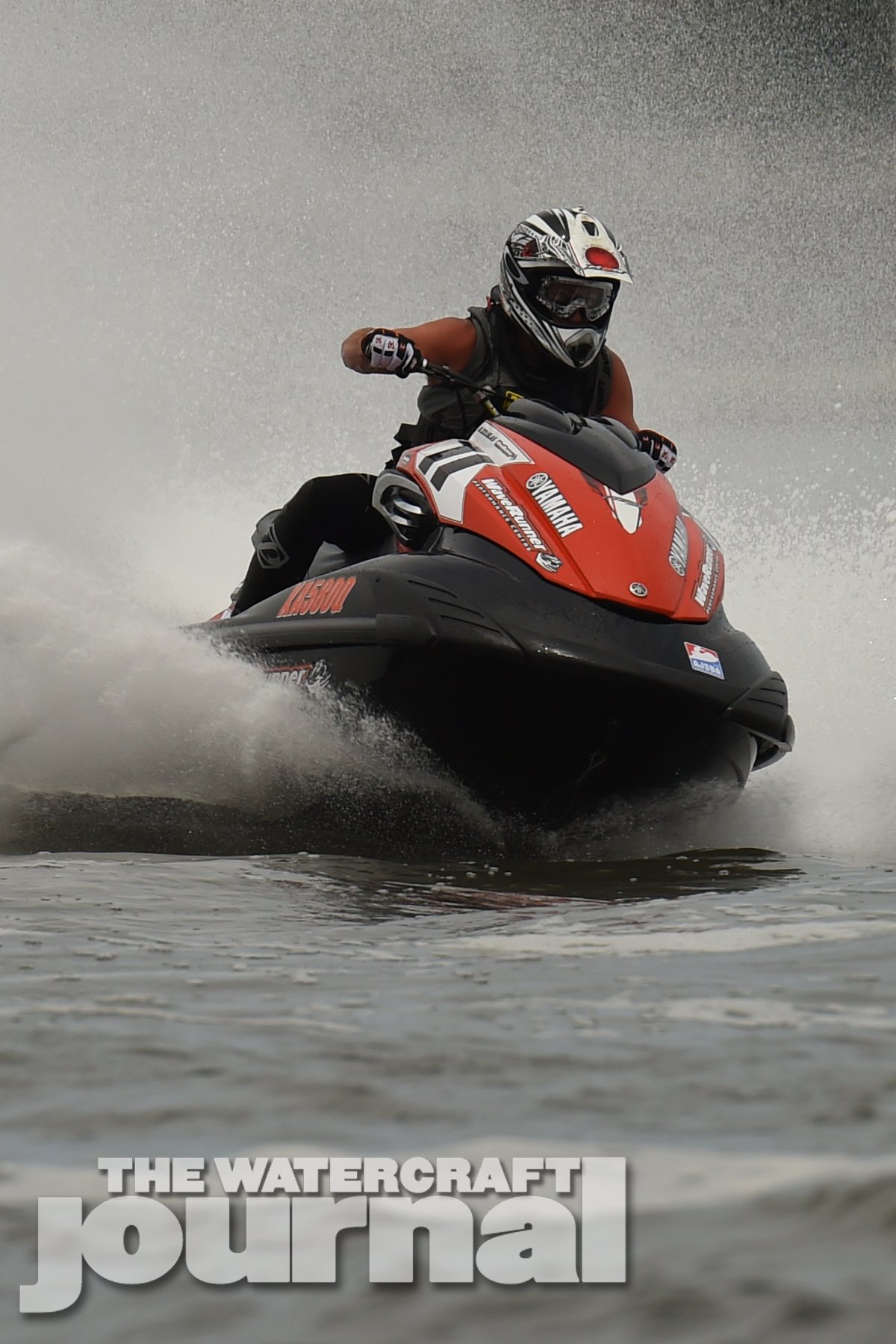
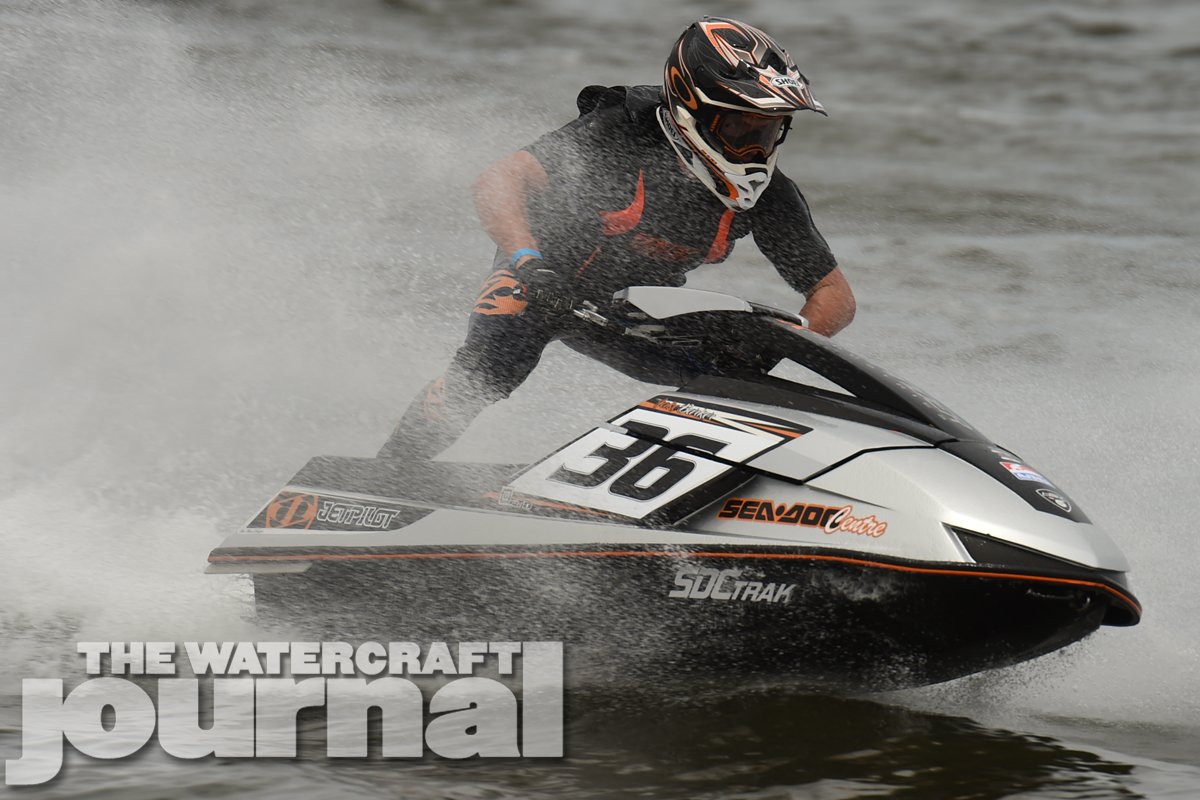
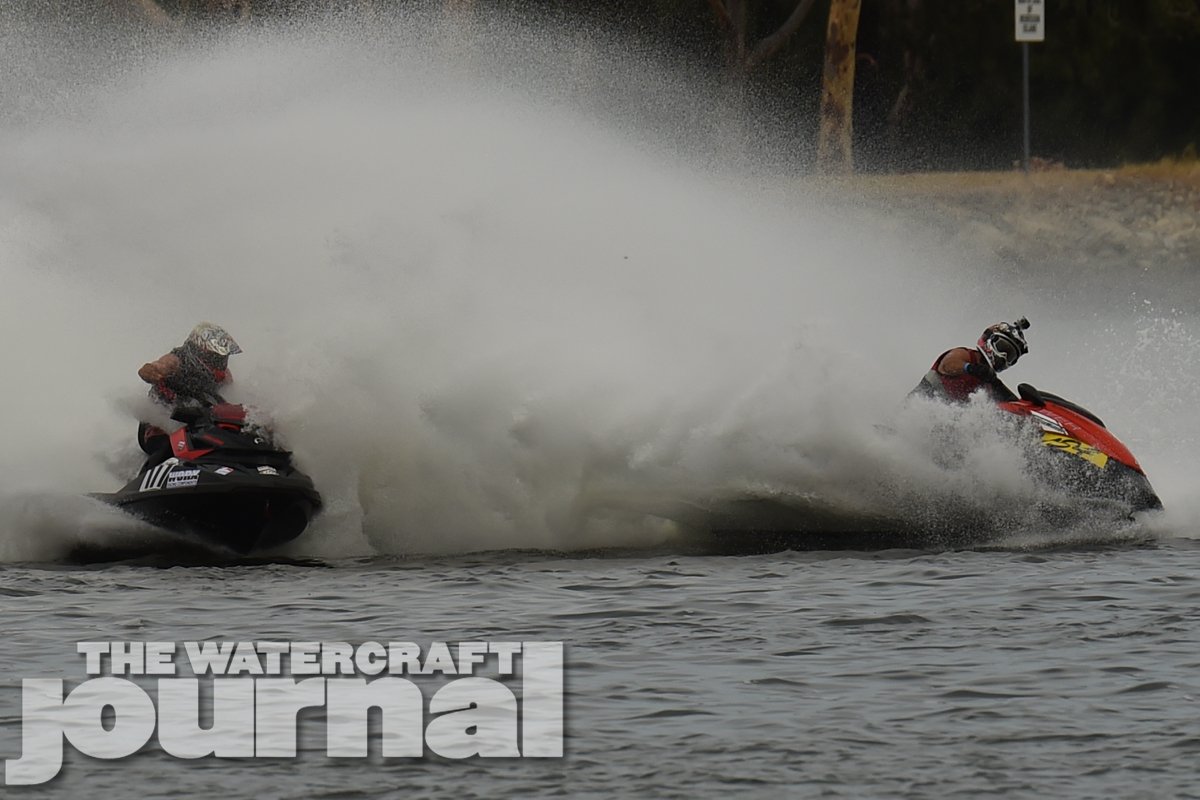
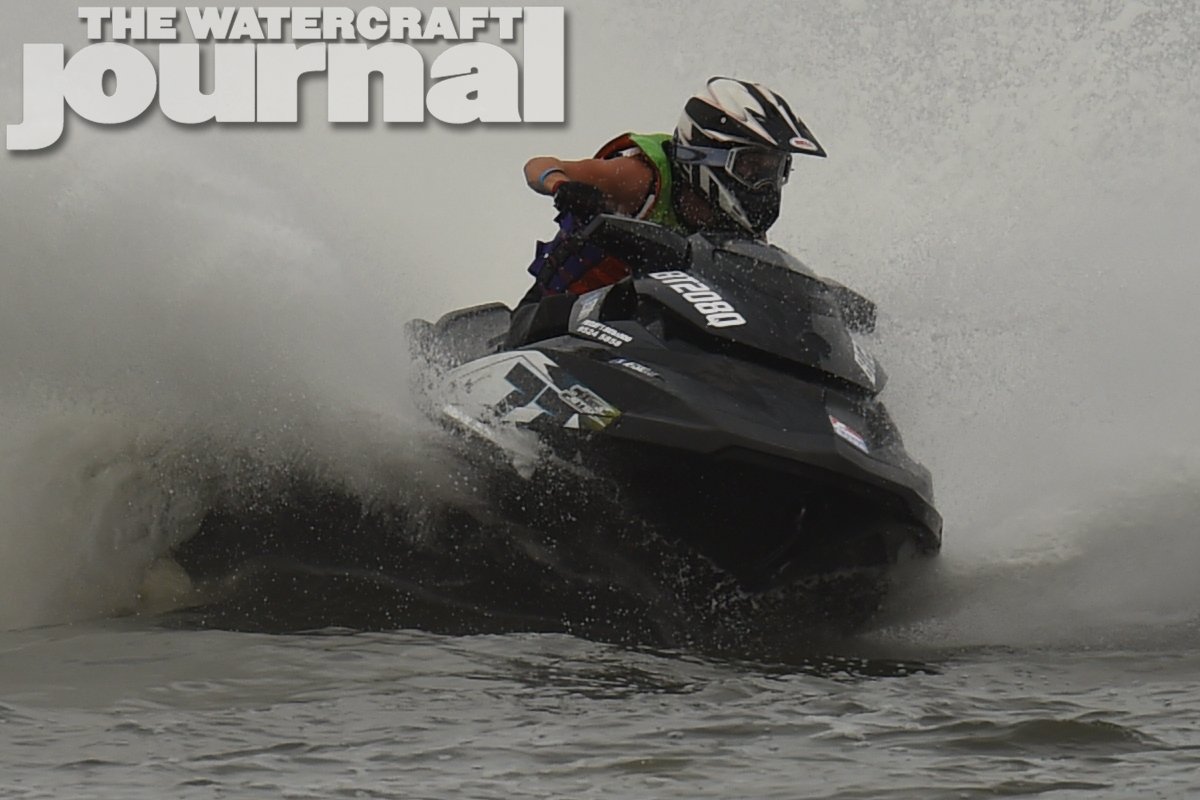
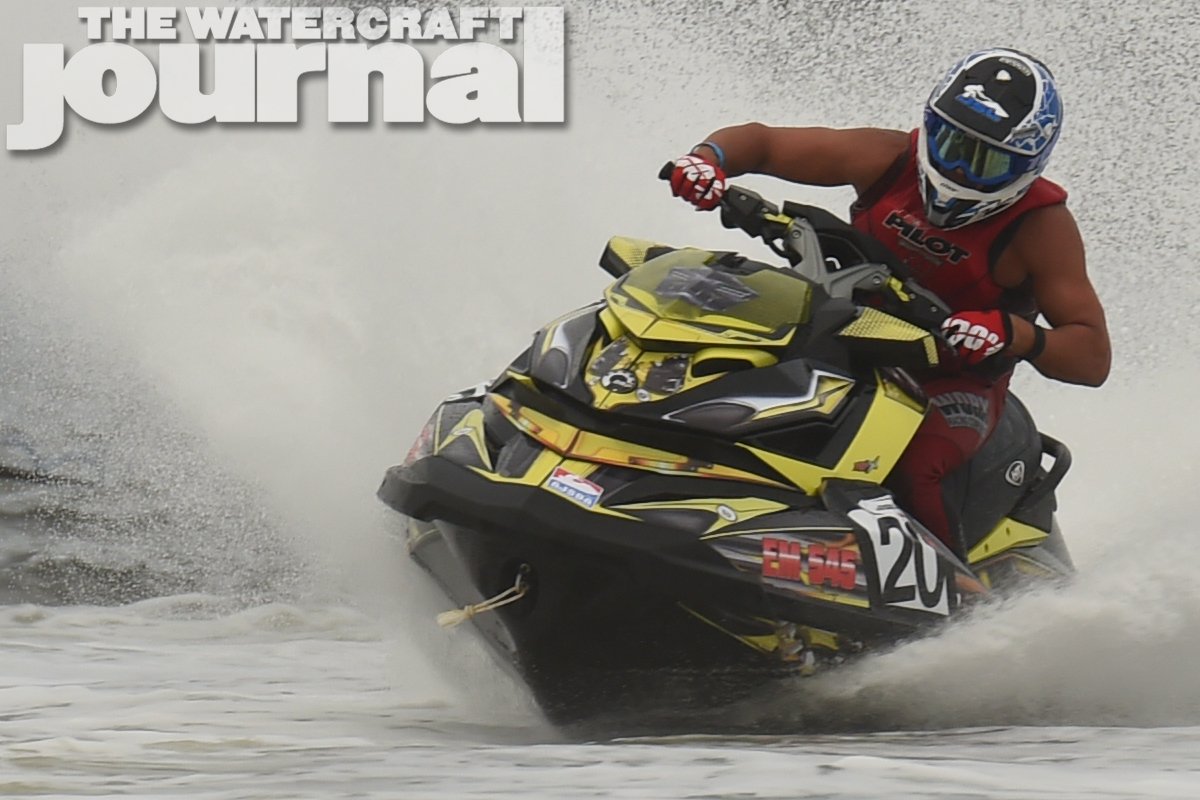
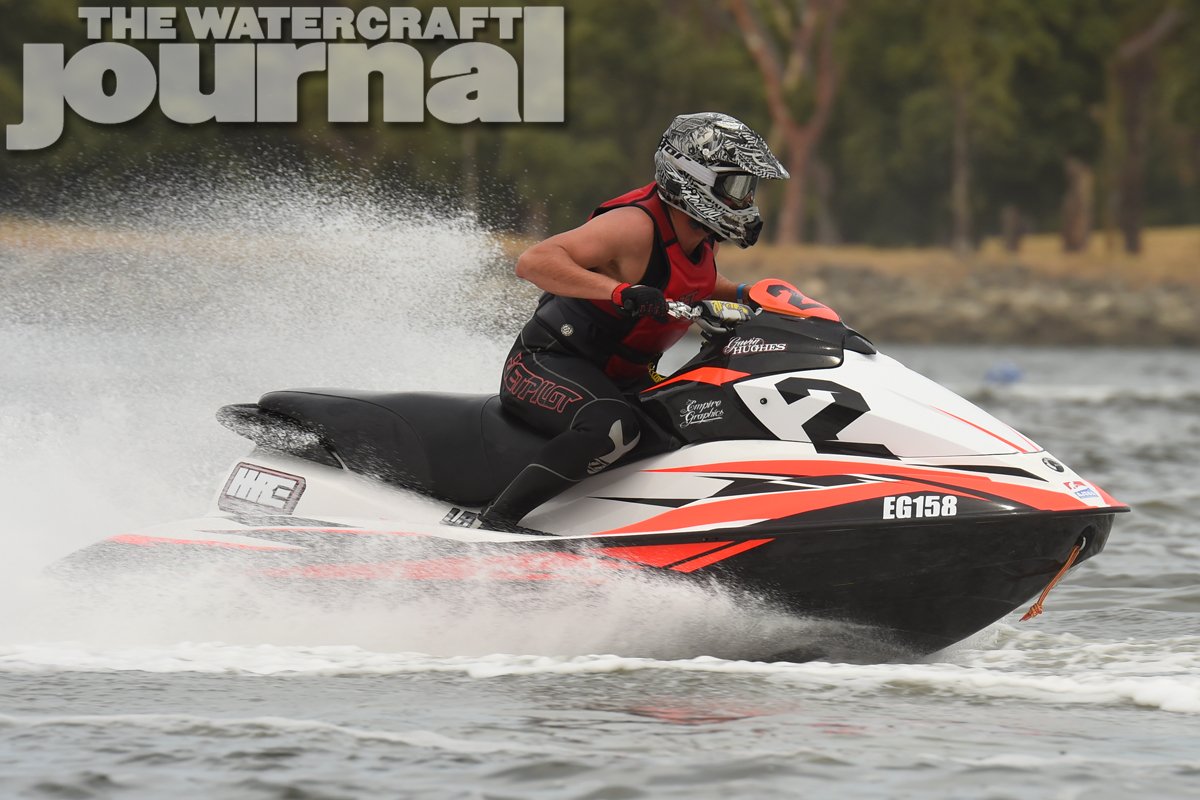
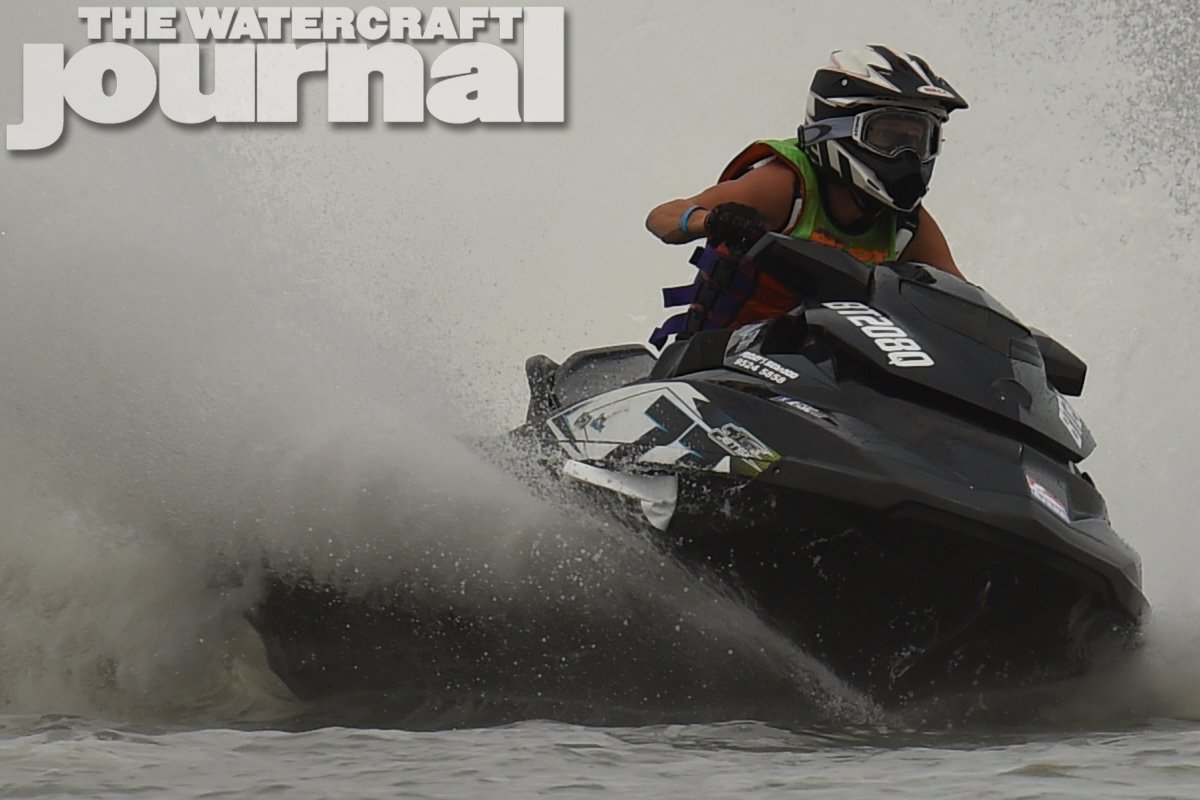
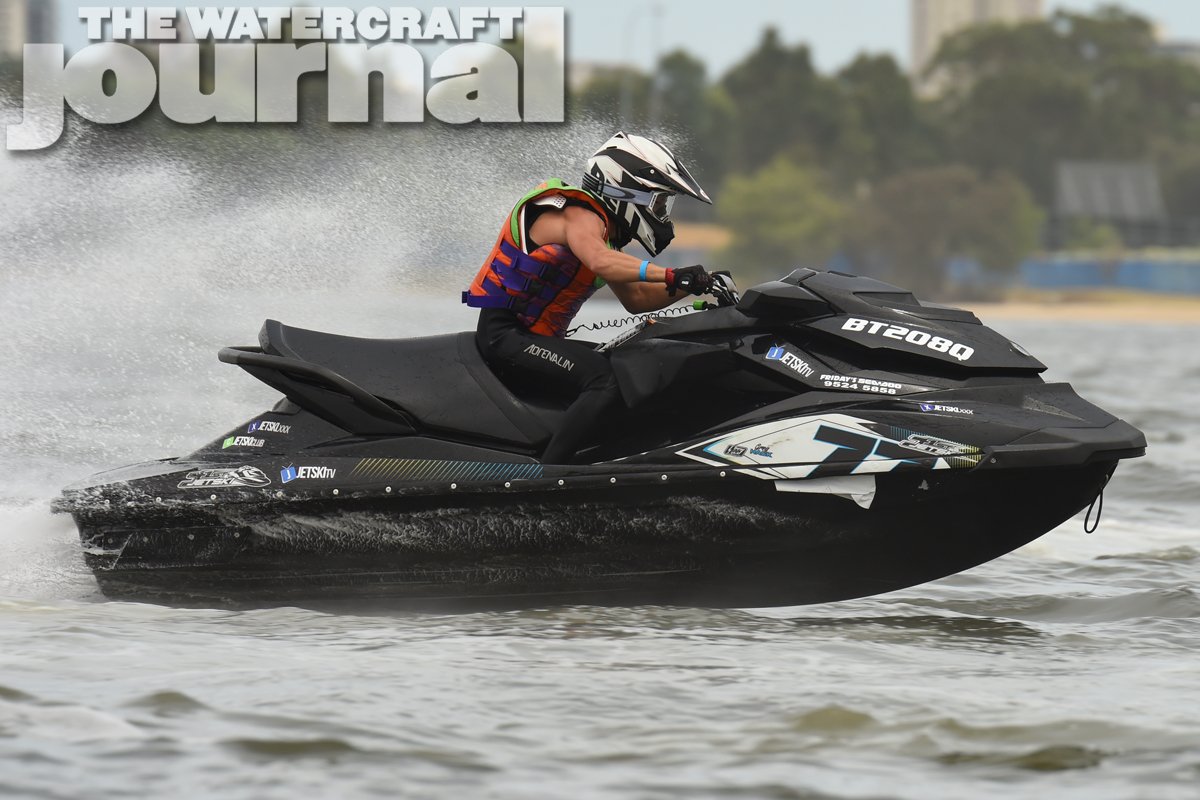
When you ask people, most will prefer the smaller “mom-and-pop” store, restaurant or shop over the big, obtuse and detached feel of a corporate chain. But, that’s not to say that they don’t enjoy the access and convenience offer by the big multimillion dollar chains. It’s a damned-if-you-do, damned-if-you-don’t situation. That’s why WMF Watercraft has managed so much success. The Millsboro, Delaware dealership balances the tightrope of providing its clients with both a small, intimate shopping and service experience, while simultaneously being fast and convenient, with the pricing and repairs worthy of a big, corporate dealer.
The commitment to walking this thin line goes a lot deeper. Whether you’re in the market for a pre-owned personal watercraft that has undergone a scrutinizing certification with a fine-tooth comb, a brand-new, uncrated modern 4-stroke runabout for some long summer days on the water, or a lake-boiling, top speed performer that has been custom-tuned with a hot rod supercharger, easily making you the fastest ski on the water, the skilled technicians and mindful salesmen at WMF make that happen. Their sales and service departments offer an endless array of options, be it for your beer budget or champagne dreams.
In fact, The Watercraft Journal has shown you several examples of WMF’s service department’s custom handiwork that customers have asked for, that is, in addition to them moving quality pre-owned jet skis in need of a new home. If you call the Eastern Seaboard home, and you’re looking for a dealer to call your own, WMF Watercraft is waiting for you.
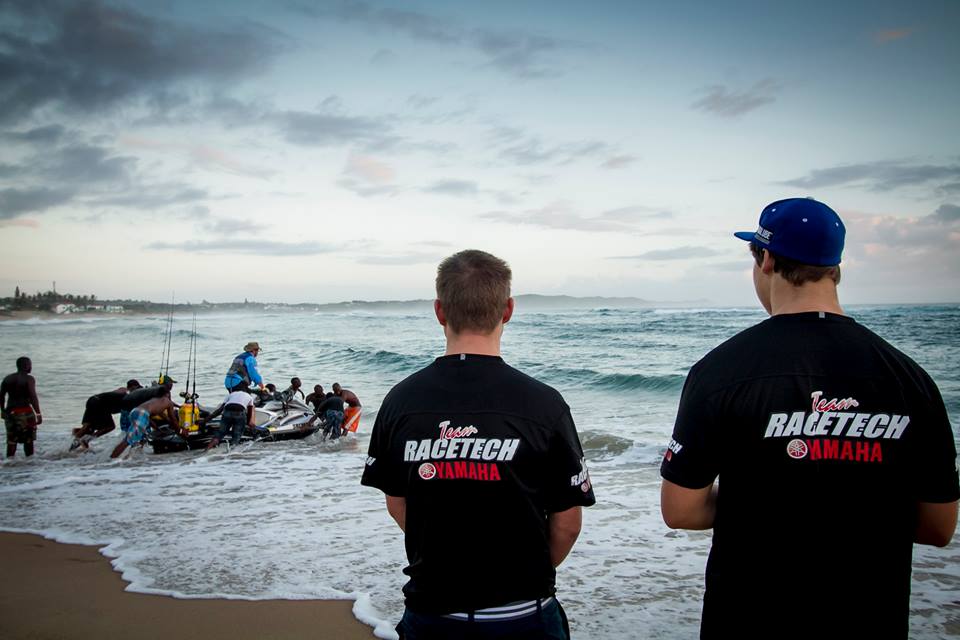
Last week, the sixth annual Racetech Yamaha Jet Ski Fishing Classic took place once again in the sleepy town of Ponta do Ouro, Southern Mozambique, just north of the South African border. Attracting 132 anglers last year, and dozens more this year, it is “the biggest event of its kind in the world,” according to a report by East Coast Radio.
As per the article, “last year’s winner, Pieter Steenkamp, as well as inaugural champ and consistent top finisher, Clive Murphy, [were] notably absent this year due to work and other commitments. However, the field [was] still extremely strong with many other top jet ski anglers attending.”
The sport of jet ski fishing (ie. “jetangling”) has reached new heights outside of the United States, with dedicated websites, forums, YouTube channels, semi-annual contests (such as the Racetech Yamaha Jet Ski Fishing Classic), and even its own TV show in New Zealand. Applying the ease of use and mobility of a personal watercraft in competitive sport fishing has given the purchase of a PWC a whole new angle.
For last week’s Classic, the event was a catch, photo and release event, meaning that the impact on the fish species was very minimal. The points were evaluated by identifying the species and a weight multiplier system. Final results will be posted soon enough at both the Racetech Yamaha and Go Fish Facebook pages. Until then, enjoy this cool video from last year’s event below:
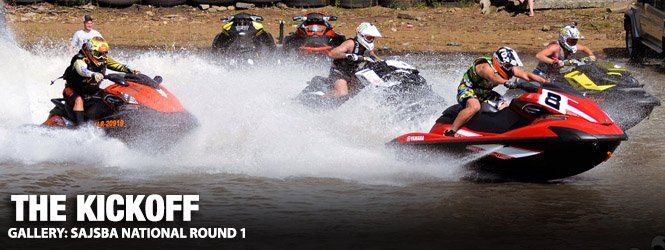
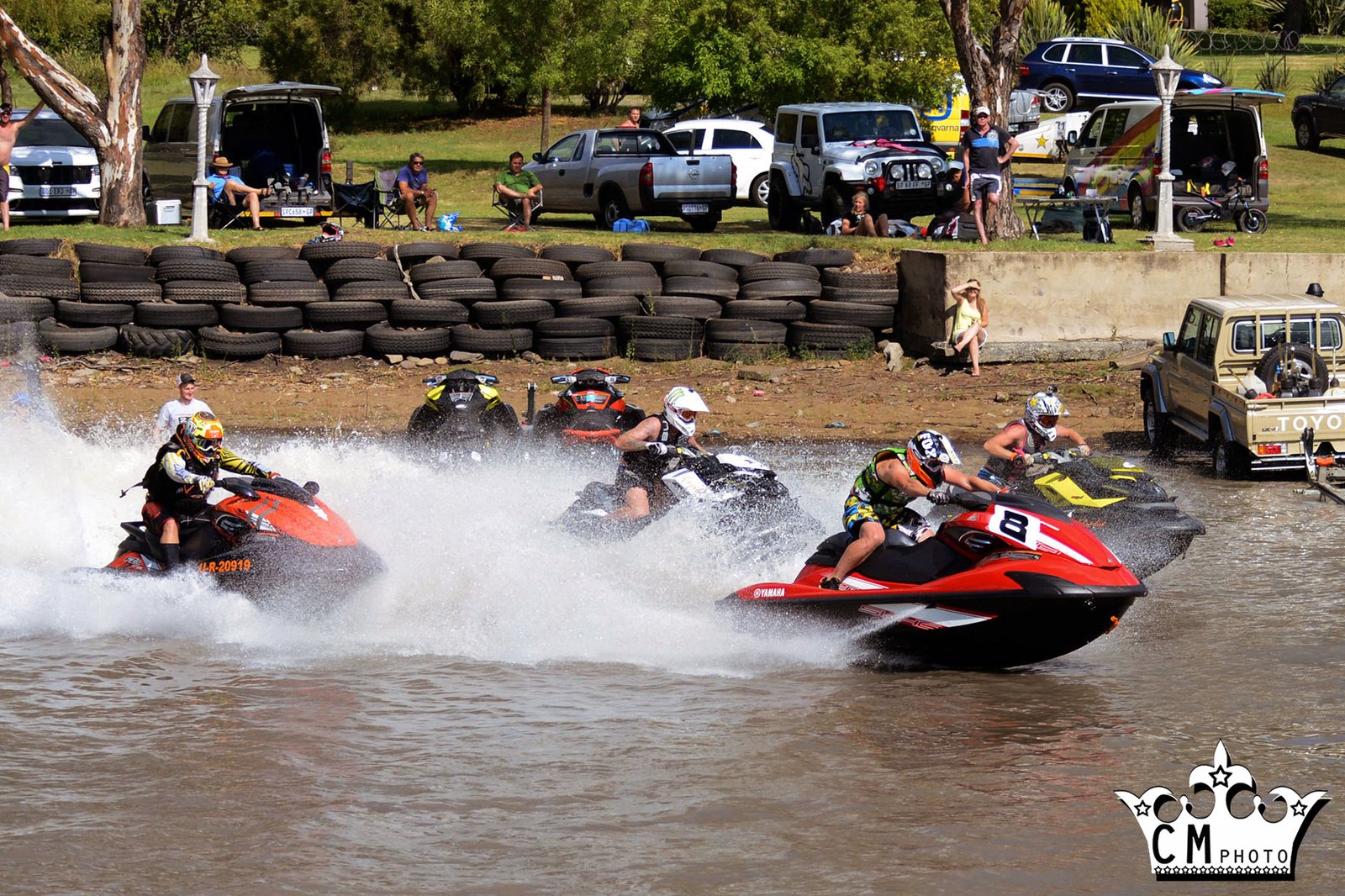
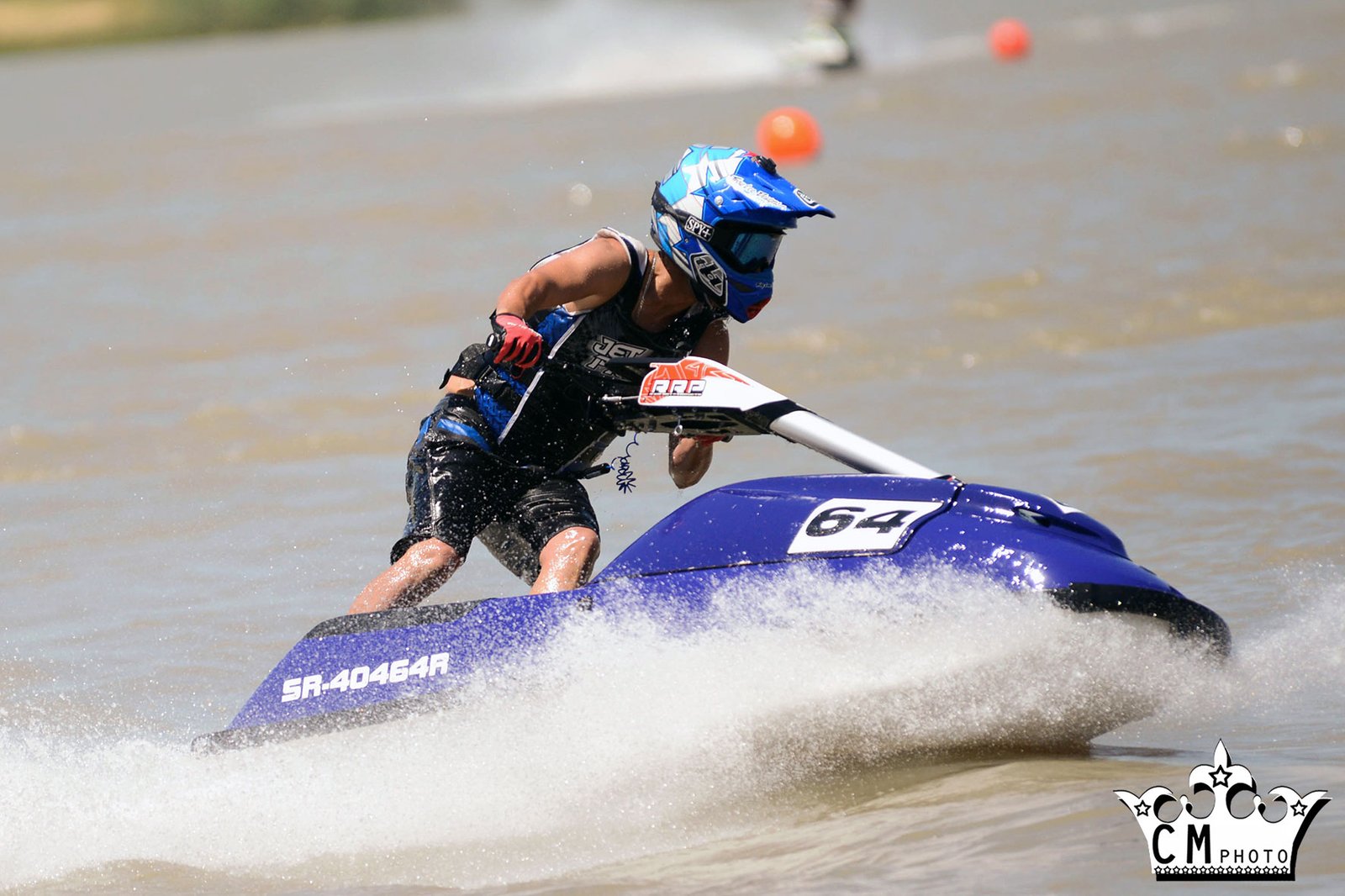
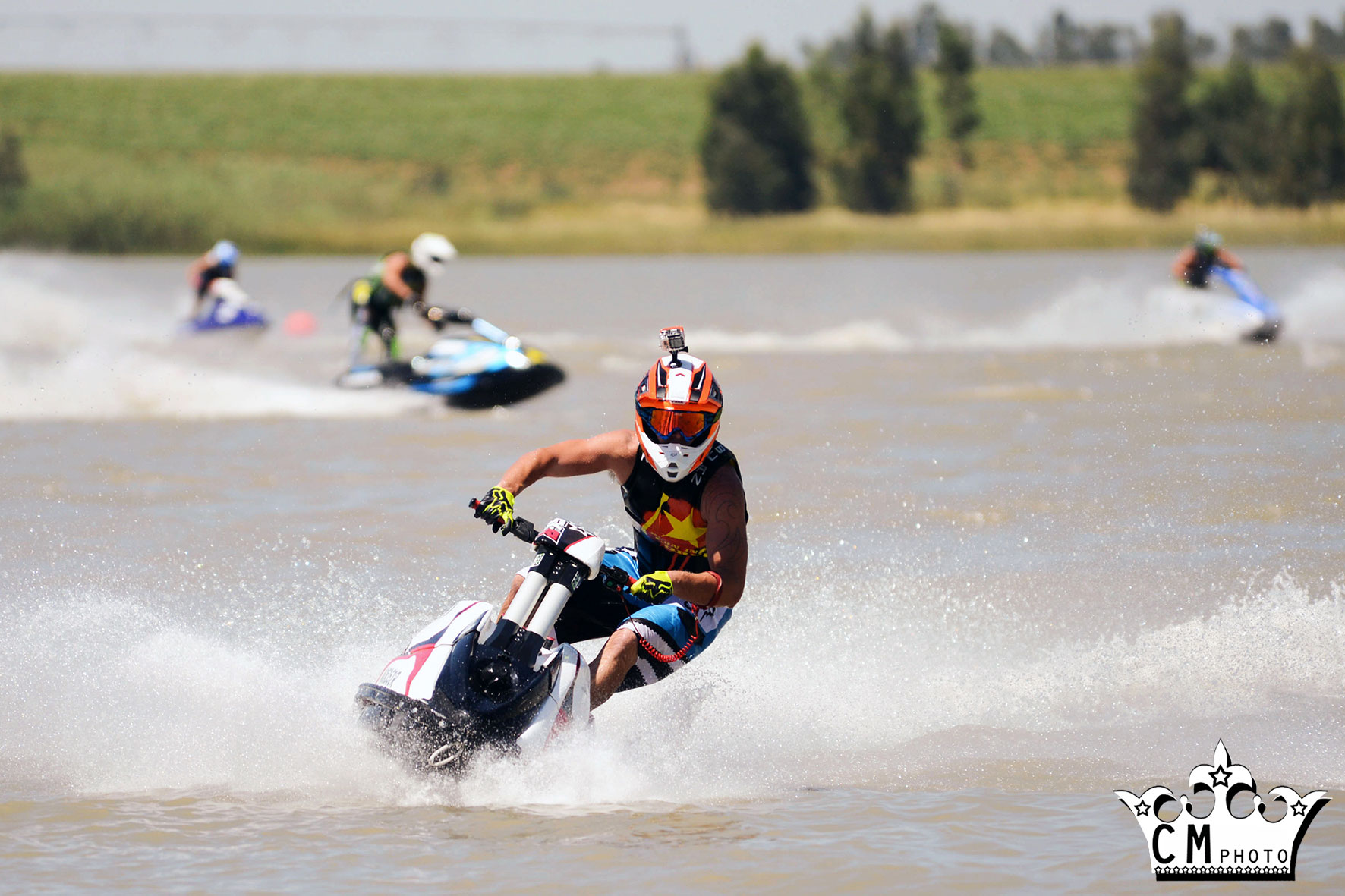
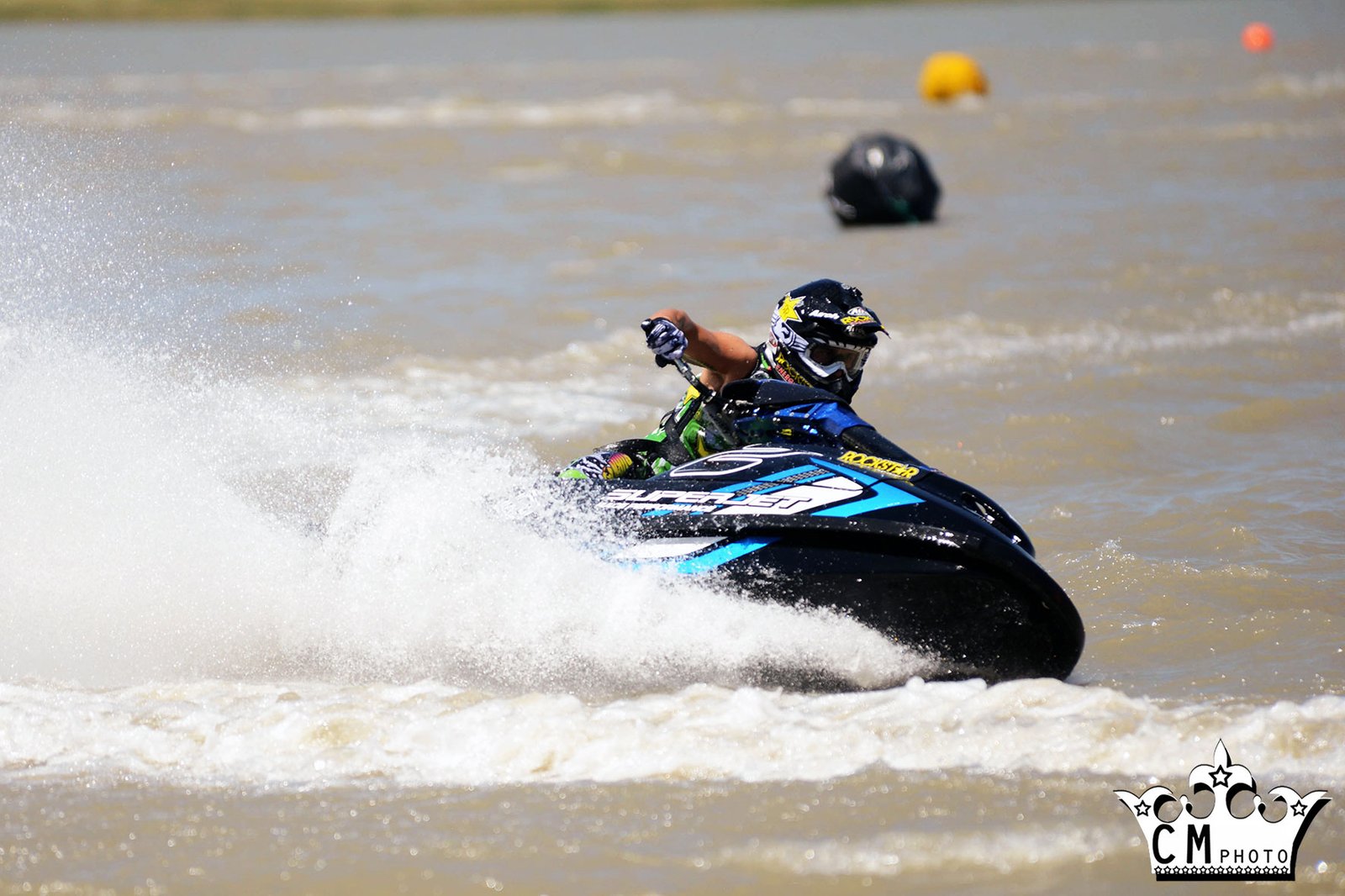
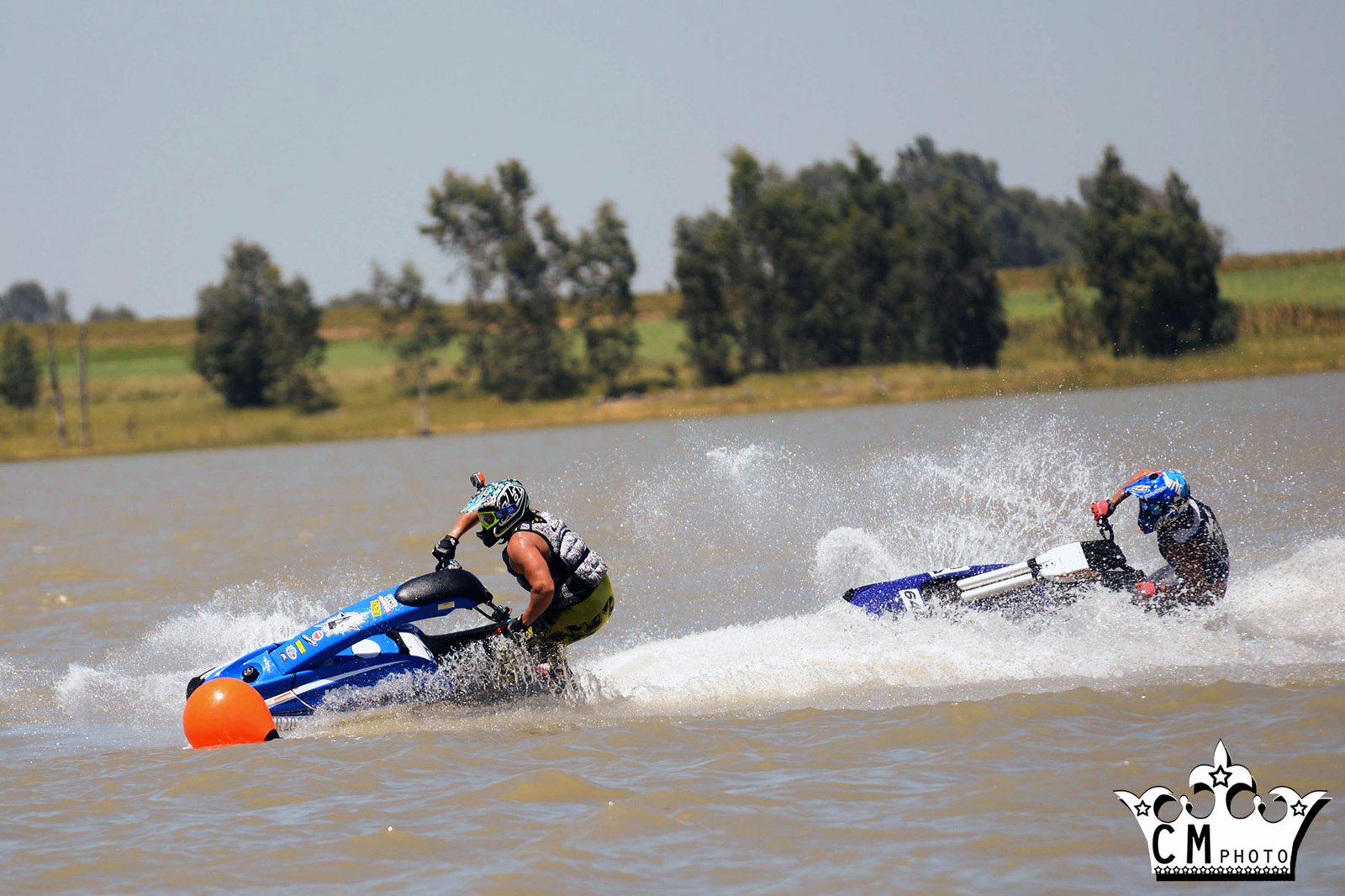
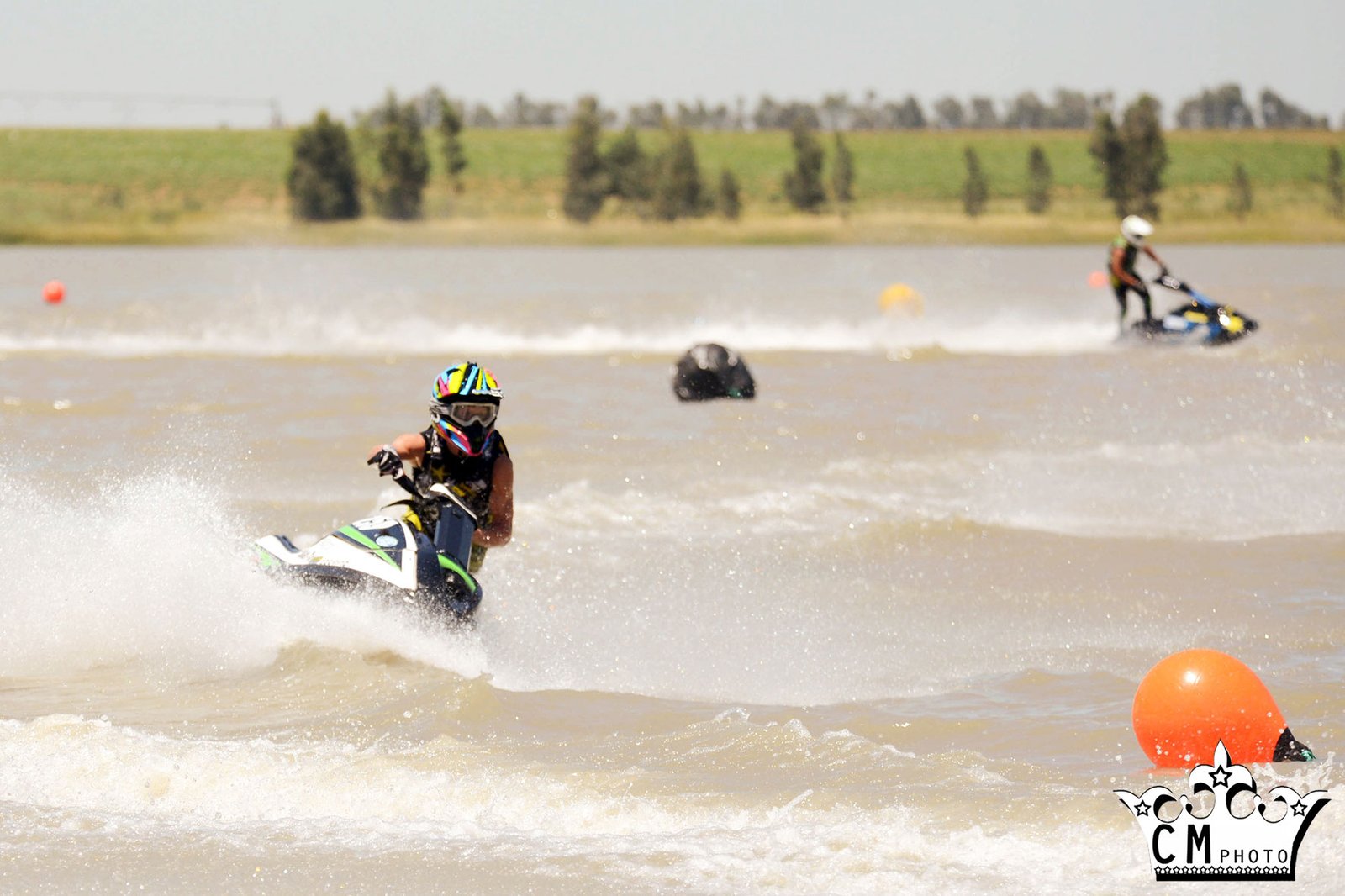
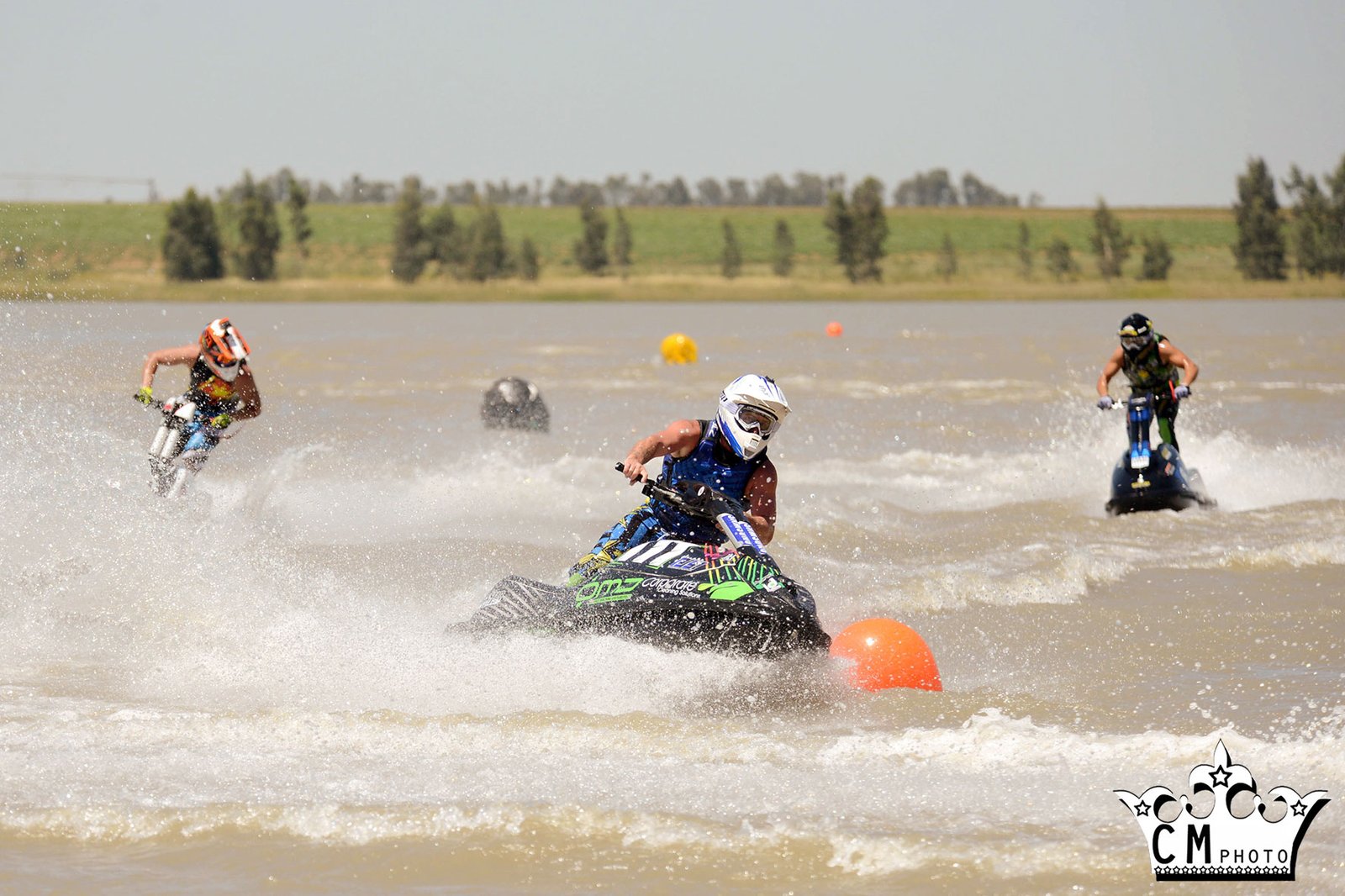
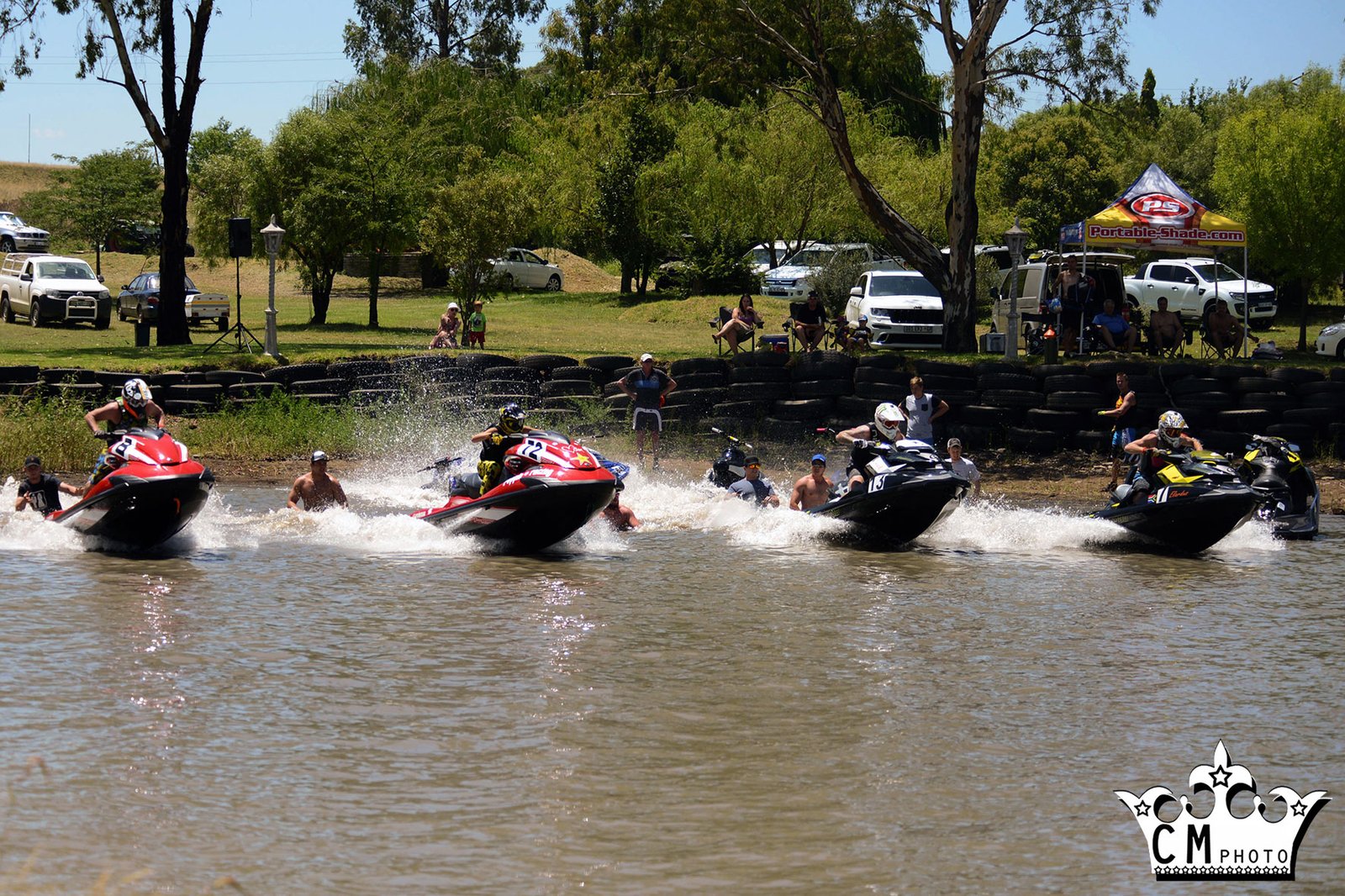
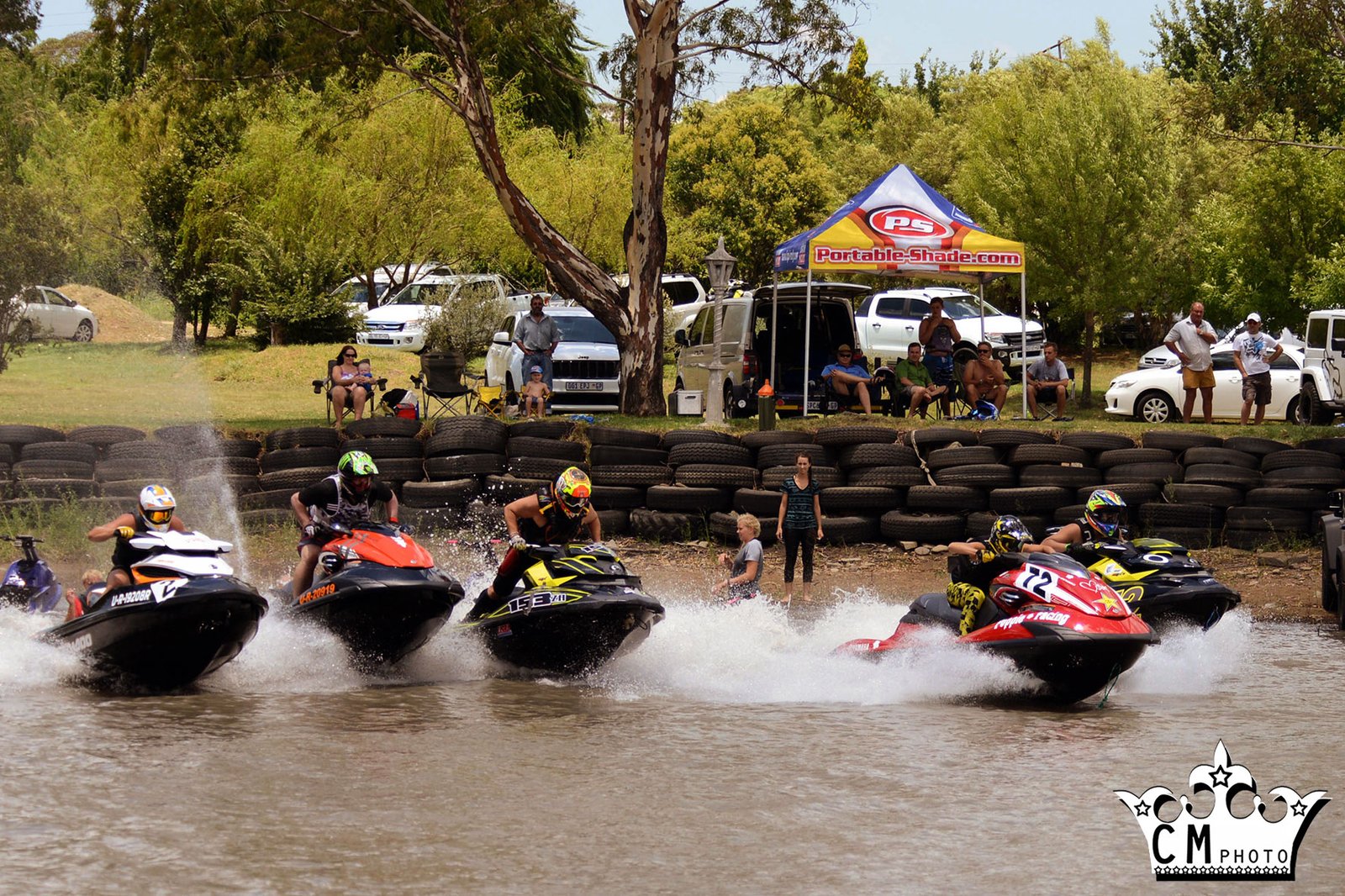
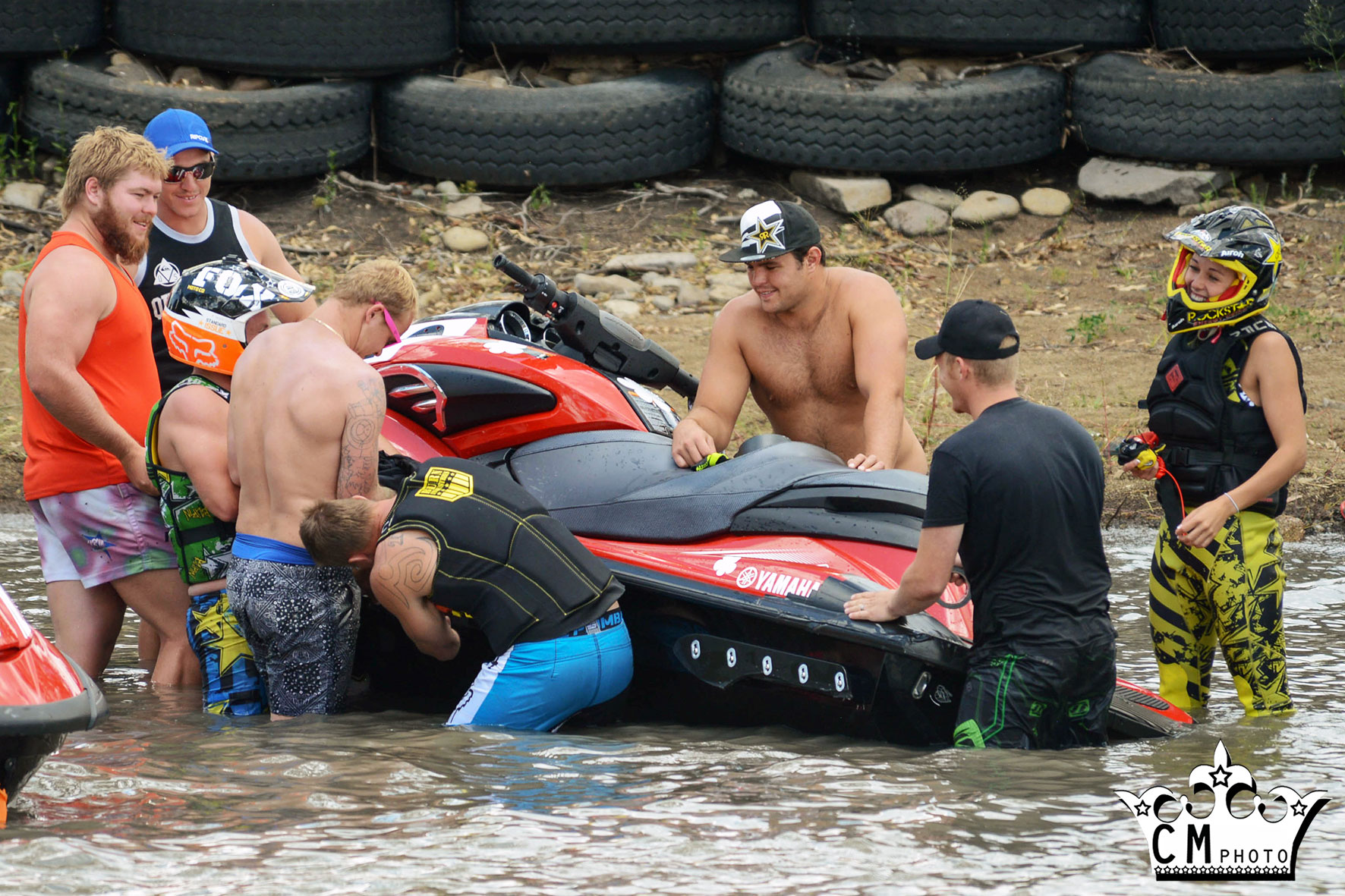
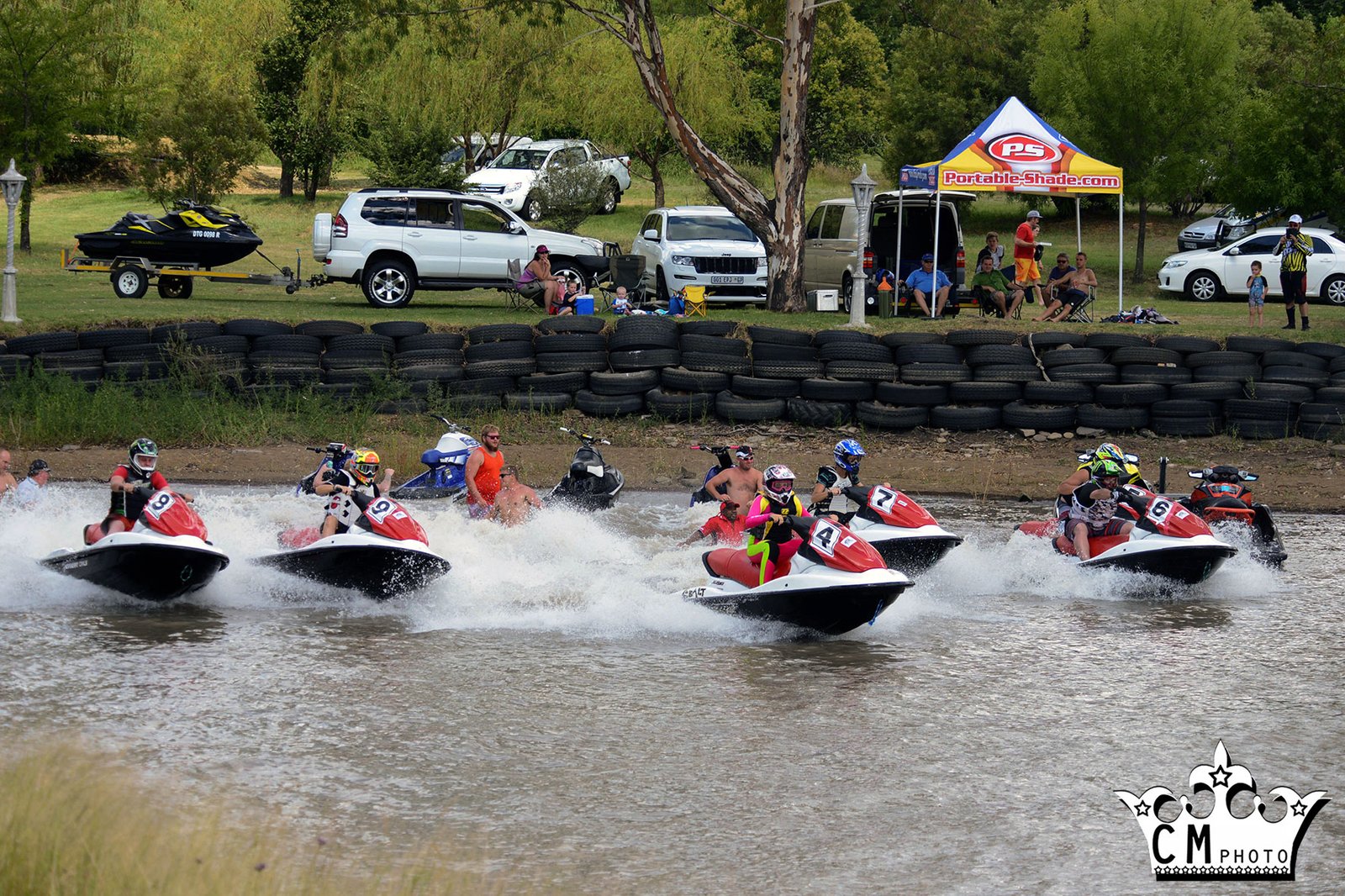
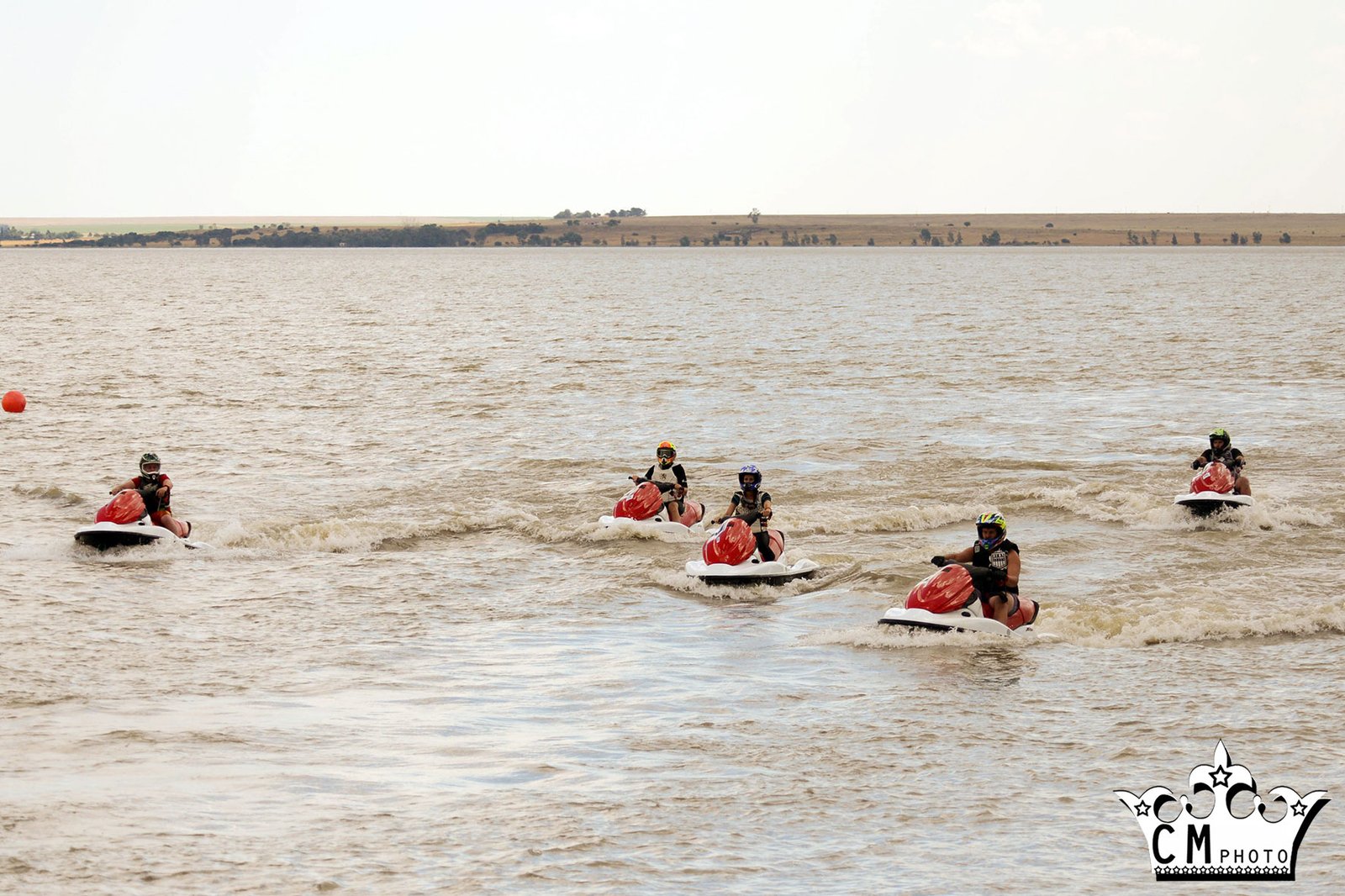
On the 7th February 2015 over 30 of South Africa’s finest riders descended on the small town of Oranjeville in the Free State, to battle it out for Round 1 of the SAJSBA Nationals. With a fantastic line-up of 10 classes and three grueling motos, the racing was expected to be thrilling.
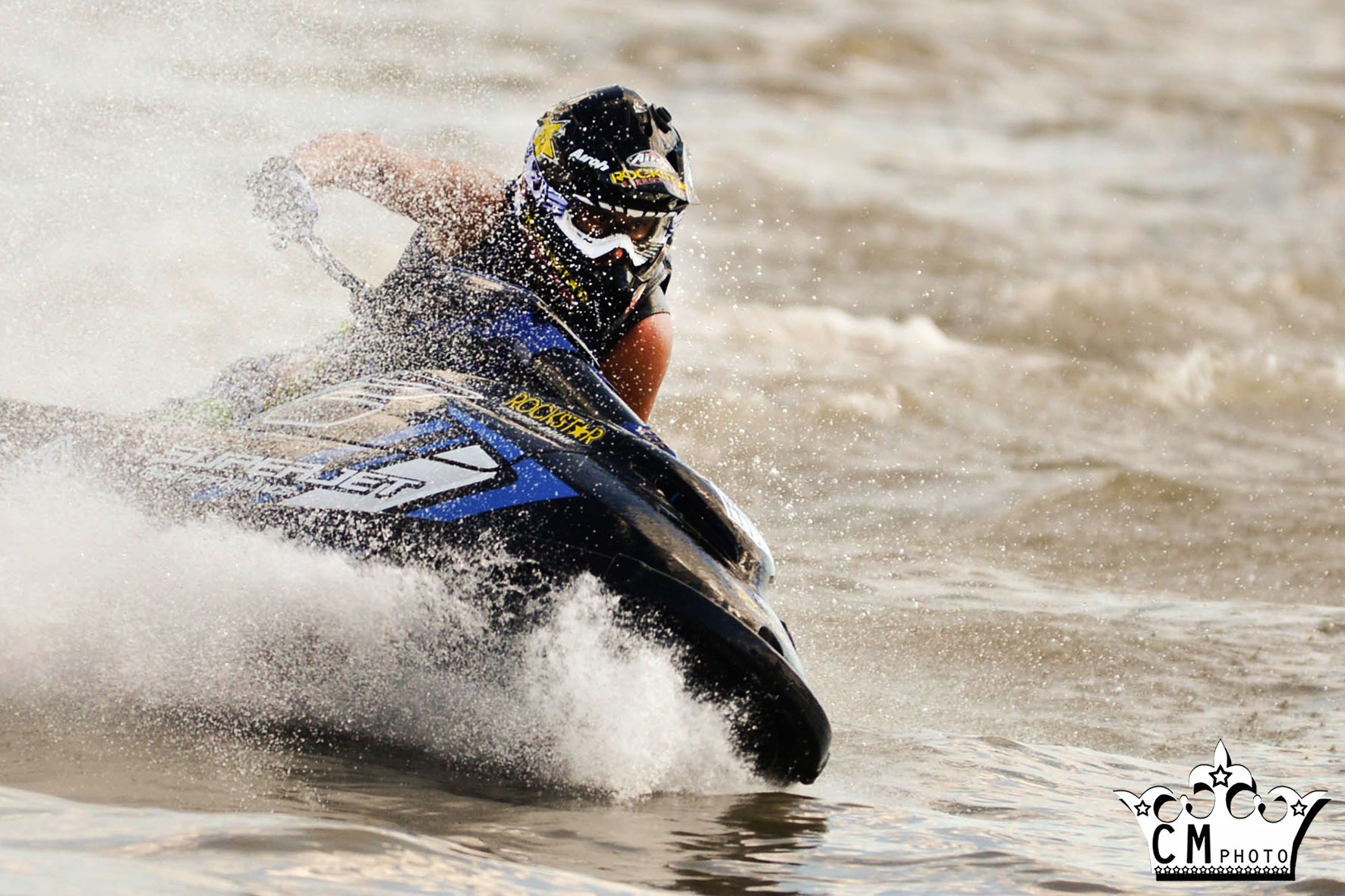
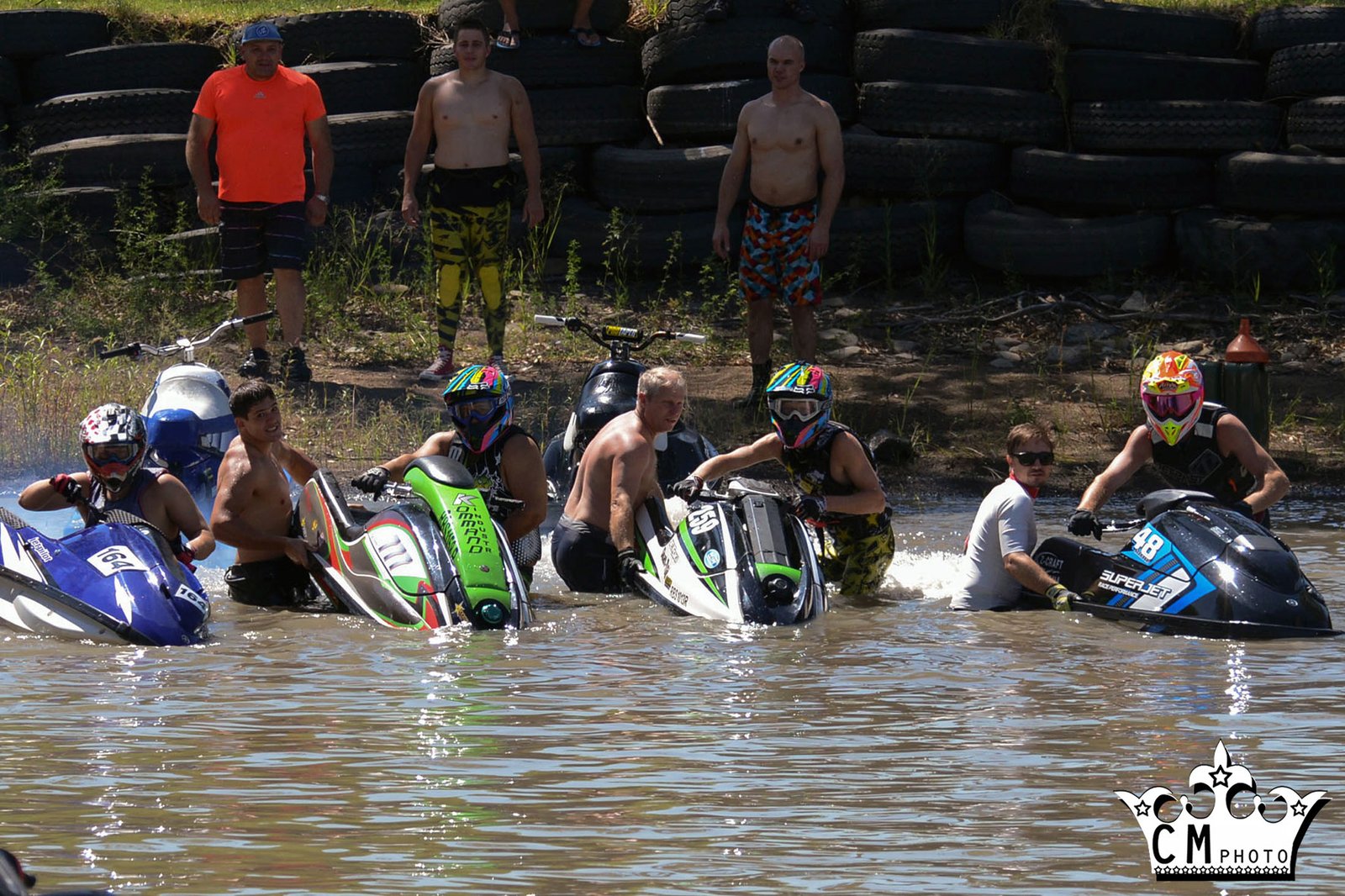
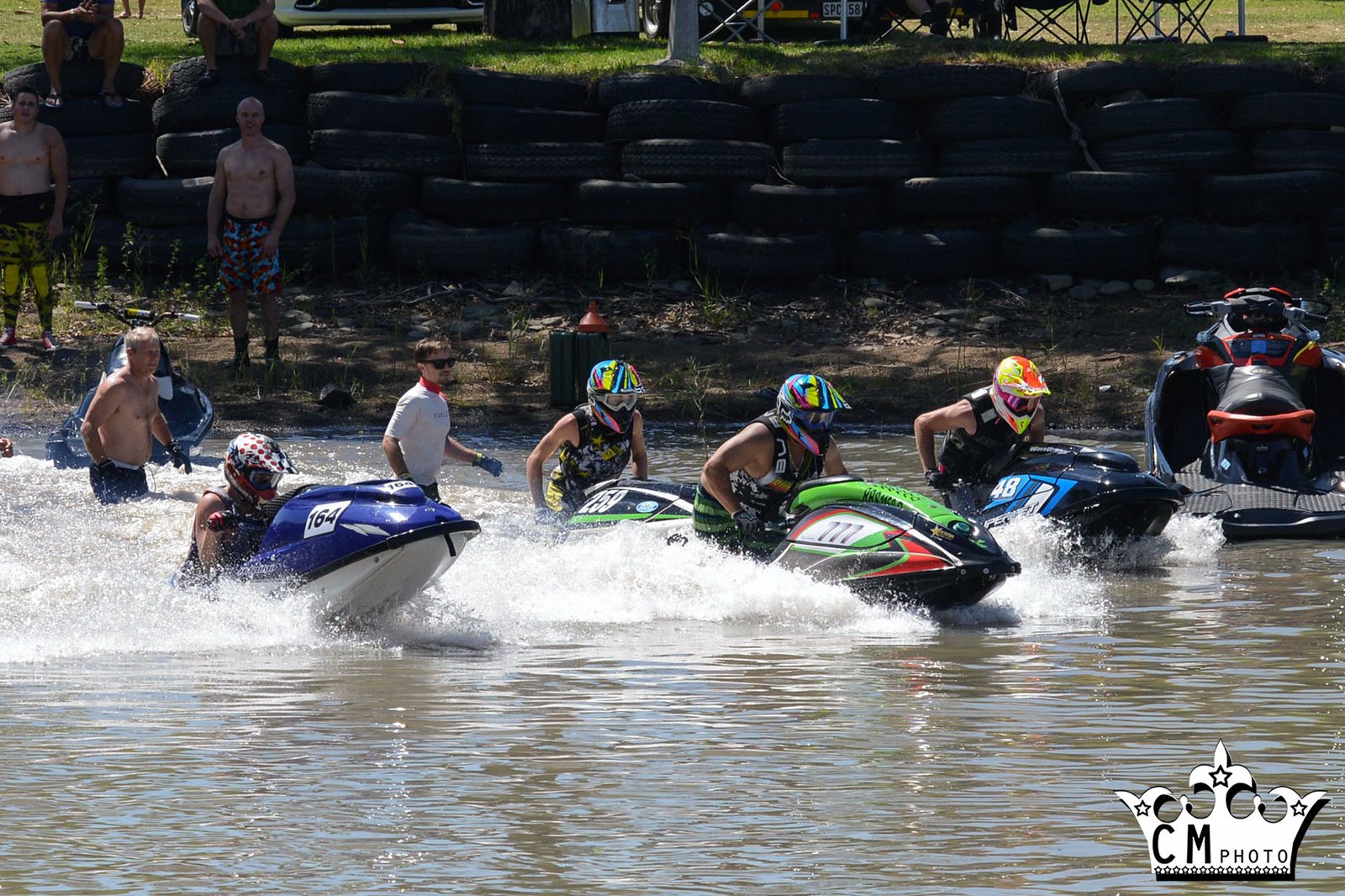
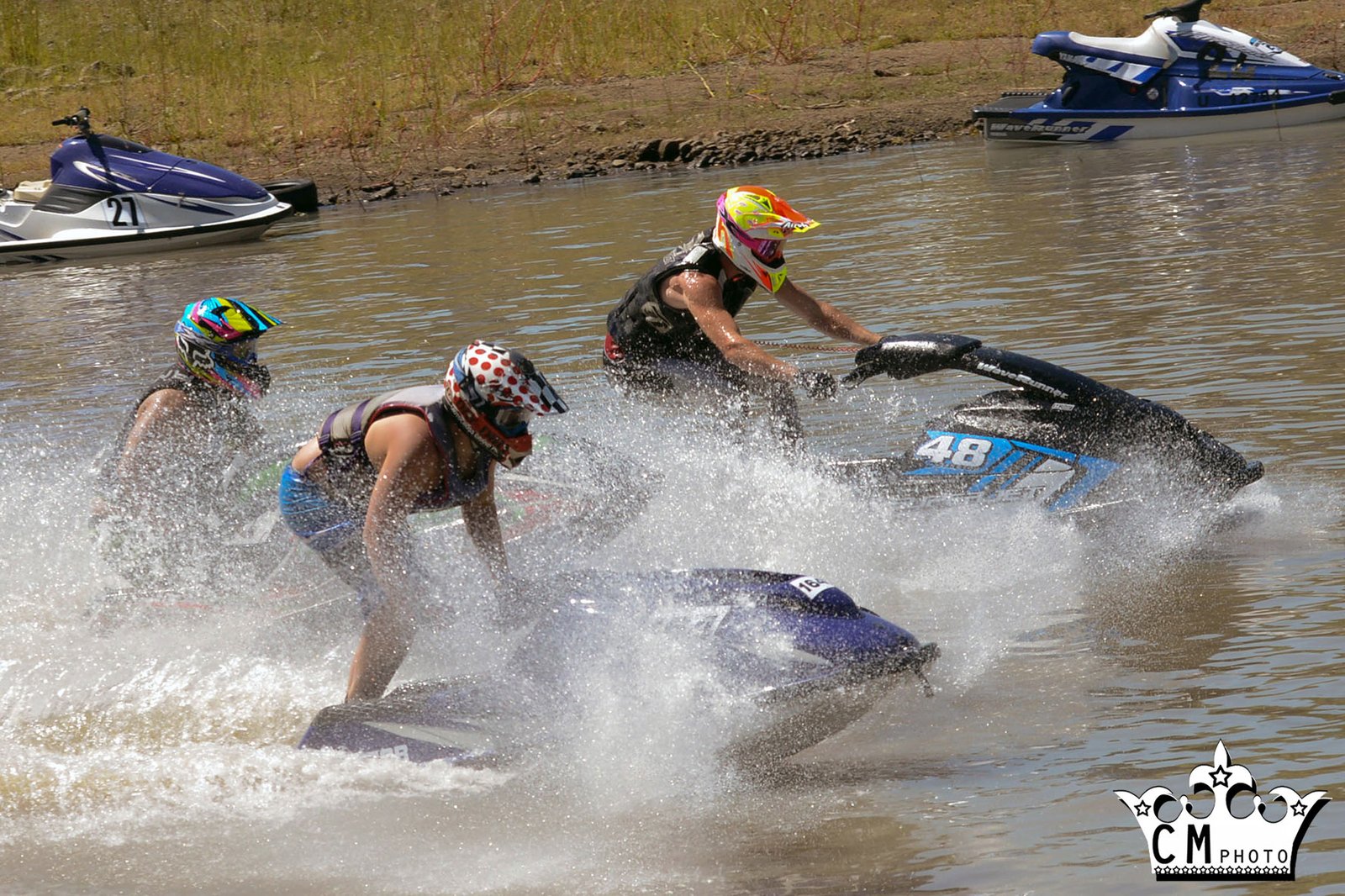
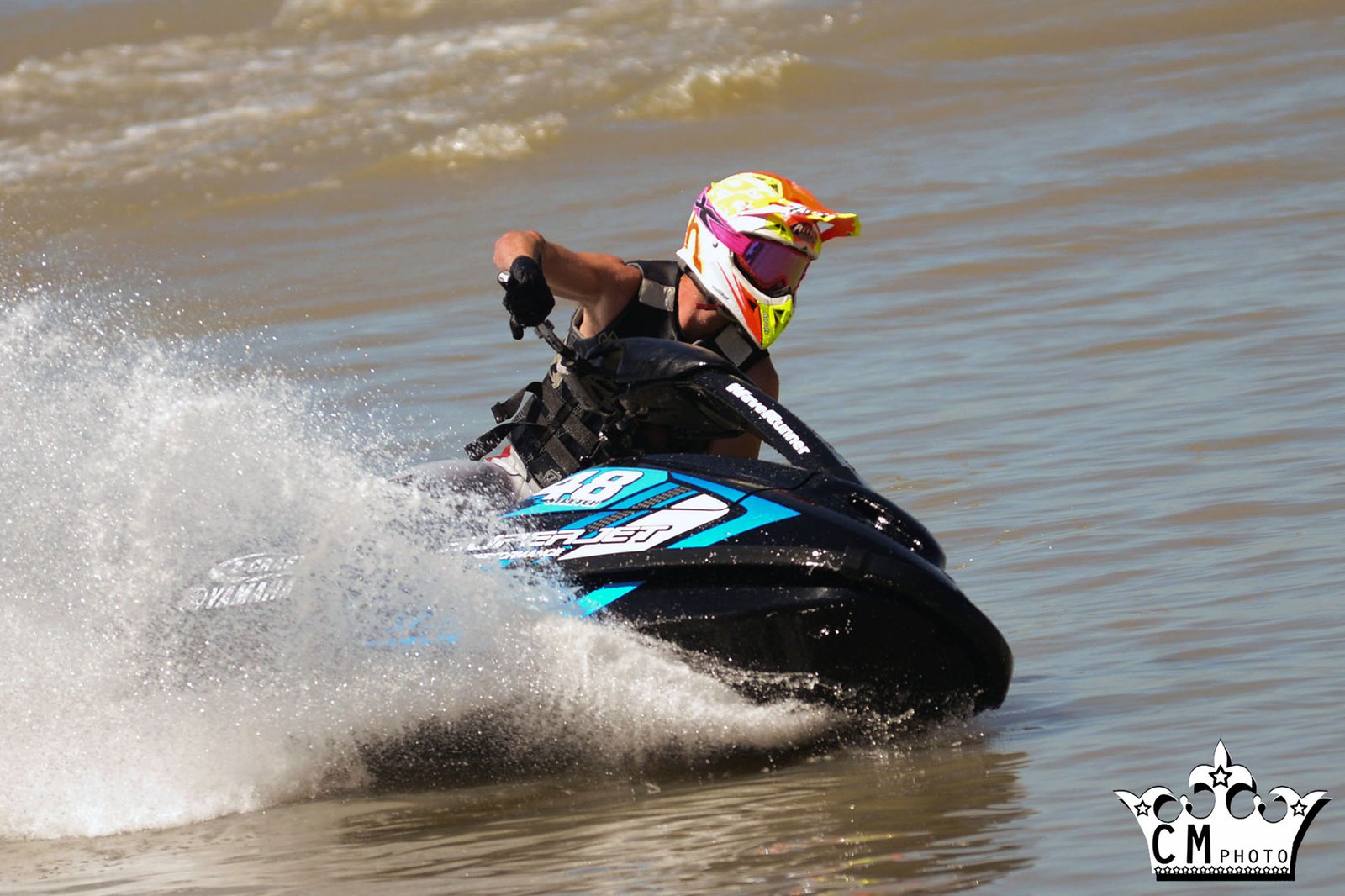
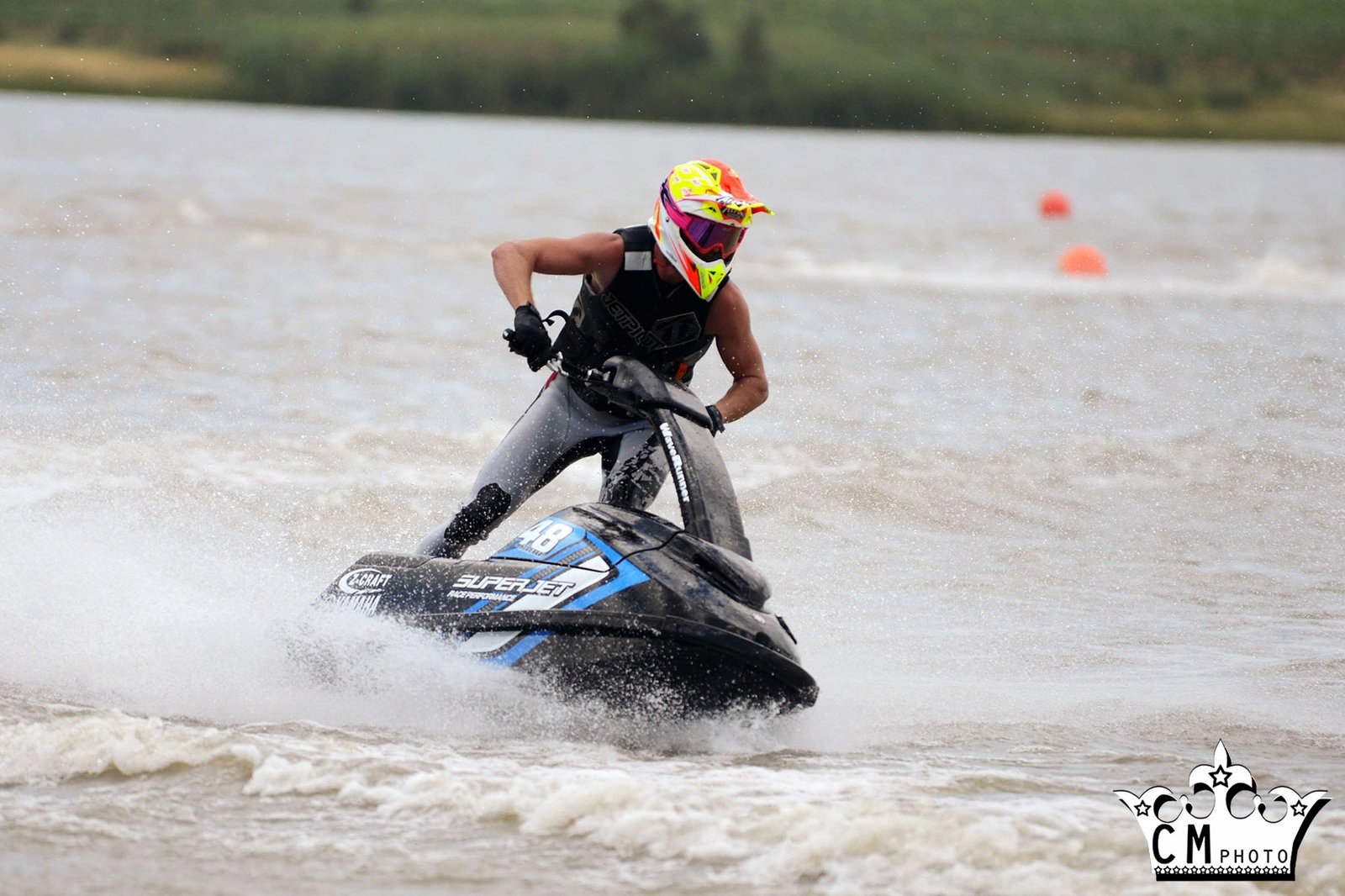
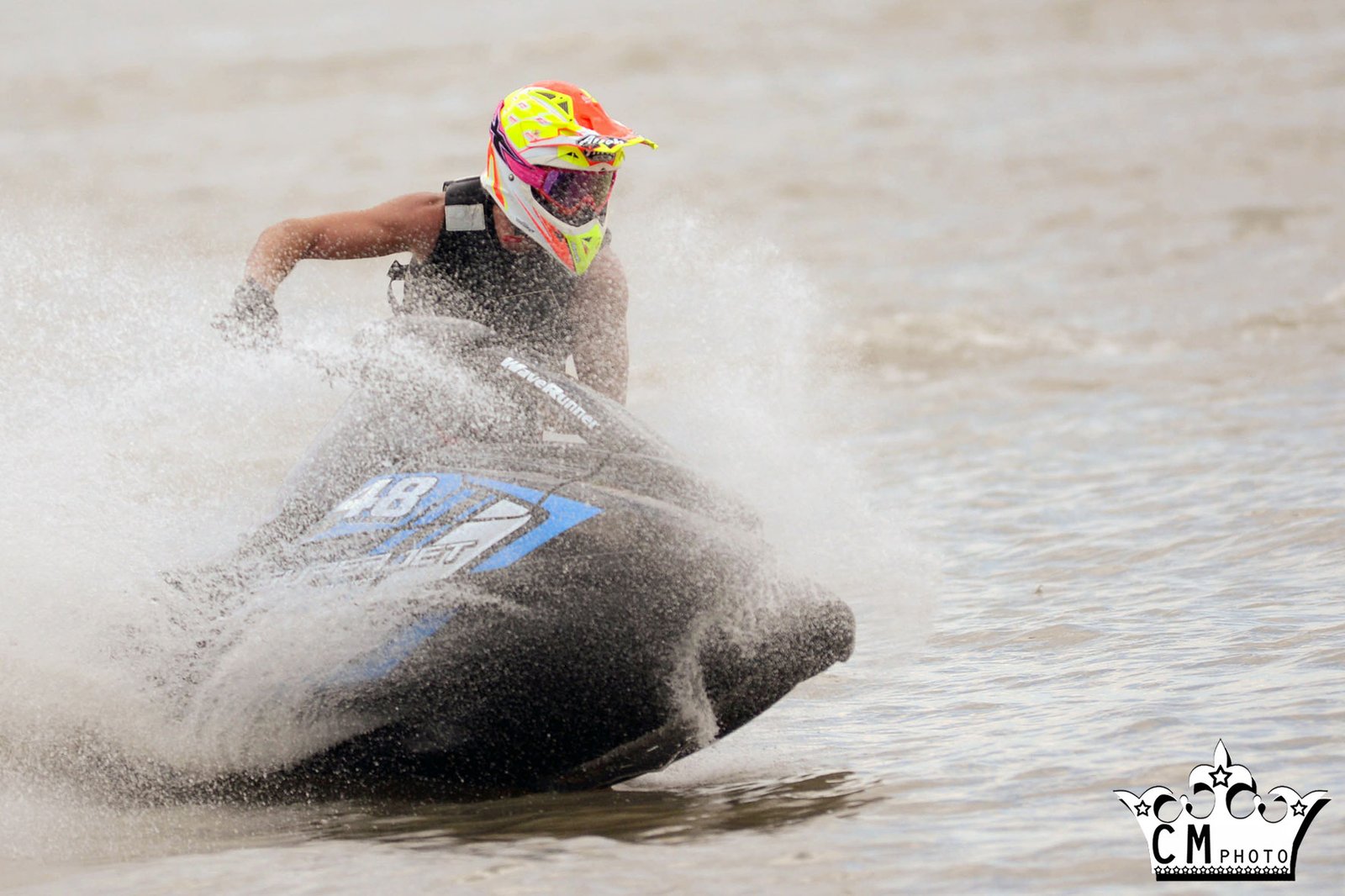
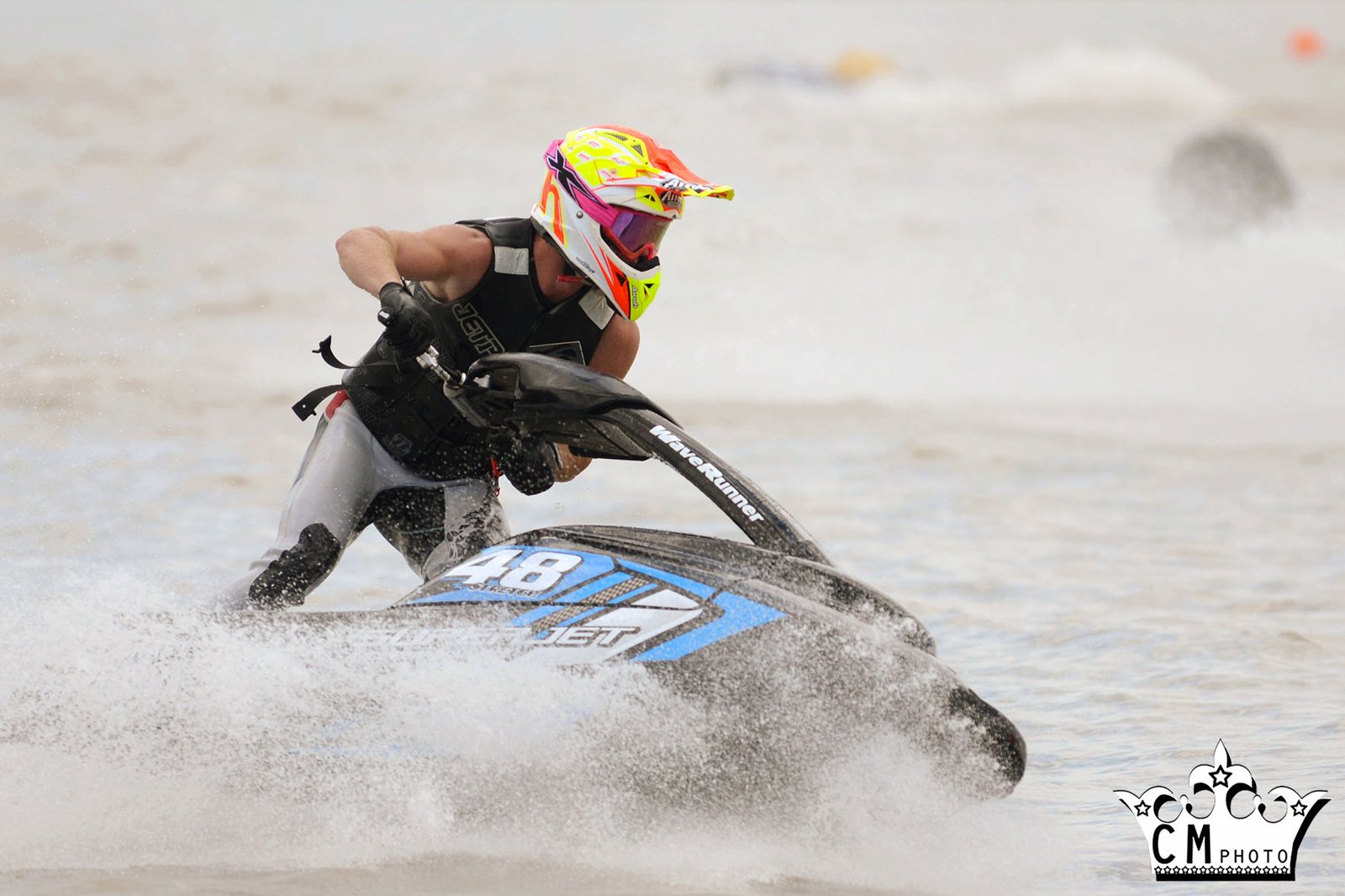
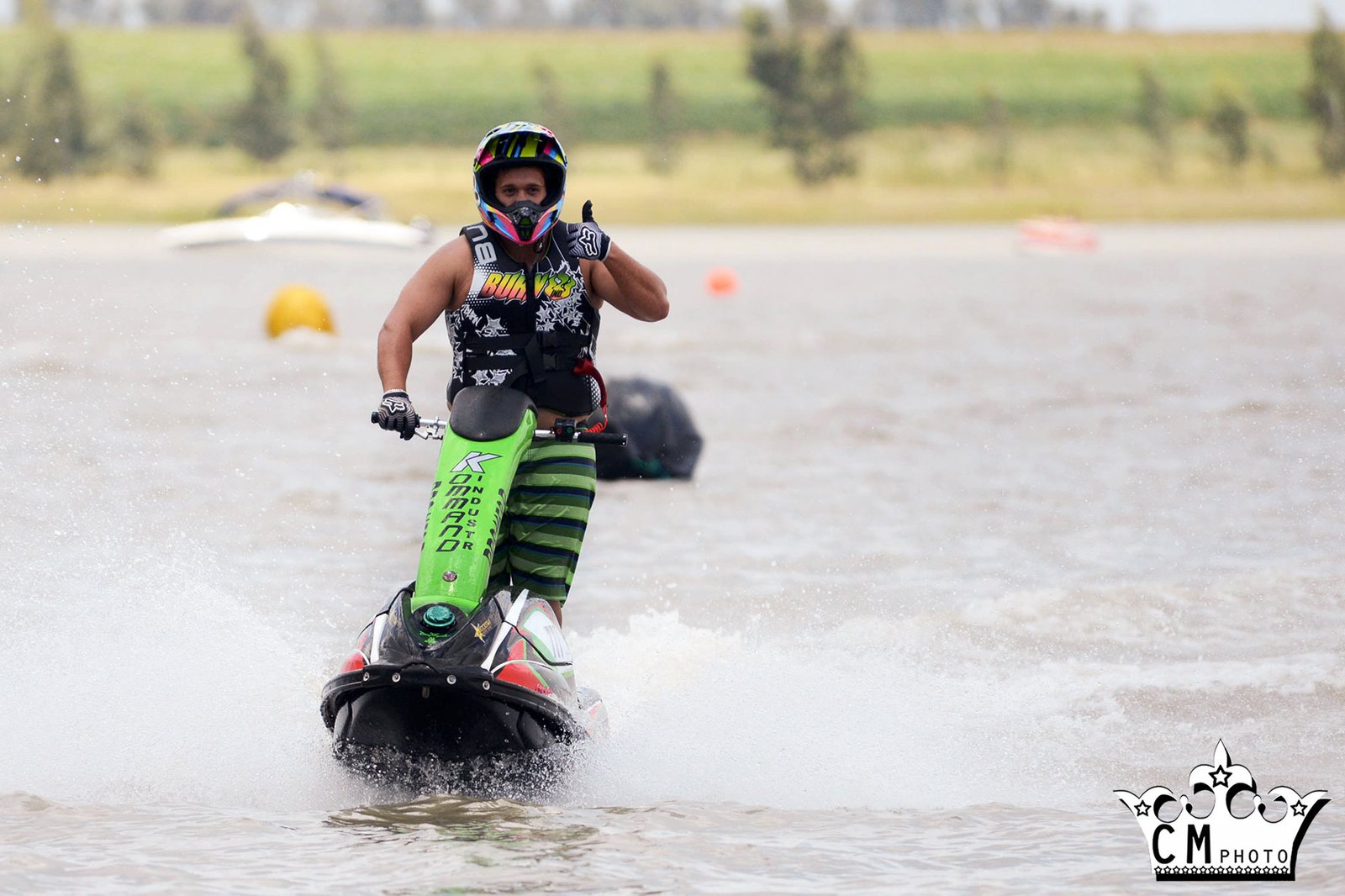
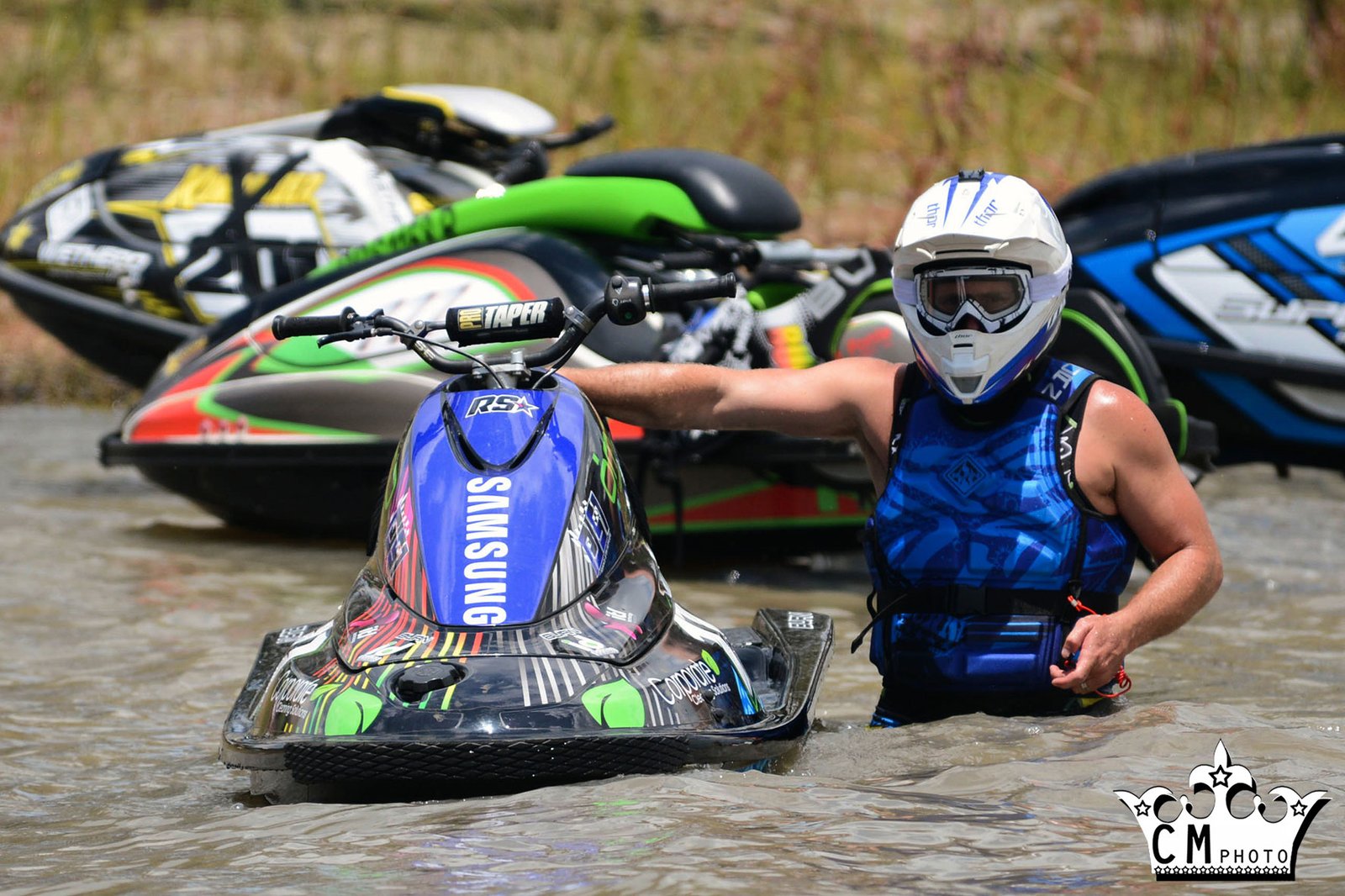
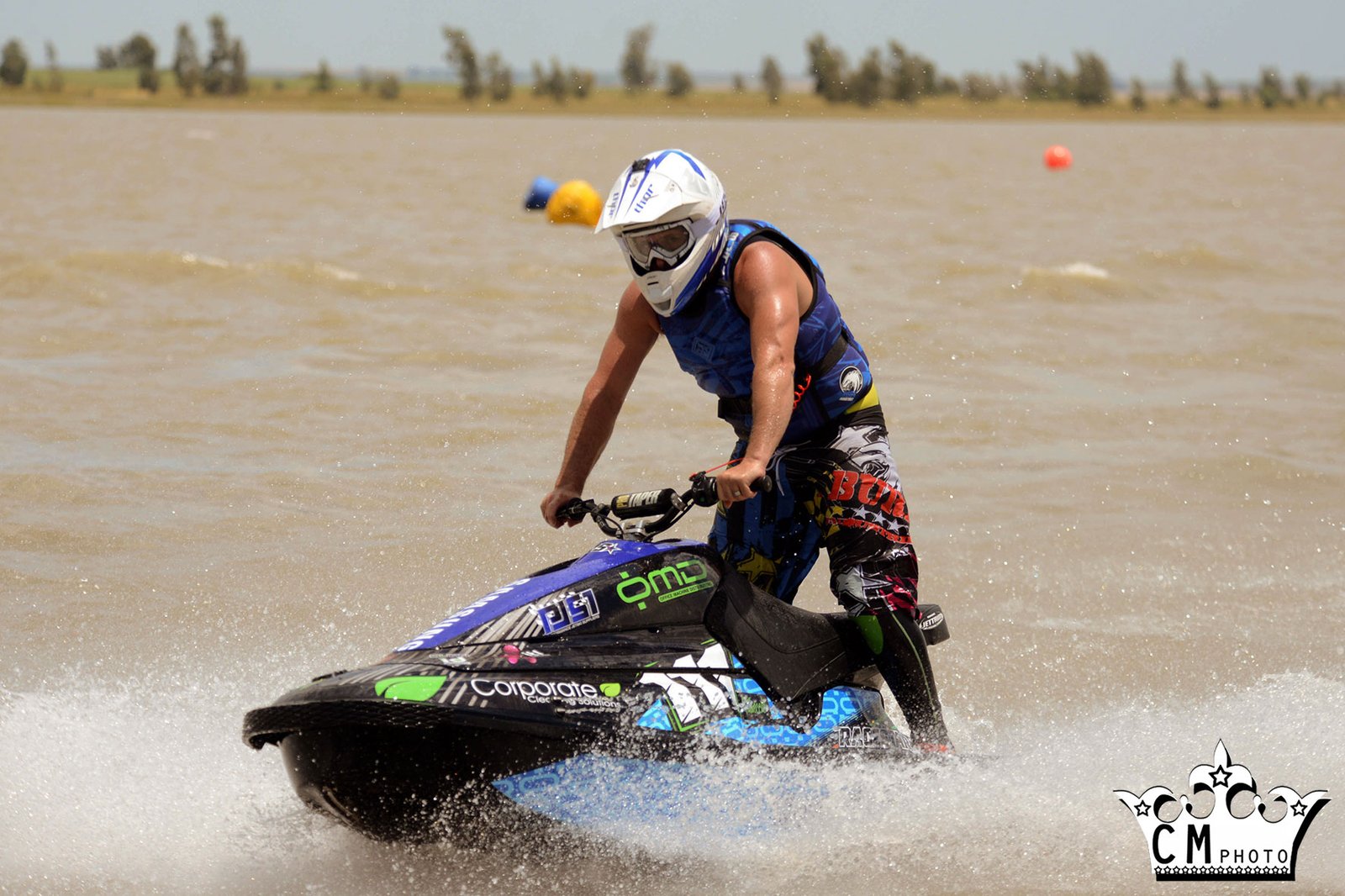
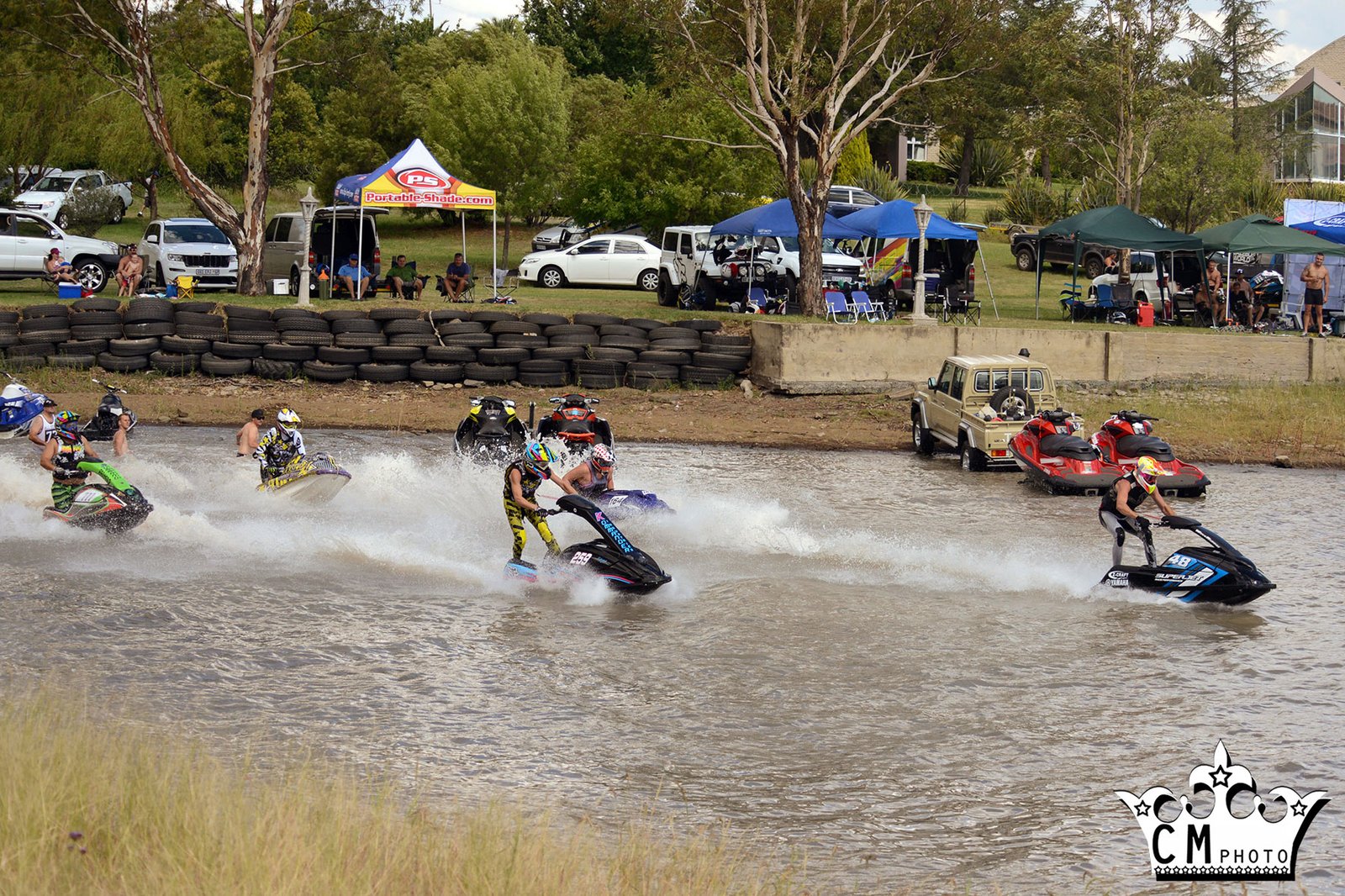
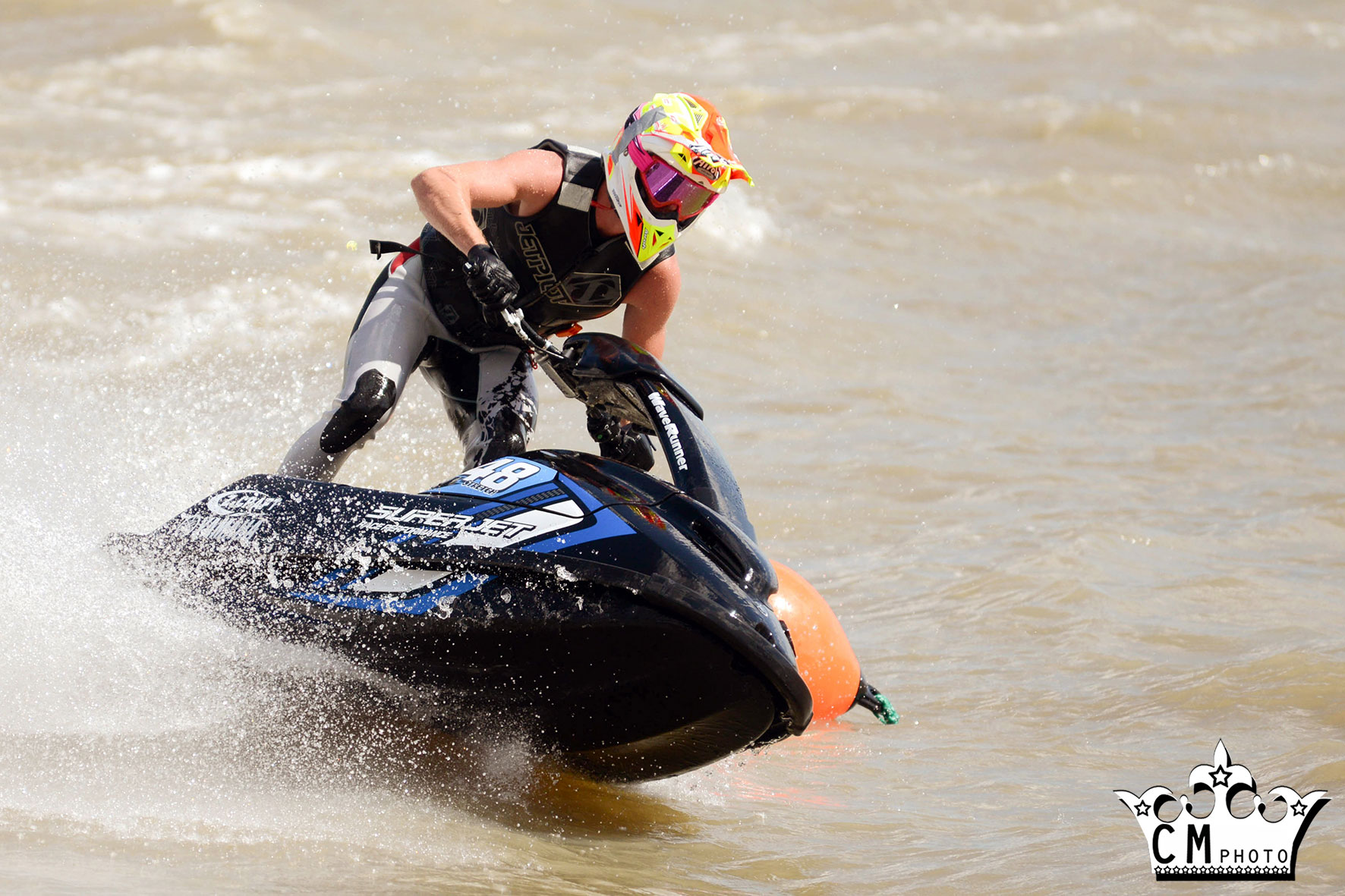
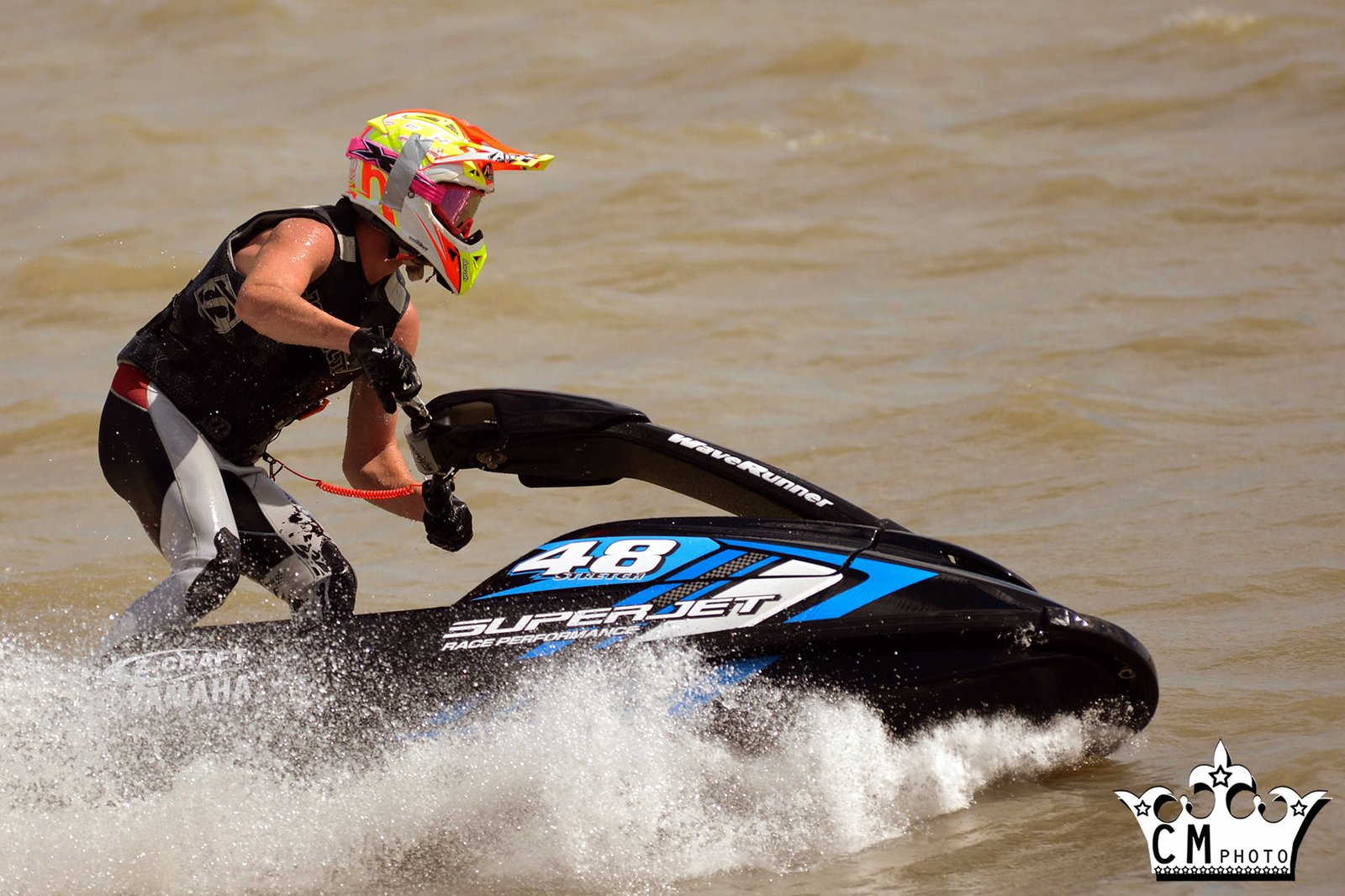
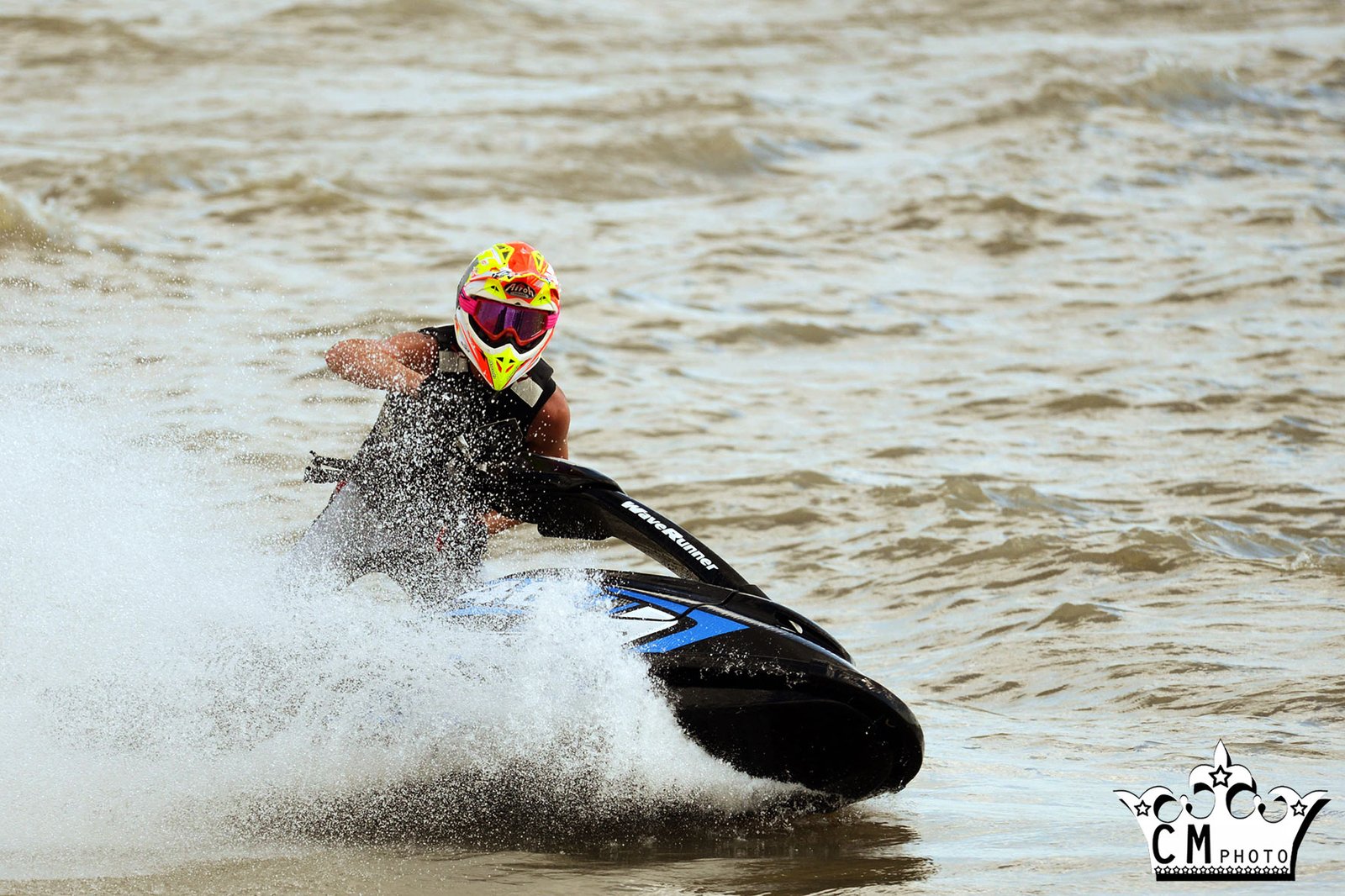
The day started off with all the riders practicing on the challenging race track designed by 2013 Pro Runabout Open World Champion Jared Moore. The racing began with the Novice Ski Limited Class which featured some promising novice riders. Moto 1 had a surprising start with a newcomer, Estiaan Steenkamp, taking the holeshot on his #48 Yamaha SuperJet. Steenkamp has been racing in the South African off-road Motorcross Nationals for the past 13 years and has since decided to try watercraft racing.
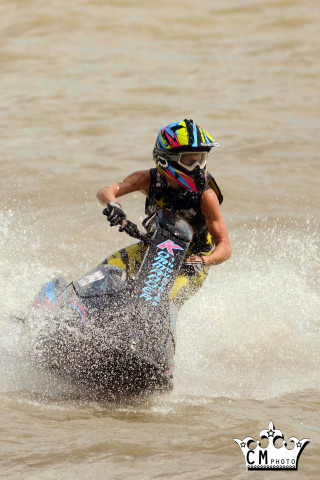
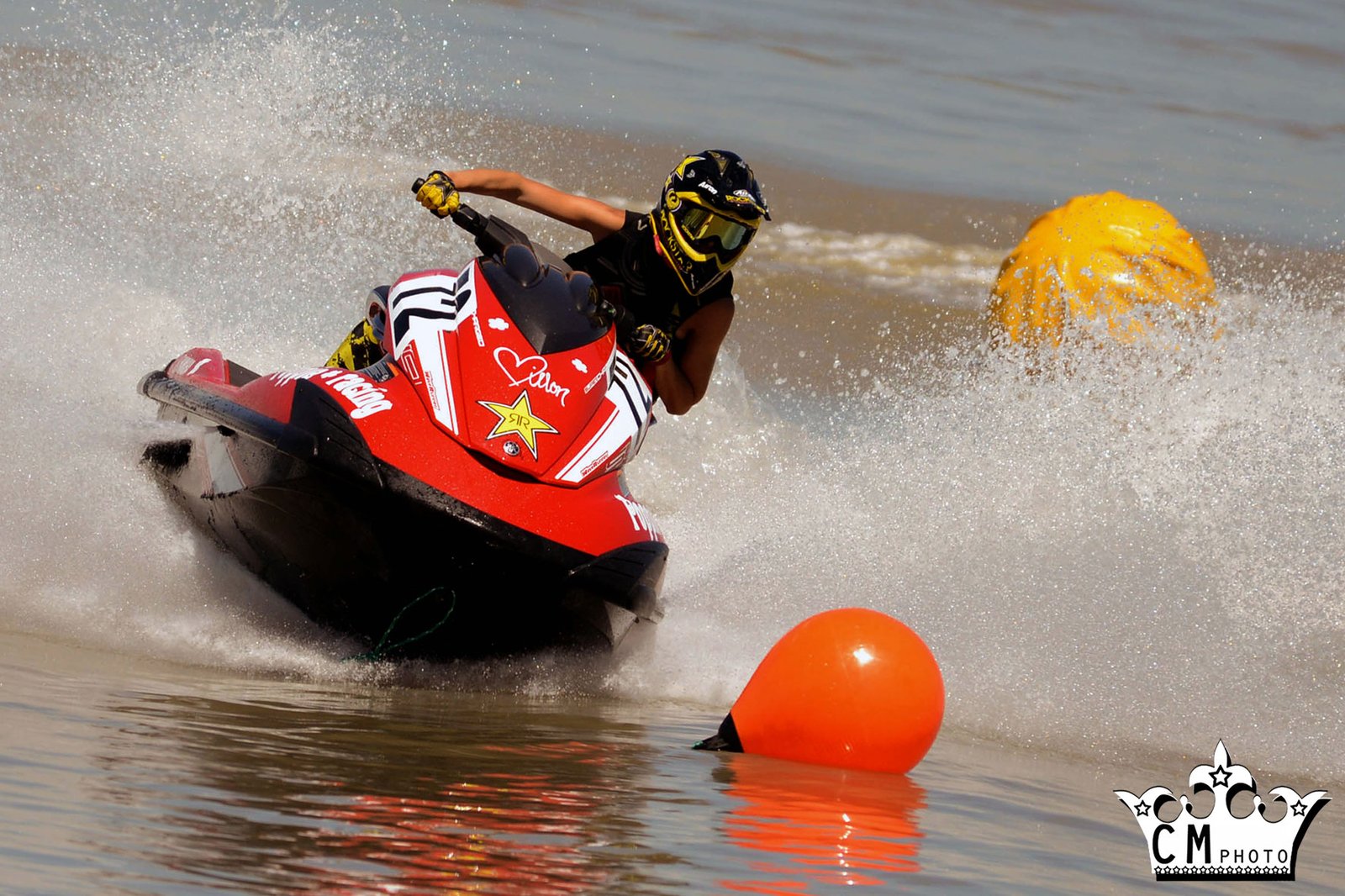
Marcel De Ponte slotted in to second position on his #777 Kawasaki SX-R with our youngest Novice rider Dwane Hayes, who is 16 years old, hot on his heels on his #259 Kawasaki SX-R. On Lap 2, Hayes managed to move up in to second position, and on Lap 4 he took first position away from Steenkamp. Hayes held on to first all the way to the checkered flag, with Steenkamp and De Ponte taking second and third respectively.
In Moto 2 of the Novice Ski Limited class, Dwane Hayes took the holeshot but couldn’t hold off Estiaan Steenkamp as he took the lead on Lap 2. Hayes did not give up and managed to take the lead back on Lap 4 causing the Moto 2 results to mimic Moto 1. It was late in the afternoon when Moto 3 of the Novice Ski Limited class was ready to line up, a storm was rolling in and the wind had picked up causing rough water conditions.
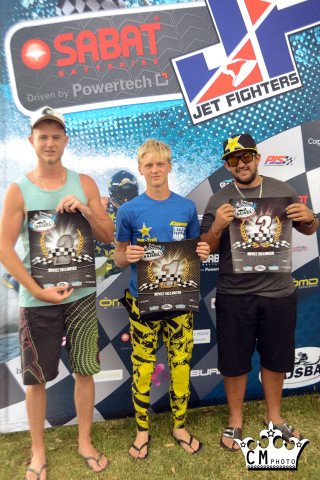
Steenkamp took the holeshot and led the race from start to finish, Hayes crossed the finish line in a close second, and rounding out the Top 3 was Jake Fenenga. The Novice Ski Limited podium finishers were Marcel De Ponte in third, Estiaan Steenkamp in second and Dwane Hayes took the win.
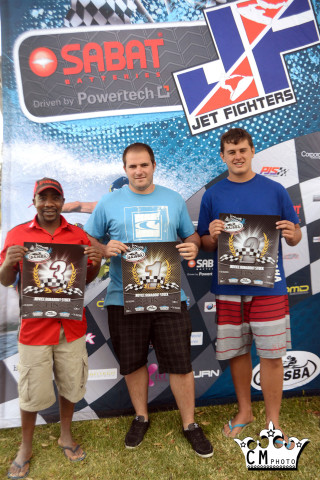
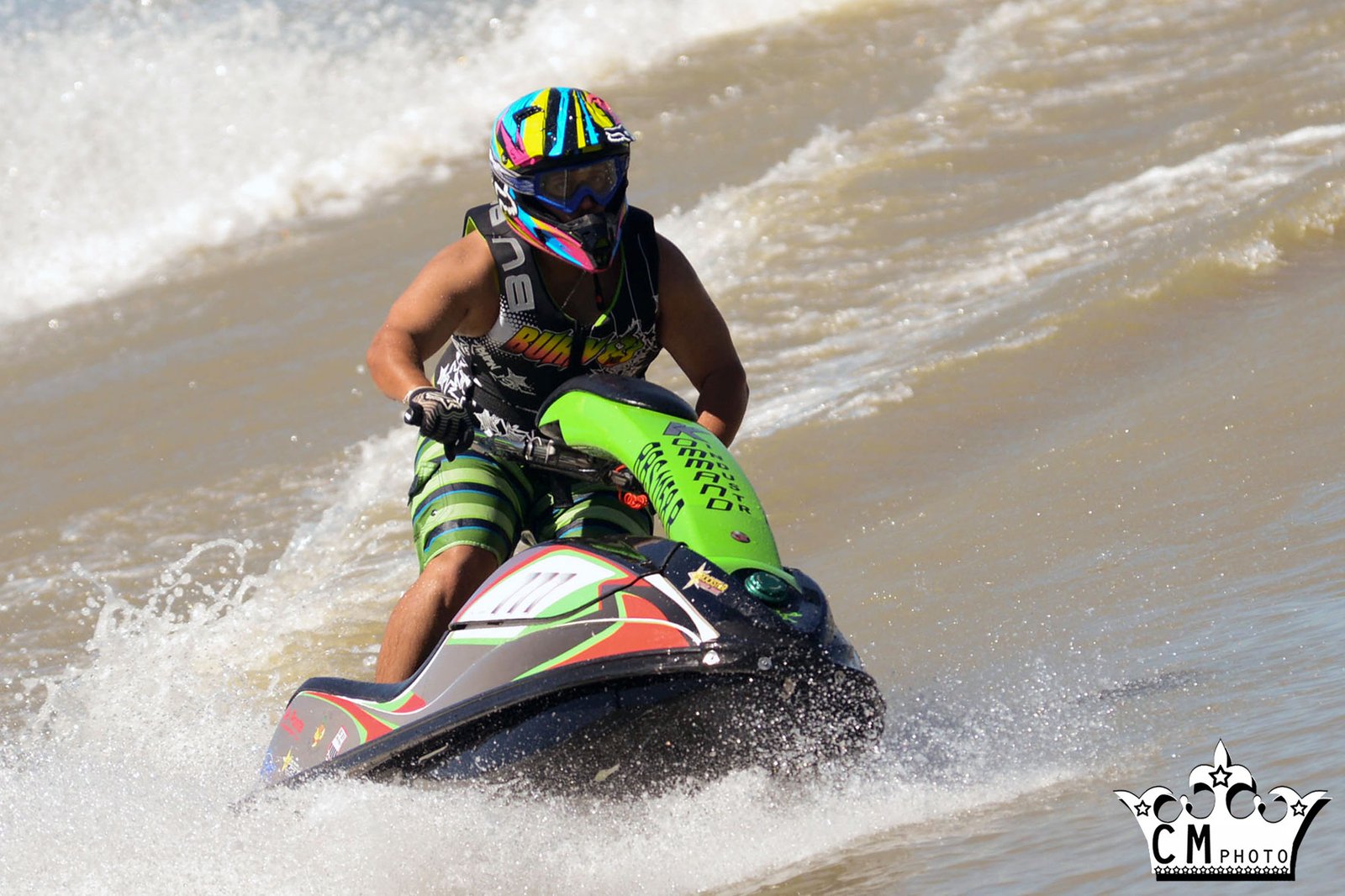
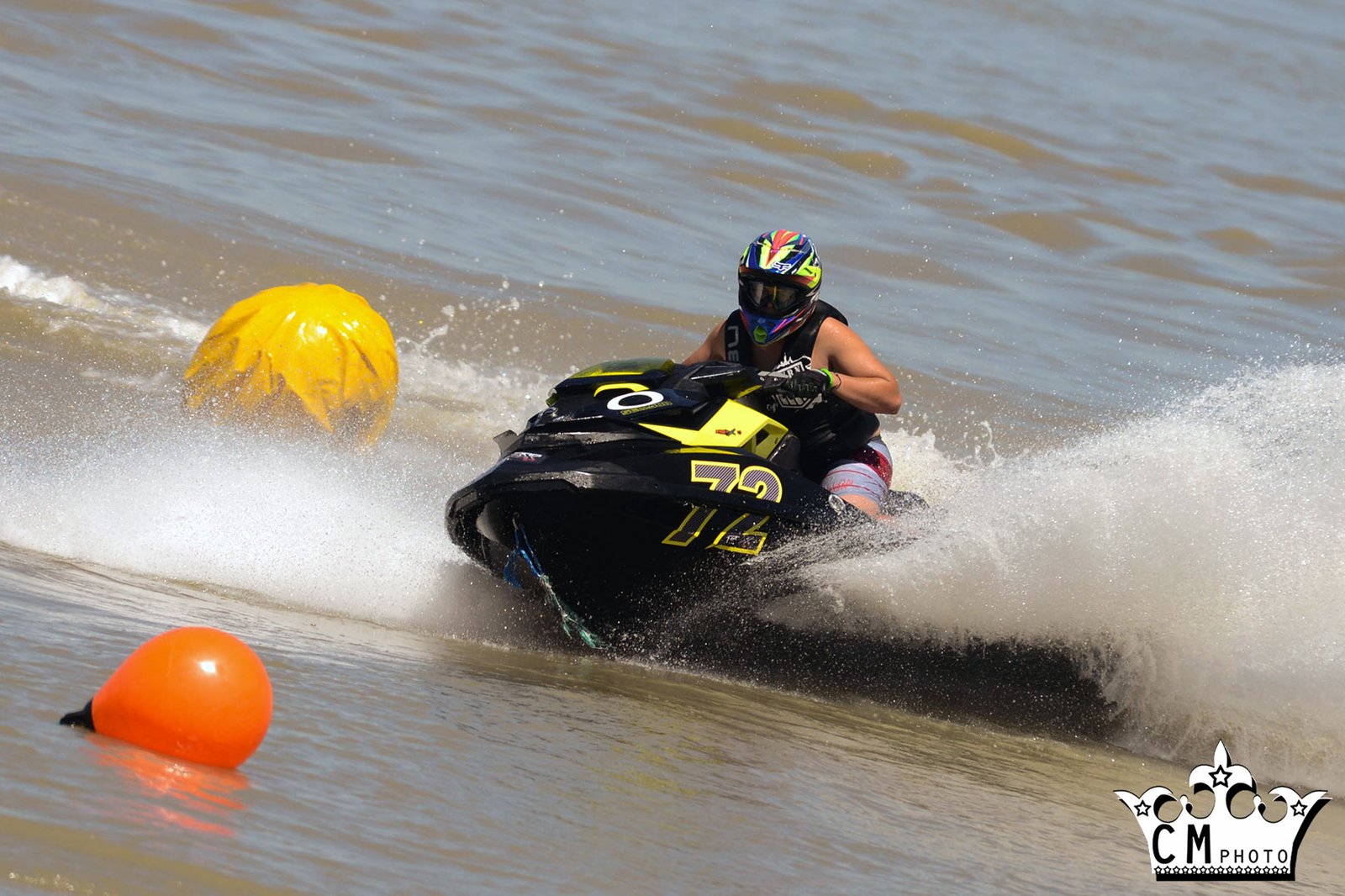
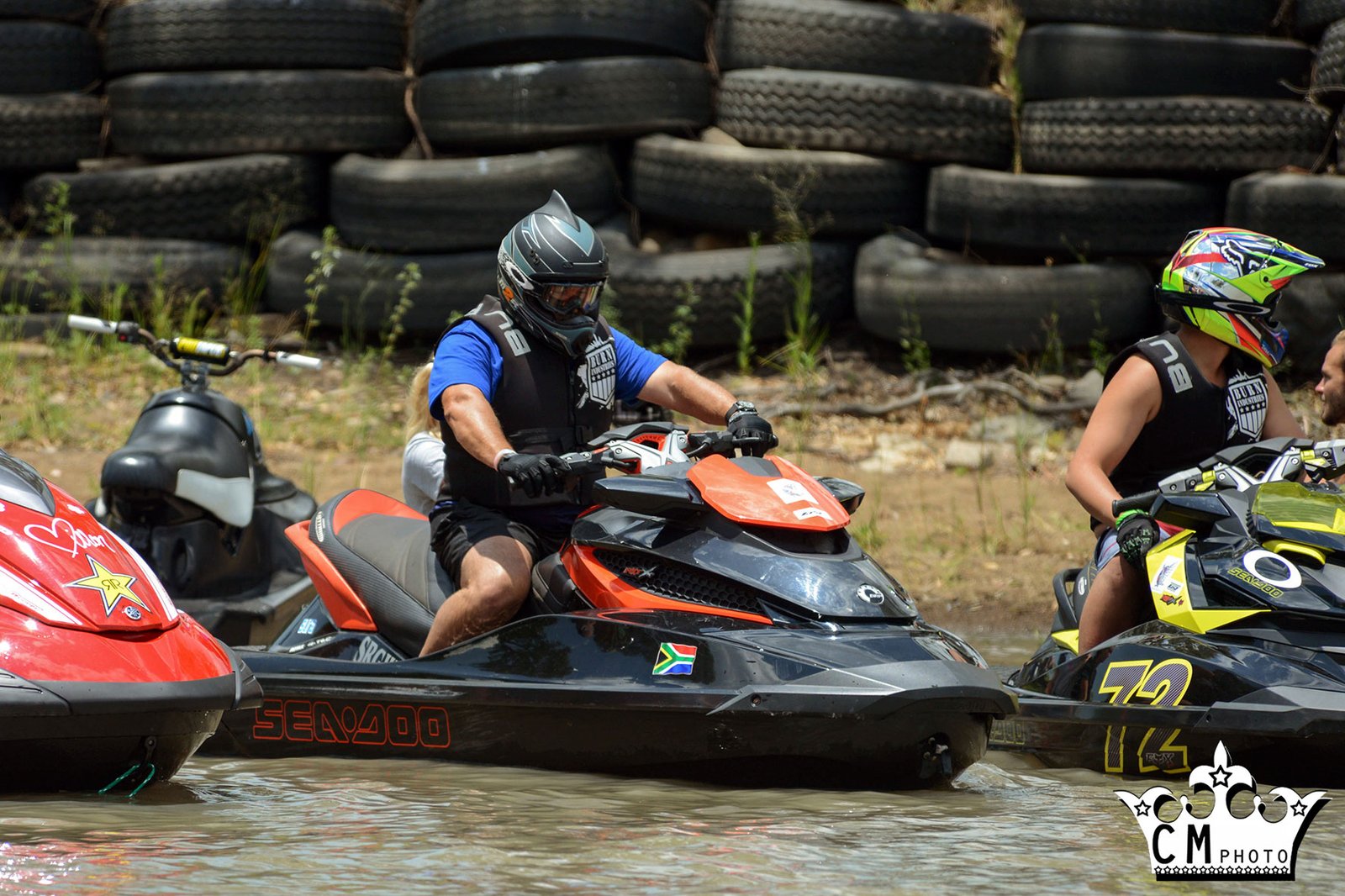
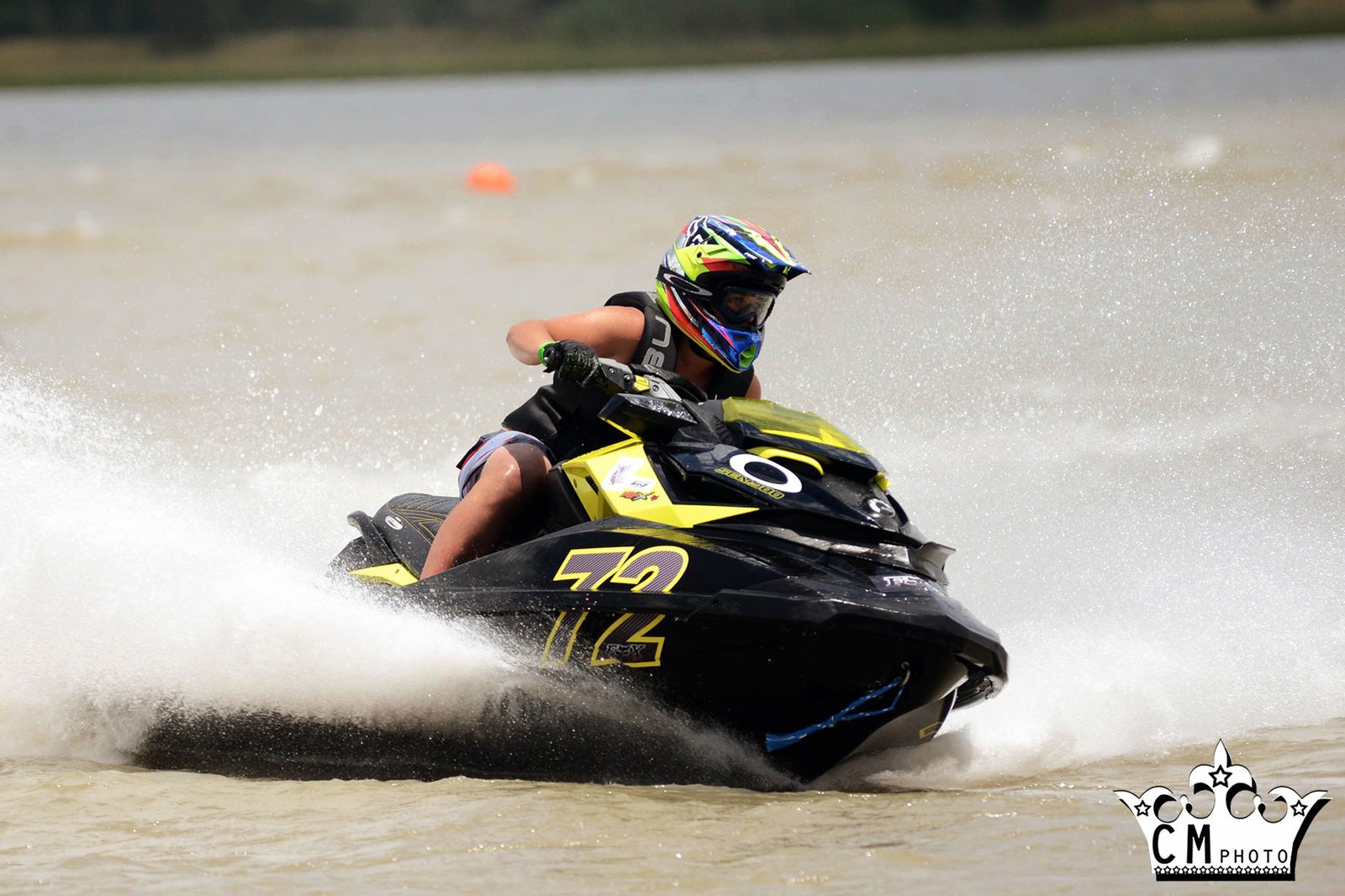
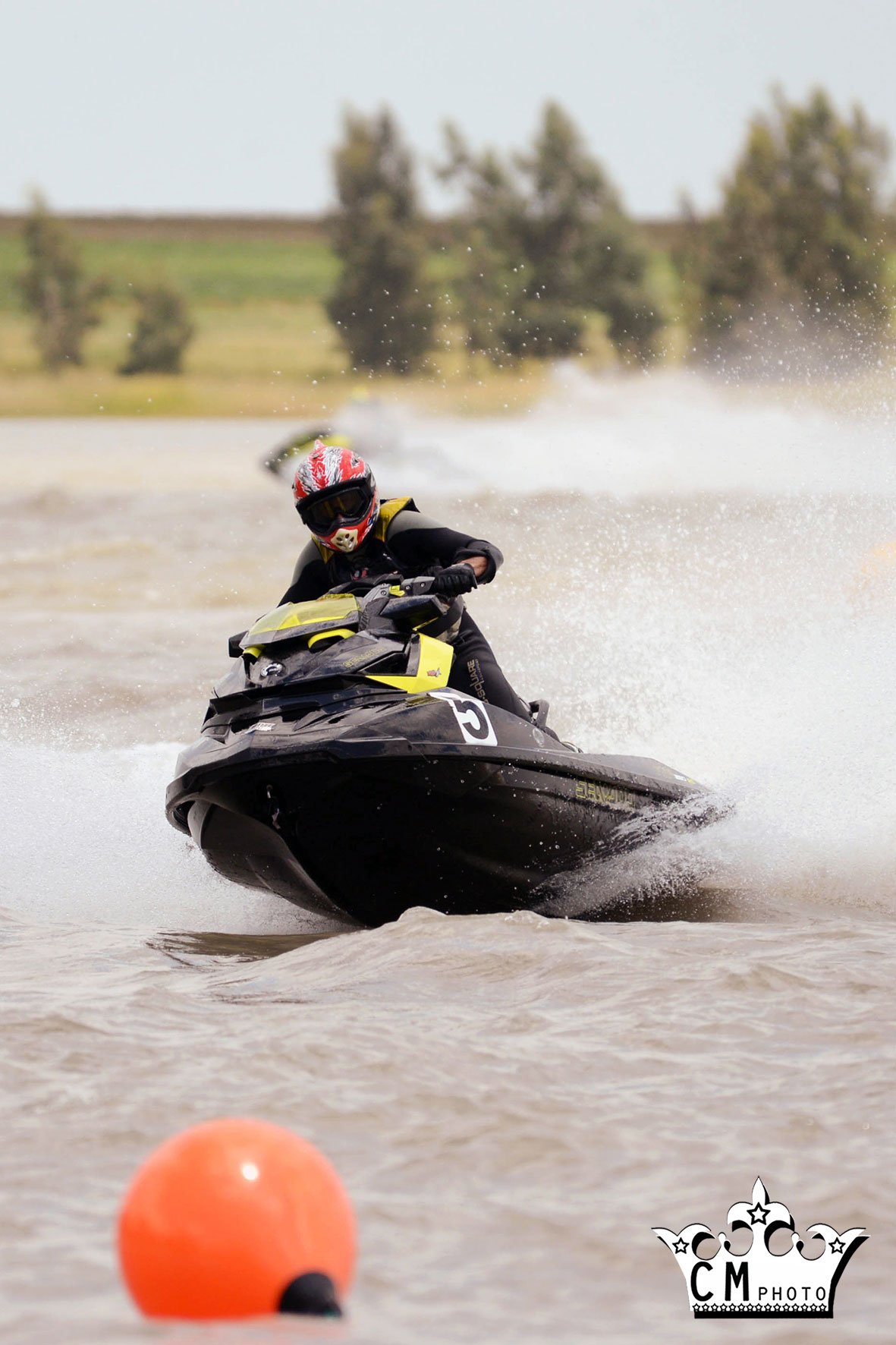
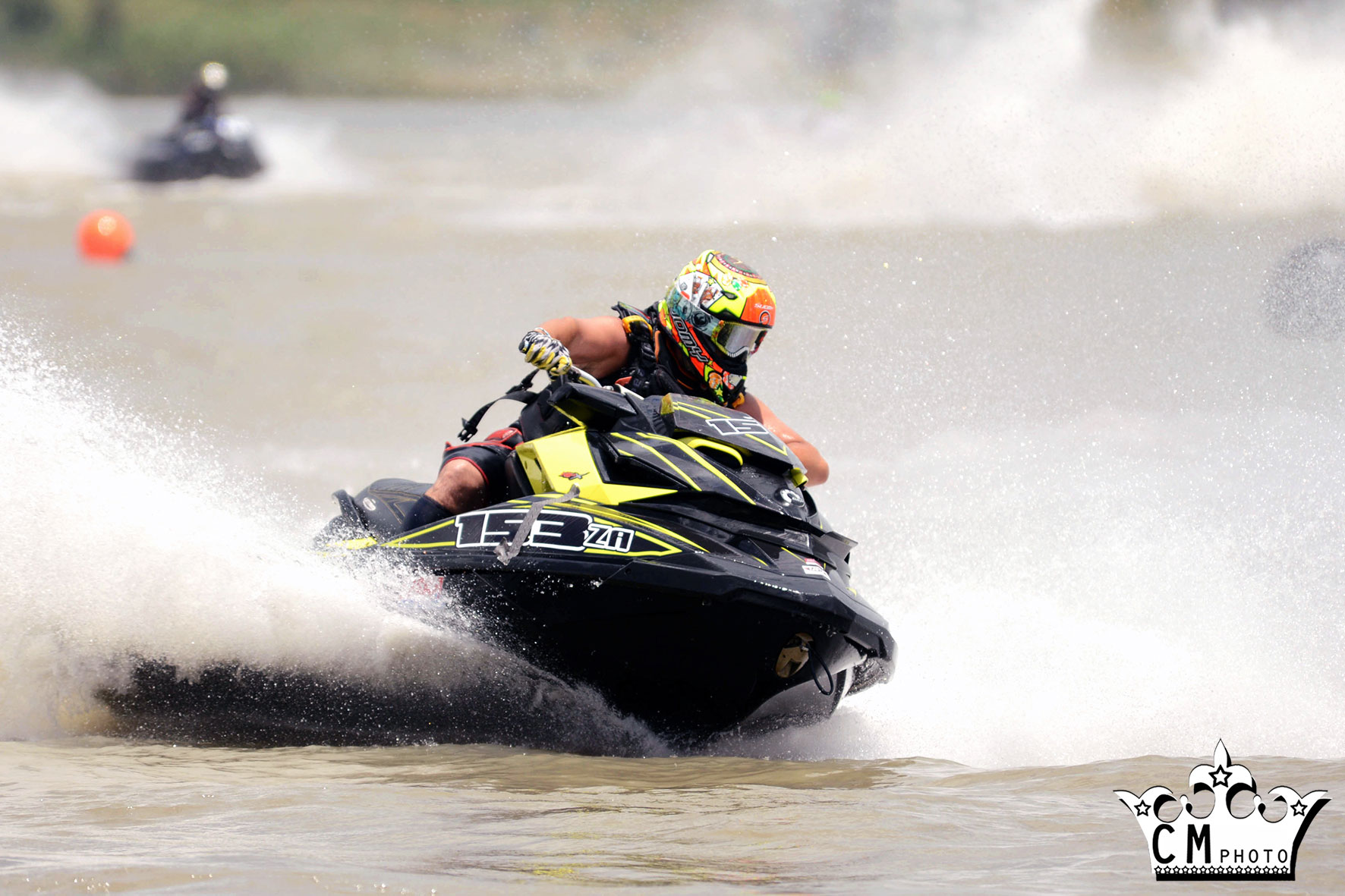
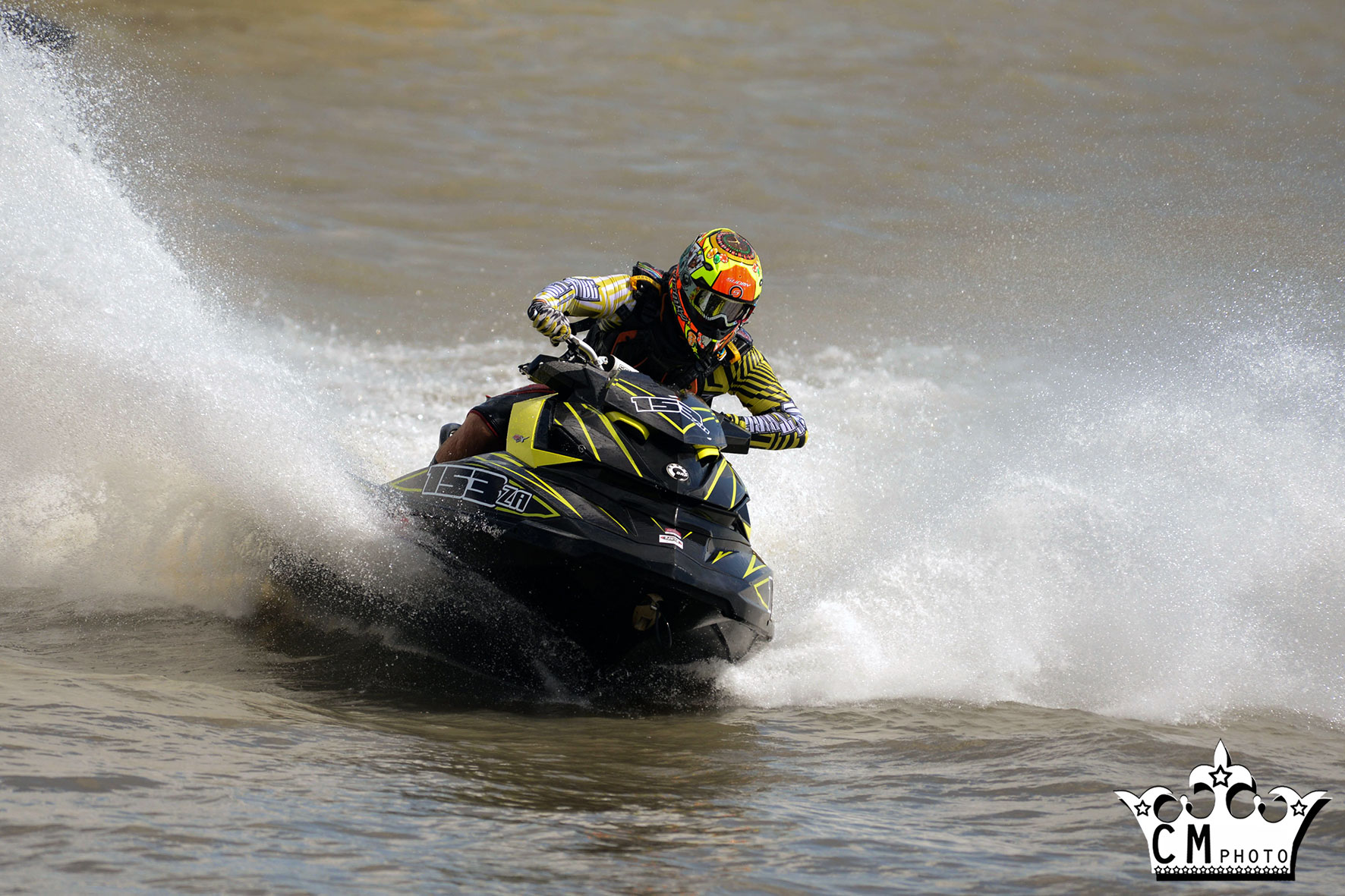
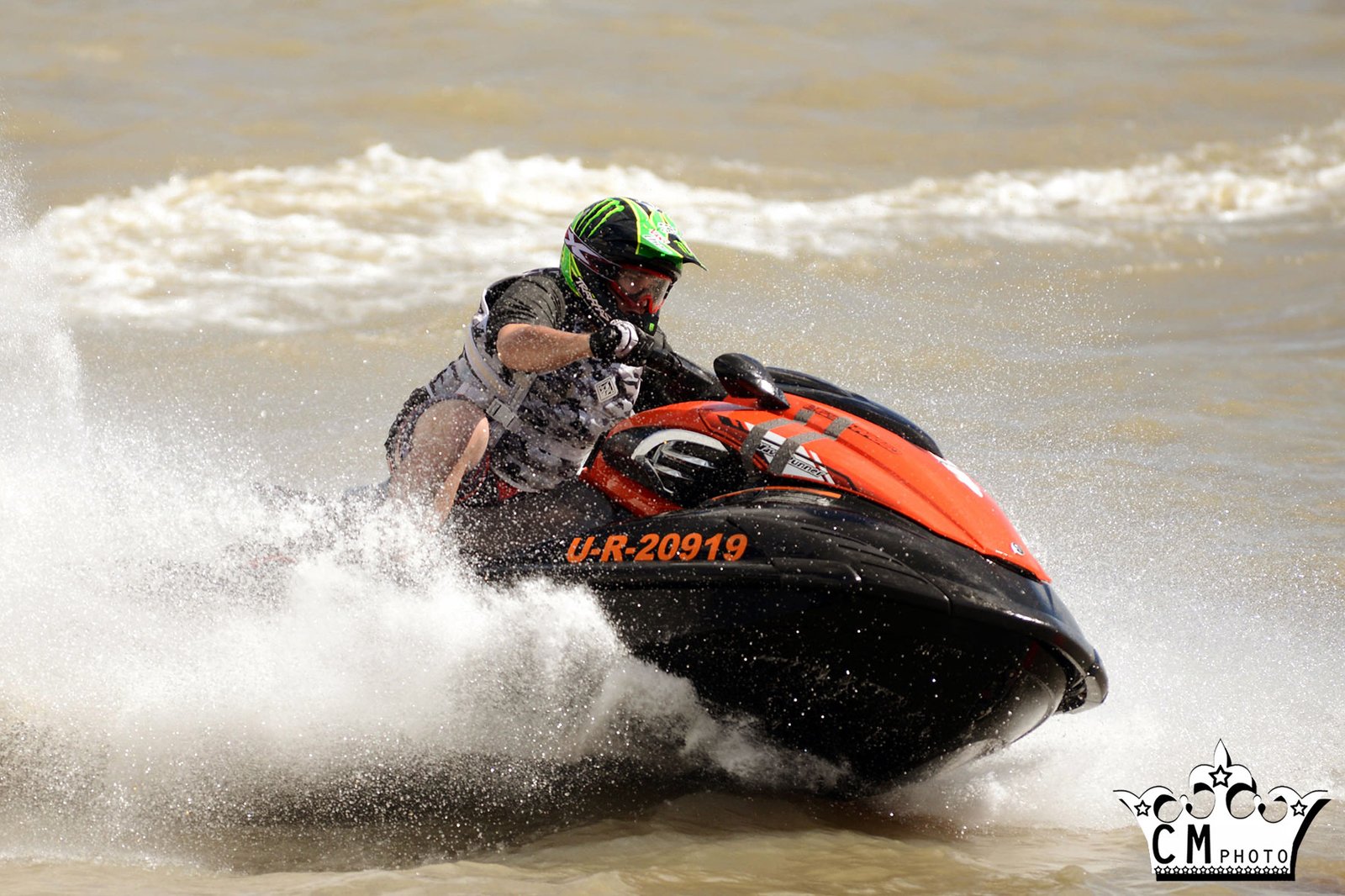
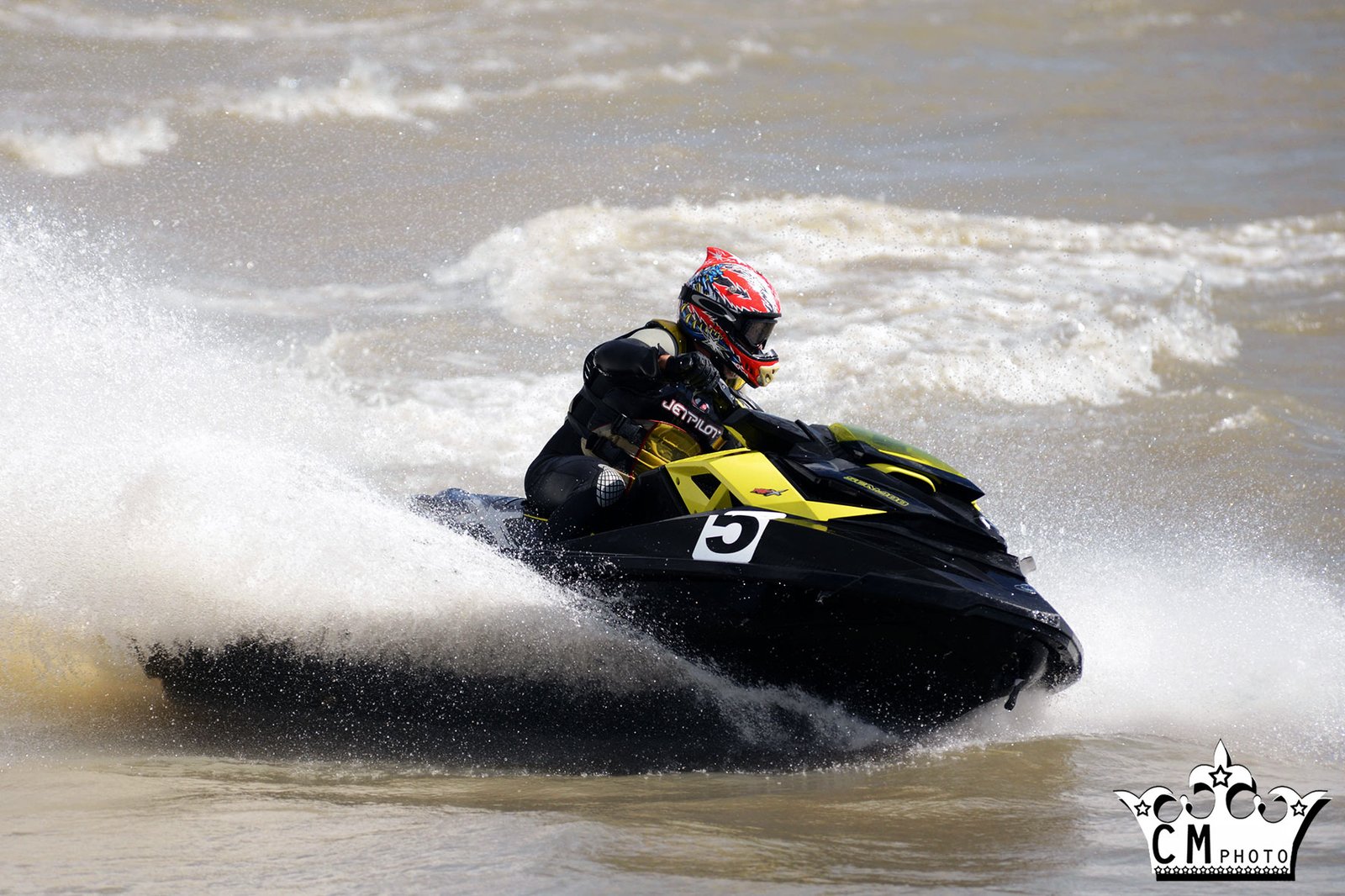
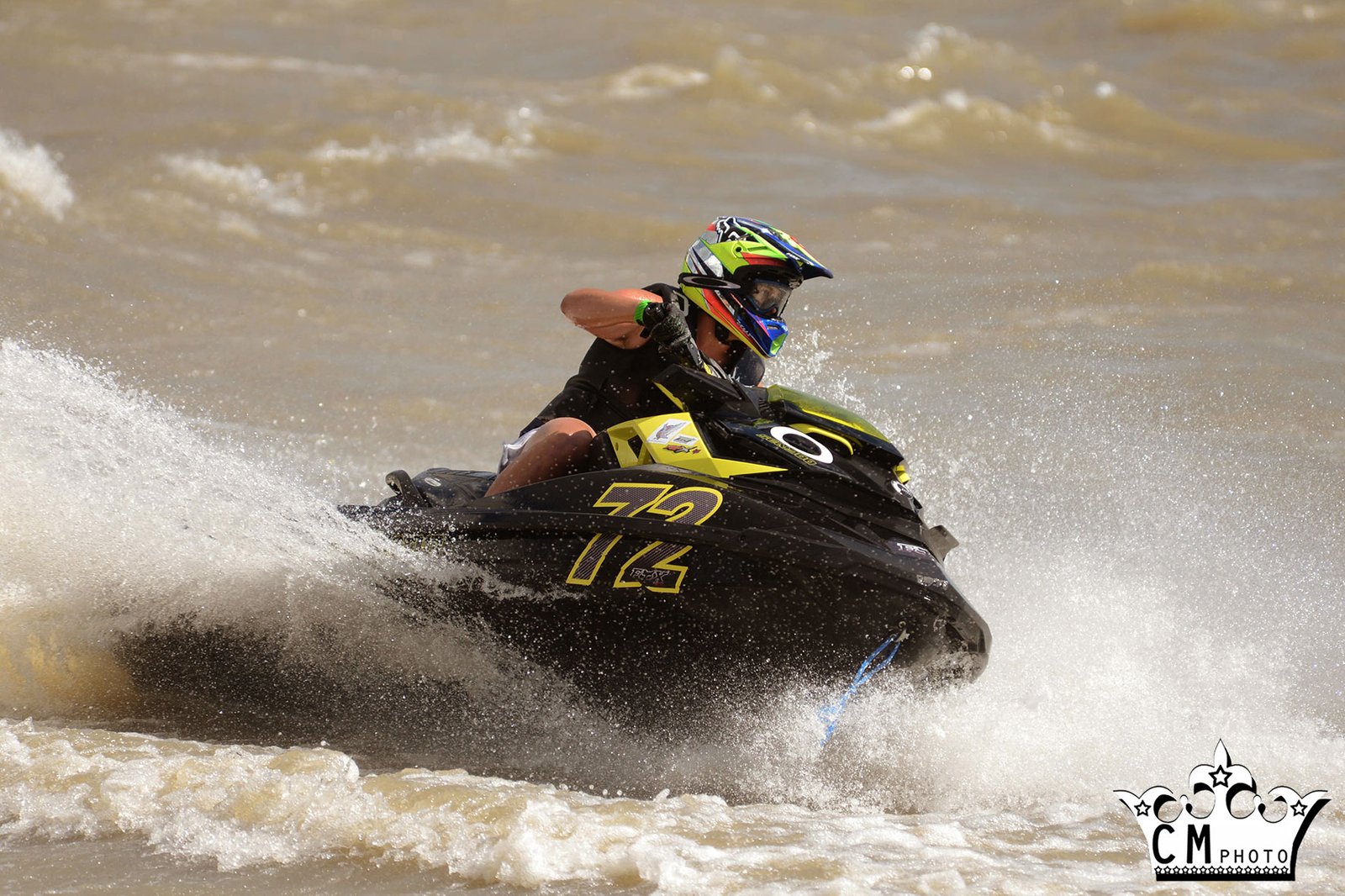
Next up was the Veterans Runabout class with some exhilarating racing. The podium was as follows: first Peter Britz on his #153 Sea-Doo Centre Sea-Doo RXP-X, second was Christo Malan on his #5 Sea-Doo RXP-X and in third place was Johann Bukes on his #72 Sea-Doo RXT-X.
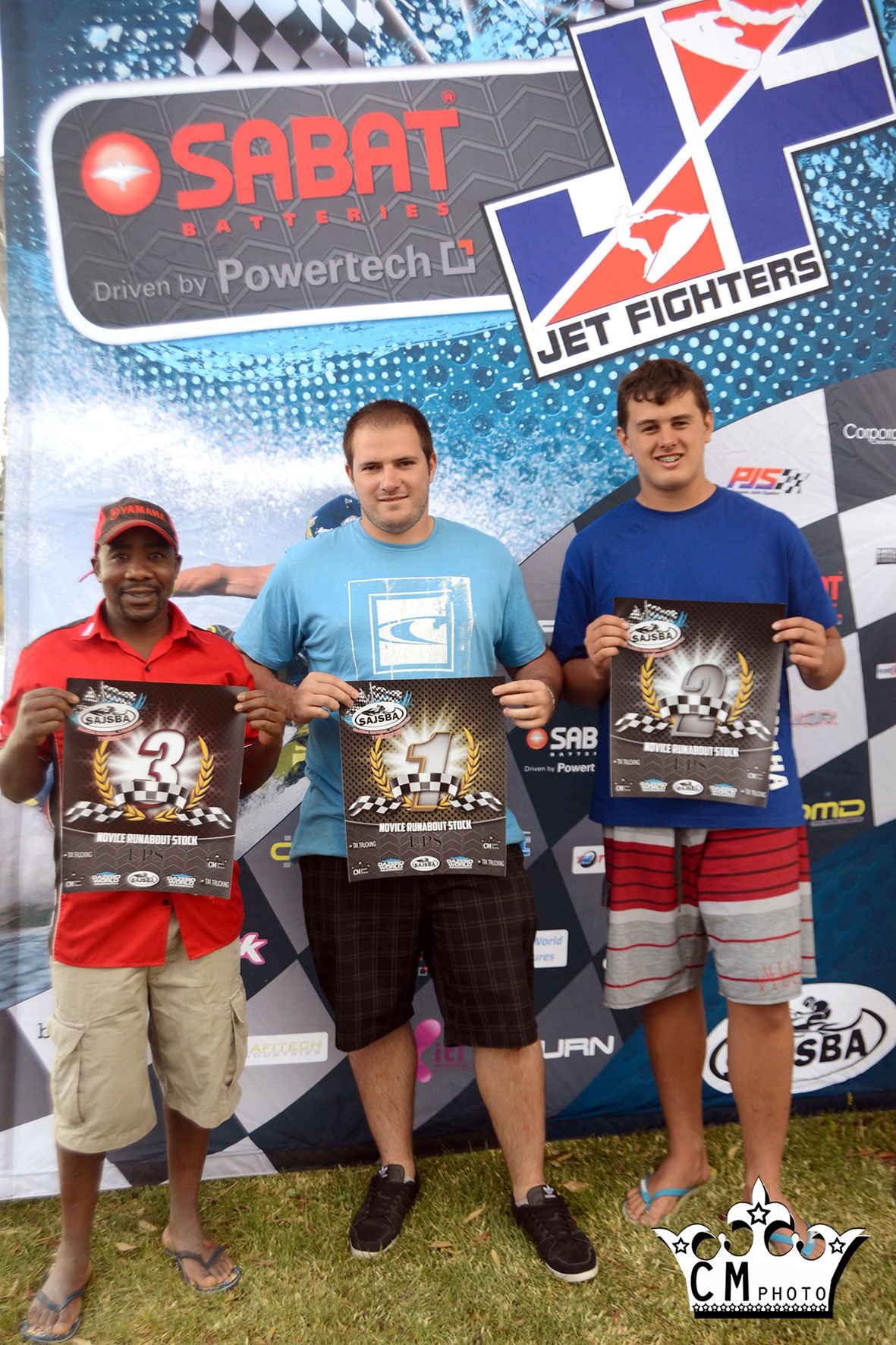
The Novice Runabout Stock class has put some promising riders in the spotlight including Darius Bukes who is the younger brother of 2013 Women’s Runabout World Champion, Shante Bukes. After three challenging motos, the podium was rounded out by Yamaha rider Welcome Radebe in third, Darius Bukes took second place and Dylan Moolman in first position.
This is the first year that SAJSBA has re-introduced the Pro-Am Sport Lites and Pro-Am Sport Open classes and they were extremely successful with 9 riders on the line. Tyron Sterne managed to take first position in the Pro-Am Sport Lites class, with Wade Peterson in second and Nick Behr in third. Sean Valsecchi took first overall in the Pro-Am Sport Open class, and Peter Britz took second.
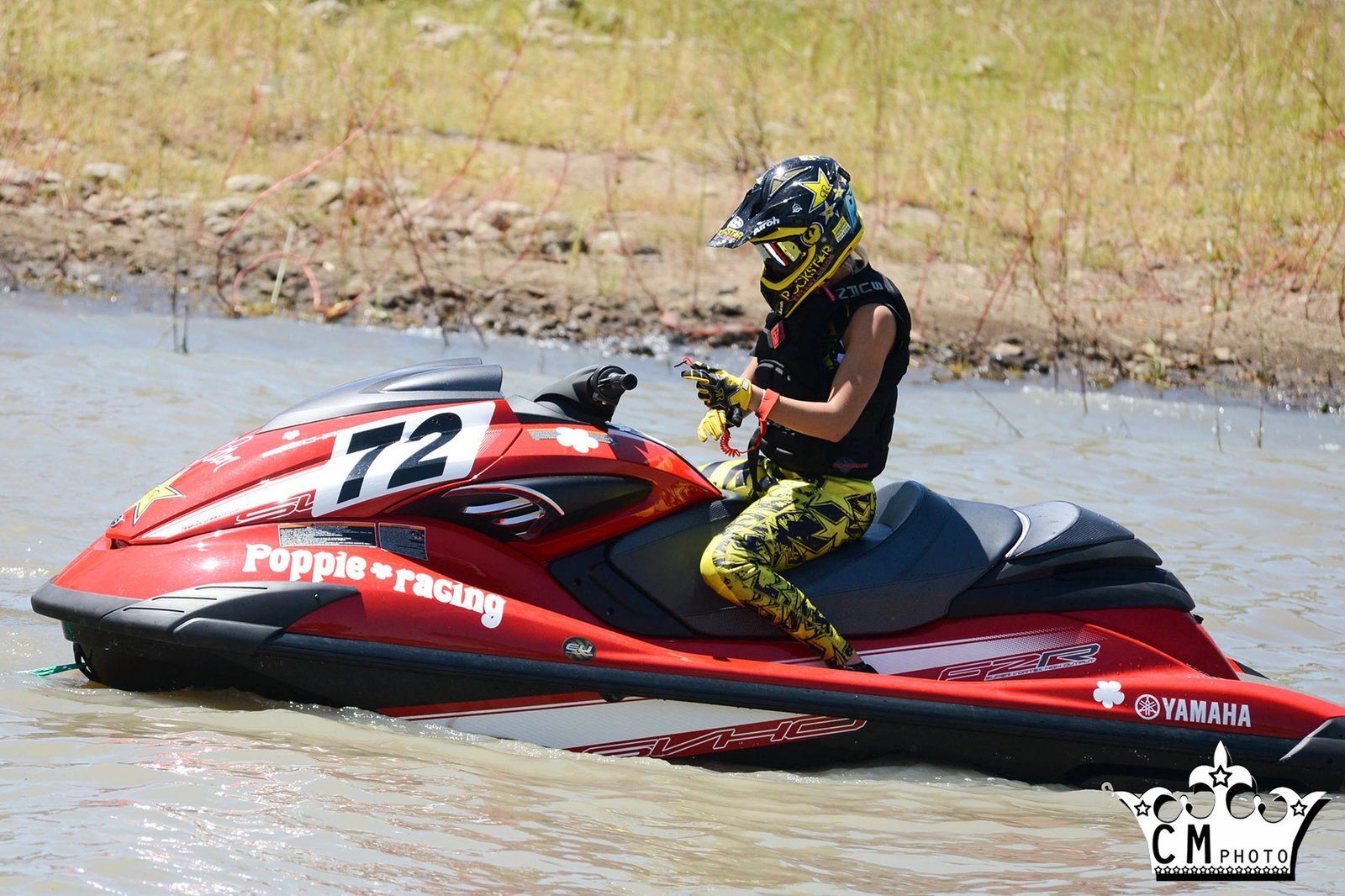
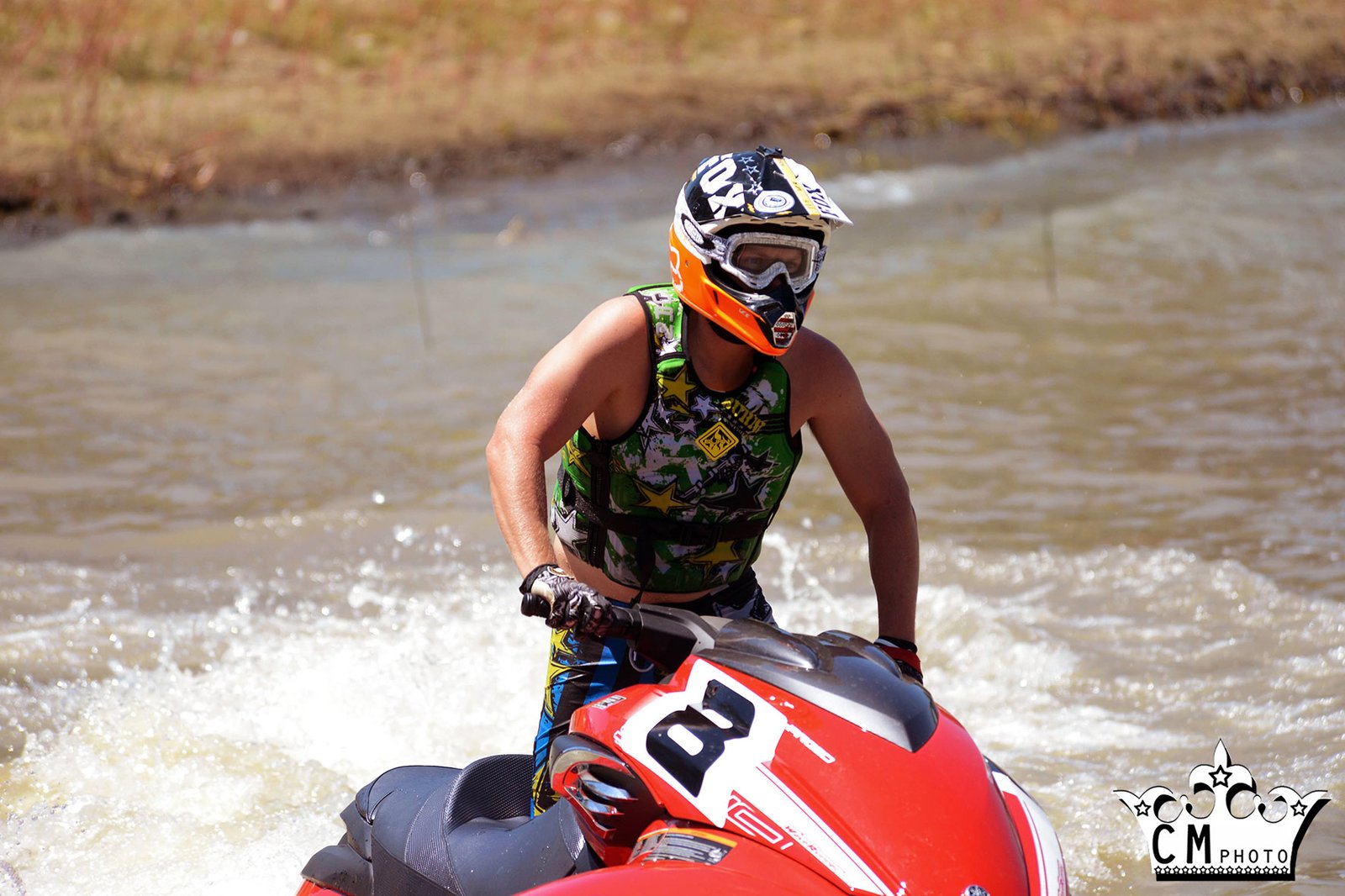
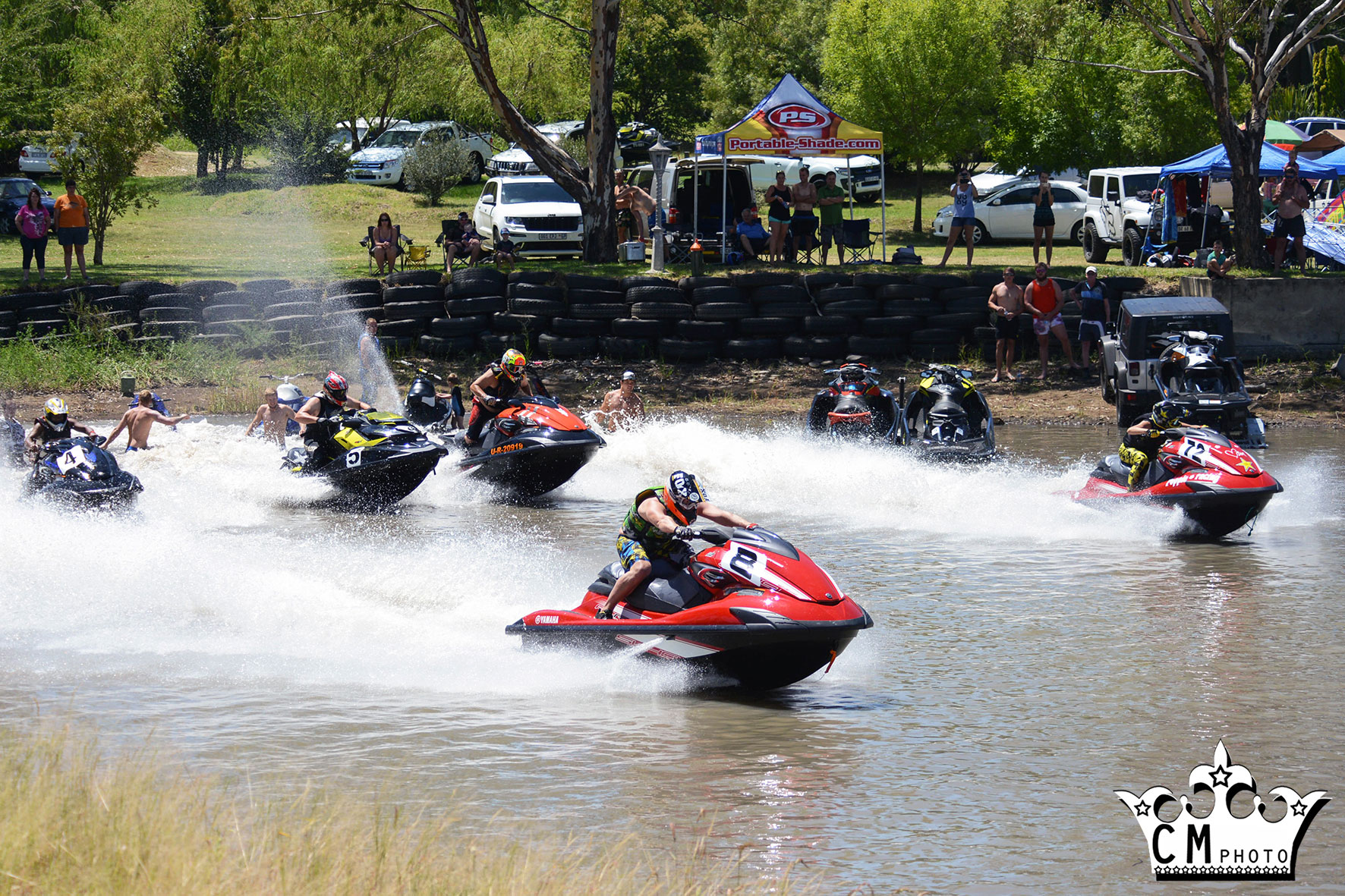
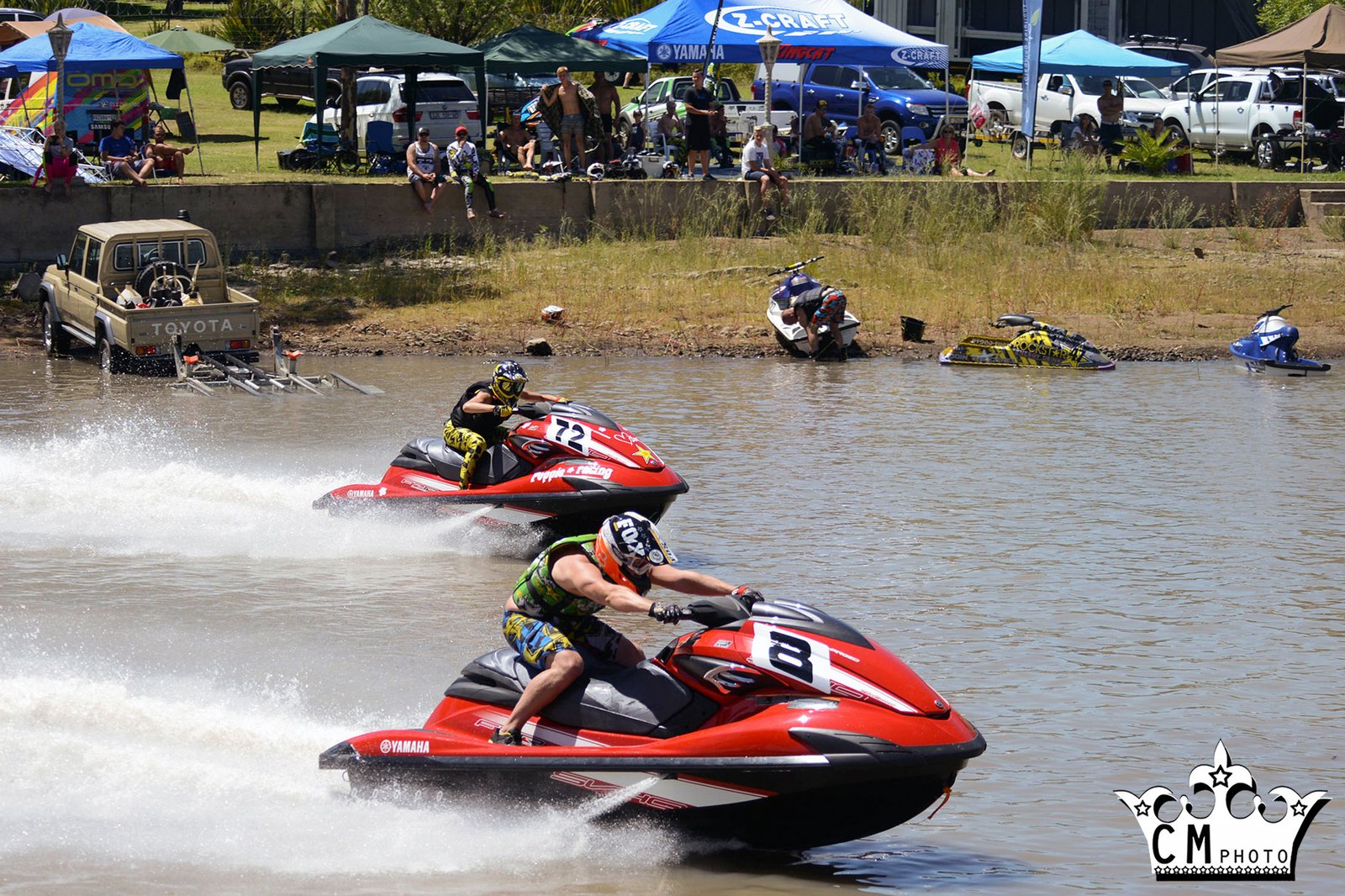
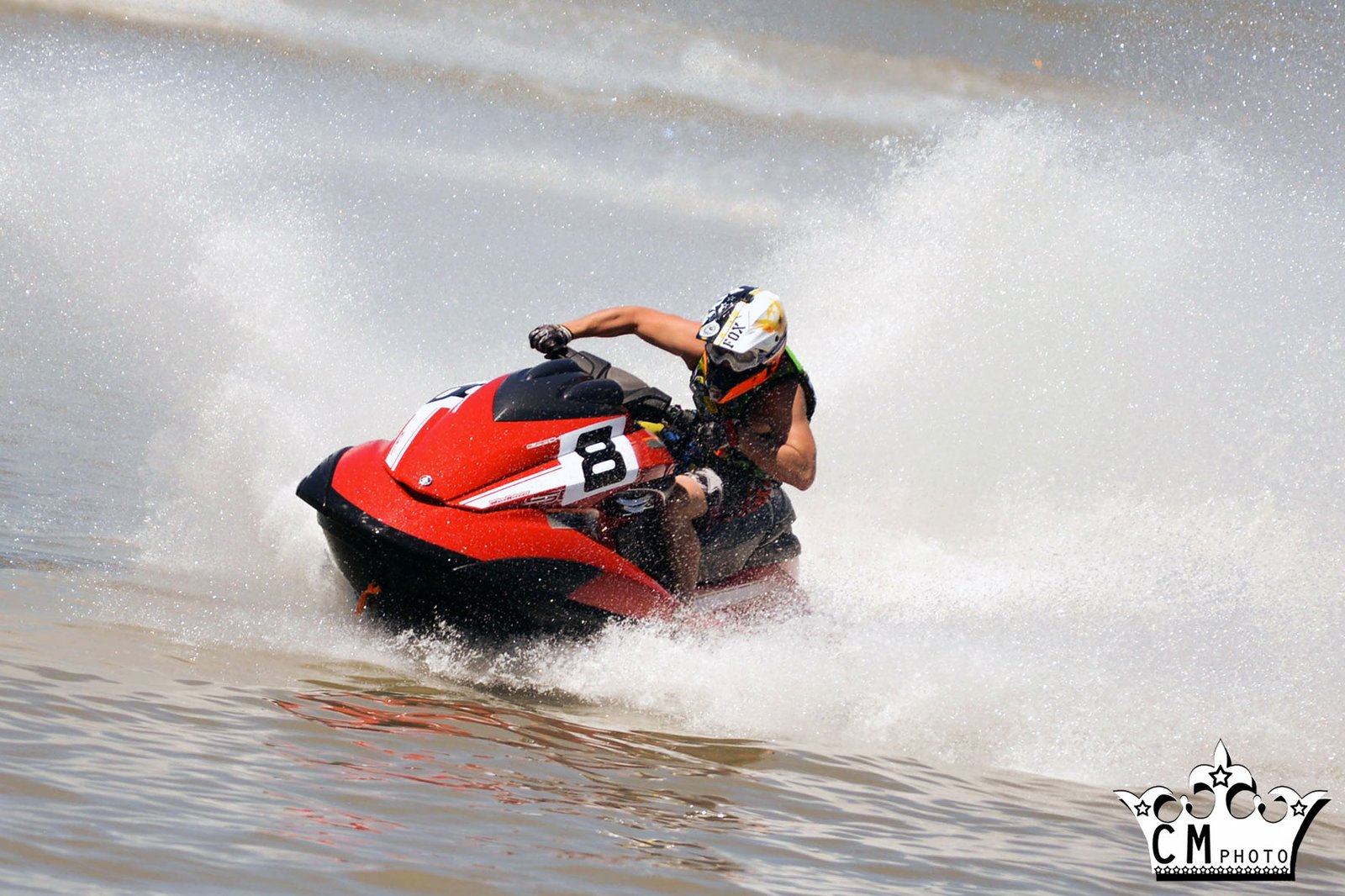
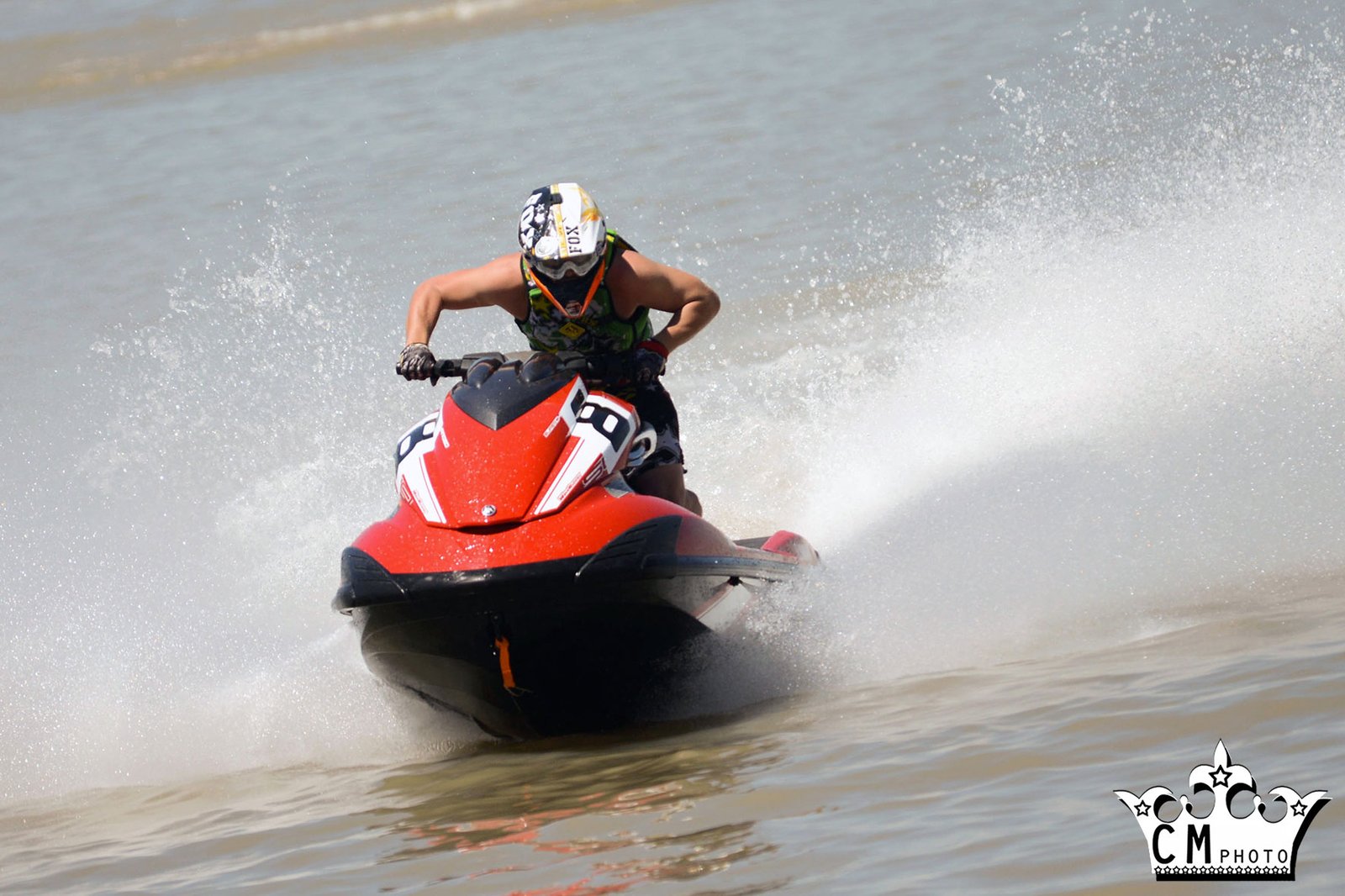
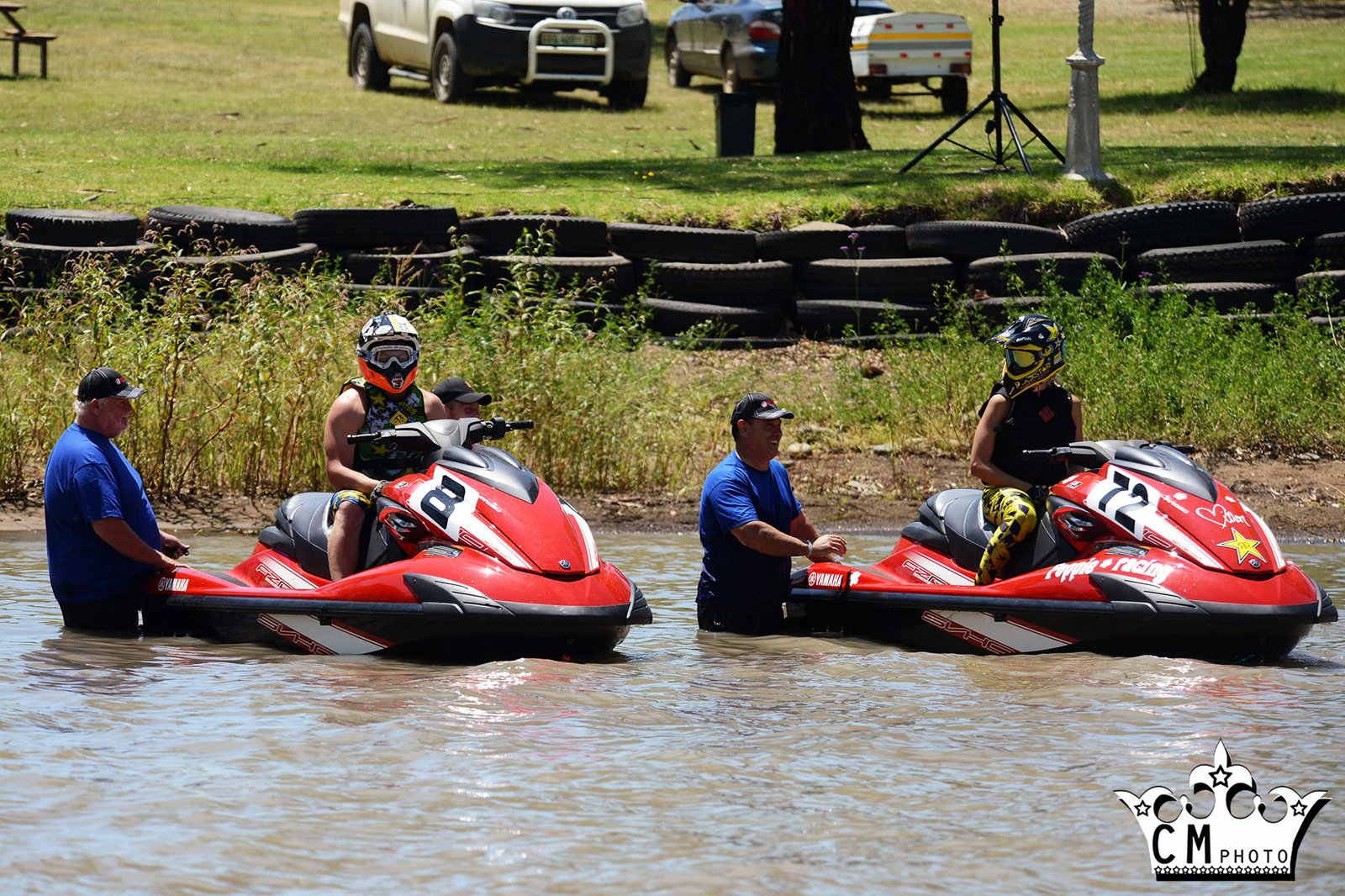
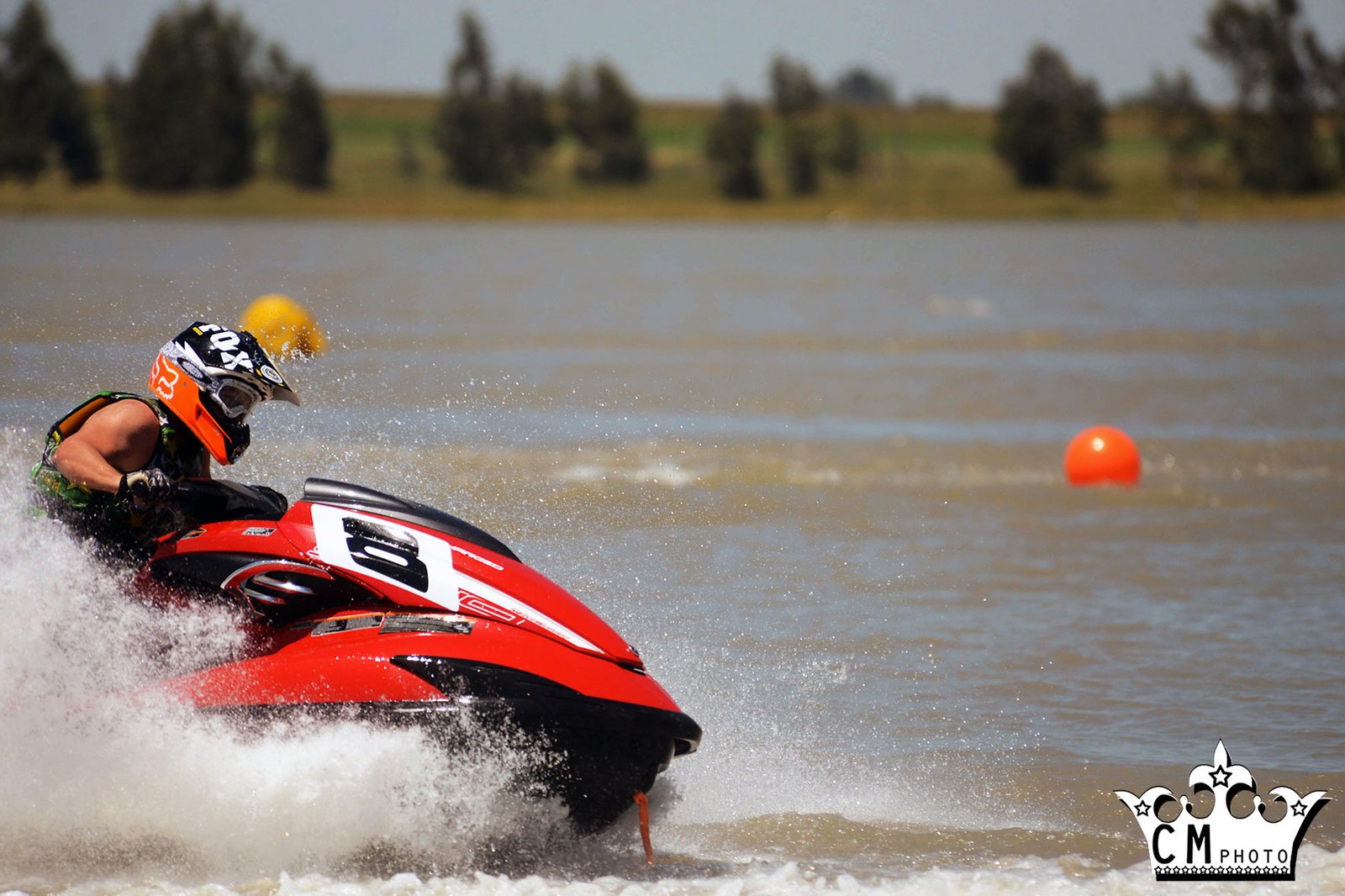
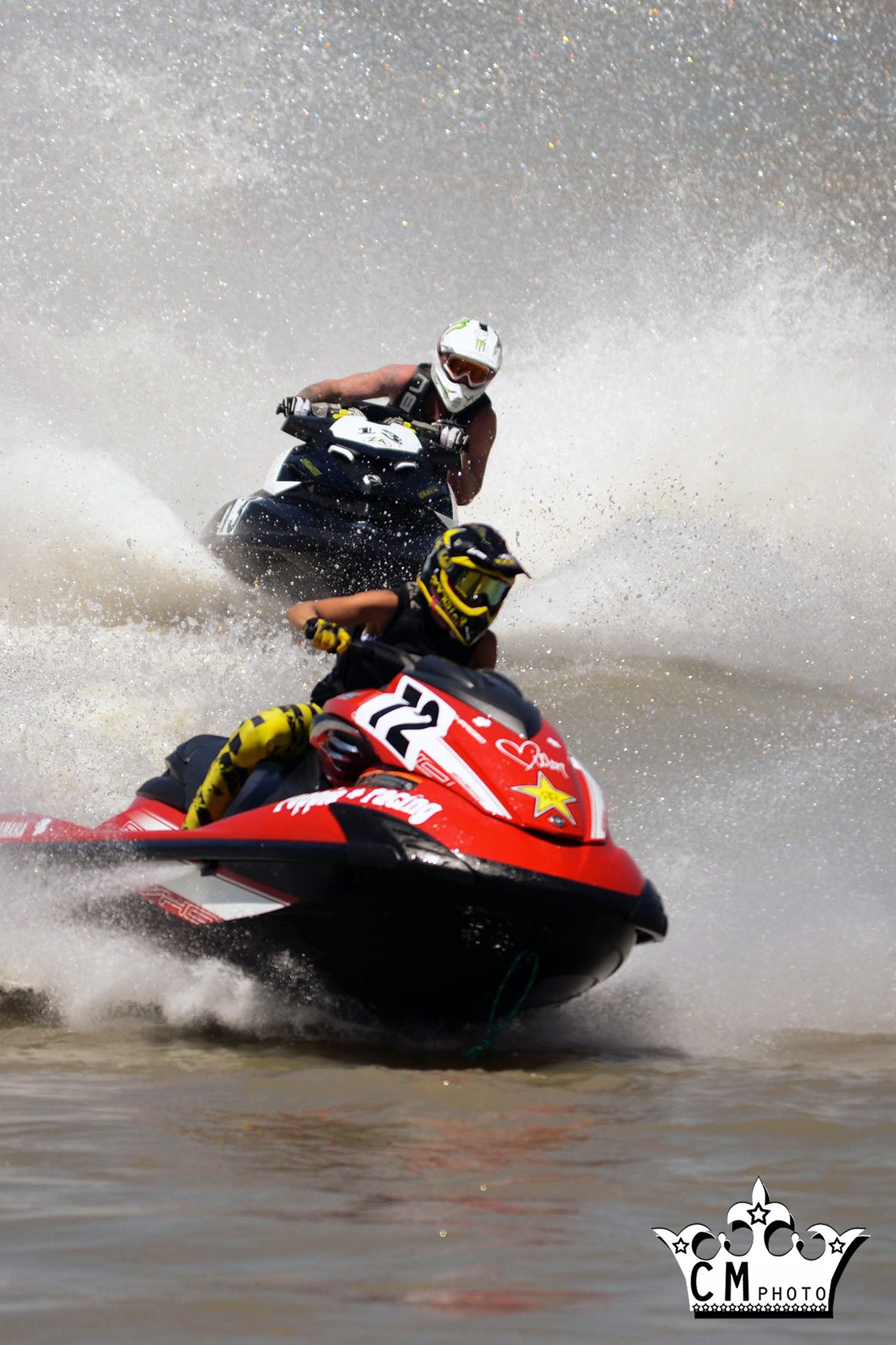
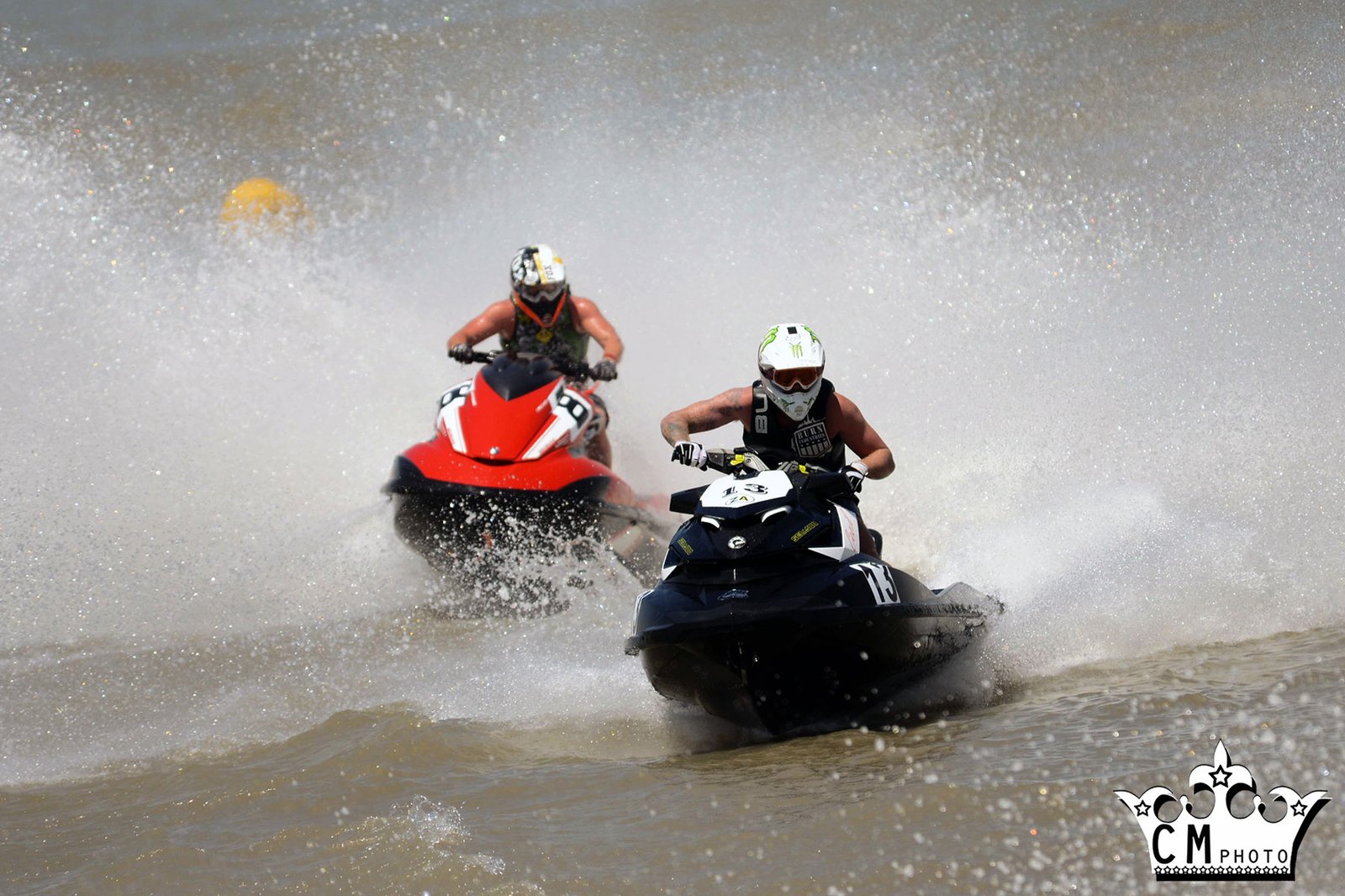
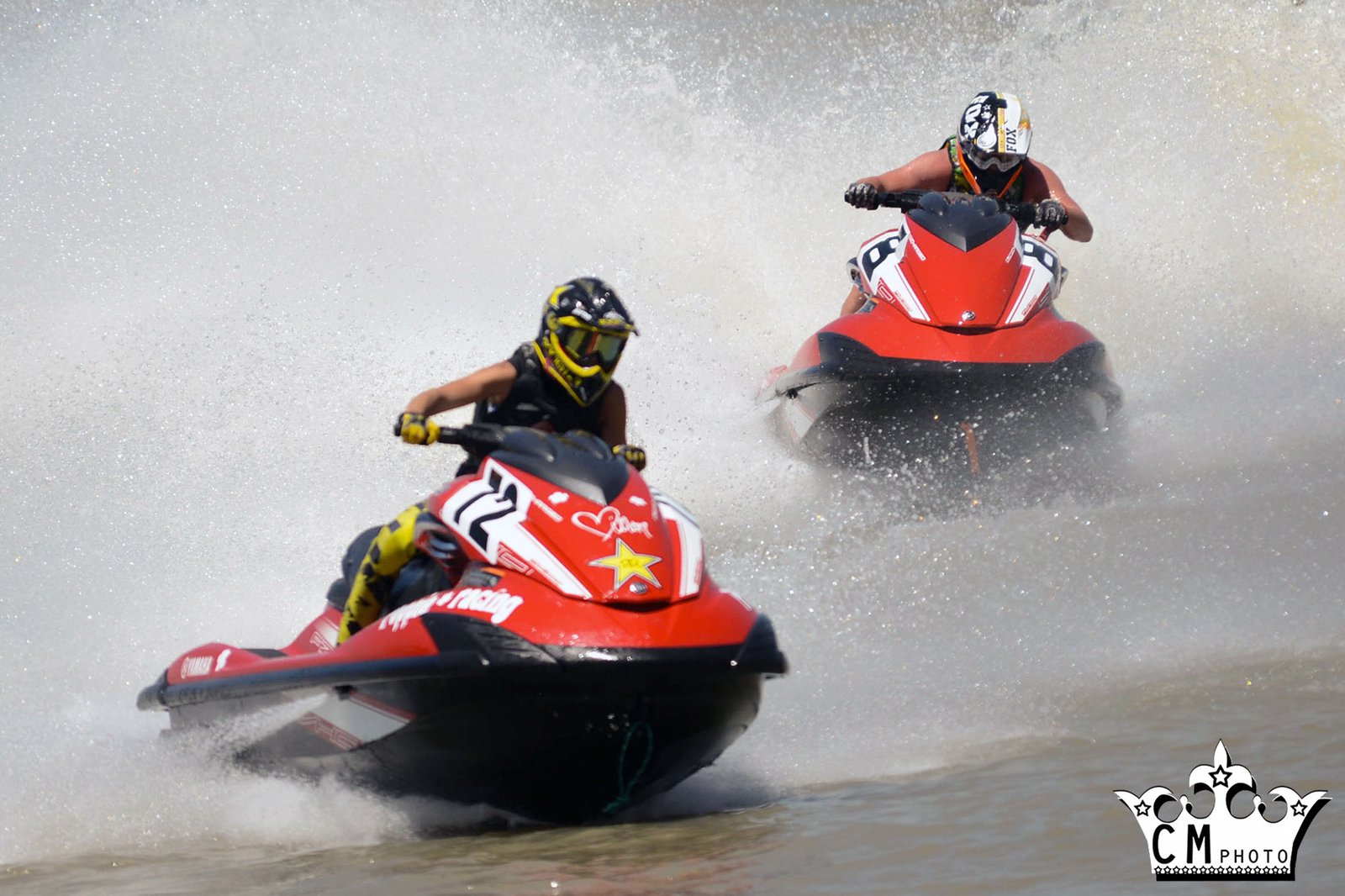
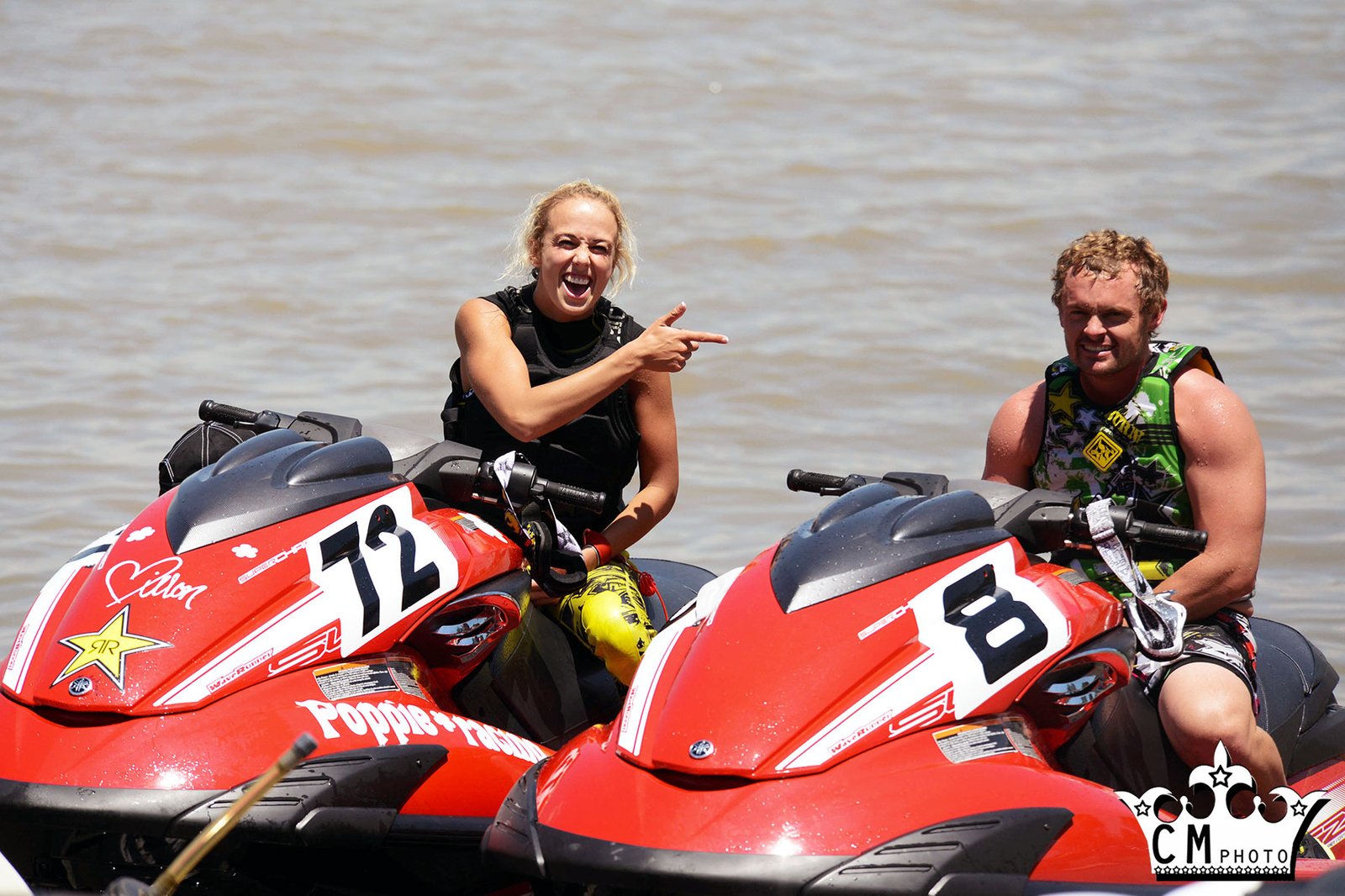
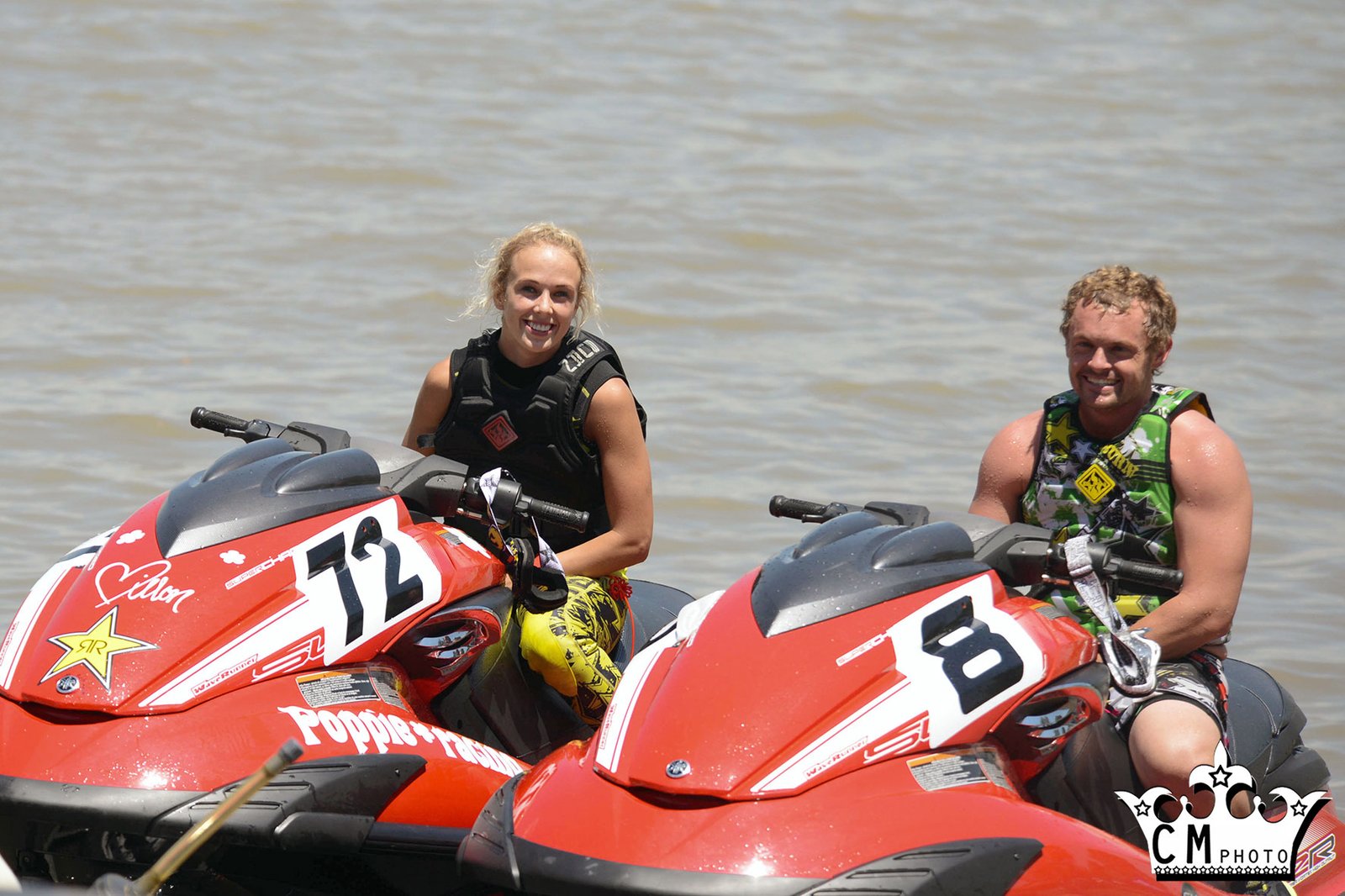
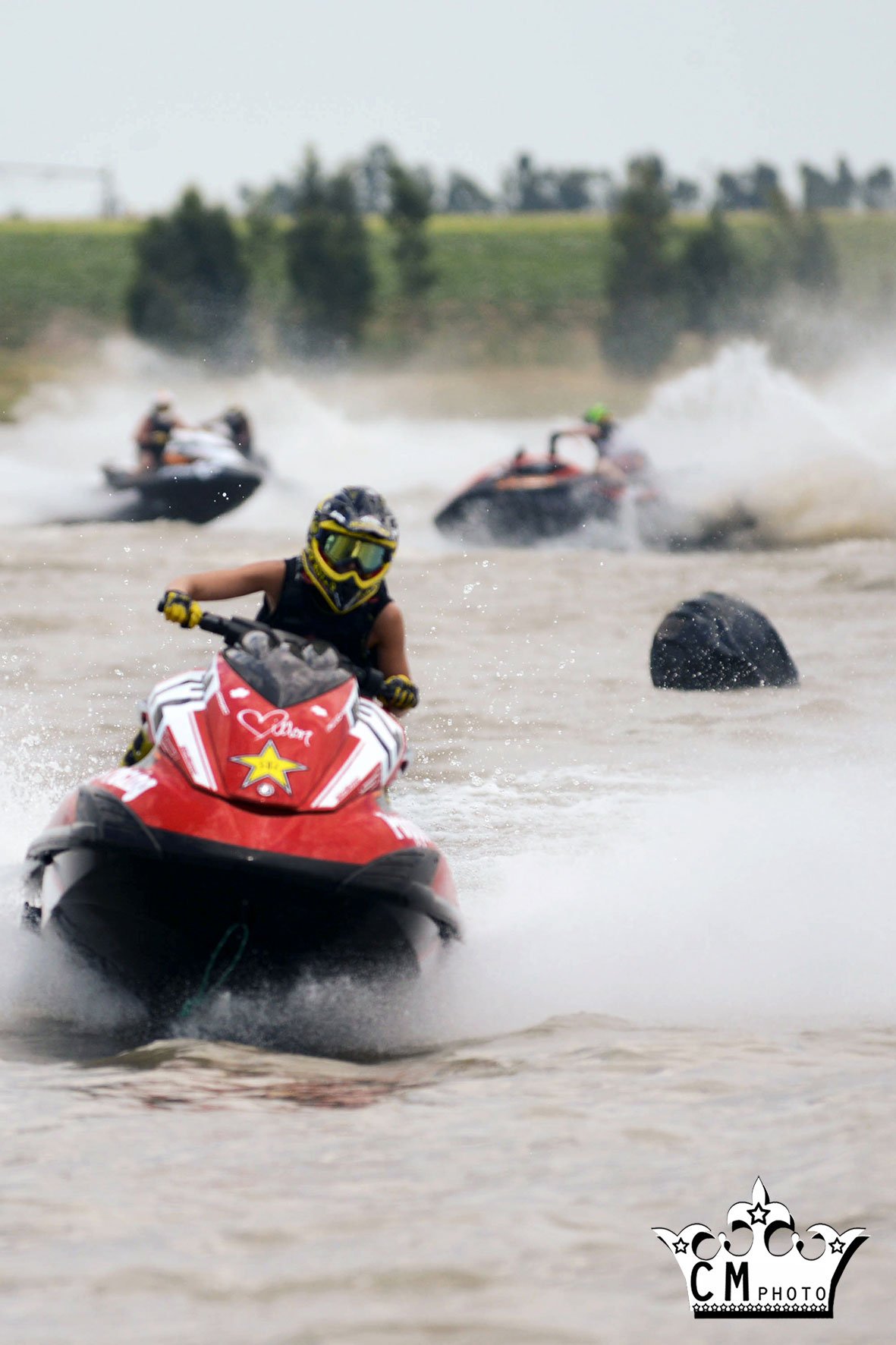
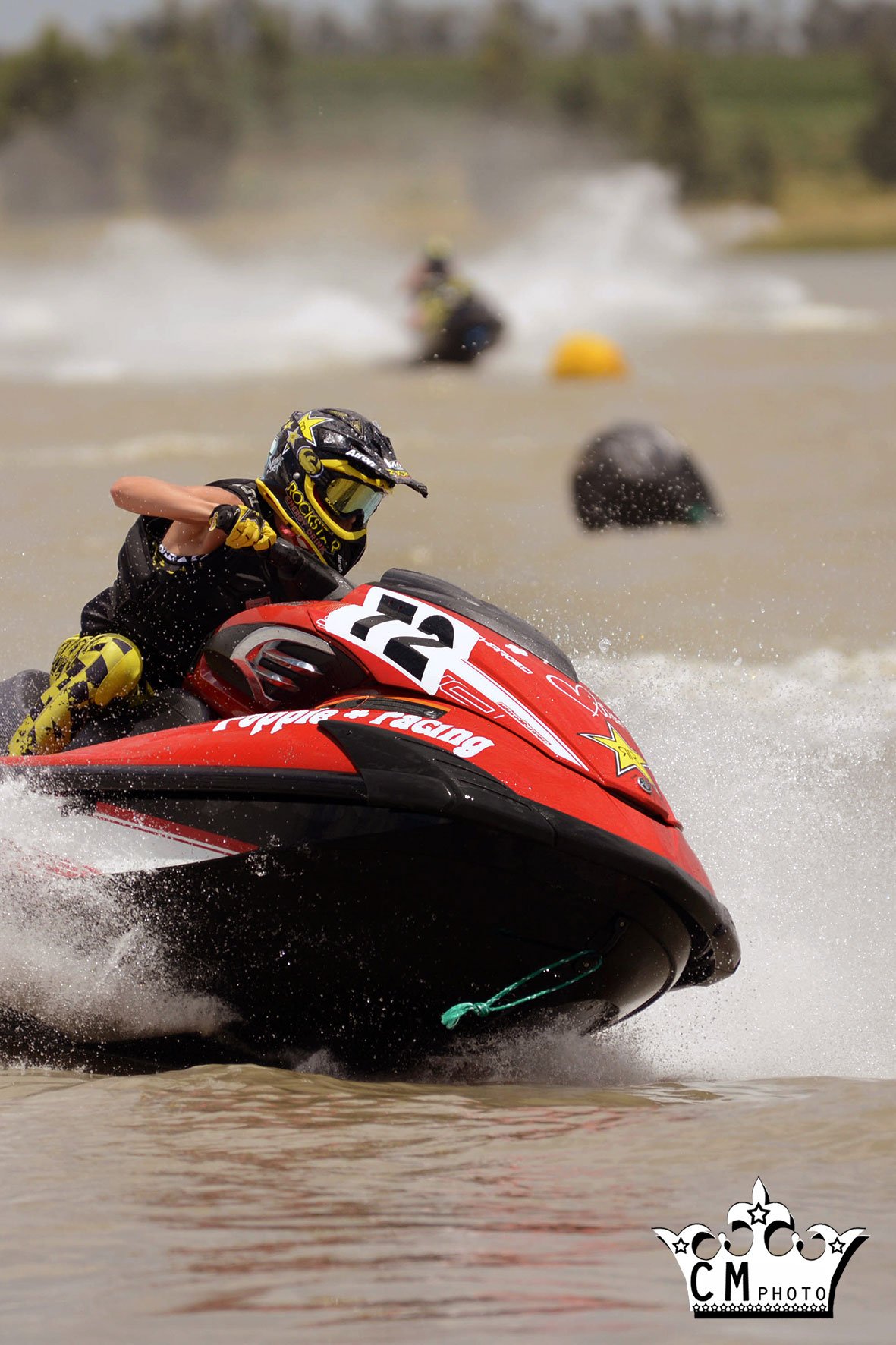
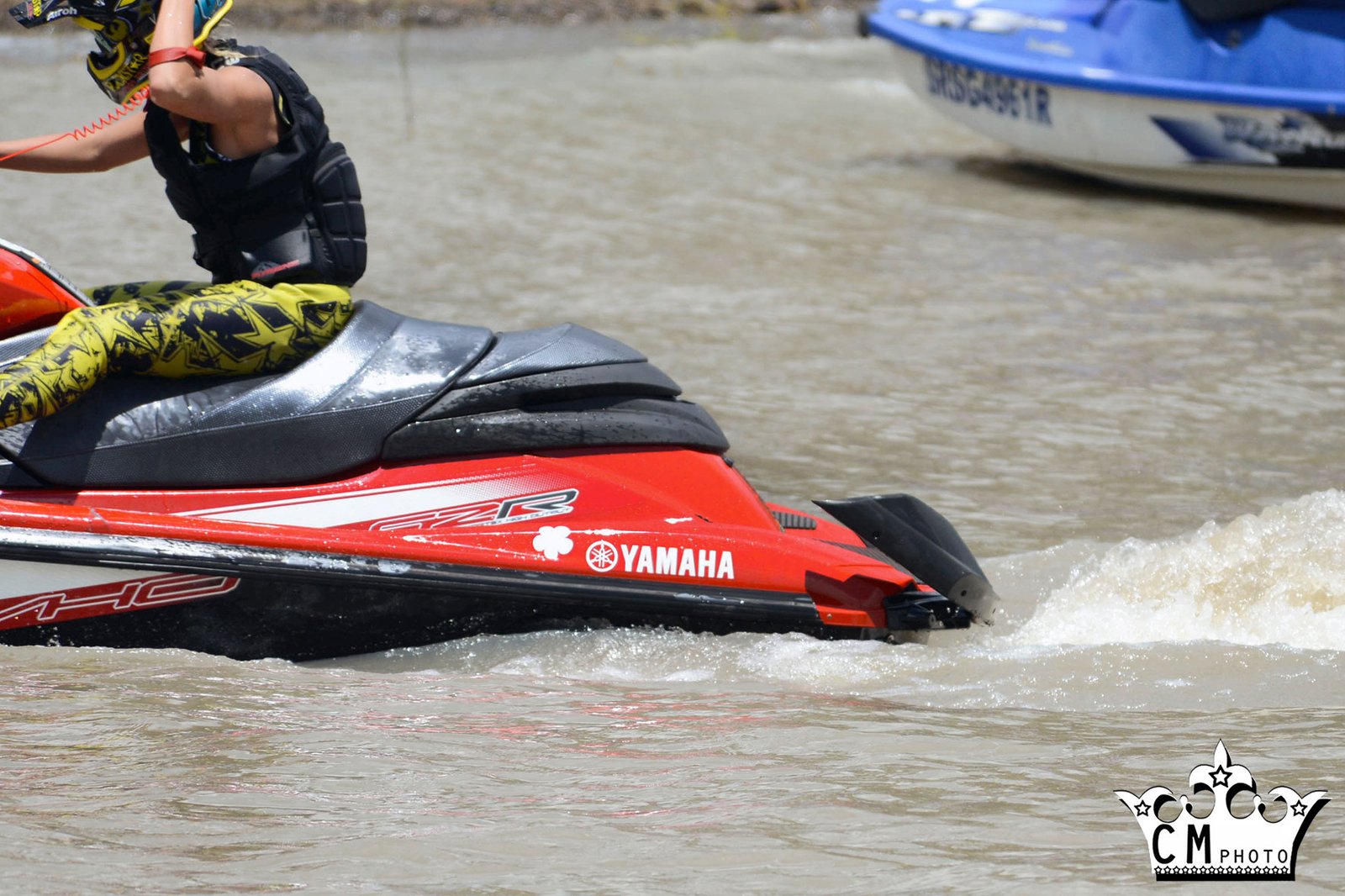
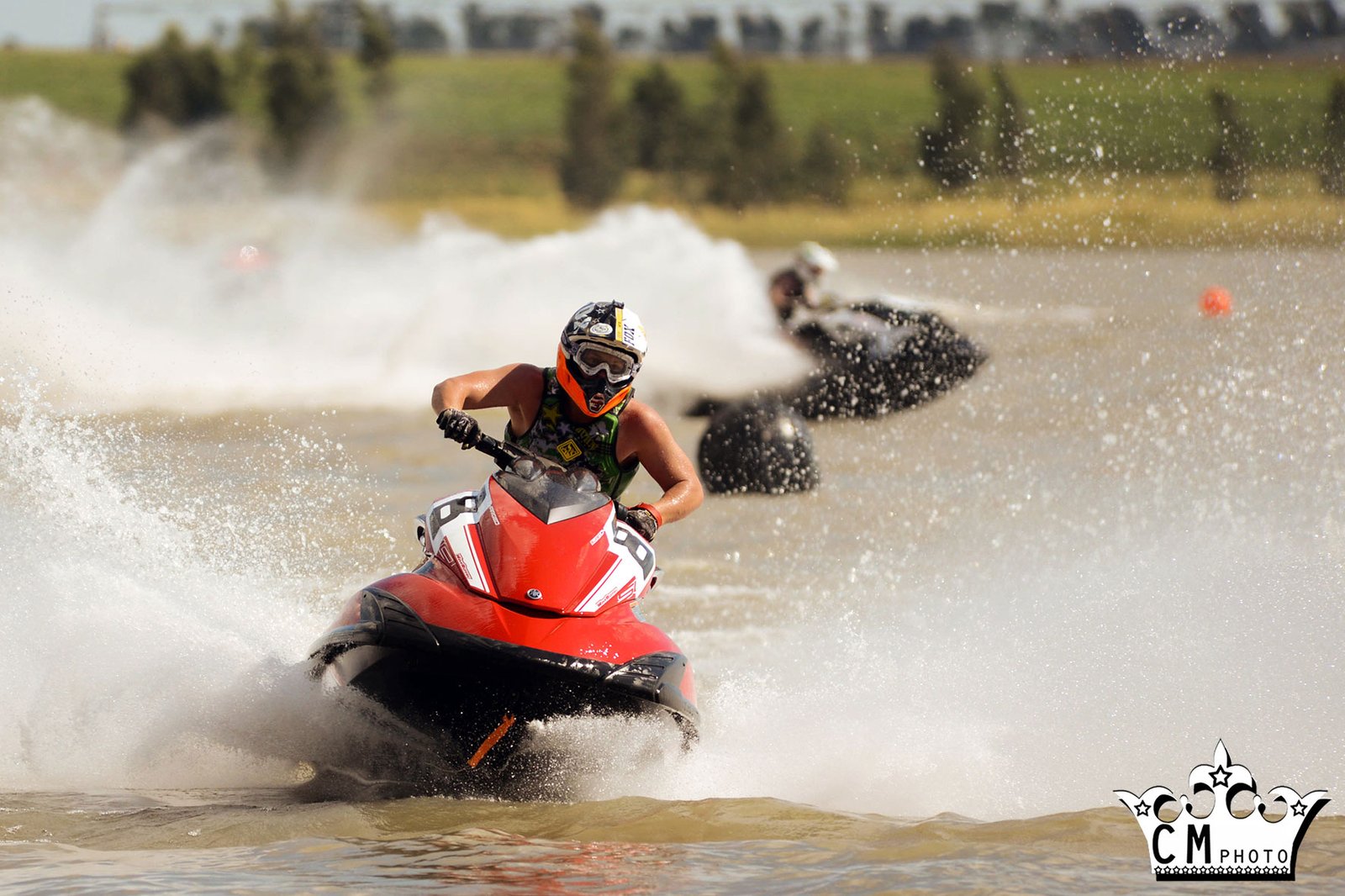
The Pro Runabout Stock and Open classes were the most eventful of the day, with Yamaha-sponsored riders Jared Moore and Shante Bukes racing their 2015 Yamaha FZRs for the first time. In Moto 1, Jared Moore got the holeshot on his #8 Yamaha FZR; close on his heels was Shante Bukes on her #72 Yamaha FZR. Moore managed to maintain a decent lead on Bukes and took the win in Moto 1, Bukes in second and Kobus Malan took third on his #5 Sea-Doo RXP-X.
Moto 2 had the same result as Moto 1 with Moore getting the holeshot and taking the checkered flag. Shante Bukes was involved in a collision in Moto 2 with Kobus Malan, but she managed to finish the moto albeit with an injured knee and ankle. She was unable to compete in Moto 3 of the Pro Runabout Stock and Open classes.
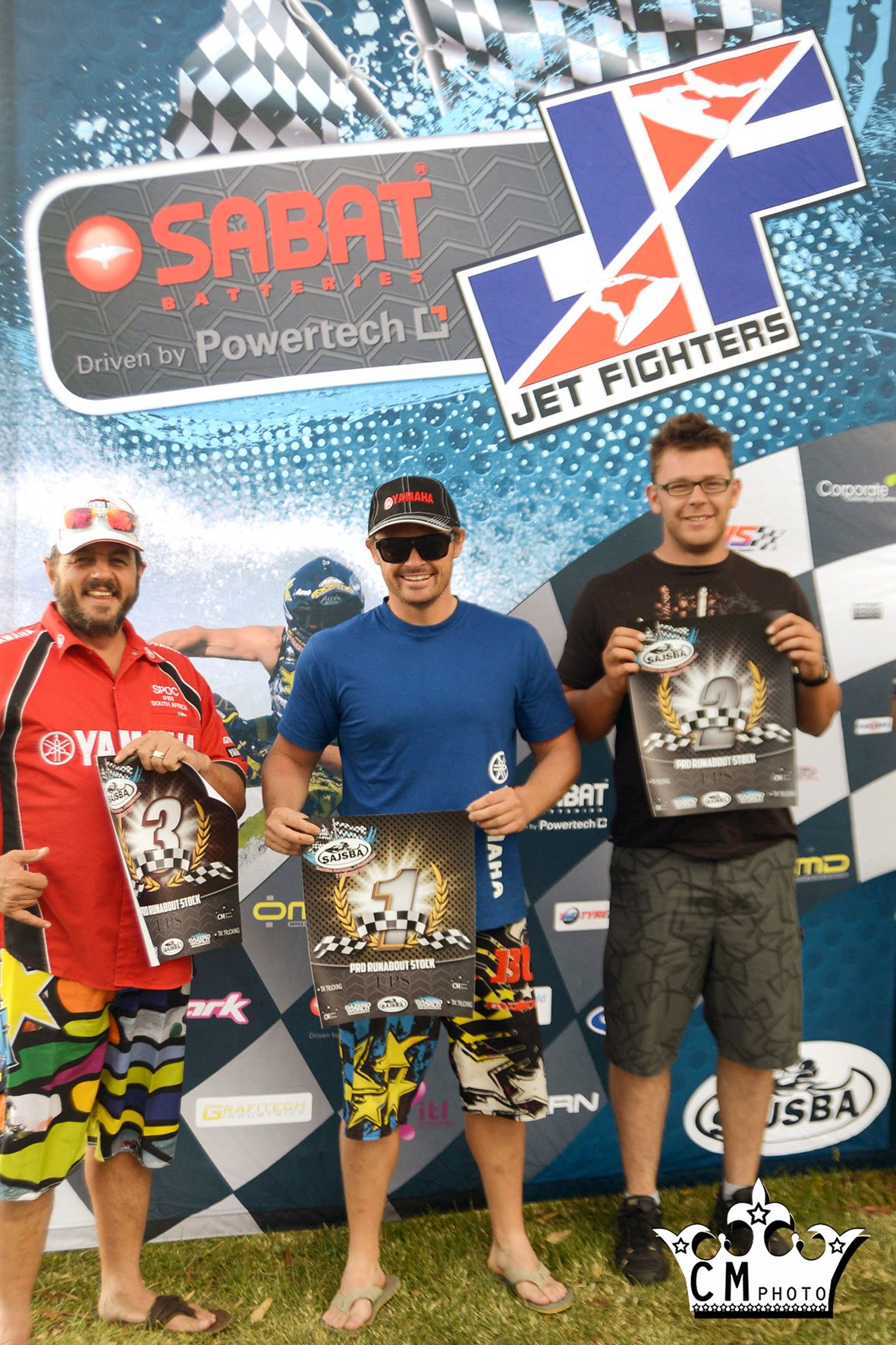
In Moto 3, Moore got the holeshot once again and led from start to finish, Kobus Malan took second and Peter Britz rounded up the Top 3. Moore took the overall win for the day in the Pro Runabout Stock class, with Kobus Malan in second and Peter Britz taking the third position.
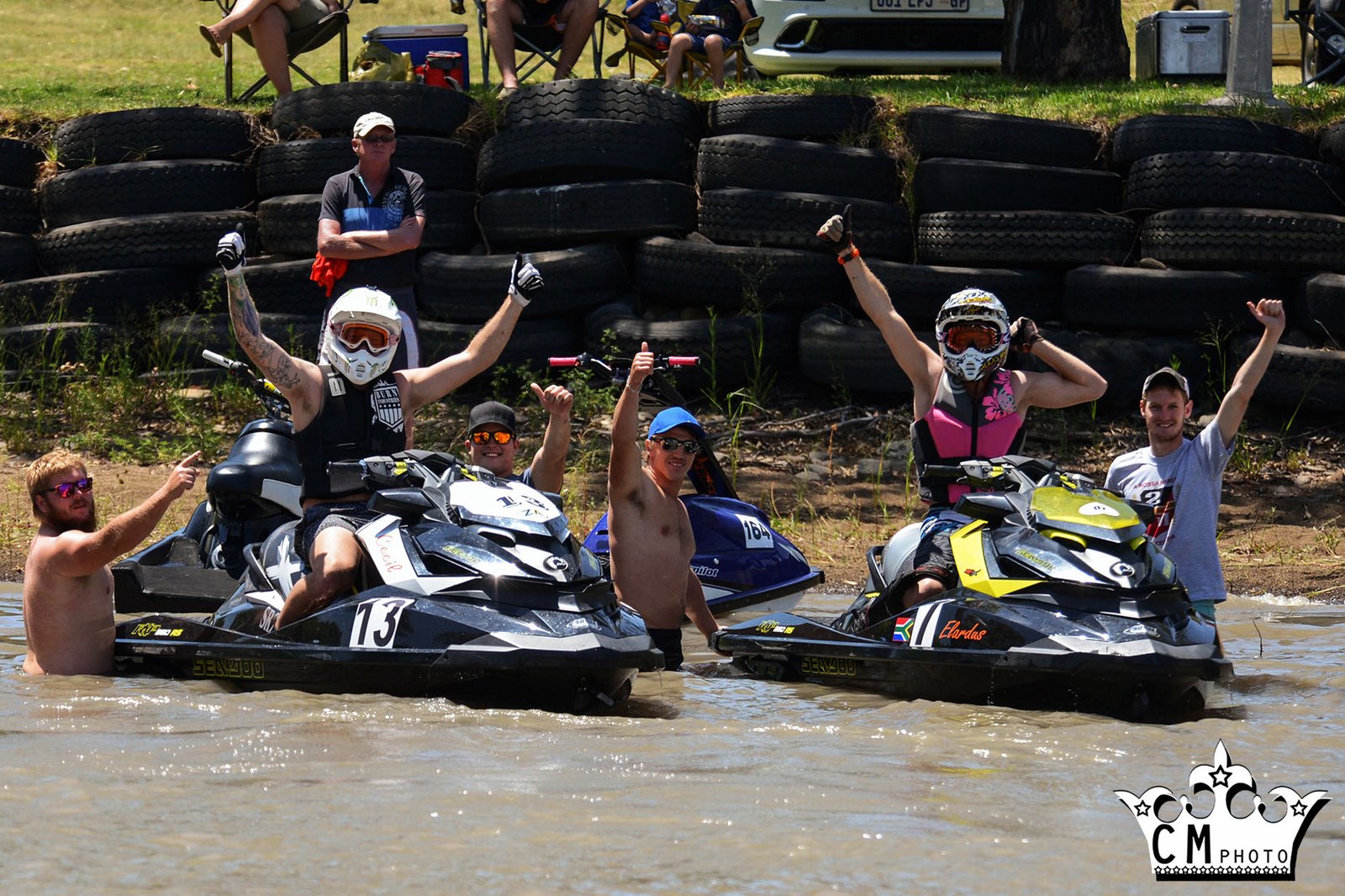
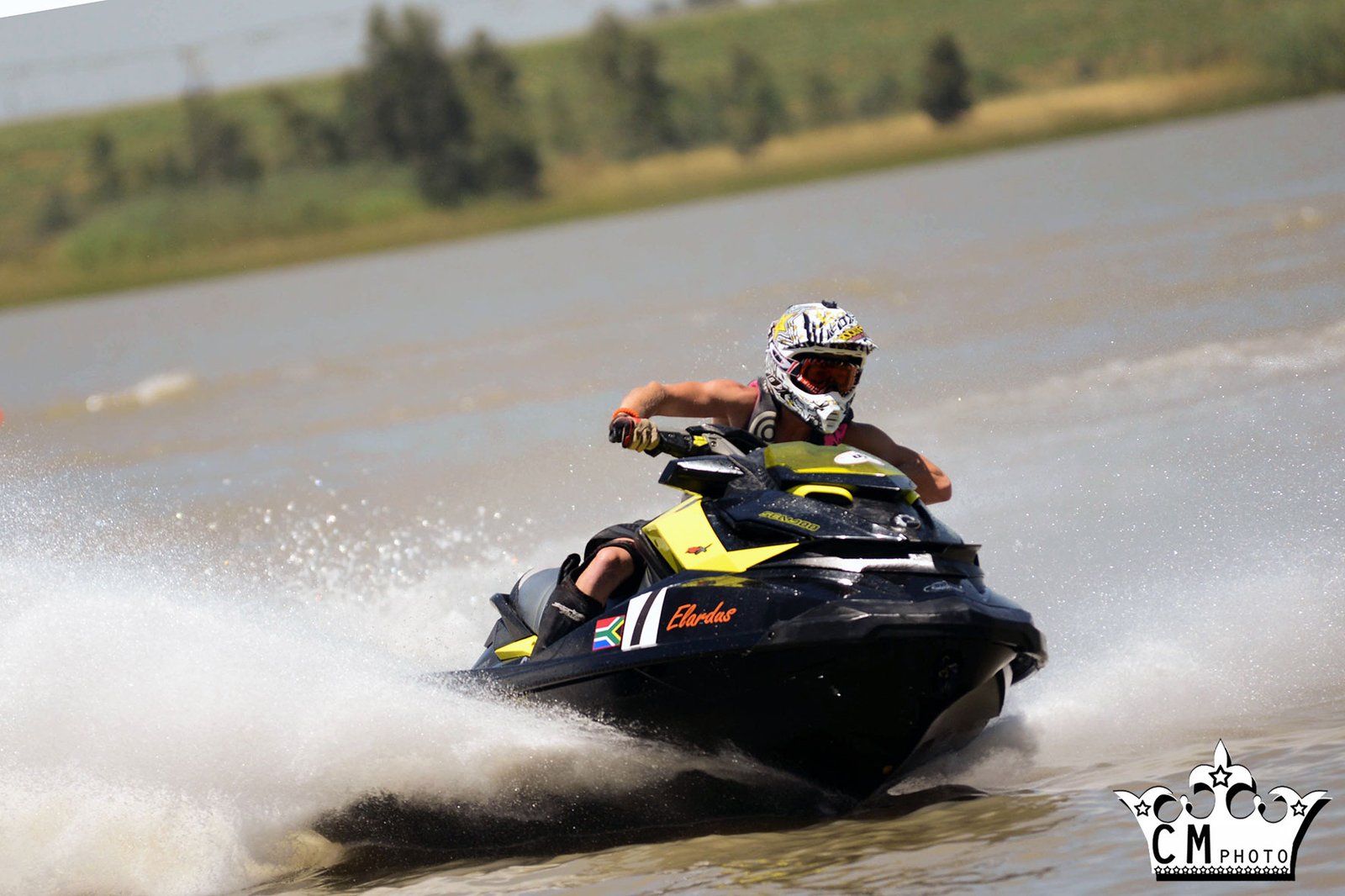
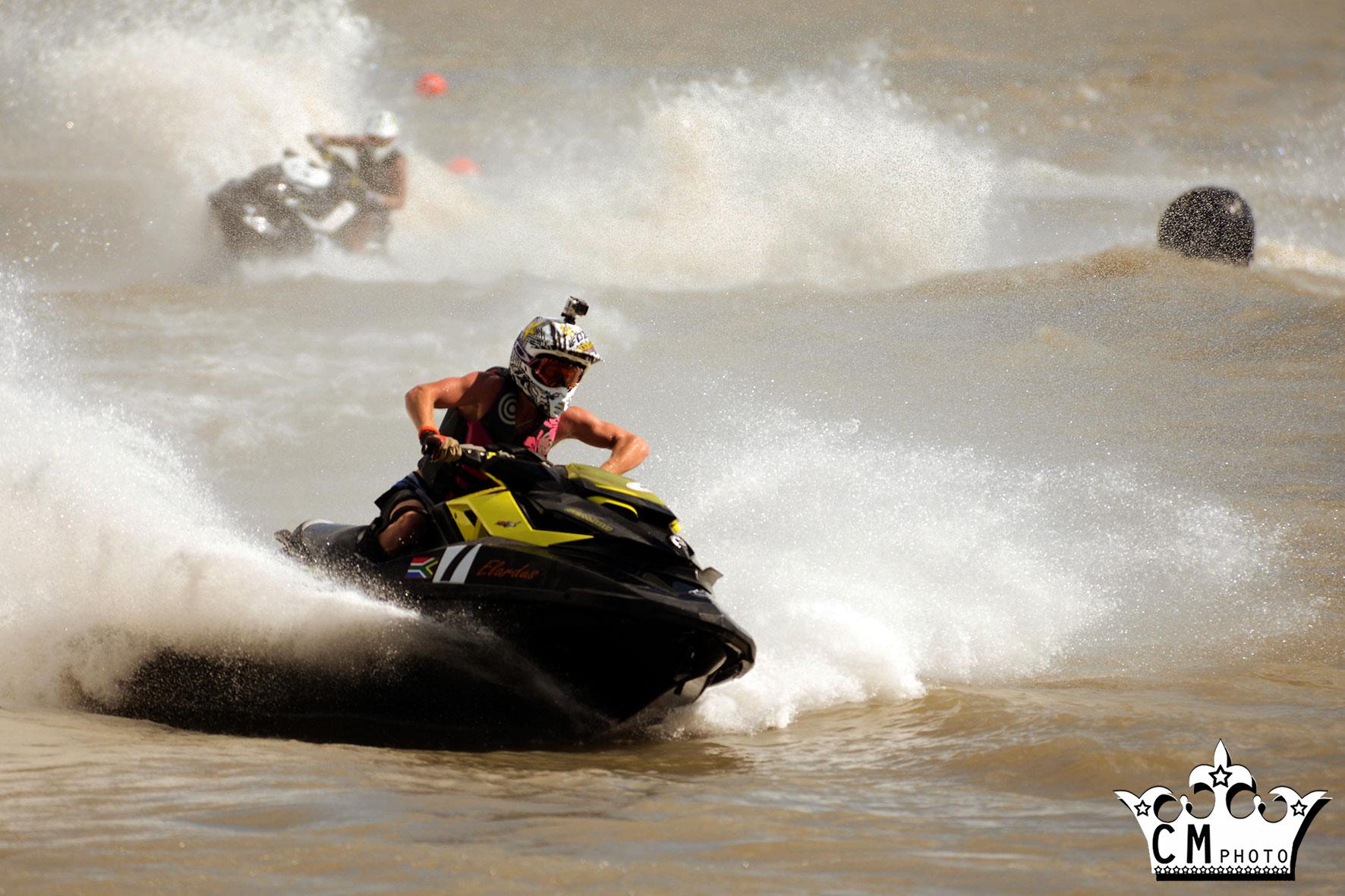
The Pro Runabout Open Moto 1 saw Elardus Larney take the holeshot on his #7 Sea-Doo RXP-X, with Shante Bukes in a close second on her #72 Yamaha FZR, and Cecil Larney in third on his #13 Sea-Doo RXP-X. Moto 2 saw Elardus Larney take the holeshot and win again, with Cecil Larney in second and Jared Moore in third.
Moore managed to get an impressive start in Moto 3 and lead the race from start to finish, Elardus Larney came in close behind and Cecil Larney rounded out the Top 3 in third position. Final results in the Pro Runabout Open class were Cecil Larney in third, Jared Moore in second, and Elardus Larney in first.
The Pro Ski Lites class was introduced to the SAJSBA Nationals three years ago. Basically, it is a stock class with some minor modifications allowed to improve the handling; these include ride plate, scoop grate, sponsons, aftermarket pole and handlebars. Certain engine compartment modifications which are permitted are an aftermarket head, aftermarket exhaust and aftermarket flame arrestors. This class has proven to be popular with nine riders on the line at the first National of 2015.
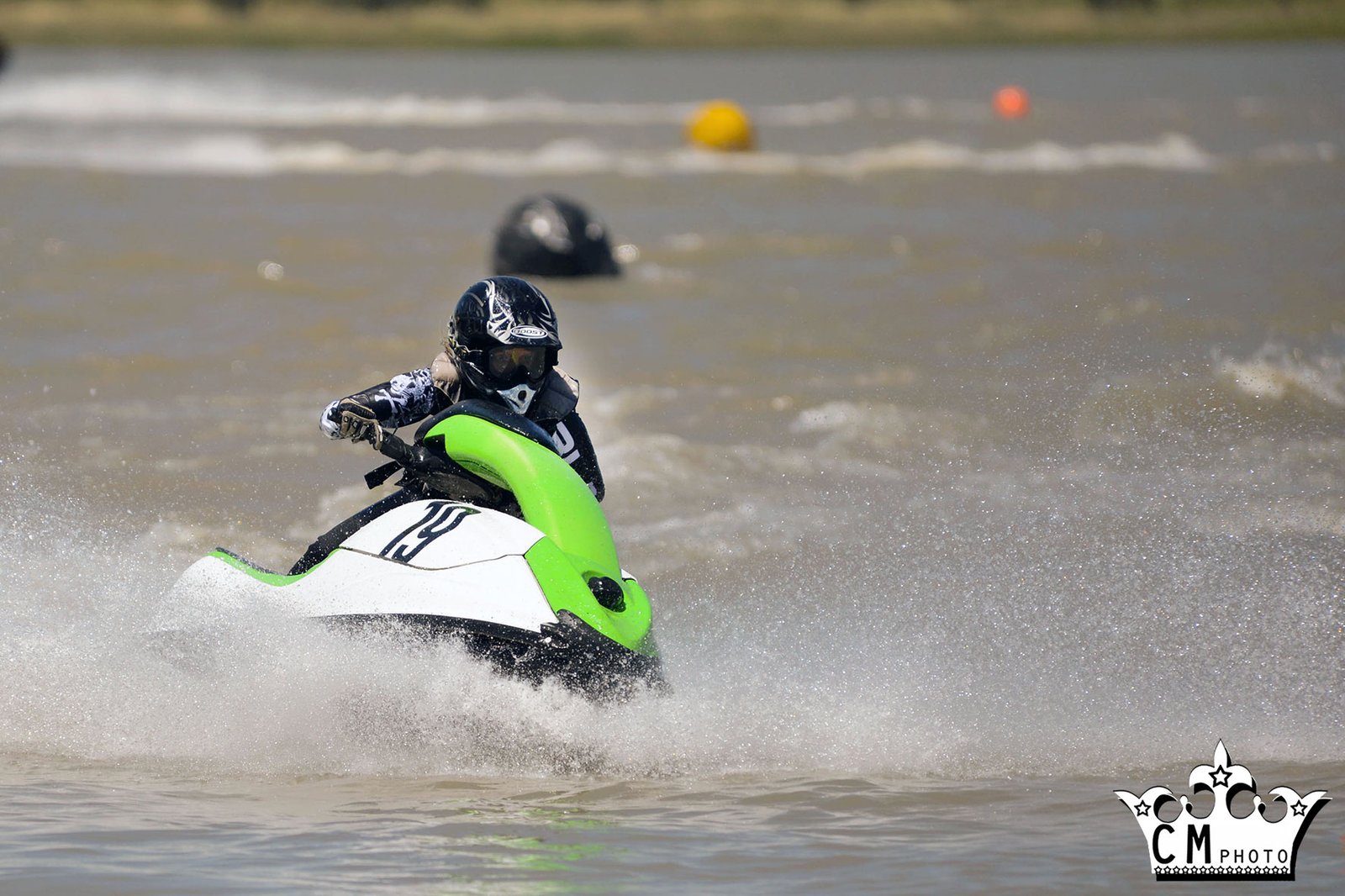
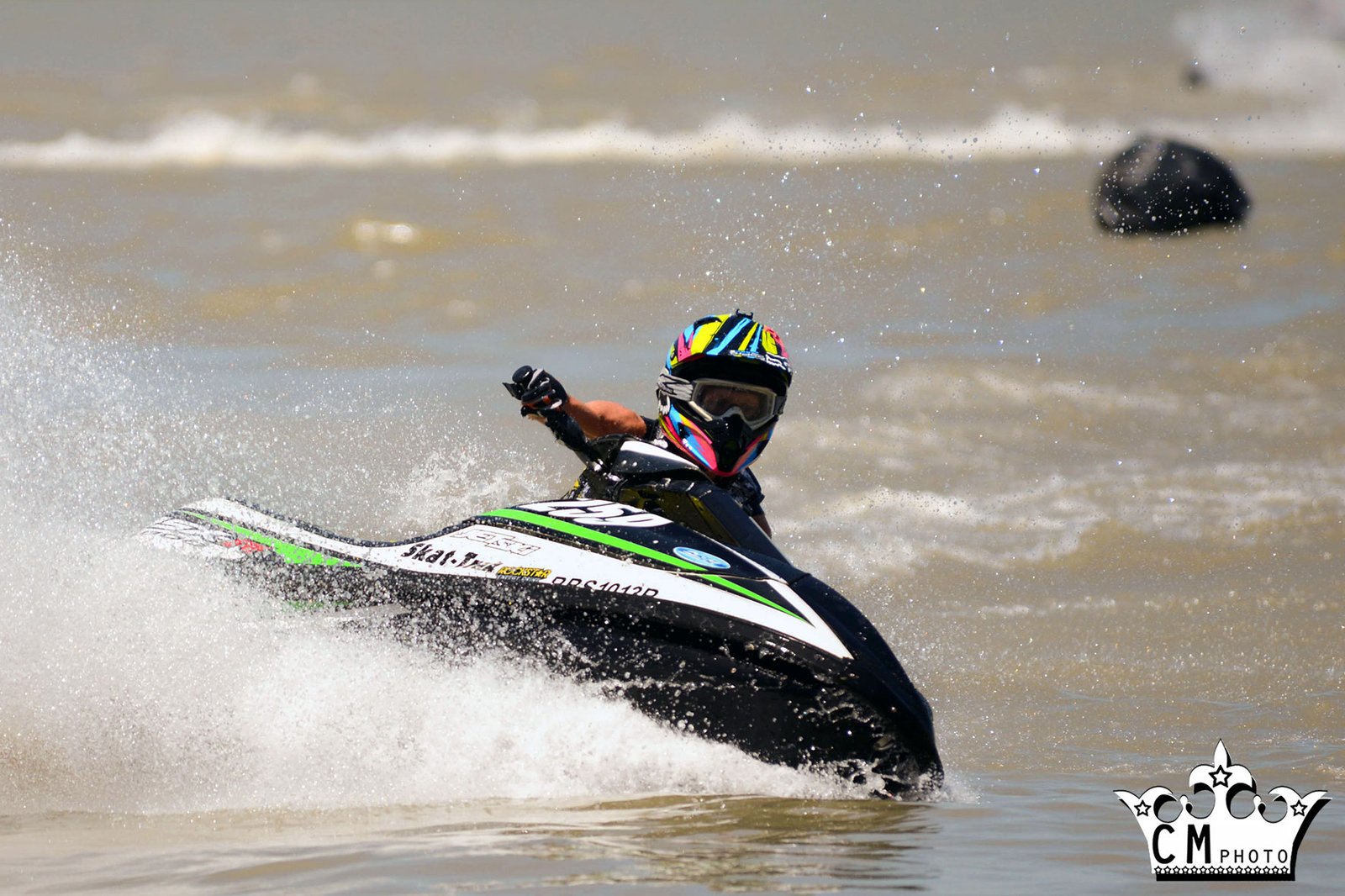
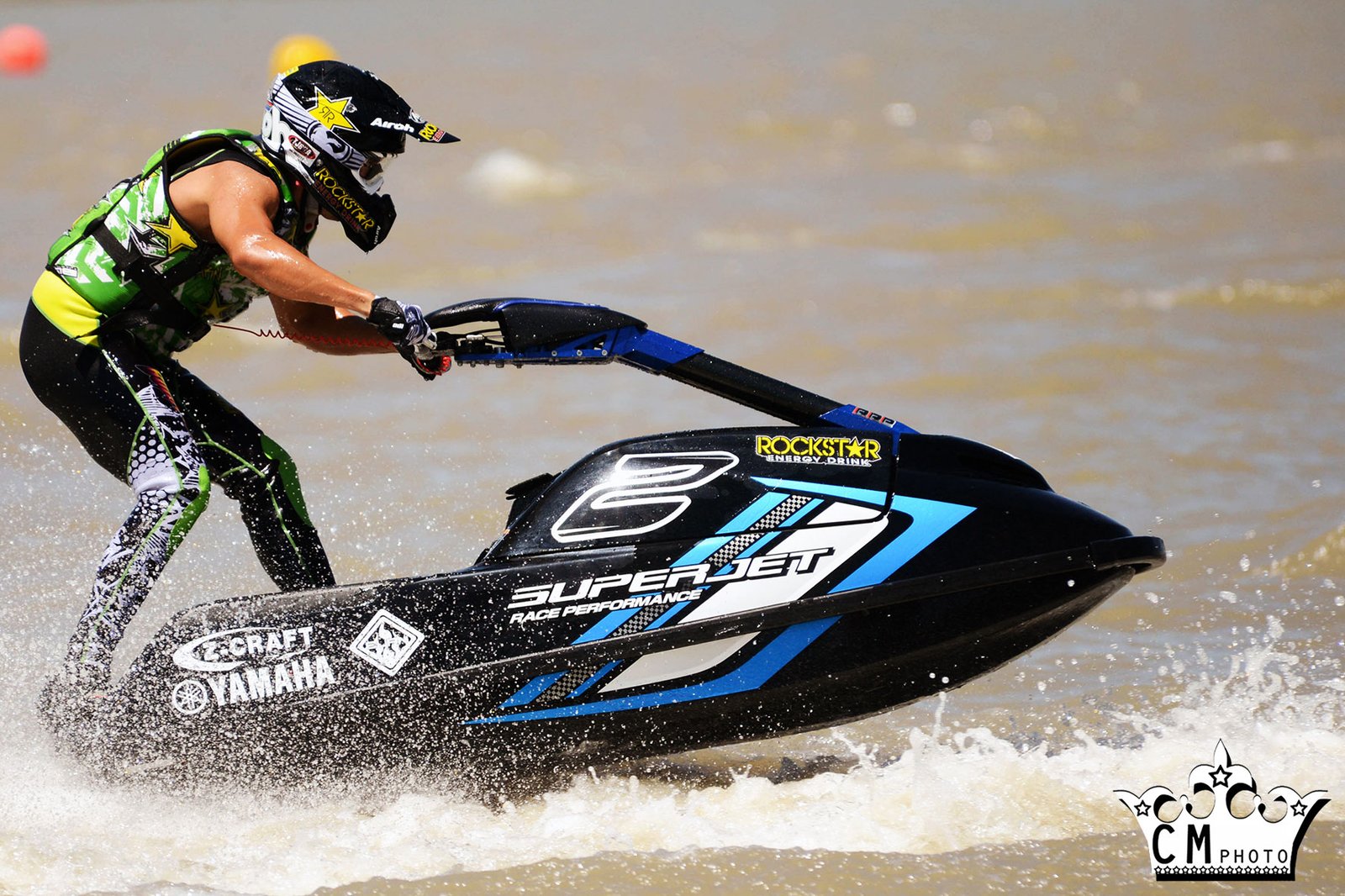
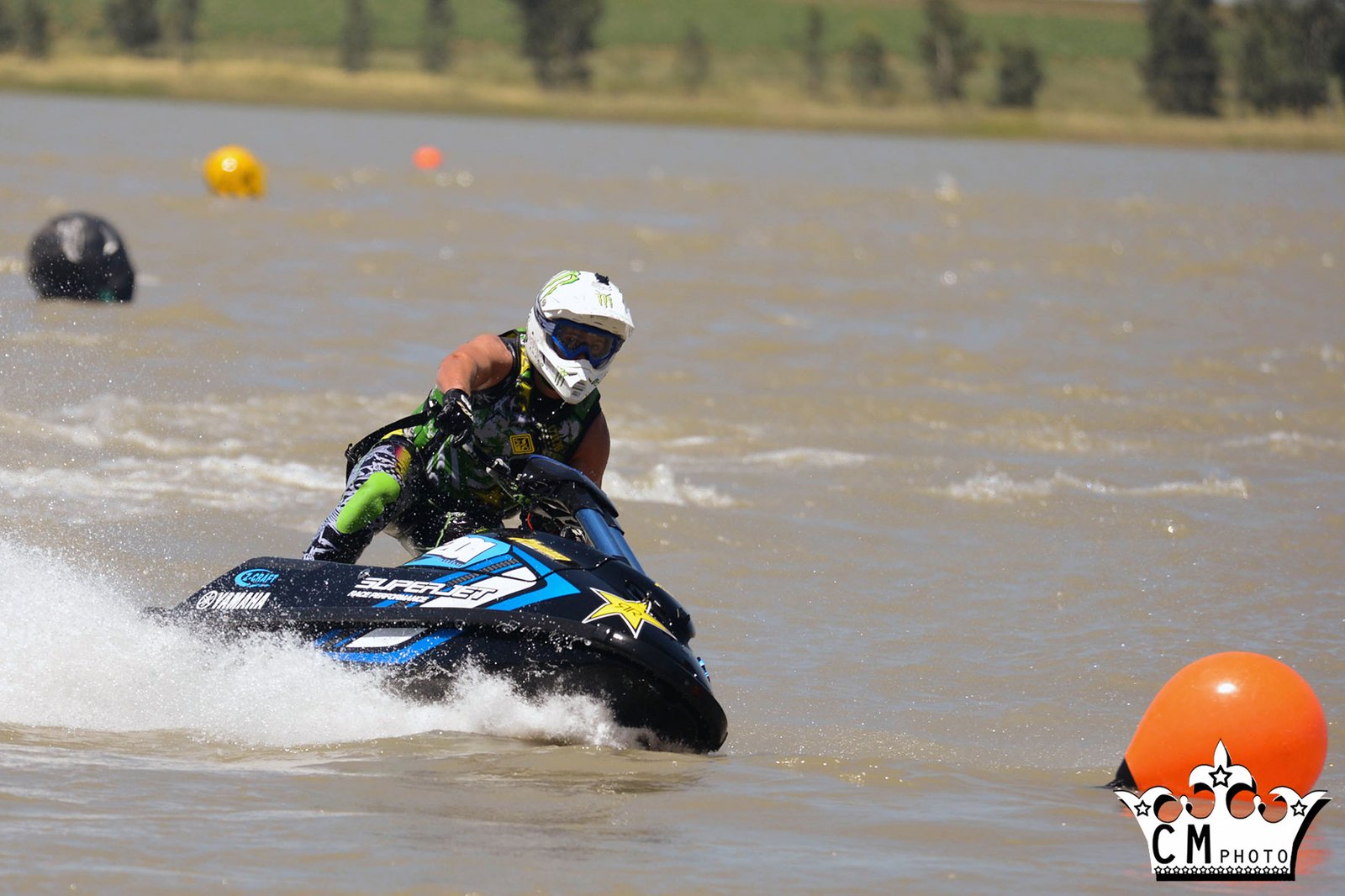
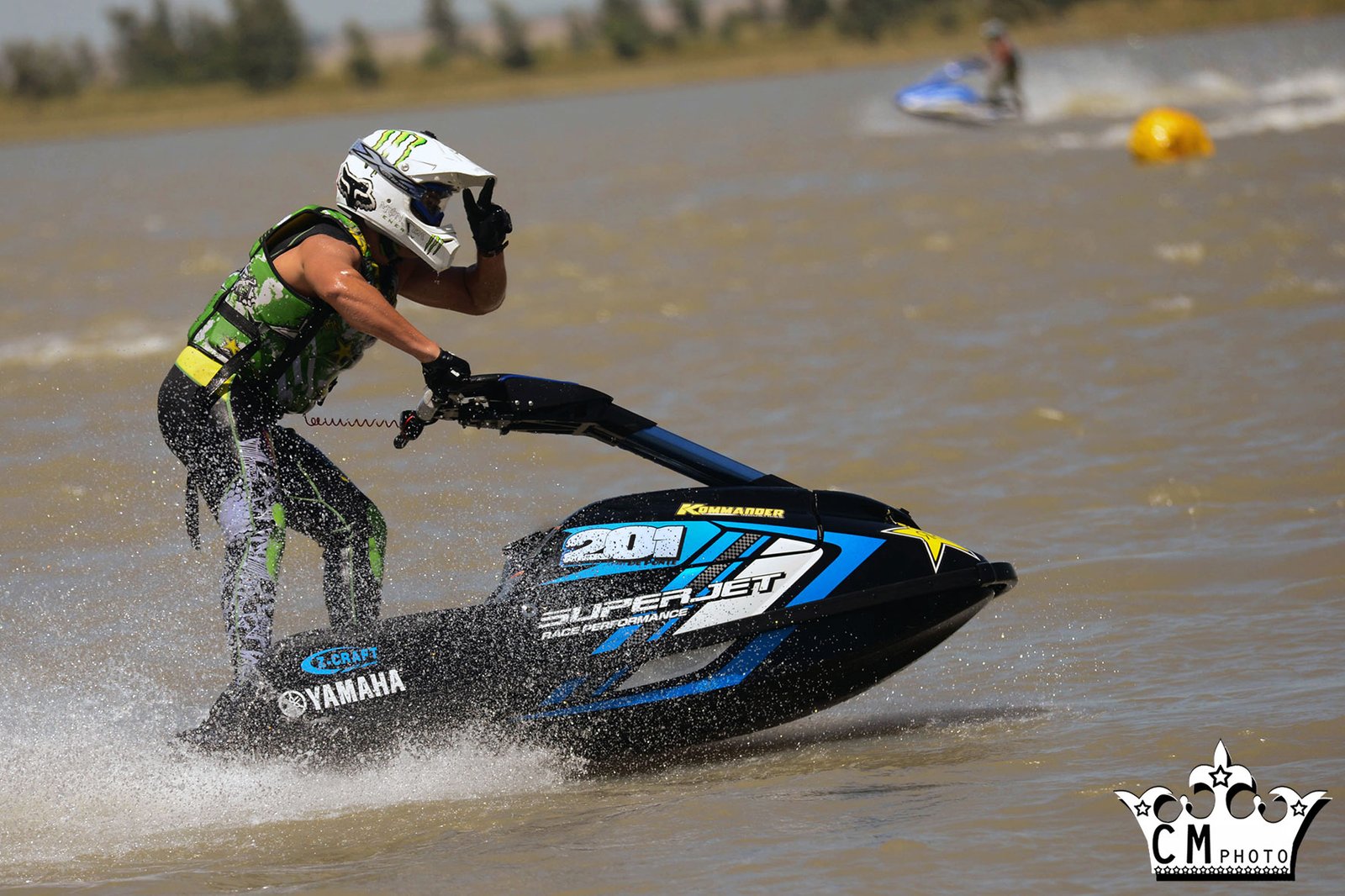
Moto 1 of the Pro Ski Lites class got off to an interesting start with former runabout World Champion Nick Thompson taking the holeshot on his #0 Kawasaki SXR. Thompson lead the race until the second last lap when Sean Valsecchi managed to get past and take the checkered flag on his Kawasaki SX-R. Tyron Motzouris came in second on his #2 Yamaha SuperJet, and John De Ponte in third on his #201 Yamaha SuperJet.
Moto 2 of the Pro Ski Lites class went a little differently with Tyron Motzouris taking the holeshot and leading the race all the way to the checkered flag. Nick Thompson was involved in a collision with fellow rider Sean Valsecchi but he managed to hang on to finish Moto 2 in forth place but could not go on to race in Moto 3. Devin Beatie took second position and John De Ponte in a close third.
Once again, Tyron Motzouris took the holeshot in Moto 3 and went on to win; Devin Beatie took second again and John De Ponte took third. Tyron Motzouris took first overall in the Pro Ski Lites class, Devin Beatie took second and John De Ponte took third.
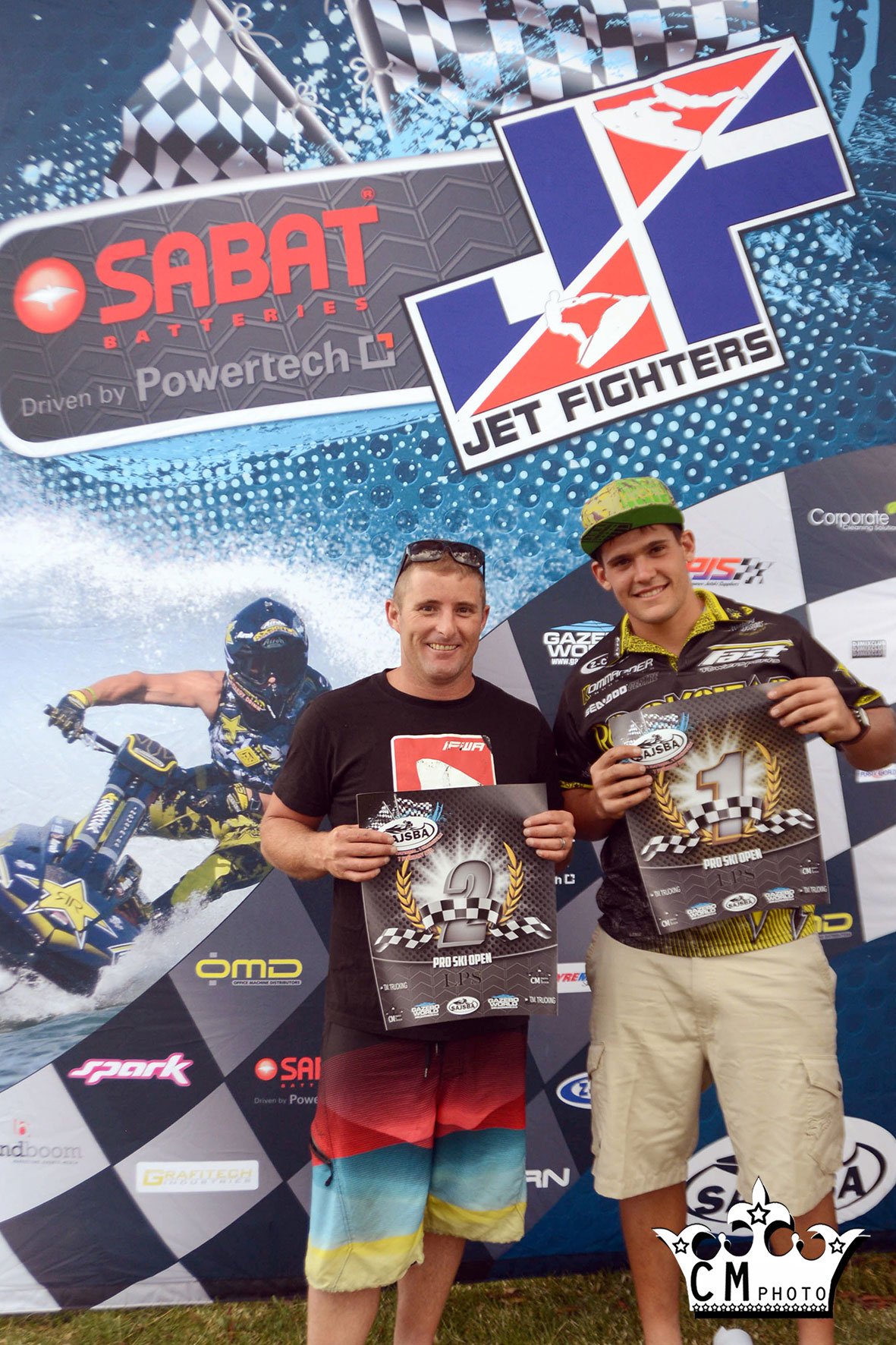
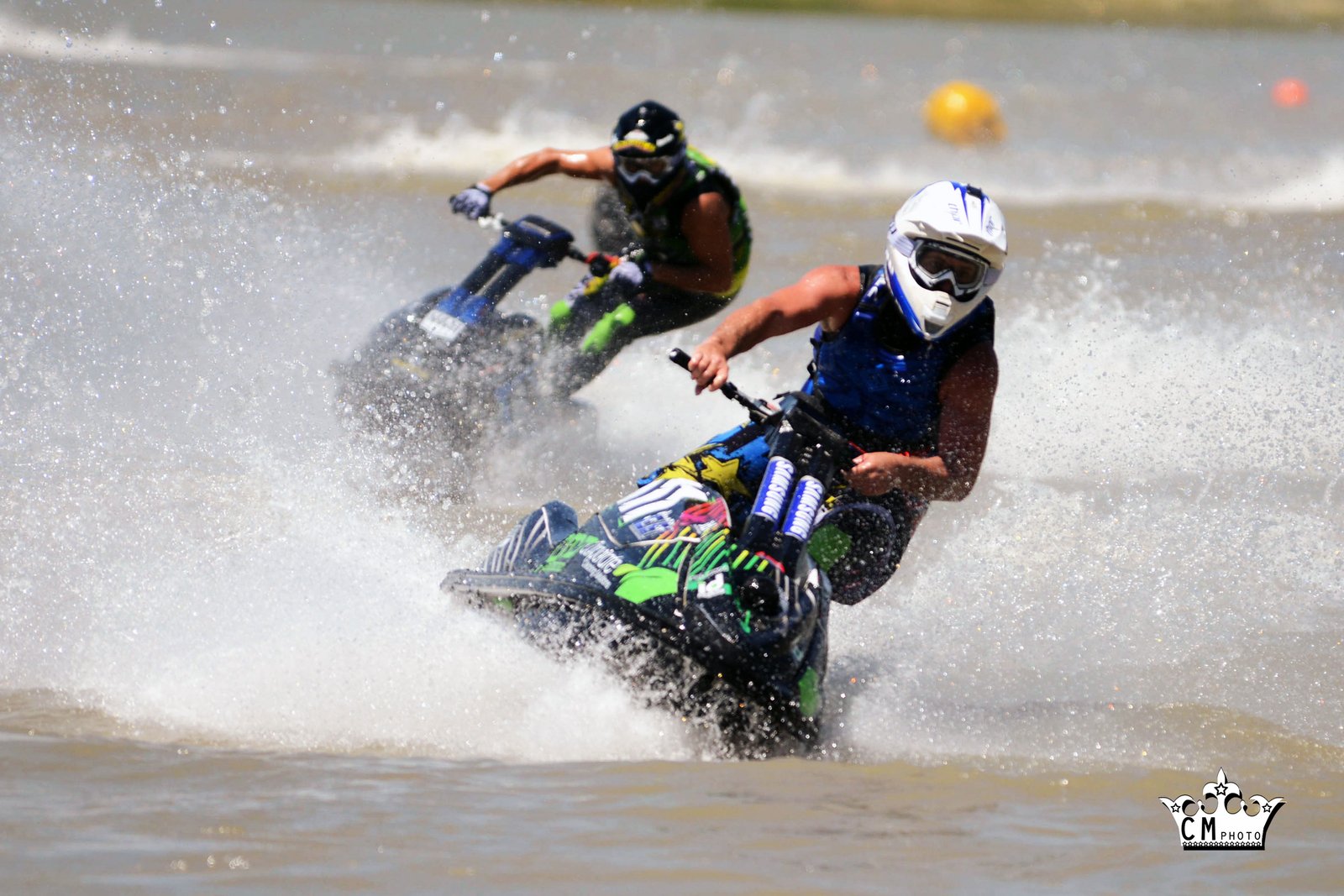
The Pro Ski Open was also full of exciting competition. In Moto 1, Sean Valsecchi took the lead from Nick Thompson on the second last lap to take the win, John De Ponte took second from Nick Thompson on the last lap, and Nick took the checkered flag in third position. John De Ponte managed to win both Moto 2 and 3 to claim first overall in the Pro Ski Open class, Sean Valsecchi got 2nd overall and Nick Thompson got third.
A fairly recent addition to the SAJSBA Nationals is the Booster Cup. The Booster Cup is a series in South Africa which has been running for 3 years. A very generous sponsor, LPS, purchased six brand new Kawasaki STX-15F’s to be offered as a “hire and ride” concept. This series is for riders who are interested in racing but would like to try their hand at it before committing to purchasing a watercraft of their own.
It has been very successful with SAJSBA, offering five classes for the Booster Cup which include Juniors, Novice, Veterans, Ladies and the ever popular Pro class. The Pro Class allows experienced riders to level the playing field by racing watercraft which have identical top speeds and handling capabilities. Thus the best riders shine in this class. The Booster Cup is offered at all inland SAJSBA Nationals, and prizes are given at the end of each season.
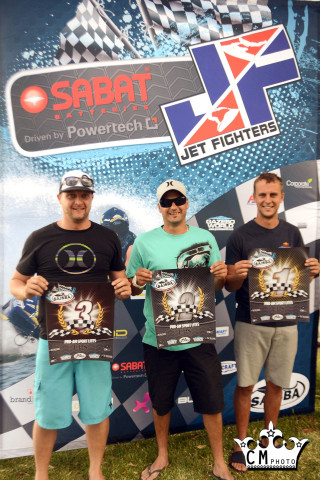
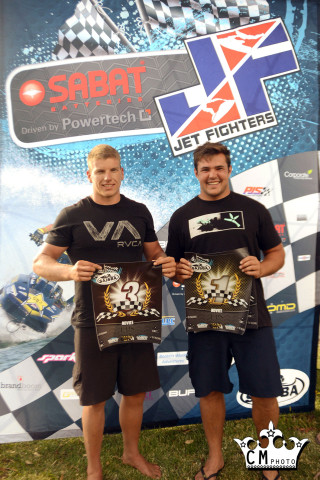
The next SAJSBA National will be held on 28th February, 2015 in Vrede, Freestate. This event will be a combined effort between SAJSBA and the Jet Fighters series. The Jet Fighters series is also an extra series on offer by SAJSBA and is run and organized by one of our most experience riders, Sean Valsecchi. The concept of the Jet Fighters series is short quick moto’s of all ski and sport classes, no runabouts.
The SAJSBA National Round 1 was a fantastically well-organized event filled with thrilling racing, entertaining company and foresight of a promising season.
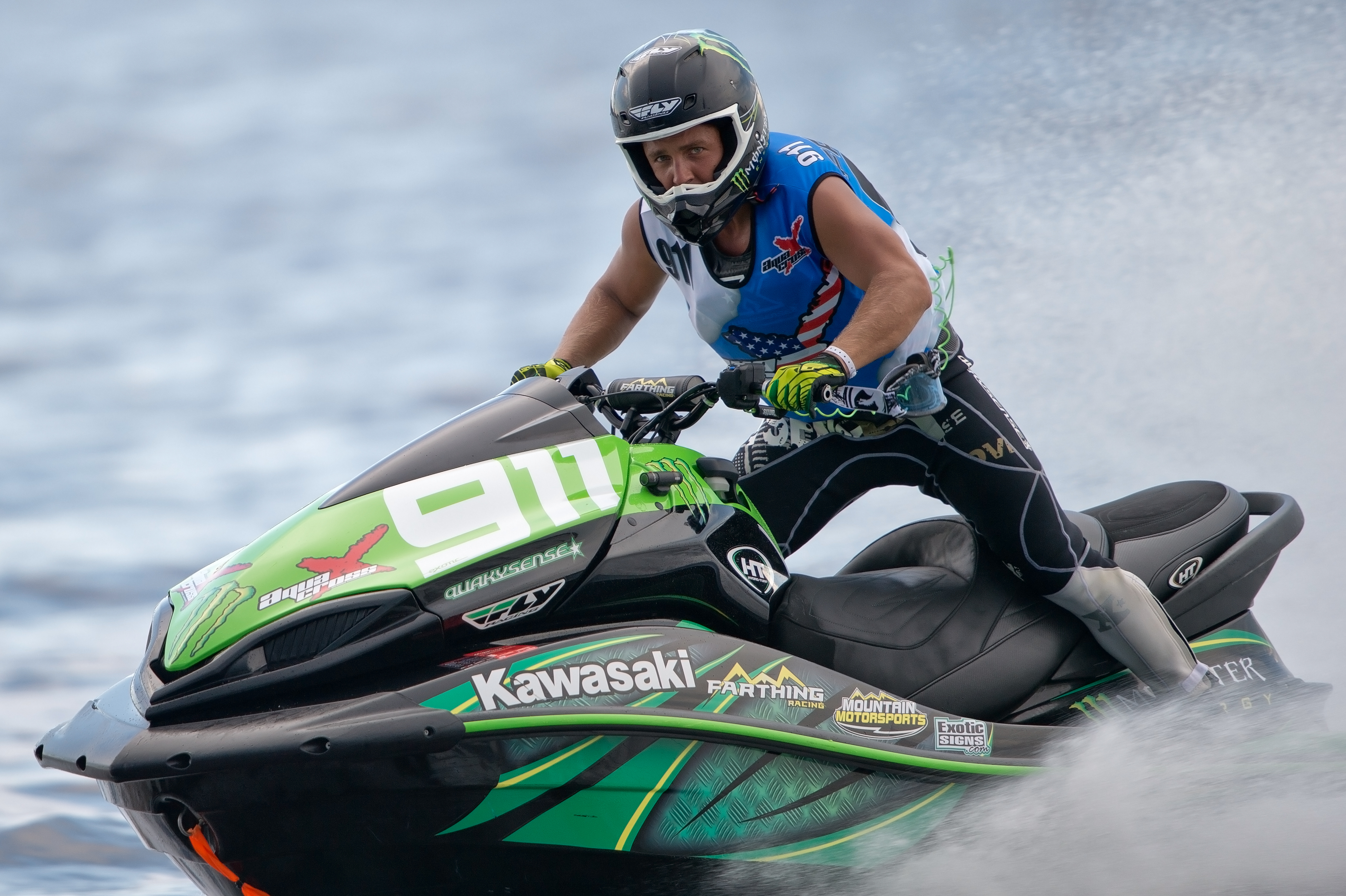
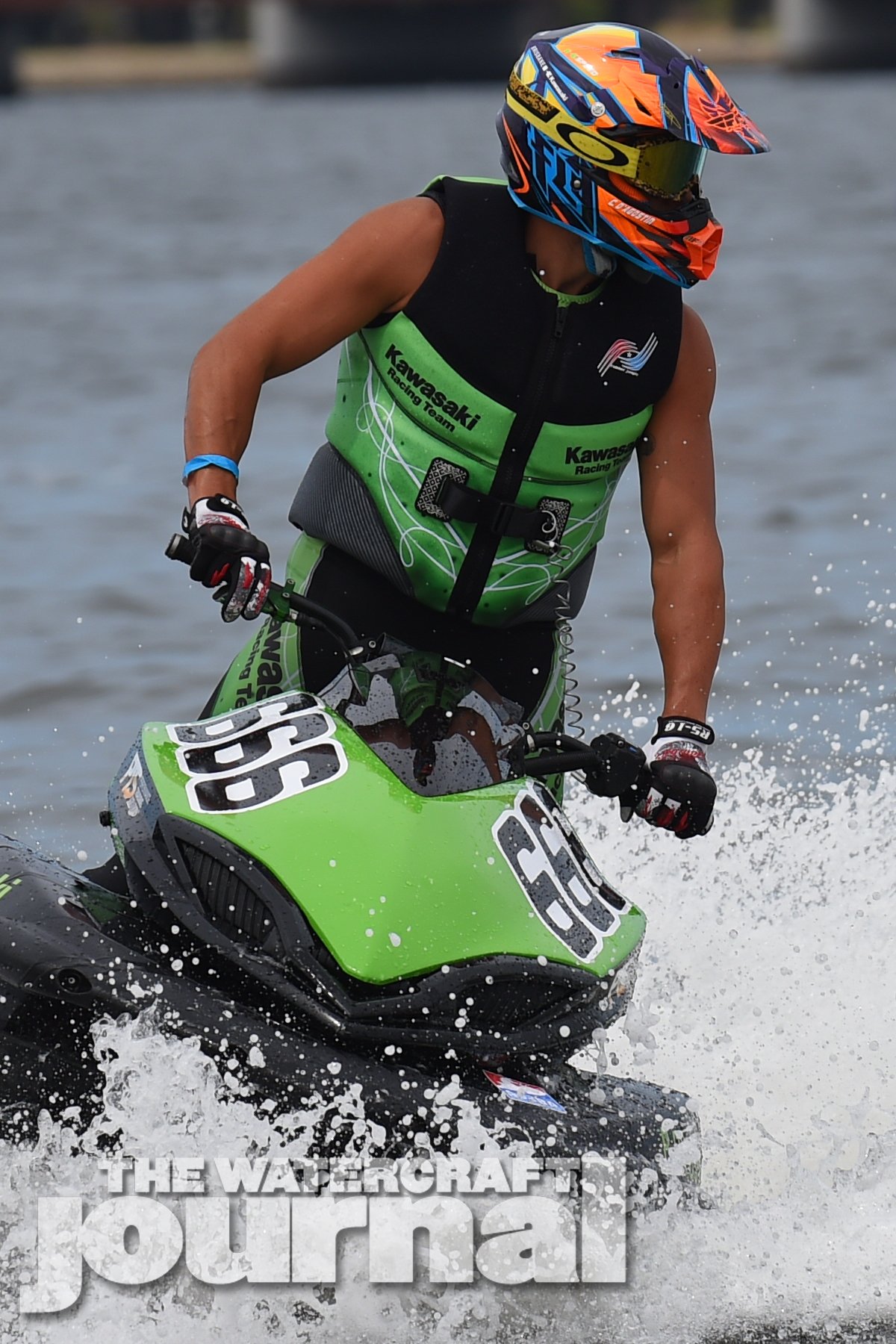
If you were wondering where Kawasaki’s loyalties lie, you can rest assured that the Big K is standing its ground, especially when it comes to their 310-horsepower supercharged Ultras. Recently, P1 AquaX USA announced the addition of Kawasaki Motors Corp. as the newest supporting sponsor for the 2015 racing season. Offering both financial support for the series, and a few boxes full of awesome swag for participants, Kawasaki is stepping into the world of AquaX racing in a big way.
With all three major personal watercraft manufacturers now fully backing the US P1 AquaX Series, there’s very little doubt that this season is one to watch. Obviously, the series’ highest tier of competition, the 300 Class is tailor-made for the 310X Ultra JetSkis, and Monster Kawasaki’s Eric Francis’ dominance of this class only solidifies it. But again, it’s not all about the big dollar, professional racers.
“I like it because it encourages ‘regular Joes’ to try their hand at racing, Kawasaki USA’s Jon Rall told The Watercraft Journal. “Anybody can come and try it out. That’s what really spoke to [Kawasaki].” To his point, the AquaX has excelled at establishing an environment, course, and class structure targeted at precisely that, welcoming novice PWC enthusiasts with a taste for fun, safe and exciting competition.
Here’s the original press release:
Kawasaki revolutionized the watercraft industry with its first jet ski back in 1973. The Jet Ski was an instant success and rapidly grew in popularity. Kawasaki Motors Corp has continued to develop and improve on its watercraft over the years and has established itself as one of the leaders in the industry.
“Kawasaki is thrilled to be part of this Florida-based enthusiast racing series which gives personal watercraft competitors the chance to open up the throttle on their Jet Ski® Ultra® 310R on challenging open-water courses and enjoy the full performance of their craft in a safe and controlled environment. It is a perfect format for amateur PWC racing and with some weekends combined with P1 Superstock powerboats, AquaX is sure to be an exciting, supercharged championship!,” Kevin Allen, Manager of PR and Brand Experience for Kawasaki.
“Kawasaki has excelled in both P1 AquaX USA and UK. Having Kawasaki on board and supporting P1 is a true testament to the series. Having an endorsement from manufacturers only helps strengthen our position as a global race series and we are very happy that Kawasaki Motors Corp. has joined us.” Said Azam Rangoonwala, P1 Director USA.
“I could not be happier to add green to our color scheme,” said Michelle Petro USA Championship manager “Kawasaki is huge in the Motorsport world and it is encouraging to have them support our series.”
Improving your personal watercraft’s ability to convert combustion into motion and into thrust is the equation that has propelled the whole of the aftermarket. Increasing engine efficiency by maximizing intake and exhaust flow, increasing internal quench and burn efficacy and magnifying the engine’s ability to convert that reciprocal process into useable torque and applicable horsepower is essential to PWC performance.
Equally weighted in this endeavor is the jet pump. Reducing reciprocal drag and heat via friction is only the beginning. Prop and pump hydrodynamics are imperative to the pump’s overall ability to convert engine power into applied thrust. Although modern personal watercraft benefit from a quarter century of manufacturer experience, there is always room for improvement, and the aftermarket has been all too happily to step in.
High performance pump and prop manufacturer Solas has established a great name for itself in its near 30 years of business. Providing customers with a durable and affordable product that dramatically wakens previously unearthed power from their craft, Solas has propelled dozens of racers to championships since their beginnings in 1986. Of course, recreational riders have come to trust Solas for their props and pumps too.
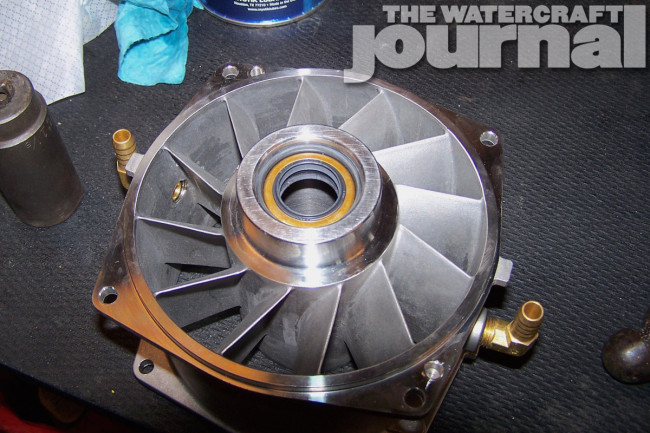
If you like this “after” picture, wait until you see what it started as.
But time has a manner of wearing down even stone, and Solas’ pumps are not immune to the toils of use and age. That is why John Zigler of Rock County Jet Ski and Watcon.com, has been handily refurbishing Solas pumps for years. Whether repairing walk-in customers’ pumps, or offering ready-to-install refurbished pumps, RCJS/www.watcon.com sell Solas pumps turned on a lathe and ready to build right out of the box.
Likewise, RCJS/www.watcon.com offers their jet pump building services for people requiring their old pump or shaft rebuilt. “We also have new shafts in stock,” Zigler told The Watercraft Journal. “We also have bearing kits, Skat-Trak, Solas, and Impros Hooker Impellers. We would be happy to help.” Surely, RCJS/www.watcon.com has been instrumental in getting recreational and professional riders out on the water both locally and nationwide.
This day, Ziegler walked us through how RCJS resurrects a Solas pump, from a discolored and potentially locked-up state to as-new (if not better than new) condition. It takes Zigler a few hours to get the job done right, and he won’t allow anything less to leave his workbench.
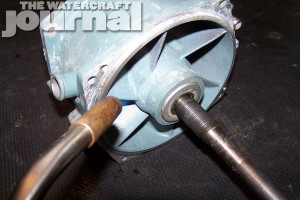
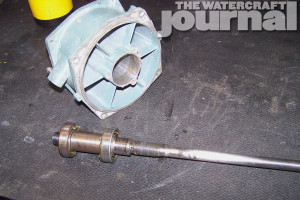
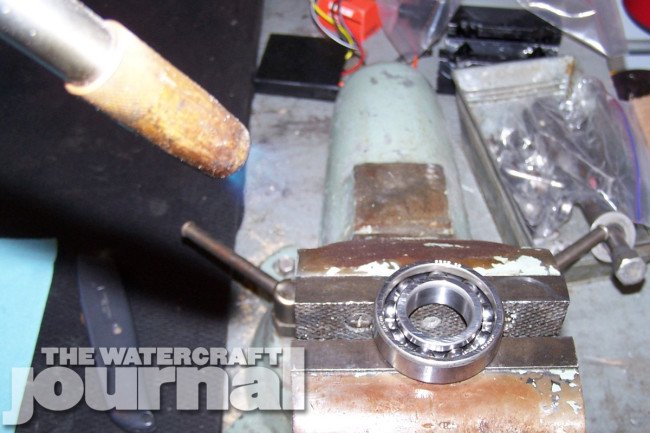
Step One: “The old pump assembly is usually always sealed too tight to hand-crank anything loose, therefore its almost always necessary to heat up to remove the old shaft assembly. After heating bearings, and removing them from the shaft, discard all of the old seals and bearings. It’s important to never reuse the old parts. Trying to save a few dollars here could result in catastrophic failure later.”
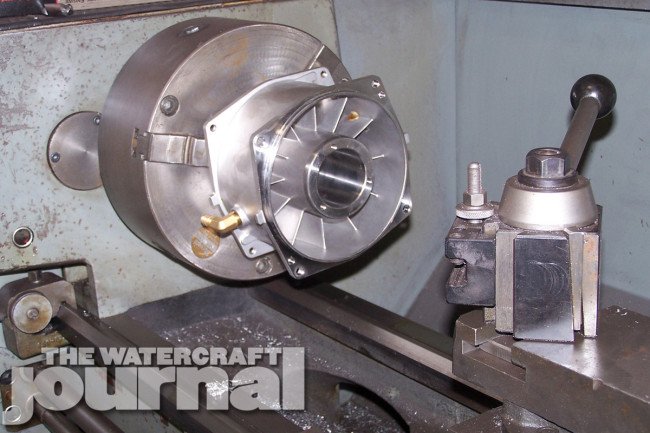
Step 2: “Here at RCJS/Watcon.com, we mount and turn every pump in the lathe. There’s no better way to true up the bearing area, open it up, and reduce ‘press’,” Zigler explained.
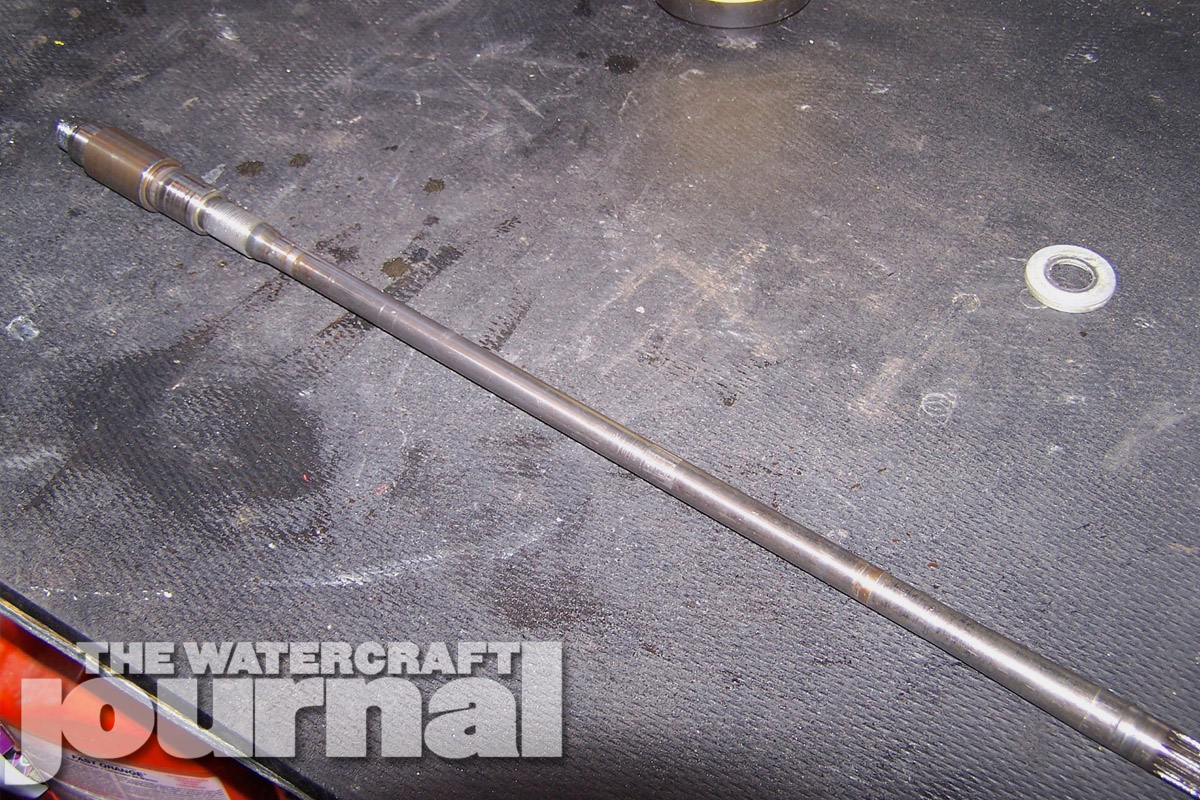
Step 3: “After being cleaned, prepped and turned on the lathe, each pump is cleaned again of any machining debris and measured to make sure it is now within our spec.”Step 4: “Next, clean and inspect shaft. Prior to installation, we literally freeze the shaft. It makes the next steps significantly easier.”
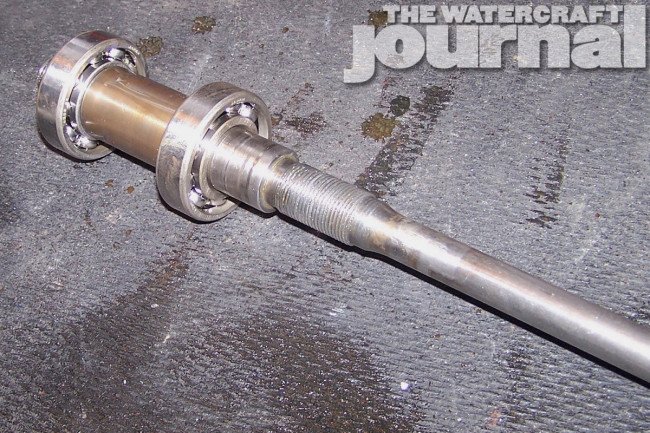
Step 5 & 6: “Once you wash the new bearings with an acetone detergent like brake cleaner, to get off any oil. Next, heat the bearings evenly, installing warm bearings on the cold shaft by hand. Under no circumstances should you press or hammer on the bearings.”
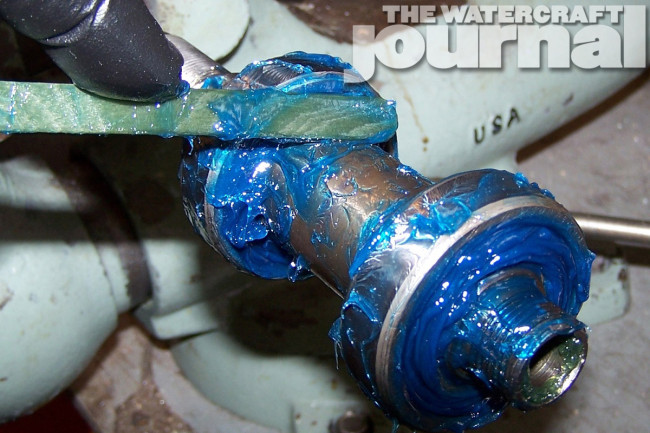
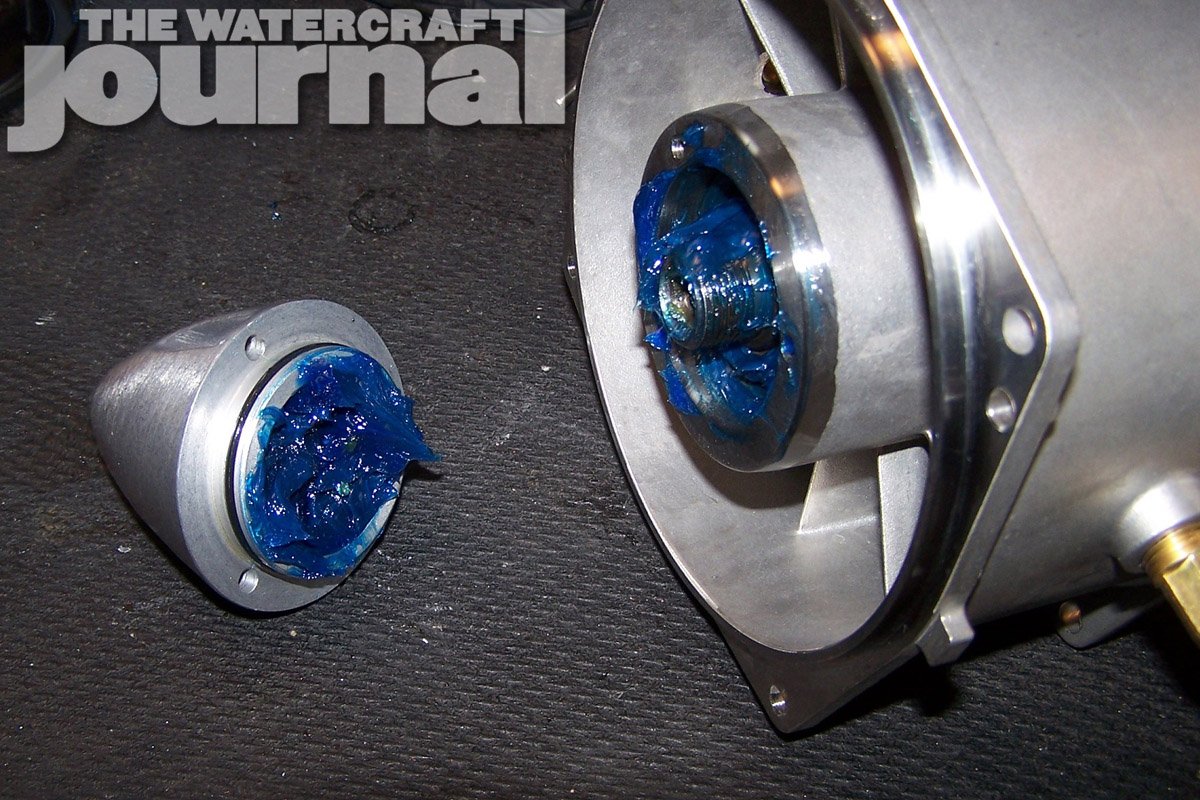
Step 7 & 8: “Pack both bearings with grease. I use waterproof marine grade wheel bearing grease. Next, pack and fill the area between bearings with grease. Once properly filled and coated, freeze the whole assembly.”
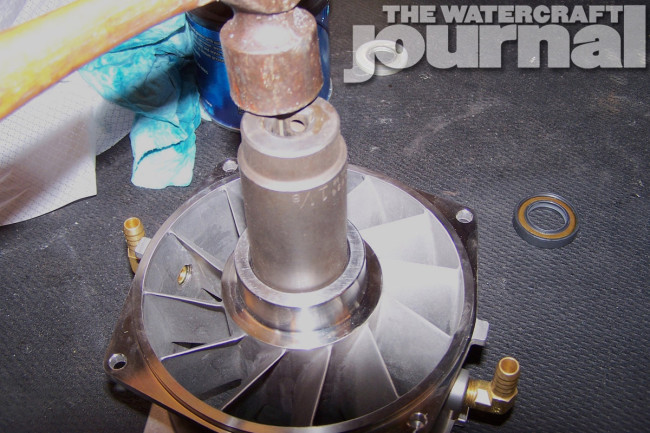
Step 9: “Now, using a hammer and a piece of tube (or a large socket, as shown), install the front seals. Once done, again fill with grease.”
Step 10: “You need to heat pump housing evenly, front and back, being careful around seals. This will help expand the pump housing itself for the installation of the shaft and bearing assembly.”
Step 11: Now you can install the cold shaft and bearing assembly into warm pump (again, by hand). Do not force, use a press or hammer. If it does not go in easily, start again by cooling the shaft and re-heat housing. It’s time consuming but is the right way to do it.”Step 12: “With the shaft and bearing assembly installed in the pump, pack the rear cone with grease and install.”Step 13: “Finally, we install the impeller. Now, install the assembly into your ski, using caution to check pump, drive, and mid-shaft alignment,” Zigler instructed. “You are now done, go out and ride!”
The world’s biggest supplier of aftermarket performance parts has just made your life a whole lot better. RIVA Racing, the single-biggest manufacturer of top level handling, engine and pump performance products has recently relaunched an entirely-new website and store that not only allows for dramatically improved navigation, searching functions and easy shopping, but also provides all-new resources like suggested products to accompany your purchase, riding tips from RIVA’s own team riders, technical instructions, installation videos, and industry news.
“Under the same family ownership structure since 1979, RIVA Motorsports has grown from a “mom & pop shop” to a 6 building Powersports Superstore recognized internationally as the premier source for personal watercraft performance parts and accessories,” RIVA’s story begins. RIVA Racing’s PWC performance products and accessories, provide the serious enthusiast and racer the very best in modified watercraft performance. Their legacy of track and dyno-tested performance products has propelled decades’ worth of racers – be them members of the official RIVA Racing Team as well as many others – to “capture numerous National & World Titles as well as a World Water Speed Record.”
The new website is regularly updated with featured videos, product reviews, technical updates, riding tips and racer profiles. RIVA’s own Dave Bamdas explained the new regularly-updated format, “Our Video Library is constantly updated with the latest product reviews and technical updates. Our experts [will] walk you through the features and benefits of performance products and popular accessories [and the] RIVA Technical Team issues frequent technical videos that keep you informed and up to date. Professional watercraft racers explain the secrets of their success on the water. Whether you are a recreational performance enthusiast or serious competitor, theses tips are a valuable resource.”
“We’ve been working on this new site for a couple years now,” Dave told The Watercraft Journal. “We tried to think of every possible thing a buyer would want, and how to improve the shopping experience.” And it clearly shows. Whether you’re in the market for a new personal watercraft or looking to squeeze more horsepower from your existing machine, RIVA Racing has now made it easier and faster to do so. Make sure to check into the new RIVA Racing website today.
People typically don’t care much for salesmen. For most, it’s the process of being “sold” that is so off-putting. So when a dealership can provide service that goes above and beyond the expectations of its customers, the buying process is all the more enjoyable. Likewise, when a dealership can actually build a long-lasting relationship with is customers, that is a rare instance indeed.
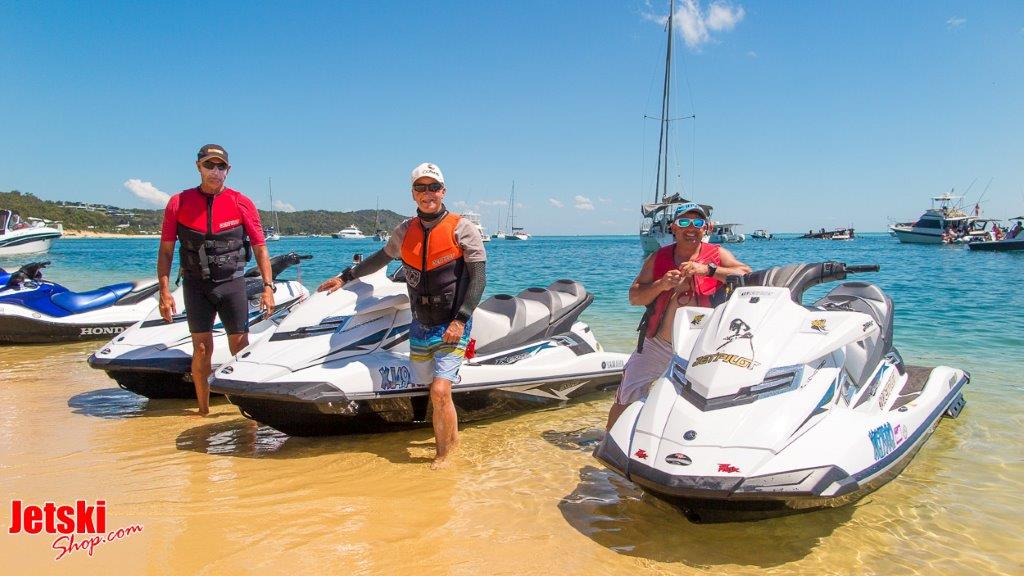
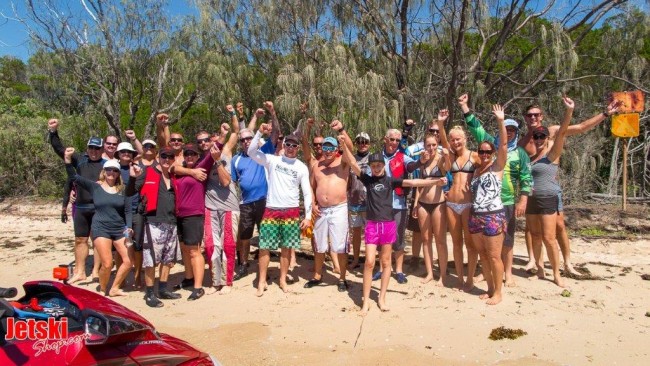
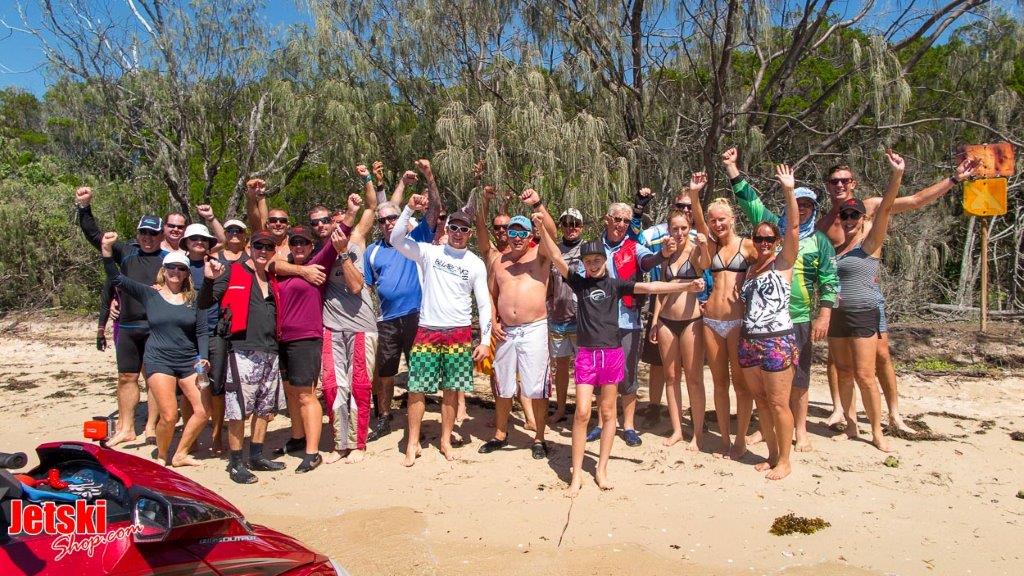
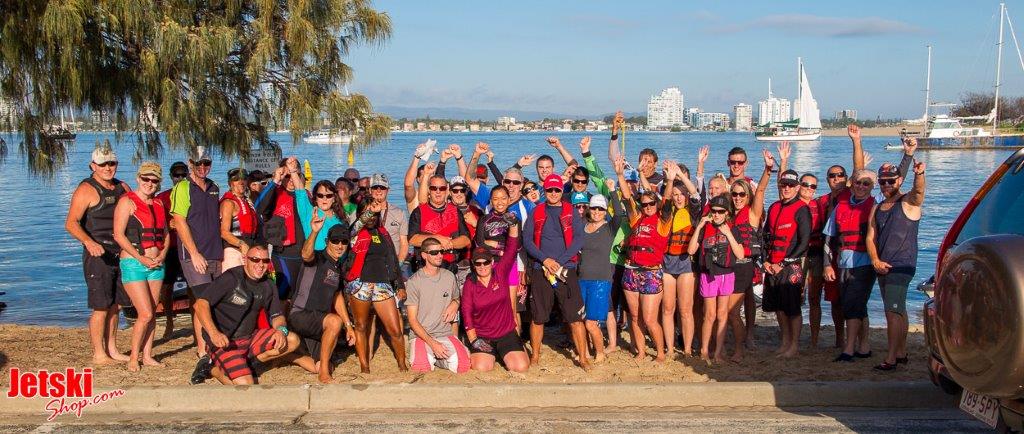
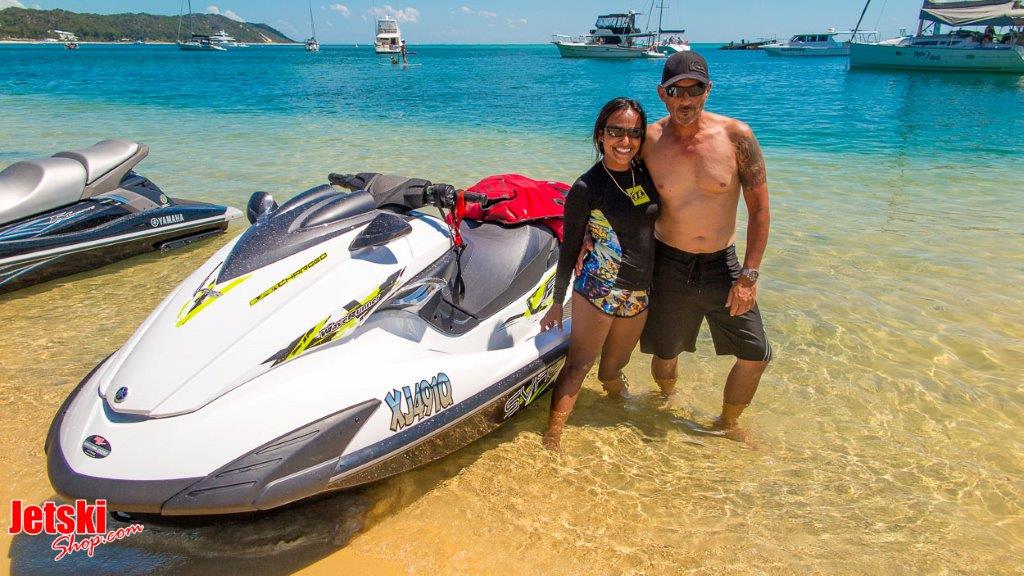
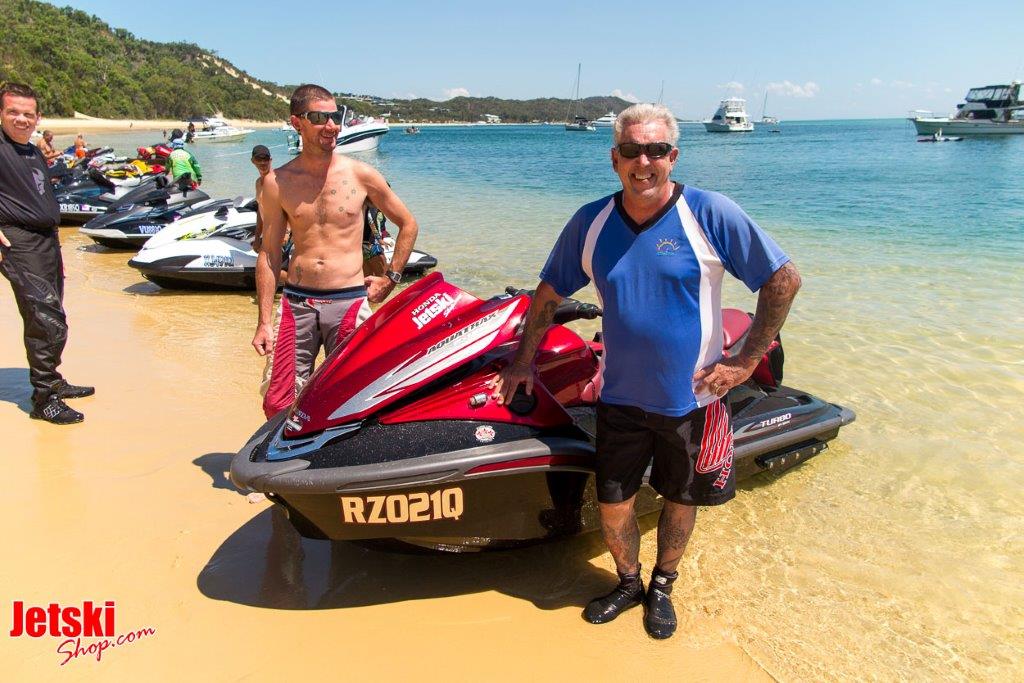
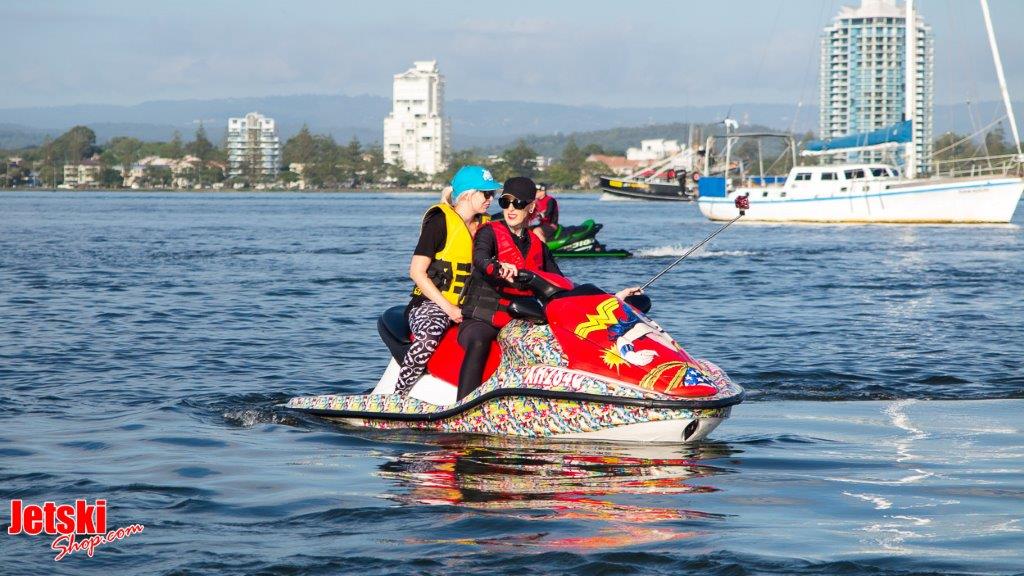
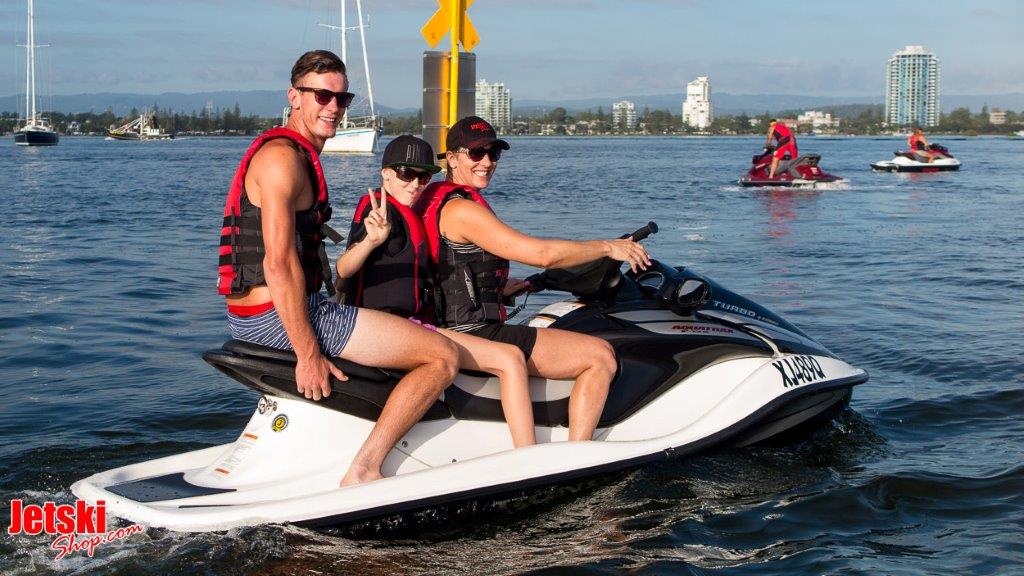
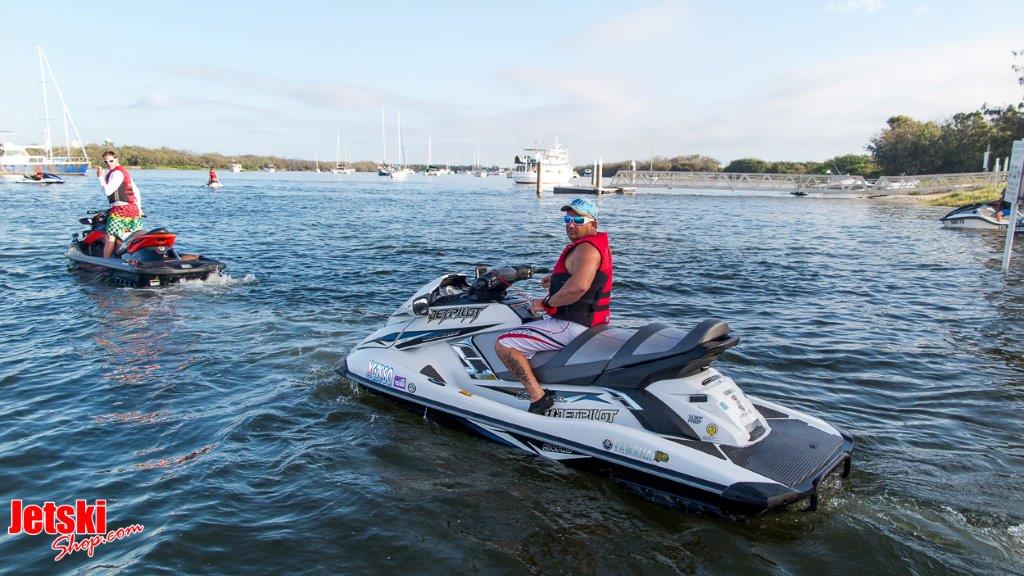
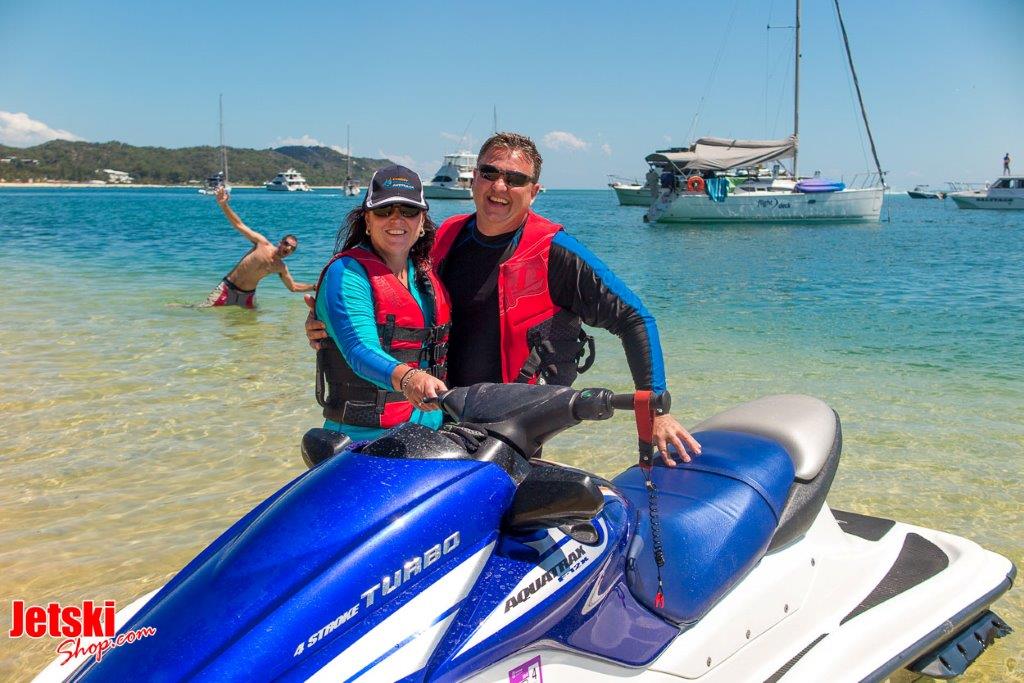
That is what we at JetSkiShop.com strive every day to do, and we’ve been pretty successful, especially through our monthly adventure rides. Not only do we speak “jet ski” better than most, offering new and pre-owned personal watercraft from all the major manufacturers, but also invite our customers to join us for some awesome riding to some of the most picturesque locations!
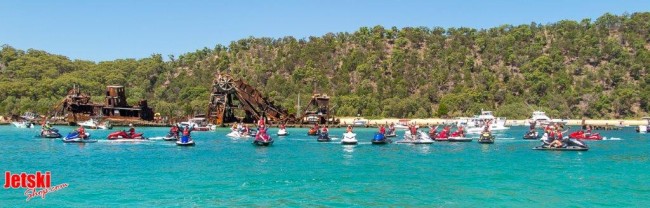
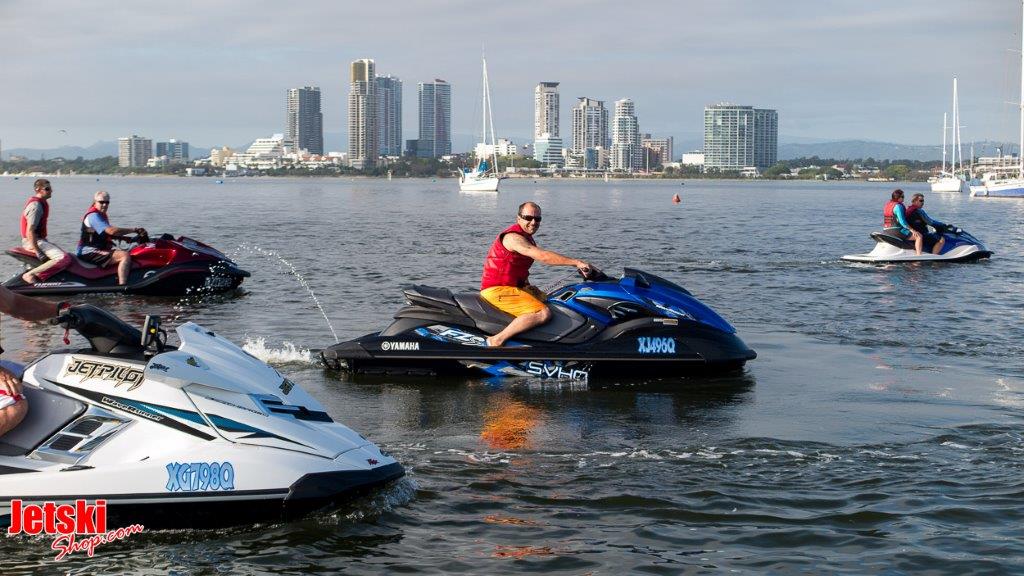
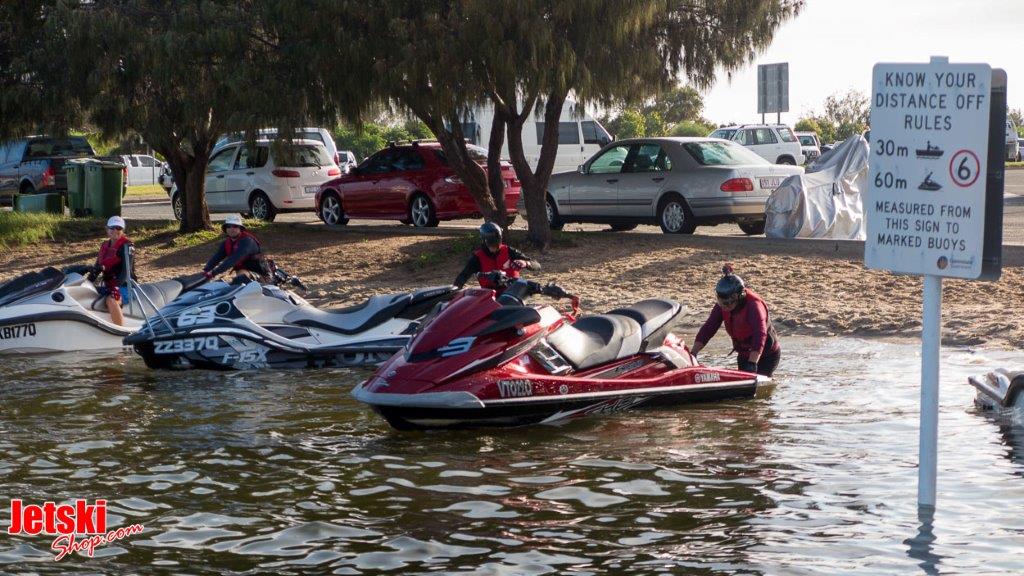
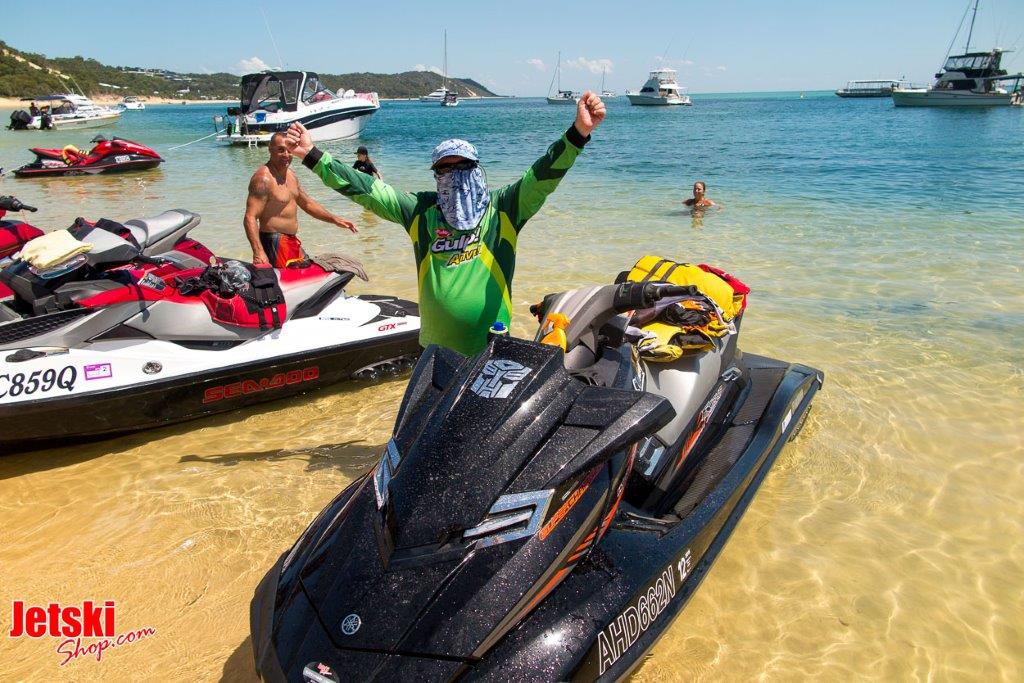
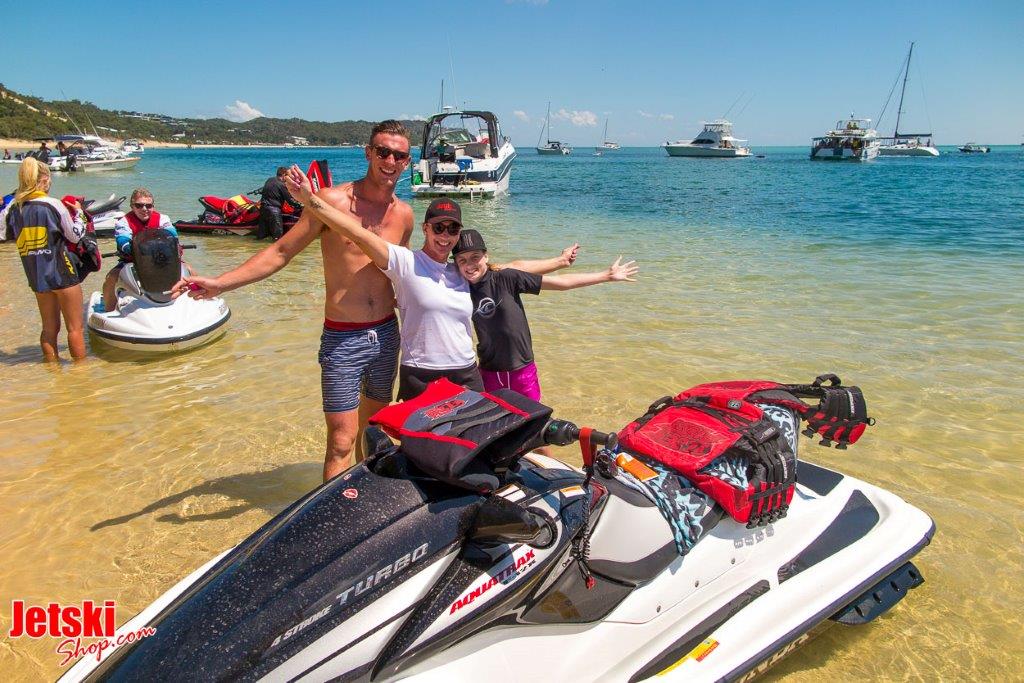
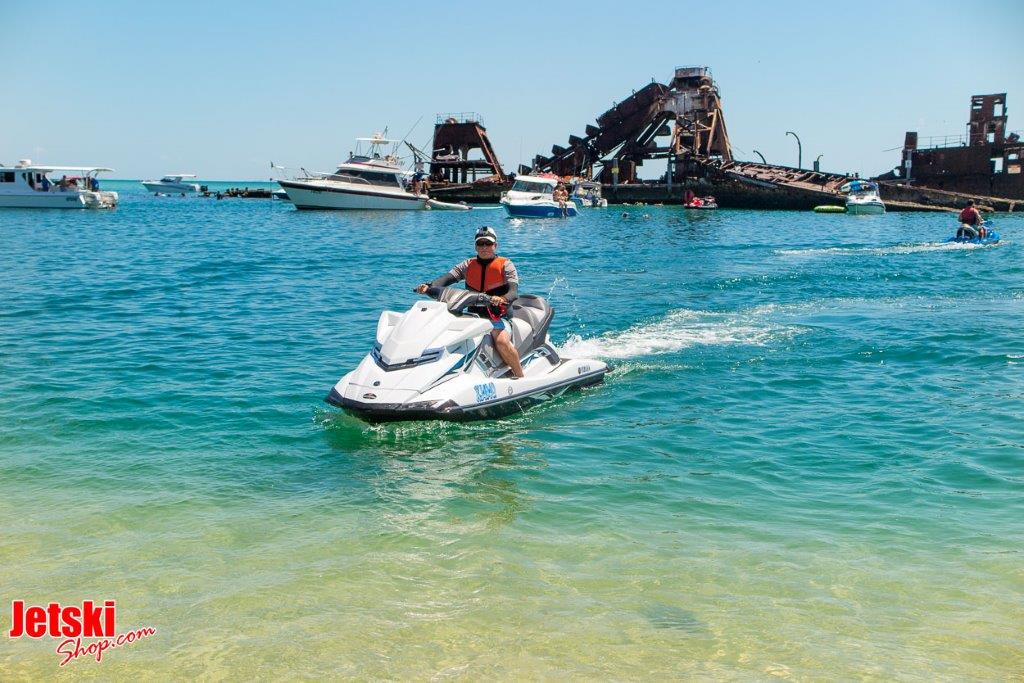
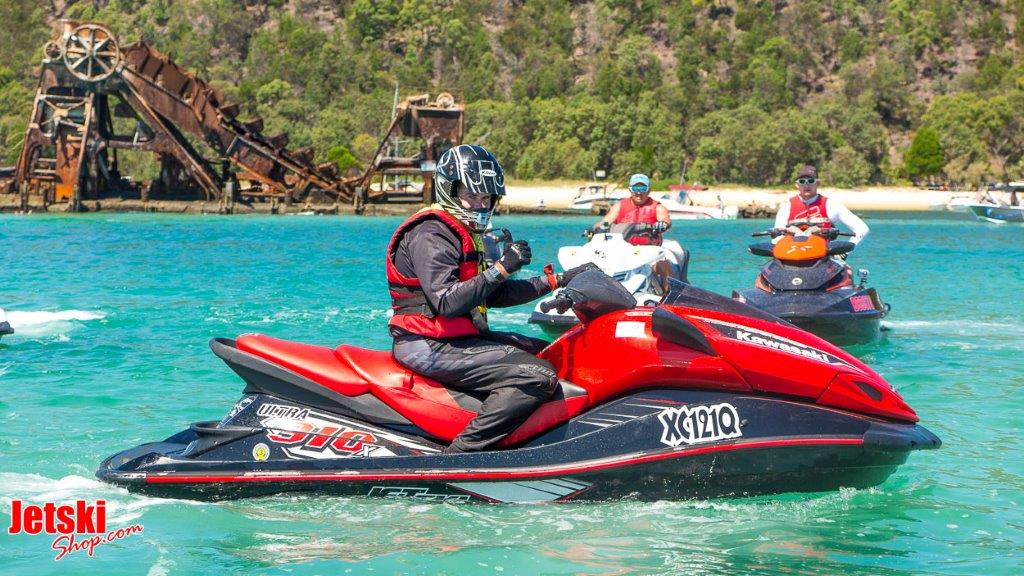
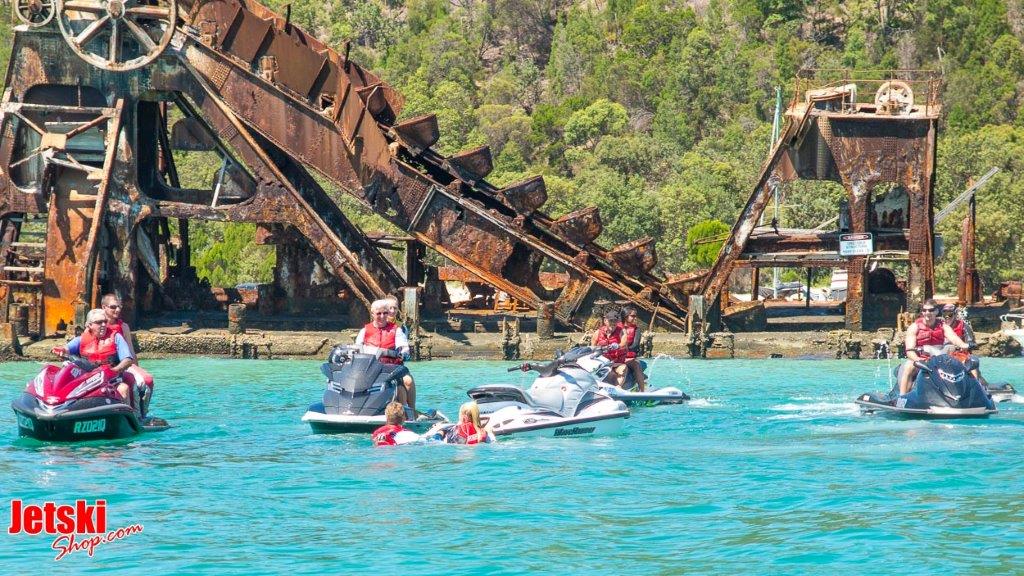
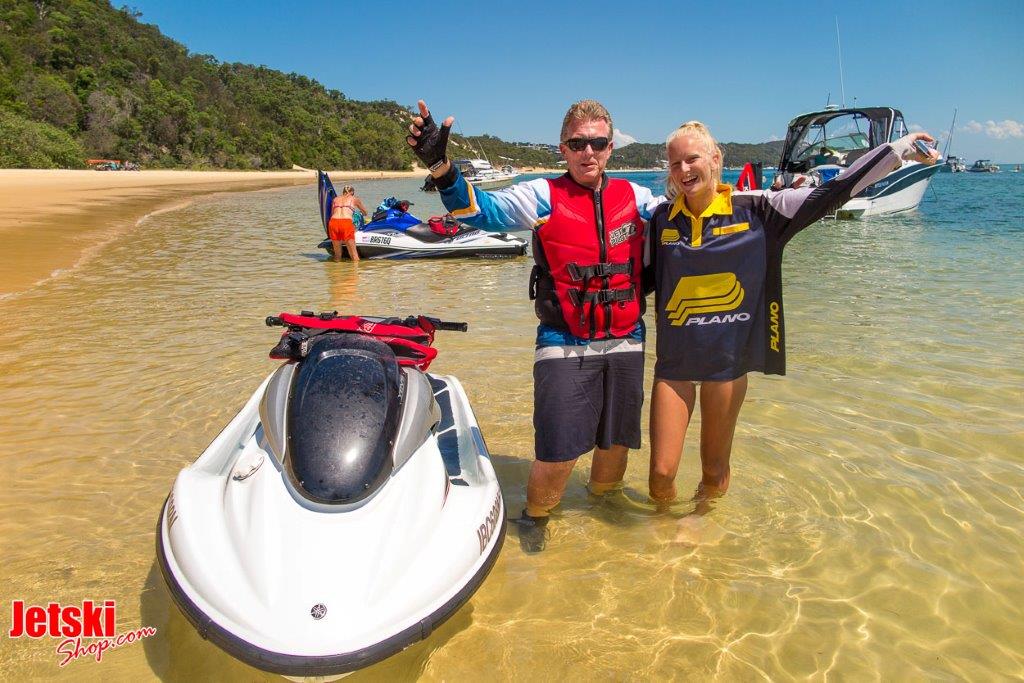
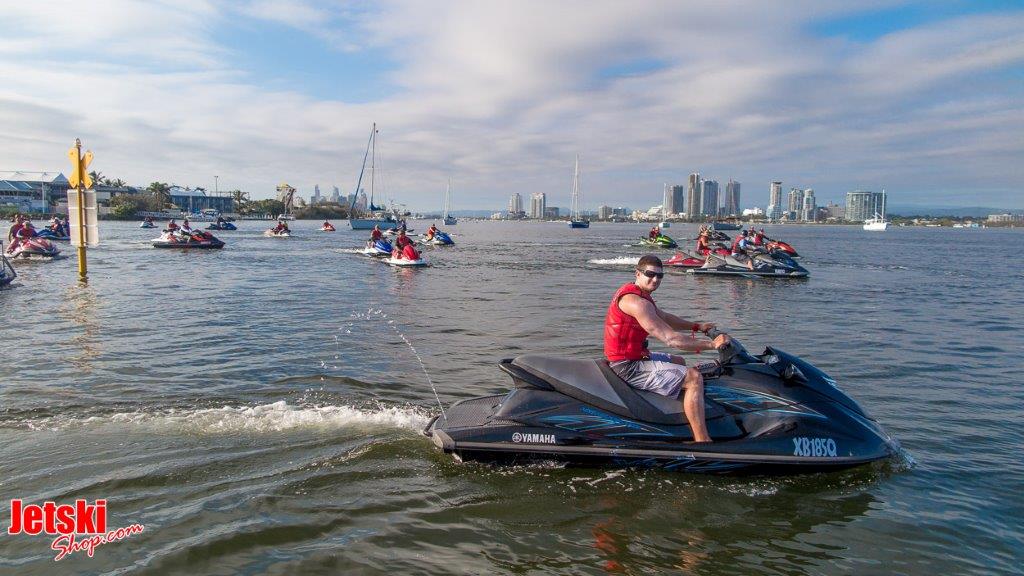
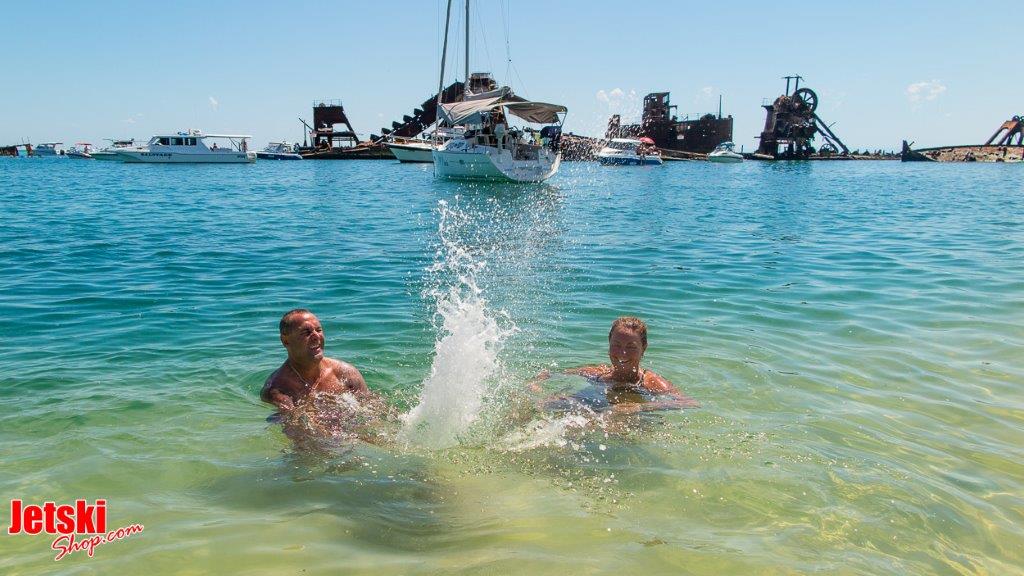
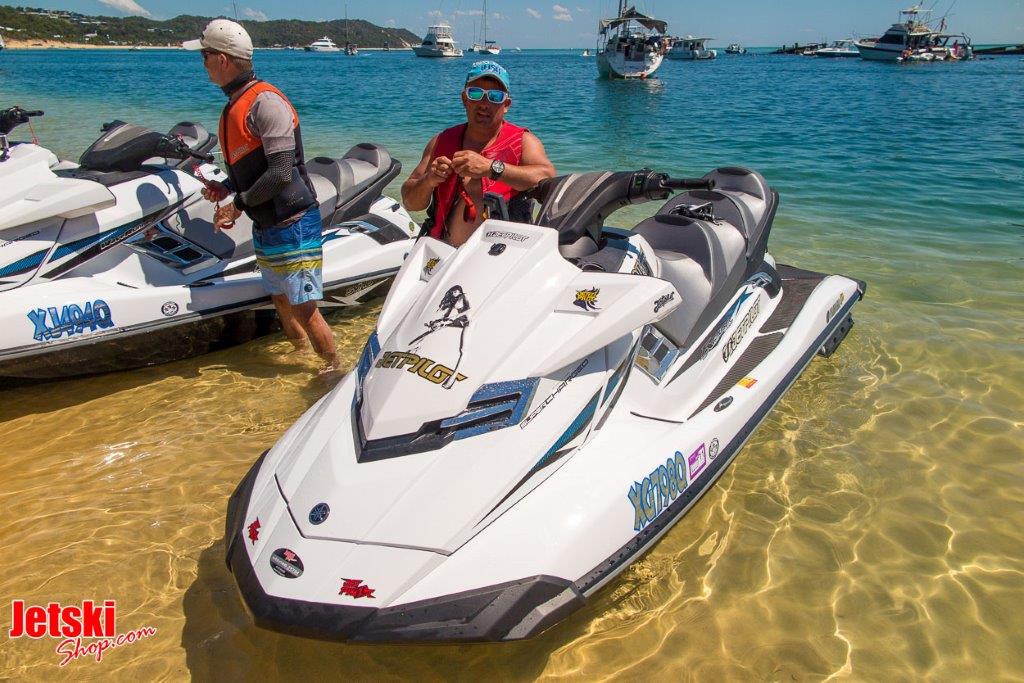
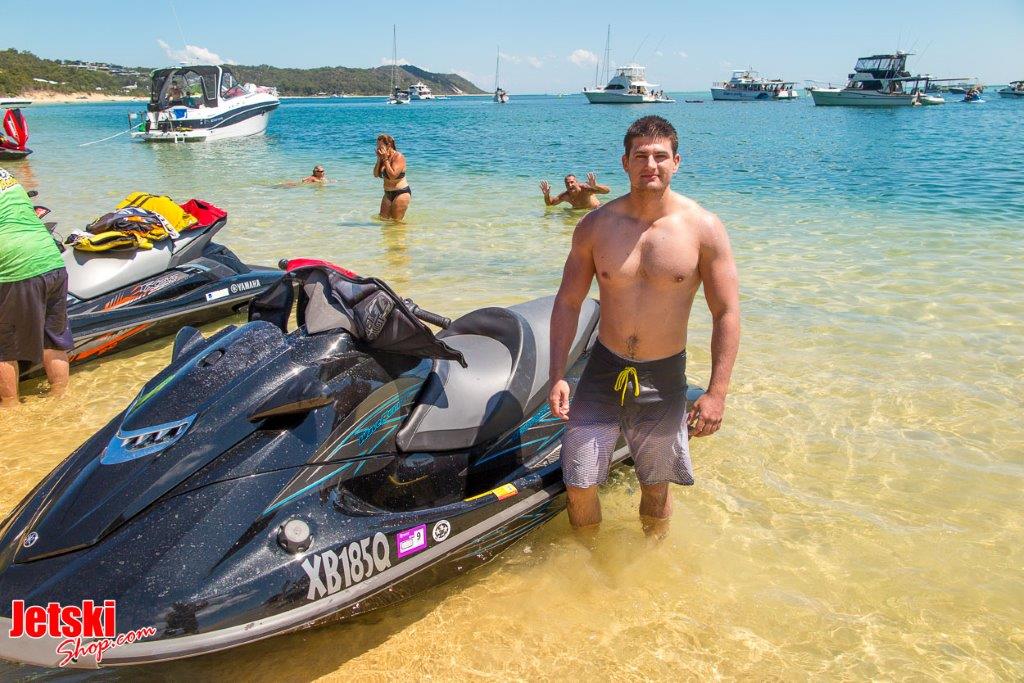
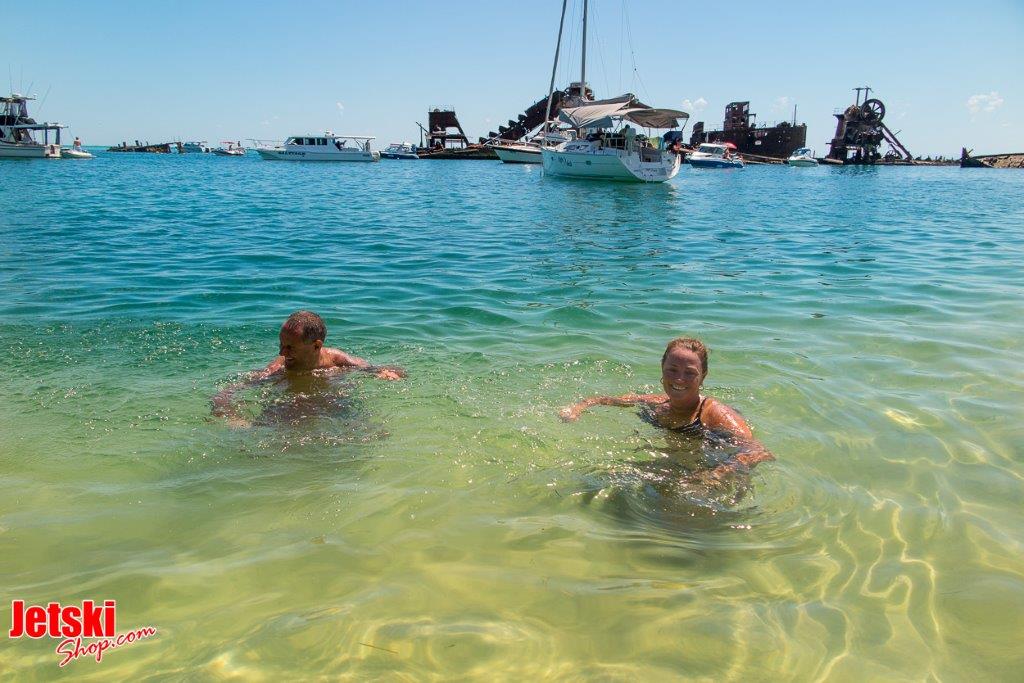
One of our most popular rides is always our Tangalooma Adventure ride. This year, we had an impressive 39 skis join us as we journeyed from the Sea World boat ramp (located on the Gold Coast, Australia) bright and early at 6:30am, traveled 250kms (155 miles) during the day to Peel island, where we toured through the mangroves, visited the iconic Tangalooma ship wrecks, and just lived the good life of personal watercraft.
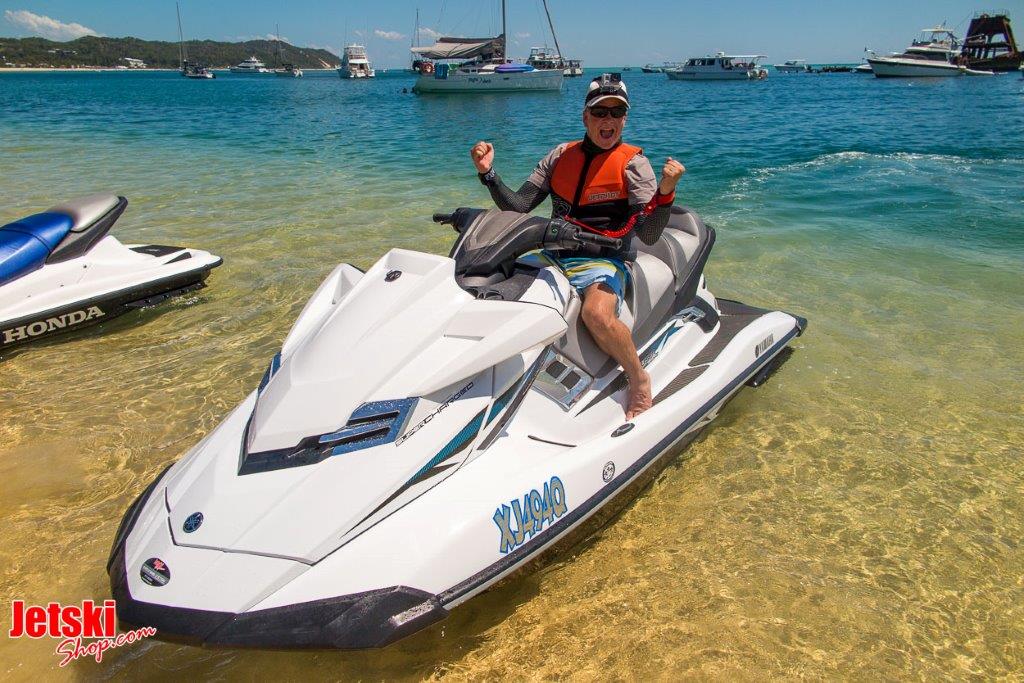
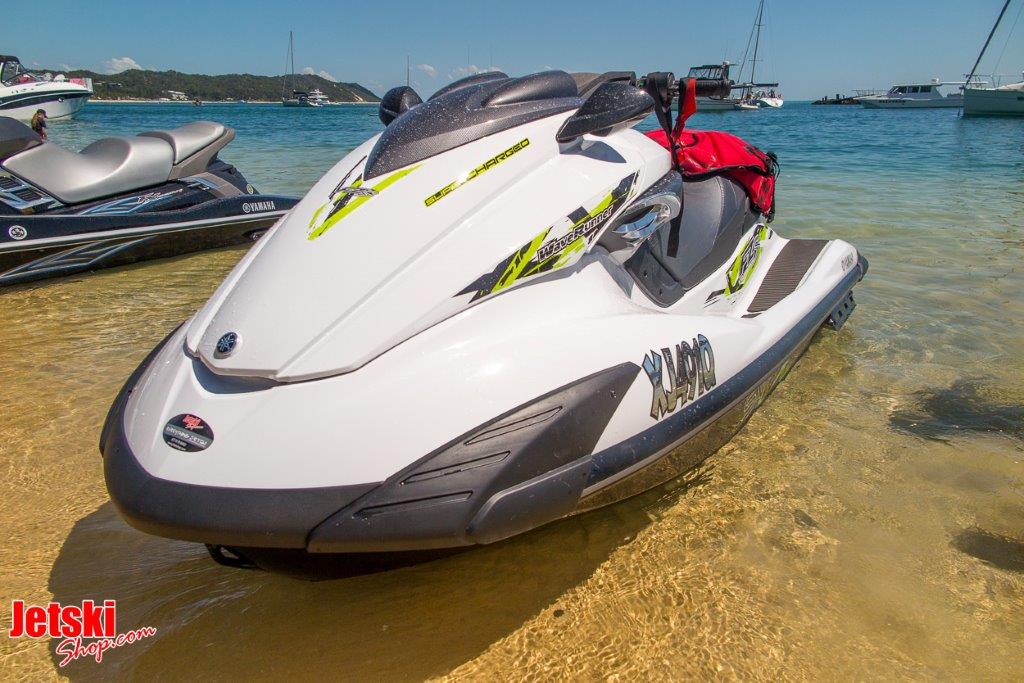
All in all, the trip took an impressive 12 hours, which was impressive riding given that 50-percent of the riders we newbies to the long ride. Our group was very eclectic, with eight 2015 Yamaha WaveRunners (one being a 2000 2-stroke GP1200R, another had a battery problem that needed solving), a few Hondas (one of which overheated), a few Sea-Doos (one had an oil problem, another also had battery problem), and one rider ran out of gas, requiring a tow.
Wakeboarding and skating behind personal watercraft is a load of fun. Besides the ease of getting around on a watercraft, popping up behind a PWC is typically just as easy. Vehicle’s like Sea-Doo’s Wake 155 and 215 almost improve the experience by including a collapsible wake tower on the transom and a gunwale-mounted rack for your board. So how could boarding behind a PWC be any better? How about you get rid of the driver?
Wait. What?
That’s right. San Diego local Justin Merrill developed an automated system that lets the wakeboarder also be the pilot of the PWC. By integrating some motorcycle-style throttle controls, a pair of pulleys and some pretty standard kitesurfing equipment, Merrill was able to transform his Sea-Doo Spark into a do-it-all-yourself wakeboarding package, the RC Ski (formally the “Wake Solo”). The finished product will be ready for purchase in June and will retail for “about $800.”
Here’s the original press release:
Wake Solo’s president Justin Merrill is proud to announce that San Diego Wake Solo Inc, has filed a patent for its product that allows one to Wakeboard behind a Jet Ski (Personal Water Craft or PWC) without a driver.
Towed Water, Sports such as wake boarding, water skiing, knee-boarding, wake skating, hydro-foil skiing and tubing, are very popular using Jet Ski’s, Sea Doo’s and Wave Runners.
The problem though is that one is not able to go out and enjoy tow sports by themselves solo.
Wake Solo’s product solves that problem without the need for a physical “driver” of the PWC giving one the ability to control the boat from the tow rope itself.
“This product is a lot of fun and can be used with any of the major PWC brands,” said Justin Merrill, President of Wake Solo, Inc.
“I invented the product so I could get more time on the water wakeboarding when I couldn’t round up friends to drive and spot me from the boat. I saw a market for the product when I realized that everyone that I talked to about it wanted to know how they could get one.”
The product is being marketed under the trade name “Wake Solo” for about $1,000 suggested retail price. The closest product to Wake Solo is between $7500 and $17,000 and requires an expensive separate boat rather than one’s own PWC.
The Personal Watercraft industry is a multi-billion dollar industry. The major PWC brands include Jet Ski, Wave Runner and Sea-Doo and are sold all over the world.
The Company is currently testing its second-generation prototype system, and the product is now ready to move into manufacturing and can be pre-ordered starting now.
One can learn more and register to win one of the first off the manufacturing line by visiting HERE.
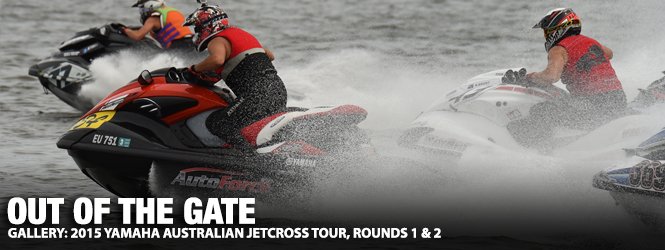
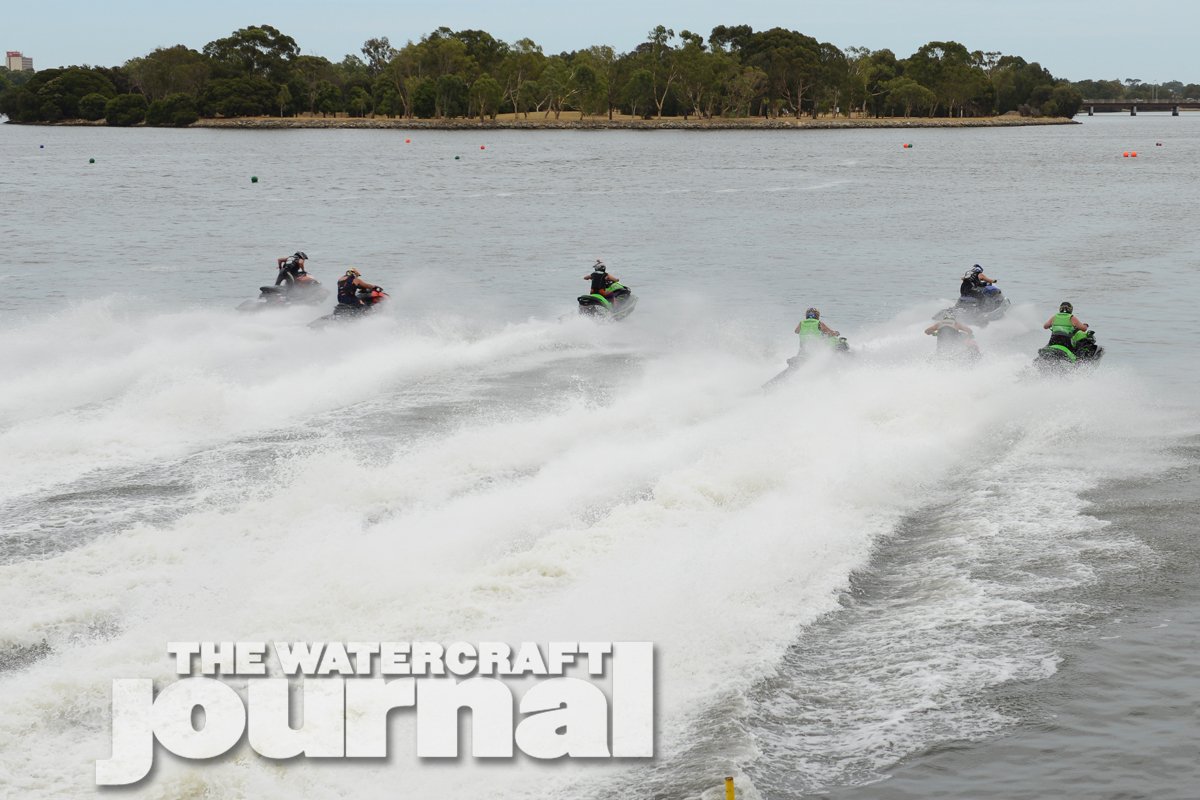
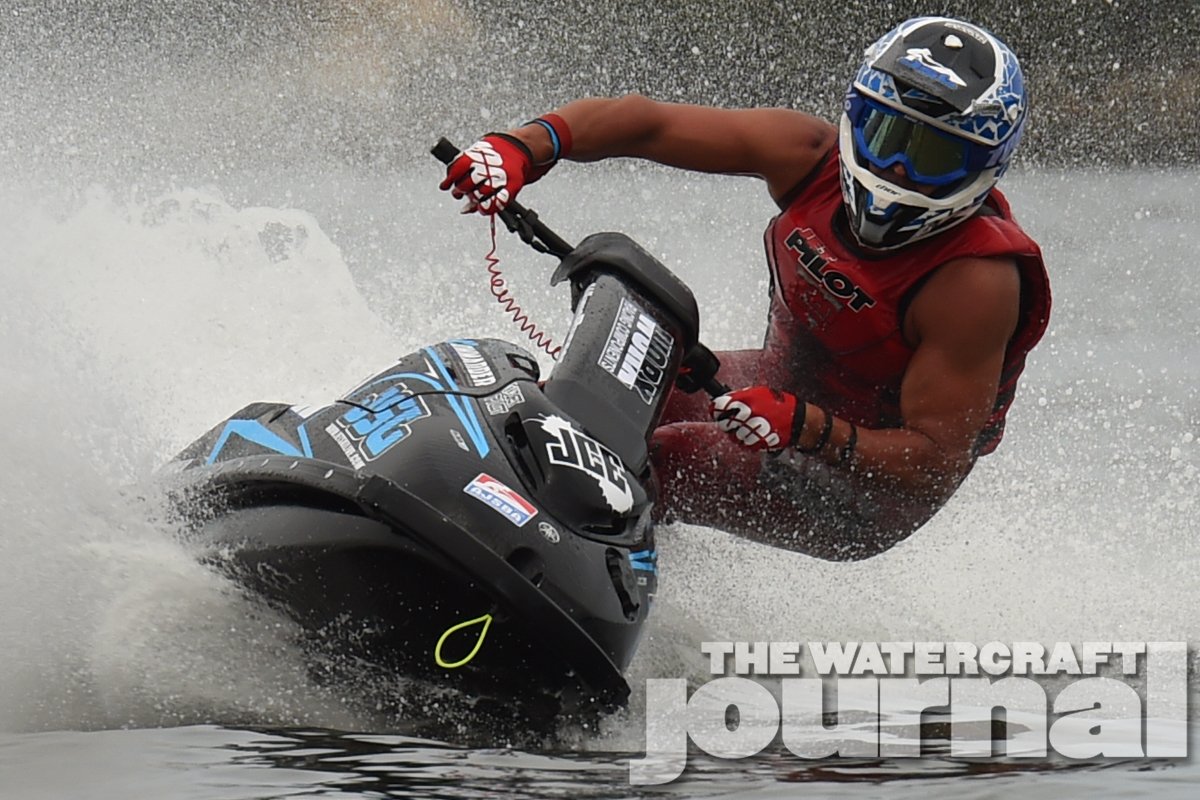
How dedicated are you to jet ski racing? How far would you travel to compete? These were the questions going through my head while watching all the riders in Perth this weekend. But the love of the sport was shining through at the first two rounds of the 2015 Yamaha Australian Jetcross Tour, especially on the faces of all the riders as they lined up for the first race of the year.
Perth is on the West Coast of Australia and the most isolated city in the world. Its a 50 hour drive from my home town of the Gold Coast, so lucky I got to fly! Some of the riders weren’t so lucky. Between shipping skis and equipment it’s a exceptionally expensive exercise but we all know that racing skis is not cheap, so to see the turnout of over 50 racers from teams and privateers from all over the country was an awesome effort!
Rounds One and Two of 2015 Yamaha Australian Jetcross Tour were held by AJSBA and Jetsport West at the local club on the Swan River, a fantastic spot for both races and spectators with a beautiful view of Perth City in the back drop.
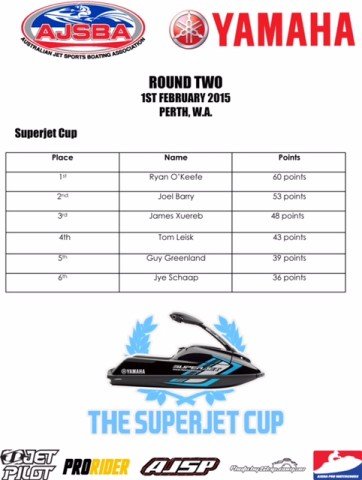
This year, Yamaha Australia got on board and started a new class of racing, the Superjet Cup with a brand new 2015 SuperJet as first prize. It’s so good to see Yamaha supporting the sport in such a big way. The Cup is basically a version of the Circuit Lites Ski class (so only handling and a few other small modifications are allowed). At the end of the tour, one lucky rider will need extra room on their trailer to take home their hard earned ski home! If you are competing in the SuperJet Cup, you’re competing with racers like Joel Barry, Ryan O’Keefe and James Xuereb, so bring your “A” game to every event to have a chance of taking home this major prize.
Speaking of which, Ryan O’Keefe came back into racing after some time off with great success on his new Superjet taking first position on the in the points. It was good to see all that practice riding at Sea World on the Gold Coast has paid off.
O’Keefe was closely followed be last year’s number one Joey Barry, and World Veterans Champion James Xuereb. A lot of these guys are true athletes, racing two and sometimes three different classes. Guy “Gee” Greenland was one of those who raced the Pro Open Runabout on a borrowed ski and took on the standup racers in the SuperJet Cup.
Speaking of Pro Open Runabout, the Sea-Doo Team from JSW Powersports were let down by their transport company, leaving their skis stuck somewhere in the desert. Thankfully, after getting a hold on some dead stock RXP-X Sea-Doos from some very generous West Australians, the JSW boys were able to get some points on the board.
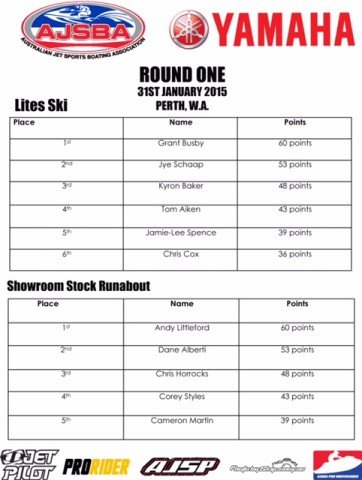
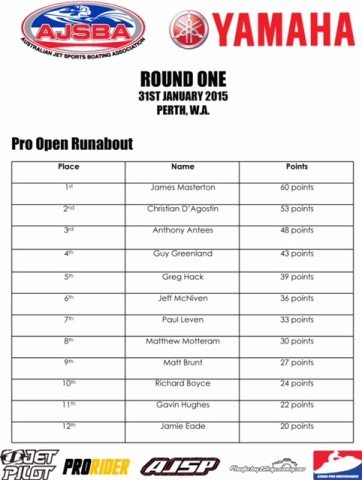
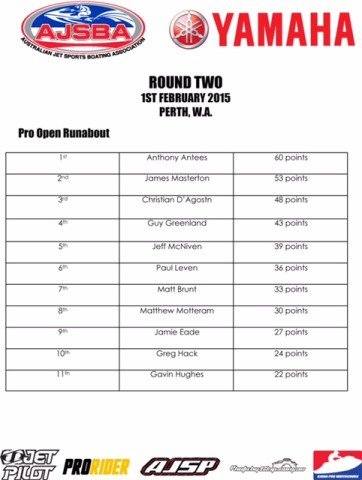
In Round One, Sea-Doo salesman Anthony Antees rode like a man possessed, taking home third place on one of those stock boats. Sydney Sea-Doo Performance’s James Masterton took first place with K-Speed’s Christian D’Agostin in second place. I bet they were hoping Anthony’s boat doesn’t turn up in time.
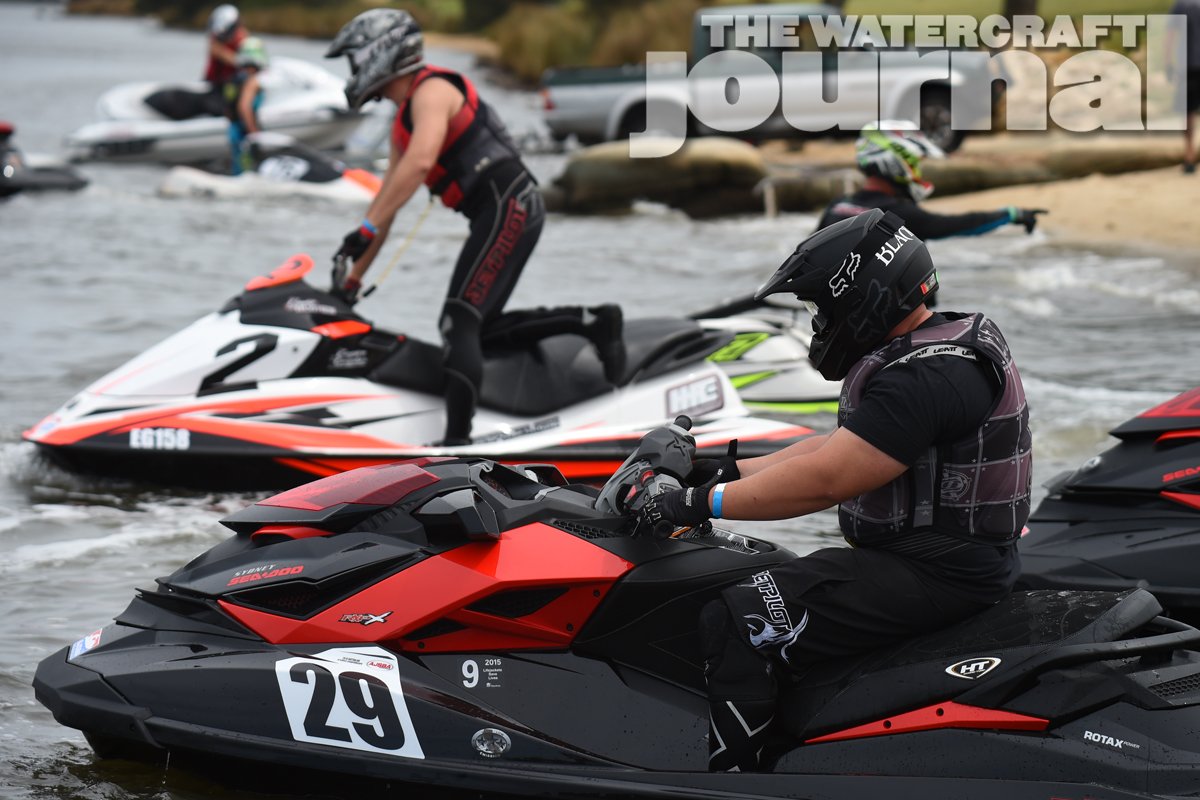
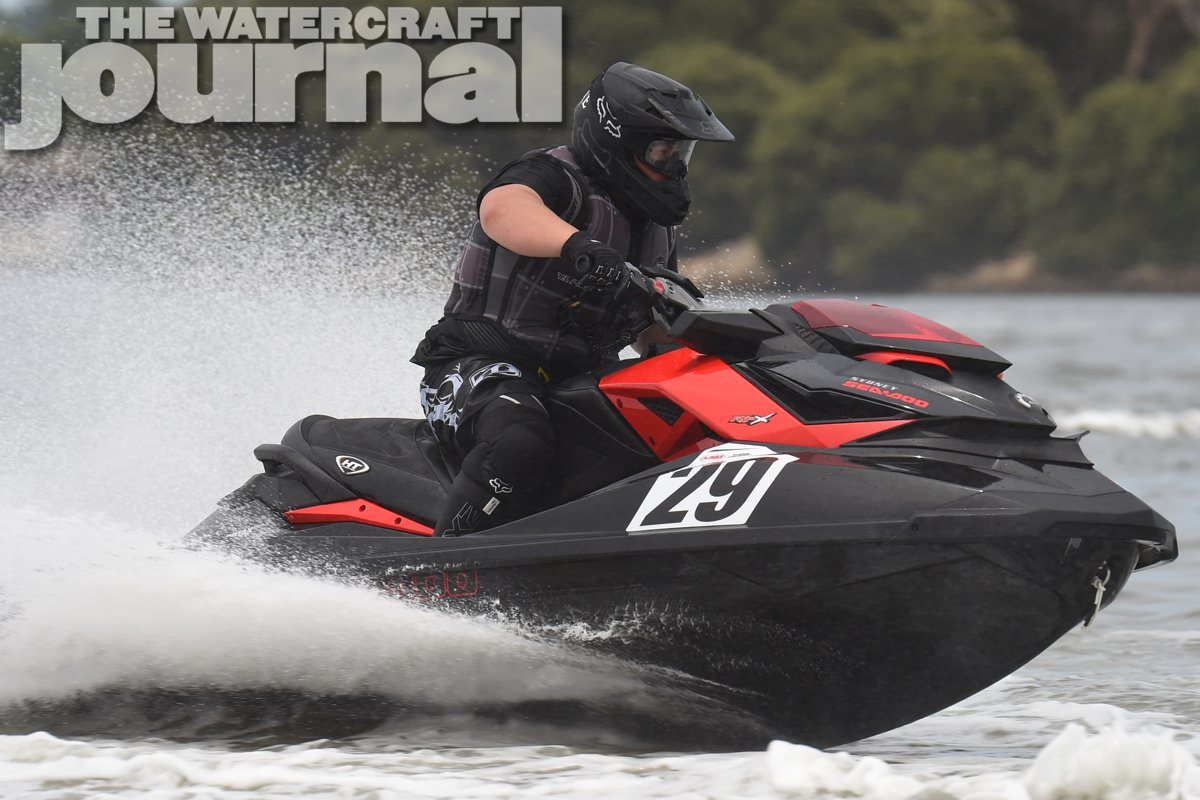
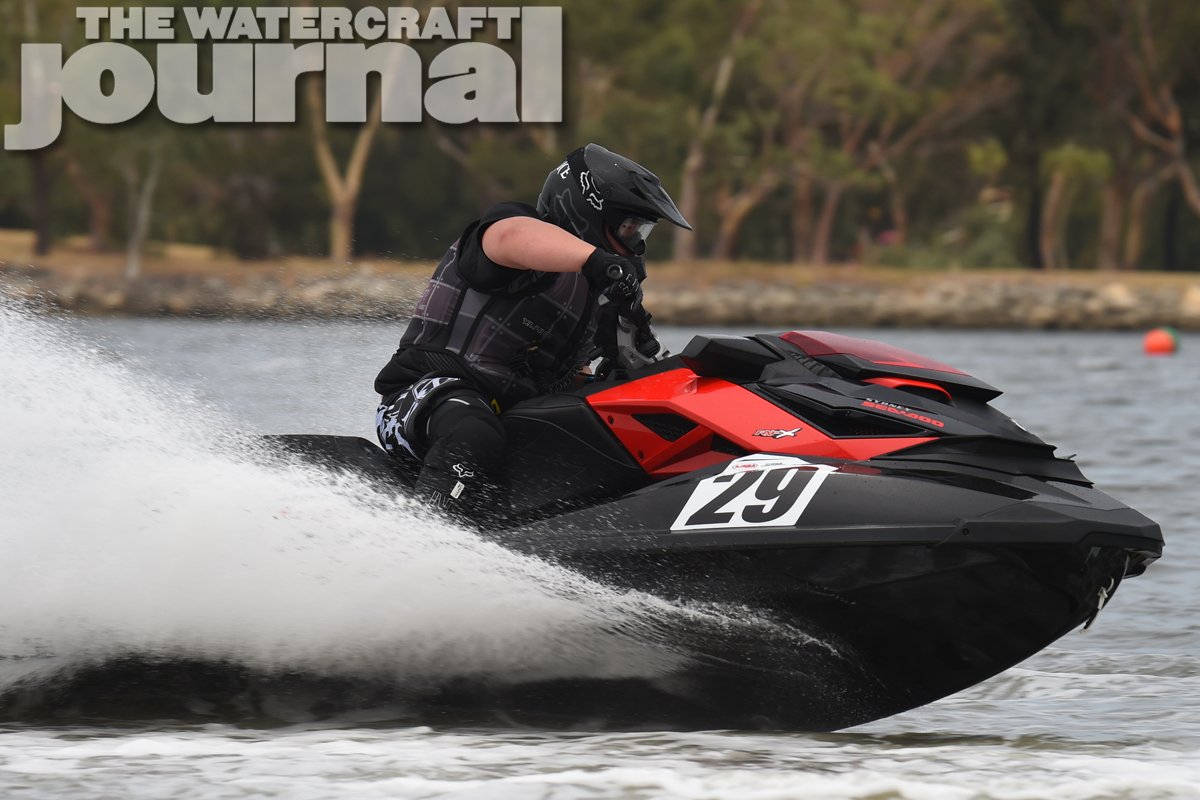
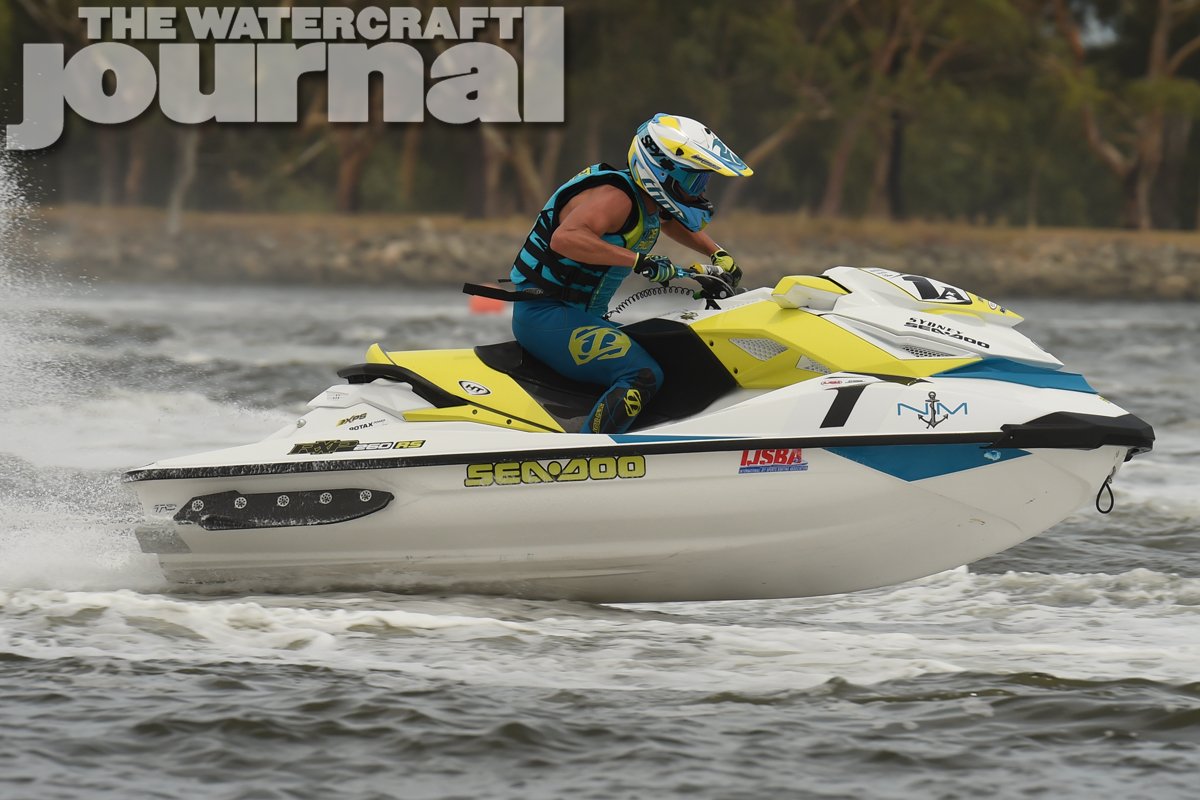
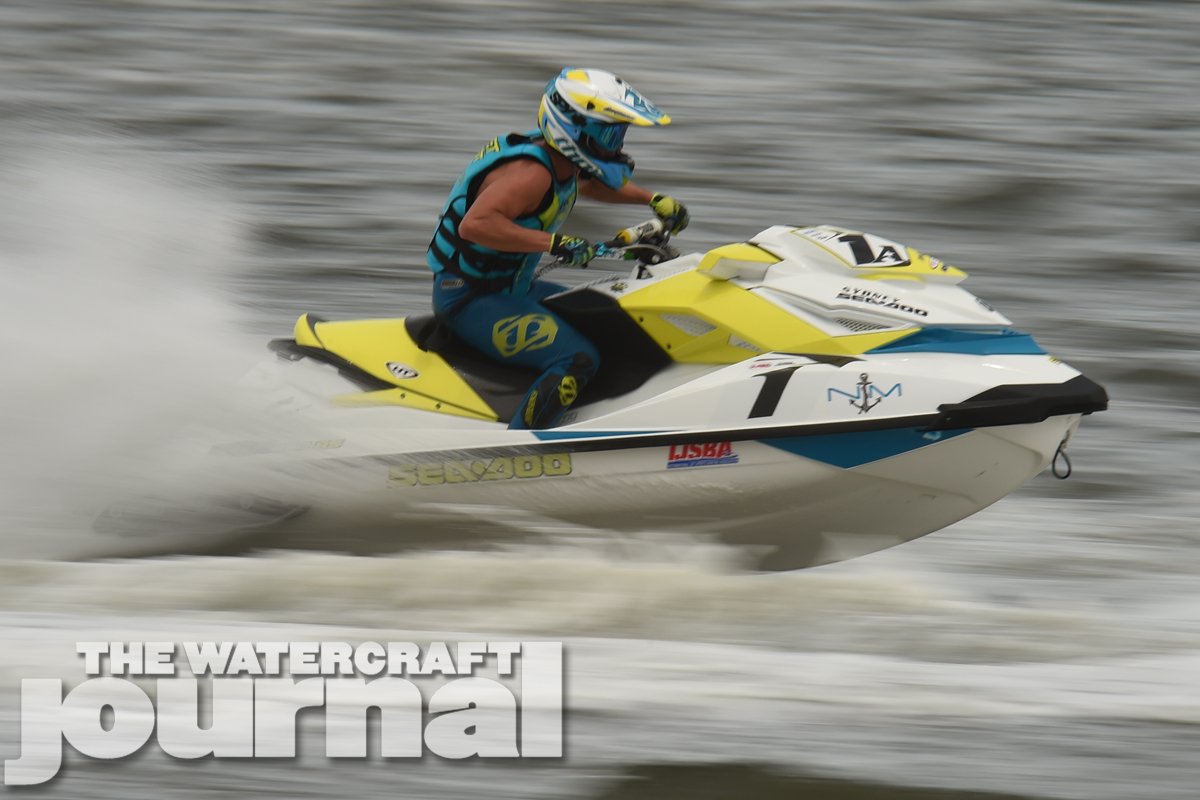
Sydney Sea-Doo Performance’s own James Masterton brought out his Pro Open runabout and grabbed solid podium finishes in each round.
Well, it did just before the first race of Sunday’s Round Two. (Sorry guys.) It was a very fast and reliable turbo boat and Anthony was keen to make up some points. James Masterton’s boat was no slouch either and was going like a rocket. But unfortunately for James, it just wasn’t quite fast enough to best Anthony.
Christian D’Agostin was Mr Consistency with him taking third place in Open, and then going and racing in Stock Runabout, also taking third. Matt Brunt and Greg Hack also looked like they had some good boat speed, until the gremlins turned up. See you next round boys. Hope it’s all sorted.
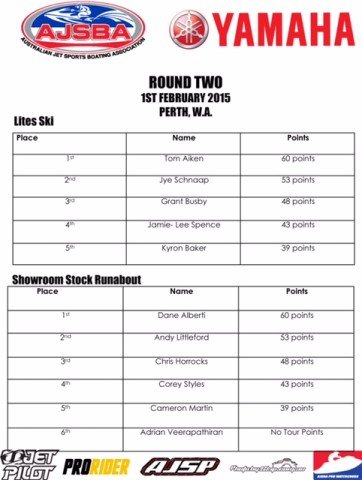
Lites Ski was lucky enough to have a young lady racing in it with the boys, and keeping them on there toes. The 16-year-old Jamie Lee Spence was unbelievable on her SX-R. She has a huge future in racing and was able to beat the boys on more than one occasion.
Another young gun was Tom Aiken. After not having much luck in Round One, a little bit of tweaking to his ski made all the difference for Round Two, with him winning with a nice lead in each race. His SX-R looks like it needs a bit of love on the outside, but it’s got the goods on the inside. Tom’s not just a racer either, he’s one heck of a freeriders to. Keep an eye on this one.
Grant Busby, another SX-R rider and President of Jetsport West, took out first in Round One and third in Round Two. He put in a great effort after giving the SuperJet Cup a go. (And special thanks to Buzz for the bed and the Cordials.)
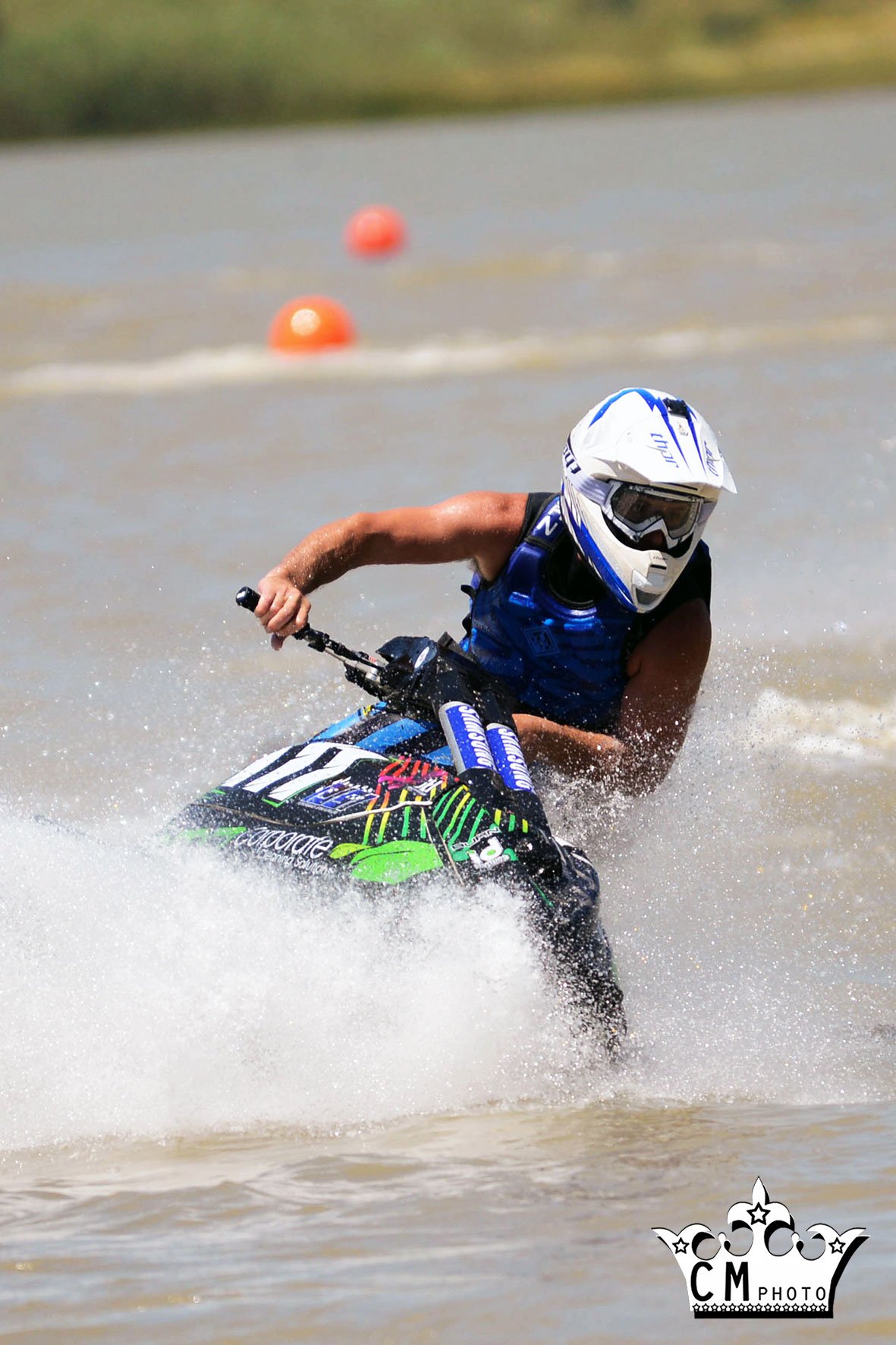
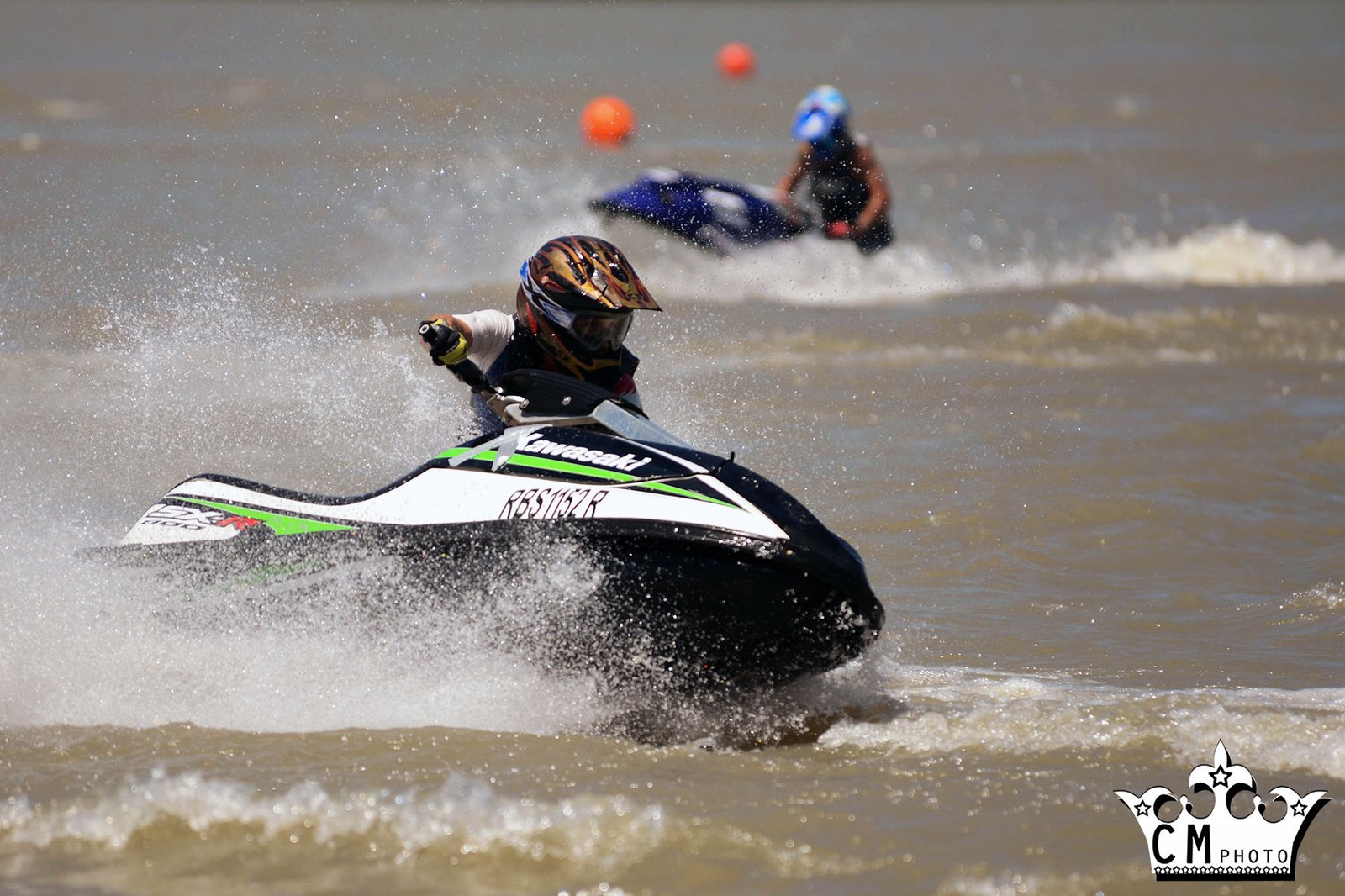
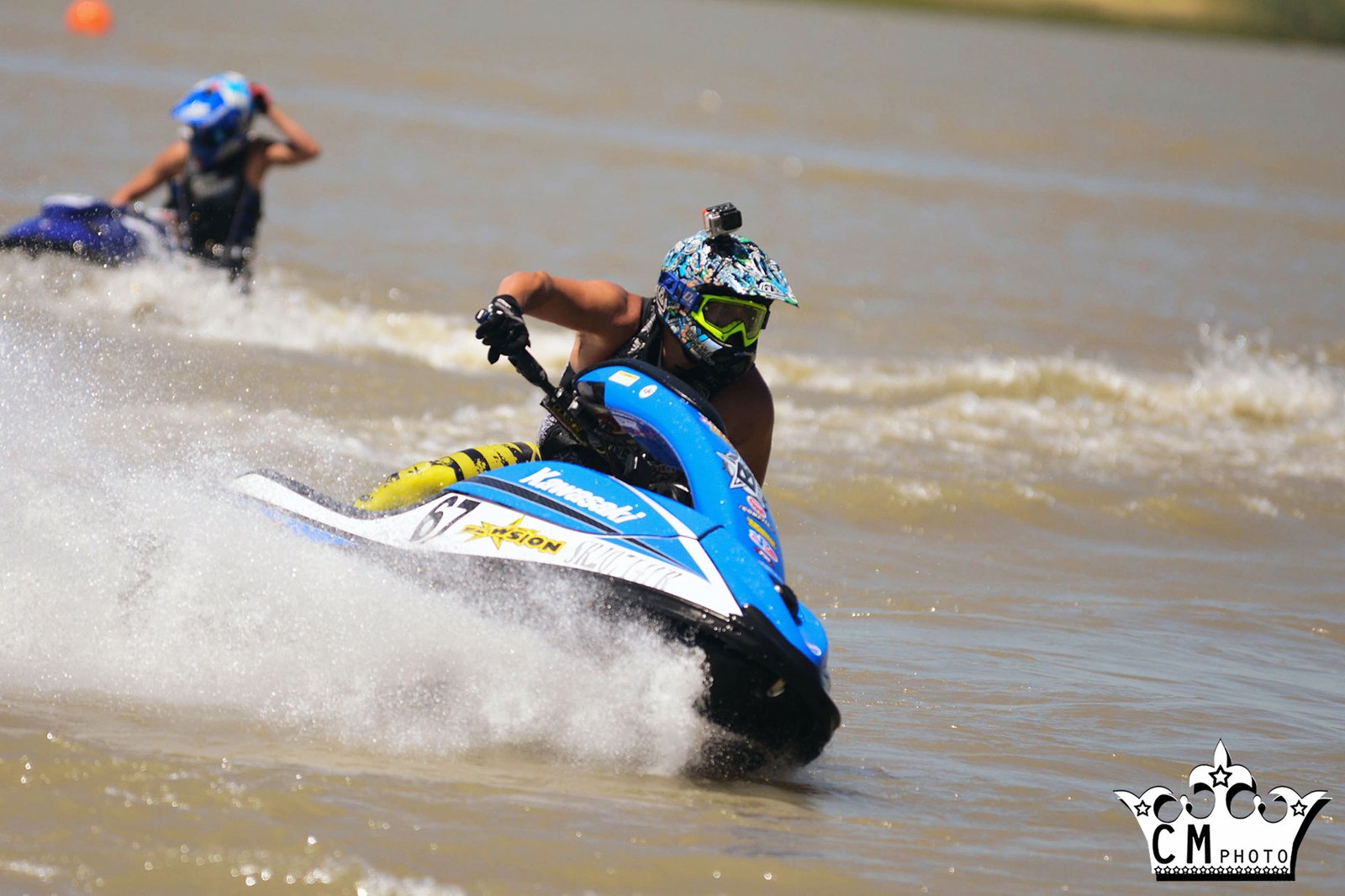
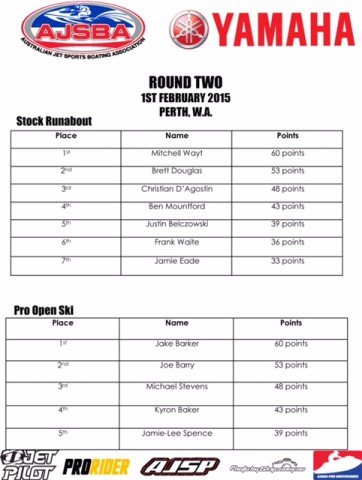
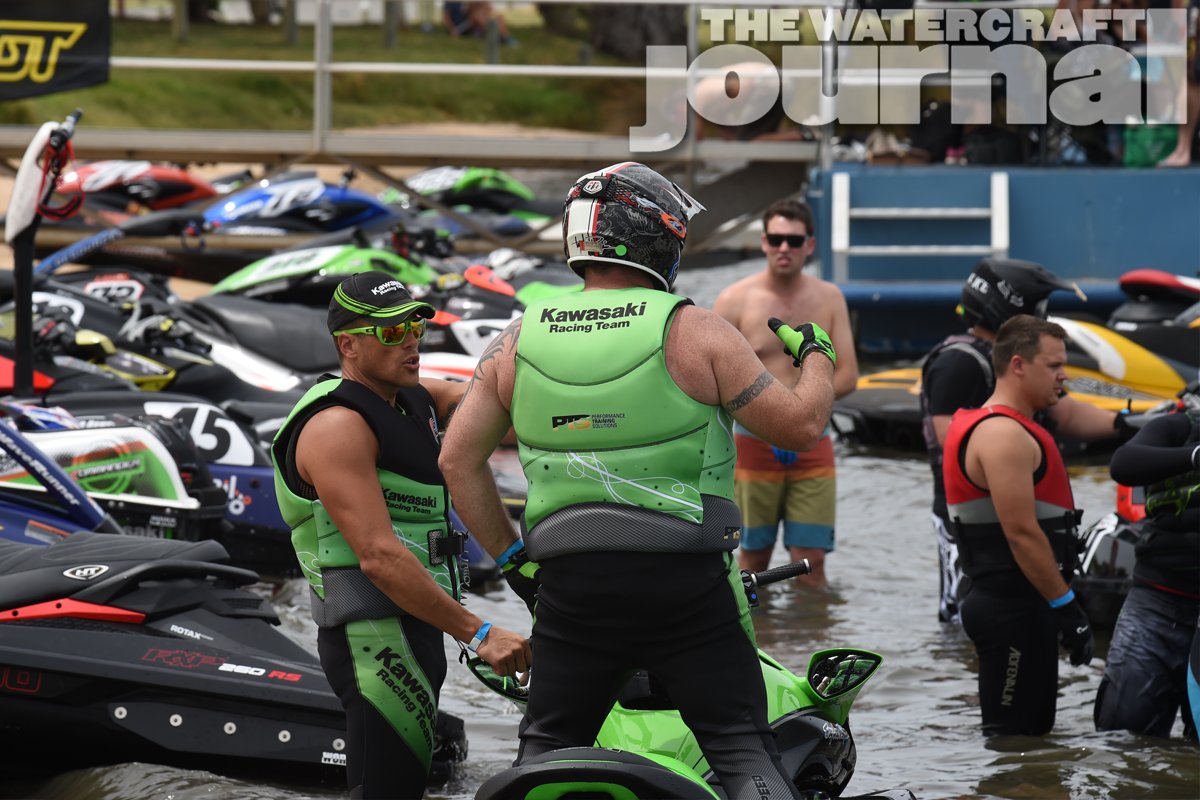
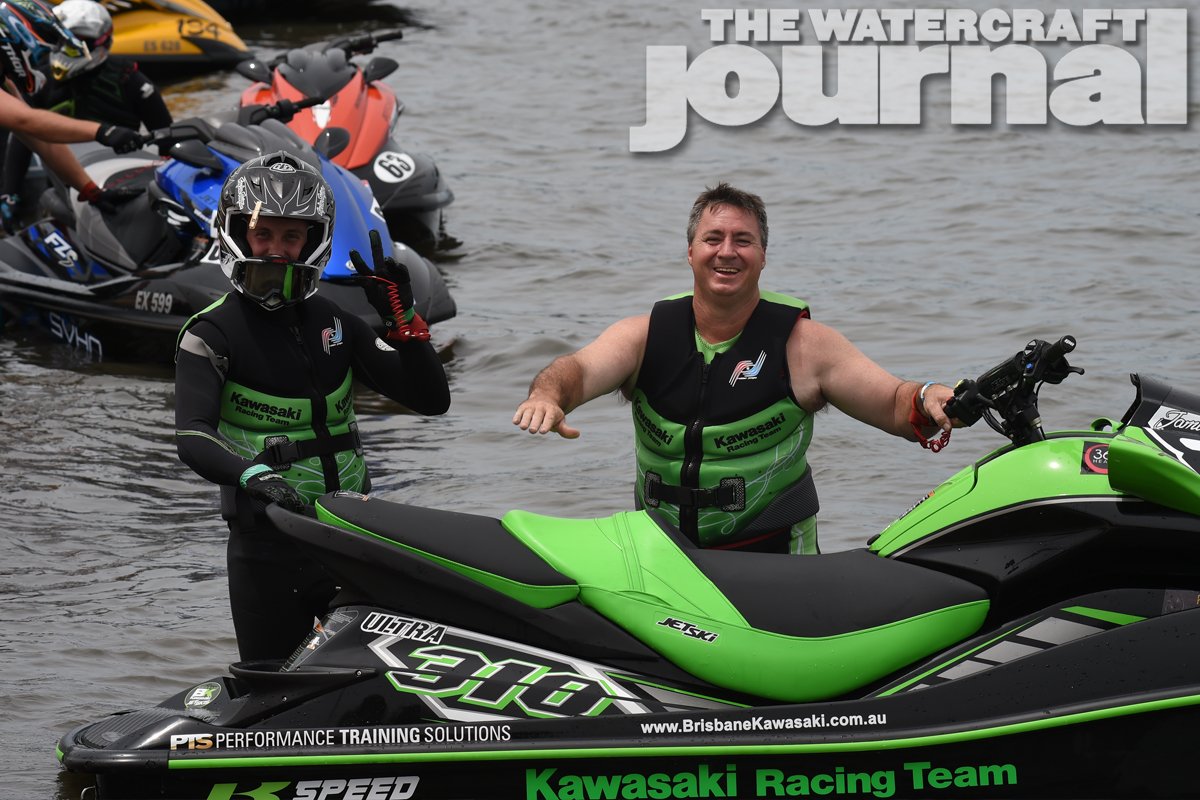
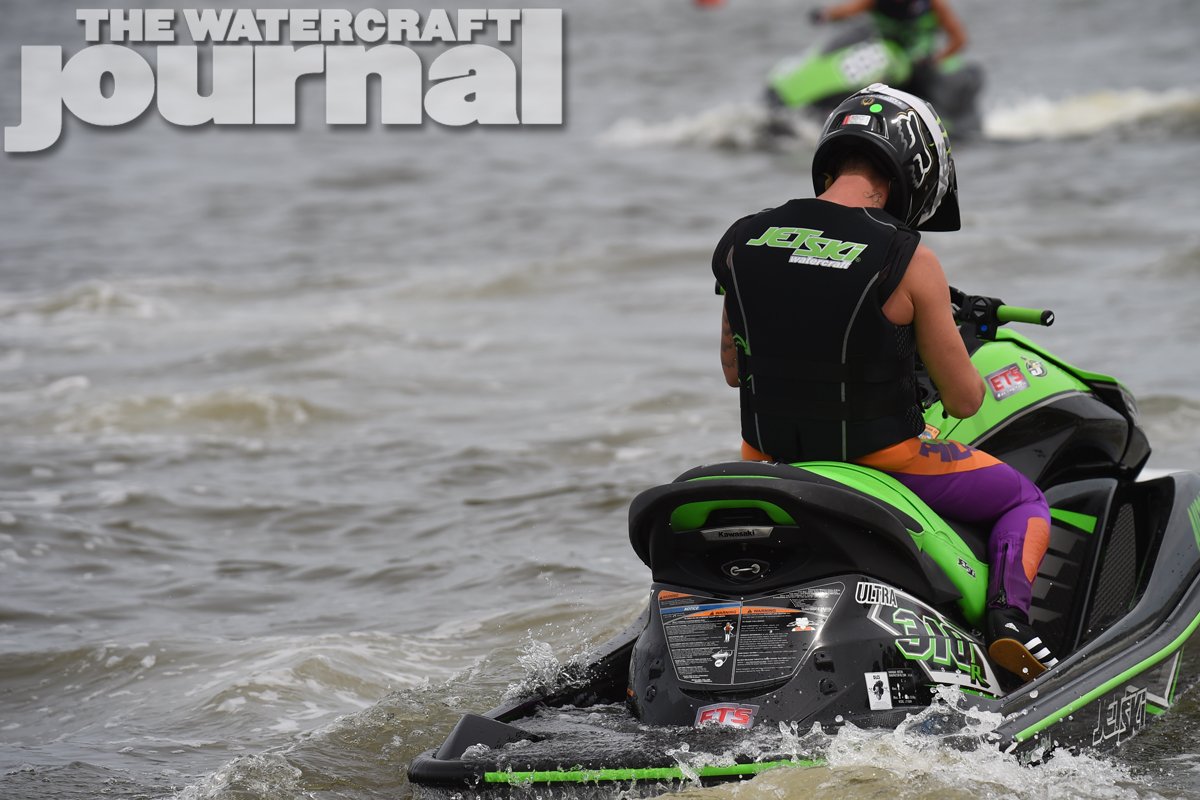
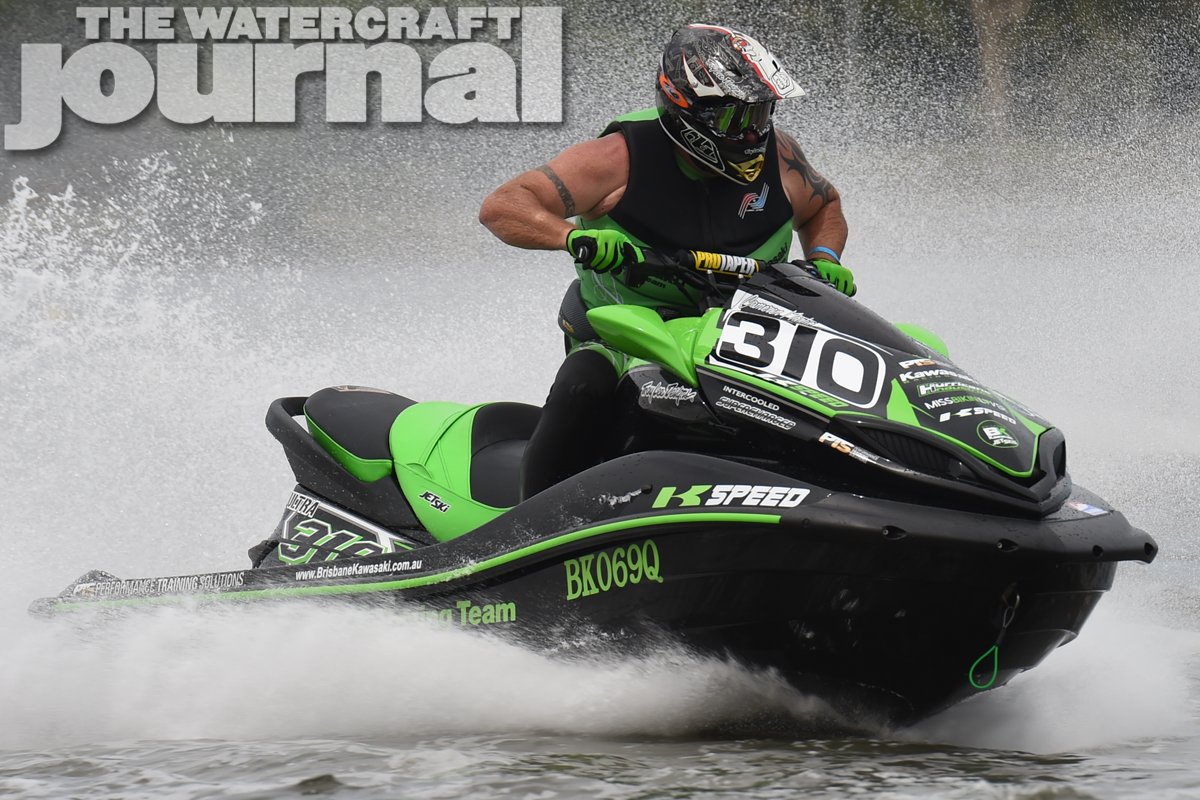
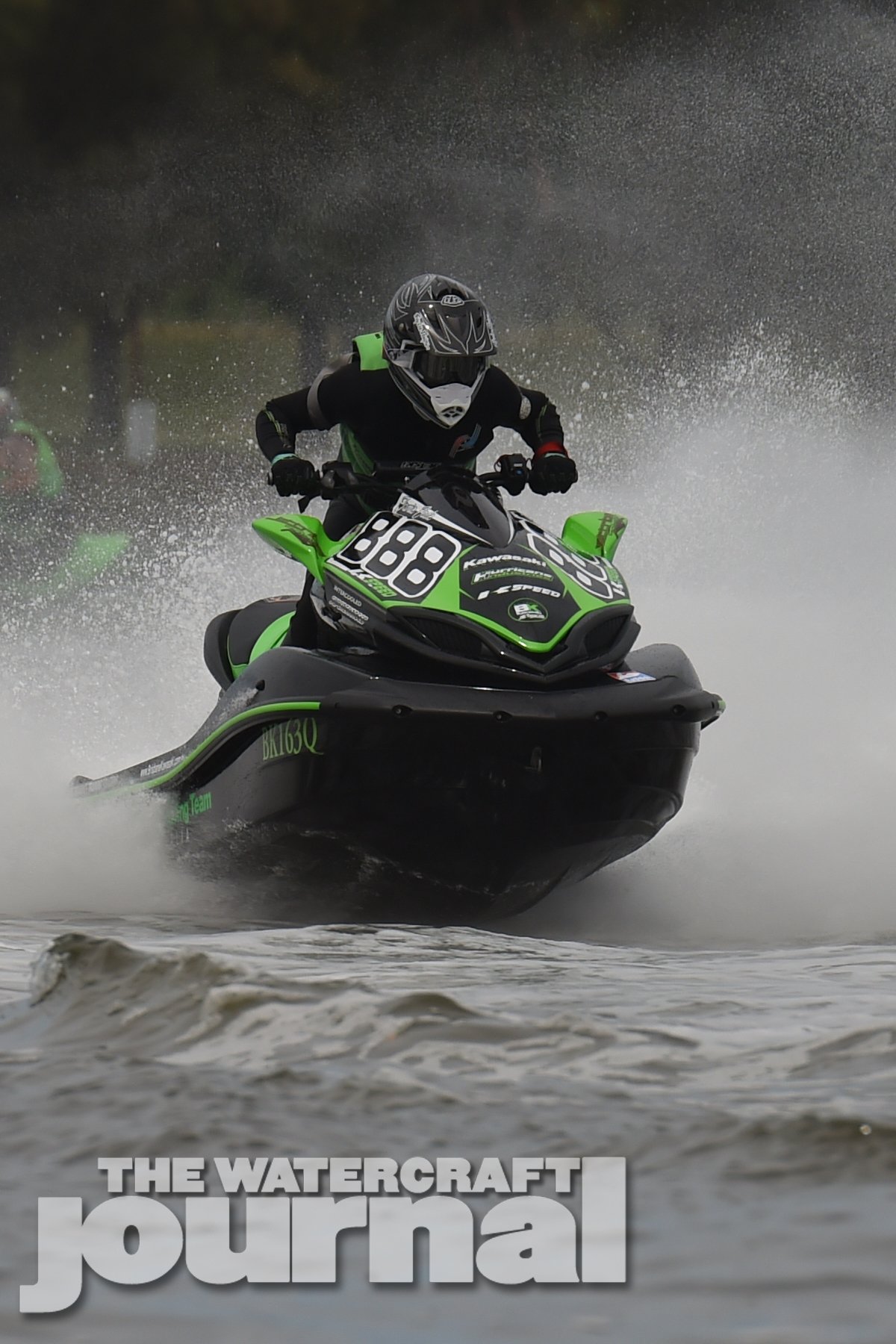
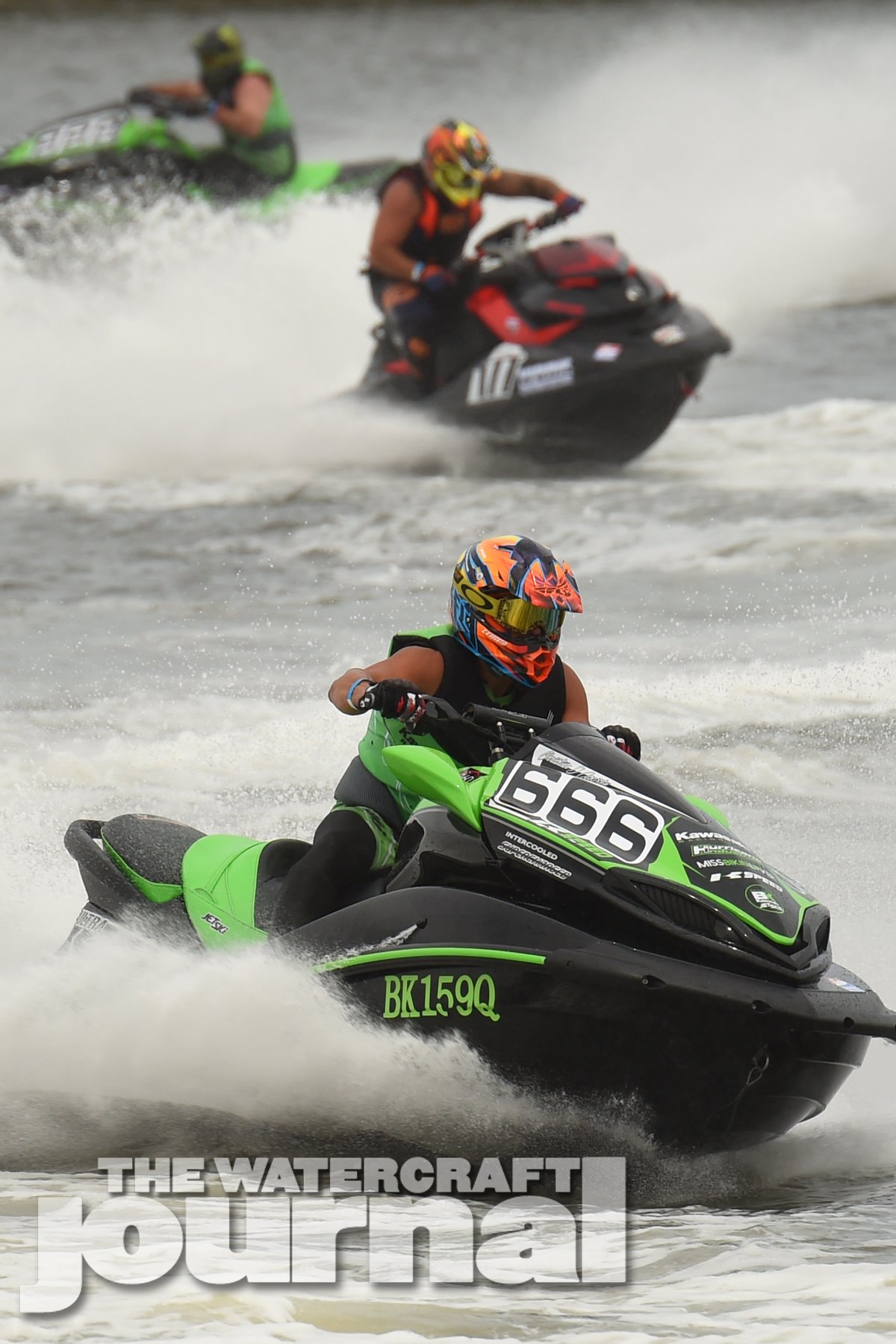
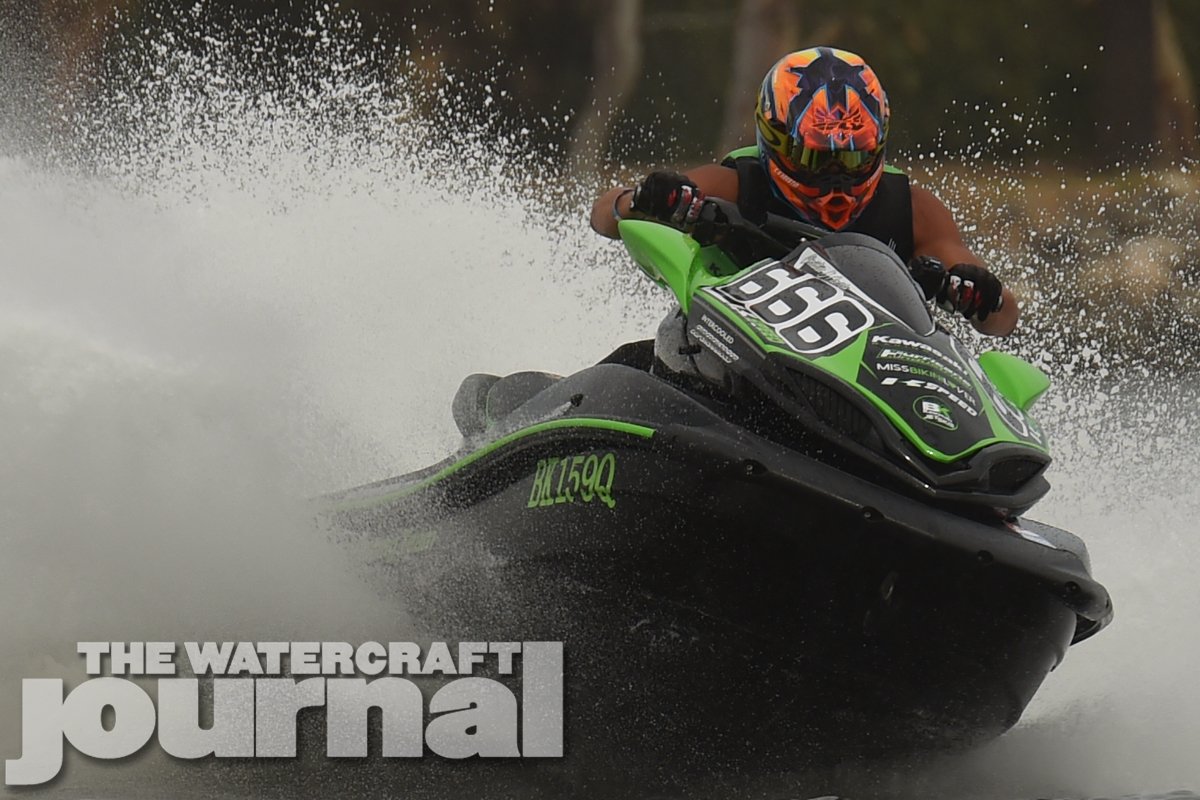
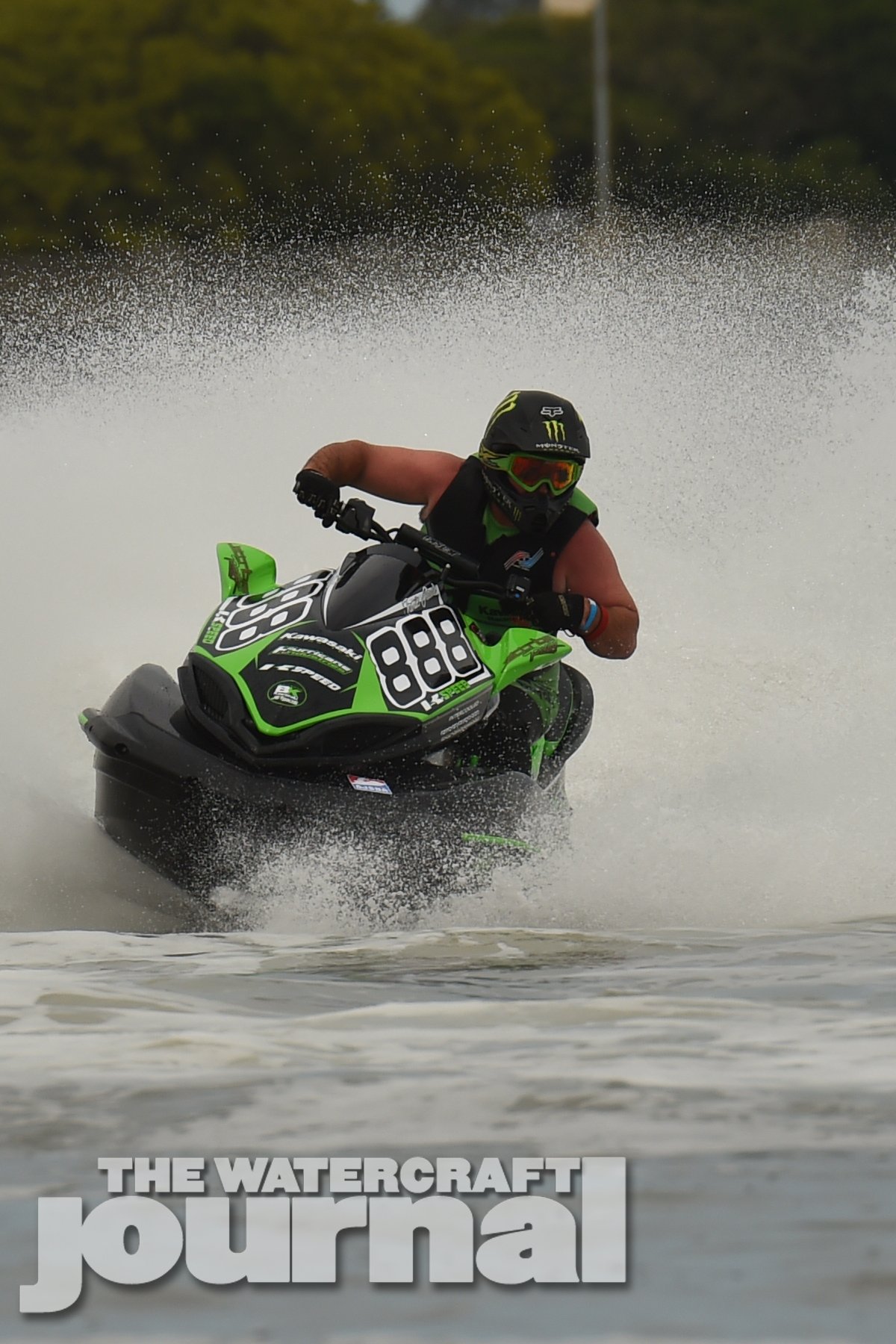
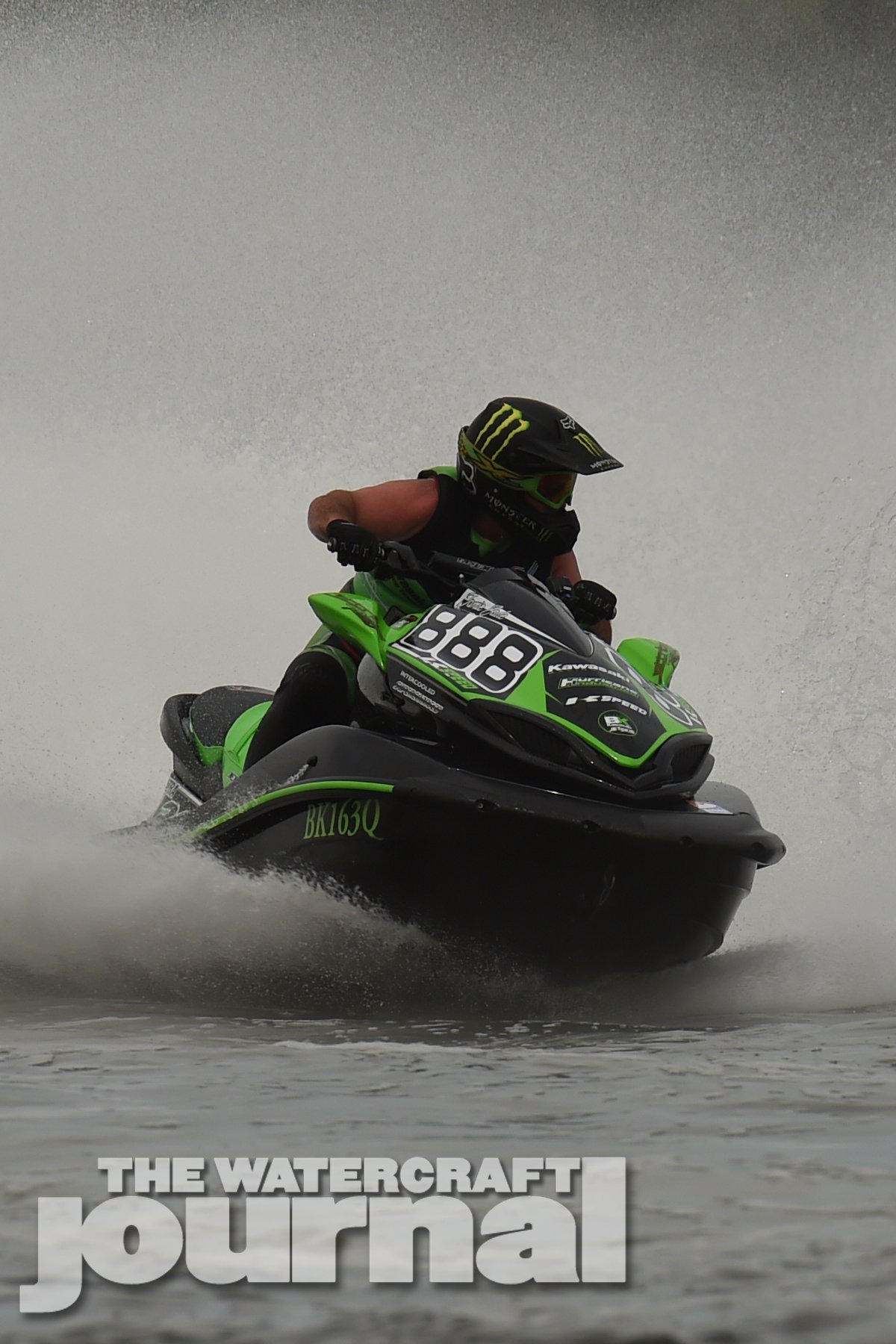
The Kawasaki teams from the Gold Coast, and Brisbane showed how well their 310R Ultras go with a constant blur of green whizzing by. Handling the chop well and stealing out of the corners smoothly kept them up front with the other top riders. Ben Mounford took first in Stock Endurance and Christian D’Agostin won the Open enduro. Both the boys were on 310Rs. Well done, Kawasaki.
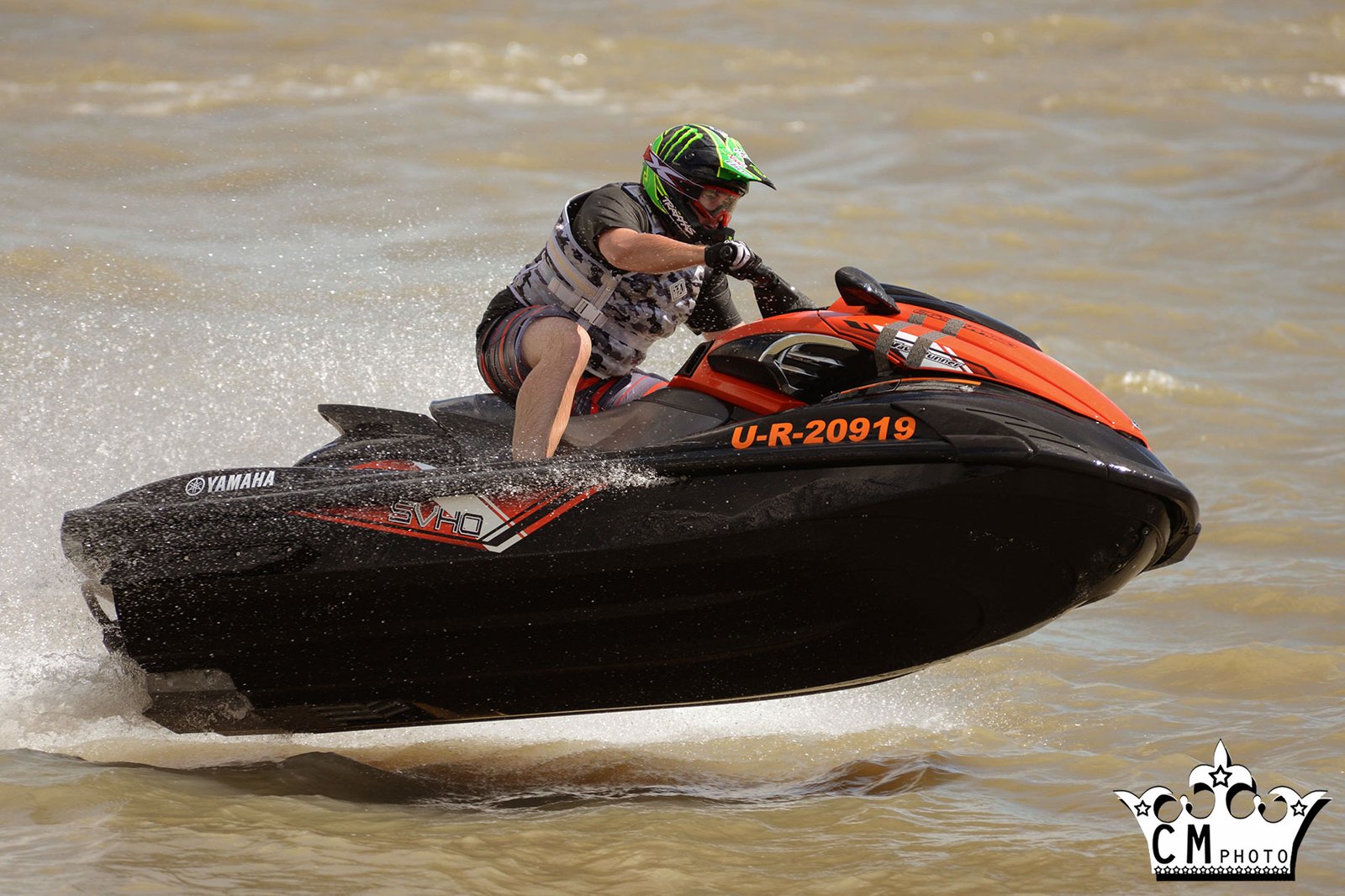
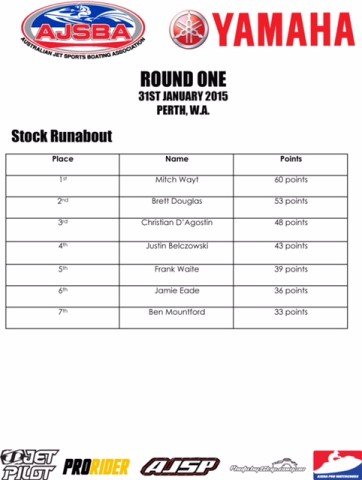
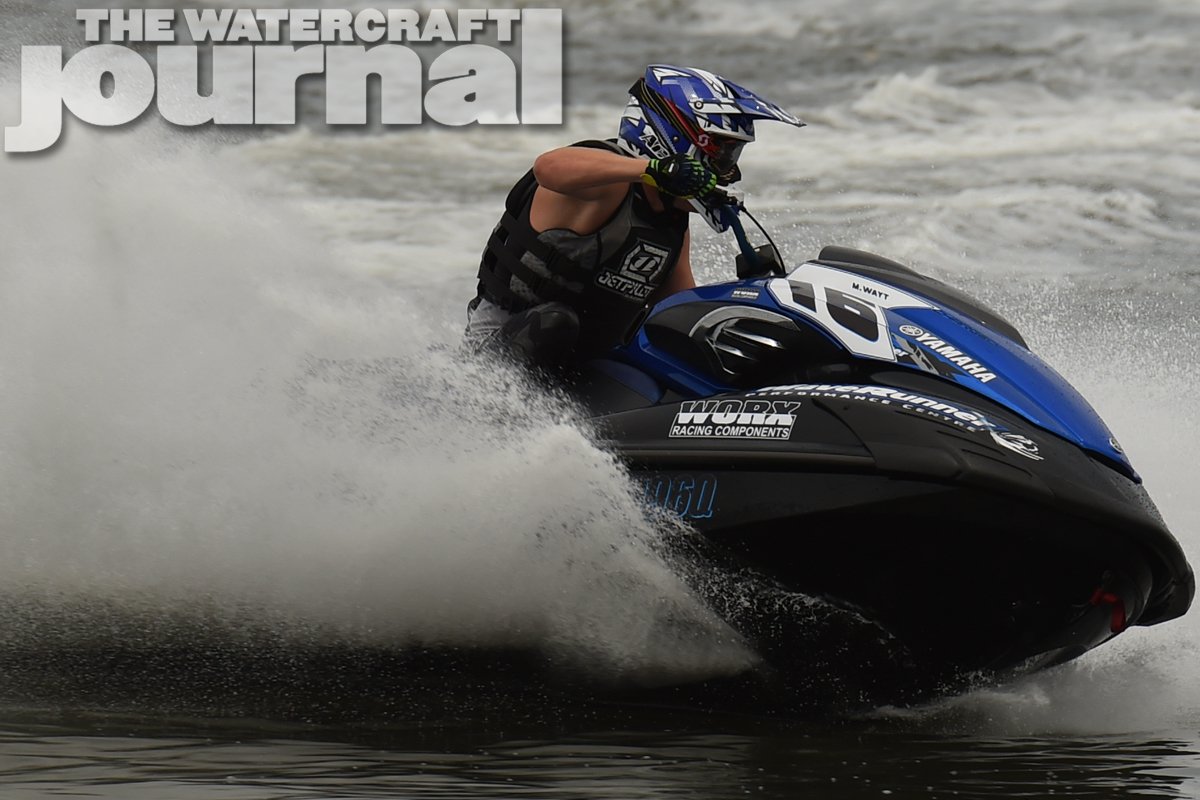
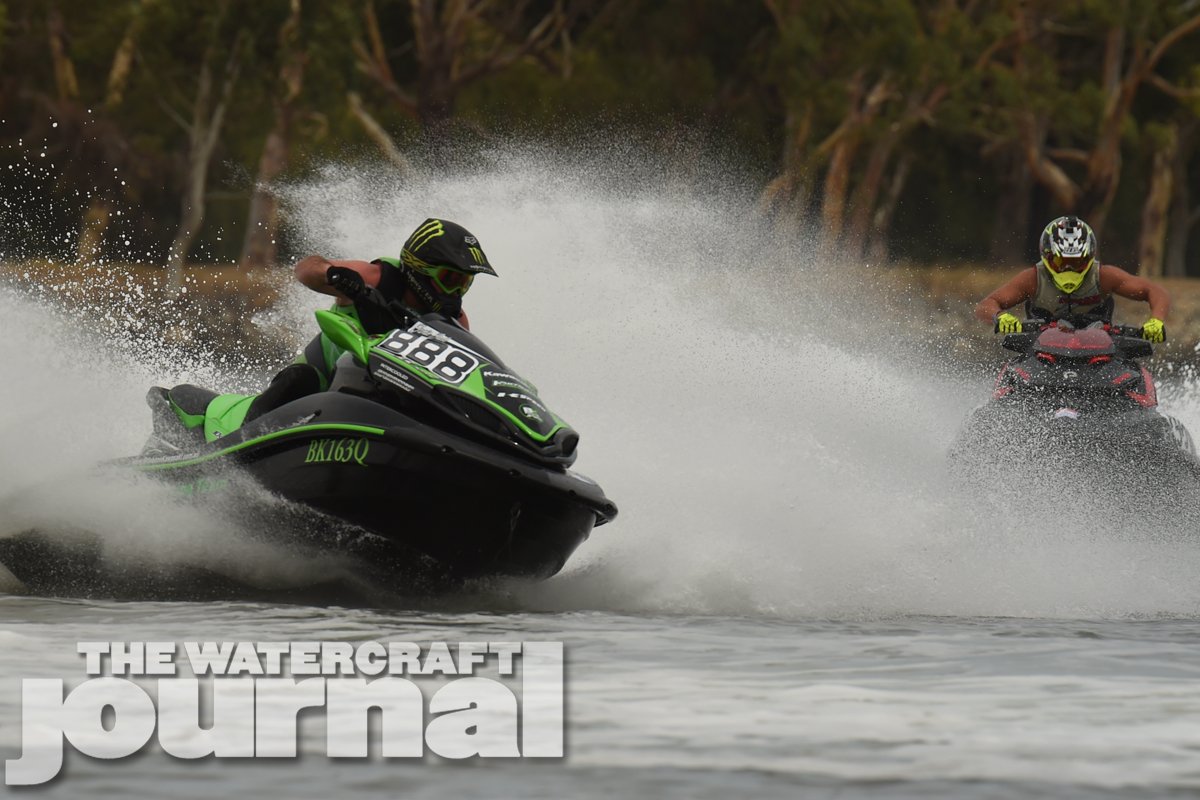
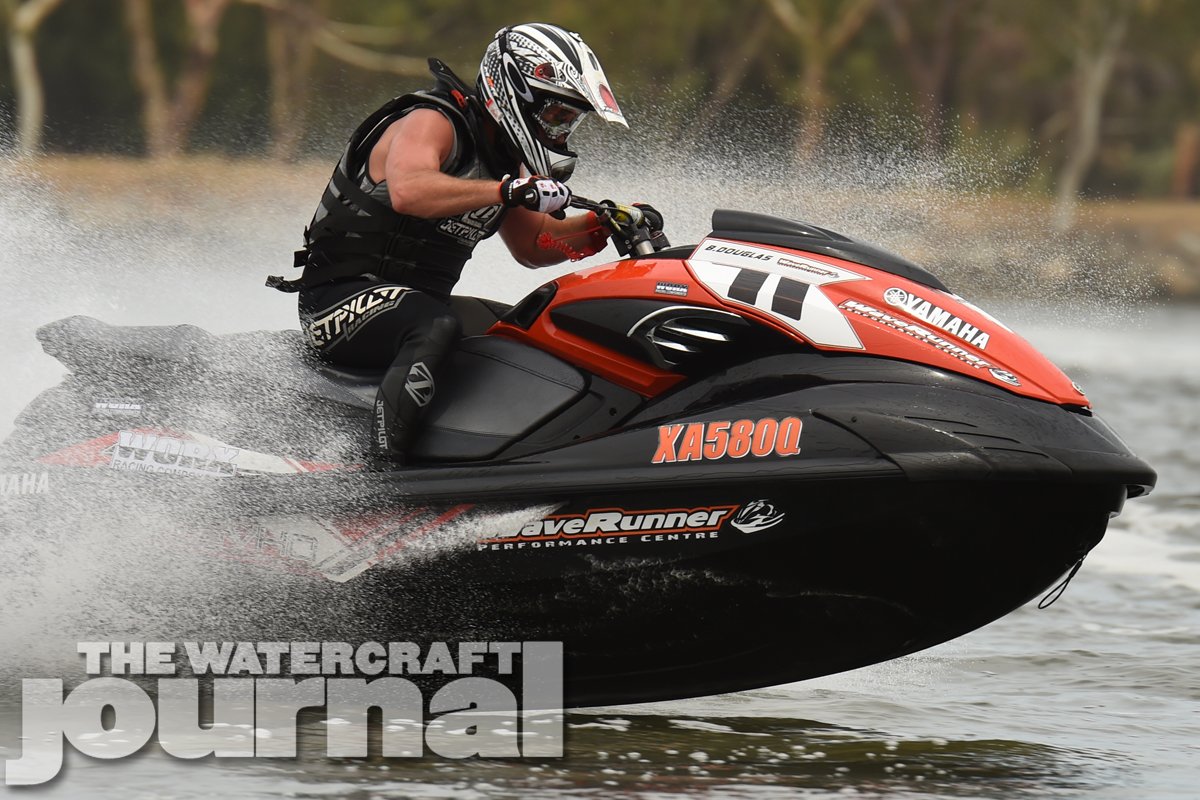
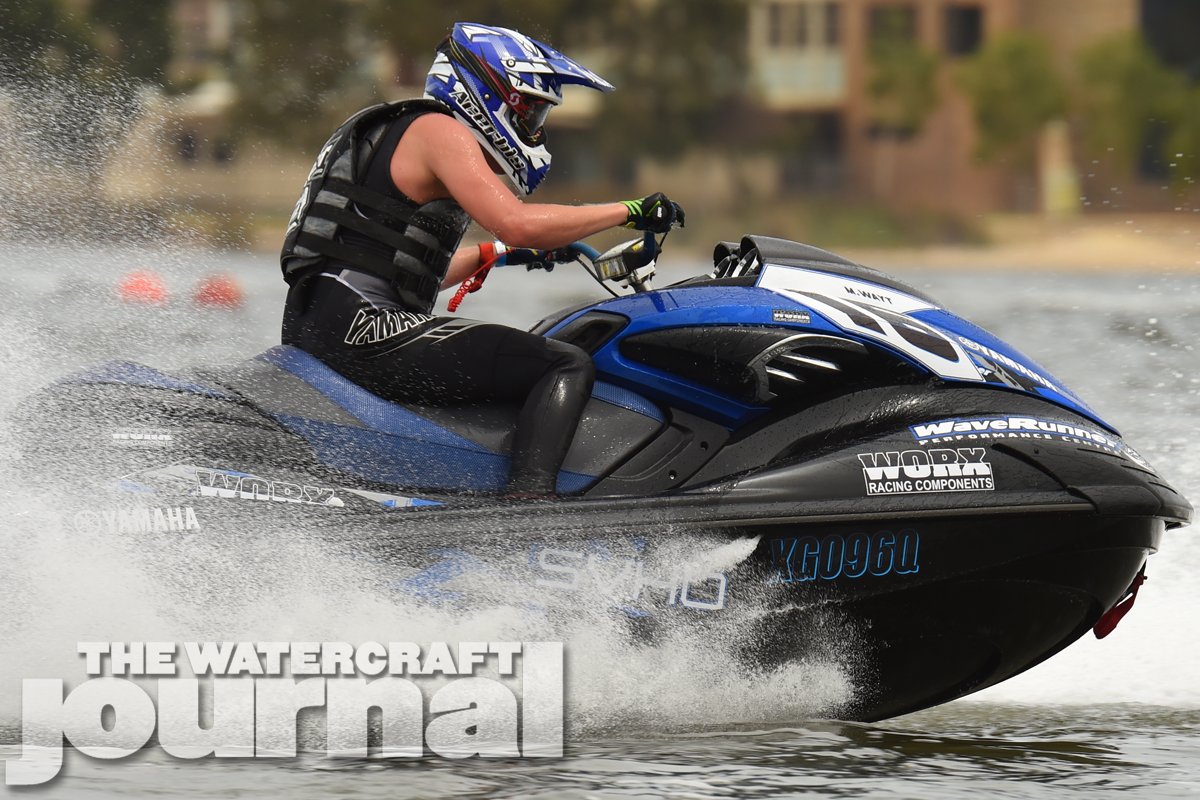
Yamaha was not to be outdone. Stock Runabout was dominated by Mitch Wayt on his SVHO-powered FZS put together by WaveRunner Performance on the Gold Coast. Wayt was joined by Brett Douglas and Christian D’Agostin who made it to the podium again.
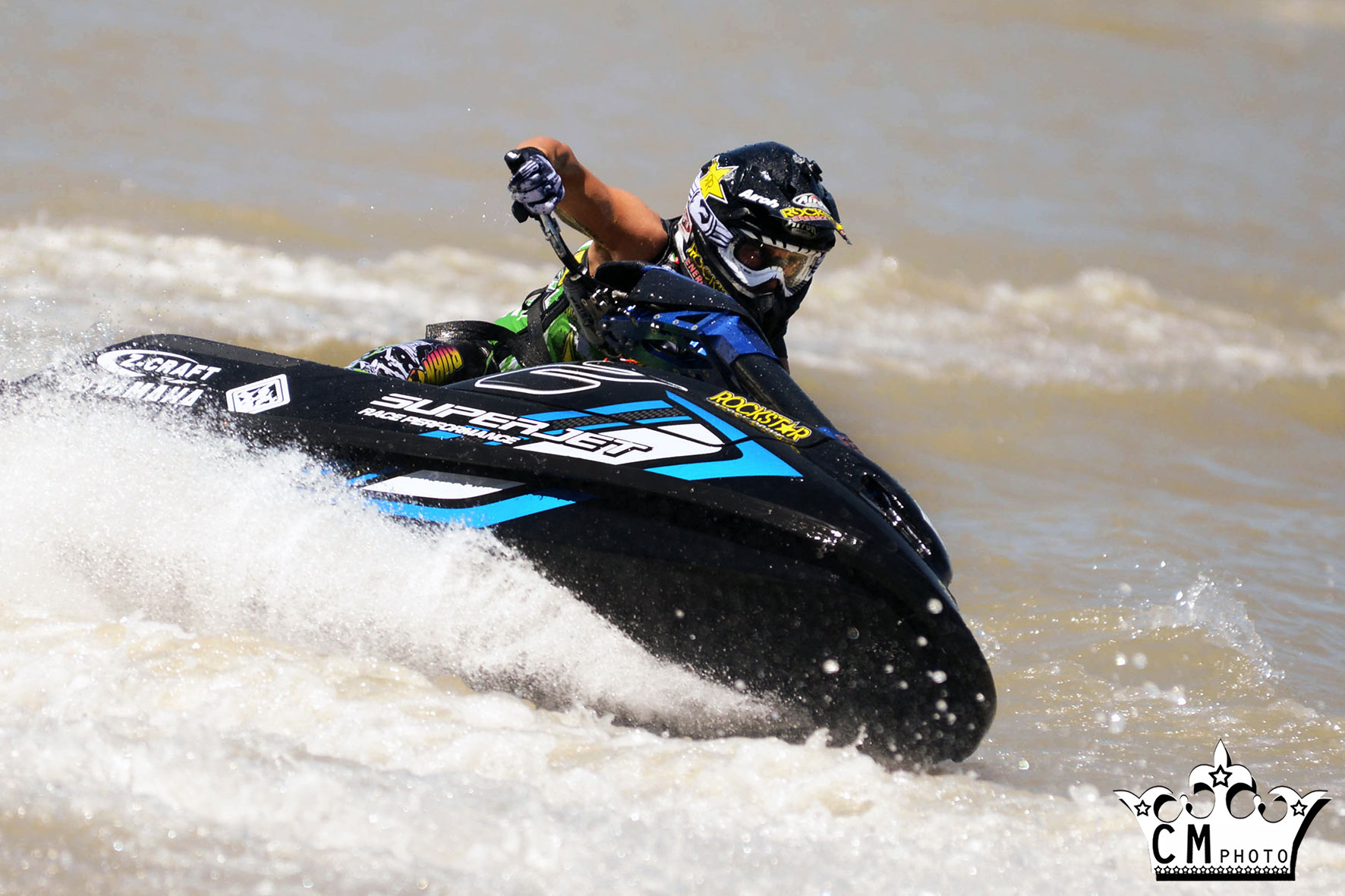
Open Ski was a close race between a couple of Hydrospaces and Michael Stevens’ 1100cc SX-R. Jake Barkers boat had some speed to it and he threw it around the buoys with great finesse. That boy can ride. Joel Barry’s Hydro couldn’t quite catch him after Jake’s great starts. Mick gave it a good go and “rode his own race” with consistent and fast laps.
Rounds Three and Four will be held in Redcliffe, Queensland on the 21st & 22nd of February, so watch this space for more top level coverage!
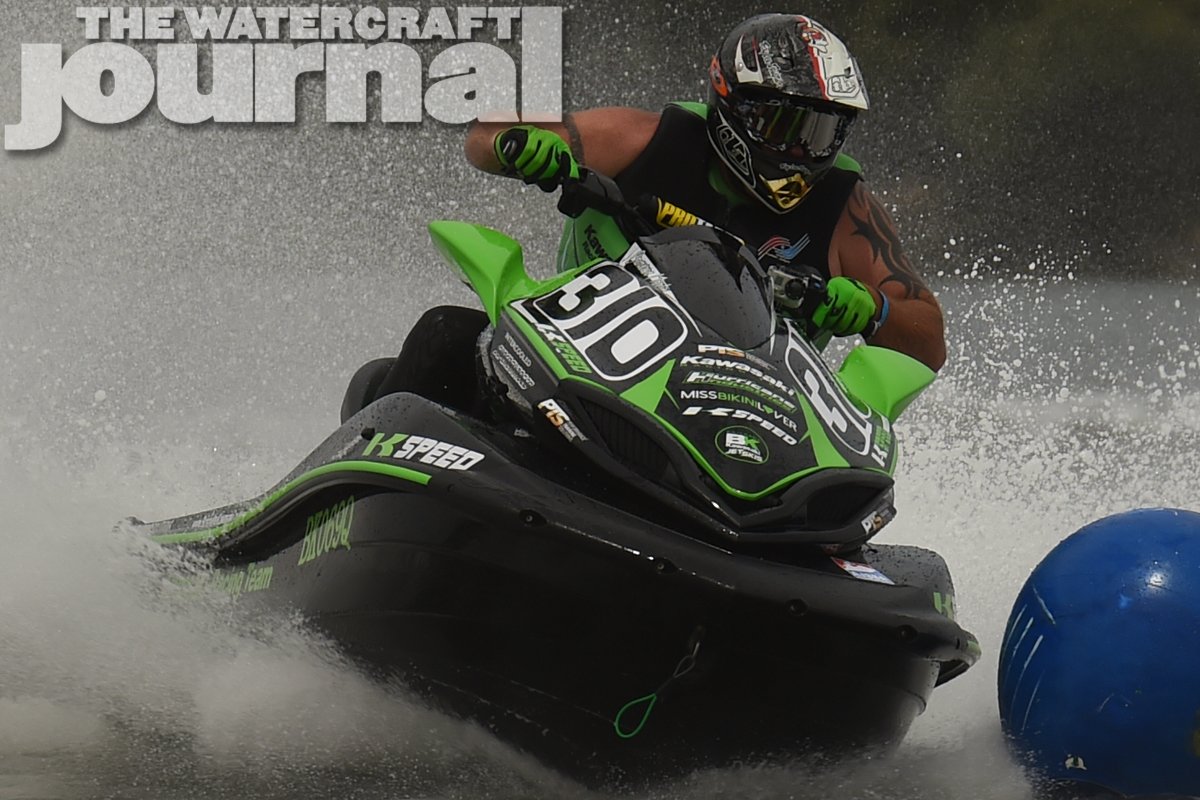
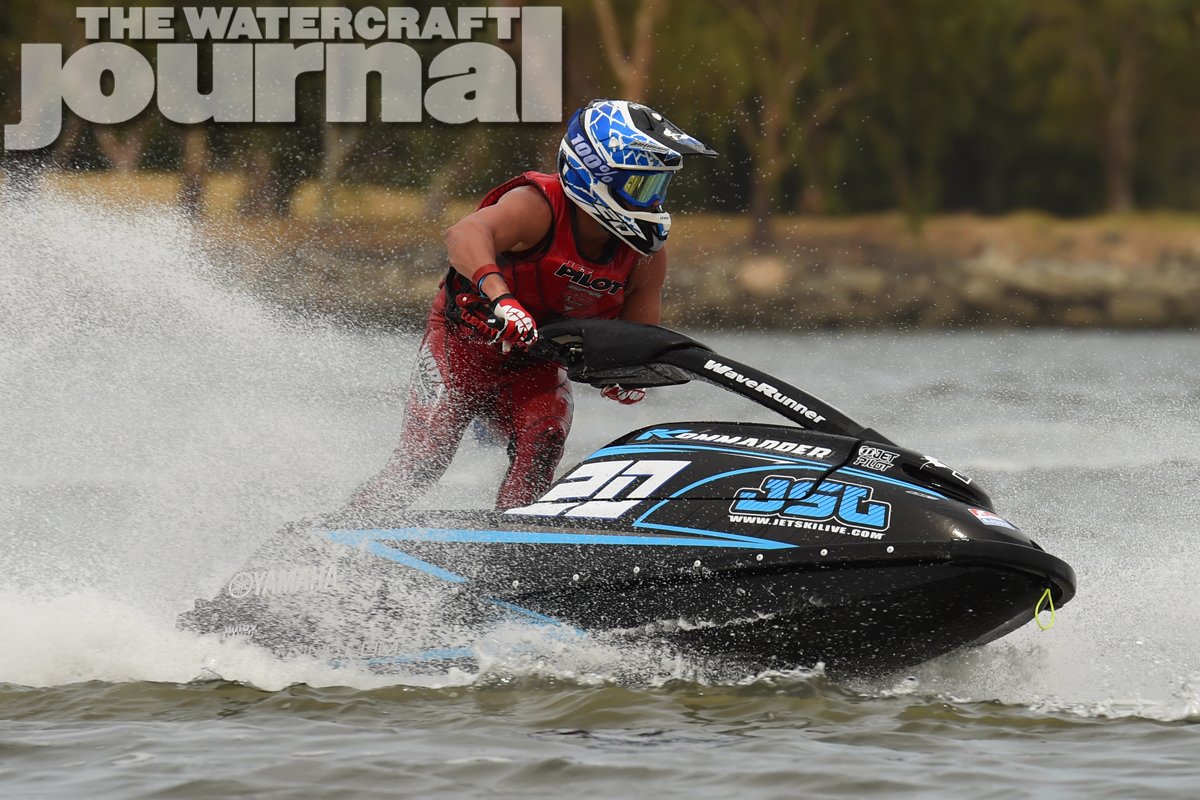
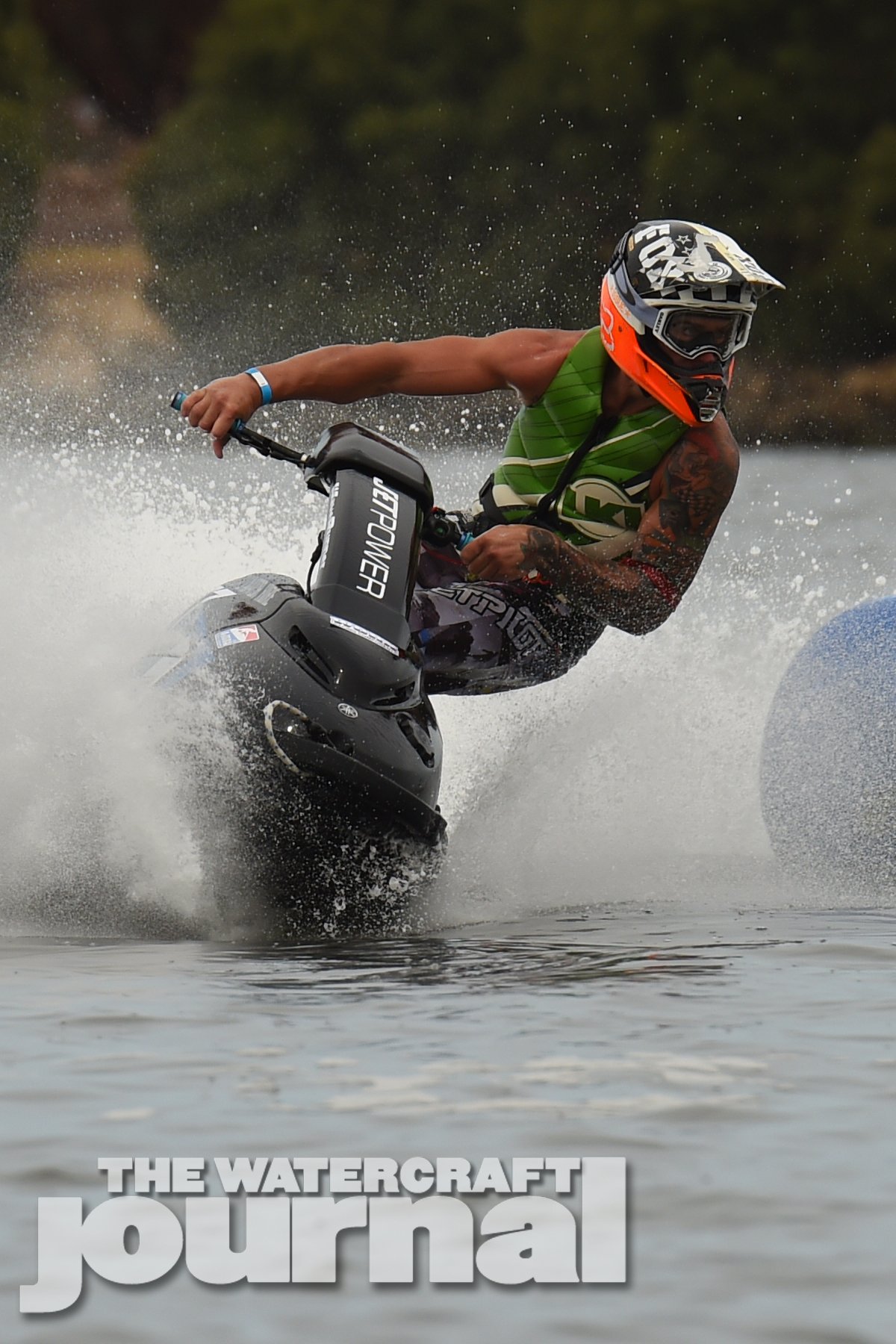
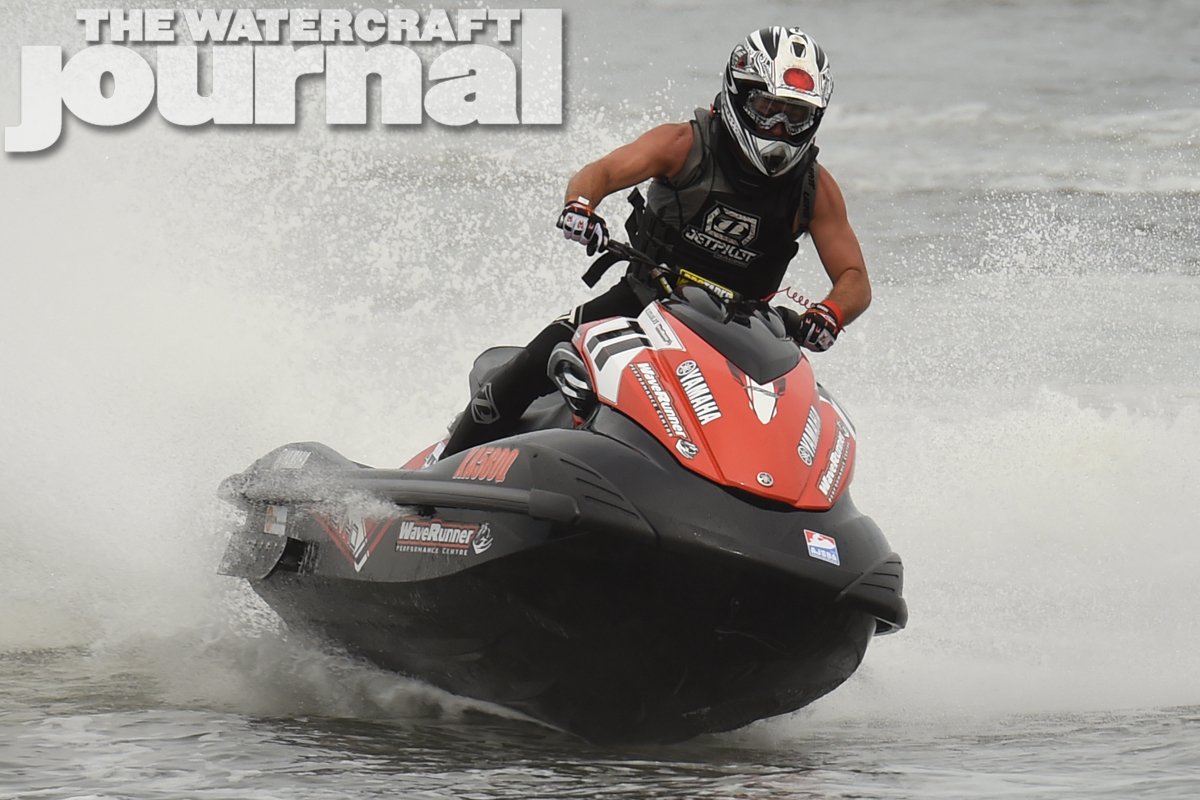
All images courtesy of Photos by Skip and unaltered, full-resolution versions can be purchased HERE.
There are many of you too young to remember the nuclear arms race between the United States of America and the USSR (or even too young to know what the USSR was). In hopes to deter nuclear annihilation, both superpowers sought to stockpile more tactical warheads and Intercontinental Ballistic Missiles (ICBMs) than the other. Makes sense, right? Replacing the world stage with the showroom floor, we too are living in a OEM arms race.
Sea-Doo, who is never one to swallow third place for very long, is rumored to debut an all-new 1,600cc-plus 3-cylinder Rotax based off of the successful dual-overhead cam ACE architecture found both in Can-Am snowmobiles and in far smaller form, the 900cc Spark. While tales of the new engine range from a 330-horsepower, 2-liter bruiser, to a more conservative 1.5L, 280HP powerhouse, it is likely to rival (if not surpass) the Yamaha’s dyno-true 260-plus horse output and make many reconsider that bright yellow paint job.
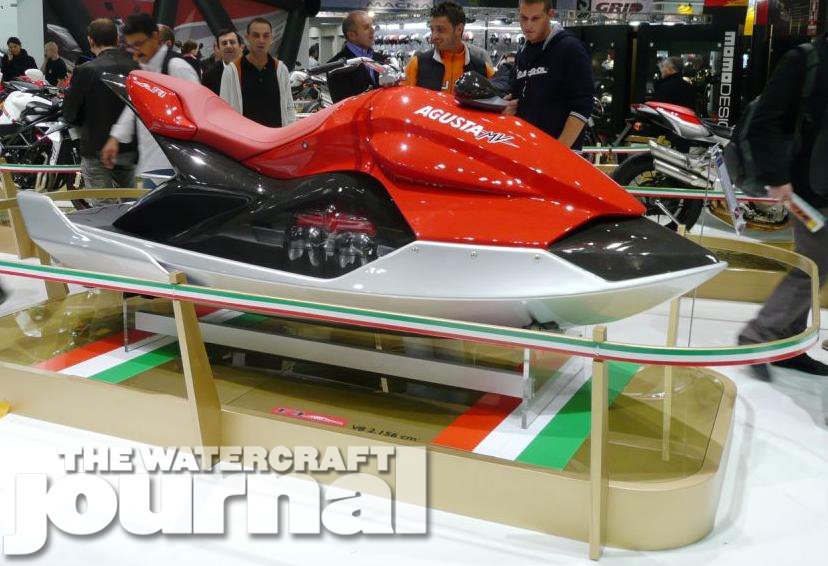
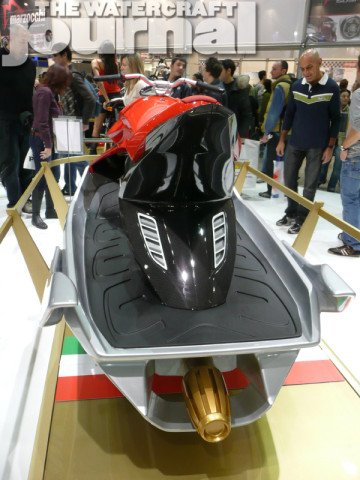
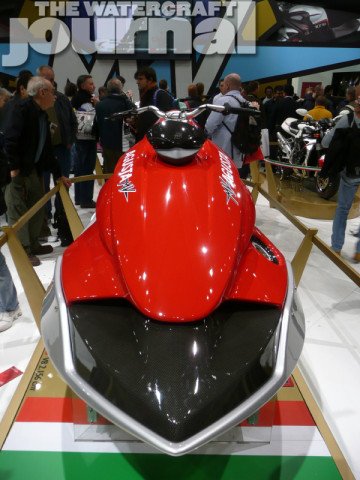
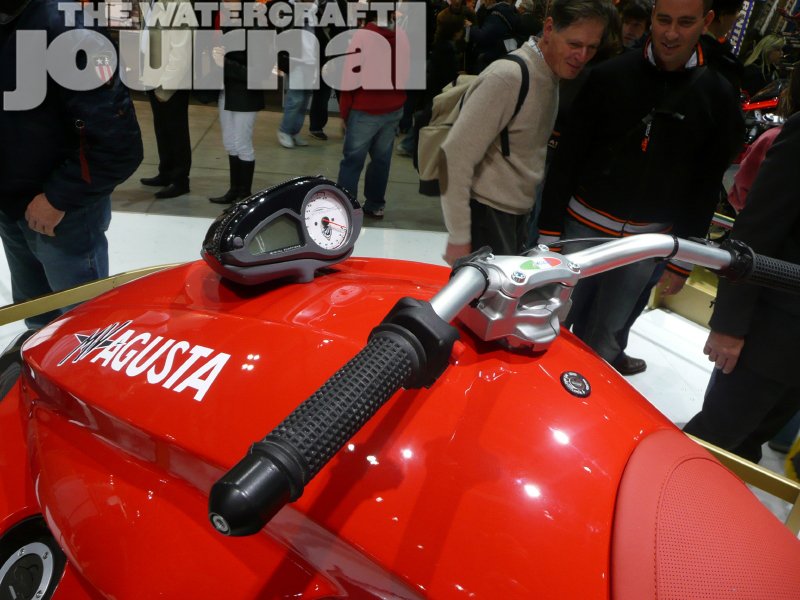
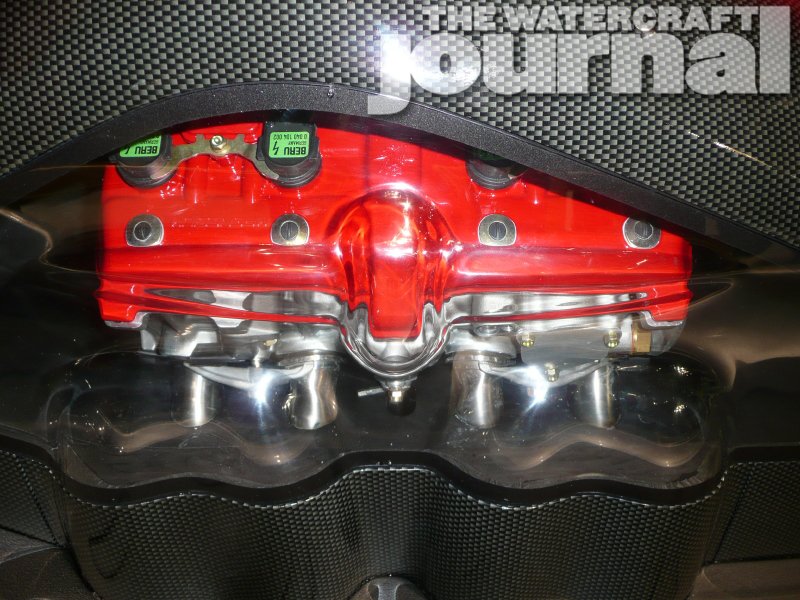
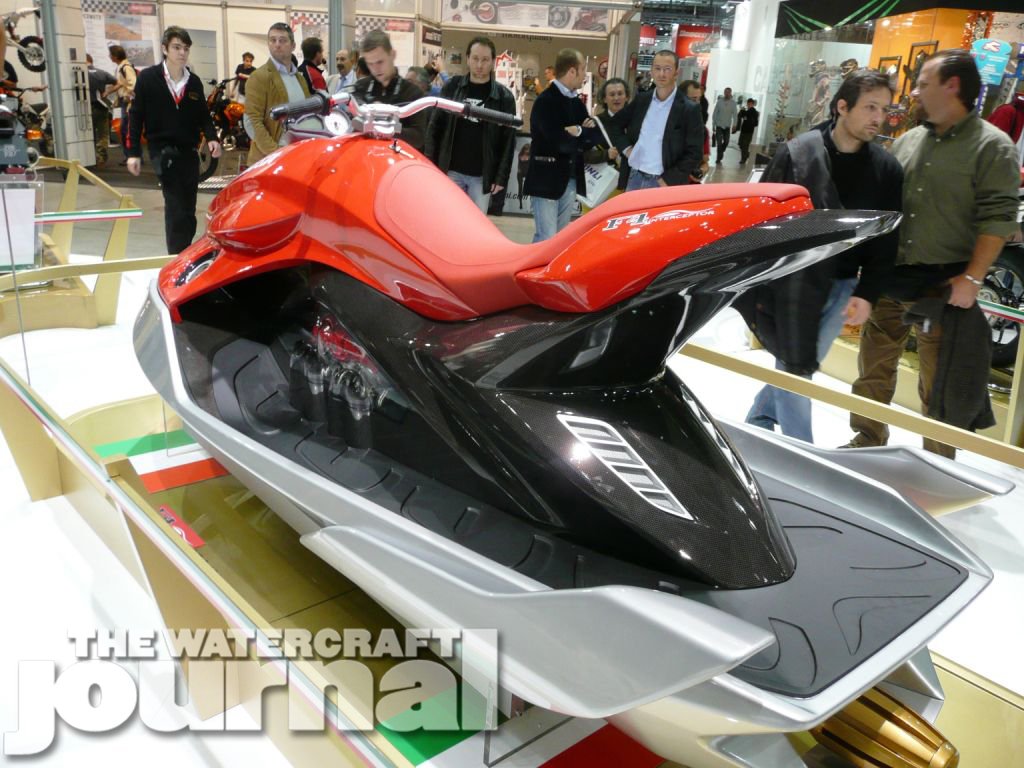
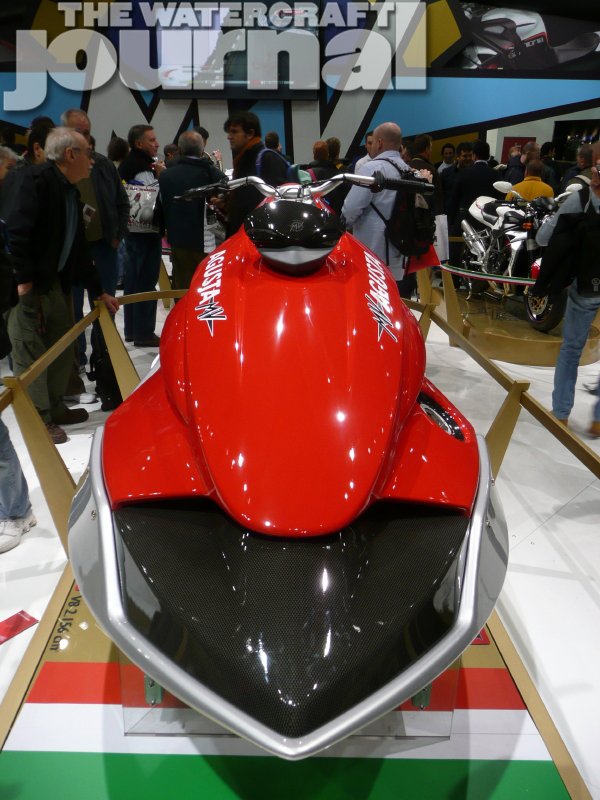
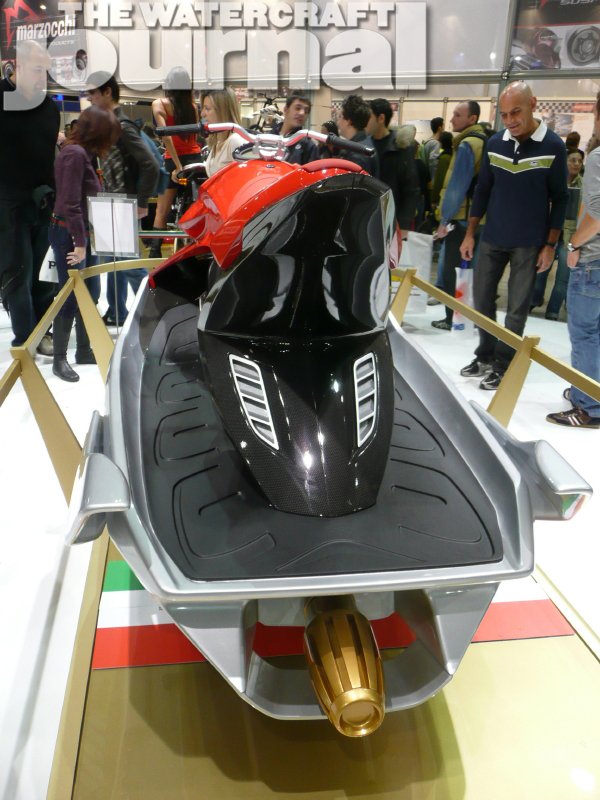
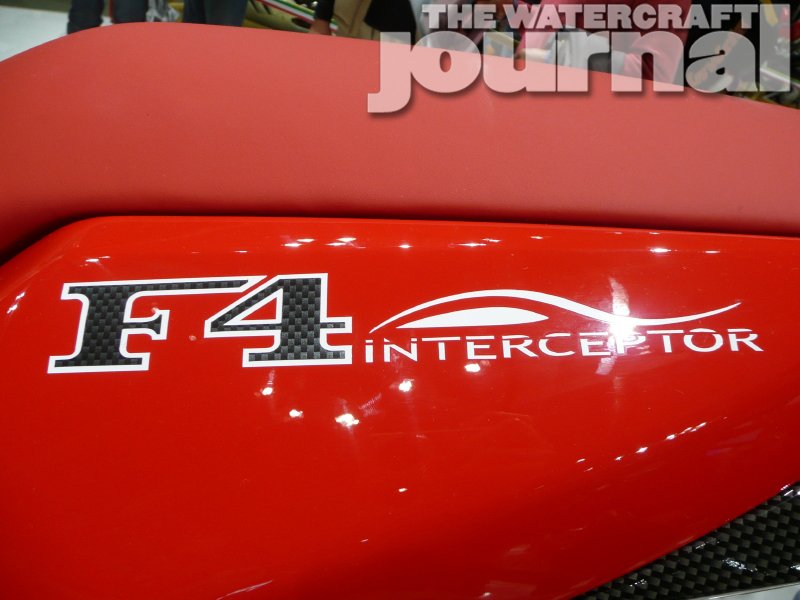
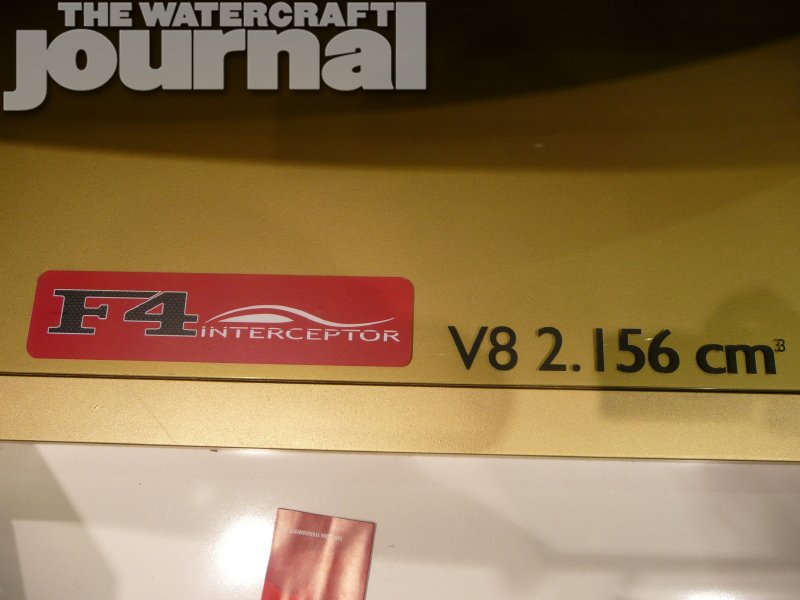
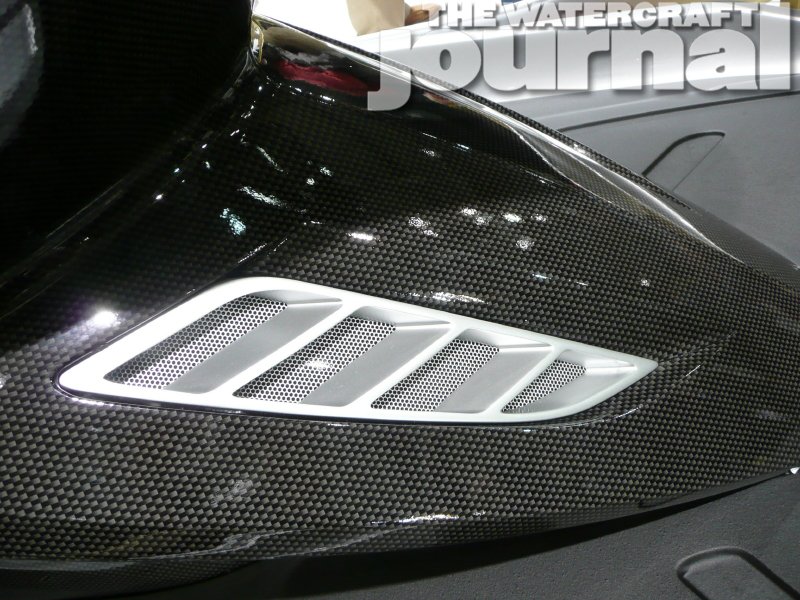
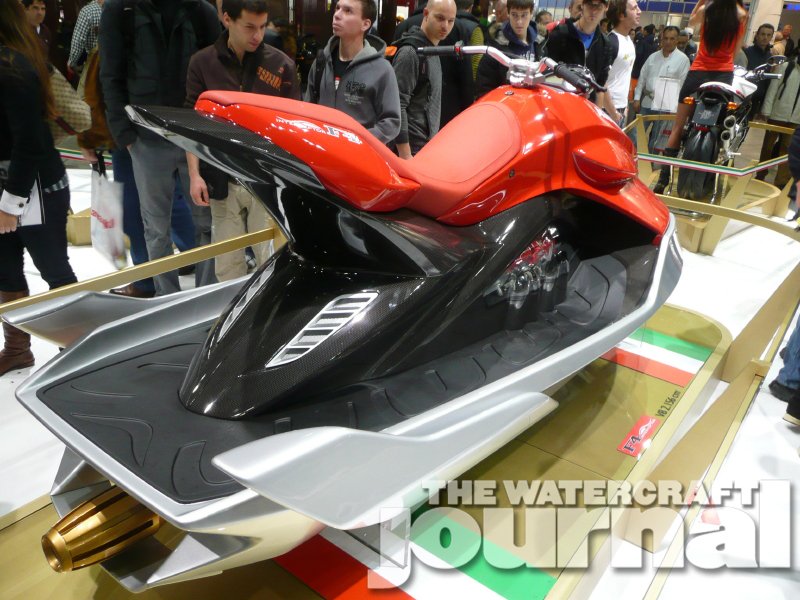
But another eclipsed that number over 7 years ago. Back in December 2007, MV Agusta unexpectedly unveiled the F4 Interceptor at the Milan Motorcycle Show in Italy. Opting for large-displacement, naturally-aspirated powerplant (rather than a supercharged engine like current OEs), the carbon fiber-hulled, 2.2-liter V8-powered PWC created a new engine by fusing two motorcycle engines together.
According to Gizmag, MV Agusta took “two of its high performance 1078cc four cylinder engines and created a Swiss-watch-like 2156cc V8 powerplant which will power a limited-edition 308 bhp, carbon-fiber–hulled, two-seater called the F4 Interceptor… The only information apart from the raw numbers available on the craft at this stage is that it has a CDI ignition, electronic fuel injection, a 3-blade stainless steel impeller, uses a 160mm high pressure axial flow pump and is claimed to weigh in at an astounding 238kg dry.”
With a scant weight of 524-pounds and a final output a staggering 400 horsepower, the combination would make the Agusta quite possibly the world’s fastest (and most expensive) PWC. Of course, the concept was also much smaller than any of the then-current models. At 2.946 metres long (115.9 inches), it is more than a foot shorter than Sea-Doo’s full-sized GTX/RXT hull. Add to it a healthy quotient of titanium and magnesium, and the Agusta nears the super exotic with each step.
“As with any other form of performance motorsport, fundamental physics still applies,” Gizmag continued, “modest dimensions means less mass to accelerate, stop and change direction. Compare the dimensions and power of the MV Agusta…to the recently announced offerings of the existing manufacturers and you’ll see a significant gap in the power-to-weight ratios…and why we think the European PWC will naturally fall into an elite class of PWC similar perhaps to the difference between luxury class cars such as BMW and Mercedes, and their exotic automotive counterparts such as Ferrari, Lamborghini et al.”
In its conclusion, Agusta announced a limited (although undisclosed) production number of the new F4 Interceptor and failed to release a price, yet it was expected to quite easily be “the most expensive production PWC yet sold.” Alas, the MV Agusta F4 Interceptor never came to fruition. Much like HSR-Benelli’s V6-powetred Series-R watercraft revealed near this same time, both Italian super-craft failed to see production, not to mention US shores. Surprisingly enough, price wasn’t the biggest detractor, but compliance with the U.S. Coast Guard.
Approval from the Coast Guard – which consists of a “gentleman’s agreement” for standard PWC not to exceed 65mph full loaded – has kept many a ski from American hands, most recently the RS-edition supercharged Sea-Doos. Unrestricted by its GPS-governor, RXT-X 260 RS units handily exceed 70-71 mph “out of the box.” Likewise, Kawasakis greedily surpass the 70mph mark with literally the addition of $.10 worth of washers to the paddle wheel speedometer.
Of course, the aftermarket accessory market for PWC is ripe with go-fast goodies that can launch a SVHO-powered Yamaha to 80mph with very little effort. Yes, 400HP is achievable from any of the current Big Three, and a naturally-aspirated V8 Italian PWC is a “tantalizing prospect” to be sure, but until the USCG restriction is lifted or heavily amended, it is very unlikely that we’ll see super exotics like MV Agusta’s dream ski F4 Interceptor.