
BRP is breaking free of manufacturing challenges due pandemic times and ongoing supply chain issues. The company had to innovate and make drastic changes in production strategies to get Sea-Doo’s delivered and reach normal inventory levels.
As a result, nearly all 2022 personal watercraft have been delivered and beginning this month, 2023 pre-ordered models will ship to dealers. The Switch Pontoon Boats are also being delivered. With this news comes a new incentive for you to begin the Sea-Doo Life or use it as a good time to purchase a new Sea-Doo. Sea-Doo is offering financing as low as 0% for 60 months on all 2022 Sea-Doo PWC and 2-year coverage on select 2022 Sea-Doo Switch models.
The offer is only good in the USA and will run until January 4th, 2023. No payment for 6 months is also being offered with financing as low as 1.99% for 60 months for PWC only. We haven’t seen incentives like this in several years. It is definitely a good time to purchase a new2022 Sea-Doo and have it ready and available to ride by next spring.
Nine Switch models are available for purchase, and you can get in one of these for as low as $23,999. You can get a Spark starting at $5,699, a great little watercraft for getting out and having a good time on something that won’t break the bank. Head over to the Sea-Doo site and get your quote and place your order!
On November 9th at the EICMA Motorcycle Show, Kawasaki Motors announced a new commitment to cutting edge carbon-neutral technologies while unveiling an experimental engine that runs on compressed gaseous hydrogen and direct injection.
Based on the Ninja H2’s 998cc 4-cylinder two speed centrifugally-supercharged powerplant producing 310-horsepower @ 14,000rpm, this new hydrogen engine was conceptualized on the Ninja H2 and Teryx KRX 1000 side-by-side platforms.
Mr. Hiroshi Ito, the President of Kawasaki Motors, also revealed a new HEV or hybrid electric vehicle prototype which will be able to run on both an internal combustion engine (ICE) and an electric motor. Kawasaki also unveiled a Ninja-styled BEV or battery electric vehicle that is planned to hit the US market in late 2023.
While no specific announcements were made about Kawasaki’s watercraft division, these carbon-neutral technologies give watercraft enthusiast a glimpse of what might be in store for the future line of Kawasaki of JetSkis.
Read the full press release below: Foothill Ranch, Calif. (November 9, 2022) – During the 2022 EICMA Motorcycle Show in Milan, President of Kawasaki Motors Corporation, Mr. Hiroshi Ito, unveiled a range of pre-production and prototype Kawasaki models and announced Kawasaki’s company-wide vision focused on Carbon Neutrality.
Earlier this year, Kawasaki announced its first electric model with the Kawasaki Elektrode™ electric balance bike for kids aged 3-8, which are arriving in dealerships this month. The next battery electric Z family machine was first shown as a prototype at Intermot, only for Mr. Ito to unveil a Ninja style machine with the same dual battery power. Both Z and Ninja battery electric vehicles (BEV) will look to be available later next year in the US market.
Highlighting Kawasaki research and development into other innovative vehicle types, Mr. Ito also previewed Kawasaki’s first ever Hybrid electric vehicle (HEV) in prototype form. The HEV motorcycle will be able to quickly and easily switch between its internal combustion engine (ICE) and electric power, the HEV machine is currently set to be available in 2024.
Demonstrating Kawasaki’s full breadth of carbon neutral models, an experimental hydrogen powered display engine based on the Supercharged Ninja H2® using direct injection and compressed gaseous hydrogen was shown. This hydrogen engine has been shown as a concept Ninja H2 platform as well as shown inserted into the chassis of a Teryx KRX® 1000 side x side.
While underlining Kawasaki’s commitment to internal combustion engines and research into future fuel types, Mr. Ito also unveiled a new symbol headlining the new Go with Green Power initiative with its goal of achieving carbon neutrality for Kawasaki within a strategic timeframe.
Amidst so many attention-grabbing prototype and pre-production models, Mr. Ito additionally clarified that across the next two model years 2024 to 2025, Kawasaki plans to also introduce approximately 30 internal combustion engine motorcycle models globally.
The sentiment that Mr. Ito left the media audience with at EICMA was that Kawasaki will continue to provide products and services that meet the needs of its customers and society by harnessing advances in current vehicle technology and via new, environmentally friendly products that are carbon neutral.
Tory Snyder was crowned P1 AquaX world champion at the three-day Bahamas World Championship which was held from November 4-6 2022, in Nassau and marked the climax of the P1 AquaX personal watercraft race season.
“In April I went to the Cayman Islands and won a leading endurance race and I’ve now won here in The Bahamas,” said Tory. The 19-year-old racer from Bradenton, FL finished the opening two races in second place, but clinched the title by winning the last race
“The Caribbean waters have been good to me this year and hopefully I can come back next year and do the same thing. I had mechanical issues on the last lap in some races this season, so it feels good to end the year with a win and I’m happy.”
Jimmy Wilson of North Carolina was this year’s Pro Enduro Champion, finishing ahead of Christian Daly. Chris MacClugage nabbed 4th place after experiencing mechanical issues with his Yamaha GP1800 during the final round.
17-year-old Jay Finlinson from Indiana took home the Amateur International Cup, while Trey Williams and Jason Williams took podium places, and Cline Glidden from the Cayman Islands took fourth place.
Deven Farthing won The Pro Rookie of the Year award after a strong first season of Enduro racing, and Broward Motorsports received the 2022 Team of the Year trophy.
This year, P1 AquaX introduced the ‘Eagle’ Trophy in memory of Eris Francis, the 2019 AquaX world champion who passed away earlier this year. Chris Landis was presented with the trophy by Eric’s widow, Sophie.
“Eric brought Chris into the sport and Chris received the trophy for being an outstanding ambassador for P1 AquaX and for his valuable help with the logistical planning for The Bahamas event” according to a P1 AquaX press release.
It’s not often we get our hands on two of the industry’s leading machines but these past few months have allowed us exclusive access to the two most well-equipped luxury performance runabouts: the 2022 Sea-Doo GTX Limited 300 and the newly redesigned 2022 Kawasaki Ultra 310LX JetSki.
With both machines making 300-plus horsepower, it was an obvious comparison – until we started stacking up the two machines against each other. As The Watercraft Journal has already published detailed reviews of each units, we encourage you to peruse our Reviews section for the respective evaluations.
That $900 difference can make-or-break a sale, giving the Sea-Doo a slight edge. Yet, the Kawasaki offers a handful of features that cannot be found on the Sea-Doo, justifying a large portion of that price jump: most notably the Ultra 310LX includes the Ultra Deck platform extension, offering several square feet of added cargo space at the transom.
The Ultra Deck includes teak-colored matting and slide-rail attachment points for Kawasaki’s new accessory racks. Sea-Doo’s LinQ system – a proprietary accessory attachment system – also offers the customer a wide array of accessories (much more than Kawasaki presently), so there’s that to consider.
At the rear, the Kawasaki includes its Rearward Facing Camera, offering three zoom-angles for the driver to watch on the TFT screen while underway; useful for keeping an eye on the wakeboarder or raft you may be towing (although this does not absolve you from USCG law, which requires a spotter at all times).
Additionally, the Kawasaki includes its dual LED visibility lights up front for greater visibility for oncoming boat traffic; although they do not cast a beam in the dark and do not qualify the JetSki for nighttime riding. All other offerings are somewhat similar and worth mentioning:
Both machines offer premium sound systems that tether via Bluetooth to your device. Sea-Doo’s BRP Premium Audio is now integrated into BRP’s “Tech Package” which includes the new 7.8-inch full color screen. Per Sea-Doo, a rider can pair their device to the speakers via Bluetooth, or do so using the BRP GO! application when properly plugged into the USB port in the glove box.
When connected, this is supposed to present the current track and all other information on the dash’s split screen, even while at speed, pumping out tunes through two 50 watts speakers. Kawasaki doubles the output with a quartet of speakers blaring out 200 watts whether tethered by a USB cord or Bluetooth as well.
Operating the Kawasaki’s Jetsounds 4S system requires two Bluetooth sign-ins; one to the TFT dashboard and the other through the LED-illuminated jog dial located just below the dashboard (often identified with the sign-ins “Ultra 310” and “Kawasaki” respectively).
In our review process, we found the Kawasaki slightly less cumbersome than the absolutely infuriating BRP GO! application integration. We could sync to the Kawasaki rather quickly and play our music without much trouble, although the jog dial will often misread commands (skipping tracks when adjusting the volume, and no “pause” feature).
Conversely, we struggled to even get our iPhone to pair with the GTX. You cannot listen to music via Bluetooth if you’re plugged into the USB, meaning you’ll drain your phone’s battery. If plugged in, the dashboard will insist on using the BRP GO! app, which if you don’t have a strong enough signal, won’t pair.
We did enjoy the app’s GPS function and found it incredibly useful when we could get the two to connect; again, you’ll need a strong enough signal to access the app and an overpriced Apple Inc. brand cord if you’ve got an iPhone. (Thankfully, Samsung phones aren’t nearly as picky.)
In regards to clarity, the Jetsounds 4S pummels the Sea-Doo particularly above 55-60mph. In our testing, we found ourselves needing to max out the BRP Premium Audio while needing to turn down the volume on the 4S. Let that be a first: the Jetsounds 4S was often too loud.
Both the Kawasaki and Sea-Doo offer full color digital dashboards. While we preferred the squared 7-inch TFT over the short-and-wide split screen 7.8-inch BRP dash, the Sea-Doo is far easier to navigate while underway. The Kawasaki locks out the crotch-level jog dial at speed, while Sea-Doo allows some adjustment through the right-hand thumb pad.
Equally, Sea-Doo made selecting Launch Control much like a video game (press the “up” and “down” on the VTS pad simultaneously until a prompt appears) unlike the Kawasaki, which needs to be retrieved from 3-levels down the dash’s prompt page.
We also found the GTX’s “Speed Control” preferable over the Ultra’s “Cruise Control” as the Sea-Doo allows the driver to ease off of the throttle without losing their setting compared to the JetSki which will abruptly cancel out if the throttle is eased back.
Sea-Doo’s controls are nominally second nature and all within reach on the handlebars themselves. Kawasaki’s new buttons are far more responsive and give a satisfying affirmative “click” but require a bit of a stretch for most hands to activate.
Of course, the biggest news for 2022 was Kawasaki’s addition of a true braking/reverse system. Kawasaki Smart Reverse With Deceleration (KSRD) is a right-handed thumb trigger that deploys the reverse bucket similar to Sea-Doo’s Intelligent Brake & Reverse (iBR) but doesn’t slam on the brakes as forcefully as the GTX. Although the ease of use is appreciated, the iBR really does a fantastic job of bringing the ski to a stop in a panic situation.
Adjusting acceleration modes (Full, Medium, Low & SLO on the Kawasaki, and Sport, Touring and Eco on the Sea-Doo) require decelerating to an idle, which we hate with a seething passion but both are guilty of this, so no points lost or gained here either. Let us swap maps on the fly, guys. It can’t be that hard.
We would’ve liked to have seen a better live trip data screen (MPG, MTE, miles ridden, etc.) from both vehicles as well. The GTX offers a depth sounder and water temperature, while the Kawasaki gives both water and air temperatures but no depth. All of this data should be available on such high tier machines.
Both runabouts offer variations of dashboard coloring and layout, which is a nice bit of customization but sacrifices some live data or at least, prioritizes some readouts over others, making it a bit of a Sophie’s Choice on what information you need more than others. More often than not, we chose white-faced gauges over black.
The Kawasaki’s boost gauge was easily the most welcomed dash feature; indicating when the JetSki’s 1,498cc TVS supercharged 310-horsepower, open-loop 4-cylinder was inhaling gobs of positive atmosphere is both helpful for the fuel miserly as well as the performance enthusiast wanting to see that bar ramp all the way up.
The GTX’s 1,630cc 300-horsepower, closed-loop 3-cylinder makes much more low-end grunt (ie. torque) without needing the assistance of its centrifugal supercharger earning it far, far better fuel consumption numbers. Despite its smaller 18.5-gallon fuel cell, the Sea-Doo often returned home with plenty of 91-octane left in the tank compared to the Kawasaki’s 21.1-gallon cell that we routinely drained.
Ergonomically, Kawasaki made massive efforts to improve on the Ultra’s cockpit. The narrowed saddle, deep knee coves and Ergofit bench seat adjustable to 3-inches back – paired with the 5-way tilt steering – offered a variety of comfortable positions for many different riders.
Interestingly, Sea-Doo managed to get it right the first time in 2018. Ergolock still remains one of the brand’s best innovations and gives even a full-sized ST3 runabout a small, sporty feel that’s comfortable for youthful, healthy riders or those with injuries to their backs and/or hips alike.
This feature also lends itself to storage access, which is a hotly contested topic. Sea-Doo eliminated the bow storage compartment, opting for a 23-5-gallon central storage tub. The GTX Limited package includes a mesh storage divider among other accessories. Above it is a frustratingly small glove box that struggles to accommodate most contemporary smart phones and little else.
Kawasaki took its industry-leading 60-gallons of storage and inexplicably reduced it by 25%, dropping the Ultra’s total storage to 44.5-gallons. This cargo room is broken up into a small rear pocket (ideal for dock line and tow ropes), an innovative dual-access center storage hidden behind gull wing-style hinges and a front stowage.
While 10-gallons of center storage replaces a traditional glove box, there is a waterproof cubby with dual USB ports on the port side. Forward of the dashboard is the bow storage and fuel cap. Kawasaki dramatically reduced the opening making it difficult to insert and remove backpacks or dry bags, as well as impossible to bring a cooler or extra gas can.
Two deep-set cup holders have been molded into the Kawasaki’s center console for easy access. There’s no place to keep a drink or bottle of sunscreen on the GTX; you’ll have to stow it under the center storage lid and pull up the whole top just to take a drink. Not exactly convenient.
Albeit these two watercraft vary in large ways from one to another, the biggest differences have yet to be addressed: How much bigger is the Kawasaki against the Sea-Doo? You’ll be surprised.
As they stand, the Ultra totals 140.9-inches in overall length, due primarily to the addition of the Ultra deck, placing it a true 5-inches longer than the GTX (at 135.9 inches long) and stands slightly taller due to the air-diffusing meter visor.
Surprisingly, the Ultra is a scant 47-inches wide compared to the GTX who comes in at 49.4-inches. This of course, ends the debate whether two Kawasakis on a trailer will rub versus two Sea-Doos. Yet, the biggest factor to hurdle is weight.
As noted in other articles and videos that we produce, Kawasaki lists curb weight over dry weight. By corporate’s definition, curb weight includes a full tank of gas, oil and battery – meaning the Ultra’s curb weight of 1089.3-pounds totals a comparative dry weight of 950-pounds. Compare that to the GTX’s advertised dry weight of 849-pounds and calculate for a battery, coolant, oil and fuel and its a curb weight of 974-pounds.
And yes, while that’s still a difference of 115.3-pounds, which is still substantial; consider the added weight of two extra speakers, the Ultra’s second waterbox and the Ultra Deck and it makes more sense. Then you must consider that the Kawasaki is made entirely of SMC fiberglass and gel coat, a far heavier, denser material compared to the GTX’s proprietary CM-Tech acrylic-and-liquefied fiberglass construction.
All of this leads to how each watercraft rides. Again, the GTX benefits from stellar seating comfort and due to the ST3’s hull wide design, unmatched low speed stability. Yet, this is where the Sea-Doo’s advantages end. The ST3 struggles to track a straight line in anything other than unbroken glass conditions. The runabout wanders – often erratically – with every ripple, wake and wave of the surface.
It’s flat midships and rear attributes to the hull’s ability to achieve higher speeds when modified, but in a stock-to-stock comparison, also means that the tail can “wash out” or immediately loose traction in a corner. This is a trait desired in smaller, more playful models but not in a full-sized, supercharged machine.
Conversely, the Ultra’s true Deep-V hull displaces water like a larger vessel, absorbing bumps, bangs and jolts far better than any other full-sized hull on the market. Albeit a comfortable ride, it’s nowhere near as a dry ride as the GTX. Rather, the Kawasaki shines best in rougher conditions as it sluices through waves and chop with ease. Yet, due to its deep draft, the Ultra ultimately is much slower than the Sea-Doo.
Acceleration testing revealed a half-second gap in favor of the Sea-Doo, reaching 5-to-60mph in 4.15-seconds versus the Kawasaki’s 4.64-seconds. Top speed wasn’t useful as the Kawasaki’s stonewall speed limiter stopped the Ultra dead at exactly 67mph while the GTX ticked 70.4mph before throttling back down to 68mph.
In regards to sporty riding, the GTX’s flat tail broke free in each corner, its sponsons offering little to any traction. The Ultra’s newfound lowered center of gravity unlocked the JetSki’s ability to roll into a corner effortlessly and snap a hairpin like a watercraft half of its size.
In all, the newly minted 2022 Kawasaki Ultra 310LX beat out the Sea-Doo in most categories either by a considerable leap or just by a squeak. Sea-Doo fared better in speed numbers, superior fuel consumption, offering a drier, more comfortable ride and a lower price entry for sure. The center storage is convenient but fails to provide a serviceable glove box or drink holder. And then there’s the hull design, something which we’ve critiqued heavily elsewhere.
While the final results were close, we have to award the win to Ultra. The ride is just superior in nearly every imaginable metric. Ergonomically, Kawasaki made huge strides in the right direction while trying to do something unique, which we can appreciate. Innovations, unique takes on existing features and trying to offer the customer a luxurious experience puts the Ultra 310LX at the top of our list for 2022.
Close-up Of Businessman Filling Customer Survey Form
It’s often said that “the squeaky wheel gets the grease,” so do the big manufacturers actually listen when customers give their honest feedback? As owners of both Yamaha and Kawasaki watercraft, we have dealt with both companies “customer research” departments and surveys.
The fact is that manufacturers are eager to accommodate buyers’ wants and desires, and are constantly trying to come up with the “next big thing.” By providing OEs with an honest evaluation of your new ski, you are helping them refine and improve their products and offerings.
In 2020, after purchasing a 2021 Yamaha FX HO this author received a customer satisfaction survey from Yamaha. They were curious to know not only about our demographics and the expected use of our new WaveRunner, but they also wanted to know how we felt about the dealer experience, financing, and most importantly, the unit itself.
Yamaha offered a “$25 off a purchase of $100” coupon for completing the survey. While the offer itself was redeemable only in person at a Yamaha dealership, we were nevertheless eager to let Yamaha know how we felt about the new WaveRunner. The offer expired and we never redeemed it.
In 2022, after the purchase of our Kawasaki Ultra 310LX-S JetSki, we received a total of three separate consumer satisfaction surveys. The first survey offered a $10 gift card for completion, so naturally, we jumped at the chance to get some extra “pocket change” to spend on the new ski.
The next survey we received focused on the performance and functionality of the JetSki, asking very specific questions about the engine’s responsiveness, the comfort of the seat, and the position of the handlebars. This particular survey offered the chance to win a $1,000 gift card for completing the survey. Sadly, we were not a winner.
We were pretty surprised when a third Kawasaki customer survey arrived, promising another $10 Mastercard for completion. This survey collected a variety of demographic information, as well as asking us to rate a wide variety of features, functions, and components. They provided a text box to provide feedback about any issues we were having with the new ski.
Between Kawasaki and Yamaha, Kawasaki sent out the most detailed surveys with the best incentives for completion. This shows us – as a customer – that Kawasaki values our opinion and is eager to provide customers with the best possible product. While Yamaha was first to reach out for an opinion, their incentive to complete the survey was less enticing and the inquiries far less in-depth.
The season is ending for a lot of us and it’s time to store the Sea-Doo until next year. A recent article in Sea-Doo Life provides an easy step by step guide on how to winterize your Sea-Doo. It’s important to properly prepare your PWC for long-term storage. If you don’t do it right, you could be looking at serious problems like battery failure, gummed up fuel systems, and other damages can occur.
Winterizing is especially important if you live an area where temperatures drop below freezing. Do it yourself winterization isn’t too complicated, and many people can perform it themselves. Follow the steps and if you run into trouble, consult your local Sea-Doo dealer for assistance.
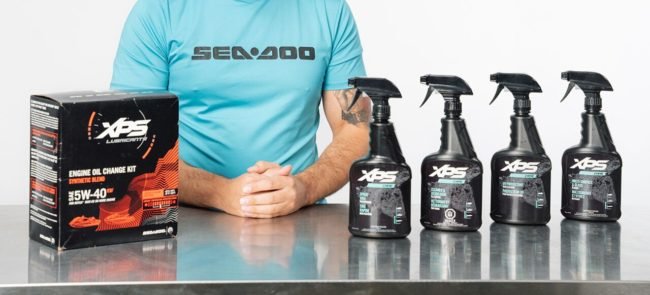
You’re going to need a few items before you get going. XPS Anti-Corrosive Lubricant will do wonders for your jet pump, plugs, and spark plug holes. XPS Fuel Stabilizer will keep your fuel system clean and ready to go for next season. An XPS Oil Change Kit is also necessary for you to be ready ride again.
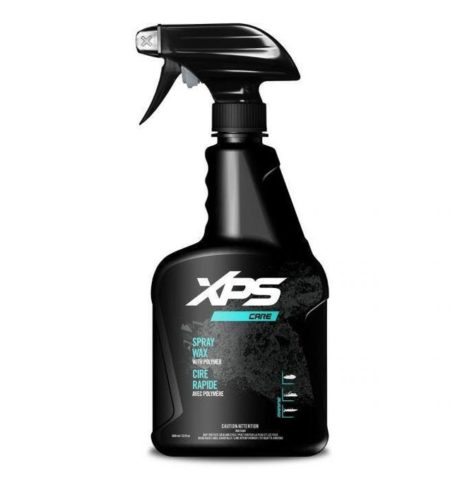
For maintaining a charge on your battery, purchase a battery charger and hook it up. You’ll also need XPS cleaning products for your watercraft. If you plan to store your Sea-Doo outside, a proper cover or tarp is necessary to protect it from the hot sun, weather, and mold. Following all the winterization instructions will have you ready to ride when that first nice day arrives next season.
When it comes to PWC fishing, Jetcast out of Queensland, Australia pushes the limits of this growing sport. Paul “Hayzey” Hayes and his team share their passion through a massive library of videos, articles, tutorials, and training, while their online store features an exclusive catalog of purpose-based PWC fishing essentials.
You can usually find Paul out on his 2019 Yamaha Waverunner FX HO, equipped with “Tubbies” fishing pods, Garmin Sounder/GPS, a GME 25W Marine VHF radio, and a variety of other specially installed accessories.
Many of these purpose-based accessories are now available on Jetcast’s new website, which “includes products from other great manufacturers, several who are increasingly listening to our needs and making unique products specifically for the Jetski Fishing market,” says Paul.
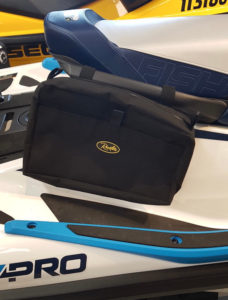
Some of the quality items featured on the Jetcast store include Rusler custom-made sounder covers, storage bags, and deluxe reel covers. They also feature a wide variety of Railblaza mounts, accessories, and navigation kits for both Yamaha and Sea-Doo watercraft.
Many of you reading this article have likely lost rods and reels – not to mention expensive GoPro cameras! Don’t become a statistic; Jetcast offers quality bungee rod tethers to secure your valuable gear, plus durable leashes for your GoPro.
While Paul and team were sad to see the “Jetfisher” brand go, they wanted to avoid any conflicts with Yamaha Motor Corporation, who holds the “Jet Fish” and “JetFish” trademarks.
Whether you ride Sea-Doo, Yamaha, or Kawasaki, or fish from a boat, Jetcast has something for everyone and is sure to enhance your experience out on the water. Check them out on YouTube, Instagram, and Facebook, and visit their new website at www.jetcast.au.
It’s time to gear up with Sea-Doo apparel and while you’re at it, replace some of your old life jackets. Sea-Doo has a limited time offer of 20% off their apparel and PFDs. Take advantage of the timing of this sale and mark some people off your Christmas list or buy some stocking stuffers. They have sunglasses and goggles that would fit nicely in a stocking. A new wetsuit or riding jacket and pants can be picked up for a steal.
They have a couple of styles of lace up mid-cut boots and also heavy duty 5mm neoprene boots marked down to $47.99. It’s cooling off and a new hoodie is nice to have during those crisp mornings in the fall. They’re great to throw on for a morning surf check or loading up the jet ski to get that last bit of water time in before the season ends.
The price points for men’s hoodies are $43.99 for the standard cotton blend zip up hoodie with the kangaroo pocket. You can splurge on the Sea-Doo Sunset Tech Zip-up with the nice chest zip and polyester/Spandex blend. It will cost you $79.99. Don’t wait to grab some new Sea-Doo gear because this sale won’t last long! Head over to the Sea-Doo website right now or hit up your local Sea-Doo for new goods.
The Watercraft Journal received a press release from Radinn announcing their approval to bring the X-Sport to market as a rental, making Radinn the first to bring an electric jetboard into the rental industry. The crew spent years testing and developing the Radinn X-Sport model to get it ready for the rental market.
The X-Sport is the company’s most durable and stable model, which makes it perfect for rental purposes. The battery is on point as well, as it is the only battery in the industry that can withstand multiple charges per day. Radinn’s venture into the rental business brings them closer to their goal of bringing surfing to everyone.
“Our vision as a company is to bring the dream of surfing to the people, regardless of weather, surf experience or location,” says Chief Product Officer Martin Malmqvist. “We are excited to increase access to the sport and become the first company in the world to offer a rental-ready and warranty-backed jetboard.”
Read the full press release below:
Malmö, Sweden: Radinn, the world’s first mass-produced jetboard company, today announced that their X-Sport model is approved for rental purposes. The news, which comes after years of extensive testing, developing a surf club proof of concept and R&D protocols, opens up new possibilities within the tourism and water sport markets.
“Our vision as a company is to bring the dream of surfing to the people, regardless of weather, surf experience or location,” says Chief Product Officer Martin Malmqvist.
“We are excited to increase access to the sport and become the first company in the world to offer a rental-ready and warranty-backed jetboard.”
Released late last year, the X-Sport has seen continuous improvements to its driveline and software. This has increased the overall stability of the jetboard, specifically when it comes to safety and the lifetime of the battery.
Says Malmqvist, “Our latest electronics and software development means more resistance to duress of different types. We’re currently the only player in our sector that offers a battery capable of withstanding charging and depleting several times a day, as is common in a rental situation. Our new warranty reflects this use case, so rental companies can feel confident in expanding their portfolio with this completely new and fun activity.”
The Radinn X-Sport starts at $12,995 / €13.145 excluding VAT and is available for purchase online.
The 2022 IJSBA World Finals, as always, showcased the best the sport has to offer – not only in terms of the fast boats and fine-tuned instincts of the champions, but in the grit, determination and passion of every first-time novice, every never-say-die veteran and every perennial challenger. A common theme of conversations throughout the pits and Vendor Alley was the apparent upswing in interest and attendance after the past several COVID-impacted years.
According to IJSBA statistics, slightly more than 400 riders from 30-plus countries made the journey to Lake Havasu City despite hyper-inflated gas prices and weather-delayed air transportation. In typical fashion, a large number of racers nosed up to the band in multiple classes as those 400-plus racers accounted for nearly 750 class entries over six days of world-class racing.
“This marks a return to IJSBA’s pre-pandemic numbers with many classes having full lines with several having qualifiers,” IJSBA announced, “The pits were completely full. Parking reached a high not seen since 2016.” Behind the band was not the only place a resurgence was noted. Numbers were significantly up for other World Finals benchmarks, also.
Another key point for the 2022 World Finals, according to IJSBA Executive Director Scott Frasier, was the four-day live streaming effort. “The WGP-1 series partnership helped ensure that persons abroad were able to enjoy the event. The life stream reached 271,100 views and this wasn’t the final number,” Frasier reported on Tuesday following the event. “This amazing footage and professional live coverage have never before been delivered to the World Finals.”
Despite the encouraging numbers, this year’s World Finals was not smooth sailing, with the week being a technical, logistical and emotional rollercoaster for many event staff, racers, crew members and spectators. An unexpected storm early in Finals week was the first in a line of unfortunate events, with high winds and torrential rain wreaking havoc in the pits and delaying practice schedules.
Several non-race related medical emergencies in the pits caused equally unexpected delays in racing due to on-site ambulance response to those incidents, which meant waiting for replacement ambulance service to be put in place (as required by both insurance, and common sense).
The deepest low came early on Saturday as the first moto of the Pro Ski GP got underway. Nearly 20 of the most skilled, experienced and well-known racers in the industry filled the lineup. Add to that the popularity of the log jump, and spectators were glued to the race course as racers battled for position throughout the first lap. Then tragedy struck as the two front-runners collided, catapulting both riders from their skis.
While the collision itself did not appear to be severe at the outset, the bunched-up nature of the racers – exceedingly typical during the first laps of a highly-contested race packed with top-level racers – led to horrific consequences. Tyron Moztouris was struck by several skis, including a blow that cracked his helmet. Motzouris was transported to the Las Vegas for emergency medical treatment, with his family, including brother and fellow racer, Dustin Motzouris by his side.
“Thanks for all the thoughts and prayers. Tyron is stable and having a good day […] but it’s a long long road ahead, truthfully the doctors don’t know what will happen or to what level Tyron can recover, I know him so I don’t put limitations on him, but I am aware this is a marathon not a sprint and you mentally have to be ready for the grind ahead. We are ready for this and determined to have the best out come possible. Thank you for all the messages and prayers, this has made all the difference,” stated Dustin in a Facebook post.
“Overall, and from an event perspective, 2022 was a great year of racing except for Tyron Motzouris getting hurt on Saturday morning. The Pro GP Ski excitement was really high this year, with a solid international field and mixed-in local Lake Havasu talent; but of course everything changed with Tyron’s crash,” Bill Scott at Works H20Designs told The Watercraft Journal. “In that regard, along with everyone in the community, we are praying and thinking of the Motz family and Tyron’s recovery.”
Delays in racing, caused by the on and off-course medical emergencies, prompted Frasier to cancel two motos on Sunday, which brought about some concern and criticism from racers, which Frasier responded to in a IJSBA website post, explaining his decision making process and requesting for input from racers on future policies to avoid similar situations:
“As the IJSBA Executive Director, I would like to personally make some direct statements about the decision on Sunday to end racing two motos early. This was my decision and I understand some people are disappointed. I will accept the criticism levied by those who disagree while standing by the decision as the right one to make. IJSBA will open up a review process to invite competitors to formally weigh in this topic and help set ground for future policies,” Frasier wrote.
“Please think through the talking points so we can work out all the potential for positive change when we come together and discuss them. Most of all, please keep Tyron in your hearts and thoughts. If there really is any kind of spiritual energy that exists we definitely want to send it his way. With your guidance IJSBA will continue to deliver you the very best of our ability.”
During the first day of racing, Tucson, Arizona’s Dave Zipperian nailed down the first podium spot in a packed Amateur Veteran Ski Stock class, while fan favorite Johnny Smith locked down the Blaster GP championship despite a rough second moto. Tory Snyder overcame a disappointing Moto 1 with a win in Motos 2 and 3 to claim to Amateur Runabout 1100 Limited championship.
Returning for Day 2, Snyder once again snagged a top podium spot, this time in a talent-packed lineup of 18. Jake Zier claimed the silver, and Christopher Landis took the bronze. The Amateur Runabout 1100 stock class was dominated by Thailand with the top 4 spots locked down by Thai racers. Master Ski GP was a battle between more than a dozen veteran racers. Despite Mike Klippenstein’s wins in Motos 2 and 3, a rough Moto 1 allowed David Cabrera to walk away as 2022 class champion with solid performances in all 3 motos.
The third day of racing saw Sebastian Girello indeed, “go fast” claiming the top podium spot in Amateur Ski GP over second and third place Thai finishers, Tanaid Molee and Tanawin Molee. In Junior Ski Lites 10-12, Havasu natives Britton Reinhar (1) and Ty Smith took top spots, while fellow Lake Havasu City youths also took spots 5, 6, 7, 12 and 16 out of the 19-racer lineup.
The Junior Ski Lites 13-15 class was also packed with young Havasu talent, but none were able to outmaneuver Jayden Richeardson (1) of Australia or Lauri Ander-Hubert (2) of Estonia. In Master Ski Stock, Mike Klippenstein again nailed down a win in Motos 2 and 3, but this time, his second place finish in Moto 1 was enough to take home the championship ahead of Dufaud Phillipe (2) and David Zipperian (3).
On Friday, Thailand was able to take the top two spots in Pro-Am Runabout 1100 Stock as well as the Top 4 spots in Pro Runabout 1100 Open. In Amateur freestyle, Michigan competitor Jack Ziegler walked away with the championship out of a field of 10 followed by Brody Shakely of Havasu (2) and Parker Scholand (3).
During Saturday and Sunday’s racing, in a class filled with familiar names and fast skis, Nuttakorn Pupakdee of Thailand secured the win with Abdullah Alfadhel taking the second spot and Permpon Teerapatpanich taking third. But many eyes were on the battle for 4th and 5th where Deven Farthing managed to rank one spot ahead of his father, Dustin Farthing.
In Pro-Am Women’s Ski Stock, Sweden’s Emma-Nellie Ortendahl managed to edge out UK’s Lucy Gadsby for the championship, while in Amateur Women’s Runabout 1100 Stock, Thailand again ran the top 3 spots with Sasina Phiwngam (1), Chanapa Phollamai (2) and Orphan Teerapatpanich (3) overcoming an amazing race and crowd inspiration, Sophie Francis (4).
In Pro Sport GP, Georgia’s Deven Farthing turned the tables, topping Thailand racers Wuttipong Suwanthongkhao (2) and Supak Settura (3). In the Pro-Am Endurance Runabout class, France’s Jean Bruno Pastorello locked down the championship ahead of Aqsa Aswar (2) and Theerapong Pimpawat (3). Full results from all classes can be found at www.ijsba.com. Visit www.watersedgephoto.online for more photos from the 2022 IJSBA World Finals.