Home Blog Page 161

Watercraft Sales in Australia Growing Faster than Boat Sales 

0

Australians are embracing personal watercraft more than ever before, so much in fact that Sea-Doo, Yamaha and Kawasaki combined now represent almost half of the annual sales of all new powered boats. While the overall numbers might be small compared with North America, the latest figures show more than 6800 PWCs were sold in Australia last year out of a total of approximately 15,000 new powered vessels.

The sales figures for PWCs are more accurate to calculate because Sea-Doo, Yamaha and Kawasaki share their numbers confidentially among each other and with the Australian Boating Industry Association (BIA).

The sales of other powered vessels are more difficult to calculate because each jurisdiction across the country keeps different registration records, and the type of craft ranges from small boats, cruisers, and “tinnies” with outboard motors.

The latest figures from Australia’s Boating Industry Association President, Darren Vaux, showed last year’s tally of 6800 new PWC sales was a 47 percent increase over the past 10 years, with an average growth of 7 percent per year versus 1 to 2 percent for the rest of the powered boating market.

While the PWC manufactures don’t share their sales data publicly, confidential figures show Sea-Doo dominates in Australia with approximately 68 percent share of PWC sales, ahead of Yamaha (27 percent) and Kawasaki (5 percent).

However, the sales split across all three brands varies from region to region across Australia, and Yamaha has a higher proportion of sales, for example, in NSW, Australia’s most populous state, although Sea-Doo still has the lion’s share there, too.

Yamaha and Kawasaki hope to claw back some of their lost ground in 2020 with the arrival of new models. Australia’s BIA says there are now more 76,000 PWCs registered across Australia. Their popularity has prompted authorities to repeat warnings to PWC owners to familiarize themselves with the rules ahead of the summer holidays.

Authorities in NSW, Queensland and Victoria have increased their enforcement of PWC riders and boosted their own PWC fleets in the lead-up to summer.

Queensland authorities recently added four brand-new Sea-Doo GTX155 watercraft decked out in Maritime Safety Queensland livery – to join the fleet of seven Queensland water police and four Queensland fisheries jet skis on patrol.

Police in NSW have just taken delivery of 12 brand-new Sea-Doo RXT-X300s, while Victorian authorities are preparing to enforce new PWC restrictions in Port Phillip Bay.

Australian Recreational Boating Safety Committee Chair, Angus Mitchell, said in a media statement: “The majority of people who ride personal watercraft are people who are keen to do the right thing. There is a minority however who can cause a nuisance and that usually centers around speeding and not keeping a safe distance – especially from people in or by the water.”

He added: “We want everyone to enjoy our diverse waterways, we also want everyone to be considerate of other waterways users during peak times and ultimately we would like to encourage safe practices while operating PWC this coming summer season.”

Keep Warm With Sea-Doo’s New Heated Grips

4


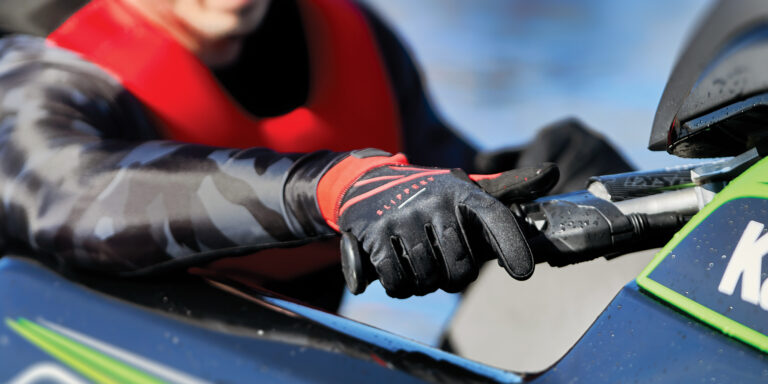
Chances are you have come to love Sea-Doo’s revolutionary palm rest grip design.  Well now there is even more to boast about because Sea-Doo has incorporated heat into the grip.

Yup that’s right, now you can stay even warmer on those cold winter rides by upgrading to the new heated grips.  These grips come with an integrated heat adjustment button offering five different levels of heat.

They incorporate the latest palm rest design so for those of you who still have the old cylindrical grips, you get even more of an upgrade here.  Best of all, they are easy to install by simply slipping on to the handlebar in place of the old grips.

Continue reading for more information or head on over to the link above to see if your Sea-Doo is compatible with the new heated grips.

SEA-DOO INTRODUCES HEATED GRIPS
Along with the introduction of a new platform this year, Sea-Doo launched heated grips. Don’t let cold weather ruin your ride this winter and keep your hands toasty warm.

These heated grips, indicated by a red light, are equipped with five levels of heat, to perfectly fit whatever weather you are riding in. Ride longer, more comfortably with Sea-Doo’s renowned palm rest design. Installation can easily be done yourself, as the grip slip on to replace existing grips. If you’re dealing with even colder temperatures, add on the wind deflectors for maximum performance and warmth.

Compatibility:
RXT, RXT-X, GTX, and WAKE PRO (2018 & up), GTI, GTI SE, GTR and WAKE 170 (2020)

Video: Blackhawks’ Mike Gapski Gifted With a Yamaha WaveRunner

0

Here’s a feel-good story: Mike Gapski has hit the ice with Chicago Blackhawks for over thirty years. He is the head athletic trainer for the Blackhawks and on December 16, he and the team celebrated his 2,500th National Hockey League game. The game was against the Arizona Coyotes and the Blackhawks won and soon after the celebration of trainer Mike Gapski began.

Gapinski is the longest-tenured active trainer in the NHL. Only Pete Demers, a retired Hockey Hall of Famer has worked more games as a trainer. He hit 2,632, all completed with the Los Angeles Kings.

The Chicago Blackhawks showed their appreciation for Gapski’s service to the team by presenting him with a brand new red and white Yamaha EX Sport. Gapski became emotional as he was being recognized by the players in such a special way. He walked across the ice and sat on the trailered machine, absolutely thrilled and honored to be part of an organization that doesn’t take him for granted. The team knows he loves life on the lake and will thoroughly enjoy his new PWC. He will get a lot of use of that Yamaha WaveRunner.

“That was pretty cool,” Blackhawks captain Jonathan Toews said of Monday’s spectacle. “I didn’t know a jet ski would make ‘Gapper emotional, but I think he likes life out at the lake in the summer. He likes to get out there, so it’s a nice little toy for him to enjoy and it’d be nice to see the big guy ripping around on that thing, getting some rays.”

Real Review: Windproof, Anti-UV Face Shield With Detachable Goggles

0

It was about a year ago after reviewing a foam-lined cold weather head sock that a reader reached out and recommended that I try out a protective face shield. In my review I had complained that while it helped to retain some heat, the constant onslaught of chilled wind and rain was just too much for a soft, felt head sock. A face shield, he proposed, was the best thing to block cold wind and rain while retaining breathability and comfort. Admittedly, I didn’t give it much thought afterwards until one Fall day when I was caught on the lake by a sudden northern rain storm that dropped both the temperature and sheets of rain.

While a few small outfits were making single-piece face shields, I was tempted by the two-piece, detachable design marketed to motorsports and enthusiasts and, conspicuously enough, fabricators alike. Listed solely as “Safety Face Shield Mask Goggles Kits Anti Dust Mouth Filter Work Eye Protection” on eBay and all over Google, this face shield has no official brand name or even a catchy label – meaning one thing: these were Chinese made knock-offs of something else. So if you’re interested in learning more about these, you’re either going to have to Google the exact sentence I just wrote, or click one of the hyperlinks I’ve highlighted.

The two-piece system is attached using a quartet of plastic hooks on the face mask that attach to the flexible TPU frame of the goggles. The unisex goggle frame fits all adults thanks to a non-slip, wide adjustable elastic band, and can be ordered in either black, white, red, or blue. Equally, the UV-resistant, PC lenses are available in silver, yellow, grey, clear, or a prismatic rainbow. And yes, the goggles can be worn separately without the mask at any time. The contact surface of the goggles is comfortable too, allowing your skin to breathe without fogging up the lens. After a month of testing, the goggles’ lenses are not easily removed and replaced, so be warned.

The mask itself is pliable but nowhere near as flexible as the goggles. It sits far enough to not make contact with your nose, but wraps closely enough to feel enclosed (but not claustrophobic). The front mouth piece features a high-density sponge with great ventilation, all while performing its job as a breathable filter keeping out most splashes and raindrops. Two bilateral “blowhole” vents at the cheeks provide better air permeability too. With masks like these, air ventilation at speed isn’t an issue (as air is forced through the vents) but while standing still, and thankfully, breathing while stationary is just as comfortable.

Although the mask is listed as a good face shield for laboratory, carpentry or otherwise, it does not provide the necessary filtration for activities using toxic chemicals like painting, stripping, or otherwise. Therefore, I strongly recommend using it strictly for outdoor sports like motorcycling, PWC, snowmobile, airsoft, skiing and the like. My use of the protective face mask was primarily for use in cold weather, so it was always used with a soft felt-lined head sock. This kept ice from collection around the mouth and nose, as well as moisture from chilling my ears.

In all, this two-piece protective face mask-and-goggle combination has been an ideal addition to my foul weather gear. I know I’ll be packing it along year-round when I go on trips where the threat of rain is also eminent as well. If anything, the extra set of goggles are always welcomed. Priced at a ludicrously low sum of $11.59, it’s worth buying just as a backup. Again, these lenses aren’t as nice as you’d expect from superior American-made goggle companies, but the utility makes up for the cost of admission.

We Announce The Watercraft Journal’s 2019 Watercraft of The Year (Videos)

0

In presenting a Watercraft of The Year award to an Original Equipment (OE) manufacturer, The Watercraft Journal acknowledges achievements in innovation, design, overall execution and the model’s lasting affect on the marketplace and/or industry. Contenders were culled from the near two-dozen personal watercraft individually reviewed over the 2019 model year. No entries were eligible that The Watercraft Journal’s staff didn’t personally review. Maintaining abject objectivity is key. In many cases, certain watercraft that were personal favorites of the WCJ staff (like the ’19 Yamaha EXR, a favorite for this author) didn’t make the cut. Others that hadn’t been considered came away with irrefutably high scores.

And that leads us to The Watercraft Journal’s Watercraft of The Year award scoring, or IDEA score. Each of the aforementioned four categories (innovation, design, execution, affect) account for a maximum of 10 points each, totaling a combined 40 possible points. This year, we thought it prudent to list each model’s accumulated score, as it’ll show the narrow margin that some models were within of its next contender. Again, judging a potential winner is not merely a matter of subjectivity, but weighing several key factors, comparing notes, weighing public opinion, reviewing a year’s worth of service claims, etc.

Finally, as we did for last year’s Watercraft of The Year award, we’re including the video review of each respective model that earned its place on the dais. The Watercraft Journal is the only personal watercraft magazine that religiously publishes full-length reviews of the newest PWC and produces a video to accompany each feature, giving the enthusiasts (and first-time buyers) the best, most comprehensive data to make an informed purchase. Each of the machines in this article are worthy of the top honor in certain key segments, as every PWC excelled in one category over the other. Although awarding one machine the highest honor inevitably garners grumbles from the opposition, it is important to know just how close these three watercraft came within the margin of earning the overall award.


2019 Watercraft of The Year 2nd Runner-Up: 2019 Yamaha FX SVHO WaveRunner
Innovation: 9; Design: 9; Execution: 8; Affect: 8; Total: 34 points

What if we told you that the only two-time Watercraft of The Year winner and the winningest runabout in the past decade would be nearly completely replaced by a full-sized three-seater? Well in 2019, that’s exactly what happened. Yamaha radically redesigned its FX SVHO WaveRunner for 2019, and the result was a full-sized runabout that behaved like a machine half its size. The 2019 FX SVHO wowed performance enthusiasts with its light weight (818-pounds versus the previous model’s 833-pounds) despite being marginally larger (140.9-inches long vs. 140.4-inches; 48.4-inches tall vs. 48-inches; and 50-inches wide vs. 48-inches); it’s sporty inside lean when put through a tight chicane; and most notably, it’s rough water prowess.

These three factors elevated the ’19 FX SVHO in to race-worthy status. Racers looking for a runabout that could soak up the bumps, jostles and bangs of open ocean racing almost unanimously gravitated from their stripped-down, bare bones GP1800R raceboats toward the FX SVHO. By the end of the season, lineups at AquaX events were almost all FX Yamahas. This pattern was no more prevalent than at the 2019 IJSBA World Finals, where the Pro Stock Class lineup was entirely Yamahas, the majority being FX’s. Although somewhat slower on the top end, the GP-inspired FX hull proved itself as being predictable even in brutal conditions. The craft’s steadiness at speed, intuitive handling and natural cornering gave it an irrefutable edge.

Moreover, the newly minted FX featured innovation that pushed the PWC industry further: namely, the advent of the industry’s first full-color, digital touchscreen dashboard, footwell drains and innovative RAM multi-mount accessory system. Other additions included a radical increase in storage capacity (44-gal. vs. 33.2-gal.), a one-touch electric-assisted engine starter, and a truly watertight glove box. The ConNext digital dashboard is of special note as it helped raise the bar for onboard PWC instrumentation. Its 4.6-inch screen is compact, yes, but is easy-to-read while at speed, customizable and best of all, easy-to-operate. All of this combined to make the ’19 FX SVHO a truly remarkable watercraft.


2019 Watercraft of The Year 1st Runner-Up: 2019 Sea-Doo Fish Pro
Innovation: 10; Design: 10; Execution: 8; Affect: 7; Total: 35 points

It almost goes without saying that what Sea-Doo achieved with the 2019 Sea-Doo Fish Pro is nothing short of extraordinary. Not only did the industry leader specifically address one of the fastest-growing sub-segments of the personal watercraft industry (ie. PWC fishing), but radically demonstrated the modularity of its ST3 platform. With the introduction of the Fish Pro came a veritable avalanche of new features, accessories and components that Sea-Doo owners across the board suddenly “had to have.” Today, hundreds (if not thousands) of Sea-Doos have been upgraded with items first revealed on the Fish Pro. Sea-Doo wisely capitalized on this, even going so far to make color variants of key accessories available through its Parts & Accessories division.

Fishing enthusiasts have been adapting PWC for angling use for decades now, but Sea-Doo raised the stakes by equipping the Fish Pro with the very best the industry could offer. Foremost is the Fish Pro’s Garmin ECHOMAP Plus 62cv Fish Finder and in-hull transducer. The 6-inch, full-color screen displays pages of charts, depth and seafloor mapping, all using CHIRP technology producing high definition live imaging. An 11-inch deck extension adds to the Fish Pro’s overall length, providing ample room for a second set of LinQ mounts and it’s massive 13.5-gallon LinQ cooler (that can be easily plumbed to become a live well tank) replete with a cutting board integrated into the lid, a cargo net for tools, and multi-place rod holder system.

Additional touches included the angled footwell guards; a thicker, flat-topped bench seat makes maneuverability around the Fish Pro a little easier; the new iTC (Intelligent Throttle Control) feature “Trolling Mode,” permitting fishermen to toggle through low speed presets, from 2mph to 9mph; and of course, the 18.5-gallon fuel tank. By no fault of its own, the 2019 Sea-Doo Fish Pro’s sales were hindered by it’s limited market segment. The Sea-Doo sold strongest where PWC fishing was already popular, as one might expect; but the true test was where newfound interest was kindled. The 2019 Fish Pro didn’t just fill a hole in the marketplace, but introduced the uninitiated with a product that could do what a population didn’t previously consider. And that in itself is praiseworthy.


2019 Watercraft of The Year Winner: 2019 Yamaha VX Cruiser HO WaveRunner
Innovation: 7; Design: 9; Execution: 10; Affect: 10; Total: 36 points

The poet John Lydgate famously cautioned, “You can please some of the people all of the time, you can please all of the people some of the time, but you can’t please all of the people all of the time.” And while some will cry that there’s nothing particularly unique about the 2019 Yamaha VX Cruiser HO WaveRunner, it manages to perform Lydgate’s final act surprisingly well…so much so that this WaveRunner has outsold every single other PWC on the market for the second consecutive year in a row. That, and its deceptively simple-yet-masterfully balanced package has fatefully earned it The Watercraft Journal’s 2019 Watercraft of The Year award!

Its popularity is an even greater feat when you realize that this $11,499 mid-sized runabout outsold Rec-Lite watercraft for half the cost – particularly among first time buyers. So what makes the VX Cruiser HO so successful? As any salesmen will tell you, it’s about quality and value. Despite being more expensive, customers were more likely to spent a little extra for the 767-pound, 3-seater as long as it checked all the right boxes – storage (24.6-gallons), fuel capacity (18.5-gallons) and consumption (an estimated 13.5-gallons per hour at WOT), and ease of use (cruising, touring, towing, reboarding, etc.) – and the 2019 VX Cruiser HO certainly does.

Yet, nearly as important as all of these attributes was mechanical dependability, and the 1,812cc High Output 4-stroke four-cylinder is easily one of the best. Producing a naturally-aspirated 180-horsepower, almost every VX Cruiser HO owner we talked to parroted similar feelings: “I wanted something dependable,” “I didn’t want a [PWC] that needed a lot of upkeep,” “It had to be reliable,” and the comments go on.

It’s hard to argue with the overwhelming majority, and thousands have voted with their wallets in favor of the VX Cruiser HO. Maxing out at a tad over 62mph @ 7,500rpm, the VX won’t set the world on fire, but being the fastest PWC on the water is not the goal here. Yamaha created a machine that strikes the perfect balance for the widest audience – effectively pleasing all of the people all of the time, and for that earns this year’s Watercraft of The Year award.

Repeat Contender: 2019 Yamaha VX Cruiser HO WaveRunner

0

You might not believe it, but the VX Cruiser High Output, Yamaha’s mild-mannered varsity player in its Recreation segment of WaveRunners is the single-best selling personal watercraft for two years running (2018 and 2019). Yes, you read that right. This nicely-optioned, fun-yet-well balanced 3-seater beat out all of the lightweight entry-level Rec Lites, all of the high-horsepower supercharged race-ready machines, and basically every other watercraft available today for two years in a row.

So, you might be asking, what makes the VX Cruiser High Output so dang appealing? Like we said just before, balance. The VX Cruiser HO hits the sweet spot of fun and sporty handling thanks to its use of Yamaha’s first-generation NanoXcel lightweight material on the hull and deck, dropping the craft’s dry weight down to 767-pounds.

Next, toss in Yamaha’s tried-and-true and darn-near bulletproof 1,812cc High Output Yamaha Marine Engine producing a class-leading 180-horsepower; and the fact that it rides on the exact same hull design as the GP1800R – y’know, the same WaveRunner that has dominated pretty much every level of professional racing – and its no wonder folks are all smiles when they hit the throttle.

But again, we’re talking about balance here. So while it’s a lotta fun to hot rod around the lake, the low-end grunt of the 1.8 Liter and fixed tow eye lets mom or dad tow the kids on a raft or towable with little effort. Plus, since the engine is breathing naturally – meaning without the aid of a forced-induction supercharger – fuel economy is one of the Yamaha’s mainstays. In fact, draining the VX Cruiser HO’s 18-and-a-half fuel tank will likely take you all day.

Attributing the VX’s namesake is the 3-person Cruiser Seat designed to provide comfort for all-day touring. The seat is tiered, giving passengers an elevated view over the driver’s shoulders, with raised bolsters for a little extra support. And the VX Cruiser HO comes equipped with Yamaha’s easy-to-operate Cruise Assist and No Wake Mode features, making long distance rides or simply navigating through prolonged slow speed sections a breeze.

Of course, the WaveRunner also comes equipped with Yamaha’s dual throttle RiDE system, giving the driver immediate and super-responsive reverse thrust for negotiating tight spaces, unloading off of the trailer, or coming to complete stop while under throttle. Onboard braking has become a new standard in the personal watercraft industry and Yamaha’s RiDE is the latest to fine tune the process.

The nimble craft is light on its feet, but stable when using the wide, spring-loaded folding swim step while reboarding. When folded down, the step is deep, dropping below the pump and ride plate allowing you to step up without having to reach too far. Storage comes in at a respectable 24.6 gallons, with a deep glove box featuring molded-in dual cupholders, and a removable watertight bin beneath the rear seat with a screw-top lid.

Although not standard equipment, the VX platform welcomed a bevy of optional accessories: Earlier in the year we were introduced to Yamaha’s exclusive ECOXGEAR Bluetooth speakers for the VX Series. These little waterproof wireless Bluetooth-operated speakers allows you to take your music with you wherever you go, whether riding across the water or lounging on the beach. (Suggested Retail Price of $349)

Two really neat options were Yamaha’s new VX Stern Storage, and VX Cooler. The first is a large 40-liter stern-mounted storage compartment made out of durable, weather-resistant and compression-molded black EVA Foam. (Suggested Retail Price of $249.99)

The VX Cooler is great for keeping drinks and snacks cool while out for the day and fits nicely inside of the Stern Storage container, or can be strapped down to the rear passenger hand grips. Yamaha says the cooler alone can easily holds 18 cans of soda plus ice. (Suggested Retail Price of $129.99)

On the water, we managed a respectable 62 miles per hour at 7500rpm. Doing a little “fuzzy math” that equaled roughly about 13.5 gallons per hour at wide-open-throttle. When not clamping the throttle to its stop, the VX Cruiser HO is torquey, responsive and generally rather playful without feeling too loose. It’s fun enough for dad to come back smiling, with enough intuitive stability for mom to feel confident piloting on her own. Again, well-balanced.

For 2019, the Yamaha VX Cruiser HO comes in two color variants – Carbon Metallic and Red, or Yacht Blue and White – were available with coordinated two-tone Hydro-Turf deck mats. Given the audience this WaveRunner is aimed at, the livery features some rich automotive-level metallics that deserve a second glance, especially when the sun hits it “just right.”

Starting at $11,799, the VX Cruiser High Output is definitely not some stripped-down plain-Jane either. That’s what makes its success so impressive. The appeal of this machine isn’t some bargain-basement price, but rather that its loaded with the right amount of features that people can appreciate its value. It hits all the right spots, making it one of the best, most well-balanced packages available today.

Score Huge Deals from RIVA Racing this Holiday Season

0

Are you one of the millions of consumers who procrastinated holiday shopping? That’s OK, RIVA Racing is here to save the day with their huge selection of goods for the PWC racer, recreational rider, and people on your list who might not ride at all. Check it out!

Right out of the gate, for the first time ever, RIVA Racing is offering massive discounts on an equally massive list of performance parts. Yes, that’s right. Whether you’re looking a high performance ride plate for a Yamaha FX SVHO or a set of Pro Series Sponsons for a Sea-Doo RXP-X 300, RIVA is slashing prices now until Christmas Day. But that’s not all. After you look at the chart below there’s even more offerings:

RIVA Racing Apparel is 15% off with clothing starting at a low $10, including a wide variety of hats available for both men and women. The hats come in several styles and colors like the RIVA Motorsports women’s chino, RIVA Classic Blaster Snap Back, and the RIVA Racing Classic Trucker Snapback. The hats range from $21.45-$26.96.

How about a RIVA Racing shirt or a hoodie to go with the new hats? RIVA is offering short sleeved shirts, long sleeved, hoodies, and some nice-looking rash guards for those windy days on the water. Short sleeved t-shirts start as low as $7.00! They’re a steal at that price. Unisex hoodies come in at $33.96. Though, the sizes are limited; the assorted styles and colors aren’t.

Youth and child sized RIVA Life Vests are on sale for $29.96. That’s $10 off the regular price. Men’s RIVA Life Vests are on sale for $37.46. The PFD’s come in several different colors and are sized for the bigger rider.

Do you know someone who needs a new spatula for grilling?  RIVA Racing has a limited addition spatula on sale for $17.96. According to RIVA, you’ll grill like a champion with the Limited Edition RIVA Racing spatula. It features a custom RIVA Racing logo cut out from stainless steel, wooden handle, and a bottle opener on the handle tip. This would make a nice addition to any grill master’s kit.

Don’t forget the stocking stuffers! RIVA Racing has koozie’s on sale for less than $2! Buy a dozen for under $25. Grab some Floateyes for your friends and family to keep their sunglasses snug while riding. They’re on sale for $5.59 and are available in red, blue, black, and silver.

Good looking black or brown bi-fold RIVA Racing leather wallets for men are on sale for $22.99. They provide plenty of room for cards, coins, and bills. RIVA Racing even has its own branded hot sauce. Grab a bottle of RIVA Racing Supercharged Performance Hot Sauce for $4.49. Toss it in a stocking to amp up that slow racer in your life.

RIVA Sand Anchors are 20% off. The simple to use anchors are available in red, blue, or yellow. A drawstring bag, 10 ft. poly-propylene rope, and float and snap are included.

Certainly, someone on your list needs a new wetsuit. RIVA Racing has you covered with a sale on 2mm JetPilot Wetsuits and 2mm wetsuit jackets. These are available in some very cool colors with limited sizes. Score a jacket for as low as $74.60. The JetPilot Matrix John Wetsuit is priced right at $139.40. Complete your wetsuit set with full finger gloves starting for $33.20. Order a new men’s 2018 JetPilot Cause Short-Sleeve Wetsuit for $83.60 That’s a nice price for a shorty.

Buy a GOPRO HERO7 Black with a 32GB SD Card for only $299.99. That’s $100 off the regular price. The bonus of an SD card completes the package. The Hero 7 boasts “HyperSmooth Stabilization” and the camera doesn’t need a housing for those wild days on the water. It doesn’t get much simpler. Grab one before the cameras are sold out.

Everyone needs a Bopenski Kickback Chair! Now is your chance to grab one for only $99! The chairs are normally priced at $219.95. It’s designed specifically for PWC and will make a great gift for the watercraft rider who may want to stop and chill while sitting in a Bopenski Kickback Chair.

Inflatable towable toys are fun for the whole family and RIVA Racing has a great selection of inflatables included in the holiday sale. Whether you’re in search of a one person or a souped up four-person inflatable, RIVA has your needs covered. Grab a one person inflatable for as little as $71.99 or buy a beast for $629.99. There are price points suitable for most everyone’s budget.

Check out the RIVA Racing site for even more steals and deals! RIVA is also offering free shipping thru December 25th on orders over $50. Happy Holidays!

Gallery: 2019 Thai Airways International Jet Ski World Cup Grand Prix

0

The 2019 Thai Airways International Jet Ski World Cup Grand Prix – or King’s Cup – was home to a full line of “firsts” – for the international event that has been a part of PWC racing history for 23 years now. This year’s King’s Cup, tagged by promoters as “exciting, nail biting and groundbreaking,” lived up to the hype, with a record number of international racers (200) joining the 75 Thai riders in a record number of classes (20) for four days of racing, viewed live for the first time with livestream and television broadcasting.

There were plenty of dramatic, hard-fought battles and a few walk-away decisive wins as well as some upsetting mechanical failures that sidelined some deserving racers. There were also some radical comeback racing, such as Raphael Maruin’s Moto 4 charge from sixth place to overtake Jeremy Poret, and Lucy Gadsby’s recovery from a struggling start to her bid for the championship, to a place on the top podium step, besting fierce competitors Emma-Nellie Ortendahl and Tera Laho. Another history-making first was Thai racer Orraphan Teerapatpanich’s triumph. Teerapatpanich, the only female in the all-male Pro-Am Runabout Open class – nailed down the overall win to walk away World Champion.

“It’s a dream, it really is truly a dream – a bucket list dream – to be here,” said announcer Dawn Dawson, who took to the announcing tower at Jomtien Beach, Pattaya, Thailand, for the first time this year, making her the first female announcer for the King’s Cup.

“There are certain races and events that I think everybody aspires to, and no question, World Finals in Havasu is one of them, because that is, in a lot of ways, sacred ground, and in a lot of ways, in our hearts, the birthplace. But there is something just so incredible about the Thai Airways International Jet Ski World Cup.”

Dawson, who took a few minutes to chat with The Watercraft Journal during a break in in Saturday’s championship races, explained that there are only two events in the world that the King has allowed his name to be associated with, the first being soccer – the most popular sport in the world.

“And then you have this tiny niche called ‘jet ski racing’ as the second,” Dawson said. “ So there is that mystique, and add in everything they have done to make this a top caliber event, to me, that made it a crown jewel. Add in the fact that we are here for the Triple Crown, for our first year of the Triple Crown, and the big money, and some of the top caliber racers in the world, and I’ve been getting chill bumps all week.”

Despite the prestige and thrill of working the World Cup race, Dawson said that each race she announces carries the potential for that “chill bumps” thrill.

“It’S about being witness to moments that you’ve never seen, moments that bring tears to your eyes, moments where you see an athlete’s greatest achievement or even the worst thing that could ever happen to them – like when Lee (Stone) lost his title at World Finals, that was a ‘moment,’ it brought me to tears. Those are the inspiring moments. It doesn’t matter where you are.”

High on her list of “moments” at the King’s Cup were Orraphan’s win in the first moto of the Pro-Am Runabout Open class.

“I love watching her, I knew she was good,” Dawson said. “Lucy Gadsby was another one. I really expected Ema (Nellie Ortendahl) to get around her. Emma is a force of nature and to see this young girl, I actually thought Lucy she was 17 – she’s 14 – on the track is amazing. But one of my favorites was watching Dustin and Deven Farthing. I remember Dustin holding for Deven for the first time on the National Tour. I remember Dustin’s interview, and saying he was more nervous than his kid for that race.”

Aside from the skill level of the racers at King’s Cup, and the technological advances in the skis, a number of factors – including improved support technology, better organization, and first-rate staffing – highlight the fact that watercross, as a sport, is maturing, Dawson said.

“We’re growing up. What used to be a beach party and what used to be a really fun national tour, has now got a global presence,” she said. “We made the Asian Games in 2018. That is the second largest sporting event globally, it is a sporting event recognized by the International Olympic Committee, and jet ski racing is involved… that is a huge accomplishment.”

For Dawson, these accomplishments and the increasing excellence of events such as the Havasu and Thailand races, hold promise for the future of the sport.

“I look for big TV coverage down the road. I think the fact that Larry Rippenkroeger invested in us, a gentleman that came from a freestyle background, and he’s given back by putting a lot of money into a movie, I think that is going to give us massive visibility. I think the other big thing, which I have a soft spot for, is, we now have a real proving ground for juniors, and that is going to be one of our biggest areas to support is these junior riders…”

Standardization and even further improvements in race support technology, such as photo finishes and global tracking, will play a large part in the advancement of the sport, Dawson said, but added that personal support for the sport – from racers, fans, families, promoters, staff and more, is what makes a difference.

“I want to say two things. I want to say, first off, to all of the people that have been here for the last two decades, through thick and thin, economic bad times and economic good times, and yet you stuck it out, thank you for doing that and being a part of our family and bringing your kids into our family… and I also want to say thank you for believing in us and our sport and for pushing us to raise the bar. And don’t stop!”

As it was aptly put by race promoters, “At the 2019 Thai Airways International Jet Ski World Cup Grand Prix, an ocean of dreams was built on a huge stage full of possibilities. In a city that craves excitement, with a race community that thirsts for glory, it was no wonder that this race produced historic and once-in-a-lifetime moments.”

2019 Thai Airways International Jet Ski World Cup Grand Prix Champions
Jeremy Poret – France – Pro Ski Grand Prix • Dustin Farthing – USA – Pro Sport GP • Permphon Teerapatpanich – Thailand – Pro Runabout 1100 Open • Marcus Jorgensen – Denmark – Pro Runabout GP • Taiji Yamamoto – Japan – Pro Freestyle • Jean-Bruno Pastorello – France – Pro-Am Endurance Open • Benjamin Scharff – France – Pro-Am Ski Stock • Ou Moeut Saly – Cambodia – Pro-Am Ski Superstock • Orraphan Teerapatpanich – Thailand – Pro-Am Runabout Open • Troy Snyder – USA – Pro-Am Runabout Stock • Lucy Gadsby – UK – Pro-Am Women Ski Limited • Liu Yi Cheng – China – Expert Veterans Runabout Limited • Abdalla Alhammadi – UAE – Expert Ski Limited • Piarrat Srikongruk – Thailand – Expert Runabout 1100 Limited • Liu Yi Cheng – China – Expert Runabout Limited • Yuichiro Takada – Japan – AquaBoard (Flyboard) • Tanawin Molee – Thailand – Novice Ski Stock • Piarrat Srikongruk – Thailand – Novice Runabout 1100 Stock • Thanutchai Pimcharoen – Thailand – Novice Runabout Stock • Suparuek Dansathaportn -Thailand – Junior 13-15 Ski Stock

PWC Muscle Offers Massive Christmas Sale On Select RIVA Parts

0

Christmas is almost here and we bet that there are still a few stocking-stuffers or other miscellaneous items to grab. Maybe you even want to be nice to yourself and throw some upgrades on your watercraft.

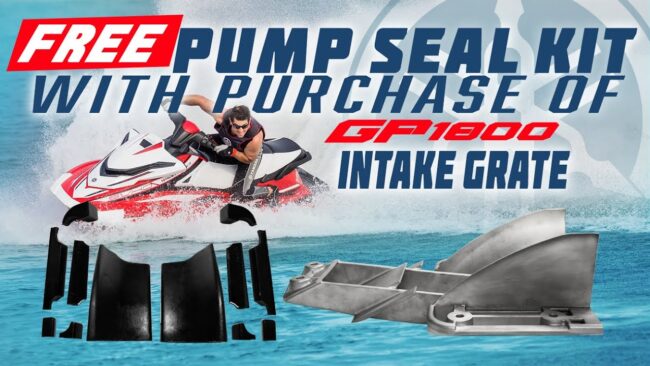
Well you’re in luck because for a limited time PWC Muscle is having a massive Christmas Sale on select RIVA Racing parts. Act now to save 15% on these amazing performance parts.

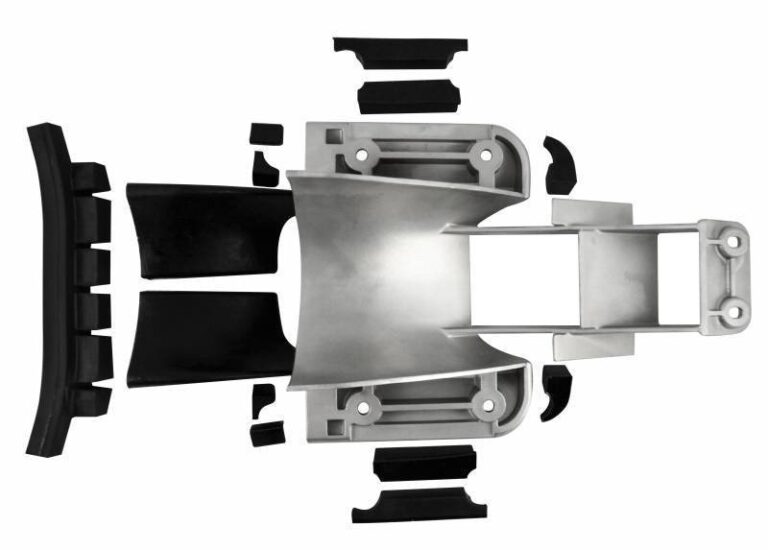
Parts include ride plates, intake grates, sponsons, power filters, and more for major models of Yamaha, Sea-Doo, and Kawasaki watercraft. This is a limited time offer and is only available through midnight on Christmas Day or until supplies run out.

If you’ve been waiting all year for a great deal on some RIVA Racing items, you should act now because chances are you will not find a better deal.

If you see an item you want at the link above just simply click on the item in the chart. It will then take you to the listing showing availability and the discounted price. Simply add it to the cart and checkout

Want free shipping on all orders over $139? Simply type code “Shipit” into the voucher field during checkout and wham! You’ve just earned an even more amazing deal. So, head on over to the link before all items are gone.

Video: Sea-Doo Polytec Hull Repair using Welding Method

0

Bummer, you’ve dinged your Sea-Doo’s hull. Fortunately, the damage isn’t severe enough to require a replacement part or even a trip to the shop if you have the tools. Repairing a polytec hull can be a DIY project if you care to tackle it.

This is where plastic welding comes in, which simply means to create a bond between two compatible polymers. This is done in two major stages, which are heating and cooling. Before going full on into the repair, make sure you have all of the required tools and other materials needed to properly patch the Sea-Doo polytec hull.

List of items needed:

  • Leister Triac ST Hot Air Plastic Welding Tool
  • 5mm (1/2”) 15-degree Tubular Nozzle
  • PP + GF 30% 8-9mm (1/3”) Flat or Triangle shaped Plastic Welding Rods
  • Flaw Repair Coating for Plastic Parts
  • Belt Sander and Band 40 to 150 grit bands
  • Plastic or Wood Type Rotary Tool and Burr Bit Set
  • Rotary Wire Brush Crimped 2” Coarse or Medium
  • Infrared Thermometer
  • Sheet Metal Strips
  • Degreaser

Now that all of your tools are in place, it’s time to begin the repair.

  1. Begin with surface preparation. Using the degreaser and a shop towel; clean the area both inside and out.
  2. Heat welding gun to 300 degrees F.
  3. Sand the repair area on the inside surface ONLY.
  4. Weld directly on the polytec hull to avoid delamination.
  5. Groove the crack from the inside surface about 1/3 of the wall thickness and extend the groove an inch past the crack in the hull.
  6. Remove all excess material from in and around the groove
  7. Cut the end of the rod at an angle and start with a clean tip.
  8. Place the rod end a little beyond the beginning of the groove and apply heat to both surfaces simultaneously, being careful not to melt through the rod or repair surface material.
  9. Press the rod into the groove to fill it and continue filling by adding layers and allow each layer to cool before adding the next one. Each layer should overlap the edges of the previous one.
  10. Sand the weld to remove excess material.
  11. Inside surface only: Continue until the welding the joint covers 3X the groove width on each side of the crack and is the same thickness as the wall itself.
  12. Repeat steps on outside.
  13. The finished repair should be a flush surface.

This Sea-Doo how-to video provides hands on instruction by presenting the hull repair process from start to finish. For even more detailed information, check out the Polytec Hull Repair Guide.

The more you know might just help you get back on the water sooner!