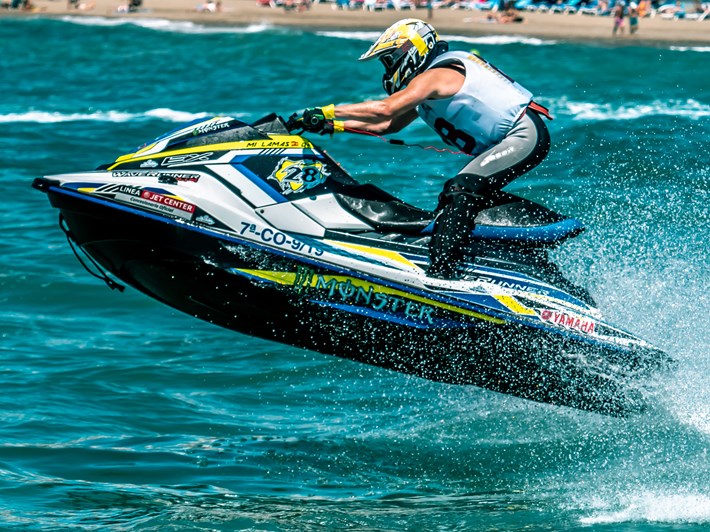
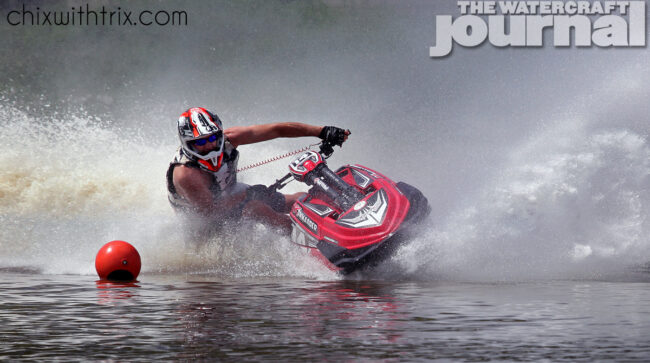
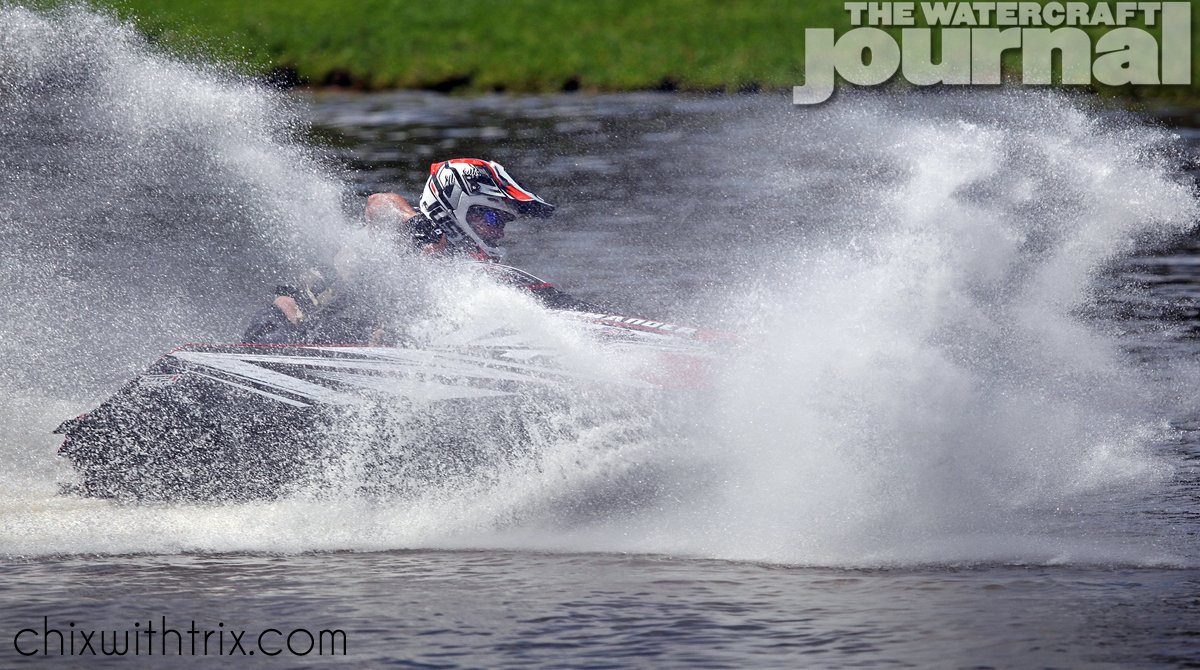
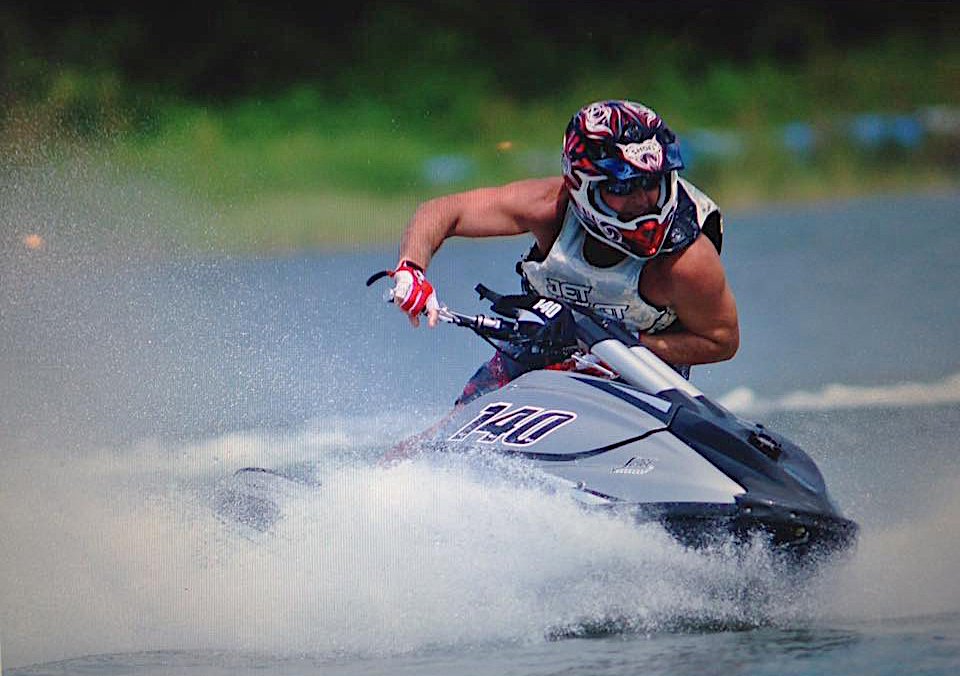
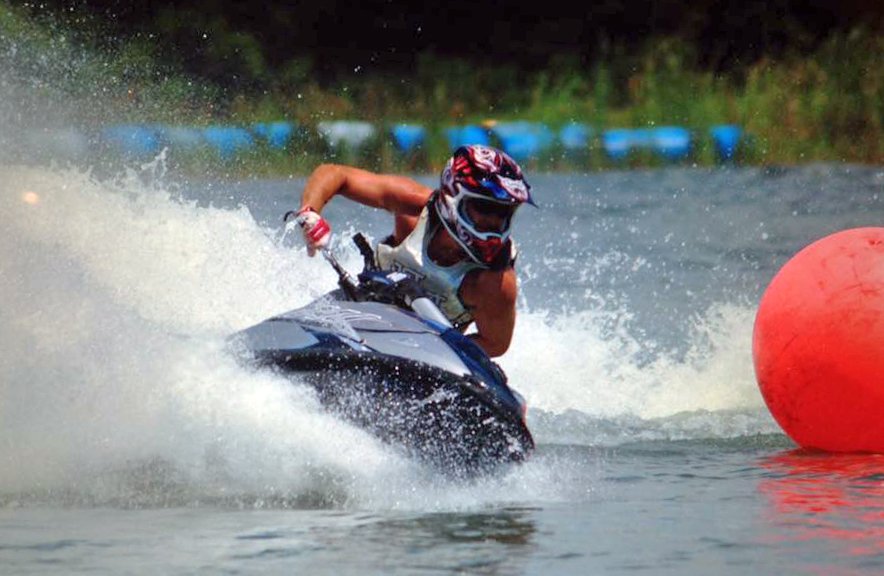
On May 22nd, the second round of the Spanish EXR Cup was held and Carlos Vela was able to be the first line to cross the finish line. Vela had an impressive start given the conditions. Personal watercraft racers know that racing in strong winds adds an additional factors that can prove to be challenging. The wind was so bad for the race that the Coast Guard issued a ban which only allowed for one round of racing.
With the wind and suspense of the race, Carlos Vela was able to do his thing right out of the gate. He led throughout the entire race which granted him the top of the podium. Coming in second and third place was Santiago Elizalde and Carlos Villar respectively. Villar looked as if he had finished second but was later penalized since he had jumped a buoy.
In fourth and fifth place was Anton Rico and Miguel Lamas. Both of these riders are still getting comfortable riding their Yamaha EXR’s. The rest of the racers were unable to finish with the aggressive weather conditions. The Yamaha EXR’s are a smaller watercraft making strong winds that much more difficult to ride in. On September 14th and 15th the Spanish EX/EXR Cup will be going to Cádiz (Andalucía). You wont want to miss it!
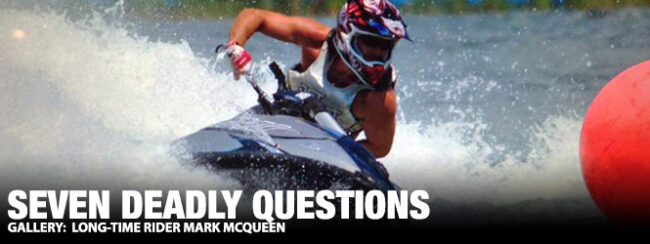
The Watercraft Journal: You’ve enjoyed an action-packed riding career for sure. Tell us a little about it; when you first started riding stand ups, and what prompted you to try racing over other riding styles?
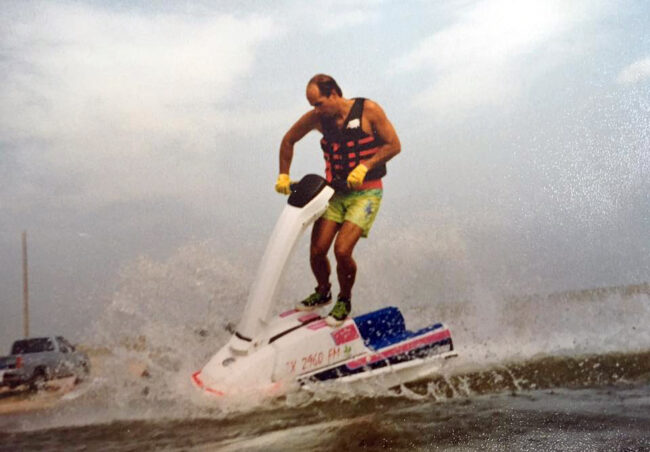
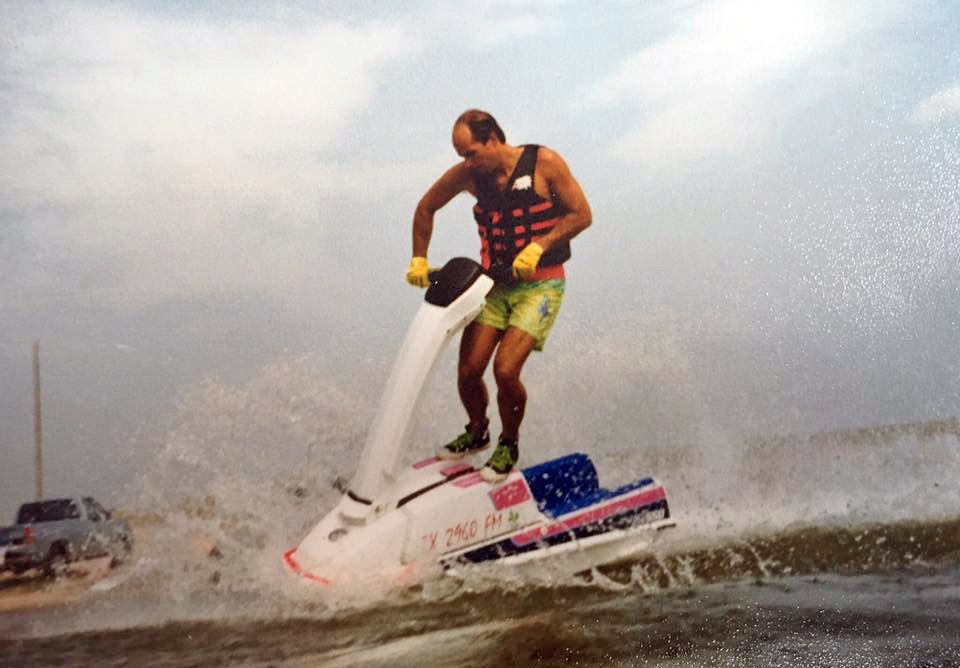
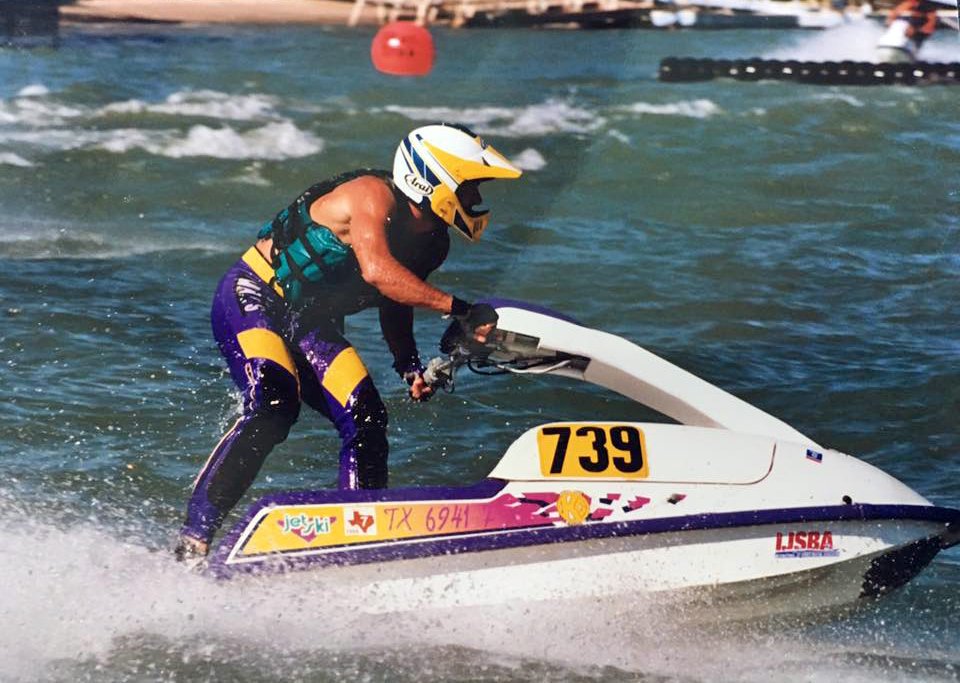
Mark McQueen: It was around 1990. I was tired of playing golf and wanted to do something physical. My best friend, Tom Arthur, had a JS550 and a KX250. He recommended the jet ski and he helped me pick one out the next day. It was difficult to stand at first because I was leaning over like I was water skiing. After a few sessions with Tom, I was hooked. I really enjoyed freestyle and wave jumping, but someone insisted I try and race. I was 2 years into skiing and raced on the River in Beaumont. I still remember the feeling of being on the line for my first race. I was addicted.
WCJ: Once you were hooked what would you consider your greatest accomplishments in racing stand ups?
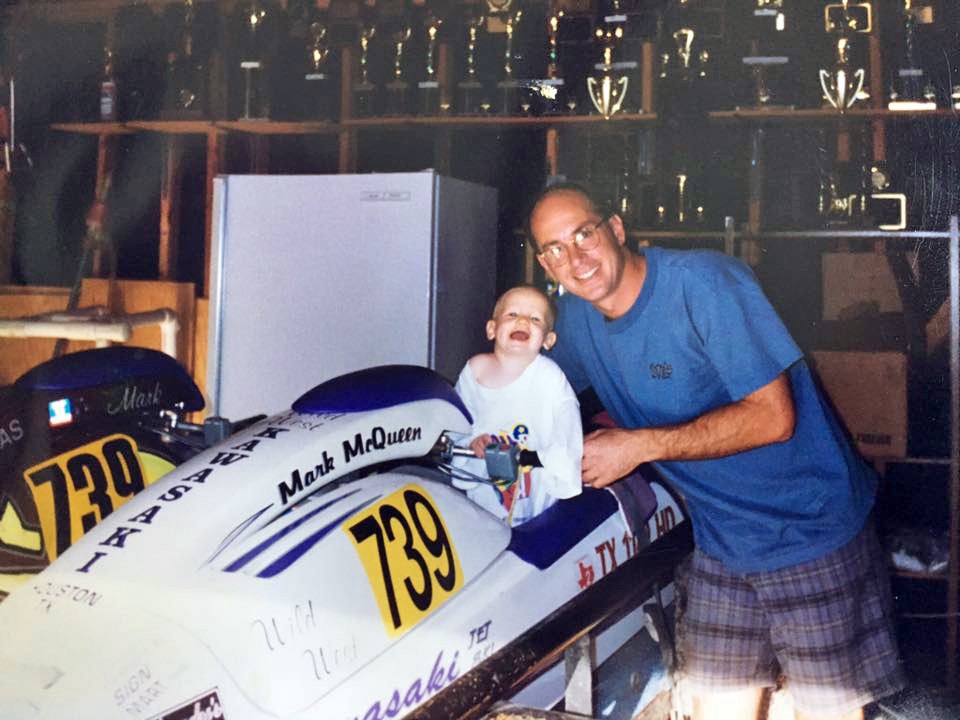
MM: Great friends. Won some local overall titles in Expert and Ski GP, but The World Finals is the real test. I only raced there twice. Took 7th in Novice Vet Ski, 2nd overall in Expert Vet Ski, 10th overall in Expert Ski. (93-94 I think) I was not as fast as Texans Rusty Wilson or Chris Hagest.
WCJ: Let’s move on to some favorites! What is your favorite part about riding stand ups and what is you favorite ski?
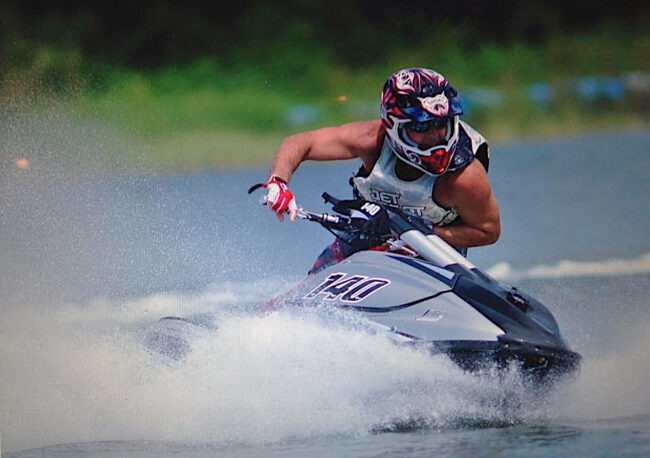
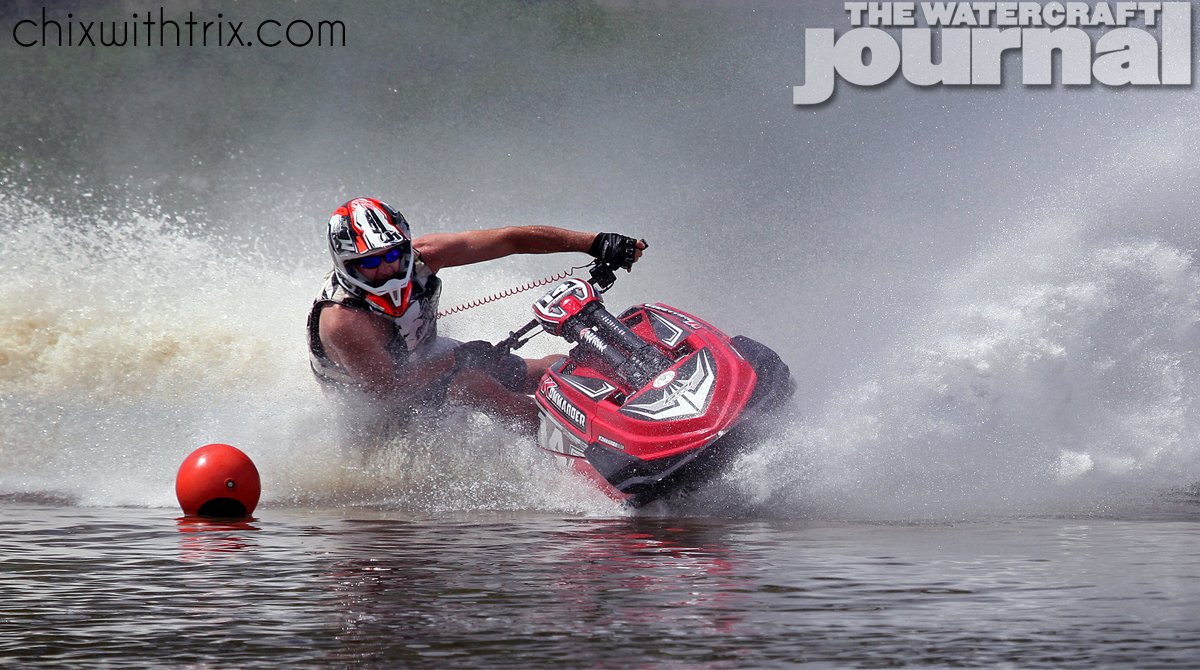
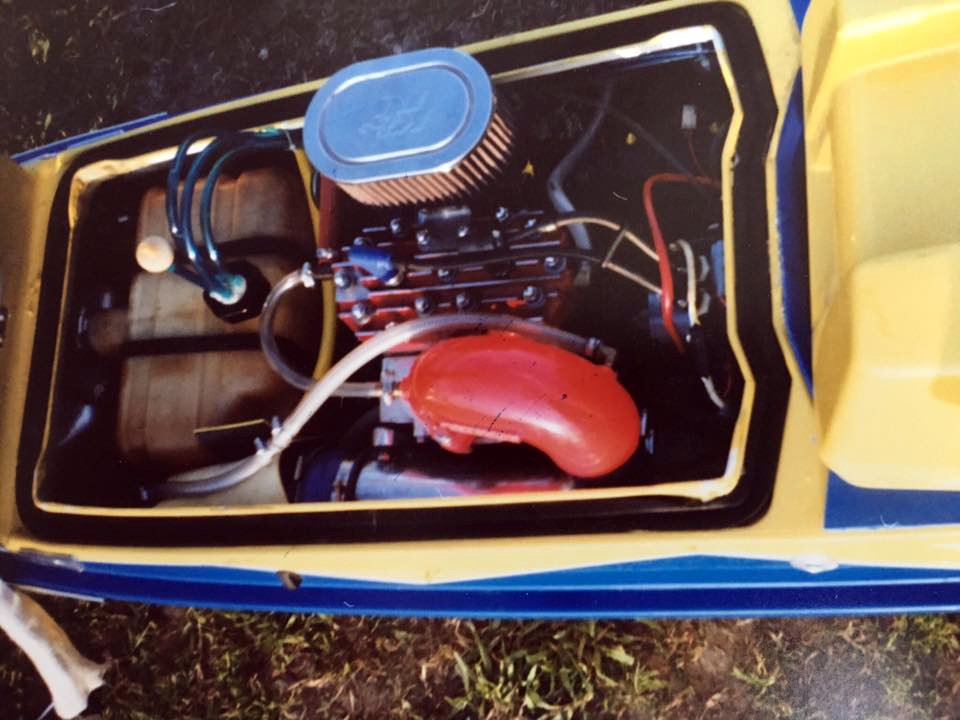
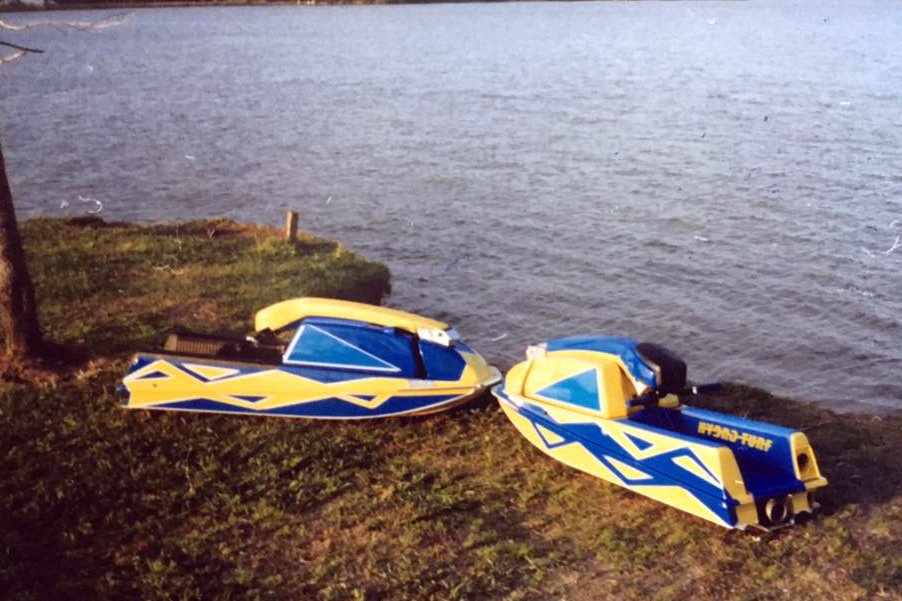
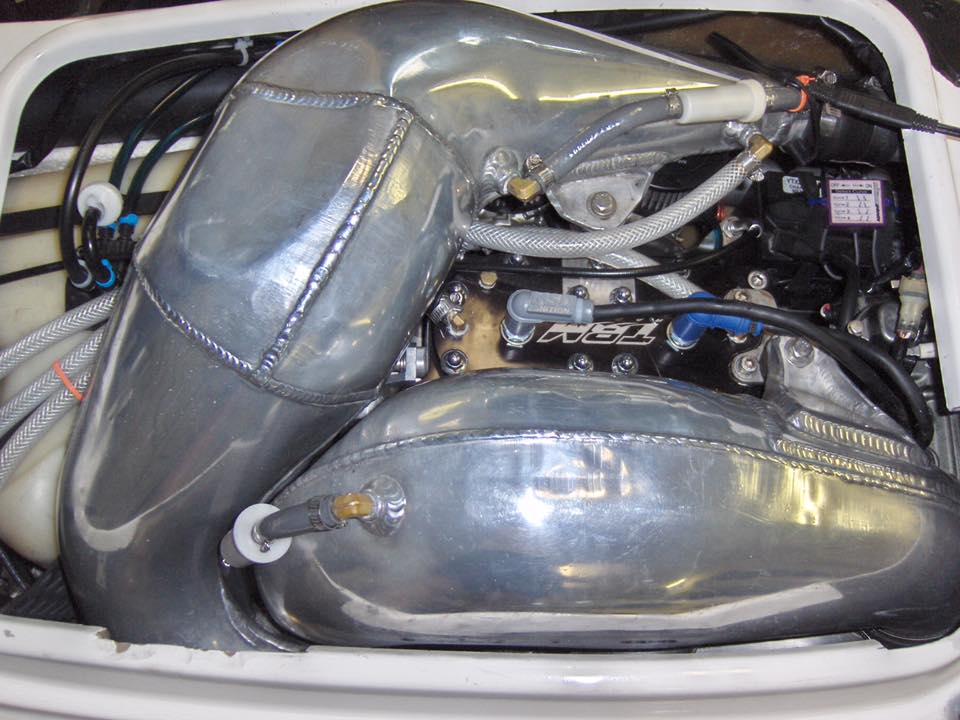
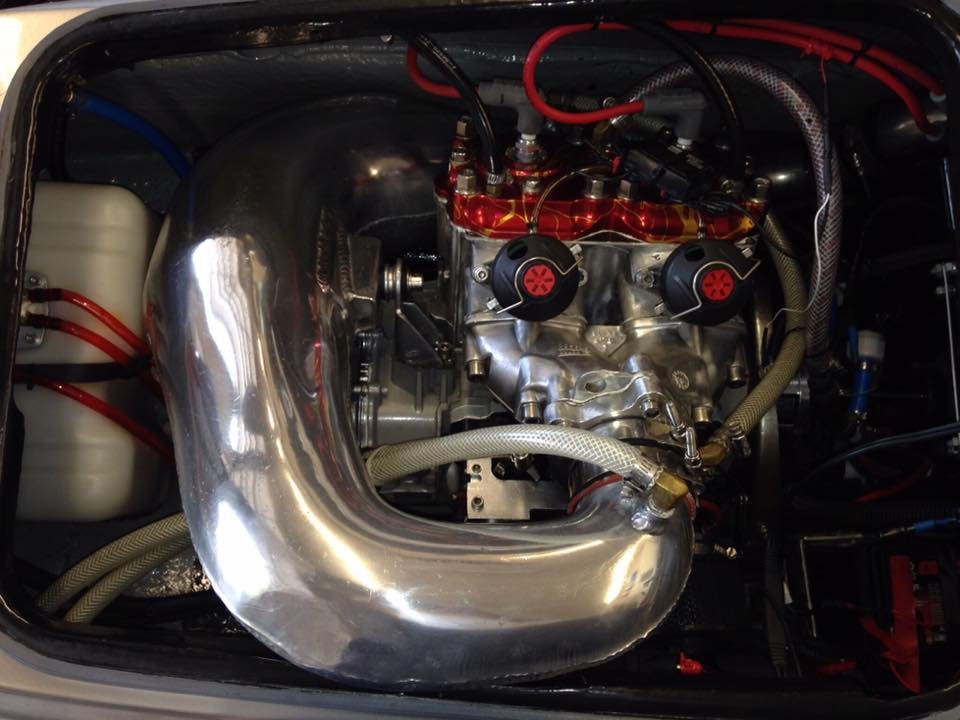
MM: Adrenaline rush of taking turns at high speeds, low to the water. Great physical conditioning. The technology gets better every year and my Kommander GP1- 1500 is my current favorite. Although, my SXR with the 1105cc Mel Miller Seadoo motor won a lot of races.
WCJ: What do you currently ride, and what are your future riding goals?
Kommander GP1-1500. At 59 and chasing 30 the goal is to continue to chase my younger friends around the buoys and get faster 2-3 times/week.
WCJ: With wins and experience under your belt, how do you train/practice?
MM: Ride buoys, mountain bike. All about ” time on boat.”
WCJ: Is there anything you would like to see done differently/add to in the ski industry/racing world?
MM: Racers need to be easier to identify during a race for fans and announcers. Something must be done that allows the opportunity for more passing. Introduce a friend to riding jet skis. Only one rule book.
WCJ: With your experience, we’d love to hear how is today’s racing scene different from years ago?
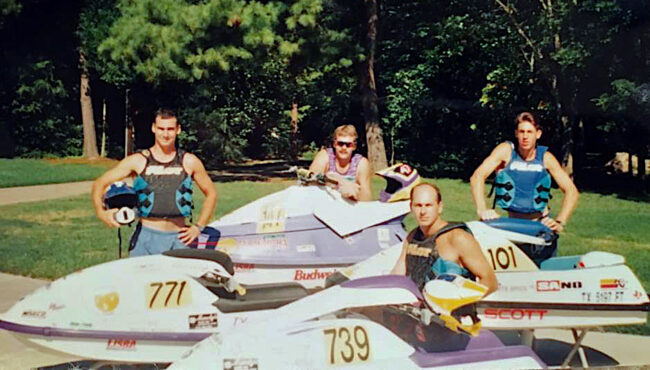
MM: Years ago the manufacturers were competing for share so national and regional teams were sponsored by the jet ski makers. Qualification for the World Finals meant going to 3 qualifiers with 30+ people trying to qualify for 1-3 spots per class per region. Today seems more family oriented which is a great thing.
WCJ: So we’ve got to know – who is your greatest role model?
MM: In life, my family shaped me. In the sports world- Roger Staubach, Tom Brady, Jack Nicklaus. I tried to ride like Victor Sheldon ( liked the leg drag).
WCJ: Outside of skis, what other things do you like to do?
MM: I love to fish, hunt, be outside. My son and I played football at Texas A&M. QB, DB. My father is in the Texas Sports hall of fame as a football coach. So we have some good football conversations at Holidays.
WCJ: Mark, thank you for sharing your story with us! In closing, is there anything else you’d like to share, and what advice do you have for fellow racers and people interested in learning how to ride stand ups?
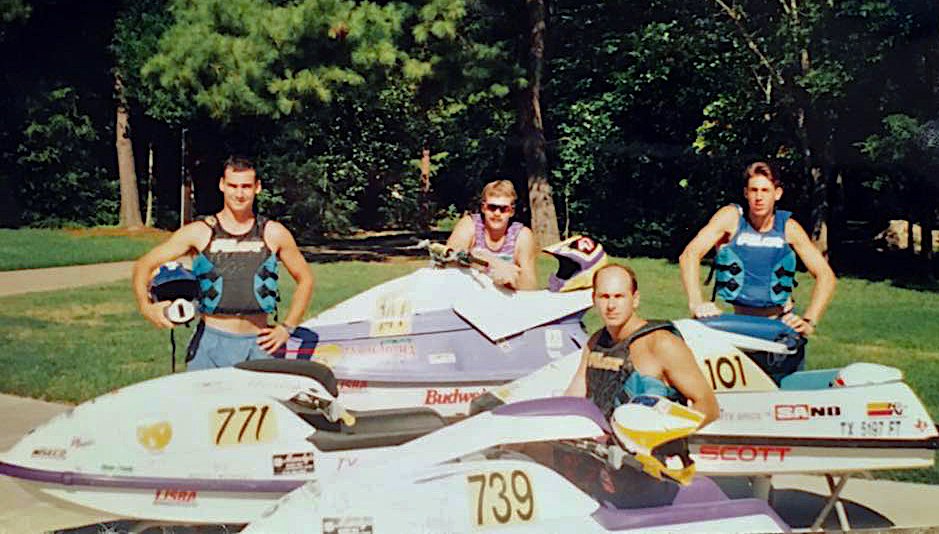
MM: Just to thank all my friends that I ride skis with every week. Travis Thompson and I have been pushing each other for many years. Great journey. Racers – Set goals, plan needed steps to reach the goals, be relentless in your pursuit of your goals. Have some fun every day. If you have not ridden a ski and want to – great family sport and excellent for keeping you in good physical condition.
The longstanding rivalry between Victory Team’s Kevin Reiterer and Quintan Bossche continued in classic fashion with Reiterer securing the win at the last corner of the UIM-ABP Aquabike Grand Prix of Italy. Reiterer took the win during the third and deciding Moto in Ski GP1. The heavy race took place on Sunday June2cd in Italy and it was one for the books!
Reiterer and Bossche ended the day with a winner take all during Moto 3. They were tied for points with one win a piece. Moto 3 was the deciding factor. Reiterer stayed on Boscche from the start and came close to being out of contention when he made a mistake that left him 4 seconds behind Bossche. However, he redeemed himself by the end of lap 9 as he rounded the inside while Bossche got tangled up and ended in second. Reiterer took the checkered flag, the win, and the GP title.
Racer Yousef Al Abdulrazzaq grabbed his first title of the year with a 72 second victory in Runabout GP1. He absolutely dominated in Runabout, capturing his second win of the weekend. The wins put him back into the title race and he’s currently ranked 7th in the championship standings.
Sweden’s, Emma-Nellie Orendahl, continues her dominance as she leads the pack after an epic start of the year. She nailed another perfect score during the competition in Italy, putting more points between herself and those trailing behind her number one spot in in the championship standings. Once again, she stood out from the pack in Ski Ladies. She remains unbeaten in all competition on the UIM-ABP tour this season.
Check this UIM-ABP page for the complete list of results for the Aquabike Grand Prix of Italy.
We all know the feeling of wanting to fix or upgrade you personal watercraft. Whether you are trying to beat out your neighbor on the lake or sound the best, performance parts will cost you money. Often times when ordering parts the total can start to get quite expensive, well do not worry. There is now a solution for any order, Broward Motorsports has partnered with Affirm so that you can now go shopping online at Broward Motorsports and finance your order. Depending on your order total, your monthly payment could be as low as $18 a month!
With summer coming right around the corner, why not give the parts your personal watercraft deserves and be able to enjoy your time out on the water. From superchargers, intake grates, exhaust, ECU reflash, sponsons and much more, Broward Motorsports is your one stop shop for all of your needs.
On top of financing your purchase, by using code BMS10, you will be eligible for 10% off your entire order. And if your order is over $125, you will receive free shipping if you live in the Continental US. Broward Motorsports is a terrific company that has knowledgeable staff and excellent customer service. If you have any questions about upgrading your personal watercraft, give them a call or send an email. They will be happy to help. Just like Broward Motorsports said, “Fast is Now Affordable”
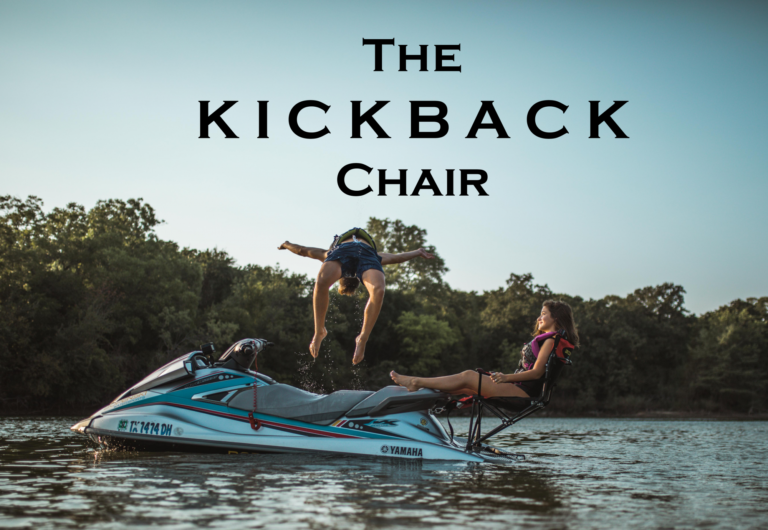
Bopenski Watersports is the maker of a new chair for your personal watercraft. It is a two legged chair that is attached to the rear of the watercraft allowing you to sit back and kick your feet up on the seat. Bopenski realizes that riding is one of the best parts but it’s the time spent with friend on the water that makes the memories even better. Being able to set up your Kickback Chair in under one minutes allows you to soak in the beauty of being outdoors and with friends. Heck you could use this chair to while fishing if you are not planning on keeping any fish.
The Bopenski Kickback Chair is a chair that is an ultimate summer accessory. With its aluminum frame, large foot pegs and comfortable seat, it really is a great accessory to bring out on the water. It is lightweight and easy to set up allowing you to enjoy a quick break or sit back for lunch. Originally offered at a price of $219.00, they are now on sale for $99.00! Get one today!
Bopenski recently ran a drawing for a free Kickback Chair! The flowing winners are: Sherry Cole, Donna Dieckman, Leonard Graff, John Manning, Jeffery Mowery, Angie Oliver, Dale Owens, Holly Passmore, Martha Stafford, Hollie Weidner, Lou Ann Weidner, David Steven Patrick, Deb Springsteen, Jamie Joiner, Wes Fuller, Ron Howes, Matt Malher, Dave Cowan, Clyde Cross, and Sherry Weems. Congrats to all of these winners who each will receive their own Kickback Chair.
While you may be jealous that your name was not selected in the drawing but there is still an offer for you. If you are registered for the 23rd Annual Tennessee River 600, you can order a Kickback Chair and use promo code “tenn60025” and get 25% off when you checkout! Do remember that this promo code is only for registered participants of the 23rd Annual Tennessee River 600 and limited to the first 30 who purchase.
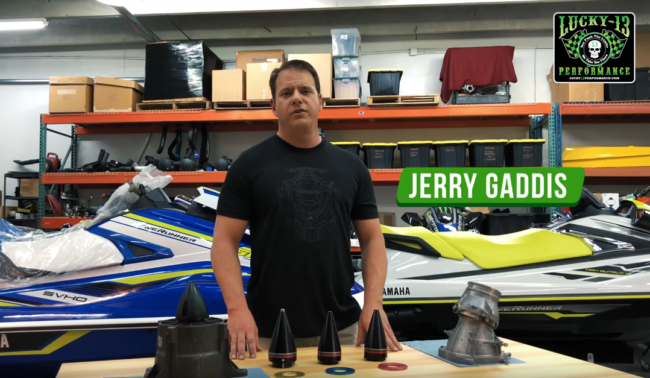
For those hardcore racers or recreational riders out there, it’s all about perfectly dialing in your watercraft for the best top speed, acceleration, and holeshot hookup with reduced cavitation. One of the best ways to do this is to tune your jet pump accordingly.
An easy way is to use the Lucky 13 adjustable pump cone and with varieties available for Yamaha, Sea-Doo, and Kawasaki, RIVA Racing makes it possible for you to tune your ski according to the setup you need.
The basic construction of these pump cones uses a series of anodized spacers sandwiched between the cone and base with a stainless steel tail cone bolt holding it all together. By adding or removing any of the various thickness spacers, you can change the conditions at which your ski operates.
Adding more spacers will extend the cone length and reduce your RPM. By adjusting your RPM and consequently your pump pressure, you will be able to fine tune your ski according to the surrounding environmental conditions as well as aligning it with any modifications you have made to your ski.
For more information on the Lucky 13 pump cone, check out the latest video.
Being able to go into a dealership and pick a watercraft right on the floor is a surreal experience. One that you will always remember, from the time you drove it home to its maiden voyage, the memories will last a lifetime. One thing you will remember is the feeling of sitting on your personal watercraft and how comfortable it is. Yamaha made the FX SVHO and HO Cruiser so that people could enjoy a Cadillac feel while on the water.
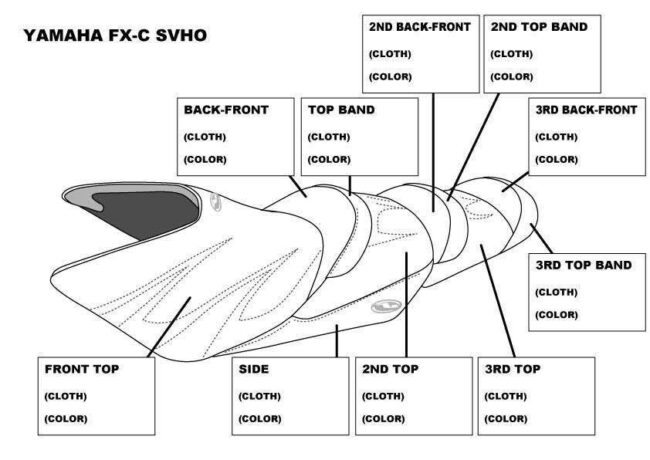
Well, after a few seasons of riding, the sun puts a beating on the seat. Factory seats have been known to crack and rip after long exposure to the sun. Even quicker if you are riding in salt water. Jettrim is an industry leading seat cover company and they have the fix for you. If you find yourself needing a new seat for your Yamaha FX SVHO or HO Cruiser, head on over to Broward Motorsports and start browsing the Jettrim seat cover selection. With multiple color options and textured colors, you have the option to choose the original colors or go with something designed by you. Whether you want carbon fiber or a non-slip suede, the options are truly endless.
Keep in mind that Broward Motorsports uses Affirm which allows you to finance your purchase. The price of a seat cover is $325 but if you choose to finance it, your payments could be as long as $31 a month! Give your watercraft a new look with a Jettrim seat cover by checking out Broward Motorsports.
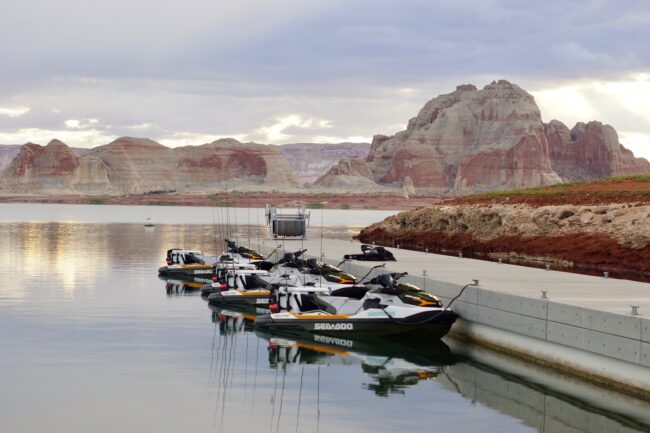
Lake Powell is a reservoir lake located on the border of Utah and Arizona. It is a popular destination for family and friends to travel to. With warm weather, clean water and plenty of things to do, this is a perfect spot for anyone.
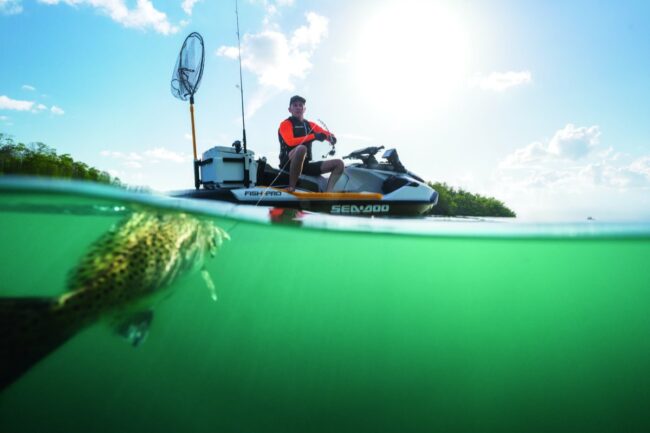
Bob Reed is a long time personal watercraft lover and had the idea to take his out one day and go fishing with it on Lake Powell. After enjoying his fishing trip, he decided that he wanted to share his love for fishing on Lake Powell with the public. So he started Up Lake Adventures. With the introduction of the Sea-Doo Fish Pro, he is now hosting 7 day trips where everyone packs up their gear and food onto their Sea-Doo and away they go.
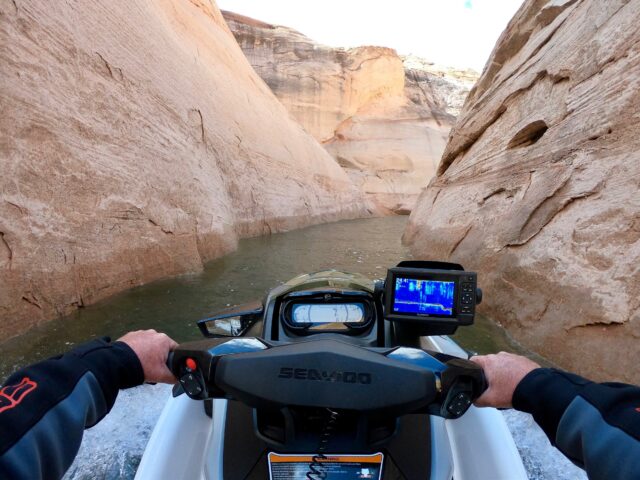
Lake Powell is known for their largemouth bass, smallmouth bass, crappie and walleye. Being on a watercraft allows you to go into narrow channels and really try to find that big fish that will make your whole trip. Adam Eakle with KSL Outdoors joined Bob just last week for a watercraft fishing trip. His experience was awesome and could not speak highly enough of how professional Up Lake Adventures is. Making safety their number one priority and having their clients catch tons of fish, there really isn’t anything better than that.
While Bob loves fishing and taking clients out, he said that he enjoys the freedom his clients have with picking their own spots. Everybody is on their own watercraft so they get to have the controls in their hand. Many of his clients are first timers to Lake Powell so it allows them to experience the lake their way. If you are wanting to go on a fishing trip where a professional guide will make your experience worth it, check out Up Lake Adventures. Bob is so passionate about guiding that you will remember this trip for a lifetime.
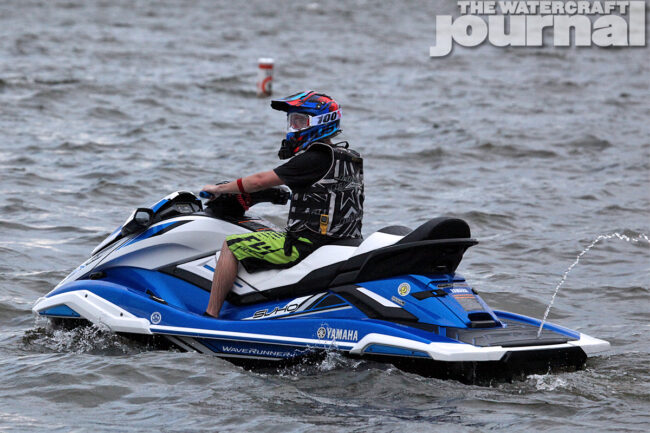
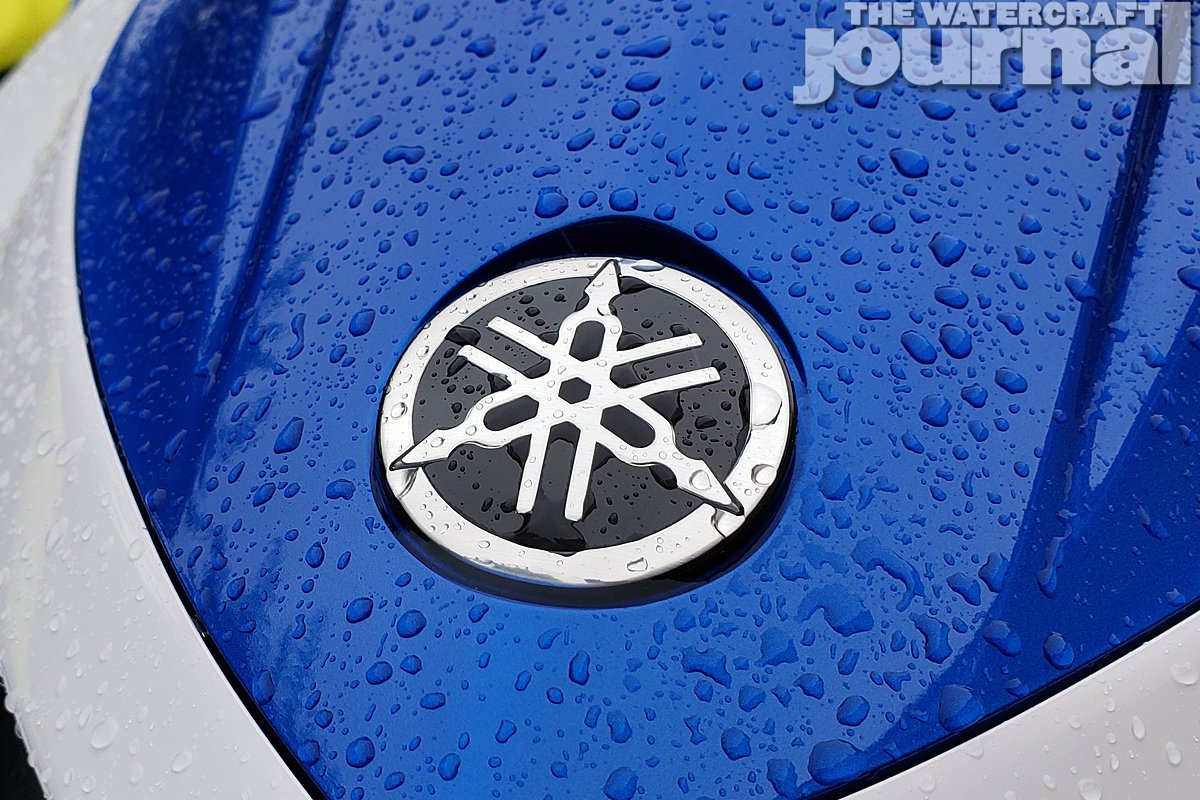
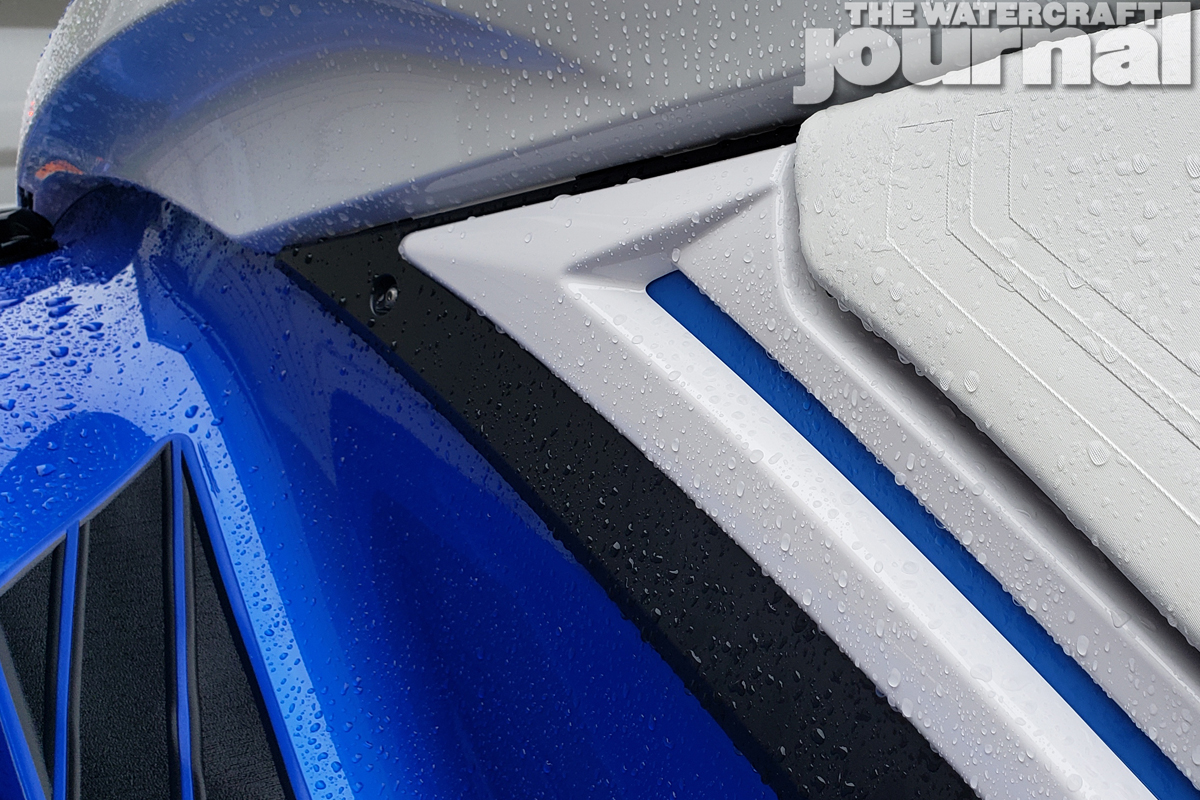
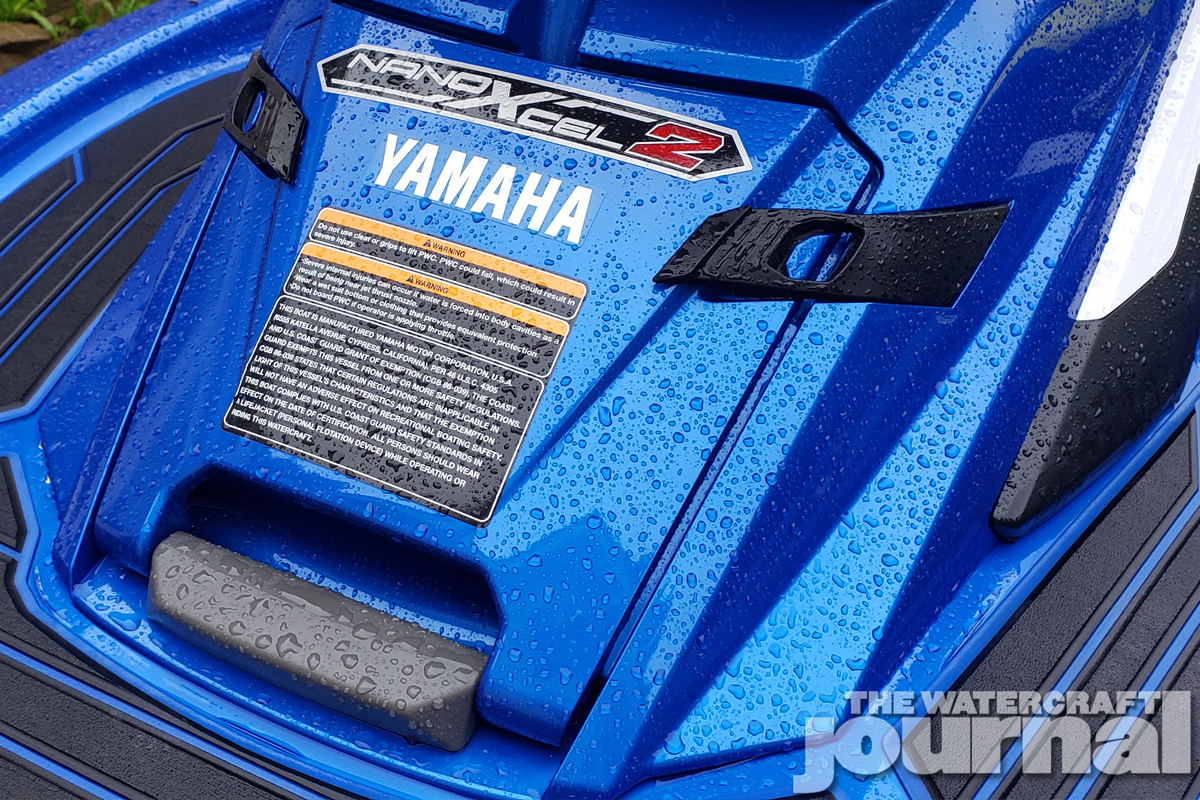
The 2019 Yamaha FX Cruiser SVHO, while always at the pinnacle of Yamaha’s premium luxury WaveRunner lineup starting at $16,199, is completely new this year with a plethora of performance and rider comfort. On the performance side, the new 2019 FX lineup borrows hull design from Yamaha’s race-bred GP1800R as well as tried-and-true admirable aspects of previous FX models. The new FX Cruiser weighs in at 820 pounds dry. While still being the largest flagship model, it remains svelte using Yamaha’s NanoXcel2 composite technology which both lightens and strengthens the WaveRunner’s hull over traditional composite layup.
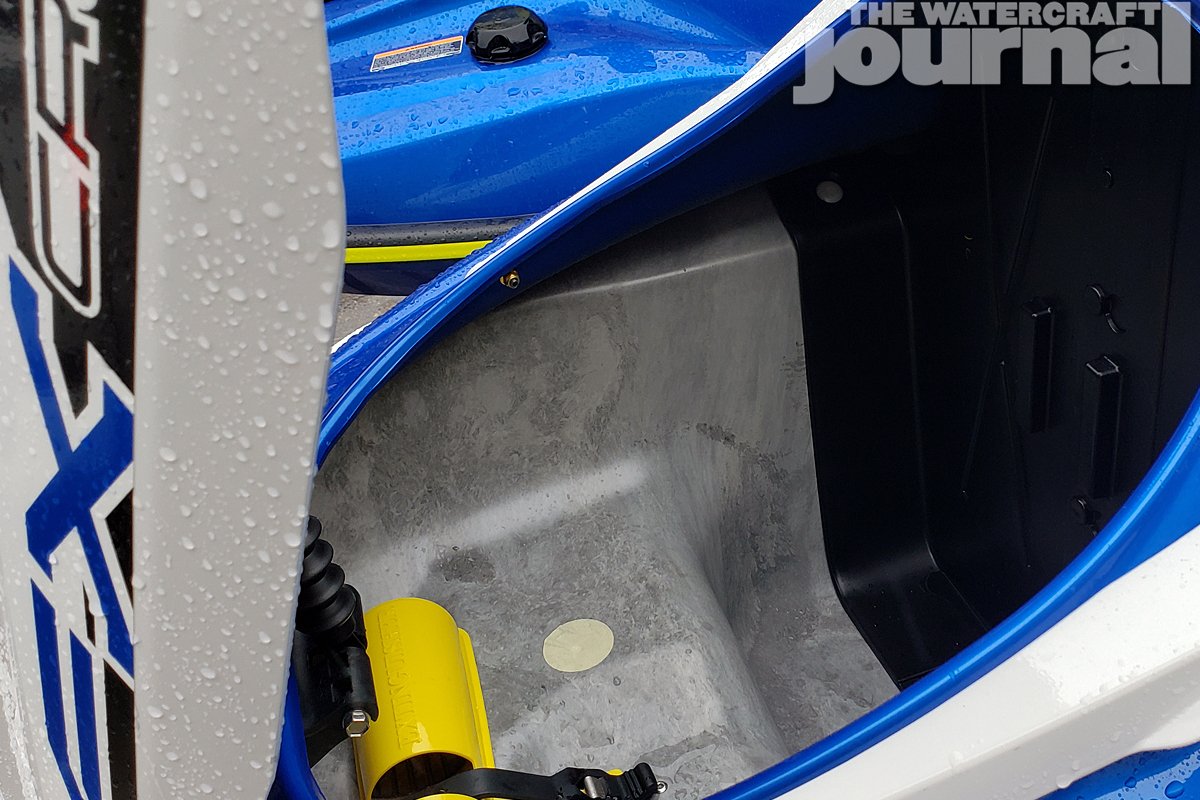
The 2019 model is 16-pounds lighter than the 2018 FX Cruiser SVHO while increasing dimensions slightly to 140.9-inches long, 50-inches wide, and 48.4-inches tall (not to mention adding storage from 33.2-gallons to 44-gallons). Yamaha’s relentless pursuit of producing a better power-to-weight ratio drives out unnecessary heft.
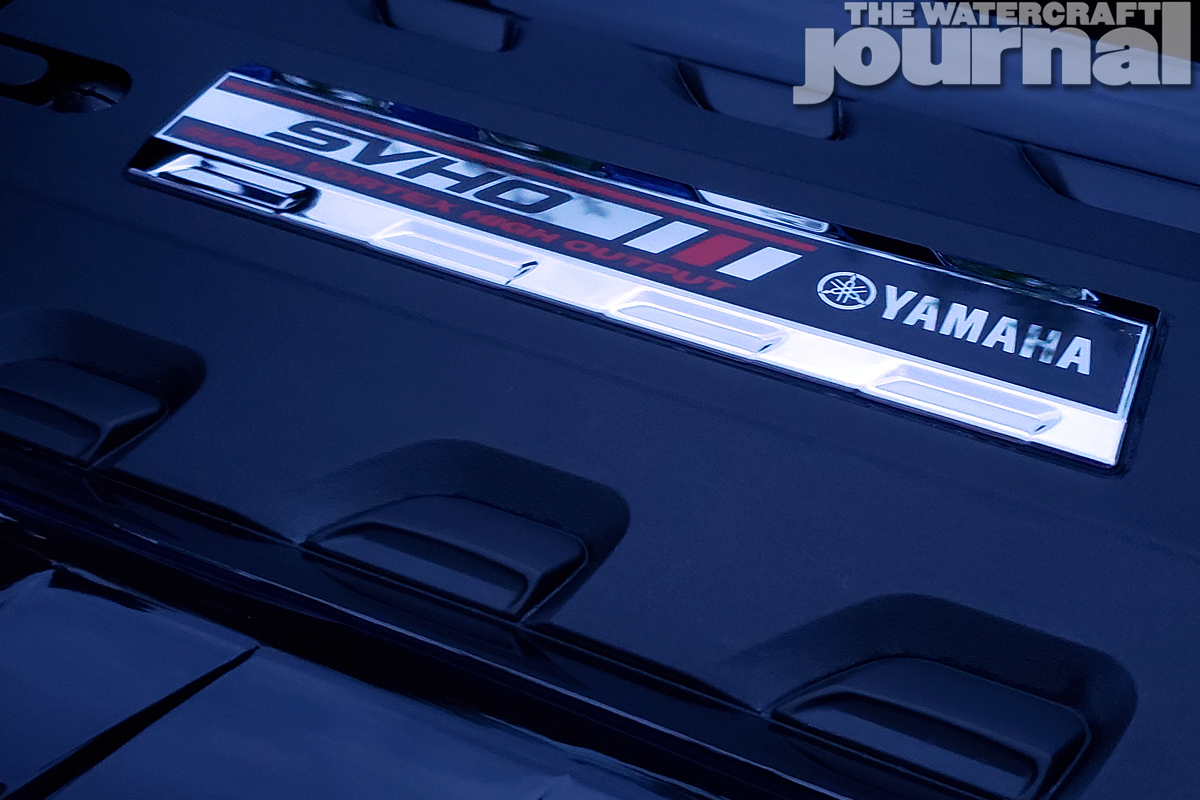
Speaking of power-to-weight, similarities with the GP1800R do not stop at the hull. The FX SVHO Cruiser shares the same supercharged high output 1,812cc four-stroke engine as the race-winning GP1800R. Your throttle hand will appreciate grunty bottom-end torque provided by an industry leading displacement. Hold on tight to those accent color-matched ergonomic grips, because once boost kicks in water flowing from the 160mm, eight vein pump will shove you back into the high-backed cruiser seat.
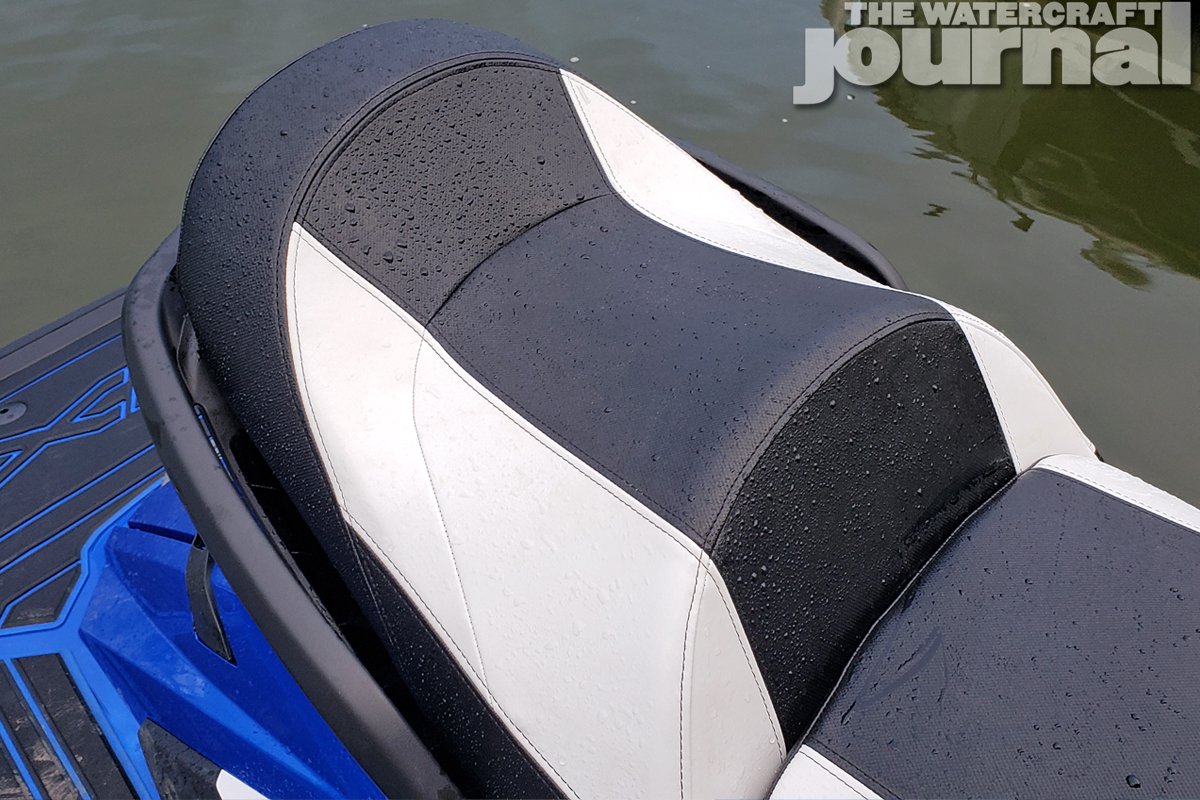
Moving to the 2019 FX Cruiser SVHO’s creature comforts, the “Cruiser” moniker originates from a stadium style (successive levels higher than the previous) three-tiered seat standard for Cruiser and SVHO Limited models. Wrapped in stitched material, the seat is both comfortable and effective at keeping riders planted even in the roughest conditions. Small grain embossing in the material limits slippage when damp. Redesigned bow ridges deflect spray to grant riders more control when to get wet. Watercraft riders of old would probably chuckle at the thought of choosing when to be splashed on a PWC. That is the world of luxury we currently reside in though, and the FX lineup is a premium example of melding performance with comfort.
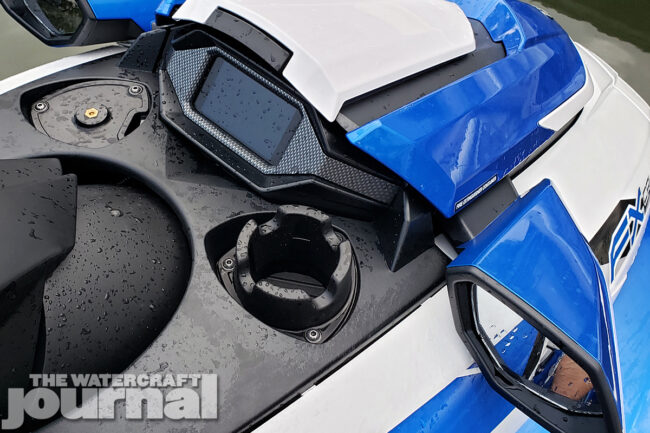
Worthy of taking a flagship luxury role, other significant rider amenities in the cockpit of the 2019 FX Cruiser SVHO include a customizable RAM mount on the left, which can be interchanged with the right side Hydro-Turf lined cup holder. The RAM mount accepts a variety of mobile accessories including Yamaha’s optional speaker units ($299) and fish finder ($249), which are available standard on the 2019 FX Limited SVHO.
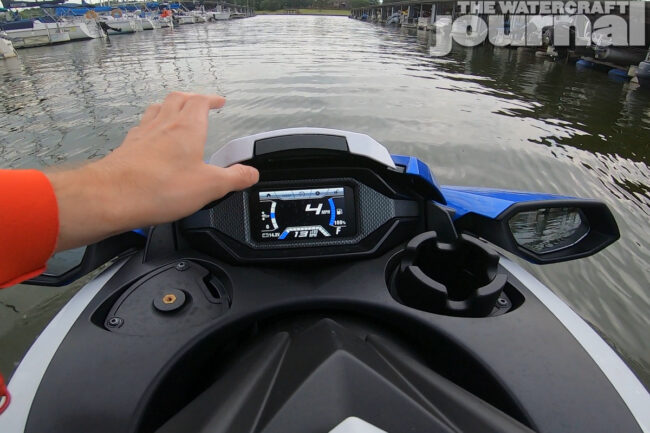
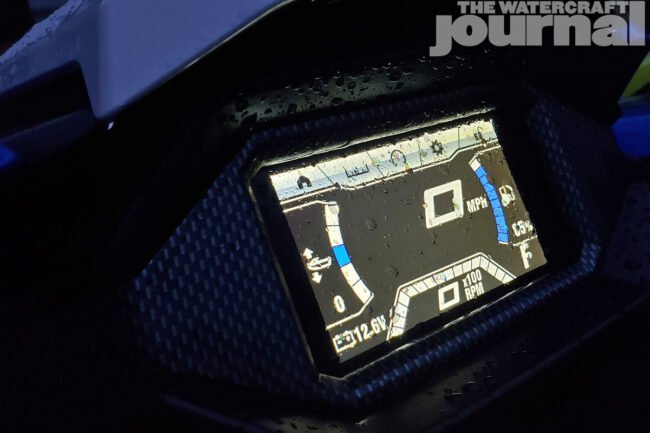
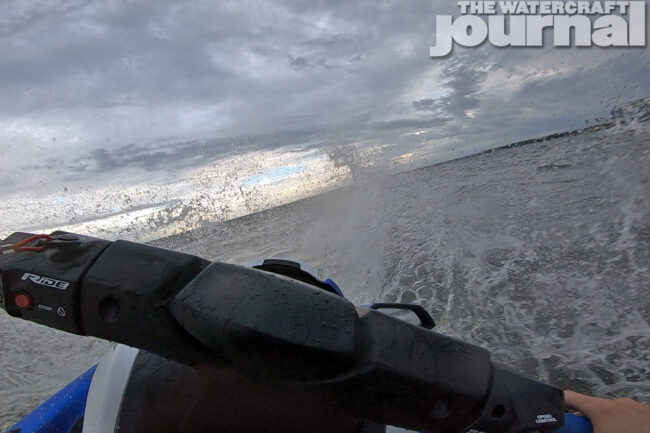
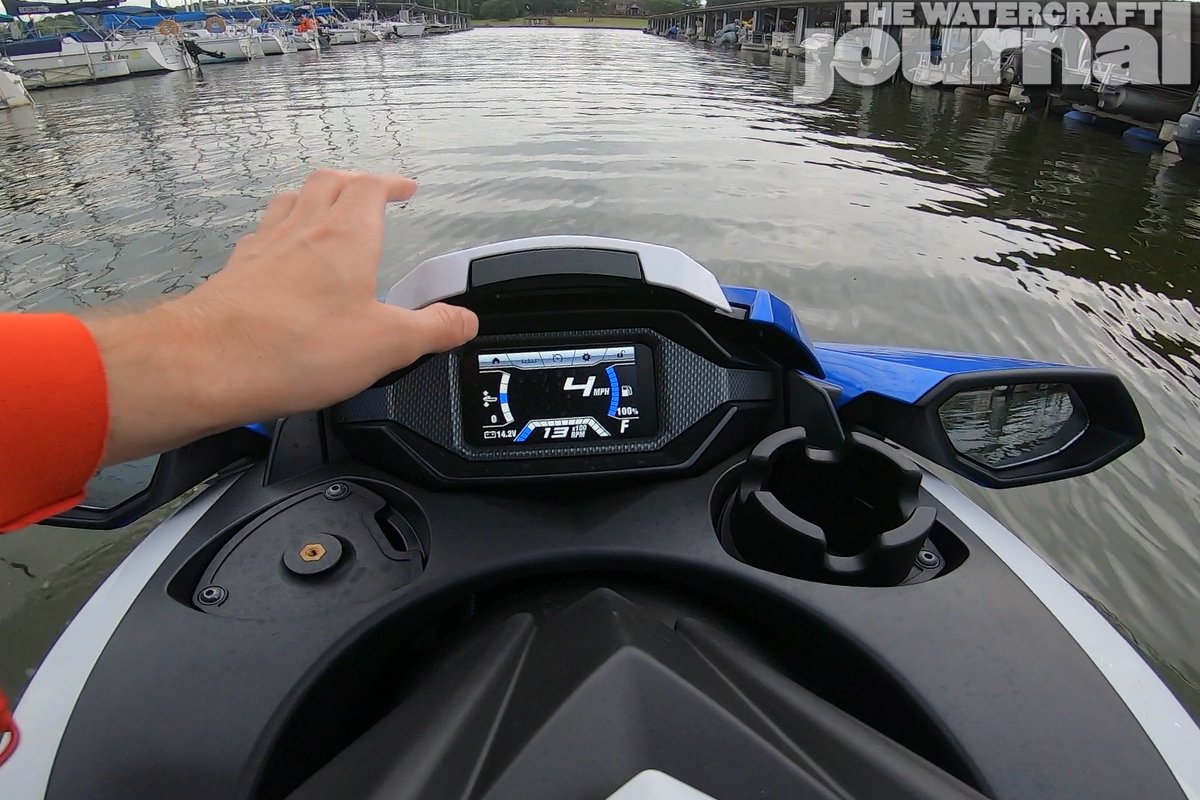
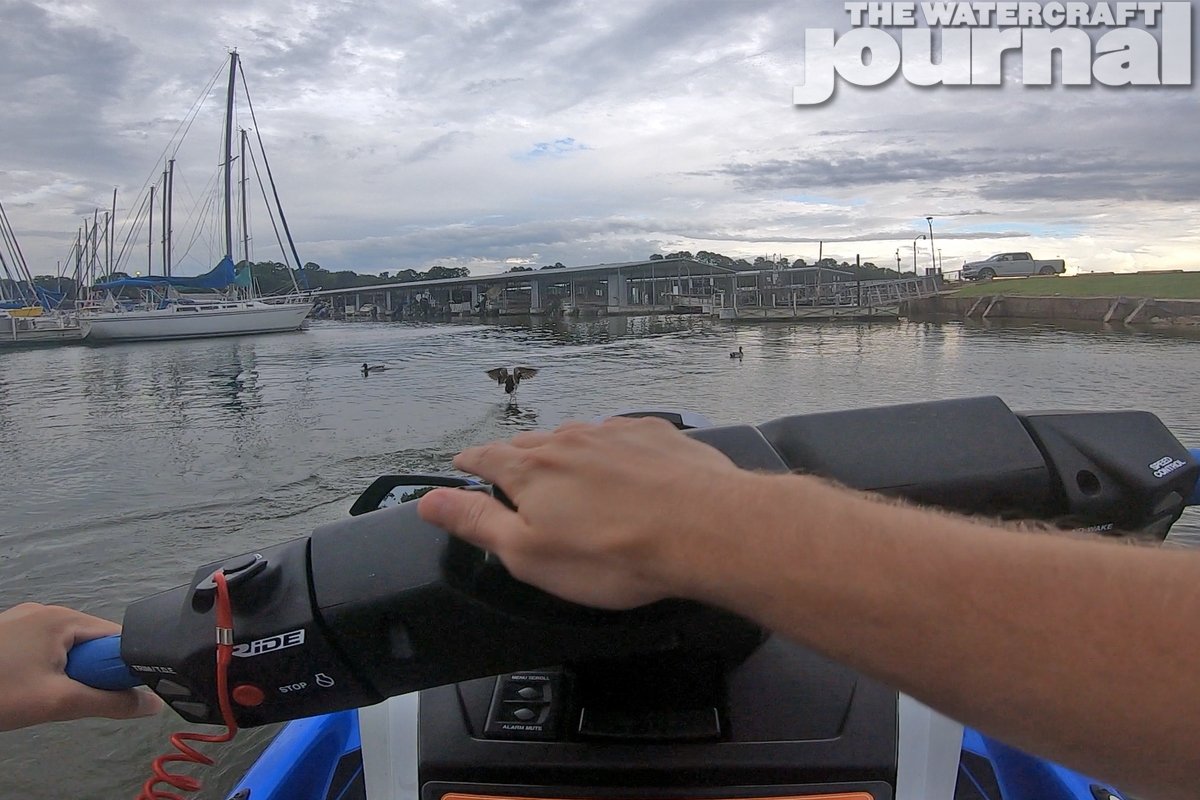
In between these two features is an industry first color touch screen boasting Yamaha’s “Connext” software. It grants total control to personalize the rider’s experience such as adjusting screen color and brightness, tracking maintenance schedules, or in the case of the Drive Control feature, adjust acceleration and speed curves for less experienced or overly ambitious riders. The FX’s controls are easily accessible with ergonomic color-matched grips on the handlebars, RiDE reverse traction control system and electronically adjustable trim on the left, five-way tilt under the steering, and No Wake Mode, Cruise Assist, and throttle on the right.
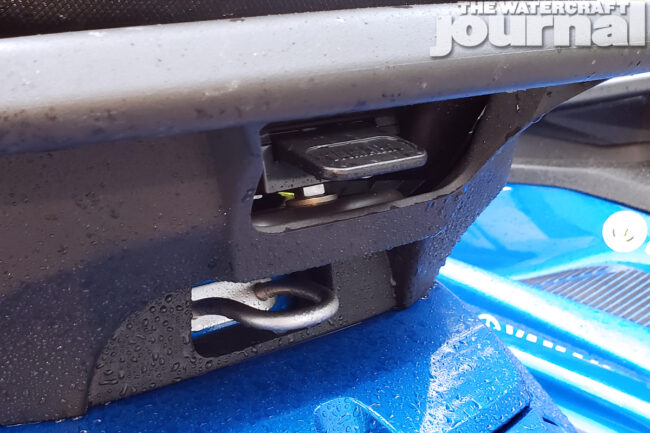
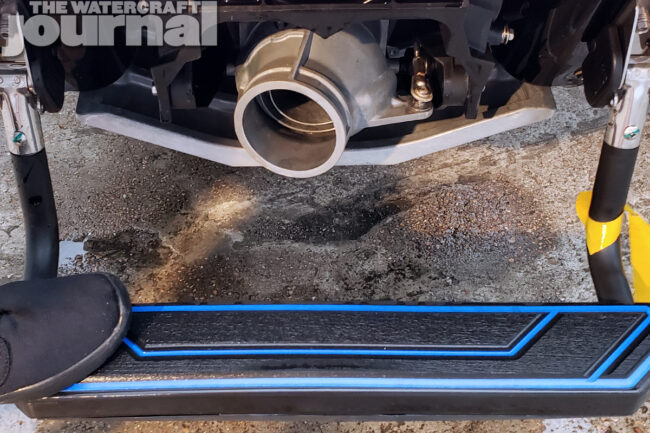
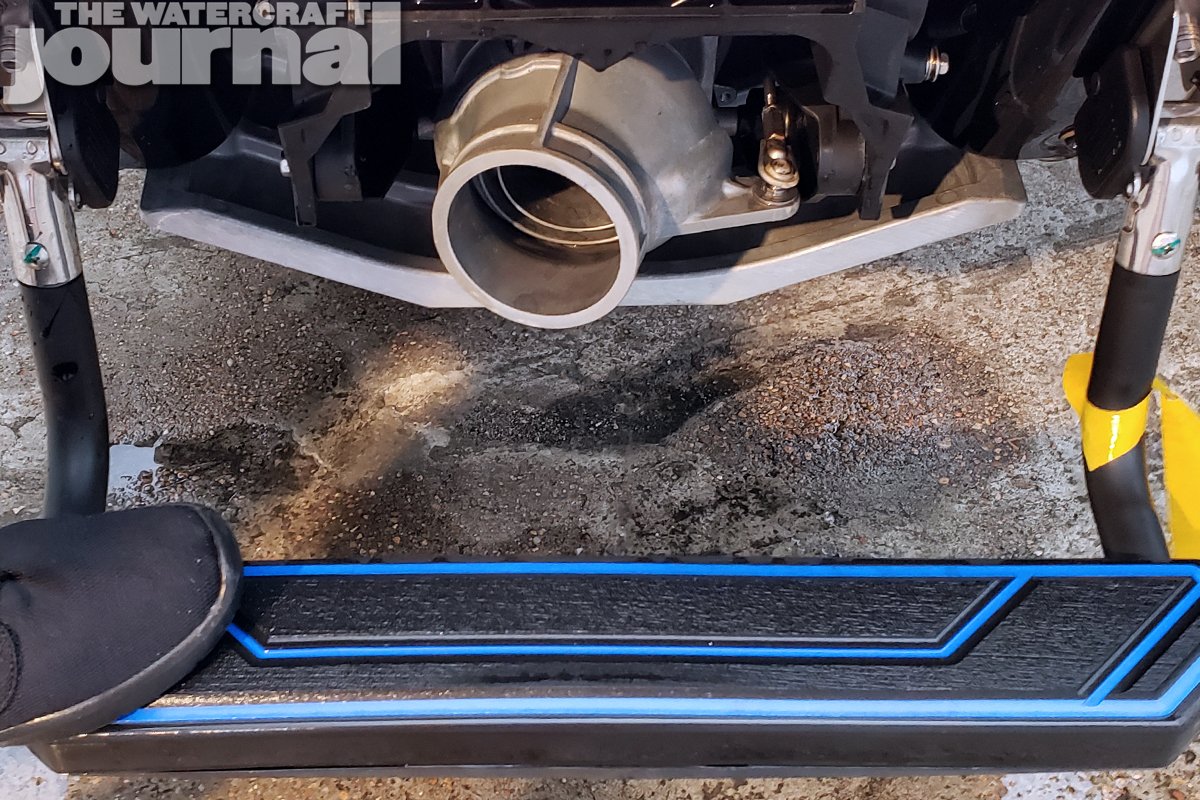
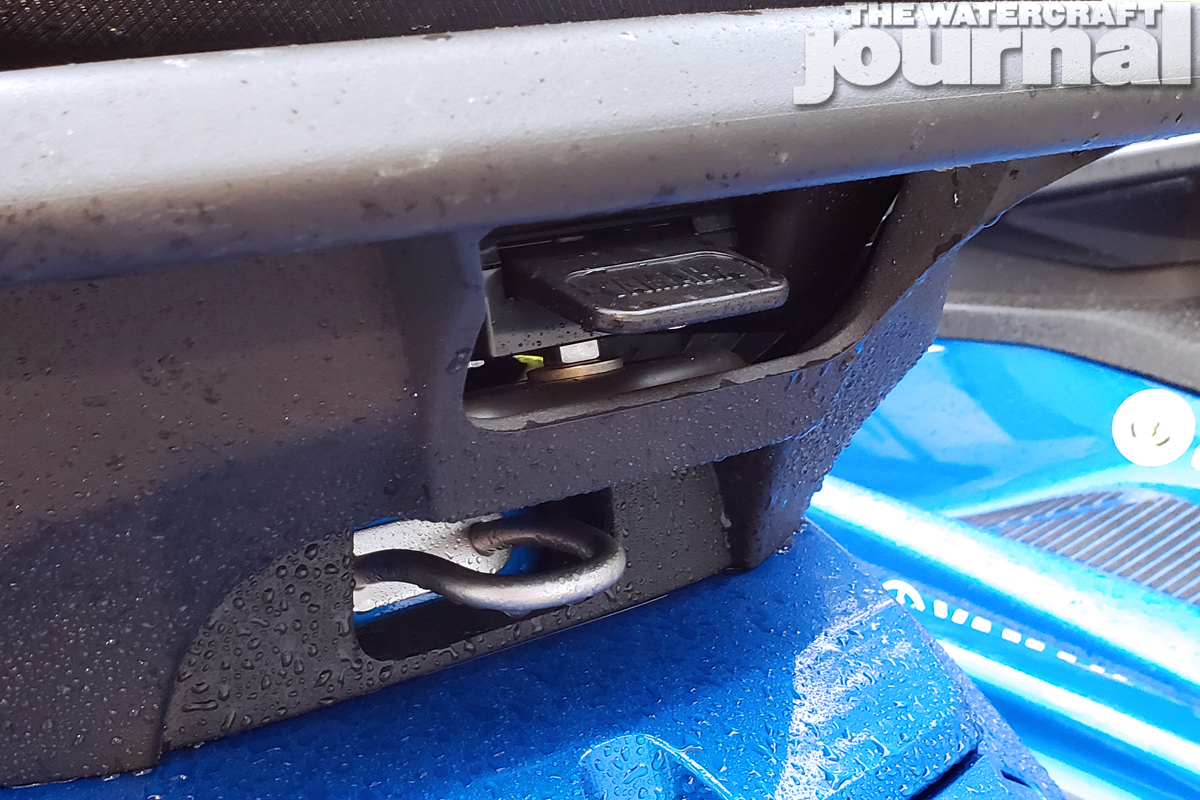
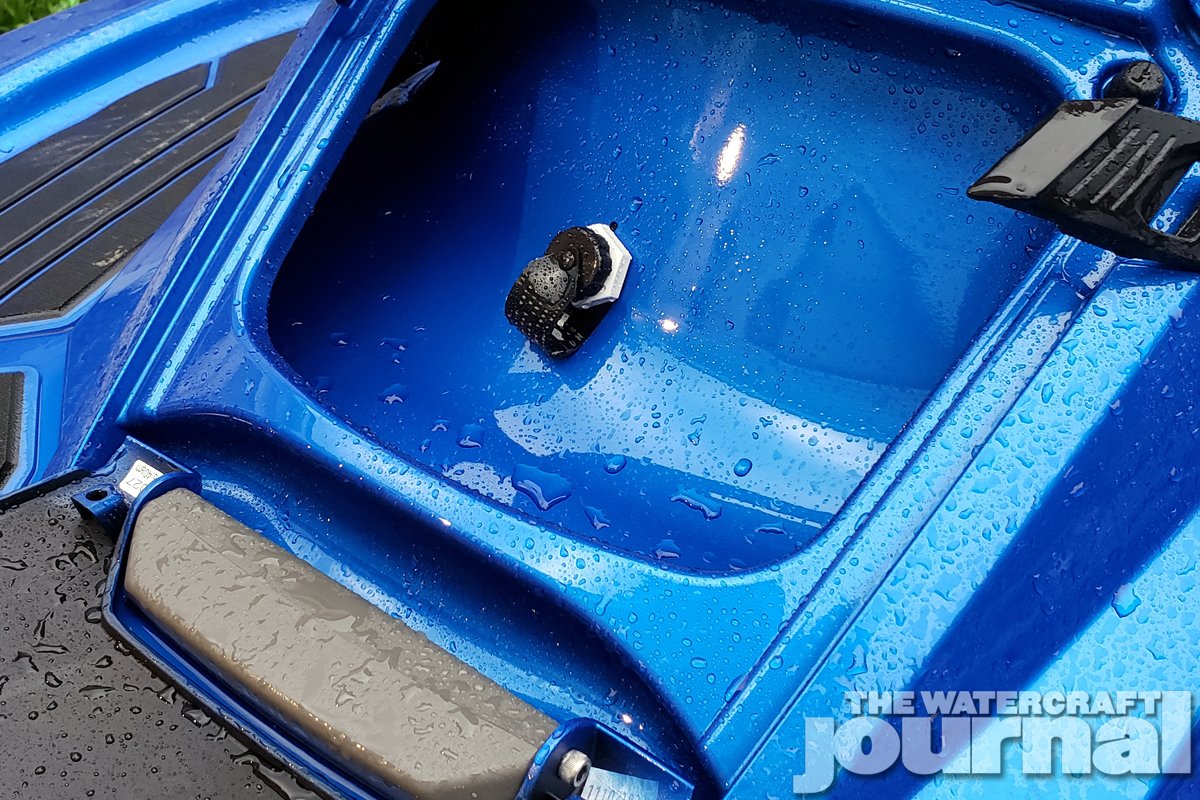
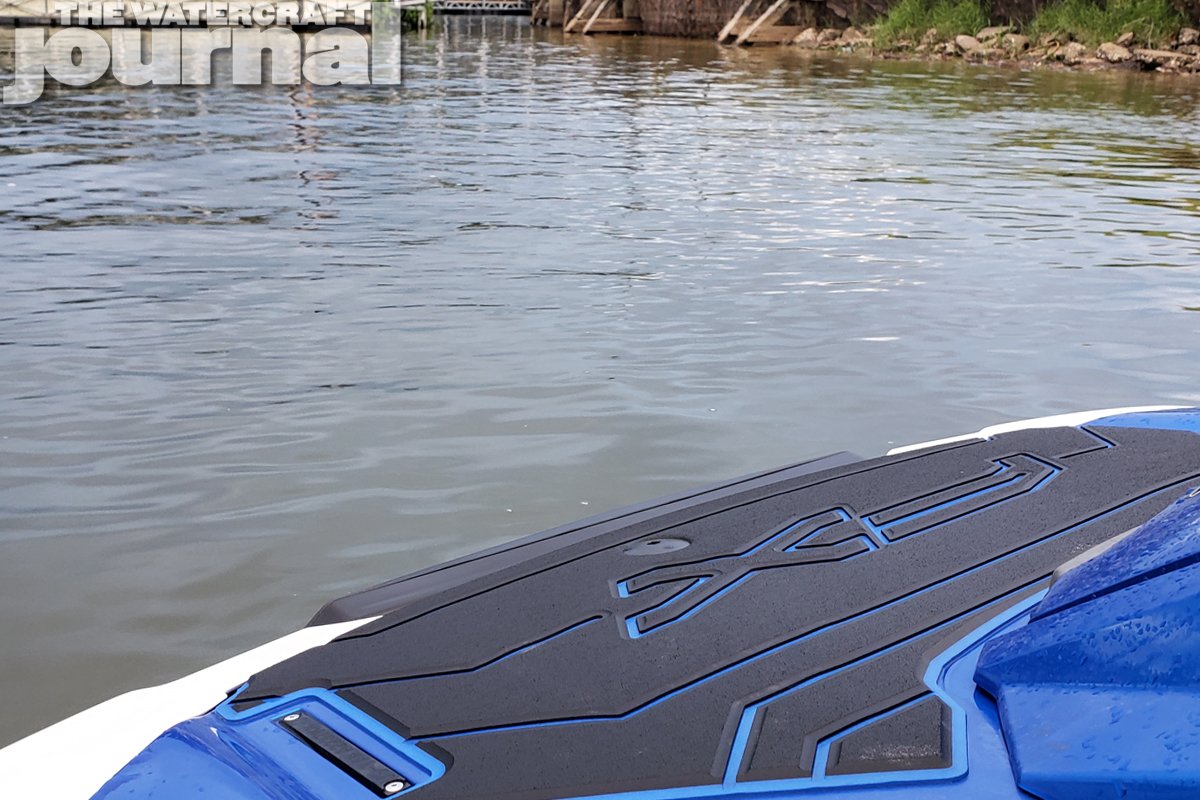
Premium cut Hydro-Turf lines the spacious footwells, deck, and reboarding step to keep slippage to a minimum. The FX Cruiser models include the addition of two pull-up cleats on each side for easy docking. Despite being the largest hull in the fleet, the new FX feels downright skinny compared to older models. This facet allows the rider to comfortably use their legs for grip in both a relaxed, leg-forward riding position and a knee-down, aggressive cornering body position. Get a little wild on the water or stuck on the boat lift in the rain? Never fear, Yamaha stepped up to the plate and have introduced a gravity drain in each footwell. Simple design, and as long as it is kept free of debris, allows for simple drainage to keep stagnant water out of the footwells.
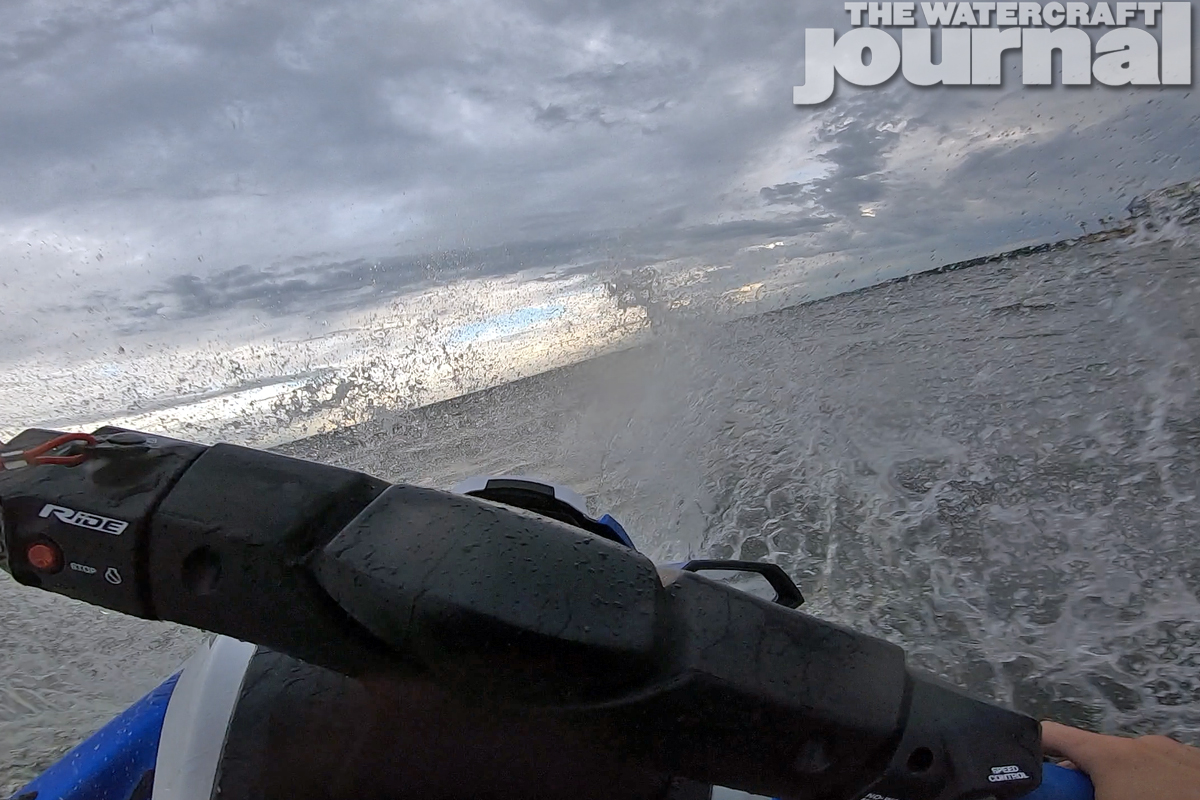
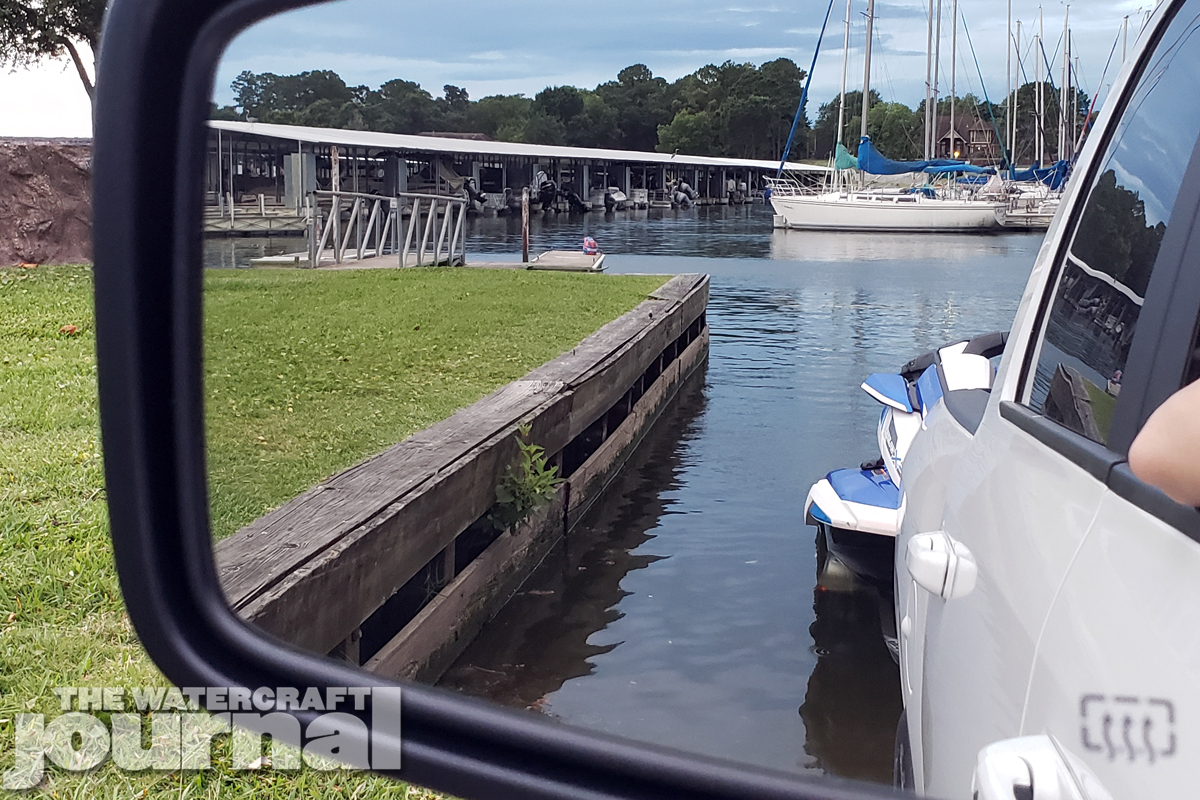
The FX was put through a multitude of different riding situations from stormy, bulkheaded, angry lake chop to flat water closed-course buoy carving. A quick press of the start button fired the SVHO engine to life with a quiet, yet aggressive idle note. As we backed in on a narrow boat ramp the RiDE system immediately showed it’s true colors. Personal watercraft have been notorious for being difficult to handle in tight areas or docking due to water constantly flowing rearward, thus propelling the ski forward as the engine turns over. Not so on a RiDE-equipped craft.
The larger FX was perfectly composed dropping into the narrow single-vehicle neighborhood boat ramp. A touch on the left lever brought the FX smoothly in reverse off the trailer, letting go of both levers left the ski to idle in place while maintaining steering to turn in the narrow waterway, and light pressure on the right throttle lever nudged the FX out toward open water.
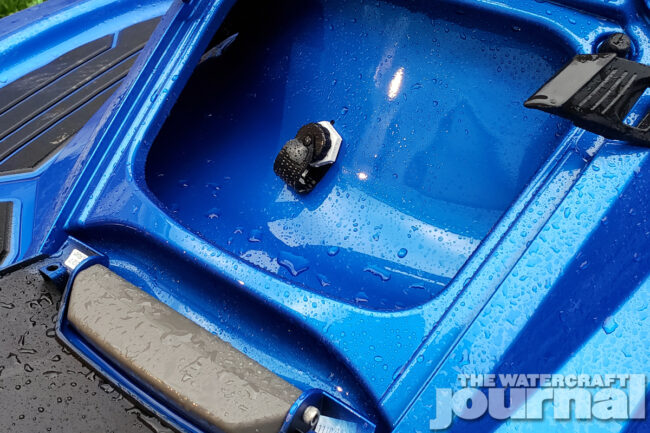
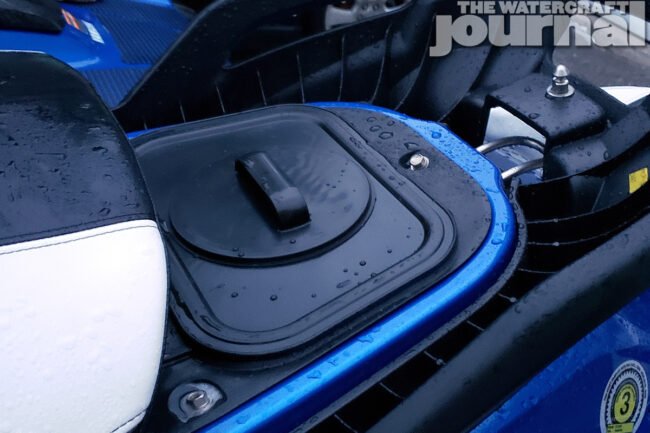
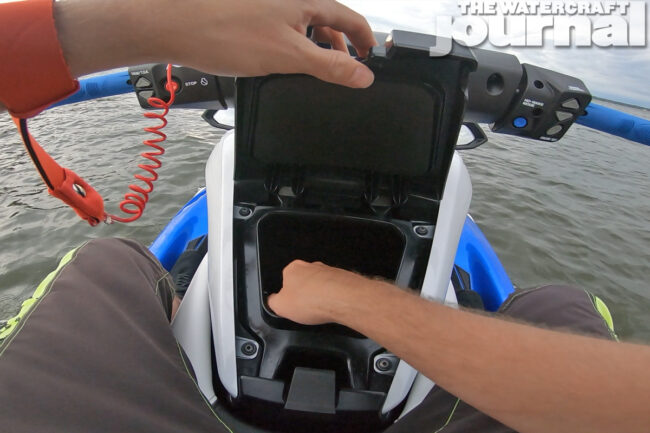
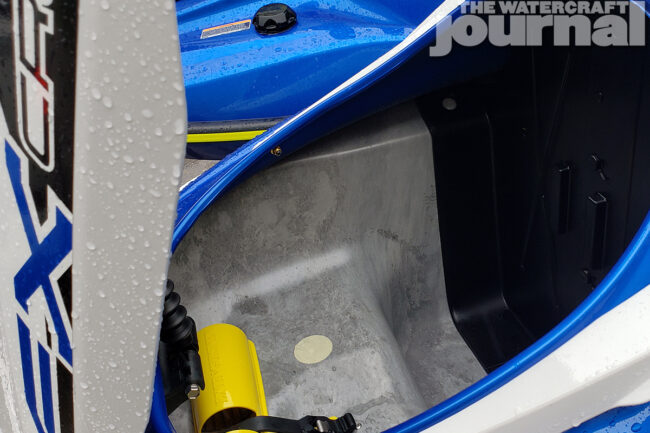
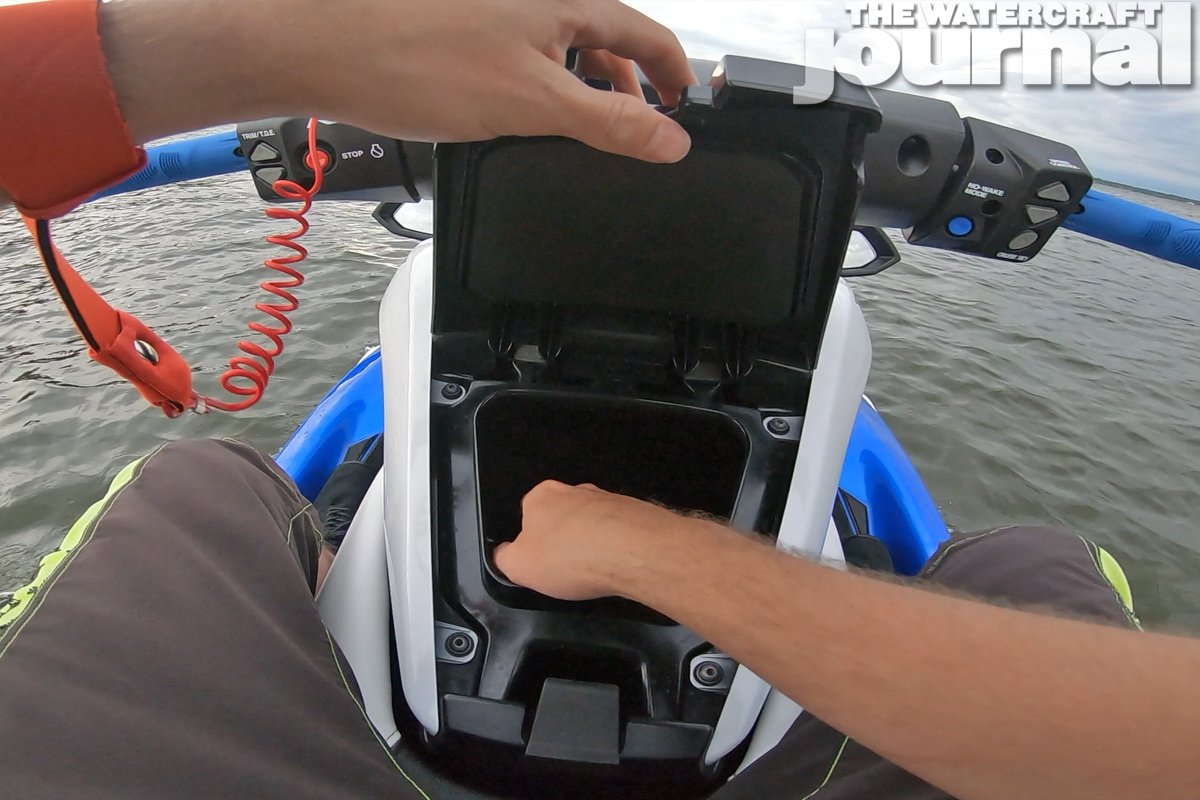
Tropical storm blowoff was rolling on this particular day with wind gusts at 15 to 25 mph – a perfect testbed for rough-water riding on an already usually choppy, bulkheaded lake. A quick check in the cavernous watertight glovebox confirmed cell phone, keys, and wallet were safe and sound. The new stretchable molded rubber latch was preferable over the older catch style that could, albeit rarely, come open during hard riding.
Straight line handling over heavy chop was impressive. GP1800R-esque dual cove hull design planed over frequent, deep troughs and high wave crests with surprising composure. Handlebar feel around center was not nervous or darty no matter what angle waves were impacted. Like riding on a motorcycle with suspension to absorb bumps, the FX broke through waves without significant transfer of energy to the rider almost as if floating above them. Don’t get me wrong, even the best-designed hull cannot stop a good jostling from hitting a wave at 65 miles an hour, so good judgment is imperative.
Sustained 60-plus mph was possible on significant chop due to Yamaha’s top loader intake grate efficiently funneling water into a 160mm pump. The undeniable seat-of-your-pants power created by the SVHO engine completed an impressive package of speed and handling. Keep in mind, big speed and acceleration mean you’ll be cracking open your wallet as much as you crack open that throttle!
Straight line speed was fun, but the real joy of riding the FX started to bloom when carving corners. Having ridden motorcycles from dirt bikes to superbikes for many years, the turn-in feel of the FX was very akin to riding a sportbike on the road. Steering at center was stable and predictable. With a confident turn of the bars the hull gracefully broke to the indicated side and held a firm line under throttle. Personally, riding PWCs has taken precedence over motorcycles in recent years because of the ability to push the boundaries of the machine farther on the water than the street. All of that with similar performance and fewer consequences, you can see why more and more personal watercraft are turning up in you and your neighbor’s driveways.
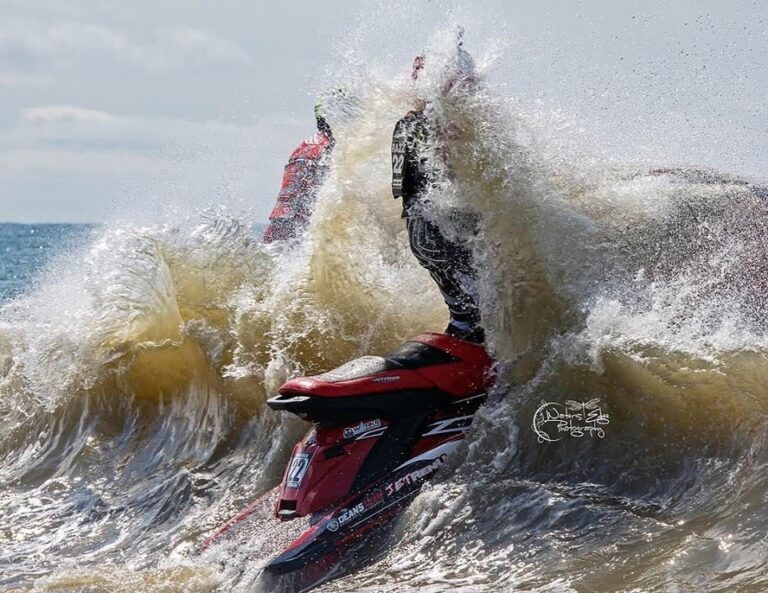
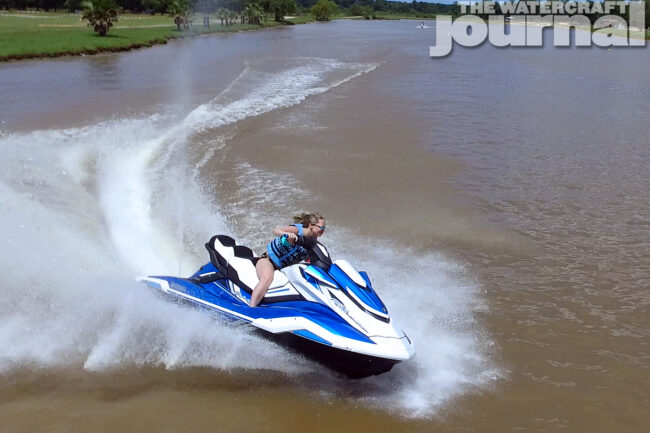
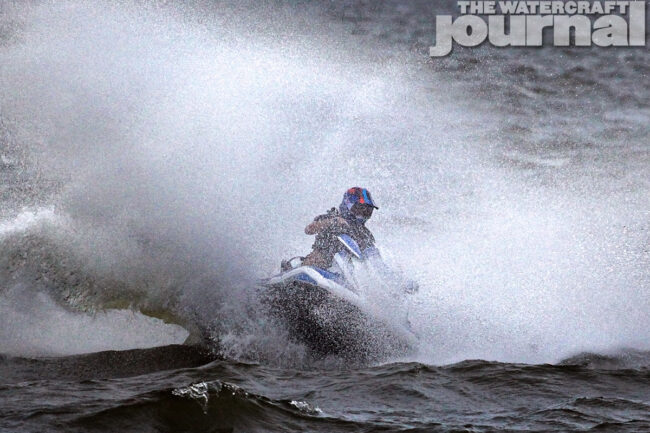
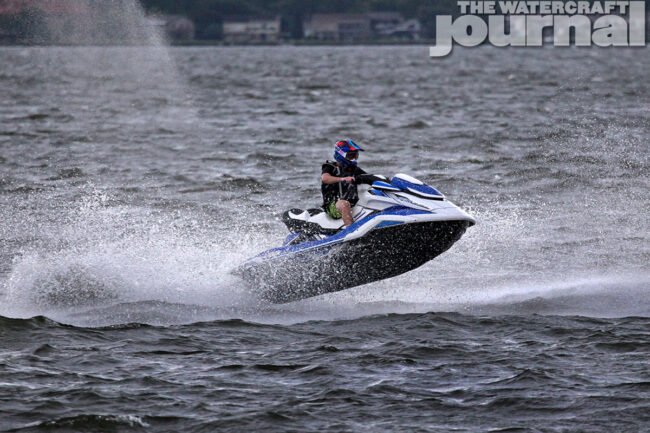
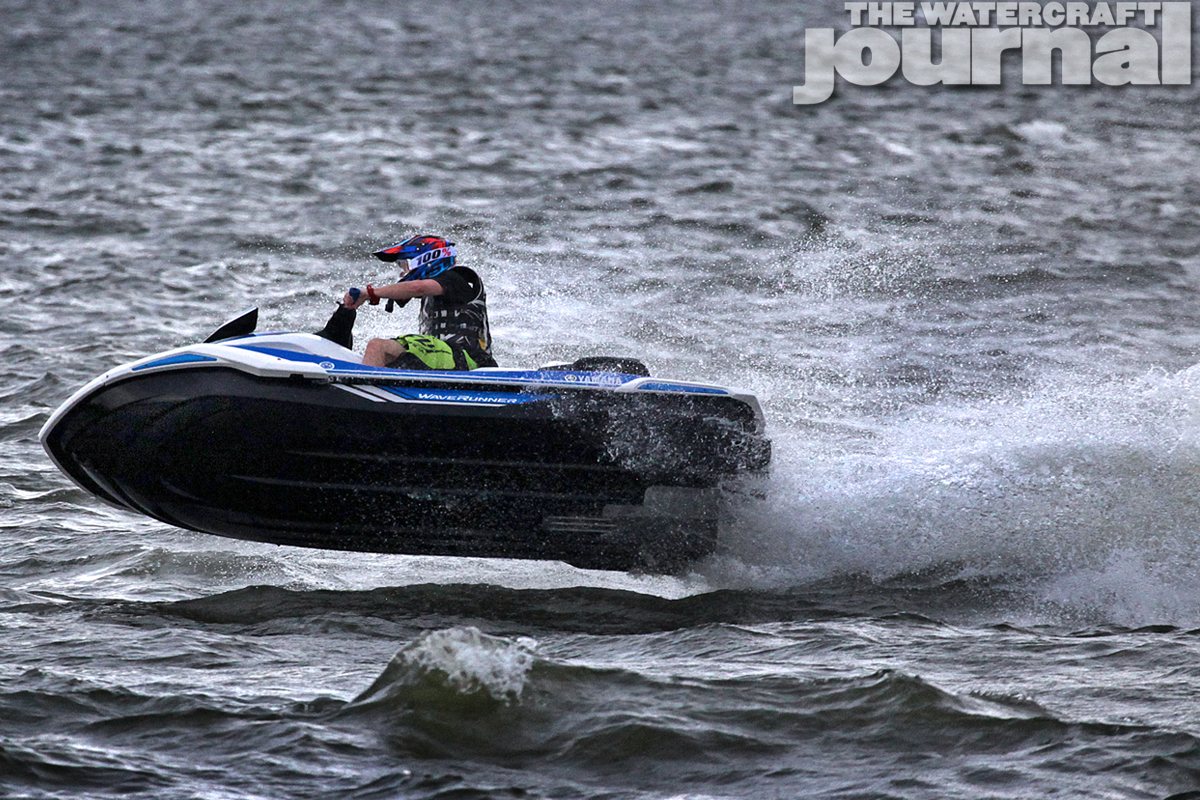
Pure confidence in the FX came a split second after the entire WaveRunner took to the sky mid-corner, having launched off the backside of some aggressive chop, only to land and keep the same line without any hint of sliding, catching, or high-siding. The Cruiser seat kept rider and machine together comfortably and confidently as you can tell from the photo. Being marginally longer and two inches wider than the previous model did not affect how nimble the 2019 FX felt swapping bond rail to bond rail. The width did, however, allow for rider comfort due to almost infinite foot placement and riding positions in even the bulkiest of shoes.
One of the new features for the 2019 FX, among other Yamaha WaveRunner models, is the touch screen display. At first, we were skeptical. We wondered how was a touch screen supposed to work when soaked with water? On our tests in some of the roughest, wettest conditions the touch screen never had an issue responding to user input. Truly impressed with the brightness and responsiveness of Yamaha’s Connext software. No complaints whatsoever!
A storm and descending darkness cut the adrenaline-filled lake test short, but that’s not the end of the story. A 2019 FX Cruiser SVHO was available to ride at the June Cycle Shack North Yamaha Demo Day at 3 Palms Extreme Sports Park. Everyone who attended got the opportunity to experience the FX’s confident riding style in completely opposite conditions – flat water and high-speed carving.
Flat water can be a great proving ground for finding faults in a machine since all movement is generated by the machine rather than waves, so irregularities in performance are isolated. Everything was butter smooth as the FX dove in and out of the zig-zag buoy course. All of the previously mentioned stellar handling aspects were noted. Initial confident turn in followed by a glue-like grip on the water with no nervousness when the FX tracked over other wakes.
The FX definitely gave the mighty race-bred GP1800R a run for its lunch money on the buoy course while being incredibly predictable, comfortable, and luxurious on both rough and flat water conditions – further solidifying the FX Series WaveRunners at the top of Yamaha’s 2019 lineup. They combined sleek styling wrapped around a tremendous power plant, almost limitless personalization from an interactive touch screen and genuine Yamaha accessories, with comfort for spirited riders or the whole family out for a day on the lake.
Last time we told you about Sea-Doo’s innovation award-winning Fish Pro. Well to add to that award, BRP has announced that they are the recipient of at least seven new Red Dot product design awards including those for the Sea-Doo Fish Pro and RXT-X models.
The Red Dot award panelists look for product design quality and innovation. This goes to show that BRP and Sea-Doo are driven to provide cutting-edge products that exceed consumer expectations.
You can read more information on these awards through the press release below.
Valcourt, Quebec, March 25, 2019 – Once again, the efforts of BRP’s experts, inspired by the company’s high standards for innovation, and driven by the team’s talent and creativity, have been recognized at the Red Dot product design awards. No less than seven BRP products were favoured by the jury at the 2019 edition, proving that it’s always possible to find new ways to push back the limits of the industry. The winners are:
Lynx Radien-X Platform X-trim SC
Sea-Doo FISH PRO
Sea-Doo RXT-X
Can-Am Ryker
Can-Am Maverick XRS Max
Can-Am Maverick Sport Max
LinQ Premium Storage Bag
“Receiving these awards is always an honour. They represent all teams hard work, the attention to our customers, and BRP’s passion and expertise. This recognition demonstrates BRP’s thirst for innovation, and its success as a pioneer in the industry”, says Denys Lapointe, Senior Vice-President, Design, Innovation and Creative Services.
Last year, BRP marked a record year with 15 design awards in total. 2019 is off to a strong start, and BRP’s design team intends to outdo itself again.
About the Red Dot Awards
The Red Dot product design awards focus, among other things, on the design quality and innovation potential of the products submitted. The laureates of these awards are cutting-edge products, that set trends and pave the way for the future. Red Dot’s panel of approximately 40 experts carefully evaluates them to choose those that merit the distinction.
For more information on BRP’s 2019 Red Dot design awards, visit www.brp.com.
About BRP
We are a global leader in the world of powersports vehicles and propulsion systems, built on over 75 years of ingenuity and intensive consumer focus. Our portfolio of industry-leading and distinctive products includes Ski-Doo and Lynx snowmobiles, Sea-Doo watercraft, Can-Am on- and off-road vehicles, Alumacraft and Manitou boats, Evinrude and Rotax marine propulsion systems, as well as Rotax engines for karts, motorcycles and recreational aircraft. We support our lines of product with a dedicated parts, accessories and clothing business to fully enhance your riding experience. With annual sales of CA$5.2 billion from over 120 countries, our global workforce is made up of around 12,500 driven, resourceful people.