

A word of caution: there hasn’t been a worse mix of gorgeous scenery and absolutely earsplitting garbage music than what you’ll see in the video below. In a partnership with National Geographic Adventure and Alaska Photoventures, this wonder-filled video only teases at the larger, full-length video aired on the NatGeo channel. (We’ve also seen that the full-length video is available for those with Amazon Prime streaming, but have yet to personally find it. Happy hunting!)
To be completely understated, the unmolested nature of the Alaskan coastline is only something that few have witnessed in person – especially via personal watercraft. Emmy nominated filmmaker and adventure photographer Dan Redfield joined fellow Alaskan native and hilarious mustache aficionado Lee Blough to tour the coastline of Blackstone Bay, to explore the massive glacial formations and take in only a fraction of the beauty that was available to them.
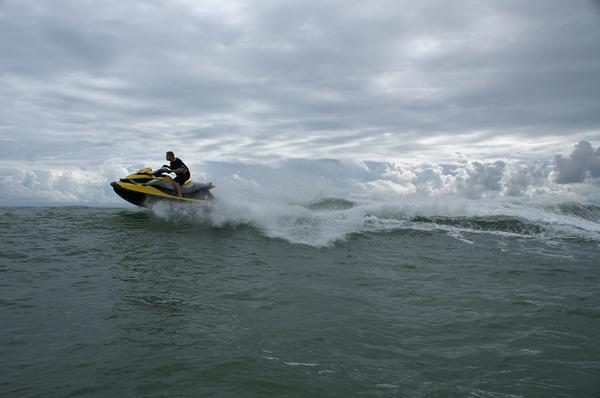
Beginning from Whittier, the two ventured northeast to film the massive sheer rock walls and waterfalls before stopping by a nearby beach. From there, they circled further east to Surprise Cove where they were met with turquoise waters and rocky shorelines. Aboard this 2018 Sea-Doo Wake Pro 230, Dan and Lee continued into Blackstone Bay where they were met with the vast glacial wall. Watch it for yourself below:
There’s a bit of a conundrum when it comes to international jet ski racing series. Most folks in the US just don’t seem to care. While the rest of the world might dismiss this fact, it bears noting that the United States of America is the single-largest market for PWC sales in the world. And within that market, Florida is understandably, the largest market within the US. So if you’re a promoter looking to access the largest quantity of spectators and riding talent, beginning in Florida is a safe move. That’s where the USJBSA was born (which later became the IJSBA). And it’s where P1 took its AquaX series.
Recently, UIM-ABP Aquabike World Championship held its Grand Prix of Sharjah. For those unaware, UIM (Union Internationale Motonautique) claims itself as the “world governing body” of PWC racing. They’ve gone so far as to petition, apply and finally be recognized by the International Olympic Committee (IOC) and is a member of the Association of the IOC Recognized International Sports Federations (ARISF). Heck, the UIM has even signed a Cooperation Agreement with the United Nations Environment Program (UNEP) to “further its range of environmental initiatives.”
If that means anything to you and you’re still reading this, Austrian Kevin Reiterer, one of the most talented and practiced professional ski racers on the globe, took home his second UIM-ABP Aquabike World Championship, beating out a field of international racers whom most Americans have never heard of. Here’s the original press release:
Victory Team’s Kevin Reiterer was once again in a class of his own with a faultless performance in today’s final moto in Ski GP1 to win the Grand Prix of Sharjah and seal his second UIM-ABP Aquabike World Championship.
Second place went to outgoing champion Quinten Bossche to end the year in third overall, with Raphael Maurin taking second overall in the Grand Prix and overall world championship standings, finishing in third, the final place on the Grand Prix podium going to Anders Keller.
We’re still waiting for our comprehensive coverage from Thailand, there’s still big news coming from the King’s Cup. Recently, the IJSBA announced that a new system will be established to award a new International Rider title during the 2019 King’s Cup event. There’s still quite a few details left to has out but the announcement will work to shoehorn an IJBSA presence into the wildly popular one-time international PWC event.
Here’s the original press release: IJSBA is pleased to announce the creation of a new ranking system and title that will be bestowed to a select few divisions of competitors at the 2019 King’s Cup. The title will be based upon a series of events leading up to the 2019 King’s Cup where competitors, in individual categories, will be given a points system that accumulates through various competitions in: North America, South America, Asia, Europe, and Oceania.
Of the several meetings held at the 2018 Kings Cup, the request to develop this end of the calendar year award was regularly seen as a priority. This new ranking system, which intends to acknowledge competitors who challenge IJSBA Sanctioned Races on at least three continents per season, will be measured by a system that takes into account the needs and opportunities of competitors in all of the global regions for consistency.
Please visit IJSBA.com over the next coming weeks as the formula for the ranking is presented in the first draft for comment.
Remember when all jet skiers wore Oakley Razor Blades? Back in the 1980s and throughout much of the 1990’s, Razor Blades were almost mandatory. The brightly hued single-piece lens, splatter-paint neon frames and matching nose piece were just so…so…1990s. Brandishing these bad boys and a pair of shorty OP swim trunks was a quick way to score yourself a Kelly LeBrock lookalike over a couple Bahama Mamas at Señor Frogs.
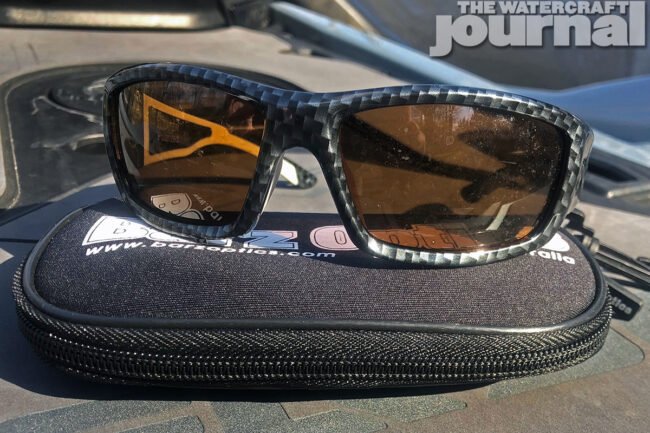
While Barz Optics’ Cabo Polycarbonate Polarized sunglasses won’t take you back to the heydays of 1992, they do carry enough stylized DNA to tickle your nostalgia itch, all while offering you far better protection, comfort and features than those old retro Oakleys could ever dish out (and for a fraction of the cost, no less).
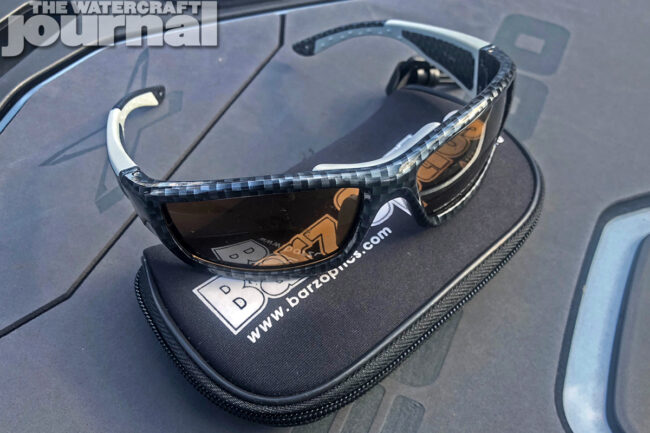
While the Cabo frames come available matte carbon fibre, matte white with blue temples or matte black with grey temples, ours were a little special. The Cabos we were provided came in Barz Optics’ gloss grey and red floating frames with grey polycarbonate polarized lenses. (Grey mirror, grey or amber are lens color choices.)
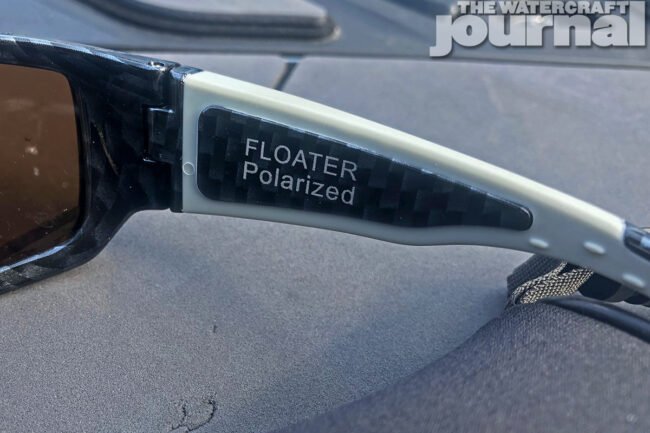
Interestingly, Barz Optics also has a second lens size. As they describe, “one to fit Caucasian face shapes and one that is shallower ‘low profile’ to fit Asian face shapes.” The “wrap” style is frameless on the bottom, similar to those “old school” Razor Blades from 30 years ago. All frames feature non-slip temples and nose piece.
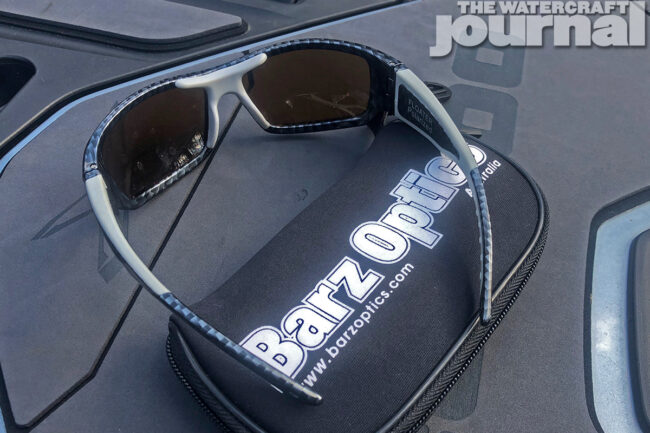
We had the chance to wear the Cabos several times over the tail end of Summer and into our Fall riding. The lenses are singularly the Barz Optics’ best feature, as they’re durable and offer superior polarization on particularly sunny days. The frames felt natural and hugged our face comfortably (credit to the large pad for the nose and brow), but felt a little heavy at times, as the thick arms encased the floating foam.
In our floating test, they don’t break the surface but reside just below, which can be an issue with darker-colored frames. We did particularly like the lanyard loops pre-molded into the arms. It’s a small detail that many would overlook. We didn’t. We also liked the supplied semi-rigid neoprene case and retainer that came with each pair.
So yeah, you can still purchase a new set of ‘Blades from Oakley, but from their “Heritage” collection and for no less than $300 a pop. They don’t have the features of the Cabo Polycarbonate Polarized sunglasses do, or do they float either. Plus, the Cabos come in at $170, far below the cost of your need for nostalgia. We say ditch the Oaks’ and the Magnum P.I. shorts and grab a pair of Cabo’s from Barz Optics instead.
Few racers are enjoying a better streak of domination than Eric Lagopoulos. Eric made the change to Yamaha a little less than two years ago, and is not looking back. Opting to pursue glory in the smaller-displacement classes, the Sarasota, Florida native competed in the Pro Am Superstock 1100, IROC and 1100 classes at the 2018 IJSBA World Finals, Pro Watercross World Championships and the P1 AquaX Pro Series in Chicago, IL, respectively.
Piloting a Yamaha VX Sport and a EX Deluxe, Eric proved to the world what potential is buried in Yamaha’s Rec-LIte and Recreation lines. But this wasn’t too surprising to the folks at RIVA Racing and Kommander Industries. Eric paired with the two world class tuners to develop an insane 71mph turbo kit and MaptunerX combination that put him ahead of the pack.
Beginning with a Kommander TR-1 turbo kit, RIVA got to work with its MaptunerX to include both antilag and launch control. Being force-fed an undisclosed amount of boost, the EX’s ECU is remapped to use the OEM SVHO injectors and map sensor. Interestingly, a special Skat-Trak jet pump was also developed to put all of that newfound horsepower through the prop. See this wicked machine in action below:
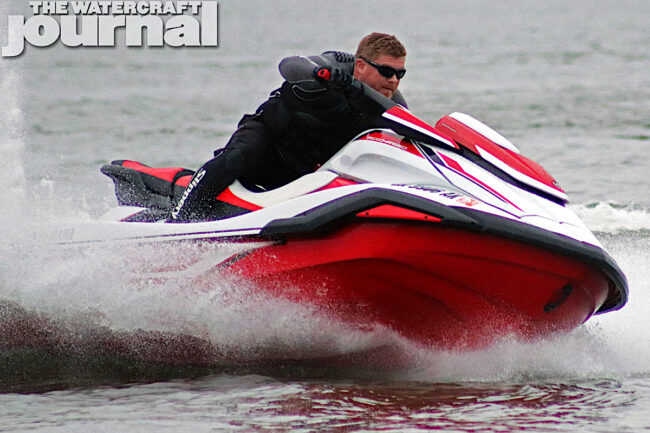
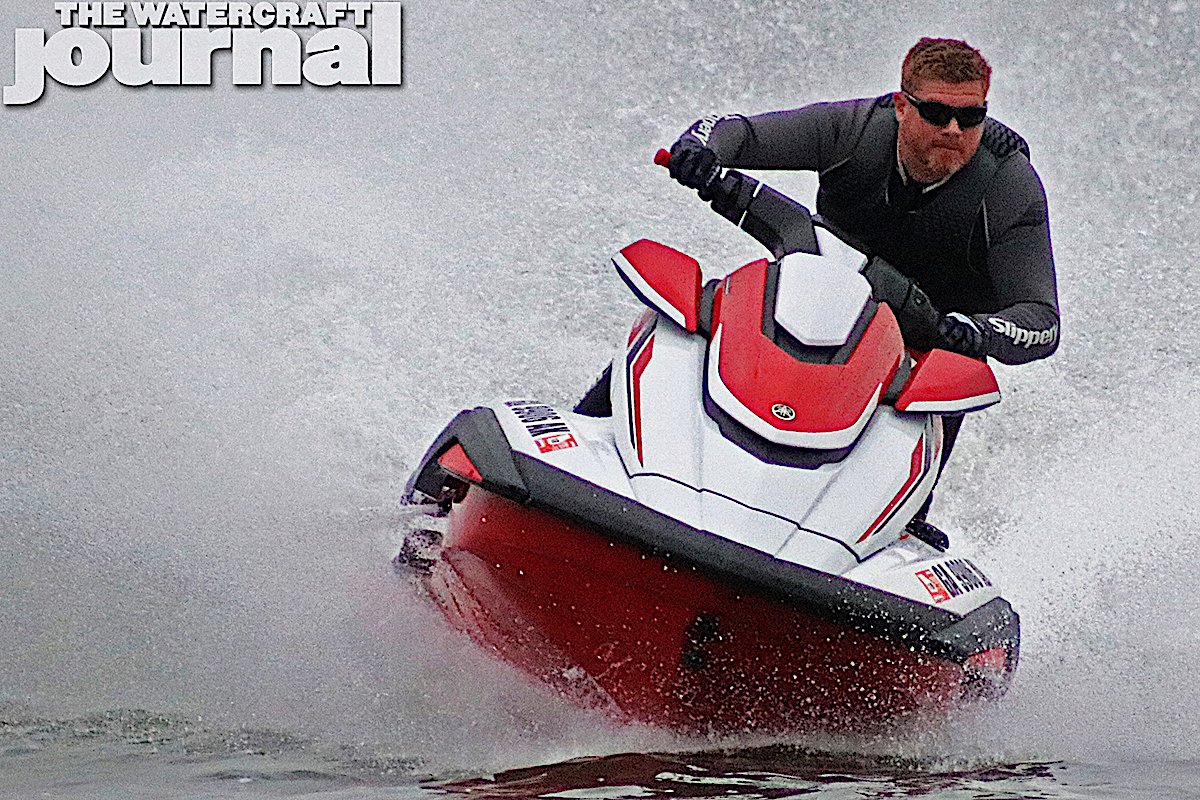
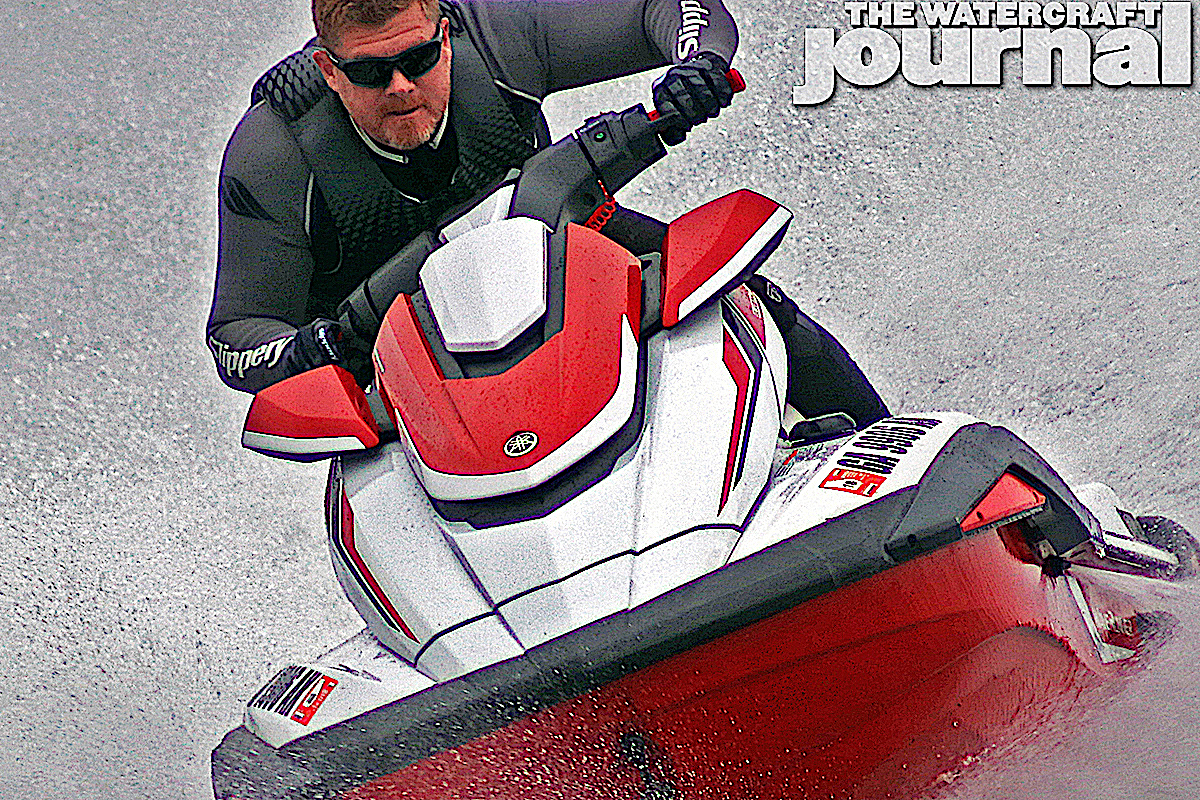
I have come to the conclusion that the 2019 Yamaha GP1800R WaveRunner – much like the two years of the GP1800 that preceded it – is far too much of a machine for most people. Now, don’t get me wrong. There are plenty who think that they’re experienced enough, physically fit enough or “hardcore” enough to wring every last ounce of enjoyment out of the new GP1800R. They’re sure of it, just like an overconfident contestant strutting onto the stage of a talent show. They’ve been told by their friends and family that, yes, their talent and skill is above and beyond the norm.
Then comes someone or something that reveals how truly unpolished, untalented or unfit they truly are. No, the judges say, you can’t hit the notes like Whitney Houston. Sorry, but your friends were wrong. You’re not that good. And like those judges, the GP1800R is exactly the watercraft to provide the sobering revelation that no, you can’t ride like Chris MacClugage. That no, you’re not as “extreme” as you thought you were. The GP1800R will humble you. It is the equalizer. The leveler. It brings balance back to the Force.
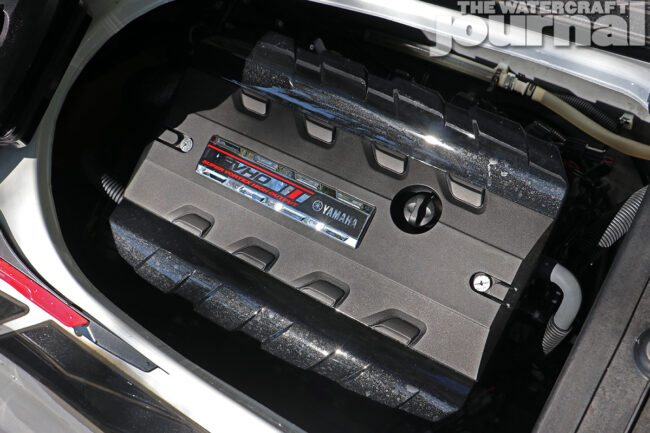
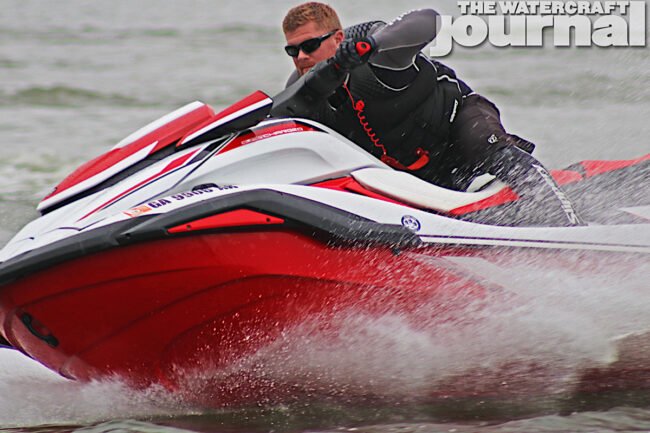
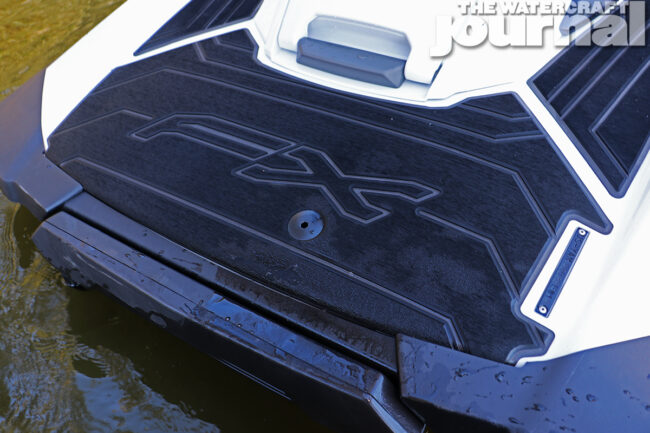
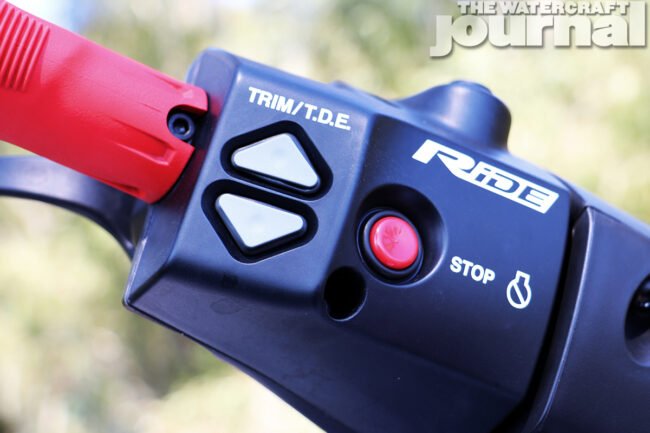
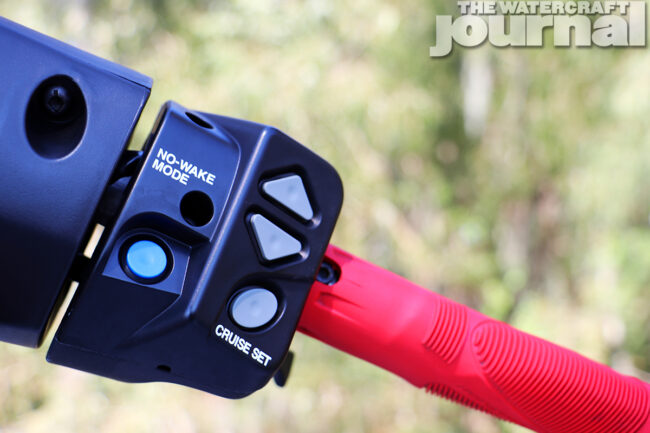
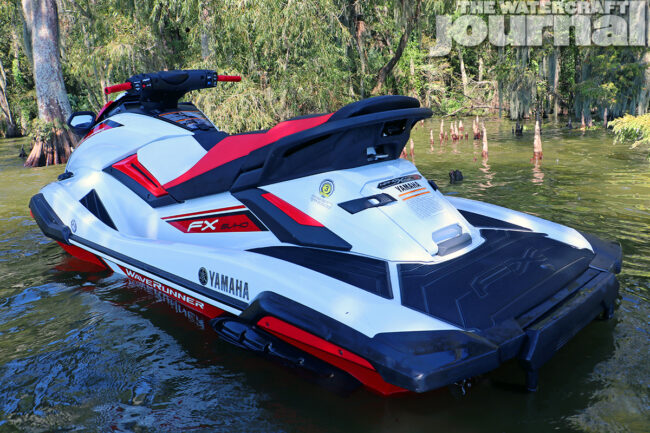
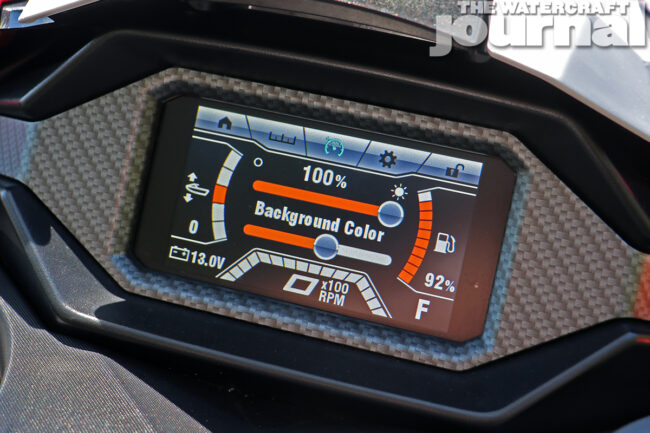
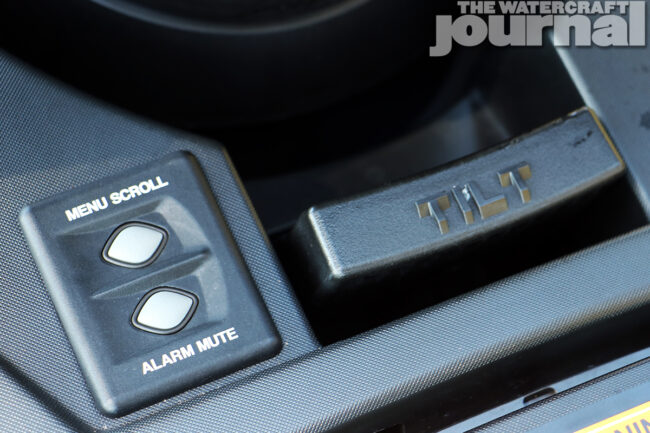
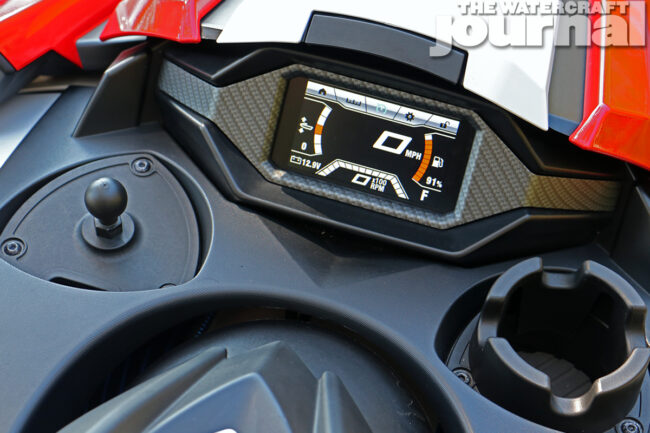
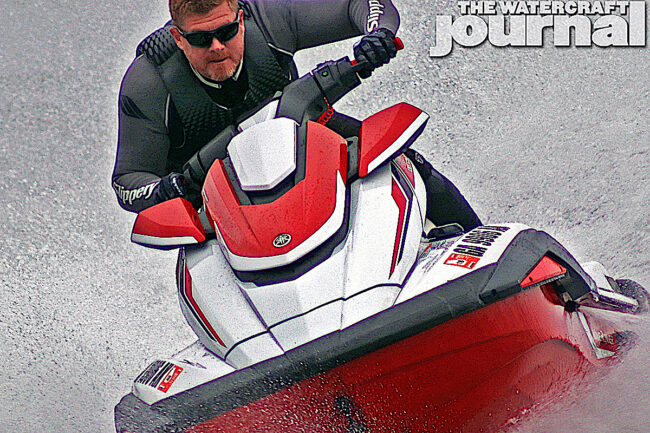
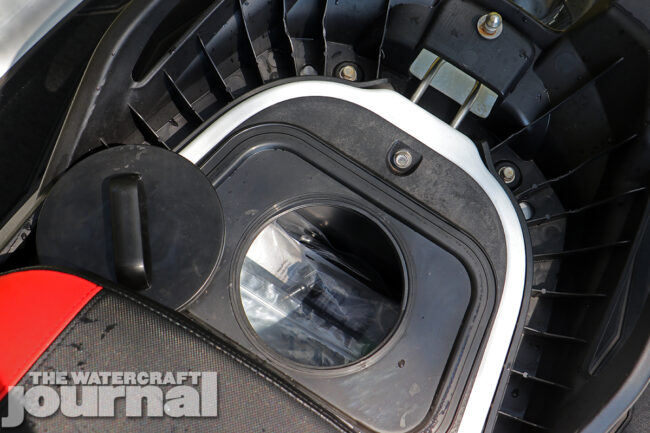
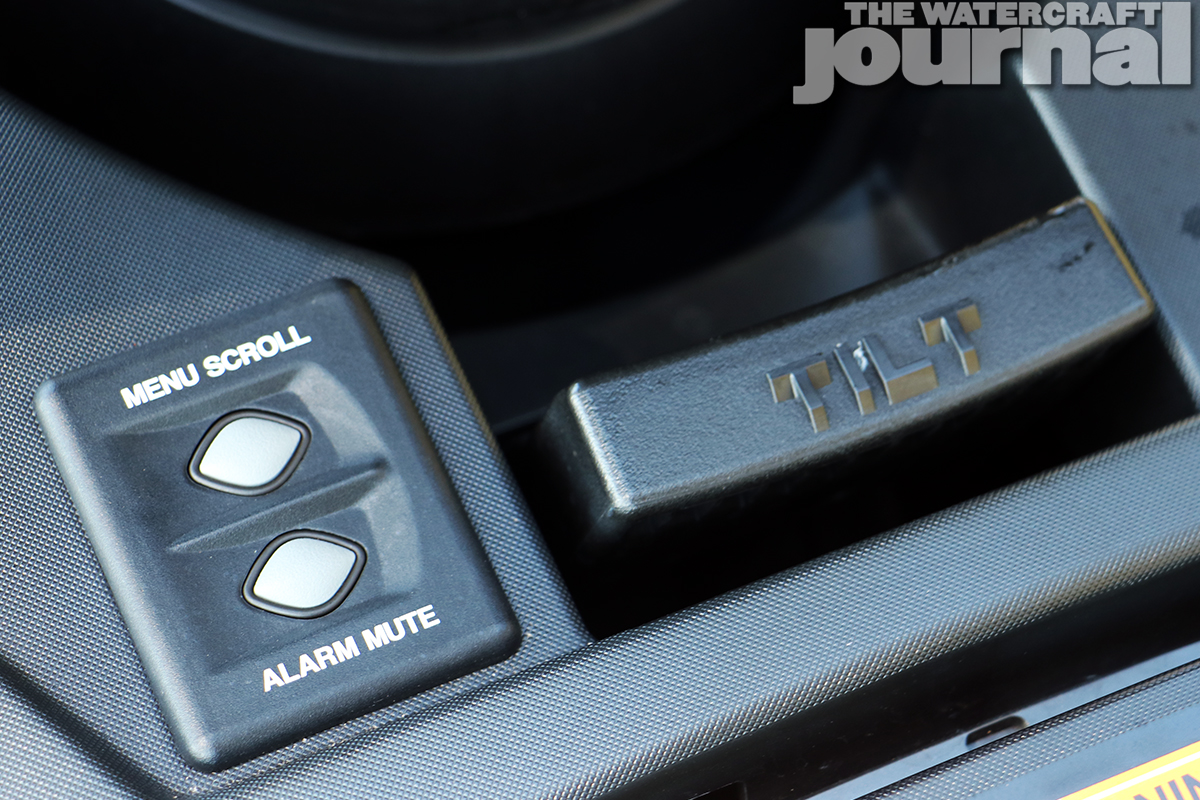
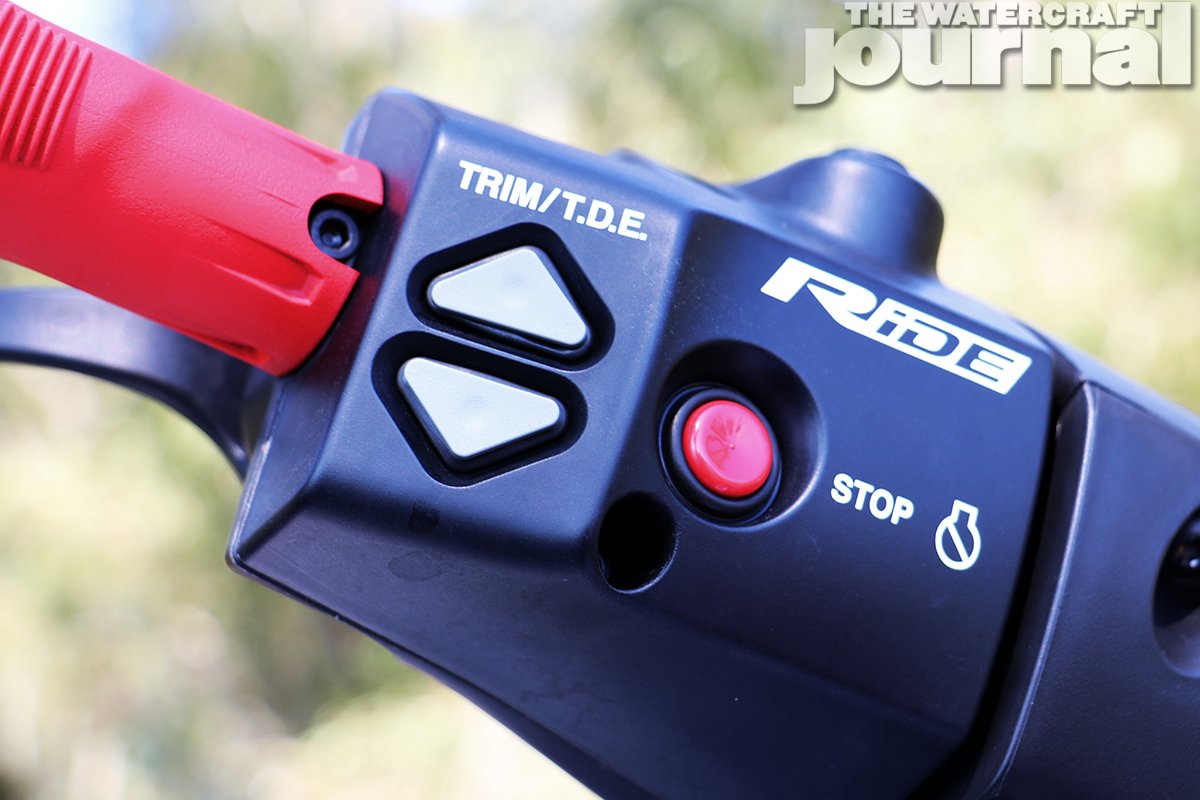
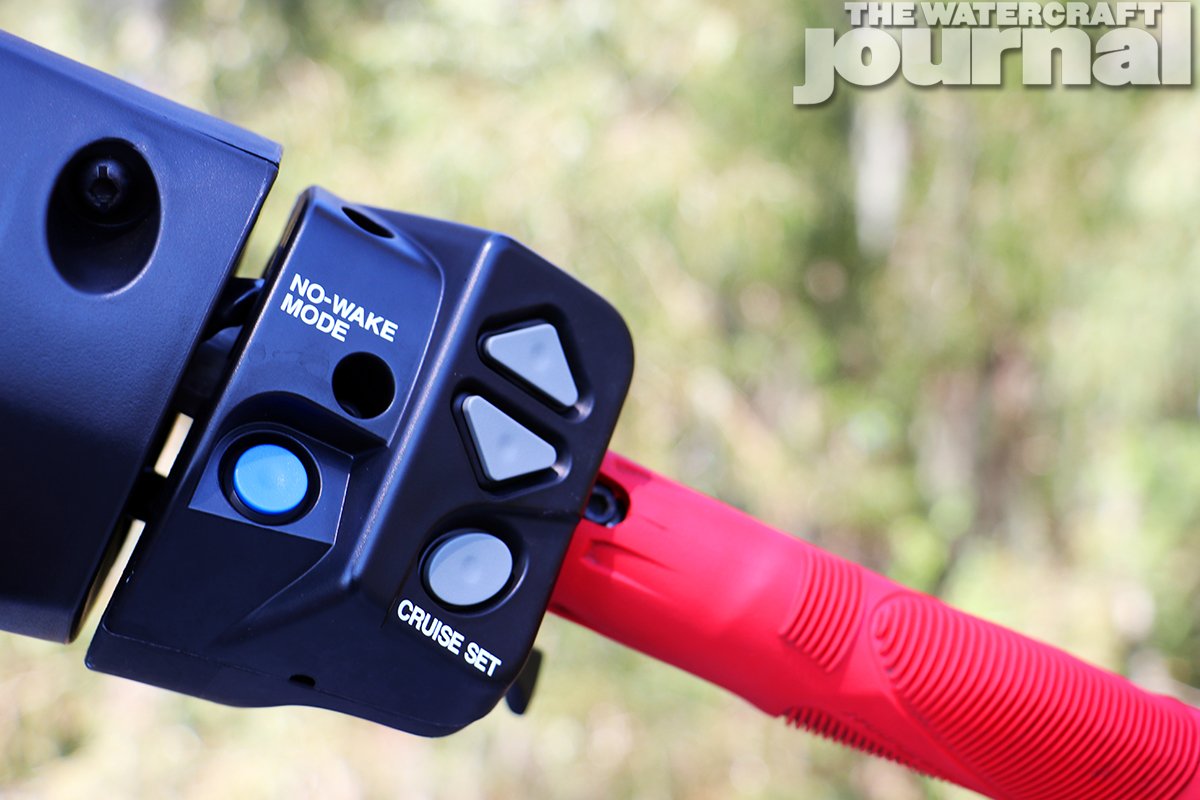
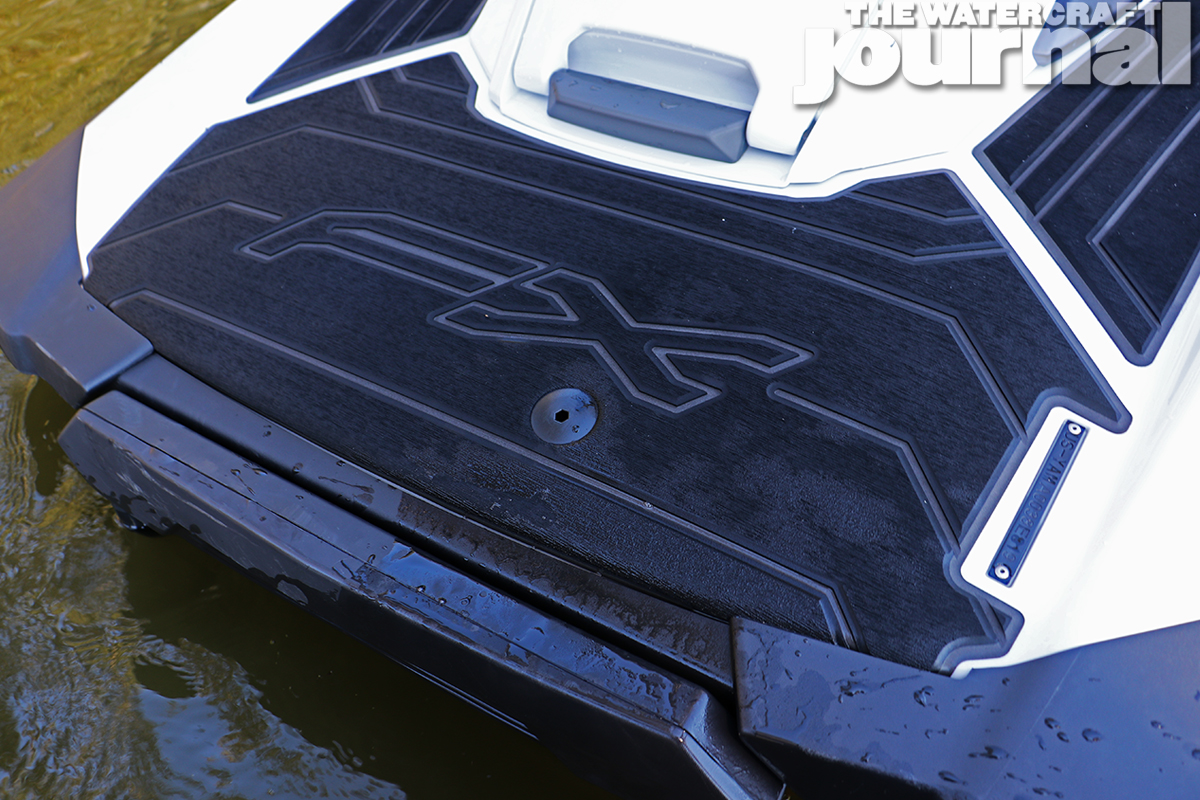
Yamaha’s 769-pound, centrifugally-supercharged SVHO powered runabout is a stripped-down, factory-built race ski. There are very few “frills” – if they can even be called that. The intuitive dual-throttle RiDE on-water brake and reverse system, electric trim control, a folding swim step and some pretty cool two-tone Hydro-Turf mats are pretty much it. The GP1800R is not some heavy, cushy cruiser. If you want something to soak up the bumps over a nice, leisurely ride, Yamaha literally sells three different WaveRunners with the word “Cruiser” in their name.
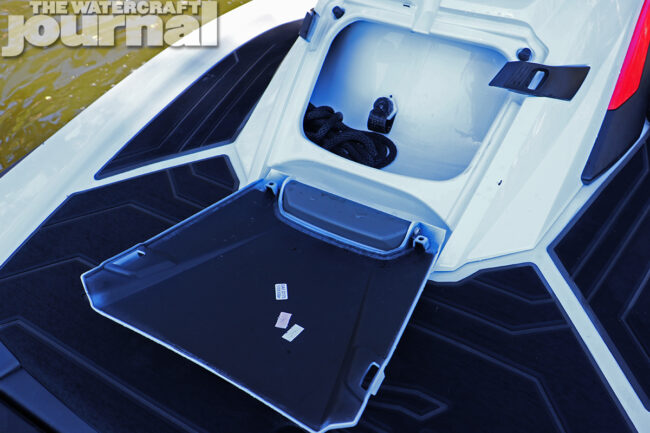
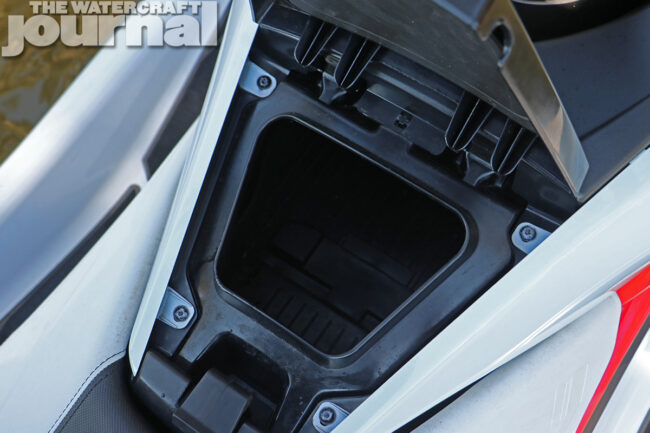
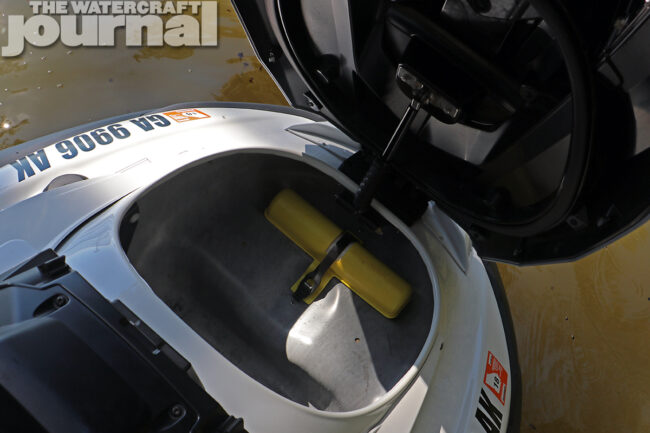
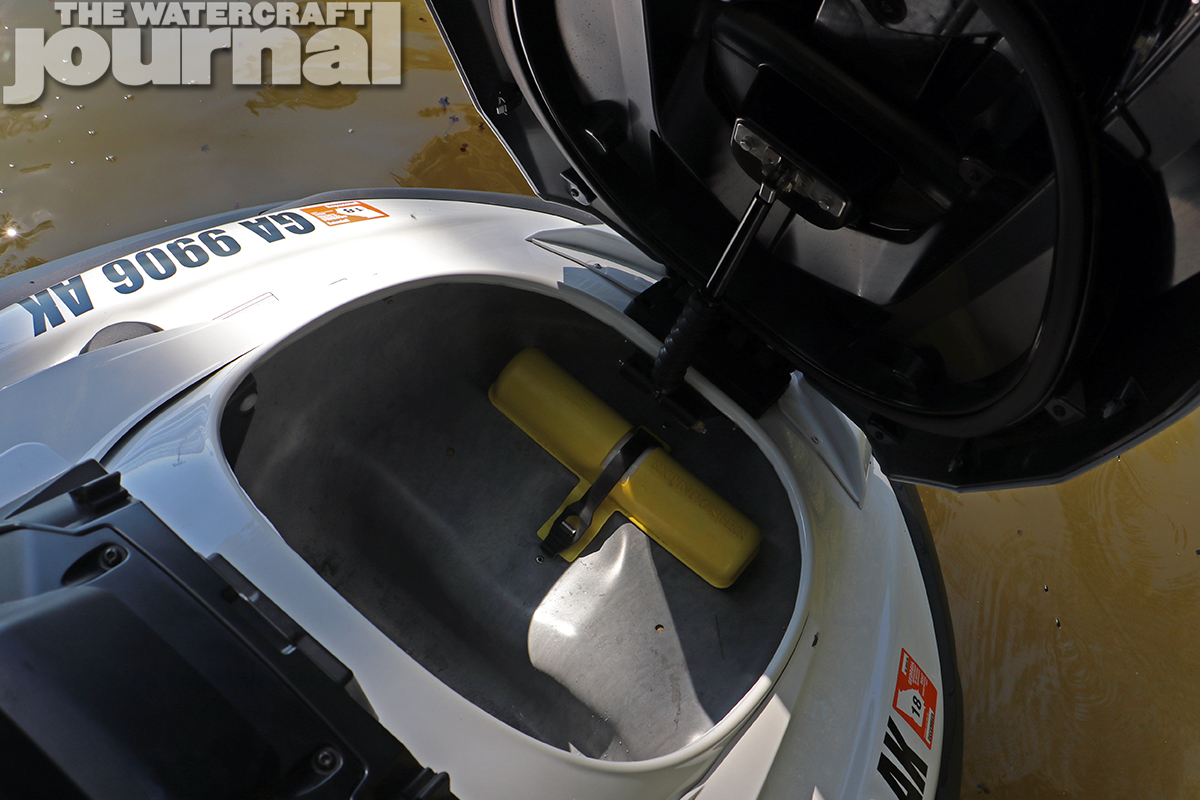
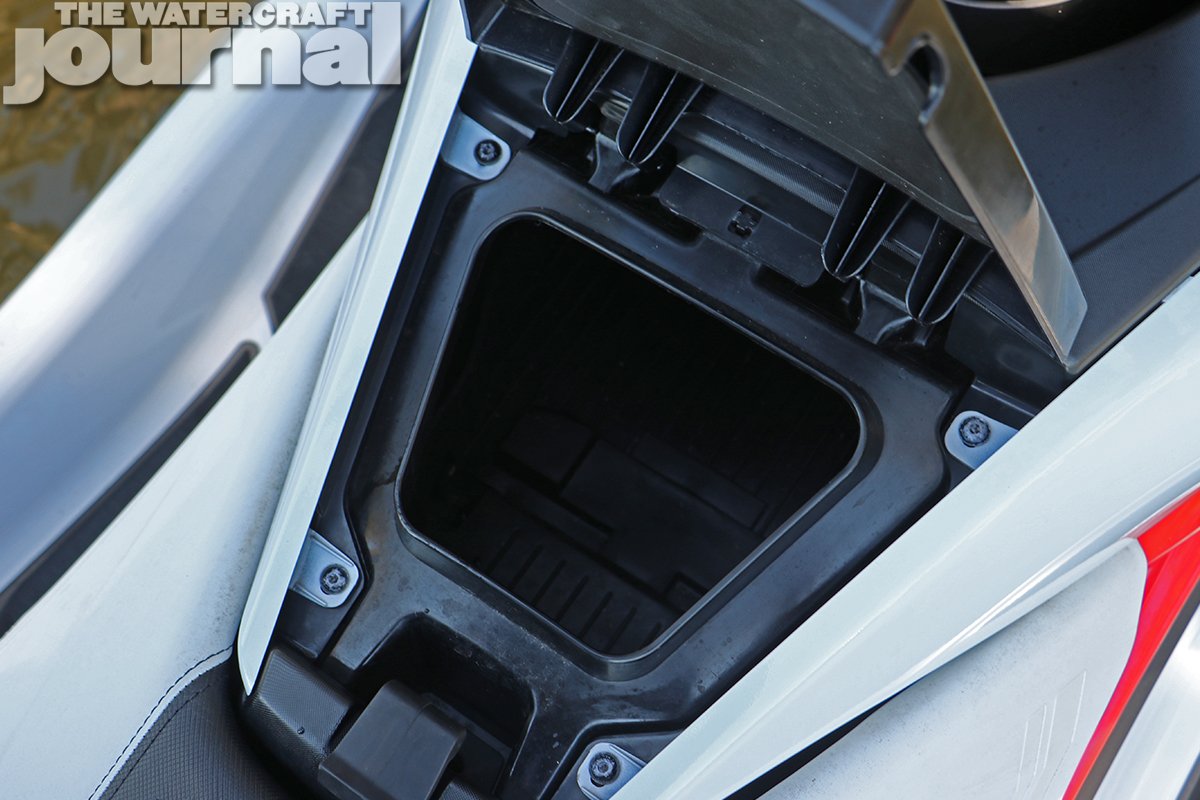
Now yes, I guess you could cruise the GP1800R if you really wanted to. You could even tow the kid on a raft behind it thanks to a standard tow eye and 3-passenger rating. And yes, the 18.5-gallon fuel cell and 24.6-gallons of storage gives you plenty of capacity to load up enough go-juice and gear for a full day’s ride. But then you’re really not using this machine for its intended purpose – like welding a trailer hitch to the back of a ZR1 Corvette or hitching a plow to a racehorse. The GP1800R is a race ski after all. It was built for maximum performance. Don’t confuse it for anything but.
No current machine can equal it either around the closed course or out in the open ocean. Two years of regional, national and world championships can back this claim. The world’s top athletes are unstoppable on the GP1800 (and now the GP1800R), and the evidence is simply too overwhelming to combat. And being a professional racer doesn’t matter; few craft respond better to the rider’s natural talent and athleticism than the GP1800, or punishes for the rider’s lack thereof.
Similarly, there are few machines more responsive to aftermarket tuning and modification than the GP1800R. While companies like RIVA Racing, WORX and Greenhulk would like to sell you several thousands of dollars in performance parts, it’ll cost you about $1,200 to hit 81 miles per hour on 93 octane pump gas reliably. And we mean 81mph all day long. Want to see 85? It’ll cost you a little less than double that number. (Remember when hitting 80mph used to cost about $10,000?) And priced at $14,199, the $200 price jump from last year’s $13,999 doesn’t even cover half the cost up upgrading an old GP1800 to an “R”, so there’s that too.
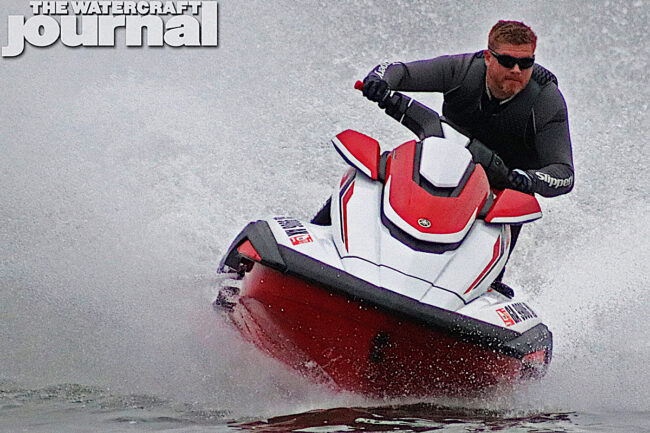
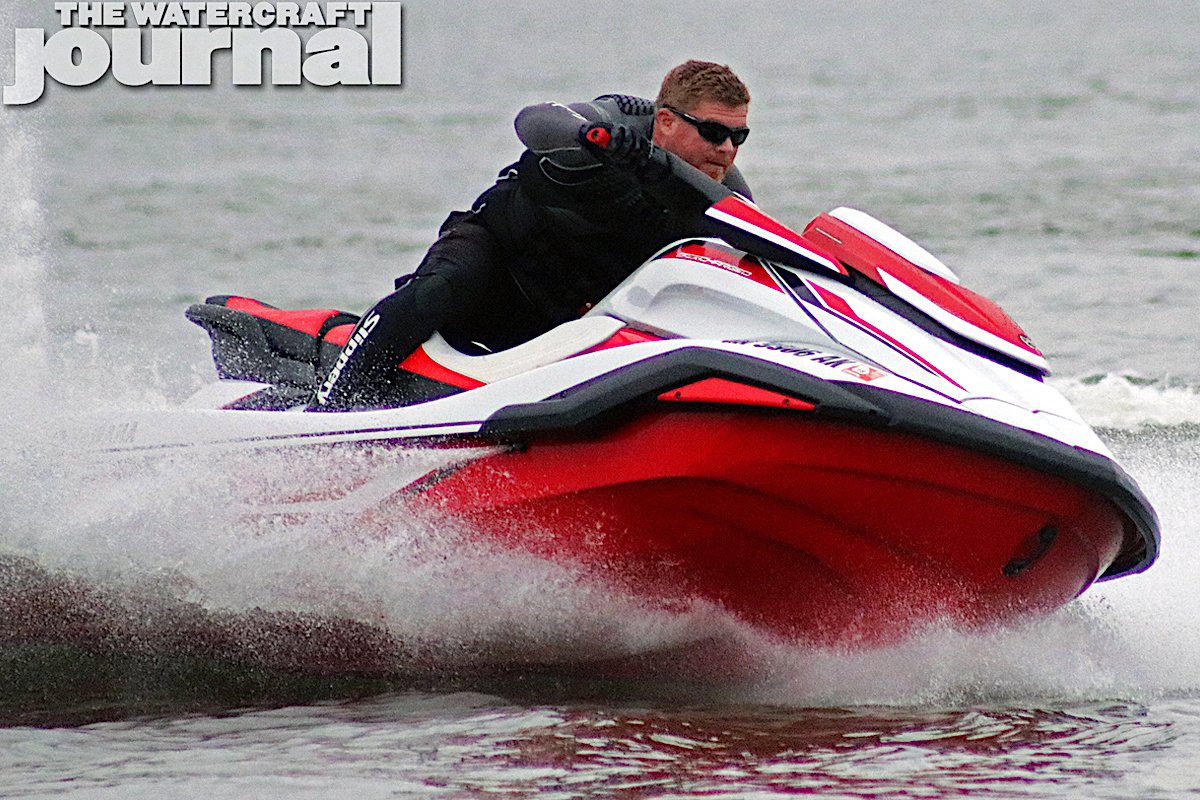
At three-quarter-or-more throttle, the GP1800R tracks through chop sniper-straight, streaking over the surface linearly. In conjunction with very intuitive, responsive steering, it’s aquatic adhesion is accomplished by the addition of a sharply-angled top loader intake grate. The grate’s pitched blade forcing the intake flow up against the ceiling of the pump tunnel, feeding the top of the prop, producing consistent thrust and increased traction. New reinforcements to the inside of the pump tunnel also add increased strength.
A new aftermarket-inspired, bow-rise reducing ride plate keeps the GP1800R brutally hooked, whether carving glass or maneuvering through grueling open ocean at speed, and far more reliably than any runabout I’ve ever seen from the Yamaha Motor Corp., USA. The experience of wide-open-throttle riding in such conditions is not for the faint of heart or the feeble of hull design. A lesser shape can result in erratic or unpredictable tracking, bow steering or nose plowing. Never so with the GP1800R.
Despite this, I’m interrogated with, “how does it handle?” It’s a race ski, I reply. Or “how is it in chop?” It’s a race ski. And “how does it…” It’s a race ski! The GP1800R’s featherweight NanoXcel2 hull and deck are strong, ever-so-slightly forgiving but more importantly, communicative. You will know through your feet and hands what is happening beneath you. For the casual rider, that can become irksome. To the performance enthusiast, that trait is imperative. Let me give an illustration:
Years ago, I was able to drive a 800-horsepower Dodge Viper ACR. At first, I was appalled at how the American Club Racer (ACR) drove. It bounced ferociously across the road, it’s stiff springs chattering over every rise and dip in the asphalt. My first response was to hate it. But as I drove out onto the open track, everything made sense. The rigid suspension and “twitchy” steering became natural, communicating how the Viper wanted to maneuver. When driven right, it was perfect. Frankly, I wasn’t as good of a driver as I thought I was. The Viper ACR revealed that to me.
So no, I’ll say right now that the GP1800R is not for everyone. Admittedly, I may have played a part in confusing folks, as our crowning the 2018 GP1800 the “Watercraft of The Year” (for its second consecutive year) got many thinking it was the best “all around” PWC. Not so. We awarded it as “Watercraft of The Year” because it best accomplishes what Yamaha set out to do – and that was to build a true factory-built, 69.2 Garmin GPS-confirmed mile-per-hour race-ready ski.
Alas articles like these are supposed to whip up would-be buyers and set ’em loose in the direction of the nearest dealership to be welcomed by a friendly sales staff and promptly sold whichever watercraft I am currently reviewing. That’s what I’m supposed to do. Instead, I’m hoping to steer folks towards the ski that best suits their riding ability and intended use, which may or may not be a GP1800R. Of course, most will ignore my pleas, will merely scan this for exciting pictures and decide whether they want their new 2019 Yamaha GP1800R WaveRunner in Azure Blue with White or Black with Torch Red Metallic. And that’s OK too.
A year ago, during a particularly bad flu season, I bundled up on the couch and wallowed in six straight seasons of “Dangerous Waters.” The open sea adventure show circling a handful of jet skiers traversing the Northern Passage (and other atypical routes) was quite the slog, and a corresponding review reflecting my displeasure not only sparked a flame war in the comment section, but spurred the ire of the show’s host himself.
Last week, I learned of a newly released comedy series titled, “Rob Riggle’s Ski Master Academy” and thought, what the heck, I’d give it a try. Headlined by former “The Daily Show” correspondent Rob Riggle, the titular Riggle plays a self-named caricature of himself, but as a has-been action star who made his career through a series of cartoonish jet ski-based summer blockbusters at one time.
Now, down on his luck, Riggle has leveraged his waning fame into a lakeside camp dedicated to “personal watercraft education.” The camp, held on the shores of Boner Lake, is down on its luck after a series of deaths, a tear in the space-time continuum, a ghostly jet skiing bride and feral hog-bitten zombies. Not only is “Rob Riggle’s Ski Master Academy” as dumb-as-rocks, but it kinda hates you as much as it hates itself.
The vast majority of the jokes land at Riggle’s expense (well, that is, the jokes that do land). The rest of the entirely unlikable cast of lampoons – with names like “Preggers”, “Brit-Brit”, “Jebidiah” and “Dirk Hamsteak” – drag along reciting the limp scripts, and notably contort themselves to never use the words “jet ski”. That, and there’s almost zero skiing in the show. Like not until the last two episodes – wherein, who we presume to be Mark Gomez, performs a short flatwater routine on a Rickter ski, and Riggle briefly cruises a Yamaha VXR.
Obviously, the show was never really about learning how to ride personal watercraft, but the way they present people who like them is pretty offensive if you’re prone to taking offense from a moronic web series. The show does manage to sprinkle in a fair share of B and C-level celebrity guests (Tim Meddows, Dermot Mulroney, Haley Joel Osment, Christopher McDonald, Cheech Marin, David Arquette, Jamie-Lynn Sigler and Hall of Fame footballer Brian Urlacher to name a few).
The jokes are pedantic, dumb, condescending and abysmally lowbrow. Riggle has made a paper-thin career out of the same “dumb jock” schtick and little has changed. In the shadow of Meatballs and even, Wet, Hot American Summer, “Rob Riggle’s Ski Master Academy” was first released through Sony Crackle Originals, an online streaming service, during the late summer this year; the first season of eight 22-minute episodes is found free on Crackle’s site. But don’t bother. It’s a burning hot dumpster fire.
This story comes to us from Surfline’s Wipeout and PWC Rescue of the Week. Another giant swell hit Portugal’s infamous big wave break, Nazare. Big wave surfers from all over the world wait and watch for swells like this one that just hit the North Atlantic. While more big wave chargers line up to wait their turn for one of the mountains rising from the depths of the ocean in Portugal’s frigid waters, many more wipeouts and rescues will take place. Some will end well and some will not have happy endings. Big wave surfer Thiago Jacare recently discovered a happy ending after taking a massive beating and several hold downs.
It doesn’t matter how well a surfer plans or how hard one trains, heaving mountains of water have the potential to brutally injure or even kill a person. Thirty-five year old Brazilian surfer, Thiago Jacare experienced this firsthand during the recent giant swell at Nazare. He and his tow partner, David Langer mounted their jet ski and gunned it to the outside on December 14, 2018 to tow into the waves. Langer pulled Jacare into the first wave of a set and Jacare let go of the rope and got into the wave.
However, he was soon hit by a large side chop and was unable to keep his rail engaged in the face of the wave. He was thrown off of his surfboard and engulfed by a mountain of whitewater. The surfer faced a series of hold downs that lasted for what probably seemed like forever. After the first wave pummeled him, he made his way to the surface just long enough to grab a quick breath. Langer was unable to swoop in and grab him. The scene was just too gnarly and heavy water was holding Jacare in the wash cycle. Jacare took five waves on the head before finally being rescued by Sebastian Steudtner. Steudtner swept in on his PWC and grabbed Jacare and quickly rushed him to the beach.
Jacare had this to say about his experience, “This was by far the worst wipeout of my life, “I barely got the chance to breathe between waves. When I got to the sand, I was completely exhausted — to the point I couldn’t even move.”
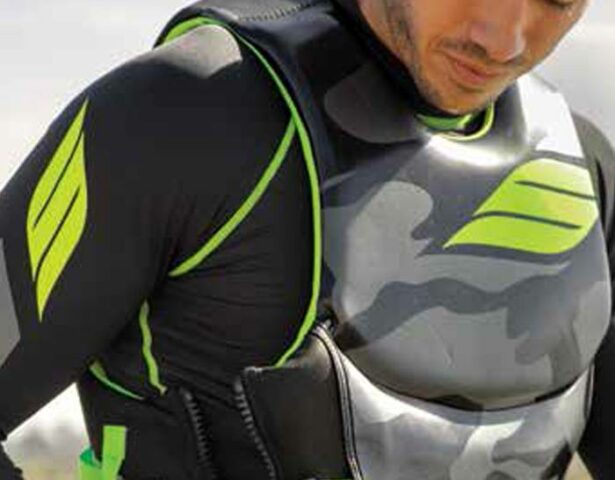
Who like free riding gear? Who is on Facebook? The answer should be all of you. Well now is a chance for you to win one of the newest life jackets on the market. It is extremely important to have a quality life jacket when riding, as it is meant to save your life. While many of them can be expensive, this is not the case. Slippery Wetsuits is giving away their new Surge Neo Life Vest!
The instructions are simple to enter for your chance to win. All you need to do is go to Slippery Wetsuits Facebook Page and share their picture of the Surge Neo Life Vest. Or you can head over to The Watercraft Journal Facebook Page and share our post of the life vest. Either way, you will be entered into the giveaway. While you are there, why not Like their page and follow them to hear about what Slippery Wetsuits is coming out with next.
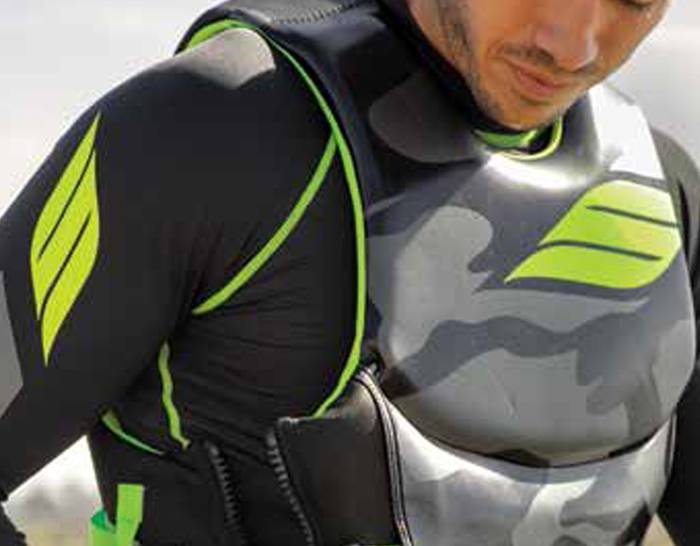
The all new Surge Neo Life Vest is made out of a unique type of foam that allows for the users to have plenty of flexibility and reduce fatigue! What more could you ask for? Some key features of the life vest are that it is U.S Coast Guard Type 3 Approved, has two adjustable belts with buckles to fit securely around you, features a heavy duty zipper and a “D” ring for lanyards. Slippery offers four different color combinations: Black/Charcoal, Red/Silver, Blue/Lime and Steel/Black.
We have a more in depth review of the Surge Neo Life Vest so feel free to check it out on our website, The Watercraft Journal. People cannot stop raving about the comfort these life vest provide and instead of buying one, why not trying to win one!
(L to R) Ryan Dalli, PK Ewing, Todd Czarcinsk and Kenny Koonge. (Image: Facebook)
The Pro Watercross has had a lot of tour announcements recently for their upcoming 2019 events. With all of the anticipation for their lineup of events as well as an expected surge in attendees for all 2019 tour stops, the committee decided to appoint a new ambassador.
For 2019, Pro Watercross is appointing Kenny Koonge as the National Recreational Ambassador. This position will serve as a liaison for the public, PWC enthusiasts, and for tour promoters according to Pro Watercross CIO Jennifer Handler.
We welcome Kenny and wish him luck in his new role. For more details about the position or Kenny himself, you can view the press release below:
Pro Watercross is pleased to announce that with the launch of the 2019 National Recreational Tour, it is announcing the position of National Recreational Ambassador and welcoming Kenny Koonge to the Pro Watercross family.
A familiar figure within the recreational segment of the personal watercraft (PWC) community, Kenny is well known for his passion, his forward thinking and his willingness to support his fellow riders. That enthusiasm and progressive attitude played a large part in Pro Watercross’ recent decision to appoint Kenny as the National Recreational Ambassador.
“The new Pro Watercross Recreational Tour, which was just announced last week, is generating a lot of excitement and enthusiasm in the PWC community, among both racers and enthusiasts,” said Pro Watercross CIO Jennifer Handler. “We felt that it was extremely important to find an individual with the right qualifications, dedication and attitude to help guide the growth of Pro Watercross’ recreational division, and to serve as a liaison for the public, for PWC enthusiasts, and for Rec Tour promoters. We have every faith that Kenny is the right choice for this important role.”
“This new role with Pro Watercross will encompass a wide variety of tasks and projects, but my main mission, at each and every Rec Tour stop, will be to work with the participants of the event to make sure that they are happy with the event itself,” Kenny said.
Kenny has long had a passion for adrenaline-fueled watersports. Joining forces with other Jet Ski enthusiasts with a similar mission-focused drive, Kenny became the ride director for Take Point Now. Take Point Now was formed to raise awareness for wounded veterans and to support its recently-formed research foundation in its effort to assist veterans returning from active duty. When asked to participate with the Take Point Now organization, Kenny recognized the opportunity to help out a great cause and be part of something bigger than just a weekend ride.
Kenny is also a staunch supporter of the March of Dimes Bay Swim event, and he has taken the lead for all the jetski volunteers who provide safety and rescue services to the swimmers who attempt the long-distance open swim across the Chesapeake Bay.
Kenny also serves as an integral part of the Watercraft Network radio show. He hosts a segment called the “Take Point Now Recreational Ride Report.” This has fast become a very popular segment and is bringing a new, inspired collaboration across the country.
“Kenny’s passion and innovative ideas led to his selection as the National Recreational Ambassador, and this position will enable to him to continue to promote collaboration within the recreational watercraft community and cross-promotion with other sectors of the PWC community. Kenny will continue to fuel the ‘United We Ride’ movement that has begun to gain momentum, and as Ambassador, he will be supporting and enabling the success of all the recreational ride groups,” Handler explained. “Furthermore, Kenny’s commitment to PWC rider safety and environmental stewardship will be key in future endeavors.”
Kenny has plans to attend every 2019 National Recreational Tour event. Make sure to catch him on the water or the beach and join in his live social media broadcasts.
Anyone interested in becoming part of the National Recreational Tour can reach out to Kenny at [email protected].
For more information about the 2019 National Recreational Tour and to keep up with all the Pro Watercross news go to www.ProWatercross.com or look for us on social media @ProWatercross and don’t forget to tag your posts and pictures with #ProWatercross.