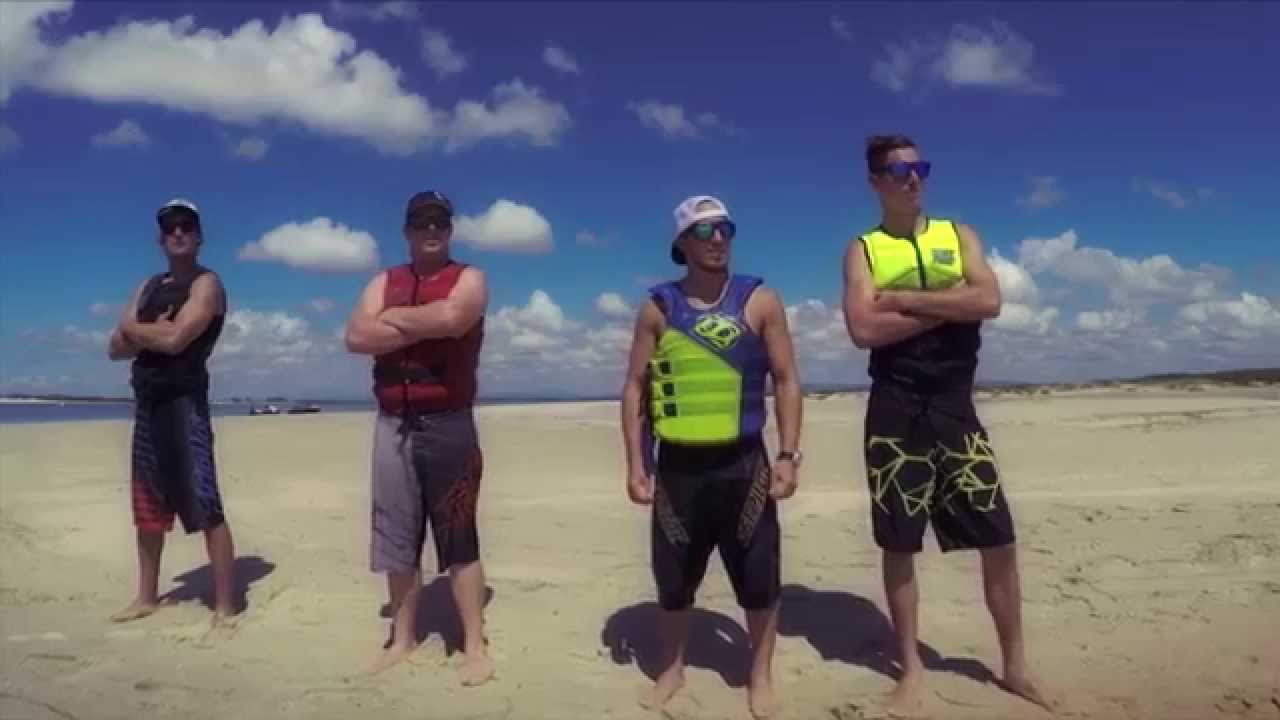
Way back in March, we announced that Rick Roy and his Rickter RRP team would be documenting their “World Tour,” and showing their exploits in a series of YouTube videos. The RRP team, consisting of Mark Gomez, Pierre Maixent, Brandon Lawlor, Taylor Curtis, Brodie Copp and Abraham “Ho” Hochstrasser, first kicked off their exploits at the first round of the IFWA Freeride World Tour in Australia.
As you could expect, The Watercraft Journal was on hand to provide full coverage of the AJSP OZ Surf Slam. Equally, the RRP team swept the crowd and rose to the top. From there, the team bounced on to Portugal, France, England and USA. This last stop to the States brought the team to the conclusion of the IFWA 2015 tour, the 2015 Blowsion Surf Slam as well as last video of the Rickter tour.
Now, if you’re already read The Watercraft Journal’s coverage from this year’s Blowsion Surf Slam (since we’re the only ones to have published anything from it), you would have already known that Rickter Riders Mark Gomez and Abraham Hochstrasser came away with the title and second place finish from the 2015 IFWA World Freeride championship.
This final video not only recaps the Blowsion Surf Slam (congratulating winners Jordan Fielder, James Juvet, Thomas Scaccianoce, Sean Star, Edgar Quezada and Nicholas Collins), but also takes us to three different locations along the Pacific Coast, namely Pacific City, Oregon; Santa Cruz, Steamer Lane and Lake Nacimiento in Paso Robles, California.
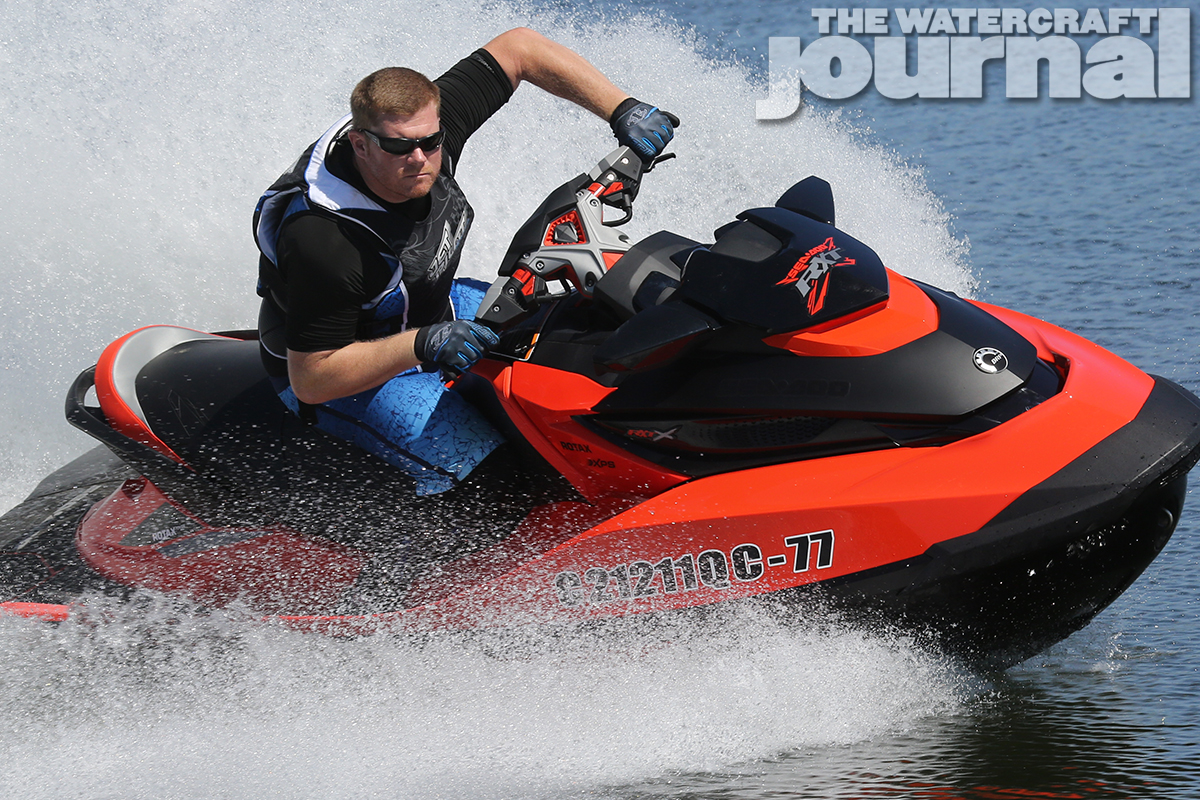
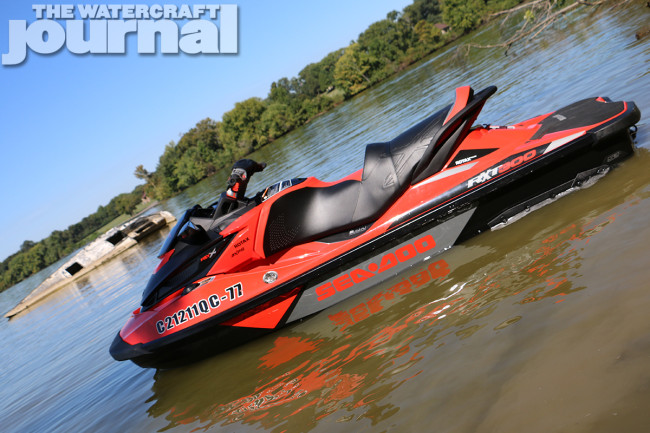
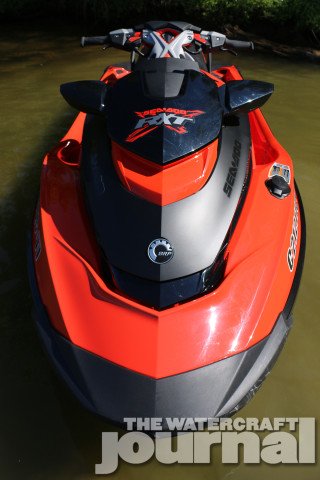
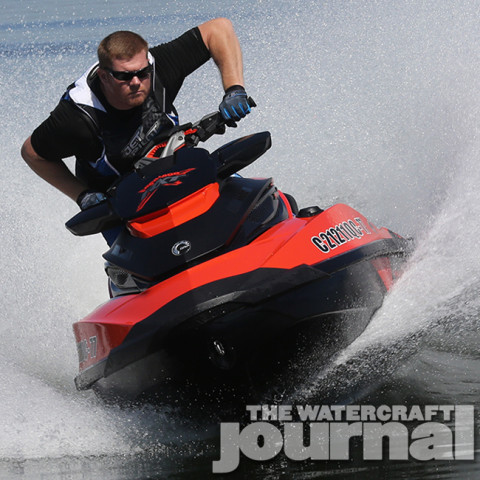
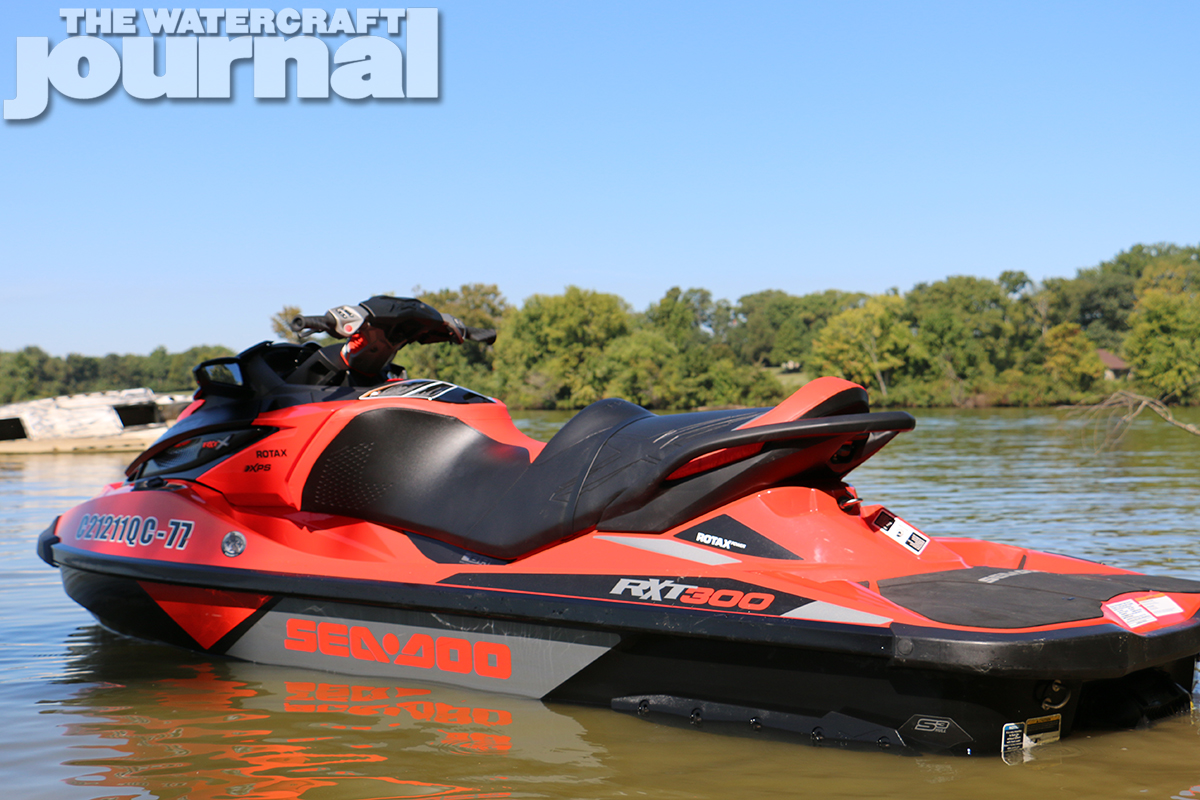
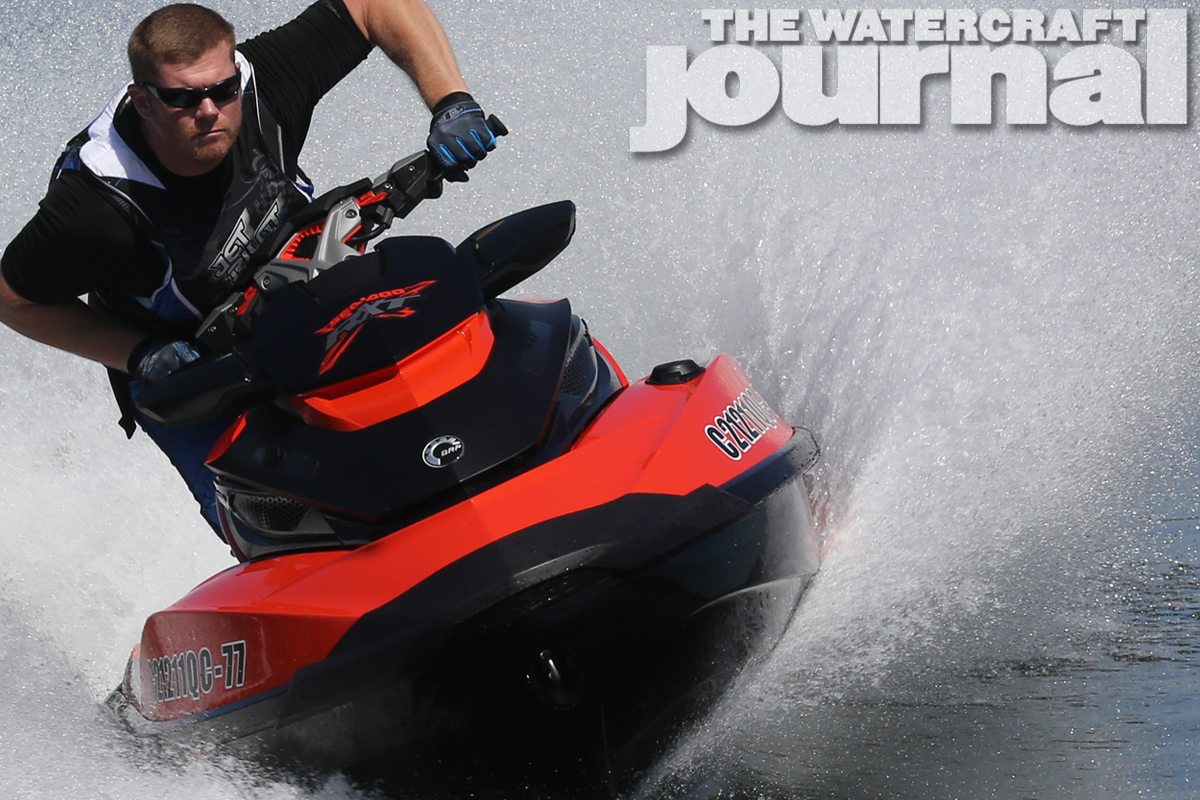
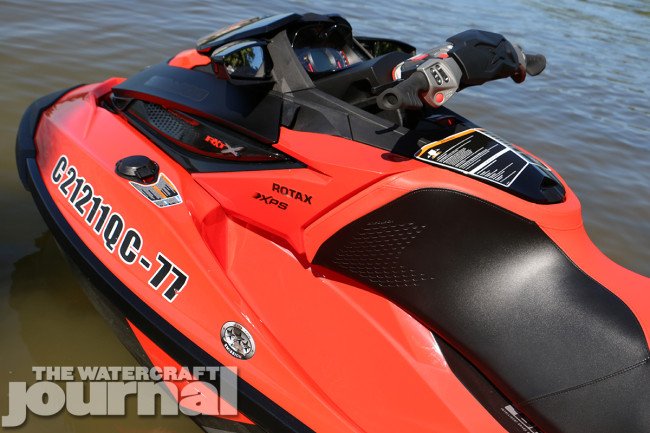
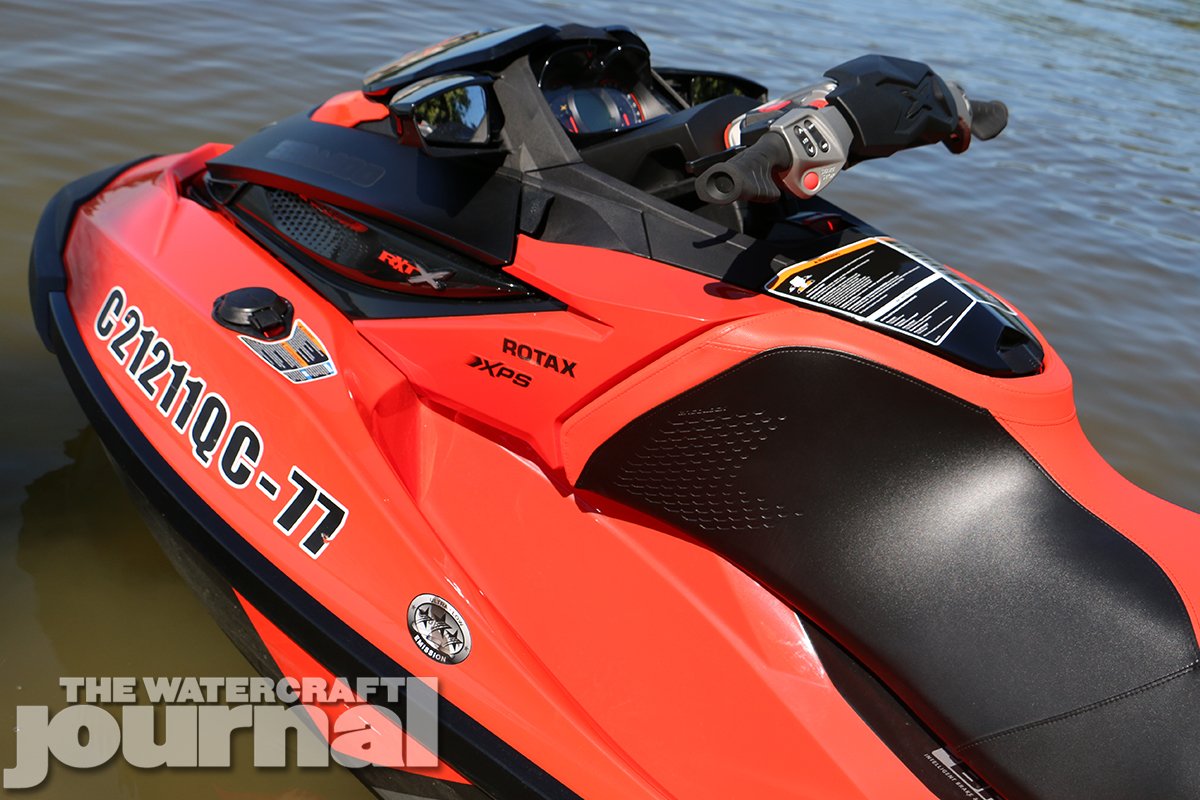
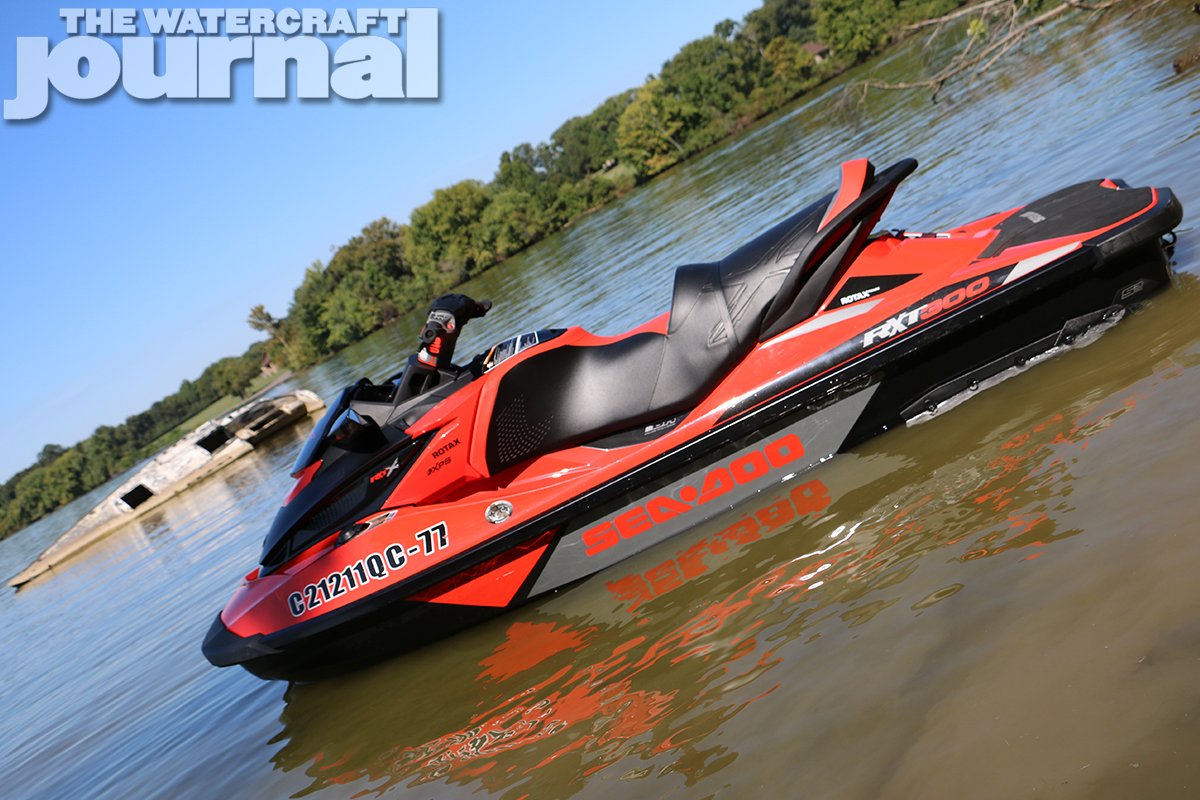
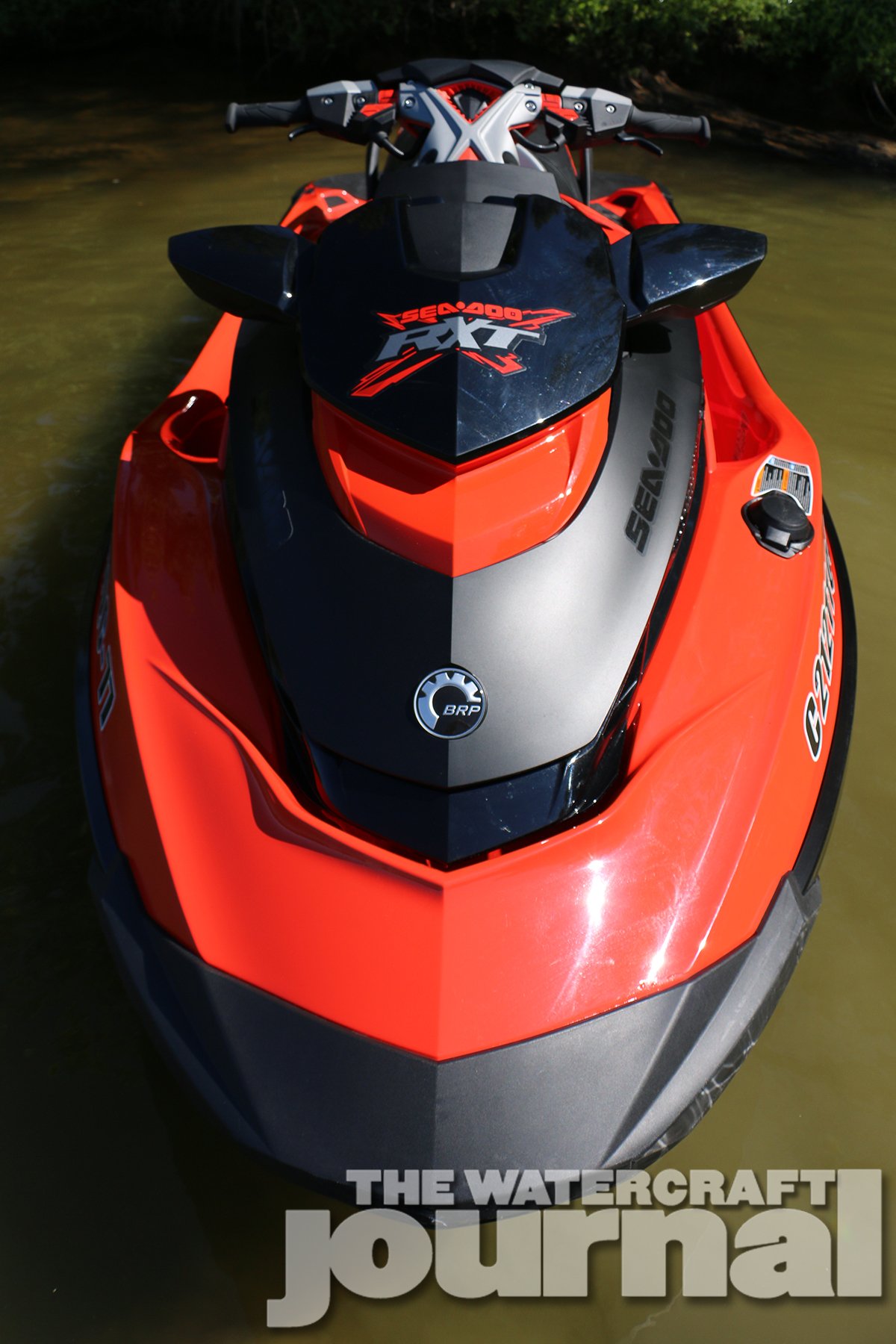
How do you get a middleweight boxer to hit like a heavyweight and be as light on his feet as a featherweight? That, we presume was the challenge pinned to the board in Sea-Doo’s new product development office a few years back. The evolutionary step from last year’s RXT-X 260 to the 2016 Sea-Doo RXT-X 300 of today is far more than horsepower and deserves some further understanding.
Back in 2010, with the 260 model replacing the outgoing 255 RXT-X, the change also heralded the use of the S3 hull married to a fixed-deck (2009 had the S3 exclusive to the RXT-X iS 260 and GTX iS 260). The move was one of Sea-Doo’s more exciting announcements, as it included the widespread use of BRP’s Intelligent Throttle Control (iTC), 5-point tilt steering that encompassed the gauge cluster, and a hinged, single-piece seat.
Besides the bump in performance, the new 2010 RXT-X 260 was long, lean and strikingly aggressive in both looks and performance. But as the past five years rolled past, Sea-Doo’s Performance segment flagship started to slink into the background behind SVHO-powered FX Yamahas and 310-horsepower Kawasakis. If the RXT-X was to reclaim its crown, something needed to be done.
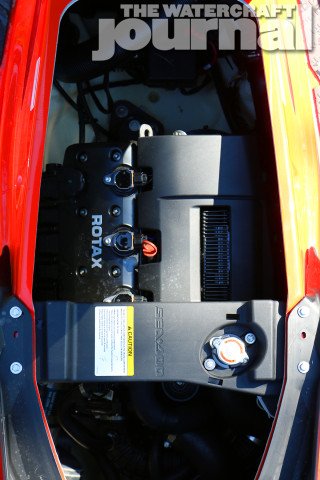
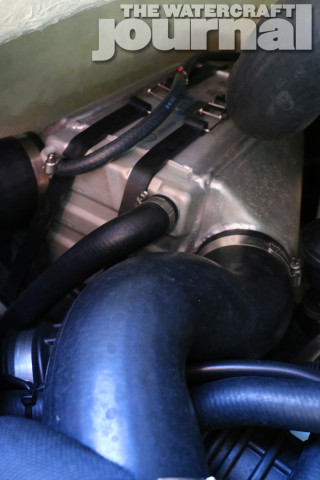
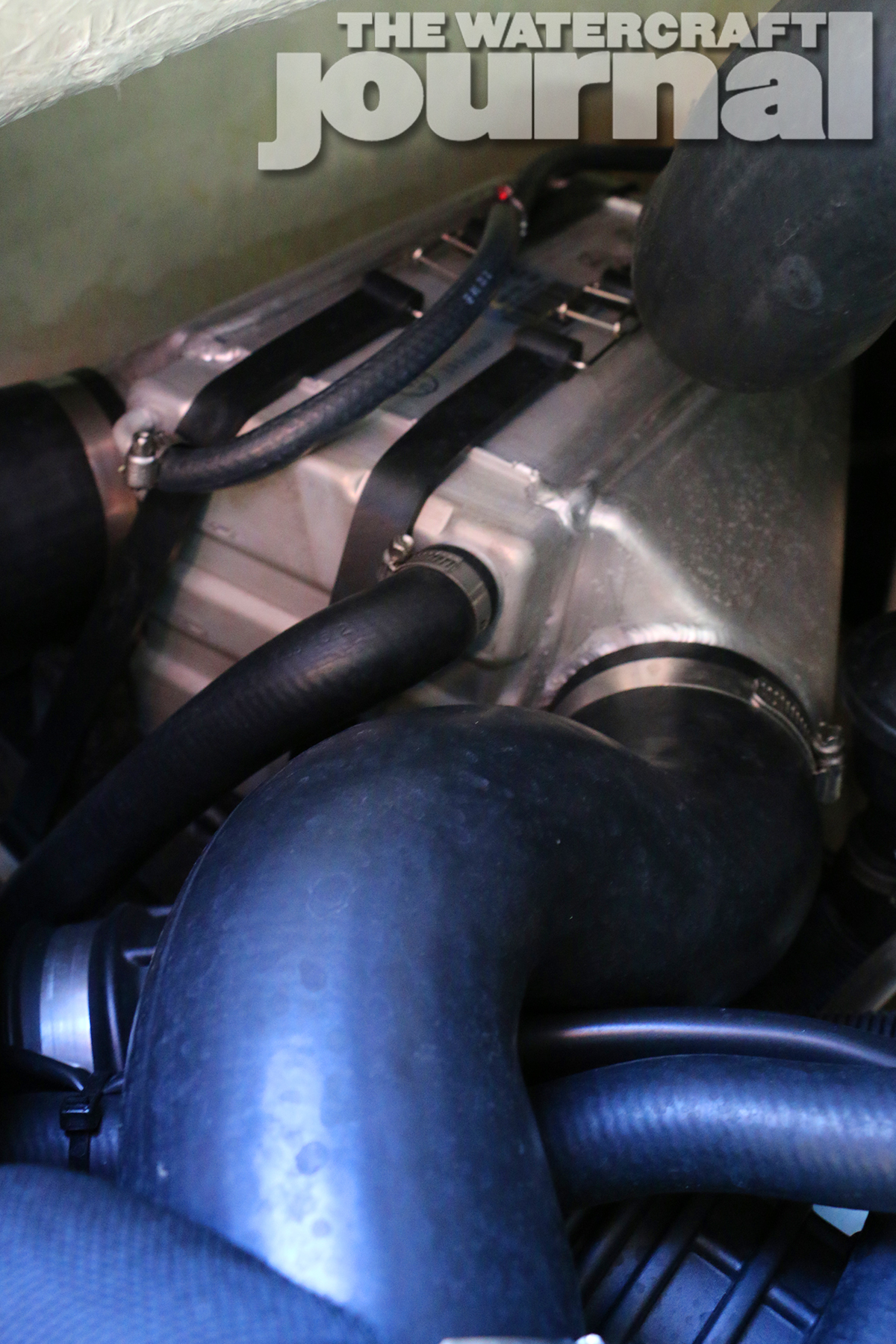
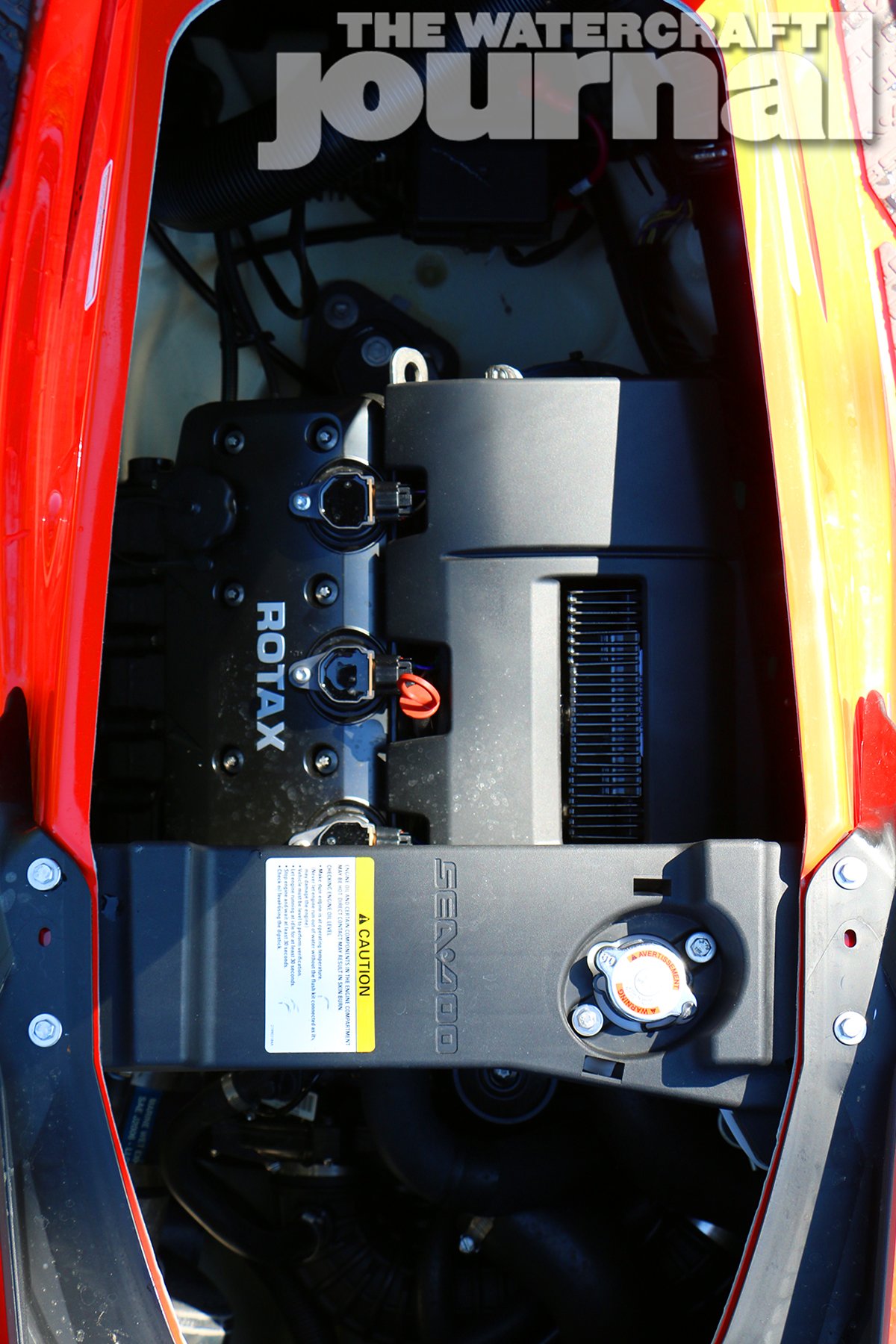
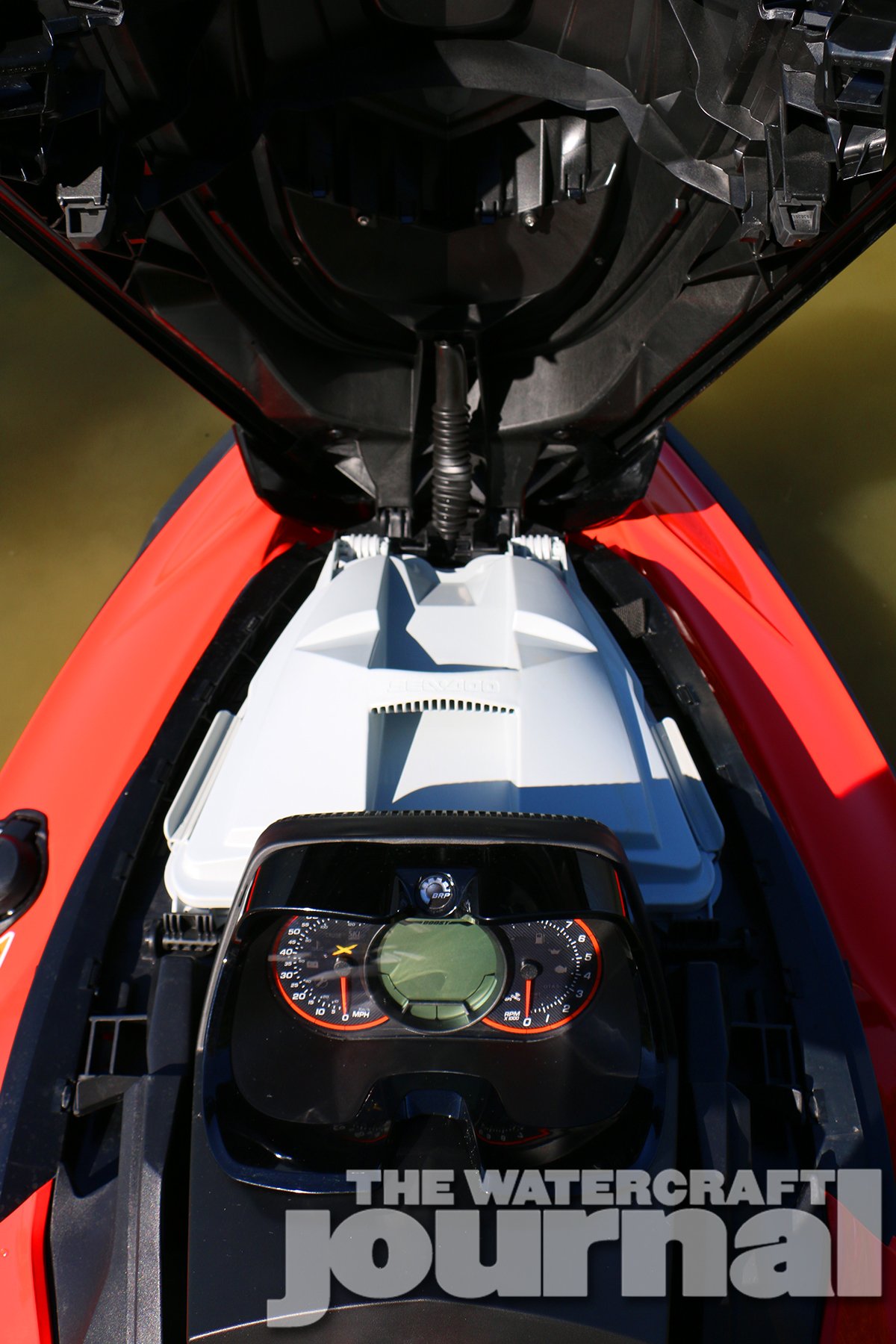
Above left: The new 1630cc ACE motor produces 15-percent more power than the outgoing 1503 Rotax. Above center (and top): The new intercooler features sacrificial nodes, and more than double the cooling capacity of the previous intercooler. It is also available as a retroactive replacement for 260 and 255 models. Above right: The revised flush-mounted hood is not only attractive but purposeful, as a small number of riders had the heavy overhanging top fairing blown off by oncoming waves.
An increased 69.2mm stroke (over the previous 63.4mm), gives the new 1630.5cc ACE its 9-percent added displacement. To offset the larger crank’s throw, shorter, lighter connecting rods topped with more robust, but 20 grams lighter 100mm pistons. Combined with an additional cooling circuit, a single-stage dry sump oiling system, larger heat extractor, and a new, larger intercooler that is 2.2-times more efficient with over twice the capacity, equals 33-percent improved engine cooling, and subsequently, 15-percent more power.
Well, not entirely. A large contributor to the added power is due to redesigned centrifugal supercharger that produces 30-percent more boost (18psi). A new compact wheel spins 8-percent faster at 47,000rpm. The new efficient design features twice the blades of the outgoing design (from 16 to 32) and a revised drive shaft that rides on two composite bearing packs at either end of a near inch-thick shaft, engaged by 8 steel clutch washers.
As per BRP’s Engineering Director for the new engine, Martin Lachance, all superchargers are dynamically balanced prior to assembly, assuring that they are, in fact, “maintenance free.” Of course, there are larger changes to the ACE motor’s single-camshaft top end, including a new combustion chamber design, new larger injectors, and a new coil-on-plug direct-ignition system that produces double the ignition energy for a hotter, more efficient burn.
Equally, Rotax minimized both weight and internal engine temperatures by replacing the pressed-in steel sleeves with a new plasma coating created by Rotax’s team in Gunskirchen, Austria. Applied through a proprietary thermal spraying process, the coating not only saves weight from the heavy steel sleeves, but improves surface durability, minimizes friction and increases heat transference.
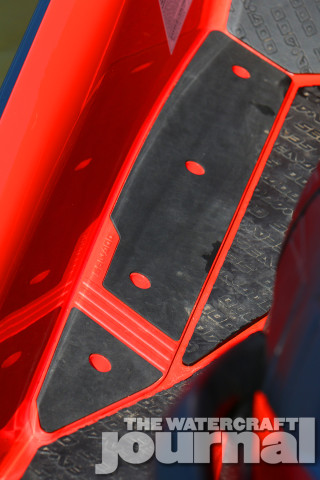
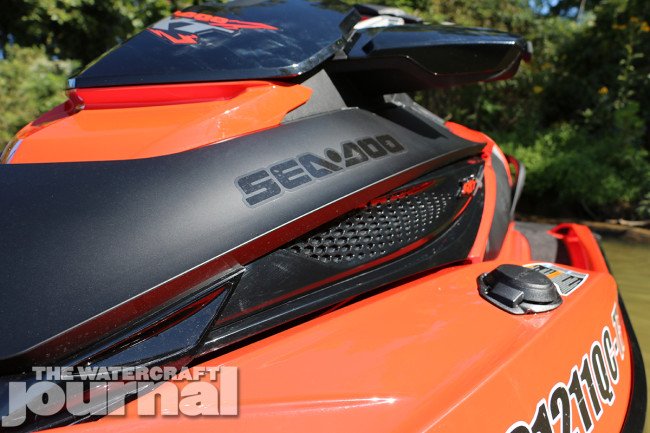
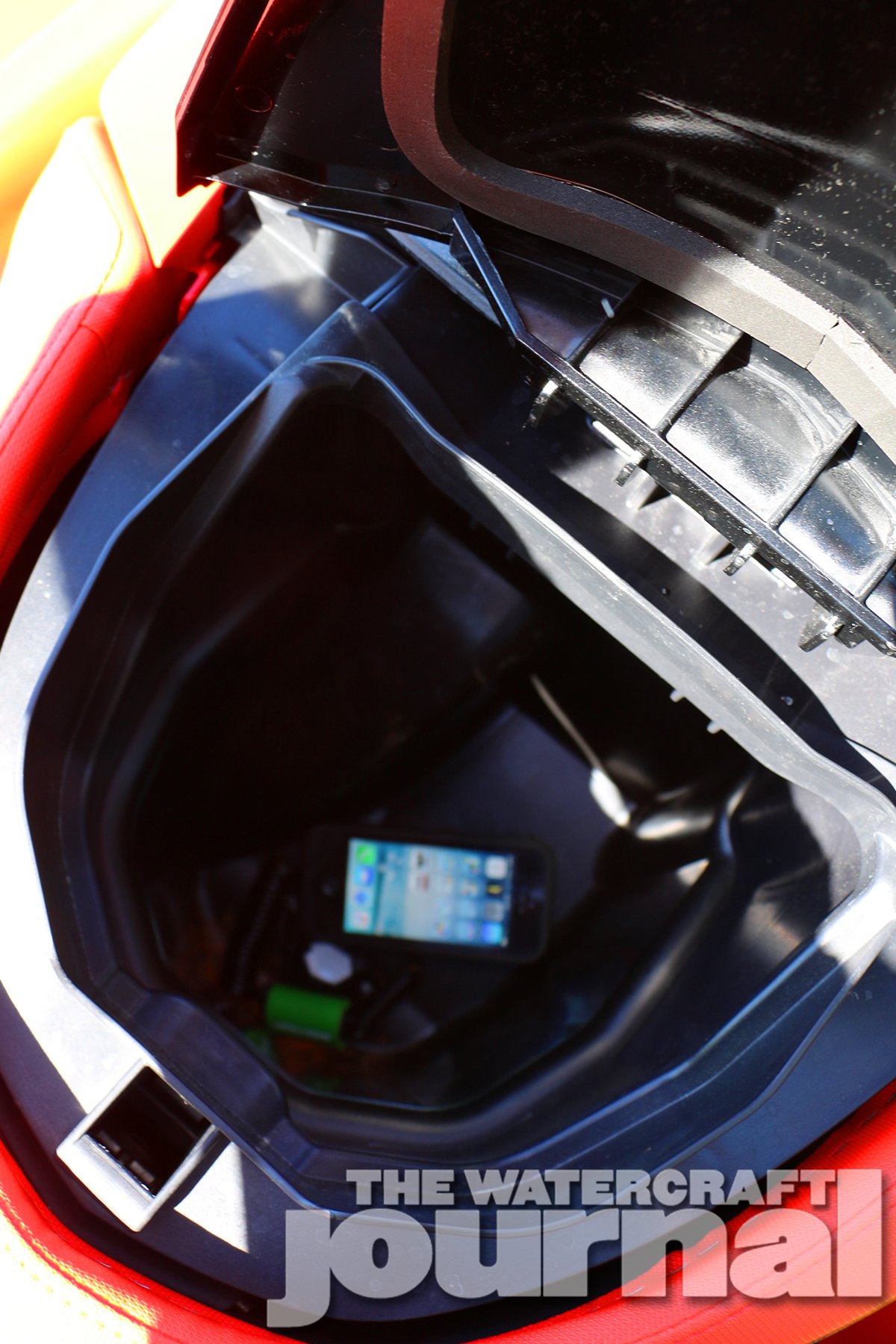
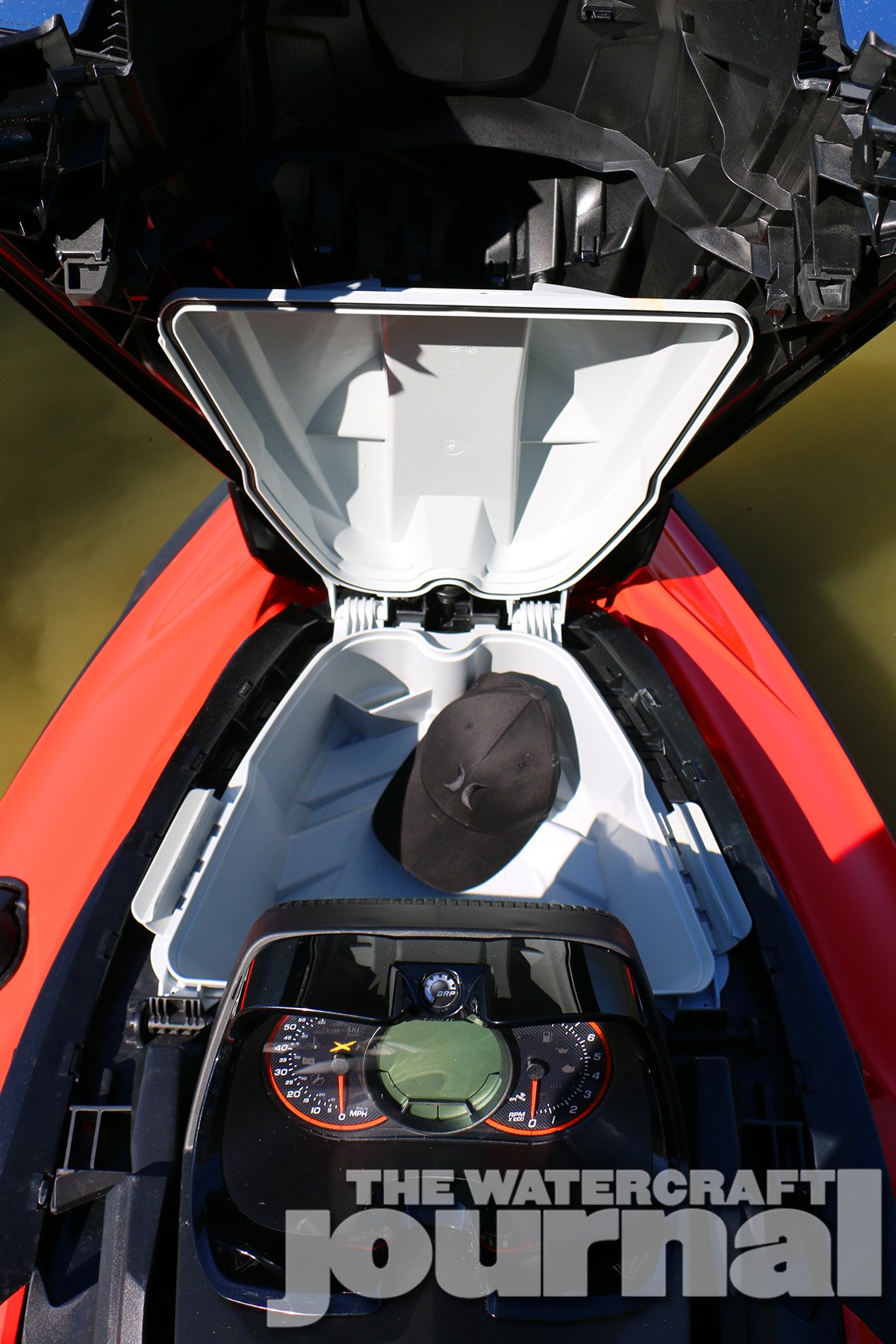
Above left: The foot wedges help angle the rider’s knees inward to pinch the seat like a sportbike. Above right: Accommodating the new Ergolock seat resulted in enlarging the glove box. The iPhone 5S is to show scale. It’s possibly the biggest glovebox on the market today.
All of this results in a arm-stretching amount of mid-range power, continually pulling upward along its ascending torque curve. Staving off cavitation is the 10-vane stator, multi-diffuser venturi, new 159.5mm prop and larger diameter wear ring identical to the RXP-X 300, keeping the RXT-X’s pump loaded and biting hard, be it in a straightaway, in the apex of a turn or rocketing through chop.
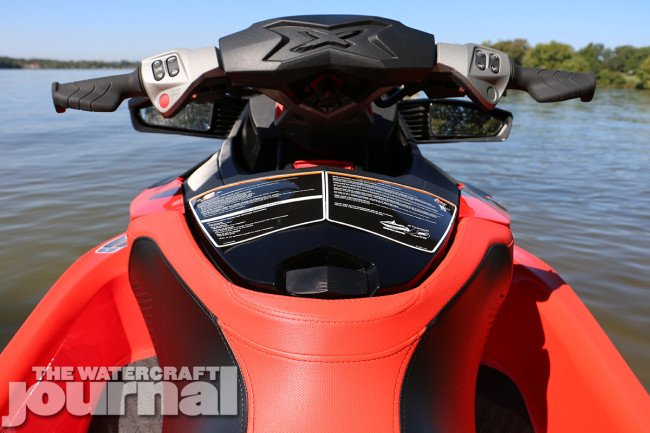
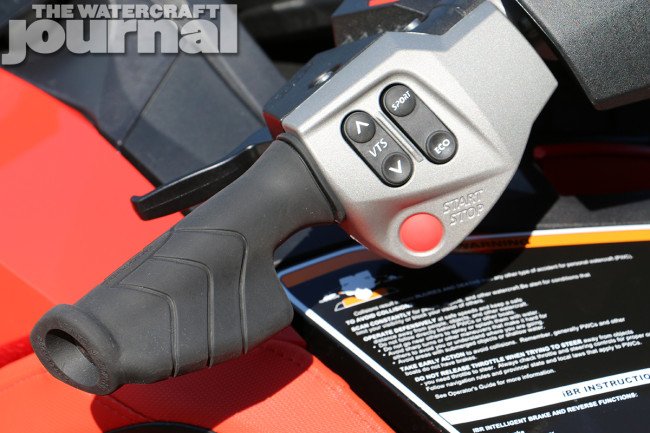
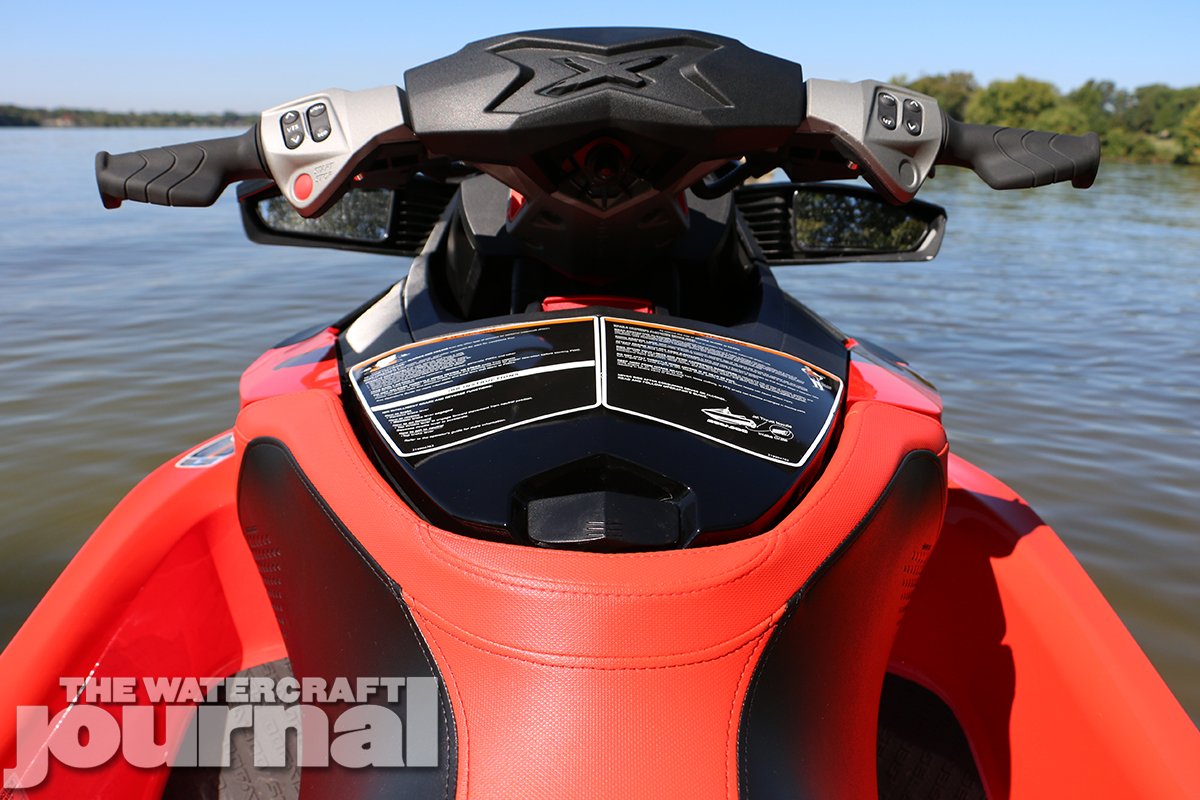
Yet again, the 2016 RXT-X 300 isn’t merely an increase in horsepower, but so much more – particularly to rider ergonomics. Sea-Doo has already applied its multi-point-of-adjustment AES (Adjustable Ergonomic Steering) handlebar to the RXT-X back in 2010, its eight points of adjustment permiting for dozens of configurations (to handlebar grip width and angle). The addition of new palm wedges molded into the grips being new.
The RXT-X won’t lay over on its outer edge like the P-X, but will bank conservatively, offering a slightly more secure, easy feel. And unlike the P-X, the longer T-X shines best in snapping long, sweeping turns. Admittedly, we struggled to find enough boat chop to truly upset the RXT-X’s pump engagement, so we failed you offshore guys on that one. Sorry.
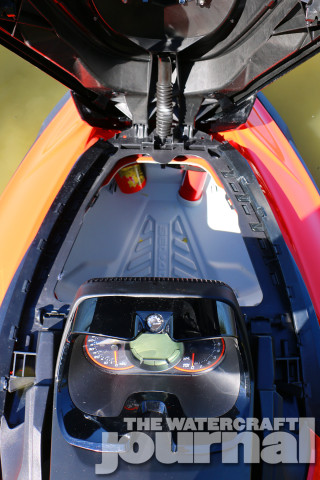
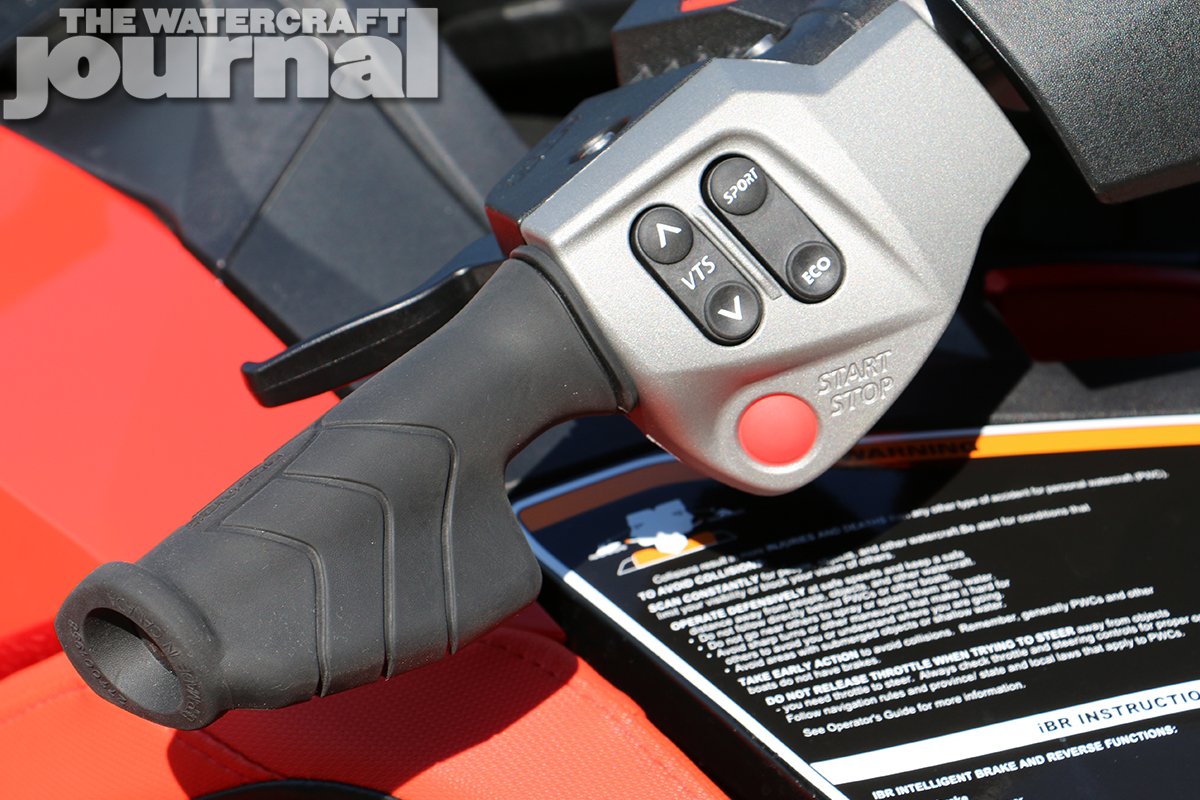
Likewise, the integration of the iControl controls into the AES handlebars – allowing iTC commands for Touring, Sport and ECO engine tunes, on-demand trim settings via the VTS system, and toggles for the in-dash controls (RPM, MPH, MPG, and fastest lap time counter). Identical to the RXP-X, boost gauge tops the LCD screen flanked by an easy-to-read analog speedometer and tachometer.
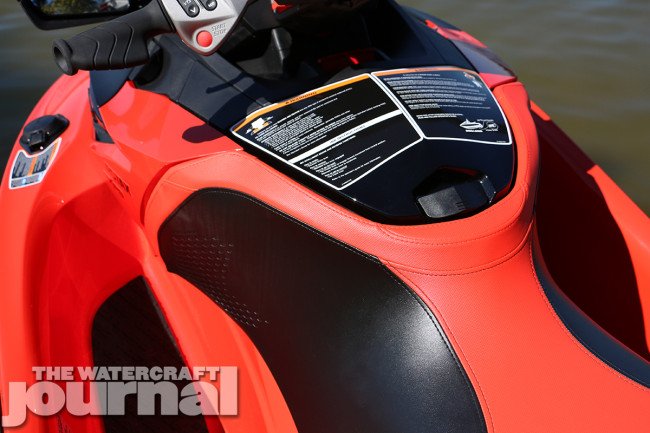
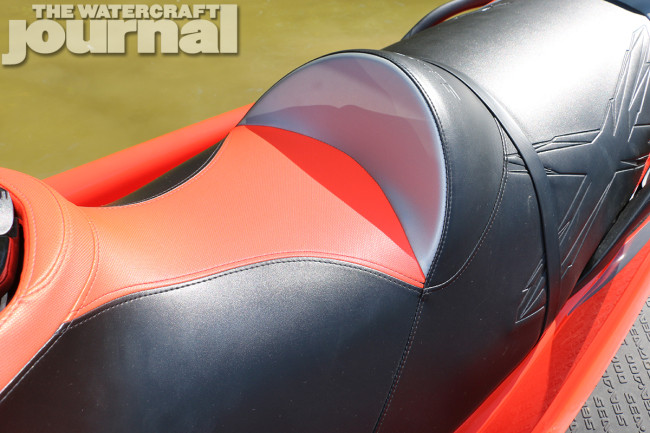
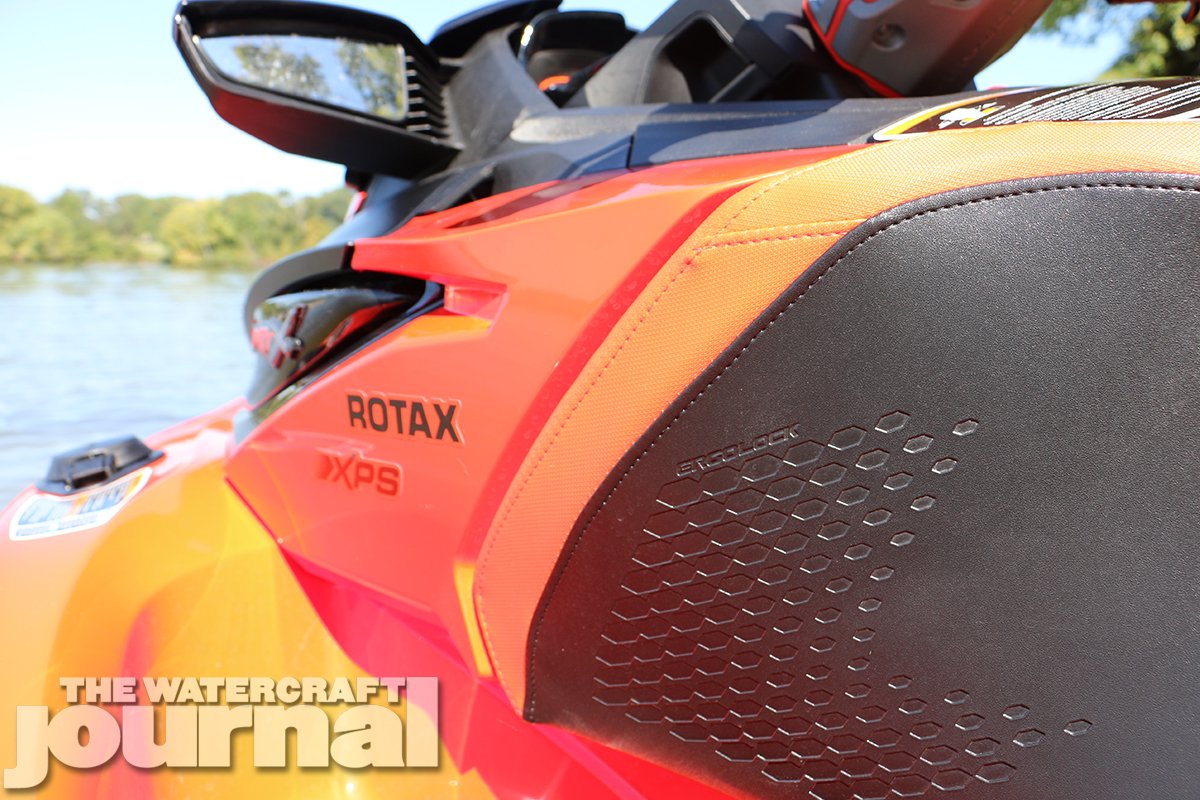
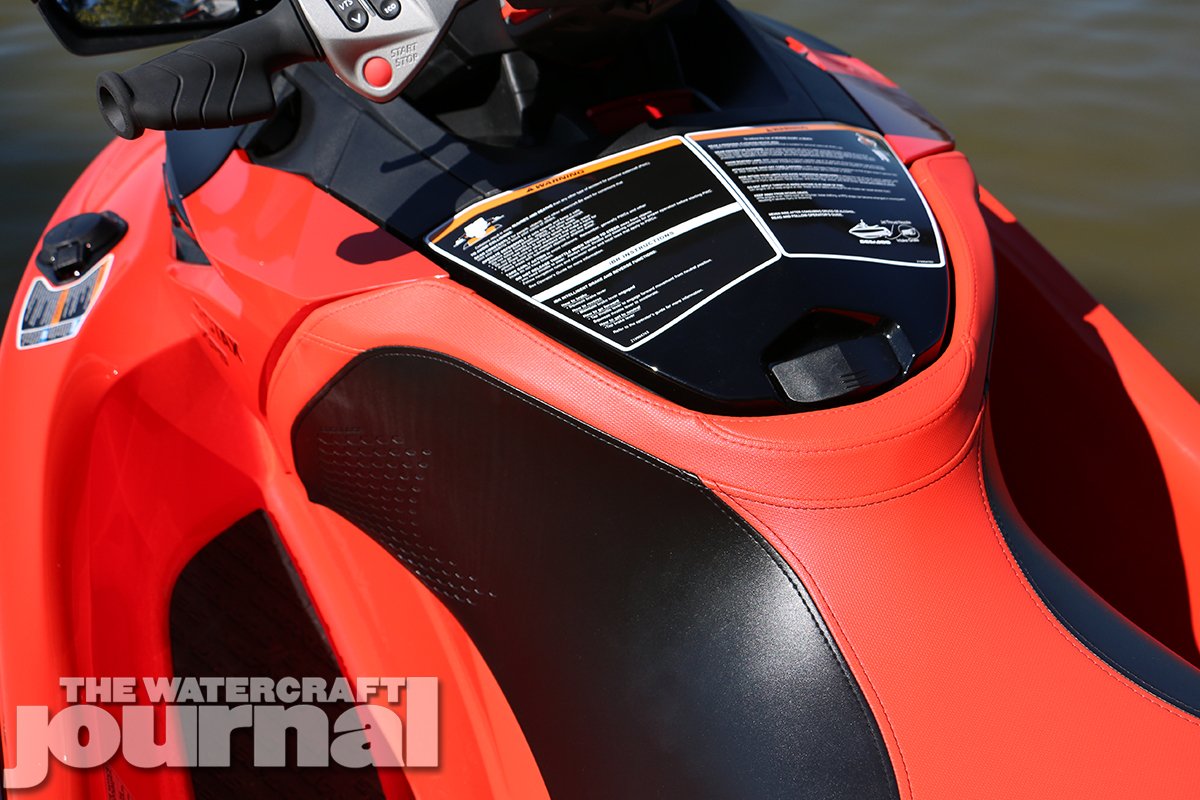
But the big change to the RXT-X’s ergonomics is found in the seat and footwells. By incorporating its Ergolock seating system and accompanying foot wedges from the RXP-X, the new RXT-X (and all S3-hulled machines) now allows the rider to use their knees and thighs to pinch the narrow saddle just like the sportier P-X. The result is a dramatic difference in rider input and comfort, particularly while cutting a tight corner.
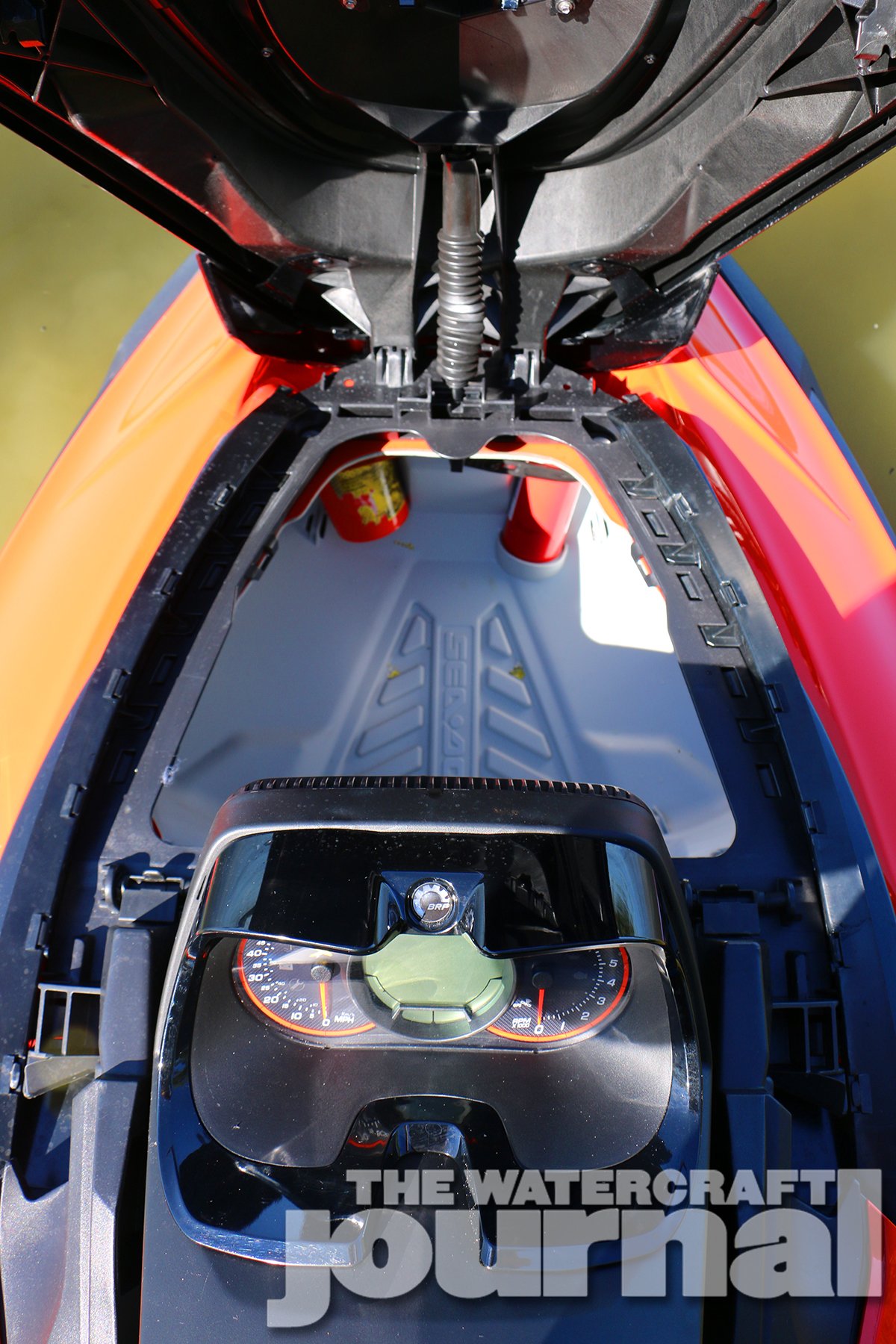
To allows for the new hourglass-shaped Ergolock seat, Sea-Doo needed to expand the fairings, consequently nearly doubling the glovebox capacity. Together with a new, completely furnished front storage in the box not only permits stowage of Sea-Doo’s removable watertight bin, but under it as well. This adds up to three times more total capacity than before (42.8 gallons).
In a surprising turn of events, the 2016 RXT-X 300 actually weighs less than the outgoing 2015 RXT-X 260 by an impressive 35 pounds (850 lbs. vs. 885 lbs.). Contributors to the weight savings are found in the relocation of the battery fore of the engine and the new second-generation iBR (Intelligent Brake & Reverse) motor located over the pump tunnel, thus removing the rear access panels.
Above: Here you can see how Sea-Doo’s RXT-X 300 not only offers its watertight, sealed storage bin (hat shown for scale), but now features a fully furnished storage cabin beneath the bin, which can house a full-sized PWC cover.
Of which, the new iBR employs a redesigned three-piece bucket system that deploys to slow the RXT-X 160-feet shorter than other non-brake equipped watercraft. New too are the motor, actuators and mounting hardware, all in an effort to successfully eliminate the heavy nose-plowing of the previous iBR-equipped runabouts.
In all fairness, our review of the 2016 RXT-X 300 should’ve been published first. It is after all, the ski Sea-Doo introduced to us before the others, and as you might’ve already seen, features the most improvements and innovation over its previous model than the RXP-X. (We just knew more people would want to see the 2016 P-X first.)
In our two days of testing, the RXT-X 300 never once failed to impress. With ideal conditions, our test unit (which was running the international “RS” tune, and not capped by the United States Coast Guard-mandated 68mph) reached a best of 71.1mph at 7,800rpm. Unfortunately, for us Americans, we can expect that number only after going with an aftermarket ECU or reflash.
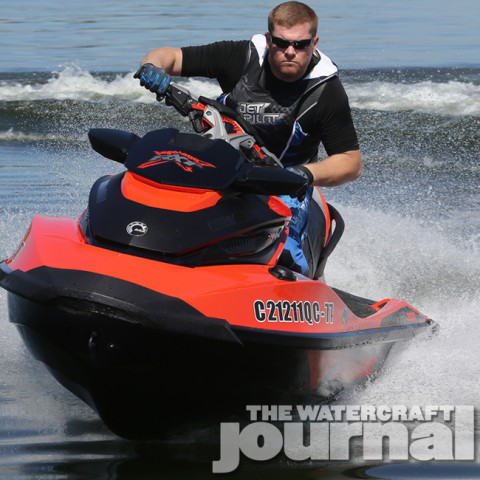
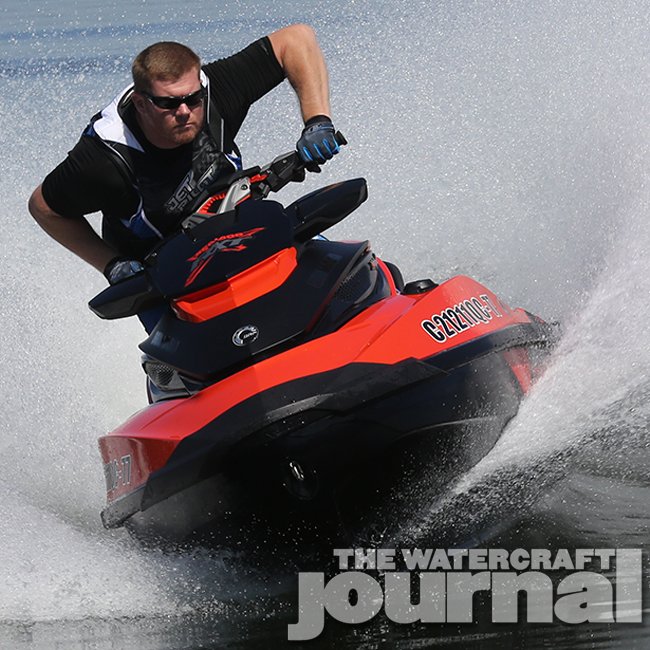
Although the hull and adjustable sponsons remain untouched, the addition of the 300-horsepower ACE motor, larger prop, improved (and lightened) weight distribution and rider positioning radically changes how the RXT-X enter, banks and exits a turn. Employing the full use of the Ergolock seat, and centering ourselves forward over the handlebars, the large RXT-X snapped corners like a craft three-quarters its size.
Although we had our choice of either Lava Red/Satin Black or White/Dayglow Yellow, the former is our personal favorite. Priced at $15,399 MSRP, the price is a $400 hike from the outgoing model, but the weight savings, horsepower increase, and added innovation more than equates for the jump in our view.
All-in-all, we couldn’t help but gush over the newest RXT-X and feel its possibly Sea-Doo’s best performance-bred three-seater to date. It was the first of the 2016 lineup we wanted to ride, and after two days of hammering on it, remained our favorite until we were asked to give it back – and we’re pretty sure you’ll feel the same way.
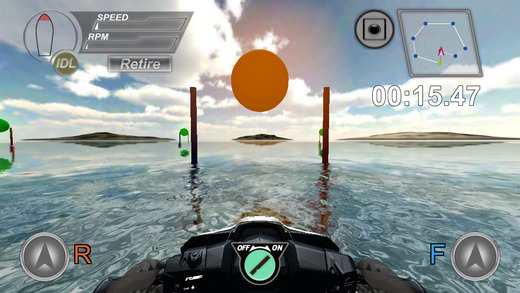
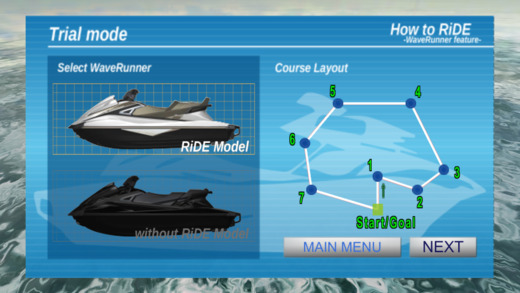
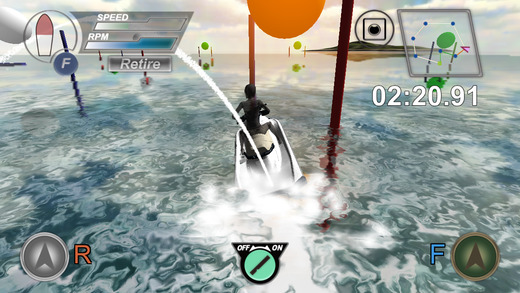
We know what you might be thinking, but according to Yamaha Motor Corp. the new WaveRunner HowToRiDE app (downloadable through iTunes) is less of a video game and more of a instructional tutorial that gives you a “virtual experience of the RiDE system.” While Yamaha still stands its ground in refusing to call their dual throttle system a “brake & reverse” lever, it’s also trying to educate new and returning WaveRunner owners on how to familiarize themselves with RiDE(Reverse with Intuitive Deceleration Electronics).
We first were introduced to this app while at the Yamaha booth at our local Nashville Boat Show, as other attendees of boat shows across the globe have. The app enables the rider to find out how to operate the RiDE system by reversing and braking using the left lever (although we’re not entirely sure how using a iPad gives the same feel).
As per the app’s page on iTunes, “In an actual riding situation, take early action to avoid collisions. The RiDE system is not a braking device for avoiding dangerous situations.” New to the app’s second version are “several cards about use method are indicated at the beginning of the Training mode” as well as a new course for the Training mode, and “The operating method of a throttle and a RiDE lever was changed. Now you won’t need to let a finger slip at the front to increase engine power, but instead you can place your finger on the appropriate button.”
Let’s face it, there’s a lot of you who were pretty excited with what Sea-Doo rolled out for 2016. Even more impressive, we the amount of PWC enthusiasts who vocalized how they hadn’t considered a Sea-Doo before last month’s unveiling. Because there’s no time to strike the iron than when it’s hot, Sea-Doo opened pre-orders for all 2016 models as well as offering an extended 3-year warranty on select models as well as some seriously worthwhile savings on financing.
According to Sea-Doo’s Pre-Order announcement, BRP’s 3-year warranty will be available “on select 2016 models and prior: eligible units are new and unused 2016 and prior Sea-Doo PWC models. The buyer of an eligible model will receive a 12-month BRP Limited Warranty plus a 24-month B.E.S.T. extended service contract subject to a $50 deductible on each repair.” (With an exception for Florida residents who will receive the 24-month BRP Limited Warranty.)
Additionally, Sea-Doo’s offering special low financing rates are available for eligible candidates with approved credit. As it states, “Approval and any rates and terms provided are based on credit worthiness. Multiple financing offers available. Other qualifications and restrictions may apply.”
All of this adds up to some serious savings over the long term, so if you’re as enamored with the 2016 Sea-Doos, there’s no reason to wait. You can go to Sea-Doo’s Pre-Order webpage, enter in your information and a local dealer will be put in charge of helping you take home the new ‘Doo of your choice!
It’s a common misconception to view riding gloves as solely a “cold weather” item. While yes, employing a pair of insulated riding gloves will help stimulate circulation, guard against chilled winds and help retain some body temperature, that’s not entirely their purpose. We find ourselves often wearing gloves when aggressive riding is on the schedule or traversing long or rough waters primarily for their added grip in addition to protecting skin that otherwise would be waterlogged or rubbed raw (or sometimes both). Gloves are tools like any other, and when properly made and used right, can be as useful as the ski you’re riding.
Over the years, we’ve cycled through several makes and brands of riding gloves and have found positives and negatives in all. The biggest points for judgement are three: fitment, grip and attachment. Beginning with the former, a major pet-peeve of ours is poor attachment straps. Either the brand or type of Velcro is insufficient to maintain a tight, secure strap around the wrist, or the strap itself is too thin and thereby lacks the necessary surface to adhere to. We’ve lost gloves (or simply thrown them in the trash) because of this one thing and we know we’re not alone.
Grip, of course, is mandatory is a glove is going to be of any use. Many opt to silkscreen the equivalent of “puffy paint” to the palms and fingers, which as most of us know, lasts less than a month or two (if that) before peeling off. Rather, we find gloves with extraordinary grip integrate a variety of materials into the palms and fingers, that not only drain or wick water, but offer the needed surface tension to remain locked in place. Finally, fitment is the great equalizer, as no glove regardless of its traction or Velcro will be used longer than once or twice if it isn’t comfortable to wear.
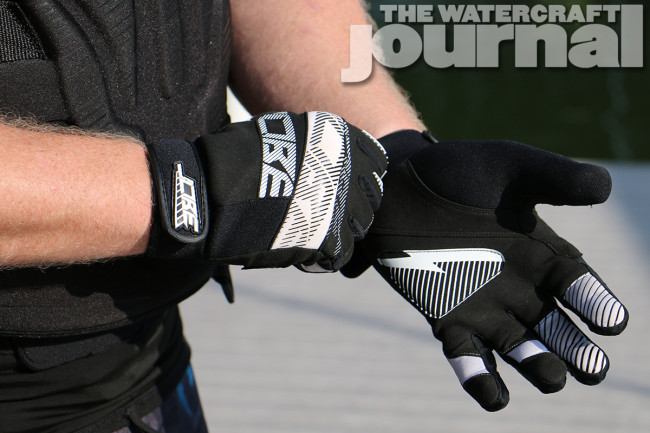
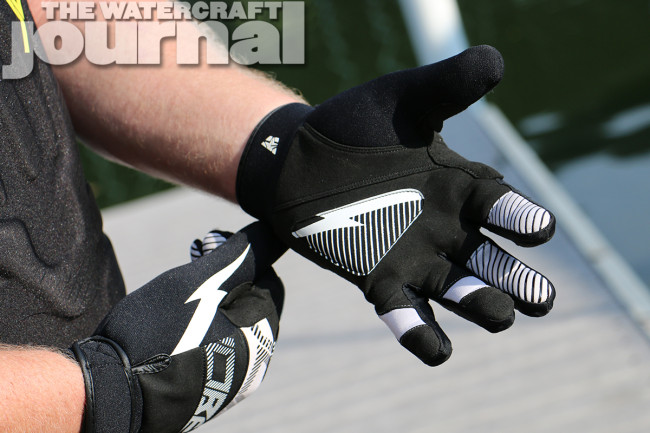
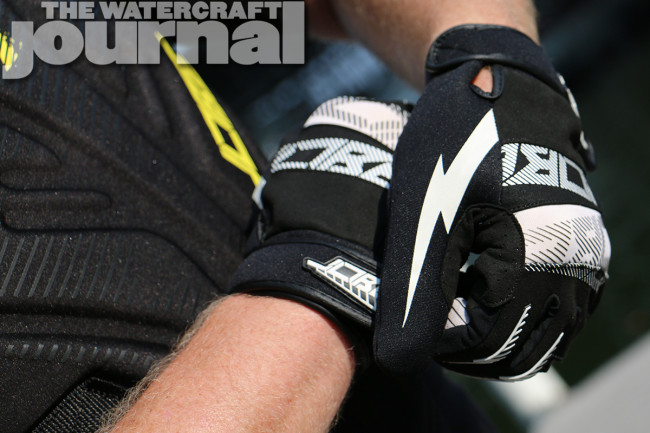
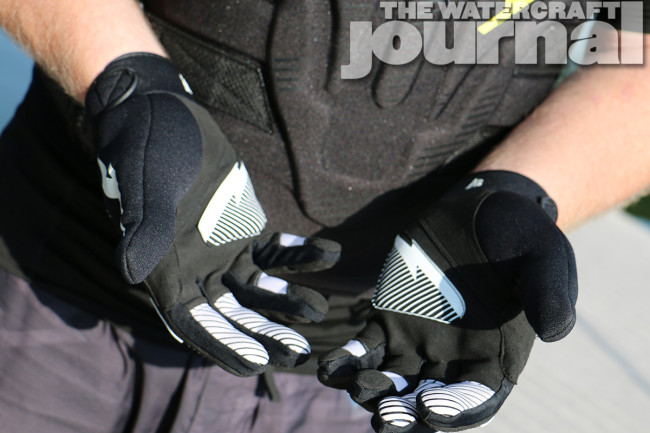
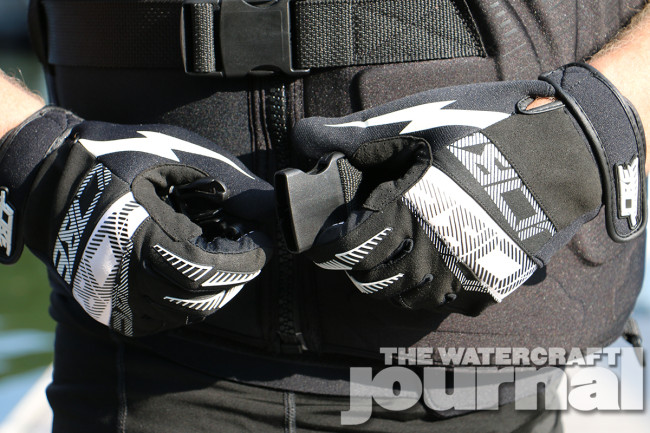
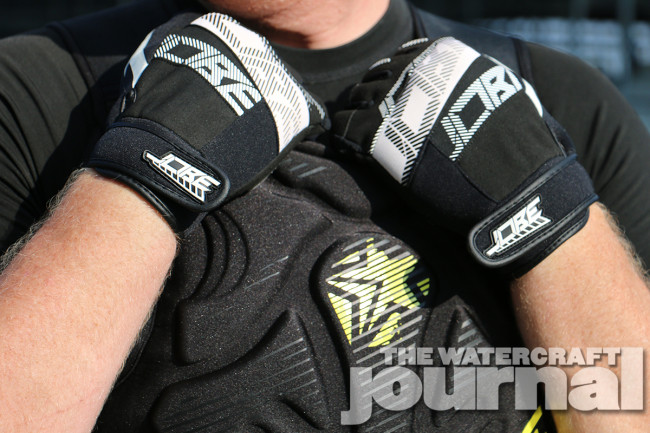
We’ve teased before that due to Jobe’s international fitment chart, Americans might have to adjust their ordering carefully. Thankfully, an XL pair of Jobe’s 2015 Ruthless Suction Gloves is the same whether here in the States or abroad. The gloves are stitched together from a handful of pieces of differing thickness of neoprene as well as nonslip amara fabric panels in the palms for increased grip. While the knuckles and pads of your palm aren’t as padded, thick panels atop and inside the hand are wrapped in thick padding.
The ring and little fingers feature unique segmentation for increased movement, while the middle and index fingers are made with thinner material with the aforementioned silk screened printing, presumably for some added grip. The texturing is noticeable when squeezing or releasing the throttle, but over several months of use, the printing is beginning to peel at certain spots.
The Suction gloves are cut short at the wrist, just below the palm with a wide Velcro strap securing the glove. We found the strap adequate in width and adhesion but wished it was cut a little longer to allow a little more range in adjustment. We did find the glove feeling slightly “old school” in its thickness, reminiscent of a thick neoprene diving glove used during the late 1980s. There are no drain holes and due to its thickness, requires more time than others to drain and dry.
Over this year, we’ve racked up some serious miles with the Suction gloves and they’ve held up rather well (besides the aforementioned peeling). The while panels have not discolored as we had falsely presumed, and the straps still tighten down securely. With that, we definitely can recommend Jobe’s Ruthless line to you, but because finding a dealer in the US is a little difficult, the best price we could find for the 2015 Jobe Ruthless Suction Gloves online for $68. Of course, smaller sizes decrease the cost respectively, but a near $70 pair of gloves is still a hefty tab for some.
Personal watercraft racing is commonly compared with motocross racing because that is where it was derived. During the 1970’s, motocross riders referred to it as mx on the water. They were also the pioneers of the sport of watercraft racing.
Still, there are no PWC’s exclusively designed for kids and there are no youth specific races in which to prepare them for the big leagues, so veteran IJSBA professional racer, Chris Hagset began the Junior Stars Program in 2007.
His idea was to provide the junior riders with knowledge that he and other pro racers gleaned from their years of competing. This would also help them grow the sport and give the up and coming generation of riders a smoother transition into the elite levels of racing.
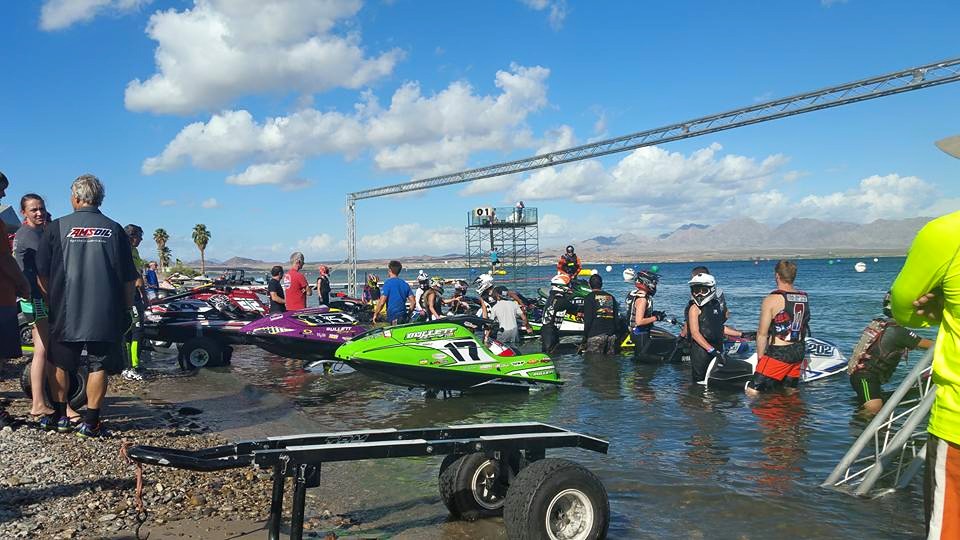
The JR Stars Program has grown immensely due to the support from individual donors and companies within the jet boat industry. The program has become a staple of the IJSBA World Finals held in Lake Havasu, AZ in October of every year. Young riders from all over the world attend the event.
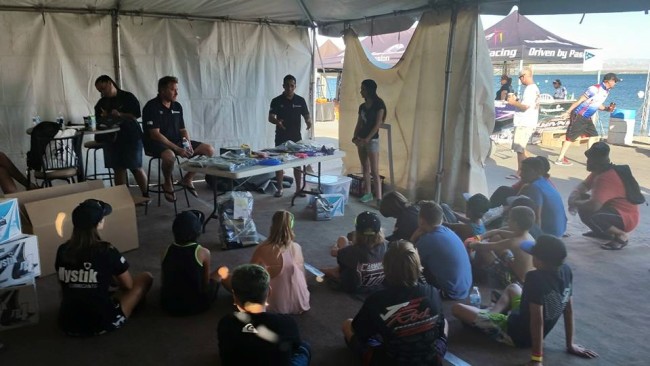
The program takes place on the starting line of World Finals where the youngsters are given an opportunity to grab priceless insight from their mentors. The kids learn about race prep, starts, strategy, fitness, eating healthy foods, sponsorship, and how to strategically use social media. It is an awesome program for everyone involved.
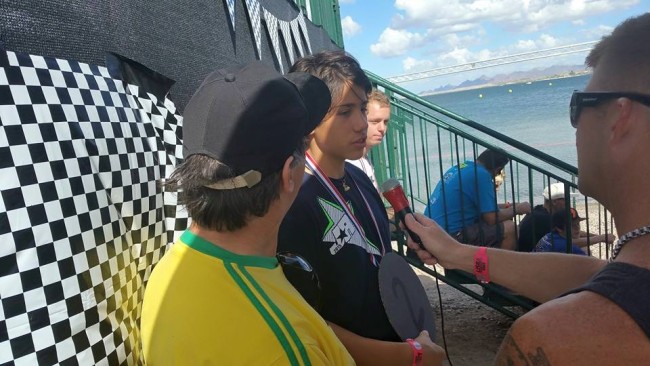
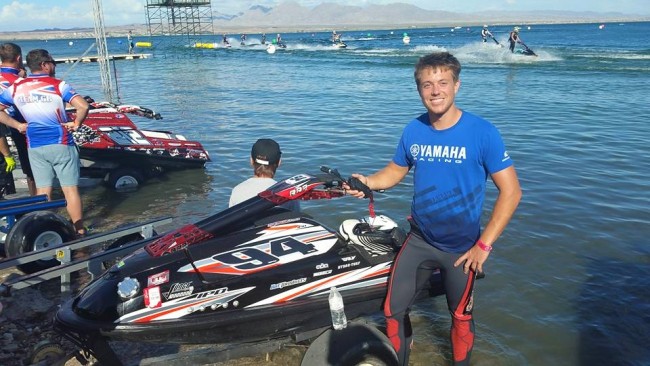
Yesterday’s JR Stars day at Lake Havasu offered a series of clinics, which were particularly informative as IFWA World Champion Mark Gomez walked the budding racers how to self-represent via social media, as well as other clinics on how to conduct an after-race interview (with IJSBA freestyle champion Jason Stoyer), and tips for mastering the starting gate with multi-time World Champions Mike Klippenstein and Josh Block.
If you are interested in attending or becoming a sponsor of the program, contact [email protected] or phone (928) 255-0230.
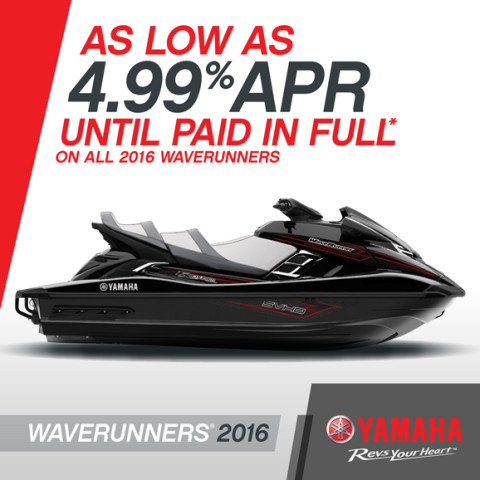
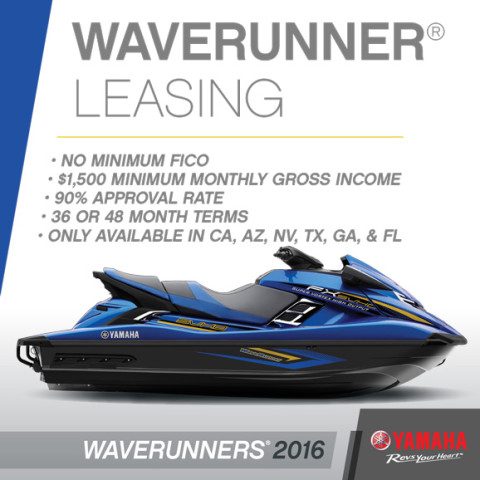
Whoa. If you were considering either purchasing, leasing or trading in your old watercraft for a new 2016 WaveRunner, then you’re in some serious luck. Yamaha is going full throttle in making it incredibly easy and affordable to take an all-new PWC. How? Through special financing on an exclusive Yamaha Card issued by Capital One. After opening your new Yamaha Card account, qualified buyers are eligible through 12/31/15 to capitalize on some serious savings.
If qualified and you’re looking for a new 2016 model, you could be eligible for 4.99%, 9.99% or 14.99% APR with minimum payments of either 3.01%, 3.20% or 3.44% of the purchase amount (based on your credit) until the purchase is paid in full. Now, if you’re in the market for a 2015 or older model still sitting at your local Yamaha dealer, then you could score a sweet deal (through your Yamaha Card) of 3.99%, 8.99% or 13.99% APR with minimum payments of 3.01%, 3.20% or 3.44% (on all new 2011-2015 WaveRunners – excluding V1 & V1 Sport).
So what happens if you’re just looking for something new but you just don’t have a lot of cash to drop on a FX SHO or that VXS you’ve been looking at? Well, eligible buyers can qualify for an incredibly low payment of $95 a month on select new V1 and V1 Sport models! Depending on your credit, you can qualify for an intro APR of 2.49% – that’s some seriously quality savings!
And don’t worry, Yamaha WaveRunners is continuing the industry’s only true Guaranteed Buyback program and one of the industry’s best watercraft leasing programs, for those who just aren’t sure if long term PWC ownership is right for them. There’s just a lot going on so check out Yamaha WaveRunners’ website for more info.
“The law of diminishing returns states that in all productive processes, adding more of one factor of production, while holding all others constant (‘ceteris paribus’), will at some point yield lower incremental per-unit returns,” so states digital info-dump Wikipedia. This constant looms over the heads of all companies, regardless of product, service or holdings. It is the point wherein doing the “same ol’ thing” no longer works anymore. Many are lucky, and can whether the storms of economic ebbs and floes without needing much change. Others live and die by the smallest twitch in the market. The personal watercraft industry is somewhat of an anomaly: although reticent to accept new technologies (ie. digital magazines), it’s enthusiasts have fully embraced them (ie. digital magazines).
Chances are, if you’re a manufacturer, a dealership or a custom shop within this niche industry, you’ve read the writing on the wall. Traditional print advertising yields little to zero result as so few would-be new customers subscribe to paper magazines. So you turned to Facebook (it’s free after all – well, to start that is), and that’s been good. Here’s the problem though, unless you’re aggressively pursuing, cultivating and feeding that Facebook/Twitter/Snapchat/Instagram/Google+ account, your reach will run out. Again, it’s the law of diminishing returns. So where to turn? The days of “build it and they will come” are gone. Today, we need to build it and take it to them. If you’re looking for fresh faces, you need to go to where the people are.
So where is that? Your best, easiest and most reliable source in this industry is The Watercraft Journal. No other outlet reliably produces more content, welcomes more new and returning PWC enthusiasts, and delivers more confidently on its obligations than any other magazine, forum or media outlet. Producing fresh, entertaining and informative magazine-quality articles each and every day, The Watercraft Journal has escalated to become the single-most popular personal watercraft magazine in North America (and is quickly zoning in on Australia) in just two short years. With nearly 1,000 articles published thus far, The Watercraft Journal also wields one of the largest catalogs of professionally-written “evergreen” PWC content on the Internet today.
You want your company to grow, to reach new and returning customers and a third-party resource to advocate and present your products. We at The Watercraft Journal want to continue to cultivate and support this intimate, niche industry and all those companies within it. This is a partnership ready to happen. Already over 20 companies have come to support The Watercraft Journal, and in return have been rewarded with high impact digital advertising, up-to-the-minute time-sensitive news posts, and intelligent and enjoyable feature-length content, all of which to direct its 200,000 annual readers to their storefronts. Let The Watercraft Journal be your partner and resource in helping grow your brand today. And here’s why:
September 2015
A Paradigm Shift In Trend
The above graphs might not mean much to the untrained eye, and that’s OK. What’s important to note is how September’s performance numbers stack up against August’s (which are compared below). Although more “users” or “unique visits” came to The Watercraft Journal in August, you’ll note that September’s readership read more articles and came back more often than ever before. Why is that? Well, there’s a multiplicity of reasons, but we wager its because no other publication was first or more thorough with some of the industry’s most important announcements, race coverage or product reviews. That always seems to be the case.
August
Total number unique readers: 33,396*
Total number of articles read: 79,334
Percentage of new readers: 63.5%
September
Total number unique readers: 31,502*
Total number of articles read: 81,373
Percentage of new readers: 55.5%
*This number is considered equal to an individual sale of a single copy of a magazine.
When Quality Matches Quantity
It’s important to note that in this day of immediacy that there is a reliable source for top quality, professionally-written magazine content that is published each and every single weekday. Pending a national holiday, you won’t see a day go by without new and uniquely-written articles from The Watercraft Journal. Providing coverage from the entirety of the personal watercraft industry – be it touring, fishing, racing, freestyle/freeride, or do-it-yourself tech – we bring the enthusiast the widest array of coverage possible. And we produce more sustainable content than any other publication, be them print or memory-sapping downloadable PDFs – both of which we don’t do.
News articles published in August: 22
Feature articles published in August: 16
Total feature word count: 13,899 words
News articles published in September: 21
Feature articles published in September: 17
Total feature word count: 17,261 words*
*When this number is translated to print publication standards equals a 136-page magazine. Please note that this number does not include an average of two uniquely-written news articles published daily.
Social Animals
As we’ve said before, The Watercraft Journal doesn’t require any sort of download, or paid subscriptions or even a password to log in and access our industry-leading content. What that has done is make us the single-most popular outlet for PWC news, reviews, tech and coverage in North America. We’re the first source that people check (we know, we have the data to prove it). And with our Facebook, Twitter, Instagram, YouTube, and weekly newsletters, we bring our content directly to them. No waiting around for updates. No checking the mailbox. If they’ve got a computer, a laptop, tablet, smartphone or Apple Watch, they can read The Watercraft Journal
September Facebook likes: 14,438
Top Five countries: United States, Australia, France, United Kingdom, Canada
Changing Seasons
With the upcoming World Finals and the new 2016 models coming out, it also marks the slow closure of much of this continent prime riding season (yes, we know. All of you in Florida and California can still ride any time you wish. Quit rubbing it in). Yet, that didn’t stop The Watercraft Journal from growing during last year’s winter and it won’t for this year. In fact, this past January, February and March actually eclipsed 2014’s June, July and August! That’s an incredible indication of the power of this audience. So again, if looking to grow your clientele, reach a broader audience of would-be customers and spread the word about your brand, product and services, let The Watercraft Journal be your resource and email [email protected] about advertising your company in the single-most popular PWC magazine today.
The Watercraft Journal: Tell our readers a little bit about yourself, and about who first got you riding.
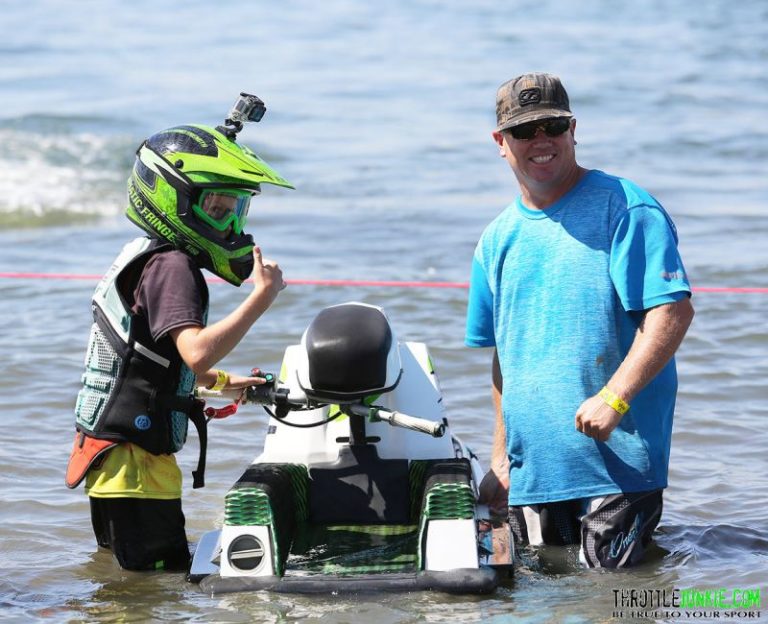
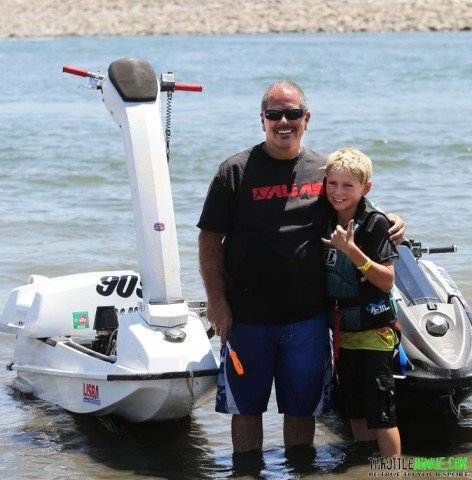
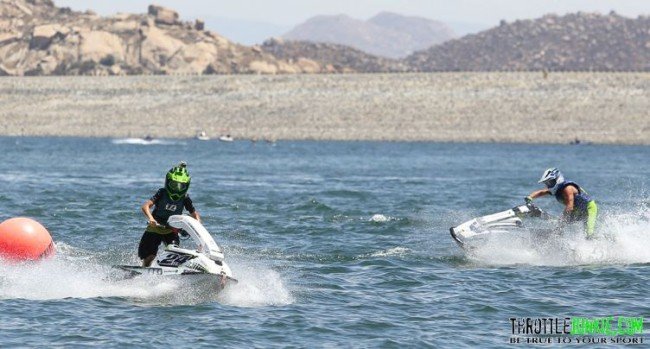
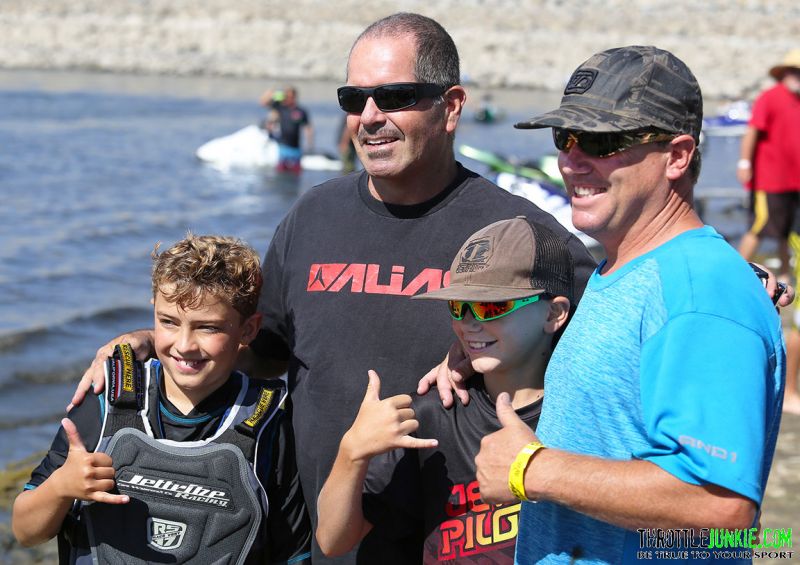
Wyland Reden: [I’m] 11-years-old, and lived on the big island of Hawaii for almost four years. I was in the ocean everyday during that time. My dad bought two 550 Kawasaki’s, he gave me the 1989 ski. By his mistake, he gave me the faster one! His was slow as molasses. Sometime at the end of 2013, we started riding at Lake Elsinore and Oceanside harbor.
WCJ: What got you interested in racing? Where and when was your first race? What class did you race? How did you do?
WR: My uncle Shaun used to race way back in the day. He gave my dad some buoys to help him learn to ride. But instead, it helped me more. My dad is new to the race scene. He grew up surfing and was a pro surfer back then. He is great in the ocean, surfs, SCUBA dives, freedives and all the other stuff, but struggles to keep up on his ski. He cuts buoys to try and stay in front of me.
My first race was at Lake Perris in the 2014 Jettribe West Coast series. My friend/coach, former world champion Mike Yellich (known as “Mauler”) wanted me to race the juniors, just to get a taste to see how I would do and to see if I would like it. He told me I would get smoked by them since all kids were racing 800s and they had a lot of experience – but study the lines they were taking. He was right. I got “smoked” but learned a tremendous amount.
WCJ: Why are you choosing to race vintage? Have you ever been on an 800? How was it?
Well, I saw the all the legends racing 440s and 550s on YouTube. I wanted to ride like them. All my favorite riders raced 550s. 550s are the most challenging skis to ride. They are not stable and very squirrely which makes them fun. Yes, I have ridden a couple 800s, and even a 950. I like them, they are much easier to ride, they turn on a dime, much faster and plow through any chop. They will be fun to race in the future.
WCJ; Who are favorite riders?
WR: I have watched and learned the most from videos of Jeff Jacobs, Mauler, Chris Fischetti, Chris MacClugage and Victor Sheldon. I’m a big fan of Aaron Geweski and Brock Austin, and look forward to seeing them race GP class at World Finals 2015. My teammates Brooks D’Antonio and Brian Holland are awesome riders and great mentors. I think they are going to do extremely well at Finals. But by far, Mark Gomez is my all time favorite, a legend in the making. He puts on the ultimate show! Shreds anything he rides. Always positive and in good spirits and a great role model for all of us. He is the huge reason why I and my friends are so much into this sport. We all want to ride like him.
WCJ: Tell us about your race boat, what do you like about it? Who works on it? Do you wrench on it?
WR: Last year my dad upgraded me to a 1991 Kawasaki 550 with a reed motor that he bought from a really cool family that races the 800s. They no longer used it so they brought it from Utah to Lake Havasu, and met us at Chris Fischetti’s race. I raced it that day. It has a few aftermarket parts, like a factory halfpipe and dual carbs. It sounds really cool. Dad worked on all my skis but struggled with the major stuff. Mauler helped my dad build my ski. Now Jason with BJ’s Performance does all my motor work. BJ’s builds race skis and incredible 550s.
WCJ: What lakes you like to ride at?
WR: My dad calls it “Leech Lake.” And yes, there are lots of leeches. It’s always an adventure. We have to 4WD back there. It usually takes us 25-to-30 minutes on dirt roads. There is a shorter way we can take though its super gnarly. My brother and I call it “Heart Attack Hill.” Its super steep with huge roots and rocks next to a cliff. My uncle followed us one time and he ripped off his running boards. One time my mom was with us and dad decided to take her that way. Holy cow, she cursed him the whole way.
WCJ: Who would you like to thank? Sponsors?
WR: I am extremely grateful of my parents, without them I wouldn’t be in this sport. My sponsors have been a huge help! Mauler has been there since the beginning helping with ski and coaching. BJ’s Performance, Jason is a great mechanic/rider he works on my motor making fast and reliable. Team riders Brooks and Brian are always giving me great tips and help with ski, Impros Impellers, Havasu Watercraft Escondido, IPD Graphics, Jet Renu, C-57 and Charles Sims, JetPilot, Aquanuts, and Mark Gomez. I am so thankful of these people! I would not be able to race without their help.
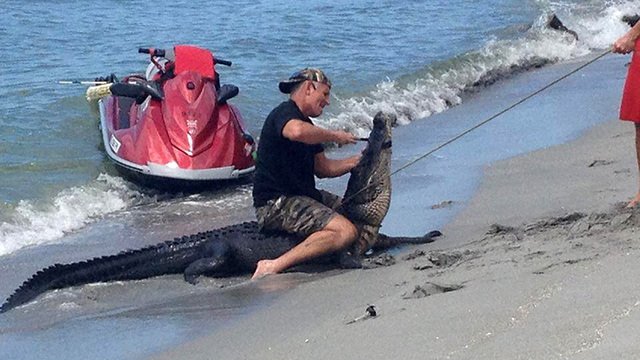
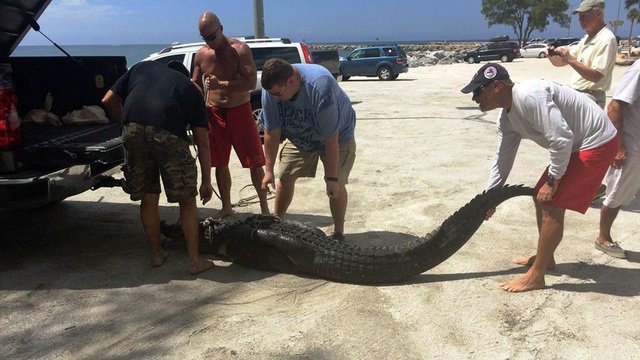
Normally, this is the sort of stuff you’d expect to hear coming out of Australia, but not today. Lieutenant Gregory Rose with the Sarasota County Beach Patrol received a call that an alligator was swimming alongside the South Jetty in Venice, reported Fox 35.
“I have been there 20 years out here and was the first time I was ever involved with,” Rose told Fox. He raced aboard a Yamaha VX WaverRunner to confirm the sighting. Although the alligator was approaching a populated area of beach goers, it appeared not to be pursuing prey. Rose said, “It was just kind of doing its own thing there. Wasn’t aggressive or anything.”
Rose acted to mitigate the threat, jumping from his ski to wrangle the ‘gator until animal control could relocate it. “They are pretty stealthy. You won’t hear them and unless you are looking you won’t know they are there,” Rose explained. And while its unusual to see an alligator in saltwater, Rose said they have had a few similar calls before.