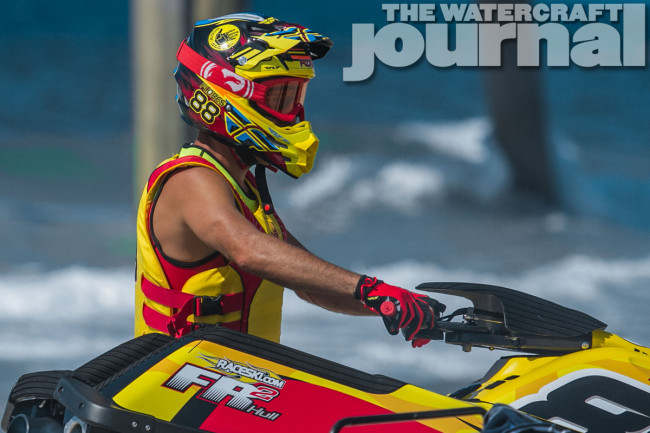
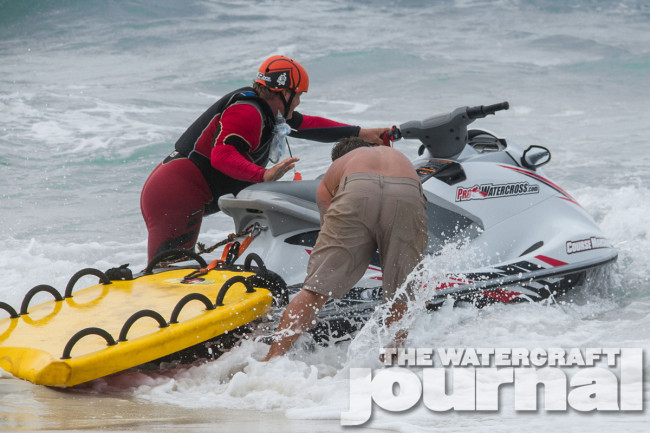
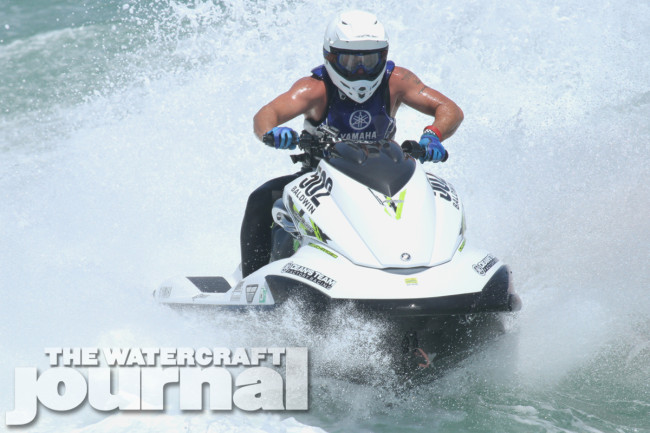
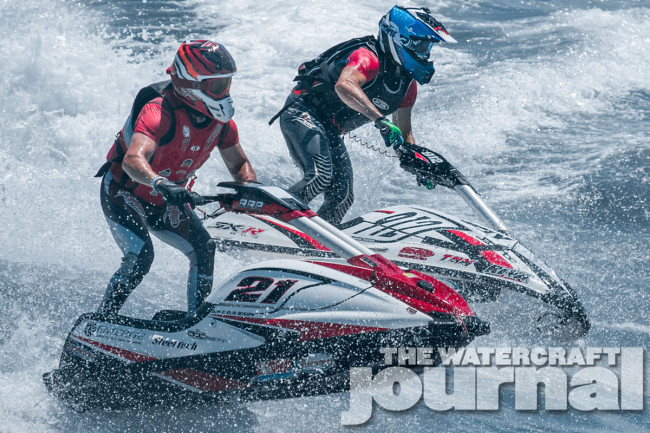
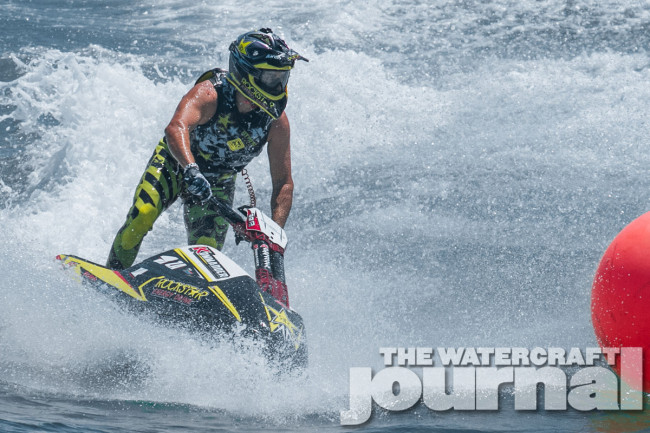
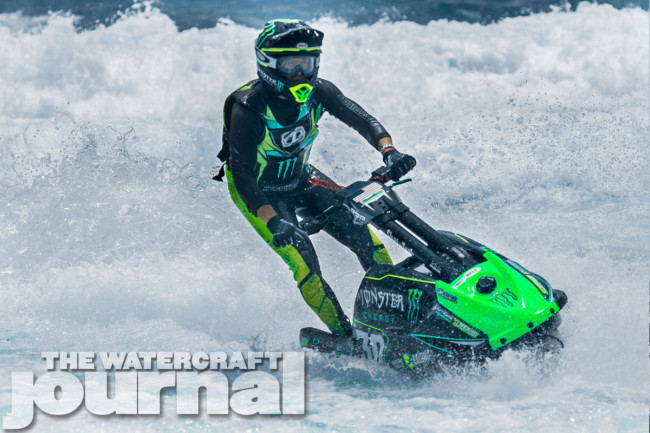
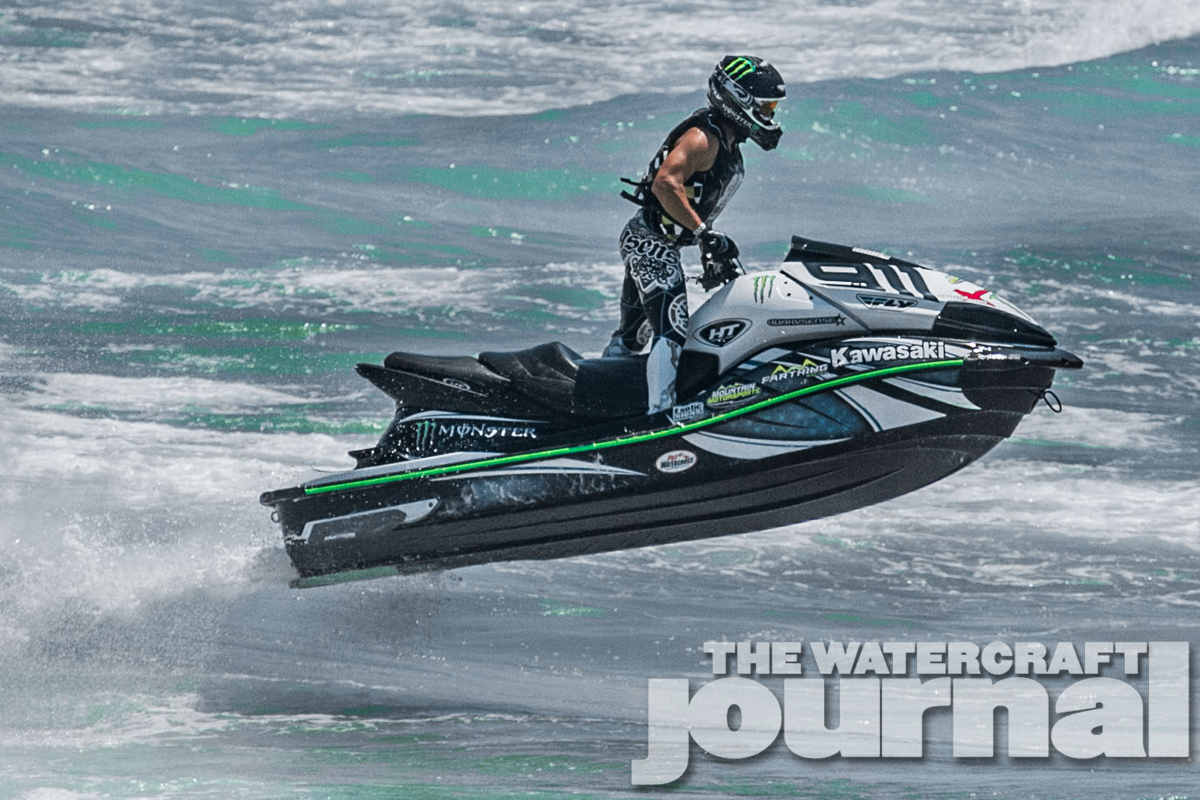
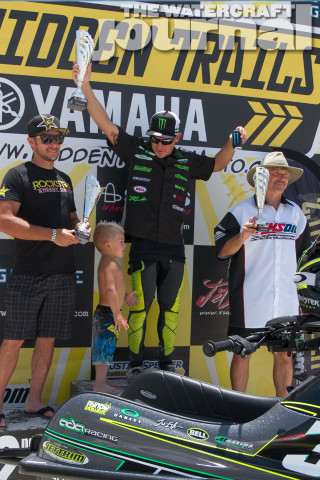
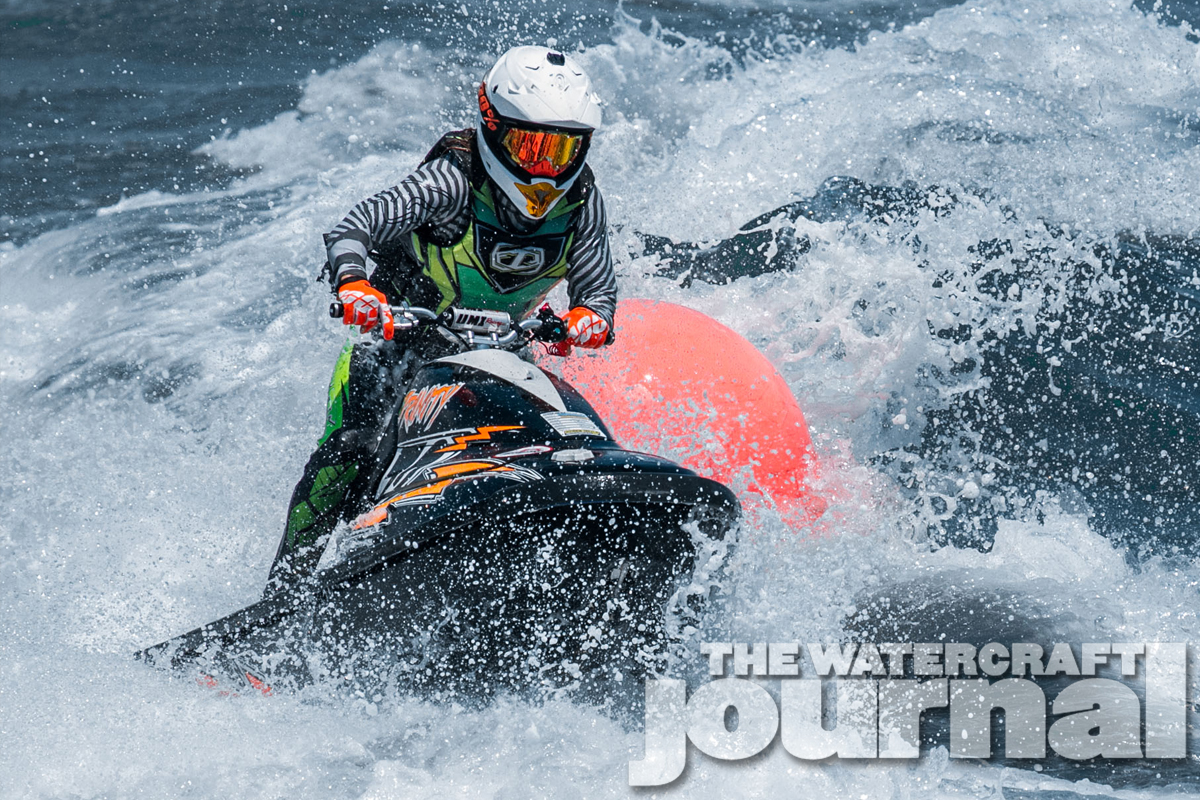
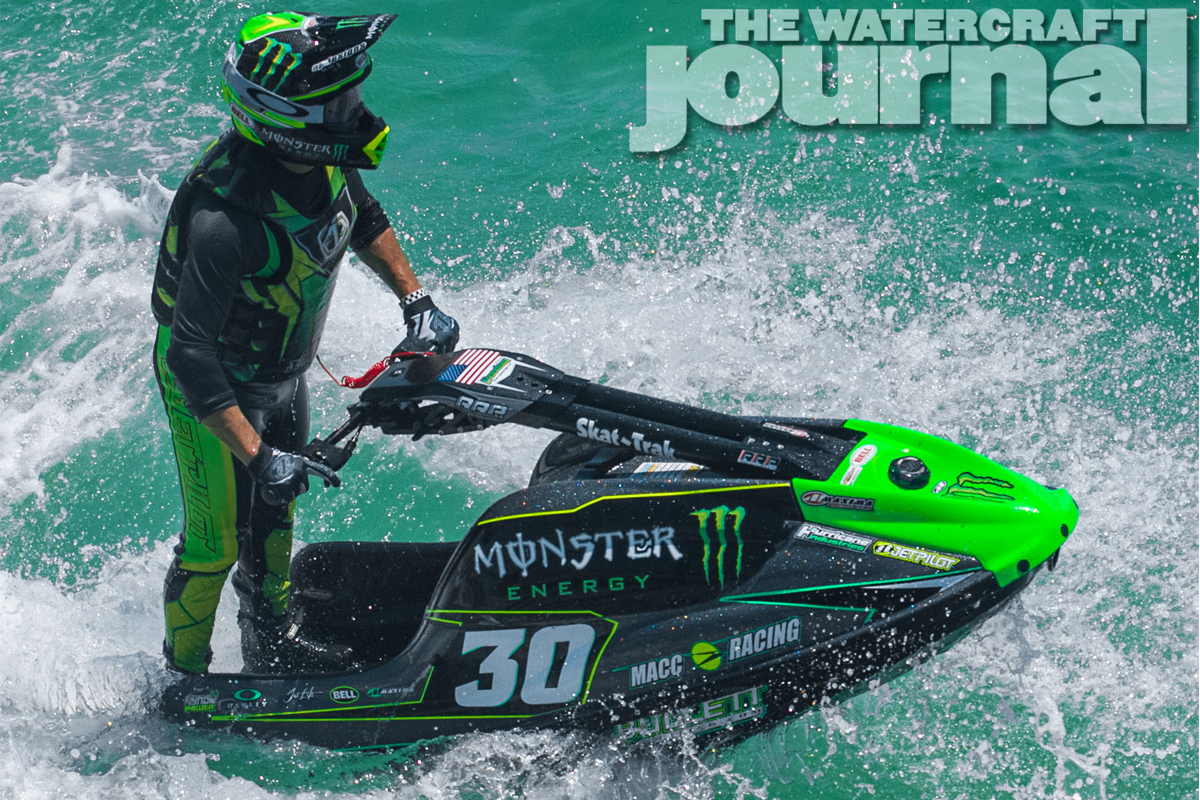
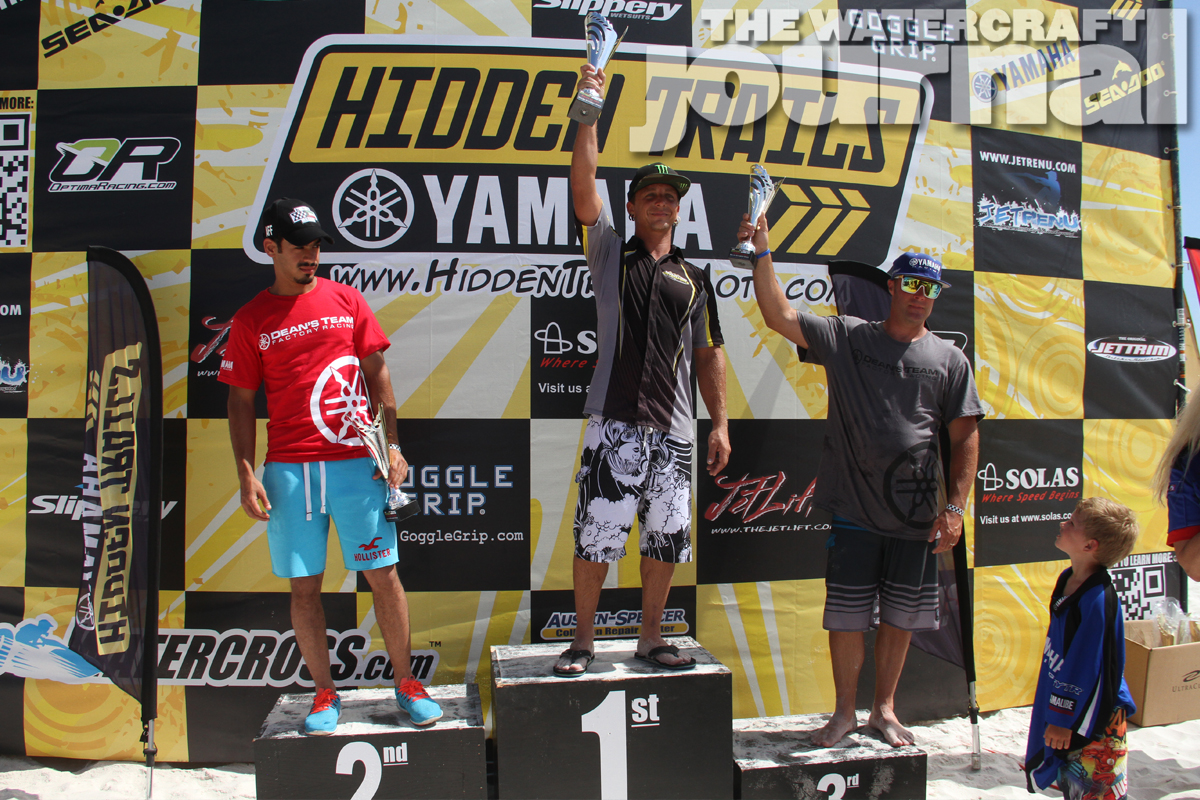
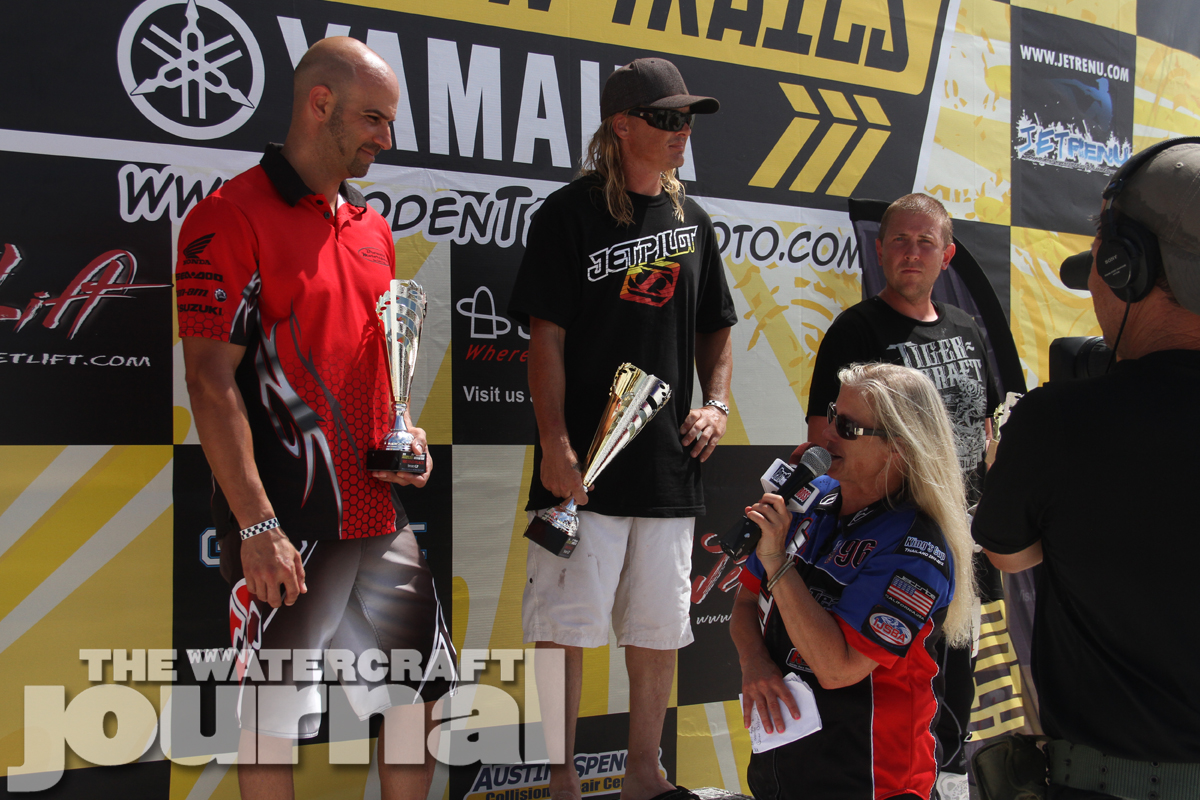
Oh man, it’s coming. And frankly, not fast enough. Scheduled for this September 18th-19th, the 8th annual Cronulla Rip ‘N Ride is fast becoming one of the single-most desirable freeride events on the planet. No longer a local Wanda Beach surf ride in New South Wales, Australia, the Rip ‘N Ride beckons to the world’s best freeriders, many hailing from North and South America, Europe and even the Fijian islands.
Presented by Yamaha Australia, the 8th annual freeride looks to not only match, but surpass last year’s RNR, which all 100 entry tickets sold out in about 6 minutes. And with prizes ranging from a brand new Yamaha SuperJet, a 701 Blaster and $1,000s worth of other sponsors’ products, it’s undoubtedly hard to resist.
Besides the obvious showdown of the best freeriders pairing off to battle face-to-face, there’s also awards for the Sickest Trick, Sickest Wipeout, the Cherry Popper Backflip (awarded to freeriders successfully executing their first backflip), and a few other awards. This coming September, as the surf kicks up and the temperatures finally start to climb back up (remember, Australia’s seasons are opposite of ours north of the equator), the RNR will be back in full swing.
Until then, make sure to check out The Watercraft Journal’s faithful reporting from the past three years’ worth of RNR coverage, as well as this awesome promo video below. Then, when you think you’ve had enough, stay tuned here for s’more awesome Cronulla coverage!
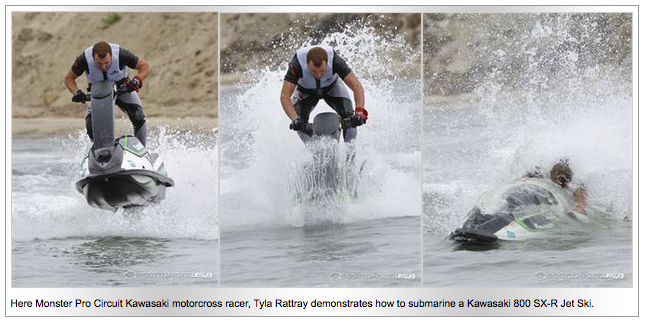
It’s no surprise that many jet skiers take a shine to motocross to keep sharp and in shape. But did you know that the street went both ways? There’s quite a few professional MX riders who take to the water to hone their skills, and a few years ago, MotorcycleUSA met up with Tyla Rattray and Dean Wilson aboard their Kawasaki JetSkis.
Meeting up in San Diego, California’s Fiesta Island, joining Lucas Oils’ AMA Pro Motocross racers Rattray and Wilson was eight-time IJSBA World Champion Victor Sheldon. According to MotorcycleUSA, “The pair of ultra-fast 250-class racers ride for the Monster Pro Circuit Kawasaki team aboard highly-tuned KX250Fs. After spending a few hours sliding, splashing and crashing in the cool, blue water of the Pacific Ocean, we discovered just how comparable the two sports are.”
Riding a pair of 800cc SX-Rs, the 781cc twin-cylinder plant pumps out around 80 horsepower, not too far from the early bikes these riders grew up on. “They’re a blast to ride,” says Wilson, “Obviously I’m not too used to it as this is only my second time Jet Skiing. But the more I ride the more fun it is because I’m getting better. I’m learning every time I get on it. The way it turns and reacts is a lot like a dirt bike. Right now I’m kind of winging it, but there does feel like there are some similarities between sports.”
“The sports are quite similar,” stated Sheldon. “You’re bending your legs and using your upper body strength. The stance is kind of similar – you’re crouched down and squatting. I think it’s one of the closet sports between one and another. It’s really good cross-training aid for moto guys because it’s safe and you don’t have to be as focused as you would be on a dirt bike. You can ride a little bit looser because you don’t have to worry as much about getting hurt.”
“Mentally it’s the same,” continues Sheldon. “The physical prep is also quite similar because both sports take strength and endurance. Sure you use a little bit different muscles, but they’re really comparable.”
“I really enjoy riding these things,” adds Rattray. “I don’t know about racing them as I’m not fast enough to ride at a top level yet [laughs]. But to come here and ride Jet Skis with my buddies is a lot of fun. I want to do it a lot more this summer—it’s really awesome. I gave them a try for the first time last year and this year so far I’ve been riding a lot. For me it’s a good way to get some exercise and have some fun away from the track.”
The rain fell so hard against the windshield that I had to slow down just so that the wipers could catch up. Charcoal gray skies dropped a silvery curtain, drenching everything between Nashville and Huntsville, Alabama. Breaks in the downpour provided a little relief between showers all the way to Birmingham. The route to this year’s Mudbug in Morgan City, Louisiana was a wet one, and only a small taste of Mother Nature’s irritable mood.
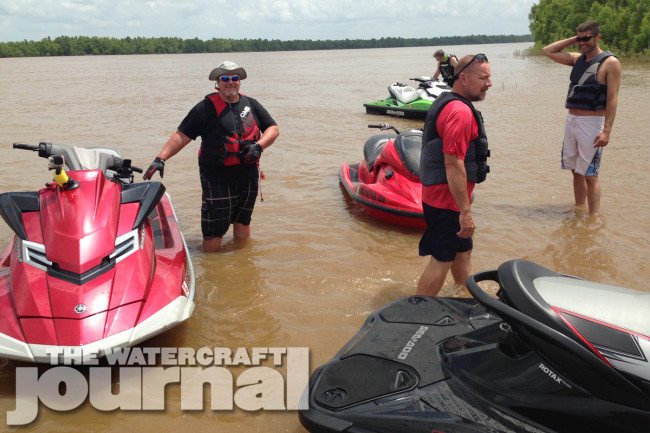
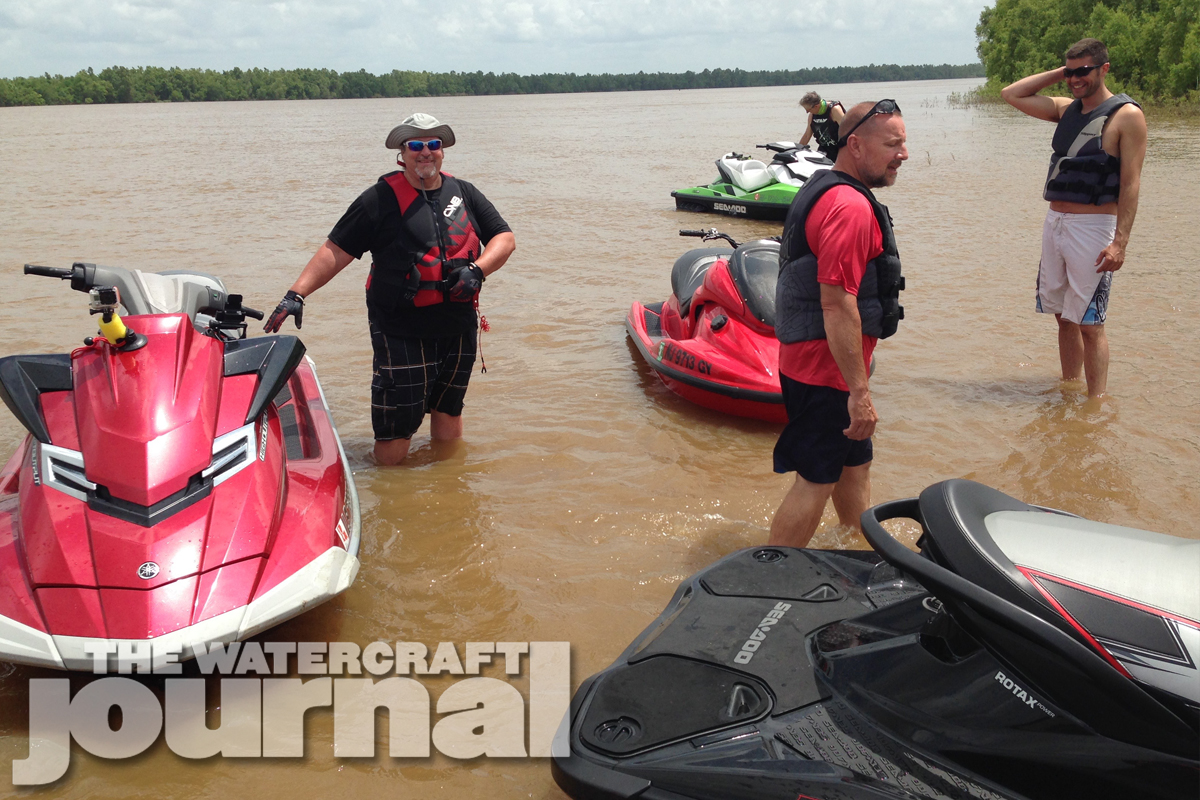
A few extra stops along the way and some construction zones delayed our early afternoon arrival by a few hours, but not enough to miss a personal invite by Greenhulk.net’s founder Jerry Gaddis to join him that Friday evening, some family and the “Yamaha guys” at his parents’ camp along the Avoca Island Cutoff, a glassy green vein of bayou running alongside Highway 70.
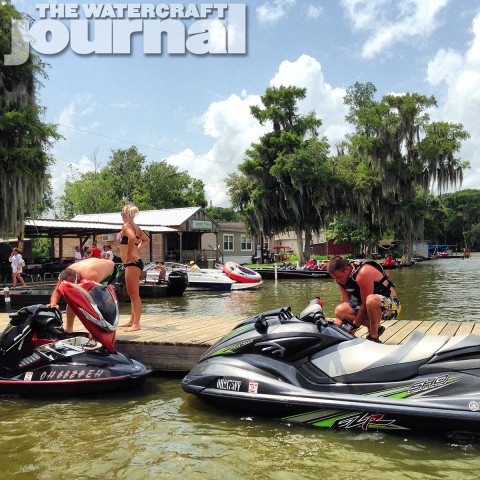
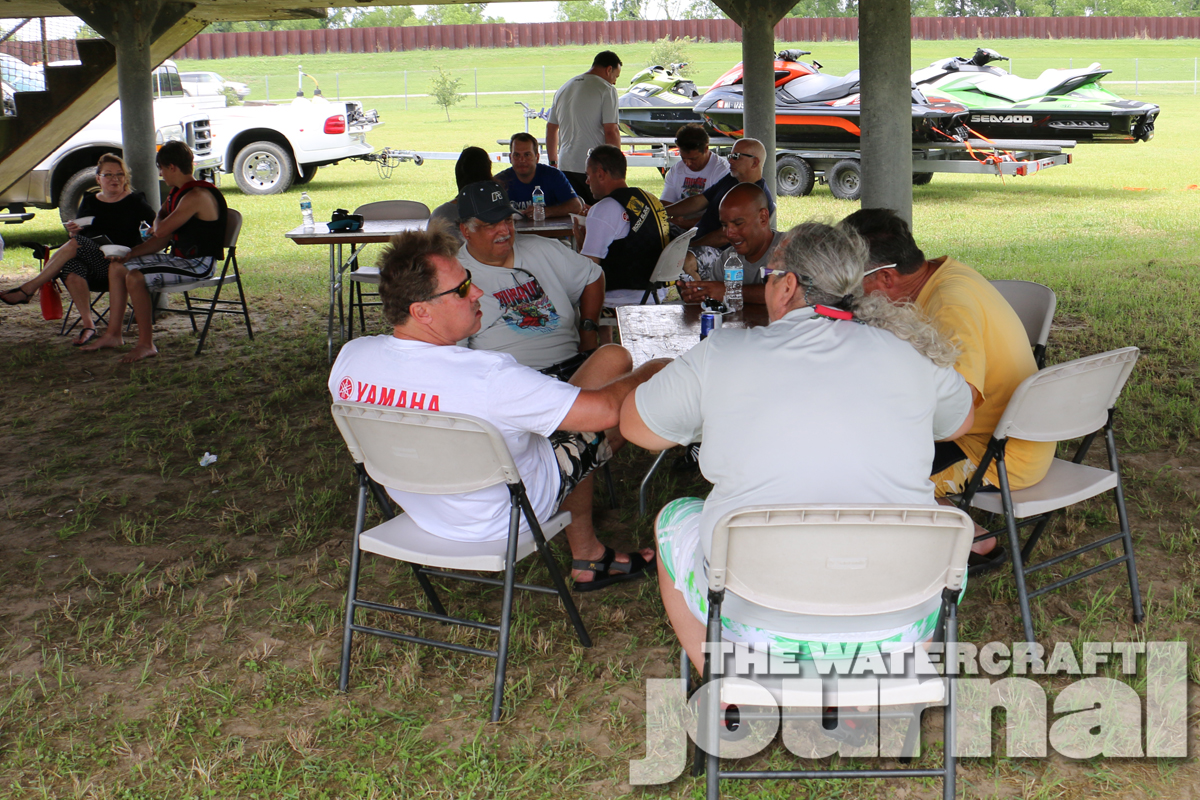
Of course, “camp” is a word used egregiously loose around these parts, as the site was an elevated two bedroom flat sumptuously furnished with enveloping couches and cool tile floors. Beneath the stilted home was a welcoming arrangement of benches and picnic tables only a few steps away from the water’s edge. Rainfall that week had raised the water levels through the bayou, bringing the river up to the property’s edge.
The MudBug first started in a similar bayou a decade earlier, but not as the mega-event it has become. Rather, it was birthed as an underground drag race complete with radar gun runs. At its height, it swelled to over 300 skis in attendance. In recent years, the cloud of liability has spun off the racing to the HydroDrags, leaving the MudBug to more of a social event.
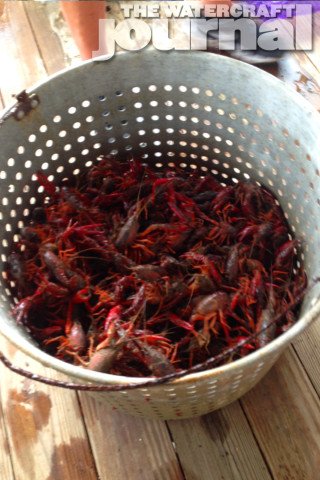
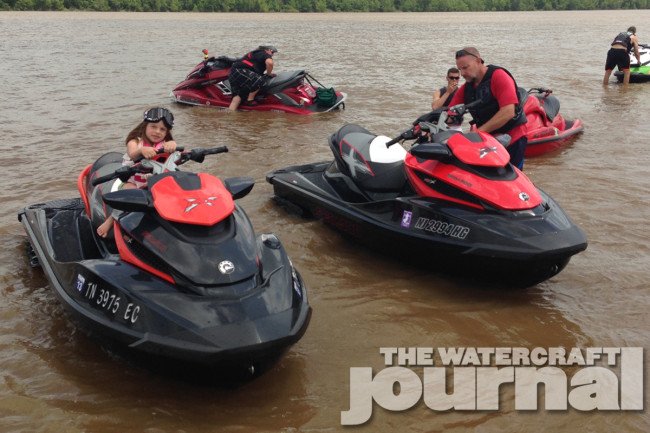
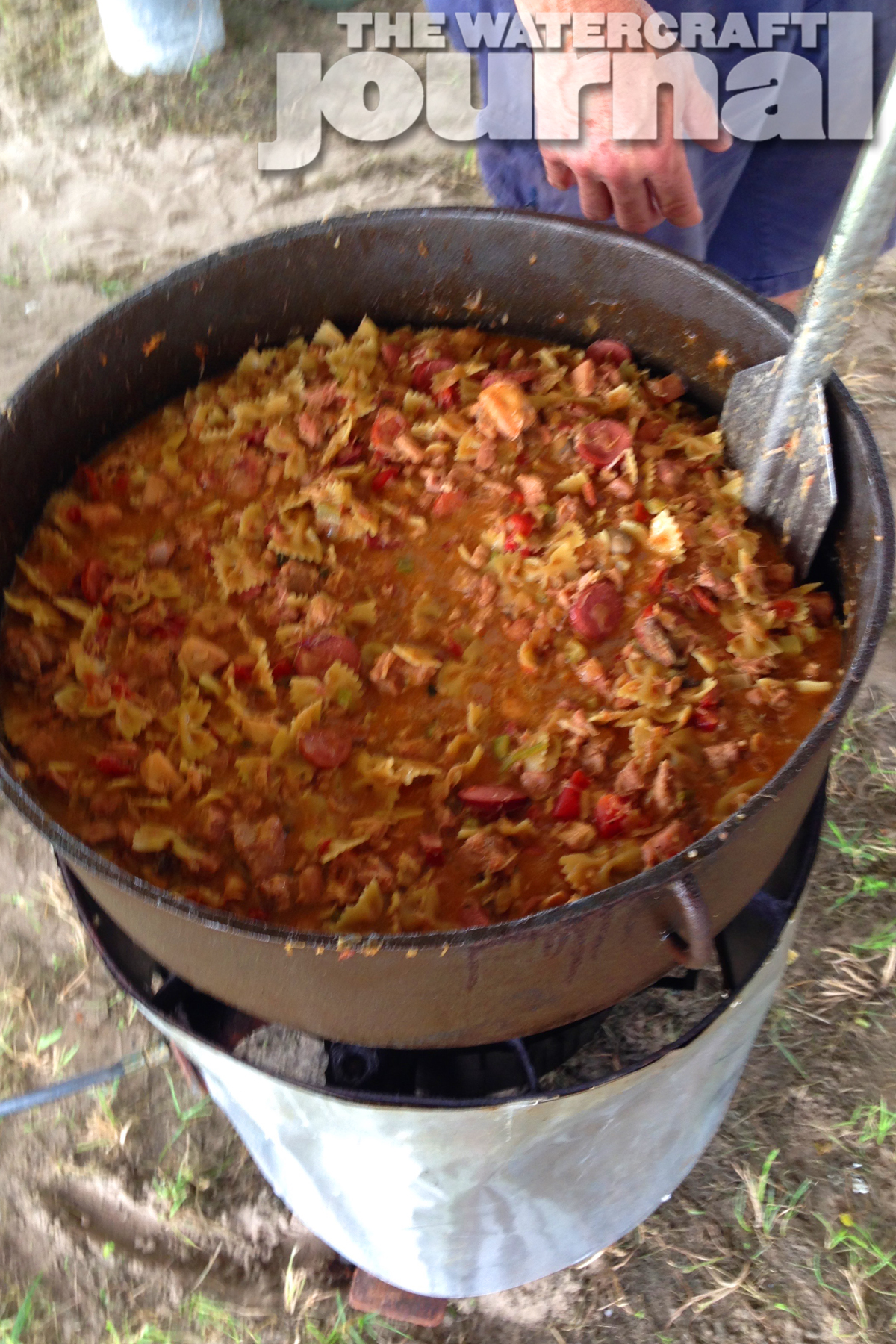
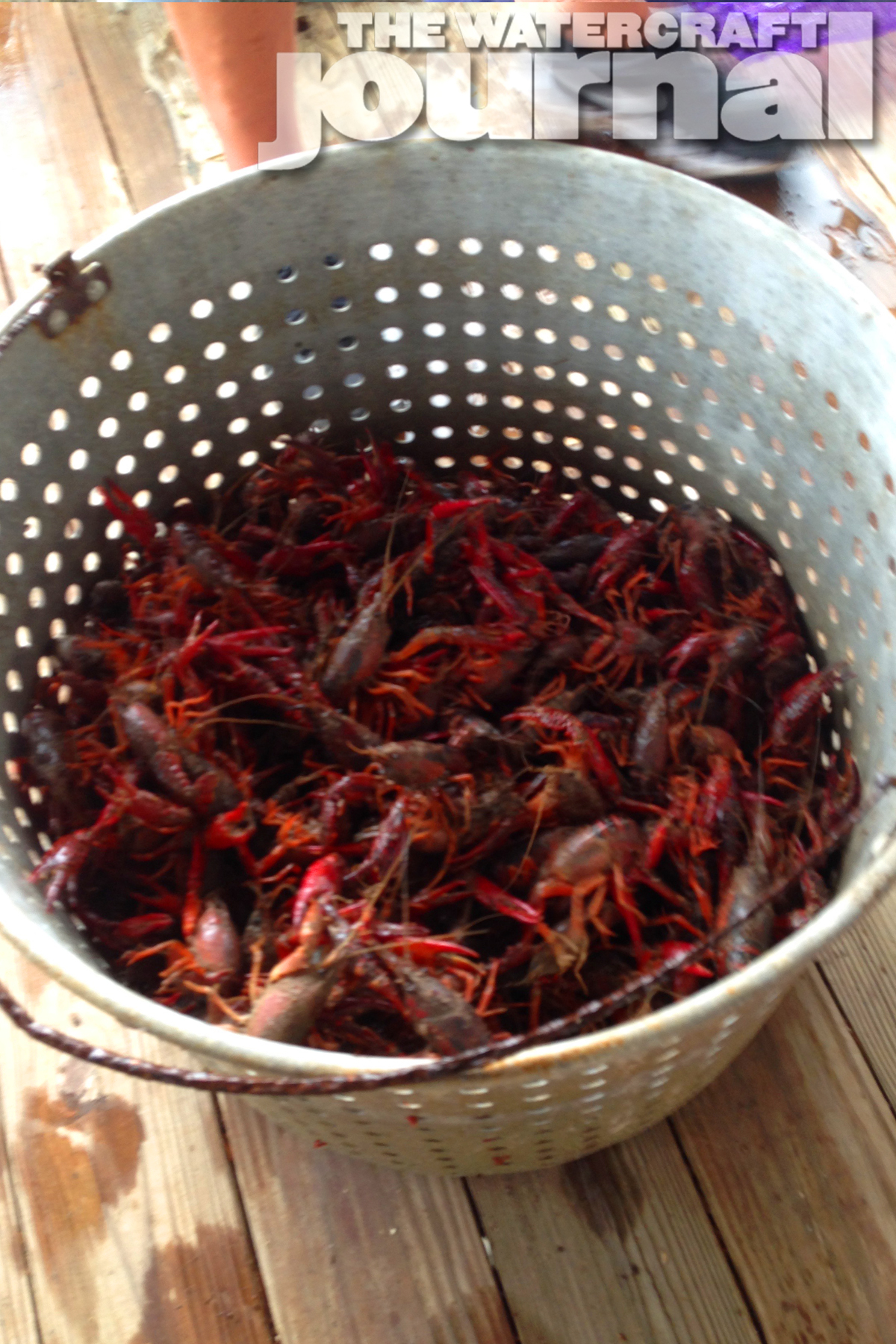
While Jerry prepped a comically-oversized pot of writhing and frankly, terrifying mudbugs for their inevitable fate, blankets of rain doused the area, churning the still waters of the swamp into a tempest. Together with his parents, two sons Greg and Alex, and my 5-year-old daughter Morgan, we were joined by Yamaha’s Andrew Cullen and Bob Gonsalves for an enjoyable – albeit wet – evening.
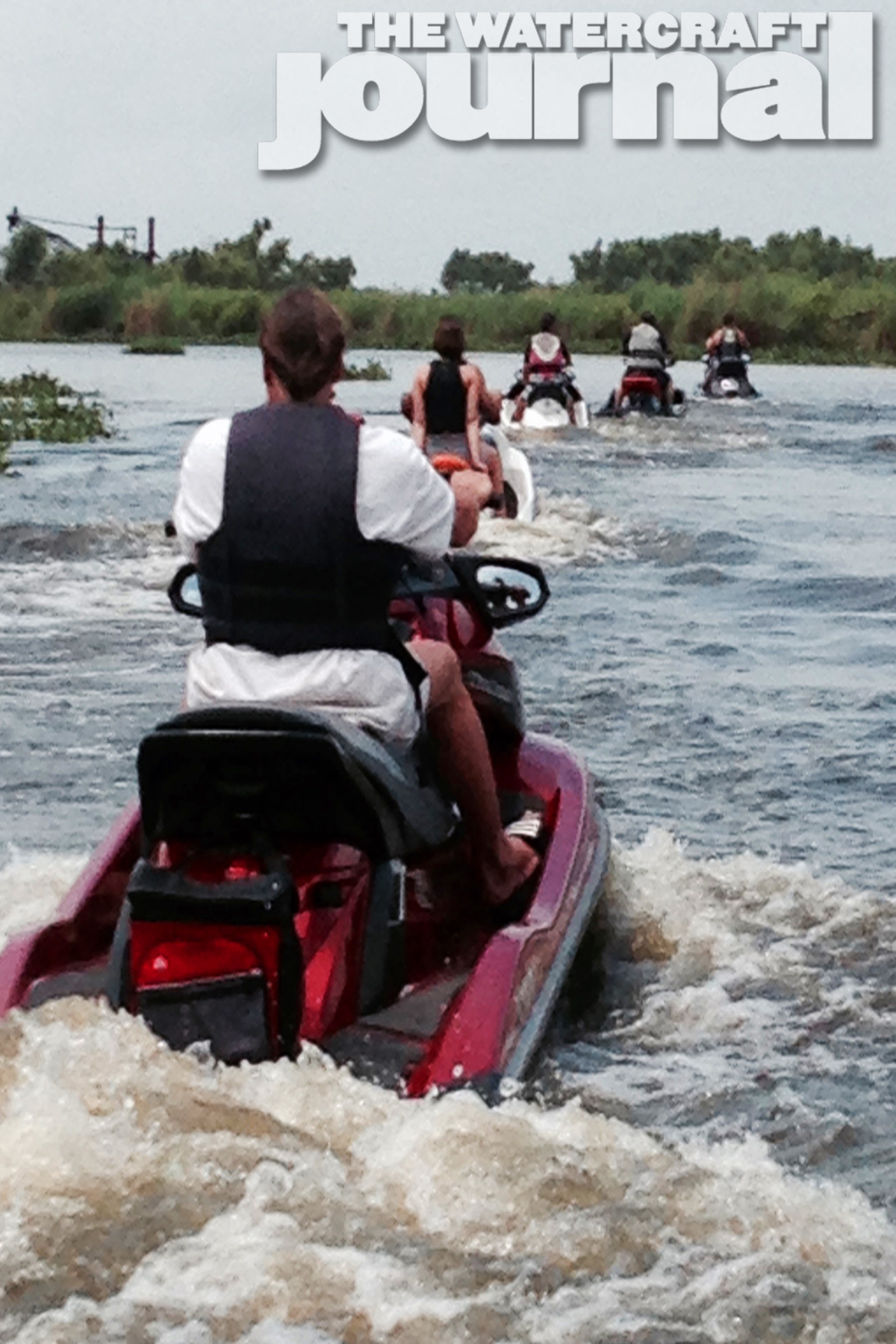
Earlier that day, MudBuggers who had traveled down earlier had joined Bryan Muirhead (‘DrivingZiggy’) for an adventure ride. Bryan recounted the day’s ride to The Watercraft Journal, saying, “Steven (‘Stevencr21’) finally responded to all of my begging for somebody to ride with. And Cliff (‘Rooster’) was gonna be just in time. So we launched out of Amelia on three skis. Steven also had the lovely Maddy with him. Me? Well, I had not one, but two GPS’ with the Mega Marsh Loop loaded into them.
“Everything was going swimmingly for a few miles. But then we saw what looked like fog up ahead. Nope, wasn’t fog. It was rain. So that took the wind out of our sails and we just turned around and headed back to Amelia. We decided that we would make another attempt. As Cliff and I lounged and jaw-jacked, we saw…several other vehicles with skis pulling in: Billy Duplessis Sr, and son, Billy Duplessis Jr., Lance Mercier, and Kenny Blum. And they were daring enough to go along with us and trust me to guide them through the marsh. Buncha goobers if you ask me!
“It wasn’t too long before my ski threw a code. And it mysteriously cleared up after a few minutes. So we cruised all over the marsh. Things were going well; we saw a couple of eagles and lots of other birds including great blue herons and egrets. I ‘may have’ seen an alligator, but all I really saw was a ripple in the water as I approached.
“We were pretty relieved to arrive in Du Large where we were able to refuel the skis and (some of) the humans. Cliff was getting antsy by this time, though, as he really, really wanted to meet up with the other group at 4pm for an excursion into the other side of the swamp. I wanted to go also, but was beginning to see that the Mega Marsh Loop takes quite a bit longer than I remembered.
“Then we took a wrong turn. I must have saved the route wrong or something, because we took a right into Lake Hackberry and as we made our left out of Lake Hackberry, the GPS told me we had reached our destination. Everybody was so pleased with me at that point. Some even pledged their undying loyalty and willingness to follow me anywhere!
“So we backtracked to the Intracoastal and managed to find our way back to Amelia. No injuries if you don’t count sunburn. Safe and sound, but too late to join the other crew. We discovered Grace waiting for us at the ramp. Apparently she had been there for 5 hours. Shucks, if we had known that we could have waited for her and she could have become just as lost as the rest of us!”
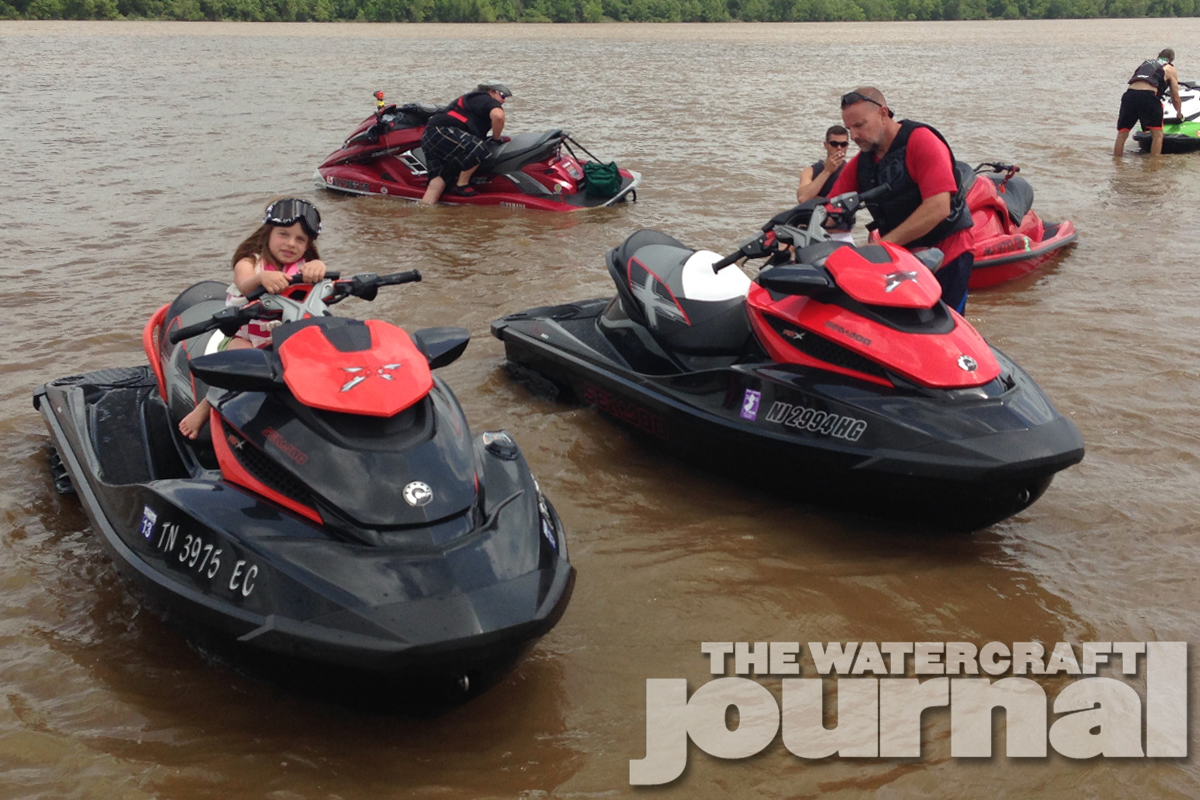
Others coming down to celebrate the MudBug’s 10th anniversary – in the case of the Jersey Crew, several days earlier – had already racked up several hours and had discovered that the elevated water levels had caused locals to put out enforceable No Wake Zones, thus causing thrill-seekers to find alternative routes. Early Saturday morning, I and my 5-year-old co-pilot sought to rack up some seat time ourselves.
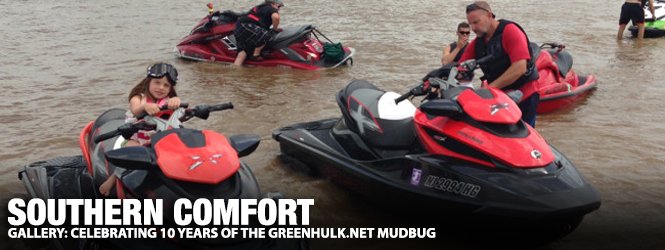
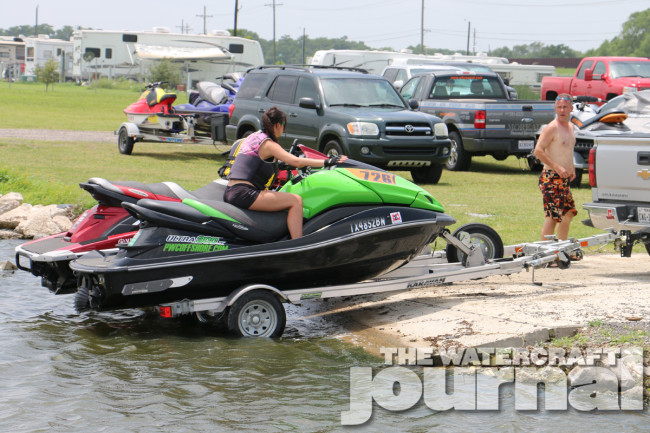
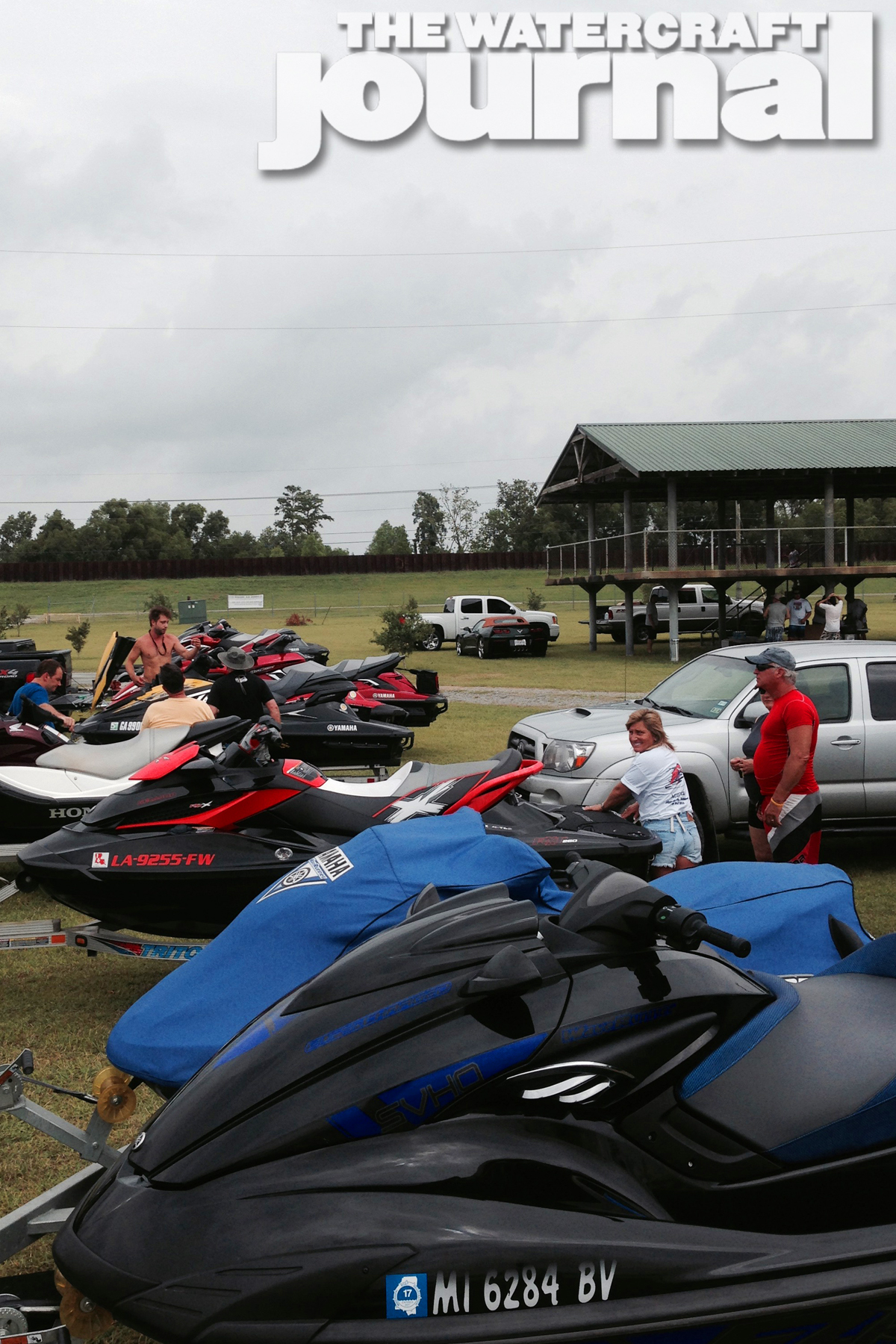
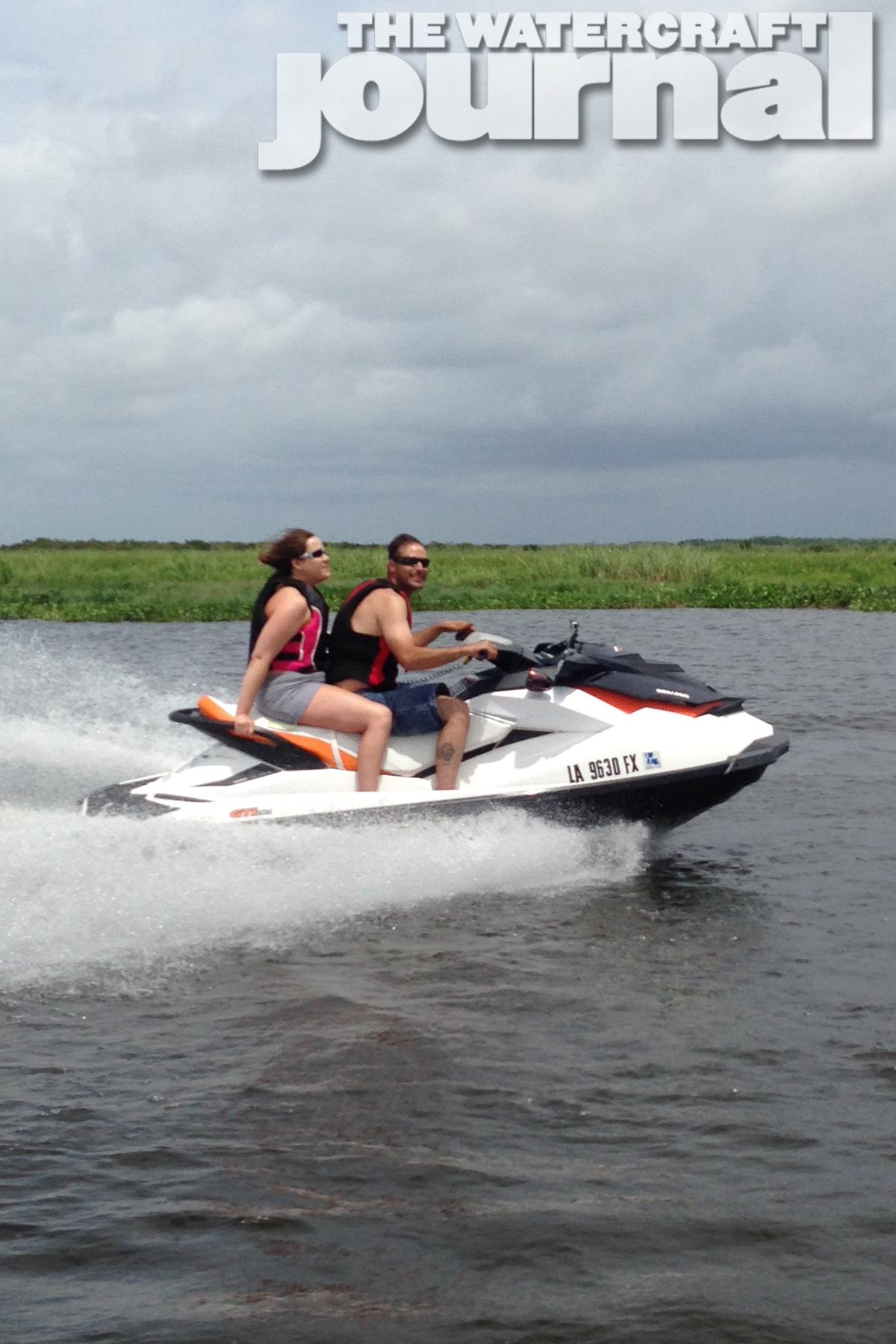
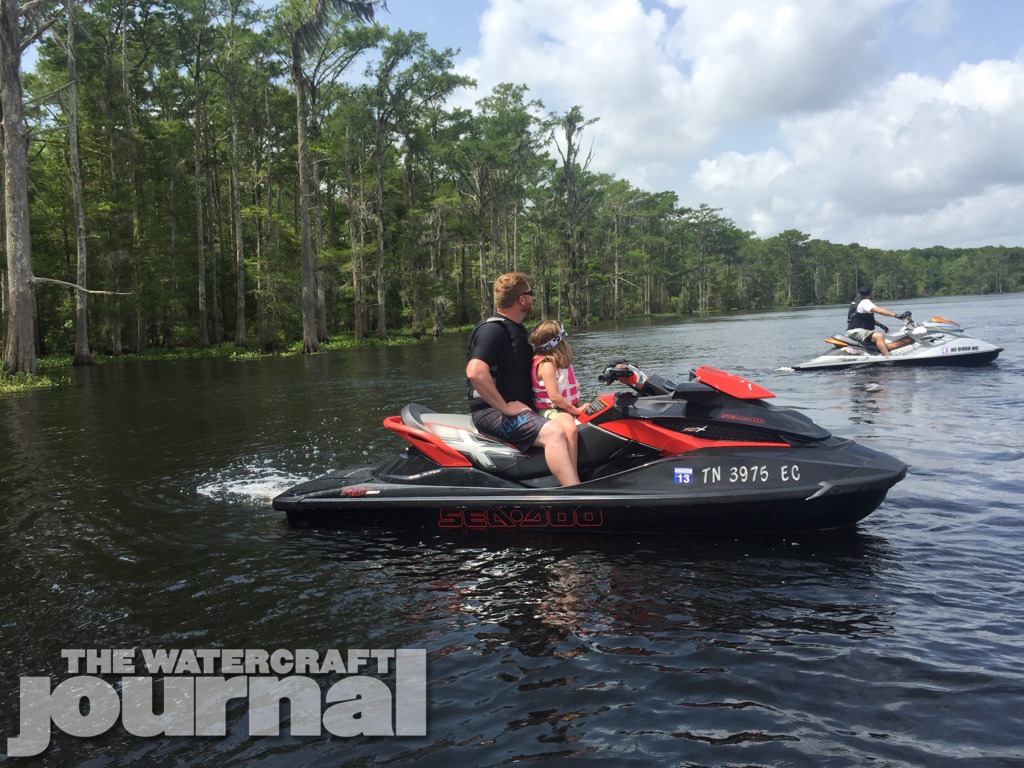
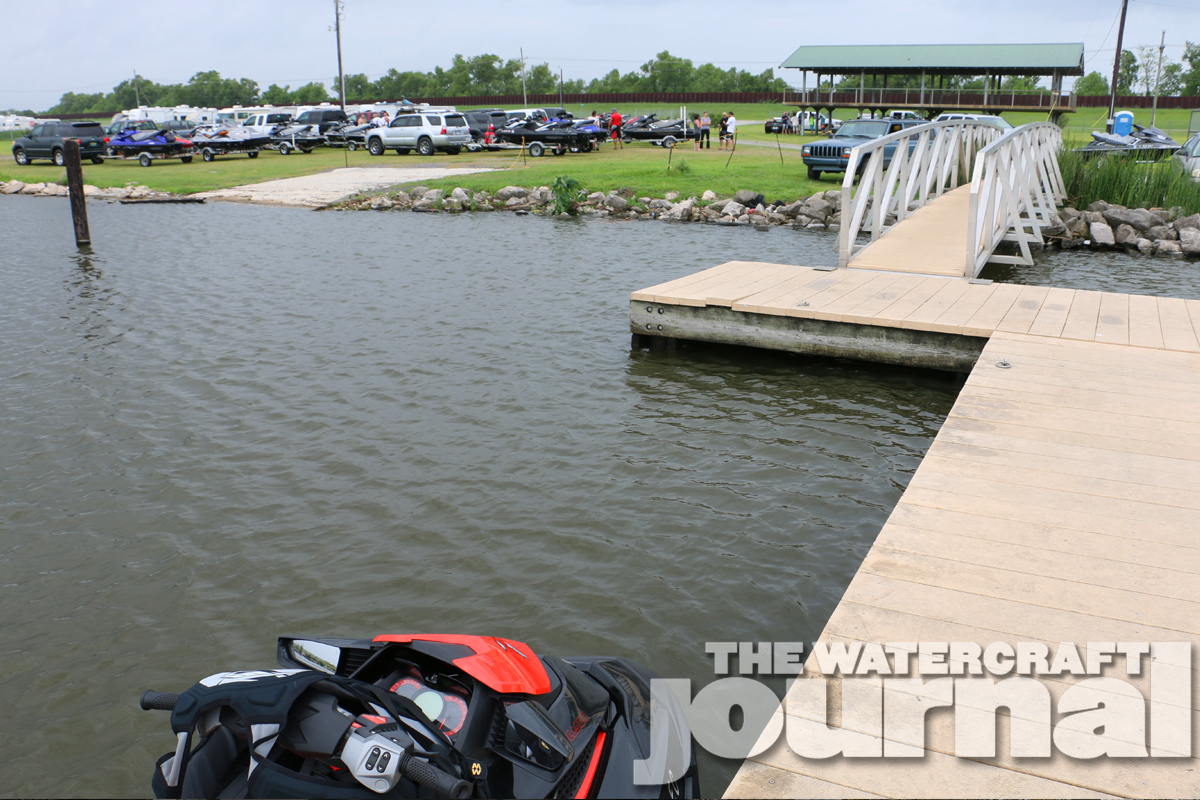
Launching the Dragon Red-and-semi gloss black ’11 Sea-Doo RXT-X 260 loaned to us by our pals at America’s Motor Sports in at Bayou Long in Stephensville, we made the leisurely loop around Hog Bayou, into Grassy Lake and continuing our route through the inlet to Lake Palourde, taking us to the small breakwater inlet and ramp where the MudBug was being hosted.
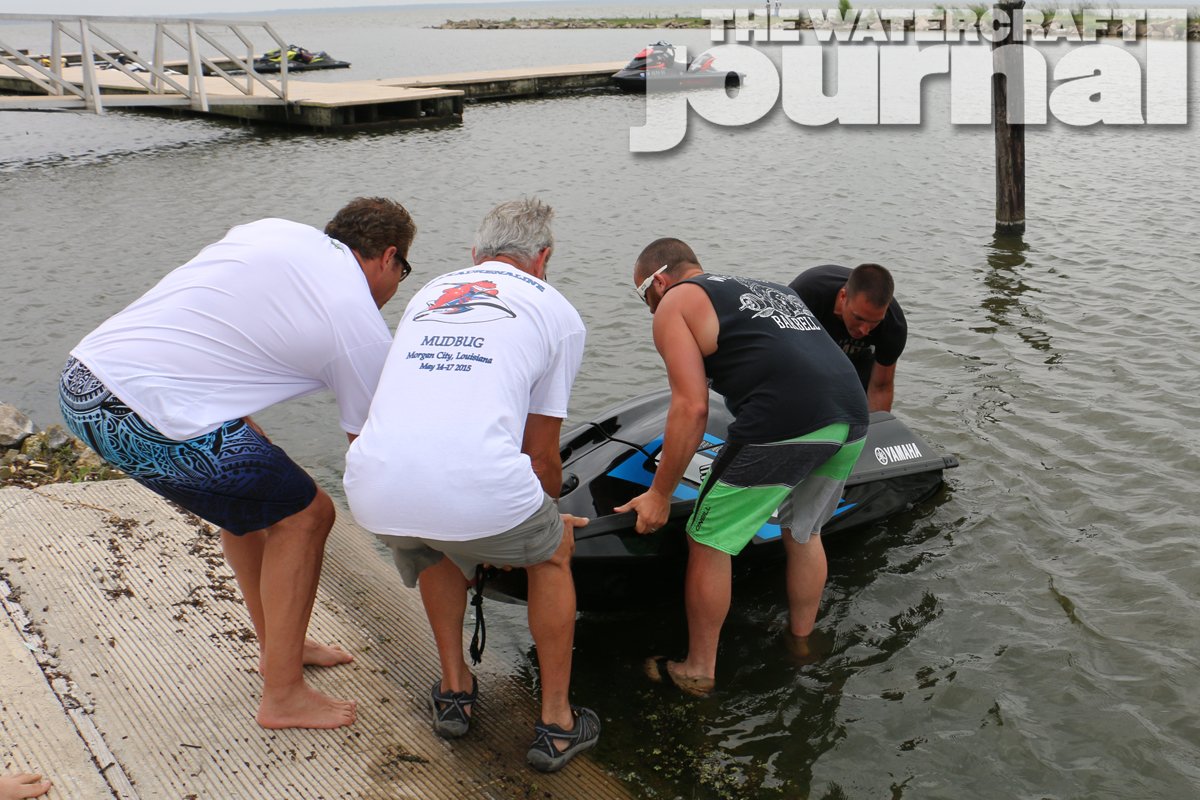
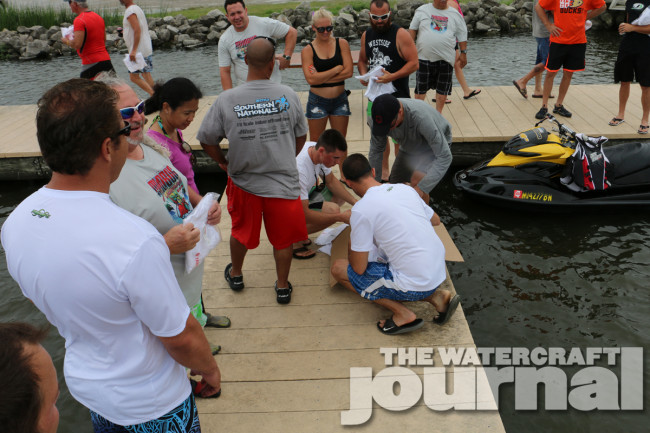
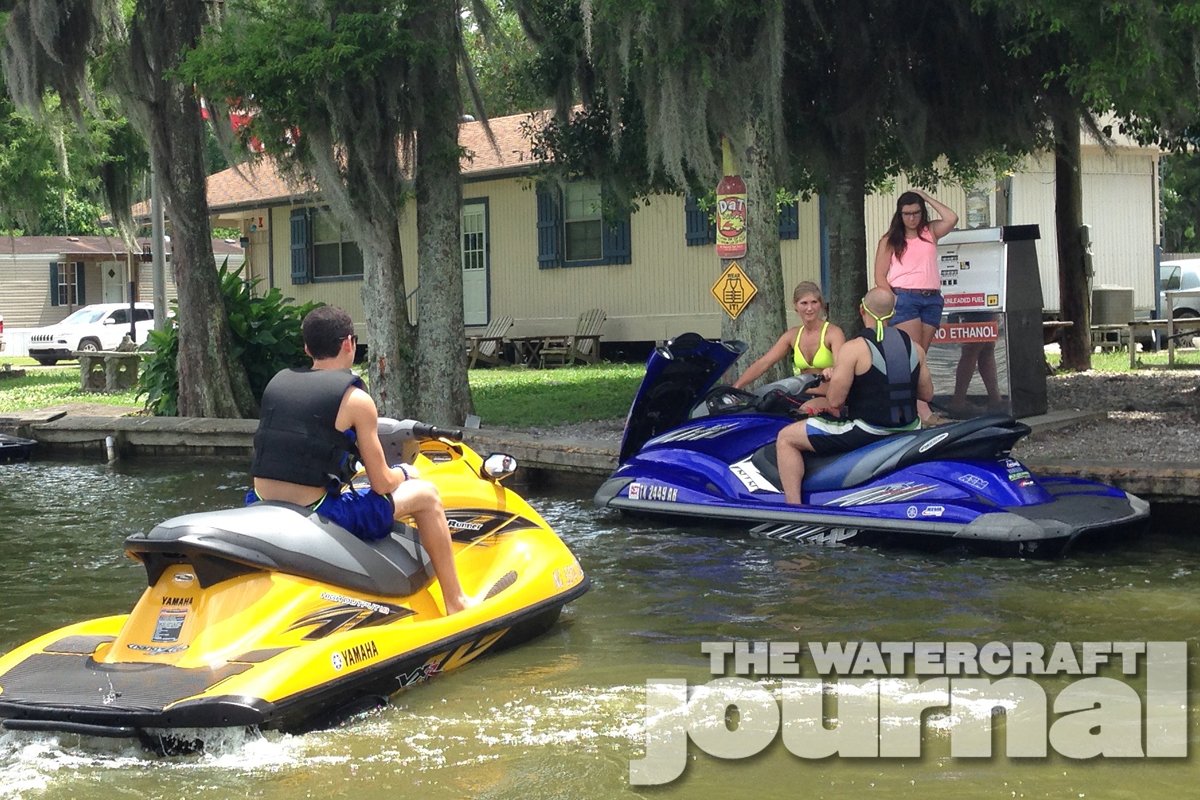
Wind churned Palourde into near Pacific-like conditions and did it’s best to buck and injure riders daring to cross it at any speed above “crawl.” The remainder of Saturday consisted of a few other casual rides to and from Gros’ waterside bar/fuel station/convenience store to relax in the shade and take in the live music, while others were content to stay on site, devour the amazing pastalaya (jambalaya made with pasta instead of rice) and spicy pork sandwiches.
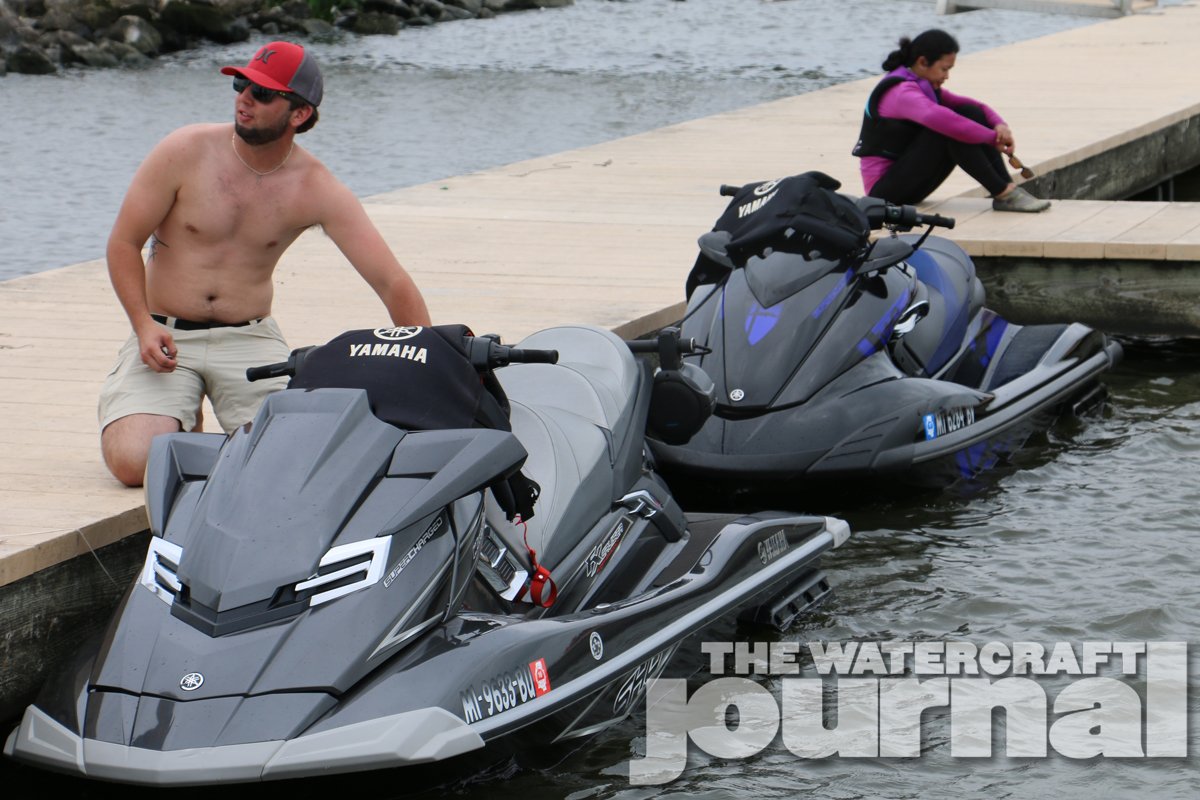
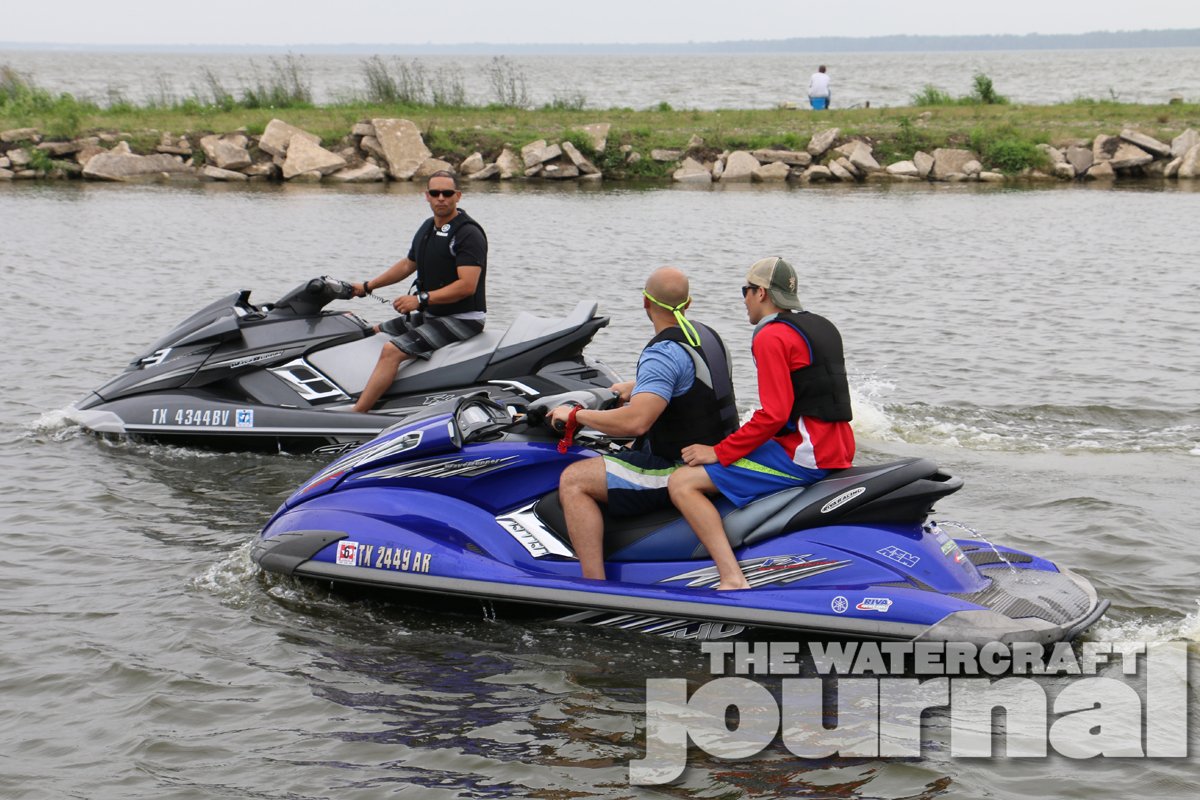
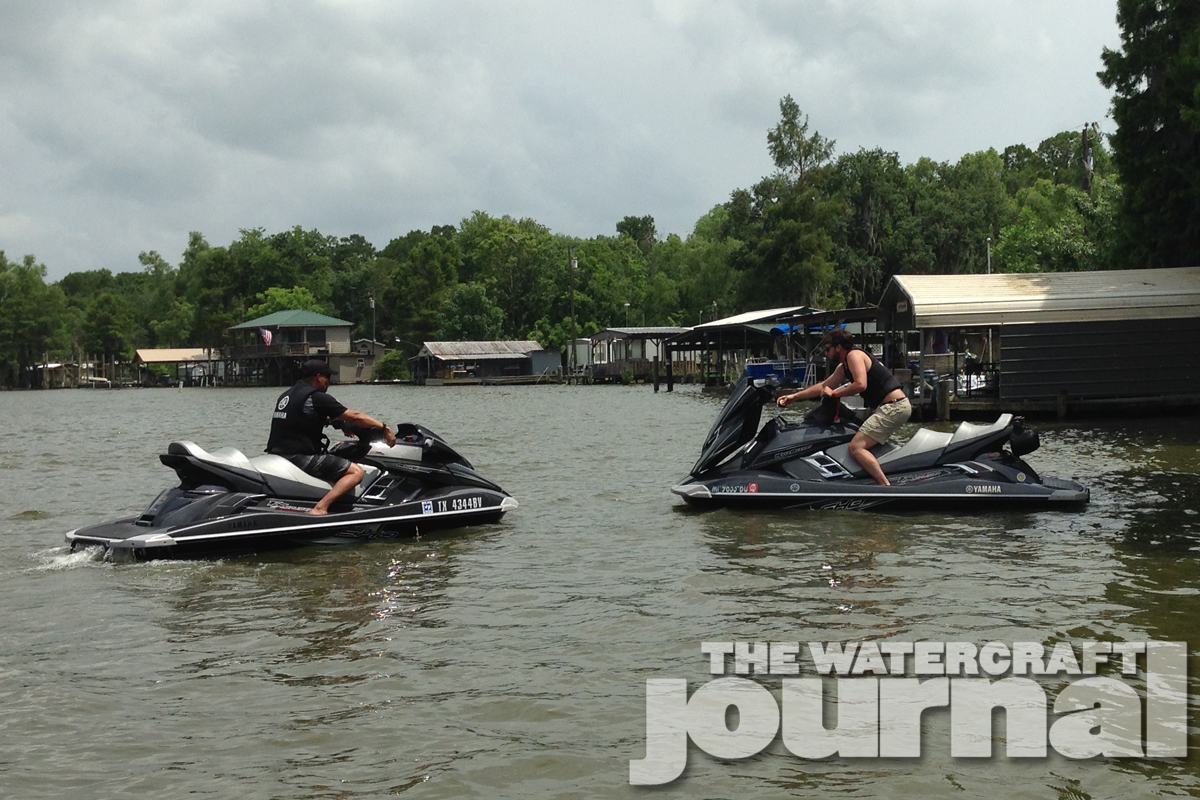
As hinted, Yamaha put on a private test ride day, offering rides on the all-new VXR and supercharged FZR SVHO. The rough conditions made it a challenge for many to get a proper feel for these machines’ cornering aptitude, but a blast nonetheless. All test riders left with broad smiles and a free Yamaha shirt. Having our fill of amazing food and sunshine for the day, I and Morgan retreated to the hotel.
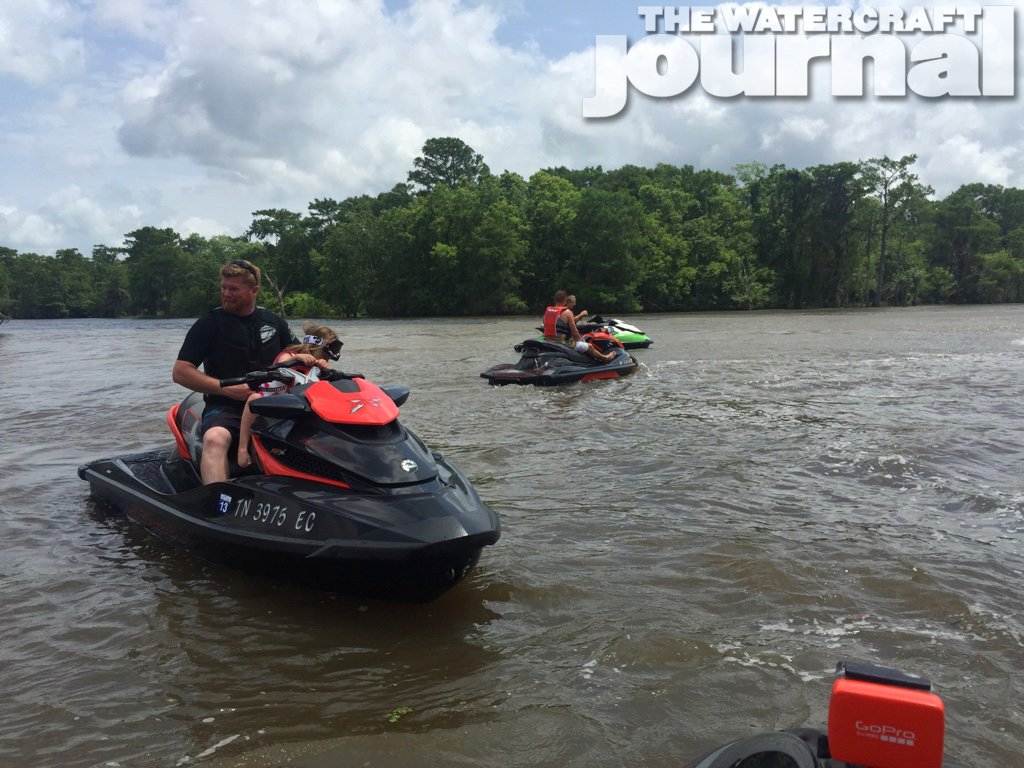
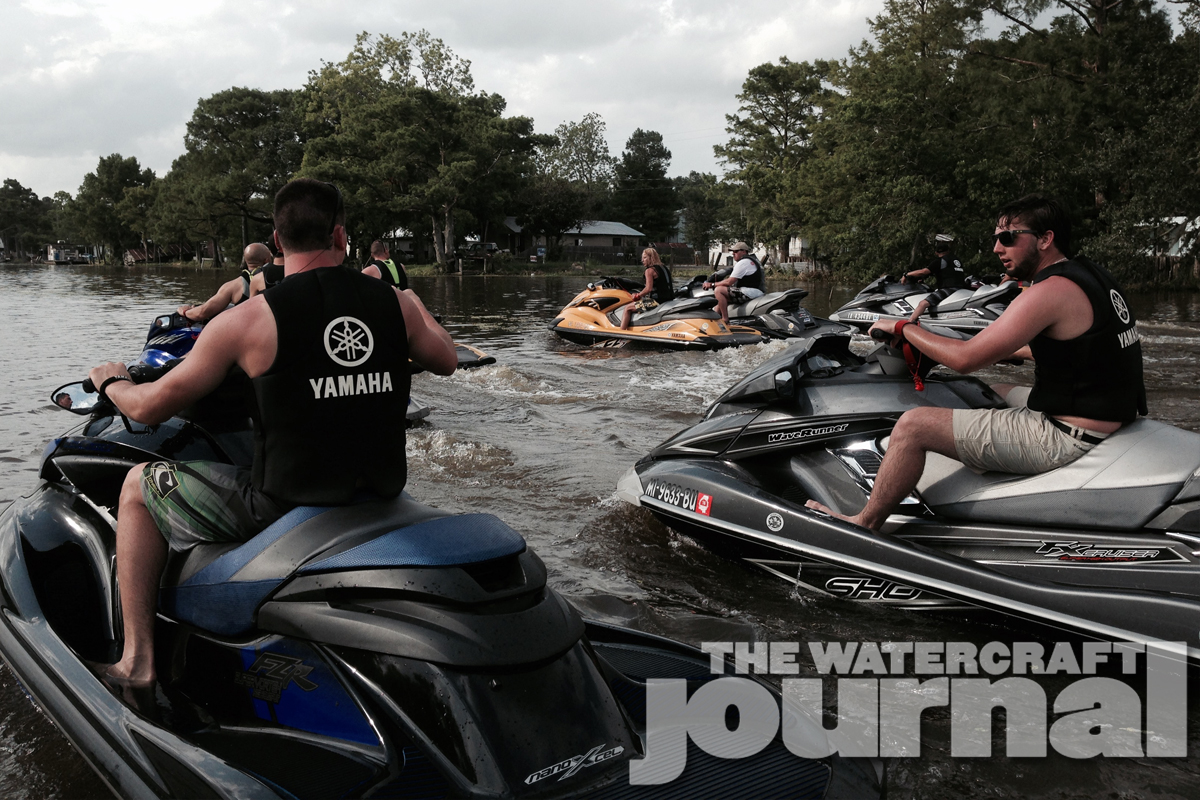
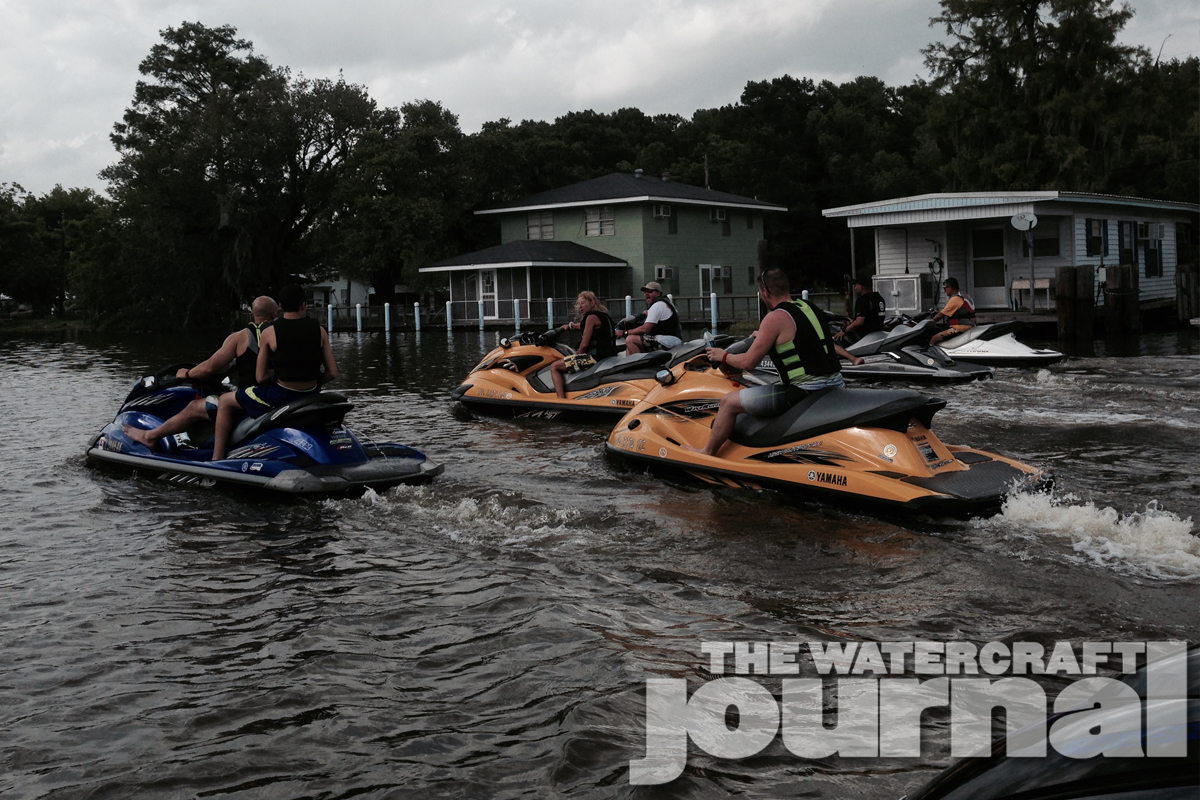
The next day, and after some online supplication, we were invited to join Bryan and the Jersey Crew (Vic, Ian, Jay, John, Mike, and a bunch others) to tour much of the Atchafalaya River, taking us a little into Flat Lake and Dog Island Pass. From wide open channels with barge traffic to coursing through tightly-knit alleyways through gray Spanish moss whipping at the tops of our heads, it was unequivocally some of the most enjoyable riding I have ever experienced.
Saturdays are typically the “main day” with Sunday being the day for most to return home in time for work. As for me, Sunday was the best day, and these MudBuggers made it so. Returning to the launch, I waved goodbye to our new friends and mentally rescheduled next year’s MudBug from a “maybe” to a “definitely” return date.
Additional images provided by Billy Duplessis. Video by Bryan Muirhead.
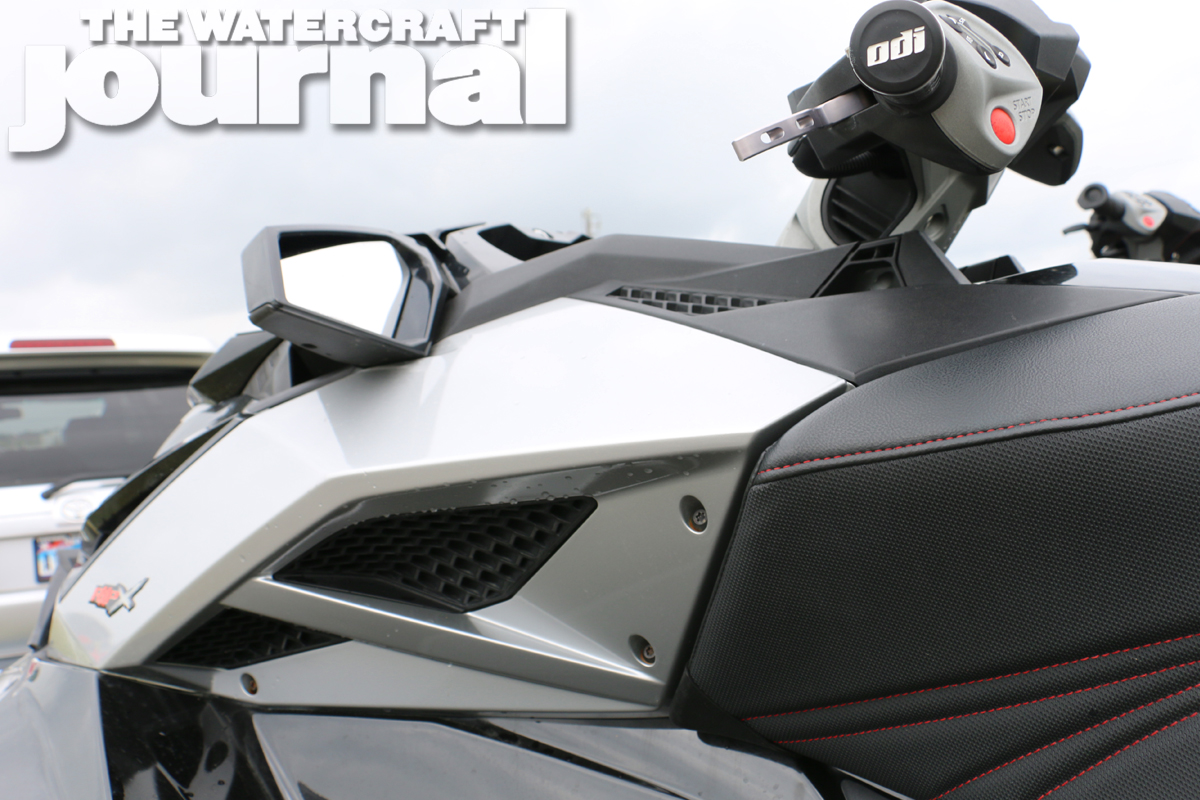
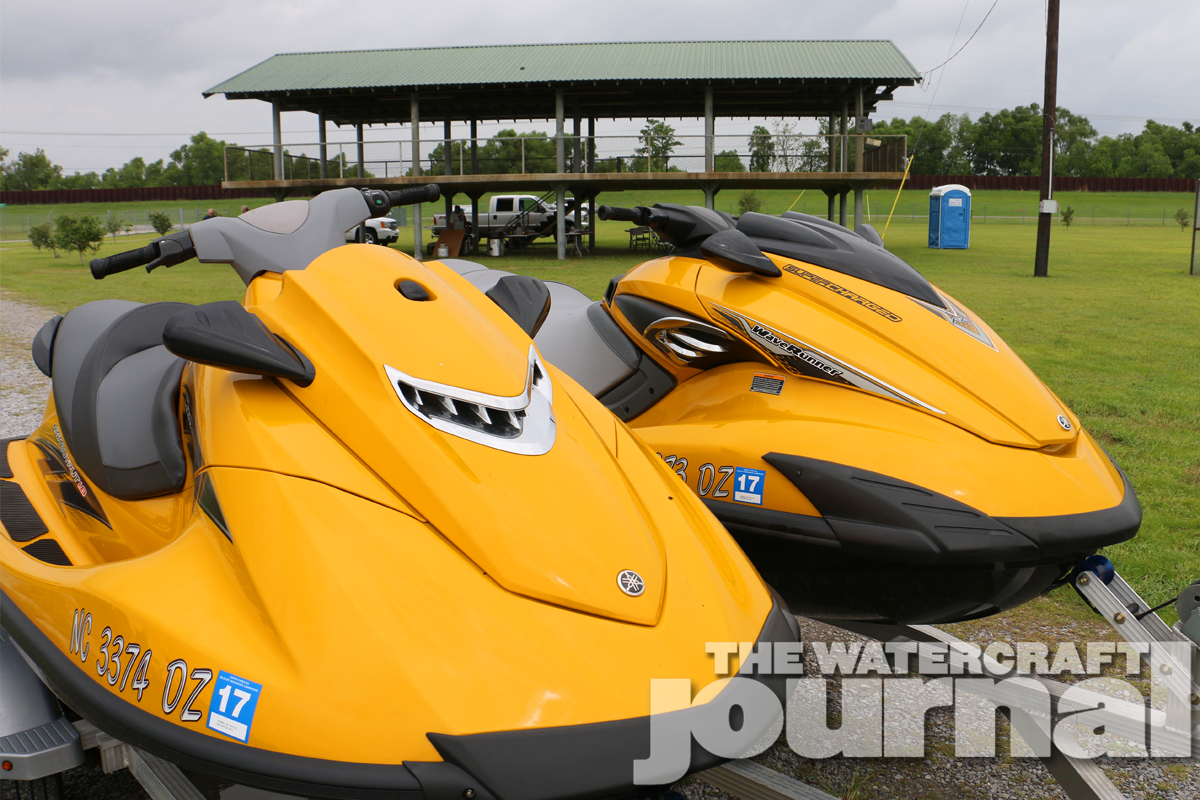
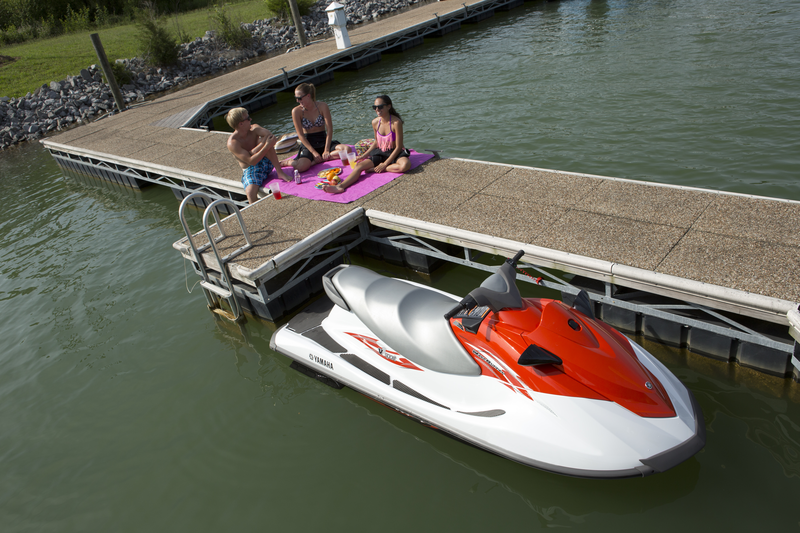
Yamaha is promoting their 2015 V1 series WaveRunners as the most affordable full size personal watercraft on the market, according to their site, www.yamahawatercraftusa.com. A video shows people having a good time zipping across the water and snorkeling in the Florida Keys on the new V1 skis. The piece also demonstrates the easy handing and stability of the WaveRunners due to the deep entry hull.
BoatTest.com gives the V1 Series a good review as an entry-level ski. The boats are affordable, reliable, and available with 1-3 person seating which is a simple one-piece three-tiered seat. The seat also has a handhold on the back making it easy to watch someone towed behind the machine.
The WaveRunners are also equipped with dual rear view mirrors; a fuel injected 4-stroke engine that is naturally aspirated, stainless steel impaler, tow hook, bow storage, and a shiny black scratch-resistant hull. Another great feature is the fully padded steering component with a nicely designed digital readout of speed and RPMs.
The basic V1 comes in at 736 pounds and a flat boarding platform fitted with Hydro-Turf decking. There are only minor differences between the V1 and the V1 Sport. The Sport features better graphics, a reverse bucket, fold down boarding step, and a glove box with two bottle holders. It only weighs 9 pounds more than the V1. Both boats have room in the bow for 15.1 gallons of storage. The engine compartments are roomy and with simple seat removal, the 1052 cc marine engine and battery are easily accessible.
The WaveRunners have enough power to easily tow and go from 0-30mph in 2.7 seconds. Top speeds are 53.7mph and the boats are fairly fuel efficient, using 2.7-4.8 gallons of unleaded fuel per hour, depending on how fast one is riding. Their tanks hold 18.5 gallons of gas so at speeds between 25 and 35mph, you’re looking at about 5 hours of operation.
The Yamaha WaveRunners are assembled in the USA and claim to be the easiest boats on the market to maintain. So check out the video and see why “Summer’s More Fun on a V1!”
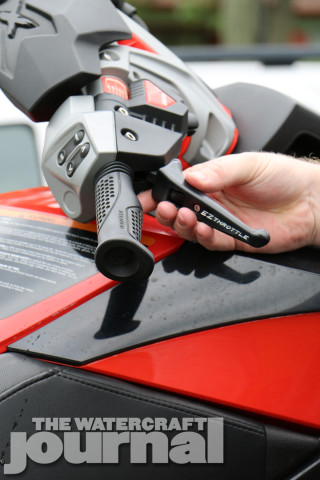
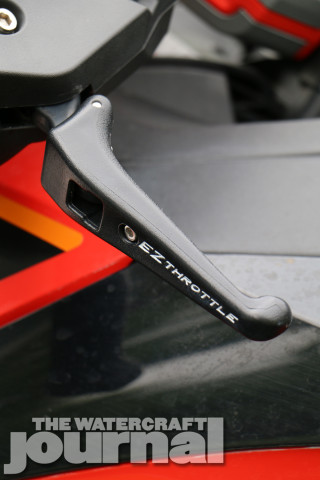
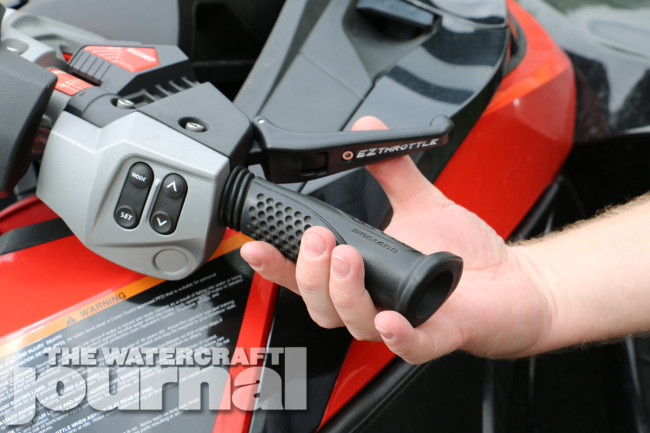
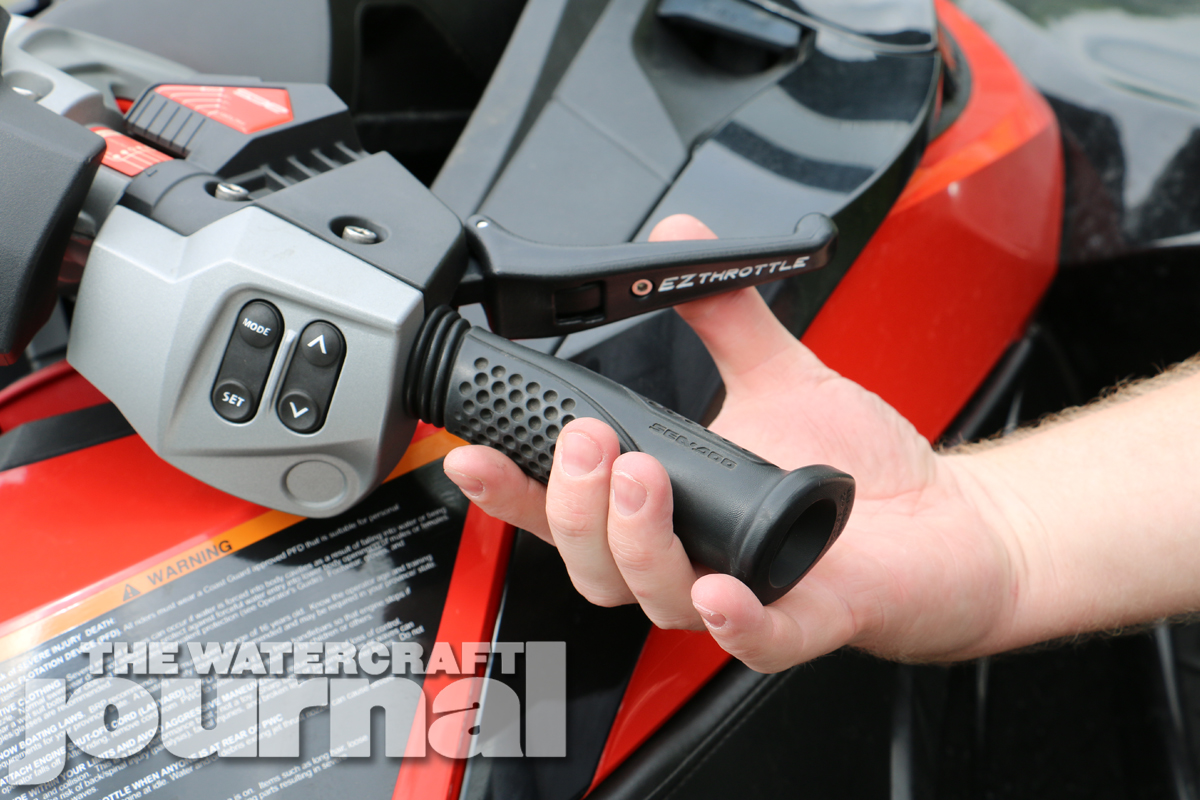
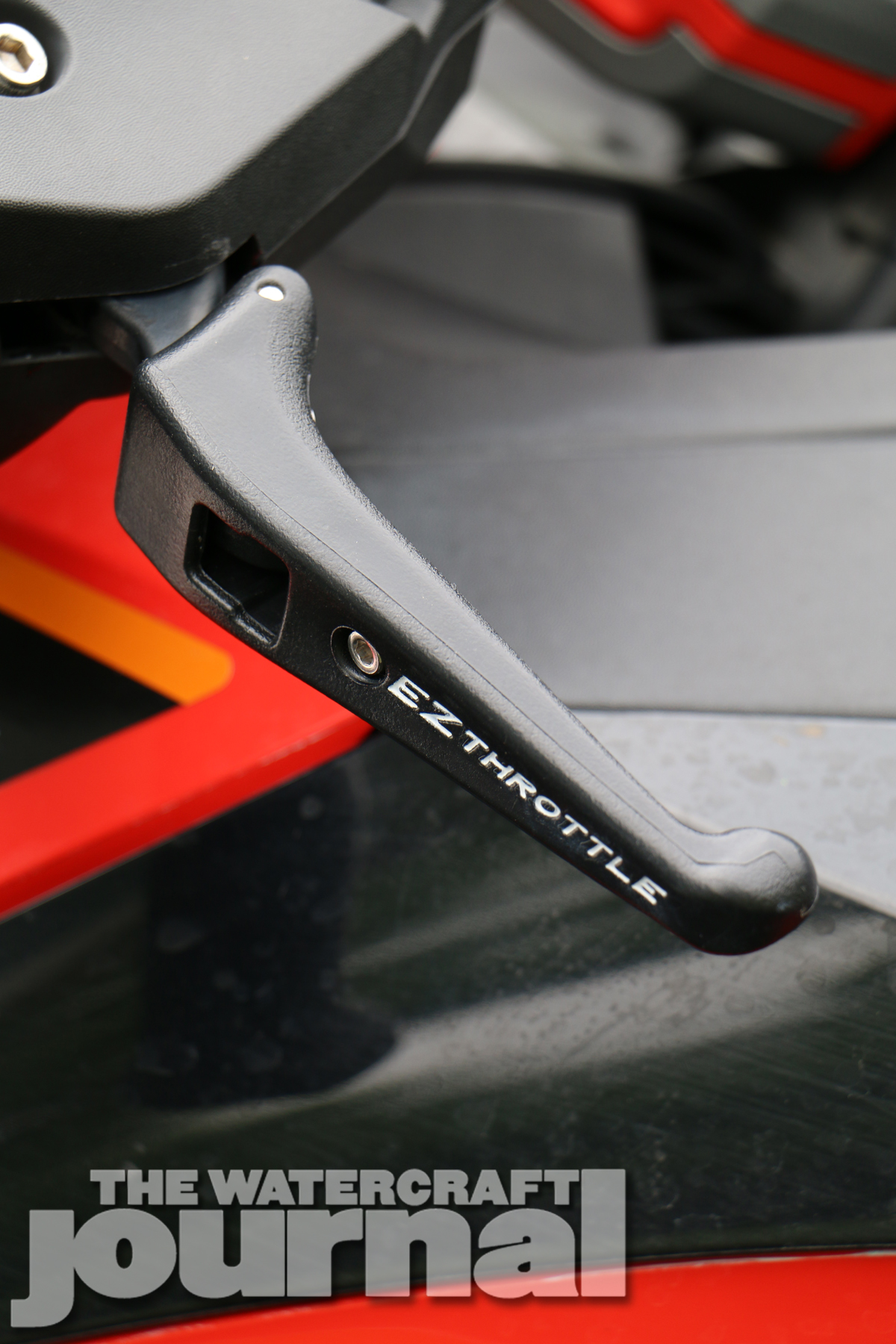
The EZ Throttle is targeted, primarily, at long-distance riders or those with joint ailments who find their hands cramping up while maintaining throttle. Holding the throttle steadily open at any extended length of time can cause fatigue in the index finger, hand, wrist and even forearm as lactic acid begins to swell in hand muscles and sensitive joints. The EZ Throttle, by comparison, extends the throttle trigger the length of the hand grip, allowing the rider to use all four fingers (or rotate between them) while riding.
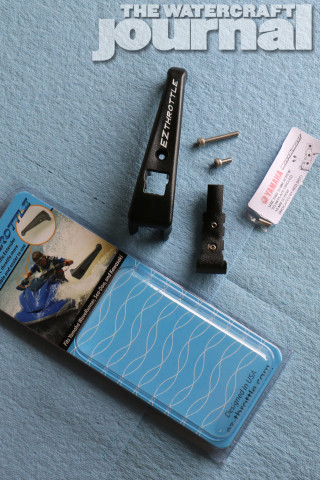
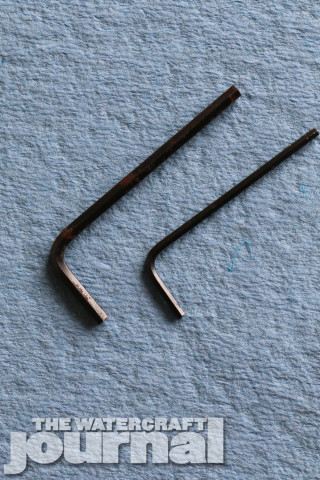
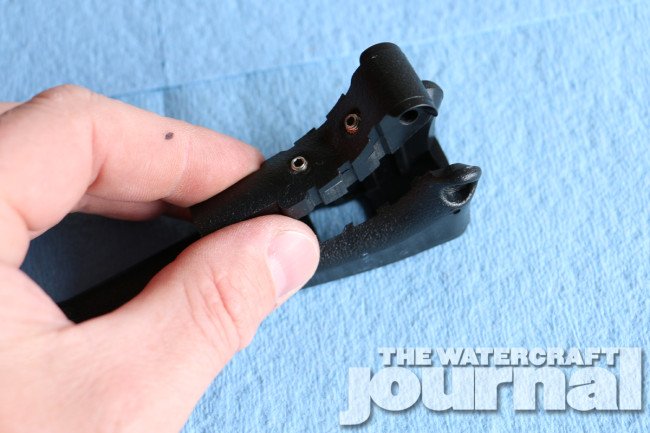
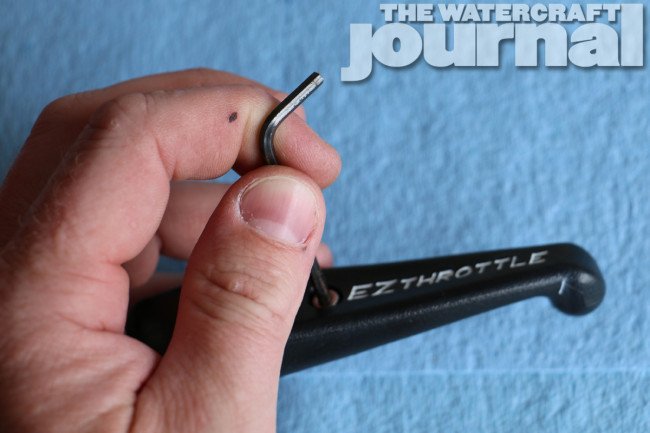
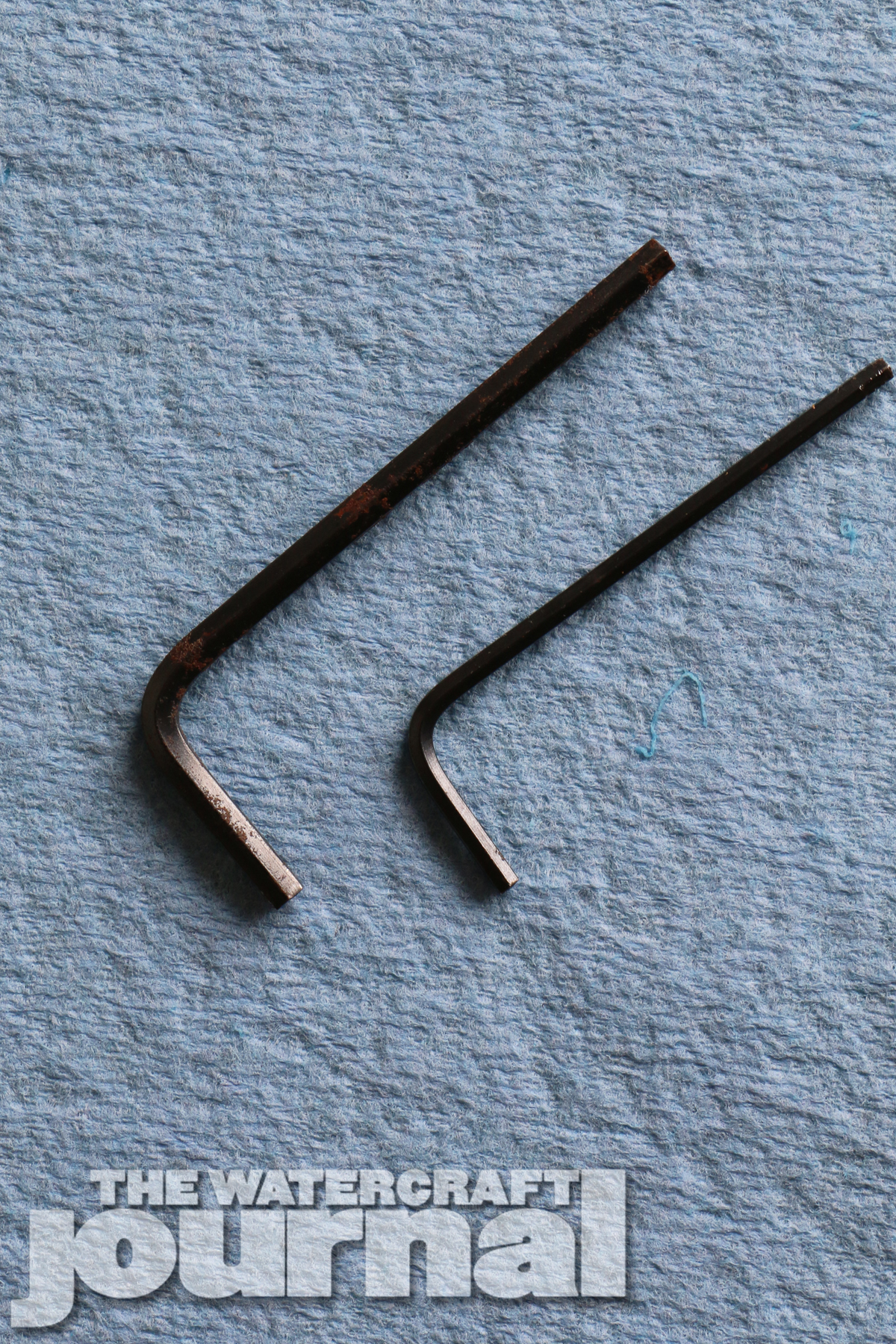
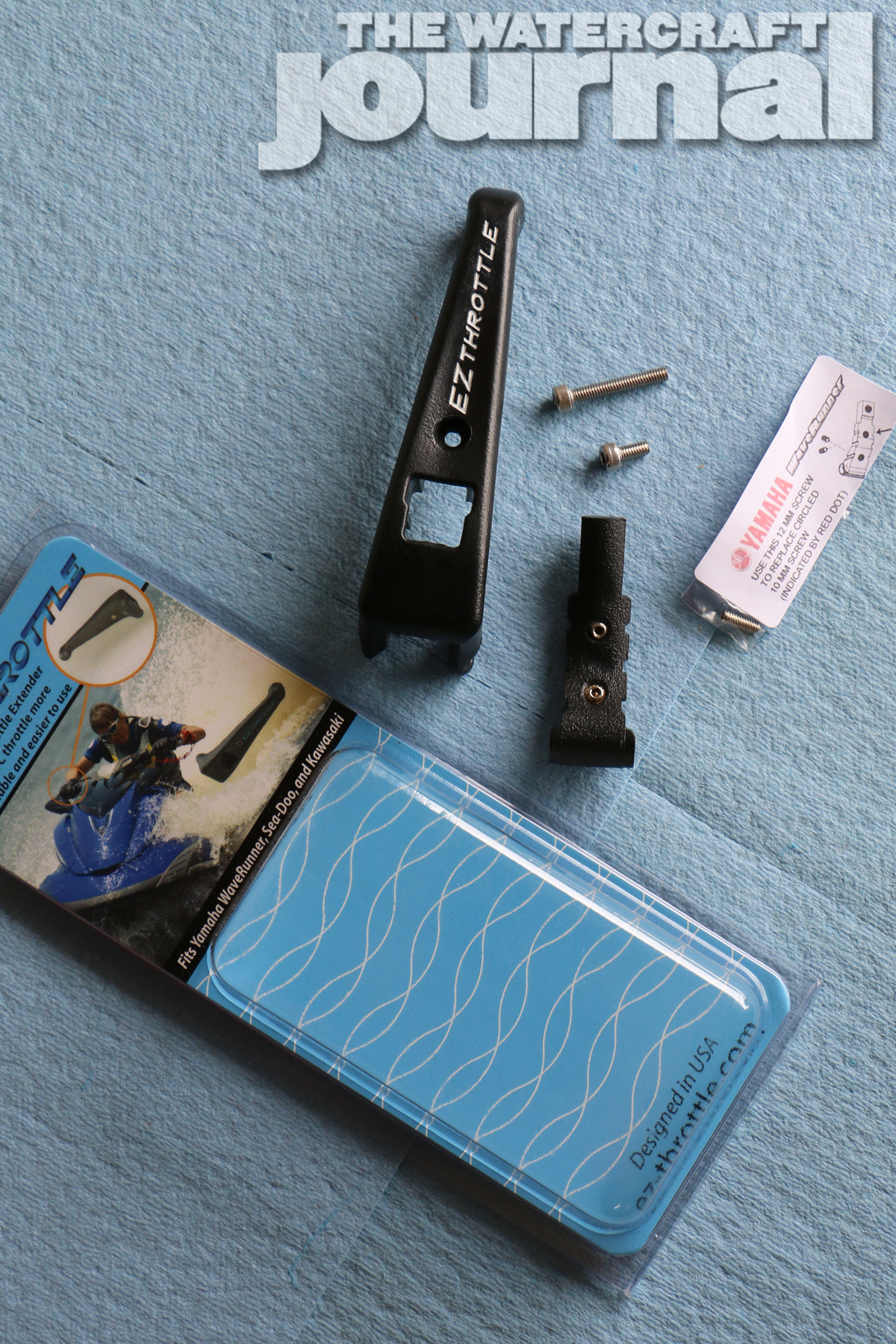
Above left: The EZ Throttle kit is universal, including a small extension screw for those installing on a Yamaha. For those with Kawasakis or iTC-equipped Sea-Doos, disassembly is not required. Above right: All that is required for installation is a 4mm and 2mm Allen wrench.
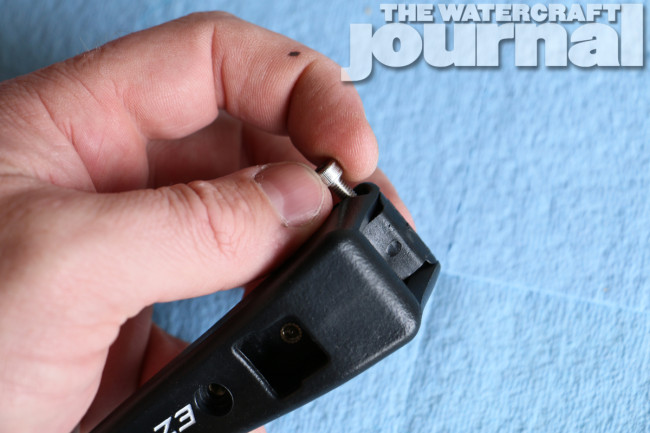
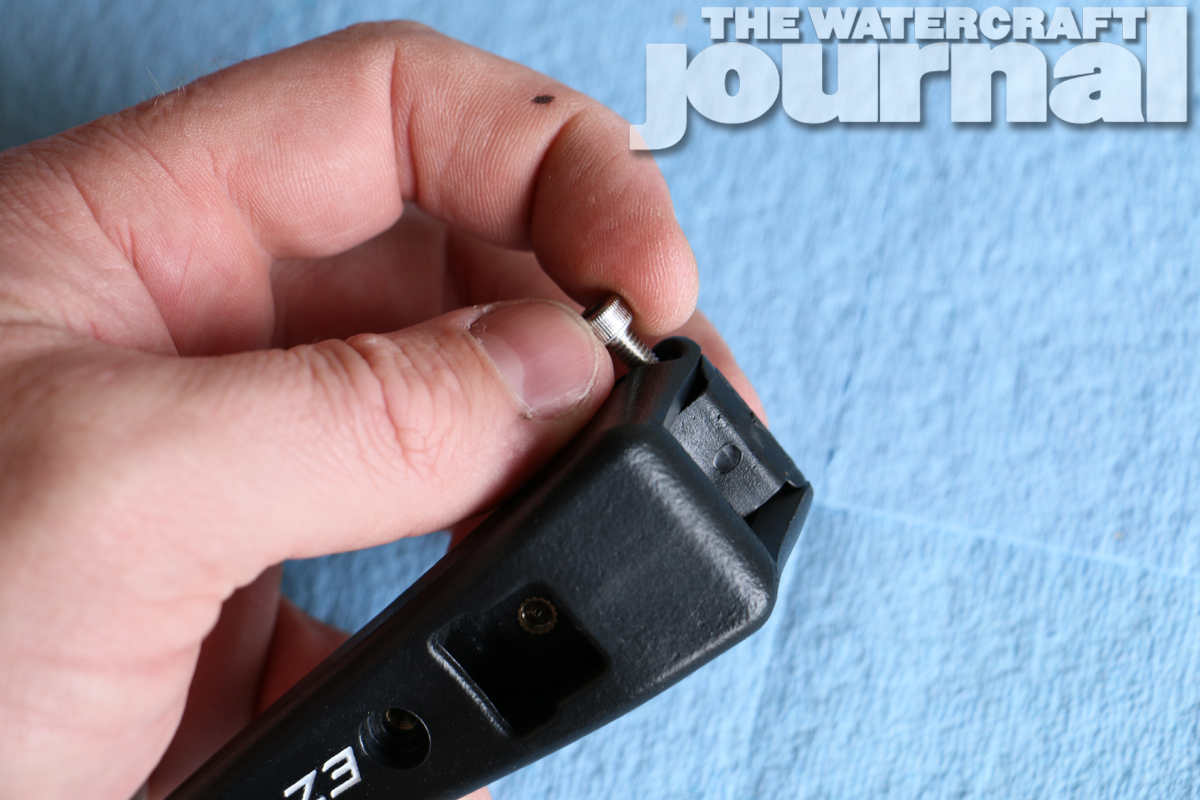
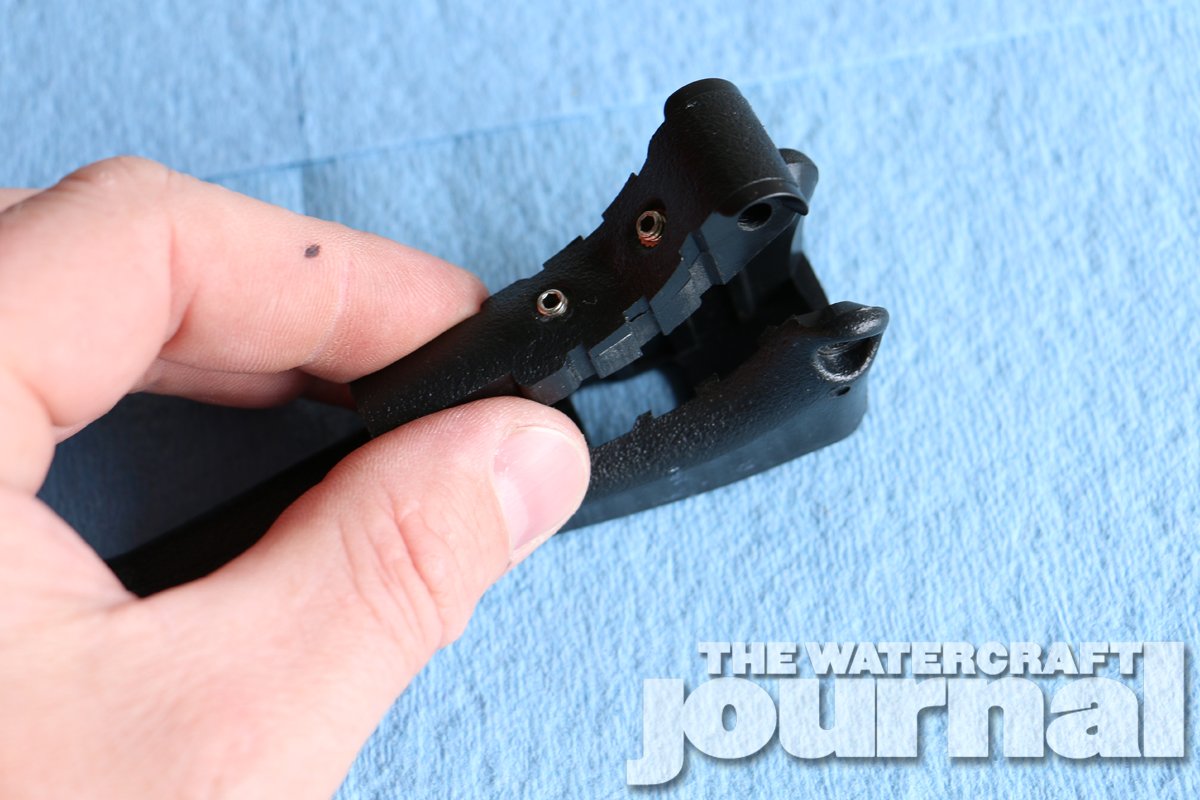
Above left: The inner piece is precision-cut to fit exactly inside of the larger trigger. Above center: A pair of 4mm Allen bolts tighten the two pieces together. Above right: Installation requires only to tighten down the set screws.
The EZ Throttle itself is comprised of two extruded plastic pieces that clam shell over the trigger and fasten together. The pieces are precisely cut-and-grooved to fit together tightly, and really only need to be separated to fit over Yamaha’s throttle trigger, as the EZ Throttle effortlessly slides over both Kawasakis and all post-2009 Sea-Doos with iTC (or mechanical finger) triggers without needing to disassemble the EZ Throttle. Two positioning screws tighten down on the trigger holding the EZ Throttle in place, machining two pinpricks into the trigger itself.
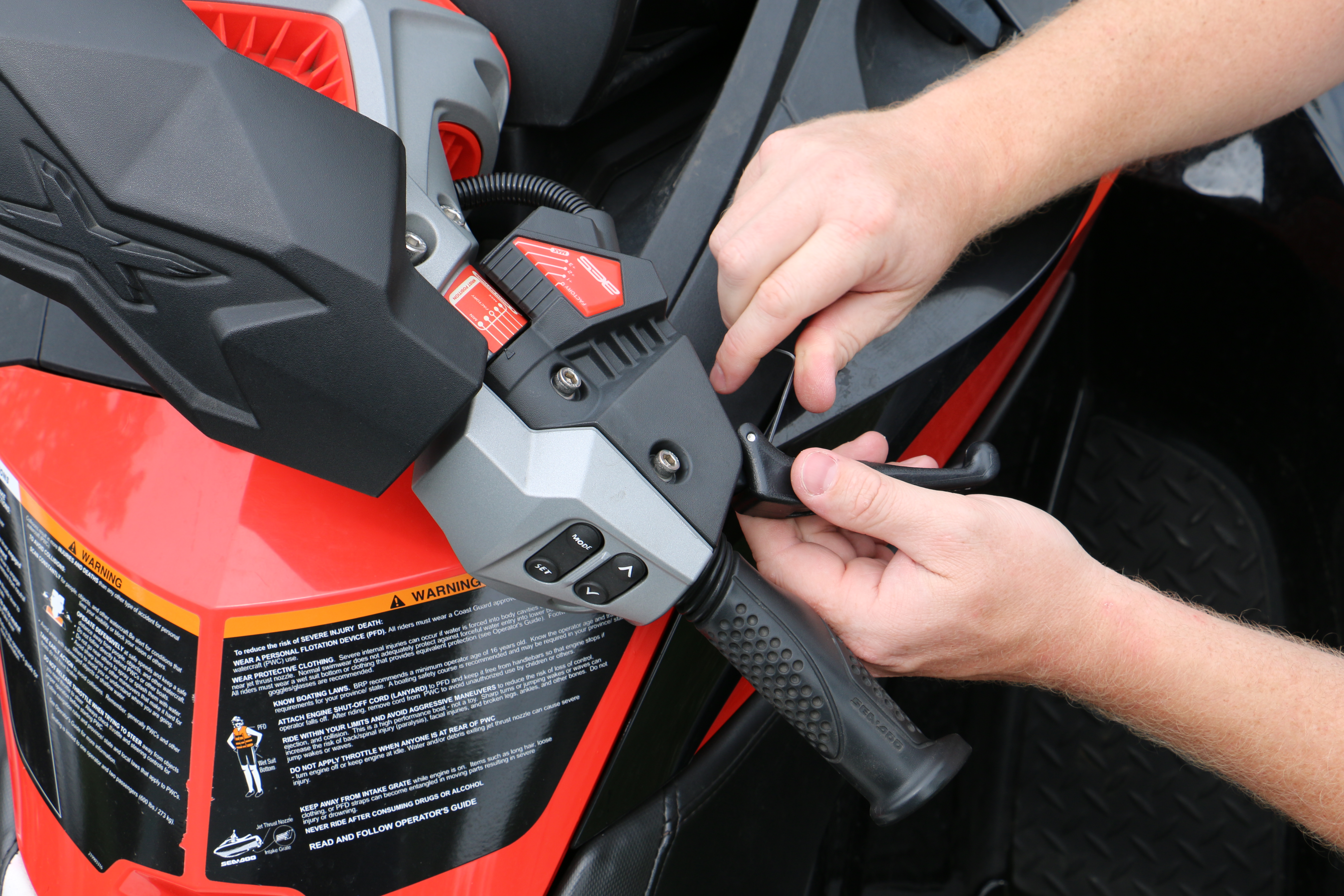
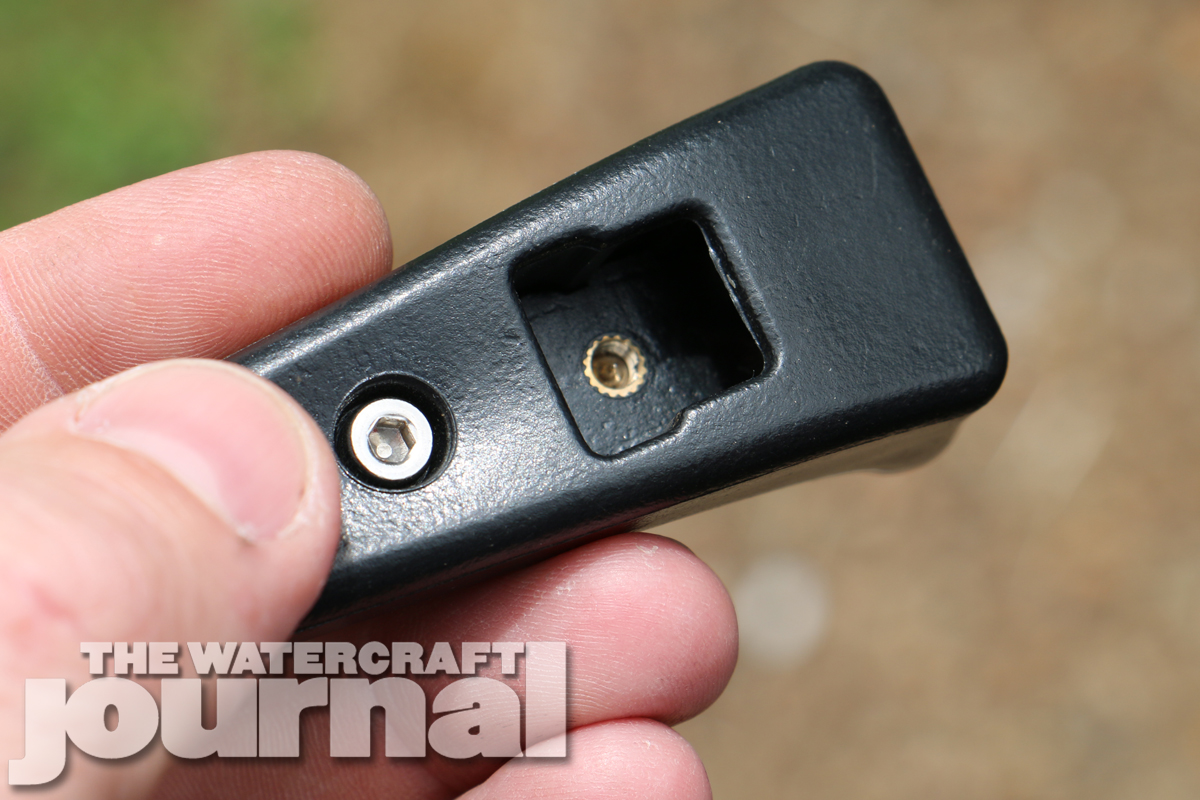
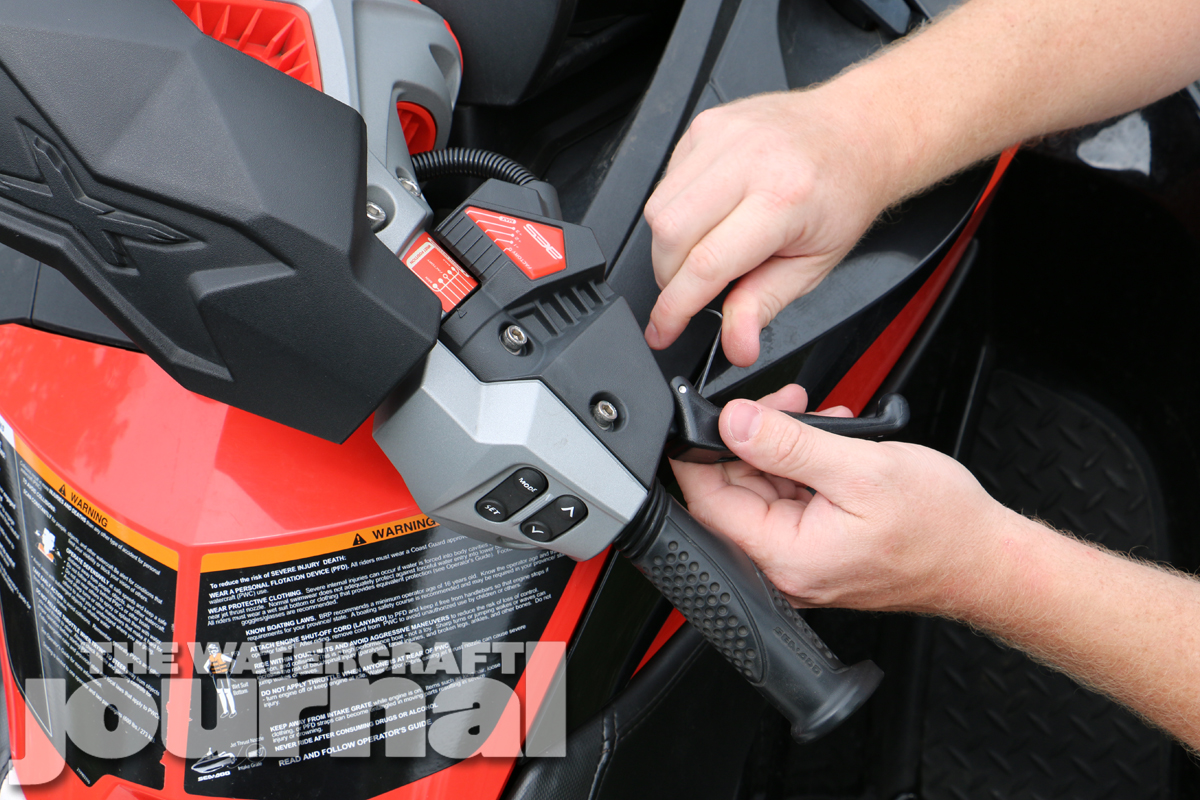
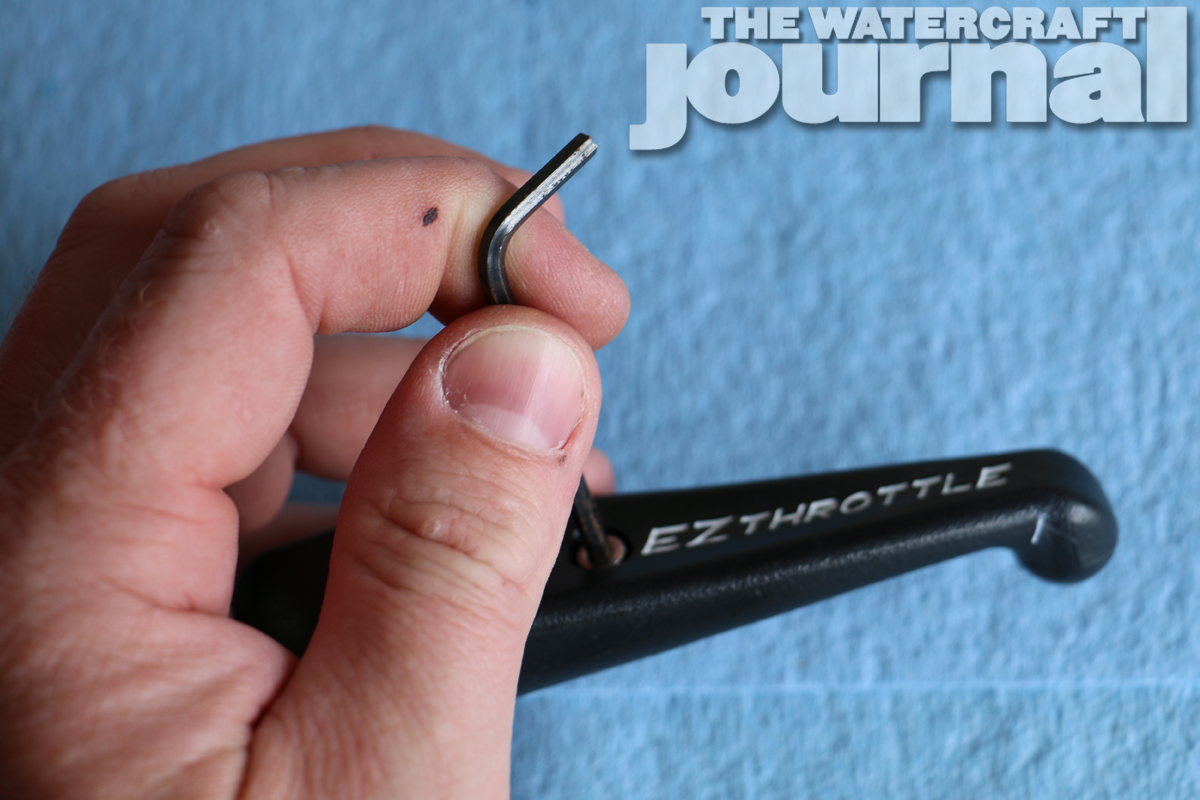
With the use of two Allen wrenches (4mm and 2mm), the EZ Throttle literally took 4 minutes to install on our Sea-Doo RXT-X 260. The EZ Throttle simply slides all the way up the trigger until the stop. Holding it into position, use your Allen wrench to tighten the inside set screw first. Then tighten the outer screw. When secure, go back and retighten both screws to ensure a firm and secure installation. It’s literally that easy.
One of the two sharpened set screws (shown) digs into the PWC’s plastic trigger making for a firm, secure attachment. The EZ Throttle will not “bite” effectively on aftermarket metal triggers.
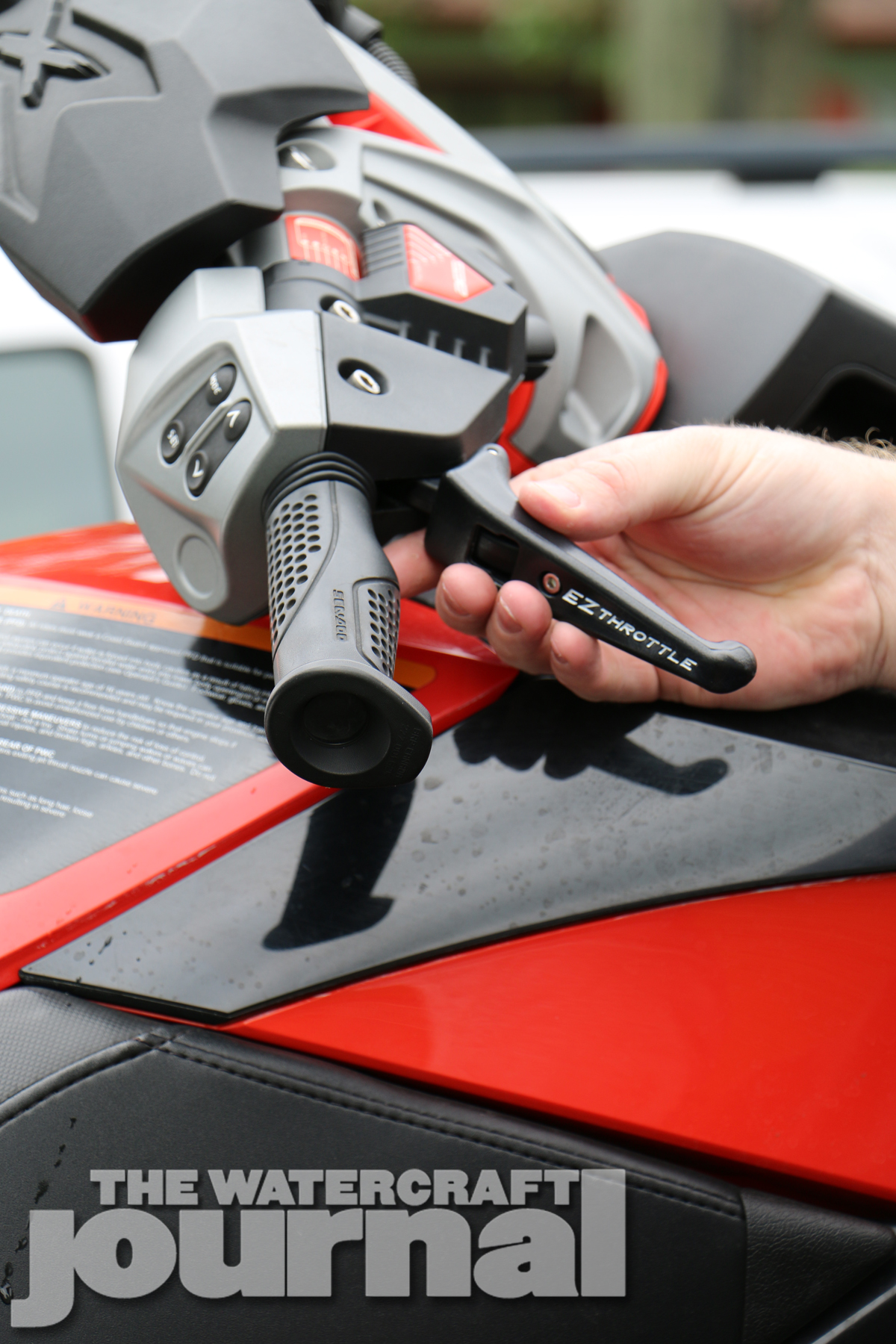
Above: The EZ Throttle slides on easily on the factory throttle trigger.
On the water, we found the EZ Throttle required a little getting used to, as it is surprisingly thick, giving you the feel of squeezing a garden hose pistol or trigger-style pepper grinder. But, after a few minutes, we found ourselves rotating through different fingers, taking quite a bit of tension from our index and middle fingers. The extended leverage on the throttle also makes it feel slightly more responsive, which too, takes some acclimation.
We did make two observations: 1) the design of the EZ Throttle can interfere with current factory Yamaha “pistol grip-style” hand grips, as well as the “bump stop” at the outermost edge of several other hand grips; and 2) will not tighten securely on aftermarket billet or cast aluminum triggers (such as from Blowsion or Thrust Innovation, or 2008-09 X-Series 255 Sea-Doos).
Above left: Make sure to retighten the set screws once more to secure the installation. Above right: With your EZ Throttle tightened down, you’re ready to ride without the hand fatigue that comes with long distance rides.
We even used the EZ Throttle while clipping along 2-to-3 foot chop while at this past weekend’s Greenhulk/PWC.life Mudbug event. It slightly mutes one’s ability to “blip” the throttle quickly, but works flawlessly when held at wide open throttle. Priced at $19.99, the EZ Throttle is a worthwhile purchase particularly for those who regularly venture out on long distance rides with their local club or group, or just love to go out alone. It’s incredibly simple and can be installed and removed even on the lake if you bring an Allen wrench kit with you.
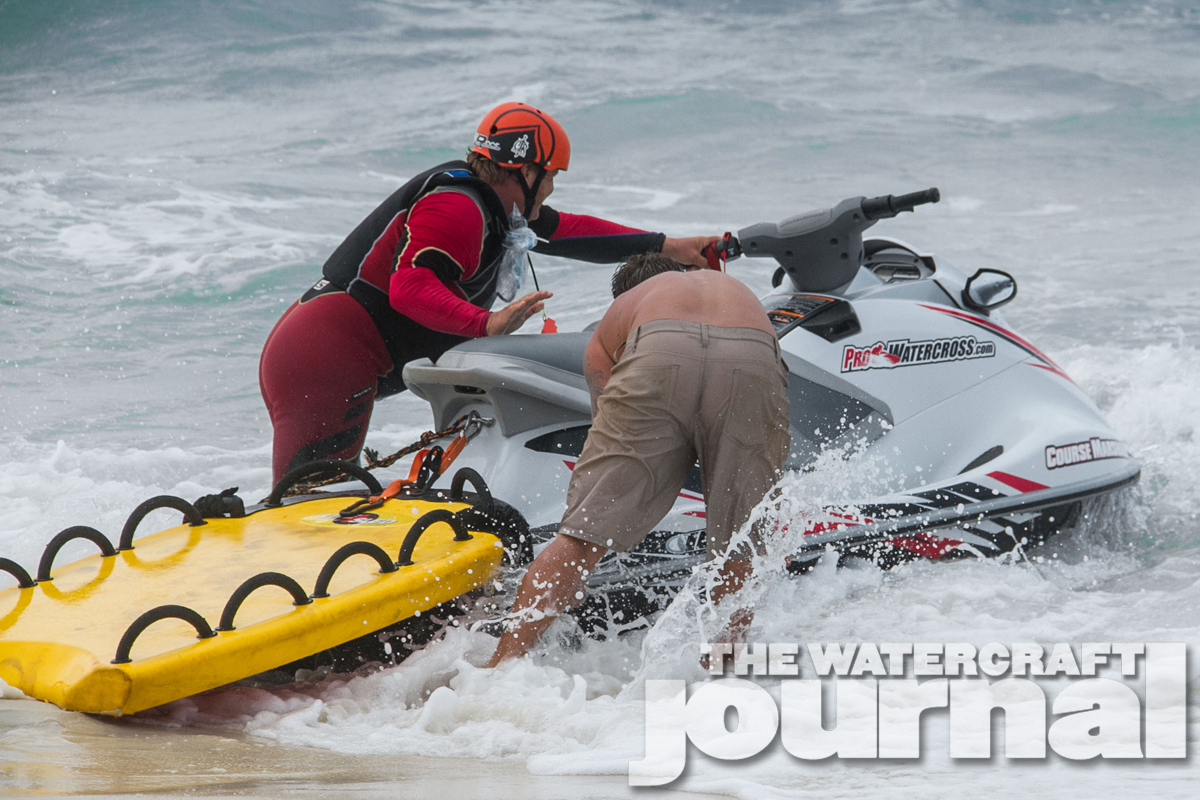
Attorney and board member, Jim Ellis donated a Sea-Doo (sic) watercraft to the Louisville Metro Police Departments’ River Patrol. The ski is for use during special events and general patrol duties along the Ohio River. It will provide an extra level of safety when in use at these events and give the officers an opportunity to become accustomed to handling the small watercraft.
The size and maneuverability of the personal watercraft will give rescuers easier access to more remote areas or places inaccessible to larger boats. The Sea-Doo does not have a propeller, which makes it safer to use during rescue procedures. The ski operator will not have to be concerned with someone getting hit and cut by a blade on the ski.
Officers will also use the craft to help with calls in Beargrass Creek, which is a nearby waterway. The ski will not be placed into actual patrol use immediately explained Sargent Jeff Artman.
“We’re not going to use it for basic patrol right now,” Sgt. Jeff Artman said. “We’ll use it for mostly special events like the Mayor’s hike bike and paddle and other events, the Iron Man and triathlons, things like that.”
All in all, having a personal watercraft designated for use within the Louisville Metro Police Department is a great step in moving forward to assist with water related incidents and safety on the river. This should lead to a bigger and better river patrol along the Louisville district of the Ohio River.
At today’s “touring series” level, personal watercraft (PWC) racing is not only becoming a serious sport, it can easily become a business and an investment. It can be an investment in a state-of-the-art PWC, or two, support equipment, a hauler; an investment in team development, crew recruitment and travel to each of a minimum of twelve poorly scheduled geographically divergent race venues per season year.
Even the well-funded teams and riders are considering outside sources to fund their racing budgets. The outside sourcing, and the search for commercial participants (sponsors) and investors, must be done with the same research and consultation as any other business investment or capital expenditure. You and your outside sources have every right to expect a reasonable return; be it in hard dollars to your race team, or the benefits of brand development programs and campaigns that stimulate higher sales volume and increased traffic resulting in subsequent profit to your outside sources.
The point here is that sponsorship is a vital income source. You must develop this source with the same effort you put into your racing program; you must provide a valuable market service and or advertising vehicle in return for the sponsorship dollars. No longer can you attract sponsors or team investors with flashy graphics, creative numbers or smoke and mirrors.
In the PWC racing world of today, your off-water wars can be won incrementally by producing exciting, informative, efficient communications at every level of your marketing and promotional mix. This holds especially true when you are selling PWC racing. To accomplish this requires thorough knowledge of every aspect of the sport and industry; a carefully conceived strategy designed to impact each of your opportunity areas. These subjects are not the absolute function of advertising or sports marketing agencies. You must develop your own marketing and promotions person; someone that is close to or from within your own race team who can effectively and profitably reach each of your team’s targeted opportunity areas.
You must be aware that successful promotion motivates marketers and increases corporate participation; marketing creates the awareness and demand factors; advertising makes your prospective sponsor/commercial participant take that step toward the buying decision; and in this context the buying decision is “buying in” or making the sponsorship investment.
You and your team’s M&P person must follow a logical, step-by-step, approach in making your marketing effort pay off in maximum profitability. You must consider all available industry data, including trade publication surveys and national trade show profiles. This research is your only way to determine the targeted markets’ moods, actions, and emotional hot buttons.
You must maintain constant awareness of your competition off-water as well as on-water; follow their marketing and commercial participant solicitations; make on-site pit visits as well as in-shop visits and when the opportunity arises, use their events and promotions, as well as your own, as directional factors. In this way you will further develop your ability to attract sponsors and produce team income through commercial participation and promotion.
It is imperative that your race team be clearly positioned as the best available in the minds of your audience and your targeted market. This demands properly focused and consistent communication; an image that is positive and memorable, and performance on and off the water that delivers!
Any age-old misconceptions about PWC racing must be dealt with and dispelled. Fortunately, through the effort and continuing success of race organizers AquaX Series and subject-specific publications such as The Watercraft Journal, plus the never-ending support of manufacturers such as Yamaha, Kawasaki, Sea-Doo and high-end tuners RIVA MotorSports, there are few remaining negative misconceptions; however, never lose site of the fact that the developing new image and the real potential for commercial benefits in PWC racing are still unknown by most of your out-of-industry targeted markets.
Your overall presentation must be sophisticated, tasteful and in keeping with the desired image; your success will be achieved by impacting the key purchasing influences; namely the prospective sponsor’s perception, executive’s opinions, and the marketing team’s recommendation. Do not forget that the buying decision, in your targeted market, is based primarily on self-gathered data and the information you presented. If budgets restrict you to only one informational piece be sure to include a section designed as a guide to PWC racing. Keep in mind that the typical corporate marketing person’s experience with PWC racing is limited to the scant coverage on TV or what very little is in the local sports pages.
Position your race team clearly as the ultimate in the market, try a thematic approach; youthful, well spoken, the ultimate product or corporate representative; the finest PWC racing team in the sport today and you are totally committed to racing for “podium-finishes” in the best racing series. Capitalize on existing mystique through an image-oriented campaign in the appropriate media; create your rider’s celebrity, or perhaps you are owned by a South Pacific Coconut Plantation or your Crew Chief breeds porcupines in the off-season. Establish and maintain share-of-mind. Create and capitalize on all PR opportunities whenever possible, particularly with regards to your participation in the racing series and its related special events. Clearly communicate the advantages and benefits of an association with your team and the series.
Produce highly informative social media content in such a way that all key advantages are depicted, tell the story and effectively position your team in the minds of commercial interests and out of industry sponsor prospects.
It is vitally important that your team be organized in a business-like manner and is structured in such a way to properly receive and justify sponsorship income. You must stay focused on the commercial objectives of the sponsor/investor as well as your race team. And at all times consider your combined liability exposure and limit your risks as much as possible and continue the building and development of your team management, staffing and race equipment development.
To consider doing it any other way will lead to a very short, albeit exciting, venture into PWC racing lasting only as long as your financial resources or your willingness to keep writing checks. If you feel that you need help in any of the areas above, seek professional advice. It may make the difference that allows you to realize your goals in this wet and exciting segment of power sports racing.
We’ve been pretty diligent in keeping you up to speed on all the goings on with Take Point Now, and even brought you a full-length feature review on the first of their adaptive PWC technologies. Now titled “Linebacker,” the adapted PWC steering system allows a rider with only one arm to adequately pilot themselves with a single steering trigger.
“Linebacker” was named after Operation Linebacker, which took place in Vietnam in 1972. In fact, all of Take Point Now jet skis are named after battles or operations from Vietnam as a heartfelt “thank you” to all the Vietnam veterans who support and inspire today’s veterans in hospitals, VA Centers, and in all aspects of civilian life.
According to Take Point Now’s PK Ewing, “Linebacker has exceeded our wildest expectations! We’re now moving onto our second prototype, Defender, and need your help to continue inspiring all disabled persons along with our fellow wounded veterans. Join Take Point Now and support our campaign to develop Defender, a jet ski with seating adapted for riders with leg and spine injuries and amputations.”
Defender – named after the Coast Guard’s Defender Class search and rescue vessels – will be designed for riders with leg and spine injuries and amputations. As PK continues, “We consider our patent-pending prototypes to be templates for others to improve upon.
“So, Take Point Now will be making our designs available to anyone who wants to build their own. Our goals are to use the designs to inspire any rider with a disability or injury, and provide the means for them to get an adaptive jet ski to suit their individual needs.
“We’d love for engineering schools and fabricators to expand upon what we’ve done so we can create easier, simpler and more cost effective adaptations. Contact us to facilitate your development effort.”
To help get the word out, PK visited the folks at the Fox & Friends morning show to discuss Take Point Now’s efforts and future plans, which you can watch below:
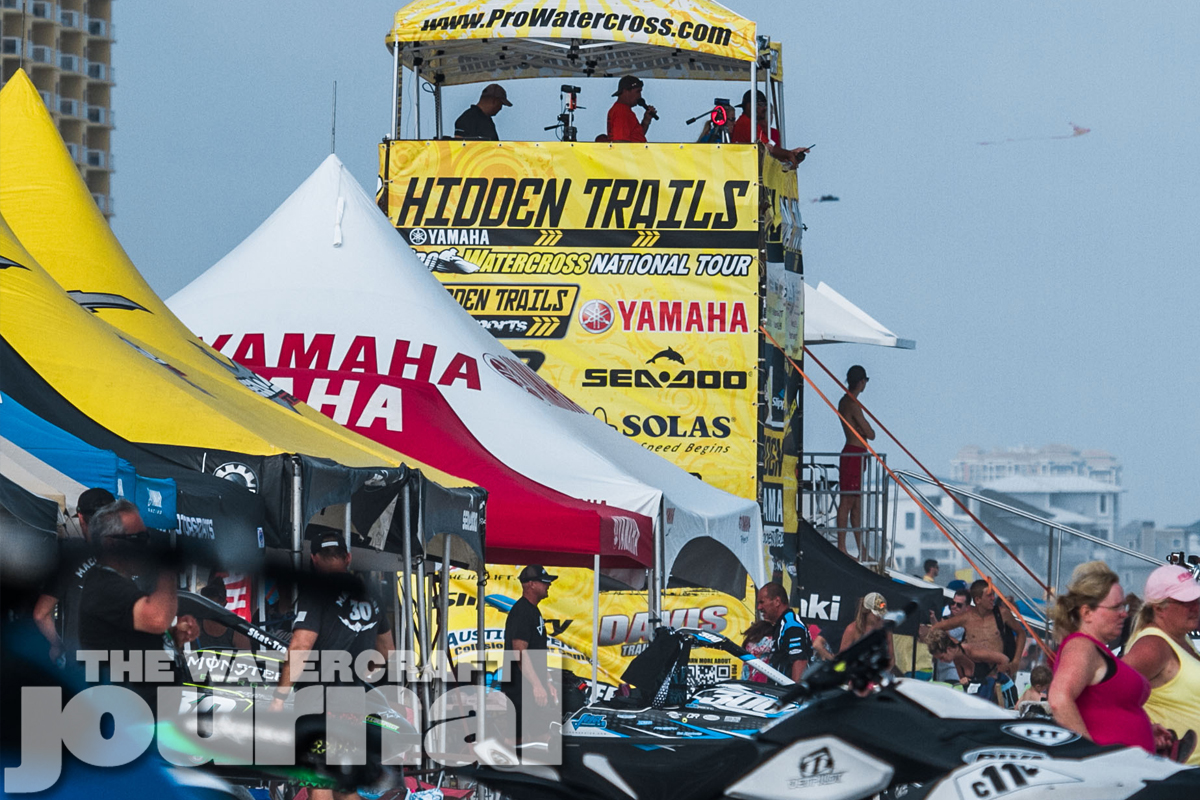
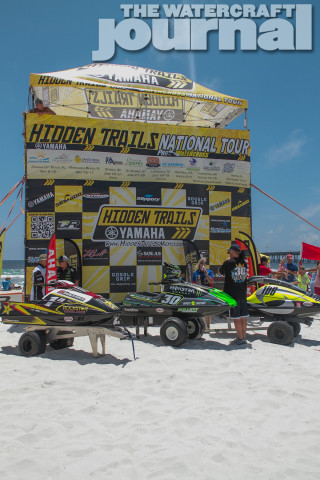
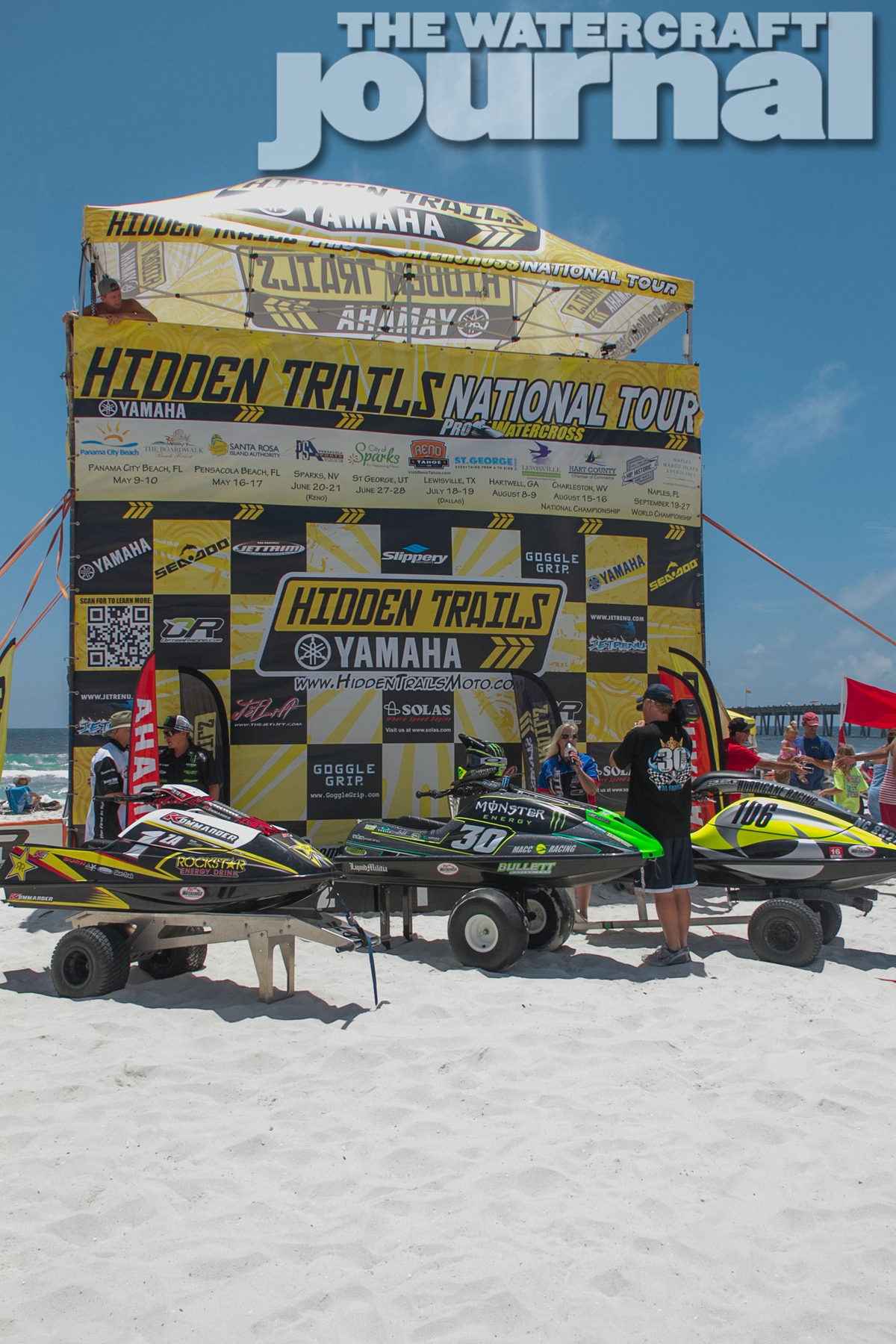
The story for Round Two of the Pro Watercross Hidden Trails National Tour is both a continuation of last year and of last week’s action in Panama City Beach.
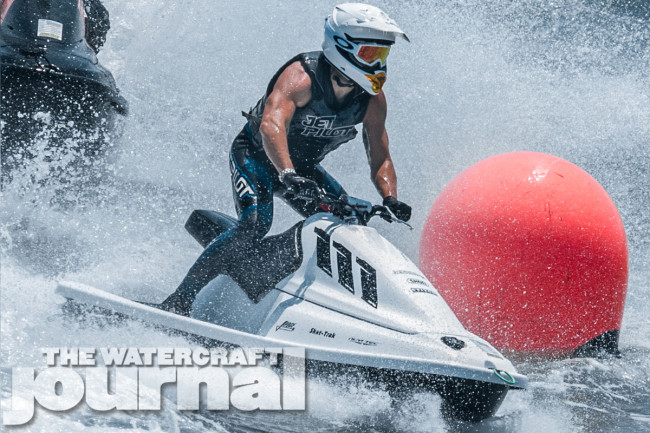
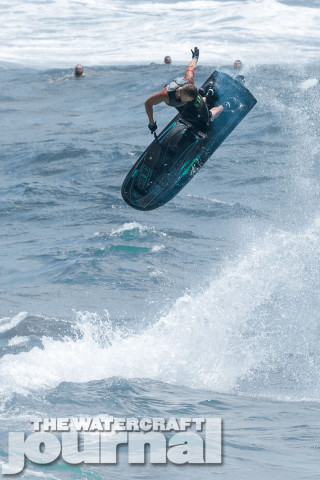
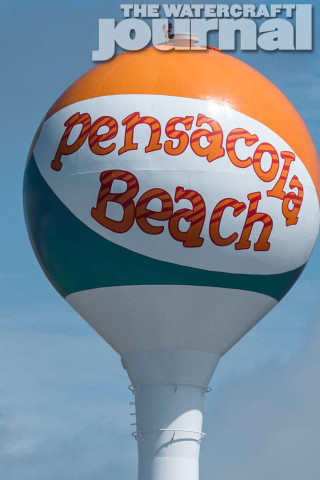
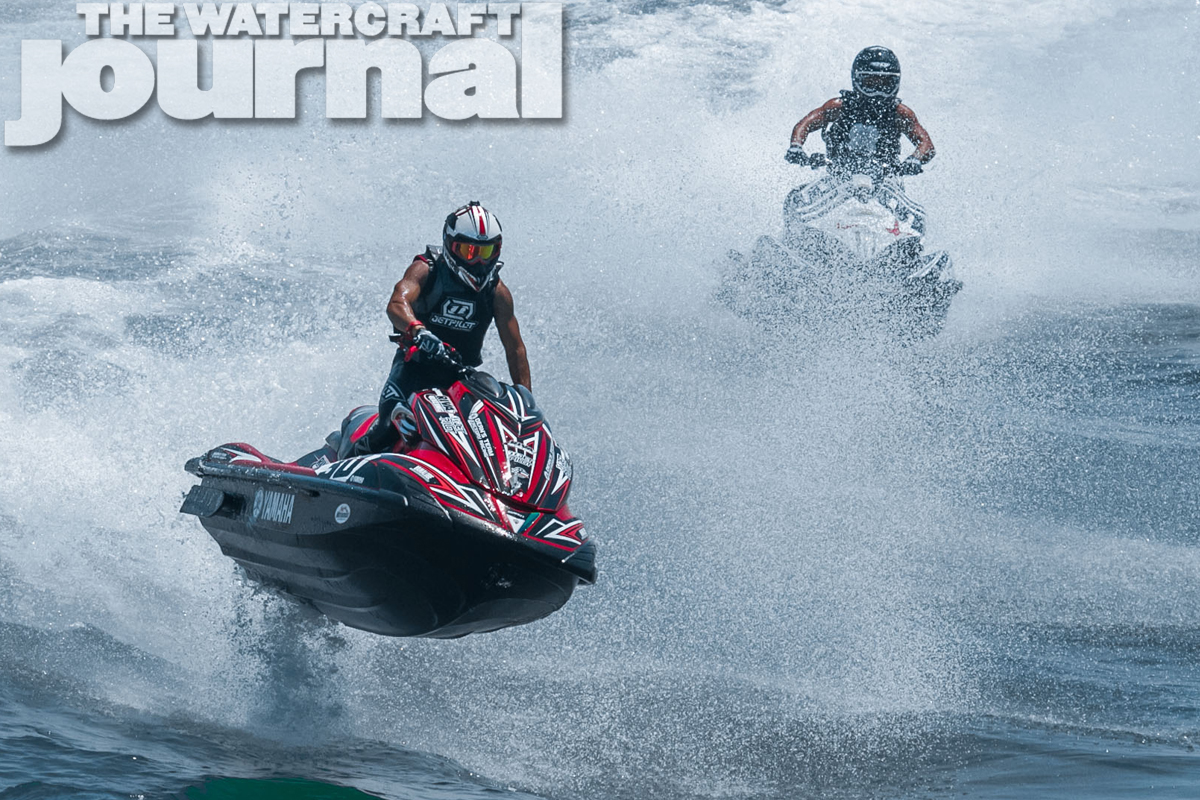
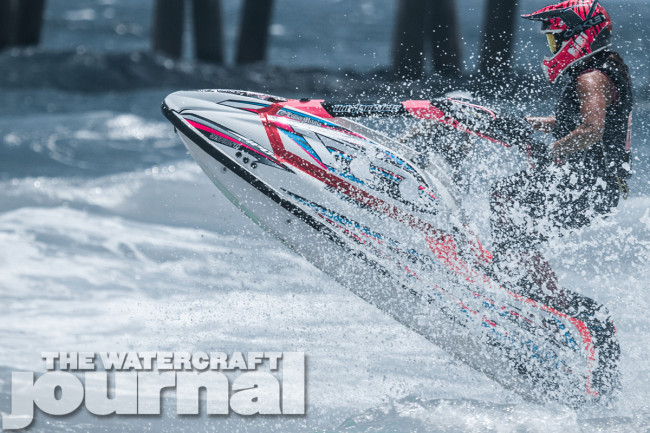
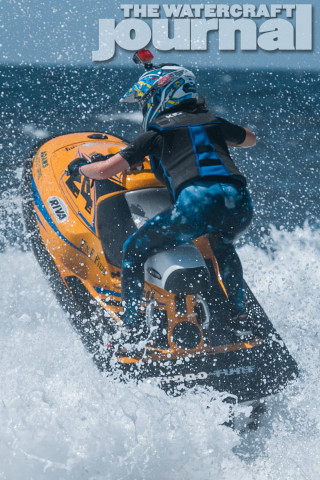
In 2014, the surf conditions were some of the biggest we have seen during a PWC race. This year, Pensacola did not disappoint the racers or spectators! Although conditions calmed down slightly on Sunday, it wasn’t the fastest boat or the biggest factory teams that were assured podium spots; the racing field was leveled and finishes were dictated by the the venue, the waves and the rider’s skill.
Last week, the stories centered around the Pro Ski GP, Pro/Am Runabout Stock Classes and a handful of tour racers Chris MacClugage, Dustin Motzouris, Abdullah Al-Fadhel, Brian Baldwin and Eric Francis. In Pensacola, the storylines continued with the big surf adding drama to the mix.
The majority of the stops on the Pro Watercross Tour are lakes and do not involve the challenge of 4-to-6 foot wave faces ocean surf. In Freestyle competitions, most riders are divided into two different camps: flat water freestyle and surf. Only a select few of these guys have the ability to cross over the line between the two disciplines and perform their tricks in all conditions.
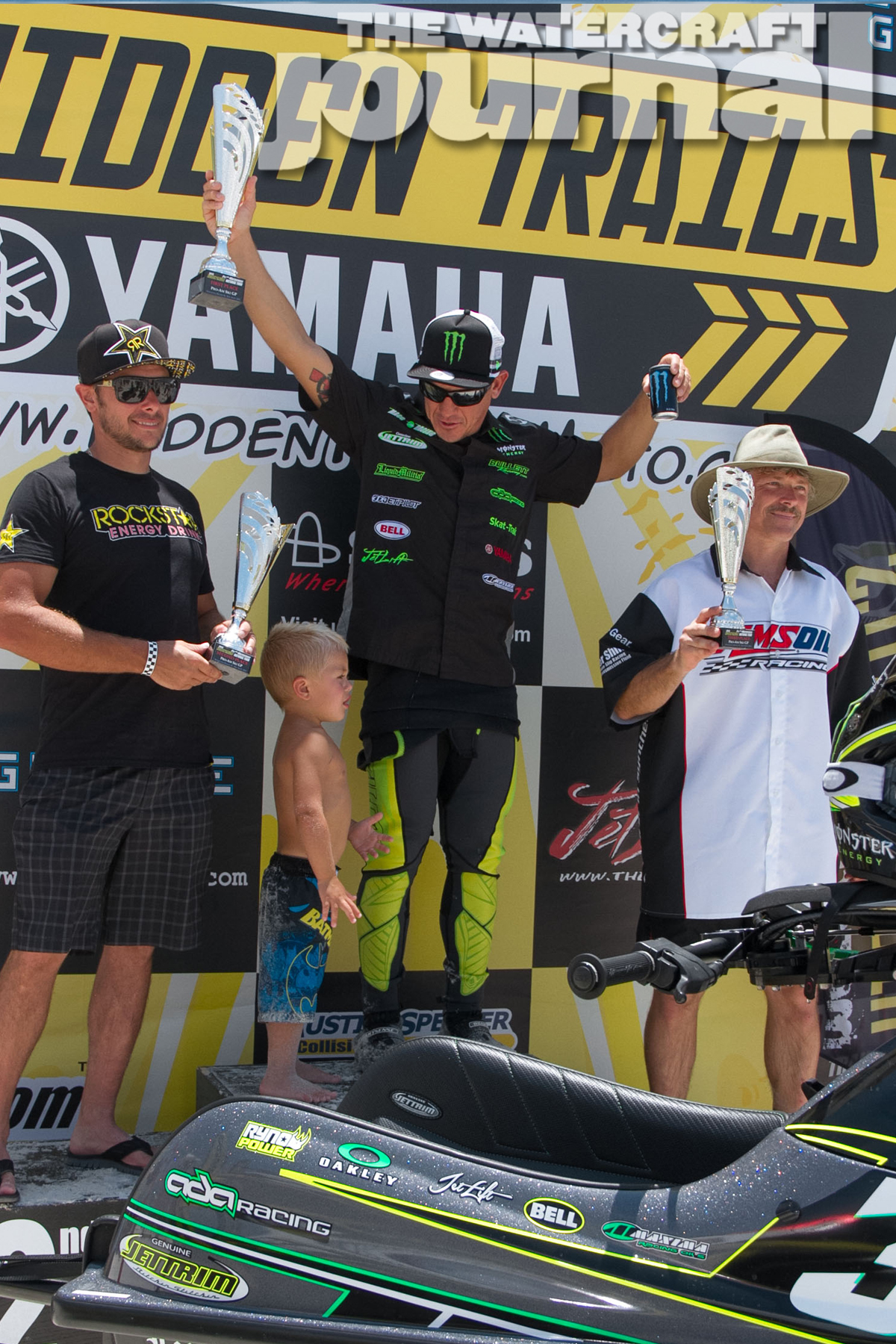
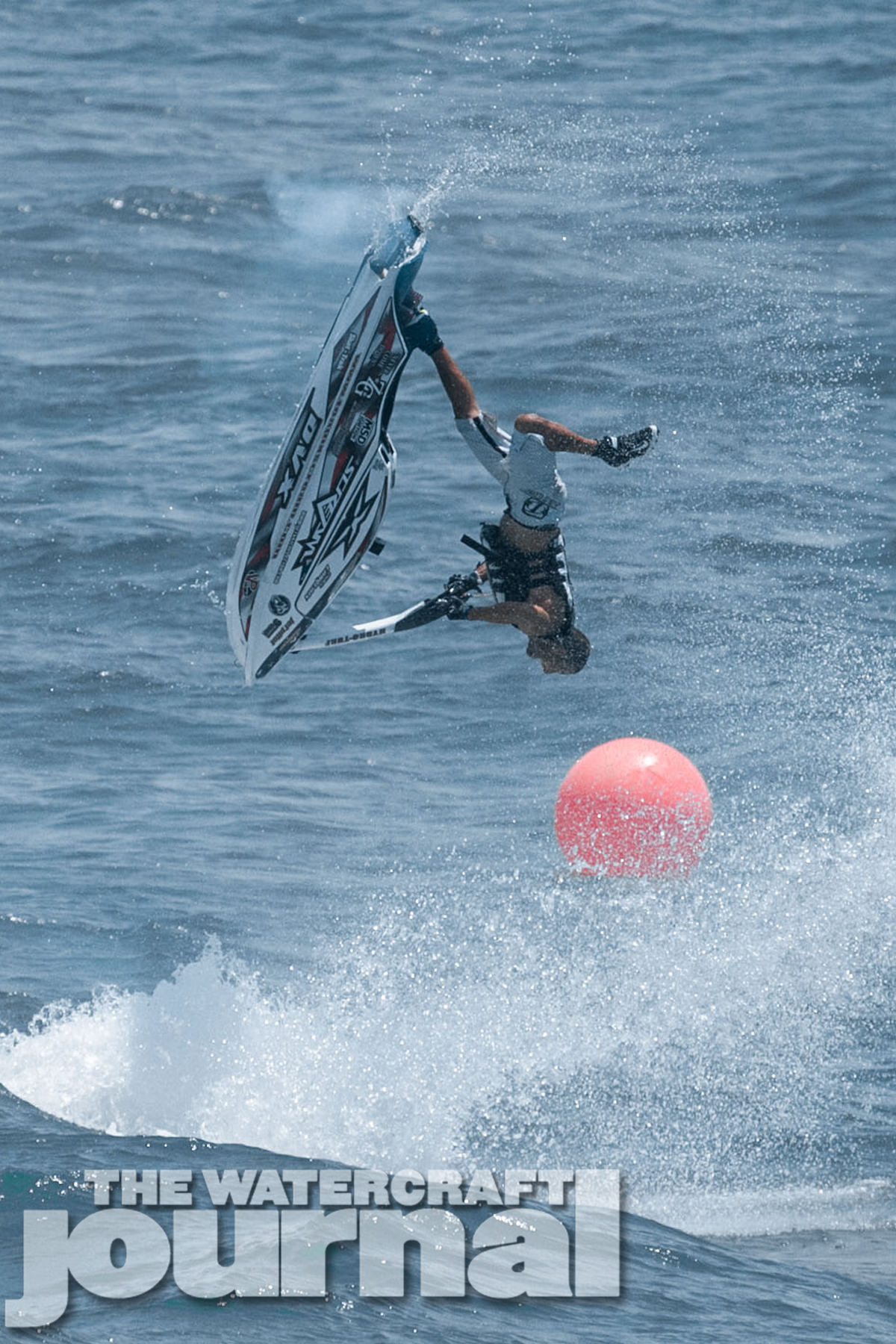
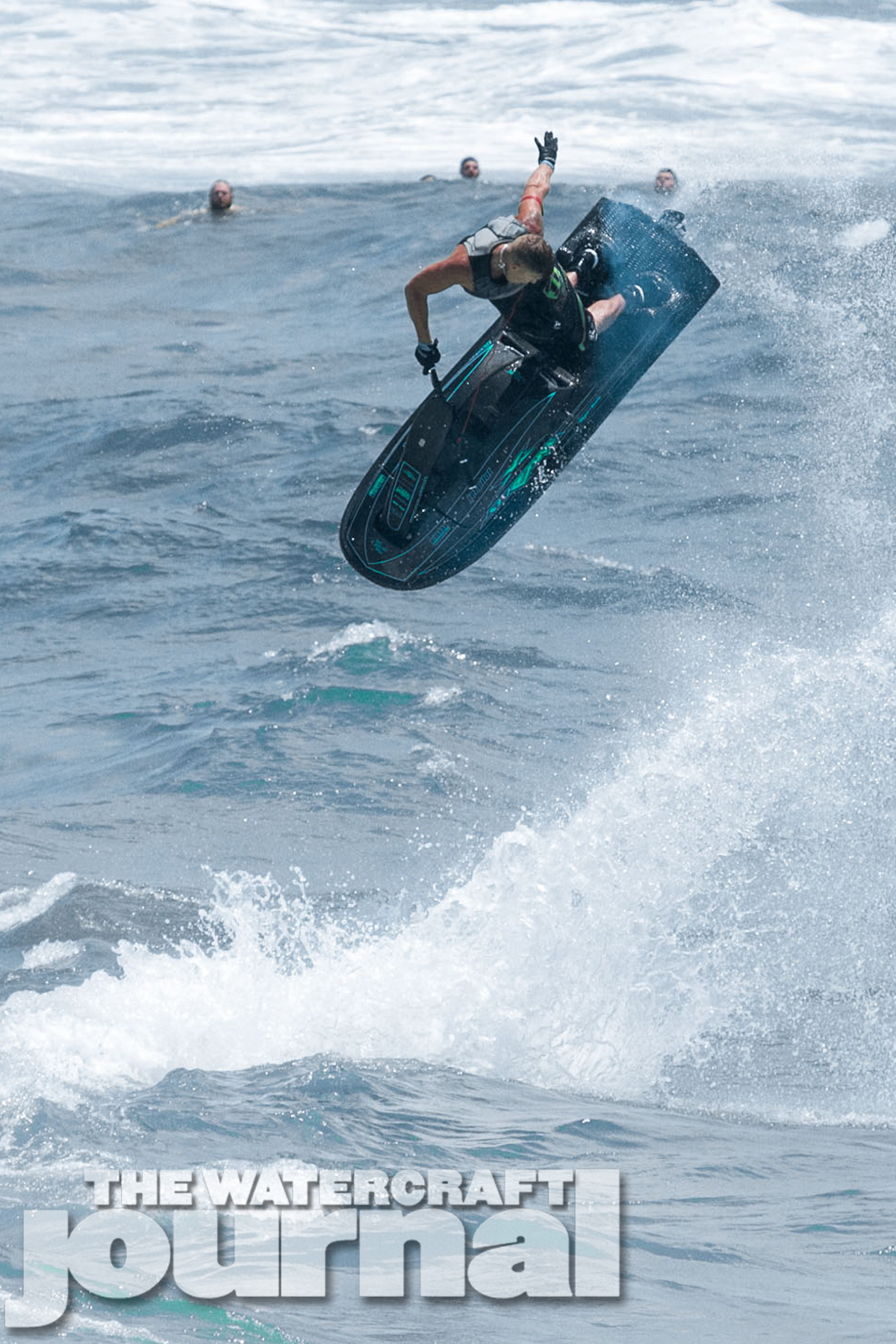
Congratulations to the two Xsceam riders for their performance, for having the skills to take on the Pensacola surf, for crossing over from their flat water routines and for putting on an amazing big air show for the wins! Chris Langlais in Amateur Freestyle and Jason “The Destroyer” Stoyer in Pro Freestyle used the surf to their advantage this weekend! With huge air, backflips, variations and combinations off the Pensacola Beach waves, they showed their versatility and kept the first place hardware in Florida.
The Watercraft Journal caught up with Chris Langlais who told us, “Saturday, I kinda just went out had fun playing in the surf. I did the first-ever 720′ on a 900cc Freestyle ski to get me the win for Saturday. Sunday, I had a very strong run [with] lots of big air doing another 720′ and adding in some flatwater combos throughout the chop and surf, ending my run with the first place trophy.”
The biggest highlights for the weekend were the battles that waged in the Pro/Am Runabout Stock Class. The top three riders fiercely took on the surf and each other, swapping positions continuously through all three motos. A couple big get-offs and several near catastrophic misses made this one of the most exciting classes to watch in Pensacola!
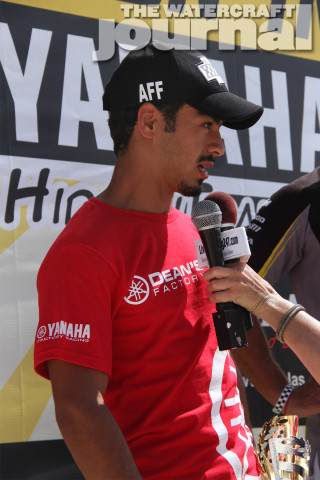
In Moto One, Dean’s Team Yamaha rider Abdullah Al-Fadhel went for a swim, giving Kawasaki’s Eric “The Eagle” Francis the win. Al-Fadhel came back in Motos Two and Three for 1-1 wins, with Francis right behind him. The weekend of first and second finishes earned Francis the overall.
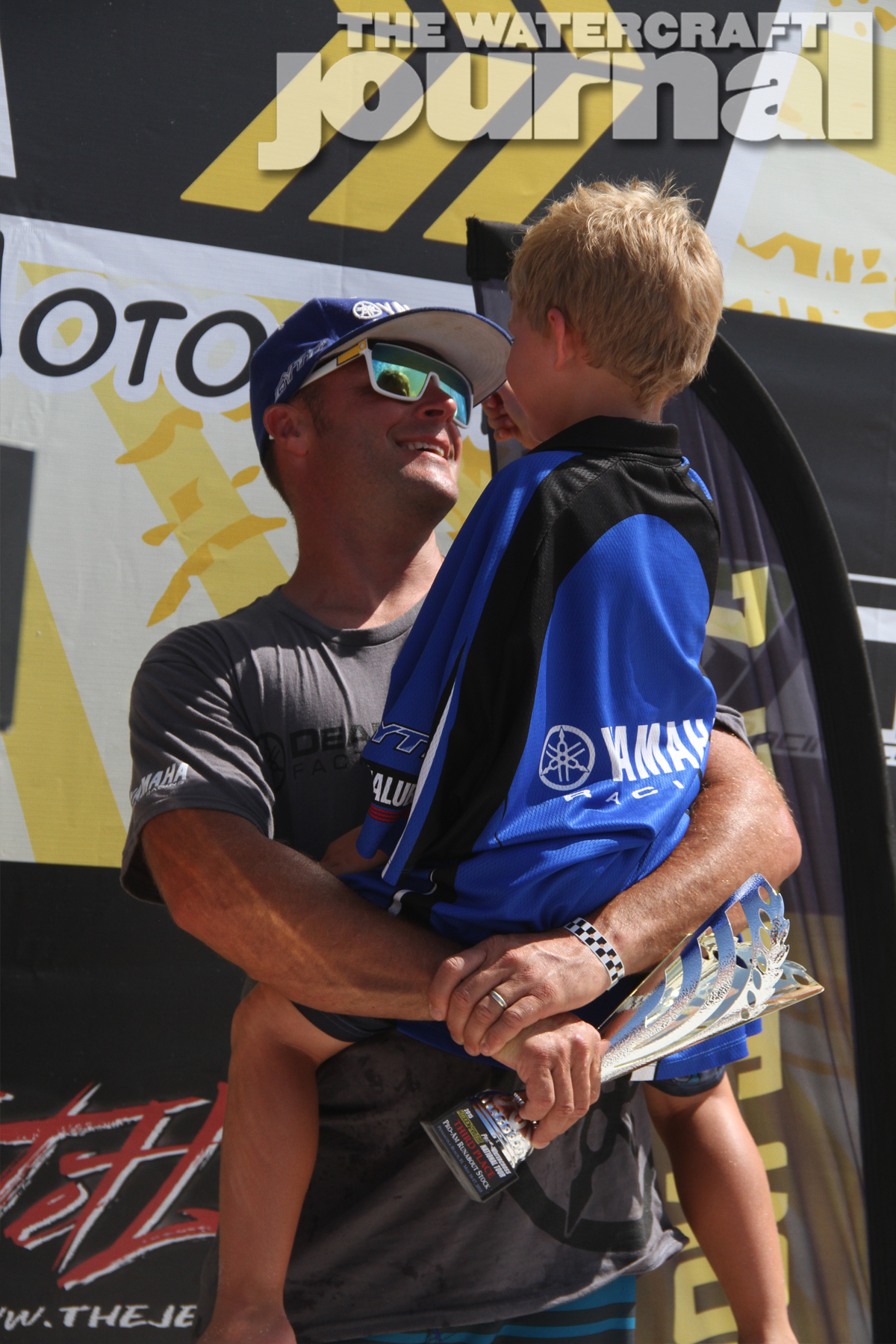
Another Dean’s Team Yamaha rider, Brian Baldwin was consistently in the mix. Brian battled Eric for position in Motos Two and Three, but a big wave crash while headed towards the backstretch along the pier, cost him the second place position. After the weekend was over, Eric Francis came out on top with Al-Fadhel and Baldwin in second and third, respectively.
Chris MacCluggage was again atop the podiums in the ski classes on Sunday. After a setback in Pro Ski GP on Saturday, he came back in the main to win with authority! The GOAT lapped riders all the way up through fourth place! The only competitors he did not pass were Dustin Motzouris and Bill Haig. They finished on the podium next to Mac in the second and third spots, respectively as well.
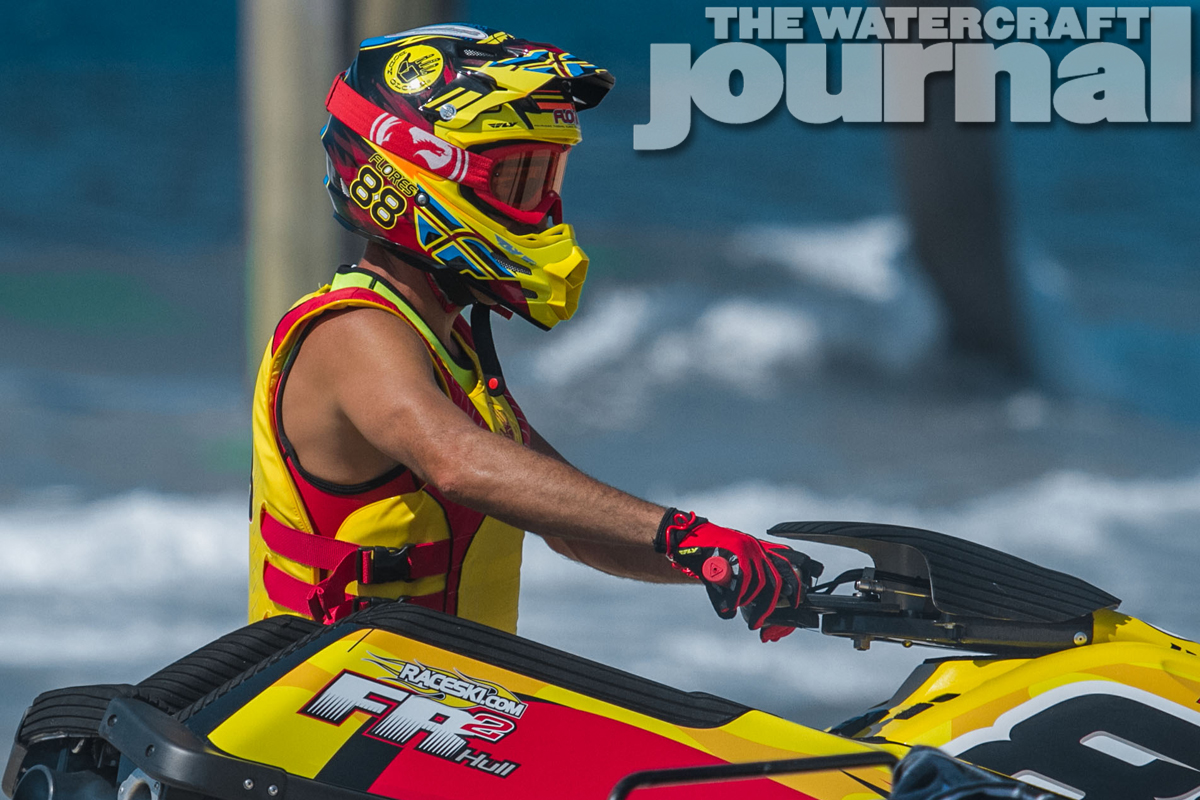
The surf didn’t seem to bother Chris in Pro/Am Ski Stock Class either with his clean sweep, and 1-1-1 finishes in all three motos. He was followed by Jimmy Wilson and Rob Flores in the second and third podium positions.
The Pro Watercross Tour introduced two new classes into the “Pro Show” ranks at their opening round in Panama City Beach last weekend, namely the new Pro/Am Box Stock Class and Sport GP Class. Following up on the results, Eric Francis was the dominant force in the Pro/Am Box Stock Class with a clean sweep of 1-1-1 finishes in all three motos.
We also caught up with Francis who shared, “I had a lot of life changes during this off-season and it’s finally paying off. Pensacola was extremely rough water and I did some of my best racing of my career this pass weekend and look forward to carrying the momentum the rest of the season.”
With the surf taking it’s toll on last weekend’s Panama City Beach winner Kelly Smith, Johnny Smith capitalized, and took the overall win in the Sport GP Class with 2-3-1 finishes for first place overall.
Brian O’Rourke recapped, “[The] Ministry was strong and competition was tough as Team Faith’s Kelly Smith started off with 4 straight Moto wins in the Pro Sport GP class and was leading the last two motos when he crashed in the big and challenging surf. Although he finished fifth Overall, we are encouraged with our second place in the championship points on the 2015 Tour and look forward to representing all our sponsors in the next five races!”
We want to congratulate everyone for surviving the rough surf conditions of Round Two of the Pro Watercross, Hidden Trails National Tour round in Pensacola Beach, Florida. We are excited, and curious to see which riders come out on top as the Tour moves into the flatwater lake venues for the duration of 2015. You can catch the continued action on June 20-21 at Round Three of the Pro Watercross Tour in Reno/Sparks Nevada.
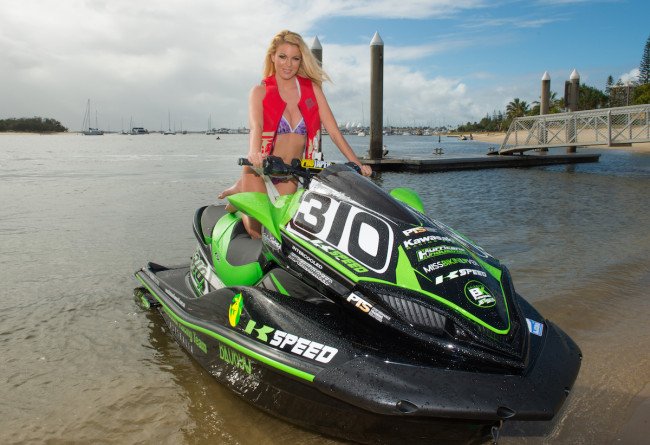
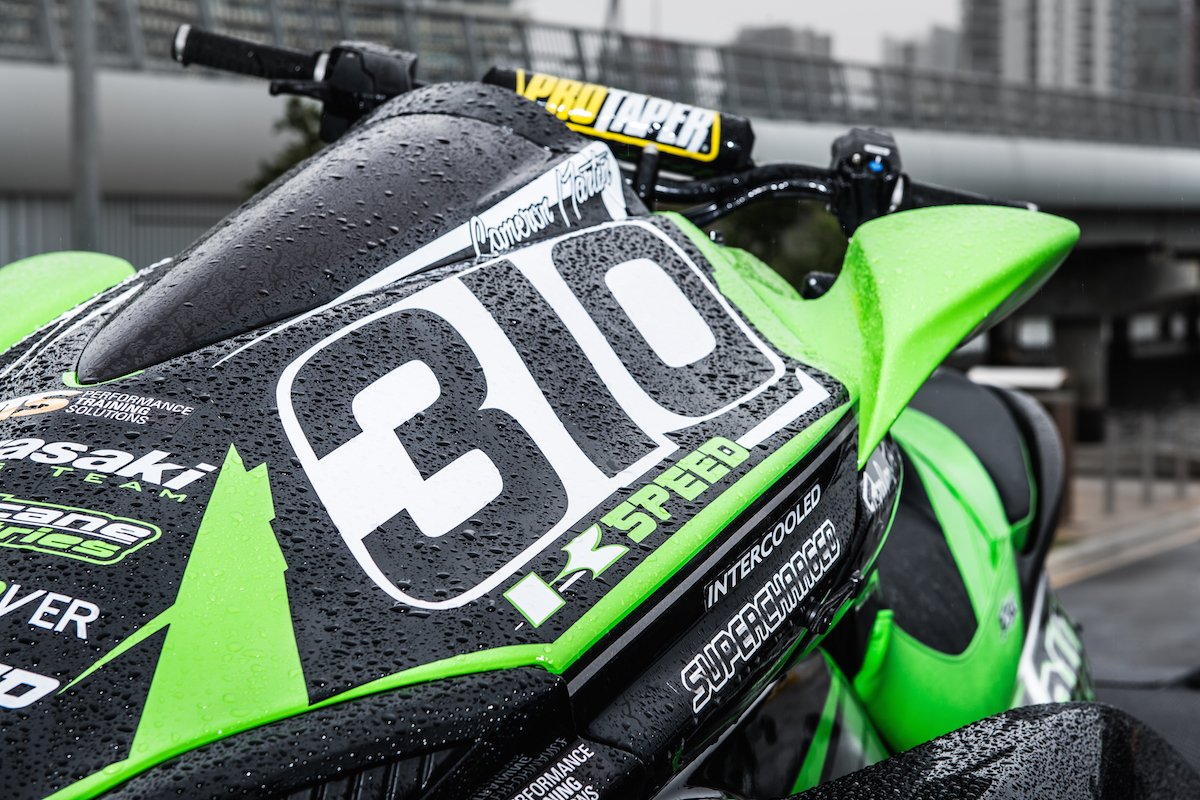
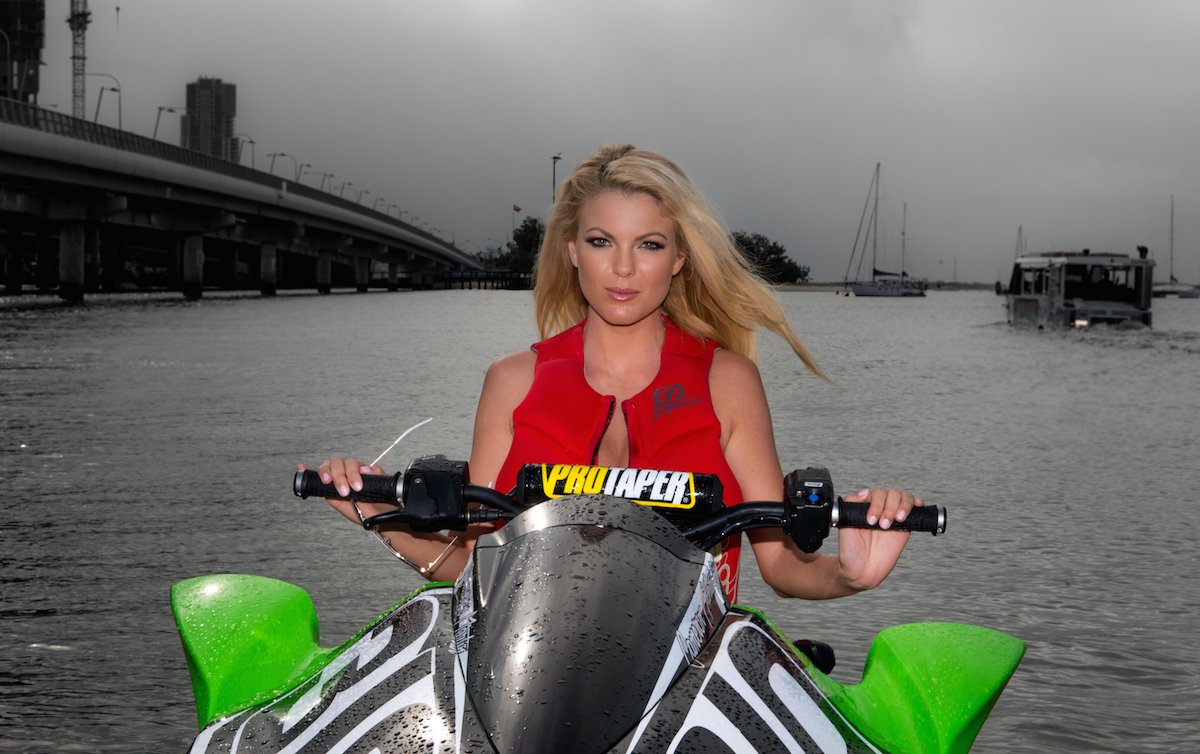
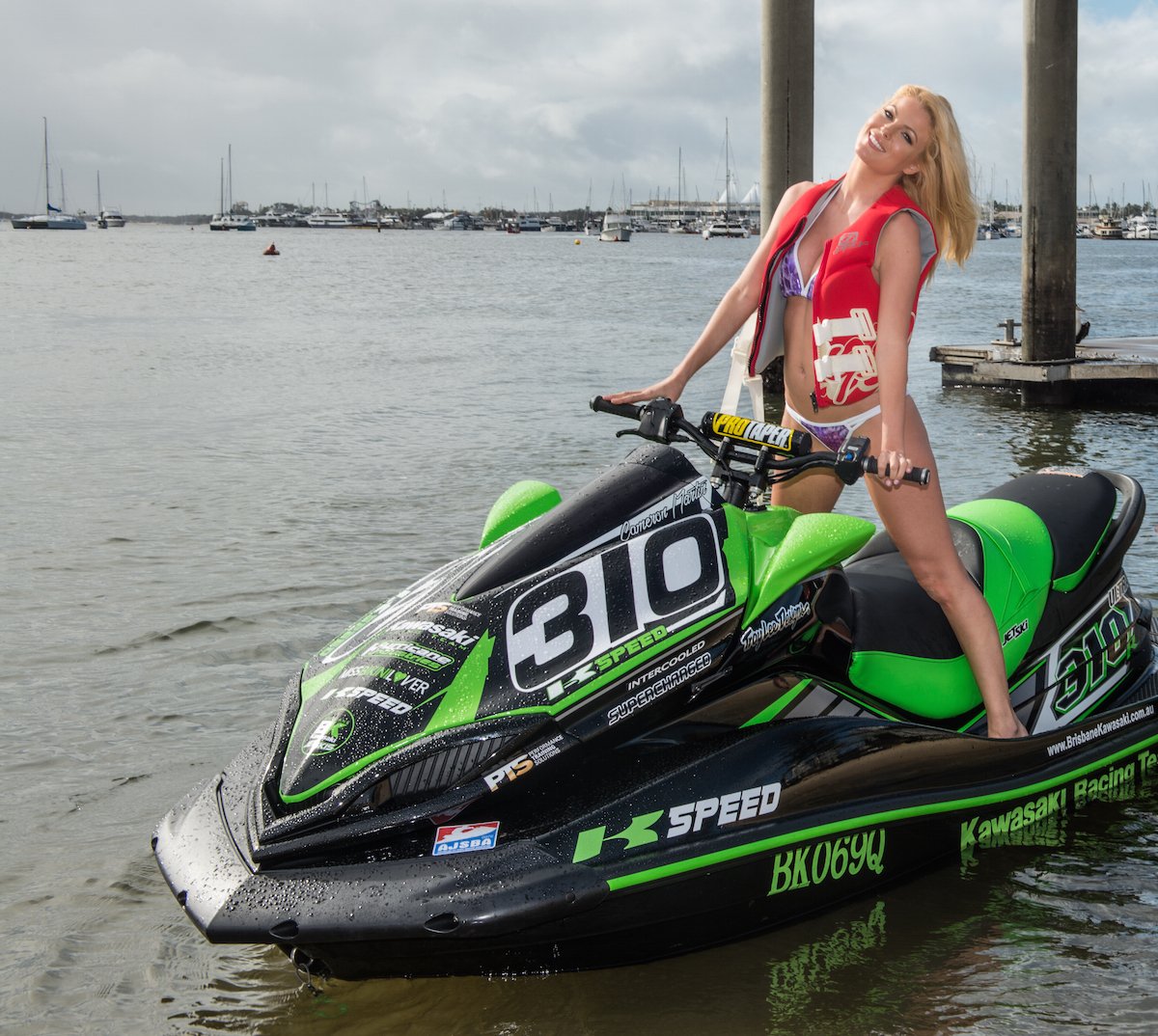
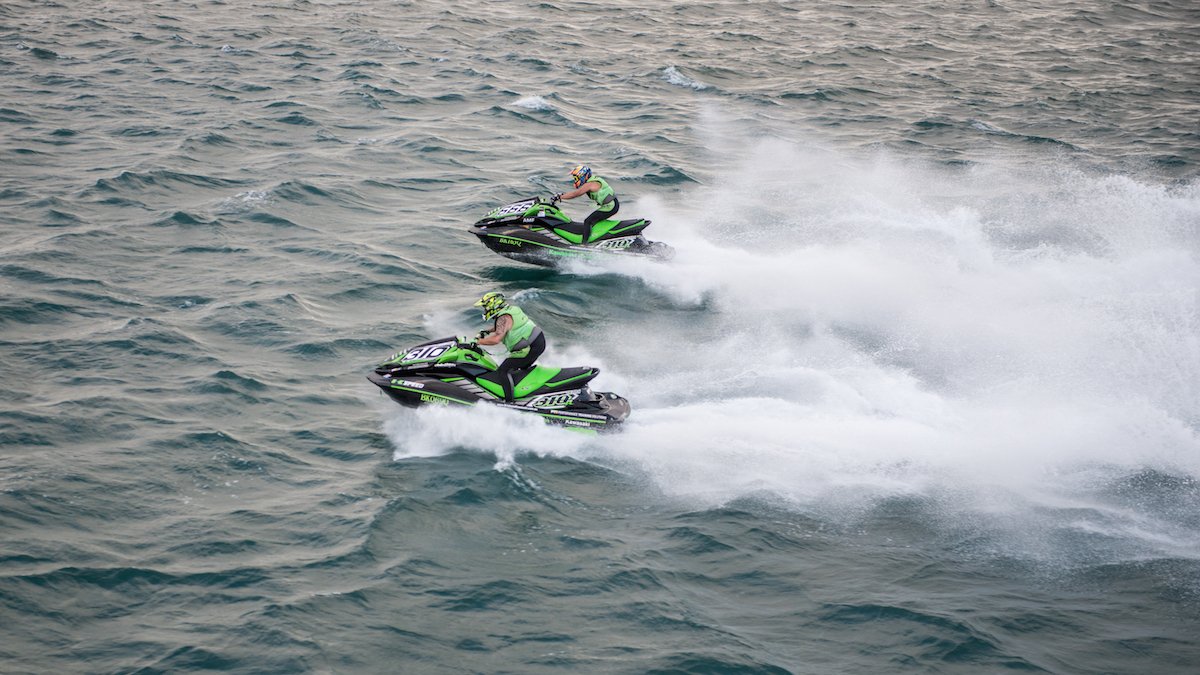
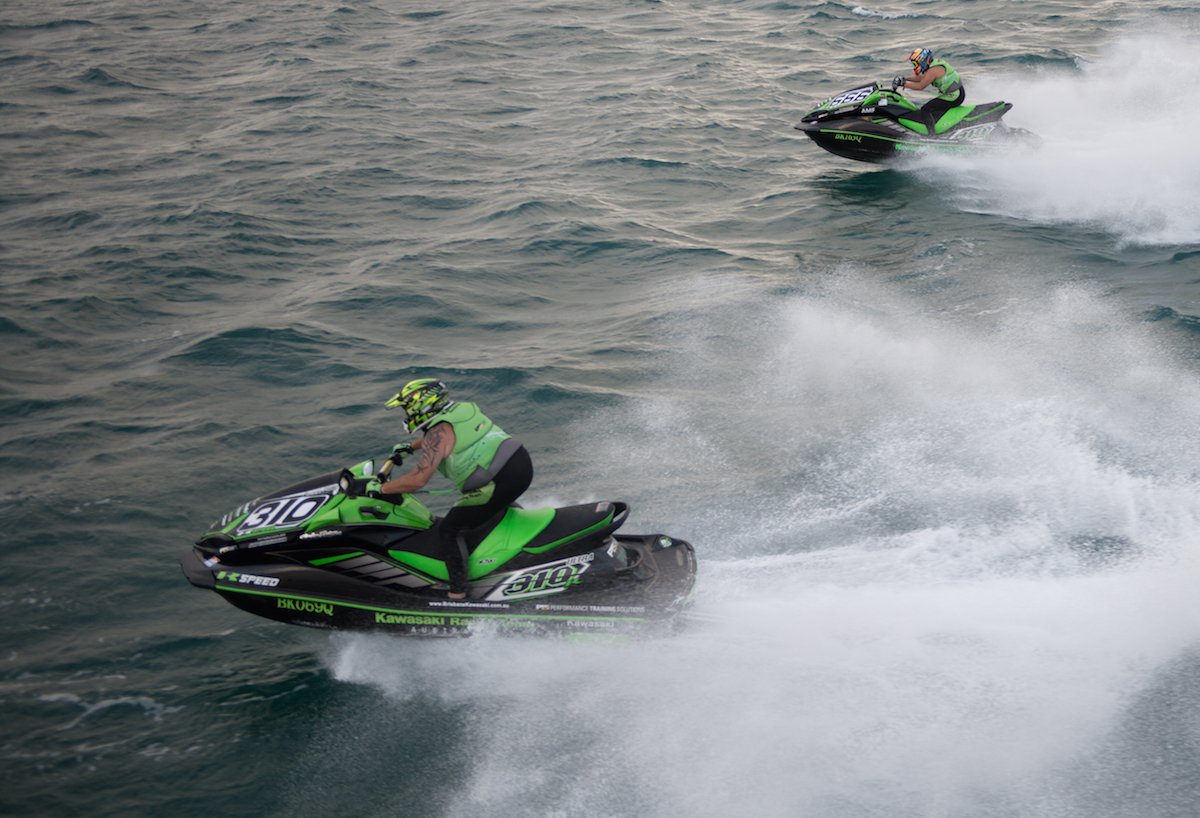
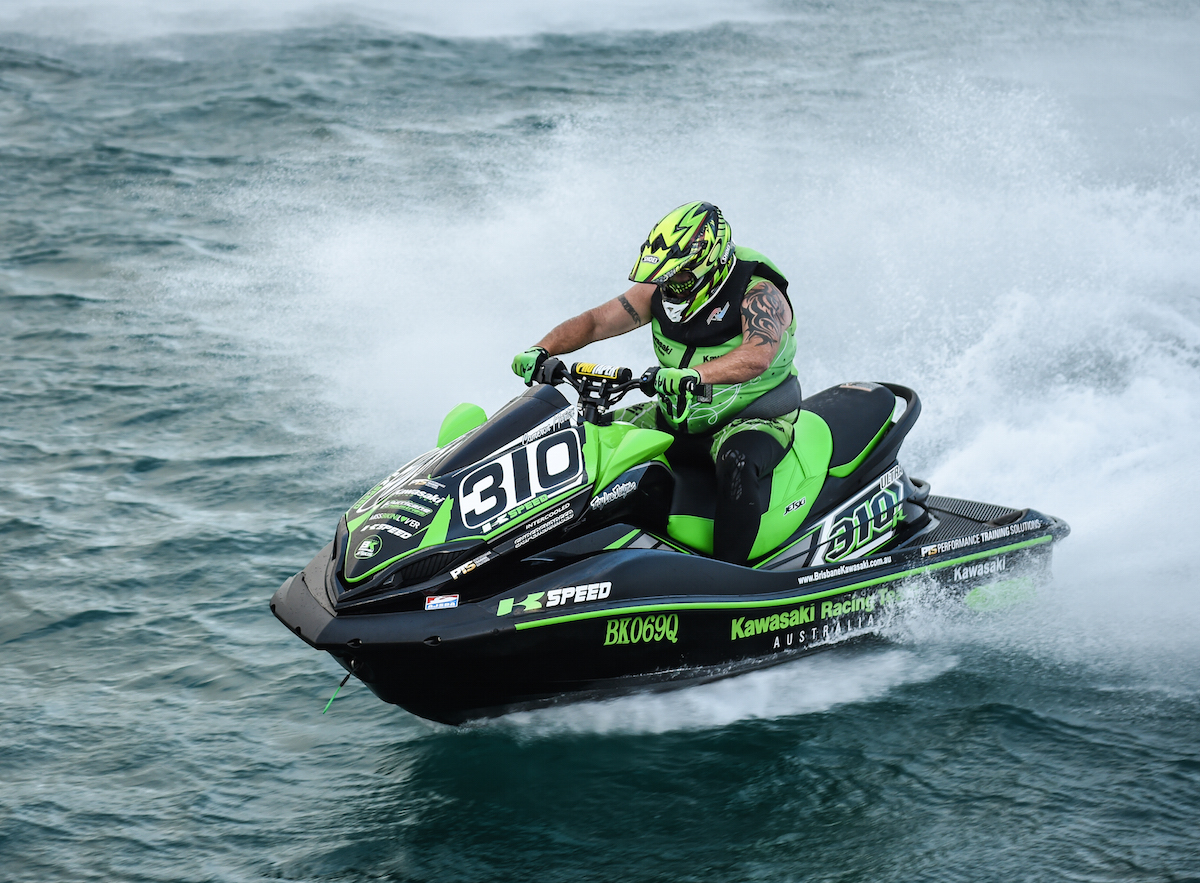
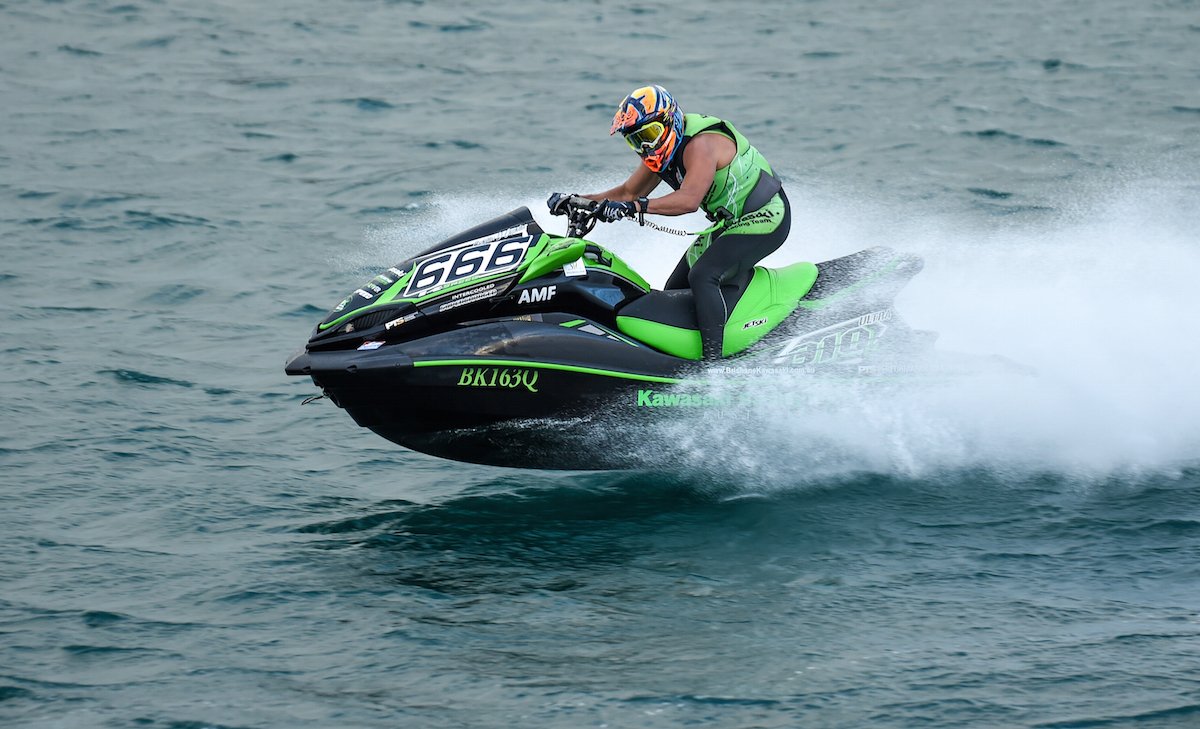
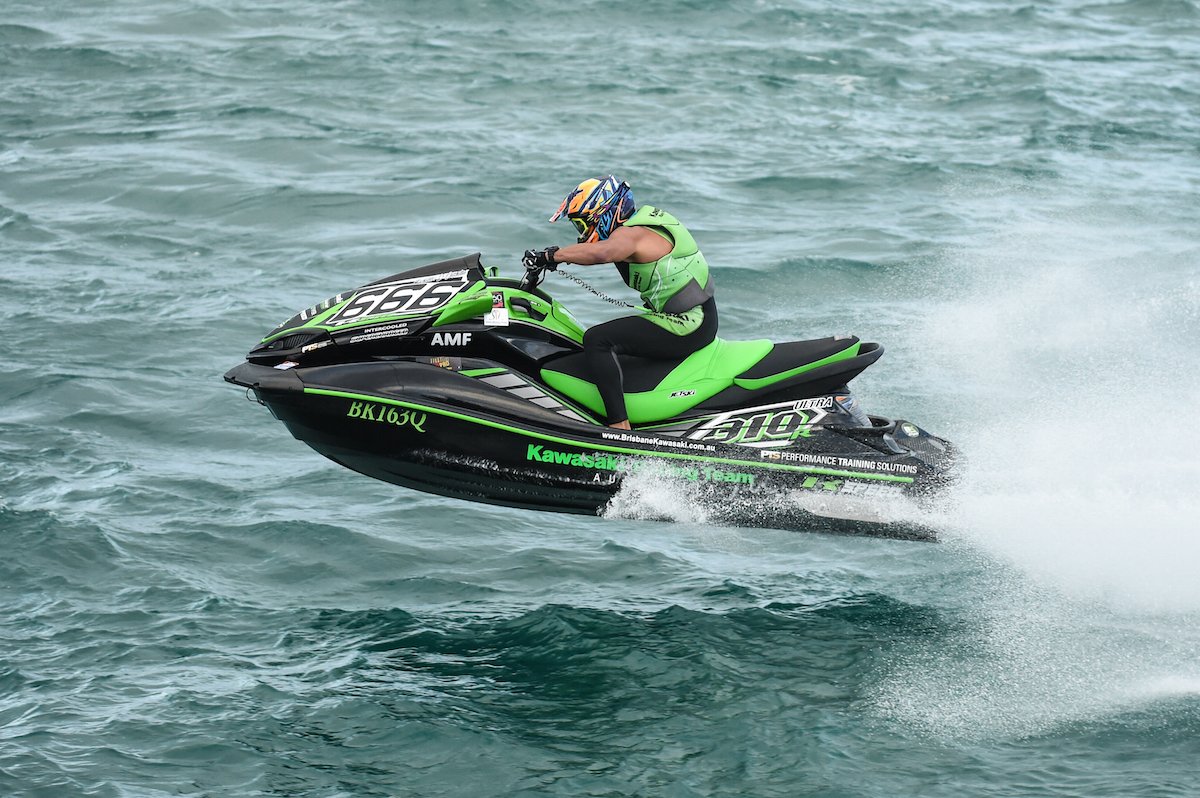
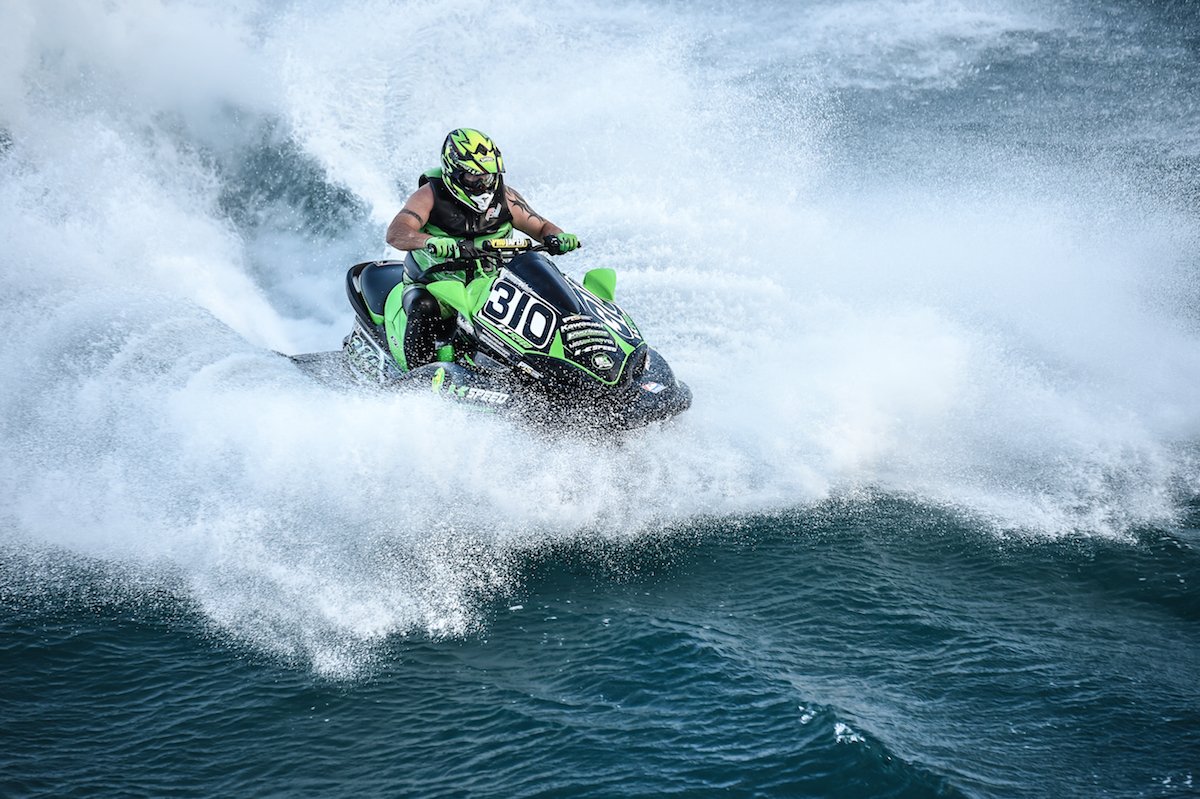
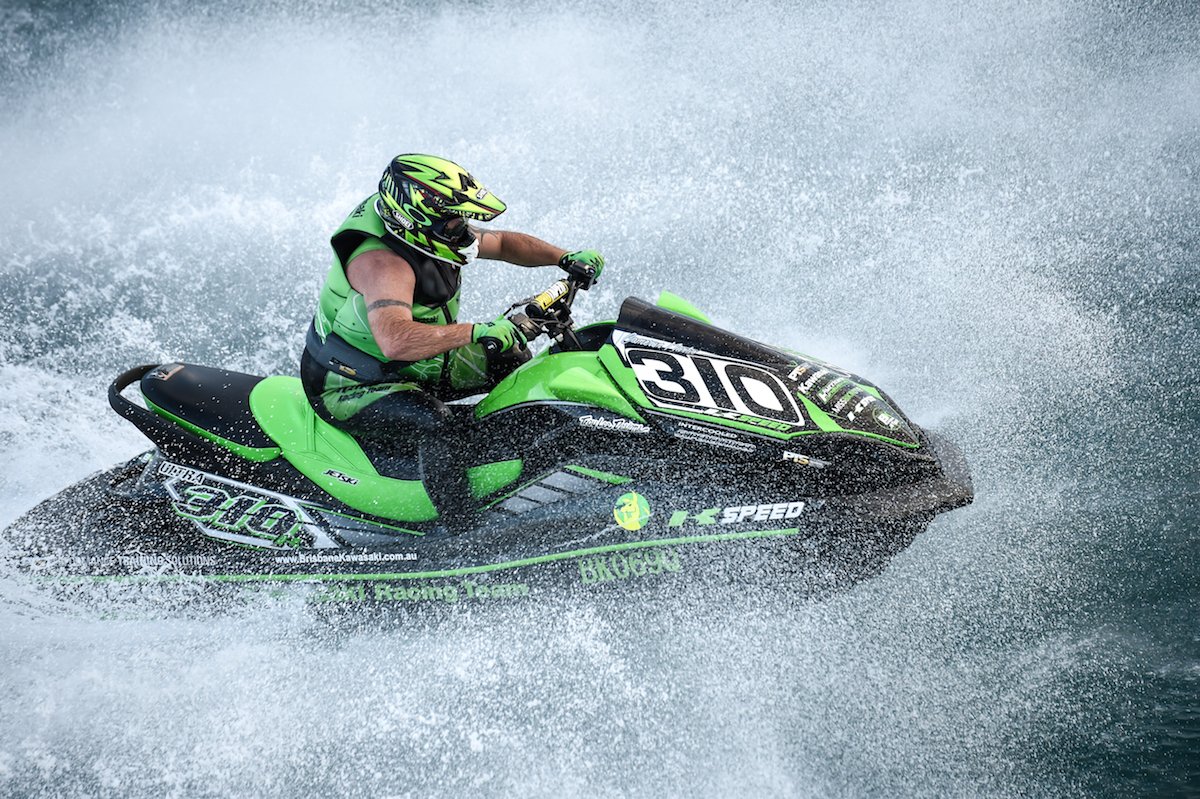
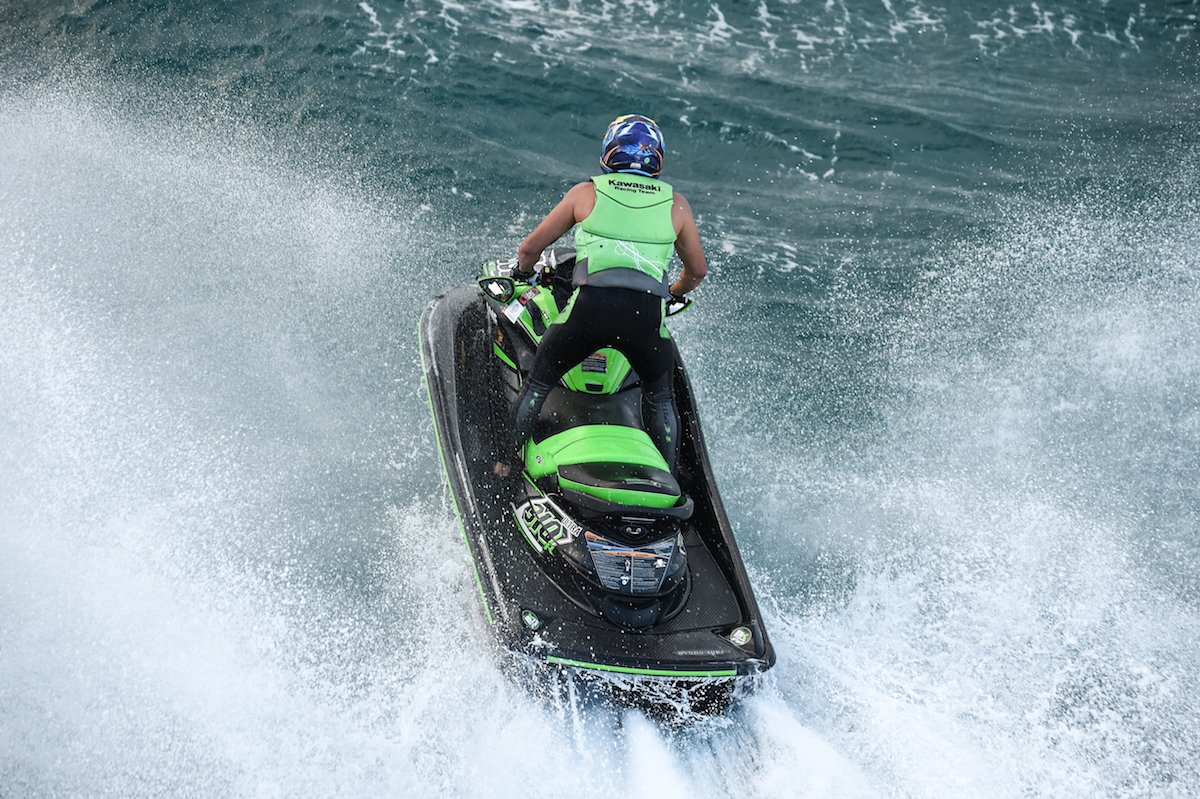
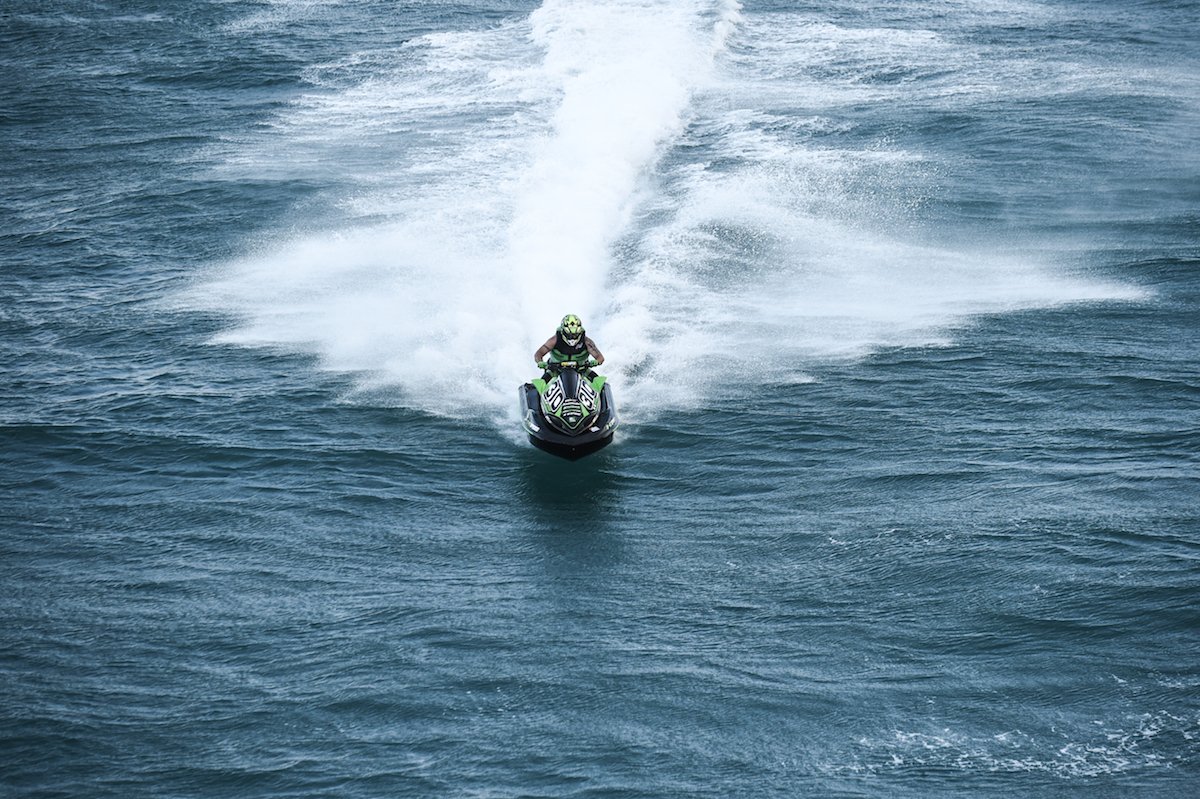
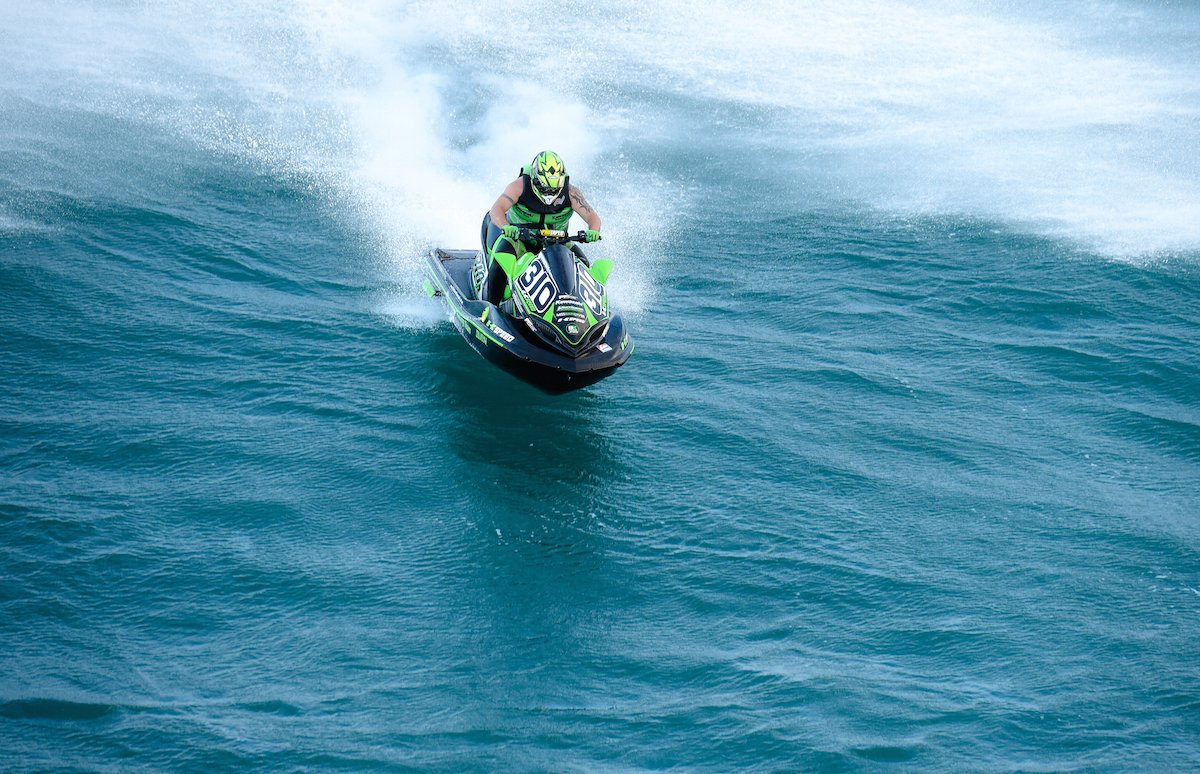
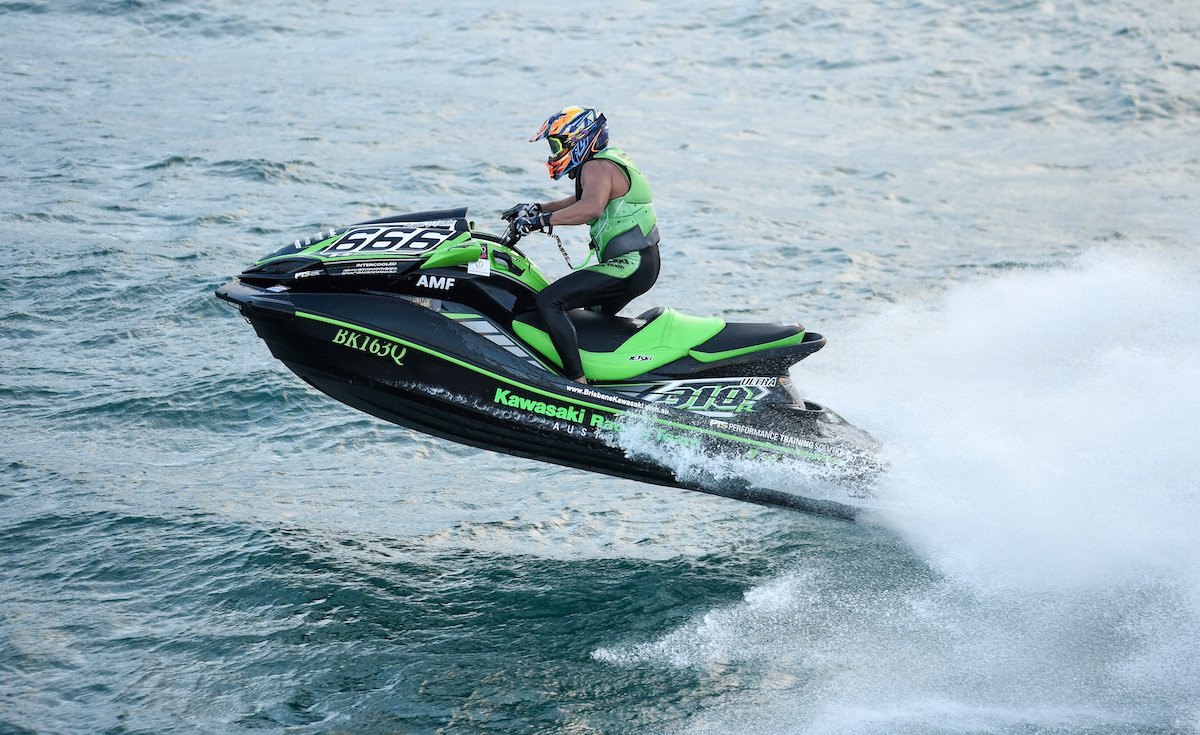
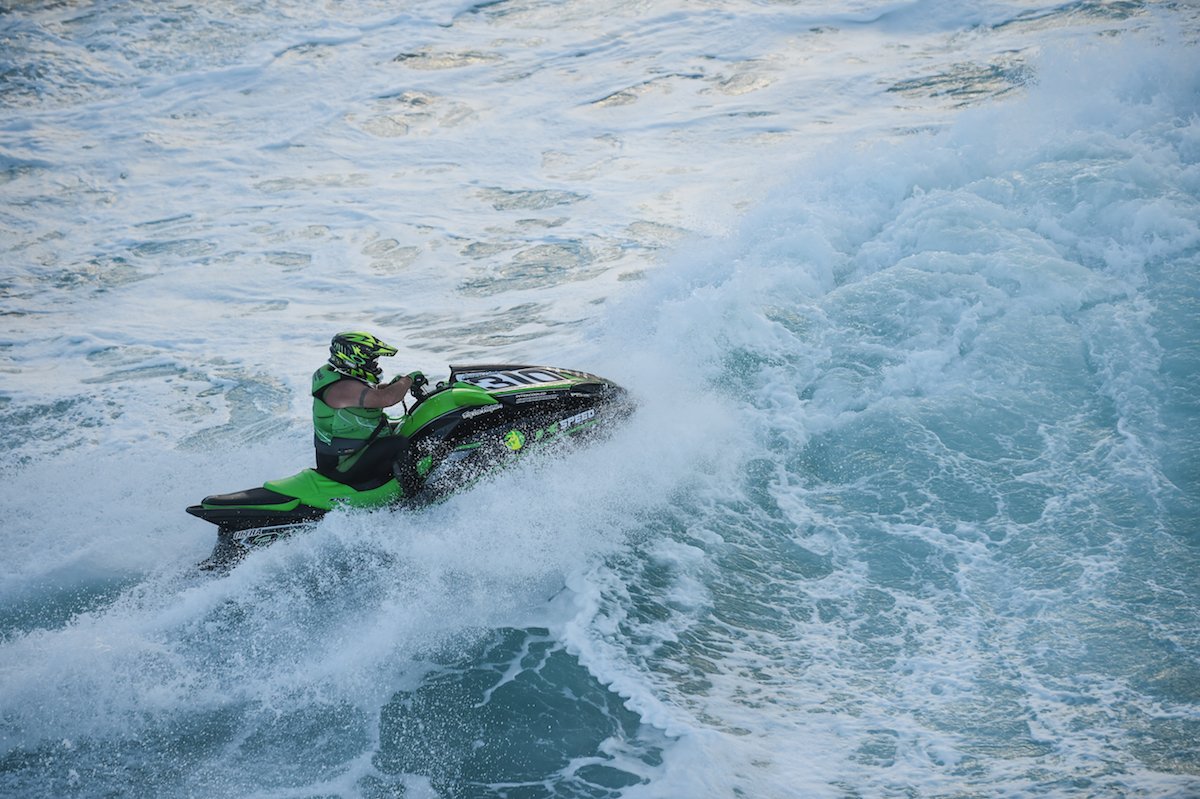
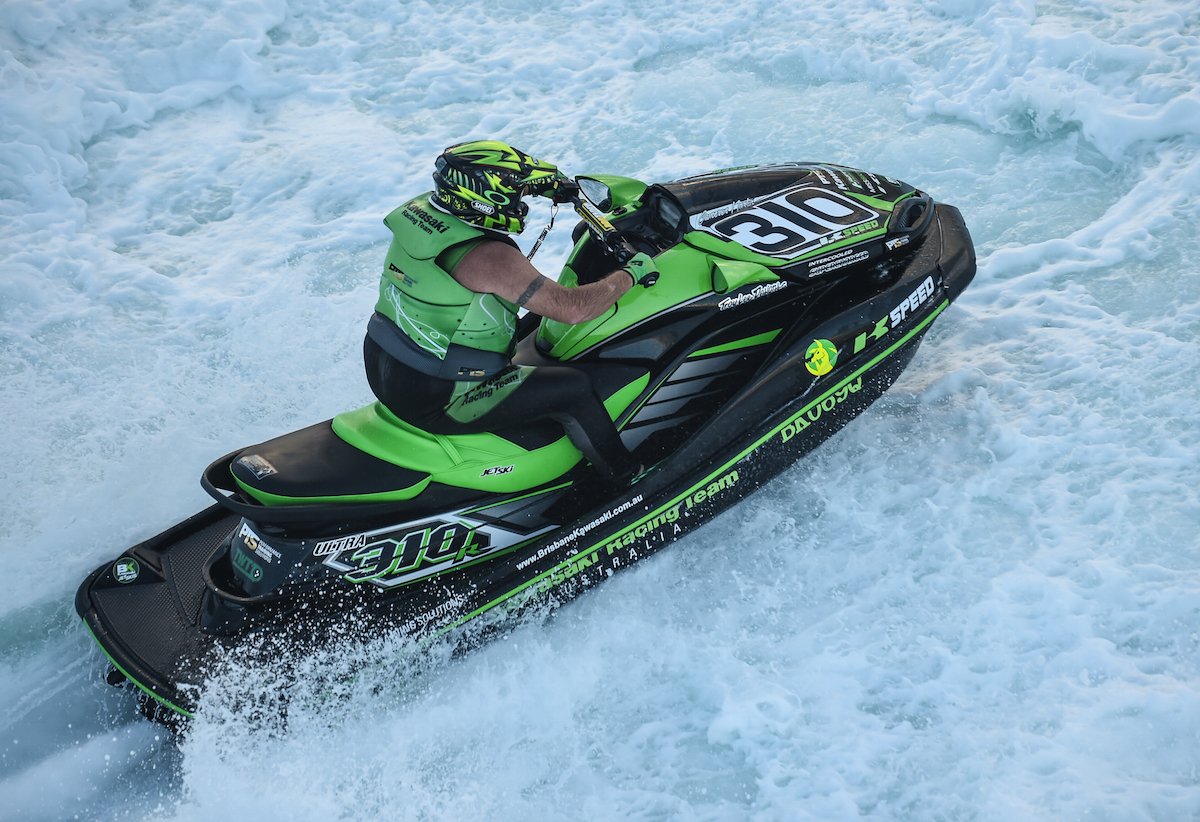
I just did a photo shoot for Christian D’Agostin and Cameron Martin for the [Brisbane] Kawasaki racing team. The boys are heading to Russia to race soon. It was a bit of a windy and wet day to shoot from a helicopter with the door off, but the skies cleared long enough to make it happen. I thought I did OK for my first Helicopter shoot.
Christian D’Agostin and Cameron Martin, both Factory Kawasaki Racing Team members for Australia for 2015, earned top honors this year during the 2015 Yamaha Australian Jetcross Tour and Australian offshore endurance series. Marking the closure of their race series, and the beginning of their international efforts, a photoshoot was scheduled to create some promotional materials for the team’s endeavor.
Christian explained, “We are ending our season here as you know; so we are launching our 2015 international offshore campaign. With the Australia factory Kawasaki team taking four Australian titles this year – and myself winning my third consecutive Australia offshore endurance championship – we are on a roll.
“With the prestige of being the factory Kawasaki team in Australia, we were happily interrupted during the photo/video shoot for our upcoming promotions (including posters for sponsors) by two American Playboy Playmates of The Year – Abby Parece (Monster Girl USA, two-time Playboy Playmate USA) and Marissa Everhart (two-time International Playboy Playmate, three-time Playboy playmate USA).
“We are very proud to have a national fuel and national finance company as major sponsors of our team moving forward, and the pics by Skip will be utilized in service stations all around Australia. As for our international plans, we’ll be racing the LB2CAT, Russia (“Russki”), Aquabike in China, and the King’s Cup
in Thailand.”