
Home Blog Page 77

Real Review: After a Year of Using a Sand Docker Anchor

0

The single most repeated piece of advice I give at The Watercraft Journal is for folks to always, always, always anchor their skis in 3-feet of water. Beaching your ski – although it looks pretty cool and all the manufacturers always do it for their photoshoots – is one of the worst things you can do to your ski.

Besides scratching the heck out of your hull – especially if its painted, like all factory Yamaha hulls are – it is the quickest way to get sand, rocks and other debris lodged into your jet pump. And if you’re on a Sea-Doo, the fastest way to get sand impregnated into your carbon seal, which can lead to catastrophic failure.

So yeah, like I said, always use an anchor. And over the years, I’ve found that the Sand Docker anchor – more than any others – has got to be my personal favorite. First, it’s 100-percent American made. I love supporting small American business, and Sand Docker is out of Jupiter, Florida.

Second, it’s not some over-complicated high-priced piece of equipment. Made from entirely out of aluminum and TIG welded together, the Sand Docker is lightweight, super strong, and impervious to rust.

Lastly, they’re incredibly easy to use. Simply pull it out of his supplied perch, hook the bungee strap to your bow hook, and stomp it into the ground. It’s literally that easy – and it’s just as easy to pull it out. No twisting or goofy procedures.

The anchor itself is less than $60 bucks, and together with a bungee dock strap is a little under $85 bucks. That’s literally less than HALF of what some of these other guys are charging – and a lot of those anchors barely even fit in your ski.

The Sand Docker is compact, lightweight, won’t beat the crap out of your storage compartment (because it comes with its own mount) and is a fraction of the cost. That, and it’s not made overseas but instead, here in America.

Save your ski. Support small business. And save a few bucks while doing it. Check out the Sand Docker anchor at www.sanddocker.com. You can thank me later.

Gallery: Looking Back Over 50 Years of JetSki Watercraft

0

The year was 1973. The average family income in the United States was just under $13,000 a year, gasoline was about $0.40 cents a gallon, and Kawasaki’s newly minted R&D Department in Southern California had developed a prototype stand-up JetSki that would change the course of history.

Based on the designs of Clayton Jacobsen II – the U.S-born former Marine, engineer, and powersports enthusiast who is universally credited as the inventor of the jet ski – Kawasaki was the first company successful in bringing the concept of a jet pump driven personal watercraft to the masses. Kawasaki began producing JetSki hulls from Sheet Molded Compound (SMC) in 1975, and they continue to produce their hulls in a similar method.

It all started with the 1973 WSAA (flat hull) and the WSAB (deep-V hull) 400cc stand-up JetSkis. These 200 pound two-stroke skis generated a lot of interest in these new “motorcycles for the water.” In 1976 Kawasaki’s manufacturing facility in Lincoln, Nebraska began full production of the JS400 stand-up. Weighing in at 244 pounds, and measuring just over 7 feet long, the JS400 featured the same two-cylinder 400cc two-stroke engine found in the WSAA/WSAB, producing a whopping 24.5 horsepower.

Kawasaki continued production of their heritage two-stroke stand-up JetSkis for nearly 40 years, ending production in 2011. Throughout the long-lived production run, Kawasaki continued to make improvements and changes to their stand-up design, culminating in the release of the Special Edition 800 SX-R JetSki.

Due to tightening environmental restrictions, Kawasaki was forced to end production of their two-stroke JetSki engines. In 2016 Kawasaki introduced the industry’s most powerful 4-stroke stand-up – the SX-R 1500, which is capable of speeds over 60 mph.

In 1986, Kawasaki was credited with introducing the first mass-produced “sit-down” personal watercraft- the Kawasaki X2. This two-passenger watercraft enjoyed a 9-year production run from 1986 to 1995. Powered by a 650cc two-cylinder two-stroke engine, the X2 weighed in at just over 275lbs and measured in at just over 7 feet long.

Along the way, Kawasaki released some strange – albeit iconic – watercraft that have gained cult-like followings. The Kawasaki Jet Mate was a small 9’ x 5’ jet pump powered boat-like vessel first released by Kawasaki in 1989. Between 1989 and 1992 only about 1,200 of Jet Mates were produced. Powered by a 52 horsepower 635cc two-cylinder engine, the 527-pound Jet Mate was controlled by a joystick- and could accommodate three riders at once.

In 1991 Kawasaki released a two-passenger side-by side watercraft known as the Kawasaki Sport Cruiser (also known as the “Sea Couch”, “Spine Crusher”, and “Super Chicken.”) Powered by the same 635cc two-stroke found in the Jet Mate and 650SX, the Super Chicken measured in at 9’ x 4’ and weighed 441 pounds. Either rider could take control of the Super Chicken via its articulating, rectangle-shaped steering wheel.

In 1994 the 750 ST hit the market as Kawasaki’s first 3-seater runabout. While the 1995 two-seater 900 ZXi was the first JetSki to utilize Kawasaki’s new three-cylinder 891cc two-stroke engine. The STX line was born in 1997 with the 1100 STX, producing 120 horsepower from its 1100cc three-cylinder two-stroke powerplant shared with the venerable 1100 ZXi.

The Ultra 150 and 130 were the first JetSkis to feature the “Ultra” marque, although they shared their deck and hull design with the ZXi line. In 2007, the naturally aspirated 160-horsepower Ultra LX and the supercharged Ultra 250x made their debut. These skis were powered by a marinized 1,498 4-cylinder DOHC supercharged and intercooled engine – derived from the Ninja ZX-14.

The first generation of the Kawasaki Ultra LX enjoyed an iconic 15-year production run from 2007 to 2022, establishing the Ultra line as a capable and reliable ski for touring and rough water riding. Over this same period the Supercharged and Intercooled line of Ultras grew from 250 to 310 horsepower. Kawasaki Ultras are known for their class-leading horsepower and their deep-V hull design, which features Sheet Molded Compound (SMC) and gelcoat.

In 2011, the Ultra 300 was born as the first personal watercraft to utilize an Eaton Twin Vortices Series roots-type supercharger. Continual upgrades to the Ultra’s 1,498cc engine and cooling system resulted in the release of the Ultra 310 in 2014.  For 2022, Kawasaki released the second generation of the Ultra 310 JetSki, modernizing the platform while keeping the iconic hull almost entirely unchanged.

While the personal watercraft industry has undergone numerous shifts and brands have come and gone the past 50 years, Kawasaki has continued to produce JetSkis that provide generation after generation with “Good Times on the Water.” From their first stand-ups to their supercharged runabouts – Kawasaki has obviously been doing something right for the past 50 years.

Video: Installing a Kspeed Intake Grate on All 300/310 Kawasaki Ultras

0

The thrust that propels your personal watercraft forward is produced rather simply: an inlet at the bottom of your watercraft’s hull ingests water, processing and compressing this stream into thousands of pounds of positive thrust that shoots out as a stream through the nozzle from the back of your watercraft.

At the inlet (or “intake”) is a device that both helps prevent the ingestion of debris as well as provide both lateral traction and suction to the water’s surface. This device is known as an intake grate, and comes in a variety of designs. The science behind it is quite fascinating and you can read more about that in an article we did previously here.

To some, the intake grate may look like an obstruction but not so! Rather, intake grate design can significantly improve pump efficiency, water ingestion and traction – radically improving performance, handling and predictability. For those looking to modifying their PWC, this relatively inexpensive part offers the biggest bang for the buck.

Kawasaki watercraft specialists, Kspeed out of Brisbane, Australia developed their own “Top Loader” intake grate after testing every single grate option on the market. Seven years of research and development resulted in what Kspeed claims as “the fastest top loader intake grate on the market”, the Kspeed Kawasaki Ultra 300/310 Intake Grate.

After the Kspeed team was confident they had what they felt was the best intake grate on the market, they tested it for an additional 18 months. Not only did they test their grates out with their own machines, but worked closely with offshore racers, closed course racers and regular leisure riders.

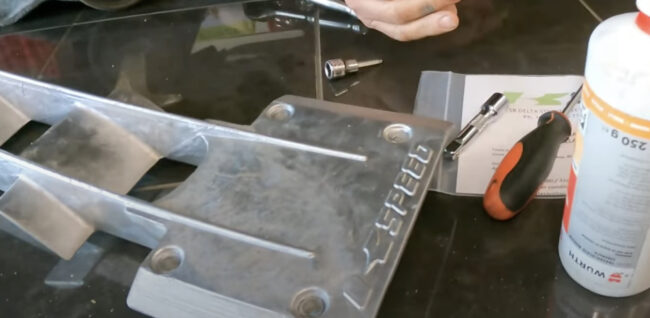
The Kspeed intake grate has much deeper runners that carry all the way through to the back of the grate. This helps give it added traction. An extended chip with a much more aggressive ramp allows for a better “bite”. Kspeed removed the middle runner allowing much more water to enter the pump. Yet, the biggest difference between the Kspeed grate and the stock grate is with the blade, giving it a much more aggressive bite.

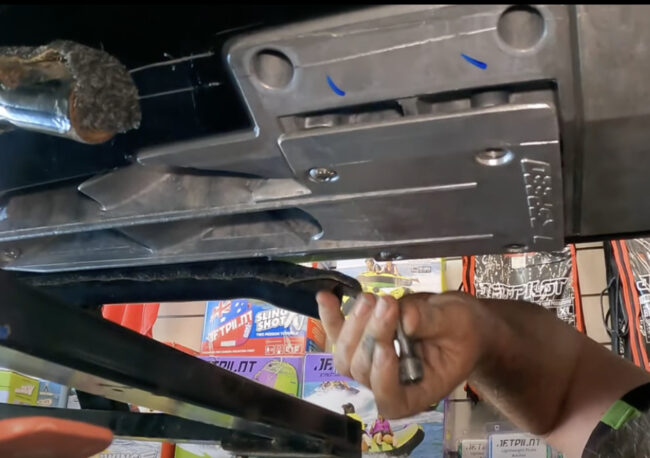
The Kspeed Ultra 300/310 Intake Grate will fit on all 300 and 310 models. Installation is as easy as the following steps: First, loosen and remove the 6 5mm Allen bolts from the factory grate and remove it. Next, position the Kspeed intake grate in it’s place. You will notice that it feels like a tighter fit. Kspeed does test each individual intake grate for fitting before shipping to ensure correct fitment.

Then loosely install the front 5mm Allen bolts that Kspeed supplies with the kit in the front of the grate, not forgetting to add a dab of blue Loctite. The stock washers are not needed, but you can use them if you wish. Next, loosely install the rear 4mm Allen bolts supplied with the kit, again applying a dab of blue Locktite. Only once all of the bolts are in place and everything is lined up, tighten the bolts. And that’s it! Enjoy your newfound hookup!

One Week Left to Register for IJSBA Best of The West Series

0

In a recent Facebook post made to several groups, RPM Enterprises owner and promoter, Ross Wallach wrote, “One week left! If you haven’t yet registered please do to avoid late fee’s. No money is required to be preregistered, just the form.” For those looking to compete in this year’s western racing series, the clock is ticking to get the digital form filled out to be able to enter to race. It’s really that simple guys.

Here’s the original post:
Race day is just around the corner! This is a friendly reminder that pre-registration for Rounds 3 & 4 at Blue Water Casino, Parker, AZ, closes on Sunday, 04.09.23.

Below is the link to register for the event.
https://form.jotform.com/230704172840146

Rounds 3 & 4 – Blue Water – Parker AZ – Preregistration
All entries received thereafter will be charged a $25/class late fee. No late fees will be charged if the entry form is received prior to April 9th if paying on-site!

This is an IJSBA-sanctioned event and a World Finals qualifier. IJSBA memberships can be purchased on-site (preferred method to maximize license-12 mos. from date of purchase).

Host Hotel: The Blue Water Resort & Casino, 11300 Resort Road, Parker, AZ 85344
Phone: 888-243-3360 or www.bluewaterfun.com

There is no “racer rate” offered by the Resort; however, if you have AAA or AARP, you can use it when booking to receive a discount. 1st come, 1st served.

CAMPING: Self Contained Camping is available on-site in the pit area – No Charge
NO MOTORHOMES ON THE BEACH SIDE OF THE PITS. Motorhomes can park in the lot adjacent to the amphitheater, 1st come, 1st serve. Motorhomes DO NOT displace pit stalls.

Full hookups- Blue Water RV Park (adjacent to the pits, less than 2 minute walk from the pits)
(928) 669-2433 – 1001 Blue Water Drive. 1st come, 1st serve; spaces are limited.
Please let me know if you have any questions.

Thank you!!
Dawn Carey
Best Of The West PWC Racing Series
916.370.5883 – Cell
[email protected]

Video: Take Your Kawasaki Ultra to the Next Level with Unlimited PWC

0

The Watercraft Journal had the opportunity to partner with Unlimted PWC and JD’s WaterWorld to equip a new Kawasaki Ultra 310 LX-S with a literal king’s ransom of custom components from Unlimited’s massive catalog for the new Kawasaki Ultra 160 and 310 JetSkis!

The 2-part series will start with the “Take Your Kawasaki Ultra 160/310 to the Next Level with Unlimited PWC” segment, which will provide a real-life look at Unlimited bestselling color-matched billet aluminum components including their billet cam cover, flush ports, adapter, ball drain valves, type VI exhaust tip, oil cap, and bypass nozzle. This segment will also feature Unlimited’s premium green/black brick-pattern laser-cut traction mats compatible with the new Ultra Deck.

The second video in the series, “Take Your Kawasaki Ultra 160/310’s Handling to the Next Level with Unlimited PWC,” will feature Unlimited’s green full billet X-Sponsons, “Low-Down” fixed handlebar riser complete with billet middle handlebars, an Unlimited handlebar pad, logo lock grips with custom color-matched billet lock rings, and Type II billet Grip Ends. Unlimited has also provided us with a custom immobilizer key relocation bracket to accommodate their handlebar package.

Unlimited PWC provides enthusiasts with everything they need to take their Kawasaki Ultra to the next level, and we will be doing exactly that throughout this series! We tailored our selection of color-matched billet aluminum components to complement the Lime Green and Ebony color scheme of our 2022 Ultra 310 LX-S, but all of these components are available in multiple attractive colors to fit a variety of palates.

View the full unboxing video below and stay tuned as we take the Kawasaki Ultra 310 LX-S to the next level – Unlimited PWC style! A full list complete with product hyperlinks is available above. Visit Unlimited PWC’s website to check out these products, as well as Unlimited’s full catalog of parts and components for Kawasaki, Yamaha, and Sea-Doo personal watercraft.

Alibaba Offers $2,000 Inflatable Electric Jet Ski

0

When we thought the electric jet ski market couldn’t get it weirder, enter China and Alibaba. A $2,000 inflatable jet ski was found in the Alibaba listings and made its way into their “Awesomely Weird Alibaba Electric Vehicle of the Week” column. The ski looks more like an inflatable raft with a steering wheel. It doesn’t come with a motor or a battery so we aren’t sure how the steering system will work. It’s dirt cheap, so it might be worth it to add a little motor and battery or take it to a local shop and have a mechanic put it together for you.

Another nice thing about the inflatable ski is that it’s light and easy to transport. It can be deflated and stowed in the back of an SUV or leave it inflated and toss it in a pickup. There’s more than once catch to this great find at $2,025. You’re dealing with Alibaba and that means thousands of dollars in shipping costs, customs import charges, taxes, broker fees, and other fees. We do not recommend buying this thing due all the complications and stress that ensue when shopping on Alibaba. Sometimes, orders do ship up months later and arrive with another set of problems. Wild times!

Gallery: Kspeed Ultra Racing Sponsons Installation

0

Sponsons provide added traction in the water, allowing for superior control of the vessel and help eliminate your craft from breaking free in a turn or unexpectedly lose traction in other-than-flat conditions. When turning at higher speeds, a ski will lean in, lowering the sponson deeper into the water, providing greater “bite” the more you lean. This gives you the control you need to make the appropriate turn.

Many find the stock sponsons to be sub-par. This may be due to the desire by manufacturers to offer a less aggressive, more mild-performing feel to the average buyer. Thankfully, there are many aftermarket companies that have created a better sponson. Kspeed, one such innovator in Kawasaki aftermarket parts, has created the Kspeed Ultra Racing Spnosons after dedicating an impressive four years in research and development.

These sponsons are manufactured in-house from milled billet alloy – a process that takes around 10 hours. They are fully adjustable to suit all water conditions and rider skill levels with 48 usable settings. No one else has that many settings. So whether you enjoy zipping around on your local river, racing in a high speed closed course circuit, or anything in between, these will have a setting that is perfect for you.

Best of all, they’re incredibly easy to install and is done in just a few short steps. First, remove the factory sponsons with a 12mm socket. Next, clean the surface of any silicone or dirt that may have collected under the factory one-piece sponson. Then place the Kspeed backing plate to the hull using the bolts and washers provided by Kspeed (6mm Allen key) using a small dab of blue Loctite on each of the threads.

Apply a bead of silicone to the plate’s leading edge, so that as you tighten the bolts, it’ll seal the backing plate to the JetSki’s surface. It’s always a good idea that when tightening the bolts down you “walk the bolts in.” In other words, start them all by hand and then from the front to back, turn each bolt one turn. Then do the same from the back to the front, making sure these are tight. This tightens the backing plate evenly to the surface.

Finally, decide what position you would like to try the new sponsons and tighten the supplied 4mm Allen bolts and washers a dab of blue Loctite. Thankfully, with so many different positions to choose from, Kspeed provides a graphic to help you fine tune your blade setting (see in gallery below video). Don’t be afraid to experiment with different settings; you might be surprised what best fits your riding style. And as a reminder, always check the bolts after the first two rides and then after a month or two. You will need to make sure the bolts are remaining tight.

Strange New Electric PWC are Hitting the Water

0

With all the panic and money to be made surrounding climate, change more developers are turning toward zero emissions vehicles, and that includes PWC. Electric Hydrofoils are all the rage now and some odd designs are coming to fruition.

Hydrofoils are lighter than the typical battery-operated jet ski, thus the gravitation toward them. They offer more ride time, too. A jet ski designed with hydrofoils has a lot let less drag due the foils lifting the ski above the waterline. It also uses less energy and is more efficient than a standard battery-operated jet ski.

Pelagion’s battery powered HydroBlade uses a hydrofoil, which not only minimizes drag, but it also allows the electric drivetime to run longer and at higher speeds. Mark Zuckerberg helped the HydroBlade gain notoriety when he was filmed riding one of Pelagion’s prototype models.

The Fliteboard eFoil is another interesting contraption that recently made the news again. It is a stubby surfboard powered by a titanium encased battery that connects to the Dual Drive propulsion system. With the Dual Propulsion system, you can switch from jet propulsion to a propeller without the use of tools.

Another interesting watercraft is the prototype Flyway electric water scooter, which looks a lot like the original stand-up jet skis. The Flyway has a large boom attached to the bottom of the hull. The boom is connected to the hydrofoil and underwater propulsion system. The scooter does look fun to ride, though we prefer a jet ski with a combustion engine.

However, electric watercraft are quiet and less disruptive than gas powered vehicles and with the ride time getting better, their popularity is increasing. Moreover, with the push toward electric vehicles and certain jurisdictions prohibiting combustion engines on the waterways, the push is on to ride electric PWC.

BRP Sweeps at the 2023 Discover Boating Miami International Boat Show

0

In a recent press release from BRP, we learned the group received four awards at the Miami International Boat Show. The all-new Rotax S outboard engine picked up the Marine Power Innovation Award and the National Marine Manufacturers Association (NMMA) Innovation Award in the outboard engines category. The Sea-Doo Explorer Pro 170 keeps on winning. It was chosen for an NMMA Innovation Award in the personal watercraft category and for the 21st year in a row, Manitou received another Customer Satisfaction Index Award from the NMMA.

“We are honored to receive so many prestigious recognitions from these distinguished organizations. Innovation and ground-breaking design are part of BRP’s DNA and when this is applied to our marine products, they allow us to break away from the sea of sameness to enhance the customer experience. Achieving this is only made possible due to the many talented teams at BRP who worked towards the success of Rotax S and the Sea-Doo Explorer Pro 170,” said James Heintz, Director of Global Product Strategy, Sea-Doo & Marine Group at BRP.

Check out the complete press release below:
Valcourt, Quebec, February 20, 2023 – BRP Inc. (TSX:DOO; NASDAQ:DOOO) celebrates numerous boating industry awards during the 2023 Discover Boating Miami International Boat Show™. Taking center stage was the all-new Rotax S outboard engine receiving two awards: the Marine Power Innovation Awards (MPI) and the National Marine Manufacturers Association (NMMA) Innovation Award in the outboard engines category. The Sea-Doo Explorer Pro 170 also took home an NMMA Innovation Award in the personal watercraft category. Finally, for the 21st consecutive year, Manitou was recognized for exceptional customer satisfaction and received another Customer Satisfaction Index (CSI) Award from the NMMA.

“We are honored to receive so many prestigious recognitions from these distinguished organizations. Innovation and ground-breaking design is part of BRP’s DNA and when this is applied to our marine products they allow us to break away from the sea of sameness to enhance the customer experience. Achieving this is only made possible due to the many talented teams at BRP who worked towards the success of Rotax S and the Sea-Doo Explorer Pro 170,” said James Heintz, Director of Global Product Strategy, Sea-Doo & Marine Group at BRP.

ROTAX S: Stealthy, efficient and hassle-free
Available in 115 and 150 HP configurations on select Alumacraft, Manitou and Quintrex models, the Rotax S delivers all the same benefits of a traditional outboard engine with three distinct advantages over them: it’s stealthy, efficient, and hassle-free. With no obtrusive outboard engine block, cables, fuel lines or exposed propeller hanging off the transom, families can enjoy peace of mind while enjoying up to 20% additional space at the stern and a safe transition to the water. In addition, the Rotax S with Stealth Technology is smooth and quiet, at any speed.

“The BRP Rotax S creates additional deck space traditionally taken up by one or more outboards by orienting the engine block horizontally and tucking a portion of it under the surface. This allows the addition of an expansive aft deck while still allowing the engine to be tilted completely out of the water,” said judge Gary Reich.

The advanced direct-injection technology allows for up to 20% improved fuel efficiency compared to traditional outboard engines. With a 12% reduction in reportable emissions, and close to 98% reduction in carbon monoxide at idle compared to traditional outboard engines, Rotax S is also the cleanest combustion engine in its class.

Boaters will enjoy very simple and convenient routine maintenance and exceptional total cost of ownership, with inspections only needed annually, and no scheduled maintenance required for the first 5 years or 500 hours. The Rotax S requires no oil changes, and the one-touch winterization helps extend the boating season and avoid pricey service bills.

Sea-Doo Explorer Pro 170: New waters, with more gear, and new possibilities
The Sea-Doo Explorer Pro 170 is the most adventure ready, out-of-the-box watercraft designed and engineered to take riders further in more comfort and style, to the point where they can leave civilization for days on end. The 2023 Explorer Pro 170 watercraft is ready to navigate new waters with the peace-of-mind knowing it’s fully equipped with uncharted water features and technologies. Adventure seekers can ride as a multi-day, self contained exploration package with its massive storage capabilities, fuel efficient load hauling power, and unmatched stability. The Sea-Doo Explorer Pro 170 adds comfort features new to the personal watercraft (PWC) world to ensure riders can tackle essentially every kind of adventure and conditions Mother Nature sends their way.

“The Sea-Doo Explorer Pro 170 is suitable for long haul adventures, it opens a whole new market and is likely to draw new boaters,” said judge Alfred Boer.

Manitou: Customer satisfaction above all else
With superior styling and on-board innovations, the new generation of Manitou was designed to rise above in every way, and elevate the on-water experience to a whole new level. And the commitment to excellence doesn’t end with purposeful design. Manitou once again is a recipient of a Customer Satisfaction Index (CSI) Award from NMMA for exceptional customer service.

Gallery: Feeding Your Yamaha SVHO Fresh Outside Air For Pennies

0

Have you ever wondered how you can improve how your SVHO-powered Yamaha performs for nearly free? Internal combustion engines thrive on cool, dense air to give them the densest “intake charge” possible – meaning a stable, efficient explosion. Ingesting hot air delivers less horsepower, inconsistent fuel combustion and early detonation. So helping feed your SVHO the most cool, dense air seems like a no-brainer, right?

It turns out you can do that surprisingly easy and nearly completely free. To start off, some basic hand tools are required: Phillips screwdriver (P1), and/or a hook punch (depending on whether you have a GP or FZ), two old towels, a container for screws, a putty knife, a thin razor knife, wire cutters, zip ties (24-inch were used here), a tape measure, a portable light source, grease, and WD-40.

The prep-work for this project is pretty simple: use two towels to cover the front bond line area in order to prevent scratching. A table alongside the trailer is also handy and saves your back. The front storage area will need to be cleared out of items. As seen in the picture, the starting point for the SVHO air intake system is near the handlebars.
Depending on what model SVHO you have (FZ, GP or FX) the plastic divider shroud will need to be removed. The FZ platform has simple plastic push rivets. I used a hook dowel to depress the center and a putty knife to remove the base. My ’21 GP1800R required a P1 Phillips to turn the center portion. The FZ has a single piece divider whereas the GP has a split two-piece divider. Place the screws and bases in the container so that they don’t fall into the bottom of the ski. Once loose, remove and set aside the storage divider.

Now that you have access to the bow area of the ski, inspect all of your wires, fuel tank filler, and the steering head unit and cable. Even after a few years all steering cables under here will rust in a saltwater environment. This area does not have ease of cleaning when you flush out a ski. I used some good grease and WD-40 to thoroughly lube the cable. Start with it all the way to the left to expose the largest portion of the steering cable. You will be surprised how much better it moves after this step.

Here you’ll see that the starboard side air inlet duct barely has enough room between it and the hull to slide 3 fingers through. Cut the clear zip tie that’s near the end of the hose depending on how aggressive you want to get with the final placement. I scrunched down a good portion of the tube and made a near 90-degree bend and used the strap for the fuel tank as my anchoring point. Using the razor knife, I made two slits about 1/2-inch long on each side of the inlet tube to pass the 24-inch zip tie through.

The next one is the port side duct. This one I cut down to my desired length. My personal goal was to have each duct empty around 8 inches to the bow in front of my air element. This should allow any water that is passing through these tubes to empty and fall well before the intake. The less hot air ingested the better, as the air pulled from a heated engine bay will offer less performance.

I found that the GP1800R had better mounting points over the FZ platform. I ended up cutting both of the tubes on the FZ. After you are pleased with the mounting points of the tubes, the last step is to replace the storage divider along with all push clips. For the GP’s two-piece divider, I placed the starboard side in first and then the port side piece. A good tip is to assemble it outside the ski a few times so you are not cussing and struggling with it inside the compartment.

This mod is not gonna set your ski apart from the pack, but it’s something that you can do in your garage with some time and simple tools at home. If you really want to take it to the extreme, I have seen some cut out the front hood of a GP to allow direct air induction; although potentially effective, the amount of salt water that will enter the hull is a big deterrent. I have also seen exit ventilation holes drilled into the rear deck. I really don’t want to drill holes in my ski either.

By simply trimming these air inlet tubes and redirecting them towards the air intake (whether it’s a stock air box or aftermarket cold air element) you’ll be prioritizing the flow of cooler outside air directly towards your engine instead of just trying to cool the entire engine compartment. It’s a small step that likely won’t deliver in any measurable top end speed gains but will – over time – result in better engine efficiency and longevity.