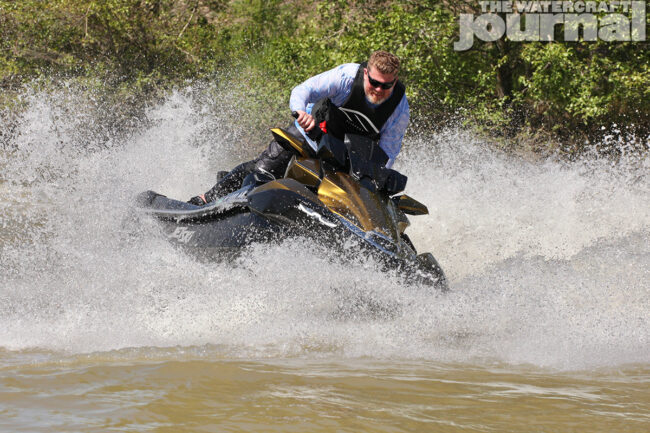
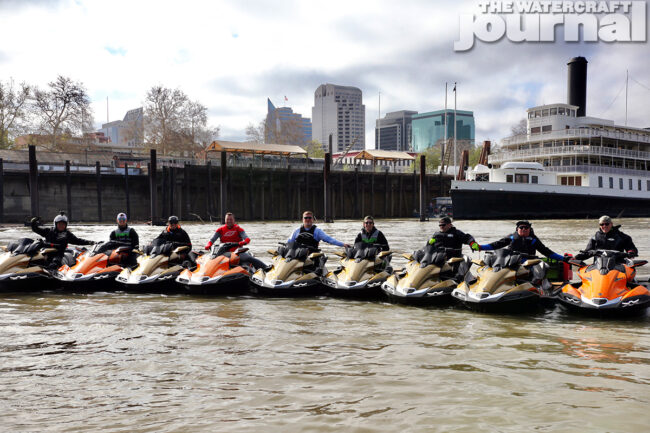
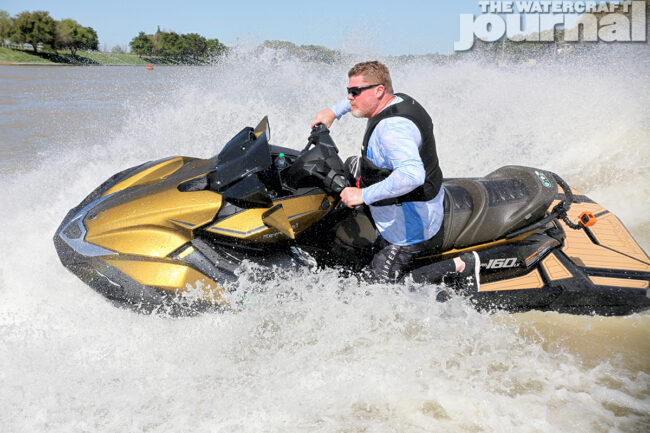
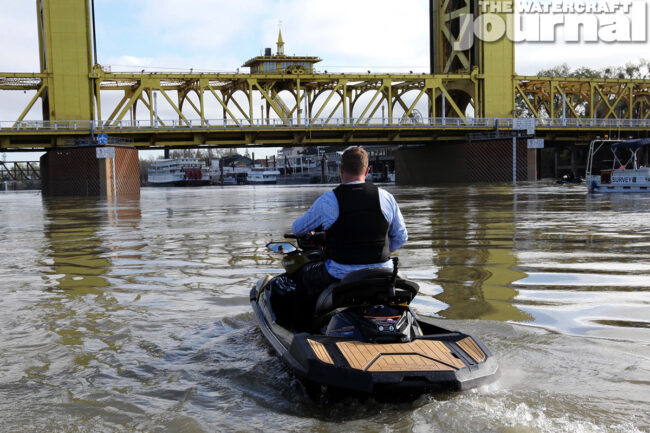
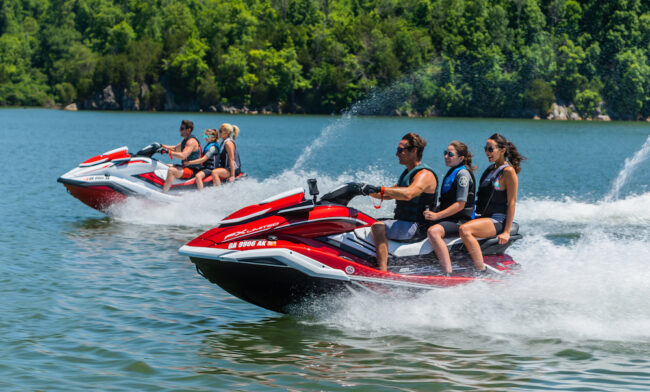
Yamaha WaveRunners and Discover Boating have some great tips on offer about how to be a cleaner boater and PWC rider. We all want to protect our waterways so they’re not only clean the next time we want to take a ride but also available to us. Waterways are often taken away from jet skiers due the actions of a few who don’t respect the rules and laws. Below are some ways we can all be better stewards of those nice places we like to ride and enjoy.
Always refuel on land to ensure you don’t spill fuel or oil in the water. Try to avoid the shallows so as not to suck up plants, sand, or trash into your pump. If you are riding in shallow water, maintain an idle speed so as not to disturb wildlife. Moreover, if there are swimmers nearshore, avoid riding near them and whatever you do, don’t harass the wildlife in or out of the water. Keep a careful eye out for manatees when in Florida. They are slow and often fall prey to injuries by careless boaters.
Always follow No Wake Zone signage. When you pull your watercraft out of the water, make sure to give it a good wash so you don’t carry any non-native species of plants or animals to your next destination. When you are docking, try to avoid areas where birds or other animals are hanging out on shore. Do your best to find an open area when beaching your ski for lunch or taking a break. Be mindful of the fragile ecosystems along the shore.
Following these simple rules will keep the waterways open to all of us while doing our part to keep it clean.
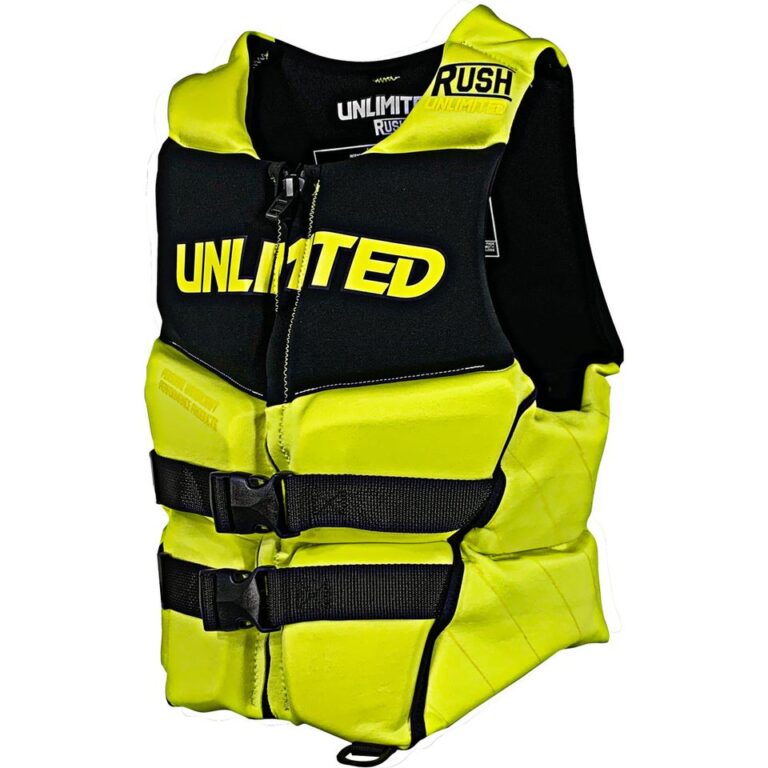
Whether you ride for fun or a professional racer, Unlimited PWC has life jackets for all your needs. The top of the line is the Rush Eclat Neo Vest part of the Unlimited Rush series of products designed by professional watercraft riders. The jacket is USCG certified and made of water repellent neoprene to help keep you comfortable. It also has a lumbar pad to support your lower back. The jacket comes with a whistle and has a D-ring for attaching a kill switch. The vest comes in black, white, and yellow and has a price of $152.
The Neo Life Jacket and Rush Neo Life Jacket’s rate up there with the Rush Eclat Vest when it comes to high-end products. The Rush Neo Life Jacket is another design in collaboration with professional riders.
Nylon S/E Life Jacket, which is a side entry vest, making it easier to put on and take off. It also certified by the USCG and comes with an inside pocket for stowing your license or other small item.
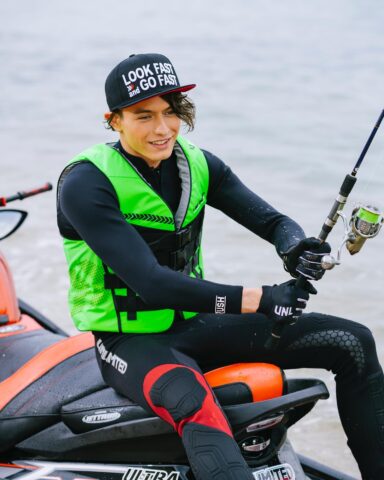
Unlimited PWC has a nice line of nylon life jackets for those who like to spend a long time on the water doing other marine activities like boating, fishing, and wakeboarding.
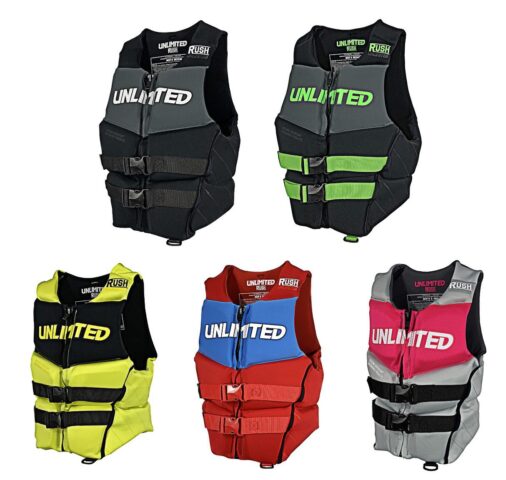
The vests are USCG certified and come with a whistle. They are made for movement, so you don’t feel confined and can move freely. The Comfort Nylon Vest comes in yellow, black, pink, or white. It is priced at $100.
The Comfort Nylon Jacket is similar in style and a little cheaper at $89. Bringing up the rear is the Nylon Life Jacket, which has a loose fit so you can really move around. It is priced to move at $80. Check out the life jackets at the Unlimited PWC website. He always has cool stuff in stock!
It’s that time of year again when Yamaha holds its Perfect Choice Sales Event on new WaveRunners for model years 2018-2023. Grab a new WaveRunner with 5.99% financing for 36 months with your good credit. EX Series Models are not eligible for this offer. If you want to push your payments further out, take the 60months offer at 6.99%.
EX Series Models are excluded from this offer as well. For smaller payments and more time to pay off your new WaveRunner, the 8.99% APR may be right for you. If you have your eyes on an EX Series Model, you can purchase one with this deal. If two of you are looking to buy a couple of new Yamaha WaveRunners, the 7.49% APR for 96 months is the way to go.
You can even estimate your payment with the easy-to-use form on the website. Select the WaveRunner of your choice using the dropdown menu, fill in the numbers you want, and hit the calculate button. When you’ve reached the calculations you like, head over to the Yamaha Card Pre-Qualification Form, add your information, and hit sign and submit. Yamaha has made it easy for to take care of things before even walking into the dealership.
Check out the new lineup on the website and build your new WaveRunner the way you want with the Build and Price Tool.nPower your passion with the number one brand on the water and purchase a new Yamaha WaveRunner! Get in on the Perfect Choice Sales Event before it ends on May 31st.
It’s been what? At least a year since the folks at Strapinno reached out to The Watercraft Journal to have us test out a pair of their trailer-mounted ratchet straps. With a little bit of elbow grease we got those installed and frankly, have used them without fail for the year. Obviously, salt water can play hell even on stainless steel, so we’re pretty good on keeping them well-oiled. Anyways…
Around the same time that we were drilling into our Magic Tilt aluminum trailer, Strapinno introduced its Jetski Trailer Retractable Ratchet Straps to the market ($52.80 each). Almost immediately, Strapinno asked that I give them a “go” but frankly, we really had no idea what to do with them. The ratchets we installed were working flawlessly and the last thing we thought we needed was another set of loose ratchet straps!
So as we hem and hawed over them, Strapinno had a few outlets crank out some pretty basic “live unboxing” videos. After the fifth or sixth of these, we said “That’s it!” and decided to put Strapinno’s claim of “the world’s strongest ratchet straps” with an ultimate durability test! It’s not the sort of thing we’d expect anyone in their right mind to do, but we thought it’d make for a fun visual.
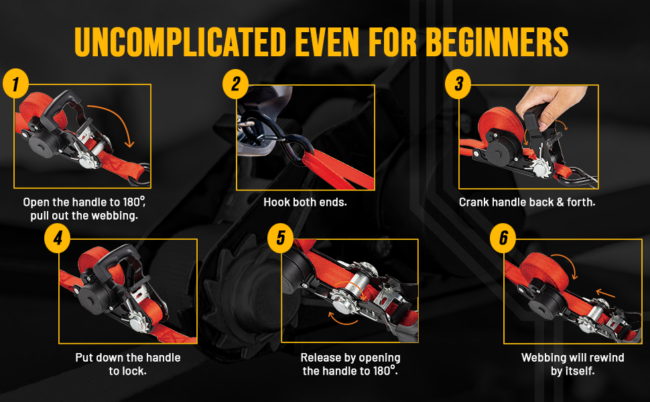
But before we get to the video below, it’s important to understand how Strapinno can make such a claim. First, the Jetski Trailer Retractable Ratchet Straps are made using a laser-cut, powder coated alloy steel housing with a 15-foot by 1-inch Polyester strap; three rubberized hooks with strung keepers, and a pliable grip for easy ratcheting. The star gear, keepers and hardware are all polished stainless.
Unique to these is the auto retracting “rewind mechanism” that coils the excess length before tightening down your load. No more excess length of line flapping in the wind or dragging on the ground! Per Strapinno’s website, these straps carry a breaking strength of 3,000 lbs. and a working load limit of 1,000 lbs. For today’s test, we went well beyond that.
Perched on an 8º grade while on wet grass, we dangled our 2006 Jeep Wrangler Rubicon 4×4 (3,438 lbs.) from the back of our 2005 Dodge Ram 1500’s trailer hitch by one single Strapinno strap. We then cinched up a second strap until we could pull the Jeep up the hill half an inch at a time, alternating tension between the two straps. We also fully released one strap, shocking the single strap with the Jeep’s full weight. And all without failure.
While not used as advertised, we proved that the Strapinno Jetski Trailer Retractable Ratchet Straps truly are the toughest ratchet straps available today. We’ve snapped lesser straps’ mechanisms with far, far less effort and yet, these managed to pull a 4×4 up a wet, muddy grade inches at a time. If they can do this, they can certainly keep your jet ski tethered to a trailer without a concern in the world.
Awake is back on the scene with pro-rider Flo Garbaccio landing a backflip on the Awake VINGA S eFoil. Garbaccio pulled off the first ever backflip on an eFoil. The Awake crew were in Miami filming a movie featuring extreme athletes pushing the limits on the Awake S series eFoil’s. Garbaccio was warming up on the VINGA S eFoil, equipped with FLUID 1000 wings when he spotted a boat wake that he liked. He cranked the throttle, hit the wake, launched, and fully committed to landing a back flip. Garbaccio pulled it off and rode out of it cleanly.
Garbaccio describes the flip- “I took slightly too much speed before the jump, so I was late sending the rotation, so I tried to spin fast. When I felt the board passing over my head with lots of motion, I kept my body fully compressed until I could see the landing point.”
The VINGA S is a compact eFoil, which provides the rider with a lot of freedom to go big. Even though Garbaccio had too much speed on take-off, the addition of the high-aspect wings made for a smooth and controlled landing. Pulling off a backflip and landing it is a big deal when it comes to extreme sports.
Here’s what you need to get it done on an Awake VINGA S. The board is a stout thin 4’6” carbon composite hull with an aluminum mast and Awake’s powerful linear jet propulsion system.
The unit is outfitted with Awake FLUID 1000 Wings, which were designed for big tricks with their low drag. The craft has step in bindings and a lightweight Standard Range Flex Battery to help you land those big airs!
Check out the Awake website for their complete lineup of eFoils and high-performance electric surfboards.
Chris Mangum owns Wrightsville Beach Jet Ski Rentals and has been in business almost 25 years. He operates his jet ski rental company at the public boat ramp under the bridge that leads to Wrightsville Beach. In true island fashion, The Town of Wrightsville Beach has threatened him with jail time, citations, and lawsuits. Mangum has had enough and is taking the town of Wrightsville Beach to task.
The harassment began in 2015 when the town came after him for using the public boat ramp to launch his jet skis. They told him he was in violation of the Unified Development Ordinance, and that he was not operating within their zoning regulations. The public boat ramps are owned by the Wildlife Commission and Wrightsville Beach has no jurisdiction. The town continued to hassle Mangum and took him to court over violating the ordinance. They convinced a judge to sign off on a consent order stating that he could not use the ramps to launch his jet skis.
Magnum still uses the ramps and worries about being in contempt of court. He says he must make a living and will do so regardless of how Wrightsville Beach feels about jet skis. He believes he has a right to use the public boat ramps and will not back down. Mangum is confident that he will come out on top in the end and the court will rule in his favor. We hope he wins as well.
The town has come after us surfers for decades, so we weren’t surprised when they targeted Mangum. They want our money but only on their terms and as long we aren’t having fun in their backyard. “It’s absolutely no fun to go to work every single day, during the summer, knowing that you go to jail the following day. That is very stressful, is time consuming,” Mangum said.
For more on this story, check out this piece on WECT.
BRP recently announced that world renowned sports commentator, actor, and philanthropist Selema Masekela has taken part in a four-part series with BRP’s Uncharted Society. Masekela will take on the snow, water, road, and land during his adventures with the Uncharted Society.
“We aim to capture these epic experiences Selema will embark on to demonstrate not only the thrill of adventure, but the broader pleasure of getting outdoors and experiencing nature enabled by our products,” said Simon Cazelais, Vice-President, Global Brand Strategy and Innovation, Powersports Group Lead.
“Selema Masekela was a natural fit for us because of his personality and experience in the sports industry, but also because we know he can inspire and unlock the adventurer mindset of many people to experience powersports.”
Check out the complete press release below: Uncharted Society, BRP’s global network of certified outfitters that offer curated powersports experiences, is excited to announce that Selema Masekela, world renown sports commentator, actor, and philanthropist, will experience an ultimate series of adventures on BRP’s playgrounds (snow, water, road, and land) across four locations. Selema’s journey, which is intended to showcase the variety of experiences Uncharted Society has to offer along with BRP’s incredible lineup of powersports products, will be filmed and available to the public through a miniseries of four episodes on Outside starting mid-March 2023 (see all release dates below).
“We aim to capture these epic experiences Selema will embark on to demonstrate not only the thrill of adventure, but the broader pleasure of getting outdoors and experiencing nature enabled by our products,” said Simon Cazelais, Vice-President, Global Brand Strategy and Innovation, Powersports Group Lead. “Selema Masekela was a natural fit for us because of his personality and experience in the sports industry, but also because we know he can inspire and unlock the adventurer mindset of many people to experience powersports.”
Selema will meet up with long-time friends along the way, and together they will experience Uncharted Society’s adventures and the thrill of riding BRP products in the great outdoors. The miniseries will then immerse the audience in the inspirational world of outdoor adventure with the hope to inspire and get them outdoors as well. The four locations are:
SNOW: the ultimate all-inclusive winter adventure in the Monashee Mountains, Sicamous, British Columbia with Carl Kuster Mountain Park
WATER: a premium tour of the Florida coastline, riding alongside local wildlife in Fort Pierce, Florida with Salty’s Water Sports
ROAD: the best of Las Vegas, Nevada, on a three-wheeled vehicle guided tour through the desert with Limitless Motoring
LAND: an adventure through Utah’s world-class backcountry to Zion National Park with ATV Jeep Tours
“I love what BRP has created with Uncharted Society,” declared Selema. “Having spent most of my career ingrained in all things action sports, I can’t wait to discover BRP’s playgrounds with new and old friends, connect with them through a unique adventure, and share my experience to welcome more people to powersports.”
Everyone can follow Selema’s adventures through Uncharted Society’s social media channels on Instagram and Facebook. To discover more Uncharted Society’s adventures, visit their website.
Release dates on Outside are:
March 13, 2023: Ski-Doo episode
March 20, 2023: Can-Am three-wheel episode
March 27, 2023: Can-Am Off-Road episode
April 3rd, 2023: Sea-Doo episode
About Uncharted Society Uncharted Society offers anyone with a mindset for adventure a curated choice of transformative powersports experiences. Adventurers will be set up with the most expert adventure outfitters around, pushing them outside their comfort zone so they discover more about the great outdoors, and themselves. Uncharted Society only works with operators who have specialist knowledge of BRP’s powersports vehicles and their terrains – land, road, sea and snow. From curated week-long trips to multi-hour adrenaline-fueled experiences, adventure seekers can follow long desert highways, journey deep into remote backwoods, explore legendary waterways, and venture over pristine powder snow. Whether they are a beginner or an avid rider, Uncharted Society helps find transformative adventure.
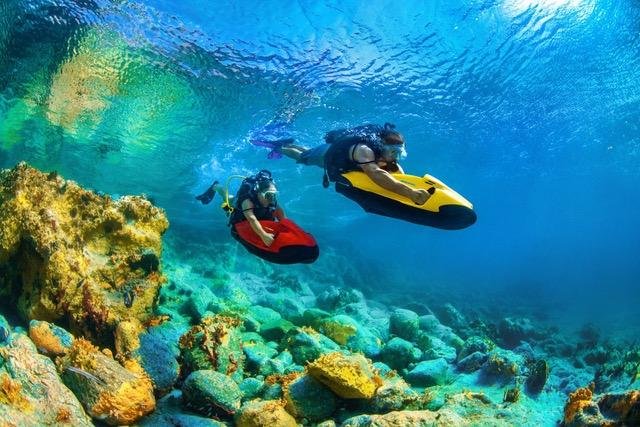
SEABOB recently announced plans to launch in the Asia Pacific Region at the upcoming Singapore Yachting Festival. The high performance electric powered SEABOB meets the demand of the luxury yachting industry and high-end tourism. With the trend toward environmentally friendly watercraft powered by electric motors, the SEABOB perfectly captures this with its quiet motor and ability to go fast.
Here’s the original press release: German High-Performance water sled SEABOB has the Asian debut in Singapore Yachting Festival 2023 SINGAPORE, April 19, 2023 — SEABOB, the world’s leading water sled manufactured in Germany is set to launch its representation in Asia Pacific Region during the forthcoming Singapore Yachting Festival 2023.
Operating out of Singapore, with Mr. Claus Gruner helming the new SEABOB-CAYAGO Representation in APAC, this initiative is the organic evolution of the company’s strategic planning and growth, fostered over the course of the last years. The markets for luxury yachting, high end hospitality and tourism are fascinating and potentially lucrative prospects.
The economies of countries in Asia Pacific continue to soar, more and more individuals are investing themselves in quality lifestyles. “We have a unique market position and more than 15 years of experiences in electric underwater propulsion with Li-Ion accumulators, and work since years with all major global yacht brands at corporate level, this definitely lays a solid foundation to further expand our business in the Asia Pacific Region” says Claus Gruner, Managing Director of CAYAGO Asia Pacific.
Furthermore, positive news is always read with regards to yacht chartering business in Asia Pacific. SEABOB, this powerful and innovative water toy has become a staple for charter yachts over the last decade, reaching impressive speeds of up to 22 km per hour, it offers a calm, cruising ride or a thrilling one with many safety features built in. Besides the yachting and boating markets, an important segment for SEABOB is the hospitality industry with rentals from hotels, clubs, resorts and beaches. “We have been experiencing and celebrating great success altogether with partners in the Mediterranean and the Americas.
The completely environmentally friendly SEABOB is the best fit for our partners to entertain customers with ultimate diving pleasures, pure freedom to play with the waves or experience underwater adventures. We are expecting to see more and more SEABOB-Jets happily enjoyed in Asian waters” adds Claus. With an existing dealer network in some Asian countries, CAYAGO Asia Pacific Pte. Ltd will start its business operations in April 2023 to further support and expand the partners network and customer service.
At the Singapore Yachting Festival, from April 27-30, CAYAGO Asia Pacific Pte. Ltd will be exhibiting its product range with extended color options including the new Black Line series at stand EB9-EB11. Due to modern, lightweight materials, SEABOB is equipped with an extremely efficient electric motor. Above and below water it scores highly with its amazing agility and impressive performance.
Demo and test rides are available on site to experience SEABOB’s enormous thrust to glide overwater and through the underwater world almost silently. Background Information / About Us CAYAGO AG – The SEABOB Company CAYAGO AG is a technology company based in Stuttgart, Germany. In Bad Salzuflen we build the fastest water sled in the world: the SEABOB.
This powerful watercraft’s propulsion is using modern electric motor technology, making it a high-performance and extremely environmentally friendly quality device. Our customers value the highest standards of technical innovation and excellent workmanship. From these requirements we have developed our individual corporate philosophy, in line with our brand motto: “High-Performance Technology, Made in Germany”.
CAYAGO Asia Pacific Pte. Ltd CAYAGO Asia Pacific Pte. Ltd. is the SEABOB representation based in Singapore. With warehouse and service located in Singapore, we work with the regional dealer network of selected partners in the industry for most key markets and focus on the fast-growing segment of hospitality industry with rentals from premium hotels, clubs, resorts and beaches as well as professional utility market – water rescue.
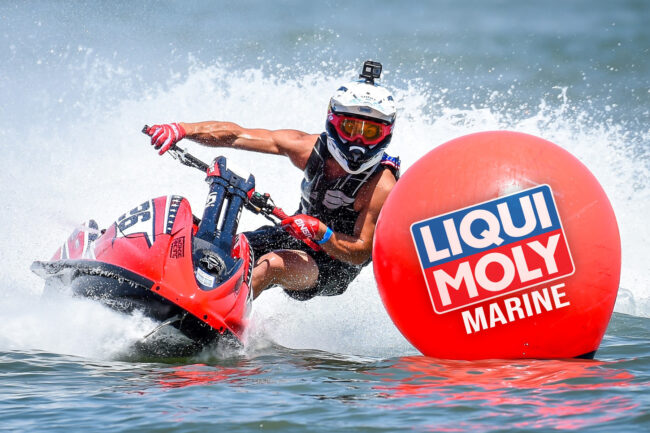
LIQUI MOLY, the German manufacturer of high-performance oils, lubricants, and fuel additives has announced a three-year extension of its sponsorship with Pro Watercross on the US East Coast, and a two-year sponsorship of Full Throttle WaterX on the West Coast.
The 2023 LIQUI MOLY Pro Watercross National Tour kicks of in Sebring, FL on May 6-7th. The Tour will feature six events to be held across the Southeast US, culminating with the World Championships, on November 2-5 2023. CBS Sports will be broadcasting live on November 4th.
On the West Coast, the 2023 LIQUI MOLY Full Throttle WaterX racing series will unfold across five weekends with the Westcoast Regional Championships scheduled for October 28–29 in Long Beach, California.
“We’re excited to recommit ourselves to Pro Watercross and Full Throttle WaterX,” said Gary Driver – the Marine Business Manager at LIQUI MOLY. “Both series showcase thrilling racing action and mirror LIQUI MOLY’s brand philosophy of performance at the highest level.”
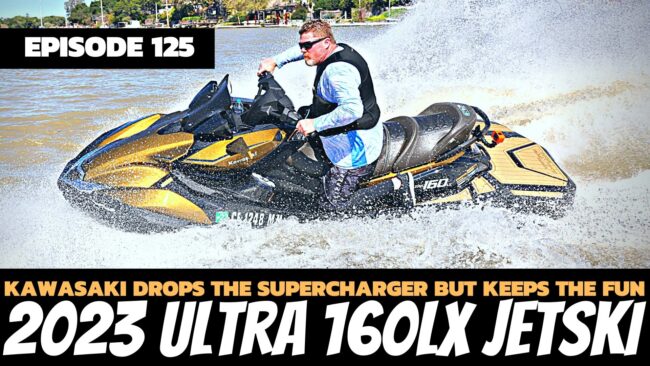
I’ve been vocally advocating for a fully-loaded naturally-aspirated Ultra from Kawasaki since the first supercharged luxury JetSki debuted in 2014. Until today, Kawasaki’s offerings for a non-supercharged full-sized runabout were the solitary stripped-down-to-the-bones Ultra LX – and let’s be really honest here, there was nothing all that “LX” about it. No brakes, no sound system, not even trim control. In fact, the LX also doubled as the brand’s go-to rental unit, so yeah, Kawasaki has been lacking in the fuel-friendly, luxury market for a looong time.
So when they decided to unveil not one but two naturally-aspirated Ultras midway through the 2023 production run, my Spidey sense starting going off. Normally, you can set your watch to when Kawasaki rolls out its new units – typically, the first week of October. (They’re pretty consistent in that regard.) So why a full-blown reveal on February 1st? Logistically, it was really unexpected: the countries in the Southern Atmosphere like Australia are pretty much wrapping up their summer, and us in the Northern Hemisphere hadn’t even started Spring yet.
But what was happening was boat show season. Dealers across the country were seeing would-be customers wincing at Kawasaki’s monstrously thirsty 310-horsepower Ultra and weighing that against skyrocketing gas prices. And it just so happened that Kawasaki had both the Ultra 160LX and 160LX-S warming up in the batter’s box ready to be rolled out at any time. Knowing they had just the ski to satisfy customer’s demand for a fully-loaded JetSki without the gnarly fuel consumption, the green light was given to launch the two 160’s before summer.
Unsurprisingly, the formula was absurdly simple: take the loaded-to-the-gills Ultra 310LX (MSRP $20,299), yank the supercharger and intercooler and offer that up to the buyer interested in everything the 310LX had except the arm-stretching horsepower. While to some of us that may sound like heresy, to many, many others looking to enjoy the most out of their time on the water, miles per gallon is equal to smiles per gallon. For that, Kawasaki equipped both naturally-aspirated options with its tried-and-true 1,498cc inline four-cylinder 4-stroke making a solid 160-ponies all on cheapo 87-octane.
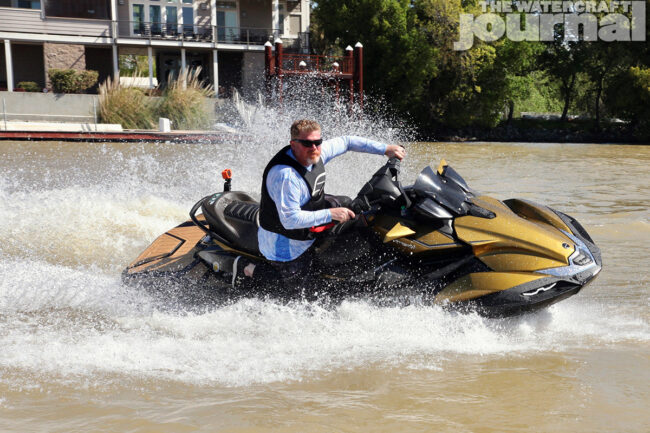
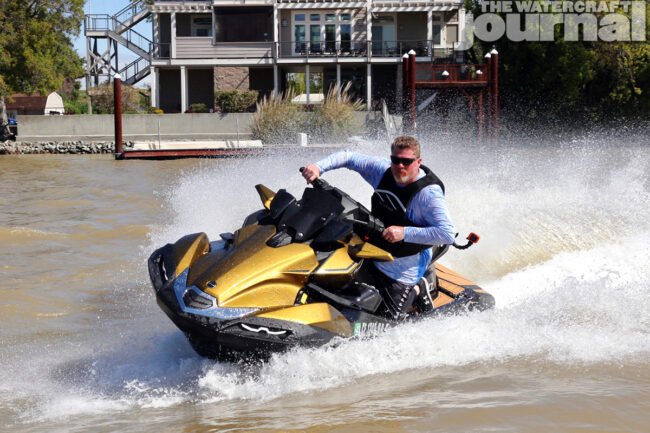
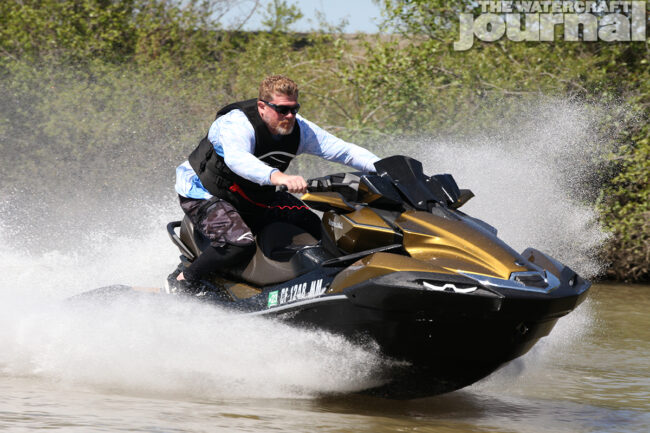
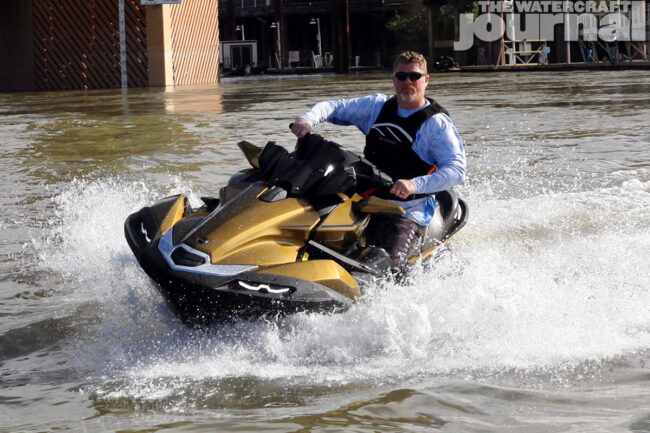
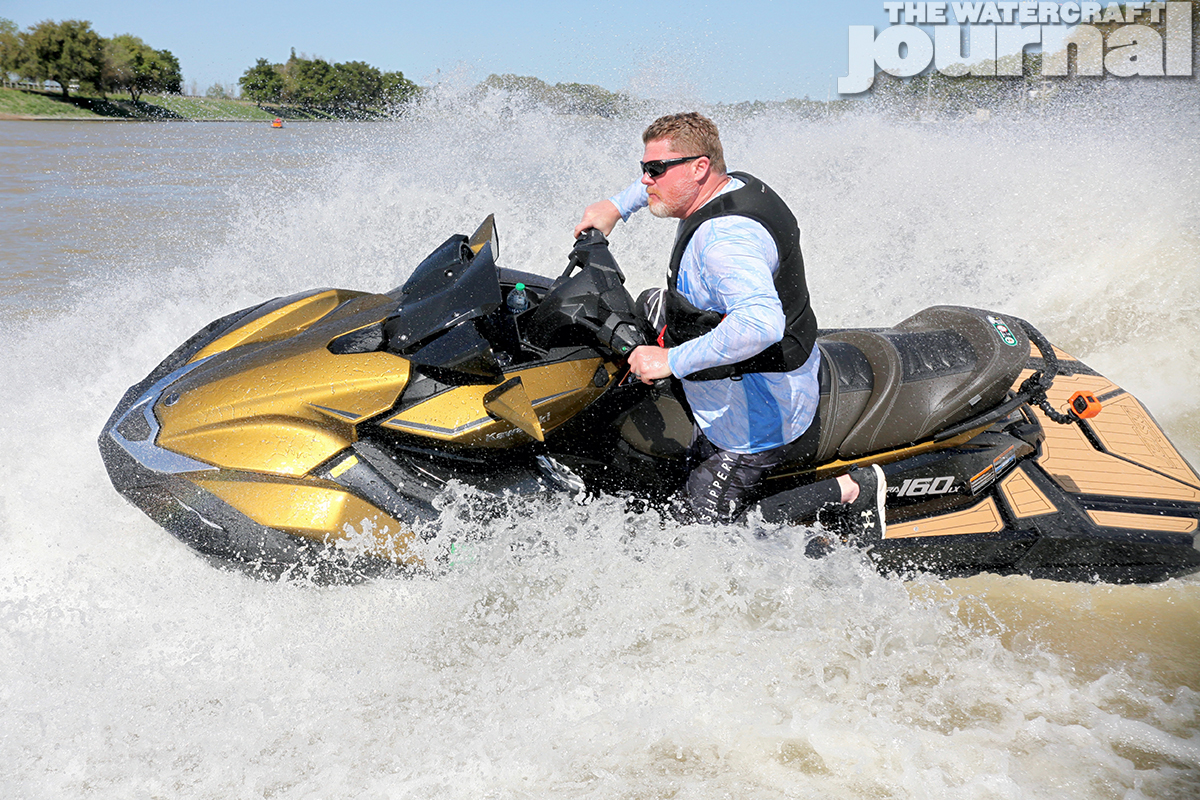
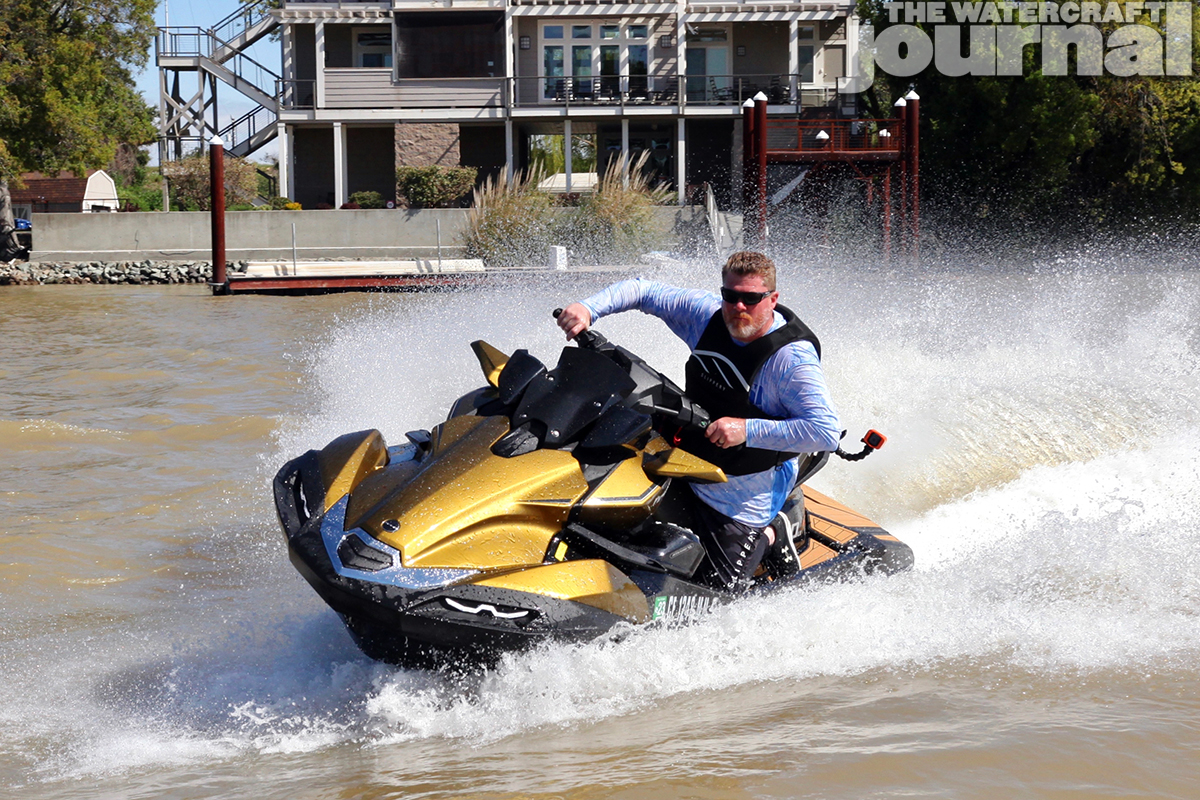
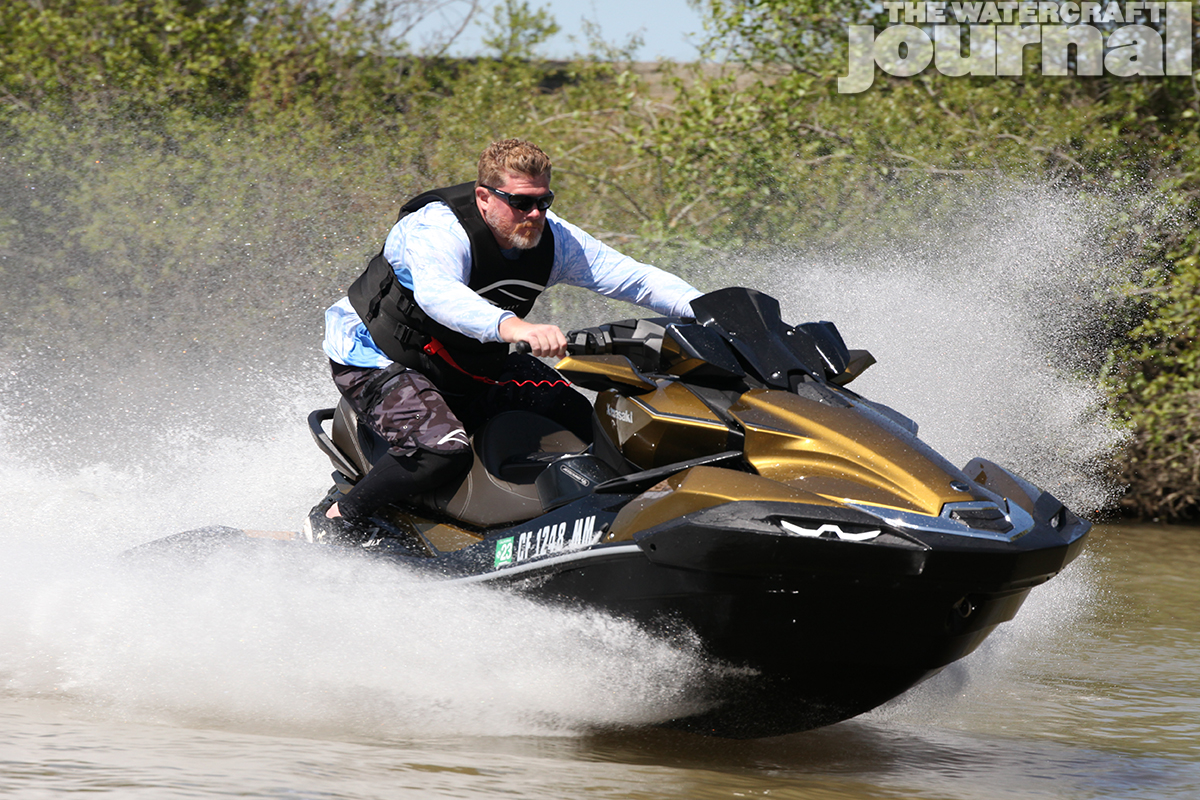
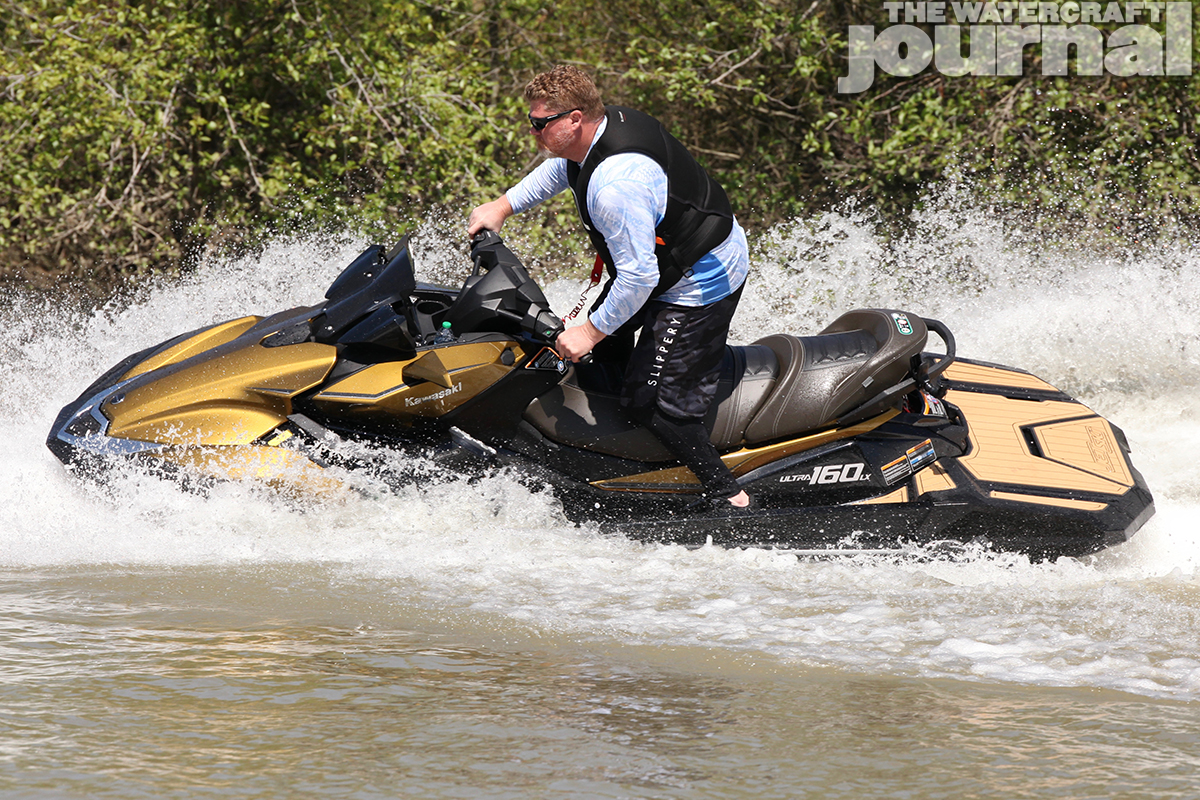
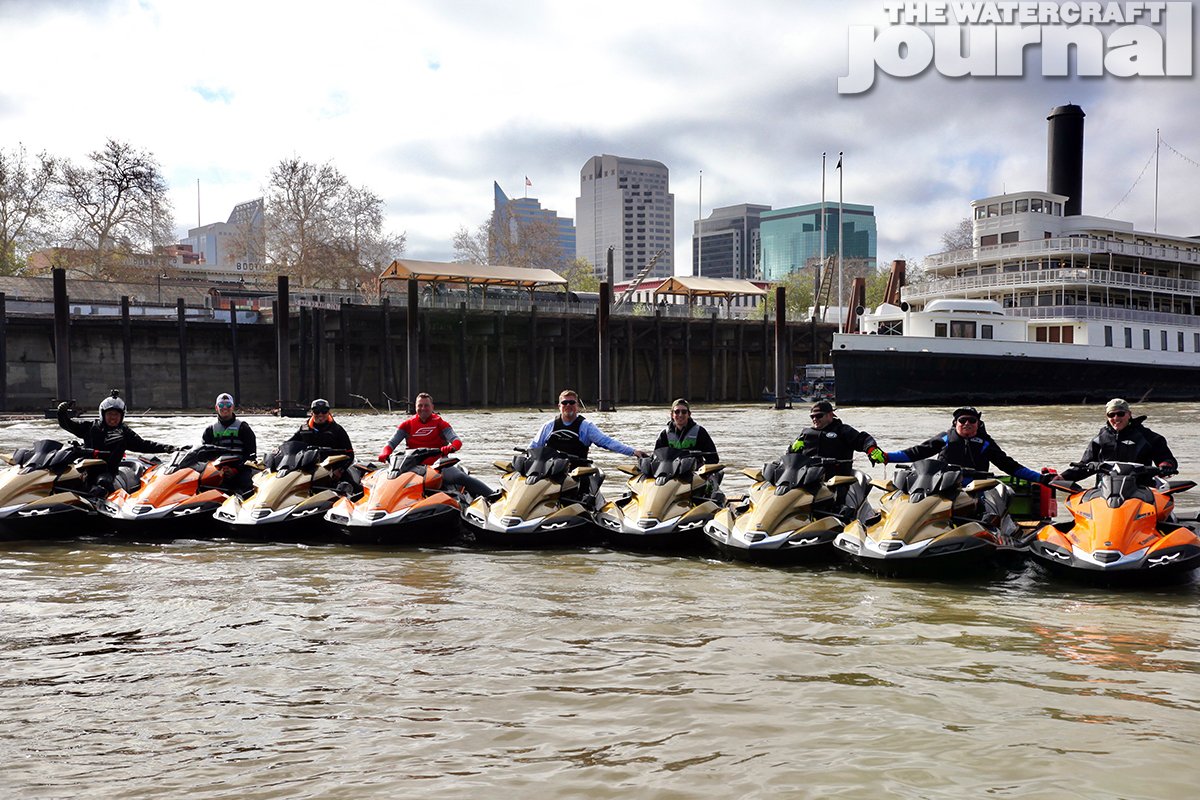
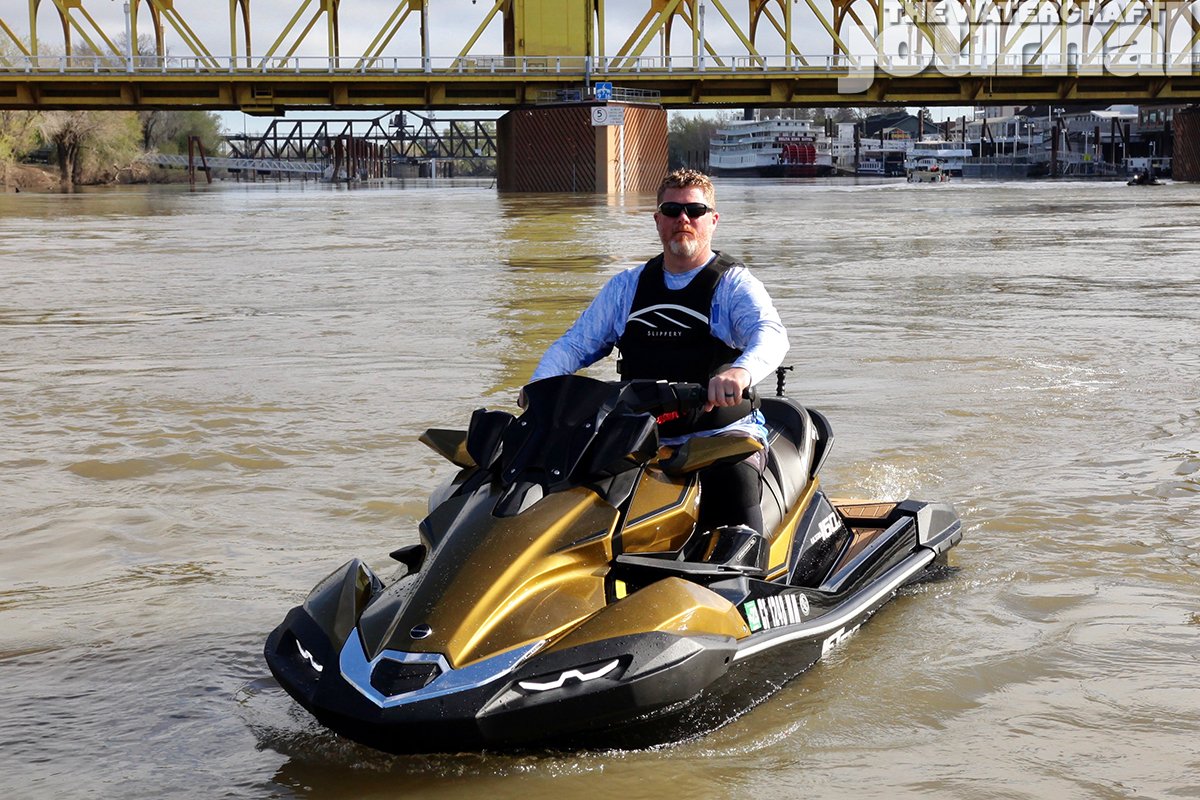
Now, I could just say that everything on the 310LX is found on the 160LX and call it a day, but I would be leaving a lot out of the conversation. YES! The 2023 Kawasaki Ultra 160LX JetSki $17,299 (MSRP) comes in the same Ebony/Metallic Shadow Gold livery (which just so happens to correspond with the JetSki’s 50th “golden” anniversary this year) and includes more features than many entries from its competitors.
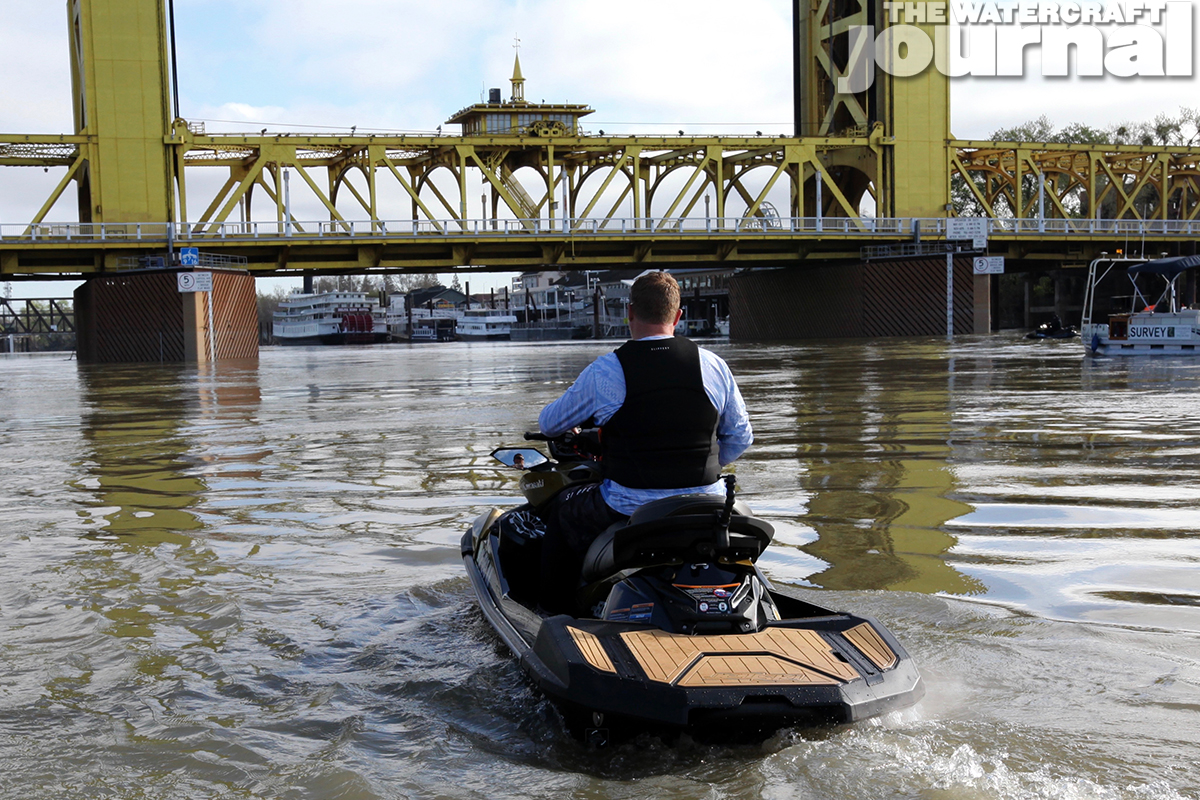
Right out of the gate, the Ultra 160LX includes Kawasaki’s “Ultra Deck” adding 200mm of length to the rear deck (7.9-inches) and includes the brand’s Multi-Storage mounting rails. The deck shares the same faux teak wood CNC-cut EPA foam carpets and includes an extended, deep-set folding swim step at the transom – making reboarding easy.
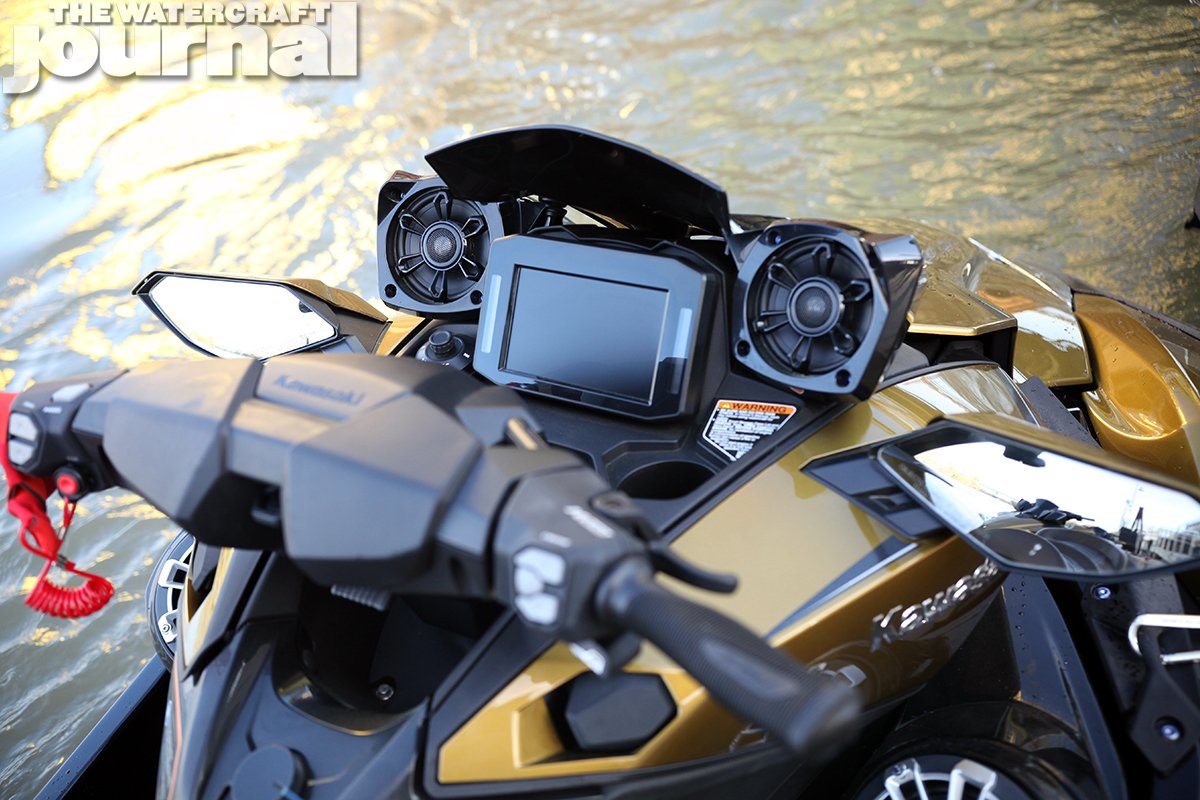
Perched above the Ultra Deck and “wet storage” pocket is another class exclusive: a rear-facing digital camera. Ideal for the driver keeping an eye on the wakeboarder, skater or raft that they’re towing (that is of course to always be used with a spotter), the Kawasaki’s TFT screen offers three zoom settings (155° horizontally and 115° vertically, to be exact) to keep a close eye on whose behind them.
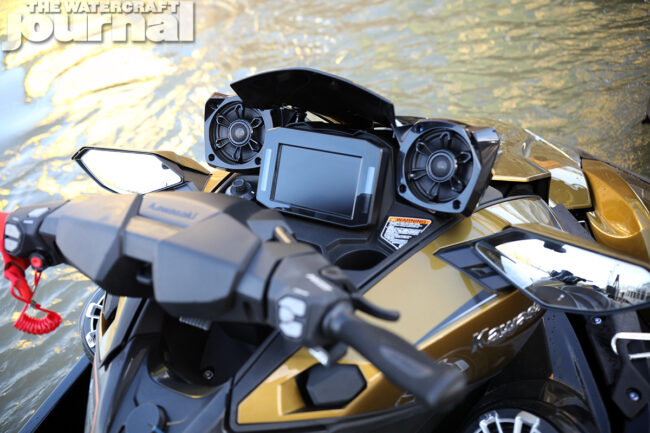
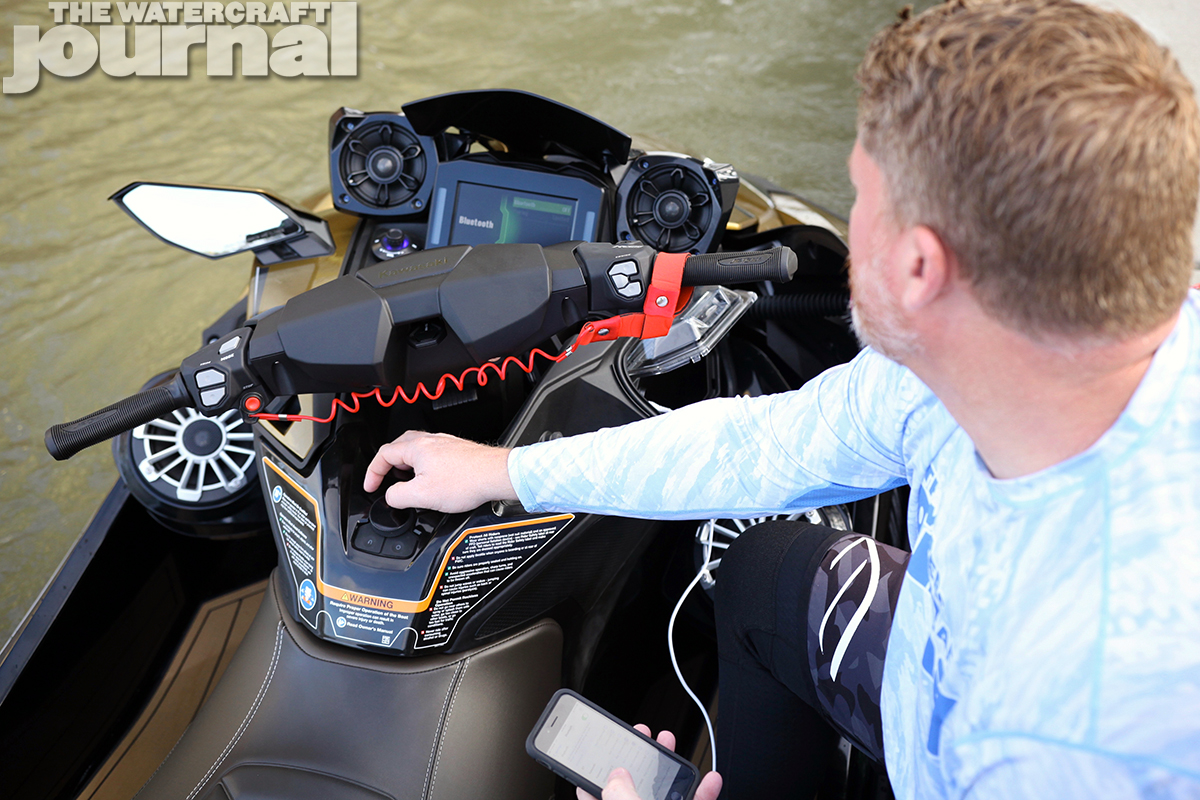
To that point, the 160LX includes the 310’s aforementioned 7-inch TFT full color digital dashboard. The dashboard and its many screens are navigated using a jog-dial and two buttons (back and select) found beneath the steering neck, although only when the drive setting is either in neutral or idling in forward. Access to any other dash page is understandably locked out when underway.
The new screen offers three different display modes, black or white backgrounds, self-adjusting screen brightness, and various entertainment features. The screen’s additional functions include a GPS speedometer, tachometer, fuel gauge, drive mode, boost pressure, clock, power mode, compass, trim, Bluetooth indicator, phone call & mail indicator, cruise control; trip time calculator, oil & engine temperature, battery voltage, intake air temperature, diagnostic code, external air and water temperatures as well as indicators for a GPS signal, low fuel, engine, oil, battery, engine coolant temperature, immobilizer, master warning, trim, and reverse.
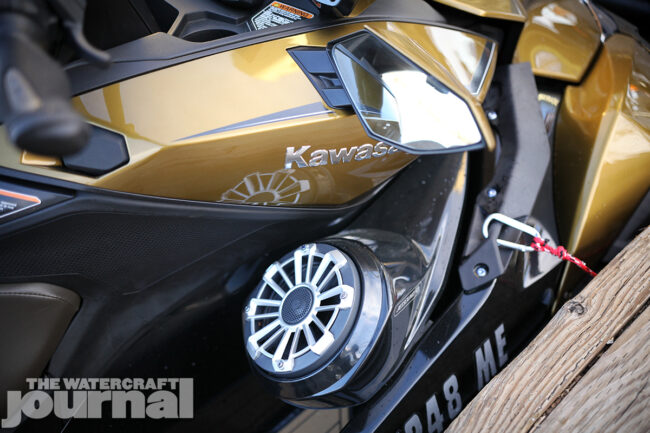
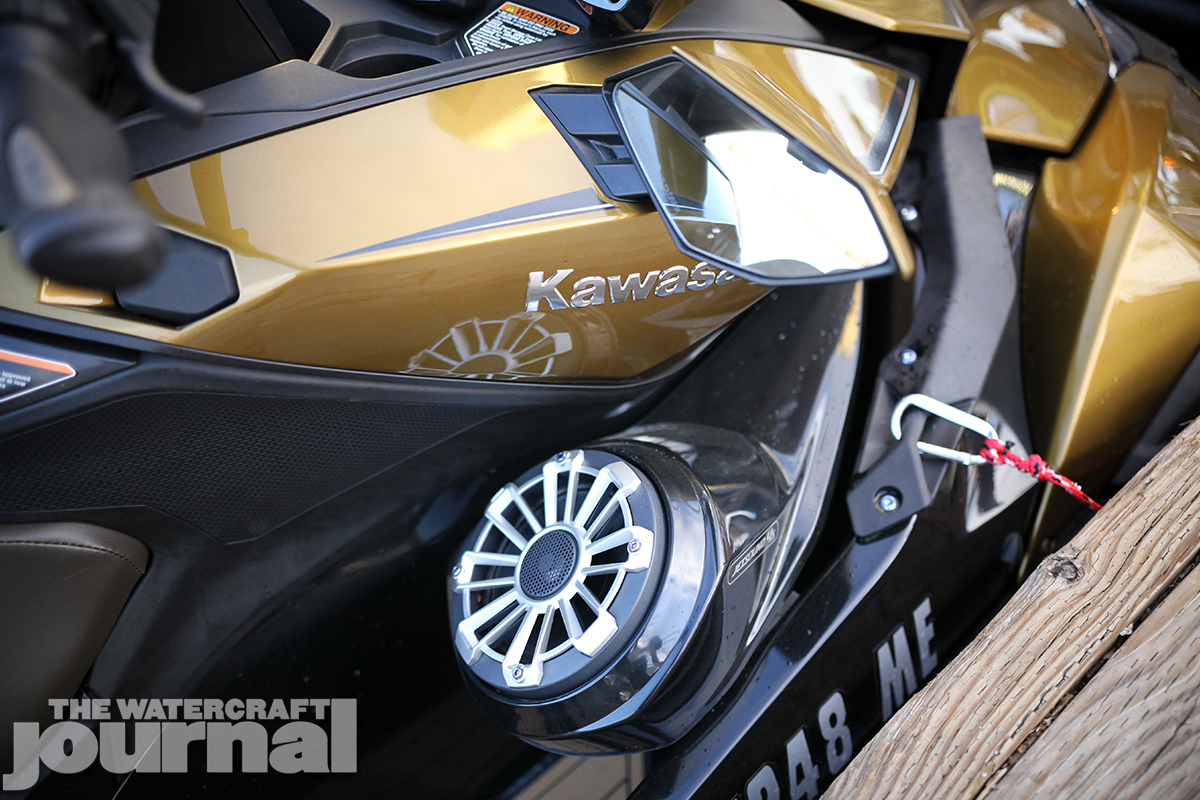
Flanking the TFT screen and at the front of each footwell is the industry’s first factory-equipped four-speaker sound system – Jetsound 4S. Kawasaki provides 200 watts of audio pleasure via two channel amps, and a quartet of speakers – the lower two are rated at 60W each and the upper at 35W each. And yes, Jetsound 4S is fully compatible with most all smartphone devices and Bluetooth compatible-players. When synced to both the Bluetooth audio control and the TFT dashboard (there’s two signals you’ll want to pair with), all of your audio data will be viewable on the display.
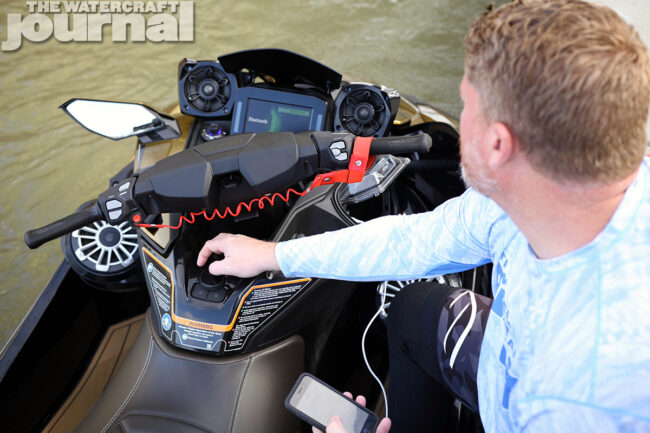
Near the dash is a similar jog dial that specifically controls the audio. The knob spins to control volume and toggles to search tracks. A press of the dial pauses or plays tracks, but the resistance is so light that skipping tracks or rapidly scrolling the volume can happen by accident, particularly while under throttle or on bumpy water. The dial was so sensitive that skipping or pausing tracks became a bit of a pill. It’s not what you’d call a “deal breaker” but it sure grew to be annoying at times.
But let’s talk about sound quality for a second. Most systems – speaking specifically of Yamaha and Sea-Doo – tend to drown out above 50mph. Not so with the Jetsound 4S. Now to be fair, the Explorer Pro’s windscreen shields the speakers from wind noise better than anything, but you’d be damned to get that ski moving above 50 miles per hour especially with it laden down with cargo.
Rather, Jetsounds remains extraordinarily clear at wide open throttle (I fared a max speed of 55mph going down river and with a quarter tank of gas. I never broke 50mph going upstream, so take that for what it’s worth). Obviously, sound quality varied depending upon whether you sat or stood, but all of us who rode the 160LX agreed that a lack of volume was never an issue.
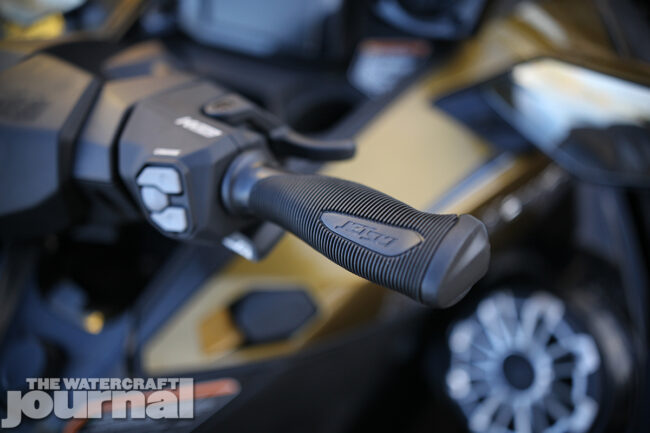
The 5-way adjustable tilt handlebars are capped with pistol grip-style handgrips. They’re not as flat as other brand’s grips, and feel pretty natural whether sitting or standing. The control modules enjoy all-new buttons wrapped with sealed membranes that give a satisfying “click” with each press. On the right are the three buttons for Cruise Control that can adjust up or down three levels for a little more speed (or to slow down).
These also double for the No Wake mode controls while operating in a specified zones. Just press the center button while at idle and the JetSki will push forward at 3-to-4 miles per hour. Toggle up one or two bumps to get above 5mph and trim the nose up (using the electric trim control on the left hand side) to keep the nose from plowing and washing over the bow of the ski. Only at 6mph or above will the bow’s sharp 22.5-degree deadrise begin to generate any lift and bring the nose above the waterline. (Just a little friendly bit of advice.)
Above the trim control is the Mode select button offering the choice of 3 power levels: Full, Middle, and Low (akin to using the SLO – Smart Learning Operation – key). Full mode accesses all of the Ultra’s 160-horsepower. Middle reduces the engine output to 80% – and is also the default setting when first ignited; and Low mode is 60% of full power.
Even without being supercharged, the Ultra retains the Kawasaki Launch Control Mode (KLCM) feature, allowing for single and repeat launches. For the uninitiated, KLCM automatically adjusts the trim for optimal acceleration. When set in Single mode, the Launch Control will only activate for the first acceleration pull, whereas in Repeat mode, the KLCM remains on until manually deactivated.
2023 also notes the incorporation of Kawasaki’s full fly-by-wire throttle control and engine management system for the naturally-aspirated model. With that also heralds the long-anticipated Kawasaki Smart Reverse with Deceleration (KSRD). The thumb trigger is part of the accelerator ensuring that one won’t overpower the other. When depressed, the reverse bucket is slowly deployed, producing drag beneath the ride plate, slowing the Ultra to a standstill.
If you release the trigger at this point, the drive mode will return to neutral. If you kept the thumb depressed, the drive mode would automatically engage Reverse, reversing the JetSki until released. The dance between the thumb and trigger finger may take a little bit to acclimate to, but it’s nowhere as complicated as may sound here.
After spending a day on the 160LX it was all too evident that the transition between forward and reverse was agonizingly slow. Whether inching up to a dock or having to slam on the brakes, the KSRD just lagged – and surprisingly so, considering that such a delay isn’t found on the supercharged model. This is not a mechanical issue but one of tuning and can be easily remedied by a skilled engine tuner with a laptop whether by the factory or aftermarket.
Given that the 160LX doesn’t tout the Eaton TVS supercharger, intercooler and catch can, it tips the scales at 987.8 lbs., some 101.5 pounds less than its supercharged sibling. While that certainly won’t classify the Ultra as a “featherweight” in its class, it’s still riding on Kawasaki’s industry-leading, rough water and open ocean championship-winning hull.
For those familiar with The Watercraft Journal and my exhaustively long rants, you’ll know I’m already a fan of the Ultra’s hull. In my experience, I’ve found it to be the single best at sluicing through chop, absorbing chatter, jolts and vibrations. I credit this to the true Deep-V hull being molded in durable gel-coated SMC fiberglass – just like how everyone else used to make their skis.
It’s thick, durable, resistant to scratches and impacts, and stupidly easy (and not to mention cheap) to fix. The newfangled stuff is cool, but dang if its not been a headache for those who’ve experienced failures. For the guy looking for reliability and durability, Kawasaki is the only one kicking it old school. For the Ultra’s redesign, Kawasaki radically lowered the Ultra’s center of gravity dropping the overall deck height by 1.38-inches as well as widened and deepened the footwells, setting the rider lower and gifting them more leg room.
Ergonomically, the Ultra sports a narrowed two-piece, three-tiered seat. It’s pinched 3.15-inches at the knee, eliminating that old Clydesdale-wide saddle feel and more clearance for riding standing up. This new seat – dubbed Ergo-Fit LXury – is sculpted from a new formula of urethane foam providing deeper hip support and improved jolt and vibration absorption. Wrapped in black and brown heat- and UV-resistant materials with high-contrast white stitching, the LXury bench offers three positions of adjustment spanning 2.75 and 1.4-inches apart.
If that wasn’t enough, the 160LX includes a class leading 21.1-gallon fuel cell and 44.5-gallons of storage broken up between the aforementioned 2.8-liter “wet storage” cubby on the rear for a dock line or tow rope; a high-walled 32.8-gallon front stowage bin; and 10-gallons of console storage shared between two gas-strut supported gull-wing doors.
This center storage is well-sealed beneath solid, smooth-locking latches, is very easy to access whether at a standstill or even underway, and includes a watertight phone pocket with two USB ports. During my day on the Ultra 160LX, I kept my phone plugged in – as I was using it paired to the Kawasaki’s sound system – and a second plug to recharge a couple of GoPros.
The front tub is voluminous which is great, but makes reaching items at the bottom an acrobatic feat if not impossible, at least when out on the water. It’s best to put stuff you don’t think you’ll need until to you stop in there. For everything else, I’d keep it in the center bin. Oh yeah, and Kawasaki molded in a pair of super-deep cup holders in the console. Even at wide-open-throttle across 3-foot white caps, my water bottle didn’t bounce out – and trust me, I was trying to get it to eject with no luck.
On it’s own merits, the 2023 Ultra 160LX is pretty much everything I had been begging Kawasaki to build. And frankly, it’s a no-brainer. When compared to like models – say Yamaha’s Cruiser HO ($16,699) and Sea-Doo’s GTX 170 ($13,999) – the Ultra creams the competition in the way of standard features, but you’re definitely gonna pay for it.
If you line the 160LX up against say, Sea-Doo’s Explorer Pro 170 ($16,799) or Fish Pro Sport 170 ($16,499), the 160LX begins to see a little tighter competition in the way of features, capabilities and some tighter pricing. In all fairness, I came down pretty hard on the Explorer Pro, so for me to give the Ultra 160LX unfettered praise would be disingenuous at the very least.
As noted, there are a few teething issues: the control fob for the Jetsound 4S system is twitchy at best; the near non-responsiveness of the KSRD certainly calls for recalibration; and boy howdy, does the Ultra beg for a repitched ride plate to keep the nose from submarining. But the Ultra, unlike the Explorer, is still a fun, lively machine.
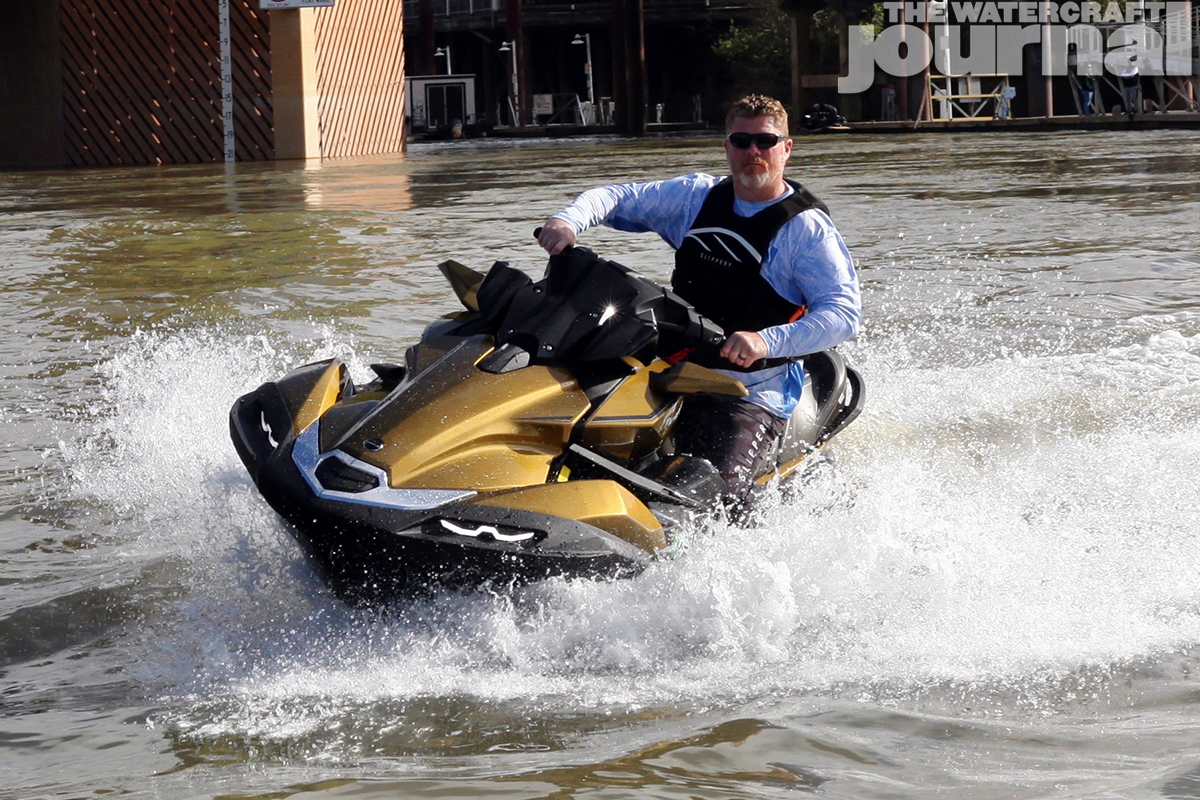
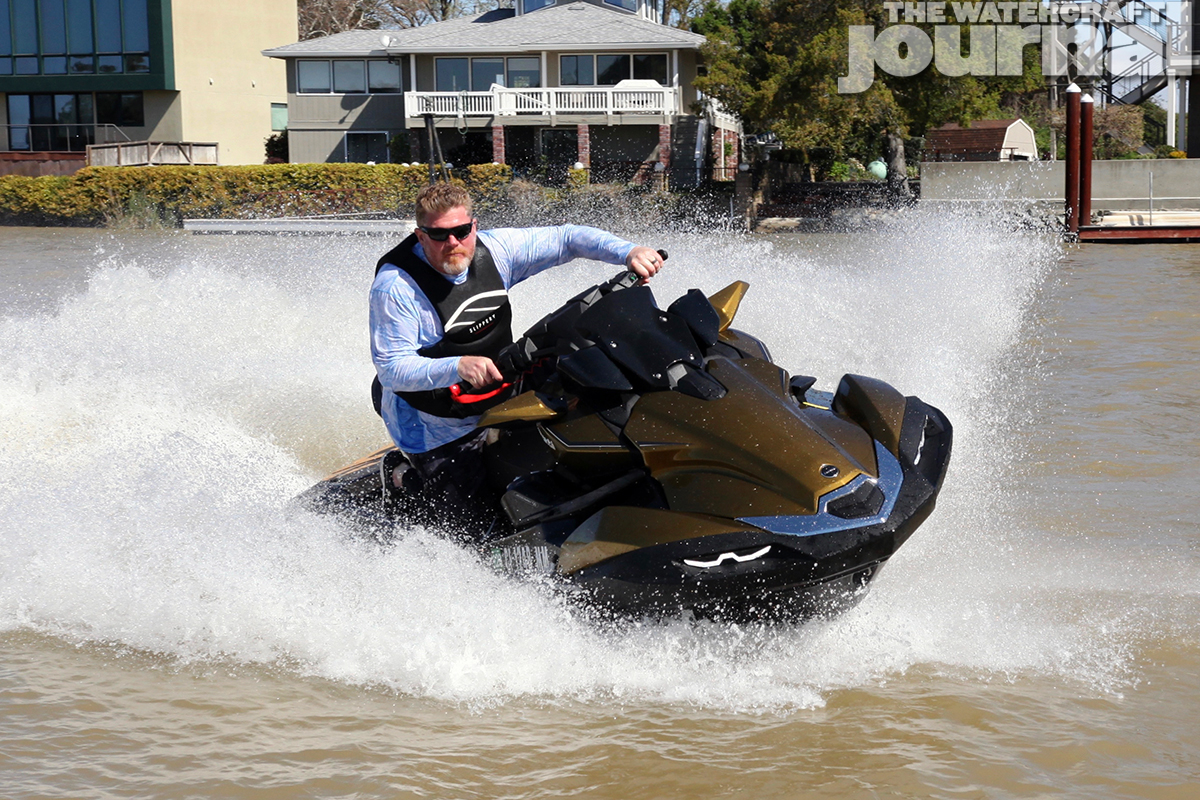
It can be slid hard into a flat slide with enough body english; it’ll tuck down low and carve a full-throttle S-turn if you push it; she’ll blaze over 20-mile-an-hour-wind-blown white caps like any offshore racer…but it’ll also cruise comfortably, miserly sipping on 87-octane as every strum and pick from Lindsey Buckingham’s “Never Going Back Again” resonates in peak clarity to your ears.
For the would-be buyer looking for a incredibly comfortable cruiser that touts a king’s ransom in bells & whistles, won’t drain the tank in 20 minutes’ time and can still be sporty if you want it to be, the 2023 Kawasaki Ultra 160LX JetSki has our vote.



 The
The 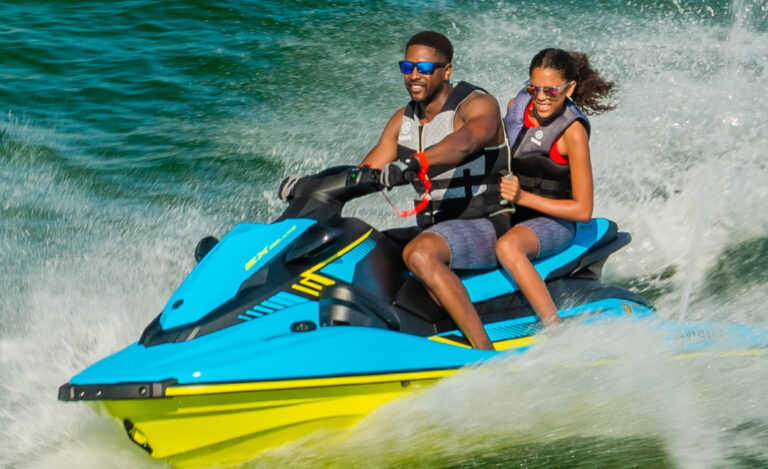




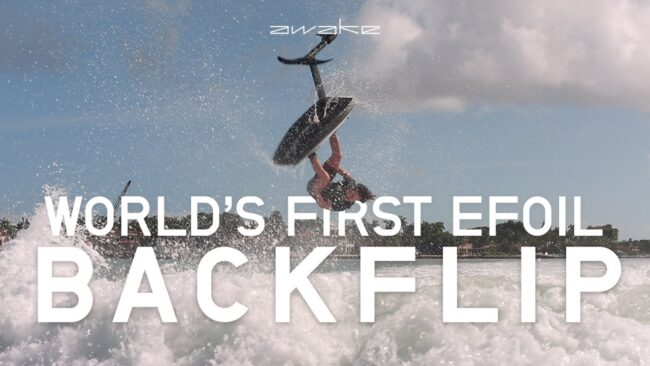
 Garbaccio describes the flip- “I took slightly too much speed before the jump, so I was late sending the rotation, so I tried to spin fast. When I felt the board passing over my head with lots of motion, I kept my body fully compressed until I could see the landing point.”