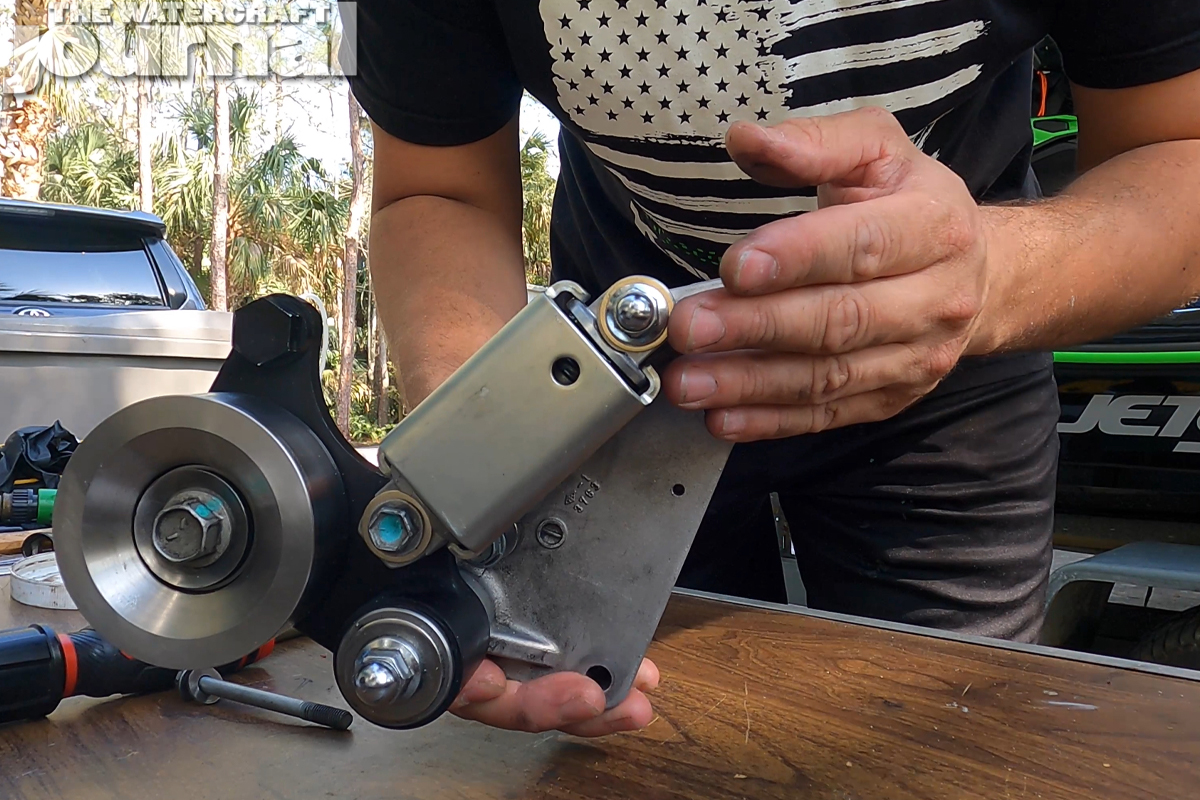
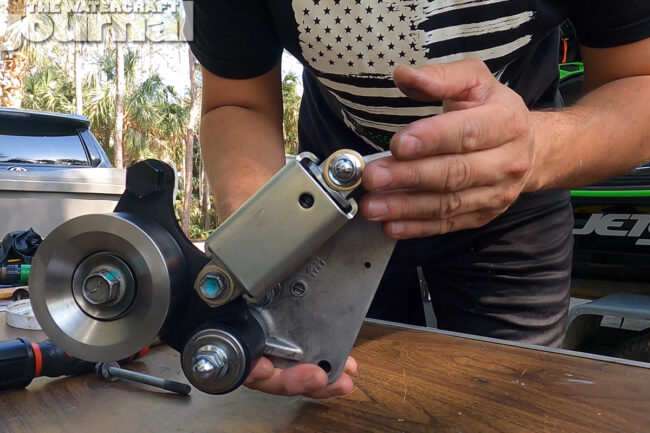
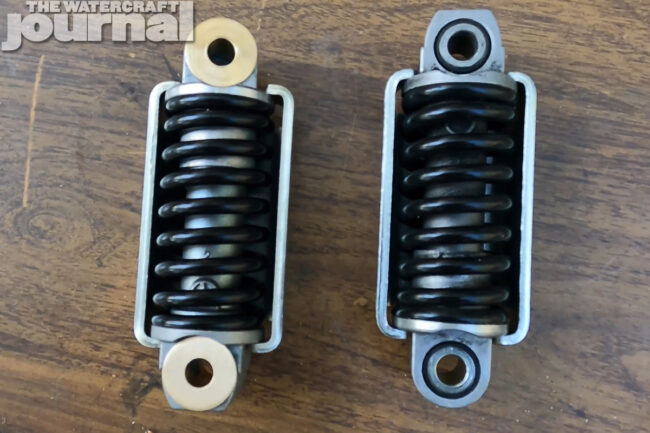
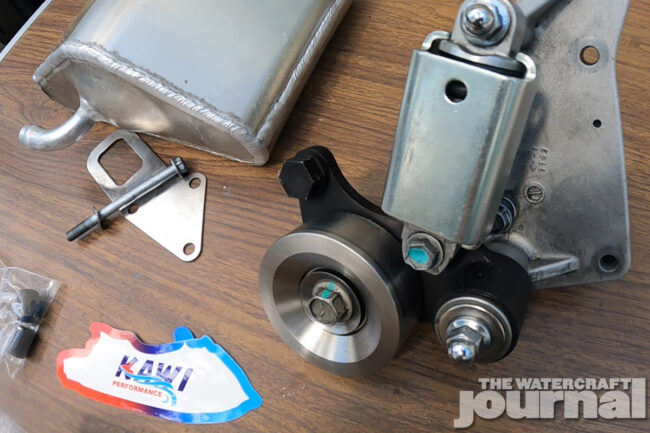
Kawi Performance out of Long Island, NY offers the only maintenance-free supercharger tensioner assembly on the market- but they couldn’t stop there! Their innovative tensioner spring bushing kit replaces the weak OEM rubberized spring bushings with high-quality marine alloy ones- designed to last for the life of your machine with little to no maintenance!
Engineered, designed, and manufactured in-house these upgraded tensioner spring bushings increase performance while reducing maintenance downtime. The KP kit includes two sets of matched bushings- the outer bushings are made of a proprietary marine alloy, while the inner bushings are made from a self-lubricating high-performance polymer.
Over time, the rubber on the stock bushings wears down- limiting the movement of the tensioner spring on its axis and contributing to excessive belt slip and loss of performance. The KP bushings include seated o-rings designed to keep moisture and contaminates out, while alloy outer bushing and inner polymer bushings work together to allow a free range of movement without the need to regularly unassemble or grease the components.
Check out the Kawi Performance website for more innovative products and services, as well as some great maintenance tips and tutorial videos. Stay tuned for KP’s all-new redesigned website which will be launching soon.
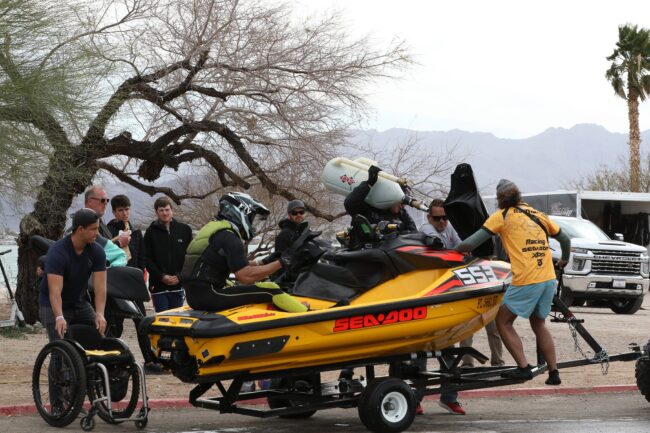
We are excited to share this big news from Sea-Doo about Les Cooke and brand ambassador Anthony Radetic. He was injured in a motorcycle crash, which left him a paraplegic. Prior the injury, he was into downhill skiing and enjoyed the rush. He had a love for the water too, so it was only natural he gravitated toward PWC racing. We met in CA while preparing for the LBCAT 2014 and we’ve followed his career since.
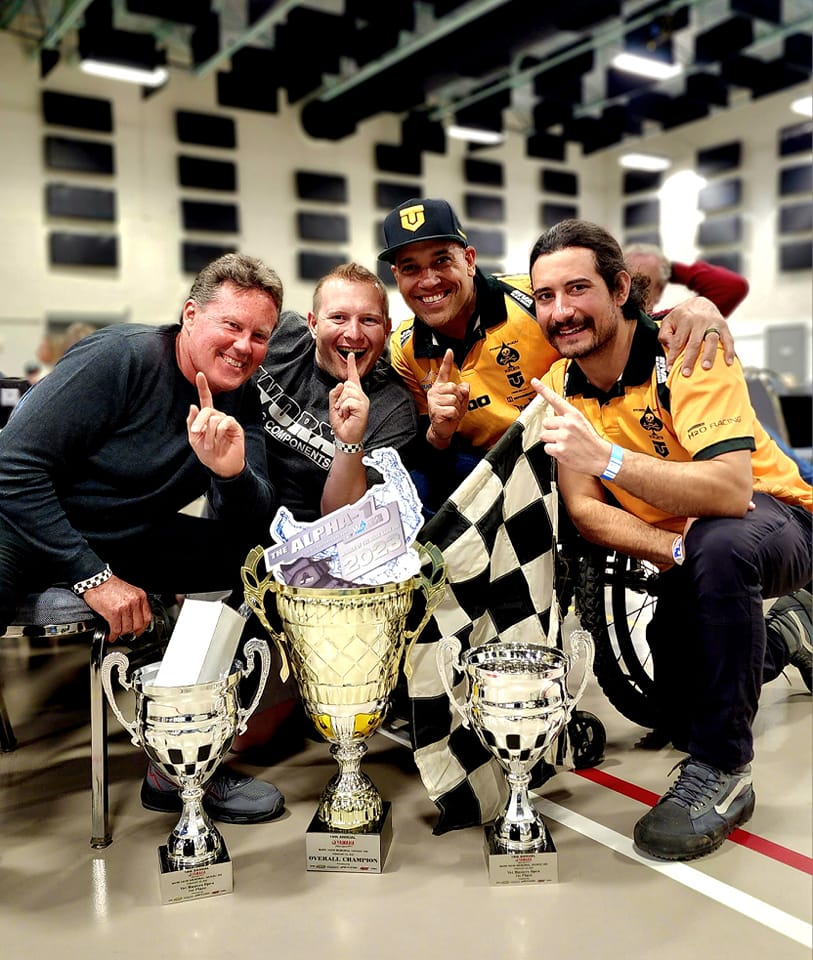
After years of podium finishes, Radetic and partner, Cooke took the overall victory at the 19th running of the grueling Yamaha IJSBA Mark Hahn 300 on Lake Havasu. He also took the win in his class and the crew at Sea Doo is ecstatic!
The conditions were brutal with winds out of the southeast and gusts to almost 40 knots making the waters difficult to navigate. Radetic powered through the nasty conditions and pulled off the first win in the Mark Hahn Race for Sea-Doo since 2008!
Even though Radetic had an issue with a blown fuse at the start that put him 2 laps behind, he managed to overtake the race leader for the win.
Radetic’s fierce determination and endurance got him around the leader during the final lap and he rode to victory. The Mark Hahn is the toughest, longest most challenging PWC endurance race in the world. It’s a huge feat to win this one.
It took Radetic nine years to get this win and he couldn’t be happier. He won it with the help of his pit crew, sponsors, race partner Les Cooke, and his fast Sea-Doo RXP-X Apex 300. The Apex is outfitted with the Sea-Doo Ergolock System, which kept him locked in so he could keep his eyes on the prize. Congratulations from the team at The Watercraft Journal. We’re stoked for Anthony!
Windrider is a purveyor of high-quality products for use on the water. It was founded on a passion for water and making it accessible to everyone. They recently created a Facebook group for people to share tips and tricks and other cool stuff. The group is called Windrider Nation, and it is geared toward Windrider owners and enthusiasts.
Anyone can join so check it out. Share pictures of your fresh catch, ask questions, and stay in loop. Be the first to know about new products, sales, and even get discounts on products. Windrider wants to know what you want in your outdoor gear, and they’ll be asking questions to find out. The group is active, and worth joining. We all like to share our knowledge, learn new stuff, and to get good deals on product.
You can see what Windrider is about before joining by checking out their products on the Windrider website. They carry gear for ice fishing, sun protection, and gear to keep you dry in the rain. Their apparel is both reasonably priced and functional. They have a good sale going on right now too! Join the Windrider Nation Facebook Group to keep up the crew, show off your Windrider gear, and make new friends.
Admittedly I don’t get to attend very many events or join any group rides these days. The frenetic schedule that I keep has me so tightly booked that eking out enough time to enjoy a prolonged weekend’s worth of riding is all but impossible. Thankfully, I had drawn a line in the sand that while I might miss the larger Mudbug event in June, there would be no way that I’d miss October’s.
When I first started traveling the 11-hours south to Morgan City, Louisiana for the annual Mudbug PWC Rally there was only the one calendar weekend. But as it grew and the types of attendees began to diversify, so did the schedule. Suddenly Spring and Fall Mudbugs began popping up – albeit not nearly as widely attended as the midsummer event.
It should come as no surprise that summer in the bayou can be pretty sweltering, especially if winds are low and temperatures are high. So the cool breezes blowing up from the gulf and moderate-to-high-70’s temperatures in October make for far more favorable conditions. Add to that the lower headcount also makes smaller groups and chances for the kinds of shenanigans that get the rest of us in trouble with the locals.
For what it’s worth, Morgan City can feel a bit like a seasonal gulf town with many shops operating shorter hours. Even on the water, life moved a little slower than its already characteristically leisurely pace. The difference in 10-degrees on the thermometer clearly effects the locals as much as it does the ‘gators. Oh yeah, and there are far, far less bugs in October. So if you enjoy not having to regularly wash the insect splatter from your face throughout the day, maybe October’s Fall ‘Bug is right for you.
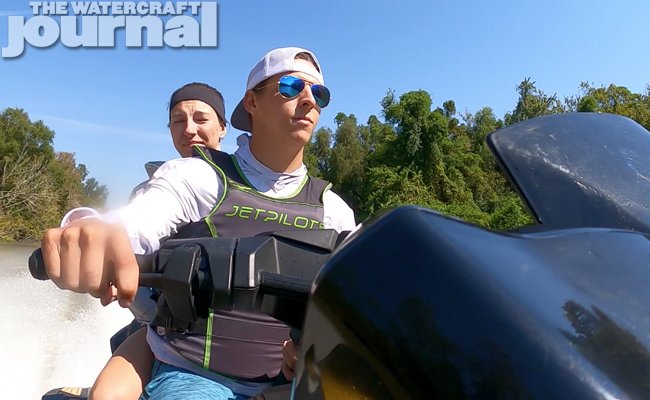
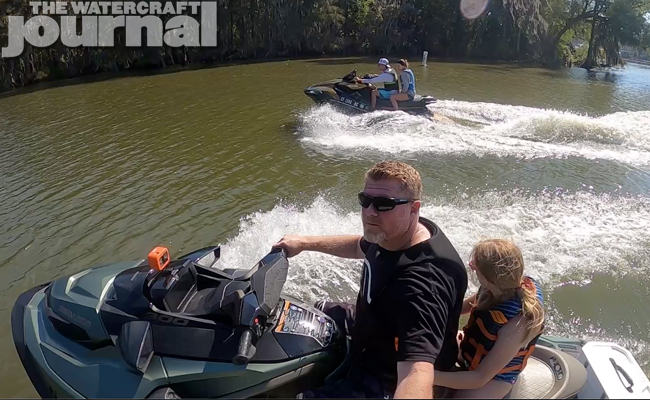
This past October’s Mudbug fell right in the middle of my kids’ Fall Break, so I upheld tradition by bringing one of my daughters with me. Thankfully, Mudbug has somewhat gravitated from its earlier days of heads up drag racing and radar runs towards longer all-day rides and winding routes through the cypress trees and Spanish moss, making it far more welcoming for younger riders – making the oddness of my habit of bringing one of my kids with me has lessened over the years.
Needing to kill a few birds with a single stone, I coordinated with Greg Gaddis to come down early so he and I could put in some solid testing of his 87mph Sea-Doo RXP-X as well as a shootout between BRP’s flagship GTX Limited 300 and a Kawasaki’s newly redesigned Ultra 310LX. Greg had little seat time with the gold luxury JetSki so my 9-year-old daughter Natalie and I spent much of the weekend on the Sage Green Sea-Doo.
That shootout has long since been published so if you haven’t sunk your teeth into that, we’ll put the link up in the right hand corner here. Many people are just as split on certain aspects like Greg and I were, so make sure to leave your thoughts in the comment section below that video. To that point, our first day of testing started off taking Greg’s highly modified Sea-Doo RXP-X 300 out for a short stint. We’ll cut to that right now:
With our extra days of testing behind us, we could spend the rest of the weekend joining the dozens who drove in from across the US to attend the Bug. For those looking to join the fun, you must understand that the Mudbug is almost entirely unscripted. There’s no official meetings, ride or schedules. Many will ride in smaller groups all weekend long and never intermingle with other groups riding the same trails.
So if you want to know what’s going on the best suggestion is to watch both the Greenhulk.net Facebook page as well as the “Mudbug PWC Rally” thread on the forum. But if you’re one who likes to play things fast and loose, it’s best to pull up to Doiron’s Chevron station around 8:45-9am and wait and watch as the trucks and trailers towing brightly hued PWC start rolling in. While it’s not the only place to start your day, it’s where most folks fuel up and stock their coolers before launching.
And yes, I am woefully mispronouncing “Doirons” – spelled do-irons Greg has repeatedly corrected me, slowly sounding out dry-ons, casually slurring over two syllables. When I point this out he always shrugs and says, “Yeah, but you ain’t coonass either.”
Friday morning at Doirons was no different as I packed up the GTX’s LinQ cooler, grabbed a quick biscuit for breakfast, and picked up a parking pass for the day. Soon we were joined by two dozen riders looking to cement a plan for the day. Our group included two fistfuls of supercharged Yamahas, some RXP-Xs and our lone Kawasaki 310LX. Greg and his girlfriend had won our impromptu coin toss, sticking me back on the Sea-Doo much to my chagrin.
We put in on the west side of the levee, accompanied with a couple parents with their kids in tow too. Water levels were a little low exposing submerged tree stumps, tangled patches of lilies and a few more surprises. Cooler water temperatures also encouraged the local alligator population to warm themselves under the sun on the slowly drying banks. Over our 3 days of riding, Natalie counted nearly 30 sunbathers. Normally we stop to enjoy a swim during the day but seeing so many gators gave us reason to reconsider.
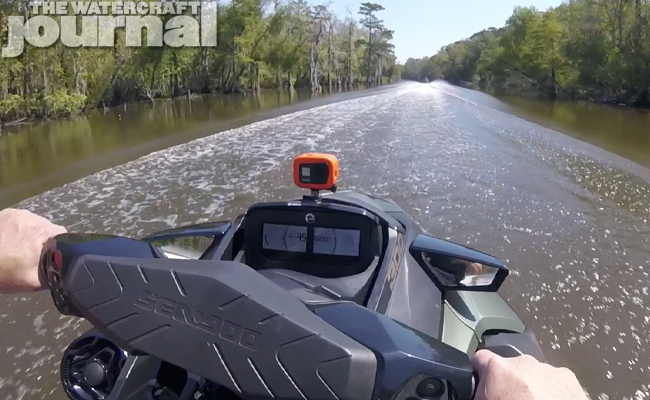
There are few better venues to indicate the problematic traits of the Sea-Doo’s ST3 hull than riding in groups through narrow channels like we do in Morgan City. Only when you’re riding directly in syncopation with the ski in front of you, the vertical blade-like bow of the full sized 3-seater will track with some predictability; otherwise the ski will veer, wander and jolt in whatever direction the wake ahead of you points.
More than once did the nose grab the leading edge of a wake and yank violently to the side, breaking the pump free and pitching the entire hull sideways. Even an experienced pilot can be caught off-guard by this, spelling disaster for the unsuspecting rider or passenger. I’ve documented how RIVA’s Pro Series sponsons best work to alleviate this but cannot wholly resolve the characteristic. It’s baked into the hull design and is something to be aware of.
Friday took us through narrow sections, serpentining up nature-made race courses. Thankfully those few who knew how to ride joined Natalie and I in a little high speed horseplay, spraying the local flora with 10-foot-high roosts. More staid riders grew impatient with our kind of mischief and eventually peeled off into their own group, presumably to stop and enjoy a chilled bottle of chocolate Ensure and catch up on their knitting. Now a leaner and quicker group, we picked up the pace and watched as our fuel gauges sank lower towards “Empty.”
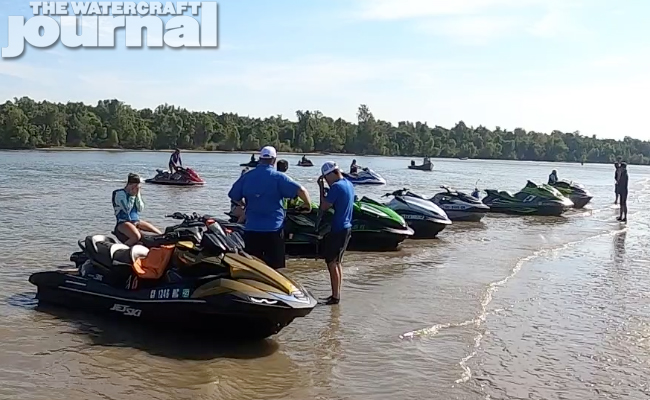
After changing over to the east side of the levee and putting in at Doirons Landing, we raced up the trail towards Spunky Monkey, a local waterfront watering hole. With a little more filming needed to conclude our shootout, Greg and I sped off to a familiar shady sandbar. Getting the last few shots left, we watched as the remainder of our group sped by. We followed shortly after, racing against the sinking sun setting beyond the western tree line.
Saturday morning started a little slower than the day before but just the same: This time Greg was aboard his modded purple Sea-Doo while Natalie and I loaded up the Ultra 310LX. Our group grew quite a bit, with almost 40 heads and nearly 30 skis. Today we were joined by a ‘22 Ultra 310LX-S and two other supercharged Kawasakis sprinkled throughout the typical ratio of Yamahas and Sea-Doos. With the gold LX topped off, we pinned the throttle and raced off towards the pack leader.
Billy Duplessis and David Pate gave chase in a particularly exciting twisting trail, taking corners at speed, throwing grass-mingled roosts and plumes of roiling thrust. The big Kawi had zero trouble chasing down David’s GP and Billy’s FZR and greedily sluiced the whitewash and wakes never once disengaging or breaking free, the big 160mm axial-flow stator biting down like a set of grippy tires on a prepped race track. And all of this with my 3rd grader hanging on, laughing all the way.
That she was more than willing to goad her father into pinning the throttle to its stop more than a few times was particularly impressive as the day carried on; this Disney princess-loving little girl happily encouraged me to vice the Kawasaki to full throttle for several minutes across a wind blown Lake Verret, out running a handful overbuilt Sea-Doos whose noisy through-hull exhausts vanished behind the whine of the Ultra’s Eaton TVS supercharger; the consistency of the Kawi’s ever-hooked hull pushing the big JetSki ahead of several racy Sea-Doos.
In fact, that seemed to be an ongoing motif: the Ultra keeping a steady pace behind far-faster modded skis. While hot doggers pinned their throttles and ricocheted over the broken surface, their pumps disengaging and blow-off valves whistling, the Ultra charged ahead always staying hooked and maintaining a straight course – all with a little girl giggling and asking “Go faster, daddy!”
And that is clearly one of the most unsung benefits of the Kawasaki’s rough water prowess: it doesn’t wear you out like a GP or RXP-X does. The effort necessary to pilot a RXT-X through similar chop can be exhausting. Not so on the Ultra. Maybe the marketing department should consider the moniker: The Ultra JetSki kicks everybody’s butt but yours. It has a nice ring to it, doesn’t it?
That evening was spent at a local Mexican restaurant choking down warm salsa (for whatever reason, every Mexican restaurant in Morgan City heats up their salsa – it’s weird and makes you feel like you’re dipping your chips into marinara sauce) and swapping stories of who got lost, who broke down and who slammed their Sea-Doos into the launch ramp. Sadly, Natalie had to be on our way the next morning as she had school the following Monday, and mom wasn’t going to tolerate me bringing her home late that night. Ratcheting down the GTX and 310LX, we bid farewell to our Mudbug friends and made the long trek back to Tennessee certain to return next year.
The landscape of the average personal watercraft owner is rapidly drifting from the youthful, athletic rider to the more staid, casual cruiser. Even the sportiest machines are advertised as “stable,” “dry” and “predictable” luring in would-be buyers with hopes of owning the most race-ready watercraft without actually knowing how to actually ride. And with that, so has drifted the requisite riding equipment.
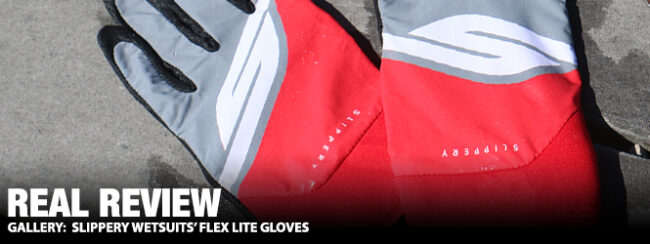
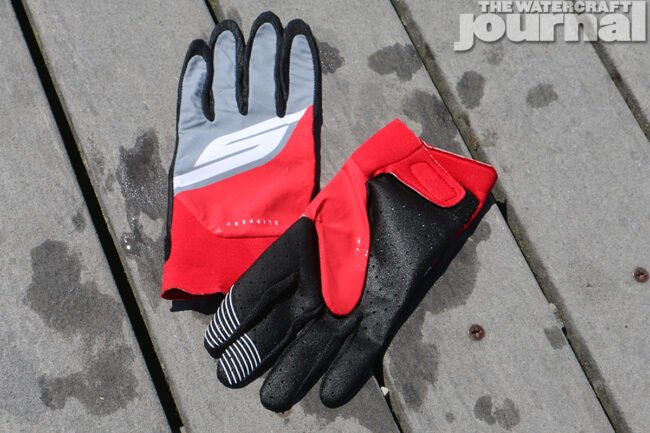
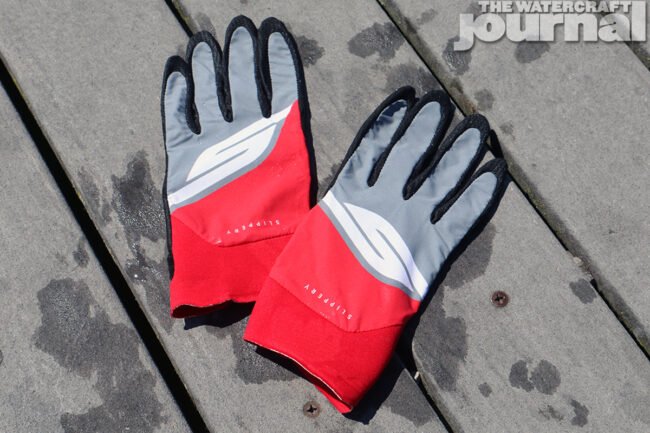
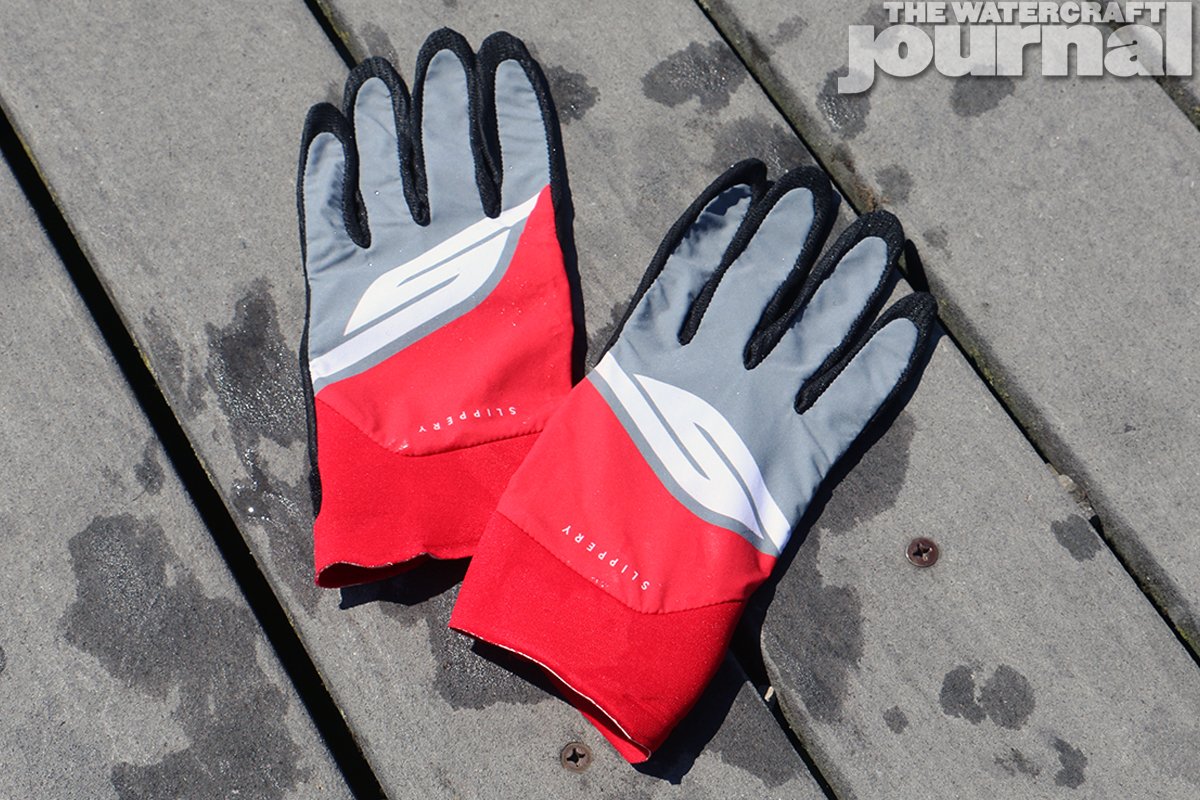
Serious riders donned specialized boots, neoprene-lined shorts, side-entry vests and heavily-strapped gloves. While much of that gear is still very much available through brands like Slippery Wetsuits, the casual riders bristles at the idea of wearing much more than they would don were they going out for a day on their buddy’s pontoon.
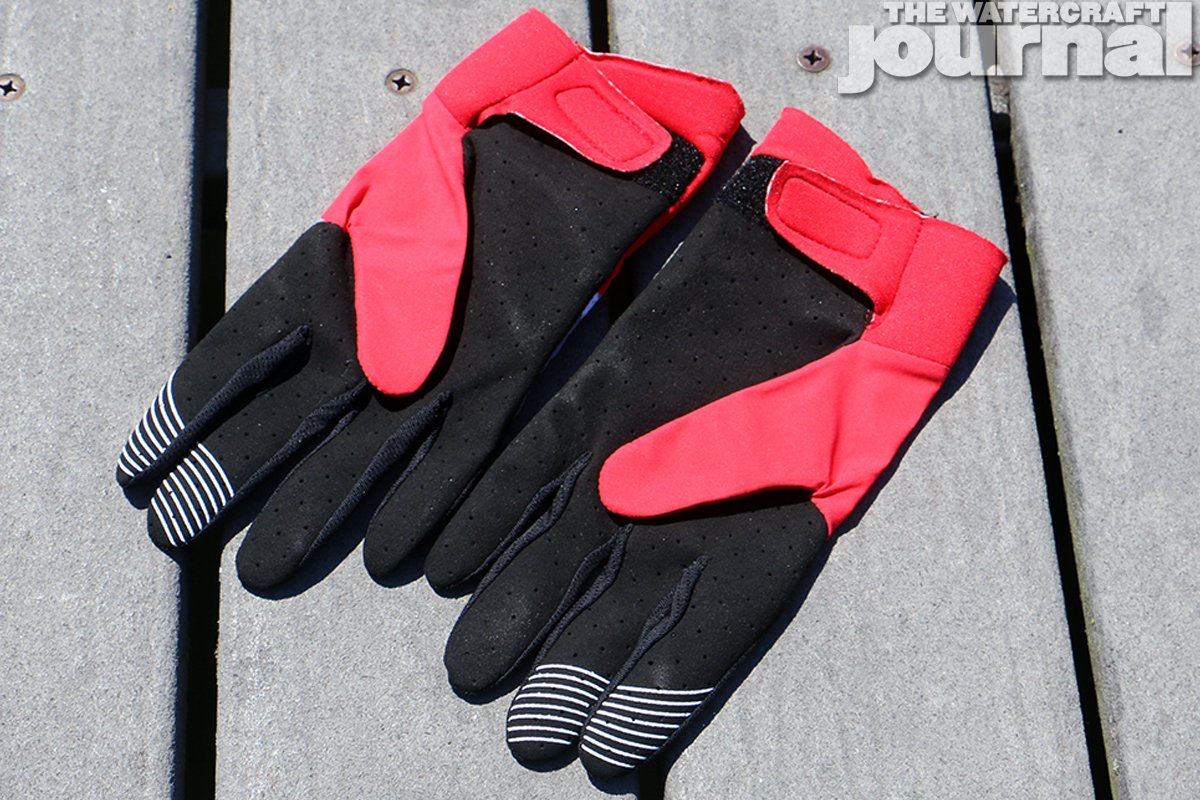
So in reviewing Slippery Wetsuits’ Flex Lite gloves we had to consider that the overwhelming majority of potential customers wouldn’t even imagine using riding gloves – even after a day of rubbing their fingers and palm raw. The everyday PWC enthusiast’s needs are simple: a comfortable glove that provides continued grip, protection from wear and the elements.
A decade ago, most gloves were typically a bit racier, featuring clunky rubberized molding over the knuckles, made from materials both thick and bulky. These were fine for the time, but if ever you tried to rub your nose or the sweat from your brow, would know how painful it could be. That’s where Slippery’s Flex Lite gloves stand apart.
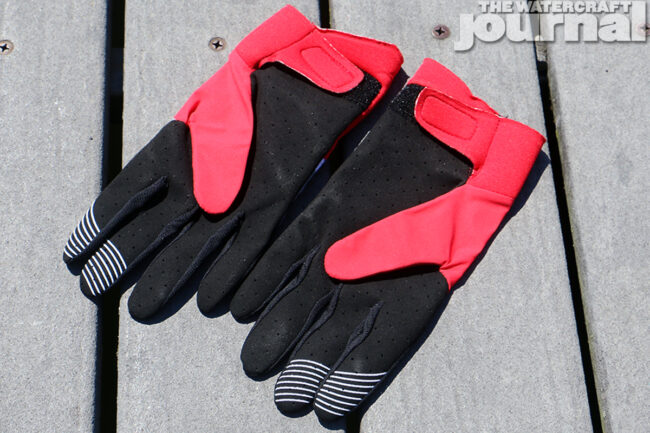
The thin 4-way stretch mesh material and “barely-there” lining of the perforated palm gives the gloves the second skin-like feel, breathes easily and dries near instantaneously. The Flex Lite’s superior fit and clean pattern slips on snug but not too tight. And while being incredibly light, the gloves’ reinforced thumb overlay provides added protection from rub-induced blisters.
Unlike other manufacturer’s offerings, the anti-slip gel print on palm and fingertips hold up surprisingly well despite continued use. Equally, the Flex Lites’ hook-and-loop wrist closure straps down firmly today as well as they did the day we opened them up for the first time. [We’ve got a dozen pairs of gloves that no longer strap tight, as the Velcro has loosened or the straps snapped. –Ed.]
Super flexible with class-leading breathability, Slippery Wetsuits’ Flex Lite gloves are a great warm-weather glove (don’t expect much in keeping your hands warm in colder temperatures). Priced at $24.95, they’re a solid purchase for the rider looking for a little added protection from the elements without feeling like they’re bundling up for winter.
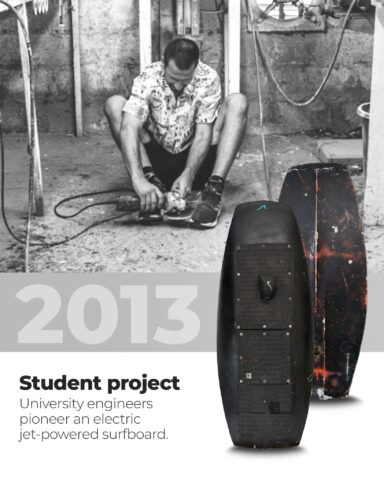
Time flies when you’re making waves with Radinn! The group has been in the electric jetboard business since 2013 when they developed their first jetboard prototype. It was an engineering project at Sweden’s Lund University. The idea was to make an eco-friendly version of the gas-powered boards.
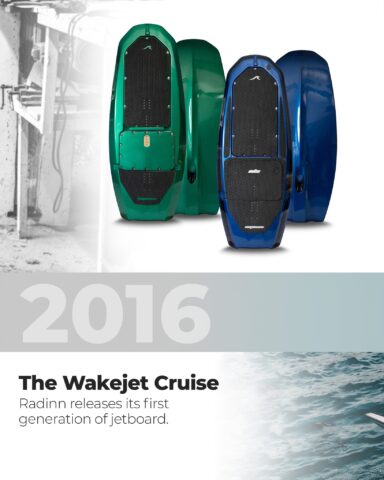
The prototype was launched in 2015, followed by the Generation 1 line in 2016 when they were asked to take it from prototype to market. That’s when the carbon fiber Wakejet Cruise came introduced. It was a stubby lightweight carbon fiber board, with a diamond shaped nose and a bat tail.
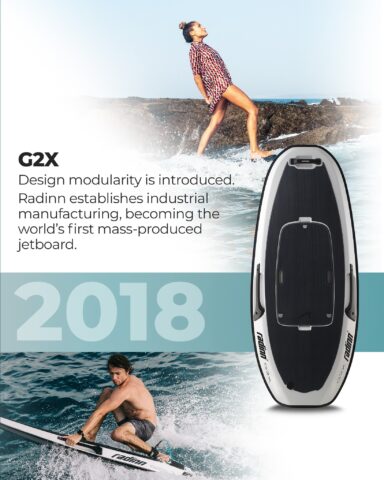
The Cruise was the first electric jet-propelled wakeboard. In 2018, the group moved into industrial manufacturing when they mass produced the G2X . The G2X was a big deal when it hit the market because it had 25 minutes of ride time and could hit speeds up to 36mph.
The G2X still had a diamond shaped but the tail was squarer than the Cruise, which gave it a more streamlined look. It probably rode better too with that squared tail. Radinn was getting closer to the ultimate in jetboards.
Enter 2020 and Radinn ups the game with three new models, an advanced IoT platform, and improved features. This is when the Explorer, Freeride, and the Carve came on the scene. These boards were lighter, faster, and came with the new modular system. The nose was rounded with a square tail, and super clean rails, making for a premium ride.
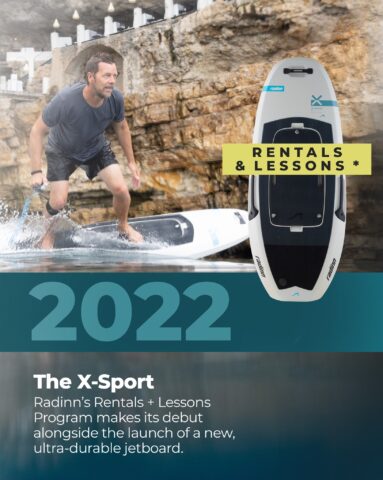
This design makes the boards more responsive, offers faster planing across the water, and a lot of stability. In 2022, The new durable X-Sport became the first rental board on the market. We have no doubt that Radinn will continue to make waves in 2023 and we look forward to seeing what’s next.
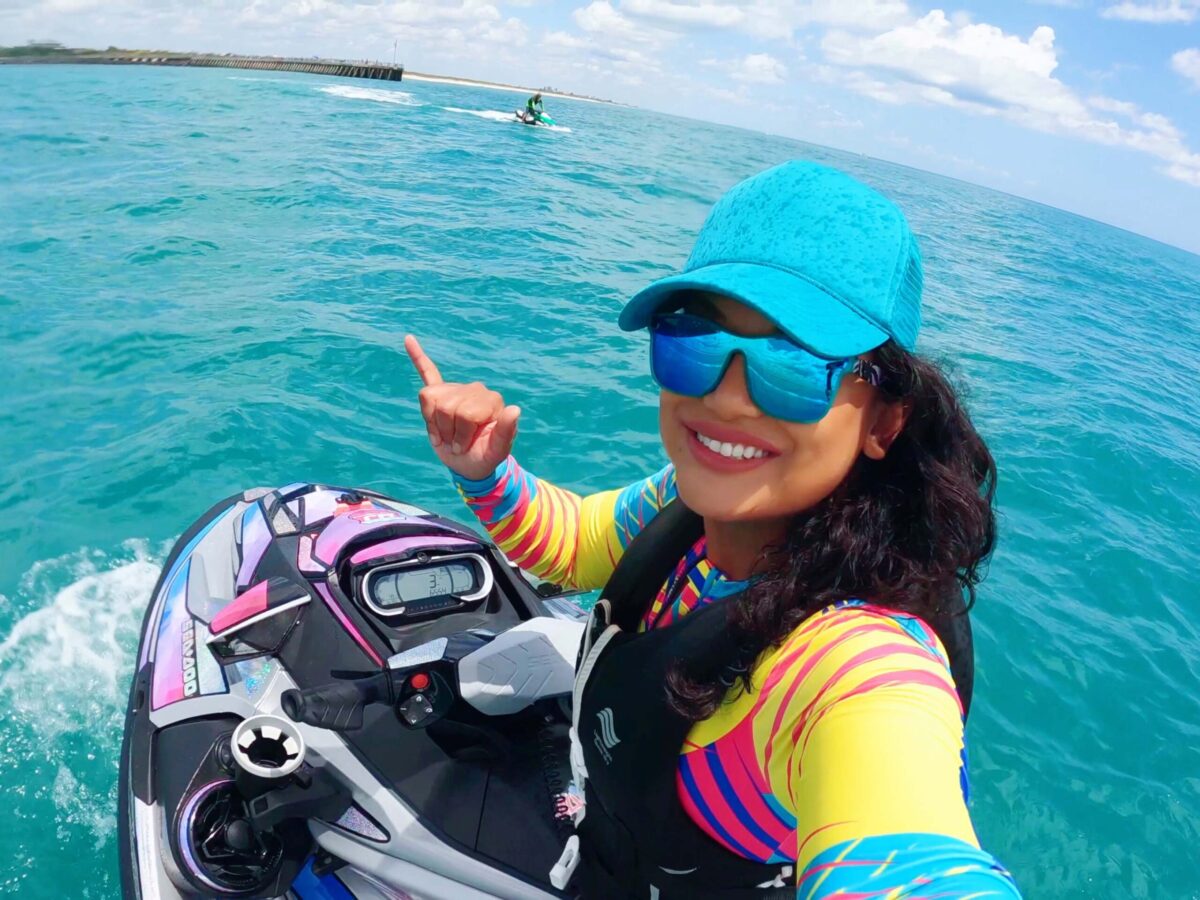
BRP celebrates the increasing number of women who are taking their place in the driver’s seat in powersports and marine on International Women’s Day and every day. The BRP Get in the Driver’s Seat initiative features stories of women who dig the freedom of riding, ride for fun, or just want to get they’re going. BRP wants to hear your stories and encourages you to sign the commitment to get out there.
For everyone who signs, a dollar will be given to several different organizations dedicated to the advancement of women. Before or after you sign on, check out the female BRP Ambassadors. From riding Can-Am’s to Sea-Doo’s, these women are bad ass and outstanding representatives of women in powersports and marine. We’ll touch on Alvean Azurin and Bri Andrassy, the two female Sea-Doo Ambassadors.
Azurin has put the time in to learn about her PWC and while watching how-to videos on YouTube, she noticed none of the creators were women. She set out to change that and now shares content showing how easy it is to handle a PWC or a boat. She wants to pass on the confidence she has gained through her riding experience. It makes her happy when women tell her they bought a PWC because of her videos.
As for Andrassy, she is a kayaker turned jet ski rider. She used to deep sea fish from a kayak and grew tired of getting stuck in storms miles off the coast. When she saw the Sea-Doo Fish Pro, she knew she had found the perfect watercraft. She can get out there faster and easier, leaving more time to fish. She leads a simple life and says life is short, so she tries to make the best of each day. Get out there!
Racer H2O recently announced they will live stream the American Jet Sports Association’s (AJSA) 2023 Summer Southern Series Championship. The Regional Championship takes place in Pulaski County, VA at Craytor Lake State Park September 9-10. This should be cool to watch. We’ve seen some other live streaming events and they’ve been pretty good. Subscribe to their YouTube Channel to stay in the know.
The AJSA is a neat organization that promotes racing at all levels in the southeastern United States. The group isn’t sanctioned which allows them to focus on the riders and the venues. They like it like this so it can remain a grassroots organization by keeping it fun without the politics of racing. The AJSA began as The Chattanooga Jet Ski Club, which became official in 2019. The club applied for a permit through the Tennessee Wildlife Resource Agency to get a course set up on a local lake.
After their first year, they started Wet Scooter Wednesday’s when the club gets together to ride buoys. They also offer racing one Saturday a month as well, which enables riders from further away to attend and bring their families to check out the sites. The club grew to over 500 members in 2022, so it held a race in July. It was the largest race in the country with almost 100 racers in attendance. With that success, came the AJSA. Read all about the organization here.
Kawi Performance out of Long Island, NY offers some of the most innovative aftermarket products for Kawasaki Jet Skis, and their 148mm Jet Pump Upgrade Kits are no exception. These kits are designed for for the STX-12F, STX-15F, STX 160 and SXR 160 JetSkis, model years 2003 to present.
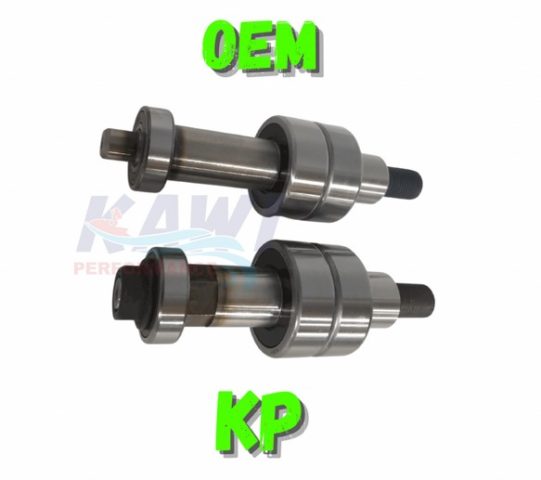
Designed, engineered, and manufactured in-house, Kawi Performance’s innovative design prevents the pump shaft from being forced forward into the engine, wrecking the thrust bearing and crank. The Kawi Performance Jet Pump Upgrade kits provide peace-of-mind by improving both reliability and performance.
While the stock Kawasaki design is good, there is no fail-safe to prevent the pump shaft from walking forward into the engine if the jet pump fails. The KP Jet Pump Upgrade Kits will not only protect your engine from pump failure, they also include an integrated one-step hex nut that allows the impeller to be removed and installed with ease!
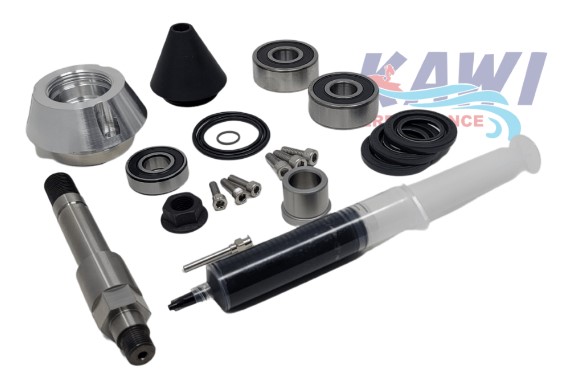
The KP kits include premium Japanese bearings, a precision cone, premium o-rings, grade 8 nuts, and to tie it together- a custom designed, heat-treated pump shaft with dipped and rolled moly threads- making KP Pump Shafts more than twice as strong as OEM ones! The precision cone included in these kits is also redesigned to give riders additional RPM and less cavitation.
The basic kit comes with just the shaft, bearing, o-rings and cones. The full kit comes with everything to upgrade and rebuild the pump- including all required bearings and oil seals, and a syringe of synthetic grease
Riders that have pre-2003 STX models with a Kawasaki 148mm pump should contact Kawi Performance via email to determine if an upgrade/rebuild kit is available. KP’s detailed product installation tutorial and product comparison and overview video here.
Check out the Kawi Performance website for more innovative products and services, as well as some great maintenance tips and tutorial videos. Stay tuned for KP’s all-new redesigned website which will be launching soon.
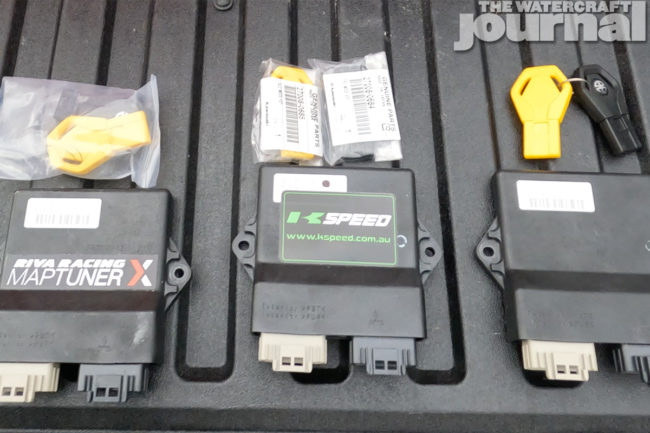
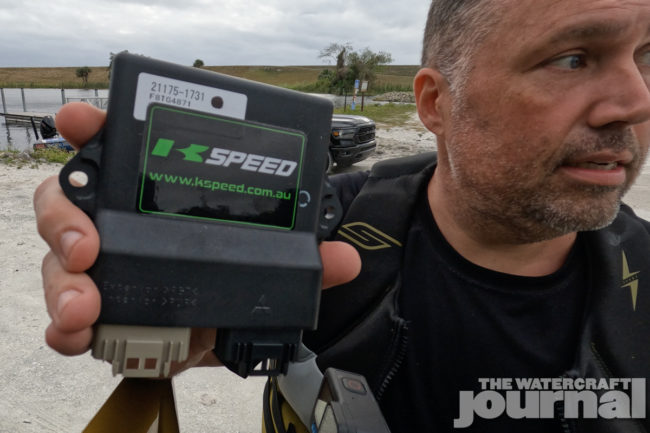
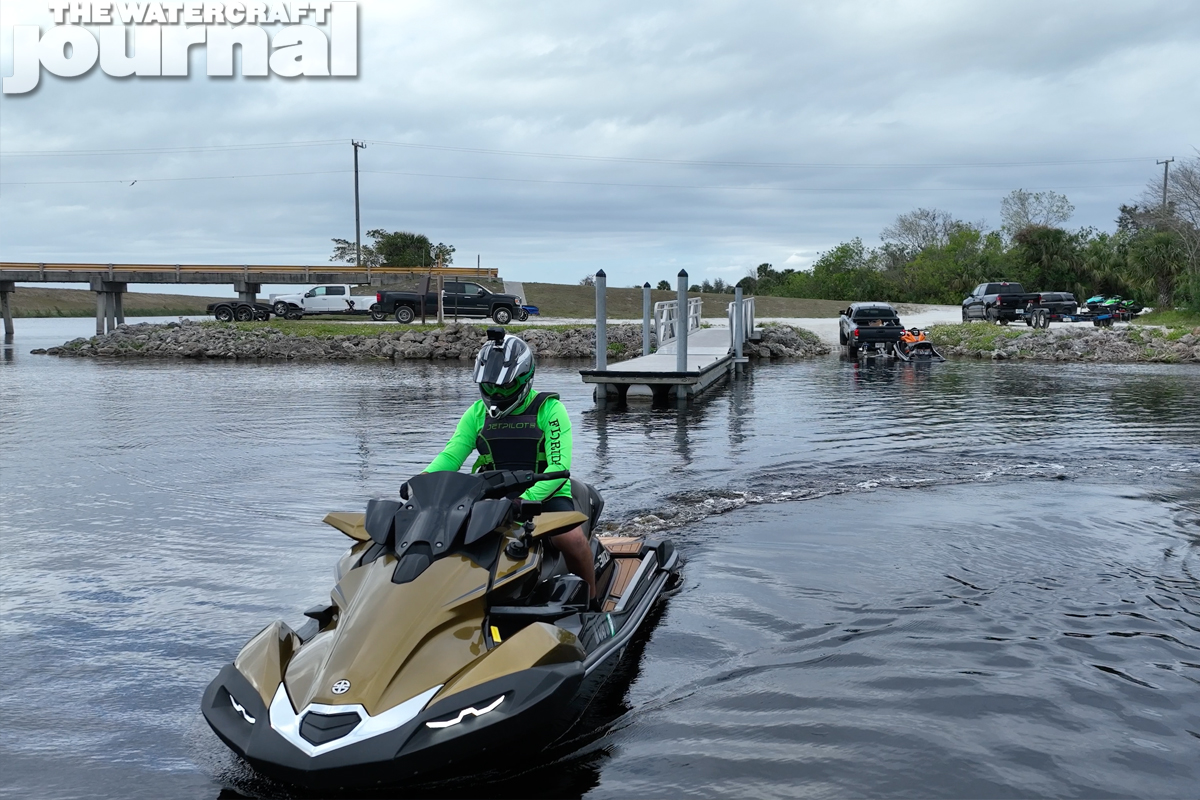
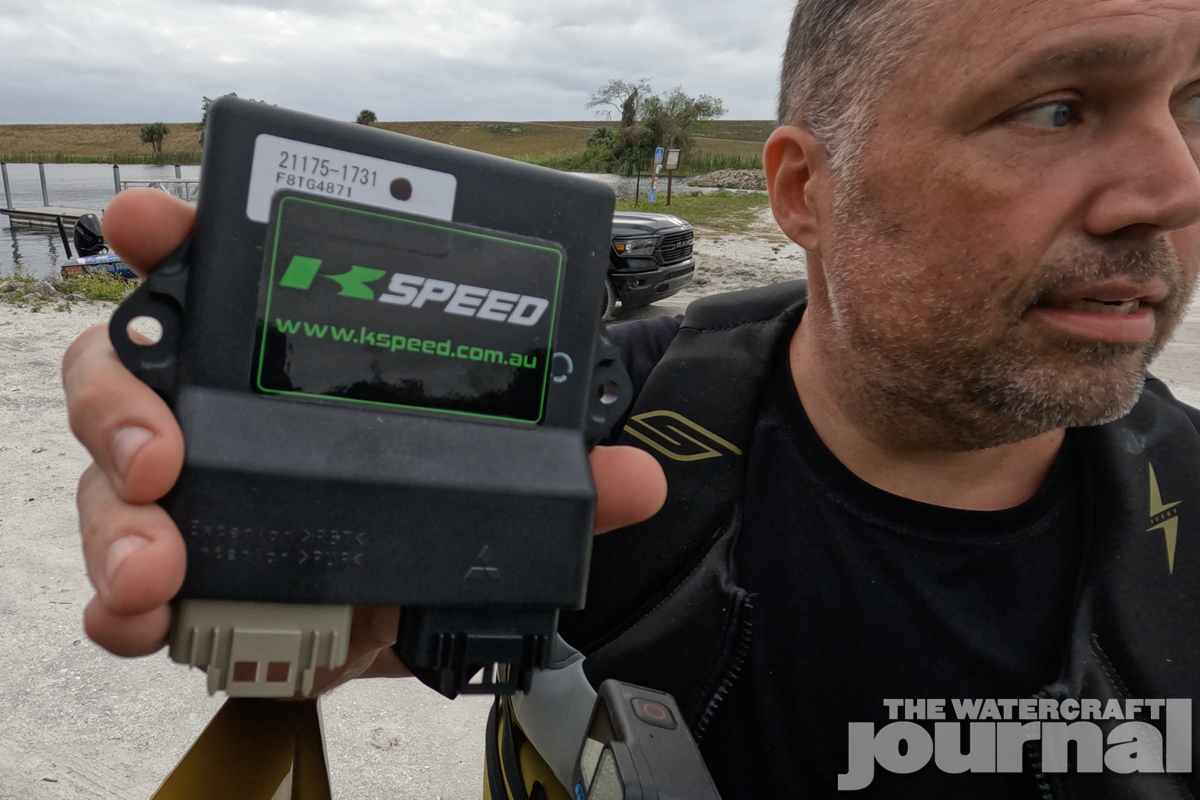
When Kawasaki announced the new Ultra 310 platform in the fall of 2021, we at The Watercraft Journal knew that we were in for a treat from the performance aftermarket. It took a few extra months for units to land in Australia, but as soon as they did Kspeed began banging, ripping and disassembling the newest machines.
As most expected, they were the first out of the gate with a solid tune and began working on other modifications. One day in January 2023, there was a text thread between all of us at The Watercraft Journal demanding, “Go look at Jesus Garcia’s post now!”
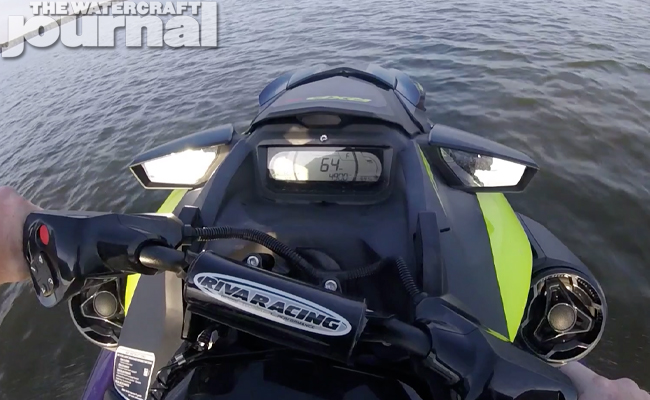
And there it was. Jesus Garcia with RIVA Racing had just finished his final tests on the Stage 1 ECU tune for the new Ultra 310 platform – 74mph with just a tune. Everyone in our text thread just knew that we had to run these two tunes for a real world comparison.
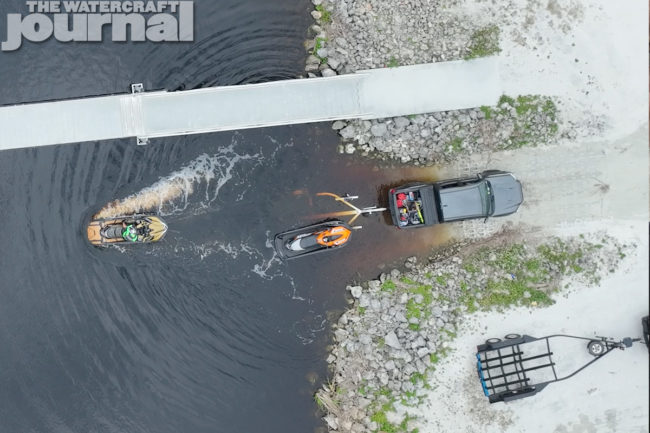
JD Brussels from JD’s Waterworld and this author from The Adventure State were getting ready to hang out for a week in Jupiter, Florida. We both already had the Kspeed tune and already had the OEM stock ECU. Chris contacted RIVA Racing and they agreed to let us give their tune a try.
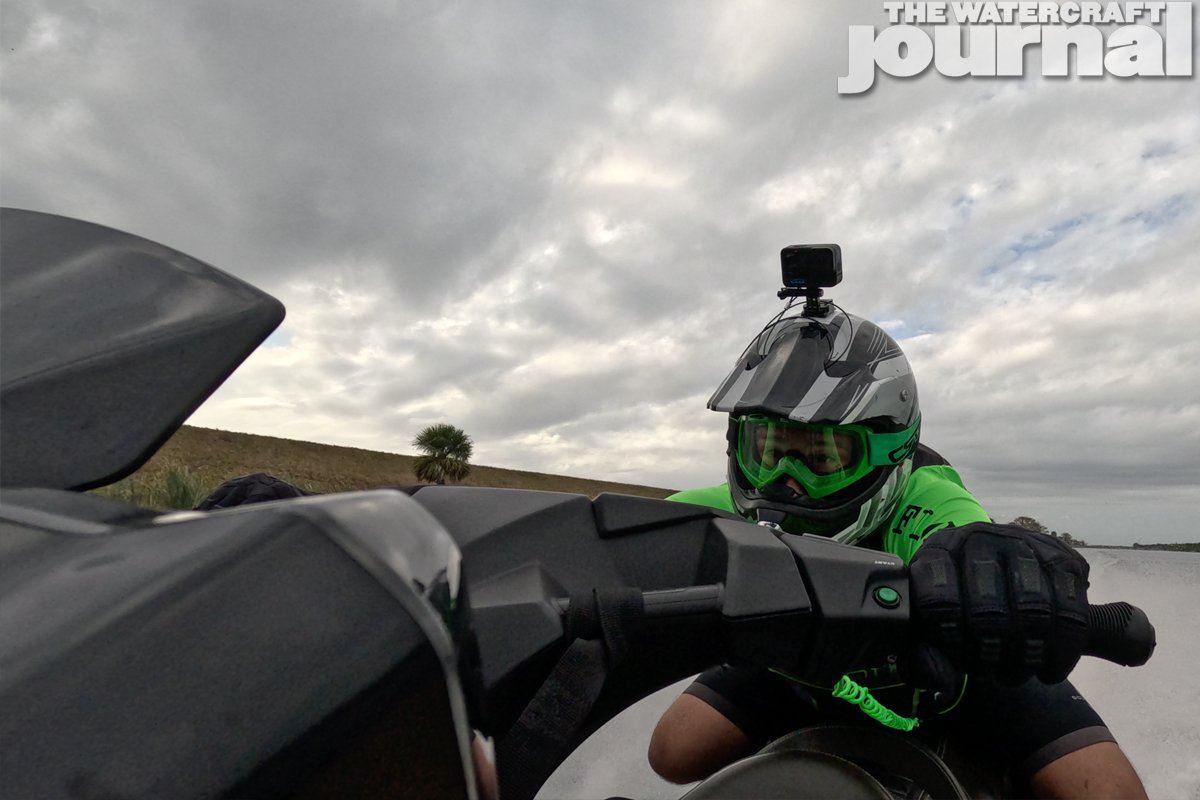
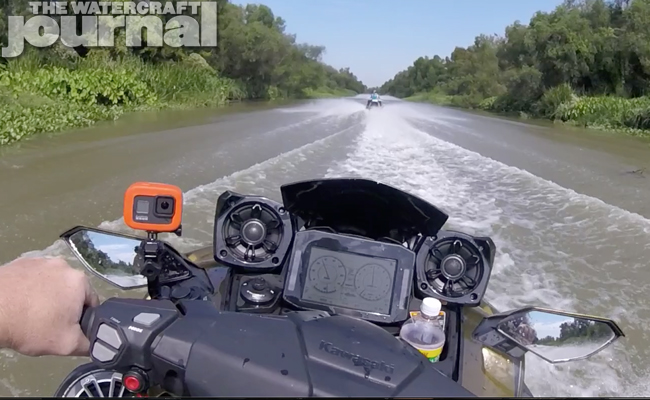
We were able to find a canal that had hills and trees on both sides blocking any wind. The water was nice and calm. Water traffic was nonexistent and there was only about 20 feet of no wake zone. Pretty perfect testing conditions.
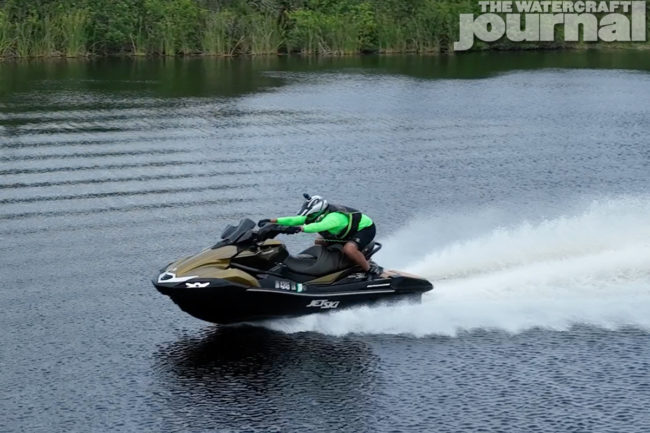
Before we get into the numbers, here are some details that the reader should know: Even though we had the Kawasaki Ultra 310LX and the Ultra 310LX-S, we decided to do the testing on the flagship only, as the LX weighs the most. The ski has 30 hours and was completely stock, minus the Kspeed Atmospheric Trumpet.
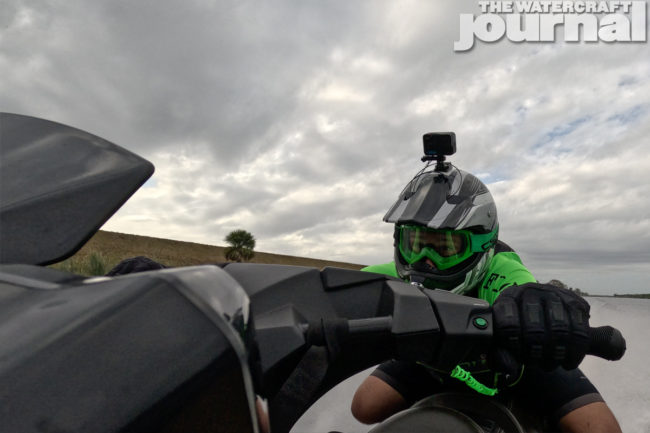
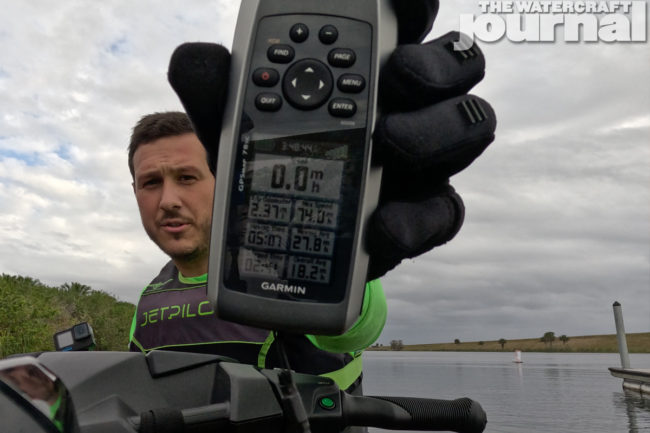
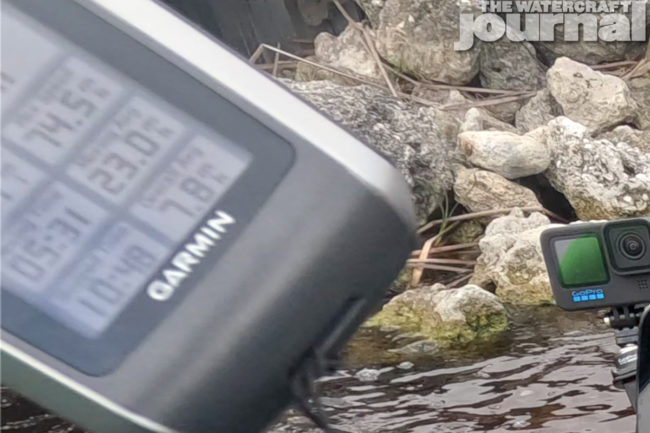
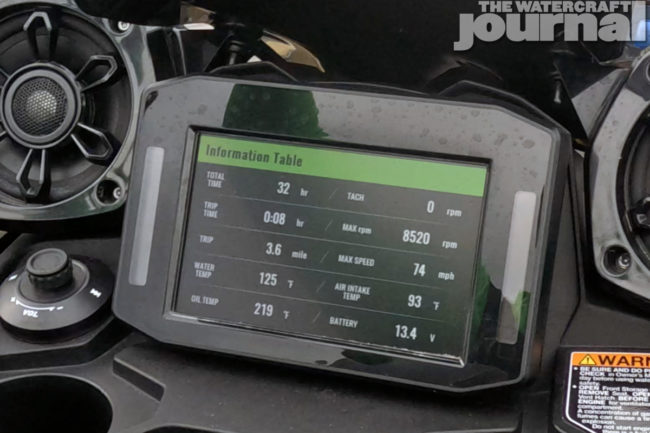
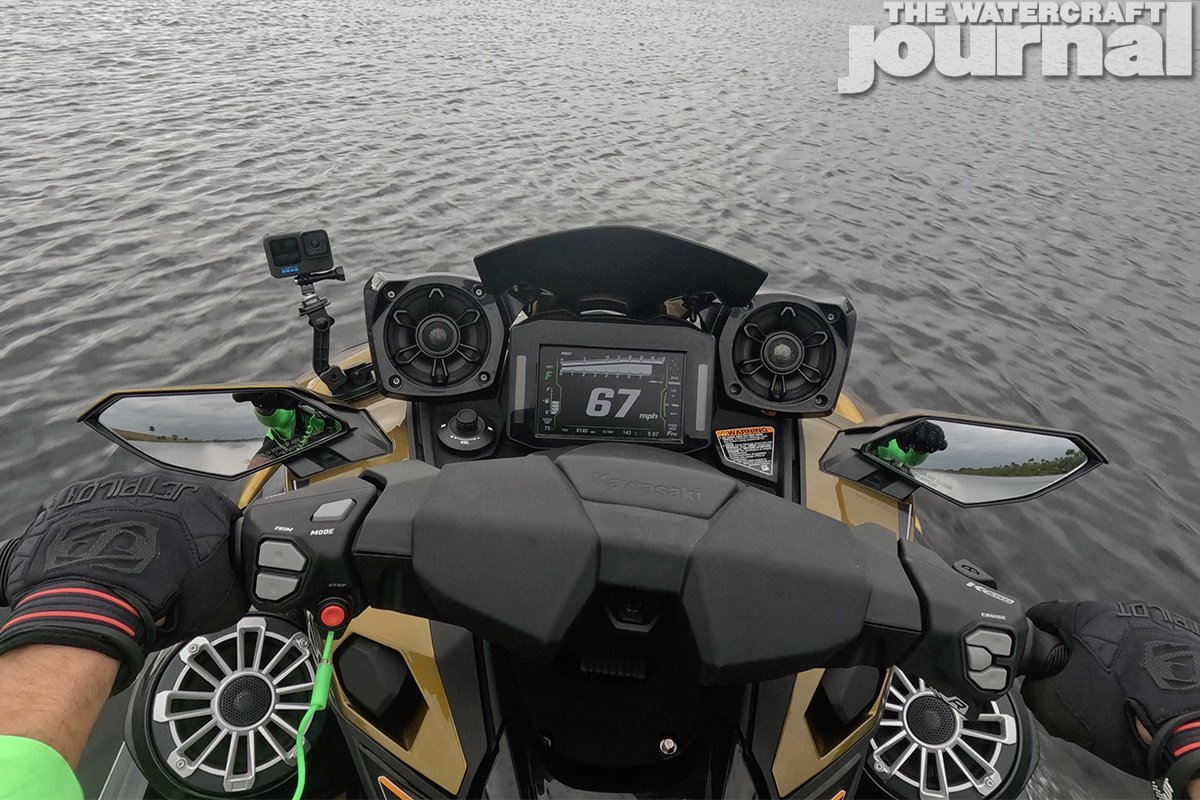
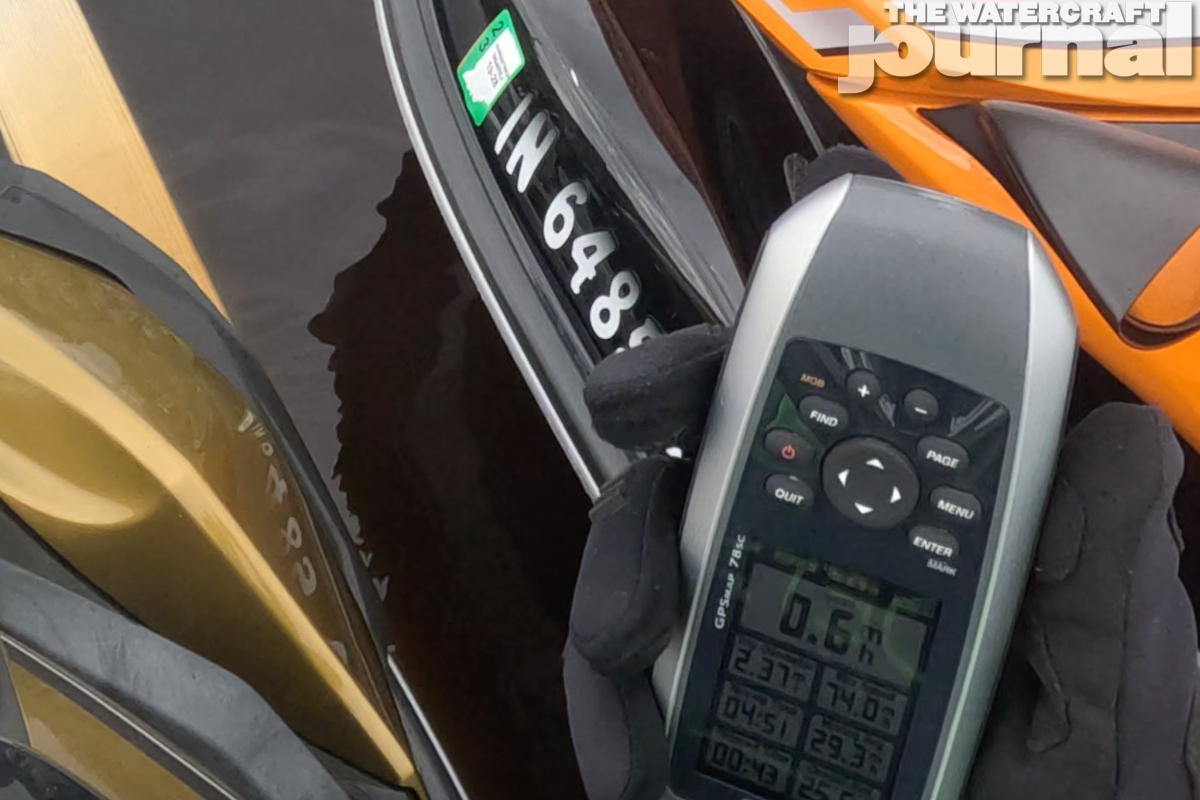
We wanted to make sure that each run was as close to the exact same as possible. Chris weighs about 80-pounds or so more than JD so we thought it was important for both of them to do each run and truly compare the numbers. We also used four GPS devices; the GPS speedometer on the Kawasaki’s dashboard, a Garmin 78SC (handheld), GoPro Hero11 meta data and a cell phone in the phone box running the app Max Speed. We thought it was important to capture as much data as possible.
Air temperature was 75 degrees F with 90% humidity and the wind was less than 1mph during our entire day. The intake temperature averaged 80 degrees F and never exceeded 83 degrees. We started the day out with about 1/3 tank of fresh 93 octane fuel. After each run, we would let the ski sit for 20 minutes to allow it to cool down, splash just enough fuel in to get us back where we started and document all data collected form the previous run.
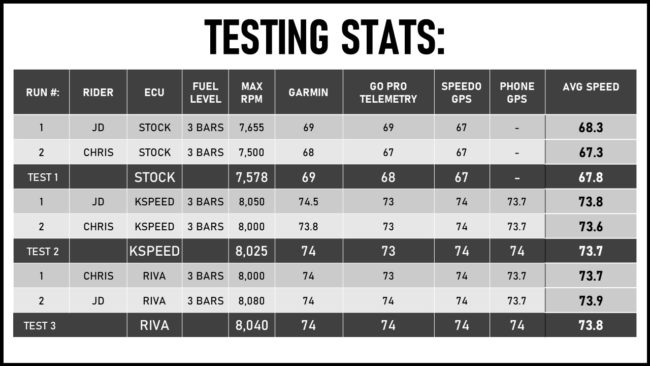
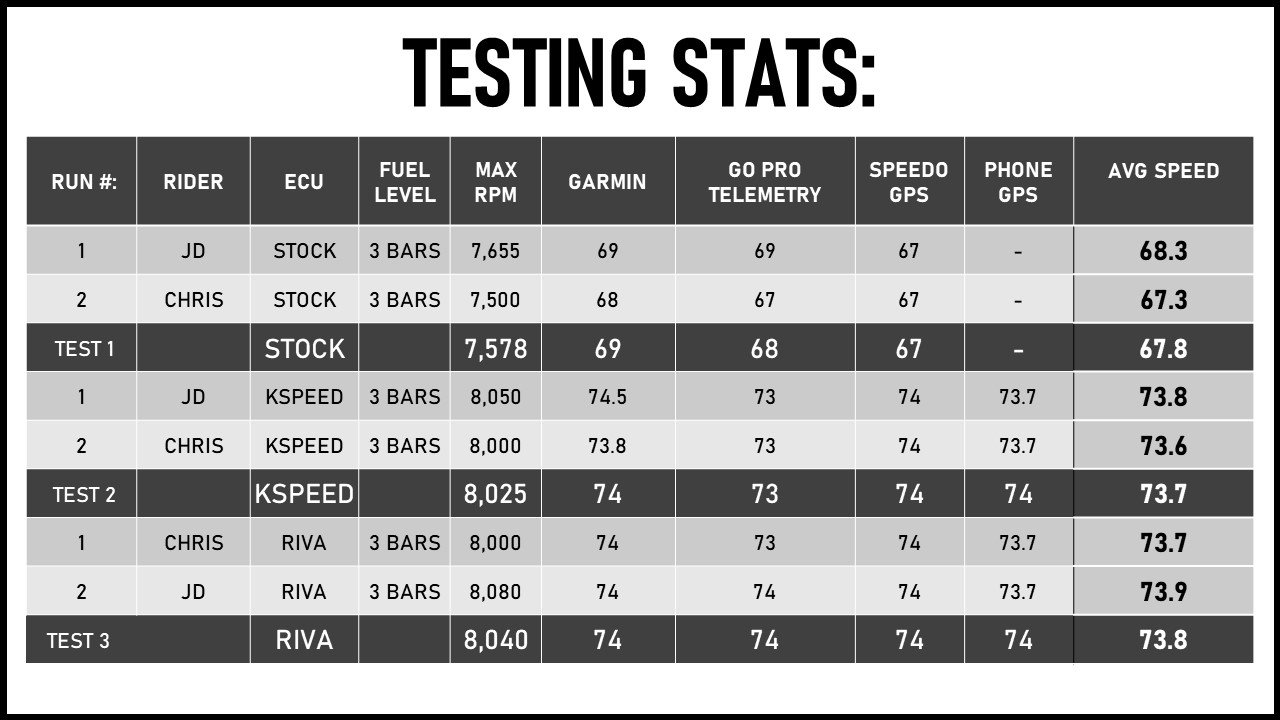
As you can see in the image, we have listed what each GPS gave us, but for the purposes of this article, we will give you the average between all four GPS devices: The Kawasaki stock ECU gave an average of 68.3 MPH for JD and 67.3 MPH for Chris, as expected. Between the two of them, that is an average of 67.8 MPH; the Kspeed ECU gave an average of 73.8 MPH for JD and 73.7 MPH for Chris, giving an average of 73.7 MPH; the RIVA ECU gave an average of 73.9 MPH for JD and 73.7 MPH for Chris, giving an average of 73.8 MPH.
From spending several hours testing these out and trying to document as much data as possible, our entire team has come up with two conclusions: First, the Kawasaki Ultra platform just doesn’t seem to care that much about weight differences, as you can tell by comparing our two test riders. The second thing is by only seeing literally 1/10 of a MPH difference, the Kspeed and RIVA ECU tunes seem to be nearly identical as far as top speed numbers are concerned.


 After years of podium finishes, Radetic and partner, Cooke took the overall victory at the 19th running of the grueling









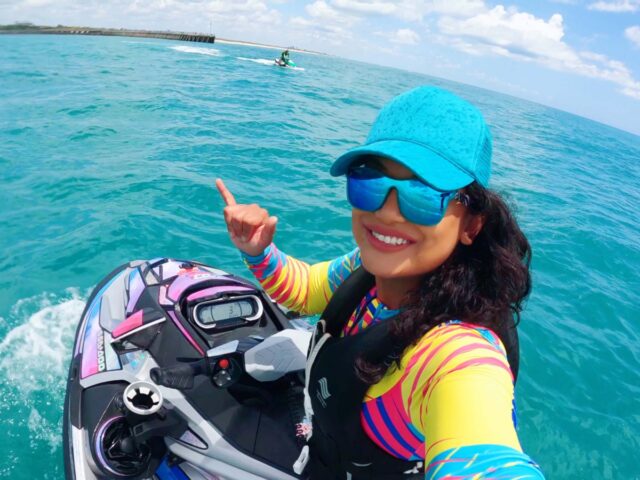
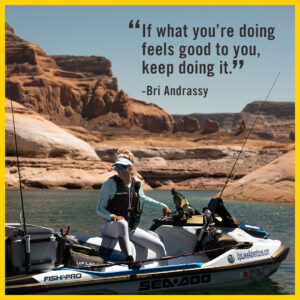 For everyone who signs, a dollar will be given to several different organizations dedicated to the advancement of women. Before or after you sign on, check out the female BRP Ambassadors. From riding Can-Am’s to Sea-Doo’s, these women are bad ass and outstanding representatives of women in powersports and marine. We’ll touch on