With all the panic and money to be made surrounding climate, change more developers are turning toward zero emissions vehicles, and that includes PWC. Electric Hydrofoils are all the rage now and some odd designs are coming to fruition.
Hydrofoils are lighter than the typical battery-operated jet ski, thus the gravitation toward them. They offer more ride time, too. A jet ski designed with hydrofoils has a lot let less drag due the foils lifting the ski above the waterline. It also uses less energy and is more efficient than a standard battery-operated jet ski.
Pelagion’s battery powered HydroBlade uses a hydrofoil, which not only minimizes drag, but it also allows the electric drivetime to run longer and at higher speeds. Mark Zuckerberg helped the HydroBlade gain notoriety when he was filmed riding one of Pelagion’s prototype models.
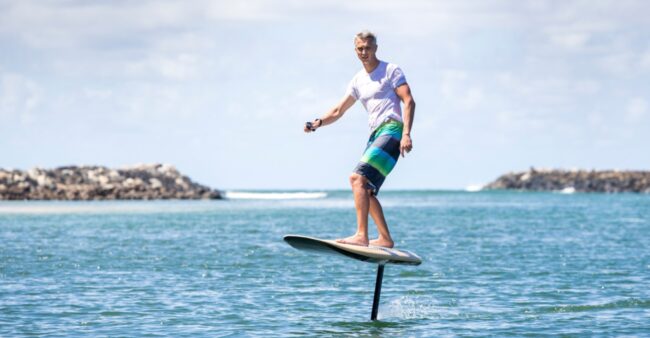
The Fliteboard eFoil is another interesting contraption that recently made the news again. It is a stubby surfboard powered by a titanium encased battery that connects to the Dual Drive propulsion system. With the Dual Propulsion system, you can switch from jet propulsion to a propeller without the use of tools.
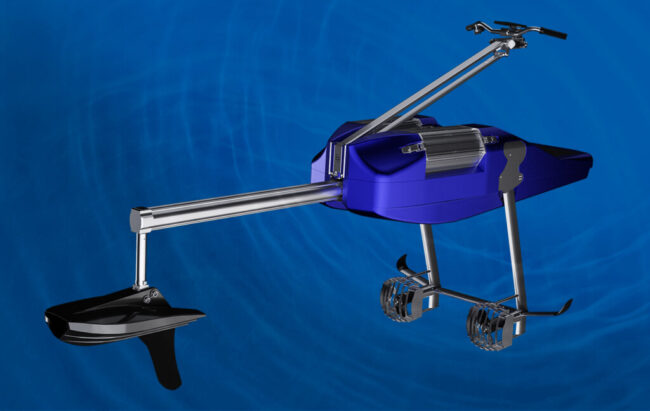
Another interesting watercraft is the prototype Flyway electric water scooter, which looks a lot like the original stand-up jet skis. The Flyway has a large boom attached to the bottom of the hull. The boom is connected to the hydrofoil and underwater propulsion system. The scooter does look fun to ride, though we prefer a jet ski with a combustion engine.
However, electric watercraft are quiet and less disruptive than gas powered vehicles and with the ride time getting better, their popularity is increasing. Moreover, with the push toward electric vehicles and certain jurisdictions prohibiting combustion engines on the waterways, the push is on to ride electric PWC.
“We are honored to receive so many prestigious recognitions from these distinguished organizations. Innovation and ground-breaking design are part of BRP’s DNA and when this is applied to our marine products, they allow us to break away from the sea of sameness to enhance the customer experience. Achieving this is only made possible due to the many talented teams at BRP who worked towards the success of Rotax S and the Sea-Doo Explorer Pro 170,” said James Heintz, Director of Global Product Strategy, Sea-Doo & Marine Group at BRP.
Check out the complete press release below: Valcourt, Quebec, February 20, 2023 – BRP Inc. (TSX:DOO; NASDAQ:DOOO) celebrates numerous boating industry awards during the 2023 Discover Boating Miami International Boat Show™. Taking center stage was the all-new Rotax S outboard engine receiving two awards: the Marine Power Innovation Awards (MPI) and the National Marine Manufacturers Association (NMMA) Innovation Award in the outboard engines category. The Sea-Doo Explorer Pro 170 also took home an NMMA Innovation Award in the personal watercraft category. Finally, for the 21st consecutive year, Manitou was recognized for exceptional customer satisfaction and received another Customer Satisfaction Index (CSI) Award from the NMMA.
“We are honored to receive so many prestigious recognitions from these distinguished organizations. Innovation and ground-breaking design is part of BRP’s DNA and when this is applied to our marine products they allow us to break away from the sea of sameness to enhance the customer experience. Achieving this is only made possible due to the many talented teams at BRP who worked towards the success of Rotax S and the Sea-Doo Explorer Pro 170,” said James Heintz, Director of Global Product Strategy, Sea-Doo & Marine Group at BRP.
ROTAX S: Stealthy, efficient and hassle-free Available in 115 and 150 HP configurations on select Alumacraft, Manitou and Quintrex models, the Rotax S delivers all the same benefits of a traditional outboard engine with three distinct advantages over them: it’s stealthy, efficient, and hassle-free. With no obtrusive outboard engine block, cables, fuel lines or exposed propeller hanging off the transom, families can enjoy peace of mind while enjoying up to 20% additional space at the stern and a safe transition to the water. In addition, the Rotax S with Stealth Technology is smooth and quiet, at any speed.
“The BRP Rotax S creates additional deck space traditionally taken up by one or more outboards by orienting the engine block horizontally and tucking a portion of it under the surface. This allows the addition of an expansive aft deck while still allowing the engine to be tilted completely out of the water,” said judge Gary Reich.
The advanced direct-injection technology allows for up to 20% improved fuel efficiency compared to traditional outboard engines. With a 12% reduction in reportable emissions, and close to 98% reduction in carbon monoxide at idle compared to traditional outboard engines, Rotax S is also the cleanest combustion engine in its class.
Boaters will enjoy very simple and convenient routine maintenance and exceptional total cost of ownership, with inspections only needed annually, and no scheduled maintenance required for the first 5 years or 500 hours. The Rotax S requires no oil changes, and the one-touch winterization helps extend the boating season and avoid pricey service bills.
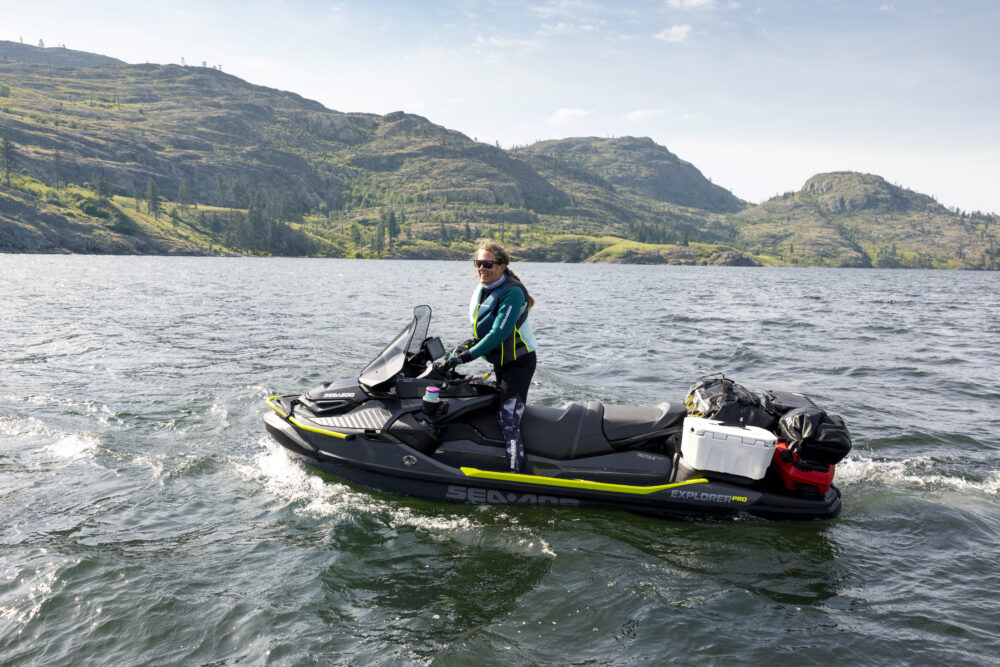
Sea-Doo Explorer Pro 170: New waters, with more gear, and new possibilities The Sea-Doo Explorer Pro 170 is the most adventure ready, out-of-the-box watercraft designed and engineered to take riders further in more comfort and style, to the point where they can leave civilization for days on end. The 2023 Explorer Pro 170 watercraft is ready to navigate new waters with the peace-of-mind knowing it’s fully equipped with uncharted water features and technologies. Adventure seekers can ride as a multi-day, self contained exploration package with its massive storage capabilities, fuel efficient load hauling power, and unmatched stability. The Sea-Doo Explorer Pro 170 adds comfort features new to the personal watercraft (PWC) world to ensure riders can tackle essentially every kind of adventure and conditions Mother Nature sends their way.
“The Sea-Doo Explorer Pro 170 is suitable for long haul adventures, it opens a whole new market and is likely to draw new boaters,” said judge Alfred Boer.
Manitou: Customer satisfaction above all else With superior styling and on-board innovations, the new generation of Manitou was designed to rise above in every way, and elevate the on-water experience to a whole new level. And the commitment to excellence doesn’t end with purposeful design. Manitou once again is a recipient of a Customer Satisfaction Index (CSI) Award from NMMA for exceptional customer service.
Have you ever wondered how you can improve how your SVHO-powered Yamaha performs for nearly free? Internal combustion engines thrive on cool, dense air to give them the densest “intake charge” possible – meaning a stable, efficient explosion. Ingesting hot air delivers less horsepower, inconsistent fuel combustion and early detonation. So helping feed your SVHO the most cool, dense air seems like a no-brainer, right?
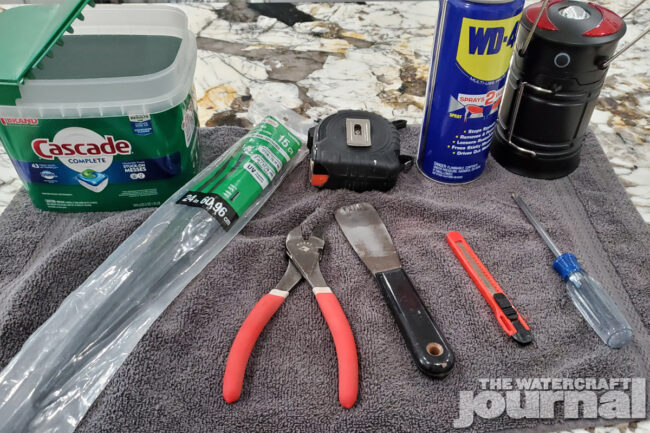
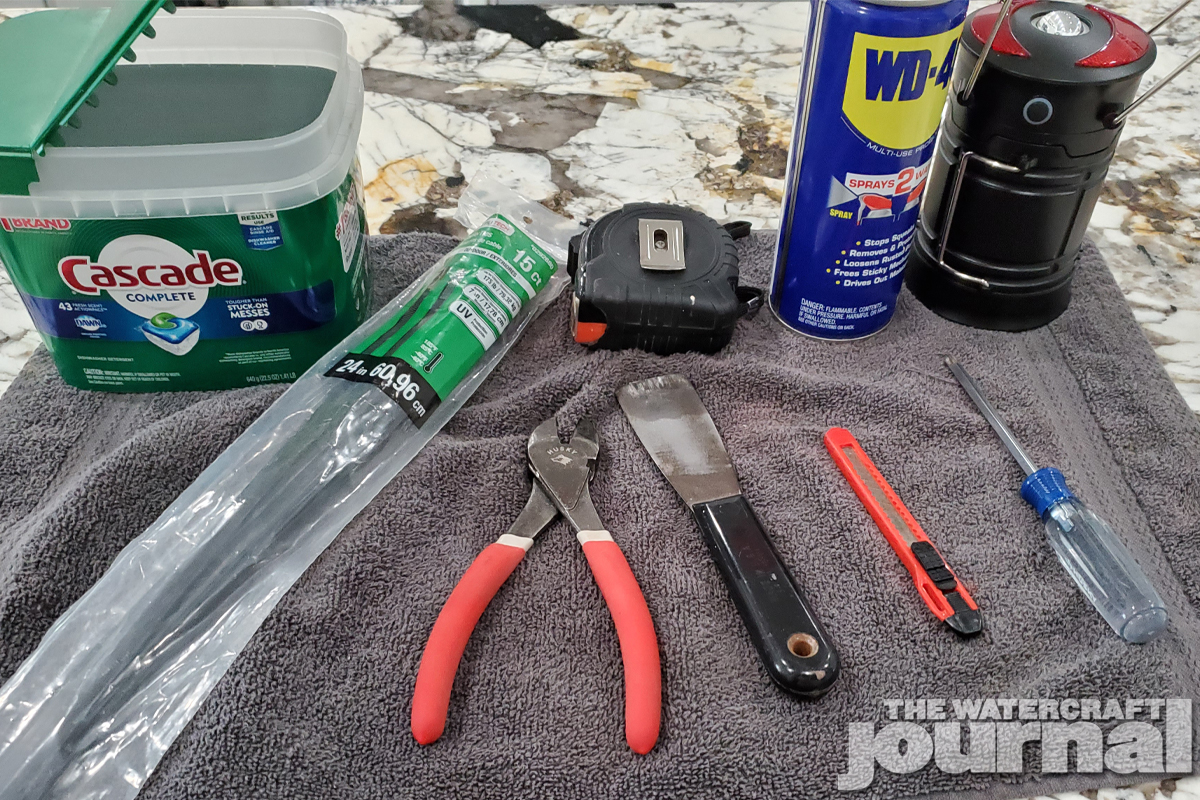
It turns out you can do that surprisingly easy and nearly completely free. To start off, some basic hand tools are required: Phillips screwdriver (P1), and/or a hook punch (depending on whether you have a GP or FZ), two old towels, a container for screws, a putty knife, a thin razor knife, wire cutters, zip ties (24-inch were used here), a tape measure, a portable light source, grease, and WD-40.
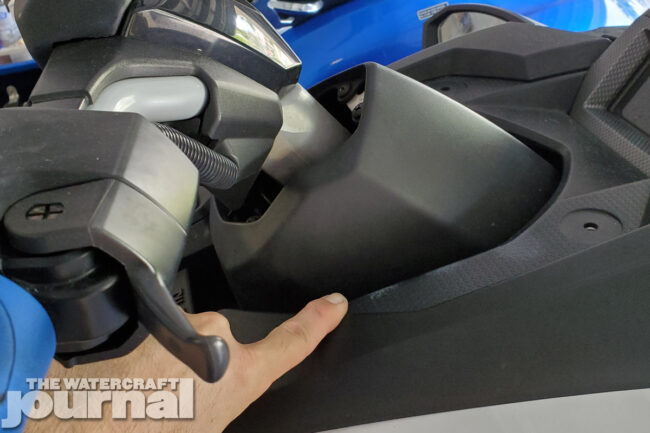
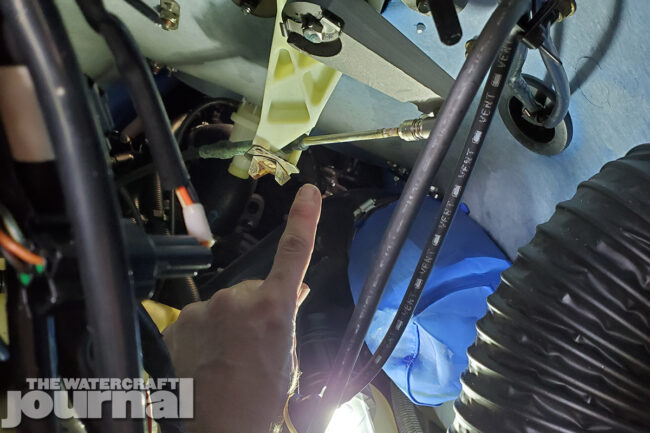
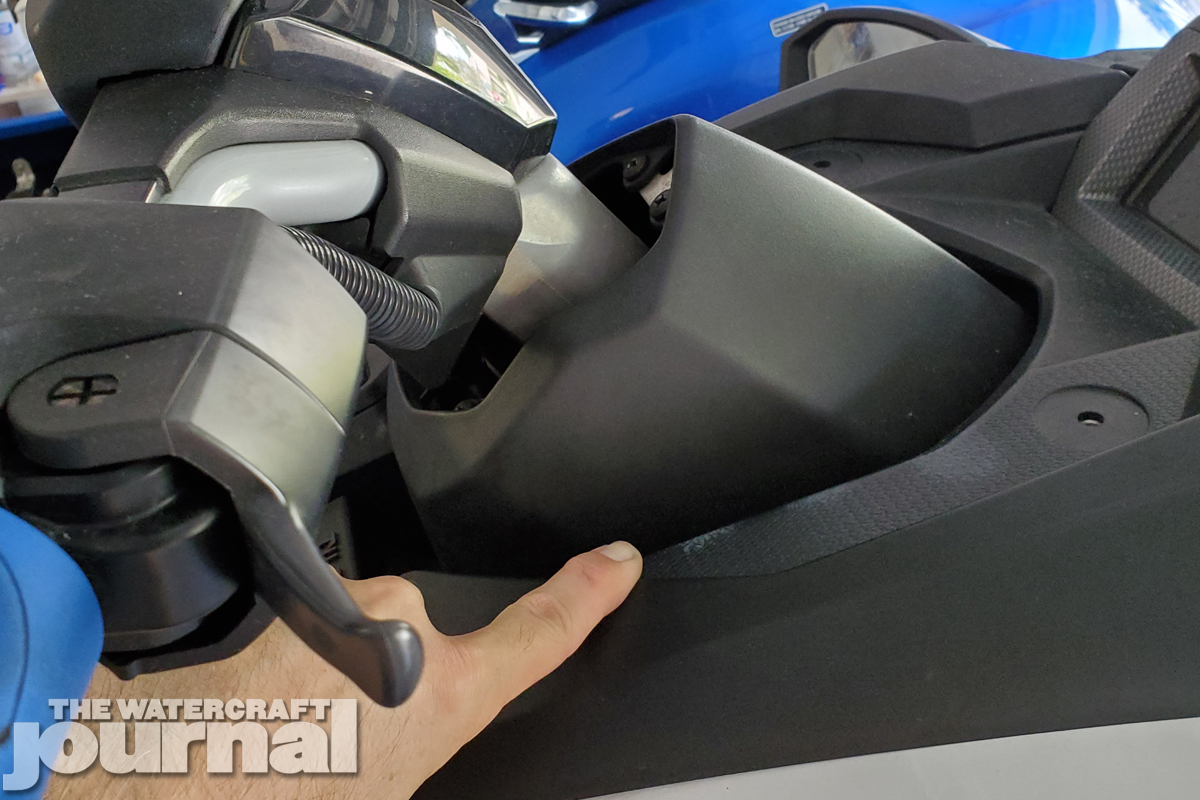
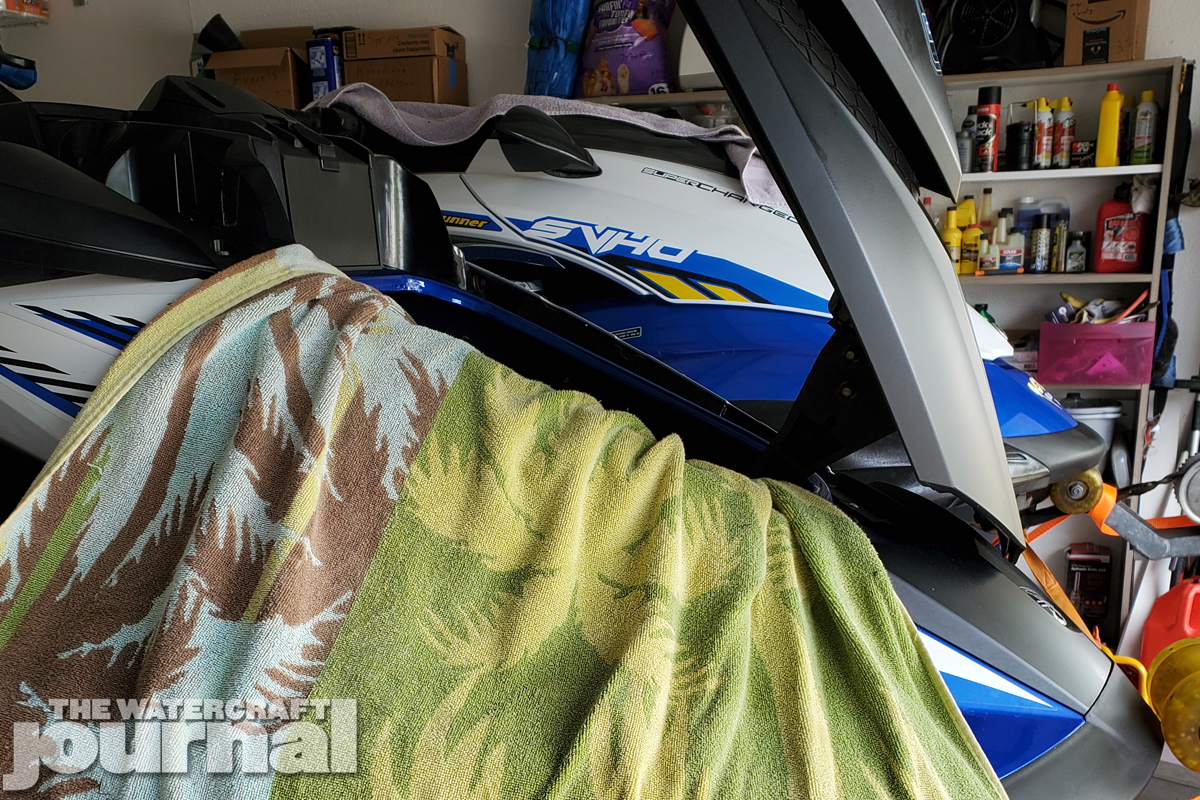
The prep-work for this project is pretty simple: use two towels to cover the front bond line area in order to prevent scratching. A table alongside the trailer is also handy and saves your back. The front storage area will need to be cleared out of items. As seen in the picture, the starting point for the SVHO air intake system is near the handlebars.
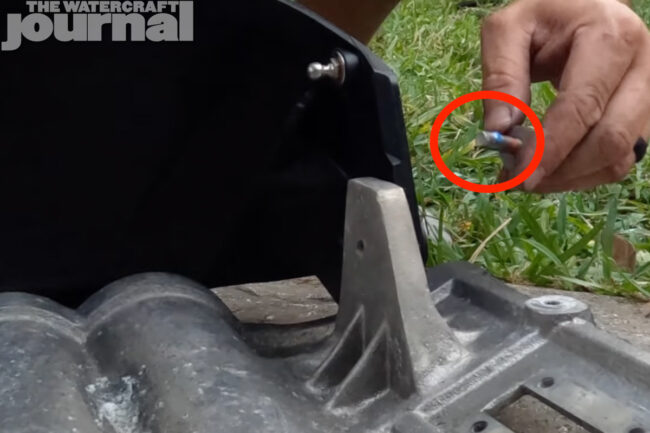
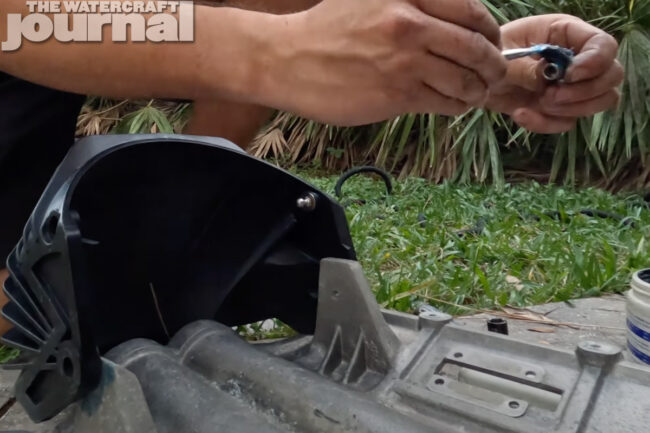
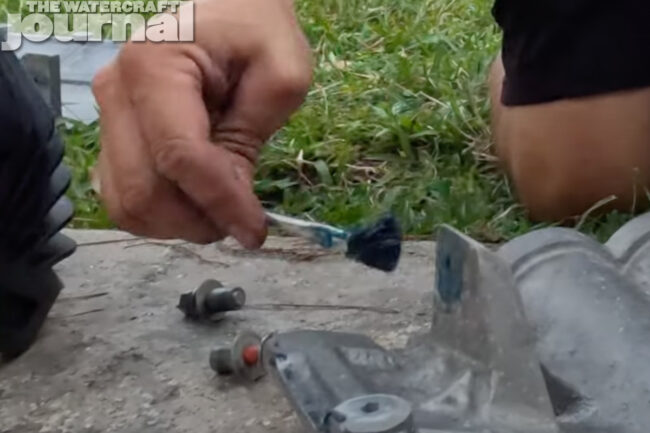
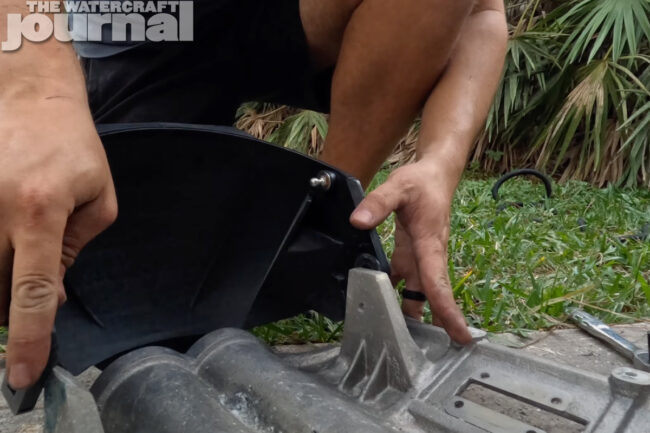
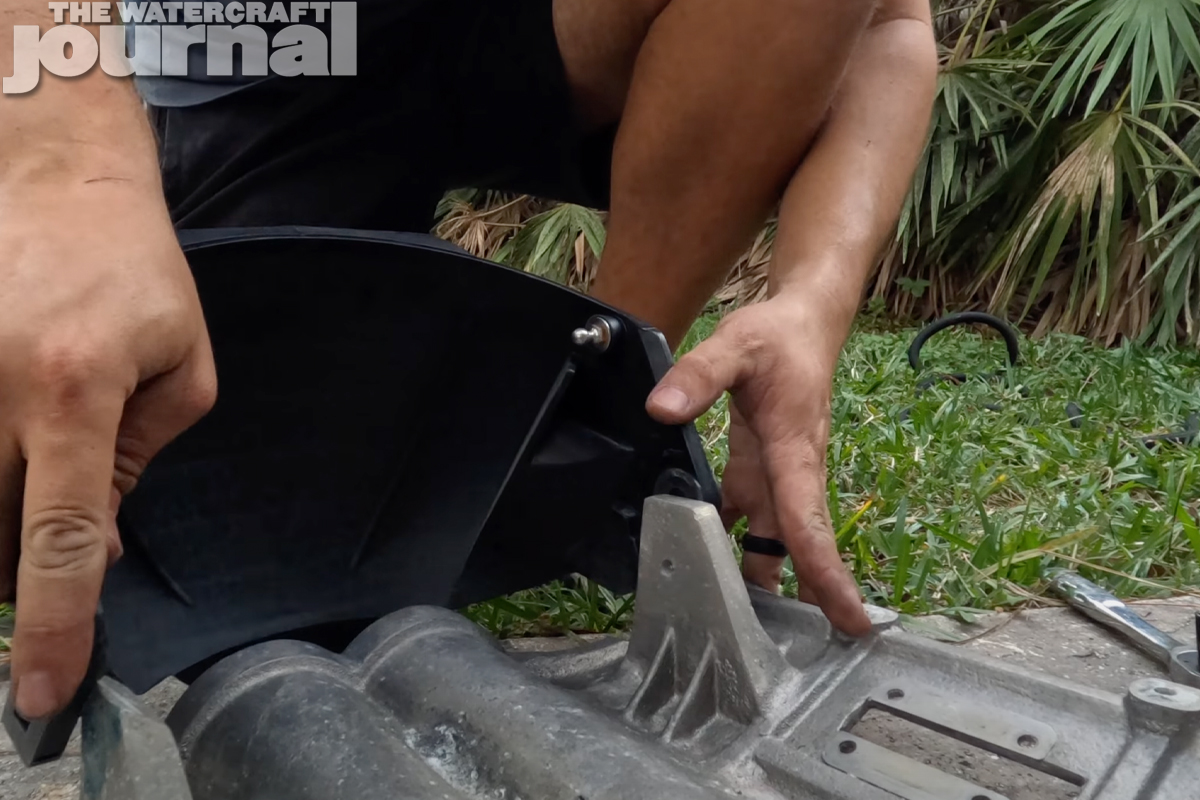
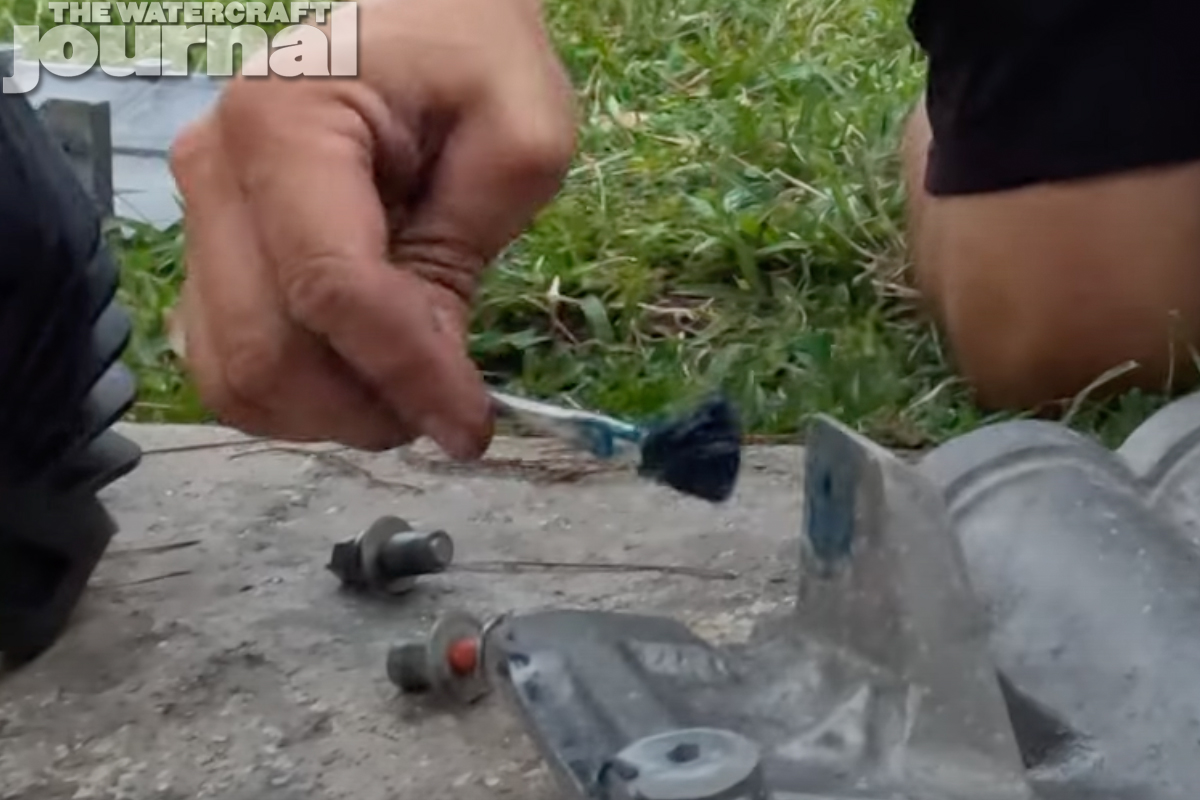
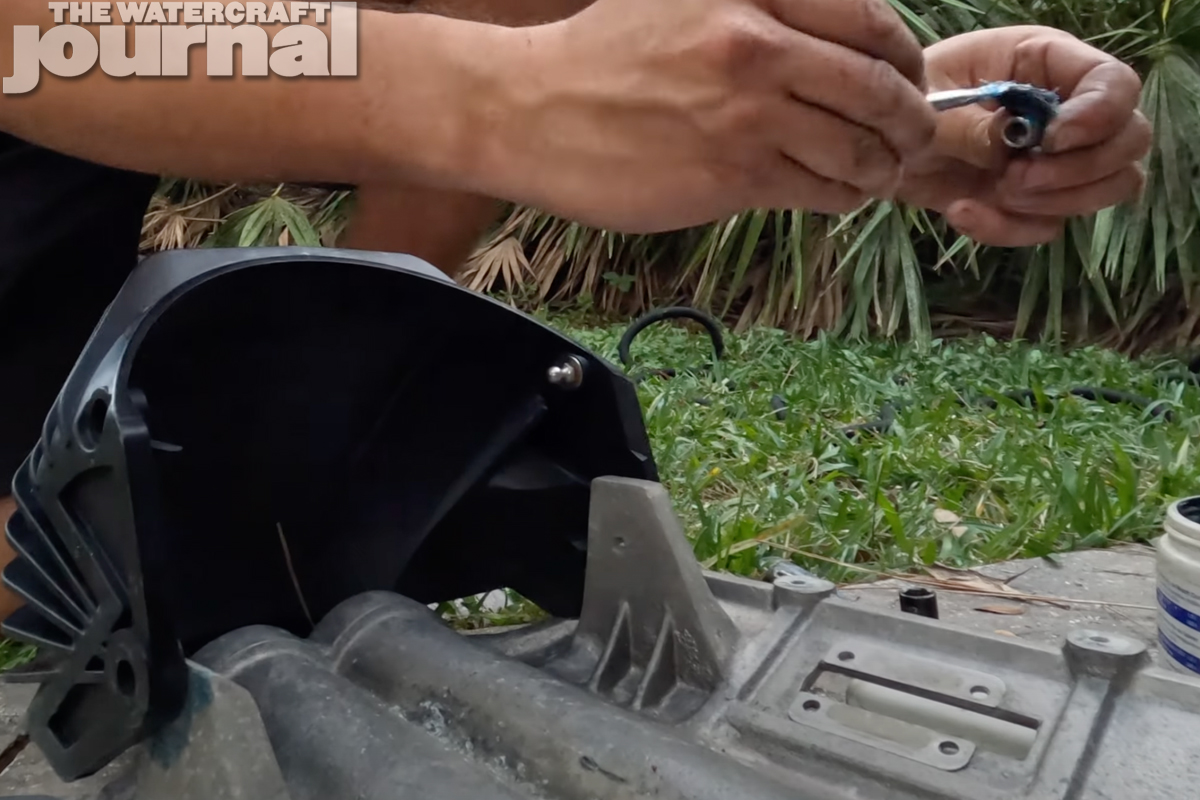
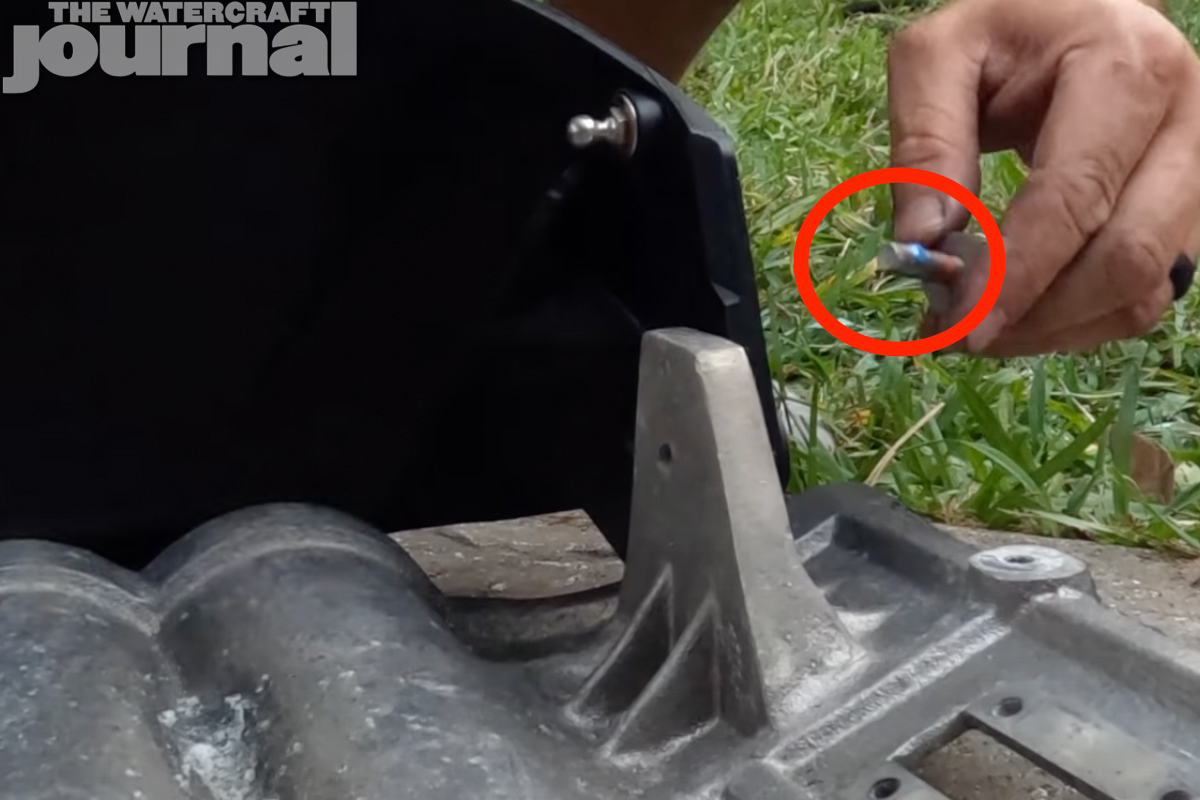
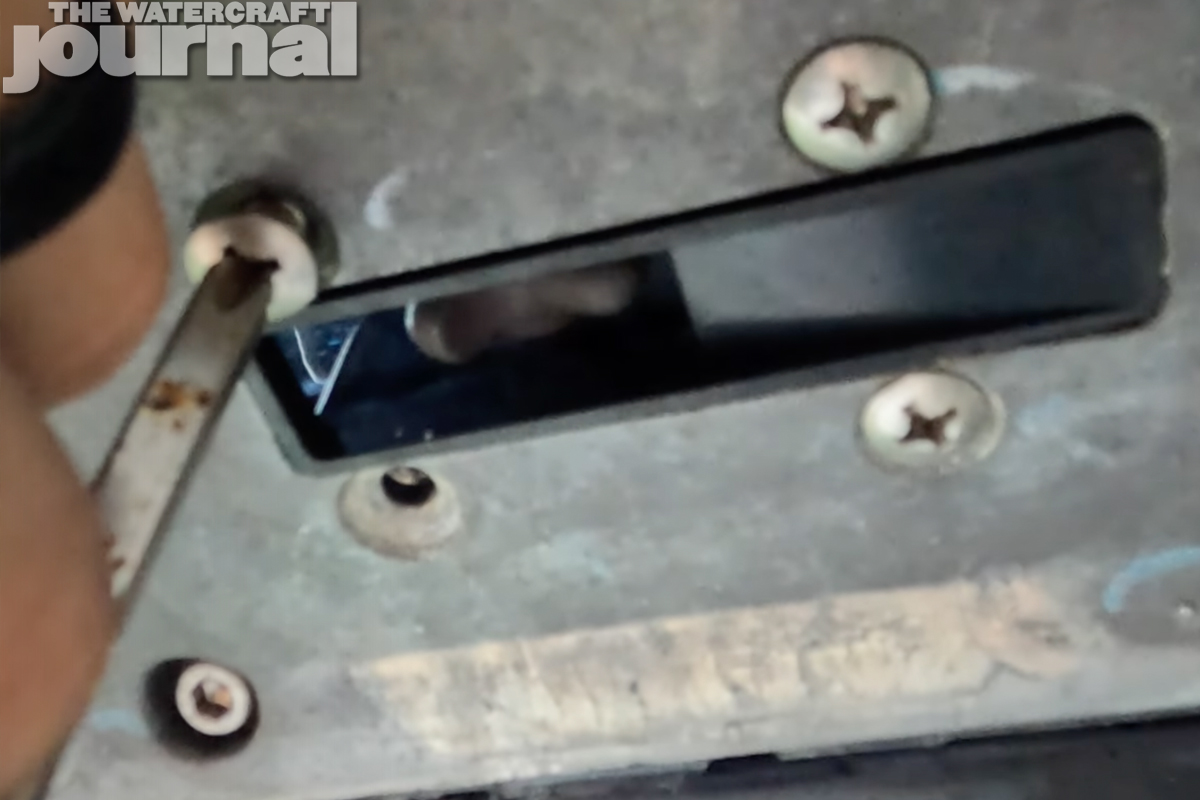
Depending on what model SVHO you have (FZ, GP or FX) the plastic divider shroud will need to be removed. The FZ platform has simple plastic push rivets. I used a hook dowel to depress the center and a putty knife to remove the base. My ’21 GP1800R required a P1 Phillips to turn the center portion. The FZ has a single piece divider whereas the GP has a split two-piece divider. Place the screws and bases in the container so that they don’t fall into the bottom of the ski. Once loose, remove and set aside the storage divider.
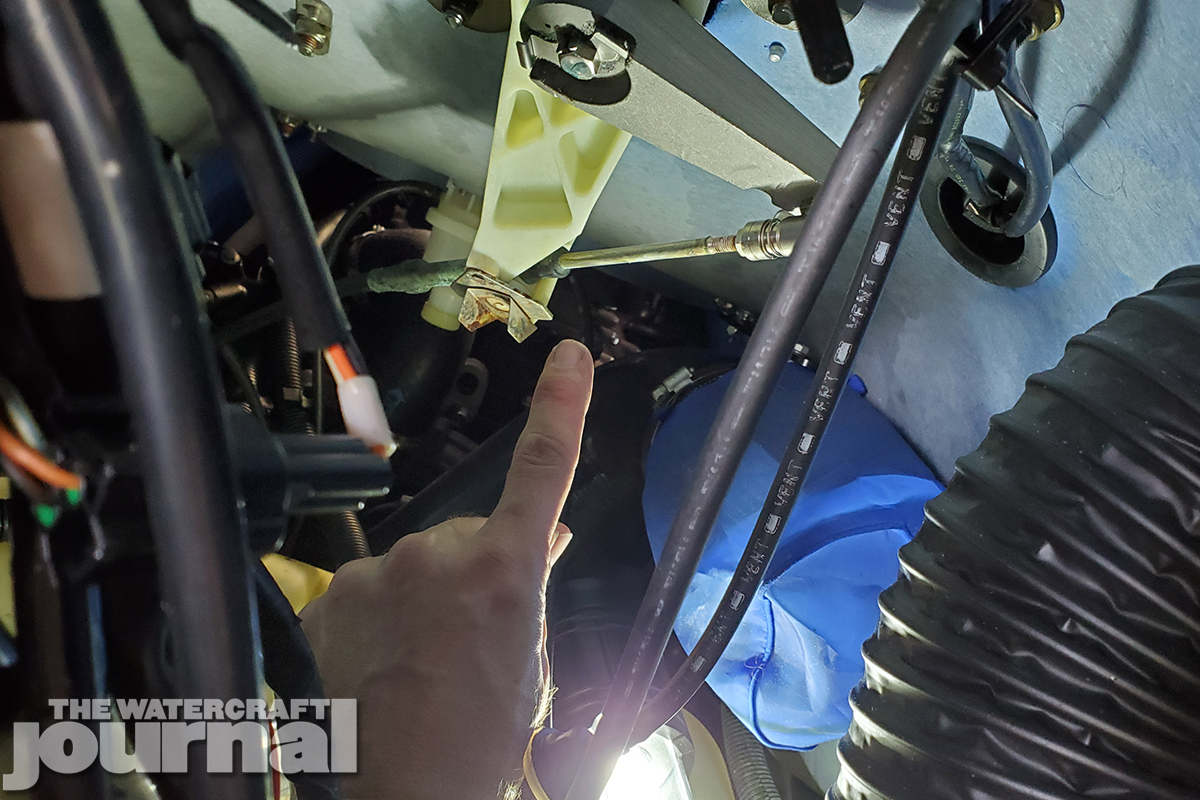
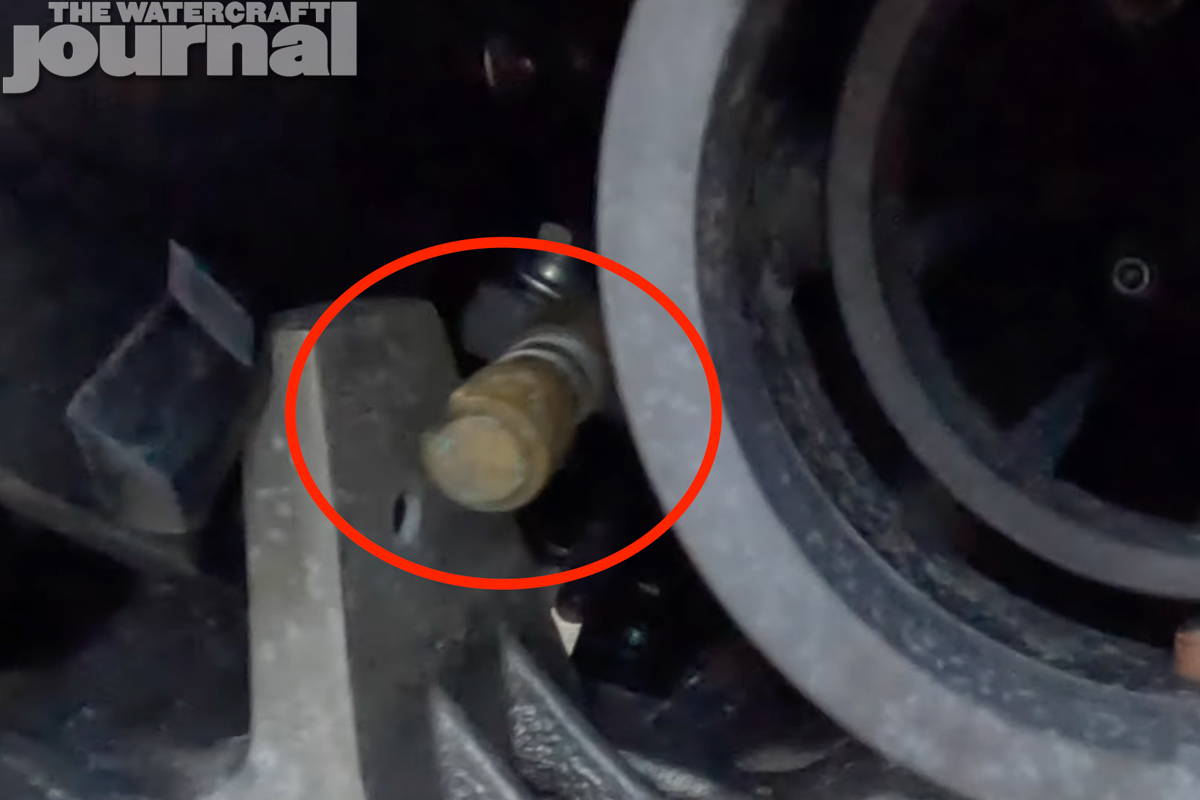
Now that you have access to the bow area of the ski, inspect all of your wires, fuel tank filler, and the steering head unit and cable. Even after a few years all steering cables under here will rust in a saltwater environment. This area does not have ease of cleaning when you flush out a ski. I used some good grease and WD-40 to thoroughly lube the cable. Start with it all the way to the left to expose the largest portion of the steering cable. You will be surprised how much better it moves after this step.
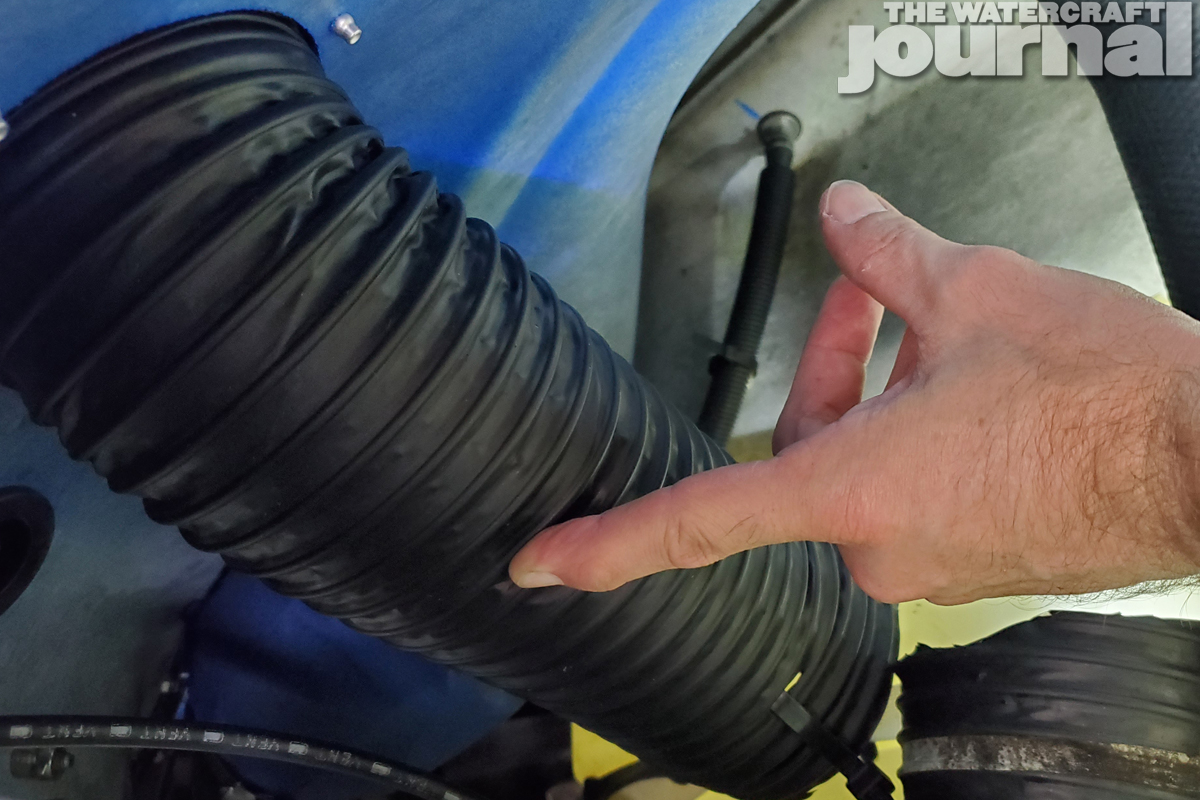
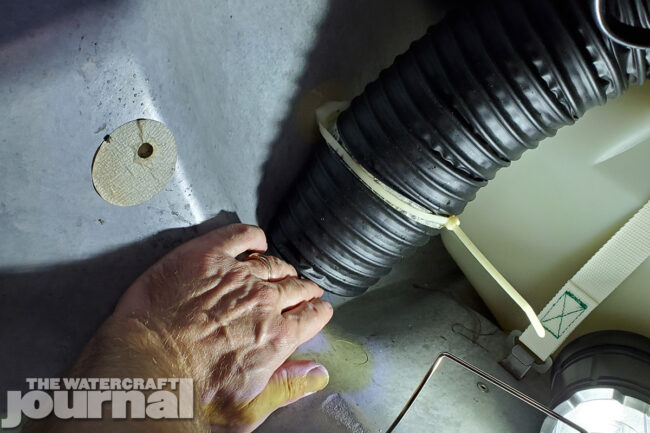
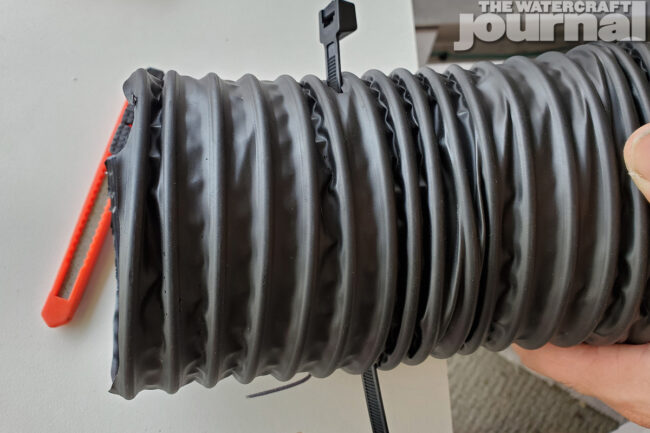
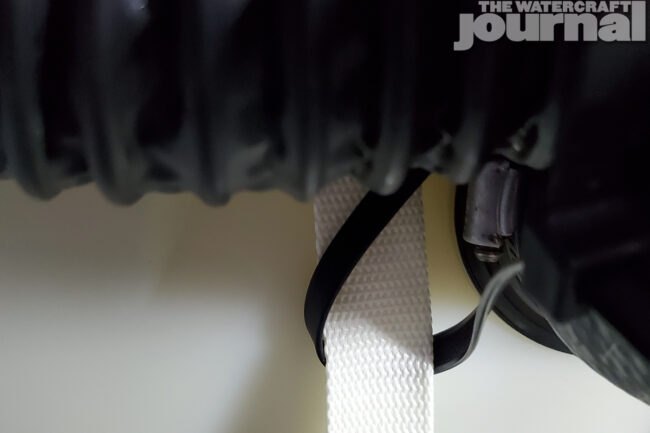
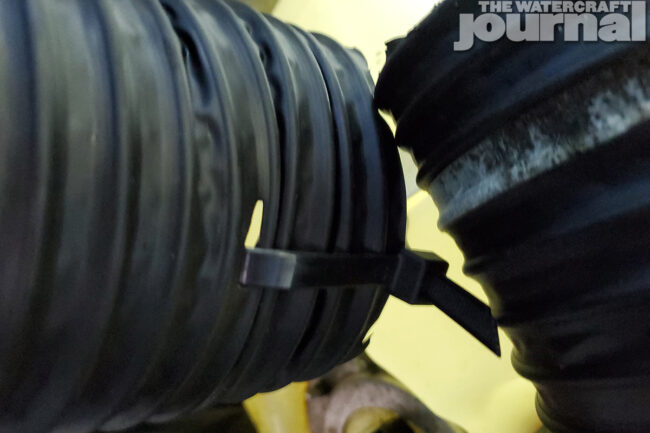
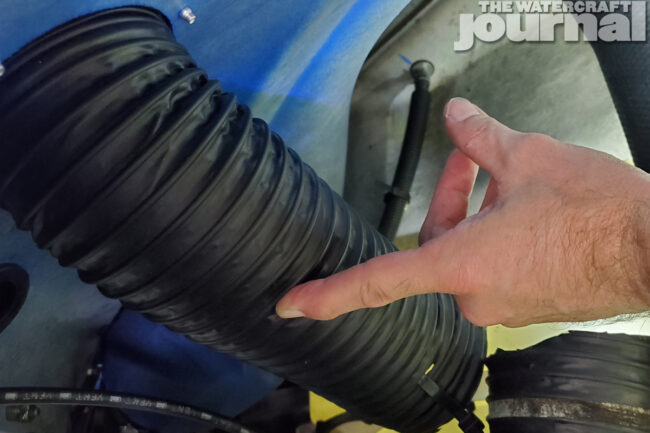
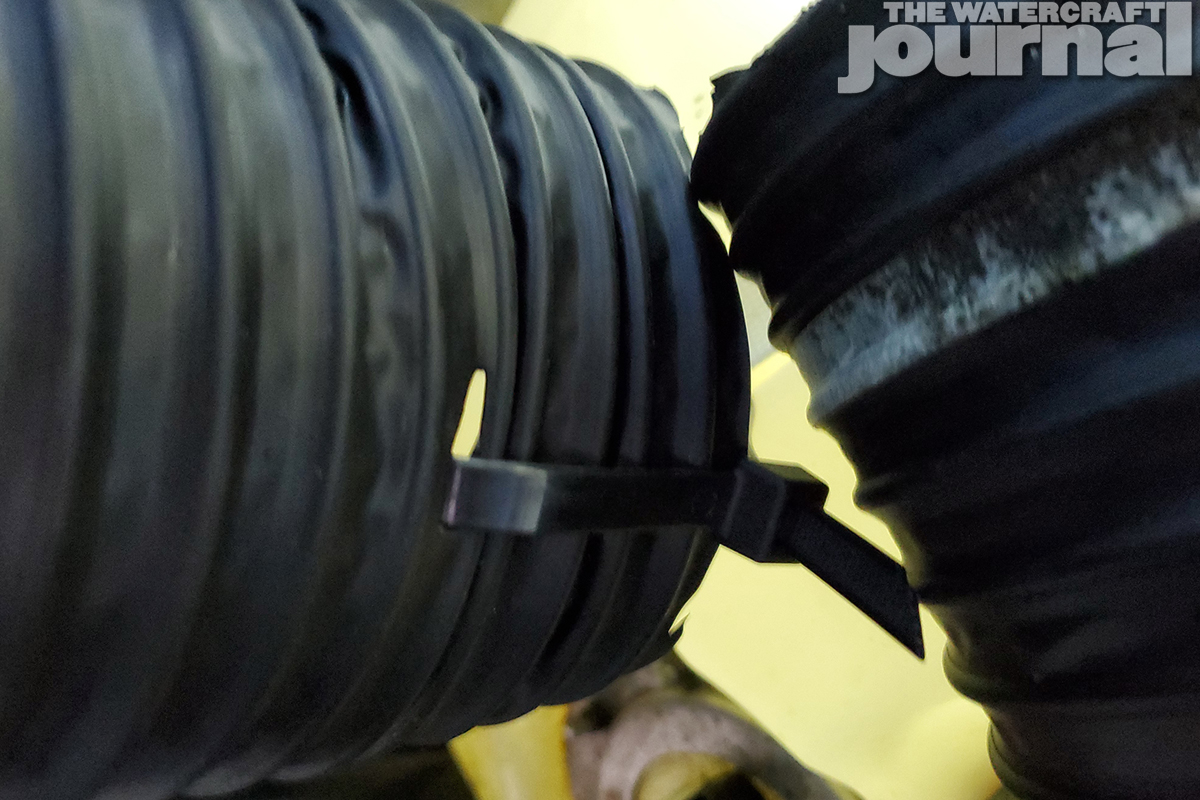
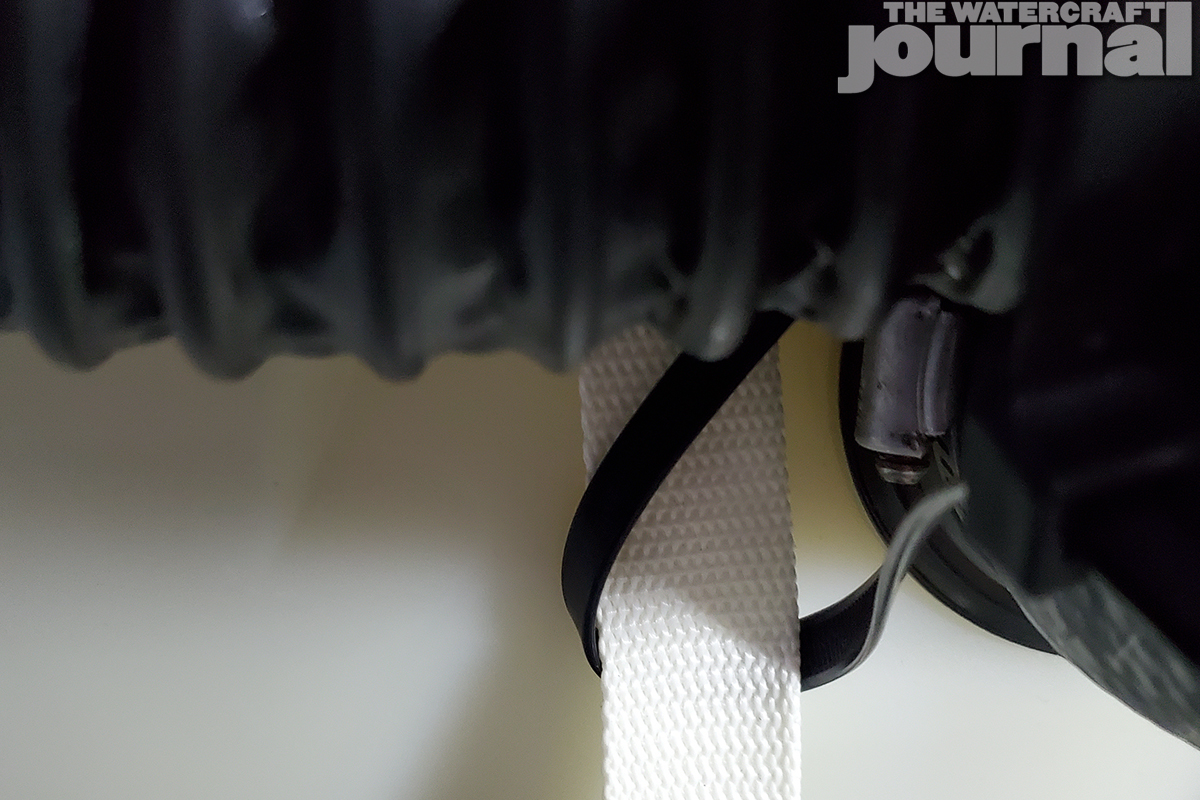
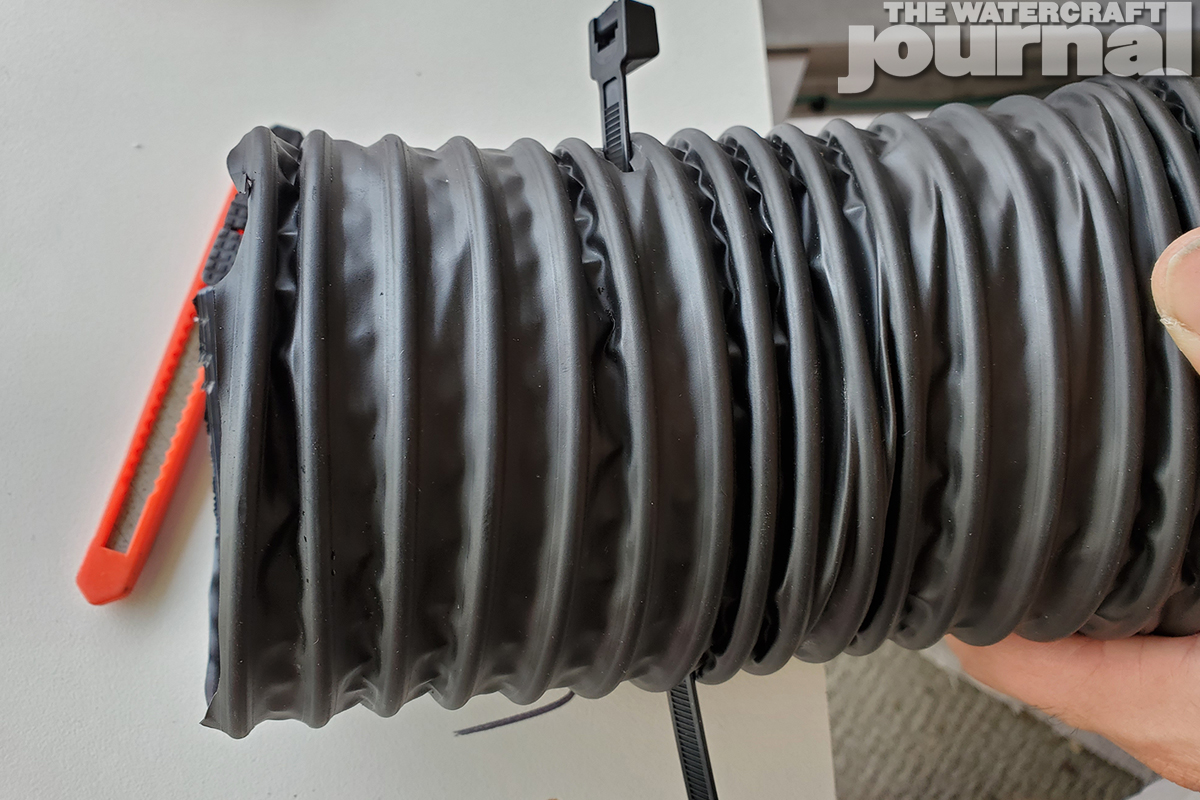
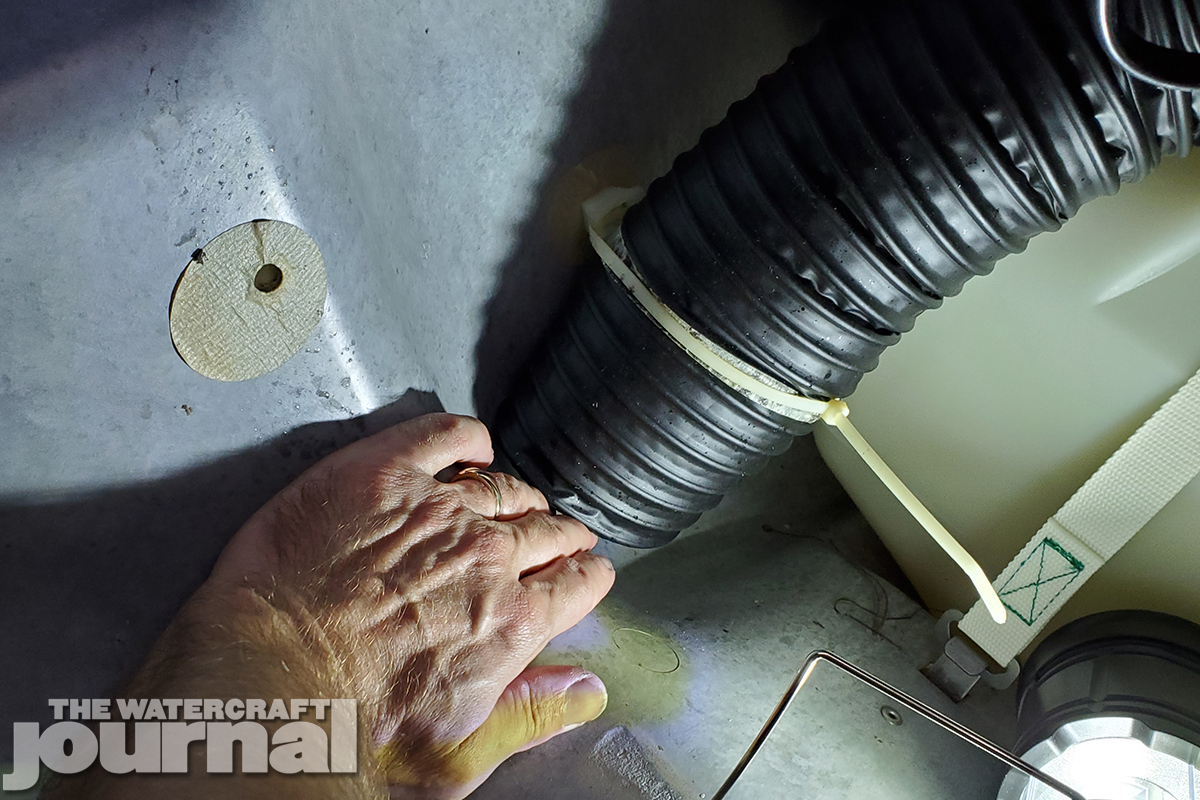
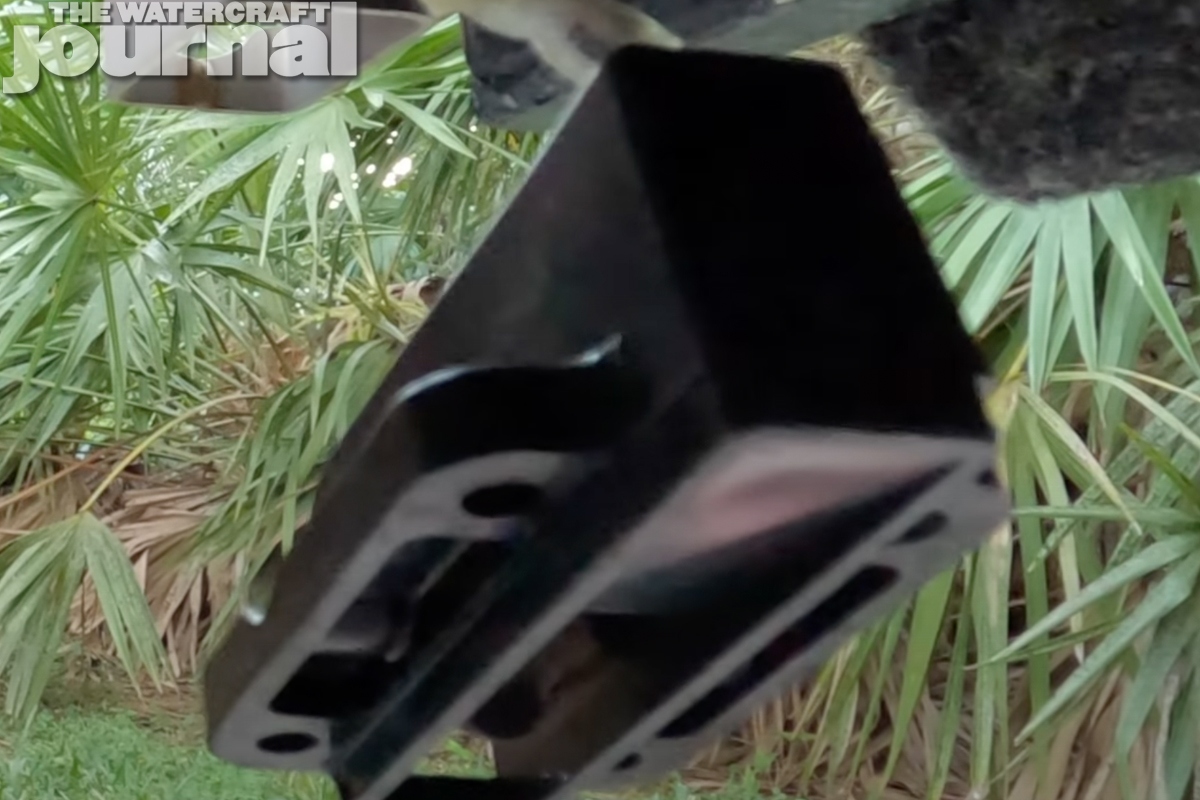
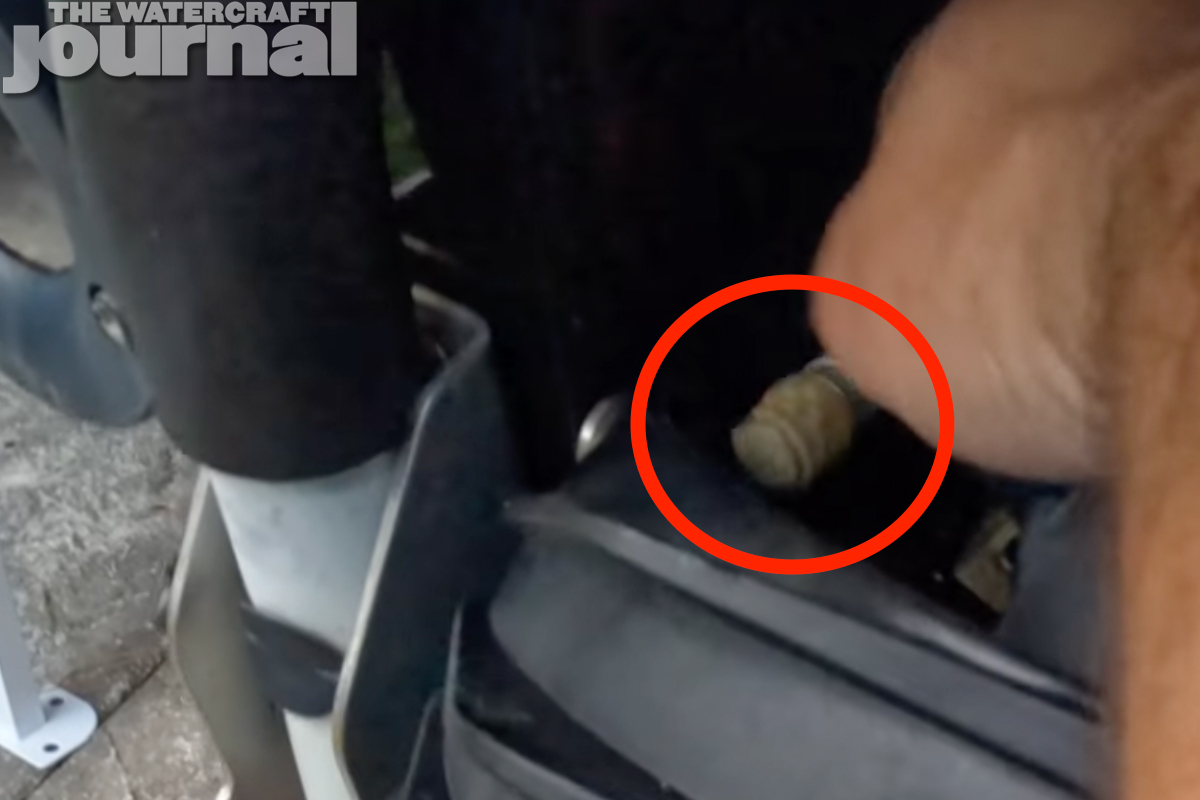
Here you’ll see that the starboard side air inlet duct barely has enough room between it and the hull to slide 3 fingers through. Cut the clear zip tie that’s near the end of the hose depending on how aggressive you want to get with the final placement. I scrunched down a good portion of the tube and made a near 90-degree bend and used the strap for the fuel tank as my anchoring point. Using the razor knife, I made two slits about 1/2-inch long on each side of the inlet tube to pass the 24-inch zip tie through.
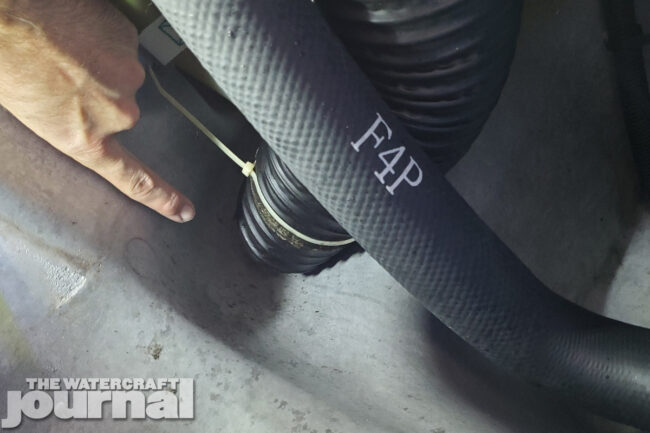
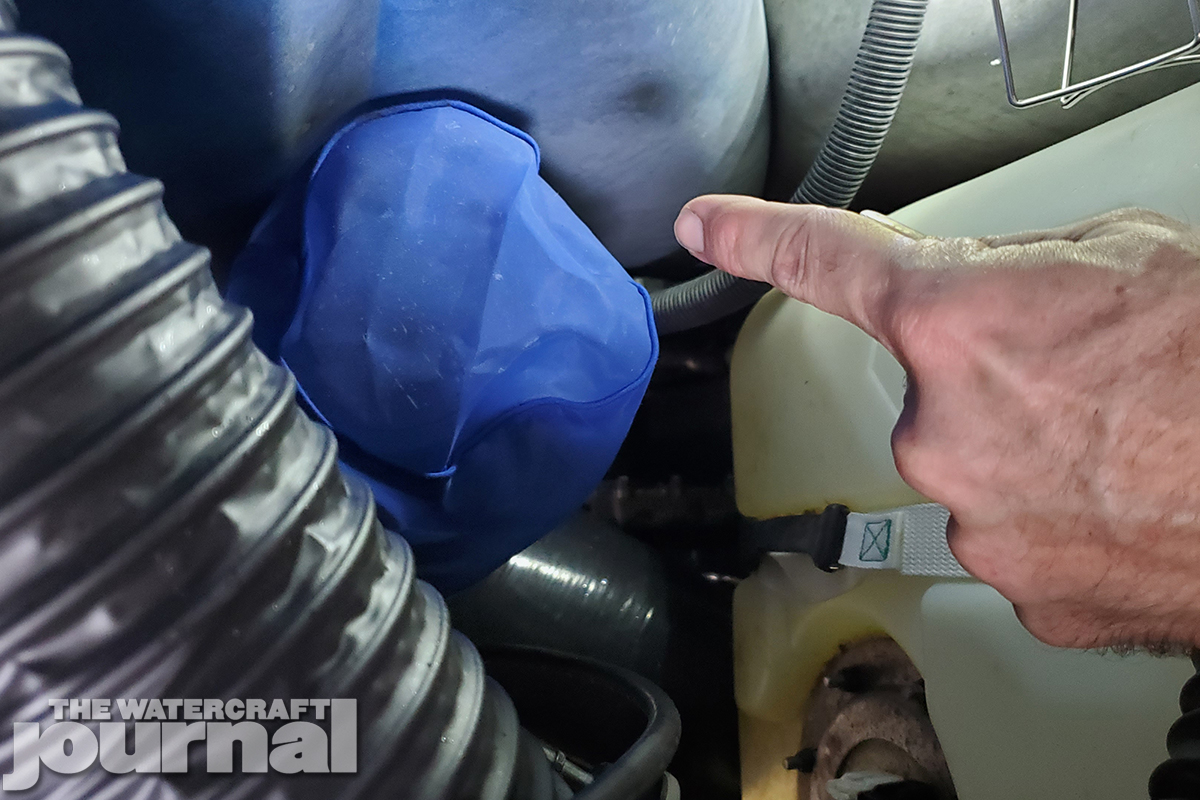
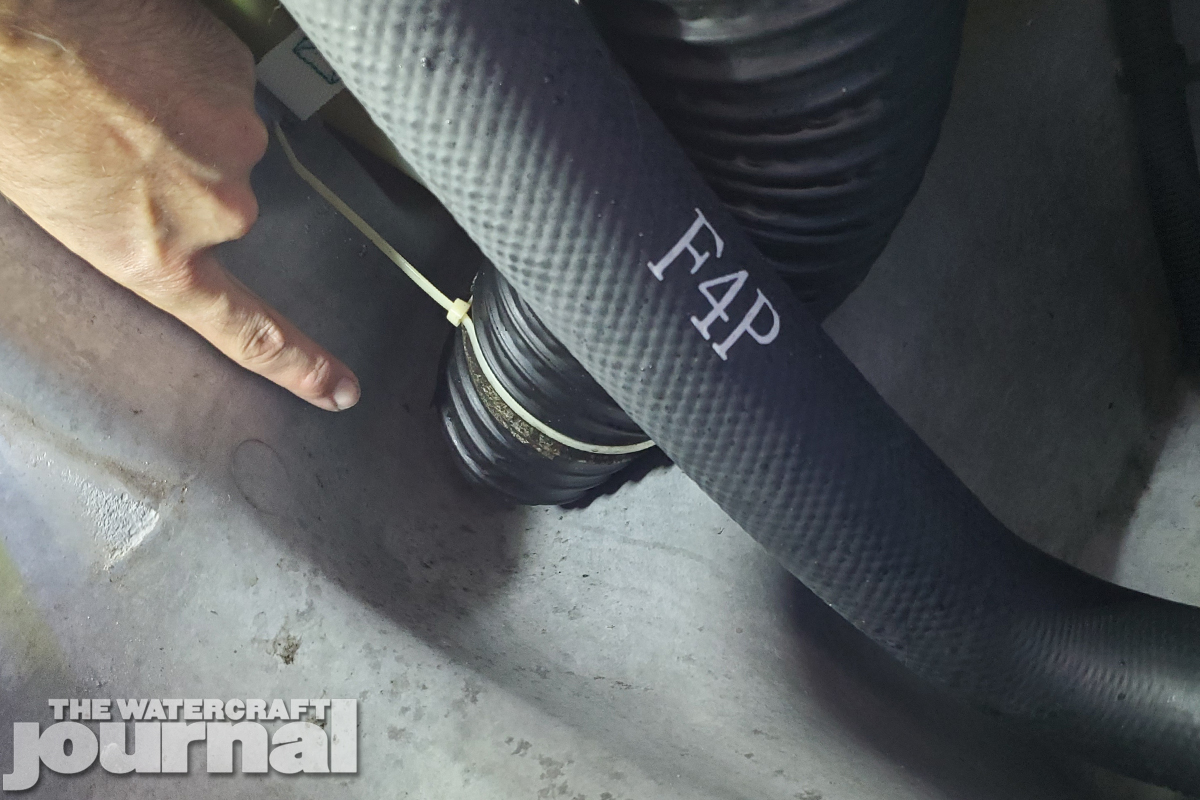
The next one is the port side duct. This one I cut down to my desired length. My personal goal was to have each duct empty around 8 inches to the bow in front of my air element. This should allow any water that is passing through these tubes to empty and fall well before the intake. The less hot air ingested the better, as the air pulled from a heated engine bay will offer less performance.
I found that the GP1800R had better mounting points over the FZ platform. I ended up cutting both of the tubes on the FZ. After you are pleased with the mounting points of the tubes, the last step is to replace the storage divider along with all push clips. For the GP’s two-piece divider, I placed the starboard side in first and then the port side piece. A good tip is to assemble it outside the ski a few times so you are not cussing and struggling with it inside the compartment.
This mod is not gonna set your ski apart from the pack, but it’s something that you can do in your garage with some time and simple tools at home. If you really want to take it to the extreme, I have seen some cut out the front hood of a GP to allow direct air induction; although potentially effective, the amount of salt water that will enter the hull is a big deterrent. I have also seen exit ventilation holes drilled into the rear deck. I really don’t want to drill holes in my ski either.
By simply trimming these air inlet tubes and redirecting them towards the air intake (whether it’s a stock air box or aftermarket cold air element) you’ll be prioritizing the flow of cooler outside air directly towards your engine instead of just trying to cool the entire engine compartment. It’s a small step that likely won’t deliver in any measurable top end speed gains but will – over time – result in better engine efficiency and longevity.
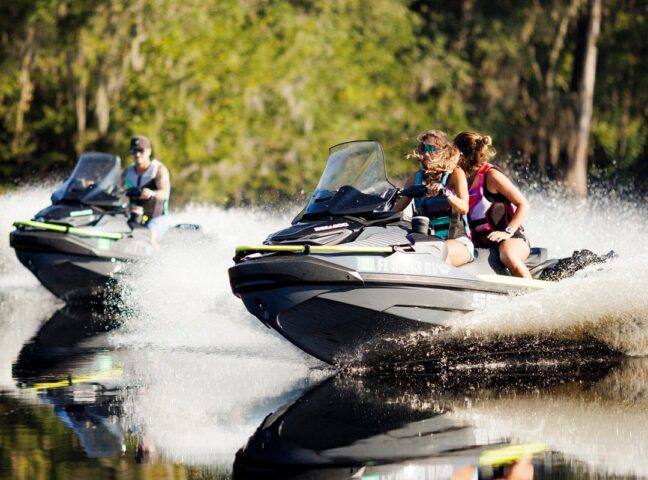
Sea-Doo Ambassador Andrea Torrealba is a three-time skimboarding world champion from Florida. She moved to Dana Point, CA in 2016 and has longed to return to her roots in Florida. Sea-Doo set up a multi-day trip for Torrealba and a couple of close friends.
They were given a couple of Sea-Doo Explorer Pro’s to take on some waters less-traveled. The crew was stoked to hit some rivers and a few crystal springs in their journey of over 40 miles. The Explorers didn’t let them down as they navigated through water forests made up of Cyprus trees, and into several springs.
The days consisted of tow-skimboarding on the river, exploring the depths of the springs, and exploring the back waters of Florida. A large alligator makes an appearance as it makes it makes its way down a bank and into the water. Torrealba had the adventure of a lifetime with her close friends and the Explorer Pros were perfect for this trip.
They had a tow set up and were outfitted with the standard Explorer Bag, a LinQ 4.2 Gallon Cooler, and a LinQ Toolbox. All their gear was stowed away except for the skimboard which was tucked out the way on the starboard side. Check out the video and take a ride down memory lane with Amber Torrealba and friends.
“JetX has over 25 years of industry experience; knowledge, skill, honesty and going fast are a few things that we pride ourselves on [here].” The Yukon Bob channel features travels and experiences with the 2022 Sea-Doo GTX 300 Limited in the beautiful waters in and around Ontario, Canada.
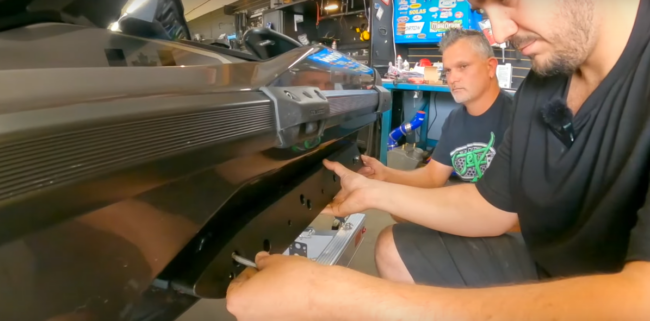
Yukon Bob did a great job of documenting his experience with the RIVA Sponsons and Catch Can/Engine Breather Kit and the guys over at Jet X shared some pro installation tips and tricks that are sure to help any Sea-Doo owner looking to add these components to their personal watercraft.
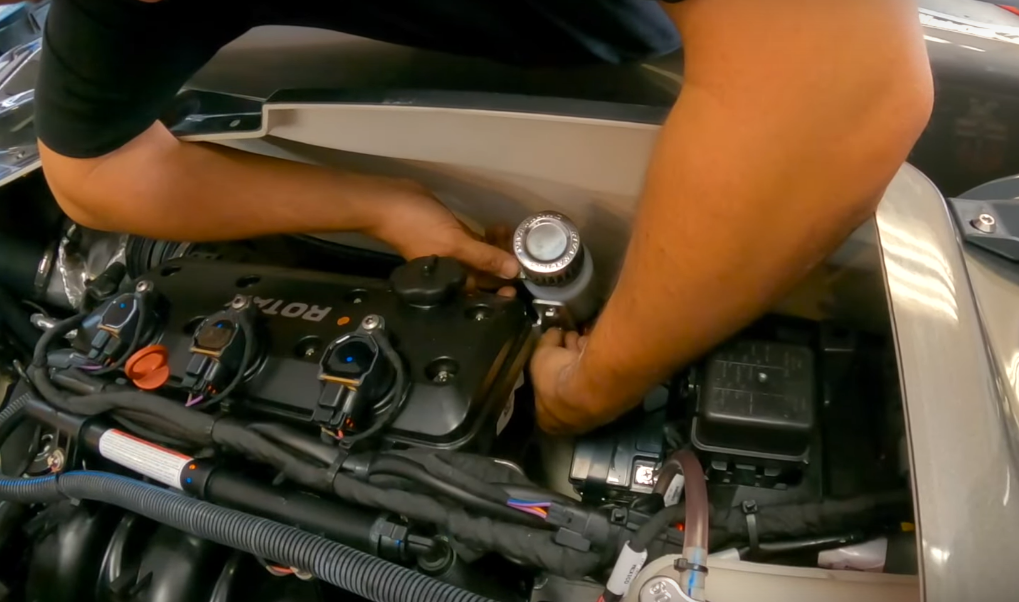
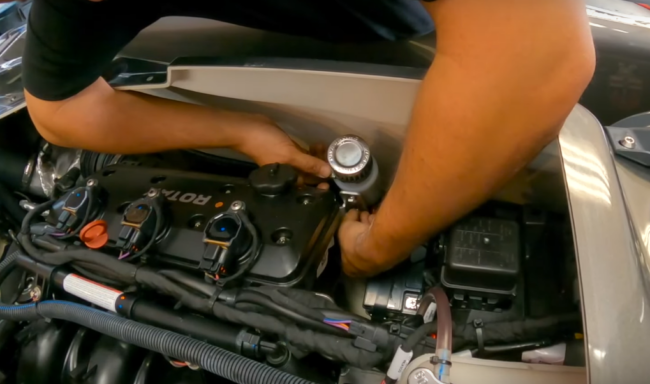
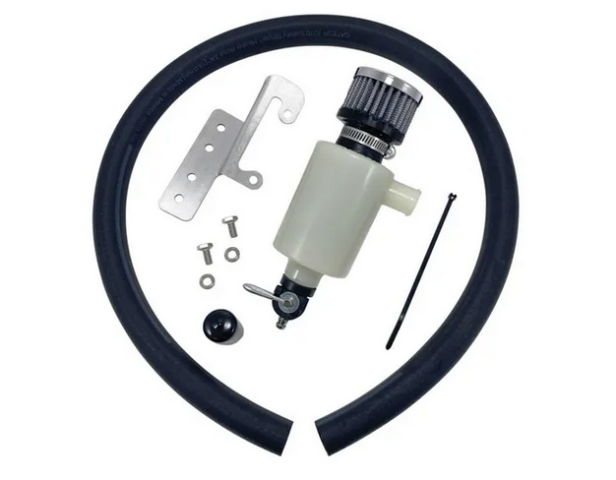
The RIVA Sea-Doo Catch Can/Engine Breather Kit fits Sea-Doo 1503 and 1630 PWC engines, and retails for $161.95. This Can/Engine Breather Kit was designed by RIVA Racing to trap excess oil vapor and “eliminate power-robbing crankcase fumes from entering your Sea-Doo engine’s air intake.”
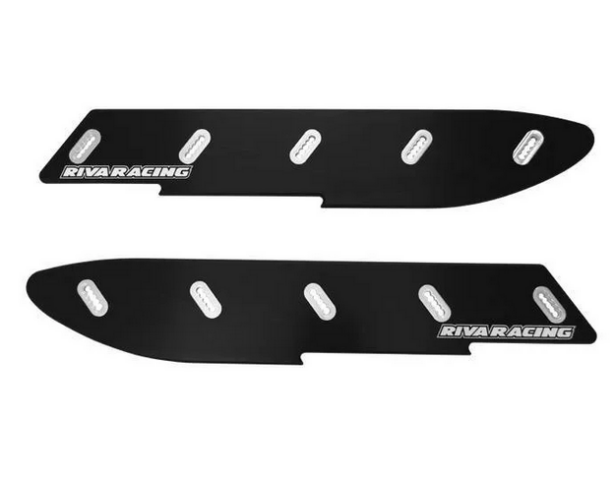
RIVA’s “race proven” Pro-Series Sponsons were designed to improve straight-line stability and improve the overall stock handling of your Sea-Doo for $569.95. According to RIVA, these sponsons fit the 2018-21 RXT, GTX & Wake Pro 230 (ST3) models and 2021 RXP-X 300 (T3R).
Bob shared, “I’m very pleased […] I think it’s a good investment to buy those sponsons, they are way better than the ones that come with the Sea-Doo, and they bite a lot more, they give you a lot more control on the water when you are turning right or left […] The RIVA Racing Sponsons for the GTX, I recommend them.”
The time is now to pre-order that new Sea-Doo you’ve been putting off. The offer ends March 31, 2023. The offer applies to the 2023 Switch models, and 2023 Sea-Doo PWC. The Switch Promotions include 2-year coverage and up to 12 months B.E.S.T Coverage. You must pre-order to grab this deal.
The price for the Sea-Doo Switch Pontoon Boat starts at $21,799. That’s not bad to get an easy-to-use family style boat. It even comes with a trailer, and you can customize it to make it yours. Go for the Compact model or go big and get a 21-foot Switch Sport with a 230hp motor. That one will cost you over $40,000.
If you don’t want the neighbors bothering, you about going out on the boat or enjoy your days on the water alone pre-order one of the new Sea-Doos. Pick up a Spark for as low as $5,999 or if you’re into a jet ski made for adventure, the Explorer Pro 170 is for you. It is made for the person who wants to get away from it all for a few days. It gets great gas mileage and can carry a large amount of gear.
For the times you want to hang out with friends and get into some tow sports, the new Wake Pro’s are pretty nice. The Wake Pro 170 starts at $12,899 and the Wake Pro 230 starts at $17,499. All pre-orders for jet skis come with 2-Year coverage plus no payment for 6 months! Get on this deal now! Check the site for the fine print on the Pre-Order Sales Event.
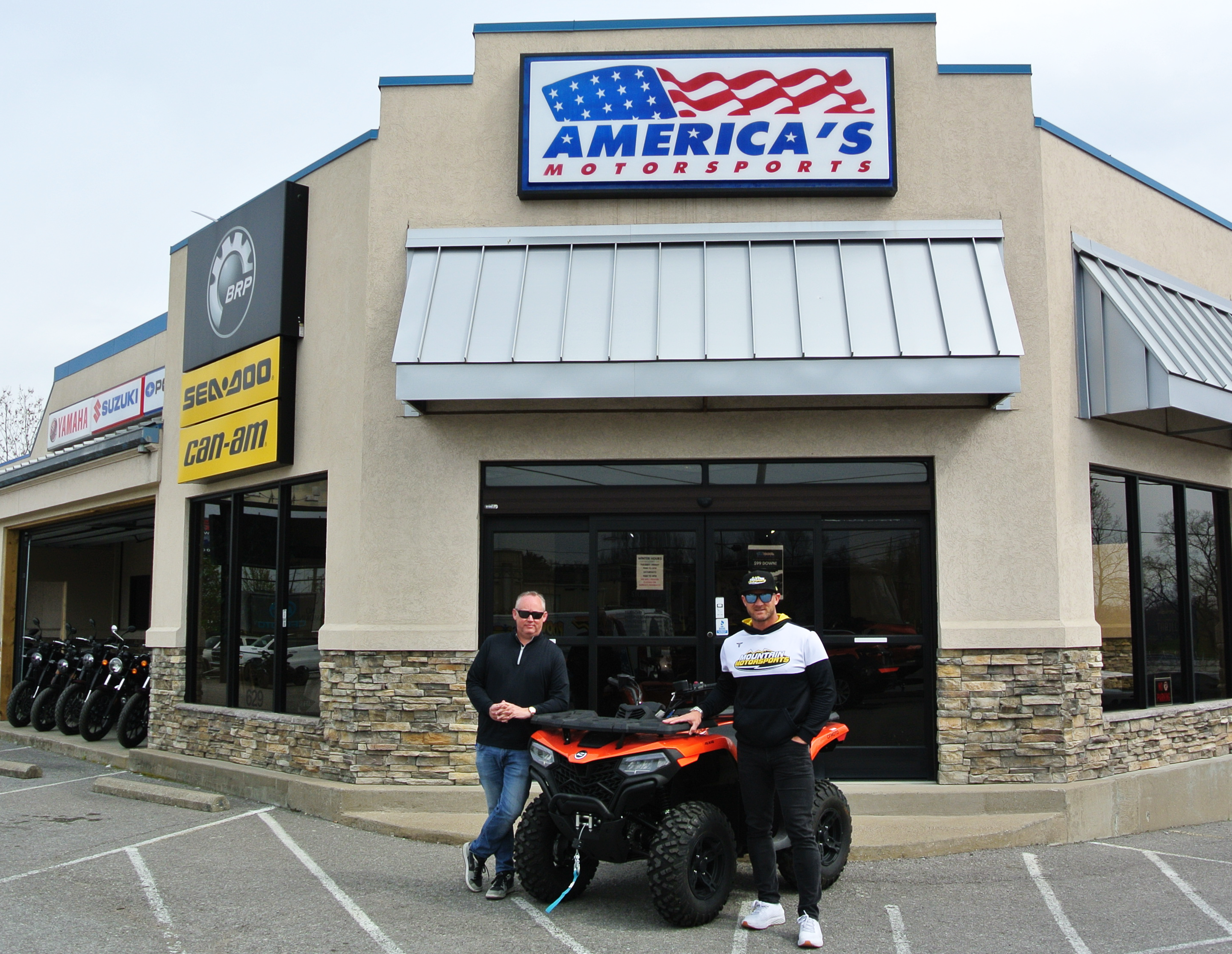
Before we get too nostalgic, here’s the big news: Mountain Motorsports has officially announced the acquisition of America’s Motor Sports. By adding the three AMS stores located in Nashville, Madison and Dickson, the move brings Mountain Motorsports’ reach to 12 stores throughout Tennessee, Alabama and Georgia; making the dealer network one of the most prolific in the Southeast.
Launched 41 years ago, the Watts family grew America’s Motor Sports into one of the premier dealers in Middle Tennessee. For The Watercraft Journal, AMS was one of our earliest advertising partners – as well as our conduit to test ride and review dozens of Sea-Doos over the years. For Chris Watts, the move is bittersweet but anticipated, telling WCJ, “The timing couldn’t have been better.”
While we at WCJ are excited to see Mountain Motorsports expand these stores to include other watercraft brands, we are sad to see this chapter close. All of us at WCJ are immensely grateful to the Watts family and the team at AMS for their years of support, cooperation and good times. The community we share is surprisingly small and we’re blessed to have such quality people in it.
Here’s the full press release: Mountain Motorsports announces the purchase of generational powersports dealership group America’s Motor Sports. With 9 locations in Tennessee, Alabama and Georgia, the Mountain Motorsports team sees a seamless transition for the three landmark stores in Nashville and the vibrant middle Tennessee market.
“We are excited to continue the impressive growth trajectory the Watts family has produced,” said Justin Price, President and Co-founder of Mountain Motorsports. “We plan to continue the legacy of a great business developed by the Watts family over the last 41 years. Our business philosophy is fully aligned, and we expect a seamless transition over the coming months. Culture is a major focus at Mountain Motorsports. It energizes us to acquire businesses that share our same enthusiasm around culture, and we are grateful that our long-time relationship with the Watts family has made this opportunity possible.”
“We have always had a great relationship with Justin and Ryan and respect their operation,” added Chris Watts, President and CEO of America’s Motor Sports. That made the decision to partner with Mountain Motorsports a slam dunk, rather than a case of March Madness, quipped lifelong Volunteer fan Watts. However logical, it was not a decision taken lightly.
“The Watts Family spent the past four decades building values and integrity into our dealerships. These strong values have become the backbone of America’s Motor Sports’ culture, ensuring our customers as well as our employees are treated with respect and dignity.”
Watts believes that Price will continue to uphold these values and prioritize growth within the company as well as with the powersports industry. “The Watts family is proud to be a part of this opportunity with Mountain Motorsports,” he said.
In the coming months Mountain Motorsports leadership will be learning more about the already impressive Nashville market and how to best integrate into it. They will concentrate on finding new real estate for the downtown location to build a world class themed superstore more similar to their current locations. “The long game plan is to bring the Mountain Motorsports experience to the Music City without compromising the current culture,” concluded Price.
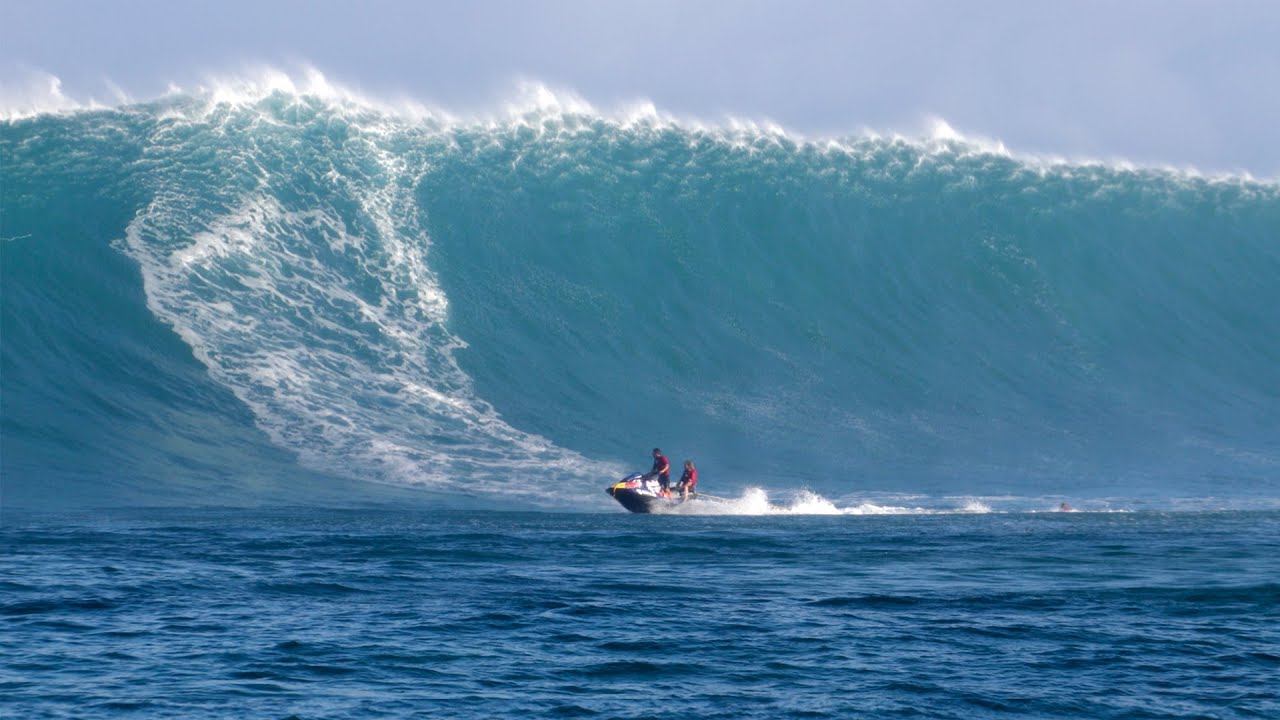
Once again, Sea-Doo is part of the support team in a partnership with Surfline and Red Bull. The Sea-Doo PWC are being used by some of the Hawaiian Water Patrol to lead rescue operations for the big wave series Twenty Foot Plus.
The series was put together by Jamie Mitchell and Zack Porter, two big wave surfers who started Heavy Water Surf Group. With the help of Surfline and Red Bull they were able to launch Twenty Foot Plus, a big wave surfing extravaganza that will showcase big wave surfers and their lives. Surfline will livestream all the events.
“Big wave surfing has always played a special role in surf culture, and Twenty Foot Plus will help give it the attention and respect it deserves,” says Kyle Laughlin of Surfline. “This series is without precedent and designed to recognize and champion the big wave community in an all-new, engaging format.”
The inaugural 20 Foot Plus event featured surfers riding waves in two different big wave locations, one being Waimea and the other, the fickle Cortes Banks. There aren’t many big wave surfing events, so what these guys are doing will fill the gap and enable these elite riders to garner exposure and to tell their stories. Twenty foot is where big waves begin, which is why 20 Foot Plus was the chosen name.
With Surfline at the helm forecasting the surf, Red Bull running a huge media campaign, and Sea-Doo to the rescue, this series will be one to watch!
The ride plate on your PWC is a vital piece of your machine and has several purposes. Your ride plate protects the pump, provides a surface on which the jet ski can ride, helps the impeller to suck in water, increases top speed, affects the ski’s riding characteristics and avoids porpoising; bouncing up and down while cruising, even through smoother waters.
Kspeed has engineered and manufactured ride plates for many years. They have created two different models for the 2012 – 2021 platform, the KS1 and the KS2 Offshore ride plates. They are both available for the 2012-up Ultra 300, the 2014 – 2021 Ultra 310 and the 2012 – 2021 Ultra LX.
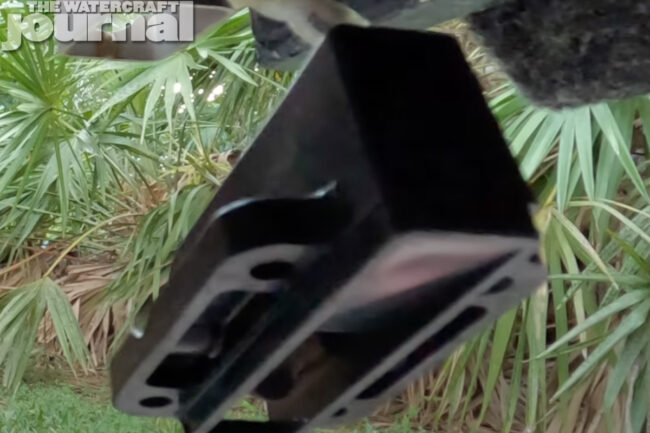
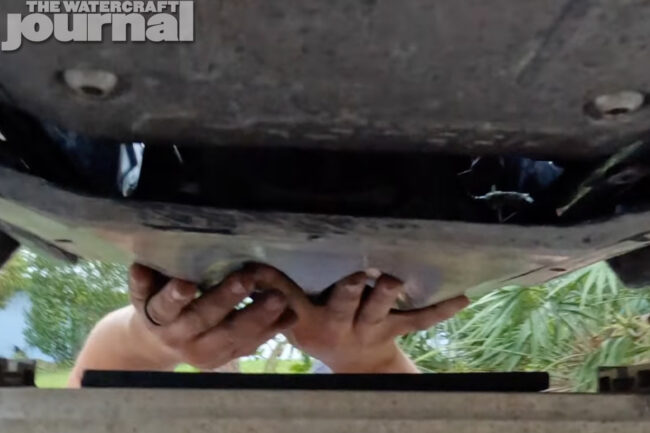
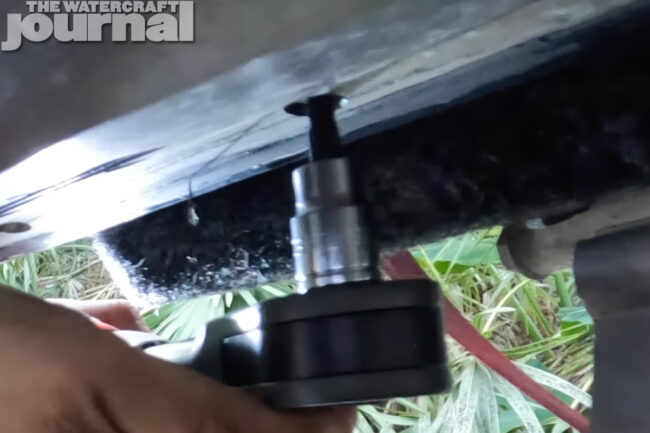
The Watercraft Journal was able to get our hands on the Kspeed KS2 Offshore ride plate, so we just had to try it. For this purpose, we had a 2020 Kawasaki Ultra 310X. The first thing that you need to do is remove the old ride plate. To do that you need to remove the 6 6mm Allen bolts and the 4 Phillips head screws holding the paddle wheel in place (we recommend this first).
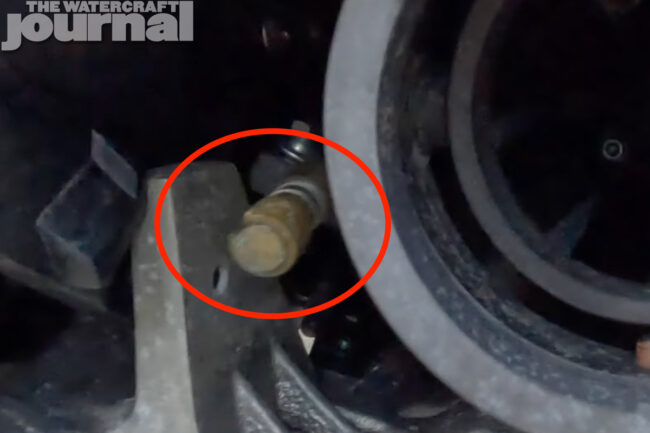
Make sure your Ultra is in reverse and disconnect the quick connect to your reverse bucket on the left side of your pump. After pulling the ride plate off, remove the reverse bucket held on by 2 bolts. Next, grab your new Kspeed KS2 Offshore ride plate, apply a little marine grease to the bolt holes and the outside of the bushings, then reattach your reverse bucket.
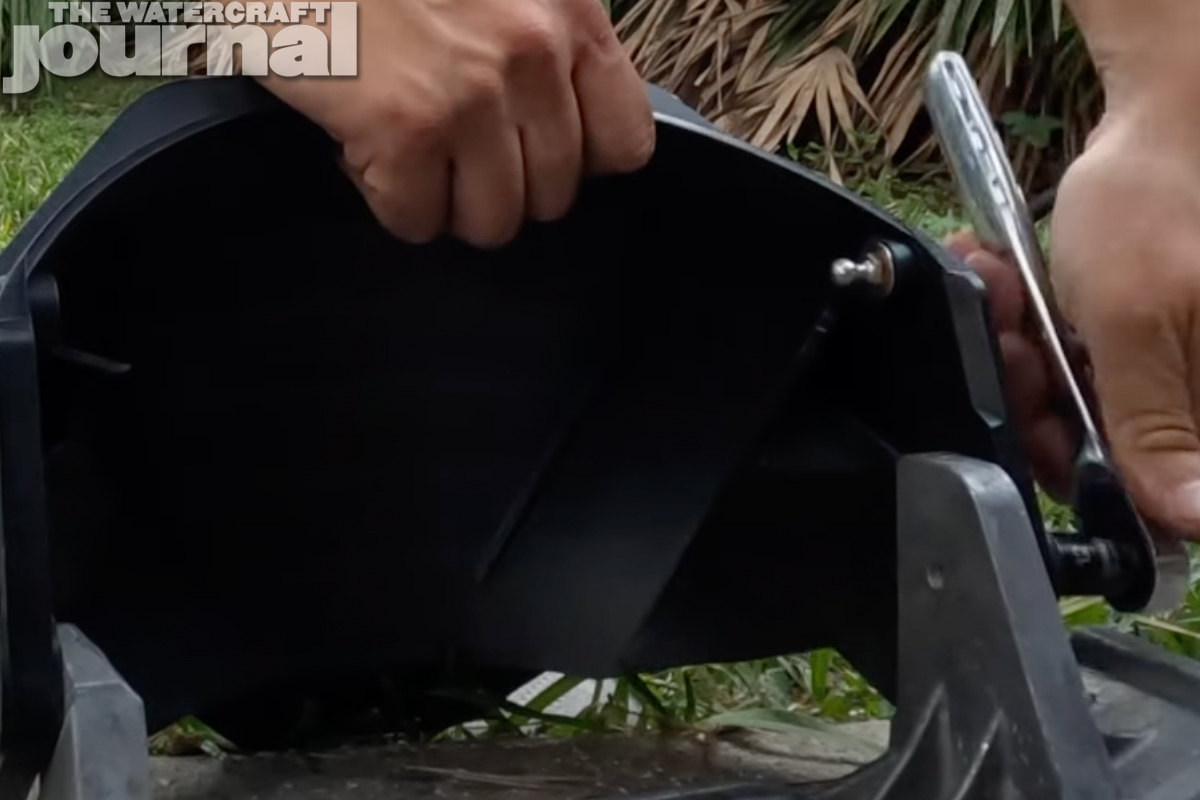
Apply some blue Locktite on the threads of the 2 bolts for the reverse bucket and wrench them back in. Make sure your paddle wheel is oriented the right way and slide your Kspeed KS2 Offshore ride plate into position. Using the 5 mm bolts provided by Kspeed, screw them in.
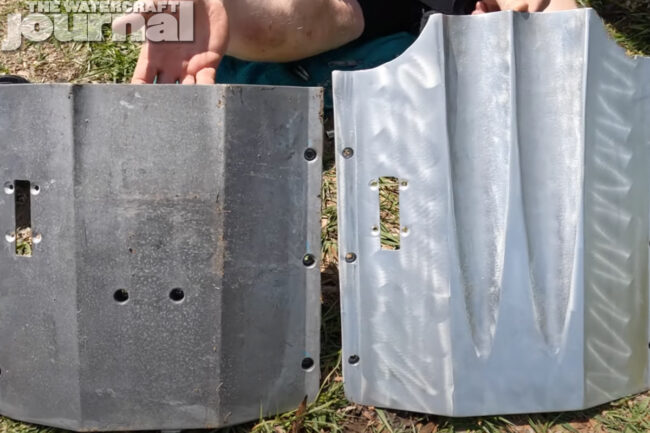
Notice that your new ride plate has 2 less holes than the stock. Then use your 4 Phillips head screws to attach your paddle wheel back into place. Reattach the quick connect to your reverse bucket. We advise to add marine grease to all fittings and bearings at this time.
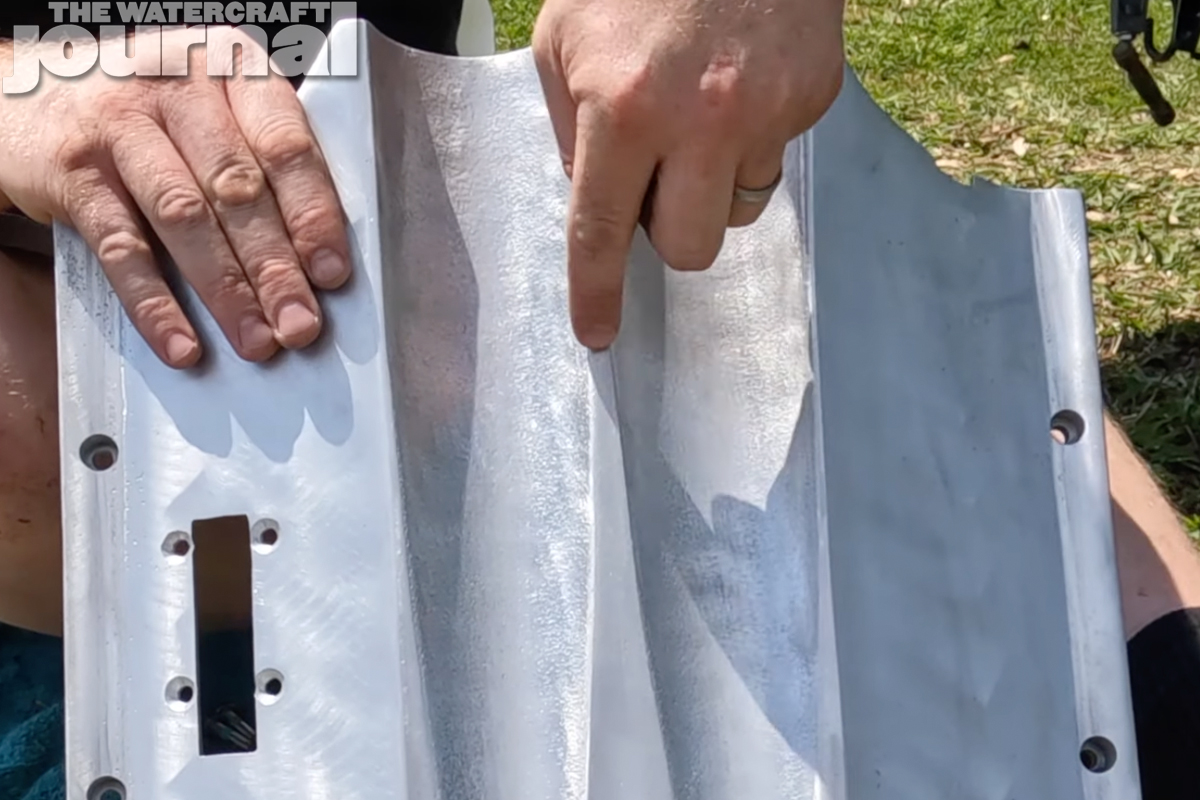
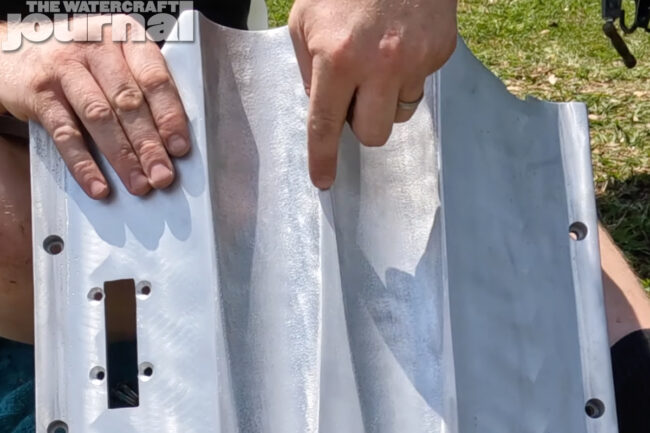
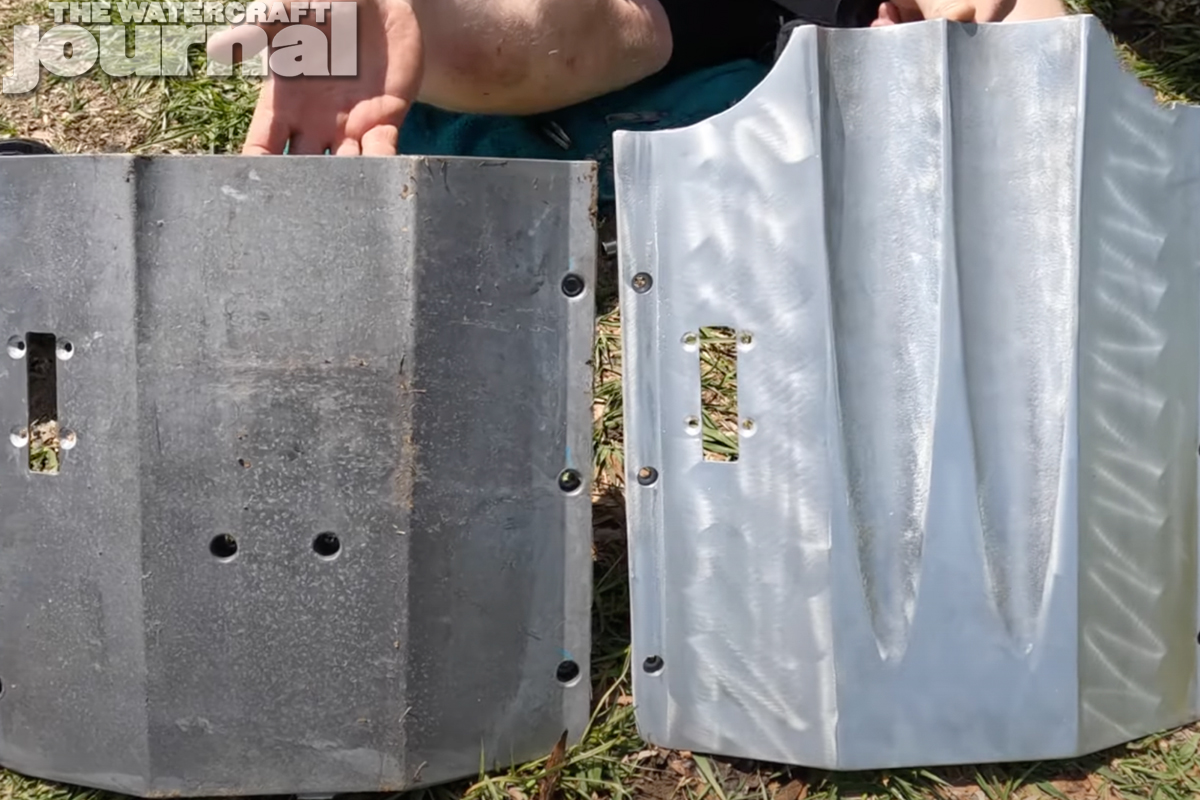
As you can tell by the images, the KS2 Offshore ride plate has two very large deep scallops. These deep scallops radically increase the ramp which helps get the bow of the ski high up. In addition, there is an aggressive spine in the center, which is going to act as a natural skeg. It is going to give you a lot of bite and direction when it comes to handling, especially tracking in really big surf.
After installing the Kspeed KS2 Offshore ride plate, we took it out for a spin. We immediately noticed a difference in handling and trim control. We do think this may lower the top in speed down a little when having a tuned ECU on flat water, but we are confident it helps keep you connected with more control in rougher waters.
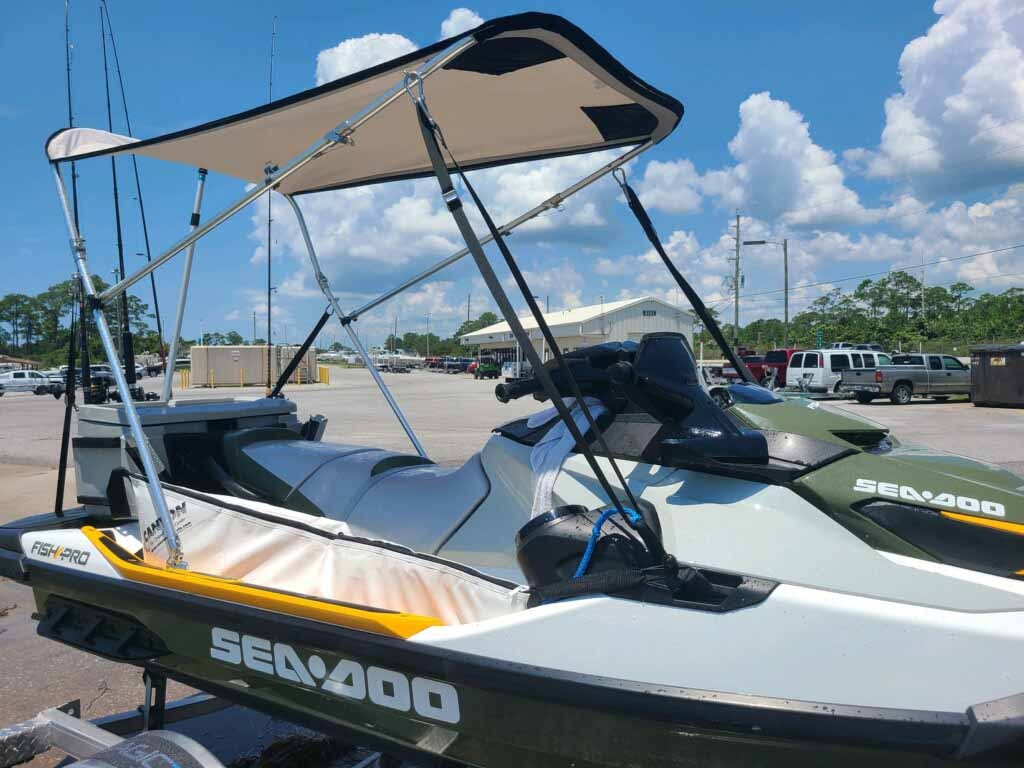
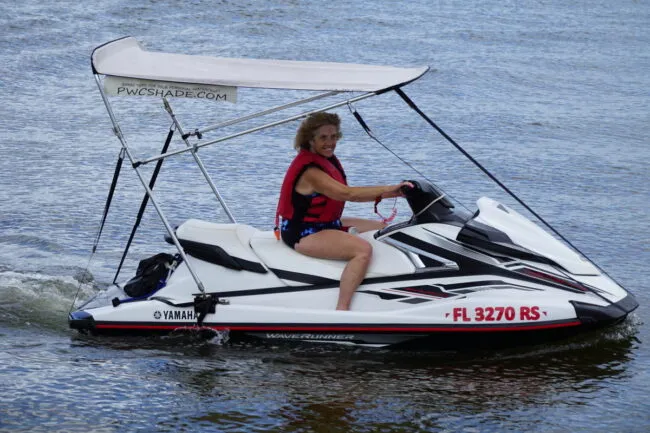
PWC Shade has Bimini tops in stock for personal watercraft. If you’re someone who likes to take it easy on your jet ski or maybe occasionally wet a hook, then a Bimini might be for you. If you don’t like the sun beating down on you all day, one of these will provide the shade you need and will let you relax in comfort. The top is made of UV resistant cloth, and all the parts are aluminum and stainless steel. It neatly folds down for trailering and storage. The straps attach to existing PWC fittings on most models.
The Sea-Doo FishPro requires a special mount that is available when you order one for your FishPro. The PWC Shade is compatible with Sea-Doo and Yamaha rear coolers and other accessories. It fits most makes and models from 2000 and up. The top is rated for use at speeds up to 45mph. You can even leave it on when not in use and your cooler and other gear will still fit. A limited number of Bimini Tops are available, so it is suggested that you order quickly. Check out the PWC Shade webist for ordering information, videos, and other details.