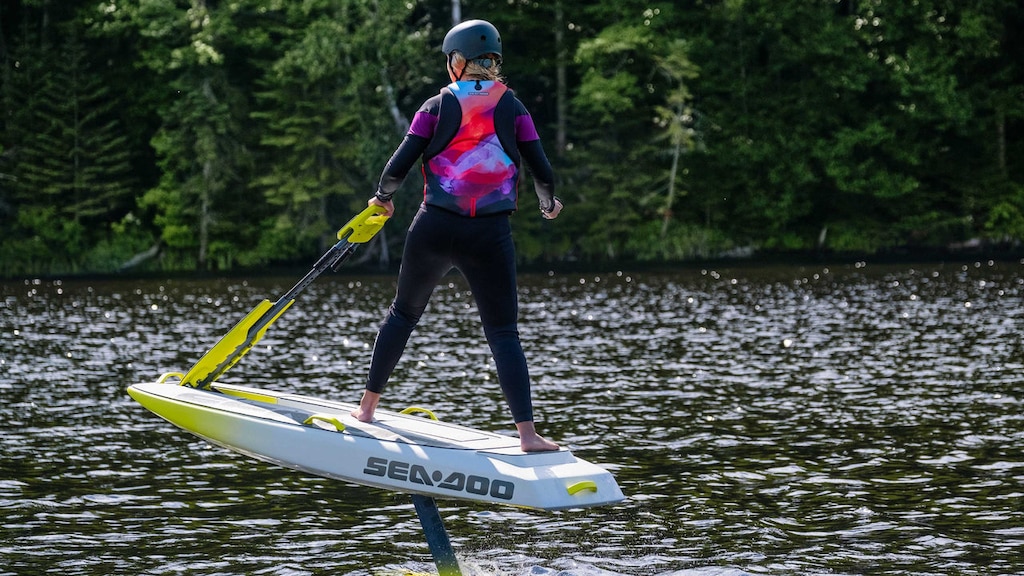
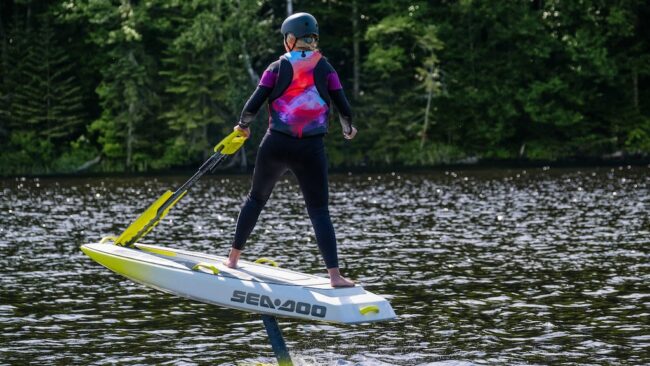
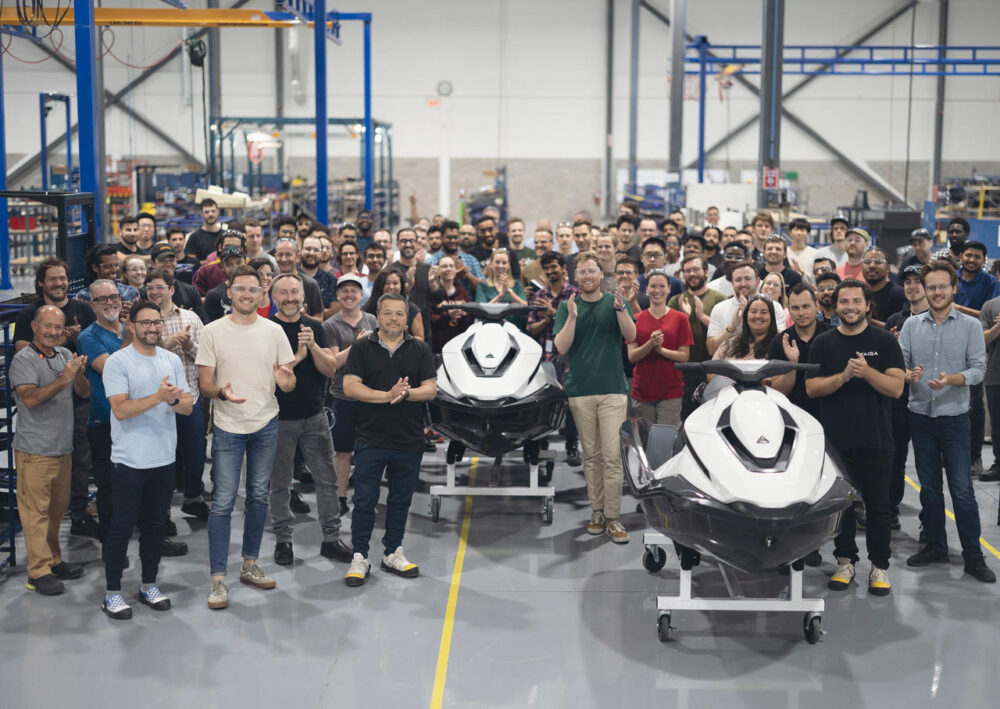
In a press release dated August 7,2022, we find that BRP continues to innovate their products and are entering the hydrofoil sector of watersports with their new electric hydrofoil called the Rise. The Rise will allow all skill levels the opportunity to get out there and enjoy the sport of hydrofoiling.
BRP designed the Rise to give more people access to the thrill of watersports. It is easy to use and a great way for the whole family to discover the excitement of learning a new sport together! Full specs coming in August 2023 and look for the Rise to be available for purchase in the summer of 2024.
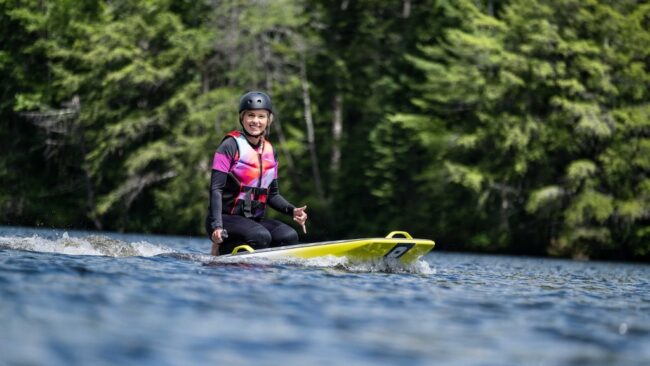
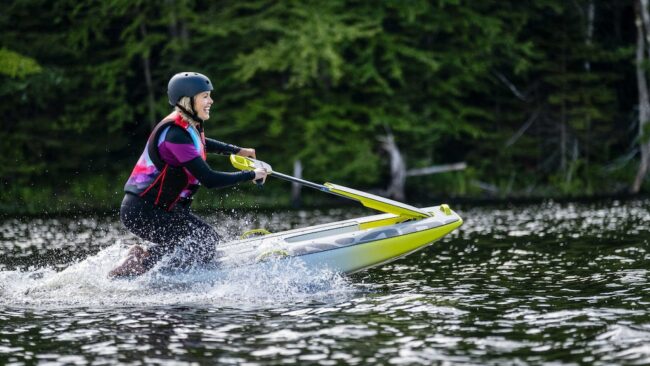
Read the full press release below: BRP Inc. is taking fun on the water to another level with the launch of the Sea-Doo Rise, an all-new electric hydrofoil board. For over 50 years, Sea-Doo has been revolutionizing the personal watercraft industry, and more recently, the pontoon category. Today, the iconic brand sets out to democratize hydrofoiling. Offering different experiences and providing a variety of surfing positions for all skill levels, this new electric hydrofoil board is perfect for the entire family and for those seeking to rise above the water and enjoy a more athletic Sea-Doo Life. The product is expected to be available in summer 2024.
“With the launch of the Sea-Doo Rise, we saw an opportunity to be the key actor in growing and democratizing the hydrofoiling watersport industry,” said José Boisjoli, President and CEO of BRP. Since we exist to create new ways to move people, we designed our new electric hydrofoil board the BRP way – accessible and easy to use. We are very proud to offer new surfing experiences worthy of the Sea-Doo signature and to add this all-electric product line to our portfolio. The Sea-Doo Rise enables us to address an untapped market category, further positioning the company for future growth.”
The Sea-Doo Rise is one of its kind, cleverly designed with innovative and dynamic features that transform the board as riders gain experience over time. Those who are new to hydrofoiling can choose to ride on the water without foiling, or to partially or fully deploy the wing when they are ready to foil above the water.
Very accessible, simple to use and easy to charge, the all-electric Sea-Doo Rise will provide peace of mind by minimizing worries and maximizing fun on the water!
Full specs are expected to be revealed in August 2023. To stay informed on Sea-Doo Rise news, visit the Sea-Doo website.
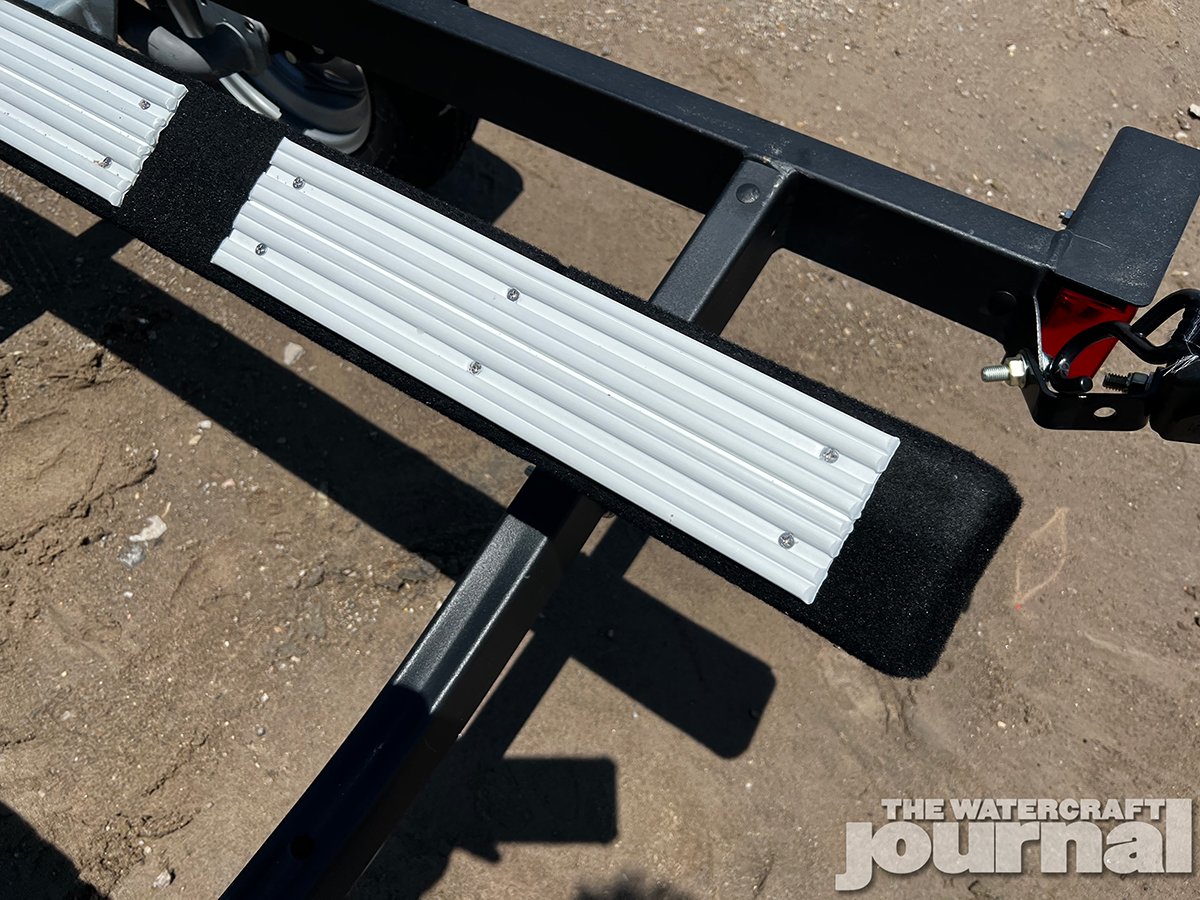
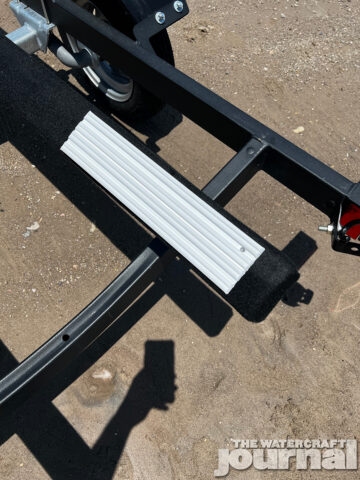
Marine slides also known as bunk slides can be a great improvement to a personal watercraft trailer, or any marine trailer. The purpose of bunk slides is to not only protect the hull of the vessel but also aid in removing the ski from the trailer no matter if unloading in the water or sliding your PWC off the trailer and onto a shop cart. These slides make unloading and loading a PWC easier.
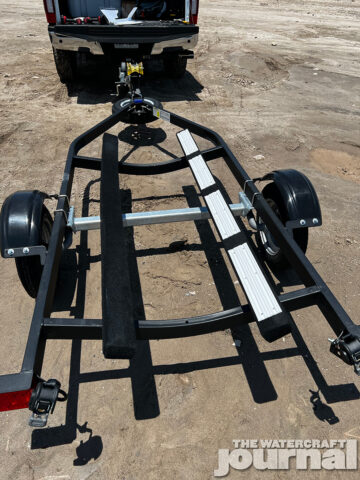
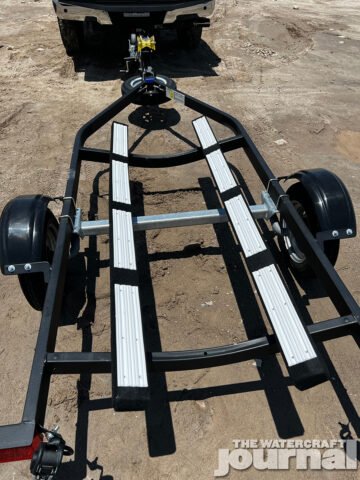
Installing bunk slides is straightforward. Depending on the length of your bunks will determine the size you need. For example, as shown, this is a single personal watercraft trailer with 6-foot bunks covered in marine carpet. Although this works fine for most people removing the vessel from the trailer onto a shop cart can be somewhat difficult as the marine carpet has a decent amount of traction.
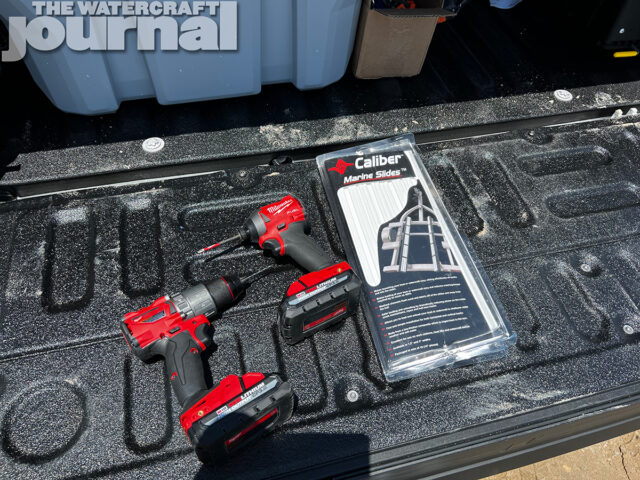
Since this trailer has 6-foot-long bunks by 3.5-inches wide. Bunk slides were purchased in a 10 pack of 15 inch long by 3 inches wide. Four bunk slides per slide fit perfectly when they are spaced out 3 inches apart from each other. Installation is simple, included with the slides are stainless steel screws that mount in the groove of the slide to protect the hall from the screws themselves.
Once aligned and measured out installation is straightforward by adding six screws per slide and repeating until you have covered the length of the bunk and then repeat on the following side. Since you are drilling into wood it is recommended that you use a pilot hole first and then install the screw.
Once you know the size of the trailer bunks and you have purchased Bunk slides. It is time to install now there are two ways to remove the personal watercraft to install the slides. The first by far is the easiest is take your slides and tools with you to your local boat ramp launch the PWC and install in the parking lot. The other is to remove the ski from the trailer by using a PWC lift sling. Since most people do not have the equipment to lift a PWC the first option is better for most people.
Now that bunk slides are installed loading and unloading your personal watercraft will be that much easier. For more information about bunk slides and PWC lift slings check out these two quick topics from the watercraft journals YouTube page
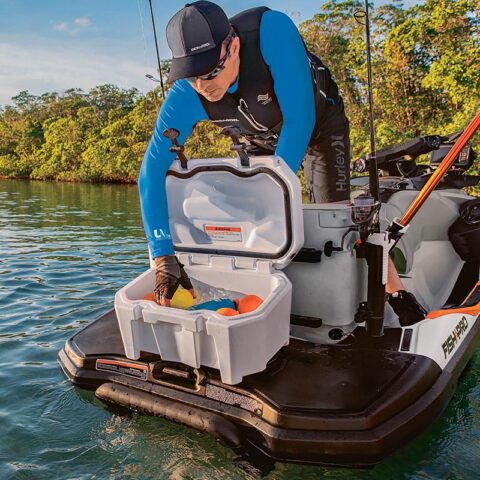
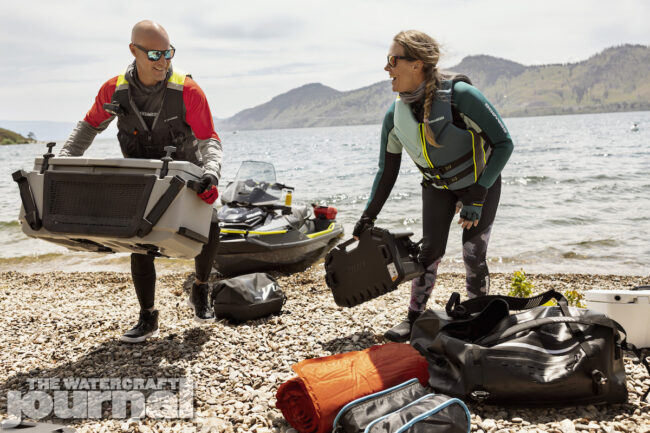
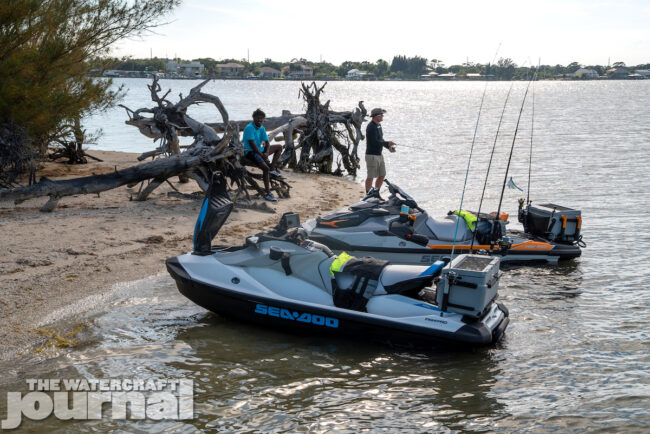
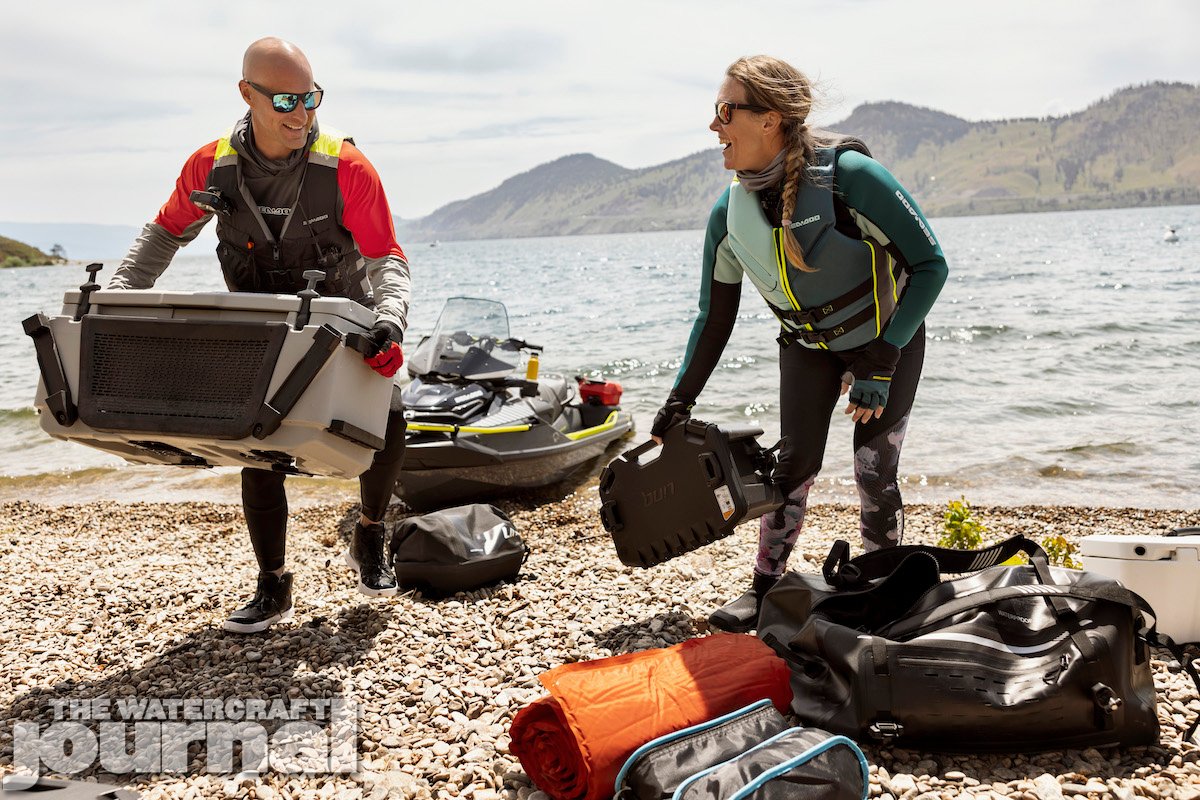
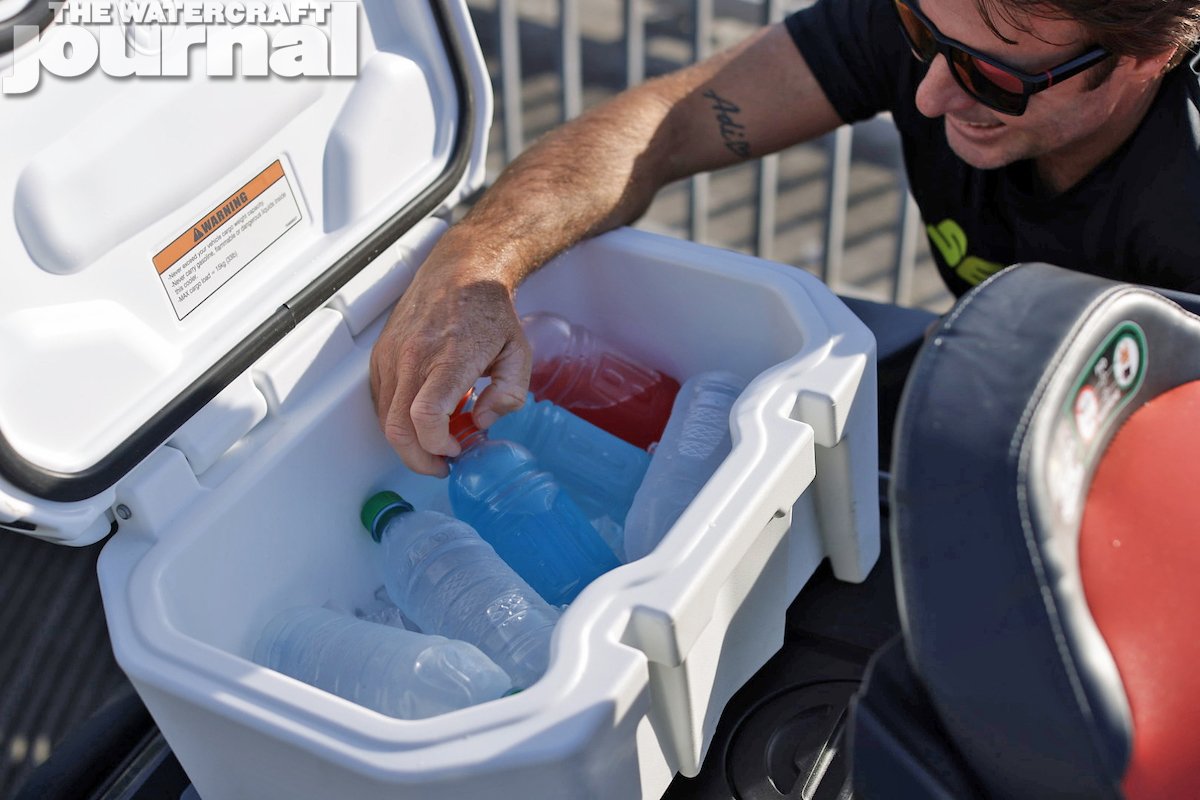
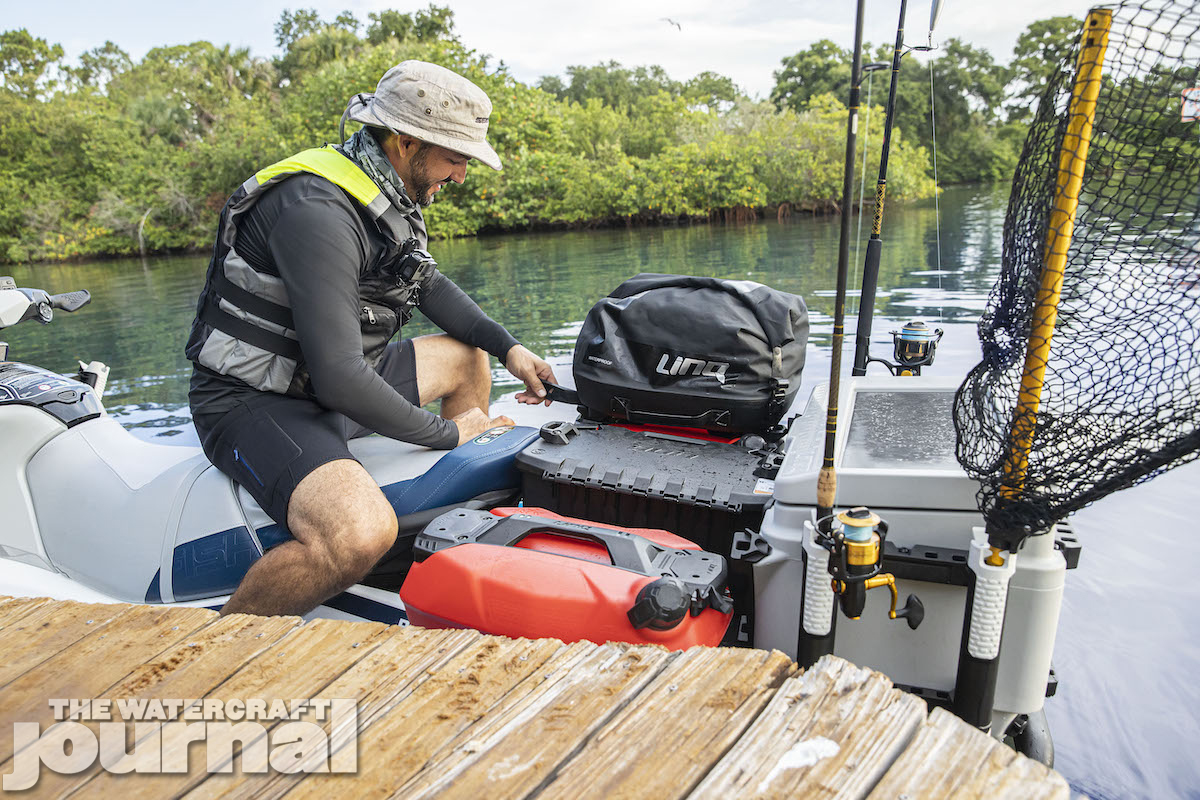
Get more out of your ride with Sea-Doo LinQ accessories. These products are innovative and will help you be prepared for any water activity. The LinQ coolers can be used to keep snacks dry and drinks cool and out of the way. The coolers also make great storage bins for first aid or camera gear.
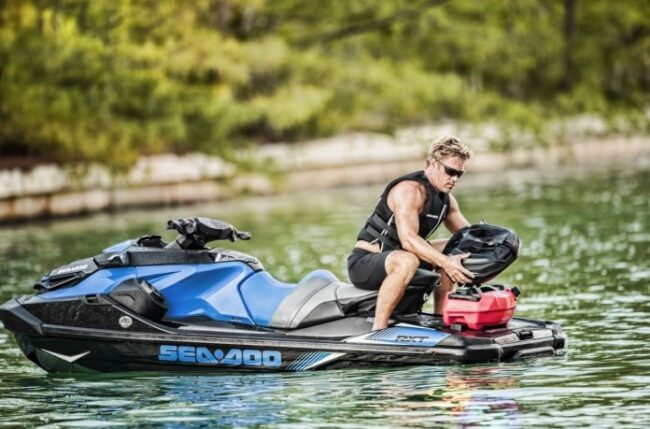
The LinQ coolers come in a couple of different sizes and a 5.3-gallon extension can be added to the 13.5 cooler, giving you extra room. The extension also makes for a good tackle box or use it for space for your lunch. Another great accessory that can either save the day or simply let you stay out longer, is the 4-gallon LinQ Stackable Fuel Caddy.
You can stack a LinQ Dry Bag on top of the fuel caddy, but you can’t stack fuel caddies. Sea-Doo has added a couple of boxes to the lineup over the years. Now you can turn the 10L Modular Box into a cooler with the Thermal Insert. With the LinQ Cup Holders, your drinks can be secured to the 13.5-gallon cooler. Drop your beverage into the flexible fins inside and lock it in while you’re casting a line or just chilling.
The LinQ Toolbox is another nice addition to the lineup. It is a durable rigid 5-gallon box that can hold a decent number of necessary tools or other gear. The versatility that the LinQ accessories provide, gives you a ton of options for whatever the day entails. Whether you have a planned outing that involves a fishing trip and a camp out or you’re going exploring, these boxes can hold all your gear. You can be ready for anything with Sea-Doo’s LinQ add-ons.
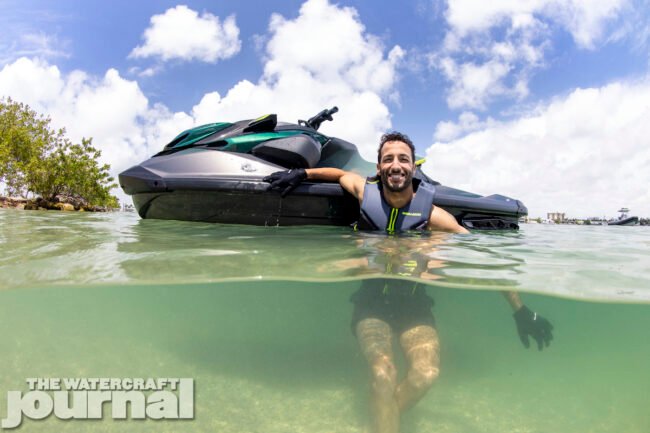
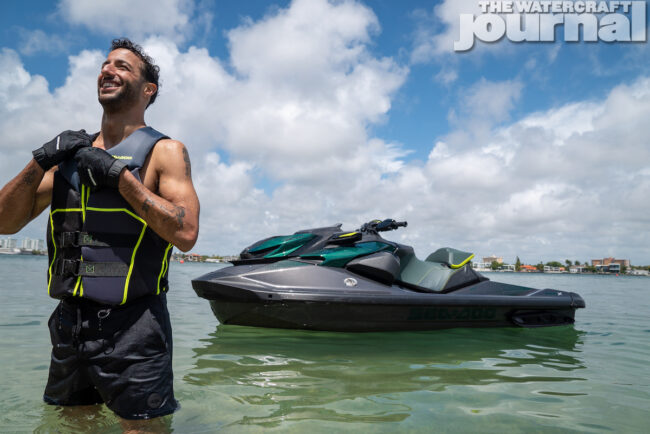
If one is to dabble in the field of predicting the future, we’ve found it’s best to become accustomed to the taste of crow. Today is one of those humbling instances, as almost half of the predictions made by The Watercraft Journal this year – pertaining to the 2023 models – were sunk. A wholly redesigned Spark? Not yet, buddy. A multi model-sweeping X-Series? Hmm, better luck next time. And this May’s leaked green-and-carbon fiber RXP-X featuring Formula 1 pilot Daniel Ricciardo being a one-and-done custom? Not even close, kid.
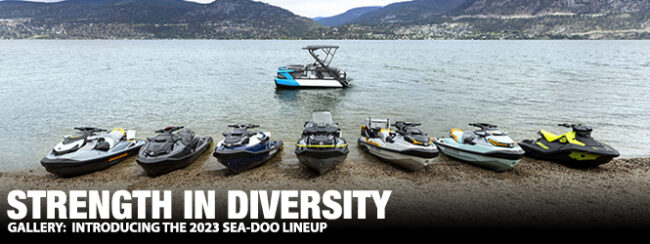
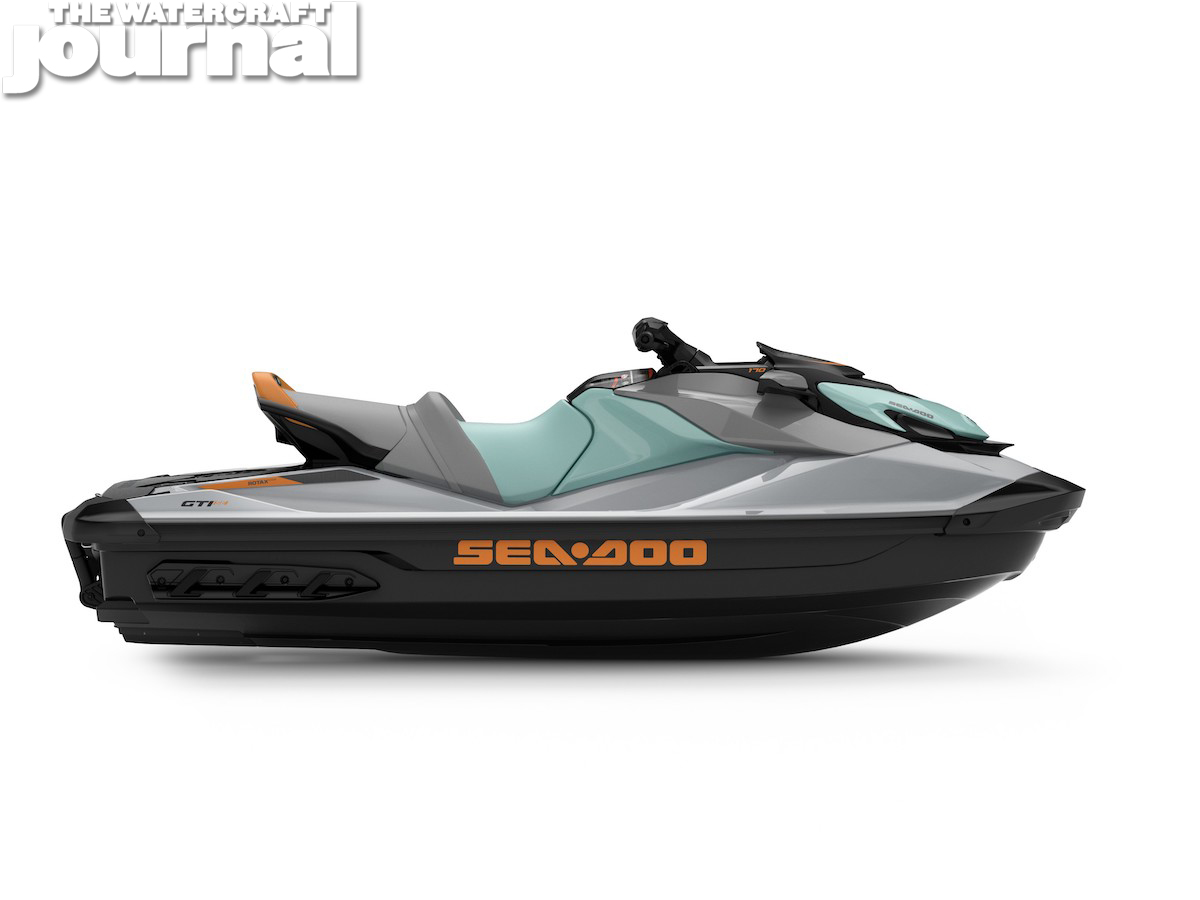
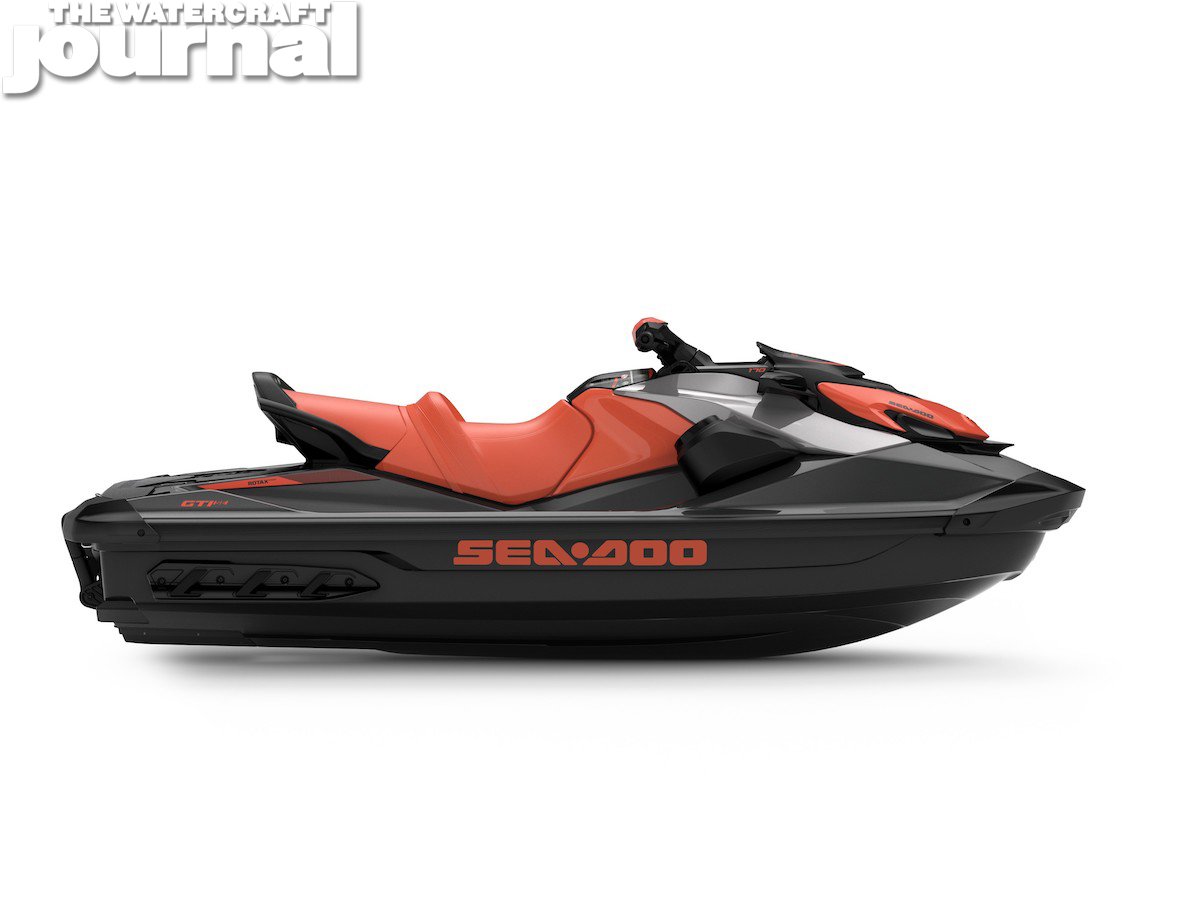
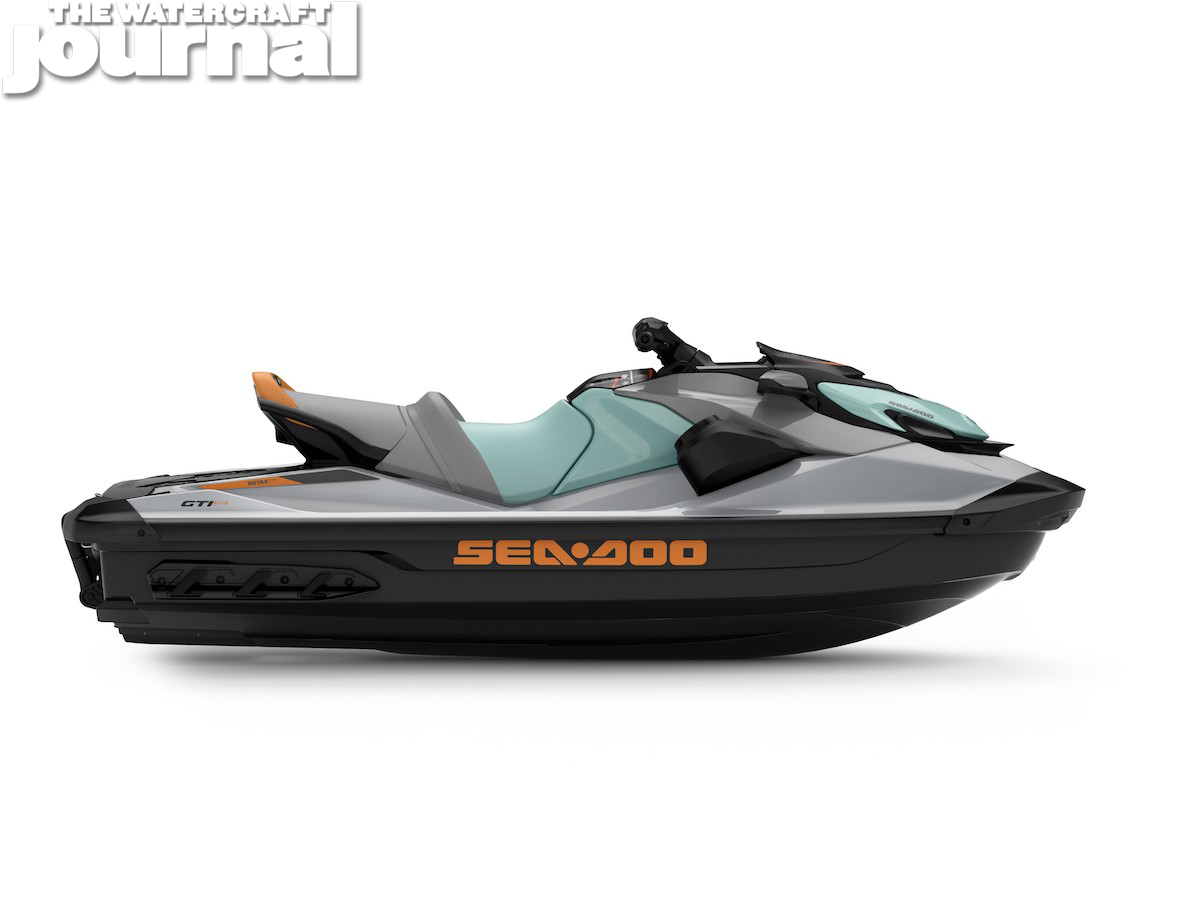
Rather, in a surprising move, BRP opted to appeal to the furthermost extremes of some of the hobby’s most polarized opposites: the fuel-efficient, long-distance cruiser; and the edge-of-your-seat, hardcore buoy-cutting racing enthusiast with the new Explorer Pro 170 and RXP-X Apex 300, respectively. These two new models stand alone as the solitary additions to the family of Sea-Doo watercraft, and expands the brand’s already diverse variety of purpose-built products.
Apart from a limited number of new colorations – including the top-of-the-line GTX Limited 300, GTI and Spark models – the remainder of the watercraft lineup are direct carryovers from 2022 in both livery and equipment. This decision allows the 2023 lineup to seamlessly dovetail into last year’s production run, which is still working to complete incomplete models. To this point, BRP CEO José Boisjoli emphatically praised dealers during the 2023 product rollout.
Boisjoli thanked its dealer network for continued professionalism and patience during the last two-and-and-a-half years of production delays and the influx of unfinished products arriving at dealerships. During the invite-only presentation, Boisjoli shared a few examples of the pains taken by BRP to complete units, including booking dozens of 747 flights to bring in materials from overseas, and making over 15,000 engineering changes to streamline and ease production woes.
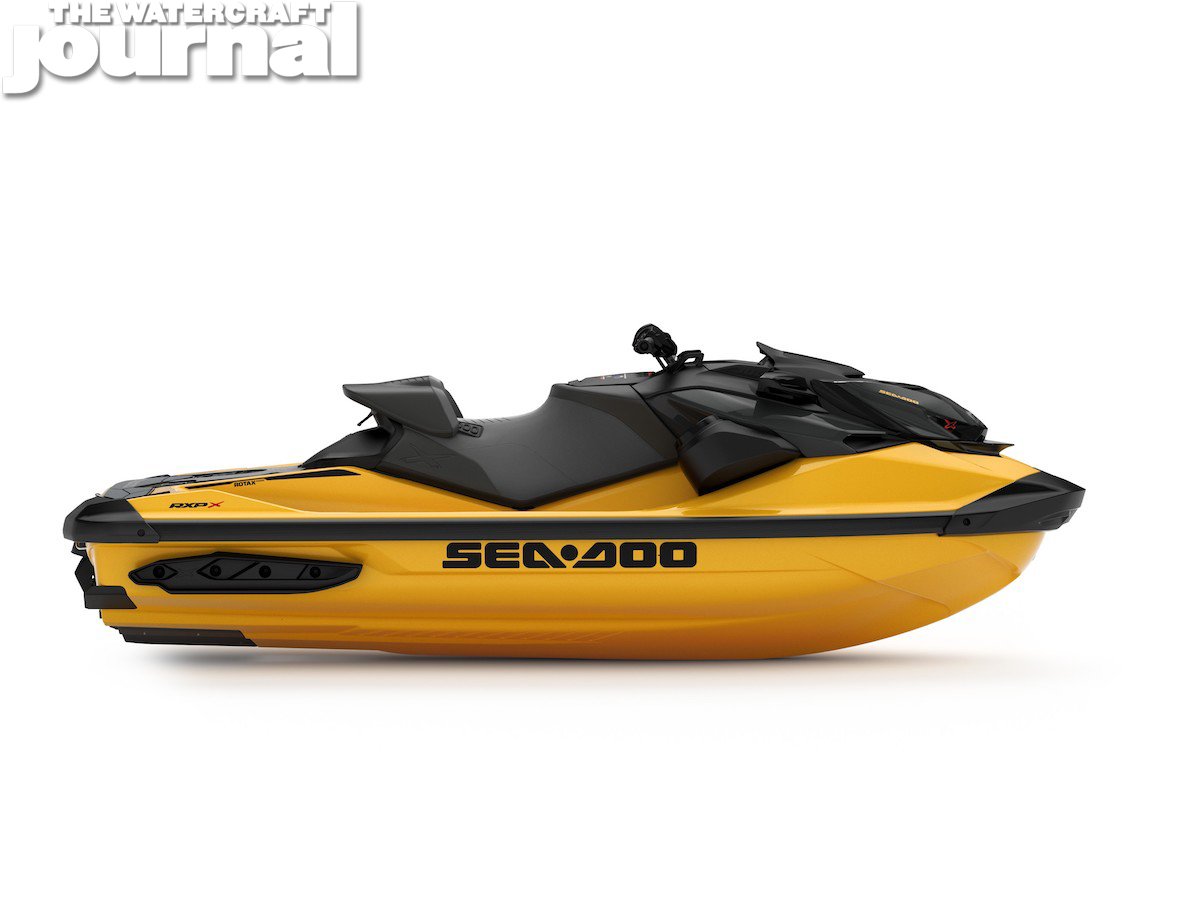
These efforts combined with the force of BRP’s 20,000 employees gives the company a strong positive momentum leading into the new year. And assisting that momentum are two new machines that speak specifically to two very unique interests. With the aforementioned 2023 RXP-X Apex 300 ($20,999 MSRP). Sea-Doo is offering it as an a 2023-only, limited run that are only available via pre-order with deposits ending November 30th, 2022.
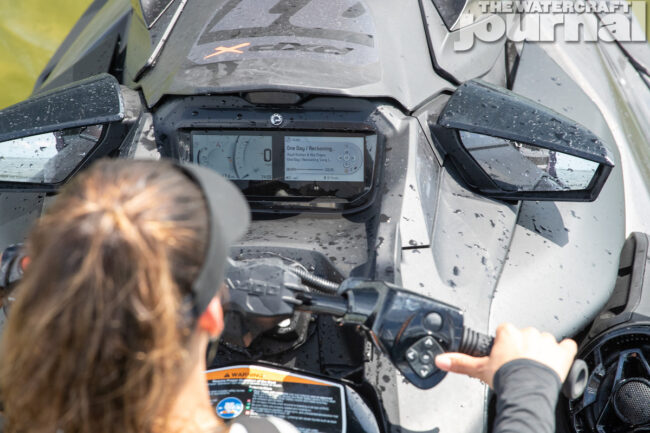
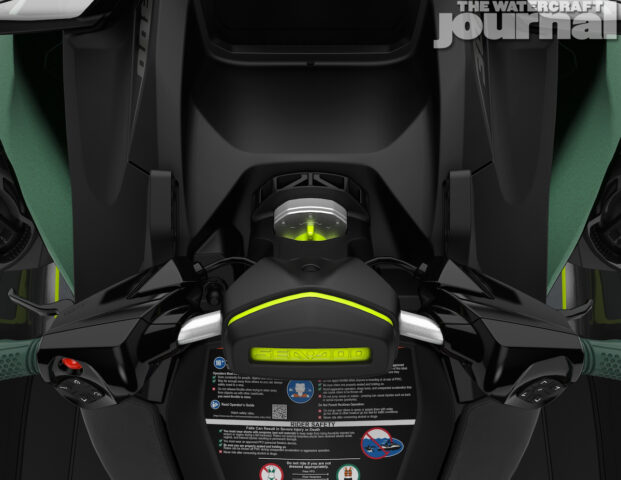
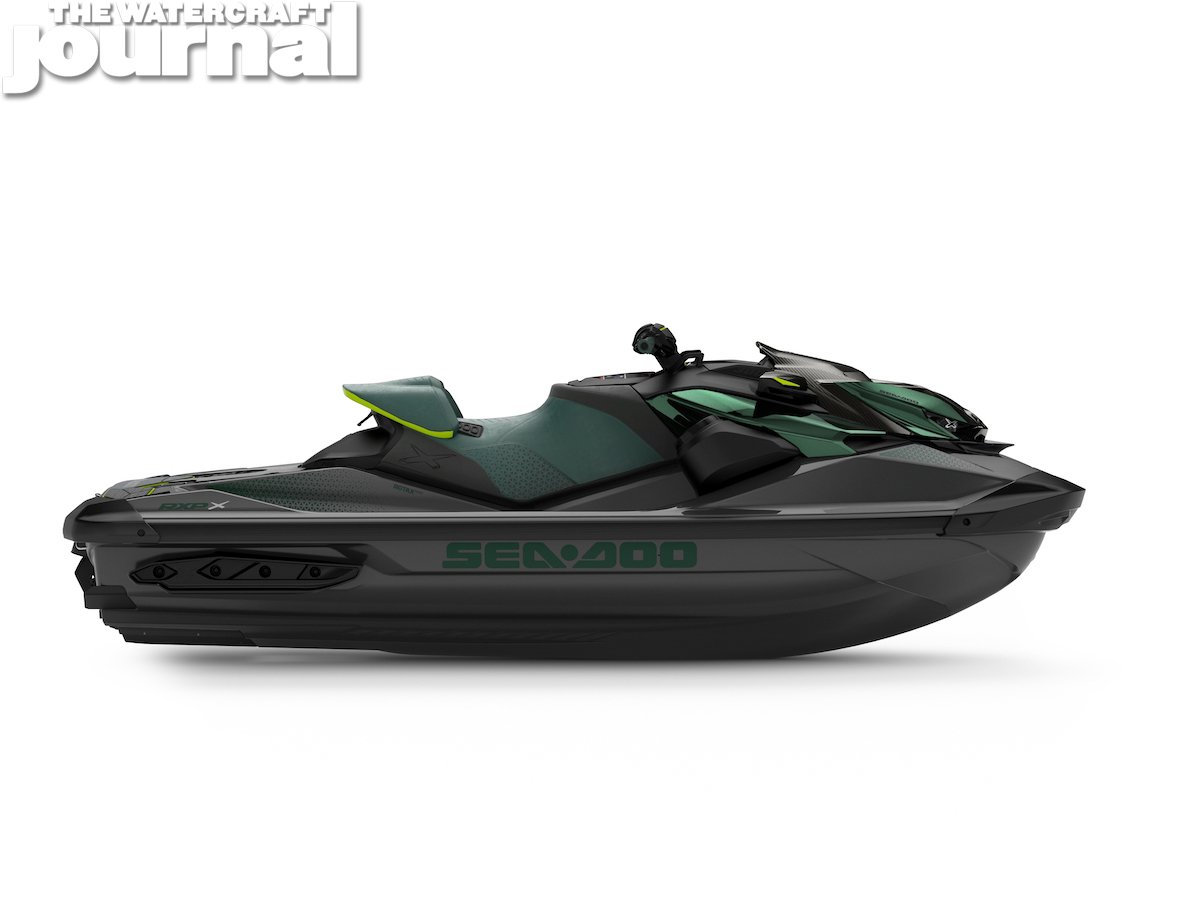
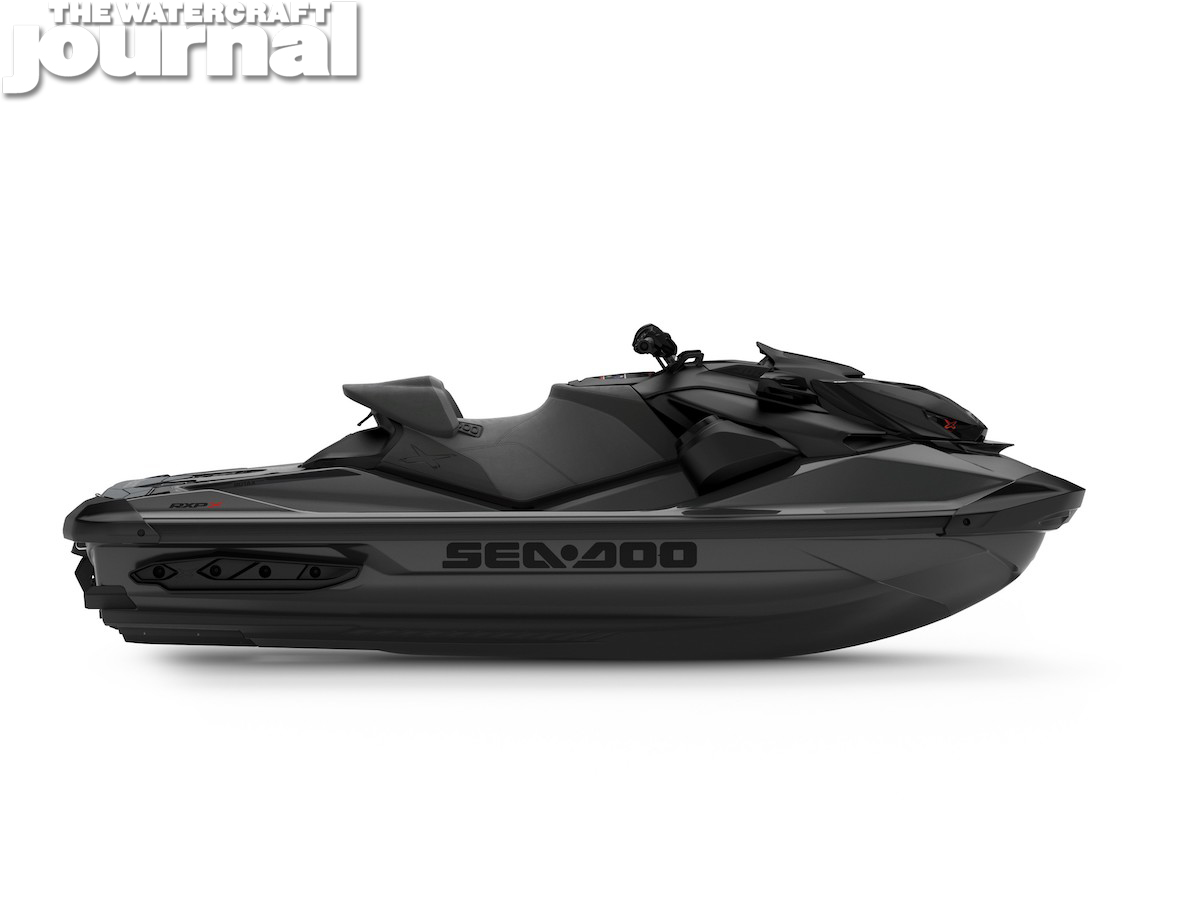
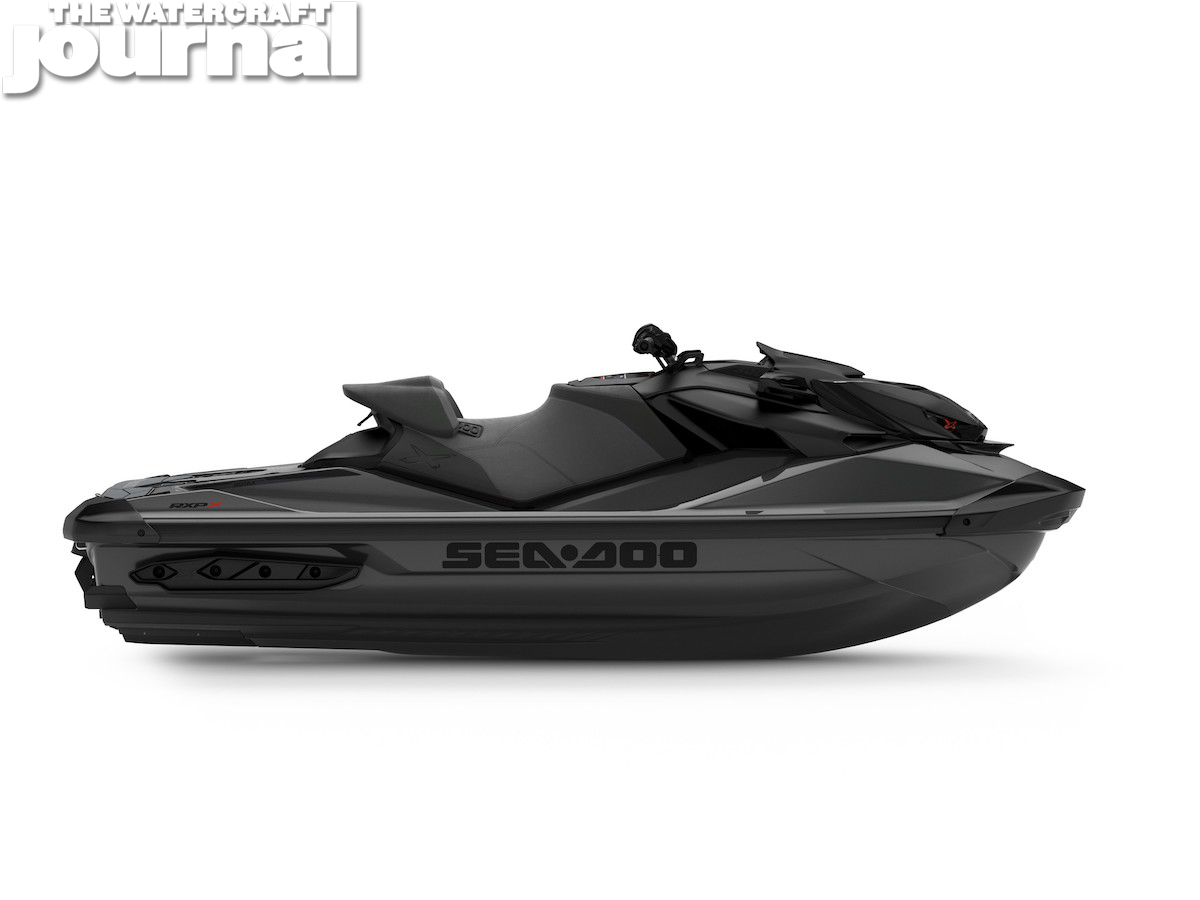
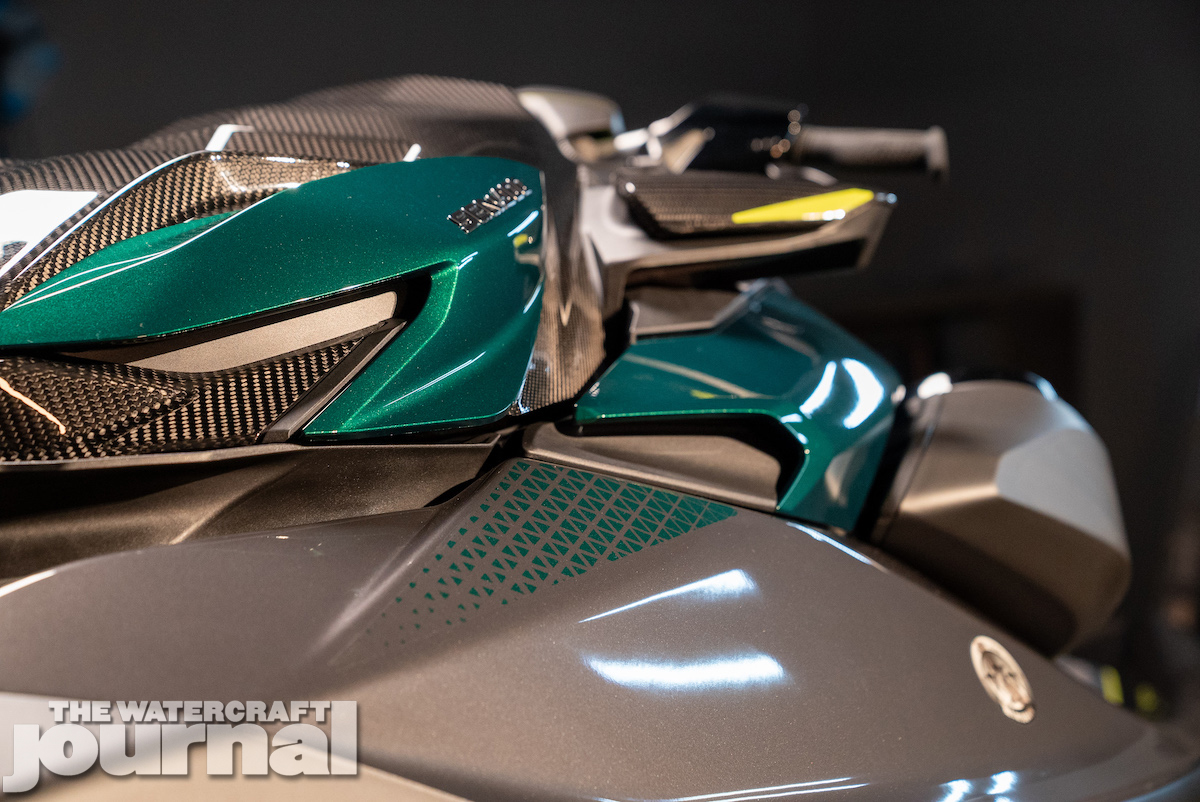
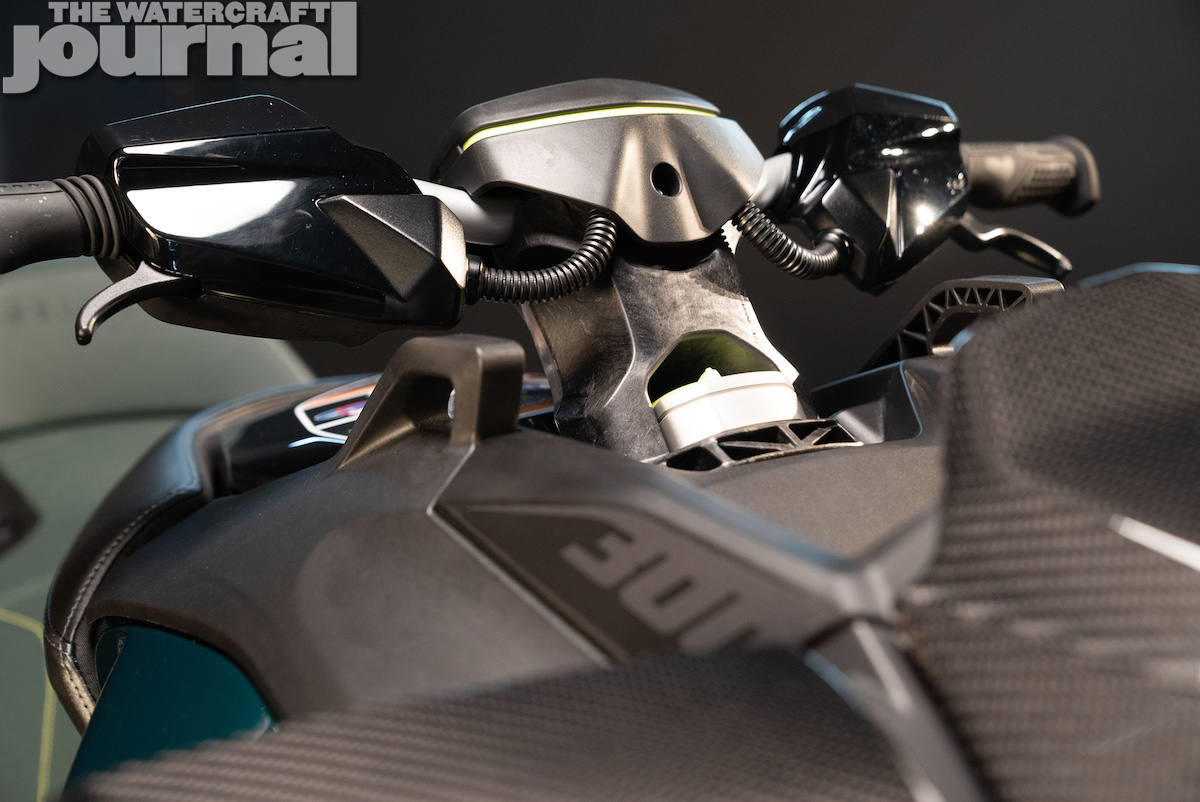
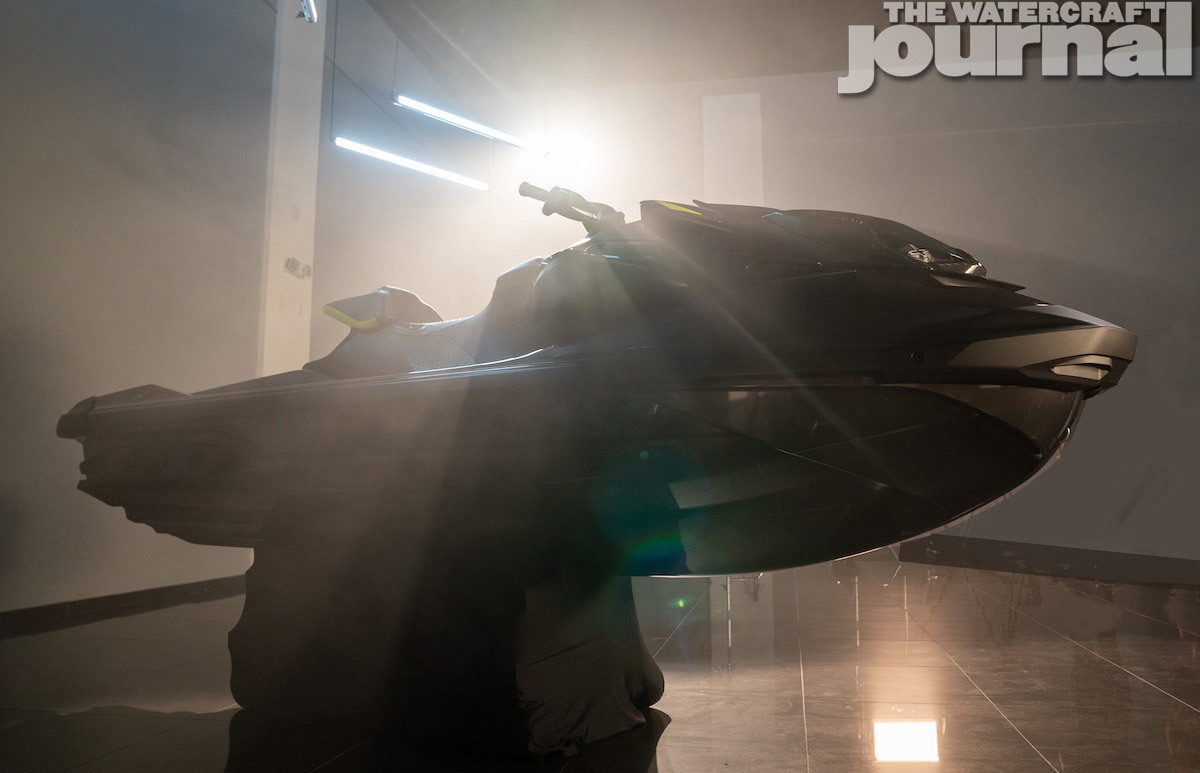
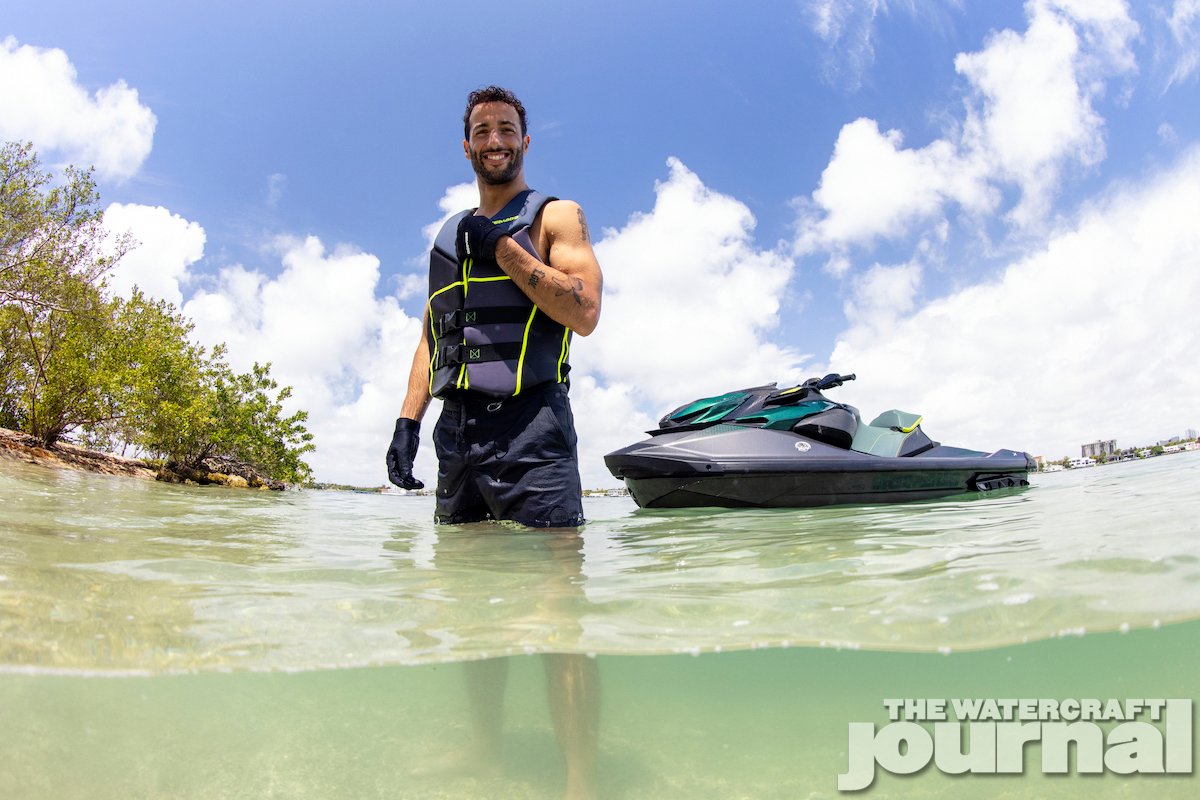
The Apex comes almost exactly as shown in the leaked pictures and video featuring F1 racer Daniel Ricciardo – wrapped in Racing Green and Graphite Gray, and featuring carbon fiber on the mirrors and hood with blacked-out emblems, the Apex is living up to its name. What truly sets the Apex apart from the standard RXP-X 300 (which returns in Millennium Yellow and Premium Triple Black) is the use of a Hydraulic Steering Damper on a reinforced steering column (with three resistance settings).
The adjustable hydraulic dampening action is designed to reduce the amount of rider input necessary to track through chop – particularly at speed – and consequently, reduce rider fatigue. The exclusive Apex also includes both seating options for the RXP-X, the high-backed single seat (Ergolock-R) and the optional passenger seat. Otherwise, all other characteristics of the Apex remain identical as the standard RXP-X (sponsons, power output, weight, etc.).
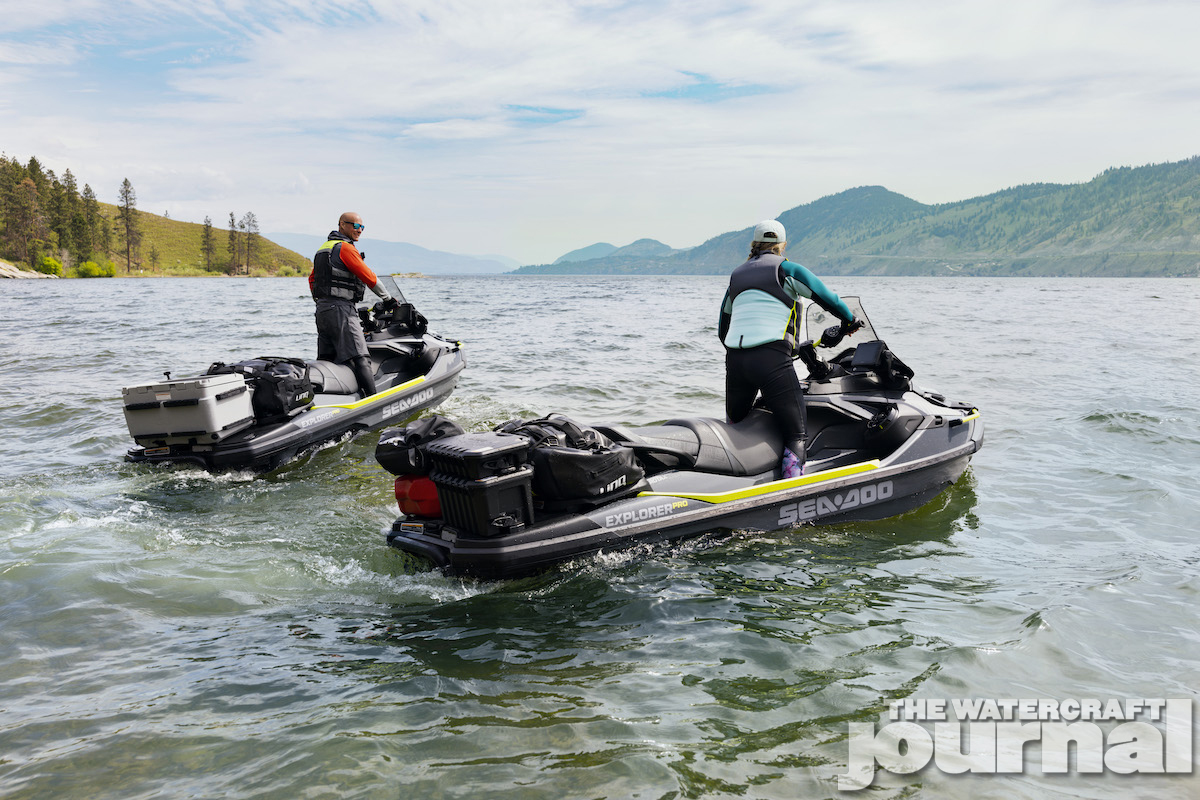
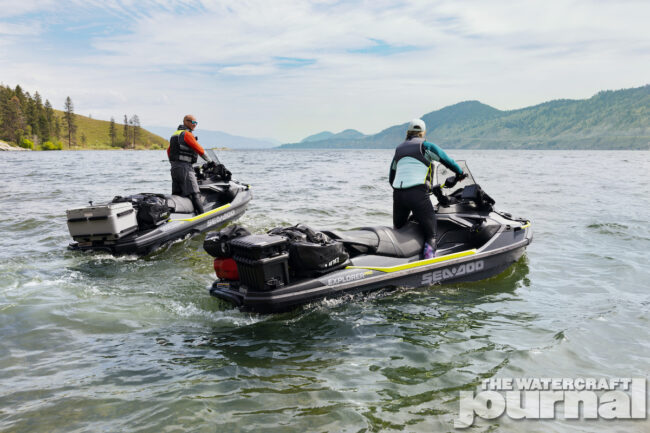
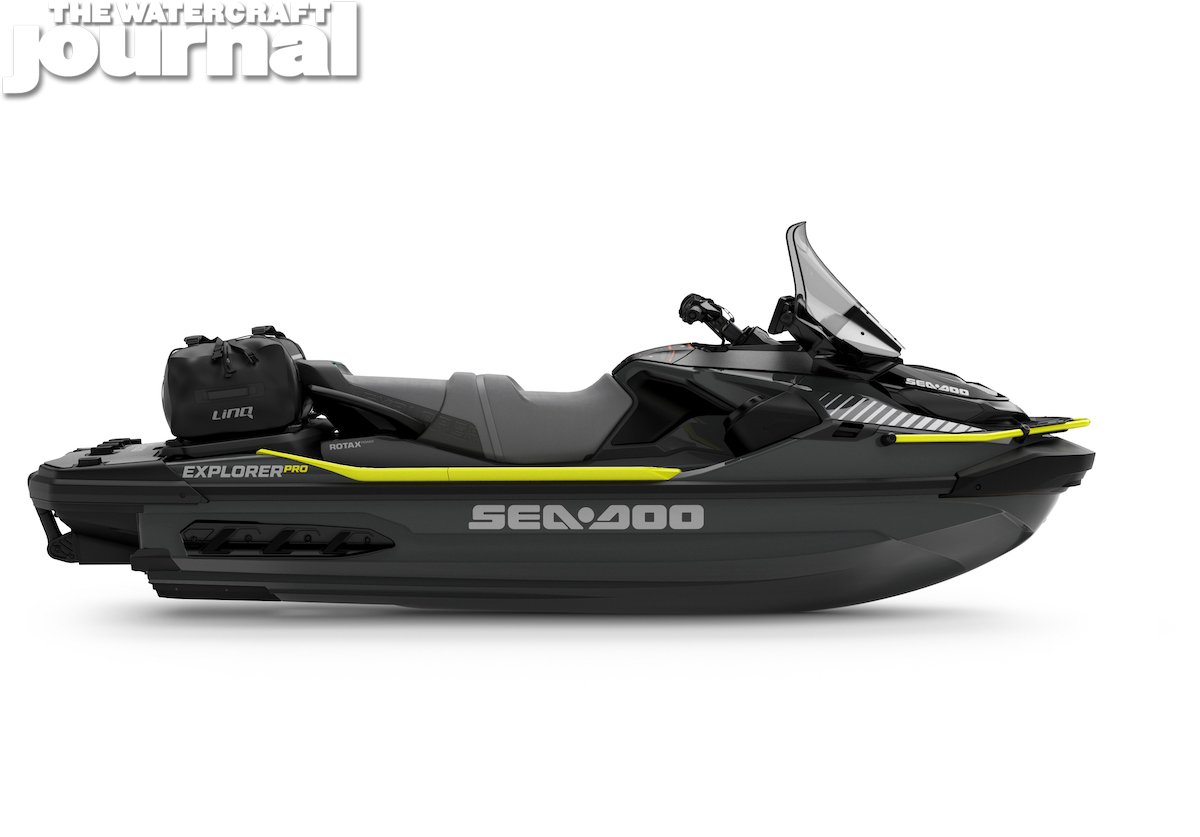
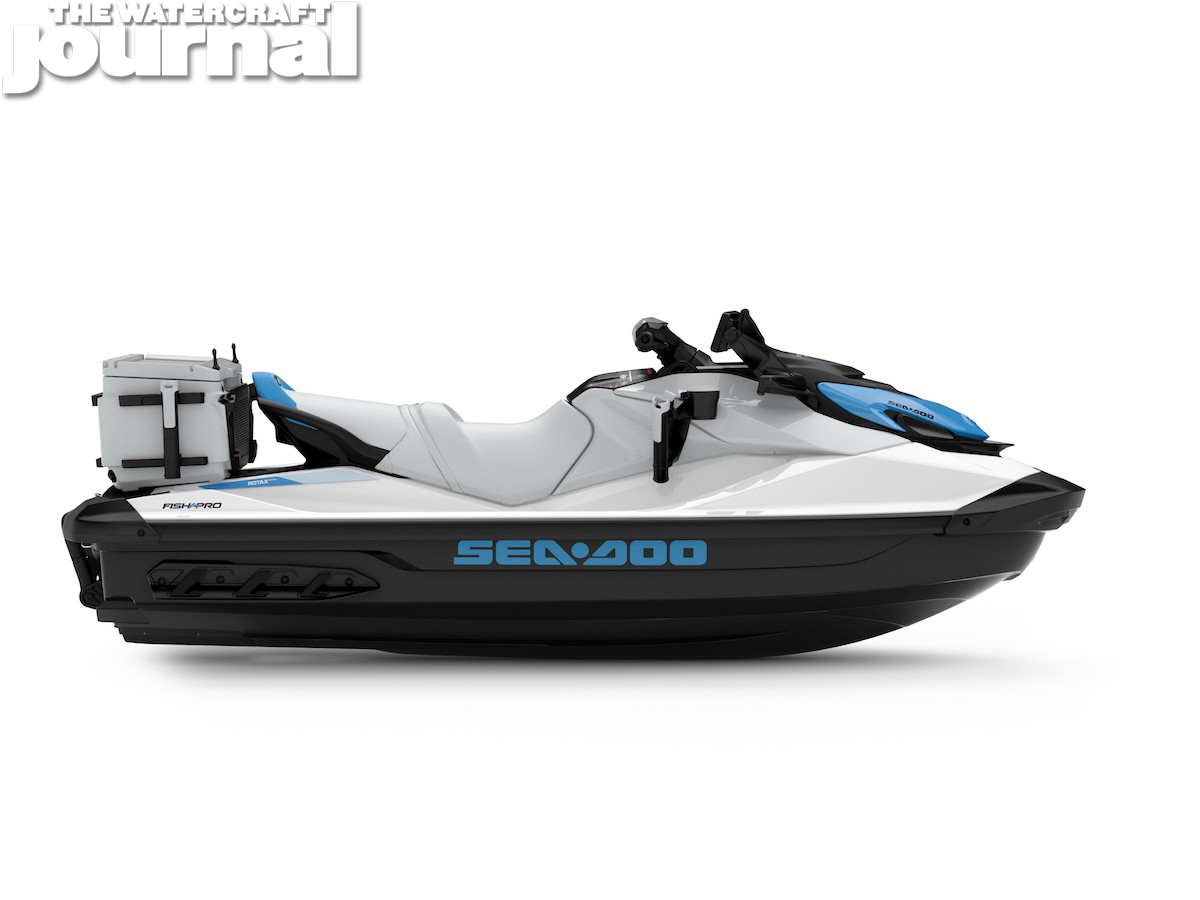
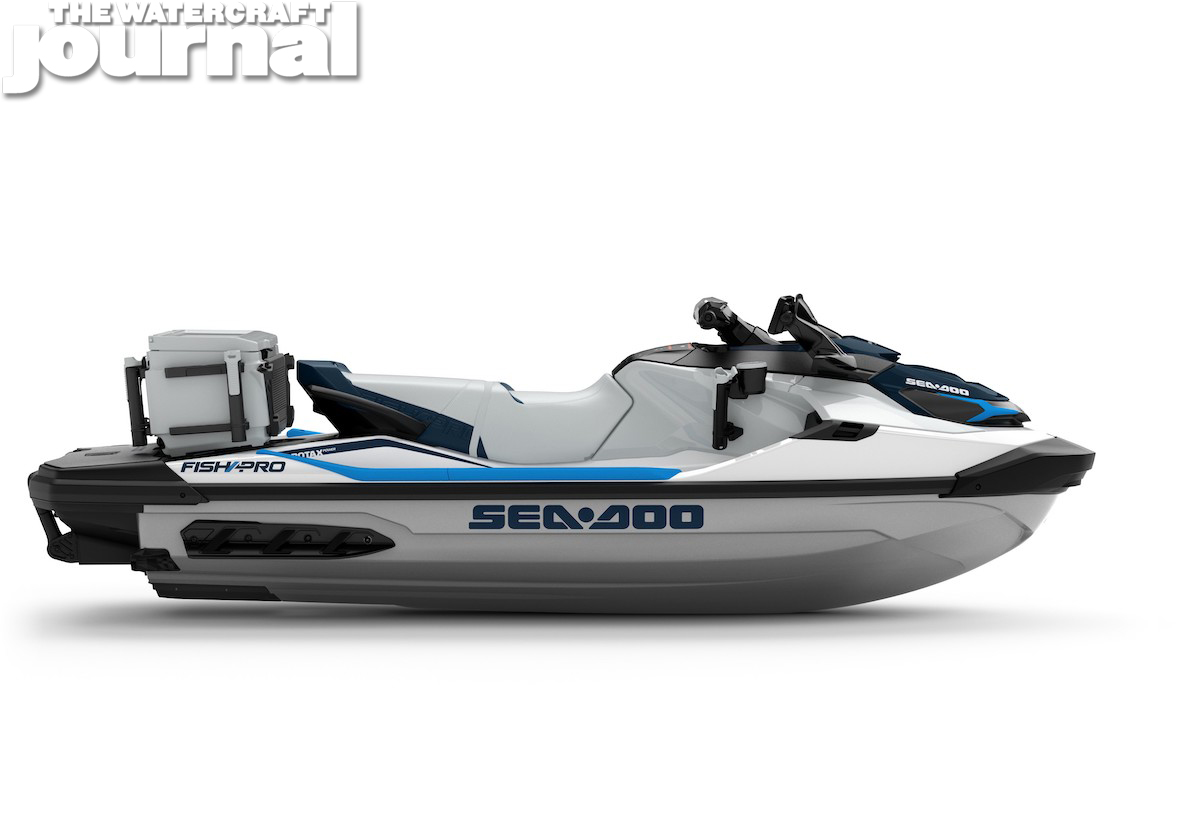
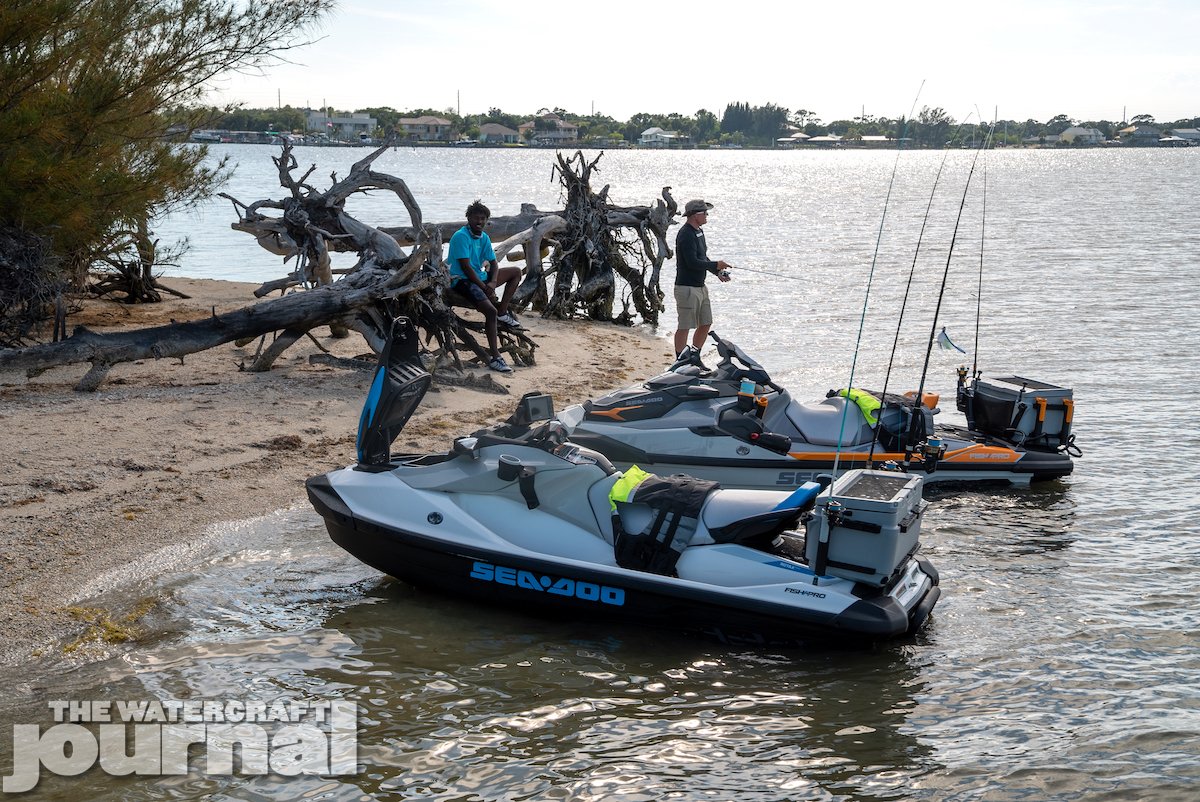
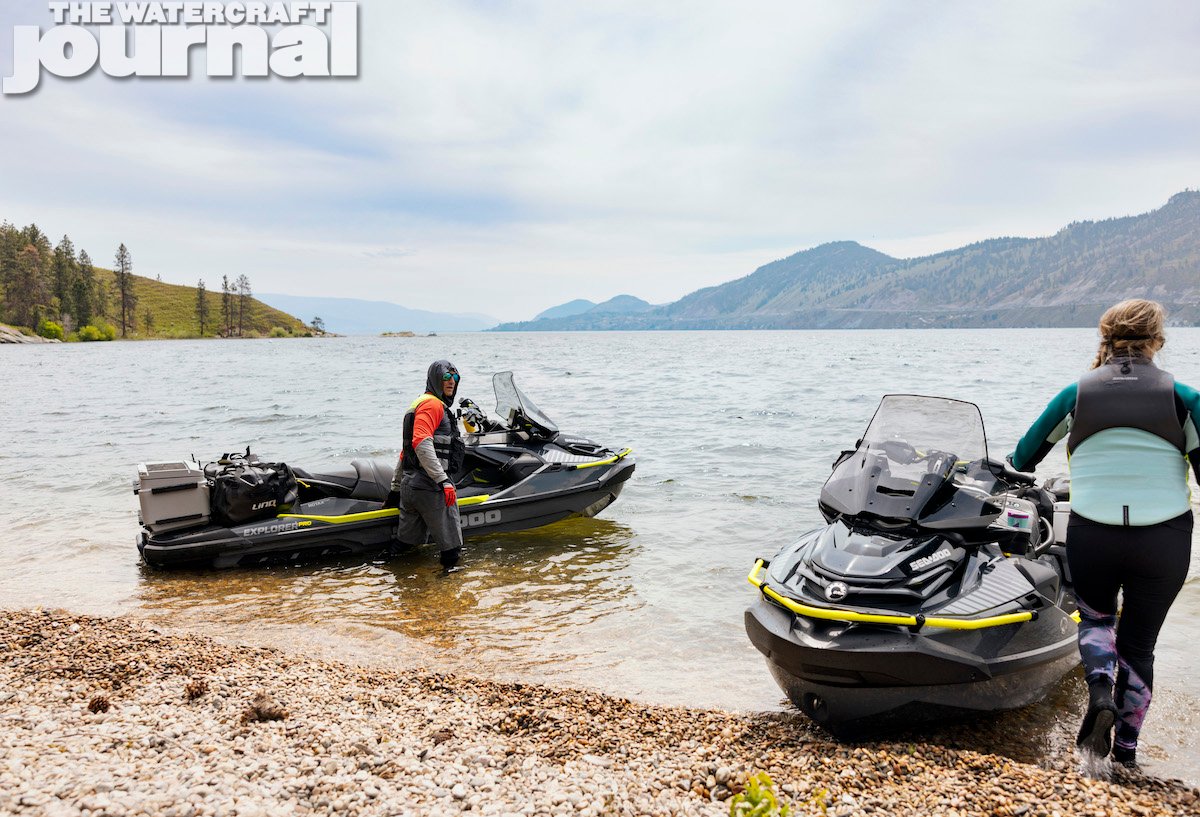
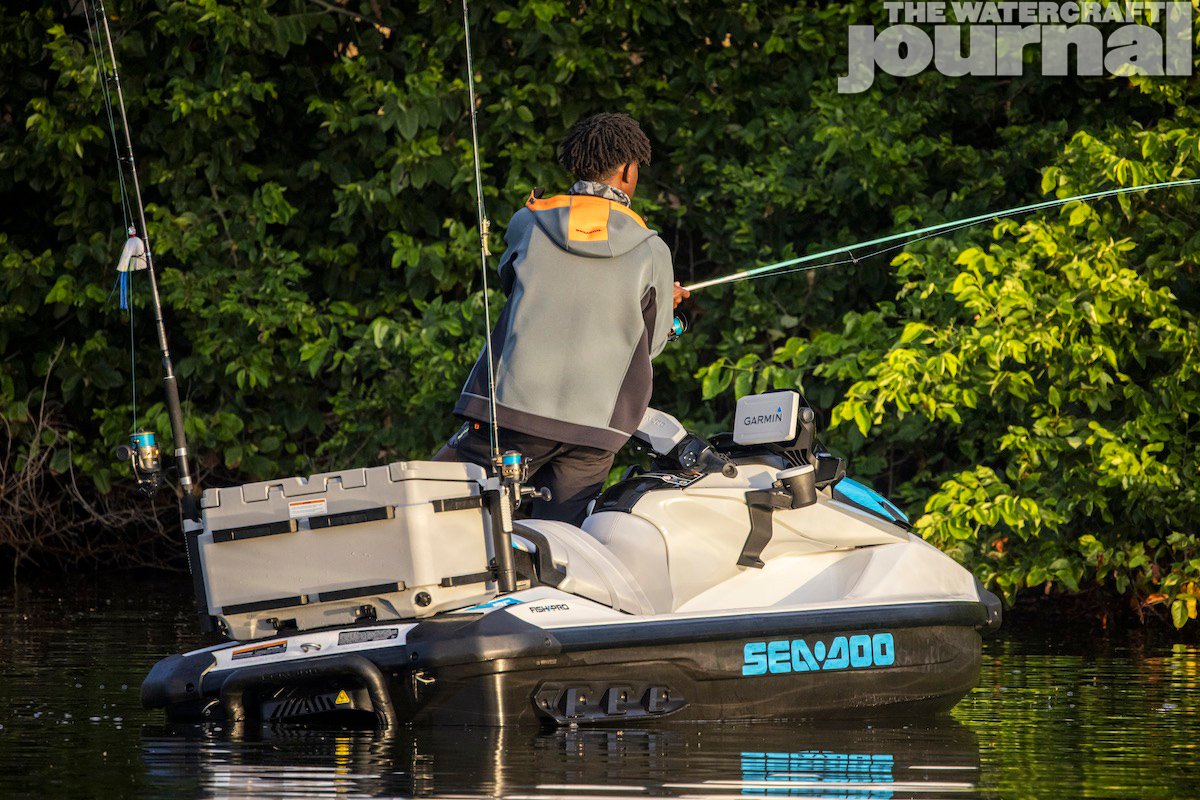
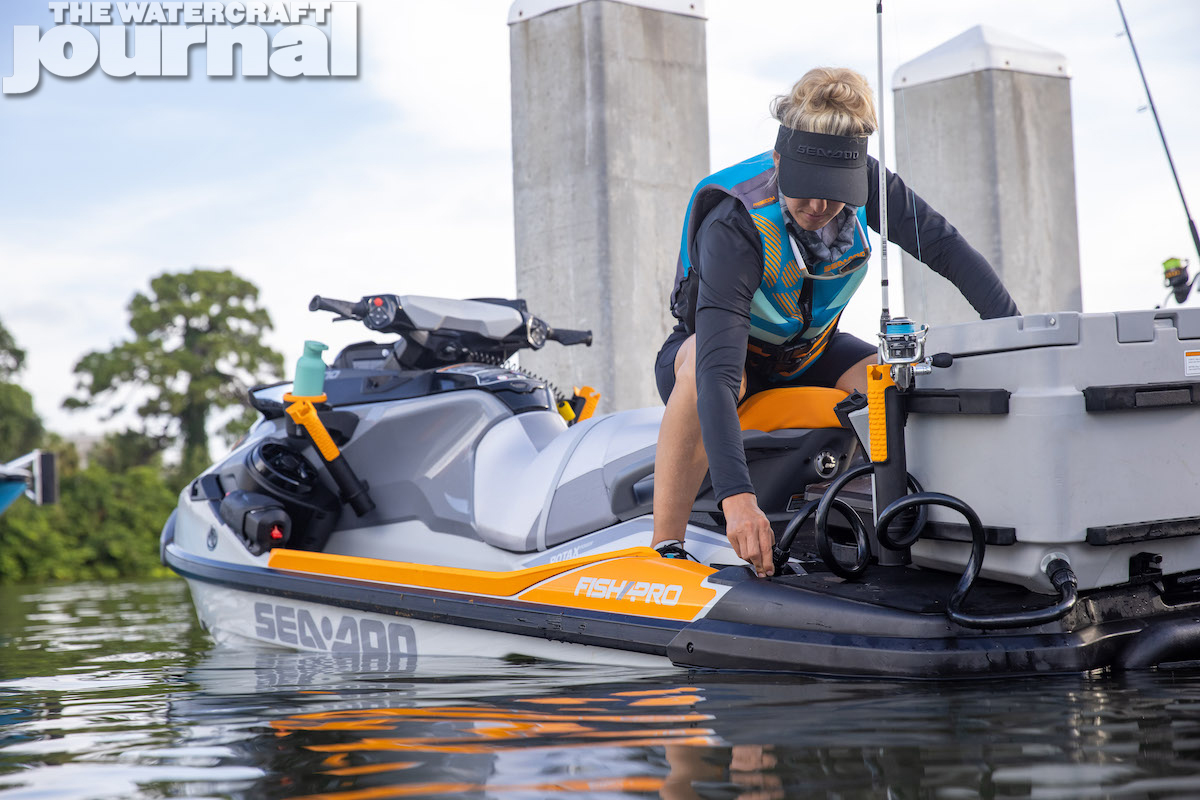
For those seeking a totally different use of the water, Sea-Doo launches its new “Adventure Segment” beginning with the 2023 Explorer Pro 170 ($16,799 MSRP). This machine shares a great deal in common with the Fish Pro Sport 170, employing the full-sized ST3 platform, the same thickly-padded flat “Touring” bench seat, gunwale footrests, a modified Fish Pro extended rear deck (more on that in a second), and 7-inch Garmin GPS/Fish Finder combination navigator.
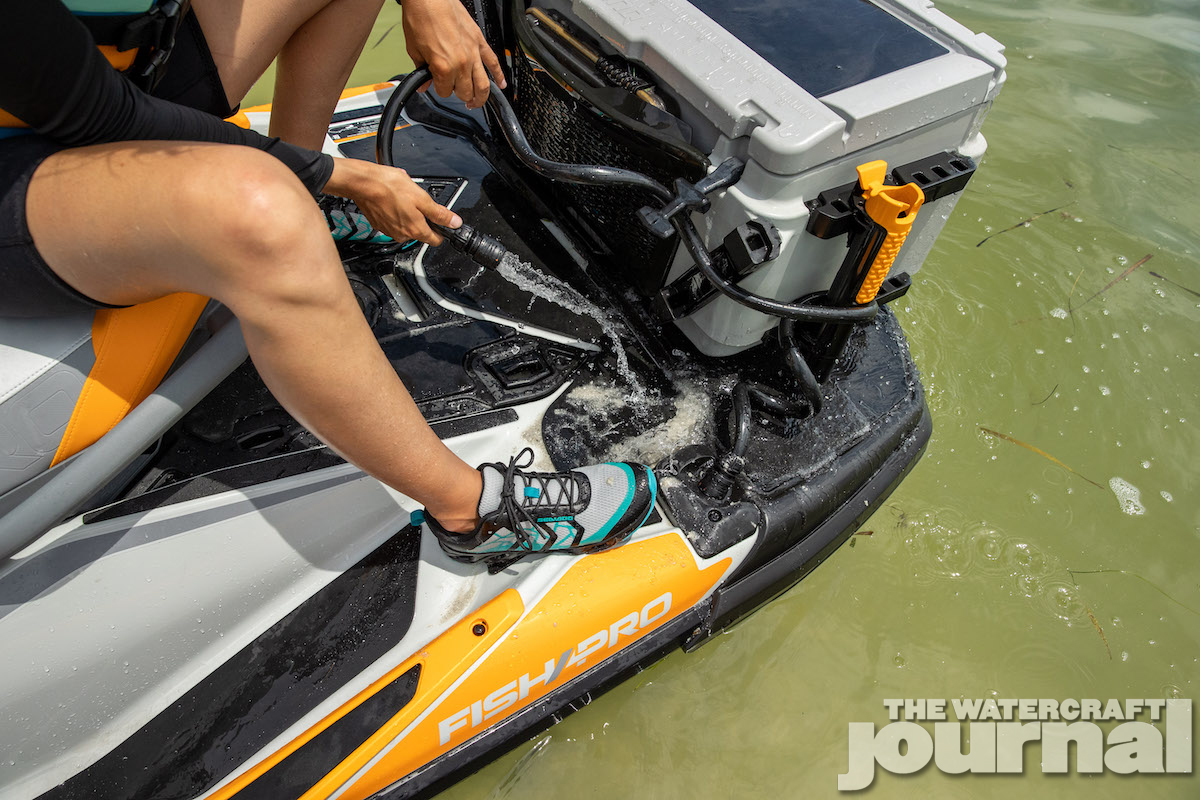
The Explorer Pro 170 includes several firsts for both Sea-Doo and the PWC industry like a full-sized removable windshield, a heavy-duty front bumper, a vertically-adjustable steering neck, a LinQ Explore Bag, a standard LinQ multi-cargo rack, and a redesigned rear platform with three-times the LinQ mounts, allowing adventurers to bring upwards of SIX LinQ accessories! The Explorer Pro 170 will appeal to those who want to venture far upriver, down the coastline, and even camp overnight near the shoreline.
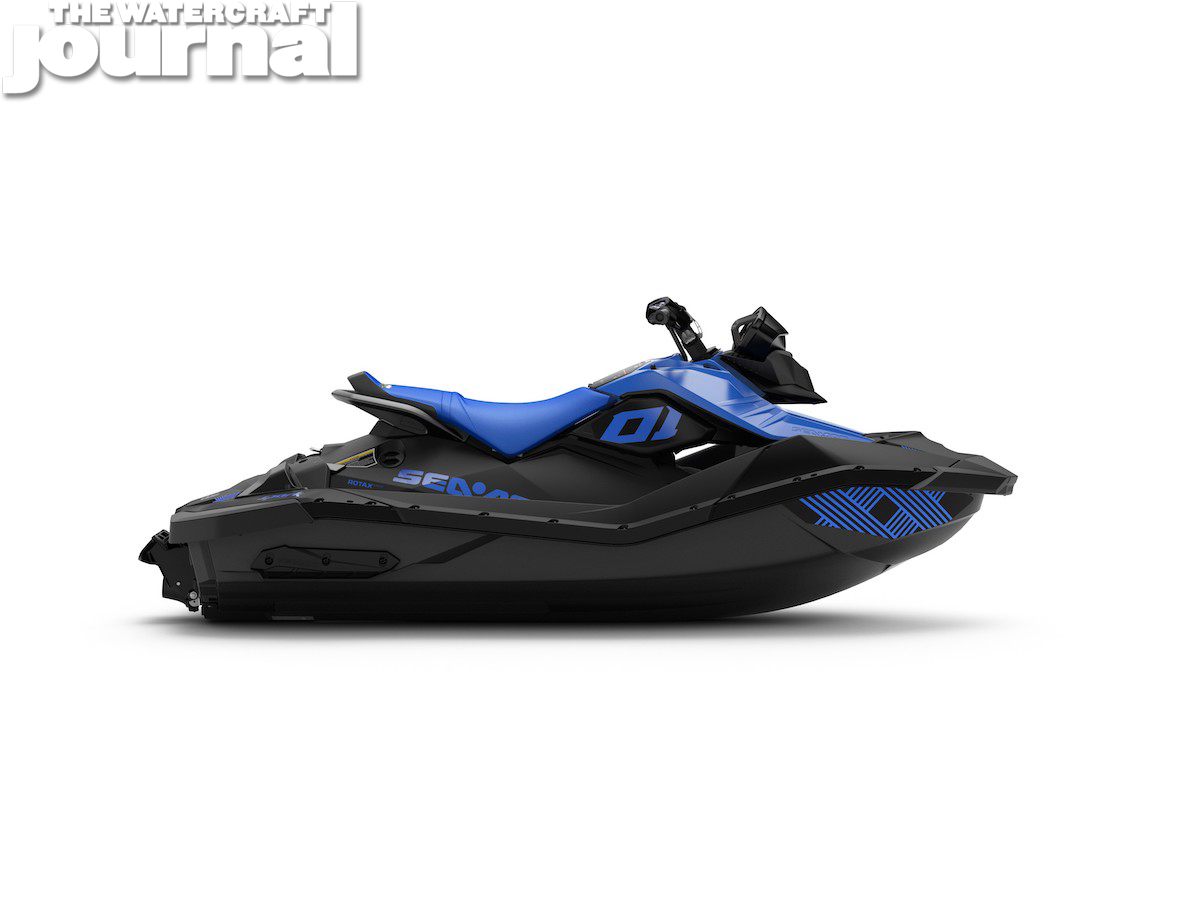
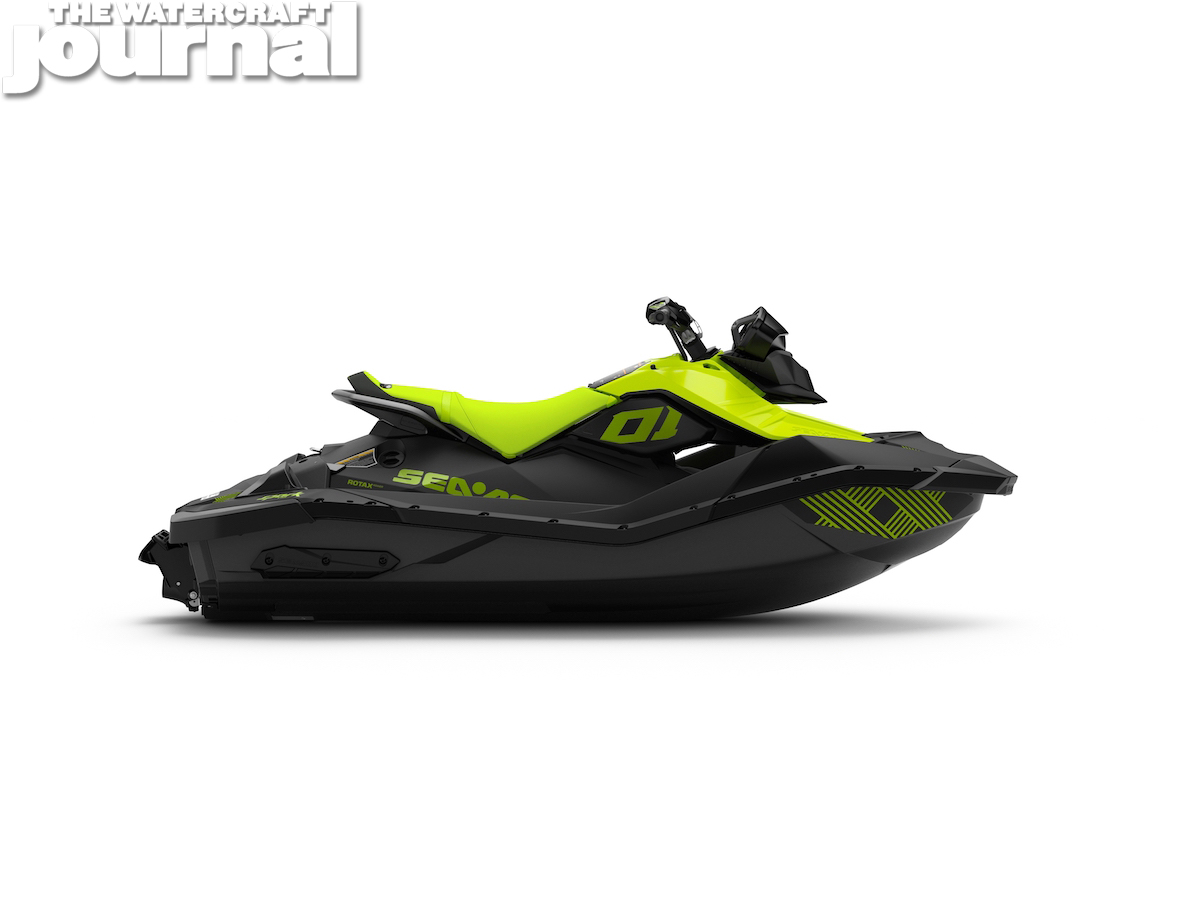
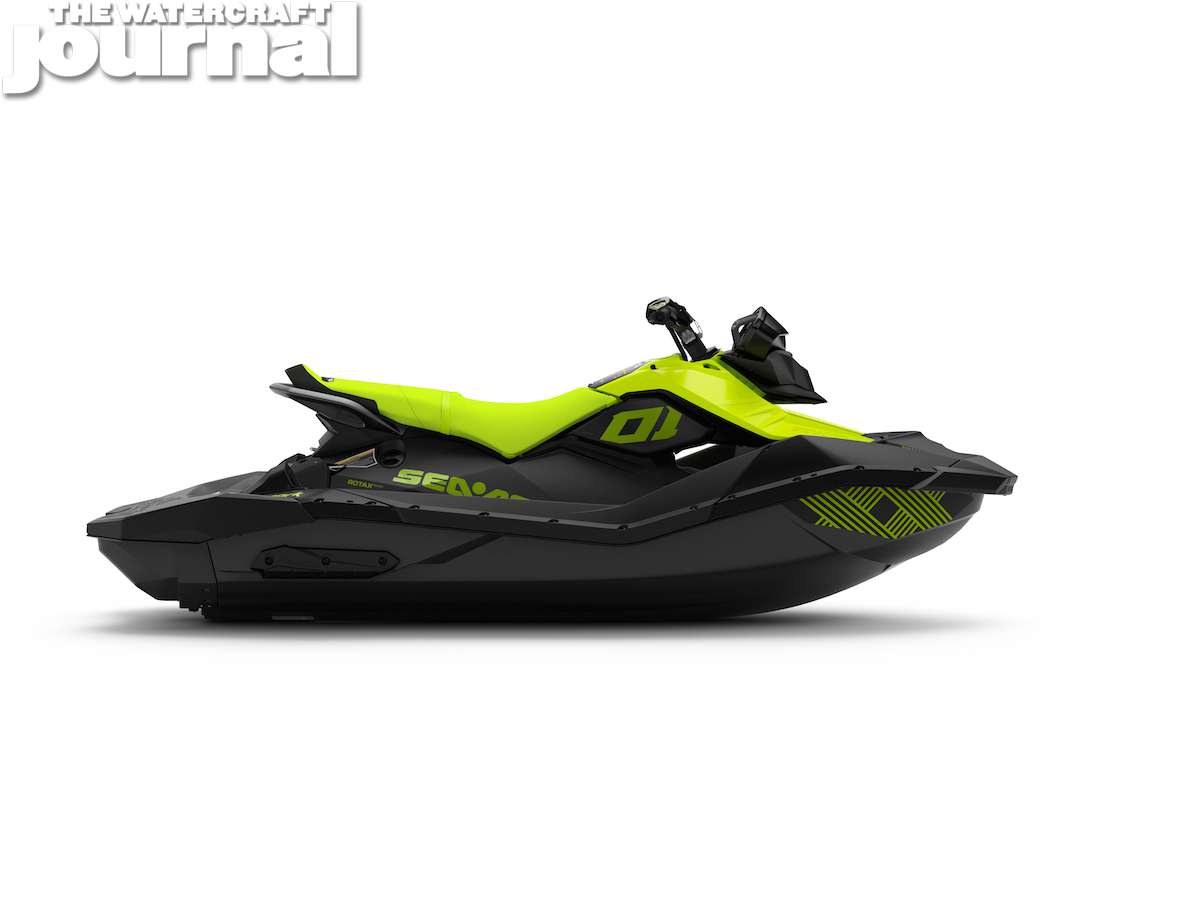
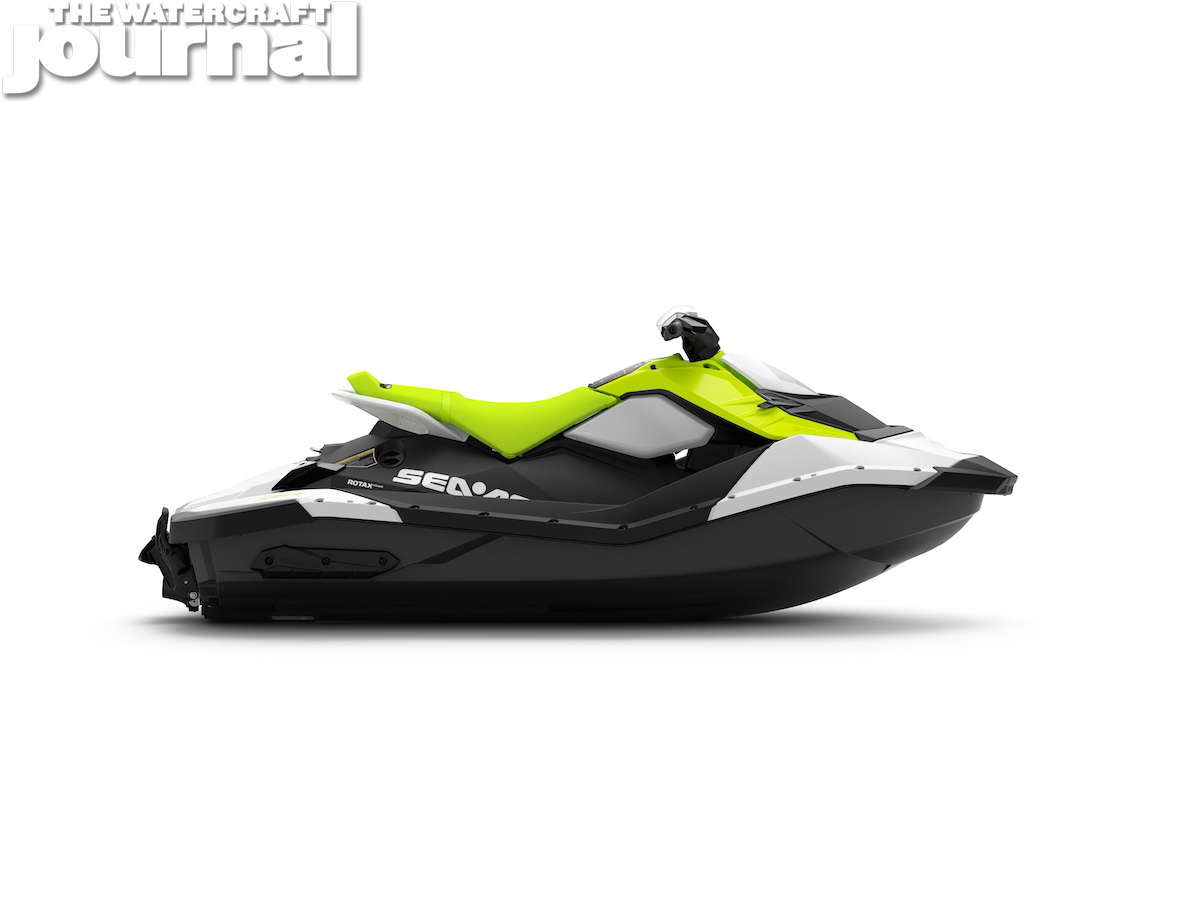
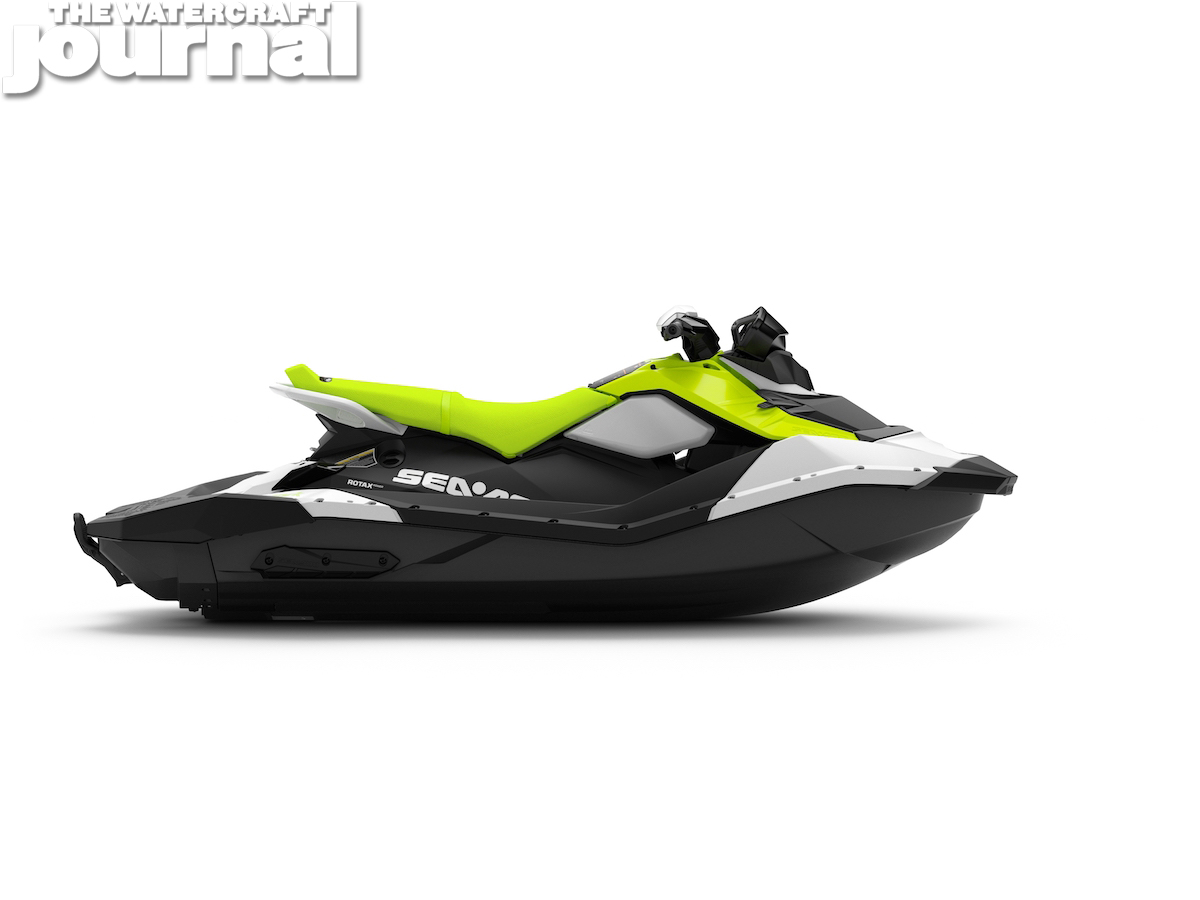
For the remainder of the 2023 Sea-Doo lineup, the changes are minimal. Beginning from the Rec Lite and working our way up, the Spark returns with unchanged variations: Spark 2-up ($7,699) and 3-up ($8,899), both with or without BRP Sound), and Trixx 2-up ($8,799) and 3-up ($9,399) also both with or without BRP Sound – all Sparks optional in Manta Green or Dazzling Blue.
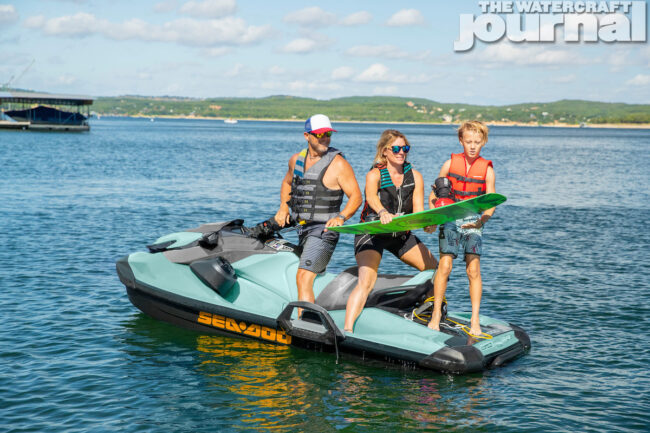
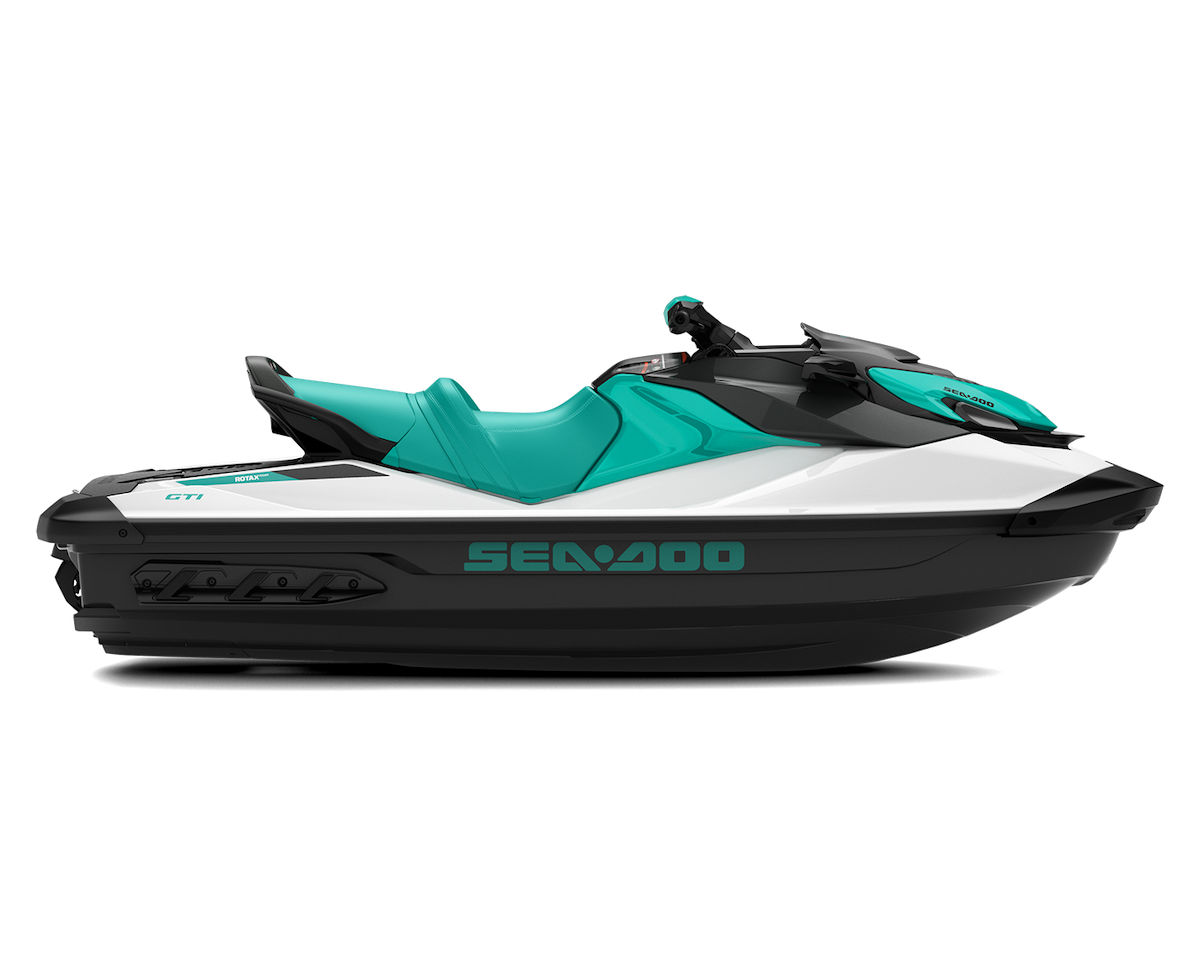
The GTI lineup is offered with either a 90-horsepower ACE ($10,699), SE 130 ($11,499) or SE 170 ($12,099) – and is offered in Reef Blue, Coral Blast/Eclipse Black or Ice Metal and Neo Mint, respectively.
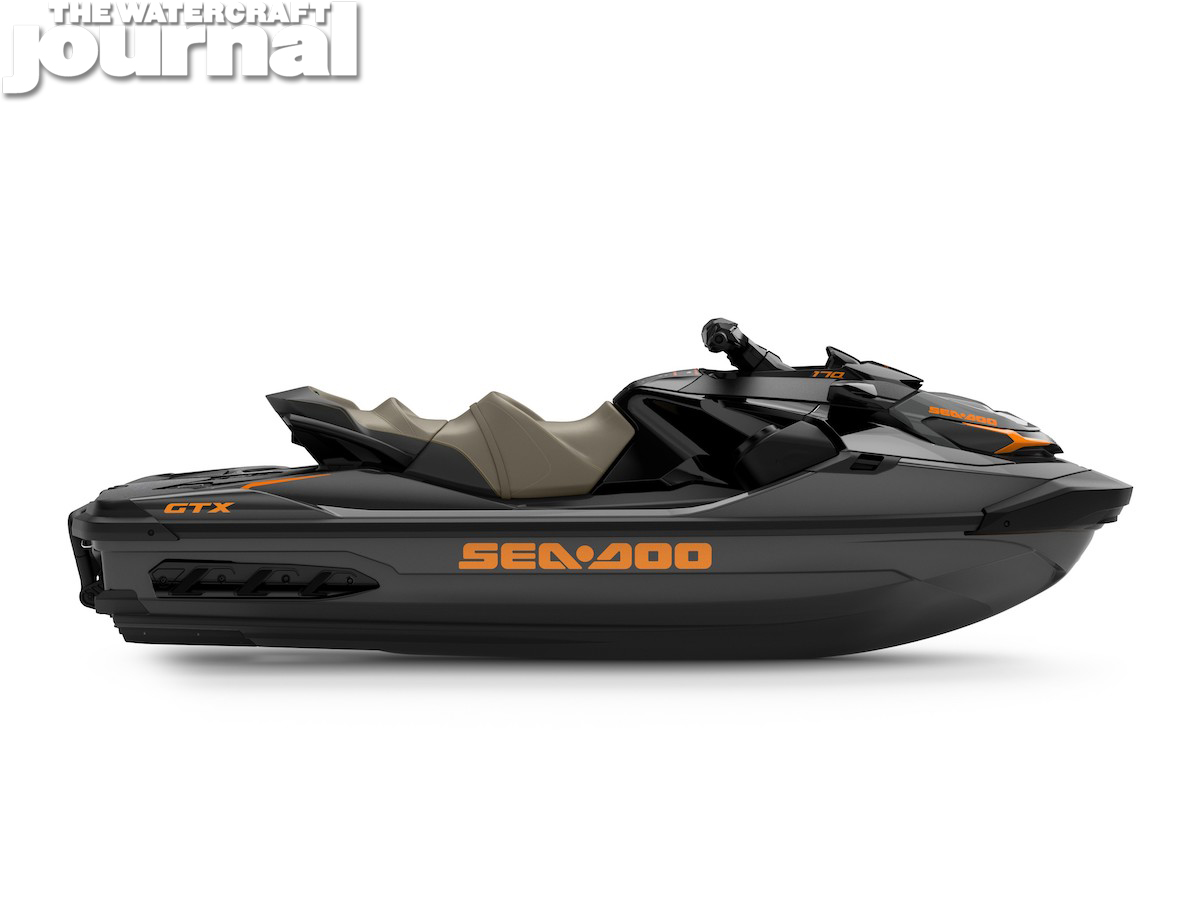
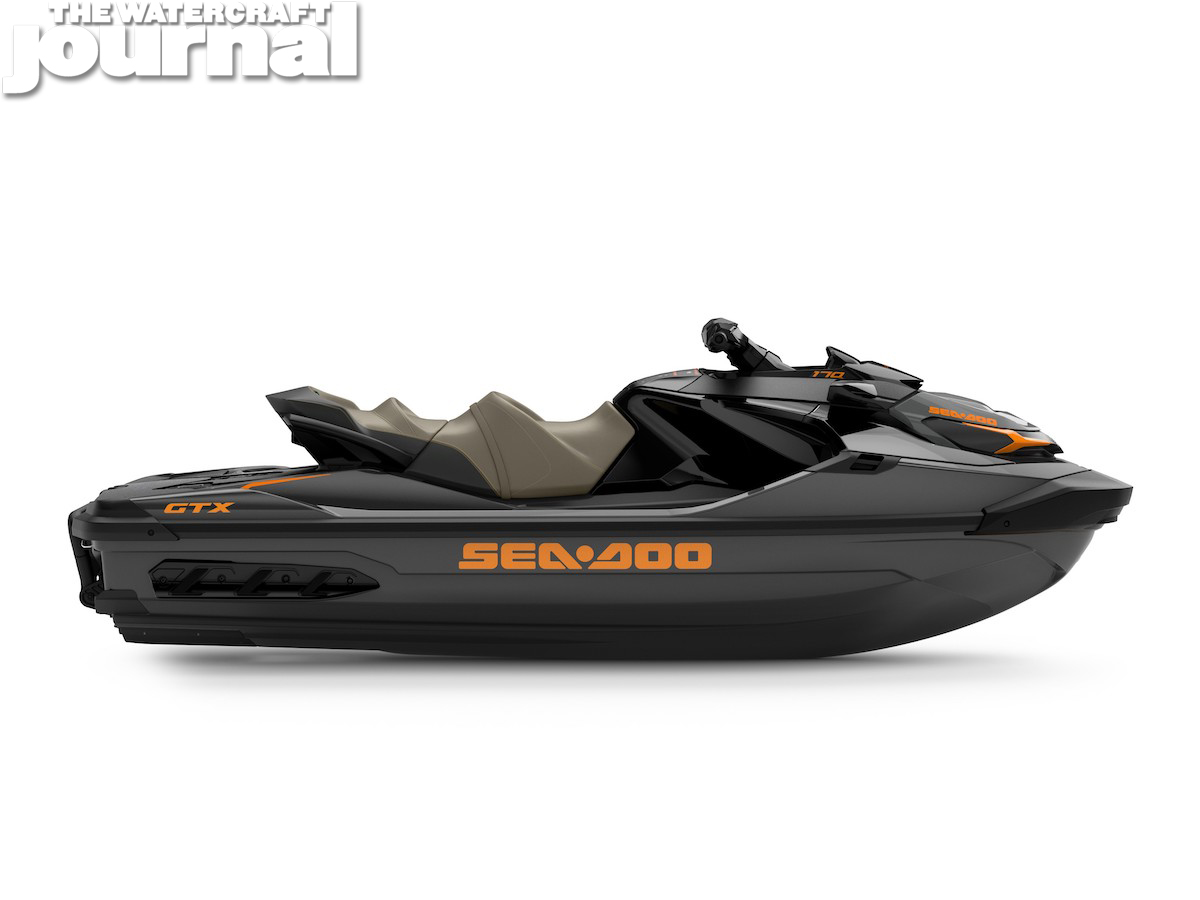
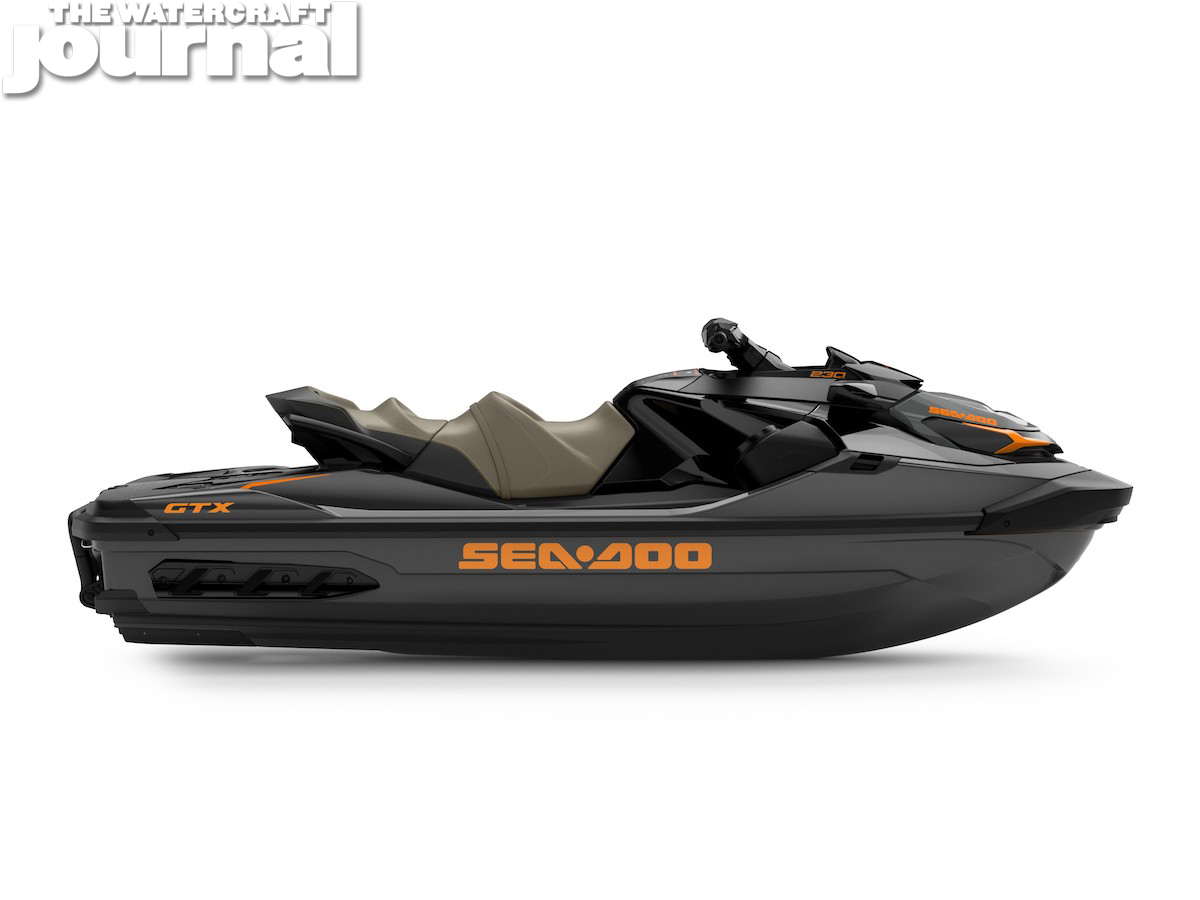
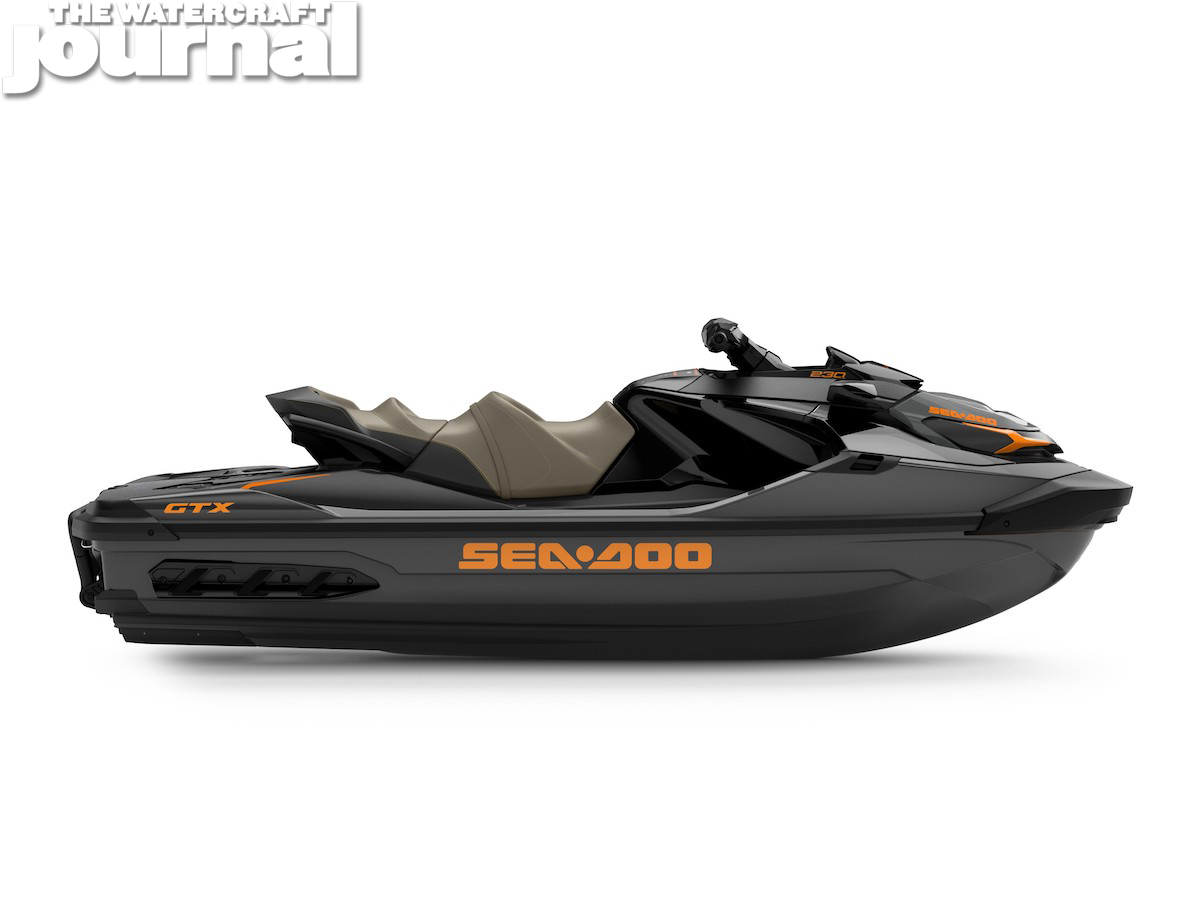
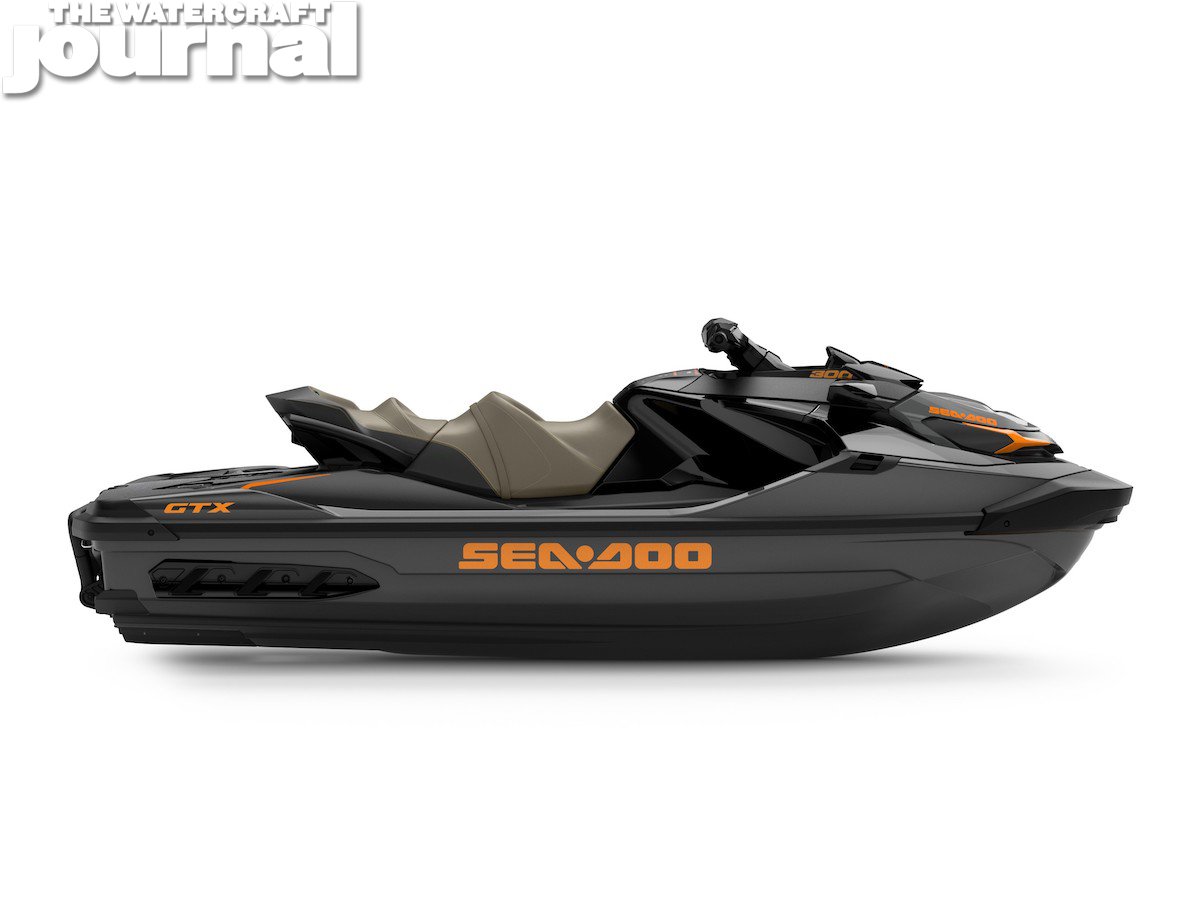
The Touring segment consists of two tiers of GTX, the standard ST3-based GTX available either with a naturally-aspirated 170-horsepower ($15,199) or an option of a 230 ($16,199) or 300-horsepower supercharged powerplant ($17,499). All of these carryover from 2022 in the same Eclipse Black and Orange Crush livery.
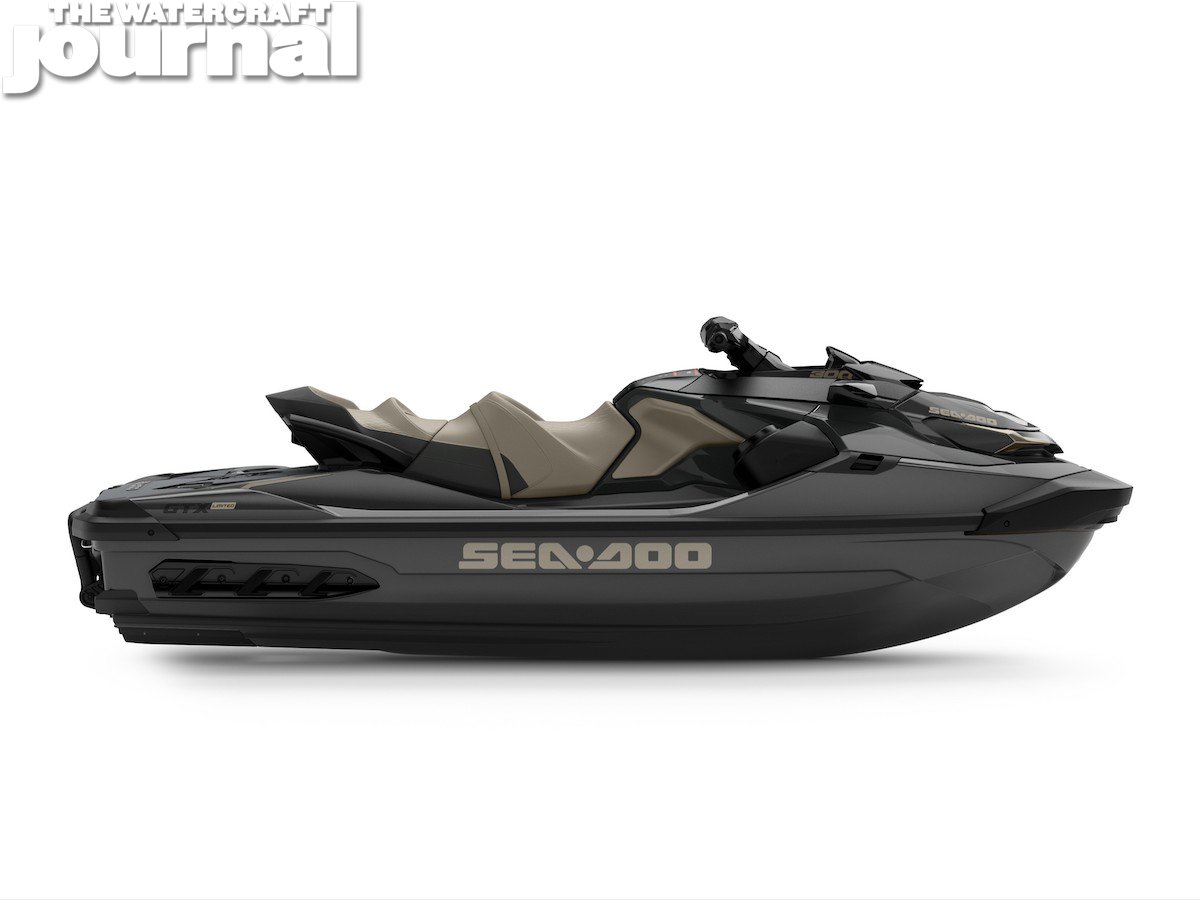
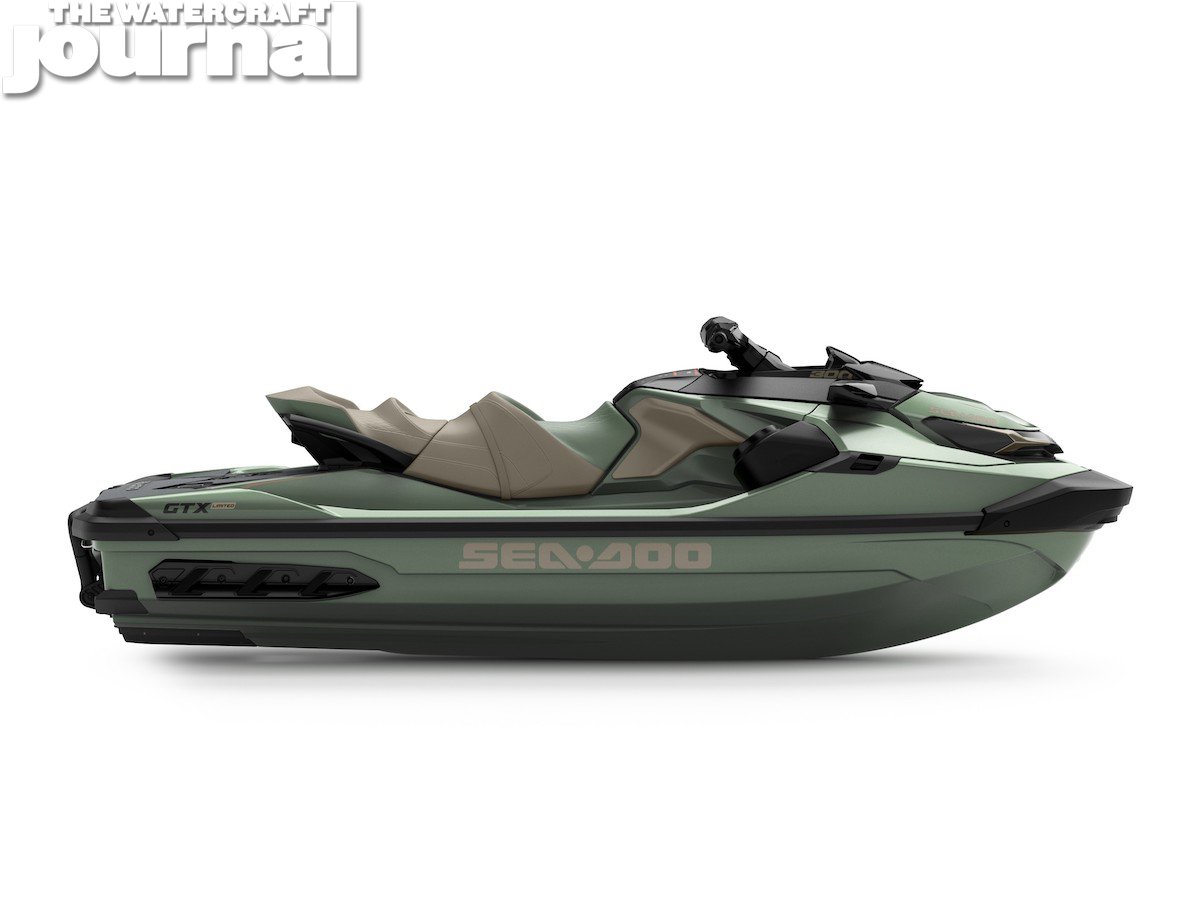
For the top tier Limited 300 models ($18,800 MSRP), customers have an option of either the Premium Metallic Sage hue or the new Blue Abyss coloration. No changes to these models have been announced apart from the availability of iDF and the BRP Tech Package on the non-Limited models as options.
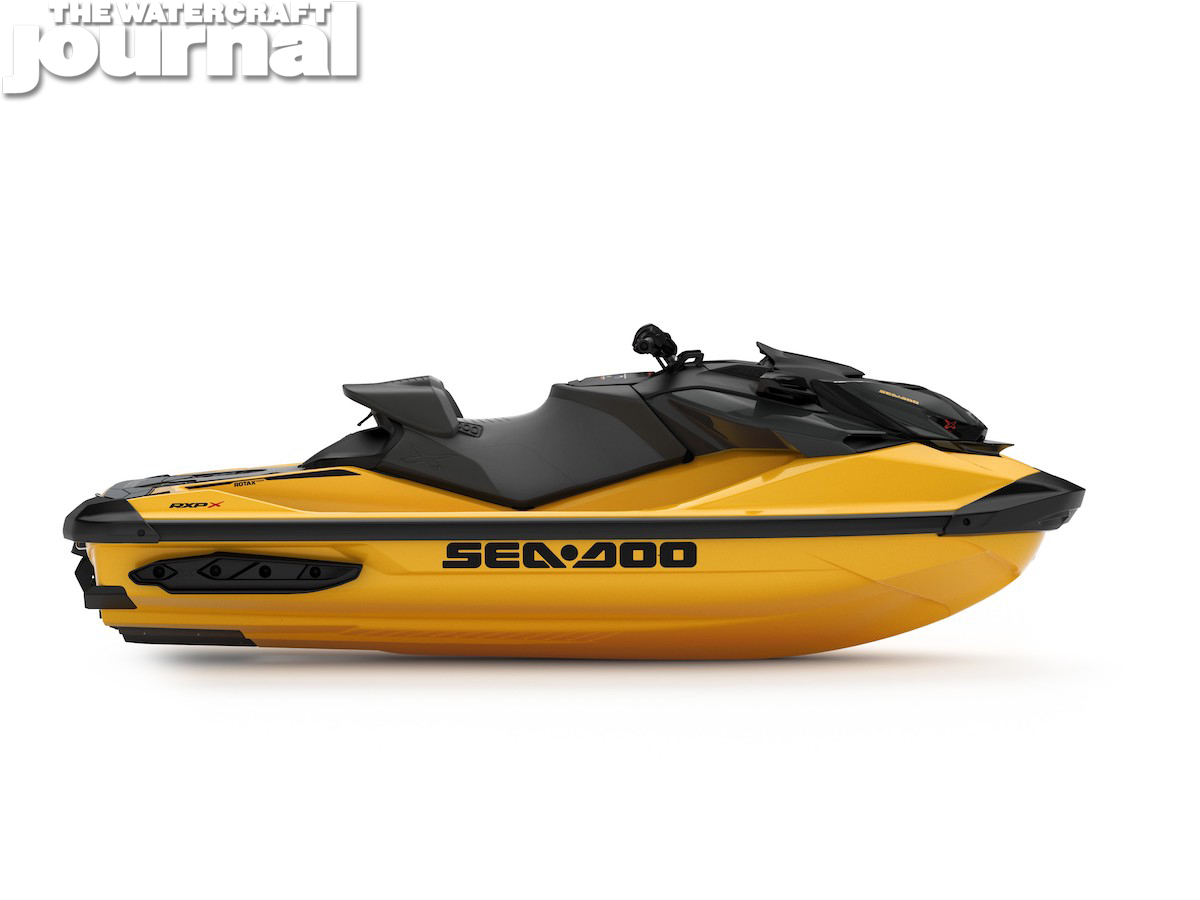
The Performance segment also carries over unchanged – besides the aforementioned Apex – both the RXT-X ($18,499) and RXP-X ($16,499) returning in either Triple Black or Millennium Yellow. The GTR 230 ($13,299) also continues in Millennium Yellow for 2023 as well.
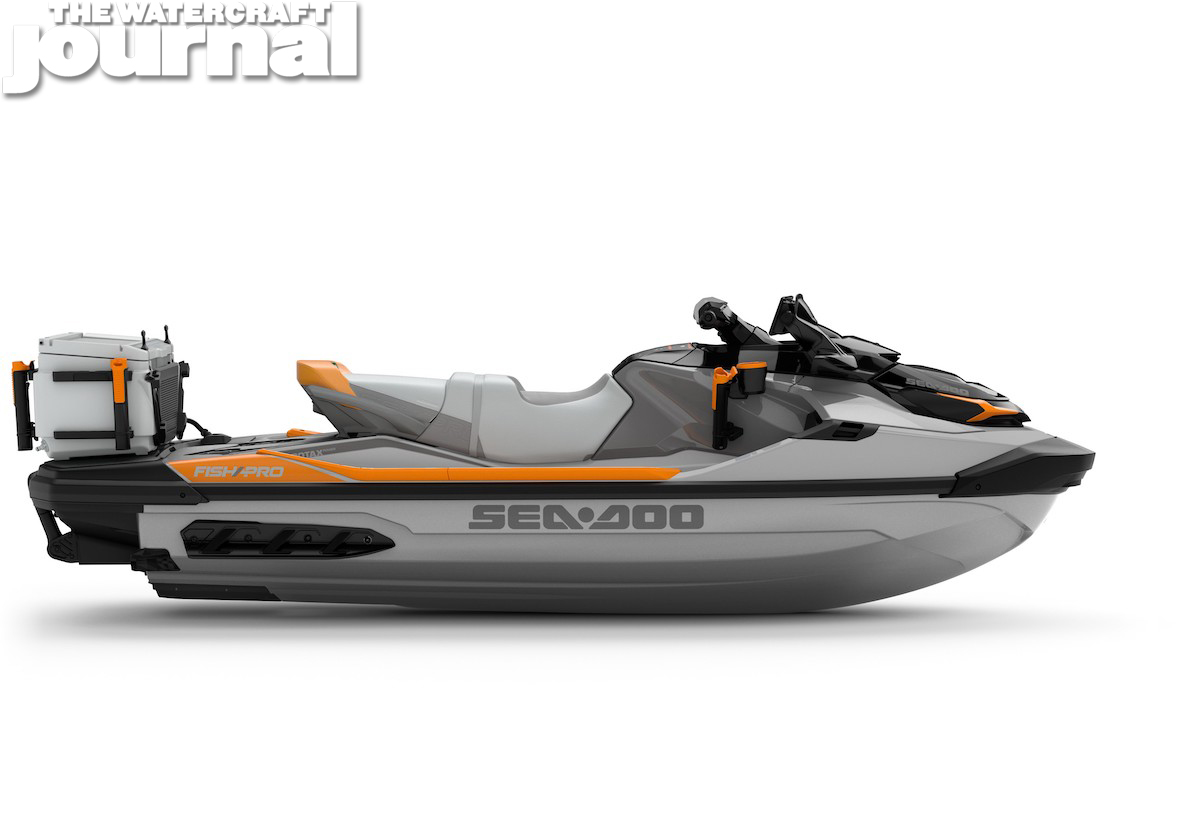
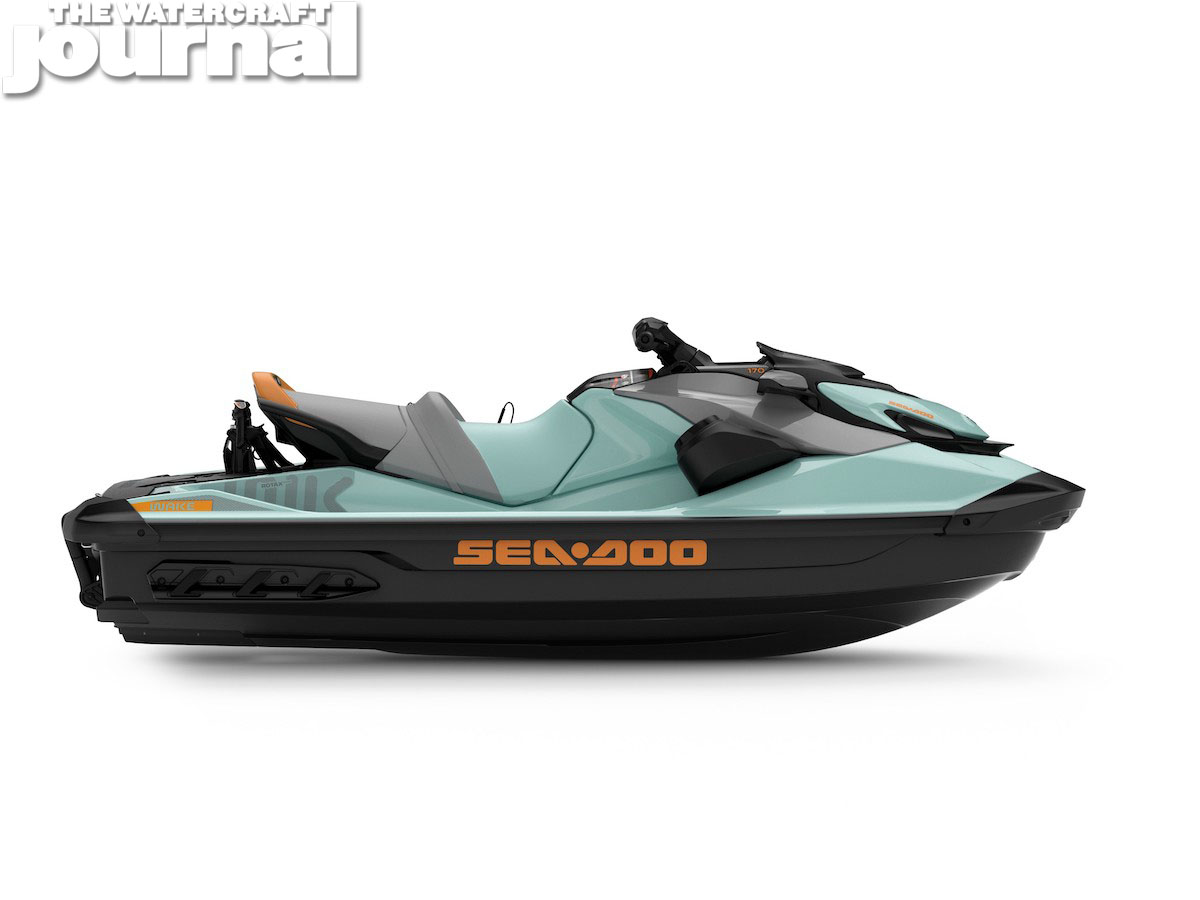
Moreover, so goes the story for the Wake Pro 230 ($17,499) and Wake 170 ($12,899), both returning for 2023 in Neo Mint. And lastly, the Fish Pro family soldiers on the identical liveries as last year – the Scout and Sport in Gulf Stream Blue ($14,299 and $16,499); and the groundbreaking Trophy in Flint Grey and Orange Crush ($19,599).
The goal for 2023 is to ensure that every pending order and that every new order is fulfilled in a satisfactory time frame. This will take continued strident efforts on BRP’s behalf as well as the tens of thousands of hands who help to make every single Sea-Doo a reality. The listed price increases reflect the strains on the global supply chain and shouldn’t come as a surprise to anyone who has been subscribed to The Watercraft Journal these last few years. We’re excited to see how these new products are received as they speak to very different audiences.
If you’re like millions of people, you like to track your outings and adventures. Whether it’s to share on social media, bragging rights, or myriad of reasons, we like to keep records. Sea-Doo has their BRP Go! app available for download in the Google Play Store and the App Store. BRP Go! adds another level of fun to your Sea-Doo experience by giving you the ability to discover new adventures. You can also find cool new places to explore and connect with friends while using the app. All these things are right at your fingertips when you download and start using the app.
Be ready for anything and never forget your experience by saving your ride stats and discovering new places. You can also customize the journey by adding your favorite stops or areas you want to return to. You can share your rides with friends and invite them on group rides. When GPS is enabled, you can plan your routes, nail down navigation, download maps if needed, and track ride stats. With a one-year subscription, you will have access to a couple of additional map layers.
Nautical Chart and SonarChart are available through in-app purchases. Nautical Charts is helpful in locating navigation aids, marine services, and more. SonarChart gives you all the bottom contours through its HD bathymetric chart. The BRP Go! app can be paired with your display screen so you can see what’s going on. You can grab the AccuWeather forecast, listen to music, and more by utilizing your Smartphone apps. Check out the BRP GO! app now!
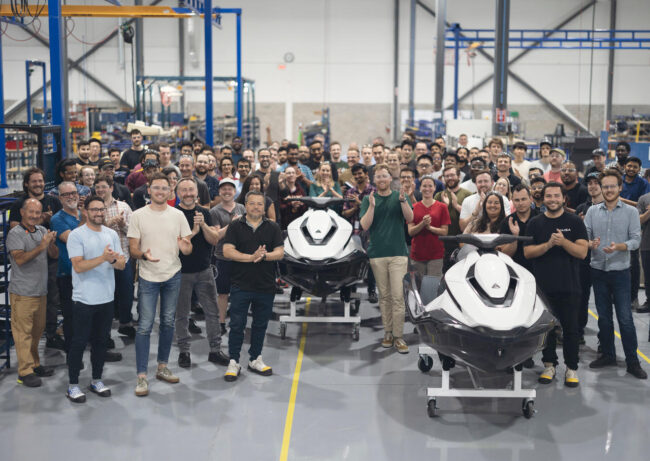
Taiga Motors Corporation, a leading electric off-road vehicle manufacturer, today announced it initiated deliveries of its Orca personal watercraft. Taiga’s 2022 Orca marks its world’s first electric personal watercraft sale, as the company continues to ramp up production, furthering its legacy of being a pioneer in the electric powersports industry.
Taiga developed the world’s first performance-focused, commercial electric off-road powertrain pioneering cutting-edge technology to electrify the off-road segment. Taiga’s deliveries of the Orca in personal watercraft are another achievement in its ongoing mission to electrify the off-road segment, the most challenging and demanding vehicle category.
This is a significant moment for the Taiga team because not only are we kicking off summer with Orca deliveries, but we are proudly marking the milestone of the first-ever mass-produced electric watercraft available to consumers,” said Samuel Bruneau, Taiga CEO. “Years of engineering and testing of our revolutionary electric powertrain platform in snow and water has now come full circle, truly changing how people connect with the outdoors.
Mr. Bruneau, Taiga’s Chief Executive Officer, and Co-Founder. Co-founded Taiga in September 2015 with a vision to revolutionize the powersports industry with electric vehicles that outperform peers without sacrificing the environment. In his capacity as Chief Executive Officer and Co-Founder, he is responsible for the general direction and management of Taiga and contributes to the design and development of Taiga’s products. Mr. Bruneau has valuable experience with the design, development, and manufacturing of electrical powersport vehicles and holds a bachelor’s degree in Electrical and Electronics Engineering from McGill University.
Original Press Release
MONTREAL, July 11, 2022 – Taiga Motors Corporation (TSX: TAIG) (“Taiga” or the “Company”), a leading electric off-road vehicle manufacturer, today announced it initiated deliveries of its Orca™ personal watercraft. Taiga’s 2022 Orca marks its world’s first electric personal watercraft sale, as the Company continues to ramp up production, furthering its legacy of being a pioneer in the electric powersports industry.
“This is a significant moment for the Taiga team because not only are we kicking off summer with Orca deliveries, but we are proudly marking the milestone of the first-ever mass-produced electric watercraft available to consumers,” said Samuel Bruneau, Taiga CEO. “Years of engineering and testing of our revolutionary electric powertrain platform in snow and water has now come full circle, truly changing how people connect with the outdoors.”
Taiga developed the world’s first performance-focused, commercial electric off-road powertrain pioneering cutting-edge technology to electrify the off-road segment. First installed into its snowmobiles, then adapted and fine-tuned for the Orca personal watercraft. Orca quietly powers through water with up to 120kW and peak torque from zero RPM. Orca delivers reliable, linear power for precise performance, and ultimate thrills of gliding through the water.
Orca redefines the personal watercraft experience with silent operation, powerful efficiency, no engine maintenance and intelligent connectivity. The Orca Carbon model features a unique carbon fiber composite hull hydrodynamically engineered for dynamic handling with leading power-to-weight ratio and stunning customizable color/finish combinations.
Taiga’s deliveries of the Orca personal watercraft are another achievement in its ongoing mission to electrify the off-road segment, the most challenging and demanding vehicle category. Taiga initiated North American deliveries of its Nomad snowmobile in March, made its European debut in April, and supplied units to Québec’s Parks and Wildlife Reserve Agency, Sépaq in May. Taiga was also recently named Fast Company’s 2022 Best World Changing Idea Overall in North America.
The Honourable François-Philippe Champagne, minister of Innovation, Science and Industry Canada congratulates Taiga for this achievement: “Our government has always been a champion for a greener economy. This’s why, last year, we recognized the leading role Taiga is playing in the electrified powersports industry, and stepped up to support the manufacturing of their electric vehicles. I’m very pleased to see this Canadian company beginning deliveries of their first-ever electric personal watercraft. We will continue to support Canadian businesses that are on the cutting-edge of green innovation – it’s good for the economy, the environment, and Canadians.”
Pierre Fitzgibbon, Minister of Economy and Innovation for Quebec says: “Taiga is focusing on innovation by allowing users to practice their favourite activity without polluting with this new electric watercraft. For 100 years now, we have been innovating in Quebec by creating off-road vehicles. I am proud that we continue in this direction today with their electrification.”
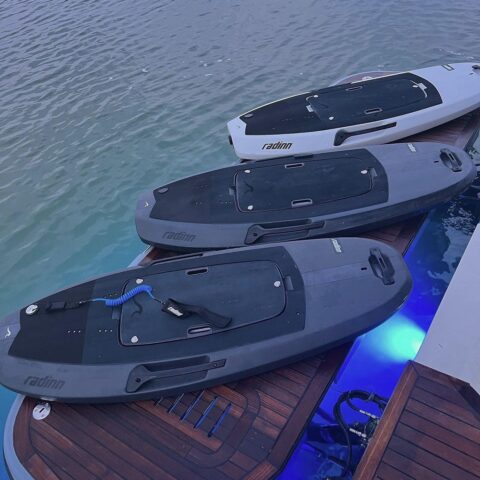
Great news for the Right Coast, we’ve got a Radinn dealer in South Carolina. Carolina Rides is the premier EV dealer in Hilton Head, South Carolina. They are the exclusive electric Moke America dealership in all of South Carolina and Georgia. This is the perfect place for the Radinn brand. The Radinn crew is stoked to have Carolina Rides as a key partner in the United States. The southeast can get in on the fun of making waves on a Radinn Jetboard.
“I spend significant time searching for best-in-class EV products,” says Carolina Rides founder Jason, whose inventory currently includes @mokeamerica , the premier electric low speed vehicle, @ellwee_mpv single-passenger electric golf carts, and @kaaspeed electric mopeds. “Radinn is by and far the best jetboard out there. It’s surprisingly intuitive and more importantly—it’s really, really fun.”
Carolina Rides carries all three Radinn designs, which include the durable X-Sport, the versatile Freeride, and the agile Carve made for ripping. You can get the full package from Carolina Rides. Choose the standard G3 Jetpack or the G3 Jetpack Pro if you have the need for speed. Grab the G3 standard battery or G3 Extended battery for a longer ride.
Check them out online for all the details and contact information for sales. There are tons of areas to ride in the southeast and you can’t go wrong with a Radinn Jetboard when it comes to exploring the endless waterways. What are you waiting for? Get your ride on with a Radinn Jetboard!
OK, this one’s gonna go a bit differently. Some of you are gonna love this review. Some of you are really not gonna like it. Either way, it’s the truth – at least as far as I can see it through the lens of my three decades in this industry. When it comes to performance jet skis, there are two characteristics that matter waaay more than anything else: First, how does the ski ride through choppy, wind-blown, and just plain ugly water conditions and second, does it have the power to push through it?
Any ski can ride smoothly on glass. It takes zero talent or ability to cruise on flat water in a straight line. Heck, a log on a river with enough current can do it comfortably. But when the wind kicks up or the tide goes out, you’re gonna care waaay more that your new ski can track straight through chop than whether your can call up Siri to access your favorite playlist by voice command. All of the other stuff is just fluff.
There isn’t a jet ski out there that has enough bells, whistles and doodads that can compensate for a crappy, bouncy ride; unpredictable, garbage handling; or being a gutless toad that can’t get out of its own way. That might sound harsh and a few of you pearl clutching, hand-wringing types might get offended and want to complain to my manager but that’s the honest truth. And in this day and age, I think folks are more interested in harsh truths than me pussyfooting around people’s feelings.
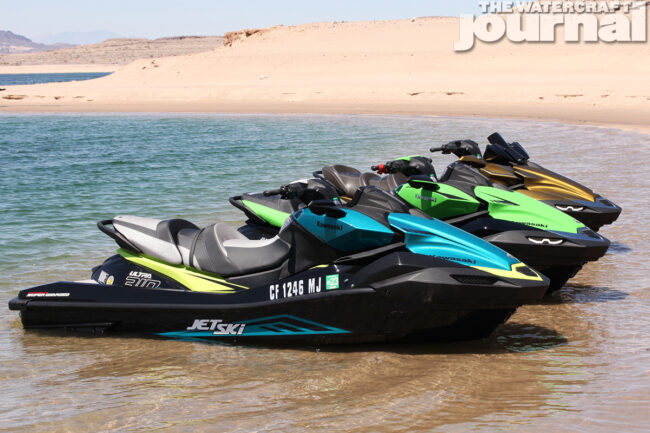
So let’s just be straight: when it comes to open ocean riding, Kawasaki’s Ultra platform is unmatched. It’s racked up more offshore and long distance, endurance championships than any other ski not only available on the market today – but EVER. We’re not talking roundy-round closed course stuff – we’re talking big, open ocean man-versus-the-sea racing. Long Beach-to-Catalina; Oceanside-to-Dana Point; Karujet, AquaX – and the 300-mile Mark Hahn enduro.
The scoreboard is bleeding green, guys. It’s all Kawasaki across the board. Numbers don’t lie.
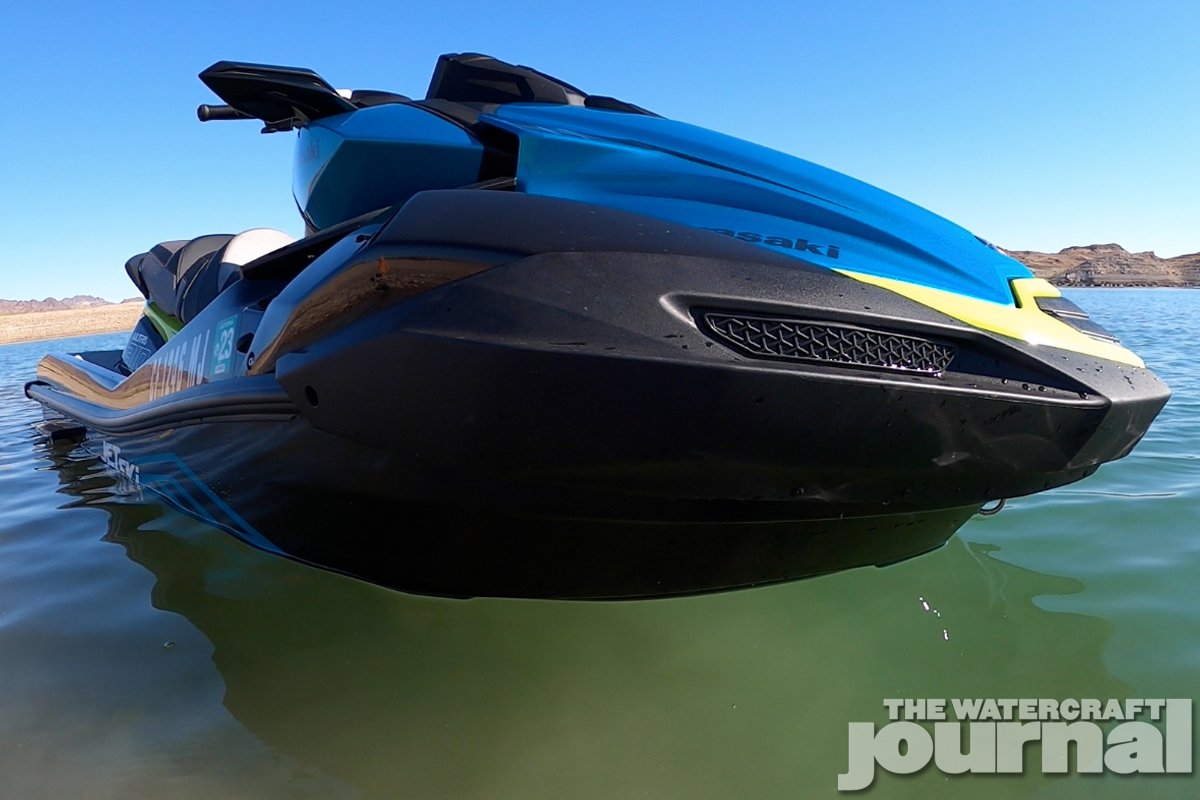
So yeah, that’s why Kawasaki didn’t screw with its hull – that’s because it’s pretty much friggin’ perfect. It’s still made from durable gel-coated FMC fiberglass so it won’t flex or crack like the other guys. But they did go ahead and reinforce the bow’s 22.5-degree deadrise to stiffen it up, but that’s not really the big news here.
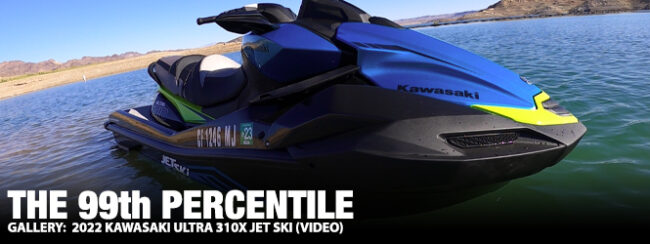
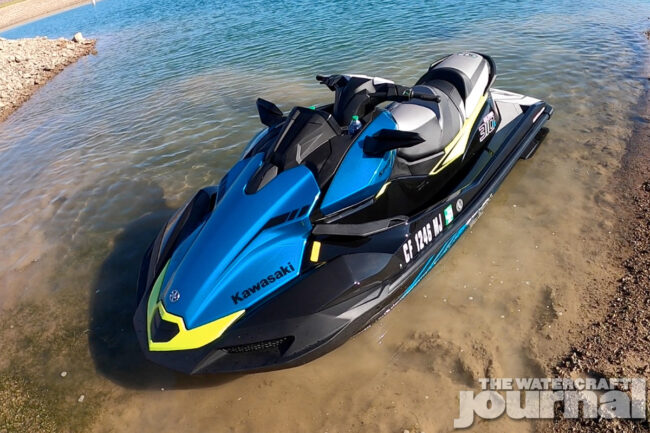
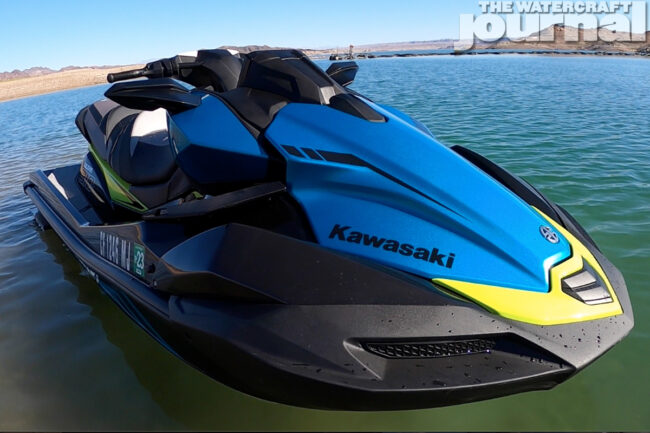
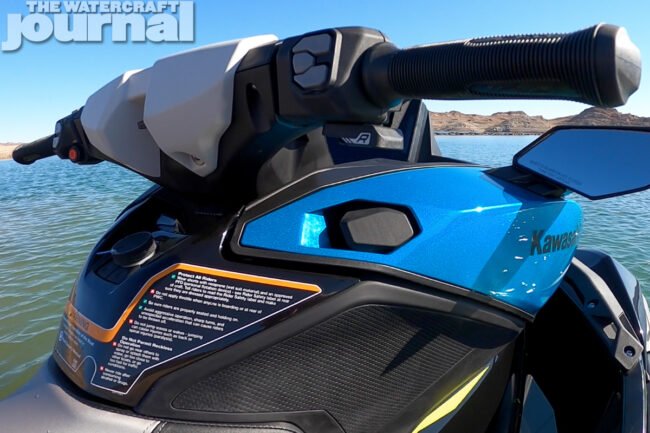
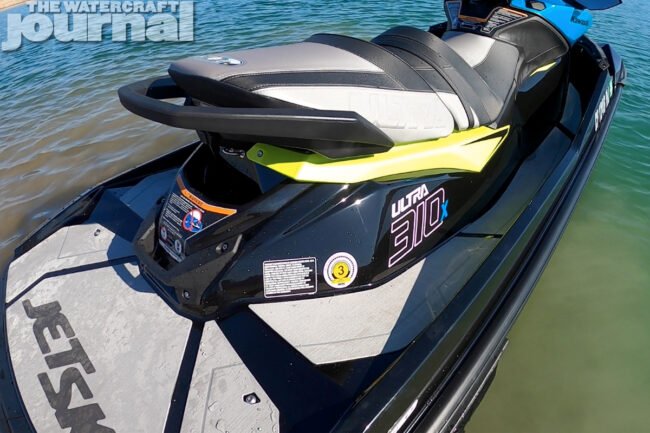
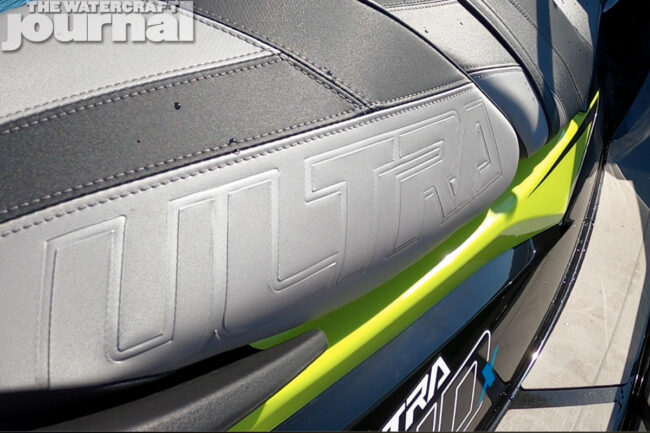
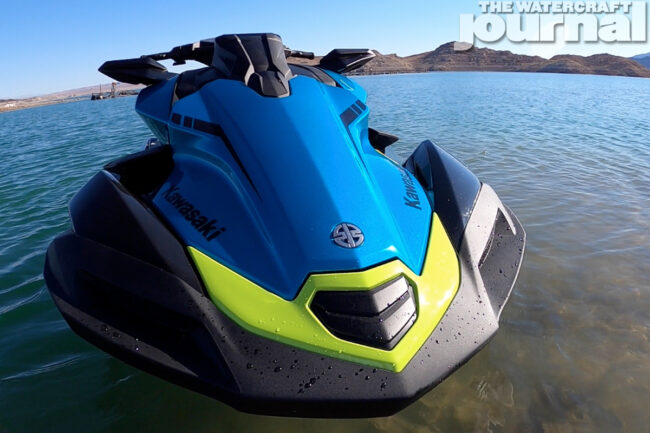
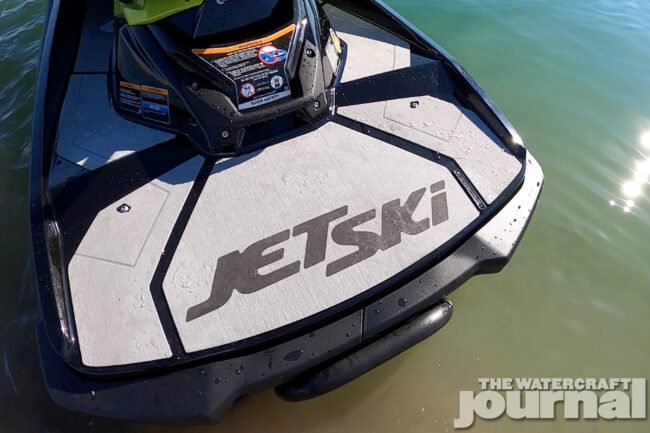
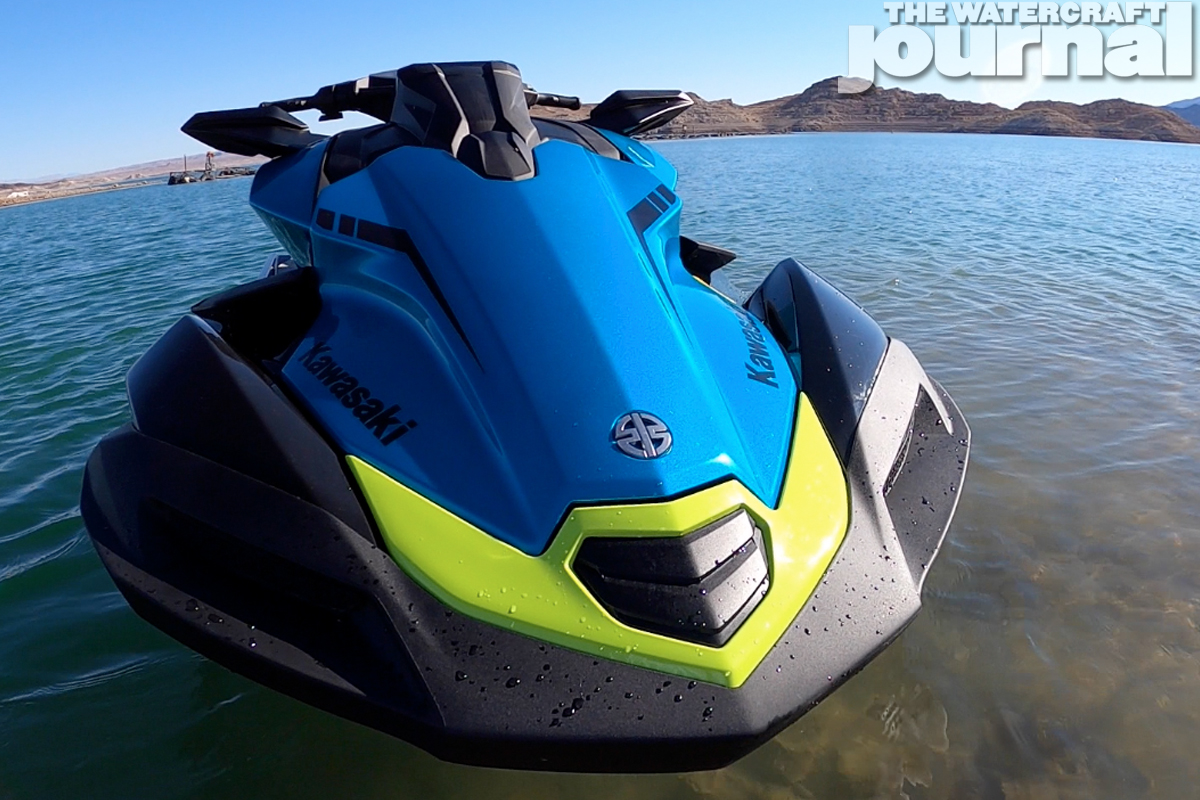
When it came time to update the Ultra 310X JetSki for 2022, Kawasaki kept what worked – like the real-deal Deep-V hull and the powertrain – and went to work on fixing the stuff that needed the most attention. What that resulted in was a totally redesigned deck that lowered the ski’s center of gravity, and radically improved the overall ergonomics.
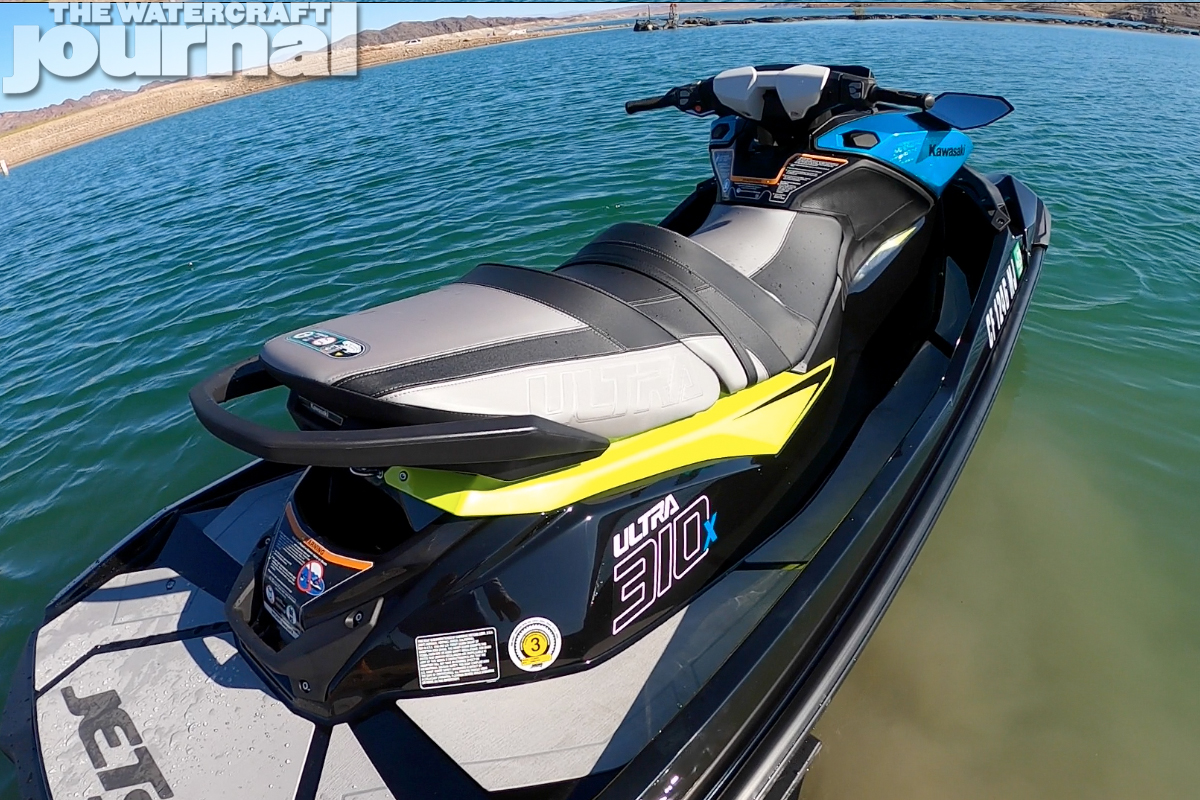
Previously, you used to sit pretty high up in the saddle. The new overall deck height was lowered by 1.38-inches and the new two-piece, three-person seat was narrowed 3.15-inches at the knee. The new Kawi is also using a revised formula of urethane foam that provides deeper hip support and improved jolt and vibration absorption, so if you’re sitting down, you’re not going to get so beaten up.
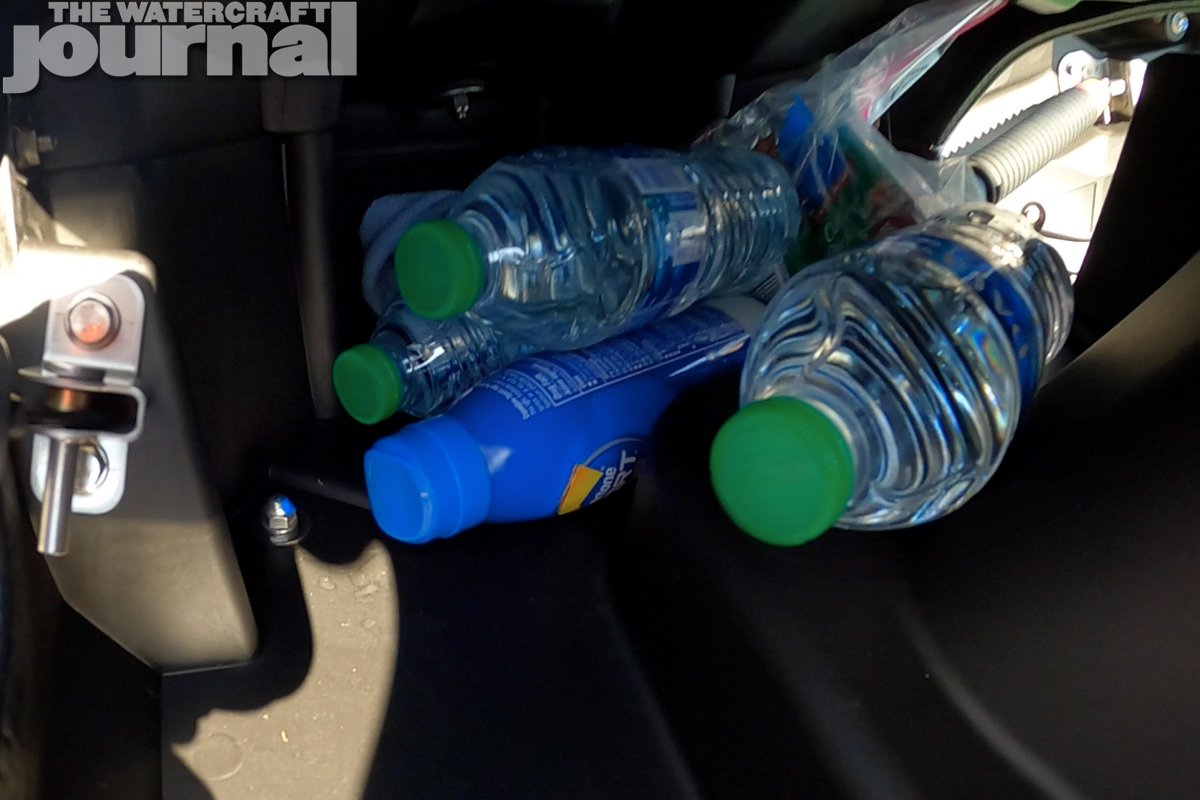
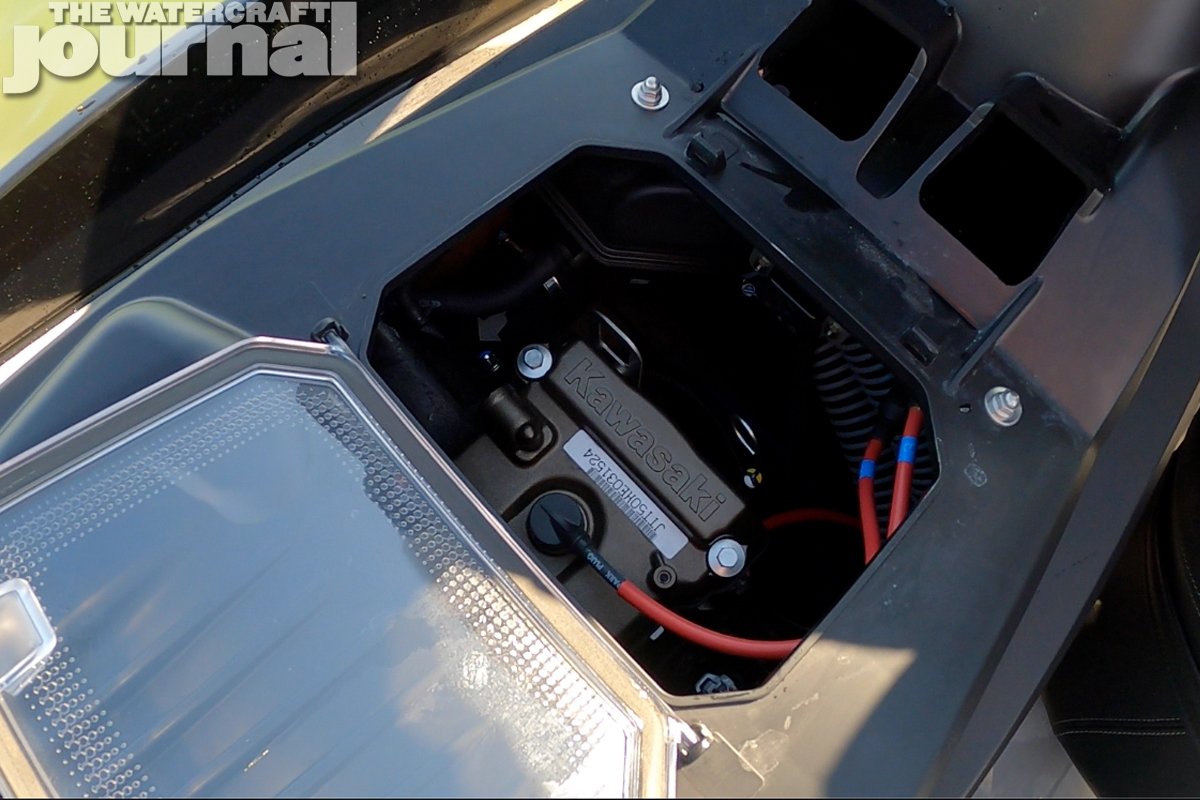
Narrowing the seat at the knee means you’re not riding so spread out, which over time, can really start to wear you out. Above the knees, Kawasaki did something really different, and ditched the traditional glovebox and instead, gave you two of ’em. Each of the fairings open up on gull wing-style hinges giving you a combined 10.6-gallons of storage. The right-side sports a half-gallon-sized watertight box for your phone or wallet (a USB port is an optional accessory).
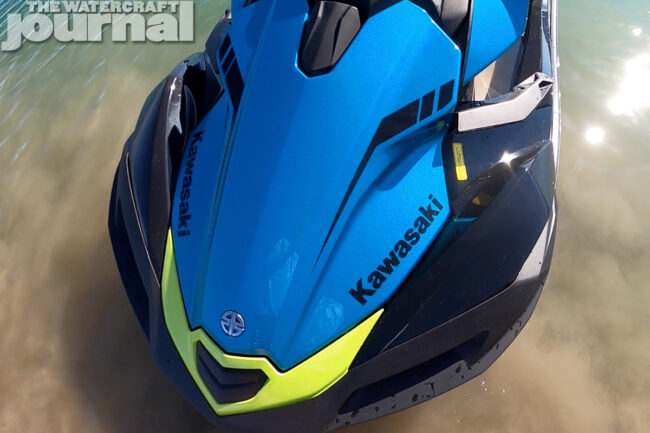
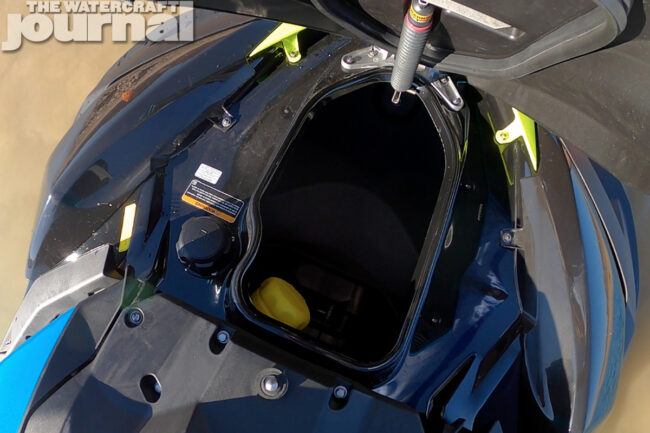
In front, the narrow Formula 1-looking hood covers the 32.8-gallon bow storage. For some reason, Kawi thought shrinking the opening so dang small that you could barely stuff in a backpack was a good idea. Obviously, it wasn’t and I’m pretty bummed about it.
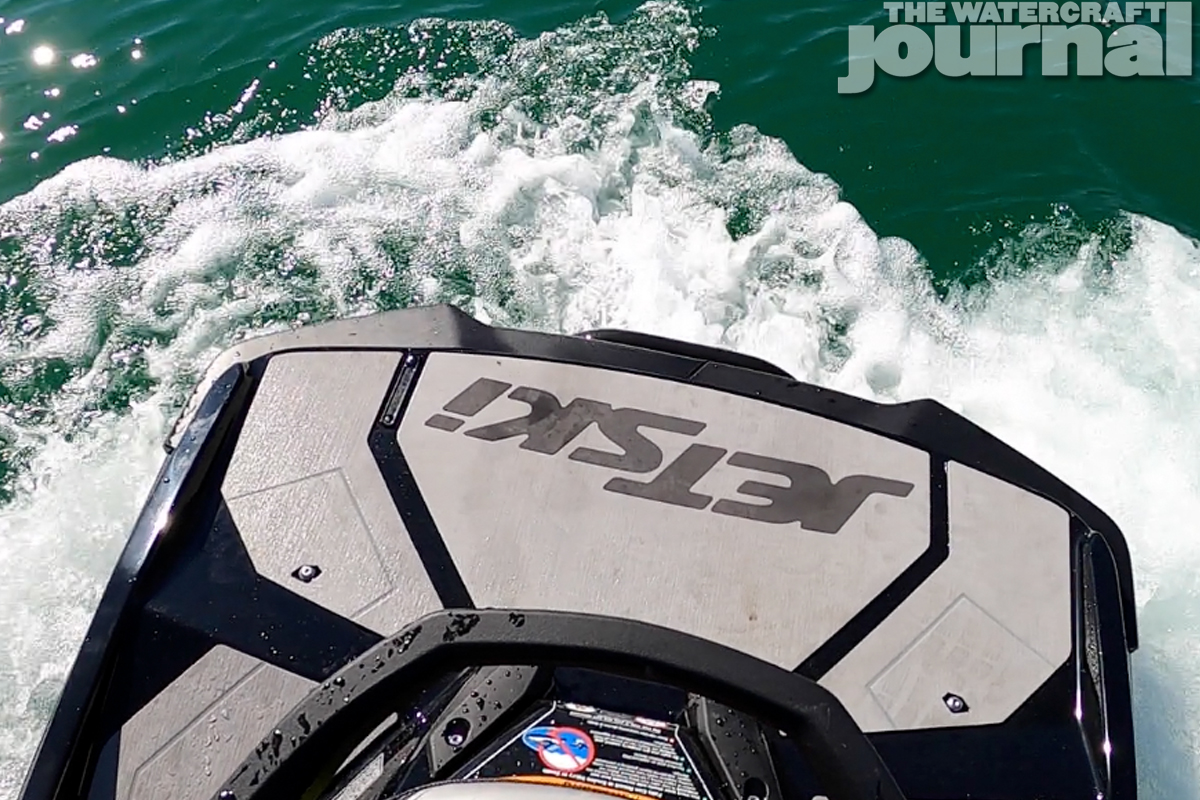
A little .7 gallon open access pocket in back is good for stowing a dock line – and rounds out the Ultra’s 44.5-gallons of total storage, which is a heck of a lot less than the previous model’s industry-leading 60-gallons. Again, it’s just something that’s really disappointing.
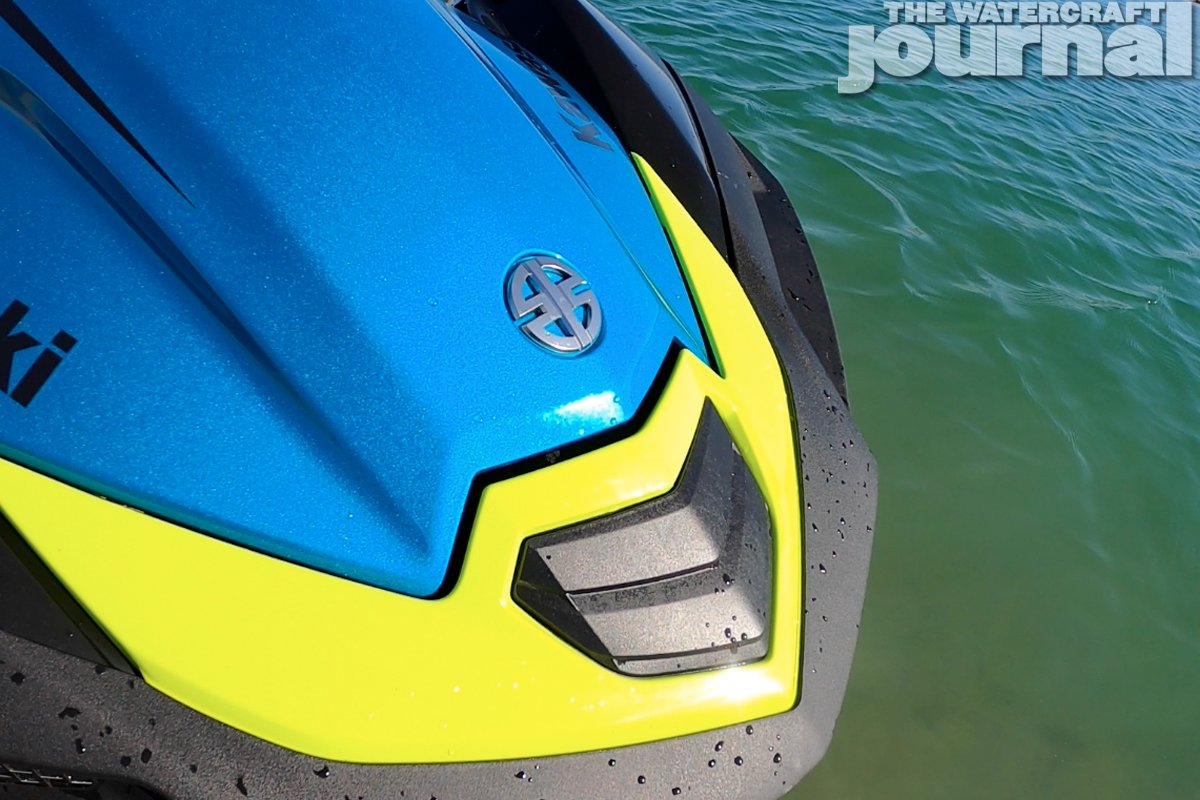
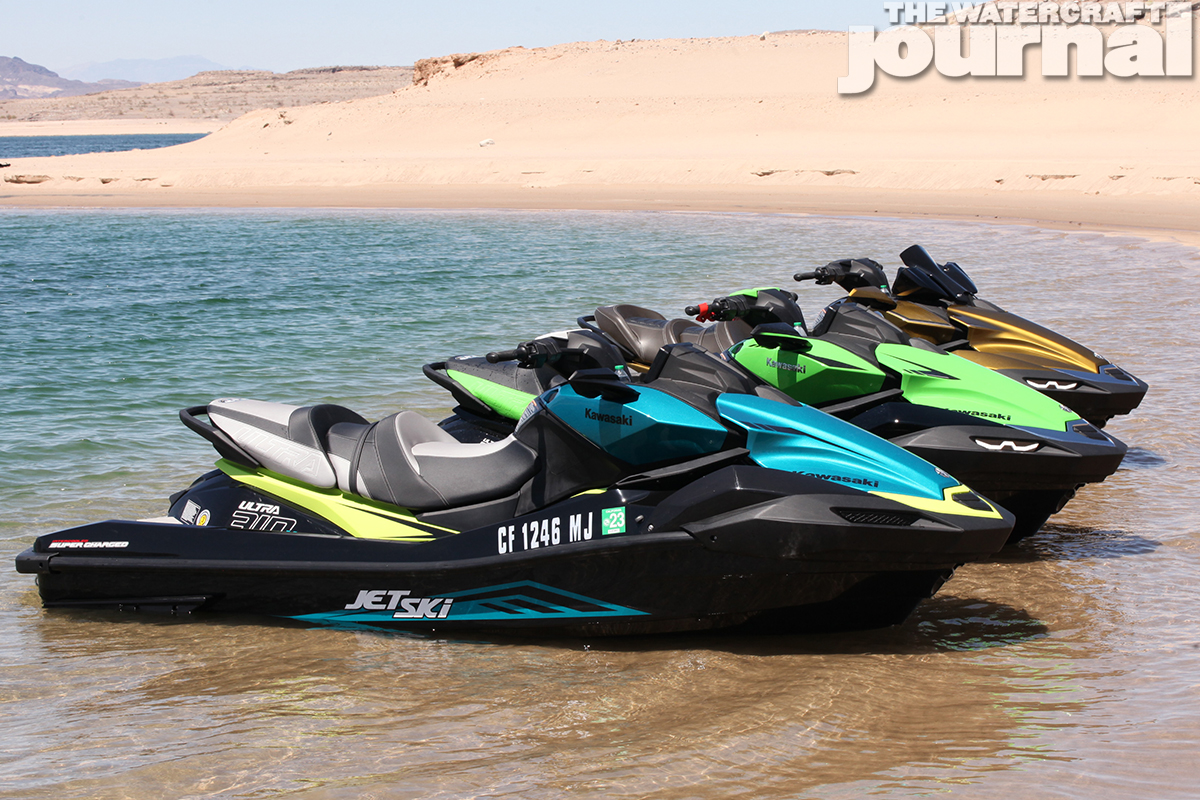
But hold on, I kinda feel like I’m bashing the redesign where there’s a ton to be stoked about: The changes upfront did manage to give the Ultra an extra half gallon of fuel capacity – bringing the ski up to 21.1 gallons – so it’s still the industry leader on that front. It’s also in Ebony and Metallic Electric Turquoise, which is a nice departure from the usual Kawasaki Lime Green.
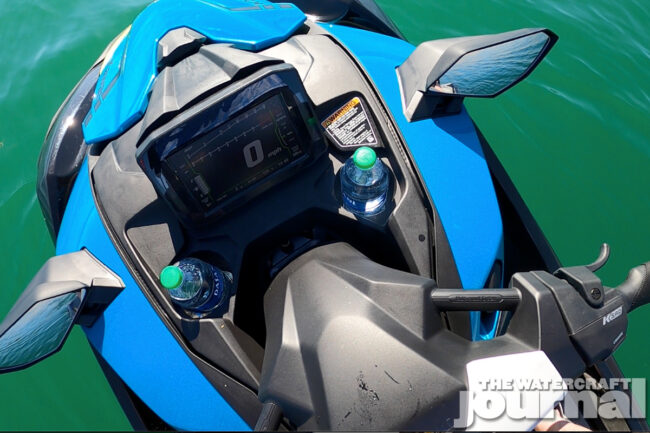
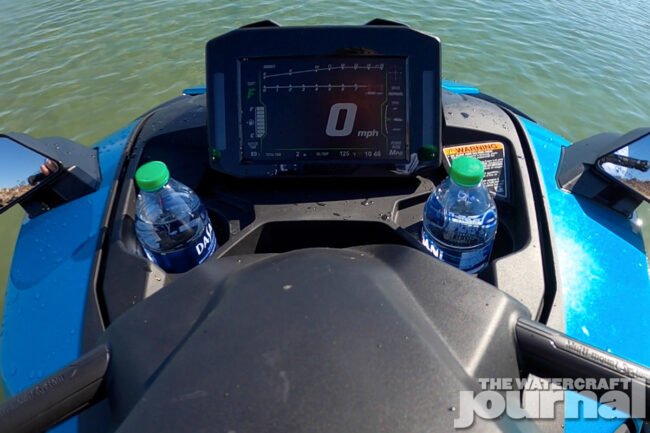
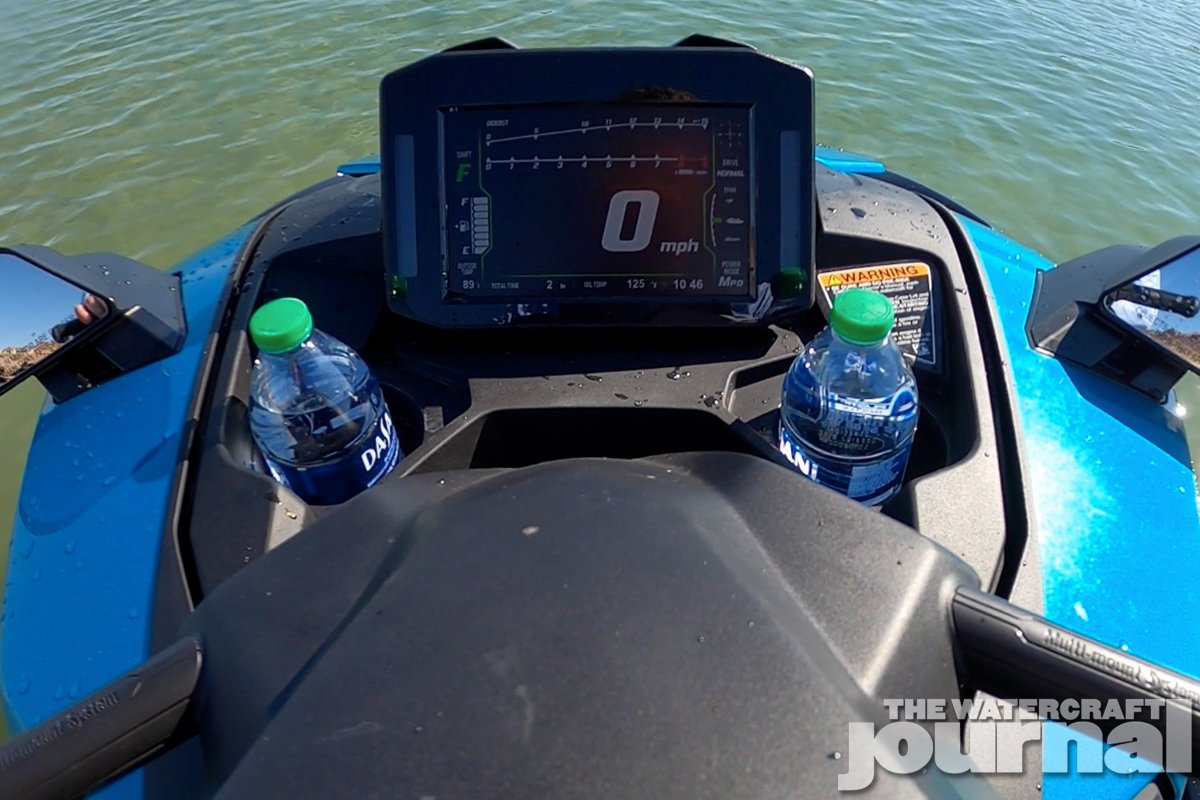
The redesign throws in some built-in cleats for docking; splash deflectors (KSD – Kawasaki Splash Deflectors) and a raised rear bumper for a drier ride; and two big cup holders above the glove boxes. But again, that’s little stuff when considering what went into making the Ultra ride better.
By making the footwells wider and deeper, you’re literally deeper inside of the hull. That means your body weight is lower on the waterline. And what does that mean? It means the Ultra soaks up the bumps, bangs and vibrations far better than before – which was already really good.
Better yet, it also allows the hull to naturally roll into a corner smoother than before – and that’s whether you’re riding on glass or cutting through 2-foot chop. Yeah, that’s right. You can sweep full throttle S-turns in crosswind-blown tidal surf if you want.
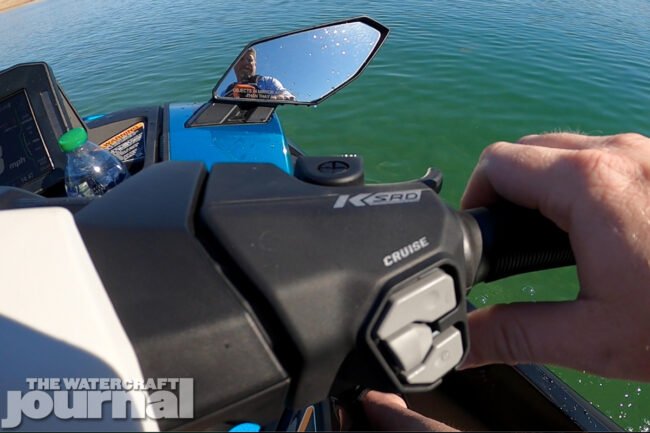
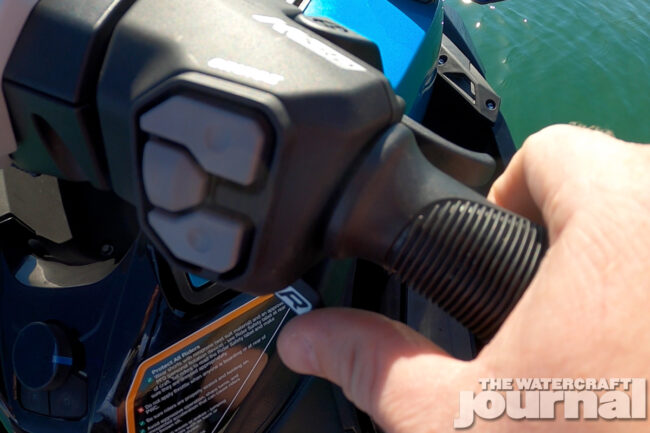
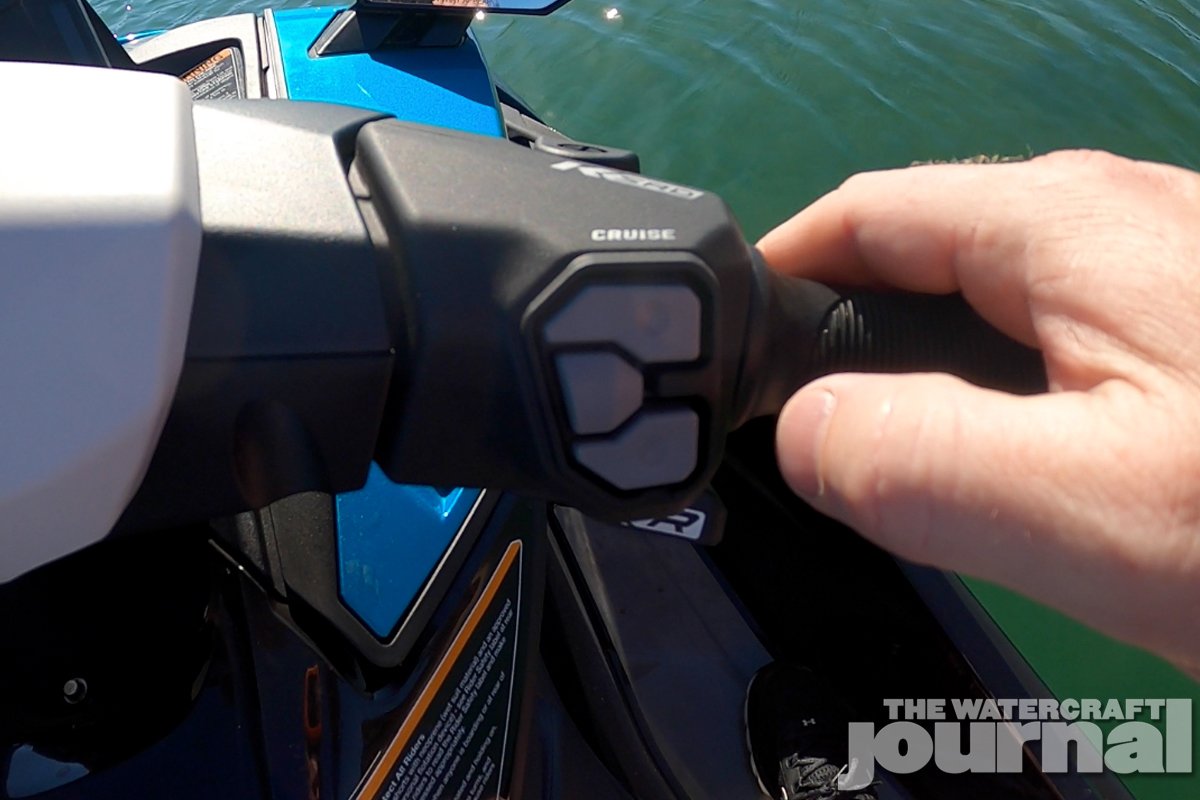
At the helm are the 5-way adjustable tilt handlebars. The neck cranes closer to your lap while sitting, and higher when tilted up when you’re riding on your feet. Each end is capped with pistol grip-style hand grips, and features redesigned control pods with new buttons wrapped with sealed membranes.
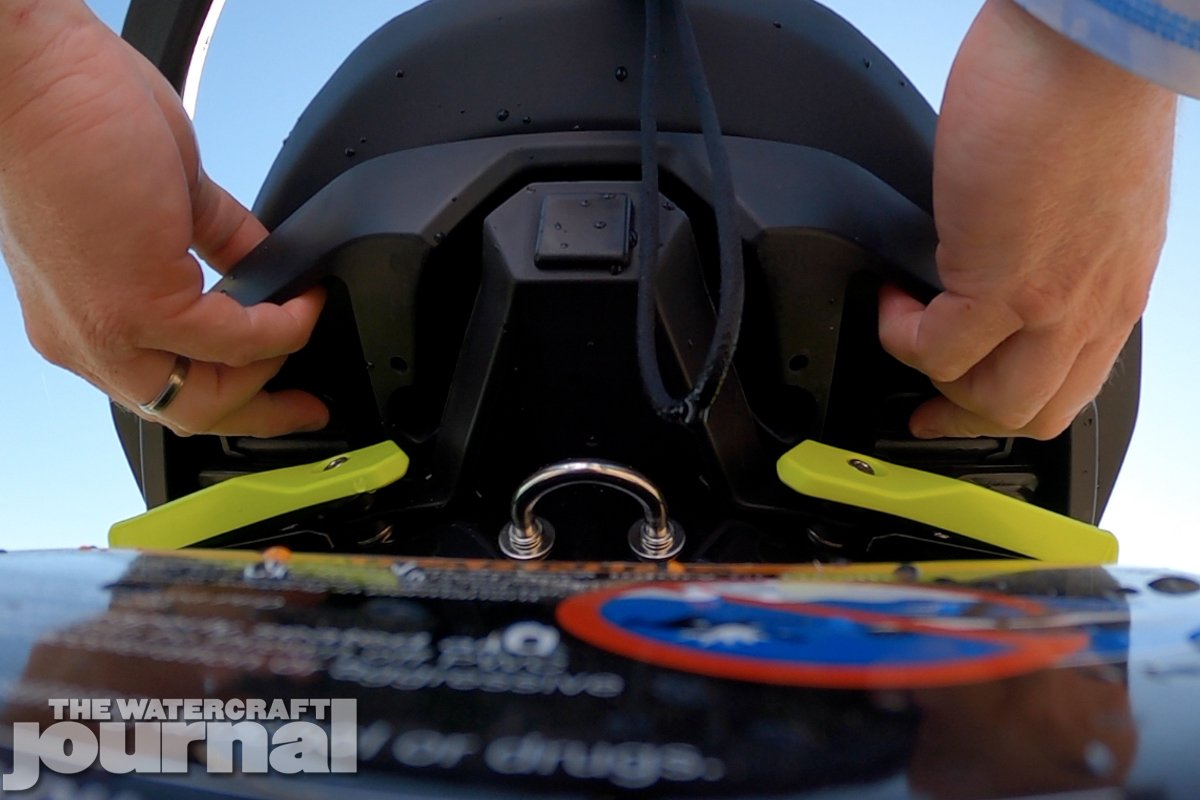
That might sound weird, but these have the best response and feel of any controls before. Kawasaki also lightened the pull on the throttle trigger for less finger fatigue. The throttle trigger is connected to the long-overdue brake-and-reverse system (or KSRD, Kawasaki Smart Reverse with Deceleration), new for 2022.
The brake and throttle operate on the same spring, so when you hit the brake button, it manually overrides the throttle, deploying the reverse gate and slowing the Ultra 310 to a halt. When you release the trigger, the bucket returns to a neutral position. If you keep pressing the button, the Ultra will spool up to a maximum of 3,000rpm and begin reversing until released. It’s pretty easy to understand how it works.
Now for those of us familiar with how the other guys’ brake and reverse systems work, it does take a little bit of practice. The brake is more of a drag, so the Ultra isn’t going to throw you forward into the bars like the others will. It’s more progressive and not as halting.
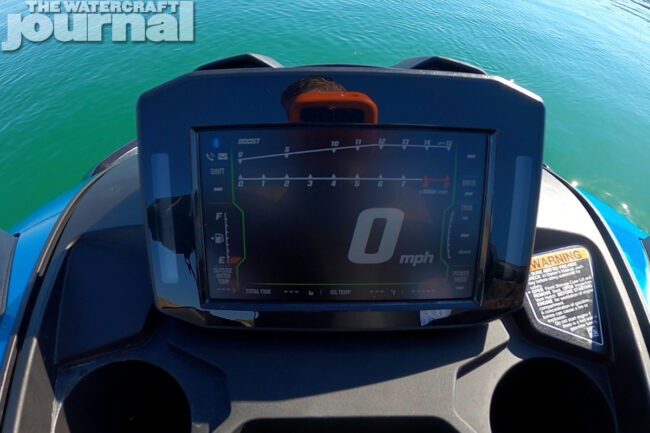
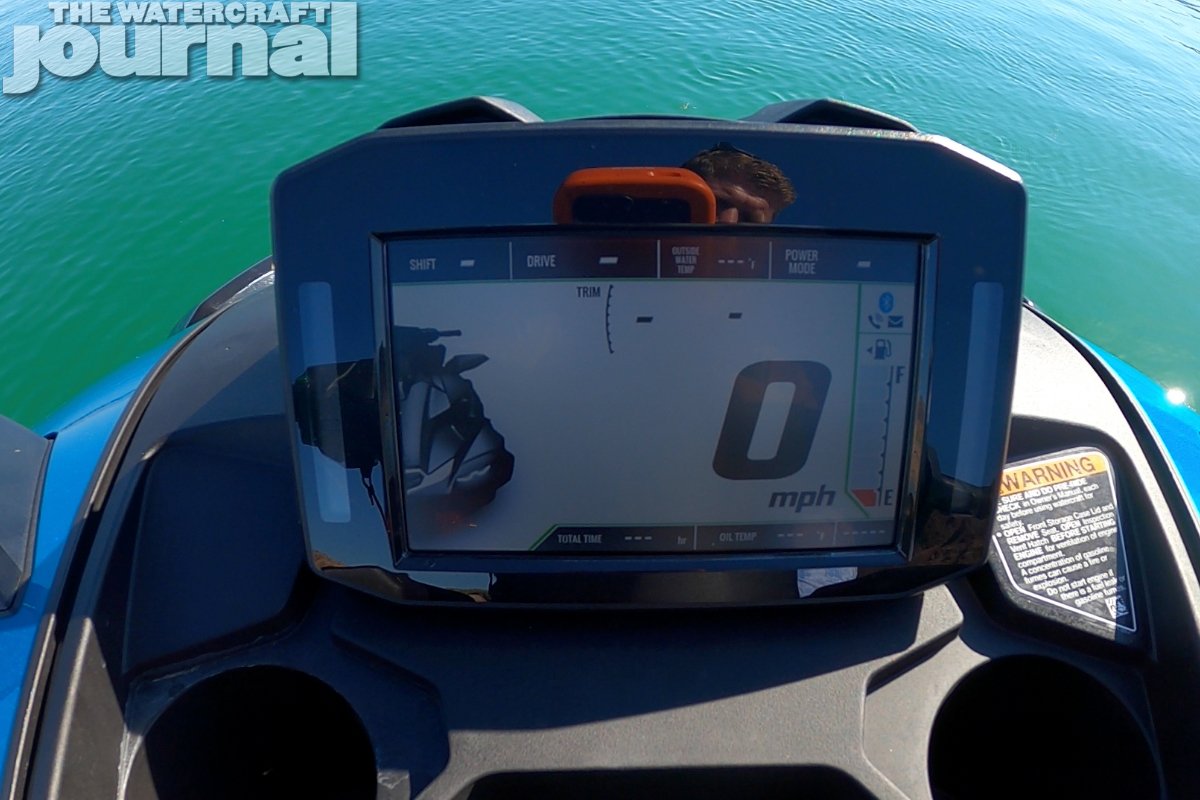
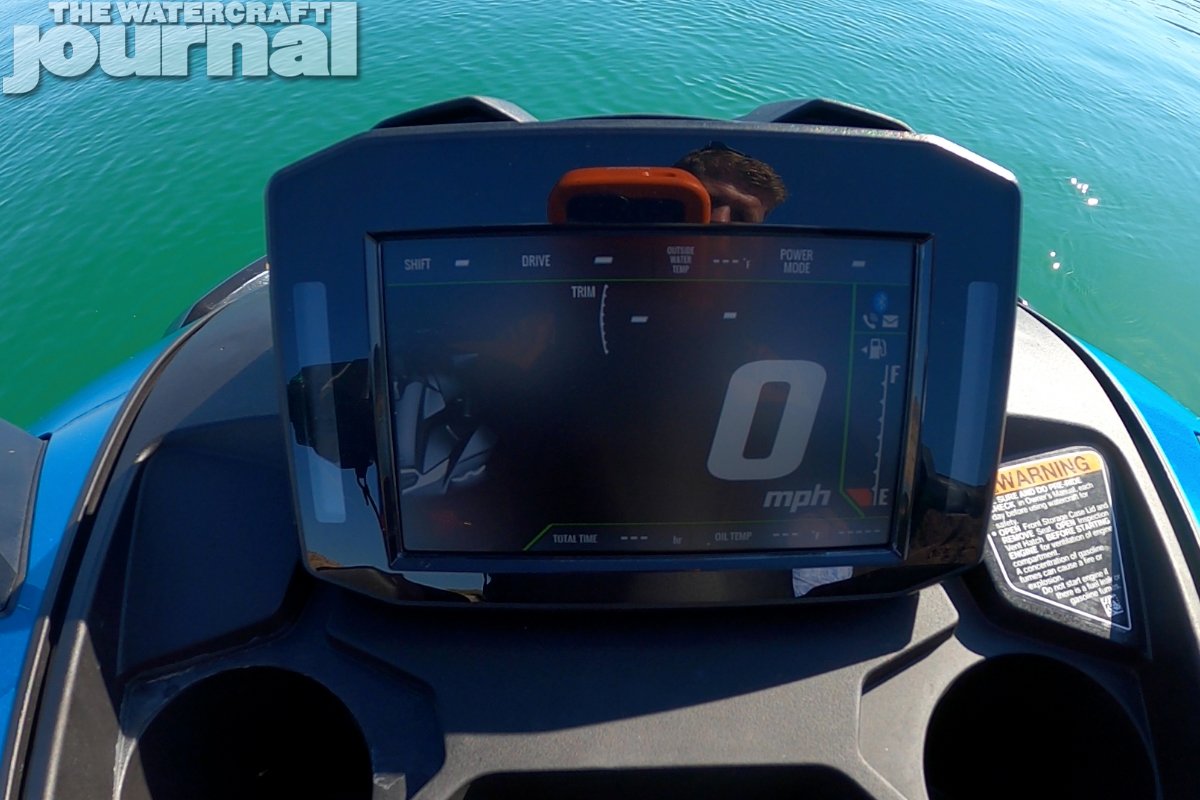
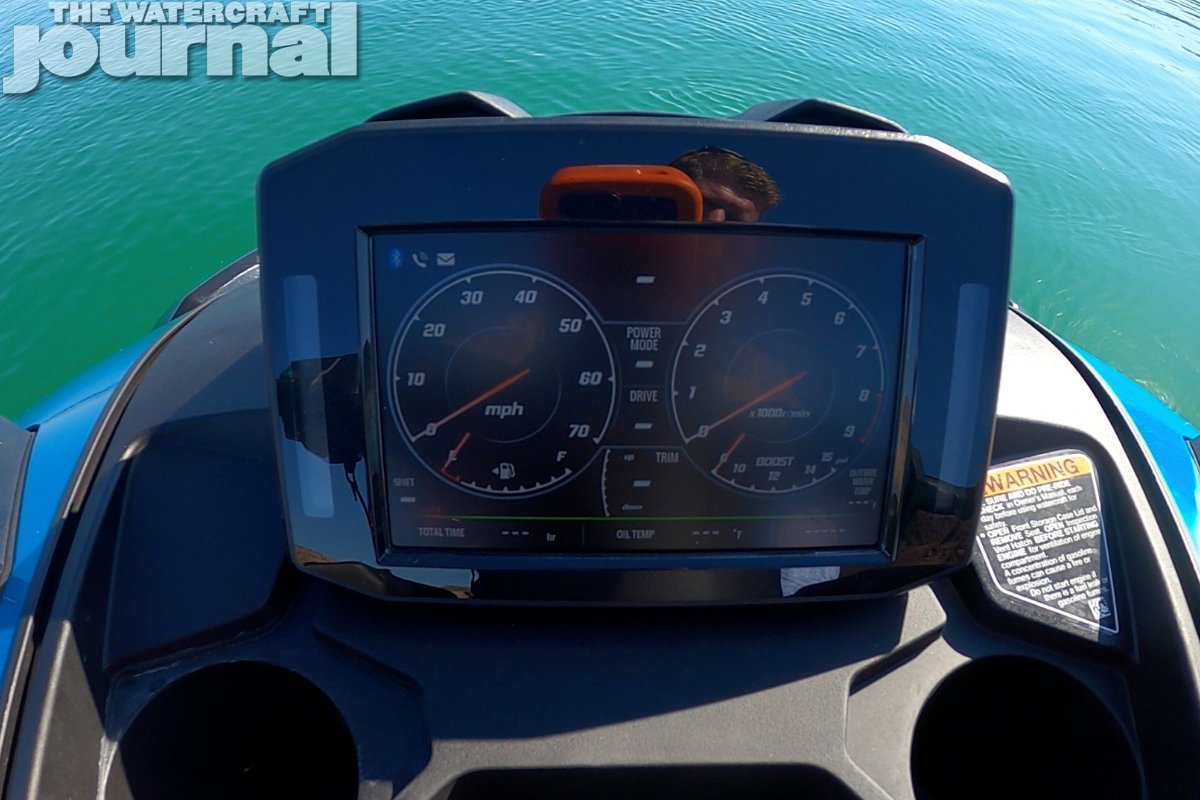
OK now onto the tech stuff: The new Ultra 310X shares the same 7-inch wide, full color TFT display as the LX and LX-S, just without a few of the higher-end features.
It’s still got the three different display modes, black or white backgrounds, self-adjusting screen brightness, and a GPS-controlled speedometer, tachometer, fuel gauge, drive mode, boost pressure, clock, power mode, compass, trim, cruise control; as well as a display bar that can be set to show a trip meter, total & trip time, oil & engine temperature, battery voltage, intake air temperature, diagnostic code, and external air and water temperatures – yadda yadda yadda, you get the point.
All of this is controlled by a new waterproof jog-dial knob and confirmation buttons. The jog-dial scrolls through the various screens and features on the TFT digital dashboard.
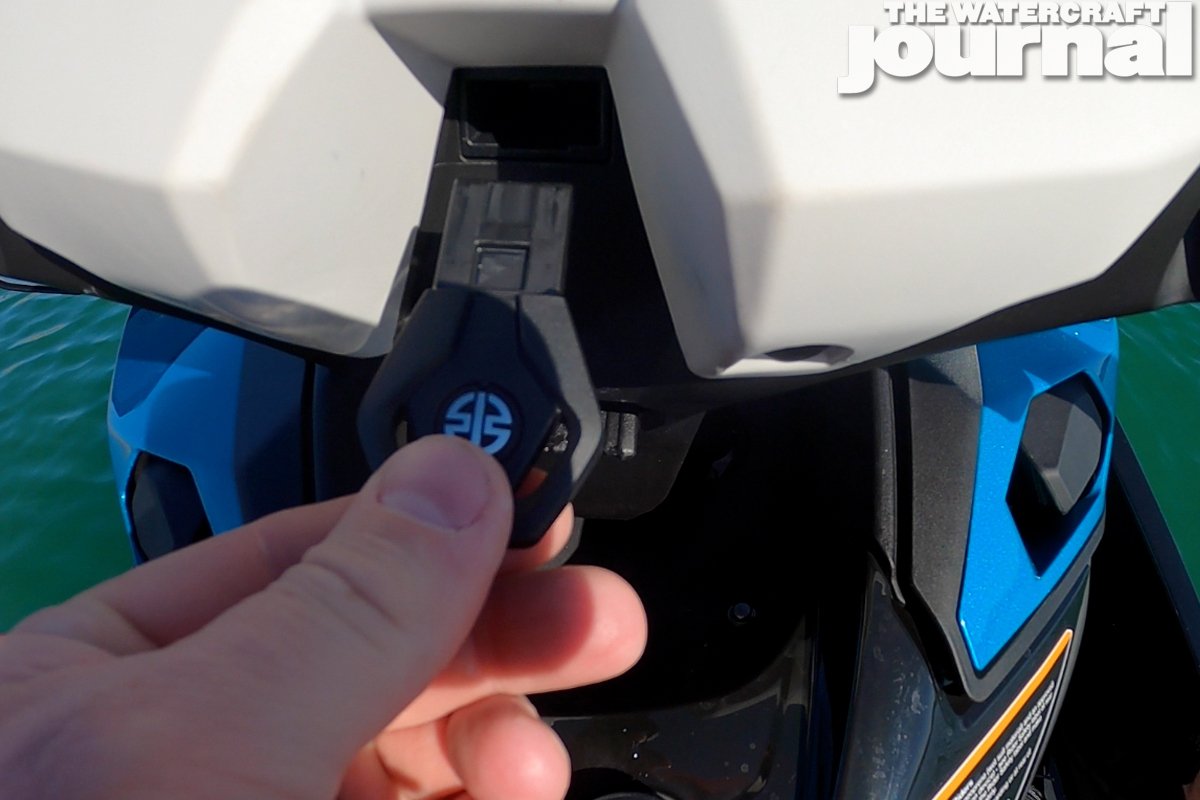
In the bottom left corner of the screen is a big indicator telling you what “gear” you’re in: Forward, Neutral and Reverse. In the right corner tells you what “Mode” you’re in. Just hit the “Mode” button on the left-hand side of the bars and choose from 3 power modes: Full, Middle, and Low (which is pretty much the same thing as the SLO – Smart Learning Operation – key).
Full mode gives you all of the Ultra’s industry-leading 310 horsepower. Middle drops the engine to 80% of the Ultra’s total output – and is also the default setting when you first fire it up; and Low mode is 60% of full power. There’s also a One-Touch 5mph Mode for No Wake Zones, and Cruise Control – as you’d expect.
For you guys looking to best your buddies, Kawi’s threw in it’s new Kawasaki Launch Control Mode (KLCM). Allowing for Single and Repeat launches, KLCM automatically adjusts the trim for optimal acceleration. When set in Single mode, the Launch Control will only activate for the first acceleration shot, whereas in Repeat mode, the KLCM remains active until manually deactivated.
All of this is possible thanks to Kawasaki’s full fly-by-wire throttle control and engine management system. This allows for multiple acceleration maps, smart engine monitoring and throttle response for the same 1,498cc inline four-cylinder DOHC plant Kawasaki has used since 2017.
Back in 2017, Kawasaki revised the pistons to include a V-groove at the second ring for greater oil retention. This added to the overhaul of the engine in 2014 gave the Ultra dual under-piston oiling jets fed by a dry sump oil tank built directly into the baffled and partitioned crankcase, dual cooling circuits feeding fresh ambient water through the enlarged coolant passages, and an external cooler circulating oil between two cooling jackets, mitigating heat soak and excessive internal engine operating temperatures.
This, force-fed by a Eaton Twin Vortices Series (TVS) supercharger cramming an almost excessive 16.7psi at peak RPM down its throat, the Ultra spits out a true 310-horsepower, producing 1,890lbs. of thrust from its 160mm axial-flow, single stage jet pump. All of that might sound like Greek to the uninitiated, but it’s pure engine porn to us gearheads. And trust me when I say, the Ultra 310X uses every bit of that power.
But hold on! To those guys who’re gonna cry “Of course it does! It’s a big ol’ barge!” here’s some easy math for you: The 2022 Ultra 310X is half an inch shorter than the current RXT-X 300. The Sea-Doo’s also two-and-a-half inches wider than the Ultra too – so don’t cry to me about putting two Kawis on a trailer together.
And if you’re gonna whine about weight, get this: Kawasaki lists “curb weight” instead of “dry weight”, which means full of oil and gas. Remember, the Kawi holds 21.1 gallons of gas, and at 6.1 pounds a gallon, that’s 128.7 pounds. Toss in 4-and-a-half quarts of oil, and that’s another 8.8 pounds.
Together that adds up to 137.6 pounds of fluids – putting the Ultra 310X at a hair over 894 pounds – or 65 pounds over the Sea-Doo …aaand if you measured both skis with 18-and-a-half gallons, the difference would be a little over 46 pounds.
But hey, you still might think that’s a lot – and yeah, that’s not nothing – but the Ultra’s also got two waterboxes, a factory-installed catch can, blow-off valve and rear-exit exhaust and a thick-as-steel hull; all the stuff that you other guys wished every night your ski came with. Oh yeah, and both skis are identically priced with an MSRP of $17,499.
Personally, the 310X has got it all where it counts and doesn’t come weighed down with anything it doesn’t need. Instead, it’s all business, baby. Out of the gate, this dang thing pulls hard; it’s twin-screw blower just screams from under your seat. I managed to click off a 5-to-65mph acceleration time of 4.77-seconds, which bested a Yamaha FX SVHO I tested three years ago with Jerry Gaddis at 5 feet above sea level.
But this time, we were 1,044 feet above sea level and sucking mid-90 degree air in Nevada. This of course, also killed our top speed number – just a blip over 67 miles per hour with a full tank and 240 pound rider. Certainly better conditions, less fuel and a lighter rider would give up a few more miles per hour.
But again, what makes the new Ultra 310X the monster it is not top speed or acceleration numbers. That stuff’s for bench racers to argue over on Facebook. What I’m talking about is ride quality and this thing’s got that in spades. I don’t know how the hell Kawasaki managed to take a 15-year-old hull design and somehow find a way to make it work better than it ever has before, but they did it. They friggin’ did it.
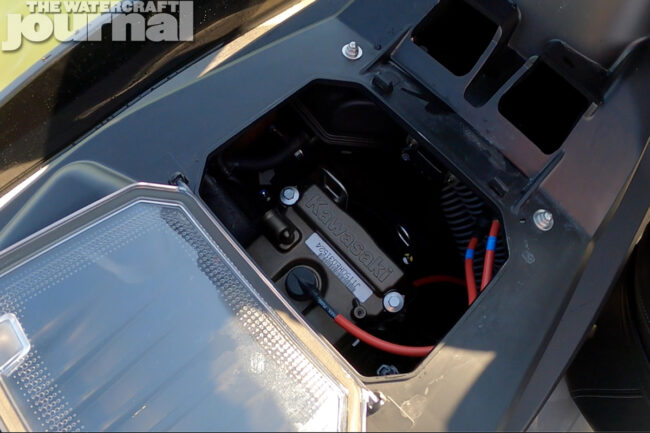
It’s super solid. There’s no dumb rattles or weird chatter from loose panels. It’s well balanced, exhilarating and just a helluva lot fun to ride. Sure, there’s a few things that I’d like see fixed and/or changed – I mean the totally sealed engine cover? C’mon, who thought that was a good idea? – then again, name me something that’s flawless.
But duuude, I’m telling you – when you nail the throttle… there’s just nothing like it. I’ve given a lot of praise to other machines, some less deserving than others. But I’ll you this: When people ask me, “Which of the brand new skis would you yourself buy?” my answer will be, “This one.” It would be the 2022 Kawasaki Ultra 310X JetSki.
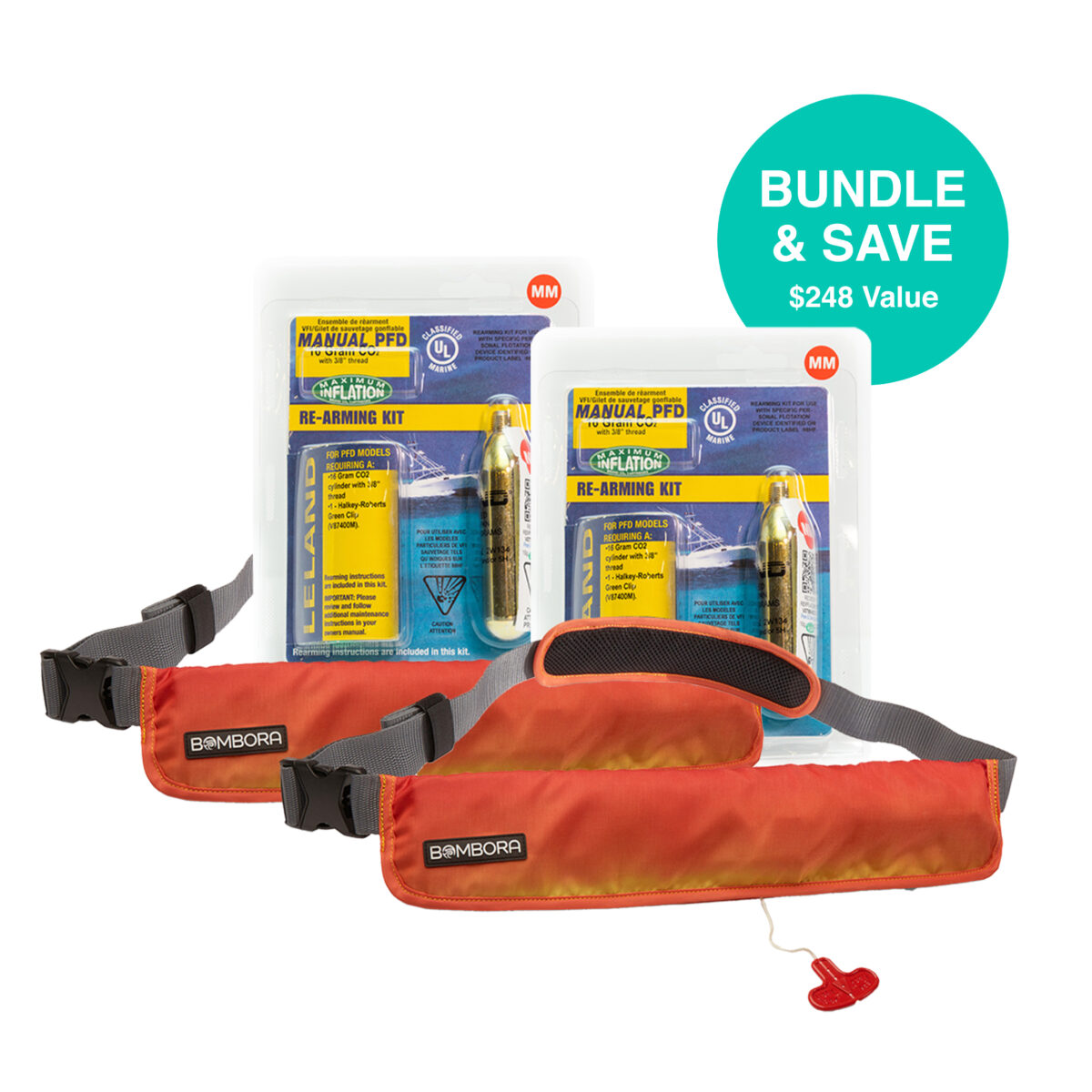
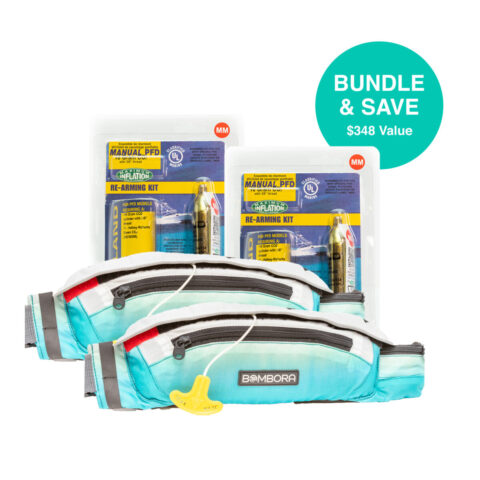
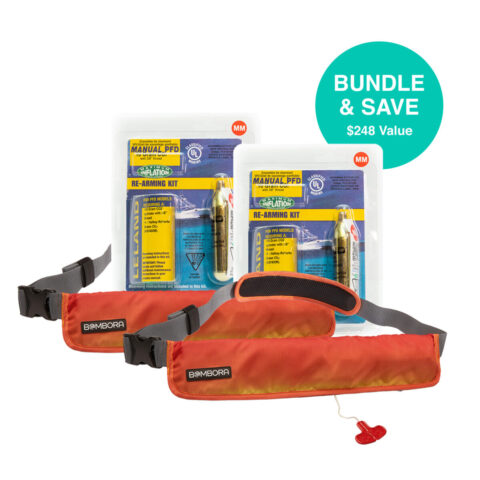
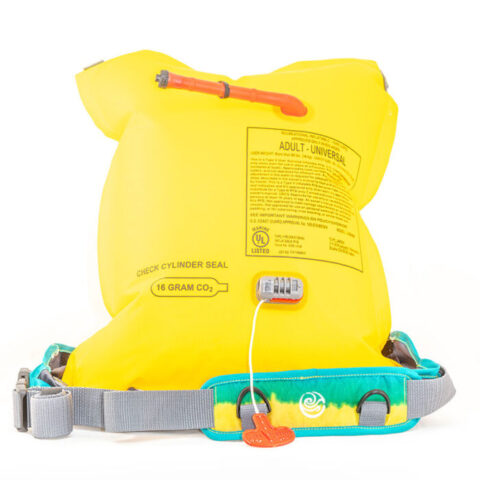
Bombora Gear is now offering Bundle deals on their inflatable PFDs. These are ideal for families and people with dogs who like to go boating and want the convenience of belt style PFDs.The Bombora PFDs are USCG approved and designed to wear around your waist and inflate with the pull of a cord, which activates a CO2 cartridge. The jackets are not only super comfortable, but they also allow for unrestricted freedom of movement. Think fanny pack.
Buying a Bundle will save you 30% over the cost of buying each jacket separately. The life jackets are made for adults 16 and older with a chest size ranging from 30” to 46”. There are three different bundles to choose from. The Adventurer Bundle includes two Type III Adventurer PFDs, which provide 25 lbs. of buoyancy. The Wanderer Bundle has two Type V Wanderer PFDs that deliver 16.5 pounds of flotation. Both kits contain two rearming kits.
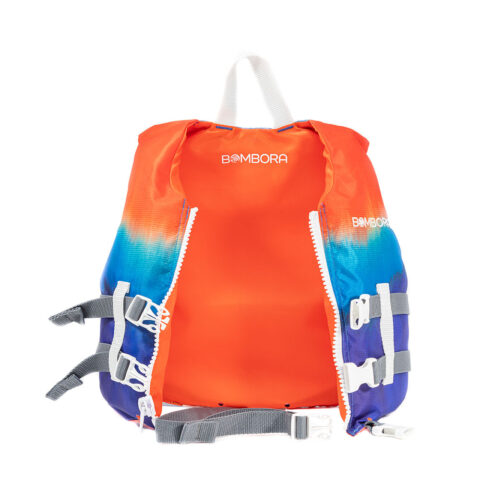
The Bombora Family Bundle comes with two Type V Wanderer jackets and two Type III Kids Vests. There are two sizes of child size life jackets to choose from. One of them is for kids 30-50 lbs. and the other is for 50-90 lbs. The Kids Vests have roomy arm holes and Delrin buckles to keep the kids secure.
For those with doggos who like the water, The Dog Lover Bundle is for you. It contains a Type V Wanderer PFD for the human and a Bombora Life Vest for your furry companion. There are several sizes to choose from for dogs ranging from 12-90 pounds. The vest is designed to let dogs swim freely. Check out the Bombora Gear website for all the details.
Nearly 20 years ago, there was a time that whenever my brother and I started working on one of his project cars out on the driveway that his elderly neighbor would wander over to chat. Don had a hobbled walk due to one leg being slightly shorter than the other, a result from a terrible fall while working in the oil refineries of Long Beach, California. Well into his 70’s, Don would happily argue politics, which automaker built the better car, and anything else you could toss his way.
Don joked that he and all his buddies would fill up their cars at the refinery where they worked during the “gas crunch” of the 1970’s. Policies had been put in place to stave off long lines at the pump, requiring those with license plates ending in even numbers to fill up specific days, while those with odd numbers fill up on the opposite days. It was more folksy (ie. idiotic) policy from Governor Jerry “Moonbeam” Brown who gifted Californians with the anti-drought maxim, “if it’s yellow, let it mellow…”
“At the refinery, we could just get straight gas,” Don recalled. “All of that additive stuff was mixed in later. We just produced the gasoline. And we could fill up our tanks whenever we wanted. I’d fill up my truck one day, the wife’s station wagon the next. Heck, I’d drive the camper in later that week.” He snorted, “I remember one buddy towed his boat in and filled up the tank.”
“How was that possible?” I asked, visibly confused. “I thought there was a shortage?” Don roared, slapping his knee. “There was NO shortage! That’s just what they told people. There wasn’t a single day we didn’t hit our daily output. We had all the gas in the world. They just filled up the reserves while hiking up taxes.” This was my first real world insight into politics directly effecting Americans’ wallets, and sadly not much has changed.
As of this writing, the domestic average for a gallon of gas is $4.28 (according to AAA). This is $.11 less than last week and $.80 less than the all-time record high set June 14th, 2022 – just a month ago. This drop is directly attributed to an infusion of 50 million barrels of oil pulled from the United States Strategic Oil Reserve, which was originally designed to supplement areas hit by environmental disasters or times of war, and comes intentionally at the seasonal height of annual oil consumption use.
This influx of oil might’ve artificially tampered the two-year climb in the consumer cost of gasoline, but don’t expect it to last. Crude oil remains the most important commodity in the world, and a barrel of crude is $98.6 – down from $122.2, the second highest price on record set on June 8th, 2022. (The all-time record was set on March 22, 2022, at $123.7 prior to tapping into US reserves shortly thereafter.)
Per Market Insider, emerging Chinese and Indian oil suppliers have curbed skyrocketing prices all while OPEC production remains steady. Yet, the single biggest destabilizing player in global crude market in the past 5 years has been the United States. After a reversal of decades of US executive policy in early 2017 unleashed thousands of private and independent drilling contracts, US crude production expanded to new records:
Not since March of 1971 had US crude production surpassed 300,000 barrels a month – that is, until November of 2017; and that record was shattered two years later in December 2019 when US production broke 400,000 barrels (per the US Energy Information Administration). This 31% increase in domestic oil production replenished depleted oil reserves and earned the US the designation of “net exporter” for the first time in 80 years. But it wouldn’t last long…
As Covid swept the globe, demand collapsed. The deluge of additional oil into a rapidly shrinking market crashed the cost of crude to $3.32 a barrel the week of April 24, 2020. Oil producers quickly “eased” production throughout May and June, with US production beginning to rally to mid-2018 numbers by October. Yet, production plummeted again – this time to sub 300K levels (276K) – in March 2021 after federal drilling renewals and the Keystone XL pipeline were denied by Executive Order 13990.
The impact of Executive Order 13990 wasn’t directly felt by “Big Oil” executives either: 91 percent of the wells in the United States are operated by independent producers who generate 83 percent of America’s oil and 90 percent of America’s natural gas (per the Independent Petroleum Association of America). These companies see less than $5 million in retail sales of oil and gas a year, operate in only 33 out of 50 states and employ an average of just 12 people, reports National Review.
Since January 2021, the United States has reversed from net exporter of crude to net importer. Hundreds of drilling contracts have been denied or terminated, and millions of dollars have been lost on the development of new pipelines and refineries that were expected to replace antiquated plants (which have since closed, costing hundreds of American jobs). Thus far, current domestic production has lingered around 325K, which equals a net loss of roughly 20-percent of the total global supply from just two years earlier.
Consequently, this instability has crashed the oil investment market. ExxonMobil reported losses in four of the past ten quarters, including a massive $20.1 billion loss in December 2020 (Yahoo Finance). Certainly, ExxonMobil earning $11.8 billion during that time frame isn’t chump change, but when compared to Apple’s $211.7 billion over the same time period, it’s hard to claim “Big Oil” is really gouging consumers.
Of course, consumers visit the gas pump more often than their nearest “Genius Bar,” so the pinch feels far more prevalent. Petroleum accounts for almost all cooking heat, over 60% of domestic energy, and fuels the nation’s vast transportation network, directly effecting costs of food and goods. Thankfully, some government bodies have been helpful in providing insight as to what exactly they’re paying for. As an example, the California Energy Commission provided a cost breakdown of a $5.57 gallon of gasoline:
As of July 25th, 2022, the crude itself costs $2.52 accounting for 40% of the gallon – a price which oil companies do not set, but rather is influenced by supply and demand (detailed previously). The refining process and distribution costs add up to $2.19, making up 39% of that same gallon. The remaining costs are entirely state and federal taxes: including a state Underground Storage Tank Fee of $0.02, state and local tax of $0.12, State Excise Tax of $0.54 and a Federal Excise Tax of $0.18, or 21% of the gallon.
For those convinced that “Big Oil” continues to “stick it to the little guy” despite the provided breakdown, what are some ways to reduce the cost of their 39-percentage? Erecting new and more efficient refineries is one, which requires permits from government oversight committees. A second is employing more cost effective means of transportation of the crude to these new refineries – and that is via modern, EPA-approved pipelines, both of which Executive Order 13990 and later policies have thwarted.
Conclusively, domestic policy directly effects American crude production – positively or negatively. How to encourage production in a clean, environmentally-conscious and reliable manner is clearly debatable and should be openly scrutinized; but understanding the path to how we got to where we are is information that everyone should have. The coming years are unlikely to see dramatic improvements in energy production or decreasing costs without radical change of either policy or leadership – and that is up to the people to decide.