Attrition is the name of the game when it comes to PWC racing, and that is nowhere more evident than at the annual Mark Hahn Memorial Havasu 300. This past weekend marked the 16th annual endurance event and the lineup was a venerable who’s who of fresh-faced and weathered veteran racers.
Among the dozens of race teams ready to charge the cold and foggy shores of the Crazy Horse Resort were many riding FX Yamaha WaveRunners – and their selections served them well as many took home wins that day.
Yamaha WaveRunner racers proved again why Yamaha is the first name in professional PWC racing with wins in three top classes at the 16th Annual Mark Hahn Memorial 300 held in Lake Havasu, Arizona.
The three winning teams for Yamaha were Steve Friebe and Jerry Ham (4 Stroke N/A Open Class); Mike Neumann and Levi Sampayo (Manufacturers Stock Class); and Cassius Sanders and Cyrille Lemoine (Vet Masters Open Class).
The recently redesigned FX Series includes an all-new deck and hull well suited for open ocean and endurance racing. The new design favors stability, predictability, and comfort in choppy water conditions, all while delivering a light, nimble ride, despite its size. Powering the FX Series is the Yamaha 1.8L marine engine that comes supercharged or normally-aspirated. The Yamaha 1.8L engine is renowned for its impressive performance, reliability, and durability.
The Mark Hahn 300 is the longest personal watercraft race in the world, covering a total of 300 tough miles in 30 successive laps of a 10-mile course. There are so many variables in the event, from fuel stops, rider changes, rough water conditions, and attrition. Additionally, the race features the only true Le Mans start currently in motorsports of any type.
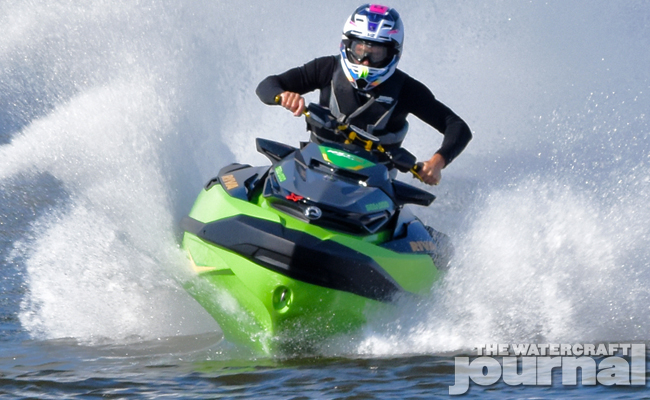
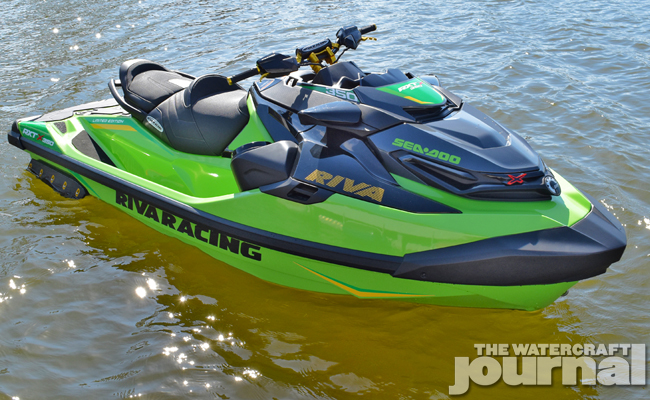
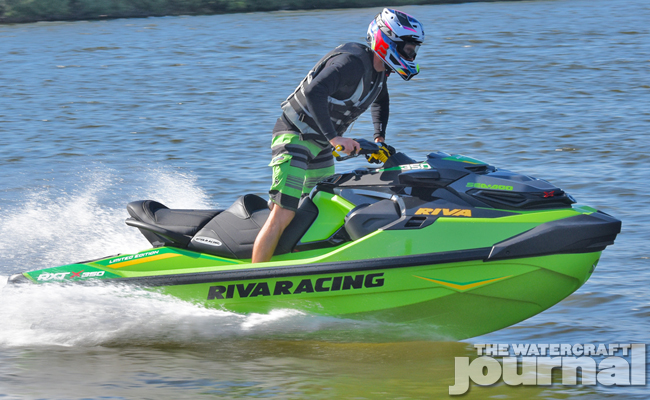
The RIVA Racing crew have been putting out stellar limited run skis for several years and for 2020 they one-upped themselves by building a handful of custom-built machines specific to order. These machines are all about high performance and not for the weekend-warrior type. The ski you see here was coined as a 2020 Sea-Doo RXT-X 350 and was assembled for one lucky customer. Although not specifically mentioned, the cost of this machine came in the $30,000 neighborhood and looks absolutely smokin’.
Looking sharp with its sleek bright green-on-green and black color scheme and custom-anodized gold parts, the gold adds a striking touch of bling and will definitely get the rider noticed. The watercraft is equipped with a king’s ransom of performance and handling components – offering slightly more than RIVA’s basic Stage 2 kit – that will dramatically increase the overall ride, acceleration and handling of the standard Sea-Doo RXT-X 300 from which it was based.
The build began with RIVA’s Sea-Doo RXT/GTX Pro-Series Steering System, which will aid in making those hard corners tight and controlled rather than loose and unstable. The steering shaft is constructed of aircraft grade aluminum tubing, giving it maximum strength and rigidity. Next was the addition of the billet iControl Levers. The set for Sea-Doo iControl provides superb control and comfort along with its cutting-edge design. It replaces the OEM plastic parts with high quality CNC machined throttle and brake levers. The set also features a more responsive stainless steel return for that precision feel. Anodized coatings prevent corrosion so you can run it in saltwater without a care! It will be fine.
Rounding out the rest of the handlebar package is RIVA’s 30” Pro-Bar Aluminum Handlebars, which are constructed form a proprietary aluminum alloy that provides maximum strength and reduced vibration. Reduced vibration is a must when traveling at extremely high speeds. Control at all costs is necessary and vibrating handlebars can wreak havoc by wearing you out and possibly causing the rider to experience a hard fall. The 30” Pro-Bar Aluminum Handlebars were a prime choice for both buyers.
Finally, the bars are fitted with the 2019+ RIVA Sea-Doo RXT Control Housing Switch Housing Set. It is designed to work with the original OEM control system in aftermarket steering applications. It also replaces bulky control housings, giving the craft a better look and the RIVA Billet iControl levels fit right into the housing.
The ski will handle extremely well with the combination of the RIVA steering components and the Pro-Series Sponsons. The sponsons offer improved handling and straight line stability with their deep-set blades. They also have a five-way adjustable fin system, which allows the rider to position the fins in ways that will control the overall influence they have on the craft.
The PWC is also outfitted with the Sea-Doo RXT/GTX Power Filter, RIVA MaptunerX ECU Tuning, and Solas Sea-Doo Concord SXX 13/18 Impeller. The Power Filter feeds the heavy-breathing ACE 300 supercharged engine with a constant flow of cool air, which delivers significantly improved acceleration and rpm. The Power Filter replaces the restrictive stock air box so you can go fast! The revised ECU tuner via the MaptunerX software delivers a proven engine tune to keep the ACE 300 running strong throughout the power curve.
The Solas 161 3-blade Concord Impeller increases low-end thrust and top-end speed on the 300-horsepower Sea-Doo models. The Solas impellers are comprised of high strength stainless steel. The impeller features a hub-end water seal, exclusive to Solas. The hub-end water seal reduces cavitation.
The two custom ski not only looks great and go fast, but makes some serious noise, thanks to the RIVA Sea-Doo Rear Exhaust Kit. While the kit delivers on performance and cutting-edge style, it allows for the removal of the stock sound suppression. The RIVA 4-Tec Catch Can/Engine Breather Kit stops power-robbing crank case fumes and oil vapor from the engine’s air intake. This in turn creates more horsepower due to the fact that it takes away the engine’s need to burn mostly non-combustible oil. The catch can is one more way to increase speed on these two RIVA Sea-Doo custom builds.
A nice addition to the first machine is a custom non-slip RIVA/Jettrim Seat Cover in black with silver stitching. The cover is made with ballistic nylons, ultra grade marine vinyl, and Jettrim’s exclusive Nada-Hyde, non-slip traction material. The custom PWC is rounded out with limited-edition graphics and custom gold anodized parts that sharply play off of each other and really make this machine pop! The overall appearance is bold and powerful. The PWC flies across the water at a peel-your-face-off speed of 81 mph @ 8350RPM!
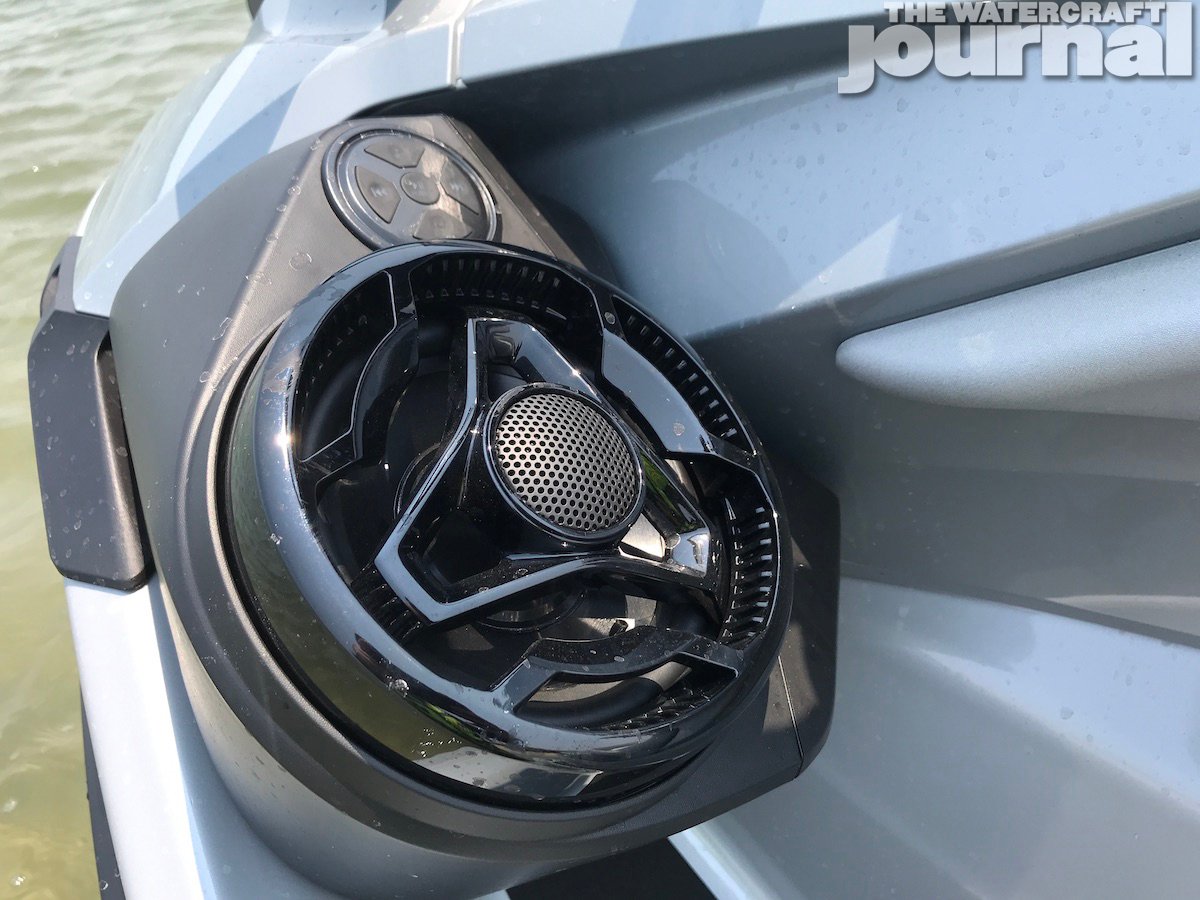
Because this began as a fully-optioned 2020 Sea-Doo RXT-X 300, the custom build came with the BRP Audio-Premium System; and while this particular RIVA Sea-Doo wasn’t so equipped, RIVA has noted that other custom builds can feature custom anodizing for the speaker surrounds, to either match or play off nicely with the California Green body. As per factor, the audio system is completely integrated into the ski and has Bluetooth connectivity. The sound system is fully waterproof as well, which is definitely a good thing when you’re traveling across the water at high speeds or just cruising in general.
To reiterate RIVA’s stance on custom builds, RIVA Racing wants you to know that they are open to building custom builds. Give them a call to see what they can do. A lot has to do with ski availability, budget and time. If you really want a ski that represents you and has the specific features and parts that you want contact RIVA Racing and go all-in on custom build! You’ll be stoked!
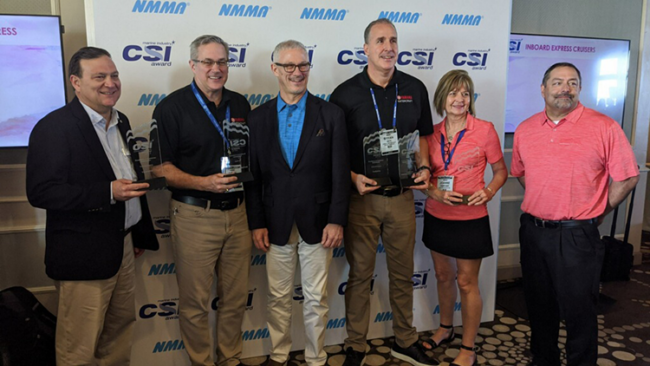
When it comes to building a reputation, reliability is the name of the game – and the one thing that Yamaha Motor Corp. USA prides itself on is maintaining a stranglehold on being the most reliable brand in the industry. Paired with stellar service, a robust dealer network, and a stellar overall customer satisfaction rating, and it’s no wonder that Yamaha’s US Marine Business Unit received the National Marine Manufacturers Association (NMMA) CSI award in a whopping five categories! It’s a pretty big achievement and just goes to show how dedicated Yamaha is to its customers.
At the Miami International Boat Show® last week, Yamaha’s U.S. Marine Business Unit accepted the National Marine Manufacturers Association (NMMA®) CSI Award for excellence in customer satisfaction in five categories including Outboard Engine, WaveRunner® personal watercraft, and Jet Boat as well as Yamaha’s boat companies Skeeter® and G3® Boats. Yamaha has received this award for its Outboard Engine category every year since the award’s inception in 2001, an achievement no other outboard manufacturer can claim.
“Customer satisfaction is at the center of everything we do and every product we make,” said Ben Speciale, President, Yamaha U.S. Marine Business Unit. “I would like to thank our boat builders and dealers for helping Yamaha deliver exceptional customer experiences on the water. We share this recognition with them and look forward to what the future holds for integrated boating applications.”
NMMA® launched its Marine Industry CSI Award Program in 2001 to provide boat and engine manufacturers with an independently measured, cost-effective tool to help improve customer satisfaction in the boating industry. The program allows participating manufacturer companies to monitor customer satisfaction on an ongoing basis and to create benchmarks in the industry.
The National Marine Manufacturers Association (NMMA®) is the leading association representing the recreational boating industry. NMMA® member companies produce more than 80 percent of the boats, engines, trailers, accessories and gear used by boaters in the United States. The association is dedicated to industry growth through programs in public policy, market research and data, product quality assurance, and marketing communications.
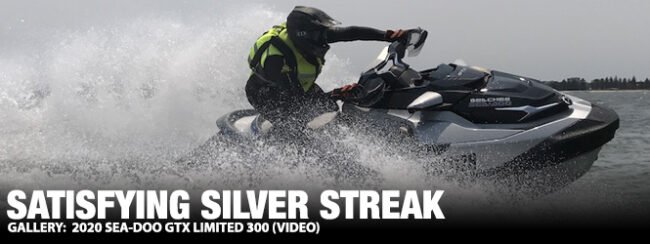
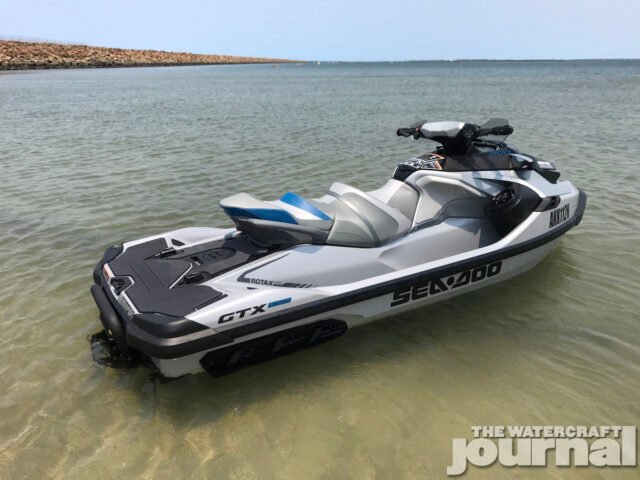
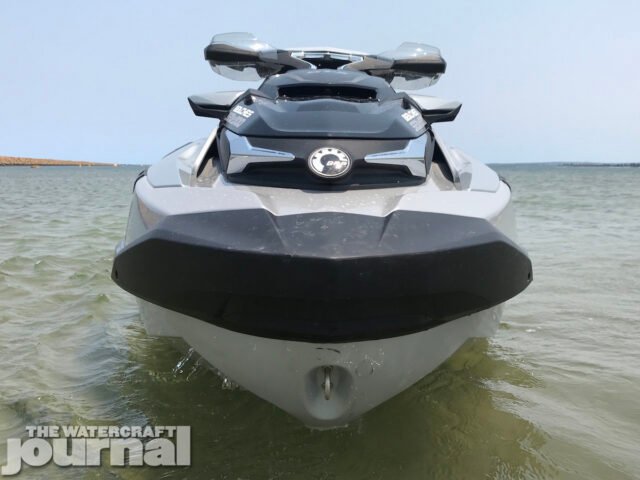
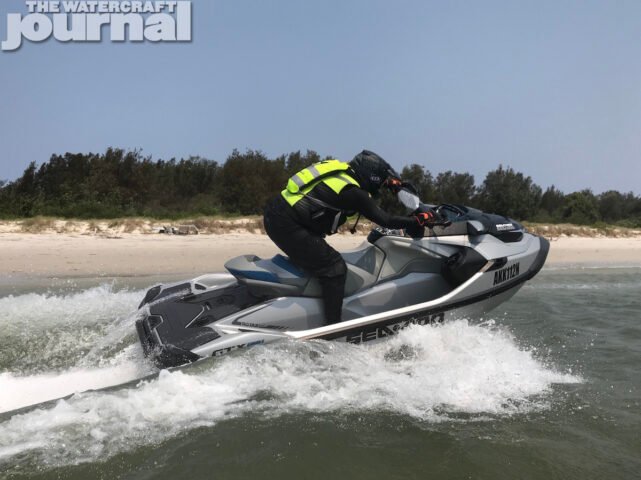
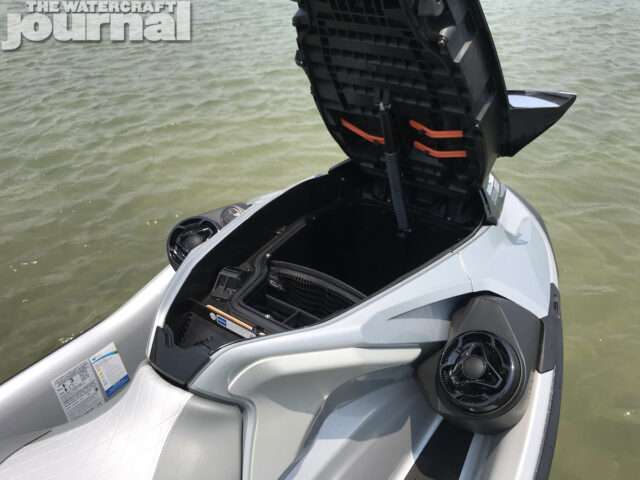
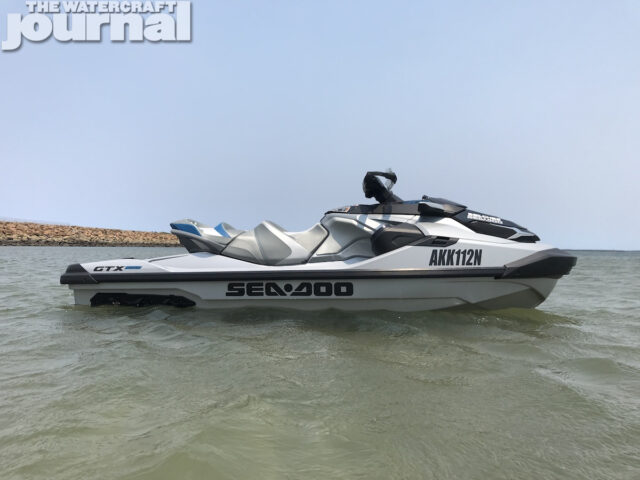
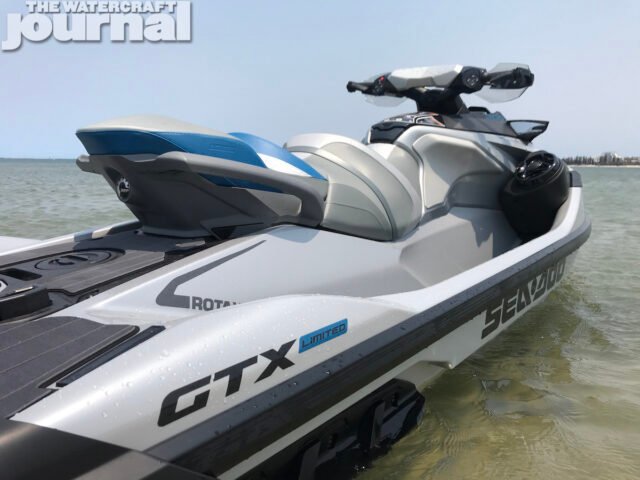
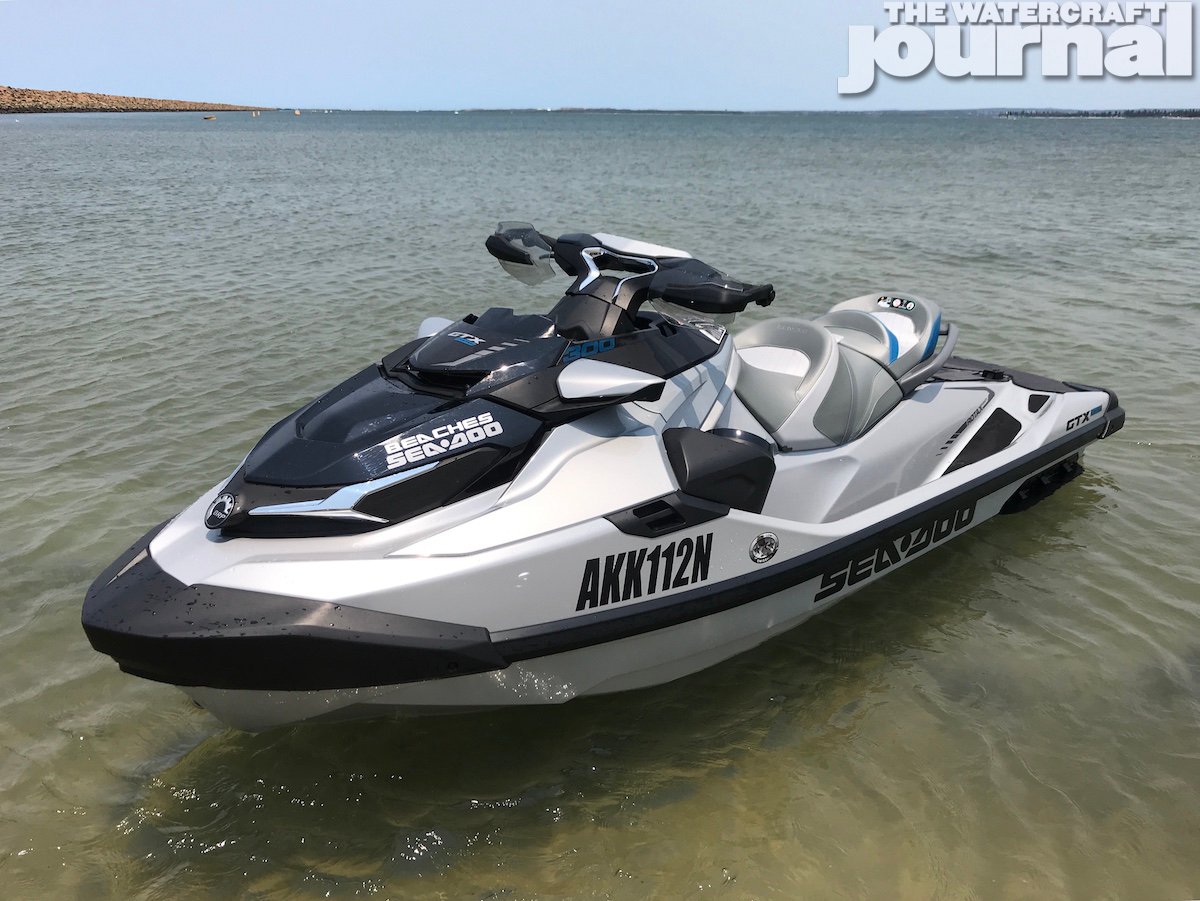
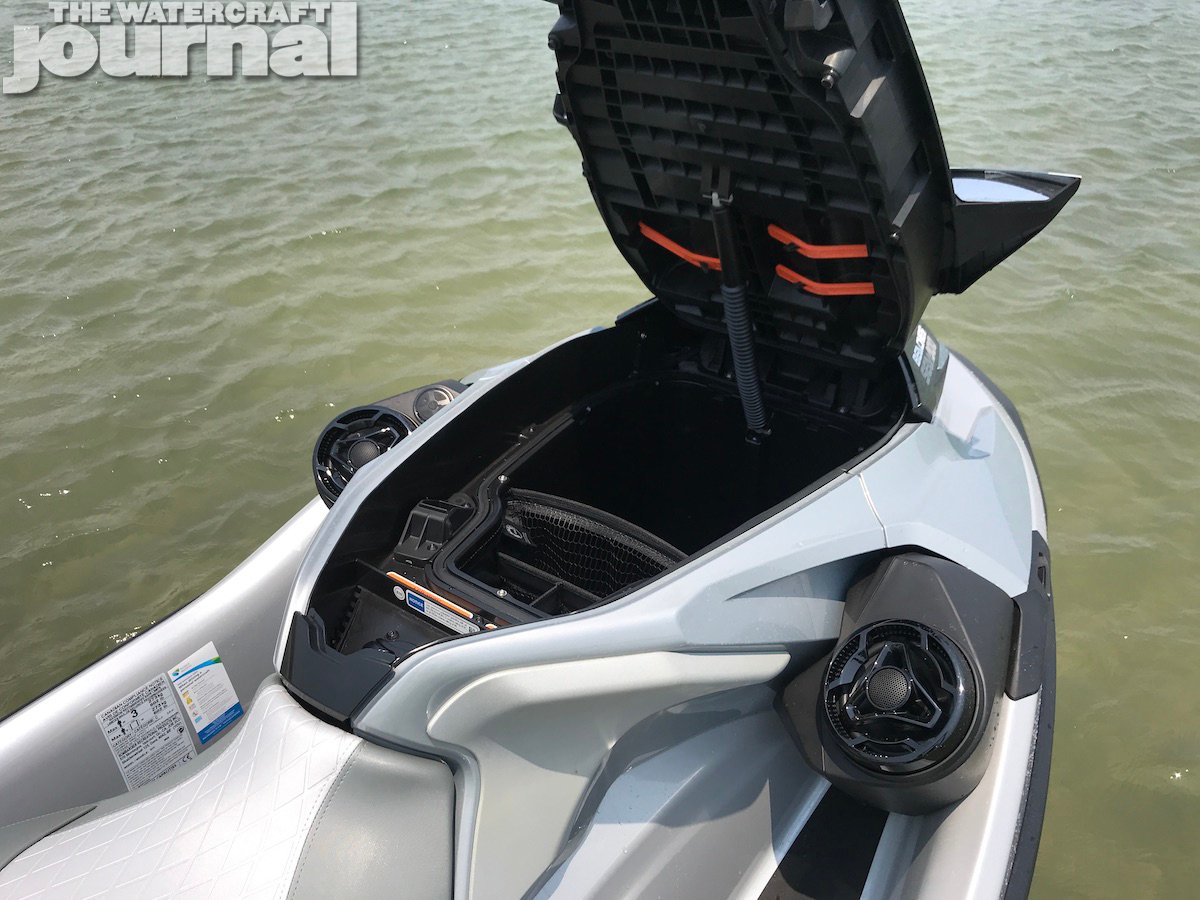
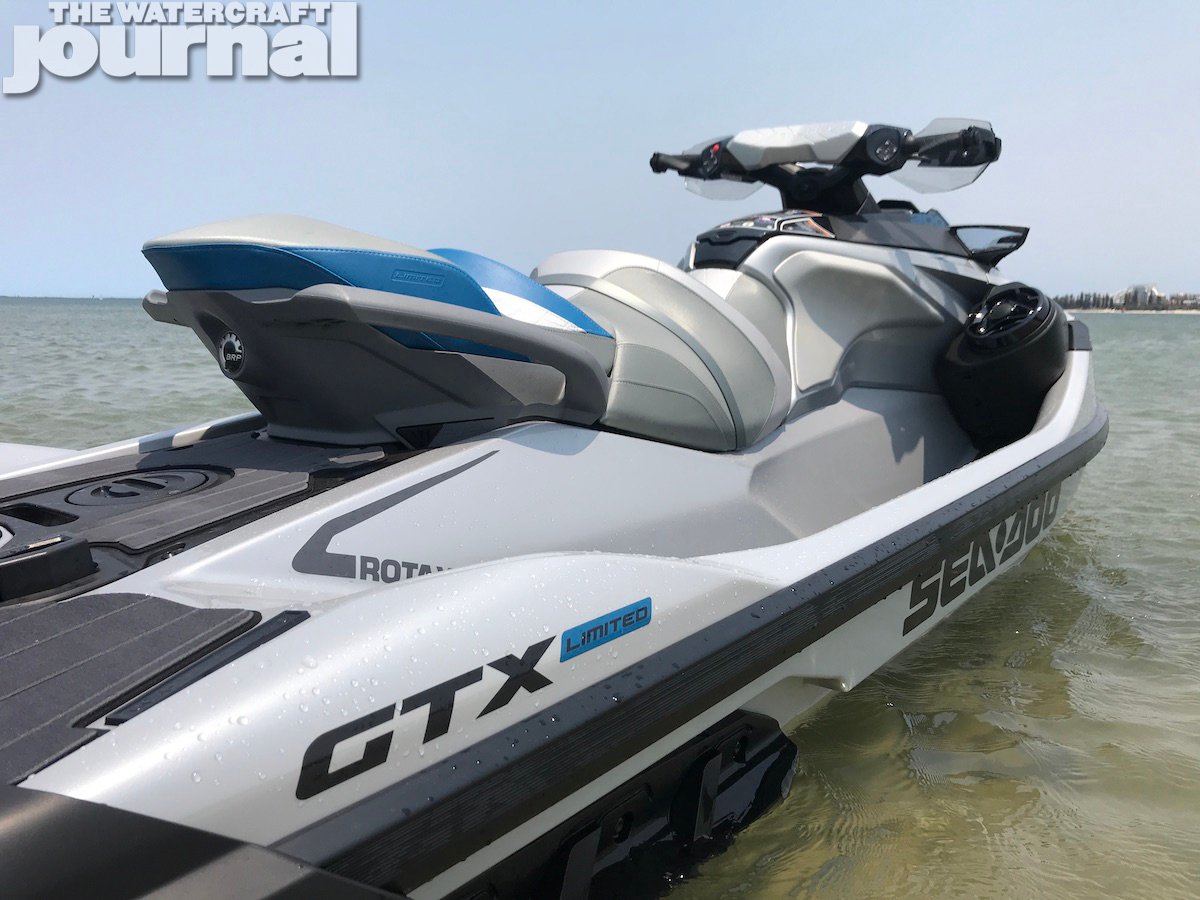
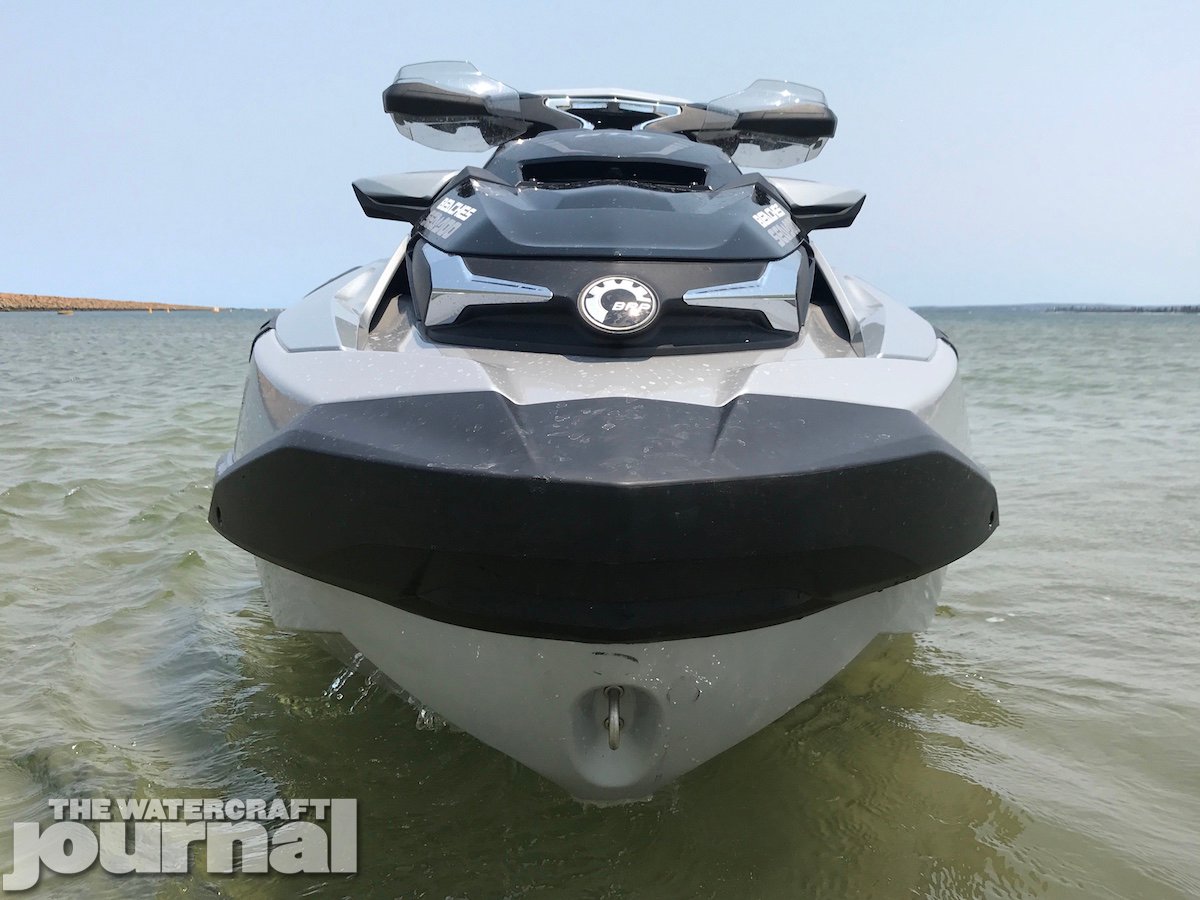
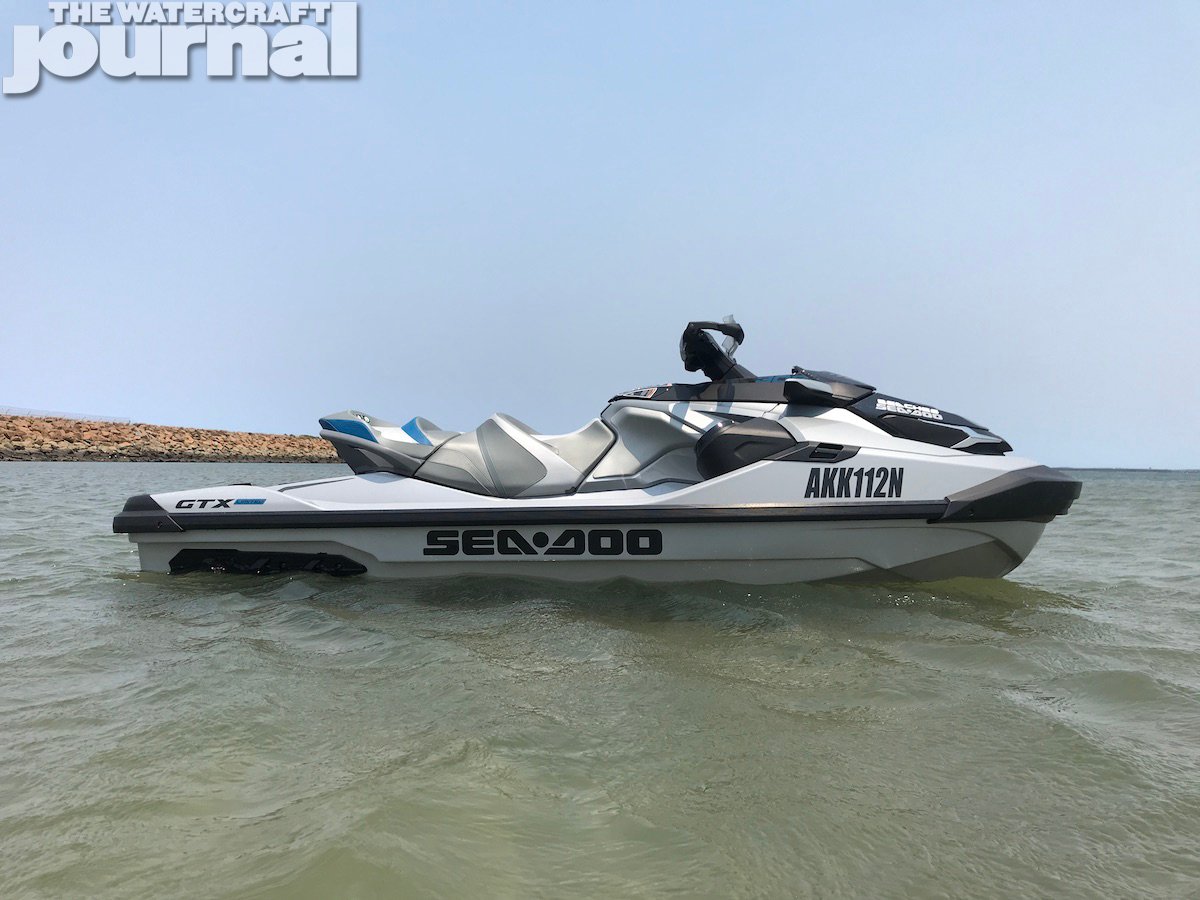
Do you crave the performance of Sea-Doo’s supercharged RXT-X 300 but prefer a more understated color scheme? The luxurious 2020 Sea-Doo GTX Limited 300 could be just the ticket. The GTX series has the same innovative ST3 hull – now in its third year of production – as the RXT-X 300 and Fish Pro, which means it has the same genius easy-access front storage area, plenty of knee room for the operator, and a large rear deck to fit accessories such as a cooler or fishing accessories.
In the US, the range starts with the non-supercharged 1.6-litre GTX produces 170hp ($12,999), the supercharged 1.6-litre GTX with 230hp ($13,999), before climbing to the supercharged 1.6-litre GTX Limited with 230hp ($16,199) and the flagship GTX Limited 300 ($17,199) as you see tested here, which has the same 300-horsepower supercharged 1.6-litre Rotax engine as the high performance RXT-X 300. US prices exclude trailer, registration and taxes.
In Australia, where this GTX Limited 300 was tested, the GTX range is streamlined to three models: GTX 170 ($18,799), GTX 230 ($20,799) and the GTX Limited 300 ($26,499). Australian prices exclude trailer and registration but include taxes. By comparison, the Sea-Doo RXT-X 300 costs $26,399 in Australia.
The Sea-Doo GTX Limited 300 had minor model-year changes from 2019 to 2020, such as the standard fitment of the 70-litre fuel tank from the Fish Pro and a mildly redesigned color and trim combination. (The RXT-X 300 and the other models in the GTX range also gain the 18.5-gallon, or 70 litre fuel tank for 2020).
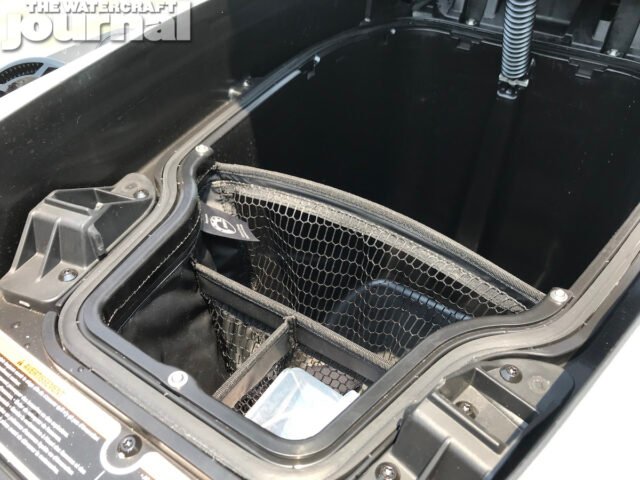
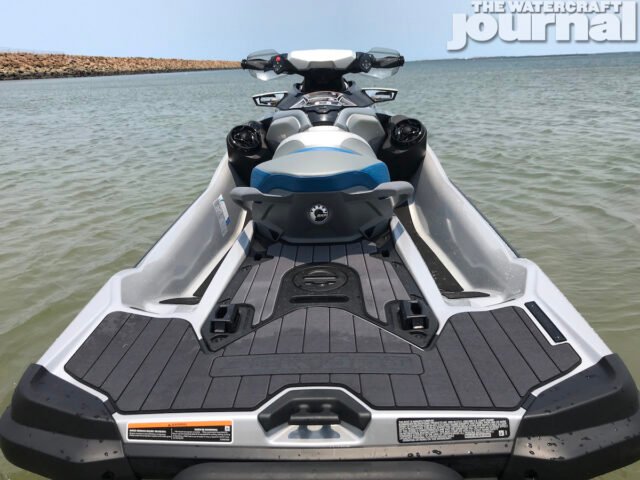
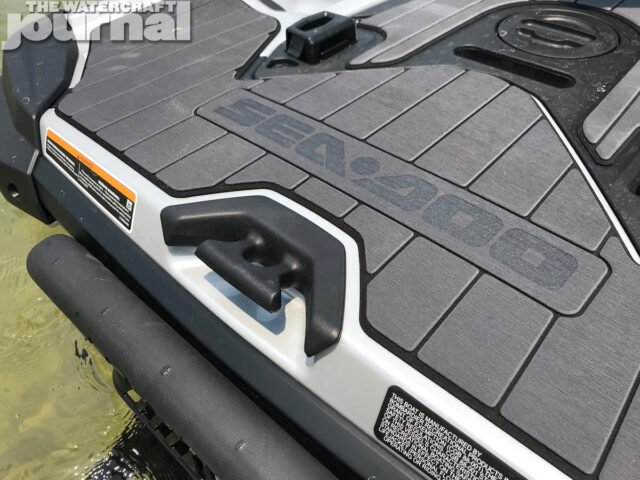
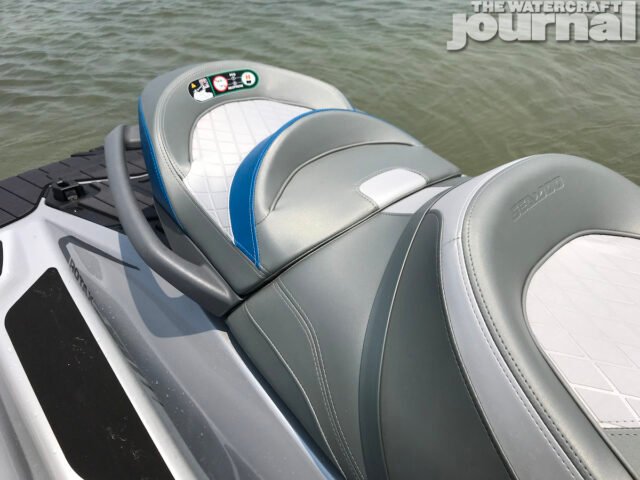
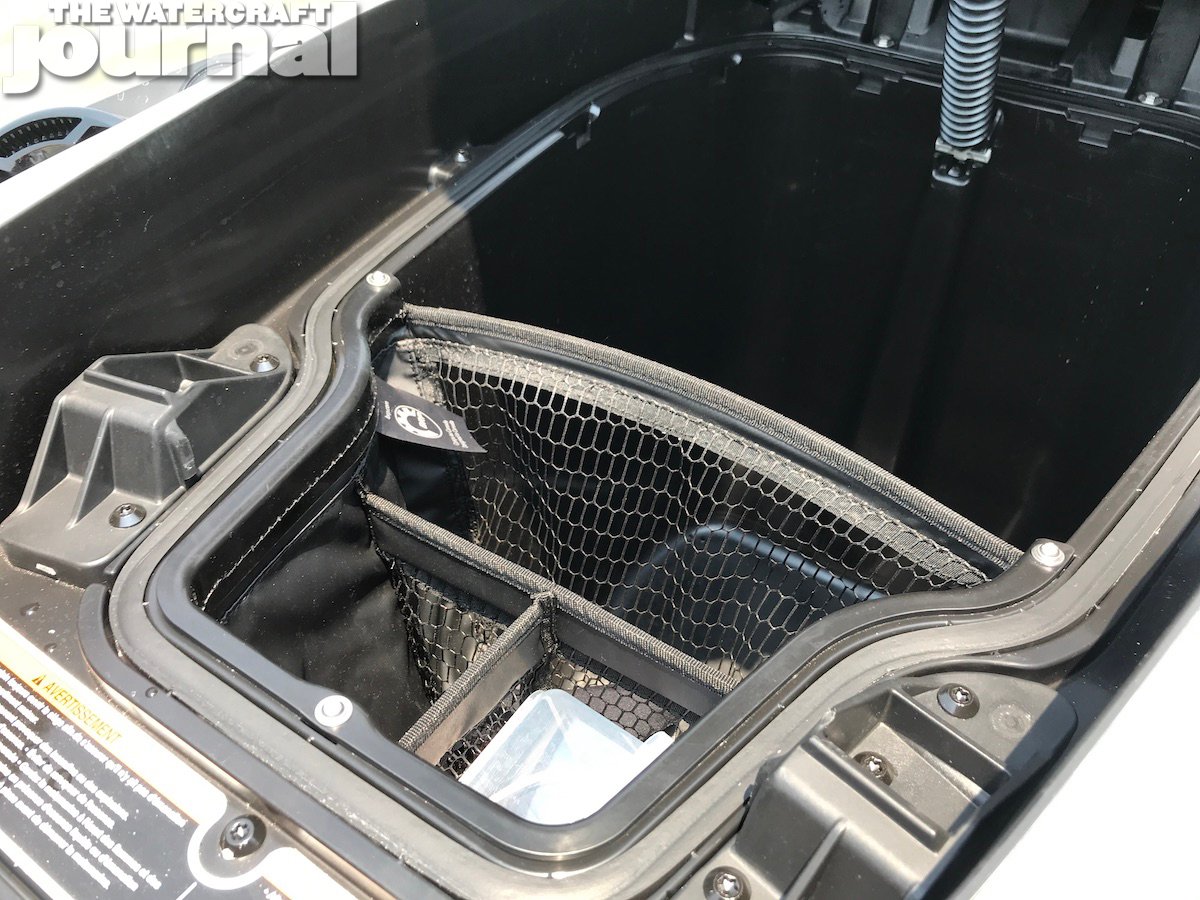
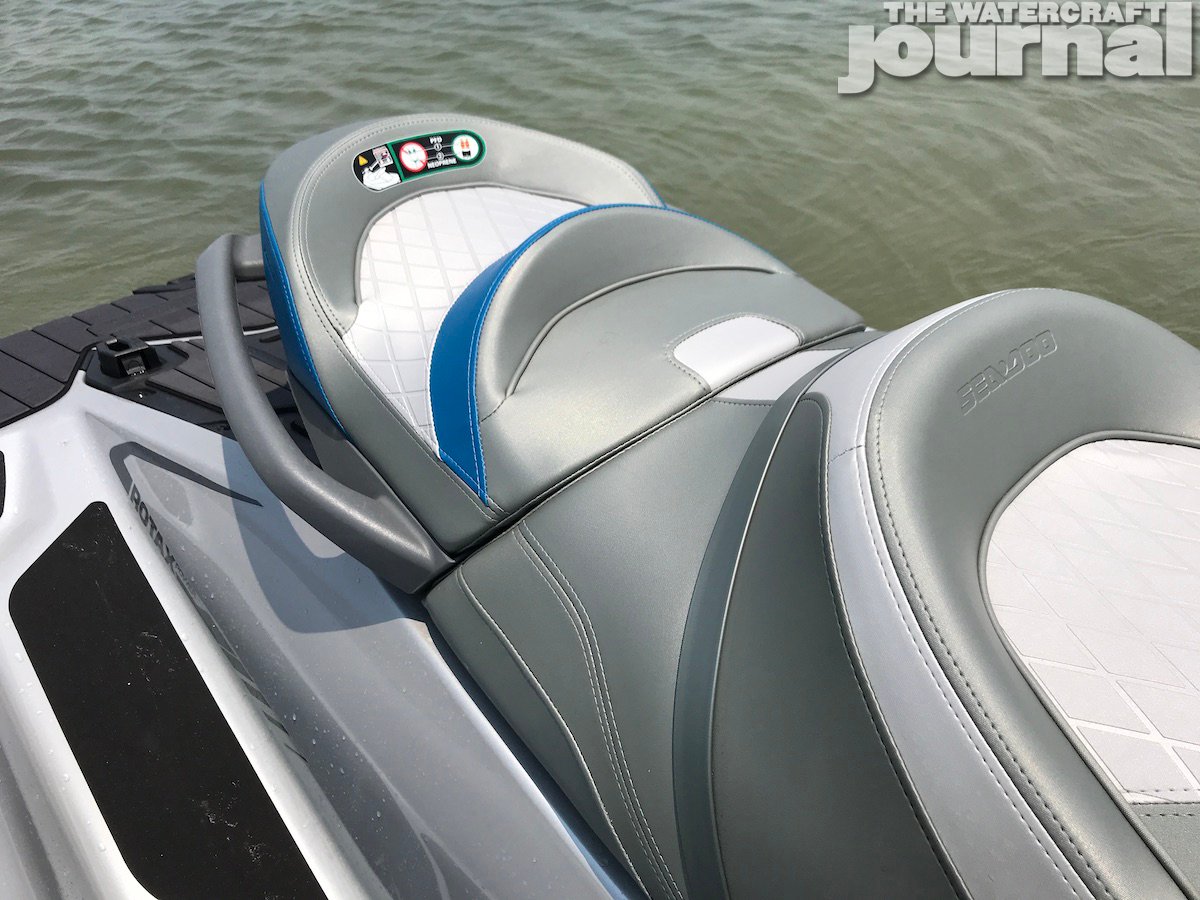
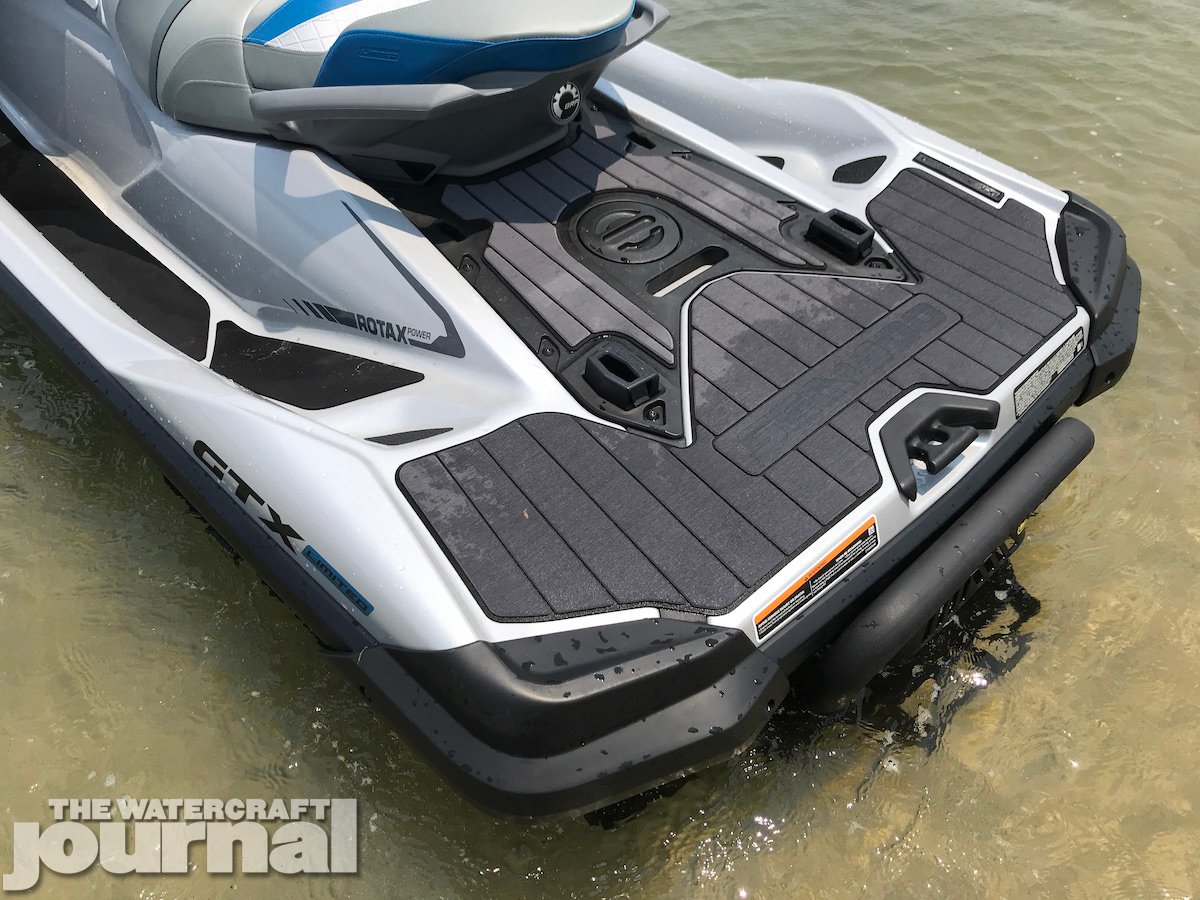
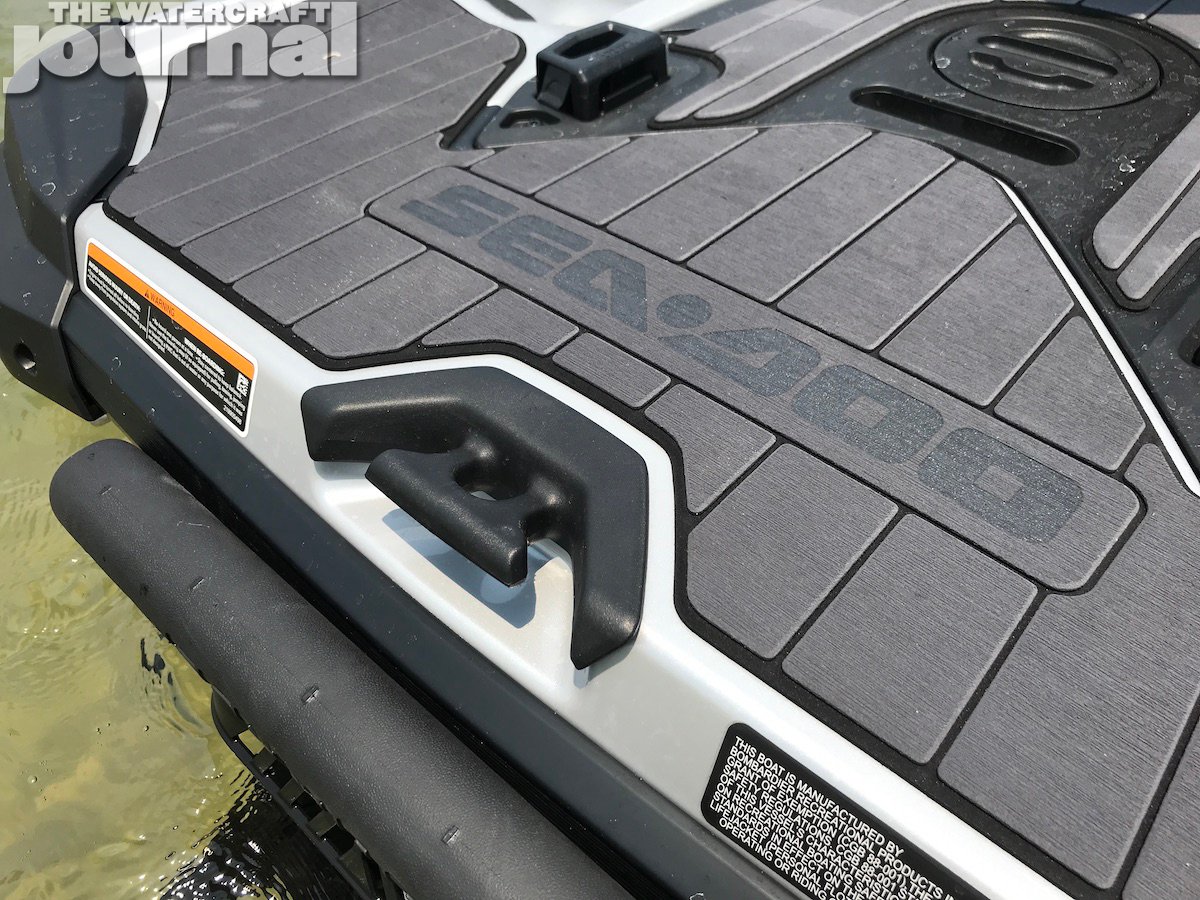
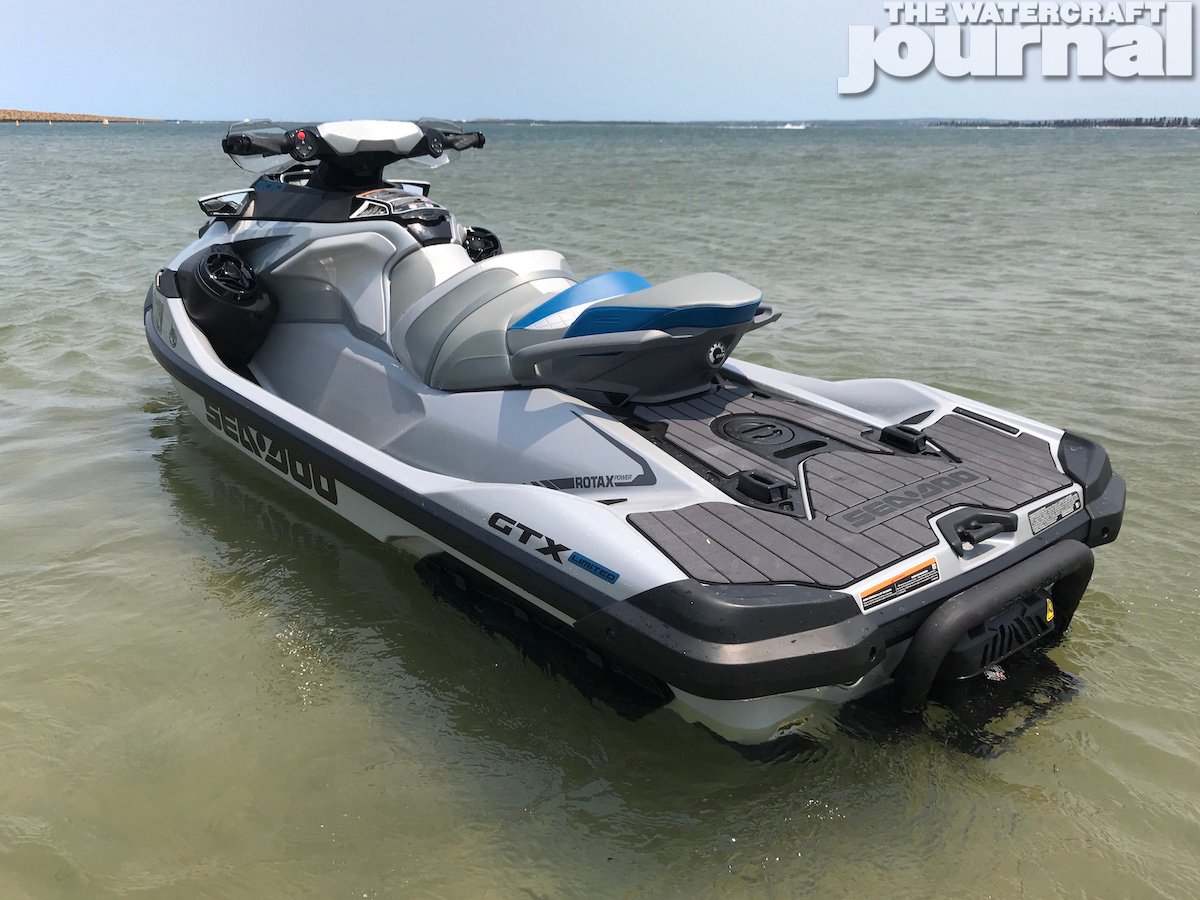
For this year’s model the GTX Limited 300 maintains its silver (Sea-Doo calls it “Liquid Grey”) upper deck and hull, but the seats have a smaller flash of blue and the mats are dark grey rather than tan. The only performance difference between the GTX Limited 300 and the RXT-X 300 is the lack of launch control and the sportier sponsons. In lieu of launch control, the GTX Limited 300 instead comes with a genuine Sea-Doo all-weather storage cover, an in-dash depth finder, a USB port to charge a phone, a folding rear step, and a storage bin organizer.
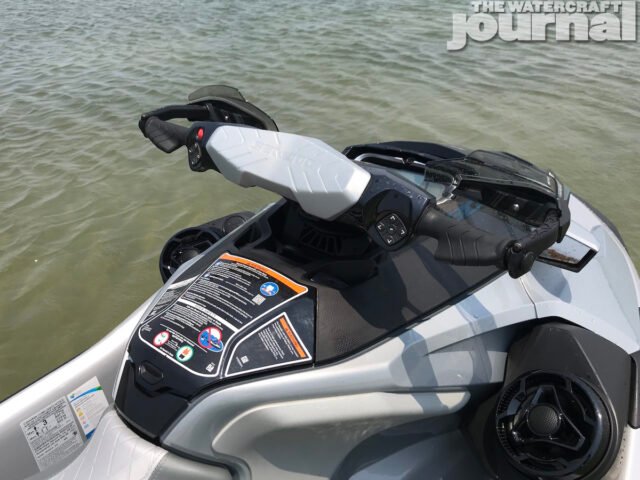
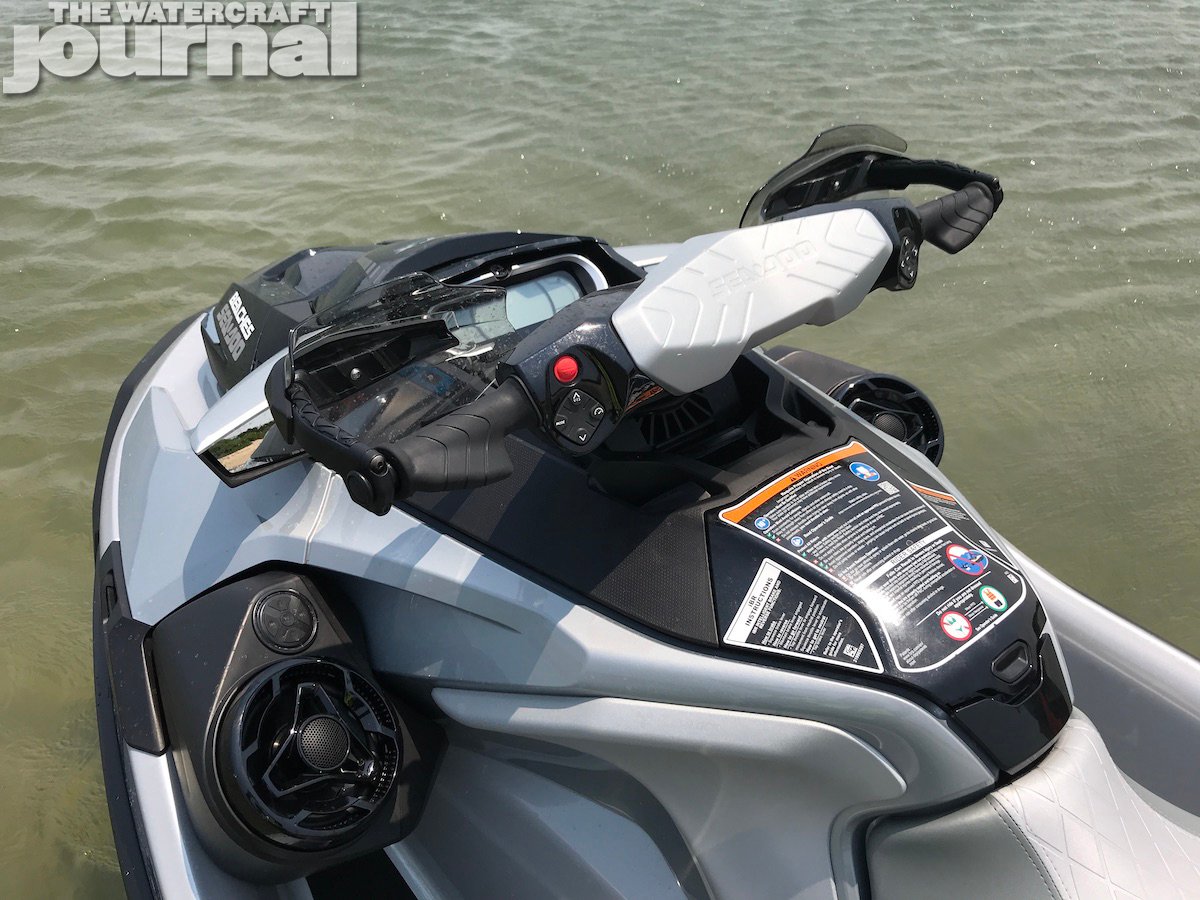
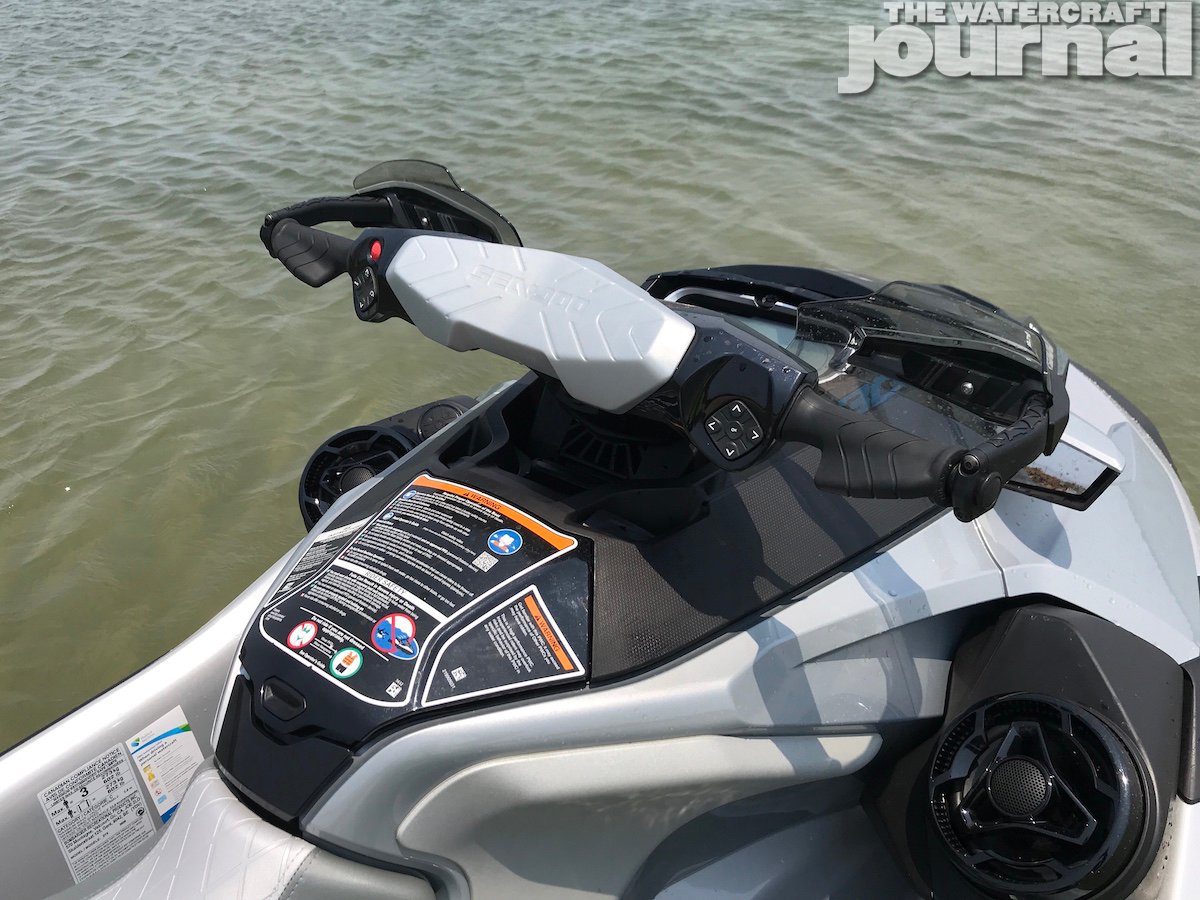
If you really want launch control, there is a little known “Ski and X Package” module ($259 Australian) that installs a launch and towing mode that helps the GTX Limited 300 make the perfect take-off from a choice of presets. Once installed, you press the north and south buttons on the left keypad to engage Launch Mode and, hey presto!
The ST3 deck and hull revolutionized the design of personal watercraft when it was introduced three years ago. Most notable was the improved access to the front storage area; the handlebars lift up as one unit with the hood cover, which means you don’t need to risk cracking your ribs while trying to lean precariously and grab something out of the nose. The fuel filler is located up high, under the cover, making it easier to refuel on the water as well. A small partition is designed to prevent fuel from splashing into the storage area, but some caution is still required.
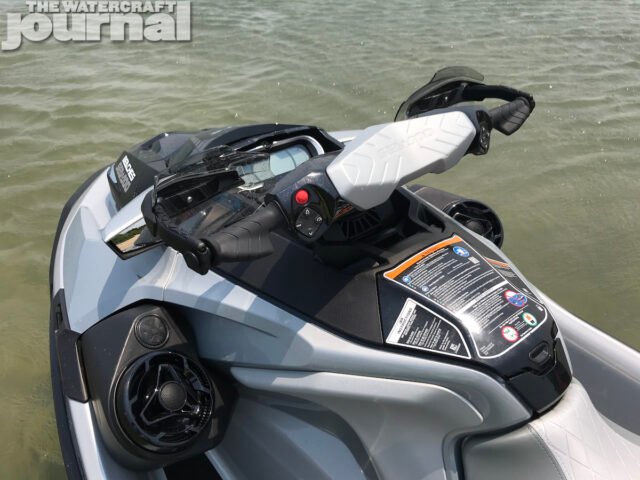
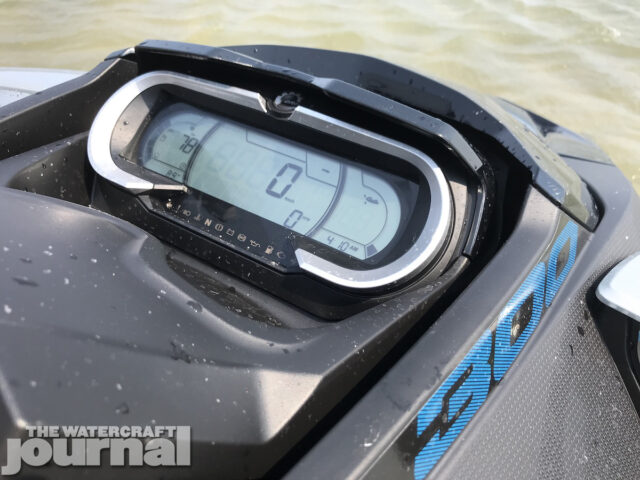
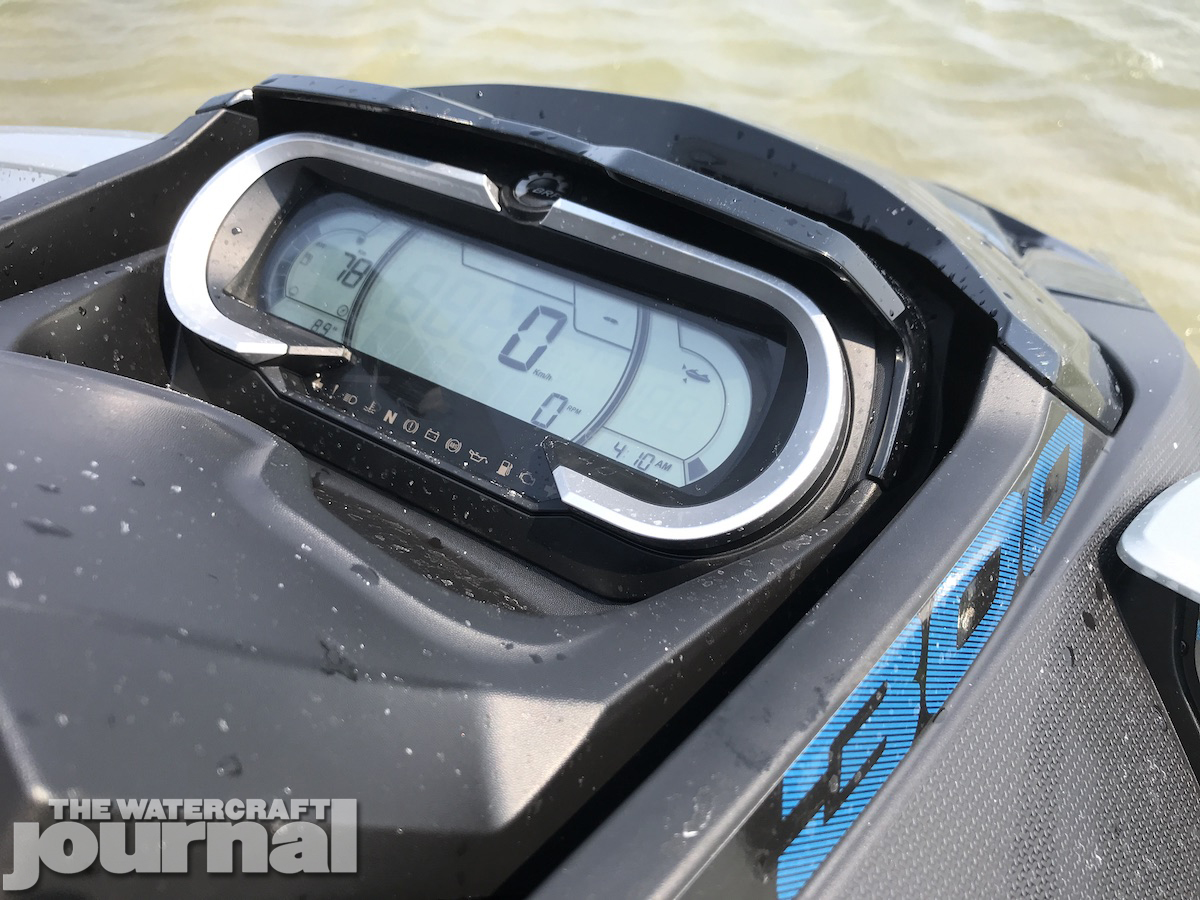
Other handy features are Sea-Doo’s waterproof compartment for a phone, wallet and keys; there’s even a strip of foam to stop them banging around in the chop. The digital dash is a 7.6-inch wide display which helpfully estimates the time to empty on the fuel gauge. And there’s a clock to keep an eye on the time.
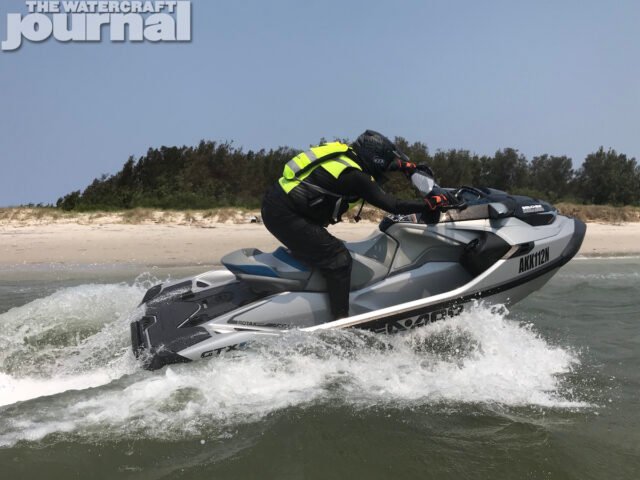
The Sea-Doo’s trim settings are adjustable at the press of a button, plus there’s Cruise Control and a Slow Speed mode. Unlike most other watercraft, this Sea-Doo uses GPS to measure speed, which is more accurate than the spindle wheel or engine rpms used by other manufacturers. For our day, we managed a maximum of 68.3 miles per hour on the 7.6-inch digital display.
The ErgoLock upper deck design is one of the most comfortable platforms on the market today. There’s ample knee room whether you prefer to sit or stand, and the foot wells are massive, making it difficult to trap your foot as some other brands can do in tight turns.
The downside to this extra space is that the craft can get very heavy if the footwells begin to fill with water from the wash created as you come to a stop. We have noticed that the craft can lose a touch of its signature stability if only one side of the deck has filled with water. It’s nothing a quick blast of the throttle can’t fix but it’s worth keeping an eye on, and to be aware of how to fix it quickly.
The rear deck is massive. When empty it could double as a diving platform, but many buyers also use it to fit one of the many LinQ accessories, like the Sea-Doo cooler, whether it’s to keep a few drinks on hand, or store the catch of the day. All of Sea-Doo’s Fish Pro accessories are available as extra-cost options on the GTX Limited.
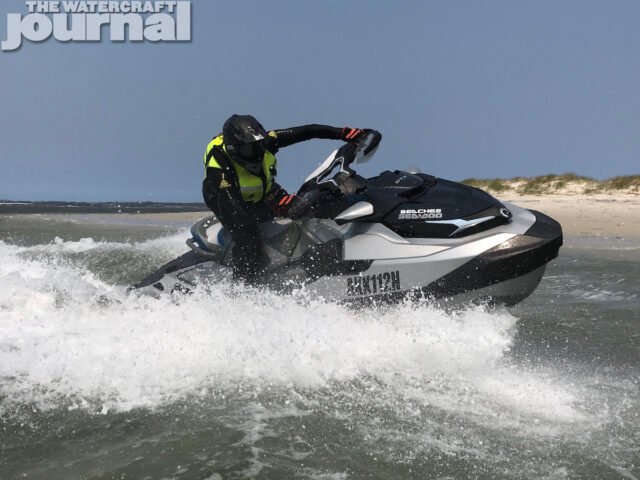
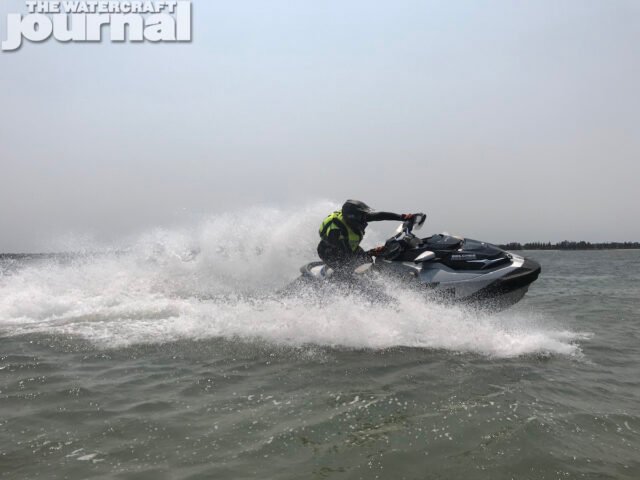
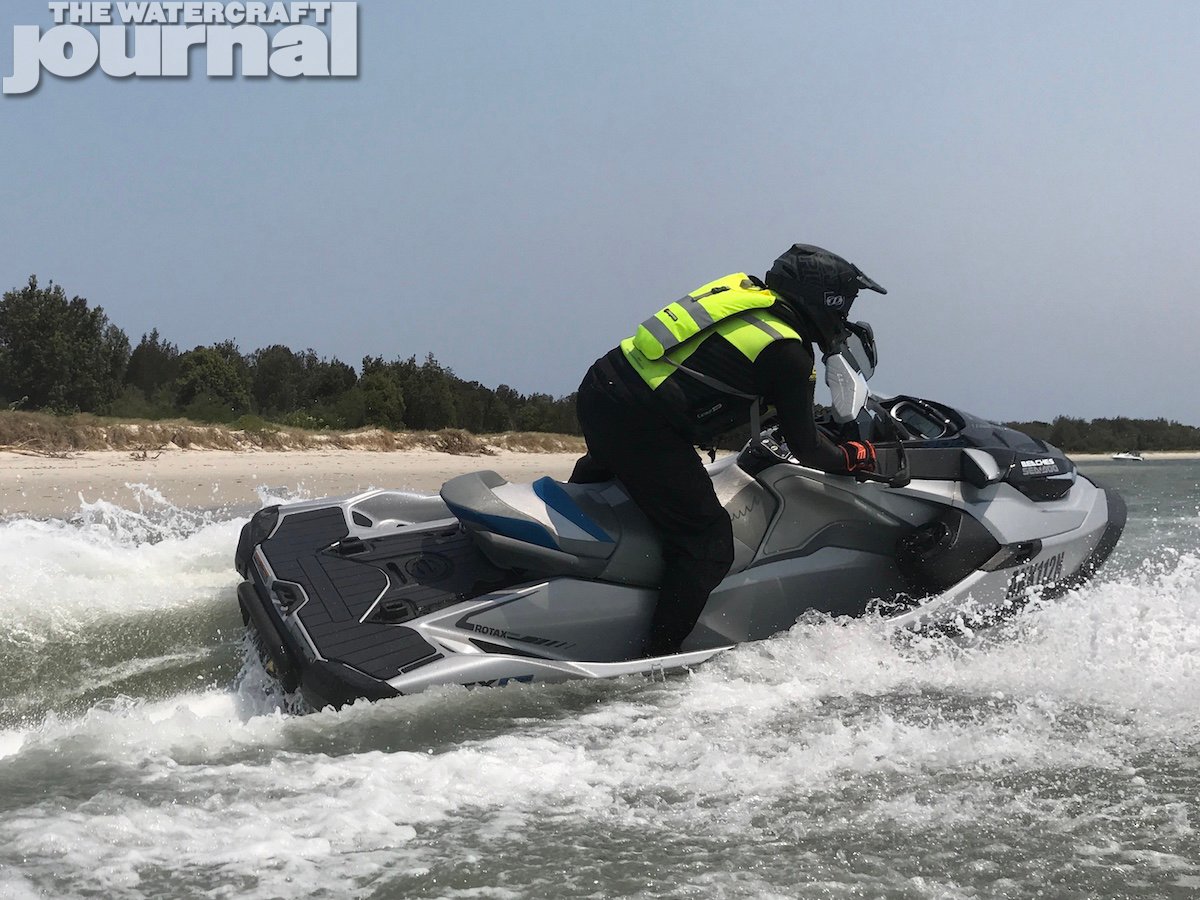
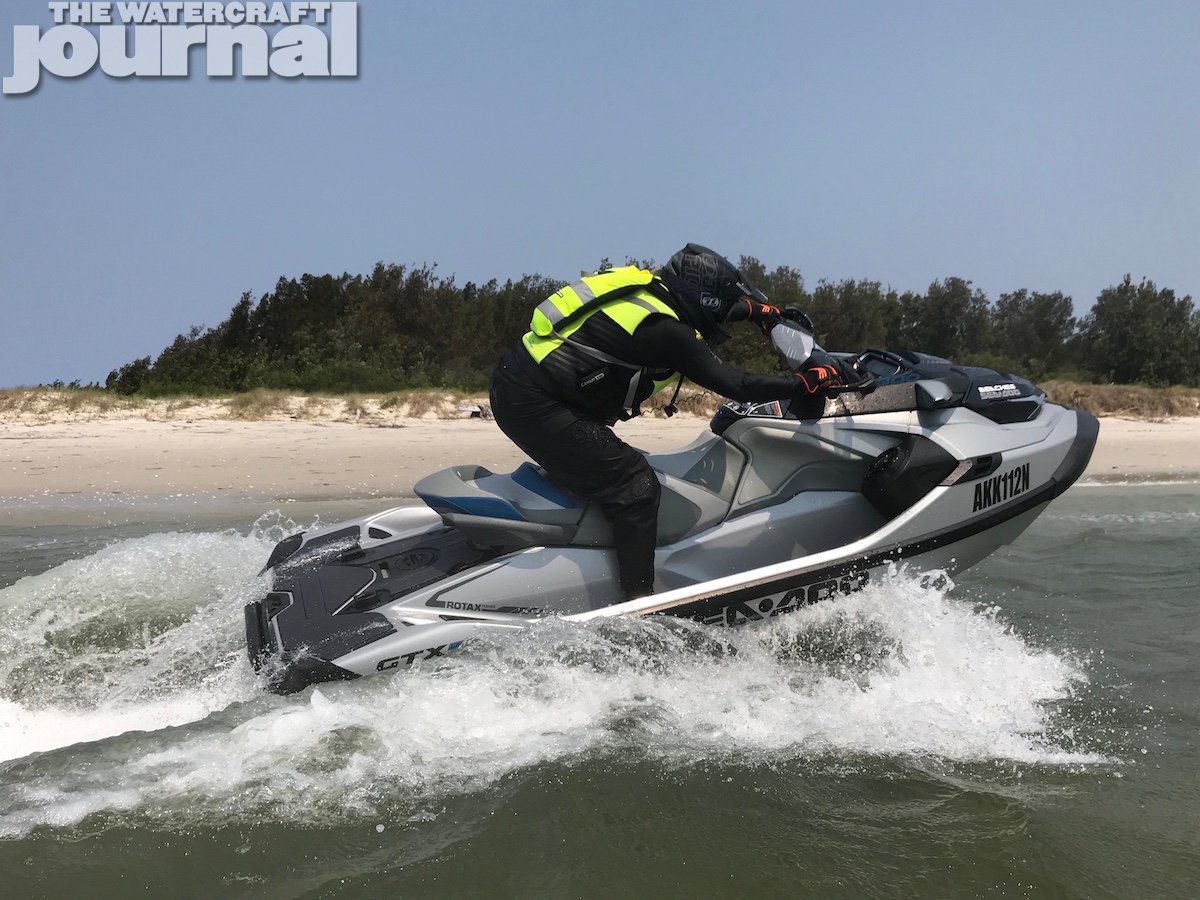
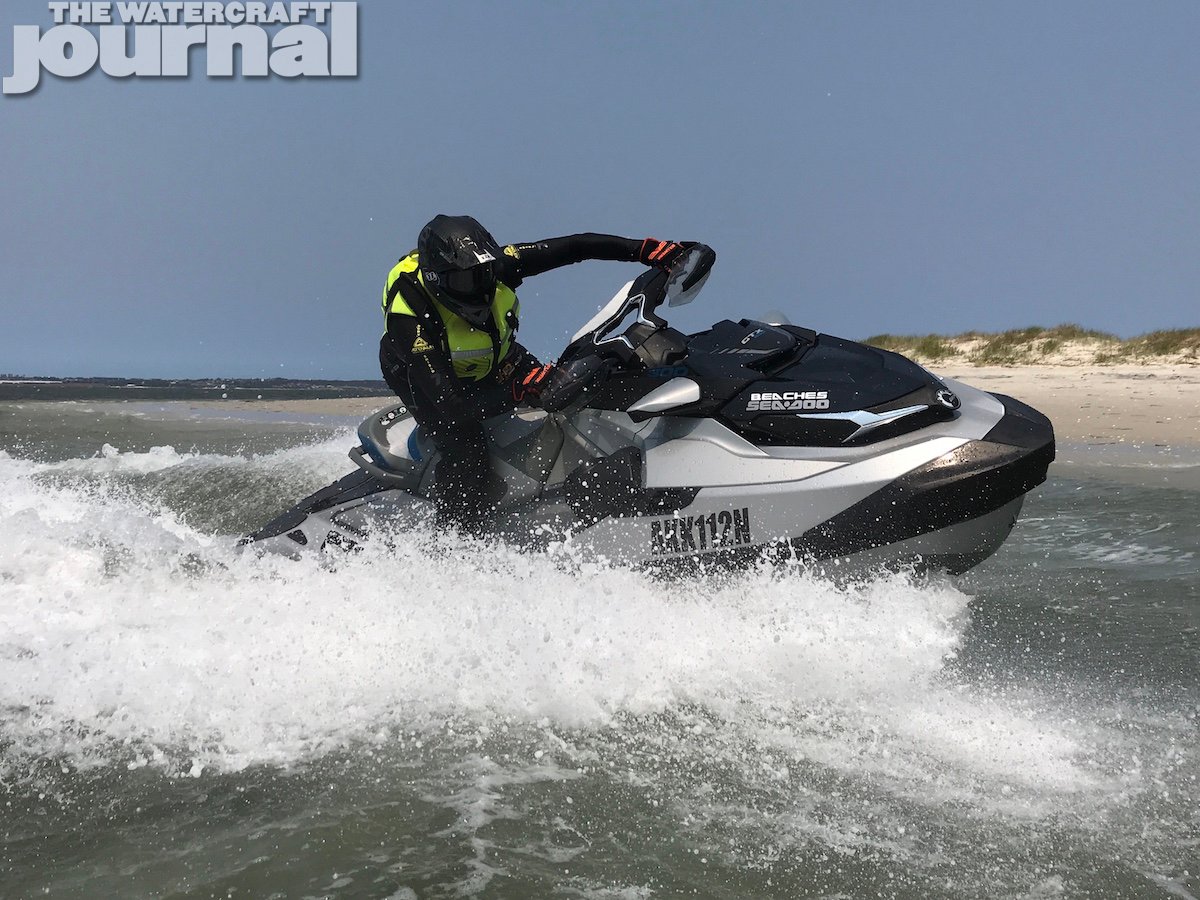
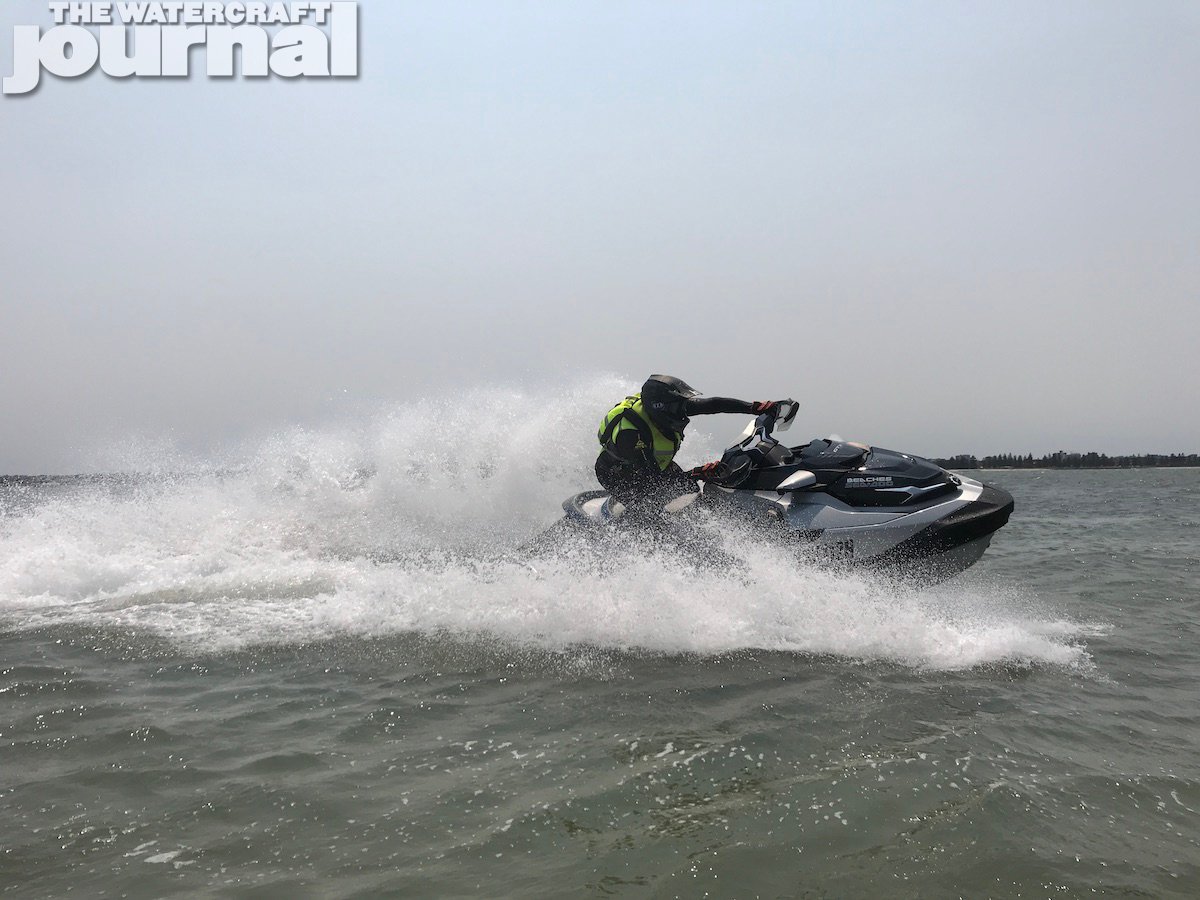
On the water, the GTX Limited 300 behaves like the rest of the ST3 range and, in particular, the RXT-X 300 high-performance model. The GTX Limited (and RXT-X 300) feels like its trim is naturally set higher than other watercraft, even when in neutral or with the nose apparently pointed down. This in turn, favors the hull’s prominent knife-like keel. At low speeds, this doesn’t pose a problem, but when under throttle, the bow tends to wander left and right, predominantly in rougher water.
The ST3 has zero trouble blowing straight through a cresting wave, but when facing a field of cross-chop, you’ll feel the Sea-Doo struggle to keep a straight line – that is, without a lot of rider input through the handlebars. When cornering, the smooth, flat second half of the ST3 hull feels particularly “slippery,” as the tail can unhook when throttled too hard in a tight turn. This attribute is common for smaller, more playful runabouts like a Spark or GTI, but not a full-sized, big horsepower machine like the GTX Limited 300.
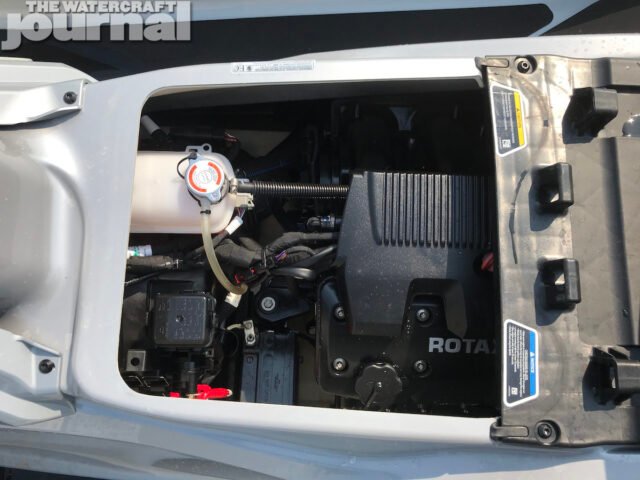
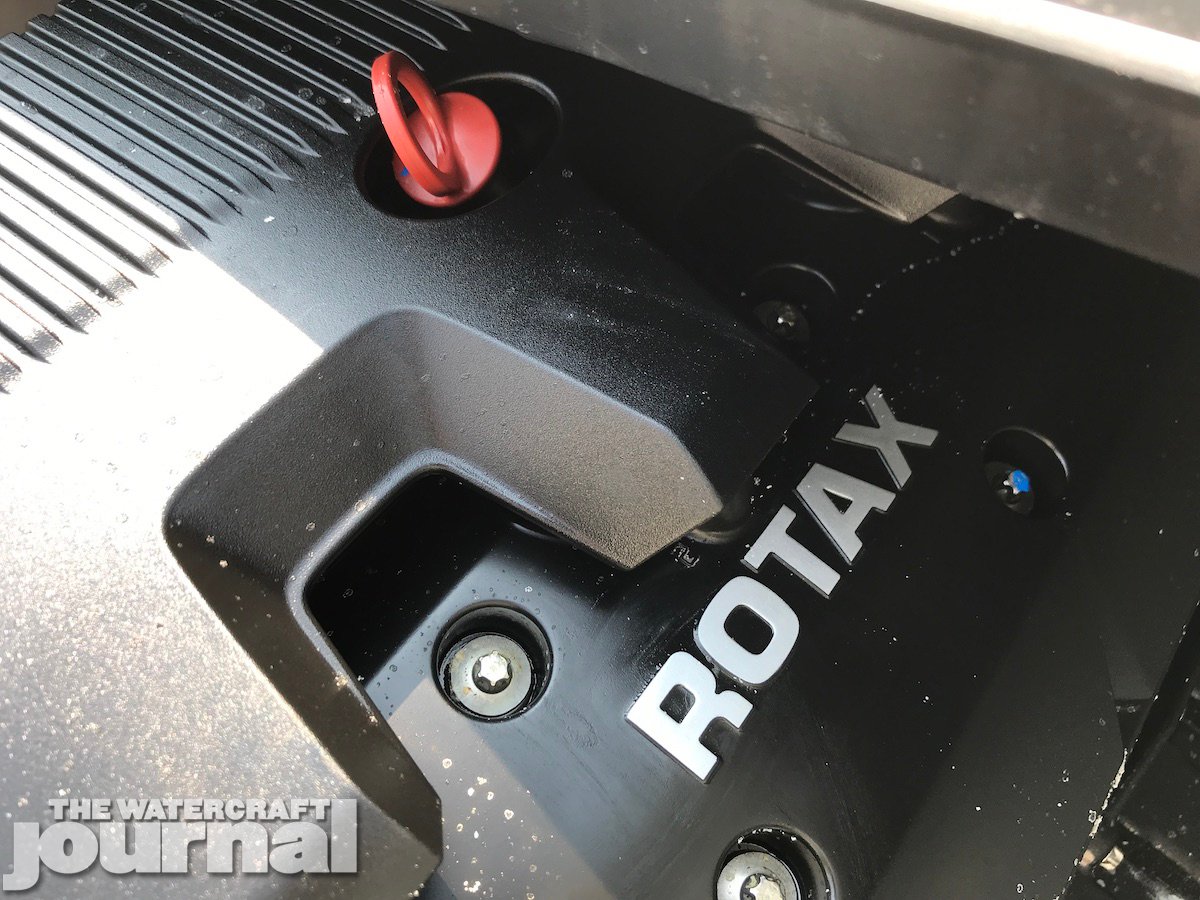
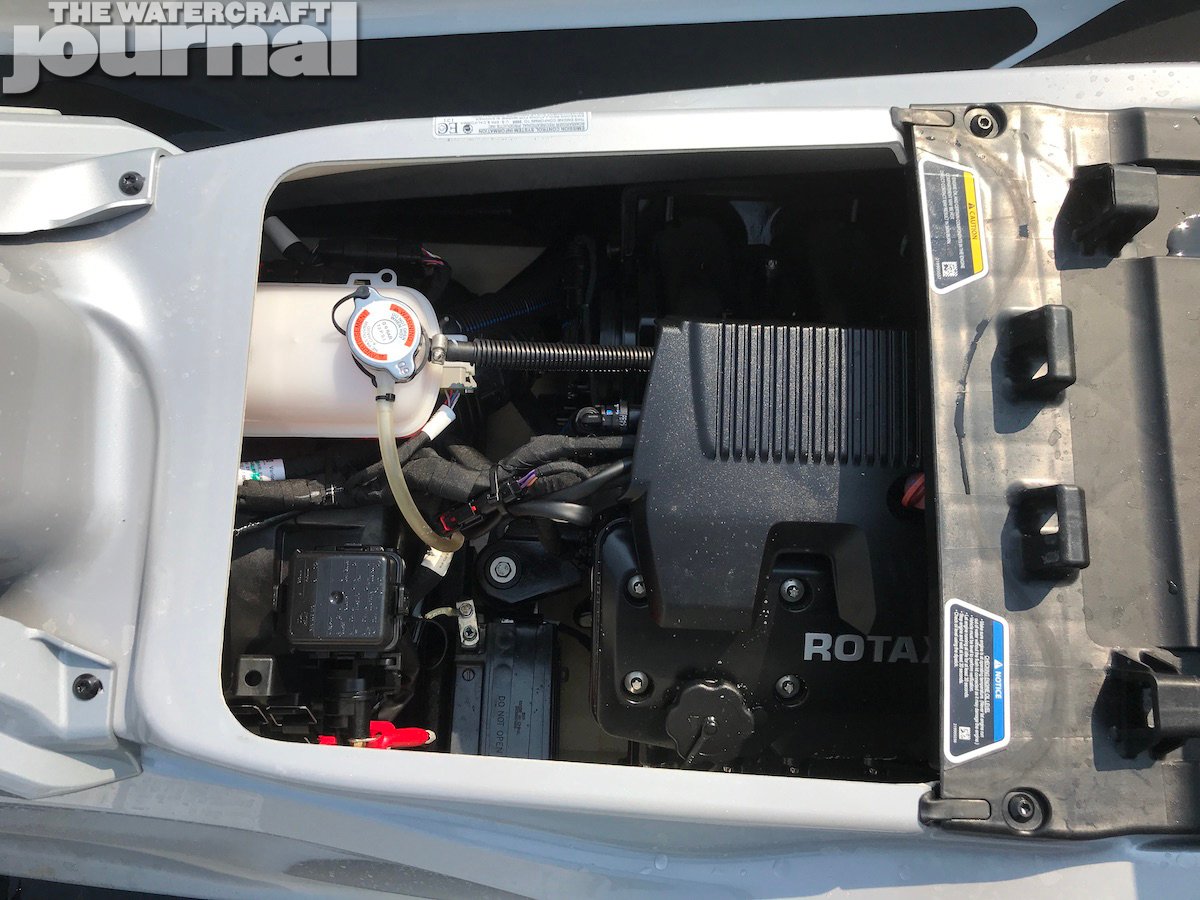
The 1,630cc 3-cylinder, four-stroke Rotax has an incredible amount of punch. Even without launch control, the GTX Limited 300 wants to pull your arms out of their sockets. Fortunately, the throttle has good modulation, so you can take it easy if that’s your preference. Plus there is the aforementioned Slow mode that caps the maximum speed if you don’t trust your mates when left to their own devices.
The Intelligent Brake & Reverse lever on the left handlebar (opposite the throttle lever on the right) makes low speed maneuvering a cinch. Unlike the Yamaha RiDE system, Sea-Doo’s iBR requires both triggers to be operated in unison to properly reverse, maneuver through a tight dock space, or come to an abrupt stop from a fast clip. Sea-Doo still claims “best-in-class” braking performance, bringing this 849-pound 3-seater to a halt twice as fast – or in half the distance – as the competition.
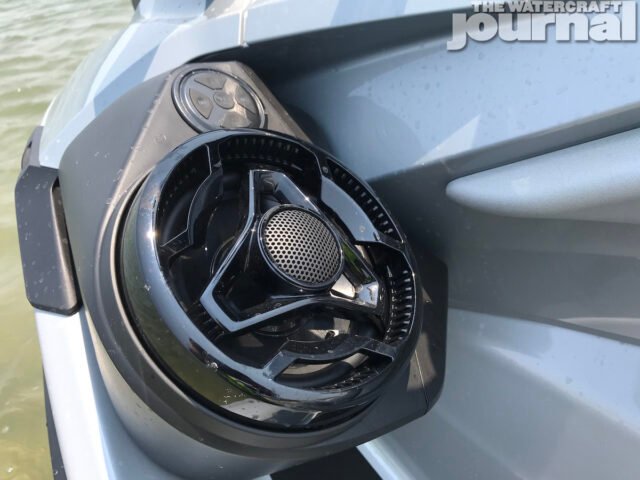
In addition to the added storage bin organizer, USB port, depth finder and cover, one major bit of standard equipment for the GTX Limited 300 is the BRP Premium Sound System. Featuring 100-watts of Bluetooth-controlled, 100-percent waterproof ear-thumpin’ action, Sea-Doo’s foray into watercraft audio is still one of its best innovations.
To sum up, the 2020 Sea-Doo GTX Limited 300 is an awesome top-end watercraft that has the performance to match its luxurious image. Looking like a top-end performance sedan with the power to match, this one would look right at home in a marina next to million-dollar yachts or tearing across the lake at full speed.
Special thanks to Beaches Sea-Doo & Can-Am in Balgowlah, New South Wales, Australia, for use of this test model.
One of Broward Motorsports goals is to provide their customers with the best products at the best prices. They are able to do this by working with the best companies in the industry and have a great website that shows you parts specific to your PWC.
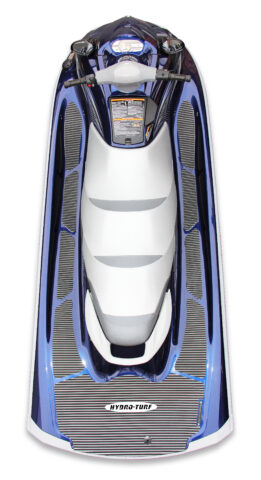
Broward Motorsports is happy to announce that they are offering Hydro-Turf PWC Traction Mats for 2017+ Yamaha GP1800 and 2015+ Yamaha VR/VS models. Customers can choose between two designs of cuts: groove and diamond cut.
They can also select from a wide array of colors, starting from the traditional black to colors across the rainbow. Besides your basic “R-O-Y-G-B-I-V” colors, they have many different versions of camo, marble and two tone.
Hydro-Turf has become one of the best traction mat companies in the industry through their continuous innovation and quality workmanship. Their mats are extremely comfortable to stand on without shoes but provide you with plenty of grip to stay in control.
One of the advantages of buying a Hydro-Turf PWC mat that is specific to your PWC is that they come with precut sections and 3M Peel & Stick adhesive. This ensures a proper fit during installation and guarantee that will stay glued down to your PWC.
So, whether you are looking to replace your old traction mats or wanting to spice things up this spring, head over to Broward Motorsports and get your traction mat delivered right to your door!
For you SoCal residents – or for that matter, anyone who loves west coast PWC racing – you better start sending RPM Racing Enterprises’ Ross Wallach some love notes, ’cause this guy is keeping some of the biggest events rolling. Remember how last year was supposed to be the final Mark Hahn Memorial 300? Well, it’s happening again this month. And the Long Beach-to-Catalina Offshore Championship? Yup, it’s coming back too.
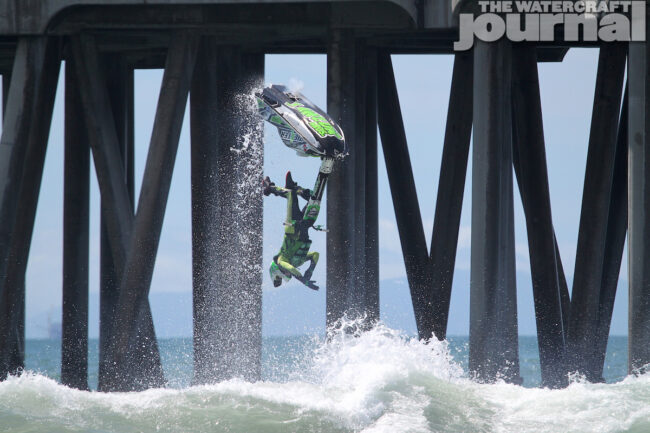
But one of our favorites, the Huntington Beach Moto Surf & Freeride is returning to California’s own Surf City! Wallach teased, “Countdown to the 2020 Hot Products “Best of the West” Series Round 1 – The Huntington Beach Moto-Surf & Freeride on April 4th & 5th! This should get your blood pumping!” And yes Ross, it certainly does! With the Facebook post, he attached the below video with the attached note:
“Check out the promo video for this years Huntington Beach Moto Surf & Freeride! A big thanks to Lewis Lipstone, Steven Reyes & Dave Arnold from West Coast Watercraft Club Racing Division and Westside Media Partners for all their hard work!”
The video was produced by WCWC’s own Lipstone who included the following description, “After the success of last years event, we are pleased to announce the 2nd Annual Huntington Beach Moto-Surf & Freeride, April 5-7 at the Huntington Beach Pier (south side)! This much anticipated event will feature 2 days of IJSBA sanctioned watercraft racing & Freeride competition. We are working diligently to have the event filmed and edited into two (2) – 1/2 hour shows on MAV Tv and will be making announcements as soon as this becomes finalized. We are still finalizing the sponsorship for the event and will be making announcements as to all the sponsors once they become finalized.”
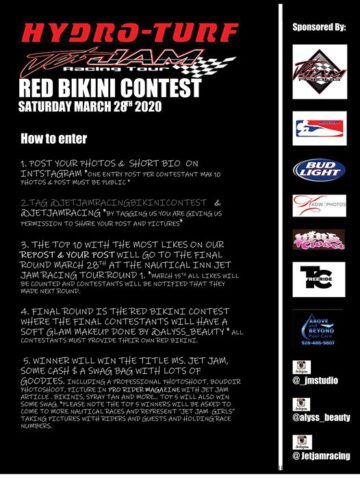
You gotta give it to the Hydro-Turf Jet Jam for wanting to bring back the classics to jet ski racing! Back 20 years ago, there wasn’t an event – especially around Lake Havasu – without one, and now Jet Jam is bringing it back at the first round of racing, this coming March 28th at the Nautical Inn in Lake Havasu, AZ.
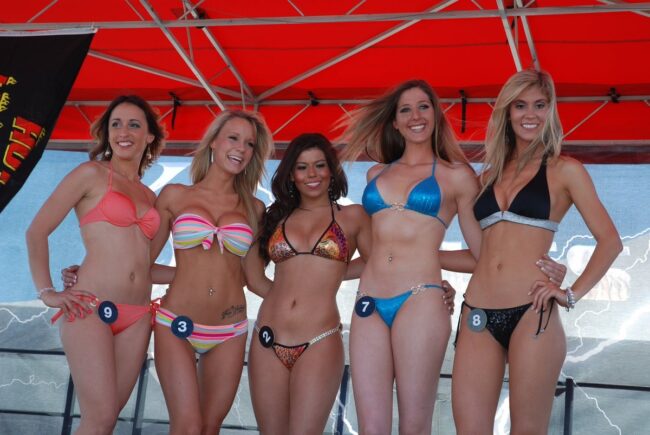
The winner of the “Red Bikini Contest” will be crowned Ms. Jet Jam and will represent the race organization in a special photoshoot and magazine advertisement. Plus, there’s gonna be a whole bunch of other swag thrown at ya, so make sure to read all about the contest in the original post below:
Who wants to be part of the 2020 Miss Jet Jam Girls? So excited to be adding this fun event during a day of racing! Read info below for rules.
MUST BE 18 TO ENTER!
Post your photos and short bio. *must be public. 10 photos max. I entry max.
Tag @jetjamracing and @jetjamracingbikinicontest *by tagging us you are giving us permission to repost your bio and pictures*
Top 10 girls with the most likes will move on to the red bikini contest March 28th at Round 1 of racing tour. At the Nautical Inn in Lake Havasu, AZ.
Final round contestants will have a soft glam makeup done by the awesome @alyss_beauty *all contestants will provide their own bikini.
Winner will win some cash and some swag. Professional photoshoot by @kdwphotos a boudoir photoshoot by @_jmstudio, spray tans by @tashaspinkcloset . A photo in @proridermagazine in Jet Jam article. Top 5 will also win some swag from @budlight #AWSA @coycoyswimwear, JetJam and more. Top 5 winners will be asked to come and promote during our races at the nautical.
If you have any questions, please ask. If you do not have an Instagram and still would like to enter. You can message me your bio and photos and I will add your entry.
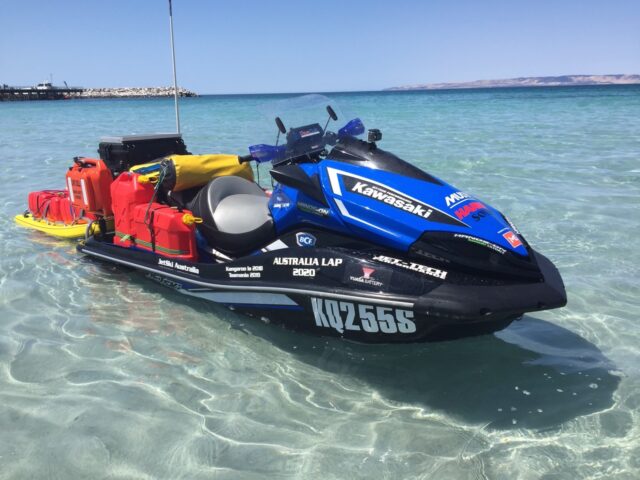
The next few months should be an exciting time for Australia’s Lindsay Warner as he plans to become the first person to circumnavigate around the entire Australian continent on a solo journey aboard a Kawasaki JetSki.
If successful, this journey could also put him in the records of longest open water travel as he plans to trek a total distance of 20,000 kilometers. Warner is trying to raise awareness for Men’s health issues and aims to raise $100,000 for this awareness.
This trip will hopefully help him to achieve his goal. He currently plans to commence the journey on March 1, 2020. With an expected duration estimated to be 4 or 5 months, it will still be quite some time before we know the exact date of completion.
Warner has however setup a spot app so that anyone can track the trip. This information as well as efforts on sponsoring his journey can be found in the media release below:
As a person heading towards my “senior years” I am very much aware of men’s health and the fact many men do not take the time to have regular health checks or not talk about many issues associated with my demographic.
I am hoping this trip will bring more awareness to Men’s Health and excited to raise funds for this cause. In total I am looking to raise $100,000 to assist in this awareness. I hope you can assist.
For the last 3 years I have been seriously involved in and enjoying open ocean jet ski safaris. Kangaroo Island in SA is touted as one of the most iconic, world recognised, tourist destinations but its oceans and coastlines are some of the most challenging as well. Isolated and often storm influenced, it has its challenges
In 2018, I was the first to circumnavigate Kangaroo Island on a jet ski. Traveling approx 400 kms in 12 hours, over 2 days. After this, Tasmania was calling, and in 2019, I was the first to solo circumnavigate Tasmania on a jet ski. This trip of approx. 1600 kms was achieved over 12 days.
In 2020, I will be attempting to become the first person to solo circumnavigate Australia on a jet ski; and to also reach a total distance of 20,000 kms of open water travel. This Guinness Book of Records attempt will be for the “longest open ocean, unsupported journey by aquabike (jet ski).”
The current Official Record is 3,602 kms, the current Unofficial Record is 17,267 kms. A majority of this trip will be not assisted by a ground crew and I will be relying on the generosity of many individuals at different ports of call to help with refuelling and other logistics.
This trip will commence on 1/3/20 from Exmouth in WA, travelling anti-clockwise across southern Australia, east coast and then the top end. It is expected to be about 100 days of water time and allowing 4 to 5 months to complete.
If you would also like to sponsor the costs of fuel & services, or assist in anyway, please contact me on
To track this trip, download “The Spot App” and enter Name: AUS2020 Password: LWAus2020 and you can follow me all the way.
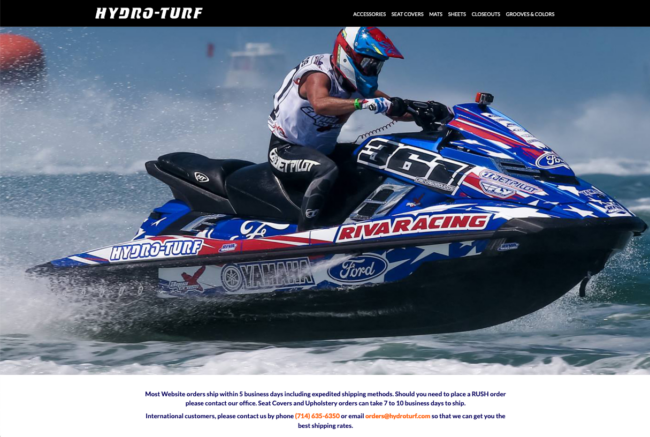
Hydro-Turf is a well-known leader in the performance traction industry. Throughout its thirty years in business, the company has received many industry awards. Hydro-Turf continues to expand into other sports, like SUP and boating.
We at The Watercraft Journal agree that Hydro-Turf is synonymous with performance traction products. It’s rare to see a ski without a Hydro-Turf product.
Hydro-Turf uses only USA manufacturing for all of its products. The crew prides themselves on products that looks good, fit well, are made with high-quality materials and workmanship.
Now, the team has upped the game with a brand new super user-friendly website. The rebuilt site simplifies online shopping with its clean and polished look. The six drop down menus at the top of the page make it so much easier to find items. They are categorized in a way that makes sense and won’t get you lost while perusing.
Checkout is a breeze with the new shopping cart. Enter your address and the cost of shipping pops up. You can also create an account to make your checkout experience that much easier and quicker. When you finish shopping, pay securely through PayPal and kick back and wait.
According to the Hydro-Turf website, most orders ship within 5 business days, including expedited shipping methods. Should you need to place a rush order, please contact the office. Seat Covers and Upholstery orders can take 7 to 10 days to ship.
International customers should contact Hydro-Turf by phone at 714.635.6350 or email [email protected]. Contacting Hydro-Turf will get you the best shipping rates. Check out the recently launched site and let Hydro-Turf and us know what you think!
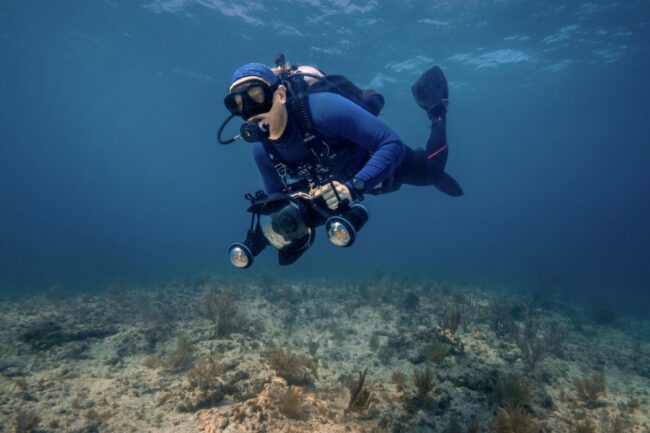
If you have been paying attention to local Florida News as well as some of the national headlines, you have probably heard about some of the initiatives led by the National Oceanic and Atmospheric Administration (NOAA) in order to establish more restrictions on boating, fishing, and diving within the Florida Keys National Marine Sanctuary.
It is a heated topic in many regions and a very challenging subject. On one hand the Florida Keys have been the livelihood and recreational bloodline of many fisherman, marine biologists, and recreational enthusiasts for years.
On the other hand, there has always been, especially in more recent years the need for environmental safeguards and restrictions of this delicate and beautiful ecosystem.
This is why the Bamdas family of RIVA Racing have been keeping an eye on the initiatives. With their facilities residing around these important territories, it’s important to know the impacts of the proposed NOAA initiatives.
For more information on the initiatives, you can visit NOAA. You can also stay up to date on all of the community opinions regarding this delicate topic.


















 One of

 Who wants to be part of the 2020 Miss Jet Jam Girls? So excited to be adding this fun event during a day of racing! Read info below for rules.