
Home Blog Page 133

Mapping The Future: RIVA Racing’s Master Tuner, Jesus Garcia

0

As personal watercraft have continued to march towards further digital innovation, the aftermarket has had to adapt and evolve to meet the pace. Advanced fly-by-wire engine management systems, complex fuel and ignition timing curves and ever-increasing demands for greater horsepower have separated the men from the boys, and few outlets have risen to the challenge quite like RIVA Racing.

Today, RIVA Racing offers performance enthusiasts and professional racers the single-most comprehensive catalog of engine management software, tuning capabilities and efficiency-increasing hard parts regardless of brand or model year. This herculean effort did not materialize out of the ether either. In a recent interview with RIVA’s President and CEO, Dave Bamdas, he placed the credit in large part on Jesus Garcia.
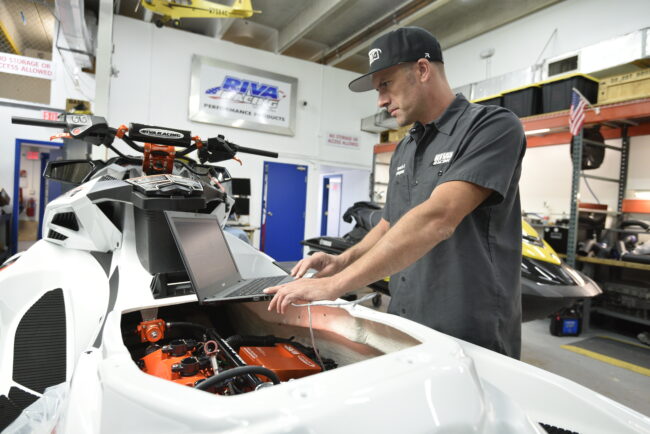
Jesus has played a leading role in adapting the MaptunerX engine management system to the personal watercraft application,” Bamdas explained. “Prior to bringing Garcia into RIVA’s Performance Development Department in 2016, our customers had very few options in the way of ECU (engine control unit) tuning. In just a few short years, Jesus has developed an ECU tuning system that can be done at home and in a matter of minutes.”

Per Bamdas’ account, engine tuning options were incredibly limited: either shipping off the watercraft’s existing ECU module to permanently modify and reprogram the existing software or completely replace the existing ECU (and often a portion of the wiring harness) altogether with an incredibly expensive aftermarket ViPec or MoTec control module.
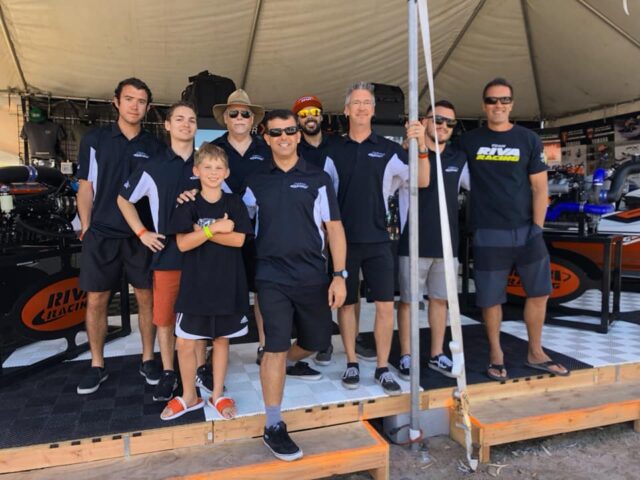
 

With Garcia’s development of the Maptuner/PWC functionality, it has not only revolutionized the watercraft performance industry, but established RIVA Racing (and Garcia, consequently) as a leader in the PWC performance industry. “His contributions have been nothing short of groundbreaking,” Bamdas continued. “Without Garcia, I don’t think we’d be seeing the level of performance parts sales and racing that we do today.”
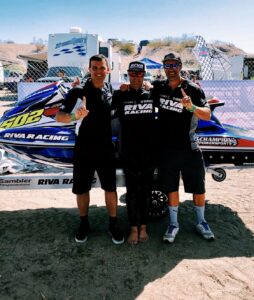
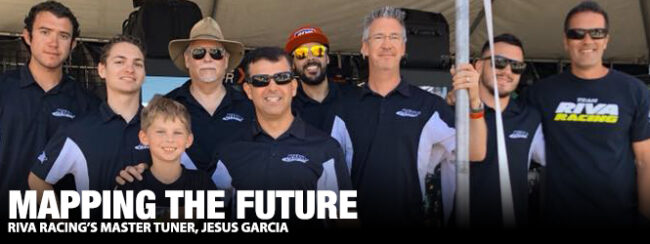
Winning Combination! Head Tuner Jesus Garcia (right), Racer Brian Baldwin (center), and RIVA Owner Dave Bamdas (left) celebrate another World Championship.

In addition to leading RIVA’s Engine Management Development, Garcia’s position as Head Tuner in charge of RIVA’s Watercraft Racing Team has earned international acclaim. Responsible for building and tuning the championship-winning machines of RIVA’s top racers (including Brian Baldwin, Erminio Iantosca and Erick Lagopoulos), Garcia’s role in the racing program has resulted in both national and international championships.

In the process of working closely with the RIVA race team and interfacing V-Tech engine management software into a palatable consumer-friendly upgraded ECU tuner (not to mention logging volumes of engine tunes using RIVA’s state-of-the-art engine dynometer facility), Garcia began honing pre-established packages offered as “Performance Kits” offering consumers proven combinations to achieve specific performance goals.

“As it stands today, the RIVA Performance Kit product line is really his creation,” Bamdas admitted. “RIVA Racing has always prided itself on offering our customers the best in handling, steering and acceleration-enhancing products; it was Garcia who paired these parts with an applicable engine tune to maximize the total efficacy of the other components. And with each ‘stage’ that the customer climbs, a new engine tune can be downloaded to their MaptunerX. The engine map literally grows with any new added part.”

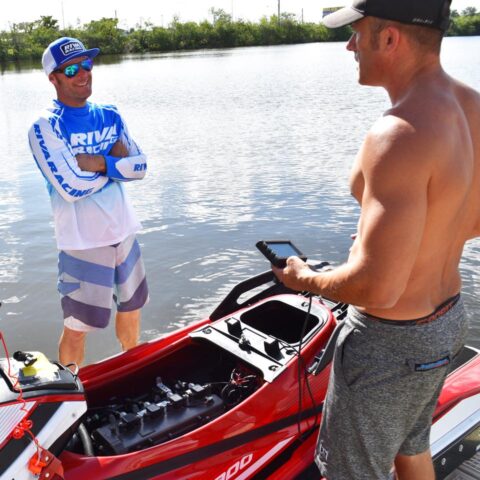
A final bit that often goes unnoticed is Garcia’s role in developing specifically-pitched jet pump impellers, each paired to match the engine maps that he writes. “He works closely with RIVA Racing development partner Solas Science & Engineering Co. to design and test the highly successful line of RIVA/Solas jet pump impellers,” Bamdas detailed. “Ensuring each ECU tune is paired with an impeller that can process the added rpm is essential. Garcia’s skill in this regard is unrivaled.”

The impact that this single person has made on an entire industry cannot be understated. The mechanical abilities, intuitive understanding of these machines along with the development skills that Jesus Garcia wields have made an indelible mark on the personal watercraft industry and competitive watercraft racing.
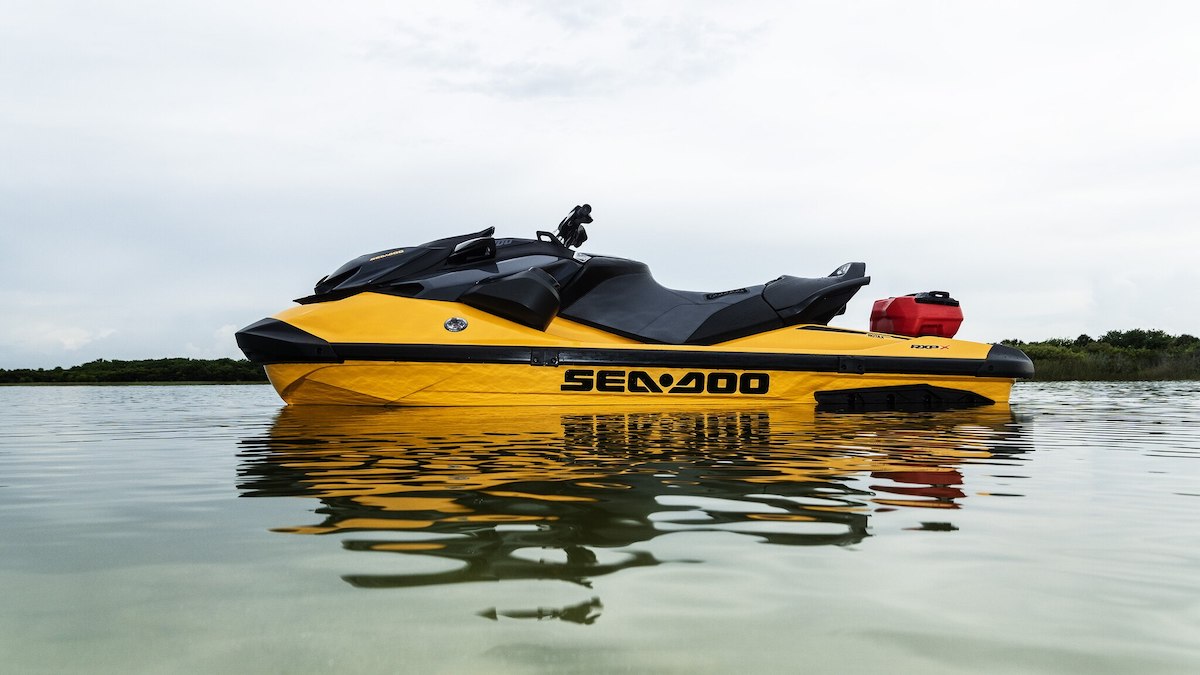

Videos: Sea-Doo Drops Walk-Around & Feature Videos For 2021 Lineup

0

The Watercraft Journal proudly excels at being the only personal watercraft magazine to drop daily articles, bringing you the news, updates, watercraft and accessory features that you crave. While we cannot possibly and logistically provide the full, detailed review of every watercraft immediately after the reveal, we do eventually write the in-depth review on all major new units that we get our hands on.

Additionally, we bring you a wide array of photos and videos highlighting all specifications, features, and accessories of the respective units.  Having said that, it generally takes us some time to publish some of the reviews since we have so much news to cover throughout the year and it takes significant effort to perform the reviews, capture and edit the footage, and write up the details.

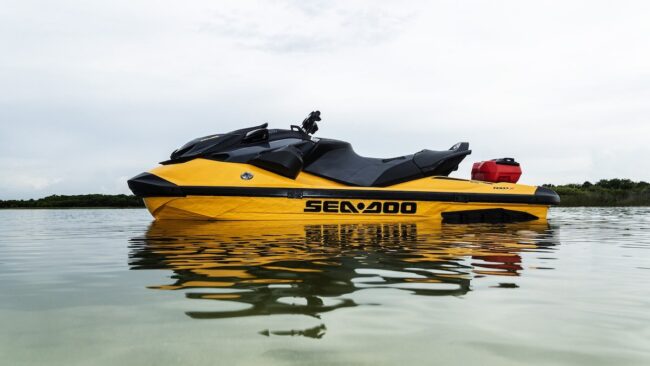
Since it’s so important to make sure that the buyer has all the necessary information he or she needs to make a purchase decision, Sea-Doo has also just released a video series review detailing each category of their watercraft lineup.

This year, they have entrusted some of their finest Sea-Doo Ambassadors to give you a walkaround and show you the features, specs, and accessories of the different Sea-Doo categories. This includes the entry-level Spark and GTI lineup, the purpose-built Wake and Fish Pro series, race-ready GTR, RXP-X, and RXT-X line, as well as the luxury GTX line.

Each video is posted below.  If you need any further information be sure to visit Sea-Doo.com and as always stay tuned for our individual reviews if we have not already published it.

Video: Fishing for Tuna off a Yamaha FX Cruiser WaveRunner

0

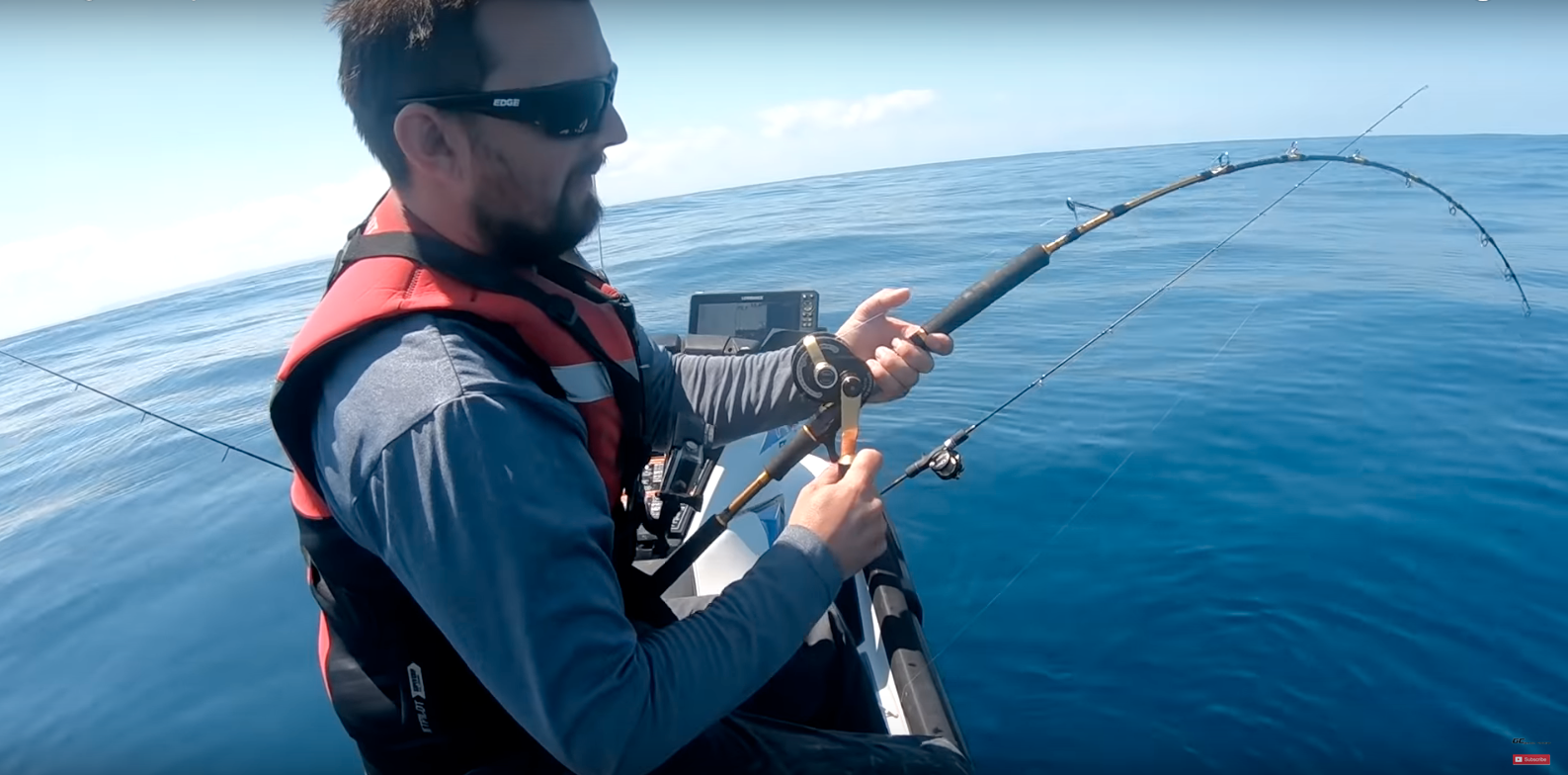
Check out this rad video with Mark from GC Jetski Fishing. He is on New Zealand’s west coast and taking us offshore and to the deep blue Pacific Ocean. He loads up his Yamaha WaveRunner FX Cruiser HO, which is powerful enough to take on the rolling swell and wind. The WaveRunner is outfitted for fishing with a rack on the back that holds a cooler, four rods, and a net. Mark gets underway with four heavy-duty bait casting saltwater fishing rods, tackle, and safety gear.

After crossing the Waikato River bar, the hunt was on for big fish that were in the water’s due west. He caught up with a pod of dolphins in about 40 meters of water and rode with them for a while then jetted away from the dolphins after receiving intel about some albacore tuna a little further out. Trolling and jigging from the ski, he hooked into some tuna and kingfish at the 55-meter mark. The snapper were out in full force as well and he easily caught his limit of ten. They were good sized too. It is so cool to watch him reel in those big fish from his jet ski alone in the open water. We can only imagine how it feels to be out there in deep blue among the fishes.

On the way in, Marlin were breaking the surface and a nearby pod of dolphins was also getting in on the action. The dolphins cruised alongside of the ski for a while and this made for the perfect end of a beautiful day on the water for GC Jetski Fishing.

Video: All About Yamaha’s Visibility Spout & How to Disengage It

1

Admittedly, this article is going to come off as pretty silly for most of our more “technically minded” readers. Yet, for those new to personal watercraft or are a little more timid to break out the tools and start wrenching on their brand new Yamaha WaveRunner themselves, we hope to take a little of the fear away and instill you with a bit of confidence. But first, what are we talking about?

Yamaha, unlike any other OE manufacturer, is the only brand to feature what is called a “visibility spout.” This spout shoots a pressurized stream of water vertically from a flush-mounted nozzle in the swim platform, creating a 10-foot-high rooster tail while the WaveRunner is under throttle. It’s purpose is similar to a buggy whip antenna on a four-wheeler or quad, helping nearby boaters identify the presence of the personal watercraft from a distance.

First developed for the original WaveRunner 500 in 1986, the visibility spout has remained a legacy feature for 35 years. Unfortunately, the visibility spout has also become a bit of a nuisance to enthusiasts who ride in large groups, as the spray can inadvertently cascade down into the faces of persons behind you. Equally, riding with extra fuel or a cargo rack means that the spout will blast the underside of the rack the entire day.

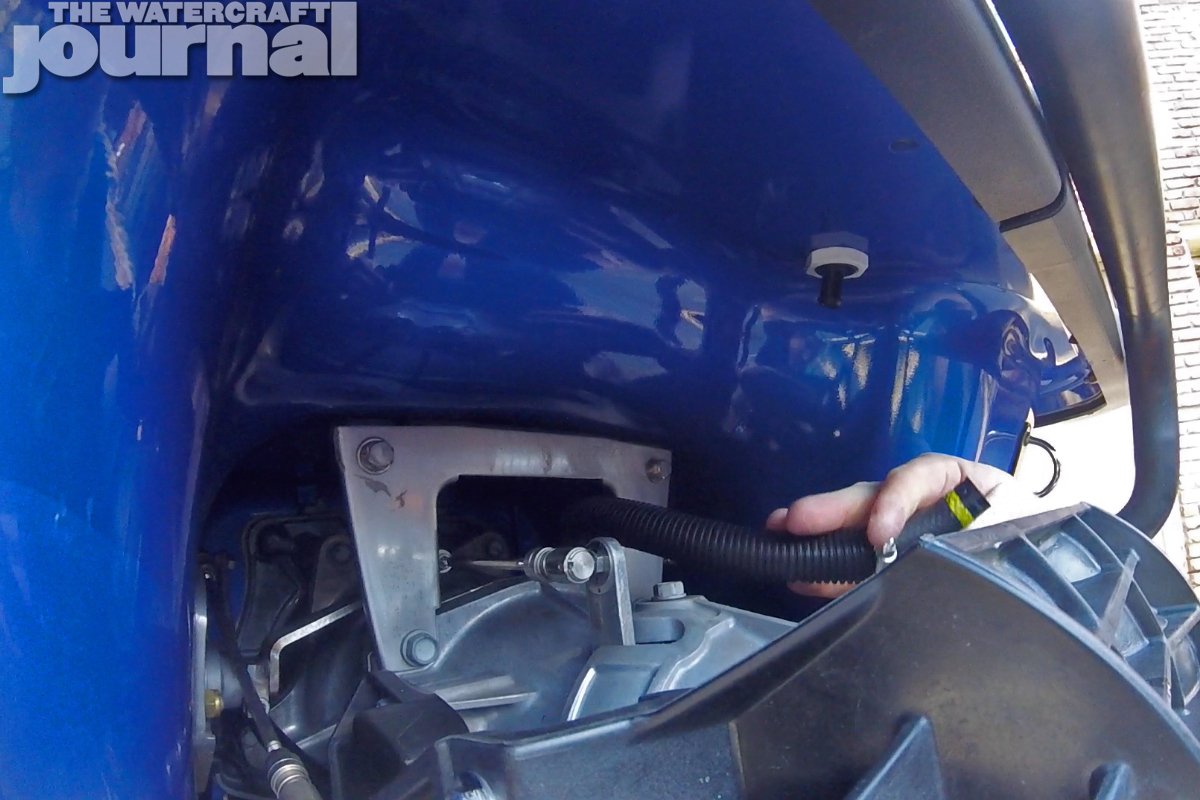
Thankfully, disengaging the visibility spout requires almost zero mechanical ability a few tools and a couple of minutes of your time. It begins by removing the quick release linkage attached to the reverse bucket. It’s a spring-loaded sleeve that simply slides back, releasing the ball socket mounted to the bucket. Pull that back and move the reverse cable off to the side.

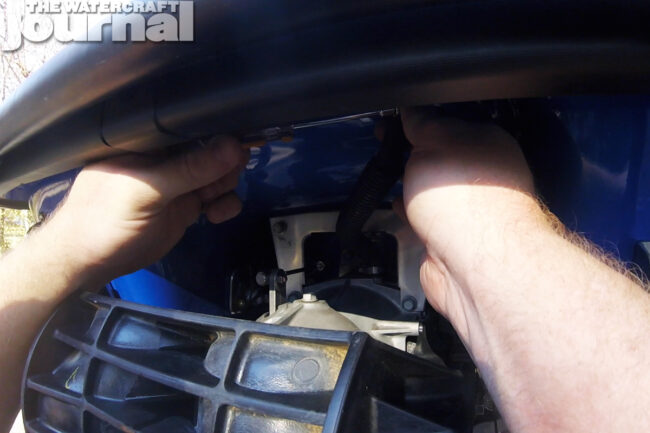
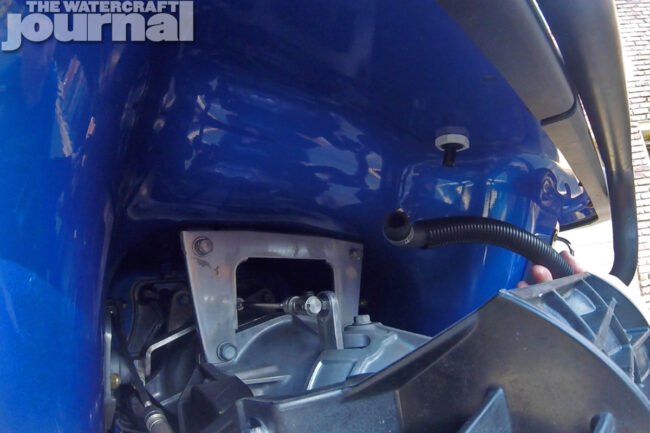
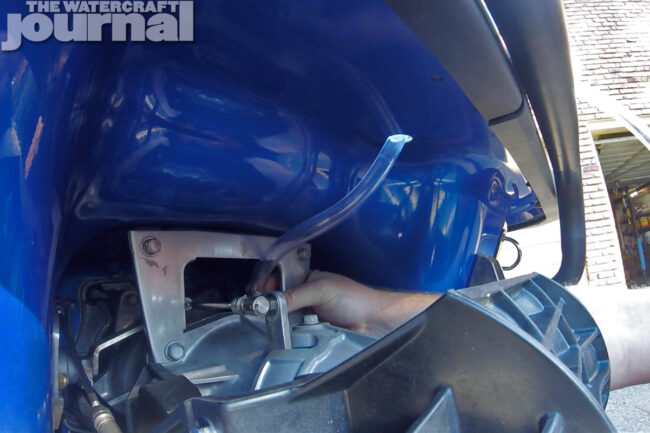
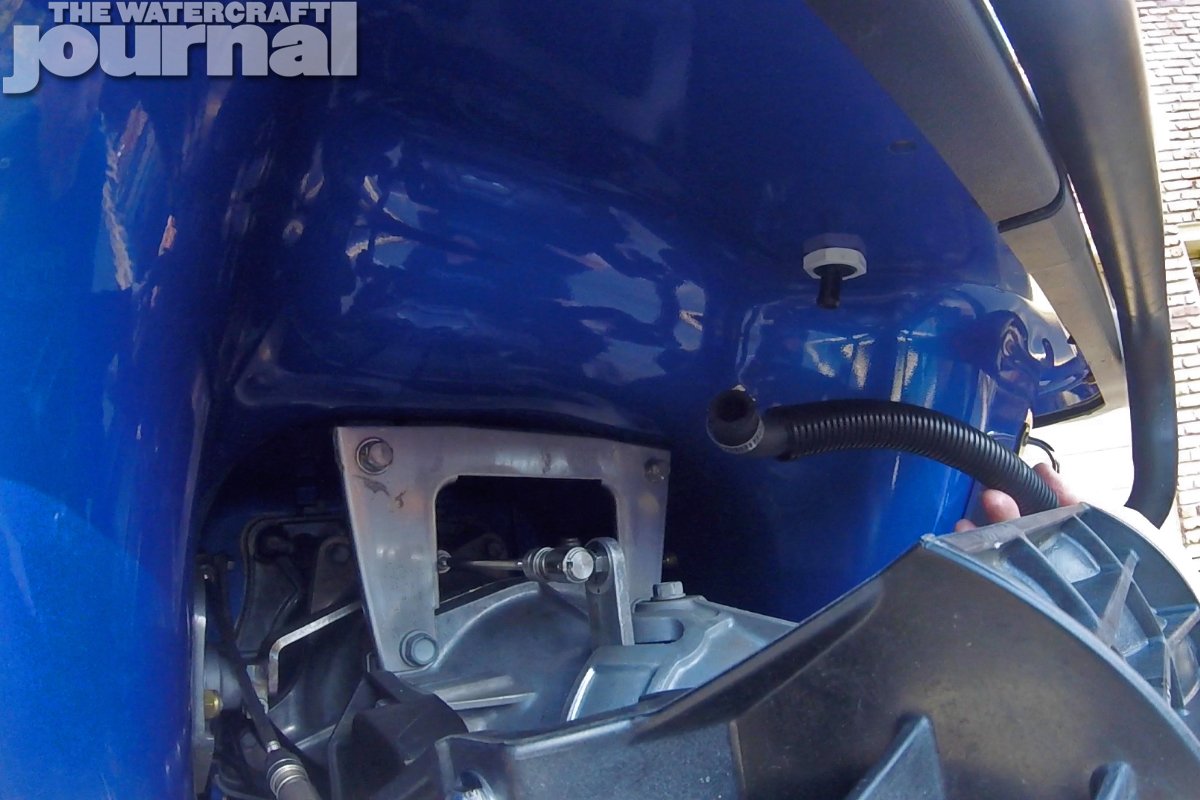
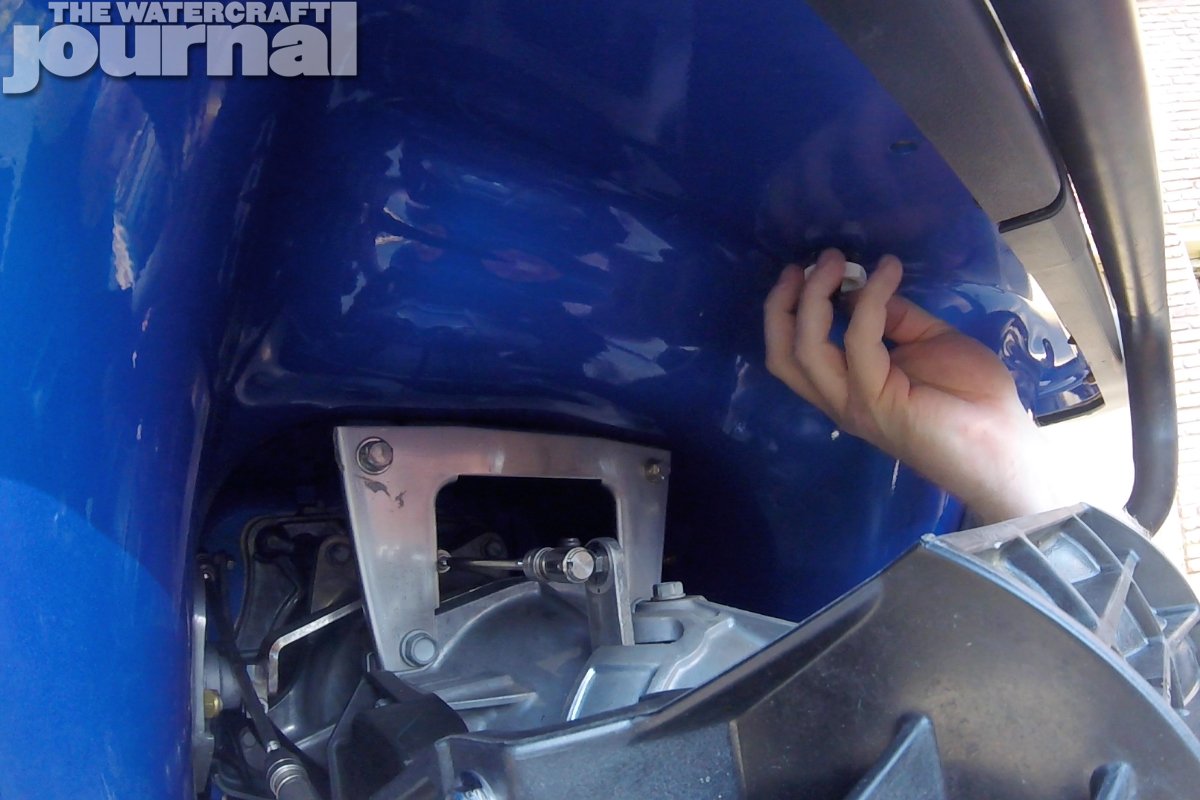
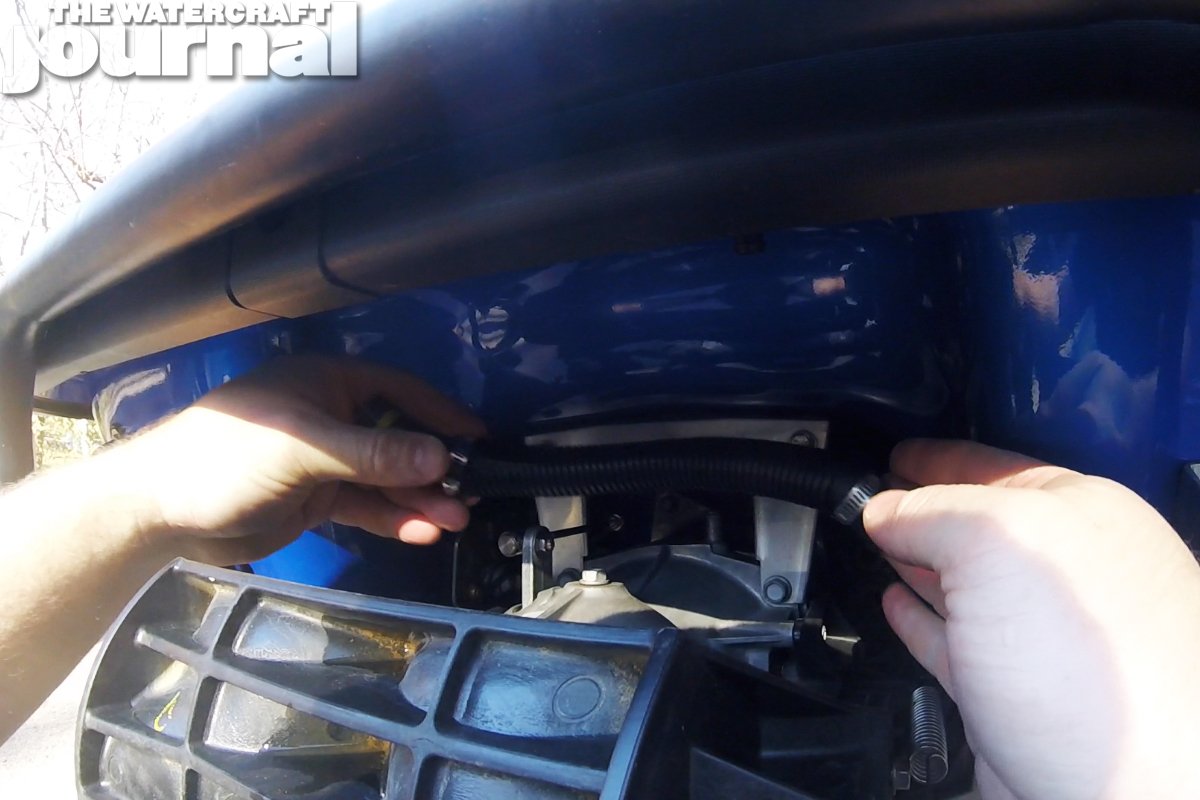
Next, drop the bucket down to access the jet pump cavity. Here you’ll see a black rubber hose that connects to the jet pump up to a black plastic nozzle that mounts flush to your swim platform. With a flat-head screwdriver or a 5/16’s nut driver, simply back off the worm gear-style hose clamp until its loose. Then you can wiggle the hose free.

If your goal was to just disengage the visibility spout, you’ve done it. The stream of water will now just shoot out of the back of the jet pump. But we like being a little more thorough than that, so remove the bottom end of the hose attaching to the pump. The aluminum nipple on the pump can be plugged with a rubber cap and a hose clamp, but you’re not going to hurt anything by leaving it open. Now just move the reverse bucket back up and reattach the quick release linkage and you’re done.

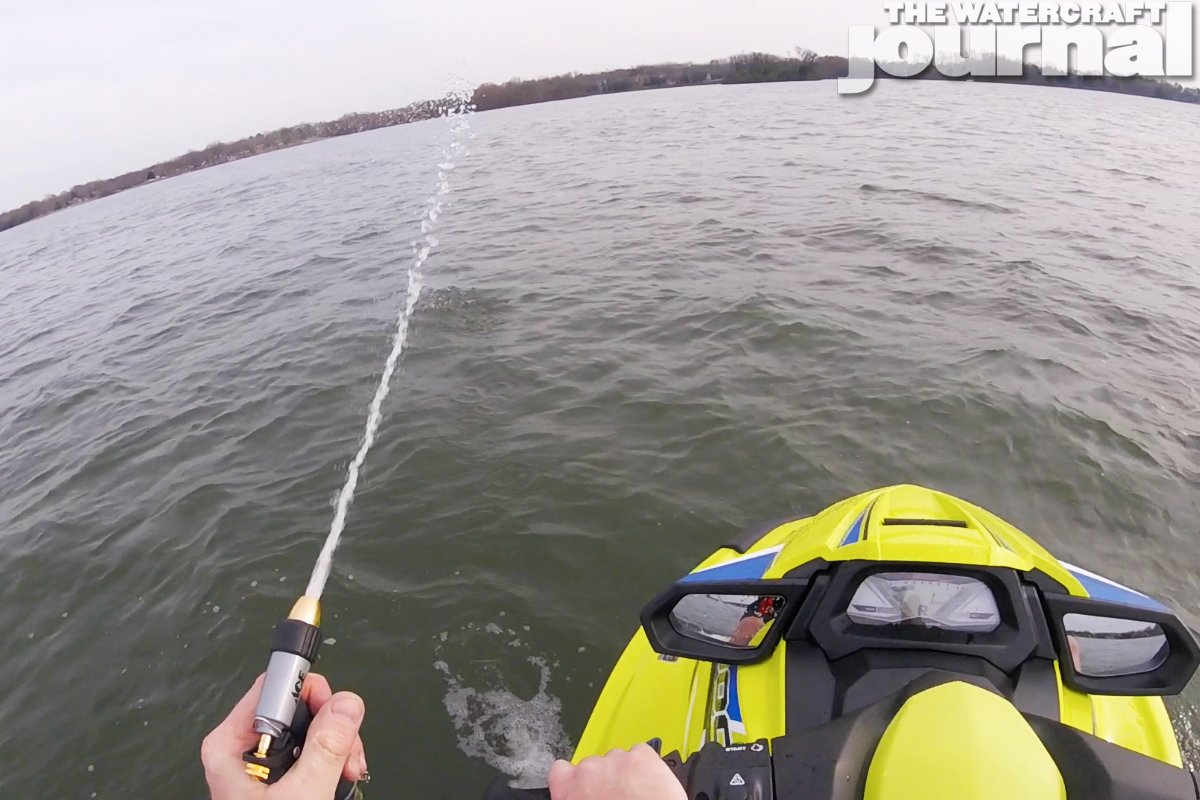
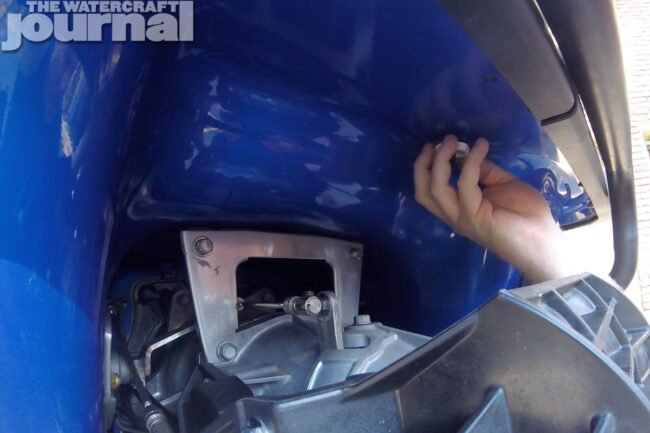
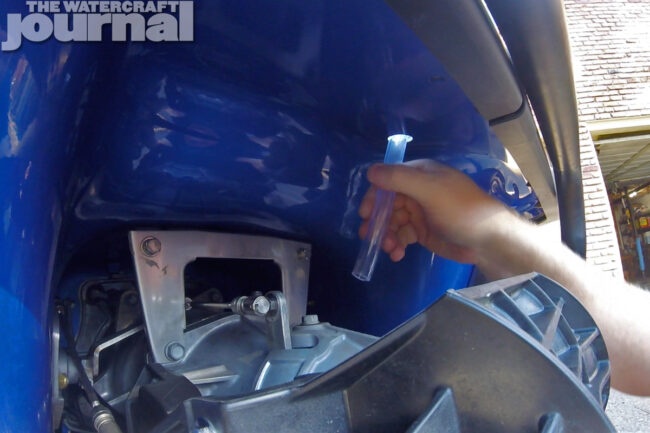
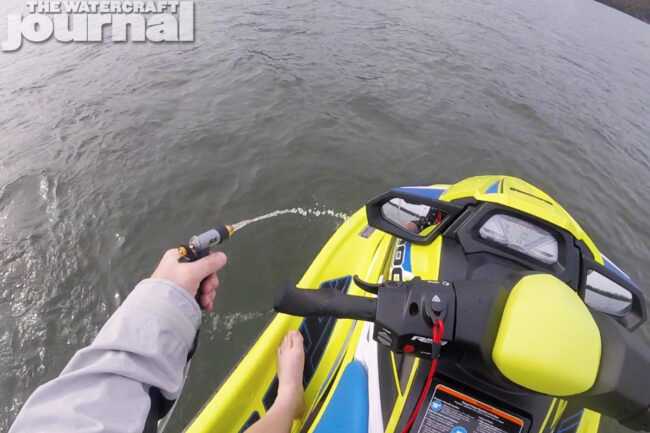
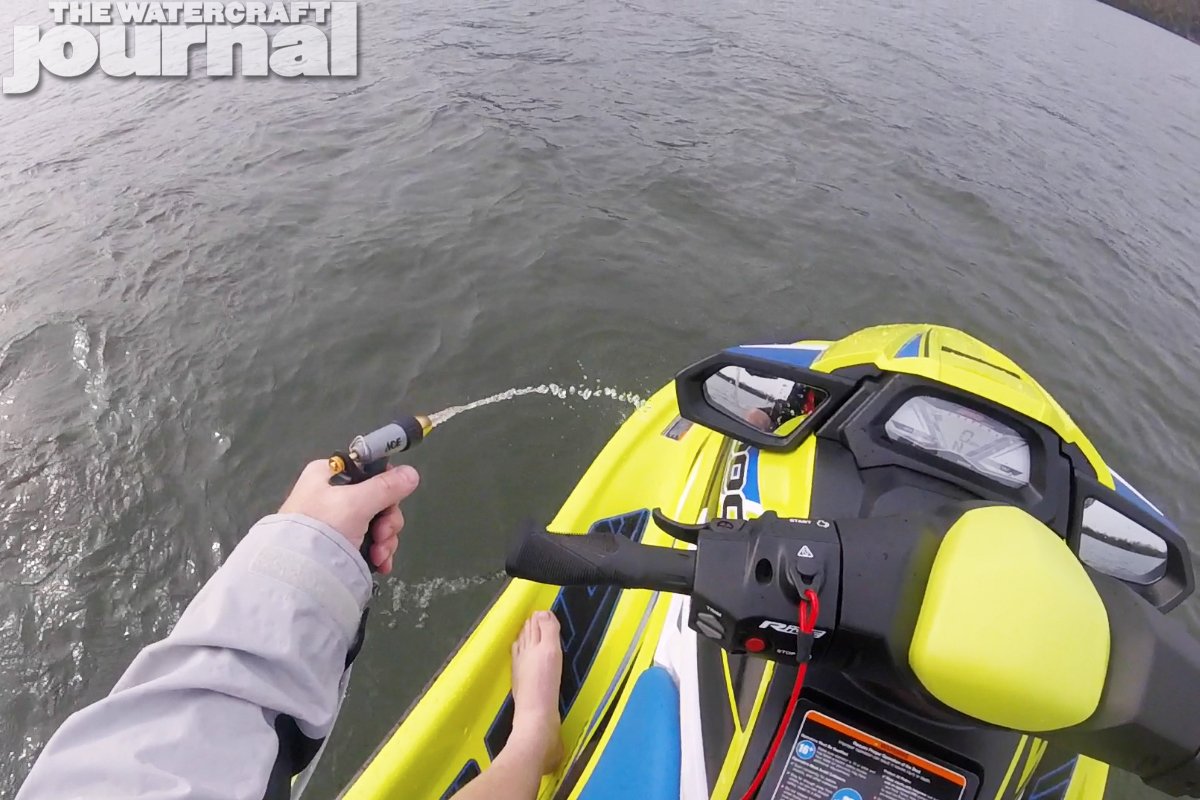
But, what if you wanted to have a little fun? What if we told you that you could convert your visibility spout into a high speed squirt gun? It’s pretty easy! With the reverse bucket still down and disconnected, unscrew the white plastic retainer holding the flush-mounted nozzle to the swim platform. The two come apart easily.

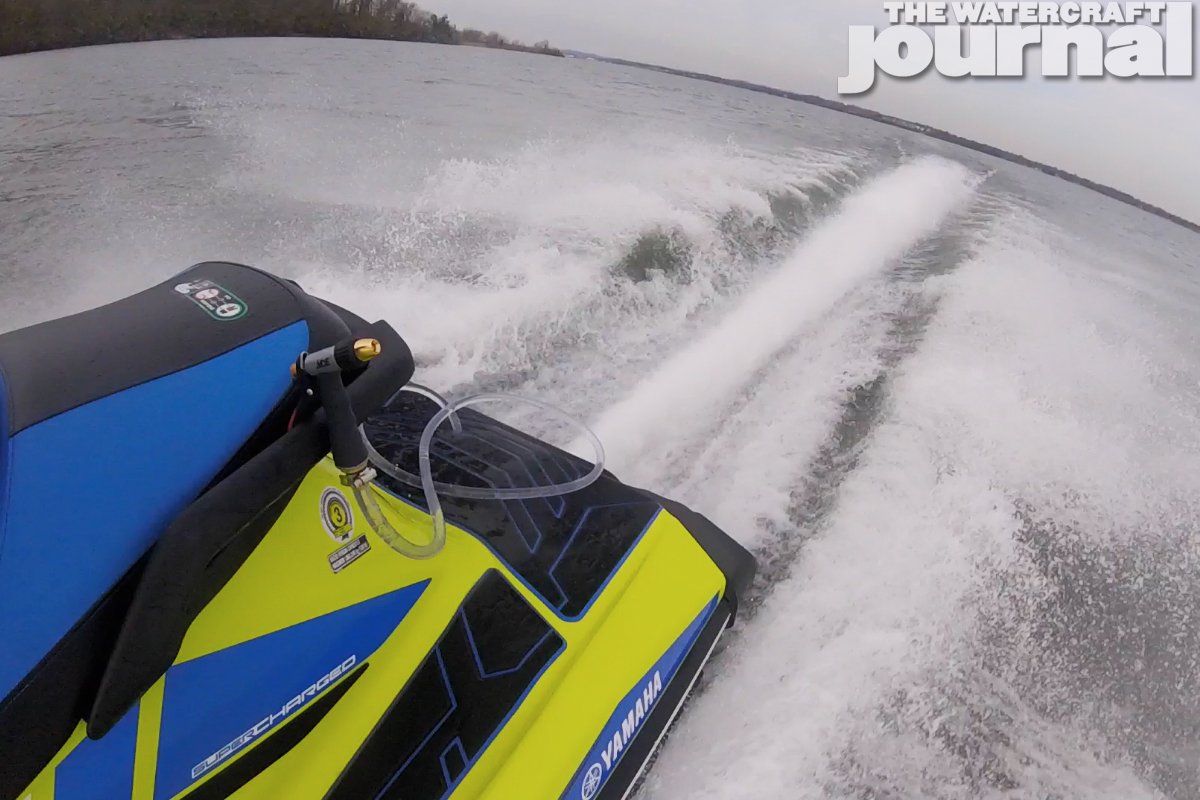
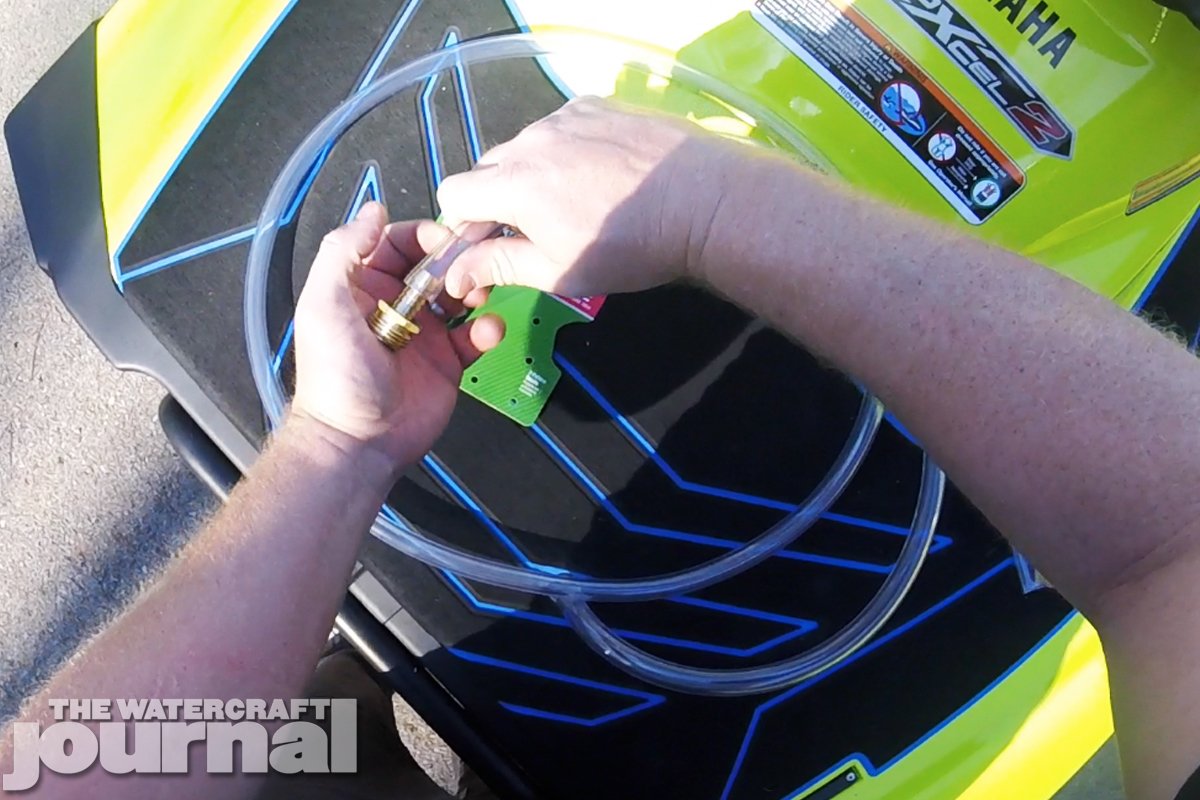
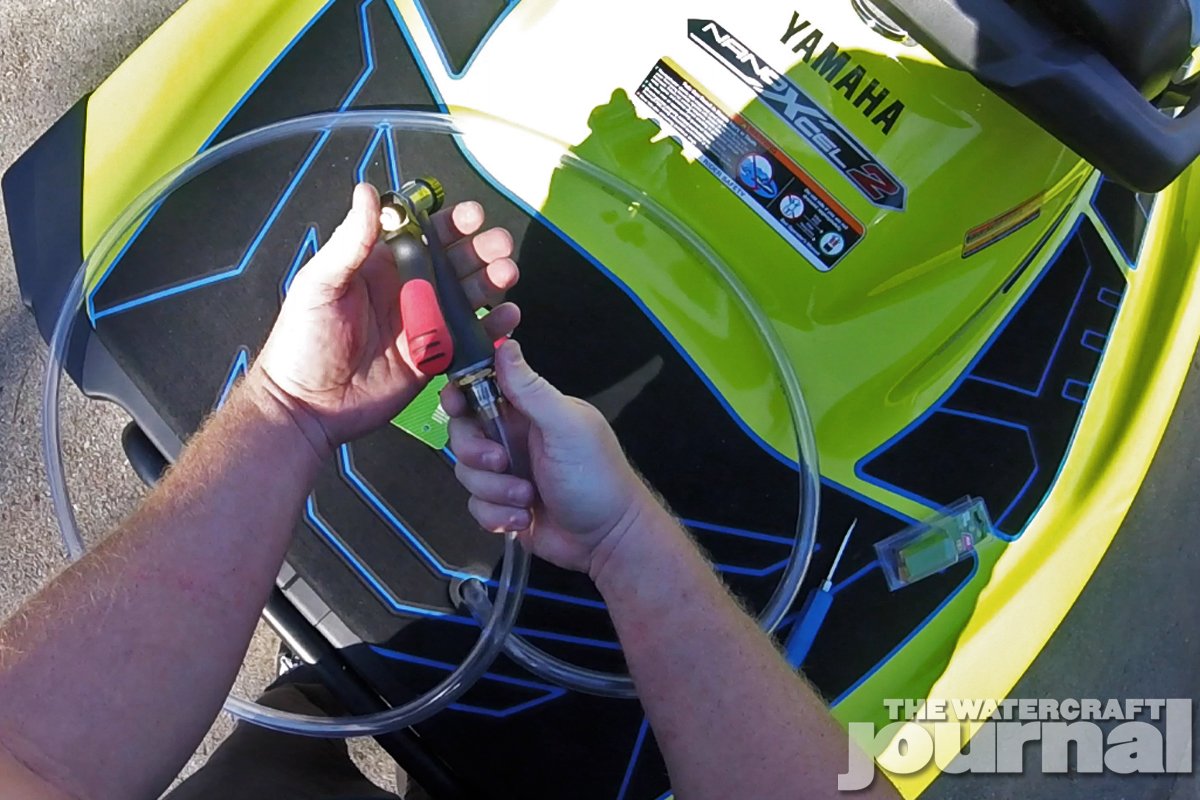
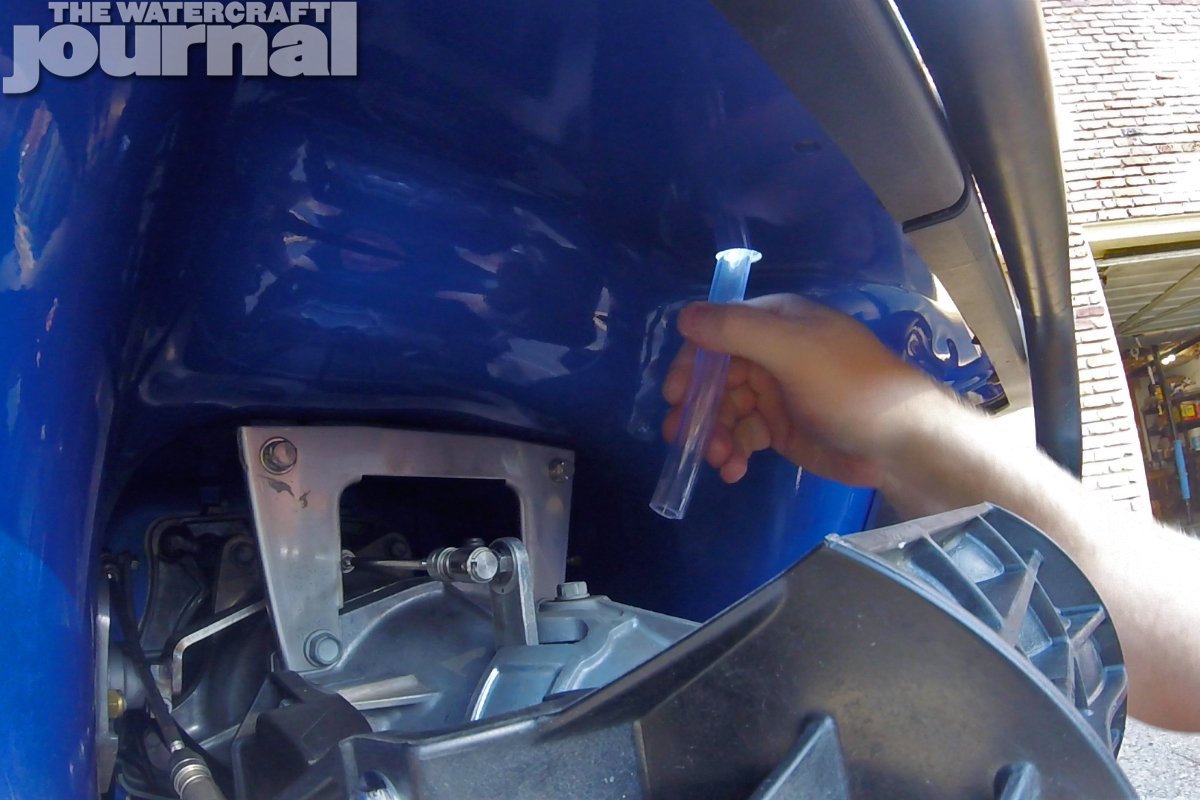
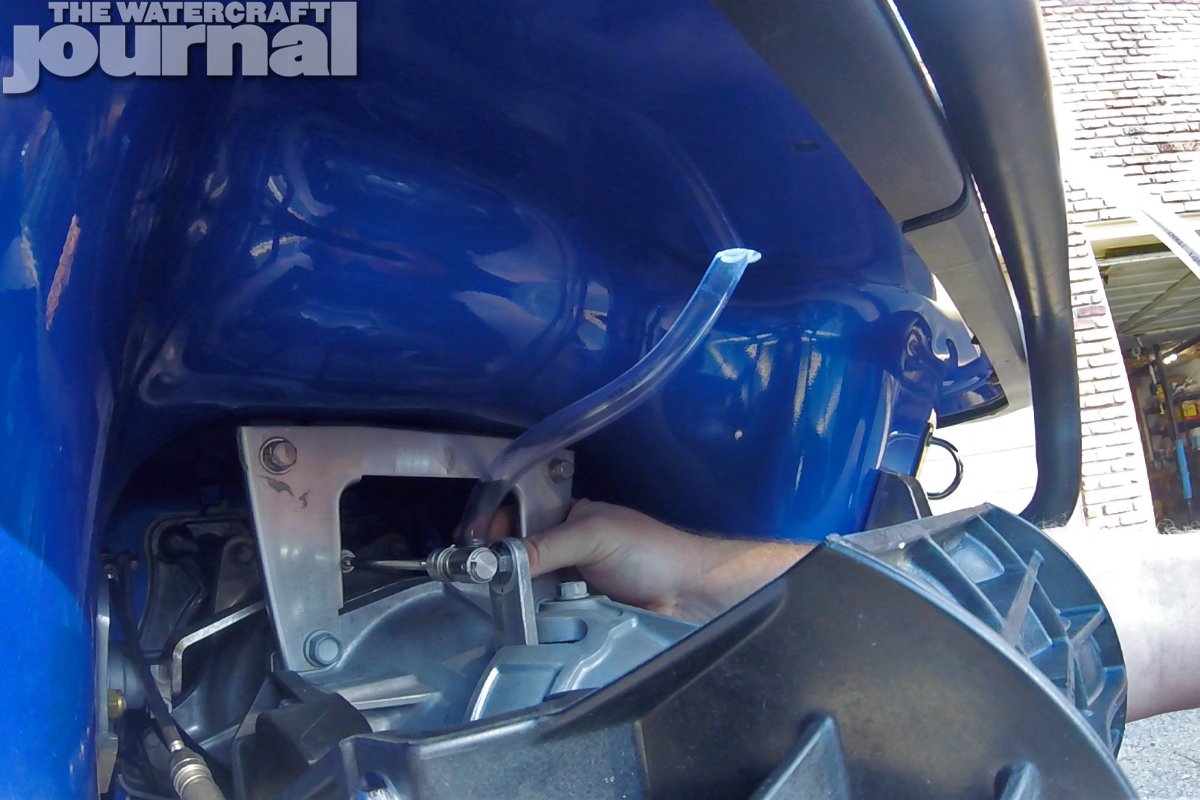
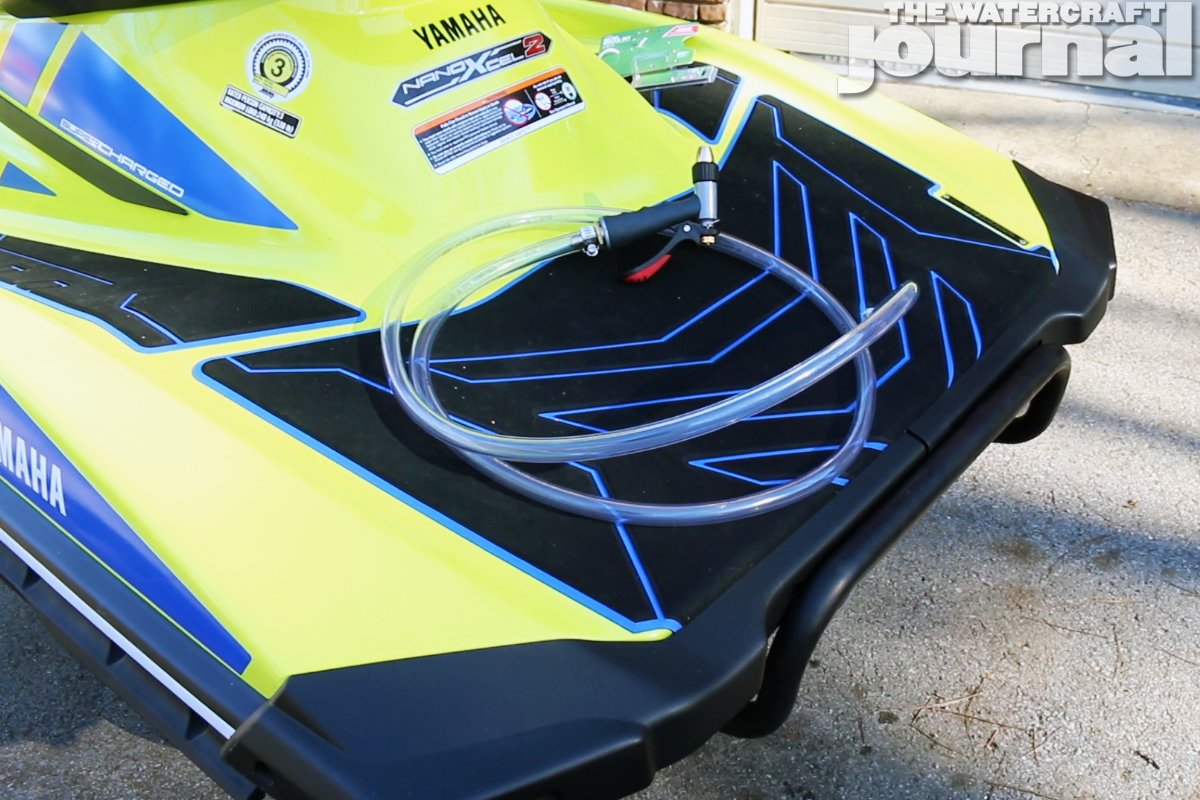
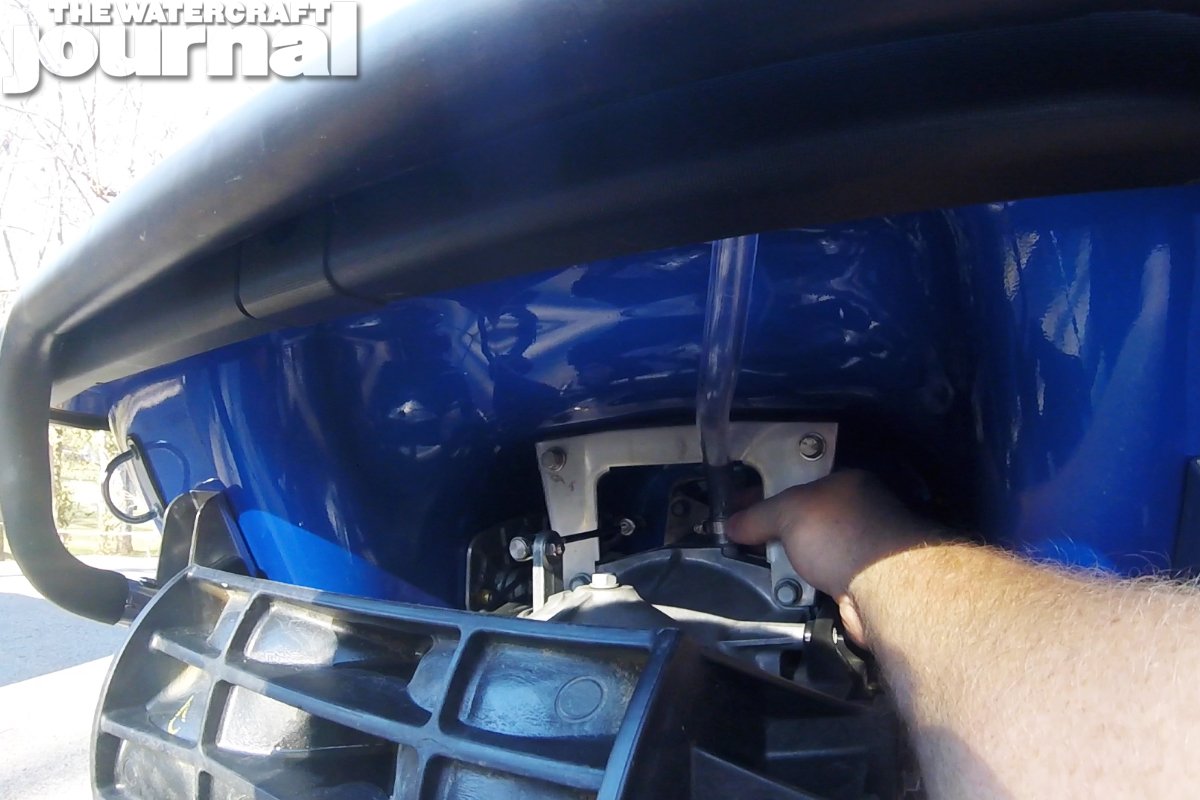
Next, feed in a length of half-inch inner-diameter rubber or flexible plastic hose. We went with 8-feet of clear vinyl hose from our neighborhood hardware store. While we were at it, we also picked up a brass barbed-end male hose fitting and a regular old garden hose adjustable spray nozzle. The hose slips right over the aluminum nipple jutting out of the jet pump. Tightened that down with a hose clamp.

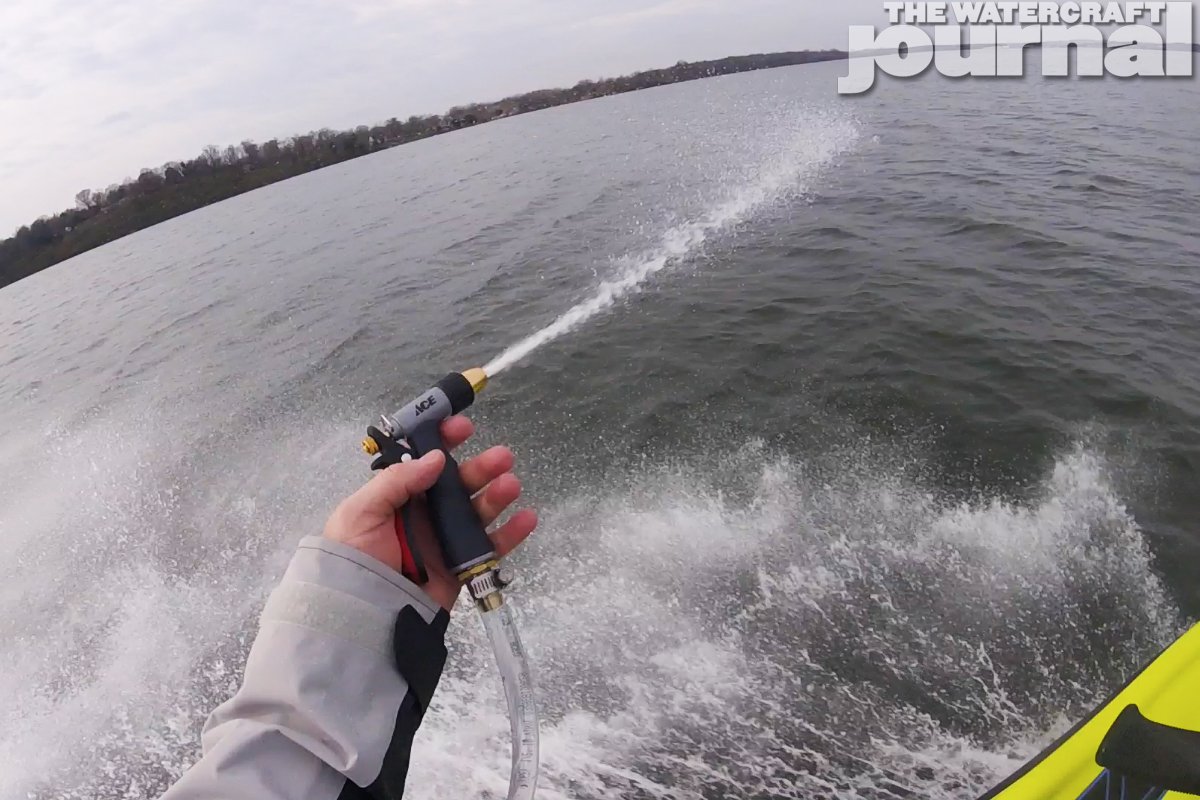
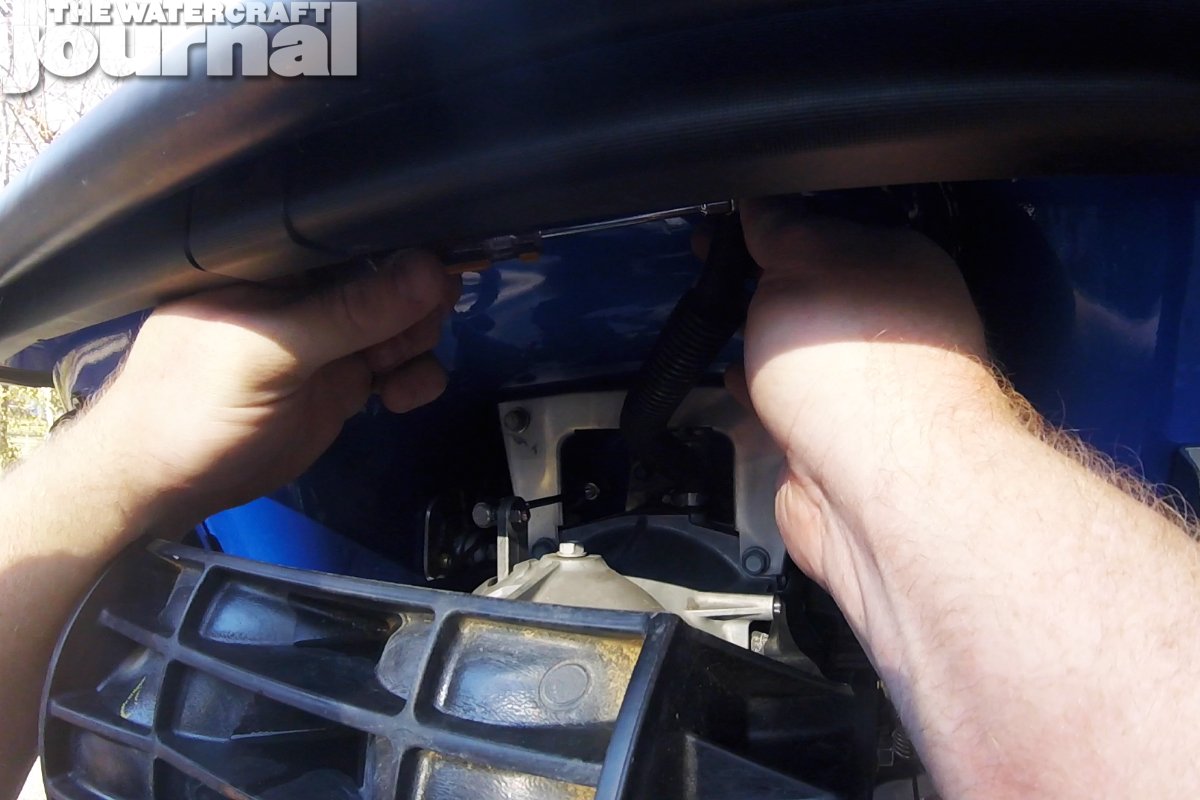
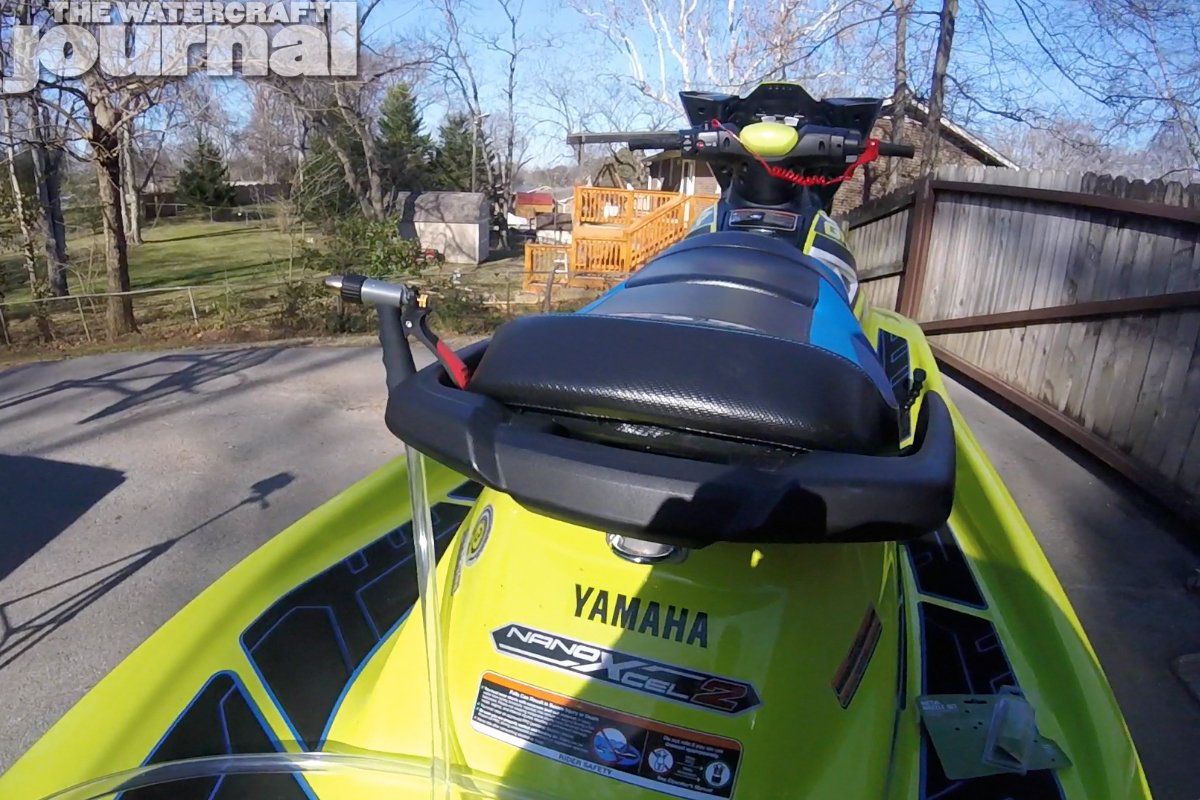
Next, with your hose coming up through the swim platform, install the brass barbed fitted and screw on your adjustable spray nozzle. Our nozzle hooked nicely on to the handgrips for the rear passenger.

On the water, our nozzle setup works pretty good. Obviously, at idle the pump isn’t generating the pressure necessary to shoot a decent stream, so you’re going to need to give it some throttle to really work. (Goosing the RiDE reverse throttle at a standstill works rather well.) Now around 15-to-20mph, we found we could send off a nice spray. At 30mph and above, the wind simply was turning our spray into more of a shower. Still, it’s enough to wash down your friends, so it’s a fun modification that is entirely reversible and can be installed in minutes.

Keep Your Riding Season Going With A Sea-Doo Ride Jacket

0

With an end to social distancing still out of reach for most folks coupled with cold weather this time of the year, many people are eager to extend their ride time on the water.

What better way to do so and stay comfortable than by using some great Sea-Doo riding gear including the warm and comfortable Sea-Doo Ride jacket.

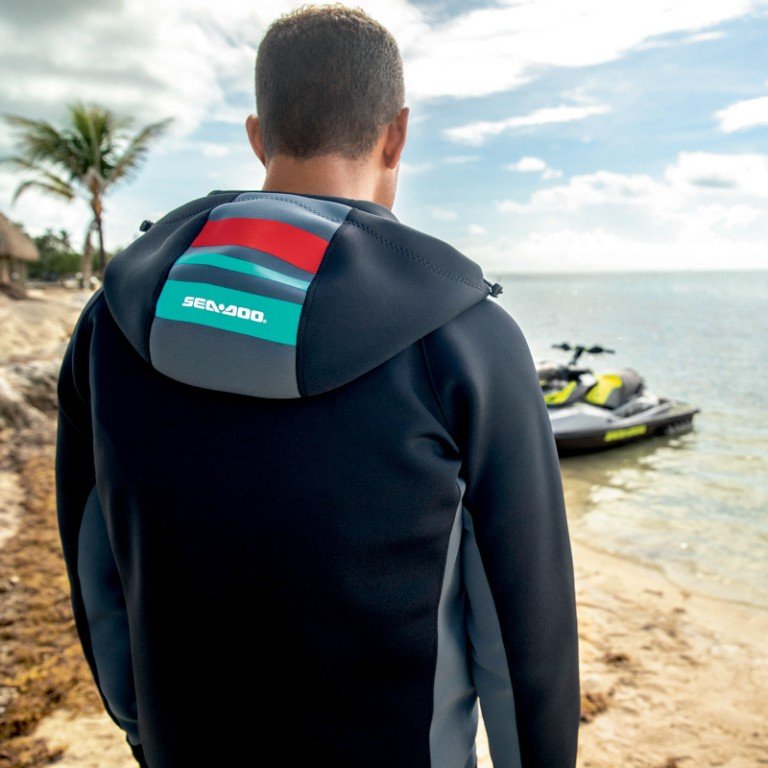
This is the perfect cold weather accessory to keep you on the water longer.  With a front zip design and deep side pockets, it is designed to be worn over your life jacket.  It even looks good when not riding so you can literally multi-purpose wear it all over.

Check out what Sea-Doo has to say about it:

The Sea-Doo Neoprene Ride Jacket is the ultimate cover up when mother nature whips up less than steamy days.  The ride jacket is worn overtop your lifevest to keep you warm year round and includes pockets with velcro closures and a hood to keep the splashes from running down your neck.  And there are no rules saying you can’t wear this jacket when your feet are on the street.  The Sea-Doo life is cool no matter where you wear it.

For more details and info on the Sea-Doo Neoprene Ride Jacket and other cooler weather Sea-Doo riding gear, check the link HERE

Video: Jiggin’ with Jordan Explores War Batteries with FL Ski Riders

0

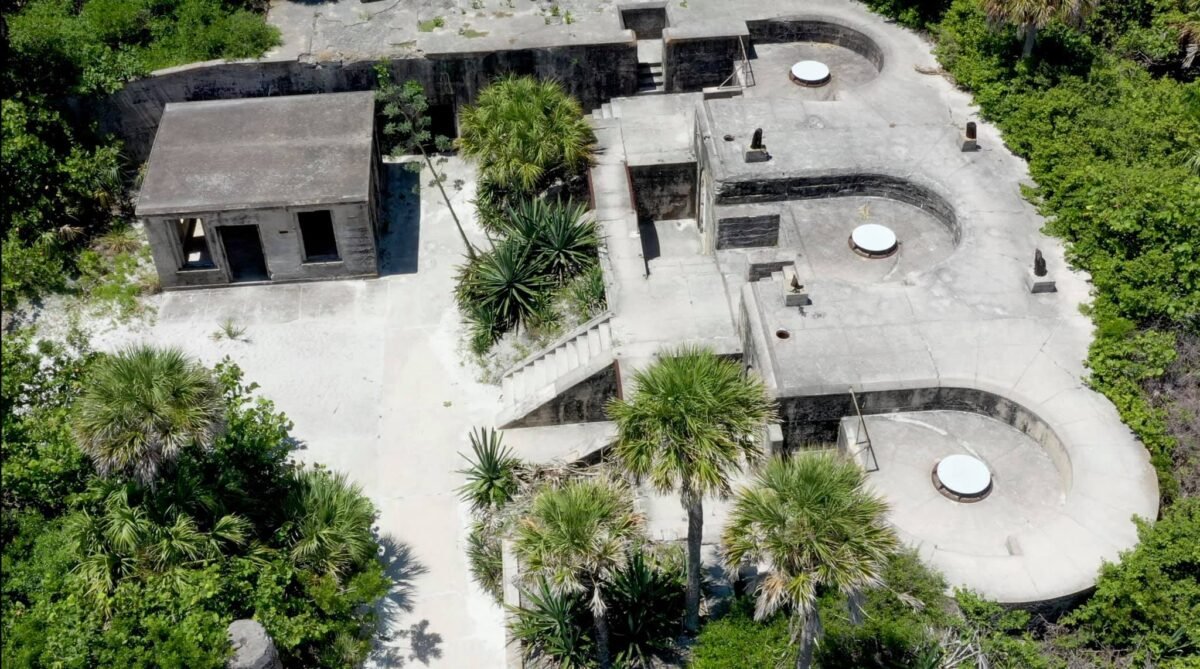
Check out this double dose of fun with Randy from Florida Ski Riders and Brandon Jordan from Jiggin’ with Jordan. They got together for an adventure in Egmont Key. They spent the day exploring abandoned war batteries, snorkeling, and taking a ride to the Sunshine Skyway Bridge. Randy is well versed in the area and he is the founder of Florida Ski Riders, one of is the largest jet ski clubs in Florida.

Jordan is riding Blue Bae, his Yamaha WaveRunner FX SVHO and Randy is on a Sea-Doo WakePro 230. Both machines were perfect for stowing all the gear they needed for the day, which included camera gear, snorkeling gear, and lunch for a jam-packed day of exploring.

The adventure began at the Fort De Soto Boat Ramp located in Tierra Verde. This is where they met and started filming this fun clip. They loaded their gear onto their jet skis and were soon on their way to check out the Egmont Key War Battery’s. They anchored at a spot just off Egmont Key. Randy provided a history lesson while they toured the Spanish War Batteries. The area is super cool, and the drone footage of the batteries is incredible. Randy provides excellent info on how to get there on a jet ski.

The group left the bunkers and headed to the Egmont Key Ruins to go snorkeling in the beautiful blue water. This part of the video is super relaxing. They left the ruins for Passage Key (Booby Beach) and stopped for lunch. It’s another beautiful spot and so chill. After lunch, they packed up and motored to the Sunshine Skyway Bridge. We get an up-close and personal ride with Randy under the bridge as he rides his Spark down the middle.

Check out the video for some great information on the Egmont Key/Fort De Soto area. Randy lays it out very well. Trailer up your Yamaha WaveRunner or your Sea-Doo and head for the Fort De Soto Boat Ramp and make your way to the clear blue waters of Egmont Key. You’ll be glad you did.

Sea-Doo Celebrates Their Watercraft Of The Year Award

0

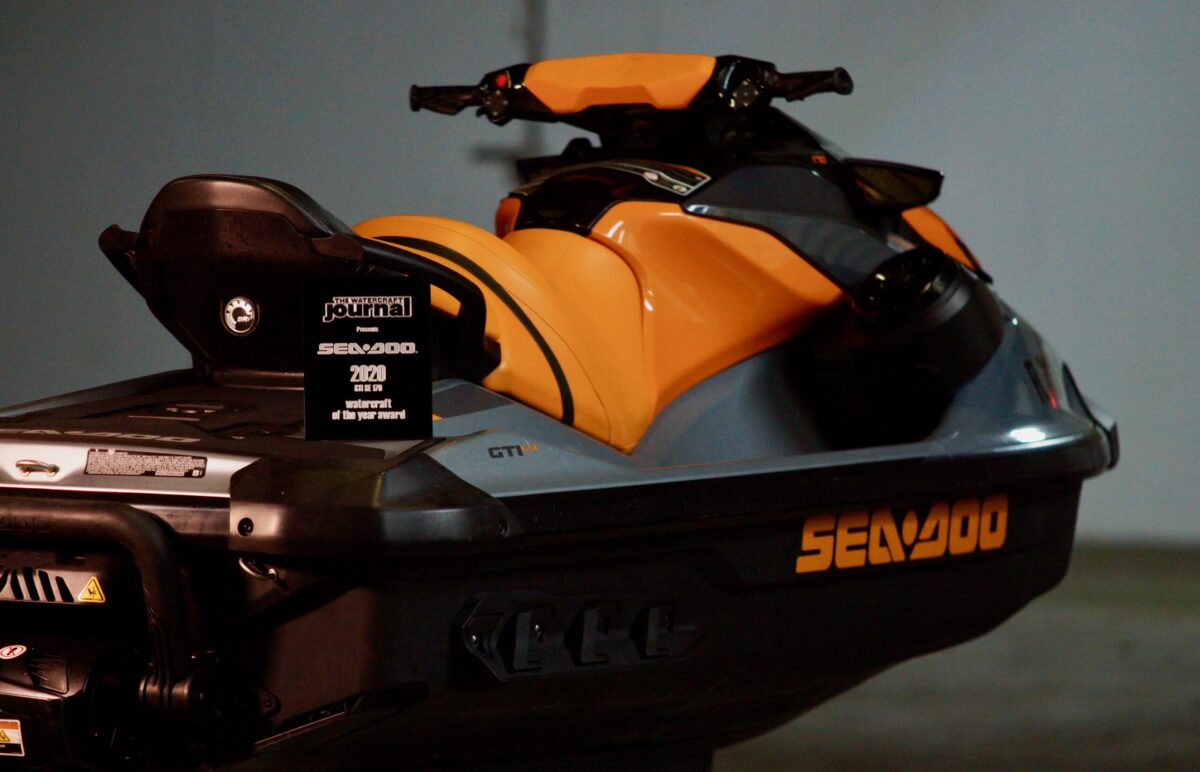
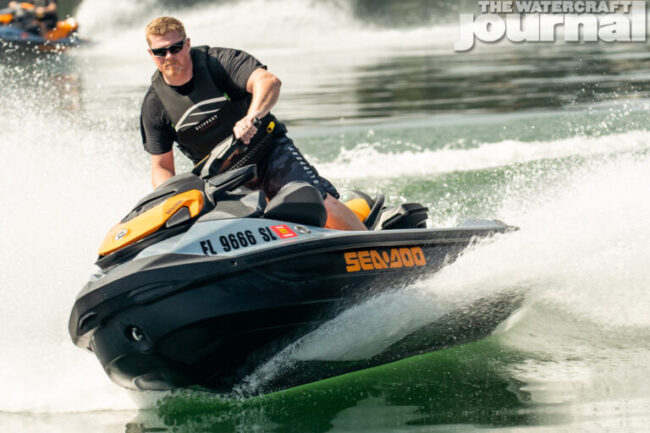
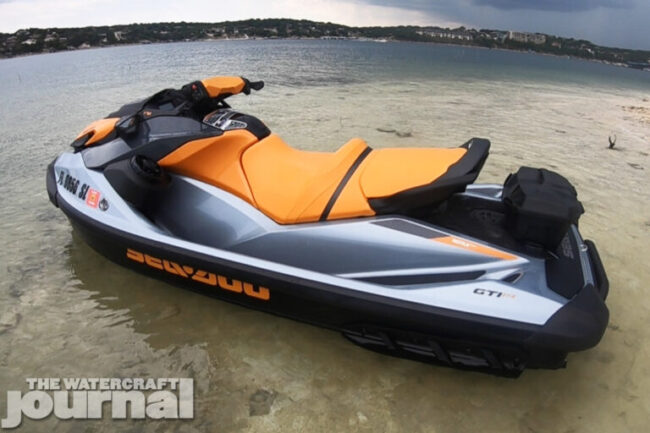
In case you missed our announcement for 2020 Watercraft of the Year, then perhaps you saw in the latest Sea-Doo news letter that Sea-Doo has proudly accepted this award for its 2020 GTI SE 170.

We couldn’t think of any other watercraft more deserving and other industry members are praising the GTI SE 170 as well.  It even won the prestigious Good Design Award from Good Design USA thanks to its innovative and creative design.

In case you missed the Sea-Doo newsletter as well, here’s what Sea-Doo had to say about their Watercraft of the Year Award.

The Watercraft Journal recently named the Sea-Doo GTI SE the year’s best PWC noting, “the Sea-Doo GTI SE 170 is without a doubt the single most worthy recipient of Watercraft of the Year we’ve had.”

The editors score each new PWC using their IDEA formula comprised of the categories; innovation, design, overall execution, and lasting affect on the industry.  The editors conduct extensive on-water testing over the course of a full year on all new models and at the end of the year they exclaimed, “Awarding the 2020 Sea-Doo GTI SE 170 …was unequivocally one of the easiest decisions we’ve made in years.”

Noted Sea-Doo GTI SE highlights included the ability to please so many riders on so many levels with the ultra-stable and predictable hull, Ergolock seating, and onboard experience with the high-quality sound system and LinQ accessory attachment system.

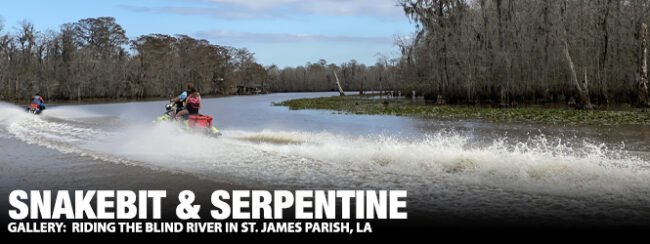
Gallery: Snakebit on The Blind River in St. James Parish, LA

0

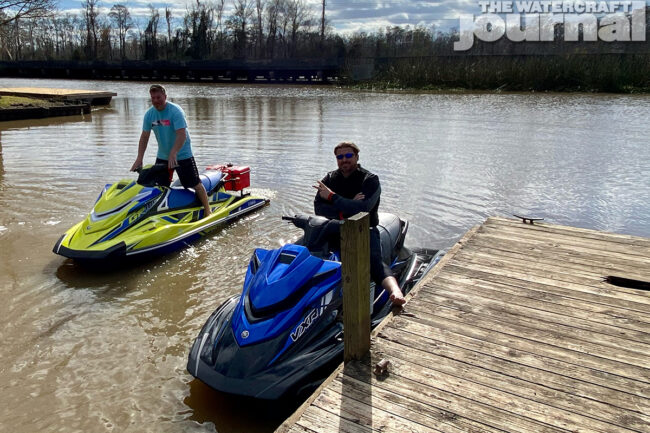
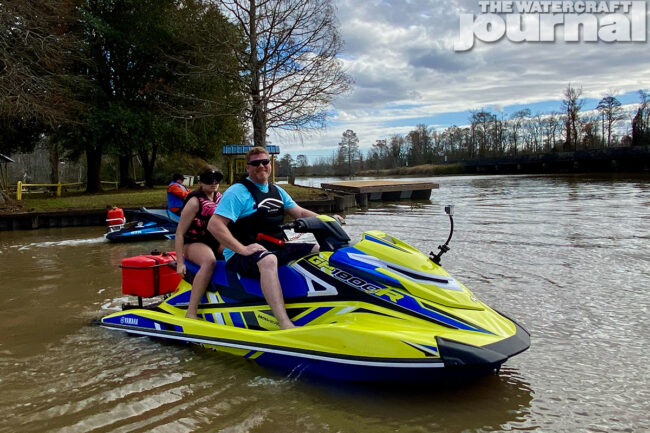
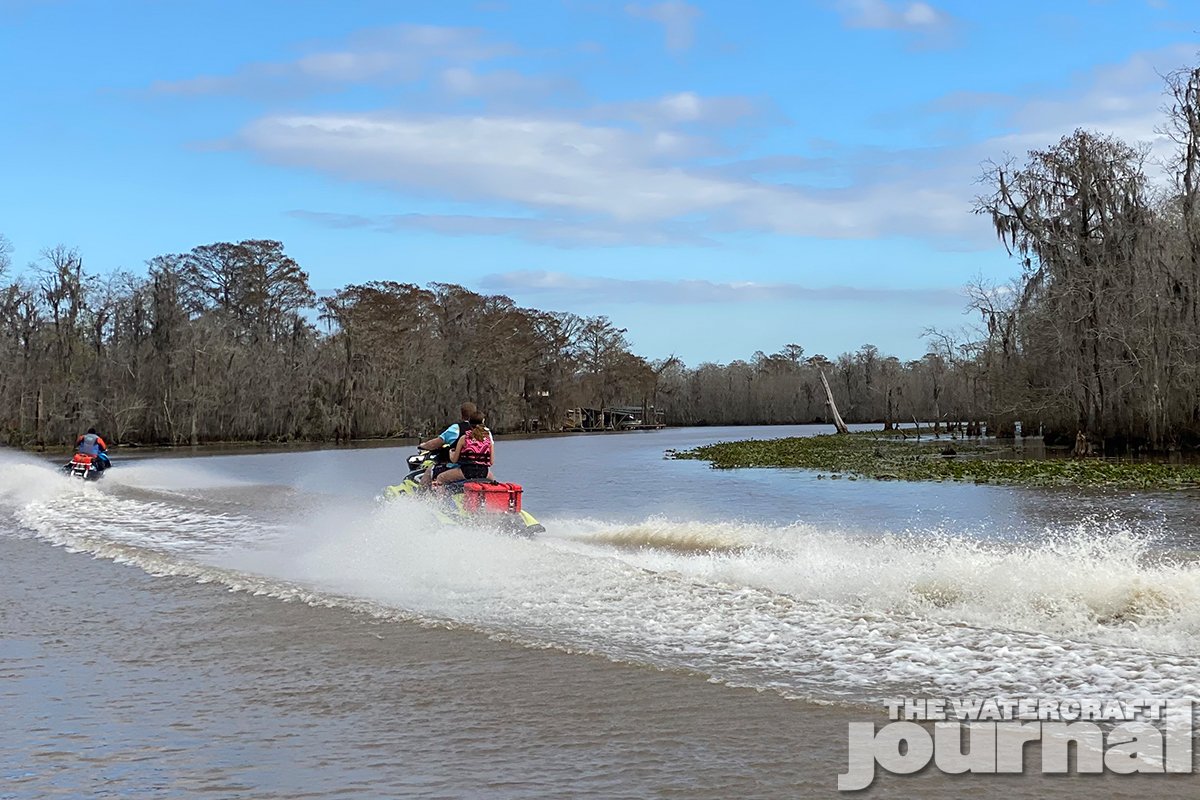
Somehow the family and I managed to navigate 2020 relatively unscathed. Sure, the older kids’ school year was completely borked, leaving them with the longest summer vacation in the history of public education; but for the most part, we didn’t suffer the highs and lows that many had experienced. That being said, with just 3 days left in the year, Jerry Gaddis of Greenhulk.net reached out and asked if I could dash down to Morgan City, Louisiana for a one-day filming session – the results of which, were published earlier this week.

The drive out was uneventful. My 11-year-old daughter, Morgan and I made it to Morgan City in just over 11 hours. That evening Jerry joined me for an episode of The Watercraft Journal IRL, the live YouTube session I host on Sunday nights and took questions in real time. The next morning started well enough; the video session took less than two and a half hours,with Jerry’s son Greg doing most of the heavy lifting.

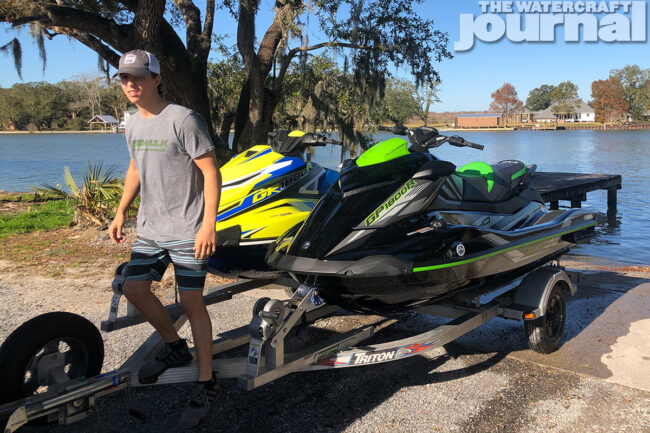
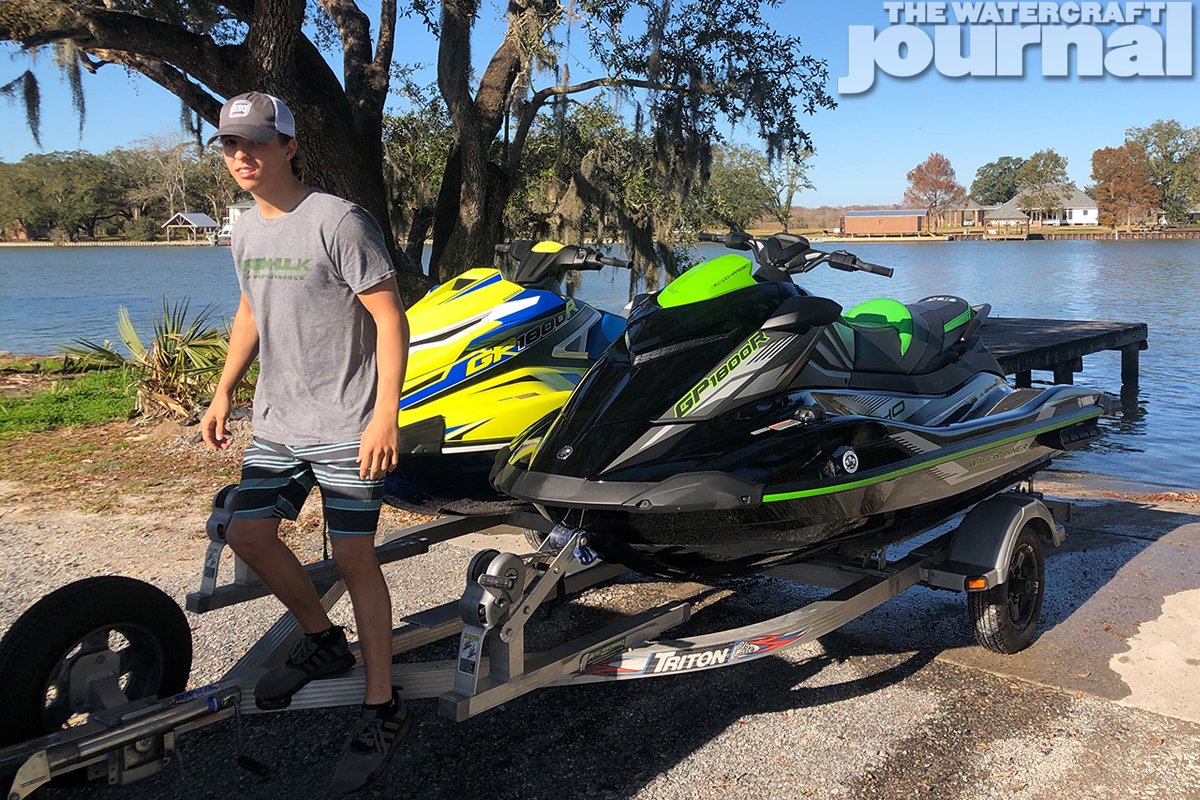
Afterward, as part of an upcoming video and technical article, Greg pulled the seat from the 2020 Yamaha GP1800R SVHO and plugged in the MaptunerX, uploading RIVA’s “Stock 8,000” tune. The new engine program completely retains the factory ignition timing and fuel curve, but eliminates the internal speed cap as well as push the restrictive RPM limit up to 8,000rpm.

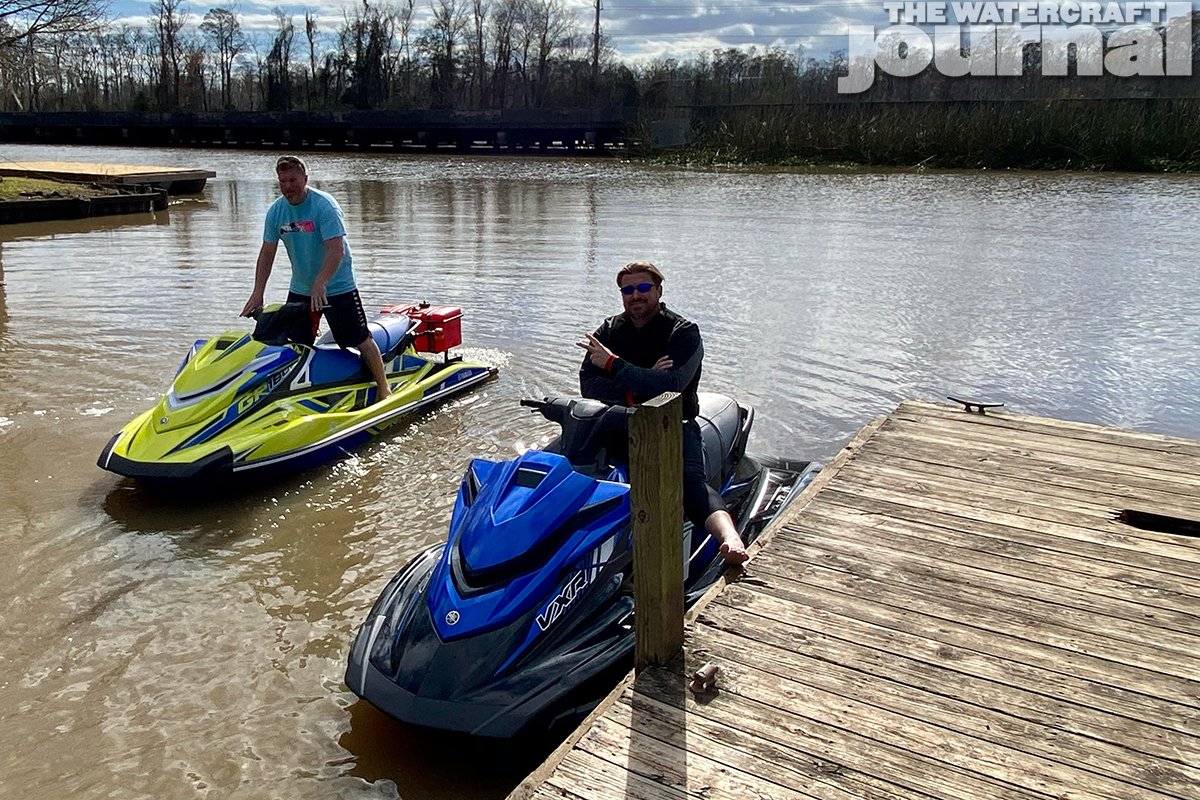
I impatiently jumped on the GP1800R and streaked down the causeway, immediately clicking off a 75mph on the speedometer. It’s not a GPS-confirmed speed, but it was enough to satisfy me. With that task concluded, we had the rest of the day left to spend on our own (Jerry had to go back to work). Thankfully, a text from Billy Duplessis that morning beckoned us to join he and friends William Bagert and Paul Pace for a ride.

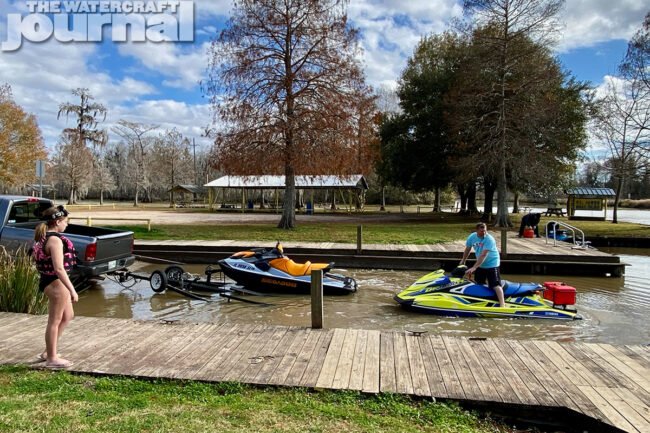
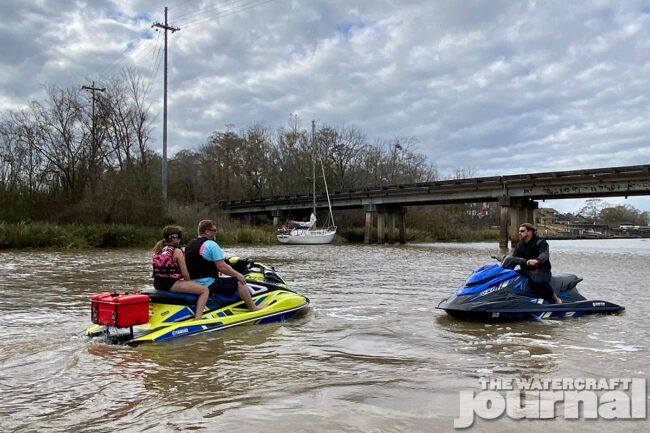
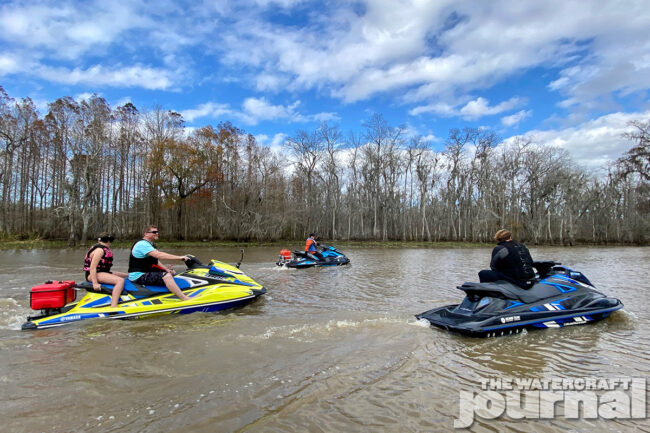
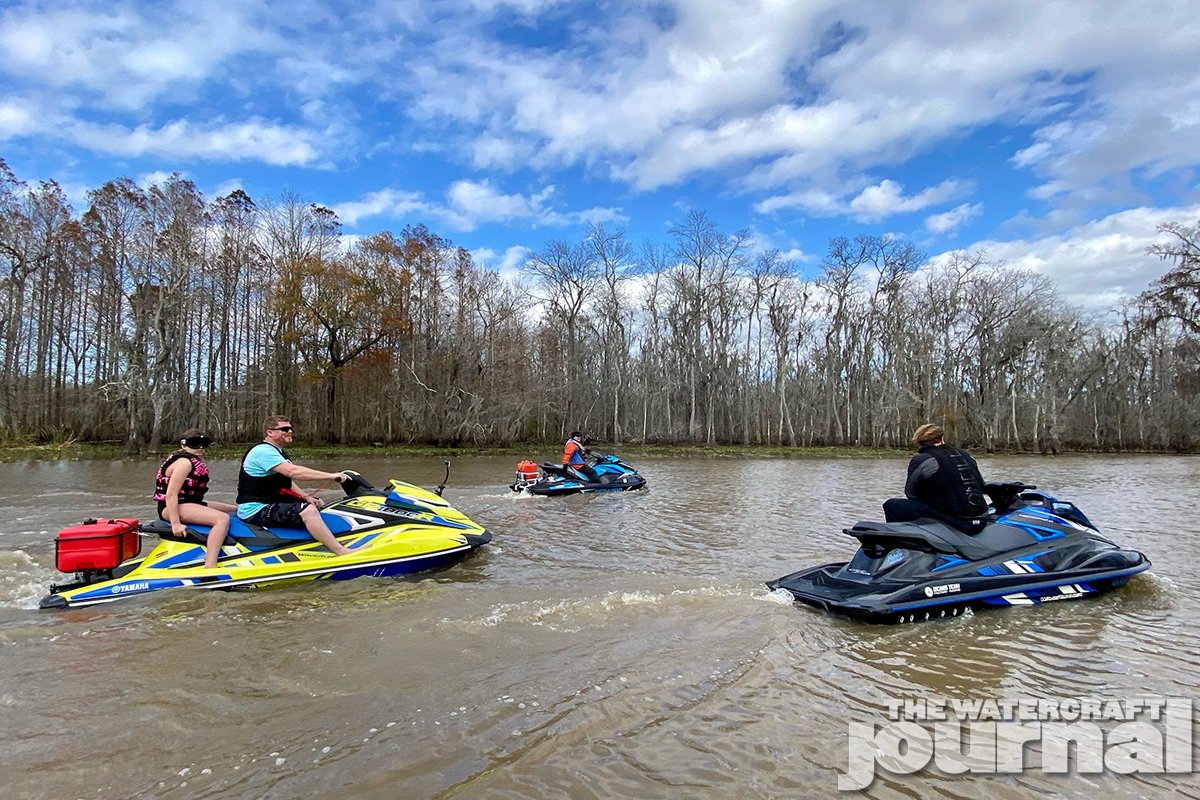
Nearly an hour’s drive from Two Sisters Landing were we were was St. James Boat Club in Gramercy, on the Blind River. The Blind River sits just north of the Mississippi River as it lulls east into New Orleans. For the most part, Blind River is a rolling, serpentining path, but as Paul led our group into Smith Bayou, we entered a fast-paced course of hairpins and tight S-turns. That detour exited us into Thunder Bayou, at the bend at Three Rivers Island.

The path before us were man-made, laser-straight canals either heading directly east into Lake Maurepas, or northwest into Amite River. Either way, the depth of the water and slab-sided bulwarks of the canal make the water some of the most unpleasant in Louisiana. Even when it looks calm, the water’s surface oscillates, bobbing your nose while cruising or battering you while at speed.

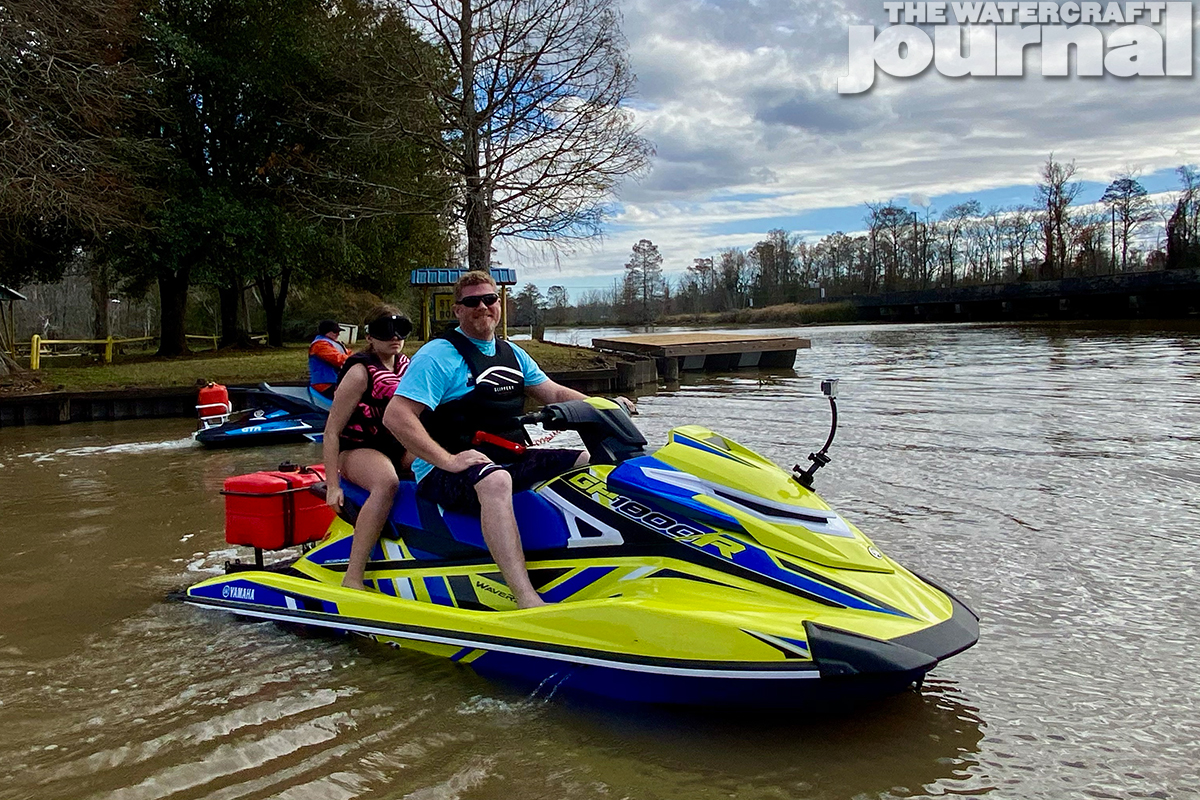
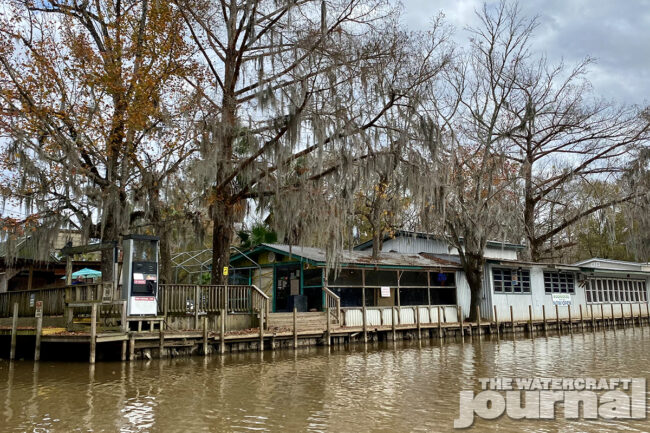
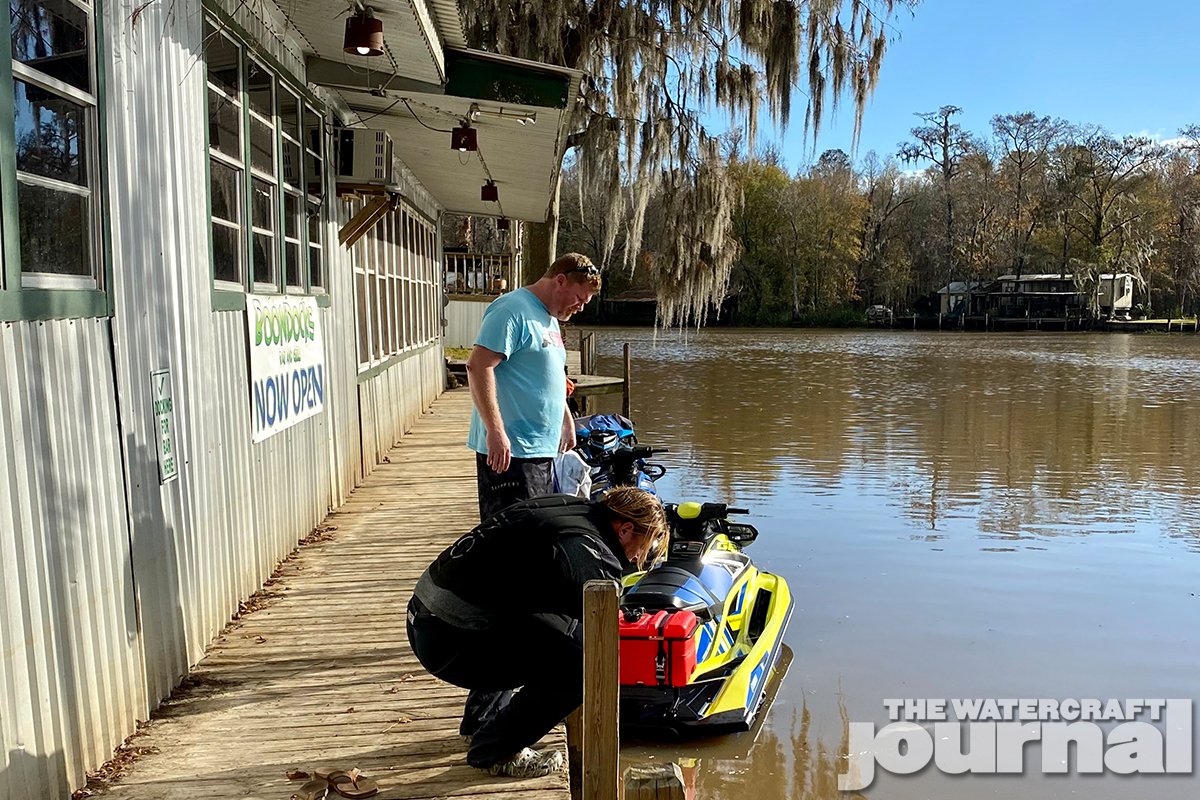
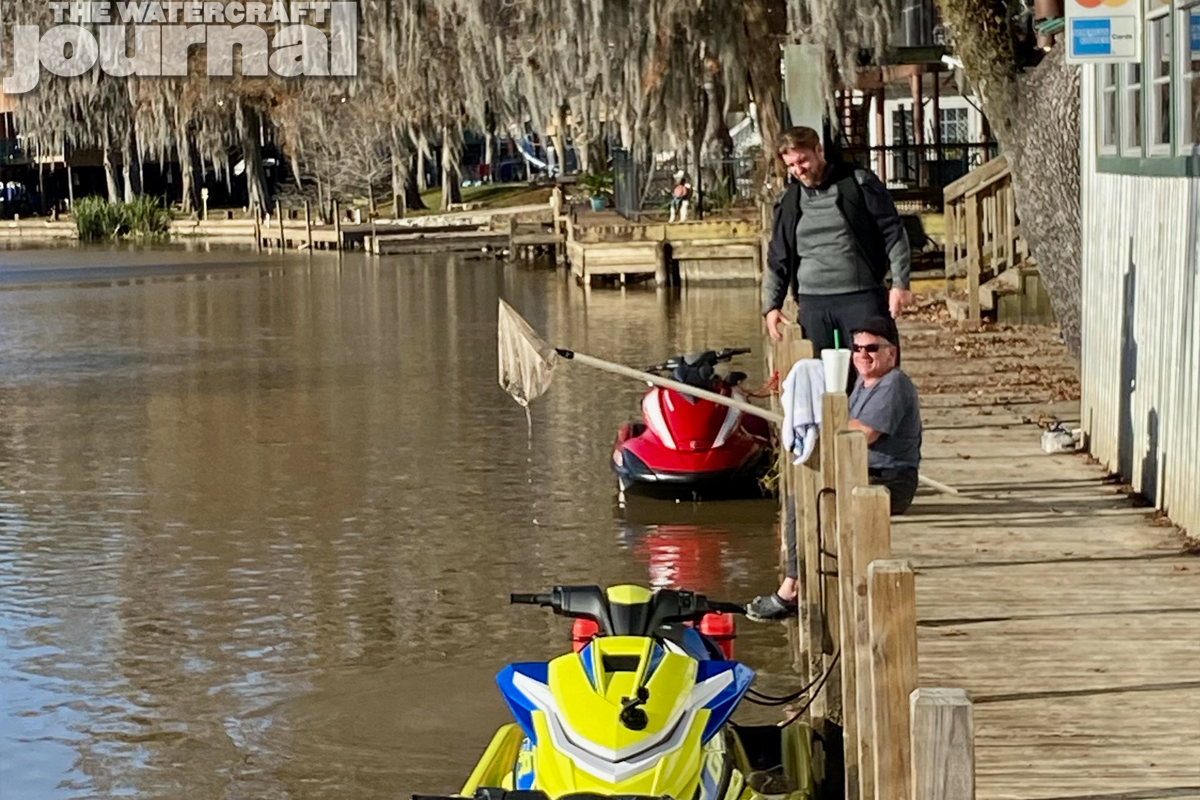
Hooking right into the eastern end of Amite River took us on a gentle path to Boondocks Bar & Grill. Since it was late December, and temperatures were well below that which the locals would consider comfortable boating weather, the eatery was pretty quiet. The trio were dressed more akin to snowmobilers as Morgan and I donned swimming suits and T-shirts, although the chilled breeze was making me rethink my wardrobe.

As we pulled up to the dock, my daughter dismounted the Yamaha and rightly reached into the bow storage for the dock line. As she uncoiled the rope, my GoPro with which I had filmed portions of the morning’s shootout and all of our Blind River trip, quickly tangled and sprung out of the bow, bouncing off of the deck and into the murky water below. I leapt forward in vain. Quickly tying to the cleat, I stripped off my vest and T-shirt and instinctively dove into the frigid water.

I was wholly unprepared for how cold the water was. My chest viced the air from my lungs and my hands scrambled for the reboarding step on the back of the GP1800R, forever grateful that Yamaha puts them on everything. Pausing to catch my breath, I bobbed deep to see how far below the surface was. I couldn’t feel it. I tried again, but a collision of panic, the stinging pain of the icy water and exhaustion kept me from doing to do any good.

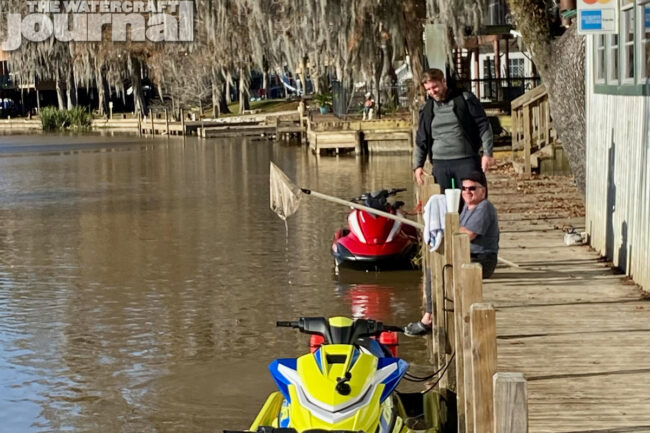
To their credit, William and Paul dedicated the next hour dredging the muddy floor in hopes of snagging the camera’s long mount using a net to no avail. We pulled up sticks, a few beer cans and plenty of mud, but no camera. My daughter was distraught, blaming herself for the whole ordeal and I knew I had to calm the situation. I went over the shots we could easily recreate and that all was not lost. She was upset, I was exhausted, and frankly, ready to get back to the hotel and crawl in bed.

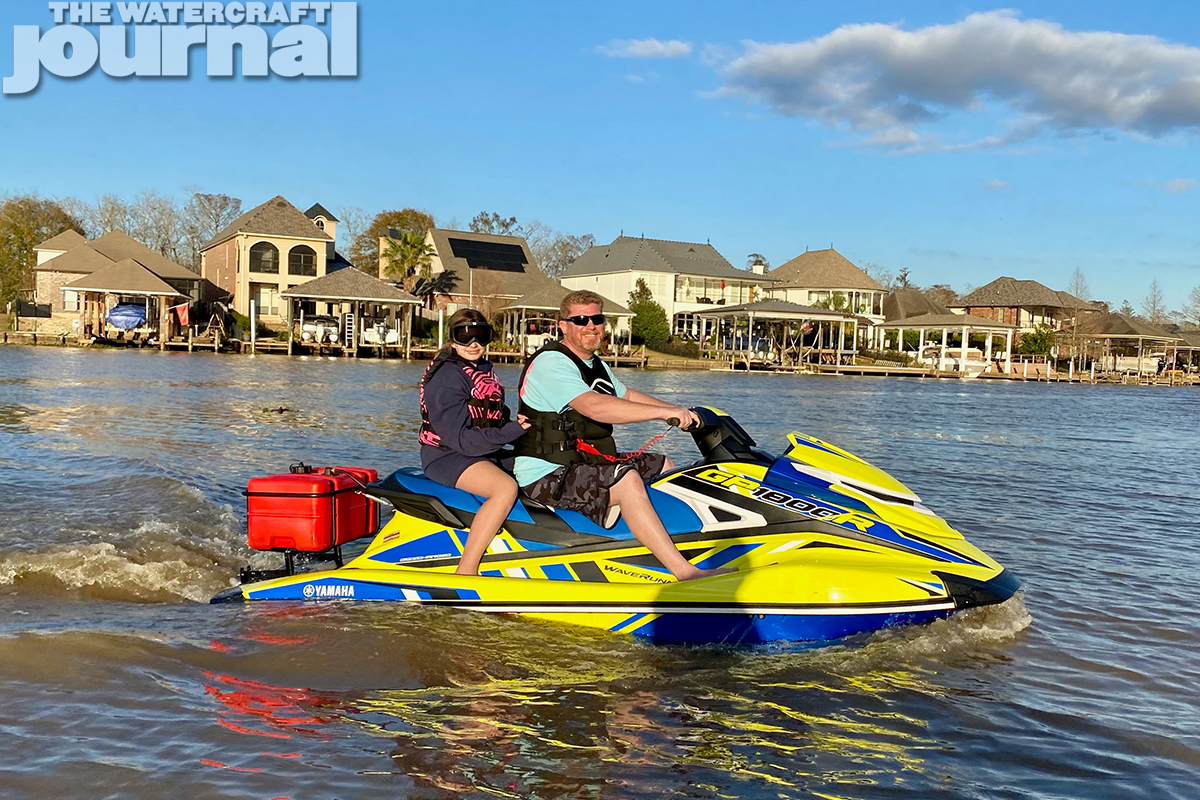
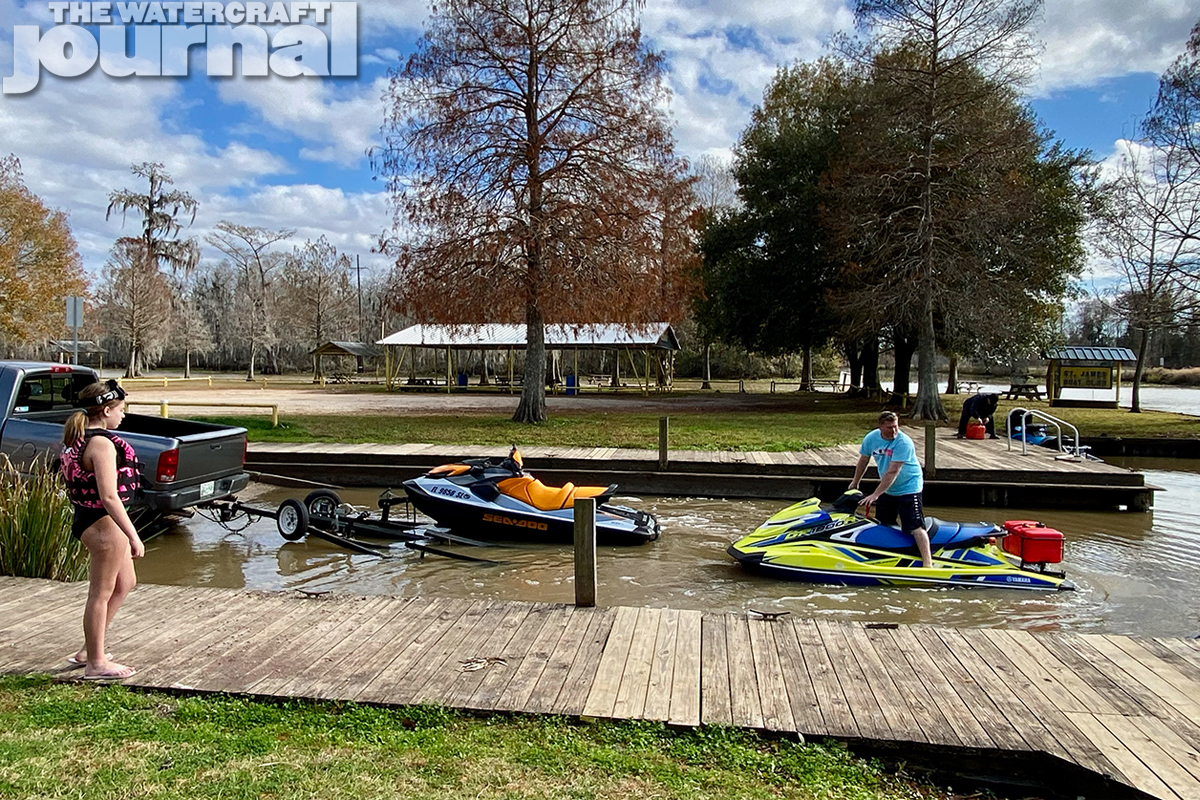
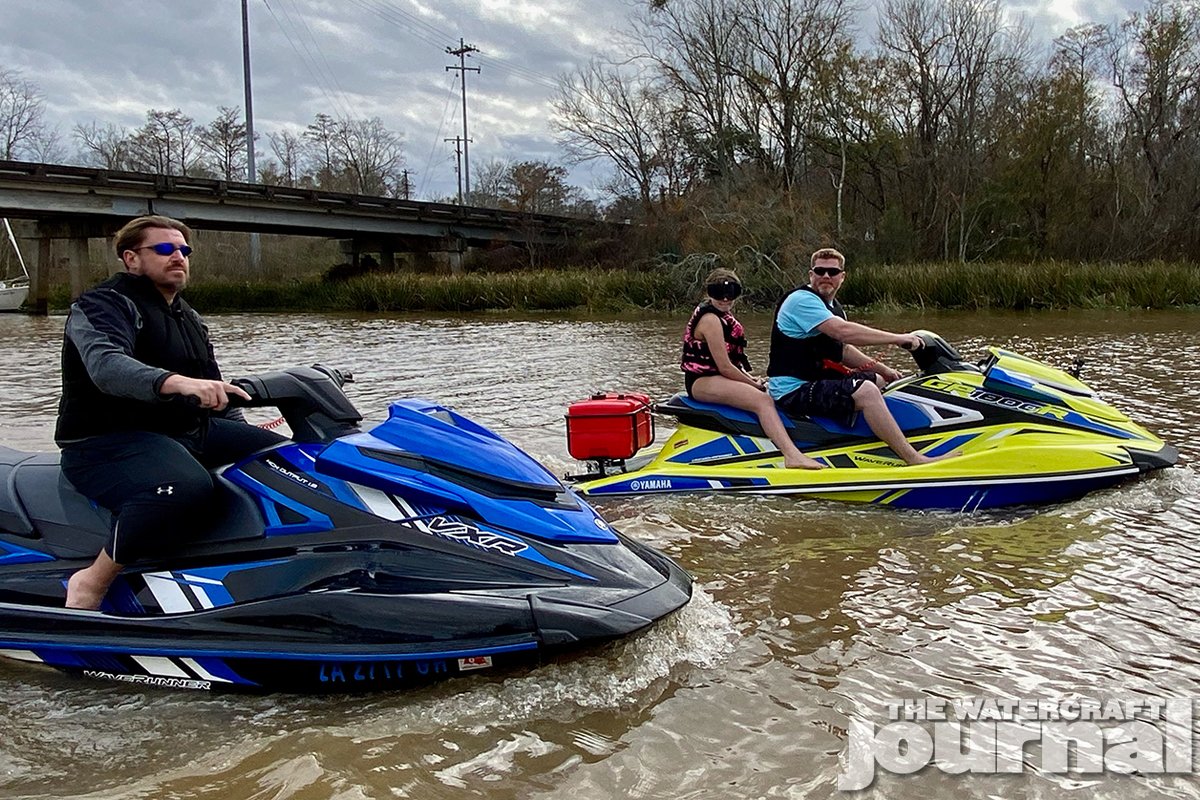
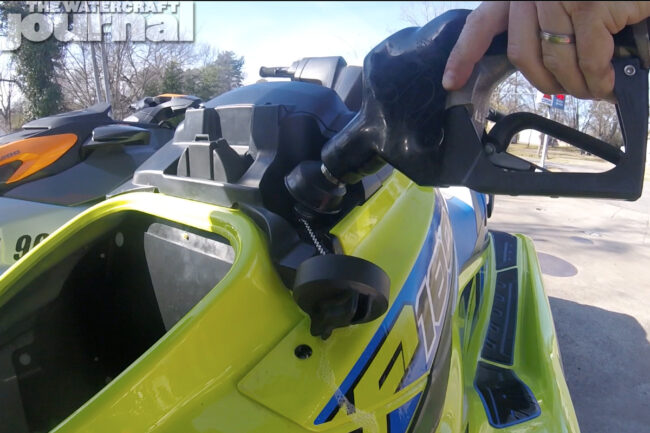
We finished up our food, reboarded our watercraft and retraced the path we had taken. As our Yamaha was equipped with The Watercraft Journal’s Long Haul Auxiliary Fuel System Kit, we had yet to even tap into our WaveRunner’s fuel supply, still drinking from the USCG-approved marine grade tank on the back. Unable to film anything, we casually rode the way back to the St. James Boat Club launch, loaded up the trailers and chatted a while.

That’s when I noticed my worn-to-the-bone 230,000-mile Dodge Ram began to overheat. Morgan was inside with the heater on as I socialized around the tailgate, so I didn’t think much of it. But as dusk rolled in and we began our drive back to Morgan City, the temperature gauge failed to normalize. It continued to climb despite nightfall setting in. We have a heating problem I cautioned. We gotta get to a gas station.

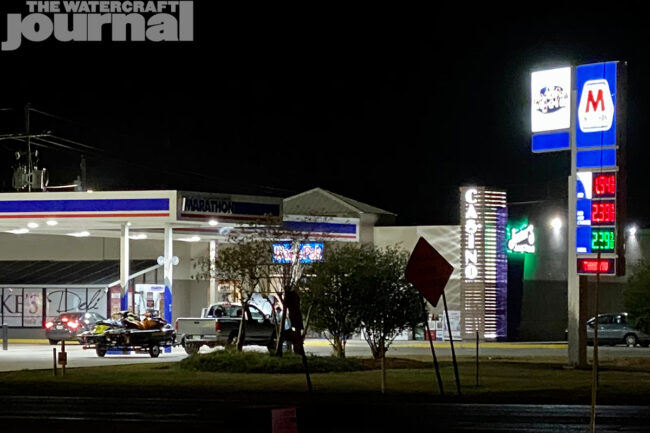
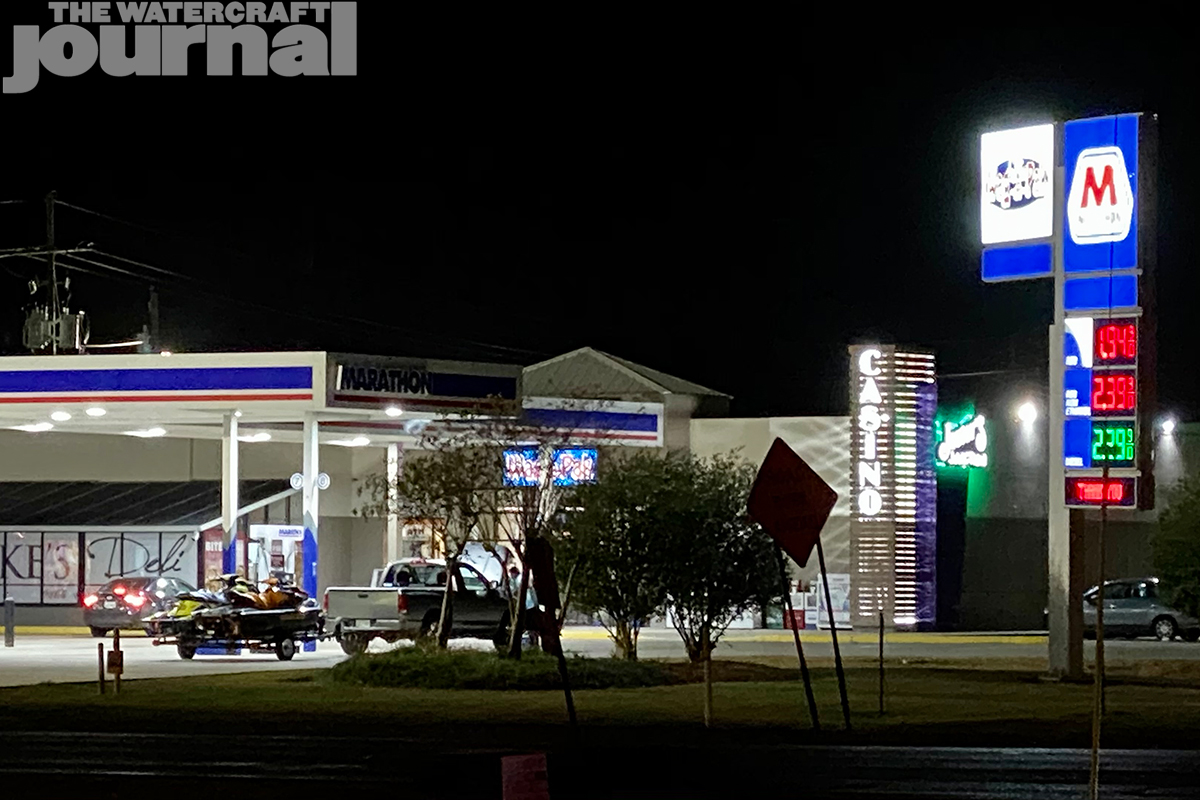
I limped into the Marathon station in South Vacherie, steam erupting from the radiator. Calls to friends beckoned Jerry as well as William and Billy Duplessis. We quickly diagnosed that a fissure between the side tank and the aluminum core had formed, and when pressurized, the cooling system would erupt a plume of scalding steam. But, when the cap was left on but unsealed, the truck could hold coolant and a constant 190º; safe enough to get us back to Morgan City.

We tailed Jerry back to the hotel with an appointment to have the radiator replaced the next morning. Thankfully and somewhat miraculously, a replacement radiator was located in town (a near impossibility, according to Jerry) and the repair was made. In the interim, Jerry and I recreated the lost video segments using my other camera. And although we left town 5 hours later than expected (and with one less camera and a new radiator), we could say it was an eventful trip.

Video: All The Right Steps for Towing with a Sea-Doo

0

All of us like to have a good time on the water, especially when taking the kids out for a day of fun. Club Marine TV presents an easy-to-follow video on how to safely and economically get out there and have a good time while using your Sea-Doo or other PWC to tow.

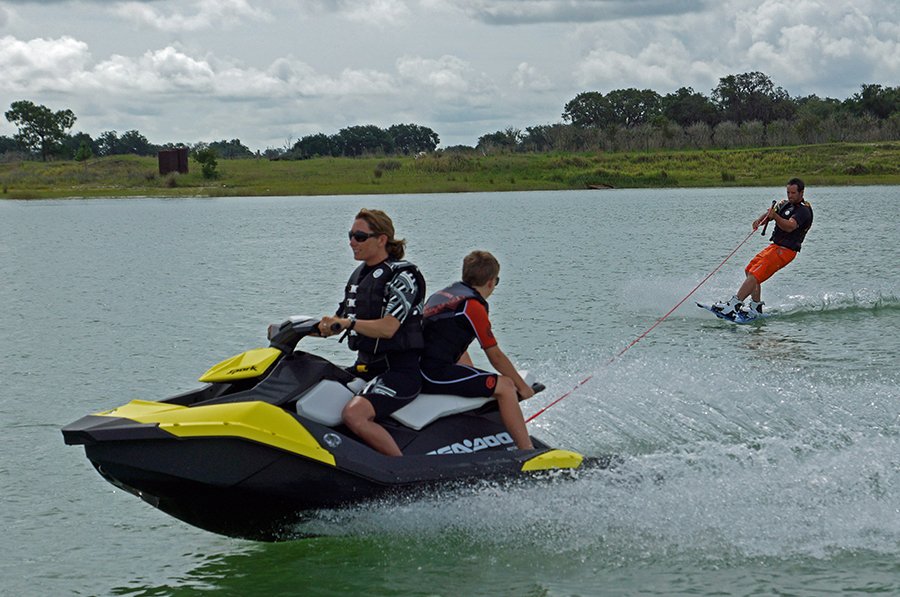
Towing a raft, tube, or a wakeboard adds to the excitement of being on the water and the whole family can enjoy taking turns being towed and be safe while doing it. Sea-Doo has built the perfect watercraft for towing. They are not only affordable, but they also come with just enough bells and whistles to provide us with everything we need for a big day of towing. You provide the toys and Sea-Doo provides the tow points.

The well thought out Sea-Doo watercraft come with a removable and retractable ski pole that is located near the back of the ski. It is a load restrictive tow point, so if you want to pull a tube with two or three kids, the tow point located off the stern of the ski is made to handle heavier loads. Both tow connections are very easy to attach a tow rope. Use a floating bright colored rope for increased visibility.

Shorten the rope when towing kids and make sure they are always behind the ski. Never allow slack in the tow rope and always keep it away from the jet. Have an observer seated on the back of the ski to keep an eye on the riders and other boaters. Hand signals are key for communicating between riders and the observer. Go over the signals with riders prior to hitting the water so everyone is on the same page. Safety is key.

At the end of the day, it’s the driver’s responsibility to observe hazards above and below the water and to keep the riders safe. Other boats, logs, signs, and sand bars above the water are potential threats to safety. Also watch for rocks and other obstructions below the surface. It is imperative to keep whoever is being towed out of danger and away from these objects. Follow the local regulations for the area you choose to put your ski in.


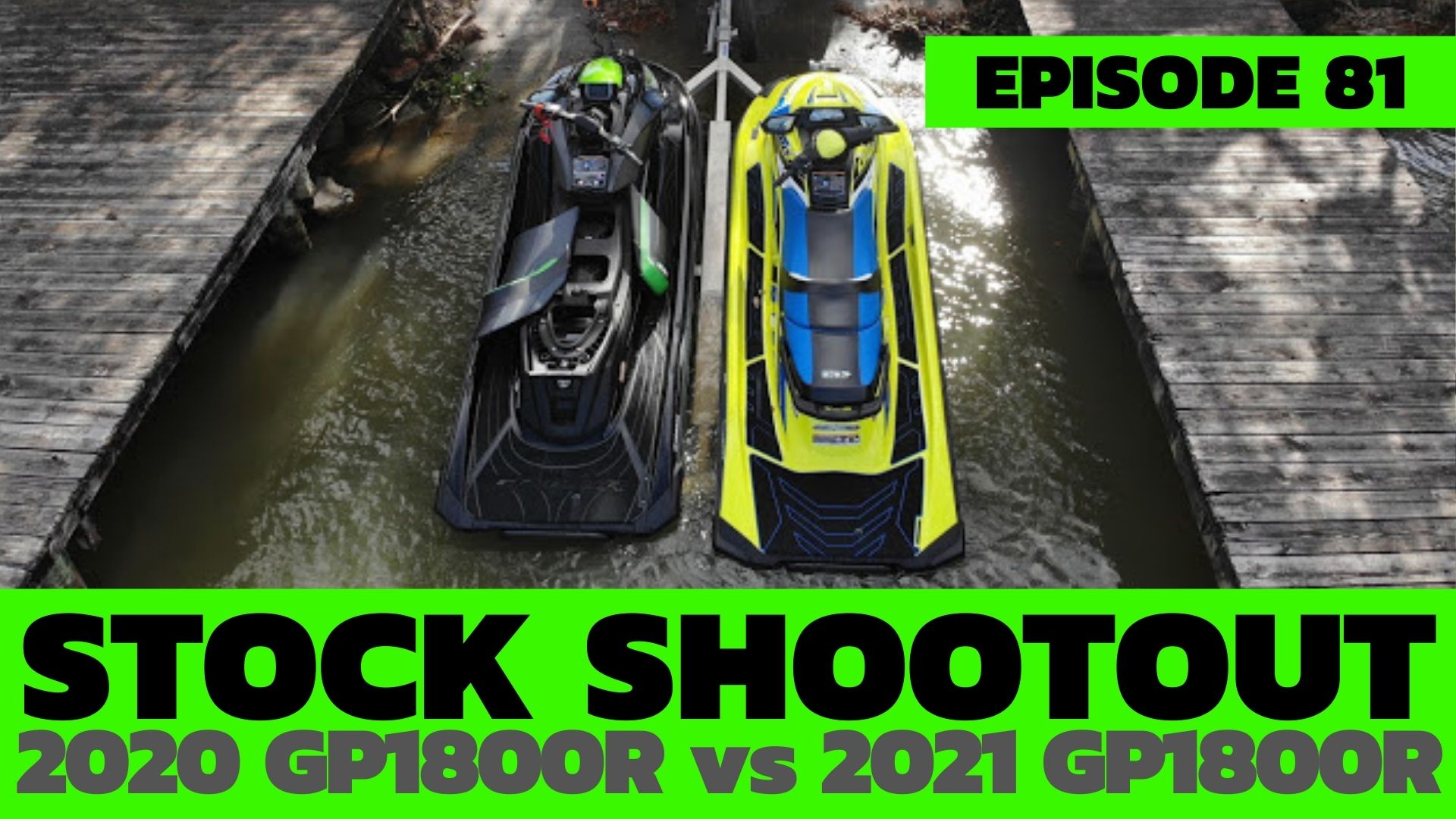
Video: 2021 Yamaha GP1800R SVHO vs. 2020 Yamaha GP1800R SVHO Shootout

2

It’s incredible what a few tweaks to an existing platform can make. In 2017, Yamaha introduced to the world the GP1800 – with the “R” designation coming out two years later in 2019. The change from “GP1800” to “GP1800R” gave the WaveRunner a redesigned a top-loader intake grate and race-designed ride plate for greater precision and predictability in rough water. These two changes alone radically improved initial acceleration as well as kept the pump loaded while making aggressive maneuvers and tracking through chop.

Out of the gate, this meant a difference of nearly half a second in 5-to-60 miles-per-hour times between the first 2017 models and the 2019. Yet in 2018, Sea-Doo came swinging with its redesigned RXT-X 300, and blew that number out of the water. Many will recall the shootout The Watercraft Journal conducted between a factory-stock 2018 Sea-Doo RXT-X 300 and a 2018 Yamaha GP1800, resulting in the RXT-X clicking off an 4.36 5-to-60mph time versus the Yamaha’s 4.42.

At the time, we teamed up with Greenhulk.net’s own Jerry Gaddis and established a few parameters that would render the most realistic (and repeatable) result. First, both vehicles would have their fuel tanks topped off. At 6-pounds a gallon, and it being two years before the RXT-X 300 would received Sea-Doo’s enlarged 18.6-gallon fuel cell, many cried foul. Equally, since the GP1800 didn’t come equipped with Launch Control (and the Sea-Doo did) we thought it fair not to use it. Again, folks cried foul.

Lastly, we used Jerry’s Vbox Sport – one of the most trusted performance accelerometers available today – and opted (like we did before) to measure each ski individually from an idle speed of 5mph rather than trying to record a 0-to-60mph speed. Why? Because a true zero is impossible with an idling personal watercraft, even if it’s in neutral. Equally, we would have the Vbox also record a peak top speed. All of this was done to conduct the most scientific and fair comparison possible, and we felt that we had done the very best.

At the close of summer last year, Yamaha rolled out the near entirely redesigned GP1800R SVHO for 2021. Retaining the same hull mold as that of 2017-and-up, the rest of the SVHO was revised in one way or another. Obviously, the most overt change was to the top deck, giving the GP1800R a curvier shape, a more contoured seat, Yamaha’s full-color Connext digital dashboard, larger engine access, and a wholly re-engineered steering system with a 5-way adjustable tilt neck.

Below the removable top deck was the same Super Vortex High Output 1,812cc 4-cylinder four-stroke, but touting a new larger diameter supercharger clutch reducing slippage and wear. Equally, the inner hull liner redistributed the WaveRunner’s weight by moving the 18.5-gallon fuel cell amidships by 3-inches, as well as lowering it deeper into the hull by over an inch. Finally, Yamaha re-machined the aluminum transom plate from 155mm to a true 160mm opening, removing the alternating taper that caused so much cavitation from a standstill.

Of course, when it comes to out-of-the-gate hookup, nothing beats a really aggressive top-loader intake grate, and that’s exactly what Yamaha bolted to the 2021 GP. The new grate features a 20-percent larger inlet “chip” or ramp, ensuring more volume entering the pump at all speeds. When we at The Watercraft Journal first tested the 2021 GP1800R SVHO, we knew it pulled demonstrably harder than before…but how much more? For that, we decided to head back down to Louisiana and pay our friend Jerry a call.

Recently, Jerry handed the reigns to the Greenhulk Garage YouTube channel over to his son, Greg Gaddis, who as of recently, has been regularly testing a brand new 2021 GP1800R SVHO. Conversely, we had in our possession an impressively low-mileage 2020 GP1800R and thought it the perfect opportunity to conduct a showdown just like before. This time, this face-off would be less about brand loyalties and rather, measuring the improvements that Yamaha had made to the GP1800R platform over the years.

Per our established parameters, both WaveRunners would be ran with completely full tanks of fuel (18.5-gallons coming in at a total of 111-pounds). Equally, our conditions were nominal: 72-degrees outside with a faint 5-mph wind and zero current in the stretch of locked canal where we were testing. We tagged Greg to serve as our guinea pig, since he weighs 90-pounds less than either of us. And while it would prove less effective, we did conduct several passes on the 2021 using Launch Control, although Greg was able to fare better results manually.

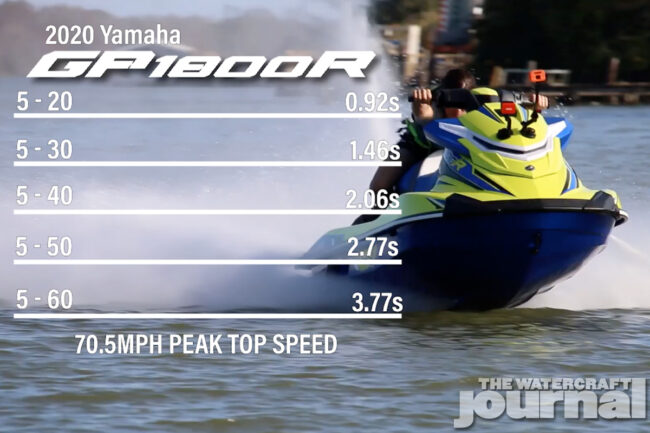
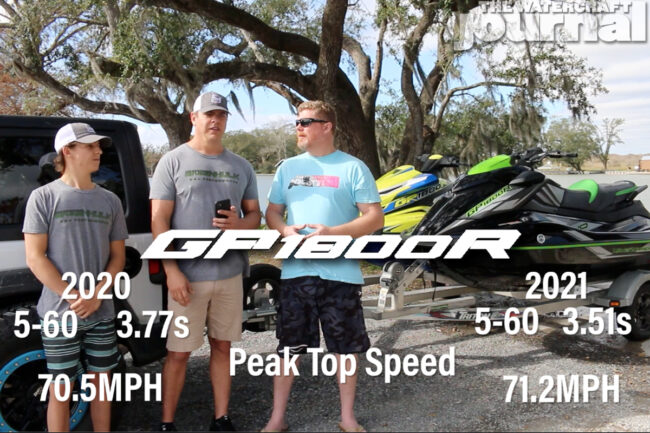
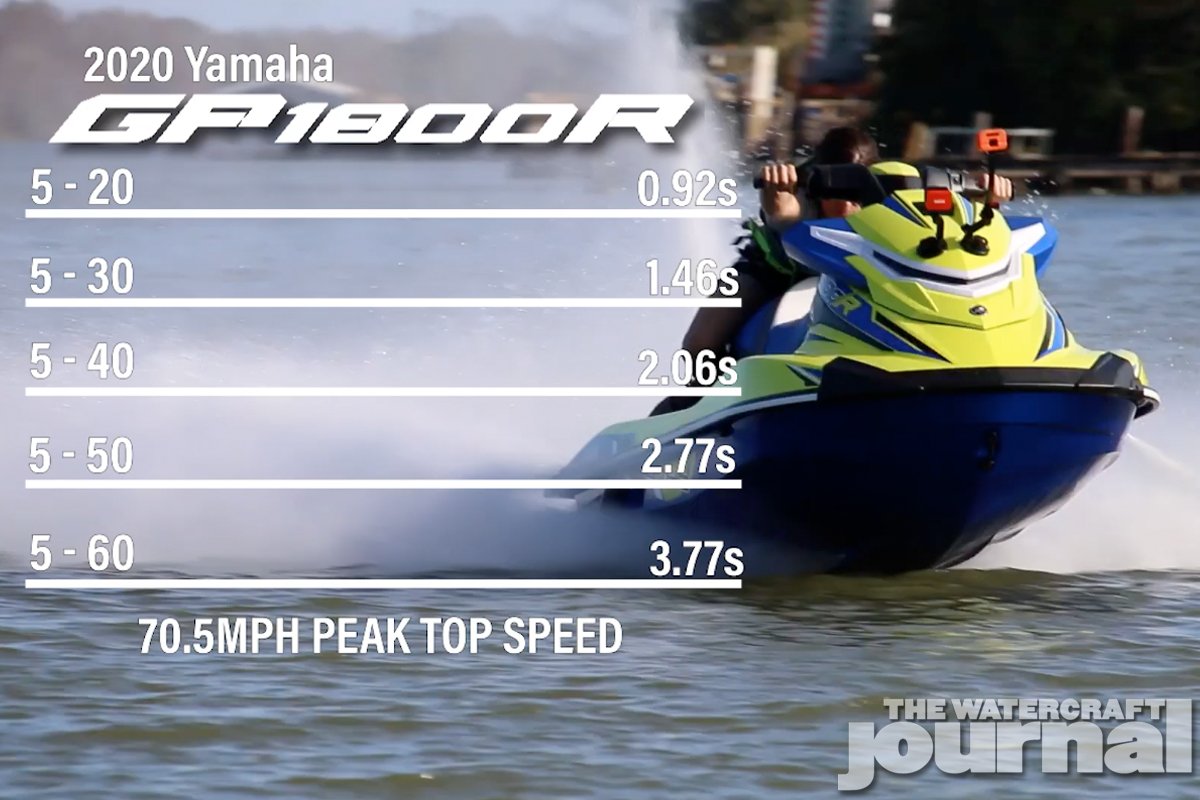
Beginning with the 2020 Yamaha GP1800R, Greg was able to click off a respectable 3.77-second 5-to-60mph acceleration time, with a GPS-confirmed peak top speed of 70.5mph – that is, before the speed limiter pulled back on the throttle, dropping it back down to 68mph. In the video, the 2020 pulls hard, but almost immediately begins to cavitate, struggling to ingest and process the quantity of water necessary to maintain thrust. Worse, off as it reached peak speeds, the engine began “bouncing” off of rev limiter, causing the ski to surge.

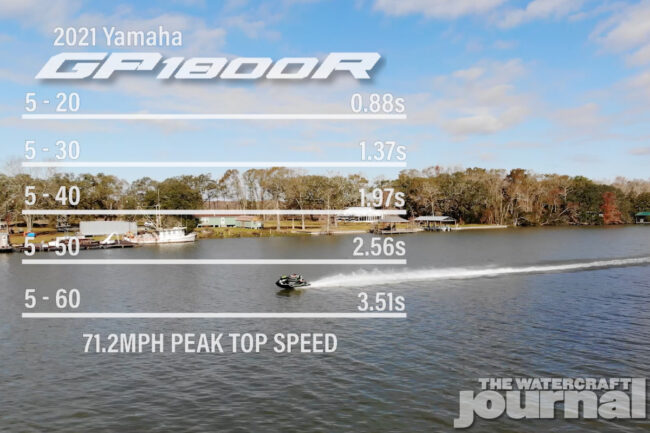
Switching to the black-and-green 2021 GP1800R, the supercharged 1.8-liter launched hard and rocketed to an impressive 5-to-60mph of 3.51-seconds and again, a peak top speed of 71.2mph. From a crawl, the 2021 bites into the water hard and yanks Greg to 70-miles per hour almost without flinching. Again, attempts were made to best this time using the newly-added Launch Control feature, but Greg’s toggling the electric trim manually fared better results.

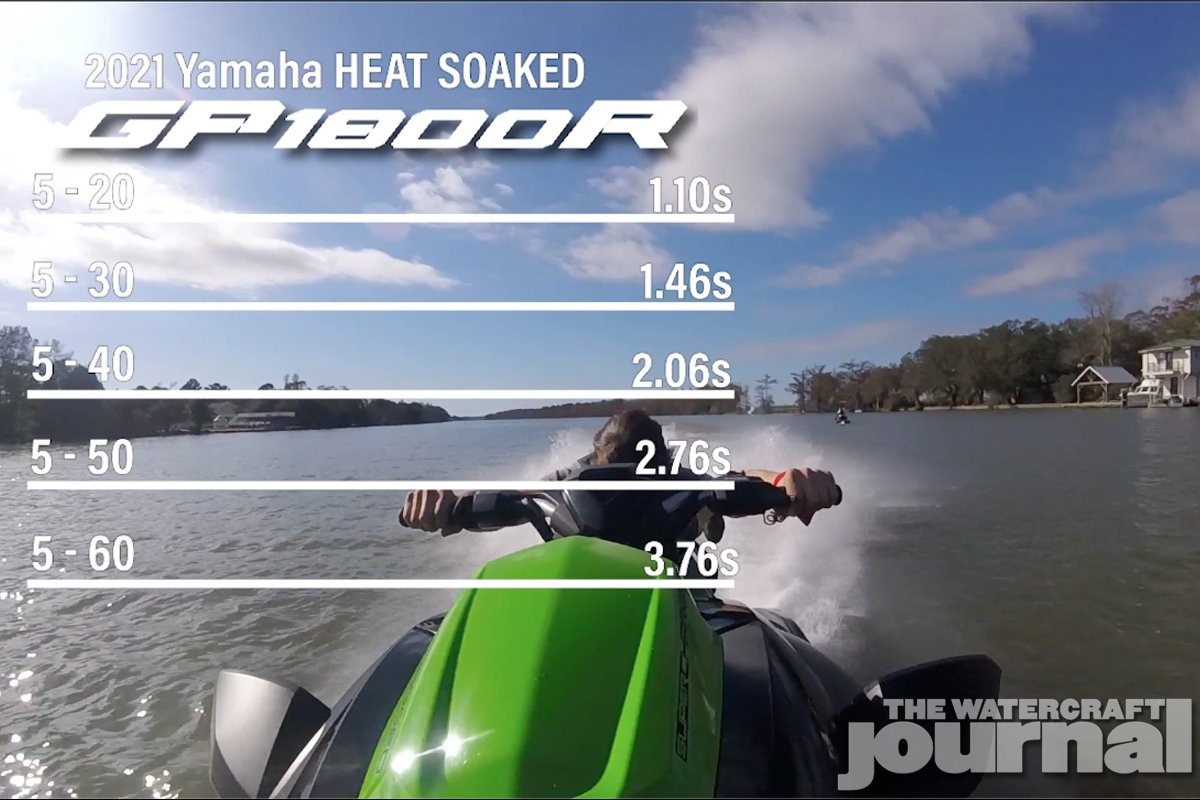
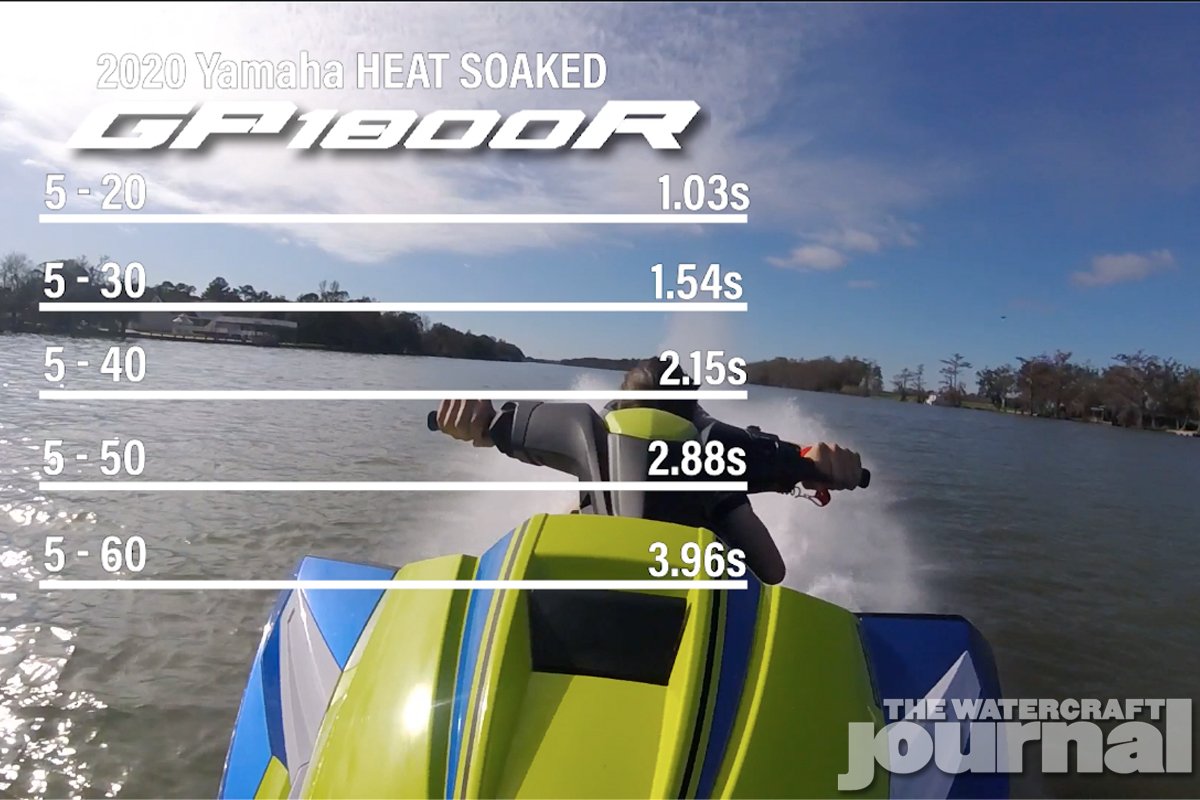
After several passes and both engines sufficiently heat soaked, acceleration numbers were delayed but the placements did not. The 2020 pulled to 60mph in 3.96-seconds, while the 2021 sped to 60mph in 3.76-seconds (which was faster than the 2020 with the engine cool). Of course, the biggest revelation was how much better the 2021 GP1800R does compared to the original 2018 GP1800 we tested over two years earlier: 4.42-seconds versus 3.51-seconds is nearly nine-tenths of a second, or effectively, nine car lengths if you’re talking drag racing.

In all, the advancements made to the GP1800R platform speak for themselves. We certainly we able to quantify the performance gains – at least in regards to initial acceleration – but there’s still so much left to verify. Cornering prowess is certainly palpable to the keen rider; the WaveRunner’s lean-in, and pull through the apex of a corner is exhilarating. Equally, the SVHO tracks so predictable through a variety of water conditions it’s almost boring. We’ll definitely be watching the professional racing circuit for those results, so until then, enjoy the video below: