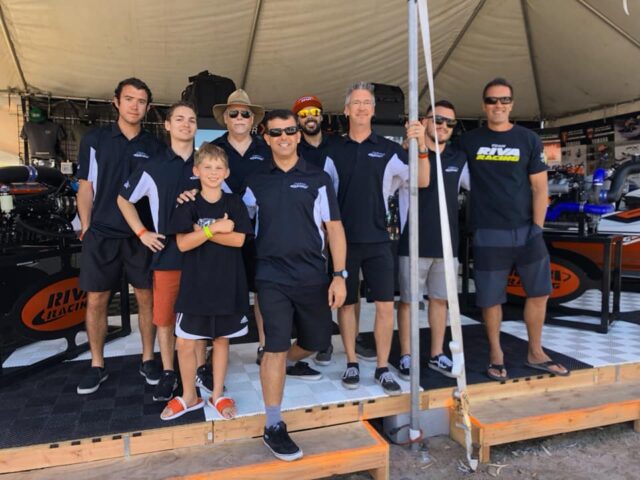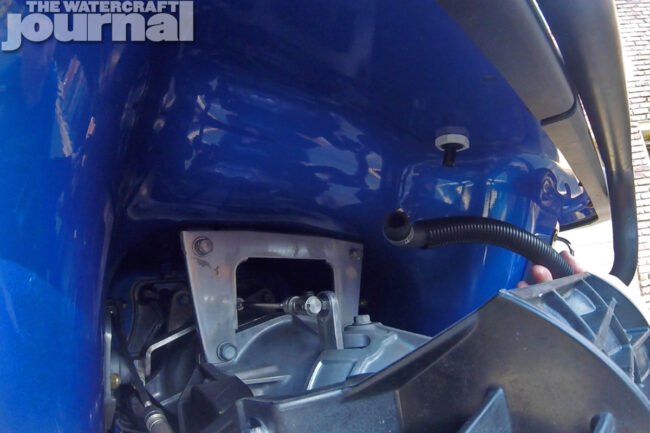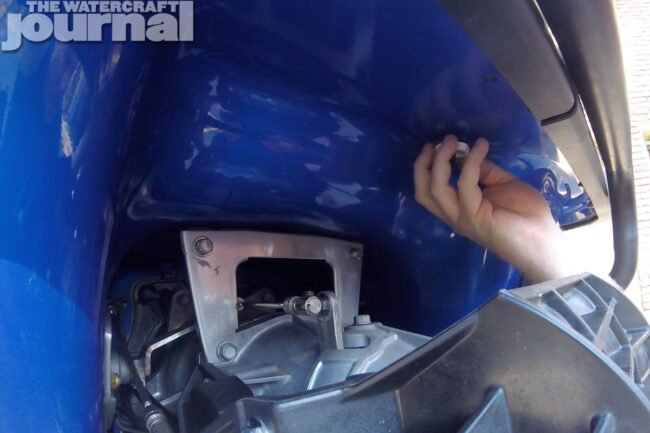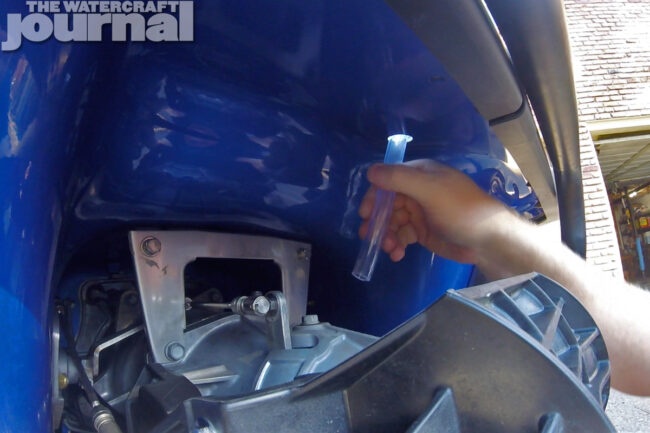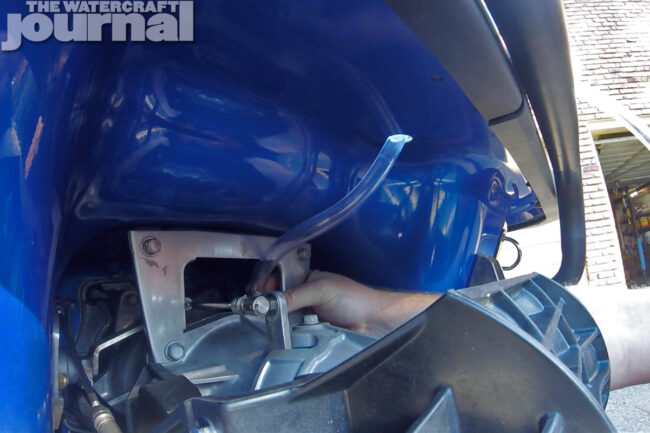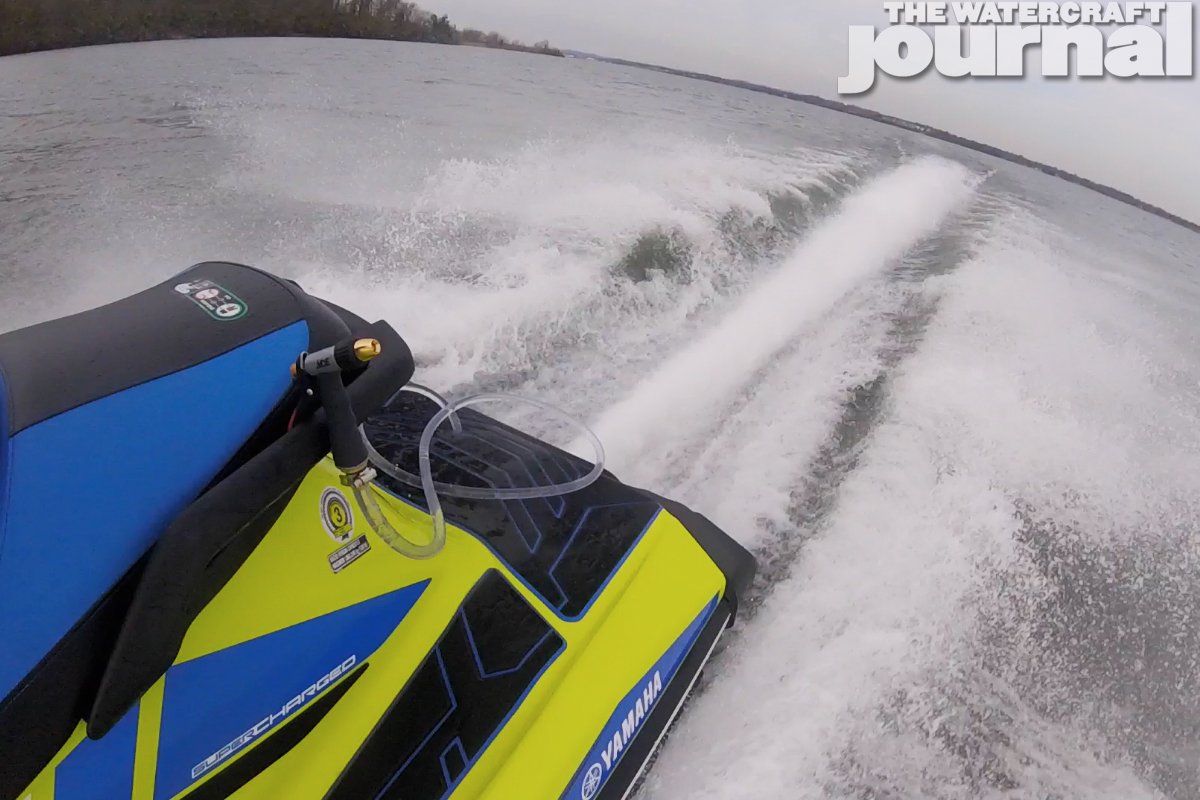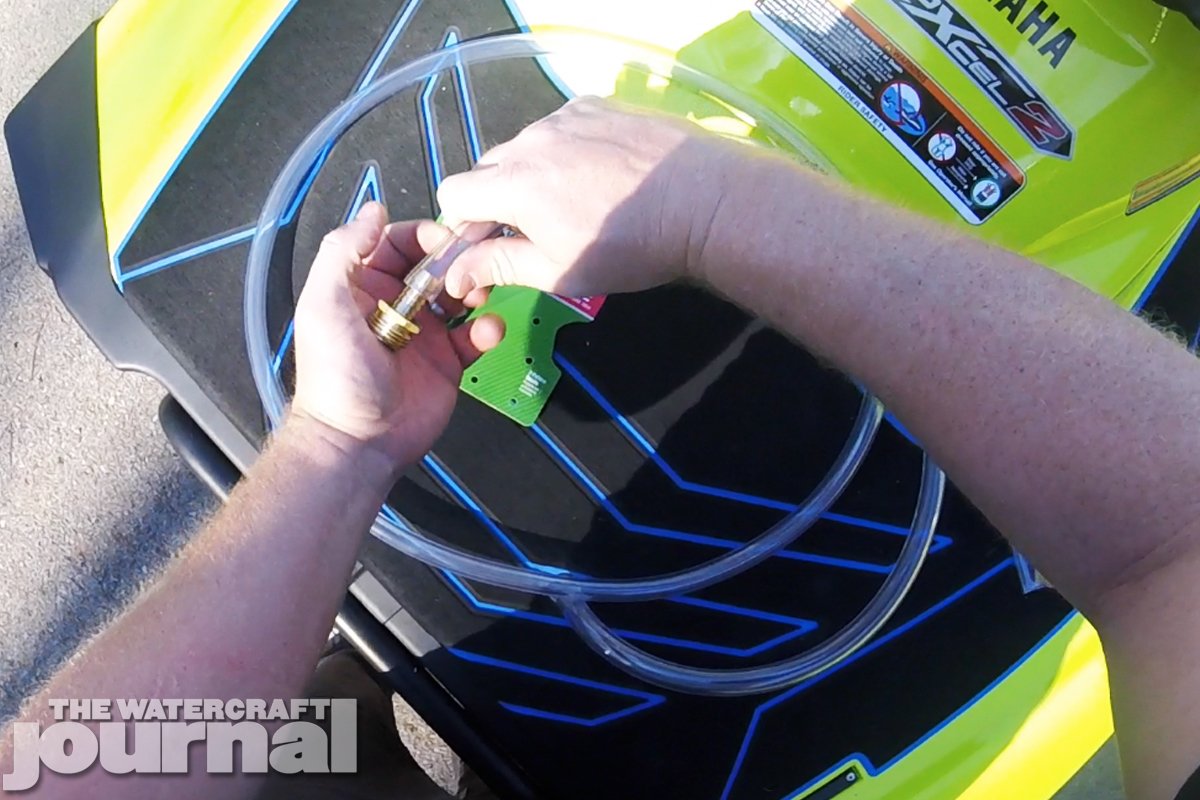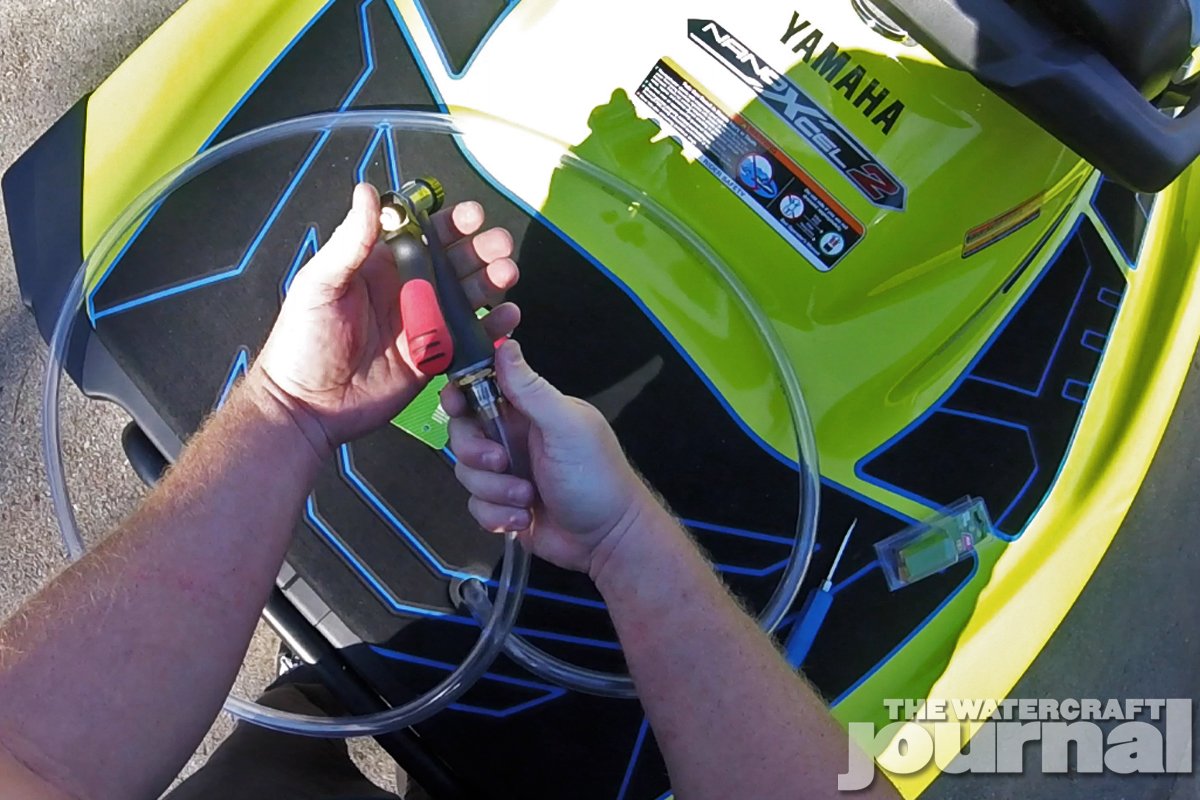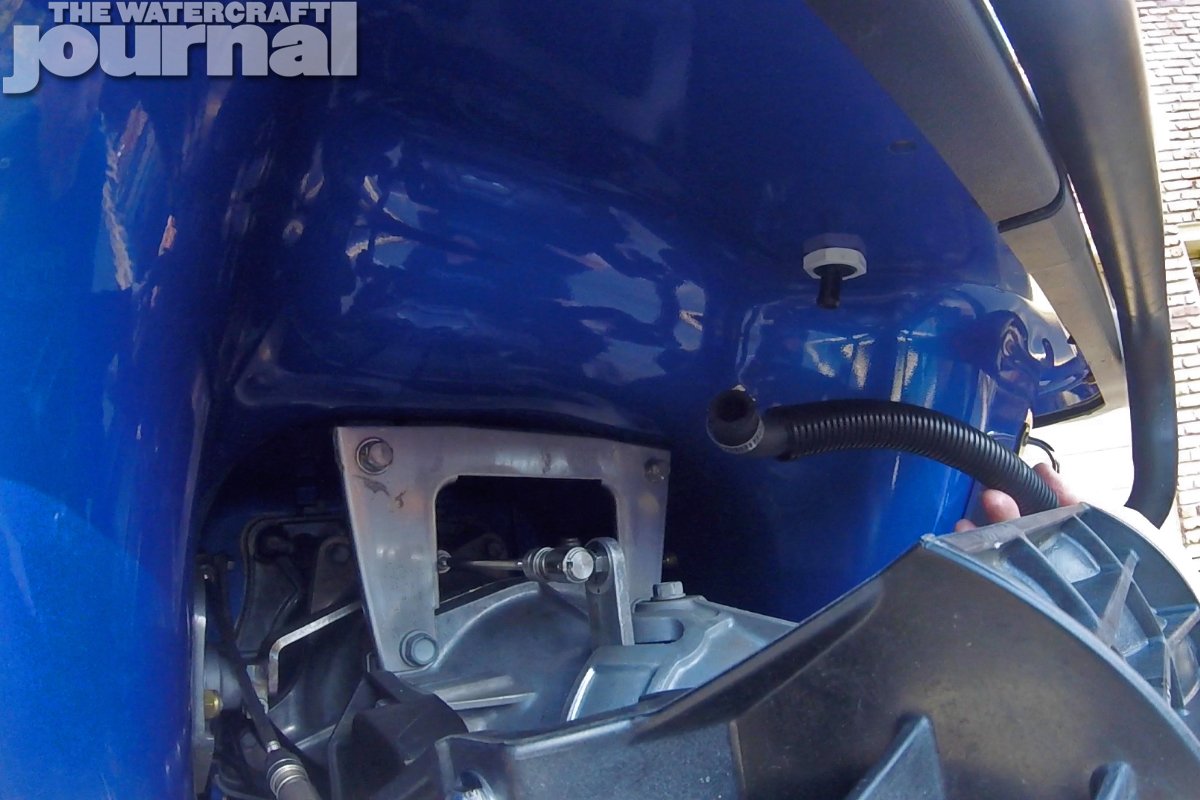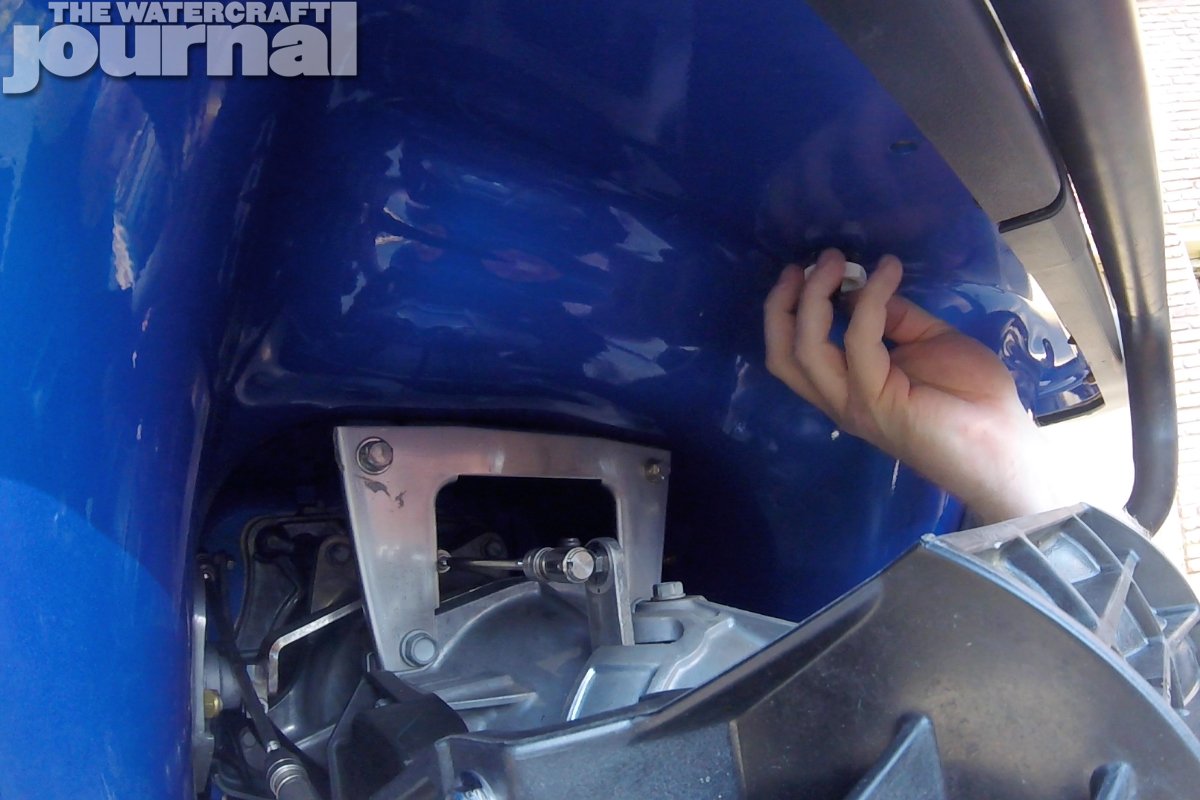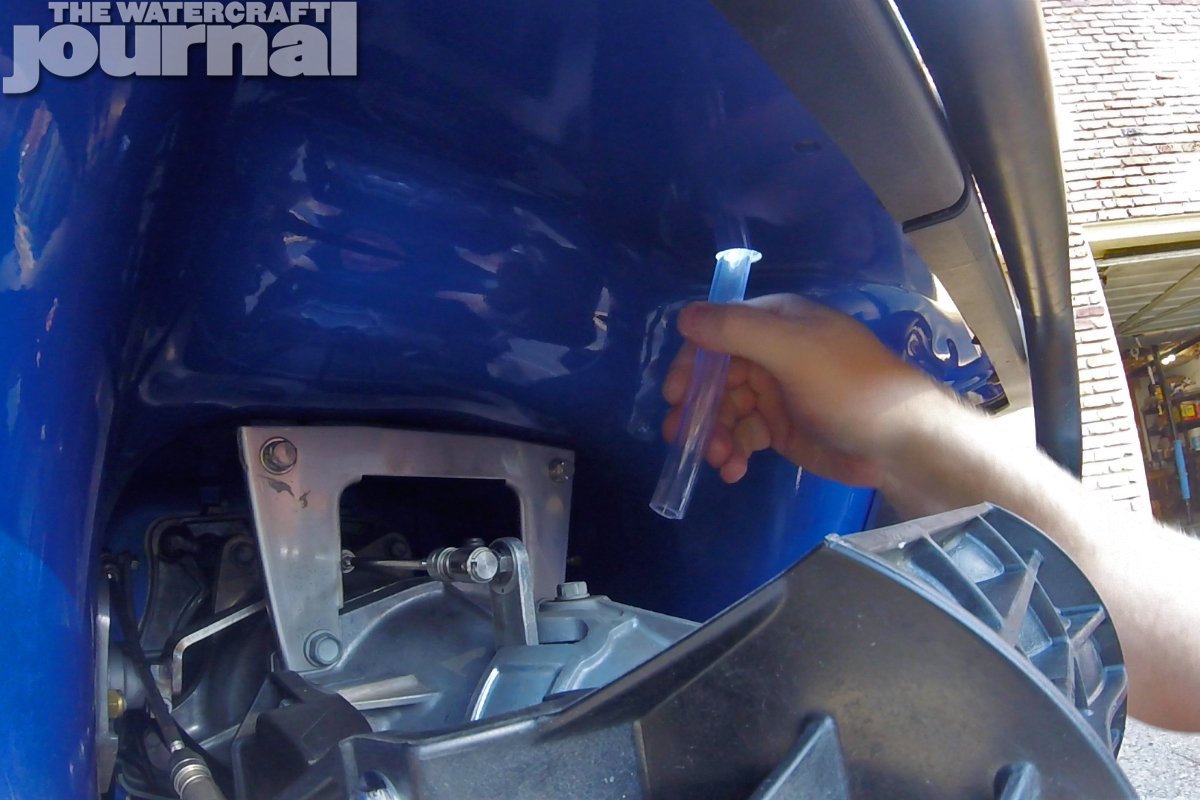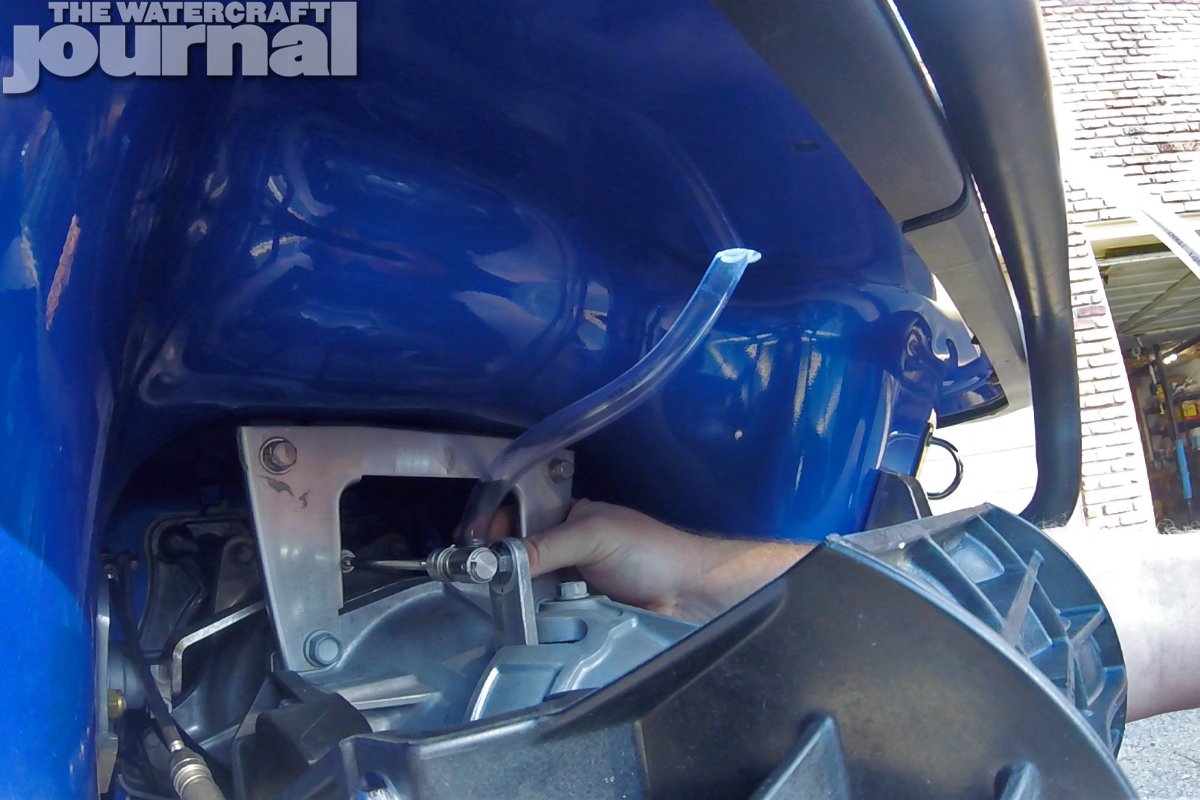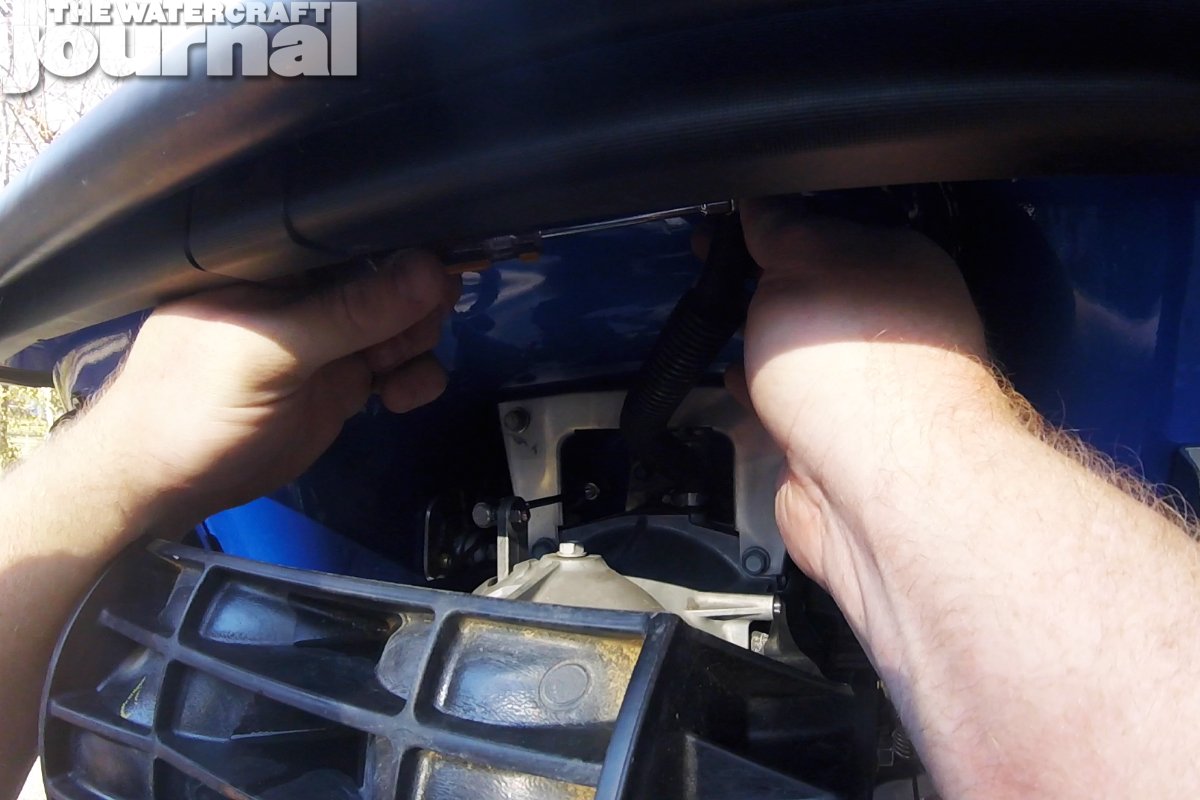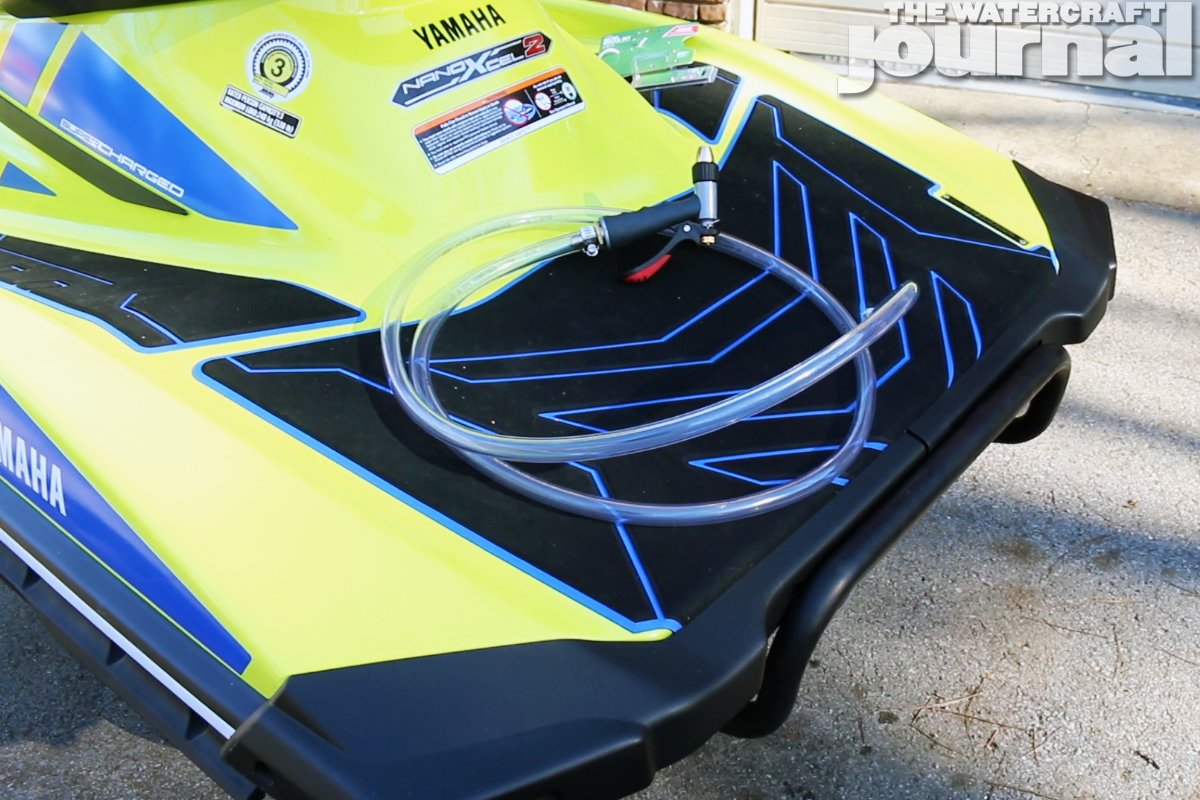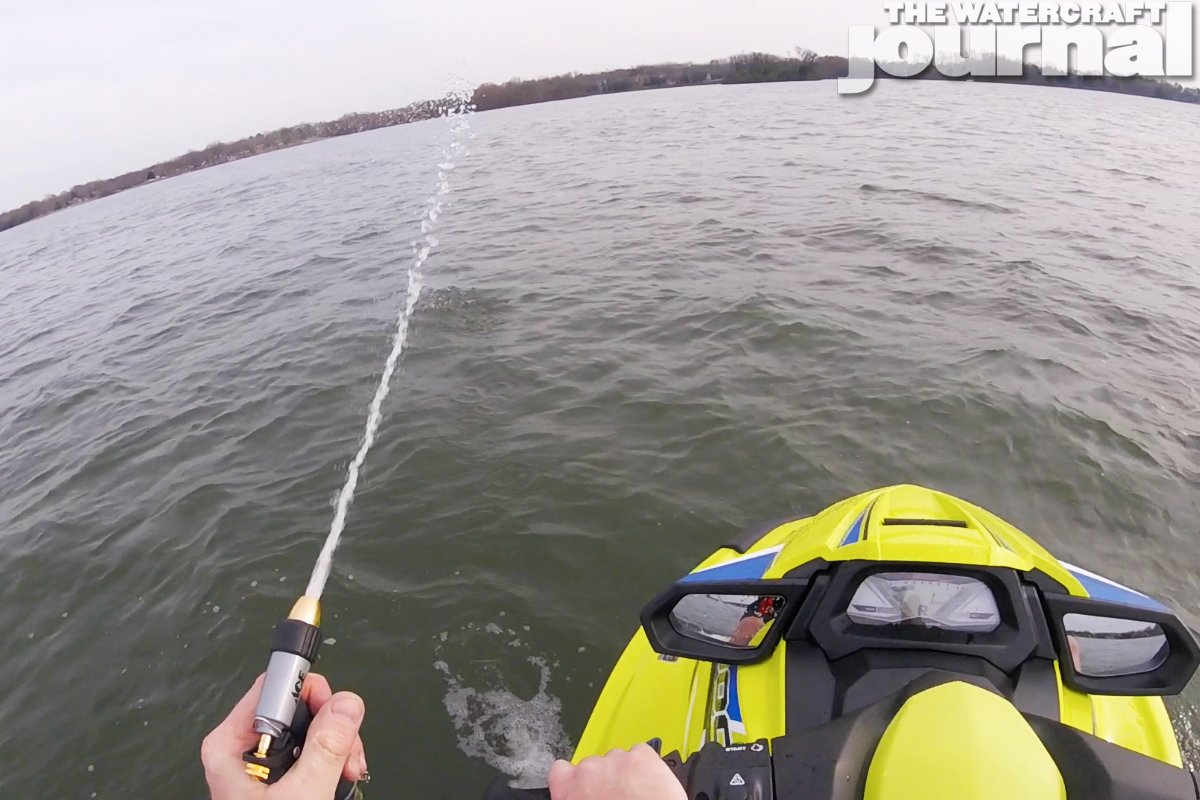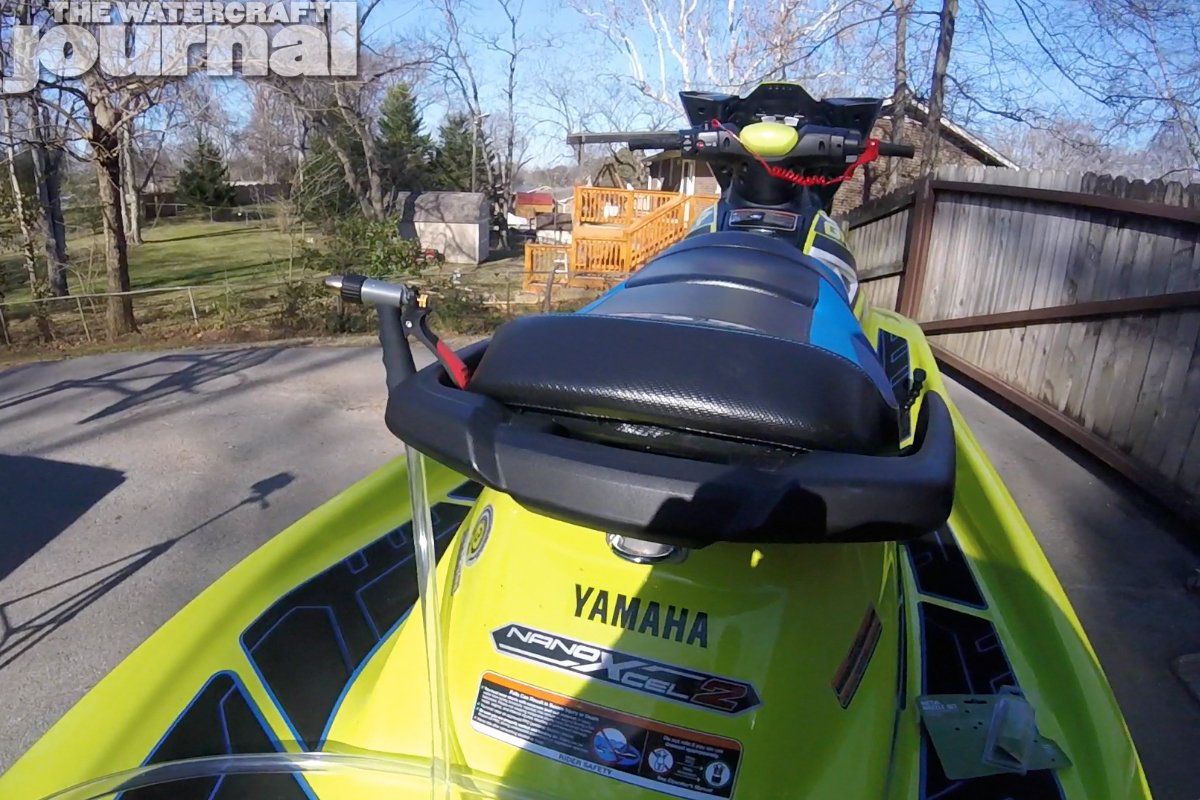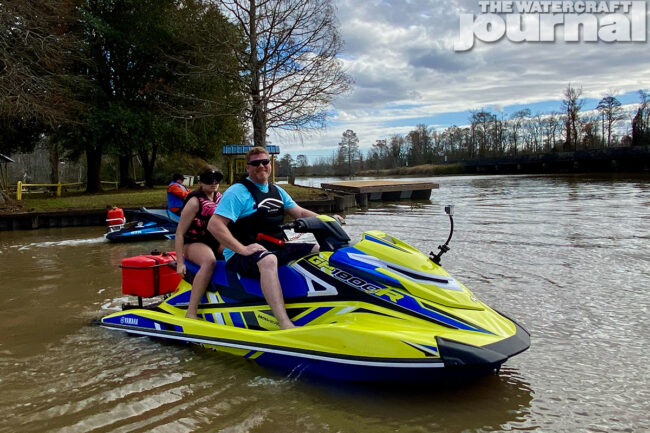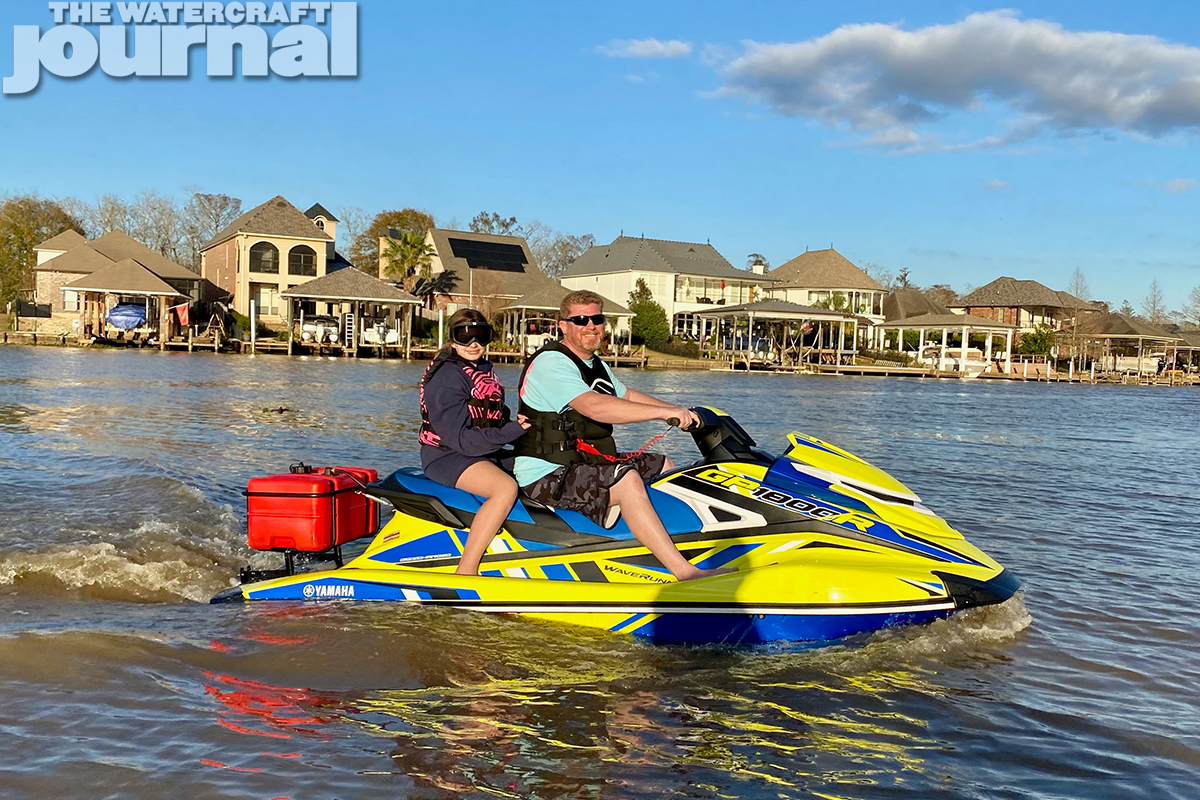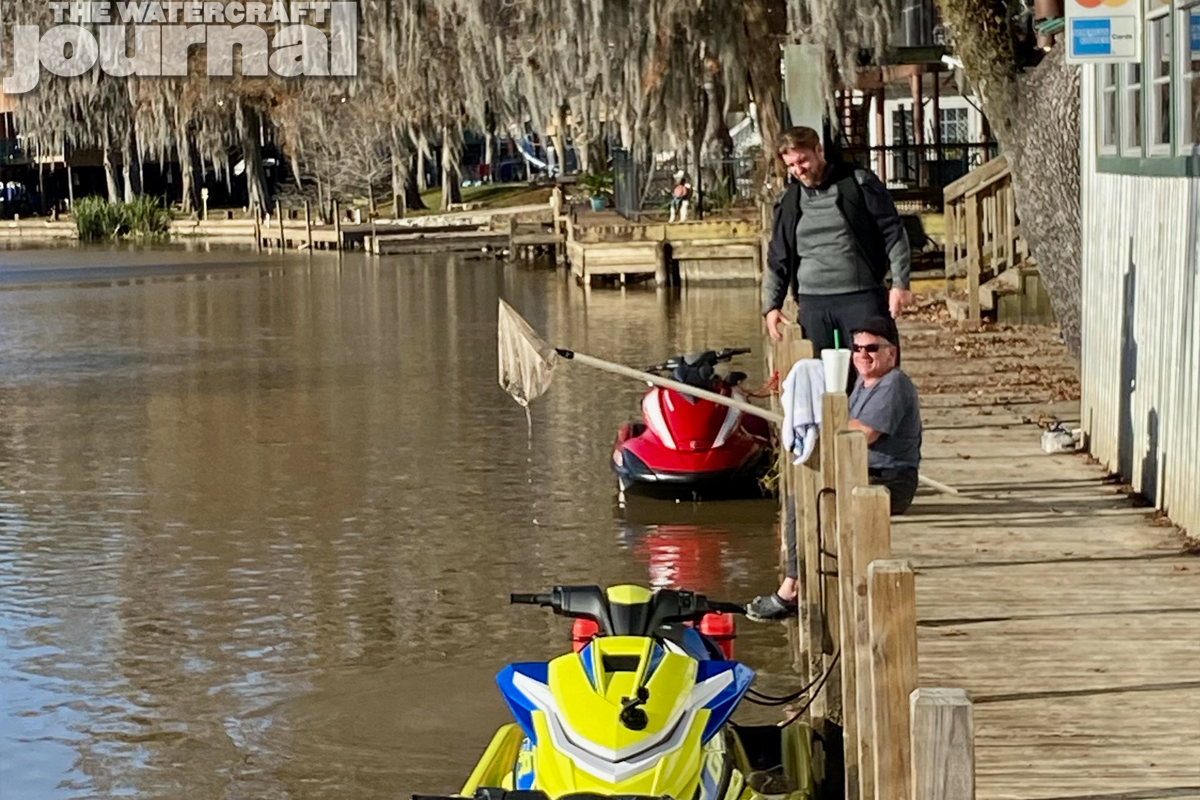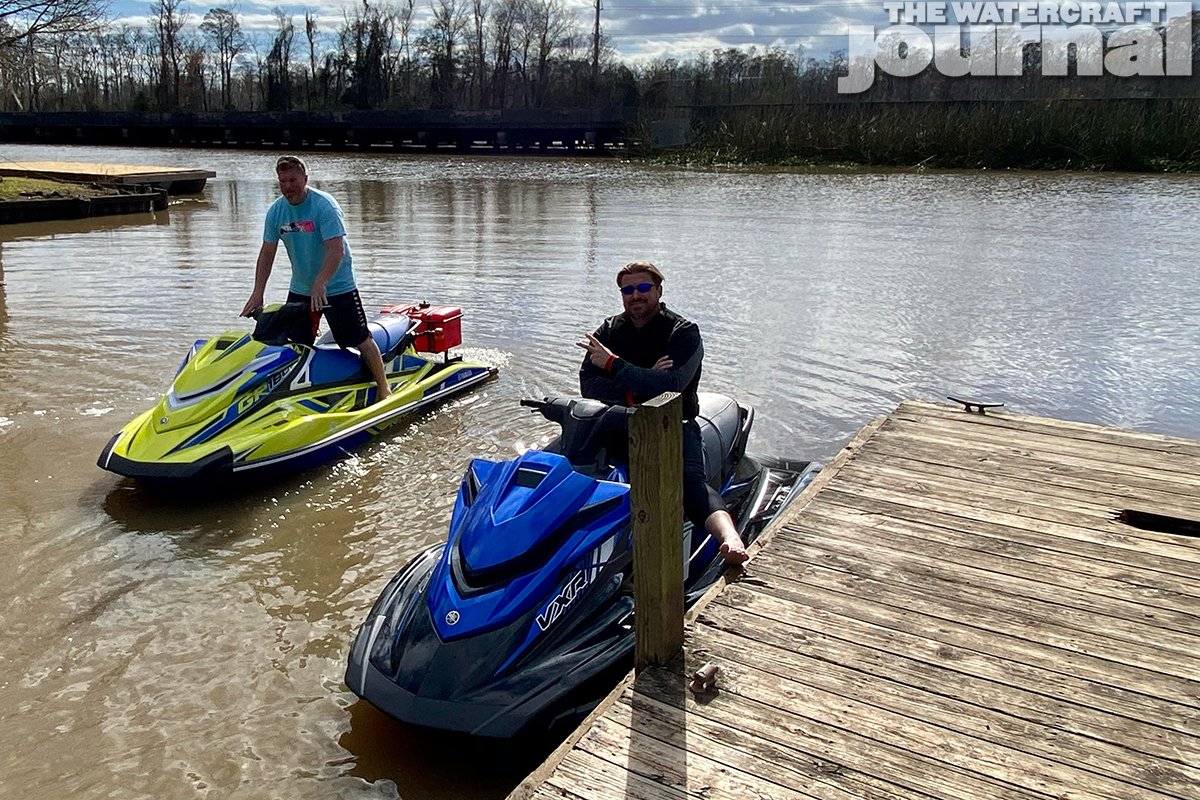



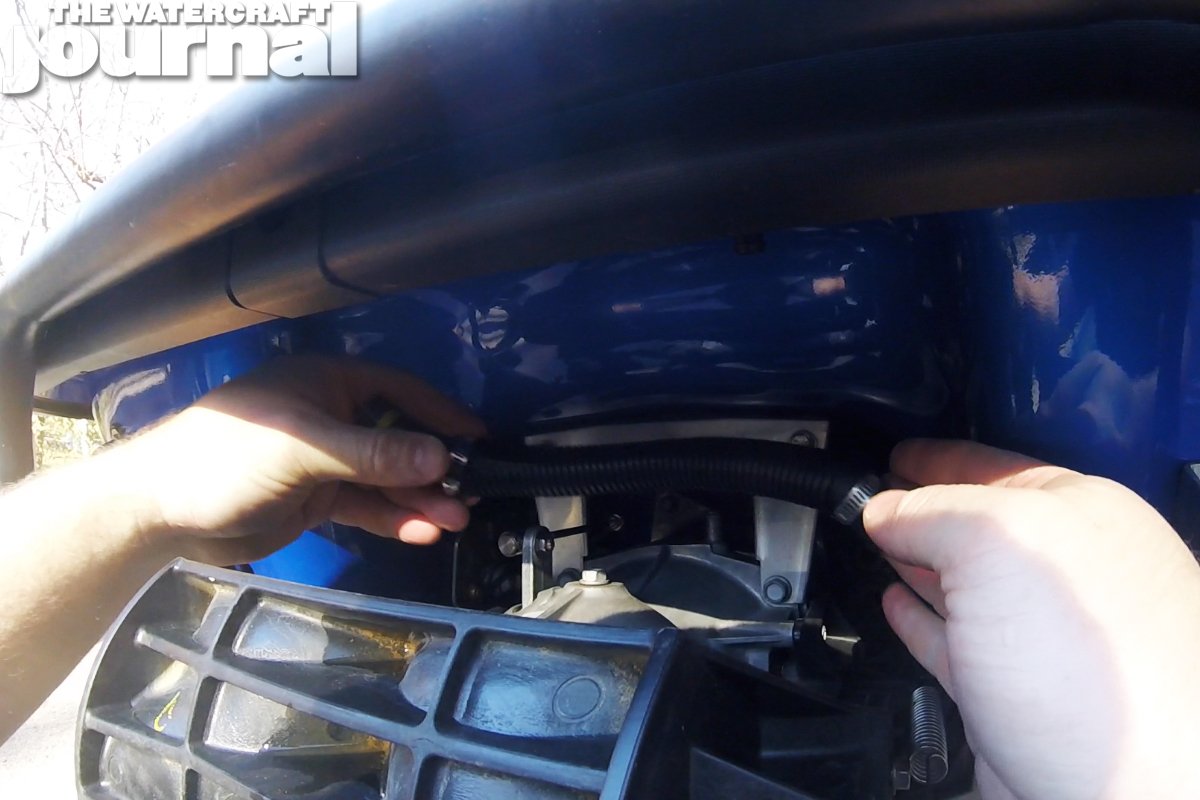
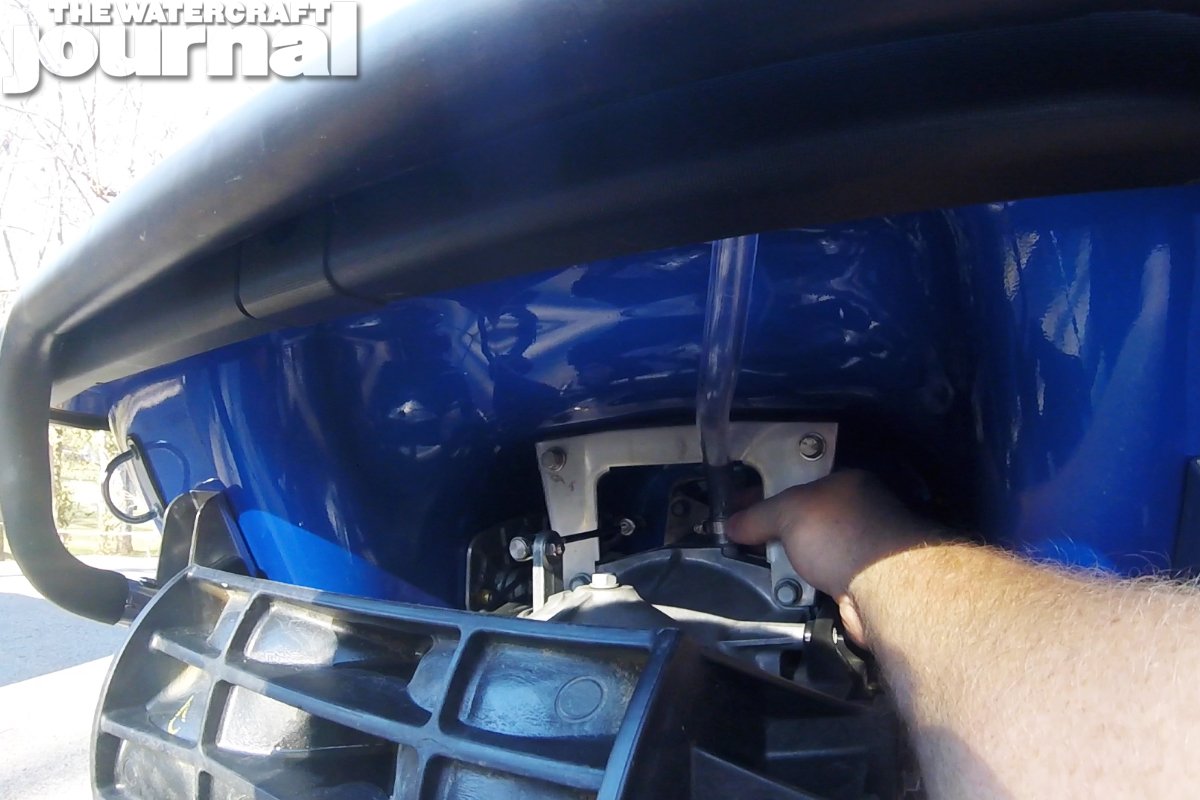
The stock rubber hose is replaced with a royal blue heavy-duty high temp silicone exhaust pipe. The free flow exhaust not only looks good, it sounds good too. The new kit also reduces failure points because only two clamps are needed to secure it. The kit will improve your machine’s performance with reduced back pressure.
Check out the preview video to see how good the new kit looks and get a glimpse of the amazing amount of room the install will free up in your engine compartment. One of the guys even revs a new Superjet engine so you can hear the low rumble of the new exhaust. It sounds good!
Go to the RIVA Racing website to order your kit now for late October shipping. The 2021 RIVA Yamaha SuperJet Free Flow Exhaust Kit retails for $199.95 and it only takes minutes to install.
I often joked that if a specific item can’t do the one thing it’s supposed to do well, all of the other features and accessories don’t mean a thing. So if a smartphone can do a myriad of different tasks but fails at being a telephone it’s little more than a pocket computer. That is why I’m so critical of newfangled technologies. Few actually succeed at the task at hand and try to distract the buyer with other albeit flashier bits and pieces. I suppose that’s why I enjoyed Hitcase’s waterproof Splash case for the iPhone 7/8 so much. Heck, I even listed Hitcase as a video sponsor for most of 2020 although I paid for the case out-of-pocket.
It did exactly as advertised; it protected my smartphone from water intrusion, dirt, and dust flawlessly. And it did so without muffling speaker sound, interrupting phone calls or stifling its touchscreen. Frankly, the Splash case was one of the best I had ever reviewed for The Watercraft Journal, and I mean that with zero hyperbole. The biggest concern also proved correct in that it was the only item to fail: the rubberized charging port plug. After a year and a half of use, the stiff rubber plug cracked and tore off, leaving my once waterproof phone case effectively useless.
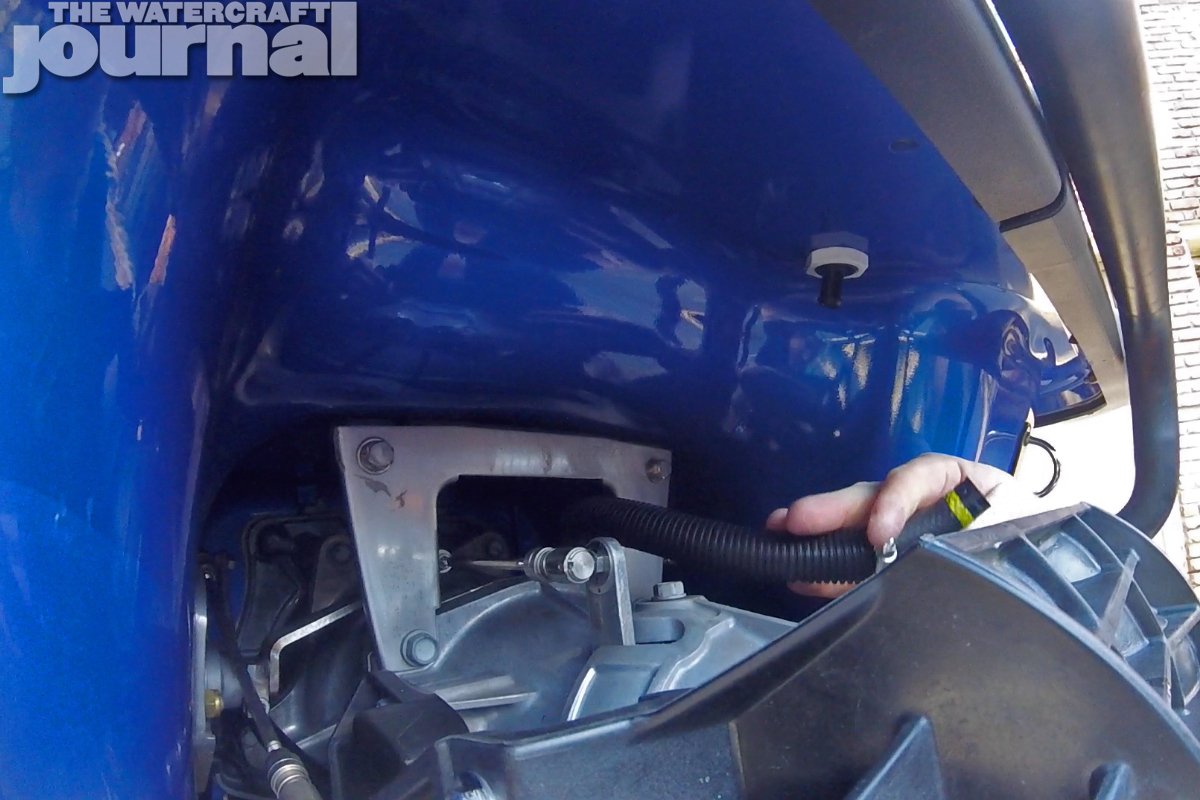
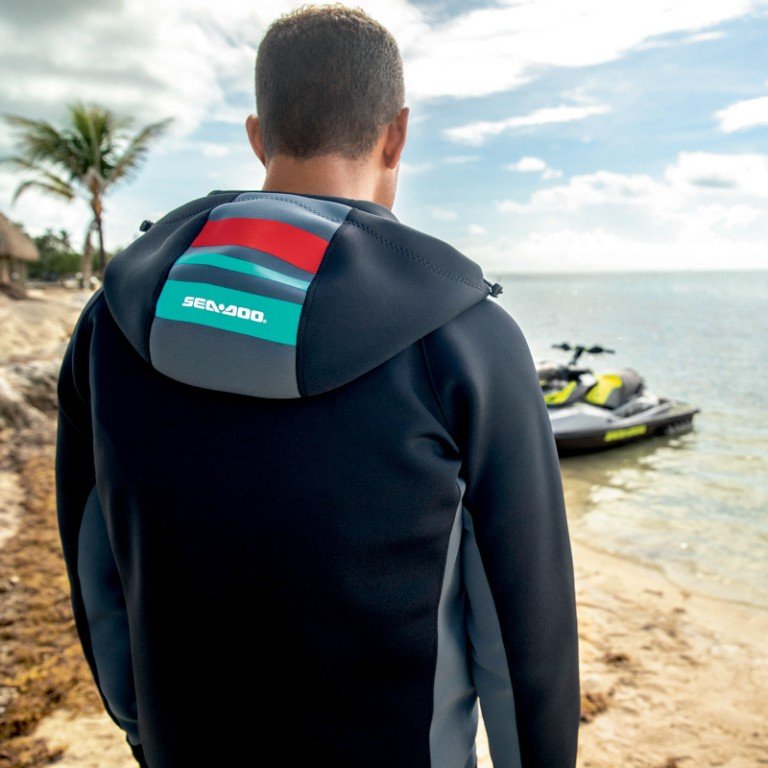
Finding myself newly loyal to the Hitcase brand, I sought to replace it posthaste. Unfortunately, the Splash appeared discontinued so I sought out its replacement. That appeared in the form of the Hitcase Shield Link case. Meeting my primary requirement – that being waterproof – the Shield Link also offered a bevy of other features: mainly, a slim-but-rigid “drop-proof” aluminum frame, and its compatibility with TrueLUX camera lenses. It also came with a rubberized “Air Shield” if I chose not to use the Aqua Shield screen cover (which, I wouldn’t).
At first blush, the redesigned two-piece case appeared…underwhelming. The aluminum frame was stout enough, but the thin Aqua Shield felt thin and flimsy. After properly cleaning and prepping both my iPhone 8 and the case, the two sealed up rather nicely. Yet, almost immediately I was struck with the challenge of prying open the redesigned power port plug. Swinging on a hinge, the plug is much softer than before, and even despite its extended ear, was impossible to grasp between my fingers. Even after a month of use, it often requires using anything nearby to pry it open.
Thankfully yes, the Hitcase Shield Link is waterproof and its chromed knob and buttons are far easier and tactile to use than the outgoing rubberized Splash case. Yet, that is pretty much where my praise ends. Almost all calls not set on “speaker” are muffled, particularly for those on the receiving end. This has required me to extract my phone from the case multiple times just to complete a call – an equally frustrating task. Most curious though is the Link Mount System for which gives the Shield Link its name.
The Link Mount is an adhesive-backed metal plate designed to stick to the inside of the clear plastic shielding on the phone’s back. This plate is intended to act as a conduit for wireless charging the phone. Interestingly though, the plate did exactly the opposite, literally blocking my phone from receiving a charge from both my desk top wireless charging puck as well as my truck’s wireless dock. Curious, I opened up the case yet again, peeled off the plate, reassembled the case, and viola my phone was charging again.
In a little over a month’s time, the signs of wear and tear showed far sooner than the previous Splash. The black paint covering the aluminum frame began to show chips and scratches (again, I’m pretty tough on phone cases). The thin waterproof shield gathers quite a bit of dust in its seams, requiring a good cleaning with some alcohol and a Q-tip prior to this photoshoot. Thankfully, the slick film on the rubberized port plug has gone away, making opening it only half as difficult. (*sigh*)
Priced at $69.99 on Hitcase’s own website, the Shield Link case for iPhone 7/8 can be found for half of that cost (if not more) on both Amazon and through other online retailers. Of course, given that it hampers your smartphone’s primary function so badly that it’ll spend half of its time removed, it’s really not worth the money. For a brand that hit it so far out of the park with an old design, it’s disappointing that its replacement is so flawed. So until I can find a new-in-box discontinued Hitcase Splash case, I’ll be living with this one for a while.
This video tutorial courtesy of 3ftDeep is often an overlooked maintenance task that if left unchecked, could result in your Sea-Doo engine starving for air should there be a foreign object lodged within your air intake silencer.
A fair warning upfront, this task is very involved and does require a number of steps to even access and remove this air box. Check your owner’s manual and evaluate your recent riding conditions to determine whether this procedure applies to your particular unit and if it is worth the effort.
The particular unit in this video is a 2017 Sea-Doo GTI SE 130. It was a rental unit with nearly 900 hours. It was fair to say that in this case, it’s a good idea to perform this preventative maintenance cleaning considering that rental units are operated by a wide variety of folks with varying degrees of experience.
If the unit was flipped or possibly sucked up a foreign object inside the air silencer, you definitely want to remove it. The first step is accessing and removing the silencer box.
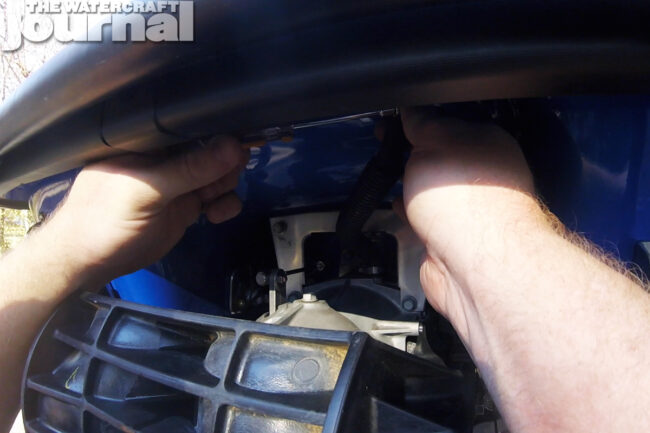
You must remove the front storage compartment panels and disconnect a series of wiring harness connectors. Disconnect intake hoses and get them out of the way. You must then cut a series of wire ties that secure the silencer, wiring harness, and fuel supply hose.
Next remove the breather hose and silencer hose clamp, as well as the straps holding down the silencer. At this point you are looking at the steering cable and fuel pump and wondering how you’re going to even remove the silencer box. 3ftDeep recommends getting both of these items out of the way.
Now the box can come out and you can remove the two halves to clean it out. Finally, you will have to re-install everything in reverse order. Up for the challenge? Check out the video to decide for yourself.
Dave, from RIVA Racing, provides a quick review of the RIVA Racing 2021 Yamaha Super Jet Racing Power Filter Kit in this YouTube video. The kit replaces the big bulky plastic stock air box with a clean space saving kit. The electrical components are moved onto a compact aluminum bracket, which helps keep things neat and tidy.
The power filter kit provides your engine with a steady flow of air, which improves acceleration and RPM. The oversized flame arrestor is positioned up and away from the hood seal area for dry operation.
An engine breather/catch can protect engine from potential lock up when the PWC is rolled over. The RIVA Power Filter Kit is also IJSBA race legal. Detailed instructions are included in the package. The kit retails for $319.95 and it includes everything you need to enhance performance of your new Yamaha Superjet.
RIVA recommends using a RIVA Pre-filter cover to prevent water intrusion.
Personally, side-entry vests have never been our preferred form of PDF. Oftentimes, they’re clunky, ill-formed, made from uncomfortable materials or are simply a chore to get in and out of. That is likely why we at The Watercraft Journal have often favored mainly front-entry vests. Yet, that policy changed for the good once Slippery Wetsuits redesigned its Array Side-Entry Neo Vest a couple of years ago. The red-and-silver camouflage was just a little to flashy for our taste – then again, taste is subjective, so take that with a grain of salt. Yet, the biggest qualms were how easily it showed dirt and the heavy layer of silk screening coating the front and back panels, which began to show cracks after a year of use.
Gratefully, Slippery is not abject to criticism, and revisions to its Array Side Entry Black Neo Vest were made for 2019. The biggest improvements were in its construction using super-comfortable, stretchy neoprene providing plenty of give and being comfortable on bare skin. Interestingly, being a USCG-approved Type 3 vest – meaning its required to provide sufficient flotation to keep an unconscious person’s head above water – one might expect the Array Side-Entry to be far bulkier. Rather, it’s surprisingly slim and smartly cut.
This is achieved through the use of multiple hinge points molded into the EV foam panels. By breaking up the larger panels, Slippery could design a vest that looks more like flexible body armor than two slabs of foam strapped around your torso. The segmentation gives the Array Side-Entry fantastic range of motion; doubling over the handlebars to reach inside the front storage bin isn’t such an ordeal as many more cumbersome vests make it. Slippery also limited the amount of foam on the sides, placing the thicker portions to the upper body – adding a little to the vest’s superhero-padding effect.
Yet, what could be seen as the Array’s best features are the generously-cut armholes and narrow shoulder straps giving the vest its wide range of motion. Even a wide neckline at the collar gives the head and neck a similarly wide range of motion too. While the thick silk screened pattern is gone, the 2020 model uses colored neoprene to break up its all-black body. Large 1-and-a-half-inch wide belts are tucked within the soft neoprene carapace, capped with buckle closures that cinch tight. These snap over a thick-toothed, coated zipper, securing the opened side for easy entry. Slippery includes the same D-ring sown into the net webbing, and has included a tethered emergency rescue whistle too.
One last advantage over conventional side-entry vests is the Array Side-Entry Vest’s long torso cut. This means that the Array reaches your waistline. No longer a midriff, this vest provides sufficient coverage. It might sound a little self-conscious, but this means no more silly sunburn lines on your lower back or flanks! Priced at $99.95, the Slippery Array Side-Entry Neo Vest offers a far superior fit and feel than the itchy bargain-priced nylon vests, is far less cumbersome and fells surprisingly natural – all things we thought we’d never use to describe a life vest.
It’s no secret to those “in the know” that Yamaha left a lot on the table when it came to the final power output of the Super Vortex High Output (SVHO) engine. Per its factory settings, the industry’s largest displacement 4-stroke (1,812cc) cranks out an unofficial 255-horsepower. That number surprises many given the racing success of the SVHO-equipped GP1800R and FX Series WaveRunners, but dems the facts.
Thankfully, the SVHO also happens to be one of the most responsive powerplants to aftermarket tuning. To whit, Broward Motorsports (BMS) just unveiled its BMS Yamaha FX SVHO 2019-2021 Stage 1 Tune ($599) service. This ECU Reprogramming Service unlocks the full potential of your WaveRunner, reprogramming the Yamaha’s ECU to obtain the full potential of the watercraft’s engine. Simply send BMS your factory ECU and your newly reprogrammed ECU will return to you ready-to-run.
Upgraded tuning parameters:
Increase Horsepower by improved fuel and timing maps
No engine internal modifications required
Improve throttle response
Enhance efficiency through all RPM
Increase rev limiters
Increase torque through entire powerband
Improve throttle control & reaction
Increase top speed
For 93 octane pump fuel
So how do you do it? BMS explains, “Once you place your order please wait for an email from our CMS Customer Service Team with details on where to ship your ECU and a form to be sent with it.
“CMS will perform this service the same or next business day the ECU is received and will return your ECU to you via a fully trackable overnight service.”
Demand for personal watercraft (and pretty much all other powersports toys) are still through the roof – even with the promise of new 2021 models arriving currently!
That’s right, whether you’re looking to offload some older units, in need of some quick cash or just want to clear out some room in the garage, Cycle Springs is looking to buy your used ski, boat or bike. In a recent Facebook post, Cycle Springs wrote the following:
Due to the success of Cycle Springs and the current market conditions, we are in a position to liquidate current loans and pay cash for Powersports vehicle/vessel.
Whether you want to upgrade or just take advantage of the old adage “ Buy Low Sell High “ now is the best time to benefit from our low inventory levels.
We will make it easy and painless for you, just do one of the following. 1) click HERE to value your trade. 2) Or call us for our sales manager quote 727-771-1234
ProWatercraft is lined up to host the low-impact Junior Stars event at IJSBA World Finals. They partnered with the IJSBA to put together a scaled-back version of the Junior Stars Event at the IJSBA World Finals in Lake Havasu City, AZ. The event takes place on October 4, 2020 and begins at 8am on the IJSBA World Finals starting line and ends at 10am.
Show ProWatercraft some love for helping to get this event running for the juniors. Visit their website for your stand-up jet ski needs. They carry products to make you go fast!
Due to COVID-19 concerns there will be no stations, activities, or prizes in 2020. The junior rider will be given time to get official course orientation and become familiar with the starting line procedure at the IJSBA World Finals.
The requirements for participating in this event are that riders must be registered to race a Junior Class at the IJSBA World Finals, watercraft must have passed the technical inspection, racers must wear technical gear, and must limit groups to rider and mechanic.
The IJSBA reminds attendees to remain socially distant and follow the state mandated mask rules so that the event can take place for the Junior riders. The IJSBA looks forward to seeing everyone and will go big in 2021!
With the IJSBA World Finals ready to kick off shortly in Lake Havasu City, the league is already looking into next year’s events.
This year’s schedule will definitely look a little different with much less attendance from racers, vendors, and spectators. In fact, there has been some racing class removals from the schedule.
Nonetheless, momentum is gaining across all of the major sanctioning bodies in watercraft racing and the IJSBA is also eager to get back to a normal year for 2021.
With that, they have announced that the Powerboat Nationals plans to hold a US National tour next year which is promising news.
According to this excerpt from the IJSBA release, “This exciting series will be held in conjunction with the Powerboat Nationals Pro Tunnel Boat tour. Organizers will be hosting an information booth at the 2020 IJSBA World Finals in Lake Havasu City, Arizona and will also be holding an information meeting for principal teams.”
We will hear more information about this in the coming weeks during the World Finals. For all the latest, you can head over to powerboatnationals.com.
We at The Watercraft Journal were well-aware that a new RXP-X was coming down the pike for Sea-Doo’s 2021 model year – even as far back as over a two years ago. In all honesty, we were a little afraid of the prospect of an all-new machine too, as the current RXP-X had such a strong fanbase.
The question wasn’t whether it could pack the punch equal to its full-sized RXT-X 300 brother, but whether it could rise up to the challenge of the closed course. The competition has been stiff in recent years, and Sea-Doo needed not just a home run, but a grand slam to win over the diehard performance market.
Debuting in 2012, the now outgoing RXP-X introduced the world to Sea-Doo’s T3 – or tight turning T-hull. The muscular 2-seater rode on a very aggressive, deep-keeled hull that flowed into a soft-edged inner chine and finally into a radiused outer chine. These rolled edges gave the musclecraft its now iconic cornering behavior.
Additionally, a single step at midships was designed to create added suction before the intake grate, keeping the hull planted better and the pump loaded. To those who could master the chop, drop and roll process, the RXP-X fit like a hirsute leather glove. For the uninitiated, the RXP-X’s lightning-quick reflexes could be…well, let’s just say, surprising.
Of course, fears of being ejected were now absent thanks to the innovation of Sea-Doo’s new Ergolock technology. Although introduced earlier on the full-sized S3-based RXT iS 255 and GTX Limited iS 255, Ergolock didn’t really come into its own until the new RXP-X 260’s reveal that year.
Deeply scalloped, padded coves and angled footwedges that locked the rider in place were borderline science fiction 9 years ago, and a supercharged-and-intercooled 260-horsepower (with “Sport” mode, no less) was like handing a kid a loaded gun. Sure, Johnny might learn to have a lot of fun with it; but he’s more likely to hurt himself.
This was the most race-ready personal watercraft we had seen from Sea-Doo at the time, so how could it possibly be topped? Enter the 2021 Sea-Doo RXP-X 300. As we’ve said before, the all-new RXP-X is easily the most ambitious race-ready 4-stroke to come from Sea-Doo. Period. From it’s GP-class, high-bolstered saddle to its one-of-a-kind T3-R hull, the new RXP-X makes a seriously bold statement:
And that is that Sea-Doo’s here to win. And if we’ve gotta kick in some teeth to do it, prepare to start drinking smoothies from now on. Sure, it’s packing the same 300 horsepower since 2016, but it’s using those ponies a helluva lot better. No slop. No slack. And zero waste.
What might surprise some of you is how much the redesigned 2021 Sea-Doo RXP-X 300 ($15,799) shares with the GTR 230. Both share the same acrylic molded CM-Tech fiberglass top deck, the versatile LinQ accessory and engine access panel, and even the same hood (well, the understructure that is). Why is this a good thing?
Easy, it gives Sea-Doo’s musclecraft the brand’s best overall storage – even more than the big daddy RXT-X or GTX – 40.6-gallons of space split up between a 37.8-gallon front bin and a sizeable 2.5-gallon glove box. And besides the 1,630cc ACE 300 powertrain that it shares with the aforementioned RXT-X and GTX Limited, it’s also got their massive 18.5-gallon fuel cell too.
So let’s talk differences. For 2021, the RXP-X drops 67-pounds, making it considerably lighter than the previous generation (780lbs. vs. 847lbs.), and it does it while retaining the same overall length (130.6-inches), and being .9-inches wider (49.2″ vs. 48.3″). So no, it’s definitely not bigger.
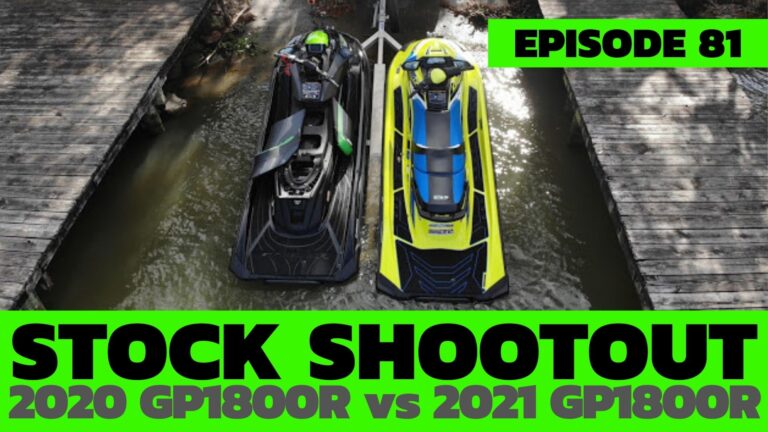
And while the supercharged-and-intercooled ACE 300 engine returns unchanged, the RXP-X wields a new top-loader intake and a highly polished, repitched prop producing greater thrust and initial hook-up. One last additional change was that Sea-Doo moved the engine and gas tank two inches (50mm) forward, placing greater emphasis on the nose – but more on that in a second.
Interestingly, relocating the engine required a new, longer driveshaft. Given the opportunity, Sea-Doo tweaked the design of it as well as that of the carbon ring seal. It’s not a noticeable change, but Sea-Doo has worked with its parts supplier to develop an improved carbon compound to hold up to the added rigors and torture that new RXP-X owners are certain to deliver.

All of this equates to a far superior power-to-weight ratio, and demonstrative gains in acceleration: Sea-Doo measured 0-to-50mph in 2.9-seconds, and 0-to-60mph in 3.6-seconds (versus the previous 3.9-seconds) – remember, it’s got Launch Control too. While units sold domestically will be restricted to a USCG-approved 68.5mph, our unrestricted test unit reached a GPS-confirmed unsustained peak speed of 73.8mph @ 8,000rpm (the speedometer read 75).

Yet, much of the RXP-X’s appeal isn’t found in its ability to run a straight line – heck, any ski can go straight – what really makes the RXP-X is how well it corners. For 2021, Sea-Doo didn’t completely redesign the T3 hull. Rather, engineers made nearly 30 subtle-yet-specific changes to make it more forgiving for less aggressive riders without losing its racy edge. Dubbed T3-R, the biggest standout in the new hull are its CM-Tech fiberglass construction and a series of serrations running along the inner chine at midships.
Coined by BRP as “Shark Gills,” these serrations are designed to break up the hull’s surface tension, aerating the water’s cohesion and making for a slightly looser, more gradual corner at lower speeds. But how does it work? Again, at slower speeds or in a gradual sweeping turn, the RXP-X rides on this second chine, which previously could “load up” or suddenly bite, whipping the RXP-X into a hairpin turn. By breaking up this surface, the RXP-X can progressively roll into a wide sweep with confidence.
Further changes were made at the tail, from the pump inlet back. In fact, the entire wetted surface at the tail was redesigned to improve hookup and reduce chine-walking. At its outermost edge is the same rounded chine as before, providing unbroken surface tension (ie. traction) when cornering hard on its rail. Yet, snapping a tight turn at wide open throttle is a different experience because of the recent weight redistribution. Sea-Doo claims the new RXP-X 300 can carry full speed better throughout a turn – approach, apex and transition (or exit) – without the rider needing to back off.
In our two days of testing the new RXP-X 300 (The Watercraft Journal literally racked up double the seat time of any other media outlet invited to the release), we found that favoring the nose means the vertical bow and concave deadrise still does most of the work as before, particularly when trimmed all the way down (as Sea-Doo racer and decorated national and world champion, Erminio Iantosca recommended).
Yet, with both the rider and powertrain’s weight moved forward, the hull’s natural pivot point as been greatly advanced. Rather than the bow “leading” the Sea-Doo, the RXP-X feels surprisingly paired to the rider. Imagine an 8-foot pole intersecting the ski directly through the glove box and out of the hull like a carousel horse. It is at this intersection in the hull where the RXP-X makes it most contact, whether tracking through chop at high speeds or setting up the nose for a late apex 90-degree sweep. So in other words yeah, it corners a lot better.
Of course, this is not how most enthusiasts ride, so that’s why Sea-Doo developed a more forgiving feel for casual riders. Then again, don’t be fooled, this PWC is designed to corner – and on the nose. Why else would Sea-Doo relocate the engine and fuel tank forward, as well as design a new forward cockpit if not to put as much weight on its nose as possible? So know that you gotta trim this sucker down and snap those bars with the throttle pinned, man!
Speaking of that redesigned cockpit, Sea-Doo seriously stepped up its game with its now standard 1-person seating. Yes, you read that right, there’s no passenger seat unless you buy it as an accessory ($399). Why? Because most RXP-X owners that Sea-Doo interviewed said that they almost never bring a passenger. Instead, the new seat – christened Ergolock-R – features a plastic block-off plate at the rear, a thick padded back rest and a durable hook-and-eye system that allows for as much as 5-inches in adjustment.
If sprinting through the mangroves or maneuvering through a twisting channel is your thing, bump the seat up until it’s just a little tight. Then stand up, set your heels firm on the new two-angle footwedges, slip your knees into the deep, padded coves and wedge yourself snug into the saddle. That seat back will literally lock your legs in place, letting you steer at full throttle without feeling like you’re constantly having to do chin-ups.
Additionally, Sea-Doo made the telescoping steering neck (same as used on the Trixx and previous RXP-X) optional as well ($175). Again, most performance enthusiasts said they didn’t need it, so Sea-Doo plopped it behind an option box. The same went for the BRP Premium Sound System ($800). Producing the identical 100-watts of Bluetooth-controlled fun (now found on all other mid- and full-sized runabouts) it too is another goodie you need to check a box for. And no, that doesn’t mean it can fit pre-2021 RXP-X’s either. Sorry to be the bearer of bad news.
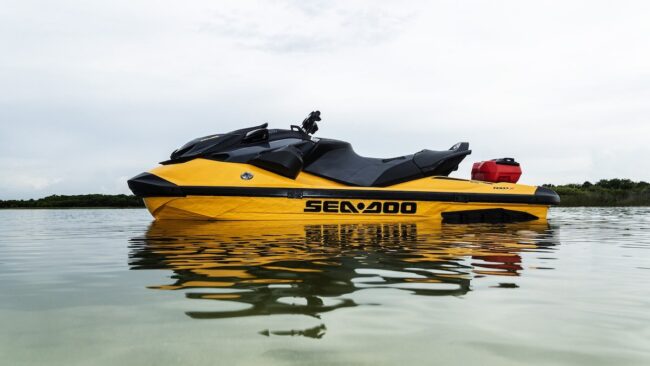
Listed with a base MSRP of $15,799, the 2021 Sea-Doo RXP-X 300 comes in a very classic Bombardier hue, what they’re calling Millennium Yellow. If you’re wanting a little more flash, you can fork over an extra $300 for the Midnight Purple and Manta Yellow variant, which is what we tested here. And Sea-Doo’s also offering two unique vinyl wrap kits to boot. So at the very least, the RXP-X definitely looks the role – but is it the grand slam Sea-Doo needed?
While we mourn the loss of adjustable sponsons (standard are the less-than-great X-series sponsons found on the RXT-X 300), we were disappointed by its tendency to unhook the pump at wide open throttle across Lake Monroe’s windblown 2-to-3-foot moderate chop even when trimming the bow up. Pumps make thrust, and pumps need hook up; and if you’re unhooked, you ain’t making thrust. And that’s gonna cost racers the checkered flag.
In all, the new RXP-X leaps forward several steps ahead of its predecessor; the out-of-the-hole acceleration, optimized weight distribution, killer power-to-weight ratio, and improved rough water straight line tracking (at least at cruising speeds) are all the things that many performance enthusiasts have been craving for for years – and all of that adds up to solid proof that Sea-Doo is listening and has delivered the musclecraft that its most loyal fans have asked for.