So, you had a few bad catches on your Sea-Doo Fish Pro and aren’t quite sure what to do with your freshly caught seafood! Well on this recent Sea-Doo Blog video, they show you how to turn any ordinary day into an amazing dinner.
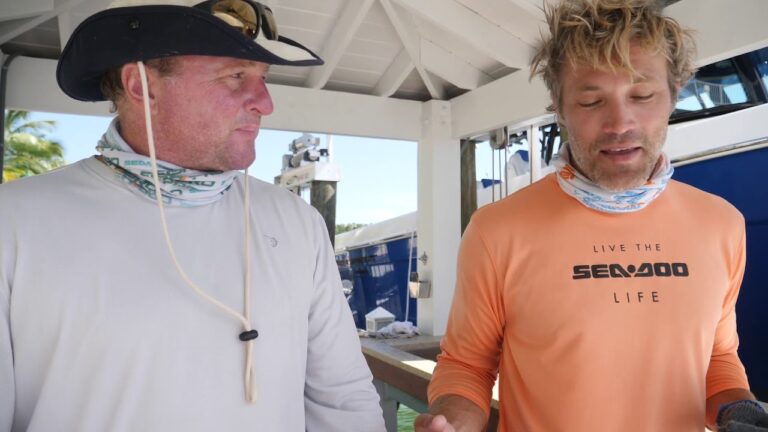
In this episode titled Catch – Clean – Cook, Sea-Doo’s Tim McKercher spends a day in the Florida Keys with fishing guide Nathan Weinbaum. Aboard the Fish Pro, they show us exactly how to catch, clean, and cook a great meal despite less than favorable fish that they just reeled in.
Starting the day before, the team hit up the grocery store to buy some fresh ingredients for the meal and they prep and fuel up the Sea-Doo’s for the next day since the plan is to travel into deep offshore areas.
The next morning, Tim and Nathan gear up, set the GPS coordinates on the Garmin fish finder-equipped Sea-Doo, and head out for a day of fishing. Even with all of Nathan’s extensive background, some days just don’t go quite as planned and Tim was the only one who walked away with a few snags.
As it appeared, Mutton Snapper was on the menu and since Nathan was prepared for anything with his ceviche recipe, the two headed back to shore to begin preparing the meal. The next task was to clean the fish and get it ready for the evening dish.
Finally, Nathan began making the dish and told Tim to just sit back and relax. After all, Tim did catch the main ingredient. A little snapper, some fresh ingredients followed by some lime juice and olive oil, and those two were in for a real tasty dish.
For more information on how to catch, clean, and cook your own meal and to get your hands on this amazing recipe, check out the video blog for yourself.
Authorities in Melbourne – Australia’s second-biggest city behind Sydney – have introduced tough new “irregular riding” laws that will see personal watercraft users fined $330 for dangerous behaviour in new restricted zones. The “irregular riding” laws first came into force in Sydney, where watercraft users are not permitted to jump waves (including wake), weave, or ride in an unpredictable or circular manner unless they are at least 200 metres off the shore and well away from other boats.
Maritime Safety Victoria will enforce a new “irregular riding” zone in 5-knot areas of Port Phillip Bay, a popular area for personal watercraft riders during summer. The new rules will come into force from 16 December 2019. Authorities said watercraft users must “navigate the PWC in the safest most direct course from the shore heading seaward, or from the sea towards the shore.”
Riders must “avoid any irregular riding of the PWC or freestyling within the 5-knot speed restriction zones including donuts, circles, weaving.”
The Maritime Safety authority said 67 per cent of local residents supported the new rule. “The new rule will require PWC operators to operate their craft in a predictable manner, which will provide greater certainty to other waterway users on the path they intend to take,” the media statement said.
Irregular riding includes “surfing down or jumping over or across any waves, wake or wash and … sharp turns, circular or semi-circular operation of the PWC. […] This rule brings waters around Port Phillip Bay in line with other jurisdictions, such as (Sydney) New South Wales,” the authority said.
In NSW, the fine for irregular riding is $250 and there is a $500 fine for riding negligently. NSW police also have the power to confiscate watercraft if the owner is deemed to be riding in an aggressive manner. In October 2016 the NSW Government amended the Maritime Act because, it said at the time, “unfortunately a rogue element of jet skiers believe the rules do not apply to them and they can do what they like on the water.”
Under the new laws “a vessel may be seized and impounded” when a watercraft user has “committed a reckless, dangerous, negligent offense.”
“The new sanctions allow an authorised officer to seize a vessel, including the boat trailer, used in a designated ‘hoon’ offence and move the vessel to a place where it can be impounded. Alternatively, an authorised officer may give the owner of the vessel a notice requiring the vessel to be produced at a specified time and place so that it can then be impounded,” the NSW Government said.
In NSW personal watercraft can initially be impounded for three months for the first offence and five years for a second offense.
In the year 1519, Portuguese and Spanish explorers set out on a voyage led by Ferdinand Magellan which would culminate in the first circumnavigation of the globe ultimately in 1522 by Juan Sebastian Elcano.
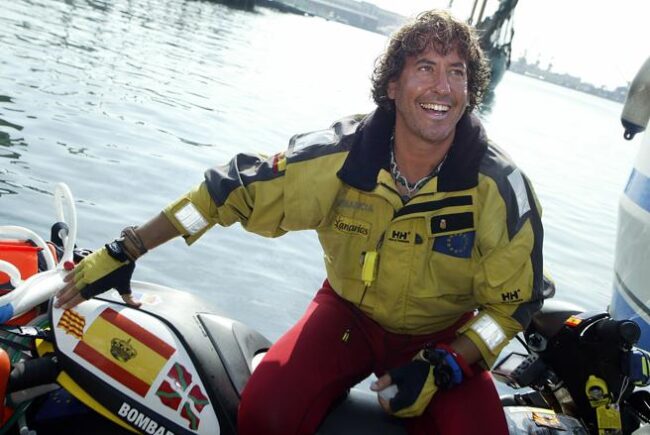
500 years later, the #1519WorldTour2019 is honoring the historical achievements of those early Portuguese and Spanish world navigators. Led by Alvaro de Marichalar of the Monaco Yacht Club, he has been riding his ST3 hulled Sea-Doo along many of the same ports and locations as did those early explorers.
Alvaro completed the first stage of the voyage last month starting in Seville, Spain and ending in Bayonne, France. Following the original circumnavigation’s historical departure dates, he made it from Seville to Sanlucar on August 10 and then waited 40 days to set out for Lisbon, Portugal.
The second stage from Monaco to Malaga, Spain has been underway and following this journey, he will make it to the Canary Islands where he will then attempt to make the Atlantic Ocean crossing to America.
There is no word on set dates or where exactly he plans to arrive to but Alvaro will be accompanied by a support vessel on this transatlantic journey. Luckily it is approaching the end of hurricane season for the Atlantic region but we imagine his team will be keeping a close eye on the weather for this dangerous trip.
We wish Alvaro luck in this historic journey that is meant to promote knowledge, respect, and love toward our oceans as well as towards the history of Spain, Portugal, and all of Europe.
With the holidays quickly approaching you may find yourself trying to figure out what to buy for all of your friends and family. While there are some deals in stores, some of the best deals can be found online. By online, we mean Bopenski Watersports. This holiday season, Bopenski Watersports is offering free shipping by using the code “Christmas” on their website.
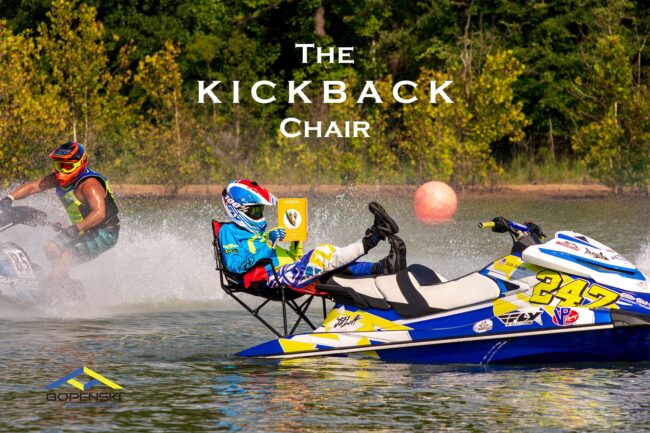
Bopenski Watersports is the creator of the most comfortable PWC accessory on the market. They sell the Kickback Chair which allows you to turn your regular PWC into the perfect relaxation station in under one minute. We know that after being out on the water riding around, you may become tired. Instead of talking a break by just sitting on your regular seat, why not buy you and your friends a Bopenski Watersports Kickback Chair. This chair allows you to stay out on the water and enjoy lunch or catching up with your friends. Plus, you’ll get plenty of looks from everybody on the water and on the shore.
Currently Bopenski Watersports is offering the Kickback Chair for $99.00 shipped to your front door. The regular price is $199.00 so this sale price is a steal especially with free shipping. Rest assured as this product is built in the United States and use high quality parts. Whether you ride in the fresh water or saltwater, you can be sure that you will not see any rust or corrosion.
While many of us riders do not ride in the cold and snow, now is the time to start preparing for spring and summer trips. So, start calling all of your friends and make plans to go ride to that place you have always dreamed of. Remember, if you want to be the coolest rider on the water, make sure you use the promo code “Christmas” and order yourself a Bopenski Watersports Kickback Chair today!
If you want to see this product in action, check out this video here!
Are you ready? Here come the Black Friday sales! While the country is gearing up for Thanksgiving (or if you’re putting up Christmas decorations a month early, you heathen), most of the world is preparing for the madness of Black Friday.
Huge discounts will be offered on existing merchandise taking up inventory all in an effort to clear the shelves to make room for next year’s products. Regardless of what you’re looking to buy, now is the time to whip out the ol’ checkbook and get writing.
And getting in on this action is industry giant Hydro-Turf. They just recently announced their own Black Friday sale – a whopping 25-percent off of all website orders – from Black Friday, November 29th until Cyber Monday, December 2nd – when you use the discount code blackfriday at checkout.
No doubt there’s a new traction mat, seat cover, handlepole cover or even a T-shirt that you’ve been eyeing for a while now. Well, this is your time to act! Personally, we’ve used our massive Hydro-Turf Hydration rolling gear bag religiously since first picking it up nearly 6-plus-years ago.
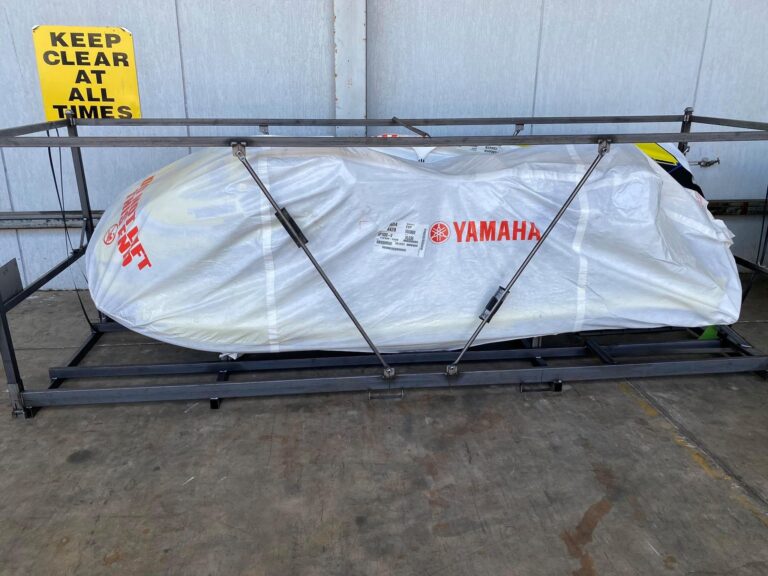
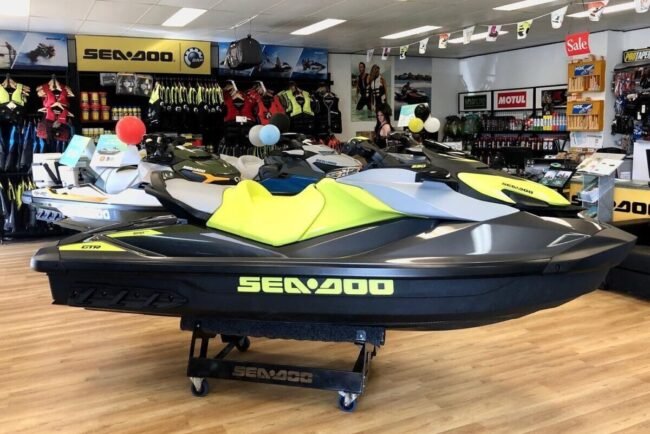
Summer has come early for personal watercraft buyers in Australia. Sea-Doo and Kawasaki have 2020 models in showrooms while the Yamaha WaveRunner range has made it to warehouses and is awaiting imminent delivery to dealers.
The early arrival gives buyers a choice between a 2020 model or picking up a sharp deal on a 2019 edition. In most cases the model year changeovers are simply a case of new color schemes. However, some examples are all-new models or have had minor but worthwhile changes.
2020 Sea-Doos
The most affordable jet ski on the Australian market, the Sea-Doo Spark, remains unchanged for 2020 except for a minor color makeover and currency-driven price rises.
The Spark two-seater increases by $300 from $7699 to $7999. The Spark Trixx three-seater is up by $1300 from $11,099 to $12,399 but now includes a detachable Bluetooth sound system as standard.
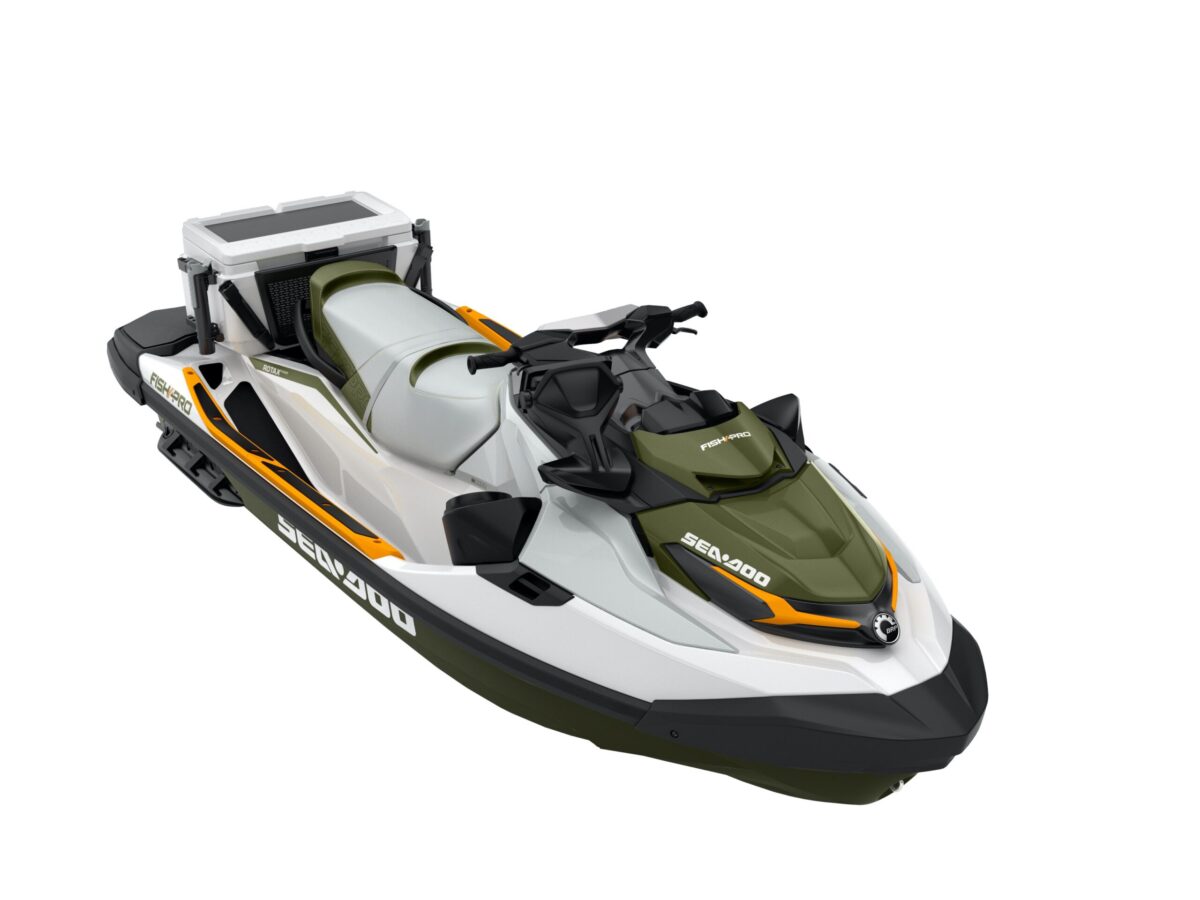
The Sea-Doo Fish Pro keeps the same color scheme as 2019 but gets a power bump from 155 to 170 horsepower. Prices rise by $1300 from $19,199 to $20,499 and the cost of the optional Bluetooth sound system has gone up from $800 to $1000.
The high performance Sea-Doo RXT-X300 gets a bigger fuel tank (from 60 to 70 litres, the same as the Fish Pro) and is available in green (instead of yellow), while the red and black combination carries over from 2019. Price is up by $2300 on the RXT-X300 but now includes the Bluetooth audio system as standard.
The GTR 230 mid-range model gains a 1630cc supercharged engine and is distinguished by a bold black and yellow color scheme for Australia. Price rises from $17,799 to $18,599.
2020 Yamaha WaveRunners
The 2020 Yamaha WaveRunner range is effectively a new range of colors. Prices rise by between $300 and $500 due to the Australian dollar hitting a 10-year low against the US dollar.
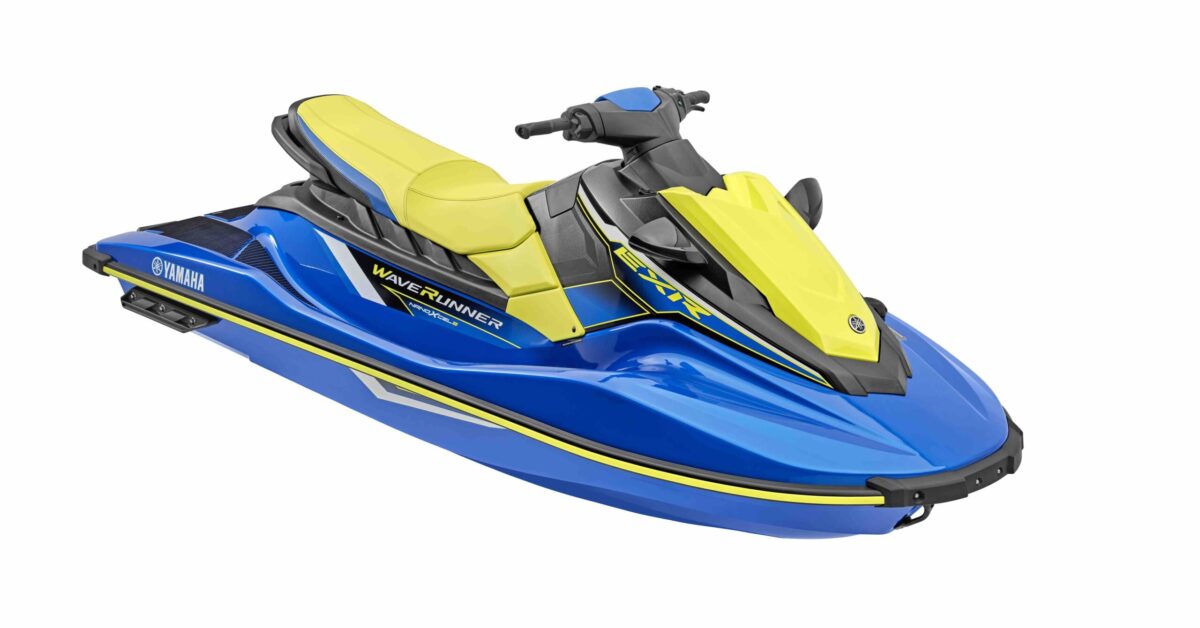
The three EX models get new color combinations, starting with the budget-priced EX ($8499, the same price as before).
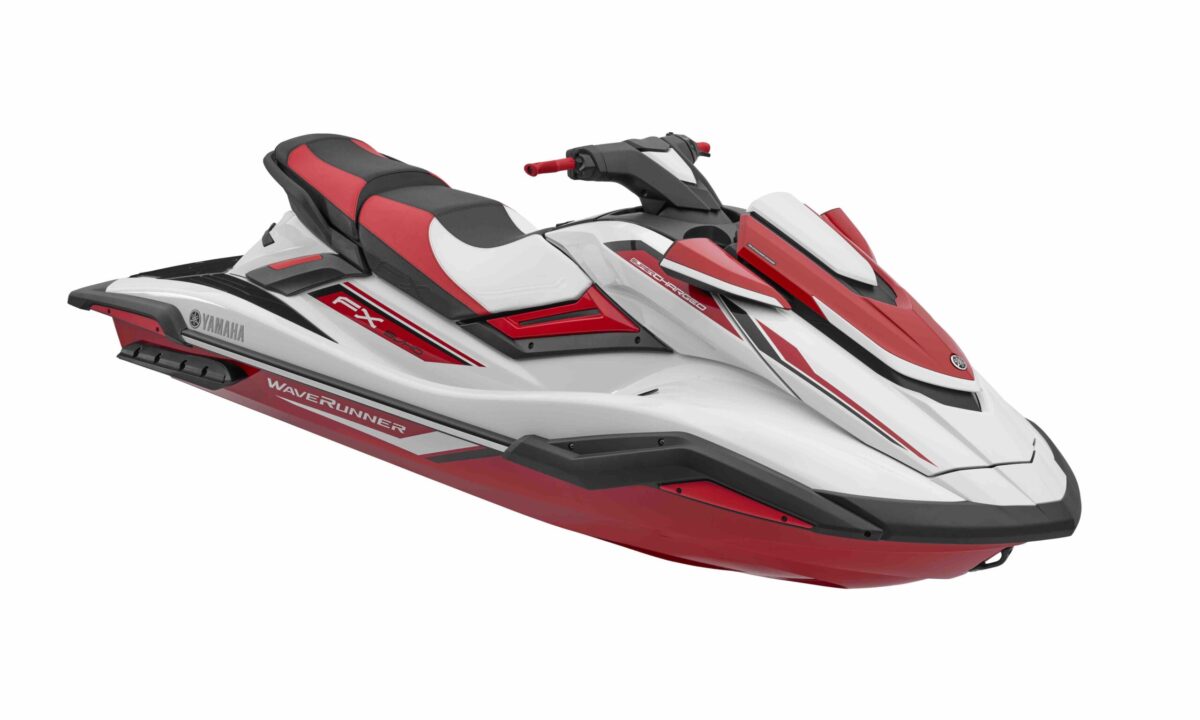
The FX HO is now white and green and the price has risen to $20,499 while the FX HO Cruiser (with stepped seating and two tie-down cleats) is now silver and blue and costs $21,499, both up $500.
The FX SVHO in “stealth” black with grey highlights costs from $24,799, while the FX SVHO Cruiser (with stepped seating and two tie-down cleats) is now silver and red and costs $25,799, both up $500.
The new flagship FX SVHO Limited finished in black with blue highlights comes with staged seating and four tie-down cleats instead of two: $25,999.
Unlike the US version, the FX SVHO Limited does not come with accessories such as the towing tube, tube inflator and built-in USB port in Australia. For now, the USB port is available as a dealer fit accessory.
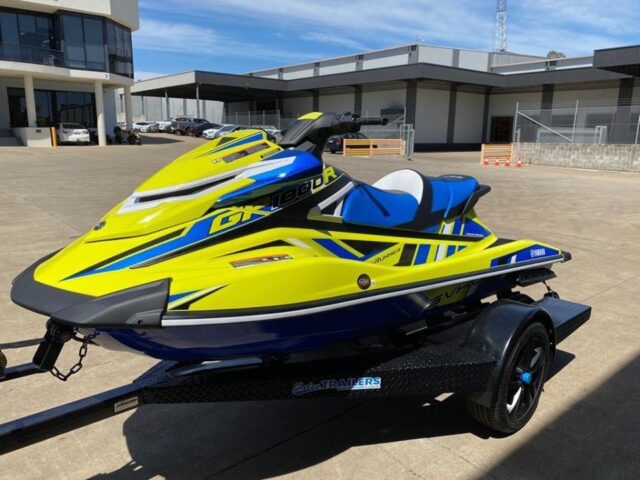
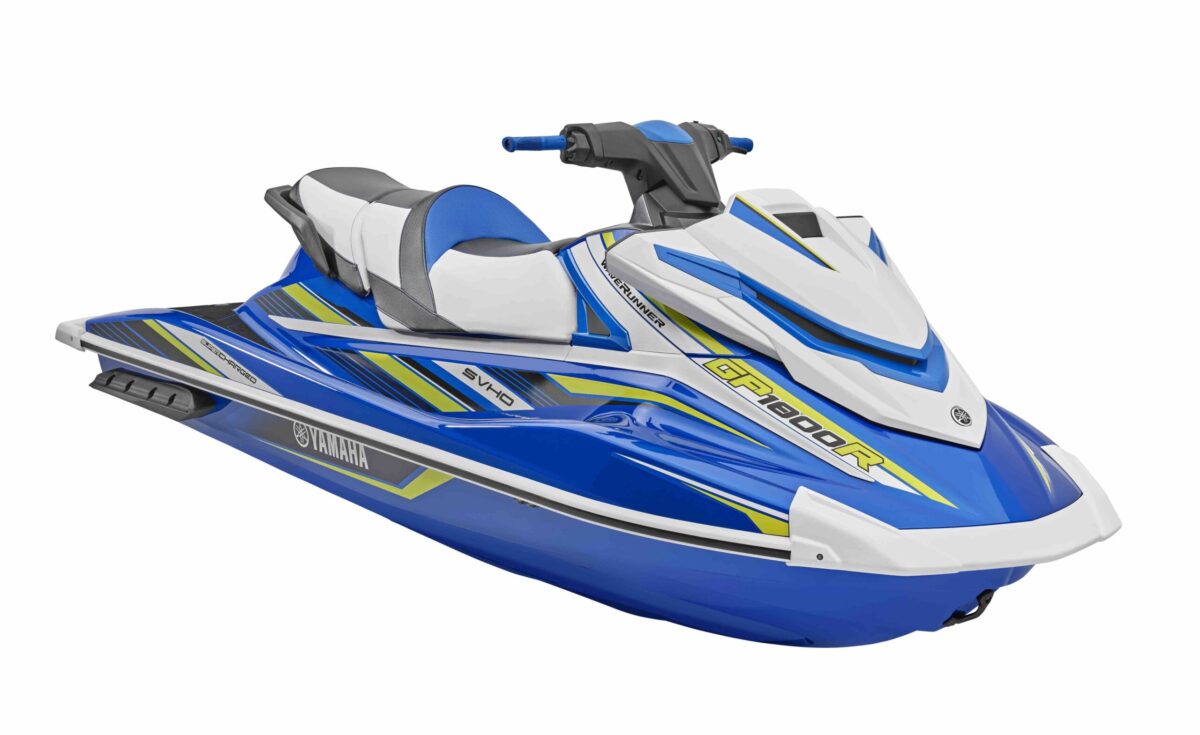
The newly named GP1800R SVHO – in its loud yellow color scheme – has risen from $21,999 to $22,499.
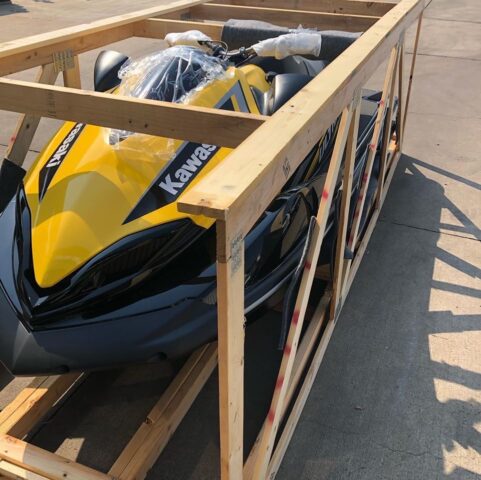
2020 Kawasaki JetSkis
The new Kawasaki STX160 is not a direct competitor to the sub-$10,000 Sea-Doo Spark and Yamaha EX but this is Kawasaki’s most affordable offering for now. The starting point for the Kawasaki JetSki range will increase from $12,999 to $14,999 for the STX160X and $16,799 for the STX160LX.
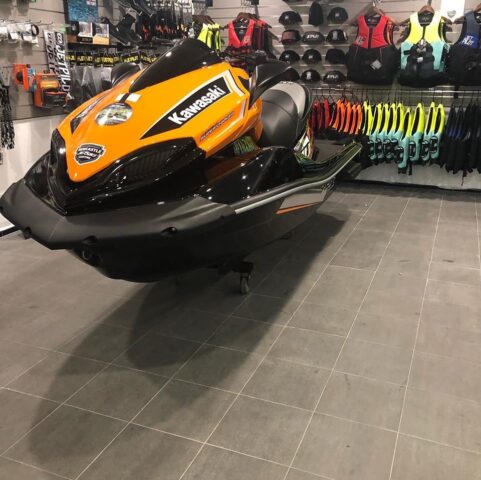
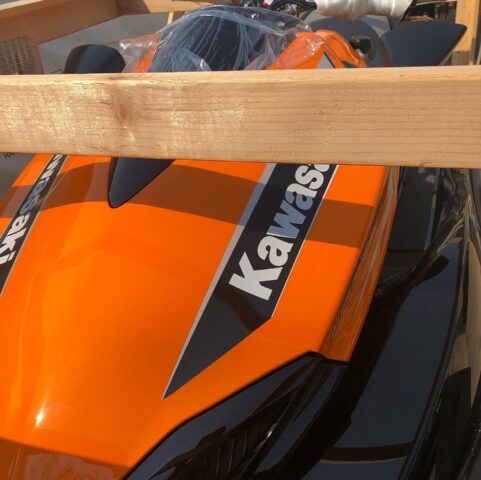
The STX hull, sponsons and non-supercharged 1498cc four-cylinder engine are carried over from before but the top deck is completely new, with more storage, a new dash, and a better riding position. The flagship Kawasaki 310 Ultras get new color schemes for 2020 but have begun arriving in stock.
Buyers on a budget who want a brand new personal watercraft are set for some serious bargains in Australia. While the comparatively high prices might still make eyes water in North America – where personal watercraft are a fraction of overseas prices – these deals are as good as it gets Down Under. Here’s a rundown on what each brand is offering.
2019 Sea-Doo Runout Deals
Save $1250 and get a three-year warranty on all 2019 Spark and Spark Trixx models and save $1500 and get three-year warranty on 2019 GTI90 and GTI130 models. The 2019 GTR230 gets a three year warranty and a massive $2500 off while the 2019 versions of the flagship RXT-X300 and RXP-X300 get $2500 but stick with the standard two-year warranty. Meanwhile the 2019 GTX230 has a $1000 bonus and three-year warranty while the 2019 versions of the GTX LTD 300 have $500 and stick with the standard two-year warranty.
2019 Yamaha WaveRunner Runout deals
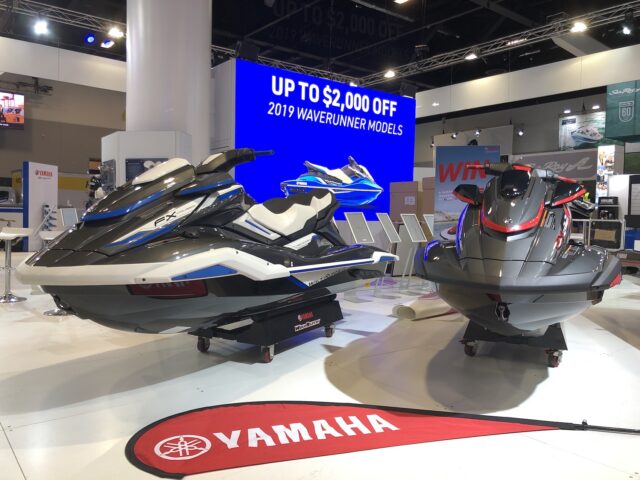
Yamaha is offering up to $2000 off selected models in its 2019 range or pay the full RRP and take advantage of a super-low 1 per cent finance rate. The $2000 discount applies to 2019 examples of the GP1800R, FX Cruiser SVHO, and FX SVHO.
A $1750 discount applies to 2019 examples of the FX Cruiser HO and FX HO.
A $1500 discount applies to 2019 examples of VX Cruiser HO and VXR.
A $1000 discount applies to 2019 examples of VX Cruiser, VX Deluxe and VX.
Meanwhile, there is $500 off all 2019 EX models, the entry point to the WaveRunner range.
2019 Kawasaki Runout deals
Kawasaki had previously offered $2000 off 2019 model year examples of the flagship 310 Ultra LX and $1000 off its SX-R stand-up models as part of its “Super Stand-Up Deal” promotion. If you’re lucky you may find a dealer who might be able to still honor these deals. However, as of this month Kawasaki has since switched to a $750 gift card offer on its supercharged models and a $300 gift card offer on its non-supercharged models.
In October, The Watercraft Journal posted a news story about the P1 AquaX World Championships being held on Nassau’s Paradise Island for the first time. Paradise Island is a pristine area to rest and relax given the beautiful beaches and resorts. While there were some members of the resorts resting, many people were their November 8-10th for the P1 AquaX World Championships. It had been a great season of racing so far and fans from all over were boarding their planes to arrive on time. What more could anyone ask for, world class racing from some of the best racers in the industry in a beautiful setting? I mean come on.
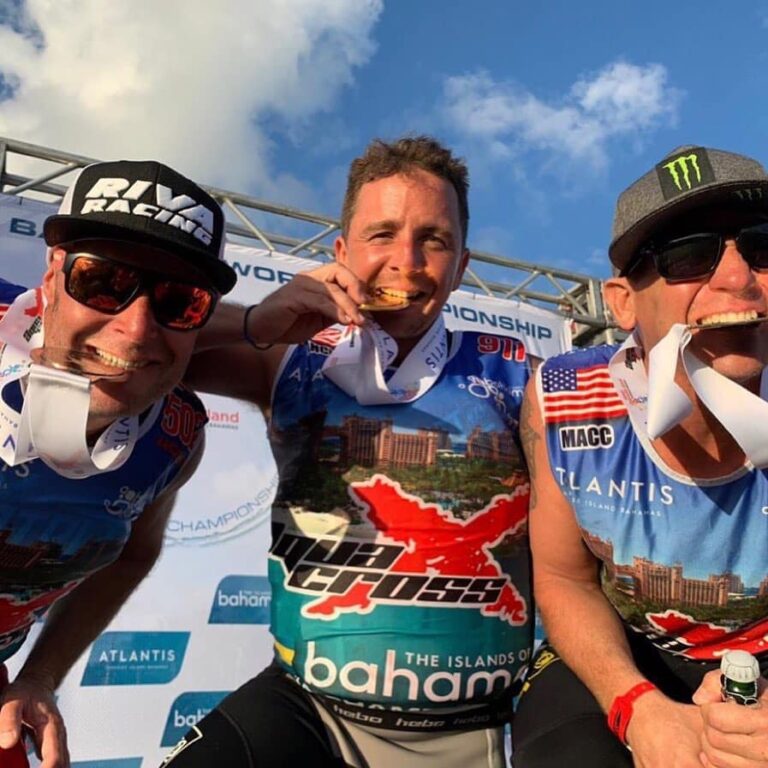
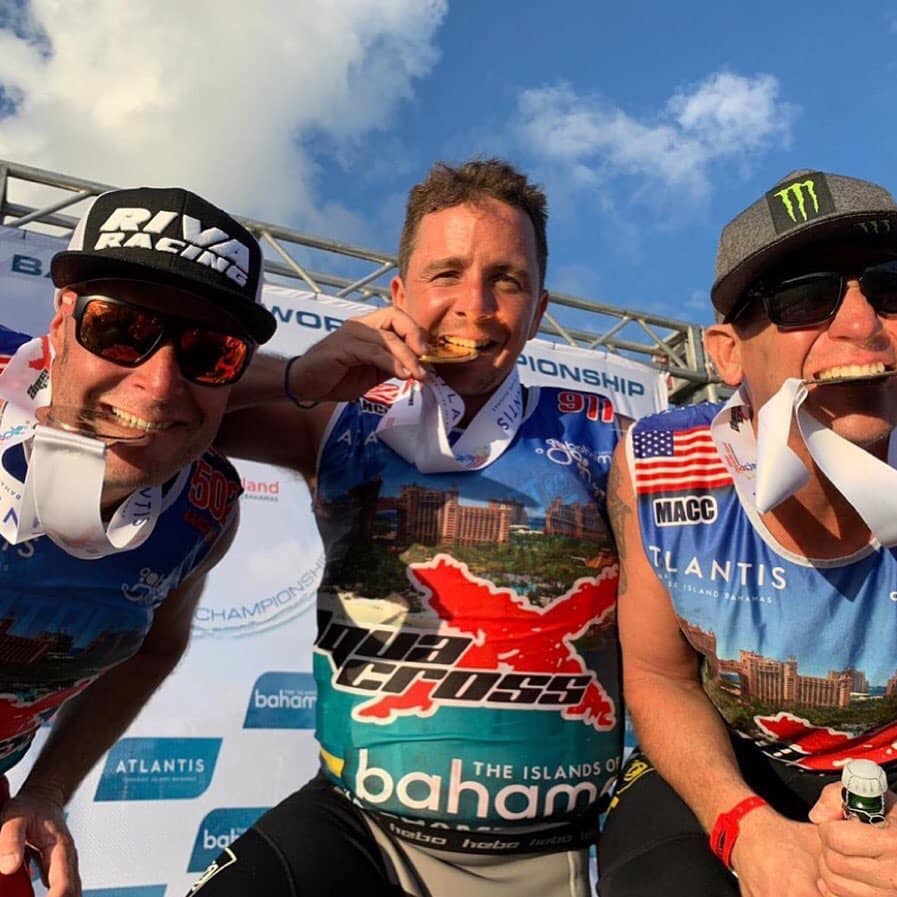
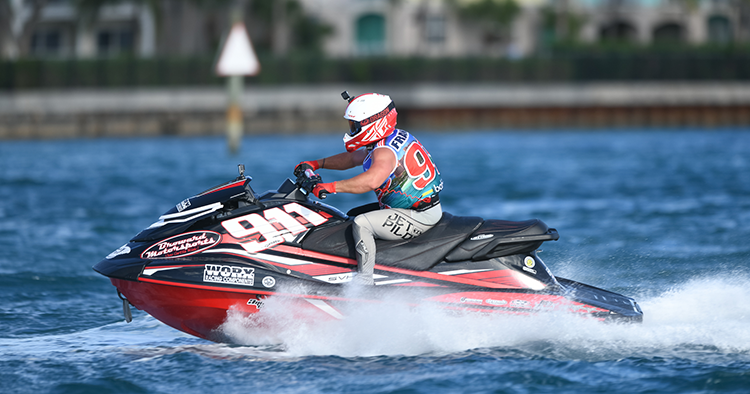
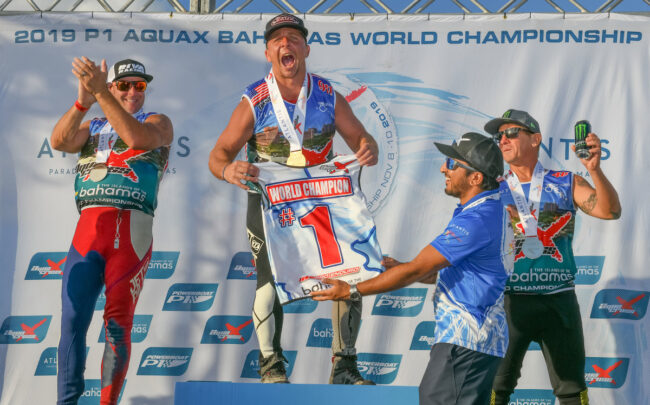
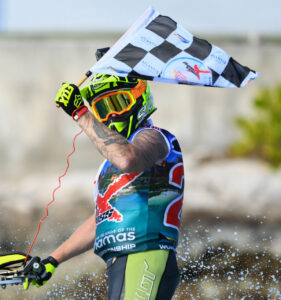
It was a great weekend for Yamaha as the top three finishers overall were all on board a Yamaha WaveRunners. Over the weekend, Eric Francis on board his Yamaha FX SVHO, was able to finish 1-1-1 and prevail as the world champion for 2019.
Following behind him was IJSBA Pro Stock World Champion Brian Baldwin on board his Yamaha GP1800R. In third place was decorated racer Chris MacClugage on board his Yamaha FX SVHO. Another reason it was a great weekend for Yamaha was that the top 14 racers were riding either a FX SVHO or GP1800R rider.
Going into the final race of the season, Francis knew that he needed to finish in the top 4 in order to be crowned the champion. He got into third place and stayed there throughout the race until the very end. Just before the end of the race, he was able to use his skills and get into first place. He was the first racer to cross the finish line and earn the World Champion Title. Congratulations to all of the racers as this year was full of exciting events and a special congratulations to Eric Francis!
What do you think of when thinking about a national champion PWC racer. Grit, determination and reliability are three key things that may come to mind. You may also think of Erminio Iantosca. Iantosca has had a very successful career racing on board his Sea-Doo RXP-X racing PWC. By partnering up with some of the biggest industry leading in performance PWC products, he continues to produce reliable results as he seems to always find a way to get on the podium.
While there are many factors that go into being a successful racer, having the right equipment is a sure way to make a difference. In a video released by RIVA Racing, Iantosca explains the benefits he gets from using Hydro-Turf. Hydro-Turf is one of the industry leaders in aftermarket seat covers, traction mats and side-wall lifters. By choosing to use a Hydro-Turf seat cover, it allows Iantosca to stay in his seat while racing or riding around.
By staying glued to your seat, a rider is able to race aggressively while being safe. As with the side-wall lifters, it allows Iantosca to lock his feet in the side-walls when the conditions are rough or going into a corner. PWC’s are very similar to a motorcycle where riders need to lean into turns so that they can maintain their speed. By adding the side-wall lifters, Iantosca knows that he can go into a turn at high speeds without falling off.
At the end of the day, companies want to provide a product that enhances the riders ability while also being safe. Hydro-Turf has been in the PWC market for many years and their product continues to get better every year. If you are looking to take your riding level to the next level, use a product that Erminio Iantosca uses. No matter what brand or model of PWC you own, Hydro-Turf has the products for you!
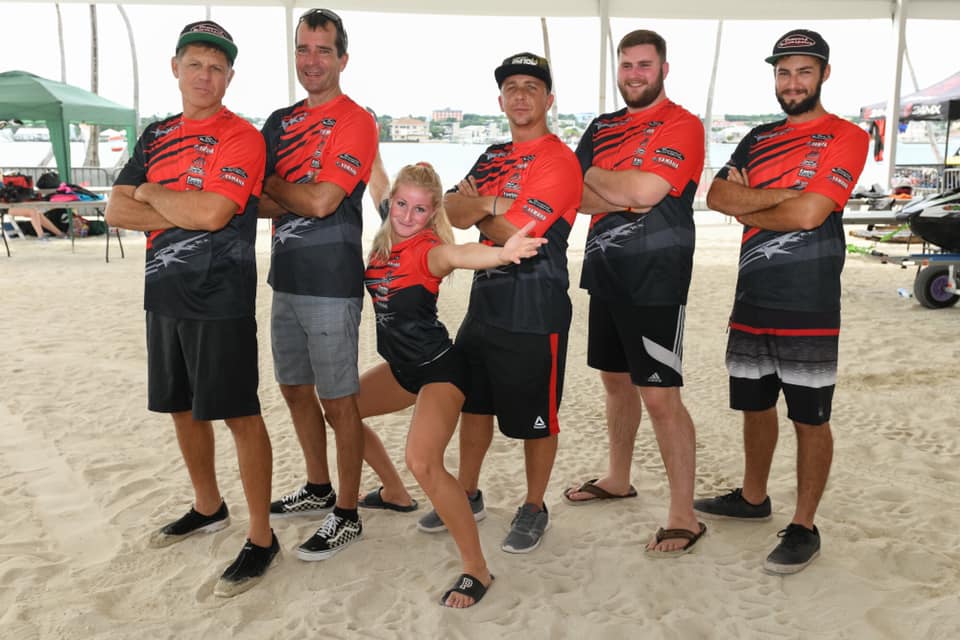
Sam Nehme is the founder and owner of Broward Motorsports Racing. They have multiple dealership locations throughout the state of Florida and have also built a very successful racing team. Sam Nehme recently posted on Facebook saying, “I am very proud and honored to post that team Broward Motorsports has won the P1 AquaX World Championship which was held in the Bahamas as well as the 2019 Team of the year Award!”
Winning the P1 Aqua X World Championship is like winning the Superbowl or the World Series. It means that their success did not come over night. They started with their leader Sam Nehme who was able to build a championship caliber team and it has paid off. Nehme knew that if he wanted success, he was going to have to bring some big names onto his team. He did just that, with names such as Eric Francis, Chris MacClugage, Sophie Francis, Troy Synder, Dennis Mack and Chris Saxon. While many of you have heard of these names, they all had a tremendous season of racing and continued to produce consistence results through the whole season.
While you can argue the success that Broward Motorsports Racing had this year was due to their racing on the water, it could not have been done without the help of everyone involved. The people on land, setting everything up and making sure each event ran smoothly played a huge part in their success. A special shout out is much needed for everyone off the behind the scenes, Daniel Steele, Cody Tetreault, Rick MacClugage, Ken Waddle, David, Cabrera and Tim Judge. With the countless hours of work put in by these individuals, they truly did play a part in their teams’ success. This is also one of the many reasons their team won the 2019 Team of the Year Award.
While Broward Motorsports Racing was able to earn the most prized award in PWC racing, you better believe that they will be coming back stronger next year. Their team will take a little time off to enjoy some time with their families but will get back to training and racing soon! Watch out, now that they have been a champion, they are going to be looking for a repeat!









 It was a great weekend for