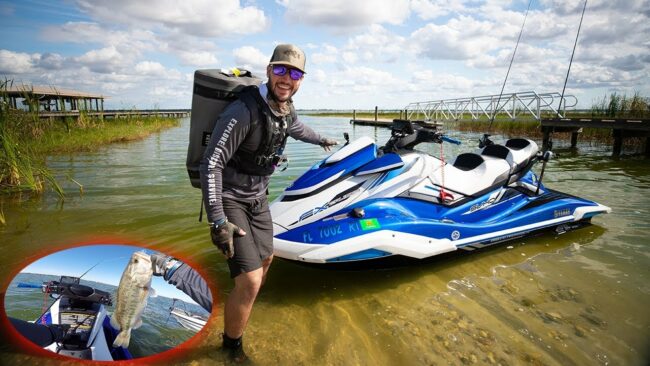
You remember what they say about building a better mousetrap, don’t you? The great thing about the free market is the ability that go-getting entrepreneurs have to dream up, develop and eventually sell their inventions to as many people as possible. We were introduced to PWC Brackets a little while ago and are seeing more and more of these kits on runabouts these days.
While not all bracket kits require drilling into the factory head unit (like the one shown above), PWC Brackets offers kits that permit the use of a GoPro, GPS and portable waterproof sound system. In fact, that’s been a big concern with many would-be buyers who are hesitant to cut into their Yamaha steering system – and that’s totally understandable.
So much so, that PWC Brackets made this post on Facebook as well as attached a link to a YouTube video (which we’ve embedded below) on how the PWC Bracket kits work. “…[we] have recently made another bracket that mounts to my bracket. So basically you still do not have to drill or cut. This new bracket allows you to add a GoPro, GPS, or cell phone holder. The bracket sells for $13.99 and comes with the wrap-around bracket, adjustable arm, and mount. (This mount allows you to adapt many different types of mounts: GoPro, Velocity clip, etc).”
The key to being superior than your competition isn’t always having the flashiest, most cutting-edge features; but rather, doing the simple things really, really well. For many in the riding gear trade, stitching together a tour coat is often an afterthought. Tour coats, for as long as I’ve known them, were a pretty simple affair. Two slabs of neoprene stitched up the sides and big, heavy duty zipper. Well, that’s at least how most folks chose to make ’em. It’s not often that a tour coat comes along that really knocks your socks off, and frankly, writing that sentence alone was pretty preposterous. Yet, here we are, and yes, we’re pretty darn impressed with what we’re looking at.
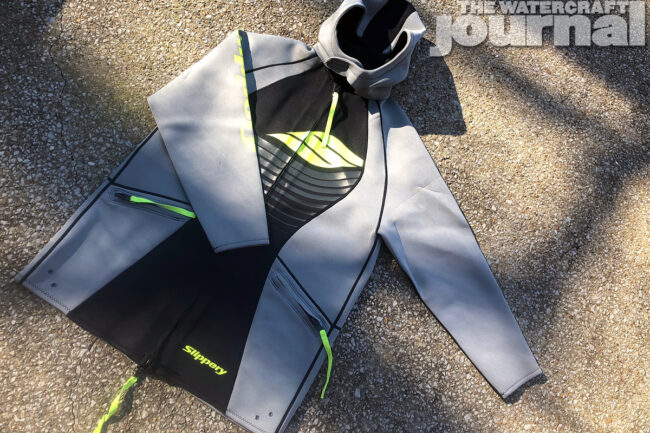
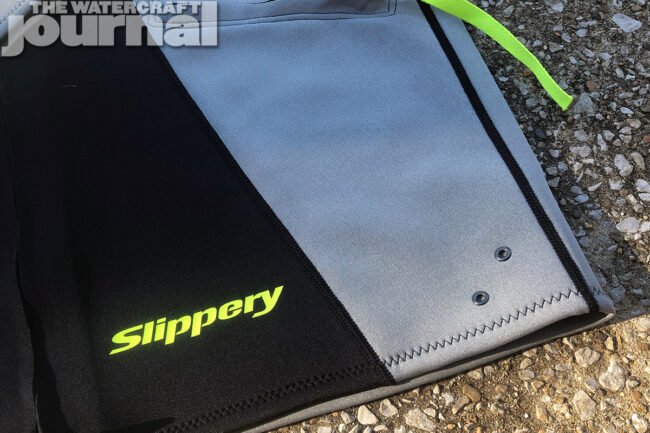
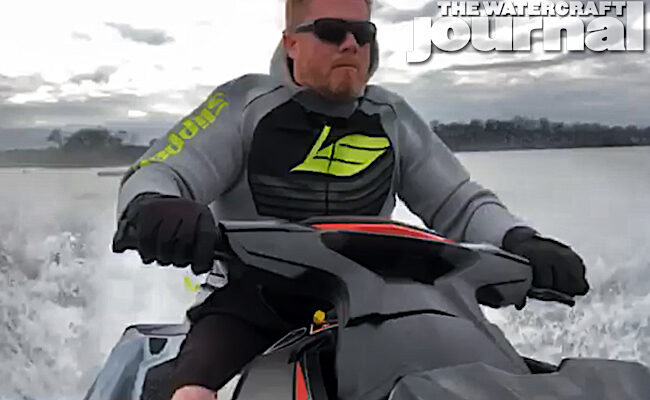
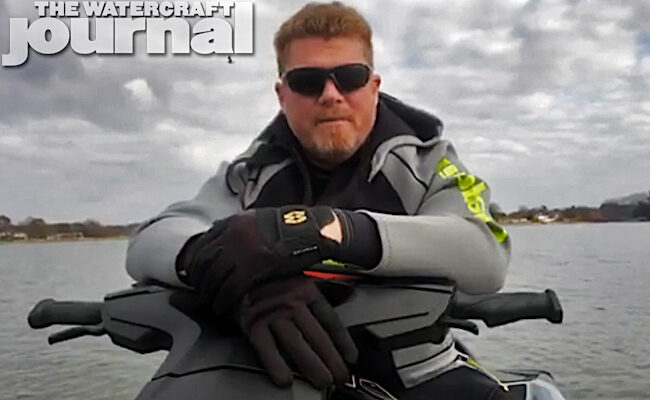
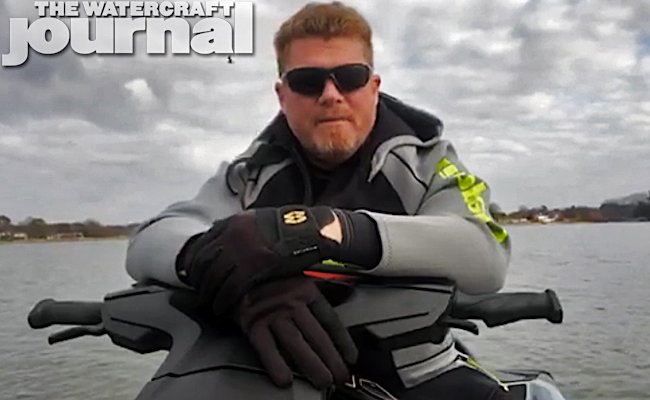
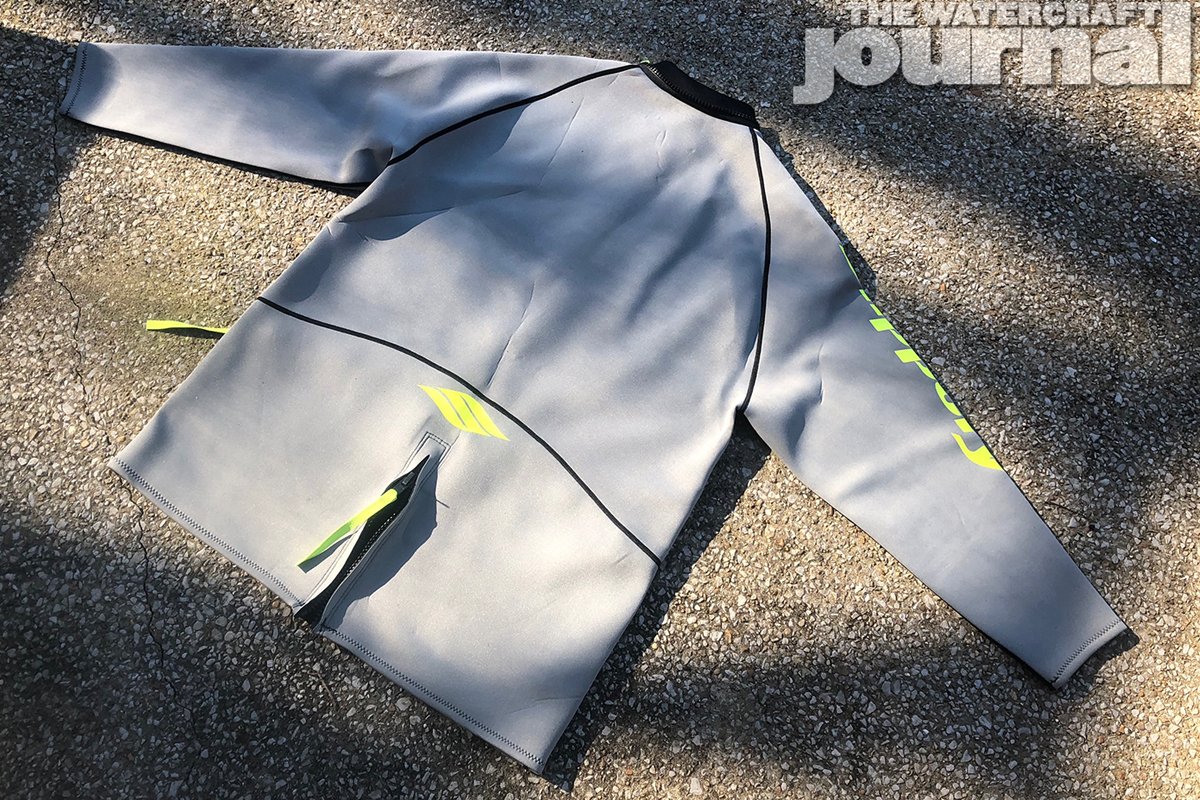
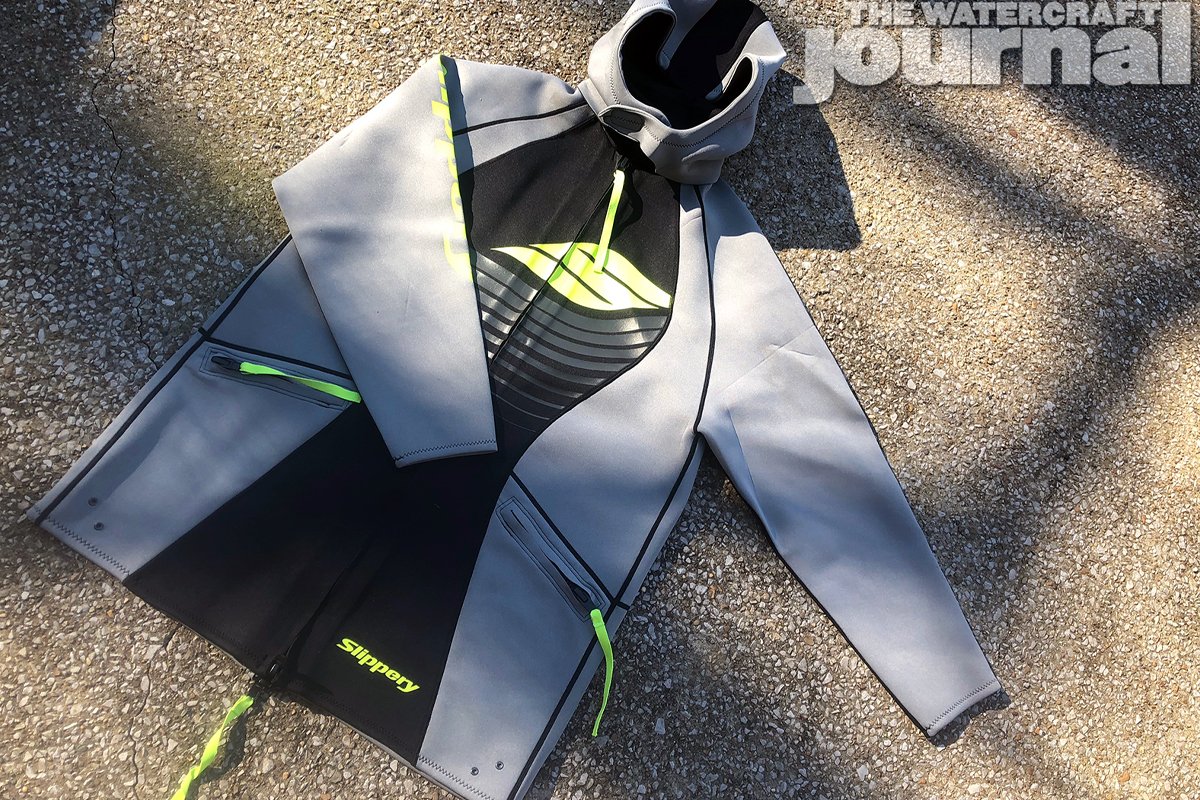
Slippery Wetsuits has been, in our view, the single-best when it comes to comfort. The brand’s dedication to making its lifevests and wetsuits the most natural-fitting, soft-to-the-touch and conservatively styled as made them a favorite among The Watercraft Journal staff, and far, far beyond. So when we were provided with their latest take on a tour coat, we were curious to see what Slippery has been up to. The 2019 Slippery Tour Coat came to us in Black and Lime, and incorporates a myriad of small touches and “no duh” common sense innovations, that it makes all other coats pale in comparison.
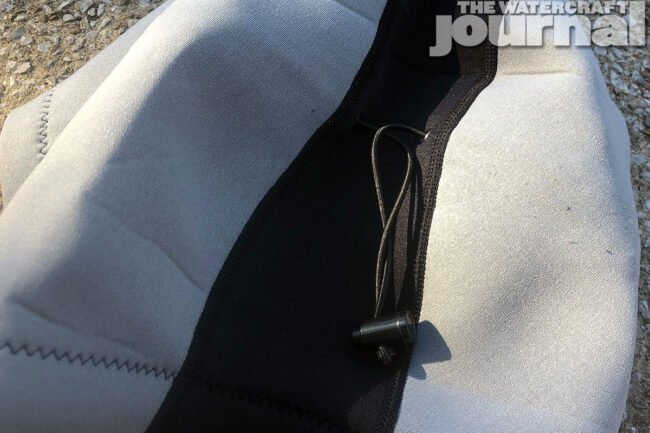
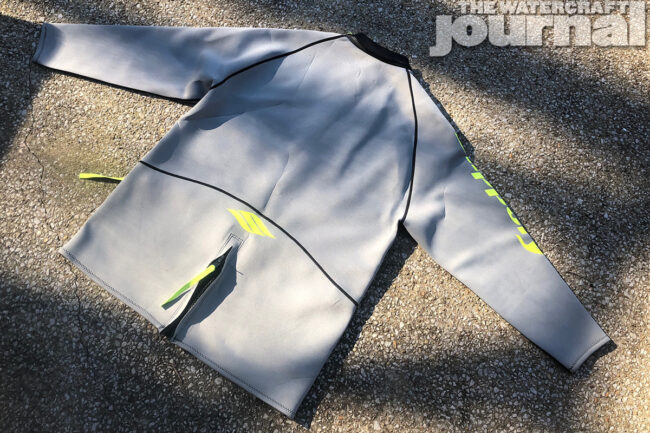
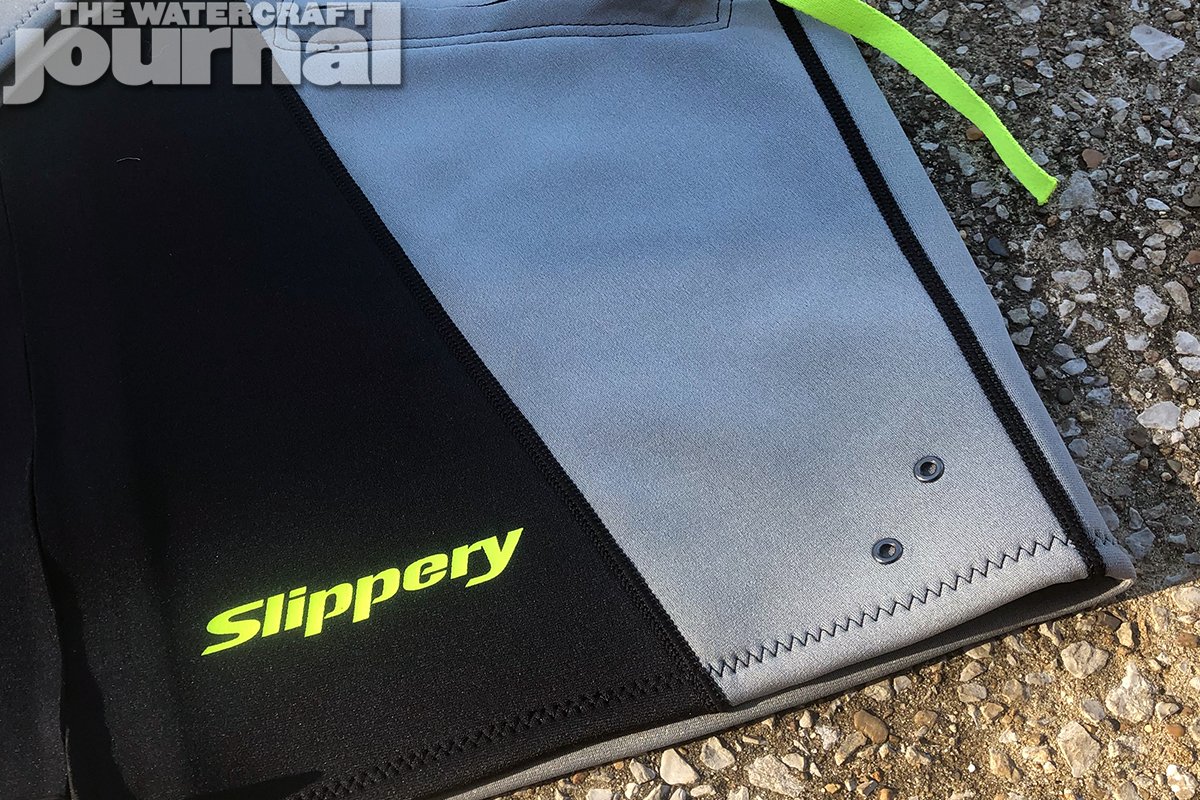
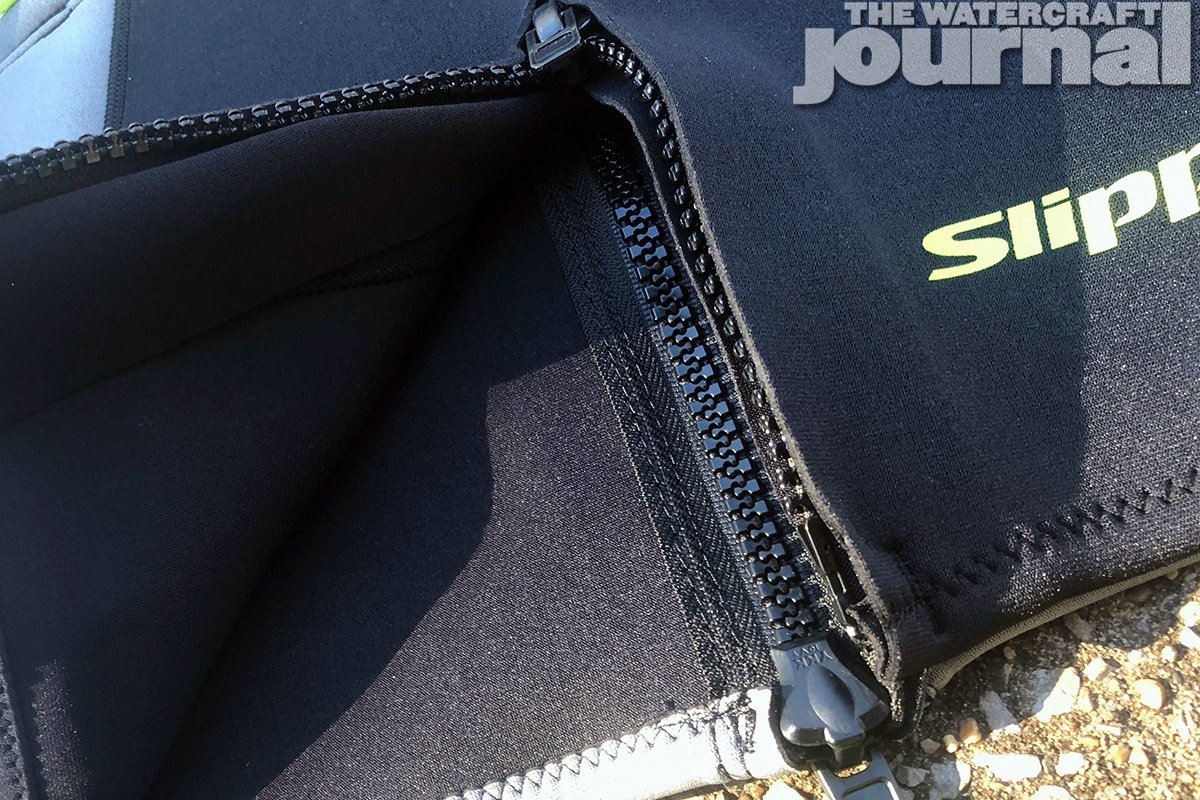
Slippery’s new coat begins with the brand’s 2mm neoprene material, all held together with flat-stitched seams. The front features a heavy-duty, two-way front zipper allowing for the lower zipper to be opened for improved comfort while sitting or simply greater flexibility while moving around. Equally, a 3/4 zipper runs up the seat and lower back for the same purpose. All zippers are blocked from making skin contact by 2mm neoprene protective liners. The front panels also include two deep, mesh-lined pockets that too are zippered closed with dual drainage ports and long tethers to easily open/close the zippers (even with gloves).
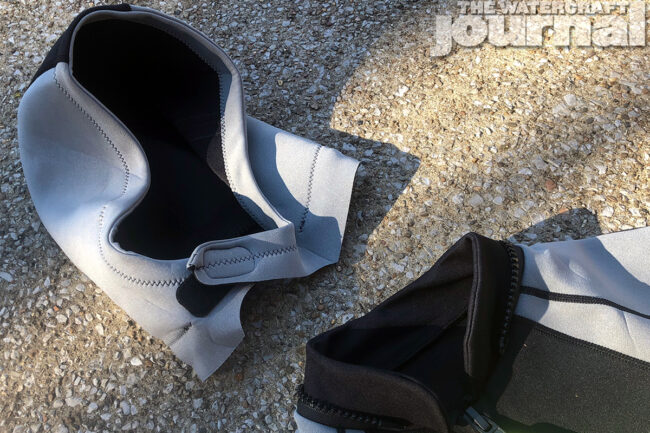
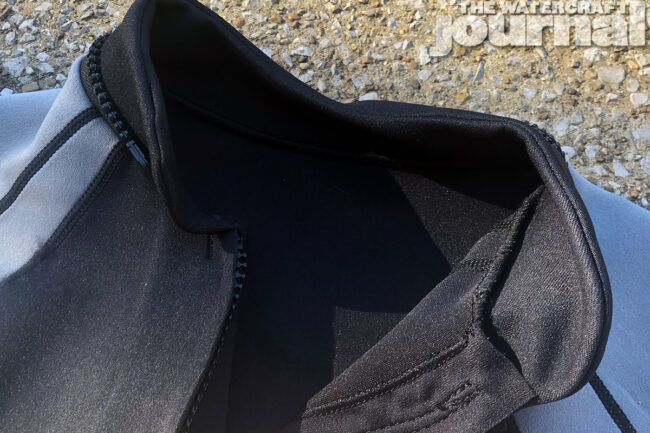
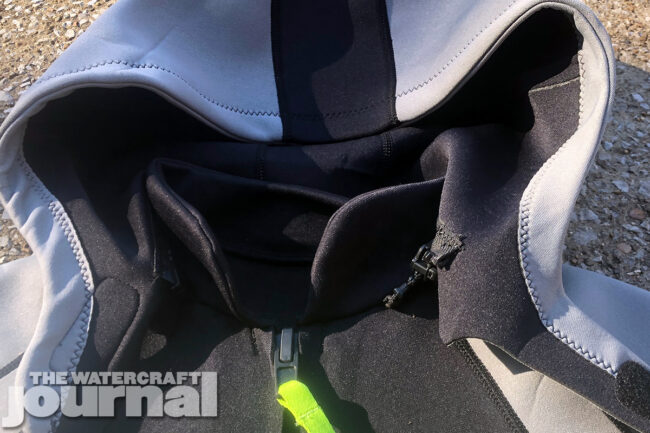
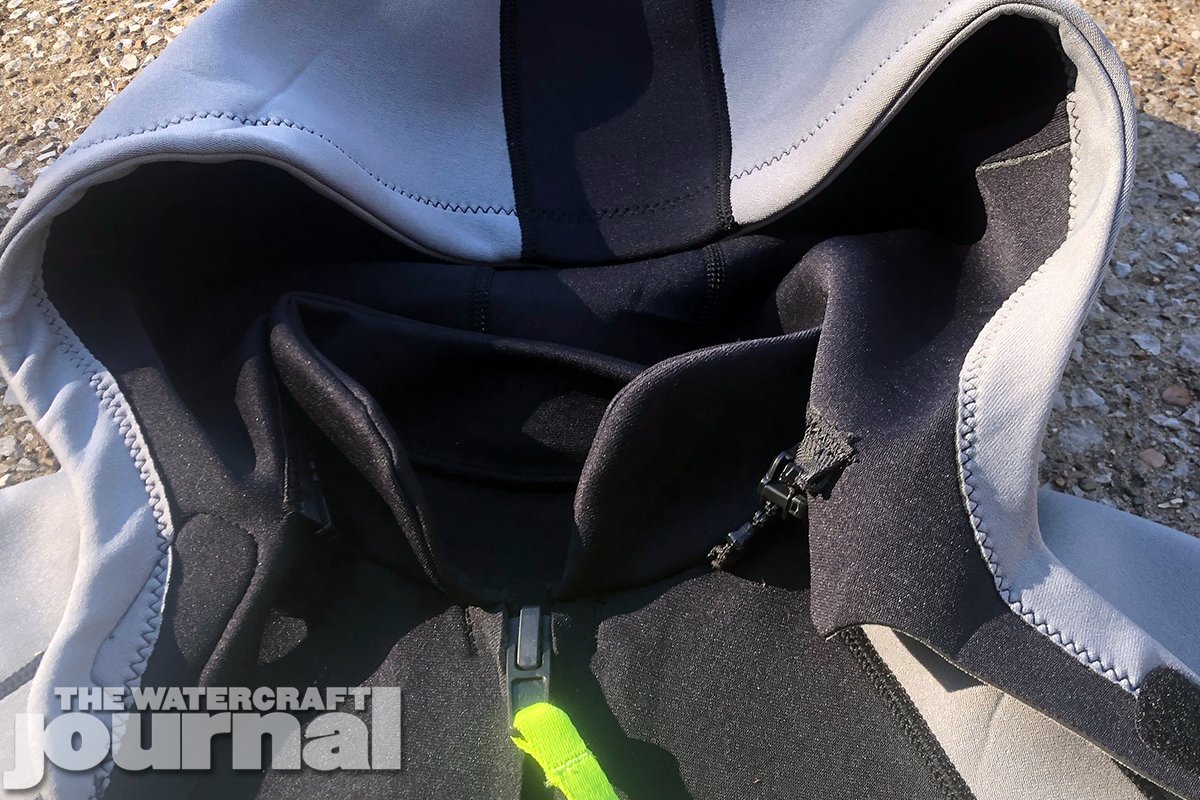
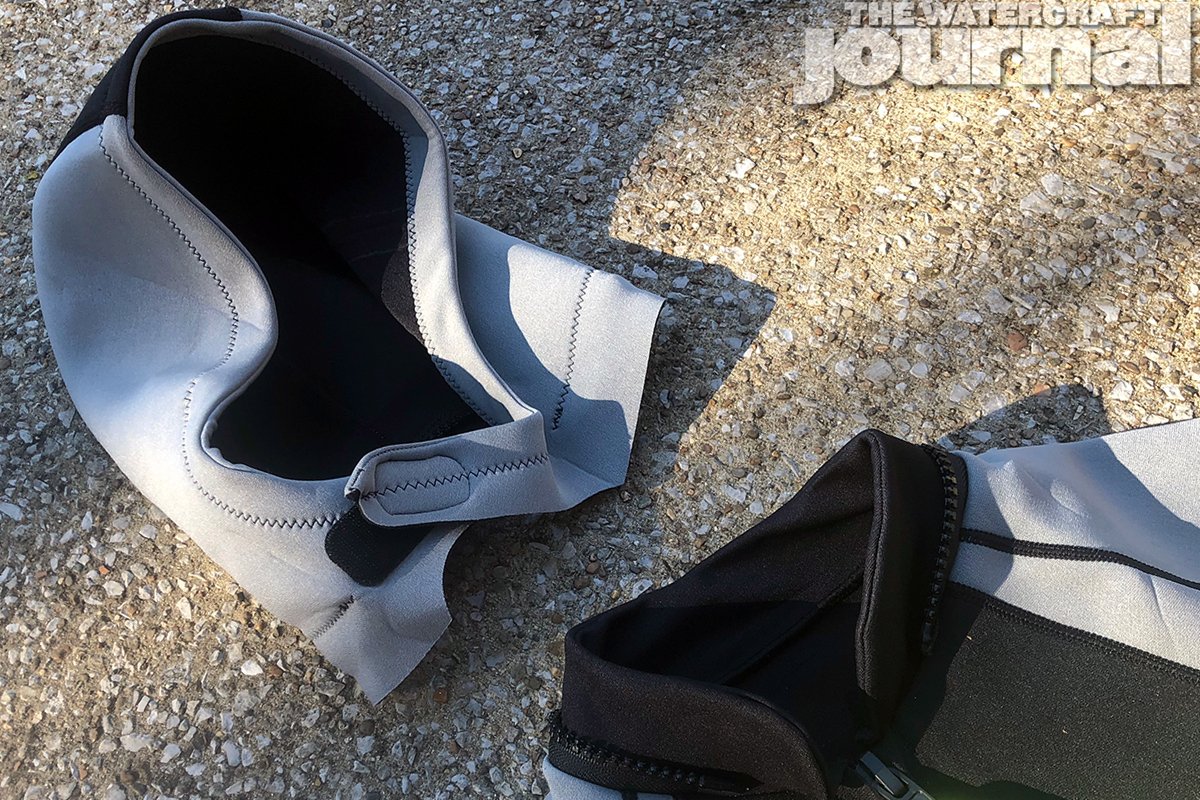
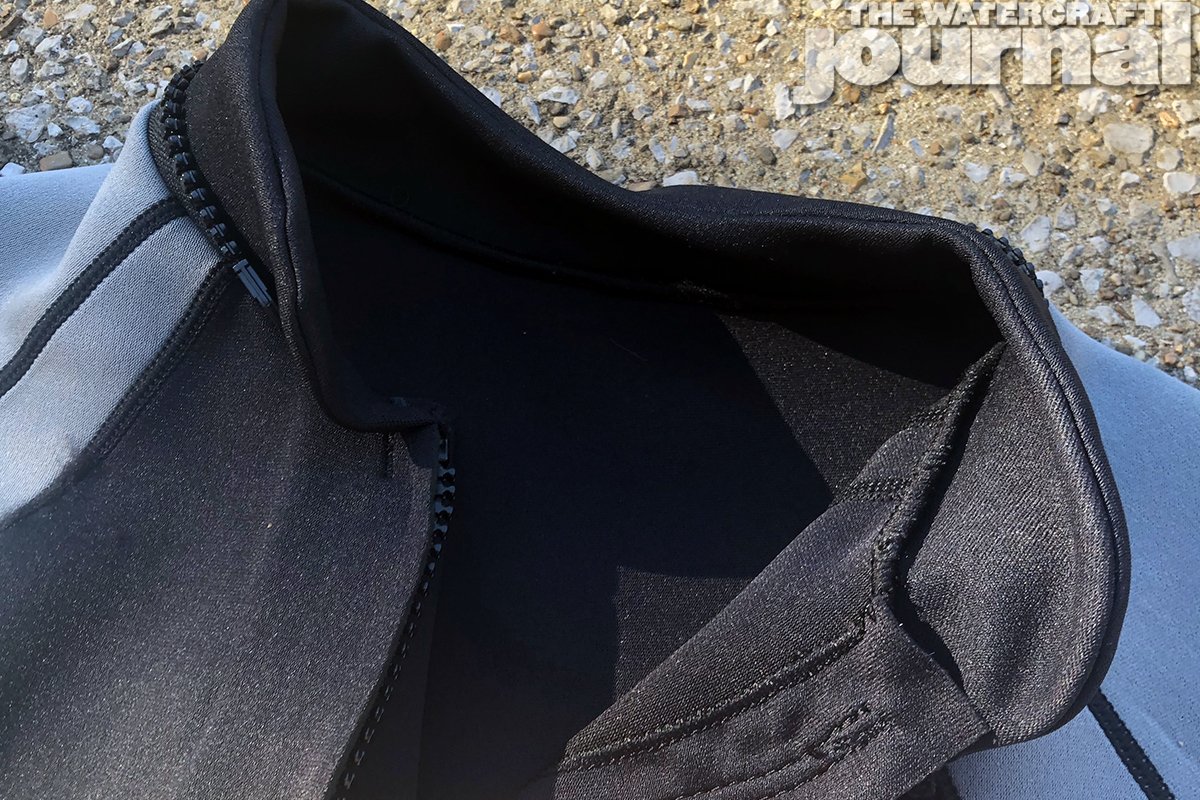
Atop the coat is a removable hood with Velcro straps that can tighten around the collar to keep cold air out, as well as draw string at the back to close the hood around your exposed face. And yes, the hood does unzip from the coat, leaving a semi-mock collar similar to Slippery’s PFD jacket in both softness and design. Again, the hood zipper is sandwiched in a protective flap so long hair or skin can’t get pinched or tangled up. Smartly, the hood isn’t so large that it’ll annoyingly parachute or flap while riding at speed either. It was a welcome change.
The Tour Coat is cut generously oversized intentionally so that you wear it over your PFD. We’ve seen folks wear them beneath a lifevest, and we can’t imagine how uncomfortable that must be. Breathability and ventilation is good (better than others) and dries reasonably quick. The sleeves are equally cut larger to accommodate for wearing a wetsuit or other multiple layers as well. The cuffs are also cut smartly as to allow putting on gloves without restriction while not being so big that air shoots up the sleeves while riding. Frankly, there were just so many “little touches” to elevated the quality of this tour coat.
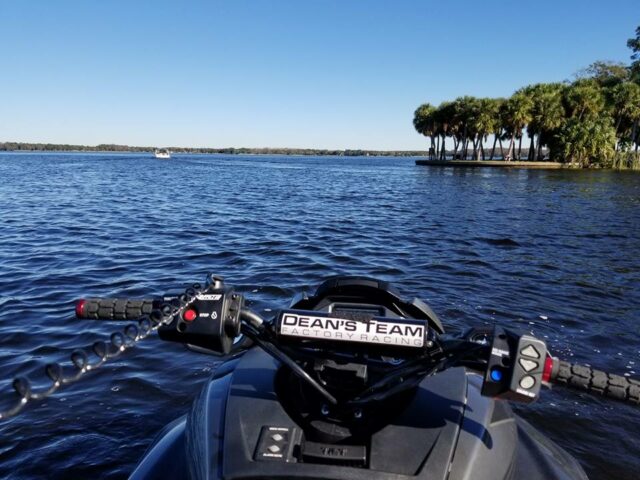
It started with a Facebook post from Gus Hatzistefanou on January 6th, 2019, stating, “Thank you Dean Charrier from Dean’s Team for coming all the way over to allow a few of us to test his various handling setups on the 2019 FX. What a great ski. Feels light and nimble but handles really well. Ran one up to 81mph and felt good.”
Gus’ post stirred quite a few who were interested in the newly redesigned FX but were concerned with the hull’s stability and initial acceleration and peek top speed versus the previous model.
Yet, what followed was an incredibly revelatory post by Dean’s Team head honcho himself, Dean Charrier who heaped tremendous praise onto the new platform and its responsiveness to performance parts, stating:
“I have great respect for the opinions of Gus & Pete because of their experience and passion for testing different setups in different riding conditions. They have over 15 years of knowledge with countless different models and setups and this gives them the ability to provide great feedback of how a craft should ride and perform…from casual everyday riding to ocean cruising to racing setups and everything in between.
“The feedback they provide is just an extra step I like to use to help improve the everyday lake riders experience and performance. I put so much effort into getting the best experience on the water, which goes past just getting the highest top speed possible, and Gus & Pete understand that as well.
“From my personal opinion, the feedback I’ve received, and the excitement I’ve heard from many other people that have rode this setup… I can already say that it is my favorite, and in my opinion the best watercraft that I’ve ever worked with. It has an amazing feel and ride even straight out of the crate and keeps getting better by the day.
“Through the development we’ve put into the ride plate, its really helped to perfect the handling and the feel on the water. Going from a out of the box unit to running the FX out at 81+ MPH it still felt so stable and smooth that I feel like I could drive it with one hand. It effortlessly cuts through the chop in rough water conditions too.
“I’m working with many other handling parts that will also enhance the craft to where I feel like its become one of my all-time multi use crafts I have ever rode. I’m very excited for even more performance work and to get even more gains out of this machine and I can already tell that this is going to be a great craft throughout all levels.”
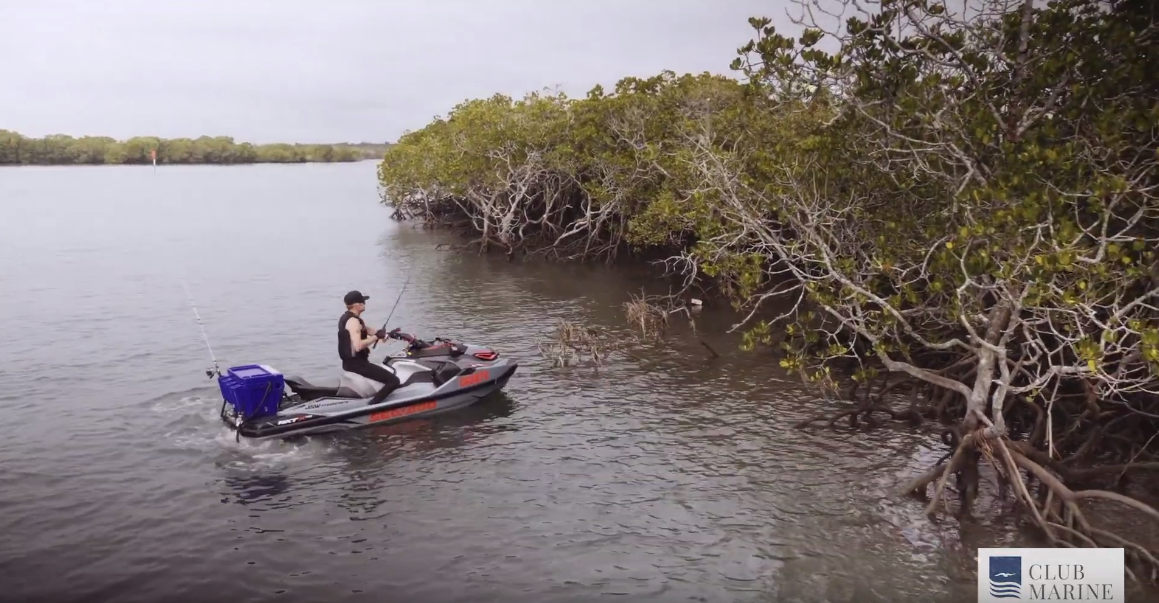
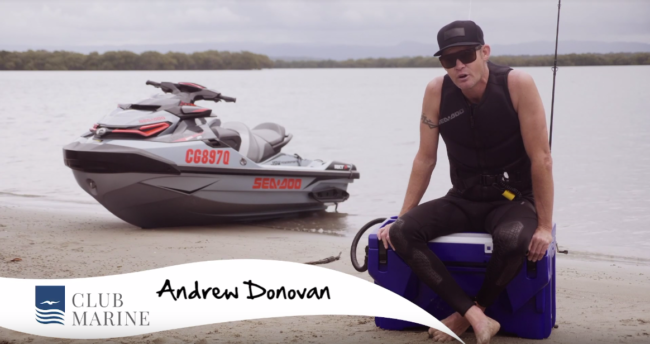
While some of us are living in places with freezing temperatures and snow, many people south of the Equator are getting out and fishing. One of these is Andrew Donovan. He and Club Marine teamed up for a video on how to fish from your PWC.
In the past we have talked about how fishing from a PWC is growing since they require less fuel than boats, are smaller and more nimble and tend to be a much cheaper alternative. One thing I thought was very interesting was that Andrew Donovan pointed out that on one of his fishing trips, he was able to ride in places that had less than one foot of water. This allows anglers to go to new places and potentially have better luck fishing in places that rarely see any anglers.
With proper gear and a trusty fish finder, you should have no problem hooking into a fish. When you do catch a fish, you may ask yourself where you are going to put it. If you plan on having a seafood lunch you are going to want to bring a cooler with you. While there are many coolers on the market specifically designed for PWC’s, choosing one with a live well is a pretty sweet addition. This keeps your bait fresh or for keeping your catch fresh. Many coolers now even come with rod holders equipped with them so that you can troll or put them there for storage.
The new 2018 Sea-Doo RXT-X 300 is what Andrew Donovan is using in this video. With Sea-Doo’s new design, you are able to strap on a jerry can along with a cooler. This allows you to travel even further and still bring your cooler and fishing gear. Sea-Doo has come out with a brand new Fish Pro model of personal watercraft that is specifically designed for fishing but many different watercraft are able transform into an ultimate fishing machine.
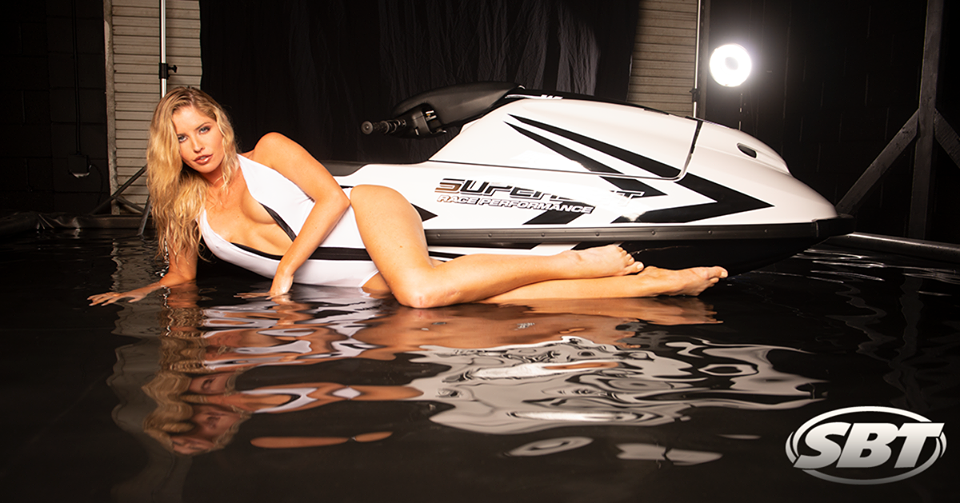
If you didn’t already know, SBT, Inc. is the largest PWC aftermarket parts company in the world, servicing, and rebuilding over 10,000 engines per year. As any PWC service shop will attest, SBT is “to the PWC market what NAPA and AutoZone are to the automotive market.” If you’re rebuilding a customer’s 2- or 4-stroke watercraft, it’s a sure bet that SBT will have what you need, and will ship it to you within a matter of hours, not days. But we’re not talking about engines today, are we? Nope.
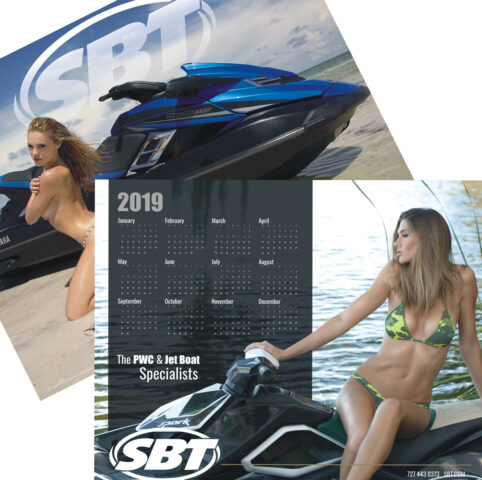
As those familiar with SBT are very aware, every year is rung in with a new calendar featuring a very fetching young lady, who is often a recent Playboy Playmate. Now, with the ringing in of 2019, SBT has welcome former Playmate Kristy Garett (back for her third SBT calendar) and professional model Maggi Mae (not to be confused with the Maggie May of the British folk song, later covered by The Beatles on Let It Be).
With not one, but two lovely ladies gracing SBT’s 12 month calendar and a full-sized double sided (24X30) poster it’s definitely something worth picking up, if not perusing quite studiously. The calendar ships free with every engine purchase, but is also available for purchase for $9.95. Act now before they vanish!
It’s light. It’s nimble. It’s wet and wild. It’s playful as all get-out. And it might not be for you, if you don’t like any of these attributes in a personal watercraft. Then again, that’s all part of the fun owning a Sea-Doo Spark, and most folks who do love it precisely for these reasons.
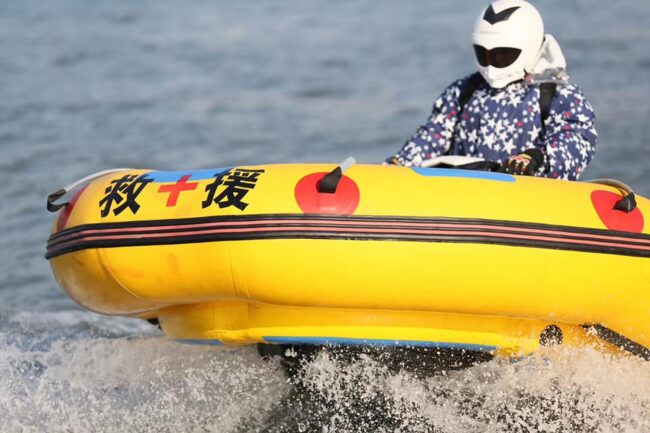
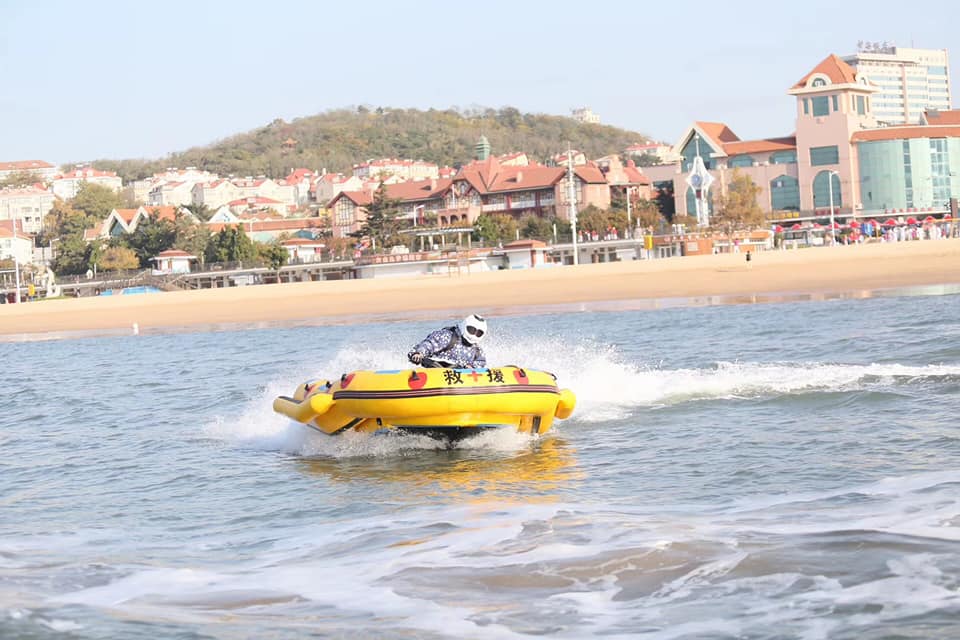
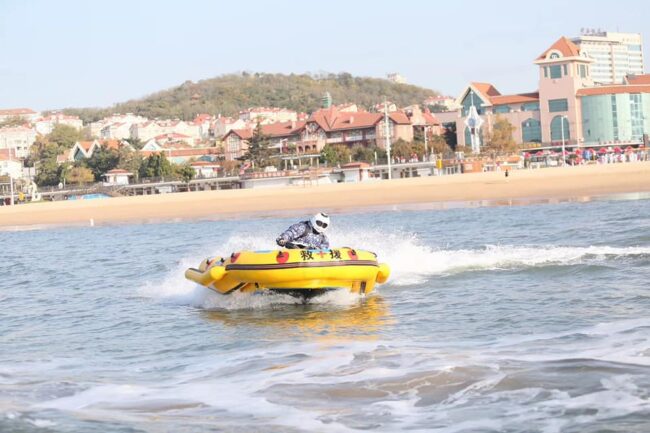
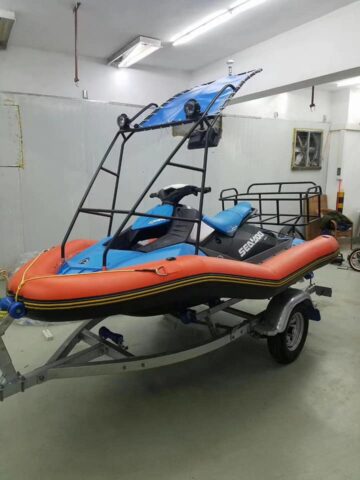
Yet, for those who don’t, a yet-to-be-named Chinese company is producing a set of RIB (rigid inflatable boat) kits for the venerable Rec-Lite Sea-Doo, some of which look absolutely massive. In a Facebook post, 单祥 (Dān Xiáng) shared a handful of images showing the RIB-mounted Spark (as well as a pair of Kawasaki Ultra 310Xs and a Sea-Doo Wake Pro) both fully-equipped as well as in action.
The largest of these kits feature a double-set of inflatable pontoons that extend far out beyond the bondrails, giving the Spark a massive width, completely eliminating any lean that the HX-inspired hull has. Rather, the Spark is shown turning flatly, the smallest portion of the Spark’s hull protruding from beneath the rubberized raft encompassing the runabout.
Typically employed for close-to-shore rescue, lifeguards could quickly launch the lightweight, Polytech-hulled Spark (and its giant pre-inflated RIB) and venture out into the surf with little effort. The larger Ultras make take a little more work to drag from the sand (as lifeguards typically beach their PWC) into the water. Nonetheless, we’re interested to see more of this heavily-insulated Spark in action and whether it may make for a good rescue vessel.
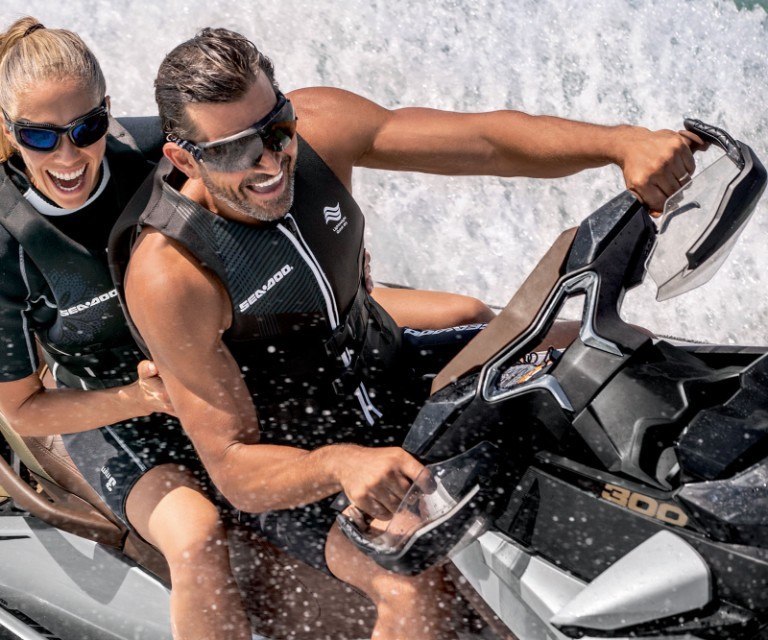
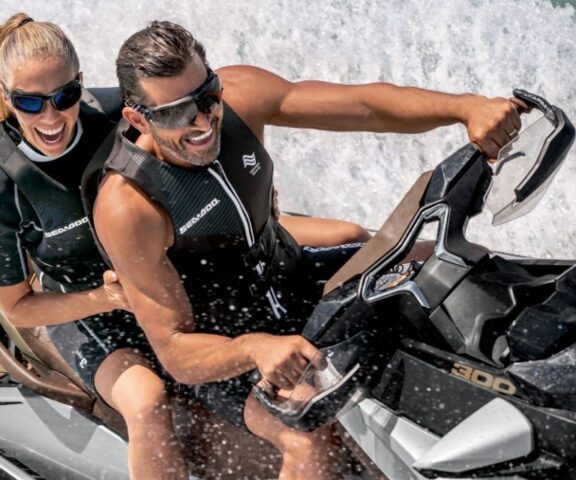
While digging around for some information pertaining to accessories for Sea-Doo; we stumbled upon the Sea-Doo wind deflectors for handlebars. The deflectors were available in the UK through Derbyshire Offroad Centre. The items are sold in pairs and are used to protect riders from cold wind and water splashes. This particular design is stylish and offers better protection than some other styles.
We still weren’t satisfied because we couldn’t find these in the United States…until now. It was only after quite a bit of digging, searching, and scouring the web, we happened upon them on the Sea-Doo site listed under Controls and Grips.
The deflectors were easy to find for other off road equipment, like snowmobiles and ATV’s. However, we wanted to find the PWC style. The wind deflectors are compatible with all models of Sea-Doo models. The only available color scheme is clear and black and the cost for a pair is $99.99.
The 2019 Sea-Doo wind deflectors may be the right accessories for the rider who cruises in colder waters or rides during extremely windy days and wants minimal water splashes to their hands.
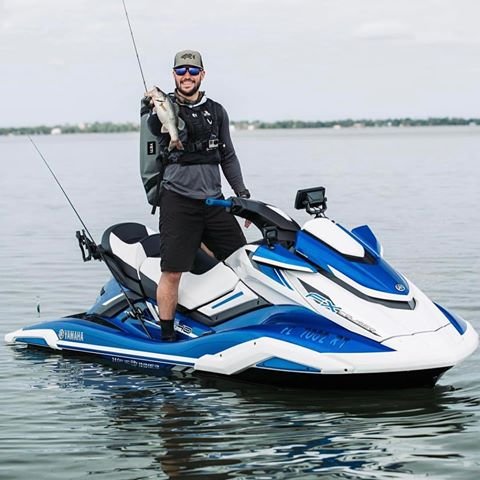
Brandon Jordan gives his fans what they want and this time he has outdone himself on a brand new 2019 supercharged Yamaha SVHO Cruiser equipped with a four-cylinder, 4-stroke, Super Vortex Output Yamaha Marine Engine. A video posted December 3, 2018 on YouTube features him preparing to head out on an unnamed lake in Florida. Jordan tells us that the water is deep, 15-25ft and 50ft in some areas. He’s out for big bass and he handles them like a boss.
Jordan named the Yamaha WaveRunner “Blue Bae 2.0.” The SVHO is equipped with Yamaha’s Multi-Mount system, which is how the Hummingbird GPS Fish Finder easily installed. The Fish Finder sits in the mount where it’s easy to view and operate. The Yamaha also has standard dual mirrors and many more accessories. The blue machine has sturdy rod mounts as well and Jordan raves about them. He has his GoPro mounted on the bow in order to catch good footage of himself and his surroundings.
The Yamaha SVHO shames some other well known fish ski setups. This machine is a beast. Jordan easily maneuvers it over large chop on the lake in Florida. Though the sun is shining, the wind is blowing at a good clip, which creates the two foot chop. Jordan’s ability to handle the power of the Yamaha SVHO Cruiser helps him deal with the rough waters fairly easily. The SVHO is a powerful machine with a wide hull and it can easily motor through waves. The PWC is also equipped with a No Wake Mode, making it easy to troll for fish.
Jordan’s excitement grows with every fish he catches. He also digs the easy to reach extra large watertight cargo storage, especially when one of the bass swallows the hook. He quickly reaches into the glove box and grabs his needle-nose pliers to pull the hook out of the fishes mouth. Jordan doesn’t skip a beat. He releases the fish and away he goes.
Reading the comments, we found out just how happy Jiggin’ with Jordan’s fans really were. Most were thrilled to see him on Blue Bae 2.0. Why wouldn’t they be happy? It’s always fun when we’re Jiggin’ with Jordan, especially when he shows how well the new Yamaha SVHO adapts to all conditions.
The text message came in at dinnertime, just about a month ago. I normally try to keep my phone off – or at least out of reach – when at the dinner table, but it so happened to be sitting right next to me this night. “Did you hear?” the message began. “There’s a memo going around Kawasaki saying 2022 will be the last year.” I choked down my food and snatched up the phone. What? I typed. Are you serious? After a long pause and an icy glare from my wife, the reply came: “Yeah, it’ll be on Kawasaki’s 50th anniversary. They’re going to make a big deal of it at [World Finals] and then…that’s it. They’re out. No more JetSkis.”
Shocked with what I had just read, I closed out the screen, the phone flicking to black. I dumbly put it down and went back to having dinner with the family. The words they’re out kept clacking inside of my mind like the teeth of gears failing to mesh. That night we exchanged quips about what we thought could save the brand or what we would do if we were in charge, but as is with all conversations like these, it was pointless. I felt like I had just received word that a good friend was diagnosed with a terminal illness. The doctor had issued a “get your affairs in order” timeline and there was little else that could be done.
Is No News Really Good News?
With all of the new products pouring out of Sea-Doo and Yamaha this past August, it’s easy for the dyed-in-the-wool Kawasaki loyalist to feel a little left out. Yes, the build up leading to the new 2017 SX-R reveal was some pretty big news and shined a favorable light on the brand. But that’s really been it – that is, since the 2014 refresh of the Ultra 1498cc powerplant, bringing it up to 310-horsepower. Released simultaneously was Kawasaki’s smartly-executed Jetsounds speaker-and-head unit package. Yet, the industry’s first factory sound system has remained the sole property of the top-of-the-line 310LX JetSki since.
Upgrades to the Ultra JetSki have been consistent, upgrading every 2-3 years, increasing the ever attractive horsepower number with each step. Yet, 2019 marks 12 years since the platform’s introduction in 2007. Considering that Sea-Doo and Yamaha maintain a 8-to-9 year life cycle, the added 4 years can feel like an eternity to some. And not to belabor the point, but the STX-15F is now 16-years-old. Then again, there’s quite a bit for Kawasaki loyals to boast about. There have been no claims of cracked or splitting hulls, intake grates or ride plates tearing from their mounts, failing fuel systems or snapping timing chains. By all observations, there are little to no mechanical failures to speak of.
It’s just that the Kawasaki lineup of JetSkis can feel a little…stale. Worse of all, the data backs up the claim: Although increasing by 11-percent in new product sales in 2018, Kawasaki’s growth couldn’t outpace the growth by its two competitors, resulting in a half-point loss in total market share – from 6-percent to 5.5. This steady decline in market share over the years has been felt by dealerships, who have reduced their annual buys or ceased flooring Kawasakis altogether. In private discussion with two key Floridian dealers, representatives noted a lack of incentive programs and a palatable absence of features on the craft themselves as major deterrents for customers. Both dealers joked that while current model sales were staid, deeply discounted, unsold units from the previous year always moved.
So What Does Sell?
Unlike the previous years following the financial crash of 2009, 2018 showed the personal watercraft industry what people are truly interested in when “times are good.” Going off of the numbers presented to The Watercraft Journal for late July 2018 (concluding the end of the third financial quarter), the Top 3 selling personal watercraft models were the 2018 Yamaha VX Cruiser HO, the 2018 Sea-Doo Spark 3-seater (“3-up”), and the 2018 Yamaha GP1800. Besides the Spark, both Yamahas MSRP well above $11,000 – not to mention one of those being a supercharged, performance-oriented race craft. Add to this the revelation that Yamaha and Sea-Doo both are enjoying massive gains in first-time buyer purchases, and we’ve got some marketable data to work with.
Beginning with the most obvious, Sea-Doo’s Spark is squarely responsible for opening up the Rec-Lite segment. Looking to access a younger, first-time audience, the Spark was the trailblazer into a market that otherwise didn’t exist. Yamaha followed three years later with the EX runabout, and likewise, has seen major gains in the younger and first-time-buyer demographic. Both manufacturers offer their Rec-Lite entries with easy-to-operate braking and reverse systems, a bevy of optional accessories, colors and attachments, and moreover, both the Spark and EX are demonstrably affordable (ranging between $5,199 and $9,299). While long-time customers are great, the future is appealing to new, first-time buyers.
Waitaminute! Slam on The Brakes!
So what is Kawasaki to do if anything at all? Frankly, I had my ideas and most of which required very little in development cost. But like so many times before, it looks like I’m wrong. Just as the text message that started this essay, a phone call just before the end of the year radically flipped everything on its head. “I was fishing off of Dana Point and saw two guys in black wetsuits riding a weird jet ski,” my eyewitness began. “They were the only ones out there because it was so cold. I recognized both Kanamori and Fuzzy. As they loaded up the ski into a truck, I saw it was a little runabout – like a Spark. It must’ve been a prototype.”
Let’s read that again: two of Kawasaki’s best minds – Minuro Kanamori and Craig “Fuzzy” Boyd – were spotted testing a possible prototype Rec-Lite entry runabout. Unfortunately, my source couldn’t snap a picture in time. Now before we fire up the rumor mill any further, it does bear noting that the racks in Kawasaki’s warehouse are full of prototype vehicles that will never see the light of day. That being said, the logic of developing a Rec-Lite entry doesn’t jive with the aforementioned “doomsday notice.” Why spend the money in shaping and testing a new runabout if you’re 3 years from closing up shop? The math didn’t add up – and I’m happy it didn’t.
Here’s the kicker, I knew Kawasaki was already up to something – I just didn’t know when. Years back, during our exclusive press introduction to the 2017 SX-R JetSki, then Kawasaki Product Manager Dave Oventhal hinted towards Kawasaki’s attention on the Spark as well as developing an on-water braking/reverse system. This was back in April of 2017, some 18 months ago. In the interim, Sea-Doo released the Trixx (and now Trixx 3-up), and Yamaha its new EXR giving Kawasaki quite a bit of catching up to do if they wish to compete with the other two Rec-Lite entries.
Hope Springs Eternal
Now, the biggest outlier for us in contemplating a possible Rec-Lite runabout from Kawasaki was where the engine could come from. It’s no secret that the SX-R borrows heavily not just from the STX-15F but from a wide swathe of Kawasaki’s parts bin. What would go into this unit? The current 1498cc is simply too big, too heavy and admittedly, and too powerful (at 160-horsepower) for a proper Rec-Lite entry. Rather, a naturally-aspirated 998cc, 112-pound 4-cylinder four-stroke shared between the H2 and H2R superbikes seems like a good idea – except that it’s making 140-horsepower as-is.
The likeliest candidate may also be one that hasn’t been considered until now. Kawasaki also has a DOHC 812cc liquid-cooled 4-stroke, 3-cylinder making 47-horsepower and 47 foot-pounds of torque at 5,500rpm – a number well below the entry-level Spark. But a supercharger can quickly bump that to 90-horsepower. Similar to Yamaha, we also expect Kawasaki’s Rec-Lite unit to also be made from traditional SMC fiberglass. That places the unit above the Spark and its PolyTec composite hull and deck in total weight, but lends itself to a lower, more stable ride.
Of course, this is entirely conjecture given that I know little to zero hard information concerning this would-be Spark-fighter but we’re happy to see Kawasaki still in the fight. As the American dollar continues to build strength, fuel prices continue to decline and lower taxes continue to let working Joes keep more of the money they earn, the personal watercraft industry will continue to thrive – and that means more opportunity for Kawasaki to wrestle back some of that market share through new and exciting product. I don’t know when it’ll happen, but I’m encouraged by the idea of new JetSki models hitting showroom floors. Best of all, I’m pretty sure I’m not alone.
Wanting to rapidly spread the stoke, Yamaha WaveRunners Australia put together two of their best racers – Matt Brunt and Stock & Limited Class Australian Champion Mitch Wayt – on a matching pair of EXR’s and let the two rip. The action was recorded, cut and edited into the video you see below and frankly, everything you’d expect yourself to do when equipped with a 110-horsepower, 540-pound bottle rocket.
Yamaha WaveRunners Australia posted the following with the video, which we included below, saying: 2019 Introduces this Race Ready Pocket Rocket to the already formidable racing line-up of WaveRunners. We let 2 of Australia’s finest PWC Racers take them to the water and tell us what they think.









 Yet, for those who don’t, a yet-to-be-named Chinese company is producing a set of RIB (